WO2021006285A1 - 堆肥、および堆肥製造方法 - Google Patents
堆肥、および堆肥製造方法 Download PDFInfo
- Publication number
- WO2021006285A1 WO2021006285A1 PCT/JP2020/026625 JP2020026625W WO2021006285A1 WO 2021006285 A1 WO2021006285 A1 WO 2021006285A1 JP 2020026625 W JP2020026625 W JP 2020026625W WO 2021006285 A1 WO2021006285 A1 WO 2021006285A1
- Authority
- WO
- WIPO (PCT)
- Prior art keywords
- compost
- organic waste
- additive
- mass
- parts
- Prior art date
- Legal status (The legal status is an assumption and is not a legal conclusion. Google has not performed a legal analysis and makes no representation as to the accuracy of the status listed.)
- Ceased
Links
Images


Classifications
-
- C—CHEMISTRY; METALLURGY
- C05—FERTILISERS; MANUFACTURE THEREOF
- C05C—NITROGENOUS FERTILISERS
- C05C5/00—Fertilisers containing other nitrates
-
- C—CHEMISTRY; METALLURGY
- C05—FERTILISERS; MANUFACTURE THEREOF
- C05F—ORGANIC FERTILISERS NOT COVERED BY SUBCLASSES C05B, C05C, e.g. FERTILISERS FROM WASTE OR REFUSE
- C05F3/00—Fertilisers from human or animal excrements, e.g. manure
-
- C—CHEMISTRY; METALLURGY
- C05—FERTILISERS; MANUFACTURE THEREOF
- C05D—INORGANIC FERTILISERS NOT COVERED BY SUBCLASSES C05B, C05C; FERTILISERS PRODUCING CARBON DIOXIDE
- C05D9/00—Other inorganic fertilisers
- C05D9/02—Other inorganic fertilisers containing trace elements
-
- C—CHEMISTRY; METALLURGY
- C05—FERTILISERS; MANUFACTURE THEREOF
- C05F—ORGANIC FERTILISERS NOT COVERED BY SUBCLASSES C05B, C05C, e.g. FERTILISERS FROM WASTE OR REFUSE
- C05F17/00—Preparation of fertilisers characterised by biological or biochemical treatment steps, e.g. composting or fermentation
-
- C—CHEMISTRY; METALLURGY
- C05—FERTILISERS; MANUFACTURE THEREOF
- C05F—ORGANIC FERTILISERS NOT COVERED BY SUBCLASSES C05B, C05C, e.g. FERTILISERS FROM WASTE OR REFUSE
- C05F17/00—Preparation of fertilisers characterised by biological or biochemical treatment steps, e.g. composting or fermentation
- C05F17/10—Addition or removal of substances other than water or air to or from the material during the treatment
-
- C—CHEMISTRY; METALLURGY
- C05—FERTILISERS; MANUFACTURE THEREOF
- C05F—ORGANIC FERTILISERS NOT COVERED BY SUBCLASSES C05B, C05C, e.g. FERTILISERS FROM WASTE OR REFUSE
- C05F17/00—Preparation of fertilisers characterised by biological or biochemical treatment steps, e.g. composting or fermentation
- C05F17/20—Preparation of fertilisers characterised by biological or biochemical treatment steps, e.g. composting or fermentation using specific microorganisms or substances, e.g. enzymes, for activating or stimulating the treatment
-
- C—CHEMISTRY; METALLURGY
- C05—FERTILISERS; MANUFACTURE THEREOF
- C05F—ORGANIC FERTILISERS NOT COVERED BY SUBCLASSES C05B, C05C, e.g. FERTILISERS FROM WASTE OR REFUSE
- C05F17/00—Preparation of fertilisers characterised by biological or biochemical treatment steps, e.g. composting or fermentation
- C05F17/70—Controlling the treatment in response to process parameters
-
- C—CHEMISTRY; METALLURGY
- C05—FERTILISERS; MANUFACTURE THEREOF
- C05F—ORGANIC FERTILISERS NOT COVERED BY SUBCLASSES C05B, C05C, e.g. FERTILISERS FROM WASTE OR REFUSE
- C05F5/00—Fertilisers from distillery wastes, molasses, vinasses, sugar plant or similar wastes or residues, e.g. from waste originating from industrial processing of raw material of agricultural origin or derived products thereof
-
- C—CHEMISTRY; METALLURGY
- C05—FERTILISERS; MANUFACTURE THEREOF
- C05F—ORGANIC FERTILISERS NOT COVERED BY SUBCLASSES C05B, C05C, e.g. FERTILISERS FROM WASTE OR REFUSE
- C05F5/00—Fertilisers from distillery wastes, molasses, vinasses, sugar plant or similar wastes or residues, e.g. from waste originating from industrial processing of raw material of agricultural origin or derived products thereof
- C05F5/006—Waste from chemical processing of material, e.g. diestillation, roasting, cooking
-
- Y—GENERAL TAGGING OF NEW TECHNOLOGICAL DEVELOPMENTS; GENERAL TAGGING OF CROSS-SECTIONAL TECHNOLOGIES SPANNING OVER SEVERAL SECTIONS OF THE IPC; TECHNICAL SUBJECTS COVERED BY FORMER USPC CROSS-REFERENCE ART COLLECTIONS [XRACs] AND DIGESTS
- Y02—TECHNOLOGIES OR APPLICATIONS FOR MITIGATION OR ADAPTATION AGAINST CLIMATE CHANGE
- Y02A—TECHNOLOGIES FOR ADAPTATION TO CLIMATE CHANGE
- Y02A40/00—Adaptation technologies in agriculture, forestry, livestock or agroalimentary production
- Y02A40/10—Adaptation technologies in agriculture, forestry, livestock or agroalimentary production in agriculture
- Y02A40/20—Fertilizers of biological origin, e.g. guano or fertilizers made from animal corpses
-
- Y—GENERAL TAGGING OF NEW TECHNOLOGICAL DEVELOPMENTS; GENERAL TAGGING OF CROSS-SECTIONAL TECHNOLOGIES SPANNING OVER SEVERAL SECTIONS OF THE IPC; TECHNICAL SUBJECTS COVERED BY FORMER USPC CROSS-REFERENCE ART COLLECTIONS [XRACs] AND DIGESTS
- Y02—TECHNOLOGIES OR APPLICATIONS FOR MITIGATION OR ADAPTATION AGAINST CLIMATE CHANGE
- Y02P—CLIMATE CHANGE MITIGATION TECHNOLOGIES IN THE PRODUCTION OR PROCESSING OF GOODS
- Y02P20/00—Technologies relating to chemical industry
- Y02P20/141—Feedstock
- Y02P20/145—Feedstock the feedstock being materials of biological origin
-
- Y—GENERAL TAGGING OF NEW TECHNOLOGICAL DEVELOPMENTS; GENERAL TAGGING OF CROSS-SECTIONAL TECHNOLOGIES SPANNING OVER SEVERAL SECTIONS OF THE IPC; TECHNICAL SUBJECTS COVERED BY FORMER USPC CROSS-REFERENCE ART COLLECTIONS [XRACs] AND DIGESTS
- Y02—TECHNOLOGIES OR APPLICATIONS FOR MITIGATION OR ADAPTATION AGAINST CLIMATE CHANGE
- Y02W—CLIMATE CHANGE MITIGATION TECHNOLOGIES RELATED TO WASTEWATER TREATMENT OR WASTE MANAGEMENT
- Y02W30/00—Technologies for solid waste management
- Y02W30/40—Bio-organic fraction processing; Production of fertilisers from the organic fraction of waste or refuse
Definitions
- the present invention relates to compost composed of organic waste such as livestock or poultry feces and coffee grounds, and a method for producing compost.
- coffee grounds In addition, conventionally, there have been coffee grounds, tea leaves, etc. discharged from beverage manufacturers as organic wastes different from feces of livestock and the like and used as raw materials for compost and the like.
- coffee grounds contain soluble nitrogen-free substances (52 to 54%), and attempts have been made to use them as fertilizers for agriculture.
- C / N ratio carbon-nitrogen content ratio
- coffee cake since coffee cake has a high carbon-nitrogen content ratio (hereinafter, C / N ratio) of about 30, when it is used directly in soil, it is non-functional nitrogen due to the rapid growth of microorganisms in the soil. There was a problem that the number of crops decreased and the growth of crops was hindered. Therefore, when coffee cake is used as a raw material for compost or the like, there is a compost production method in which the C / N ratio is lowered and composted by performing aerobic fermentation for a long period of 90 days or more.
- an object of the present invention is to provide a compost having a remarkably reduced odor and a good growing effect on crops by using organic waste such as feces of livestock and coffee grounds, and a method for producing compost. It is to be.
- the present invention has been made to solve at least a part of the above-mentioned problems, and can be realized as the following application example. It should be noted that the reference numerals and supplementary explanations in parentheses in this column indicate the correspondence with the embodiments described later in order to assist the understanding of the present invention, and do not limit the present invention in any way. ..
- the compost of Application Example 1 to which the present invention is applied is a compost obtained by fermenting organic waste, and the first organic waste containing livestock or poultry manure and the first organic waste are A second organic waste containing different fibrous organic wastes, a first additive containing an iron compound, and a second additive containing at least one of boric acid and silicic acid are mixed.
- the gist is that it is fermented together.
- the second organic waste contains coffee cake as the fibrous organic waste, and is based on 100 parts by mass of the first organic waste. 20 to 28 parts by mass, the first additive is 3 to 5 parts by mass with respect to 100 parts by mass of the second organic waste, and the second additive is 100 parts by mass of the first. 2 The gist is that it is 3 to 25 parts by mass with respect to organic waste.
- the compost production method in the compost of Application Example 1 or Application Example 2 is a mixture generation step of producing a mixture of the second organic waste, the first additive, and the second additive.
- the gist is to carry out a fermentation step of mixing the mixture produced in the mixture producing step and the first organic waste and aerobic fermentation.
- FIG. 1 is a flowchart of a method for producing compost according to the present embodiment.
- the compost of the present embodiment contains manure such as livestock as a first organic waste, a fibrous organic waste as a second organic waste, and an iron compound as a first additive.
- manure such as livestock as a first organic waste, a fibrous organic waste as a second organic waste, and an iron compound as a first additive.
- the first additive is 0.1 to 50 parts by mass and the second additive is 0.01 to 50 parts by mass with respect to 100 parts by mass of the second organic waste. It is blended so as to be 50 parts by mass.
- the second additive for example, when it contains only boric acid, it is 0.01 to 50 parts by mass, and when it contains only silicic acid, it is 0.04 to 50 parts by mass, and boric acid and silicic acid.
- the mixture is 0.1 to 4 parts by mass. More preferably, each of these raw materials in an absolutely dry state is blended so that the mixture is 20 to 28 parts by mass with respect to 100 parts by mass of the first organic waste, and the mixture in an absolutely dry state.
- the first additive is 3 to 5 parts by mass and the second additive is 3 to 25 parts by mass (for example, only boric acid) with respect to 100 parts by mass of the second organic waste.
- the second additive is 3 to 25 parts by mass (for example, only boric acid) with respect to 100 parts by mass of the second organic waste.
- it is 3 to 5 parts by mass, when it contains only silic acid, it is 17 to 20 parts by mass, and when it contains boric acid and silic acid, it is 20 to 25 parts by mass. Is preferable.).
- a mixture is produced by producing a mixture of the second organic waste and the first additive and the second additive. Perform the process.
- the first organic waste, the mixture of the second organic waste, the first additive and the second additive, and the fermented material are mixed in a fermentation apparatus and about.
- a fermentation step of performing an aerobic fermentation treatment for 30 days is performed.
- the treatment is executed until the water content of the object to be treated (for example, about 60 to 70%) becomes about 40 to 45%.
- the compost of the present embodiment is produced by executing a drying step of drying with a dryer or the like after this fermentation step and treating until the water content becomes 15 to 35%.
- the mixture in the mass ratio of the first organic waste and the mixture (mass ratio in the state of containing water (non-absolute dry state)), the mixture with respect to 100 parts by mass of the first organic waste. It is preferable that the amount is 40 parts by mass or less.
- the feces of livestock and the like which is the first organic waste of the present embodiment, are those discharged from the barns of cattle, pigs, chickens, sheep, goats, horses and the like.
- the feces of livestock and the like may be used as they are when used as the first organic waste, or may be used in a state where the water content is reduced through a drying step or the like.
- the fibrous organic waste which is the second organic waste of the present embodiment, is coffee grounds, tea leaves, fruit and vegetable grounds (such as citrus residues) and the like that are discarded by beverage manufacturers and the like. It is fibrous.
- coffee lees coffee lees that are discarded after coffee extraction is preferable, but coffee beans (coffee beans such as Arabica, Robusta, and Riberica) themselves and roasted coffee beans are preferable. , Crushed, dried, powdered and the like. Coffee grounds and the like discarded by beverage manufacturers and the like may be used as they are when used as the second organic waste, but the water content is reduced through a drying process or the like. You may use it.
- the roasted coffee beans are, for example, coffee beans roasted by various methods such as home roasting, hot air roasting, infrared roasting, microwave roasting, superheated steam roasting, and low temperature roasting. Shall be included. Further, the crushed coffee beans include coffee beans ground by various devices such as a coffee mill, a grinder, a stone mill, and the like, and include those in a coarsely ground state and a powdered state.
- the second organic waste is preferably powdered with a small particle size from the viewpoint of reaction efficiency with the first additive and the second additive described later.
- the iron compound which is the first additive of the present embodiment is, for example, a water-soluble iron compound such as iron chloride (III) and iron sulfate (III), iron oxide (III), iron nitrate (III), and water. It is an insoluble iron compound such as iron (III) oxide, or a combination of a plurality of types of these iron compounds.
- a water-soluble iron compound such as iron chloride (III) and iron sulfate (III), iron oxide (III), iron nitrate (III), and water.
- It is an insoluble iron compound such as iron (III) oxide, or a combination of a plurality of types of these iron compounds.
- soils containing a large amount of allophenic iron such as Akadama soil, Kanuma soil, and loam
- iron ore naturally iron ore such as yellow iron ore, white iron ore, rhombic iron ore, magnetic iron ore, needle iron ore
- iron material metal iron
- red soil latelite and other iron oxide (III)
- a solution containing a large amount of soil) in an acidic solution, an aqueous solution containing trivalent iron ions in which a water-soluble iron compound is dissolved, or the like may be used as the first additive.
- boric acid which is the second additive of the present embodiment
- borax boric acid
- sodium boron oxide zinc borate
- disodium octaborate tetrahydrate or a plurality of these. It is a combination of types.
- silicic acid which is the second additive of the present embodiment
- inorganic silicon compounds which are silicic acid and its salts, orthosilicic acid and its salts, metasilicic acid and its salts, disilicate and the like. It is a combination of the salt, trisilicic acid and its salt, polysilicic acid and its salt, silicon dioxide, or a plurality of kinds of these inorganic silicon compounds.
- the fermented material of the present embodiment contains an aerobic fermenting bacterium or a complex microorganism consisting of yeast, lactic acid bacterium, and natto bacterium.
- an aerobic fermenting bacterium or a complex microorganism consisting of yeast, lactic acid bacterium, and natto bacterium.
- "Ehime AI-1 (registered trademark)" or the like. is there.
- the mass ratio of the fermented material blended in the above-mentioned fermentation step in an absolutely dry state is 1 to 5 parts by mass with respect to 100 parts by mass of the first organic waste. Shall be.
- a stirrer, a blower, or the like is provided in the fermentation lane, and the stirrer stirs the object of the fermentation treatment so as to create a void through which air enters. It operates so that the temperature during the fermentation process is 60 ° C. or higher in order to promote aerobic fermentation.
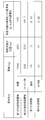
- FIG. 1 is a diagram showing a table for explaining the mass and mass ratio of each raw material component in the compost of Example 1.
- the compost of Example 1 contains 1500 kg of chicken manure as the first organic waste (450 kg in the absolute dry state) and coffee grounds as the second organic waste. 300 kg (234 kg in the absolutely dry state) and 10 kg (for example, powdered iron (III) oxide) as the first additive (10 kg in the absolutely dry state).
- 10 kg of boric acid as a second additive (10 kg in an absolutely dry state) is used as a raw material and is produced by the above-mentioned production method.
- FIG. 2A is a diagram showing a table explaining the mass of each raw material component of Example 1, Comparative Example 1, and Comparative Example 2
- FIG. 2B is a diagram showing the compost of Example 1, conventional method. It is a figure which showed the table explaining the content ratio of nitrogen, phosphoric acid, and potassium in each of compost, Comparative Example 1, and Comparative Example 2, and the result of analysis about the atmospheric odor and maturity in each.
- 2B is a compost made from chicken manure, and like the compost of Example 1, a second organic waste (coffee meal, etc.), a first compost. It is not made from additives (iron compounds, etc.) and second additives (boric acid, etc.).
- the compost of Comparative Example 1 was produced using 1500 kg of chicken manure as the first organic waste and 300 kg of coffee grounds as the second organic waste as raw materials. It was done.
- 10 L of "Ehime AI-1 (registered trademark)" as a fermenting material is mixed in the fermentation step in the same manner as the compost of Example 1. That is, unlike the compost of Example 1, the compost of Comparative Example 1 is a compost that does not use iron powder as a first additive and boric acid as a second additive as raw materials.
- the compost of Comparative Example 2 contains 1500 kg of chicken manure as the first organic waste, 10 kg of iron powder as the first additive, and as the second additive. It was produced using 10 kg of boric acid as a raw material.
- 10 L of "Ehime AI-1 (registered trademark)" as a fermenting material is mixed in the fermentation step in the same manner as the compost of Example 1. That is, unlike the compost of Example 1, the compost of Comparative Example 2 is a compost that does not use coffee grounds as a second organic waste as a raw material.
- the content ratios of nitrogen, phosphoric acid, and potassium in compost are determined by the Soil Environment Analysis Method, Chapter V 14. It is a numerical value calculated based on the measured value by A and ICP emission spectrometry.
- the atmospheric odor analysis method is a method in which an odor sensory test, which is a concentration measurement by a three-point comparative sachet method, is carried out by an in-house panel of three people. Specifically, as a sample for the odor possibility test, a sample containing 10 g of compost in a 3 L airtight bag filled with odorless air and allowed to stand at room temperature for 24 hours was used.
- the results of the analysis on the atmospheric odor are the measured values calculated from the logarithmic mean of the dilution ratios detected in the odor sensory test, with the value of the conventional compost as a reference being 100, and Example 1 and Comparative Example. It is a value calculated as a ratio of each numerical value of compost of 1 and Comparative Example 2.
- the maturity analysis method is based on the compost maturity determination method based on the simple determination of the carbon dioxide release rate. This is an analysis method based on the fact that it is clear that there is a high correlation between the maturity (maturity) and the carbon dioxide release rate in compost, and the maturity (maturity) can be determined from the carbon dioxide release rate.
- the method for analyzing the maturity is specifically 40 in a test paper (filter paper immersed in a sodium hydroxide solution containing a phenolphthalein solution) enclosed in a closed container containing 10 g of compost. This is a method in which the degree of discoloration after standing for a minute is judged by an in-house panel of three people.
- results of the analysis on maturity are based on the fact that phenolphthalein (red) is decolorized when the pH due to sodium hydroxide decreases due to absorption of carbon dioxide in the test paper. Since the redness is strong, the evaluation value of the color change on the test paper such as white (maturity 0) to pink (maturity 5) to red (maturity 10) was used as an evaluation value on a 10-point scale.
- the content ratio of each component is 3.2% for nitrogen, 6.2% for phosphoric acid, 3.5% for potassium, and the standard for atmospheric odor.
- the value was 100 and the maturity was 8.
- the content ratio of each component was 2.6% for nitrogen, 1.9% for phosphoric acid, 3.2% for potassium, 9 for atmospheric odor, and 8 for maturity. there were.
- the content ratio of each component was 5.2% for nitrogen, 4.5% for phosphoric acid, 4.1% for potassium, 89 for atmospheric odor, and 2 for maturity. there were.
- the content ratio of each component was 3.0% for nitrogen, 2.5% for phosphoric acid, 3.5% for potassium, 67 for atmospheric odor, and 8 for maturity. there were.
- the compost of Example 1 has a content ratio of nitrogen and potassium as compared with the conventional compost. Is almost the same, but the content ratio of phosphoric acid is small. Further, the compost of Example 1 had substantially the same content ratio of nitrogen and potassium as the compost of Comparative Example 1 and Comparative Example 2, but the content ratio of phosphoric acid was small. Furthermore, based on the results of the analysis on the atmospheric odor and maturity comparing each compost shown in FIG. 2B, the compost of Example 1 has the same maturity as that of the conventional compost. The atmospheric odor was reduced by 90% or more.
- the compost of Example 1 had a reduced atmospheric odor as compared with the compost of Comparative Example 1 and Comparative Example 2.
- the fermentation treatment in the anaerobic fermentation was executed without the temperature becoming 60 ° C. or higher in the fermentation treatment in the fermentation step, and the fermentation treatment was carried out during the fermentation treatment and in the fermentation treatment.
- the later ammonia odor was reduced as compared with the conventional compost, the miso odor was stronger than that of the compost of Example 1.
- the compost of Comparative Example 2 similarly to the compost of Example 1, the temperature became 60 ° C. or higher in the fermentation treatment of the fermentation step, and the fermentation treatment of aerobic fermentation was executed, but the fermentation treatment of Example 1 was carried out.
- the maturity of the compost was lower than that of the compost, and the malodor during and after the fermentation treatment was reduced as compared with the conventional compost.
- ⁇ Characteristics of this embodiment> feces of livestock and the like as the first organic waste, fibrous organic waste as the second organic waste, and the first additive.
- the compost can be fermented by mixing an iron compound as a second additive and one containing at least one or both of boric acid and silicic acid as a second additive.
- an iron compound as a second additive
- boric acid and silicic acid as a second additive.
- the iron compound as the first additive is known to have a deodorizing effect, and as shown in FIG. 2 (b), the compost of the present embodiment contains the first additive. It can be inferred that the malodor was further reduced by this.
- boric acid and silicic acid as the second additive are known to have an antifungal effect and an antiseptic effect, and as shown in FIG. 2B, the compost of the present embodiment has a second antifungal effect. It can be inferred that the malodor was further reduced by containing the additive of 2.
- the second organic waste contains coffee cake as a fibrous organic waste, and 100 parts by mass of the first organic waste.
- the first additive is 3 to 5 parts by mass with respect to 100 parts by mass of the second organic waste
- the second additive is 100 parts by mass with respect to the above.
- the compost can be 3 to 25 parts by mass with respect to the second organic waste.
- the porous substance coffee cake can retain air and fermenting bacteria for aerobic fermentation, and therefore has an effect of promoting good aerobic fermentation in the fermentation step.
- the compost of the present embodiment contains an iron compound known to have an antifungal effect and an antiseptic effect, boric acid and silicic acid, the compost of the second organic waste, coffee grounds, has a mold. Occurrence and putrefaction can be suppressed, and foul odors can be further reduced.
- a mixture generation step of producing a mixture of a second organic waste, a first additive, and a second additive can be such that a fermentation step of mixing the mixture produced in the mixture production step and the first organic waste and aerobic fermentation is carried out.
- a mixture of iron compounds, boric acid, etc. is produced with respect to coffee cakes that are prone to mold growth and putrefaction, so that mold growth and putrefaction in coffee cakes are further suppressed.
- the malodor can be significantly reduced.
- the mixture produced in the mixture production step is mixed with the first organic waste, but this mixture is subdivided into a predetermined amount. It may be mixed with the first organic waste. Specifically, 50 to 5000 g of the mixture may be sealed in the packaging material of the biodegradable film, and the packaging material in which the mixture is sealed may be mixed with the first organic waste in the fermentation step. When a packaging material in which such a mixture is enclosed is used, the mixture is more likely to be uniformly mixed with the first organic waste as compared with the case where it is not used, so that the malodor can be further reduced. .. Since the packaging material is made of a biodegradable film, it is not decomposed in the fermentation process of the fermentation step and does not impair the effect of the active ingredient on the growth of crops in compost.
- the compost in the method for producing compost, is produced through a mixture forming step, a fermentation step, and a drying step, but the compost is formed into pellets having a predetermined shape after the drying step.
- the molding process may be performed. Specifically, in the molding step after the drying step, the compost that has undergone the drying step is mixed with glue or the like, which is a water-soluble organic adhesive component, and fitted into a mold having a predetermined shape to be molded into pellets. You may do so.
- the pellet-shaped compost produced through such a molding step can be made easier to use when sprinkling the compost than the conventional coarse-grained compost.
Landscapes
- Chemical & Material Sciences (AREA)
- Organic Chemistry (AREA)
- Health & Medical Sciences (AREA)
- Engineering & Computer Science (AREA)
- Life Sciences & Earth Sciences (AREA)
- Chemical Kinetics & Catalysis (AREA)
- Biochemistry (AREA)
- Biotechnology (AREA)
- General Chemical & Material Sciences (AREA)
- Microbiology (AREA)
- Molecular Biology (AREA)
- Tropical Medicine & Parasitology (AREA)
- Environmental & Geological Engineering (AREA)
- Botany (AREA)
- Inorganic Chemistry (AREA)
- Fertilizers (AREA)
- Treatment Of Sludge (AREA)
- Processing Of Solid Wastes (AREA)
Abstract
Description
図1を参照して、以下に、本実施形態の堆肥の製造方法について説明する。図1は、本実施形態の堆肥の製造方法のフローチャートである。本実施形態の堆肥は、第1の有機性廃棄物としての家畜等の糞と、第2の有機性廃棄物としての繊維状の有機性廃棄物と、第1の添加物としての鉄化合物と、第2の添加物としてのホウ酸およびケイ酸のうち少なくとも一方又は両方を含有するものと、を原料として製造されるものである。
図1を参照して、次に、本実施形態の堆肥の一つの実施例であって、実施例1の堆肥について説明する。図1は、実施例1の堆肥における各原料成分の質量および質量比を説明する表を示した図である。図1に示すように、実施例1の堆肥は、第1の有機性廃棄物としての鶏糞を1500kg(絶乾状態では450kgである。)と、第2の有機性廃棄物としてのコーヒー粕を300kg(絶乾状態では234kgである。)と、第1の添加物としての鉄粉(例えば、粉末状の酸化鉄(III)である。)を10kg(絶乾状態では10kgである。)と、第2の添加物としてのホウ酸を10kg(絶乾状態では10kgである。)と、を原料として上述の製造方法にて製造されたものである。また、実施例1の堆肥における製造方法の発酵工程では、発酵材としての10Lの「えひめAI-1(登録商標)」(溶液であって、絶乾状態では0.04kgである。)が混合される。このような実施例1の堆肥においては、目視にてカビの発生が認められなかったとともに、従来に比べて悪臭も著しく低減されたものとなっていた。なお、各原料成分の絶乾状態における質量比は、100質量部の第1の有機性廃棄物の鶏糞に対して、第2の有機性廃棄物のコーヒー粕が66.7質量部となり、第1の添加物の鉄粉が2.22質量部となり、第2の添加物のホウ酸が2.22質量部となる。
図2(a)、(b)を参照して、次に、実施例1の堆肥における雰囲気臭と成熟度に関する分析について説明する。図2(a)は、実施例1の堆肥、比較例1、および比較例2の各原料成分の質量を説明する表を示した図であり、(b)は、実施例1の堆肥、従来の堆肥、比較例1、および比較例2について、各々における窒素、リン酸、カリウムの含有割合と、各々における雰囲気臭および成熟度に関する分析の結果と、を説明する表を示した図である。なお、図2(b)に示した従来の堆肥とは、鶏糞を原料とした堆肥であって、実施例1の堆肥のように第2の有機性廃棄物(コーヒー粕等)、第1の添加物(鉄化合物等)、および第2の添加物(ホウ酸等)を原料としていないものである。
上述のような実施形態の堆肥によれば、第1の有機性廃棄物としての家畜等の糞と、第2の有機性廃棄物としての繊維状の有機性廃棄物と、第1の添加物としての鉄化合物と、第2の添加物としてのホウ酸およびケイ酸のうち少なくとも一方又は両方を含有するものと、を混ぜ合わせて発酵させた堆肥とすることができる。このような実施形態の堆肥であれば、従来の堆肥に比べて、悪臭を著しく低減させた堆肥にすることができる。また、このような実施形態の堆肥であれば、鉄化合物の鉄分、ホウ酸、ケイ酸が肥料として有効な成分となるため、作物に対する育成効果が良好である堆肥にすることができる。特に、第1の添加物としての鉄化合物は、脱臭効果を有することが知られており、図2(b)に示したように、本実施形態の堆肥は、第1の添加物を含有することによってより悪臭が低減されたものと推考できる。また、第2の添加物としてのホウ酸およびケイ酸は、防カビ効果および防腐効果を有することが知られており、図2(b)に示したように、本実施形態の堆肥は、第2の添加物を含有することによってより悪臭が低減されたものと推考できる。
上述の本実施形態では、堆肥の製造方法の発酵工程において、混合物生成工程にて生成された混合物を第1の有機性廃棄物に混合するものとしたが、この混合物を所定量に小分けした状態で第1の有機性廃棄物に混合するものとしてもよい。具体的には、生分解性フィルムの包装材に50~5000gの混合物を封入し、発酵工程において混合物が封入された包装材を第1の有機性廃棄物に混合するようにしてもよい。このような混合物が封入された包装材を利用した場合は、利用しない場合に比べて、第1の有機性廃棄物に対して混合物が均一に混ざりやすくなるため、より悪臭を低減することができる。なお、包装材は生分解性フィルムからなるため、発酵工程の発酵処理において分解されて、堆肥における作物の育成に関する有効成分の効果を損なうこともない。
Claims (3)
- 有機性廃棄物を発酵させた堆肥であって、
家畜または家禽の糞を含有する第1有機性廃棄物と、
前記第1有機性廃棄物とは異なる繊維状の有機性廃棄物を含有する第2有機性廃棄物と、
鉄化合物を含有する第1添加物と、
ホウ酸およびケイ酸のうち少なくとも一方を含有する第2添加物と、
を混ぜ合わせて発酵させてなることを特徴とする堆肥。 - 請求項1に記載の堆肥において、
前記第2有機性廃棄物は、前記繊維状の有機性廃棄物としてのコーヒー粕を含有しており、100質量部の前記第1有機性廃棄物に対して20~28質量部であり、
前記第1添加物は、100質量部の前記第2有機性廃棄物に対して3~5質量部であり、
前記第2添加物は、100質量部の前記第2有機性廃棄物に対して3~25質量部である
ことを特徴とする堆肥。 - 請求項1又は請求項2に記載の堆肥における堆肥製造方法であって、
前記第2有機性廃棄物と、前記第1添加物と、前記第2添加物と、を混合した混合物を生成する混合物生成工程と、
前記混合物生成工程で生成された前記混合物と、前記第1有機性廃棄物と、を混ぜ合わせて好気性発酵させる発酵工程と、
を実行することを特徴とする堆肥製造方法。
Priority Applications (5)
| Application Number | Priority Date | Filing Date | Title |
|---|---|---|---|
| CN202080044177.5A CN114008005A (zh) | 2019-07-09 | 2020-07-08 | 堆肥以及制造堆肥的方法 |
| US17/623,223 US20220411343A1 (en) | 2019-07-09 | 2020-07-08 | Compost and compost production method |
| EP20837246.6A EP3998247A4 (en) | 2019-07-09 | 2020-07-08 | COMPOST AND METHODS OF MAKING COMPOST |
| JP2021504321A JP7030372B2 (ja) | 2019-07-09 | 2020-07-08 | 堆肥、および堆肥製造方法 |
| KR1020217042006A KR20220011704A (ko) | 2019-07-09 | 2020-07-08 | 퇴비, 및 퇴비 제조 방법 |
Applications Claiming Priority (2)
| Application Number | Priority Date | Filing Date | Title |
|---|---|---|---|
| JP2019-127293 | 2019-07-09 | ||
| JP2019127293 | 2019-07-09 |
Publications (1)
| Publication Number | Publication Date |
|---|---|
| WO2021006285A1 true WO2021006285A1 (ja) | 2021-01-14 |
Family
ID=74114833
Family Applications (1)
| Application Number | Title | Priority Date | Filing Date |
|---|---|---|---|
| PCT/JP2020/026625 Ceased WO2021006285A1 (ja) | 2019-07-09 | 2020-07-08 | 堆肥、および堆肥製造方法 |
Country Status (6)
| Country | Link |
|---|---|
| US (1) | US20220411343A1 (ja) |
| EP (1) | EP3998247A4 (ja) |
| JP (1) | JP7030372B2 (ja) |
| KR (1) | KR20220011704A (ja) |
| CN (1) | CN114008005A (ja) |
| WO (1) | WO2021006285A1 (ja) |
Cited By (1)
| Publication number | Priority date | Publication date | Assignee | Title |
|---|---|---|---|---|
| JP2022065901A (ja) * | 2020-10-16 | 2022-04-28 | 四国ケージ株式会社 | 堆肥、および堆肥製造方法 |
Citations (6)
| Publication number | Priority date | Publication date | Assignee | Title |
|---|---|---|---|---|
| JP2000203976A (ja) * | 1998-11-09 | 2000-07-25 | Food Cycle Systems:Kk | 有機廃棄物の再生処理方法 |
| JP2007177065A (ja) * | 2005-12-27 | 2007-07-12 | Kazuhiro Inoue | 土壌改良剤、それを用いた土壌改良方法及びその他の使用方法 |
| JP2008013380A (ja) | 2006-07-03 | 2008-01-24 | Tomuso:Kk | 堆肥製造方法 |
| CN105418335A (zh) * | 2015-12-30 | 2016-03-23 | 张秀丽 | 有益生物菌发酵的微生物有机肥 |
| CN108299051A (zh) * | 2018-04-28 | 2018-07-20 | 河南牧业经济学院 | 一种小麦全价有机复合肥料及其制备方法 |
| CN109627116A (zh) * | 2018-12-13 | 2019-04-16 | 袁洁莉 | 多功能生物有机肥及其制备方法和应用 |
Family Cites Families (19)
| Publication number | Priority date | Publication date | Assignee | Title |
|---|---|---|---|---|
| JPH1179874A (ja) * | 1997-09-03 | 1999-03-23 | Akio Tobimatsu | 家畜糞尿の無臭発酵処理法 |
| JP2002145686A (ja) * | 2000-11-01 | 2002-05-22 | Hideaki Tanaka | 産業廃棄物の無公害処理とその有効利用 |
| JP4237955B2 (ja) * | 2001-09-21 | 2009-03-11 | クボタ松下電工外装株式会社 | 肥料とその製造方法 |
| JP2004155900A (ja) * | 2002-11-06 | 2004-06-03 | Hidekazu Itaka | 構造化濃縮深層水を用いた土壌活性剤 |
| CN101284737A (zh) * | 2007-04-10 | 2008-10-15 | 袁双喜 | 粪便堆肥除臭处理组合物 |
| CN101417140B (zh) * | 2008-12-15 | 2012-10-24 | 黑龙江省达丰科技开发有限责任公司 | 粪便除味剂及其制备方法 |
| CN102217469A (zh) * | 2010-04-19 | 2011-10-19 | 陆振冈 | 一种有机栽培介质及其应用方法 |
| CN103553801A (zh) * | 2013-10-31 | 2014-02-05 | 李洁 | 利用咖啡渣制备的蘑菇培养基 |
| CN103787765A (zh) * | 2014-01-21 | 2014-05-14 | 枞阳县白云生态园林有限责任公司 | 一种多功能增效肥料及其制备方法 |
| CN104137733B (zh) * | 2014-04-23 | 2016-03-09 | 安徽大学 | 一种富硒杏鲍菇的栽培及成份检测方法 |
| CN104803792B (zh) * | 2015-04-28 | 2019-02-01 | 云南省农业科学院热带亚热带经济作物研究所 | 蔗渣生物有机肥及制备方法 |
| CN106810354A (zh) * | 2016-12-29 | 2017-06-09 | 常熟市添源环保科技有限公司 | 一种无臭高效绿色有机肥 |
| CN107353149A (zh) * | 2017-06-27 | 2017-11-17 | 安徽省瑞森生物科技有限责任公司 | 一种减少家畜粪便发酵过程中产生臭气的发酵方法 |
| CN107162781A (zh) * | 2017-06-27 | 2017-09-15 | 安徽省瑞森生物科技有限责任公司 | 一种有机肥发酵过程中减少有机氮流失的发酵方法 |
| CN109420664A (zh) * | 2017-08-29 | 2019-03-05 | 浙江科罗尼生物科技有限公司 | 二价铁在促进有机类废弃物处理用菌群发酵方面的应用 |
| CN108129208A (zh) * | 2018-02-01 | 2018-06-08 | 云南省农业科学院热带亚热带经济作物研究所 | 一种甜橙专用生物有机肥及其制备方法与施用方法 |
| CN108314482A (zh) * | 2018-03-22 | 2018-07-24 | 中国科学院青岛生物能源与过程研究所 | 一种促进有机质降解、加速堆肥腐熟方法及其装置 |
| CN108892581A (zh) * | 2018-09-30 | 2018-11-27 | 广西乐业康辉生态养殖专业合作社 | 一种有机肥的制备方法 |
| CN109279953A (zh) * | 2018-10-17 | 2019-01-29 | 内蒙古金地隆农业科技发展有限公司 | 一种无臭、高氮的畜禽粪便发酵有机肥的生产方法 |
-
2020
- 2020-07-08 US US17/623,223 patent/US20220411343A1/en not_active Abandoned
- 2020-07-08 KR KR1020217042006A patent/KR20220011704A/ko not_active Ceased
- 2020-07-08 JP JP2021504321A patent/JP7030372B2/ja active Active
- 2020-07-08 CN CN202080044177.5A patent/CN114008005A/zh active Pending
- 2020-07-08 WO PCT/JP2020/026625 patent/WO2021006285A1/ja not_active Ceased
- 2020-07-08 EP EP20837246.6A patent/EP3998247A4/en not_active Withdrawn
Patent Citations (6)
| Publication number | Priority date | Publication date | Assignee | Title |
|---|---|---|---|---|
| JP2000203976A (ja) * | 1998-11-09 | 2000-07-25 | Food Cycle Systems:Kk | 有機廃棄物の再生処理方法 |
| JP2007177065A (ja) * | 2005-12-27 | 2007-07-12 | Kazuhiro Inoue | 土壌改良剤、それを用いた土壌改良方法及びその他の使用方法 |
| JP2008013380A (ja) | 2006-07-03 | 2008-01-24 | Tomuso:Kk | 堆肥製造方法 |
| CN105418335A (zh) * | 2015-12-30 | 2016-03-23 | 张秀丽 | 有益生物菌发酵的微生物有机肥 |
| CN108299051A (zh) * | 2018-04-28 | 2018-07-20 | 河南牧业经济学院 | 一种小麦全价有机复合肥料及其制备方法 |
| CN109627116A (zh) * | 2018-12-13 | 2019-04-16 | 袁洁莉 | 多功能生物有机肥及其制备方法和应用 |
Non-Patent Citations (1)
| Title |
|---|
| See also references of EP3998247A4 |
Cited By (2)
| Publication number | Priority date | Publication date | Assignee | Title |
|---|---|---|---|---|
| JP2022065901A (ja) * | 2020-10-16 | 2022-04-28 | 四国ケージ株式会社 | 堆肥、および堆肥製造方法 |
| JP7633644B2 (ja) | 2020-10-16 | 2025-02-20 | 四国ケージ株式会社 | 堆肥製造方法 |
Also Published As
| Publication number | Publication date |
|---|---|
| CN114008005A (zh) | 2022-02-01 |
| KR20220011704A (ko) | 2022-01-28 |
| JP7030372B2 (ja) | 2022-03-07 |
| EP3998247A1 (en) | 2022-05-18 |
| EP3998247A4 (en) | 2023-07-26 |
| JPWO2021006285A1 (ja) | 2021-10-14 |
| US20220411343A1 (en) | 2022-12-29 |
Similar Documents
| Publication | Publication Date | Title |
|---|---|---|
| US8034148B2 (en) | Methods and compositions for soil amendments and organic waste management | |
| US20020053229A1 (en) | Organic-based fertilizer | |
| JP5985477B2 (ja) | 鉱物放出性コンポストおよびそれを用いた土壌浄化のための方法 | |
| US3640696A (en) | Soil conditioner and garden mold on the basis of coffee extraction residue | |
| JP2013540677A5 (ja) | ||
| US20020157439A1 (en) | Organic biosolid waste treatment process for resource transformation, regeneration, and utilization | |
| RU2086522C1 (ru) | Способ получения органо-минерального удобрения | |
| DK1464635T3 (en) | PROCEDURE TO OBTAIN FERTILIZERS WHEN USING ORGANIC EXTRACTS FROM AHEAD WOODWASHING PROCESSES | |
| JP7021430B2 (ja) | 高腐植酸含有率の完熟肥料を製造する方法 | |
| EP2931680B1 (en) | Organic fertilizer and method of its production | |
| KR20170127182A (ko) | 유기물이 풍부한 유기질비료의 제조방법 | |
| JP7030372B2 (ja) | 堆肥、および堆肥製造方法 | |
| DE3235452A1 (de) | Verfahren zur herstellung eines vollwertigen humustraegers und duengers auf rindenbasis | |
| CN103265378A (zh) | 一种含有生物菌、微量元素的有机无机复混肥料 | |
| JP7633644B2 (ja) | 堆肥製造方法 | |
| KR20150076754A (ko) | 퇴비, 축사 깔개 및 이의 제조방법 | |
| US2951755A (en) | Fertilizers and method of making same | |
| RU2108994C1 (ru) | Способ получения удобрения | |
| US20070266751A1 (en) | Biosolid waste transformation process | |
| WO2018134638A1 (en) | Soil conditioner and method for producing the same | |
| GB1602300A (en) | Composting additives | |
| CN121136859B (zh) | 一种用于畜禽粪便快速腐熟的复合微生物菌剂及其制备方法和应用 | |
| RU2337086C2 (ru) | Органоминеральное удобрение | |
| KR100527862B1 (ko) | 생활 폐기물과 소성암석 분말을 이용한 유기질 비료의제조방법 | |
| CN110342969A (zh) | 一种含腐殖酸螯合微量元素的造纸污泥堆肥 |
Legal Events
| Date | Code | Title | Description |
|---|---|---|---|
| ENP | Entry into the national phase |
Ref document number: 2021504321 Country of ref document: JP Kind code of ref document: A |
|
| 121 | Ep: the epo has been informed by wipo that ep was designated in this application |
Ref document number: 20837246 Country of ref document: EP Kind code of ref document: A1 |
|
| ENP | Entry into the national phase |
Ref document number: 20217042006 Country of ref document: KR Kind code of ref document: A |
|
| ENP | Entry into the national phase |
Ref document number: 2020837246 Country of ref document: EP Effective date: 20220209 |