WO2021018154A1 - Procédé et appareil de représentation d'informations - Google Patents
Procédé et appareil de représentation d'informations Download PDFInfo
- Publication number
- WO2021018154A1 WO2021018154A1 PCT/CN2020/105295 CN2020105295W WO2021018154A1 WO 2021018154 A1 WO2021018154 A1 WO 2021018154A1 CN 2020105295 W CN2020105295 W CN 2020105295W WO 2021018154 A1 WO2021018154 A1 WO 2021018154A1
- Authority
- WO
- WIPO (PCT)
- Prior art keywords
- information
- user
- knowledge graph
- user equipment
- node
- Prior art date
- Legal status (The legal status is an assumption and is not a legal conclusion. Google has not performed a legal analysis and makes no representation as to the accuracy of the status listed.)
- Ceased
Links
Images




Classifications
-
- G—PHYSICS
- G06—COMPUTING OR CALCULATING; COUNTING
- G06F—ELECTRIC DIGITAL DATA PROCESSING
- G06F16/00—Information retrieval; Database structures therefor; File system structures therefor
- G06F16/30—Information retrieval; Database structures therefor; File system structures therefor of unstructured textual data
- G06F16/36—Creation of semantic tools, e.g. ontology or thesauri
- G06F16/367—Ontology
-
- G—PHYSICS
- G06—COMPUTING OR CALCULATING; COUNTING
- G06F—ELECTRIC DIGITAL DATA PROCESSING
- G06F16/00—Information retrieval; Database structures therefor; File system structures therefor
- G06F16/60—Information retrieval; Database structures therefor; File system structures therefor of audio data
- G06F16/63—Querying
- G06F16/635—Filtering based on additional data, e.g. user or group profiles
Definitions
- This application relates to the field of big data processing technology, and in particular to an information representation method and device.
- the reference information is only limited to: within the scope of the knowledge points involved in the specified test questions, to determine the user’s mastery of a certain knowledge point. Because when constructing a personal knowledge graph, the reference information is limited, that is, it is limited to the knowledge points involved in the specified test questions, and it is impossible to accurately understand the user's grasp of the knowledge points.
- the personal knowledge graph constructed in this way cannot accurately reflect the user's learning status, that is, it cannot accurately present the user's characteristics.
- the embodiments of the present application provide an information representation method and device, which can improve the accuracy and comprehensiveness of characterizing users.
- an embodiment of the present application provides an information representation method.
- the method includes: a user equipment determines a model of a knowledge graph, collects various kinds of information based on the model of the knowledge graph to generate a knowledge graph, and then converts at least a part of the knowledge graph to Represented in vector form.
- a variety of information includes person information, equipment information, environmental information, and activity information; a variety of information can also include organization information, service information, media information, personal identity information related information, device component information related information, and device software information At least one of the associated information.
- the knowledge graph is used to indicate the relationship between the above-mentioned various kinds of information.
- the character information is information about the character, which may include but is not limited to the user's basic personal information, hobbies, habits, etc.
- the character information may be one of the character's name, height, hometown, personal hobbies, life habits, long-term behavior habits, short-term behavior habits, psychological information, and physiological information.
- Device information is information about the device, which may include but is not limited to the name of the device, device model, device specifications, device (power) parameters, etc.
- Environmental information is information describing the environment, which can include, but is not limited to, descriptions of light intensity, brightness, relative humidity, or sound intensity within a certain time or space.
- the environmental information may be the degree of brightness and sound intensity in the space around the user equipment.
- Activity information is information about actions that people are engaged in.
- the activity information may be information about activities such as hiking, exhibitions, singing competitions, and painting competitions, such as introducing the name, location, and execution rules of any of the above activities.
- Organizational information is the introduction information about certain collectives or groups formed by mutual cooperation.
- the organization information may be information about organizations such as trade union organizations, student associations, and electronic associations, such as introducing the name, establishment time, establishment location, development history, and member information of any of the foregoing organizations.
- Service information is information about labor forms.
- the service information may be information about the provision of catering, medical, cleaning and other services, such as introducing the tariff information of catering services, the service time of providing medical services, the service time of providing cleaning services, etc., to meet the actual needs of people.
- Media information is information that can bring people sensory (such as visual or auditory) effects through a certain presentation.
- the media information may include, but is not limited to, pictures, videos, audios, etc.
- the associated information of the personal identity information may be information associated with the personal information based on a certain identity.
- a certain author "Zhang Defen”
- there is an introduction about a certain book “Meeting the Unknown Self” which belongs to the type of "Spiritual Practice” books, and it belongs to other books of the same type.
- the introduction information all belong to the "personal identity information related information”.
- the associated information of the equipment component information may be based on the information associated with a certain equipment component.
- the device component may be a mobile phone casing of a certain model, and the information about the designer of the mobile phone casing of this model belongs to the "relevant information of the device component information”.
- the associated information of the device software information may be based on the information associated with a certain device software.
- information about the designer of the operating system of the mobile phone of that model belongs to "relevant information of device software information”.
- the method for constructing the knowledge graph of the embodiment of the application can determine the model of the knowledge graph without the user's perception, and then obtain a variety of information, including person information, equipment information, environmental information, and activity information. It includes at least one of organization information, service information, associated information of person identity information, associated information of device component information, and associated information of device software information to construct a knowledge graph.
- the model of the knowledge graph is diverse, can be applied to different scenarios, has a wide range of application, high flexibility, and is more suitable for the actual situation of the user, and it can more accurately present the characteristics of the user.
- the user equipment autonomously acquires a variety of information based on the model of the knowledge graph, without the need for the user to actively provide information for constructing the knowledge graph, which helps to improve user experience.
- the user equipment obtains information there are many types of information involved, which also helps to accurately present the characteristics of the user, and thus can improve the accuracy and comprehensiveness of describing the characteristics of the user.
- the information representation method of the embodiment of the present application further includes: acquiring a part of the knowledge graph corresponding to the scene based on the scene where the user equipment is currently located. In this way, it is convenient for the user equipment to provide services for the user based on the partial knowledge graph corresponding to the scene. The user equipment only needs to use a part of the knowledge graph corresponding to a scene, which is more convenient to use and analyze.
- the knowledge graph includes multiple nodes and multiple edges, where the multiple nodes include a first node and a second node, the first node indicates a person or device, and the first node includes one or more Attribute, the second node indicates the status of the person or device, the status includes at least one of activity, environment, place, and time.
- the edge connects two nodes to indicate the relationship between the connected nodes. The first node and at least three The second node is connected. In this way, the knowledge graph can show the characteristics of entities such as people or equipment from more dimensions.
- a variety of information comes from user equipment and cloud equipment. For example, obtain character information based on the information generated when the user uses the user device; and/or obtain environmental information through sensors; and/or obtain device information through the device parameters of the user device; and/or, obtain information from the cloud device Obtain person information or device information from the knowledge graph of the cloud; and/or obtain person identity information and/or device software information related information from the knowledge graph stored in the cloud device.
- the information representation method of the embodiment of the present application further includes: recommending a service to a user of a user equipment based on at least a part of the knowledge graph, and the service is for the user, or for at least a part of the characters or devices in the knowledge graph. In this way, based on at least a part of the knowledge graph, services are provided for users to meet the actual application needs of users.
- the information representation method of the embodiment of the present application further includes: the user equipment searches the user's corresponding knowledge graph based on the user's service request, and provides services to the user of the user equipment, the service is for the user, or for at least part of the knowledge Characters or equipment in the map.
- the service is at least one of recommending music, playing media files, recommending restaurants, indicating the cause of the equipment failure, indicating the repair method of the equipment failure, and indicating the execution result of the repair of the equipment failure.
- the information representation method of the embodiment of the present application further includes: updating the knowledge graph based on the information collected by the user equipment at different times.
- the update is periodic or triggered by an event to save the storage space of the user equipment. .
- the multiple types of information also include media information.
- the media information corresponds to part of the knowledge graph, and the media information is at least one of picture information, video information, and audio information;
- the user equipment converts at least part of the knowledge graph into a vector Formal representation, including:
- the user equipment determines a structure representation vector based on the nodes, node attributes, edge types, and structural relationships formed by the nodes and edges in at least a part of the knowledge graph, and the structure representation vector expresses the position of the node in at least a part of the knowledge graph in a vector form;
- the user equipment determines the content representation vector according to the media information, and the content representation vector represents the content information of the nodes and edges in the knowledge graph in the form of vectors;
- the user equipment merges the structure representation vector and the content representation vector to obtain a final representation vector, and the final representation vector is used to represent at least a part of the knowledge graph.
- the information representation method of the embodiment of the present application further includes: the user equipment represents at least a part of the knowledge graph and the media information related to the part of the knowledge graph in vector form, where the media information is picture information, video information and At least one of audio information.
- the user equipment can represent at least a part of the knowledge graph and some media information related to the knowledge graph in the form of vectors, which facilitates logical judgment and calculation.
- an embodiment of the present application provides a service providing method, the method includes: the user equipment provides a service to the user of the user equipment according to the knowledge graph corresponding to the user; wherein the knowledge graph corresponding to the user includes a variety of information, and Represents the relationship between a variety of information in the form of a vector; a variety of information includes person information, equipment information, environmental information and activity information, and a variety of information can also include organization information, service information, association information of person identity information, and equipment component information At least one of the associated information of the device and the associated information of the device software information. Services are aimed at users, or at least part of the people or devices in the knowledge graph.
- the service providing method of the embodiment of the present application can provide a service for the user based on the knowledge graph corresponding to the user. Since the knowledge graph corresponding to the user includes different types of information, the service determined by the user equipment is more suitable for the user's needs. When information changes, user equipment will provide different services to meet the actual application needs of users at different times and in different scenarios, and help improve user experience.
- the vector is the final representation vector after fusion of the structure representation vector and the content representation vector; among them, the structure representation vector expresses the position of the node in the knowledge graph corresponding to the user in the form of a vector; the content representation vector is The content information of nodes and edges in the knowledge graph corresponding to the user is expressed in vector form.
- the service providing method of the embodiment of the present application further includes: the user equipment provides services to the user of the user equipment according to the knowledge graph corresponding to the user and the media information related to the knowledge graph; wherein, the knowledge graph corresponding to the user And the media information related to the knowledge graph is expressed in vector form.
- the service providing method of the embodiment of the present application further includes: the user equipment receives a user's service request; the user equipment searches the user's corresponding knowledge graph based on the service request to provide services to the user of the user equipment.
- the user equipment provides services to the user of the user equipment according to the knowledge graph corresponding to the user, including: the user equipment recommends the service to the user of the user equipment according to the knowledge graph corresponding to the user to automatically provide the service to the user .
- the service is at least one of recommending music, playing media files, recommending restaurants, indicating the cause of the equipment failure, indicating the repair method of the equipment failure, and indicating the execution result of the repair of the equipment failure.
- the knowledge graph includes multiple nodes and multiple edges, where the multiple nodes include a first node and a second node, the first node indicates a person or device, and the first node includes one or more Attribute, the second node indicates the status of the person or device, the status includes at least one of activity, environment, place, and time.
- the edge connects two nodes to indicate the relationship between the connected nodes. The first node and at least three The second node is connected.
- embodiments of the present application provide a user equipment, the user equipment comprising: a processor; a memory connected to the processor; wherein instructions are stored in the memory, and the processor is configured to execute the instructions stored in the memory to make The user device performs the following steps:
- the model based on the knowledge graph collects a variety of information to generate a knowledge graph; a variety of information includes character information, equipment information, environmental information, and activity information; the knowledge graph is used to indicate the relationship between a variety of information;
- the third aspect describes the implementation of the user equipment in the method described in the first aspect. Therefore, for the specific implementation and beneficial effects of the third aspect, please refer to the description of the first aspect.
- an embodiment of the present application provides a user equipment that includes: a processor; a memory connected to the processor; wherein instructions are stored in the memory, and the processor is configured to execute the instructions stored in the memory to make The user device performs the following steps:
- the user’s corresponding knowledge graph includes a variety of information, and represents the relationship between multiple types of information in the form of vectors; a variety of information includes person information, device information, Environmental information and activity information; the service is aimed at users, or at least part of the characters or devices in the knowledge graph.
- the fourth aspect describes the implementation of the user equipment in the method described in the second aspect. Therefore, for the specific implementation and beneficial effects of the fourth aspect, please refer to the description of the second aspect.
- an embodiment of the present application provides an information representation device, which includes a modeling unit, an acquisition unit, and a representation unit.
- the modeling unit is used for the user equipment to determine the model of the knowledge graph
- the acquisition unit is used for collecting various information based on the model of the knowledge graph to generate the knowledge graph
- the representation unit is used for representing at least a part of the knowledge graph in a vector form.
- a variety of information includes character information, equipment information, environmental information, and activity information.
- Various types of information can also include organization information, service information, media information, personal identity information related information, device component information, and device software information. At least one type of information in the associated information.
- the fifth aspect describes the implementation of the user equipment in the method described in the first aspect. Therefore, for the specific implementation and beneficial effects of the fifth aspect, please refer to the description of the first aspect.
- an embodiment of the present application provides a service providing device, which includes a service providing unit, configured to provide services to users of user equipment according to a knowledge graph corresponding to the user; wherein the knowledge graph corresponding to the user includes a variety of Information, and express the relationship between various kinds of information in the form of vectors; various kinds of information include character information, equipment information, environmental information, and activity information. Various kinds of information can also include organization information, service information, media information, and personal identity information. At least one of the associated information, the associated information of the device component information, and the associated information of the device software information.
- the service is aimed at users, or at least part of the characters or devices in the knowledge graph.
- the sixth aspect describes the implementation of the user equipment in the method described in the second aspect. Therefore, for the specific implementation and beneficial effects of the sixth aspect, please refer to the description of the second aspect.
- an embodiment of the present application provides a computer storage medium, including computer instructions, which when the computer instructions run on the user equipment, cause the user equipment to execute the information representation method in any one of the possible designs of the first aspect above, Or, make the user equipment execute any one of the possible designs of the service providing method in the second aspect.
- the embodiments of the present application provide a computer program product that, when the computer program product runs on a computer, causes the computer to execute the information representation method in any one of the possible designs of the first aspect, or causes the computer to execute The service provision method in any possible design of the second aspect mentioned above.
- FIG. 1 is a simplified schematic diagram of a system architecture provided by an embodiment of the application
- Figure 2 is a flowchart of an information representation method provided by an embodiment of the application.
- 3 to 4 are schematic diagrams of a knowledge graph model provided by an embodiment of this application.
- FIG. 5 is a flowchart of another information representation method provided by an embodiment of this application.
- FIG. 6 is a flowchart of a method for user equipment to obtain information according to an embodiment of the application
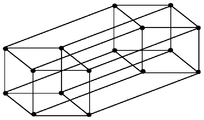
- FIG. 7 is a schematic diagram of the structure of a super-square knowledge graph provided by an embodiment of the application.
- FIG. 8 is a flowchart of another information representation method provided by an embodiment of this application.
- FIG. 9 is a flowchart of yet another information representation method provided by an embodiment of this application.
- FIG. 10 is a flowchart of a method for determining a structural representation vector provided by an embodiment of the application
- FIG. 11 is a flowchart of a method for determining a content representation vector provided by an embodiment of the application.
- FIG. 12 is a flowchart of yet another information representation method provided by an embodiment of this application.
- FIG. 13 is a flowchart of a method for obtaining learning results provided by an embodiment of the application.
- FIGS 17(a) to 17(e) are simplified schematic diagrams of service content provided by embodiments of this application.
- FIG. 19 is a schematic structural diagram of yet another user equipment provided by an embodiment of this application.
- FIG. 20 is a schematic structural diagram of a user equipment provided by an embodiment of this application.
- Knowledge graph is a structured semantic knowledge base, which describes entities (or concepts) in the objective world and their relationships in symbolic form. From the perspective of graph, knowledge graph is essentially a kind of network, in which nodes represent entities in the objective world, and edges represent various relationships between entities.
- each node in the knowledge graph corresponds to an entity.
- Each entity can have its own attributes, such as name, number, size, etc.
- each edge corresponds to a relationship, and each relationship can have its own name and weight information.
- the relationship between entities may be a containment relationship, a subordinate relationship, and the like.
- a mobile phone contains a camera, that is, there is a containment relationship between the mobile phone and the camera.
- An attribute is an abstract description of an entity. It is worth noting that an entity generally has many properties, which can be called the attributes of the entity. For example, taking Beijing as an example, the attributes of Beijing include: population, area, etc.
- the attribute value is the value of the specified attribute of the entity. For example, the area of China is 9.6 million square kilometers, and 9.6 million square kilometers is the value of this attribute.
- the triple is a general representation of the knowledge graph.
- the basic forms of triples include (first entity-relationship-tail entity) and (entity-attribute-attribute value).
- China-Capital-Beijing is an example of a triple (head entity-relationship-tail entity), where China is the head entity, Beijing is the tail entity, and the capital is the relationship between China and Beijing.
- Beijing-population-20.693 million constitutes an example of a triple (entity-attribute-attribute value), where population is an attribute and 20.693 million is an attribute value.
- the triples all refer to the basic form of (head entity-relationship-tail entity).
- the schema of the knowledge graph is a specification for modeling entities, an abstract model describing the objective world, and a clear definition of entities and their relationships in a formal way. It is understandable that the schema defines the data model in the knowledge graph. Specifically, the schema defines the type of entity and the type of relationship.
- the knowledge graph stored in the cloud device includes information disclosed to the public.
- the cloud device can be a server or a server cluster.
- Cloud devices may also be called computing nodes or cloud-side computing clusters.
- the information disclosed to the public group can be information related to various aspects, including but not limited to information about people, equipment, etc., or it can be objective knowledge with commonality and regularity.
- the type of information in the knowledge graph stored in the cloud device is not limited here.
- the character information may be basic information that has been disclosed by artists, politicians, etc., and the device information may be information such as device model and power parameters.
- the knowledge graph of cloud devices Since the knowledge graph of cloud devices is oriented to public information, it does not involve users' personal data, such as personal habits, hobbies, physiological data, psychological data, long-term behavior, short-term behavior, etc. In this way, it is impossible to provide services to users based only on the knowledge graph of cloud devices.
- the knowledge graph corresponding to most users does not integrate equipment information, environmental information, etc., and the information dimension is single. As such, the information pushed to users based on a knowledge graph with a single information dimension is also inaccurate.
- the knowledge graph corresponding to the user is mostly about a certain topic.
- the referenced information is only limited to the evaluation results of the evaluation model, that is, within the scope of the knowledge points involved in the specified test questions, determine the user's mastery of a certain knowledge point. Because when constructing a personal knowledge graph, the reference information is limited, that is, it is limited to the knowledge points involved in the specified test questions, and it is impossible to accurately understand the user's grasp of the knowledge points.
- the personal knowledge graph constructed in this way cannot accurately reflect the learning status of users, and the recommended learning path cannot meet the actual needs of users. Since the personal knowledge graph is only focused on the problem of "knowledge point learning", it cannot provide services for other types of applications (such as music players).
- the embodiment of the present application provides an information representation method, and the information representation method provided in the embodiment of the application may be applicable to user equipment.
- the user equipment may specifically be a mobile phone, a tablet computer, a wearable device, a vehicle-mounted device, an augmented reality (AR)/virtual reality (VR) device, a desktop, a laptop, a handheld notebook computer , Ultra-mobile personal computers (UMPC), netbooks, personal digital assistants (personal digital assistants, PDAs), etc.
- the embodiments of this application do not impose any restrictions on the specific form of user equipment.
- the communication system includes not only the aforementioned user equipment 10 but also a cloud device 20.
- the user equipment 10 and the cloud device 20 communicate via a wireless network or a wired network.
- the cloud device 20 may be a server or a server cluster.
- the cloud device 20 may also be called a computing node or a cloud-side computing cluster.
- an embodiment of the present application provides an information representation method.
- the method may include the following steps:
- the user equipment determines a model of the knowledge graph.
- the node types can include one or more of the following types: individual, location, organization, environment, time, activity, action, etc., node type It can also be of other types, such as equipment, applications, services, and networks.
- the node whose type is "person” may be an oval icon, and the node with a character name is marked in the icon, and the character name may be the name of the user, such as "Xiaoming”.
- the node whose type is "location” can be an oval icon, and the node with the address name is marked in the icon, and the address name can be "Xiaoming's Garden”.
- the node whose type is "time” can be an oval icon, and the node with the time (2018.4.20) is marked in the icon.
- the node attributes in the knowledge graph model can be divided according to the node type, which can be divided into two types: character nodes and non-character nodes.
- character nodes their attributes can be personal attributes, and the range of attributes may vary from person to person.
- the attributes of the character node may be obtained from the user equipment. For example, the attribute value of the attribute name "food preference" of the user is determined from the catering order recorded by the user equipment, for example, the attribute value is "steak”.
- the attribute of the character node can also be obtained from the knowledge graph stored in the cloud device. For example, the attribute value of the attribute name "food preference" of a certain writer is obtained from the knowledge graph stored in the cloud device, such as attribute The value is "Steak". Exemplarily, referring to FIG.
- the attribute value of the character node is represented by a square icon, and the edge corresponding to the square icon represents the attribute name.
- the attribute value of the attribute name "food preference" of the character "Xiao Ming" is "steak" to indicate the user's food preference.
- it can be equipment such as air conditioners, televisions, washing machines, barbecues, parties, etc., or household items such as doors and curtains.
- the attributes of equipment such as air conditioners, televisions, washing machines, etc. can be equipment models, power parameters, etc.
- the attributes of activities such as barbecues and parties can be start time, end time, etc., and the attributes of household items such as doors and curtains can be open or closed Wait.
- the attributes of non-character nodes can be obtained from the knowledge graph stored in the cloud device. Taking equipment such as air conditioners, televisions, and washing machines as examples, its attributes, such as equipment model, power parameters, etc., can be obtained from the knowledge map stored in the cloud device.
- the attributes of non-character nodes may also be obtained from the user equipment.
- the user device stores its own device model.
- a square icon is used to represent the attribute value of a non-person node, and the edge corresponding to the square icon represents the attribute name.
- the attribute value of the attribute name "Model" of the device "TCL TV” is "TCL65A" to indicate the device model of the TV.
- Edge types include one or more of the following types: the relationship between people, for example, the kinship, social relationship of the user, Relatives and social relationships of favorite writers; between individuals and the environment, between equipment, applications, services, networks and other entities and the environment, between equipment, applications, services, networks and other entities and organizations, and between actions and the environment Engage in relationship between organizations, between people and actions; between organizations and places, between entities and places such as equipment, applications, services, networks, and between individuals and places, between actions and places, The located in relationship between activities and locations; the own relationship between people and other entities such as equipment, applications, services, and networks; the relationship between equipment, applications, services, and other entities and time , Between individuals and time, between activities and time, between actions and time, etc.
- FIG. 4 uses a solid line with arrows to indicate an edge between two nodes.
- the relationship between the node “Xiaoming” and the node “Xiaolan” is a spouse relationship, which belongs to the relationship between people.
- the relationship between the node “Barbecue” and the node “Xiaoming's Garden” is a position relationship, which belongs to the relationship between activities and places.
- the model of the knowledge graph corresponds to the scene.
- the scene can be the result of dividing according to different conditions.
- identity type it is classified according to the condition of "identity type". Different user's identity types correspond to different scenarios. For example, if the identity type of a user is a student, the scene corresponding to the user is the "student" scene. For another example, if the identity type of another user is a worker, the scene corresponding to the user is the "worker" scene.
- the classification is based on the condition of "nationality". Different nationalities of users correspond to different scenarios. For example, if the nationality of a user is China, the scene corresponding to the user is the "Chinese nationality" scene. For another example, if the nationality of another user is the United States, the scene corresponding to the user is the scene of "American citizenship".
- the scene corresponding to the user may be “food lovers”.
- the scene corresponding to the user may be a "music lover”.
- the scene can also be combined with two or more conditions to determine the scene.
- the scene corresponding to the user equipment is divided according to the combination of two conditions of "location of the user” and "movement state” to determine the scene corresponding to the user equipment. For example, if the location of a user is outdoors, combining the data detected by the acceleration sensor to determine that the user is walking, the corresponding scene can be “walking". Alternatively, the user has a higher probability of corresponding to the scene of "walking", and when it is determined that the probability of the scene of "walking" is greater than a preset value, it is determined that the scene corresponding to the user equipment is "walking".
- the location of a user is: the area of a college and university, combined with the user's age: 20 years old, the user equipment determines that the scene corresponding to the user equipment may be a "college student". Or, the user has a higher probability of corresponding to the scene of "college student”. When it is determined that the probability of the scene of "college student" is greater than a preset value, it is determined that the scene corresponding to the user device is a "college student".
- the user's personal preferences are divided according to multiple conditions such as “age information”, “practice information”, “exercise information”, and “exercise track information”. Different users have different personal preferences and correspond to different scenarios.
- the age information of a certain user is twenty years old
- the occupation information is a physical education teacher
- the sports item information includes but is not limited to outdoor activities such as hiking and rock climbing.
- the movement trajectory information mostly belongs to the outdoor environment, involving the area range of the famous scenic spots in each city.
- the user equipment determines that the user's personal preference is sports, and determines that the user is a sports enthusiast in combination with the user's age information, occupation information, sports item information, and sports track information.
- the scene corresponding to the user equipment may be a "sports enthusiast".
- the conditions for determining the scene include but are not limited to the above-mentioned identity type, nationality, location of the user, sports state, personal preference, etc., and can also be divided according to other conditions to obtain different scenes.
- the model of the knowledge graph includes nodes, node attributes and edge types corresponding to the scene.
- the edge type is used to indicate the type of association relationship between nodes.
- the scenes corresponding to different users are different, and the scenes of the user equipment of different users are also different.
- the model of the knowledge graph corresponding to the "student” scene mostly involves information related to the student.
- the node type can be "student”
- the node attribute can include but is not limited to "subject score”
- the attribute value can be the score of each subject.
- the type of a certain edge can be "the school”. The two nodes connected by this edge are "student” and "school”.
- the model of the knowledge graph corresponding to the scene of "worker” mostly involves information related to workers.
- the node type may be "worker”
- the node attributes may include but are not limited to "working years”
- the attribute value may be a numerical value of working years.
- the type of a certain edge can be "belonging to unit”. The two nodes connected by this edge are the "worker” and the "unit”.
- the model of the knowledge graph corresponding to the scene of "Chinese nationality” mostly involves information related to Chinese people.
- the node type can be "Chinese”
- the entity corresponding to the node can be the user's name
- the operator associated with the node can be a Chinese operator.
- the entity corresponding to the node may be the user's name, and the operator associated with the node may be an operator in the United States.
- the user equipment determines the target knowledge graph model from the preset knowledge graph model as the knowledge graph model of the user equipment.
- the model of the knowledge graph ie, the target knowledge graph model
- the model of the knowledge graph is a model corresponding to the scene where the user equipment is currently located.
- the preset knowledge graph model can correspond to multiple scenes, that is, the preset knowledge graph model referred to in the embodiment of the present application is a model that can correspond to all scenes.
- the preset knowledge graph model may include nodes, node attributes, and edge types in at least one scene.
- the edge type is used to indicate the type of association relationship between nodes.
- node types, node attributes and edge types included in the preset knowledge graph model please refer to the corresponding description of the above "node types, node attributes and edge types included in the knowledge graph model” .
- the nodes, node attributes, and edge types corresponding to each scene are more comprehensive.
- the preset knowledge graph model may be pre-stored in the user equipment, or may be a model obtained by the user equipment from the cloud device when the user equipment needs to construct the knowledge graph.
- the user equipment selects the target knowledge graph model corresponding to the current scene from the preset knowledge graph models corresponding to the multiple scenes according to the current scene (that is, the knowledge graph model determined by the user equipment) model).
- the identity type of a user is a student, and the scene corresponding to the user is a “student”, and the user equipment determines a knowledge graph model corresponding to the scene of “student” from the preset knowledge graph model.
- the node type is "student”
- the node attribute can include but is not limited to "subject grade”
- the attribute value can be the grade of each subject.
- the type of a certain edge can be "the school”. The two nodes connected by this edge are "student” and "school”.
- the identity type of a user is worker, the scene corresponding to the user is "worker”, and the user equipment determines the knowledge graph corresponding to the scene of "worker” from the preset knowledge graph model model.
- the node type is "worker", the node attributes can include but are not limited to "working years”, and the attribute value can be a numerical value of working years.
- the type of a certain edge can be "belonging to unit”. The two nodes connected by this edge are the "worker” and the "unit”.
- the user equipment selects nodes, node attributes, and edge types corresponding to different scenes from the preset knowledge graph models corresponding to multiple scenes according to the scene the user equipment is currently in. , To determine the target knowledge graph model corresponding to the current scene (that is, the knowledge graph model determined by the user equipment).
- a user's location is outdoors, and combined with data detected by the acceleration sensor, it is determined that the user is walking, that is, the state of the user's movement is: walking.
- the user equipment can determine that the scene corresponding to the user is "walking".
- the node types, node attributes and edge types corresponding to the scene of "walking" are all related to "walking”.
- nodes may include nodes whose node type is "active”, and node attributes include but are not limited to "start time” and “end time”, nodes may also include nodes whose node type is "outdoor environment”, and node attributes include but are not limited to Temperature, humidity, etc., can also include nodes whose node type is "person”, and node attributes include but are not limited to body temperature, heart rate, etc.
- the nodes and edges of different node types are derived from the preset knowledge graph model.
- nodes and edges whose node type is “activity” can be derived from the nodes, node attributes, and variant types corresponding to the scene of "activity” of the preset knowledge graph model; nodes and edges whose node type is "outdoor environment” can be Nodes, node attributes, and variable types corresponding to the scene of "outdoor environment” derived from the preset knowledge graph model; nodes and edges whose node type is “person” can be derived from the “person” item of the preset knowledge graph model The nodes, node attributes, and variant types corresponding to the scene.
- Manner 2 The user equipment obtains the characteristic information associated with the user, and then determines the knowledge graph model corresponding to the scene according to the characteristic information associated with the user.
- feature information that has an association relationship with the user can be information used to characterize a certain feature of the user, specifically it can be information about various aspects associated with the user, including but not limited to one of the conditions for dividing the scene. Or more.
- the characteristic information associated with the user may be the location of the user and the age of the user.
- the location of the user may be: the geographic location of the university campus where the user is located, and the age information of the user may be: twenty years old. Based on the age information of "twenty years old" and the location information of "the geographic location of the university campus where the user is located", the scene corresponding to the user is determined to be the scene of "college students”.
- the user equipment calculates the probability of the "college student” scene corresponding to the user based on the characteristic information associated with the user, and determines the user when the probability of the "college student” scene is greater than a preset value
- the corresponding scene is “college student”, and the user equipment determines the model of the knowledge graph corresponding to the “college student” scene.
- the nodes, node attributes and edge types involved in the "college students" scenario are all related to the "college students". For example, users in higher education pay more attention to electronic contests or practice planning lectures.
- the nodes corresponding to the "college student” scenario can include "activity" type nodes. Specific activities can be e-contests, career development planning lectures, etc.
- the node attribute can be the start time and end time of the e-contest or lecture.
- the nodes corresponding to the "college student” scenario can also include nodes of the "organization” type, and the specific organization can be an electronic association.
- the node attribute can be the establishment time of the electronic association, etc. For users in higher education, the degree of attention and purchase demand for electronic products are higher.
- the nodes corresponding to the "college student” scenario can also include nodes of the "electronic product” type.
- the specific electronic products can be mobile phones, tablet computers, laptops, PDAs, and so on.
- the node attribute may be the device model and price of the above electronic product.
- the characteristic information associated with the user is different.
- the scenes determined by the user equipment are different, and further, the models of the knowledge graph determined by the user equipment will also be different.
- the location of the user may be: the geographic location of the elementary school district where the user is located, and the age information of the user may be: ten years old. It is determined that the scene corresponding to the user is the scene of "primary school students". The user equipment determines the model of the knowledge graph corresponding to the scene of "primary school students". Among them, the nodes, node attributes and edge types involved in the "primary school students" scenario are all related to the "primary school students". For example, for users who are in the primary school learning stage, they are more concerned about their hobbies.
- the "activity" type nodes corresponding to the "primary school students" scene are more involved in calligraphy competitions, painting competitions, etc., while the above-mentioned "electronic contest” nodes and “career development planning lectures” nodes are less likely to be involved , Or does not involve the above-mentioned “electronic contest” node, "career development planning lectures” node, etc.
- the node attribute may be the start time and end time of the calligraphy contest or conversation contest. For users who are in elementary school learning stage, they pay more attention to tutoring agencies.
- the node of the "organization" type corresponding to the "primary school student” scenario can be a tutoring organization, not the aforementioned electronic association.
- the node attribute can be the establishment time of the above-mentioned tutoring organization, etc.
- the node of the "electronic product" type corresponding to the "primary school student" scenario can be a tutoring organization instead of the aforementioned electronic association.
- the node attribute can be the establishment time of the above-mentioned tutoring organization, etc. In this way, the user's learning needs can be met. Because students in elementary school have less purchase demand for mobile phones, laptops and other electronic products, the scenario of "primary school students" involves fewer nodes of the "electronic product” type, or does not involve the “electronic product” type. node.
- the user equipment collects a variety of information based on the model of the knowledge graph to generate a knowledge graph.
- the knowledge graph is used to indicate the relationship between a variety of information.
- information includes character information, equipment information, environmental information and activity information.
- Various types of information may also include at least one of organization information, service information, media information, associated information of personal identity information, associated information of device component information, and associated information of device software information.
- Character information is information about characters, which can include but is not limited to the user's basic personal information, hobbies, habits, etc.
- the character information may be one of an individual's name, height, hometown, personal hobbies, life habits, long-term behavior habits, short-term behavior habits, psychological information, and physiological information.
- Character information may also include, but is not limited to, character information disclosed on the Internet.
- the character information may be information of a singer that the user likes, information of a designer of an electronic product, or the like.
- Device information is information about the device, which may include but is not limited to the name of the device, device model, device specifications, device (power) parameters, etc.
- the device information can be the information of the user device used by the user, or the information of the device that the user wants to query.
- Environmental information is information describing the environment, which can include, but is not limited to, descriptions of light intensity, brightness, relative humidity, or sound intensity within a certain time or space.
- the environmental information may be the degree of brightness and sound intensity in the space around the user equipment.
- Activity information is introduction information about actions that people are engaged in.
- the activity information may be information about activities such as hiking, exhibitions, singing competitions, and painting competitions, such as introducing the name, location, and execution rules of any of the above activities.
- Organizational information is the introduction information about certain collectives or groups formed by mutual cooperation.
- the organization information may be information about organizations such as trade union organizations, student associations, and electronic associations, such as introducing the name, establishment time, establishment location, development history, and member information of any of the foregoing organizations.
- Service information is information about labor forms.
- the service information may be information about the provision of catering, medical, cleaning and other services, such as introducing the tariff information of catering services, the service time of providing medical services, the service time of providing cleaning services, etc., to meet the actual needs of people.
- Media information is information that can bring people sensory (such as visual or auditory) effects through a certain presentation.
- the media information may include, but is not limited to, pictures, videos, audios, etc.
- the media information can be a piece of background music or a recorded video.
- the associated information of the personal identity information may include, but is not limited to, information associated with the personal information based on a certain identity.
- information associated with the personal information based on a certain identity Exemplarily, in the work of a certain author "Zhang Defen”, there is an introduction about a certain book “Meeting the Unknown Self”, which belongs to the type of "Spiritual Practice” books, and it belongs to other books of the same type. The introduction information all belong to the "personal identity information related information”.
- the associated information of the equipment component information may include, but is not limited to, information based on a certain equipment component.
- the device component may be a mobile phone casing of a certain model, and the information about the designer of the mobile phone casing of this model belongs to the "relevant information of the device component information".
- the associated information of the device software information may include, but is not limited to, information associated with a certain device software. Exemplarily, for a mobile phone of a certain model, information about the designer of the operating system of the mobile phone of that model belongs to “relevant information of device software information”.
- the user equipment when acquiring information, acquires different types of information according to information such as nodes, node types, and edge types defined in the model of the knowledge graph.
- information such as nodes, node types, and edge types defined in the model of the knowledge graph.
- the above-mentioned various kinds of information may come from user equipment, or information from user equipment and cloud equipment. Below, examples of how to obtain various information are described:
- S202 can be specifically implemented as S2021:
- the user equipment may obtain character information through information generated when the user uses the user equipment.
- the information generated when the user uses the user equipment may include: text format information and multimedia format information.
- the multimedia format information can be images, videos, and so on.
- the information generated when the user uses the user equipment may specifically be: audio and video played by the user through the user equipment, and comment information made by the user on a certain brand of mobile phone through the user equipment.
- the user equipment may specifically use an algorithm model to extract character information.
- the algorithm model may specifically be a machine learning algorithm, a deep learning algorithm, a recognition model, a classification model, etc.
- the user equipment recognizes text format information and multimedia format information based on the recognition model within the scope permitted by the access authority, and classifies the content recognized by the recognition model based on the classification model to obtain the user's preferences. For example, based on the audio and video played by the user, determine the type of music that the user likes, and based on the user's comment information on a certain brand of mobile phone, determine the user's preferred mobile phone style.
- Manner 2 The user equipment first obtains part of the character information from the user equipment itself (ie, the local end). For example, the user equipment can only obtain the name of a certain writer, such as Zhang Defen, from the local end. The user equipment then obtains part of the character information from the knowledge graph stored in the cloud device to supplement and complete the character information obtained from the user equipment. For example, the user device can obtain information about the writer's personal experience, growth history, and main works from the cloud device to facilitate the user's browsing.
- the user equipment can obtain information about the writer's personal experience, growth history, and main works from the cloud device to facilitate the user's browsing.
- the way that the user equipment obtains information from the knowledge graph stored in the cloud device includes but is not limited to the way shown in Figure 6, that is: the user equipment is based on the character information obtained locally and the knowledge stored in the cloud device Search for knowledge fragments in the graph, select knowledge fragments related to the character information obtained by the local end, and then realize disambiguation processing through knowledge mapping, and return the disambiguated information to the end side.
- S202 can be specifically implemented as S2021:
- S2021 The user equipment obtains environmental information through a sensor.
- the user equipment detects the brightness of the surrounding environment through the ambient light sensor, detects the sound decibel value of the surrounding environment through the sound sensor, and detects people or objects in the surrounding environment through the infrared sensor.
- the user equipment obtains activity information through sensors.
- the user equipment collects sound condition information around the user through the acoustic sensor within the scope permitted by the access authority, and the user equipment determines that the user is participating in the "concert" activity based on the collected sound condition information.
- the user equipment can obtain organization information through the information generated when the user uses the user equipment.
- the user equipment obtains a network link frequently accessed by the user equipment within the scope permitted by the access authority, and the network link is introduction information about a certain organization, such as introduction information about an electronic association.
- introduction information about an electronic association such as introduction information about an electronic association.
- the method of obtaining service information can also be obtained through information generated when the user uses the user device.
- network links are introduction information about housekeeping services, such as introduction information about cleaning services.
- introduction information about cleaning services When the number of times the user equipment accesses the network link is higher than the preset value, the user equipment determines that the service frequently enjoyed by the user includes cleaning services, or the user equipment determines that the service frequently provided by the user includes cleaning services.
- the method of obtaining service information can also be obtained through information generated when the user uses the user equipment. For example, to obtain network links frequently visited by user equipment, network links are video information about music festivals. When the number of times the user equipment accesses the network link is higher than the preset value, the user equipment determines the type of media information that the user likes.
- S202 can be specifically implemented as S2021:
- the user equipment obtains device information through device parameters.
- the user equipment obtains the device parameters of the user equipment itself by calling the system function and the user equipment's authority permits to determine the equipment information such as the equipment model and the battery model.
- Method 2 The user equipment first obtains part of the device information, such as the model of a certain mobile phone, from the user equipment itself (ie, the local end), and then obtains part of the device information from the knowledge graph stored in the cloud device, such as the model of the device.
- the system version, network standard, screen size, resolution and other information of the mobile phone are used to supplement and improve part of the device information obtained from the user's device to facilitate the user's browsing.
- the user equipment pre-stores one or more instance information.
- the instance information is obtained by the user equipment from the knowledge graph stored in the cloud device.
- the instance information is mainly about device parameters that have been disclosed by some devices. For example, the network standard and battery type of a certain series of mobile phones.
- the user equipment can obtain the information about the "mobile phone” based on the instance information stored locally.
- S202 may be specifically implemented as S2021:
- the user equipment obtains device information through device parameters.
- the device information is the model of a certain mobile phone.
- the user's device When the user wants to query the shell designer of a certain model of mobile phone, the user's device first queries from the local terminal, and only the “mobile phone model” can be obtained, but the "information of the shell designer of the mobile phone of this model” cannot be obtained, or , Only the "name of the designer of the shell of the mobile phone of this model” can be queried from the local end, and the user cannot learn more about the designer.
- the user equipment obtains the associated information of the device component information from the knowledge graph stored in the cloud device.
- the associated information of the device information may be character information, media information, organization information, event information, etc., associated with the device component information.
- the user device based on the device information obtained locally, then queries related knowledge fragments from the knowledge graph stored in the cloud device, such as the designer’s basic information , Personal experience, personal honor, and other information, or other information about the designer, disambiguate related pieces of knowledge, and return the disambiguated pieces of knowledge to the user device,
- the user equipment queries related knowledge fragments from the knowledge graph stored in the cloud device, such as the designer’s basic information , Personal experience, personal honor, and other information, or other information about the designer, disambiguate related pieces of knowledge, and return the disambiguated pieces of knowledge to the user device,
- the user equipment to obtain the associated information of the device information, that is, the "information of the designer of the casing of the mobile phone of this model", such as but not limited to activities that the casing designer often participates in, and interview videos introducing the casing designer.
- S202 may be specifically implemented as S2021:
- the user equipment can obtain personal identity information through the information generated when the user uses the user equipment.
- the user equipment obtains the associated information of the person's identity information from the knowledge graph stored in the cloud device.
- the associated information of the personal identity information may be based on the media information, equipment information, activity information, etc. associated with the personal identity information.
- the user equipment based on the character identity information obtained locally, such as the name of a certain singer, then queries the knowledge graph stored in the cloud device for related knowledge fragments to obtain The song, accompaniment, introduction information, etc. belonging to the singer are returned to the user device so that the user device can obtain the associated information of the character identity information, that is, "song, accompaniment, introduction information belonging to the singer’s favorite singer", which satisfies User's browsing needs.
- the associated information of the character identity information may also be: based on the user's preference for music types, obtain music names, song keywords, and song keywords at different times, locations, and scenarios from the knowledge graph stored in the cloud device. Singer keywords, albums, public comments, etc., are then sent back to the user's device to meet the user's listening habits in different scenarios.
- the user equipment can extract a variety of information from the user equipment (ie, the local end) based on the model of the knowledge graph.
- the user equipment is the information extracted from the local end to construct the knowledge graph corresponding to the user.
- the information used to construct the knowledge graph corresponding to the user is extracted from the ground, which can more accurately characterize the characteristics of the user.
- the user equipment can extract more types of information from the local end, so that the knowledge graph corresponding to the user can more accurately reflect the characteristics of the user.
- the user equipment can also obtain more comprehensive information from the user equipment and cloud equipment, such as character information, device information, and associated information of character identity information. In this way, it can not only meet the actual application needs of users in different scenarios, but also accurately describe the characteristics of users.
- S202 may be specifically implemented as a certain step or a combination of several steps in the above process to meet the actual needs of the user equipment to obtain different types of information in different scenarios.
- the knowledge graph can be a hypercube (or n-cube) graph.
- the knowledge graph can show the characteristics of users from more dimensions.
- the knowledge graph includes multiple nodes and multiple edges.
- the multiple nodes include a first node and a second node.
- the first node indicates a person or a device, and the first node includes one or more attributes.
- the first node may be an oval icon marked "Xiao Ming" or an oval icon marked "air conditioner”.
- the second node indicates the status of the person or device, and the status includes at least one of activity, environment, location, and time.
- the second node connected to it is the oval icon marked “air conditioning”, the oval icon “sleeping", and the "master bedroom” icon.
- An edge connects two nodes to indicate the relationship between the connected nodes. Exemplarily, referring to Fig. 4, the edge between the oval icon “Xiaoming” and the oval icon “Xiaolan” indicates that the entities corresponding to the two nodes belong to a spouse relationship.
- the first node is connected to at least three second nodes.
- the super-square map includes multiple cells, and each cell corresponds to a triplet.
- the hyper-square map can describe a triplet from multiple dimensions, such as time, space, scene, and environment.
- the "n” in "n-cube” means that a hypersquare map can describe a triplet from n dimensions.
- Figure 7 shows a hypersquare map depicting triples from four dimensions.
- each solid black dot represents a triplet, and each edge corresponds to a dimension.
- the four dimensions included in the hypersquare map shown in FIG. 7 may be time, place, scene, and environment. Exemplarily, using the above four dimensions to describe the triple (Xiao Ming, state, sleeping) formed by the state "Xiao Ming is sleeping", the following information may be involved:
- the time information is 23:30 to indicate that at the time of "23:30", the state of the character "Xiao Ming" is: sleeping;
- the spatial information is Xiao Ming's home address, for example, one room 101 of a unit in a residential area, to indicate the place where the state "Xiao Ming is sleeping" occurs;
- the scene information is rest, to indicate that the state of "Xiao Ming is sleeping" belongs to the rest scene;
- the environmental information can include the temperature value in the room, such as 25°C, or the relative humidity (RH) value in the room, such as 50% RH, to indicate the state of "Xiao Ming is sleeping".
- the state of the environment can include the temperature value in the room, such as 25°C, or the relative humidity (RH) value in the room, such as 50% RH, to indicate the state of "Xiao Ming is sleeping".
- the state of the environment can include the temperature value in the room, such as 25°C, or the relative humidity (RH) value in the room, such as 50% RH, to indicate the state of "Xiao Ming is sleeping".
- RH relative humidity
- G represents the hyper-square map corresponding to the user, that is, the knowledge map corresponding to the user.
- the knowledge graph constructed through the above process can contain one or more of the following information: person information, equipment information, environmental information, activity information, organization information, service information, media information, personal identity information, Related information of device component information, related information of device software information, etc.
- the user equipment represents at least a part of the knowledge graph in a vector form, so that the user equipment can perform logical judgment and calculation based on the vector.
- the vector is the final representation vector after fusing the structure representation vector and the content representation vector.
- the structure representation vector expresses the position of the node in the knowledge graph in vector form
- the content representation vector expresses the content information of the nodes and edges in the knowledge graph in vector form.
- the media information may be one of multiple types of information, and specifically may be one or more of pictures, audios, and videos. And the media information is related to part of the knowledge graph.
- S203 can be specifically implemented as S2031 to S2033:
- the user equipment determines a structure representation vector based on the nodes, node attributes, edge types, and structural relationships formed by the nodes and edges in at least a part of the knowledge graph.
- the structure representation vector expresses the position of the node in at least a part of the knowledge graph in a vector form .
- the structural relationship formed by nodes and edges may refer to the relative position relationship between adjacent nodes in the structural relationship formed by nodes and edges, or the relative position relationship between nodes and adjacent edges.
- the node "Li Ning” belongs to the brand of sporting goods
- the attribute name of the edge corresponding to this node is "Creation Time”
- the attribute value is "1990”.
- the adjacent nodes can include but are not limited to sportswear and sports shoes , Sports equipment and other nodes.
- the node "Li Ning” belongs to the person node, the attribute of the edge corresponding to this node is "birth time”, and the attribute value is "1963".
- the adjacent nodes can include but are not limited to nodes such as hometown and education. .
- the user browses to the above information (such as nodes, node attributes, and structural relationships formed by nodes and edges), they can determine the introduction information about the character "Li Ning" in the above information.
- the structure representation vector expresses the position of the node in the knowledge graph in the form of a vector.
- the structural representation vector can be a representation vector determined according to a scoring function
- the scoring function can be a scoring function determined by a triplet formed by edges and nodes connected by edges in the knowledge graph model.
- the uniform distribution of the initialization vector representation of the first entity e v e, g is a vector indicating the end entity v g, the vector representation of r v r, s m scene representation vector Scene relevance vector W m s m, the relationship evolution matrix R.
- n represents the number of scenes contained in the knowledge graph corresponding to the user.
- Step 2 Calculate the scoring function of head entity e, tail entity g, and relationship r:
- the scoring functions of the head entity e, the tail entity g, and the relationship r satisfy the following relationship:
- f(e,r,g) represents the scoring function of the head entity e, the tail entity g and the relation r, and
- represents the norm of the vector.
- Step 3 Calculate the scoring function of scene change and relationship change:
- a triplet (e, r, g), and the scene on the projection s m s m, j of quad configuration (e, r, g, s m, j).
- Another head node having the same triplet of e (e, r ', g' ) and the triplet projection on the stage s m s m, n is composed of four-tuple (e, r, g, s m, n ).
- the scene projection related to the head node e changes from sm ,j to sm ,n , which can be recorded as:
- the scoring function for the scene projection change of the head node e satisfies the following relationship:
- g 1 (s m,j ,s m,n ) represents the scoring function of the scene projection change of the head node e
- represents the norm of the vector
- the scoring function for the relationship change of the head node e satisfies the following relationship:
- g 2 (r,r′) represents the scoring function of the relationship change of the head node e
- represents the norm of the vector
- Step 4 Construct a counter example:
- a counterexample triplet For the triplet (e, r, g), replace its head node e with another entity e', or replace its tail node g with another entity g'. At this time, the following three triples can be obtained: (e,r,g'), (e',r,g), (e',r,g'). If the above triplet does not exist in the knowledge graph corresponding to the user, then a counterexample triplet of the triplet (e, r, g) is obtained. Among them, ⁇ represents the set of positive example triples in the knowledge graph corresponding to the user, and ⁇ ′ represents the set of negative example triples in the knowledge graph corresponding to the user.
- Constructing relationship change counter-example triples For triples (e, r, g), another triple (e, r′, g′) with the same head node e, record the time t r , r corresponding to r ′ Corresponds to the time t r′ , if t r ⁇ t r′ , then (e,r′,g′) is a counter example triplet of relationship changes. If t r ⁇ t r′ , then (e, r′, g′) is a triplet of positive examples of relationship change.
- ⁇ ⁇ (r,r′)
- ⁇ represents the set of positive example triples of relationship changes
- ⁇ ′ ⁇ (r,r′)
- ⁇ ′ represents the set of triples of counterexamples of relationship change.
- Step 5 Minimize the objective function to obtain the structure representation vector:
- the objective function satisfies the following relationship:
- L represents the objective function
- max(0,x) represents the larger value between 0 and x
- ⁇ represents the set of positive triples in the knowledge graph corresponding to the user
- ⁇ ′ represents the corresponding user
- the set of counterexample triples in the knowledge graph e + represents the head node of the positive example triple
- e - represents the head node of the counterexample triple
- f(e,r,g) represents the triple (e,r) ,g) scoring function
- f(e,r′,g′) represents the scoring function of triples (e,r′,g′)
- n represents the number of scenes contained in the knowledge graph corresponding to the user
- [Delta] represents a set of triples scene change positive cases
- s m + n represents a scene change scenarios embodiment triples
- s m - represents a scene change scene counterexample triplets
- Vector representing the first entity e V e, g is a vector indicating the end entity V g, r represents the relationship between the vector V r, represents the vector vs m s m of a scene, the scene of relevance vector s m W m, the relationship evolution matrix R.
- g is a vector indicating the end entity V g
- r represents the relationship between the vector V r, so that the objective function can be solved and the minimum value, and to determine the entity header
- the representation vector of e, the representation vector of the tail entity g, and the representation vector of the relation r In this way, the structure representation vector can be obtained.
- the user equipment determines a content representation vector according to the media information, and the content representation vector represents content information of nodes and edges in the knowledge graph in a vector form.
- the user equipment determines the content representation vector according to the literal value of the media information.
- literal value refers to a fixed value expressed in human-readable form.
- the representation of different literal values depends on their type.
- a literal value of an integer type is a value without a decimal part, for example, 10 is an integer value.
- the literal value of the character type is the value enclosed in single quotes, for example, ‘a’ is the character literal value.
- the content representation vector represents the content information of the nodes and edges in the knowledge graph corresponding to the user in the form of vectors.
- the user equipment obtains a picture corresponding to a certain node based on it.
- the method of constructing the virtual picture includes but is not limited to adding noise to the real picture to construct the virtual picture.
- the data of the real picture is input to the decoder to compress the data of the real picture.
- the data of the virtual picture is input to an encoder to reconstruct the data of the virtual picture. Perform a clustering operation on the compressed data and the reconstructed data to obtain the content representation vector.
- the video information can be divided into multiple pictures according to frames, and the content representation vector corresponding to the video information can be obtained according to the above-mentioned processing method.
- the user equipment merges the structure representation vector and the content representation vector to obtain a final representation vector.
- the final representation vector is used to represent at least a part of the knowledge graph, which is the basis for the user equipment to make logical judgments and calculations.
- fusion structure representation vector and content representation vector including but not limited to the following ways:
- the user equipment respectively determines the weights of the structure representation vector and the content representation vector, and determines the final representation vector according to the weight of the structure representation vector, the weight of the structure representation vector, the content representation vector, and the content representation vector.
- the final representation vector satisfies the following relationship:
- e str represents the structure represents the vector
- ⁇ represents the weight of the structure represents the vector
- e con represents the content represents the vector
- (1- ⁇ ) represents the weight of the content represents the vector.
- the user equipment can uniformly represent the knowledge of different data forms to obtain the final representation vector, so that the user equipment can make logical judgments and calculations based on the final representation vector.
- the media information may be information acquired by the user equipment in the process of constructing the knowledge graph to represent the content information of the nodes and edges in the partial knowledge graph.
- the media information may also be media information that the user equipment determines related to a part of the knowledge graph after the knowledge graph is constructed.
- the media information is information related to certain nodes and edges in the partial knowledge graph.
- the film and television works liked by a certain character in the knowledge graph.
- the user equipment may also represent at least a part of the knowledge graph and the media information related to the part of the knowledge graph in a vector form.
- the process of the user equipment representing at least a part of the knowledge graph in vector form may refer to S203.
- the process of representing the media information related to the part of the knowledge graph in vector form by the user equipment may refer to the processing flow shown in FIG. 10.
- the user equipment separately determines two weights, namely, the weight of the vector corresponding to the partial knowledge graph and the weight of the vector corresponding to the media information related to the partial knowledge graph.
- the user equipment determines the final representation vector based on two weights and vectors (ie the vector corresponding to the partial knowledge graph and the corresponding vector of the media information related to the partial knowledge graph) to represent at least a part of the knowledge graph and media information related to the partial knowledge graph . In this way, even if the knowledge graph has been constructed, the user equipment can represent at least a part of the knowledge graph and some media information related to the knowledge graph in the form of vectors, which facilitates logical judgment and calculation.
- the user equipment makes a logical judgment based on the final representation vector to check the knowledge graph corresponding to the user. For example, to check whether the correlation between the nodes in the knowledge graph corresponding to the user is correct, to update the edge between two nodes in the knowledge graph corresponding to the user.
- the user equipment can determine the association relationship between the two nodes. After the user equipment determines the association relationship between the two nodes based on the final representation vector, the edge corresponding to the two nodes is added to improve the knowledge graph corresponding to the user.
- the user equipment can perform alignment or fusion calculations based on the final representation vector.
- the same person may have two or more titles. For example, Andy Lau's alias is " ⁇ ". If the entity name of one node is "Andy Lau" and the entity name of the other node is "Hua Tsai", then the two nodes are essentially one node. Since each node has a final representation vector, the user equipment can determine the two nodes as the same node based on the final representation vector of the two nodes.
- the Tencent Music application can record the number of times the song has been played, and the NetEase Cloud Music application contains the singer information and comment information of the song.
- the user equipment can perform fusion processing, such as associating the number of times the same song has been played, artist information, and comment information with the song. Specifically, the user equipment may determine whether to merge the two nodes based on the final representation vector of the node.
- the user equipment makes a logical judgment based on the final representation vector to provide services to the user. For example, when a user passes through a movie theater, based on the knowledge graph corresponding to the user, the user's preference or viewing habits for movies and TV is judged, and relevant introduction information of the movie is pushed to the user.
- a user equipment determines a model of a knowledge graph, collects various information based on the model of the knowledge graph to generate a knowledge graph, and then represents at least a part of the knowledge graph in a vector form.
- a variety of information includes person information, equipment information, environmental information and activity information
- the knowledge graph is used to indicate the relationship between the various information.
- the type of information contained in the knowledge graph is single, which cannot accurately reflect the characteristics of users.
- the method for constructing the knowledge graph of the embodiment of the application can determine the model of the knowledge graph without the user's perception, and then obtain a variety of information.
- the multiple information can include person information, equipment information, environmental information, and activity information.
- the model of the knowledge graph is diverse, can be applied to different scenarios, has a wide range of application, high flexibility, and is more suitable for the actual situation of the user, and it can more accurately present the characteristics of the user.
- the user equipment autonomously acquires a variety of information based on the model of the knowledge graph, without the need for the user to actively provide information for constructing the knowledge graph, which helps to improve user experience.
- the user equipment obtains information, there are many types of information involved, which also helps to accurately present the characteristics of the user, and thus can improve the accuracy and comprehensiveness of describing the characteristics of the user.
- the information representation method provided in the embodiment of the present application can also manage the life cycle of knowledge in the knowledge graph. For example, information about a certain user will appear to occur, develop, and die over time. The dying information is less closely related to the user and can be removed from the knowledge graph corresponding to the user.
- the information representation method of the embodiment of the present application may further execute S204:
- the update may be periodic.
- the user equipment may update the knowledge graph according to a certain time period, such as every interval of one month, or every interval of one quarter.
- the time period may be a time period preset by the user equipment.
- the update can also be triggered by events.
- the user equipment determines that the remaining percentage of its own storage space is lower than the preset value, it triggers the process of updating the knowledge graph to save storage space.
- S204 can be specifically implemented as S2041 and S2042:
- the user equipment learns the obtained one or more kinds of information, and obtains the learning result.
- the learning result is the result of the user equipment learning the frequency of the acquired information
- the learning result can represent the learning cycle of the acquired one or more kinds of information.
- the memory cycle can be divided into long-term memory and short-term memory.
- a certain user likes to read martial arts novels and will read martial arts novels every day.
- the user equipment can obtain information that characterizes "the user is reading martial arts novels" more frequently.
- the user equipment determines that the frequency satisfies the long-term memory judgment condition, the user equipment determines that the information "the user reads a martial arts novel" is a long-term memory.
- the user Starting from a certain day, the user likes to read detective novels, and the number or time of reading martial arts novels is decreasing. At this time, the frequency with which the user equipment can obtain information that characterizes "the user is reading martial arts novels" will also decrease. When the user equipment determines that the frequency satisfies the short-term memory judgment condition, the user equipment determines that the information "the user is reading a martial arts novel" has evolved from long-term memory to short-term memory.
- the user equipment uses machine learning algorithms to learn the user's daily behavior habits. For example, in the early morning, learn the user's travel habits, learn the user's work habits in the morning and afternoon, and learn the user's making friends, work and rest habits in the evening. For a user, even if there are external factors such as weather conditions, traffic conditions, holidays, etc., that will affect the user's travel behavior, work and rest behavior, but the user equipment uses machine learning algorithms to learn a large amount of historical data. Obtain common and regular knowledge and obtain learning results.
- FIG. 13 shows a way for user equipment to obtain learning results, which specifically includes the following steps:
- Step 1 Learn about the current task.
- the task may be a partial segment of the user's historical behavior data divided according to the time dimension and the scene dimension.
- the user equipment adopts a machine learning algorithm to learn online review information input by the user during online shopping to identify the product described by the user, evaluation words for the product, evaluation phrases, etc.
- Step 2 The user equipment performs localized storage. For example, the user equipment locally stores the recognized product, evaluation words, evaluation phrases and other information of the product.
- Step 3 The user equipment performs localized processing to obtain common knowledge between different tasks. For example, the user equipment processes the stored information, determines the evaluation object corresponding to the evaluation information, and counts the frequency of appearance of the evaluation object.
- the evaluation objects can be electronic products, such as display screens, batteries, etc., and the evaluation objects can also be user behaviors, such as sports, Internet access, and phone calls.
- Step 4 The user equipment cooperates with the cloud equipment.
- the user equipment performs knowledge mapping with the information in the knowledge graph stored in the cloud device based on the information stored locally, and downloads the knowledge to the user equipment. For example, the user equipment recognizes that the user frequently searches for the term "full screen".
- the available mobile phone models are: such as mate10 and P20.
- the two mobile phone models and the introduction information of the two mobile phone models can be returned to the user equipment to facilitate the user's browsing.
- Step 5 The user equipment determines whether the memory cycle of a certain type of information is long-term memory or short-term memory based on the frequency of a certain type of information, as a learning result.
- long-term memory and short-term memory can evolve each other.
- Information that belongs to short-term memory can be promoted to information of long-term memory.
- information that belongs to long-term memory may also be downgraded to information of short-term memory or even be deleted.
- the learning result may be a collection of learned information of multiple types of information, as shown in FIG. 13 specifically.
- the user equipment updates the nodes and/or the edges between nodes in the knowledge graph corresponding to the user according to the learning result.
- updating nodes and/or edges between nodes in the knowledge graph corresponding to the user may be: adding nodes and edges, deleting nodes and edges, and updating nodes or edges in the knowledge graph corresponding to the user.
- the user equipment determines that a certain piece of information belongs to long-term memory, it adds corresponding nodes and edges between the nodes to the knowledge graph corresponding to the user. For example, if the user equipment determines that the information "the user reads martial arts novels" is a long-term memory, it updates an attribute of the node corresponding to the user, such as "reading preference is martial arts novels". It can also be determined that it belongs to long-term memory: review words of electronic products, such as durable, cost-effective, etc., and can also associate such review words with nodes corresponding to electronic products to satisfy reviews of different types of electronic products.
- the user equipment determines that certain information belongs to short-term memory, and the information eventually disappears, and its frequency is close to zero, the user equipment deletes the nodes and edges of the information in the knowledge graph corresponding to the user. For example, when the user equipment determines that the information "the user reads martial arts novels" has evolved from long-term memory to short-term memory, and the frequency of the information that characterizes "the user reads martial arts novels” is close to zero, the user equipment updates the corresponding user again The attribute of the node, such as deleting the attribute "reading preference is martial arts novels" of the node corresponding to the user. Or, when determining that the information "the user reads detective novels” is a long-term memory, replace the attribute "reading preference as martial arts novels" with "reading preference as detective novels”.
- the user equipment updates the nodes in the knowledge graph corresponding to the user by learning the acquired information, or updates the edges in the knowledge graph corresponding to the user to ensure that the knowledge graph corresponding to the user always retains the most Valuable knowledge. Even if the storage space of the user equipment is limited, it can also store the knowledge graph corresponding to the user, and provide services to the user more quickly. Since all the stored information in the knowledge graph corresponding to the user is valuable information, when inference is performed based on the knowledge graph corresponding to the user, the amount of calculation can also be reduced, which helps reduce the power consumption of the user equipment.
- the user equipment performs the above S201 to S2042, based on the user’s spatiotemporal data, travel data, hobbies, and behavior data, combined with the data of the knowledge graph stored in the cloud equipment, long and short-term memory and reasoning technology to improve the user’s correspondence Knowledge graph.
- the knowledge graph corresponding to the user can also provide services for the user in a specific scenario.
- the scene may be, for example, but not limited to the scene listed in S201
- the part of the knowledge graph corresponding to the scene may be, for example, but not limited to, the description of the "knowledge graph corresponding to the scene”.
- the user equipment determines that the current scene is a "movie enthusiast", and obtains a part of the knowledge graph corresponding to the scene of "movie enthusiast", and can obtain information such as but not limited to: the movie and TV works that the user likes .
- the user equipment When providing services to users, it is possible to provide services to users based on part of the knowledge graph corresponding to the scene of "movie fans". For example, the user equipment pushes movies of similar genres by analyzing the user's movie viewing habits. Similarly, the user equipment can also recommend food, itinerary, emotional care, etc. for the user. The user equipment only needs to use a part of the knowledge graph corresponding to a scene, which is more convenient to use and analyze.
- the embodiment of the present application also provides a service providing method, which provides services for each user based on the knowledge graph corresponding to each user.
- the service providing method of the embodiment of the present application includes the following steps:
- the user equipment provides a service to the user of the user equipment according to the knowledge graph corresponding to the user.
- the knowledge graph corresponding to the user is a knowledge graph constructed based on the above information representation method.
- the knowledge graph corresponding to the user includes a variety of information, and the relationship between the above-mentioned multiple information is expressed in the form of a vector.
- a variety of information can be, for example, but not limited to, personal information, equipment information, environmental information, event information, organization information, service information, personal identity information related information, device component information related information, device software information related information, etc.
- the service is aimed at the user, or at least a part of the characters or devices in the knowledge graph.
- the user equipment may provide services for the user of the user equipment, or may provide services for the user's friends.
- the friend of the user is a node in the knowledge graph corresponding to the user.
- the content of the service may include, but is not limited to: providing users with different music, food, movies, sports, providing users with equipment failure reasons, failure repair methods, and self-repairing failures.
- the content of the service is determined according to the structure representation vector and content representation vector of the user's corresponding knowledge graph.
- the structure representation vector expresses the position of the node in the knowledge graph corresponding to the user in the form of a vector.
- the content representation vector represents the content information of the nodes and edges in the knowledge graph corresponding to the user in the form of vectors.
- the structure representation vector or content representation vector corresponding to the changed information will change.
- the content of the service is determined by the user equipment based on the structure representation vector and the content representation vector through logical inference.
- the structure representation vector and the content representation vector change, the content of the service determined by the user equipment will also change.
- the professor of a certain user passed away.
- the knowledge graph corresponding to the user the information associated with the character type node changes.
- the music player pushes music to the user based on the knowledge graph corresponding to the user.
- the type of music pushed to the user may be healing music, rather than pushing cheerful music to the user.
- the user equipment uses the form of a vector to represent the position of the node in the knowledge graph corresponding to the user, the content information of the node and the edge, so as to facilitate logical reasoning.
- the information obtained has different forms, such as text, pictures, and videos. Since different forms of information can be represented by vectors, the user equipment can also perform logical reasoning to provide users with Different content services.
- the user equipment may also provide services to the user of the user equipment according to the knowledge graph corresponding to the user and the media information related to the knowledge graph.
- the knowledge graph corresponding to the user and the media information related to the knowledge graph are expressed in vector form. In this way, even if the knowledge graph has been constructed, the user equipment can perform logical judgments and calculations based on at least a part of the knowledge graph represented by the vector form and media information related to the part of the knowledge graph, and provide services for the user.
- various types of applications can be installed on the user equipment, and the knowledge graph corresponding to the user can serve various applications, be called by various applications, and provide users with various personalized services. Including but not limited to: according to the user's historical ordering information, automatically generating ordering information, and ordering meals for the user; according to the user's favorite types and habits of the movie, pushing the introduction information of the movie to the user, pushing the introduction information of the sports or fitness equipment to the user , You can also push information such as travel route recommendations, outdoor sports emergency self-rescue measures, etc. to users.
- S1401 can be specifically implemented as S14011:
- the user equipment recommends a service to the user of the user equipment according to the knowledge graph corresponding to the user.
- the information associated with the character type node changes.
- the type of music pushed by the music player to the user may be healing music.
- the user opens the music player he can browse the related music information.
- the user equipment when a user passes through a movie theater, the user equipment provides services to the user based on the knowledge graph corresponding to the user and the user's current environment. For example, combining information such as "the type of movies the user prefers, the movies that the user has watched” and the current environment of "near a certain movie theater" in the knowledge graph corresponding to the user, push the user has not watched, And belong to the type of movie that the user prefers.
- a certain user is a sports enthusiast, and the knowledge graph corresponding to the user mostly involves sports information, such as the duration and location of various sports events.
- the user equipment provides services to the user based on the knowledge graph corresponding to the user. For example, combined with information such as "the user's favorite sports, the location of the user's activity" in the knowledge graph corresponding to the user, and the user is advised of similar types of sports and routes that the user has not tried before , And information on emergency self-rescue measures for outdoor sports.
- the user equipment adopts an active push method, based on the user's corresponding knowledge graph, to provide users with personalized services to meet the user's application needs in different scenarios.
- the content of the service that the user equipment can provide may include, but is not limited to, providing at least one of a fault cause, a fault repair method, and a fault repair execution result.
- the user equipment can make inferences based on the knowledge graph corresponding to the user, independently locate the cause of the fault and the fault repair method, the user equipment can automatically repair the fault according to the fault correction method, and obtain the execution result of the fault repair.
- the Internet speed of the user equipment automatically returns to normal, without the user actively performing fault handling operations, the user equipment can reason based on the knowledge graph corresponding to the user, and actively provide services to the user, enabling the user equipment to independently perform fault diagnosis and complete the fault independently repair.
- the service provides services to users in a passive way.
- the service providing method of the embodiment of the present application can be specifically implemented as S1400 and S14012:
- the user equipment receives the user's service request.
- the service request may be the information to be queried input by the user to the user equipment.
- the service request may be a gourmet service request, a music service request, a fault service request, and the like.
- the mobile service request is a fault service request regarding "the user equipment cannot access the Internet".
- the user equipment searches for a knowledge graph corresponding to the user based on the service request to provide services to the user of the user equipment.
- a user's professor has passed away, and in the knowledge graph corresponding to the user, the information associated with the character type node changes.
- the type of music pushed by the music player to the user may be healing music.
- users search for background music, they can browse related music information.
- the service request is a fault service request.
- the user equipment provides services to the user according to the user's corresponding knowledge graph.
- the user equipment responds to the fault service request and performs inference based on the knowledge graph corresponding to the user to locate the cause of the fault and the fault repair method.
- the user equipment can handle the fault according to the fault correction method and obtain the execution result of the fault repair. That is, the content of the service that the user equipment can provide may include, but is not limited to, providing at least one of the failure cause, the failure repair method, and the failure repair execution result.
- the user equipment makes inferences based on the knowledge graph corresponding to the user to locate the cause of the fault, the fault repair method, and so on. Because the knowledge graph corresponding to the user stores information about the local end of the user equipment, such as the user equipment's "mobile data", "wireless local area networks (WLAN)" is not turned on, battery power and other information.
- the knowledge graph corresponding to the user can also obtain relevant information from the knowledge graph stored in the cloud device, such as whether the user equipment is in arrears, whether the user equipment has a data package, and other information.
- the user equipment locates the cause of the failure: the user equipment's "mobile data” or “WLAN” is not turned on, the user equipment will put the “mobile data” or “WLAN” in the on state, so that the user equipment can realize the Internet access function. If the user equipment locates the fault cause: the user equipment is in arrears, the user equipment will push the cause of the fault to the user, that is, remind the user that the user equipment is in arrears.
- the user equipment can obtain the service request input by the user, and based on the service request, make logical judgments in the knowledge graph corresponding to the user, so as to provide services for the user and meet the actual application requirements of the user.
- the user equipment is based on the first knowledge graph corresponding to the first user, and the cause of the fault is located: the user equipment’s "mobile data” or "WLAN” is not turned on.
- the service provided by the user equipment may include: putting "mobile data” or "WLAN” in an open state, so that the user equipment can realize the Internet access function.
- the user equipment locates the fault cause as: the user equipment is in arrears, the service provided by the user equipment may include: pushing the fault cause to the user, that is, reminding the user: The user equipment is in arrears.
- the fault detection is still taken as an example.
- user equipment can provide users with multiple possible faults
- the reason is shown in Figure 17(a). Users need to screen one by one to determine the possible causes of failure. Based on the knowledge graphs corresponding to different users, different results can be obtained. For example, if a user’s mobile phone has a lower version, does not have a near field communication (NFC) chip, and does not support the card swiping function, the cause of the service failure for the user is: system version problem; failure
- the processing method is: change the mobile phone or upgrade the system version.
- the information displayed on the display screen is as follows: Your mobile phone does not support the card swiping function, as shown in Figure 17(b). If another user’s mobile phone is not set with a bank card, the reason for the failure of the service provided for the user is: the user’s mobile phone supports NFC but no bank card is set.
- the information displayed on the display screen is as follows: The reason why the card cannot be swiped is that you have not set the default bank card!
- the display screen can also display "Is it set now?", as shown in Figure 17(c).
- the NFC application occupies the payment routing table, causing the card swipe to fail.
- the information displayed on the display screen is as follows: your phone is Android 4.4 version, and the near field communication application in host card mode is installed. This near field communication application occupies the payment routing table, so Card swiping failed, please uninstall the near field communication application in host card mode and try swiping your card again!
- the display screen may also prompt "Do you want to uninstall related applications at this stage?", as shown in Figure 17(d).
- the failure reasons for the service provided to the user are: External reasons, which include but are not limited to: 1. POS is not compatible; 2. The bank card balance is insufficient; 3. The phone case affects NFC sensing. Exemplarily, the information displayed on the display screen is as follows: the status of your mobile phone swiping card is normal. Possible reasons for credit card failure: 1. POS is not compatible; 2. bank card balance is insufficient; 3. mobile phone case affects NFC sensing, as shown in Figure 17(e).
- the knowledge graph corresponding to each user is different.
- the user equipment When the user equipment provides services to different users, it will provide services to the user based on the knowledge graph corresponding to the corresponding user, so that the service provided by the user equipment is more suitable for the user.
- the service provided by the user equipment is more suitable for the user.
- user equipment can provide users with various services based on the knowledge graph corresponding to the user. Services include, but are not limited to, personalized search, personalized fault diagnosis, and personalized question and answer services. The embodiment of the application does not specifically limit this.
- the user equipment provides services to the user of the user equipment according to the knowledge graph corresponding to the user.
- the knowledge graph corresponding to the user includes various kinds of information, and the relationship between the various kinds of information is expressed in the form of vectors.
- a variety of information includes person information, equipment information, environmental information and activity information.
- the service is aimed at the user, or at least a part of the characters or devices in the knowledge graph. Compared with the prior art, the type of information contained in the knowledge graph is single, which cannot accurately reflect the characteristics of users. Services provided to users based on inaccurate knowledge graphs are also not accurate enough.
- the service providing method of the embodiment of the present application can provide a service for the user based on the knowledge graph corresponding to the user.
- the service determined by the user equipment is more suitable for the user's needs.
- user equipment will provide different services to meet the actual application needs of users at different times and in different scenarios, and help improve user experience.
- the user equipment includes hardware and/or software modules corresponding to each function.
- this application can be implemented in the form of hardware or a combination of hardware and computer software. Whether a certain function is executed by hardware or computer software-driven hardware depends on the specific application and design constraint conditions of the technical solution. Those skilled in the art can use different methods for each specific application in combination with the embodiments to implement the described functions, but such implementation should not be considered as going beyond the scope of the present application.
- the user equipment disclosed in the embodiments of this application is used to implement the above method embodiments. Therefore, the user equipment can be divided into functional modules according to the above method examples. For example, each functional module can be divided corresponding to each function, or two or two More than one function is integrated in one processing module.
- the above integrated modules can be implemented in the form of hardware. It should be noted that the division of modules in this embodiment is illustrative, and is only a logical function division, and there may be other division methods in actual implementation.
- FIG. 18 shows a schematic diagram of a possible composition of the user equipment involved in the foregoing embodiment.
- the user equipment 10 may include: a modeling unit 1801, acquisition unit 1802, presentation unit 1803, learning and memory unit 1804, and the like.
- modeling unit 1801 may be used to support the user equipment to perform the foregoing S201 and the like, and/or other processes used in the technology described herein.
- the obtaining unit 1802 may be used to support the user equipment to perform the above S202 and the like, and/or other processes used in the technology described herein.
- the presentation unit 1803 may be used to support the user equipment to perform the above S203 and the like, and/or other processes used in the technology described herein.
- the learning and memory unit 1804 may be used to support the user equipment to perform the above S204 and the like, and/or other processes used in the technology described herein.
- the user equipment includes: a service providing unit 1805.
- the service providing unit 1805 may be used to support the user equipment to perform the foregoing S1401, S14011, and S14012, etc., and/or other processes used in the technology described herein.
- the user equipment may further include: a modeling unit 1801, an acquisition unit 1802, a presentation unit 1803, a learning and memory unit 1804, and the like.
- the user equipment provided in the embodiments of the present application is used to execute the foregoing information representation method or service provision method, and therefore, can achieve the same effect as the foregoing implementation method.
- the user equipment may include a processing module, a storage module, and a communication module.
- the processing module can be used to control and manage the actions of the user equipment. For example, it can be used to support the user equipment to execute the aforementioned modeling unit 1801, obtaining unit 1802, presentation unit 1803, learning and memory unit 1804, and service providing unit 1805.
- the storage module can be used to support the user equipment to store the information processed by the acquisition unit 1802, the presentation unit 1803, the learning and memory unit 1804, and the service providing unit 1805, as well as program codes and data.
- the communication module can be used to support communication between the user equipment and other devices, for example, it can be used to support the user equipment to obtain information from the cloud device.
- the processing module may be a processor or a controller. It can implement or execute various exemplary logical blocks, modules and circuits described in conjunction with the disclosure of this application.
- the processor may also be a combination of computing functions, for example, a combination of one or more microprocessors, a combination of digital signal processing (DSP) and a microprocessor, and so on.
- the storage module may be a memory.
- the communication module may specifically be a radio frequency circuit, a Bluetooth chip, a Wi-Fi chip, and other devices that interact with other user equipment.
- the user equipment involved in the embodiment of the present application may be a user equipment having the structure shown in FIG. 20.
- An embodiment of the present application also provides a user equipment, which includes: one or more processors, a memory, and one or more computer programs. Wherein, one or more computer programs are stored in the memory, and the one or more computer programs include instructions. When the instructions are executed by the user equipment, the user equipment is caused to perform the following steps:
- the model based on the knowledge graph collects a variety of information to generate a knowledge graph; a variety of information includes character information, equipment information, environmental information, and activity information; the knowledge graph is used to indicate the relationship between a variety of information;
- the user equipment when the instruction is executed by the user equipment, the user equipment further performs the following steps: based on the scene where the user equipment is currently located, obtain the part of the knowledge graph corresponding to the scene.
- the knowledge graph includes multiple nodes and multiple edges, where the multiple nodes include a first node and a second node, the first node indicates a person or device, and the first node includes one or more Attribute, the second node indicates the status of the person or device, the status includes at least one of activity, environment, place, and time.
- the edge connects two nodes to indicate the relationship between the connected nodes. The first node and at least three The second node is connected.
- the user equipment when the instruction is executed by the user equipment, the user equipment further performs the following steps: based on at least a part of the knowledge graph, recommend a service to the user of the user equipment, the service is for the user, or for the characters in at least a part of the knowledge graph Or equipment.
- the user equipment when the instruction is executed by the user equipment, the user equipment also performs the following steps: based on the user's service request, search for the knowledge graph corresponding to the user, provide services to the user of the user equipment, the service is for the user, or for the user At least part of the characters or devices in the knowledge graph.
- the service is at least one of recommending music, playing media files, recommending restaurants, indicating the cause of the equipment failure, indicating the repair method of the equipment failure, and indicating the execution result of the repair of the equipment failure.
- the user equipment when the instruction is executed by the user equipment, the user equipment further performs the following steps: based on the information collected by the user equipment at different times, the knowledge graph is updated, and the update is periodic or triggered by an event.
- multiple types of information also include media information.
- the media information is related to part of the knowledge graph, and the media information is at least one of picture information, video information, and audio information; when the instruction is executed by the user equipment, the user
- the device also performs the following steps: determining a structure representation vector based on the nodes, node attributes, edge types, and structural relationships formed by nodes and edges in at least a part of the knowledge graph.
- the structure representation vector represents the node in at least a part of the knowledge graph in a vector form s position;
- the media information determine the content representation vector, which represents the content information of the nodes and edges in the knowledge graph in the form of vectors;
- Fusion structure representation vector and content representation vector to obtain a final representation vector, and the final representation vector is used to represent at least a part of the knowledge graph.
- the user equipment when the instruction is executed by the user equipment, the user equipment further performs the following steps: representing at least a part of the knowledge graph and the media information related to the part of the knowledge graph in a vector form, where the media information is picture information, At least one of video information and audio information.
- An embodiment of the present application provides yet another user equipment, which includes: one or more processors, a memory, and one or more computer programs. Wherein, one or more computer programs are stored in the memory, and the one or more computer programs include instructions. When the instructions are executed by the user equipment, the user equipment is caused to perform the following steps:
- the user’s corresponding knowledge graph includes a variety of information, and represents the relationship between multiple types of information in the form of vectors; a variety of information includes person information, device information, Environmental information and activity information; the service is aimed at users, or at least part of the characters or devices in the knowledge graph.
- the vector is the final representation vector after fusion of the structure representation vector and the content representation vector; among them, the structure representation vector expresses the position of the node in the knowledge graph corresponding to the user in the form of a vector; the content representation vector is The content information of nodes and edges in the knowledge graph corresponding to the user is expressed in vector form.
- the user equipment when the instruction is executed by the user equipment, the user equipment is caused to perform the following steps: provide services to the user of the user equipment according to the knowledge graph corresponding to the user and the media information related to the knowledge graph;
- the corresponding knowledge graph and the media information related to the knowledge graph are expressed in vector form.
- the user equipment when the instruction is executed by the user equipment, the user equipment is caused to perform the following steps: receiving a user's service request; based on the service request, searching for a knowledge graph corresponding to the user, and providing services to the user of the user equipment.
- the user equipment when the instruction is executed by the user equipment, the user equipment is caused to further execute the following steps: recommend a service to the user of the user equipment according to the knowledge graph corresponding to the user.
- the service is at least one of recommending music, playing media files, recommending restaurants, indicating the cause of the equipment failure, indicating the repair method of the equipment failure, and indicating the execution result of the repair of the equipment failure.
- the knowledge graph includes multiple nodes and multiple edges, where the multiple nodes include a first node and a second node, the first node indicates a person or device, and the first node includes one or more Attribute, the second node indicates the status of the person or device, the status includes at least one of activity, environment, place, and time.
- the edge connects two nodes to indicate the relationship between the connected nodes. The first node and at least three The second node is connected.
- the embodiment of the present application also provides a computer storage medium, the computer storage medium stores computer instructions, when the computer instructions run on the user equipment, the user equipment executes the above related method steps to implement the information representation method in the above embodiments Or, the user equipment is caused to execute the above-mentioned related method steps to implement the service providing method in the above-mentioned embodiment.
- the embodiments of the present application also provide a computer program product, which when the computer program product runs on a computer, causes the computer to execute the above-mentioned related steps to implement the information representation method or the service providing method in the above-mentioned embodiment.
- the embodiments of the present application also provide a device, which may specifically be a chip, and the chip may include a processor and a memory, and instructions are stored in the memory.
- the chip is caused to execute the above-mentioned related steps to realize the information representation method or the service providing method in the above-mentioned embodiment.
- the embodiments of the present application also provide a device, which may specifically be a component or a module.
- the device may include a connected processor and a memory; wherein the memory is used to store computer execution instructions.
- the processor When the device is running, the processor The computer-executable instructions stored in the executable memory can be executed to make the chip execute the information representation method or the service providing method in the foregoing method embodiments.
- the user equipment, chips, computer storage media, computer program products, or chips provided in the embodiments of the present application are all used to execute the corresponding methods provided above. Therefore, the beneficial effects that can be achieved can refer to the above provided The beneficial effects in the corresponding method are not repeated here.
- the mobile phone 100 may include a processor 110, an external memory interface 120, an internal memory 121, a USB interface 130, a charging management module 140, a power management module 141, a battery 142, an antenna 1, an antenna 2, a radio frequency module 150, a communication module 160, and an audio module 170, speaker 170A, receiver 170B, microphone 170C, earphone interface 170D, sensor module 180, buttons 190, motor 191, indicator 192, camera 193, display screen 194, SIM card interface 195, etc.
- a processor 110 an external memory interface 120, an internal memory 121, a USB interface 130, a charging management module 140, a power management module 141, a battery 142, an antenna 1, an antenna 2, a radio frequency module 150, a communication module 160, and an audio module 170, speaker 170A, receiver 170B, microphone 170C, earphone interface 170D, sensor module 180, buttons 190, motor 191, indicator 192, camera 193, display screen 194, SIM card interface 195, etc.
- the sensor module can include pressure sensor 180A, gyroscope sensor 180B, air pressure sensor 180C, magnetic sensor 180D, acceleration sensor 180E, distance sensor 180F, proximity light sensor 180G, fingerprint sensor 180H, temperature sensor 180J, touch sensor 180K, ambient light Sensor 180L, bone conduction sensor 180M, etc.
- the structure illustrated in the embodiment of the present application does not constitute a limitation on the mobile phone 100. It may include more or fewer components than shown, or combine certain components, or split certain components, or arrange different components.
- the illustrated components can be implemented in hardware, software, or a combination of software and hardware.
- the processor 110 may include one or more processing units.
- the processor 110 may include an application processor (AP), a modem processor, a graphics processing unit (GPU), and an image signal processor. (image signal processor, ISP), controller, memory, video codec, digital signal processor (digital signal processor, DSP), baseband processor, and/or neural-network processing unit (NPU) Wait.
- AP application processor
- modem processor modem processor
- GPU graphics processing unit
- image signal processor image signal processor
- ISP image signal processor
- controller memory
- video codec digital signal processor
- DSP digital signal processor
- NPU neural-network processing unit
- different processing units may be independent devices or integrated in the same processor.
- the processor 110 may be a decision maker that directs the various components of the mobile phone 100 to coordinate work according to instructions. It is the nerve center and command center of the mobile phone 100.
- the processor 110 generates operation control signals according to the instruction operation code and timing signals, and completes the control of fetching and executing instructions.
- the application processor can support the installation of applications (applications, APPs) with different functions to meet different needs of users.
- applications applications, APPs
- a memory may also be provided in the processor 110 to store instructions and data.
- the memory in the processor 110 is a cache memory. The instructions or data that the processor 110 has just used or recycled can be saved. If the processor 110 needs to use the instruction or data again, it can be directly called from the memory. Repeated accesses are avoided, the waiting time of the processor 110 is reduced, and the efficiency of the system is improved.
- the processor 110 may include an interface.
- the interface may include an integrated circuit (inter-integrated circuit, I2C) interface, an integrated circuit built-in audio (inter-integrated circuit sound, I2S) interface, a pulse code modulation (PCM) interface, a universal asynchronous transceiver ( universal asynchronous receiver/transmitter, UART interface, mobile industry processor interface (MIPI), general-purpose input/output (GPIO) interface, subscriber identity module (SIM) interface , And/or universal serial bus (universal serial bus, USB) interface, etc.
- I2C integrated circuit
- I2S integrated circuit sound
- PCM pulse code modulation
- MIPI mobile industry processor interface
- GPIO general-purpose input/output
- SIM subscriber identity module
- USB universal serial bus
- the I2C interface is a two-way synchronous serial bus, including a serial data line (SDA) and a serial clock line (SCL).
- the processor may include multiple sets of I2C buses.
- the processor can be coupled to touch sensors, chargers, flashes, cameras, etc., through different I2C bus interfaces.
- the processor may couple the touch sensor through the I2C interface, so that the processor and the touch sensor communicate through the I2C bus interface to realize the touch function of the mobile phone 100.
- the I2S interface can be used for audio communication.
- the processor may include multiple sets of I2S buses.
- the processor can be coupled with the audio module through the I2S bus to realize the communication between the processor and the audio module.
- the audio module can transmit audio signals to the communication module through the I2S interface, so as to realize the function of answering calls through the Bluetooth headset.
- the PCM interface can also be used for audio communication to sample, quantize and encode analog signals.
- the audio module and the communication module may be coupled through a PCM bus interface.
- the audio module can also transmit audio signals to the communication module through the PCM interface, so as to realize the function of answering calls through the Bluetooth headset. Both the I2S interface and the PCM interface can be used for audio communication, and the sampling rates of the two interfaces are different.
- the UART interface is a universal serial data bus used for asynchronous communication. This bus is a two-way communication bus. It converts the data to be transmitted between serial communication and parallel communication.
- the UART interface is generally used to connect the processor and the communication module 160.
- the processor communicates with the Bluetooth module through the UART interface to realize the Bluetooth function.
- the audio module can transmit audio signals to the communication module through the UART interface, so as to realize the function of playing music through the Bluetooth headset.
- the MIPI interface can be used to connect peripheral devices such as processors and displays, cameras, etc.
- MIPI interface includes camera serial interface (camera serial interface, CSI), display serial interface (display serial interface, DSI) and so on.
- the processor and the camera communicate through a CSI interface to implement the shooting function of the mobile phone 100.
- the processor and the display screen communicate through the DSI interface to realize the display function of the mobile phone 100.
- the GPIO interface can be configured through software.
- the GPIO interface can be configured as a control signal or as a data signal.
- the GPIO interface may be used to connect the processor and the camera, display screen, communication module, audio module, sensor, etc.
- GPIO interface can also be configured as I2C interface, I2S interface, UART interface, MIPI interface, etc.
- the USB interface 130 may be a Mini USB interface, a Micro USB interface, a USB Type C interface, and so on.
- the USB interface can be used to connect a charger to charge the mobile phone 100, and can also be used to transfer data between the mobile phone 100 and peripheral devices. It can also be used to connect headphones and play audio through the headphones. It can also be used to connect to other user equipment, such as AR equipment.
- the interface connection relationship between the modules illustrated in the embodiment of the present application is merely a schematic description, and does not constitute a structural limitation of the mobile phone 100.
- the mobile phone 100 may adopt different interface connection modes in the embodiments of the present invention, or a combination of multiple interface connection modes.
- the charging management module 140 is used to receive charging input from the charger.
- the charger can be a wireless charger or a wired charger.
- the charging management module may receive the charging input of the wired charger through the USB interface.
- the charging management module may receive the wireless charging input through the wireless charging coil of the mobile phone 100. While the charging management module charges the battery, it can also supply power to the terminal device through the power management module 141.
- the power management module 141 is used to connect the battery 142, the charging management module 140 and the processor 110.
- the power management module receives input from the battery and/or charging management module, and supplies power to the processor, internal memory, external memory, display screen, camera, and communication module.
- the power management module can also be used to monitor battery capacity, battery cycle times, battery health status (leakage, impedance) and other parameters.
- the power management module 141 may also be provided in the processor 110.
- the power management module 141 and the charging management module may also be provided in the same device.
- the wireless communication function of the mobile phone 100 can be implemented by the antenna module 1, the antenna module 2, the radio frequency module 150, the communication module 160, the modem, and the baseband processor.
- the antenna 1 and the antenna 2 are used to transmit and receive electromagnetic wave signals.
- Each antenna in the mobile phone 100 can be used to cover a single or multiple communication frequency bands. Different antennas can also be reused to improve antenna utilization.
- the cellular network antenna can be multiplexed into a wireless LAN diversity antenna.
- the antenna can be used in conjunction with a tuning switch.
- the radio frequency module 150 may provide a communication processing module including 2G/3G/4G/5G and other wireless communication solutions applied on the mobile phone 100. It may include at least one filter, switch, power amplifier, low noise amplifier (LNA), etc.
- the radio frequency module receives electromagnetic waves from the antenna 1, filters and amplifies the received electromagnetic waves, and transmits them to the modem for demodulation.
- the radio frequency module can also amplify the signal modulated by the modem, and convert it into electromagnetic waves through the antenna 1 and radiate it out.
- at least part of the functional modules of the radio frequency module 150 may be provided in the processor 150.
- at least part of the functional modules of the radio frequency module 150 and at least part of the modules of the processor 110 may be provided in the same device.
- the modem may include a modulator and a demodulator.
- the modulator is used to modulate the low frequency baseband signal to be sent into a medium and high frequency signal.
- the demodulator is used to demodulate the received electromagnetic wave signal into a low-frequency baseband signal. Then the demodulator transmits the demodulated low-frequency baseband signal to the baseband processor for processing.
- the low-frequency baseband signal is processed by the baseband processor and then passed to the application processor.
- the application processor outputs sound signals through audio equipment (not limited to speakers, receivers, etc.), or displays images or videos through the display screen.
- the modem may be a standalone device. In some embodiments, the modem may be independent of the processor and be provided in the same device as the radio frequency module or other functional modules.
- the communication module 160 can provide applications on the mobile phone 100 including wireless local area networks (WLAN) (for example, wireless fidelity (WiFi)), Bluetooth, and global navigation satellite system (GNSS) , Frequency modulation (FM), near field communication (NFC), infrared technology (infrared, IR) and other wireless communication solutions communication processing module.
- WLAN wireless local area networks
- GNSS global navigation satellite system
- FM Frequency modulation
- NFC near field communication
- infrared technology infrared, IR
- the communication module 160 may be one or more devices integrating at least one communication processing module.
- the communication module receives electromagnetic waves via the antenna 2, frequency modulates and filters the electromagnetic wave signals, and sends the processed signals to the processor.
- the communication module 160 can also receive the signal to be sent from the processor, perform frequency modulation, amplify it, and convert it into electromagnetic wave radiation via the antenna 2.
- the antenna 1 of the mobile phone 100 is coupled with the radio frequency module, and the antenna 2 is coupled with the communication module.
- the mobile phone 100 can communicate with the network and other devices through wireless communication technology.
- the wireless communication technologies may include global system for mobile communications (GSM), general packet radio service (GPRS), code division multiple access (CDMA), broadband Code division multiple access (wideband code division multiple access, WCDMA), time division code division multiple access (time-division code division multiple access, TD-SCDMA), LTE, 5G New Radio (NR), BT, GNSS, WLAN, NFC, FM, and/or IR technology, etc.
- the GNSS may include global positioning system (GPS), global navigation satellite system (GLONASS), Beidou navigation satellite system (BDS), quasi-zenith satellite system (quasi -zenith satellite system, QZSS) and/or satellite-based augmentation systems (SBAS).
- GPS global positioning system
- GLONASS global navigation satellite system
- BDS Beidou navigation satellite system
- QZSS quasi-zenith satellite system
- SBAS satellite-based augmentation systems
- the mobile phone 100 implements a display function through a GPU, a display screen 194, and an application processor.
- GPU is a microprocessor for image processing, connected to the display screen and the application processor.
- the GPU is used to perform mathematical and geometric calculations for graphics rendering.
- the processor 110 may include one or more GPUs, which execute program instructions to generate or change display information.
- the display screen 194 is used to display images, videos, etc.
- the display screen includes a display panel.
- the display panel can adopt liquid crystal display (LCD), organic light-emitting diode (OLED), active-matrix organic light-emitting diode or active-matrix organic light-emitting diode (active-matrix organic light-emitting diode).
- LCD liquid crystal display
- OLED organic light-emitting diode
- active-matrix organic light-emitting diode active-matrix organic light-emitting diode
- AMOLED Miniled, MicroLed, Micro-oLed, quantum dot light emitting diode (QLED), etc.
- the mobile phone 100 may include 1 or N display screens, and N is a positive integer greater than 1.
- the mobile phone 100 can implement a shooting function through an ISP, a camera 193, a video codec, a GPU, a display screen, and an application processor.
- ISP is used to process the data fed back from the camera. For example, when taking a picture, the shutter is opened, the light is transmitted to the photosensitive element of the camera through the lens, the light signal is converted into an electrical signal, and the photosensitive element of the camera transfers the electrical signal to the ISP for processing and is converted into an image visible to the naked eye.
- ISP can also optimize the image noise, brightness, and skin color. ISP can also optimize the exposure, color temperature and other parameters of the shooting scene.
- the ISP may be provided in the camera 193.
- the camera 193 is used to capture still images or videos.
- the object generates an optical image through the lens and projects it to the photosensitive element.
- the photosensitive element may be a charge coupled device (CCD) or a complementary metal-oxide-semiconductor (CMOS) phototransistor.
- CMOS complementary metal-oxide-semiconductor
- the photosensitive element converts the optical signal into an electrical signal, and then transmits the electrical signal to the ISP to convert it into a digital image signal.
- ISP outputs digital image signals to DSP for processing.
- DSP converts digital image signals into standard RGB, YUV and other formats.
- the mobile phone 100 may include 1 or N cameras, and N is a positive integer greater than 1.
- Digital signal processors are used to process digital signals. In addition to digital image signals, they can also process other digital signals. For example, when the mobile phone 100 selects a frequency point, the digital signal processor is used to perform Fourier transform on the energy of the frequency point.
- Video codecs are used to compress or decompress digital video.
- the mobile phone 100 may support one or more codecs. In this way, the mobile phone 100 can play or record videos in multiple encoding formats, for example: MPEG1, MPEG2, MPEG3, MPEG4, etc.
- NPU is a neural-network (NN) computing processor.
- NN neural-network
- applications such as intelligent cognition of the mobile phone 100 can be realized, such as image recognition, face recognition, voice recognition, text understanding, etc.
- the external memory interface 120 may be used to connect an external memory card, such as a Micro SD card, to expand the storage capacity of the mobile phone 100.
- the external memory card communicates with the processor through the external memory interface to realize the data storage function. For example, save music, video and other files in an external memory card.
- the internal memory 121 may be used to store computer executable program code, where the executable program code includes instructions.
- the processor 110 executes various functional applications and data processing of the mobile phone 100 by running instructions stored in the internal memory 121.
- the memory 121 may include a program storage area and a data storage area.
- the storage program area can store an operating system, at least one application program (such as a sound playback function, an image playback function, etc.) required by at least one function.
- the data storage area can store data (such as audio data, phone book, etc.) created during the use of the mobile phone 100.
- the memory 121 may include a high-speed random access memory, and may also include a non-volatile memory, such as at least one magnetic disk storage device, flash memory device, other volatile solid-state storage devices, universal flash storage (UFS), etc. .
- a non-volatile memory such as at least one magnetic disk storage device, flash memory device, other volatile solid-state storage devices, universal flash storage (UFS), etc.
- the mobile phone 100 can implement audio functions through the audio module 170, the speaker 170A, the receiver 170B, the microphone 170C, the earphone interface 170D, and the application processor. For example, music playback, recording, etc.
- the audio module is used to convert digital audio information into analog audio signal output, and also used to convert analog audio input into digital audio signal.
- the audio module can also be used to encode and decode audio signals.
- the audio module may be provided in the processor 110, or some functional modules of the audio module may be provided in the processor 110.
- the speaker 170A also called a “speaker” is used to convert audio electrical signals into sound signals.
- the mobile phone 100 can listen to music through a speaker or listen to a hands-free call.
- the receiver 170B also called “earpiece” is used to convert audio electrical signals into sound signals.
- the mobile phone 100 answers a call or voice message, it can receive the voice by bringing the receiver close to the human ear.
- the microphone 170C also called “microphone”, “microphone”, is used to convert sound signals into electrical signals.
- the user can make a sound by approaching the microphone through the human mouth, and input the sound signal into the microphone.
- the mobile phone 100 can be provided with at least one microphone.
- the mobile phone 100 can be equipped with two microphones, which can realize noise reduction in addition to collecting sound signals.
- the mobile phone 100 may also be equipped with three, four or more microphones to collect sound signals, reduce noise, identify the source of sound, and realize directional recording functions.
- the earphone interface 170D is used to connect wired earphones.
- the earphone interface can be a USB interface, or a 3.5mm open mobile terminal platform (OMTP) standard interface, and a cellular telecommunications industry association of the USA (CTIA) standard interface.
- OMTP open mobile terminal platform
- CTIA cellular telecommunications industry association of the USA
- the pressure sensor 180A is used to sense the pressure signal and can convert the pressure signal into an electrical signal.
- the pressure sensor may be provided on the display screen.
- the capacitive pressure sensor may include at least two parallel plates with conductive material. When a force is applied to the pressure sensor, the capacitance between the electrodes changes.
- the mobile phone 100 determines the intensity of the pressure according to the change in capacitance.
- the mobile phone 100 detects the intensity of the touch operation according to the pressure sensor.
- the mobile phone 100 may also calculate the touched position based on the detection signal of the pressure sensor.
- touch operations that act on the same touch location but have different touch operation strengths may correspond to different operation instructions. For example: when a touch operation whose intensity of the touch operation is less than the first pressure threshold is applied to the short message application icon, an instruction to view the short message is executed. When a touch operation with a touch operation intensity greater than or equal to the first pressure threshold acts on the short message application icon, an instruction to create a new short message is executed.
- the gyroscope sensor 180B can be used to determine the movement posture of the mobile phone 100.
- the angular velocity of the mobile phone 100 around three axes ie, the x, y, and z axes
- the gyroscope sensor can be used for shooting anti-shake.
- the gyroscope sensor detects the shake angle of the mobile phone 100, and calculates the distance to be compensated by the lens module according to the angle, and allows the lens to counteract the shake of the mobile phone 100 through reverse movement to achieve anti-shake.
- the gyroscope sensor can also be used for navigation and somatosensory game scenes.
- the air pressure sensor 180C is used to measure air pressure.
- the mobile phone 100 calculates the altitude based on the air pressure value measured by the air pressure sensor to assist positioning and navigation.
- the magnetic sensor 180D includes a Hall sensor.
- the mobile phone 100 can use a magnetic sensor to detect the opening and closing of the flip holster.
- the mobile phone 100 can detect the opening and closing of the flip according to the magnetic sensor.
- features such as automatic unlocking of the flip cover are set.
- the acceleration sensor 180E can detect the magnitude of the acceleration of the mobile phone 100 in various directions (generally three axes). The magnitude and direction of gravity can be detected when the mobile phone 100 is stationary. It can also be used to identify the posture of the user's device, applied to applications such as horizontal and vertical screen switching, and pedometer.
- the mobile phone 100 can measure the distance by infrared or laser. In some embodiments, when shooting a scene, the mobile phone 100 may use a distance sensor to measure the distance to achieve fast focusing.
- the proximity light sensor 180G may include, for example, a light emitting diode (LED) and a light detector such as a photodiode.
- the light emitting diode may be an infrared light emitting diode. The infrared light is emitted outward through the light-emitting diode.
- the mobile phone 100 can use the proximity light sensor to detect that the user holds the mobile phone 100 close to the ear to talk, so as to automatically turn off the screen to save power.
- the proximity light sensor can also be used in leather case mode, and pocket mode automatically unlocks and locks the screen.
- the ambient light sensor 180L is used to sense the brightness of the ambient light.
- the mobile phone 100 can adaptively adjust the brightness of the display screen according to the perceived brightness of the ambient light.
- the ambient light sensor can also be used to automatically adjust the white balance when taking pictures.
- the ambient light sensor can also cooperate with the proximity light sensor to detect whether the mobile phone 100 is in the pocket to prevent accidental touch.
- the fingerprint sensor 180H is used to collect fingerprints.
- the mobile phone 100 can use the collected fingerprint characteristics to implement fingerprint unlocking, access application locks, fingerprint photographs, fingerprint answering calls, and so on.
- the temperature sensor 180J is used to detect temperature.
- the mobile phone 100 uses the temperature detected by the temperature sensor to execute the temperature processing strategy. For example, when the temperature reported by the temperature sensor exceeds the threshold, the mobile phone 100 reduces the performance of the processor located near the temperature sensor in order to reduce power consumption and implement thermal protection.
- Touch sensor 180K also called “touch panel”. Can be set on the display. Used to detect touch operations on or near it. The detected touch operation can be passed to the application processor to determine the type of touch event and provide corresponding visual output through the display screen.
- the bone conduction sensor 180M can acquire vibration signals.
- the bone conduction sensor can obtain the vibration signal of the vibrating bone mass of the human voice.
- the bone conduction sensor can also contact the human pulse and receive the blood pressure pulse signal.
- the bone conduction sensor may also be provided in the earphone.
- the audio module 170 may parse the voice signal based on the vibration signal of the vibrating bone block of the voice obtained by the bone conduction sensor to realize the voice function.
- the application processor can parse the heart rate information based on the blood pressure beating signal obtained by the bone conduction sensor to realize the heart rate detection function.
- the button 190 includes a power button, a volume button, and so on.
- the keys can be mechanical keys. It can also be a touch button.
- the mobile phone 100 receives key input, and generates key signal input related to user settings and function control of the mobile phone 100.
- the motor 191 can generate vibration prompts.
- the motor can be used for incoming call vibrating prompts, and also for touch vibration feedback.
- touch operations applied to different applications can correspond to different vibration feedback effects.
- the touch operation acting on different areas of the display screen can also correspond to different vibration feedback effects.
- Different application scenarios for example: time reminding, receiving information, alarm clock, games, etc.
- the touch vibration feedback effect can also support customization.
- the indicator 192 may be an indicator light, which may be used to indicate the charging status, power change, or to indicate messages, missed calls, notifications, and so on.
- the SIM card interface 195 is used to connect to a subscriber identity module (SIM).
- SIM subscriber identity module
- the SIM card can be inserted into the SIM card interface or pulled out from the SIM card interface to achieve contact and separation with the mobile phone 100.
- the mobile phone 100 may support 1 or N SIM card interfaces, and N is a positive integer greater than 1.
- the SIM card interface can support Nano SIM card, Micro SIM card, SIM card, etc.
- the same SIM card interface can insert multiple cards at the same time. The types of the multiple cards can be the same or different.
- the SIM card interface can also be compatible with different types of SIM cards.
- the SIM card interface can also be compatible with external memory cards.
- the mobile phone 100 interacts with the network through the SIM card to implement functions such as call and data communication.
- the mobile phone 100 uses an eSIM, that is, an embedded SIM card.
- the eSIM card can be embedded in the mobile phone 100 and cannot be separated from the mobile phone 100.
Landscapes
- Engineering & Computer Science (AREA)
- Theoretical Computer Science (AREA)
- Physics & Mathematics (AREA)
- Data Mining & Analysis (AREA)
- Databases & Information Systems (AREA)
- General Engineering & Computer Science (AREA)
- General Physics & Mathematics (AREA)
- Computational Linguistics (AREA)
- Life Sciences & Earth Sciences (AREA)
- Animal Behavior & Ethology (AREA)
- Multimedia (AREA)
- Information Retrieval, Db Structures And Fs Structures Therefor (AREA)
- Management, Administration, Business Operations System, And Electronic Commerce (AREA)
Abstract
L'invention concerne un procédé et un appareil de représentation d'informations se rapportant au domaine technique du traitement de mégadonnées et capables d'améliorer la précision et l'exhaustivité de la caractérisation des caractéristiques d'utilisateur. Le procédé consiste à : déterminer, au moyen d'un équipement utilisateur, un modèle de graphe de connaissances ; collecter, d'après le modèle de graphe de connaissances, différentes informations afin de générer un graphe de connaissances ; et représenter au moins une partie du graphe de connaissances sous la forme d'un vecteur, les différentes informations comprenant des informations de caractère, des informations de dispositif, des informations d'environnement et des informations d'activité, les différentes informations comprenant également des informations d'organisation et/ou des informations de service et/ou des informations de support et/ou des informations d'association d'informations d'identité de caractère, des informations d'association d'informations de composant de dispositif, des informations d'association d'informations de logiciel de dispositif, etc. et le graphe de connaissances étant utilisé pour indiquer la relation entre les différentes informations.
Applications Claiming Priority (2)
| Application Number | Priority Date | Filing Date | Title |
|---|---|---|---|
| CN201910708695.1 | 2019-08-01 | ||
| CN201910708695.1A CN110609903B (zh) | 2019-08-01 | 2019-08-01 | 信息表示方法及装置 |
Publications (1)
| Publication Number | Publication Date |
|---|---|
| WO2021018154A1 true WO2021018154A1 (fr) | 2021-02-04 |
Family
ID=68889661
Family Applications (1)
| Application Number | Title | Priority Date | Filing Date |
|---|---|---|---|
| PCT/CN2020/105295 Ceased WO2021018154A1 (fr) | 2019-08-01 | 2020-07-28 | Procédé et appareil de représentation d'informations |
Country Status (2)
| Country | Link |
|---|---|
| CN (1) | CN110609903B (fr) |
| WO (1) | WO2021018154A1 (fr) |
Cited By (11)
| Publication number | Priority date | Publication date | Assignee | Title |
|---|---|---|---|---|
| CN114385782A (zh) * | 2021-12-08 | 2022-04-22 | 核动力运行研究所 | 一种基于知识图谱的核电厂维修辅助决策方法 |
| CN115238084A (zh) * | 2022-06-22 | 2022-10-25 | 国网天津市电力公司电力科学研究院 | 适用于配电网设备故障记录的知识图谱实体消岐融合方法 |
| CN115243111A (zh) * | 2022-07-05 | 2022-10-25 | 腾讯科技(北京)有限公司 | 视频弹幕生成方法、装置、存储介质及电子设备 |
| CN115524002A (zh) * | 2022-09-19 | 2022-12-27 | 国家电投集团河南电力有限公司 | 一种电厂旋转设备的运行状态预警方法、系统及存储介质 |
| CN115600226A (zh) * | 2022-10-13 | 2023-01-13 | 厦门智康力奇数字科技有限公司(Cn) | 一种仓单质押数据加密方法 |
| CN115905551A (zh) * | 2021-09-29 | 2023-04-04 | 杭州海康威视数字技术股份有限公司 | 基于交通状态的知识图谱生成、交通状态预测方法和装置 |
| CN115909386A (zh) * | 2023-01-06 | 2023-04-04 | 中国石油大学(华东) | 一种管道仪表流程图的补全和纠错方法、设备及存储介质 |
| CN116910374A (zh) * | 2023-09-13 | 2023-10-20 | 中电科大数据研究院有限公司 | 一种基于知识图谱的康养服务推荐方法、装置及存储介质 |
| CN117172978A (zh) * | 2023-11-02 | 2023-12-05 | 北京国电通网络技术有限公司 | 学习路径信息生成方法、装置、电子设备和介质 |
| CN117520558A (zh) * | 2023-11-16 | 2024-02-06 | 云南大学 | 家族人物信息知识图谱构建方法 |
| CN118332139A (zh) * | 2024-06-17 | 2024-07-12 | 国网山东省电力公司电力科学研究院 | 一种基于知识图谱和大模型的电力大数据分析系统 |
Families Citing this family (17)
| Publication number | Priority date | Publication date | Assignee | Title |
|---|---|---|---|---|
| CN110609903B (zh) * | 2019-08-01 | 2022-11-11 | 华为技术有限公司 | 信息表示方法及装置 |
| CN111291205B (zh) * | 2020-01-22 | 2023-06-13 | 北京百度网讯科技有限公司 | 知识图谱构建方法、装置、设备和介质 |
| CN111474444B (zh) * | 2020-04-14 | 2022-06-21 | 国网山东省电力公司电力科学研究院 | 一种基于知识图谱的线路故障复电决策方法 |
| CN113970913A (zh) * | 2020-07-24 | 2022-01-25 | 华为技术有限公司 | 一种故障诊断方法和装置 |
| EP4191438B1 (fr) * | 2020-09-01 | 2025-07-16 | Siemens Ltd., China | Procédé et dispositif d'organisation d'informations de logiciel, et support lisible par ordinateur |
| CN114417175B (zh) * | 2020-10-28 | 2024-11-22 | 北京达佳互联信息技术有限公司 | 社交关联信息的获取方法、装置、电子设备及存储介质 |
| CN112600221B (zh) * | 2020-12-08 | 2023-03-03 | 深圳供电局有限公司 | 无功补偿装置配置方法、装置、设备及存储介质 |
| CN113283731A (zh) * | 2021-05-18 | 2021-08-20 | 五八到家有限公司 | 家政服务过程化监控的方法及系统、电子设备和存储介质 |
| CN114168745B (zh) * | 2021-11-30 | 2022-08-09 | 大连理工大学 | 面向环氧乙烷衍生品生产过程的知识图谱构建方法 |
| CN114863930B (zh) * | 2022-03-15 | 2025-11-04 | 平安国际智慧城市科技股份有限公司 | 一种目标人物的语音数据提取方法、系统、装置及存储介质 |
| CN115658927B (zh) * | 2022-11-17 | 2023-04-11 | 浙江大学 | 一种面向时序知识图谱的无监督实体对齐方法及装置 |
| CN115858946A (zh) * | 2023-02-22 | 2023-03-28 | 昆明理工大学 | 一种基于图论的线索推理与情报预测方法 |
| CN116467459A (zh) * | 2023-03-02 | 2023-07-21 | 特斯联科技集团有限公司 | 物联网设备故障报告方法、装置、计算机设备和存储介质 |
| CN116209069B (zh) * | 2023-04-25 | 2023-07-21 | 北京邮电大学 | 基于语义域的多址接入方法及相关设备 |
| CN116417115B (zh) * | 2023-06-07 | 2023-12-01 | 北京四海汇智科技有限公司 | 妊娠期糖尿病患者个性化营养方案推荐方法及系统 |
| CN117076782B (zh) * | 2023-10-13 | 2024-01-23 | 成都华栖云科技有限公司 | 在线学习平台的课程推荐方法、装置、计算机设备及介质 |
| CN119356806B (zh) * | 2024-08-23 | 2025-12-02 | 北京达佳互联信息技术有限公司 | 任务执行方法、装置、设备及存储介质 |
Citations (5)
| Publication number | Priority date | Publication date | Assignee | Title |
|---|---|---|---|---|
| CN104462508A (zh) * | 2014-12-19 | 2015-03-25 | 北京奇虎科技有限公司 | 基于知识图谱的人物关系搜索方法和装置 |
| CN107016068A (zh) * | 2017-03-21 | 2017-08-04 | 深圳前海乘方互联网金融服务有限公司 | 知识图谱构建方法及装置 |
| CN109460477A (zh) * | 2018-10-26 | 2019-03-12 | 海南鑫镁科技有限公司 | 信息收集分类系统和方法及其检索和集成方法 |
| CN110008355A (zh) * | 2019-04-11 | 2019-07-12 | 华北科技学院 | 基于知识图谱的灾害场景信息融合方法及装置 |
| CN110609903A (zh) * | 2019-08-01 | 2019-12-24 | 华为技术有限公司 | 信息表示方法及装置 |
Family Cites Families (8)
| Publication number | Priority date | Publication date | Assignee | Title |
|---|---|---|---|---|
| KR102131099B1 (ko) * | 2014-02-13 | 2020-08-05 | 삼성전자 주식회사 | 지식 그래프에 기초한 사용자 인터페이스 요소의 동적 수정 방법 |
| CN104484459B (zh) * | 2014-12-29 | 2019-07-23 | 北京奇虎科技有限公司 | 一种对知识图谱中的实体进行合并的方法及装置 |
| US11392598B2 (en) * | 2016-10-19 | 2022-07-19 | Ebay Inc. | Applying a quantitative range for qualitative terms |
| CN108282684A (zh) * | 2017-01-06 | 2018-07-13 | 北京视连通科技有限公司 | 一种基于场景或特定对象的多媒体广告播出方法 |
| CN107562816B (zh) * | 2017-08-16 | 2021-02-09 | 苏州狗尾草智能科技有限公司 | 用户意图自动识别方法及装置 |
| CN107748754B (zh) * | 2017-09-15 | 2021-10-26 | 广州唯品会研究院有限公司 | 一种知识图谱完善方法和装置 |
| CN107920266A (zh) * | 2017-11-20 | 2018-04-17 | 安徽亿联智能有限公司 | 一种机顶盒用户知识图谱构造方式 |
| CN110008413B (zh) * | 2019-03-14 | 2023-11-10 | 海信集团有限公司 | 一种交通出行问题查询方法和装置 |
-
2019
- 2019-08-01 CN CN201910708695.1A patent/CN110609903B/zh active Active
-
2020
- 2020-07-28 WO PCT/CN2020/105295 patent/WO2021018154A1/fr not_active Ceased
Patent Citations (5)
| Publication number | Priority date | Publication date | Assignee | Title |
|---|---|---|---|---|
| CN104462508A (zh) * | 2014-12-19 | 2015-03-25 | 北京奇虎科技有限公司 | 基于知识图谱的人物关系搜索方法和装置 |
| CN107016068A (zh) * | 2017-03-21 | 2017-08-04 | 深圳前海乘方互联网金融服务有限公司 | 知识图谱构建方法及装置 |
| CN109460477A (zh) * | 2018-10-26 | 2019-03-12 | 海南鑫镁科技有限公司 | 信息收集分类系统和方法及其检索和集成方法 |
| CN110008355A (zh) * | 2019-04-11 | 2019-07-12 | 华北科技学院 | 基于知识图谱的灾害场景信息融合方法及装置 |
| CN110609903A (zh) * | 2019-08-01 | 2019-12-24 | 华为技术有限公司 | 信息表示方法及装置 |
Cited By (16)
| Publication number | Priority date | Publication date | Assignee | Title |
|---|---|---|---|---|
| CN115905551A (zh) * | 2021-09-29 | 2023-04-04 | 杭州海康威视数字技术股份有限公司 | 基于交通状态的知识图谱生成、交通状态预测方法和装置 |
| CN114385782A (zh) * | 2021-12-08 | 2022-04-22 | 核动力运行研究所 | 一种基于知识图谱的核电厂维修辅助决策方法 |
| CN115238084A (zh) * | 2022-06-22 | 2022-10-25 | 国网天津市电力公司电力科学研究院 | 适用于配电网设备故障记录的知识图谱实体消岐融合方法 |
| CN115238084B (zh) * | 2022-06-22 | 2026-04-03 | 国网天津市电力公司电力科学研究院 | 适用于配电网设备故障记录的知识图谱实体消岐融合方法 |
| CN115243111B (zh) * | 2022-07-05 | 2024-06-11 | 腾讯科技(北京)有限公司 | 视频弹幕生成方法、装置、存储介质及电子设备 |
| CN115243111A (zh) * | 2022-07-05 | 2022-10-25 | 腾讯科技(北京)有限公司 | 视频弹幕生成方法、装置、存储介质及电子设备 |
| CN115524002A (zh) * | 2022-09-19 | 2022-12-27 | 国家电投集团河南电力有限公司 | 一种电厂旋转设备的运行状态预警方法、系统及存储介质 |
| CN115524002B (zh) * | 2022-09-19 | 2023-08-22 | 国家电投集团河南电力有限公司 | 一种电厂旋转设备的运行状态预警方法、系统及存储介质 |
| CN115600226A (zh) * | 2022-10-13 | 2023-01-13 | 厦门智康力奇数字科技有限公司(Cn) | 一种仓单质押数据加密方法 |
| CN115909386A (zh) * | 2023-01-06 | 2023-04-04 | 中国石油大学(华东) | 一种管道仪表流程图的补全和纠错方法、设备及存储介质 |
| CN116910374A (zh) * | 2023-09-13 | 2023-10-20 | 中电科大数据研究院有限公司 | 一种基于知识图谱的康养服务推荐方法、装置及存储介质 |
| CN116910374B (zh) * | 2023-09-13 | 2024-01-02 | 中电科大数据研究院有限公司 | 一种基于知识图谱的康养服务推荐方法、装置及存储介质 |
| CN117172978B (zh) * | 2023-11-02 | 2024-02-02 | 北京国电通网络技术有限公司 | 学习路径信息生成方法、装置、电子设备和介质 |
| CN117172978A (zh) * | 2023-11-02 | 2023-12-05 | 北京国电通网络技术有限公司 | 学习路径信息生成方法、装置、电子设备和介质 |
| CN117520558A (zh) * | 2023-11-16 | 2024-02-06 | 云南大学 | 家族人物信息知识图谱构建方法 |
| CN118332139A (zh) * | 2024-06-17 | 2024-07-12 | 国网山东省电力公司电力科学研究院 | 一种基于知识图谱和大模型的电力大数据分析系统 |
Also Published As
| Publication number | Publication date |
|---|---|
| CN110609903A (zh) | 2019-12-24 |
| CN110609903B (zh) | 2022-11-11 |
Similar Documents
| Publication | Publication Date | Title |
|---|---|---|
| CN110609903B (zh) | 信息表示方法及装置 | |
| CN112214636B (zh) | 音频文件的推荐方法、装置、电子设备以及可读存储介质 | |
| US12370408B2 (en) | Recommendation method based on exercise status of user and electronic device | |
| US20210149693A1 (en) | Interface display method and apparatus, terminal, and storage medium | |
| WO2020211701A1 (fr) | Procédé de formation de modèle, procédé de reconnaissance d'émotion, appareil et dispositif associés | |
| CN109890067A (zh) | 对特定路线上的特定位置进行识别的方法及电子设备 | |
| US11663261B2 (en) | Defining a collection of media content items for a relevant interest | |
| WO2022057764A1 (fr) | Procédé d'affichage de publicité et dispositif électronique | |
| WO2019140702A1 (fr) | Procédé et dispositif permettant de générer une image de profil d'utilisateur | |
| CN112416984B (zh) | 一种数据处理方法及其装置 | |
| CN112148899A (zh) | 多媒体推荐方法、装置、设备及存储介质 | |
| US20250013702A1 (en) | Application recommendation method and electronic device | |
| WO2020062014A1 (fr) | Procédé d'entrée d'informations dans une boîte d'entrée et dispositif électronique | |
| CN113569042A (zh) | 文本信息分类方法、装置、计算机设备及存储介质 | |
| WO2024051730A1 (fr) | Procédé et appareil de récupération intermodale, dispositif, support d'enregistrement et programme informatique | |
| CN114077713B (zh) | 内容推荐方法、电子设备和服务器 | |
| US20250139663A1 (en) | Search Method, Terminal, Server, and System | |
| CN115809362A (zh) | 内容推荐方法及电子设备 | |
| CN110929159A (zh) | 资源投放方法、装置、设备及介质 | |
| US20250148017A1 (en) | Application Recommendation Method and Electronic Device | |
| CN113487272B (zh) | 日程活动冲突判断方法、电子设备及存储介质 | |
| CN120129901A (zh) | 一种搜索方法、模型训练方法、装置及存储介质 | |
| CN117008787A (zh) | 一种界面显示方法及电子设备 | |
| CN114764480A (zh) | 群组类型识别方法、装置、计算机设备及介质 | |
| CN118797082A (zh) | 媒体数据推荐方法及装置 |
Legal Events
| Date | Code | Title | Description |
|---|---|---|---|
| 121 | Ep: the epo has been informed by wipo that ep was designated in this application |
Ref document number: 20847161 Country of ref document: EP Kind code of ref document: A1 |
|
| NENP | Non-entry into the national phase |
Ref country code: DE |
|
| 122 | Ep: pct application non-entry in european phase |
Ref document number: 20847161 Country of ref document: EP Kind code of ref document: A1 |