WO2021018183A1 - 一种资源分配方法和资源借调方法 - Google Patents
一种资源分配方法和资源借调方法 Download PDFInfo
- Publication number
- WO2021018183A1 WO2021018183A1 PCT/CN2020/105476 CN2020105476W WO2021018183A1 WO 2021018183 A1 WO2021018183 A1 WO 2021018183A1 CN 2020105476 W CN2020105476 W CN 2020105476W WO 2021018183 A1 WO2021018183 A1 WO 2021018183A1
- Authority
- WO
- WIPO (PCT)
- Prior art keywords
- cluster
- node
- hash
- resource
- target
- Prior art date
- Legal status (The legal status is an assumption and is not a legal conclusion. Google has not performed a legal analysis and makes no representation as to the accuracy of the status listed.)
- Ceased
Links
Images




Classifications
-
- G—PHYSICS
- G06—COMPUTING OR CALCULATING; COUNTING
- G06F—ELECTRIC DIGITAL DATA PROCESSING
- G06F9/00—Arrangements for program control, e.g. control units
- G06F9/06—Arrangements for program control, e.g. control units using stored programs, i.e. using an internal store of processing equipment to receive or retain programs
- G06F9/46—Multiprogramming arrangements
- G06F9/50—Allocation of resources, e.g. of the central processing unit [CPU]
- G06F9/5005—Allocation of resources, e.g. of the central processing unit [CPU] to service a request
- G06F9/5027—Allocation of resources, e.g. of the central processing unit [CPU] to service a request the resource being a machine, e.g. CPUs, Servers, Terminals
- G06F9/505—Allocation of resources, e.g. of the central processing unit [CPU] to service a request the resource being a machine, e.g. CPUs, Servers, Terminals considering the load
-
- G—PHYSICS
- G06—COMPUTING OR CALCULATING; COUNTING
- G06F—ELECTRIC DIGITAL DATA PROCESSING
- G06F9/00—Arrangements for program control, e.g. control units
- G06F9/06—Arrangements for program control, e.g. control units using stored programs, i.e. using an internal store of processing equipment to receive or retain programs
- G06F9/46—Multiprogramming arrangements
- G06F9/50—Allocation of resources, e.g. of the central processing unit [CPU]
- G06F9/5061—Partitioning or combining of resources
- G06F9/5072—Grid computing
-
- G—PHYSICS
- G06—COMPUTING OR CALCULATING; COUNTING
- G06F—ELECTRIC DIGITAL DATA PROCESSING
- G06F9/00—Arrangements for program control, e.g. control units
- G06F9/06—Arrangements for program control, e.g. control units using stored programs, i.e. using an internal store of processing equipment to receive or retain programs
- G06F9/46—Multiprogramming arrangements
- G06F9/48—Program initiating; Program switching, e.g. by interrupt
- G06F9/4806—Task transfer initiation or dispatching
- G06F9/4843—Task transfer initiation or dispatching by program, e.g. task dispatcher, supervisor, operating system
- G06F9/4881—Scheduling strategies for dispatcher, e.g. round robin, multi-level priority queues
-
- G—PHYSICS
- G06—COMPUTING OR CALCULATING; COUNTING
- G06F—ELECTRIC DIGITAL DATA PROCESSING
- G06F9/00—Arrangements for program control, e.g. control units
- G06F9/06—Arrangements for program control, e.g. control units using stored programs, i.e. using an internal store of processing equipment to receive or retain programs
- G06F9/46—Multiprogramming arrangements
- G06F9/50—Allocation of resources, e.g. of the central processing unit [CPU]
- G06F9/5005—Allocation of resources, e.g. of the central processing unit [CPU] to service a request
- G06F9/5027—Allocation of resources, e.g. of the central processing unit [CPU] to service a request the resource being a machine, e.g. CPUs, Servers, Terminals
- G06F9/5038—Allocation of resources, e.g. of the central processing unit [CPU] to service a request the resource being a machine, e.g. CPUs, Servers, Terminals considering the execution order of a plurality of tasks, e.g. taking priority or time dependency constraints into consideration
-
- G—PHYSICS
- G06—COMPUTING OR CALCULATING; COUNTING
- G06F—ELECTRIC DIGITAL DATA PROCESSING
- G06F9/00—Arrangements for program control, e.g. control units
- G06F9/06—Arrangements for program control, e.g. control units using stored programs, i.e. using an internal store of processing equipment to receive or retain programs
- G06F9/46—Multiprogramming arrangements
- G06F9/50—Allocation of resources, e.g. of the central processing unit [CPU]
- G06F9/5083—Techniques for rebalancing the load in a distributed system
-
- G—PHYSICS
- G06—COMPUTING OR CALCULATING; COUNTING
- G06F—ELECTRIC DIGITAL DATA PROCESSING
- G06F2209/00—Indexing scheme relating to G06F9/00
- G06F2209/50—Indexing scheme relating to G06F9/50
- G06F2209/505—Clust
Definitions
- This application relates to the field of distributed systems, and in particular, to a resource allocation method and a resource secondment method.
- the resource mutual assistance scenarios between devices are mainly divided into two categories.
- One is the resource mutual assistance of hierarchical heterogeneous devices, such as the collaboration of devices with different computing capabilities between edge devices, edge servers, and central cloud processors; the other is the same
- the resource coordination between layer devices that is, when the edge device resources are insufficient, resources can be borrowed from other edge devices.
- the master node in the busy cluster needs to send a resource query request to a randomly selected idle cluster, and after receiving the return, perform resource secondment.
- secondment conflicts may occur.
- the embodiment of the present application provides a resource allocation method and a resource secondment method, and there is no secondment conflict caused by multiple busy clusters concurrently seconding resources to the same idle cluster.
- this application provides a resource allocation method, including:
- the first node determines the hash value corresponding to the first cluster; the first node obtains a hash ring, the hash ring includes at least one hash value interval, and each hash value interval corresponds to a second cluster; the The first node determines the corresponding target second cluster according to the hash value corresponding to the first cluster, wherein the hash value corresponding to the first cluster belongs to a target hash interval, and the target hash interval is the at least A hash value interval in a hash value interval, and the target hash interval corresponds to the target second cluster; the first node establishes an association relationship between the first cluster and the target second cluster, wherein The target second cluster in which the first cluster has established an association relationship is allowed to apply for resources from the first cluster.
- the correspondence of resource secondment is determined based on the correspondence between the hash value of the first cluster on the hash ring generated based on the second cluster, the correspondence is unique, so the first cluster can only be The corresponding second cluster on the Greek ring seconded resources, so there will be no secondment conflicts caused by multiple clusters concurrently seconding resources to the same cluster.
- the first node can determine the target second cluster corresponding to the first cluster through the distribution of the hash value corresponding to the first cluster on the hash ring (generated according to the hash value corresponding to the second cluster), and establish the target
- the association relationship between the second cluster and the first cluster is determined by the distribution of the hash value corresponding to the first cluster and the hash node corresponding to the second cluster on the hash ring based on the consistent hash algorithm. Only fixed clusters are allowed to second. Therefore, when the target second cluster needs to second the idle resources of the first cluster, there is no need to randomly send a resource query request to a certain cluster, and after receiving the return, perform resource secondment. Directly borrow resources to a specific first cluster, reducing the delay overhead of a round trip of information.
- the first cluster is an idle cluster containing multiple idle nodes
- the second cluster is a busy cluster containing multiple busy nodes.
- the idle nodes and busy nodes are determined according to the load of the nodes. For example, nodes whose load is higher than a certain threshold are busy nodes, and nodes whose load is not higher than a certain threshold are idle nodes.
- the first cluster is a fat cluster containing multiple fat nodes
- the second cluster is a thin cluster containing multiple thin nodes.
- the fat nodes and thin nodes are based on the resources of the nodes. Or distinguished by ability, for example, nodes with limited resources or weak capabilities are thin nodes, nodes with rich resources, and nodes with strong processing capabilities are fat nodes.
- the hash ring includes a first hash node and a second hash node, the first hash node corresponds to the target second cluster, and the first hash node
- the hope node is the adjacent successor node of the second hash node on the hash ring
- the target hash interval is the hash value of the first hash node and the hash value of the second hash node.
- the method further includes: the first node divides an idle cluster including multiple computing nodes to obtain multiple sub-clusters, and the first cluster is the multiple sub-clusters. One of the clusters.
- the multiple sub-clusters include a third sub-cluster and a fourth sub-cluster
- the third sub-cluster is the sub-cluster with the largest amount of resource idleness among the multiple sub-clusters
- the fourth sub-cluster is the cluster with the smallest amount of idle resources among the plurality of sub-clusters, and the absolute value of the difference between the idle amount of resources of the third sub-cluster and the idle amount of resources of the fourth sub-cluster is less than a first threshold .
- the first node can divide the multiple computing nodes of the idle cluster, so that the difference in the amount of free resources between the first clusters in the multiple sub-clusters obtained after the division will not be too large.
- the absolute value of the difference between the idle amount of resources of each sub-cluster of the plurality of sub-clusters and the idle amount of preset resources is less than or equal to the second threshold, and the preset resource The amount of idleness is related to the amount of historical resource requests.
- the first node divides the multiple computing nodes of the idle cluster based on the historical resource request, so that the amount of idle resources of each sub-cluster after division is close to the amount of historical resource requests.
- the number of the multiple sub-clusters and the number of the second clusters are less than a third threshold.
- the method further includes: the first node receives a first resource secondment request sent by the target second cluster, where the first resource secondment request includes task data and An identifier of a cluster; the first node sends the task data to the first cluster according to the identifier of the first cluster.
- the method further includes: the first node receives a first resource secondment request sent by the target second cluster, where the first resource secondment request includes task data; The first node sends the task data to the first cluster.
- the sending of the task data by the first node to the first cluster includes: the first node sends the task data to the first cluster based on the association relationship between the first cluster and the target second cluster.
- the first cluster sends the task data.
- the hash ring includes Y hash nodes, each second cluster corresponds to at least one hash node, and the corresponding hash values of the Y hash nodes
- the hash value corresponding to the first cluster is generated according to the same hash algorithm, and the Y is a positive integer.
- the hash value corresponding to the hash node on the hash ring and the hash value corresponding to the first cluster are generated based on the same hash algorithm, so that the hash value and the hash value corresponding to the first cluster do not appear.
- the coincidence of hash nodes on the ring is
- the method further includes: the first node determines Y hash values corresponding to the X second clusters, wherein each second cluster corresponds to at least one hash value ,
- the X is a positive integer
- the Y is a positive integer greater than or equal to X
- the first node generates the hash ring according to the Y hash values, wherein the hash ring includes Y hash values
- each second cluster corresponds to at least one hash node
- the Y hash nodes divide the hash ring into Y hash value intervals
- each hash node corresponds to a hash value interval. In this way, the first node can generate a hash ring by itself.
- the method further includes: the first node receiving the hash ring sent by the second cluster.
- the method further includes: the first node sends the resource idle amount of the first cluster to the target second cluster.
- the present application provides a resource secondment method, the method includes: a second node determines a first cluster that has an association relationship with a target second cluster, wherein the second node belongs to the target second cluster
- the target second cluster corresponds to the target hash value interval in the hash ring, and the hash value corresponding to the first cluster belongs to the target hash value interval
- the second node receives task data
- the The second node sends a first resource secondment request to the first node, where the first secondment request is used to instruct the first node to allocate the task data to the first cluster for processing.
- each idle cluster is only allowed to be seconded by a fixed empty cluster Therefore, when the target second cluster needs to second the idle resources of the first cluster, it does not need to randomly send a resource query request to the selected idle cluster, and after receiving the return, perform the resource secondment, which can be directly seconded to the first cluster Resources, reducing the delay overhead of a round trip of information.
- the method further includes: the second node determines that the first cluster is in a resource non-borable state based on sending the first resource secondment request to the first node. In this way, after the second node sends the first resource secondment request to the first node, it is equivalent to occupying the idle resources of the first cluster, and it can be determined that the first cluster is in a resource unavailable state.
- the second node may mark the resource loan status of the first cluster as the resource unavailable status in the mapping table.
- the first node may also determine that the first cluster is in a resource non-secondable state, that is, determine that the first cluster cannot provide available resources for other busy clusters, thereby ensuring resource locking and realizing conflict-free scheduling of resources across clusters.
- the second node determining the first cluster having an association relationship with the target second cluster includes: The second node determines that one of the multiple clusters having an association relationship with the target second cluster is the first cluster.
- the second node determining that one of the multiple clusters having an association relationship with the target second cluster is the first cluster includes: the second node determining and Among the resource vacancies of the plurality of clusters in which the target second cluster has an association relationship, the cluster corresponding to the resource vacancy with the smallest difference in resource demand of the task data is the first cluster. In this way, the second node determines that among the resource vacancies of the multiple clusters associated with the target second cluster, the cluster corresponding to the resource vacancy with the smallest difference in the resource demand of the task data is the The first cluster improves resource utilization during resource secondment.
- the method further includes: the second node receives the resource demand of the task data sent by the third node; based on the resource of the first cluster The idle amount is greater than or equal to the resource demand, and the second node sends the identifier of the first cluster and the idle amount of resources of the first cluster to the third node.
- the receiving task data by the second node includes: receiving, by the second node, a second resource loan request sent by the third node, and the second resource loan request includes all The task data, the second secondment request is used to instruct the second node to allocate the task data to the first cluster for processing.
- the present application provides a resource secondment method, including: a second node receives resource demand of task data sent by a third node; the second node determines a first cluster that has an association relationship with a target second cluster , Wherein the second node belongs to the target second cluster, the target second cluster corresponds to the target hash value interval in the hash ring, and the hash value corresponding to the first cluster belongs to the target hash value. Hope range; based on the resource idle amount of the first cluster being greater than or equal to the resource demand, the second node sends a third resource secondment request to the third node, and the third resource secondment request is used for Indicate that the third node is allowed to apply for resources from the first cluster.
- the first node can determine the target second cluster corresponding to the first cluster through the distribution of the hash value corresponding to the first cluster on the hash ring (generated according to the hash value corresponding to the second cluster), and establish the target
- the relationship between the second cluster and the first cluster is determined by the distribution of the hash value corresponding to the first cluster and the hash node corresponding to the second cluster on the hash ring based on the consistent hash algorithm, and each idle The cluster is only allowed to be seconded by a fixed empty cluster. Therefore, when the third node needs to borrow resources from the second node, the second node does not need to randomly send resource query requests to the selected idle cluster, and then proceed after receiving the return. For resource secondment, it is directly possible to determine the first cluster where resources can be seconded, reducing the delay overhead of a round trip of information.
- the second node determining the first cluster having an association relationship with the target second cluster includes: The second node determines that one of the multiple clusters having an association relationship with the target second cluster is the first cluster.
- the present application provides a resource secondment method, including: a third node receives task data; the third node sends the resource demand of the task data to the second node; and the third node receives the A third resource secondment request sent by the second node, where the third resource secondment request is used to indicate that the third node is allowed to apply for resources from the first cluster, where the second node belongs to the target second cluster, and The target second cluster corresponds to the target hash value interval in the hash ring, the hash value corresponding to the first cluster belongs to the target hash value interval, and the resource idle amount of the first cluster is greater than or equal to all The resource demand; the third node sends a first resource secondment request to the first node, where the first secondment request is used to instruct the first node to allocate the task data to the first cluster for processing.
- the second node does not need to randomly send resource query requests to the selected idle cluster, and after receiving the return, perform the resource secondment, but can directly determine the first cluster that can second the resources, reducing Delay overhead of a round trip of information.
- the third node sending the resource demand of the task data to the second node includes: the resource demand of the third node sending the task data to multiple nodes
- the second node is one of the multiple nodes
- the third node receiving a third resource loan request sent by the second node includes: the third node receiving the third resource loan request sent by the multiple nodes
- the third resource secondment request is used to indicate that the third node is allowed to apply for resources from multiple sub-clusters, and the first cluster is one of the multiple sub-clusters.
- the method further includes: the third node determines the resource with the smallest difference from the resource demand of the task data among the resource idle amounts of the multiple sub-clusters The sub-cluster corresponding to the idle amount is the first cluster.
- the present application provides a first management node, where the first management node includes:
- the processing module is configured to determine the hash value corresponding to the first cluster; obtain a hash ring, the hash ring includes at least one hash value interval, and each hash value interval corresponds to a second cluster;
- the hash value corresponding to the cluster determines the corresponding target second cluster, wherein the hash value corresponding to the first cluster belongs to a target hash interval, and the target hash interval is one of the at least one hash value interval A hash value interval, where the target hash interval corresponds to the target second cluster;
- the transceiver module is configured to establish an association relationship between a first cluster and a target second cluster, wherein the target second cluster that has established an association relationship with the first cluster is allowed to apply for resources from the first cluster.
- the hash ring includes a first hash node and a second hash node, the first hash node corresponds to the target second cluster, and the first hash node
- the hope node is the adjacent successor node of the second hash node on the hash ring
- the target hash interval is the hash value of the first hash node and the hash value of the second hash node. The hash interval between the Greek values.
- the processing module is further configured to divide an idle cluster including multiple computing nodes to obtain multiple sub-clusters, and the first cluster is one of the multiple sub-clusters One.
- the multiple sub-clusters include a third sub-cluster and a fourth sub-cluster
- the third sub-cluster is the sub-cluster with the largest amount of resource idleness among the multiple sub-clusters
- the fourth sub-cluster is the cluster with the smallest amount of idle resources among the plurality of sub-clusters, and the absolute value of the difference between the idle amount of resources of the third sub-cluster and the idle amount of resources of the fourth sub-cluster is less than a first threshold .
- the absolute value of the difference between the idle amount of resources of each sub-cluster in the plurality of sub-clusters and the idle amount of the preset resources is less than or equal to the second threshold, and the preset resource The amount of idleness is related to the amount of historical resource requests.
- the number of the plurality of sub-clusters and the number of the second clusters are less than a third threshold.
- the transceiver module is further used for:
- the transceiver module is further used for:
- the transceiver module is specifically configured to send the task data to the first cluster based on the association relationship between the first cluster and the target second cluster.
- the hash ring includes Y hash nodes, each second cluster corresponds to at least one hash node, and the corresponding hash values of the Y hash nodes
- the hash value corresponding to the first cluster is generated according to the same hash algorithm, and the Y is a positive integer.
- the processing module is further configured to determine Y hash values corresponding to X second clusters, wherein each second cluster corresponds to at least one hash value, and X is a positive integer, and the Y is a positive integer greater than or equal to X; the hash ring is generated according to the Y hash values, wherein the hash ring includes Y hash nodes, and each second cluster Corresponding to at least one hash node, the Y hash nodes divide the hash ring into Y hash value intervals, and each hash node corresponds to a hash value interval.
- the transceiver module is further configured to receive the hash ring sent by the second cluster.
- the transceiver module is further configured to send the resource idle amount of the first cluster to the target second cluster.
- this application provides a second management node, wherein the second management node includes:
- a processing module configured to determine a first cluster having an association relationship with a target second cluster, wherein the second node belongs to the target second cluster, and the target second cluster corresponds to the target hash in the hash ring Value interval, the hash value corresponding to the first cluster belongs to the target hash value interval;
- the transceiver module is configured to receive task data; and send a first resource secondment request to the first node, where the first secondment request is used to instruct the first node to allocate the task data to the first cluster for processing.
- the processing module is further configured to send a resource secondment request to the first node based on the transceiver module to determine that the first cluster is in a resource non-secondable state.
- the processing module is specifically configured to determine multiple clusters that have an association relationship with the target second cluster.
- One of the clusters is the first cluster.
- the processing module is specifically configured to determine the resource idle amount of the multiple clusters associated with the target second cluster, and the resource demand amount of the task data The cluster corresponding to the resource idle amount with the smallest difference is the first cluster.
- the transceiver module is further configured to receive the resource demand of the task data sent by the third node, and based on the resource idle amount of the first cluster being greater than or equal to all The resource demand, sending the identifier of the first cluster and the resource idle amount of the first cluster to the third node.
- the transceiver module is specifically configured to receive a second resource loan request sent by the third node, where the second resource loan request includes the task data, and the second resource loan request The second secondment request is used to instruct the second node to allocate the task data to the first cluster for processing.
- the present application provides a second management node, wherein the second management node includes:
- the transceiver module is used to receive the resource demand of task data sent by the third node;
- a processing module configured to determine a first cluster having an association relationship with a target second cluster, wherein the second node belongs to the target second cluster, and the target second cluster corresponds to the target hash in the hash ring Value interval, the hash value corresponding to the first cluster belongs to the target hash value interval;
- the transceiver module is further configured to send a third resource loan request to the third node based on the resource idle amount of the first cluster being greater than or equal to the resource demand amount, and the third resource loan request is used to indicate The third node is allowed to apply for resources from the first cluster.
- the processing module is specifically configured to determine multiple clusters that have an association relationship with the target second cluster.
- One of the clusters is the first cluster.
- the present application provides a third management node, wherein the third management node includes:
- the transceiver module is configured to receive task data, send the resource demand of the task data to the second node, and receive a third resource secondment request sent by the second node, where the third resource secondment request is used to instruct the second node
- Three nodes are allowed to apply for resources from the first cluster, where the second node belongs to the target second cluster, the target second cluster corresponds to the target hash value interval in the hash ring, and the first cluster corresponds to If the hash value belongs to the target hash value interval, and the resource idle amount of the first cluster is greater than or equal to the resource demand, a first resource secondment request is sent to the first node, and the first secondment request is used for Instruct the first node to allocate the task data to the first cluster for processing.
- the transceiver module is specifically configured to send the resource demand of the task data to multiple nodes, and the second node is one of the multiple nodes, and receives A third resource secondment request sent by the multiple nodes, where the third resource secondment request is used to indicate that the third node is allowed to apply for resources from multiple sub-clusters, and the first cluster is one of the multiple sub-clusters One.
- the third management node further includes:
- the processing module is configured to determine that among the resource idle amounts of the plurality of sub-clusters, the sub-cluster corresponding to the resource idle amount with the smallest difference between the resource requirements of the task data is the first cluster.
- the present application provides a cluster, the cluster includes multiple computing nodes, the computing nodes provide task data with required resources to execute the task data, and the cluster further includes: The first management node described in one aspect.
- the present application provides a cluster, the cluster includes a plurality of computing nodes, the computing nodes provide task data with required resources to execute the task data, and the cluster further includes: The second management node described in one aspect.
- the present application provides a cluster, the cluster includes a plurality of computing nodes, the computing nodes provide task data with required resources to execute the task data, and the cluster further includes: the above The third management node of any aspect.
- this application provides a distributed system, wherein the distributed system includes the cluster described in the ninth aspect and the cluster described in the tenth aspect.
- this application provides a distributed system, characterized in that the distributed system includes the cluster described in the ninth aspect, the cluster described in the tenth aspect, and the cluster described in the eleventh aspect.
- this application provides a computer storage medium for storing computer software instructions used by the above-mentioned first management node, which contains the program designed for executing the above-mentioned aspect.
- this application provides a computer storage medium for storing computer software instructions used by the above-mentioned second management node, which contains the program designed for executing the above-mentioned aspect.
- this application provides a computer storage medium for storing computer software instructions used by the above-mentioned third management node, which contains the program designed for executing the above-mentioned aspect.
- the first node determines the hash value corresponding to the first cluster; the first node obtains the hash ring, the hash ring includes at least one hash value interval, and each hash value interval corresponds to a second cluster; The first node determines the corresponding target second cluster according to the hash value corresponding to the first cluster, where the hash value corresponding to the first cluster belongs to the target hash interval, and the target hash interval is one of at least one hash value interval The hash value interval, the target hash interval corresponds to the target second cluster; the first node establishes an association relationship between the first cluster and the target second cluster, wherein the target second cluster that has established an association relationship with the first cluster Is allowed to apply for resources from the first cluster.
- the first node can determine the target second cluster corresponding to the first cluster through the distribution of the hash value corresponding to the first cluster on the hash ring (generated according to the hash value corresponding to the second cluster), Establish the association relationship between the target second cluster and the first cluster. Since the distribution of the hash value corresponding to the first cluster and the hash node corresponding to the second cluster on the hash ring based on the consistent hash algorithm is determined, An idle cluster is only allowed to be seconded by a fixed empty cluster.
- the target second cluster needs to second the idle resources of the first cluster, there is no need to randomly send a resource query request to the selected idle cluster, and after receiving the return, For resource secondment, resources can be directly seconded to the first cluster, which reduces the delay overhead of a round trip of information.
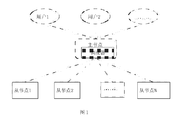
- Figure 1 is a schematic diagram of a centralized distributed system architecture with a one-tier architecture
- Figure 2 is a schematic diagram of the architecture of a resource secondment scenario
- FIG. 3a is a schematic diagram of an embodiment of a resource allocation method provided by an embodiment of this application.
- Figure 3b is a schematic diagram of a cluster idle and busy state distribution
- Figure 3c is a schematic diagram of a cluster idle and busy state distribution
- Figure 3d is a schematic diagram of a packing result in an embodiment of the application.
- 4a is a schematic structural diagram of a hash ring provided by an embodiment of this application.
- FIG. 4b is a schematic structural diagram of a hash ring provided by an embodiment of this application.
- FIG. 4c is a schematic structural diagram of a hash ring provided by an embodiment of this application.
- 4d is a schematic structural diagram of a hash ring provided by an embodiment of this application.
- FIG. 5 is a schematic diagram of an embodiment of a resource secondment method provided by an embodiment of this application.
- FIG. 6 is a schematic diagram of an embodiment of a resource loan method provided by an embodiment of the application.
- FIG. 7 is a schematic structural diagram of a first management node provided by an embodiment of this application.
- FIG. 8 is a schematic structural diagram of a second management node provided by an embodiment of this application.
- FIG. 9 is a schematic structural diagram of a third management node provided by an embodiment of this application.
- FIG. 10 is an example of a system of a management node applicable to an embodiment of the present invention.
- FIG. 11 is a schematic structural diagram of a cluster provided by an embodiment of this application.
- FIG. 12 is a schematic structural diagram of a cluster provided by an embodiment of this application.
- FIG. 13 is a schematic structural diagram of a cluster provided by an embodiment of this application.
- FIG. 14 is a schematic structural diagram of a distributed system provided by an embodiment of this application.
- FIG. 15 is a schematic structural diagram of a distributed system provided by an embodiment of this application.
- FIG. 1 is a schematic diagram of a centralized distributed system with a one-tier architecture.
- users user1, user2,(7) can submit task data to the master node of the node cluster.
- the master node schedules and distributes task data through the scheduler, and allocates all the task data.
- the required resources are allocated to the slave nodes (slave1, slave2,...slaveN) that meet the required resources of the task.
- master node in this application can also be understood as a management node
- slave node can be understood as a computing node
- the scheduler may be a hardware device integrated on the relevant node, or it may be implemented by software through the general hardware of the node.
- the specific manner in which the management node implements the scheduler function is not limited.
- the resource scheduling described in the embodiment of the present invention refers to allocating the resources of the computing nodes in the distribution to task data.
- a computing node refers to a collection of resources as a resource scheduling unit in a distributed system.
- a computing node is based on a server or a physical computer. of.
- computing nodes can be divided according to different division units. For example, when the CPU is used as the monitored resource, the processor or processing core can be used as the division unit, and each processor or processing core in the distributed system is used as a computing node, and a server may contain multiple computing nodes.
- data shards can be used as the dividing unit of computing nodes. Then a data shard in a distributed database serves as a computing node, and a server may contain multiple data shards , Which contains multiple computing nodes.
- the resource mutual assistance scenarios between devices are mainly divided into two categories.
- One is the resource mutual assistance of hierarchical heterogeneous devices, such as the collaboration of devices with different computing capabilities between edge devices, edge servers, and central cloud processors; the other is the same
- the resource coordination between layer devices that is, when the edge device resources are insufficient, resources can be borrowed from other edge devices.
- Figure 2 is a schematic diagram of the architecture of a resource secondment scenario, as shown in Figure 2, including cluster 201, cluster 202, cluster 203, and cluster 204, where cluster 201, cluster 202, and cluster 203 are resources An idle cluster with more idle capacity, cluster 204 is a busy cluster with less idle resources, cluster 201 includes management node 2011 and multiple computing nodes 2012, cluster 202 includes management node 2021 and multiple computing nodes 2022, cluster 203 includes management The node 2031 and multiple computing nodes 2032, and the cluster 204 includes a management node 2041 and multiple computing nodes 2042.
- cross-cluster resource loaning may be performed according to the following strategy:
- the management node 2041 sorts the cluster 201, the cluster 202, and the cluster 203 from large to small according to the amount of free resources, and obtains the first cluster list.
- the first cluster list is ⁇ cluster 201, cluster 203, cluster 202 ⁇ .
- the management node 2041 receives the task data, and determines that the available resource idle amount of the multiple computing nodes 2042 is less than the resource requirement of the task data.
- the management node 2041 selects clusters whose idle amount of resources meets the resource requirements of the task data, and obtains the second cluster list.
- the second cluster list is ⁇ cluster 201, cluster 203, cluster 202 ⁇ .
- the management node 2041 randomly selects two clusters from the second cluster list, and sends resource query requests to the selected two clusters.
- the management node 2041 selects the cluster 201 and the cluster 203. At this time, the management node 2041 may send resource query requests to the management node 2011 and the management node 2021.
- the management node 2041 selects the first cluster that returns the secondment result and meets the resource requirements of the task data to perform cross-cluster resource secondment.
- the management node can send the task data to the management node 2011, so that the management node 2011 schedules multiple computing nodes to process the task data.
- resource secondment is performed at the granularity of clusters.
- the probability of secondment conflicts is relatively high, that is, for the same idle cluster, there may be multiple busy clusters for resource secondment .
- a resource secondment conflict will occur between cluster 201 and cluster 203, resulting in no cluster returning the secondment result.
- FIG. 3a is a schematic diagram of an embodiment of a resource allocation method provided by an embodiment of this application. As shown in FIG. 3a, this The resource allocation methods provided by the application include:
- the first node determines a hash value corresponding to the first cluster.
- the first node may be a management node of an idle cluster, where the idle cluster includes the first node and multiple computing nodes, and the first cluster may be composed of all or some of the multiple computing nodes
- the node cluster, the first cluster may also include the first node, which is not limited here.
- the first node may first determine the busy and idle state of the cluster where it is located.
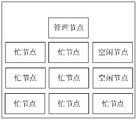
- the first node may evaluate the busy/idle state of the node based on the occupancy rate of the dominant resource of the computing node in the cluster where it is located, and based on the number of busy nodes and the number of idle nodes in the cluster where it is located. Evaluate the busy and busy status of the cluster.
- the first node may define the free/idle state of the computing node according to the following formula:
- i represents the i-th resource
- Use(i) represents the resource occupation of the i-th resource in use
- Total(i) represents the total resource amount of the i-th resource
- a is a preset threshold
- max ⁇ P i ⁇ represents the largest occupancy rate of i resources.
- the first node when the maximum resource occupancy rate in the computing node is greater than or equal to the threshold a, the first node can determine that the computing node is a busy node, and when the maximum resource occupancy rate in the computing node is less than the threshold a, the first node The node can determine that the computing node is an idle node.
- threshold a can be adjusted in real time according to requirements, and can be configured according to different scenarios, which is not limited in this application.
- the first node may define the free/busy state of the cluster where it is located in the following manner:
- the number of busy nodes is n, and the number of idle nodes is m;
- the first node can determine that the cluster where it is located is a busy cluster
- b is the preset threshold.
- threshold b can be adjusted in real time according to requirements, and can be configured according to different scenarios, which is not limited in this application.
- the cluster shown in FIG. 3b is an idle cluster, which can provide idle resources.
- the first node may determine the hash value corresponding to the first cluster when it determines that the idle/busy state of the cluster where it is located is idle.
- the idle cluster where the first node is located includes multiple computing nodes, and the first node may divide the multiple computing nodes of the idle cluster to obtain multiple sub-clusters.
- the idle cluster where the first node is located includes multiple idle nodes, and the first node may divide the multiple idle nodes of the idle cluster to obtain multiple sub-clusters.
- the plurality of sub-clusters includes a third cluster and a fourth cluster
- the third cluster is the cluster with the largest amount of idle resources among the plurality of sub-clusters
- the fourth cluster is the cluster with the smallest amount of idle resources among the plurality of sub-clusters.
- the absolute value of the difference between the idle amount of resources of the three clusters and the idle amount of resources of the fourth cluster is smaller than the first threshold.
- the first node may divide the multiple computing nodes of the idle cluster, so that the difference in the amount of free resources between the first clusters in the multiple sub-clusters obtained after the division will not be too large (The absolute value of the difference between the largest amount of free resources and the smallest amount of free resources is smaller than the first threshold).
- the first node may randomly select a part of idle nodes or all idle nodes from the multiple idle nodes in the idle cluster as reserved resources, and provide resources for the local busy nodes in the idle cluster;
- the first node may determine the remaining idle nodes other than the reserved resources among the idle nodes as borrowable resources, and group them.
- the first node may determine that the remaining idle nodes in the idle nodes other than reserved resources include: ⁇ node 1, node 2, node 3, node 4, node 5, node 6, node 7, node 8, node 9 , Node 10, node 11, node 12 ⁇ , where each node has been sorted in descending order of idle rate (that is, node 1 has the highest idle rate and node 12 has the lowest idle rate).
- Figure 3d which is one of the embodiments of this application.
- a schematic diagram of the packing result where when the number of groups j is determined to be 5, the "S"-shaped packing result diagram is shown in Fig. 3d. In Fig. 3d, 5 sub-clusters are obtained after division.
- the absolute value of the difference between the free amount of resources of each sub-cluster in the plurality of sub-clusters and the free amount of preset resources is less than or equal to the second threshold, and the preset amount of free resources is compared with the history Related to the amount of resource requests.
- the idle amount of resources may include the idle amount of CPU resources and the idle amount of memory resources
- the preset idle amount of resources may include the preset idle amount of CPU resources and the preset idle amount of memory resources, where the preset idle amount of resources and historical resource requests
- the preset idle amount of CPU resources is related to the historical CPU resource request amount
- the preset memory resource idle amount is related to the historical memory resource request amount
- the absolute value of the difference between the idle amount of CPU resources of each of the plurality of sub-clusters and the preset amount of idle CPU resources is less than or equal to the third threshold, and each of the plurality of sub-clusters
- the absolute value of the difference between the idle amount of the memory resources of the cluster and the idle amount of the preset memory resources is less than or equal to the fourth threshold.
- the preset idle amount of CPU resources and the preset idle amount of memory resources in the embodiments of the present application may be determined according to the amount of resource requests in the historical loan request.
- the first node may record the idle cluster where it is located in the last k cycles.
- the first node may first calculate and average the CPU resource request amount and memory resource request amount in k cycles according to the historical resource request table to obtain the historical average CPU request amount of each idle resource group in a single cycle. And memory historical average request
- i represents a CPU in the CPU resource request amount of the i th cycle
- s i represents the number of idle resource groups within the i th cycle
- MEM i represents the memory resources within the i th cycle request amount.
- the first node can determine the historical average CPU request To preset the idle amount of CPU resources, the average historical memory request amount It is the preset amount of memory resources.
- the first node can be with As an indicator, the available resources are grouped so that the free amount of CPU resources and the free amount of memory resources in each sub-cluster after grouping are close to with
- the first node can calculate the contribution rate of each idle node And according to the contribution rate, the idle nodes are sorted in descending order, and the borrowable resources are divided into N groups, Carry out "S" boxing of all borrowable nodes to obtain multiple sub-clusters.
- idle_c i represents the amount of free CPU and idle_m i represents the amount of free memory
- ⁇ and ⁇ represent the weight parameters of CPU and memory
- sum_cpu represents the total amount of free CPU that can be borrowed in the idle cluster
- sum_mem represents the total amount of free memory that can be borrowed in the idle cluster .
- the management nodes in the cluster can determine the idle and busy status of the cluster where they are located.
- the management nodes in the idle cluster may be All or part of the idle nodes are divided to obtain multiple sub-clusters.
- the management node determines that the set it is in is a busy cluster, it can broadcast its busy/idle status (busy status) to other management nodes.
- the first node may determine the hash value corresponding to the first cluster. Specifically, the first node may determine the hash value corresponding to each of the multiple sub-clusters. It should be understood that there are many One of sub-clusters.
- the first cluster may uniquely correspond to an identifier, for example, the first cluster may be uniquely identified by IP and ID, where IP is the identifier of the idle cluster where the first node is located, and the ID is the identifier of the grouping.
- IP can be the IP address of the server where the idle cluster is located, and the IP address can include the server's IP address and port number.
- calculating the hash value corresponding to the first cluster may be based on the IP address of the server where it is located, the port number information, and the ID used to identify the group, and the hash value corresponding to the first cluster is calculated based on a preset hash algorithm. value.
- the first node may calculate the hash value corresponding to each sub-cluster based on the preset hash algorithm. Specifically, the first node may calculate the hash value of the identifier of each sub-cluster based on the preset hash algorithm. If the identifiers of are not repeated, the corresponding hash values are also different.
- the first node obtains a hash ring, where the hash ring includes at least one hash value interval, and each hash value interval corresponds to a second cluster.
- the hash ring can be understood as a data structure including the hash values of multiple hash nodes and the hash value interval between two adjacent hash nodes.
- the data structure may be a list or The form of an array. This application does not limit the specific form of the hash value, as long as it is a data structure that can reflect the distribution characteristics of at least one second cluster, it should fall within the protection scope of this application.
- the first node may construct a hash ring based on a preset hash algorithm.
- clusters can be distributed on a logical ring of numerical space according to their respective hash values, called a hash ring.
- the hash ring is generally generated and saved by the management node.
- a data range on the hash ring (for example, the hash value range of 1000 to 20000 on the hash ring) is called a hash value interval.
- the management node when the management node determines that the cluster it is in is a busy cluster, it can broadcast its own busy status (busy status) to other management nodes.
- the first node can determine the busy cluster (at least one busy cluster) included in the distributed system. The second cluster).
- the first node can calculate the hash value corresponding to each second cluster based on a preset hash algorithm.
- a preset hash algorithm can be a jhash hash algorithm or other types of hash algorithms The embodiments of this application do not specifically limit this.
- the first node can select a suitable hash algorithm according to the needs of the system, as long as calculating the hash value of the first cluster and calculating the hash value of the second cluster use the same hash algorithm.
- the first node can generate a hash ring according to the hash value corresponding to each second cluster.
- FIG. 4a is a schematic structural diagram of a hash ring provided by an embodiment of the application.
- the data range of the hash ring is 0
- each large circle in the hash ring is a hash value calculated according to the identifier of the second cluster, and represents a second cluster.
- the second clusters are distributed in different positions on the hash ring according to their corresponding hash values.
- the hash value corresponding to the second cluster divides the entire hash ring into the same number of hash value intervals as the second cluster, and a hash value interval is a piece of hash value data on the hash ring range.
- the hash ring includes a first hash node and a second hash node, the first hash node corresponds to the target second cluster, and the first hash node is the second hash node on the hash ring.
- the target hash interval is the hash interval between the first hash node and the second hash node.
- each hash value interval on the hash ring corresponds to a second cluster.
- a search is started from the hash value interval along the first direction, and the first second cluster found is determined as the hash value interval.
- the second cluster corresponding to the Greek value interval.
- the first direction is the positive direction of the Hash ring, and it may be clockwise or counterclockwise, which is not specifically limited in the embodiment of the present application.
- the clockwise direction is selected as the first direction in FIG. 4a.
- the first node can determine Y hash values corresponding to X second clusters, where each second cluster corresponds to at least one hash value, X is a positive integer, and Y is a positive value greater than or equal to X. Integer.
- Y is greater than X, that is, there is a second cluster, and the second cluster corresponds to multiple hash values.
- FIG. 4b which is a schematic structural diagram of a hash ring provided by an embodiment of this application.
- the second cluster can be corresponding to multiple nodes on the hash ring, that is, virtual nodes can be introduced.
- Fig. 4c is a schematic structural diagram of a hash ring provided by an embodiment of the application. As shown in Fig. 4c, the target second cluster can correspond to two hash nodes on the hash ring.
- the second cluster can correspond to multiple nodes on the hash ring, and the distribution of the second cluster on the hash ring is not too sparse.
- the second cluster corresponding to multiple nodes on the hash ring by introducing virtual nodes refer to the implementation in the existing solution, which is not repeated here.
- the first node generates a hash ring based on Y hash values, where the hash ring includes Y hash nodes, and each second cluster corresponds to at least one hash node, and the Y hash nodes are
- the hash ring is divided into Y hash value intervals, each hash node corresponds to a hash value interval, that is, each hash node corresponds to a second cluster, and a second cluster can correspond to multiple hash values Hash node.
- the first node may periodically receive the idle/busy status broadcasted by other clusters, and periodically update the hash ring according to the idle/busy status broadcasted by other clusters.
- the first node may receive the hash table sent by the second cluster.
- the management node (for example, the second node) in the second cluster can receive the idle/busy status broadcasted by other clusters, and construct a hash ring based on the idle/busy status broadcasted by other clusters.
- the management node for example, the second node
- construct a hash ring based on the idle/busy status broadcasted by other clusters.
- the first node determines the corresponding target second cluster according to the hash value corresponding to the first cluster, where the hash value corresponding to the first cluster belongs to the target hash interval, and the target hash interval is in at least one hash value interval A hash value interval of, the target hash interval corresponds to the target second cluster.
- the first node determines the hash value corresponding to the first cluster and obtains the hash ring generated based on the hash value of the second cluster, it can obtain the hash value from the hash value corresponding to the first cluster. Determine the corresponding target second cluster in Xihuan.
- the first node can determine the hash value interval to which the hash value corresponding to the first cluster belongs on the hash ring Is the target hash interval, and the second cluster corresponding to the target hash interval is determined to be the target second cluster.
- Fig. 4d is a schematic structural diagram of a hash ring provided by an embodiment of the application.
- the hash ring includes: six hash nodes ⁇ hash node 1, hash node 3.
- Hash node 4, hash node 6, hash node 8, hash node 10 ⁇ where hash node 3 and hash node 8 correspond to the second cluster 1, and hash node 1 and hash node 4 correspond The second cluster 2, the hash node 6 and the hash node 10 correspond to the second cluster 3.
- the hash value interval between hash node 1 and hash node 3 corresponds to second cluster 1
- the hash value interval between hash node 3 and hash node 4 corresponds to second cluster 2
- hash node 4 The hash value interval between hash node 6 and hash node 6 corresponds to second cluster 3
- the hash value interval between hash node 6 and hash node 8 corresponds to second cluster 1
- the hash value interval between 10 corresponds to the second cluster 3
- the hash value interval between the hash node 10 and the hash node 1 corresponds to the second cluster 2.
- the idle cluster a includes two sub-clusters ⁇ first cluster a1, first cluster a2 ⁇
- the idle cluster b includes two sub-clusters ⁇ first cluster b1, first cluster b2 ⁇ .
- each first cluster ⁇ first cluster a1, first cluster a2, first cluster b1, first cluster b2 ⁇ on the hash ring is shown in Figure 4, where the first cluster a1 corresponds to the The Greek value belongs to the hash value interval between hash node 8 and hash node 6, and the hash value corresponding to the first cluster a2 belongs to the hash value interval between hash node 4 and hash node 10.
- the first cluster The hash value corresponding to b1 belongs to the hash value interval between hash node 1 and hash node 3, and the hash value corresponding to the first cluster b2 belongs to the hash value interval between hash node 4 and hash node 10. .
- the first node in the idle cluster a can determine that the first cluster a1 corresponds to the second cluster 6, and the first node in the idle cluster a can determine that the first cluster a2 corresponds to
- the first node in the idle cluster b may determine that the first cluster b1 corresponds to the second cluster 3
- the first node in the idle cluster b may determine that the first cluster b2 corresponds to the second cluster 4.
- the first node establishes an association relationship between a first cluster and a target second cluster, wherein the target second cluster that has established an association relationship with the first cluster is allowed to apply for resources from the first cluster.
- the first node may send the identification of the first cluster to the target second cluster.
- a resource allocation instruction may be sent to the management node (second node) in the target second cluster.
- the resource allocation instruction includes the identifier of the first cluster, and the resource allocation instruction may Indicates that the target second node is allowed to apply for resources from the first cluster.
- the first node may also send the resource idle amount of the first cluster to the target second cluster.
- the first node may also send the idle amount of CPU resources and the idle amount of memory resources of the first cluster to the target second cluster.
- the first node can determine the target second cluster corresponding to the first cluster through the distribution of the hash value corresponding to the first cluster on the hash ring (generated according to the hash value corresponding to the second cluster), and establish The relationship between the target second cluster and the first cluster is determined by the distribution of the hash value corresponding to the first cluster and the hash node corresponding to the second cluster on the hash ring based on the consistent hash algorithm.
- Idle clusters are only allowed to be seconded by fixed empty clusters. Therefore, when the target second cluster needs to second the idle resources of the first cluster, there is no need to randomly send a resource query request to the selected idle cluster, and proceed after receiving the return. Resource secondment can directly borrow resources from the first cluster, reducing the delay overhead of a round trip of information.
- the corresponding relationship of resource secondment is determined based on the corresponding relationship of the hash value of the first cluster on the hash ring generated based on the busy cluster, the corresponding relationship is unique, so the idle cluster can only be Since the corresponding busy cluster on the Greek ring seconded resources, there will be no secondment conflicts caused by multiple busy clusters concurrently seconding resources to the same idle cluster.
- the first node divides the multiple computing nodes of the idle cluster to obtain multiple sub-clusters, and then can use the sub-cluster as a unit to borrow resources for other busy clusters, so that the idle resources in the idle cluster can be relatively balanced Seconded.
- the second cluster (for example, the target second cluster) can be assigned to multiple nodes on the hash ring , That is, the introduction of virtual nodes, so that because the second cluster is too sparsely distributed on the hash ring, one second cluster will correspond to multiple first clusters, which increases the balance of resource allocation.
- the first node determines the hash value corresponding to the first cluster; the first node obtains the hash ring, the hash ring includes at least one hash value interval, and each hash value interval corresponds to a second cluster; The first node determines the corresponding target second cluster according to the hash value corresponding to the first cluster, where the hash value corresponding to the first cluster belongs to the target hash interval, and the target hash interval is one of at least one hash value interval The hash value interval, the target hash interval corresponds to the target second cluster; the first node establishes an association relationship between the first cluster and the target second cluster, wherein the target second cluster that has established an association relationship with the first cluster Is allowed to apply for resources from the first cluster.
- the first node can determine the target first cluster corresponding to the first cluster through the distribution of the hash value corresponding to the first cluster on the hash ring (generated according to the hash value corresponding to the second cluster)
- the second cluster is to establish the association relationship between the target second cluster and the first cluster, because the distribution of the hash value corresponding to the first cluster on the hash ring based on the consistent hash algorithm and the hash node corresponding to the second cluster is determined Yes, each idle cluster is only allowed to be seconded by a fixed empty cluster.
- the target second cluster when the target second cluster needs to second the idle resources of the first cluster, it does not need to randomly send a resource query request to the selected idle cluster, and return it after receiving After that, resources are seconded again, and resources can be directly seconded to the first cluster, which reduces the delay overhead of a round trip of information.
- the correspondence relationship of resource secondment is determined based on the correspondence relationship between the hash value of the first cluster on the hash ring generated based on the busy cluster, the correspondence relationship is unique, so the idle cluster can only be hashed
- the corresponding busy cluster borrows resources on the corresponding busy cluster, therefore, there will be no secondment conflicts caused by multiple busy clusters concurrently seconding resources to the same idle cluster.
- the first node may not determine the corresponding target second cluster based on the distribution of the hash value corresponding to the first cluster on the hash ring, but through random allocation. Or a sequential allocation method determines the corresponding target second cluster.
- the first node may randomly select a second cluster from the multiple second clusters in the distributed system as the target second cluster.
- At least one second cluster can be sorted, and multiple sub-clusters (including the first cluster) can be sequentially mounted to the corresponding second cluster in a preset order (ie, each sub-cluster and the second cluster are established Relationship). Then, the first node may also determine the corresponding target second cluster in the foregoing manner.
- the actual application may not be limited to the above implementation methods, as long as the distributed system determines a fixed resource allocation relationship (the first node establishes an association relationship with a certain target second cluster) when the resource secondment relationship is allocated, it can be implemented.
- the busy cluster performs resource secondment, it does not need to randomly send resource query requests to the selected idle cluster, and after receiving the return, the resource secondment will be performed, and resources can be directly seconded to the first cluster, reducing the delay of one information round trip Overhead.
- the correspondence relationship of resource secondment is determined based on the correspondence relationship between the hash value of the first cluster on the hash ring generated based on the busy cluster, the correspondence relationship is unique, so the idle cluster can only be hashed
- the corresponding busy cluster borrows resources on the corresponding busy cluster, therefore, there will be no secondment conflicts caused by multiple busy clusters concurrently seconding resources to the same idle cluster.
- FIG. 5 is a schematic diagram of an embodiment of a resource secondment method provided by an embodiment of this application.
- the resource secondment method provided by this application includes:
- a second node determines a first cluster having an association relationship with a target second cluster, where the second node belongs to the target second cluster, and the target second cluster corresponds to the target hash in the hash ring Value interval, the hash value corresponding to the first cluster belongs to the target hash value interval.
- the second node belongs to the target second cluster, and the target second cluster is a busy cluster.
- the second node may receive the resource allocation instruction sent by the first node, the resource allocation instruction includes the identifier of the first cluster, and the resource allocation instruction may indicate that the second node can second the idle resources of the first cluster. How the node sends the identifier of the first cluster to the target second cluster can refer to the foregoing embodiment, which will not be repeated here.
- the second node may receive the identifiers of multiple sub-clusters, that is, there are multiple clusters that have an association relationship with the target second cluster.
- the second node may determine that one of the multiple clusters having an association relationship with the target second cluster is the first cluster.
- the second node may also receive the resource idle amount of each of the multiple sub-clusters.
- the second node receives task data.
- the second node may receive task data.
- the second node after the second node receives the task data, it can determine the resource demand of the received task data, and determine the resources of the idle nodes in the busy cluster (target second cluster). Idle amount, if the resource idle amount of the idle node in the busy cluster to which it belongs is greater than or equal to the resource requirement of the task data, it is equivalent to that the second node can determine that the local cluster has sufficient resource idle amount to process the task data. If the resource idle amount of the idle node in the busy cluster to which it belongs is less than the resource demand amount of the task data, it is equivalent to that the second node can determine that the local cluster does not have enough resource idle amount to process the task data.
- the second node can determine that the local cluster has enough free resources to process the task data. If the CPU resource idle amount of the idle node in the busy cluster to which it belongs is less than the CPU resource demand of task data, and the memory resource idle amount of the idle node in the busy cluster to which it belongs is less than the memory resource demand of task data, it is equivalent to the second The node can determine that the local cluster does not have enough free resources to process the task data.
- the second node sends a first resource secondment request to the first node, where the first secondment request is used to instruct the first node to allocate the task data to the first cluster for processing.
- the second node determines that the local cluster does not have enough free resources to process the task data, it needs to borrow resources from other clusters to execute the task data.
- the second node may send a first resource secondment request to the first node.
- the first secondment request may include task data and the identifier of the first cluster. Accordingly, after the first node receives the first resource secondment request , The task data included in it can be assigned to the first cluster for processing.
- the second node may receive the identifiers of the multiple sub-clusters and the resource idle amount of the multiple sub-clusters. At this time, the second node needs to determine a cluster from among them as the object of resource loaning. Next, discuss the second node How to determine the first cluster to be the target of resource secondment from multiple sub-clusters.
- the second node may maintain a mapping table in which the identities of multiple sub-clusters and the corresponding free resources of multiple sub-clusters are stored in the mapping table.
- the second node may look up the free resources of multiple sub-clusters in the mapping table.
- the cluster set that is greater than or equal to the resource demand of the task data obtains the sub-cluster set ⁇ slices 1, slices 2, ..., slices n ⁇ that meets the resource demand, where slices n represents the identifier of the nth sub-cluster.
- the second node After the second node obtains the sub-cluster set ⁇ slices 1, slices 2, ising, slices n ⁇ , it can prioritize multiple sub-clusters in the sub-cluster set, where the index of priority ranking is the resource of the sub-cluster The closeness between the idle amount and the resource demand of the task data, the closer the corresponding sub-cluster priority is, the second node can select the sub-cluster with the highest priority to initiate the first secondment request.
- the second node may maintain the following mapping table:
- the second node receives the task data and determines that the CPU resource demand corresponding to the task data is 0.6 and the memory resource demand is 0.65.
- the second node may search the mapping table for a plurality of cluster sets in the first cluster where the resource idle amount is greater than or equal to the resource demand of the task data, and obtain the first cluster set ⁇ slices6, slices7 ⁇ that meets the resource demand.
- the second node can determine the first cluster that is closest to the resource demand of the task data according to the following formula:
- ⁇ represents the weight parameter of the CPU
- ⁇ represents the weight parameter of the memory
- ⁇ is 0.6 and ⁇ is 0.4.
- the second node can determine that the resource idle amount of the first cluster corresponding to slices 6 is closest to the resource demand of the task data, and initiate a first secondment request to the first cluster corresponding to slices 6.
- the second node determines that among the resource idle amounts of the multiple clusters having an association relationship with the target second cluster, the cluster corresponding to the resource idle amount with the smallest difference in the resource demand of the task data is
- the first cluster improves resource utilization during resource secondment.
- the second node may determine that the first cluster is in a resource loanable state based on receiving the identifier of the first cluster sent by the first node.
- the second node may determine that the first cluster is in a resource non-secondable state based on sending a resource secondment request to the first node.
- the second node after the second node sends a resource secondment request to the first node, it is equivalent to occupying the idle resources of the first cluster, and it can be determined that the first cluster is in a resource unavailable state.
- the second node may mark the resource loan status of the first cluster as the resource unavailable status in the mapping table.
- the first node may also determine that the first cluster is in a resource non-secondable state, that is, determine that the first cluster cannot provide available resources for other busy clusters, thereby ensuring resource locking and realizing conflict-free scheduling of resources across clusters.
- the first cluster after the first cluster has processed the task data, it may return the processing result to the first node, and the first node sends the processing result to the second node.
- the second node determines the first cluster that has an association relationship with the target second cluster, where the second node belongs to the target second cluster, and the target second cluster corresponds to the hash ring
- the target hash value interval of the first cluster the hash value corresponding to the first cluster belongs to the target hash value interval
- the second node receives task data
- the second node sends a first resource secondment request to the first node
- the first secondment request is used to instruct the first node to allocate the task data to the first cluster for processing.
- Distribution to determine the target second cluster corresponding to the first cluster, and indicate that the target second cluster can second the idle resources of the first cluster, because the hash value corresponding to the first cluster on the hash ring based on the consistent hash algorithm
- the distribution of hash nodes corresponding to the second cluster is determined and relatively balanced. Therefore, when the target second cluster needs to second the idle resources of the first cluster, there is no need to randomly send resource query requests to the selected idle cluster, and After receiving the return, the resource secondment is performed, but the first cluster that needs to second the resource is directly determined, and the first resource secondment request is sent to the first node, which reduces the delay overhead of a round trip of information.
- the correspondence relationship of resource secondment is determined based on the correspondence relationship between the hash value of the first cluster on the hash ring generated based on the busy cluster, the correspondence relationship is unique, so the idle cluster can only be hashed
- the corresponding busy cluster borrows resources on the corresponding busy cluster, therefore, there will be no secondment conflicts caused by multiple busy clusters concurrently seconding resources to the same idle cluster.
- FIG. 6 is a schematic diagram of an embodiment of a resource secondment method provided by an embodiment of the application.
- the resource secondment method provided by the present application includes:
- the second node determines a first cluster that has an association relationship with a target second cluster, where the second node belongs to the target second cluster, and the target second cluster corresponds to the target hash in the hash ring Value interval, the hash value corresponding to the first cluster belongs to the target hash value interval.
- step 601 For the specific description of step 601, refer to the specific description of step 501 in the embodiment corresponding to FIG. 5, which will not be repeated here.
- the second node receives the resource demand of the task data sent by the third node.
- the third node after the third node receives the task data, it can determine the resource demand of the received task data, and determine the resource idle amount of the idle node in the busy cluster to which it belongs.
- the resource idle amount of the node is less than the resource requirement of the task data, that is, the third node determines that the local cluster does not have enough idle resources to process the task data.
- the third node can traverse the mapping table storing the identifiers of multiple sub-clusters and the corresponding resource idle amount, and search the mapping table for the cluster set with the resource idle amount of the multiple sub-clusters greater than or equal to the resource demand of the task data, If the third node determines that the resource idle amount of each sub-cluster in the multiple sub-clusters is less than the resource demand of the task data, or determines that the multiple sub-clusters are in a resource unavailable state, the third node needs to borrow resources from other busy clusters.
- the third node may determine the adjacent subsequent node of the hash node corresponding to the third node from the maintained Hash ring along the first direction, and the adjacent subsequent node corresponds to the second cluster.
- the third node may send the resource demand of task data to the management node (second node) of the second cluster.
- the third node may send the resource demand of task data to the second node.
- the third node may determine multiple subsequent nodes of the hash node corresponding to the third node from the maintained hash ring along the first direction, and the multiple subsequent nodes correspond to multiple The second cluster.
- the third node may send the resource demand of task data to multiple management nodes (second nodes) of the second cluster.
- the second node can receive the resource demand of the task data sent by the third node.
- the second node Based on the resource idle amount of the first cluster being greater than or equal to the resource requirement, the second node sends a third resource loan request to the third node, where the third resource loan request is used to indicate that the third node is allowed Apply for resources from the first cluster.
- the second node after the second node receives the resource demand, it can look up the mapping table it maintains, and determine the first cluster with the resource free amount greater than or equal to the resource demand, and send a third resource secondment to the third node Request, the third resource secondment request includes an identifier of the first cluster, and the third resource secondment request is used to indicate that the third node is allowed to apply for resources from the first cluster.
- the second node may determine that the resource idle amount of the multiple sub-clusters is greater than or equal to the resource demand, and the second node may send the determined identifiers of the multiple sub-clusters to the third node.
- a cluster is one of multiple sub-clusters.
- the second node may determine that the resource idle amount of the multiple sub-clusters is greater than or equal to the resource demand, and randomly select a part of the sub-clusters from the determined multiple sub-clusters, and send to the third node Part of the sub-cluster ID.
- the second node may receive a second resource loan request sent by the third node, where the second resource loan request includes the task data, and the second loan request is used to indicate The second node allocates the task data to the first cluster for processing.
- the third node after the third node receives the identifier of the first cluster sent by the second node, it is equivalent to acquiring the identifier of the first cluster that can perform resource secondment from the second node.
- the third node may receive the identities of multiple sub-clusters sent by multiple second nodes, or the third node may receive the identities of multiple sub-clusters sent by one second node. , It is necessary to determine one of the multiple sub-clusters as the resource secondment object. Regarding how the third node determines one of the multiple first clusters as the resource secondment object, refer to the above-mentioned embodiment, how the second node The description of determining the first cluster among the multiple sub-clusters as the resource secondment object will not be repeated here.
- the second node may receive a second resource secondment request sent by the third node, where the second resource secondment request includes the task data and The identifier of the first cluster, and the second secondment request is used to instruct the second node to allocate the task data to the first cluster for processing.
- the second node may send task data and the identification of the first cluster to the first node.
- the first node may allocate the task data to the first cluster for processing.
- the third node may not send a second resource loan request to the second node to indicate the The second node allocates the task data to the first cluster for processing, but directly sends a first resource secondment request to the first node, and the first secondment request is used to instruct the first node to transfer the task data Allocating to the first cluster processing reduces the forwarding overhead of one step of information.
- FIG. 7 is a schematic structural diagram of a first management node 700 according to an embodiment of the application. As shown in FIG. 7, the first management node 700 includes:
- the processing module 701 is configured to determine the hash value corresponding to the first cluster; obtain a hash ring, where the hash ring includes at least one hash value interval, and each hash value interval corresponds to a second cluster; A hash value corresponding to a cluster determines a corresponding target second cluster, wherein the hash value corresponding to the first cluster belongs to a target hash interval, and the target hash interval is one of the at least one hash value interval A hash value interval, and the target hash interval corresponds to the target second cluster;
- the transceiver module 702 is configured to establish an association relationship between a first cluster and a target second cluster, wherein the target second cluster that has established an association relationship with the first cluster is allowed to apply for resources from the first cluster.
- the hash ring includes a first hash node and a second hash node
- the first hash node corresponds to the target second cluster
- the first hash node A node is an adjacent successor node of the second hash node on the hash ring
- the target hash interval is the hash value of the first hash node and the hash value of the second hash node The hash interval between values.
- the processing module 701 is further configured to divide an idle cluster including multiple computing nodes to obtain multiple sub-clusters, and the first cluster is one of the multiple sub-clusters One.
- the multiple sub-clusters include a third sub-cluster and a fourth sub-cluster
- the third sub-cluster is the sub-cluster with the largest amount of free resources among the multiple sub-clusters.
- the fourth sub-cluster is the cluster with the smallest amount of idle resources among the plurality of sub-clusters, and the absolute value of the difference between the idle amount of resources of the third sub-cluster and the idle amount of resources of the fourth sub-cluster is smaller than the first threshold.
- the absolute value of the difference between the amount of free resources of each sub-cluster of the plurality of sub-clusters and the amount of free resources of a preset is less than or equal to a second threshold, and the preset resource is idle
- the amount is related to the historical resource request amount.
- the transceiver module 702 is further configured to:
- the hash ring includes Y hash nodes, each second cluster corresponds to at least one hash node, and the corresponding hash values of the Y hash nodes are sum
- the hash value corresponding to the first cluster is generated according to the same hash algorithm, and the Y is a positive integer.
- the processing module 701 is further configured to determine Y hash values corresponding to X second clusters, where each second cluster corresponds to at least one hash value, and X is a positive integer, and the Y is a positive integer greater than or equal to X; the hash ring is generated according to the Y hash values, wherein the hash ring includes Y hash nodes, and each second cluster Corresponding to at least one hash node, the Y hash nodes divide the hash ring into Y hash value intervals, and each hash node corresponds to a hash value interval.
- the transceiver module 702 is further configured to receive the hash ring sent by the second cluster.
- the transceiver module 702 is further configured to send the resource idle amount of the first cluster to the target second cluster.
- FIG. 8 is a schematic structural diagram of a second management node 800 provided by an embodiment of the application. As shown in FIG. 8, the second management node 800 includes:
- the processing module 801 is configured to determine a first cluster having an association relationship with a target second cluster, where the second node belongs to the target second cluster, and the target second cluster corresponds to the target hash ring. A rare value interval, the hash value corresponding to the first cluster belongs to the target hash value interval;
- the transceiver module 802 is configured to receive task data; and send a first resource secondment request to the first node, where the first secondment request is used to instruct the first node to allocate the task data to the first cluster for processing.
- the processing module 801 is further configured to send a resource secondment request to the first node based on the transceiver module to determine that the first cluster is in a resource non-secondable state.
- the processing module 801 is specifically configured to determine multiple clusters that have an association relationship with the target second cluster.
- One of the clusters is the first cluster.
- the processing module 801 is specifically configured to determine the resource idle amount of the multiple clusters associated with the target second cluster, and the resource demand amount of the task data The cluster corresponding to the resource idle amount with the smallest difference is the first cluster.
- the transceiver module 802 is further configured to receive the resource demand of the task data sent by the third node, and based on the resource idle amount of the first cluster being greater than or equal to The resource demand, sending the identifier of the first cluster and the resource idle amount of the first cluster to the third node.
- the transceiver module 802 is specifically configured to receive a second resource loan request sent by the third node, where the second resource loan request includes the task data, and the second resource loan The second secondment request is used to instruct the second node to allocate the task data to the first cluster for processing.
- FIG. 8 is a schematic structural diagram of a second management node 800 provided by an embodiment of the application. As shown in FIG. 8, the second management node 800 includes:
- the transceiver module 802 is configured to receive the resource demand of task data sent by the third node;
- the processing module 801 is configured to determine a first cluster having an association relationship with a target second cluster, where the second node belongs to the target second cluster, and the target second cluster corresponds to the target hash ring. A rare value interval, the hash value corresponding to the first cluster belongs to the target hash value interval;
- the transceiver module 802 is further configured to send a third resource secondment request to the third node based on that the resource idle amount of the first cluster is greater than or equal to the resource demand, and the third resource secondment request is used for Indicate that the third node is allowed to apply for resources from the first cluster.
- the processing module is specifically configured to determine multiple clusters that have an association relationship with the target second cluster One of the clusters is the first cluster.
- FIG. 9 is a schematic structural diagram of a third management node 900 according to an embodiment of the application. As shown in FIG. 9, the third management node 900 includes:
- the transceiver module 901 is configured to receive task data, send the resource demand of the task data to a second node, and receive a third resource secondment request sent by the second node, where the third resource secondment request is used to indicate the
- the third node is allowed to apply for resources from the first cluster, where the second node belongs to the target second cluster, the target second cluster corresponds to the target hash value interval in the hash ring, and the first cluster corresponds to The hash value of which belongs to the target hash value interval, and the resource idle amount of the first cluster is greater than or equal to the resource demand, a first resource secondment request is sent to the first node, and the first secondment request is used Instructing the first node to allocate the task data to the first cluster for processing.
- the transceiver module 901 is specifically configured to send resource requirements of the task data to multiple nodes, and the second node is one of the multiple nodes, and A third resource secondment request sent by the multiple nodes, where the third resource secondment request is used to indicate that the third node is allowed to apply for resources from multiple sub-clusters, and the first cluster is one of the multiple sub-clusters One.
- the third management node 900 further includes:
- the processing module 902 is configured to determine that, among the resource idle amounts of the multiple sub-clusters, the sub-cluster corresponding to the resource idle amount with the smallest difference in the resource demand of the task data is the first cluster.
- Figure 10 illustrates a system example of a management node applicable to an embodiment of the present invention, where the management node may be any one of the first management node, the second management node, and the third management node described in the above embodiment .
- the functions of each logic module of the management node in the previous embodiment can be realized.
- This embodiment is only an example applicable to the present invention, and does not attempt to suggest any restriction on the function and structure of the management node provided by the present invention.
- the embodiment of the present invention uses a general computer system environment as an example to describe the management node. As we all know, it is applicable to the management node and other hardware architectures can also be used to achieve similar functions. Including but not limited to, personal computers, service computers, multi-processor systems, microprocessor-based systems, programmable consumer appliances, network PCs, small computers, large computers, and distributed computing environments including any of the above systems or equipment ,and many more.
- the exemplified system for implementing the present invention includes a general-purpose computing device in the form of a management node 1000.
- the management node described in this embodiment may be the execution subject of the embodiment of the present invention described in the foregoing scenario and architecture.
- it can be a master node, a management node, or any node in a decentralized architecture.
- the components of the management node 1000 may include, but are not limited to, a processing unit 1020, a system memory 1030, and a system bus 1010.
- the system bus couples various system elements including a system memory with the processing unit 1020.
- the system bus 1010 may be any one of several types of bus structures. These buses may include a memory bus or a memory controller, a peripheral bus, and a local bus using one bus structure.
- the bus structure may include an industry standard architecture (ISA) bus, a microchannel architecture (MCA) bus, an extended ISA (EISA) bus, a video electronics standards association (VESA) local bus, and a peripheral device interconnect (PCI) bus.
- ISA industry standard architecture
- MCA microchannel architecture
- EISA extended ISA
- VESA video electronics standards association
- PCI peripheral device interconnect
- the management node 1000 generally includes a variety of management node-readable media.
- the management node readable medium may be any medium that can be effectively accessed by the management node 1000, and includes volatile or nonvolatile media, and detachable or non-detachable media.
- the management node readable medium may include a management node storage medium and a communication medium. It is implemented by any method or technology that manages the readable instructions, data structures, program modules or other data information of the management node.
- the storage medium of the management node includes, but is not limited to, RAM, ROM, EEPROM, flash memory or other storage technologies, or hard disk storage, solid state hard disk storage, optical disk storage, disk cartridges, disk storage or other storage devices, or any other
- Communication media generally include embedded computer-readable instructions, data structures, program modules, or other data in modular data signals (for example, carrier waves or other transmission mechanisms), and also include any information transfer media.
- modular data signal refers to a signal that has one or more signal characteristic groups or is changed by encoding information in the signal.
- communication media include wired media such as wired networks or direct wired connections, and wireless media such as acoustic, RF infrared, and other wireless media. Any combination of the above should also be included in the scope of the management node readable medium.
- the system memory 1030 includes a management node storage medium, which can be volatile and non-volatile memory, for example, read only memory (ROM) 1031 and random access memory (RAM) 1032.
- the basic input/output system 1033 (BIOS) is generally stored in the ROM 1031 and contains basic routines, which facilitates the transmission of information between various components in the management node 1010.
- the RAM 1032 generally contains data and/or program modules, which can be accessed and/or operated immediately by the processing unit 1020.
- FIG. 10 illustrates an operating system 1034, application programs 1035, other program modules 1036, and program data 1037.
- the management node 1000 may also include other detachable/non-detachable, volatile/non-volatile management node storage media.
- Figure 10 illustrates the hard disk storage 1041, which can be a non-removable and non-volatile readable and writable magnetic medium; the external storage 1051, which can be various types of removable and non-volatile external storage, such as Optical disk, magnetic disk, flash memory or mobile hard disk, etc.; the hard disk memory 1041 is generally connected to the system bus 1010 through a non-removable storage interface (for example, interface 1040), and the external memory is generally connected to the system bus through a removable storage interface (for example, the interface 1060) 1010 is connected.
- a non-removable storage interface for example, interface 1040
- the external memory is generally connected to the system bus through a removable storage interface (for example, the interface 1060) 1010 is connected.
- the drive discussed above and shown in FIG. 10 and its related management node storage medium provide storage of management node readable instructions, data structures, program modules, and other data of the management node 1000.
- the hard disk drive 1041 is illustrated for storing the operating system 1042, application programs 1043, other application programs 1044, and program data 1045. It should be noted that these components may be the same as or different from the operating system 1034, application programs 1035, other program modules 1036, and program data 1037.
- the method in the foregoing embodiment or the function of the logic module in the previous embodiment can be stored in the management node storage medium through code or readable instructions, and the processing unit 1020 can read the code or The instructions are readable to perform the method.
- the user can input commands and information through the management node 1000 through various input devices 1061.
- Various input devices are often connected to the processing unit 1020 through the user input interface 1060, which is coupled to the system bus, but can also be connected through other interfaces and bus structures, such as parallel interfaces or universal serial Interface (USB).
- the display device 1091 may also be connected to the system bus 1010 through an interface (for example, a video interface 1090).
- the computing device 1000 may also include various peripheral output devices 1020, and the output devices may be connected through the output interface 10100 or the like.
- the management node 1000 may be logically connected to one or more computing devices, for example, a remote computer 1071.
- the remote computing nodes include management nodes, computing nodes, servers, routers, network PCs, equivalent devices or other general network nodes, and generally include many or all of the above-discussed elements related to the management node 1000.
- the remote computing node may be a slave node, a computing node, or other management nodes.
- the logical connection illustrated in FIG. 10 includes a local area network (LAN) and a wide area network (WAN), and may also include other networks. Through logical connection, the management node can realize the interaction with other subjects in the present invention with other nodes.
- the task information and data can be transmitted through the logical link with the user to obtain the user's task data; the logical link with the computing node can be used for the transmission of resource data and the transmission of task allocation commands, so as to realize the resource information of each node The acquisition and distribution of task data.
- FIG. 11 is a schematic structural diagram of a cluster 1100 provided by an embodiment of the application.
- the cluster 1100 includes a plurality of computing nodes 1101, and the computing nodes 1101 provide task data.
- the resources required to execute the task data, and the cluster 1100 further includes: the first management node 700 described in the embodiment corresponding to FIG. 7.
- FIG. 12 is a schematic structural diagram of a cluster provided by an embodiment of the application.
- the cluster 1200 includes a plurality of computing nodes 1201, and the computing nodes 1201 provide data for tasks.
- the resources required to execute the task data, and the cluster 1200 further includes: the second management node 800 described in the embodiment corresponding to FIG. 8.
- FIG. 13 is a schematic structural diagram of a cluster provided by an embodiment of the application.
- the cluster 1300 includes a plurality of computing nodes 1301, and the computing nodes 1301 provide task data.
- the required resources to execute the task data, and the cluster 1300 further includes: the third management node 900 described in the embodiment corresponding to FIG. 9.
- FIG. 14 is a schematic structural diagram of a distributed system 1400 provided by an embodiment of the application.
- the distributed system 1400 includes the cluster 1100 described in the embodiment corresponding to FIG. And the cluster 1200 described in the embodiment corresponding to FIG. 12.
- FIG. 15 is a schematic structural diagram of a distributed system provided by an embodiment of the application.
- the distributed system 1500 includes the cluster 1100, which is described in the embodiment corresponding to FIG.
- the computer program product includes one or more computer instructions.
- the computer may be a general-purpose computer, a special-purpose computer, a computer network, or other programmable devices.
- the computer instructions may be stored in a computer-readable storage medium or transmitted from one computer-readable storage medium to another computer-readable storage medium.
- the computer instructions may be transmitted from a website, computer, server, or data center. Transmission to another website, computer, server, or data center via wired (for example, coaxial cable, optical fiber, Digital Subscriber Line (DSL)) or wireless (for example, infrared, wireless, microwave, etc.).
- wired for example, coaxial cable, optical fiber, Digital Subscriber Line (DSL)
- wireless for example, infrared, wireless, microwave, etc.
- the computer-readable storage medium may be any available medium that can be stored by a computer or a data storage device such as a server or data center integrated with one or more available media.
- the usable medium may be a magnetic medium (for example, a floppy disk, a hard disk, a magnetic tape), an optical medium (for example, a DVD), or a semiconductor medium (for example, a solid state disk (SSD)).
- the disclosed system, device, and method may be implemented in other ways.
- the device embodiments described above are only illustrative.
- the division of the units is only a logical function division, and there may be other divisions in actual implementation, for example, multiple units or components can be combined or It can be integrated into another system, or some features can be ignored or not implemented.
- the displayed or discussed mutual coupling or direct coupling or communication connection may be indirect coupling or communication connection through some interfaces, devices or units, and may be in electrical, mechanical or other forms.
- the units described as separate components may or may not be physically separated, and the components displayed as units may or may not be physical units, that is, they may be located in one place, or they may be distributed on multiple network units. Some or all of the units may be selected according to actual needs to achieve the objectives of the solutions of the embodiments.
- each unit in each embodiment of the present application may be integrated into one processing unit, or each unit may exist alone physically, or two or more units may be integrated into one unit.
- the above-mentioned integrated unit can be implemented in the form of hardware or software functional unit.
- the integrated unit is implemented in the form of a software functional unit and sold or used as an independent product, it can be stored in a computer readable storage medium.
- the technical solution of this application essentially or the part that contributes to the existing technology or all or part of the technical solution can be embodied in the form of a software product, and the computer software product is stored in a storage medium , Including several instructions to make a computer device (which can be a personal computer, a server, or a network device, etc.) execute all or part of the steps of the method described in each embodiment of the present application.
- the aforementioned storage media include: U disk, mobile hard disk, read-only memory (ROM, Read-Only Memory), random access memory (RAM, Random Access Memory), magnetic disk or optical disk and other media that can store program code .
Landscapes
- Engineering & Computer Science (AREA)
- Software Systems (AREA)
- Theoretical Computer Science (AREA)
- Physics & Mathematics (AREA)
- General Engineering & Computer Science (AREA)
- General Physics & Mathematics (AREA)
- Mathematical Physics (AREA)
- Mobile Radio Communication Systems (AREA)
- Data Exchanges In Wide-Area Networks (AREA)
Priority Applications (2)
| Application Number | Priority Date | Filing Date | Title |
|---|---|---|---|
| EP20846626.8A EP4002115A4 (de) | 2019-07-31 | 2020-07-29 | Verfahren zur ressourcenzuteilung und verfahren für ressourcenoffload |
| US17/588,983 US12386671B2 (en) | 2019-07-31 | 2022-01-31 | Resource allocation method and resource borrowing method |
Applications Claiming Priority (2)
| Application Number | Priority Date | Filing Date | Title |
|---|---|---|---|
| CN201910704756.7 | 2019-07-31 | ||
| CN201910704756.7A CN112306651B (zh) | 2019-07-31 | 2019-07-31 | 一种资源分配方法和资源借调方法 |
Related Child Applications (1)
| Application Number | Title | Priority Date | Filing Date |
|---|---|---|---|
| US17/588,983 Continuation US12386671B2 (en) | 2019-07-31 | 2022-01-31 | Resource allocation method and resource borrowing method |
Publications (1)
| Publication Number | Publication Date |
|---|---|
| WO2021018183A1 true WO2021018183A1 (zh) | 2021-02-04 |
Family
ID=74229226
Family Applications (1)
| Application Number | Title | Priority Date | Filing Date |
|---|---|---|---|
| PCT/CN2020/105476 Ceased WO2021018183A1 (zh) | 2019-07-31 | 2020-07-29 | 一种资源分配方法和资源借调方法 |
Country Status (4)
| Country | Link |
|---|---|
| US (1) | US12386671B2 (de) |
| EP (1) | EP4002115A4 (de) |
| CN (1) | CN112306651B (de) |
| WO (1) | WO2021018183A1 (de) |
Cited By (2)
| Publication number | Priority date | Publication date | Assignee | Title |
|---|---|---|---|---|
| WO2023005317A1 (zh) * | 2021-07-27 | 2023-02-02 | 华为技术有限公司 | 通信系统、方法及装置 |
| WO2024082692A1 (zh) * | 2022-10-21 | 2024-04-25 | 华为技术有限公司 | 执行任务的方法和异构服务器 |
Families Citing this family (12)
| Publication number | Priority date | Publication date | Assignee | Title |
|---|---|---|---|---|
| US11847503B2 (en) * | 2020-01-28 | 2023-12-19 | Hewlett Packard Enterprise Development Lp | Execution of functions by clusters of computing nodes |
| CN113473488B (zh) * | 2021-07-02 | 2024-01-30 | 福建晶一科技有限公司 | 一种基于容器的cu与mec共平台部署方法 |
| CN114185661B (zh) * | 2021-12-10 | 2026-01-13 | 北京百度网讯科技有限公司 | 一种任务处理方法、装置、设备以及存储介质 |
| CN115001969B (zh) * | 2022-05-24 | 2024-06-14 | 北京金玖银玖数字科技有限公司 | 一种数据存储节点部署方法、数据存储方法、装置及设备 |
| US20230419327A1 (en) * | 2022-06-22 | 2023-12-28 | AnChain.ai, Inc. | Secure and scalable blockchain smart contract-based digital asset platform |
| US12524720B1 (en) * | 2022-06-30 | 2026-01-13 | Amazon Technologies, Inc. | Resource sharing between vehicles |
| US20240012664A1 (en) * | 2022-07-07 | 2024-01-11 | Vmware, Inc. | Cross-cluster service resource discovery |
| CN114979282B (zh) * | 2022-07-28 | 2023-01-20 | 北京金山云网络技术有限公司 | 任务调度方法、装置、存储介质以及电子设备 |
| CN115562853B (zh) * | 2022-09-16 | 2025-07-15 | 华中科技大学 | 一种面向混合负载的资源动态管理方法及管理系统 |
| CN115941660A (zh) * | 2022-11-23 | 2023-04-07 | 内蒙古欣荣惠信息技术有限公司 | 未成年人保护系统及方法 |
| CN117195054B (zh) * | 2023-09-15 | 2024-03-26 | 苏州优鲜生网络科技有限公司 | 基于集群的跨节点数据识别方法与系统 |
| US12463918B2 (en) * | 2024-03-18 | 2025-11-04 | Cisco Technology, Inc. | Decentralized approach to identify objects across a federation in a network |
Citations (4)
| Publication number | Priority date | Publication date | Assignee | Title |
|---|---|---|---|---|
| CN102130938A (zh) * | 2010-12-03 | 2011-07-20 | 中国科学院软件研究所 | 一种面向Web应用宿主平台的资源供给方法 |
| US20170070567A1 (en) * | 2015-09-07 | 2017-03-09 | Electronics And Telecommunications Research Institute | Load balancing apparatus and load balancing method |
| CN108132830A (zh) * | 2016-12-01 | 2018-06-08 | 北京金山云网络技术有限公司 | 一种任务调度方法、装置及系统 |
| CN108173937A (zh) * | 2017-12-28 | 2018-06-15 | 北京中电普华信息技术有限公司 | 访问控制方法和装置 |
Family Cites Families (29)
| Publication number | Priority date | Publication date | Assignee | Title |
|---|---|---|---|---|
| US5612865A (en) * | 1995-06-01 | 1997-03-18 | Ncr Corporation | Dynamic hashing method for optimal distribution of locks within a clustered system |
| US7779415B2 (en) * | 2003-11-21 | 2010-08-17 | International Business Machines Corporation | Adaptive load distribution in managing dynamic and transient data for distributed applications |
| GB2417580A (en) * | 2004-08-26 | 2006-03-01 | Hewlett Packard Development Co | Method for executing a bag of tasks application on a cluster by loading a slave process onto an idle node in the cluster |
| JP4961833B2 (ja) * | 2006-05-19 | 2012-06-27 | 日本電気株式会社 | クラスタシステム、負荷分散方法、最適化クライアントプログラム、及び調停サーバプログラム |
| JP2007325235A (ja) * | 2006-06-05 | 2007-12-13 | Ricoh Co Ltd | 電子機器 |
| US8244846B2 (en) * | 2007-12-26 | 2012-08-14 | Symantec Corporation | Balanced consistent hashing for distributed resource management |
| US8484354B2 (en) | 2009-11-02 | 2013-07-09 | Beaumaris Networks, Inc. | Distributed resource management |
| US20110153826A1 (en) | 2009-12-22 | 2011-06-23 | Microsoft Corporation | Fault tolerant and scalable load distribution of resources |
| US8510267B2 (en) * | 2011-03-08 | 2013-08-13 | Rackspace Us, Inc. | Synchronization of structured information repositories |
| US8949308B2 (en) * | 2012-01-23 | 2015-02-03 | Microsoft Corporation | Building large scale infrastructure using hybrid clusters |
| US9448966B2 (en) * | 2013-04-26 | 2016-09-20 | Futurewei Technologies, Inc. | System and method for creating highly scalable high availability cluster in a massively parallel processing cluster of machines in a network |
| US9871855B2 (en) * | 2014-09-19 | 2018-01-16 | Facebook, Inc. | Balancing load across cache servers in a distributed data store |
| US20160105323A1 (en) * | 2014-10-14 | 2016-04-14 | Microsoft Corporation | Node identification using clusters |
| CN104461740B (zh) | 2014-12-12 | 2018-03-20 | 国家电网公司 | 一种跨域集群计算资源聚合和分配的方法 |
| US9619391B2 (en) * | 2015-05-28 | 2017-04-11 | International Business Machines Corporation | In-memory caching with on-demand migration |
| US20160378846A1 (en) * | 2015-06-26 | 2016-12-29 | Intel Corporation | Object based storage cluster with multiple selectable data handling policies |
| CN106991008B (zh) * | 2016-01-20 | 2020-12-18 | 华为技术有限公司 | 一种资源锁管理方法、相关设备及系统 |
| CN108009016B (zh) * | 2016-10-31 | 2021-10-22 | 华为技术有限公司 | 一种资源负载均衡控制方法及集群调度器 |
| US10346191B2 (en) * | 2016-12-02 | 2019-07-09 | Wmware, Inc. | System and method for managing size of clusters in a computing environment |
| CN107197035A (zh) * | 2017-06-21 | 2017-09-22 | 中国民航大学 | 一种基于一致性哈希算法的亲和性动态负载均衡方法 |
| CN107801086B (zh) * | 2017-10-20 | 2019-01-04 | 广东省南方数字电视无线传播有限公司 | 多缓存服务器的调度方法和系统 |
| CN110022337A (zh) * | 2018-01-09 | 2019-07-16 | 阿里巴巴集团控股有限公司 | 资源调度方法、装置、设备和系统 |
| US11294601B2 (en) * | 2018-07-10 | 2022-04-05 | Here Data Technology | Method of distributed data redundancy storage using consistent hashing |
| CN109040212B (zh) * | 2018-07-24 | 2021-09-21 | 苏州科达科技股份有限公司 | 设备接入服务器集群方法、系统、设备及存储介质 |
| CN109347917A (zh) * | 2018-09-14 | 2019-02-15 | 北京沃杰知识产权有限公司 | 区块链数据共识处理方法、系统、存储介质和电子设备 |
| CN110071978B (zh) * | 2019-04-28 | 2022-04-22 | 新华三信息安全技术有限公司 | 一种集群管理的方法及装置 |
| CN112019581B (zh) | 2019-05-30 | 2022-02-25 | 华为技术有限公司 | 一种调度任务处理实体的方法及装置 |
| CN110489059B (zh) * | 2019-07-11 | 2022-04-12 | 平安科技(深圳)有限公司 | 数据集群存储的方法、装置及计算机设备 |
| US11023145B2 (en) * | 2019-07-30 | 2021-06-01 | EMC IP Holding Company LLC | Hybrid mapped clusters for data storage |
-
2019
- 2019-07-31 CN CN201910704756.7A patent/CN112306651B/zh active Active
-
2020
- 2020-07-29 WO PCT/CN2020/105476 patent/WO2021018183A1/zh not_active Ceased
- 2020-07-29 EP EP20846626.8A patent/EP4002115A4/de active Pending
-
2022
- 2022-01-31 US US17/588,983 patent/US12386671B2/en active Active
Patent Citations (4)
| Publication number | Priority date | Publication date | Assignee | Title |
|---|---|---|---|---|
| CN102130938A (zh) * | 2010-12-03 | 2011-07-20 | 中国科学院软件研究所 | 一种面向Web应用宿主平台的资源供给方法 |
| US20170070567A1 (en) * | 2015-09-07 | 2017-03-09 | Electronics And Telecommunications Research Institute | Load balancing apparatus and load balancing method |
| CN108132830A (zh) * | 2016-12-01 | 2018-06-08 | 北京金山云网络技术有限公司 | 一种任务调度方法、装置及系统 |
| CN108173937A (zh) * | 2017-12-28 | 2018-06-15 | 北京中电普华信息技术有限公司 | 访问控制方法和装置 |
Non-Patent Citations (1)
| Title |
|---|
| See also references of EP4002115A4 |
Cited By (2)
| Publication number | Priority date | Publication date | Assignee | Title |
|---|---|---|---|---|
| WO2023005317A1 (zh) * | 2021-07-27 | 2023-02-02 | 华为技术有限公司 | 通信系统、方法及装置 |
| WO2024082692A1 (zh) * | 2022-10-21 | 2024-04-25 | 华为技术有限公司 | 执行任务的方法和异构服务器 |
Also Published As
| Publication number | Publication date |
|---|---|
| EP4002115A1 (de) | 2022-05-25 |
| CN112306651B (zh) | 2024-09-06 |
| US20220156115A1 (en) | 2022-05-19 |
| EP4002115A4 (de) | 2022-12-07 |
| US12386671B2 (en) | 2025-08-12 |
| CN112306651A (zh) | 2021-02-02 |
Similar Documents
| Publication | Publication Date | Title |
|---|---|---|
| WO2021018183A1 (zh) | 一种资源分配方法和资源借调方法 | |
| CN109564528B (zh) | 分布式计算中计算资源分配的系统和方法 | |
| CN104580396B (zh) | 一种任务调度方法、节点及系统 | |
| EP2919116B1 (de) | Globales gemeinsames speichernutzungsverfahren und vorrichtung sowie kommunikationssystem | |
| CN103327072B (zh) | 一种集群负载均衡的方法及其系统 | |
| CN107688492B (zh) | 资源的控制方法、装置和集群资源管理系统 | |
| CN110221920B (zh) | 部署方法、装置、存储介质及系统 | |
| CN102387173B (zh) | 一种MapReduce系统及其调度任务的方法和装置 | |
| CN108268318A (zh) | 一种分布式系统任务分配的方法和装置 | |
| CN112817728B (zh) | 任务调度方法、网络设备和存储介质 | |
| CN104166597B (zh) | 一种分配远程内存的方法及装置 | |
| US8627325B2 (en) | Scheduling memory usage of a workload | |
| CN115629865B (zh) | 一种基于边缘计算的深度学习推理任务调度方法 | |
| CN112506821B (zh) | 一种系统总线接口请求仲裁方法及相关组件 | |
| US11947534B2 (en) | Connection pools for parallel processing applications accessing distributed databases | |
| CN106131244A (zh) | 一种报文传送方法及装置 | |
| CN118210629A (zh) | 内存分配方法及电子设备 | |
| CN118631847A (zh) | 电力物联业务分布式动态调度方法、装置、设备及介质 | |
| WO2026051571A1 (zh) | 数据的处理方法、系统、电子设备和存储介质 | |
| CN105607955A (zh) | 一种计算任务分配的方法及装置 | |
| CN117056064A (zh) | 资源分配方法、装置、服务器、存储介质和程序产品 | |
| CN104301944A (zh) | 资源能力分配方法和设备 | |
| CN109298949B (zh) | 一种分布式文件系统的资源调度系统 | |
| CN116225612B (zh) | 一种容器调度方法、装置和系统 | |
| CN113472591B (zh) | 一种业务性能的确定方法及装置 |
Legal Events
| Date | Code | Title | Description |
|---|---|---|---|
| 121 | Ep: the epo has been informed by wipo that ep was designated in this application |
Ref document number: 20846626 Country of ref document: EP Kind code of ref document: A1 |
|
| NENP | Non-entry into the national phase |
Ref country code: DE |
|
| ENP | Entry into the national phase |
Ref document number: 2020846626 Country of ref document: EP Effective date: 20220218 |