WO2021060440A1 - 脂質ナノ粒子の凍結乾燥組成物 - Google Patents
脂質ナノ粒子の凍結乾燥組成物 Download PDFInfo
- Publication number
- WO2021060440A1 WO2021060440A1 PCT/JP2020/036196 JP2020036196W WO2021060440A1 WO 2021060440 A1 WO2021060440 A1 WO 2021060440A1 JP 2020036196 W JP2020036196 W JP 2020036196W WO 2021060440 A1 WO2021060440 A1 WO 2021060440A1
- Authority
- WO
- WIPO (PCT)
- Prior art keywords
- group
- nucleic acid
- lipid
- carbon atoms
- lipid nanoparticles
- Prior art date
- Legal status (The legal status is an assumption and is not a legal conclusion. Google has not performed a legal analysis and makes no representation as to the accuracy of the status listed.)
- Ceased
Links
Images





Classifications
-
- A—HUMAN NECESSITIES
- A61—MEDICAL OR VETERINARY SCIENCE; HYGIENE
- A61K—PREPARATIONS FOR MEDICAL, DENTAL OR TOILETRY PURPOSES
- A61K48/00—Medicinal preparations containing genetic material which is inserted into cells of the living body to treat genetic diseases; Gene therapy
- A61K48/005—Medicinal preparations containing genetic material which is inserted into cells of the living body to treat genetic diseases; Gene therapy characterised by an aspect of the 'active' part of the composition delivered, i.e. the nucleic acid delivered
-
- A—HUMAN NECESSITIES
- A61—MEDICAL OR VETERINARY SCIENCE; HYGIENE
- A61K—PREPARATIONS FOR MEDICAL, DENTAL OR TOILETRY PURPOSES
- A61K9/00—Medicinal preparations characterised by special physical form
- A61K9/14—Particulate form, e.g. powders, Processes for size reducing of pure drugs or the resulting products, Pure drug nanoparticles
- A61K9/19—Particulate form, e.g. powders, Processes for size reducing of pure drugs or the resulting products, Pure drug nanoparticles lyophilised, i.e. freeze-dried, solutions or dispersions
-
- A—HUMAN NECESSITIES
- A61—MEDICAL OR VETERINARY SCIENCE; HYGIENE
- A61K—PREPARATIONS FOR MEDICAL, DENTAL OR TOILETRY PURPOSES
- A61K31/00—Medicinal preparations containing organic active ingredients
- A61K31/70—Carbohydrates; Sugars; Derivatives thereof
- A61K31/7088—Compounds having three or more nucleosides or nucleotides
-
- A—HUMAN NECESSITIES
- A61—MEDICAL OR VETERINARY SCIENCE; HYGIENE
- A61K—PREPARATIONS FOR MEDICAL, DENTAL OR TOILETRY PURPOSES
- A61K47/00—Medicinal preparations characterised by the non-active ingredients used, e.g. carriers or inert additives; Targeting or modifying agents chemically bound to the active ingredient
- A61K47/06—Organic compounds, e.g. natural or synthetic hydrocarbons, polyolefins, mineral oil, petrolatum or ozokerite
- A61K47/08—Organic compounds, e.g. natural or synthetic hydrocarbons, polyolefins, mineral oil, petrolatum or ozokerite containing oxygen, e.g. ethers, acetals, ketones, quinones, aldehydes, peroxides
- A61K47/10—Alcohols; Phenols; Salts thereof, e.g. glycerol; Polyethylene glycols [PEG]; Poloxamers; PEG/POE alkyl ethers
-
- A—HUMAN NECESSITIES
- A61—MEDICAL OR VETERINARY SCIENCE; HYGIENE
- A61K—PREPARATIONS FOR MEDICAL, DENTAL OR TOILETRY PURPOSES
- A61K47/00—Medicinal preparations characterised by the non-active ingredients used, e.g. carriers or inert additives; Targeting or modifying agents chemically bound to the active ingredient
- A61K47/06—Organic compounds, e.g. natural or synthetic hydrocarbons, polyolefins, mineral oil, petrolatum or ozokerite
- A61K47/24—Organic compounds, e.g. natural or synthetic hydrocarbons, polyolefins, mineral oil, petrolatum or ozokerite containing atoms other than carbon, hydrogen, oxygen, halogen, nitrogen or sulfur, e.g. cyclomethicone or phospholipids
-
- A—HUMAN NECESSITIES
- A61—MEDICAL OR VETERINARY SCIENCE; HYGIENE
- A61K—PREPARATIONS FOR MEDICAL, DENTAL OR TOILETRY PURPOSES
- A61K47/00—Medicinal preparations characterised by the non-active ingredients used, e.g. carriers or inert additives; Targeting or modifying agents chemically bound to the active ingredient
- A61K47/06—Organic compounds, e.g. natural or synthetic hydrocarbons, polyolefins, mineral oil, petrolatum or ozokerite
- A61K47/26—Carbohydrates, e.g. sugar alcohols, amino sugars, nucleic acids, mono-, di- or oligo-saccharides; Derivatives thereof, e.g. polysorbates, sorbitan fatty acid esters or glycyrrhizin
-
- A—HUMAN NECESSITIES
- A61—MEDICAL OR VETERINARY SCIENCE; HYGIENE
- A61K—PREPARATIONS FOR MEDICAL, DENTAL OR TOILETRY PURPOSES
- A61K47/00—Medicinal preparations characterised by the non-active ingredients used, e.g. carriers or inert additives; Targeting or modifying agents chemically bound to the active ingredient
- A61K47/06—Organic compounds, e.g. natural or synthetic hydrocarbons, polyolefins, mineral oil, petrolatum or ozokerite
- A61K47/28—Steroids, e.g. cholesterol, bile acids or glycyrrhetinic acid
-
- A—HUMAN NECESSITIES
- A61—MEDICAL OR VETERINARY SCIENCE; HYGIENE
- A61K—PREPARATIONS FOR MEDICAL, DENTAL OR TOILETRY PURPOSES
- A61K47/00—Medicinal preparations characterised by the non-active ingredients used, e.g. carriers or inert additives; Targeting or modifying agents chemically bound to the active ingredient
- A61K47/44—Oils, fats or waxes according to two or more groups of A61K47/02-A61K47/42; Natural or modified natural oils, fats or waxes, e.g. castor oil, polyethoxylated castor oil, montan wax, lignite, shellac, rosin, beeswax or lanolin
-
- A—HUMAN NECESSITIES
- A61—MEDICAL OR VETERINARY SCIENCE; HYGIENE
- A61K—PREPARATIONS FOR MEDICAL, DENTAL OR TOILETRY PURPOSES
- A61K47/00—Medicinal preparations characterised by the non-active ingredients used, e.g. carriers or inert additives; Targeting or modifying agents chemically bound to the active ingredient
- A61K47/50—Medicinal preparations characterised by the non-active ingredients used, e.g. carriers or inert additives; Targeting or modifying agents chemically bound to the active ingredient the non-active ingredient being chemically bound to the active ingredient, e.g. polymer-drug conjugates
- A61K47/69—Medicinal preparations characterised by the non-active ingredients used, e.g. carriers or inert additives; Targeting or modifying agents chemically bound to the active ingredient the non-active ingredient being chemically bound to the active ingredient, e.g. polymer-drug conjugates the conjugate being characterised by physical or galenical forms, e.g. emulsion, particle, inclusion complex, stent or kit
-
- A—HUMAN NECESSITIES
- A61—MEDICAL OR VETERINARY SCIENCE; HYGIENE
- A61K—PREPARATIONS FOR MEDICAL, DENTAL OR TOILETRY PURPOSES
- A61K47/00—Medicinal preparations characterised by the non-active ingredients used, e.g. carriers or inert additives; Targeting or modifying agents chemically bound to the active ingredient
- A61K47/50—Medicinal preparations characterised by the non-active ingredients used, e.g. carriers or inert additives; Targeting or modifying agents chemically bound to the active ingredient the non-active ingredient being chemically bound to the active ingredient, e.g. polymer-drug conjugates
- A61K47/69—Medicinal preparations characterised by the non-active ingredients used, e.g. carriers or inert additives; Targeting or modifying agents chemically bound to the active ingredient the non-active ingredient being chemically bound to the active ingredient, e.g. polymer-drug conjugates the conjugate being characterised by physical or galenical forms, e.g. emulsion, particle, inclusion complex, stent or kit
- A61K47/6921—Medicinal preparations characterised by the non-active ingredients used, e.g. carriers or inert additives; Targeting or modifying agents chemically bound to the active ingredient the non-active ingredient being chemically bound to the active ingredient, e.g. polymer-drug conjugates the conjugate being characterised by physical or galenical forms, e.g. emulsion, particle, inclusion complex, stent or kit the form being a particulate, a powder, an adsorbate, a bead or a sphere
- A61K47/6927—Medicinal preparations characterised by the non-active ingredients used, e.g. carriers or inert additives; Targeting or modifying agents chemically bound to the active ingredient the non-active ingredient being chemically bound to the active ingredient, e.g. polymer-drug conjugates the conjugate being characterised by physical or galenical forms, e.g. emulsion, particle, inclusion complex, stent or kit the form being a particulate, a powder, an adsorbate, a bead or a sphere the form being a solid microparticle having no hollow or gas-filled cores
- A61K47/6929—Medicinal preparations characterised by the non-active ingredients used, e.g. carriers or inert additives; Targeting or modifying agents chemically bound to the active ingredient the non-active ingredient being chemically bound to the active ingredient, e.g. polymer-drug conjugates the conjugate being characterised by physical or galenical forms, e.g. emulsion, particle, inclusion complex, stent or kit the form being a particulate, a powder, an adsorbate, a bead or a sphere the form being a solid microparticle having no hollow or gas-filled cores the form being a nanoparticle, e.g. an immuno-nanoparticle
-
- A—HUMAN NECESSITIES
- A61—MEDICAL OR VETERINARY SCIENCE; HYGIENE
- A61K—PREPARATIONS FOR MEDICAL, DENTAL OR TOILETRY PURPOSES
- A61K48/00—Medicinal preparations containing genetic material which is inserted into cells of the living body to treat genetic diseases; Gene therapy
- A61K48/0008—Medicinal preparations containing genetic material which is inserted into cells of the living body to treat genetic diseases; Gene therapy characterised by an aspect of the 'non-active' part of the composition delivered, e.g. wherein such 'non-active' part is not delivered simultaneously with the 'active' part of the composition
-
- A—HUMAN NECESSITIES
- A61—MEDICAL OR VETERINARY SCIENCE; HYGIENE
- A61K—PREPARATIONS FOR MEDICAL, DENTAL OR TOILETRY PURPOSES
- A61K48/00—Medicinal preparations containing genetic material which is inserted into cells of the living body to treat genetic diseases; Gene therapy
- A61K48/0008—Medicinal preparations containing genetic material which is inserted into cells of the living body to treat genetic diseases; Gene therapy characterised by an aspect of the 'non-active' part of the composition delivered, e.g. wherein such 'non-active' part is not delivered simultaneously with the 'active' part of the composition
- A61K48/0025—Medicinal preparations containing genetic material which is inserted into cells of the living body to treat genetic diseases; Gene therapy characterised by an aspect of the 'non-active' part of the composition delivered, e.g. wherein such 'non-active' part is not delivered simultaneously with the 'active' part of the composition wherein the non-active part clearly interacts with the delivered nucleic acid
-
- A—HUMAN NECESSITIES
- A61—MEDICAL OR VETERINARY SCIENCE; HYGIENE
- A61K—PREPARATIONS FOR MEDICAL, DENTAL OR TOILETRY PURPOSES
- A61K48/00—Medicinal preparations containing genetic material which is inserted into cells of the living body to treat genetic diseases; Gene therapy
- A61K48/0008—Medicinal preparations containing genetic material which is inserted into cells of the living body to treat genetic diseases; Gene therapy characterised by an aspect of the 'non-active' part of the composition delivered, e.g. wherein such 'non-active' part is not delivered simultaneously with the 'active' part of the composition
- A61K48/0025—Medicinal preparations containing genetic material which is inserted into cells of the living body to treat genetic diseases; Gene therapy characterised by an aspect of the 'non-active' part of the composition delivered, e.g. wherein such 'non-active' part is not delivered simultaneously with the 'active' part of the composition wherein the non-active part clearly interacts with the delivered nucleic acid
- A61K48/0041—Medicinal preparations containing genetic material which is inserted into cells of the living body to treat genetic diseases; Gene therapy characterised by an aspect of the 'non-active' part of the composition delivered, e.g. wherein such 'non-active' part is not delivered simultaneously with the 'active' part of the composition wherein the non-active part clearly interacts with the delivered nucleic acid the non-active part being polymeric
-
- A—HUMAN NECESSITIES
- A61—MEDICAL OR VETERINARY SCIENCE; HYGIENE
- A61K—PREPARATIONS FOR MEDICAL, DENTAL OR TOILETRY PURPOSES
- A61K9/00—Medicinal preparations characterised by special physical form
- A61K9/0012—Galenical forms characterised by the site of application
- A61K9/0019—Injectable compositions; Intramuscular, intravenous, arterial, subcutaneous administration; Compositions to be administered through the skin in an invasive manner
-
- A—HUMAN NECESSITIES
- A61—MEDICAL OR VETERINARY SCIENCE; HYGIENE
- A61K—PREPARATIONS FOR MEDICAL, DENTAL OR TOILETRY PURPOSES
- A61K9/00—Medicinal preparations characterised by special physical form
- A61K9/48—Preparations in capsules, e.g. of gelatin, of chocolate
- A61K9/50—Microcapsules having a gas, liquid or semi-solid filling; Solid microparticles or pellets surrounded by a distinct coating layer, e.g. coated microspheres, coated drug crystals
- A61K9/51—Nanocapsules; Nanoparticles
- A61K9/5107—Excipients; Inactive ingredients
- A61K9/5123—Organic compounds, e.g. fats, sugars
-
- C—CHEMISTRY; METALLURGY
- C12—BIOCHEMISTRY; BEER; SPIRITS; WINE; VINEGAR; MICROBIOLOGY; ENZYMOLOGY; MUTATION OR GENETIC ENGINEERING
- C12N—MICROORGANISMS OR ENZYMES; COMPOSITIONS THEREOF; PROPAGATING, PRESERVING, OR MAINTAINING MICROORGANISMS; MUTATION OR GENETIC ENGINEERING; CULTURE MEDIA
- C12N15/00—Mutation or genetic engineering; DNA or RNA concerning genetic engineering, vectors, e.g. plasmids, or their isolation, preparation or purification; Use of hosts therefor
- C12N15/09—Recombinant DNA-technology
- C12N15/87—Introduction of foreign genetic material using processes not otherwise provided for, e.g. co-transformation
-
- C—CHEMISTRY; METALLURGY
- C12—BIOCHEMISTRY; BEER; SPIRITS; WINE; VINEGAR; MICROBIOLOGY; ENZYMOLOGY; MUTATION OR GENETIC ENGINEERING
- C12N—MICROORGANISMS OR ENZYMES; COMPOSITIONS THEREOF; PROPAGATING, PRESERVING, OR MAINTAINING MICROORGANISMS; MUTATION OR GENETIC ENGINEERING; CULTURE MEDIA
- C12N15/00—Mutation or genetic engineering; DNA or RNA concerning genetic engineering, vectors, e.g. plasmids, or their isolation, preparation or purification; Use of hosts therefor
- C12N15/09—Recombinant DNA-technology
- C12N15/87—Introduction of foreign genetic material using processes not otherwise provided for, e.g. co-transformation
- C12N15/88—Introduction of foreign genetic material using processes not otherwise provided for, e.g. co-transformation using microencapsulation, e.g. using amphiphile liposome vesicle
Definitions
- the present invention relates to a lyophilized composition of nucleic acid-free lipid nanoparticles and a method for producing nucleic acid-encapsulated lipid nanoparticles using the same.
- nucleic acid delivery carrier An effective and safe nucleic acid delivery carrier is required in order to put into practical use nucleic acid therapy using oligonucleic acid such as siRNA and gene therapy using mRNA or pDNA.
- Viral vectors are nucleic acid delivery carriers with high expression efficiency, but development of non-viral nucleic acid delivery carriers that can be used more safely is underway.
- a complex can be formed by electrostatic interaction with a negatively charged nucleic acid, and the inside of the cell can be formed. Nucleic acid can be delivered. Furthermore, by utilizing the electrostatic interaction of the quaternary amine with the nucleic acid, a lyophilized composition of a cationic liposome containing no nucleic acid is prepared, and lipoplex is formed by rehydration with an aqueous solution of the nucleic acid. It has been shown that it can also be used as a gene transfer reagent (Patent Documents 1 and 2).
- Non-Patent Document 1 lipid nanoparticles (called Lipid Nanoparticles, or LNPs) using ionic lipids that have tertiary amines in their molecules that are positively charged under acidic conditions and have no charge near neutrality have been developed and are currently the most. It is a commonly used non-viral nucleic acid delivery carrier (Non-Patent Document 1).
- lipid nanoparticles using an ionic lipid having a tertiary amine in the molecule there is also an example in which a degradable group is added to the ionic lipid (Patent Document 3).
- nucleic acids are generally unstable compounds, so there is still a problem in their stability as a preparation.
- Patent Document 4 As one of the methods for improving the stability as a preparation, attempts have been made to freeze-dry lipid nanoparticles encapsulating nucleic acids and rehydrate them at the time of use to reconstitute lipid nanoparticles (Patent Document 4 and non-patent). Document 2).
- lipid nanoparticles obtained by using an ionic lipid having a tertiary amine in the molecule do not electrostatically interact with nucleic acid because the surface charge after preparation is weakly negative to neutral, and Patent Document 1 and Nucleic acid-encapsulated lipid nanoparticles cannot be prepared by the method of preparing a lyophilized composition containing no nucleic acid disclosed in 2 and then rehydrating with an aqueous solution of nucleic acid.
- An object of the present invention is to provide a lyophilized composition capable of encapsulating arbitrary nucleic acid with high efficiency and easily, which could not be achieved by the prior art, and a method for producing nucleic acid-encapsulated lipid nanoparticles using the freeze-dried composition. To provide.
- the present inventors prepare nucleic acid-free lipid nanoparticles in an acidic buffer, further add a cryoprotectant, freeze-dry, and then rehydrate with an aqueous solution containing nucleic acid.
- any nucleic acid can be encapsulated in lipid nanoparticles with high efficiency and convenience.
- the present invention includes the following contents.
- freeze-drying composition according to any one of [1] to [3], wherein the concentration of the freeze-protecting agent is 80 to 800 mg / mL as the composition before freeze-drying.
- R 1a and R 1b each independently represent an alkylene group having 1 to 6 carbon atoms.
- X a and X b are independently acyclic alkyl tertiary amino groups having 1 to 6 carbon atoms and 1 tertiary amino group, or 2 to 5 carbon atoms, respectively.
- R 2a and R 2b independently represent an alkylene group or an oxydialkylene group having 8 or less carbon atoms.
- Y a and Y b independently represent an ester bond, an amide bond, a carbamate bond, an ether bond or a urea bond, respectively.
- Z a and Z b are independently divalent groups derived from aromatic compounds having 3 to 16 carbon atoms, having at least one aromatic ring, and optionally having a heteroatom.
- R 3a and R 3b are independent residues derived from a reaction product of a fat-soluble vitamin having a hydroxyl group and a succinic anhydride or a glutaric anhydride, or a sterol derivative having a hydroxyl group and a succinic anhydride or a glutaric acid. It represents a residue derived from a reaction product with an anhydride or an aliphatic hydrocarbon group having 12 to 22 carbon atoms. ).
- freeze-dried composition according to any one of [1] to [6], wherein the freeze-protecting agent is a disaccharide.
- freeze-dried composition according to any one of [1] to [6], wherein the freeze-protecting agent is sucrose.
- a method for producing nucleic acid-encapsulated lipid nanoparticles which comprises the following steps: a) A step of mixing an alcohol solution containing an ionic lipid, a sterol and a PEG lipid with an acidic buffer having a buffering action at pH 1 to 6 to prepare a suspension of nucleic acid-free lipid nanoparticles. b) A step of mixing a suspension of nucleic acid-free lipid nanoparticles with a cryoprotectant to obtain a mixture containing 80-800 mg / mL cryoprotectant and pH 1-6. c) A step of lyophilizing the mixture obtained in step b to obtain a lyophilized composition.
- the lyophilized composition is mixed with an aqueous solution containing nucleic acid and optionally containing 0-25 v / v% alcohol, and optionally the mixture is incubated at 0-95 ° C. for 0-60 minutes to encapsulate the nucleic acid-encapsulated lipid nano.
- the step a further includes a step of exchanging the external aqueous phase with another acidic buffer having a buffering action at pH 1 to 6 by dialysis, ultrafiltration or dilution after preparing a suspension of lipid nanoparticles.
- step b The method according to any one of [9] to [11], wherein in step b, the concentration of the cryoprotectant in the mixture is 160 to 800 mg / mL.
- composition of the lipid nanoparticles further contains a phospholipid.
- a nucleic acid-introducing agent containing the lyophilized composition according to any one of [1] to [8].
- a method for introducing the nucleic acid into the cell which comprises contacting the cell with the nucleic acid introducing agent according to [22], which encloses the nucleic acid in vitro.
- a method for introducing a nucleic acid into a target cell which comprises administering the nucleic acid-introducing agent according to [22] containing the nucleic acid to a living body so as to be delivered to the target cell.
- a method for introducing nucleic acid into a cell which comprises the following steps: a) A step of mixing an alcohol solution containing an ionic lipid, a sterol and a PEG lipid with an acidic buffer having a buffering action at pH 1 to 6 to prepare a suspension of nucleic acid-free lipid nanoparticles. b) A step of mixing a suspension of nucleic acid-free lipid nanoparticles with a cryoprotectant to obtain a mixture containing 80-800 mg / mL cryoprotectant and pH 1-6. c) A step of lyophilizing the mixture obtained in step b to obtain a lyophilized composition.
- the lyophilized composition is mixed with an aqueous solution containing the nucleic acid and optionally containing 0-25 v / v% alcohol, and the mixture is optionally incubated at 0-95 ° C. for 0-60 minutes to contain the nucleic acid-encapsulating lipid.
- the process of obtaining nanoparticles e) The step of exchanging the external aqueous phase of the resulting nucleic acid-encapsulated lipid nanoparticles with a neutral buffer by dialysis, ultrafiltration or dilution, and f) A step of contacting the obtained nucleic acid-encapsulated lipid nanoparticles with the cells in vitro.
- the step a further includes a step of exchanging the external aqueous phase with another acidic buffer having a buffering action at pH 1 to 6 by dialysis, ultrafiltration or dilution after preparing a suspension of lipid nanoparticles.
- a method for introducing nucleic acid into a target cell which comprises the following steps: a) A step of mixing an alcohol solution containing an ionic lipid, a sterol and a PEG lipid with an acidic buffer having a buffering action at pH 1 to 6 to prepare a suspension of nucleic acid-free lipid nanoparticles. b) A step of mixing a suspension of nucleic acid-free lipid nanoparticles with a cryoprotectant to obtain a mixture containing 80-800 mg / mL cryoprotectant and pH 1-6. c) A step of lyophilizing the mixture obtained in step b to obtain a lyophilized composition.
- the lyophilized composition is mixed with an aqueous solution containing the nucleic acid and optionally containing 0-25 v / v% alcohol, and the mixture is optionally incubated at 0-95 ° C. for 0-60 minutes to contain the nucleic acid-encapsulating lipid.
- the process of obtaining nanoparticles e) The step of exchanging the external aqueous phase of the resulting nucleic acid-encapsulated lipid nanoparticles with a neutral buffer by dialysis, ultrafiltration or dilution, and f) A step of administering the obtained nucleic acid-encapsulated lipid nanoparticles to a living body so as to be delivered to the target cells.
- the step a further includes a step of exchanging the external aqueous phase with another acidic buffer having a buffering action at pH 1 to 6 by dialysis, ultrafiltration or dilution after preparing a suspension of lipid nanoparticles.
- the present invention relates to a lyophilized composition of lipid nanoparticles containing no nucleic acid and a method for preparing lipid nanoparticles using the same.
- the lyophilized composition of the present invention can prepare lipid nanoparticles in which any nucleic acid is encapsulated with high efficiency and easily by rehydrating with an aqueous solution containing nucleic acid.
- the encapsulation rate of nucleic acid can be further increased by incubating the lyophilized composition of the present invention with an arbitrary aqueous solution of nucleic acid and further alcohol.
- the gene can be uniformly transferred into cells.
- the lipid nanoparticles prepared by the method of the present invention have a particle size of 50 to 200 nm and a narrow particle size distribution, which is advantageous for gene transfer in vivo.
- the present invention is a lyophilized composition of lipid nanoparticles containing no nucleic acid, ionic lipids, sterols, PEG lipids, an acidic buffer component having a buffering action on pH 1 to 6, and a cryoprotectant. It relates to a lyophilized composition in which the weight ratio of cryoprotectant to total lipid is 10: 1 to 1000: 1.
- Lipid nanoparticles mean particles having a membrane structure in which hydrophilic groups of amphipathic lipids are arranged toward the aqueous phase side of the interface.
- the "amphipathic lipid” means a lipid having both a hydrophilic group exhibiting hydrophilicity and a hydrophobic group exhibiting hydrophobicity. Examples of amphipathic lipids include ionic lipids, phospholipids, and PEG lipids.
- the lipid nanoparticles of the present invention contain ionic lipids, sterols and PEG lipids as constituents of the membrane, and may further contain phospholipids.
- the particle size of the lipid nanoparticles is not particularly limited, but is preferably 10 nm to 500 nm, and more preferably 30 nm to 300 nm.
- the particle size can be measured using, for example, a particle size distribution measuring device such as Zetasizer Nano (Malvern).
- the particle size of the lipid nanoparticles can be appropriately adjusted by the method for preparing the lipid nanoparticles.
- the particle size means the average particle size (number average) measured by the dynamic light scattering method.
- total lipid means the total amount of lipid. Examples of lipids include ionic lipids, sterols, PEG lipids, and phospholipids.
- nucleic acid-free or “nucleic acid-free” means that the nucleic acid is substantially free, and that the nucleic acid content is below the detection limit.
- nucleic acid-encapsulated lipid nanoparticles means lipid nanoparticles in which nucleic acids are encapsulated inside the lipid nanoparticles.
- the lyophilized composition of the present invention further comprises lipid nanoparticles obtained by dissolving an ionic lipid, a sterol, a PEG lipid or a phospholipid in a water-soluble organic solvent and mixing with an acidic buffer to induce organization. It is obtained by adding a cryoprotectant and freeze-drying.
- the water-soluble organic solvent include alcohols such as tert-butanol and ethanol.
- the ionic lipid that can be used in the present invention may be any ionic lipid that is composed of a tertiary amino group and a hydrophobic group and can form lipid nanoparticles.
- Specific examples of ionic lipids include 1,2-dioleolyloxy-3-dimethylaminocompane (DODAC), 1,2-dioleolyloxy-3-dimethylaminopropane (DODA), 1,2-dylolinolyloxy-3-dimethyraminopropa.
- R 1a and R 1b each independently represent an alkylene group having 1 to 6 carbon atoms.
- X a and X b are independently acyclic alkyl tertiary amino groups having 1 to 6 carbon atoms and 1 tertiary amino group, or 2 to 5 carbon atoms, respectively.
- R 2a and R 2b independently represent an alkylene group or an oxydialkylene group having 8 or less carbon atoms.
- Y a and Y b independently represent an ester bond, an amide bond, a carbamate bond, an ether bond or a urea bond, respectively.
- Z a and Z b are independently divalent groups derived from aromatic compounds having 3 to 16 carbon atoms, having at least one aromatic ring, and optionally having a heteroatom.
- R 3a and R 3b are independent residues derived from a reaction product of a fat-soluble vitamin having a hydroxyl group and a succinic anhydride or a glutaric anhydride, or a sterol derivative having a hydroxyl group and a succinic anhydride or a glutaric acid. It represents a residue derived from a reaction product with an anhydride or an aliphatic hydrocarbon group having 12 to 22 carbon atoms. ).
- R 1a and R 1b each independently represent an alkylene group having 1 to 6 carbon atoms, and may be linear or may have a branch, but are preferably linear.
- the alkylene group preferably has 1 to 4 carbon atoms, and more preferably 1 to 2 carbon atoms.
- Specific examples of the alkylene group having 1 to 6 carbon atoms include a methylene group, an ethylene group, a trimethylene group, an isopropylene group, a tetramethylene group, an isobutylene group, a pentamethylene group and a neopentylene group.
- R 1a and R 1b are preferably independent of each other, preferably a methylene group, an ethylene group, a trimethylene group, an isopropylene group or a tetramethylene group, and most preferably an ethylene group, respectively.
- R 1a may be different be the same as R 1b, but preferably, R 1a is the same group as R 1b.
- X a and X b are independently acyclic alkyl tertiary amino groups having 1 to 6 carbon atoms and 1 tertiary amino group, or 2 to 5 carbon atoms, respectively.
- the alkyl group having 1 to 6 carbon atoms in the acyclic alkyl tertiary amino group having 1 to 6 carbon atoms and 1 tertiary amino group is branched even if it is linear. It may be circular or circular.
- the alkyl group preferably has 1 to 3 carbon atoms. Specific examples of the alkyl group having 1 to 6 carbon atoms include a methyl group, an ethyl group, a propyl group, an isopropyl group, an n-butyl group, a sec-butyl group, an isobutyl group, a tert-butyl group, a pentyl group and an isopentyl group.
- alkyl tertiary amino group number of acyclic 1 is 1-6, and tertiary amino groups the number of carbon atoms is represented by X 1.
- R 5 of X 1 represents an alkyl group having 1 to 6 carbon atoms, and may be linear, branched, or cyclic.
- the alkyl group preferably has 1 to 3 carbon atoms.
- Specific examples of the alkyl group having 1 to 6 carbon atoms include a methyl group, an ethyl group, a propyl group, an isopropyl group, an n-butyl group, a sec-butyl group, an isobutyl group, a tert-butyl group, a pentyl group and an isopentyl group.
- the number of carbon atoms in the cyclic alkylene tertiary amino group having 2 to 5 carbon atoms and 1 to 2 tertiary amino groups is preferably 4 to 5.
- Specific examples of the cyclic alkylene tertiary amino group having 2 to 5 carbon atoms and 1 to 2 tertiary amino groups include an aziridylene group, an azetidylene group, a pyrrolidylene group, a piperidylene group, and an imidazolidilen group. It is a piperidylene group, preferably a pyrrolidylene group, a piperidylene group, a piperadilen group, and most preferably a piperidylene group.
- Number is 2 to 5 carbon atoms, and preferred specific structure of alkylene tertiary amino groups containing 1 annular tertiary amino group represented by X 2.
- the p of X 2 is 1 or 2.
- X 2 is a pyrrolidylene group
- X 2 is a piperidylene group.
- p is 2.
- the number of carbon atoms is 2 to 5, and the number of tertiary amino groups is a preferred specific structure of the second cyclic alkylene tertiary amino group represented by X 3.
- the w of X 3 is 1 or 2.
- X 3 is an imidazolidylene group
- X 3 is a piperadylene group.
- X a may be different be identical to X b, but preferably, X a is X b the same group.
- R 2a and R 2b each independently represent an alkylene group having 8 or less carbon atoms or an oxydialkylene group, and preferably each independently represents an alkylene group having 8 or less carbon atoms.
- the alkylene group having 8 or less carbon atoms may be linear or may have a branch, but is preferably linear.
- the number of carbon atoms contained in the alkylene group is preferably 6 or less, and most preferably 4 or less.
- Specific examples of the alkylene group having 8 or less carbon atoms include a methylene group, an ethylene group, a propylene group, an isopropylene group, a tetramethylene group, an isobutylene group, a pentamethylene group, a hexamethylene group, a heptamethylene group, and an octamethylene group. It can be mentioned, preferably a methylene group, an ethylene group, a propylene group, a tetramethylene group, and most preferably an ethylene group.
- the oxydialkylene group having 8 or less carbon atoms indicates an alkylene group (alkylene-O-alkylene) via an ether bond, and the total number of carbon atoms of the two existing alkylene groups is 8 or less.
- the two existing alkylenes may be the same or different, but are preferably the same.
- Specific examples of the oxydialkylene group having 8 or less carbon atoms include an oxydimethylene group, an oxydiethylene group, an oxydipropylene group, and an oxydibutylene group. It is preferably an oxydiethylene group, an oxydiethylene group, or an oxydipropylene group, and most preferably an oxydiethylene group.
- R 2a may be the be the same or different and R 2b, but preferably, R 2a is the same group as R 2b.
- Y a and Y b are each independently an ester bond, an amide bond, a carbamate bond, an ether bond or a urea bond, and preferably each independently is an ester bond, an amide bond or a carbamate bond, and more preferably each. Independently, it is an ester bond or an amide bond, and most preferably each is an ester bond. While Y binding orientation of a and Y b are not limited, if Y a and Y b is an ester bond, preferably, -Z a -CO-O-R 2a - and -Z b -CO-O-R 2b It exhibits a structure of-.
- Y a may be different even identical to Y b, but preferably, Y a is Y b and same group.
- Z a and Z b are independently divalent groups derived from aromatic compounds having 3 to 16 carbon atoms, having at least one aromatic ring, and optionally having a heteroatom. Represents.
- the aromatic compound contains preferably 6 to 12 carbon atoms, most preferably 6 to 7 carbon atoms. Further, the number of aromatic rings contained in the aromatic compound is preferably one.
- aromatic rings contained in aromatic compounds having 3 to 16 carbon atoms benzene ring, naphthalene ring, anthracene ring for aromatic hydrocarbon ring, imidazole ring, pyrazole ring, oxazole ring for aromatic hetero ring, Isooxazole ring, thiazole ring, isothiazole ring, triazine ring, pyrrole ring, franthiophene ring, pyrimidine ring, pyridazine ring, pyrazine ring, pyridine ring, purine ring, pteridine ring, benzimidazole ring, indole ring, benzofuran ring, quinazoline
- Examples thereof include a ring, a phthalazine ring, a quinoline ring, an isoquinoline ring, a coumarin ring, a chromon ring, a benzodiazepine ring,
- the aromatic ring may have a substituent, and the substituents include an acyl group having 2 to 4 carbon atoms, an alkoxycarbonyl group having 2 to 4 carbon atoms, a carbamoyl group having 2 to 4 carbon atoms, and 2 to 4 carbon atoms.
- Methoxycarbonylamino group fluorine atom, chlorine atom, bromine atom, iodine atom, methylsulfanyl group, phenylsulfonyl group, nitro group, trifluoromethyl group, cyano group, methyl group, ethyl group, propyl group, isopropyl group, t- Examples thereof include a butyl group, a ureido group, a methoxy group, an ethoxy group, a propoxy group, an isopropoxy group, a t-butoxy group, a phenyl group and a phenoxy group.
- Preferred specific structures of Z a and Z b include Z 1 .
- s represents an integer of 0 to 3
- t represents an integer of 0 to 3
- u represents an integer of 0 to 4
- R 4 represents a u-number of R 4 is independently a substituent.
- the s of Z 1 is preferably an integer of 0 to 1, and more preferably 0.
- T of Z 1 is preferably an integer of 0 to 2, and more preferably 1.
- U of Z 1 is preferably an integer of 0 to 2, and more preferably an integer of 0 to 1.
- R 4 of Z 1 is a substituent of an aromatic ring (benzene ring) contained in an aromatic compound having 3 to 16 carbon atoms, which does not inhibit the reaction in the synthetic process of the cationic lipid.
- substituents include an acyl group having 2 to 4 carbon atoms, an alkoxycarbonyl group having 2 to 4 carbon atoms, a carbamoyl group having 2 to 4 carbon atoms, an acyloxy group having 2 to 4 carbon atoms, and an acylamino group having 2 to 4 carbon atoms.
- alkoxycarbonylamino group with 2 to 4 carbon atoms fluorine atom, chlorine atom, bromine atom, iodine atom, alkylsulfanyl group with 1 to 4 carbon atoms, alkylsulfonyl group with 1 to 4 carbon atoms, 6 to 10 carbon atoms
- Aryloxy group having 6 to 10 carbon atoms and the like and preferred examples thereof include an acetyl group, a methoxycarbonyl group, a methylcarbamoyl group, an acetoxy group, an acetamide group, a methoxycarbonylamino group, a fluorine atom, a chlorine atom and a bromine.
- Z a may be different even identical to the Z b, but preferably, Z a is Z b the same group.
- R 3a and R 3b are independent residues derived from a reaction product of a lipophilic vitamin having a hydroxyl group and succinic acid anhydride or glutaric acid anhydride, or a sterol derivative having a hydroxyl group and succinic acid anhydride or glutaric acid.
- the fat-soluble vitamin having a hydroxyl group examples include retinol, ergosterol, 7-dehydrocholesterol, calcipherol, corcalciferol, dihydroergocalciferol, dihydrotachysterol, tocopherol, tocotrienol and the like.
- the fat-soluble vitamin having a hydroxyl group is preferably tocopherol.
- Examples of the sterol derivative having a hydroxyl group include cholesterol, cholestanol, stigmasterol, ⁇ -sitosterol, lanosterol, ergosterol and the like, and cholesterol or cholestanol is preferable.
- the aliphatic hydrocarbon group having 12 to 22 carbon atoms may be linear or may have a branch.
- the aliphatic hydrocarbon group may be saturated or unsaturated.
- the number of unsaturated bonds contained in the aliphatic hydrocarbon group is usually 1 to 6, preferably 1 to 3, and more preferably 1 to 2.
- Unsaturated bonds include carbon-carbon double bonds and carbon-carbon triple bonds, but are preferably carbon-carbon double bonds.
- the number of carbon atoms contained in the aliphatic hydrocarbon group is preferably 13 to 19, and most preferably 13 to 17.
- the aliphatic hydrocarbon group includes an alkyl group, an alkenyl group, an alkynyl group and the like, and preferably contains an alkyl group or an alkenyl group.
- Specific examples of the aliphatic hydrocarbon group having 12 to 22 carbon atoms include a dodecyl group, a tridecyl group, a tetradecyl group, a pentadecyl group, a hexadecyl group, a heptadecyl group, an octadecyl group, a nonadecil group, an icosyl group, a henicosyl group and a docosyl group.
- Dodecenyl group tridecenyl group, tetradecenyl group, pentadecenyl group, hexadecenyl group, heptadecenyl group, octadecenyl group, nonadesenyl group, icosenyl group, henicosenyl group, docosenyl group, dodecazienyl group, tridecazineyl group, tetradecazineyl group Group, hexadecadienyl group, heptadecadienyl group, octadecadienyl group, nonadecadienyl group, icosazienyl group, henikosazienyl group, docosadienyl group, octadecatrienyl group, icosatorienyl group, icosatetetraenyl group, Examples thereof include an icosapentaen
- the aliphatic hydrocarbon group having 12 to 22 carbon atoms is preferably a tridecyl group, a pentadecyl group, a heptadecyl group, a nonadesyl group, a heptadecenyl group, a heptadecadienyl group, a 1-hexylnonyl group, and particularly preferably a tridecyl group. It is a heptadecyl group, a heptadecenyl group, and a heptadecadienyl group.
- the aliphatic hydrocarbon groups having 12 to 22 carbon atoms represented by R 3a and R 3b are derived from fatty acids.
- the carbonyl carbon derived from the fatty acid is contained in —CO—O— in the formula (1).
- the aliphatic hydrocarbon group when linoleic acid is used as the fatty acid, it becomes a heptadecadienyl group, and when oleic acid is used as the fatty acid, it becomes a heptadecenyl group.
- R 3a may be different be the same as R 3b, but preferably, R 3a is the same group as R 3b.
- R 1a is the same as R 1b
- X a is identical to X b
- R 2a is the same as R 2b
- Y a is the same as Y b
- Z a is It is the same as Z b
- R 3a is the same as R 3 b.
- cationic lipid represented by the formula (1) include the following cationic lipids.
- R 1a and R 1b are independently alkylene groups having 1 to 6 carbon atoms (eg, methylene group, ethylene group); Acyclic alkyl tertiary amino groups (eg, -N (CH 3 )-) in which X a and X b are independent, have 1 to 6 carbon atoms, and have 1 tertiary amino group.
- cyclic alkylene tertiary amino group eg, piperidylene group
- R 2a and R 2b are independently alkylene groups having 8 or less carbon atoms (eg, methylene group, ethylene group, propylene group)
- Y a and Y b are independently ester or amide bonds
- Hydrocarbon groups eg, heptadecenyl group, heptadecadienyl group, 1-hexylnonyl group
- Cationic lipid (1) eg, heptadecenyl group, heptadecadienyl group, 1-hexylnonyl group.
- R 1a and R 1b are independently alkylene groups having 1 to 4 carbon atoms (eg, methylene group, ethylene group); Acyclic alkyl tertiary amino groups having 1 to 3 carbon atoms and 1 tertiary amino group (eg, -N (CH 3 )-), in which X a and X b are independent of each other.
- Y a and Y b are independently ester or amide bonds;
- -C 6 H 4- CH 2- -CH 2- C 6 H 4- CH 2-
- fat-soluble vitamins eg, tocopherol
- R 3a and R 3b are independent of each other, or aliphatic hydrocarbon groups having 13 to 19 carbon atoms (eg,).
- Cationic lipid (1) derived from the reaction of fat-soluble vitamins (eg, tocopherol) having hydroxyl groups and succinic anhydride in which R 3a and R 3b are independent of each other, or aliphatic hydrocarbon groups having 13 to 19 carbon atoms (eg,).
- R 1a and R 1b are independently alkylene groups having 1 to 2 carbon atoms (eg, methylene group, ethylene group); X a and X b are independent of each other, and X 1 :
- R 5 is an alkyl group having 1 to 3 carbon atoms (eg, a methyl group)), or X 2 :
- R 2a and R 2b are independently alkylene groups having 4 or less carbon atoms (eg, methylene group, ethylene group, propylene group); Y a and Y b are independently ester or amide bonds; Z a and Z b are independent of each other, and Z 1 :
- s is an integer of 0 ⁇ 1, t is an integer of 0 to 2, u is an integer of 0 to 2 (preferably 0), u pieces of R 4 each independently Represents a substituent.
- Residues derived from the reaction of fat-soluble vitamins (eg, tocopherol) having hydroxyl groups and succinic anhydride in which R 3a and R 3b are independent of each other, or aliphatic hydrocarbon groups having 13 to 17 carbon atoms (eg,). , Heptadecenyl group, heptadecadienyl group, 1-hexylnonyl group); Cationic lipid (1).
- the following O-Ph-P3C1, O-Ph-P4C1, O-Ph-P4C2, O-Bn-P4C2, E-Ph-P4C2, L-Ph -P4C2, HD-Ph-P4C2, O-Ph-amide-P4C2, O-Ph-C3M can be mentioned.
- X a and X b are independently X 1 or X 2 shown below, preferably X 1 .
- R 4 in X 1 represents an alkyl group having 1 to 6 carbon atoms, and may be linear, branched, or cyclic.
- the alkyl group preferably has 1 to 3 carbon atoms.
- Specific examples of the alkyl group having 1 to 6 carbon atoms include a methyl group, an ethyl group, a propyl group, an isopropyl group, an n-butyl group, a sec-butyl group, an isobutyl group, a tert-butyl group, a pentyl group, and an isopentyl group.
- R 4 is preferably a methyl group, an ethyl group, a propyl group or an isopropyl group, most preferably a methyl group.
- X 2 is 1 or 2.
- X 2 is preferably a pyrrolidylene group
- X 2 is preferably a piperidylene group.
- s is 2.
- X a may be different be identical to X b, but preferably, X a is X b the same group.
- n a and n b are independently 0 or 1, preferably 1.
- R 3a binds to X a via Y a and R 2 a, and when n a is 0, it exhibits the structure of R 3a ⁇ X a ⁇ R 1a ⁇ S ⁇ .
- R 3b is 1, R 3b is bonded to X b via the Y b and R 2b, if n b is 0 exhibit R 3b -X b -R 1b -S- structure .
- n a may be different even be identical to the n b, but preferably, n a is the same as n b.
- R 1a and R 1b independently represent an alkylene group having 1 to 6 carbon atoms, and may be linear or may have a branch, but are preferably linear.
- Specific examples of the alkylene group having 1 to 6 carbon atoms include a methylene group, an ethylene group, a trimethylene group, an isopropylene group, a tetramethylene group, an isobutylene group, a pentamethylene group and a neopentylene group.
- R 1a and R 1b are preferably a methylene group, an ethylene group, a trimethylene group, an isopropylene group or a tetramethylene group, and most preferably an ethylene group.
- R 1a may be different be the same as R 1b, but preferably, R 1a is the same group as R 1b.
- R 2a and R 2b independently represent an alkylene group having 1 to 6 carbon atoms, and may be linear or may have a branch, but are preferably linear.
- Examples of the alkylene group having 1 to 6 carbon atoms include those listed as examples of the alkylene group having 1 to 6 carbon atoms of R 1a and R 1b.
- R 2a and R 2b are preferably a methylene group, an ethylene group, a trimethylene group, an isopropylene group or a tetramethylene group, and most preferably a trimethylene group.
- R 2a may be the be the same or different and R 2b, but preferably, R 2a is the same group as R 2b.
- Y a and Y b are independently ester bonds, amide bonds, carbamate bonds, ether bonds, and urea bonds, preferably ester bonds, amide bonds, and carbamate bonds, and most preferably ester bonds. While Y binding orientation of a and Y b are not limited, if Y a is an ester bond, preferably, R 3a -CO-O-R 2a - exhibit structure, when Y b is an ester bond, preferably , R 3b -CO-O-R 2b - presents the structure of.
- Y a may be different even identical to Y b, but preferably, Y a is Y b and same group.
- R 3a and R 3b are independent residues derived from a reaction product of a lipophilic vitamin having a hydroxyl group and succinic acid anhydride or glutaric acid anhydride, or a sterol derivative having a hydroxyl group and succinic acid anhydride or glutaric acid.
- the fat-soluble vitamin having a hydroxyl group examples include retinol, ergosterol, 7-dehydrocholesterol, calcipherol, corcalciferol, dihydroergocalciferol, dihydrotachysterol, tocopherol, tocotrienol and the like.
- the fat-soluble vitamin having a hydroxyl group is preferably tocopherol.
- Examples of the sterol derivative having a hydroxyl group include cholesterol, cholestanol, stigmasterol, ⁇ -sitosterol, lanosterol, ergosterol and the like, and cholesterol or cholestanol is preferable.
- the aliphatic hydrocarbon group having 12 to 22 carbon atoms may be linear or may have a branch.
- the aliphatic hydrocarbon group may be saturated or unsaturated.
- the number of unsaturated bonds contained in the aliphatic hydrocarbon group is usually 1 to 6, preferably 1 to 3, and more preferably 1 to 2.
- Unsaturated bonds include carbon-carbon double bonds and carbon-carbon triple bonds, but are preferably carbon-carbon double bonds.
- the number of carbon atoms contained in the aliphatic hydrocarbon group is preferably 13 to 19, and most preferably 13 to 17.
- the aliphatic hydrocarbon group includes an alkyl group, an alkenyl group, an alkynyl group and the like, and preferably contains an alkyl group or an alkenyl group.
- Specific examples of the aliphatic hydrocarbon group having 12 to 22 carbon atoms include a dodecyl group, a tridecyl group, a tetradecyl group, a pentadecyl group, a hexadecyl group, a heptadecyl group, an octadecyl group, a nonadecil group, an icosyl group, a henicosyl group and a docosyl group.
- Dodecenyl group tridecenyl group, tetradecenyl group, pentadecenyl group, hexadecenyl group, heptadecenyl group, octadecenyl group, nonadesenyl group, icosenyl group, henicosenyl group, docosenyl group, dodecazienyl group, tridecazineyl group, tetradecazineyl group Group, hexadecadienyl group, heptadecadienyl group, octadecadienyl group, nonadecadienyl group, icosazienyl group, henikosazienyl group, docosadienyl group, octadecatrienyl group, icosatorienyl group, icosatetetraenyl group, Examples thereof include an icosapentaen
- the aliphatic hydrocarbon group having 12 to 22 carbon atoms is preferably a tridecyl group, a pentadecyl group, a heptadecyl group, a nonadesyl group, a heptadecenyl group, a heptadecadienyl group, a 1-hexylnonyl group, and particularly preferably a tridecyl group. It is a heptadecyl group, a heptadecenyl group, and a heptadecadienyl group.
- the aliphatic hydrocarbon groups having 12 to 22 carbon atoms represented by R 3a and R 3b are derived from fatty acids.
- the carbonyl carbon derived from the fatty acid is contained in —CO—O— in the formula (1).
- the aliphatic hydrocarbon group when linoleic acid is used as the fatty acid, it becomes a heptadecadienyl group, and when oleic acid is used as the fatty acid, it becomes a heptadecenyl group.
- R 3a may be different be the same as R 3b, but preferably, R 3a is the same group as R 3b.
- R 1a is the same as R 1b
- X a is identical to X b
- R 2a is the same as R 2b
- Y a is the same as Y b
- R 3a is It is the same as R 3b.
- cationic lipid represented by the formula (2) include the following B-2, B-2-5, TS-P4C2, L-P4C2, and O-P4C2.
- a method for producing a cationic lipid represented by the formula (1) (hereinafter, also referred to as a cationic lipid (1)) will be described.
- the cationic lipid (1) has an —S—S— (disulfide) bond. Therefore, as a production method, R 3a -CO-O-Z a -Y a -R 2a -X a -R 1a - SH ( thiol) compounds with and R 3b -CO-O-Z b -Y b
- a method for obtaining a cationic lipid (1) containing an -SS- bond by producing an SH (thiol) compound having -R 2b- X b- R 1b- and then oxidizing (coupling) these compounds. Examples thereof include a method in which necessary portions are sequentially synthesized into a compound containing an SS-bond to finally obtain a cationic lipid (1). The latter method is preferred.
- Starting compounds include both-terminal carboxylic acids containing —SS-bonds, both-terminal amines, both-terminal isocyanates, both-terminal alcohols, both-terminal alcohols with leaving groups such as methanesulfonyl groups, and p-nitrophenyl carbonate groups. Examples thereof include both-terminal carbonates having a leaving group such as.
- R 1a and R 1b are R 1 the same, X a and X b is X with the same, R 2a and R 2b are R 2 in the same, with Y a and Y b are the same Y
- the target formula (1) is used in the synthetic route shown below.
- the cationic lipid product of 1') can be obtained.
- Both terminal functional groups (FG 1 ) in compound (I) containing a —S—S— bond are converted to a secondary amine in compound (II) having a secondary amine and one functional group (FG 2) at the end.
- the reaction is carried out to synthesize compound (III).
- the compound (IV) having R 3 is reacted with the hydroxyl group in the compound (V) containing Z having a reactive functional group (FG 3 ) to synthesize the compound (VI), and finally the compound (VI).
- a reactive functional group (FG 2) reactive functional groups (FG 3) with the compound (III) in), -S-S- bond, R 1, X, R 2 , Y, Z and A cationic lipid of the formula (1') containing R 3 can be obtained.
- compound (III) can be produced by the method described in US2014 / 0335157A1 or International Publication No. 2016/121942.
- a base catalyst such as potassium carbonate, sodium carbonate, potassium hydroxide, triethylamine, or 4-dimethylaminopyridine (hereinafter referred to as "DMAP") is used as a catalyst. It may be carried out in the presence of an acid catalyst such as p-toluene sulfonic acid or methane sulfonic acid, or without a catalyst.
- DCC dicyclohexylcarbodiimide
- DIC diisopropylcarbodiimide
- EDC 1-ethyl-3- (3-dimethylaminopropyl) carbodiimide hydrochloride
- EDC 1-ethyl-3- (3-dimethylaminopropyl) carbodiimide hydrochloride
- the amount of compound (IV) charged is usually 1 to 50 mol equivalents, preferably 1 to 10 mol equivalents, relative to compound (V).
- the catalyst used for the reaction between compound (IV) and compound (V) may be appropriately selected depending on the type of compound to be reacted.
- the catalyst amount is usually 0.05 to 100 mol equivalent, preferably 0.1 to 20 mol equivalent, and more preferably 0.1 to 5 mol equivalent, relative to compound (V).
- the solvent used for the reaction between the compound (IV) and the compound (V) may be any solvent that does not inhibit the reaction, and can be used without particular limitation.
- water, ethyl acetate, dichloromethane, chloroform, acetonitrile, toluene and the like can be mentioned. Of these, chloroform and toluene are preferable.
- the reaction temperature is usually 0 to 150 ° C, preferably 0 to 80 ° C, and more preferably 10 to 50 ° C.
- the reaction time is usually 1 to 48 hours, preferably 1 to 24 hours.
- the reaction product (VI) obtained by the above reaction can be appropriately purified by a general purification method such as extraction purification, recrystallization, adsorption purification, reprecipitation, column chromatography, ion exchange chromatography and the like.
- potassium carbonate, sodium carbonate, potassium hydroxide, triethylamine, 4-dimethylamino are used as catalysts.
- a base catalyst such as pyridine may be used, or the reaction may be carried out in the presence of an acid catalyst such as p-toluenesulfonic acid or methanesulfonic acid, or without a catalyst.
- a condensing agent such as DCC, DIC, or EDC may be used to directly react the compound (III) with the compound (VI), or the compound (VI) may be anhydrate using a condensing agent. After conversion to the above, it may be reacted with compound (III).
- the amount of compound (VI) charged is usually 1 to 50 mol equivalents, preferably 1 to 10 mol equivalents, relative to compound (III).
- the catalyst used for the reaction between compound (III) and compound (VI) may be appropriately selected depending on the type of compound to be reacted.
- the catalyst amount is usually 0.05 to 100 mol equivalent, preferably 0.1 to 20 mol equivalent, and more preferably 0.1 to 5 mol equivalent with respect to compound (III).
- the solvent used for the reaction between compound (III) and compound (VI) may be any solvent that does not inhibit the reaction, and can be used without particular limitation.
- water, ethyl acetate, dichloromethane, chloroform, acetonitrile, toluene and the like can be mentioned. Of these, chloroform and toluene are preferable.
- the reaction temperature is usually 0 to 150 ° C, preferably 0 to 80 ° C, and more preferably 10 to 50 ° C.
- the reaction time is usually 1 to 48 hours, preferably 1 to 24 hours.
- the cationic lipid (1) obtained by the above reaction can be appropriately purified by a general purification method such as extraction purification, recrystallization, adsorption purification, reprecipitation, column chromatography, ion exchange chromatography and the like.
- the cationic lipid represented by the formula (2) (hereinafter, also referred to as cationic lipid (2)) can be produced by the method described in US2014 / 0335157A1.
- Phospholipids can be used as lipid membrane constituents of lipid nanoparticles.
- Examples of phospholipids include 1,2-diacyl-sn-glycero-3-phosphocholine (PC), 1,2-diacyl-sn-glycero-3-phosphatidylethanolamine (PE), 1,2-diacyl-sn.
- -Glycero-3-phosphatidylserine PS
- 1,2-diacyl-sn-glycero-3-phosphatidylglycerol PG
- 1,2-diacyl-sn-glycero-3-phosphatidyl acid PA
- a lysophosphati 1,2-didecanoyl-sn-glycero-3-phosphocholine (DDPC), 1,2-diraiuroyl-sn-glycero-3-phosphocholine (DLPC), 1,2-Dimyristoylation-sn-glycero-3-phosphocholine (DMPC), 1,2-Dipalmitoyl-sn-glycero-3-phosphocholine (DPPC), 1,2-Distearoyl-sn-glycero-3-phosphocholine (DSPC), 1,2-Dioreoil-sn-glycero-3-phosphocholine (DOPC), 1,2-dilinole oil-sn-glycero-3
- the phospholipid used in the present invention is preferably PC or PE, and more preferably DOPC, POPC, DOPE (1,2-dioleoil-sn-glycero-3-phosphoethanolamine), POPE (1-palmitoyl-2-). Oleoil-sn-glycero-3-phosphoethanolamine).
- Sterols can be used as a component that regulates the fluidity of lipid membranes of lipid nanoparticles.
- sterols include cholesterol, lanosterol, phytosterols, dimosterol, zymosterol, desmosterol, stigmasterol, dihydrolanosterol, and 7-dehydrocholesterol, preferably cholesterol, lanosterol, phytosterol, and more preferably cholesterol. is there.
- PEG Lipid PEG lipid is a stabilizer that coats the surface of lipid nanoparticles with hydrophilic polyethylene glycol (PEG) to suppress aggregation of the particles, and the interaction between biological components and particles when administered to a living body. Is used to suppress.
- the PEG region can be of any molecular weight. In some embodiments, the PEG region has a molecular weight of 200-10,000 Da and may be linear or branched.
- PEG lipids include PEG-phospholipids and PEG-ceramides, PEG-diacylglycerols, PEG-cholesterols, preferably diacylglycerol PEGs with a PEG molecular weight of 1,000-10,000, more preferably diacylglycerol PEGs. Dimyristylglycerol PEG or distearoylglycerol PEG having a molecular weight of PEG of 1,000 to 10,000.
- Acidic buffer solution and acidic buffer solution component A buffer solution or buffer solution component having a buffering action in the acidic region can be used.
- the "acidic buffer component” means a component obtained by substantially removing water from the acidic buffer solution.
- the level of water contained in the acidic buffer component is less than about 5 w / v%, or less than 4% w / v, or less than 3 w / v%, or less than 2 w / v%, or less than 1% w / v. obtain.
- HCl / KCl buffer p-toluenesulfonic acid / Na salt buffer, tartrate / NaOH buffer, citric acid / NaOH buffer, phthalate HK / HCl buffer, glycine / HCl buffer, trans.
- -Aconitic acid / NaOH buffer formic acid / Na formic acid buffer, citric acid / Na citrate buffer, 3,3-dimethylglutaric acid / NaOH buffer, 3,3-dimethylglutaric acid / NaOH / 0.1M NaCl buffer Liquid, phenylacetic acid / Na salt buffer, acetic acid / Na acetate buffer, succinic acid / NaOH buffer, HK / NaOH buffer phthalate, Na / HCl buffer cacodylate, HNa / NaOH buffer maleate, malein Acid / Tris / NaOH buffer, phosphate buffer, KH 2 PO 4 / NaOH buffer, imidazole / HCl buffer, s-cholidine (2,4,6-trimethylpyridine) / HCl buffer, triethanolamine HCl / NaOH buffer, 5,5-diethylbarbiturate Na / HCl buffer, N-methylmorpholine / HCl buffer, Na pyro
- trans-aconytic acid / NaOH buffer formic acid / Na formic acid buffer, citric acid / Na citrate buffer, 3,3-dimethylglutaric acid / NaOH buffer, 3,3-dimethylglutaric acid / NaOH / 0.1M NaCl buffer, phenylacetic acid / Na salt buffer, acetic acid / Na acetate buffer, succinic acid / NaOH buffer, HK / NaOH buffer phthalate, Na / HCl buffer cacodylate, HNa maleate / NaOH buffer, maleic acid / Tris / NaOH buffer, phosphate buffer, KH 2 PO 4 / NaOH buffer, MES buffer, malic acid buffer, bistris buffer, glycylglycine buffer, etc. , More preferably an apple acid buffer or MES buffer.
- the lyophilized composition of the lipid nanoparticles of the present invention preferably has a pH of 1 to 6 when 100 to 500 mg of the lyophilized composition is suspended in 1 to 5 mL of distilled water for injection at 0 to 30 ° C. ,
- the pH is more preferably 3-6.
- Method for preparing lipid nanoparticles examples include alcohol dilution method using a microchannel or vortex, simple hydration method, sonication, and heating. Examples thereof include self-known methods such as vortex, ether injection method, French press method, cole acid method, Ca 2+ fusion method, freeze-thaw method, and reverse phase evaporation method, and alcohol using a microchannel or vortex is preferable. It is a dilution method, more preferably an alcohol dilution method using a microchannel. Particle preparation by the alcohol dilution method using a microchannel can be performed using, for example, NanoAssemblr (Precision NanoSystems). The prepared lipid nanoparticles can be replaced with a buffer solution in the external aqueous phase by operations such as ultrafiltration, dialysis, and dilution.
- cryoprotective agents As the cryoprotectants that can be used in the present invention, monosaccharides, sugar alcohols, disaccharides, oligosaccharides, polysaccharides or polymers can be used, specifically, glyceraldehyde, erythrose, treose, ribose, Lixose, xylose, arabinose, allose, talose, growth, glucose, altrose, mannose, galactose, idose, erythrose, ribulose, psicose, fructose, sucrose, tagatos, erythritol, glycerin, isomaltol, lactose, martitol, mannitol, sorbitol.
- the concentration of the freeze-protecting agent is preferably 80 to 800 mg / mL, more preferably 160 to 800 mg / mL, as the concentration before freeze-drying.
- the weight ratio of the freeze-protecting agent to the total lipid after freeze-drying is preferably 10 to 1000 times, more preferably 30 to 1000 times, the total lipid.
- the lyophilization process can be performed in any suitable container known in the art of medicine, such as a glass container (or eg, a glass vial) or a two-chamber container.
- a glass container or eg, a glass vial
- the stabilized lipid nanoparticle composition of the present invention containing a cryoprotectant can be introduced into a glass container.
- the volume of composition added to the container can be 0.1-20 mL, or 1-10 mL.
- Any lyophilization process including those known in the art of medicine, can be used. See, for example, Remington's Pharmaceutical Sciences, 18th Ed., Mack Publishing Co., Easton, Penn. (1990).
- the lyophilization process may include freezing the lipid nanoparticle composition stabilized by the cryoprotectant at a temperature of about -55 ° C to about -30 ° C.
- the frozen composition can be in the dried form of the lyophilized composition.
- the freezing step can gradually raise the temperature from room temperature to the final temperature over a period of minutes.
- the temperature gradient can be about 1 ° C./min.
- the drying step can be carried out at a pressure of about 0-250 mTorr, or 50-150 mTorr, at a temperature of about ⁇ 55 ° C. to about 40 ° C.
- the drying process can be continued in the high temperature range up to room temperature for a predetermined period of up to several days.
- the level of residual water in the solid lyophilized composition is less than about 5 w / v%, or less than 4% w / v, or less than 3 w / v%, or less than 2 w / v%, or less than 1% w / v. Can be.
- the rehydration step is a step of adding an aqueous solution containing nucleic acid to the freeze-drying composition of the present invention to prepare nucleic acid-encapsulated lipid nanoparticles.
- Nucleic acid-encapsulated lipid nanoparticles can be prepared by mixing by pipetting or vortexing.
- alcohol can be added at the time of rehydration in order to increase the nucleic acid encapsulation rate
- methanol, ethanol, n-butanol, and t-butanol can be used as the alcohol, preferably ethanol.
- concentration of alcohol in the aqueous solution containing nucleic acid is 0 to 50 v / v%, preferably 0 to 30 v / v%, and more preferably 0 to 25 v / v%.
- an aqueous solution containing nucleic acid or alcohol can be added to the lyophilized composition and then incubated.
- the incubation conditions are, for example, 0 to 100 ° C. for 0 to 120 minutes, preferably 0 to 95 ° C. for 0 to 60 minutes.
- Step of exchanging the outer aqueous phase with a neutral buffer solution In the nucleic acid that can be used as a nucleic acid introducing agent by exchanging the outer aqueous phase of the nucleic acid-encapsulated lipid nanoparticles obtained in the rehydration step with a neutral buffer solution. Encapsulating lipid nanoparticles can be prepared. Examples of the method of exchanging the external aqueous phase with a neutral buffer include dialysis, ultrafiltration or dilution.
- Neutral buffers include phosphate buffered saline (PBS), Tris-HCl buffer, ADA, PIPES, PIPES sesquisodium, ACES, MOPS, BES, MOPSO, BES, MOPS, TES, HEPES, TAPSO, POPSO, Examples include HEPSO.
- the pH of the neutral buffer is 6-8.
- the present invention provides a nucleic acid-introducing agent containing the freeze-dried composition of the lipid nanoparticles of the present invention.
- the present invention also provides a nucleic acid-introducing agent containing nucleic acid-encapsulated lipid nanoparticles prepared using the freeze-dried composition of the lipid nanoparticles of the present invention.
- the nucleic acid-introducing agent of the present invention can introduce any nucleic acid into cells.
- Examples of the type of nucleic acid include, but are not limited to, DNA, RNA, a chimeric nucleic acid of RNA, and a hybrid of DNA / RNA.
- the nucleic acid can be any one to three strands, but is preferably single strand or double strand.
- Nucleic acids are other types of nucleotides that are N-glycosides of purine or pyrimidine bases, or other oligomers with a non-nucleotide skeleton (eg, commercially available peptide nucleic acid (PNA)), or other oligomers with special binding.
- PNA peptide nucleic acid
- the oligomer contains a nucleotide having a arrangement that allows base pairing and base attachment as found in DNA or RNA).
- the nucleic acid may replace, for example, a known modified nucleic acid, a labeled nucleic acid known in the art, a capped nucleic acid, a methylated nucleic acid, or one or more natural nucleotides with an analog.
- Nucleic acid intramolecular nucleotide-modified nucleic acid, nucleic acid with uncharged bond (eg, methylsulfonate, phosphotriester, phosphoramidate, carbamate, etc.), charged or sulfur-containing bond (eg, phosphorothioate, phospho)
- Nucleic acids with eg, logithioate, etc.
- proteins eg, nucleases, nuclease inhibitors, toxins, antibodies, signal peptides, poly-L-lysine, etc.
- sugars eg, monosaccharides, etc.
- Nucleic acid nucleic acid having an intercurrent compound (for example, acrydin, psolarene, etc.), nucleic acid containing a chelating compound (for example, metal, radioactive metal, boron, oxidizing metal, etc.), alkylating agent It may be a nucleic acid contained, a nucleic acid having a modified bond (for example, an ⁇ -anomer type nucleic acid, etc.) or the like.
- a chelating compound for example, metal, radioactive metal, boron, oxidizing metal, etc.
- alkylating agent alkylating agent
- the type of DNA that can be used in the present invention is not particularly limited, and can be appropriately selected according to the purpose of use.
- plasmid DNA, cDNA, antisense DNA, chromosomal DNA, PAC, BAC, CpG oligo and the like can be mentioned, preferably plasmid DNA, cDNA, antisense DNA, and more preferably plasmid DNA.
- Circular DNA such as plasmid DNA can be appropriately digested with a restriction enzyme or the like and used as linear DNA.
- RNA that can be used in the present invention is not particularly limited, and can be appropriately selected according to the purpose of use.
- siRNA, miRNA, shRNA, antisense RNA messenger RNA (mRNA), single-stranded RNA genome, double-stranded RNA genome, RNA replicon, transfer RNA, ribosomal RNA and the like can be mentioned, with preference given to siRNA, miRNA, etc.
- shRNA, mRNA, antisense RNA, RNA replicon can be mentioned, with preference given to siRNA, miRNA, etc.
- the nucleic acid used in the present invention is preferably purified by a method usually used by those skilled in the art.
- the nucleic acid-introducing agent of the present invention containing a nucleic acid can be administered in vivo (in vivo) for the purpose of prevention and / or treatment of a disease, for example. Therefore, the nucleic acid used in the present invention is preferably one having preventive and / or therapeutic activity for a certain predetermined disease (nucleic acid for prevention / treatment). Examples of such nucleic acids include nucleic acids used in so-called gene therapy.
- the nucleic acid-introducing agent of the present invention containing nucleic acid can be used as a drug delivery system for selectively delivering nucleic acid or the like into a specific cell.
- a DNA vaccine by introducing an antigen gene into a dendritic cell. It is useful as a gene therapy drug for cells and tumors, and a nucleic acid drug that suppresses the expression of a target gene using RNA interference.
- the particle size of the lipid nanoparticles encapsulating the nucleic acid is not particularly limited, but is preferably 10 nm to 500 nm, and more preferably 30 nm to 300 nm.
- the particle size can be measured using, for example, a particle size distribution measuring device such as Zetasizer Nano (Malvern).
- the particle size of the lipid nanoparticles can be appropriately adjusted by the method for preparing the lipid nanoparticles.
- the surface potential (zeta potential) of the lipid nanoparticles encapsulating the nucleic acid is not particularly limited, but is preferably -15 to +15 mV, and more preferably -10 to +10 mV.
- particles having a positively charged surface potential have been mainly used. This is useful as a method for facilitating electrostatic interaction with negatively charged cell surface heparin sulfate and facilitating uptake into cells, while positive surface charges are delivered intracellularly.
- the release of nucleic acid from the carrier by the interaction with the nucleic acid is suppressed, and the synthesis of the protein by the interaction between the mRNA and the delivery nucleic acid is suppressed.
- the surface charge can be measured using, for example, a zeta potential measuring device such as Zetasizer Nano.
- the surface charge of the lipid nanoparticles can be adjusted by the composition of the constituents of the lipid nanoparticles.
- Cells are suspended in a suitable medium several days before contact with the lipid nanoparticles and cultured under suitable conditions. Upon contact with the lipid nanoparticles, the cells may or may not be in the proliferative phase.
- the culture medium at the time of contact may be a serum-containing medium or a serum-free medium, but the serum concentration in the medium is preferably 30% by weight or less, and more preferably 20% by weight or less. If the medium contains excess protein such as serum, the contact between the lipid nanoparticles and the cells may be inhibited.
- the cell density at the time of contact is not particularly limited and can be appropriately set in consideration of the cell type and the like, but is usually in the range of 1 ⁇ 10 4 to 1 ⁇ 10 7 cells / mL.
- a suspension of lipid nanoparticles encapsulating the above-mentioned nucleic acid is added.
- the amount of the suspension added is not particularly limited and can be appropriately set in consideration of the number of cells and the like.
- the concentration of the lipid nanoparticles upon contact with the cells is not particularly limited as long as the introduction of the target nucleic acid into the cells can be achieved, but the lipid concentration is usually 1 to 100 nmol / mL, preferably 10 to 50 nmol. It is / mL, and the concentration of nucleic acid is usually 0.01 to 100 ⁇ g / mL, preferably 0.1 to 10 ⁇ g / mL.
- the cells After adding the above suspension to the cells, the cells are cultured.
- the temperature, humidity, CO 2 concentration, etc. at the time of culturing are appropriately set in consideration of the cell type. When the cells are of mammalian origin, the temperature is usually about 37 ° C., the humidity is about 95%, and the CO 2 concentration is about 5%.
- the culture time can also be appropriately set in consideration of conditions such as the type of cells used, but is usually in the range of 0.1 to 76 hours, preferably in the range of 0.2 to 24 hours, and more preferably 0. It ranges from .5 to 12 hours. If the culture time is too short, the nucleic acid is not sufficiently introduced into the cell, and if the culture time is too long, the cell may be weakened.
- Nucleic acid is introduced into cells by the above-mentioned culture, but preferably the medium is replaced with a fresh medium, or a fresh medium is added to the medium and further culture is continued. If the cells are of mammalian origin, the fresh medium preferably contains serum or trophic factors.
- nucleic acid by using lipid nanoparticles encapsulating nucleic acid, it is possible to introduce nucleic acid into cells not only in vitro (in vitro) but also in vivo (in vivo). That is, by administering the lipid nanoparticles encapsulating the nucleic acid to the subject, the lipid nanoparticles reach and contact the target cell, and the nucleic acid encapsulated in the lipid nanoparticles is introduced into the cell in vivo. To.
- the target to which the lipid nanoparticles can be administered is not particularly limited, and for example, mammals (for example, humans, monkeys, mice, rats, hamsters, cows, etc.), birds (for example, chickens, ostriches, etc.), amphibians (for example, for example). , Frogs, etc.), vertebrates such as fish (eg, zebrafish, medaka, etc.), invertebrates such as insects (eg, silkworms, moths, ginger flies, etc.), plants and the like.
- the target for administration of the lipid nanoparticles encapsulating the nucleic acid is preferably humans or other mammals.
- the type of target cell is not particularly limited, and by using lipid nanoparticles encapsulating a nucleic acid, various tissues (for example, liver, kidney, pancreas, lung, spleen, heart, blood, muscle, bone, brain, stomach) can be used. , Small intestine, large intestine, skin, adipose tissue, lymph nodes, tumors, etc.) It is possible to introduce nucleic acids into cells.
- the lipid nanoparticle In the method of administering a nucleic acid and / or a compound other than a nucleic acid into a target (for example, vertebrate, invertebrate, etc.), the lipid nanoparticle reaches and contacts the target cell, and the lipid nanoparticle reaches and contacts the target cell.
- the method is not particularly limited as long as the compound introduced into the particles can be introduced into the cell, and the administration method known per se (for example, oral administration, etc.) in consideration of the type of the introduced compound, the type and site of the target cell, etc.
- Parenteral administration for example, intravenous administration, intramuscular administration, local administration, transdermal administration, subcutaneous administration, intraperitoneal administration, spray, etc.
- the dose of the lipid nanoparticles is not particularly limited as long as the introduction of the compound into cells can be achieved, and the type of administration target, administration method, type of introduced compound, type and site of target cells, etc. Can be appropriately selected in consideration of.
- lipid nanoparticles encapsulating nucleic acid When lipid nanoparticles encapsulating nucleic acid are used as a nucleic acid introducing agent, they can be formulated according to conventional means.
- the nucleic acid-introducing agent of the present invention may contain the lipid nanoparticles encapsulating the nucleic acid as it is, or, for example, water or a physiologically acceptable solution (such as water).
- a physiologically acceptable solution such as water
- a sterile solution of a water-soluble solvent eg, malic acid buffer, etc.
- an organic solvent eg, ethanol, methanol, DMSO, tert-butanol, etc.
- a mixture of a water-soluble solvent and an organic solvent etc.
- it may be provided using a suspension.
- the nucleic acid-introducing agent of the present invention can appropriately contain a physiologically acceptable additive known per se (eg, excipient, vehicle, preservative, stabilizer, binder, etc.).
- the nucleic acid-introducing agent of the present invention uses the lipid nanoparticles encapsulating the nucleic acid as it is, or is a pharmaceutically acceptable known additive (for example,).
- Oral preparations eg, tablets, etc.
- It can be produced as a parenteral agent (for example, an injection, a spray, etc.) or preferably as a parenteral agent (more preferably, an injection).
- the nucleic acid-introducing agent of the present invention can be prepared for children as well as for adults.
- a freeze-dried composition was prepared by preparing neutral lipid nanoparticles as described below, adding a freeze-protecting agent, and freeze-drying.
- This solution was diluted with MES buffer (pH 5.5, 20 mM) and replaced with PBS having a pH of 7.4 while performing ultrafiltration using Amicon.
- LNP was concentrated and recovered so that the lipid concentration was 200 nmol / 100 ⁇ L, and 100 ⁇ L of a sucrose solution was added thereto and mixed.
- This solution was lyophilized using a VerTis AdVantage Plus EL-85 lyophilizer.
- the temperature rise program was set to raise the temperature by 10 ° C over 3 hours up to -20 ° C, raise the temperature by 10 ° C over 2 hours above -10 ° C, and let stand at that temperature for 1 hour. When the temperature rose to 30 ° C., the sample was allowed to stand at that temperature for 3 hours and then returned to normal pressure to collect the sample.
- Example 1-59 -Preparation of lyophilized composition of Example 1-59
- a tert-butanol solution of lipid and malic acid buffer pH 3.0, 20 mM
- To this LNP solution add an equal amount of sucrose solution (so that the final concentration of sucrose is 80 mg / mL, 160 mg / mL, 320 mg / mL, 433 mg / mL) and mix, and the amount of lipid is 200 nmol. And dispensed to 600 nmol.
- This solution was lyophilized using a VerTis AdVantage Plus EL-85 lyophilizer.
- the solution was first frozen at normal pressure at -55 ° C for 14 to 21 hours, then the pressure was lowered to 200 mitol, and the temperature was raised by 10 ° C.
- the temperature rise program was set to raise the temperature by 10 ° C over 3 hours up to -20 ° C, raise the temperature by 10 ° C over 2 hours above -10 ° C, and let stand at that temperature for 1 hour. When the temperature rose to 30 ° C., the sample was allowed to stand at that temperature for 3 hours and then returned to normal pressure to collect the sample.
- LNP is concentrated and recovered to a theoretical mRNA (or siRNA or pDNA) concentration of 2.5 g / mL, and nucleic acid recovery and encapsulation using Ribogreen® or Picogreen® reagent. The rate was measured. The particle size and zeta potential were measured using a zetasizer.
- mRNA CleanCap® FLuc mRNA (TriLink) CleanCap® EGFP mRNA (TriLink) CleanCap® EPO mRNA (5moU) (TriLink) CleanCap® OVA mRNA (TriLink)
- pDNA pcDNA3.1-luc (method described in Biomaterials 2011, 32, 6342.)
- siRNA siFVII (2'-F) Sense 5'-GGAucAucucAAGucuuAcdT * dT-3' Antisense 5'-GuAAGAcuuGAGAuGAuccdT * dT-3' dT: deoxythymidine *: phosphorothioate linkage
- Capital letter native (2'-OH) ribonucleotides
- Small letter 2'-Fluoro-modified nucleotides
- the freeze-dried composition of the neutral lipid nanoparticles of the comparative example was rehydrated, and the results of evaluating the particle physical characteristics, the nucleic acid recovery rate, and the encapsulation rate are shown in Table 6.
- nucleic acid and ionic lipid do not electrostatically interact with each other during rehydration with an aqueous nucleic acid solution, so that the nucleic acid is encapsulated in the lipid nanoparticles. I could't.
- Table 7 shows the results of rehydration of the freeze-dried composition of acidic lipid nanoparticles in which the concentration of sucrose as a cryoprotectant was changed according to the operation, and the evaluation of the particle physical characteristics, nucleic acid recovery rate, and encapsulation rate. ..
- the nucleic acid could be efficiently encapsulated in the acidic freeze-dried composition of Example 1-3.
- Table 7 by increasing the concentration of sucrose, which is a cryoprotectant, the efficiency of encapsulation of nucleic acid could be increased, and lipid nanoparticles having a small particle distribution could be prepared in terms of particle physical characteristics.
- Table 8 shows the results of evaluating the particle physical characteristics, the nucleic acid recovery rate, and the encapsulation rate by changing the ethanol concentration during rehydration according to the operation. As shown in the evaluation results in Table 8, the nucleic acid encapsulation efficiency could be improved by adding ethanol.
- Table 9 shows the results of evaluating the particle physical characteristics, the nucleic acid recovery rate, and the encapsulation rate by changing the type of nucleic acid at the time of rehydration according to the operation. As shown in the evaluation results in Table 9, nucleic acids could be efficiently encapsulated regardless of the nucleic acid species.
- Table 10 shows the results of evaluating the particle physical properties, nucleic acid recovery rate, and encapsulation rate by changing the type of phospholipid and the lipid composition according to the operation. As shown in the evaluation results in Table 10, the nucleic acid could be efficiently encapsulated regardless of the type and lipid composition of the phospholipid.
- Table 11 shows the results of evaluating the physical characteristics of the particles, the recovery rate of nucleic acids, and the encapsulation rate by changing the type of ionic lipid according to the operation. As shown in the evaluation results in Table 11, nucleic acids could be efficiently encapsulated regardless of the type of ionic lipid.
- LNP solution encapsulating mRNA expressing EGFP was prepared by the method described in Examples. Twenty-four hours before transfection, Jurkat cells, which are human leukemia T cells, were seeded in 1.2 cm wells at 5.0 ⁇ 10 4 cells / 1 mL / well. After 24 hours, the prepared LNP solution was added to 1.2 cm well as mRNA to 0.1 ⁇ g, and cultured in an incubator for 24 hours.
- the culture solution was replaced with FACS buffer (0.5% bovine serum albumin (BSA), PBS containing 0.1% NaN 3 ), measured with a flow cytometer (NovoCite; manufactured by ACEA Biosciences), and gene-introduced.
- FACS buffer 0.5% bovine serum albumin (BSA), PBS containing 0.1% NaN 3
- flow cytometer NovoCite; manufactured by ACEA Biosciences
- FIGS. 1 and 2 the nucleic acid-encapsulated lipid nanoparticles prepared using the freeze-dried composition of the present invention can efficiently introduce genes into cells and further increase the concentration of sucrose, which is a cryoprotectant. It was possible to improve the homogeneity and expression intensity of gene transfer into cells.
- LNP solution encapsulating an mRNA expressing luciferase was prepared by the method described in Examples. Twenty-four hours before transfection, Jurkat cells, which are human leukemia T cells, were seeded on a 3.5 cm dish to a ratio of 2.0 ⁇ 10 5 cells / 1.9 mL / Dish. After 24 hours, 100 ⁇ L of medium containing D-luciferin (RPMI1640) was added to each dish to a final concentration of 0.1 mM.
- RPMI1640 D-luciferin
- the prepared LNP solution was added thereto as mRNA in an amount of 0.4 ⁇ g, and the solution was set in an incubator-type luminometer KronosDio.
- the luminescence intensity of luciferase was measured every 3 hours for 2 minutes. From the obtained time variation of expression, the cumulative luminescence intensity for 24 or 48 hours was calculated.
- FIGS. 3-6 As shown in FIGS. 3 to 6, genes could be efficiently introduced into cells by using any of DOPC, POPC, DOPE, and POPE as phospholipids, and the gene transfer efficiency was the highest when POPE was used. ..
- LNP solution containing mRNA expressing erythropoietin was prepared by the method described in Examples.
- the prepared LNP solution was diluted with PBS to a concentration of mRNA of 5 ⁇ g / mL.
- Diluted mRNA-encapsulated LNP was intravenously administered to 6-week-old female Balb / c mice at a dose of 10 ⁇ L / g body weight (0.05 mg / kg of mRNA dose).
- 15 ⁇ L of blood was collected from the tail vein of mice 1, 3, 6, 9, and 24 hours after administration. The collected blood was immediately mixed with 0.3 ⁇ L of heparin solution (5000 U / 5 mL).
- Example 39 Each blood sample was centrifuged under centrifugal conditions (25 ° C., 2000 g, 20 min), and the supernatant was collected. The concentration of erythropoietin in the supernatant was measured using a Mouse Erythropoietin Quantikine ELISA Kit (manufactured by R & D Systems) by the method described in the Kit protocol. The results are shown in FIG. As shown in FIG. 7, the activity of the particles prepared as in Example 39 was the highest, but mRNA expression in mice was confirmed in all of Examples 39, 22 and 38.
- OVA ovalbumin
- CTL activity Antigen-specific cytotoxic T cell activity
- LNPs encapsulated with OVA-expressing mRNA were prepared by the method described in the Examples. The prepared LNP solution was diluted with PBS to a concentration of mRNA of 1 ⁇ g / mL. Diluted mRNA-encapsulated LNP was administered subcutaneously to the back neck of 6-week-old C57BL6 / J mice to produce 0.1 ⁇ g of mRNA per mouse. A CTL assay was performed 7 days after administration.
- CTL Assay Spleens were collected from 6-week-old C57BL6 / J mice that were not sensitized to antigen and loosened first in RPMI medium with a 5 mL syringe and then with tweezers to prepare splenocytes. After passing through a 40 ⁇ m cell strainer, it was centrifuged (4 ° C., 500 g, 5 minutes). The supernatant was removed, the cell mass was suspended in an erythrocyte lysis buffer, and the cells were centrifuged again after 5 minutes (4 ° C., 500 g, 5 minutes). The supernatant was removed, RPMI medium was added, and the number of cells was counted.
- Target cell group OVA epitope (SIINFEKL peptide) was added to a dilution of 400 times, allowed to stand for 30 minutes, and then centrifuged (4 ° C., 500 g, 5 minutes).
- 1.0 ⁇ 10 7 were suspended so that cells / mL, and a target cell population by staining with 5 ⁇ M of CFSE.
- Control cell group were suspended so as to be 1.0 ⁇ 10 7 cells / mL, and a control group of cells by staining with CFSE of 0.5 [mu] M.
- the solution of target cell group and the control group of cells mixed in equal amounts, the mixture of cells for a total of 1.0 ⁇ 10 7 cells was administered from the tail vein of mice immunized as described above. Twenty hours after administration, the spleen of the mouse was collected, and the fluorescence of CFSE was measured with a flow cytometer (NovoCite; manufactured by ACEA Biosciences). It was confirmed that there was almost no change in the measured number of control cell groups throughout the experiment. For each group, the survival ratio of the target cell group to the control cell group was calculated.
- cytotoxic T cell activity To determine 0% of cytotoxic T cell activity from the viability of target cells in PBS-administered mice (non-immune group) and calculate the cytotoxic T cell activity of each sample from the viability of target cells in immune mice.
- OVA-specific cytotoxic T cell activity As shown in FIG. 8, the activity of the particles prepared as in Example 62 and Example 65 was the highest, but antigen-specific cytotoxicity was observed in all of Examples 60, 62, 64, and 65. It was confirmed that sex T cell activity can be imparted.
- Lipid Nanoparticles of Comparative Example 4 Particles were prepared according to the following procedure by a conventionally known method that did not undergo a freeze-drying step.
- This solution was diluted with MES buffer (pH 5.5, 20 mM) and replaced with PBS having a pH of 7.4 while performing ultrafiltration using Amicon. Lipid nanoparticles were obtained by diluting with PBS so that the theoretical value of mRNA was 10 ⁇ g / mL.
- sucrose final concentration 160 mg / mL was added to this solution and mixed with a vortex mixer. 200 ⁇ L was dispensed into vials and lyophilized using an EYELA lyophilizer. For lyophilization, first freeze the solution at normal pressure at -40 ° C for 3 hours, then reduce the pressure to 200 mitol for 20 hours at -40 ° C, and every 10 ° C for 6 hours at -30 to 0 ° C for 10 to 30. At ° C, it was set to stand at 10 ° C for 3 hours. After the program was completed, the pressure was returned to normal pressure and the sample was collected.
- sucrose final concentration 160 mg / mL was added to this solution and mixed with a vortex mixer. 200 ⁇ L was dispensed into vials and lyophilized using an EYELA lyophilizer. For lyophilization, first freeze the solution at normal pressure at -40 ° C for 3 hours, then reduce the pressure to 200 mitol for 20 hours at -40 ° C, and every 10 ° C for 6 hours at -30 to 0 ° C for 10 to 30. At ° C, it was set to stand at 10 ° C for 3 hours. After the program was completed, the pressure was returned to normal pressure and the sample was collected.
- Table 12 shows the results of measuring the particle physical characteristics and the nucleic acid encapsulation rate of Comparative Examples 4 and 71 and 72.
- the reaction solution was washed twice with 216 g of a 10% aqueous acetic acid solution and twice with 216 g of ion-exchanged water, and then 12.9 g of magnesium sulfate (manufactured by Kanto Chemical Co., Ltd.) was added to the organic layer, and the mixture was stirred for 30 minutes. After filtering magnesium sulfate, the filtrate was concentrated on an evaporator. The concentrate was redissolved with 284 g of hexane, the insoluble material was filtered, and then extraction with 168 g of acetonitrile was performed 6 times. The acetonitrile layer was recovered and concentrated on an evaporator to obtain 18.1 g of a crude product. By column purification of 14.5 g of the obtained crude product, 3.66 g of 4-oleoyloxyphenylacetic acid was obtained.
- the reaction solution was washed twice with 7.00 g of 20% saline and then dehydrated with 0.350 g of magnesium sulfate. After filtering magnesium sulfate, the filtrate was concentrated with an evaporator to obtain 1.10 g of a crude product. The obtained crude product was column-purified to obtain 0.722 g of O-Ph-P4C2.
- the obtained concentrate was redissolved in 210 g of hexane, and the insoluble matter was removed by filtration.
- the obtained filtrate was concentrated by an evaporator to obtain 64.2 g of D- ⁇ -tocopherol succinic anhydride.
- the reaction solution was washed twice with 216 g of a 10% aqueous acetic acid solution and twice with 216 g of ion-exchanged water, and then 12.9 g of magnesium sulfate (manufactured by Kanto Chemical Co., Ltd.) was added to the organic layer, and the mixture was stirred for 30 minutes. After filtering magnesium sulfate, the filtrate was concentrated on an evaporator. The concentrate was redissolved with 284 g of hexane, the insoluble material was filtered, and then extraction with 168 g of acetonitrile was performed 6 times. The acetonitrile layer was recovered and concentrated on an evaporator to obtain 17.0 g of a crude product. By column purification of 13.6 g of the obtained crude product, 3.44 g of 4- (D- ⁇ -tocopherol hemisuccinyl) phenylacetic acid was obtained.
- nucleic acid can be introduced into cells with high efficiency, which is useful for nucleic acid medicine, gene therapy, and biochemical experiments.
Landscapes
- Health & Medical Sciences (AREA)
- Chemical & Material Sciences (AREA)
- Life Sciences & Earth Sciences (AREA)
- General Health & Medical Sciences (AREA)
- Medicinal Chemistry (AREA)
- Pharmacology & Pharmacy (AREA)
- Epidemiology (AREA)
- Animal Behavior & Ethology (AREA)
- Public Health (AREA)
- Veterinary Medicine (AREA)
- Engineering & Computer Science (AREA)
- Oil, Petroleum & Natural Gas (AREA)
- Molecular Biology (AREA)
- Bioinformatics & Cheminformatics (AREA)
- General Chemical & Material Sciences (AREA)
- Chemical Kinetics & Catalysis (AREA)
- Genetics & Genomics (AREA)
- Biotechnology (AREA)
- Biochemistry (AREA)
- Biophysics (AREA)
- Biomedical Technology (AREA)
- General Engineering & Computer Science (AREA)
- Organic Chemistry (AREA)
- Wood Science & Technology (AREA)
- Zoology (AREA)
- Nanotechnology (AREA)
- Physics & Mathematics (AREA)
- Immunology (AREA)
- Microbiology (AREA)
- Plant Pathology (AREA)
- Optics & Photonics (AREA)
- Dermatology (AREA)
- Pharmaceuticals Containing Other Organic And Inorganic Compounds (AREA)
- Medicinal Preparation (AREA)
Abstract
Description
[1] 核酸を含まず、イオン性脂質、ステロール、PEG脂質、pH1~6に緩衝作用を有する酸性緩衝液成分および凍結保護剤を含む脂質ナノ粒子の凍結乾燥組成物であって、
凍結保護剤と総脂質の重量比が10:1~1000:1である、凍結乾燥組成物。

R1a及びR1bはそれぞれ独立して、炭素数1~6のアルキレン基を表し、
Xa及びXbはそれぞれ独立して、炭素数が1~6であり、かつ3級アミノ基の数が1の非環状のアルキル3級アミノ基、又は炭素数が2~5であり、かつ3級アミノ基の数が1~2の環状のアルキレン3級アミノ基を表し、
R2a及びR2bはそれぞれ独立して、炭素数8以下のアルキレン基又はオキシジアルキレン基を表し、
Ya及びYbはそれぞれ独立して、エステル結合、アミド結合、カーバメート結合、エーテル結合又はウレア結合を表し、
Za及びZbはそれぞれ独立して、炭素数が3~16であり、少なくとも1つの芳香環を有し、かつヘテロ原子を有していてもよい芳香族化合物から誘導される2価の基を表し、
R3a及びR3bはそれぞれ独立して、水酸基を有する脂溶性ビタミンとコハク酸無水物又はグルタル酸無水物との反応物由来の残基、又は水酸基を有するステロール誘導体とコハク酸無水物又はグルタル酸無水物との反応物由来の残基、又は炭素数12~22の脂肪族炭化水素基を表す。)。
a)イオン性脂質、ステロールおよびPEG脂質を含むアルコール溶液とpH1~6に緩衝作用を有する酸性緩衝液を混合し、核酸を含まない脂質ナノ粒子の懸濁液を調製する工程、
b)核酸を含まない脂質ナノ粒子の懸濁液と凍結保護剤を混合して、80~800mg/mLの凍結保護剤を含み、pH1~6の混合物を得る工程、
c)工程bで得られた混合物を凍結乾燥して、凍結乾燥組成物を得る工程、
d)凍結乾燥組成物を、核酸を含み、任意にアルコール0~25v/v%を含む水溶液と混合し、任意に混合物を0~95℃で0~60分間インキュベートして、核酸内封脂質ナノ粒子を得る工程、および
e)透析、限外ろ過または希釈によって、得られた核酸内封脂質ナノ粒子の外水相を中性緩衝液に交換する工程。
a)イオン性脂質、ステロールおよびPEG脂質を含むアルコール溶液とpH1~6に緩衝作用を有する酸性緩衝液を混合し、核酸を含まない脂質ナノ粒子の懸濁液を調製する工程、
b)核酸を含まない脂質ナノ粒子の懸濁液と凍結保護剤を混合して、80~800mg/mLの凍結保護剤を含み、pH1~6の混合物を得る工程、
c)工程bで得られた混合物を凍結乾燥して、凍結乾燥組成物を得る工程、
d)凍結乾燥組成物を、当該核酸を含み、任意にアルコール0~25v/v%を含む水溶液と混合し、任意に混合物を0~95℃で0~60分間インキュベートして、核酸内封脂質ナノ粒子を得る工程、
e)透析、限外ろ過または希釈によって、得られた核酸内封脂質ナノ粒子の外水相を中性緩衝液に交換する工程、および
f)生体外において、得られた核酸内封脂質ナノ粒子と当該細胞とを接触させる工程。
a)イオン性脂質、ステロールおよびPEG脂質を含むアルコール溶液とpH1~6に緩衝作用を有する酸性緩衝液を混合し、核酸を含まない脂質ナノ粒子の懸濁液を調製する工程、
b)核酸を含まない脂質ナノ粒子の懸濁液と凍結保護剤を混合して、80~800mg/mLの凍結保護剤を含み、pH1~6の混合物を得る工程、
c)工程bで得られた混合物を凍結乾燥して、凍結乾燥組成物を得る工程、
d)凍結乾燥組成物を、当該核酸を含み、任意にアルコール0~25v/v%を含む水溶液と混合し、任意に混合物を0~95℃で0~60分間インキュベートして、核酸内封脂質ナノ粒子を得る工程、
e)透析、限外ろ過または希釈によって、得られた核酸内封脂質ナノ粒子の外水相を中性緩衝液に交換する工程、および
f)得られた核酸内封脂質ナノ粒子を、当該標的細胞に送達されるように、生体へ投与する工程。
本発明の凍結乾燥組成物は核酸を含む水溶液で再水和することで任意の核酸を高効率且つ簡便に内封した脂質ナノ粒子を調製できる。
本発明の脂質ナノ粒子の調製方法は本発明の凍結乾燥組成物に任意の核酸水溶液とさらにアルコールを加えてインキュベーションすることで核酸の内封率をさらに高めることができる。
本発明の方法により調製した脂質ナノ粒子を用いて遺伝子導入を行うと、均一に細胞に遺伝子導入することができる。さらに本発明の方法により調製した脂質ナノ粒子は粒子径が50~200nmで且つ粒子径分布が狭いため生体内での遺伝子導入に有利である。
凍結保護剤と総脂質の重量比が10:1~1000:1である、凍結乾燥組成物に関する。
本発明の脂質ナノ粒子は、膜の構成物質としてイオン性脂質、ステロールおよびPEG脂質を含有し、さらにリン脂質を含有してもよい。脂質ナノ粒子の粒子径は、特に制限は無いが、好ましくは10nm~500nmであり、より好ましくは30nm~300nmである。粒子径の測定は、例えばZetasizer Nano(Malvern社)などの粒度分布測定装置を用いて行うことができる。脂質ナノ粒子の粒子径は、脂質ナノ粒子の調製方法により、適宜調整することができる。本発明おいて、粒子径とは、動的光散乱法により測定した平均粒子径(個数平均)を意味する。
本発明において、「総脂質」は脂質の総量を意味する。脂質としては、イオン性脂質、ステロール、PEG脂質、リン脂質が挙げられる。
本発明において、「核酸を含まず」または「核酸を含まない」とは、実質的に核酸を含まないことを意味し、核酸の含有量が検出限界以下であることを意味する。
本発明において、「核酸内封脂質ナノ粒子」とは、脂質ナノ粒子の内部に核酸が封入された脂質ナノ粒子を意味する。
本発明に利用できるイオン性脂質としては、三級アミノ基と疎水基から構成されており、脂質ナノ粒子を構成可能なものであればよい。
イオン性脂質の具体例としては、1,2-dioleoyloxy-3-dimethylaminopropane(DODAP)、1,2-dioleyloxy-3-dimethylaminopropane(DODMA)、1,2-dilinoleyloxy-3-dimethylaminopropane(DLinDMA)、2,2-dilinoleyl-4-(2-dimethylaminoethyl)-[1,3]-dioxolane(DLin-KC2-DMA)、heptatriaconta-6,9,28,31-tetraen-19-yl-4-(dimethylamino)butanoate(DLin-MC3-DMAまたはMC3という)、下記式(1)または式(2)の化合物が挙げられ、好ましくは下記式(1)、式(2)の化合物、DODMA、MC3であり、最も好ましくは下記式(1)の化合物である。
式(1)

R1a及びR1bはそれぞれ独立して、炭素数1~6のアルキレン基を表し、
Xa及びXbはそれぞれ独立して、炭素数が1~6であり、かつ3級アミノ基の数が1の非環状のアルキル3級アミノ基、又は炭素数が2~5であり、かつ3級アミノ基の数が1~2の環状のアルキレン3級アミノ基を表し、
R2a及びR2bはそれぞれ独立して、炭素数8以下のアルキレン基又はオキシジアルキレン基を表し、
Ya及びYbはそれぞれ独立して、エステル結合、アミド結合、カーバメート結合、エーテル結合又はウレア結合を表し、
Za及びZbはそれぞれ独立して、炭素数が3~16であり、少なくとも1つの芳香環を有し、かつヘテロ原子を有していてもよい芳香族化合物から誘導される2価の基を表し、
R3a及びR3bはそれぞれ独立して、水酸基を有する脂溶性ビタミンとコハク酸無水物又はグルタル酸無水物との反応物由来の残基、又は水酸基を有するステロール誘導体とコハク酸無水物又はグルタル酸無水物との反応物由来の残基、又は炭素数12~22の脂肪族炭化水素基を表す。)で示される化合物。


芳香環は置換基を有してもよく、その置換基としては、炭素数2~4のアシル基、炭素数2~4のアルコキシカルボニル基、炭素数2~4のカルバモイル基、炭素数2~4のアシルオキシ基、炭素数2~4のアシルアミノ基、炭素数2~4のアルコキシカルボニルアミノ基、フッ素原子、塩素原子、臭素原子、ヨウ素原子、炭素数1~4のアルキルスルファニル基、炭素数1~4のアルキルスルホニル基、炭素数6~10のアリールスルホニル基、ニトロ基、トリフルオロメチル基、シアノ基、炭素数1~4のアルキル基、炭素数1~4のウレイド基、炭素数1~4のアルコキシ基、炭素6~10のアリール基、炭素数6~10のアリールオキシ基等を挙げることができ、好ましい例としてはアセチル基、メトキシカルボニル基、メチルカルバモイル基、アセトキシ基、アセトアミド基、メトキシカルボニルアミノ基、フッ素原子、塩素原子、臭素原子、ヨウ素原子、メチルスルファニル基、フェニルスルホニル基、ニトロ基、トリフルオロメチル基、シアノ基、メチル基、エチル基、プロピル基、イソプロピル基、t-ブチル基、ウレイド基、メトキシ基、エトキシ基、プロポキシ基、イソプロポキシ基、t-ブトキシ基、フェニル基およびフェノキシ基等が挙げられる。

[カチオン性脂質(1-1)]
R1a及びR1bがそれぞれ独立して、炭素数1~6のアルキレン基(例、メチレン基、エチレン基)であり;
Xa及びXbがそれぞれ独立して、炭素数が1~6であり、かつ3級アミノ基の数が1の非環状のアルキル3級アミノ基(例、-N(CH3)-)、又は炭素数が2~5であり、かつ3級アミノ基の数が1~2の環状のアルキレン3級アミノ基(例、ピペリジレン基)であり;
R2a及びR2bがそれぞれ独立して、炭素数8以下のアルキレン基(例、メチレン基、エチレン基、プロピレン基)であり;
Ya及びYbがそれぞれ独立してエステル結合又はアミド結合であり;
Za及びZbがそれぞれ独立して、炭素数が3~16であり、少なくとも1つの芳香環を有し、かつヘテロ原子を有していてもよい芳香族化合物から誘導される2価の基(例、-C6H4-CH2-、-CH2-C6H4-CH2-)であり;
R3a及びR3bがそれぞれ独立して、水酸基を有する脂溶性ビタミン(例、トコフェロール)とコハク酸無水物又はグルタル酸無水物との反応物由来の残基、又は炭素数12~22の脂肪族炭化水素基(例、ヘプタデセニル基、ヘプタデカジエニル基、1-ヘキシルノニル基)である;
カチオン性脂質(1)。
R1a及びR1bがそれぞれ独立して、炭素数1~4のアルキレン基(例、メチレン基、エチレン基)であり;
Xa及びXbがそれぞれ独立して、炭素数が1~3であり、かつ3級アミノ基の数が1の非環状のアルキル3級アミノ基(例、-N(CH3)-)、又は炭素数が2~5であり、かつ3級アミノ基の数が1の環状のアルキレン3級アミノ基(例、ピペリジレン基)であり;
R2a及びR2bがそれぞれ独立して、炭素数6以下のアルキレン基(例、メチレン基、エチレン基、プロピレン基)であり;
Ya及びYbがそれぞれ独立してエステル結合又はアミド結合であり;
Za及びZbがそれぞれ独立して、炭素数が6~12であり、1つの芳香環を有し、かつヘテロ原子を有していてもよい芳香族化合物から誘導される2価の基(例、-C6H4-CH2-、-CH2-C6H4-CH2-)であり;
R3a及びR3bがそれぞれ独立して、水酸基を有する脂溶性ビタミン(例、トコフェロール)とコハク酸無水物との反応物由来の残基、又は炭素数13~19の脂肪族炭化水素基(例、ヘプタデセニル基、ヘプタデカジエニル基、1-ヘキシルノニル基)である;
カチオン性脂質(1)。
R1a及びR1bがそれぞれ独立して、炭素数1~2のアルキレン基(例、メチレン基、エチレン基)であり;
Xa及びXbがそれぞれ独立して、X1:


であり;
R2a及びR2bがそれぞれ独立して、炭素数4以下のアルキレン基(例、メチレン基、エチレン基、プロピレン基)であり;
Ya及びYbがそれぞれ独立してエステル結合又はアミド結合であり;
Za及びZbがそれぞれ独立して、Z1:

であり;
R3a及びR3bがそれぞれ独立して、水酸基を有する脂溶性ビタミン(例、トコフェロール)とコハク酸無水物との反応物由来の残基、又は炭素数13~17の脂肪族炭化水素基(例、ヘプタデセニル基、ヘプタデカジエニル基、1-ヘキシルノニル基)である;
カチオン性脂質(1)。


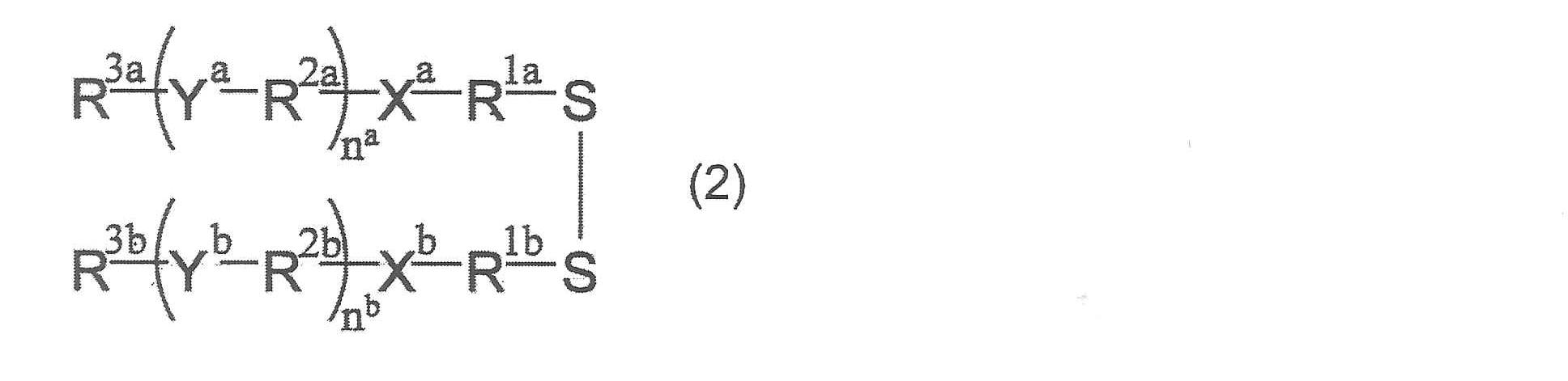


リン脂質は脂質ナノ粒子の脂質膜構成成分として用いることができる。
リン脂質の例としては、1,2-ジアシル-sn-グリセロ-3-ホスホコリン(PC)、1,2-ジアシル-sn-グリセロ-3-ホスファチジルエタノールアミン(PE)、1,2-ジアシル-sn-グリセロ-3-ホスファチジルセリン(PS)、1,2-ジアシル-sn-グリセロ-3-ホスファチジルグリセロール(PG)、1,2-ジアシル-sn-グリセロ-3-ホスファチジン酸(PA)、またはこれらのリゾ体があり、
具体的には、
1,2-ジデカノイル-sn-グリセロ-3-ホスホコリン(DDPC)、
1,2-ジライウロイル-sn-グリセロ-3-ホスホコリン(DLPC)、
1,2-ジミリストイル-sn-グリセロ-3-ホスホコリン(DMPC)、
1,2-ジパルミトイル-sn-グリセロ-3-ホスホコリン(DPPC)、
1,2-ジステアロイル-sn-グリセロ-3-ホスホコリン(DSPC)、
1,2-ジオレオイル-sn-グリセロ-3-ホスホコリン(DOPC)、
1,2-ジリノレオイル-sn-グリセロ-3-ホスホコリン(DLoPC)、
1,2-ジエルコイル-sn-グリセロ-3-ホスホコリン(DEPC)、
1-ミリストイル-2-パルミトイル-sn-グリセロ-3-ホスホコリン(MPPC)、
1-ミリストイル-2-ステアロイル-sn-グリセロ-3-ホスホコリン(MSPC)、
1-パルミトイル-2-ミリストイル-sn-グリセロ-3-ホスホコリン(PMPC)、
1-パルミトイル-2-ステアロイル-sn-グリセロ-3-ホスホコリン(PSPC)、
1-パルミトイル-2-オレオイル-sn-グリセロ-3-ホスホコリン(POPC)、
1-ステアロイル-2-オレオイル-sn-グリセロ-3-ホスホコリン(SOPC)があり、これらのPCを適宜PE,PS,PG,PAに変換したものを用いることができる。
ステロールは脂質ナノ粒子の脂質膜の流動性を調節する成分として用いることができる。ステロールの例としては、コレステロール、ラノステロール、フィトステロール、ジモステロール、ジモステノール、デスモステロール、スティグマスタノール、ジヒドロラノステロール、および7-デヒドロコレステロールがあり、好ましくはコレステロール、ラノステロール、フィトステロールであり、さらに好ましくはコレステロールである。
PEG脂質は、脂質ナノ粒子の表面を親水性ポリエチレングリコール(PEG)で被覆し、粒子同士の凝集を抑制することによる安定化剤や、生体に投与した際に生体成分と粒子の相互作用を抑制するために用いられる。
PEG領域は任意の分子量のものであり得る。いくつかの態様において、PEG領域は、200~10,000Daの分子量を有し、直鎖であっても分岐であってもよい。
酸性領域に緩衝作用がある緩衝液または緩衝液成分を用いることができる。「酸性緩衝液成分」とは、酸性緩衝液から水を実質的に除いた成分を意味する。酸性緩衝液成分に含まれる水のレベルは、約5w/v%未満、または4%w/v未満、または3w/v%未満、または2w/v%未満、または1%w/v未満であり得る。具体的にはHCl/KCl緩衝液、p-トルエンスルホン酸/同Na塩緩衝液、酒石酸/NaOH緩衝液、クエン酸/NaOH緩衝液、フタル酸HK/HCl緩衝液、グリシン/HCl緩衝液、trans-アコニット酸/NaOH緩衝液、ギ酸/ギ酸Na緩衝液、クエン酸/クエン酸Na緩衝液、3,3-ジメチルグルタル酸/NaOH緩衝液、3,3-ジメチルグルタル酸/NaOH/0.1M NaCl緩衝液、フェニル酢酸/同Na塩緩衝液、酢酸/酢酸Na緩衝液、コハク酸/NaOH緩衝液、フタル酸HK/NaOH緩衝液、カコジル酸Na/HCl緩衝液、マレイン酸HNa/NaOH緩衝液、マレイン酸/Tris/NaOH緩衝液、リン酸緩衝液、KH2PO4/NaOH緩衝液、イミダゾール/HCl緩衝液、s-コリジン (2,4,6-トリメチルピリジン)/HCl緩衝液、トリエタノールアミンHCl/NaOH緩衝液、5,5-ジエチルバルビツール酸Na/HCl緩衝液、N-メチルモルホリン/HCl緩衝液、ピロリン酸Na/HCl緩衝液、MES緩衝液、リンゴ酸緩衝液、ADA緩衝液、PIPES緩衝液、ACES緩衝液、HEPES、BES、ビストリス緩衝液、ビストリスプロパン緩衝液、無水炭酸ナトリウム緩衝液、グリシルグリシン緩衝液、MOPS、MOPSO、TESが挙げられる。
脂質ナノ粒子を調製するための「組織化を誘導する操作」としては、例えば、マイクロ流路又はボルテックスを用いたアルコール希釈法、単純水和法、超音波処理、加熱、ボルテックス、エーテル注入法、フレンチ・プレス法、コール酸法、Ca2+融合法、凍結-融解法、逆相蒸発法等の自体公知の方法が挙げられ、好ましくはマイクロ流路又はボルテックスを用いたアルコール希釈法であり、さらに好ましくはマイクロ流路を用いたアルコール希釈法である。マイクロ流路を用いたアルコール希釈法での粒子調製は例えばNanoAssemblr(Precision NanoSystems社)を用いて行うことができる。調製した脂質ナノ粒子は限外ろ過、透析、希釈等の操作によって外水相の緩衝液を交換することができる。
本発明に利用可能な凍結保護剤としては単糖、糖アルコール、二糖、オリゴ糖、多糖またはポリマーを用いることができ、具体的には、グリセルアルデヒド、エリトロース、トレオース、リボース、リキソース、キシロース、アラビノース、アロース、タロース、グロース、グルコース、アルトロース、マンノース、ガラクトース、イドース、エリトルロース、リブロース、プシコース、フルクトース、ソルボース、タガトース、エリトリトール、グリセリン、イソマルトール、ラクチトール、マルチトール、マンニトール、ソルビトール、キシリトール、イノシトール、スクロース、ラクツロース、ラクトース、マルトース、トレハロース、セロビオース、コージビオース、ニゲロース、イソマルトース、イソトレハロース、ネオトレハロース、ソホロース、ラミナリビオース、ゲンチビオース、ツラノース、マルツロース、パラチノース、ゲンチビオース、マンノビオース、メリビオース、メリビウロース、ネオラクトース、ガラクトスクロース、シラビオース、ネオヘスペリドース、ルチノース、ルチヌロース、ビシアノース、キシロビオース、プリメベロース、トレハロサミン、マルチトール、ラクトサミン、ラクチトール、スクラロース、ラフィノース、パノース、マルトトリオース、メレジトース、ゲンチアノース、スタキオース、シクロデキストリン、ヒドロキシプロピル-β-シクロデキストリン、デキストラン、ポリビニルピロリドン、ポリエチレングリコール等が挙げられ、好ましくは二糖であり、さらに好ましくは還元性がない二糖であり、最も好ましくはスクロースである。
凍結乾燥プロセスは、医薬の技術分野において知られている、ガラス容器(または例えばガラスバイアル)または二室式容器などの任意の好適な容器において行われ得る。
凍結保護剤を含有する安定化された本発明の脂質ナノ粒子組成物はガラス容器中に導入され得る。容器に加えられる組成物の体積は、0.1~20mL、または1~10mLであり得る。
任意の凍結乾燥プロセス(医薬の技術分野において知られたものを含む)が使用され得る。例えば、Remington’s Pharmaceutical Sciences, 18th Ed., Mack Publishing Co., Easton, Penn. (1990)を参照。
凍結乾燥プロセスは、凍結保護剤によって安定化された脂質ナノ粒子組成物を約-55℃~約-30℃の温度で凍結することを含み得る。凍結された組成物は凍結乾燥された組成物の乾燥した形態であり得る。
いくつかの態様において、凍結工程は、数分にわたって温度を室温から最終的な温度まで徐々に上げ得る。温度勾配は約1℃/分であり得る。
いくつかの態様において、乾燥工程は、約0~250mTorr、または50~150mTorrの圧力で、約-55℃~約40℃の温度で行われ得る。乾燥工程は、室温までの高温域で、数日間までの所定の期間にわたって継続され得る。固体の凍結乾燥組成物における残余の水のレベルは、約5w/v%未満、または4%w/v未満、または3w/v%未満、または2w/v%未満、または1%w/v未満であり得る。
再水和工程は、本発明の凍結乾燥組成物に核酸を含む水溶液を加えて核酸内封脂質ナノ粒子を調製する工程である。核酸の量は凍結乾燥組成物に含まれる総脂質と核酸の比が例えば総脂質/核酸=1~1000nmol/μg、好ましくは総脂質/核酸=50~500nmol/μgの核酸を含む水溶液を加え、ピペッティングやボルテックスによって混合することで核酸内封脂質ナノ粒子を調製することができる。また、核酸内封率を高めるために再水和時にアルコールを添加することができ、アルコールとしてはメタノール、エタノール、n-ブタノール、t-ブタノールを用いることができ、好ましくはエタノールである。核酸を含む水溶液中のアルコールの濃度は0~50v/v%、好ましくは0~30v/v%、さらに好ましくは0~25v/v%である。また、さらに再水和工程では核酸内封効率を高めるために、凍結乾燥組成物に核酸を含む水溶液、さらにまたはアルコールを加えた後にインキュベーションすることができる。インキュベーションの条件は例えば0~100℃で0~120分間であり、好ましくは0~95℃で0~60分間である。
再水和工程で得られた核酸内封脂質ナノ粒子の外水相を中性緩衝液に交換することにより、核酸導入剤として使用可能な核酸内封脂質ナノ粒子を調製することができる。
外水相を中性緩衝液に交換する方法としては、透析、限外ろ過または希釈による方法が挙げられる。
中性緩衝液としては、リン酸緩衝生理食塩水(PBS)、Tris-HCl緩衝液、ADA, PIPES, PIPES sesquisodium, ACES, MOPS, BES, MOPSO, BES, MOPS, TES, HEPES, TAPSO, POPSO, HEPSOなどが挙げられる。中性緩衝液のpHは6~8である。
また、本発明は、本発明の脂質ナノ粒子の凍結乾燥組成物を用いて調製した核酸内封脂質ナノ粒子を含む核酸導入剤を提供するものである。
Chol: コレステロール
DMG-PEG2k: 1,2-ジミリストイル-rac-グリセロール,メトキシポリエチレングリコール(PEG MW 2000)
DSPC: 1,2-ジステアロイル-sn-グリセロ-3-ホスホコリン
DOPC: 1,2-ジオレオイル-sn-グリセロ-3-ホスホコリン
POPC: 1-パルミトイル-2-オレオイル-sn-グリセロ-3-ホスホコリン
DOPE: 1,2-ジオレオイル-sn-グリセロ-3-ホスホエタノールアミン
POPE: 1-パルミトイル-2-オレオイル-sn-グリセロ-3-ホスホエタノールアミン
PBS: リン酸緩衝生理食塩水
MES: 2-モルホリノエタンスルホン酸
DPBS: ダルベッコリン酸緩衝生理食塩水
比較例として、下記のとおり中性の脂質ナノ粒子を作成後に凍結保護剤を添加し凍結乾燥することで凍結乾燥組成物を調製した。
表4に示す脂質組成にて、脂質のtert-ブタノール溶液とリンゴ酸buffer (pH3, 20mM)をNanoAssemblr(流速比:buffer/脂質=6/1(v/v)、総流速:1mL/min)で混合した。この溶液をMES buffer (pH5.5, 20mM)で希釈し、アミコンを用いた限外ろ過を行いながら、pH7.4のPBSへ置換した。理論値として脂質濃度として200nmol/100μLとなるようにLNPを濃縮して回収し、そこにスクロース溶液100μLを添加して混合した。この溶液をVerTis AdVantage Plus EL-85凍結乾燥機を用いて凍結乾燥した。凍結乾燥は、はじめに常圧・-55℃で14時間から21時間溶液を凍結し、その後200ミリトールまで圧力を下げ、10℃ずつ温度を上昇させた。温度上昇プログラムは、-20℃までは3時間かけて温度を10℃上昇させ、-10℃以上では2時間かけて温度を10℃上昇させてその温度で1時間静置するように設定した。30℃まで温度が上昇したらその温度で3時間静置してから常圧に戻してサンプルを回収した。
表5に示す脂質組成にて、脂質のtert-ブタノール溶液とリンゴ酸buffer (pH3.0, 20mM)をNanoAssemblr(流速比:buffer/脂質=6/1(v/v)、総流速:1mL/min)で混合した。このLNP溶液に等量のスクロース溶液 (スクロース終濃度が80 mg/mL, 160 mg/mL, 320 mg/mL, 433 mg/mLとなるように) を添加して混合し、脂質量が200 nmolおよび600 nmolとなるように分注した。この溶液をVerTis AdVantage Plus EL-85凍結乾燥機を用いて凍結乾燥した。凍結乾燥は、はじめに常圧・-55℃で14時間から21時間溶液を凍結し、その後200ミリトールまで圧力を下げ、10℃ずつ温度を上昇させた。温度上昇プログラムは、-20℃までは3時間かけて温度を10℃上昇させ、-10℃以上では2時間かけて温度を10℃上昇させてその温度で1時間静置するように設定した。30℃まで温度が上昇したらその温度で3時間静置してから常圧に戻してサンプルを回収した。
表5に示す脂質組成にて、脂質のtert-ブタノール溶液とMES buffer (pH5.0, 20mM)をNanoAssemblr(流速比:buffer/脂質=6/1(v/v)、総流速:1mL/min)で混合した。その後の操作は実施例1-59と同様に行った。
表4および5に示す条件にて、凍結乾燥組成物に総脂質/mRNA(またはsiRNAまたはpDNA)=200nmol/μgとなる比率で、mRNA, siRNA, pDNAの水溶液(RNase freeを使用、12.5% or 25% EtOH含有)を加え、ピペッティングで混合した。MES buffer(pH5.5, 20mM)で希釈し、アミコンを用いた限外ろ過を行いながら、pH7.4のPBSへ置換した。理論値としてmRNA(またはsiRNAまたはpDNA)濃度として2.5 g/mLとなるようにLNPを濃縮して回収し、Ribogreen(登録商標)試薬またはPicogreen(登録商標)試薬を用いて核酸の回収率、封入率を測定した。粒子径およびゼータ電位はゼータサイザーを用いて測定した。
(1) 核酸内封LNP溶液をDPBSで2.5倍希釈した溶液を250μL調製する(理論値1μg/mL )。
(2) 検量線用として、既知の濃度のmRNA溶液をmRNA濃度が2000ng/mL、1000ng/mL、500ng/mL、250ng/mL、125ng/mL、0ng/mLとなるようにDPBSで希釈した溶液を各250μL調製する。
(3) RiboGreen試薬またはPicoGreen試薬は、以下の表に示す条件にて調製する(1wellあたりの量)。n=2での分析用に(検量線数+サンプル数+1)×2の量を調製する。

(5) プレートをアルミホイルで遮光し、振とう機で5分間インキュベートする(100-500rpm)。
(6) マイクロプレートリーダーで蛍光を測定する(Excitation:480nm, Emission:520nm)。
(7) 以下の計算式にて回収率、封入率を算出する。
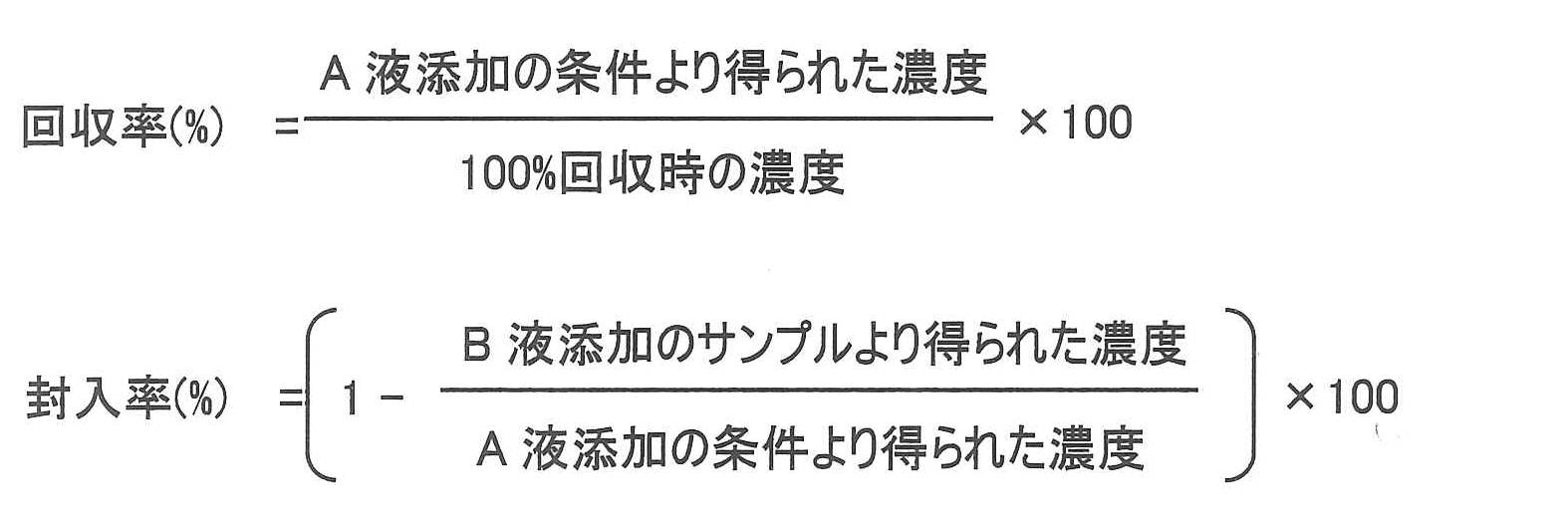
凍結乾燥組成物に総脂質/mRNA=200nmol/μgとなる比率で、mRNAの水溶液(RNase free)を加え、ピペッティングで混合したのち、95℃で5分間インキュベーションした。MES buffer(pH5.5, 20mM)で希釈し、アミコンを用いた限外ろ過を行いながら、pH7.4のPBSへ置換した。mRNA濃度として2.5μg/mLとなるようにLNPを濃縮して回収し、Ribogreen試薬を用いて核酸の回収率、封入率を測定した。粒子径およびゼータ電位はゼータサイザーを用いて測定した。
凍結乾燥組成物に総脂質/mRNA=200nmol/μgとなる比率で、mRNAの水溶液(RNase free)を加え、ピペッティングで混合したのち、95℃で5分間インキュベーションした。Ribogreen試薬を用いて核酸の回収率、封入率を測定した。粒子径およびゼータ電位はゼータサイザーを用いて測定した。
凍結乾燥組成物に総脂質/mRNA=200nmol/μgとなる比率で、mRNAの水溶液(RNase free)を加え、ピペッティングで混合したのち、MES buffer(pH5.5, 20mM)で希釈し、アミコンを用いた限外ろ過を行いながら、pH7.4のPBSへ置換した。mRNA濃度として2.5μg/mLとなるようにLNPを濃縮して回収し、Ribogreen試薬を用いて核酸の回収率、封入率を測定した。粒子径およびゼータ電位はゼータサイザーを用いて測定した。
mRNA: CleanCap(登録商標) FLuc mRNA (TriLink社)
CleanCap(登録商標) EGFP mRNA (TriLink社)
CleanCap(登録商標) EPO mRNA (5moU) (TriLink社)
CleanCap(登録商標) OVA mRNA (TriLink社)
pDNA: pcDNA3.1-luc(Biomaterials 2011, 32, 6342.に記載の方法)
siRNA: siFVII (2'-F)
Sense 5'-GGAucAucucAAGucuuAcdT*dT-3'
Antisense 5'-GuAAGAcuuGAGAuGAuccdT*dT-3'
dT: deoxythymidine
*: phosphorothioate linkage
Capital letter: native (2'-OH) ribonucleotides
Small letter: 2'-Fluoro-modified nucleotides


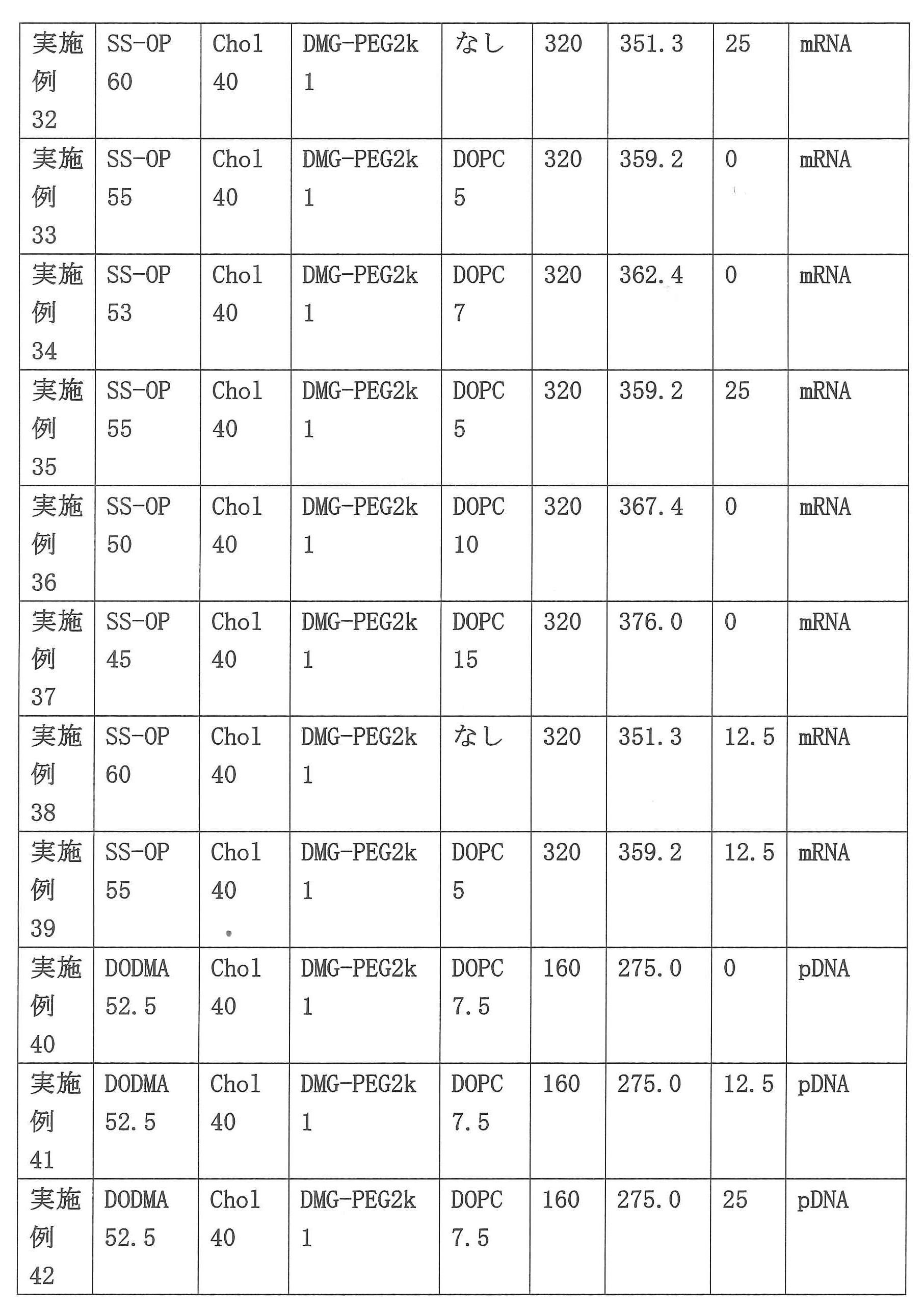

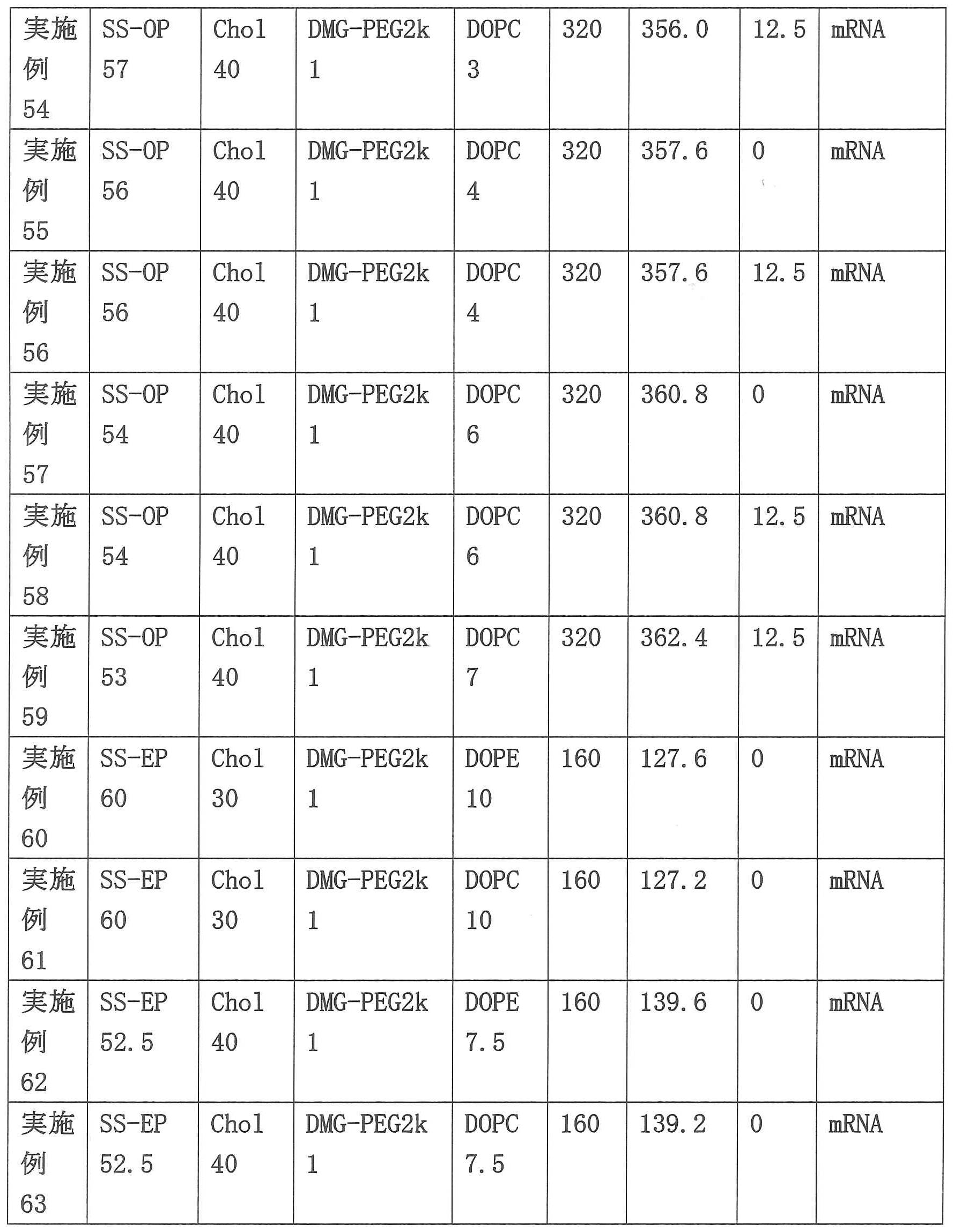

表6の評価結果に示すとおり、中性の脂質ナノ粒子の凍結乾燥組成物では核酸水溶液での再水和時に核酸とイオン性脂質が静電相互作用しないため、核酸を脂質ナノ粒子に内封することはできなかった。

表7の評価結果に示すとおり、実施例1-3の酸性の凍結乾燥組成物では核酸を効率的に内封することができた。さらに表7に示すとおり凍結保護剤であるスクロースの濃度を高めることで核酸の内封効率を高めることができ、粒子物性としても粒子分布が小さい脂質ナノ粒子を調製することができた。
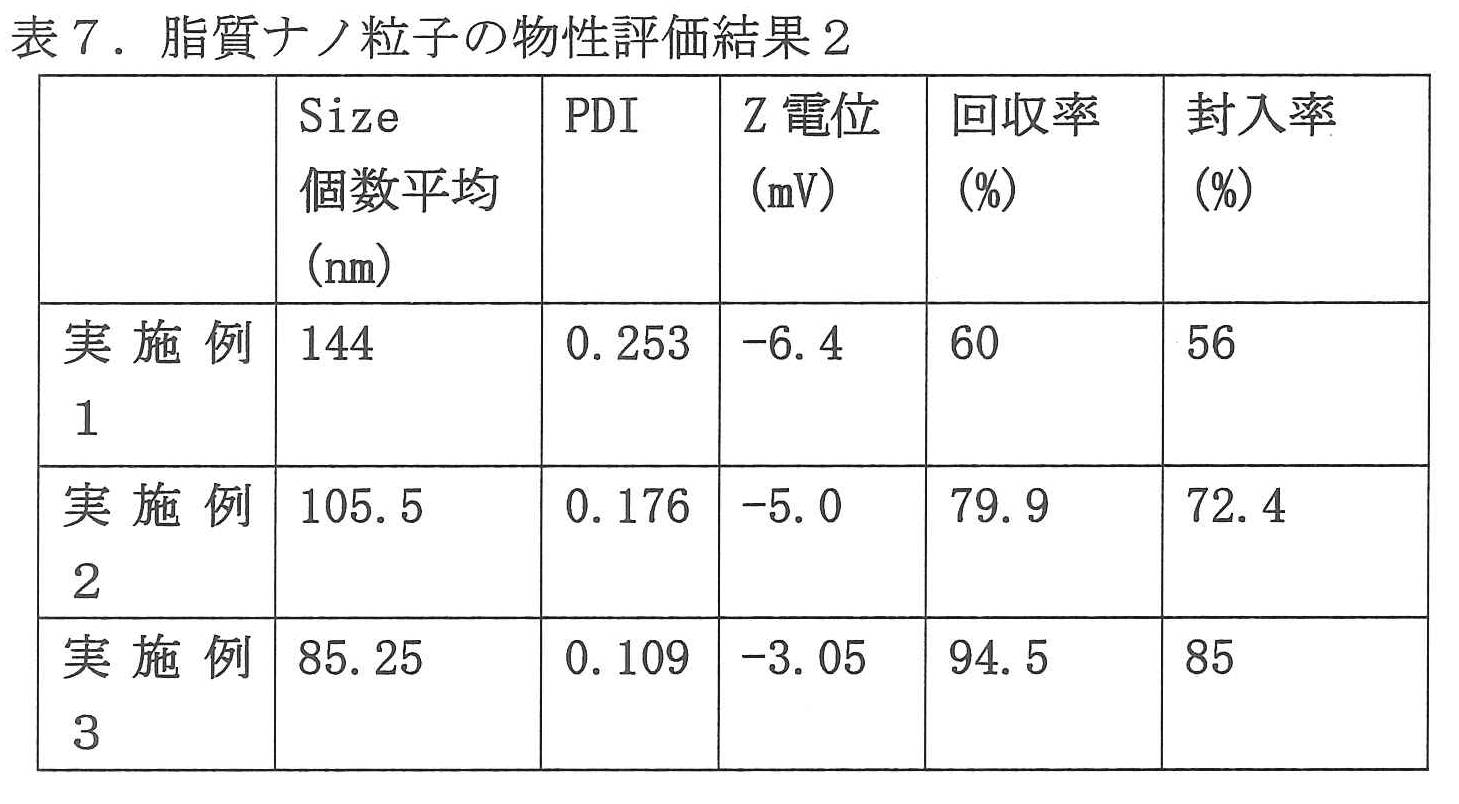
表8の評価結果に示すとおり、エタノールの添加によって核酸内封効率を高めることができた。

表9の評価結果に示すとおり、核酸種によらず核酸を効率的に内封することができた。

表10の評価結果に示すとおり、リン脂質の種類および脂質組成によらず核酸を効率的に内封することができた。


表11の評価結果に示すとおり、イオン性脂質の種類によらず核酸を効率的に内封することができた。


EGFPを発現するmRNAを封入したLNP溶液を実施例に記載の方法で調製した。
トランスフェクション24時間前にヒト白血病T細胞であるJurkat細胞を5.0×10⁴cells/1mL/wellとなるように1.2cmウェルに播種した。24時間後、調製したLNP溶液をmRNAとして0.1μgとなるように1.2cmウェルに加え、インキュベーターで24時間培養した。培養液をFACSバッファー(0.5%ウシ血清アルブミン(BSA)、0.1%NaN3含有PBS)に交換し、フローサイトメーター(NovoCyte;ACEA Biosciences製)にて測定を行い、遺伝子導入された細胞の分析を行った。EGFPが発現した細胞の割合を図1に、EGFPの発現強度を図2に示した。
図1、2に示すとおり本発明の凍結乾燥組成物を用いて作製した核酸内封脂質ナノ粒子は細胞に遺伝子を効率的に導入することができ、さらに凍結保護剤であるスクロース濃度を高めることで細胞への遺伝子導入の均一性や発現強度を高めることができた。
ルシフェラーゼを発現するmRNAを封入したLNP溶液を実施例に記載の方法で調製した。
トランスフェクション24時間前にヒト白血病T細胞であるJurkat細胞を2.0×10⁵cells/1.9mL/Dishとなるように3.5cmディッシュに播種した。24時間後、終濃度が0.1mMとなるようにD-ルシフェリン入りの培地(RPMI1640)を各ディッシュに100μL加えた。そこへ、調製したLNP溶液をmRNAとして0.4μgとなるように加え、インキュベーター型ルミノメーターKronosDioにセットした。ルシフェラーゼの発光強度を3時間ごとに2分間計測した。得られた発現の時間変化から、24または48時間の累積発光強度を算出した。結果を図3~6に示した。
図3~6に示すとおり、リン脂質としてDOPC,POPC,DOPE,POPEのいずれを用いても細胞に遺伝子を効率的に導入することができ、POPEを用いた場合に最も遺伝子導入効率が高かった。
エリスロポエチンを発現するmRNAを封入したLNP溶液を実施例に記載の方法で調製した。
調製したLNP溶液をmRNAの濃度で5μg/mLとなるようにPBSで希釈した。希釈したmRNA封入LNPを、6週齢の雌のBalb/cマウスに体重1gあたり10μLとなるように尾静脈内投与した(mRNAの投与量として0.05mg/kg)。投与後1、3、6、9、24時間後にマウス尾静脈から血液15μLを採取した。採取した血液は直ちに0.3μLのヘパリン溶液(5000U/5mL)と混合した。各血液サンプルを遠心条件(25℃,2000g,20min)で遠心分離し、上清を回収した。上清中のエリスロポエチン濃度をMouse Erythropoietin Quantikine ELISA Kit(R&D Systems製)を用いて、Kitのプロトコルに記載の方法で測定した。結果を図7に示した。
図7に示すとおり、実施例39の通り作成した粒子の活性が最も高かったが、実施例39、実施例22、実施例38の全てにおいてマウスin vivoでのmRNA発現が確認できた。
OVAをモデル抗原として抗原特異的細胞傷害性T細胞活性(CTL活性)の評価をおこなった。
OVAを発現するmRNAを封入したLNPを実施例に記載の方法で調製した。調製したLNP溶液をmRNAの濃度で1μg/mLとなるようにPBSで希釈した。希釈したmRNA封入LNPを、6週齢のC57BL6/Jマウスに一匹当たり0.1μgのmRNAとなるように、後背部の首の皮下へ投与した。投与7日後にCTLアッセイを行った。
CTLアッセイ:抗原に感作していない6週齢のC57BL6/Jマウスから脾臓を採取し、RPMI培地中で初めに5mLシリンジ、次いでピンセットを用いてほぐし、脾細胞を調製した。40μmのセルストレイナーを通した後、遠心した(4℃、500g、5分)。上清を除き、細胞塊を赤血球溶解バッファーに懸濁し5分後に再度遠心を行った(4℃、500g、5分)。上清を除き、RPMI培地を加え細胞数を計測した。細胞を1.0×107細胞/mLとなるように懸濁し、次に示す二つの処置群に分割した。ターゲット細胞群;OVAエピトープ(SIINFEKLペプチド)を400倍希釈になるよう加えて30分静置の後、遠心を行った(4℃、500g、5分)。1.0×107細胞/mLとなるように懸濁し、5μMのCFSEで染色することによりターゲット細胞群とした。コントロール細胞群;1.0×107細胞/mLとなるように懸濁し、0.5μMのCFSEで染色することによりコントロール細胞群とした。ターゲット細胞群とコントロール細胞群の溶液を等量混合し、合計1.0×107細胞とした細胞混合物を、前述のとおり免疫したマウスの尾静脈から投与した。投与から20時間後にマウスの脾臓を回収し、フローサイトメーター(NovoCyte;ACEA Biosciences製)にてCFSEの蛍光を測定した。コントロール細胞群の計測数は実験を通じてほぼ変化が無いことを確認した。各群についてコントロール細胞群に対するターゲット細胞群の生存割合を計算した。PBS投与マウス(非免疫群)におけるターゲット細胞の生存率から細胞傷害性T細胞活性の0%を決定し、免疫マウスにおけるターゲット細胞の生存率から各サンプルの細胞傷害性T細胞活性を計算することで、OVA特異的な細胞傷害性T細胞活性を評価した。
図8に示すように実施例62、実施例65の通り作成した粒子の活性が最も高かったが、実施例60、実施例62、実施例64、実施例65の全てにおいて抗原特異的な細胞傷害性T細胞活性を付与できることが確認された。
凍結乾燥工程を経ない従来公知の方法で下記の操作に従い粒子調製を行った。
脂質組成SS-OP/コレステロール/DOPC/DMG-PEG2k=52.5/40/7.5/1.5(mol)にて、総脂質/mRNA=200nmol/μgとなる比率で、脂質のエタノール溶液とmRNAのリンゴ酸buffer溶液(pH3.0, 20mM, 30mM NaCl含有)をNanoAssemblr(流速比:buffer/脂質=3/1(v/v)、総流速:4mL/min)で混合した。この溶液をMES buffer (pH5.5, 20mM)で希釈し、アミコンを用いた限外ろ過を行いながら、pH7.4のPBSへ置換した。理論値としてmRNAが10μg/mLとなるようにPBSで希釈し、脂質ナノ粒子を得た。
脂質組成SS-OP/コレステロール/DOPC/DMG-PEG2k=52.5/40/7.5/1.5(mol)にて、脂質のエタノール溶液とリンゴ酸buffer (pH3.0, 20mM)をNanoAssemblr(流速比:buffer/脂質=7/1(v/v)、総流速:1mL/min)で混合した。この溶液をMES buffer (pH6, 20mM)で希釈し、アミコンを用いた限外ろ過でMES buffer (pH6, 20mM)へ置換した。総脂質として400nmol/100μLとなるようにMES buffer (pH6, 20mM)で希釈して回収した。この溶液に等量のスクロース溶液(スクロース終濃度160 mg/mL)を添加して、vortexミキサーで混合した。200μLをバイアルへ分注し、EYELA凍結乾燥機を用いて凍結乾燥した。凍結乾燥は、はじめに常圧・-40℃で3時間溶液を凍結し、その後200ミリトールまで圧力を下げ、-40℃で20時間、-30~0℃では10℃毎に6時間、10~30℃では10℃毎に3時間静置するように設定した。プログラム終了後、常圧に戻して、サンプルを回収した。
回収した凍結乾燥サンプルに総脂質/mRNAが200nmol/μgとなるように、Luc-mRNA 2μgを加えた水を200μL加えて、タッピングで混合した。その後、95℃で5分間インキュベートを行い、200μLのPBSで中和した。
脂質組成SS-OP/コレステロール/DOPC/DMG-PEG2k=52.5/40/7.5/1.5(mol)にて、脂質のエタノール溶液とリンゴ酸buffer (pH3.0, 20mM)をNanoAssemblr(流速比:buffer/脂質=7/1(v/v)、総流速:16mL/min)で混合した。この溶液をMES buffer (pH6, 20mM)で希釈し、アミコンを用いた限外ろ過でMES buffer (pH6, 20mM)へ置換した。総脂質として400nmol/100μLとなるようにMES buffer (pH6, 20mM)で希釈して回収した。この溶液に等量のスクロース溶液(スクロース終濃度160 mg/mL)を添加して、vortexミキサーで混合した。200μLをバイアルへ分注し、EYELA凍結乾燥機を用いて凍結乾燥した。凍結乾燥は、はじめに常圧・-40℃で3時間溶液を凍結し、その後200ミリトールまで圧力を下げ、-40℃で20時間、-30~0℃では10℃毎に6時間、10~30℃では10℃毎に3時間静置するように設定した。プログラム終了後、常圧に戻して、サンプルを回収した。
回収した凍結乾燥サンプルに総脂質/mRNAが200nmol/μgとなるように、hEPO-mRNA 2μgを加えた水を200μL加えて、タッピングで混合した。その後、37℃で15分間インキュベートを行い、200μLのPBSで中和した。

操作に従い調製した比較例4および実施例71の粒子を用いて細胞での遺伝子発現強度を以下の操作に従い評価した。
トランスフェクション24時間前にHeLa細胞を5.0×10⁴cells/1.9mL/Dishとなるように3.5cmディッシュに播種した。24時間後、終濃度が0.1mMとなるようにD-ルシフェリン入りの培地(RPMI1640)を各ディッシュに100μL加えた。そこへ、調製したLNP溶液をmRNAとして0.4μgとなるように加え、インキュベーター型ルミノメーターKronosDioにセットした。ルシフェラーゼの発光強度を1時間ごとに2分間計測した。結果を図9に示した。比較例4と比較して実施例71のナノ粒子は、in vitroにおいて約34倍高い遺伝子発現活性を示した。
操作に従い調製した比較例4および実施例72の粒子を用いて、マウスでの遺伝子発現強度を試験例3の方法と同様にして評価した。結果を図10に示した。比較例4と比較して実施例72のナノ粒子は、in vivoにおいて約1.7倍高い遺伝子発現活性を示した。
<オレイン酸の酸無水物化>
オレイン酸(日油(株)製)70.0g(248mmol)をクロロホルム560gに室温で溶解させ、10-15℃まで冷却した。そこへ、DCC((株)大阪合成有機化学研究所製)25.1g(121mmol)をクロロホルム140gで溶解させた懸濁液を滴下により加え、10-25℃で2時間反応させた。反応溶液をろ過後、ろ液をエバポレーターにより濃縮した。得られた濃縮物をヘキサン210gに再溶解させ、不溶物をろ過により除去した。得られたろ液をエバポレーターにより濃縮し、オレイン酸無水物を64.2g得た。
オレイン酸無水物43.1g(78.9mmol)および4-ヒドロキシフェニル酢酸(東京化成工業(株)製)6.00g(39.4mmol)をクロロホルム647gに溶解させた。そこへDMAP(広栄化学(株)製)1.93g(15.8mmol)を加えて、室温で9時間反応を行った。反応溶液を10%酢酸水溶液216gで2回、イオン交換水216gで2回洗浄した後、硫酸マグネシウム(関東化学(株)製)12.9gを有機層へ加え、30分間攪拌した。硫酸マグネシウムをろ過後、ろ液をエバポレーターにて濃縮した。濃縮物をヘキサン284gで再溶解し、不溶物をろ過後、アセトニトリル168gを用いた抽出を6回行った。アセトニトリル層を回収し、エバポレーターにて濃縮することで、18.1gの粗体を得た。得られた粗体14.5gをカラム精製することで、4-オレオイルオキシフェニル酢酸を3.66g得た。
US2014/0335157A1に記載の方法で合成したビス{2-[4-(2-ヒドロキシエチル)ピペリジル]エチル}ジスルフィド(di-4PE体)0.350g(0.929mmol)と、4-オレオイルオキシフェニル酢酸0.813g(1.95mmol)、およびDMAP 0.0454g(0.372mmol)を室温でクロロホルム10.5gに溶解させた。そこへEDC 0.534g(2.79mmol)を加え、30-35℃で4時間反応させた。反応溶液を20%食塩水7.00gで2回洗浄した後、硫酸マグネシウム0.350gを用いて脱水した。硫酸マグネシウムをろ過後、ろ液をエバポレーターにて濃縮し、1.10gの粗体を得た。得られた粗体をカラム精製することで、O-Ph-P4C2を0.722g得た。
<コハク酸D-α-トコフェロールの酸無水物化>
コハク酸D-α-トコフェロール(SIGMA-ALDRICH製)70.0g(132mmol)をクロロホルム560gに室温で溶解させ、10-15℃まで冷却した。そこへ、DCC((株)大阪合成有機化学研究所製)13.7g(66mmol)をクロロホルム140gで溶解させた懸濁液を滴下により加え、10-25℃で2時間反応させた。反応溶液をろ過後、ろ液をエバポレーターにより濃縮した。得られた濃縮物をヘキサン210gに再溶解させ、不溶物をろ過により除去した。得られたろ液をエバポレーターにより濃縮し、無水コハク酸D-α-トコフェロールを64.2g得た。
無水コハク酸D-α-トコフェロール43.1g(41.3mmol)および4-ヒドロキシフェニル酢酸(東京化成工業(株)製)3.13g(20.6mmol)をクロロホルム647gに溶解させた。そこへDMAP(広栄化学(株)製)1.01g(8.26mmol)を加えて、室温で9時間反応を行った。反応溶液を10%酢酸水溶液216gで2回、イオン交換水216gで2回洗浄した後、硫酸マグネシウム(関東化学(株)製)12.9gを有機層へ加え、30分間攪拌した。硫酸マグネシウムをろ過後、ろ液をエバポレーターにて濃縮した。濃縮物をヘキサン284gで再溶解し、不溶物をろ過後、アセトニトリル168gを用いた抽出を6回行った。アセトニトリル層を回収し、エバポレーターにて濃縮することで、17.0gの粗体を得た。得られた粗体13.6gをカラム精製することで、4-(D-α-トコフェロールヘミスクシニル)フェニル酢酸を3.44g得た。
di-4PE体 0.350g(0.929mmol)と、4-(D-α-トコフェロールヘミスクシニル)フェニル酢酸1.04g(1.95mmol)、およびDMAP 0.0454g(0.372mmol)を室温でクロロホルム10.5gに溶解させた。そこへEDC 0.534g(2.79mmol)を加え、30-35℃で4時間反応させた。反応溶液を20%食塩水7.00gで2回洗浄した後、硫酸マグネシウム0.350gを用いて脱水した。硫酸マグネシウムをろ過後、ろ液をエバポレーターにて濃縮し、1.31gの粗体を得た。得られた粗体をカラム精製することで、E-Ph-P4C2を0.860g得た。
Claims (28)
- 核酸を含まず、イオン性脂質、ステロール、PEG脂質、pH1~6に緩衝作用を有する酸性緩衝液成分および凍結保護剤を含む脂質ナノ粒子の凍結乾燥組成物であって、
凍結保護剤と総脂質の重量比が10:1~1000:1である、凍結乾燥組成物。 - リン脂質をさらに含む請求項1記載の凍結乾燥組成物。
- 凍結保護剤と総脂質の重量比が30:1~1000:1である請求項1または2記載の凍結乾燥組成物。
- 凍結保護剤の濃度が凍結乾燥前の組成物として80~800mg/mLである請求項1~3のいずれか1項に記載の凍結乾燥組成物。
- 凍結保護剤の濃度が凍結乾燥前の組成物として160~800mg/mLである請求項1~4のいずれか1項に記載の凍結乾燥組成物。
- イオン性脂質が式(1)で表される化合物である請求項1~5のいずれか1項に記載の凍結乾燥組成物:

R1a及びR1bはそれぞれ独立して、炭素数1~6のアルキレン基を表し、
Xa及びXbはそれぞれ独立して、炭素数が1~6であり、かつ3級アミノ基の数が1の非環状のアルキル3級アミノ基、又は炭素数が2~5であり、かつ3級アミノ基の数が1~2の環状のアルキレン3級アミノ基を表し、
R2a及びR2bはそれぞれ独立して、炭素数8以下のアルキレン基又はオキシジアルキレン基を表し、
Ya及びYbはそれぞれ独立して、エステル結合、アミド結合、カーバメート結合、エーテル結合又はウレア結合を表し、
Za及びZbはそれぞれ独立して、炭素数が3~16であり、少なくとも1つの芳香環を有し、かつヘテロ原子を有していてもよい芳香族化合物から誘導される2価の基を表し、
R3a及びR3bはそれぞれ独立して、水酸基を有する脂溶性ビタミンとコハク酸無水物又はグルタル酸無水物との反応物由来の残基、又は水酸基を有するステロール誘導体とコハク酸無水物又はグルタル酸無水物との反応物由来の残基、又は炭素数12~22の脂肪族炭化水素基を表す。)。 - 凍結保護剤が二糖である請求項1~6のいずれか1項に記載の凍結乾燥組成物。
- 凍結保護剤がスクロースである請求項1~6のいずれか1項に記載の凍結乾燥組成物。
- 以下の工程を含む、核酸内封脂質ナノ粒子の製造方法:
a)イオン性脂質、ステロールおよびPEG脂質を含むアルコール溶液とpH1~6に緩衝作用を有する酸性緩衝液を混合し、核酸を含まない脂質ナノ粒子の懸濁液を調製する工程、
b)核酸を含まない脂質ナノ粒子の懸濁液と凍結保護剤を混合して、80~800mg/mLの凍結保護剤を含み、pH1~6の混合物を得る工程、
c)工程bで得られた混合物を凍結乾燥して、凍結乾燥組成物を得る工程、
d)凍結乾燥組成物を、核酸を含み、任意にアルコール0~25v/v%を含む水溶液と混合し、任意に混合物を0~95℃で0~60分間インキュベートして、核酸内封脂質ナノ粒子を得る工程、および
e)透析、限外ろ過または希釈によって、得られた核酸内封脂質ナノ粒子の外水相を中性緩衝液に交換する工程。 - 工程aにおいて、脂質ナノ粒子の懸濁液の調製後に透析、限外ろ過または希釈によって、外水相をpH1~6に緩衝作用を有する別の酸性緩衝液に交換する工程をさらに含む請求項9に記載の方法。
- 工程aにおいて、アルコール溶液がリン脂質をさらに含む、請求項9または10に記載の方法。
- 工程bにおいて、混合物中の凍結保護剤の濃度が160~800mg/mLである、請求項9~11のいずれか1項に記載の方法。
- イオン性脂質が式(1)で表される化合物である請求項9~12のいずれか1項に記載の方法:

R1a及びR1bはそれぞれ独立して、炭素数1~6のアルキレン基を表し、
Xa及びXbはそれぞれ独立して、炭素数が1~6であり、かつ3級アミノ基の数が1の非環状のアルキル3級アミノ基、又は炭素数が2~5であり、かつ3級アミノ基の数が1~2の環状のアルキレン3級アミノ基を表し、
R2a及びR2bはそれぞれ独立して、炭素数8以下のアルキレン基又はオキシジアルキレン基を表し、
Ya及びYbはそれぞれ独立して、エステル結合、アミド結合、カーバメート結合、エーテル結合又はウレア結合を表し、
Za及びZbはそれぞれ独立して、炭素数が3~16であり、少なくとも1つの芳香環を有し、かつヘテロ原子を有していてもよい芳香族化合物から誘導される2価の基を表し、
R3a及びR3bはそれぞれ独立して、水酸基を有する脂溶性ビタミンとコハク酸無水物又はグルタル酸無水物との反応物由来の残基、又は水酸基を有するステロール誘導体とコハク酸無水物又はグルタル酸無水物との反応物由来の残基、又は炭素数12~22の脂肪族炭化水素基を表す。)。 - 凍結保護剤が二糖である請求項9~13のいずれか1項に記載の方法。
- 凍結保護剤がスクロースである請求項9~13のいずれか1項に記載の方法。
- 核酸を含まず、イオン性脂質、ステロール、PEG脂質、pH1~6に緩衝作用を有する酸性緩衝液および80~800mg/mLの凍結保護剤を含む脂質ナノ粒子の組成物を凍結乾燥する工程を含む、脂質ナノ粒子の凍結乾燥組成物の製造方法。
- 脂質ナノ粒子の組成物がリン脂質をさらに含む、請求項16に記載の方法。
- 凍結乾燥前の組成物中の凍結保護剤の濃度が160~800mg/mLである、請求項16または17に記載の方法。
- イオン性脂質が式(1)で表される化合物である請求項16~18のいずれか1項に記載の方法:

R1a及びR1bはそれぞれ独立して、炭素数1~6のアルキレン基を表し、
Xa及びXbはそれぞれ独立して、炭素数が1~6であり、かつ3級アミノ基の数が1の非環状のアルキル3級アミノ基、又は炭素数が2~5であり、かつ3級アミノ基の数が1~2の環状のアルキレン3級アミノ基を表し、
R2a及びR2bはそれぞれ独立して、炭素数8以下のアルキレン基又はオキシジアルキレン基を表し、
Ya及びYbはそれぞれ独立して、エステル結合、アミド結合、カーバメート結合、エーテル結合又はウレア結合を表し、
Za及びZbはそれぞれ独立して、炭素数が3~16であり、少なくとも1つの芳香環を有し、かつヘテロ原子を有していてもよい芳香族化合物から誘導される2価の基を表し、
R3a及びR3bはそれぞれ独立して、水酸基を有する脂溶性ビタミンとコハク酸無水物又はグルタル酸無水物との反応物由来の残基、又は水酸基を有するステロール誘導体とコハク酸無水物又はグルタル酸無水物との反応物由来の残基、又は炭素数12~22の脂肪族炭化水素基を表す。)。 - 凍結保護剤が二糖である請求項16~19のいずれか1項に記載の方法。
- 凍結保護剤がスクロースである請求項16~19のいずれか1項に記載の方法。
- 請求項1~8のいずれか1項に記載の凍結乾燥組成物を含む核酸導入剤。
- 生体外において、核酸を内封した請求項22記載の核酸導入剤と細胞とを接触させることを含む、当該核酸を当該細胞内に導入する方法。
- 核酸を内封した請求項22記載の核酸導入剤を、標的細胞に送達されるように、生体へ投与することを含む、当該核酸を当該細胞内へ導入する方法。
- 以下の工程を含む、核酸を細胞内に導入する方法:
a)イオン性脂質、ステロールおよびPEG脂質を含むアルコール溶液とpH1~6に緩衝作用を有する酸性緩衝液を混合し、核酸を含まない脂質ナノ粒子の懸濁液を調製する工程、
b)核酸を含まない脂質ナノ粒子の懸濁液と凍結保護剤を混合して、80~800mg/mLの凍結保護剤を含み、pH1~6の混合物を得る工程、
c)工程bで得られた混合物を凍結乾燥して、凍結乾燥組成物を得る工程、
d)凍結乾燥組成物を、当該核酸を含み、任意にアルコール0~25v/v%を含む水溶液と混合し、任意に混合物を0~95℃で0~60分間インキュベートして、核酸内封脂質ナノ粒子を得る工程、
e)透析、限外ろ過または希釈によって、得られた核酸内封脂質ナノ粒子の外水相を中性緩衝液に交換する工程、および
f)生体外において、得られた核酸内封脂質ナノ粒子と当該細胞とを接触させる工程。 - 工程aにおいて、脂質ナノ粒子の懸濁液の調製後に透析、限外ろ過または希釈によって、外水相をpH1~6に緩衝作用を有する別の酸性緩衝液に交換する工程をさらに含む請求項25に記載の方法。
- 以下の工程を含む、核酸を標的細胞内へ導入する方法:
a)イオン性脂質、ステロールおよびPEG脂質を含むアルコール溶液とpH1~6に緩衝作用を有する酸性緩衝液を混合し、核酸を含まない脂質ナノ粒子の懸濁液を調製する工程、
b)核酸を含まない脂質ナノ粒子の懸濁液と凍結保護剤を混合して、80~800mg/mLの凍結保護剤を含み、pH1~6の混合物を得る工程、
c)工程bで得られた混合物を凍結乾燥して、凍結乾燥組成物を得る工程、
d)凍結乾燥組成物を、当該核酸を含み、任意にアルコール0~25v/v%を含む水溶液と混合し、任意に混合物を0~95℃で0~60分間インキュベートして、核酸内封脂質ナノ粒子を得る工程、
e)透析、限外ろ過または希釈によって、得られた核酸内封脂質ナノ粒子の外水相を中性緩衝液に交換する工程、および
f)得られた核酸内封脂質ナノ粒子を、当該標的細胞に送達されるように、生体へ投与する工程。 - 工程aにおいて、脂質ナノ粒子の懸濁液の調製後に透析、限外ろ過または希釈によって、外水相をpH1~6に緩衝作用を有する別の酸性緩衝液に交換する工程をさらに含む請求項27に記載の方法。
Priority Applications (6)
| Application Number | Priority Date | Filing Date | Title |
|---|---|---|---|
| CA3156033A CA3156033A1 (en) | 2019-09-26 | 2020-09-25 | FREEZE-DRIED COMPOSITION OF LIPID NANOPARTICLES |
| KR1020227013471A KR20220070251A (ko) | 2019-09-26 | 2020-09-25 | 지질 나노 입자의 동결 건조 조성물 |
| US17/762,259 US12551445B2 (en) | 2019-09-26 | 2020-09-25 | Lipid nanoparticle lyophilized composition |
| CN202080067324.0A CN114727964A (zh) | 2019-09-26 | 2020-09-25 | 脂质纳米粒子的冻干组合物 |
| JP2021549024A JP7597334B2 (ja) | 2019-09-26 | 2020-09-25 | 脂質ナノ粒子の凍結乾燥組成物 |
| EP20870125.0A EP4035686A4 (en) | 2019-09-26 | 2020-09-25 | FREEZE DRIED COMPOSITION OF LIPID NANOPARTICLES |
Applications Claiming Priority (2)
| Application Number | Priority Date | Filing Date | Title |
|---|---|---|---|
| JP2019-176253 | 2019-09-26 | ||
| JP2019176253 | 2019-09-26 |
Related Child Applications (2)
| Application Number | Title | Priority Date | Filing Date |
|---|---|---|---|
| US17/762,259 A-371-Of-International US12551445B2 (en) | 2019-09-26 | 2020-09-25 | Lipid nanoparticle lyophilized composition |
| US19/436,678 Continuation-In-Part US20260124154A1 (en) | 2019-09-26 | 2025-12-30 | Lipid nanoparticle lyophilized composition |
Publications (1)
| Publication Number | Publication Date |
|---|---|
| WO2021060440A1 true WO2021060440A1 (ja) | 2021-04-01 |
Family
ID=75166276
Family Applications (1)
| Application Number | Title | Priority Date | Filing Date |
|---|---|---|---|
| PCT/JP2020/036196 Ceased WO2021060440A1 (ja) | 2019-09-26 | 2020-09-25 | 脂質ナノ粒子の凍結乾燥組成物 |
Country Status (7)
| Country | Link |
|---|---|
| US (1) | US12551445B2 (ja) |
| EP (1) | EP4035686A4 (ja) |
| JP (1) | JP7597334B2 (ja) |
| KR (1) | KR20220070251A (ja) |
| CN (1) | CN114727964A (ja) |
| CA (1) | CA3156033A1 (ja) |
| WO (1) | WO2021060440A1 (ja) |
Cited By (13)
| Publication number | Priority date | Publication date | Assignee | Title |
|---|---|---|---|---|
| JPWO2023032788A1 (ja) * | 2021-09-06 | 2023-03-09 | ||
| WO2023174991A1 (en) * | 2022-03-15 | 2023-09-21 | Etherna Immunotherapies Nv | Continuous spin freeze-drying of nucleic acid containing compositions |
| WO2023190176A1 (ja) * | 2022-03-28 | 2023-10-05 | 日油株式会社 | 脾臓組織へ核酸を送達するための脂質ナノ粒子およびこれを用いて脾臓組織へ核酸を送達する方法 |
| WO2023190175A1 (ja) * | 2022-03-28 | 2023-10-05 | 日油株式会社 | 末梢血単核細胞へ核酸を送達するための脂質ナノ粒子およびこれを用いて末梢血単核細胞へ核酸を送達する方法 |
| WO2023190170A1 (ja) * | 2022-03-28 | 2023-10-05 | 日油株式会社 | 核酸内封脂質ナノ粒子の製造方法及びこれを含む医薬品組成物の製造方法、並びに、核酸を細胞内又は標的細胞内に導入する方法 |
| WO2024014512A1 (ja) * | 2022-07-15 | 2024-01-18 | 日油株式会社 | 核酸内封脂質ナノ粒子の凍結乾燥組成物 |
| WO2024085149A1 (ja) | 2022-10-18 | 2024-04-25 | 第一三共株式会社 | テイラー反応装置及びカプセル粒子の製造方法 |
| WO2024134551A1 (en) * | 2022-12-23 | 2024-06-27 | Pfizer Inc. | Lipid particle compositions and methods of use thereof |
| EP4153144A4 (en) * | 2020-05-18 | 2024-07-03 | Generation Bio Co. | Novel lipids and nanoparticle compositions thereof |
| WO2025063214A1 (ja) * | 2023-09-22 | 2025-03-27 | 国立大学法人東北大学 | 核酸を内封したリガンド修飾脂質ナノ粒子の製造方法 |
| WO2025143231A1 (ja) * | 2023-12-28 | 2025-07-03 | 富士フイルム株式会社 | 免疫細胞に核酸を送達する方法、免疫細胞への核酸送達剤およびその利用 |
| EP4410276A4 (en) * | 2021-09-30 | 2025-10-22 | Nof Corp | LIPID NANOPARTICLES USED FOR THE TRANSPORT OF NUCLEIC ACIDS INTO LYMPH ENDOTHELIAL CELLS |
| WO2025230011A1 (ja) * | 2024-05-02 | 2025-11-06 | 富士フイルム株式会社 | 脂質組成物、脂質組成物の製造方法、および有効成分の細胞への送達方法 |
Families Citing this family (5)
| Publication number | Priority date | Publication date | Assignee | Title |
|---|---|---|---|---|
| WO2024037577A1 (en) * | 2022-08-18 | 2024-02-22 | Suzhou Abogen Biosciences Co., Ltd. | Composition of lipid nanoparticles |
| WO2024046448A1 (en) * | 2022-09-02 | 2024-03-07 | Suzhou Abogen Biosciences Co., Ltd. | Lyophilized formulations and liquid formulations of lipid nanoparticles |
| TW202539706A (zh) * | 2023-11-14 | 2025-10-16 | 大陸商上海瑞宏迪醫藥有限公司 | 一種脂質奈米粒的製備方法和應用 |
| WO2026027695A1 (en) | 2024-08-01 | 2026-02-05 | BioNTech SE | Compositions and methods |
| CN119745807B (zh) * | 2024-11-15 | 2026-02-24 | 北京民海生物科技有限公司 | 一种核酸脂质纳米颗粒冻干制剂及其制备方法与应用 |
Citations (8)
| Publication number | Priority date | Publication date | Assignee | Title |
|---|---|---|---|---|
| JPH10501822A (ja) * | 1995-04-11 | 1998-02-17 | パストゥール・メリュー・セロム・エ・ヴァクサン | トランスフェクション剤、ワクチンアジュバントまたは薬剤としてのカチオン性両親媒性化合物の使用 |
| JP2005525992A (ja) * | 2001-06-25 | 2005-09-02 | イサム・リサーチ・デベロツプメント・カンパニー・オブ・ザ・ヘブルー・ユニバーシテイ・オブ・エルサレム | 生物学的物質を充填した小胞の調製法およびそれらの様々な使用 |
| JP2011172519A (ja) * | 2010-02-25 | 2011-09-08 | Hokkaido Univ | 機能性ポリペプチド及び当該ポリペプチドで修飾された脂質膜構造体 |
| WO2013073480A1 (ja) * | 2011-11-18 | 2013-05-23 | 日油株式会社 | 細胞内動態を改善したカチオン性脂質 |
| WO2016121942A1 (ja) | 2015-01-30 | 2016-08-04 | 日油株式会社 | カチオン性脂質 |
| JP2019525901A (ja) * | 2016-06-14 | 2019-09-12 | モデルナティエックス インコーポレイテッドModernaTX,Inc. | 脂質ナノ粒子の安定化製剤 |
| WO2019188867A1 (ja) * | 2018-03-27 | 2019-10-03 | 日油株式会社 | 細胞内動態を改善した新規カチオン性脂質 |
| JP2019176253A (ja) | 2018-03-27 | 2019-10-10 | パイオニア株式会社 | スピーカ及び移動体 |
Family Cites Families (8)
| Publication number | Priority date | Publication date | Assignee | Title |
|---|---|---|---|---|
| JPS4919397B1 (ja) | 1969-10-06 | 1974-05-17 | ||
| ES2251134T3 (es) | 1999-06-08 | 2006-04-16 | Gentium S.P.A. | Uso de complejos entre liposomas cationicos y polidesoxirribonucleotidos como medicamentos. |
| CA2605068A1 (en) * | 2005-04-15 | 2006-10-26 | The Board Of Regents Of The University Of Texas System | Delivery of sirna by neutral lipid compositions |
| JP4919397B2 (ja) | 2006-06-30 | 2012-04-18 | 北海道システム・サイエンス株式会社 | 核酸導入用組成物 |
| ES2795110T3 (es) * | 2011-06-08 | 2020-11-20 | Translate Bio Inc | Lípidos escindibles |
| HUE053990T2 (hu) * | 2015-07-22 | 2021-08-30 | Nitto Denko Corp | Nanorészecske liofilizált formák készítményei és eljárások |
| CN111527206A (zh) | 2017-11-13 | 2020-08-11 | 赛伦斯治疗有限责任公司 | 用于抑制靶标基因表达的包含二硫代磷酸酯键的核酸 |
| WO2021046265A1 (en) * | 2019-09-06 | 2021-03-11 | Generation Bio Co. | Lipid nanoparticle compositions comprising closed-ended dna and cleavable lipids and methods of use thereof |
-
2020
- 2020-09-25 EP EP20870125.0A patent/EP4035686A4/en active Pending
- 2020-09-25 CN CN202080067324.0A patent/CN114727964A/zh active Pending
- 2020-09-25 CA CA3156033A patent/CA3156033A1/en active Pending
- 2020-09-25 US US17/762,259 patent/US12551445B2/en active Active
- 2020-09-25 WO PCT/JP2020/036196 patent/WO2021060440A1/ja not_active Ceased
- 2020-09-25 JP JP2021549024A patent/JP7597334B2/ja active Active
- 2020-09-25 KR KR1020227013471A patent/KR20220070251A/ko active Pending
Patent Citations (9)
| Publication number | Priority date | Publication date | Assignee | Title |
|---|---|---|---|---|
| JPH10501822A (ja) * | 1995-04-11 | 1998-02-17 | パストゥール・メリュー・セロム・エ・ヴァクサン | トランスフェクション剤、ワクチンアジュバントまたは薬剤としてのカチオン性両親媒性化合物の使用 |
| JP2005525992A (ja) * | 2001-06-25 | 2005-09-02 | イサム・リサーチ・デベロツプメント・カンパニー・オブ・ザ・ヘブルー・ユニバーシテイ・オブ・エルサレム | 生物学的物質を充填した小胞の調製法およびそれらの様々な使用 |
| JP2011172519A (ja) * | 2010-02-25 | 2011-09-08 | Hokkaido Univ | 機能性ポリペプチド及び当該ポリペプチドで修飾された脂質膜構造体 |
| WO2013073480A1 (ja) * | 2011-11-18 | 2013-05-23 | 日油株式会社 | 細胞内動態を改善したカチオン性脂質 |
| US20140335157A1 (en) | 2011-11-18 | 2014-11-13 | Nof Corporation | Cationic lipid having improved intracellular kinetics |
| WO2016121942A1 (ja) | 2015-01-30 | 2016-08-04 | 日油株式会社 | カチオン性脂質 |
| JP2019525901A (ja) * | 2016-06-14 | 2019-09-12 | モデルナティエックス インコーポレイテッドModernaTX,Inc. | 脂質ナノ粒子の安定化製剤 |
| WO2019188867A1 (ja) * | 2018-03-27 | 2019-10-03 | 日油株式会社 | 細胞内動態を改善した新規カチオン性脂質 |
| JP2019176253A (ja) | 2018-03-27 | 2019-10-10 | パイオニア株式会社 | スピーカ及び移動体 |
Non-Patent Citations (6)
| Title |
|---|
| "Remington's Pharmaceutical Sciences", 1990, MACK PUBLISHING CO. |
| BIOL. PHARM. BULL., vol. 41, 2018, pages 1291 - 1294 |
| BIOMATERIALS, vol. 32, 2011, pages 6342 |
| GENE THERAPY, vol. 6, 1999, pages 271 - 281 |
| See also references of EP4035686A4 |
| SHIRANE, D. ET AL.: "Development of an Alcohol Dilution-Lyophilization Method for Preparing Lipid Nanoparticles Containing Encapsulated siRNA", BIOL. PHARM. BULL., vol. 41, 2018, pages 1291 - 1294, XP055813159 * |
Cited By (15)
| Publication number | Priority date | Publication date | Assignee | Title |
|---|---|---|---|---|
| EP4153144A4 (en) * | 2020-05-18 | 2024-07-03 | Generation Bio Co. | Novel lipids and nanoparticle compositions thereof |
| WO2023032788A1 (ja) * | 2021-09-06 | 2023-03-09 | 公益財団法人微生物化学研究会 | 新規化合物、その用途、及びその製造方法、並びに、化合物含有組成物、4-トレハロサミンの製造方法、及び微生物 |
| JPWO2023032788A1 (ja) * | 2021-09-06 | 2023-03-09 | ||
| EP4410276A4 (en) * | 2021-09-30 | 2025-10-22 | Nof Corp | LIPID NANOPARTICLES USED FOR THE TRANSPORT OF NUCLEIC ACIDS INTO LYMPH ENDOTHELIAL CELLS |
| WO2023174991A1 (en) * | 2022-03-15 | 2023-09-21 | Etherna Immunotherapies Nv | Continuous spin freeze-drying of nucleic acid containing compositions |
| WO2023190176A1 (ja) * | 2022-03-28 | 2023-10-05 | 日油株式会社 | 脾臓組織へ核酸を送達するための脂質ナノ粒子およびこれを用いて脾臓組織へ核酸を送達する方法 |
| WO2023190170A1 (ja) * | 2022-03-28 | 2023-10-05 | 日油株式会社 | 核酸内封脂質ナノ粒子の製造方法及びこれを含む医薬品組成物の製造方法、並びに、核酸を細胞内又は標的細胞内に導入する方法 |
| WO2023190175A1 (ja) * | 2022-03-28 | 2023-10-05 | 日油株式会社 | 末梢血単核細胞へ核酸を送達するための脂質ナノ粒子およびこれを用いて末梢血単核細胞へ核酸を送達する方法 |
| EP4501317A4 (en) * | 2022-03-28 | 2026-04-01 | Nof Corp | METHOD FOR PRODUCING LIPID NANOPARTICLES ENCAPSULATED IN A NUCLEIC ACID, METHOD FOR PRODUCING A PHARMACEUTICAL COMPOSITION CONTAINING SAID LIPID NANOPARTICLES, AND METHOD FOR INTRODUCING NUCLEIC ACID INTO A CELL OR A TARGET CELL |
| WO2024014512A1 (ja) * | 2022-07-15 | 2024-01-18 | 日油株式会社 | 核酸内封脂質ナノ粒子の凍結乾燥組成物 |
| WO2024085149A1 (ja) | 2022-10-18 | 2024-04-25 | 第一三共株式会社 | テイラー反応装置及びカプセル粒子の製造方法 |
| WO2024134551A1 (en) * | 2022-12-23 | 2024-06-27 | Pfizer Inc. | Lipid particle compositions and methods of use thereof |
| WO2025063214A1 (ja) * | 2023-09-22 | 2025-03-27 | 国立大学法人東北大学 | 核酸を内封したリガンド修飾脂質ナノ粒子の製造方法 |
| WO2025143231A1 (ja) * | 2023-12-28 | 2025-07-03 | 富士フイルム株式会社 | 免疫細胞に核酸を送達する方法、免疫細胞への核酸送達剤およびその利用 |
| WO2025230011A1 (ja) * | 2024-05-02 | 2025-11-06 | 富士フイルム株式会社 | 脂質組成物、脂質組成物の製造方法、および有効成分の細胞への送達方法 |
Also Published As
| Publication number | Publication date |
|---|---|
| KR20220070251A (ko) | 2022-05-30 |
| JPWO2021060440A1 (ja) | 2021-04-01 |
| JP7597334B2 (ja) | 2024-12-10 |
| EP4035686A1 (en) | 2022-08-03 |
| EP4035686A4 (en) | 2023-11-01 |
| US12551445B2 (en) | 2026-02-17 |
| CN114727964A (zh) | 2022-07-08 |
| CA3156033A1 (en) | 2021-04-01 |
| US20220354793A1 (en) | 2022-11-10 |
Similar Documents
| Publication | Publication Date | Title |
|---|---|---|
| JP7597334B2 (ja) | 脂質ナノ粒子の凍結乾燥組成物 | |
| KR102674501B1 (ko) | 세포 내 동태를 개선한 신규 양이온성 지질 | |
| CN107406396B (zh) | 阳离子性脂质 | |
| EP4556000A1 (en) | Lyophilized composition of nucleic-acid-loaded lipid nanoparticles | |
| WO2021193397A1 (ja) | シスチン骨格を有する新規カチオン性脂質 | |
| US10092655B2 (en) | Cationic lipid for nucleic acid delivery | |
| CN118973614A (zh) | 用于向脾脏组织递送核酸的脂质纳米粒子以及使用其向脾脏组织递送核酸的方法 | |
| US6812218B2 (en) | Lipid derivatives of polythiourea | |
| CN118284407A (zh) | 用于将核酸递送至脑组织的脂质纳米颗粒 | |
| EP4501317A1 (en) | Method for producing nucleic acid-encapsulated lipid nanoparticles, method for producing pharmaceutical composition containing said lipid nanoparticles, and method for introducing nucleic acid into cell or target cell | |
| US20260124154A1 (en) | Lipid nanoparticle lyophilized composition | |
| WO2025063214A1 (ja) | 核酸を内封したリガンド修飾脂質ナノ粒子の製造方法 | |
| EP4691476A1 (en) | Method for producing nucleic acid-encapsulated lipid nanoparticles | |
| EP4555999A1 (en) | Lipid nanoparticle and method for producing same, nucleic acid-encapsulated lipid nanoparticle and method for producing same, and method for inducing acquired immunity in living body by using nucleic acid-encapsulated lipid nanoparticle | |
| EP4501361A1 (en) | Lipid nanoparticles for delivering nucleic acid to peripheral blood mononuclear cells, and method for delivering nucleic acid to peripheral blood mononuclear cells using same | |
| WO2025150516A1 (ja) | 核酸内封脂質ナノ粒子を含む凍結組成物 | |
| CN114874422A (zh) | 一种聚烷基胺、其合成方法、颗粒及用途 |
Legal Events
| Date | Code | Title | Description |
|---|---|---|---|
| 121 | Ep: the epo has been informed by wipo that ep was designated in this application |
Ref document number: 20870125 Country of ref document: EP Kind code of ref document: A1 |
|
| ENP | Entry into the national phase |
Ref document number: 2021549024 Country of ref document: JP Kind code of ref document: A |
|
| ENP | Entry into the national phase |
Ref document number: 3156033 Country of ref document: CA |
|
| NENP | Non-entry into the national phase |
Ref country code: DE |
|
| ENP | Entry into the national phase |
Ref document number: 20227013471 Country of ref document: KR Kind code of ref document: A |
|
| ENP | Entry into the national phase |
Ref document number: 2020870125 Country of ref document: EP Effective date: 20220426 |
|
| WWG | Wipo information: grant in national office |
Ref document number: 17762259 Country of ref document: US |