WO2021134771A1 - Utilisation d'un décalage temporel dans des informations de commande de liaison descendante qui programme de multiples cellules - Google Patents
Utilisation d'un décalage temporel dans des informations de commande de liaison descendante qui programme de multiples cellules Download PDFInfo
- Publication number
- WO2021134771A1 WO2021134771A1 PCT/CN2020/070207 CN2020070207W WO2021134771A1 WO 2021134771 A1 WO2021134771 A1 WO 2021134771A1 CN 2020070207 W CN2020070207 W CN 2020070207W WO 2021134771 A1 WO2021134771 A1 WO 2021134771A1
- Authority
- WO
- WIPO (PCT)
- Prior art keywords
- cells
- dci
- time offset
- communications
- cell
- Prior art date
- Legal status (The legal status is an assumption and is not a legal conclusion. Google has not performed a legal analysis and makes no representation as to the accuracy of the status listed.)
- Ceased
Links
Images




Classifications
-
- H—ELECTRICITY
- H04—ELECTRIC COMMUNICATION TECHNIQUE
- H04W—WIRELESS COMMUNICATION NETWORKS
- H04W72/00—Local resource management
- H04W72/04—Wireless resource allocation
- H04W72/044—Wireless resource allocation based on the type of the allocated resource
- H04W72/0446—Resources in time domain, e.g. slots or frames
-
- H—ELECTRICITY
- H04—ELECTRIC COMMUNICATION TECHNIQUE
- H04L—TRANSMISSION OF DIGITAL INFORMATION, e.g. TELEGRAPHIC COMMUNICATION
- H04L5/00—Arrangements affording multiple use of the transmission path
- H04L5/0001—Arrangements for dividing the transmission path
- H04L5/0003—Two-dimensional division
- H04L5/0005—Time-frequency
- H04L5/0007—Time-frequency the frequencies being orthogonal, e.g. OFDM(A) or DMT
-
- H—ELECTRICITY
- H04—ELECTRIC COMMUNICATION TECHNIQUE
- H04L—TRANSMISSION OF DIGITAL INFORMATION, e.g. TELEGRAPHIC COMMUNICATION
- H04L5/00—Arrangements affording multiple use of the transmission path
- H04L5/003—Arrangements for allocating sub-channels of the transmission path
- H04L5/0053—Allocation of signalling, i.e. of overhead other than pilot signals
-
- H—ELECTRICITY
- H04—ELECTRIC COMMUNICATION TECHNIQUE
- H04L—TRANSMISSION OF DIGITAL INFORMATION, e.g. TELEGRAPHIC COMMUNICATION
- H04L5/00—Arrangements affording multiple use of the transmission path
- H04L5/0091—Signalling for the administration of the divided path, e.g. signalling of configuration information
- H04L5/0094—Indication of how sub-channels of the path are allocated
Definitions
- aspects of the present disclosure generally relate to wireless communication and to techniques and apparatuses for using a time offset in downlink control information that schedules multiple cells.
- Wireless communication systems are widely deployed to provide various telecommunication services such as telephony, video, data, messaging, and broadcasts.
- Typical wireless communication systems may employ multiple-access technologies capable of supporting communication with multiple users by sharing available system resources (e.g., bandwidth, transmit power, and/or the like) .
- multiple-access technologies include code division multiple access (CDMA) systems, time division multiple access (TDMA) systems, frequency-division multiple access (FDMA) systems, orthogonal frequency-division multiple access (OFDMA) systems, single-carrier frequency-division multiple access (SC-FDMA) systems, time division synchronous code division multiple access (TD-SCDMA) systems, and Long Term Evolution (LTE) .
- LTE/LTE-Advanced is a set of enhancements to the Universal Mobile Telecommunications System (UMTS) mobile standard promulgated by the Third Generation Partnership Project (3GPP) .
- UMTS Universal Mobile Telecommunications System
- a wireless communication network may include a number of base stations (BSs) that can support communication for a number of user equipment (UEs) .
- a user equipment (UE) may communicate with a base station (BS) via the downlink and uplink.
- the downlink (or forward link) refers to the communication link from the BS to the UE
- the uplink (or reverse link) refers to the communication link from the UE to the BS.
- a BS may be referred to as a Node B, a gNB, an access point (AP) , a radio head, a transmit receive point (TRP) , a New Radio (NR) BS, a 5G Node B, and/or the like.
- New Radio which may also be referred to as 5G, is a set of enhancements to the LTE mobile standard promulgated by the Third Generation Partnership Project (3GPP) .
- 3GPP Third Generation Partnership Project
- NR is designed to better support mobile broadband Internet access by improving spectral efficiency, lowering costs, improving services, making use of new spectrum, and better integrating with other open standards using orthogonal frequency division multiplexing (OFDM) with a cyclic prefix (CP) (CP-OFDM) on the downlink (DL) , using CP-OFDM and/or SC-FDM (e.g., also known as discrete Fourier transform spread OFDM (DFT-s-OFDM) ) on the uplink (UL) , as well as supporting beamforming, multiple-input multiple-output (MIMO) antenna technology, and carrier aggregation.
- OFDM orthogonal frequency division multiplexing
- SC-FDM e.g., also known as discrete Fourier transform spread OFDM (DFT-s-OFDM)
- DFT-s-OFDM discrete Fourier transform spread OFDM
- MIMO multiple-input multiple-output
- a method of wireless communication may include receiving downlink control information (DCI) that schedules a plurality of communications for the UE in a corresponding plurality of cells, the DCI being associated with a time offset measured from a slot that includes the DCI, the time offset being based at least in part on a sub-carrier spacing of a single cell of the plurality of cells; and identifying a plurality of slots, corresponding to the plurality of cells, in which the plurality of communications are scheduled based at least in part on the time offset.
- DCI downlink control information
- a method of wireless communication may include receiving DCI that schedules a plurality of communications for the UE in a corresponding plurality of cells; determining whether all of the plurality of cells are associated with a same numerology parameter or whether a ratio, between a largest sub-carrier spacing used by a cell of the plurality of cells and a smallest sub-carrier spacing used by a cell of the plurality of cells, satisfies a threshold; and selectively processing the plurality of communications based at least in part on determining whether all of the plurality of cells are associated with the same numerology parameter or whether the ratio satisfies the threshold.
- a method of wireless communication may include identifying a plurality of slots, corresponding to a plurality of cells, in which a corresponding plurality of communications are to be scheduled for a UE; determining a time offset to indicate the plurality of slots to the UE, the time offset being determined based at least in part on a sub-carrier spacing of a single cell of the plurality of cells; and transmitting DCI associated with the time offset to schedule the plurality of communications in the plurality of slots of the plurality of cells.
- a method of wireless communication may include determining whether all of a plurality of cells, in which a corresponding plurality of communications are to be scheduled, are associated with a same numerology parameter or whether a ratio, between a largest sub-carrier spacing used by a cell of the plurality of cells and a smallest sub-carrier spacing used by a cell of the plurality of cells, satisfies a threshold; and selectively transmitting a single DCI that schedules the corresponding plurality of communications or transmitting separate DCI for the corresponding plurality of communications based at least in part on determining whether all of the plurality of cells are associated with the same numerology parameter or whether the ratio satisfies the threshold.
- a UE for wireless communication may include memory and one or more processors operatively coupled to the memory.
- the memory and the one or more processors may be configured to receive DCI that schedules a plurality of communications for the UE in a corresponding plurality of cells, the DCI being associated with a time offset measured from a slot that includes the DCI, the time offset being based at least in part on a sub-carrier spacing of a single cell of the plurality of cells; and identify a plurality of slots, corresponding to the plurality of cells, in which the plurality of communications are scheduled based at least in part on the time offset.
- a UE for wireless communication may include memory and one or more processors operatively coupled to the memory.
- the memory and the one or more processors may be configured to receive DCI that schedules a plurality of communications for the UE in a corresponding plurality of cells; determine whether all of the plurality of cells are associated with a same numerology parameter or whether a ratio, between a largest sub-carrier spacing used by a cell of the plurality of cells and a smallest sub-carrier spacing used by a cell of the plurality of cells, satisfies a threshold; and selectively process the plurality of communications based at least in part on determining whether all of the plurality of cells are associated with the same numerology parameter or whether the ratio satisfies the threshold.
- a base station for wireless communication may include memory and one or more processors operatively coupled to the memory.
- the memory and the one or more processors may be configured to identify a plurality of slots, corresponding to a plurality of cells, in which a corresponding plurality of communications are to be scheduled for a UE; determine a time offset to indicate the plurality of slots to the UE, the time offset being determined based at least in part on a sub-carrier spacing of a single cell of the plurality of cells; and transmit DCI associated with the time offset to schedule the plurality of communications in the plurality of slots of the plurality of cells.
- a base station for wireless communication may include memory and one or more processors operatively coupled to the memory.
- the memory and the one or more processors may be configured to determine whether all of a plurality of cells, in which a corresponding plurality of communications are to be scheduled, are associated with a same numerology parameter or whether a ratio, between a largest sub-carrier spacing used by a cell of the plurality of cells and a smallest sub-carrier spacing used by a cell of the plurality of cells, satisfies a threshold; and selectively transmit a single DCI that schedules the corresponding plurality of communications or transmit separate DCI for the corresponding plurality of communications based at least in part on determining whether all of the plurality of cells are associated with the same numerology parameter or whether the ratio satisfies the threshold.
- a non-transitory computer-readable medium may store one or more instructions for wireless communication.
- the one or more instructions when executed by one or more processors of a UE, may cause the one or more processors to: receive DCI that schedules a plurality of communications for the UE in a corresponding plurality of cells, the DCI being associated with a time offset measured from a slot that includes the DCI, the time offset being based at least in part on a sub-carrier spacing of a single cell of the plurality of cells; and identify a plurality of slots, corresponding to the plurality of cells, in which the plurality of communications are scheduled based at least in part on the time offset.
- a non-transitory computer-readable medium may store one or more instructions for wireless communication.
- the one or more instructions when executed by one or more processors of a UE, may cause the one or more processors to: receive DCI that schedules a plurality of communications for the UE in a corresponding plurality of cells; determine whether all of the plurality of cells are associated with a same numerology parameter or whether a ratio, between a largest sub-carrier spacing used by a cell of the plurality of cells and a smallest sub-carrier spacing used by a cell of the plurality of cells, satisfies a threshold; and selectively process the plurality of communications based at least in part on determining whether all of the plurality of cells are associated with the same numerology parameter or whether the ratio satisfies the threshold.
- a non-transitory computer-readable medium may store one or more instructions for wireless communication.
- the one or more instructions when executed by one or more processors of a base station, may cause the one or more processors to: identify a plurality of slots, corresponding to a plurality of cells, in which a corresponding plurality of communications are to be scheduled for a UE; determine a time offset to indicate the plurality of slots to the UE, the time offset being determined based at least in part on a sub-carrier spacing of a single cell of the plurality of cells; and transmit DCI associated with the time offset to schedule the plurality of communications in the plurality of slots of the plurality of cells.
- a non-transitory computer-readable medium may store one or more instructions for wireless communication.
- the one or more instructions when executed by one or more processors of a base station, may cause the one or more processors to: determine whether all of a plurality of cells, in which a corresponding plurality of communications are to be scheduled, are associated with a same numerology parameter or whether a ratio, between a largest sub-carrier spacing used by a cell of the plurality of cells and a smallest sub-carrier spacing used by a cell of the plurality of cells, satisfies a threshold; and selectively transmit a single DCI that schedules the corresponding plurality of communications or transmit separate DCI for the corresponding plurality of communications based at least in part on determining whether all of the plurality of cells are associated with the same numerology parameter or whether the ratio satisfies the threshold.
- an apparatus for wireless communication may include means for receiving DCI that schedules a plurality of communications for the apparatus in a corresponding plurality of cells, the DCI being associated with a time offset measured from a slot that includes the DCI, the time offset being based at least in part on a sub-carrier spacing of a single cell of the plurality of cells; and means for identifying a plurality of slots, corresponding to the plurality of cells, in which the plurality of communications are scheduled based at least in part on the time offset.
- an apparatus for wireless communication may include means for receiving DCI that schedules a plurality of communications for the apparatus in a corresponding plurality of cells; means for determining whether all of the plurality of cells are associated with a same numerology parameter or whether a ratio, between a largest sub-carrier spacing used by a cell of the plurality of cells and a smallest sub-carrier spacing used by a cell of the plurality of cells, satisfies a threshold; and means for selectively processing the plurality of communications based at least in part on determining whether all of the plurality of cells are associated with the same numerology parameter or whether the ratio satisfies the threshold.
- an apparatus for wireless communication may include means for identifying a plurality of slots, corresponding to a plurality of cells, in which a corresponding plurality of communications are to be scheduled for a UE; means for determining a time offset to indicate the plurality of slots to the UE, the time offset being determined based at least in part on a sub-carrier spacing of a single cell of the plurality of cells; and means for transmitting DCI associated with the time offset to schedule the plurality of communications in the plurality of slots of the plurality of cells.
- an apparatus for wireless communication may include means for determining whether all of a plurality of cells, in which a corresponding plurality of communications are to be scheduled, are associated with a same numerology parameter or whether a ratio, between a largest sub-carrier spacing used by a cell of the plurality of cells and a smallest sub-carrier spacing used by a cell of the plurality of cells, satisfies a threshold; and means for selectively transmitting a single DCI that schedules the corresponding plurality of communications or transmitting separate DCI for the corresponding plurality of communications based at least in part on determining whether all of the plurality of cells are associated with the same numerology parameter or whether the ratio satisfies the threshold.
- aspects generally include a method, apparatus, system, computer program product, non-transitory computer-readable medium, user equipment, base station, wireless communication device, and/or processing system as substantially described herein with reference to and as illustrated by the accompanying drawings and specification.
- Fig. 1 is a block diagram conceptually illustrating an example of a wireless communication network, in accordance with various aspects of the present disclosure.
- Fig. 2 is a block diagram conceptually illustrating an example of a base station in communication with a UE in a wireless communication network, in accordance with various aspects of the present disclosure.
- Fig. 3 is a diagram illustrating an example of downlink control information (DCI) that schedules multiple cells, in accordance with various aspects of the present disclosure.
- DCI downlink control information
- Fig. 4 is a diagram illustrating an example of misalignment of communications on different cells due to DCI that schedules multiple cells, in accordance with various aspects of the present disclosure.
- Fig. 5 is a diagram illustrating an example of using a time offset in downlink control information that schedules multiple cells, in accordance with various aspects of the present disclosure.
- Fig. 6 is a diagram illustrating another example of using a time offset in downlink control information that schedules multiple cells, in accordance with various aspects of the present disclosure.
- Figs. 7-10 are diagrams illustrating example processes relating to using a time offset in downlink control information that schedules multiple cells, in accordance with various aspects of the present disclosure.
- Fig. 1 is a diagram illustrating a wireless network 100 in which aspects of the present disclosure may be practiced.
- the wireless network 100 may be an LTE network or some other wireless network, such as a 5G or NR network.
- the wireless network 100 may include a number of BSs 110 (shown as BS 110a, BS 110b, BS 110c, and BS 110d) and other network entities.
- a BS is an entity that communicates with user equipment (UEs) and may also be referred to as a base station, a NR BS, a Node B, a gNB, a 5G node B (NB) , an access point, a transmit receive point (TRP) , and/or the like.
- Each BS may provide communication coverage for a particular geographic area.
- the term “cell” can refer to a coverage area of a BS and/or a BS subsystem serving this coverage area, depending on the context in which the term is used.
- a BS may provide communication coverage for a macro cell, a pico cell, a femto cell, and/or another type of cell.
- a macro cell may cover a relatively large geographic area (e.g., several kilometers in radius) and may allow unrestricted access by UEs with service subscription.
- a pico cell may cover a relatively small geographic area and may allow unrestricted access by UEs with service subscription.
- a femto cell may cover a relatively small geographic area (e.g., a home) and may allow restricted access by UEs having association with the femto cell (e.g., UEs in a closed subscriber group (CSG) ) .
- a BS for a macro cell may be referred to as a macro BS.
- a BS for a pico cell may be referred to as a pico BS.
- a BS for a femto cell may be referred to as a femto BS or a home BS.
- a BS 110a may be a macro BS for a macro cell 102a
- a BS 110b may be a pico BS for a pico cell 102b
- a BS 110c may be a femto BS for a femto cell 102c.
- a BS may support one or multiple (e.g., three) cells.
- eNB base station
- NR BS NR BS
- gNB gNode B
- AP AP
- node B node B
- 5G NB 5G NB
- cell may be used interchangeably herein.
- a cell may not necessarily be stationary, and the geographic area of the cell may move according to the location of a mobile BS.
- the BSs may be interconnected to one another and/or to one or more other BSs or network nodes (not shown) in the wireless network 100 through various types of backhaul interfaces such as a direct physical connection, a virtual network, and/or the like using any suitable transport network.
- Wireless network 100 may also include relay stations.
- a relay station is an entity that can receive a transmission of data from an upstream station (e.g., a BS or a UE) and send a transmission of the data to a downstream station (e.g., a UE or a BS) .
- a relay station may also be a UE that can relay transmissions for other UEs.
- a relay station 110d may communicate with macro BS 110a and a UE 120d in order to facilitate communication between BS 110a and UE 120d.
- a relay station may also be referred to as a relay BS, a relay base station, a relay, and/or the like.
- Wireless network 100 may be a heterogeneous network that includes BSs of different types, e.g., macro BSs, pico BSs, femto BSs, relay BSs, and/or the like. These different types of BSs may have different transmit power levels, different coverage areas, and different impacts on interference in wireless network 100.
- macro BSs may have a high transmit power level (e.g., 5 to 40 Watts) whereas pico BSs, femto BSs, and relay BSs may have lower transmit power levels (e.g., 0.1 to 2 Watts) .
- a network controller 130 may couple to a set of BSs and may provide coordination and control for these BSs.
- Network controller 130 may communicate with the BSs via a backhaul.
- the BSs may also communicate with one another, e.g., directly or indirectly via a wireless or wireline backhaul.
- UEs 120 may be dispersed throughout wireless network 100, and each UE may be stationary or mobile.
- a UE may also be referred to as an access terminal, a terminal, a mobile station, a subscriber unit, a station, and/or the like.
- a UE may be a cellular phone (e.g., a smart phone) , a personal digital assistant (PDA) , a wireless modem, a wireless communication device, a handheld device, a laptop computer, a cordless phone, a wireless local loop (WLL) station, a tablet, a camera, a gaming device, a netbook, a smartbook, an ultrabook, a medical device or equipment, biometric sensors/devices, wearable devices (smart watches, smart clothing, smart glasses, smart wrist bands, smart jewelry (e.g., smart ring, smart bracelet) ) , an entertainment device (e.g., a music or video device, or a satellite radio) , a vehicular component or sensor, smart meters/sensors, industrial manufacturing equipment, a global positioning system device, or any other suitable device that is configured to communicate via a wireless or wired medium.
- PDA personal digital assistant
- WLL wireless local loop
- MTC and eMTC UEs include, for example, robots, drones, remote devices, sensors, meters, monitors, location tags, and/or the like, that may communicate with a base station, another device (e.g., remote device) , or some other entity.
- a wireless node may provide, for example, connectivity for or to a network (e.g., a wide area network such as Internet or a cellular network) via a wired or wireless communication link.
- Some UEs may be considered Internet-of-Things (IoT) devices, and/or may be implemented as NB-IoT (narrowband internet of things) devices.
- Some UEs may be considered a Customer Premises Equipment (CPE) .
- UE 120 may be included inside a housing that houses components of UE 120, such as processor components, memory components, and/or the like.
- any number of wireless networks may be deployed in a given geographic area.
- Each wireless network may support a particular radio access technology (RAT) and may operate on one or more frequencies.
- a RAT may also be referred to as a radio technology, an air interface, and/or the like.
- a frequency may also be referred to as a carrier, a frequency channel, and/or the like.
- Each frequency may support a single RAT in a given geographic area in order to avoid interference between wireless networks of different RATs.
- NR or 5G RAT networks may be deployed.
- two or more UEs 120 may communicate directly using one or more sidelink channels (e.g., without using a base station 110 as an intermediary to communicate with one another) .
- the UEs 120 may communicate using peer-to-peer (P2P) communications, device-to-device (D2D) communications, a vehicle-to-everything (V2X) protocol (e.g., which may include a vehicle-to-vehicle (V2V) protocol, a vehicle-to-infrastructure (V2I) protocol, and/or the like) , a mesh network, and/or the like.
- V2X vehicle-to-everything
- the UE 120 may perform scheduling operations, resource selection operations, and/or other operations described elsewhere herein as being performed by the base station 110.
- Fig. 1 is provided as an example. Other examples may differ from what is described with regard to Fig. 1.
- Fig. 2 shows a block diagram of a design 200 of base station 110 and UE 120, which may be one of the base stations and one of the UEs in Fig. 1.
- Base station 110 may be equipped with T antennas 234a through 234t
- UE 120 may be equipped with R antennas 252a through 252r, where in general T ⁇ 1 and R ⁇ 1.
- a transmit processor 220 may receive data from a data source 212 for one or more UEs, select one or more modulation and coding schemes (MCS) for each UE based at least in part on channel quality indicators (CQIs) received from the UE, process (e.g., encode and modulate) the data for each UE based at least in part on the MCS (s) selected for the UE, and provide data symbols for all UEs. Transmit processor 220 may also process system information (e.g., for semi-static resource partitioning information (SRPI) and/or the like) and control information (e.g., CQI requests, grants, upper layer signaling, and/or the like) and provide overhead symbols and control symbols.
- MCS modulation and coding schemes
- Transmit processor 220 may also generate reference symbols for reference signals (e.g., the cell-specific reference signal (CRS) ) and synchronization signals (e.g., the primary synchronization signal (PSS) and secondary synchronization signal (SSS) ) .
- a transmit (TX) multiple-input multiple-output (MIMO) processor 230 may perform spatial processing (e.g., precoding) on the data symbols, the control symbols, the overhead symbols, and/or the reference symbols, if applicable, and may provide T output symbol streams to T modulators (MODs) 232a through 232t. Each modulator 232 may process a respective output symbol stream (e.g., for OFDM and/or the like) to obtain an output sample stream.
- TX transmit
- MIMO multiple-input multiple-output
- Each modulator 232 may process a respective output symbol stream (e.g., for OFDM and/or the like) to obtain an output sample stream.
- Each modulator 232 may further process (e.g., convert to analog, amplify, filter, and upconvert) the output sample stream to obtain a downlink signal.
- T downlink signals from modulators 232a through 232t may be transmitted via T antennas 234a through 234t, respectively.
- the synchronization signals can be generated with location encoding to convey additional information.
- antennas 252a through 252r may receive the downlink signals from base station 110 and/or other base stations and may provide received signals to demodulators (DEMODs) 254a through 254r, respectively.
- Each demodulator 254 may condition (e.g., filter, amplify, downconvert, and digitize) a received signal to obtain input samples.
- Each demodulator 254 may further process the input samples (e.g., for OFDM and/or the like) to obtain received symbols.
- a MIMO detector 256 may obtain received symbols from all R demodulators 254a through 254r, perform MIMO detection on the received symbols if applicable, and provide detected symbols.
- a receive processor 258 may process (e.g., demodulate and decode) the detected symbols, provide decoded data for UE 120 to a data sink 260, and provide decoded control information and system information to a controller/processor 280.
- a channel processor may determine reference signal received power (RSRP) , received signal strength indicator (RSSI) , reference signal received quality (RSRQ) , channel quality indicator (CQI) , and/or the like.
- RSRP reference signal received power
- RSSI received signal strength indicator
- RSRQ reference signal received quality
- CQI channel quality indicator
- one or more components of UE 120 may be included in a housing.
- a transmit processor 264 may receive and process data from a data source 262 and control information (e.g., for reports comprising RSRP, RSSI, RSRQ, CQI, and/or the like) from controller/processor 280. Transmit processor 264 may also generate reference symbols for one or more reference signals. The symbols from transmit processor 264 may be precoded by a TX MIMO processor 266 if applicable, further processed by modulators 254a through 254r (e.g., for DFT-s-OFDM, CP-OFDM, and/or the like) , and transmitted to base station 110.
- modulators 254a through 254r e.g., for DFT-s-OFDM, CP-OFDM, and/or the like
- the uplink signals from UE 120 and other UEs may be received by antennas 234, processed by demodulators 232, detected by a MIMO detector 236 if applicable, and further processed by a receive processor 238 to obtain decoded data and control information sent by UE 120.
- Receive processor 238 may provide the decoded data to a data sink 239 and the decoded control information to controller/processor 240.
- Base station 110 may include communication unit 244 and communicate to network controller 130 via communication unit 244.
- Network controller 130 may include communication unit 294, controller/processor 290, and memory 292.
- Controller/processor 240 of base station 110, controller/processor 280 of UE 120, and/or any other component (s) of Fig. 2 may perform one or more techniques associated with using a time offset in downlink control information that schedules multiple cells, as described in more detail elsewhere herein.
- controller/processor 240 of base station 110, controller/processor 280 of UE 120, and/or any other component (s) of Fig. 2 may perform or direct operations of, for example, process 700 of Fig. 7, process 800 of Fig. 8, process 900 of Fig. 9, process 1000 of Fig. 10, and/or other processes as described herein.
- Memories 242 and 282 may store data and program codes for base station 110 and UE 120, respectively.
- memory 242 and/or memory 282 may comprise a non-transitory computer-readable medium storing one or more instructions for wireless communication.
- the one or more instructions when executed by one or more processors of the base station 110 and/or the UE 120, may perform or direct operations of, for example, process 700 of Fig. 7, process 800 of Fig. 8, process 900 of Fig. 9, process 1000 of Fig. 10, and/or other processes as described herein.
- a scheduler 246 may schedule UEs for data transmission on the downlink and/or uplink.
- UE 120 may include means for receiving DCI that schedules a plurality of communications for the UE 120 in a corresponding plurality of cells, the DCI being associated with a time offset measured from a slot that includes the DCI, the time offset being based at least in part on a sub-carrier spacing of a single cell of the plurality of cells; means for identifying a plurality of slots, corresponding to the plurality of cells, in which the plurality of communications are scheduled based at least in part on the time offset; and/or the like.
- the UE 120 may include means for receiving DCI that schedules a plurality of communications for the UE 120 in a corresponding plurality of cells; means for determining whether all of the plurality of cells are associated with a same numerology parameter or whether a ratio, between a largest sub-carrier spacing used by a cell of the plurality of cells and a smallest sub-carrier spacing used by a cell of the plurality of cells, satisfies a threshold; means for selectively processing the plurality of communications based at least in part on determining whether all of the plurality of cells are associated with the same numerology parameter or whether the ratio satisfies the threshold; and/or the like.
- such means may include one or more components of UE 120 described in connection with Fig. 2, such as controller/processor 280, transmit processor 264, TX MIMO processor 266, MOD 254, antenna 252, DEMOD 254, MIMO detector 256, receive processor 258, and/or the like.
- base station 110 may include means for identifying a plurality of slots, corresponding to a plurality of cells, in which a corresponding plurality of communications are to be scheduled for a UE; means for determining a time offset to indicate the plurality of slots to the UE, the time offset being determined based at least in part on a sub-carrier spacing of a single cell of the plurality of cells; means for transmitting DCI associated with the time offset to schedule the plurality of communications in the plurality of slots of the plurality of cells; and/or the like.
- the base station 110 may include means for determining whether all of a plurality of cells, in which a corresponding plurality of communications are to be scheduled, are associated with a same numerology parameter or whether a ratio, between a largest sub-carrier spacing used by a cell of the plurality of cells and a smallest sub-carrier spacing used by a cell of the plurality of cells, satisfies a threshold; means for selectively transmitting a single DCI that schedules the corresponding plurality of communications or transmitting separate DCI for the corresponding plurality of communications based at least in part on determining whether all of the plurality of cells are associated with the same numerology parameter or whether the ratio satisfies the threshold; and/or the like.
- such means may include one or more components of base station 110 described in connection with Fig. 2, such as antenna 234, DEMOD 232, MIMO detector 236, receive processor 238, controller/processor 240, transmit processor 220, TX MIMO processor 230, MOD 232, antenna 234, and/or the like.
- Fig. 2 is provided as an example. Other examples may differ from what is described with regard to Fig. 2.
- Fig. 3 is a diagram illustrating an example 300 of downlink control information (DCI) that schedules multiple cells, in accordance with various aspects of the present disclosure.
- DCI downlink control information
- a base station 110 and a UE 120 may communicate with one another.
- the base station 110 may transmit, to the UE 120, DCI 305 that schedules multiple communications for the UE 120.
- the multiple communications may be scheduled for at least two different cells.
- a cell may be referred to as a component carrier (CC) .
- DCI that schedules a communication for a cell via which the DCI is transmitted may be referred to as self-carrier (or self-cell) scheduling DCI.
- DCI that schedules a communication for a cell via which the DCI is transmitted may be referred to as cross-carrier (or cross-cell) scheduling DCI.
- the DCI 305 may be cross-carrier scheduling DCI, and may or may not be self-carrier scheduling DCI.
- the DCI 305 that carries communications in at least two cells may be referred to as combination DCI.
- the DCI 305 schedules a communication for a first cell 310 that carries the DCI 305 (shown as CC0) , schedules a communication for a second cell 315 that does not carry the DCI 305 (shown as CC1) , and schedules a communication for a third cell 320 that does not carry the DCI 305 (shown as CC2) .
- the DCI 305 may schedule communications on a different number of cells than shown in Fig. 3 (e.g., two cells, four cells, five cells, and so on) . The number of cells may be greater than or equal to two.
- a communication scheduled by the DCI 305 may include a data communication, such as a physical downlink shared channel (PDSCH) communication, a physical uplink shared channel (PUSCH) communication, and/or the like.
- a data communication such as a physical downlink shared channel (PDSCH) communication, a physical uplink shared channel (PUSCH) communication, and/or the like.
- the DCI 305 may schedule a single transport block (TB) across multiple cells or may separately schedule multiple TBs in the multiple cells.
- a communication scheduled by the DCI 305 may include a reference signal, such as a channel state information reference signal (CSI-RS) , a sounding reference signal (SRS) , and/or the like.
- CSI-RS channel state information reference signal
- SRS sounding reference signal
- the DCI 305 may trigger a single resource for reference signal transmission across multiple cells or may separately schedule multiple resources for reference signal transmission in the multiple cells.
- scheduling information in the DCI 305 may be indicated once and reused for multiple communications (e.g., on different cells) , such as a modulation and coding scheme (MCS) , a resource to be used for acknowledgement (ACK) or negative acknowledgement (NACK) of a communication scheduled by the DCI 305, a resource allocation for a scheduled communication, and/or the like, to conserve signaling overhead.
- MCS modulation and coding scheme
- ACK acknowledgement
- NACK negative acknowledgement
- Fig. 3 is provided as an example. Other examples may differ from what is described with respect to Fig. 3.
- Fig. 4 is a diagram illustrating an example 400 of misalignment of communications on different cells due to DCI that schedules multiple cells, in accordance with various aspects of the present disclosure.
- DCI 405 may schedule multiple communications for a UE 120, and the multiple communications may be scheduled in at least two different cells (or CCs) , as described above in connection with Fig. 3.
- the DCI 405 schedules a first communication 410 in a first cell 415 that carries the DCI 405 (shown as CC0) , schedules a second communication 420 in a second cell 425 that does not carry the DCI 405 (shown as CC1) , and schedules a third communication 430 in a third cell 435 that does not carry the DCI 405 (shown as CC2) .
- the DCI 405 may schedule communications on a different number of cells than shown in Fig. 4 (e.g., two cells, four cells, five cells, and so on) . The number of cells may be greater than or equal to two.
- the DCI 405 may include a time offset that indicates a slot in which a communication is scheduled.
- the time offset may be referred to as a scheduling time offset.
- the slot allocated for the PDSCH communication may be where nis the slot with the scheduling DCI 405, K 0 is a scheduling time offset that is based on the numerology of the PDSCH, and ⁇ PDSCH and ⁇ PDCCH are subcarrier spacing (SCS) configurations for the PDSCH and the PDCCH (e.g., the PDCCH that carries the DCI 405) , respectively (e.g., when the PDSCH and the PDCCH are on different cells) .
- SCS subcarrier spacing
- K 0 is a scheduling time offset from the DCI 405 to a PDSCH communication scheduled by the DCI 405.
- the slot where the UE 120 shall transmit the PUSCH communication is determined by K 2 as where n is the slot with the scheduling DCI 405, K 2 is a scheduling time offset that is based on the numerology of the PUSCH, and ⁇ PUSCH and ⁇ PDCCH are the SCS configurations for the PUSCH and the PDCCH (e.g., that carries the DCI 405) , respectively (e.g., when the PUSCH and the PDCCH are on different cells) .
- K 2 indicates a scheduling time offset from the DCI 405 to a PUSCH communication scheduled by the DCI 405.
- the time offset may be referred to as a triggering time offset.
- the triggering time offset e.g., a CSI-RS offset
- the higher layer e.g., radio resource control (RRC) -configured
- RRC radio resource control
- aperiodicTriggeringOffset which is the offset between the slot n containing the DCI 405 that triggers a set of aperiodic non-zero power (NZP) CSI-RS resources and the slot in which the CSI-RS resource set is transmitted
- NZP non-zero power
- X is a triggering time offset from the DCI 405 to a CSI-RS triggered by the DCI 405.
- an SRS e.g., aperiodic SRS
- the UE 120 transmits aperiodic SRS in each of the triggered SRS resource set (s) in slot where k is configured via higher layer parameter slotOffset for each triggered SRS resources set and is based on the SCS of the triggered SRS transmission, where ⁇ SRS and ⁇ PDCCH are the SCS configurations for the triggered SRS and the PDCCH carrying the triggering command (e.g., in the DCI 405) , respectively.
- k is a triggering time offset from the DCI 405 to an SRS triggered by the DCI 405.
- the time offset (e.g., a scheduling time offset and/or a triggering time offset) is used to specify the time interval between the DCI 405 and the communications.
- a straightforward way to interpret the time offset is to use the SCS of each cell where a communication is scheduled.
- the UE 120 could interpret a single time offset indicated in the DCI 405 using an SCS of 15 kilohertz (kHz) for CC0, using an SCS of 30 kHz for CC1, and using an SCS of 120 kHz for CC2.
- kHz 15 kilohertz
- a PDSCH scheduled in the three cells is received by the UE 120 at very different timing. This increases network scheduling complexity and UE processing complexity. Furthermore, this leads to increased latency, increased buffering and memory consumption due to misalignment, increased power consumption due to a longer amount of time that the UE 120 must stay awake to receive the multiple communications, and/or the like.
- Some techniques and apparatuses described herein assist with reducing misalignment in communications scheduled by using a single time offset by using a common interpretation of the time offset or by preventing DCI from scheduling or triggering communications on multiple cells with SCSs that differ (e.g., by a threshold) .
- network scheduling complexity may be reduced, UE processing complexity may be reduced, latency may be reduced, UE and base station memory usage may be reduced, power consumption may be reduced, battery life may be extended, and/or the like.
- Fig. 4 is provided as an example. Other examples may differ from what is described with respect to Fig. 4.
- Fig. 5 is a diagram illustrating an example 500 of using a time offset in downlink control information that schedules multiple cells, in accordance with various aspects of the present disclosure.
- a UE 120 may receive (e.g., from a base station 110) DCI 505 that schedules multiple communications for the UE 120, and the multiple communications may be scheduled in at least two different cells (or CCs) , as described above in connection with Figs. 3 and 4.
- the DCI 505 schedules a first communication 510 in a first cell 515 that carries the DCI 505 (shown as CC0) , schedules a second communication 520 in a second cell 525 that does not carry the DCI 505 (shown as CC1) , and schedules a third communication 530 in a third cell 535 that does not carry the DCI 505 (shown as CC2) .
- the DCI 505 may schedule communications on a different number of cells than shown in Fig. 5 (e.g., two cells, four cells, five cells, and so on) . The number of cells may be greater than or equal to two.
- the DCI 505 may be associated with a time offset that is measured from a slot that includes the DCI 505.
- the time offset may be a scheduling time offset, a triggering time offset, and/or the like, as described elsewhere herein.
- the time offset may be indicated in the DCI 505.
- the time offset may be indicated to the UE 120 in an RRC message, such as an RRC configuration message, an RRC reconfiguration message, and/or the like.
- the DCI 505 may schedule one or more data communications, such as one or more PDSCH communications, one or more PUSCH communications, and/or the like.
- the DCI 505 may schedule (e.g., trigger) one or more reference signals, such as one or more CSI-RSs (e.g., one or more aperiodic CSI-RSs) , one or more SRSs (e.g., one or more aperiodic SRSs) , and/or the like.
- one or more CSI-RSs e.g., one or more aperiodic CSI-RSs
- SRSs e.g., one or more aperiodic SRSs
- the time offset may include a scheduling time offset from the DCI 505 to a PDSCH communication, a scheduling time offset from the DCI 505 to a PUSCH communication, a triggering time offset from the DCI 505 to a CSI-RS (e.g., an aperiodic CSI-RS) , a triggering time offset from the DCI 505 to an SRS (e.g., an aperiodic SRS) , and/or the like.
- CSI-RS e.g., an aperiodic CSI-RS
- SRS e.g., an aperiodic SRS
- the time offset may be interpreted based at least in part on an SCS of a single cell of the multiple cells for which the DCI 505 schedules a corresponding communication (e.g., rather than the time offset having a different interpretation for each cell, such as when the time offset is interpreted for a cell using an SCS of that cell) .
- a single SCS may be used to interpret the time offset (e.g., rather than multiple SCSs being using to interpret the time offset, such as an SCS of a cell in which a corresponding communication is scheduled) .
- the UE 120 may identify multiple slots 540, corresponding to the multiple cells, in which the multiple communications are scheduled based at least in part on the time offset (e.g., based at least in part on interpreting the time offset using an SCS of a single cell) .
- the base station 110 may identify multiple slots, corresponding to multiple cells, in which communications are to be scheduled for the UE 120, and may determine the time offset to indicate the multiple slots to the UE 120.
- the base station 110 may determine the time offset based at least in part on an SCS (e.g., a single SCS) of a single cell of the multiple cells.
- the base station 110 may transmit DCI 505 associated with the time offset to schedule the communications in the multiple slots of the multiple cells.
- using a single SCS of a single cell to interpret the time offset results in the UE 120 identifying slot n+1 in CC0 having an SCS of 15 kHz, identifying slot 2n+2 in CC1 having an SCS of 30 kHz, and identifying slot 8n+8 in CC2 having an SCS of 120 kHz.
- the timing of the scheduled communications may be aligned (e.g., the slots identified by the UE 120 may be time-aligned) , as shown by reference number 545.
- this may reduce network scheduling complexity, may reduce UE processing complexity, may reduce latency, may reduce UE and base station memory usage, may reduce power consumption, may extend battery life, and/or the like.
- the SCS used to interpret the time offset is an SCS in an active bandwidth part (BWP) of the single cell having the SCS.
- the single cell is the cell in which the DCI 505 is received (e.g., sometimes referred to as a scheduling cell) .
- the SCS used to interpret the time offset may be an SCS in an active BWP of the scheduling cell in which the DCI 505 is received.
- the single cell is a primary cell (PCell) of the UE 120 (e.g., configured for the UE 120) or a primary secondary cell (PSCell) of the UE 120 (e.g., configured for the UE 120) .
- the SCS used to interpret the time offset may be an SCS in an active BWP of the PCell of the UE 120 or the PSCell of the UE 120.
- the single cell is a cell with a lowest SCS (e.g., having the lowest or smallest value, such as 15 kHz) or a highest SCS (e.g., having the highest or largest value, such as 120 kHz) among the multiple cells scheduled by the DCI 505.
- the SCS used to interpret the time offset may be the lowest SCS or the highest SCS among the multiple cells in the respective active BWPs of those cells.
- the single cell is a cell with a lowest cell identifier (e.g., having the lowest or smallest value) or a highest cell identifier (e.g., having the highest or largest value) among the multiple cells scheduled by the DCI 505.
- the SCS used to interpret the time offset may be the SCS in the active BWP of the cell having the lowest cell identifier or the highest cell identifier among the multiple cells.
- the single cell is indicated to the UE by a base station, such as in an RRC message, in the DCI 505, in a medium access control (MAC) control element (CE) (MAC-CE) , and/or the like.
- the SCS used to interpret the time offset may be the SCS in the active BWP of a cell indicated by the base station 110.
- the UE 120 may identify a slot (of the multiple slots) in which a communication (of the multiple communications) is scheduled for a corresponding cell (of the multiple cells) based at least in part on performing a floor operation on a product of a first value and a second value.
- the first value may be the sum of the time offset and the slot that includes the DCI 505.
- the second value may be a ratio calculated based at least in part on an SCS of the corresponding cell and an SCS of a cell in which the DCI 505 is received.
- the slot allocated for a PDSCH communication on cell i may be where nis the slot with the scheduling DCI 505, K 0 is the time offset, and ⁇ PDSCH, i and ⁇ PDCCH are the SCS configurations for PDSCH on cell i and for the PDCCH (e.g., that carries the DCI 505) , respectively.
- the slot offset for a cell is calculated based at least in part on the SCS for the cell, using the same value for the time offset across cells. Similar equations may be used for the PUSCH, for CSI-RS, and for SRS.
- the base station 110 and/or the UE 120 may impose one or more constraints on the use of DCI that schedules multiple cells.
- a DCI may be used to schedule communications on multiple cells only if all of those cells have the same numerology parameter (e.g., in the respective active BWPs of those cells) .
- a numerology parameter may refer to an SCS, a cyclic prefix (CP) type (e.g., a normal CP or an extended CP, among other examples) , and/or the like.
- a DCI may be used to schedule communications on multiple cells only if the ratio between the largest SCS among those cells and the smallest SCS among those cells (in the respective active BWPs of those cells) satisfies a threshold (e.g., is less than or equal to a threshold, such as two) .
- a threshold e.g., is less than or equal to a threshold, such as two
- the base station 110 may determine whether all cells of multiple cells, in which communications are to be scheduled, are associated with a same numerology parameter, or may determine whether a ratio, between a largest SCS used by a cell of the multiple cells and a smallest SCS used by a cell of the multiple cells, satisfies a threshold.
- the base station 110 may selectively transmit a single DCI that schedules the multiple communications on the multiple cells, or may transmit separate DCI for each of the multiple communications based at least in part on determining whether all cells of the multilpe cells are associated with the same numerology parameter or whether the ratio satisfies the threshold.
- the base station 110 may transmit a single DCI that schedules the multiple communications on the multiple cells. If the base station 110 determines that all of the multiple cells are not associated with the same numerology parameter and/or that the ratio does not satisfy the threshold, then the base station 110 may transmit separate DCI for each of the multiple communications (e.g., a separate DCI per cell) .
- the UE 120 may receive DCI that schedules communications on multiple cells, and may determine whether all of the multiple cells are associated with a same numerology parameter or whether a ratio, between a largest SCS used by a cell of the multiple cells and a smallest SCS used by a cell of the multiple cells, satisfies a threshold.
- the UE 120 may selectively process the communications based at least in part on determining whether all of the multiple cells are associated with the same numerology parameter or whether the ratio satisfies the threshold. For example, if the UE 120 determines that all of the multiple cells are associated with the same numerology parameter or that the ratio satisfies the threshold, then the UE 120 may process the multiple communications on the multiple cells.
- the UE 120 may drop one or more of the multiple communications (e.g., may refrain from monitoring for and/or receiving one or more of the multiple communications) .
- the base station 110 may prevent timing mis-alignment between the communications across cells. By preventing combination DCI from being used to schedule communication on multiple cells if a ratio of respective SCSs of those multiple cells does not satisfy a threshold, the base station 110 may reduce the timing mis-alignment between the communications across cells. Preventing or reducing the timing mis-alignment may reduce network scheduling complexity, may reduce UE processing complexity, may reduce latency, may reduce UE and base station memory usage, may reduce power consumption, may extend battery life, and/or the like.
- numerology parameters e.g., SCSs
- Fig. 5 is provided as an example. Other examples may differ from what is described with respect to Fig. 5.
- Fig. 6 is a diagram illustrating another example 600 of using a time offset in downlink control information that schedules multiple cells, in accordance with various aspects of the present disclosure.
- a UE 120 may receive (e.g., from a base station 110) DCI 605 that schedules multiple communications for the UE 120, and the multiple communications may be scheduled in at least two different cells (or CCs) , as described above.
- the DCI 605 schedules a first communication 610 in a first cell 615 that carries the DCI 605 (shown as CC0) , and schedules a second communication 620 in a second cell 625 that does not carry the DCI 605 (shown as CC1) .
- the first cell 615 is associated with an SCS of 15 kHz
- the second cell 625 is associated with an SCS of 30 kHz.
- the DCI 605 may schedule communications on a different number of cells than shown in Fig. 6 (e.g., three cells, four cells, five cells, and so on) . The number of cells may be greater than or equal to two.
- the DCI 605 may be associated with a time offset that is measured from a slot that includes the DCI 605.
- the time offset may be measured from a last symbol of the DCI 605, as shown.
- the time offset may be a scheduling time offset, a triggering time offset, and/or the like, as described elsewhere herein.
- the UE 120 may be associated with a time offset threshold (e.g., a minimum time offset) .
- a minimum time offset e.g., a minimum scheduling time offset, a minimum triggering time offset, and/or the like
- the UE 120 is not expected to receive a PDSCH or an aperiodic CSI-RS if the time offset is smaller than the minimum time offset.
- the minimum time offset may be defined in units of symbols based on the PDCCH SCS.
- the time offsets for SCSs of 15 kHz, 30 kHz, 60 kHz, and 120 kHz are 4, 5, 10, and 14 symbols, respectively, based on the PDCCH SCS.
- the UE 120 when a combination DCI is used to schedule communications in multiple cells, the UE 120 is expected to process the communications only if the time offset (e.g., the scheduling time offset, the triggering time offset, and/or the like) is not smaller than the respective minimum time offset (e.g., a minimum scheduling time offset, a minimum triggering time offset, and/or the like, which may be measured in a number of symbols) for all of the multiple cells.
- the time offset e.g., the scheduling time offset, the triggering time offset, and/or the like
- the respective minimum time offset e.g., a minimum scheduling time offset, a minimum triggering time offset, and/or the like, which may be measured in a number of symbols
- the UE 120 may determine whether all of the communications (e.g., in all of the multiple cells) satisfy a time offset threshold (e.g., a minimum time offset) measured from the DCI, and may selectively process (e.g., may process or drop) all of the communications based at least in part on whether all of the communications satisfy the time offset threshold measured from the DCI.
- a time offset threshold e.g., a minimum time offset
- the UE 120 may process all of the communications. If at least one of the communications (on at least one of the cells) is offset from the DCI by less than the time offset threshold, then the UE 120 may drop all of the communications (e.g., on all of the cells) , rather than dropping only the communication (s) that are offset from the DCI by less than the time offset threshold and processing the remaining communications that are offset from the DCI by at least the time offset threshold. This reduces processing complexity at the UE 120 and scheduling complexity at the base station 110.
- the time offset threshold e.g., the minimum time offset
- the UE 120 may determine whether an offset 630 between the DCI 605 and the first communication 610 is greater than or equal to the minimum time offset, and may determine whether an offset 635 between the DCI 605 and the second communication 620 is greater than or equal to the minimum time offset. If the offset 630 and the offset 635 are both greater than or equal to the minimum time offset, then the UE 120 may process both the first communication 610 and the second communication 620. If the offset 630 is greater than or equal to the minimum time offset, and the offset 635 is less than the minimum time offset, then the UE 120 may drop both the first communication 610 and the second communication 620 (e.g., rather than processing the first communication 610 and dropping the second communication 620) . If the offset 630 and the offset 635 are both less than the minimum time offset, then the UE 120 may drop both the first communication 610 and the second communication 620.
- Fig. 6 is provided as an example. Other examples may differ from what is described with respect to Fig. 6.
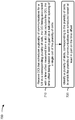
- Fig. 7 is a diagram illustrating an example process 700 performed, for example, by a UE, in accordance with various aspects of the present disclosure.
- Example process 700 is an example where the UE (e.g., UE 120 and/or the like) performs operations associated with using a time offset in downlink control information that schedules multiple cells.
- the UE e.g., UE 120 and/or the like
- process 700 may include receiving DCI that schedules a plurality of communications for the UE in a corresponding plurality of cells, the DCI being associated with a time offset measured from a slot that includes the DCI, the time offset being based at least in part on a sub-carrier spacing of a single cell of the plurality of cells (block 710) .
- the UE may receive DCI that schedules a plurality of communications for the UE in a corresponding plurality of cells, the DCI being associated with a time offset measured from a slot that includes the DCI, the time offset being based at least in part on a sub-carrier spacing of a single cell of the plurality of cells, as described above.
- process 700 may include identifying a plurality of slots, corresponding to the plurality of cells, in which the plurality of communications are scheduled based at least in part on the time offset (block 720) .
- the UE e.g., using receive processor 258, transmit processor 264, controller/processor 280, memory 282, and/or the like
- Process 700 may include additional aspects, such as any single aspect or any combination of aspects described below and/or in connection with one or more other processes described elsewhere herein.
- the sub-carrier spacing is a sub-carrier spacing in an active bandwidth part of the single cell.
- the single cell is a cell in which the DCI is received.
- the single cell is a primary cell (PCell) of the UE or a primary secondary cell (PSCell) of the UE.
- PCell primary cell
- PSCell primary secondary cell
- the single cell is a cell with a lowest sub-carrier spacing or a highest sub-carrier spacing among the plurality of cells.
- the single cell is a cell with a lowest cell identifier or a highest cell identifier among the plurality of cells.
- the single cell is indicated to the UE by a base station.
- a slot of the plurality of slots is identified for a corresponding cell of the plurality of cells based at least in part on performing a floor operation on a product of: a sum of the time offset and the slot that includes the DCI, and a ratio calculated based at least in part on a sub-carrier spacing of the corresponding cell and a sub-carrier spacing of a cell in which the DCI is received.
- the plurality of slots are time-aligned.
- the plurality of communications includes at least one of a physical downlink shared channel (PDSCH) communication, a physical uplink shared channel (PUSCH) communication, an aperiodic channel state information reference signal (CSI-RS) , or an aperiodic sounding reference signal (SRS) .
- PDSCH physical downlink shared channel
- PUSCH physical uplink shared channel
- CSI-RS aperiodic channel state information reference signal
- SRS aperiodic sounding reference signal
- the time offset includes at least one of a scheduling time offset from the DCI to the PDSCH communication, a scheduling time offset from the DCI to the PUSCH communication, a triggering time offset from the DCI to the aperiodic CSI-RS, or a triggering time offset from the DCI to the aperiodic SRS.
- process 700 includes determining whether all of the plurality of communications satisfy a time offset threshold measured from the DCI; and selectively processing the plurality of communications based at least in part on whether all of the plurality of communications satisfy the time offset threshold measured from the DCI.
- the time offset threshold is a minimum scheduling time offset or a minimum triggering time offset measured in symbols.
- process 700 includes processing the plurality of communications based at least in part on a determination that all of the plurality of communications are offset from the DCI by at least the time offset threshold.
- process 700 includes dropping the plurality of communications based at least in part on a determination that at least one of the plurality of communications is offset from the DCI by less than the time offset threshold.
- process 700 may include additional blocks, fewer blocks, different blocks, or differently arranged blocks than those depicted in Fig. 7. Additionally, or alternatively, two or more of the blocks of process 700 may be performed in parallel.
- Fig. 8 is a diagram illustrating an example process 800 performed, for example, by a UE, in accordance with various aspects of the present disclosure.
- Example process 800 is an example where the UE (e.g., UE 120 and/or the like) performs operations associated with using a time offset in downlink control information that schedules multiple cells.
- the UE e.g., UE 120 and/or the like
- process 800 may include receiving DCI that schedules a plurality of communications for the UE in a corresponding plurality of cells (block 810) .
- the UE e.g., using receive processor 258, controller/processor 280, memory 282, and/or the like
- process 800 may include determining whether all of the plurality of cells are associated with a same numerology parameter or whether a ratio, between a largest sub-carrier spacing used by a cell of the plurality of cells and a smallest sub-carrier spacing used by a cell of the plurality of cells, satisfies a threshold (block 820) .
- the UE may determine whether all of the plurality of cells are associated with a same numerology parameter or whether a ratio, between a largest sub-carrier spacing used by a cell of the plurality of cells and a smallest sub-carrier spacing used by a cell of the plurality of cells, satisfies a threshold, as described above.
- process 800 may include selectively processing the plurality of communications based at least in part on determining whether all of the plurality of cells are associated with the same numerology parameter or whether the ratio satisfies the threshold (block 830) .
- the UE e.g., using receive processor 258, transmit processor 264, controller/processor 280, memory 282, and/or the like
- Process 800 may include additional aspects, such as any single aspect or any combination of aspects described below and/or in connection with one or more other processes described elsewhere herein.
- process 800 includes determining that all of the plurality of cells are not associated with the same numerology parameter or that the ratio does not satisfy the threshold; and dropping the plurality of communications based at least in part on determining that all of the plurality of cells are not associated with the same numerology parameter or that the ratio does not satisfy the threshold.
- process 800 includes determining that all of the plurality of cells are associated with the same numerology parameter or that the ratio satisfies the threshold; and processing the plurality of communications based at least in part on determining that all of the plurality of cells are associated with the same numerology parameter or that the ratio satisfies the threshold.
- the numerology parameter includes at least one of a sub-carrier spacing, a cyclic prefix type, or a combination thereof.
- process 800 may include additional blocks, fewer blocks, different blocks, or differently arranged blocks than those depicted in Fig. 8. Additionally, or alternatively, two or more of the blocks of process 800 may be performed in parallel.
- Fig. 9 is a diagram illustrating an example process 900 performed, for example, by a base station, in accordance with various aspects of the present disclosure.
- Example process 900 is an example where the base station (e.g., base station 110 and/or the like) performs operations associated with using a time offset in downlink control information that schedules multiple cells.
- the base station e.g., base station 110 and/or the like
- process 900 may include identifying a plurality of slots, corresponding to a plurality of cells, in which a corresponding plurality of communications are to be scheduled for a UE (block 910) .
- the base station e.g., using transmit processor 220, receive processor 238, controller/processor 240, memory 242, and/or the like
- process 900 may include determining a time offset to indicate the plurality of slots to the UE, the time offset being determined based at least in part on a sub-carrier spacing of a single cell of the plurality of cells (block 920) .
- the base station e.g., using transmit processor 220, receive processor 238, controller/processor 240, memory 242, and/or the like
- process 900 may include transmitting DCI associated with the time offset to schedule the plurality of communications in the plurality of slots of the plurality of cells (block 930) .
- the base station e.g., using transmit processor 220, controller/processor 240, memory 242, and/or the like
- Process 900 may include additional aspects, such as any single aspect or any combination of aspects described below and/or in connection with one or more other processes described elsewhere herein.
- the sub-carrier spacing is a sub-carrier spacing in an active bandwidth part of the single cell.
- the single cell is one of: a cell in which the DCI is received, a PCell of the UE or a PSCell of the UE, a cell with a lowest sub-carrier spacing or a highest sub-carrier spacing among the plurality of cells, a cell with a lowest cell identifier or a highest cell identifier among the plurality of cells, or a cell indicated to the UE by the base station.
- a slot, of the plurality of slots, for a corresponding cell of the plurality of cells is based at least in part on a floor operation performed on a product of: a sum of the time offset and a slot that includes the DCI, and a ratio calculated based at least in part on a sub-carrier spacing of the corresponding cell and a sub-carrier spacing of a cell in which the DCI is received.
- the plurality of slots are time-aligned.
- the plurality of communications includes at least one of a PDSCH communication, a PUSCH communication, an aperiodic CSI-RS, or an aperiodic SRS.
- the time offset includes at least one of a scheduling time offset from the DCI to the PDSCH communication, a scheduling time offset from the DCI to the PUSCH communication, a triggering time offset from the DCI to the aperiodic CSI-RS, or a triggering time offset from the DCI to the aperiodic SRS.
- all of the plurality of communications satisfy a time offset threshold measured from the DCI.
- the time offset threshold is a minimum scheduling time offset or a minimum triggering time offset measured in symbols.
- process 900 may include additional blocks, fewer blocks, different blocks, or differently arranged blocks than those depicted in Fig. 9. Additionally, or alternatively, two or more of the blocks of process 900 may be performed in parallel.
- Fig. 10 is a diagram illustrating an example process 1000 performed, for example, by a base station, in accordance with various aspects of the present disclosure.
- Example process 1000 is an example where the base station (e.g., base station 110 and/or the like) performs operations associated with using a time offset in downlink control information that schedules multiple cells.
- the base station e.g., base station 110 and/or the like
- process 1000 may include determining whether all of a plurality of cells, in which a corresponding plurality of communications are to be scheduled, are associated with a same numerology parameter or whether a ratio, between a largest sub-carrier spacing used by a cell of the plurality of cells and a smallest sub-carrier spacing used by a cell of the plurality of cells, satisfies a threshold (block 1010) .
- the base station may determine whether all of a plurality of cells, in which a corresponding plurality of communications are to be scheduled, are associated with a same numerology parameter or whether a ratio, between a largest sub-carrier spacing used by a cell of the plurality of cells and a smallest sub-carrier spacing used by a cell of the plurality of cells, satisfies a threshold, as described above.
- process 1000 may include selectively transmitting a single DCI that schedules the corresponding plurality of communications or transmitting separate DCI for the corresponding plurality of communications based at least in part on determining whether all of the plurality of cells are associated with the same numerology parameter or whether the ratio satisfies the threshold (block 1020) .
- the base station may selectively transmit a single DCI that schedules the corresponding plurality of communications or transmit separate DCI for the corresponding plurality of communications based at least in part on determining whether all of the plurality of cells are associated with the same numerology parameter or whether the ratio satisfies the threshold, as described above.
- Process 1000 may include additional aspects, such as any single aspect or any combination of aspects described below and/or in connection with one or more other processes described elsewhere herein.
- process 1000 includes determining that all of the plurality of cells are not associated with the same numerology parameter or that the ratio does not satisfy the threshold; and transmitting the separate DCI for the corresponding plurality of communications based at least in part on determining that all of the plurality of cells are not associated with the same numerology parameter or that the ratio does not satisfy the threshold.
- process 1000 includes determining that all of the plurality of cells are associated with the same numerology parameter or that the ratio satisfies the threshold; and transmitting the single DCI for the corresponding plurality of communications based at least in part on determining that all of the plurality of cells are associated with the same numerology parameter or that the ratio satisfies the threshold.
- the numerology parameter includes at least one of a sub-carrier spacing, a cyclic prefix type, or a combination thereof.
- process 1000 may include additional blocks, fewer blocks, different blocks, or differently arranged blocks than those depicted in Fig. 10. Additionally, or alternatively, two or more of the blocks of process 1000 may be performed in parallel.
- ком ⁇ онент is intended to be broadly construed as hardware, firmware, and/or a combination of hardware and software.
- a processor is implemented in hardware, firmware, and/or a combination of hardware and software.
- satisfying a threshold may, depending on the context, refer to a value being greater than the threshold, greater than or equal to the threshold, less than the threshold, less than or equal to the threshold, equal to the threshold, not equal to the threshold, and/or the like.
- “at least one of: a, b, or c” is intended to cover a, b, c, a-b, a-c, b-c, and a-b-c, as well as any combination with multiples of the same element (e.g., a-a, a-a-a, a-a-b, a-a-c, a-b-b, a-c-c, b-b, b-b-b, b-b-c, c-c, and c-c-c or any other ordering of a, b, and c) .
- the terms “has, ” “have, ” “having, ” and/or the like are intended to be open-ended terms. Further, the phrase “based on” is intended to mean “based, at least in part, on” unless explicitly stated otherwise.
Landscapes
- Engineering & Computer Science (AREA)
- Signal Processing (AREA)
- Computer Networks & Wireless Communication (AREA)
- Mobile Radio Communication Systems (AREA)
Abstract
Divers aspects de la présente divulgation concernent de manière générale la communication sans fil. Selon certains aspects, un équipement utilisateur (UE) peuvent recevoir des informations de commande de liaison descendante (DCI) qui programment une pluralité de communications pour l'UE dans une pluralité correspondante de cellules, les DCI étant associées à un décalage temporel mesuré à partir d'une fente qui comprend les DCI, le décalage temporel étant basé au moins en partie sur un espacement de sous-porteuse d'une cellule unique de la pluralité de cellules ; et identifient une pluralité de fentes, correspondant à la pluralité de cellules, la pluralité de communications étant ordonnancées sur la base, au moins en partie, du décalage temporel. De nombreux autres aspects sont fournis.
Priority Applications (1)
| Application Number | Priority Date | Filing Date | Title |
|---|---|---|---|
| PCT/CN2020/070207 WO2021134771A1 (fr) | 2020-01-03 | 2020-01-03 | Utilisation d'un décalage temporel dans des informations de commande de liaison descendante qui programme de multiples cellules |
Applications Claiming Priority (1)
| Application Number | Priority Date | Filing Date | Title |
|---|---|---|---|
| PCT/CN2020/070207 WO2021134771A1 (fr) | 2020-01-03 | 2020-01-03 | Utilisation d'un décalage temporel dans des informations de commande de liaison descendante qui programme de multiples cellules |
Publications (1)
| Publication Number | Publication Date |
|---|---|
| WO2021134771A1 true WO2021134771A1 (fr) | 2021-07-08 |
Family
ID=76686339
Family Applications (1)
| Application Number | Title | Priority Date | Filing Date |
|---|---|---|---|
| PCT/CN2020/070207 Ceased WO2021134771A1 (fr) | 2020-01-03 | 2020-01-03 | Utilisation d'un décalage temporel dans des informations de commande de liaison descendante qui programme de multiples cellules |
Country Status (1)
| Country | Link |
|---|---|
| WO (1) | WO2021134771A1 (fr) |
Cited By (4)
| Publication number | Priority date | Publication date | Assignee | Title |
|---|---|---|---|---|
| CN115316023A (zh) * | 2022-06-28 | 2022-11-08 | 北京小米移动软件有限公司 | 一种指示方法及装置 |
| WO2023014507A1 (fr) * | 2021-08-05 | 2023-02-09 | Intel Corporation | Communication multicellulaire avec planification multi-pdsch/pusch par l'intermédiaire d'une dci unique |
| WO2023182806A1 (fr) * | 2022-03-23 | 2023-09-28 | 주식회사 케이티 | Procédé et dispositif de planification d'un canal de données dans un système de communication sans fil |
| WO2025031179A1 (fr) * | 2023-08-09 | 2025-02-13 | 上海朗帛通信技术有限公司 | Procédé et appareil utilisés dans un nœud pour des communications sans fil |
Citations (4)
| Publication number | Priority date | Publication date | Assignee | Title |
|---|---|---|---|---|
| WO2018175820A1 (fr) * | 2017-03-23 | 2018-09-27 | Gang Xiong | Planification, opération de demande de répétition automatique hybride et conception de livre de codes pour une agrégation de porteuses de nouvelle radio |
| CN109150456A (zh) * | 2017-06-16 | 2019-01-04 | 华为技术有限公司 | 一种无线通信方法和设备 |
| US20190149365A1 (en) * | 2018-01-12 | 2019-05-16 | Intel Corporation | Time domain resource allocation for mobile communication |
| CN110636616A (zh) * | 2018-06-22 | 2019-12-31 | 华为技术有限公司 | 无线通信方法及装置 |
-
2020
- 2020-01-03 WO PCT/CN2020/070207 patent/WO2021134771A1/fr not_active Ceased
Patent Citations (4)
| Publication number | Priority date | Publication date | Assignee | Title |
|---|---|---|---|---|
| WO2018175820A1 (fr) * | 2017-03-23 | 2018-09-27 | Gang Xiong | Planification, opération de demande de répétition automatique hybride et conception de livre de codes pour une agrégation de porteuses de nouvelle radio |
| CN109150456A (zh) * | 2017-06-16 | 2019-01-04 | 华为技术有限公司 | 一种无线通信方法和设备 |
| US20190149365A1 (en) * | 2018-01-12 | 2019-05-16 | Intel Corporation | Time domain resource allocation for mobile communication |
| CN110636616A (zh) * | 2018-06-22 | 2019-12-31 | 华为技术有限公司 | 无线通信方法及装置 |
Non-Patent Citations (2)
| Title |
|---|
| CMCC: "Remaining issues for supporting unaligned frame boundary with slot alignment and partial SFN alignment for R16 NR inter-band CA", 3GPP DRAFT; R1-1912550, vol. RAN WG1, 9 November 2019 (2019-11-09), Reno, USA, pages 1 - 9, XP051823484 * |
| QUALCOMM INCORPORATED: "Unaligned frame boundary with slot alignment and partial SFN alignment for R16 NR inter-band,", 3GPP DRAFT; R1-1912982, vol. RAN WG1, 9 November 2019 (2019-11-09), Reno, USA, pages 1 - 5, XP051823744 * |
Cited By (5)
| Publication number | Priority date | Publication date | Assignee | Title |
|---|---|---|---|---|
| WO2023014507A1 (fr) * | 2021-08-05 | 2023-02-09 | Intel Corporation | Communication multicellulaire avec planification multi-pdsch/pusch par l'intermédiaire d'une dci unique |
| WO2023182806A1 (fr) * | 2022-03-23 | 2023-09-28 | 주식회사 케이티 | Procédé et dispositif de planification d'un canal de données dans un système de communication sans fil |
| CN115316023A (zh) * | 2022-06-28 | 2022-11-08 | 北京小米移动软件有限公司 | 一种指示方法及装置 |
| WO2024000201A1 (fr) * | 2022-06-28 | 2024-01-04 | 北京小米移动软件有限公司 | Procédé et appareil d'indication |
| WO2025031179A1 (fr) * | 2023-08-09 | 2025-02-13 | 上海朗帛通信技术有限公司 | Procédé et appareil utilisés dans un nœud pour des communications sans fil |
Similar Documents
| Publication | Publication Date | Title |
|---|---|---|
| EP4022951B1 (fr) | Indication d'une capacité d'équipement utilisateur permettant une mesure d'interférence inter-liaisons | |
| EP3782313B1 (fr) | Multiplexage par répartition dans le temps en-dc et agrégation de porteuses | |
| EP3753361B1 (fr) | Gestion de collision de transmission de liaison montante | |
| EP3785386B1 (fr) | Rapport d'indicateur de qualité de canal (cqi) basé sur un accès multiple non orthogonal (noma) | |
| WO2021203218A1 (fr) | Répétition de communication de liaison montante dans un créneau unique au moyen de multiples ressources de canal de commande de liaison montante | |
| WO2021162768A1 (fr) | Indication de parties de bande passante pour cellules multiples planifiées par un message unique d'informations de commande de liaison descendante | |
| EP4111632B1 (fr) | Relation de groupage par signal de référence de canal partagé à une indication de préemption | |
| WO2020226864A1 (fr) | Rétroaction harq pour communication de liaison latérale | |
| EP4104358B1 (fr) | Ensemble de ressources de commande pour nouvelle radio | |
| WO2021174432A1 (fr) | Mappage de partie de largeur de bande pour canaux de commande et de données | |
| WO2021134771A1 (fr) | Utilisation d'un décalage temporel dans des informations de commande de liaison descendante qui programme de multiples cellules | |
| US11800558B2 (en) | Configuring listen before talk bandwidth monitoring | |
| EP4098036B1 (fr) | Instruction d'avance temporelle dans des informations de commande de liaison descendante | |
| US12267819B2 (en) | Complexity reduction for slot format determination | |
| WO2021253262A1 (fr) | Traitement d'informations de commande de liaison descendante à deux étages | |
| WO2021147061A1 (fr) | Commutation de porteuses pour de multiples signaux de référence de sondage par porteuse | |
| US11641649B2 (en) | Transmission of a beam failure recovery request via a secondary cell used for carrier aggregation | |
| EP3909170B1 (fr) | Transmission de retour à l'aide de multiples signatures d'accès | |
| WO2021155553A1 (fr) | Multiplexage d'informations de commande de liaison montante pour partage de spectre dynamique | |
| EP4098064A1 (fr) | Procédure d'accès aléatoire utilisant un canal de liaison descendante de cellule secondaire | |
| WO2021179193A1 (fr) | Accès basé sur un conflit et permettant une transmission en liaison montante avec agrégation de porteuses | |
| WO2020224365A1 (fr) | Décalage cce pdcch configurable | |
| WO2021127960A1 (fr) | Signalisation pour partage de temps d'occupation de canal dans un mode d'équipement basé sur une trame |
Legal Events
| Date | Code | Title | Description |
|---|---|---|---|
| 121 | Ep: the epo has been informed by wipo that ep was designated in this application |
Ref document number: 20910606 Country of ref document: EP Kind code of ref document: A1 |
|
| NENP | Non-entry into the national phase |
Ref country code: DE |
|
| 122 | Ep: pct application non-entry in european phase |
Ref document number: 20910606 Country of ref document: EP Kind code of ref document: A1 |