WO2021162004A1 - Timbre adhésif contenant du diclofénac sodique - Google Patents
Timbre adhésif contenant du diclofénac sodique Download PDFInfo
- Publication number
- WO2021162004A1 WO2021162004A1 PCT/JP2021/004819 JP2021004819W WO2021162004A1 WO 2021162004 A1 WO2021162004 A1 WO 2021162004A1 JP 2021004819 W JP2021004819 W JP 2021004819W WO 2021162004 A1 WO2021162004 A1 WO 2021162004A1
- Authority
- WO
- WIPO (PCT)
- Prior art keywords
- patch
- pressure
- sensitive adhesive
- patch according
- adhesive layer
- Prior art date
- Legal status (The legal status is an assumption and is not a legal conclusion. Google has not performed a legal analysis and makes no representation as to the accuracy of the status listed.)
- Ceased
Links
Images

Classifications
-
- A—HUMAN NECESSITIES
- A61—MEDICAL OR VETERINARY SCIENCE; HYGIENE
- A61P—SPECIFIC THERAPEUTIC ACTIVITY OF CHEMICAL COMPOUNDS OR MEDICINAL PREPARATIONS
- A61P29/00—Non-central analgesic, antipyretic or antiinflammatory agents, e.g. antirheumatic agents; Non-steroidal antiinflammatory drugs [NSAID]
-
- A—HUMAN NECESSITIES
- A61—MEDICAL OR VETERINARY SCIENCE; HYGIENE
- A61K—PREPARATIONS FOR MEDICAL, DENTAL OR TOILETRY PURPOSES
- A61K31/00—Medicinal preparations containing organic active ingredients
- A61K31/185—Acids; Anhydrides, halides or salts thereof, e.g. sulfur acids, imidic, hydrazonic or hydroximic acids
- A61K31/19—Carboxylic acids, e.g. valproic acid
- A61K31/195—Carboxylic acids, e.g. valproic acid having an amino group
- A61K31/196—Carboxylic acids, e.g. valproic acid having an amino group the amino group being directly attached to a ring, e.g. anthranilic acid, mefenamic acid, diclofenac, chlorambucil
-
- A—HUMAN NECESSITIES
- A61—MEDICAL OR VETERINARY SCIENCE; HYGIENE
- A61K—PREPARATIONS FOR MEDICAL, DENTAL OR TOILETRY PURPOSES
- A61K47/00—Medicinal preparations characterised by the non-active ingredients used, e.g. carriers or inert additives; Targeting or modifying agents chemically bound to the active ingredient
- A61K47/06—Organic compounds, e.g. natural or synthetic hydrocarbons, polyolefins, mineral oil, petrolatum or ozokerite
-
- A—HUMAN NECESSITIES
- A61—MEDICAL OR VETERINARY SCIENCE; HYGIENE
- A61K—PREPARATIONS FOR MEDICAL, DENTAL OR TOILETRY PURPOSES
- A61K9/00—Medicinal preparations characterised by special physical form
- A61K9/70—Web, sheet or filament bases ; Films; Fibres of the matrix type containing drug
- A61K9/7023—Transdermal patches and similar drug-containing composite devices, e.g. cataplasms
- A61K9/703—Transdermal patches and similar drug-containing composite devices, e.g. cataplasms characterised by shape or structure; Details concerning release liner or backing; Refillable patches; User-activated patches
- A61K9/7038—Transdermal patches of the drug-in-adhesive type, i.e. comprising drug in the skin-adhesive layer
- A61K9/7046—Transdermal patches of the drug-in-adhesive type, i.e. comprising drug in the skin-adhesive layer the adhesive comprising macromolecular compounds
- A61K9/7053—Transdermal patches of the drug-in-adhesive type, i.e. comprising drug in the skin-adhesive layer the adhesive comprising macromolecular compounds obtained by reactions only involving carbon to carbon unsaturated bonds, e.g. polyvinyl, polyisobutylene, polystyrene
-
- A—HUMAN NECESSITIES
- A61—MEDICAL OR VETERINARY SCIENCE; HYGIENE
- A61K—PREPARATIONS FOR MEDICAL, DENTAL OR TOILETRY PURPOSES
- A61K9/00—Medicinal preparations characterised by special physical form
- A61K9/70—Web, sheet or filament bases ; Films; Fibres of the matrix type containing drug
- A61K9/7023—Transdermal patches and similar drug-containing composite devices, e.g. cataplasms
- A61K9/703—Transdermal patches and similar drug-containing composite devices, e.g. cataplasms characterised by shape or structure; Details concerning release liner or backing; Refillable patches; User-activated patches
- A61K9/7038—Transdermal patches of the drug-in-adhesive type, i.e. comprising drug in the skin-adhesive layer
- A61K9/7076—Transdermal patches of the drug-in-adhesive type, i.e. comprising drug in the skin-adhesive layer the adhesive comprising ingredients of undetermined constitution or reaction products thereof, e.g. rosin or other plant resins
-
- A—HUMAN NECESSITIES
- A61—MEDICAL OR VETERINARY SCIENCE; HYGIENE
- A61K—PREPARATIONS FOR MEDICAL, DENTAL OR TOILETRY PURPOSES
- A61K47/00—Medicinal preparations characterised by the non-active ingredients used, e.g. carriers or inert additives; Targeting or modifying agents chemically bound to the active ingredient
- A61K47/06—Organic compounds, e.g. natural or synthetic hydrocarbons, polyolefins, mineral oil, petrolatum or ozokerite
- A61K47/08—Organic compounds, e.g. natural or synthetic hydrocarbons, polyolefins, mineral oil, petrolatum or ozokerite containing oxygen, e.g. ethers, acetals, ketones, quinones, aldehydes, peroxides
- A61K47/12—Carboxylic acids; Salts or anhydrides thereof
-
- A—HUMAN NECESSITIES
- A61—MEDICAL OR VETERINARY SCIENCE; HYGIENE
- A61K—PREPARATIONS FOR MEDICAL, DENTAL OR TOILETRY PURPOSES
- A61K47/00—Medicinal preparations characterised by the non-active ingredients used, e.g. carriers or inert additives; Targeting or modifying agents chemically bound to the active ingredient
- A61K47/06—Organic compounds, e.g. natural or synthetic hydrocarbons, polyolefins, mineral oil, petrolatum or ozokerite
- A61K47/20—Organic compounds, e.g. natural or synthetic hydrocarbons, polyolefins, mineral oil, petrolatum or ozokerite containing sulfur, e.g. dimethyl sulfoxide [DMSO], docusate, sodium lauryl sulfate or aminosulfonic acids
Definitions
- the present invention is to provide a patch effective for alleviating low back pain even when applied to a place other than the lumbar region.
- the pressure-sensitive adhesive layer is a patch containing a pressure-sensitive base and diclofenac sodium, and the content of diclofenac sodium is 0.70 to 1.50 mg per 1 cm 2 of the sticking area, in addition to the waist. Even if it does, it has been found to be effective in alleviating low back pain, and the present invention has been completed.
- the patch according to the present invention is effective in alleviating low back pain even when applied to a place other than the lumbar region.
- Acrylic adhesive bases include (meth) such as (meth) acrylic acid, 2-ethylhexyl (meth) acrylate, methyl (meth) acrylate, butyl (meth) acrylate, and hydroxyethyl (meth) acrylate.
- a pressure-sensitive adhesive base obtained by polymerizing or copolymerizing at least one of acrylic monomers.
- the silicone-based adhesive base contains, for example, silicone rubber such as polydimethylsiloxane, polymethylvinylsiloxane, and polymethylphenylsiloxane as a main component.
- the pressure-sensitive adhesive layer may further contain DMSO for the purpose of dissolving diclofenac sodium and improving its skin permeability.
- DMSO dimethyl sulfoxide
- the content of dimethyl sulfoxide (DMSO) is preferably 1 to 20% by mass, 2 to 10% by mass, 3 to 10% by mass, or 5 to 9% by mass with respect to the total mass of the pressure-sensitive adhesive layer.
- the ratio of diclofenac sodium to DMSO may be 1: 0.3 to 1: 4 from the viewpoint of improving the skin permeability of diclofenac sodium and preventing the precipitation of crystals of diclofenac sodium, and may be 1: 0. It is preferably 4 to 1: 3, 1: 0.6 to 1: 3, or 1: 0.72 to 1: 3.
- the pressure-sensitive adhesive layer may further contain an organic acid for the purpose of promoting transdermal absorption of diclofenac sodium or preventing crystals of diclofenac sodium from precipitating over time.
- Organic acids include aliphatic monocarboxylic acids (gilic acid, acetic acid, propionic acid, butyric acid, isobutyric acid, valeric acid, caproic acid, enanthic acid, capric acid, nonanoic acid, capric acid, lauric acid, oleic acid, linoleic acid, Linolenic acid, isostearic acid, sorbic acid, pyruvate, etc.), aliphatic dicarboxylic acids (oxalic acid, malonic acid, succinic acid, glutaric acid, adipic acid, sebacic acid, maleic acid, fumaric acid, oxaloacetate, etc.), and fats.
- Aliphatic carboxylic acids such as group tricarboxylic acids (aconytic acid, propantricarboxylic acid, etc.), hydroxy acids (glycolic acid, lactic acid, tartron acid, glyceric acid, hydroxybutyric acid, malic acid, tartaric acid, citric acid, isocitrate, sugar acid, Gluconic acid, glucuronic acid, ascorbic acid, erythorbic acid, etc.), aromatic carboxylic acids (benzoic acid, gallic acid, salicylic acid, acetylsalicylic acid, phthalic acid, etc.), other organic acids (mesylic acid, besilic acid, etc.), or These salts (eg, alkali metal salts such as sodium salts) are exemplified.
- organic acids may be used alone or in combination of two or more.
- citric acid, oleic acid, mesylic acid, or alkali metal salts thereof are particularly effective in promoting transdermal absorption of diclofenac sodium and preventing crystals of diclofenac sodium from precipitating over time.
- oleic acid is more preferable.
- the content of the organic acid is 0.1 to 20 with respect to the total mass of the pressure-sensitive adhesive layer in order to improve the skin permeability of diclofenac sodium and prevent the crystals of diclofenac sodium from precipitating over time. It is preferably mass%, 0.5 to 10 mass%, 1 to 8 mass%, or 2 to 7 mass%.
- the pressure-sensitive adhesive layer may further contain other additives such as a tackifier, a plasticizer, a solubilizer, a stabilizer, and a filler.
- additives such as a tackifier, a plasticizer, a solubilizer, a stabilizer, and a filler.
- the tackifier is, for example, a rosin derivative such as rosin, a glycerin ester of rosin, a hydrogenated rosin (also referred to as hydrogenated rosin), a hydrogenated rosing ricerin ester, and a pentaeristol ester of rosin, and Archon P100 (trade name, Arakawa).
- Alicyclic saturated hydrocarbon resin such as Chemical Industry Co., Ltd., aliphatic hydrocarbon resin such as Quinton B170 (trade name, manufactured by Nippon Zeon Co., Ltd.), Clearon P-125 (trade name, manufactured by Yasuhara Chemical Co., Ltd.), etc. Examples include terpen resin and maleate resin.
- hydrogenated rosing lyserin ester, alicyclic saturated hydrocarbon resin, aliphatic hydrocarbon resin or terpene resin are preferable, and alicyclic hydrocarbon resin is more preferable.
- Two or more kinds of these tackifier resins may be combined.
- the content of the tackifier resin is preferably, for example, 5 to 60% by mass, 10 to 50% by mass, 30 to 45% by mass, or 35 to 40% by mass based on the total mass of the pressure-sensitive adhesive layer.
- a combination of an alicyclic saturated hydrocarbon resin and a hydrogenated rosin lycerin ester is more preferable.
- the mass ratio of the alicyclic saturated hydrocarbon resin to the hydrogenated rosin lycerin ester is preferably 4: 1 to 1: 4, 4: 1 to 2: 3, or 3: 1 to 2: 1.
- Plasticizing agents include, for example, petroleum oils such as paraffin process oils, naphthenic process oils and aromatic process oils; squalane; squalane; vegetable oils such as olive oil, camellia oil, castor oil, tall oil and lacquer oil; Silicon oil; dibasic acid esters such as dibutylphthalate and dioctylphthalate; liquid rubbers such as polybutene and liquid isoprene rubber; liquid fatty acid esters such as isopropyl myristate, hexyl laurate, diethyl sebacate and diisopropyl sebacate; diethylene glycol; polyethylene Glycols; glycol salicylate; propylene glycol; dipropylene glycol; triacetin; triethyl citrate; crotamitone and the like.
- petroleum oils such as paraffin process oils, naphthenic process oils and aromatic process oils
- squalane such as olive oil, camellia oil, castor oil, tall oil and lacquer oil
- liquid paraffin liquid polybutene, isopropyl myristate, diethyl sebacate and hexyl laurate are preferable, liquid polybutene, isopropyl myristate and liquid paraffin are more preferable, and liquid paraffin is particularly preferable.
- the content of the plasticizer is preferably, for example, 7 to 70% by mass, 8 to 40% by mass, 10 to 20% by mass, or 12 to 15% by mass with respect to the total mass of the pressure-sensitive adhesive layer.
- Dissolving agents include, for example, liquid fatty acid esters (isopropyl myristate, hexyl laurate, diethyl sebacate, diisopropyl sebacate, etc.), diethylene glycol, triethylene glycol, polyethylene glycol, propylene glycol, dipropylene glycol, triacetin, triethyl citrate, etc. , Crotamiton and the like.
- diethylene glycol, triethylene glycol, polyethylene glycol, propylene glycol, and dipropylene glycol are preferable, and polyethylene glycol is more preferable.
- the solubilizer is polyethylene glycol
- the number average molecular weight of polyethylene glycol may be 200 to 20000, preferably 400 to 6000, and more preferably 1000 to 6000. Two or more of these solubilizers may be combined.
- the content of the solubilizer is, for example, 0.1 to 10% by mass or 0.5 to 5% by mass based on the total mass of the pressure-sensitive adhesive layer.
- Fillers include metal oxides (zinc oxide, titanium oxide, etc.), metal salts (calcium carbonate, magnesium carbonate, zinc stearate, etc.), silicic acid compounds (kaolin, talc, bentonite, aerodil, hydrous silica, aluminum silicate, etc.) Magnesium silicate, magnesium aluminometasilicate, etc.), metal hydroxides (aluminum hydroxide, etc.) and the like can be mentioned. Two or more of these fillers may be combined. The content of the filler is preferably 0 to 10% by mass, more preferably 0 to 5% by mass, based on the total mass of the pressure-sensitive adhesive layer.
- the support layer holds the pressure-sensitive adhesive layer.
- the support layer is preferably a monolayer or a laminated body in which fibers are made into a cloth (woven fabric, non-woven fabric, or knitted fabric), or a non-porous or porous film (sheet).
- the material of the support layer is polyester (polyethylene terephthalate (PET), polyethylene isophthalate, polypropylene terephthalate, polypropylene isophthalate, polybutylene terephthalate, polyethylene naphthalate, etc.), polyolefin (ethylene, propylene, vinyl acetate, acrylonitrile, etc.).
- Moisture permeability of the support layer is preferably 1000g / m 2 ⁇ 24hr or more.
- DMSO gradually evaporates from the patch applied to the skin, so that the adhesiveness of the patch is improved and the patch is peeled off even if the patch is applied for a long time. Hateful.
- the upper limit of the moisture permeability may be 20000g / m 2 ⁇ 24hr.
- DMSO is more likely to volatilize from the pressure-sensitive adhesive layer, which is more effective in improving the stickiness of the patch.
- the moisture permeability of the support layer means the moisture permeability at 40 ° C. as defined in the JIS Z0208: 1976 standard (moisture permeability test method for moisture-proof packaging material (cup method)).
- the material is preferably highly breathable (high DMSO permeability) such as polyurethane. Since the film made of polyurethane has excellent elasticity, it is preferable from the viewpoint of improving the adhesion of the patch to the skin and the ability to follow the expansion and contraction.
- the patch can be produced by, for example, the following method, but the patch is not limited to this, and a known method can be used.
- each component constituting the pressure-sensitive adhesive layer is mixed at a predetermined ratio to obtain a uniform solution.
- the melt is spread to a predetermined thickness on a peelable film (release film, release liner) to form an adhesive layer.
- the support layer is pressure-bonded to the pressure-sensitive adhesive layer so that the pressure-sensitive adhesive layer is sandwiched between the release liner and the support layer.
- the patch can be obtained by cutting into a desired shape. In this case, the release liner is removed when the patch is applied.
- the support layer is pressure-bonded to a peelable film (release film, release liner). good.
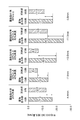
- the waist sticking rate is calculated from the following formula, and the result of comparing the change in the average value of the waist sticking rate and the VAS value for 3 days immediately before the judgment date V5 (excluding the judgment day V5). Is shown in FIG. Regardless of the magnitude of the lumbar application rate, the decrease in VAS value was larger in the drug-administered group than in the control group.
- Lumbar affixed rate (%) Number of days affixed to the lumbar region / Number of days from transition judgment date V3 to the day before judgment date V5 x 100
Landscapes
- Health & Medical Sciences (AREA)
- Chemical & Material Sciences (AREA)
- Engineering & Computer Science (AREA)
- Life Sciences & Earth Sciences (AREA)
- Public Health (AREA)
- General Health & Medical Sciences (AREA)
- Medicinal Chemistry (AREA)
- Pharmacology & Pharmacy (AREA)
- Veterinary Medicine (AREA)
- Animal Behavior & Ethology (AREA)
- Bioinformatics & Cheminformatics (AREA)
- Epidemiology (AREA)
- Dermatology (AREA)
- Chemical Kinetics & Catalysis (AREA)
- General Chemical & Material Sciences (AREA)
- Oil, Petroleum & Natural Gas (AREA)
- Pain & Pain Management (AREA)
- Rheumatology (AREA)
- Nuclear Medicine, Radiotherapy & Molecular Imaging (AREA)
- Organic Chemistry (AREA)
- Botany (AREA)
- Acyclic And Carbocyclic Compounds In Medicinal Compositions (AREA)
- Medicinal Preparation (AREA)
- Orthopedics, Nursing, And Contraception (AREA)
Abstract
Priority Applications (8)
| Application Number | Priority Date | Filing Date | Title |
|---|---|---|---|
| KR1020227030959A KR102477520B1 (ko) | 2020-02-12 | 2021-02-09 | 디클로페낙나트륨 함유 첩부제 |
| US17/796,365 US20230071174A1 (en) | 2020-02-12 | 2021-02-09 | Diclofenac sodium-containing adhesive patch |
| PH1/2022/551942A PH12022551942A1 (en) | 2020-02-12 | 2021-02-09 | Diclofenac sodium-containing adhesive patch |
| BR112022014485A BR112022014485A2 (pt) | 2020-02-12 | 2021-02-09 | Emplastro adesivo contendo diclofenaco de sódio |
| MYPI2022004263A MY196311A (en) | 2020-02-12 | 2021-02-09 | Diclofenac Sodium-Containing Adhesive Patch |
| EP21753213.4A EP4104826A4 (fr) | 2020-02-12 | 2021-02-09 | Timbre adhésif contenant du diclofénac sodique |
| CN202180013224.4A CN115052589A (zh) | 2020-02-12 | 2021-02-09 | 含有双氯芬酸钠的贴剂 |
| US19/227,061 US20250288537A1 (en) | 2020-02-12 | 2025-06-03 | Diclofenac sodium-containing adhesive patch |
Applications Claiming Priority (2)
| Application Number | Priority Date | Filing Date | Title |
|---|---|---|---|
| JP2020021280A JP6744511B1 (ja) | 2020-02-12 | 2020-02-12 | ジクロフェナクナトリウム含有貼付剤 |
| JP2020-021280 | 2020-02-12 |
Related Child Applications (2)
| Application Number | Title | Priority Date | Filing Date |
|---|---|---|---|
| US17/796,365 A-371-Of-International US20230071174A1 (en) | 2020-02-12 | 2021-02-09 | Diclofenac sodium-containing adhesive patch |
| US19/227,061 Continuation US20250288537A1 (en) | 2020-02-12 | 2025-06-03 | Diclofenac sodium-containing adhesive patch |
Publications (1)
| Publication Number | Publication Date |
|---|---|
| WO2021162004A1 true WO2021162004A1 (fr) | 2021-08-19 |
Family
ID=72047912
Family Applications (1)
| Application Number | Title | Priority Date | Filing Date |
|---|---|---|---|
| PCT/JP2021/004819 Ceased WO2021162004A1 (fr) | 2020-02-12 | 2021-02-09 | Timbre adhésif contenant du diclofénac sodique |
Country Status (10)
| Country | Link |
|---|---|
| US (2) | US20230071174A1 (fr) |
| EP (1) | EP4104826A4 (fr) |
| JP (1) | JP6744511B1 (fr) |
| KR (1) | KR102477520B1 (fr) |
| CN (1) | CN115052589A (fr) |
| BR (1) | BR112022014485A2 (fr) |
| MY (1) | MY196311A (fr) |
| PH (1) | PH12022551942A1 (fr) |
| TW (1) | TWI830000B (fr) |
| WO (1) | WO2021162004A1 (fr) |
Families Citing this family (3)
| Publication number | Priority date | Publication date | Assignee | Title |
|---|---|---|---|---|
| KR102358377B1 (ko) | 2016-12-28 | 2022-02-03 | 히사미쓰 세이야꾸 가부시키가이샤 | 첩부제 |
| JP6744512B1 (ja) * | 2020-02-12 | 2020-08-19 | 久光製薬株式会社 | ジクロフェナクナトリウム含有貼付剤 |
| US11872320B2 (en) | 2021-02-25 | 2024-01-16 | Hisamitsu Pharmaceutical Co., Inc. | Method for treating osteoarthritis |
Citations (4)
| Publication number | Priority date | Publication date | Assignee | Title |
|---|---|---|---|---|
| WO2010137699A1 (fr) * | 2009-05-29 | 2010-12-02 | 株式会社イノアック技術研究所 | Pansement adhésif |
| WO2013191128A1 (fr) | 2012-06-20 | 2013-12-27 | 久光製薬株式会社 | Patch cutané |
| WO2018124089A1 (fr) * | 2016-12-28 | 2018-07-05 | 久光製薬株式会社 | Timbre transdermique |
| WO2018141661A1 (fr) * | 2017-01-31 | 2018-08-09 | Grünenthal GmbH | Timbre pharmaceutique comprenant de la lidocaïne et du diclofénac pour traiter une douleur neuropathique |
Family Cites Families (8)
| Publication number | Priority date | Publication date | Assignee | Title |
|---|---|---|---|---|
| JPH06219940A (ja) * | 1993-01-27 | 1994-08-09 | Shiseido Co Ltd | 貼付剤 |
| JP4181232B2 (ja) * | 1997-07-18 | 2008-11-12 | 帝國製薬株式会社 | ジクロフェナクナトリウム含有油性外用貼付製剤 |
| PL360999A1 (en) * | 2000-09-18 | 2004-09-20 | Laboratoires Fournier Sa | Patch comprising diclofenac |
| JP4865958B2 (ja) * | 2001-05-23 | 2012-02-01 | 株式会社トクホン | 鎮痛抗炎症局所作用型の貼付剤 |
| BRPI0210074B1 (pt) * | 2001-05-31 | 2017-05-30 | Hisamitsu Pharmaceutical Co | emplastro de anti-inflamatórios não esteroidais percutaneamente absorvível, contendo sais de amônio, promotores de permeação e/ou agentes de solubilização em uma camada de substrato adesivo |
| EP2457570B1 (fr) * | 2009-07-24 | 2018-08-22 | Teikoku Seiyaku Co., Ltd. | Préparation adhésive contenant du fentanyl destinée à un usage externe |
| JP6761553B1 (ja) * | 2020-02-12 | 2020-09-23 | 久光製薬株式会社 | ジクロフェナクナトリウム含有貼付剤 |
| JP6744512B1 (ja) * | 2020-02-12 | 2020-08-19 | 久光製薬株式会社 | ジクロフェナクナトリウム含有貼付剤 |
-
2020
- 2020-02-12 JP JP2020021280A patent/JP6744511B1/ja active Active
-
2021
- 2021-02-09 US US17/796,365 patent/US20230071174A1/en not_active Abandoned
- 2021-02-09 WO PCT/JP2021/004819 patent/WO2021162004A1/fr not_active Ceased
- 2021-02-09 EP EP21753213.4A patent/EP4104826A4/fr active Pending
- 2021-02-09 KR KR1020227030959A patent/KR102477520B1/ko active Active
- 2021-02-09 BR BR112022014485A patent/BR112022014485A2/pt unknown
- 2021-02-09 MY MYPI2022004263A patent/MY196311A/en unknown
- 2021-02-09 TW TW110104895A patent/TWI830000B/zh active
- 2021-02-09 CN CN202180013224.4A patent/CN115052589A/zh active Pending
- 2021-02-09 PH PH1/2022/551942A patent/PH12022551942A1/en unknown
-
2025
- 2025-06-03 US US19/227,061 patent/US20250288537A1/en active Pending
Patent Citations (4)
| Publication number | Priority date | Publication date | Assignee | Title |
|---|---|---|---|---|
| WO2010137699A1 (fr) * | 2009-05-29 | 2010-12-02 | 株式会社イノアック技術研究所 | Pansement adhésif |
| WO2013191128A1 (fr) | 2012-06-20 | 2013-12-27 | 久光製薬株式会社 | Patch cutané |
| WO2018124089A1 (fr) * | 2016-12-28 | 2018-07-05 | 久光製薬株式会社 | Timbre transdermique |
| WO2018141661A1 (fr) * | 2017-01-31 | 2018-08-09 | Grünenthal GmbH | Timbre pharmaceutique comprenant de la lidocaïne et du diclofénac pour traiter une douleur neuropathique |
Non-Patent Citations (1)
| Title |
|---|
| See also references of EP4104826A4 |
Also Published As
| Publication number | Publication date |
|---|---|
| US20230071174A1 (en) | 2023-03-09 |
| BR112022014485A2 (pt) | 2022-09-13 |
| PH12022551942A1 (en) | 2023-10-23 |
| CN115052589A (zh) | 2022-09-13 |
| TWI830000B (zh) | 2024-01-21 |
| EP4104826A1 (fr) | 2022-12-21 |
| KR20220134644A (ko) | 2022-10-05 |
| TW202139990A (zh) | 2021-11-01 |
| JP6744511B1 (ja) | 2020-08-19 |
| MY196311A (en) | 2023-03-24 |
| KR102477520B1 (ko) | 2022-12-13 |
| US20250288537A1 (en) | 2025-09-18 |
| JP2021127300A (ja) | 2021-09-02 |
| EP4104826A4 (fr) | 2024-02-14 |
Similar Documents
| Publication | Publication Date | Title |
|---|---|---|
| US20250288537A1 (en) | Diclofenac sodium-containing adhesive patch | |
| KR102477081B1 (ko) | 디클로페낙나트륨 함유 첩부제 | |
| TWI742331B (zh) | 含羅替戈汀之貼附劑 | |
| US20250248949A1 (en) | Method for relieving cancer pain | |
| JP2013147459A (ja) | そう痒症改善経皮吸収貼付剤 | |
| HK40079813A (en) | Diclofenac sodium-containing adhesive patch | |
| HK40078073A (en) | Diclofenac sodium-containing adhesive patch | |
| WO2023134618A1 (fr) | Timbre transdermique pour inhiber la cristallisation médicamenteuse, et son procédé de préparation | |
| JP7842077B2 (ja) | 変形性関節症を治療するための貼付剤 | |
| CN115715770A (zh) | 阿哌沙班透皮贴剂及其制备方法 | |
| TWI917561B (zh) | 用於治療變形性關節症之貼附劑 | |
| HK40074787A (en) | Diclofenac sodium-containing patch | |
| HK40079815A (en) | Diclofenac sodium-containing patch | |
| JP6963663B2 (ja) | 貼付剤の製造方法 | |
| JP7412905B2 (ja) | 貼付剤 |
Legal Events
| Date | Code | Title | Description |
|---|---|---|---|
| 121 | Ep: the epo has been informed by wipo that ep was designated in this application |
Ref document number: 21753213 Country of ref document: EP Kind code of ref document: A1 |
|
| REG | Reference to national code |
Ref country code: BR Ref legal event code: B01A Ref document number: 112022014485 Country of ref document: BR |
|
| ENP | Entry into the national phase |
Ref document number: 20227030959 Country of ref document: KR Kind code of ref document: A |
|
| ENP | Entry into the national phase |
Ref document number: 112022014485 Country of ref document: BR Kind code of ref document: A2 Effective date: 20220721 |
|
| NENP | Non-entry into the national phase |
Ref country code: DE |
|
| ENP | Entry into the national phase |
Ref document number: 2021753213 Country of ref document: EP Effective date: 20220912 |
|
| WWG | Wipo information: grant in national office |
Ref document number: 11202251307P Country of ref document: SG |