WO2021187392A1 - モルホリノ核酸を含むヘテロ核酸 - Google Patents
モルホリノ核酸を含むヘテロ核酸 Download PDFInfo
- Publication number
- WO2021187392A1 WO2021187392A1 PCT/JP2021/010214 JP2021010214W WO2021187392A1 WO 2021187392 A1 WO2021187392 A1 WO 2021187392A1 JP 2021010214 W JP2021010214 W JP 2021010214W WO 2021187392 A1 WO2021187392 A1 WO 2021187392A1
- Authority
- WO
- WIPO (PCT)
- Prior art keywords
- nucleic acid
- double
- strand
- acid strand
- acid complex
- Prior art date
- Legal status (The legal status is an assumption and is not a legal conclusion. Google has not performed a legal analysis and makes no representation as to the accuracy of the status listed.)
- Ceased
Links
Images







Classifications
-
- C—CHEMISTRY; METALLURGY
- C12—BIOCHEMISTRY; BEER; SPIRITS; WINE; VINEGAR; MICROBIOLOGY; ENZYMOLOGY; MUTATION OR GENETIC ENGINEERING
- C12N—MICROORGANISMS OR ENZYMES; COMPOSITIONS THEREOF; PROPAGATING, PRESERVING, OR MAINTAINING MICROORGANISMS; MUTATION OR GENETIC ENGINEERING; CULTURE MEDIA
- C12N15/00—Mutation or genetic engineering; DNA or RNA concerning genetic engineering, vectors, e.g. plasmids, or their isolation, preparation or purification; Use of hosts therefor
- C12N15/09—Recombinant DNA-technology
- C12N15/11—DNA or RNA fragments; Modified forms thereof; Non-coding nucleic acids having a biological activity
- C12N15/113—Non-coding nucleic acids modulating the expression of genes, e.g. antisense oligonucleotides; Antisense DNA or RNA; Triplex- forming oligonucleotides; Catalytic nucleic acids, e.g. ribozymes; Nucleic acids used in co-suppression or gene silencing
-
- A—HUMAN NECESSITIES
- A61—MEDICAL OR VETERINARY SCIENCE; HYGIENE
- A61P—SPECIFIC THERAPEUTIC ACTIVITY OF CHEMICAL COMPOUNDS OR MEDICINAL PREPARATIONS
- A61P21/00—Drugs for disorders of the muscular or neuromuscular system
- A61P21/04—Drugs for disorders of the muscular or neuromuscular system for myasthenia gravis
-
- A—HUMAN NECESSITIES
- A61—MEDICAL OR VETERINARY SCIENCE; HYGIENE
- A61K—PREPARATIONS FOR MEDICAL, DENTAL OR TOILETRY PURPOSES
- A61K31/00—Medicinal preparations containing organic active ingredients
- A61K31/70—Carbohydrates; Sugars; Derivatives thereof
- A61K31/7088—Compounds having three or more nucleosides or nucleotides
- A61K31/713—Double-stranded nucleic acids or oligonucleotides
-
- A—HUMAN NECESSITIES
- A61—MEDICAL OR VETERINARY SCIENCE; HYGIENE
- A61P—SPECIFIC THERAPEUTIC ACTIVITY OF CHEMICAL COMPOUNDS OR MEDICINAL PREPARATIONS
- A61P43/00—Drugs for specific purposes, not provided for in groups A61P1/00-A61P41/00
-
- C—CHEMISTRY; METALLURGY
- C12—BIOCHEMISTRY; BEER; SPIRITS; WINE; VINEGAR; MICROBIOLOGY; ENZYMOLOGY; MUTATION OR GENETIC ENGINEERING
- C12N—MICROORGANISMS OR ENZYMES; COMPOSITIONS THEREOF; PROPAGATING, PRESERVING, OR MAINTAINING MICROORGANISMS; MUTATION OR GENETIC ENGINEERING; CULTURE MEDIA
- C12N15/00—Mutation or genetic engineering; DNA or RNA concerning genetic engineering, vectors, e.g. plasmids, or their isolation, preparation or purification; Use of hosts therefor
- C12N15/09—Recombinant DNA-technology
- C12N15/11—DNA or RNA fragments; Modified forms thereof; Non-coding nucleic acids having a biological activity
- C12N15/113—Non-coding nucleic acids modulating the expression of genes, e.g. antisense oligonucleotides; Antisense DNA or RNA; Triplex- forming oligonucleotides; Catalytic nucleic acids, e.g. ribozymes; Nucleic acids used in co-suppression or gene silencing
- C12N15/1136—Non-coding nucleic acids modulating the expression of genes, e.g. antisense oligonucleotides; Antisense DNA or RNA; Triplex- forming oligonucleotides; Catalytic nucleic acids, e.g. ribozymes; Nucleic acids used in co-suppression or gene silencing against growth factors, growth regulators, cytokines, lymphokines or hormones
-
- C—CHEMISTRY; METALLURGY
- C12—BIOCHEMISTRY; BEER; SPIRITS; WINE; VINEGAR; MICROBIOLOGY; ENZYMOLOGY; MUTATION OR GENETIC ENGINEERING
- C12N—MICROORGANISMS OR ENZYMES; COMPOSITIONS THEREOF; PROPAGATING, PRESERVING, OR MAINTAINING MICROORGANISMS; MUTATION OR GENETIC ENGINEERING; CULTURE MEDIA
- C12N2310/00—Structure or type of the nucleic acid
- C12N2310/10—Type of nucleic acid
- C12N2310/11—Antisense
-
- C—CHEMISTRY; METALLURGY
- C12—BIOCHEMISTRY; BEER; SPIRITS; WINE; VINEGAR; MICROBIOLOGY; ENZYMOLOGY; MUTATION OR GENETIC ENGINEERING
- C12N—MICROORGANISMS OR ENZYMES; COMPOSITIONS THEREOF; PROPAGATING, PRESERVING, OR MAINTAINING MICROORGANISMS; MUTATION OR GENETIC ENGINEERING; CULTURE MEDIA
- C12N2310/00—Structure or type of the nucleic acid
- C12N2310/10—Type of nucleic acid
- C12N2310/20—Type of nucleic acid involving clustered regularly interspaced short palindromic repeats [CRISPR]
-
- C—CHEMISTRY; METALLURGY
- C12—BIOCHEMISTRY; BEER; SPIRITS; WINE; VINEGAR; MICROBIOLOGY; ENZYMOLOGY; MUTATION OR GENETIC ENGINEERING
- C12N—MICROORGANISMS OR ENZYMES; COMPOSITIONS THEREOF; PROPAGATING, PRESERVING, OR MAINTAINING MICROORGANISMS; MUTATION OR GENETIC ENGINEERING; CULTURE MEDIA
- C12N2310/00—Structure or type of the nucleic acid
- C12N2310/30—Chemical structure
- C12N2310/31—Chemical structure of the backbone
- C12N2310/314—Phosphoramidates
-
- C—CHEMISTRY; METALLURGY
- C12—BIOCHEMISTRY; BEER; SPIRITS; WINE; VINEGAR; MICROBIOLOGY; ENZYMOLOGY; MUTATION OR GENETIC ENGINEERING
- C12N—MICROORGANISMS OR ENZYMES; COMPOSITIONS THEREOF; PROPAGATING, PRESERVING, OR MAINTAINING MICROORGANISMS; MUTATION OR GENETIC ENGINEERING; CULTURE MEDIA
- C12N2310/00—Structure or type of the nucleic acid
- C12N2310/30—Chemical structure
- C12N2310/32—Chemical structure of the sugar
- C12N2310/323—Chemical structure of the sugar modified ring structure
- C12N2310/3233—Morpholino-type ring
-
- C—CHEMISTRY; METALLURGY
- C12—BIOCHEMISTRY; BEER; SPIRITS; WINE; VINEGAR; MICROBIOLOGY; ENZYMOLOGY; MUTATION OR GENETIC ENGINEERING
- C12N—MICROORGANISMS OR ENZYMES; COMPOSITIONS THEREOF; PROPAGATING, PRESERVING, OR MAINTAINING MICROORGANISMS; MUTATION OR GENETIC ENGINEERING; CULTURE MEDIA
- C12N2310/00—Structure or type of the nucleic acid
- C12N2310/30—Chemical structure
- C12N2310/34—Spatial arrangement of the modifications
- C12N2310/341—Gapmers, i.e. of the type ===---===
-
- C—CHEMISTRY; METALLURGY
- C12—BIOCHEMISTRY; BEER; SPIRITS; WINE; VINEGAR; MICROBIOLOGY; ENZYMOLOGY; MUTATION OR GENETIC ENGINEERING
- C12N—MICROORGANISMS OR ENZYMES; COMPOSITIONS THEREOF; PROPAGATING, PRESERVING, OR MAINTAINING MICROORGANISMS; MUTATION OR GENETIC ENGINEERING; CULTURE MEDIA
- C12N2310/00—Structure or type of the nucleic acid
- C12N2310/30—Chemical structure
- C12N2310/35—Nature of the modification
- C12N2310/351—Conjugate
- C12N2310/3515—Lipophilic moiety, e.g. cholesterol
-
- C—CHEMISTRY; METALLURGY
- C12—BIOCHEMISTRY; BEER; SPIRITS; WINE; VINEGAR; MICROBIOLOGY; ENZYMOLOGY; MUTATION OR GENETIC ENGINEERING
- C12N—MICROORGANISMS OR ENZYMES; COMPOSITIONS THEREOF; PROPAGATING, PRESERVING, OR MAINTAINING MICROORGANISMS; MUTATION OR GENETIC ENGINEERING; CULTURE MEDIA
- C12N2310/00—Structure or type of the nucleic acid
- C12N2310/30—Chemical structure
- C12N2310/35—Nature of the modification
- C12N2310/352—Nature of the modification linked to the nucleic acid via a carbon atom
-
- C—CHEMISTRY; METALLURGY
- C12—BIOCHEMISTRY; BEER; SPIRITS; WINE; VINEGAR; MICROBIOLOGY; ENZYMOLOGY; MUTATION OR GENETIC ENGINEERING
- C12N—MICROORGANISMS OR ENZYMES; COMPOSITIONS THEREOF; PROPAGATING, PRESERVING, OR MAINTAINING MICROORGANISMS; MUTATION OR GENETIC ENGINEERING; CULTURE MEDIA
- C12N2320/00—Applications; Uses
- C12N2320/10—Applications; Uses in screening processes
- C12N2320/11—Applications; Uses in screening processes for the determination of target sites, i.e. of active nucleic acids
-
- C—CHEMISTRY; METALLURGY
- C12—BIOCHEMISTRY; BEER; SPIRITS; WINE; VINEGAR; MICROBIOLOGY; ENZYMOLOGY; MUTATION OR GENETIC ENGINEERING
- C12N—MICROORGANISMS OR ENZYMES; COMPOSITIONS THEREOF; PROPAGATING, PRESERVING, OR MAINTAINING MICROORGANISMS; MUTATION OR GENETIC ENGINEERING; CULTURE MEDIA
- C12N2320/00—Applications; Uses
- C12N2320/30—Special therapeutic applications
- C12N2320/32—Special delivery means, e.g. tissue-specific
Definitions
- the present invention relates to a double-stranded nucleic acid complex containing morpholinoethanol, a composition containing the same, and the like.
- oligonucleotides have attracted attention in the ongoing development of drugs called nucleic acid drugs, and especially in view of the high selectivity and low toxicity of target genes, nucleic acid drugs that utilize the antisense method. Development is being actively promoted.
- the antisense method uses a partial sequence of mRNA or miRNA transcribed from a target gene as the target sense strand, and an oligonucleotide complementary to it (antisense oligonucleotide: often referred to as "ASO (Antisense Oligonucleotide)" in the present specification. This is a method comprising selectively modifying or inhibiting the expression of a protein encoded by a target gene or the activity of miRNA by introducing the above into a cell.
- ASO Antisense Oligonucleotide
- the present inventors have prepared a double-stranded nucleic acid complex (heteroduplex oligonucleotide (HDO)) in which an antisense oligonucleotide and its complementary strand are annealed.
- HDO heteroduplex oligonucleotide
- the mechanism of action of the above double-stranded nucleic acid complex is not limited, but it is considered to be partially as follows. That is, when introduced into a cell, an RNA region complementary to a part of the antisense oligonucleotide in the complementary strand is cleaved by RNase H to release the antisense oligonucleotide, and then this antisense oligonucleotide is released. For example, it can act to alter the activity or function of the transcript (see, eg, Patent Document 2). This is called the "RNase H-dependent pathway", and it is desirable that the nucleic acid moiety is not modified in order for cleavage by RNase H to occur. On the other hand, if the nucleic acid moiety is not modified, it may be degraded by a nucleic acid-degrading enzyme in vivo and may not exhibit sufficient activity.
- nucleic acid degrading enzymes in the living body while maintaining the activity of the double-stranded nucleic acid complex.
- the present inventor has found that a double-stranded nucleic acid complex containing morpholinoethanol can have an excellent antisense effect.
- the present inventor also found that a double-stranded nucleic acid complex containing an antisense oligonucleotide composed only of morpholino nucleic acids, which has no activity due to the RNase H-dependent pathway, has an unexpected antisense effect. I found.
- the first nucleic acid strand can hybridize to at least a part of the target gene or its transcript, has an antisense effect on the target gene or its transcript, and provides at least two morpholino nucleic acids.
- the first nucleic acid strand can specifically bind to a particular target molecule, has at least one effect of aptamer, decoy, and bait on the target molecule, and contains at least two morpholino nucleic acids.
- the double-stranded nucleic acid complex in which the second nucleic acid strand contains a base sequence complementary to the first nucleic acid strand, and the first nucleic acid strand is annealed to the second nucleic acid strand.
- [3] The double-stranded nucleic acid complex according to [1] or [2], which does not contain four consecutive natural ribonucleosides.
- [4] The double-stranded nucleic acid complex according to any one of [1] to [3], wherein 33% or more of the nucleic acids in the first nucleic acid strand are morpholinoethanol.
- [5] The double-stranded nucleic acid complex according to [4], wherein 100% of the nucleic acids in the first nucleic acid strand are morpholinoethanol.
- [6] The second nucleic acid strand according to any one of [1] to [5], wherein the second nucleic acid strand is bound to a functional moiety having a function selected from a labeling function, a purification function, and a delivery function to a target.
- Double-stranded nucleic acid complex [7] The double-stranded nucleic acid complex according to [6], wherein the functional moiety is a lipid.
- [8] The double-stranded nucleic acid complex according to [7], wherein the lipid is cholesterol or an analog thereof, or tocopherol or an analog thereof.
- [11] In the subject, at least one of the following functions: Suppresses or enhances the expression level of transcripts or translations of target genes, Inhibits the function of transcripts or translations of target genes, Control RNA splicing and inhibit the binding of target genes to proteins, The double-stranded nucleic acid complex according to any one of [1] to [10]. [12] The double-stranded nucleic acid complex according to [11] for exon skipping, exon inclusion, steric blocking, and RNA expression enhancement. [13] The double-stranded nucleic acid complex according to any one of [1] to [12] for intrathecal or intracerebroventricular administration.
- a pharmaceutical composition containing the double-stranded nucleic acid complex according to any one of [1] to [13] as an active ingredient includes the disclosure of Japanese Patent Application No. 2020-045137, which is the basis of the priority of the present application.
- the present invention provides a double-stranded nucleic acid complex having a novel structure.
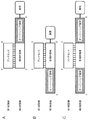
- FIG. 1A and 1B are schematic views showing an example in which the second nucleic acid chain contains a lipid in a specific embodiment of the nucleic acid complex according to the present invention.
- 2A to 2C are schematic views showing an example in which the second nucleic acid chain contains a lipid and contains a complementary region and an overhang region in a specific embodiment of the nucleic acid complex according to the present invention.
- FIG. 3 is a diagram showing an example of a general mechanism of the antisense method.
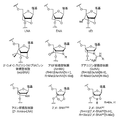
- FIG. 4 is a diagram showing the structure of various natural or non-natural nucleotides.
- FIG. 5 is a diagram showing the structures of various bridged nucleic acids.
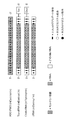
- FIG. 6 shows the chemical modification and structure of the oligonucleotides used in Examples 1 and 2.
- PBS refers to the PBS-administered group
- PMO refers to the single-stranded antisense oligonucleotide (ASO) -administered group
- ASO antisense oligonucleotide
- TocHDO refers to the tocopherol-linked heteroduplex oligonucleotide-administered group
- CholHDO refers to the cholesterol-bound heteroduplex. Refers to the main-strand oligonucleotide administration group.
- FIG. 8 shows the exon skipping effect on the cerebral cortex (A), hippocampus (B), cerebellum (C), brain stem (D), and striatum (E) by intraventricular administration of heteronucleic acid PMO.
- HDO refers to a ligand-free heteroduplex oligonucleotide-administered group.
- the meanings of PBS, PMO, TocHDO, and CholHDO are the same as in FIG.
- FIG. 9 shows the antisense effect on the frontal cortex, occipital cortex, linear body, hippocampus, brain stem, and cerebellum by intracerebroventricular administration of heteronucleic acid containing no morpholinoethanol.
- ASO refers to a single-stranded oligonucleotide administration group that does not contain a ligand-free morpholinoethanol.
- PBS refers to the PBS-administered group
- CholHDO control refers to the cholesterol-bound heteroduplex oligonucleotide-administered group that does not contain morpholinoethanol.
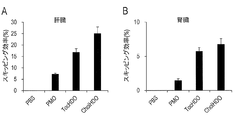
- FIG. 10 shows the exon skipping effect on the liver (A) and kidney (B) by systemic administration of heteronucleic acid PMO.
- the meanings of PBS, PMO, TocHDO, and CholHDO are the same as in FIG.
- FIG. 11 shows the chemical modification and structure of the oligonucleotide used in Example 4.
- FIG. 12 shows the exon skipping effect on the cerebellum (A), brain stem (B), and striatum (C) by intracerebroventricular administration of heteronucleic acid PMO.
- CholHDO DNA gap
- CholHDO full OMe
- 3'Chol default
- C3 default
- ASO PMO miDystrophin
- the administration group of the heteroduplex oligonucleotide including gap), Chol-cRNA (full OMe), 3'Chol-cRNA (default), and C3-cRNA (default) is shown.
- FIG. 13 shows the exon skipping effect in the hippocampus (A), posterior cortex (B), and cervical spine (C) by intracerebroventricular administration of heteronucleic acid PMO.
- the meanings of PBS and PMO are the same as in FIG. HDO (default), CholHDO (default), CholHDO (DNA gap), CholHDO (full OMe), 3'Chol (default), and C3 (default) contain ASO PMO (mDystrophin) as the first nucleic acid strand.
- Nucleic acid strands are cRNA (default), Chol-cRNA (default), Chol-cRNA (DNA gap), Chol-cRNA (full OMe), 3'Chol-cRNA (default), and C3-cRNA (default), respectively.
- the administration group of the heteroduplex oligonucleotide containing is shown.
- the invention is a double-stranded nucleic acid complex comprising a first nucleic acid strand and a second nucleic acid strand, wherein the first nucleic acid strand is hybridized to at least a portion of a target gene or transcript thereof. It is capable of soybeans, has an antisense effect on the target gene or its transcript, and contains at least two morpholino nucleic acids, wherein the second nucleic acid strand is a base complementary to the first nucleic acid strand. It relates to the double-stranded nucleic acid complex comprising a sequence and the first nucleic acid strand being annealed to the second nucleic acid strand.
- the invention is a double-stranded nucleic acid complex comprising a first nucleic acid strand and a second nucleic acid strand, wherein the first nucleic acid strand can specifically bind to a particular target molecule.
- the first nucleic acid strand can specifically bind to a particular target molecule.
- the first nucleic acid strand is annealed to the second nucleic acid strand, relating to the double-stranded nucleic acid complex.
- the "target gene” is a gene to which the first nucleic acid strand of the double-stranded nucleic acid complex of the present invention can bind.
- the "target molecule” is a molecule (for example, peptide, protein, nucleic acid, etc.) that can be a target of the double-stranded nucleic acid complex of the present invention.
- a “target gene” or “target molecule” is, for example, a gene or molecule that can be the antisense effect of the double-stranded nucleic acid complex of the present invention, or a target of an aptamer, decoy, or bait.
- the type of the target gene is not particularly limited as long as it is expressed in vivo, but for example, a gene derived from an organism into which the double-stranded nucleic acid complex according to the present invention is introduced, for example, a gene whose expression is increased in various diseases. Can be mentioned.
- the dystrophin gene the scavenger receptor B1 (scavenger receptor B1: often referred to herein as "SR-B1") gene
- the DMPK distrophia myotonica-protein kinase gene
- metastasis-related lung adenocarcinoma transcript 1 examples include genes (metastasis associated lung adenocarcinoma transcript1: often referred to as "Malat1" in the present specification).
- the dystrophin gene encodes a dystrophin protein, and exon skipping, which skips abnormal exons in Duchenne muscular dystrophy, is known to be effective in its treatment.
- the DMPK gene encodes myotonin protein kinase and is known as the causative gene for myotonic dystrophy, which is the most common muscular dystrophy in adults. Abnormal elongation has been attributed to the disease.
- SR-B1 is an evolutionarily conserved bitransmembrane protein belonging to the CD36 family, which has a long extracellular region and two short intracellular regions, each containing an amino-terminus and a carboxyl-terminus.
- Malat1 is a long non-coding RNA (lncRNA) that is highly expressed in malignant tumors such as lung cancer, and is known to stay in the nucleus of muscle cells.
- lncRNA long non-coding RNA
- target transcript refers to any RNA that is a direct target of the nucleic acid complex of the present invention and is synthesized by RNA polymerase.
- transcription product of target gene is applicable.
- non-coding RNA non-coding RNA
- ncRNA non-coding RNA
- mRNA transcribed from a target gene including mature mRNA, mRNA precursor, unmodified mRNA, etc.
- long non-coding It may include RNA (lncRNA), natural antisense RNA.
- transcripts of the target gene for example, pre-mRNA which is a transcript of dystrophin gene, DMPK mRNA which is a transcript of DMPK gene, SR-B1 mRNA which is a transcript of SR-B1 gene, and transcript of Malat1 gene.
- pre-mRNA which is a transcript of dystrophin gene
- DMPK mRNA which is a transcript of DMPK gene
- SR-B1 mRNA which is a transcript of SR-B1 gene
- Malat1 non-coding RNA is mentioned.
- target transcript examples include the exon 23 / intron 23 boundary region of Dystrophin pre-mRNA (GenBank accession number: NC_000086.7), for example, positions 83803482 to 83803566, for example 83803512 to 83803536.
- SEQ ID NO: 5 shows the base sequence of mouse SR-B1 mRNA
- SEQ ID NO: 6 shows the base sequence of human SR-B1 mRNA.
- SEQ ID NO: 7 shows the base sequence of mouse malat1 non-coding RNA
- SEQ ID NO: 8 shows the base sequence of human Malat1 non-coding RNA.
- SEQ ID NO: 9 shows the base sequence of mouse DMPK mRNA
- SEQ ID NO: 10 shows the base sequence of human DMPK mRNA.
- the base sequence of mRNA is replaced with the base sequence of DNA.
- Nucleotide sequence information of these genes and transcripts can be obtained from known databases such as the NCBI (National Center for Biotechnology Information) database.
- the base sequence of a known antisense drug can also be used.
- it is a therapeutic drug for muscle tonic dystrophy, and is known as a therapeutic drug for dystrophin gene pre -
- the base sequence shown by SEQ ID NO: 15 constituting Casimersen (Sarepta) may be used.
- the term "antisense oligonucleotide (ASO)" includes a complementary base sequence capable of hybridizing to all or part of a target transcript, for example, an arbitrary target region, and the target gene thereof by an antisense effect. Refers to a single-stranded oligonucleotide that can control the expression of the transcript or the level of the target transcript.
- the first nucleic acid strand functions as an ASO, and its target region is 3'UTR, 5'UTR, exon, intron, coding region, translation initiation region, translation termination region, or It may contain any other nucleic acid region.
- the target region of the target transcript is at least 8 bases long, for example 8-40 bases, 10-35 bases, 12-25 bases, 13-20 bases, 14-19 bases, or 15-18 bases. Can be long.
- the "antisense effect” refers to the effect of ASO hybridizing to a target transcript (eg, RNA sense strand) to regulate the expression or editing of the target transcript.
- a target transcript eg, RNA sense strand
- Regulation the expression or editing of a target transcript means the expression of the target gene or the expression level of the target transcript (in the present specification, the "expression level of the target transcript” is often referred to as the "level of the target transcript”.
- Suppression or reduction, enhancement of (denoted), inhibition of translation, inhibition of translation product function, regulation of RNA splicing (eg, splicing switch, exon inclusion, exon skipping, etc.), degradation of transcript, or binding of target gene to protein Includes inhibition of (see Figure 3).
- RNA oligonucleotide in post-transcriptional inhibition of a target gene, when an RNA oligonucleotide is introduced into the cell as ASO, ASO forms a partial double strand by annealing with mRNA, which is a transcript of the target gene. This partial double strand acts as a cover to prevent translation by the ribosome, thereby inhibiting the expression of the target protein encoded by the target gene at the translational level (steric blocking, Fig. 3 outside dashed line x mark). ).
- a partial DNA-RNA heteroduplex is formed.
- the mRNA of the target gene is degraded and the expression of the protein encoded by the target gene is inhibited at the expression level (Fig. 3, dashed line).
- antisense effects can also be achieved by targeting introns in pre-mRNA.
- antisense effects can also be achieved by targeting miRNAs. In this case, inhibition of the function of the miRNA can increase the expression of the gene whose expression is normally regulated by the miRNA. In one embodiment, the regulation of target transcript expression may be a reduction in the amount of target transcript.
- translation product of a target gene means any polypeptide that is a direct target of the nucleic acid complex of the present invention and is synthesized by translation of the target transcript or transcript of the target gene. Refers to protein.
- the translation product of the target gene include DMPK protein which is a translation product of DMPK gene, SR-B1 protein which is a translation product of SR-B1 gene, and Malat1 protein which is a translation product of Malat1 gene.
- aptamer refers to a nucleic acid molecule that specifically binds to a specific target molecule intracellularly, on the cell membrane, or extracellularly, for example, on the cell membrane or extracellularly. Aptamers can be produced by a method known in the art, for example, an in vitro sorting method using a SELEX (systematic evolution of ligands by exponential enrichment) method.
- SELEX systematic evolution of ligands by exponential enrichment
- the term "decoy” refers to a nucleic acid having a sequence of binding sites of a transcription factor (for example, NF-kB) or a similar sequence, and the transcription factor is introduced into a cell as a “decoy”. It suppresses the action (if it is a transcription activator, it suppresses transcription, if it is a transcription inhibitor, it promotes transcription). Decoy nucleic acids can be easily designed based on the information on the binding sequence of the target transcription factor.
- a transcription factor for example, NF-kB
- bait refers to a nucleic acid molecule that specifically binds to a specific target molecule in the cell and modifies the function of the target molecule.
- Targets that interact with bait are also called “prey”.
- nucleic acid or “nucleic acid molecule” means a nucleoside or nucleotide if it is a monomer, an oligonucleotide if it is an oligomer, or a polynucleotide if it is a polymer.
- Nucleoside generally refers to a molecule consisting of a combination of a base and a sugar.
- the sugar portion of the nucleoside is usually composed of, but not limited to, pentoflanosyl sugar, and specific examples thereof include ribose and deoxyribose.
- the base moiety (nucleobase) of the nucleoside is usually a heterocyclic base moiety. Examples thereof include, but are not limited to, adenine, cytosine, guanine, thymine, or uracil, and other modified nucleobases (modified bases).
- Nucleotide refers to a molecule in which a phosphate group is covalently bonded to the sugar portion of the nucleoside.
- a phosphate group is usually linked to the hydroxyl group at the 2', 3', or 5'position of the sugar.
- oligonucleotide refers to a linear oligomer formed by covalently linking several to several tens of hydroxyl groups and phosphate groups of a sugar moiety between adjacent nucleotides.
- polynucleotide refers to a linear polymer formed by linking several tens or more, preferably several hundreds or more, of nucleotides more than an oligonucleotide by the covalent bond.
- phosphate groups are generally considered to form nucleoside-to-nucleoside bonds.
- nucleic acid chain or a simple “chain” means an oligonucleotide or a polynucleotide.
- Nucleic acid chains can be made into full-length or partial chains, for example, by chemical synthesis using an automated synthesizer, or by enzymatic steps with polymerases, ligases, or restriction reactions. Nucleic acid chains can include native and / or non-natural nucleotides.
- naturally nucleoside refers to a nucleoside that exists in nature. Examples thereof include ribonucleosides composed of ribose and the bases such as adenine, cytosine, guanine or uracil, and deoxyribonucleosides composed of deoxyribose and the bases such as adenine, cytosine, guanine or thymine.
- ribonucleoside found in RNA and the deoxyribonucleoside found in DNA are often referred to herein as "DNA nucleoside” and "RNA nucleoside", respectively.
- naturally occurring nucleotide refers to a naturally occurring nucleotide that has a phosphate group covalently bonded to the sugar moiety of the natural nucleoside.
- a ribonucleotide known as a constituent unit of RNA in which a phosphate group is bound to a ribonucleoside and a deoxyribonucleotide known as a constituent unit of DNA in which a phosphate group is bound to a deoxyribonucleoside can be mentioned.
- non-natural nucleoside means any nucleoside other than the natural nucleoside.
- modified nucleosides and nucleoside mimetics are included.
- modified nucleoside means a nucleoside having a modified sugar moiety and / or a modified nucleobase. Nucleic acid chains containing unnatural oligonucleotides are often due to desirable properties such as enhanced cell uptake, enhanced affinity for nucleic acid targets, increased stability in the presence of nucleases, or increased inhibitory activity. , Preferable over natural type.
- the term “mimic” refers to a functional group that replaces a sugar, a nucleobase, and / or a nucleoside bond. In general, mimetics are used in place of sugar or sugar-nucleoside binding combinations, and nucleobases are maintained for hybridization to the target of choice.
- the term “nucleoside mimic” as used herein means to replace a sugar at one or more positions of an oligomer compound, to replace a sugar and a base, or to bond between monomer subunits constituting the oligomer compound. Contains structures used to replace.
- oligomer compound is meant a polymer of linked monomer subunits that are at least hybridizable to a region of a nucleic acid molecule.
- nucleoside mimetics include morpholino, cyclohexenyl, cyclohexyl, tetrahydropyranyl, bicyclic or tricyclic sugar mimetics, such as nucleoside mimetics having non-furanose sugar units.
- Figure 4 shows the structure of various natural or non-natural nucleotides.
- bicyclic nucleoside refers to a modified nucleoside containing a bicyclic sugar moiety.
- Nucleic acids containing bicyclic sugar moieties are generally referred to as bridged nucleic acids (BNAs).
- BNAs bridged nucleic acids
- a nucleoside containing a bicyclic sugar moiety may be referred to as a "crosslinked nucleoside”.
- FIG. 5 exemplifies some of the crosslinked nucleic acids.
- Bicyclic sugars may be sugars in which a carbon atom at the 2'position and a carbon atom at the 4'position are crosslinked by two or more atoms. Examples of bicyclic sugars are known to those of skill in the art.
- One subgroup of bicyclic sugar-containing nucleic acids (BNAs) is 4'-(CH 2 ) p -O-2', 4'-(CH 2 ) p -CH 2 -2', 4'-( CH 2 ) p -S-2', 4'-(CH 2 ) p -OCO-2', 4'-(CH 2 ) n -N (R 3 ) -O- (CH 2 ) m -2'[
- p, m and n represent integers 1 to 4, integers 0 to 2 and integers 1 to 3, respectively; and
- R 3 is a hydrogen atom, an alkyl group, an alkenyl group, a cycloalkyl group, respectively.
- hydroxyl group protecting group an alkyl group, an alkenyl group, a cycloalkyl group, an aryl group, an aralkyl group, an acyl group, and a sulfonyl group for nucleic acid synthesis.
- R 4 and R 5 are identical to each other They may be different, each of which is a hydroxyl group, a hydroxyl group protected by a protective group for nucleic acid synthesis, a mercapto group, a mercapto group protected by a protective group for nucleic acid synthesis, an amino group, 1-5. Is substituted with an alkoxy group having a carbon atom of, an alkylthio group having 1 to 5 carbon atoms, a cyanoalkoxy group having 1 to 6 carbon atoms, or an alkyl group having 1 to 5 carbon atoms.
- non-natural nucleotide refers to any nucleotide other than the natural nucleotide, and includes modified nucleotides and nucleotide mimetics.
- modified nucleotide means a nucleotide having any one or more of a modified sugar moiety, a modified nucleoside-linked bond, and a modified nucleobase.
- nucleotide mimetic as used herein includes a structure used to replace a nucleoside and a bond at one or more positions of an oligomer compound.
- Peptide nucleic acid (PNA) is a nucleotide mimetic having a main chain in which N- (2-aminoethyl) glycine is bound by an amide bond instead of sugar.
- Nucleic acid chains containing unnatural oligonucleotides herein often include, for example, enhanced cell uptake, enhanced affinity for nucleic acid targets, increased stability in the presence of nucleases, or increased inhibitory activity. Has the desired properties of. Therefore, it is preferable to natural nucleotides.
- modified nucleoside bond refers to a nucleoside bond that has a substitution or arbitrary change from a naturally occurring nucleoside bond (that is, a phosphodiester bond).
- Modified nucleoside bonds include phosphorus-containing nucleoside bonds containing a phosphorus atom and non-phosphorus-containing nucleoside bonds containing no phosphorus atom.
- Typical phosphorus-containing nucleoside bonds include phosphodiester bonds, phosphorothioate bonds, phosphorodithioate bonds, phosphotriester bonds, alkylphosphonate bonds, alkylthiophosphonate bonds, borane phosphate bonds, phosphorodiamidates and the like.
- the phosphorothioate bond is an internucleoside bond in which the non-crosslinked oxygen atom of the phosphodiester bond is replaced with a sulfur atom.
- Methods for preparing phosphorus-containing and non-phosphorus-containing bonds are well known.
- Modified nucleoside linkages are preferably those with higher nuclease resistance than naturally occurring nucleoside linkages.
- the nucleoside-to-nucleoside bond may be chiral-controlled.
- chiral controlled is intended to be present in a single diastereomer with respect to a chiral center, eg, a chiral-bound phosphorus.
- Chiral-controlled internucleoside bonds may be completely chiral pure or have high chiral purity, such as 90% de, 95% de, 98% de, 99% de, 99.5% de, 99.8. It may have a chiral purity of% de, 99.9% de, or higher.
- chiral purity refers to the proportion of one diastereomer in a mixture of diastereomers, expressed as the diastereomeric excess rate (% de) (the diastereomers of interest-other diastereomers). Defined as stereomer) / (total diastereomer) x 100 (%).
- the nucleoside-to-nucleoside bond may be a chiral-controlled phosphorothioate bond with an Rp or Sp configuration.
- Methods for preparing chiral-controlled nucleoside bonds are known, for example, chiral-controlled phosphorothioate bonds in the Rp or Sp configuration include Naoki Iwamoto et al., Angelw. Chem. Int. Ed. Engl. 2009, 48 ( 3), 496-9, Natsuhisa Oka et al., J. Am. Chem. Soc. 2003, 125, 8307-8317, Natsuhisa Oka et al., J. Am. Chem. Soc.
- the Sp-positioned chiral-controlled phosphorothioate binding is more stable than that of the Rp-positioned, and / or the Sp-positioned chirally controlled ASO promotes target RNA cleavage by RNase H1. , Brings a more sustained response in vivo.
- modified nucleobase or “modified nucleobase” means any nucleobase other than adenine, cytosine, guanine, thymine, or uracil.
- modified nucleobases include 5-methylcytosine, 5-fluorocytosine, 5-bromocytosine, 5-iodocytosine, N4-methylcytosine, N6-methyladenine, 8-bromoadenine, N2-methylguanine, or 8 -Bromoguanine, but not limited to.
- a preferred modified nucleobase is 5-methylcytosine.
- Unmodified nucleobase or “unmodified nucleobase” is synonymous with natural nucleobase and is purine bases adenine (A) and guanine (G), and pyrimidine bases thymine (T) and cytosine (C). ), And uracil (U).
- modified sugar has a substitution and / or any change from a natural sugar moiety (ie, a sugar moiety found in DNA (2'-H) or RNA (2'-OH)).
- the nucleic acid chain may contain one or more modified nucleosides, optionally containing modified sugars.
- Sugar-modified nucleosides can impart enhanced nuclease stability, increased binding affinity, or some other beneficial biological property to the nucleic acid strand.
- the nucleoside may contain a chemically modified ribofuranose ring moiety.
- Examples of chemically modified ribofuranose rings include, but are not limited to, bicyclic nucleic acids (crosslinked nucleic acids, BNAs) by the addition of substituents (including 5'and 2'substituted groups) and the cross-linking of nongeminal ring atoms. ), S, N (R), or C (R1) (R2) (R, R1 and R2 of the ribosyl ring oxygen atom, respectively, independently H, C 1- C 12 alkyl, or protective group (Represented), and combinations thereof can be mentioned.
- BNAs crosslinked nucleic acids
- nucleosides having a modified sugar moiety are, but are not limited to, 5'-vinyl, 5'-methyl (R or S), 4'-S, 2'-F (2'). -Fluoroside groups), 2'-OCH 3 (2'-OMe group or 2'-O-methyl group), and nucleosides containing 2'-O (CH 2 ) 2 OCH 3 substituents.
- Substituents at the 2'position are also allyl, amino, azide, thio, -O-allyl, -OC 1 -C 10 alkyl, -OCF 3 , -O (CH 2 ) 2 SCH 3 , -O (CH 2 ).
- Rm and Rn can be selected, and each Rm and Rn can be independently H or substituted or replaced. It is an unsubstituted C 1- C 10 alkyl.
- "2'-modified sugar” means a furanosyl sugar modified at the 2'position.
- the modification can be performed so that the nucleotides in the same strand can independently undergo different modifications.
- the same nucleotides have modified nucleoside bonds (eg, phosphorothioate bonds) and are further modified sugars (eg, 2'-O-methyl modified sugars or bicyclics).
- the same nucleotide can also have a modified nucleobase (eg, 5-methylcytosine) and further have a modified sugar (eg, 2'-O-methyl modified sugar or bicyclic sugar).
- the number, type and position of unnatural nucleotides in the nucleic acid strand can affect the antisense effect provided by the nucleic acid complex of the present invention.
- the choice of modification may differ depending on the sequence of the target gene, etc., but those skilled in the art will explain the literature related to the antisense method (for example, WO2007 / 143315, WO2008 / 043753, and WO2008 / 049085). Suitable embodiments can be determined by reference.
- the measured value thus obtained is not significantly lower than the measured value of the unmodified nucleic acid complex (eg,).
- the measured value obtained after the modification is 70% or more, 80% or more or 90% or more of the measured value of the nucleic acid complex before the modification), the related modification can be evaluated.
- the term "complementary" means that a nucleobase is a so-called Watson-Crick base pair (natural base pair) or non-Watson-Crick base pair (Hoogsteen base pair) via a hydrogen bond. It means a relationship that can form equality).
- the first nucleic acid strand does not necessarily have to be completely complementary to all or part of the target transcript (eg, transcript of the target gene) and has a base sequence of at least 70%, preferably at least 70%. It is acceptable to have at least 80%, and even more preferably at least 90% (eg, 95%, 96%, 97%, 98%, or 99% or more) complementarity.
- the complementary region in the second nucleic acid strand does not necessarily have to be completely complementary to all or part of the first nucleic acid strand, with a base sequence of at least 70%, preferably at least 80%. Even more preferably, it is acceptable if it has at least 90% complementarity (eg, 95%, 96%, 97%, 98%, or 99% or more).
- tocopherol is a methylated derivative of tocolol and is a fat-soluble vitamin (vitamin E) having a cyclic structure called chromane.
- vitamin E fat-soluble vitamin
- Tocorol has a strong antioxidant effect, and therefore, as an antioxidant in the living body, has a function of eliminating free radicals generated by metabolism and protecting cells from damage.
- tocopherols consisting of ⁇ -tocopherol, ⁇ -tocopherol, ⁇ -tocopherol, and ⁇ -tocopherol, based on the position of the methyl group that binds to chroman.
- the tocopherol in the present specification may be any tocopherol.
- Examples of tocopherol relatives include various unsaturated analogs of tocopherol, such as ⁇ -tocotrienols, ⁇ -tocotrienols, ⁇ -tocotrienols, and ⁇ -tocotrienols.
- the tocopherol is ⁇ -tocopherol.
- Cholesterol is a kind of sterol, which is also called steroid alcohol, and is particularly abundant in animals. Cholesterol plays an important role in the metabolic process in the living body, and in animal cells, it is also a major constituent of the cell membrane system together with phospholipids. Cholesterol analogs refer to, but are not limited to, various cholesterol metabolites and analogs that are alcohols with a sterol skeleton, such as, but not limited to, cholesterol, lanosterol, celebrosterol, dehydrocholesterol, and coprostanol. Etc. are included.
- analog refers to a compound having the same or similar basic skeleton and having similar structures and properties. Analogs include, for example, biosynthetic intermediates, metabolites, compounds with substituents and the like. Whether or not a compound is an analog of another compound can be determined by those skilled in the art based on common general technical knowledge.
- the term "subject” refers to a subject to which the double-stranded nucleic acid complex or pharmaceutical composition of the present invention is applied.
- Subjects include organs, tissues, and cells as well as individuals. If the subject is an individual, any animal, including humans, can be applicable. For example, other than humans, various livestock, poultry, pets, experimental animals and the like can be mentioned.
- the subject may be, but is not limited to, an individual who needs to reduce the expression level of the target transcript or control splicing (for example, exon skipping).
- the double-stranded nucleic acid complex of the present invention contains a first nucleic acid strand and a second nucleic acid strand.
- the specific composition of each nucleic acid chain is shown below.
- the first nucleic acid strand comprises a base sequence capable of hybridizing to all or part of the target gene or its transcript and provides an antisense effect on the target gene or its transcript. It is a main-strand oligonucleotide chain.
- the first nucleic acid strand is a single-stranded oligonucleotide strand that is capable of specifically binding to a particular target molecule and has at least one effect of aptamer, decoy, and bait on the target molecule. be.
- the second nucleic acid chain is a single-stranded oligonucleotide chain containing a base sequence complementary to the first nucleic acid chain. Further, in the double-stranded nucleic acid complex, the second nucleic acid strand is annealed to the first nucleic acid strand via hydrogen bonds of complementary base pairs. Examples of this embodiment are International Publication No. 2013/089283, Nishina K, et. Al., Nature Communication, 2015, 6: 7969, and Asami Y, et al., Drug Discoveries & Therapeutics. 2016; 10 ( 5): There are heteroduplex oligonucleotides (HDOs) disclosed in 256-262 (FIGS. 1A and 1B).
- HDOs heteroduplex oligonucleotides
- the second nucleic acid strand may further comprise at least one overhang region located on one or both of the 5'end and 3'end of the complementary region.
- the "overhang region” is a region adjacent to a complementary region, and when the first nucleic acid strand and the second nucleic acid strand are annealed to form a double-stranded structure, the 5'end of the second nucleic acid strand is the first.
- a second nucleic acid that extends beyond the 3'end of the nucleic acid strand and / or the 3'end of the second nucleic acid strand extends beyond the 5'end of the first nucleic acid strand, that is, protruding from the double-stranded structure.
- the overhang region in the second nucleic acid strand may be located on the 5'end side of the complementary region (Fig. 2A) or on the 3'end side (Fig. 2B).
- the overhang region in the second nucleic acid strand may be located on the 5'end and 3'end sides of the complementary region (Fig. 2C).
- the base sequence of the first nucleic acid chain since the base sequence of the first nucleic acid chain is complementary to the base sequence of all or part of the target transcript, it can hybridize (or anneal) to the target transcript.
- Nucleotide sequence complementarity can be determined by using a BLAST program or the like. Those skilled in the art can easily determine the conditions (temperature, salt concentration, etc.) under which the two strands can hybridize in consideration of the complementarity between the strands.
- those skilled in the art can easily design an antisense nucleic acid complementary to the target transcript, for example, based on the information on the base sequence of the target gene.
- the hybridization conditions may be various stringent conditions such as low stringent conditions and high stringent conditions.
- the low stringent conditions may be relatively low temperature and high salt concentration conditions, such as 30 ° C., 2 ⁇ SSC, 0.1% SDS.
- the high stringent conditions may be relatively high temperature and low salt concentration conditions, such as 65 ° C., 0.1 ⁇ SSC, 0.1% SDS.
- the stringency of hybridization can be adjusted by changing conditions such as temperature and salt concentration.
- 1 ⁇ SSC comprises 150 mM sodium chloride and 15 mM sodium citrate.
- the base lengths of the first and second nucleic acid chains are not particularly limited, but are at least 8 bases long, at least 9 bases long, at least 10 bases long, at least 11 bases long, at least 12 bases long, at least 13 bases long, and at least. It may be 14 bases long, or at least 15 bases long.
- the base lengths of the first and second nucleic acid chains are 40 bases or less, 35 bases or less, 30 bases or less, 25 bases or less, 24 bases or less, 23 bases or less, 22 bases or less. , 21 bases or less, 20 bases or less, 19 bases or less, 18 bases or less, 17 bases or less, or 16 bases or less.
- the first nucleic acid chain and the second nucleic acid chain may have the same length or different lengths (for example, one of them may be 1 to 3 bases shorter or longer).
- the double-stranded structure formed by the first nucleic acid strand and the second nucleic acid strand may contain a bulge.
- the choice of length can be determined by the balance between the intensity of the antisense effect and the specificity of the nucleic acid strand to the target, among other factors such as cost, synthesis yield and the like.
- the total base length of the first nucleic acid chain and the second nucleic acid chain is that of the nucleic acid bound to the above base length. It may be the one to which the base length is added.
- the base length of the nucleic acid to be bound is not limited, but may be, for example, at least 10 base length, at least 15 base length, or at least 20 base length, and 100 base length or less, 80 base length or less, 60 base length or less. , 40 bases or less, or 30 bases or less.
- the nucleosides in the first and second nucleic acid chains may be natural nucleosides (deoxyribonucleosides, ribonucleosides, or both) and / or unnatural nucleosides.
- the nucleoside-linked bond in the first and second nucleic acid chains may be a naturally occurring nucleoside-linked bond and / or a modified nucleoside-linked bond.
- at least one, at least two, or at least three nucleoside linkages from the ends (5'end, 3'end or both ends) of the first and / or second nucleic acid strands are modified between nucleosides. It is preferably a bond.
- the binding between two nucleosides from the end of a nucleic acid chain means the binding between nucleosides closest to the end of the nucleic acid chain and the binding between nucleosides adjacent to and opposite to the end.
- binding between modified nucleosides in the terminal region of the nucleic acid chain is preferable because it can suppress or inhibit undesired degradation of the nucleic acid chain.
- all nucleoside linkages of the first and / or second nucleic acid strands may be modified nucleoside linkages.
- the modified nucleoside bond may be a phosphorothioate bond.
- the first nucleic acid chain and the second nucleic acid chain may contain a nucleoside mimetic or a nucleotide mimetic in whole or in part.
- Nucleotide mimetics may be peptide nucleic acids and / or morpholinoethanols.
- the first nucleic acid strand is at least 2, at least 3, at least 4, at least 5, at least 6, at least 7, at least 8, at least 9, at least 10, at least 11, at least 12, At least 13, at least 14, at least 15, at least 16, at least 17, at least 18, at least 19, at least 20, at least 21, at least 22, at least 23, at least 24, or at least Contains 25 morpholino nucleic acids. In one embodiment, 25% or more, 33% or more, 40% or more, 50% or more, 60% or more, 70% or more, 80% or more, 90% or more, 95% or more or 100 of the nucleic acids in the first nucleic acid chain. % Is a morpholino nucleic acid.
- the binding between nucleosides between morpholinoethanols is not limited, but some or all of them may be phosphorodiamidate bindings.
- the first nucleic acid strand does not contain at least four contiguous nucleosides recognized by RNase H when hybridized to the target transcript.
- regions containing consecutive nucleosides of 4 to 20 bases, 5 to 16 bases, or 6 to 12 bases are recognized by RNase H.
- nucleosides recognized by RNase H include natural deoxyribonucleosides.
- the "at least four consecutive nucleosides" recognized by RNase H can be easily determined by one of ordinary skill in the art, for example, by examining whether or not they are cleaved by RNase H.
- the natural ribonucleoside of the first nucleic acid chain is less than half of the total length or is not contained.
- all nucleosides may be composed of ribonucleosides and / or modified nucleosides. All nucleosides of the second nucleic acid chain may be composed of deoxyribonucleosides and / or modified nucleosides and may not contain ribonucleosides. In one embodiment, all nucleosides of the second nucleic acid chain may be composed of deoxyribonucleosides and / or modified nucleosides.
- At least one, at least two, at least three, or at least four nucleosides from the end (5'end, 3'end, or both ends) of the second nucleic acid chain may be modified nucleosides.
- the modified nucleoside may contain a modified sugar and / or a modified nucleobase.
- the modified sugar may be a 2'-modified sugar (eg, a sugar containing a 2'-O-methyl group).
- the modified nucleobase can also be 5-methylcytosine.
- the second nucleic acid chain is a modified nucleoside having a length of 2 to 7 bases or a length of 3 to 5 bases (for example, a modified nucleoside containing a 2'-modified sugar), a length of 4 to 15 bases, or 8 to 12 bases in order from the 5'end. From long (possibly linked with modified nucleoside bonds) ribonucleosides or deoxyribonucleosides, and modified nucleosides 2-7 or 3-5 bases in length (eg, modified nucleosides containing 2'-modified sugars). It may be configured.
- At least one (for example, three) nucleoside linkages from the 3'end of the second nucleic acid strand may be modified nucleoside linkages such as phosphorothioate bonds with high RNase resistance.
- modified nucleoside linkages such as phosphorothioate bonds with high RNase resistance.
- At least one (for example, three) nucleosides from the 3'end of the second nucleic acid chain may be, for example, modified nucleosides such as 2'F-RNA and 2'-OMe having high RNase resistance.
- modified nucleosides such as 2'F-RNA and 2'-OMe having high RNase resistance.
- the first nucleic acid chain and the second nucleic acid chain may contain any combination of the above-mentioned modified nucleoside linkage and modified nucleoside.
- the first nucleic acid strand and / or the second nucleic acid strand constituting the double-stranded nucleic acid complex of the present invention may be a mixmer.
- the term "mixed-mer” refers to a nucleic acid chain containing alternating natural and non-natural nucleosides of periodic or random segment length and free of four or more consecutive deoxyribonucleosides and ribonucleosides. ..
- the mixmer in which the unnatural nucleoside is a crosslinked nucleoside and the natural nucleoside is a deoxyribonucleoside is particularly referred to as "BNA / DNA mixmer".
- the mixmer in which the unnatural nucleoside is a peptide nucleic acid and the natural nucleoside is a deoxyribonucleoside is particularly referred to as a "peptide nucleic acid / DNA mixmer".
- the mixmer in which the unnatural nucleoside is a morpholinonucleic acid and the natural nucleoside is a deoxyribonucleoside is particularly referred to as a "morpholinonucleic acid / DNA mixmer”.
- Mixmers are not restricted to containing only two nucleosides. Mixmers can include any number of types of nucleosides, whether natural or modified nucleosides or mimics of nucleosides.
- the crosslinked nucleoside may further comprise a modified nucleobase (eg, 5-methylcytosine).
- the first nucleic acid strand and the second nucleic acid strand may be bound via a cleaving (cleavable) or non-cleavable (uncleavable) linker.
- the first nucleic acid strand and the second nucleic acid strand can be linked via a linker to form a single strand.
- the linker can be any polymer. For example, polynucleotides, polypeptides, alkylenes and the like can be mentioned.
- the linker may be composed of natural nucleotides such as DNA and RNA or non-natural nucleotides such as peptide nucleic acids and morpholinoethanols.
- the linker consists of nucleic acid
- the chain length of the linker can be at least 1 base, for example, 3 to 10 bases or 4 to 6 bases. It preferably has a chain length of 4 bases.
- the linker can take the form of a hinge (hairpin loop).
- the position of the linker can be either on the 5'side or the 3'side of the first nucleic acid strand, but for example, in the case of a configuration in which the second nucleic acid strand is bound to the 5'side of the first nucleic acid strand, The 5'end of the first nucleic acid strand and the 3'end of the second nucleic acid strand will be linked via a linker. Further details of the cleavable or non-cleavable linker are as described below for functional moieties.
- the functional moiety may be bound to the first nucleic acid chain and / or the second nucleic acid chain, for example, the second nucleic acid chain.
- the binding of the first and / or second nucleic acid strand to the functional moiety may be a direct bond or an indirect bond via another substance, but in certain embodiments.
- it is preferable that the first nucleic acid chain and / or the second nucleic acid chain is directly bonded to the functional portion by a covalent bond, an ionic bond, a hydrogen bond, etc., and a more stable bond can be obtained. , Covalent bonds are more preferred.
- the structure of the "functional moiety" is not particularly limited, and a desired function is imparted to the double-stranded nucleic acid complex to which it binds. Desired functions include labeling function, purification function and delivery function to the target. Examples of the portion that imparts the labeling function include compounds such as fluorescent protein and luciferase. Examples of the portion that imparts the purification function include compounds such as biotin, avidin, His tag peptide, GST tag peptide, and FLAG tag peptide.
- the first nucleic acid strand and / or the second nucleic acid strand As a functional portion, it is preferable that a molecule having an activity of delivering the double-stranded nucleic acid complex in a certain embodiment to a target site is bound to the syllabary.
- parts that provide the function of delivery to the target include lipids, antibodies, aptamers, ligands for specific receptors, and the like.
- the first and / or second nucleic acid strand is bound to a lipid.
- Lipids include tocopherols, cholesterol, fatty acids, phospholipids and their relatives; folic acid, vitamin C, vitamin B1, vitamin B2; estradiol, androstane and their relatives; steroids and their relatives; LDLR, SRBI or LRP1 / 2 ligands; FK-506, and cyclosporin; lipids described in PCT / JP2019 / 12077 and PCT / JP2019 / 10392, but are not limited thereto.
- Lipids, tocopherol or its analog and / or cholesterol or its analog substituted or unsubstituted C 1 ⁇ 30 alkyl group, substituted or unsubstituted C 2 ⁇ 30 alkenyl group, or an alkoxy group of C 1 ⁇ 30 that are not substituted or substituted or.
- the group may be a hydroxy group, a halogen atom or an alkyl group having 1 to 3 carbon atoms.
- the second nucleic acid chain bonded to the substituted or unsubstituted alkyl group may have a group represented by the following general formula (I).
- R x is a linear alkylene group having 3 to 24 carbon atoms, preferably 6 to 14 or 9 to 13 carbon atoms.
- the second nucleic acid chain attached to the substituted or unsubstituted alkyl group may have a group represented by the following general formula (II).
- R y is a linear alkylene group having 1 to 15, preferably 3 to 15, 6 to 14 or 9 to 13 carbon atoms.
- the functional portion may be linked to the 5'end, 3'end, or both ends of the first and / or second nucleic acid strands.
- the functional moiety may be linked to nucleotides inside the first and / or second nucleic acid strands.
- the first nucleic acid chain and / or the second nucleic acid chain contains two or more functional portions such as lipids, which may be linked to multiple positions of the first nucleic acid chain and / or the second nucleic acid chain. And / or may be linked as a group to one position of the first nucleic acid chain and / or the second nucleic acid chain.
- One functional moiety may be linked to each of the 5'end and 3'end of the first and / or second nucleic acid strands.
- the bond between the first nucleic acid chain and / or the second nucleic acid chain and the functional moiety may be a direct bond or an indirect bond mediated by another substance.
- the functional moiety is preferably directly attached to the first and / or second nucleic acid strand via covalent, ionic, hydrogen, etc., and more preferably.
- a covalent bond is more preferable from the viewpoint that a stable bond can be obtained.
- the functional moiety may also be attached to the first and / or second nucleic acid strand via a cleavable or uncleavable linker.
- “Cleaving linker” means a linking group that is cleaved under physiological conditions, for example, intracellularly or in an animal body (eg, in a human body).
- the cleaving linker is selectively cleaved by an endogenous enzyme such as a nuclease.
- Cleavable linkers include amide, ester, phosphodiester one or both esters, phosphate esters, carbamate, and disulfide bonds, as well as natural DNA linkers.
- Non-cleavable linker means a linker that is not cleaved under physiological conditions, for example, intracellularly or in an animal body (for example, in a human body).
- Non-cleavable linkers include, but are not limited to, phosphorothioate bonds and linkers composed of modified or unmodified deoxyribonucleosides linked by phosphorothioate bonds or modified or unmodified ribonucleosides.
- the linker is a nucleic acid such as DNA or an oligonucleotide
- the chain length is not particularly limited, but is usually 2 to 20 bases, 3 to 10 bases, or 4 to 6 bases.
- linker As a specific example of the linker, there is a linker represented by the following formula (I).
- L 2 is an substituted or unsubstituted C 1 to C 12 alkylene group (eg, propylene, hexylene, dodecylene), a substituted or unsubstituted C 3 to C 8 cycloalkylene group (eg, cyclohexyl).
- C 1 to C 12 alkylene group eg, propylene, hexylene, dodecylene
- C 3 to C 8 cycloalkylene group eg, cyclohexyl
- the linker represented by formula (III) is an alkylene group of C 3 to C 6 in which L 2 is not substituted (eg, propylene, hexylene),-(CH 2 ) 2- O-( CH 2) 2 -O- (CH 2 ) 2 -O- (CH 2) 3 -, or - (CH 2) 2 -O- ( CH 2) 2 -O- (CH 2) 2 -O- (CH 2 ) 2 -O- (CH 2 ) 3- , L 3 is -NH-, and L 4 and L 5 are bonds.
- L 2 is not substituted (eg, propylene, hexylene),-(CH 2 ) 2- O-( CH 2) 2 -O- (CH 2 ) 2 -O- (CH 2) 3 -, or - (CH 2) 2 -O- ( CH 2) 2 -O- (CH 2) 2 -O- (CH 2 ) 2 -O- (CH 2 ) 3-
- L 3 is -NH-
- L 4 and L 5
- the antisense effect of the first nucleic acid strand on the target transcript can be measured by a method known in the art. For example, after introducing the double-stranded nucleic acid complex into cells or the like, measurement may be performed by using a known technique such as Northern blotting, quantitative PCR, or Western blotting. By measuring the expression level of the target gene or the level of the target transcript in a specific tissue (for example, the amount of mRNA or RNA such as microRNA, cDNA amount, protein amount, etc.), the double-stranded nucleic acid complex is formed at those sites. It is possible to determine whether or not the target gene expression is suppressed by the body. Further, for example, in the case of exon skipping, the effect can be determined by comparing the product produced by exon skipping with the product without exon skipping.
- a known technique such as Northern blotting, quantitative PCR, or Western blotting.
- the double-stranded nucleic acid complex of the present invention has been described, but the double-stranded nucleic acid complex of the present invention is not limited to the above-mentioned exemplary embodiment.
- the double-stranded nucleic acid complex of the present invention can be produced by a person skilled in the art by appropriately selecting a known method. Although not limited, it usually starts with designing and manufacturing each of the first and second nucleic acid strands constituting the double-stranded nucleic acid complex.
- the first nucleic acid strand is designed based on the base sequence information of the target transcript (for example, the base sequence of the target gene), and the second nucleic acid strand is designed as a complementary strand thereof.
- each nucleic acid chain may be synthesized using, for example, a commercially available automatic nucleic acid synthesizer such as GE Healthcare, Thermo Fisher Scientific, or Beckman Coulter. After that, the obtained oligonucleotide can be purified by using a reverse phase column or the like.
- a commercially available automatic nucleic acid synthesizer such as GE Healthcare, Thermo Fisher Scientific, or Beckman Coulter.
- the first nucleic acid strand may be produced according to the above method.
- the second nucleic acid chain to which the functional moiety is bound can be produced by performing the above synthesis and purification using the nucleic acid species to which the functional moiety is bound in advance.
- a second nucleic acid chain may be produced by carrying out the above synthesis and purification using a nucleic acid species to which a functional moiety is preliminarily bound.
- the functional moiety may be bound to the second nucleic acid chain produced by carrying out the above synthesis and purification by a known method.
- a double-stranded nucleic acid complex in which a target functional portion is bound can be produced by performing annealing described later on the first nucleic acid strand and the second nucleic acid strand.
- nucleic acids produced by this method are mixed in a suitable buffer solution, denatured at about 90 ° C to 98 ° C for several minutes (eg 5 minutes), and then the nucleic acids are annealed at about 30 ° C to 70 ° C for about 1 to 8 hours. Therefore, one of the double-stranded nucleic acid complexes of the present invention can be produced.
- the nucleic acid chain can be obtained by ordering from various manufacturers (for example, GeneDesign, Inc.) by designating the base sequence and the modification site and type.
- the annealing step can be performed by allowing the mixture to stand at room temperature (about 10 ° C.
- the first nucleic acid chain and the second nucleic acid chain are each dissolved in a buffer solution (for example, phosphate buffered saline) or water at about 70 ° C. to 98 ° C., the two obtained solutions are mixed, and the mixed solution is about.
- a part of the present invention is held at 70 ° C. to 98 ° C. for several minutes (for example, 5 minutes), and then the mixture is held at about 30 ° C. to 70 ° C. (or 30 ° C. to 50 ° C.) for about 1 to 8 hours.
- the double-stranded nucleic acid complex of the embodiment may be prepared.
- the first nucleic acid chain and the second nucleic acid chain can also be dissolved in a buffer solution (for example, phosphate buffered saline) or water at room temperature (about 10 ° C. to about 35 ° C.), respectively.
- a buffer solution for example, phosphate buffered saline
- water at room temperature (about 10 ° C. to about 35 ° C.), respectively.
- the annealing conditions (time and temperature) at the time of preparing the double-stranded nucleic acid complex are not limited to the above conditions.
- conditions suitable for promoting the annealing of nucleic acid chains are well known in the art.
- the double-stranded nucleic acid complex of the present invention has at least one of the following actions: a target gene that suppresses or enhances the expression level of a transcript or translation product of the target gene. It may be for inhibiting the function of a transcript or translation product of, controlling RNA splicing, and inhibiting the binding of a target gene to a protein, such as for exon skipping.
- the double-stranded nucleic acid complex of the present invention may be for at least one of the following actions: exon skipping, exon inclusion, steric blocking, and RNA expression enhancement.
- the double-stranded nucleic acid complex of the present invention exerts the above-mentioned action in a specific tissue such as brain, spinal cord, kidney, liver, lung, intestinal tract, spleen, adrenal gland, eye, retina, skin, peripheral nerve, for example, brain. It may be.
- the brain may be any one of the cerebrum, diencephalon, brain stem, and cerebellum, and may be, for example, any one or more of the cerebrum (cerebral cortex, etc.), brain stem, brain, hippocampus, and linear body.
- the double-stranded nucleic acid complex of the present invention may be used to exert the above-mentioned action in tissues other than muscle tissue including myocardium and skeletal muscle.
- the double-stranded nucleic acid complex of the present invention is for disease or prevention.
- Diseases include, for example, muscular dystrophy (Duschenne muscular dystrophy, myotonic dystrophy type 1 (DM1), Fukuyama muscular dystrophy, facial scapulohumeral muscular dystrophy, limb band muscular dystrophy, etc.), congenital myopathy, primary age-related tauopathy ( PART), Alzheimer's disease (AD), progressive supranuclear palsy (PSP), corticobasal degeneration / corticobasal syndrome (CBD), pick disease, frontotemporal dementia, neuroencapsular disease, Myotonic dystrophy (SMA), myotonic dystrophy (ALS), Huntington's disease, hereditary spinal cerebral degeneration (SCA), multilineage atrophy, hereditary spastic antiparalysis, multiple sclerosis, brain Examples include infarction, epilepsy and encephalitis.
- the invention relates to a pharmaceutical composition.
- the pharmaceutical composition of the present invention contains the double-stranded nucleic acid complex described herein as an active ingredient.
- the pharmaceutical compositions described herein may be those used for the use of the double-stranded nucleic acid complexes described herein.
- the pharmaceutical composition of the present invention may essentially consist of the double-stranded nucleic acid complex described herein. That is, the pharmaceutical composition of the present invention may further contain an auxiliary component such as a carrier in addition to the double-stranded nucleic acid complex described herein. Further, the pharmaceutical composition of the present invention may consist only of the double-stranded nucleic acid complex described in the present specification.
- compositions of the present invention may contain an active ingredient and a carrier.
- a carrier for example
- the pharmaceutical composition of the present invention contains at least the double-stranded nucleic acid complex described herein as an active ingredient.
- the pharmaceutical composition of the present invention can contain two or more of the double-stranded nucleic acid complexes.
- the amount (content) of the double-stranded nucleic acid complex contained in the pharmaceutical composition includes the type of the double-stranded nucleic acid complex, the site to be delivered (for example, the brain), the dosage form of the pharmaceutical composition, and the pharmaceutical composition. It depends on the dose and the type of carrier described later. Therefore, it may be determined as appropriate in consideration of each condition.
- the single dose pharmaceutical composition is adjusted to contain an effective amount of the double-stranded nucleic acid complex.
- the "effective amount” means an amount required for the double-stranded nucleic acid complex to exert its function as an active ingredient.
- the "effective amount” may be one that gives little or no adverse side effects to the organism to which it is applied.
- Subject information is various individual information of a living body to which the pharmaceutical composition is applied. For example, if the subject is a human, it includes age, body weight, gender, diet, health condition, disease progression and severity, drug sensitivity, presence or absence of concomitant drugs, and the like.
- composition of the present invention can include a pharmaceutically acceptable carrier.
- “Pharmaceutically acceptable carrier” refers to an additive commonly used in the field of pharmaceutical technology.
- examples include tonicity agents, sedatives, bulking agents, disintegrants, buffers, coatings, lubricants, colorants, sweeteners, thickeners, flavoring agents, solubilizers, and other additives.
- the solvent may be, for example, water or any other pharmaceutically acceptable aqueous solution, or a pharmaceutically acceptable organic solvent.
- aqueous solution include physiological saline, isotonic solution containing glucose and other auxiliary agents, phosphate buffer solution, and sodium acetate buffer solution.
- auxiliary agent include D-sorbitol, D-mannose, D-mannitol, sodium chloride, low-concentration nonionic surfactants, polyoxyethylene sorbitan fatty acid esters, and the like.
- the above carrier is used to avoid or suppress the decomposition of the double-stranded nucleic acid complex, which is an active ingredient, by an enzyme or the like in vivo, facilitate the formulation and administration method, and maintain the dosage form and drug efficacy. It is a thing and may be used as needed.
- the dosage form of the pharmaceutical composition of the present invention exerts the pharmacological effect of the active ingredient in vivo without inactivating the double-stranded nucleic acid complex described in the present specification, which is the active ingredient, by decomposition or the like. There is no particular limitation as long as it is a possible form.
- the specific dosage form differs depending on the administration method and / or prescription conditions. Since the administration method can be roughly divided into parenteral administration and oral administration, a dosage form suitable for each administration method may be used.
- the preferred dosage form is a liquid preparation that can be directly administered to the target site or systemically administered via the circulatory system.
- liquid preparations include injections.
- the injection is appropriately combined with the above-mentioned excipients, elixirs, emulsifiers, suspensions, surfactants, stabilizers, pH adjusters and the like, and is mixed in a unit dose form required for generally accepted pharmaceutical practice.
- Can be formulated by. Others may be ointments, plasters, cataplasms, transdermal agents, lotions, inhalants, aerosols, eye drops, and suppositories.
- preferred dosage forms include solids (including tablets, capsules, drops, troches), granules, powders, powders, liquids (drinks for internal use, emulsions, syrups). ). If it is a solid agent, it may be made into a dosage form with a coating known in the art, for example, sugar-coated tablets, gelatin-encapsulated tablets, enteric-coated tablets, film-coated tablets, double tablets, and multi-layer tablets. be able to.
- each of the above dosage forms may be within the range of dosage forms known in the art for each dosage form, and are not particularly limited.
- the method for producing the pharmaceutical composition of the present invention may be formulated according to a conventional method in the art.
- the administration may be systemic administration or topical administration.
- the route of administration may be oral administration or parenteral administration.
- parenteral administration include intravenous administration, intraarterial administration, blood transfusion administration, intraperitoneal administration, intraventricular administration, intrathecal administration, intraocular administration, intramuscular administration, and subcutaneous administration (implantable continuous subcutaneous administration). Included), intradermal administration, intravesical administration, intravaginal administration, rectal administration, inhalation or nasal instillation, and tracheal / bronchial administration.
- intraventricular administration or intrathecal administration which is the target site, is suitable.
- the dosage or ingestion may be, for example, 0.00001 mg / kg / day to 10000 mg / kg / day or 0.001 mg / kg / day of the contained double-stranded nucleic acid complex.
- the dose should be 100 mg / kg / day.
- the pharmaceutical composition may be administered in a single dose or in multiple doses. In the case of multiple doses, it can be administered daily or at appropriate time intervals (for example, at intervals of 1 day, 2 days, 3 days, 1 week, 2 weeks, 1 month), for example, 2 to 20 times.
- the single dose of the above double-stranded nucleic acid complex is, for example, 0.001 mg / kg or more, 0.005 mg / kg or more, 0.01 mg / kg or more, 0.25 mg / kg or more, 0.5 mg / kg or more, 1 mg / kg.
- ⁇ kg or more 2.5 mg / kg or more, 0.5 mg / kg or more, 1.0 mg / kg or more, 2.0 mg / kg or more, 3.0 mg / kg or more, 4.0 mg / kg or more, 5 mg / kg or more, 10 mg / kg or more, 20 mg / kg or more, 30 mg / kg or more, 40 mg / kg or more, 50 mg / kg or more, 75 mg / kg or more, 100 mg / kg or more, 150 mg / kg or more, 200 mg / kg or more, 300 mg / kg or more, 400 mg / kg or more, or It can be 500 mg / kg or more, for example, any amount contained in the range of 0.001 mg / kg to 500 mg / kg (for example, 0.001 mg / kg, 0.01 mg / kg, 0.1 mg / kg, 1 mg / kg, 5 mg / kg, 10 mg / kg, 50 mg / kg, 100 mg / kg, or 200 mg / kg) can be appropriately
- the double-stranded nucleic acid complex of the present invention may be administered at a dose of 0.01 to 10 mg / kg (for example, about 6.25 mg / kg) four times at a frequency of twice a week.
- the double-stranded nucleic acid complex is administered at a dose of 0.05 to 30 mg / kg (for example, about 25 mg / kg) 2 to 4 times at a frequency of 1 to 2 times a week, for example, twice a week. May be good.
- toxicity for example, avoiding a decrease in platelets
- the load on the subject can be reduced as compared with a single administration at a higher dose.
- the pharmaceutical composition has an additive inhibitory effect inside the cell even after repeated administration.
- the effectiveness can be improved by setting a certain administration interval (for example, half a day or more).
- the invention provides an antisense effect on a target gene or transcript thereof, including administering to a subject the nucleic acid complex or composition described herein, or against a target molecule. It relates to a method of producing at least one effect of an aptamer, a decoy, and a bait. The method may be a method of treating or preventing a disease of a subject.
- Example 1 Exon skipping effect in the brain by systemic administration of heteronucleic acid PMO
- an antisense oligonucleotide phosphologiamidate morpholino oligomer (hereinafter, also referred to as “PMO”) targeting (exon skipping) the exon 23 / intron 23 boundary region of an mdx mouse (Duchenne-type muscular dystrophy model mouse) is also described.
- PMO phosphologiamidate morpholino oligomer
- the exon skipping effect in the cerebral was evaluated by multiple administrations of a double-stranded nucleic acid complex consisting of tocopherol or a cholesterol-bound complementary strand.
- the double-stranded nucleic acid agent was compared with the single-stranded antisense oligonucleotide (ASO) control.
- the control (ASO) was a 25-mer single-stranded morpholinoethanol targeting exon 23 / intron 23 of the pre-mRNA of the mouse dystrophin gene (dystrophin).
- This ASO is composed entirely of morpholinoethanol for 25 mer, and all nucleoside-to-nucleoside bonds are phosphorodiamidate bonds.
- This morpholinoethanol has a base sequence complementary to positions 83803536 to 83803512 of mouse Dystrophin pre-mRNA (GenBank accession number: NC_000086.7).
- a tocopherol-binding heteroduplex which is a double-stranded nucleic acid agent is used.
- Oligonucleotides Tocopherol-conjugated heteroduplex oligonucleotide, TocHDO
- cholesterol-linked heteroduplex oligonucleotides CholHDO
- the first nucleic acid chain and the second nucleic acid chain are mixed in equal molar amounts, the solution is heated at 95 ° C. for 5 minutes, then cooled to 37 ° C. and held for 1 hour, whereby the nucleic acid chain is annealed and described above.
- a double-stranded nucleic acid agent was prepared.
- the annealed nucleic acid was stored at 4 ° C or on ice.
- the prepared double-stranded nucleic acid agents are referred to as TocHDO and CholHDO.
- oligonucleotides used in Example 1 are shown in Table 1 and FIG. All oligonucleotides were manufactured by GeneDesign, Inc. (Osaka, Japan).
- PBS alone or ASO PMO mDystrophin
- RNA expression analysis Two weeks after the final administration of the nucleic acid agent, the mice were dissected and the cerebrum was removed. Subsequently, mRNA was extracted from each tissue with Isogen II (manufactured by Nippon Gene). One-Step RT-PCR was performed on 1 ⁇ g of the extracted total RNA using the Qiagen One Step RT-PCR Kit (manufactured by Qiagen). Reaction solutions were prepared according to the protocol included with the kit. LifeECO (manufactured by Bioer Technology) was used as the thermal cycler. The RT-PCR program used is as follows.
- forward primer 5'-ATCCAGCAGTCAGAAAGCAAA-3' (SEQ ID NO: 3)
- Reverse primer 5'-CAGCCATCCATTTCTGTAAGG-3' (SEQ ID NO: 4)
- skipping efficiency A / (A + B) x 100
- Example 2 Exon skipping effect in the brain by intracerebroventricular administration of heteronucleic acid PMO
- two mdx mice consist of an antisense oligonucleotide (PMO) targeting (exon skipping) the exon 23 / intron 23 boundary region and a tocopherol or cholesterol-bound complementary strand.
- PMO antisense oligonucleotide
- nucleic acid agent used in this example is the same as the nucleic acid agent prepared in Example 1. However, for comparison, a ligand-free cRNA was prepared, and this and ASO PMO (mDystrophin) were annealed in the same manner as in Example 1.
- the prepared double-stranded nucleic acid agent is called HDO.
- oligonucleotides used in Example 2 are shown in Table 2 and FIG. All oligonucleotides were manufactured by GeneDesign, Inc. (Osaka, Japan).
- the nucleic acid agent was intraventricularly administered to the left ventricle of the mouse in an amount of 10 ⁇ L (10 nmol as the amount of nucleic acid).
- mice injected with PBS alone, PMO alone, or ligand-free HDO instead of double-stranded nucleic acid agents were also generated.
- RNA expression analysis Two weeks after the final administration of the nucleic acid agent, the mice were dissected and the cerebrum, cerebellum, hippocampus, striatum, and brain stem were removed. Subsequently, mRNA was extracted from each tissue with Isogen II (manufactured by Nippon Gene). One-Step RT-PCR was performed on 1 ⁇ g of the extracted total RNA using the Qiagen One Step RT-PCR Kit (manufactured by Qiagen). Reaction solutions were prepared according to the protocol included with the kit. LifeECO (manufactured by Bioer Technology) was used as the thermal cycler. The RT-PCR program used and the forward and reverse primers used for RT-PCR are as described in Example 1.
- Comparative Example 1 Antisense effect in the brain by intracerebroventricular administration of nucleic acid containing no morpholinoethanol]
- Comparative Example 1 the antisense effect in the brain by a single intracerebroventricular administration of a double-stranded nucleic acid complex consisting of an antisense oligonucleotide targeting malat 1 of C57BL / 6 mice and tocopherol or a cholesterol-bound complementary strand was exhibited. evaluated.
- nucleic acid agent A 16-mer single-stranded LNA / DNA gapmer (ASO (mMalat1)) (first nucleic acid strand) targeting malat1 non-coding RNA was prepared.
- This LNA / DNA gapmer is a 16-base long oligonucleotide containing 3 LNA nucleosides at the 5'end and 3 LNA nucleosides at the 3'end, and 10 DNA nucleosides in between.
- This LNA / DNA gapmer has a base sequence complementary to positions 1316 to 1331 of mouse malat1 non-coding RNA (SEQ ID NO: 1).
- a complementary RNA strand (Chol-cRNA (mMalat1)) (second nucleic acid strand) having a base sequence complementary to this ASO and covalently bound to cholesterol at the 5'end was prepared.
- the second strand is a 16-base long oligonucleotide containing three 2'-O-methyl modified ribonucleosides at both ends and 10 ribonucleosides in between.
- the first and second chains are mixed in equimolar amounts, the solution is heated at 95 ° C. for 5 minutes, then cooled to 37 ° C. and held for 1 hour, thereby annealing the nucleic acid strand and double-stranded nucleic acid.
- the agent was prepared.
- the annealed nucleic acid was stored at room temperature, 4 ° C. or on ice.
- the prepared double-stranded nucleic acid agent is called CholHDO (control).
- Table 3 shows the sequences, chemical modifications, and structures of the oligonucleotides used in Comparative Example 1. All oligonucleotides were manufactured by GeneDesign, Inc. (Osaka, Japan).
- RNA expression analysis Seven days after the final administration of the nucleic acid agent, the mice were perfused with PBS, and then the mice were dissected and each part of the brain was removed. Subsequently, mRNA was extracted from each tissue according to a protocol using a high-throughput fully automatic nucleic acid extractor MagNA Pure 96 (Roche Life Sciences). The cDNA was synthesized using the Transcriptor Universal cDNA Master (Roche Life Sciences) according to the protocol. Quantitative RT-PCR was performed by TaqMan (Roche Life Sciences). The primers used in quantitative RT-PCR were products designed and manufactured by Thermo Fisher Scientific based on varying gene numbers. The amplification conditions (temperature and time) were as follows: [95 ° C for 10 seconds, 60 ° C for 30 seconds, and 72 ° C for 1 second] x 45 cycles.
- the expression level of mRNA (malat1) / the expression level of mRNA (ACTB; internal standard gene) were calculated, respectively, and the relative expression level was obtained.
- the average value and standard error of the relative expression level were calculated.
- the results of each group were compared, and the results were evaluated by t-test.
- Example 3 Exon skipping effect on liver and kidney by systemic administration of heteronucleic acid PMO
- mdx mice Duchenne muscular dystrophy model mice
- PMO antisense oligonucleotide
- RNA expression analysis was performed using the liver or kidney instead of the cerebrum.
- Example 4 Exon skipping effect by intracerebroventricular administration of heteronucleic acid PMO containing various complementary strands
- a double-stranded nucleic acid consisting of an antisense oligonucleotide (PMO) targeting (exon skipping) the exon 23 / intron 23 boundary region of an mdx mouse (Duchenne muscular dystrophy model mouse) and various complementary strands.
- PMO antisense oligonucleotide
- the exon skipping effect of a single intraventricular administration of the complex was evaluated.
- oligonucleotides used in Example 4 are shown in Table 4 and FIG. All oligonucleotides were manufactured by GeneDesign, Inc. (Osaka, Japan).
- Heteroduplex oligonucleotides containing ASO PMO (mDystrophin) shown in Table 4 as the first nucleic acid strand and various complementary strands shown in Table 4 as the second nucleic acid strand were prepared.
- the nucleic acid agent was intraventricularly administered to the left ventricle of the mouse in an amount of 10 ⁇ L (10 nmole as the amount of nucleic acid).
- mice injected with PBS alone or PMO alone (instead of double-stranded nucleic acid agents) were also generated.
- the methods for preparing other nucleic acid agents, in vivo administration, and RNA expression analysis were as described in Example 1.
- FIGS. 12 to 13 ASO PMO (mDystrophin) shown in Table 4 is contained as the first nucleic acid strand, and cRNA (default), Chol-cRNA (default), and Chol-cRNA (DNA gap) shown in Table 4 are included as the second nucleic acid strand. ), Chol-cRNA (full OMe), 3'Chol-cRNA (default), and heteroduplex oligonucleotides containing C3-cRNA (default) HDO (default), CholHDO (default), CholHDO (DNA gap), respectively. ), CholHDO (full OMe), 3'Chol (default), and C3 (default).
- CholHDO DNA gap
- CholHDO full OMe
- 3'Chol default
- C3 default
- All publications, patents and patent applications cited herein are incorporated herein by reference in their entirety.
Landscapes
- Health & Medical Sciences (AREA)
- Life Sciences & Earth Sciences (AREA)
- Engineering & Computer Science (AREA)
- Genetics & Genomics (AREA)
- Chemical & Material Sciences (AREA)
- Biomedical Technology (AREA)
- Molecular Biology (AREA)
- Organic Chemistry (AREA)
- Bioinformatics & Cheminformatics (AREA)
- General Health & Medical Sciences (AREA)
- Wood Science & Technology (AREA)
- General Engineering & Computer Science (AREA)
- Biotechnology (AREA)
- Zoology (AREA)
- Biochemistry (AREA)
- Animal Behavior & Ethology (AREA)
- Public Health (AREA)
- Medicinal Chemistry (AREA)
- Pharmacology & Pharmacy (AREA)
- Veterinary Medicine (AREA)
- Plant Pathology (AREA)
- Microbiology (AREA)
- Physics & Mathematics (AREA)
- Biophysics (AREA)
- Epidemiology (AREA)
- Nuclear Medicine, Radiotherapy & Molecular Imaging (AREA)
- Chemical Kinetics & Catalysis (AREA)
- General Chemical & Material Sciences (AREA)
- Endocrinology (AREA)
- Neurology (AREA)
- Orthopedic Medicine & Surgery (AREA)
- Physical Education & Sports Medicine (AREA)
- Pharmaceuticals Containing Other Organic And Inorganic Compounds (AREA)
- Medicines That Contain Protein Lipid Enzymes And Other Medicines (AREA)
Abstract
一実施形態において、本発明は、優れた活性を有し得る、二本鎖核酸複合体を提供することを課題とする。 一実施形態において、本発明は、第1核酸鎖と第2核酸鎖とを含む二本鎖核酸複合体であって、前記第1核酸鎖は、標的遺伝子又はその転写産物の少なくとも一部にハイブリダイズすることができ、前記標的遺伝子又はその転写産物に対してアンチセンス効果を有し、かつ少なくとも2個のモルホリノ核酸を含み、前記第2核酸鎖は、前記第1核酸鎖に相補的な塩基配列を含み、かつ、前記第1核酸鎖は前記第2核酸鎖にアニールしている、前記二本鎖核酸複合体に関する。
Description
本発明は、モルホリノ核酸を含む二本鎖核酸複合体、及びそれを含む組成物等に関する。
近年、核酸医薬と呼ばれる医薬品の現在進行中の開発において、オリゴヌクレオチドが関心を集めており、また特に、標的遺伝子の高い選択性及び低毒性の点から考えて、アンチセンス法を利用する核酸医薬の開発が積極的に進められている。アンチセンス法とは、標的遺伝子より転写されたmRNAやmiRNAの部分配列を標的センス鎖として、それに相補的なオリゴヌクレオチド(アンチセンスオリゴヌクレオチド:本明細書ではしばしば「ASO(Antisense Oligonucleotide)」と表記する)を細胞に導入することによって、標的遺伝子によってコードされたタンパク質の発現やmiRNAの活性を選択的に改変又は阻害することを含む方法である。
アンチセンス法を利用した核酸として、本発明者らは、アンチセンスオリゴヌクレオチドとそれに対する相補鎖とをアニーリングさせた二本鎖核酸複合体(ヘテロ二本鎖オリゴヌクレオチド(heteroduplex oligonucleotide、HDO))を開発した(特許文献1、非特許文献1及び2)。
上記二本鎖核酸複合体の作用機序は、限定されるものではないが、部分的には以下の通りであると考えられた。すなわち、細胞内に導入されると、相補鎖におけるアンチセンスオリゴヌクレオチドの一部と相補的なRNA領域がRNase Hによって切断され、アンチセンスオリゴヌクレオチドを放出し、その後、このアンチセンスオリゴヌクレオチドは、例えば、転写産物の活性又は機能を改変するように作用することができる(例えば、特許文献2を参照のこと)。これは「RNase H依存性経路」とよばれ、RNase Hによる切断がなされるためには核酸部分に修飾がないことが望ましい。一方で核酸部分に修飾がない場合には、生体内での核酸分解酵素により分解され、十分に活性を発揮できない可能性がある。
Nishina K, et. al., "DNA/RNA heteroduplex oligonucleotide for highly efficient gene silencing", Nature Communication, 2015, 6:7969.
Asami Y, et al., "Drug delivery system of therapeutic oligonucleotides", Drug Discoveries & Therapeutics. 2016; 10(5):256-262.
二本鎖核酸複合体の活性を維持しながら、生体内での核酸分解酵素による分解等を抑制するために、どのような核酸を用いるべきかについては、十分な知見があるとは言えない。一実施形態において、本発明は、優れた活性を有し得る、新規な二本鎖核酸複合体を提供することを課題とする。
本発明者は、モルホリノ核酸を含む二本鎖核酸複合体が優れたアンチセンス効果を有し得ることを見出した。また本発明者は、RNase H依存性経路に起因する活性を有さない、モルホリノ核酸のみで構成されるアンチセンスオリゴヌクレオチドを含む二本鎖核酸複合体が、予想外にアンチセンス効果を有することを見出した。
本発明は少なくとも部分的に上記知見に基づくものであって、以下の実施形態を提供する。
[1]第1核酸鎖と第2核酸鎖とを含む二本鎖核酸複合体であって、
前記第1核酸鎖は、標的遺伝子又はその転写産物の少なくとも一部にハイブリダイズすることができ、前記標的遺伝子又はその転写産物に対してアンチセンス効果を有し、かつ少なくとも2個のモルホリノ核酸を含み、
前記第2核酸鎖は、前記第1核酸鎖に相補的な塩基配列を含み、かつ
前記第1核酸鎖は前記第2核酸鎖にアニールしている、前記二本鎖核酸複合体。
[2]第1核酸鎖と第2核酸鎖とを含む二本鎖核酸複合体であって、
前記第1核酸鎖は、特定の標的分子に特異的に結合することができ、前記標的分子に対するアプタマー、デコイ、及びbaitの少なくとも一つの効果を有し、かつ少なくとも2個のモルホリノ核酸を含み、
前記第2核酸鎖は、前記第1核酸鎖に相補的な塩基配列を含み、かつ
前記第1核酸鎖は前記第2核酸鎖にアニールしている、前記二本鎖核酸複合体。
[3]連続する4個の天然リボヌクレオシドを含まない、[1]又は[2]に記載の二本鎖核酸複合体。
[4]前記第1核酸鎖中の核酸の33%以上がモルホリノ核酸である、[1]~[3]のいずれかに記載の二本鎖核酸複合体。
[5]前記第1核酸鎖中の核酸の100%がモルホリノ核酸である、[4]に記載の二本鎖核酸複合体。
[6]前記第2核酸鎖が標識機能、精製機能、及び標的への送達機能から選択される機能を有する機能性部分と結合している、[1]~[5]のいずれかに記載の二本鎖核酸複合体。
[7]前記機能性部分が脂質である、[6]に記載の二本鎖核酸複合体。
[8]前記脂質がコレステロール若しくはその類縁体、又はトコフェロール若しくはその類縁体である、[7]に記載の二本鎖核酸複合体。
[9]前記機能性部分が前記第2核酸鎖の5’末端及び/又は3’末端に結合している、[6]~[8]のいずれかに記載の二本鎖核酸複合体。
[10]前記第1核酸鎖と前記第2核酸鎖とが切断性(cleavable)又は非切断性(uncleavable)リンカーを介して結合している、[1]~[9]のいずれかに記載の二本鎖核酸複合体。
[11]被験体において、以下の少なくとも一つの機能:
標的遺伝子の転写産物又は翻訳産物の発現量を抑制若しくは亢進する、
標的遺伝子の転写産物又は翻訳産物の機能を阻害する、
RNAスプライシングを制御する、及び
標的遺伝子のタンパク質への結合を阻害する、
を果たすための、[1]~[10]のいずれかに記載の二本鎖核酸複合体。
[12]エクソンスキッピング、エクソンインクルージョン、ステリックブロッキング、及びRNA発現亢進のための、[11]に記載の二本鎖核酸複合体。
[13]髄腔内投与又は脳室内投与のための、[1]~[12]のいずれかに記載の二本鎖核酸複合体。
[14][1]~[13]のいずれかに記載の二本鎖核酸複合体を有効成分として含む医薬組成物。
本明細書は本願の優先権の基礎となる日本国特許出願番号2020-045137号の開示内容を包含する。
[1]第1核酸鎖と第2核酸鎖とを含む二本鎖核酸複合体であって、
前記第1核酸鎖は、標的遺伝子又はその転写産物の少なくとも一部にハイブリダイズすることができ、前記標的遺伝子又はその転写産物に対してアンチセンス効果を有し、かつ少なくとも2個のモルホリノ核酸を含み、
前記第2核酸鎖は、前記第1核酸鎖に相補的な塩基配列を含み、かつ
前記第1核酸鎖は前記第2核酸鎖にアニールしている、前記二本鎖核酸複合体。
[2]第1核酸鎖と第2核酸鎖とを含む二本鎖核酸複合体であって、
前記第1核酸鎖は、特定の標的分子に特異的に結合することができ、前記標的分子に対するアプタマー、デコイ、及びbaitの少なくとも一つの効果を有し、かつ少なくとも2個のモルホリノ核酸を含み、
前記第2核酸鎖は、前記第1核酸鎖に相補的な塩基配列を含み、かつ
前記第1核酸鎖は前記第2核酸鎖にアニールしている、前記二本鎖核酸複合体。
[3]連続する4個の天然リボヌクレオシドを含まない、[1]又は[2]に記載の二本鎖核酸複合体。
[4]前記第1核酸鎖中の核酸の33%以上がモルホリノ核酸である、[1]~[3]のいずれかに記載の二本鎖核酸複合体。
[5]前記第1核酸鎖中の核酸の100%がモルホリノ核酸である、[4]に記載の二本鎖核酸複合体。
[6]前記第2核酸鎖が標識機能、精製機能、及び標的への送達機能から選択される機能を有する機能性部分と結合している、[1]~[5]のいずれかに記載の二本鎖核酸複合体。
[7]前記機能性部分が脂質である、[6]に記載の二本鎖核酸複合体。
[8]前記脂質がコレステロール若しくはその類縁体、又はトコフェロール若しくはその類縁体である、[7]に記載の二本鎖核酸複合体。
[9]前記機能性部分が前記第2核酸鎖の5’末端及び/又は3’末端に結合している、[6]~[8]のいずれかに記載の二本鎖核酸複合体。
[10]前記第1核酸鎖と前記第2核酸鎖とが切断性(cleavable)又は非切断性(uncleavable)リンカーを介して結合している、[1]~[9]のいずれかに記載の二本鎖核酸複合体。
[11]被験体において、以下の少なくとも一つの機能:
標的遺伝子の転写産物又は翻訳産物の発現量を抑制若しくは亢進する、
標的遺伝子の転写産物又は翻訳産物の機能を阻害する、
RNAスプライシングを制御する、及び
標的遺伝子のタンパク質への結合を阻害する、
を果たすための、[1]~[10]のいずれかに記載の二本鎖核酸複合体。
[12]エクソンスキッピング、エクソンインクルージョン、ステリックブロッキング、及びRNA発現亢進のための、[11]に記載の二本鎖核酸複合体。
[13]髄腔内投与又は脳室内投与のための、[1]~[12]のいずれかに記載の二本鎖核酸複合体。
[14][1]~[13]のいずれかに記載の二本鎖核酸複合体を有効成分として含む医薬組成物。
本明細書は本願の優先権の基礎となる日本国特許出願番号2020-045137号の開示内容を包含する。
本発明により、新規な構造を有する二本鎖核酸複合体が提供される。
1.二本鎖核酸複合体
1-1.概要
一態様において、本発明は、第1核酸鎖と第2核酸鎖とを含む二本鎖核酸複合体であって、前記第1核酸鎖は、標的遺伝子又はその転写産物の少なくとも一部にハイブリダイズすることができ、前記標的遺伝子又はその転写産物に対してアンチセンス効果を有し、かつ少なくとも2個のモルホリノ核酸を含み、前記第2核酸鎖は、前記第1核酸鎖に相補的な塩基配列を含み、かつ前記第1核酸鎖は前記第2核酸鎖にアニールしている、前記二本鎖核酸複合体に関する。
1-1.概要
一態様において、本発明は、第1核酸鎖と第2核酸鎖とを含む二本鎖核酸複合体であって、前記第1核酸鎖は、標的遺伝子又はその転写産物の少なくとも一部にハイブリダイズすることができ、前記標的遺伝子又はその転写産物に対してアンチセンス効果を有し、かつ少なくとも2個のモルホリノ核酸を含み、前記第2核酸鎖は、前記第1核酸鎖に相補的な塩基配列を含み、かつ前記第1核酸鎖は前記第2核酸鎖にアニールしている、前記二本鎖核酸複合体に関する。
一態様において、本発明は、第1核酸鎖と第2核酸鎖とを含む二本鎖核酸複合体であって、前記第1核酸鎖は、特定の標的分子に特異的に結合することができ、前記標的分子に対するアプタマー、デコイ、及びbaitの少なくとも一つの効果を有し、かつ少なくとも2個のモルホリノ核酸を含み、前記第2核酸鎖は、前記第1核酸鎖に相補的な塩基配列を含み、かつ前記第1核酸鎖は前記第2核酸鎖にアニールしている、前記二本鎖核酸複合体に関する。
1-2.用語の定義
本明細書において「標的遺伝子」とは、本発明の二本鎖核酸複合体の第1核酸鎖が結合しうる遺伝子である。また、「標的分子」とは、本発明の二本鎖核酸複合体の標的となり得る分子(例えばペプチド、タンパク質、核酸等)である。「標的遺伝子」又は「標的分子」は、例えば本発明の二本鎖核酸複合体のアンチセンス効果、又はアプタマー、デコイ、baitの標的となり得る遺伝子又は分子である。
本明細書において「標的遺伝子」とは、本発明の二本鎖核酸複合体の第1核酸鎖が結合しうる遺伝子である。また、「標的分子」とは、本発明の二本鎖核酸複合体の標的となり得る分子(例えばペプチド、タンパク質、核酸等)である。「標的遺伝子」又は「標的分子」は、例えば本発明の二本鎖核酸複合体のアンチセンス効果、又はアプタマー、デコイ、baitの標的となり得る遺伝子又は分子である。
標的遺伝子の種類は、生体内で発現する限り特に限定されないが、例えば、本発明に係る二本鎖核酸複合体を導入する生物由来の遺伝子、例えば、様々な疾患において、その発現が増加する遺伝子が挙げられる。例えば、ジストロフィン遺伝子、スカベンジャー受容体B1(scavenger receptor B1:本明細書では、しばしば「SR-B1」と表記する)遺伝子、DMPK(dystrophia myotonica-protein kinase)遺伝子、及び転移関連肺腺癌転写産物1(metastasis associated lung adenocarcinoma transcript 1:本明細書では、しばしば「Malat1」と表記する)遺伝子等が挙げられる。
ジストロフィン遺伝子はジストロフィンタンパク質をコードし、Duchenne型筋ジストロフィーでは異常のあるエクソンを読み飛ばすエクソンスキッピングが、その治療に有効であることが知られている。
DMPK遺伝子は、ミオトニンプロテインキナーゼをコードし、筋ジストロフィーの中でも成人で発症頻度が最も高い筋緊張性ジストロフィーの原因遺伝子として知られており、DMPK遺伝子の3’非翻訳領域に存在するCTG反復配列の異常な伸長が該疾患の原因とされている。
スカベンジャー受容体は、いずれも変性リポタンパク質の受容体膜タンパク質で、コレステロールやリポタンパク質代謝に関与することが知られている。SR-B1は進化的に保存されたCD36ファミリーに属する2回膜貫通タンパク質で、長い細胞外領域とアミノ末端とカルボキシル末端のそれぞれを含む2つの短い細胞内領域を有する。
Malat1は、肺癌をはじめとする悪性腫瘍で高発現している長鎖ノンコーディングRNA(lncRNA)で、筋細胞の核内に滞留することが知られている。
本明細書において「標的転写産物」とは、本発明の核酸複合体の直接的な標的となり、かつRNAポリメラーゼによって合成される任意のRNAをいう。一般的には「標的遺伝子の転写産物」が該当する。具体的には、標的遺伝子から転写されるmRNA(成熟mRNA、mRNA前駆体、塩基修飾を受けていないmRNA等を含む)、miRNA等のノンコーディングRNA(non-coding RNA、ncRNA)、ロングノンコーディングRNA(lncRNA)、ナチュラルアンチセンスRNAを含み得る。標的遺伝子の転写産物として、例えば、ジストロフィン遺伝子の転写産物であるpre-mRNA、DMPK遺伝子の転写産物であるDMPK mRNA、SR-B1遺伝子の転写産物であるSR-B1 mRNA、Malat1遺伝子の転写産物であるMalat1 ノンコーディングRNAが挙げられる。
標的転写産物の具体例として、Dystrophin pre-mRNA(GenBankアクセッション番号:NC_000086.7)のエクソン23/イントロン23境界領域、例えば83803482位~83803566位、例えば83803512~83803536位が挙げられる。標的転写産物の別の具体例として、配列番号5にマウスSR-B1 mRNAの塩基配列を、配列番号6にヒトSR-B1 mRNAの塩基配列を示す。また、配列番号7にマウスmalat1ノンコーディングRNAの塩基配列を、配列番号8にヒトMalat1ノンコーディングRNAの塩基配列を示す。さらに、配列番号9にマウスDMPK mRNAの塩基配列を、配列番号10にヒトDMPK mRNAの塩基配列を示す。なお、配列番号5~10は、いずれもmRNAの塩基配列をDNAの塩基配列に置き換えている。これらの遺伝子及び転写産物の塩基配列情報は、例えばNCBI(米国国立生物工学情報センター)データベース等の公知のデータベースから入手できる。
また、公知のアンチセンス医薬の塩基配列も利用することもできる。例えば、筋強直性ジストロフィーの治療薬であり、その原因遺伝子であるDMPK遺伝子に対するISIS 598769(IONIS)を構成する配列番号11で示す塩基配列、デュセンヌ型筋ジストロフィーの治療薬として知られ、ジストロフィン遺伝子のpre-mRNAのエクソンスキッピングを誘導するEteplirsen(Sarepta;Exondys 51)を構成する配列番号12で示す塩基配列、Golodirsen(Sarepta)を構成する配列番号13で示す塩基配列、NS-065/NCNP-01(日本新薬)を構成する配列番号14で示す塩基配列、及びCasimersen(Sarepta) を構成する配列番号15で示す塩基配列等を用いてもよい。
本明細書において「アンチセンスオリゴヌクレオチド(ASO)」とは、標的転写産物の全部又は一部、例えば、任意の標的領域にハイブリダイズ可能な相補的塩基配列を含み、アンチセンス効果によってその標的遺伝子の転写産物の発現又は標的転写産物のレベルを制御し得る一本鎖オリゴヌクレオチドを指す。本発明の二本鎖核酸複合体では、第1核酸鎖がASOとして機能し、その標的領域は、3'UTR、5'UTR、エクソン、イントロン、コード領域、翻訳開始領域、翻訳終結領域、又は他のいずれの核酸領域を含んでいてもよい。標的転写産物の標的領域は、少なくとも8塩基長、例えば、8~40塩基長、10~35塩基長、12~25塩基長、13~20塩基長、14~19塩基長、又は15~18塩基長とすることができる。
「アンチセンス効果」とは、ASOが標的転写産物(例えばRNAセンス鎖)にハイブリダイズすることによって、その標的転写産物にもたらされる発現又は編集を調節する効果をいう。「標的転写産物の発現又は編集を調節する」とは、標的遺伝子の発現又は標的転写産物の発現量(本明細書では、「標的転写産物の発現量」をしばしば「標的転写産物のレベル」と表記する)の抑制又は低下、亢進、翻訳の阻害、翻訳産物の機能阻害、RNAスプライシングの制御(例えばスプライシングスイッチ、エクソンインクルージョン、エクソンスキッピング等)、転写産物の分解、又は標的遺伝子のタンパク質への結合の阻害を含む(図3参照)。例えば、標的遺伝子の転写後阻害では、ASOとしてRNAオリゴヌクレオチドが細胞に導入されると、ASOは標的遺伝子の転写産物であるmRNAとアニーリングによって部分的二本鎖を形成する。この部分的二本鎖はリボソームによる翻訳を妨げるためのカバーとしての役割を果たし、それによって標的遺伝子にコードされた標的タンパク質の発現が翻訳レベルで阻害される(ステリックブロッキング、図3破線外×印)。一方、ASOとしてDNAを含むオリゴヌクレオチドが細胞に導入されると、部分的DNA-RNAヘテロ二本鎖が形成される。このヘテロ二本鎖構造がRNase Hによって認識される結果、標的遺伝子のmRNAが分解され、標的遺伝子にコードされたタンパク質の発現が発現レベルで阻害される(図3破線内)。さらに、アンチセンス効果は、mRNA前駆体におけるイントロンを標的としてももたらされ得る。さらに、アンチセンス効果は、miRNAを標的としてももたらされ得る。この場合、そのmiRNAの機能阻害により、当該miRNAが通常発現を制御している遺伝子の発現が増加し得る。一実施形態で、標的転写産物の発現調節は、標的転写産物量の低下であってもよい。
本明細書において「標的遺伝子の翻訳産物」とは、本発明の核酸複合体の直接的な標的となり、かつ前記標的転写産物、又は標的遺伝子の転写産物の翻訳によって合成される任意のポリペプチド又はタンパク質をいう。標的遺伝子の翻訳産物として、例えば、DMPK遺伝子の翻訳産物であるDMPKタンパク質、SR-B1遺伝子の翻訳産物であるSR-B1タンパク質、及びMalat1遺伝子の翻訳産物であるMalat1タンパク質が挙げられる。
本明細書において、「アプタマー」とは、細胞内、細胞膜上、又は細胞外、例えば細胞膜上又は細胞外の特定の標的分子と特異的に結合する核酸分子をいう。アプタマーは、当該分野で公知の方法、例えば、SELEX(systematic evolution of ligands by exponential enrichment)法を用いた試験管内選別法により作製することができる。
本明細書において、「デコイ」とは、転写因子(例えばNF-kB)の結合部位の配列又は類似の配列を有する核酸を指し、これらを「おとり」として細胞内に導入することによって転写因子の作用を抑制(転写活性化因子であれば転写を抑制、転写抑制因子であれば転写を促進)するものをいう。デコイ核酸は、標的となる転写因子の結合配列の情報に基づいて容易に設計することができる。
本明細書において、「bait(ベイト)」とは、細胞内で特定の標的分子と特異的に結合する核酸分子であって、標的分子の機能を修飾するものをいう。baitと相互作用する標的を、「prey(プレイ)」ともいう。
本明細書中で使用される用語「核酸」又は「核酸分子」とは、モノマーであればヌクレオシド又はヌクレオチドを、オリゴマーであればオリゴヌクレオチドを、またポリマーであればポリヌクレオチドを意味する。
「ヌクレオシド」とは、一般に塩基及び糖の組み合わせからなる分子をいう。ヌクレオシドの糖部分は、限定はしないが、通常、ペントフラノシル糖で構成され、その具体例としてリボースやデオキシリボースが挙げられる。ヌクレオシドの塩基部分(核酸塩基)は、通常は、複素環式塩基部分である。限定はしないが、アデニン、シトシン、グアニン、チミン、又はウラシルや、それ以外の修飾核酸塩基(修飾塩基)が挙げられる。
「ヌクレオチド」とは、前記ヌクレオシドの糖部分にリン酸基が共有結合した分子をいう。ペントフラノシル糖を含むヌクレオチドの場合、通常、糖の2'位、3'位、又は5'位のヒドロキシル基にリン酸基が連結されている。
「オリゴヌクレオチド」とは、隣接するヌクレオチド間で糖部分のヒドロキシル基とリン酸基が共有結合によって数個~数十個連結することによって形成される直鎖状のオリゴマーをいう。また「ポリヌクレオチド」とは、オリゴヌクレオチドよりも多数のヌクレオチドが前記共有結合によって数十個以上、好ましくは数百個以上連結することによって形成される直鎖状のポリマーをいう。オリゴヌクレオチド又はポリヌクレオチド構造の内部で、リン酸基は、一般にヌクレオシド間結合を形成するとみなされる。
本明細書において「核酸鎖」又は単なる「鎖」とは、オリゴヌクレオチド又はポリヌクレオチドを意味する。核酸鎖は、例えば自動合成装置を使用した化学的合成法により、又はポリメラーゼ、リガーゼ、又は制限反応による酵素的工程により全長鎖又は部分鎖を作製することができる。核酸鎖は、天然ヌクレオチド及び/又は非天然ヌクレオチドを含み得る。
本明細書において「天然ヌクレオシド」とは、自然界に存在するヌクレオシドをいう。例えば、リボースと前記アデニン、シトシン、グアニン、又はウラシル等の塩基からなるリボヌクレオシドや、デオキシリボースと前記アデニン、シトシン、グアニン、又はチミン等の塩基からなるデオキシリボヌクレオシドが挙げられる。なお、RNA中に見られるリボヌクレオシド、及びDNA中に見られるデオキシリボヌクレオシドを、本明細書では、しばしば、それぞれ「DNAヌクレオシド」及び「RNAヌクレオシド」と称する。
本明細書において「天然ヌクレオチド」とは、自然界に存在するヌクレオチドで、前記天然ヌクレオシドの糖部分にリン酸基が共有結合した分子をいう。例えば、リボヌクレオシドにリン酸基が結合した、RNAの構成単位として知られるリボヌクレオチド、及びデオキシリボヌクレオシドにリン酸基が結合した、DNAの構成単位として知られるデオキシリボヌクレオチドが挙げられる。
本明細書において「非天然ヌクレオシド」とは、天然ヌクレオシド以外の任意のヌクレオシドをいう。例えば、修飾ヌクレオシド及びヌクレオシド模倣体を含む。本明細書において「修飾ヌクレオシド」とは、修飾糖部分及び/又は修飾核酸塩基を有するヌクレオシドを意味する。非天然オリゴヌクレオチドを含む核酸鎖は、多くの場合、例えば、細胞取り込みの強化、核酸標的への親和性の強化、ヌクレアーゼ存在下での安定性の増加、又は阻害活性の増加等の望ましい特性により、天然型よりも好ましい。
本明細書において「模倣体」とは、糖、核酸塩基、及び/又はヌクレオシド間結合を置換する官能基を指す。一般に、模倣体は、糖又は糖-ヌクレオシド間結合の組み合わせの代わりに使用され、核酸塩基は、選択される標的に対するハイブリダイゼーションのために維持される。ここでいう「ヌクレオシド模倣体」とは、オリゴマー化合物の一以上の位置において糖を置換するために、又は糖及び塩基を置換するために、又はオリゴマー化合物を構成するモノマーサブユニット間の結合等を置換するために使用される構造体を含む。「オリゴマー化合物」とは、核酸分子のある領域に少なくともハイブリダイズ可能な連結したモノマーサブユニットのポリマーを意味する。ヌクレオシド模倣体としては、例えば、モルホリノ、シクロヘキセニル、シクロヘキシル、テトラヒドロピラニル、二環式又は三環式糖模倣体、例えば、非フラノース糖単位を有するヌクレオシド模倣体が挙げられる。図4に様々な天然ヌクレオチド又は非天然ヌクレオチドの構造を示す。
本明細書において「二環式ヌクレオシド」とは、二環式糖部分を含む修飾ヌクレオシドをいう。二環式糖部分を含む核酸は、一般に架橋核酸(bridged nucleic acid、BNA)と称される。本明細書において、二環式糖部分を含むヌクレオシドは、「架橋ヌクレオシド」と称することもある。図5に架橋核酸を一部例示する。
二環式糖は、2'位の炭素原子及び4'位の炭素原子が2つ以上の原子によって架橋されている糖であってよい。二環式糖の例は当業者に公知である。二環式糖を含む核酸(BNA)の1つのサブグループは、4'-(CH2)p-O-2'、4'-(CH2)p-CH2-2'、4'-(CH2)p-S-2'、4'-(CH2)p-OCO-2'、4'-(CH2)n-N(R3)-O-(CH2)m-2'[式中、p、m及びnは、それぞれ1~4の整数、0~2の整数、及び1~3の整数を表し;またR3は、水素原子、アルキル基、アルケニル基、シクロアルキル基、アリール基、アラルキル基、アシル基、スルホニル基、及びユニット置換基(蛍光もしくは化学発光標識分子、核酸切断活性を有する機能性基、細胞内又は核内局在化シグナルペプチド等)を表す]により架橋された2'位の炭素原子と4'位の炭素原子を有すると説明することができる。さらに、特定の実施形態によるBNAに関し、3'位の炭素原子上のOR2置換基及び5'位の炭素原子上のOR1置換基において、R1及びR2は、典型的には水素原子であるが、互いに同一であっても異なっていてもよく、さらにまた、核酸合成のためのヒドロキシル基の保護基、アルキル基、アルケニル基、シクロアルキル基、アリール基、アラルキル基、アシル基、スルホニル基、シリル基、リン酸基、核酸合成のための保護基によって保護されているリン酸基、又はP(R4)R5[ここで、R4及びR5は、互いに同一であっても異なっていてもよく、それぞれヒドロキシル基、核酸合成のための保護基によって保護されているヒドロキシル基、メルカプト基、核酸合成のための保護基によって保護されているメルカプト基、アミノ基、1~5個の炭素原子を有するアルコキシ基、1~5個の炭素原子を有するアルキルチオ基、1~6個の炭素原子を有するシアノアルコキシ基、又は1~5個の炭素原子を有するアルキル基で置換されているアミノ基を表す]であってもよい。このようなBNAの非限定的な例としては、メチレンオキシ(4'-CH2-O-2')BNA(LNA(Locked Nucleic Acid(登録商標)、2',4'-BNAとしても知られている)、例えば、α-L-メチレンオキシ(4'-CH2-O-2')BNAもしくはβ-D-メチレンオキシ(4'-CH2-O-2')BNA、エチレンオキシ(4'-(CH2)2-O-2')BNA(ENAとしても知られている)、β-D-チオ(4'-CH2-S-2')BNA、アミノオキシ(4'-CH2-O-N(R3)-2')BNA、オキシアミノ(4'-CH2-N(R3)-O-2')BNA(2',4'-BNANCとしても知られている;R=Hは2',4'-BNANC[N-H]、R=Meは2',4'-BNANC[N-Me])、2',4'-BNAcoc、3'-アミノ-2',4'-BNA、5'-メチルBNA、(4'-CH(CH3)-O-2')BNA(cEt BNAとしても知られている)、(4'-CH(CH2OCH3)-O-2')BNA(cMOE BNAとしても知られている)、アミドBNA(4'-C(O)-N(R)-2')BNA(R=H、Me)(AmNAとしても知られている;R=HはAmNA[N-H]、R=MeはAmNA[N-Me]))、グアニジンBNA(GuNA(例、図5のR=HはGuNA[N-H]、R=MeはGuNA[N-Me])としても知られる)、アミンBNA(2'-Amino-LNAとしても知られている)、2'-O,4'-C-スピロシクロプロピレン架橋型核酸(scpBNAとしても知られている)及び当業者に公知の他のBNAが挙げられる。メチレンオキシ(4'-CH2-O-2')架橋を有する二環式ヌクレオシドを、LNAヌクレオシドと称することもある。
本明細書において「非天然ヌクレオチド」とは、天然ヌクレオチド以外の任意のヌクレオチドを指し、修飾ヌクレオチド及びヌクレオチド模倣体を含む。本明細書において「修飾ヌクレオチド」とは、修飾糖部分、修飾ヌクレオシド間結合、及び修飾核酸塩基のいずれか1つ以上を有するヌクレオチドを意味する。ここでいう「ヌクレオチド模倣体」とは、オリゴマー化合物の一以上の位置において、ヌクレオシド及び結合を置換するために使用される構造体を含む。ヌクレオチド模倣体としては、例えば、ペプチド核酸又はモルホリノ核酸(-N(H)-C(=O)-O-又は他の非ホスホジエステル結合によって結合されるモルホリノ)が挙げられる。ペプチド核酸(Peptide Nucleic Acid、PNA)は、糖の代わりにN-(2-アミノエチル)グリシンがアミド結合で結合した主鎖を有するヌクレオチド模倣体である。本明細書において非天然オリゴヌクレオチドを含む核酸鎖は、多くの場合、例えば、細胞取り込みの強化、核酸標的への親和性の強化、ヌクレアーゼ存在下での安定性の増加、又は阻害活性の増加等の望ましい特性を有する。したがって、天然ヌクレオチドよりも好ましい。
本明細書において「修飾ヌクレオシド間結合」とは、天然に存在するヌクレオシド間結合(すなわち、ホスホジエステル結合)からの置換又は任意の変化を有するヌクレオシド間結合をいう。修飾ヌクレオシド間結合には、リン原子を含むリン含有ヌクレオシド間結合とリン原子を含まない非リン含有ヌクレオシド間結合が含まれる。代表的なリン含有ヌクレオシド間結合には、ホスホジエステル結合、ホスホロチオエート結合、ホスホロジチオエート結合、ホスホトリエステル結合、アルキルホスホネート結合、アルキルチオホスホネート結合、ボラノホスフェート結合、及びホスホロジアミデート等が挙げられるが、これらに限定されない。ホスホロチオエート結合は、ホスホジエステル結合の非架橋酸素原子を硫黄原子に置換したヌクレオシド間結合である。リン含有及び非リン含有結合の調製方法は周知である。修飾ヌクレオシド間結合は、ヌクレアーゼ耐性が天然に存在するヌクレオシド間結合よりも高い結合であることが好ましい。
ヌクレオシド間結合がキラル中心を有する場合、ヌクレオシド間結合はキラル制御されたものであってもよい。「キラル制御された」とは、キラル中心、例えばキラル結合リンに関して単一のジアステレオマーで存在することを意図する。キラル制御されたヌクレオシド間結合は、完全にキラル純粋なものであってもよいし、キラル純度が高いもの、例えば90%de、95%de、98%de、99%de、99.5%de、99.8%de、99.9%de、又はそれ以上のキラル純度を有するものであってよい。本明細書において「キラル純度」は、ジアステレオマーの混合物中の1つのジアステレオマーの割合を指し、ジアステレオマー過剰率(%de)として表され、(対象のジアステレオマー-その他のジアステレオマー)/(総ジアステレオマー)×100(%)として定義される。
例えば、ヌクレオシド間結合は、Rp配置又はSp配置にキラル制御されたホスホロチオエート結合であってよい。キラル制御されたヌクレオシド間結合の調製方法は公知であり、例えばRp配置又はSp配置にキラル制御されたホスホロチオエート結合は、Naoki Iwamoto et al., Angew. Chem. Int. Ed. Engl. 2009, 48(3), 496-9、Natsuhisa Oka et al., J. Am. Chem. Soc. 2003, 125, 8307-8317、Natsuhisa Oka et al.,J. Am. Chem. Soc. 2008, 130, 16031-16037、Yohei Nukaga et al., J. Org. Chem. 2016, 81, 2753-2762、Yohei Nukaga et al., J. Org. Chem. 2012, 77, 7913-7922に記載の方法に従って合成することができる。Rp配置又はSp配置にキラル制御されたホスホロチオエート結合も公知であり、例えばNaoki Iwamoto et al., Nat. Biotechnol,. 2017, 35(9), 845-851、Anastasia Khvorova et al., Nat. Biotechnol., 2017, 35(3), 238-248に記載されるような効果を奏することが知られている。例えば、一実施形態において、Sp配置にキラル制御されたホスホロチオエート結合は、Rp配置のものよりも安定であり、及び/又はSp配置にキラル制御されたASOは、RNase H1による標的RNA切断を促進し、生体内でより持続的な応答をもたらす。
本明細書において「修飾核酸塩基」又は「修飾塩基」とは、アデニン、シトシン、グアニン、チミン、又はウラシル以外のあらゆる核酸塩基を意味する。修飾核酸塩基の例としては、5-メチルシトシン、5-フルオロシトシン、5-ブロモシトシン、5-ヨードシトシン、N4-メチルシトシン、N6-メチルアデニン、8-ブロモアデニン、N2-メチルグアニン、又は8-ブロモグアニンが挙げられるが、これらに限定されない。好ましい修飾核酸塩基は、5-メチルシトシンである。
「非修飾核酸塩基」又は「非修飾塩基」とは、天然核酸塩基と同義であり、プリン塩基であるアデニン(A)及びグアニン(G)、並びにピリミジン塩基であるチミン(T)、シトシン(C)、及びウラシル(U)を意味する。
本明細書において「修飾糖」とは、天然糖部分(すなわち、DNA(2'-H)又はRNA(2'-OH)中に認められる糖部分)からの置換及び/又は任意の変化を有する糖を指す。本明細書において核酸鎖は、場合により修飾糖を含む1つ以上の修飾ヌクレオシドを含んでもよい。糖修飾ヌクレオシドは、ヌクレアーゼ安定性の強化、結合親和性の増加、又は他の何らかの有益な生物学的特性を核酸鎖に付与し得る。ヌクレオシドは、化学修飾リボフラノース環部分を含んでいてもよい。化学修飾リボフラノース環の例としては、限定するものではないが、置換基(5'及び2'置換基を含む)の付加、非ジェミナル環原子の架橋形成による二環式核酸(架橋核酸、BNA)の形成、リボシル環酸素原子のS、N(R)、又はC(R1)(R2)(R、R1及びR2は、それぞれ独立して、H、C1-C12アルキル、又は保護基を表す)での置換、及びそれらの組み合わせが挙げられる。本明細書において、修飾糖部分を有するヌクレオシドの例としては、限定するものではないが、5'-ビニル、5'-メチル(R又はS)、4'-S、2'-F(2'-フルオロ基)、2'-OCH3(2'-OMe基若しくは2'-O-メチル基)、及び2'-O(CH2)2OCH3置換基を含むヌクレオシドが挙げられる。2'位の置換基はまた、アリル、アミノ、アジド、チオ、-O-アリル、-O-C1-C10アルキル、-OCF3、-O(CH2)2SCH3、-O(CH2)2-O-N(Rm)(Rn)、及びO-CH2-C(=O)-N(Rm)(Rn)から選択することができ、各Rm及びRnは、独立して、H又は置換若しくは非置換C1-C10アルキルである。本明細書において「2'-修飾糖」は、2'位で修飾されたフラノシル糖を意味する。
一般的には、修飾は、同一鎖中のヌクレオチドが独立して異なる修飾を受けることができるように実施することができる。また、酵素的切断に対する抵抗性を与えるため、同一のヌクレオチドが、修飾ヌクレオシド間結合(例えば、ホスホロチオエート結合)を有し、さらに、修飾糖(例えば、2'-O-メチル修飾糖又は二環式糖)を有することができる。同一のヌクレオチドはまた、修飾核酸塩基(例えば、5-メチルシトシン)を有し、さらに、修飾糖(例えば、2'-O-メチル修飾糖又は二環式糖)を有することができる。
核酸鎖における非天然ヌクレオチドの数、種類及び位置は、本発明の核酸複合体によって提供されるアンチセンス効果等に影響を及ぼし得る。修飾の選択は、標的遺伝子等の配列によって異なり得るが、当業者であれば、アンチセンス法に関連する文献(例えば、WO 2007/143315、WO 2008/043753、及びWO 2008/049085)の説明を参照することによって好適な実施形態を決定することができる。さらに、修飾後の核酸複合体が有するアンチセンス効果が測定される場合、このようにして得られた測定値が修飾前の核酸複合体の測定値と比較して有意に低くない場合(例えば、修飾後に得られた測定値が、修飾前の核酸複合体の測定値の70%以上、80%以上又は90%以上である場合)、関連修飾を評価することができる。
本明細書中で使用される用語「相補的」とは、核酸塩基が水素結合を介して、いわゆるワトソン-クリック塩基対(天然型塩基対)又は非ワトソン-クリック塩基対(フーグスティーン型塩基対等)を形成し得る関係を意味する。本発明において、第1核酸鎖は、標的転写産物(例えば、標的遺伝子の転写産物)の全部又は一部と完全に相補的であることは必ずしも必要ではなく、塩基配列が少なくとも70%、好ましくは少なくとも80%、さらにより好ましくは少なくとも90%(例えば、95%、96%、97%、98%、又は99%以上)の相補性を有していれば許容される。同様に、第2核酸鎖中の相補的領域は、第1核酸鎖の全部又は一部と完全に相補的であることは必ずしも必要ではなく、塩基配列が少なくとも70%、好ましくは少なくとも80%、さらにより好ましくは少なくとも90%(例えば、95%、96%、97%、98%、又は99%以上)の相補性を有していれば許容される。
本明細書において「トコフェロール」は、トコロールのメチル化誘導体で、クロマンと呼ばれる環状構造を有する脂溶性ビタミン(ビタミンE)である。トコロールは、強い抗酸化作用を有しており、それ故に、生体内では、抗酸化物質として、代謝によって生じるフリーラジカルを消失させ、細胞を傷害から保護する機能を有する。
トコフェロールは、クロマンに結合するメチル基の位置に基づき、α-トコフェロール、β-トコフェロール、γ-トコフェロール、及びδ-トコフェロールからなる複数の異なる型が知られている。本明細書におけるトコフェロールは、いずれのトコフェロールであってもよい。また、トコフェロールの類縁体としては、トコフェロールの種々の不飽和類縁体、例えば、α-トコトリエノール、β-トコトリエノール、γ-トコトリエノール、δ-トコトリエノール等が挙げられる。好ましくは、トコフェロールは、α-トコフェロールである。
本明細書において「コレステロール」とは、ステロイドアルコールとも呼ばれるステロールの1種であり、特に動物において多く存在する。コレステロールは、生体内における代謝過程で重要な機能を果たしている他、動物細胞では、リン脂質と共に細胞の膜系を構成する主要な構成成分でもある。また、コレステロールの類縁体は、ステロール骨格を有するアルコールである、種々のコレステロール代謝産物及び類縁体等を指し、限定されるものではないが、コレスタノール、ラノステロール、セレブロステロール、デヒドロコレステロール、及びコプロスタノール等を含む。
本明細書において「類縁体(analog)」とは、同一又は類似の基本骨格を有する類似した構造及び性質を有する化合物を指す。類縁体は、例えば、生合成中間体、代謝産物、置換基を有する化合物等を含む。ある化合物が他の化合物の類縁体であるか否かは、当業者であれば技術常識に基づき判定できる。
本明細書で「被検体」とは、本発明の二本鎖核酸複合体又は医薬組成物を適用する対象をいう。被検体は、個体の他、器官、組織、及び細胞を含む。被検体が個体の場合、ヒトを含むあらゆる動物が該当し得る。例えば、ヒト以外では、様々な家畜、家禽、ペット、実験動物等が挙げられる。限定はしないが、被検体は、標的転写産物の発現量の減少、又はスプライシングの制御(例えばエクソンスキッピング)の必要がある個体であってもよい。
1-3.構成
本発明の二本鎖核酸複合体は、第1核酸鎖と第2核酸鎖とを含む。各核酸鎖の具体的な構成を以下に示す。
本発明の二本鎖核酸複合体は、第1核酸鎖と第2核酸鎖とを含む。各核酸鎖の具体的な構成を以下に示す。
一実施形態において、第1核酸鎖は、標的遺伝子又はその転写産物の全部又は一部にハイブリダイズすることが可能な塩基配列を含み、標的遺伝子又はその転写産物に対してアンチセンス効果をもたらす一本鎖オリゴヌクレオチド鎖である。別の実施形態において、第1核酸鎖は、特定の標的分子に特異的に結合することができ、前記標的分子に対するアプタマー、デコイ、及びbaitの少なくとも一つの効果を有する一本鎖オリゴヌクレオチド鎖である。
第2核酸鎖は、第1核酸鎖に相補的な塩基配列を含む一本鎖オリゴヌクレオチド鎖である。また、二本鎖核酸複合体において、第2核酸鎖は、相補的塩基対の水素結合を介して第1核酸鎖にアニールしている。本実施形態の一例としては、国際公開第2013/089283号、Nishina K, et. al., Nature Communication, 2015, 6:7969、及びAsami Y, et al., Drug Discoveries & Therapeutics. 2016; 10(5):256-262に開示されるヘテロ二本鎖オリゴヌクレオチド(heteroduplex oligonucleotide、HDO)がある(図1A及びB)。
さらなる実施形態では、第2核酸鎖は、相補的領域の5'末端側及び3'末端側の一方又は両方に位置する少なくとも1つのオーバーハング領域をさらに含み得る。本実施形態の一例は、国際公開第2018/062510に記載される。「オーバーハング領域」とは、相補的領域に隣接する領域で、第1核酸鎖と第2核酸鎖がアニールして二本鎖構造を形成した場合、第2核酸鎖の5'末端が第1核酸鎖の3'末端を超えて伸長する、及び/又は第2核酸鎖の3'末端が第1核酸鎖の5'末端を超えて伸長する、つまり、二本鎖構造から突出した第2核酸鎖中のヌクレオチド領域を指す。第2核酸鎖中のオーバーハング領域は、相補的領域の5'末端側に位置してもよく(図2A)、3'末端側に位置してもよい(図2B)。第2核酸鎖中のオーバーハング領域は、相補的領域の5'末端側及び3'末端側に位置してもよい(図2C)。
一実施形態では、第1核酸鎖の塩基配列が標的転写産物の全部又は一部の塩基配列に相補的であることから標的転写産物にハイブリダイズ(又はアニール)することができる。塩基配列の相補性は、BLASTプログラム等を使用することによって決定することができる。当業者であれば、鎖間の相補度を考慮して、2本の鎖がハイブリダイズし得る条件(温度、塩濃度等)を容易に決定することができる。さらに、当業者であれば、例えば標的遺伝子の塩基配列の情報に基づいて、標的転写産物に相補的なアンチセンス核酸を容易に設計することもできる。
ハイブリダイゼーション条件は、例えば、低ストリンジェントな条件及び高ストリンジェントな条件等の様々なストリンジェントな条件であってもよい。低ストリンジェントな条件は、比較的低温で、かつ高塩濃度の条件、例えば、30℃、2×SSC、0.1%SDSであってよい。高ストリンジェントな条件は、比較的高温で、かつ低塩濃度の条件、例えば、65℃、0.1×SSC、0.1%SDSであってよい。温度及び塩濃度等の条件を変えることによって、ハイブリダイゼーションのストリンジェンシーを調整できる。ここで、1×SSCは、150mM塩化ナトリウム及び15mMクエン酸ナトリウムを含む。
第1核酸鎖及び第2核酸鎖の塩基長は、特に限定されないが、少なくとも8塩基長、少なくとも9塩基長、少なくとも10塩基長、少なくとも11塩基長、少なくとも12塩基長、少なくとも13塩基長、少なくとも14塩基長、又は少なくとも15塩基長であればよい。また、第1核酸鎖及び第2核酸鎖の塩基長は、40塩基長以下、35塩基長以下、30塩基長以下、25塩基長以下、24塩基長以下、23塩基長以下、22塩基長以下、21塩基長以下、20塩基長以下、19塩基長以下、18塩基長以下、17塩基長以下、又は16塩基長以下であればよい。第1核酸鎖及び第2核酸鎖は、同じ長さであっても、異なる長さ(例えば、いずれか一方が1~3塩基短い又は長い長さ)であってもよい。第1核酸鎖及び第2核酸鎖が形成する二本鎖構造は、バルジを含んでいてもよい。長さの選択は、例えば費用、合成収率等の他の因子の中でも特に、アンチセンス効果の強度と標的に対する核酸鎖の特異性とのバランスによって決定することができる。なお、第1核酸鎖及び/又は第2核酸鎖にアプタマー等の核酸が結合している場合、第1核酸鎖及び第2核酸鎖の全体としての塩基長は、上記塩基長に結合した核酸の塩基長を加えたものであってよい。この場合、結合する核酸の塩基長は限定しないが、例えば少なくとも10塩基長、少なくとも15塩基長、又は少なくとも20塩基長であってよく、また100塩基長以下、80塩基長以下、60塩基長以下、40塩基長以下、又は30塩基長以下であってよい。
第1核酸鎖及び第2核酸鎖におけるヌクレオシドは、天然ヌクレオシド(デオキシリボヌクレオシド、リボヌクレオシド、若しくは両者)及び/又は非天然ヌクレオシドであってよい。
第1核酸鎖及び第2核酸鎖におけるヌクレオシド間結合は、天然に存在するヌクレオシド間結合及び/又は修飾ヌクレオシド間結合であってよい。限定はしないが、第1核酸鎖及び/又は第2核酸鎖の末端(5'末端、3'末端若しくは両端)から少なくとも1個、少なくとも2個、又は少なくとも3個のヌクレオシド間結合が修飾ヌクレオシド間結合であることが好ましい。ここで、例えば核酸鎖の末端から2つのヌクレオシド間結合とは、核酸鎖の末端に最も近接するヌクレオシド間結合と、それに隣接し、かつ末端とは反対側に位置するヌクレオシド間結合を意味する。核酸鎖の末端領域における修飾ヌクレオシド間結合は、核酸鎖の望ましくない分解を抑制又は阻害できるために好ましい。一実施形態では、第1核酸鎖及び/又は第2核酸鎖の全てのヌクレオシド間結合は、修飾ヌクレオシド間結合であってもよい。修飾ヌクレオシド間結合は、ホスホロチオエート結合であってよい。
第1核酸鎖及び第2核酸鎖は、全部又は一部にヌクレオシド模倣体又はヌクレオチド模倣体を含んでもよい。ヌクレオチド模倣体は、ペプチド核酸及び/又はモルホリノ核酸であってもよい。
第1核酸鎖は、少なくとも2個、少なくとも3個、少なくとも4個、少なくとも5個、少なくとも6個、少なくとも7個、少なくとも8個、少なくとも9個、少なくとも10個、少なくとも11個、少なくとも12個、少なくとも13個、少なくとも14個、少なくとも15個、少なくとも16個、少なくとも17個、少なくとも18個、少なくとも19個、少なくとも20個、少なくとも21個、少なくとも22個、少なくとも23個、少なくとも24個、又は少なくとも25個のモルホリノ核酸を含む。一実施形態において、第1核酸鎖中の核酸の25%以上、33%以上、40%以上、50%以上、60%以上、70%以上、80%以上、90%以上、95%以上又は100%がモルホリノ核酸である。モルホリノ核酸間のヌクレオシド間結合は限定しないが、その一部又は全てがホスホロジアミデート結合であってよい。
一実施形態において、第1核酸鎖は、標的転写産物にハイブリダイズしている場合に、RNase Hによって認識される少なくとも4個の連続するヌクレオシドを含まない。通常、4~20塩基、5~16塩基、又は6~12塩基の連続するヌクレオシドを含む領域がRNase Hによって認識される。RNase Hによって認識されるヌクレオシドとして、例えば天然型デオキシリボヌクレオシドが挙げられる。RNase Hによって認識される「少なくとも4個の連続するヌクレオシド」は、当業者であれば、例えばRNase Hによって切断されるか否かを調べることによって容易に決定することができる。RNase Hによって認識される「少なくとも4個の連続するヌクレオシド」を含まなく二本鎖核酸剤がアンチセンス効果を有することは、二本鎖核酸剤のアンチセンス効果の主な部分がRNase H依存性経路によるという技術常識を考慮すると、予想外であった。
一実施形態では、第1核酸鎖の天然リボヌクレオシドは、全長の半数以下であるか、又は含まれない。
第2核酸鎖は、全てのヌクレオシドがリボヌクレオシド及び/又は修飾ヌクレオシドから構成されていてもよい。第2核酸鎖の全てのヌクレオシドが、デオキシリボヌクレオシド及び/又は修飾ヌクレオシドから構成されていてもよく、リボヌクレオシドを含まなくてもよい。一実施形態で、第2核酸鎖の全てのヌクレオシドが、デオキシリボヌクレオシド及び/又は修飾ヌクレオシドから構成されていてもよい。
第2核酸鎖の末端(5'末端、3'末端、又は両末端)から少なくとも1個、少なくとも2個、少なくとも3個、又は少なくとも4個のヌクレオシドは、修飾ヌクレオシドであってもよい。修飾ヌクレオシドは、修飾糖及び/又は修飾核酸塩基を含んでいてもよい。修飾糖は、2'-修飾糖(例えば、2'-O-メチル基を含む糖)であってよい。修飾核酸塩基は、5-メチルシトシンとすることもできる。
第2核酸鎖は、5'末端から順に、2~7塩基長若しくは3~5塩基長の修飾ヌクレオシド(例えば、2'-修飾糖を含む修飾ヌクレオシド)、4~15塩基長若しくは8~12塩基長の(場合により、修飾ヌクレオシド間結合で連結された)リボヌクレオシド又はデオキシリボヌクレオシド、及び2~7塩基長若しくは3~5塩基長の修飾ヌクレオシド(例えば、2'-修飾糖を含む修飾ヌクレオシド)から構成されていてもよい。
第2核酸鎖の3'末端から少なくとも1個(例えば3個)のヌクレオシド間結合は、RNase耐性の高いホスホロチオエート結合のような修飾ヌクレオシド間結合であってもよい。第2核酸鎖の3'末端にホスホロチオエート修飾等の修飾ヌクレオシド間結合を含む場合、二本鎖核酸複合体の遺伝子抑制活性が向上するので好ましい。
第2核酸鎖の3'末端から少なくとも1個(例えば3個)のヌクレオシドは、例えば、RNase耐性の高い2'F-RNA、2'-OMe等の修飾ヌクレオシドであってもよい。第2核酸鎖の3'末端に2'F-RNA、2'-OMe等の修飾ヌクレオシドを含む場合、二本鎖核酸複合体の遺伝子抑制活性が高まるために好ましい。
第1核酸鎖及び第2核酸鎖は、上記の修飾ヌクレオシド間結合及び修飾ヌクレオシドの任意の組み合わせを含んでいてもよい。
本発明の二本鎖核酸複合体を構成する第1核酸鎖及び/又は第2核酸鎖は、ミックスマー(mixmer)であってもよい。本明細書において「ミックスマー」とは、周期的又は無作為セグメント長の交互型の天然ヌクレオシド及び非天然ヌクレオシドを含み、かつ4個以上の連続するデオキシリボヌクレオシド及びリボヌクレオシドを含まない核酸鎖をいう。ミックスマーにおいて、前記非天然ヌクレオシドが架橋ヌクレオシドであり、かつ天然ヌクレオシドがデオキシリボヌクレオシドであるミックスマーを特に「BNA/DNAミックスマー」と称する。ミックスマーにおいて、前記非天然ヌクレオシドがペプチド核酸であり、かつ天然ヌクレオシドがデオキシリボヌクレオシドであるミックスマーを特に「ペプチド核酸/DNAミックスマー」と称する。ミックスマーにおいて、前記非天然ヌクレオシドがモルホリノ核酸であり、かつ天然ヌクレオシドがデオキシリボヌクレオシドであるミックスマーを特に「モルホリノ核酸/DNAミックスマー」と称する。ミックスマーは、2種のヌクレオシドのみを含むようには制限されない。ミックスマーは、天然若しくは修飾のヌクレオシド又はヌクレオシド模倣体であるか否かに関わらず、任意の数の種類のヌクレオシドを含むことができる。例えば、架橋ヌクレオシド(例えば、LNAヌクレオシド)により分離された1又は2個の連続するデオキシリボヌクレオシドを有してもよい。架橋ヌクレオシドは、修飾核酸塩基(例えば、5-メチルシトシン)をさらに含んでもよい。
第1核酸鎖と第2核酸鎖は、切断性(cleavable)又は非切断性(uncleavable)リンカーを介して結合していてもよい。この場合、第1核酸鎖と第2核酸鎖は、リンカーを介して連結され、一本鎖を形成しうる。しかし、その場合も機能領域は二本鎖核酸複合体と同じ構成であることから、本明細書では、このような一本鎖核酸も本発明の二本鎖核酸複合体の一実施形態として包含する。リンカーは、任意のポリマーでありうる。例えば、ポリヌクレオチド、ポリペプチド、アルキレン等が挙げられる。具体的には、例えば、DNA、RNAといった天然のヌクレオチド又はペプチド核酸、モルホリノ核酸といった非天然のヌクレオチドから構成されうる。リンカーが核酸からなる場合、リンカーの鎖長は少なくとも1塩基、例えば、3~10塩基又は4~6塩基の鎖長をとりうる。好ましくは4塩基の鎖長である。この場合、リンカーはヒンジ(ヘアピンループ)の形態をとり得る。リンカーの位置は、第1核酸鎖の5’側でも3’側のいずれでも可能であるが、例えば、第1核酸鎖の5’側に第2核酸鎖を結合させた構成の場合には、第1核酸鎖の5’末端と第2核酸鎖の3’末端とがリンカーを介して連結されることになる。切断性又は非切断性リンカーのさらなる詳細については、機能性部分について以下に記載する通りである。
一実施形態において、第1核酸鎖及び/又は第2核酸鎖、例えば第2核酸鎖に、機能性部分が結合していてもよい。第1核酸鎖及び/又は第2核酸鎖と機能性部分との結合は、直接的な結合であってもよく、他の物質を介した間接的な結合であってもよいが、ある実施形態において、共有結合、イオン結合、水素結合等で第1核酸鎖及び/又は第2核酸鎖と機能性部分とが直接的に結合していることが好ましく、より安定した結合が得られるという観点から、共有結合がより好ましい。
ある実施形態において、「機能性部分」の構造は、特に制限はなく、それを結合する二本鎖核酸複合体に所望の機能を付与する。所望の機能としては、標識機能、精製機能及び標的への送達機能が挙げられる。標識機能を付与する部分の例としては、蛍光タンパク質、ルシフェラーゼ等の化合物が挙げられる。精製機能を付与する部分の例としては、ビオチン、アビジン、Hisタグペプチド、GSTタグペプチド、FLAGタグペプチド等の化合物が挙げられる。また、第1核酸鎖を特異性高く効率的に標的部位に送達し、かつ当該核酸によって標的遺伝子の発現を非常に効果的に抑制するという観点から、第1核酸鎖及び/又は第2核酸鎖に機能性部分として、ある実施形態における二本鎖核酸複合体を標的部位に送達させる活性を有する分子が結合していることが好ましい。標的への送達機能を与える部分の例としては、脂質、抗体、アプタマー、特定のレセプターに対するリガンドなどが挙げられる。
一実施形態において、第1核酸鎖及び/又は第2核酸鎖、例えば第2核酸鎖は、脂質と結合している。脂質としては、トコフェロール、コレステロール、脂肪酸、リン脂質及びそれらの類縁体;葉酸、ビタミンC、ビタミンB1、ビタミンB2;エストラジオール、アンドロスタン及びそれらの類縁体;ステロイド及びその類縁体;LDLR、SRBI又はLRP1/2のリガンド;FK-506、及びシクロスポリン;PCT/JP2019/12077およびPCT/JP2019/10392記載の脂質などが挙げられるが、これらに限定されない。脂質は、トコフェロール又はその類縁体及び/又はコレステロール又はその類縁体、置換された若しくは置換されていないC1~30のアルキル基、置換された若しくは置換されていないC2~30のアルケニル基、若しくは置換された若しくは置換されていないC1~30のアルコキシ基であってもよい。
置換された若しくは置換されていないC1~30のアルキル基は、例えば炭素数3~15個、6~14個、又は9~13個の直鎖状アルキル基であってよく、ここで、置換基は、ヒドロキシ基、ハロゲン原子又は炭素数1~3個のアルキル基であってよい。
置換された若しくは置換されていないアルキル基と結合した第2核酸鎖は、以下の一般式(I)で示される基を有してもよい。

[式中、Rxは、炭素数3~24個、好ましくは6~14個または9~13個の直鎖状アルキレン基である。]
置換された若しくは置換されていないアルキル基と結合した第2核酸鎖は、以下の一般式(II)で示される基を有してもよい。
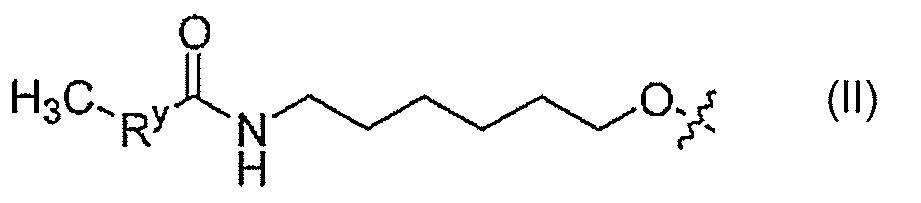
[式中、Ryは、炭素数1~15個、好ましくは3~15個、6~14個または9~13個の直鎖状アルキレン基である。]
機能性部分は、第1核酸鎖及び/又は第2核酸鎖の5'末端、又は3'末端、あるいは両端に連結されていてもよい。あるいは、機能性部分は、第1核酸鎖及び/又は第2核酸鎖の内部のヌクレオチドに連結されていてもよい。第1核酸鎖及び/又は第2核酸鎖は、脂質等の機能性部分を2つ以上含み、これらは第1核酸鎖及び/又は第2核酸鎖の複数の位置に連結されていてもよく、及び/又は第1核酸鎖及び/又は第2核酸鎖の1つの位置に一群として連結されていてもよい。機能性部分は、第1核酸鎖及び/又は第2核酸鎖の5'末端と3'末端にそれぞれ1つずつ連結されていてもよい。
第1核酸鎖及び/又は第2核酸鎖と機能性部分との間の結合は、直接結合であってもよいし、別の物質によって介在される間接結合であってもよい。しかし、特定の実施形態においては、機能性部分は、共有結合、イオン性結合、水素結合などを介して第1核酸鎖及び/又は第2核酸鎖に直接結合されていることが好ましく、またより安定した結合を得ることができるという点から考えると、共有結合がより好ましい。
機能性部分はまた、切断性(cleavable)又は非切断性(uncleavable)リンカーを介して第1核酸鎖及び/又は第2核酸鎖に結合されていてもよい。「切断性リンカー」とは、生理学的条件下で、例えば細胞内又は動物体内(例えば、ヒト体内)で、切断される連結基を意味する。特定の実施形態では、切断性リンカーは、ヌクレアーゼなどの内在性酵素によって選択的に切断される。切断性リンカーとしては、アミド、エステル、ホスホジエステルの一方もしくは両方のエステル、リン酸エステル、カルバメート、及びジスルフィド結合、ならびに天然DNAリンカーが挙げられる。
「非切断性リンカー」とは、生理学的条件下、例えば、細胞内又は動物体内(例えば、ヒト体内)で切断されないリンカーを意味する。非切断性リンカーは、限定はしないが、ホスホロチオエート結合、及びホスホロチオエート結合で連結された修飾若しくは非修飾のデオキシリボヌクレオシド又は修飾若しくは非修飾のリボヌクレオシドからなるリンカー等が挙げられる。リンカーがDNA等の核酸又はオリゴヌクレオチドの場合、鎖長は、特に限定はされないが、通常は2~20塩基長、3~10塩基長又は4~6塩基長であればよい。
リンカーの一具体例として、以下の式(I)で表されるリンカーが挙げられる。

L2は、置換された若しくは置換されていないC1~C12のアルキレン基(例、プロピレン、ヘキシレン、ドデシレン)、置換された若しくは置換されていないC3~C8シクロアルキレン基(例、シクロヘキシレン)、-(CH2)2-O-(CH2)2-O-(CH2)2-O-(CH2)3-、-(CH2)2-O-(CH2)2-O-(CH2)2-O-(CH2)2-O-(CH2)3-、又はCH(CH2-OH)-CH2-O-(CH2)2-O-(CH2)2-O-(CH2)2-O-(CH2)3-を表し、L3は、-NH-又は結合を表し、L4は、置換された若しくは置換されていないC1~C12のアルキレン基(例、エチレン、ペンチレン、へプチレン、アンデシレン)、置換された若しくは置換されていないC3~C8のシクロアルキレン基(例、シクロヘキシレン)、-(CH2)2-[O-(CH2)2]m-、又は結合を表し、ここで、mは1~25の整数を表し、L5は、-NH-(C=O)-、-(C=O)-、又は結合を表す(ここで、該置換は、好ましくはハロゲン原子によりなされる)。
一実施形態において、式(III)で表されるリンカーは、L2が、置換されていないC3~C6のアルキレン基(例、プロピレン、ヘキシレン)、-(CH2)2-O-(CH2)2-O-(CH2)2-O-(CH2)3-、又は-(CH2)2-O-(CH2)2-O-(CH2)2-O-(CH2)2-O-(CH2)3-であり、L3が、-NH-であり、L4及びL5が、結合である。
本発明の二本鎖核酸複合体において、第1核酸鎖が有する標的転写産物に対するアンチセンス効果は、当該分野で公知の方法で測定できる。例えば、二本鎖核酸複合体を細胞等に導入した後、ノーザンブロッティング、定量PCR、又はウェスタンブロッティング等の公知技術を使用することにより測定すればよい。特定の組織における標的遺伝子の発現量又は標的転写産物のレベル(例えば、mRNA量若しくはマイクロRNA等のRNA量、cDNA量、タンパク質量等)を測定することで、それらの部位において二本鎖核酸複合体によって標的遺伝子発現が抑制されるか否かを判定できる。また例えばエクソンスキッピングであれば、エクソンスキッピングで生じる産物と、エクソンスキッピングがない場合の産物を比較することにより、その効果を判定できる。
上記のように、本発明の二本鎖核酸複合体の例示的実施形態について説明したが、本発明の二本鎖核酸複合体は上記の例示的実施形態に限定されない。
1-4.二本鎖核酸複合体の製造方法
本発明の二本鎖核酸複合体は、当業者であれば、公知の方法を適切に選択することによって製造することができる。限定はしないが、通常は、まず二本鎖核酸複合体を構成する第1核酸鎖及び第2核酸鎖のそれぞれを設計し、製造するところから始まる。例えば、標的転写産物の塩基配列(例えば、標的遺伝子の塩基配列)情報に基づいて第1核酸鎖を設計し、その相補鎖として第2核酸鎖を設計する。続いて、設計した塩基配列情報に基づいて、それぞれの核酸鎖を、例えば、GE Healthcare社、Thermo Fisher Scientific社、Beckman Coulter社等の市販の自動核酸合成装置を使用して合成すればよい。その後は、得られたオリゴヌクレオチドに逆相カラム等を使用して精製するもできる。
本発明の二本鎖核酸複合体は、当業者であれば、公知の方法を適切に選択することによって製造することができる。限定はしないが、通常は、まず二本鎖核酸複合体を構成する第1核酸鎖及び第2核酸鎖のそれぞれを設計し、製造するところから始まる。例えば、標的転写産物の塩基配列(例えば、標的遺伝子の塩基配列)情報に基づいて第1核酸鎖を設計し、その相補鎖として第2核酸鎖を設計する。続いて、設計した塩基配列情報に基づいて、それぞれの核酸鎖を、例えば、GE Healthcare社、Thermo Fisher Scientific社、Beckman Coulter社等の市販の自動核酸合成装置を使用して合成すればよい。その後は、得られたオリゴヌクレオチドに逆相カラム等を使用して精製するもできる。
また、機能性部分が結合した二本鎖核酸複合体の場合には、第1核酸鎖は上記方法に準じて製造すればよい。一方、機能性部分が結合した第2核酸鎖は、機能性部分が予め結合した核酸種を用いて、上記の合成、及び精製を行い、製造することができる。例えば、機能性部分が予め結合された核酸種を用いて、上記の合成及び精製を実施することによって第2核酸鎖を製造してもよい。あるいは、上記の合成及び精製を実施することによって製造された第2核酸鎖に、公知の方法により機能性部分を結合させてもよい。各核酸鎖を製造後、第1核酸鎖と第2核酸鎖に対して、後述するアニーリングを実施することによって目的とする機能性部分が結合した二本鎖核酸複合体を製造することができる。
機能性部分を核酸に連結する方法は当該技術分野において周知である。この方法で製造した核酸を適切な緩衝溶液中で混合し、約90℃~98℃で数分間(例えば5分間)変性させ、その後核酸を約30℃~70℃で約1~8時間アニールして、本発明の二本鎖核酸複合体の一つを製造することができる。また、核酸鎖は、塩基配列並びに修飾部位及び種類を指定して、各種メーカー(例えば、株式会社ジーンデザイン)に注文し、入手することもできる。上記アニール工程は、室温(約10℃~約35℃)に約5~60分間静置することで、行うことができる。第1核酸鎖及び第2核酸鎖をそれぞれ、約70℃~98℃の緩衝液(例えばリン酸緩衝生理食塩水)又は水中で溶解し、得られた2つの溶液を混合し、混合液を約70℃~98℃で数分間(例えば5分間)保持し、その後、混合液を約30℃~70℃(又は30℃~50℃)で約1~8時間保持して、本発明の一部の実施形態の二本鎖核酸複合体を調製してもよい。第1核酸鎖及び第2核酸鎖はそれぞれ、室温(約10℃~約35℃)で緩衝液(例えばリン酸緩衝生理食塩水)又は水中で溶解することもできる。二本鎖核酸複合体の作製時におけるアニーリングの条件(時間及び温度)は、上記条件に限定されない。また、核酸鎖のアニーリングを促進するのに適した条件は、当該技術分野において周知である。
1-5.二本鎖核酸複合体の用途
一実施形態において、本発明の二本鎖核酸複合体は、以下の少なくとも一つの作用:標的遺伝子の転写産物又は翻訳産物の発現量を抑制若しくは亢進する、標的遺伝子の転写産物又は翻訳産物の機能を阻害する、RNAスプライシングを制御する、及び標的遺伝子のタンパク質への結合を阻害する、のためのもの、例えばエクソンスキッピングのためのものであってもよい。例えば、本発明の二本鎖核酸複合体は、以下の少なくとも一つの作用:エクソンスキッピング、エクソンインクルージョン、ステリックブロッキング、及びRNA発現亢進のためのものであってもよい。本発明の二本鎖核酸複合体は、特定の組織、例えば脳、脊髄、腎臓、肝臓、肺、腸管、脾臓、副腎、眼、網膜、皮膚、末梢神経、例えば脳において上記作用を発揮するためのものであってもよい。脳は大脳、間脳、脳幹、小脳のいずれであってもよく、例えば、大脳(大脳皮質等)、脳幹、小脳、海馬、及び線状体のいずれか一つ以上であってもよい。また、本発明の二本鎖核酸複合体は、心筋および骨格筋を含む筋組織を除く組織において上記作用を発揮するためのものであってもよい。
一実施形態において、本発明の二本鎖核酸複合体は、以下の少なくとも一つの作用:標的遺伝子の転写産物又は翻訳産物の発現量を抑制若しくは亢進する、標的遺伝子の転写産物又は翻訳産物の機能を阻害する、RNAスプライシングを制御する、及び標的遺伝子のタンパク質への結合を阻害する、のためのもの、例えばエクソンスキッピングのためのものであってもよい。例えば、本発明の二本鎖核酸複合体は、以下の少なくとも一つの作用:エクソンスキッピング、エクソンインクルージョン、ステリックブロッキング、及びRNA発現亢進のためのものであってもよい。本発明の二本鎖核酸複合体は、特定の組織、例えば脳、脊髄、腎臓、肝臓、肺、腸管、脾臓、副腎、眼、網膜、皮膚、末梢神経、例えば脳において上記作用を発揮するためのものであってもよい。脳は大脳、間脳、脳幹、小脳のいずれであってもよく、例えば、大脳(大脳皮質等)、脳幹、小脳、海馬、及び線状体のいずれか一つ以上であってもよい。また、本発明の二本鎖核酸複合体は、心筋および骨格筋を含む筋組織を除く組織において上記作用を発揮するためのものであってもよい。
一実施形態において、本発明の二本鎖核酸複合体は、疾患又は予防するためのものである。疾患としては、例えば、筋ジストロフィー(デュシェンヌ型筋ジストロフィー、筋強直性ジストロフィータイプ1(DM1)、福山型筋ジストロフィー、顔面肩甲上腕型筋ジストロフィー、肢帯型筋ジストロフィー等)、先天性ミオパチー、原発性年齢関連タウオパチー(PART)、アルツハイマー病(AD)、進行性核上性麻痺(PSP)、大脳皮質基底核変性症/大脳皮質基底核症候群(CBD)、ピック病、前頭側頭型認知症、神経封入体病、脊髄性筋萎縮症(SMA)、筋萎縮性側索硬化症(ALS)、ハンチントン病、遺伝性脊髄小脳変性症(SCA)、多系統萎縮症、遺伝性痙性対麻痺、多発性硬化症、脳梗塞、てんかん及び脳炎が挙げられる。
2.医薬組成物
2-1.概要
一態様において、本発明は医薬組成物に関する。本発明の医薬組成物は、本明細書に記載の二本鎖核酸複合体を有効成分として含む。一実施形態において、本明細書に記載の医薬組成物は、本明細書に記載の二本鎖核酸複合体の用途のために使用するものであってよい。本発明の医薬組成物は、本質的に本明細書に記載の二本鎖核酸複合体からなるものであってもよい。すなわち、本発明の医薬組成物は、本明細書に記載の二本鎖核酸複合体に加えて、担体等の補助的な成分をさらに含んでいてもよい。また、本発明の医薬組成物は、本明細書に記載の二本鎖核酸複合体のみからなるものであってもよい。
2-1.概要
一態様において、本発明は医薬組成物に関する。本発明の医薬組成物は、本明細書に記載の二本鎖核酸複合体を有効成分として含む。一実施形態において、本明細書に記載の医薬組成物は、本明細書に記載の二本鎖核酸複合体の用途のために使用するものであってよい。本発明の医薬組成物は、本質的に本明細書に記載の二本鎖核酸複合体からなるものであってもよい。すなわち、本発明の医薬組成物は、本明細書に記載の二本鎖核酸複合体に加えて、担体等の補助的な成分をさらに含んでいてもよい。また、本発明の医薬組成物は、本明細書に記載の二本鎖核酸複合体のみからなるものであってもよい。
2-2.構成
本発明の医薬組成物は、有効成分及び担体を含み得る。以下、各成分について具体的に説明をする。
本発明の医薬組成物は、有効成分及び担体を含み得る。以下、各成分について具体的に説明をする。
2-2-1.有効成分
本発明の医薬組成物は、有効成分として少なくとも本明細書に記載の二本鎖核酸複合体を含む。本発明の医薬組成物は、前記二本鎖核酸複合体を二種以上含むことができる。
本発明の医薬組成物は、有効成分として少なくとも本明細書に記載の二本鎖核酸複合体を含む。本発明の医薬組成物は、前記二本鎖核酸複合体を二種以上含むことができる。
医薬組成物に含まれる前記二本鎖核酸複合体の量(含有量)は、二本鎖核酸複合体の種類、送達すべき部位(例えば脳)、医薬組成物の剤形、医薬組成物の投与量、並びに後述する担体の種類によって異なる。したがって、それぞれの条件を勘案して適宜定めればよい。通常は、単回投与量の医薬組成物に有効量の二本鎖核酸複合体が含まれるように調整する。「有効量」とは、二本鎖核酸複合体が有効成分としての機能を発揮する上で必要な量をいう。「有効量」は、それを適用する生体に対して有害な副作用をほとんど又は全く付与しないものであってよい。この有効量は、被検体の情報、投与経路、及び投与回数等の様々な条件によって変化し得る。最終的には医師、獣医師又は薬剤師等の判断によって決定される。「被検体の情報」とは、医薬組成物を適用する生体の様々な個体情報である。例えば、被検体がヒトであれば、年齢、体重、性別、食生活、健康状態、疾患の進行度や重症度、薬剤感受性、併用薬物の有無等を含む。
2-2-2.担体
本発明の医薬組成物は、薬学的に許容可能な担体を含むことができる。「薬学的に許容可能な担体」とは、製剤技術分野において通常使用する添加剤をいう。例えば、溶媒、植物性油、基剤、乳化剤、懸濁化剤、界面活性剤、pH調整剤、安定化剤、香味料、香料、賦形剤、ビヒクル、防腐剤、結合剤、希釈剤、等張化剤、鎮静剤、増量剤、崩壊剤、緩衝剤、コーティング剤、滑沢剤、着色剤、甘味剤、増粘剤、矯味剤、溶解助剤、及び他の添加剤が挙げられる。
本発明の医薬組成物は、薬学的に許容可能な担体を含むことができる。「薬学的に許容可能な担体」とは、製剤技術分野において通常使用する添加剤をいう。例えば、溶媒、植物性油、基剤、乳化剤、懸濁化剤、界面活性剤、pH調整剤、安定化剤、香味料、香料、賦形剤、ビヒクル、防腐剤、結合剤、希釈剤、等張化剤、鎮静剤、増量剤、崩壊剤、緩衝剤、コーティング剤、滑沢剤、着色剤、甘味剤、増粘剤、矯味剤、溶解助剤、及び他の添加剤が挙げられる。
溶媒には、例えば、水若しくはそれ以外の薬学的に許容し得る水溶液、又は薬学的に許容される有機溶剤のいずれであってもよい。水溶液としては、例えば、生理食塩水、ブドウ糖やその他の補助剤を含む等張液、リン酸塩緩衝液、酢酸ナトリウム緩衝液が挙げられる。補助剤としては、例えば、D-ソルビトール、D-マンノース、D-マンニトール、塩化ナトリウム、その他にも低濃度の非イオン性界面活性剤、ポリオキシエチレンソルビタン脂肪酸エステル類等が挙げられる。
上記担体は、有効成分である二本鎖核酸複合体の生体内での酵素等による分解を回避又は抑制する他、製剤化や投与方法を容易にし、剤形及び薬効を維持するために用いられるものであり、必要に応じて適宜使用すればよい。
2-2-3.剤形
本発明の医薬組成物の剤形は、有効成分である本明細書に記載の二本鎖核酸複合体を分解等により不活化させることなく、生体内でその有効成分の薬理効果を発揮し得る形態であれば特に限定しない。
本発明の医薬組成物の剤形は、有効成分である本明細書に記載の二本鎖核酸複合体を分解等により不活化させることなく、生体内でその有効成分の薬理効果を発揮し得る形態であれば特に限定しない。
具体的な剤形は、投与方法及び/又は処方条件によって異なる。投与方法は、非経口投与と経口投与に大別することができるので、それぞれの投与法に適した剤形にすればよい。
投与方法が非経口投与であれば、好ましい剤形は、対象部位への直接投与又は循環系を介した全身投与が可能な液剤である。液剤の例としては、注射剤が挙げられる。注射剤は、前記賦形剤、エリキシル剤、乳化剤、懸濁剤、界面活性剤、安定剤、pH調節剤等と適宜組み合わせて、一般に認められた製薬実施に要求される単位用量形態で混和することによって製剤化することができる。その他、軟膏、硬膏剤(plaster)、パップ剤(cataplasm)、経皮剤、ローション剤、吸入剤、エアロゾル剤、点眼剤、及び坐剤であってもよい。
投与方法が経口投与であれば、好ましい剤形は、固形剤(錠剤、カプセル剤、ドロップ剤、トローチ剤を含む)、顆粒剤、粉剤、散剤、液剤(内用水剤、乳剤、シロップ剤を含む)が挙げられる。固形剤であれば、必要に応じて、当該技術分野で公知の剤皮を施した剤形、例えば、糖衣錠、ゼラチン被包錠、腸溶錠、フィルムコーティング錠、二重錠、多層錠にすることができる。
なお、上記各剤形の具体的な形状、大きさについては、いずれもそれぞれの剤形において当該分野で公知の剤形の範囲内にあればよく、特に限定はしない。本発明の医薬組成物の製造方法については、当該技術分野の常法に従って製剤化すればよい。
2-3.投与形態及び投与量
本明細書において、医薬組成物の好ましい投与形態には特定の限定はない。投与は全身投与であっても局所投与であってもよい。投与経路は、経口投与又は非経口投与であってよい。非経口投与の具体例として、静脈内投与、動脈内投与、輸血による投与、腹腔内投与、脳室内投与、髄腔内投与、眼内投与、筋肉内投与、皮下投与(埋め込み型持続皮下投与を含む)、皮内投与、膀胱内投与、経膣内投与、直腸投与、吸入又は点鼻投与、並びに気管/気管支投与が挙げられる。本発明の適用対象部位が脳である場合、対象部位である脳室内投与又は髄腔内投与は好適である。
本明細書において、医薬組成物の好ましい投与形態には特定の限定はない。投与は全身投与であっても局所投与であってもよい。投与経路は、経口投与又は非経口投与であってよい。非経口投与の具体例として、静脈内投与、動脈内投与、輸血による投与、腹腔内投与、脳室内投与、髄腔内投与、眼内投与、筋肉内投与、皮下投与(埋め込み型持続皮下投与を含む)、皮内投与、膀胱内投与、経膣内投与、直腸投与、吸入又は点鼻投与、並びに気管/気管支投与が挙げられる。本発明の適用対象部位が脳である場合、対象部位である脳室内投与又は髄腔内投与は好適である。
医薬組成物が投与又は摂取により適用される場合、投与量又は摂取量は、例えば、含まれる二本鎖核酸複合体が0.00001mg/kg/日~10000mg/kg/日、又は0.001mg/kg/日~100mg/kg/日となるようにすればよい。医薬組成物は、単回投与でも、複数回投与であってもよい。複数回投与の場合、毎日若しくは適当な時間間隔で(例えば1日、2日、3日、1週間、2週間、1ヶ月の間隔で)、例えば2~20回等投与することもできる。上記の二本鎖核酸複合体の1回の投与量は、例えば、0.001mg/kg以上、0.005mg/kg以上、0.01mg/kg以上、0.25mg/kg以上、0.5mg/kg以上、1mg/kg以上、2.5mg/kg以上、0.5mg/kg以上、1.0mg/kg以上、2.0mg/kg以上、3.0mg/kg以上、4.0mg/kg以上、5mg/kg以上、10mg/kg以上、20mg/kg以上、30mg/kg以上、40mg/kg以上、50mg/kg以上、75mg/kg以上、100mg/kg以上、150mg/kg以上、200mg/kg以上、300mg/kg以上、400mg/kg以上、若しくは500mg/kg以上とすることができ、例えば、0.001mg/kg~500mg/kgの範囲に含まれる任意の量(例えば、0.001mg/kg、0.01mg/kg、0.1mg/kg、1mg/kg、5mg/kg、10mg/kg、50mg/kg、100mg/kg、若しくは200mg/kg)を適宜選択することができる。
本発明の二本鎖核酸複合体は、0.01~10mg/kg(例えば約6.25mg/kg)の用量で週2回の頻度で4回投与してもよい。また、二本鎖核酸複合体は、0.05~30mg/kg(例えば約25mg/kg)の用量で週1~2回の頻度で2~4回、例えば週2回の頻度で2回投与してもよい。このような投与レジメン(分割投与)の採用により、より高用量の単回投与に比べて、毒性(例えば血小板の減少を回避する)を下げ、被検体への負荷を低減することができる。
医薬組成物は反復投与でも細胞内において抑制効果が相加的に働く。また、反復投与する場合、ある程度の投与間隔(例えば、半日以上)をおいた方が有効性を向上させることができる。
3.方法
一態様において、本発明は、本明細書に記載の核酸複合体又は組成物を被験体に投与することを含む、標的遺伝子又はその転写産物に対してアンチセンス効果をもたらす、又は標的分子に対するアプタマー、デコイ、及びbaitの少なくとも一つの効果をもたらす方法に関する。当該方法は、被検体の疾患を治療又は予防する方法であってもよい。
一態様において、本発明は、本明細書に記載の核酸複合体又は組成物を被験体に投与することを含む、標的遺伝子又はその転写産物に対してアンチセンス効果をもたらす、又は標的分子に対するアプタマー、デコイ、及びbaitの少なくとも一つの効果をもたらす方法に関する。当該方法は、被検体の疾患を治療又は予防する方法であってもよい。
以下、実施例を用いて本発明をさらに具体的に説明する。但し、本発明の技術的範囲はこれら実施例に限定されるものではない。
[実施例1:ヘテロ核酸型PMOの全身投与による脳におけるエクソンスキッピング効果]
実施例1では、mdxマウス(Duchenne型筋ジストロフィーモデルマウス)のエクソン23/イントロン23境界領域を標的とする(エクソンスキッピングさせる)アンチセンスオリゴヌクレオチド(ホスホロジアミデートモルホリノオリゴマー(以下、「PMO」とも記載する))とトコフェロール又はコレステロール結合型相補鎖とからなる二本鎖核酸複合体の複数回投与による、大脳におけるエクソンスキッピング効果を評価した。
実施例1では、mdxマウス(Duchenne型筋ジストロフィーモデルマウス)のエクソン23/イントロン23境界領域を標的とする(エクソンスキッピングさせる)アンチセンスオリゴヌクレオチド(ホスホロジアミデートモルホリノオリゴマー(以下、「PMO」とも記載する))とトコフェロール又はコレステロール結合型相補鎖とからなる二本鎖核酸複合体の複数回投与による、大脳におけるエクソンスキッピング効果を評価した。
(材料と方法)
(1)核酸剤の調製
二本鎖核酸剤を、一本鎖アンチセンスオリゴヌクレオチド(ASO)対照と比較した。対照(ASO)は、マウス・ジストロフィン遺伝子(dystrophin)のpre-mRNAのエクソン23/イントロン23を標的とする25 merの一本鎖モルホリノ核酸とした。このASOは25merすべてモルホリノ核酸で構成され、ヌクレオシド間結合は全てホスホロジアミデート結合である。このモルホリノ核酸は、マウスのDystrophin pre-mRNA(GenBankアクセッション番号:NC_000086.7)の83803536~83803512位に相補的な塩基配列を有する。
(1)核酸剤の調製
二本鎖核酸剤を、一本鎖アンチセンスオリゴヌクレオチド(ASO)対照と比較した。対照(ASO)は、マウス・ジストロフィン遺伝子(dystrophin)のpre-mRNAのエクソン23/イントロン23を標的とする25 merの一本鎖モルホリノ核酸とした。このASOは25merすべてモルホリノ核酸で構成され、ヌクレオシド間結合は全てホスホロジアミデート結合である。このモルホリノ核酸は、マウスのDystrophin pre-mRNA(GenBankアクセッション番号:NC_000086.7)の83803536~83803512位に相補的な塩基配列を有する。
このモルホリノ核酸(第1核酸鎖)を、トコフェロール結合型Toc-cRNA(mDystrophin)又はコレステロール結合型Chol-cRNA(mDystrophin)とアニールさせることにより、二本鎖核酸剤であるトコフェロール結合型ヘテロ二本鎖オリゴヌクレオチド(Tocopherol-conjugated heteroduplex oligonucleotide、Toc HDO)又はコレステロール結合型ヘテロ二本鎖オリゴヌクレオチド(Cholesterol-conjugated heteroduplex oligonucleotide、Chol HDO)を調製した。第1核酸鎖と第2核酸鎖とを等モル量で混合し、溶液を95℃で5分間加熱し、その後37℃に冷却して1時間保持し、これにより核酸鎖をアニールして上記の二本鎖核酸剤を調製した。アニールした核酸を4℃又は氷上で保存した。調製した二本鎖核酸剤をToc HDO及びChol HDOと称する。
実施例1で用いたオリゴヌクレオチドの配列、化学修飾及び構造を、表1及び図6に示す。全てのオリゴヌクレオチドは株式会社ジーンデザイン(GeneDesign)(大阪、日本)によって製造された。
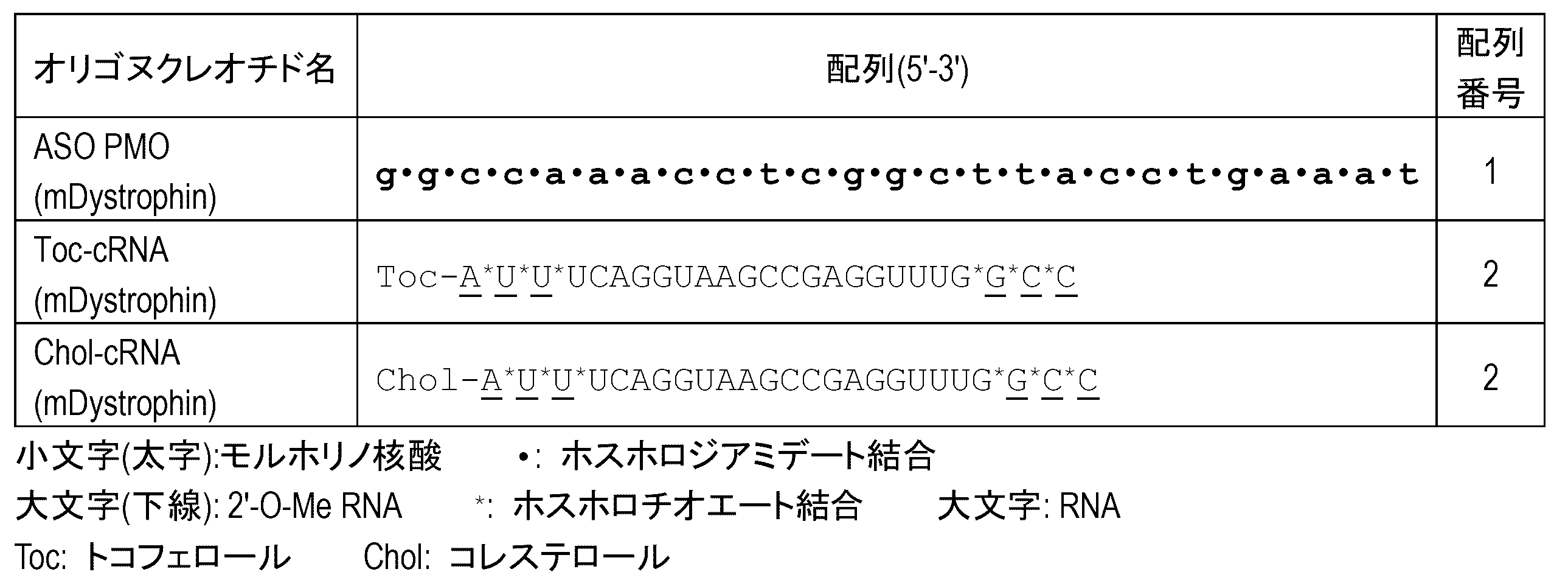
(2)in vivo投与
マウスは、体重20gの6~7週齢の雄のmdxマウス(日本クレア)であった。マウスを使用する実験は全て、n=2で実施した。核酸剤を、マウスにそれぞれ100 mg/kgの量で、週1回計5回静脈内注射した。さらにまた、(二本鎖核酸剤の代わりに)PBS単体又はASO PMO (mDystrophin)を注射したマウスも作製した。
マウスは、体重20gの6~7週齢の雄のmdxマウス(日本クレア)であった。マウスを使用する実験は全て、n=2で実施した。核酸剤を、マウスにそれぞれ100 mg/kgの量で、週1回計5回静脈内注射した。さらにまた、(二本鎖核酸剤の代わりに)PBS単体又はASO PMO (mDystrophin)を注射したマウスも作製した。
(3)RNA発現解析
核酸剤の最終投与の2週間後に、マウスを解剖して大脳を摘出した。続いて、mRNAを、各組織からIsogenII(ニッポンジーン社製)にて抽出した。抽出したtotal RNA 1μgに対し、Qiagen One Step RT-PCR Kit(Qiagen社製)を用いてOne-Step RT-PCRを行った。キットに添付のプロトコルに従って、反応液を調製した。サーマルサイクラーはLifeECO(Bioer Technology社製)を用いた。用いたRT-PCRのプログラムは、以下の通りである。
42℃30分間:逆転写反応
95℃15分間:熱変性
[94℃30秒間、60℃30秒間、72 ℃60秒間]x 35サイクル:PCR増幅
72℃、7分間:最後の伸長反応
核酸剤の最終投与の2週間後に、マウスを解剖して大脳を摘出した。続いて、mRNAを、各組織からIsogenII(ニッポンジーン社製)にて抽出した。抽出したtotal RNA 1μgに対し、Qiagen One Step RT-PCR Kit(Qiagen社製)を用いてOne-Step RT-PCRを行った。キットに添付のプロトコルに従って、反応液を調製した。サーマルサイクラーはLifeECO(Bioer Technology社製)を用いた。用いたRT-PCRのプログラムは、以下の通りである。
42℃30分間:逆転写反応
95℃15分間:熱変性
[94℃30秒間、60℃30秒間、72 ℃60秒間]x 35サイクル:PCR増幅
72℃、7分間:最後の伸長反応
RT-PCRに使用したフォワードプライマーとリバースプライマーの塩基配列は以下の通りである。
フォワードプライマー:
5’-ATCCAGCAGTCAGAAAGCAAA-3’(配列番号3)
リバースプライマー:
5’-CAGCCATCCATTTCTGTAAGG-3’(配列番号4)
フォワードプライマー:
5’-ATCCAGCAGTCAGAAAGCAAA-3’(配列番号3)
リバースプライマー:
5’-CAGCCATCCATTTCTGTAAGG-3’(配列番号4)
上記RT-PCRの反応産物1 μlをBioanalyzer2100(Agilent社製)を使用して、Agilent DNA1000キットを用いて解析した。エクソン23がスキップしたバンドのポリヌクレオチド量「A」と、エクソン23がスキップしなかったバンドのポリヌクレオチド量「B」を測定した。これら「A」及び「B」の測定値に基づき、以下の式に従って、スキッピング効率を求めた。
スキッピング効率(%)= A /( A + B )× 100
スキッピング効率(%)= A /( A + B )× 100
(結果)
結果を図7に示す。図7に示される通り、コレステロール結合型ヘテロ二本鎖オリゴヌクレオチドであるChol HDOにおいてのみ、エクソンスキッピングが見られた。これは、本来脳内移行しないASO PMO (mDystrophin)をヘテロ核酸化することで、全身投与でも脳内移行が可能となることを示している。また、第一核酸鎖の全てがRNaseH耐性を有するモルホリノ核酸であるChol HDOにおいてエクソンスキッピング活性が認められたことは、二本鎖核酸剤のアンチセンス効果の主な部分がRNase H依存性経路によるという技術常識を考慮すると、予想外であった。
結果を図7に示す。図7に示される通り、コレステロール結合型ヘテロ二本鎖オリゴヌクレオチドであるChol HDOにおいてのみ、エクソンスキッピングが見られた。これは、本来脳内移行しないASO PMO (mDystrophin)をヘテロ核酸化することで、全身投与でも脳内移行が可能となることを示している。また、第一核酸鎖の全てがRNaseH耐性を有するモルホリノ核酸であるChol HDOにおいてエクソンスキッピング活性が認められたことは、二本鎖核酸剤のアンチセンス効果の主な部分がRNase H依存性経路によるという技術常識を考慮すると、予想外であった。
[実施例2:ヘテロ核酸型PMOの脳室内投与による脳におけるエクソンスキッピング効果]
実施例2では、mdxマウス(Duchenne型筋ジストロフィーモデルマウス)のエクソン23/イントロン23境界領域を標的とする(エクソンスキッピングさせる)アンチセンスオリゴヌクレオチド(PMO)とトコフェロール又はコレステロール結合型相補鎖とからなる二本鎖核酸複合体の脳室内単回投与による脳におけるエクソンスキッピング効果を評価した。
実施例2では、mdxマウス(Duchenne型筋ジストロフィーモデルマウス)のエクソン23/イントロン23境界領域を標的とする(エクソンスキッピングさせる)アンチセンスオリゴヌクレオチド(PMO)とトコフェロール又はコレステロール結合型相補鎖とからなる二本鎖核酸複合体の脳室内単回投与による脳におけるエクソンスキッピング効果を評価した。
(材料と方法)
(1)核酸剤の調製
本実施例で用いた核酸剤は、実施例1で調製した核酸剤と同様である。ただし、比較としてリガンドのないcRNAを用意し、これとASO PMO (mDystrophin)を、実施例1と同様にアニールした。調製した二本鎖核酸剤をHDOと称する。
(1)核酸剤の調製
本実施例で用いた核酸剤は、実施例1で調製した核酸剤と同様である。ただし、比較としてリガンドのないcRNAを用意し、これとASO PMO (mDystrophin)を、実施例1と同様にアニールした。調製した二本鎖核酸剤をHDOと称する。
実施例2で用いたオリゴヌクレオチドの配列、化学修飾及び構造を、表2及び図6に示す。全てのオリゴヌクレオチドは株式会社ジーンデザイン(Gene Design)(大阪、日本)によって製造された。

(2)in vivo投与
マウスは、体重20gの6~7週齢の雄のmdxマウス(日本クレア)であった。マウスを使用する実験は全て、n=3で実施した。核酸剤を、マウスの左側脳室に10μL(核酸量として10 nmol)の量で脳室内投与した。さらにまた、(二本鎖核酸剤の代わりに)PBS単体、PMO単体、又はリガンドなしHDOを注射したマウスも作製した。
マウスは、体重20gの6~7週齢の雄のmdxマウス(日本クレア)であった。マウスを使用する実験は全て、n=3で実施した。核酸剤を、マウスの左側脳室に10μL(核酸量として10 nmol)の量で脳室内投与した。さらにまた、(二本鎖核酸剤の代わりに)PBS単体、PMO単体、又はリガンドなしHDOを注射したマウスも作製した。
(3)RNA発現解析
核酸剤の最終投与の2週間後に、マウスを解剖して大脳、小脳、海馬、線条体、及び脳幹を摘出した。続いて、mRNAを、各組織からIsogenII(ニッポンジーン社製)にて抽出した。抽出したtotal RNA 1μgに対し、Qiagen One Step RT-PCR Kit(Qiagen社製)を用いてOne-Step RT-PCRを行った。キットに添付のプロトコルに従って、反応液を調製した。サーマルサイクラーはLifeECO(Bioer Technology社製)を用いた。用いたRT-PCRのプログラム、及びRT-PCRに使用したフォワードプライマーとリバースプライマーは実施例1に記載した通りである。
核酸剤の最終投与の2週間後に、マウスを解剖して大脳、小脳、海馬、線条体、及び脳幹を摘出した。続いて、mRNAを、各組織からIsogenII(ニッポンジーン社製)にて抽出した。抽出したtotal RNA 1μgに対し、Qiagen One Step RT-PCR Kit(Qiagen社製)を用いてOne-Step RT-PCRを行った。キットに添付のプロトコルに従って、反応液を調製した。サーマルサイクラーはLifeECO(Bioer Technology社製)を用いた。用いたRT-PCRのプログラム、及びRT-PCRに使用したフォワードプライマーとリバースプライマーは実施例1に記載した通りである。
(結果)
結果を図8に示す。図8に示される通り、TocHDO及びCholHDOの脳室内投与によって、特にエクソンスキッピング効果が顕著であった。PMOについてヘテロ核酸化及びリガンド付加によって脳室内投与の効果の上昇が見られることは、以下の比較例1に示す通り、モルホリノ核酸を含まない核酸ではヘテロ核酸化及びリガンド付加によって脳室内投与では効果の上昇が見られない点を考慮すると、予想外であった。
結果を図8に示す。図8に示される通り、TocHDO及びCholHDOの脳室内投与によって、特にエクソンスキッピング効果が顕著であった。PMOについてヘテロ核酸化及びリガンド付加によって脳室内投与の効果の上昇が見られることは、以下の比較例1に示す通り、モルホリノ核酸を含まない核酸ではヘテロ核酸化及びリガンド付加によって脳室内投与では効果の上昇が見られない点を考慮すると、予想外であった。
[比較例1:モルホリノ核酸を含まない核酸の脳室内投与による脳におけるアンチセンス効果]
比較例1では、C57BL/6マウスのmalat 1を標的とするアンチセンスオリゴヌクレオチドとトコフェロール又はコレステロール結合型相補鎖とからなる二本鎖核酸複合体の脳室内単回投与による脳におけるアンチセンス効果を評価した。
比較例1では、C57BL/6マウスのmalat 1を標的とするアンチセンスオリゴヌクレオチドとトコフェロール又はコレステロール結合型相補鎖とからなる二本鎖核酸複合体の脳室内単回投与による脳におけるアンチセンス効果を評価した。
(材料と方法)
(1)核酸剤の調製
malat1ノンコーディングRNAを標的とする16merの一本鎖LNA/DNAギャップマー(ASO(mMalat1))(第1核酸鎖)を調製した。このLNA/DNAギャップマーは、5'末端の3個及び3'末端の3個のLNAヌクレオシド、及びそれらの間の10個のDNAヌクレオシドを含む16塩基長のオリゴヌクレオチドである。このLNA/DNAギャップマーは、マウスのmalat1ノンコーディングRNA(配列番号1)の1316~1331位に相補的な塩基配列を有する。
(1)核酸剤の調製
malat1ノンコーディングRNAを標的とする16merの一本鎖LNA/DNAギャップマー(ASO(mMalat1))(第1核酸鎖)を調製した。このLNA/DNAギャップマーは、5'末端の3個及び3'末端の3個のLNAヌクレオシド、及びそれらの間の10個のDNAヌクレオシドを含む16塩基長のオリゴヌクレオチドである。このLNA/DNAギャップマーは、マウスのmalat1ノンコーディングRNA(配列番号1)の1316~1331位に相補的な塩基配列を有する。
このASOに相補的な塩基配列を有し、5'末端にコレステロールが共有結合した相補的RNA鎖(Chol-cRNA(mMalat1))(第2核酸鎖)を用意した。第2鎖は両末端に3個の2'-O-メチル修飾リボヌクレオシド、それらの間の10個のリボヌクレオシドを含む、16塩基長のオリゴヌクレオチドである。第1鎖と第2鎖とを等モル量で混合し、溶液を95℃で5分間加熱し、その後37℃に冷却して1時間保持し、これにより核酸鎖をアニールして二本鎖核酸剤を調製した。アニールした核酸を室温、4℃または氷上で保存した。調製した二本鎖核酸剤をChol HDO (control)と称する。
比較例1で用いたオリゴヌクレオチドの配列、化学修飾及び構造を、表3に示す。全てのオリゴヌクレオチドは株式会社ジーンデザイン(Gene Design)(大阪、日本)によって製造された。

(2)in vivo投与
マウスは、体重20gの6~7週齢の雄のC57BL/6マウスであった。マウスを使用する実験は全て、n=4で実施した。核酸剤(ASO換算で25μg)を、マウスにそれぞれ脳室内投与した。さらにまた、(核酸剤の代わりに)PBS単体を注射したマウスも作製した。
マウスは、体重20gの6~7週齢の雄のC57BL/6マウスであった。マウスを使用する実験は全て、n=4で実施した。核酸剤(ASO換算で25μg)を、マウスにそれぞれ脳室内投与した。さらにまた、(核酸剤の代わりに)PBS単体を注射したマウスも作製した。
(3)RNA発現解析
核酸剤の最終投与の7日後に、PBSをマウスに灌流させ、その後マウスを解剖して脳の各部位を摘出した。続いて、mRNAを、各組織からハイスループット全自動核酸抽出装置MagNA Pure 96(ロシュ・ライフサイエンス社)を使用してプロトコルに従って抽出した。cDNAは、Transcriptor Universal cDNA Master(ロシュ・ライフサイエンス社)をプロトコルに従って使用して合成した。定量RT-PCRは、TaqMan(ロシュ・ライフサイエンス社)により実施した。定量RT-PCRにおいて使用したプライマーは、様々な遺伝子数に基づいて、サーモ・フィッシャー・サイエンティフィック社(Thermo Fisher Scientific)によって設計および製造された製品であった。増幅条件(温度および時間)は以下のとおりであった:[95℃10秒、60℃30秒、及び72℃1秒]×45サイクル
核酸剤の最終投与の7日後に、PBSをマウスに灌流させ、その後マウスを解剖して脳の各部位を摘出した。続いて、mRNAを、各組織からハイスループット全自動核酸抽出装置MagNA Pure 96(ロシュ・ライフサイエンス社)を使用してプロトコルに従って抽出した。cDNAは、Transcriptor Universal cDNA Master(ロシュ・ライフサイエンス社)をプロトコルに従って使用して合成した。定量RT-PCRは、TaqMan(ロシュ・ライフサイエンス社)により実施した。定量RT-PCRにおいて使用したプライマーは、様々な遺伝子数に基づいて、サーモ・フィッシャー・サイエンティフィック社(Thermo Fisher Scientific)によって設計および製造された製品であった。増幅条件(温度および時間)は以下のとおりであった:[95℃10秒、60℃30秒、及び72℃1秒]×45サイクル
このようにして得られた定量RT-PCRの結果に基づいて、mRNA(malat1)の発現量/mRNA(ACTB;内部標準遺伝子)の発現量をそれぞれ計算し、相対的発現レベルを得た。相対的発現レベルの平均値および標準誤差を算出した。また各群の結果を比較し、さらにt-検定によって結果を評価した。
(結果)
結果を図9に示す。図9に示される通り、モルホリノ核酸を含まない既報告のヘテロ二本鎖オリゴヌクレオチドでは同様に相補鎖にコレステロールを結合しても、モルホリノ核酸を含まない1本鎖核酸(ASO)と比較して、有意に優れた遺伝子抑制効果は示さなかった。
結果を図9に示す。図9に示される通り、モルホリノ核酸を含まない既報告のヘテロ二本鎖オリゴヌクレオチドでは同様に相補鎖にコレステロールを結合しても、モルホリノ核酸を含まない1本鎖核酸(ASO)と比較して、有意に優れた遺伝子抑制効果は示さなかった。
[実施例3:ヘテロ核酸型PMOの全身投与による肝臓及び腎臓におけるエクソンスキッピング効果]
実施例3では、mdxマウス(Duchenne型筋ジストロフィーモデルマウス)のエクソン23/イントロン23境界領域を標的とする(エクソンスキッピングさせる)アンチセンスオリゴヌクレオチド(PMO)とトコフェロール又はコレステロール結合型相補鎖とからなる二本鎖核酸複合体の複数回投与による、肝臓及び腎臓におけるエクソンスキッピング効果を評価した。
実施例3では、mdxマウス(Duchenne型筋ジストロフィーモデルマウス)のエクソン23/イントロン23境界領域を標的とする(エクソンスキッピングさせる)アンチセンスオリゴヌクレオチド(PMO)とトコフェロール又はコレステロール結合型相補鎖とからなる二本鎖核酸複合体の複数回投与による、肝臓及び腎臓におけるエクソンスキッピング効果を評価した。
核酸剤の調製、in vivo投与、RNA発現解析の方法は実施例1に従った。但し、本実施例では、大脳のかわりに肝臓又は腎臓を用いて、RNA発現解析を行った。
結果を図10に示す。図10に示される通り、核酸剤は全身投与によって、肝臓及び腎臓においてもエクソンスキッピング効果を有し、効果は特にTocHDO及びCholHDOで顕著であった。
[実施例4:様々な相補鎖を含むヘテロ核酸型PMOの脳室内投与によるエクソンスキッピング効果]
実施例4では、mdxマウス(Duchenne型筋ジストロフィーモデルマウス)のエクソン23/イントロン23境界領域を標的とする(エクソンスキッピングさせる)アンチセンスオリゴヌクレオチド(PMO)と様々な相補鎖とからなる二本鎖核酸複合体の脳室内単回投与によるエクソンスキッピング効果を評価した。
[実施例4:様々な相補鎖を含むヘテロ核酸型PMOの脳室内投与によるエクソンスキッピング効果]
実施例4では、mdxマウス(Duchenne型筋ジストロフィーモデルマウス)のエクソン23/イントロン23境界領域を標的とする(エクソンスキッピングさせる)アンチセンスオリゴヌクレオチド(PMO)と様々な相補鎖とからなる二本鎖核酸複合体の脳室内単回投与によるエクソンスキッピング効果を評価した。
実施例4で用いたオリゴヌクレオチドの配列、化学修飾及び構造を、表4及び図11に示す。全てのオリゴヌクレオチドは株式会社ジーンデザイン(Gene Design)(大阪、日本)によって製造された。
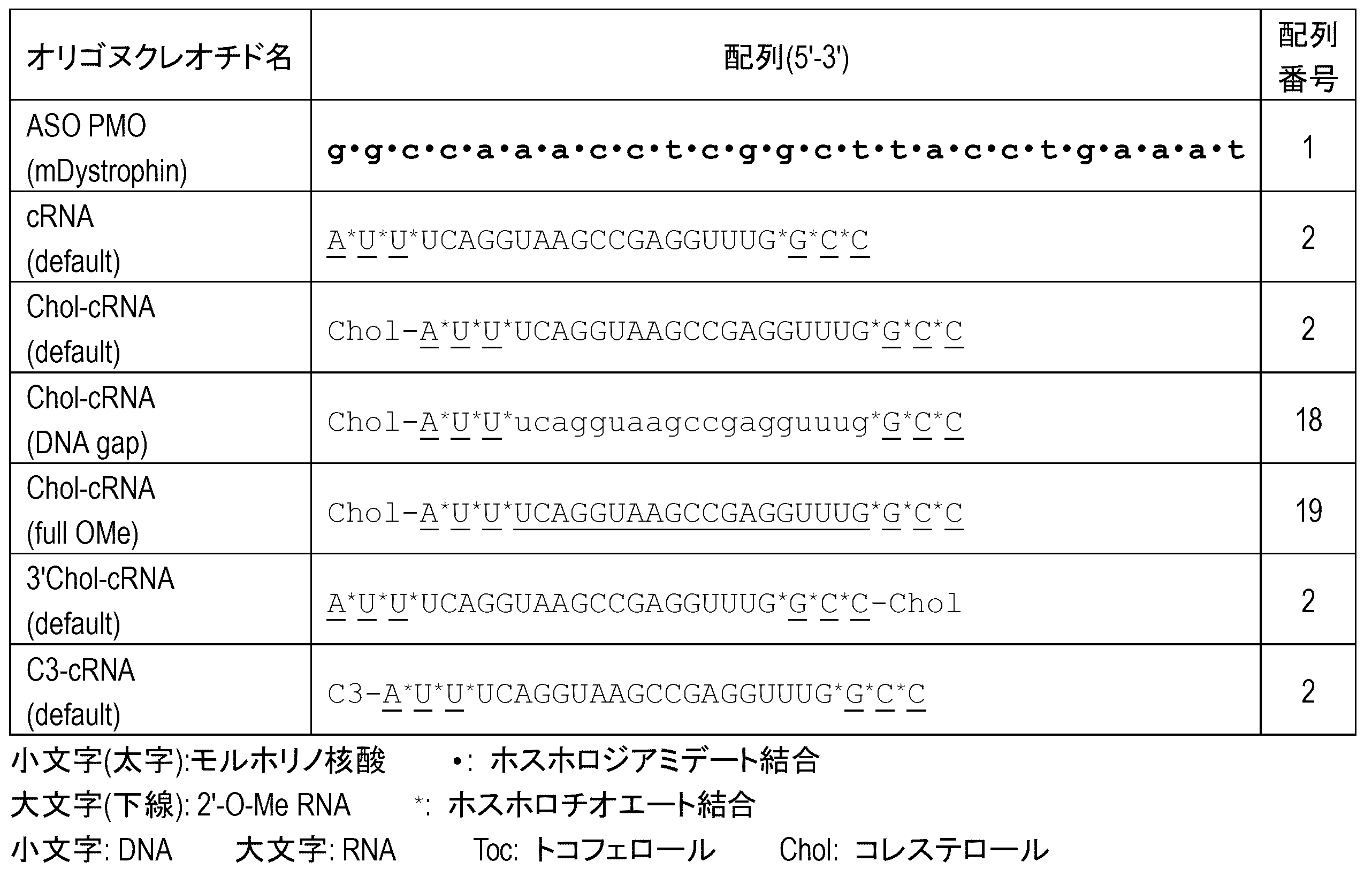
表4に示すオリゴヌクレオチド3'Chol-cRNA (default)の3'末端構造を以下の式(IV)に示す。

表4に示すオリゴヌクレオチドC3-cRNA(default)の5'末端構造を以下の式(V)に示す。

表4に示すASO PMO (mDystrophin)を第1核酸鎖として含み、第2核酸鎖として表4に示す様々な相補鎖を含むヘテロ二本鎖オリゴヌクレオチドを調製した。核酸剤は、マウスの左側脳室に10μL(核酸量として10 nmol)の量で脳室内投与した。さらにまた、(二本鎖核酸剤の代わりに)PBS単体、又はPMO単体を注射したマウスも作製した。核酸剤投与の1週間後に、マウスを解剖して小脳、脳幹、線条体、海馬、後部皮質、及び頸椎を摘出し、RNA発現解析を行った。マウスを使用する実験はn=2~3で実施した。その他の核酸剤の調製、in vivo投与、RNA発現解析の方法は実施例1に従った。
結果を図12~13に示す。図12~13では、第1核酸鎖として表4に示すASO PMO (mDystrophin)を含み、第2核酸鎖として表4に示すcRNA (default)、Chol-cRNA (default)、Chol-cRNA (DNA gap)、Chol-cRNA (full OMe)、3'Chol-cRNA (default)、及びC3-cRNA (default)を含むヘテロ二本鎖オリゴヌクレオチドをそれぞれHDO (default)、CholHDO (default)、CholHDO (DNA gap)、CholHDO (full OMe)、3'Chol (default)、及びC3 (default)として示す。
図12~13に示されるように、CholHDO (DNA gap)、CholHDO (full OMe)、3'Chol (default)、及びC3(default)は、小脳、脳幹、線条体、海馬、後部皮質、及び頸椎においてエクソンスキッピング効果を有し、効果は特にCholHDO (DNA gap)で顕著であった。
本明細書で引用した全ての刊行物、特許及び特許出願はそのまま引用により本明細書に組み入れられるものとする。
本明細書で引用した全ての刊行物、特許及び特許出願はそのまま引用により本明細書に組み入れられるものとする。
Claims (14)
- 第1核酸鎖と第2核酸鎖とを含む二本鎖核酸複合体であって、
前記第1核酸鎖は、標的遺伝子又はその転写産物の少なくとも一部にハイブリダイズすることができ、前記標的遺伝子又はその転写産物に対してアンチセンス効果を有し、かつ少なくとも2個のモルホリノ核酸を含み、
前記第2核酸鎖は、前記第1核酸鎖に相補的な塩基配列を含み、かつ
前記第1核酸鎖は前記第2核酸鎖にアニールしている、前記二本鎖核酸複合体。 - 第1核酸鎖と第2核酸鎖とを含む二本鎖核酸複合体であって、
前記第1核酸鎖は、特定の標的分子に特異的に結合することができ、前記標的分子に対するアプタマー、デコイ、及びbaitの少なくとも一つの効果を有し、かつ少なくとも2個のモルホリノ核酸を含み、
前記第2核酸鎖は、前記第1核酸鎖に相補的な塩基配列を含み、かつ
前記第1核酸鎖は前記第2核酸鎖にアニールしている、前記二本鎖核酸複合体。 - 連続する4個の天然リボヌクレオシドを含まない、請求項1又は2に記載の二本鎖核酸複合体。
- 前記第1核酸鎖中の核酸の33%以上がモルホリノ核酸である、請求項1~3のいずれか一項に記載の二本鎖核酸複合体。
- 前記第1核酸鎖中の核酸の100%がモルホリノ核酸である、請求項4に記載の二本鎖核酸複合体。
- 前記第2核酸鎖が標識機能、精製機能、及び標的への送達機能から選択される機能を有する機能性部分と結合している、請求項1~5のいずれか一項に記載の二本鎖核酸複合体。
- 前記機能性部分が脂質である、請求項6に記載の二本鎖核酸複合体。
- 前記脂質がコレステロール若しくはその類縁体、又はトコフェロール若しくはその類縁体である、請求項7に記載の二本鎖核酸複合体。
- 前記機能性部分が前記第2核酸鎖の5’末端及び/又は3’末端に結合している、請求項6~8のいずれか一項に記載の二本鎖核酸複合体。
- 前記第1核酸鎖と前記第2核酸鎖とが切断性(cleavable)又は非切断性(uncleavable)リンカーを介して結合している、請求項1~9のいずれか一項に記載の二本鎖核酸複合体。
- 被験体において、以下の少なくとも一つの機能:
標的遺伝子の転写産物又は翻訳産物の発現量を抑制若しくは亢進する、
標的遺伝子の転写産物又は翻訳産物の機能を阻害する、
RNAスプライシングを制御する、及び
標的遺伝子のタンパク質への結合を阻害する、
を果たすための、請求項1~10のいずれか一項に記載の二本鎖核酸複合体。 - エクソンスキッピング、エクソンインクルージョン、ステリックブロッキング、及びRNA発現亢進のための、請求項11に記載の二本鎖核酸複合体。
- 髄腔内投与又は脳室内投与のための、請求項1~12のいずれか一項に記載の二本鎖核酸複合体。
- 請求項1~13のいずれか一項に記載の二本鎖核酸複合体を有効成分として含む医薬組成物。
Priority Applications (3)
| Application Number | Priority Date | Filing Date | Title |
|---|---|---|---|
| JP2022508332A JP7863880B2 (ja) | 2020-03-16 | 2021-03-12 | モルホリノ核酸を含むヘテロ核酸 |
| EP21770458.4A EP4123023A4 (en) | 2020-03-16 | 2021-03-12 | Heteronucleic acid containing morpholino nucleic acid |
| US17/906,444 US20230174981A1 (en) | 2020-03-16 | 2021-03-12 | Heteronucleic acid containing morpholino nucleic acid |
Applications Claiming Priority (2)
| Application Number | Priority Date | Filing Date | Title |
|---|---|---|---|
| JP2020-045137 | 2020-03-16 | ||
| JP2020045137 | 2020-03-16 |
Publications (1)
| Publication Number | Publication Date |
|---|---|
| WO2021187392A1 true WO2021187392A1 (ja) | 2021-09-23 |
Family
ID=77771533
Family Applications (1)
| Application Number | Title | Priority Date | Filing Date |
|---|---|---|---|
| PCT/JP2021/010214 Ceased WO2021187392A1 (ja) | 2020-03-16 | 2021-03-12 | モルホリノ核酸を含むヘテロ核酸 |
Country Status (3)
| Country | Link |
|---|---|
| US (1) | US20230174981A1 (ja) |
| EP (1) | EP4123023A4 (ja) |
| WO (1) | WO2021187392A1 (ja) |
Cited By (3)
| Publication number | Priority date | Publication date | Assignee | Title |
|---|---|---|---|---|
| WO2024071362A1 (ja) * | 2022-09-30 | 2024-04-04 | 国立大学法人東京医科歯科大学 | 神経系送達促進剤 |
| WO2024106545A1 (ja) * | 2022-11-18 | 2024-05-23 | 国立大学法人東京医科歯科大学 | 髄腔内投与のためのヘテロ核酸 |
| WO2026034445A1 (ja) * | 2024-08-05 | 2026-02-12 | 日本新薬株式会社 | ホスホロジアミデートモルフォリノオリゴ核酸(pmo)とポリアニオンとを含む、pmo複合体 |
Citations (9)
| Publication number | Priority date | Publication date | Assignee | Title |
|---|---|---|---|---|
| WO2007143315A2 (en) | 2006-05-05 | 2007-12-13 | Isis Pharmaceutical, Inc. | Compounds and methods for modulating expression of pcsk9 |
| WO2008043753A2 (en) | 2006-10-09 | 2008-04-17 | Santaris Pharma A/S | Rna antagonist compounds for the modulation of pcsk9 |
| WO2008049085A1 (en) | 2006-10-18 | 2008-04-24 | Isis Pharmaceuticals, Inc. | Antisense compounds |
| WO2013089283A1 (en) | 2011-12-16 | 2013-06-20 | National University Corporation Tokyo Medical And Dental University | Chimeric double-stranded nucleic acid |
| WO2014192310A1 (en) | 2013-05-30 | 2014-12-04 | National University Corporation Tokyo Medical And Dental University | Double-stranded agents for delivering therapeutic oligonucleotides |
| JP2016526529A (ja) * | 2013-06-16 | 2016-09-05 | 国立大学法人 東京医科歯科大学 | エクソンスキッピング効果を有する二本鎖アンチセンス核酸 |
| WO2018062510A1 (ja) | 2016-09-29 | 2018-04-05 | 国立大学法人東京医科歯科大学 | オーバーハングを有する二本鎖核酸複合体 |
| JP2019523754A (ja) * | 2016-05-24 | 2019-08-29 | サレプタ セラピューティクス, インコーポレイテッド | ホスホロジアミダートモルホリノオリゴマーを調製するためのプロセス |
| JP2020045137A (ja) | 2018-09-19 | 2020-03-26 | 東洋製罐グループホールディングス株式会社 | 二重容器及びその製造方法 |
Family Cites Families (3)
| Publication number | Priority date | Publication date | Assignee | Title |
|---|---|---|---|---|
| CA2530111A1 (en) * | 2003-06-27 | 2005-01-06 | Tel-Aviv University Future Technology Development L.P. | Glycogen synthase kinase-3 inhibitors |
| AU2014363988B2 (en) * | 2013-12-09 | 2020-06-11 | Baylor College Of Medicine | Hippo and dystrophin complex signaling in cardiomyocyte renewal |
| EP3592365A4 (en) * | 2017-03-10 | 2021-01-13 | The Board Of Regents Of The University Of Texas System | TREATMENT FOR FOX ENDOTHAL CORNEAL DYSTROPHY |
-
2021
- 2021-03-12 EP EP21770458.4A patent/EP4123023A4/en active Pending
- 2021-03-12 US US17/906,444 patent/US20230174981A1/en active Pending
- 2021-03-12 WO PCT/JP2021/010214 patent/WO2021187392A1/ja not_active Ceased
Patent Citations (11)
| Publication number | Priority date | Publication date | Assignee | Title |
|---|---|---|---|---|
| WO2007143315A2 (en) | 2006-05-05 | 2007-12-13 | Isis Pharmaceutical, Inc. | Compounds and methods for modulating expression of pcsk9 |
| WO2008043753A2 (en) | 2006-10-09 | 2008-04-17 | Santaris Pharma A/S | Rna antagonist compounds for the modulation of pcsk9 |
| WO2008049085A1 (en) | 2006-10-18 | 2008-04-24 | Isis Pharmaceuticals, Inc. | Antisense compounds |
| WO2013089283A1 (en) | 2011-12-16 | 2013-06-20 | National University Corporation Tokyo Medical And Dental University | Chimeric double-stranded nucleic acid |
| JP2015502134A (ja) * | 2011-12-16 | 2015-01-22 | 国立大学法人 東京医科歯科大学 | キメラ2重鎖核酸 |
| WO2014192310A1 (en) | 2013-05-30 | 2014-12-04 | National University Corporation Tokyo Medical And Dental University | Double-stranded agents for delivering therapeutic oligonucleotides |
| JP2016524588A (ja) * | 2013-05-30 | 2016-08-18 | 国立大学法人 東京医科歯科大学 | 治療用オリゴヌクレオチドを送達するための二本鎖剤 |
| JP2016526529A (ja) * | 2013-06-16 | 2016-09-05 | 国立大学法人 東京医科歯科大学 | エクソンスキッピング効果を有する二本鎖アンチセンス核酸 |
| JP2019523754A (ja) * | 2016-05-24 | 2019-08-29 | サレプタ セラピューティクス, インコーポレイテッド | ホスホロジアミダートモルホリノオリゴマーを調製するためのプロセス |
| WO2018062510A1 (ja) | 2016-09-29 | 2018-04-05 | 国立大学法人東京医科歯科大学 | オーバーハングを有する二本鎖核酸複合体 |
| JP2020045137A (ja) | 2018-09-19 | 2020-03-26 | 東洋製罐グループホールディングス株式会社 | 二重容器及びその製造方法 |
Non-Patent Citations (13)
| Title |
|---|
| "GenBank", Database accession no. NC _000086.7 |
| ANASTASIA KHVOROVA ET AL., NAT. BIOTECHNOL., vol. 35, no. 3, 2017, pages 238 - 248 |
| ASAMI Y ET AL., DRUG DISCOVERIES &THERAPEUTICS, vol. 10, no. 5, 2016, pages 256 - 262 |
| ASAMI Y ET AL.: "Drug delivery system of therapeutic oligonucleotides", DRUG DISCOVERIES & THERAPEUTICS, vol. 10, no. 5, 2016, pages 256 - 262, XP055634473, DOI: 10.5582/ddt.2016.01065 |
| NAOKI IWAMOTO ET AL., ANGEW. CHEM. INT. ED. ENGL., vol. 48, no. 3, 2009, pages 496 - 9 |
| NAOKI IWAMOTO ET AL., NAT. BIOTECHNOL,, vol. 35, no. 9, 2017, pages 845 - 851 |
| NATSUHISA OKA ET AL., J. AM. CHEM. SOC., vol. 125, 2003, pages 8307 - 8317 |
| NATSUHISA OKA ET AL., J. AM. CHEM. SOC., vol. 130, 2008, pages 16031 - 16037 |
| NISHINA K, NATURE COMMUNICATION, vol. 6, 2015, pages 7969 |
| NISHINA K: "DNA/RNA heteroduplex oligonucleotide for highly efficient gene silencing", NATURE COMMUNICATION, vol. 6, 2015, pages 7969, XP055834307, DOI: 10.1038/ncomms8969 |
| See also references of EP4123023A4 |
| YOHEI NUKAGA ET AL., J. ORG. CHEM., vol. 77, 2012, pages 7913 - 7922 |
| YOHEI NUKAGA ET AL., J. ORG. CHEM., vol. 81, 2016, pages 2753 - 2762 |
Cited By (3)
| Publication number | Priority date | Publication date | Assignee | Title |
|---|---|---|---|---|
| WO2024071362A1 (ja) * | 2022-09-30 | 2024-04-04 | 国立大学法人東京医科歯科大学 | 神経系送達促進剤 |
| WO2024106545A1 (ja) * | 2022-11-18 | 2024-05-23 | 国立大学法人東京医科歯科大学 | 髄腔内投与のためのヘテロ核酸 |
| WO2026034445A1 (ja) * | 2024-08-05 | 2026-02-12 | 日本新薬株式会社 | ホスホロジアミデートモルフォリノオリゴ核酸(pmo)とポリアニオンとを含む、pmo複合体 |
Also Published As
| Publication number | Publication date |
|---|---|
| EP4123023A1 (en) | 2023-01-25 |
| JPWO2021187392A1 (ja) | 2021-09-23 |
| US20230174981A1 (en) | 2023-06-08 |
| EP4123023A4 (en) | 2024-07-17 |
Similar Documents
| Publication | Publication Date | Title |
|---|---|---|
| JP7687682B2 (ja) | 筋疾患治療用医薬組成物 | |
| JP7554488B2 (ja) | 血液脳関門通過型ヘテロ2本鎖核酸 | |
| EP4389891A1 (en) | Modified heteronucleic acid containing morpholino nucleic acid | |
| US11260134B2 (en) | Double-stranded nucleic acid complex having overhang | |
| WO2019177061A1 (ja) | 核酸複合体 | |
| JPWO2019181946A1 (ja) | 毒性が軽減した核酸 | |
| JP2025156522A (ja) | 修飾ヘテロ核酸 | |
| EP4123023A1 (en) | Heteronucleic acid containing morpholino nucleic acid | |
| JP7737667B2 (ja) | 核酸複合体 | |
| WO2021157730A1 (ja) | 核酸医薬とその使用 | |
| JP7863880B2 (ja) | モルホリノ核酸を含むヘテロ核酸 | |
| WO2024071099A1 (ja) | 5'-シクロプロピレン修飾を含む核酸分子 | |
| JP6934695B2 (ja) | 核酸医薬とその使用 | |
| EP4349986A1 (en) | Heteronucleic acid containing scpbna or amna | |
| EP4403191A1 (en) | Heteronucleic acid including 2'-modified nucleoside | |
| WO2024005156A1 (ja) | 核酸医薬の毒性軽減剤 | |
| WO2023127848A1 (ja) | Ebv関連疾患を標的とする核酸医薬 | |
| WO2023080225A1 (ja) | 脊髄小脳失調症治療用医薬組成物 | |
| WO2024071362A1 (ja) | 神経系送達促進剤 |
Legal Events
| Date | Code | Title | Description |
|---|---|---|---|
| 121 | Ep: the epo has been informed by wipo that ep was designated in this application |
Ref document number: 21770458 Country of ref document: EP Kind code of ref document: A1 |
|
| DPE1 | Request for preliminary examination filed after expiration of 19th month from priority date (pct application filed from 20040101) | ||
| ENP | Entry into the national phase |
Ref document number: 2022508332 Country of ref document: JP Kind code of ref document: A |
|
| NENP | Non-entry into the national phase |
Ref country code: DE |
|
| ENP | Entry into the national phase |
Ref document number: 2021770458 Country of ref document: EP Effective date: 20221017 |