WO2021193096A1 - 合金の処理方法 - Google Patents
合金の処理方法 Download PDFInfo
- Publication number
- WO2021193096A1 WO2021193096A1 PCT/JP2021/009778 JP2021009778W WO2021193096A1 WO 2021193096 A1 WO2021193096 A1 WO 2021193096A1 JP 2021009778 W JP2021009778 W JP 2021009778W WO 2021193096 A1 WO2021193096 A1 WO 2021193096A1
- Authority
- WO
- WIPO (PCT)
- Prior art keywords
- alloy
- cobalt
- solution
- zinc
- nickel
- Prior art date
- Legal status (The legal status is an assumption and is not a legal conclusion. Google has not performed a legal analysis and makes no representation as to the accuracy of the status listed.)
- Ceased
Links
Classifications
-
- C—CHEMISTRY; METALLURGY
- C22—METALLURGY; FERROUS OR NON-FERROUS ALLOYS; TREATMENT OF ALLOYS OR NON-FERROUS METALS
- C22B—PRODUCTION AND REFINING OF METALS; PRETREATMENT OF RAW MATERIALS
- C22B3/00—Extraction of metal compounds from ores or concentrates by wet processes
- C22B3/20—Treatment or purification of solutions, e.g. obtained by leaching
- C22B3/42—Treatment or purification of solutions, e.g. obtained by leaching by ion-exchange extraction
-
- B—PERFORMING OPERATIONS; TRANSPORTING
- B09—DISPOSAL OF SOLID WASTE; RECLAMATION OF CONTAMINATED SOIL
- B09B—DISPOSAL OF SOLID WASTE NOT OTHERWISE PROVIDED FOR
- B09B3/00—Destroying solid waste or transforming solid waste into something useful or harmless
- B09B3/70—Chemical treatment, e.g. pH adjustment or oxidation
-
- B—PERFORMING OPERATIONS; TRANSPORTING
- B09—DISPOSAL OF SOLID WASTE; RECLAMATION OF CONTAMINATED SOIL
- B09B—DISPOSAL OF SOLID WASTE NOT OTHERWISE PROVIDED FOR
- B09B3/00—Destroying solid waste or transforming solid waste into something useful or harmless
- B09B3/80—Destroying solid waste or transforming solid waste into something useful or harmless involving an extraction step
-
- B—PERFORMING OPERATIONS; TRANSPORTING
- B22—CASTING; POWDER METALLURGY
- B22F—WORKING METALLIC POWDER; MANUFACTURE OF ARTICLES FROM METALLIC POWDER; MAKING METALLIC POWDER; APPARATUS OR DEVICES SPECIALLY ADAPTED FOR METALLIC POWDER
- B22F9/00—Making metallic powder or suspensions thereof
- B22F9/16—Making metallic powder or suspensions thereof using chemical processes
- B22F9/18—Making metallic powder or suspensions thereof using chemical processes with reduction of metal compounds
- B22F9/24—Making metallic powder or suspensions thereof using chemical processes with reduction of metal compounds starting from liquid metal compounds, e.g. solutions
-
- C—CHEMISTRY; METALLURGY
- C22—METALLURGY; FERROUS OR NON-FERROUS ALLOYS; TREATMENT OF ALLOYS OR NON-FERROUS METALS
- C22B—PRODUCTION AND REFINING OF METALS; PRETREATMENT OF RAW MATERIALS
- C22B19/00—Obtaining zinc or zinc oxide
-
- C—CHEMISTRY; METALLURGY
- C22—METALLURGY; FERROUS OR NON-FERROUS ALLOYS; TREATMENT OF ALLOYS OR NON-FERROUS METALS
- C22B—PRODUCTION AND REFINING OF METALS; PRETREATMENT OF RAW MATERIALS
- C22B19/00—Obtaining zinc or zinc oxide
- C22B19/30—Obtaining zinc or zinc oxide from metallic residues or scraps
-
- C—CHEMISTRY; METALLURGY
- C22—METALLURGY; FERROUS OR NON-FERROUS ALLOYS; TREATMENT OF ALLOYS OR NON-FERROUS METALS
- C22B—PRODUCTION AND REFINING OF METALS; PRETREATMENT OF RAW MATERIALS
- C22B23/00—Obtaining nickel or cobalt
-
- C—CHEMISTRY; METALLURGY
- C22—METALLURGY; FERROUS OR NON-FERROUS ALLOYS; TREATMENT OF ALLOYS OR NON-FERROUS METALS
- C22B—PRODUCTION AND REFINING OF METALS; PRETREATMENT OF RAW MATERIALS
- C22B23/00—Obtaining nickel or cobalt
- C22B23/04—Obtaining nickel or cobalt by wet processes
- C22B23/0407—Leaching processes
- C22B23/0415—Leaching processes with acids or salt solutions except ammonium salts solutions
- C22B23/043—Sulfurated acids or salts thereof
-
- C—CHEMISTRY; METALLURGY
- C22—METALLURGY; FERROUS OR NON-FERROUS ALLOYS; TREATMENT OF ALLOYS OR NON-FERROUS METALS
- C22B—PRODUCTION AND REFINING OF METALS; PRETREATMENT OF RAW MATERIALS
- C22B23/00—Obtaining nickel or cobalt
- C22B23/04—Obtaining nickel or cobalt by wet processes
- C22B23/0453—Treatment or purification of solutions, e.g. obtained by leaching
- C22B23/0461—Treatment or purification of solutions, e.g. obtained by leaching by chemical methods
-
- C—CHEMISTRY; METALLURGY
- C22—METALLURGY; FERROUS OR NON-FERROUS ALLOYS; TREATMENT OF ALLOYS OR NON-FERROUS METALS
- C22B—PRODUCTION AND REFINING OF METALS; PRETREATMENT OF RAW MATERIALS
- C22B3/00—Extraction of metal compounds from ores or concentrates by wet processes
- C22B3/04—Extraction of metal compounds from ores or concentrates by wet processes by leaching
- C22B3/06—Extraction of metal compounds from ores or concentrates by wet processes by leaching in inorganic acid solutions, e.g. with acids generated in situ; in inorganic salt solutions other than ammonium salt solutions
-
- C—CHEMISTRY; METALLURGY
- C22—METALLURGY; FERROUS OR NON-FERROUS ALLOYS; TREATMENT OF ALLOYS OR NON-FERROUS METALS
- C22B—PRODUCTION AND REFINING OF METALS; PRETREATMENT OF RAW MATERIALS
- C22B3/00—Extraction of metal compounds from ores or concentrates by wet processes
- C22B3/04—Extraction of metal compounds from ores or concentrates by wet processes by leaching
- C22B3/06—Extraction of metal compounds from ores or concentrates by wet processes by leaching in inorganic acid solutions, e.g. with acids generated in situ; in inorganic salt solutions other than ammonium salt solutions
- C22B3/065—Nitric acids or salts thereof
-
- C—CHEMISTRY; METALLURGY
- C22—METALLURGY; FERROUS OR NON-FERROUS ALLOYS; TREATMENT OF ALLOYS OR NON-FERROUS METALS
- C22B—PRODUCTION AND REFINING OF METALS; PRETREATMENT OF RAW MATERIALS
- C22B3/00—Extraction of metal compounds from ores or concentrates by wet processes
- C22B3/04—Extraction of metal compounds from ores or concentrates by wet processes by leaching
- C22B3/06—Extraction of metal compounds from ores or concentrates by wet processes by leaching in inorganic acid solutions, e.g. with acids generated in situ; in inorganic salt solutions other than ammonium salt solutions
- C22B3/08—Sulfuric acid, other sulfurated acids or salts thereof
-
- C—CHEMISTRY; METALLURGY
- C22—METALLURGY; FERROUS OR NON-FERROUS ALLOYS; TREATMENT OF ALLOYS OR NON-FERROUS METALS
- C22B—PRODUCTION AND REFINING OF METALS; PRETREATMENT OF RAW MATERIALS
- C22B3/00—Extraction of metal compounds from ores or concentrates by wet processes
- C22B3/04—Extraction of metal compounds from ores or concentrates by wet processes by leaching
- C22B3/06—Extraction of metal compounds from ores or concentrates by wet processes by leaching in inorganic acid solutions, e.g. with acids generated in situ; in inorganic salt solutions other than ammonium salt solutions
- C22B3/10—Hydrochloric acid, other halogenated acids or salts thereof
-
- C—CHEMISTRY; METALLURGY
- C22—METALLURGY; FERROUS OR NON-FERROUS ALLOYS; TREATMENT OF ALLOYS OR NON-FERROUS METALS
- C22B—PRODUCTION AND REFINING OF METALS; PRETREATMENT OF RAW MATERIALS
- C22B3/00—Extraction of metal compounds from ores or concentrates by wet processes
- C22B3/20—Treatment or purification of solutions, e.g. obtained by leaching
- C22B3/26—Treatment or purification of solutions, e.g. obtained by leaching by liquid-liquid extraction using organic compounds
- C22B3/38—Treatment or purification of solutions, e.g. obtained by leaching by liquid-liquid extraction using organic compounds containing phosphorus
-
- C—CHEMISTRY; METALLURGY
- C22—METALLURGY; FERROUS OR NON-FERROUS ALLOYS; TREATMENT OF ALLOYS OR NON-FERROUS METALS
- C22B—PRODUCTION AND REFINING OF METALS; PRETREATMENT OF RAW MATERIALS
- C22B3/00—Extraction of metal compounds from ores or concentrates by wet processes
- C22B3/20—Treatment or purification of solutions, e.g. obtained by leaching
- C22B3/26—Treatment or purification of solutions, e.g. obtained by leaching by liquid-liquid extraction using organic compounds
- C22B3/38—Treatment or purification of solutions, e.g. obtained by leaching by liquid-liquid extraction using organic compounds containing phosphorus
- C22B3/384—Pentavalent phosphorus oxyacids, esters thereof
- C22B3/3844—Phosphonic acid, e.g. H2P(O)(OH)2
-
- C—CHEMISTRY; METALLURGY
- C22—METALLURGY; FERROUS OR NON-FERROUS ALLOYS; TREATMENT OF ALLOYS OR NON-FERROUS METALS
- C22B—PRODUCTION AND REFINING OF METALS; PRETREATMENT OF RAW MATERIALS
- C22B3/00—Extraction of metal compounds from ores or concentrates by wet processes
- C22B3/20—Treatment or purification of solutions, e.g. obtained by leaching
- C22B3/26—Treatment or purification of solutions, e.g. obtained by leaching by liquid-liquid extraction using organic compounds
- C22B3/38—Treatment or purification of solutions, e.g. obtained by leaching by liquid-liquid extraction using organic compounds containing phosphorus
- C22B3/384—Pentavalent phosphorus oxyacids, esters thereof
- C22B3/3846—Phosphoric acid, e.g. (O)P(OH)3
-
- C—CHEMISTRY; METALLURGY
- C22—METALLURGY; FERROUS OR NON-FERROUS ALLOYS; TREATMENT OF ALLOYS OR NON-FERROUS METALS
- C22B—PRODUCTION AND REFINING OF METALS; PRETREATMENT OF RAW MATERIALS
- C22B3/00—Extraction of metal compounds from ores or concentrates by wet processes
- C22B3/20—Treatment or purification of solutions, e.g. obtained by leaching
- C22B3/44—Treatment or purification of solutions, e.g. obtained by leaching by chemical processes
-
- C—CHEMISTRY; METALLURGY
- C22—METALLURGY; FERROUS OR NON-FERROUS ALLOYS; TREATMENT OF ALLOYS OR NON-FERROUS METALS
- C22B—PRODUCTION AND REFINING OF METALS; PRETREATMENT OF RAW MATERIALS
- C22B7/00—Working up raw materials other than ores, e.g. scrap, to produce non-ferrous metals and compounds thereof; Methods of a general interest or applied to the winning of more than two metals
-
- C—CHEMISTRY; METALLURGY
- C22—METALLURGY; FERROUS OR NON-FERROUS ALLOYS; TREATMENT OF ALLOYS OR NON-FERROUS METALS
- C22B—PRODUCTION AND REFINING OF METALS; PRETREATMENT OF RAW MATERIALS
- C22B7/00—Working up raw materials other than ores, e.g. scrap, to produce non-ferrous metals and compounds thereof; Methods of a general interest or applied to the winning of more than two metals
- C22B7/001—Dry processes
-
- C—CHEMISTRY; METALLURGY
- C22—METALLURGY; FERROUS OR NON-FERROUS ALLOYS; TREATMENT OF ALLOYS OR NON-FERROUS METALS
- C22B—PRODUCTION AND REFINING OF METALS; PRETREATMENT OF RAW MATERIALS
- C22B7/00—Working up raw materials other than ores, e.g. scrap, to produce non-ferrous metals and compounds thereof; Methods of a general interest or applied to the winning of more than two metals
- C22B7/006—Wet processes
- C22B7/007—Wet processes by acid leaching
-
- H—ELECTRICITY
- H01—ELECTRIC ELEMENTS
- H01M—PROCESSES OR MEANS, e.g. BATTERIES, FOR THE DIRECT CONVERSION OF CHEMICAL ENERGY INTO ELECTRICAL ENERGY
- H01M10/00—Secondary cells; Manufacture thereof
- H01M10/54—Reclaiming serviceable parts of waste accumulators
-
- B—PERFORMING OPERATIONS; TRANSPORTING
- B09—DISPOSAL OF SOLID WASTE; RECLAMATION OF CONTAMINATED SOIL
- B09B—DISPOSAL OF SOLID WASTE NOT OTHERWISE PROVIDED FOR
- B09B2101/00—Type of solid waste
- B09B2101/15—Electronic waste
- B09B2101/16—Batteries
-
- B—PERFORMING OPERATIONS; TRANSPORTING
- B22—CASTING; POWDER METALLURGY
- B22F—WORKING METALLIC POWDER; MANUFACTURE OF ARTICLES FROM METALLIC POWDER; MAKING METALLIC POWDER; APPARATUS OR DEVICES SPECIALLY ADAPTED FOR METALLIC POWDER
- B22F2998/00—Supplementary information concerning processes or compositions relating to powder metallurgy
- B22F2998/10—Processes characterised by the sequence of their steps
-
- C—CHEMISTRY; METALLURGY
- C22—METALLURGY; FERROUS OR NON-FERROUS ALLOYS; TREATMENT OF ALLOYS OR NON-FERROUS METALS
- C22B—PRODUCTION AND REFINING OF METALS; PRETREATMENT OF RAW MATERIALS
- C22B47/00—Obtaining manganese
-
- C—CHEMISTRY; METALLURGY
- C22—METALLURGY; FERROUS OR NON-FERROUS ALLOYS; TREATMENT OF ALLOYS OR NON-FERROUS METALS
- C22C—ALLOYS
- C22C1/00—Making non-ferrous alloys
- C22C1/04—Making non-ferrous alloys by powder metallurgy
- C22C1/0408—Light metal alloys
-
- H—ELECTRICITY
- H01—ELECTRIC ELEMENTS
- H01M—PROCESSES OR MEANS, e.g. BATTERIES, FOR THE DIRECT CONVERSION OF CHEMICAL ENERGY INTO ELECTRICAL ENERGY
- H01M10/00—Secondary cells; Manufacture thereof
- H01M10/05—Accumulators with non-aqueous electrolyte
- H01M10/052—Li-accumulators
- H01M10/0525—Rocking-chair batteries, i.e. batteries with lithium insertion or intercalation in both electrodes; Lithium-ion batteries
-
- Y—GENERAL TAGGING OF NEW TECHNOLOGICAL DEVELOPMENTS; GENERAL TAGGING OF CROSS-SECTIONAL TECHNOLOGIES SPANNING OVER SEVERAL SECTIONS OF THE IPC; TECHNICAL SUBJECTS COVERED BY FORMER USPC CROSS-REFERENCE ART COLLECTIONS [XRACs] AND DIGESTS
- Y02—TECHNOLOGIES OR APPLICATIONS FOR MITIGATION OR ADAPTATION AGAINST CLIMATE CHANGE
- Y02P—CLIMATE CHANGE MITIGATION TECHNOLOGIES IN THE PRODUCTION OR PROCESSING OF GOODS
- Y02P10/00—Technologies related to metal processing
- Y02P10/20—Recycling
-
- Y—GENERAL TAGGING OF NEW TECHNOLOGICAL DEVELOPMENTS; GENERAL TAGGING OF CROSS-SECTIONAL TECHNOLOGIES SPANNING OVER SEVERAL SECTIONS OF THE IPC; TECHNICAL SUBJECTS COVERED BY FORMER USPC CROSS-REFERENCE ART COLLECTIONS [XRACs] AND DIGESTS
- Y02—TECHNOLOGIES OR APPLICATIONS FOR MITIGATION OR ADAPTATION AGAINST CLIMATE CHANGE
- Y02W—CLIMATE CHANGE MITIGATION TECHNOLOGIES RELATED TO WASTEWATER TREATMENT OR WASTE MANAGEMENT
- Y02W30/00—Technologies for solid waste management
- Y02W30/20—Waste processing or separation
-
- Y—GENERAL TAGGING OF NEW TECHNOLOGICAL DEVELOPMENTS; GENERAL TAGGING OF CROSS-SECTIONAL TECHNOLOGIES SPANNING OVER SEVERAL SECTIONS OF THE IPC; TECHNICAL SUBJECTS COVERED BY FORMER USPC CROSS-REFERENCE ART COLLECTIONS [XRACs] AND DIGESTS
- Y02—TECHNOLOGIES OR APPLICATIONS FOR MITIGATION OR ADAPTATION AGAINST CLIMATE CHANGE
- Y02W—CLIMATE CHANGE MITIGATION TECHNOLOGIES RELATED TO WASTEWATER TREATMENT OR WASTE MANAGEMENT
- Y02W30/00—Technologies for solid waste management
- Y02W30/50—Reuse, recycling or recovery technologies
- Y02W30/84—Recycling of batteries or fuel cells
Definitions
- the present invention relates to a method for treating an alloy for obtaining a solution containing nickel and / or cobalt from an alloy containing nickel and / or cobalt, copper and zinc.
- LOB lithium-ion batteries
- the LIB is a negative electrode material in which a negative electrode active material such as graphite is fixed to the surface of a metal outer can such as aluminum or iron or a plastic outer can such as vinyl chloride using a copper foil as a negative electrode current collector.
- a positive electrode material in which a positive electrode active material such as lithium nickelate or lithium cobaltate is fixed to a positive electrode current collector made of aluminum foil is charged together with a separator made of a porous resin film of polypropylene or the like, and lithium hexafluoride phosphate is charged. It has a structure in which an organic solvent containing an electrolyte such as (LiPF 6) is impregnated as an electrolytic solution.
- waste LIB may be generated as a defective product in the manufacturing process from the beginning.
- waste LIBs contain valuable components such as nickel, cobalt and copper, and it is desirable to recover and reuse the valuable components in order to make effective use of resources.
- Patent Document 1 discloses a method of recovering a valuable metal by using a dry treatment. By applying the method of Patent Document 1 to waste LIB, a copper alloy containing nickel and cobalt can be obtained.
- This dry treatment has the disadvantage that it requires energy to heat to a high temperature using a furnace, but it has the advantage of being able to separate various impurities at once. Moreover, the slag obtained by the dry treatment has chemically stable properties, has little concern about affecting the environment, and has the advantage of being easy to dispose of.
- the metal obtained by the dry treatment is an alloy in which valuable components coexist, and in order to reuse it, it is necessary to separate each component from this alloy and purify it to remove impurities.
- the separation and purification of each element by the dry method has a drawback that the separation level remains at the crude separation level or the cost is high as compared with the wet method.
- wet treatment using hydrometallurgy methods such as acid, neutralization, and solvent extraction consumes less energy, and mixed valuable components can be individually separated and recovered with high-purity quality. There are advantages.
- the waste LIB is treated by a wet treatment
- the hexafluorophosphate anion contained in the waste LIB is a difficult-to-treat product that cannot be completely decomposed even with high-temperature and high-concentration sulfuric acid. Yes, the valuable components will be mixed in the leached acid solution.
- this hexafluorophosphate anion is a water-soluble carbonic acid ester, it is difficult to recover phosphorus and fluorine from the aqueous solution after recovering valuable resources, and various measures are required to suppress the release to public sea areas. There are major environmental restrictions such as the need to take measures for.
- waste LIB body itself is difficult to be leached with acid or the like, and it is not easy to completely leached valuable components.
- electric charges may remain in the waste LIB, and if it is attempted to be treated as it is, it may cause heat generation, explosion, etc., so it takes time and effort to discharge the residual electric charges.
- a method of adjusting the treatment conditions in the dry treatment to distribute cobalt to metal instead of slag and reducing and melting it so as to reduce the distribution to slag is also conceivable.
- the metal obtained by such a method becomes a poorly soluble corrosion resistant alloy containing nickel and cobalt based on copper. Even if an attempt is made to separate and recover valuable components from this corrosion-resistant alloy, acid dissolution is difficult and effective recovery is not possible.
- the obtained solution contains a high concentration of copper and a relatively low concentration of nickel or cobalt.
- nickel and cobalt can be easily separated from known methods such as solvent extraction, but it is particularly difficult to separate copper from nickel and cobalt easily and at low cost.
- nickel and cobalt zinc may be contained as an impurity in the above-mentioned waste LIB.
- no suitable method has been found for separating such zinc from nickel and cobalt.
- the present invention is a method for treating an alloy for obtaining nickel and / or cobalt by separating copper and zinc from an alloy containing nickel and / or cobalt, copper and zinc, such as a waste lithium ion battery.
- the purpose is to provide.
- the present inventors have made extensive studies to solve the above-mentioned problems.
- the leaching step of leaching the alloy with an acid to obtain a leachate the reducing step of reducing the leachate with a reducing agent, and the solution obtained in the reducing step are based on an acidic phosphorus compound.
- the above problems can be solved by going through a solvent extraction step of extracting zinc by subjecting it to solvent extraction with an extractant to obtain a solution containing nickel and / or cobalt, and have completed the present invention. ..
- the first method of the present invention is an alloy treatment method for obtaining a solution containing nickel and / or cobalt from an alloy containing nickel and / or cobalt, copper and zinc, with respect to the alloy. It is obtained in the leaching step of obtaining a leachate by subjecting it to a leachate treatment with an acid under the condition of coexistence of a sulfide agent, the reduction step of subjecting the leachate to a reduction treatment using a reducing agent, and the reduction step.
- This is a method for treating an alloy, which comprises a solvent extraction step of extracting zinc by subjecting the solution to a solvent extraction with an acidic phosphorus compound-based extractant to obtain a solution containing nickel and / or cobalt.
- the second aspect of the present invention is that, in the first invention, nickel and / or cobalt and zinc are added to the solution obtained in the reduction step by adding an oxidizing agent and a neutralizing agent.
- This is a method for treating an alloy, which comprises an oxidation-neutralization step of obtaining a solution containing the above and subjecting the solution to the solvent extraction step.
- the third aspect of the present invention is that in the first or second invention, in the solvent extraction step, back extraction is performed by adding an acid to the acidic phosphorus compound-based extractant after the solvent extraction and performing back extraction.
- This is a method for treating an alloy to obtain a later extractant and a liquid after back extraction containing zinc.
- a fourth aspect of the present invention is a method for treating an alloy in which the back-extracted acidic phosphorus compound-based extractant is repeatedly used as the acidic phosphorus compound-based extractant in the solvent extraction step in the third invention. ..
- Fifth of the present invention is a method for treating an alloy in which the alloy is an alloy obtained by melting a waste battery of a lithium ion battery in the first to fourth inventions.
- nickel and / or cobalt can be obtained by separating copper and zinc from an alloy containing nickel and / or cobalt, copper and zinc.
- the present embodiment a specific embodiment of the present invention (hereinafter, referred to as “the present embodiment”) will be described in detail.
- the present invention is not limited to the following embodiments, and can be carried out with appropriate modifications within the scope of the object of the present invention.
- the notation "X to Y" (X and Y are arbitrary numerical values) means "X or more and Y or less”.
- the method for treating an alloy according to the present embodiment is to obtain a solution containing nickel and / or cobalt from an alloy containing nickel and / or cobalt, copper, and zinc.
- Alloys containing nickel and / or cobalt, copper, and zinc to be treated include, for example, waste due to deterioration of automobiles or electronic devices, and scrap of lithium ion batteries generated during the life of lithium ion batteries.
- an alloy obtained by using a waste battery or the like such as a defective product in the battery manufacturing process as a raw material and heating, melting and reducing the waste battery or the like can be mentioned.
- the method for treating the alloy is as follows: the leaching step S1 in which the alloy is leached with an acid under the condition that the sulfurizing agent coexists to obtain a leaching solution, and the leaching solution is reduced with a reducing agent.
- S3 and the solvent extraction step S4 in which zinc is extracted by subjecting the obtained solution (neutralizing solution) to solvent extraction with an acidic phosphorus compound-based extractant to obtain a solution containing nickel and / or cobalt. include.
- the alloy is leached with an acid under the condition that a sulfurizing agent coexists to obtain a leaching solution.
- the alloy obtained by melting the waste battery of a lithium-ion battery contains various impurities that are not subject to recovery in addition to copper, nickel and cobalt.
- the copper leached from the alloy is precipitated as copper sulfide and separated by subjecting such an alloy to a leaching treatment in a state where the acid and the sulfide agent coexist.
- nickel and / or cobalt is leached to obtain a leachate. It should be noted that copper that has not reacted with the sulfide agent and impurities such as at least iron, phosphorus and / or zinc may remain in this leachate.
- the alloy obtained by melting the waste battery of the lithium-ion battery to be treated is an alloy obtained by casting the obtained alloy into a plate shape, an alloy drawn linearly and appropriately cut into a bar, and an atomizing method applied.
- the shape of the obtained alloy powder (hereinafter, this alloy powder is also referred to as "atomize powder" for convenience) or the like is not particularly limited. However, since a powdery substance such as atomized powder is the treatment target, the leaching treatment can be effectively performed.
- the atomizing method is a method in which high-pressure gas or water is brought into contact with the molten metal to scatter and quench (solidify) the molten metal to obtain powder.
- the leaching treatment can be performed more effectively when the particle size of the alloy is approximately 300 ⁇ m or less.
- the particle size of the alloy is preferably about 10 ⁇ m or more.
- the leaching treatment it is preferable to pre-clean the alloy to be treated with a dilute acid in advance. Thereby, the surface of the alloy can be subjected to the activation treatment, and the leaching reaction can be promoted.
- hydrochloric acid As the acid, hydrochloric acid, sulfuric acid, nitric acid, etc. can be used alone or in combination. Further, chloride may be contained in sulfuric acid and used as an acid.
- sulfuric acid In order to realize a so-called "battery-to-battery" which is an ideal circulation method for recycling waste LIB and reusing it as a LIB raw material, it is preferable to use an acid containing sulfuric acid.
- sulfuric acid As the acid, the leachate can be obtained in the form of sulfate, which is easily used as the positive electrode material of the lithium ion battery.
- the amount of acid used is 1 equivalent or more, preferably 1.2 equivalents or more, more preferably 1.2 equivalents or more and 11 equivalents or less, relative to the total amount of nickel and / or cobalt contained in the alloy.
- the reaction rate can be increased by increasing the acid concentration.
- the acid and the alloy may be supplied to a device in which a mixing portion such as a thickener is connected in a plurality of stages, and the acid and the alloy may be brought into contact in a countercurrent stepwise manner.
- a mixing portion such as a thickener
- the alloy may be fed to the top mixing section of the device, the acid may be fed to the bottom mixing section of the device, and the acid and alloy may be brought into contact in a countercurrent stepwise manner.
- Sodium hydrosulfide or elemental sulfur can be used as the sulfurizing agent to be added together with the acid.
- elemental sulfur it is preferable to pulverize it appropriately so that the reaction can proceed easily.
- the amount of the sulfurizing agent is preferably 1 equivalent or more with respect to the amount of copper contained in the alloy.
- the acid and the sulfurizing agent may be added to the alloy at the same time, but it is preferable to add the acid after adding the sulfurizing agent first.
- the reaction may proceed rapidly and bumping may occur. By contacting the acid after adding the sulfurizing agent first, a rapid reaction can be suppressed.
- the alloy and the sulfurizing agent are charged in a solvent such as water, and then the acid is added.
- the leachate may be bubbled with air or the like so that a uniform reaction proceeds.
- the leaching step S1 it is preferable to monitor and control the redox potential (ORP) and pH range while measuring the redox potential (ORP) and pH of the leachate.
- the redox potential (ORP) is preferably controlled to 240 mV or more and 280 mV or less based on the silver / silver chloride electrode, and the pH is preferably controlled to 0.8 or more and 1.6 or less. Within such a range, leaching is promoted, and the precipitated copper sulfide can be suppressed from being redissolved due to excessive oxidation.
- the end point of the leachate reaction can be determined by measuring the redox potential (ORP) of the leachate.
- divalent copper ions may be added.
- the divalent copper ion acts as a catalyst, and the leaching reaction can be promoted.
- the leachate obtained in the leaching step S1 is subjected to a reduction treatment using a reducing agent to obtain a reducing liquid containing nickel and / or cobalt.
- the copper constituting the alloy is leached by the acid together with nickel and / or cobalt and dissolved in the solution, and a part of the copper is dissolved in the solution without reacting with the sulfide agent. May remain. Therefore, in the reduction step S2, a small amount of copper remaining in the leachate is reduced to form a copper-containing precipitate, and the produced precipitate is separated by solid-liquid separation to obtain a reducing solution containing nickel and / or cobalt. obtain.
- a metal lower than copper can be used.
- a metal containing nickel and / or cobalt it is preferable to use a metal containing nickel and / or cobalt and bring the leachate into contact with the metal to reduce copper.
- the treatment method according to the alloy treatment method according to the present embodiment is to obtain a solution containing nickel and / or cobalt, and the metal containing nickel and / or cobalt to be recovered is used as a reducing agent. Therefore, it is not necessary to separately recover the reducing agent in the subsequent process, which is industrially advantageous.
- sulfide can be used in addition to the above-mentioned metal.
- the sulfide may be a solid, a liquid, or a gas (gaseous). Further, it may be a mixture of sulfur and a powdery alloy to be treated in the above-mentioned leaching step S1. Further, it is preferable to use atomized powder obtained by quenching the molten alloy to make it powdery.
- the method of reducing the leachate is not particularly limited, and when a solid or liquid reducing agent is used, the reducing agent may be added directly to the leachate, and the reducing agent is gaseous (gaseous). In that case, the reducing agent may be added by bubbling to the leachate.
- ORP redox potential
- oxidative neutralization process In the oxidative neutralization step S3, by adding an oxidizing agent to the reducing solution obtained in the reducing step S2 and performing an oxidative neutralization treatment by adding a neutralizing agent, nickel and / or cobalt, zinc and zinc are added. To obtain a solution (neutralizing solution) containing. Specifically, in the oxidation neutralization step S3, an oxidizing agent is added to the reducing solution to cause an oxidation reaction, and the neutralizing agent is added to control the pH of the solution within a predetermined range to prepare the reducing solution. Produces a deposit of at least iron and / or phosphorus contained.
- At least iron and / or phosphorus is separated as a precipitate by passing through the oxidation-neutralization step S3 to obtain purified nickel and / or cobalt. , Zinc, and a solution (neutralizing solution) containing.
- oxidizing agent a conventionally known oxidizing agent such as hydrogen peroxide or hypochlorous acid can be used.
- ORP oxidation-reduction potential
- an oxidizing agent is added to the solution to control the ORP (using silver / silver chloride as a reference electrode) in the range of 380 mV or more and 430 mV or less.
- a neutralizing agent is added to control the pH of the solution, preferably in the range of 3.8 or more and 4.5 or less.
- a neutralizing agent is added to control the pH of the solution, preferably in the range of 3.8 or more and 4.5 or less.
- the neutralizing agent is not particularly limited, but conventionally known alkalis such as sodium hydroxide and potassium hydroxide can be used.
- the oxidizing agent may be added after adding the neutralizing agent to the reducing liquid, but the oxidizing agent and the neutralizing agent may be added to the reducing liquid at the same time, or the oxidizing agent may be added. It is preferable to add the neutralizing agent after the addition of the above, and it is more preferable to add the neutralizing agent after adding the oxidizing agent to the reducing solution. For example, when an oxidizing agent is added to a reducing solution whose pH has become high due to the addition of a neutralizing agent, iron is not sufficiently oxidized when iron is contained in the impurities, and Fe (OH) 3 (Iron starch) is not sufficiently produced, and the separation of impurities may be insufficient.
- solvent extraction step S4 zinc is extracted by subjecting the obtained solution to solvent extraction with an acidic phosphorus compound-based extractant to obtain a solution containing nickel and / or cobalt.
- the obtained neutralizing solution is mixed with an organic solvent containing an acidic phosphorus compound-based extractant to extract zinc in the organic solvent, and the zinc-containing organic solvent, nickel and / Alternatively, a solution containing cobalt is obtained.
- zinc can be extracted more efficiently and effectively and separated from nickel and / or cobal.
- D2EHPA diethylhexyl phosphoric acid
- 2-ethylhexyl 2-ethylhexylphosphonate and the like can be used.
- the acidic phosphorus compound-based extractant At the time of extraction, it is preferable to dilute the acidic phosphorus compound-based extractant with, for example, a hydrocarbon-based organic solvent or the like before use.
- concentration of the acidic phosphorus compound-based extractant in the organic solvent is not particularly limited, but is preferably 1% by volume or more and 30% by volume or less, particularly 10% by volume or more and 25% by volume, in consideration of phase separation and the like. The following is more preferable.
- the pH of the neutralizing solution when performing solvent extraction, it is preferable to adjust the pH of the neutralizing solution to be treated in the range of 1.0 or more and 5.0 or less, and 2.0 or more and 4.5 or less, prior to the extraction treatment. It is more preferable to adjust to 2.5 or more, and it is more preferable to adjust to 4.5 or less.
- the extractor after back extraction and the liquid after back extraction containing zinc may be obtained by adding an acid to the extractant after solvent extraction and performing back extraction. Specifically, by adding an acid and mixing, a reaction opposite to that of the solvent extraction treatment is caused to back-extract impurities, and a back-extracted liquid containing zinc is obtained.
- sulfuric acid of about 1N or the like can be used as the acid to be added.
- the acidic phosphorus compound-based extractant after the back extraction can be repeatedly used as the acidic phosphorus compound-based extractant in the solvent extraction step.
- This powder was leached with sulfuric acid and sulfur at a slurry concentration of 200 g / L.
- the temperature was 70 ° C. and the leaching time was 6 hours.
- filtration was performed and solid-liquid separation was performed to obtain a filtrate (leaching solution).
- zinc is extracted from a solution (neutralizing solution) containing nickel and / or cobalt and zinc by subjecting the neutralizing solution to solvent extraction with an acidic phosphorus compound-based extractant. It can be seen that nickel and / or cobalt can be obtained by extraction.
- the concentration of zinc (Zn) in the aqueous phase (drawing residue) was lower than 0.001 g / L, and it was acidic. It can be seen that more zinc can be extracted by subjecting to solvent extraction with a phosphorus compound-based extractant.
Landscapes
- Chemical & Material Sciences (AREA)
- Engineering & Computer Science (AREA)
- Manufacturing & Machinery (AREA)
- Organic Chemistry (AREA)
- Metallurgy (AREA)
- Mechanical Engineering (AREA)
- Materials Engineering (AREA)
- Environmental & Geological Engineering (AREA)
- Geology (AREA)
- Life Sciences & Earth Sciences (AREA)
- General Life Sciences & Earth Sciences (AREA)
- Geochemistry & Mineralogy (AREA)
- General Chemical & Material Sciences (AREA)
- Chemical Kinetics & Catalysis (AREA)
- Inorganic Chemistry (AREA)
- Electrochemistry (AREA)
- Health & Medical Sciences (AREA)
- General Health & Medical Sciences (AREA)
- Toxicology (AREA)
- Manufacture And Refinement Of Metals (AREA)
- Processing Of Solid Wastes (AREA)
- Secondary Cells (AREA)
Abstract
Description
浸出工程S1では、合金に対して、硫化剤が共存する条件下で、酸による浸出処理を施して浸出液を得る。リチウムイオン電池の廃電池を熔解して得られる合金は、銅、ニッケルやコバルトの他に様々な回収対象でない不純物を含有する。本実施の形態においては、酸と硫化剤が共存した状態でこのような合金に対して浸出処理を施すことにより、合金から浸出された銅を硫化銅として析出させて、分離させる。一方、合金に対して、酸による浸出処理を施すことで、ニッケル及び/又はコバルトを浸出させて浸出液を得る。なお、この浸出液には、硫化剤と反応しなかった銅や、少なくとも鉄、リン及び/又は亜鉛のような不純物が残存することがある。
還元工程S2では、浸出工程S1で得られた浸出液に対して、還元剤を用いて還元処理を施してニッケル及び/又はコバルトを含む還元液を得る。ここで、上述した浸出工程S1における処理では、ニッケル及び/又はコバルトとともに、合金を構成する銅が酸により浸出して溶液中に溶解し、硫化剤と反応せずにその一部が溶液中に残存することがある。そこで、還元工程S2では、浸出液に残存する微量の銅を還元して銅を含む沈殿物を生成させ、生成した沈殿物を固液分離により分離して、ニッケル及び/又はコバルトを含む還元液を得る。
酸化中和工程S3では、還元工程S2で得られた還元液に酸化剤を添加するとともに中和剤を添加することにより酸化中和処理を施すことで、ニッケル及び/又はコバルトと、亜鉛と、を含む溶液(中和液)を得る。具体的に、酸化中和工程S3では、還元液に酸化剤を添加して酸化反応を生じさせるとともに、中和剤を添加して溶液のpHを所定の範囲に制御することで、還元液に含まれる、少なくとも鉄及び/又はリンの沈殿物を生成する。本発明において酸化中和工程S3を設けることは必須ではないが、酸化中和工程S3を経ることにより、少なくとも鉄及び/又はリンを沈殿物として分離して、精製されたニッケル及び/又はコバルトと、亜鉛と、を含む溶液(中和液)を得ることができる。
溶媒抽出工程S4では、得られた溶液を、酸性リン化合物系抽出剤による溶媒抽出に付すことで亜鉛を抽出させて、ニッケル及び/又はコバルトを含む溶液を得る。具体的には、得られた中和液と、酸性リン化合物系抽出剤を含む有機溶媒とを混合して、有機溶媒中に亜鉛を抽出させて、亜鉛を含有する有機溶媒と、ニッケル及び/又はコバルトを含む溶液と、を得る。酸性リン化合物系抽出剤を用いて溶媒抽出処理を行うことにより、より効率的に且つ効果的に亜鉛を抽出してニッケル及び/又はコバルと分離することができる。
[浸出工程]
廃リチウムイオン電池(廃LIB)を加熱熔融して還元する乾式処理に付して、還元熔融して得た合金を底面に穴を開けた小さなルツボに流し込み、穴から流れ出た熔湯に、高圧のガスや水を吹き付けて、溶湯を飛散、凝固させて粒径300μm以下の粉状物(アトマイズ粉)を得て、これを処理対象である合金として用いた。
次に、得られた浸出液に粒径1~300μmのニッケル粉(還元剤)を添加することで浸出液に対して、還元剤を用いて還元処理を施して、ろ過を行い固液分離し、濾液(還元液)を得た。
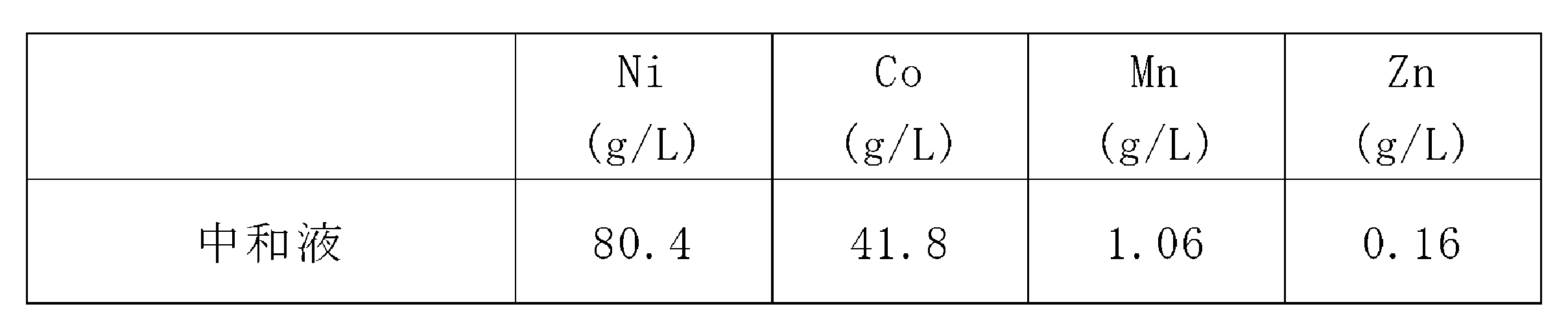
次に、得られた還元液を60~70℃の範囲に液温を維持しつつ、濃度30%過酸化水素水(酸化剤)を添加し、過酸化水素水(酸化剤)を添加した後に水酸化ナトリウム溶液(中和剤)を添加することで還元液に対して、酸化中和反応を進行させた。反応後、ろ過を行い固液分離し、濾液(中和液)を得た。この濾液(中和液)についてICP分析装置により分析した。各元素成分の分析値(g/L)を表1に示す。
酸化中和工程で得られた中和液(抽出前原液)50mlと、酸性リン化合物系抽出剤(ジエチルヘキシルリン酸(D2EHPA))をテクリーンN20で20体積%に希釈した溶液100mlと、を200mlビーカーに移し、NaOHでPHを調整しながら10分間撹拌して溶媒抽出処理を施した。その後、水相(抽残液)と抽出有機相を分離し、抽残液及び抽出有機相それぞれを、ICP発光分光分析装置(Agilent 5100SVDV)で分析した。水相(抽残液)での各元素成分の分析値(g/L)及びpHを表2、抽出有機相での各元素成分の抽出率(%)を表3に示す。


Claims (5)
- ニッケル及び/又はコバルトと、銅と、亜鉛と、を含む合金からニッケル及び/又はコバルトを含む溶液を得る、合金の処理方法であって、
前記合金に対して、硫化剤が共存する条件下で、酸による浸出処理を施して浸出液を得る浸出工程と、
前記浸出液に対して、還元剤を用いて還元処理を施す還元工程と、
前記還元工程で得られた溶液を、酸性リン化合物系抽出剤による溶媒抽出に付すことで亜鉛を抽出させて、ニッケル及び/又はコバルトを含む溶液を得る溶媒抽出工程と、
を含む、合金の処理方法。 - 前記還元工程で得られた溶液に、酸化剤を添加するとともに中和剤を添加することにより、ニッケル及び/又はコバルトと、亜鉛と、を含む溶液を得て前記溶媒抽出工程に供する酸化中和工程を含む
請求項1に記載の合金の処理方法。 - 前記溶媒抽出工程では、溶媒抽出後の酸性リン化合物系抽出剤に酸を添加して逆抽出を行うことにより、逆抽出後の抽出剤と、亜鉛を含む逆抽出後液とを得る
請求項1又は2に記載の合金の処理方法。 - 前記逆抽出後の酸性リン化合物系抽出剤を、前記溶媒抽出工程における酸性リン化合物系抽出剤として繰り返し使用する
請求項3に記載の合金の処理方法。 - 前記合金が、リチウムイオン電池の廃電池を熔解して得た合金である
請求項1から4のいずれかに記載の合金の処理方法。
Priority Applications (5)
| Application Number | Priority Date | Filing Date | Title |
|---|---|---|---|
| US17/912,998 US20230167526A1 (en) | 2020-03-23 | 2021-03-11 | Alloy treatment method |
| CN202180023201.1A CN115335542A (zh) | 2020-03-23 | 2021-03-11 | 合金的处理方法 |
| CA3172961A CA3172961C (en) | 2020-03-23 | 2021-03-11 | Alloy treatment method |
| KR1020227035864A KR102831362B1 (ko) | 2020-03-23 | 2021-03-11 | 합금의 처리 방법 |
| EP21776054.5A EP4129507B1 (en) | 2020-03-23 | 2021-03-11 | Alloy treatment method |
Applications Claiming Priority (2)
| Application Number | Priority Date | Filing Date | Title |
|---|---|---|---|
| JP2020051157A JP7392539B2 (ja) | 2020-03-23 | 2020-03-23 | 合金の処理方法 |
| JP2020-051157 | 2020-03-23 |
Publications (1)
| Publication Number | Publication Date |
|---|---|
| WO2021193096A1 true WO2021193096A1 (ja) | 2021-09-30 |
Family
ID=77851156
Family Applications (1)
| Application Number | Title | Priority Date | Filing Date |
|---|---|---|---|
| PCT/JP2021/009778 Ceased WO2021193096A1 (ja) | 2020-03-23 | 2021-03-11 | 合金の処理方法 |
Country Status (7)
| Country | Link |
|---|---|
| US (1) | US20230167526A1 (ja) |
| EP (1) | EP4129507B1 (ja) |
| JP (1) | JP7392539B2 (ja) |
| KR (1) | KR102831362B1 (ja) |
| CN (1) | CN115335542A (ja) |
| CA (1) | CA3172961C (ja) |
| WO (1) | WO2021193096A1 (ja) |
Families Citing this family (3)
| Publication number | Priority date | Publication date | Assignee | Title |
|---|---|---|---|---|
| KR20240019402A (ko) | 2021-07-20 | 2024-02-14 | 스미토모 긴조쿠 고잔 가부시키가이샤 | 합금의 처리 방법 |
| CA3240181A1 (en) * | 2021-12-06 | 2023-06-15 | Hiroshi Takenouchi | Treatment method for alloy |
| JP7420203B2 (ja) * | 2021-12-06 | 2024-01-23 | 住友金属鉱山株式会社 | 合金の処理方法 |
Citations (3)
| Publication number | Priority date | Publication date | Assignee | Title |
|---|---|---|---|---|
| JP2012172169A (ja) | 2011-02-18 | 2012-09-10 | Sumitomo Metal Mining Co Ltd | 有価金属回収方法 |
| JP2015183292A (ja) * | 2014-03-26 | 2015-10-22 | 三菱マテリアル株式会社 | コバルトおよびニッケルの回収方法 |
| JP2016033232A (ja) * | 2014-07-30 | 2016-03-10 | 住友金属鉱山株式会社 | 廃ニッケル水素電池からの有価金属の回収方法 |
Family Cites Families (14)
| Publication number | Priority date | Publication date | Assignee | Title |
|---|---|---|---|---|
| US4378275A (en) * | 1981-12-03 | 1983-03-29 | Saudi-Sudanese Red Sea Joint Commission | Metal sulphide extraction |
| US20010001650A1 (en) * | 1999-03-09 | 2001-05-24 | William P.C. Duyvesteyn | Recovery of nickel and cobalt from ore |
| US6387239B1 (en) * | 1999-11-17 | 2002-05-14 | Bhp Minerals International, Inc. | Recovery of metals from ore |
| CN100359026C (zh) * | 2003-03-14 | 2008-01-02 | 中国有色工程设计研究总院 | 一种从硫酸锌溶液中除铜、除镉和除钴的方法及其装置 |
| AU2012368674C1 (en) * | 2012-02-03 | 2016-11-10 | Sumitomo Metal Mining Co., Ltd. | Lithium recovery method |
| CN103194600A (zh) * | 2013-04-23 | 2013-07-10 | 吴鋆 | 一种硫酸锌溶液的净化方法 |
| JP2014218697A (ja) * | 2013-05-08 | 2014-11-20 | 株式会社キノテック・ソーラーエナジー | 亜鉛製造方法 |
| CA2915371A1 (en) * | 2015-12-15 | 2017-06-15 | Institut National De La Recherche Scientifique (Inrs) | Method for recycling valuable metals from spent batteries |
| CN105567978B (zh) * | 2016-01-28 | 2018-08-31 | 浙江新时代中能循环科技有限公司 | 从各种含有色金属的废料中回收铜锌钴镍的方法 |
| CN106119560B (zh) * | 2016-08-04 | 2018-01-02 | 西北矿冶研究院 | 一种锌钴分离方法 |
| JP6519628B2 (ja) * | 2017-10-23 | 2019-05-29 | 住友金属鉱山株式会社 | 銅とニッケルおよびコバルトの分離方法 |
| JP6915497B2 (ja) * | 2017-10-23 | 2021-08-04 | 住友金属鉱山株式会社 | 銅とニッケルおよびコバルトの分離方法 |
| CN110468281A (zh) * | 2019-09-12 | 2019-11-19 | 金川集团股份有限公司 | 一种废旧钴酸锂电池中有价金属分离回收方法 |
| CN110512080A (zh) * | 2019-09-12 | 2019-11-29 | 金川集团股份有限公司 | 一种废旧镍钴锰锂离子电池中有价金属分离回收方法 |
-
2020
- 2020-03-23 JP JP2020051157A patent/JP7392539B2/ja active Active
-
2021
- 2021-03-11 KR KR1020227035864A patent/KR102831362B1/ko active Active
- 2021-03-11 EP EP21776054.5A patent/EP4129507B1/en active Active
- 2021-03-11 CA CA3172961A patent/CA3172961C/en active Active
- 2021-03-11 WO PCT/JP2021/009778 patent/WO2021193096A1/ja not_active Ceased
- 2021-03-11 US US17/912,998 patent/US20230167526A1/en active Pending
- 2021-03-11 CN CN202180023201.1A patent/CN115335542A/zh active Pending
Patent Citations (3)
| Publication number | Priority date | Publication date | Assignee | Title |
|---|---|---|---|---|
| JP2012172169A (ja) | 2011-02-18 | 2012-09-10 | Sumitomo Metal Mining Co Ltd | 有価金属回収方法 |
| JP2015183292A (ja) * | 2014-03-26 | 2015-10-22 | 三菱マテリアル株式会社 | コバルトおよびニッケルの回収方法 |
| JP2016033232A (ja) * | 2014-07-30 | 2016-03-10 | 住友金属鉱山株式会社 | 廃ニッケル水素電池からの有価金属の回収方法 |
Non-Patent Citations (1)
| Title |
|---|
| See also references of EP4129507A4 |
Also Published As
| Publication number | Publication date |
|---|---|
| EP4129507A4 (en) | 2024-04-10 |
| KR20220151699A (ko) | 2022-11-15 |
| CA3172961A1 (en) | 2021-09-30 |
| US20230167526A1 (en) | 2023-06-01 |
| JP2021147686A (ja) | 2021-09-27 |
| EP4129507A1 (en) | 2023-02-08 |
| KR102831362B1 (ko) | 2025-07-07 |
| EP4129507B1 (en) | 2025-04-23 |
| JP7392539B2 (ja) | 2023-12-06 |
| CA3172961C (en) | 2024-06-11 |
| CN115335542A (zh) | 2022-11-11 |
Similar Documents
| Publication | Publication Date | Title |
|---|---|---|
| US11718894B2 (en) | Method for separating copper, and nickel and cobalt | |
| US11959151B2 (en) | Method for separating copper from nickel and cobalt | |
| WO2021166755A1 (ja) | 合金の処理方法 | |
| JP6958235B2 (ja) | 銅とニッケルおよびコバルトの分離方法 | |
| JP7052635B2 (ja) | 銅とニッケル及びコバルトの分離方法 | |
| KR20240047405A (ko) | 합금의 처리 방법 | |
| KR102831362B1 (ko) | 합금의 처리 방법 | |
| US12500283B2 (en) | Method for treating alloy | |
| KR20240058142A (ko) | 합금의 처리 방법 | |
| KR102831363B1 (ko) | 합금의 처리 방법 | |
| CA3226241C (en) | Method for treating alloy | |
| CA3187383C (en) | Method for treating sulfide | |
| WO2023033023A1 (ja) | 合金の処理方法 | |
| JP2023035964A (ja) | 合金の処理方法 | |
| KR20240025004A (ko) | 합금의 처리 방법 | |
| US20230295766A1 (en) | Method for treating sulfide |
Legal Events
| Date | Code | Title | Description |
|---|---|---|---|
| 121 | Ep: the epo has been informed by wipo that ep was designated in this application |
Ref document number: 21776054 Country of ref document: EP Kind code of ref document: A1 |
|
| DPE1 | Request for preliminary examination filed after expiration of 19th month from priority date (pct application filed from 20040101) | ||
| ENP | Entry into the national phase |
Ref document number: 3172961 Country of ref document: CA |
|
| ENP | Entry into the national phase |
Ref document number: 20227035864 Country of ref document: KR Kind code of ref document: A |
|
| NENP | Non-entry into the national phase |
Ref country code: DE |
|
| ENP | Entry into the national phase |
Ref document number: 2021776054 Country of ref document: EP Effective date: 20221024 |
|
| WWG | Wipo information: grant in national office |
Ref document number: 2021776054 Country of ref document: EP |