WO2021199940A1 - レジスト組成物の製造方法、パターン形成方法 - Google Patents
レジスト組成物の製造方法、パターン形成方法 Download PDFInfo
- Publication number
- WO2021199940A1 WO2021199940A1 PCT/JP2021/009032 JP2021009032W WO2021199940A1 WO 2021199940 A1 WO2021199940 A1 WO 2021199940A1 JP 2021009032 W JP2021009032 W JP 2021009032W WO 2021199940 A1 WO2021199940 A1 WO 2021199940A1
- Authority
- WO
- WIPO (PCT)
- Prior art keywords
- group
- resist composition
- acid
- atom
- preferable
- Prior art date
- Legal status (The legal status is an assumption and is not a legal conclusion. Google has not performed a legal analysis and makes no representation as to the accuracy of the status listed.)
- Ceased
Links
Images

Classifications
-
- G—PHYSICS
- G03—PHOTOGRAPHY; CINEMATOGRAPHY; ANALOGOUS TECHNIQUES USING WAVES OTHER THAN OPTICAL WAVES; ELECTROGRAPHY; HOLOGRAPHY
- G03F—PHOTOMECHANICAL PRODUCTION OF TEXTURED OR PATTERNED SURFACES, e.g. FOR PRINTING, FOR PROCESSING OF SEMICONDUCTOR DEVICES; MATERIALS THEREFOR; ORIGINALS THEREFOR; APPARATUS SPECIALLY ADAPTED THEREFOR
- G03F7/00—Photomechanical, e.g. photolithographic, production of textured or patterned surfaces, e.g. printing surfaces; Materials therefor, e.g. comprising photoresists; Apparatus specially adapted therefor
- G03F7/16—Coating processes; Apparatus therefor
-
- G—PHYSICS
- G03—PHOTOGRAPHY; CINEMATOGRAPHY; ANALOGOUS TECHNIQUES USING WAVES OTHER THAN OPTICAL WAVES; ELECTROGRAPHY; HOLOGRAPHY
- G03F—PHOTOMECHANICAL PRODUCTION OF TEXTURED OR PATTERNED SURFACES, e.g. FOR PRINTING, FOR PROCESSING OF SEMICONDUCTOR DEVICES; MATERIALS THEREFOR; ORIGINALS THEREFOR; APPARATUS SPECIALLY ADAPTED THEREFOR
- G03F7/00—Photomechanical, e.g. photolithographic, production of textured or patterned surfaces, e.g. printing surfaces; Materials therefor, e.g. comprising photoresists; Apparatus specially adapted therefor
- G03F7/004—Photosensitive materials
-
- G—PHYSICS
- G03—PHOTOGRAPHY; CINEMATOGRAPHY; ANALOGOUS TECHNIQUES USING WAVES OTHER THAN OPTICAL WAVES; ELECTROGRAPHY; HOLOGRAPHY
- G03F—PHOTOMECHANICAL PRODUCTION OF TEXTURED OR PATTERNED SURFACES, e.g. FOR PRINTING, FOR PROCESSING OF SEMICONDUCTOR DEVICES; MATERIALS THEREFOR; ORIGINALS THEREFOR; APPARATUS SPECIALLY ADAPTED THEREFOR
- G03F7/00—Photomechanical, e.g. photolithographic, production of textured or patterned surfaces, e.g. printing surfaces; Materials therefor, e.g. comprising photoresists; Apparatus specially adapted therefor
- G03F7/004—Photosensitive materials
- G03F7/0045—Photosensitive materials with organic non-macromolecular light-sensitive compounds not otherwise provided for, e.g. dissolution inhibitors
-
- G—PHYSICS
- G03—PHOTOGRAPHY; CINEMATOGRAPHY; ANALOGOUS TECHNIQUES USING WAVES OTHER THAN OPTICAL WAVES; ELECTROGRAPHY; HOLOGRAPHY
- G03F—PHOTOMECHANICAL PRODUCTION OF TEXTURED OR PATTERNED SURFACES, e.g. FOR PRINTING, FOR PROCESSING OF SEMICONDUCTOR DEVICES; MATERIALS THEREFOR; ORIGINALS THEREFOR; APPARATUS SPECIALLY ADAPTED THEREFOR
- G03F7/00—Photomechanical, e.g. photolithographic, production of textured or patterned surfaces, e.g. printing surfaces; Materials therefor, e.g. comprising photoresists; Apparatus specially adapted therefor
- G03F7/004—Photosensitive materials
- G03F7/038—Macromolecular compounds which are rendered insoluble or differentially wettable
-
- G—PHYSICS
- G03—PHOTOGRAPHY; CINEMATOGRAPHY; ANALOGOUS TECHNIQUES USING WAVES OTHER THAN OPTICAL WAVES; ELECTROGRAPHY; HOLOGRAPHY
- G03F—PHOTOMECHANICAL PRODUCTION OF TEXTURED OR PATTERNED SURFACES, e.g. FOR PRINTING, FOR PROCESSING OF SEMICONDUCTOR DEVICES; MATERIALS THEREFOR; ORIGINALS THEREFOR; APPARATUS SPECIALLY ADAPTED THEREFOR
- G03F7/00—Photomechanical, e.g. photolithographic, production of textured or patterned surfaces, e.g. printing surfaces; Materials therefor, e.g. comprising photoresists; Apparatus specially adapted therefor
- G03F7/004—Photosensitive materials
- G03F7/039—Macromolecular compounds which are photodegradable, e.g. positive electron resists
-
- G—PHYSICS
- G03—PHOTOGRAPHY; CINEMATOGRAPHY; ANALOGOUS TECHNIQUES USING WAVES OTHER THAN OPTICAL WAVES; ELECTROGRAPHY; HOLOGRAPHY
- G03F—PHOTOMECHANICAL PRODUCTION OF TEXTURED OR PATTERNED SURFACES, e.g. FOR PRINTING, FOR PROCESSING OF SEMICONDUCTOR DEVICES; MATERIALS THEREFOR; ORIGINALS THEREFOR; APPARATUS SPECIALLY ADAPTED THEREFOR
- G03F7/00—Photomechanical, e.g. photolithographic, production of textured or patterned surfaces, e.g. printing surfaces; Materials therefor, e.g. comprising photoresists; Apparatus specially adapted therefor
- G03F7/004—Photosensitive materials
- G03F7/039—Macromolecular compounds which are photodegradable, e.g. positive electron resists
- G03F7/0392—Macromolecular compounds which are photodegradable, e.g. positive electron resists the macromolecular compound being present in a chemically amplified positive photoresist composition
- G03F7/0397—Macromolecular compounds which are photodegradable, e.g. positive electron resists the macromolecular compound being present in a chemically amplified positive photoresist composition the macromolecular compound having an alicyclic moiety in a side chain
-
- G—PHYSICS
- G03—PHOTOGRAPHY; CINEMATOGRAPHY; ANALOGOUS TECHNIQUES USING WAVES OTHER THAN OPTICAL WAVES; ELECTROGRAPHY; HOLOGRAPHY
- G03F—PHOTOMECHANICAL PRODUCTION OF TEXTURED OR PATTERNED SURFACES, e.g. FOR PRINTING, FOR PROCESSING OF SEMICONDUCTOR DEVICES; MATERIALS THEREFOR; ORIGINALS THEREFOR; APPARATUS SPECIALLY ADAPTED THEREFOR
- G03F7/00—Photomechanical, e.g. photolithographic, production of textured or patterned surfaces, e.g. printing surfaces; Materials therefor, e.g. comprising photoresists; Apparatus specially adapted therefor
- G03F7/20—Exposure; Apparatus therefor
- G03F7/2002—Exposure; Apparatus therefor with visible light or UV light, through an original having an opaque pattern on a transparent support, e.g. film printing, projection printing; by reflection of visible or UV light from an original such as a printed image
- G03F7/2004—Exposure; Apparatus therefor with visible light or UV light, through an original having an opaque pattern on a transparent support, e.g. film printing, projection printing; by reflection of visible or UV light from an original such as a printed image characterised by the use of a particular light source, e.g. fluorescent lamps or deep UV light
-
- G—PHYSICS
- G03—PHOTOGRAPHY; CINEMATOGRAPHY; ANALOGOUS TECHNIQUES USING WAVES OTHER THAN OPTICAL WAVES; ELECTROGRAPHY; HOLOGRAPHY
- G03F—PHOTOMECHANICAL PRODUCTION OF TEXTURED OR PATTERNED SURFACES, e.g. FOR PRINTING, FOR PROCESSING OF SEMICONDUCTOR DEVICES; MATERIALS THEREFOR; ORIGINALS THEREFOR; APPARATUS SPECIALLY ADAPTED THEREFOR
- G03F7/00—Photomechanical, e.g. photolithographic, production of textured or patterned surfaces, e.g. printing surfaces; Materials therefor, e.g. comprising photoresists; Apparatus specially adapted therefor
- G03F7/26—Processing photosensitive materials; Apparatus therefor
- G03F7/30—Imagewise removal using liquid means
- G03F7/32—Liquid compositions therefor, e.g. developers
Definitions
- the present invention relates to a method for producing a resist composition and a method for forming a pattern.
- Patent Document 1 discloses a positive resist composition for EUV lithography having a predetermined composition.
- Another object of the present invention is to provide a production method capable of producing a resist composition easily and with good production reproducibility. Another object of the present invention is to provide a pattern forming method.
- a resist composition containing an acid-decomposable resin having a group that decomposes by the action of an acid to generate a polar group, and a photoacid generator.
- an analysis step in which regression analysis is performed using the parameter as the variable as an explanatory variable and the target pattern size as the objective variable is performed using the parameter as the variable as an explanatory variable and the target pattern size as the objective variable.
- Nuclear magnetic resonance spectroscopy shows the content of the repeating units contained in the acid-degradable resin, which is a component in the target resist composition, containing the same kind of components as the components in the resist composition for regression analysis, with respect to all the repeating units.
- the analysis step the content of the repeating unit contained in the acid-decomposable resin obtained by the method with respect to all the repeating units and the physical quantity of the above explanatory variables of the target resist composition are used.
- the comparison step when the difference between the pattern size of the target resist composition and the target pattern size is within the permissible range, the blending amount of the target resist composition is determined based on the regression analysis of the analysis step.
- the decision process to decide and It has a manufacturing process for producing a resist composition based on the blending amount determined in the determination step.
- the comparison step when the difference between the pattern size of the target resist composition and the target pattern size is out of the permissible range, the difference between the pattern size of the target resist composition and the target pattern size is permissible. It further has a changing step of changing the blending amount of the above-mentioned target resist composition so as to be within the range.
- a method for producing a resist composition (2) The method for producing a resist composition according to (1), wherein the number of integrations in the nuclear magnetic resonance spectroscopy is 5000 or more.
- the present invention it is possible to provide a production method capable of producing a resist composition easily and with good production reproducibility. Further, according to the present invention, a pattern forming method can be provided.
- the notation that does not describe substitution or non-substitution includes a group having a substituent as well as a group having no substituent.
- the "alkyl group” includes not only an alkyl group having no substituent (unsubstituted alkyl group) but also an alkyl group having a substituent (substituted alkyl group).
- the bonding direction of the divalent groups described herein is not limited unless otherwise specified.
- (meth) acrylic is a general term including acrylic and methacryl, and means “at least one of acrylic and methacrylic”.
- (meth) acrylic acid is a general term including acrylic acid and methacrylic acid, and means “at least one of acrylic acid and methacrylic acid”.
- exposure refers to not only exposure to the emission line spectrum of a mercury lamp, far ultraviolet rays typified by an excimer laser, X-rays, EUV, etc., but also electron beams and ion beams. Also includes drawing with particle beams such as.
- the acid dissociation constant (pKa) represents pKa in an aqueous solution, and specifically, using the following software package 1, a value based on a database of Hammett's substituent constants and known literature values is used. , It is a value obtained by calculation. All pKa values described herein indicate values calculated using this software package.
- pKa can also be obtained by the molecular orbital calculation method.
- a specific method for this there is a method of calculating by calculating H + dissociation free energy in an aqueous solution based on a thermodynamic cycle.
- the calculation method of H + dissociation free energy can be calculated by, for example, DFT (density functional theory), but various other methods have been reported in the literature and are not limited to this. ..
- DFT density functional theory
- pKa in the present specification refers to a value obtained by calculating a value based on a database of Hammett's substituent constants and known literature values using software package 1, and pKa is calculated by this method. If it cannot be calculated, the value obtained by Gaussian 16 based on DFT (Density Functional Theory) shall be adopted. Further, pKa in the present specification refers to "pKa in an aqueous solution” as described above, but when pKa in an aqueous solution cannot be calculated, “pKa in a dimethyl sulfoxide (DMSO) solution” is adopted. It shall be.
- DMSO dimethyl sulfoxide
- the EUV exposure apparatus is very expensive, and it is very difficult to perform exposure using EUV.
- the content of the repeating unit contained in the acid-decomposable resin with respect to all the repeating units and a predetermined physical quantity described later are used as parameters in the regression analysis. , Parameters that have a large effect on the pattern dimensions can be specified. By doing so, it is possible to confirm whether the resist composition having a predetermined compounding amount can achieve a predetermined target pattern size even when raw materials having different lots are used, and even if it cannot be achieved, the result of regression analysis is used.
- the production method of the present invention can be applied to a resist composition for EUV.
- the resist composition can be produced with stable quality.
- the effect of the present invention becomes more excellent. That is, when the number of parameters increases, the target resist composition whose difference between the pattern size of the target resist composition and the target pattern size is within the permissible range in the determination step described later actually indicates the target pattern size. In many cases, the resist composition whose composition has been readjusted actually shows the target pattern size even for the target resist composition in which the above difference is out of the permissible range. That is, as the number of parameters increases, the resist composition can be produced with better reproducibility.
- FIG. 1 is a schematic view showing an example of a processing apparatus used in the method for producing a resist composition according to an embodiment of the present invention.
- the processing apparatus 10 used for determining the blending amount of the resist composition and the method for producing the resist composition based on the blending amount is configured by using hardware such as a computer.
- the method for producing the resist composition can be executed using hardware and software such as a computer, the present invention is not limited to the processing apparatus 10, and each step of the method for producing the resist composition is used as a procedure for the computer or the like. It may be a program to be executed.
- the processing apparatus 10 is used in the method for producing a resist composition as described above.
- the processing apparatus 10 determines the blending amount of the resist composition and manufactures the resist composition based on the blending amount.
- the resist composition is used in the photography method. For example, a resist film is formed from a resist composition on a silicon wafer. By subjecting the resist film to exposure processing and development processing, the resist film is processed into a specific pattern shape, and the silicon wafer is subjected to processing such as etching using the resist film as a mask.
- the processing device 10 includes a processing unit 12, an input unit 14, a display unit 16, and a manufacturing unit 18.
- the processing unit 12 includes a setting unit 20, an acquisition unit 21, an analysis unit 22, a calculation unit 23, a determination unit 24, a change unit 25, a determination unit 26, a display control unit 27, a memory 28, and a control unit 29.
- the processing device 10 also has a ROM (Read Only Memory) and the like (not shown).
- the processing unit 12 is controlled by the control unit 29.
- the setting unit 20, the acquisition unit 21, the analysis unit 22, the calculation unit 23, the determination unit 24, the change unit 25, the determination unit 26, and the display control unit 27 are connected to the memory 28 and set.
- the data of the unit 20, the acquisition unit 21, the analysis unit 22, the calculation unit 23, the determination unit 24, the change unit 25, the determination unit 26, and the display control unit 27 can be stored in the memory 28.
- the processing device 10 executes each unit of the setting unit 20, the analysis unit 22, the calculation unit 23, the determination unit 24, the change unit 25, and the determination unit 26. Functionally form.
- the processing device 10 may be configured by a computer in which each part functions by executing a program, or may be a dedicated device in which each part is composed of a dedicated circuit.
- the program is supplied, for example, in the form of computer software.
- each part of the processing device 10 will be described.
- the input unit 14 is various input devices for inputting various information such as a mouse and a keyboard according to an operator's instruction.
- the display unit 16 displays, for example, various results, and various known displays are used.
- the display unit 16 also includes a device such as a printer for displaying various information on an output medium.
- the resist composition contains an acid-decomposable resin having a group that decomposes by the action of an acid to generate a polar group (hereinafter, also simply referred to as "acid-decomposable resin") and a photoacid generator.
- the setting unit 20 sets as parameters the content of the repeating unit contained in the acid-decomposable resin in the resist composition with respect to all the repeating units and the physical quantity including at least the content of the component in the resist composition. be.
- the acquisition unit 21 sets the content of the repeating unit contained in the acid-degradable resin in the acid-degradable resin with respect to all the repeating units, and the resist composition for regression analysis with at least one parameter of the above physical quantities as variables.
- a resist film was prepared using each of the prepared resist compositions for regression analysis, and exposure treatment and development treatment were performed using each of the prepared resist compositions for regression analysis so that a target pattern size could be obtained.
- the pattern size for regression analysis is acquired by performing the pattern forming process including the pattern.
- the target pattern size indicates the performance required for the resist composition, and is a set value of the pattern size.
- As the set value of the pattern size for example, the line width of the line-shaped pattern and the diameter of the hole of the pattern having the hole are used.
- the target pattern size and the pattern size for regression analysis are of the same type, and for example, the line width of the pattern or the diameter of the hole is used.
- the pattern size for regression analysis obtained by performing a pattern forming process including an exposure process and a developing process so as to obtain a target pattern size is an actual measurement of the size of the pattern obtained with a resist film prepared from a resist composition. The value.
- the analysis unit 22 performs regression analysis with the parameter used as a variable as an explanatory variable and the target pattern size as an objective variable with respect to the pattern size for regression analysis of the resist composition for regression analysis obtained by the acquisition unit 21. It is a thing.
- the calculation unit 23 is included in a target resist composition (hereinafter, also simply referred to as “target resist composition”), which is a target for determining the blending amount, and contains components of the same type as the components in the resist composition for regression analysis.
- target resist composition a target resist composition
- the content of the repeating unit contained in the component acid-degradable resin with respect to all repeating units was measured by nuclear magnetic resonance spectroscopy, and the content of the repeating unit contained in the obtained acid-degradable resin with respect to all repeating units and ,
- the pattern size of the target resist composition is calculated based on the regression analysis in the analysis unit 22 using the physical quantity used as the explanatory variable of the target resist composition.
- the physical quantity used as an explanatory variable is a physical quantity used as a parameter in the regression analysis, and is a physical quantity including at least the content of the components in the resist composition.
- the determination unit 24 compares the pattern size of the target resist composition obtained by the calculation unit 23 with the target pattern size.
- the changing unit 25 determines that the difference between the pattern size of the target resist composition and the target pattern size is within the permissible range.
- the content of the components in the target resist composition is at least changed so as to be inside.
- the changing unit 25 adjusts the blending amount of the target resist composition.
- the determination unit 26 determines the resist composition based on the regression analysis of the analysis unit 22. It determines the blending amount.
- the display control unit 27 causes the display unit 16 to display parameters related to the resist composition for regression analysis used in the regression analysis.
- the display control unit 27 includes the content of the repeating units contained in the acid-decomposable resin measured by nuclear magnetic resonance spectroscopy with respect to all the repeating units, and the pattern size of the target resist composition obtained from the regression analysis.
- the target pattern size, the comparison result between the pattern size of the target resist composition and the target pattern size, the blending amount of the resist composition, and the like are displayed on the display unit 16.
- various information may be read from the memory 28 and displayed.
- the display control unit 27 can also display various information and the like input via the input unit 14 on the display unit 16.
- the manufacturing unit 18 manufactures the resist composition based on the blending amount determined by the determining unit 26.
- the composition is not particularly limited, and a known composition is appropriately used. It is possible. Further, the manufacturing unit 18 may have a configuration different from that of the processing apparatus 10. For example, the resist composition may be produced by another manufacturing apparatus based on the blending amount of the resist composition determined by the determining unit 26. can.
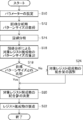
- FIG. 2 is a flowchart showing a method for producing a resist composition according to an embodiment of the present invention.
- a method for determining the resist prescription amount for example, the processing apparatus 10 shown in FIG. 1 is used.
- various treatments are performed in each part of the processing unit 12 of the processing apparatus 10 and the manufacturing unit 18. Further, in the following description, the description that various processes are performed by each unit of the processing unit 12 by the control unit 29 is omitted, but a series of processes of each unit is controlled by the control unit 29.
- the content of the repeating units contained in the acid-degradable resin with respect to all the repeating units, and the physical quantity including at least the content of the components in the resist composition. Is set as a parameter (step S10).
- the content of the repeating unit with respect to all repeating units may be a mass ratio (mass%) with respect to all repeating units or a molar ratio (mol%) with respect to all repeating units.
- the content of all types of repeating units contained in the acid-degradable resin with respect to all repeating units may be set as a parameter. That is, the content of at least a part of the repeating units contained in the acid-decomposable resin with respect to all the repeating units may be set as a parameter.
- the acid-decomposable resin contains three types of repeating units of unit A, unit B, and unit C
- only the content of unit A with respect to all repeating units may be set as a parameter, or the content of unit A may be set as a parameter.
- Three parameters may be set: the content for all repeating units, the content for all repeating units of unit B, and the content for all repeating units of unit C.
- the content of the repeating unit contained in the acid-degradable resin used in the calculation step described later with respect to all the repeating units is calculated from the charging ratio of the monomers used in the production of the acid-degradable resin. Alternatively, it may be obtained by a known method such as nuclear magnetic resonance spectroscopy.
- the measurement conditions of nuclear magnetic resonance spectroscopy are not particularly limited, and examples thereof include measurement conditions of nuclear magnetic resonance spectroscopy performed in the calculation step (step S16) described later.
- the catalog value may be used.
- the physical quantity includes at least the content of the component in the resist composition.
- the component in the resist composition is intended to be a component in the resist composition such as an acid-degradable resin and a photoacid generator.
- the components in the resist composition include an acid diffusion control agent, a surfactant, and a hydrophobic resin in addition to the acid-decomposable resin and the photoacid generator, as described later.
- the content of the above component may be the mass ratio (mass%) of the component to the total mass of the resist composition, or the mass ratio (mass%) of the component to the total solid content in the resist composition. It may be.
- the content (mass%) of the acid-degradable resin with respect to the total solid content mass in the resist composition the content (mass%) of the photoacid generator with respect to the total solid content mass in the resist composition, and acid diffusion.
- the content (mass%) of the control agent in the resist composition with respect to the total solid content mass can be mentioned.
- the content of the components in the resist composition selected as the physical quantity is limited to the content of only a part of the plurality of components contained in the resist composition. It may be used, or each content of all the components contained in the resist composition may be used. That is, the content of at least a part of the plurality of components contained in the resist composition may be used.
- a resist composition containing an acid-degradable resin, a photoacid generator, and an acid diffusion control agent
- the content of the acid-degradable resin in the resist composition with respect to the total solid content, the content of the photoacid generator with respect to the total solid content in the resist composition, and the content of the acid diffusion control agent in the resist composition. 3 of the contents with respect to the total solid content mass may be selected as physical quantities.
- the total solid content means a component in the resist composition excluding the solvent, and even if the property is liquid, it is treated as a solid content.
- the physical quantity includes at least the content of the component in the resist composition, and may include a physical quantity other than the content of the component in the resist composition.
- Other physical quantities include, for example, the weight average molecular weight of the acid-degradable resin, the refractive index of the acid-degradable resin, and the molecular weight distribution of the acid-degradable resin.
- the method for measuring the weight average molecular weight of the acid-degradable resin is not particularly limited, and it can be measured by a GPC (gel permeation chromatography) analysis method.
- a known device can be used in the GPC analysis method.
- the installation location of the equipment used in the GPC analysis method is not particularly limited, and a location equipped with air conditioning equipment is preferable.
- the pump unit included in the apparatus used in the GPC analysis method is preferably one having a high liquid feeding accuracy and preferably having a temperature adjusting function from the viewpoint of stabilizing the liquid feeding amount.
- the column portion included in the apparatus used in the GPC analysis method preferably has a temperature control function.
- Examples of the detector included in the apparatus used in the GPC analysis method include a differential refractometer (RI) or an ultraviolet-visible spectrometer.
- RI differential refractometer
- the acid-decomposable resin is a polymer consisting only of a monomer having no aromatic ring, it is preferable to measure by RI.
- the column included in the apparatus used in the GPC analysis method a commercially available column can be used.
- the filler include silica-based particles, polymethacrylate-based resin particles, and crosslinked polystyrene-based resin particles. Further, in order to obtain the required separation ability, a plurality of columns may be connected and used. Further, in order to obtain high separability, a filler having a small particle size may be used.
- the eluent used in the GPC analysis method is not particularly limited, and examples thereof include various organic solvents and water.
- the flow rate of the eluent is not particularly limited, but is preferably in the range of 0.5 to 2.0 mL / min.
- the sample concentration in the GPC analysis method is not particularly limited, but is preferably adjusted in the range of 0.1 to 10% by mass.
- the sample injection amount in the GPC analysis method is not particularly limited, but is preferably in the range of 1 to 100 ⁇ L.
- the measurement of the standard sample for preparing the calibration curve is preferably carried out within 24 hours of the sample measurement in order to reduce the daily difference. Alternatively, an internal standard method may be used in which an internal standard sample is added to the sample to correct the holding time thereof.
- the number of measurements in the GPC analysis method is not particularly limited, but in order to improve the measurement accuracy, a plurality of measurements may be performed and the average value may be used.
- the number of parameters set in step S10 is not particularly limited, but at least the content of the repeating unit contained in the acid-decomposable resin with respect to all the repeating units and the physical quantity including at least the content of the components in the resist composition described above.
- the number of the physical quantities is preferably 2 or more, more preferably 3 or more, and further preferably 4 or more in that the effect of the present invention is more excellent.
- the upper limit is not particularly limited, but is preferably 10 or less.
- step S10 the content of the repeating unit contained in the acid-degradable resin with respect to all the repeating units set in the setting step (step S10) and at least one of the above-mentioned physical quantities as variables are used as variables for at least acid decomposition.
- a plurality of resist compositions for regression analysis containing a sex resin and a photoacid generator are prepared. Using each of the prepared resist compositions for regression analysis, a pattern forming process including an exposure process and a development process is performed so that a target pattern size can be obtained, and a pattern size for regression analysis is obtained (step S12).
- a plurality of resist compositions for regression analysis containing at least an acid-degradable resin and a photoacid generator are prepared by using at least one of the parameters set in the setting step as a variable.
- the content of the repeating unit contained in the acid-decomposable resin with respect to all the repeating units and the content of the component in the resist composition are selected as parameters, and further, the content of the component in the resist composition is selected.
- the content of the repeating unit contained in the acid-degradable resin with respect to all the repeating units is fixed, and a plurality of resist compositions for regression analysis in which the content of the component in the resist composition is changed are prepared. ..
- a plurality of resist compositions for regression analysis are prepared in which the content of the repeating unit contained in the acid-decomposable resin is constant with respect to all the repeating units and the content of the components in the resist composition is different. Further, in the above example, for example, when the content of the repeating unit contained in the acid-degradable resin with respect to all the repeating units is selected as a variable, the content of the component in the resist composition is fixed and the acid-degradability A plurality of resist compositions for regression analysis may be prepared in which the content of the repeating units contained in the resin with respect to all the repeating units is changed.
- both the content of the repeating unit contained in the acid-decomposable resin with respect to all the repeating units and the content of the component in the resist composition are used as variables, regression analysis in which both are changed.
- a plurality of resist compositions for use may be prepared.
- the type of the repeating unit in the acid-decomposable resin is not changed.
- a pattern forming process including an exposure process and a development process is performed so as to obtain a target pattern size, and the pattern size for regression analysis is performed.
- the pattern forming process for obtaining the target pattern size is a pattern forming process performed to obtain the target pattern size, and a resist film is prepared using the resist composition for regression analysis, and the prepared resist film is subjected to. This is a process including a series of operations for performing an exposure process and a development process.
- the pattern forming process includes at least a film forming process for producing a resist film using the resist composition for regression analysis, an exposure process, and a developing process.
- Conditions are appropriately set for each process so that a target pattern size can be obtained.
- the type of the base material used, the film thickness of the resist film to be formed, and the like are appropriately set.
- the type of exposure light, the type of mask, the amount of exposure, and the like are appropriately set.
- the type of developer to be used and the development conditions for example, the temperature of the developer, the contact time with the developer, the presence or absence of the drying process) are appropriately set.
- the pattern forming process may include a film forming process, an exposure process, and a process other than the developing process (for example, a rinsing process). That is, the same pattern forming process is applied to the plurality of resist films in order to obtain the target pattern size.
- the target pattern size is set to a line width of 25 nm for a line-shaped pattern
- a film forming process is set to set the film thickness of a resist film to 45 nm
- a mask with line / space 25 nm / 25 nm is used using EUV.
- An exposure process of exposing at an exposure amount of 30 (mJ / cm 2 ) is set, and a development process of developing with a tetramethylammonium hydroxide aqueous solution (2.38% by mass) as a developing solution is set for 30 seconds.
- a pattern forming process for obtaining a target pattern size a series of set processes are performed on a plurality of resist films by performing the same exposure process and development process to form a pattern, and a predetermined pattern is formed. Get the size (pattern size for regression analysis).
- the pattern size for regression analysis obtained by exposing the resist film is measured using, for example, a transmission electron microscope (TEM).
- TEM transmission electron microscope
- step S14 With respect to the pattern size for regression analysis obtained in the acquisition step (step S12), regression analysis is performed using the parameter as a variable as an explanatory variable and the target pattern size as an objective variable (step S14).
- the regression analysis in the analysis step of step S14 is not particularly limited, and is appropriately determined according to the number of parameters and the like. Multivariate analysis may be used, and multiple regression analysis is preferable.
- the method of multiple regression analysis is well known. For example, the method described in "Yukihiro Ozaki, Akifumi Uda, Toshio Akai, Multivariate Analysis for Chemists (Introduction to Chemometrics) Kodansha Scientific" can be mentioned.
- the multiple regression equation used in the calculation step (step S16) described later can be created in advance.
- the content of the repeating units contained in the acid-degradable resin with respect to all the repeating units and the content of the components in the resist composition are selected as parameters, all the repeating units contained in the acid-degradable resin are selected.
- Examples thereof include a multiple regression equation in which the content with respect to the repeating unit and the content of the component in the resist composition are included as variables.
- the following multiple regression equation is an example, and the present invention is not limited to the following multiple regression equation.
- b1 to bm and b0 indicate constants obtained by multiple regression analysis
- X1 to Xm indicate m kinds of parameters
- Y indicates a pattern size (for example, a line-shaped pattern). Line width or hole diameter).
- the content of the repeating unit contained in the acid-degradable resin with respect to all the repeating units the content (mass%) of the photoacid generator with respect to the total solid content in the resist composition, and acid decomposition.
- the weight average molecular weight of the sex resin is set as a parameter, the following multiple regression equation can be obtained.
- the acid-decomposable resin contains three kinds of a repeating unit A, a repeating unit B, and a repeating unit C is shown.
- Y b1X1 + b2X2 + b3X3 + b4X4 + b5X5 + b0
- b1 to b5 and b0 represent constants obtained by the multiple regression analysis
- X1 is the content (mass%) of the repeating unit A contained in the acid-degradable resin with respect to all the repeating units, X2.
- X3 is the content (mass%) of the repeating unit C contained in the acid-degradable resin with respect to all the repeating units
- X4 is light.
- X5 indicates the weight average molecular weight of the acid-degradable resin
- Y indicates the pattern size (for example, the line width of the line-shaped pattern, etc.). Or, it represents the diameter of the hole).
- the target resist composition is used to perform exposure processing and development processing so as to obtain the above-mentioned target pattern size.
- the pattern size obtained by the above, that is, the expected value can be obtained.
- the content of the repeating unit contained in the acid-degradable resin, which is a component in the target resist composition, with respect to all the repeating units was measured by nuclear magnetic resonance spectroscopy, and the repeating unit contained in the obtained acid-degradable resin was measured.
- the pattern size of the target resist composition is calculated based on the regression analysis in the analysis step using the content of the above with respect to all the repeating units and the physical quantity used as the explanatory variable of the target resist composition for which the blending amount is to be determined (step). S16).
- the target resist composition contains the same types of components as the components in the resist composition for regression analysis, and the blending amount of each component when producing the resist composition is determined in the manufacturing process described later. It is a composition for making.
- each component is blended based on the blending amount of each component expected to achieve the target pattern size. That is, the blending amount of each component in the target resist composition is an expected formulation showing predetermined performance.
- the target resist composition may be any composition in which the components used and the blending amount thereof are determined in order to calculate the pattern size described later, and the target resist composition itself is not necessarily actually produced in this step. No need.
- the target resist composition contains the same types of components as those in the resist composition for regression analysis.
- the resist composition for regression analysis contains an acid-degradable resin X containing a specific repeating unit A and a specific repeating unit B, a photoacid generator Y, and a solvent X as components
- the above-mentioned target resist composition also contains the acid-degradable resin X, the photoacid generator Y, and the solvent X.
- the lot numbers may be different in the target resist composition and the components of the same type contained in the resist composition for regression analysis.
- the acid-degradable resin contained in the target resist composition and the acid-decomposable resin contained in the resist composition for regression analysis may have different lot numbers at different production times.
- the resist composition when the lot of the raw material itself of the resist composition such as an acid-decomposable resin is changed, even if the resist composition is produced with the same raw material composition ratio as before, the performance is different from that of the previous resist composition. In some cases.
- the resist composition by carrying out the procedure of the present invention using components having different lots as the components in the target resist composition, the resist composition has good reproducibility even when the components of a new lot are used. Can be manufactured.
- step S16 the pattern size (expected value) when a pattern is formed using the target resist composition is calculated.
- step S16 first, the content of the repeating units contained in the acid-decomposable resin, which is a component in the target resist composition, with respect to all the repeating units is measured by nuclear magnetic resonance spectroscopy.
- the measurement by nuclear magnetic resonance spectroscopy is usually carried out by dissolving an acid-decomposable resin in a predetermined measurement solvent.
- Examples of nuclear magnetic resonance (NMR) spectroscopy include 1 H NMR method and 13 C NMR method. When the 13 C NMR method is used, it is preferable to use the measurement conditions as shown below because the sensitivity is significantly lower than that of the 1 H NMR method.
- the frequency of the equipment used in nuclear magnetic resonance spectroscopy is not particularly limited, but 400 MHz or higher is preferable, and 500 MHz or higher is more preferable from the viewpoint of improving sensitivity.
- the probe is preferably a probe having a large probe diameter or a cryogenic probe from the viewpoint of improving sensitivity. Further, it is preferable that the coil is installed inside so as to correspond to various measurements.
- the sample tube is preferably one having a thin tube thickness and high uniformity of thickness from the viewpoint of improving sensitivity.
- various deuterated solvents acetone, tetrahydrofuran, methanol, dimethyl sulfoxide, etc.
- the number of integrations is preferably 5,000 or more, more preferably 10,000 or more, and even more preferably 20,000 or more, because the effect of the present invention is more excellent.
- the greater the number of integrations the higher the accuracy of the measured value, but it takes longer to measure, and in many cases it is 50,000 or less.
- a relaxation agent may be used in order to shorten the relaxation time and improve the quantitativeness of the composition ratio.
- the palliative agent include various metal salts (chromium acetylacetone complex, iron acetylacetone complex, etc.).
- the sample concentration is preferably 20% by mass or more, more preferably 25% by mass or more, from the viewpoint of improving sensitivity.
- the measurement temperature is preferably set high within a range in which sample decomposition and solvent volatilization do not pose a problem from the viewpoint of shortening the relaxation time.
- a physical quantity used as an explanatory variable of the target resist composition is used.
- the content (mass%) of the photoacid generator with respect to the total solid content mass in the resist composition and the weight average molecular weight of the acid-degradable resin are used as the physical amounts as explanatory variables.
- the content of the repeating unit contained in the acid-decomposable resin obtained by nuclear magnetic resonance spectroscopy with respect to all the repeating units and the physical quantity used as an explanatory variable of the resist composition to be determined for the blending amount are used.
- the pattern size of the target resist composition is calculated based on the regression analysis. For example, as described above, when the regression analysis in the analysis step is a multiple regression analysis, the repeating unit contained in the acid-degradable resin obtained by nuclear magnetic resonance spectroscopy is applied to the multiple regression equation obtained in the analysis step.
- the pattern size of the pattern obtained by using the target resist composition can be predicted by substituting the content with respect to all the repeating units and the physical quantity used as the explanatory variable of the resist composition to be determined. That is, the predicted value of the pattern size obtained by using the target resist composition can be calculated as the calculated value.
- step S16 the pattern size of the target resist composition obtained in the calculation step (step S16) is compared with the target pattern size (step S18).
- step S18 when the difference between the pattern size of the target resist composition described above and the target pattern size described above is within an allowable range, the resist composition is based on the regression analysis of the analysis step (step S14).
- the blending amount is determined (step S20).
- the determination step of step S20 described above the blending amount of the resist composition within the allowable range with respect to the target pattern size described above is determined.
- a resist composition is produced based on the blending amount of the resist composition determined in the determination step (step S20) (step S22).
- step S22 By the manufacturing process of step S22, a resist composition having a target pattern size is obtained.
- the resist composition contains the same components as those in the target resist composition.
- the resist composition is produced by using the same components as those planned to be used in the target resist composition. More specifically, as the component in the resist composition and the component in the target resist composition, those manufactured at the same time (the ones having the same lot number) are used. At that time, as described above, the blending amount of each component is based on the blending amount determined in step S20. Further, the allowable range of the difference in the comparison step can be appropriately set. For example, the difference from the target pattern size may be within ⁇ 0.5 nm, the difference from the target pattern size may be within ⁇ 0.1 nm, and the target pattern may be within ⁇ 0.1 nm. The allowable range may be that the difference from the size is 0.
- step S18 when the difference between the pattern size of the above-mentioned target resist composition and the above-mentioned target pattern size is out of the permissible range, the difference between the pattern size of the target resist composition and the target pattern size. Is at least changed in the content of the component in the above-mentioned target resist composition among the physical quantities used as explanatory variables in the target resist composition, and the blending amount of the target resist composition is adjusted (step). S24). For example, when the content (mass%) of the photoacid generator with respect to the total solid content mass in the resist composition is selected as one of the physical quantities used as an explanatory variable, the photoacid generator in the resist composition.
- the blending amount of the target resist composition can be adjusted by changing the content (mass%) with respect to the total solid content mass.
- the blending amount of the target resist composition is changed, but at least the content of the components in the target resist composition may be changed, and other physical quantities may be changed accordingly.
- the physical quantity used as the explanatory variable in the target resist composition is changed and the blending amount of the target resist composition is adjusted, the difference between the pattern size of the target resist composition and the target pattern size is within the permissible range. At that time, it is preferable to adjust the blending amount so that the above difference is close to 0 (preferably 0).
- the blending amount of the target resist composition is determined in the determination step (step S20).
- the resist composition is manufactured in the manufacturing section 18 (see FIG. 1) as described above based on the blending amount determined in the determining step (step S20).
- the method for producing the resist composition is not particularly limited.
- filtration may be circulation filtration
- a plurality of filters made of different materials is performed.
- a method of performing circulation filtration twice or more is also preferable.
- the filtration step also has the effect of reducing the content of metal atoms in the resist composition.
- a method of performing circulation filtration using a filter in the production of the resist composition for example, a method of performing circulation filtration twice or more using a polytetrafluoroethylene filter having a pore size of 50 nm is also preferable.
- the content of metal atoms is reduced.
- the method for reducing the content of metal atoms in the resist composition include an adjustment method by filtration using a filter.
- the filter pore size is preferably less than 100 nm, more preferably 10 nm or less, and even more preferably 5 nm or less.
- a filter made of polytetrafluoroethylene, polyethylene, or nylon is preferable.
- the filter may be composed of a composite material in which the above filter material and an ion exchange medium are combined.
- the filter may be one that has been pre-cleaned with an organic solvent. Filter In the filtration step, a plurality of types of filters may be connected in series or in parallel.
- filters having different pore diameters and / or materials may be used in combination. Further, various materials may be filtered a plurality of times, and the step of filtering the various materials a plurality of times may be a circulation filtration step.
- a method for reducing the content of metal atoms in the resist composition a method of selecting a raw material having a low metal content as a raw material constituting various materials in the resist composition, and various materials in the resist composition are used. Examples thereof include a method of filtering the constituent raw materials with a filter, and a method of distilling under conditions in which contamination is suppressed as much as possible by lining the inside of the manufacturing apparatus with Teflon (registered trademark).
- a method for reducing the content of metal atoms in the resist composition in addition to the above-mentioned filter filtration, removal with an adsorbent may be performed, or filter filtration and the adsorbent may be used in combination. ..
- a known adsorbent can be used.
- an inorganic adsorbent such as silica gel and zeolite, and an organic adsorbent such as activated carbon can be used.
- it is necessary to prevent the mixing of metal impurities in the manufacturing process it is necessary to prevent the mixing of metal impurities in the manufacturing process. Whether or not the metal impurities are sufficiently removed from the manufacturing apparatus can be confirmed by measuring the content of the metal component contained in the cleaning liquid used for cleaning the manufacturing apparatus.
- the resist composition produced as described above typically, when an alkaline developer is used as the developer, a positive pattern is preferably formed, and when an organic developer is used as the developer.
- a negative pattern is preferably formed in. That is, the resist composition may be a negative type resist composition or a positive type resist composition.
- a pattern can be formed by using the resist composition produced by the production method of the present invention.
- the procedure of the pattern forming method using the resist composition produced by the production method of the present invention is not particularly limited, but it is preferable to have the following steps.
- Step 1 A step of forming a resist film using a resist composition
- Step 2 A step of exposing the resist film
- Step 3 A step of developing the exposed resist film using a developing solution to form a pattern
- Step 1 is a step of forming a resist film on the substrate using the resist composition.
- the resist composition contains at least an acid-degradable resin and a photoacid generator, and the details of the components in the resist composition will be described in detail later.
- Examples of the method of forming a resist film using the resist composition include a method of applying the resist composition on a substrate.
- the resist composition can be applied onto a substrate (eg, silicon, silicon dioxide coating) such as that used in the manufacture of integrated circuit elements by an appropriate coating method such as a spinner or coater.
- a coating method spin coating using a spinner is preferable.
- the rotation speed at the time of spin coating using a spinner is preferably 1000 to 3000 rpm.
- the substrate may be dried to form a resist film. If necessary, various undercoat films (inorganic film, organic film, antireflection film) may be formed under the resist film.
- Examples of the drying method include a method of heating and drying.
- the heating can be performed by a means provided in a normal exposure machine and / or a developing machine, and may be performed by using a hot plate or the like.
- the heating temperature is preferably 80 to 150 ° C, more preferably 80 to 140 ° C, and even more preferably 80 to 130 ° C.
- the heating time is preferably 30 to 1000 seconds, more preferably 60 to 800 seconds, still more preferably 60 to 600 seconds.
- the film thickness of the resist film is not particularly limited, but 10 to 150 nm is preferable, and 15 to 100 nm is more preferable, from the viewpoint of being able to form a fine pattern with higher accuracy.
- a top coat may be formed on the upper layer of the resist film by using the top coat composition. It is preferable that the topcoat composition is not mixed with the resist film and can be uniformly applied to the upper layer of the resist film. Further, it is preferable to dry the resist film before forming the top coat.
- the film thickness of the top coat is preferably 10 to 200 nm, more preferably 20 to 100 nm.
- Step 2 is a step of exposing the resist film.
- the exposure method include a method of irradiating the formed resist film with active light rays or radiation through a predetermined mask.
- the active light or radiation include infrared light, visible light, ultraviolet light, far ultraviolet light, extreme ultraviolet light, X-ray, and electron beam, preferably 250 nm or less, more preferably 220 nm or less, and particularly preferably.
- EUV (13 nm), X-ray, or electron beam is preferable, EUV (13 nm) or electron beam is more preferable, and EUV (13 nm) is further preferable.
- the heating temperature is preferably 80 to 150 ° C, more preferably 80 to 140 ° C, and even more preferably 80 to 130 ° C.
- the heating time is preferably 10 to 1000 seconds, more preferably 10 to 180 seconds, and even more preferably 30 to 120 seconds.
- the heating can be performed by a means provided in a normal exposure machine and / or a developing machine, and may be performed by using a hot plate or the like. This process is also called post-exposure baking.
- Step 3 is a step of developing the exposed resist film using a developing solution to form a pattern.
- a developing method a method of immersing the substrate in a tank filled with a developing solution for a certain period of time (dip method) and a method of developing by raising the developing solution on the surface of the substrate by surface tension and allowing it to stand for a certain period of time (paddle method).
- a method of spraying the developer on the surface of the substrate spray method
- a method of continuing to discharge the developer while scanning the developer discharge nozzle at a constant speed on the substrate rotating at a constant speed (dynamic discharge method).
- a step of stopping the development may be carried out while substituting with another solvent.
- the development time is not particularly limited as long as the resin in the unexposed portion is sufficiently dissolved, and is preferably 10 to 300 seconds, more preferably 20 to 120 seconds.
- the temperature of the developing solution is preferably 0 to 50 ° C, more preferably 15 to 35 ° C.
- Examples of the developing solution include an alkaline developing solution and an organic solvent developing solution.
- As the alkaline developer it is preferable to use an alkaline aqueous solution containing an alkali.
- the type of alkaline aqueous solution is not particularly limited, and for example, a quaternary ammonium salt typified by tetramethylammonium hydroxide, an inorganic alkali, a primary amine, a secondary amine, a tertiary amine, an alcohol amine, a cyclic amine, or the like can be used.
- Examples include alkaline aqueous solutions containing.
- the alkaline developer is preferably an aqueous solution of a quaternary ammonium salt typified by tetramethylammonium hydroxide (TMAH).
- TMAH tetramethylammonium hydroxide
- An appropriate amount of alcohols, surfactants and the like may be added to the alkaline developer.
- the alkali concentration of the alkaline developer is usually 0.1 to 20% by mass.
- the pH of the alkaline developer is usually 10.0 to 15.0.
- the organic solvent developer is a developer containing an organic solvent.
- the vapor pressure of the organic solvent contained in the organic solvent developer (in the case of a mixed solvent, the overall vapor pressure) is preferably 5 kPa or less, more preferably 3 kPa or less, and further preferably 2 kPa or less at 20 ° C.
- Examples of the organic solvent used in the organic solvent developing solution include known organic solvents, and examples thereof include ester-based solvents, ketone-based solvents, alcohol-based solvents, amide-based solvents, ether-based solvents, and hydrocarbon-based solvents.
- the organic solvent contained in the organic solvent developing solution has 7 or more carbon atoms (preferably 7 to 14 and 7 to 14) from the viewpoint that swelling of the resist film can be suppressed when EUV and an electron beam are used in the exposure step. 12 is more preferable, and 7 to 10 is more preferable), and it is preferable to use an ester solvent having a heteroatom number of 2 or less.
- the hetero atom of the ester-based solvent is an atom other than a carbon atom and a hydrogen atom, and examples thereof include an oxygen atom, a nitrogen atom, and a sulfur atom.
- the number of heteroatoms is preferably 2 or less.
- ester-based solvents having 7 or more carbon atoms and 2 or less heteroatoms include amyl acetate, isoamyl acetate, 2-methylbutyl acetate, 1-methylbutyl acetate, hexyl acetate, pentyl propionate, hexyl propionate, and butyl propionate. , Isobutyl isobutyrate, heptyl propionate, or butyl butanoate is preferred, and isoamyl acetate is more preferred.
- the organic solvent contained in the organic solvent developing solution is replaced with the ester solvent and the ester solvent having 7 or more carbon atoms and 2 or less hetero atoms.
- a mixed solvent of the above-mentioned hydrocarbon-based solvent, or a mixed solvent of the above-mentioned ketone-based solvent and the above-mentioned hydrocarbon-based solvent may be used. Even in this case, it is effective in suppressing the swelling of the resist film.
- ester solvent When an ester solvent and a hydrocarbon solvent are used in combination, it is preferable to use isoamyl acetate as the ester solvent.
- hydrocarbon solvent a saturated hydrocarbon solvent (for example, octane, nonane, decane, dodecane, undecane, and hexadecane) is preferable from the viewpoint of adjusting the solubility of the resist film.
- a ketone solvent and a hydrocarbon solvent are used in combination, it is preferable to use 2-heptanone as the ketone solvent.
- a saturated hydrocarbon solvent for example, octane, nonane, decane, dodecane, undecane, and hexadecane
- octane, nonane, decane, dodecane, undecane, and hexadecane is preferable from the viewpoint of adjusting the solubility of the resist film.
- the content of the hydrocarbon solvent depends on the solvent solubility of the resist membrane, and is not particularly limited, and the required amount may be determined by appropriately preparing.
- a plurality of the above organic solvents may be mixed, or may be mixed with a solvent other than the above or water and used.
- the water content of the developer as a whole is less than 10% by mass, and it is more preferable that the developer substantially does not contain water.
- the concentration of the organic solvent (total in the case of a plurality of mixture) in the developing solution is preferably 50% by mass or more, more preferably 50 to 100% by mass, further preferably 85 to 100% by mass, and particularly preferably 90 to 100% by mass. , 95-100% by mass is most preferable.
- the pattern forming method preferably includes a step of washing with a rinsing liquid after the step 3.
- a rinsing solution used in the rinsing step after the step of developing with the developing solution include pure water.
- An appropriate amount of surfactant may be added to pure water.
- An appropriate amount of surfactant may be added to the rinse solution.
- the method of the rinsing process is not particularly limited, but for example, a method of continuously discharging the rinsing liquid onto a substrate rotating at a constant speed (rotary coating method), or immersing the substrate in a tank filled with the rinsing liquid for a certain period of time. Examples thereof include a method (dip method) and a method of spraying a rinse liquid on the surface of the substrate (spray method).
- the pattern forming method of the present invention may include a heating step (Post Bake) after the rinsing step. In this step, the developing solution and the rinsing solution remaining between the patterns and inside the patterns are removed by baking. In addition, this step has the effect of smoothing the resist pattern and improving the surface roughness of the pattern.
- the heating step after the rinsing step is usually performed at 40 to 250 ° C. (preferably 90 to 200 ° C.) for 10 seconds to 3 minutes (preferably 30 to 120 seconds).
- the substrate may be etched using the formed pattern as a mask. That is, the pattern formed in step 3 may be used as a mask to process the substrate (or the underlayer film and the substrate) to form the pattern on the substrate.
- the processing method of the substrate (or the underlayer film and the substrate) is not particularly limited, but the pattern is formed on the substrate by performing dry etching on the substrate (or the underlayer film and the substrate) using the pattern formed in step 3 as a mask.
- the method of forming is preferred.
- the dry etching may be one-step etching or multi-step etching. When the etching is an etching consisting of a plurality of stages, the etching of each stage may be the same process or different processes.
- etching any known method can be used for etching, and various conditions and the like are appropriately determined according to the type and application of the substrate.
- the Bulletin of the International Society of Optical Engineering (Proc. Of SPIE) Vol. Etching can be performed according to 6924, 692420 (2008), Japanese Patent Application Laid-Open No. 2009-267112, and the like. It is also possible to follow the method described in "Chapter 4 Etching" of "Semiconductor Process Textbook 4th Edition 2007 Published Publisher: SEMI Japan". Of these, oxygen plasma etching is preferable as the dry etching.
- Various materials other than the resist composition used in the pattern forming method of the present invention are impurities such as metals (for example, a composition for forming a top coat).
- impurities such as metals (for example, a composition for forming a top coat).
- metals for example, a composition for forming a top coat.
- the content of impurities contained in these materials is preferably, for example, 1 mass ppm or less.
- the filter pore size is preferably less than 100 nm, more preferably 10 nm or less, and even more preferably 5 nm or less.
- a filter made of polytetrafluoroethylene, polyethylene, or nylon is preferable.
- the filter may be composed of a composite material in which the above filter material and an ion exchange medium are combined.
- the filter may be one that has been pre-cleaned with an organic solvent. Filter In the filtration step, a plurality of types of filters may be connected in series or in parallel.
- filters having different pore diameters and / or materials may be used in combination. Further, various materials may be filtered a plurality of times, and the step of filtering the various materials a plurality of times may be a circulation filtration step.
- a method for reducing impurities such as metals in various materials other than the resist composition a method of selecting a raw material having a low metal content as a raw material constituting various materials, and a filter for the raw material constituting various materials. Examples thereof include a method of performing filtration and a method of performing distillation under conditions in which contamination is suppressed as much as possible by lining the inside of the apparatus with Teflon (registered trademark).
- impurities may be removed by an adsorbent in addition to the above-mentioned filter filtration, and the filter filtration and the adsorbent may be used in combination. You may.
- a known adsorbent can be used.
- an inorganic adsorbent such as silica gel and zeolite, and an organic adsorbent such as activated carbon can be used.
- Conductive compounds are added to organic treatment liquids such as rinse liquids to prevent damage to chemical liquid piping and various parts (filters, O-rings, tubes, etc.) due to static electricity charging and subsequent electrostatic discharge. You may.
- the conductive compound is not particularly limited, and examples thereof include methanol.
- the amount to be added is not particularly limited, but is preferably 10% by mass or less, more preferably 5% by mass or less, from the viewpoint of maintaining preferable development characteristics or rinsing characteristics.
- SUS stainless steel
- various piping coated with antistatic treated polyethylene, polypropylene, or fluororesin (polytetrafluoroethylene, perfluoroalkoxy resin, etc.) may be used.
- antistatic treated polyethylene, polypropylene, or fluororesin polytetrafluoroethylene, perfluoroalkoxy resin, etc.
- a method for improving the surface roughness of the pattern may be applied to the pattern formed by the method of the present invention.
- Examples of the method for improving the surface roughness of the pattern include a method of treating the pattern with a plasma of a hydrogen-containing gas disclosed in International Publication No. 2014/002808.
- Japanese Patent Application Laid-Open No. 2004-235468, US Patent Application Publication No. 2010/0020297, Japanese Patent Application Laid-Open No. 2008-083384, and Proc. Of SPIE Vol. 8328 83280N-1 "EUV Resist Curing Technology for LWR Redox And Etch Sensitivity Enhancement" can be mentioned.
- the aspect ratio obtained by dividing the pattern height by the line width is preferably 2.5 or less, more preferably 2.1 or less, still more preferably 1.7 or less. ..
- the pattern to be formed is a trench pattern or a contact hole pattern
- the aspect ratio obtained by dividing the pattern height by the trench width or the hole diameter is preferably 4.0 or less, preferably 3.5. The following is more preferable, and 3.0 or less is further preferable.
- the pattern forming method of the present invention can also be used for guide pattern forming in DSA (Directed Self-Assembly) (see, for example, ACS Nano Vol. 4 No. 8 Page 4815-4823).
- DSA Directed Self-Assembly
- the pattern formed by the above method can be used as, for example, the core material (core) of the spacer process disclosed in Japanese Patent Application Laid-Open No. 3-270227 and Japanese Patent Application Laid-Open No. 2013-164509.
- the present invention also relates to a method for manufacturing an electronic device including the above-mentioned pattern forming method, and an electronic device manufactured by this manufacturing method.
- the electronic device of the present invention is suitably mounted on an electric / electronic device (home appliance, OA (Office Automation), media-related device, optical device, communication device, etc.).
- the resist composition contains an acid-decomposable resin (hereinafter, also referred to as “resin (A)”) and a photoacid generator.
- the resist composition may contain components other than the above components. Examples of the components that can be contained in the resist composition for regression analysis used in the above-mentioned acquisition step and the target resist composition used in the calculation step include each component described later.
- the resist composition preferably has an A value of 0.130 or more, which is determined by the following formula (1).
- a value is high, the EUV and electron beam absorption efficiency of the resist film formed from the resist composition is high.
- the A value represents the EUV and electron beam absorption efficiency of the mass ratio of the resist film.
- the A value is 0.130 or more, at least one of the points that the resolution of the resist film is further excellent and the point that the LWR performance of the formed pattern is further excellent can be obtained. Therefore, 0.135 or more is preferable.
- the upper limit is not particularly limited, but if the A value is too large, the EUV and electron beam transmittance of the resist film will decrease, the optical image profile in the resist film will deteriorate, and as a result, it will be difficult to obtain a good pattern shape. , 0.240 or less, more preferably 0.220 or less.
- [H] represents the molar ratio of hydrogen atoms derived from all solids to all atoms of all solids in the resist composition
- [C] is all in the resist composition.
- [N] represents the molar ratio of nitrogen atoms derived from total solids to all atoms of total solids in the resist composition.
- [O] represent the molar ratio of oxygen atoms derived from all solids to all atoms of all solids in the resist composition
- [F] represents the molar ratio of oxygen atoms derived from all solids to all atoms of all solids in the resist composition.
- [S] represents the molar ratio of fluorine atoms derived from all solids
- [S] represents the molar ratio of sulfur atoms derived from total solids to all atoms of all solids in the resist composition
- [I] represents the resist. It represents the molar ratio of iodine atoms derived from all solids to all atoms of all solids in the composition.
- the resist composition contains a resin (acid-decomposable resin) whose polarity is increased by the action of an acid, a photoacid generator, an acid diffusion control agent, and a solvent.
- the acid diffusion control agent corresponds to the solid content.
- all the atoms of the total solid content correspond to the total of all the atoms derived from the resin, all the atoms derived from the photoacid generator, and all the atoms derived from the acid diffusion control agent.
- [H] represents the molar ratio of hydrogen atoms derived from all solids to all atoms of all solids.
- [H] is all atoms derived from the resin and the light.
- Hydrogen atom derived from the resin, hydrogen atom derived from the photoacid generator, and hydrogen derived from the acid diffusion control agent with respect to the total of all atoms derived from the acid generator and all atoms derived from the acid diffusion control agent. It represents the total molar ratio of atoms.
- the A value can be calculated by calculating the structure of the constituent components of the total solid content in the resist composition and, if the content is known, the ratio of the number of atoms contained in the resist composition. Further, even when the constituent atoms are unknown, the constituent atomic number ratio can be calculated for the resist film obtained by evaporating the solvent component of the resist composition by an analytical method such as elemental analysis. ..
- the resin (A) usually contains a group that is decomposed by the action of an acid and whose polarity is increased (hereinafter, also referred to as "acid-decomposable group”), and preferably contains a repeating unit having an acid-decomposable group.
- An acid-degradable group is a group that is decomposed by the action of an acid to form a polar group.
- the acid-degradable group preferably has a structure in which the polar group is protected by a leaving group that is eliminated by the action of an acid. That is, the resin (A) has a repeating unit having a group which is decomposed by the action of an acid to produce a polar group.
- the polarity of the resin having this repeating unit is increased by the action of the acid, the solubility in the alkaline developer is increased, and the solubility in the organic solvent is decreased.
- an alkali-soluble group is preferable, and for example, a carboxyl group, a phenolic hydroxyl group, a fluorinated alcohol group, a sulfonic acid group, a phosphoric acid group, a sulfonamide group, a sulfonylimide group, (alkylsulfonyl) (alkylcarbonyl) methylene.
- alkylsulfonyl alkylcarbonyl imide group
- bis (alkylcarbonyl) methylene group bis (alkylcarbonyl) imide group
- bis (alkylsulfonyl) methylene group bis (alkylsulfonyl) imide group
- tris alkylcarbonyl
- Examples thereof include an acidic group such as a methylene group and a tris (alkylsulfonyl) methylene group, and an alcoholic hydroxyl group.
- a carboxyl group a phenolic hydroxyl group, a fluorinated alcohol group (preferably a hexafluoroisopropanol group), or a sulfonic acid group is preferable.
- Rx 1 to Rx 3 are independently alkyl groups (linear or branched), cycloalkyl groups (monocyclic or polycyclic), and alkenyl groups (straight). (Orchid or branched chain) or aryl group (monocyclic or polycyclic). When all of Rx 1 to Rx 3 are alkyl groups (linear or branched chain), it is preferable that at least two of Rx 1 to Rx 3 are methyl groups. Among them, Rx 1 to Rx 3 preferably independently represent a linear or branched alkyl group, and Rx 1 to Rx 3 each independently represent a linear alkyl group. preferable.
- Rx 1 to Rx 3 may be combined to form a monocyclic ring or a polycyclic ring.
- alkyl group of Rx 1 to Rx 3 include an alkyl group having 1 to 5 carbon atoms such as a methyl group, an ethyl group, an n-propyl group, an isopropyl group, an n-butyl group, an isobutyl group, and a t-butyl group. preferable.
- Examples of the cycloalkyl group of Rx 1 to Rx 3 include a monocyclic cycloalkyl group such as a cyclopentyl group and a cyclohexyl group, and a norbornyl group, a tetracyclodecanyl group, a tetracyclododecanyl group, an adamantyl group and the like.
- the polycyclic cycloalkyl group of is preferred.
- the aryl group of Rx 1 to Rx 3 is preferably an aryl group having 6 to 10 carbon atoms, and examples thereof include a phenyl group, a naphthyl group, and an anthryl group.
- alkenyl group of Rx 1 to Rx 3 a vinyl group is preferable.
- a cycloalkyl group is preferable as the ring formed by bonding two of Rx 1 to Rx 3.
- the cycloalkyl group formed by combining two of Rx 1 to Rx 3 is a cyclopentyl group, a monocyclic cycloalkyl group such as a cyclohexyl group, or a norbornyl group, a tetracyclodecanyl group, or a tetracyclododeca.
- a polycyclic cycloalkyl group such as an nyl group or an adamantyl group is preferable, and a monocyclic cycloalkyl group having 5 to 6 carbon atoms is more preferable.
- the cycloalkyl group formed by combining two of Rx 1 to Rx 3 is, for example, a group in which one of the methylene groups constituting the ring has a hetero atom such as an oxygen atom or a hetero atom such as a carbonyl group, or a group having a hetero atom such as a carbonyl group. It may be replaced by a vinylidene group.
- one or more of the ethylene groups constituting the cycloalkane ring may be replaced with a vinylene group.
- the group represented by the formula (Y1) or the formula (Y2) is, for example, an embodiment in which Rx 1 is a methyl group or an ethyl group, and Rx 2 and Rx 3 are bonded to form the above-mentioned cycloalkyl group. Is preferable.
- R 36 to R 38 each independently represent a hydrogen atom or a monovalent organic group.
- R 37 and R 38 may be combined with each other to form a ring.
- the monovalent organic group include an alkyl group, a cycloalkyl group, an aryl group, an aralkyl group, an alkenyl group and the like. It is also preferable that R 36 is a hydrogen atom.
- the alkyl group, cycloalkyl group, aryl group, and aralkyl group may contain a heteroatom such as an oxygen atom and / or a group having a heteroatom such as a carbonyl group.
- R 38 may be bonded to each other with another substituent contained in the main chain of the repeating unit to form a ring.
- the group formed by bonding R 38 and another substituent of the main chain of the repeating unit to each other is preferably an alkylene group such as a methylene group.
- L 1 and L 2 independently represent a hydrogen atom, an alkyl group, a cycloalkyl group, an aryl group, or a group in which these are combined (for example, a group in which an alkyl group and an aryl group are combined).
- .. M represents a single bond or a divalent linking group.
- Q is an alkyl group that may contain a hetero atom, a cycloalkyl group that may contain a hetero atom, an aryl group that may contain a hetero atom, an amino group, an ammonium group, a mercapto group, a cyano group, and an aldehyde.
- the alkyl group and the cycloalkyl group for example, one of the methylene groups may be replaced with a heteroatom such as an oxygen atom or a group having a heteroatom such as a carbonyl group.
- one of L 1 and L 2 is a hydrogen atom, and the other is an alkyl group, a cycloalkyl group, an aryl group, or a group in which an alkylene group and an aryl group are combined.
- L 2 is preferably a secondary or tertiary alkyl group, and more preferably a tertiary alkyl group.
- the secondary alkyl group include an isopropyl group, a cyclohexyl group, and a norbornyl group
- examples of the tertiary alkyl group include a tert-butyl group and an adamantan group.
- Tg glass transition temperature
- activation energy are high, so that in addition to ensuring the film strength, fog can be suppressed.
- Ar represents an aromatic ring group.
- Rn represents an alkyl group, a cycloalkyl group, or an aryl group.
- Rn and Ar may combine with each other to form a non-aromatic ring.
- Ar is preferably an aryl group.
- the non-aromatic ring in the non-aromatic ring in the non-aromatic ring. It is also preferable that the ring member atom adjacent to the ring member atom directly bonded to the polar group (or its residue) does not have a halogen atom such as a fluorine atom as a substituent.
- Other leaving groups that are eliminated by the action of an acid include a 2-cyclopentenyl group having a substituent (alkyl group, etc.) such as a 3-methyl-2-cyclopentenyl group, and 1,1,4.
- a cyclohexyl group having a substituent (alkyl group, etc.) such as 4-tetramethylcyclohexyl group may be used.
- repeating unit having an acid-decomposable group As the repeating unit having an acid-decomposable group, the repeating unit represented by the formula (A) is also preferable.
- L 1 represents a divalent linking group which may have a fluorine atom or an iodine atom
- R 1 may have a hydrogen atom, a fluorine atom, an iodine atom, a fluorine atom, or an iodine atom. It represents an alkyl group or an aryl group which may have a fluorine atom or an iodine atom
- R 2 represents a desorbing group which is eliminated by the action of an acid and may have a fluorine atom or an iodine atom.
- at least one of L 1 , R 1 , and R 2 has a fluorine atom or an iodine atom.
- L 1 represents a divalent linking group which may have a fluorine atom or an iodine atom.
- the divalent linking group which may have a fluorine atom or an iodine atom includes -CO-, -O-, -S-, -SO-, -SO 2- , a fluorine atom, or an iodine atom. Examples thereof include a hydrocarbon group which may be used (for example, an alkylene group, a cycloalkylene group, an alkaneylene group, an arylene group, etc.), a linking group in which a plurality of these groups are linked, and the like.
- the L 1, -CO-, or, - arylene - fluorine atom or an alkylene group having iodine atom - are preferred.
- the arylene group a phenylene group is preferable.
- the alkylene group may be linear or branched.
- the number of carbon atoms of the alkylene group is not particularly limited, but 1 to 10 is preferable, and 1 to 3 is more preferable.
- the total number of fluorine atoms and iodine atoms contained in the alkylene group having a fluorine atom or an iodine atom is not particularly limited, but is preferably 2 or more, more preferably 2 to 10, and even more preferably 3 to 6.
- R 1 represents a hydrogen atom, a fluorine atom, an iodine atom, a fluorine atom, an alkyl group which may have an iodine atom, or an aryl group which may have a fluorine atom or an iodine atom.
- the alkyl group may be linear or branched.
- the number of carbon atoms of the alkyl group is not particularly limited, but 1 to 10 is preferable, and 1 to 3 is more preferable.
- the total number of fluorine atoms and iodine atoms contained in the alkyl group having a fluorine atom or an iodine atom is not particularly limited, but is preferably 1 or more, more preferably 1 to 5, and even more preferably 1 to 3.
- the alkyl group may contain a hetero atom such as an oxygen atom other than the halogen atom.
- R 2 represents a leaving group that is eliminated by the action of an acid and may have a fluorine atom or an iodine atom.
- Rx 11 to Rx 13 are alkyl groups (linear or branched), fluorine atoms or iodine atoms which may independently have a fluorine atom or an iodine atom, respectively.
- a cycloalkyl group (monocyclic or polycyclic) that may have a fluorine atom or an alkenyl group that may have a fluorine atom or an iodine atom (linear or branched chain), or a fluorine atom or an iodine atom.
- Rx 11 to Rx 13 are alkyl groups (linear or branched chain), it is preferable that at least two of Rx 11 to Rx 13 are methyl groups.
- Rx 11 to Rx 13 are the same as Rx 1 to Rx 3 in (Y1) and (Y2) described above, except that they may have a fluorine atom or an iodine atom, and are an alkyl group or a cycloalkyl group.
- Alkyl group, and aryl group are the same as the definition and preferred range.
- R 136 to R 138 each independently represent a hydrogen atom or a monovalent organic group which may have a fluorine atom or an iodine atom.
- R 137 and R 138 may be combined with each other to form a ring.
- the monovalent organic group which may have a fluorine atom or an iodine atom includes an alkyl group which may have a fluorine atom or an iodine atom, and a cycloalkyl group which may have a fluorine atom or an iodine atom.
- the alkyl group, cycloalkyl group, aryl group, and aralkyl group may contain a hetero atom such as an oxygen atom in addition to the fluorine atom and the iodine atom.
- R 138 may be bonded to each other with another substituent contained in the main chain of the repeating unit to form a ring.
- the group formed by bonding R 138 and another substituent of the main chain of the repeating unit to each other is preferably an alkylene group such as a methylene group.
- L 11 and L 12 each independently may have a hetero atom selected from the group consisting of a hydrogen atom; a fluorine atom, an iodine atom, and an oxygen atom; an alkyl group; a fluorine atom, an iodine.
- a cycloalkyl group which may have a hetero atom selected from the group consisting of an atom and an oxygen atom; having a hetero atom selected from the group consisting of a fluorine atom, an iodine atom, and an oxygen atom.
- a combination of an alkyl group and a cycloalkyl group which may have a hetero atom selected from the group consisting of an aryl group; or a group combining these (for example, a fluorine atom, an iodine atom, and an oxygen atom).
- M 1 represents a single bond or a divalent linking group.
- Q 1 may have a heteroatom selected from the group consisting of a fluorine atom, an iodine atom, and an oxygen atom; selected from the group consisting of a fluorine atom, an iodine atom, and an oxygen atom.
- Cycloalkyl group which may have a heteroatom; aryl group which may have a heteroatom selected from the group consisting of a fluorine atom, an iodine atom, and an oxygen atom; an amino group; an ammonium group; a mercapto group.
- An alkyl group and a cycloalkyl group which may have a heteroatom selected from the group consisting of a cyano group; an aldehyde group; or a group combining these (for example, a fluorine atom, an iodine atom, and an oxygen atom). Represents a group that combines.
- Ar 1 represents an aromatic ring group which may have a fluorine atom or an iodine atom.
- Rn 1 may have an alkyl group which may have a fluorine atom or an iodine atom, a cycloalkyl group which may have a fluorine atom or an iodine atom, or an aryl which may have a fluorine atom or an iodine atom.
- Rn 1 and Ar 1 may be combined with each other to form a non-aromatic ring.
- a repeating unit having an acid-decomposable group a repeating unit represented by the general formula (AI) is also preferable.
- Xa 1 represents a hydrogen atom or an alkyl group which may have a substituent.
- T represents a single bond or a divalent linking group.
- Rx 1 to Rx 3 are independently alkyl groups (linear or branched chain), cycloalkyl groups (monocyclic or polycyclic), alkenyl groups (linear or branched chain), or aryl (linear or branched chain). Represents a monocyclic or polycyclic) group. However, when all of Rx 1 to Rx 3 are alkyl groups (linear or branched chain), it is preferable that at least two of Rx 1 to Rx 3 are methyl groups. Two of Rx 1 to Rx 3 may be bonded to form a monocyclic or polycyclic (monocyclic or polycyclic cycloalkyl group, etc.).
- R 11 represents a halogen atom (fluorine atom, etc.), a hydroxyl group, or a monovalent organic group, and for example, an alkyl group having 5 or less carbon atoms, which may be substituted by the halogen atom, or a halogen atom is substituted.
- Examples thereof include an acyl group having 5 or less carbon atoms and an alkoxy group having 5 or less carbon atoms which may be substituted with a halogen atom, and an alkyl group having 3 or less carbon atoms is preferable, and a methyl group is more preferable.
- Xa 1 a hydrogen atom, a methyl group, a trifluoromethyl group, or a hydroxymethyl group is preferable.
- Examples of the divalent linking group of T include an alkylene group, an aromatic ring group, an -COO-Rt- group, an -O-Rt- group and the like.
- Rt represents an alkylene group or a cycloalkylene group.
- T is preferably a single bond or a -COO-Rt- group.
- Rt is preferably an alkylene group having 1 to 5 carbon atoms, and is preferably a -CH 2- group,- (CH 2 ) 2- group, or- (CH 2 ) 3- Groups are more preferred.
- Examples of the alkyl group of Rx 1 to Rx 3 include an alkyl group having 1 to 4 carbon atoms such as a methyl group, an ethyl group, an n-propyl group, an isopropyl group, an n-butyl group, an isobutyl group, and a t-butyl group. preferable.
- Examples of the cycloalkyl group of Rx 1 to Rx 3 include a monocyclic cycloalkyl group such as a cyclopentyl group and a cyclohexyl group, or a norbornyl group, a tetracyclodecanyl group, a tetracyclododecanyl group, and an adamantyl group.
- the polycyclic cycloalkyl group of is preferred.
- the aryl group of Rx 1 to Rx 3 is preferably an aryl group having 6 to 10 carbon atoms, and examples thereof include a phenyl group, a naphthyl group, and an anthryl group.
- alkenyl group of Rx 1 to Rx 3 a vinyl group is preferable.
- a cyclopentyl group and a monocyclic cycloalkyl group such as a cyclohexyl group are preferable, and in addition, a norbornyl group and a tetracyclodecanyl group are used.
- Tetracyclododecanyl group, and polycyclic cycloalkyl group such as adamantyl group are preferable.
- a monocyclic cycloalkyl group having 5 to 6 carbon atoms is preferable.
- the cycloalkyl group formed by combining two of Rx 1 to Rx 3 is, for example, a group in which one of the methylene groups constituting the ring has a hetero atom such as an oxygen atom or a hetero atom such as a carbonyl group, or a group having a hetero atom such as a carbonyl group. It may be replaced by a vinylidene group. Further, in these cycloalkyl groups, one or more of the ethylene groups constituting the cycloalkane ring may be replaced with a vinylene group.
- Rx 1 is a methyl group or an ethyl group
- Rx 2 and Rx 3 are bonded to form the above-mentioned cycloalkyl group.
- the substituents include, for example, an alkyl group (1 to 4 carbon atoms), a halogen atom, a hydroxyl group, an alkoxy group (1 to 4 carbon atoms), a carboxyl group, and an alkoxycarbonyl group. (2 to 6 carbon atoms) and the like.
- the number of carbon atoms in the substituent is preferably 8 or less.
- the repeating unit represented by the general formula (AI) is preferably an acid-decomposable (meth) acrylic acid tertiary alkyl ester-based repeating unit (Xa 1 represents a hydrogen atom or a methyl group, and T is a single bond. It is a repeating unit that represents.
- the content of the repeating unit having an acid-decomposable group is preferably 15 mol% or more, more preferably 20 mol% or more, further preferably 25 mol% or more, more preferably 30 mol% or more, based on all the repeating units in the resin (A). More than mol% is particularly preferable.
- the upper limit thereof is not particularly limited, but is preferably 90 mol% or less, more preferably 80 mol% or less, and even more preferably 70 mol%.
- Xa 1 represents any of H, CH 3 , CF 3 , and CH 2 OH
- Rxa and Rxb represent linear or branched alkyl groups having 1 to 5 carbon atoms, respectively. ..
- the resin (A) may contain a repeating unit other than the repeating unit described above.
- the resin (A) contains at least one repeating unit selected from the group consisting of the following groups A and / or at least one repeating unit selected from the group consisting of the following groups B. You may. Group A: A group consisting of the following repeating units (20) to (29).
- Represented repeating unit (29) The repeating unit represented by the formula (E), which will be described later, Group B: A group consisting of the following repeating units (30) to (32).
- (30) A repeating unit having at least one group selected from a lactone group, a sulton group, a carbonate group, a hydroxyl group, a cyano group, and an alkali-soluble group, which will be described later.
- a repeating unit (32) that does not exhibit acid decomposition property which will be described later, is a repeating unit represented by the general formula (III) that does not have either a hydroxyl group or a cyano group.
- the resin (A) When the resist composition is used for EUV exposure or electron beam exposure, the resin (A) preferably has at least one repeating unit selected from the group consisting of the above group A.
- the resin (A) preferably contains at least one of a fluorine atom and an iodine atom.
- the resin (A) may have one repeating unit containing both a fluorine atom and an iodine atom, and the resin (A) may have one repeating unit. It may contain two kinds of a repeating unit having a fluorine atom and a repeating unit containing an iodine atom.
- the resin (A) when the resist composition is used for EUV exposure or electron beam exposure, it is also preferable that the resin (A) has a repeating unit having an aromatic group.
- the resin (A) preferably has at least one repeating unit selected from the group consisting of group B.
- the resin (A) preferably contains neither fluorine atoms nor silicon atoms. Further, when the composition is used for ArF applications, the resin (A) preferably has no aromatic group.
- the resin (A) may have a repeating unit having an acid group.
- an acid group having a pKa of 13 or less is preferable.
- the acid group for example, a carboxyl group, a phenolic hydroxyl group, a fluorinated alcohol group (preferably a hexafluoroisopropanol group), a sulfonic acid group, a sulfonamide group, an isopropanol group and the like are preferable.
- one or more (preferably one or two) fluorine atoms may be substituted with a group other than the fluorine atom (alkoxycarbonyl group or the like).
- -C (CF 3 ) (OH) -CF 2- thus formed is also preferable as an acid group.
- one or more of the fluorine atoms may be substituted with a group other than the fluorine atom to form a ring containing ⁇ C (CF 3 ) (OH) ⁇ CF 2-.
- the repeating unit having an acid group is a repeating unit having a structure in which a polar group is protected by a leaving group desorbed by the action of the above-mentioned acid, and a repeating unit having a lactone group, a sulton group or a carbonate group described later. It is preferably a repeating unit different from the unit.
- the repeating unit having an acid group may have a fluorine atom or an iodine atom.
- the repeating unit represented by the formula (B) is preferable.
- R 3 represents a hydrogen atom or a monovalent organic group which may have a fluorine atom or an iodine atom.
- the fluorine atom or an organic group may monovalent optionally having iodine atom, a group represented by -L 4 -R 8 are preferred.
- L 4 represents a single bond or ester group.
- R 8 is an alkyl group which may have a fluorine atom or an iodine atom, a cycloalkyl group which may have a fluorine atom or an iodine atom, an aryl group which may have a fluorine atom or an iodine atom, and the like. Alternatively, a group combining these can be mentioned.
- R 4 and R 5 each independently represent a hydrogen atom, a fluorine atom, an iodine atom, or an alkyl group which may have a fluorine atom or an iodine atom.
- L 2 represents a single bond or an ester group.
- L 3 represents a (n + m + 1) -valent aromatic hydrocarbon ring group or a (n + m + 1) -valent alicyclic hydrocarbon ring group.
- the aromatic hydrocarbon ring group include a benzene ring group and a naphthalene ring group.
- the alicyclic hydrocarbon ring group may be monocyclic or polycyclic, and examples thereof include cycloalkyl ring groups.
- R 6 represents a hydroxyl group or a fluorinated alcohol group (preferably a hexafluoroisopropanol group).
- L 3 is preferably an aromatic hydrocarbon ring group having a (n + m + 1) valence.
- R 7 represents a halogen atom.
- the halogen atom include a fluorine atom, a chlorine atom, a bromine atom, and an iodine atom.
- m represents an integer of 1 or more.
- n represents an integer of 0 or 1 or more.
- n is preferably an integer of 1 to 4.
- (n + m + 1) is preferably an integer of 1 to 5.
- repeating unit having an acid group a repeating unit represented by the following general formula (I) is also preferable.
- R 41 , R 42 , and R 43 independently represent a hydrogen atom, an alkyl group, a cycloalkyl group, a halogen atom, a cyano group, or an alkoxycarbonyl group.
- R 42 may be bonded to Ar 4 to form a ring, in which case R 42 represents a single bond or an alkylene group.
- X 4 represents a single bond, -COO-, or -CONR 64-
- R 64 represents a hydrogen atom or an alkyl group.
- L 4 represents a single bond or an alkylene group.
- Ar 4 represents an (n + 1) -valent aromatic ring group, and represents an (n + 2) -valent aromatic ring group when combined with R 42 to form a ring.
- n represents an integer from 1 to 5.
- the alkyl groups of R 41 , R 42 , and R 43 in the general formula (I) include methyl group, ethyl group, propyl group, isopropyl group, n-butyl group, sec-butyl group, hexyl group, and 2-ethylhexyl.
- Alkyl groups having 20 or less carbon atoms such as groups, octyl groups, and dodecyl groups are preferable, alkyl groups having 8 or less carbon atoms are more preferable, and alkyl groups having 3 or less carbon atoms are further preferable.
- the cycloalkyl groups of R 41 , R 42 , and R 43 in the general formula (I) may be monocyclic or polycyclic. Of these, a monocyclic cycloalkyl group having 3 to 8 carbon atoms such as a cyclopropyl group, a cyclopentyl group, and a cyclohexyl group is preferable.
- Examples of the halogen atoms of R 41 , R 42 , and R 43 in the general formula (I) include a fluorine atom, a chlorine atom, a bromine atom, and an iodine atom, and a fluorine atom is preferable.
- the alkyl group contained in the alkoxycarbonyl group of R 41 , R 42 , and R 43 in the general formula (I) is preferably the same as the alkyl group in R 41 , R 42 , and R 43.
- Preferred substituents in each of the above groups include, for example, an alkyl group, a cycloalkyl group, an aryl group, an amino group, an amide group, a ureido group, a urethane group, a hydroxyl group, a carboxyl group, a halogen atom, an alkoxy group, a thioether group and an acyl group. , Achilloxy group, alkoxycarbonyl group, cyano group, and nitro group.
- the substituent preferably has 8 or less carbon atoms.
- Ar 4 represents an (n + 1) -valent aromatic ring group.
- the divalent aromatic ring group when n is 1, for example, an arylene group having 6 to 18 carbon atoms such as a phenylene group, a trilene group, a naphthylene group, and an anthracenylene group, or a thiophene ring, a furan ring, or a pyrrole.
- a divalent aromatic ring group containing a heterocycle such as a ring, a benzothiophene ring, a benzofuran ring, a benzopyrol ring, a triazine ring, an imidazole ring, a benzimidazole ring, a triazole ring, a thiaziazole ring, and a thiazole ring is preferable.
- the aromatic ring group may have a substituent.
- (n + 1) -valent aromatic ring group when n is an integer of 2 or more, (n-1) arbitrary hydrogen atoms are removed from the above-mentioned specific example of the divalent aromatic ring group. There is a group that is made up of.
- the (n + 1) -valent aromatic ring group may further have a substituent.
- Examples of the substituents that the above-mentioned alkyl group, cycloalkyl group, alkoxycarbonyl group, alkylene group, and (n + 1) -valent aromatic ring group can have include R 41 , R 42 , and R 41 in the general formula (I). , R 43 , an alkoxy group such as an alkyl group, a methoxy group, an ethoxy group, a hydroxyethoxy group, a propoxy group, a hydroxypropoxy group, and a butoxy group; an aryl group such as a phenyl group; and the like.
- R 64 represents a hydrogen atom or an alkyl group
- the alkyl group for R 64 in, a methyl group, an ethyl group, a propyl group, an isopropyl group, n- butyl group, sec Examples thereof include alkyl groups having 20 or less carbon atoms such as a butyl group, a hexyl group, a 2-ethylhexyl group, an octyl group, and a dodecyl group, and an alkyl group having 8 or less carbon atoms is preferable.
- X 4 a single bond, -COO-, or -CONH- is preferable, and a single bond, or -COO- is more preferable.
- the alkylene group for L 4, a methylene group, an ethylene group, a propylene group, butylene group, hexylene group, and is preferably an alkylene group having 1 to 8 carbon atoms such as octylene group.
- Ar 4 an aromatic ring group having 6 to 18 carbon atoms is preferable, and a benzene ring group, a naphthalene ring group, and a biphenylene ring group are more preferable.
- the repeating unit represented by the general formula (I) preferably has a hydroxystyrene structure.
- Ar 4 is preferably a benzene ring group.
- the repeating unit represented by the general formula (1) As the repeating unit represented by the general formula (1), the repeating unit represented by the following general formula (1) is preferable.
- A represents a hydrogen atom, an alkyl group, a cycloalkyl group, a halogen atom, or a cyano group.
- R represents a halogen atom, an alkyl group, a cycloalkyl group, an aryl group, an alkenyl group, an aralkyl group, an alkoxy group, an alkylcarbonyloxy group, an alkylsulfonyloxy group, an alkyloxycarbonyl group, or an aryloxycarbonyl group. If there are, they may be the same or different. When having a plurality of Rs, they may form a ring jointly with each other.
- a hydrogen atom is preferable as R.
- a represents an integer of 1 to 3.
- b represents an integer from 0 to (5-a).
- the resin contained in the resist composition preferably has a hydroxystyrene-based repeating unit.
- the hydroxystyrene-based repeating unit include a repeating unit in which A represents a hydrogen atom in the above general formula (1).
- R represents a hydrogen atom or a methyl group
- a represents 2 or 3.
- the content of the repeating unit having an acid group is preferably 5 mol% or more, preferably 10 mol% or more, based on all the repeating units in the resin (A).
- the upper limit is not particularly limited, but is preferably 50 mol% or less, more preferably 45 mol% or less, still more preferably 40 mol% or less.
- the resin (A) may have a repeating unit having a fluorine atom or an iodine atom, in addition to the above-mentioned (repeating unit having an acid-degradable group) and (repeating unit having an acid group).
- the (repeating unit having a fluorine atom or an iodine atom) referred to here is (a repeating unit having a lactone group, a sultone group, or a carbonate group), (a repeating unit having a photoacid generating group), etc., which will be described later. It is preferable that the unit is different from other types of repeating units belonging to the group A.
- the repeating unit represented by the formula (C) is preferable.
- L 5 represents a single bond or an ester group.
- R 9 represents an alkyl group which may have a hydrogen atom or a fluorine atom or an iodine atom.
- R 10 may have an alkyl group which may have a hydrogen atom, a fluorine atom or an iodine atom, a cycloalkyl group which may have a fluorine atom or an iodine atom, a fluorine atom or an iodine atom.
- the repeating unit having a fluorine atom or an iodine atom is illustrated below.
- the content of the repeating unit having a fluorine atom or an iodine atom is preferably 0 mol% or more, more preferably 5 mol% or more, still more preferably 10 mol% or more, based on all the repeating units in the resin (A).
- the upper limit thereof is preferably 50 mol% or less, more preferably 45 mol% or less, still more preferably 40 mol% or less.
- the repeating unit having a fluorine atom or the iodine atom does not include (repeating unit having an acid-degradable group) and (repeating unit having an acid group), the above-mentioned fluorine atom or
- the content of the repeating unit having an iodine atom is also intended to be the content of the repeating unit having a fluorine atom or an iodine atom excluding (the repeating unit having an acid-degradable group) and (the repeating unit having an acid group). ..
- the total content of the repeating units containing at least one of a fluorine atom and an iodine atom is preferably 20 mol% or more, preferably 30 mol%, based on all the repeating units of the resin (A).
- the above is more preferable, and 40 mol% or more is further preferable.
- the upper limit is not particularly limited, but is, for example, 100 mol% or less.
- the repeating unit containing at least one of a fluorine atom and an iodine atom includes, for example, a repeating unit having a fluorine atom or an iodine atom and having an acid-degradable group, a fluorine atom or an iodine atom, and Examples thereof include a repeating unit having an acid group and a repeating unit having a fluorine atom or an iodine atom.
- the resin (A) is a repeating unit having at least one selected from the group consisting of a lactone group, a sultone group, and a carbonate group (hereinafter, collectively, a repeating unit having a lactone group, a sultone group, or a carbonate group). It may also have a "unit"). It is also preferable that the repeating unit having a lactone group, a sultone group, or a carbonate group does not have an acid group such as a hexafluoropropanol group.
- the lactone group or sultone group may have a lactone structure or a sultone structure.
- the lactone structure or sultone structure is preferably a 5- to 7-membered ring lactone structure or a 5- to 7-membered ring sultone structure.
- a 5- to 7-membered ring lactone structure in which another ring structure is fused to form a bicyclo structure or a spiro structure or a 5- to 7-membered ring in the form of a bicyclo structure or a spiro structure.
- a sultone structure in which another ring structure is fused is more preferable.
- the resin (A) has a lactone structure represented by any of the following general formulas (LC1-1) to (LC1-21), or any of the following general formulas (SL1-1) to (SL1-3). It is preferable to have a repeating unit having a lactone group or a sultone group obtained by extracting one or more hydrogen atoms from the ring member atom of the represented sultone structure. Further, a lactone group or a sultone group may be directly bonded to the main chain. For example, a ring-membered atom of a lactone group or a sultone group may form the main chain of the resin (A).
- the lactone structure or sultone structure portion may have a substituent (Rb 2 ).
- Preferred substituents (Rb 2 ) include an alkyl group having 1 to 8 carbon atoms, a cycloalkyl group having 4 to 7 carbon atoms, an alkoxy group having 1 to 8 carbon atoms, an alkoxycarbonyl group having 1 to 8 carbon atoms, and a carboxyl group. , Halogen atom, hydroxyl group, cyano group, acid-degradable group and the like.
- n2 represents an integer of 0 to 4. When n2 is 2 or more, Rb 2 existing in plural numbers may be different or may be bonded to form a ring Rb 2 between the plurality of.
- Examples of the repeating unit having the above include a repeating unit represented by the following general formula (AI).
- Rb 0 represents a hydrogen atom, a halogen atom, or an alkyl group having 1 to 4 carbon atoms. Preferred substituents that the alkyl group of Rb 0 may have include a hydroxyl group and a halogen atom. Examples of the halogen atom of Rb 0 include a fluorine atom, a chlorine atom, a bromine atom, and an iodine atom. Rb 0 is preferably a hydrogen atom or a methyl group.
- Ab is a divalent linking group having a single bond, an alkylene group, a monocyclic or polycyclic alicyclic hydrocarbon structure, an ether group, an ester group, a carbonyl group, a carboxyl group, or a divalent group obtained by combining these.
- Ab 1 is a linear or branched alkylene group or a monocyclic or polycyclic cycloalkylene group, and a methylene group, an ethylene group, a cyclohexylene group, an adamantylene group, or a norbornene group is preferable.
- V is a group formed by extracting one hydrogen atom from a ring member atom having a lactone structure represented by any of the general formulas (LC1-1) to (LC1-21), or a general formula (SL1-1) to V. It represents a group formed by extracting one hydrogen atom from a ring member atom having a sultone structure represented by any one of (SL1-3).
- any optical isomer may be used. Further, one kind of optical isomer may be used alone, or a plurality of optical isomers may be mixed and used. When one kind of optical isomer is mainly used, its optical purity (ee) is preferably 90 or more, more preferably 95 or more.
- a cyclic carbonate group is preferable.
- a repeating unit having a cyclic carbonate group a repeating unit represented by the following general formula (A-1) is preferable.
- RA 1 represents a hydrogen atom, a halogen atom, or a monovalent organic group (preferably a methyl group).
- n represents an integer greater than or equal to 0.
- RA 2 represents a substituent. when n is 2 or more, R A 2 existing in plural, may each be the same or different.
- A represents a single bond or a divalent linking group.
- the divalent linking group includes an alkylene group, a divalent linking group having a monocyclic or polycyclic alicyclic hydrocarbon structure, an ether group, an ester group, a carbonyl group, a carboxyl group, or a combination thereof.
- the valence group is preferred.
- Z represents an atomic group forming a monocyclic or polycyclic ring with a group represented by —O—CO—O— in the formula.
- the repeating unit having a lactone group, a sultone group, or a carbonate group is illustrated below.
- the content of the repeating unit having a lactone group, a sultone group, or a carbonate group is preferably 1 mol% or more, more preferably 5 mol% or more, based on all the repeating units in the resin (A).
- the upper limit thereof is not particularly limited, but is preferably 65 mol% or less, more preferably 30 mol% or less, further preferably 25 mol% or less, and particularly preferably 20 mol% or less.
- the resin (A) may have a repeating unit having a group that generates an acid by irradiation with active light or radiation (hereinafter, also referred to as “photoacid generating group”) as a repeating unit other than the above.
- the repeating unit having this photoacid-generating group corresponds to a compound that generates an acid by irradiation with active light or radiation described later (hereinafter, also referred to as “photoacid generator”).
- Examples of such a repeating unit include a repeating unit represented by the following general formula (4).
- R 41 represents a hydrogen atom or a methyl group.
- L 41 represents a single bond or a divalent linking group.
- L 42 represents a divalent linking group.
- R 40 represents a structural site that is decomposed by irradiation with active light or radiation to generate an acid in the side chain.
- the repeating unit having a photoacid generating group is illustrated below.
- examples of the repeating unit represented by the general formula (4) include the repeating units described in paragraphs [0094] to [0105] of JP-A-2014-041327.
- the content of the repeating unit having a photoacid generating group is preferably 1 mol% or more, more preferably 5 mol% or more, based on all the repeating units in the resin (A).
- the upper limit is preferably 40 mol% or less, more preferably 35 mol% or less, and even more preferably 30 mol% or less.
- the resin (A) may have a repeating unit represented by the following general formula (V-1) or the following general formula (V-2).
- the repeating unit represented by the following general formula (V-1) and the following general formula (V-2) is preferably a repeating unit different from the above-mentioned repeating unit.
- R 6 and R 7 are independently hydrogen atom, hydroxyl group, alkyl group, alkoxy group, asyloxy group, cyano group, nitro group, amino group, halogen atom and ester group (-OCOR or -COOR:
- R is carbon. It represents an alkyl group of numbers 1 to 6 or a fluorinated alkyl group) or a carboxyl group.
- As the alkyl group a linear, branched or cyclic alkyl group having 1 to 10 carbon atoms is preferable.
- n 3 represents an integer from 0 to 6.
- n 4 represents an integer from 0 to 4.
- X 4 is a methylene group, an oxygen atom, or a sulfur atom.
- the repeating unit represented by the general formula (V-1) or (V-2) is illustrated below.
- the resin (A) preferably has a high glass transition temperature (Tg) from the viewpoint of suppressing excessive diffusion of generated acid or pattern disintegration during development.
- Tg is preferably greater than 90 ° C, more preferably greater than 100 ° C, even more preferably greater than 110 ° C, and particularly preferably greater than 125 ° C. Since excessively high Tg causes a decrease in the dissolution rate in the developing solution, Tg is preferably 400 ° C. or lower, more preferably 350 ° C. or lower.
- the glass transition temperature (Tg) of the polymer such as the resin (A) is calculated by the following method.
- the Tg of a homopolymer composed of only each repeating unit contained in the polymer is calculated by the Bicerano method.
- the calculated Tg is referred to as "repeating unit Tg".
- the mass ratio (%) of each repeating unit to all the repeating units in the polymer is calculated.
- Tg at each mass ratio is calculated using the Fox formula (described in Materials Letters 62 (2008) 3152, etc.) and summed up to obtain the Tg (° C.) of the polymer.
- the Bicerano method is described in the Precision of policies, Marcel Dekker Inc, New York (1993) and the like.
- the calculation of Tg by the Bicerano method can be performed using the polymer physical property estimation software MDL Polymer (MDL Information Systems, Inc.).
- the resin (A) preferably has a repeating unit in which the Tg of the homopolymer is 130 ° C. or higher.
- the type of repeating unit having a homopolymer Tg of 130 ° C. or higher is not particularly limited, and any repeating unit having a homopolymer Tg of 130 ° C. or higher calculated by the Bicerano method may be used.
- the homopolymer corresponds to the repeating unit having a Tg of 130 ° C. or higher.
- the formula (A) and RA represent a group having a polycyclic structure.
- R x represents a hydrogen atom, a methyl group, or an ethyl group.
- the group having a polycyclic structure is a group having a plurality of ring structures, and the plurality of ring structures may or may not be condensed.
- Specific examples of the repeating unit represented by the formula (A) include the following repeating units.
- R represents a hydrogen atom, a methyl group, or an ethyl group.
- Ra is a hydrogen atom, an alkyl group, a cycloalkyl group, an aryl group, an aralkyl group, an alkenyl group, a hydroxyl group, an alkoxy group, an acyloxy group, a cyano group, a nitro group, an amino group, a halogen atom and an ester group (-OCOR'''.
- the alkyl group, the cycloalkyl group, the aryl group, the aralkyl group, and the alkenyl group may each have a substituent.
- the hydrogen atom bonded to the carbon atom in the group represented by Ra may be replaced with a fluorine atom or an iodine atom.
- R'and R'' are independently alkyl group, cycloalkyl group, aryl group, aralkyl group, alkenyl group, hydroxyl group, alkoxy group, asyloxy group, cyano group, nitro group, amino group, halogen atom, respectively.
- R ′′ ′′ is an alkyl group having 1 to 20 carbon atoms or a fluorinated alkyl group) or a carboxyl group.
- the alkyl group, the cycloalkyl group, the aryl group, the aralkyl group, and the alkenyl group may each have a substituent.
- the hydrogen atom bonded to the carbon atom in the group represented by R'and R' may be replaced with a fluorine atom or an iodine atom.
- L represents a single bond or a divalent linking group.
- Examples of the divalent linking group include -COO-, -CO- , -O-, -S-, -SO-, -SO 2- , an alkylene group, a cycloalkylene group, an alkaneylene group, and a plurality of these.
- Examples thereof include a linking group in which is linked.
- m and n each independently represent an integer of 0 or more. The upper limits of m and n are not particularly limited, but are often 2 or less and more often 1 or less.
- R b1 to R b4 independently represent a hydrogen atom or an organic group, and at least two or more of R b1 to R b4 represent an organic group.
- the types of other organic groups are not particularly limited.
- at least two or more organic groups are substituted in which the number of constituent atoms excluding hydrogen atoms is three or more. It is a group.
- repeating unit represented by the formula (B) include the following repeating units.
- R independently represents a hydrogen atom or an organic group.
- the organic group include organic groups such as an alkyl group, a cycloalkyl group, an aryl group, an aralkyl group, and an alkenyl group, which may have a substituent.
- R' is independently an alkyl group, a cycloalkyl group, an aryl group, an aralkyl group, an alkenyl group, a hydroxyl group, an alkoxy group, an acyloxy group, a cyano group, a nitro group, an amino group, a halogen atom, and an ester group (-OCOR'.
- R'' represents an alkyl group or a fluorinated alkyl group having 1 to 20 carbon atoms) or a carboxyl group.
- the alkyl group, the cycloalkyl group, the aryl group, the aralkyl group, and the alkenyl group may each have a substituent.
- the hydrogen atom bonded to the carbon atom in the group represented by R' may be replaced with a fluorine atom or an iodine atom.
- m represents an integer of 0 or more. The upper limit of m is not particularly limited, but it is often 2 or less, and more often 1 or less.
- R c1 to R c4 independently represent a hydrogen atom or an organic group, and at least one of R c1 to R c4 is a hydrogen-bonding hydrogen within 3 atoms from the main chain carbon. It is a group having an atom. Among them, in order to induce the interaction between the main chains of the resin (A), it is preferable to have hydrogen-bonding hydrogen atoms within 2 atoms (closer to the main chain).
- repeating unit represented by the formula (C) include the following repeating units.
- R represents an organic group.
- the organic group may have a substituent, an alkyl group, a cycloalkyl group, an aryl group, an aralkyl group, an alkenyl group, and an ester group (-OCOR or -COOR:
- R has 1 to 20 carbon atoms.
- R' represents a hydrogen atom or an organic group.
- Examples of the organic group include an alkyl group, a cycloalkyl group, an aryl group, an aralkyl group, an alkenyl group and the like.
- the hydrogen atom in the organic group may be replaced with a fluorine atom or an iodine atom.
- cyclic represents a group forming a main chain with a cyclic structure.
- the number of constituent atoms of the ring is not particularly limited.
- repeating unit represented by the formula (D) include the following repeating units.
- R is independently a hydrogen atom, an alkyl group, a cycloalkyl group, an aryl group, an aralkyl group, an alkenyl group, a hydroxyl group, an alkoxy group, an acyloxy group, a cyano group, a nitro group, an amino group, a halogen atom, and the like.
- the ester group (-OCOR “or -COOR”: R "is an alkyl group having 1 to 20 carbon atoms or a fluorinated alkyl group) or a carboxyl group.
- the alkyl group, the cycloalkyl group, the aryl group, the aralkyl group, and the alkenyl group may each have a substituent. Further, the hydrogen atom bonded to the carbon atom in the group represented by R may be substituted with a fluorine atom or an iodine atom.
- R' is independently an alkyl group, a cycloalkyl group, an aryl group, an aralkyl group, an alkenyl group, a hydroxyl group, an alkoxy group, an acyloxy group, a cyano group, a nitro group, an amino group, a halogen atom and an ester group.
- R ′′ represents an alkyl group having 1 to 20 carbon atoms or a fluorinated alkyl group) or a carboxyl group.
- the alkyl group, the cycloalkyl group, the aryl group, the aralkyl group, and the alkenyl group may each have a substituent.
- the hydrogen atom bonded to the carbon atom in the group represented by R' may be replaced with a fluorine atom or an iodine atom.
- m represents an integer of 0 or more. The upper limit of m is not particularly limited, but it is often 2 or less, and more often 1 or less.
- Re independently represents a hydrogen atom or an organic group.
- the organic group include an alkyl group, a cycloalkyl group, an aryl group, an aralkyl group, an alkenyl group and the like, which may have a substituent.
- Cyclic is a cyclic group containing a carbon atom in the main chain. The number of atoms contained in the cyclic group is not particularly limited.
- repeating unit represented by the formula (E) include the following repeating units.
- R is independently a hydrogen atom, an alkyl group, a cycloalkyl group, an aryl group, an aralkyl group, and an alkenyl group, a hydroxyl group, an alkoxy group, an acyloxy group, a cyano group, a nitro group, an amino group, and a halogen. It represents an atom, an ester group (-OCOR “or -COOR”: R "is an alkyl group having 1 to 20 carbon atoms or a fluorinated alkyl group), or a carboxyl group.
- the alkyl group, the cycloalkyl group, the aryl group, the aralkyl group, and the alkenyl group may each have a substituent.
- the hydrogen atom bonded to the carbon atom in the group represented by R may be substituted with a fluorine atom or an iodine atom.
- R' is independently a hydrogen atom, an alkyl group, a cycloalkyl group, an aryl group, an aralkyl group, and an alkenyl group, a hydroxyl group, an alkoxy group, an acyloxy group, a cyano group, a nitro group, an amino group, a halogen atom, and an ester group.
- R is an alkyl group having 1 to 20 carbon atoms or a fluorinated alkyl group), or a carboxyl group.
- the alkyl group, the cycloalkyl group, the aryl group, the aralkyl group, and the alkenyl group may each have a substituent.
- the hydrogen atom bonded to the carbon atom in the group represented by R' may be replaced with a fluorine atom or an iodine atom.
- m represents an integer of 0 or more. The upper limit of m is not particularly limited, but it is often 2 or less, and more often 1 or less.
- the two Rs may be bonded to each other to form a ring.
- the content of the repeating unit represented by the formula (E) is preferably 5 mol% or more, more preferably 10 mol% or more, based on all the repeating units in the resin (A).
- the upper limit is preferably 60 mol% or less, more preferably 55 mol% or less.
- the resin (A) may have a repeating unit having at least one group selected from a lactone group, a sultone group, a carbonate group, a hydroxyl group, a cyano group, and an alkali-soluble group.
- the repeating unit having a lactone group, a sultone group, or a carbonate group contained in the resin (A) include the repeating unit described in the above-mentioned ⁇ Repeating unit having a lactone group, sultone group, or carbonate group >>. The preferred content is also as described above in ⁇ Repeating unit having a lactone group, sultone group, or carbonate group >>.
- the resin (A) may have a repeating unit having a hydroxyl group or a cyano group. This improves substrate adhesion and developer affinity.
- the repeating unit having a hydroxyl group or a cyano group is preferably a repeating unit having an alicyclic hydrocarbon structure substituted with a hydroxyl group or a cyano group.
- the repeating unit having a hydroxyl group or a cyano group preferably has no acid-degradable group. Examples of the repeating unit having a hydroxyl group or a cyano group include repeating units represented by the following general formulas (AIIA) to (AIId).
- R 1c represents a hydrogen atom, a methyl group, a trifluoromethyl group, or a hydroxymethyl group.
- R 2c to R 4c independently represent a hydrogen atom, a hydroxyl group, or a cyano group. However, at least one of R 2c to R 4c represents a hydroxyl group or a cyano group.
- one or two are hydroxyl groups and the rest are hydrogen atoms. More preferably, of R 2c to R 4c , two are hydroxyl groups and the rest are hydrogen atoms.
- the content of the repeating unit having a hydroxyl group or a cyano group is preferably 5 mol% or more, more preferably 10 mol% or more, based on all the repeating units in the resin (A).
- the upper limit is preferably 40 mol% or less, more preferably 35 mol% or less, and even more preferably 30 mol% or less.
- repeating unit having a hydroxyl group or a cyano group are given below, but the present invention is not limited thereto.
- the resin (A) may have a repeating unit having an alkali-soluble group.
- the alkali-soluble group include a carboxyl group, a sulfonamide group, a sulfonylimide group, a bissulfonylimide group, and an aliphatic alcohol group in which the ⁇ -position is substituted with an electron-withdrawing group (for example, a hexafluoroisopropanol group). Therefore, a carboxyl group is preferable.
- the resin (A) contains a repeating unit having an alkali-soluble group, the resolution in contact hole applications is increased.
- the repeating unit having an alkali-soluble group includes a repeating unit in which an alkali-soluble group is directly bonded to the main chain of the resin, such as a repeating unit made of acrylic acid and methacrylic acid, or a repeating unit in which the alkali-soluble group is directly bonded to the main chain of the resin via a linking group. Repeat units to which an alkali-soluble group is attached can be mentioned.
- the linking group may have a monocyclic or polycyclic cyclic hydrocarbon structure.
- a repeating unit made of acrylic acid or methacrylic acid is preferable.
- the content of the repeating unit having an alkali-soluble group is preferably 0 mol% or more, more preferably 3 mol% or more, still more preferably 5 mol% or more, based on all the repeating units in the resin (A).
- the upper limit is preferably 20 mol% or less, more preferably 15 mol% or less, still more preferably 10 mol% or less.
- Rx represents H, CH 3 , CH 2 OH, or CF 3 .
- a repeating unit having at least two selected from a lactone group, a hydroxyl group, a cyano group, and an alkali-soluble group as a repeating unit having at least one kind selected from a lactone group, a hydroxyl group, a cyano group, and an alkali-soluble group.
- a repeating unit having a cyano group and a lactone group is more preferable, and a repeating unit having a structure in which a cyano group is substituted with a lactone structure represented by the general formula (LC1-4) is further preferable.
- the resin (A) may have an alicyclic hydrocarbon structure and may have a repeating unit that does not exhibit acid decomposition. This makes it possible to reduce the elution of low molecular weight components from the resist film to the immersion liquid during immersion exposure.
- Such repeating units include, for example, 1-adamantyl (meth) acrylate-derived repeating units, diamantyl (meth) acrylate-derived repeating units, tricyclodecanyl (meth) acrylate-derived repeating units, and cyclohexyl (meth). Examples include repeating units derived from acrylate.
- the resin (A) may have a repeating unit represented by the general formula (III), which has neither a hydroxyl group nor a cyano group.
- R 5 represents a hydrocarbon group having at least one cyclic structure and having neither a hydroxyl group nor a cyano group.
- Ra represents a hydrogen atom, an alkyl group, or, -CH 2 -O-Ra 2 group.
- Ra 2 represents a hydrogen atom, an alkyl group, or an acyl group.
- the cyclic structure of R 5 includes a monocyclic hydrocarbon group and a polycyclic hydrocarbon group.
- the monocyclic hydrocarbon group include a cycloalkyl group having 3 to 12 carbon atoms (more preferably 3 to 7 carbon atoms) and a cycloalkenyl group having 3 to 12 carbon atoms.
- Examples of the polycyclic hydrocarbon group include a ring-aggregated hydrocarbon group and a crosslinked cyclic hydrocarbon group.
- Examples of the crosslinked cyclic hydrocarbon ring include a bicyclic hydrocarbon ring, a tricyclic hydrocarbon ring, and a tetracyclic hydrocarbon ring.
- the crosslinked cyclic hydrocarbon ring also includes a fused ring in which a plurality of 5- to 8-membered cycloalkane rings are condensed.
- Examples of the crosslinked cyclic hydrocarbon group, a norbornyl group, an adamantyl group, a bicyclooctanyl group, or, tricyclo [5,2,1,0 2,6] decanyl group are preferred, norbornyl group or more preferably an adamantyl group.
- the alicyclic hydrocarbon group may have a substituent, and examples of the substituent include a halogen atom, an alkyl group, a hydroxyl group protected by a protecting group, and an amino group protected by a protecting group. ..
- a halogen atom a bromine atom, a chlorine atom, or a fluorine atom is preferable.
- the alkyl group a methyl group, an ethyl group, a butyl group, or a t-butyl group is preferable.
- the alkyl group may further have a substituent, and examples of the substituent include a halogen atom, an alkyl group, a hydroxyl group protected by a protecting group, and an amino group protected by a protecting group.
- Examples of the protecting group include an alkyl group, a cycloalkyl group, an aralkyl group, a substituted methyl group, a substituted ethyl group, an alkoxycarbonyl group, and an aralkyloxycarbonyl group.
- the alkyl group an alkyl group having 1 to 4 carbon atoms is preferable.
- the substituted methyl group a methoxymethyl group, a methoxythiomethyl group, a benzyloxymethyl group, a t-butoxymethyl group, or a 2-methoxyethoxymethyl group is preferable.
- a 1-ethoxyethyl group or a 1-methyl-1-methoxyethyl group is preferable.
- the acyl group an aliphatic acyl group having 1 to 6 carbon atoms such as a formyl group, an acetyl group, a propionyl group, a butyryl group, an isobutyryl group, a valeryl group, and a pivaloyl group is preferable.
- an alkoxycarbonyl group an alkoxycarbonyl group having 1 to 4 carbon atoms is preferable.
- the content of the repeating unit represented by the general formula (III), which has neither a hydroxyl group nor a cyano group, is preferably 0 to 40 mol%, preferably 0 to 20 mol%, based on all the repeating units in the resin (A). More preferably mol%.
- Specific examples of the repeating unit represented by the general formula (III) are given below, but the present invention is not limited thereto.
- Ra represents H, CH 3 , CH 2 OH, or CF 3 .
- the resin (A) may have a repeating unit other than the repeating unit described above.
- the resin (A) is a repeating unit selected from the group consisting of a repeating unit having an oxazolone ring group, a repeating unit having an oxazolone ring group, a repeating unit having a dioxane ring group, and a repeating unit having a hydantoin ring group. You may have. Such repeating units are illustrated below.
- the resin (A) contains various repeating structural units for the purpose of adjusting dry etching resistance, standard developer suitability, substrate adhesion, resist profile, resolution, heat resistance, sensitivity, and the like. You may have.
- all of the repeating units are composed of (meth) acrylate-based repeating units.
- all of the repeating units are methacrylate-based repeating units
- all of the repeating units are acrylate-based repeating units
- all of the repeating units are either methacrylate-based repeating units or acrylate-based repeating units. It can be used, and the acrylate-based repeating unit is preferably 50 mol% or less of all the repeating units.
- the resin (A) can be synthesized according to a conventional method (for example, radical polymerization).
- the weight average molecular weight of the resin (A) is preferably 1000 to 200,000, more preferably 3000 to 20000, and even more preferably 5000 to 15000.
- the dispersity (molecular weight distribution) of the resin (A) is usually 1 to 5, preferably 1 to 3, more preferably 1.2 to 3.0, and even more preferably 1.2 to 2.0. The smaller the dispersity, the better the resolution and the resist shape, and the smoother the side wall of the resist pattern.
- the content of the resin (A) is preferably 50 to 99.9% by mass, more preferably 60 to 99.0% by mass, based on the total solid content of the composition. Further, the resin (A) may be used alone or in combination of two or more.
- the photoacid generator may be in the form of a low molecular weight compound or may be incorporated in a part of the polymer. Further, the form of the low molecular weight compound and the form incorporated in a part of the polymer may be used in combination.
- the molecular weight of the photoacid generator is preferably 3000 or less, more preferably 2000 or less, still more preferably 1000 or less.
- the photoacid generator is in the form of being incorporated in a part of the polymer, it may be incorporated in a part of the resin (A) or may be incorporated in a resin different from the resin (A).
- the photoacid generator is preferably in the form of a low molecular weight compound.
- the photoacid generator is not particularly limited as long as it is known, but organic acids such as sulfonic acid, bis (alkylsulfonyl) imide, and bis (alkylsulfonyl) imide can be obtained by irradiation with active light or radiation, preferably electron beam or extreme ultraviolet light.
- a compound that produces at least one of tris (alkylsulfonyl) methides is preferred. More preferably, a compound represented by the following general formula (ZI), a compound represented by (ZII), and a compound represented by (ZIII) can be mentioned.
- R 201 , R 202, and R 203 each independently represent an organic group.
- the carbon number of the organic group as R 201 , R 202 , and R 203 is preferably 1 to 30, and more preferably 1 to 20.
- two of R 201 to R 203 may be bonded to form a ring structure, and the ring may contain an oxygen atom, a sulfur atom, an ester bond, an amide bond, or a carbonyl group.
- Examples of the group formed by bonding two of R 201 to R 203 include an alkylene group (for example, a butylene group and a pentylene group).
- Z - represents a non-nucleophilic anion (anion with a significantly lower ability to undergo a nucleophilic reaction).
- non-nucleophilic anions examples include sulfonic acid anions (aliphatic sulfonic acid anions, aromatic sulfonic acid anions, camphor sulfonic acid anions, etc.) and carboxylic acid anions (aliphatic carboxylic acid anions, aromatic carboxylic acid anions, etc.). , And aralkyl carboxylic acid anion, etc.), sulfonylimide anion, bis (alkylsulfonyl) imide anion, tris (alkylsulfonyl) methide anion, and the like.
- the aliphatic moiety in the aliphatic sulfonic acid anion and the aliphatic carboxylic acid anion may be an alkyl group or a cycloalkyl group, and a linear or branched alkyl having 1 to 30 carbon atoms is preferable. Examples thereof include a group and a cycloalkyl group having 3 to 30 carbon atoms.
- an aryl group having 6 to 14 carbon atoms is preferable.
- a phenyl group, a tolyl group, a naphthyl group and the like can be mentioned.
- the alkyl group, cycloalkyl group, and aryl group may have a substituent.
- substituents include halogen atoms such as nitro groups and fluorine atoms, carboxyl groups, hydroxyl groups, amino groups, cyano groups, alkoxy groups (preferably having 1 to 15 carbon atoms), and cycloalkyl groups (preferably having 3 to 15 carbon atoms).
- Aryl group preferably 6 to 14 carbon atoms
- alkoxycarbonyl group preferably 2 to 7 carbon atoms
- acyl group preferably 2 to 12 carbon atoms
- alkoxycarbonyloxy group preferably 2 to 7 carbon atoms.
- Alkoxythio group (preferably having 1 to 15 carbon atoms), alkylsulfonyl group (preferably having 1 to 15 carbon atoms), alkyliminosulfonyl group (preferably having 1 to 15 carbon atoms), aryloxysulfonyl group (preferably having 1 to 15 carbon atoms). 6 to 20), alkylaryloxysulfonyl group (preferably 7 to 20 carbon atoms), cycloalkylaryloxysulfonyl group (preferably 10 to 20 carbon atoms), alkyloxyalkyloxy group (preferably 5 to 20 carbon atoms) , And cycloalkylalkyloxyalkyloxy groups (preferably having 8 to 20 carbon atoms) and the like.
- an alkyl group (preferably having 1 to 15 carbon atoms) can be further mentioned as a substituent.
- an aralkyl group having 7 to 12 carbon atoms is preferable.
- a benzyl group, a phenethyl group, a naphthylmethyl group, a naphthylethyl group, a naphthylbutyl group and the like can be mentioned.
- Examples of the sulfonylimide anion include saccharin anion.
- the alkyl group in the bis (alkylsulfonyl) imide anion or the tris (alkylsulfonyl) methide anion is preferably an alkyl group having 1 to 5 carbon atoms.
- substituent of these alkyl groups include a halogen atom, an alkyl group substituted with a halogen atom, an alkoxy group, an alkylthio group, an alkyloxysulfonyl group, an aryloxysulfonyl group, a cycloalkylaryloxysulfonyl group and the like.
- a fluorine atom or an alkyl group substituted with a fluorine atom is preferable.
- the alkyl groups in the bis (alkylsulfonyl) imide anion may be bonded to each other to form a ring structure. This increases the acid strength.
- non-nucleophilic anions e.g., fluorinated phosphorus (e.g., PF 6 -), fluorinated boron (e.g., BF 4 -), and, fluorinated antimony (e.g., SbF 6 -) and the like is ..
- fluorinated phosphorus e.g., PF 6 -
- fluorinated boron e.g., BF 4 -
- fluorinated antimony e.g., SbF 6 -
- non-nucleophilic anion examples include an aliphatic sulfonic acid anion in which at least the ⁇ -position of the sulfonic acid is substituted with a fluorine atom, an aromatic sulfonic acid anion in which the fluorine atom or a group having a fluorine atom is substituted, and an alkyl group is a fluorine atom.
- Bis (alkylsulfonyl) imide anions substituted with, and tris (alkylsulfonyl) methide anions in which the alkyl group is substituted with a fluorine atom are preferable.
- non-nucleophilic anion a perfluoroaliphatic sulfonic acid anion (preferably 4 to 8 carbon atoms) or a benzenesulfonic acid anion having a fluorine atom is more preferable, and a nonafluorobutane sulfonic acid anion and a perfluorooctane sulfonic acid are used.
- Anions, pentafluorobenzene sulfonic acid anions, or 3,5-bis (trifluoromethyl) benzene sulfonic acid anions are more preferred.
- the pKa of the generated acid is preferably -1 or less.
- an anion represented by the following general formula (AN1) is also mentioned as a preferable embodiment.
- Xf independently represents a fluorine atom or an alkyl group substituted with at least one fluorine atom.
- R 1 and R 2 independently represent a hydrogen atom, a fluorine atom, or an alkyl group, and when a plurality of them are present, R 1 and R 2 may be the same or different, respectively.
- L represents a divalent linking group, and when there are a plurality of L, L may be the same or different.
- A represents a cyclic organic group.
- x represents an integer of 1 to 20
- y represents an integer of 0 to 10
- z represents an integer of 0 to 10.
- the general formula (AN1) will be described in more detail.
- the number of carbon atoms of the alkyl group in the alkyl group substituted with the fluorine atom of Xf is preferably 1 to 10, and more preferably 1 to 4.
- the alkyl group substituted with the fluorine atom of Xf is preferably a perfluoroalkyl group.
- Xf a fluorine atom or a perfluoroalkyl group having 1 to 4 carbon atoms is preferable.
- Specific examples of Xf include fluorine atom, CF 3 , C 2 F 5 , C 3 F 7 , C 4 F 9 , CH 2 CF 3 , CH 2 CH 2 CF 3 , CH 2 C 2 F 5 , CH 2 CH.
- the alkyl groups of R 1 and R 2 may have a substituent (preferably a fluorine atom), and preferably have 1 to 4 carbon atoms. Of these, the alkyl groups of R 1 and R 2 are preferably perfluoroalkyl groups having 1 to 4 carbon atoms. Specific examples of alkyl groups having substituents on R 1 and R 2 include CF 3 , C 2 F 5 , C 3 F 7 , C 4 F 9 , C 5 F 11 , C 6 F 13 and C 7 F 15.
- C 8 F 17 , CH 2 CF 3 , CH 2 CH 2 CF 3 , CH 2 C 2 F 5 , CH 2 CH 2 C 2 F 5 , CH 2 C 3 F 7 , CH 2 CH 2 C 3 F 7 , CH 2 C 4 F 9 and CH 2 CH 2 C 4 F 9 can be mentioned.
- CF 3 is preferable.
- R 1 and R 2 a fluorine atom or CF 3 is preferable.
- x is preferably 1 to 10, more preferably 1 to 5.
- y is preferably 0 to 4, more preferably 0.
- z is preferably 0 to 5, more preferably 0 to 3.
- the divalent linking group of L is not particularly limited, and is: -COO-, -OCO-, -CO-, -O-, -S-, -SO-, -SO 2-, alkylene group, cycloalkylene group, Examples thereof include an alkaneylene group and a linking group in which a plurality of these groups are linked. Of these, a linking group having a total carbon number of 12 or less is preferable. Further, -COO-, -OCO-, -CO-, or -O- is preferable, and -COO- or -OCO- is more preferable.
- the cyclic organic group of A is not particularly limited as long as it has a cyclic structure, and has an alicyclic group, an aryl group, and a heterocyclic group (not only those having aromaticity but also aromaticity). (Including those that do not), etc.
- the alicyclic group may be monocyclic or polycyclic, and may be a monocyclic cycloalkyl group such as a cyclopentyl group, a cyclohexyl group, or a cyclooctyl group, or a norbornyl group, a tricyclodecanyl group, or a tetracyclodecanyl group.
- Tetracyclododecanyl group, and polycyclic cycloalkyl group such as adamantyl group are preferable.
- alicyclic groups having a bulky structure having 7 or more carbon atoms such as a norbornyl group, a tricyclodecanyl group, a tetracyclodecanyl group, a tetracyclododecanyl group, and an adamantyl group, are used in the post-exposure heating step. It is preferable from the viewpoint of improving MEEF (maskeror enhancement factor) because it can suppress the diffusivity in the membrane.
- MEEF mask enhancement factor
- Examples of the aryl group include a benzene ring, a naphthalene ring, a phenanthrene ring, and an anthracene ring.
- Examples of the heterocyclic group include those derived from a furan ring, a thiophene ring, a benzofuran ring, a benzothiophene ring, a dibenzofuran ring, a dibenzothiophene ring, and a pyridine ring. Of these, those derived from a furan ring, a thiophene ring, or a pyridine ring are preferable.
- examples of the cyclic organic group include a lactone structure, and specific examples thereof include lactone structures represented by the following general formulas (LC1-1) to (LC1-17).
- the cyclic organic group may have a substituent, and the substituent may be any of an alkyl group (linear, branched, or cyclic, and has 1 to 12 carbon atoms.
- substituent may be any of an alkyl group (linear, branched, or cyclic, and has 1 to 12 carbon atoms.
- cycloalkyl group which may be monocyclic, polycyclic, or spiro ring, preferably 3 to 20 carbon atoms
- aryl group preferably 6 to 14 carbon atoms
- hydroxy group examples thereof include an alkoxy group, an ester group, an amide group, a urethane group, a ureido group, a thioether group, a sulfonamide group, and a sulfonic acid ester group.
- the carbon constituting the cyclic organic group may be carbonyl carbon.
- the substituent corresponds to Rb 2 in the general formulas (LC1-1) to (LC1-17).
- n2 represents an integer of 0 to 4.
- Rb 2 existing in plural numbers may be the same or different or may be bonded to form a ring Rb 2 between the plurality of.
- examples of the organic group of R 201 , R 202 , and R 203 include an aryl group, an alkyl group, a cycloalkyl group, and the like.
- R 201 , R 202 , and R 203 it is preferable that at least one is an aryl group, and it is more preferable that all three are aryl groups.
- the aryl group in addition to a phenyl group, a naphthyl group and the like, a heteroaryl group such as an indole residue and a pyrrole residue can also be used.
- alkyl group and cycloalkyl group of R 201 to R 203 a linear or branched alkyl group having 1 to 10 carbon atoms or a cycloalkyl group having 3 to 10 carbon atoms is preferable.
- alkyl group a methyl group, an ethyl group, an n-propyl group, an isopropyl group, an n-butyl group and the like are preferable.
- cycloalkyl group a cyclopropyl group, a cyclobutyl group, a cyclopentyl group, a cyclohexyl group, a cycloheptyl group and the like are preferable.
- These groups may further have a substituent.
- a halogen atom such as a nitro group and a fluorine atom, a carboxyl group, a hydroxyl group, an amino group, a cyano group, an alkoxy group (preferably having 1 to 15 carbon atoms) and a cycloalkyl group (preferably having 1 to 15 carbon atoms). 3 to 15 carbon atoms), an aryl group (preferably 6 to 14 carbon atoms), an alkoxycarbonyl group (preferably 2 to 7 carbon atoms), an acyl group (preferably 2 to 12 carbon atoms), and an alkoxycarbonyloxy.
- Groups (preferably 2 to 7 carbon atoms) and the like can be mentioned, but the group is not limited thereto.
- R 204 to R 207 independently represent an aryl group, an alkyl group, or a cycloalkyl group, respectively.
- aryl group of R 204 to R 207 a phenyl group or a naphthyl group is preferable, and a phenyl group is more preferable.
- the aryl group of R 204 to R 207 may be an aryl group having a heterocyclic structure having an oxygen atom, a nitrogen atom, a sulfur atom and the like.
- Examples of the skeleton of the aryl group having a heterocyclic structure include pyrrole, furan, thiophene, indole, benzofuran, and benzothiophene.
- Examples of the alkyl group and cycloalkyl group in R 204 to R 207 include a linear or branched alkyl group having 1 to 10 carbon atoms (for example, a methyl group, an ethyl group, a propyl group, a butyl group, and a pentyl group).
- a cycloalkyl group having 3 to 10 carbon atoms is preferable.
- the aryl group, alkyl group, and cycloalkyl group of R 204 to R 207 may have a substituent.
- substituents that the aryl group, alkyl group, and cycloalkyl group of R 204 to R 207 may have include an alkyl group (for example, 1 to 15 carbon atoms) and a cycloalkyl group (for example, 3 carbon atoms). ⁇ 15), an aryl group (for example, 6 to 15 carbon atoms), an alkoxy group (for example, 1 to 15 carbon atoms), a halogen atom, a hydroxyl group, a phenylthio group and the like.
- Z ⁇ represents a non-nucleophilic anion. Specifically, it is the same as that described as Z ⁇ in the general formula (ZI), and the preferred form is also the same.
- the photoacid generator has a volume of 130 ⁇ 3 or more by irradiation with an electron beam or extreme ultraviolet rays from the viewpoint of suppressing the diffusion of the acid generated by exposure to the non-exposed portion and improving the resolution.
- (more preferably sulfonic acid) in the size of the acid is a compound which generates, more preferably (more preferably sulfonic acid) acid volume 190 ⁇ 3 or more in size is a compound that generates a volume 270 ⁇ 3 It is more preferably a compound that generates an acid having a size of the above size (more preferably a sulfonic acid), and particularly preferably a compound that generates an acid (more preferably a sulfonic acid) having a volume of 400 ⁇ 3 or more.
- the volume is more preferably preferably 2000 ⁇ 3 or less, is 1500 ⁇ 3 or less.
- the above volume value was determined using "WinMOPAC" manufactured by Fujitsu Limited.
- the chemical structure of the acid according to each example is input, and then the most stable conformation of each acid is determined by molecular orbital calculation using the MM3 method with this structure as the initial structure, and then the most stable conformation of each acid is determined.
- the "accessible volume" of each acid can be calculated by calculating the molecular orbital of the stable conformation using the PM3 method.
- 1 ⁇ means 0.1 nm.
- a photoacid generator that generates the acids exemplified below by irradiation with active light or radiation is preferable.
- the calculated value of the volume is added to a part of the example (unit: ⁇ 3 ).
- the calculated value obtained here is the volume value of the acid in which the proton is bonded to the anion portion.
- Examples of the photoacid generator include paragraphs [0368] to [0377] of Japanese Patent Application Laid-Open No. 2014-41328, and paragraphs [0240] to [0262] of Japanese Patent Application Laid-Open No. 2013-228681 (corresponding US Patent Application Publication No. 2015 / Paragraph [0339]) of Gazette No. 004533 can be incorporated, the contents of which are incorporated herein by reference.
- the following compounds can be mentioned as preferable specific examples, but the present invention is not limited thereto.
- a compound selected from the group consisting of the compound (I) described later to the compound (III) below is preferable.
- Compound (I) A compound having one of the following structural sites X and one of the following structural sites Y, and the following first acidic site and the following structure derived from the following structural site X by irradiation with active light or radiation.
- anionic part a 1 - consists of a cationic sites M 1 + and Table in HA 1 by and exposed to actinic rays or radiation the first structural portion structural site to form an acidic site Y that is: anionic part a 2 - a cationic sites M 2 + consists of a and by irradiation with actinic rays or radiation, the formed by the above structural moiety X
- the structural site forming the second acidic site represented by HA 2 having a structure different from that of the first acidic site.
- the compound (I) satisfies the following condition I.
- the compound PI obtained by replacing the cation site M 1 + in the structural site X and the cation site M 2 + in the structural site Y with H + is contained in the structural site X.
- the acid dissociation constant a1 derived from the acidic site represented by HA 1 which is obtained by replacing the above-mentioned cation site M 1 + with H + , and the above-mentioned cation site M 2 + in the above-mentioned structural part Y are replaced with H +. It has an acid dissociation constant a2 derived from an acidic moiety represented by HA 2 , and the acid dissociation constant a2 is larger than the acid dissociation constant a1.
- the acid dissociation constant a1 and the acid dissociation constant a2 are obtained by the above-mentioned method. More specifically, the acid dissociation constant a1 and the acid dissociation constant a2 of the compound PI refer to the compound PI (the compound PI is a compound having HA 1 and HA 2) when the acid dissociation constant of the compound PI is obtained. . corresponding to ") is" a 1 - and pKa when a compound "having a HA 2 is the acid dissociation constant a1, the" a 1 - a compound having an HA 2 "is” a 1 - and a 2 - pKa when a compound "having a is an acid dissociation constant a2. Further, the compound PI corresponds to an acid generated by irradiating compound (I) with active light or radiation.
- the difference between the acid dissociation constant a1 and the acid dissociation constant a2 is preferably 2.0 or more, more preferably 3.0 or more, in that the LWR performance of the formed pattern is more excellent.
- the upper limit of the difference between the acid dissociation constant a1 and the acid dissociation constant a2 is not particularly limited, but is, for example, 15.0 or less.
- the acid dissociation constant a2 is, for example, 6.5 or less, and the compound in the resist composition is more excellent in the stability of the cation moiety of the compound (I) in the resist composition. 2.0 or less is preferable, and 1.0 or less is more preferable, in that the stability of the cation site of (I) is more excellent.
- the lower limit of the acid dissociation constant a2 is, for example, ⁇ 5.0 or higher, preferably ⁇ 3.5 or higher, and preferably ⁇ 2.0 or higher.
- the acid dissociation constant a1 is preferably 2.0 or less, more preferably 0.5 or less, and even more preferably ⁇ 0.1 or less, in that the LWR performance of the formed pattern is more excellent.
- the lower limit of the acid dissociation constant a1 is preferably -15.0 or higher.
- the compound (I) is not particularly limited, and examples thereof include a compound represented by the following general formula (Ia).
- Ia general formula (Ia)
- M 11 + and M 12 + each independently represents an organic cation.
- a 11 - and A 12 - independently represents an anionic functional group.
- a 12 ⁇ represents a structure different from the anionic functional group represented by A 11 ⁇ .
- L 1 represents a divalent linking group.
- Table above general formula (Ia) in M 11 + and M 12 + organic cation represented by made by replacing the H + compound PIa (HA 11 -L 1 -A 12 H), at A 12 H
- the acid dissociation constant a2 derived from the acidic moiety is larger than the acid dissociation constant a1 derived from the acidic moiety represented by HA 11.
- the preferable values of the acid dissociation constant a1 and the acid dissociation constant a2 are as described above.
- a 11 - and A 12 - The anionic functional group represented by, for example, groups represented by the following general formula (B-1) ⁇ formula (B-13).
- * represents the bonding position. It is also preferable that * in the general formula (B-12) is a bond position with respect to a group that is neither -CO- nor -SO 2-.
- RX1 represents an organic group.
- R X1 a linear, branched, or cyclic alkyl group or aryl group is preferable.
- the alkyl group preferably has 1 to 15 carbon atoms, and more preferably 1 to 10 carbon atoms.
- the alkyl group may have a substituent.
- a fluorine atom or a cyano group is preferable.
- the alkyl group has a fluorine atom as a substituent, it may be a perfluoroalkyl group.
- the carbon atom may be substituted with a carbonyl group.
- aryl group a phenyl group or a naphthyl group is preferable, and a phenyl group is more preferable.
- the aryl group may have a substituent.
- a fluorine atom, a perfluoroalkyl group for example, 1 to 10 carbon atoms are preferable, and 1 to 6 carbon atoms are more preferable
- a cyano group is preferable.
- RX1 in the general formula (B-3) does not contain a fluorine atom.
- RX2 represents a hydrogen atom or a substituent other than a fluorine atom and a perfluoroalkyl group.
- the alkyl group preferably has 1 to 15 carbon atoms, and more preferably 1 to 10 carbon atoms.
- the alkyl group may have a substituent other than the fluorine atom.
- RXF1 represents a hydrogen atom, a fluorine atom, or a perfluoroalkyl group. However, at least one of the plurality of RXF1s represents a fluorine atom or a perfluoroalkyl group.
- the perfluoroalkyl group represented by R XF1 preferably has 1 to 15 carbon atoms, more preferably 1 to 10 carbon atoms, and even more preferably 1 to 6 carbon atoms.
- R XF2 represents a fluorine atom or a perfluoroalkyl group.
- the perfluoroalkyl group represented by R XF2 preferably has 1 to 15 carbon atoms, more preferably 1 to 10 carbon atoms, and even more preferably 1 to 6 carbon atoms.
- n represents an integer of 0 to 4.
- a 11 - and A 12 - The combination of the anionic functional group represented by is not particularly limited, for example, A 11 - is a group represented by the general formula (B-8) or (B-10) If, A 12 - Table the anionic functional group represented by the general formula (B-1) ⁇ (B -7), (B-9), or (B-11) ⁇ (B -13) include groups, a 11 - when is a group represented by the general formula (B-7), a 12 - as the anionic functional group represented by the table in the general formula (B-6) The group to be used is mentioned.
- the divalent linking group represented by L 1 is not particularly limited, and is an -CO-, -NR-, -CO-, -O-, alkylene group (preferably having 1 to 1 to carbon atoms). 6. Linear or branched chain), cycloalkylene group (preferably 3 to 15 carbon atoms), alkenylene group (preferably 2 to 6 carbon atoms), divalent aliphatic heterocyclic group (at least one)
- a 5- to 10-membered ring having an N atom, an O atom, an S atom, or a Se atom in the ring structure is preferable, a 5- to 7-membered ring is more preferable, and a 5- to 6-membered ring is even more preferable), and a divalent fragrance.
- Group heterocyclic groups (5-10-membered rings having at least one N atom, O atom, S atom, or Se atom in the ring structure are preferable, 5-7-membered rings are more preferable, and 5-6-membered rings are further preferable.
- a divalent aromatic hydrocarbon ring group (preferably a 6 to 10-membered ring, more preferably a 6-membered ring), a divalent linking group in which a plurality of these are combined, and the like can be mentioned.
- the above R may be a hydrogen atom or a monovalent organic group.
- the monovalent organic group is not particularly limited, but for example, an alkyl group (preferably having 1 to 6 carbon atoms) is preferable.
- These divalent linking groups may further include a group selected from the group consisting of -S-, -SO-, and -SO 2-.
- the alkylene group, the cycloalkylene group, the alkaneylene group, and the divalent aliphatic heterocyclic group may be substituted with a substituent.
- the substituent include a halogen atom (preferably a fluorine atom).
- organic cation represented by M 11 + and M 12 + are each independently formula (Zai) organic cation represented by (cation (Zai)) or the general formula organic cation (cation represented by (ZaII) (ZaII)) is preferable.
- R 201 , R 202 , and R 203 each independently represent an organic group.
- the carbon number of the organic group as R 201 , R 202 , and R 203 is usually 1 to 30, preferably 1 to 20.
- two of R 201 to R 203 may be bonded to form a ring structure, and the ring may contain an oxygen atom, a sulfur atom, an ester group, an amide group, or a carbonyl group.
- the two of the group formed by bonding of the R 201 ⁇ R 203 for example, an alkylene group (e.g., butylene and pentylene), and -CH 2 -CH 2 -O-CH 2 -CH 2 - is Can be mentioned.
- the organic cation represented by the cation (ZaI-1), the cation (ZaI-2), and the general formula (ZaI-3b) (cation (ZaI-)) described later will be described.
- Examples thereof include 3b)) and an organic cation (cation (ZaI-4b)) represented by the general formula (ZaI-4b).
- the cation (ZaI-1) is an aryl sulfonium cation in which at least one of R 201 to R 203 of the above general formula (ZaI) is an aryl group.
- the aryl sulfonium cation all of R 201 to R 203 may be an aryl group, or a part of R 201 to R 203 may be an aryl group and the rest may be an alkyl group or a cycloalkyl group.
- R 201 to R 203 may be an aryl group, and the remaining two of R 201 to R 203 may be bonded to form a ring structure, and an oxygen atom, a sulfur atom, and the like may be formed in the ring. It may contain an ester group, an amide group, or a carbonyl group.
- a group formed by bonding two of R 201 to R 203 for example, one or more methylene groups are substituted with an oxygen atom, a sulfur atom, an ester group, an amide group, and / or a carbonyl group.
- alkylene group e.g., butylene group, pentylene group, or -CH 2 -CH 2 -O-CH 2 -CH 2 -
- aryl sulfonium cation examples include a triaryl sulfonium cation, a diallyl alkyl sulfonium cation, an aryl dialkyl sulfonium cation, a diallyl cycloalkyl sulfonium cation, and an aryl dicycloalkyl sulfonium cation.
- aryl group contained in the arylsulfonium cation a phenyl group or a naphthyl group is preferable, and a phenyl group is more preferable.
- the aryl group may be an aryl group having a heterocyclic structure having an oxygen atom, a nitrogen atom, a sulfur atom or the like. Examples of the heterocyclic structure include pyrrole residues, furan residues, thiophene residues, indole residues, benzofuran residues, benzothiophene residues and the like.
- the aryl sulfonium cation has two or more aryl groups, the two or more aryl groups may be the same or different.
- the alkyl group or cycloalkyl group that the arylsulfonium cation has as needed is a linear alkyl group having 1 to 15 carbon atoms, a branched alkyl group having 3 to 15 carbon atoms, or a branched alkyl group having 3 to 15 carbon atoms.
- Cycloalkyl group is preferable, and examples thereof include a methyl group, an ethyl group, a propyl group, an n-butyl group, a sec-butyl group, a t-butyl group, a cyclopropyl group, a cyclobutyl group, and a cyclohexyl group.
- the substituents that the aryl group, alkyl group, and cycloalkyl group of R 201 to R 203 may have are independently an alkyl group (for example, 1 to 15 carbon atoms) and a cycloalkyl group (for example, carbon number of carbon atoms). 3 to 15), aryl groups (for example, 6 to 14 carbon atoms), alkoxy groups (for example, 1 to 15 carbon atoms), cycloalkyl alkoxy groups (for example, 1 to 15 carbon atoms), halogen atoms, hydroxyl groups, and phenylthio groups. Be done.
- the substituent may further have a substituent if possible, and for example, the alkyl group may have a halogen atom as a substituent and may be an alkyl halide group such as a trifluoromethyl group. ..
- the cation (ZaI-2) is a cation in which R 201 to R 203 in the general formula (ZaI) independently represent an organic group having no aromatic ring.
- the aromatic ring also includes an aromatic ring containing a hetero atom.
- the organic group having no aromatic ring as R 201 to R 203 generally has 1 to 30 carbon atoms, and preferably 1 to 20 carbon atoms.
- R 201 to R 203 are each independently preferably an alkyl group, a cycloalkyl group, an allyl group, or a vinyl group, and are linear or branched 2-oxoalkyl groups, 2-oxocycloalkyl groups, or alkoxy groups.
- a carbonylmethyl group is more preferred, and a linear or branched 2-oxoalkyl group is even more preferred.
- Examples of the alkyl group and cycloalkyl group of R 201 to R 203 include a linear alkyl group having 1 to 10 carbon atoms or a branched chain alkyl group having 3 to 10 carbon atoms (for example, a methyl group, an ethyl group, and a propyl group). Groups, butyl groups, and pentyl groups), and cycloalkyl groups having 3 to 10 carbon atoms (eg, cyclopentyl groups, cyclohexyl groups, and norbornyl groups).
- R 201 to R 203 may be further substituted with a halogen atom, an alkoxy group (for example, 1 to 5 carbon atoms), a hydroxyl group, a cyano group, or a nitro group.
- the cation (ZaI-3b) is a cation represented by the following general formula (ZaI-3b).
- R 1c to R 5c are independently hydrogen atom, alkyl group, cycloalkyl group, aryl group, alkoxy group, aryloxy group, alkoxycarbonyl group, alkylcarbonyloxy group, cycloalkylcarbonyloxy group, halogen atom and hydroxyl group. , Nitro group, alkylthio group, or arylthio group.
- R 6c and R 7c independently represent a hydrogen atom, an alkyl group (t-butyl group, etc.), a cycloalkyl group, a halogen atom, a cyano group, or an aryl group.
- R x and R y independently represent an alkyl group, a cycloalkyl group, a 2-oxoalkyl group, a 2-oxocycloalkyl group, an alkoxycarbonylalkyl group, an allyl group, or a vinyl group, respectively.
- R 1c to R 5c , R 5c and R 6c , R 6c and R 7c , R 5c and R x , and R x and R y may be combined to form a ring, respectively.
- This ring may independently contain an oxygen atom, a sulfur atom, a ketone group, an ester bond, or an amide bond.
- the ring include an aromatic or non-aromatic hydrocarbon ring, an aromatic or non-aromatic heterocycle, and a polycyclic fused ring formed by combining two or more of these rings.
- the ring include a 3- to 10-membered ring, preferably a 4- to 8-membered ring, and more preferably a 5- or 6-membered ring.
- Examples of the group formed by combining any two or more of R 1c to R 5c , R 6c and R 7c , and R x and R y include an alkylene group such as a butylene group and a pentylene group.
- the methylene group in the alkylene group may be substituted with a hetero atom such as an oxygen atom.
- a single bond or an alkylene group is preferable.
- Examples of the alkylene group include a methylene group and an ethylene group.
- the cation (ZaI-4b) is a cation represented by the following general formula (ZaI-4b).
- l represents an integer of 0 to 2.
- r represents an integer from 0 to 8.
- R 13 is a group having a hydrogen atom, a fluorine atom, a hydroxyl group, an alkyl group, an alkoxy group, an alkoxycarbonyl group, or a cycloalkyl group (the cycloalkyl group itself may be a group containing a cycloalkyl group as a part). May be present). These groups may have substituents.
- R 14 is a hydroxyl group, an alkyl group, an alkoxy group, an alkoxycarbonyl group, an alkylcarbonyl group, an alkylsulfonyl group, a cycloalkylsulfonyl group, or a group having a cycloalkyl group (the cycloalkyl group itself may be a cycloalkyl group. It may be a group containing a part of). These groups may have substituents. When a plurality of R 14 are present, each independently represents the above group such as a hydroxyl group.
- R 15 independently represents an alkyl group, a cycloalkyl group, or a naphthyl group. These groups may have substituents.
- Bonded to two R 15 each other may form a ring.
- the ring skeleton may contain a hetero atom such as an oxygen atom, or a nitrogen atom.
- two R 15 is an alkylene group, it is preferable to form a ring structure.
- the alkyl groups of R 13 , R 14 , and R 15 are linear or branched.
- the alkyl group preferably has 1 to 10 carbon atoms.
- a methyl group, an ethyl group, an n-butyl group, a t-butyl group and the like are more preferable.
- R 204 and R 205 each independently represent an aryl group, an alkyl group or a cycloalkyl group.
- aryl group of R 204 and R 205 a phenyl group or a naphthyl group is preferable, and a phenyl group is more preferable.
- the aryl group of R 204 and R 205 may be an aryl group having a heterocycle having an oxygen atom, a nitrogen atom, a sulfur atom or the like.
- Examples of the skeleton of the aryl group having a heterocycle include pyrrole, furan, thiophene, indole, benzofuran, and benzothiophene.
- Examples of the alkyl group and cycloalkyl group of R 204 and R 205 include a linear alkyl group having 1 to 10 carbon atoms or a branched chain alkyl group having 3 to 10 carbon atoms (for example, methyl group, ethyl group, propyl group, etc.).
- a butyl group or a pentyl group) or a cycloalkyl group having 3 to 10 carbon atoms is preferable.
- the aryl group, alkyl group, and cycloalkyl group of R 204 and R 205 may each independently have a substituent.
- substituents that the aryl group, alkyl group, and cycloalkyl group of R 204 and R 205 may have include an alkyl group (for example, 1 to 15 carbon atoms) and a cycloalkyl group (for example, 3 to 15 carbon atoms). 15), an aryl group (for example, 6 to 15 carbon atoms), an alkoxy group (for example, 1 to 15 carbon atoms), a halogen atom, a hydroxyl group, a phenylthio group and the like can be mentioned.
- Compound (II) A compound having two or more structural sites X and the structural site Y, and having two first acidic sites derived from the structural site X by irradiation with active light or radiation. A compound that generates an acid containing the above and the second acidic moiety derived from the structural moiety Y. However, the compound (II) satisfies the following condition II. Condition II: In the compound (II), the compound PII obtained by replacing the cation site M 1 + in the structural site X and the cation site M 2 + in the structural site Y with H + is contained in the structural site X.
- the acid dissociation constant a1 derived from the acidic site represented by HA 1 in which the cation site M 1 + is replaced with H + , and the HA obtained by replacing the cation site M 2 + in the structural site Y with H +. It has an acid dissociation constant a2 derived from the acidic moiety represented by 2, and the acid dissociation constant a2 is larger than the acid dissociation constant a1.
- the acid dissociation constant a1 and the acid dissociation constant a2 are obtained by the above-mentioned method.
- the acid dissociation constant a1 and the acid dissociation constant a2 of the compound PII will be described more specifically.
- compound (II) is, for example, a compound that generates an acid having two first acidic sites derived from the structural site X and one second acidic site derived from the structural site Y.
- Compound PII corresponds to "a compound having two HA 1 and HA 2". If asked for the acid dissociation constant of the compound PII, compound PII is - a pKa of acid dissociation constant a1 when the "one of A 1 and one HA 1 and HA 2 with a compound of", "two a 1 - and HA 2 compound having the "is” two a 1 - and a 2 - pKa when a compound "having a is an acid dissociation constant a2.
- the compound PII has a plurality of acid dissociation constants derived from the acidic site represented by HA 1 formed by replacing the cation site M 1 + in the structural site X with H +, the smallest value is acid. It is regarded as the dissociation constant a1.
- compound PII corresponds to an acid generated by irradiating compound (II) with active light rays or radiation.
- compound (II) may have a plurality of the structural sites Y.
- the difference between the acid dissociation constant a1 and the acid dissociation constant a2 is preferably 2.0 or more, more preferably 3.0 or more, in that the LWR performance of the formed pattern is more excellent.
- the upper limit of the difference between the acid dissociation constant a1 and the acid dissociation constant a2 is not particularly limited, but is, for example, 15.0 or less.
- the acid dissociation constant a2 is, for example, 6.5 or less, and 2.0 or less is preferable because the stability of the cation site of the compound (II) in the resist composition is more excellent. , 1.0 or less is more preferable.
- the lower limit of the acid dissociation constant a2 is preferably ⁇ 2.0 or higher.
- the acid dissociation constant a1 is preferably 2.0 or less, more preferably 0.5 or less, and further preferably -0.1 or less in that the LWR performance of the formed pattern is more excellent.
- the lower limit of the acid dissociation constant a1 is preferably -15.0 or higher.
- the compound (II) is not particularly limited, and examples thereof include a compound represented by the following general formula (IIa).
- M 21 + A 21 -" and “A 22 - + M 22" each correspond to structural moiety X and the structural moiety Y.
- Compound (IIa) generates an acid represented by the following general formula (IIa-1) by irradiation with active light or radiation. That is, “M 21 + A 21 -” forms a first acidic moiety represented by HA 21, “A 22 - M 22 +” is a structure different from that of the first acid sites HA 22 It forms a second acidic moiety represented by.
- + M 21 + and M 22 each independently represents an organic cation.
- a 21 - and A 22 - independently represents an anionic functional group.
- a 22 ⁇ represents a structure different from the anionic functional group represented by A 21 ⁇ .
- L 2 represents a (n1 + n2) valent organic group.
- n1 represents an integer of 2 or more.
- n2 represents an integer of 1 or more.
- the above general formula (IIa) corresponds to the compound represented by Compound PIIa comprising replacing organic cation represented by M 21 + and M 22 + to H + (the general formula (IIa-1).
- the acid dissociation constant a2 derived from the acidic moiety represented by A 22 H is larger than the acid dissociation constant a1 derived from the acidic moiety represented by HA 21.
- the preferable values of the acid dissociation constant a1 and the acid dissociation constant a2 are as described above.
- M 21 +, M 22 +, A 21 -, and A 22 - is in each above-mentioned general formula (Ia) M 11 +, M 12 +, A 11 -, and A 12 - in the above formula, preferred embodiments are also the same.
- n1 pieces of M 21 + each other, n1 pieces of A 21 + each other, represent each mutually identical groups.
- T 1 represents a trivalent hydrocarbon ring group or a trivalent heterocyclic group
- T 2 is a carbon atom, a tetravalent hydrocarbon ring group, or a tetravalent. Represents the heterocyclic group of.
- the hydrocarbon ring group may be an aromatic hydrocarbon ring group or an aliphatic hydrocarbon ring group.
- the number of carbon atoms contained in the hydrocarbon ring group is preferably 6 to 18, and more preferably 6 to 14.
- the heterocyclic group may be an aromatic heterocyclic group or an aliphatic heterocyclic group.
- the heterocycle is preferably a 5- to 10-membered ring having at least one N atom, an O atom, an S atom, or a Se atom in the ring structure, more preferably a 5- to 7-membered ring, and a 5- to 6-membered ring. Rings are more preferred.
- L 21 and L 22 independently represent a single bond or a divalent linking group, respectively.
- the divalent linking group represented by L 21 and L 22 has the same meaning as the divalent linking group represented by L 1 in the general formula (Ia), and the preferred embodiment is also the same.
- n1 represents an integer of 2 or more.
- the upper limit is not particularly limited, but is, for example, 6 or less, preferably 4 or less, and more preferably 3 or less.
- n2 represents an integer of 1 or more.
- the upper limit is not particularly limited, but is, for example, 3 or less, preferably 2 or less.
- any two species corresponds to structural moiety X, other One of the above corresponds to the structural part Y.
- the compound (IIax) generates an acid represented by the following general formula (IIax-1) by irradiation with active light or radiation.
- M 23 +, M 24 +, and M 25 + each independently represents an organic cation.
- a 23 - and A 25 - represents a monovalent anionic functional group.
- a 24 - represents a divalent anionic functional group.
- L 1x and L 2x represent divalent organic groups.
- n2x represents an integer of 1 or more.
- the compound PIIax represented by the above general formula (IIax-1) is obtained by replacing the organic cations represented by M 23 + , M 24 + , and M 25 + with H +.
- the acid dissociation constant a1 ax derived from the acidic moiety represented by HA 23 the acid dissociation constant a2 ax derived from the acidic moiety represented by A 24 H, and A 25 H.
- the acid dissociation constants a3 ax derived from the acidic site the smallest acid dissociation constant corresponds to the acid dissociation constant a1 and the largest acid dissociation constant corresponds to the acid dissociation constant a2.
- the preferable values of the acid dissociation constant a1 and the acid dissociation constant a2 are as described above.
- the acid dissociation constant derived from the acidic site that does not correspond to the acid dissociation constant a1 or the acid dissociation constant a2 is preferably within the acid dissociation constant a1 + 1.0, and is preferably within the acid dissociation constant a1 + 0.7. It is more preferable, and it is further preferable that the acid dissociation constant is within a1 + 0.3.
- M 23 +, M 24 +, M 25 +, A 23 - and A 25 - is in each above-mentioned general formula (Ia) M 11 +, M 12 +, A 11 - and a 12 - in the above formula, preferred embodiments are also the same.
- a 23 - or A 25 - If the representative of the acid sites corresponding to the acid dissociation constant a1 when replacing the organic cations to H +, A 23 - and A 25 -
- the general formula (B-8) And (B-10) it is preferable that the group is represented by any one of (B-10).
- divalent anionic functional group represented by, for example, -N - - A 24 - include linking group containing a, * - SO 2 -N - -CO - *, * - SO 2 -N - -SO 2 - *, * - CO-N - -CO- *, and * -SO 2 -N - - *, etc. are preferred.
- * represents the bonding position.
- n2x 1 to 3 is preferable, 1 or 2 is more preferable, and 1 is further preferable.
- the acid dissociation constant a2 ax derived from the acidic moiety represented by A 24 H corresponds to the acid dissociation constant a2.
- M 23 + and M 25 + are each preferably represent the same group together, A 23 - and A 25 - preferably represents each mutually identical groups.
- M 24 + each other, A 24 + each other, each may be the same or different from each other.
- the divalent organic group represented by L 1x and L 2x is not particularly limited, and is -CO-, -NR-, -CO-, -O-, -S-, -SO-, -SO 2- ,
- An alkylene group preferably 1 to 6 carbon atoms, which may be linear or branched
- a cycloalkylene group preferably 3 to 15 carbon atoms
- an alkenylene group preferably 2 to 6 carbon atoms
- a divalent group preferably 1 to 6 carbon atoms, which may be linear or branched
- An aliphatic heterocyclic group preferably a 5- to 10-membered ring having at least one N atom, an O atom, an S atom, or a Se atom in the ring structure, more preferably a 5- to 7-membered ring, and a 5- to 6-membered ring. More preferably), a divalent aromatic heterocyclic group (preferably a 5- to 10-membered ring having at least one N, O, S, or Se atom in the ring structure, more preferably a 5- to 7-membered ring.
- a 5- to 6-membered ring is more preferable
- a divalent aromatic hydrocarbon ring group (a 6 to 10-membered ring is preferable, a 6-membered ring is more preferable)
- a divalent combination of a plurality of these examples include organic groups.
- the above R may be a hydrogen atom or a monovalent organic group.
- the monovalent organic group is not particularly limited, but for example, an alkyl group (preferably having 1 to 6 carbon atoms) is preferable.
- the alkylene group, the cycloalkylene group, the alkaneylene group, and the divalent aliphatic heterocyclic group may be substituted with a substituent.
- substituents examples include a halogen atom (preferably a fluorine atom).
- a 23 in L 1x - and A 24 - bonding position to is preferably carbon atoms (excluding the carbonyl carbon).
- a 24 in L 2x - and A 25 - bonding position to is preferably carbon atoms (excluding the carbonyl carbon).
- Compound (III) A compound having two or more of the structural site X and the following structural site Z, wherein the first acidic site derived from the structural site X is 2 by irradiation with active light or radiation.
- the nonionic site capable of neutralizing the acid in the structural part Z is not particularly limited, and may be, for example, an organic site containing a functional group having a group or an electron capable of electrostatically interacting with a proton. preferable.
- a functional group having a group or an electron capable of electrostatically interacting with a proton a functional group having a macrocyclic structure such as a cyclic polyether or a nitrogen atom having an unshared electron pair that does not contribute to ⁇ conjugation is used. Examples thereof include functional groups having.
- the nitrogen atom having an unshared electron pair that does not contribute to ⁇ conjugation is, for example, a nitrogen atom having a partial structure shown in the following formula.
- Substructures of functional groups having groups or electrons that can electrostatically interact with protons include, for example, crown ether structure, aza-crown ether structure, 1-3 amine structure, pyridine structure, imidazole structure, and pyrazine structure. Etc., and among them, the 1st to 3rd grade amine structure is preferable.
- the acid dissociation constant a1 derived from the acidic moiety represented by is preferably 2.0 or less, more preferably 0.5 or less, and further preferably ⁇ 0.1 or less, in that the LWR performance of the formed pattern is more excellent. preferable.
- the lower limit of the acid dissociation constant a1 is preferably -15.0 or higher.
- compound PIII has a plurality of acid dissociation constants derived from the acidic site represented by HA 1 in which the cation site M 1 + in the structural site X is replaced with H +, the smallest value is acid. It is regarded as the dissociation constant a1. That is, when compound (III) is, for example, a compound that generates an acid having two first acidic sites derived from the structural site X and the structural site Z, the compound PIII is "two HA 1". It corresponds to "a compound having.” If asked for the acid dissociation constant of the compound PIII, compound PIII is - pKa when the "one of A 1 and a compound having one HA 1" is an acid dissociation constant a1.
- compound PIII when compound PIII has a plurality of acid dissociation constants derived from the acidic site represented by HA 1 in which the cation site M 1 + in the structural site X is replaced with H +, the smallest value is acid. It is regarded as the dissociation constant a1.
- the compound PIII in which the cation site M 1 + in the structural site X is replaced with H + is, for example, a compound in which the compound (III) is represented by the compound (IIIa) described later. If, HA 31- L 3- N (R 2X ) -L 4- A 31 H corresponds.
- the compound (III) is not particularly limited, and examples thereof include a compound represented by the following general formula (IIIa).
- M 31 + A 31 - corresponds to the structural moiety X.
- Compound (IIIa) produces an acid represented by HA 31- L 3- N (R 2X ) -L 4- A 31 H by irradiation with active light or radiation. That is, "M 31 + A 31 -” forms a first acidic moiety represented by HA 31.
- M 31 + represents an organic cation.
- a 31 - represents an anionic functional group.
- L 3 and L 4 each independently represent a divalent linking group.
- R 2X represents a monovalent organic group.
- M 31 + and A 31 ⁇ have the same meanings as M 11 + and A 11 ⁇ in the general formula (Ia) described above, respectively, and the preferred embodiments are also the same.
- L 3 and L 4 are synonymous with L 1 in the general formula (Ia) described above, and the preferred embodiments are also the same.
- two M 31 + each other, and two A 31 - each other represent each mutually identical groups.
- the monovalent organic group represented by R 2X is not particularly limited, and for example, -CH 2- is -CO-, -NH-, -O-, -S-,-. SO-, and -SO 2 - may be substituted with one or more combinations selected from the group consisting of an alkyl group (preferably may be 1-10 either linear or branched carbon atoms. ), Cycloalkyl group (preferably 3 to 15 carbon atoms), alkenyl group (preferably 2 to 6 carbon atoms) and the like. Moreover, the said alkylene group, the said cycloalkylene group, and the said alkaneylene group may be substituted with a substituent.
- the molecular weight of the compounds represented by the compounds (I) to (III) is preferably 300 to 3000, more preferably 500 to 2000, and even more preferably 700 to 1500.
- the content of the compounds represented by the compounds (I) to (III) is preferably 0.1 to 40.0% by mass, preferably 1.0 to 35.0% by mass, based on the total solid content of the composition. Is more preferable, 5.0 to 35.0% by mass is further preferable, and 5.0 to 30.0% by mass is particularly preferable.
- the compounds represented by the above compounds (I) to (III) may be used alone or in combination of two or more. When two or more kinds are used, it is preferable that the total content is within the above-mentioned suitable content range.
- the photoacid generator may be used alone or in combination of two or more.
- the content of the photoacid generator in the resist composition is preferably 0.1 to 50% by mass, more preferably 5 to 50% by mass, and further 8 to 40% by mass, based on the total solid content of the composition. preferable.
- the content of the photoacid generator is high in order to achieve both high sensitivity and high resolution when exposed to electron beams or extreme ultraviolet rays. From the above viewpoint, 10 to 40% by mass is preferable, and 10 to 35% by mass is more preferable.
- a solvent can be used when preparing the resist composition by dissolving each of the above-mentioned components.
- the solvent that can be used include alkylene glycol monoalkyl ether carboxylate, alkylene glycol monoalkyl ether, lactate alkyl ester, alkyl alkoxypropionate, cyclic lactone having 4 to 10 carbon atoms, and a ring having 4 to 10 carbon atoms.
- organic solvents such as monoketone compounds, alkylene carbonates, alkyl alkoxyacetates, and alkyl pyruvates which may be used.
- alkylene glycol monoalkyl ether carboxylate examples include propylene glycol monomethyl ether acetate, propylene glycol monoethyl ether acetate, propylene glycol monopropyl ether acetate, propylene glycol monobutyl ether acetate, propylene glycol monomethyl ether propionate, and propylene glycol monoethyl.
- examples thereof include ether propionate, ethylene glycol monomethyl ether acetate, and ethylene glycol monoethyl ether acetate.
- alkylene glycol monoalkyl ether examples include propylene glycol monomethyl ether, propylene glycol monoethyl ether, propylene glycol monopropyl ether, propylene glycol monobutyl ether, ethylene glycol monomethyl ether, and ethylene glycol monoethyl ether.
- lactate alkyl ester examples include methyl lactate, ethyl lactate, propyl lactate, and butyl lactate.
- alkyl alkoxypropionate examples include ethyl 3-ethoxypropionate, methyl 3-methoxypropionate, methyl 3-ethoxypropionate, and ethyl 3-methoxypropionate.
- Examples of the cyclic lactone having 4 to 10 carbon atoms include ⁇ -propiolactone, ⁇ -butyrolactone, ⁇ -butyrolactone, ⁇ -methyl- ⁇ -butyrolactone, ⁇ -methyl- ⁇ -butyrolactone, ⁇ -valerolactone, and ⁇ -.
- Examples include caprolactone, ⁇ -octanoic lactone, and ⁇ -hydroxy- ⁇ -butyrolactone.
- Examples of the monoketone compound having 4 to 10 carbon atoms and which may contain a ring include 2-butanone, 3-methylbutanone, pinacone, 2-pentanone, 3-pentanone, 3-methyl-2-pentanone and 4-.
- alkylene carbonate examples include propylene carbonate, vinylene carbonate, ethylene carbonate, and butylene carbonate.
- alkoxyalkyl acetate examples include -2-methoxyethyl acetate, -2-ethoxyethyl acetate, -2- (2-ethoxyethoxy) ethyl acetate, -3-methoxy-3-methylbutyl acetate, and -1-acetic acid. Examples include methoxy-2-propyl.
- alkyl pyruvate examples include methyl pyruvate, ethyl pyruvate, and propyl pyruvate.
- a solvent having a boiling point of 130 ° C. or higher at normal temperature and pressure is preferable.
- cyclopentanone, ⁇ -butyrolactone, cyclohexanone, ethyl lactate, ethylene glycol monoethyl ether acetate, propylene glycol monomethyl ether acetate, ethyl 3-ethoxypropionate, ethyl pyruvate, ethyl acetate-2-ethoxyethyl, acetate -2- (2-ethoxyethoxy) ethyl and propylene carbonate can be mentioned.
- the above solvent may be used alone or in combination of two or more.
- the organic solvent a mixed solvent in which a solvent containing a hydroxyl group in the structure and a solvent not containing a hydroxyl group may be used may be used.
- the solvent containing a hydroxyl group include ethylene glycol, ethylene glycol monomethyl ether, ethylene glycol monoethyl ether, propylene glycol, propylene glycol monomethyl ether, propylene glycol monoethyl ether, and ethyl lactate. Of these, propylene glycol monomethyl ether or ethyl lactate is preferable.
- hydroxyl group-free solvent examples include propylene glycol monomethyl ether acetate, ethyl ethoxypropionate, 2-heptanone, ⁇ -butyrolactone, cyclohexanone, butyl acetate, N-methylpyrrolidone, N, N-dimethylacetamide, and dimethyl.
- examples thereof include sulfoxide.
- propylene glycol monomethyl ether acetate, ethyl ethoxypropionate, 2-heptanone, ⁇ -butyrolactone, cyclohexanone, or butyl acetate is preferable
- propylene glycol monomethyl ether acetate, ethyl ethoxypropionate, or 2-heptanone is preferable.
- the mass ratio of the content of the solvent containing a hydroxyl group to the solvent containing no hydroxyl group [mass content of the solvent containing a hydroxyl group / mass content of a solvent not containing a hydroxyl group] is preferably 1/99 to 99/1, and is preferably 10/90. ⁇ 90/10 is more preferable, and 20/80 to 60/40 is even more preferable.
- the mass of the solvent containing no hydroxyl group in the mixed solvent is preferably 50% by mass or more.
- the solvent is preferably a mixed solvent of two or more kinds containing propylene glycol monomethyl ether acetate, and more preferably a combination of ⁇ -butyl lactone and butyl acetate.
- the solvent for example, the solvents described in paragraphs [0013] to [0029] of JP2014-219664A can also be used.
- the resist composition preferably contains an acid diffusion control agent in order to reduce the change in performance with time from exposure to heating.
- Examples of the acid diffusion control agent include basic compounds.
- Examples of the basic compound include compounds having a structure represented by the following formulas (A1) to (E1).
- R 200 , R 201 , and R 202 in the general formulas (A1) and (E1) may be the same or different, and may be the same or different, and are a hydrogen atom, an alkyl group (preferably 1 to 20 carbon atoms), and a cycloalkyl group (preferably 1 to 20 carbon atoms). Represents 3 to 20 carbon atoms) or an aryl group (preferably 6 to 20 carbon atoms).
- R 201 and R 202 may be combined with each other to form a ring.
- R 203 , R 204 , R 205 , and R 206 may be the same or different and represent an alkyl group having 1 to 20 carbon atoms.
- the alkyl groups in the general formulas (A1) and (E1) are preferably unsubstituted.
- Compounds having structures represented by the general formulas (A1) to (E1) include guanidine, aminopyrrolidine, pyrazole, pyrazoline, piperazine, aminomorpholine, aminoalkylmorpholin, piperidine, imidazole structure, diazabicyclo structure, and onium hydroxide. Examples thereof include compounds having a structure, an onium carboxylate structure, a trialkylamine structure, an aniline structure or a pyridine structure, an alkylamine derivative having a hydroxyl group and / or an ether bond, and an aniline derivative having a hydroxyl group and / or an ether bond.
- Examples of the compound having an imidazole structure include imidazole, 2,4,5-triphenylimidazole, benzimidazole and the like.
- Compounds having a diazabicyclo structure include 1,4-diazabicyclo [2,2,2] octane, 1,5-diazabicyclo [4,3,0] nona-5-ene, and 1,8-diazabicyclo [5, 4,0] Undeca-7-en and the like.
- Examples of the compound having an onium hydroxide structure include a triarylsulfonium hydroxide, a phenacylsulfonium hydroxide, and a sulfonium hydroxide having a 2-oxoalkyl group.
- triphenylsulfonium hydroxide tris (t-butylphenyl) sulfonium hydroxide, bis (t-butylphenyl) iodonium hydroxide, phenacylthiophenium hydroxide, and 2-oxopropylthiophenium. Hydroxyldo and the like can be mentioned.
- Examples of the compound having an onium carboxylate structure include those in which the anion portion of the compound having an onium hydroxide structure is carboxylated, and examples thereof include acetate, adamantane-1-carboxylate, and perfluoroalkyl carboxylate. Can be mentioned.
- Examples of the compound having a trialkylamine structure include tri (n-butyl) amine and tri (n-octyl) amine.
- Examples of the aniline compound include 2,6-diisopropylaniline, N, N-dimethylaniline, N, N-dibutylaniline, N, N-dihexylaniline and the like.
- Examples of the alkylamine derivative having a hydroxyl group and / or an ether bond include ethanolamine, diethanolamine, triethanolamine, tris (methoxyethoxyethyl) amine and the like.
- Examples of the aniline derivative having a hydroxyl group and / or an ether bond include N, N-bis (hydroxyethyl) aniline and the like.
- examples of the basic compound include an amine compound having a phenoxy group and an ammonium salt compound having a phenoxy group.
- amine compound primary, secondary and tertiary amine compounds can be used, and an amine compound in which at least one alkyl group is bonded to a nitrogen atom is preferable.
- the amine compound is more preferably a tertiary amine compound.
- the amine compound has a cycloalkyl group (preferably 3 to 20 carbon atoms) or an aryl in addition to the alkyl group as long as at least one alkyl group (preferably 1 to 20 carbon atoms) is bonded to the nitrogen atom.
- the group (preferably 6 to 12 carbon atoms) may be bonded to the nitrogen atom.
- the amine compound has an oxygen atom in the alkyl chain and an oxyalkylene group is formed.
- the number of oxyalkylene groups is one or more in the molecule, preferably 3 to 9, and more preferably 4 to 6.
- the oxyalkylene group includes an oxyethylene group (-CH 2 CH 2 O-) or an oxypropylene group (-CH (CH 3 ) CH 2 O- or -CH 2 CH 2 CH 2 O-).
- an oxyethylene group is more preferred.
- ammonium salt compound a primary, secondary, tertiary or quaternary ammonium salt compound can be used, and an ammonium salt compound in which at least one alkyl group is bonded to a nitrogen atom is preferable.
- the ammonium salt compound has a cycloalkyl group (preferably 3 to 20 carbon atoms) or a cycloalkyl group (preferably 3 to 20 carbon atoms) in addition to the alkyl group as long as at least one alkyl group (preferably 1 to 20 carbon atoms) is bonded to the nitrogen atom.
- the aryl group (preferably 6 to 12 carbon atoms) may be bonded to the nitrogen atom.
- the ammonium salt compound preferably has an oxygen atom in the alkyl chain and has an oxyalkylene group formed therein.
- the number of oxyalkylene groups is one or more in the molecule, preferably 3 to 9, and more preferably 4 to 6.
- the oxyalkylene group a group (-CH 2 CH 2 O-) or an oxypropylene group (-CH (CH 3 ) CH 2 O- or CH 2 CH 2 CH 2 O-) is preferable, and oxy Ethylene groups are more preferred.
- the anion of the ammonium salt compound include a halogen atom, a sulfonate, a borate, and a phosphate.
- a halogen atom or a sulfonate is preferable. Chloride, bromide, and iodide are preferable as the halogen atom.
- an organic sulfonate having 1 to 20 carbon atoms is preferable.
- alkyl sulfonate having 1 to 20 carbon atoms and aryl sulfonate are preferable.
- the alkyl group of the alkyl sulfonate may have a substituent, and examples of the substituent include fluorine, chlorine, bromine, alkoxy group, acyl group, aryl group and the like.
- alkyl sulphonate examples include methane sulphonate, ethane sulphonate, butane sulphonate, hexane sulphonate, octane sulphonate, benzyl sulphonate, trifluoromethane sulphonate, pentafluoroethane sulphonate, and nonafluorobutane sulphonate.
- aryl group of the aryl sulfonate examples include a benzene ring, a naphthalene ring, and an anthracene ring.
- the benzene ring, naphthalene ring, and anthracene ring may have a substituent, and the substituent may be a linear or branched alkyl group having 1 to 6 carbon atoms or a branched alkyl group having 3 to 6 carbon atoms. Cycloalkyl groups are preferred. As linear or branched alkyl group and cycloalkyl group, specifically, methyl group, ethyl group, n-propyl group, isopropyl group, n-butyl group, isobutyl group, t-butyl group, n. -Hexyl group, cyclohexyl group and the like can be mentioned. Examples of other substituents include an alkoxy group having 1 to 6 carbon atoms, a halogen atom, a cyano group, a nitro group, an acyl group, an acyloxy group and the like.
- the amine compound having a phenoxy group or the ammonium salt compound having a phenoxy group is a compound having a phenoxy group at the terminal opposite to the nitrogen atom of the alkyl group of the amine compound or the ammonium salt compound.
- the phenoxy group may have a substituent.
- the substituent of the phenoxy group include an alkyl group, an alkoxy group, a halogen atom, a cyano group, a nitro group, a carboxyl group, a carboxylic acid ester group, a sulfonic acid ester group, an aryl group, an aralkyl group, an acyloxy group, and an aryl.
- the substituent of the substituent may be any of 2 to 6 positions. The number of substituents may be in the range of 1 to 5.
- the oxyalkylene group includes an oxyethylene group (-CH 2 CH 2 O-) or an oxypropylene group (-CH (CH 3 ) CH 2 O- or -CH 2 CH 2 CH 2 O-).
- an oxyethylene group is more preferred.
- the amine compound having a phenoxy group is prepared by heating and reacting a primary or secondary amine having a phenoxy group with a haloalkyl ether, and then using a strong base such as sodium hydroxide, potassium hydroxide, and tetraalkylammonium. After adding the aqueous solution, it is obtained by extraction with an organic solvent such as ethyl acetate and chloroform.
- a primary or secondary amine and a haloalkyl ether having a phenoxy group at the terminal are heated and reacted, and then an aqueous solution of a strong base such as sodium hydroxide, potassium hydroxide, and tetraalkylammonium is added. After that, it is obtained by extraction with an organic solvent such as ethyl acetate and chloroform.
- composition according to the present invention has a proton-accepting functional group as an acid diffusion control agent, and is decomposed by irradiation with active light or radiation to reduce, eliminate, or have a proton acceptor property.
- PA acidic
- the proton-accepting functional group is a group capable of electrostatically interacting with a proton or a functional group having an electron, for example, a functional group having a macrocyclic structure such as a cyclic polyether, or ⁇ . It means a functional group having a nitrogen atom with an unshared electron pair that does not contribute to conjugation.
- the nitrogen atom having an unshared electron pair that does not contribute to ⁇ conjugation is, for example, a nitrogen atom having a partial structure shown in the following general formula.
- Preferred partial structures of the proton acceptor functional group include, for example, a crown ether structure, an aza-crown ether structure, a primary to tertiary amine structure, a pyridine structure, an imidazole structure, a pyrazine structure and the like.
- Compound (PA) is decomposed by irradiation with active light or radiation to generate a compound whose proton acceptor property is reduced or eliminated, or whose proton acceptor property is changed to acidic.
- the decrease or disappearance of the proton acceptor property, or the change from the proton acceptor property to the acidity is a change in the proton acceptor property due to the addition of a proton to the proton acceptor property functional group.
- it means that when a proton adduct is formed from a compound (PA) having a proton-accepting functional group and a proton, the equilibrium constant in its chemical equilibrium decreases.
- Specific examples of the compound (PA) include the following compounds. Further, specific examples of the compound (PA) include, for example, paragraphs [0421] to [0428] of JP-A-2014-014328 and paragraphs [0108]-[0116] of JP-A-2014-134686. The ones described may be incorporated and these contents are incorporated herein by reference.
- the acid diffusion control agent may be used alone or in combination of two or more.
- the content of the acid diffusion control agent is preferably 0.001 to 10% by mass, more preferably 0.005 to 5% by mass, based on the total solid content of the resist composition.
- the molar ratio is preferably 2.5 or more, and preferably 300 or less from the viewpoint of suppressing a decrease in resolution due to thickening of the resist pattern over time from exposure to heat treatment.
- the photoacid generator / acid diffusion control agent (molar ratio) is more preferably 5.0 to 200, and even more preferably 7.0 to 150.
- Examples of the acid diffusion control agent include the compounds described in paragraphs [0140] to [0144] of JP2013-011833 (amine compounds, amide group-containing compounds, urea compounds, nitrogen-containing heterocyclic compounds, etc.). Can be used.
- the resist composition may contain a hydrophobic resin in addition to the resin (A).
- Hydrophobic resins are preferably designed to be unevenly distributed on the surface of the resist film, but unlike surfactants, they do not necessarily have to have hydrophilic groups in the molecule and polar / non-polar substances are uniformly mixed. It does not have to contribute to.
- the effects of adding the hydrophobic resin include control of the static / dynamic contact angle of the resist film surface with respect to water, suppression of outgas, and the like.
- the hydrophobic resin preferably has at least one of a fluorine atom, a silicon atom, and a CH three- part structure contained in the side chain portion of the resin from the viewpoint of uneven distribution on the film surface layer. It is more preferable to have the above. Further, the hydrophobic resin preferably contains a hydrocarbon group having 5 or more carbon atoms. These groups may be contained in the main chain of the resin or may be substituted in the side chain.
- the fluorine atoms and / or silicon atoms in the hydrophobic resin may be contained in the main chain of the resin and may be contained in the side chain. You may.
- the partial structure having a fluorine atom is preferably a resin having an alkyl group having a fluorine atom, a cycloalkyl group having a fluorine atom, or an aryl group having a fluorine atom.
- the alkyl group having a fluorine atom (preferably 1 to 10 carbon atoms, more preferably 1 to 4 carbon atoms) is a linear or branched alkyl group in which at least one hydrogen atom is substituted with a fluorine atom. Further, it may have a substituent other than a fluorine atom.
- the cycloalkyl group having a fluorine atom is a monocyclic or polycyclic cycloalkyl group in which at least one hydrogen atom is substituted with a fluorine atom, and may further have a substituent other than the fluorine atom.
- the aryl group having a fluorine atom include a phenyl group and a group in which at least one hydrogen atom of an aryl group such as a naphthyl group is substituted with a fluorine atom, and further has a substituent other than the fluorine atom. May be good.
- Examples of repeating units having a fluorine atom or a silicon atom include those exemplified in paragraph [0519] of US2012 / 0251948A1.
- the hydrophobic resin may also preferably comprise a CH 3 partial structure side chain moiety.
- the CH 3 partial structure contained in the side chain portion of the hydrophobic resin an ethyl group, and is intended to encompass CH 3 partial structure a propyl group has.
- the methyl group directly bonded to the main chain of the hydrophobic resin (for example, the ⁇ -methyl group of the repeating unit having a methacrylic acid structure) contributes to the uneven distribution of the surface of the hydrophobic resin due to the influence of the main chain. small order, and it shall not be included in the CH 3 partial structures in the present invention.
- the resins described in JP2011-24801A, JP2010-175859, and / or JP2012-032544 can also be preferably used.
- the resist composition may further contain a surfactant.
- a surfactant makes it possible to form a pattern with less adhesion and less development defects with good sensitivity and resolution when using an exposure light source with a wavelength of 250 nm or less, especially 220 nm or less. ..
- As the surfactant it is particularly preferable to use a fluorine-based and / or silicon-based surfactant. Fluorine-based and / or silicon-based surfactants include, for example, the surfactants described in paragraph [0276] of US Patent Application Publication No. 2008/0248425.
- Ftop EF301 or EF303 (manufactured by Shin-Akita Kasei Co., Ltd.); Florard FC430, 431 or 4430 (manufactured by Sumitomo 3M Co., Ltd.); Megafuck F171, F173, F176, F189, F113, F110, F177, F120 or R08 (manufactured by DIC Co., Ltd.); Surflon S-382, SC101, 102, 103, 104, 105 or 106 (manufactured by Asahi Glass Co., Ltd.); Troysol S-366 (manufactured by Troy Chemical Co., Ltd.); GF-300 or GF-150 (manufactured by Toa Synthetic Chemical Co., Ltd.), Surflon S-393 (manufactured by Seimi Chemical Co., Ltd.); Gemco Co., Ltd.); PF636, PF656, PF6320 or PF6520 (manufactured by OMNOVA); or
- a fluoroaliphatic compound produced by a telomerization method (also called a telomer method) or an oligomerization method (also called an oligomer method) is used. May be synthesized. Specifically, a polymer having a fluoroaliphatic group derived from this fluoroaliphatic compound may be used as a surfactant. This fluoroaliphatic compound can be synthesized, for example, by the method described in JP-A-2002-090991. Further, a surfactant other than the fluorine-based and / or silicon-based surfactant described in paragraph [0280] of Publication No. 2008/0248425 of the US Patent Application Publication No. 2008 may be used.
- the surfactant may be used alone or in combination of two or more.
- the content thereof is preferably 0 to 2% by mass, more preferably 0.0001 to 2% by mass, and 0.0005 to 1 with respect to the total solid content of the composition. Mass% is more preferred.
- the resist composition comprises a dissolution inhibitory compound, a dye, a plasticizer, a photosensitizer, a light absorber, and / or a compound that promotes solubility in a developing solution (for example, a phenol compound having a molecular weight of 1000 or less, or a carboxyl group. (Alicyclic or aliphatic compound) containing the above may be further contained.
- the resist composition may further contain a dissolution inhibitory compound.
- a dissolution inhibitory compound is a compound having a molecular weight of 3000 or less, which is decomposed by the action of an acid to reduce its solubility in an organic developer.
- the present invention is basically configured as described above. Although the method for producing the resist composition of the present invention has been described in detail above, the present invention is not limited to the above-described embodiment, and various improvements or modifications may be made without departing from the gist of the present invention. Of course.
- the table below shows the acid-degradable resins used in the resist composition.
- the "Mole ratio of repeating unit” column indicates the content (mol%) of each repeating unit constituting each acid-degradable resin with respect to all the repeating units.
- the resins A-1 to A-17 in Table 1-1 all have the repeating units shown in the following chemical formulas, and the content of each repeating unit in the resins A-1 to A-17 is , Corresponds to the value shown in the "Mole ratio of repeating unit” column in order from the left.
- the resins A-19 to A-35 in Table 1-2 all have the repeating units shown in the following chemical formulas, and the content of each repeating unit in the resins A-19 to A-35 is , Corresponds to the value shown in the "Mole ratio of repeating unit" column in order from the left.
- the resins A-37 to A-57 in Table 1-3 all have the repeating units shown in the following chemical formulas, and the content of each repeating unit in the resins A-37 to A-57 is , Corresponds to the value shown in the "Mole ratio of repeating unit" column in order from the left.
- the resins A-59 to A-75 in Table 1-4 all have the repeating units shown in the following chemical formulas, and the content of each repeating unit in the resins A-59 to A-75 is , Corresponds to the value shown in the "Mole ratio of repeating unit" column in order from the left.
- the resins A-77 to A-93 in Table 1-5 all have the repeating units shown in the following chemical formulas, and the content of each repeating unit in the resins A-77 to A-93 is , Corresponds to the value shown in the "Mole ratio of repeating unit" column in order from the left.
- the resins A-95 to A-119 in Table 1-6 all have the repeating units shown in the following chemical formulas, and the content of each repeating unit in the resins A-93 to A-119 is , Corresponds to the value shown in the "Mole ratio of repeating unit" column in order from the left.
- each repeating unit constituting the acid-decomposable resin with respect to all the repeating units was calculated from the value obtained by measuring at 5000 times of integration by the measuring method described in ⁇ NMR measurement> described later. ..
- the weight average molecular weight and the molecular weight distribution of the acid-degradable resin are values measured by the measuring method described in ⁇ GPC measurement> described later.
- Photoacid generator The following components were used as the photoacid generator.
- hydrophobic resin As the hydrophobic resin, the hydrophobic resin E-1 having each repeating unit shown in the following chemical formula was used. The content of each repeating unit in the hydrophobic resin corresponds to the value shown in the “Mole ratio of repeating unit” column in order from the left.
- the underlayer film forming composition AL412 (manufactured by Brewer Science) was applied onto a silicon wafer and baked at 205 ° C. for 60 seconds to form a base film having a film thickness of 20 nm.
- the resist compositions Re-1 to Re-17, Re-19 to Re-35, Re-37 to Re-57 which are the resist compositions for regression analysis shown in Tables 3-1 to 3-6.
- Re-59 to Re-77, Re-79 to Re-93, and Re-95 to Re-119 were each applied and baked at 100 ° C. for 60 seconds to form a resist film having a film thickness of 45 nm.
- the acid-degradable resin was used with respect to the pattern size for regression analysis obtained by ⁇ acquisition of pattern size for regression analysis> using the resist compositions Re-1 to Re-17, which are the resist compositions for regression analysis. Multiple regression with the content of each repeating unit contained in all repeating units and the content of the acid diffusion control agent with respect to the total solid content mass in the resist composition as explanatory variables and the target pattern size (25 nm) as the objective variable. Analysis was carried out. By multiple regression analysis, a multiple regression equation represented by the following equation was obtained.
- CD (pattern size) 0.3486 x [Unit A content (mol%)] -0.8767 x [Unit B content (mol%)] + 0.4834 x [Unit C content (mol%)] %)] + 1.2320 x [acid diffusion control agent content (mass%)]-2.262
- [Unit A content (mol%)] represents the content (mol%) of the leftmost repeating unit in the following structural formula with respect to all repeating units, and [Unit B content (mol%)].
- [acid diffusion control agent content (mass%)] is the content (mass) of the acid diffusion control agent in the resist composition with respect to the total solid content mass in the resist composition. %).
- each repeating unit shown in the following chemical formula the content of each repeating unit is 26.0 mol%, 16.0 mol%, 58.0 mol% in order from the left, and the weight average molecular weight is 6500.
- the acid-degradable resin is produced a plurality of times under the production conditions planned so that the acid-degradable resin having a molecular weight distribution (Pd (Mw / Mn)) of 1.58 is produced, and the lot number is A plurality of resins A-18 having different characteristics were prepared.
- the content, weight average molecular weight, molecular weight distribution, etc. of each repeating unit are set to the above target values (content for each repeating unit) due to an error in actual manufacturing conditions.
- Amount 26.0 mol%, 16.0 mol%, 58.0 mol%, weight average molecular weight: 6500, molecular weight distribution: 1.58). That is, the content, weight average molecular weight, molecular weight distribution, and the like of each repeating unit of the resin A-18 of each lot number deviated from the target values.
- a target resist composition for selecting one of the resins A-18 having a different lot number and determining the blending amount of the composition (resist composition Re-18) containing a predetermined amount of the following components I made it a thing.
- the solid content concentration of the target resist composition is 2% by mass, and the content (mass%) of each component other than the solvent means the content with respect to the total solid content, and "solvent F-1 / solvent F-2".
- C-1 3.4% by mass Solvent F-1 / Solvent F-2: 80/20
- the content of each repeating unit contained in the resin A-18 used in the target resist composition with respect to all the repeating units was measured by the measuring method described in ⁇ NMR measurement> described later at an integration number of 5000 times. Therefore, the content of each repeating unit contained in the acid-decomposable resin with respect to all the repeating units was calculated.
- the content of each repeating unit contained in the resin A-18 used in the target resist composition calculated by the above ⁇ NMR measurement> with respect to all the repeating units, and the target of the acid diffusion control agent C-1.
- the pattern size of the target resist composition was calculated by substituting the content with respect to the total solid content mass in the resist composition into the multiple regression equation. The pattern size of the obtained target resist composition was compared with the target pattern size (25 nm), and if the absolute value of the difference was more than 0.5 nm, it was selected as the target resist composition for composition adjustment.
- target resist composition X1 10 kinds of target resist compositions for composition adjustment
- target resist composition Y1 10 kinds of target resist compositions for composition adjustment
- 10 types were prepared.
- the pattern size of the prepared target resist composition X1 becomes the target pattern size (25 nm).
- the blending amount was determined by changing the content.
- a resist composition was prepared using the resin A-18 of the lot number contained in the target resist composition X1.
- the process described in ⁇ Acquisition of pattern size for regression analysis> is performed to form a pattern, and the line width and target of the pattern are formed.
- the process described in ⁇ Acquisition of pattern size for regression analysis> is performed to form a pattern, and the line width and target of the pattern are formed. If the absolute value of the difference from the pattern size (25 nm) is within 0.5 nm, it is regarded as “pass”, and if it exceeds 0.5 nm, it is regarded as “fail”.
- the above treatment was carried out on 10 kinds of target resist compositions Y1 and evaluated according to the following criteria. A: Passed 10 times B: Passed 8-9 times C: Passed 6-7 times D: Passed 4-5 times E: Passed 2-3 times F: Passed 1 time or less
- Example 2 As explanatory variables when performing multiple regression analysis, the content of each repeating unit contained in the acid-degradable resin with respect to all repeating units, the content of the acid diffusion control agent with respect to the total solid content mass in the resist composition, and the acid.
- the weight average molecular weight of the degradable resin is selected, and the content of each repeating unit contained in the resin A-18 used in the target resist composition with respect to all repeating units, and the target resist of the acid diffusion control agent C-1. Same as in Example 1 except that the content with respect to the total solid content mass in the composition and the weight average molecular weight of the resin A-18 were substituted into the multiple regression equation to calculate the pattern size of the target resist composition.
- the evaluation was carried out according to the procedure of.
- Example 3 The evaluation was carried out according to the same procedure as in Example 2 except that the cumulative number of NMR measurements when measuring the content of each repeating unit contained in the resin A-18 with respect to all the repeating units was changed from 5000 times to 10000 times. carried out.
- Example 4 The evaluation was carried out according to the same procedure as in Example 2 except that the cumulative number of NMR measurements when measuring the content of each repeating unit contained in the resin A-18 with respect to all the repeating units was changed from 5000 times to 20000 times. carried out.
- Example 5 As explanatory variables when performing multiple regression analysis, the content of each repeating unit contained in the acid-degradable resin with respect to all repeating units, the content of the acid diffusion control agent with respect to the total solid content mass in the resist composition, and the acid.
- the weight average molecular weight of the degradable resin and the content of the acid-degradable resin with respect to the total solid content mass in the resist composition are selected, and further, each repetition contained in the resin A-18 used in the target resist composition.
- the evaluation was carried out according to the same procedure as in Example 1 except that the pattern size of the target resist composition was calculated by substituting the content with respect to the total solid content mass in the product into the multiple regression equation.
- Example 6 As explanatory variables when performing multiple regression analysis, the content of each repeating unit contained in the acid-degradable resin with respect to all repeating units, the content of the acid diffusion control agent with respect to the total solid content mass in the resist composition, and the acid.
- the weight average molecular weight of the degradable resin, the content of the acid-degradable resin with respect to the total solid content mass in the resist composition, and the refractive index of the acid-degradable resin are selected, and further used in the target resist composition.
- each repeating unit contained in the resin A-18 with respect to all the repeating units The content of each repeating unit contained in the resin A-18 with respect to all the repeating units, the content of the acid diffusion control agent C-1 with respect to the total solid content mass in the target resist composition, the weight average molecular weight of the resin A-18, and the resin. Except for calculating the pattern size of the target resist composition by substituting the content of A-18 with respect to the total solid content mass and the refractive index of the resin A-18 into the multiple regression equation. The evaluation was carried out according to the same procedure as in Example 1.
- Example 7 As explanatory variables when performing multiple regression analysis, the content of each repeating unit contained in the acid-degradable resin with respect to all repeating units, the content of the acid diffusion control agent with respect to the total solid content mass in the resist composition, and the acid.
- the content with respect to the mass is selected, and further, the content of each repeating unit contained in the resin A-18 used in the target resist composition with respect to all repeating units in the target resist composition of the acid diffusion control agent C-1.
- Example 8> The evaluation was carried out according to the same procedure as in Example 7 except that the cumulative number of NMR measurements when measuring the content of each repeating unit contained in the resin A-18 with respect to all the repeating units was changed from 5000 times to 20000 times. carried out.
- ⁇ Comparative example 1> As an explanatory variable when performing multiple regression analysis, only the content of each repeating unit contained in the acid-degradable resin with respect to all repeating units is selected, and further contained in the resin A-18 used in the target resist composition. The content of each repeating unit for all repeating units is substituted into the multiple regression equation to calculate the pattern size of the target resist composition, and the ratio of the pattern size to the target pattern size (pattern size / target pattern size) (for example). , 1.1) was obtained, and the amount of the acid diffusion control agent C-1 was adjusted so as to be a value obtained by multiplying the content of the acid diffusion control agent in the target resist composition by the ratio. The evaluation was carried out according to the same procedure as in 1.
- the acid-degradable resin was dissolved in PGMEA to prepare a PGMEA solution having a concentration of the acid-degradable resin of 10% by mass.
- a PGMEA solution having a concentration of the acid-degradable resin of 10% by mass.
- the refractive index of the acid-degradable resin was determined with an automatic refractometer (Abbemat 550 (manufactured by Anton Paar)). The measurement temperature was 20 ° C.
- the “content of the acid-degradable resin with respect to the total solid content mass in the resist composition”, “content of the acid diffusion control agent with respect to the total solid content mass”, and The “content of the photoacid generator with respect to the total solid content mass in the resist composition” was determined from the amount charged in each resist composition.
- evaluation X is an evaluation result when 10 kinds of target resist compositions X1 are used
- evaluation Y is an evaluation when 10 kinds of target resist compositions Y1 are used. The result.
- Table 4-1 it was confirmed that the desired effect can be obtained by the method for producing the resist composition of the present invention. Among them, from the comparison of Examples 2 to 4, it was confirmed that the effect is more excellent when the number of times of integration is 10,000 times or more (preferably 20,000 times or more). Further, from the comparison of Examples 1 to 8, it was confirmed that the effect was more excellent when the number of parameters was 3 or more (preferably 4 or more, more preferably 5 or more).
- each repeating unit shown in the following chemical formula has each repeating unit shown in the following chemical formula, and the content of each repeating unit is 41.5 mol%, 11.5 mol%, 47.0 mol% in order from the left, and the weight average molecular weight is 7200.
- the acid-degradable resin is produced a plurality of times under the production conditions planned so that the acid-degradable resin having a molecular weight distribution (Pd (Mw / Mn)) of 1.60 is produced, and the lot number is A plurality of resins A-36 having different values were prepared. In the obtained resins A-36 having different lot numbers, the content, weight average molecular weight, molecular weight distribution, etc.
- each repeating unit are set to the above target values (content for each repeating unit) due to an error in actual manufacturing conditions.
- resist composition Re-36 a composition containing a predetermined amount of the following components
- the solid content concentration of the target resist composition is 2% by mass, and the content (mass%) of each component other than the solvent means the content with respect to the total solid content, and "solvent F-1 / solvent F-2".
- the content of each repeating unit contained in the resin A-36 used in the target resist composition with respect to all the repeating units was measured by the measuring method described in ⁇ NMR measurement> described later at an integration number of 5000 times. Therefore, the content of each repeating unit contained in the acid-decomposable resin with respect to all the repeating units was calculated.
- the content of each repeating unit contained in the resin A-36 used in the target resist composition calculated by the above ⁇ NMR measurement> with respect to all the repeating units, and the target of the photoacid generator B-2.
- the pattern size of the target resist composition was calculated by substituting the content with respect to the total solid content mass in the resist composition into the multiple regression equation. The pattern size of the obtained target resist composition was compared with the target pattern size (25 nm), and if the absolute value of the difference was more than 0.5 nm, it was selected as the target resist composition for composition adjustment.
- target resist composition X2 10 kinds of target resist compositions for composition adjustment
- target resist composition Y2 10 kinds of target resist compositions for composition adjustment
- 10 types were prepared.
- the pattern size of the prepared target resist composition X2 becomes the target pattern size (25 nm).
- the blending amount was determined by changing the content.
- a resist composition was prepared using the resin A-36 of the lot number contained in the target resist composition X2.
- the process described in ⁇ Acquisition of pattern size for regression analysis> is performed to form a pattern, and the line width and target of the pattern are formed.
- the process described in ⁇ Acquisition of pattern size for regression analysis> is performed to form a pattern, and the line width and target of the pattern are formed. If the absolute value of the difference from the pattern size (25 nm) is within 0.5 nm, it is regarded as “pass”, and if it exceeds 0.5 nm, it is regarded as “fail”.
- the above treatment was carried out on 10 kinds of target resist compositions Y2 and evaluated according to the following criteria. A: Passed 10 times B: Passed 8-9 times C: Passed 6-7 times D: Passed 4-5 times E: Passed 2-3 times F: Passed 1 time or less
- Example 10 As explanatory variables when performing multiple regression analysis, the content of each repeating unit contained in the acid-degradable resin with respect to all repeating units, the content of the photoacid generator with respect to the total solid content mass in the resist composition, and the acid. Select the weight average molecular weight of the degradable resin, and further, the content of each repeating unit contained in the resin A-36 used in the target resist composition with respect to all the repeating units, and the target resist of the photoacid generator B-2. The same as in Example 9 except that the content with respect to the total solid content mass in the composition and the weight average molecular weight of the resin A-36 were substituted into the multiple regression equation to calculate the pattern size of the target resist composition. The evaluation was carried out according to the procedure of.
- Example 11 The evaluation was carried out according to the same procedure as in Example 10 except that the cumulative number of NMR measurements when measuring the content of each repeating unit contained in the resin A-36 with respect to all the repeating units was changed from 5000 times to 10000 times. carried out.
- Example 12 The evaluation was carried out according to the same procedure as in Example 10 except that the cumulative number of NMR measurements when measuring the content of each repeating unit contained in the resin A-36 with respect to all the repeating units was changed from 5000 times to 20000 times. carried out.
- Example 13> As explanatory variables when performing multiple regression analysis, the content of each repeating unit contained in the acid-degradable resin with respect to all repeating units, the content of the photoacid generator with respect to the total solid content mass in the resist composition, and the acid.
- the weight average molecular weight of the degradable resin and the content of the acid-degradable resin with respect to the total solid content mass in the resist composition are selected, and further, each repetition contained in the resin A-36 used in the target resist composition.
- the evaluation was carried out according to the same procedure as in Example 9 except that the pattern size of the target resist composition was calculated by substituting the content with respect to the total solid content mass in the product into the multiple regression equation.
- Example 14 As explanatory variables when performing multiple regression analysis, the content of each repeating unit contained in the acid-degradable resin with respect to all repeating units, the content of the photoacid generator with respect to the total solid content mass in the resist composition, and the acid.
- the weight average molecular weight of the degradable resin, the content of the acid-degradable resin with respect to the total solid content in the resist composition, and the refractive index of the acid-degradable resin are selected, and further used in the target resist composition.
- each repeating unit contained in the resin A-36 with respect to all the repeating units The content of each repeating unit contained in the resin A-36 with respect to all the repeating units, the content of the photoacid generator B-2 with respect to the total solid content mass in the target resist composition, the weight average molecular weight of the resin A-36, and the resin. Except for calculating the pattern size of the target resist composition by substituting the content of A-36 with respect to the total solid content mass in the target resist composition and the refractive index of the resin A-36 into the multiple regression equation. The evaluation was carried out according to the same procedure as in Example 9.
- ⁇ Comparative example 2> As an explanatory variable when performing multiple regression analysis, only the content of each repeating unit contained in the acid-degradable resin with respect to all repeating units is selected, and further contained in the resin A-36 used in the target resist composition. The content of each repeating unit for all repeating units is substituted into the multiple regression equation to calculate the pattern size of the target resist composition, and the ratio of the pattern size to the target pattern size (pattern size / target pattern size) (for example). , 1.1) was obtained, and the amount of the photoacid generator B-2 was adjusted so as to be a value obtained by multiplying the content of the photoacid generator in the target resist composition by the ratio. The evaluation was carried out according to the same procedure as in 9.
- the refractive index of the acid-decomposable resin was measured by the above-mentioned ⁇ Measurement of refractive index of acid-decomposable resin>. Further, the "content of the acid-degradable resin with respect to the total solid content mass in the resist composition" and the “content of the photoacid generator with respect to the total solid content mass in the resist composition” described in the above Examples are , Obtained from the amount charged in each resist composition.
- Example 15 First, with respect to the pattern size for regression analysis obtained by ⁇ acquisition of pattern size for regression analysis> using the resist compositions Re-37 to Re-57, which are the resist compositions for regression analysis, an acid-decomposable resin was used. Multiple regression with the content of each repeating unit contained in all repeating units and the content of the acid diffusion control agent with respect to the total solid content mass in the resist composition as explanatory variables and the target pattern size (25 nm) as the objective variable. Analysis was carried out.
- each repeating unit shown in the following chemical formula has each repeating unit shown in the following chemical formula, and the content of each repeating unit is 31.2 mol%, 28.9 mol%, 29.6 mol%, 10.3 mol% in order from the left.
- the acid-degradable resin was applied a plurality of times under the production conditions planned to produce the acid-degradable resin having a weight average molecular weight of 8200 and a molecular weight distribution (Pd (Mw / Mn)) of 1.65.
- a plurality of resins A-58 having different lot numbers were prepared. In the obtained resins A-58 having different lot numbers, the content, weight average molecular weight, molecular weight distribution, etc.
- each repeating unit are set to the above target values (content for each repeating unit) due to an error in actual manufacturing conditions.
- a composition (resist composition Re-58) containing a predetermined amount of the following components is used as a target resist composition for determining the blending amount. I made it a thing.
- the solid content concentration of the target resist composition is 2% by mass, and the content (mass%) of each component other than the solvent means the content with respect to the total solid content, and is "solvent F-1 / solvent F-3".
- Solvent F-4 "represents the mixing ratio (mass ratio) of solvent F-1, solvent F-3, and solvent F-4.
- Resin A-58 76.1% by mass Photoacid generator B-3: 16.8% by mass Acid diffusion control agent C-1: 1.1% by mass Hydrophobic resin E-1: 6.9% by mass Solvent F-1 / Solvent F-3 / Solvent F-4: 80/10/10
- the content of each repeating unit contained in the resin A-58 used in the target resist composition with respect to all the repeating units was measured by the measuring method described in ⁇ NMR measurement> described later at an integration number of 5000 times. Therefore, the content of each repeating unit contained in the acid-decomposable resin with respect to all the repeating units was calculated.
- the content of each repeating unit contained in the resin A-58 used in the target resist composition calculated by the above ⁇ NMR measurement> with respect to all the repeating units, and the target of the acid diffusion control agent C-1.
- the pattern size of the target resist composition was calculated by substituting the content with respect to the total solid content mass in the resist composition into the multiple regression equation. The pattern size of the obtained target resist composition was compared with the target pattern size (25 nm), and if the absolute value of the difference was more than 0.5 nm, it was selected as the target resist composition for composition adjustment.
- target resist composition X3 10 kinds of target resist compositions for composition adjustment
- target resist composition Y3 10 kinds of target resist compositions for composition adjustment
- the pattern size of the prepared target resist composition X3 (target resist composition for composition adjustment) becomes the target pattern size (25 nm).
- the blending amount was determined by changing the content with respect to the volume.
- a resist composition was prepared using the resin A-58 of the lot number contained in the target resist composition X3.
- the process described in ⁇ Acquisition of pattern size for regression analysis> is performed to form a pattern, and the line width and target of the pattern are formed.
- the process described in ⁇ Acquisition of pattern size for regression analysis> is performed to form a pattern, and the line width and target of the pattern are formed. If the absolute value of the difference from the pattern size (25 nm) is within 0.5 nm, it is regarded as “pass”, and if it exceeds 0.5 nm, it is regarded as “fail”.
- the above treatment was carried out on 10 kinds of target resist compositions Y3 and evaluated according to the following criteria. A: Passed 10 times B: Passed 8-9 times C: Passed 6-7 times D: Passed 4-5 times E: Passed 2-3 times F: Passed 1 time or less
- Example 16> As explanatory variables when performing multiple regression analysis, the content of each repeating unit contained in the acid-degradable resin with respect to all repeating units, the content of the acid diffusion control agent with respect to the total solid content mass in the resist composition, and the acid.
- the weight average molecular weight of the degradable resin is selected, and the content of each repeating unit contained in the resin A-58 used in the target resist composition with respect to all repeating units, and the target resist of the acid diffusion control agent C-1. Same as in Example 15 except that the content with respect to the total solid content mass in the composition and the weight average molecular weight of the resin A-58 were substituted into the multiple regression equation to calculate the pattern size of the target resist composition.
- the evaluation was carried out according to the procedure of.
- Example 17 The evaluation was carried out according to the same procedure as in Example 16 except that the cumulative number of NMR measurements when measuring the content of each repeating unit contained in the resin A-58 with respect to all the repeating units was changed from 5000 times to 10000 times. carried out.
- Example 18 The evaluation was carried out according to the same procedure as in Example 16 except that the cumulative number of NMR measurements when measuring the content of each repeating unit contained in the resin A-58 with respect to all the repeating units was changed from 5000 times to 20000 times. carried out.
- Example 19 As explanatory variables when performing multiple regression analysis, the content of each repeating unit contained in the acid-degradable resin with respect to all repeating units, the content of the acid diffusion control agent with respect to the total solid content mass in the resist composition, and the acid.
- the weight average molecular weight of the degradable resin and the content of the acid-degradable resin with respect to the total solid content mass in the resist composition are selected, and further, each repetition contained in the resin A-58 used in the target resist composition.
- the evaluation was carried out according to the same procedure as in Example 15 except that the pattern size of the target resist composition was calculated by substituting the content with respect to the total solid content mass in the product into the multiple regression equation.
- Example 20> As explanatory variables when performing multiple regression analysis, the content of each repeating unit contained in the acid-degradable resin with respect to all repeating units, the content of the acid diffusion control agent with respect to the total solid content mass in the resist composition, and the acid.
- the weight average molecular weight of the degradable resin, the content of the acid-degradable resin with respect to the total solid content mass in the resist composition, and the refractive index of the acid-degradable resin are selected, and further used in the target resist composition.
- each repeating unit contained in the resin A-58 with respect to all the repeating units The content of each repeating unit contained in the resin A-58 with respect to all the repeating units, the content of the acid diffusion control agent C-1 with respect to the total solid content mass in the target resist composition, the weight average molecular weight of the resin A-58, and the resin. Except for calculating the pattern size of the target resist composition by substituting the content of A-58 with respect to the total solid content mass and the refractive index of the resin A-58 into the multiple regression equation. The evaluation was carried out according to the same procedure as in Example 15.
- Example 21 As explanatory variables when performing multiple regression analysis, the content of each repeating unit contained in the acid-degradable resin with respect to all repeating units, the content of the acid diffusion control agent with respect to the total solid content mass in the resist composition, and the acid.
- the content with respect to the mass is selected, and further, the content of each repeating unit contained in the resin A-58 used in the target resist composition with respect to all repeating units in the target resist composition of the acid diffusion control agent C-1.
- Example 22 The evaluation was carried out according to the same procedure as in Example 21 except that the cumulative number of NMR measurements when measuring the content of each repeating unit contained in the resin A-58 with respect to all the repeating units was changed from 5000 times to 20000 times. carried out.
- ⁇ Comparative example 3> As an explanatory variable when performing multiple regression analysis, only the content of each repeating unit contained in the acid-degradable resin with respect to all repeating units is selected, and further contained in the resin A-58 used in the target resist composition. The content of each repeating unit for all repeating units is substituted into the multiple regression equation to calculate the pattern size of the target resist composition, and the ratio of the pattern size to the target pattern size (pattern size / target pattern size) (for example). , 1.1) was obtained, and the amount of the acid diffusion control agent C-1 was adjusted so as to be a value obtained by multiplying the content of the acid diffusion control agent in the target resist composition by the ratio. The evaluation was carried out according to the same procedure as in 15.
- the refractive index of the acid-decomposable resin was measured by the above-mentioned ⁇ Measurement of refractive index of acid-decomposable resin>.
- the “content of the acid generator with respect to the total solid content mass in the resist composition” was determined from the amount charged in each resist composition.
- evaluation X is an evaluation result when 10 kinds of target resist compositions X3 are used
- evaluation Y is an evaluation when 10 kinds of target resist compositions Y3 are used. The result.
- each repeating unit shown in the following chemical formula has each repeating unit shown in the following chemical formula, and the content of each repeating unit is 33.0 mol%, 33.0 mol%, 34.0 mol% in order from the left, and the weight average molecular weight is 7100.
- the acid-degradable resin is produced a plurality of times under the production conditions planned so that the acid-degradable resin having a molecular weight distribution (Pd (Mw / Mn)) of 1.64 is produced, and the lot number is A plurality of resins A-78 having different characteristics were prepared. In the obtained resins A-78 having different lot numbers, the content, weight average molecular weight, molecular weight distribution, etc.
- each repeating unit are set to the above target values (content for each repeating unit) due to an error in actual manufacturing conditions.
- resist composition Re-76 a composition containing a predetermined amount of the following components
- the solid content concentration of the target resist composition is 2% by mass, and the content (mass%) of each component other than the solvent means the content with respect to the total solid content, and is "solvent F-1 / solvent F-5".
- the content of each repeating unit contained in the resin A-78 used in the target resist composition with respect to all the repeating units was measured by the measuring method described in ⁇ NMR measurement> described later at an integration number of 5000 times. Therefore, the content of each repeating unit contained in the acid-decomposable resin with respect to all the repeating units was calculated.
- the content of each repeating unit contained in the resin A-78 used in the target resist composition calculated by the above ⁇ NMR measurement> with respect to all the repeating units, and the target of the acid diffusion control agent C-2.
- the pattern size of the target resist composition was calculated by substituting the content with respect to the total solid content mass in the resist composition into the multiple regression equation. The pattern size of the obtained target resist composition was compared with the target pattern size (25 nm), and if the absolute value of the difference was more than 0.5 nm, it was selected as the target resist composition for composition adjustment.
- target resist composition X4 10 kinds of target resist compositions for composition adjustment
- target resist composition Y4 10 kinds of target resist compositions for composition adjustment
- the pattern size of the prepared target resist composition X4 (target resist composition for composition adjustment) becomes the target pattern size (25 nm).
- the blending amount was determined by changing the content with respect to the volume.
- a resist composition was prepared using the resin A-78 of the lot number contained in the target resist composition X4.
- the process described in ⁇ Acquisition of pattern size for regression analysis> is performed to form a pattern, and the line width and target of the pattern are formed.
- the process described in ⁇ Acquisition of pattern size for regression analysis> is performed to form a pattern, and the line width and target of the pattern are formed. If the absolute value of the difference from the pattern size (25 nm) is within 0.5 nm, it is regarded as “pass”, and if it exceeds 0.5 nm, it is regarded as “fail”.
- the above treatment was carried out on 10 kinds of target resist compositions Y4 and evaluated according to the following criteria. A: Passed 10 times B: Passed 8-9 times C: Passed 6-7 times D: Passed 4-5 times E: Passed 2-3 times F: Passed 1 time or less
- Example 24 As explanatory variables when performing multiple regression analysis, the content of each repeating unit contained in the acid-degradable resin with respect to all repeating units, the content of the acid diffusion control agent with respect to the total solid content mass in the resist composition, and the acid.
- the weight average molecular weight of the degradable resin is selected, and the content of each repeating unit contained in the resin A-78 used in the target resist composition with respect to all repeating units, and the target resist of the acid diffusion control agent C-2. Same as in Example 23 except that the content with respect to the total solid content mass in the composition and the weight average molecular weight of the resin A-78 were substituted into the multiple regression equation to calculate the pattern size of the target resist composition.
- the evaluation was carried out according to the procedure of.
- Example 25 The evaluation was carried out according to the same procedure as in Example 24, except that the cumulative number of NMR measurements when measuring the content of each repeating unit contained in the resin A-78 with respect to all the repeating units was changed from 5000 times to 10000 times. carried out.
- Example 26 The evaluation was carried out according to the same procedure as in Example 24 except that the cumulative number of NMR measurements when measuring the content of each repeating unit contained in the resin A-78 with respect to all the repeating units was changed from 5000 times to 20000 times. carried out.
- Example 27 As explanatory variables when performing multiple regression analysis, the content of each repeating unit contained in the acid-degradable resin with respect to all repeating units, the content of the acid diffusion control agent with respect to the total solid content mass in the resist composition, and the acid.
- the weight average molecular weight of the degradable resin and the content of the acid-degradable resin with respect to the total solid content mass in the resist composition are selected, and further, each repetition contained in the resin A-78 used in the target resist composition.
- the evaluation was carried out according to the same procedure as in Example 23 except that the pattern size of the target resist composition was calculated by substituting the content with respect to the total solid content mass in the product into the multiple regression equation.
- Example 28 As explanatory variables when performing multiple regression analysis, the content of each repeating unit contained in the acid-degradable resin with respect to all repeating units, the content of the acid diffusion control agent with respect to the total solid content mass in the resist composition, and the acid.
- the weight average molecular weight of the degradable resin, the content of the acid-degradable resin with respect to the total solid content mass in the resist composition, and the refractive index of the acid-degradable resin are selected, and further used in the target resist composition.
- each repeating unit contained in the resin A-78 with respect to all the repeating units The content of each repeating unit contained in the resin A-78 with respect to all the repeating units, the content of the acid diffusion control agent C-2 with respect to the total solid content mass in the target resist composition, the weight average molecular weight of the resin A-78, and the resin. Except for calculating the pattern size of the target resist composition by substituting the content of A-78 with respect to the total solid content mass and the refractive index of the resin A-78 into the multiple regression equation. The evaluation was carried out according to the same procedure as in Example 23.
- Example 29> As explanatory variables when performing multiple regression analysis, the content of each repeating unit contained in the acid-degradable resin with respect to all repeating units, the content of the acid diffusion control agent with respect to the total solid content mass in the resist composition, and the acid.
- the content with respect to the mass is selected, and further, the content of each repeating unit contained in the resin A-78 used in the target resist composition with respect to all repeating units in the target resist composition of the acid diffusion control agent C-2.
- Example 30 The evaluation was carried out according to the same procedure as in Example 29, except that the cumulative number of NMR measurements when measuring the content of each repeating unit contained in the resin A-78 with respect to all the repeating units was changed from 5000 times to 20000 times. carried out.
- ⁇ Comparative example 4> As an explanatory variable when performing multiple regression analysis, only the content of each repeating unit contained in the acid-degradable resin with respect to all repeating units is selected, and further contained in the resin A-78 used in the target resist composition. The content of each repeating unit for all repeating units is substituted into the multiple regression equation to calculate the pattern size of the target resist composition, and the ratio of the pattern size to the target pattern size (pattern size / target pattern size) (for example). , 1.1) was obtained, and the amount of the acid diffusion control agent C-2 was adjusted so as to be a value obtained by multiplying the content of the acid diffusion control agent in the target resist composition by the ratio. The evaluation was carried out according to the same procedure as in No. 23.
- the refractive index of the acid-decomposable resin was measured by the above-mentioned ⁇ Measurement of refractive index of acid-decomposable resin>.
- the “content of the acid generator with respect to the total solid content mass in the resist composition” was determined from the amount charged in each resist composition.
- evaluation X is an evaluation result when 10 kinds of target resist compositions X4 are used
- evaluation Y is an evaluation when 10 kinds of target resist compositions Y4 are used. The result.
- each repeating unit shown in the following chemical formula the content of each repeating unit is 25 mol%, 45 mol%, 30 mol% in order from the left, the weight average molecular weight is 7600, and the molecular weight distribution (Pd).
- the acid-degradable resin is produced a plurality of times, and the resin A-94 having a different lot number is produced. I prepared multiple.
- the content, weight average molecular weight, molecular weight distribution, etc. of each repeating unit are set to the above target values (content for each repeating unit) due to an error in actual manufacturing conditions.
- Amount 25 mol%, 45 mol%, 30 mol%, weight average molecular weight: 7600, molecular weight distribution: 1.8). That is, the content, weight average molecular weight, molecular weight distribution, and the like of each repeating unit of the resin A-94 of each lot number deviated from the target values.
- resist composition Re-94 a composition containing a predetermined amount of the following components
- the solid content concentration of the target resist composition is 2% by mass, and the content (mass%) of each component other than the solvent means the content with respect to the total solid content, and "solvent F-1 / solvent F-2".
- the content of each repeating unit contained in the resin A-94 used in the target resist composition with respect to all the repeating units was measured by the measuring method described in ⁇ NMR measurement> described later at an integration number of 5000 times. Therefore, the content of each repeating unit contained in the acid-decomposable resin with respect to all the repeating units was calculated.
- the content of each repeating unit contained in the resin A-94 used in the target resist composition calculated by the above ⁇ NMR measurement> with respect to all the repeating units, and the target of the photoacid generator B-5.
- the pattern size of the target resist composition was calculated by substituting the content with respect to the total solid content mass in the resist composition into the multiple regression equation. The pattern size of the obtained target resist composition was compared with the target pattern size (25 nm), and if the absolute value of the difference was more than 0.5 nm, it was selected as the target resist composition for composition adjustment.
- target resist composition X5 10 kinds of target resist compositions for composition adjustment
- target resist composition Y5 10 kinds of target resist compositions for composition adjustment
- the pattern size of the prepared target resist composition X5 (target resist composition for composition adjustment) becomes the target pattern size (25 nm).
- the blending amount was determined by changing the content with respect to the volume.
- a resist composition was prepared using the resin A-94 of the lot number contained in the target resist composition X5.
- the process described in ⁇ Acquisition of pattern size for regression analysis> is performed to form a pattern, and the line width and target of the pattern are formed.
- the process described in ⁇ Acquisition of pattern size for regression analysis> is performed to form a pattern, and the line width and target of the pattern are formed. If the absolute value of the difference from the pattern size (25 nm) is within 0.5 nm, it is regarded as “pass”, and if it exceeds 0.5 nm, it is regarded as “fail”.
- the above treatment was carried out on 10 kinds of target resist compositions Y5 and evaluated according to the following criteria. A: Passed 10 times B: Passed 8-9 times C: Passed 6-7 times D: Passed 4-5 times E: Passed 2-3 times F: Passed 1 time or less
- Example 32 As explanatory variables when performing multiple regression analysis, the content of each repeating unit contained in the acid-degradable resin with respect to all repeating units, the content of the photoacid generator with respect to the total solid content mass in the resist composition, and the acid. Select the weight average molecular weight of the degradable resin, and further, the content of each repeating unit contained in the resin A-94 used in the target resist composition with respect to all the repeating units, and the target resist of the photoacid generator B-5. The same as in Example 31 except that the content with respect to the total solid content mass in the composition and the weight average molecular weight of the resin A-94 were substituted into the multiple regression equation to calculate the pattern size of the target resist composition. The evaluation was carried out according to the procedure of.
- Example 33 The evaluation was carried out according to the same procedure as in Example 32, except that the cumulative number of NMR measurements when measuring the content of each repeating unit contained in the resin A-94 with respect to all the repeating units was changed from 5000 times to 10000 times. carried out.
- Example 34 Evaluation was carried out according to the same procedure as in Example 32, except that the cumulative number of NMR measurements when measuring the content of each repeating unit contained in the resin A-94 with respect to all the repeating units was changed from 5000 times to 20000 times. carried out.
- Example 35 As explanatory variables when performing multiple regression analysis, the content of each repeating unit contained in the acid-degradable resin with respect to all repeating units, the content of the photoacid generator with respect to the total solid content mass in the resist composition, and the acid.
- the weight average molecular weight of the degradable resin and the content of the acid-degradable resin with respect to the total solid content mass in the resist composition are selected, and further, each repetition contained in the resin A-94 used in the target resist composition.
- the evaluation was carried out according to the same procedure as in Example 31 except that the content with respect to the total solid content mass in the product was substituted into the multiple regression equation to calculate the pattern size of the target resist composition.
- Example 36 As explanatory variables when performing multiple regression analysis, the content of each repeating unit contained in the acid-degradable resin with respect to all repeating units, the content of the photoacid generator with respect to the total solid content mass in the resist composition, and the acid.
- the weight average molecular weight of the degradable resin, the content of the acid-degradable resin with respect to the total solid content in the resist composition, and the refractive index of the acid-degradable resin are selected, and further used in the target resist composition.
- each repeating unit contained in the resin A-94 with respect to all the repeating units The content of each repeating unit contained in the resin A-94 with respect to all the repeating units, the content of the photoacid generator B-5 with respect to the total solid content mass in the target resist composition, the weight average molecular weight of the resin A-94, and the resin. Except for calculating the pattern size of the target resist composition by substituting the content of A-94 with respect to the total solid content mass in the target resist composition and the refractive index of the resin A-94 into the multiple regression equation. The evaluation was carried out according to the same procedure as in Example 31.
- Example 37 As explanatory variables when performing multiple regression analysis, the content of each repeating unit contained in the acid-degradable resin with respect to all repeating units, the content of the photoacid generator with respect to the total solid content mass in the resist composition, and the acid.
- the content with respect to the mass is selected, and further, the content of each repeating unit contained in the resin A-94 used in the target resist composition with respect to all repeating units in the target resist composition of the photoacid generator B-5.
- Example 38 The evaluation was carried out according to the same procedure as in Example 37, except that the cumulative number of NMR measurements when measuring the content of each repeating unit contained in the resin A-94 with respect to all the repeating units was changed from 5000 times to 20000 times. carried out.
- ⁇ Comparative example 5> As an explanatory variable when performing multiple regression analysis, only the content of each repeating unit contained in the acid-degradable resin with respect to all repeating units is selected, and further contained in the resin A-94 used in the target resist composition. The content of each repeating unit for all repeating units is substituted into the multiple regression equation to calculate the pattern size of the target resist composition, and the ratio of the pattern size to the target pattern size (pattern size / target pattern size) (for example). , 1.1) was obtained, and the amount of the photoacid generator B-5 was adjusted so as to be a value obtained by multiplying the content of the photoacid generator in the target resist composition by the ratio. The evaluation was carried out according to the same procedure as in 31.
- the refractive index of the acid-decomposable resin was measured by the above-mentioned ⁇ Measurement of refractive index of acid-decomposable resin>.
- the “content of the acid generator with respect to the total solid content mass in the resist composition” was determined from the amount charged in each resist composition.
- evaluation X is an evaluation result when 10 kinds of target resist compositions X5 are used
- evaluation Y is an evaluation when 10 kinds of target resist compositions Y5 are used. The result.
- each repeating unit shown in the following chemical formula the content of each repeating unit is 35 mol%, 24 mol%, 35 mol%, 3 mol%, 3 mol% in order from the left, and the weight average molecular weight.
- the acid-degradable resin was produced a plurality of times under the production conditions planned to produce an acid-degradable resin having a molecular weight distribution (Pd (Mw / Mn)) of 1.54.
- a plurality of resins A-120 having different lot numbers were prepared.
- the content, weight average molecular weight, molecular weight distribution, etc. of each repeating unit are set to the above target values (content for each repeating unit) due to an error in actual manufacturing conditions.
- Amount 35 mol%, 24 mol%, 35 mol%, 3 mol%, 3 mol%, weight average molecular weight: 4600, molecular weight distribution: 1.54). That is, the content, weight average molecular weight, molecular weight distribution, and the like of each repeating unit of the resin A-120 of each lot number deviated from the target values.
- a composition (resist composition Re-120) containing a predetermined amount of the following components is used as a target resist composition for determining the blending amount.
- the solid content concentration of the target resist composition is 2% by mass, and the content (mass%) of each component other than the solvent means the content with respect to the total solid content, and "solvent F-1 / solvent F-2".
- / Solvent F-6 / Solvent F-3 "represents the mixing ratio (mass ratio) of solvent F-1, solvent F-2, solvent F-6, and solvent F-3.
- the content of each repeating unit contained in the resin A-120 used in the target resist composition with respect to all the repeating units was measured by the measuring method described in ⁇ NMR measurement> described later at an integration number of 5000 times. Therefore, the content of each repeating unit contained in the acid-decomposable resin with respect to all the repeating units was calculated.
- the content of each repeating unit contained in the resin A-120 used in the target resist composition calculated by the above ⁇ NMR measurement> with respect to all the repeating units, and the target of the acid diffusion control agent C-4.
- the pattern size of the target resist composition was calculated by substituting the content with respect to the total solid content mass in the resist composition into the multiple regression equation. The pattern size of the obtained target resist composition was compared with the target pattern size (25 nm), and if the absolute value of the difference was more than 0.5 nm, it was selected as the target resist composition for composition adjustment.
- target resist composition X6 10 kinds of target resist compositions for composition adjustment
- target resist composition Y6 10 kinds of target resist compositions for composition adjustment
- the pattern size of the prepared target resist composition X6 (target resist composition for composition adjustment) becomes the target pattern size (25 nm).
- the blending amount was determined by changing the content with respect to the volume.
- a resist composition was prepared using the resin A-120 of the lot number contained in the target resist composition X6.
- the process described in ⁇ Acquisition of pattern size for regression analysis> is performed to form a pattern, and the line width and target of the pattern are formed.
- the process described in ⁇ Acquisition of pattern size for regression analysis> is performed to form a pattern, and the line width and target of the pattern are formed. If the absolute value of the difference from the pattern size (25 nm) is within 0.5 nm, it is regarded as “pass”, and if it exceeds 0.5 nm, it is regarded as “fail”.
- the above treatment was carried out on 10 kinds of target resist compositions Y6 and evaluated according to the following criteria. A: Passed 10 times B: Passed 8-9 times C: Passed 6-7 times D: Passed 4-5 times E: Passed 2-3 times F: Passed 1 time or less
- Example 40 As explanatory variables when performing multiple regression analysis, the content of each repeating unit contained in the acid-degradable resin with respect to all repeating units, the content of the acid diffusion control agent with respect to the total solid content mass in the resist composition, and the acid.
- the weight average molecular weight of the degradable resin is selected, and the content of each repeating unit contained in the resin A-120 used in the target resist composition with respect to all repeating units, and the target resist of the acid diffusion control agent C-4. Same as in Example 39 except that the content with respect to the total solid content mass in the composition and the weight average molecular weight of the resin A-120 were substituted into the multiple regression equation to calculate the pattern size of the target resist composition.
- the evaluation was carried out according to the procedure of.
- Example 41 The evaluation was carried out according to the same procedure as in Example 40, except that the cumulative number of NMR measurements when measuring the content of each repeating unit contained in the resin A-120 with respect to all the repeating units was changed from 5000 times to 10000 times. carried out.
- Example 42 The evaluation was carried out according to the same procedure as in Example 40, except that the cumulative number of NMR measurements when measuring the content of each repeating unit contained in the resin A-120 with respect to all the repeating units was changed from 5000 times to 20000 times. carried out.
- Example 43 As explanatory variables when performing multiple regression analysis, the content of each repeating unit contained in the acid-degradable resin with respect to all repeating units, the content of the acid diffusion control agent with respect to the total solid content mass in the resist composition, and the acid.
- the weight average molecular weight of the degradable resin and the content of the acid-degradable resin with respect to the total solid content mass in the resist composition are selected, and further, each repetition contained in the resin A-120 used in the target resist composition.
- the evaluation was carried out according to the same procedure as in Example 39 except that the content with respect to the total solid content mass in the product was substituted into the multiple regression equation to calculate the pattern size of the target resist composition.
- Example 44> As explanatory variables when performing multiple regression analysis, the content of each repeating unit contained in the acid-degradable resin with respect to all repeating units, the content of the acid diffusion control agent with respect to the total solid content mass in the resist composition, and the acid.
- the weight average molecular weight of the degradable resin, the content of the acid-degradable resin with respect to the total solid content mass in the resist composition, and the refractive index of the acid-degradable resin are selected, and further used in the target resist composition.
- each repeating unit contained in the resin A-120 with respect to all the repeating units, the content of the acid diffusion control agent C-4 with respect to the total solid content mass in the target resist composition, the resin A- By substituting the weight average molecular weight of 120, the content of the resin A-120 with respect to the total solid content mass in the target resist composition, and the refractive index of the resin A-120 into the multiple regression equation, the pattern of the target resist composition
- the evaluation was carried out according to the same procedure as in Example 39 except that the size was calculated.
- Example 45 As explanatory variables when performing multiple regression analysis, the content of each repeating unit contained in the acid-degradable resin with respect to all repeating units, the content of the acid diffusion control agent with respect to the total solid content mass in the resist composition, and the acid.
- the content with respect to the mass is selected, and further, the content of each repeating unit contained in the resin A-120 used in the target resist composition with respect to all repeating units in the target resist composition of the acid diffusion control agent C-4.
- Example 46 The evaluation was carried out according to the same procedure as in Example 45, except that the cumulative number of NMR measurements when measuring the content of each repeating unit contained in the resin A-120 with respect to all the repeating units was changed from 5000 times to 20000 times. carried out.
- the refractive index of the acid-decomposable resin was measured by the above-mentioned ⁇ Measurement of refractive index of acid-decomposable resin>.
- the “content of the acid generator with respect to the total solid content mass in the resist composition” was determined from the amount charged in each resist composition.
- evaluation X is an evaluation result when 10 kinds of target resist compositions X6 are used
- evaluation Y is an evaluation when 10 kinds of target resist compositions Y6 are used. The result.
- Processing device 10
- Processing unit 14
- Input unit 16
- Display unit 18
- Manufacturing unit 20
- Setting unit 21
- Acquisition unit 22
- Calculation unit 24
- Judgment unit 25
- Change unit 26
- Display control unit 28
- Memory 29 Control unit S10, S12, S14 , S16, S18, S20, S22, S24 steps
Landscapes
- Physics & Mathematics (AREA)
- General Physics & Mathematics (AREA)
- Spectroscopy & Molecular Physics (AREA)
- Exposure And Positioning Against Photoresist Photosensitive Materials (AREA)
- Materials For Photolithography (AREA)
- Photosensitive Polymer And Photoresist Processing (AREA)
Abstract
Description
そのため、従来は、レジスト組成物を調製するたびに、レジスト組成物を用いて露光処理及び現像処理を実施して形成されるパターンのサイズを評価し、所望のサイズからのズレがある場合には、適宜レジスト組成物の組成を再調整して、再調整したレジスト組成物を用いて得られるパターンのサイズを再評価することを繰り返していた。
そのため、より簡便に、製造再現性よくレジスト組成物を製造できる製造方法が望まれていた。
また、本発明は、パターン形成方法を提供することも課題とする。
上記酸分解性樹脂に含まれる繰り返し単位の全繰り返し単位に対する含有量と、
上記レジスト組成物中の成分の含有量を少なくとも含む物理量とのそれぞれを、パラメーターとして設定する設定工程と、
上記パラメーターの少なくとも1つを変数として、少なくとも上記酸分解性樹脂及び上記光酸発生剤を含む回帰分析用レジスト組成物を複数作製し、作製した上記回帰分析用レジスト組成物の各々を用いて、目標パターンサイズが得られるような、露光処理及び現像処理を含むパターン形成処理を実施して、回帰分析用パターンサイズを取得する取得工程と、
上記取得工程により得られた、上記回帰分析用パターンサイズに対して、上記変数としたパラメーターを説明変数とし、上記目標パターンサイズを目的変数として、回帰分析を行う分析工程と、
上記回帰分析用レジスト組成物中の成分と同じ種類の成分を含む、対象レジスト組成物中の成分である上記酸分解性樹脂に含まれる繰り返し単位の全繰り返し単位に対する含有量を、核磁気共鳴分光法により測定し、得られた上記酸分解性樹脂に含まれる繰り返し単位の全繰り返し単位に対する含有量、及び、上記対象レジスト組成物の上記説明変数のうちの上記物理量を用いて、上記分析工程における上記回帰分析に基づいて、上記対象レジスト組成物のパターンサイズを算出する算出工程と、
上記算出工程により得られた、上記対象レジスト組成物の上記パターンサイズと、上記目標パターンサイズとを比較する比較工程と、
上記比較工程において、上記対象レジスト組成物の上記パターンサイズと上記目標パターンサイズとの差が許容範囲内である場合、上記分析工程の上記回帰分析に基づいて、上記対象レジスト組成物の配合量を決定する決定工程と、
上記決定工程において決定された上記配合量に基づきレジスト組成物を製造する製造工程とを有し、
上記比較工程において、上記対象レジスト組成物の上記パターンサイズと上記目標パターンサイズとの差が、許容範囲外である場合、上記対象レジスト組成物の上記パターンサイズと上記目標パターンサイズとの差が許容範囲内になるように、上記対象レジスト組成物の配合量を変更する変更工程を更に有する、
レジスト組成物の製造方法。
(2) 上記核磁気共鳴分光法における積算回数が、5000回以上である、(1)に記載のレジスト組成物の製造方法。
(3) 上記核磁気共鳴分光法における積算回数が、10000回以上である、(1)又は(2)に記載のレジスト組成物の製造方法。
(4) 上記核磁気共鳴分光法における積算回数が、20000回以上である、(1)~(3)のいずれかに記載のレジスト組成物の製造方法。
(5) 上記物理量が、上記酸分解性樹脂の上記レジスト組成物中の全固形分質量に対する含有量である、(1)~(4)のいずれかに記載のレジスト組成物の製造方法。
(6) 上記物理量が、上記光酸発生剤の上記レジスト組成物中の全固形分質量に対する含有量である、(1)~(5)のいずれかに記載のレジスト組成物の製造方法。
(7) 上記物理量が、上記酸分解性樹脂の重量平均分子量である、(1)~(6)のいずれかに記載のレジスト組成物の製造方法。
(8) 回帰分析は、多変量解析である、(1)~(7)のいずれかに記載のレジスト組成物の製造方法。
(9) 製造工程において製造されたレジスト組成物は、極紫外線を用いた露光に利用される、(1)~(8)のいずれかに記載のレジスト組成物の製造方法。
(10) (1)~(9)のいずれかに記載の製造方法にて製造されたレジスト組成物を用いてレジスト膜を形成する工程と、
上記レジスト膜を露光する工程と、
現像液を用いて、露光された上記レジスト膜を現像し、パターンを形成する工程とを、有するパターン形成方法。
また、本発明によれば、パターン形成方法を提供できる。
なお、以下に説明する図は、本発明を説明するための例示的なものであり、以下に示す図に本発明が限定されるものではない。
なお、以下において数値範囲を示す「~」とは両側に記載された数値を含む。例えば、εが数値α~数値βとは、εの範囲は数値αと数値βを含む範囲であり、数学記号で示せばα≦ε≦βである。
また、具体的な数値で表された各種の数値は、特に記載がなければ、該当する技術分野で一般的に許容される誤差範囲を含む。
本明細書における、「(メタ)アクリル」とは、アクリル及びメタクリルを含む総称であり、「アクリル及びメタクリルの少なくとも1種」を意味する。同様に「(メタ)アクリル酸」とは、アクリル酸及びメタクリル酸を含む総称であり、「アクリル酸及びメタクリル酸の少なくとも1種」を意味する。
また、本明細書中のpKaは、上述した通り「水溶液中でのpKa」を指すが、水溶液中でのpKaが算出できない場合には、「ジメチルスルホキシド(DMSO)溶液中でのpKa」を採用するものとする。
これに対して、本発明のレジスト組成物の製造方法では、回帰分析に、酸分解性樹脂に含まれる繰り返し単位の全繰り返し単位に対する含有量、及び、後述する所定の物理量をパラメーターとして用いることにより、パラメーターのうち、パターン寸法に与える影響が大きいパラメーターを特定できる。それによって、ロットが異なる原材料を用いた際にも所定の配合量のレジスト組成物が所定の目標パターンサイズを達成できるかを確認でき、仮に、達成できない場合でも、回帰分析の結果を利用してレジスト組成物の配合量の再調整を適切に実施できる。特に、EUV用のレジスト組成物に対しても、本発明の製造方法を適用できる。これにより、レジスト組成物を安定した品質で製造できる。
なお、後述するように、回帰分析の説明変数であるパラメーターの数が増えるほど、本発明の効果(簡便に、かつ、製造再現性よくレジスト組成物を製造できる)がより優れる。つまり、パラメーターの数が増えるほど、後述する決定工程で対象レジスト組成物のパターンサイズと目標パターンサイズとの差が許容範囲内であるとされた対象レジスト組成物が実際に目標パターンサイズを示す場合が多くなり、かつ、上記差が許容範囲外であるとされた対象レジスト組成物に関しても組成を再調整したレジスト組成物が実際に目標パターンサイズを示す場合が多くなる。つまり、パラメーター数が増えるほど、より再現性よくレジスト組成物を製造できる。
図1は本発明の実施形態のレジスト組成物の製造方法に用いられる処理装置の一例を示す模式図である。
レジスト組成物の配合量の決定、及び、配合量に基づくレジスト組成物の製造方法に用いられる処理装置10は、コンピューター等のハードウェアを用いて構成される。しかしながら、レジスト組成物の製造方法をコンピューター等のハードウェア及びソフトウェアを用いて実行することができれば処理装置10に限定されるものではなく、レジスト組成物の製造方法の各工程を手順としてコンピューター等に実行させるためのプログラムでもよい。
処理部12は、制御部29により制御される。また、処理部12において設定部20、取得部21、解析部22、算出部23、判定部24、変更部25、決定部26、及び、表示制御部27はメモリ28に接続されており、設定部20、取得部21、解析部22、算出部23、判定部24、変更部25、決定部26、及び、表示制御部27のデータはメモリ28に記憶することができる。
目標パターンサイズと回帰分析用パターンサイズとは同じ種類であり、例えば、パターンの線幅又はホールの直径が用いられる。
目標パターンサイズが得られるような、露光処理及び現像処理を含むパターン形成処理を施して得られた回帰分析用パターンサイズは、レジスト組成物から作製したレジスト膜で得られたパターンの大きさの実測値である。
説明変数とした物理量は、回帰分析にパラメーターとして用いた物理量であり、レジスト組成物中の成分の含有量を少なくとも含む物理量である。
なお、上述の対象レジスト組成物のパターンサイズと上述の目標パターンサイズとの差が許容範囲外の場合、測定された酸分解性樹脂に含まれる繰り返し単位の全繰り返し単位に対する含有量と、変更部25で変更した物理量とを用いて、回帰分析に基づいて、変更後の対象レジスト組成物のパターンサイズを算出できる。
また、表示制御部27は、核磁気共鳴分光法により測定して得られた酸分解性樹脂に含まれる繰り返し単位の全繰り返し単位に対する含有量、回帰分析から得られた対象レジスト組成物のパターンサイズ、目標パターンサイズ、対象レジスト組成物のパターンサイズと目標パターンサイズとの比較結果、及び、レジスト組成物の配合量等を表示部16に表示させるものである。
表示制御部27において、表示部16に表示させる場合、メモリ28から各種の情報を読み出して表示してもよい。また、表示制御部27は、入力部14を介して入力される各種の情報等も表示部16に表示させることもできる。
また、製造部18は、処理装置10とは別の構成でもよく、例えば、決定部26において決定されたレジスト組成物の配合量に基づいて、他の製造装置でレジスト組成物を製造することもできる。
図2は本発明の実施形態のレジスト組成物の製造方法を示すフローチャートである。レジスト処方量の決定方法は、例えば、図1に示す処理装置10が用いられる。
以下に説明するレジスト組成物の製造方法において、特に説明しないが処理装置10の処理部12の各部、及び、製造部18で種々の処理がなされる。また、以下の説明では制御部29により処理部12の各部で種々の処理がなされることの説明を省略しているが、各部の一連の処理は制御部29により制御される。
上記繰り返し単位の全繰り返し単位に対する含有量は、全繰り返し単位に対する質量割合(質量%)であってもよいし、全繰り返し単位に対するモル割合(モル%)であってもよい。
酸分解性樹脂に含まれる繰り返し単位の種類が複数ある場合、酸分解性樹脂に含まれる繰り返し単位のうちの一部の種類の繰り返し単位の全繰り返し単位に対する含有量のみをパラメーターとして設定してもよいし、酸分解性樹脂に含まれる全ての種類の繰り返し単位の全繰り返し単位に対する含有量をパラメーターとして設定してもよい。つまり、酸分解性樹脂に含まれる繰り返し単位のうちの少なくとも一部の種類の繰り返し単位の全繰り返し単位に対する含有量を、パラメーターとして設定すればよい。例えば、酸分解性樹脂が単位A、単位B、及び、単位Cの3種の繰り返し単位を含む場合、単位Aの全繰り返し単位に対する含有量のみをパラメーターとして設定してもよいし、単位Aの全繰り返し単位に対する含有量、単位Bの全繰り返し単位に対する含有量、及び、単位Cの全繰り返し単位に対する含有量の3つをパラメーターとして設定してもよい。
なお、後述する算出工程にて使用される酸分解性樹脂に含まれる繰り返し単位の全繰り返し単位に対する含有量は、酸分解性樹脂の製造の際に用いた単量体の仕込み比から算出してもよいし、核磁気共鳴分光法等の公知の方法により求めてもよい。
核磁気共鳴分光法の測定条件は特に制限されないが、後述する算出工程(ステップS16)にて実施される核磁気共鳴分光法の測定条件が挙げられる。
また、酸分解性樹脂が市販品である場合、カタログ値を用いてもよい。
レジスト組成物中の成分とは、酸分解性樹脂及び光酸発生剤等のレジスト組成物中の成分を意図する。レジスト組成物中の成分としては、後述するように、酸分解性樹脂及び光酸発生剤以外にも、例えば、酸拡散制御剤、界面活性剤、及び、疎水性樹脂が挙げられる。
また、上記成分の含有量とは、その成分のレジスト組成物全質量に対する質量割合(質量%)であってもよいし、その成分のレジスト組成物中の全固形分に対する質量割合(質量%)であってもよい。例えば、酸分解性樹脂のレジスト組成物中の全固形分質量に対する含有量(質量%)、光酸発生剤のレジスト組成物中の全固形分質量に対する含有量(質量%)、及び、酸拡散制御剤のレジスト組成物中の全固形分質量に対する含有量(質量%)が挙げられる。
レジスト組成物に複数の成分が含まれる場合、物理量として選択されるレジスト組成物中の成分の含有量としては、レジスト組成物に含まれる複数の成分のうちの一部の成分の含有量のみを用いてもよいし、レジスト組成物に含まれる全て成分の各含有量を用いてもよい。つまり、レジスト組成物に含まれる複数の成分のうちの少なくとも一部の成分の含有量を用いればよい。例えば、酸分解性樹脂、光酸発生剤、及び、酸拡散制御剤を含むレジスト組成物において、酸分解性樹脂のレジスト組成物中の全固形分質量に対する含有量のみを物理量として選択してもよいし、酸分解性樹脂のレジスト組成物中の全固形分質量に対する含有量、光酸発生剤のレジスト組成物中の全固形分質量に対する含有量、及び、酸拡散制御剤のレジスト組成物中の全固形分質量に対する含有量の3つを物理量として選択してもよい。
なお、上記全固形分とは、レジスト組成物中の溶媒を除いた成分を意味し、その性状が液状であっても固形分として取り扱う。
他の物理量としては、例えば、酸分解性樹脂の重量平均分子量、酸分解性樹脂の屈折率、および、酸分解性樹脂の分子量分布が挙げられる。
GPC分析法では、公知の装置が使用できる。
GPC分析法で使用する装置の設置場所は特に制限されず、空調設備が備わった場所が好ましい。
GPC分析法で使用する装置に含まれるポンプ部は、送液量安定の点から、送液精度の高いものが好ましく、温度調整機能が付属しているものも好ましい。
GPC分析法で使用する装置に含まれるカラム部は、温度調整機能が付属しているものが好ましい。
GPC分析法で使用する装置に含まれる検出器としては、示差屈折率計(RI)又は紫外可視吸光計が挙げられる。酸分解性樹脂が、芳香族環を有さないモノマーのみから成るポリマーの場合は、RIで測定することが好ましい。
GPC分析法で使用する装置に含まれるカラムは、市販のものを用いることが可能である。充填剤としては、シリカ系粒子、ポリメタクリレート系樹脂粒子、及び、架橋型ポリスチレン系樹脂粒子が挙げられる。また、必要な分離能を得るために、カラムを複数本連結して用いてもよい。更に、高い分離能を得るために、充填剤の粒径の小さなものを用いてもよい。
GPC分析法で使用する溶離液は特に限定されず、例えば、各種有機溶媒、及び、水が挙げられる。溶離液の流速は特に限定はないが、0.5~2.0mL/minの範囲が好ましい。
GPC分析法におけるサンプル濃度は特に限定はないが、0.1~10質量%の範囲で調整することが好ましい。
GPC分析法におけるサンプル注入量は特に限定はないが、1~100μLの範囲が好ましい。
校正曲線の作成用標準試料の測定は、日間差低減のため、サンプル測定の24時間以内に実施することが好ましい。また、サンプルに内標試料を添加して、その保持時間を補正する内標法を用いてもよい。
GPC分析法における測定回数は特に制限されないが、測定精度向上のため複数回の測定を行い、平均値を用いてもよい。
なかでも、本発明の効果がより優れる点で、上記物理量の数は2以上が好ましく、3以上がより好ましく、4以上がさらに好ましい。上限は特に制限されないが、10以下が好ましい。
上記ステップS12の取得工程では、まず、設定工程で設定したパラメーターのうちの少なくとも1つのパラメーターを変数として、少なくとも酸分解性樹脂及び光酸発生剤を含む回帰分析用レジスト組成物を複数作製する。一例としては、酸分解性樹脂に含まれる繰り返し単位の全繰り返し単位に対する含有量と、レジスト組成物中の成分の含有量とをパラメーターとして選択し、更に、レジスト組成物中の成分の含有量を変数として選択した際には、酸分解性樹脂に含まれる繰り返し単位の全繰り返し単位に対する含有量は固定し、レジスト組成物中の成分の含有量を変更した回帰分析用レジスト組成物を複数作製する。つまり、酸分解性樹脂に含まれる繰り返し単位の全繰り返し単位に対する含有量が一定であり、レジスト組成物中の成分の含有量が異なる複数の回帰分析用レジスト組成物を作製する。
また、上記例においては、例えば、酸分解性樹脂に含まれる繰り返し単位の全繰り返し単位に対する含有量を変数として選択した際には、レジスト組成物中の成分の含有量を固定し、酸分解性樹脂に含まれる繰り返し単位の全繰り返し単位に対する含有量を変更した回帰分析用レジスト組成物を複数作製してもよい。
さらに、上記以外にも、酸分解性樹脂に含まれる繰り返し単位の全繰り返し単位に対する含有量、および、レジスト組成物中の成分の含有量の両方を変数とした際に、両者を変更した回帰分析用レジスト組成物を複数作製してもよい。
なお、上記回帰分析用レジスト組成物を複数作製する際には、酸分解性樹脂中の繰り返し単位の種類は変更しない。
目標パターンサイズが得られるパターン形成処理とは、目標パターンサイズを得るために実施されるパターン形成処理であり、回帰分析用レジスト組成物を用いてレジスト膜を作製し、作製したレジスト膜に対して露光処理及び現像処理を施す一連の操作を含む処理である。つまり、上記パターン形成処理は、回帰分析用レジスト組成物を用いてレジスト膜を作製する膜形成処理、露光処理、及び、現像処理を少なくとも含む。各処理は、目標パターンサイズが得られるように適宜条件が設定される。
例えば、膜形成処理では、使用される基材の種類、及び、形成されるレジスト膜の膜厚等が適宜設定される。また、露光処理では、露光光の種類、マスクの種類、及び、露光量等が適宜設定される。現像処理では、使用される現像液の種類及び現像条件(例えば、現像液の温度、現像液との接触時間、乾燥処理の有無)が適宜設定される。
パターン形成処理は、膜形成処理、露光処理、及び、現像処理以外の他の処理(例えば、リンス処理)を含んでいてもよい。
つまり、複数のレジスト膜に対しては、目標とするパターンのサイズを得るための、同一のパターン形成処理が適用される。
例えば、目標パターンサイズをライン状のパターンの線幅25nmと設定し、レジスト膜の膜厚を45nmとする膜形成処理を設定し、EUVを用いてライン/スペース=25nm/25nmのマスクを用いて露光量30(mJ/cm2)にて露光するという露光処理を設定し、テトラメチルアンモニウムハイドロオキサイド水溶液(2.38質量%)を現像液として30秒間現像を行う現像処理を設定し、このような一連の設定された処理を目標パターンサイズが得られるようなパターン形成処理として、複数のレジスト膜に対して同一の露光処理及び現像処理を実施して、パターンを形成して、所定のパターンのサイズ(回帰分析用パターンサイズ)を取得する。
ステップS12の取得工程において、レジスト膜を露光して得られた回帰分析用パターンサイズは、例えば、透過型電子顕微鏡(TEM)を用いて測定する。
ステップS14の分析工程における回帰分析は特に限定されるものではなく、パラメーターの数等に応じて適宜決定されるものであり、多変量解析でもよく、重回帰分析が好ましい。
重回帰分析の方法は、周知である。例えば、「尾崎幸洋・宇田明史・赤井俊雄 著、化学者のための多変量解析(ケモメトリックス入門) 講談社サイエンティフィク」に記載されている方法が挙げられる。
なお、下記の重回帰式は一例であって、本発明は、以下の重回帰式に限定されない。
Y=b1X1+b2X2+・・・+bmXm+b0 ・・・(重回帰式)
上記重回帰式において、b1~bm、及び、b0は、重回帰分析によって得られる定数を示し、X1~Xmは、m種類のパラメーターを示し、Yは、パターンサイズ(例えば、ライン状のパターンの線幅、又は、ホールの直径)を表す。例えば、上述したように、酸分解性樹脂に含まれる繰り返し単位の全繰り返し単位に対する含有量と、光酸発生剤のレジスト組成物中の全固形分質量に対する含有量(質量%)と、酸分解性樹脂の重量平均分子量とをパラメーターとして設定した際には、以下のような重回帰式が得られる。なお、以下の式では、酸分解性樹脂が、繰り返し単位A、繰り返し単位B、及び、繰り返し単位Cの3種を含む場合を示す。
Y=b1X1+b2X2+b3X3+b4X4+b5X5+b0
上記重回帰式において、b1~b5、及び、b0は、重回帰分析によって得られる定数を示し、X1は酸分解性樹脂に含まれる繰り返し単位Aの全繰り返し単位に対する含有量(質量%)、X2は酸分解性樹脂に含まれる繰り返し単位Bの全繰り返し単位に対する含有量(質量%)、X3は酸分解性樹脂に含まれる繰り返し単位Cの全繰り返し単位に対する含有量(質量%)、X4は光酸発生剤のレジスト組成物中の全固形分質量に対する含有量(質量%)、X5は酸分解性樹脂の重量平均分子量を示し、Yは、パターンサイズ(例えば、ライン状のパターンの線幅、又は、ホールの直径)を表す。
後述するように、上記重回帰式に、対象レジスト組成物の所定のパラメーターを代入すれば、対象レジスト組成物を用いて、上述した目標パターンサイズが得られるような露光処理及び現像処理を実施して得られるパターンサイズ、すなわち、予想値を求めることができる。
対象レジスト組成物とは、上述したように、回帰分析用レジスト組成物中の成分と同じ種類の成分を含み、後述する製造工程にてレジスト組成物を製造する際の各成分の配合量を決定するための組成物である。
また、対象レジスト組成物においては、目標パターンサイズを達成すると予想される各成分の配合量に基づいて、各成分が配合される。つまり、対象レジスト組成物における各成分の配合量は、所定の性能を示す予想された処方である。
対象レジスト組成物は、後述するパターンサイズを算出するために、使用される成分とその配合量が決められている組成物であればよく、本工程において対象レジスト組成物自体は必ずしも実際に製造する必要はない。
なお、対象レジスト組成物及び回帰分析用レジスト組成物に含まれる同じ種類の成分においては、ロット番号が異なっていてもよい。例えば、対象レジスト組成に含まれる酸分解性樹脂と、回帰分析用レジスト組成物に含まれる酸分解性樹脂とは、製造時期が異なるロット番号違いであってもよい。
上述したように、酸分解性樹脂等のレジスト組成物の原料自体のロットが変わると、以前と同じ原料組成比にてレジスト組成物を製造しても以前のレジスト組成物とは異なる性能を示す場合がある。それに対して、例えば、対象レジスト組成物中の成分として、ロットが異なる成分を用いて、本発明の手順を実施することにより、新たなロットの成分を用いた場合にも再現性良くレジスト組成物を製造することが可能となる。
核磁気共鳴(NMR)分光法としては、例えば、1H NMR法、及び、13C NMR法が挙げられる。13C NMR法を用いる場合には、1H NMR法と比較して感度が大きく低いことから、下記に示すような測定条件を用いることが好ましい。
核磁気共鳴分光法において用いられる機器の周波数は特に制限されないが、感度向上の点から、400MHz以上が好ましく、500MHz以上がより好ましい。
核磁気共鳴分光法においてプローブは、感度向上の点から、プローブ径の太いもの、又は、極低温プローブが好ましい。また、コイルは、測定各種に対応したものが内側に設置されているものが好ましい。
核磁気共鳴分光法においてサンプル管としては、感度向上の点から、管厚が薄く、厚みの均一性が高いものが好ましい。
核磁気共鳴分光法において測定溶媒としては、各種重溶媒(アセトン、テトラヒドロフラン、メタノール、ジメチルスルホキシド等)を使用可能である。
核磁気共鳴分光法において積算回数は、本発明の効果がより優れる点から、5000回以上が好ましく、10000回以上がより好ましく、20000回以上が更に好ましい。積算回数が多い程、測定値の精度が高くなるが測定時間がかかり、50000回以下の場合が多い。
また、核磁気共鳴分光法において複数回測定を行い、算出した組成比の平均値を用いることも好ましい。
核磁気共鳴分光法において、緩和時間の短縮、及び、組成比の定量性向上のために、緩和剤を用いてもよい。緩和剤としては、各種金属塩(クロムアセチルアセトン錯体、鉄アセチルアセトン錯体等)が挙げられる。
核磁気共鳴分光法においてサンプル濃度は、感度向上の点から、20質量%以上が好ましく、25質量%以上がより好ましい。
核磁気共鳴分光法において測定温度は、緩和時間短縮の点から、サンプルの分解や溶媒の揮発が問題とならない範囲で高くすることが好ましい。
具体的には、例えば、説明変数とした物理量として、光酸発生剤のレジスト組成物中の全固形分質量に対する含有量(質量%)、及び、酸分解性樹脂の重量平均分子量を用いた場合には、対象レジスト組成物に含まれる光酸発生剤のレジスト組成物中の全固形分質量に対する含有量(質量%)、及び、対象レジスト組成物に含まれる酸分解性樹脂の重量平均分子量をそれぞれ求める。
核磁気共鳴分光法により得られた酸分解性樹脂に含まれる繰り返し単位の全繰り返し単位に対する含有量、及び、配合量の決定対象であるレジスト組成物の説明変数とした物理量を用いて分析工程における回帰分析に基づいて対象レジスト組成物のパターンサイズを算出する。
例えば、上述したように、分析工程における回帰分析が重回帰分析である場合、分析工程で得られた重回帰式に、核磁気共鳴分光法により得られた酸分解性樹脂に含まれる繰り返し単位の全繰り返し単位に対する含有量、及び、配合量の決定対象であるレジスト組成物の説明変数とした物理量を代入することにより、対象レジスト組成物を用いて得られるパターンのパターンサイズを予測できる。つまり、対象レジスト組成物を用いて得られるパターンサイズの予測値を算出値として算出できる。
上述のステップS20の決定工程において、上述の目標パターンサイズに対して許容範囲内にある、レジスト組成物の配合量が決定される。
そして、決定工程(ステップS20)において決定されたレジスト組成物の配合量に基づき、レジスト組成物を製造する(ステップS22)。ステップS22の製造工程により、目標パターンサイズが得られる、レジスト組成物を得る。
なお、上記レジスト組成物は、対象レジスト組成物中の成分と同一の成分を含む。つまり、対象レジスト組成物において使用が計画されている成分と同一の成分を用いて、レジスト組成物を製造する。より具体的には、レジスト組成物中の成分と、対象レジスト組成物中の成分とは、同じ時期に製造されたもの(同一のロット番号のもの)が使用される。その際、上述したように、各成分の配合量はステップS20で決定された配合量に基づく。
また、上記比較工程における上記差の許容範囲は適宜設定できる。例えば、目標パターンサイズとの差が±0.5nm以内であることを許容範囲としてもよいし、目標パターンサイズとの差が±0.1nm以内であることを許容範囲としてもよいし、目標パターンサイズとの差が0であることを許容範囲としてもよい。
例えば、説明変数とした物理量の一つとして、光酸発生剤のレジスト組成物中の全固形分質量に対する含有量(質量%)が選択されている場合、光酸発生剤のレジスト組成物中の全固形分質量に対する含有量(質量%)を変更して、対象レジスト組成物の配合量を調整できる。
なお、変更工程においては、対象レジスト組成物の配合量を変更するが、上記対象レジスト組成物中の成分の含有量を少なくとも変更すればよく、合わせて他の物理量を変更してもよい。
また、対象レジスト組成物において説明変数とした物理量を変更し、対象レジスト組成物の配合量を調整する際には、対象レジスト組成物のパターンサイズと目標パターンサイズとの差が許容範囲内になるように調整されるが、その際、上記差が0に近くなるように(好ましくは、0となるように)配合量を調整することが好ましい。
レジスト組成物の製造においては、例えば、酸分解性樹脂及び光酸発生剤等の各種成分を溶剤に溶解させた後、素材が異なる複数のフィルターを用いて濾過(循環濾過でもよい)を行うことが好ましい。例えば、孔径50nmのポリエチレン製フィルター、孔径10nmのナイロン製フィルター、孔径3~5nmのポリエチレン製フィルターを順列に接続し、濾過を行うことが好ましい。濾過は、2回以上の循環濾過を行う方法も好ましい。なお、上記濾過工程は、レジスト組成物中の金属原子の含有量を低減させる効果もある。フィルター間の圧力差は小さい程好ましく、0.1MPa以下が好ましく、0.05MPa以下がより好ましく、0.01MPa以下が更に好ましい。
また、レジスト組成物の製造においてフィルターを用いて循環濾過を行う方法としては、例えば、孔径50nmのポリテトラフルオロエチレン製フィルターを用いて2回以上循環濾過を行う方法も好ましい。
レジスト組成物中の金属原子の含有量を低減する方法としては、例えば、フィルターを用いた濾過による調整方法が挙げられる。フィルター孔径としては、ポアサイズ100nm未満が好ましく、10nm以下がより好ましく、5nm以下が更に好ましい。フィルターとしては、ポリテトラフルオロエチレン製、ポリエチレン製、又はナイロン製のフィルターが好ましい。フィルターは、上記フィルター素材とイオン交換メディアとを組み合わせた複合材料で構成されていてもよい。フィルターは、有機溶剤であらかじめ洗浄したものを用いてもよい。フィルター濾過工程では、複数種類のフィルターを直列又は並列に接続して用いてもよい。複数種類のフィルターを使用する場合は、孔径及び/又は材質が異なるフィルターを組み合わせて使用してもよい。また、各種材料を複数回濾過してもよく、複数回濾過する工程が循環濾過工程であってもよい。
また、組成物中の金属原子の含有量を低減するためには、製造工程における金属不純物の混入を防止することが必要である。製造装置から金属不純物が十分に除去されたかどうかは、製造装置の洗浄に使用された洗浄液中に含まれる金属成分の含有量を測定することで確認できる。
上記本発明の製造方法にて製造されたレジスト組成物を用いて、パターンを形成できる。
上記本発明の製造方法にて製造されたレジスト組成物を用いたパターン形成方法の手順は特に制限されないが、以下の工程を有することが好ましい。
工程1:レジスト組成物を用いて、レジスト膜を形成する工程工程2:レジスト膜を露光する工程工程3:現像液を用いて、露光されたレジスト膜を現像し、パターンを形成する工程
以下、上記それぞれの工程の手順について詳述する。
工程1は、レジスト組成物を用いて、基板上にレジスト膜を形成する工程である。
レジスト組成物には少なくとも酸分解性樹脂及び光酸発生剤が含まれるが、レジスト組成物中の成分の詳細は、後段で詳述する。
レジスト組成物の塗布後、基板を乾燥し、レジスト膜を形成してもよい。なお、必要により、レジスト膜の下層に、各種下地膜(無機膜、有機膜、反射防止膜)を形成してもよい。
トップコート組成物は、レジスト膜と混合せず、更にレジスト膜上層に均一に塗布できることが好ましい。
また、トップコートの形成前にレジスト膜を乾燥することが好ましい。
トップコートの膜厚は、10~200nmが好ましく、20~100nmがより好ましい。
工程2は、レジスト膜を露光する工程である。
露光の方法としては、形成したレジスト膜に所定のマスクを通して活性光線又は放射線を照射する方法が挙げられる。
活性光線又は放射線としては、赤外光、可視光、紫外光、遠紫外光、極紫外光、X線、及び、電子線が挙げられ、好ましくは250nm以下、より好ましくは220nm以下、特に好ましくは1~200nmの波長の遠紫外光、具体的には、KrFエキシマレーザー(248nm)、ArFエキシマレーザー(193nm)、F2エキシマレーザー(157nm)、EUV(13nm)、X線、及び、電子ビームが挙げられる。なかでも、EUV(13nm)、X線、又は、電子ビームが好ましく、EUV(13nm)又は電子ビームがより好ましく、EUV(13nm)が更に好ましい。
加熱温度は80~150℃が好ましく、80~140℃がより好ましく、80~130℃が更に好ましい。
加熱時間は10~1000秒が好ましく、10~180秒がより好ましく、30~120秒が更に好ましい。
加熱は通常の露光機、及び/又は現像機に備わっている手段で行うことができ、ホットプレート等を用いて行ってもよい。
この工程は露光後ベークともいう。
工程3は、現像液を用いて、露光されたレジスト膜を現像し、パターンを形成する工程である。
また、現像を行う工程の後に、他の溶剤に置換しながら、現像を停止する工程を実施してもよい。
現像時間は未露光部の樹脂が十分に溶解する時間であれば特に制限はなく、10~300秒が好ましく、20~120秒がより好ましい。
現像液の温度は0~50℃が好ましく、15~35℃がより好ましい。
アルカリ現像液は、アルカリを含むアルカリ水溶液を用いることが好ましい。アルカリ水溶液の種類は特に制限されないが、例えば、テトラメチルアンモニウムヒドロキシドに代表される4級アンモニウム塩、無機アルカリ、1級アミン、2級アミン、3級アミン、アルコールアミン、又は、環状アミン等を含むアルカリ水溶液が挙げられる。なかでも、アルカリ現像液は、テトラメチルアンモニウムヒドロキシド(TMAH)に代表される4級アンモニウム塩の水溶液であることが好ましい。アルカリ現像液には、アルコール類、界面活性剤等を適当量添加してもよい。アルカリ現像液のアルカリ濃度は、通常、0.1~20質量%である。また、アルカリ現像液のpHは、通常、10.0~15.0である。
有機溶剤現像液に含まれる有機溶剤の蒸気圧(混合溶剤である場合は全体としての蒸気圧)は、20℃において、5kPa以下が好ましく、3kPa以下がより好ましく、2kPa以下が更に好ましい。有機溶剤の蒸気圧を5kPa以下にすることにより、現像液の基板上又は現像カップ内での蒸発が抑制され、ウエハ面内の温度均一性が向上し、結果としてウエハ面内の寸法均一性が良化する。
上記パターン形成方法は、工程3の後に、リンス液を用いて洗浄する工程を含むことが好ましい。
現像液を用いて現像する工程の後のリンス工程に用いるリンス液としては、例えば、純水が挙げられる。なお、純水には、界面活性剤を適当量添加してもよい。
リンス液には、界面活性剤を適当量添加してもよい。
また、本発明のパターン形成方法は、リンス工程の後に加熱工程(Post Bake)を含んでいてもよい。本工程により、ベークによりパターン間及びパターン内部に残留した現像液及びリンス液が除去される。また、本工程により、レジストパターンがなまされ、パターンの表面荒れが改善される効果もある。リンス工程の後の加熱工程は、通常40~250℃(好ましくは90~200℃)で、通常10秒間~3分間(好ましくは30~120秒間)行う。
基板(又は下層膜及び基板)の加工方法は特に限定されないが、工程3で形成されたパターンをマスクとして、基板(又は下層膜及び基板)に対してドライエッチングを行うことにより、基板にパターンを形成する方法が好ましい。
ドライエッチングは、1段のエッチングであっても、複数段からなるエッチングであってもよい。エッチングが複数段からなるエッチングである場合、各段のエッチングは同一の処理であっても異なる処理であってもよい。
エッチングは、公知の方法をいずれも用いることができ、各種条件等は、基板の種類又は用途等に応じて、適宜、決定される。例えば、国際光工学会紀要(Proc.of SPIE)Vol.6924,692420(2008)、特開2009-267112号公報等に準じて、エッチングを実施できる。また、「半導体プロセス教本 第四版 2007年刊行 発行人:SEMIジャパン」の「第4章 エッチング」に記載の方法に準ずることもできる。
なかでも、ドライエッチングとしては、酸素プラズマエッチングが好ましい。
薬液配管としては、SUS(ステンレス鋼)、又は、帯電防止処理の施されたポリエチレン、ポリプロピレン、若しくは、フッ素樹脂(ポリテトラフルオロエチレン、パーフルオロアルコキシ樹脂等)で被膜された各種配管を用いることができる。フィルター及びO-リングに関しても同様に、帯電防止処理の施されたポリエチレン、ポリプロピレン、又はフッ素樹脂(ポリテトラフルオロエチレン、パーフルオロアルコキシ樹脂等)を用いることができる。
形成されるパターンがトレンチ(溝)パターン状又はコンタクトホールパターン状である場合、パターン高さをトレンチ幅又はホール径で割った値で求められるアスペクト比が、4.0以下が好ましく、3.5以下がより好ましく、3.0以下が更に好ましい。
また、本発明は、上記したパターン形成方法を含む、電子デバイスの製造方法、及びこの製造方法により製造された電子デバイスにも関する。
本発明の電子デバイスは、電気電子機器(家電、OA(Offivce Automation)、メディア関連機器、光学用機器、及び通信機器等)に、好適に搭載されるものである。
以下、製造工程にて製造されるレジスト組成物に含まれる各成分について詳述する。
レジスト組成物には、酸分解性樹脂(以下、「樹脂(A)」ともいう。)、及び、光酸発生剤が含まれる。なお、後述するように、レジスト組成物には、上記成分以外の他の成分が含まれていてもよい。
上述した取得工程にて使用される回帰分析用レジスト組成物、及び、算出工程にて使用される対象レジスト組成物に含まれ得る各成分としては、後述する各成分が挙げられる。
上記A値が高い場合は、レジスト組成物より形成されるレジスト膜のEUV及び電子線の吸収効率が高くなる。A値は、レジスト膜の質量割合のEUV及び電子線の吸収効率を表す。
式(1):A=([H]×0.04+[C]×1.0+[N]×2.1+[O]×3.6+[F]×5.6+[S]×1.5+[I]×39.5)/([H]×1+[C]×12+[N]×14+[O]×16+[F]×19+[S]×32+[I]×127)
上記のように、A値は0.130以上であるが、レジスト膜の解像性がより一層優れる点、及び、形成されるパターンのLWR性能がより一層優れる点、の少なくとも一方が得られる点で、0.135以上が好ましい。上限は特に制限されないが、A値が大きすぎる場合、レジスト膜のEUV及び電子線透過率が低下し、レジスト膜中の光学像プロファイルが劣化し、結果として良好なパターン形状が得られにくくなるため、0.240以下が好ましく、0.220以下がより好ましい。
例えば、レジスト組成物が酸の作用により極性が増大する樹脂(酸分解性樹脂)、光酸発生剤、酸拡散制御剤、及び、溶剤を含む場合、上記樹脂、上記光酸発生剤、及び、上記酸拡散制御剤が固形分に該当する。つまり、全固形分の全原子とは、上記樹脂由来の全原子、上記光酸発生剤由来の全原子、及び、上記酸拡散制御剤由来の全原子の合計に該当する。例えば、[H]は、全固形分の全原子に対する、全固形分由来の水素原子のモル比率を表し、上記例に基づいて説明すると、[H]は、上記樹脂由来の全原子、上記光酸発生剤由来の全原子、及び、上記酸拡散制御剤由来の全原子の合計に対する、上記樹脂由来の水素原子、上記光酸発生剤由来の水素原子、及び、上記酸拡散制御剤由来の水素原子の合計のモル比率を表すことになる。
酸分解性基とは、酸の作用により分解して極性基を生じる基をいう。酸分解性基は、酸の作用により脱離する脱離基で極性基が保護された構造を有することが好ましい。つまり、樹脂(A)は、酸の作用により分解し、極性基を生じる基を有する繰り返し単位を有する。この繰り返し単位を有する樹脂は、酸の作用により極性が増大してアルカリ現像液に対する溶解度が増大し、有機溶剤に対する溶解度が減少する。
極性基としては、アルカリ可溶性基が好ましく、例えば、カルボキシル基、フェノール性水酸基、フッ素化アルコール基、スルホン酸基、リン酸基、スルホンアミド基、スルホニルイミド基、(アルキルスルホニル)(アルキルカルボニル)メチレン基、(アルキルスルホニル)(アルキルカルボニル)イミド基、ビス(アルキルカルボニル)メチレン基、ビス(アルキルカルボニル)イミド基、ビス(アルキルスルホニル)メチレン基、ビス(アルキルスルホニル)イミド基、トリス(アルキルカルボニル)メチレン基、及び、トリス(アルキルスルホニル)メチレン基等の酸性基、並びに、アルコール性水酸基等が挙げられる。
なかでも、極性基としては、カルボキシル基、フェノール性水酸基、フッ素化アルコール基(好ましくはヘキサフルオロイソプロパノール基)、又は、スルホン酸基が好ましい。
式(Y1):-C(Rx1)(Rx2)(Rx3)
式(Y2):-C(=O)OC(Rx1)(Rx2)(Rx3)
式(Y3):-C(R36)(R37)(OR38)
式(Y4):-C(Rn)(H)(Ar)
なかでも、Rx1~Rx3は、それぞれ独立に、直鎖状又は分岐鎖状アルキル基を表すことが好ましく、Rx1~Rx3は、それぞれ独立に、直鎖状アルキル基を表すことがより好ましい。
Rx1~Rx3の2つが結合して、単環又は多環を形成してもよい。
Rx1~Rx3のアルキル基としては、メチル基、エチル基、n-プロピル基、イソプロピル基、n-ブチル基、イソブチル基、及び、t-ブチル基等の炭素数1~5のアルキル基が好ましい。
Rx1~Rx3のシクロアルキル基としては、シクロペンチル基、及び、シクロヘキシル基等の単環のシクロアルキル基、並びに、ノルボルニル基、テトラシクロデカニル基、テトラシクロドデカニル基、及び、アダマンチル基等の多環のシクロアルキル基が好ましい。
Rx1~Rx3のアリール基としては、炭素数6~10のアリール基が好ましく、例えば、フェニル基、ナフチル基、及び、アントリル基等が挙げられる。
Rx1~Rx3のアルケニル基としては、ビニル基が好ましい。
Rx1~Rx3の2つが結合して形成される環としては、シクロアルキル基が好ましい。 Rx1~Rx3の2つが結合して形成されるシクロアルキル基としては、シクロペンチル基、若しくは、シクロヘキシル基等の単環のシクロアルキル基、又は、ノルボルニル基、テトラシクロデカニル基、テトラシクロドデカニル基、若しくは、アダマンチル基等の多環のシクロアルキル基が好ましく、炭素数5~6の単環のシクロアルキル基がより好ましい。
Rx1~Rx3の2つが結合して形成されるシクロアルキル基は、例えば、環を構成するメチレン基の1つが、酸素原子等のヘテロ原子、カルボニル基等のヘテロ原子を有する基、又は、ビニリデン基で置き換わっていてもよい。また、これらのシクロアルキル基は、シクロアルカン環を構成するエチレン基の1つ以上が、ビニレン基で置き換わっていてもよい。
式(Y1)又は式(Y2)で表される基は、例えば、Rx1がメチル基又はエチル基であり、Rx2とRx3とが結合して上述のシクロアルキル基を形成している態様が好ましい。
なお、上記アルキル基、シクロアルキル基、アリール基、及び、アラルキル基には、酸素原子等のヘテロ原子及び/又はカルボニル基等のヘテロ原子を有する基が含まれていてもよい。例えば、上記アルキル基、シクロアルキル基、アリール基、及び、アラルキル基は、例えば、メチレン基の1つ以上が、酸素原子等のヘテロ原子及び/又はカルボニル基等のヘテロ原子を有する基で置き換わっていてもよい。
また、R38は、繰り返し単位の主鎖が有する別の置換基と互いに結合して、環を形成してもよい。R38と繰り返し単位の主鎖が有する別の置換基とが互いに結合して形成する基は、メチレン基等のアルキレン基が好ましい。

Mは、単結合又は2価の連結基を表す。
Qは、ヘテロ原子を含んでいてもよいアルキル基、ヘテロ原子を含んでいてもよいシクロアルキル基、ヘテロ原子を含んでいてもよいアリール基、アミノ基、アンモニウム基、メルカプト基、シアノ基、アルデヒド基、又は、これらを組み合わせた基(例えば、アルキル基とシクロアルキル基とを組み合わせた基)を表す。
アルキル基及びシクロアルキル基は、例えば、メチレン基の1つが、酸素原子等のヘテロ原子、又は、カルボニル基等のヘテロ原子を有する基で置き換わっていてもよい。
なお、L1及びL2のうち一方は水素原子であり、他方はアルキル基、シクロアルキル基、アリール基、又は、アルキレン基と、アリール基とを組み合わせた基であることが好ましい。
Q、M、及び、L1の少なくとも2つが結合して環(好ましくは、5員若しくは6員環)を形成してもよい。
パターンの微細化の点では、L2が2級又は3級アルキル基であることが好ましく、3級アルキル基であることがより好ましい。2級アルキル基としては、イソプロピル基、シクロヘキシル基、又は、ノルボルニル基が挙げられ、3級アルキル基としては、tert-ブチル基又はアダマンタン基が挙げられる。これらの態様では、Tg(ガラス転移温度)及び活性化エネルギーが高くなるため、膜強度の担保に加え、かぶりの抑制ができる。
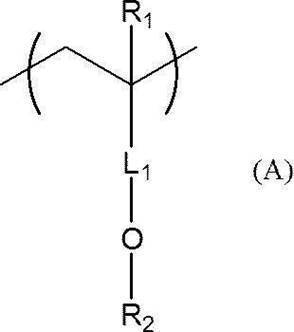
L1は、フッ素原子又はヨウ素原子を有していてもよい2価の連結基を表す。フッ素原子又はヨウ素原子を有していてもよい2価の連結基としては、-CO-、-O-、-S―、-SO-、―SO2-、フッ素原子、又は、ヨウ素原子を有していてもよい炭化水素基(例えば、アルキレン基、シクロアルキレン基、アルケニレン基、及び、アリーレン基等)、及び、これらの複数が連結した連結基等が挙げられる。なかでも、L1としては、-CO-、又は、-アリーレン基-フッ素原子若しくはヨウ素原子を有するアルキレン基-が好ましい。
アリーレン基としては、フェニレン基が好ましい。
アルキレン基は、直鎖状であっても、分岐鎖状であってもよい。アルキレン基の炭素数は特に制限されないが、1~10が好ましく、1~3がより好ましい。
フッ素原子又はヨウ素原子を有するアルキレン基に含まれるフッ素原子及びヨウ素原子の合計数は特に制限されないが、2以上が好ましく、2~10がより好ましく、3~6が更に好ましい。
アルキル基は、直鎖状であっても、分岐鎖状であってもよい。アルキル基の炭素数は特に制限されないが、1~10が好ましく、1~3がより好ましい。
フッ素原子又はヨウ素原子を有するアルキル基に含まれるフッ素原子及びヨウ素原子の合計数は特に制限されないが、1以上が好ましく、1~5がより好ましく、1~3が更に好ましい。
上記アルキル基は、ハロゲン原子以外の酸素原子等のヘテロ原子を含んでいてもよい。
なかでも、脱離基としては、式(Z1)~(Z4)で表される基が挙げられる。
式(Z1):-C(Rx11)(Rx12)(Rx13)式(Z2):-C(=O)OC(Rx11)(Rx12)(Rx13)式(Z3):-C(R136)(R137)(OR138)式(Z4):-C(Rn1)(H)(Ar1)
Rx11~Rx13は、フッ素原子又はヨウ素原子を有していてもよい点以外は、上述した(Y1)、(Y2)中のRx1~Rx3と同じであり、アルキル基、シクロアルキル基、アルケニル基、及び、アリール基の定義及び好適範囲と同じである。
なお、上記アルキル基、シクロアルキル基、アリール基、及び、アラルキル基には、フッ素原子及びヨウ素原子以外に、酸素原子等のヘテロ原子が含まれていてもよい。つまり、上記アルキル基、シクロアルキル基、アリール基、及び、アラルキル基は、例えば、メチレン基の1つが、酸素原子等のヘテロ原子、又は、カルボニル基等のヘテロ原子を有する基で置き換わっていてもよい。
また、R138は、繰り返し単位の主鎖が有する別の置換基と互いに結合して、環を形成してもよい。この場合、R138と繰り返し単位の主鎖が有する別の置換基とが互いに結合して形成する基は、メチレン基等のアルキレン基が好ましい。

M1は、単結合又は2価の連結基を表す。
Q1は、フッ素原子、ヨウ素原子、及び、酸素原子からなる群から選択されるヘテロ原子を有していてもよいアルキル基;フッ素原子、ヨウ素原子、及び、酸素原子からなる群から選択されるヘテロ原子を有していてもよいシクロアルキル基;フッ素原子、ヨウ素原子、及び、酸素原子からなる群から選択されるヘテロ原子を有していてもよいアリール基;アミノ基;アンモニウム基;メルカプト基;シアノ基;アルデヒド基;又はこれらを組み合わせた基(例えば、フッ素原子、ヨウ素原子、及び、酸素原子からなる群から選択されるヘテロ原子を有していてもよい、アルキル基とシクロアルキル基とを組み合わせた基)を表す。

Xa1は、水素原子、又は、置換基を有していてもよいアルキル基を表す。
Tは、単結合又は2価の連結基を表す。
Rx1~Rx3は、それぞれ独立に、アルキル基(直鎖状若しくは分岐鎖状)、シクロアルキル基(単環若しくは多環)、アルケニル基(直鎖状若しくは分岐鎖状)、又は、アリール(単環若しくは多環)基を表す。ただし、Rx1~Rx3の全てがアルキル基(直鎖状、又は分岐鎖状)である場合、Rx1~Rx3のうち少なくとも2つはメチル基であることが好ましい。
Rx1~Rx3の2つが結合して、単環又は多環(単環又は多環のシクロアルキル基等)を形成してもよい。
Tは、単結合、又は、-COO-Rt-基が好ましい。Tが-COO-Rt-基を表す場合、Rtは、炭素数1~5のアルキレン基が好ましく、-CH2-基、-(CH2)2-基、又は、-(CH2)3-基がより好ましい。
Rx1~Rx3のシクロアルキル基としては、シクロペンチル基、及び、シクロヘキシル基等の単環のシクロアルキル基、又は、ノルボルニル基、テトラシクロデカニル基、テトラシクロドデカニル基、及び、アダマンチル基等の多環のシクロアルキル基が好ましい。
Rx1~Rx3のアリール基としては、炭素数6~10のアリール基が好ましく、例えば、フェニル基、ナフチル基、及び、アントリル基等が挙げられる。
Rx1~Rx3のアルケニル基としては、ビニル基が好ましい。
Rx1~Rx3の2つが結合して形成されるシクロアルキル基としては、シクロペンチル基、及び、シクロヘキシル基等の単環のシクロアルキル基が好ましく、その他にも、ノルボルニル基、テトラシクロデカニル基、テトラシクロドデカニル基、及び、アダマンチル基等の多環のシクロアルキル基が好ましい。なかでも、炭素数5~6の単環のシクロアルキル基が好ましい。
Rx1~Rx3の2つが結合して形成されるシクロアルキル基は、例えば、環を構成するメチレン基の1つが、酸素原子等のヘテロ原子、カルボニル基等のヘテロ原子を有する基、又は、ビニリデン基で置き換わっていてもよい。また、これらのシクロアルキル基は、シクロアルカン環を構成するエチレン基の1つ以上が、ビニレン基で置き換わっていてもよい。
一般式(AI)で表される繰り返し単位は、例えば、Rx1がメチル基又はエチル基であり、Rx2とRx3とが結合して上述のシクロアルキル基を形成している態様が好ましい。
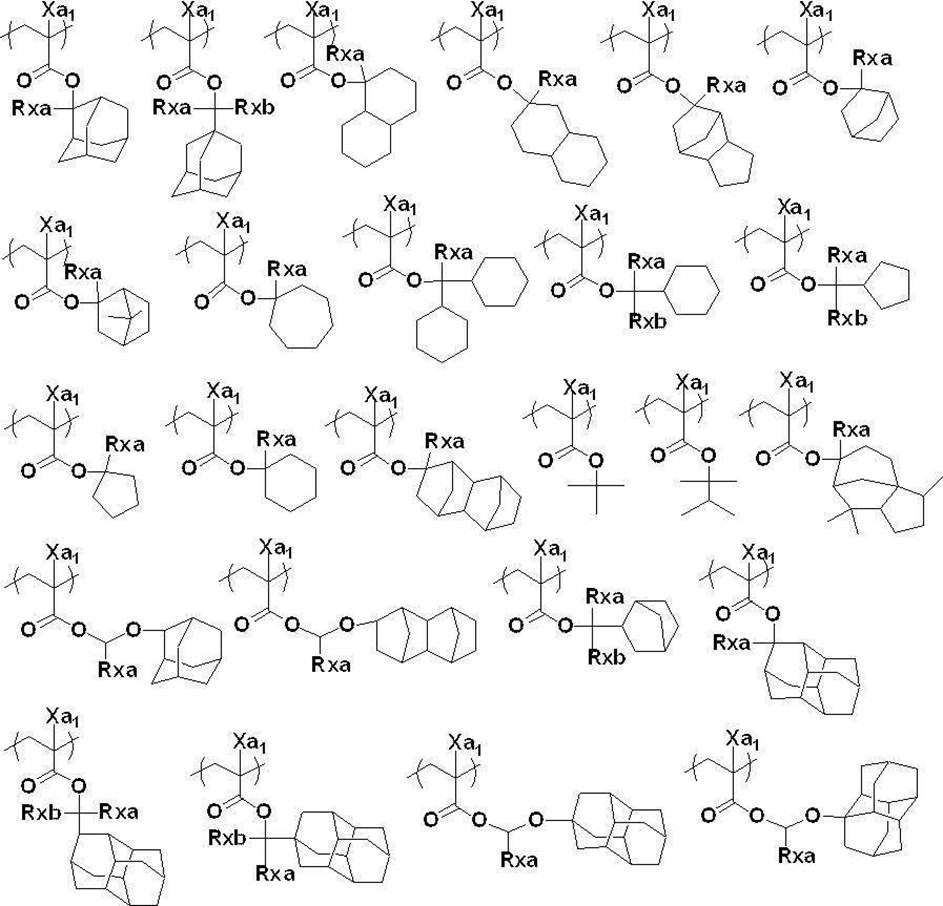

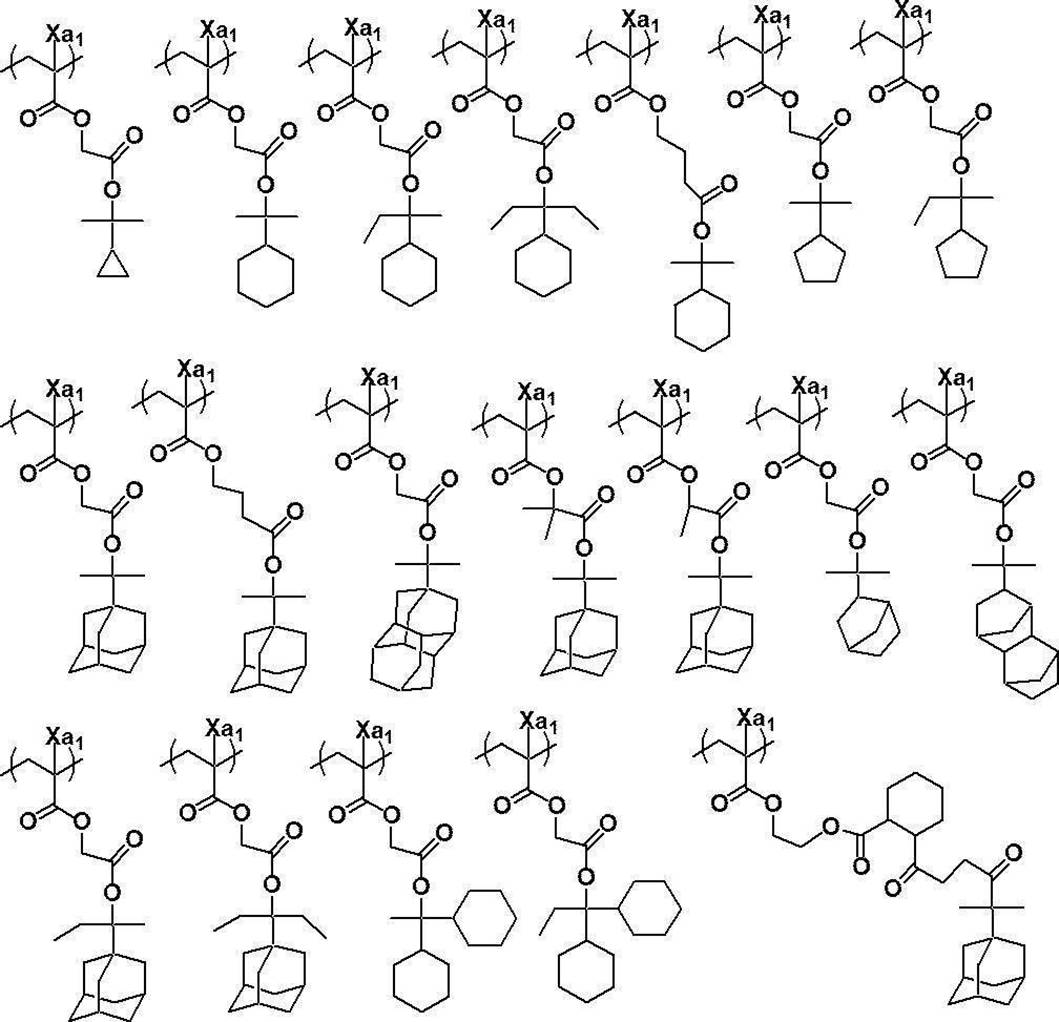

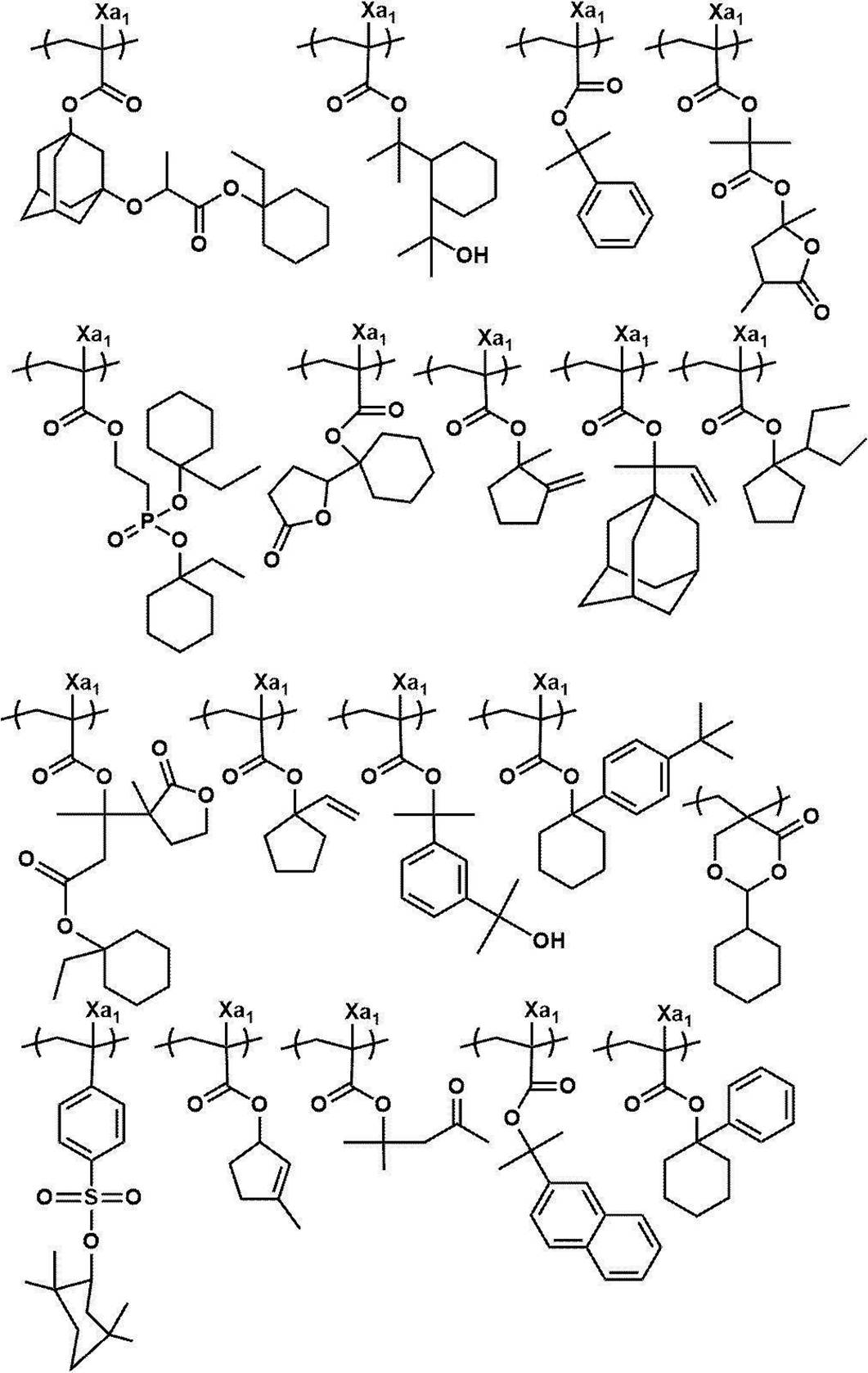
例えば、樹脂(A)は、以下のA群からなる群から選択される少なくとも1種の繰り返し単位、及び/又は、以下のB群からなる群から選択される少なくとも1種の繰り返し単位を含んでいてもよい。
A群:以下の(20)~(29)の繰り返し単位からなる群。
(20)後述する、酸基を有する繰り返し単位
(21)後述する、フッ素原子又はヨウ素原子を有する繰り返し単位
(22)後述する、ラクトン基、スルトン基、又は、カーボネート基を有する繰り返し単位
(23)後述する、光酸発生基を有する繰り返し単位
(24)後述する、一般式(V-1)、又は、下記一般式(V-2)で表される繰り返し単位
(25)後述する、式(A)で表される繰り返し単位
(26)後述する、式(B)で表される繰り返し単位
(27)後述する、式(C)で表される繰り返し単位
(28)後述する、式(D)で表される繰り返し単位
(29)後述する、式(E)で表される繰り返し単位B群:以下の(30)~(32)の繰り返し単位からなる群。
(30)後述する、ラクトン基、スルトン基、カーボネート基、水酸基、シアノ基、及び、アルカリ可溶性基から選ばれる少なくとも1種類の基を有する繰り返し単位
(31)後述する、脂環炭化水素構造を有し、酸分解性を示さない繰り返し単位
(32)後述する、水酸基及びシアノ基のいずれも有さない、一般式(III)で表される繰り返し単位
また、レジスト組成物がEUV露光用途又は電子線露光用途で用いられる場合、樹脂(A)は、フッ素原子及びヨウ素原子の少なくとも一方を含むことも好ましい。樹脂(A)がフッ素原子及びヨウ素原子の両方を含む場合、樹脂(A)は、フッ素原子及びヨウ素原子の両方を含む1つの繰り返し単位を有していてもよいし、樹脂(A)は、フッ素原子を有する繰り返し単位とヨウ素原子を含む繰り返し単位との2種を含んでいてもよい。
また、レジスト組成物がEUV露光用途又は電子線露光用途で用いられる場合、樹脂(A)が、芳香族基を有する繰り返し単位を有するのも好ましい。
レジスト組成物がArF露光用途で用いられる場合、樹脂(A)は上記B群からなる群から選択される少なくとも1種の繰り返し単位を有することが好ましい。
また、レジスト組成物がArF露光用途で用いられる場合、樹脂(A)は、フッ素原子及び珪素原子のいずれも含まないことが好ましい。
また、組成物がArF用途で用いられる場合、樹脂(A)は、芳香族基を有さないことが好ましい。
樹脂(A)は、酸基を有する繰り返し単位を有していてもよい。
酸基としては、pKaが13以下の酸基が好ましい。
酸基としては、例えば、カルボキシル基、フェノール性水酸基、フッ素化アルコール基(好ましくはヘキサフルオロイソプロパノール基)、スルホン酸基、スルホンアミド基、又は、イソプロパノール基等が好ましい。
また、上記ヘキサフルオロイソプロパノール基は、フッ素原子の1つ以上(好ましくは1~2つ)が、フッ素原子以外の基(アルコキシカルボニル基等)で置換されてもよい。このように形成された-C(CF3)(OH)-CF2-も、酸基として好ましい。また、フッ素原子の1つ以上がフッ素原子以外の基に置換されて、-C(CF3)(OH)-CF2-を含む環を形成してもよい。
酸基を有する繰り返し単位は、上述の酸の作用により脱離する脱離基で極性基が保護された構造を有する繰り返し単位、及び、後述するラクトン基、スルトン基、又は、カーボネート基を有する繰り返し単位とは異なる繰り返し単位であるのが好ましい。
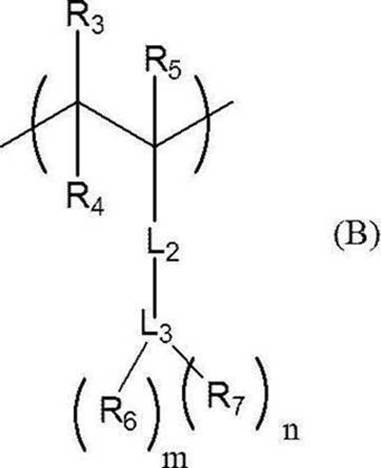
フッ素原子又はヨウ素原子を有していてもよい1価の有機基としては、-L4-R8で表される基が好ましい。L4は、単結合又はエステル基を表す。R8は、フッ素原子若しくはヨウ素原子を有していてもよいアルキル基、フッ素原子若しくはヨウ素原子を有していてもよいシクロアルキル基、フッ素原子若しくはヨウ素原子を有していてもよいアリール基、又は、これらを組み合わせた基が挙げられる。
L3は、(n+m+1)価の芳香族炭化水素環基、又は、(n+m+1)価の脂環式炭化水素環基を表す。芳香族炭化水素環基としては、ベンゼン環基、及び、ナフタレン環基が挙げられる。脂環式炭化水素環基としては、単環であっても、多環であってもよく、例えば、シクロアルキル環基が挙げられる。
R6は、水酸基、又は、フッ素化アルコール基(好ましくは、ヘキサフルオロイソプロパノール基)を表す。なお、R6が水酸基の場合、L3は(n+m+1)価の芳香族炭化水素環基であることが好ましい。
R7は、ハロゲン原子を表す。ハロゲン原子としては、フッ素原子、塩素原子、臭素原子、又は、ヨウ素原子が挙げられる。
mは、1以上の整数を表す。mは、1~3の整数が好ましく、1~2の整数が好ましい。
nは、0又は1以上の整数を表す。nは、1~4の整数が好ましい。
なお、(n+m+1)は、1~5の整数が好ましい。

R41、R42、及び、R43は、それぞれ独立に、水素原子、アルキル基、シクロアルキル基、ハロゲン原子、シアノ基、又は、アルコキシカルボニル基を表す。但し、R42はAr4と結合して環を形成していてもよく、その場合のR42は単結合又はアルキレン基を表す。
X4は、単結合、-COO-、又は、-CONR64-を表し、R64は、水素原子又はアルキル基を表す。
L4は、単結合又はアルキレン基を表す。
Ar4は、(n+1)価の芳香環基を表し、R42と結合して環を形成する場合には(n+2)価の芳香環基を表す。
nは、1~5の整数を表す。
一般式(I)におけるR41、R42、及び、R43のハロゲン原子としては、フッ素原子、塩素原子、臭素原子、及び、ヨウ素原子が挙げられ、フッ素原子が好ましい。一般式(I)におけるR41、R42、及び、R43のアルコキシカルボニル基に含まれるアルキル基としては、上記R41、R42、及び、R43におけるアルキル基と同様のものが好ましい。
(n+1)価の芳香環基は、更に置換基を有していてもよい。
X4により表される-CONR64-(R64は、水素原子又はアルキル基を表す)におけるR64のアルキル基としては、メチル基、エチル基、プロピル基、イソプロピル基、n-ブチル基、sec-ブチル基、ヘキシル基、2-エチルヘキシル基、オクチル基、及び、ドデシル基等の炭素数20以下のアルキル基が挙げられ、炭素数8以下のアルキル基が好ましい。
X4としては、単結合、-COO-、又は、-CONH-が好ましく、単結合、又は-COO-がより好ましい。
Ar4としては、炭素数6~18の芳香環基が好ましく、ベンゼン環基、ナフタレン環基、及び、ビフェニレン環基がより好ましい。
一般式(I)で表される繰り返し単位は、ヒドロキシスチレン構造を備えていることが好ましい。Ar4は、ベンゼン環基であることが好ましい。
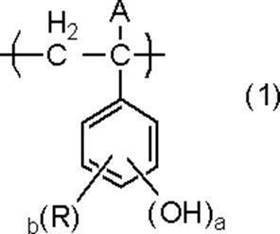
Aは水素原子、アルキル基、シクロアルキル基、ハロゲン原子、又は、シアノ基を表す。
Rは、ハロゲン原子、アルキル基、シクロアルキル基、アリール基、アルケニル基、アラルキル基、アルコキシ基、アルキルカルボニルオキシ基、アルキルスルホニルオキシ基、アルキルオキシカルボニル基、又は、アリールオキシカルボニル基を表し、複数個ある場合には同じであっても異なっていてもよい。複数のRを有する場合には、互いに共同して環を形成していてもよい。Rとしては水素原子が好ましい。
aは1~3の整数を表す。
bは0~(5-a)の整数を表す。
ヒドロキシスチレン系繰り返し単位としては、例えば、上記一般式(1)において、Aが水素原子を表す繰り返し単位が挙げられる。
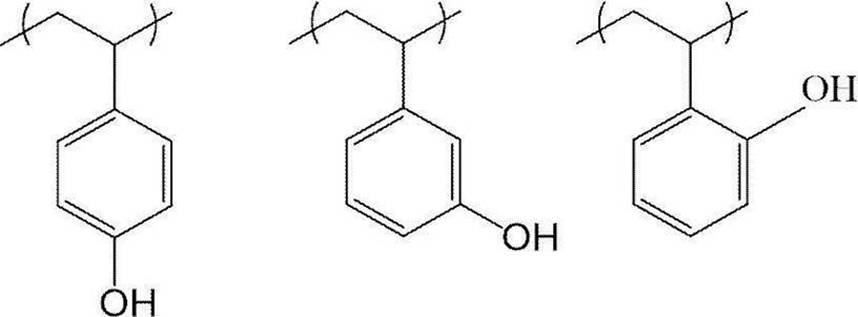
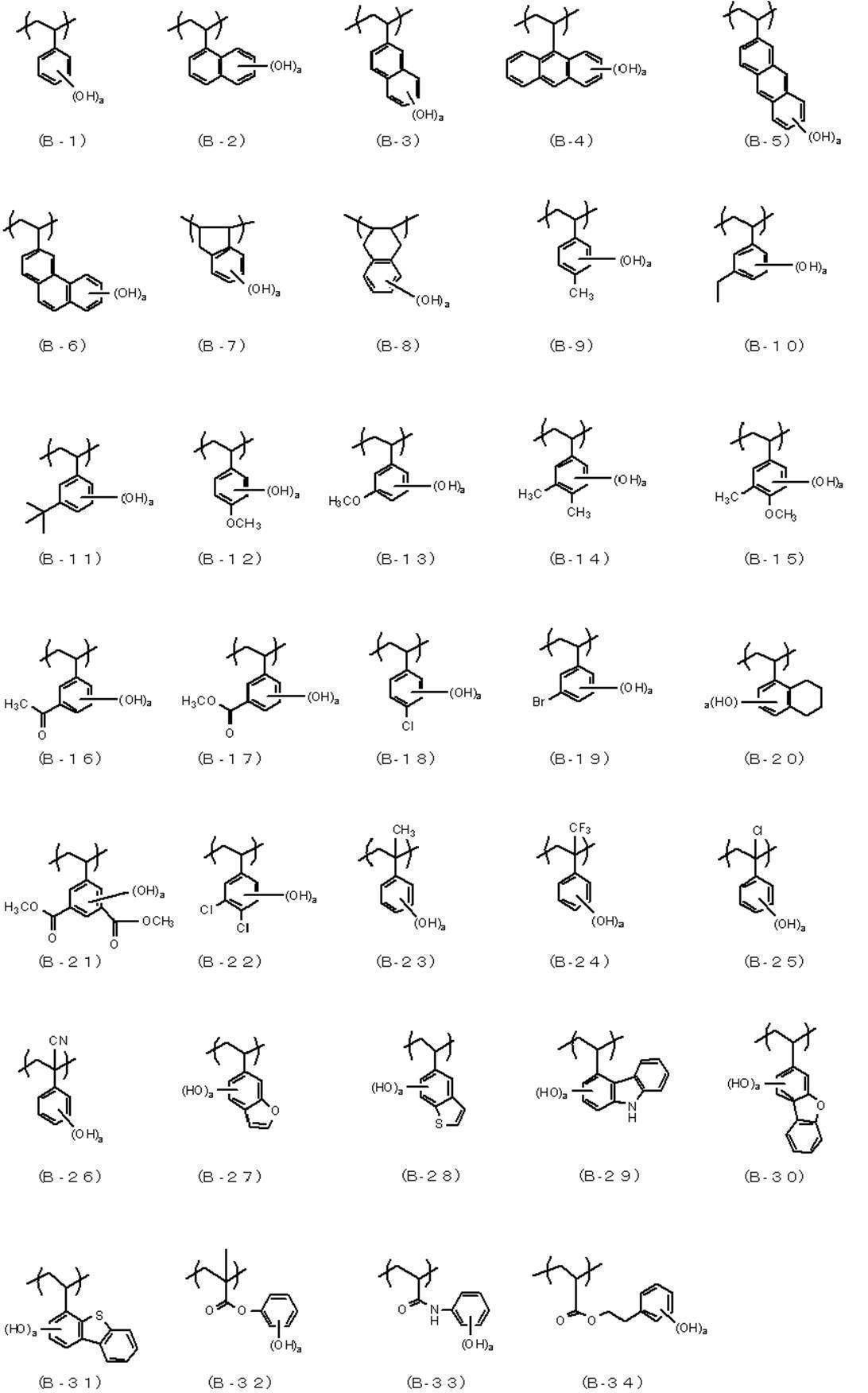


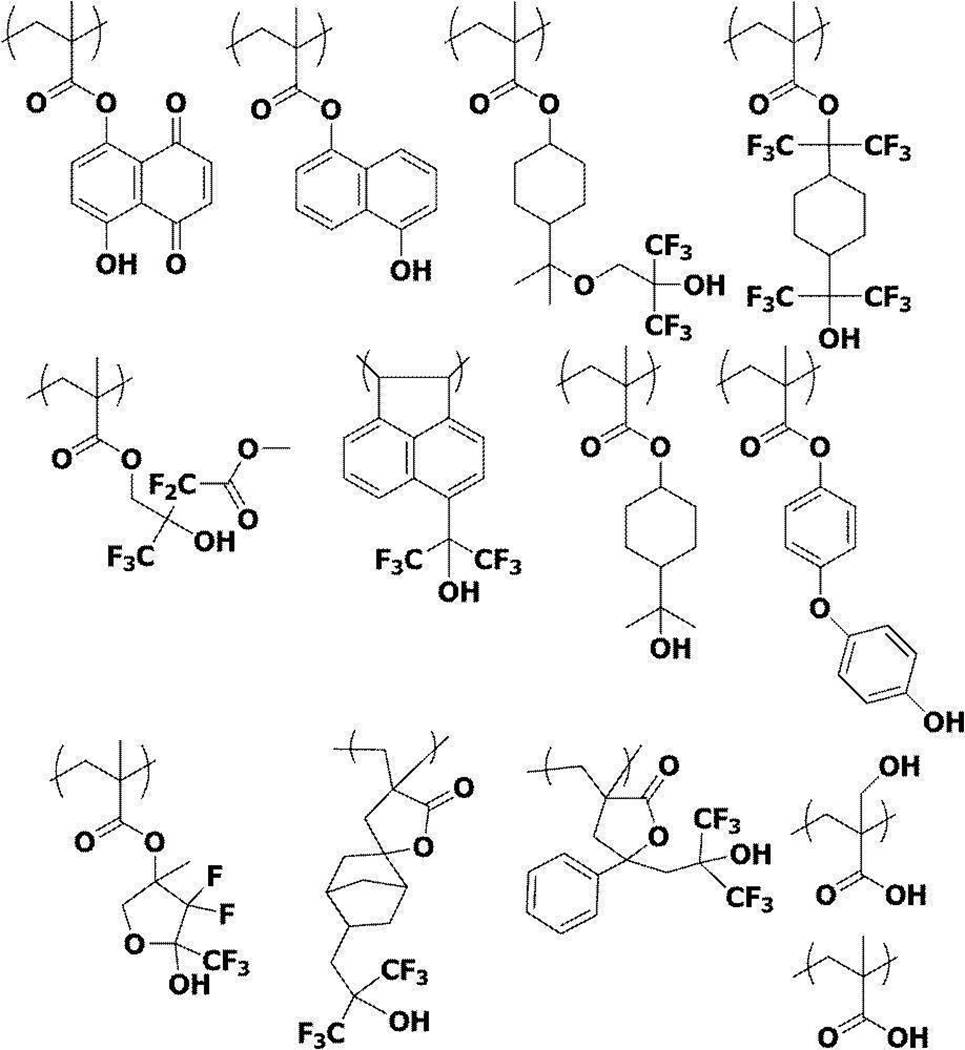
樹脂(A)は、上述した(酸分解性基を有する繰り返し単位)、及び、(酸基を有する繰り返し単位)とは別に、フッ素原子又はヨウ素原子を有する繰り返し単位を有していてもよい。また、ここでいう(フッ素原子又はヨウ素原子を有する繰り返し単位)は、後述の(ラクトン基、スルトン基、又は、カーボネート基を有する繰り返し単位)、及び、(光酸発生基を有する繰り返し単位)等の、A群に属する他の種類の繰り返し単位とは異なるのが好ましい。
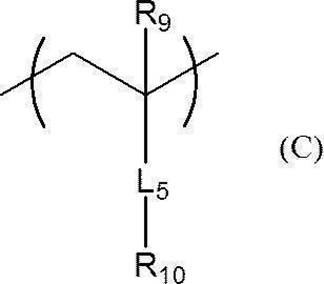
R9は、水素原子、又は、フッ素原子若しくはヨウ素原子を有していてもよいアルキル基を表す。
R10は、水素原子、フッ素原子若しくはヨウ素原子を有していてもよいアルキル基、フッ素原子若しくはヨウ素原子を有していてもよいシクロアルキル基、フッ素原子若しくはヨウ素原子を有していてもよいアリール基、又は、これらを組み合わせた基を表す。
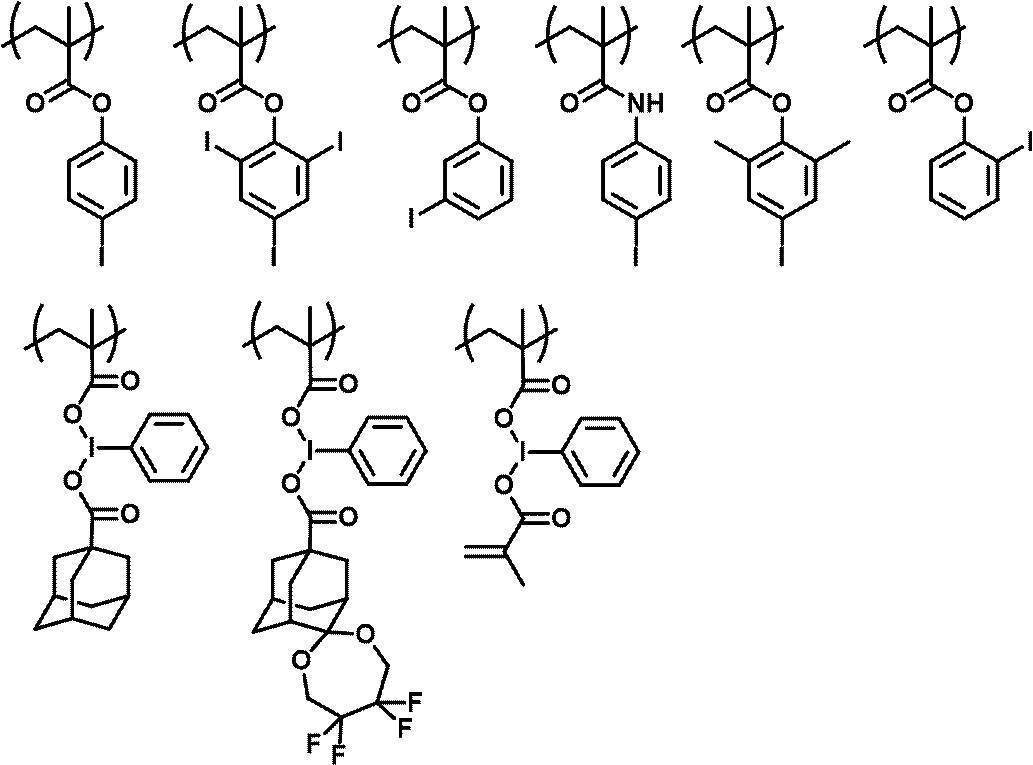
なお、上述したように、フッ素原子又はヨウ素原子を有する繰り返し単位には(酸分解性基を有する繰り返し単位)、及び、(酸基を有する繰り返し単位)は含まれないことから、上記フッ素原子又はヨウ素原子を有する繰り返し単位の含有量も、(酸分解性基を有する繰り返し単位)、及び、(酸基を有する繰り返し単位)を除いたフッ素原子又はヨウ素原子を有する繰り返し単位の含有量を意図する。
なお、フッ素原子及びヨウ素原子の少なくとも一方を含む繰り返し単位としては、例えば、フッ素原子又はヨウ素原子を有し、かつ、酸分解性基を有する繰り返し単位、フッ素原子又はヨウ素原子を有し、かつ、酸基を有する繰り返し単位、及び、フッ素原子又はヨウ素原子を有する繰り返し単位が挙げられる。
樹脂(A)は、ラクトン基、スルトン基、及び、カーボネート基からなる群から選択される少なくとも1種を有する繰り返し単位(以下、総称して「ラクトン基、スルトン基、又は、カーボネート基を有する繰り返し単位」ともいう。)を有していてもよい。
ラクトン基、スルトン基、又は、カーボネート基を有する繰り返し単位は、ヘキサフルオロプロパノール基等の酸基を有さないのも好ましい。
樹脂(A)は、下記一般式(LC1-1)~(LC1-21)のいずれかで表されるラクトン構造、又は、下記一般式(SL1-1)~(SL1-3)のいずれかで表されるスルトン構造の環員原子から、水素原子を1つ以上引き抜いてなるラクトン基又はスルトン基を有する繰り返し単位を有することが好ましい。
また、ラクトン基又はスルトン基が主鎖に直接結合していてもよい。例えば、ラクトン基又はスルトン基の環員原子が、樹脂(A)の主鎖を構成してもよい。
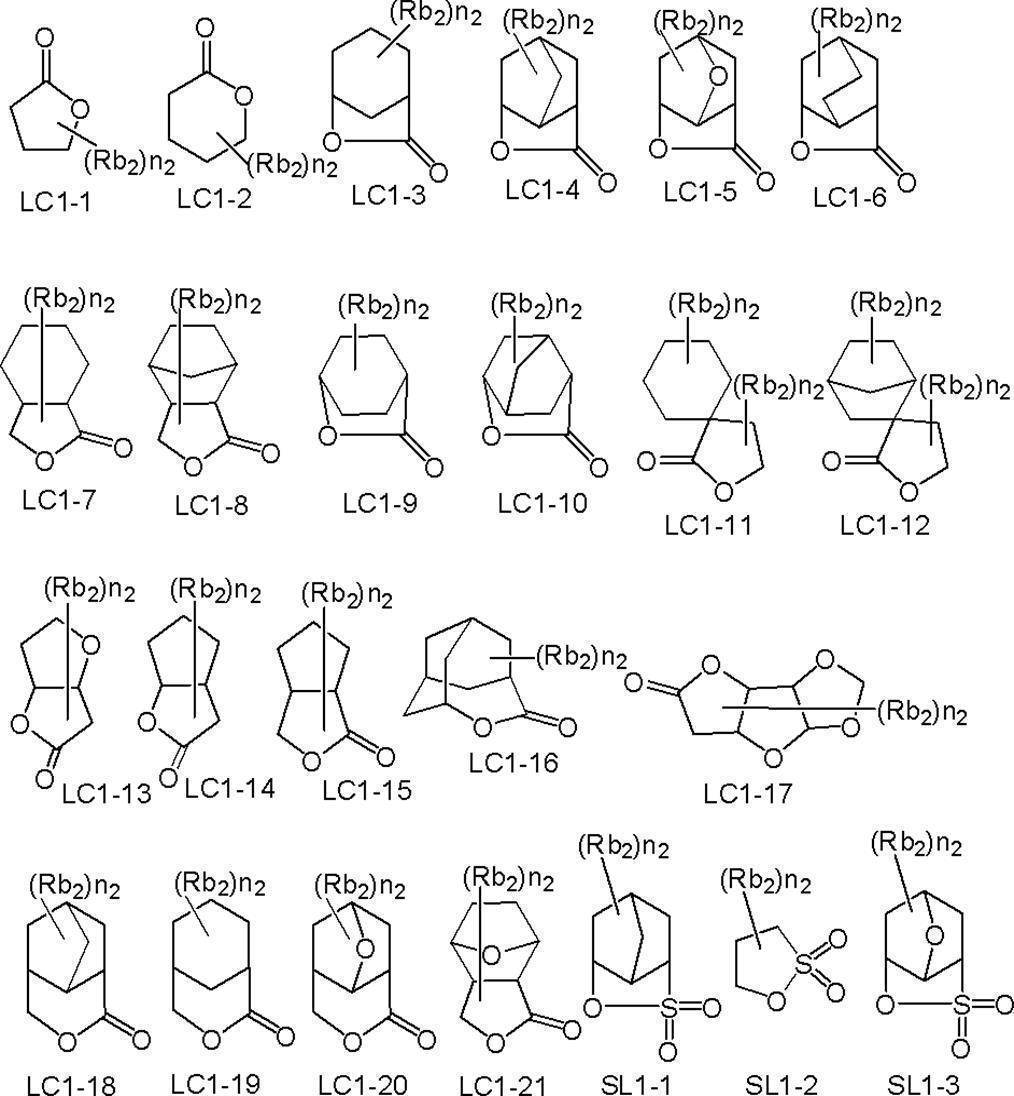
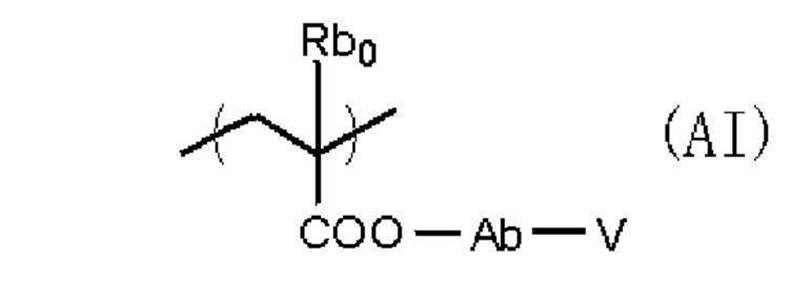
Rb0のアルキル基が有していてもよい好ましい置換基としては、水酸基、及び、ハロゲン原子が挙げられる。
Rb0のハロゲン原子としては、フッ素原子、塩素原子、臭素原子、及び、ヨウ素原子が挙げられる。Rb0は、水素原子又はメチル基が好ましい。
Abは、単結合、アルキレン基、単環若しくは多環の脂環炭化水素構造を有する2価の連結基、エーテル基、エステル基、カルボニル基、カルボキシル基、又は、これらを組み合わせた2価の基を表す。なかでも、単結合、又は、-Ab1-CO2-で表される連結基が好ましい。Ab1は、直鎖状若しくは分岐鎖状アルキレン基、又は、単環若しくは多環のシクロアルキレン基であり、メチレン基、エチレン基、シクロヘキシレン基、アダマンチレン基、又は、ノルボルニレン基が好ましい。
Vは、一般式(LC1-1)~(LC1-21)のいずれかで表されるラクトン構造の環員原子から水素原子を1つ引き抜いてなる基、又は、一般式(SL1-1)~(SL1-3)のいずれかで表されるスルトン構造の環員原子から水素原子を1つ引き抜いてなる基を表す。
環状炭酸エステル基を有する繰り返し単位としては、下記一般式(A-1)で表される繰り返し単位が好ましい。

nは0以上の整数を表す。
RA 2は、置換基を表す。nが2以上の場合、複数存在するRA 2は、それぞれ同一でも異なっていてもよい。
Aは、単結合又は2価の連結基を表す。上記2価の連結基としては、アルキレン基、単環若しくは多環の脂環炭化水素構造を有する2価の連結基、エーテル基、エステル基、カルボニル基、カルボキシル基、又は、これらを組み合わせた2価の基が好ましい。
Zは、式中の-O-CO-O-で表される基と共に単環又は多環を形成する原子団を表す。

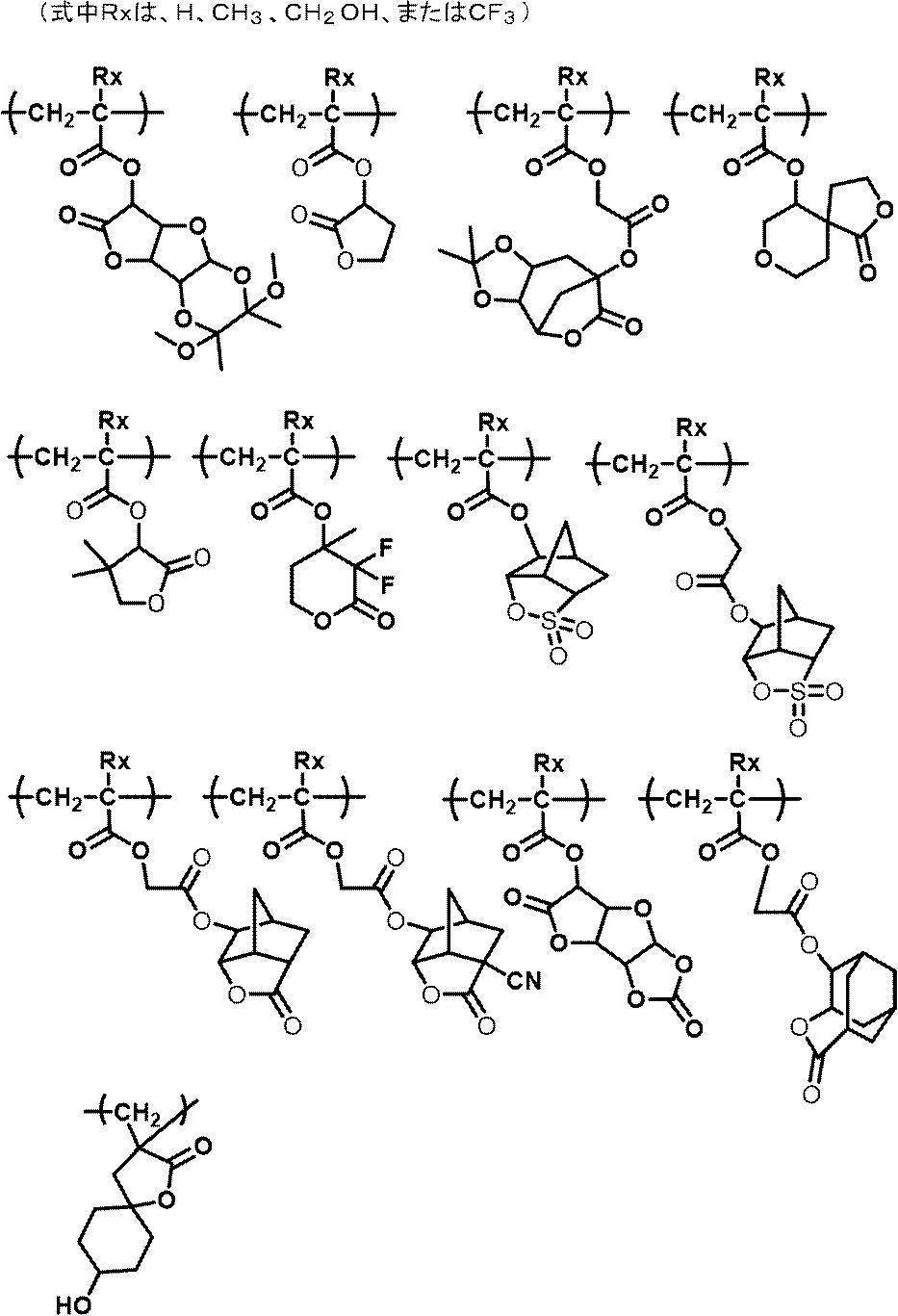
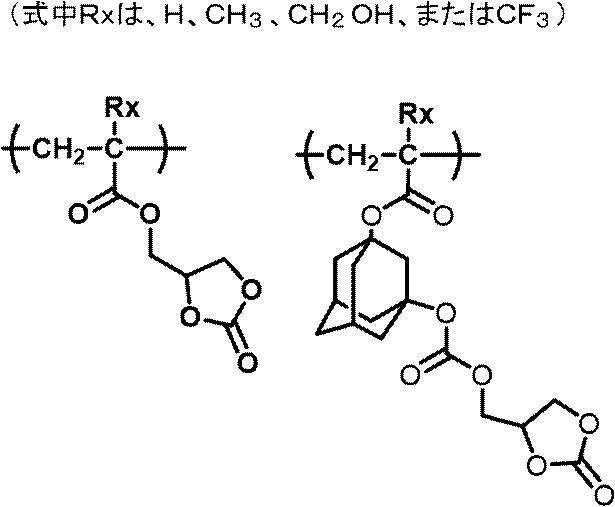
樹脂(A)は、上記以外の繰り返し単位として、活性光線又は放射線の照射により酸を発生する基(以下、「光酸発生基」ともいう。)を有する繰り返し単位を有していてもよい。
この場合、この光酸発生基を有する繰り返し単位が、後述する活性光線又は放射線の照射により酸を発生する化合物(以下、「光酸発生剤」ともいう。)にあたると考えることができる。
このような繰り返し単位としては、例えば、下記一般式(4)で表される繰り返し単位が挙げられる。

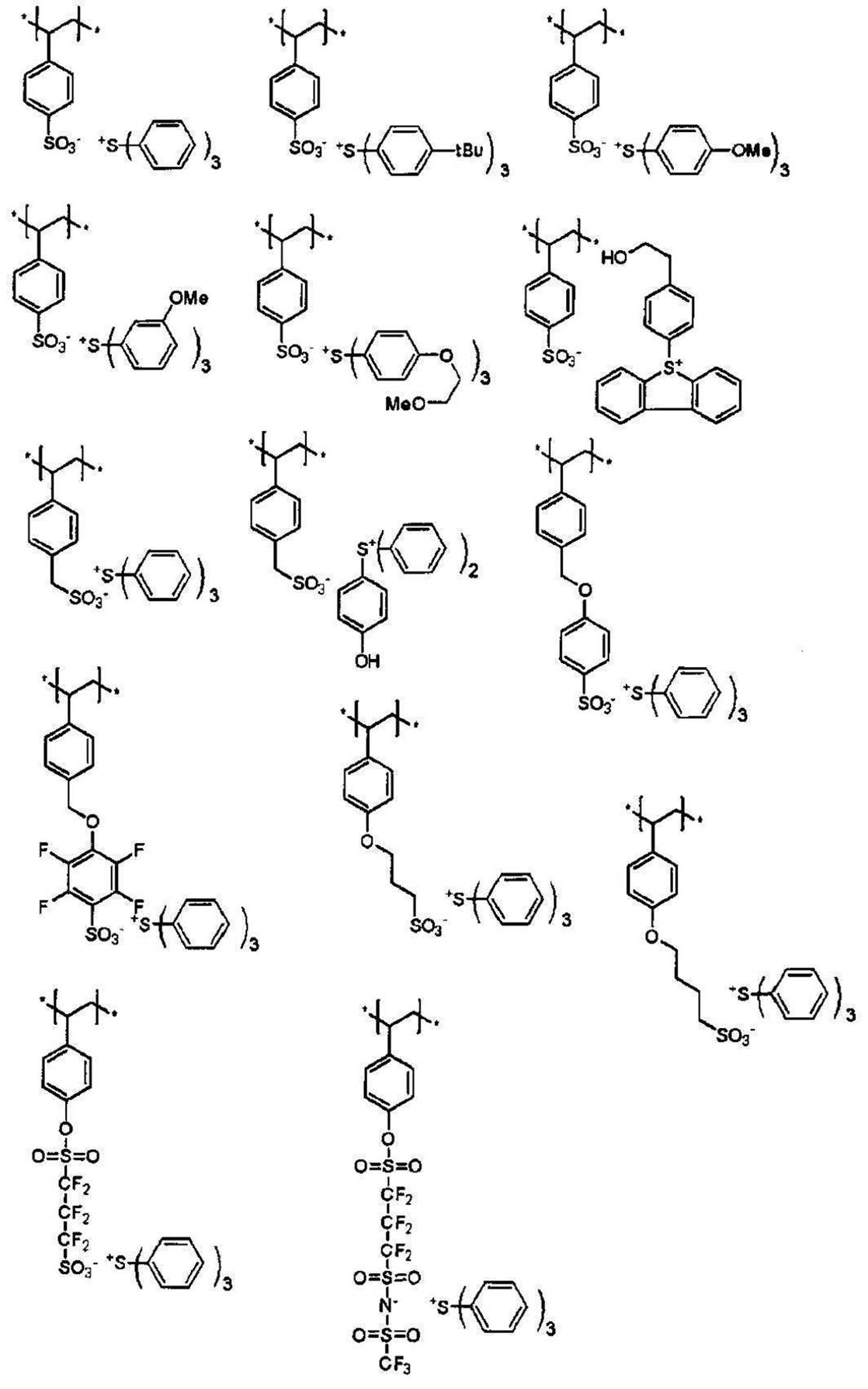
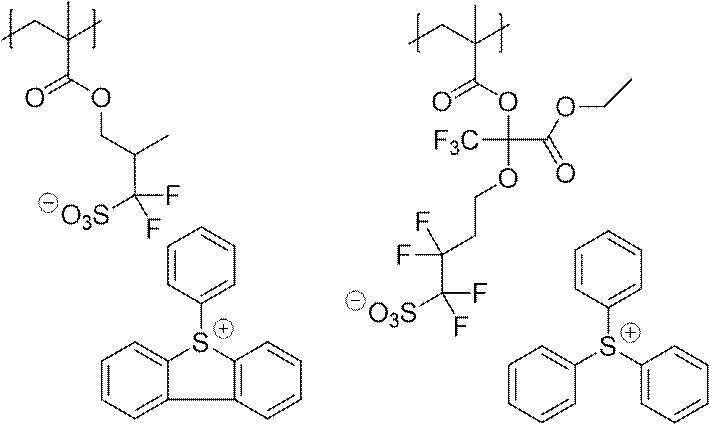
樹脂(A)は、下記一般式(V-1)、又は、下記一般式(V-2)で表される繰り返し単位を有していてもよい。
下記一般式(V-1)、及び、下記一般式(V-2)で表される繰り返し単位は上述の繰り返し単位とは異なる繰り返し単位であるのが好ましい。
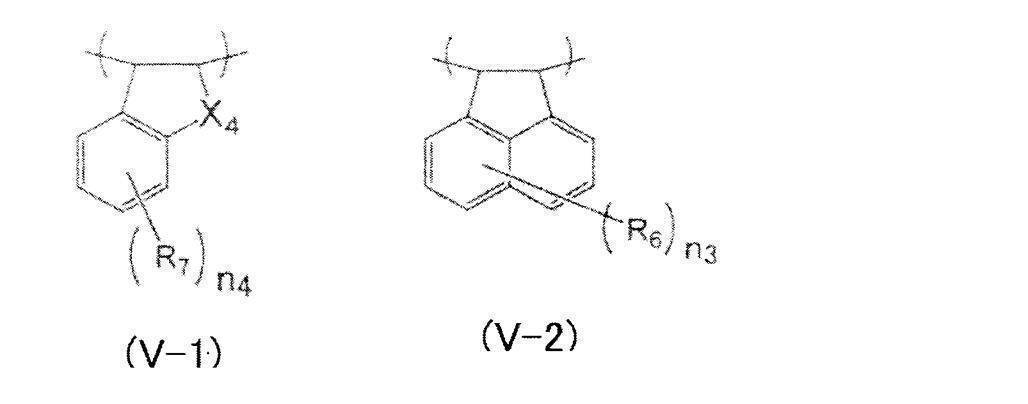
R6及びR7は、それぞれ独立に、水素原子、水酸基、アルキル基、アルコキシ基、アシロキシ基、シアノ基、ニトロ基、アミノ基、ハロゲン原子、エステル基(-OCOR又は-COOR:Rは、炭素数1~6のアルキル基又はフッ素化アルキル基)、又は、カルボキシル基を表す。アルキル基としては、炭素数1~10の直鎖状、分岐鎖状又は環状のアルキル基が好ましい。
n3は、0~6の整数を表す。
n4は、0~4の整数を表す。
X4は、メチレン基、酸素原子、又は、硫黄原子である。
一般式(V-1)又は(V-2)で表される繰り返し単位を以下に例示する。
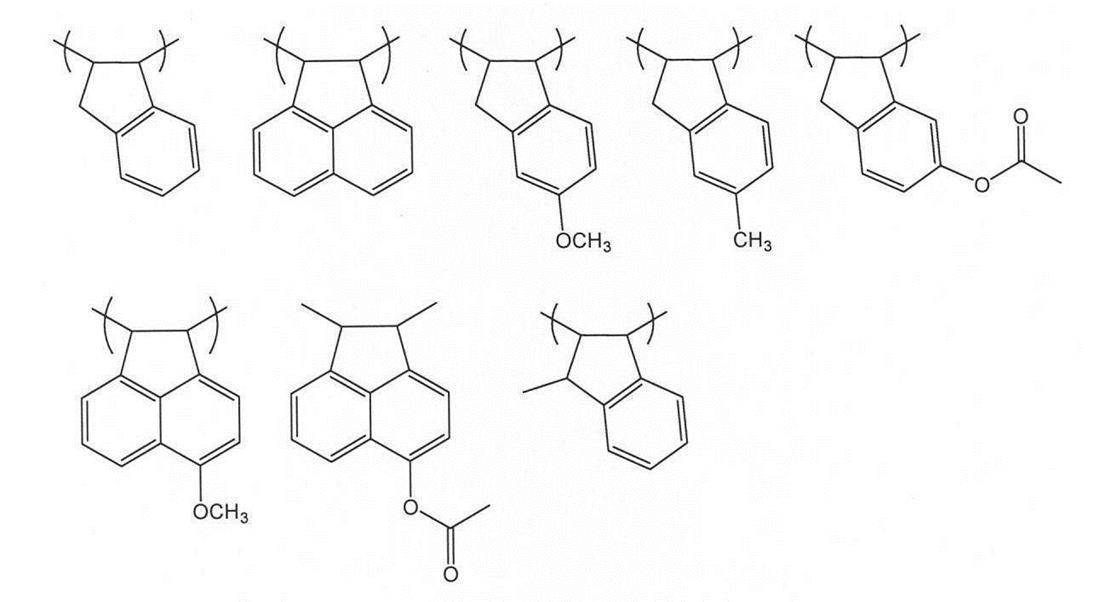
樹脂(A)は、発生酸の過剰な拡散又は現像時のパターン崩壊を抑制できる観点から、ガラス転移温度(Tg)が高い方が好ましい。Tgは、90℃より大きいことが好ましく、100℃より大きいことがより好ましく、110℃より大きいことが更に好ましく、125℃より大きいことが特に好ましい。なお、過度な高Tg化は現像液への溶解速度低下を招くため、Tgは400℃以下が好ましく、350℃以下がより好ましい。
なお、本明細書において、樹脂(A)等のポリマーのガラス転移温度(Tg)は、以下の方法で算出する。まず、ポリマー中に含まれる各繰り返し単位のみからなるホモポリマーのTgを、Bicerano法によりそれぞれ算出する。以後、算出されたTgを、「繰り返し単位のTg」という。次に、ポリマー中の全繰り返し単位に対する、各繰り返し単位の質量割合(%)を算出する。次に、Foxの式(Materials Letters 62(2008)3152等に記載)を使用して各質量割合におけるTgを算出して、それらを総和して、ポリマーのTg(℃)とする。
Bicerano法はPrediction of polymer properties, Marcel Dekker Inc, New York(1993)等に記載されている。またBicerano法によるTgの算出は、ポリマーの物性概算ソフトウェアMDL Polymer(MDL Information Systems, Inc.)を使用して行うことができる。
(a)主鎖への嵩高い置換基の導入
(b)主鎖への複数の置換基の導入
(c)主鎖近傍への樹脂(A)間の相互作用を誘発する置換基の導入
(d)環状構造での主鎖形成
(e)主鎖への環状構造の連結
なお、樹脂(A)は、ホモポリマーのTgが130℃以上を示す繰り返し単位を有することが好ましい。
なお、ホモポリマーのTgが130℃以上を示す繰り返し単位の種類は特に制限されず、Bicerano法により算出されるホモポリマーのTgが130℃以上である繰り返し単位であればよい。なお、後述する式(A)~式(E)で表される繰り返し単位中の官能基の種類によっては、ホモポリマーのTgが130℃以上を示す繰り返し単位に該当する。
上記(a)の具体的な達成手段の一例としては、樹脂(A)に式(A)で表される繰り返し単位を導入する方法が挙げられる。
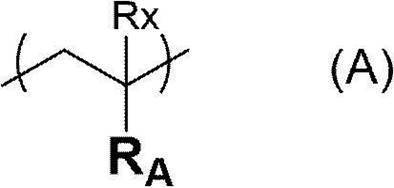
式(A)で表される繰り返し単位の具体例としては、下記繰り返し単位が挙げられる。
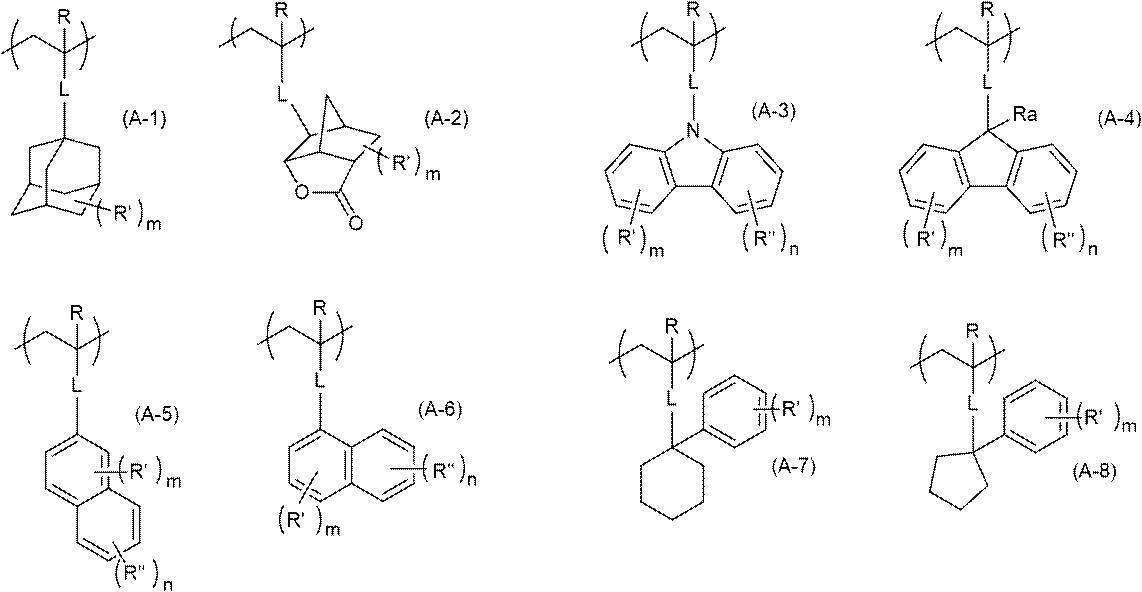
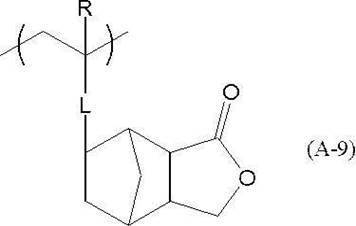
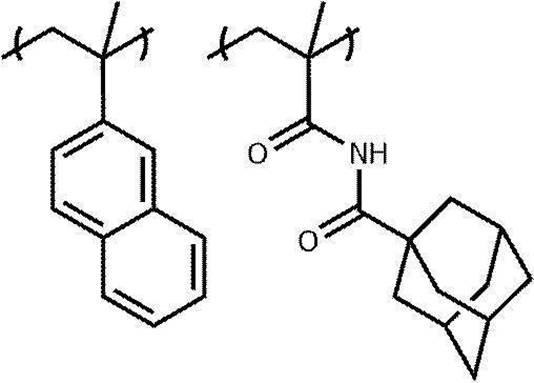
Raは、水素原子、アルキル基、シクロアルキル基、アリール基、アラルキル基、アルケニル基、水酸基、アルコキシ基、アシロキシ基、シアノ基、ニトロ基、アミノ基、ハロゲン原子、エステル基(-OCOR’’’又は-COOR’’’:R’’’は炭素数1~20のアルキル基又はフッ素化アルキル基)、又は、カルボキシル基を表す。なお、上記アルキル基、上記シクロアルキル基、上記アリール基、上記アラルキル基、及び、上記アルケニル基は、それぞれ、置換基を有してもよい。また、Raで表される基中の炭素原子に結合している水素原子は、フッ素原子又はヨウ素原子で置換されていてもよい。
また、R’及びR’’は、それぞれ独立に、アルキル基、シクロアルキル基、アリール基、アラルキル基、アルケニル基、水酸基、アルコキシ基、アシロキシ基、シアノ基、ニトロ基、アミノ基、ハロゲン原子、エステル基(-OCOR’’’又は-COOR’’’:R’’’は炭素数1~20のアルキル基又はフッ素化アルキル基)、又は、カルボキシル基を表す。なお、上記アルキル基、上記シクロアルキル基、上記アリール基、上記アラルキル基、及び、上記アルケニル基は、それぞれ、置換基を有してもよい。また、R’及びR’’で表される基中の炭素原子に結合している水素原子は、フッ素原子又はヨウ素原子で置換されていてもよい。
Lは、単結合又は2価の連結基を表す。2価の連結基としては、例えば、―COO-、-CO-、-O-、-S―、-SO-、-SO2-、アルキレン基、シクロアルキレン基、アルケニレン基、及び、これらの複数が連結した連結基等が挙げられる。
m及びnは、それぞれ独立に、0以上の整数を表す。m及びnの上限は特に制限されないが、2以下の場合が多く、1以下の場合がより多い。
上記(b)の具体的な達成手段の一例としては、樹脂(A)に式(B)で表される繰り返し単位を導入する方法が挙げられる。
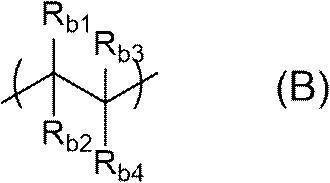
また、有機基の少なくとも1つが、繰り返し単位中の主鎖に直接環構造が連結している基である場合、他の有機基の種類は特に制限されない。
また、有機基のいずれも繰り返し単位中の主鎖に直接環構造が連結している基ではない場合、有機基の少なくとも2つ以上は、水素原子を除く構成原子数が3つ以上である置換基である。

R’は、それぞれ独立に、アルキル基、シクロアルキル基、アリール基、アラルキル基、アルケニル基、水酸基、アルコキシ基、アシロキシ基、シアノ基、ニトロ基、アミノ基、ハロゲン原子、エステル基(-OCOR’’又は-COOR’’:R’’は炭素数1~20のアルキル基又はフッ素化アルキル基)、又は、カルボキシル基を表す。なお、上記アルキル基、上記シクロアルキル基、上記アリール基、上記アラルキル基、及び、上記アルケニル基は、それぞれ、置換基を有してもよい。また、R’で表される基中の炭素原子に結合している水素原子は、フッ素原子又はヨウ素原子で置換されていてもよい。
mは0以上の整数を表す。mの上限は特に制限されないが、2以下の場合が多く、1以下の場合がより多い。
上記(c)の具体的な達成手段の一例としては、樹脂(A)に式(C)で表される繰り返し単位を導入する方法が挙げられる。
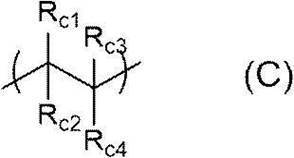
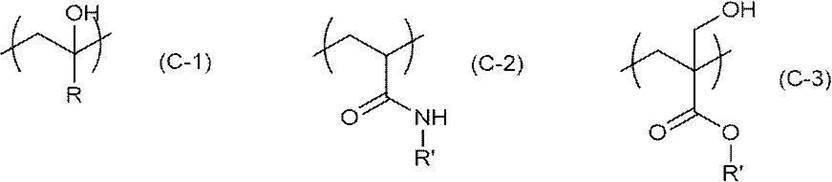
R’は、水素原子又は有機基を表す。有機基としては、アルキル基、シクロアルキル基、アリール基、アラルキル基、及び、アルケニル基等が挙げられる。なお、有機基中の水素原子は、フッ素原子又はヨウ素原子で置換されていてもよい。
上記(d)の具体的な達成手段の一例としては、樹脂(A)に式(D)で表される繰り返し単位を導入する方法が挙げられる。


上記式中、R’は、それぞれ独立に、アルキル基、シクロアルキル基、アリール基、アラルキル基、アルケニル基、水酸基、アルコキシ基、アシロキシ基、シアノ基、ニトロ基、アミノ基、ハロゲン原子、エステル基(-OCOR’’又は-COOR’’:R’’は、炭素数1~20のアルキル基又はフッ素化アルキル基)、又は、カルボキシル基を表す。なお、上記アルキル基、上記シクロアルキル基、上記アリール基、上記アラルキル基、及び、上記アルケニル基は、それぞれ、置換基を有してもよい。また、R’で表される基中の炭素原子に結合している水素原子は、フッ素原子又はヨウ素原子で置換されていてもよい。
mは0以上の整数を表す。mの上限は特に制限されないが、2以下の場合が多く、1以下の場合がより多い。
上記(e)の具体的な達成手段の一例としては、樹脂(A)に式(E)で表される繰り返し単位を導入する方法が挙げられる。
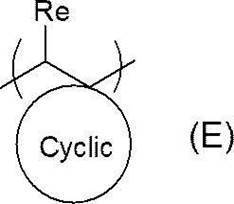
「cyclic」は、主鎖の炭素原子を含む環状基である。環状基に含まれる原子数は特に制限されない。


R’は、それぞれ独立に、水素原子、アルキル基、シクロアルキル基、アリール基、アラルキル基、及びアルケニル基、水酸基、アルコキシ基、アシロキシ基、シアノ基、ニトロ基、アミノ基、ハロゲン原子、エステル基(-OCOR’’又は-COOR’’:R’’は炭素数1~20のアルキル基又はフッ素化アルキル基)、又はカルボキシル基を表す。なお、上記アルキル基、上記シクロアルキル基、上記アリール基、上記アラルキル基、及び、上記アルケニル基は、それぞれ、置換基を有してもよい。また、R’で表される基中の炭素原子に結合している水素原子は、フッ素原子又はヨウ素原子で置換されていてもよい。
mは0以上の整数を表す。mの上限は特に制限されないが、2以下の場合が多く、1以下の場合がより多い。
また、式(E-2)、式(E-4)、式(E-6)、及び、式(E-8)中、2つRは互いに結合して環を形成していてもよい。
樹脂(A)は、ラクトン基、スルトン基、カーボネート基、水酸基、シアノ基、及び、アルカリ可溶性基から選ばれる少なくとも1種類の基を有する繰り返し単位を有していてもよい。
樹脂(A)が有するラクトン基、スルトン基、又は、カーボネート基を有する繰り返し単位としては、上述した≪ラクトン基、スルトン基、又は、カーボネート基を有する繰り返し単位≫で説明した繰り返し単位が挙げられる。好ましい含有量も上述した≪ラクトン基、スルトン基、又は、カーボネート基を有する繰り返し単位≫で説明した通りである。
水酸基又はシアノ基を有する繰り返し単位は、水酸基又はシアノ基で置換された脂環炭化水素構造を有する繰り返し単位であることが好ましい。
水酸基又はシアノ基を有する繰り返し単位は、酸分解性基を有さないことが好ましい。
水酸基又はシアノ基を有する繰り返し単位としては、下記一般式(AIIa)~(AIId)で表される繰り返し単位が挙げられる。

R1cは、水素原子、メチル基、トリフルオロメチル基、又は、ヒドロキシメチル基を表す。
R2c~R4cは、それぞれ独立に、水素原子、水酸基、又は、シアノ基を表す。ただし、R2c~R4cのうちの少なくとも1つは、水酸基又はシアノ基を表す。好ましくは、R2c~R4cのうち、1つ又は2つが水酸基で、残りが水素原子である。より好ましくは、R2c~R4cのうち、2つが水酸基で、残りが水素原子である。

アルカリ可溶性基としては、カルボキシル基、スルホンアミド基、スルホニルイミド基、ビススルホニルイミド基、及び、α位が電子求引性基で置換された脂肪族アルコール基(例えば、ヘキサフロロイソプロパノール基)が挙げられ、カルボキシル基が好ましい。樹脂(A)がアルカリ可溶性基を有する繰り返し単位を含むことにより、コンタクトホール用途での解像性が増す。
アルカリ可溶性基を有する繰り返し単位としては、アクリル酸及びメタクリル酸による繰り返し単位のような樹脂の主鎖に直接アルカリ可溶性基が結合している繰り返し単位、又は、連結基を介して樹脂の主鎖にアルカリ可溶性基が結合している繰り返し単位が挙げられる。なお、連結基は、単環又は多環の環状炭化水素構造を有していてもよい。
アルカリ可溶性基を有する繰り返し単位としては、アクリル酸又はメタクリル酸による繰り返し単位が好ましい。

樹脂(A)は、脂環炭化水素構造を有し、酸分解性を示さない繰り返し単位を有してもよい。これにより液浸露光時にレジスト膜から液浸液への低分子成分の溶出が低減できる。このような繰り返し単位として、例えば、1-アダマンチル(メタ)アクリレート由来の繰り返し単位、ジアマンチル(メタ)アクリレート由来の繰り返し単位、トリシクロデカニル(メタ)アクリレート由来の繰り返し単位、及び、シクロヘキシル(メタ)アクリレート由来の繰り返し単位等が挙げられる。
樹脂(A)は、水酸基及びシアノ基のいずれも有さない、一般式(III)で表される繰り返し単位を有していてもよい。

Raは水素原子、アルキル基、又は、-CH2-O-Ra2基を表す。式中、Ra2は、水素原子、アルキル基、又は、アシル基を表す。
単環式炭化水素基としては、例えば、炭素数3~12(より好ましくは炭素数3~7)のシクロアルキル基、又は、炭素数3~12のシクロアルケニル基が挙げられる。
架橋環式炭化水素環としては、2環式炭化水素環、3環式炭化水素環、及び、4環式炭化水素環等が挙げられる。また、架橋環式炭化水素環としては、5~8員シクロアルカン環が複数個縮合した縮合環も含まれる。
架橋環式炭化水素基として、ノルボルニル基、アダマンチル基、ビシクロオクタニル基、又は、トリシクロ[5,2,1,02,6]デカニル基が好ましく、ノルボルニル基又はアダマンチル基がより好ましい。
ハロゲン原子としては、臭素原子、塩素原子、又は、フッ素原子が好ましい。
アルキル基としては、メチル基、エチル基、ブチル基、又は、t-ブチル基が好ましい。上記アルキル基は更に置換基を有していてもよく、置換基としては、ハロゲン原子、アルキル基、保護基で保護されたヒドロキシル基、又は、保護基で保護されたアミノ基が挙げられる。
アルキル基としては、炭素数1~4のアルキル基が好ましい。
置換メチル基としては、メトキシメチル基、メトキシチオメチル基、ベンジルオキシメチル基、t-ブトキシメチル基、又は、2-メトキシエトキシメチル基が好ましい。
置換エチル基としては、1-エトキシエチル基、又は、1-メチル-1-メトキシエチル基が好ましい。
アシル基としては、ホルミル基、アセチル基、プロピオニル基、ブチリル基、イソブチリル基、バレリル基、及び、ピバロイル基等の炭素数1~6の脂肪族アシル基が好ましい。
アルコキシカルボニル基としては、炭素数1~4のアルコキシカルボニル基が好ましい。
一般式(III)で表される繰り返し単位の具体例を以下に挙げるが、本発明はこれらに限定されない。式中、Raは、H、CH3、CH2OH、又は、CF3を表す。

更に、樹脂(A)は、上述した繰り返し単位以外の繰り返し単位を有してもよい。
例えば樹脂(A)は、オキサチアン環基を有する繰り返し単位、オキサゾロン環基を有する繰り返し単位、ジオキサン環基を有する繰り返し単位、及び、ヒダントイン環基を有する繰り返し単位からなる群から選択される繰り返し単位を有していてもよい。
このような繰り返し単位を以下に例示する。
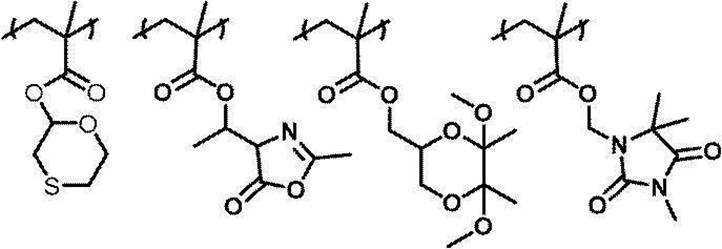
GPC法によりポリスチレン換算値として、樹脂(A)の重量平均分子量は、1000~200000が好ましく、3000~20000がより好ましく、5000~15000が更に好ましい。樹脂(A)の重量平均分子量を、1000~200000とすることにより、耐熱性及びドライエッチング耐性の劣化をより一層抑制できる。また、現像性の劣化、及び、粘度が高くなって製膜性が劣化することもより一層抑制できる。
樹脂(A)の分散度(分子量分布)は、通常1~5であり、1~3が好ましく、1.2~3.0がより好ましく、1.2~2.0が更に好ましい。分散度が小さいものほど、解像度、及び、レジスト形状がより優れ、更に、レジストパターンの側壁がよりスムーズである。
また、樹脂(A)は、1種で使用してもよいし、複数併用してもよい。
光酸発生剤は、低分子化合物の形態であってもよく、重合体の一部に組み込まれた形態あってもよい。また、低分子化合物の形態と重合体の一部に組み込まれた形態を併用してもよい。
また、光酸発生剤が低分子化合物の形態である場合、光酸発生剤の分子量は、3000以下が好ましく、2000以下がより好ましく、1000以下が更に好ましい。
光酸発生剤が、重合体の一部に組み込まれた形態である場合、樹脂(A)の一部に組み込まれてもよく、樹脂(A)とは異なる樹脂に組み込まれてもよい。
本発明において、光酸発生剤が、低分子化合物の形態であることが好ましい。
光酸発生剤としては、公知のものであれば特に制限されないが、活性光線又は放射線、好ましくは電子線又は極紫外線の照射により、有機酸、例えば、スルホン酸、ビス(アルキルスルホニル)イミド、及び、トリス(アルキルスルホニル)メチドの少なくともいずれかを発生する化合物が好ましい。
より好ましくは下記一般式(ZI)で表される化合物、(ZII)で表される化合物、及び、(ZIII)で表される化合物が挙げられる。

R201、R202、及び、R203としての有機基の炭素数は、1~30が好ましく、1~20がより好ましい。
また、R201~R203のうち、2つが結合して環構造を形成してもよく、環内に酸素原子、硫黄原子、エステル結合、アミド結合、又は、カルボニル基を含んでいてもよい。R201~R203のうち、2つが結合して形成する基としては、アルキレン基(例えば、ブチレン基、及び、ペンチレン基)が挙げられる。
Z-は、非求核性アニオン(求核反応を起こす能力が著しく低いアニオン)を表す。
各基が有するアリール基及び環構造については、置換基として更にアルキル基(好ましくは炭素数1~15)が挙げられる。
また、ビス(アルキルスルホニル)イミドアニオンにおけるアルキル基は、互いに結合して環構造を形成してもよい。これにより、酸強度が増加する。
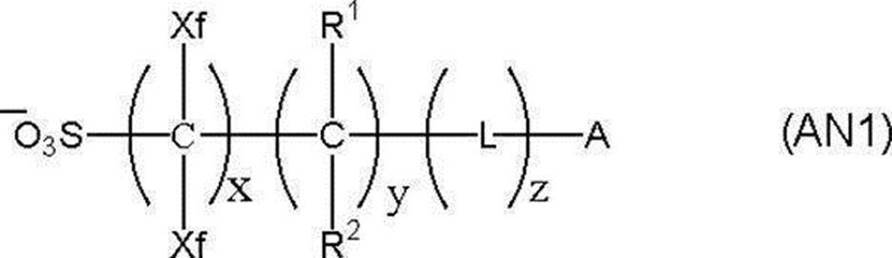
R1及びR2は、それぞれ独立に、水素原子、フッ素原子、又は、アルキル基を表し、複数存在する場合のR1及びR2は、それぞれ同一でも異なっていてもよい。
Lは、2価の連結基を表し、複数存在する場合のLは同一でも異なっていてもよい。
Aは、環状の有機基を表す。
xは1~20の整数を表し、yは0~10の整数を表し、zは0~10の整数を表す。
Xfのフッ素原子で置換されたアルキル基におけるアルキル基の炭素数としては、1~10が好ましく、1~4がより好ましい。また、Xfのフッ素原子で置換されたアルキル基は、パーフルオロアルキル基が好ましい。
Xfとしては、フッ素原子又は炭素数1~4のパーフルオロアルキル基が好ましい。Xfの具体例としては、フッ素原子、CF3、C2F5、C3F7、C4F9、CH2CF3、CH2CH2CF3、CH2C2F5、CH2CH2C2F5、CH2C3F7、CH2CH2C3F7、CH2C4F9、及び、CH2CH2C4F9が挙げられる。なかでも、フッ素原子又はCF3が好ましい。
特に、双方のXfがフッ素原子であることが好ましい。
R1及びR2としては、フッ素原子又はCF3が好ましい。
yは0~4が好ましく、0がより好ましい。
zは0~5が好ましく、0~3がより好ましい。
Lの2価の連結基としては特に制限されず、―COO-、-OCO-、-CO-、-O-、-S―、-SO―、―SO2-、アルキレン基、シクロアルキレン基、アルケニレン基、及び、これらの複数が連結した連結基等が挙げられる。なかでも、総炭素数12以下の連結基が好ましい。また、―COO-、-OCO-、-CO-、又は、-O-が好ましく、―COO-、又は、-OCO-がより好ましい。
脂環基としては、単環でも多環でもよく、シクロペンチル基、シクロヘキシル基、及び、シクロオクチル基等の単環のシクロアルキル基、又は、ノルボルニル基、トリシクロデカニル基、テトラシクロデカニル基、テトラシクロドデカニル基、及び、アダマンチル基等の多環のシクロアルキル基が好ましい。なかでも、ノルボルニル基、トリシクロデカニル基、テトラシクロデカニル基、テトラシクロドデカニル基、及び、アダマンチル基等の炭素数7以上の嵩高い構造を有する脂環基が、露光後加熱工程での膜中拡散性を抑制でき、MEEF(mask error enhancement factor)向上の観点から好ましい。
アリール基としては、ベンゼン環、ナフタレン環、フェナンスレン環、及び、アントラセン環が挙げられる。
複素環基としては、フラン環、チオフェン環、ベンゾフラン環、ベンゾチオフェン環、ジベンゾフラン環、ジベンゾチオフェン環、及び、ピリジン環由来のものが挙げられる。なかでも、フラン環、チオフェン環、又は、ピリジン環由来のものが好ましい。

なお、上記置換基は、上記一般式(LC1-1)~(LC1-17)においてはRb2に相当する。また、上記一般式(LC1-1)~(LC1-17)において、n2は0~4の整数を表す。n2が2以上の時、複数存在するRb2は、同一でも異なっていてもよく、また、複数存在するRb2同士が結合して環を形成してもよい。
R201、R202、及び、R203のうち、少なくとも1つがアリール基であることが好ましく、3つ全てがアリール基であることがより好ましい。アリール基としては、フェニル基、ナフチル基等の他に、インドール残基、及び、ピロール残基等のヘテロアリール基も可能である。R201~R203のアルキル基及びシクロアルキル基としては、炭素数1~10の直鎖状又は分岐鎖状アルキル基、又は、炭素数3~10のシクロアルキル基が好ましい。アルキル基としては、メチル基、エチル基、n-プロピル基、イソプロピル基、又は、n-ブチル基等が好ましい。シクロアルキル基として、シクロプロピル基、シクロブチル基、シクロペンチル基、シクロヘキシル基、又は、シクロへプチル基等が好ましい。これらの基は、更に置換基を有していてもよい。更に有していてもよい置換基としては、ニトロ基、フッ素原子等のハロゲン原子、カルボキシル基、水酸基、アミノ基、シアノ基、アルコキシ基(好ましくは炭素数1~15)、シクロアルキル基(好ましくは炭素数3~15)、アリール基(好ましくは炭素数6~14)、アルコキシカルボニル基(好ましくは炭素数2~7)、アシル基(好ましくは炭素数2~12)、及び、アルコキシカルボニルオキシ基(好ましくは炭素数2~7)等が挙げられるが、これらに制限されるものではない。
一般式(ZII)、及び、(ZIII)中、R204~R207は、それぞれ独立に、アリール基、アルキル基、又は、シクロアルキル基を表す。
R204~R207のアリール基としてはフェニル基、又は、ナフチル基が好ましく、フェニル基がより好ましい。R204~R207のアリール基は、酸素原子、窒素原子、及び、硫黄原子等を有する複素環構造を有するアリール基であってもよい。複素環構造を有するアリール基の骨格としては、例えば、ピロール、フラン、チオフェン、インドール、ベンゾフラン、及び、ベンゾチオフェン等が挙げられる。
R204~R207におけるアルキル基及びシクロアルキル基としては、炭素数1~10の直鎖状若しくは分岐鎖状アルキル基(例えば、メチル基、エチル基、プロピル基、ブチル基、及び、ペンチル基)、又は、炭素数3~10のシクロアルキル基(シクロペンチル基、シクロヘキシル基、ノルボルニル基)が好ましい。
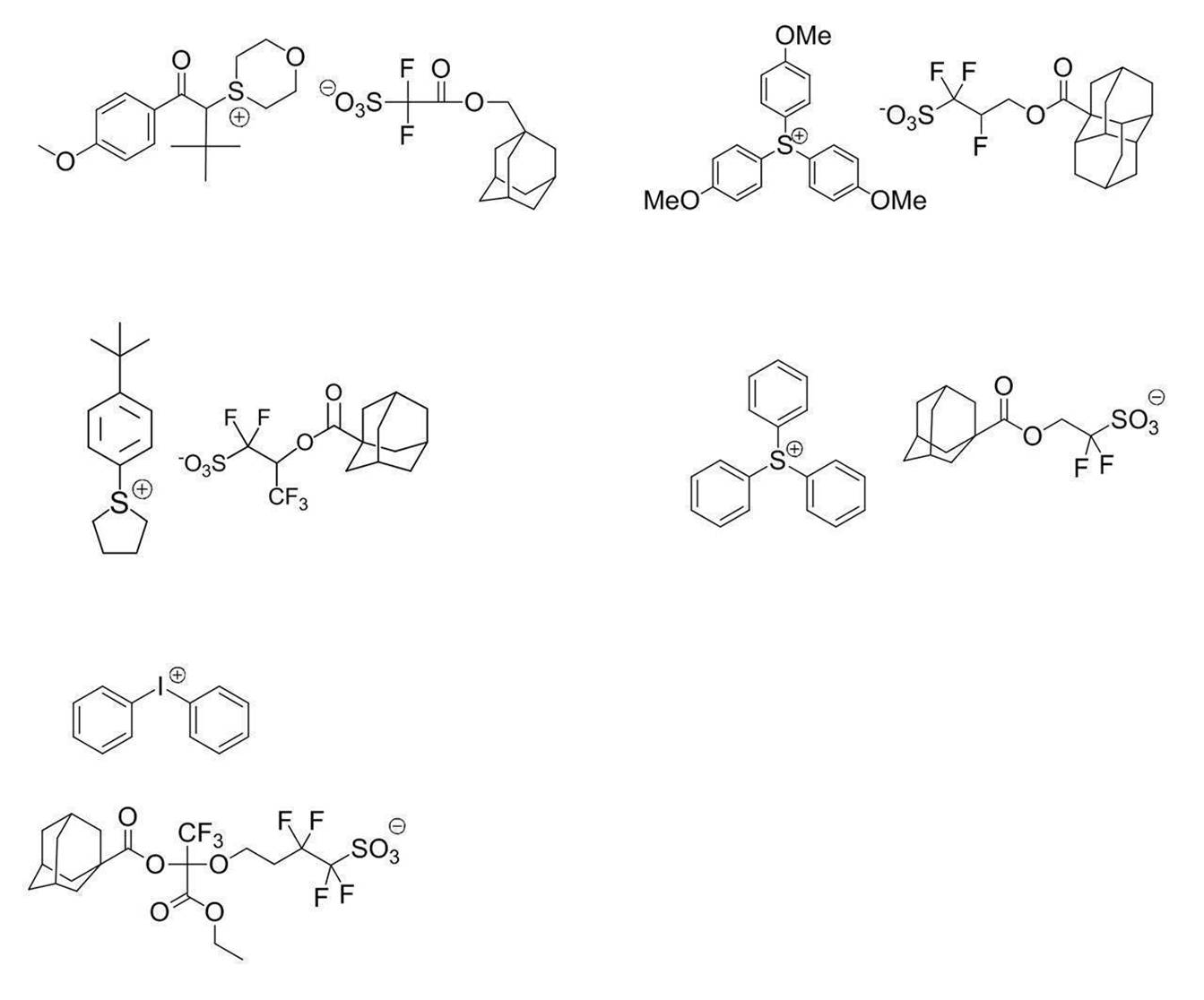
本発明においては、活性光線又は放射線の照射により以下に例示する酸を発生する光酸発生剤が好ましい。なお、例の一部には、体積の計算値を付記している(単位Å3)。なお、ここで求めた計算値は、アニオン部にプロトンが結合した酸の体積値である。
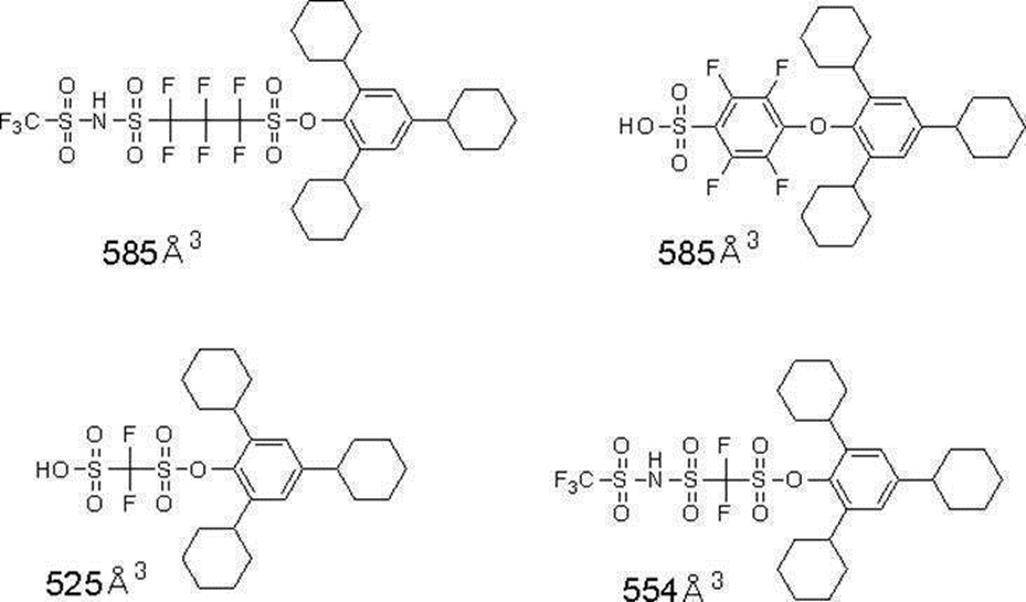

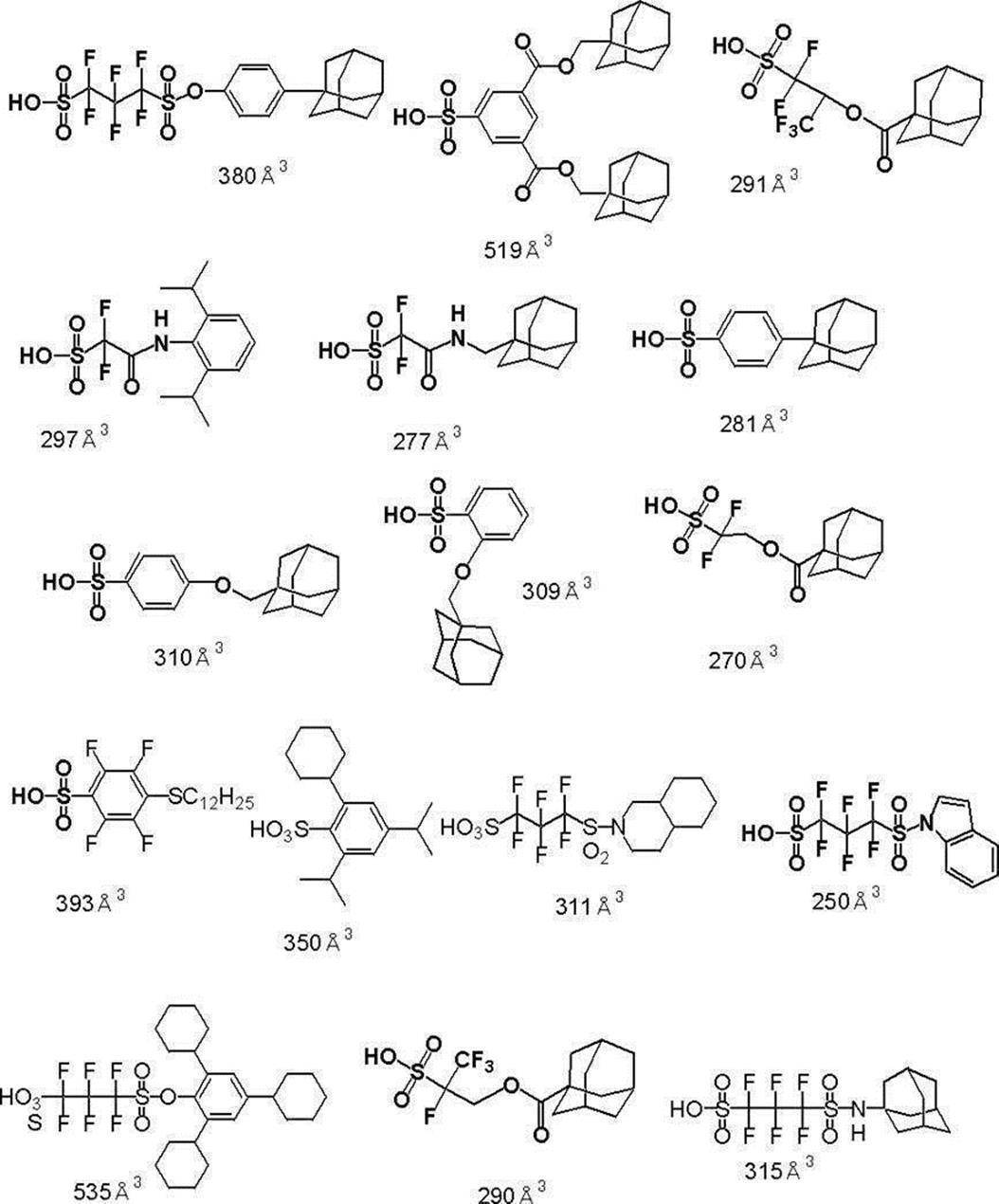
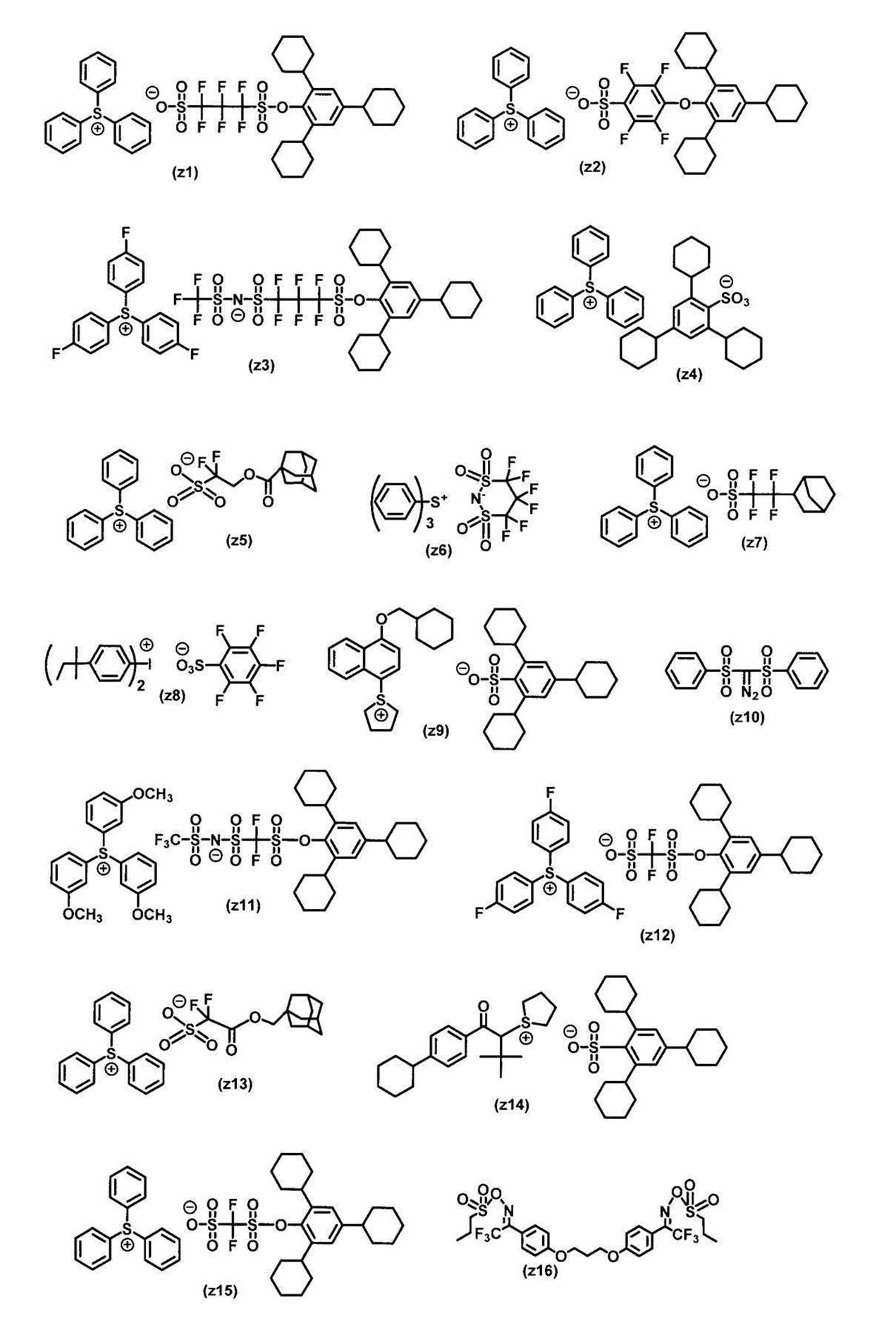
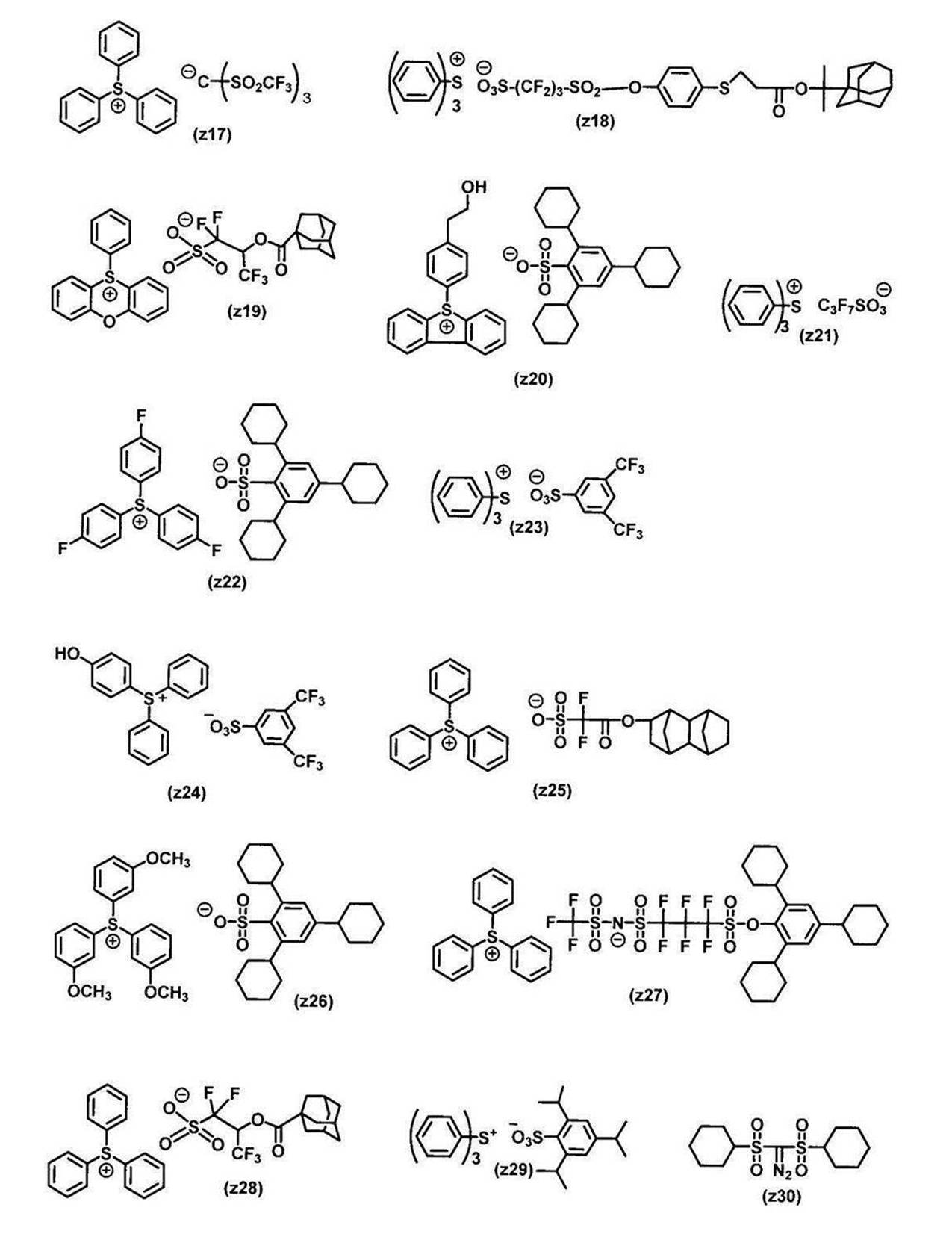

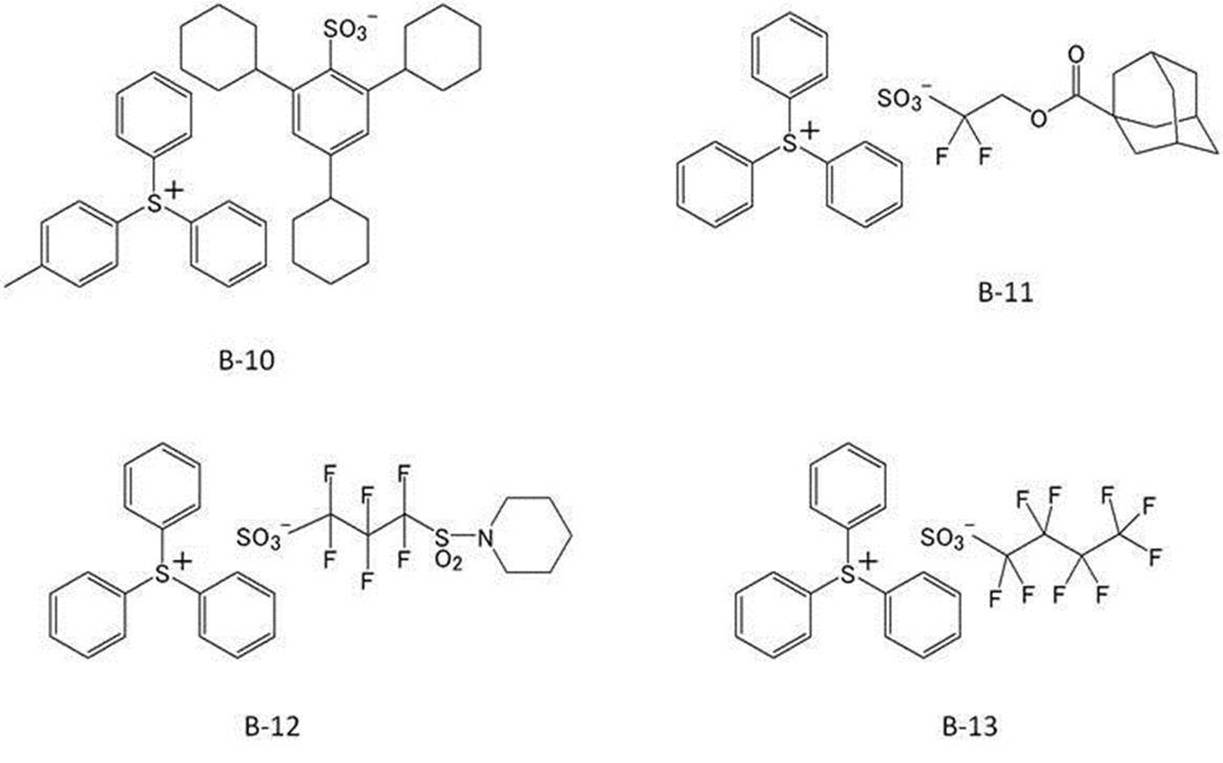
以下において、化合物(I)について説明する。
化合物(I):下記構造部位Xと下記構造部位Yとを各々1つずつ有する化合物であって、活性光線又は放射線の照射によって、下記構造部位Xに由来する下記第1の酸性部位と下記構造部位Yに由来する下記第2の酸性部位とを含む酸を発生する化合物
構造部位X:アニオン部位A1 -とカチオン部位M1 +とからなり、且つ活性光線又は放射線の照射によってHA1で表される第1の酸性部位を形成する構造部位
構造部位Y:アニオン部位A2 -とカチオン部位M2 +とからなり、且つ活性光線又は放射線の照射によって、上記構造部位Xにて形成される上記第1の酸性部位とは異なる構造のHA2で表される第2の酸性部位を形成する構造部位
但し、化合物(I)は、下記条件Iを満たす。
条件I:上記化合物(I)において上記構造部位X中の上記カチオン部位M1 +及び上記構造部位Y中の上記カチオン部位M2 +をH+に置き換えてなる化合物PIが、上記構造部位X中の上記カチオン部位M1 +をH+に置き換えてなるHA1で表される酸性部位に由来する酸解離定数a1と、上記構造部位Y中の上記カチオン部位M2 +をH+に置き換えてなるHA2で表される酸性部位に由来する酸解離定数a2を有し、且つ、上記酸解離定数a1よりも上記の酸解離定数a2の方が大きい。
なお、酸解離定数a1及び酸解離定数a2は、上述した方法により求められる。化合物PIの酸解離定数a1及び酸解離定数a2とは、より具体的に説明すると、化合物PIの酸解離定数を求めた場合において、化合物PI(化合物PIは、「HA1とHA2を有する化合物」に該当する。)が「A1 -とHA2を有する化合物」となる際のpKaが酸解離定数a1であり、上記「A1 -とHA2を有する化合物」が「A1 -とA2 -を有する化合物」となる際のpKaが酸解離定数a2である。
また、上記化合物PIとは、化合物(I)に活性光線又は放射線を照射することにより発生する酸に該当する。
M11 + A11 --L1-A12 - M12 + (Ia)
A11 -及びA12 -は、それぞれ独立に、アニオン性官能基を表す。但し、A12 -は、A11 -で表されるアニオン性官能基とは異なる構造を表す。
L1は、2価の連結基を表す。
但し、上記一般式(Ia)において、M11 +及びM12 +で表される有機カチオンをH+に置き換えてなる化合物PIa(HA11-L1-A12H)において、A12Hで表される酸性部位に由来する酸解離定数a2は、HA11で表される酸性部位に由来する酸解離定数a1よりも大きい。なお、酸解離定数a1と酸解離定数a2の好適値については、上述した通りである。
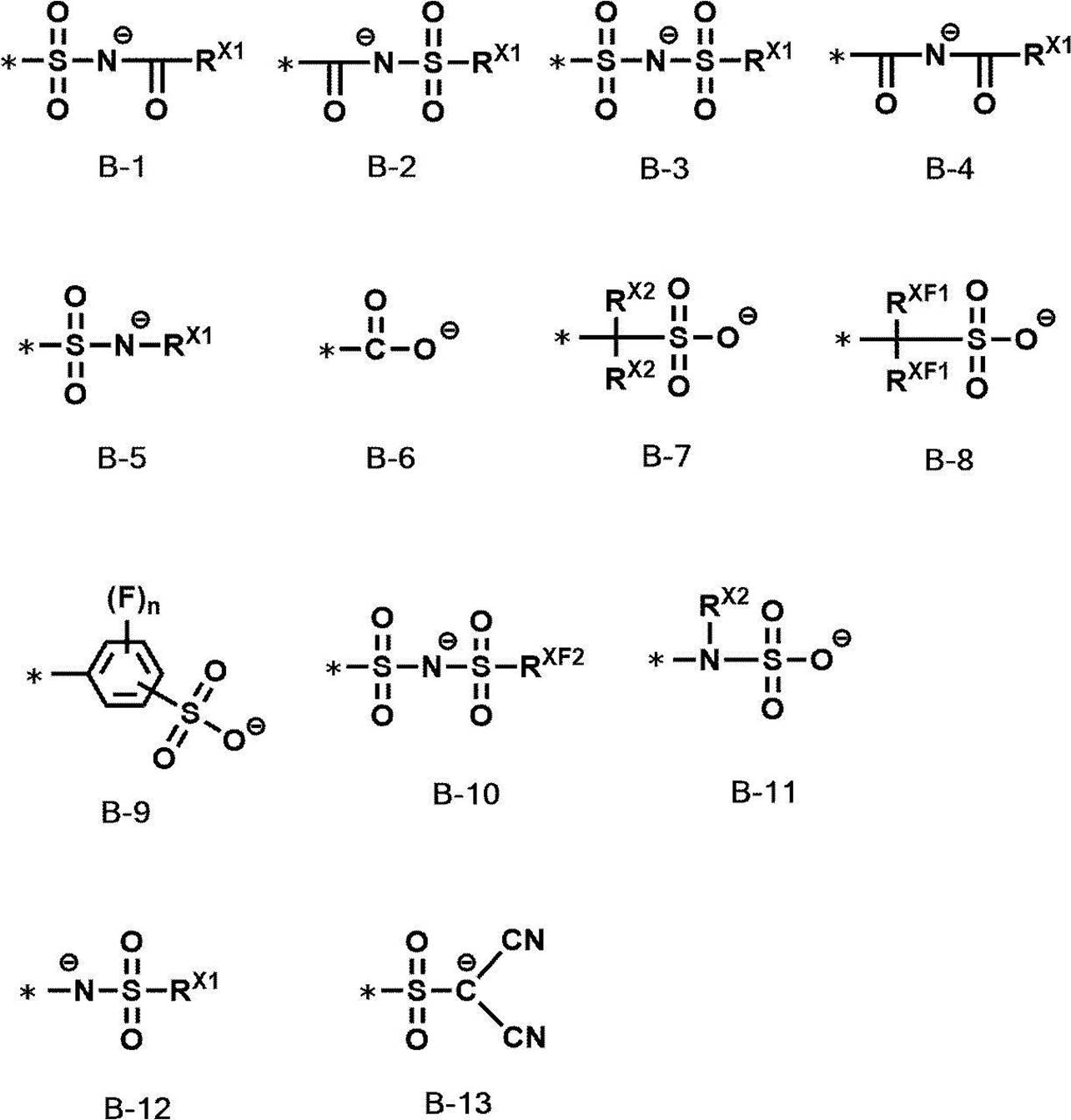
なお、一般式(B-12)における*は、-CO-及び-SO2-のいずれでもない基に対する結合位置であるのも好ましい。
RX1としては、直鎖状、分岐鎖状、若しくは環状のアルキル基、又はアリール基が好ましい。
上記アルキル基の炭素数は1~15が好ましく、1~10がより好ましい。
上記アルキル基は、置換基を有していてもよい。置換基としては、フッ素原子、又はシアノ基が好ましい。上記アルキル基が置換基としてフッ素原子を有する場合、パーフルオロアルキル基であってもよい。
また、上記アルキル基は、炭素原子がカルボニル基で置換されていてもよい。
上記アリール基は、置換基を有していてもよい。置換基としては、フッ素原子、パーフルオロアルキル基(例えば、炭素数1~10が好ましく、炭素数1~6がより好ましい。)、又はシアノ基が好ましい。
なお、一般式(B-3)におけるRX1は、フッ素原子を含まないことが好ましい。
RX2で表されるフッ素原子及びパーフルオロアルキル基以外の置換基としては、パーフルオロアルキル基以外のアルキル基(直鎖状、分岐鎖状、又は環状のいずれでもよい)が好ましい。
上記アルキル基の炭素数は1~15が好ましく、1~10がより好ましい。
上記アルキル基は、フッ素原子以外の置換基を有していてもよい。
RXF1で表されるパーフルオロアルキル基の炭素数は1~15が好ましく、1~10がより好ましく、1~6が更に好ましい。
RXF2で表されるパーフルオロアルキル基の炭素数は1~15が好ましく、1~10がより好ましく、1~6が更に好ましい。
これらの2価の連結基は、更に、-S-、-SO-、及び-SO2-からなる群から選択される基を含んでいてもよい。
また、上記アルキレン基、上記シクロアルキレン基、上記アルケニレン基、及び上記2価の脂肪族複素環基は、置換基で置換されていてもよい。置換基としては、例えば、ハロゲン原子(好ましくはフッ素原子)が挙げられる。
M1 +及びM2 +で表される有機カチオンは、それぞれ独立に、一般式(ZaI)で表される有機カチオン(カチオン(ZaI))又は一般式(ZaII)で表される有機カチオン(カチオン(ZaII))が好ましい。
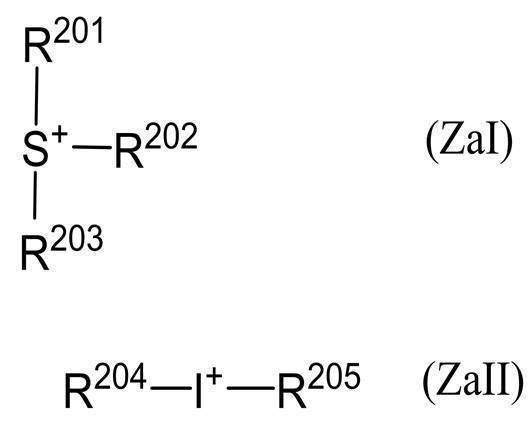
R201、R202、及びR203は、それぞれ独立に、有機基を表す。
R201、R202、及びR203としての有機基の炭素数は、通常1~30であり、1~20が好ましい。また、R201~R203のうち2つが結合して環構造を形成してもよく、環内に酸素原子、硫黄原子、エステル基、アミド基、又はカルボニル基を含んでいてもよい。R201~R203の内の2つが結合して形成する基としては、例えば、アルキレン基(例えば、ブチレン基及びペンチレン基)、及び-CH2-CH2-O-CH2-CH2-が挙げられる。
カチオン(ZaI-1)は、上記一般式(ZaI)のR201~R203の少なくとも1つがアリール基である、アリールスルホニウムカチオンである。
アリールスルホニウムカチオンは、R201~R203の全てがアリール基でもよいし、R201~R203の一部がアリール基であり、残りがアルキル基又はシクロアルキル基であってもよい。
また、R201~R203のうちの1つがアリール基であり、R201~R203のうちの残りの2つが結合して環構造を形成してもよく、環内に酸素原子、硫黄原子、エステル基、アミド基、又はカルボニル基を含んでいてもよい。R201~R203のうちの2つが結合して形成する基としては、例えば、1つ以上のメチレン基が酸素原子、硫黄原子、エステル基、アミド基、及び/又はカルボニル基で置換されていてもよいアルキレン基(例えば、ブチレン基、ペンチレン基、又は-CH2-CH2-O-CH2-CH2-)が挙げられる。
アリールスルホニウムカチオンとしては、例えば、トリアリールスルホニウムカチオン、ジアリールアルキルスルホニウムカチオン、アリールジアルキルスルホニウムカチオン、ジアリールシクロアルキルスルホニウムカチオン、及びアリールジシクロアルキルスルホニウムカチオンが挙げられる。
アリールスルホニウムカチオンが必要に応じて有しているアルキル基又はシクロアルキル基は、炭素数1~15の直鎖状アルキル基、炭素数3~15の分岐鎖状アルキル基、又は炭素数3~15のシクロアルキル基が好ましく、例えば、メチル基、エチル基、プロピル基、n-ブチル基、sec-ブチル基、t-ブチル基、シクロプロピル基、シクロブチル基、及びシクロヘキシル基等が挙げられる。
上記置換基は可能な場合更に置換基を有していてもよく、例えば、上記アルキル基が置換基としてハロゲン原子を有して、トリフルオロメチル基等のハロゲン化アルキル基となっていてもよい。
カチオン(ZaI-2)は、一般式(ZaI)におけるR201~R203が、それぞれ独立に、芳香環を有さない有機基を表すカチオンである。ここで芳香環とは、ヘテロ原子を含む芳香族環も包含する。
R201~R203としての芳香環を有さない有機基は、一般的に炭素数1~30であり、炭素数1~20が好ましい。
R201~R203は、それぞれ独立に、アルキル基、シクロアルキル基、アリル基、又はビニル基が好ましく、直鎖状又は分岐鎖状の2-オキソアルキル基、2-オキソシクロアルキル基、又はアルコキシカルボニルメチル基がより好ましく、直鎖状又は分岐鎖状の2-オキソアルキル基が更に好ましい。
R201~R203は、ハロゲン原子、アルコキシ基(例えば炭素数1~5)、水酸基、シアノ基、又はニトロ基によって更に置換されていてもよい。
カチオン(ZaI-3b)は、下記一般式(ZaI-3b)で表されるカチオンである。

R1c~R5cは、それぞれ独立に、水素原子、アルキル基、シクロアルキル基、アリール基、アルコキシ基、アリールオキシ基、アルコキシカルボニル基、アルキルカルボニルオキシ基、シクロアルキルカルボニルオキシ基、ハロゲン原子、水酸基、ニトロ基、アルキルチオ基、又はアリールチオ基を表す。
R6c及びR7cは、それぞれ独立に、水素原子、アルキル基(t-ブチル基等)、シクロアルキル基、ハロゲン原子、シアノ基、又はアリール基を表す。
Rx及びRyは、それぞれ独立に、アルキル基、シクロアルキル基、2-オキソアルキル基、2-オキソシクロアルキル基、アルコキシカルボニルアルキル基、アリル基、又はビニル基を表す。
上記環としては、芳香族又は非芳香族の炭化水素環、芳香族又は非芳香族のヘテロ環、及びこれらの環が2つ以上組み合わされてなる多環縮合環が挙げられる。環としては、3~10員環が挙げられ、4~8員環が好ましく、5又は6員環がより好ましい。
R5cとR6c、及びR5cとRxが結合して形成する基としては、単結合又はアルキレン基が好ましい。アルキレン基としては、メチレン基及びエチレン基等が挙げられる。
カチオン(ZaI-4b)は、下記一般式(ZaI-4b)で表されるカチオンである。
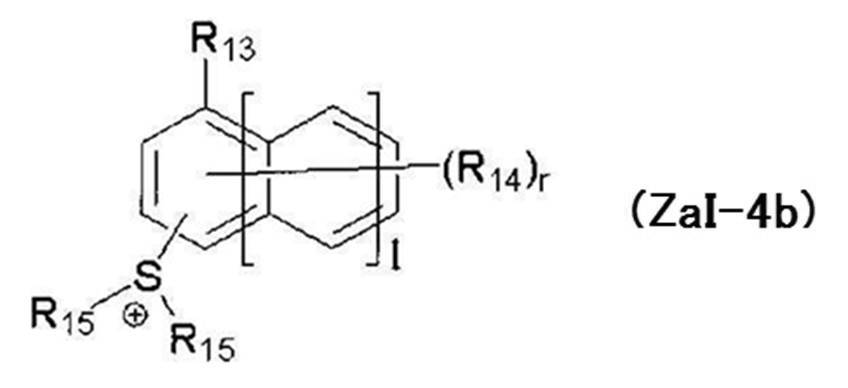
lは0~2の整数を表す。
rは0~8の整数を表す。
R13は、水素原子、フッ素原子、水酸基、アルキル基、アルコキシ基、アルコキシカルボニル基、又はシクロアルキル基を有する基(シクロアルキル基そのものであってもよく、シクロアルキル基を一部に含む基であってもよい)を表す。これらの基は置換基を有してもよい。
R14は、水酸基、アルキル基、アルコキシ基、アルコキシカルボニル基、アルキルカルボニル基、アルキルスルホニル基、シクロアルキルスルホニル基、又はシクロアルキル基を有する基(シクロアルキル基そのものであってもよく、シクロアルキル基を一部に含む基であってもよい)を表す。これらの基は置換基を有してもよい。R14は、複数存在する場合はそれぞれ独立して、水酸基等の上記基を表す。
R15は、それぞれ独立して、アルキル基、シクロアルキル基、又はナフチル基を表す。これらの基は置換基を有してもよい。2つのR15が互いに結合して環を形成してもよい。2つのR15が互いに結合して環を形成するとき、環骨格内に、酸素原子、又は窒素原子等のヘテロ原子を含んでもよい。一態様において、2つのR15がアルキレン基であり、互いに結合して環構造を形成することが好ましい。
一般式(ZaII)中、R204及びR205は、それぞれ独立に、アリール基、アルキル基又はシクロアルキル基を表す。
R204及びR205のアリール基としてはフェニル基、又はナフチル基が好ましく、フェニル基がより好ましい。R204及びR205のアリール基は、酸素原子、窒素原子、又は硫黄原子等を有するヘテロ環を有するアリール基であってもよい。ヘテロ環を有するアリール基の骨格としては、例えば、ピロール、フラン、チオフェン、インドール、ベンゾフラン、及びベンゾチオフェン等が挙げられる。
R204及びR205のアルキル基及びシクロアルキル基としては、炭素数1~10の直鎖状アルキル基又は炭素数3~10の分岐鎖状アルキル基(例えば、メチル基、エチル基、プロピル基、ブチル基、又はペンチル基)、又は炭素数3~10のシクロアルキル基(例えばシクロペンチル基、シクロヘキシル基、又はノルボルニル基)が好ましい。
次に、化合物(II)について説明する。
化合物(II):上記構造部位Xを2つ以上と上記構造部位Yとを有する化合物であって、活性光線又は放射線の照射によって、上記構造部位Xに由来する上記第1の酸性部位を2つ以上と上記構造部位Yに由来する上記第2の酸性部位とを含む酸を発生する化合物
但し、化合物(II)は、下記条件IIを満たす。
条件II:上記化合物(II)において上記構造部位X中の上記カチオン部位M1 +及び上記構造部位Y中のカチオン部位M2 +をH+に置き換えてなる化合物PIIが、上記構造部位X中の上記カチオン部位M1 +をH+に置き換えてなるHA1で表される酸性部位に由来する酸解離定数a1と、上記構造部位Y中の上記カチオン部位M2 +をH+に置き換えてなるHA2で表される酸性部位に由来する酸解離定数a2を有し、且つ、上記酸解離定数a1よりも上記酸解離定数a2の方が大きい。
酸解離定数a1及び酸解離定数a2は、上述した方法により求められる。
ここで、化合物PIIの酸解離定数a1及び酸解離定数a2について、より具体的に説明する。化合物(II)が、例えば、上記構造部位Xに由来する上記第1の酸性部位を2つと、上記構造部位Yに由来する上記第2の酸性部位を1つ有する酸を発生する化合物である場合、化合物PIIは「2つのHA1とHA2を有する化合物」に該当する。この化合物PIIの酸解離定数を求めた場合、化合物PIIが「1つのA1 -と1つのHA1とHA2とを有する化合物」となる際のpKaが酸解離定数a1であり、「2つのA1 -とHA2とを有する化合物」が「2つのA1 -とA2 -を有する化合物」となる際のpKaが酸解離定数a2である。つまり、化合物PIIが、上記構造部位X中の上記カチオン部位M1 +をH+に置き換えてなるHA1で表される酸性部位に由来する酸解離定数を複数有する場合、その最も小さい値を酸解離定数a1とみなす。
なお、化合物(II)は、上記構造部位Yを複数有していてもよい。


A21 -及びA22 -は、それぞれ独立に、アニオン性官能基を表す。但し、A22 -は、A21 -で表されるアニオン性官能基とは異なる構造を表す。
L2は、(n1+n2)価の有機基を表す。
n1は、2以上の整数を表す。
n2は、1以上の整数を表す。
但し、上記一般式(IIa)において、M21 +及びM22 +で表される有機カチオンをH+に置き換えてなる化合物PIIa(上記一般式(IIa-1)で表される化合物に該当する。)において、A22Hで表される酸性部位に由来する酸解離定数a2は、HA21で表される酸性部位に由来する酸解離定数a1よりも大きい。なお、酸解離定数a1と酸解離定数a2の好適値については、上述した通りである。
上記一般式(IIa)中、n1個のM21 +同士、n1個のA21 +同士は、各々互いに同一の基を表す。
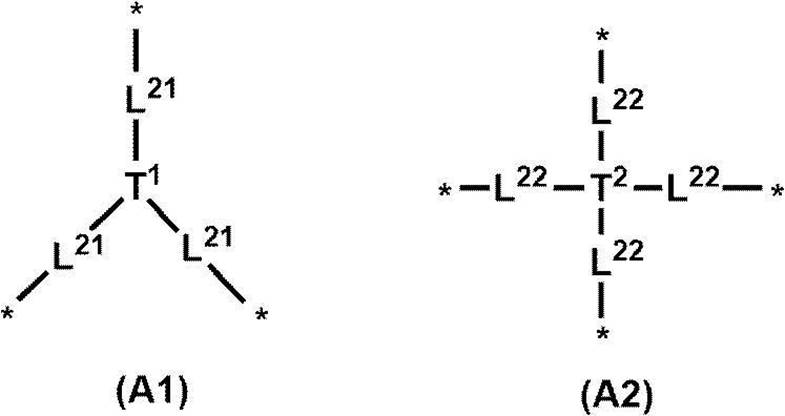
上記複素環基は、芳香族複素環基であっても、脂肪族複素環基であってもよい。上記複素環は、少なくとも1つのN原子、O原子、S原子、又はSe原子を環構造内に有する5~10員環であることが好ましく、5~7員環がより好ましく、5~6員環が更に好ましい。
L21及びL22で表される2価の連結基としては、上記一般式(Ia)中のL1で表される2価の連結基と同義であり、好適態様も同じである。
n1は、2以上の整数を表す。上限は特に制限されないが、例えば、6以下であり、4以下が好ましく、3以下がより好ましい。
n2は、1以上の整数を表す。上限は特に制限されないが、例えば、3以下であり、2以下が好ましい。
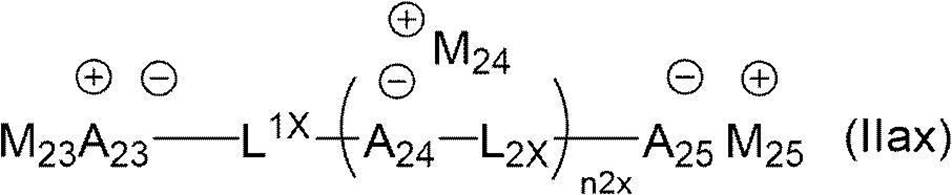

A23 -及びA25 -は、1価のアニオン性官能基を表す。
A24 -は、2価のアニオン性官能基を表す。
L1x及びL2xは、2価の有機基を表す。
n2xは、1以上の整数を表す。
但し、上記一般式(IIax)において、M23 +、M24 +、及びM25 +で表される有機カチオンをH+に置き換えてなる化合物PIIax(上記一般式(IIax-1)で表される化合物に該当する。)において、HA23で表される酸性部位に由来する酸解離定数a1ax、A24Hで表される酸性部位に由来する酸解離定数a2ax、及びA25Hで表される酸性部位に由来する酸解離定数a3axのうち、最も小さい酸解離定数が上記酸解離定数a1に該当し、最も大きい酸解離定数が上記酸解離定数a2に該当する。なお、酸解離定数a1と酸解離定数a2の好適値については、上述した通りである。酸解離定数a1にも酸解離定数a2にも該当しない酸性部位に由来する酸解離定数は、上記酸解離定数a1+1.0以内であることが好ましく、上記酸解離定数a1+0.7以内であることがより好ましく、上記酸解離定数a1+0.3以内であることが更に好ましい。
A23 -又はA25 -が、有機カチオンをH+に置き換えた場合に上記酸解離定数a1に該当する酸性部位を表す場合、A23 -及びA25 -としては、一般式(B-8)及び(B-10)のいずれかで表される基であるのが好ましい。
n2xとしては、1~3が好ましく、1又は2がより好ましく、1が更に好ましい。
上記一般式(IIax)中、M24 +同士、A24 +同士は、各々互いに同一であっても異なっていてもよい。
また、上記アルキレン基、上記シクロアルキレン基、上記アルケニレン基、及び上記2価の脂肪族複素環基は、置換基で置換されていてもよい。置換基としては、例えば、ハロゲン原子(好ましくはフッ素原子)が挙げられる。
なお、L1xにおいてA23 -及びA24 -との結合位置は炭素原子(カルボニル炭素を除く)であるのが好ましい。また、L2xにおいてA24 -及びA25 -との結合位置は炭素原子(カルボニル炭素を除く)であるのが好ましい。
次に、化合物(III)について説明する。
化合物(III):上記構造部位Xを2つ以上と、下記構造部位Zとを有する化合物であって、活性光線又は放射線の照射によって、上記構造部位Xに由来する上記第1の酸性部位を2つ以上と上記構造部位Zとを含む酸を発生する化合物
構造部位Z:酸を中和可能な非イオン性の部位
プロトンと静電的に相互作用し得る基又は電子を有する官能基としては、環状ポリエーテル等のマクロサイクリック構造を有する官能基、又はπ共役に寄与しない非共有電子対をもった窒素原子を有する官能基等が挙げられる。π共役に寄与しない非共有電子対を有する窒素原子とは、例えば、下記式に示す部分構造を有する窒素原子である。

なお、化合物PIIIが、上記構造部位X中の上記カチオン部位M1 +をH+に置き換えてなるHA1で表される酸性部位に由来する酸解離定数を複数有する場合、その最も小さい値を酸解離定数a1とみなす。
つまり、化合物(III)が、例えば、上記構造部位Xに由来する上記第1の酸性部位を2つと上記構造部位Zとを有する酸を発生する化合物である場合、化合物PIIIは「2つのHA1を有する化合物」に該当する。この化合物PIIIの酸解離定数を求めた場合、化合物PIIIが「1つのA1 -と1つのHA1とを有する化合物」となる際のpKaが酸解離定数a1である。つまり、化合物PIIIが、上記構造部位X中の上記カチオン部位M1 +をH+に置き換えてなるHA1で表される酸性部位に由来する酸解離定数を複数有する場合、その最も小さい値を酸解離定数a1とみなす。
なお、上記化合物(III)において上記構造部位X中の上記カチオン部位M1 +をH+に置き換えてなる化合物PIIIとは、例えば、化合物(III)が後述する化合物(IIIa)で表される化合物である場合、HA31-L3-N(R2X)-L4-A31Hが該当する。

A31 -は、アニオン性官能基を表す。
L3及びL4は、それぞれ独立に、2価の連結基を表す。
R2Xは、1価の有機基を表す。
上記一般式(IIIa)中、L3及びL4は、各々上述した一般式(Ia)中のL1と同義であり、好適態様も同じである。
上記一般式(IIIa)中、2個のM31 +同士、及び2個のA31 -同士は、各々互いに同一の基を表す。
また、上記アルキレン基、上記シクロアルキレン基、及び上記アルケニレン基は、置換基で置換されていてもよい。
上記化合物(I)~(III)で表される化合物は1種単独で使用してもよく、2種以上を使用してもよい。2種以上使用する場合は、その合計含有量が、上記好適含有量の範囲内であることが好ましい。
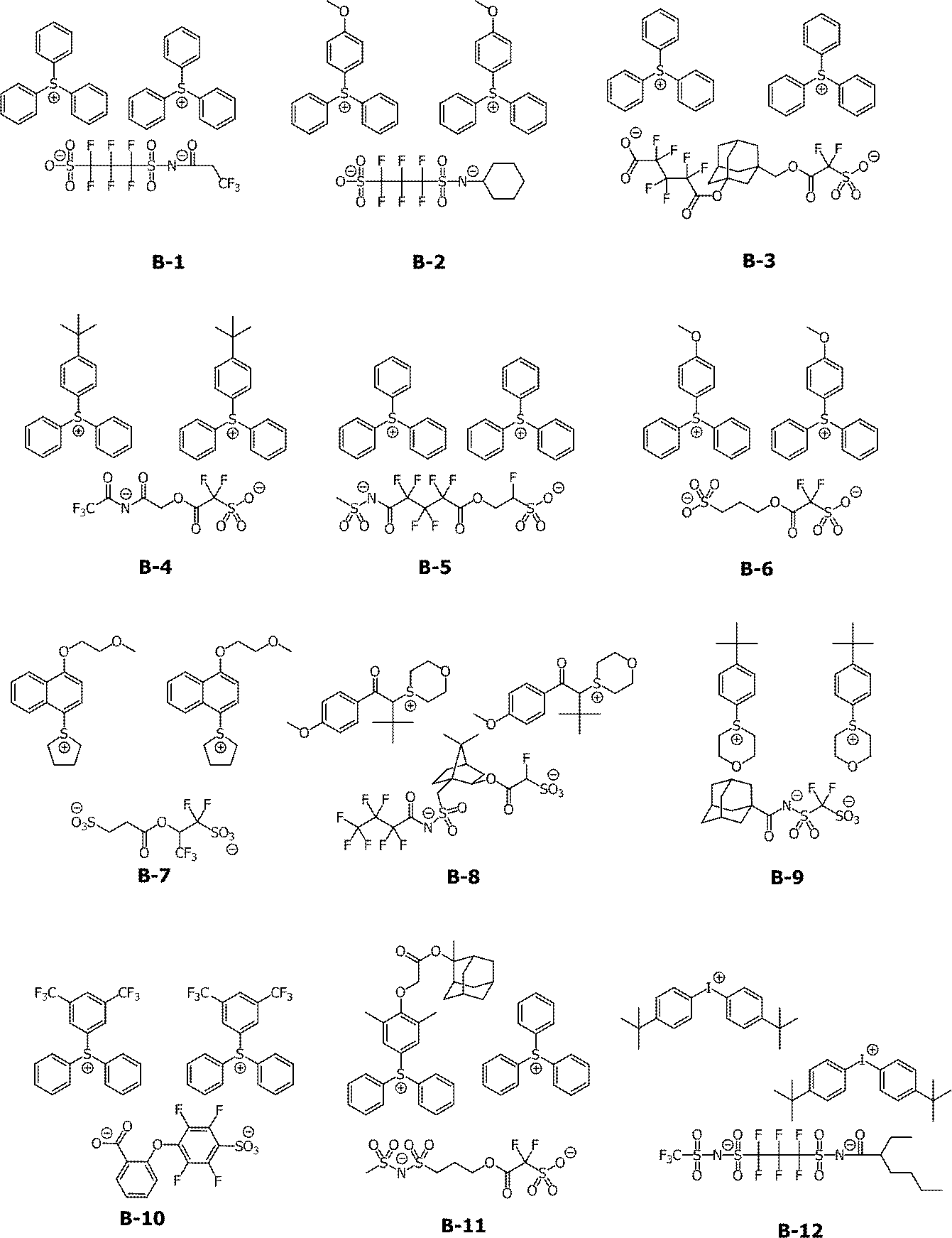
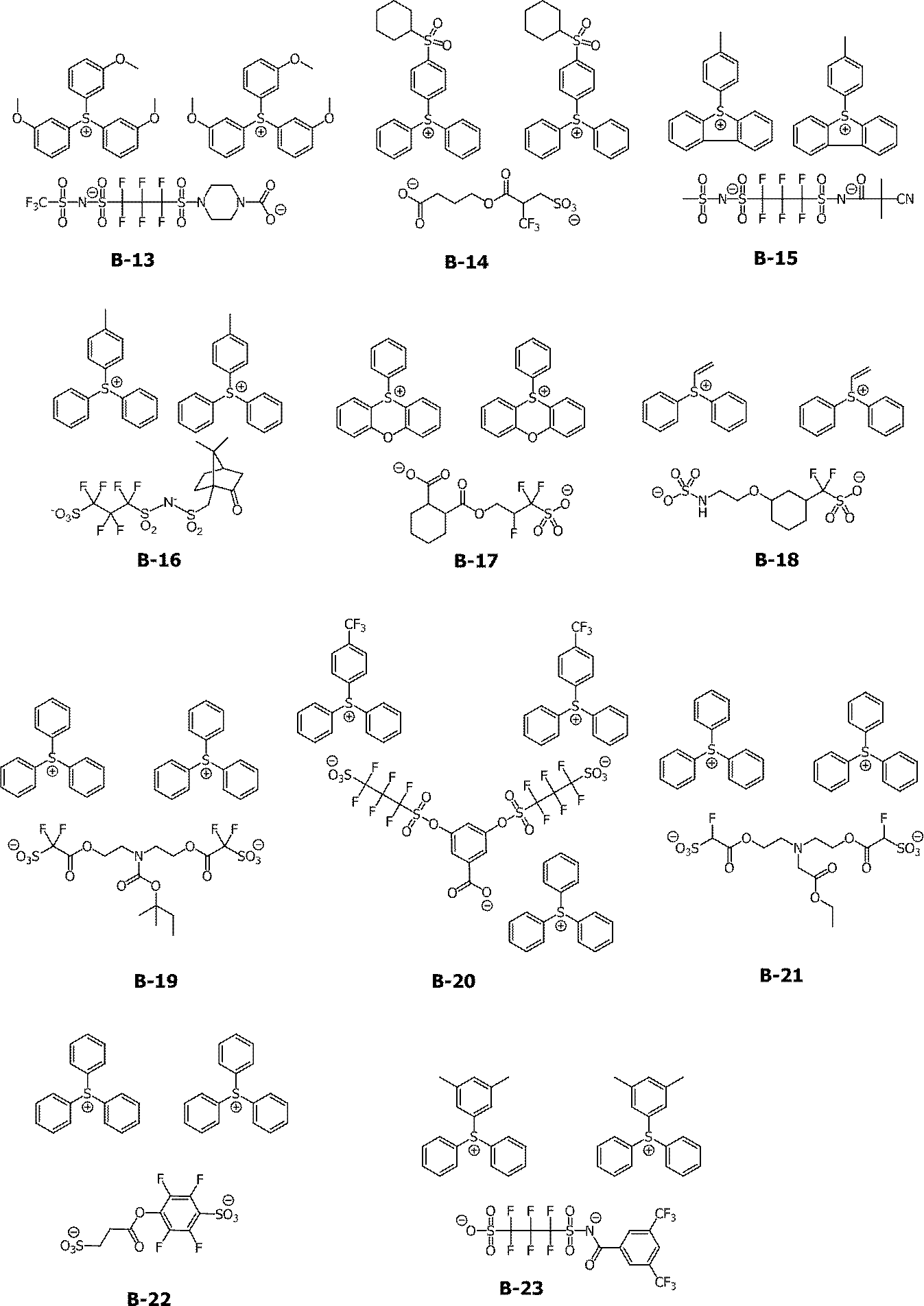
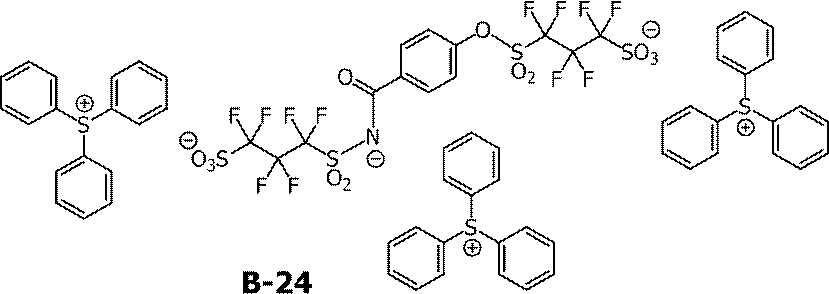
光酸発生剤のレジスト組成物中の含有量は、組成物の全固形分を基準として、0.1~50質量%が好ましく、5~50質量%がより好ましく、8~40質量%が更に好ましい。特に、電子線や極紫外線露光の際に高感度化及び高解像性を両立するには光酸発生剤の含有率は高い方が好ましい。上記観点からは、10~40質量%が好ましく、10~35質量%がより好ましい。
上述した各成分を溶解させてレジスト組成物を調製する際には、溶剤を使用できる。使用できる溶剤としては、例えば、アルキレングリコールモノアルキルエーテルカルボキシレート、アルキレングリコールモノアルキルエーテル、乳酸アルキルエステル、アルコキシプロピオン酸アルキル、炭素数4~10の環状ラクトン、炭素数4~10の、環を含んでいてもよいモノケトン化合物、アルキレンカーボネート、アルコキシ酢酸アルキル、及び、ピルビン酸アルキル等の有機溶剤が挙げられる。
アルキレングリコールモノアルキルエーテルとしては、例えば、プロピレングリコールモノメチルエーテル、プロピレングリコールモノエチルエーテル、プロピレングリコールモノプロピルエーテル、プロピレングリコールモノブチルエーテル、エチレングリコールモノメチルエーテル、及び、エチレングリコールモノエチルエーテルが挙げられる。
アルコキシプロピオン酸アルキルとしては、例えば、3-エトキシプロピオン酸エチル、3-メトキシプロピオン酸メチル、3-エトキシプロピオン酸メチル、及び、3-メトキシプロピオン酸エチルが挙げられる。
アルコキシ酢酸アルキルとしては、例えば、酢酸-2-メトキシエチル、酢酸-2-エトキシエチル、酢酸-2-(2-エトキシエトキシ)エチル、酢酸-3-メトキシ-3-メチルブチル、及び、酢酸-1-メトキシ-2-プロピルが挙げられる。
ピルビン酸アルキルとしては、例えば、ピルビン酸メチル、ピルビン酸エチル、及び、ピルビン酸プロピルが挙げられる。
なかでも、溶剤としては、常温常圧下で、沸点130℃以上の溶剤が好ましい。具体的には、シクロペンタノン、γ-ブチロラクトン、シクロヘキサノン、乳酸エチル、エチレングリコールモノエチルエーテルアセテート、プロピレングリコールモノメチルエーテルアセテート、3-エトキシプロピオン酸エチル、ピルビン酸エチル、酢酸-2-エトキシエチル、酢酸-2-(2-エトキシエトキシ)エチル、及び、プロピレンカーボネートが挙げられる。
水酸基を含む溶剤としては、例えば、エチレングリコール、エチレングリコールモノメチルエーテル、エチレングリコールモノエチルエーテル、プロピレングリコール、プロピレングリコールモノメチルエーテル、プロピレングリコールモノエチルエーテル、及び、乳酸エチル等が挙げられる。なかでも、プロピレングリコールモノメチルエーテル、又は、乳酸エチルが好ましい。
水酸基を含まない溶剤としては、例えば、プロピレングリコールモノメチルエーテルアセテート、エチルエトキシプロピオネート、2-ヘプタノン、γ-ブチロラクトン、シクロヘキサノン、酢酸ブチル、N-メチルピロリドン、N,N-ジメチルアセトアミド、及び、ジメチルスルホキシド等が挙げられる。なかでも、プロピレングリコールモノメチルエーテルアセテート、エチルエトキシプロピオネート、2-ヘプタノン、γ-ブチロラクトン、シクロヘキサノン、又は、酢酸ブチルが好ましく、プロピレングリコールモノメチルエーテルアセテート、エチルエトキシプロピオネート、又は、2-ヘプタノンがより好ましい。
水酸基を含まない溶剤に対する、水酸基を含む溶剤の含有量の質量比[水酸基を含む溶剤の含有質量/水酸基を含まない溶剤の含有質量]は、1/99~99/1が好ましく、10/90~90/10がより好ましく、20/80~60/40が更に好ましい。また、塗布均一性の点で、混合溶剤中の水酸基を含まない溶剤の質量は、50質量%以上が好ましい。
レジスト組成物は、露光から加熱までの経時による性能変化を低減するために、酸拡散制御剤を含むことが好ましい。
塩基性化合物としては、例えば、下記式(A1)~(E1)で示される構造を有する化合物が挙げられる。

R203、R204、R205、及び、R206は、同一でも異なってもよく、炭素数1~20のアルキル基を表す。
一般式(A1)及び(E1)中のアルキル基は、無置換であることが好ましい。
オニウムカルボキシレート構造を有する化合物としては、オニウムヒドロキシド構造を有する化合物のアニオン部がカルボキシレートになったものであり、例えば、アセテート、アダマンタン-1-カルボキシレート、及び、パーフルオロアルキルカルボキシレート等が挙げられる。トリアルキルアミン構造を有する化合物としては、トリ(n-ブチル)アミン、及び、トリ(n-オクチル)アミン等が挙げられる。
アニリン化合物としては、2,6-ジイソプロピルアニリン、N,N-ジメチルアニリン、N,N-ジブチルアニリン、及び、N,N-ジヘキシルアニリン等が挙げられる。
水酸基及び/又はエーテル結合を有するアルキルアミン誘導体としては、エタノールアミン、ジエタノールアミン、トリエタノールアミン、及び、トリス(メトキシエトキシエチル)アミン等が挙げられる。
水酸基及び/又はエーテル結合を有するアニリン誘導体としては、N,N-ビス(ヒドロキシエチル)アニリン等が挙げられる。
また、アミン化合物は、アルキル鎖中に、酸素原子を有し、オキシアルキレン基が形成されていることが好ましい。オキシアルキレン基の数は、分子内に1つ以上であり、3~9個が好ましく、4~6個がより好ましい。
なかでも、オキシアルキレン基としては、オキシエチレン基(-CH2CH2O-)、又は、オキシプロピレン基(-CH(CH3)CH2O-若しくは-CH2CH2CH2O-)が好ましく、オキシエチレン基がより好ましい。
アンモニウム塩化合物は、アルキル鎖中に、酸素原子を有し、オキシアルキレン基が形成されていることが好ましい。オキシアルキレン基の数は、分子内に1つ以上であり、3~9個が好ましく、4~6個がより好ましい。なかでも、オキシアルキレン基としては、基(-CH2CH2O-)、又は、オキシプロピレン基(-CH(CH3)CH2O-若しくはCH2CH2CH2O-)が好ましく、オキシエチレン基がより好ましい。
アンモニウム塩化合物のアニオンとしては、ハロゲン原子、スルホネート、ボレート、及び、フォスフェート等が挙げられる。なかでも、ハロゲン原子又はスルホネートが好ましい。ハロゲン原子としては、クロライド、ブロマイド、及び、アイオダイドが好ましい。スルホネートとしては、炭素数1~20の有機スルホネートが好ましい。有機スルホネートとしては、炭素数1~20のアルキルスルホネート、及び、アリールスルホネートが好ましい。アルキルスルホネートのアルキル基は、置換基を有していてもよく、置換基としては、例えば、フッ素、塩素、臭素、アルコキシ基、アシル基、及び、アリール基等が挙げられる。アルキルスルホネートとして、メタンスルホネート、エタンスルホネート、ブタンスルホネート、ヘキサンスルホネート、オクタンスルホネート、ベンジルスルホネート、トリフルオロメタンスルホネート、ペンタフルオロエタンスルホネート、及び、ノナフルオロブタンスルホネート等が挙げられる。アリールスルホネートのアリール基としては、ベンゼン環、ナフタレン環、及び、アントラセン環が挙げられる。ベンゼン環、ナフタレン環、及び、アントラセン環は、置換基を有していてもよく、置換基としては炭素数1~6の直鎖状若しくは分岐鎖状アルキル基、又は、炭素数3~6のシクロアルキル基が好ましい。直鎖状若しくは分岐鎖状アルキル基、及び、シクロアルキル基として、具体的には、メチル基、エチル基、n-プロピル基、イソプロピル基、n-ブチル基、イソブチル基、t-ブチル基、n-ヘキシル基、及び、シクロヘキシル基等が挙げられる。他の置換基としては炭素数1~6のアルコキシ基、ハロゲン原子、シアノ基、ニトロ基、アシル基、及び、アシルオキシ基等が挙げられる。
本発明に係る組成物は、酸拡散制御剤として、プロトンアクセプター性官能基を有し、かつ、活性光線又は放射線の照射により分解してプロトンアクセプター性が低下、消失、又は、プロトンアクセプター性から酸性に変化した化合物を発生する化合物〔以下、化合物(PA)ともいう。〕を更に含んでいてもよい。

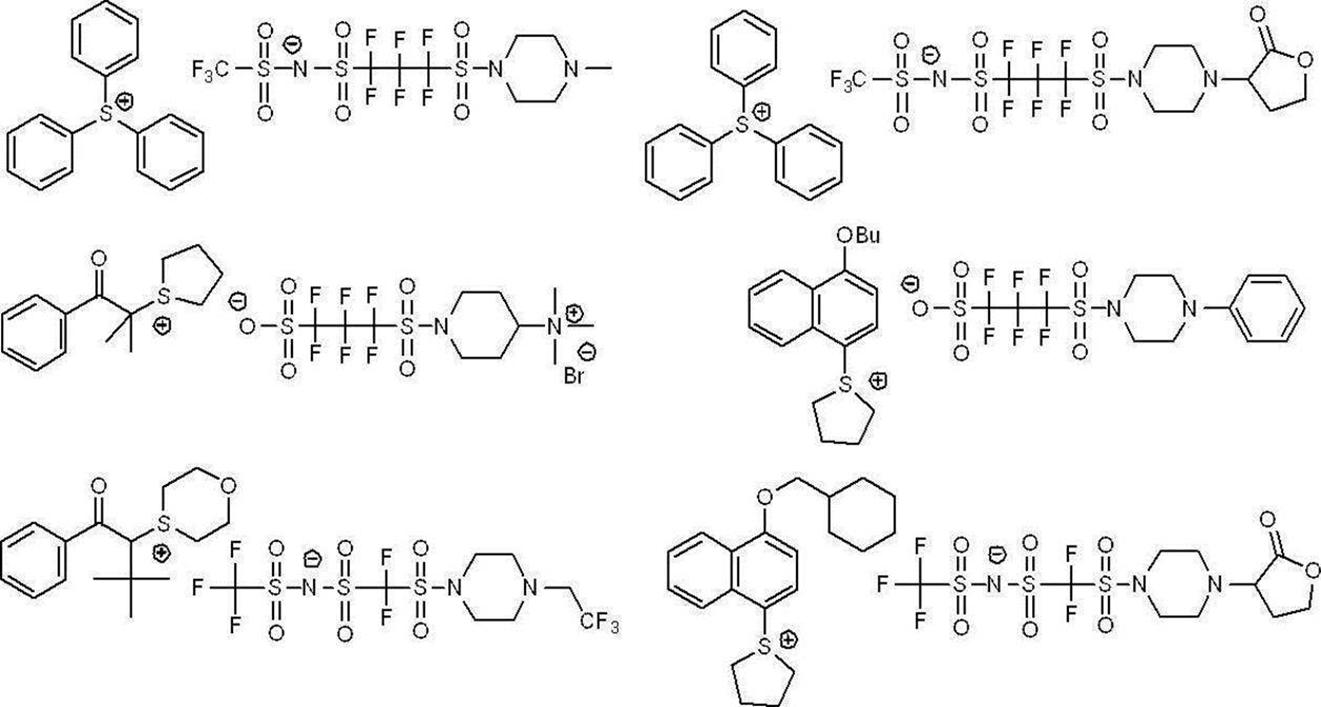
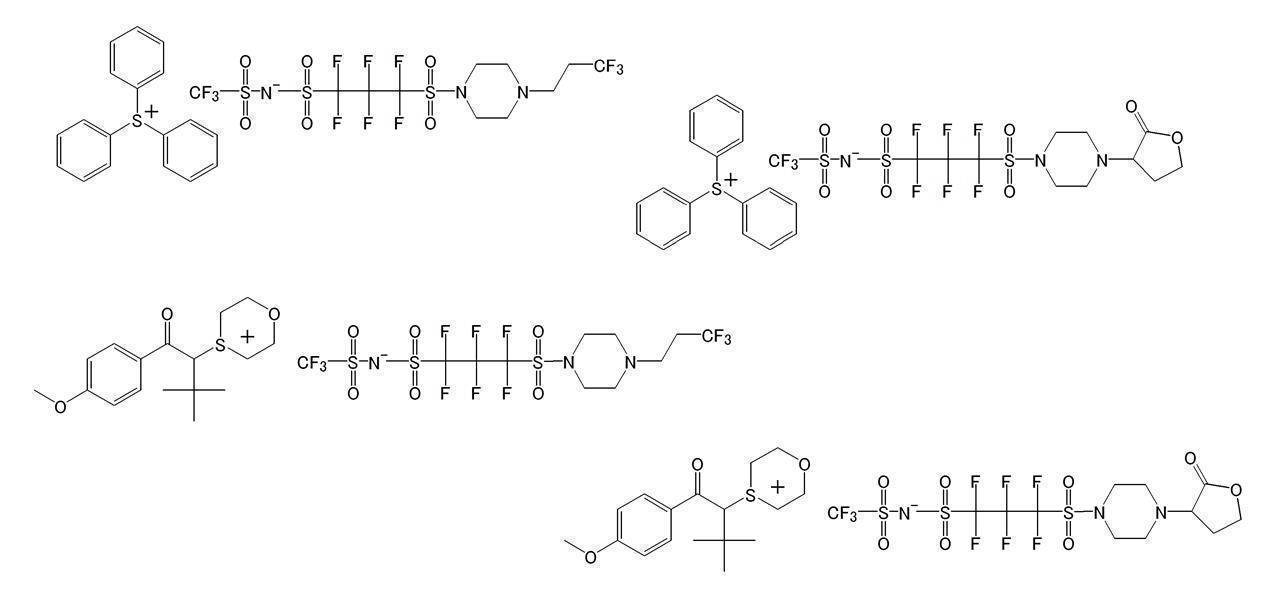
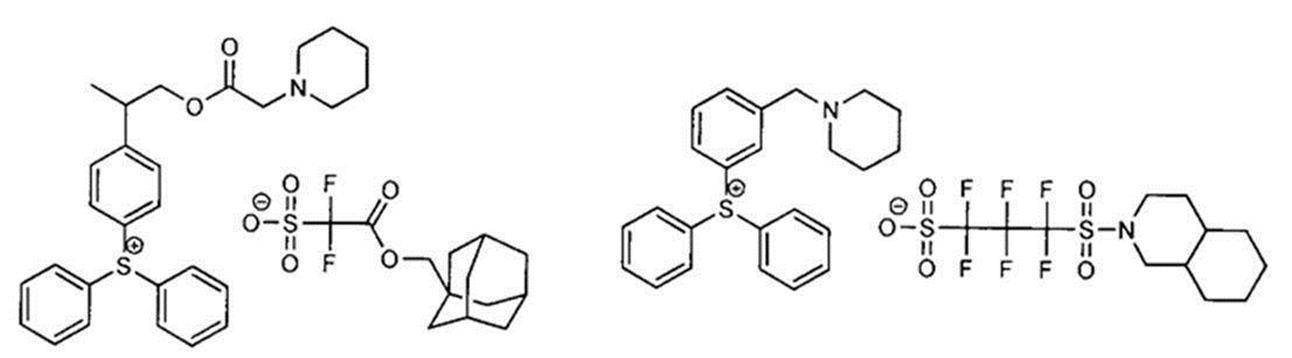
酸拡散制御剤の含有量は、レジスト組成物の全固形分に対して、0.001~10質量%が好ましく、0.005~5質量%がより好ましい。
レジスト組成物は、上記樹脂(A)とは別に疎水性樹脂を含んでいてもよい。
疎水性樹脂はレジスト膜の表面に偏在するように設計されることが好ましいが、界面活性剤とは異なり、必ずしも分子内に親水基を有する必要はなく、極性/非極性物質を均一に混合することに寄与しなくてもよい。
疎水性樹脂を添加することの効果として、水に対するレジスト膜表面の静的/動的な接触角の制御、及び、アウトガスの抑制等が挙げられる。
フッ素原子を有するアルキル基(好ましくは炭素数1~10、より好ましくは炭素数1~4)は、少なくとも1つの水素原子がフッ素原子で置換された直鎖状又は分岐鎖状アルキル基であり、更にフッ素原子以外の置換基を有していてもよい。
フッ素原子を有するシクロアルキル基は、少なくとも1つの水素原子がフッ素原子で置換された単環又は多環のシクロアルキル基であり、更にフッ素原子以外の置換基を有していてもよい。
フッ素原子を有するアリール基としては、フェニル基、及び、ナフチル基等のアリール基の少なくとも1つの水素原子がフッ素原子で置換されたものが挙げられ、更にフッ素原子以外の置換基を有していてもよい。
フッ素原子又は珪素原子を有する繰り返し単位の例としては、US2012/0251948A1の段落[0519]に例示されたものを挙げることができる。
ここで、疎水性樹脂中の側鎖部分が有するCH3部分構造には、エチル基、及び、プロピル基等が有するCH3部分構造を包含するものである。
一方、疎水性樹脂の主鎖に直接結合しているメチル基(例えば、メタクリル酸構造を有する繰り返し単位のα-メチル基)は、主鎖の影響により疎水性樹脂の表面偏在化への寄与が小さいため、本発明におけるCH3部分構造に包含されないものとする。
レジスト組成物は、界面活性剤を更に含んでいてもよい。界面活性剤を含むことにより、波長が250nm以下、特には220nm以下の露光光源を使用した場合に、良好な感度及び解像度で、密着性及び現像欠陥のより少ないパターンを形成することが可能となる。
界面活性剤としては、フッ素系及び/又はシリコン系界面活性剤を用いることが特に好ましい。
フッ素系及び/又はシリコン系界面活性剤としては、例えば、米国特許出願公開第2008/0248425号の段落[0276]に記載の界面活性剤が挙げられる。また、エフトップEF301若しくはEF303(新秋田化成(株)製);フロラードFC430、431若しくは4430(住友スリーエム(株)製);メガファックF171、F173、F176、F189、F113、F110、F177、F120若しくはR08(DIC(株)製);サーフロンS-382、SC101、102、103、104、105若しくは106(旭硝子(株)製);トロイゾルS-366(トロイケミカル(株)製);GF-300若しくはGF-150(東亜合成化学(株)製)、サーフロンS-393(セイミケミカル(株)製);エフトップEF121、EF122A、EF122B、RF122C、EF125M、EF135M、EF351、EF352、EF801、EF802若しくはEF601((株)ジェムコ製);PF636、PF656、PF6320若しくはPF6520(OMNOVA社製);又は、FTX-204G、208G、218G、230G、204D、208D、212D、218D若しくは222D((株)ネオス製)を使用してもよい。なお、ポリシロキサンポリマーKP-341(信越化学工業(株)製)も、シリコン系界面活性剤として使用できる。
また、米国特許出願公開第2008/0248425号の段落[0280]に記載されているフッ素系及び/又はシリコン系以外の界面活性剤を使用してもよい。
レジスト組成物は、溶解阻止化合物、染料、可塑剤、光増感剤、光吸収剤、及び/又は、現像液に対する溶解性を促進させる化合物(例えば、分子量1000以下のフェノール化合物、又は、カルボキシル基を含んだ脂環族若しくは脂肪族化合物)を更に含んでいてもよい。
ここで「溶解阻止化合物」とは、酸の作用により分解して有機系現像液中での溶解度が減少する、分子量3000以下の化合物である。
下記表に、レジスト組成物に使用した酸分解性樹脂を示す。
表中、「繰り返し単位のモル比率」欄は、各酸分解性樹脂を構成する各繰り返し単位の全繰り返し単位に対する含有量(モル%)を示す。
なお、表1-1中の樹脂A-1~A-17は、いずれも以下の化学式に示した各繰り返し単位を有し、樹脂A-1~A-17中の各繰り返し単位の含有量は、「繰り返し単位のモル比率」欄に示した値と、左から順に対応する。
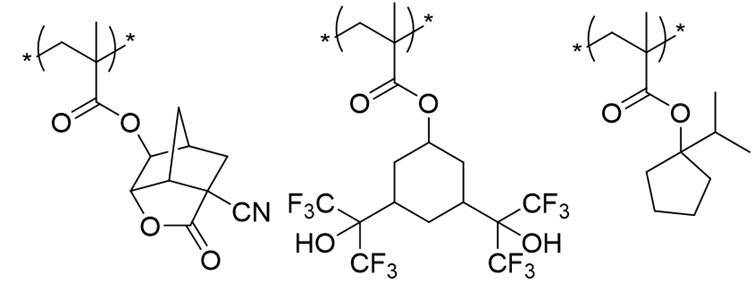

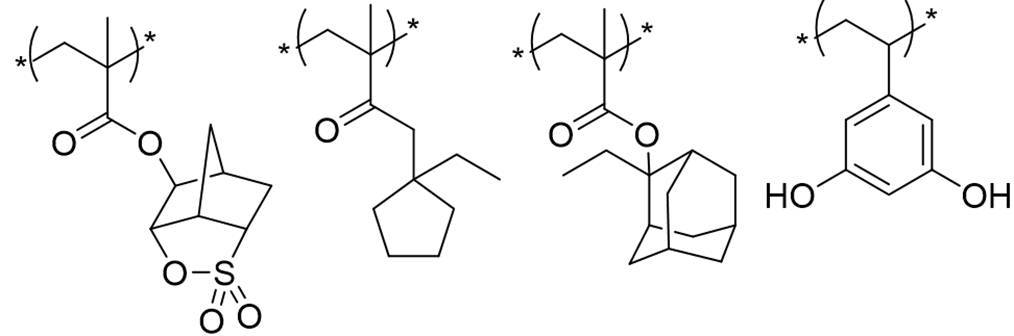
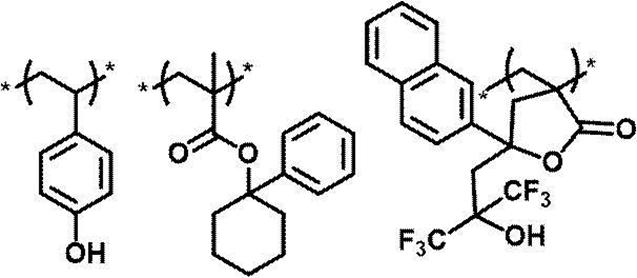
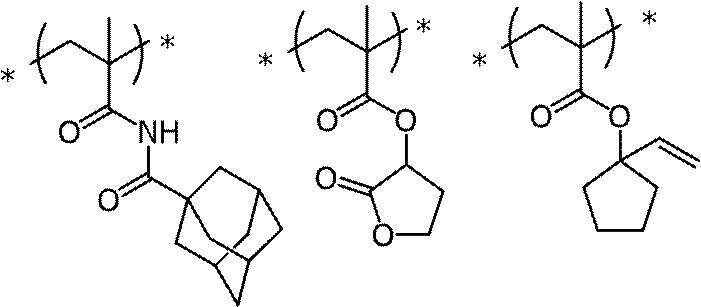
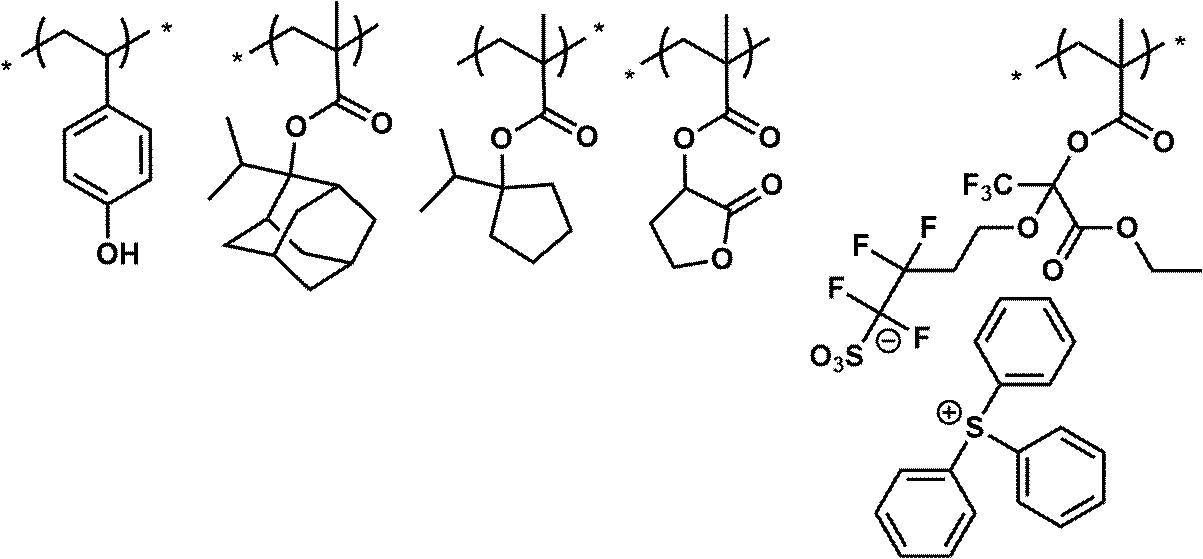
なお、酸分解性樹脂の重量平均分子量および分子量分布は、後述する<GPC測定>に記載の測定方法にて測定した値である。

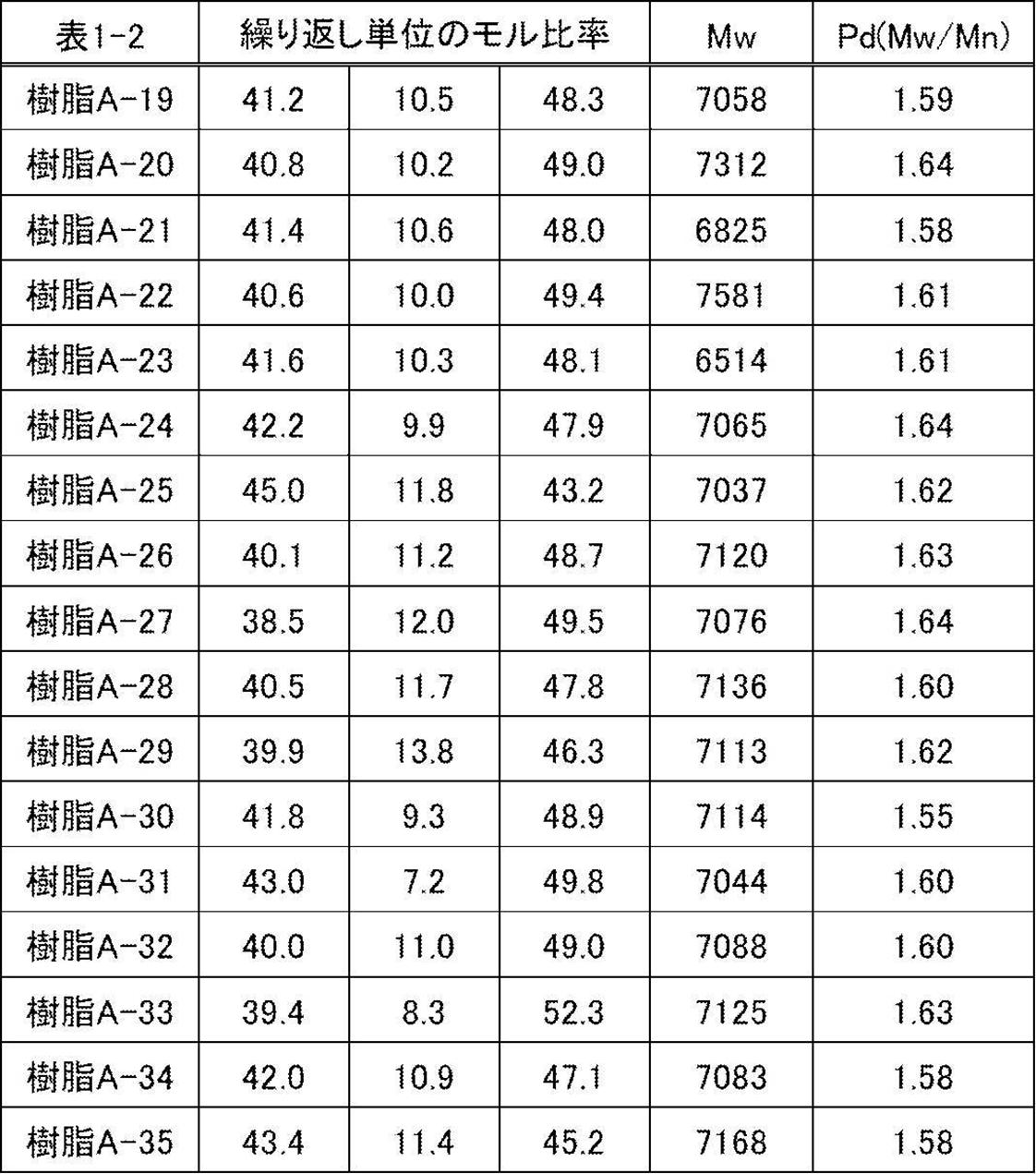
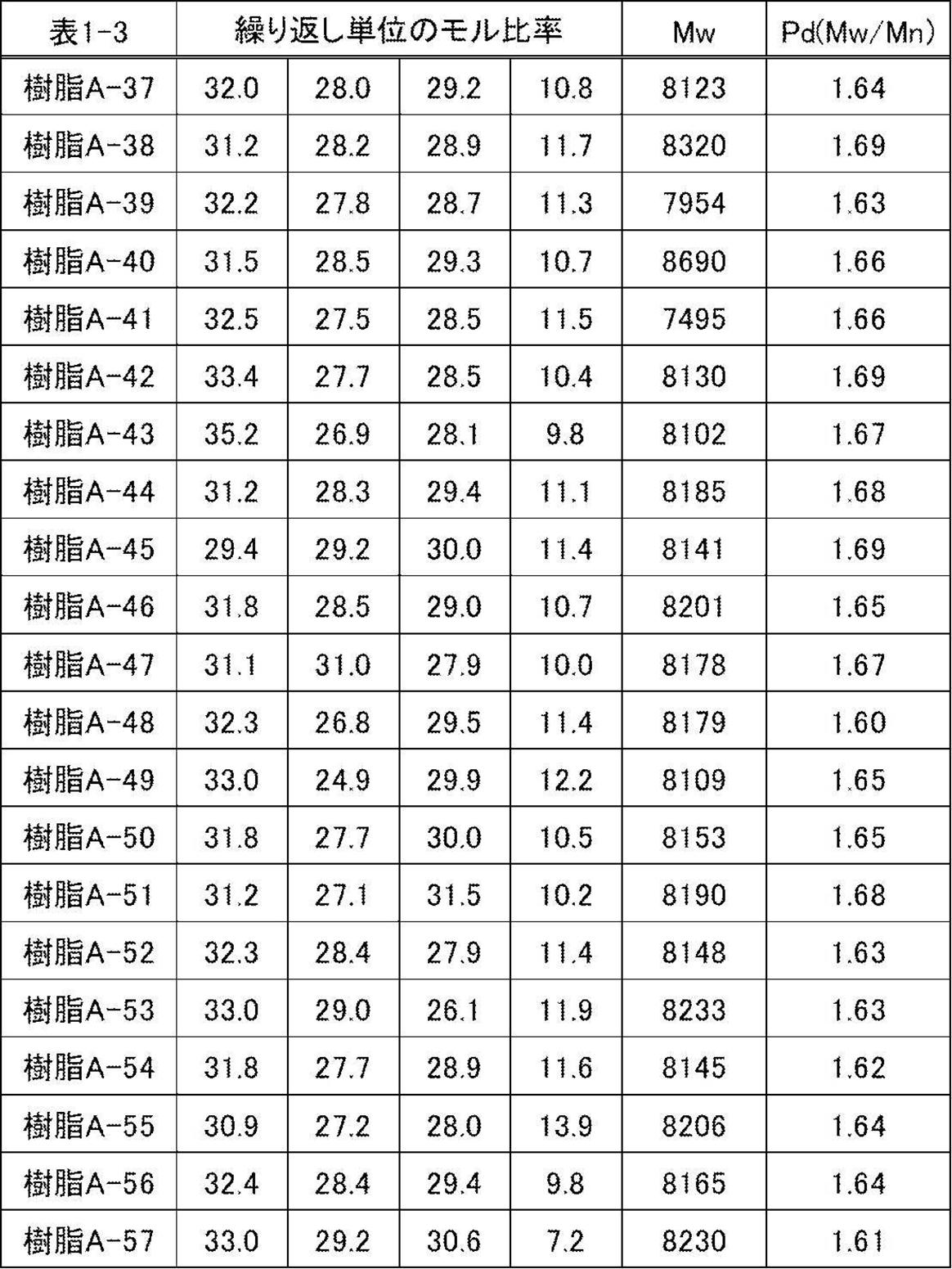

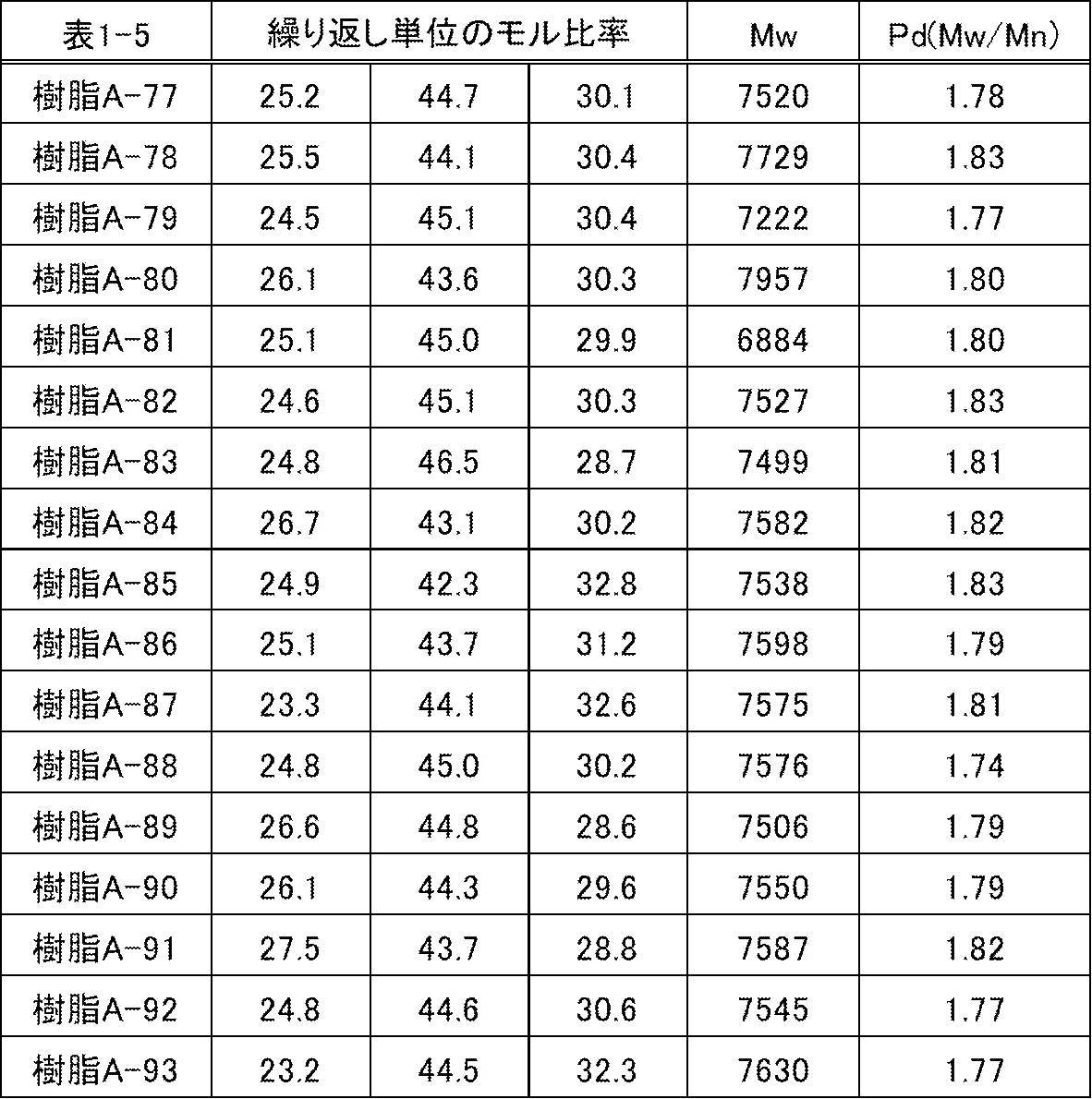

光酸発生剤として、下記成分を使用した。
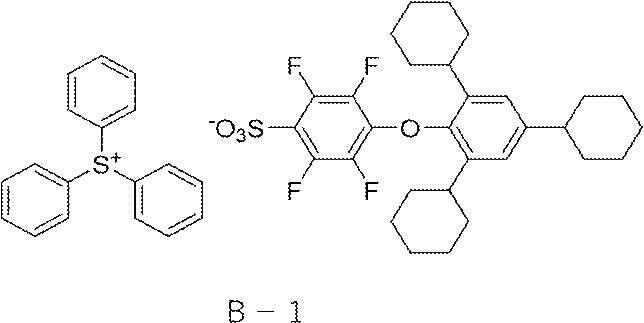


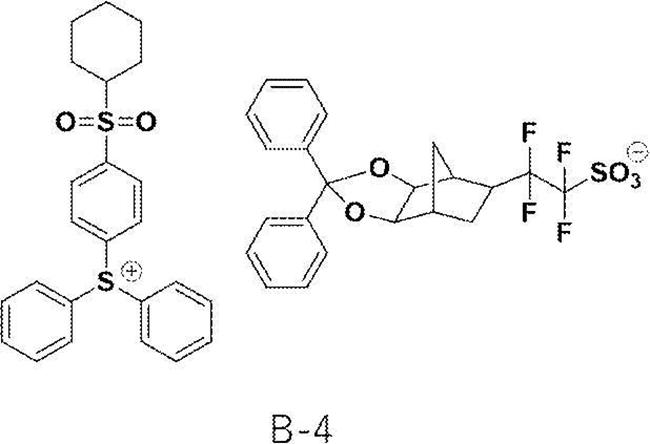
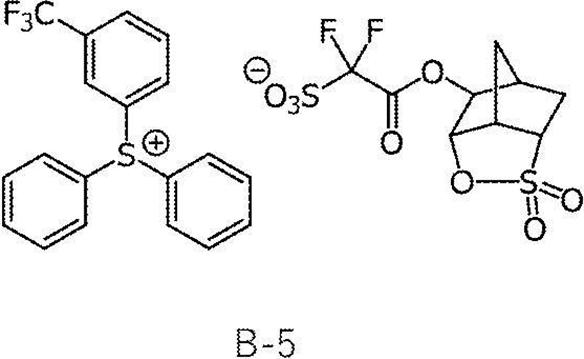
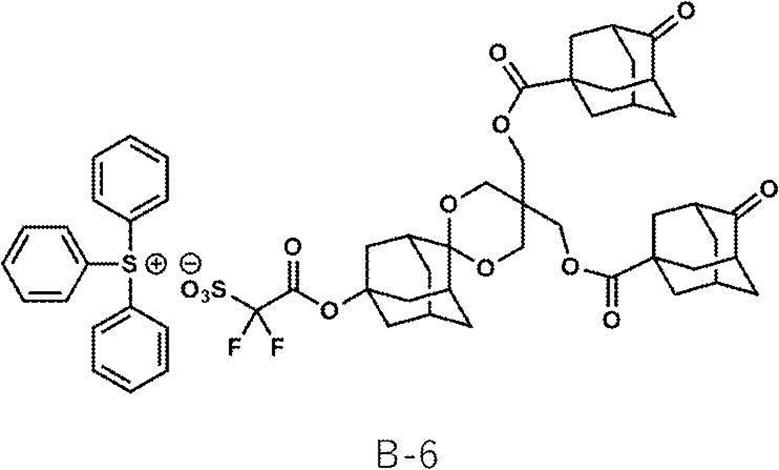
酸拡散制御剤として、下記成分を使用した。
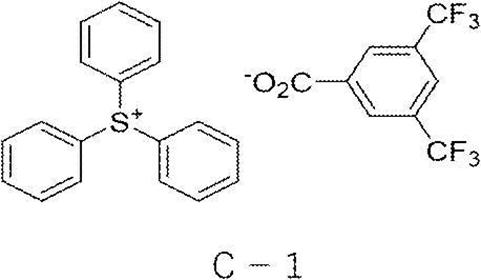
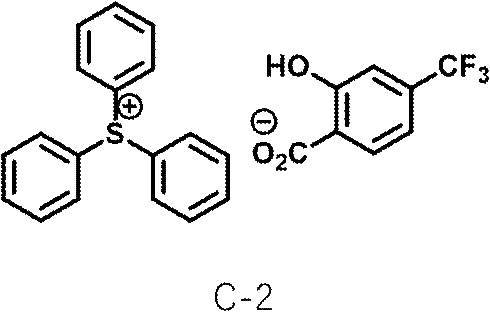


疎水性樹脂として、以下の化学式に示した各繰り返し単位を有する疎水性樹脂E-1を使用した。疎水性樹脂中の各繰り返し単位の含有量は、「繰り返し単位のモル比率」欄に示した値と、左から順に対応する。
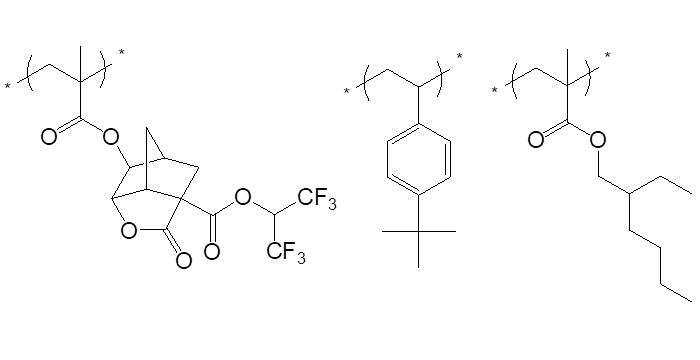
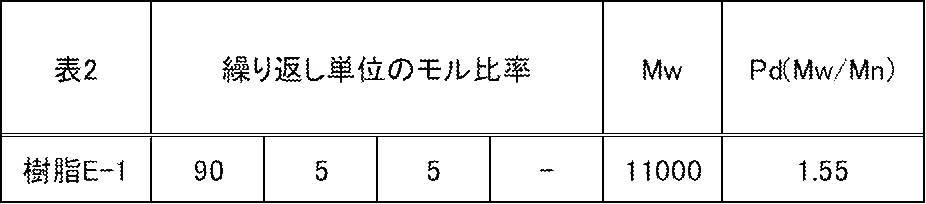
溶剤として、下記成分を使用した。
F-1:プロピレングリコールモノメチルエーテルアセテート(PGMEA)
F-2:プロピレングリコールモノメチルエーテル(PGME)
F-3:γ-ブチロラクトン
F-4:乳酸エチル
F-5:シクロヘキサノン
F-6:2-ヘプタノン
表3-1~3-6に示した各成分を固形分濃度が2質量%となるように混合した。次に、得られた混合液を、最初に孔径50nmのポリエチレン製フィルター、次に、孔径10nmのナイロン製フィルター、最後に、孔径5nmのポリエチレン製フィルターの順番で濾過することにより、レジスト組成物を調製した。
後述するように、レジスト組成物Re-1~Re-17、Re-19~Re-35、Re-37~Re-57、Re-59~Re-77、Re-79~Re-93、Re-95~Re-119は、回帰分析用レジスト組成物として用いた。
なお、表3-1~3-6において、溶剤以外の各成分の含有量(質量%)は、全固形分に対する含有量を意味する。また、「溶剤」欄の混合比は、各溶媒の質量比を表す。

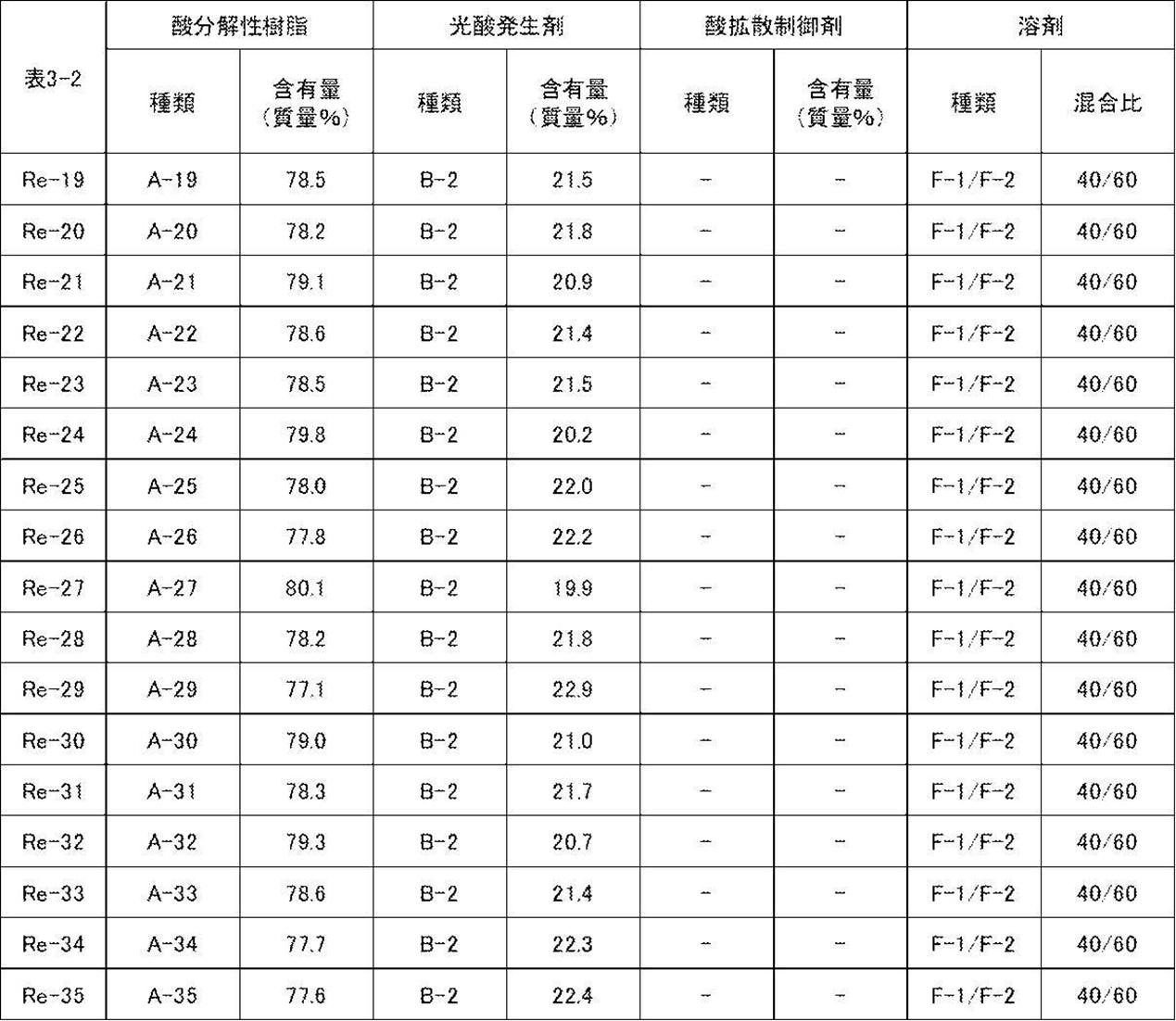

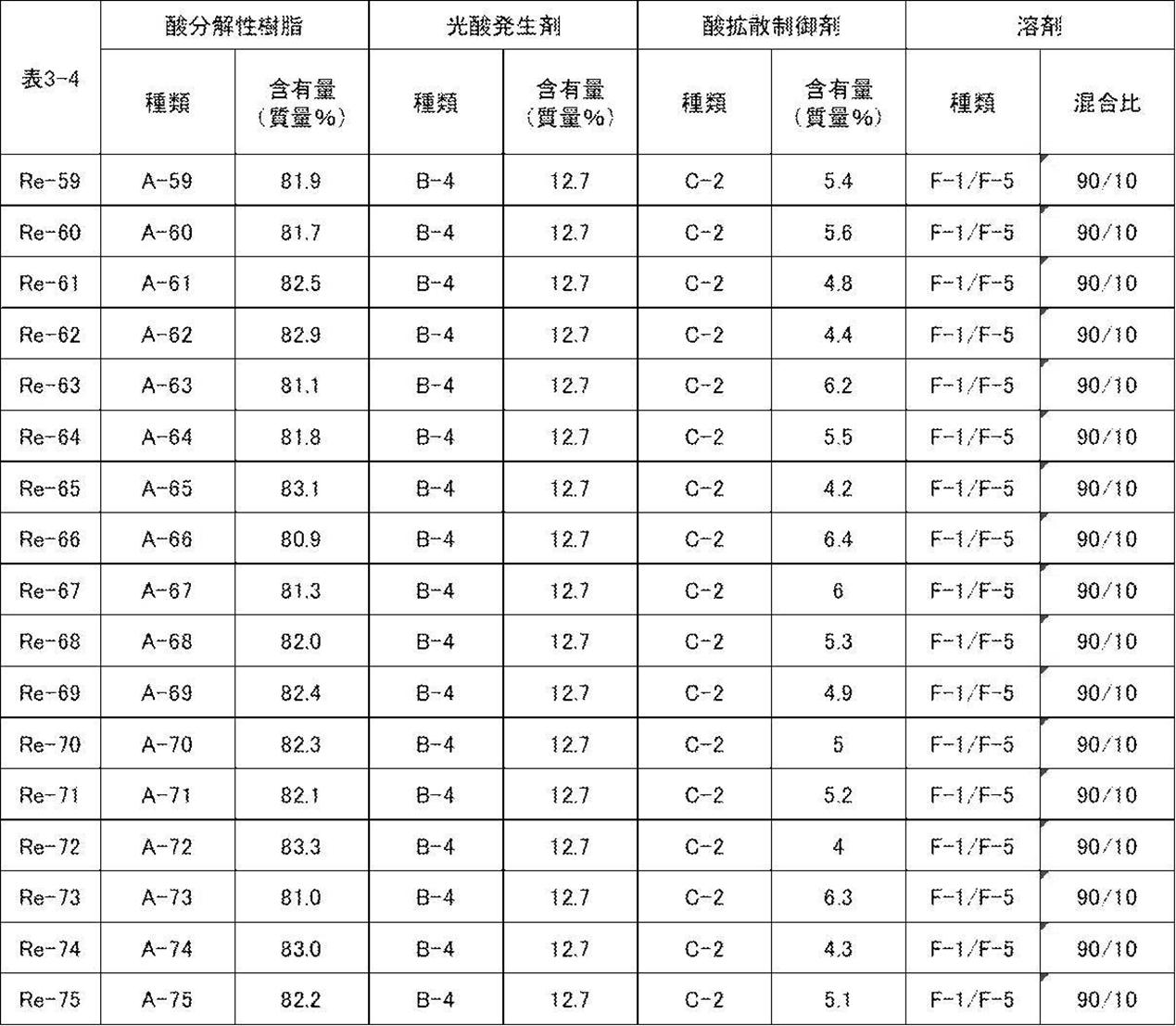


シリコンウエハ上に下層膜形成用組成物AL412(Brewer Science社製)を塗布し、205℃で60秒間ベークして、膜厚20nmの下地膜を形成した。その上に、表3-1~3-6に記載の回帰分析用レジスト組成物であるレジスト組成物Re-1~Re-17、Re-19~Re-35、Re-37~Re-57、Re-59~Re-77、Re-79~Re-93、Re-95~Re-119をそれぞれ塗布し、100℃で60秒間ベークして、膜厚45nmのレジスト膜を形成した。
EUV露光装置(Exitech社製、Micro Exposure Tool、NA0.3、Quadruple、アウターシグマ0.885、インナーシグマ0.381)を用いて、得られたレジスト膜を有するシリコンウエハに対してパターン照射(露光量30(mJ/cm2))を行った。なお、レチクルとしては、ラインサイズ=25nmであり、且つ、ライン:スペース=1:1であるマスクを用いた。
露光後のレジスト膜を120℃で60秒間ベークした後、テトラメチルアンモニウムハイドロオキサイド水溶液(2.38質量%)で30秒間現像し、次に、純水で30秒間リンスした。その後、これをスピン乾燥して回帰分析用パターンを得て、回帰分析用パターンサイズを取得した。
まず、回帰分析用レジスト組成物であるレジスト組成物Re-1~Re-17を用いて<回帰分析用パターンサイズ取得>にて得られた回帰分析用パターンサイズに対して、酸分解性樹脂に含まれる各繰り返し単位の全繰り返し単位に対する含有量と、酸拡散制御剤のレジスト組成物中の全固形分質量に対する含有量とを説明変数とし、目標パターンサイズ(25nm)を目的変数として、重回帰分析を行った。重回帰分析によって、以下式で表される重回帰式が得られた。
重回帰式:CD(パターンサイズ)=0.3486×[ユニットA含有量(モル%)]-0.8767×[ユニットB含有量(モル%)]+0.4834×[ユニットC含有量(モル%)]+1.2320×[酸拡散制御剤含有量(質量%)]-2.262
上記式中、[ユニットA含有量(モル%)]は、以下の構造式の一番左側の繰り返し単位の全繰り返し単位に対する含有量(モル%)を表し、[ユニットB含有量(モル%)]は、以下の構造式の真ん中の繰り返し単位の全繰り返し単位に対する含有量(モル%)を表し、[ユニットC含有量(モル%)]は、以下の構造式の一番右側の繰り返し単位の全繰り返し単位に対する含有量(モル%)を表し、[酸拡散制御剤含有量(質量%)]はレジスト組成物中における酸拡散制御剤のレジスト組成物中の全固形分質量に対する含有量(質量%)を表す。

なお、得られたロット番号が異なる樹脂A-18においては、実際の製造条件の誤差により、各繰り返し単位の含有量、重量平均分子量、および、分子量分布等が上記目標値(各繰り返し単位に対する含有量:26.0モル%、16.0モル%、58.0モル%、重量平均分子量:6500、分子量分布:1.58)に対して差があった。つまり、各ロット番号の樹脂A-18の各繰り返し単位の含有量、重量平均分子量、および、分子量分布等は、目標値に対してズレていた。
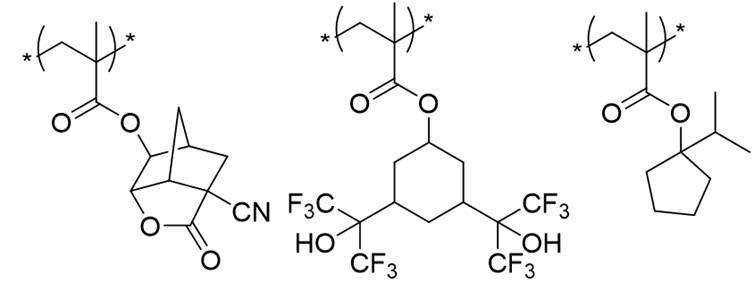
樹脂A-18:85.6質量%
光酸発生剤B-1:11.0質量%
酸拡散制御剤C-1:3.4質量%
溶剤F-1/溶剤F-2:80/20
次に、上記<NMR測定>にて算出された対象レジスト組成物に使用される樹脂A-18に含まれる各繰り返し単位の全繰り返し単位に対する含有量、及び、酸拡散制御剤C-1の対象レジスト組成物中の全固形分質量に対する含有量を、重回帰式に代入して、対象レジスト組成物のパターンサイズを算出した。
得られた対象レジスト組成物のパターンサイズと、目標パターンサイズ(25nm)とを比較して、その差の絶対値が0.5nm超であれば、組成調整用の対象レジスト組成物として選択した。
また、上記手順を繰り返し実施した際に、対象レジスト組成物のパターンサイズと、目標パターンサイズ(25nm)との差の絶対値が0.5nm以下である対象レジスト組成物(以下、単に「対象レジスト組成物Y1」ともいう。)も10種用意した。
次に、この決定された配合量に基づいて、上記対象レジスト組成物X1に含まれるロット番号の樹脂A-18を用いて、レジスト組成物を調製した。回帰分析用レジスト組成物の代わりに上記調製されたレジスト組成物を用いて、上記<回帰分析用パターンサイズ取得>に記載の処理を実施して、パターンを形成し、そのパターンの線幅と目標パターンサイズ(25nm)との差の絶対値が0.5nm以内であれば「合格」、0.5nm超であれば「不合格」とした。
10種の対象レジスト組成物X1に対して、上記処理を実施して、以下の基準に従って評価した。
A:合格が10回
B:合格が8~9回
C:合格が6~7回
D:合格が4~5回
E:合格が2~3回
F:合格が1回以下
10種の対象レジスト組成物Y1に対して、上記処理を実施して、以下の基準に従って評価した。
A:合格が10回
B:合格が8~9回
C:合格が6~7回
D:合格が4~5回
E:合格が2~3回
F:合格が1回以下
重回帰分析を行う際の説明変数として、酸分解性樹脂に含まれる各繰り返し単位の全繰り返し単位に対する含有量と、酸拡散制御剤のレジスト組成物中の全固形分質量に対する含有量と、酸分解性樹脂の重量平均分子量とを選択し、更に、対象レジスト組成物に使用される樹脂A-18に含まれる各繰り返し単位の全繰り返し単位に対する含有量、酸拡散制御剤C-1の対象レジスト組成物中の全固形分質量に対する含有量、及び、樹脂A-18の重量平均分子量を、重回帰式に代入して、対象レジスト組成物のパターンサイズを算出した以外は、実施例1と同様の手順に従って、評価を実施した。
樹脂A-18に含まれる各繰り返し単位の全繰り返し単位に対する含有量を測定する際のNMR測定の積算回数を5000回から10000回に変更した以外は、実施例2と同様の手順に従って、評価を実施した。
樹脂A-18に含まれる各繰り返し単位の全繰り返し単位に対する含有量を測定する際のNMR測定の積算回数を5000回から20000回に変更した以外は、実施例2と同様の手順に従って、評価を実施した。
重回帰分析を行う際の説明変数として、酸分解性樹脂に含まれる各繰り返し単位の全繰り返し単位に対する含有量と、酸拡散制御剤のレジスト組成物中の全固形分質量に対する含有量と、酸分解性樹脂の重量平均分子量と、酸分解性樹脂のレジスト組成物中の全固形分質量に対する含有量とを選択し、更に、対象レジスト組成物に使用される樹脂A-18に含まれる各繰り返し単位の全繰り返し単位に対する含有量、酸拡散制御剤C-1の対象レジスト組成物中の全固形分質量に対する含有量、樹脂A-18の重量平均分子量、及び、樹脂A-18の対象レジスト組成物中の全固形分質量に対する含有量を、重回帰式に代入して、対象レジスト組成物のパターンサイズを算出した以外は、実施例1と同様の手順に従って、評価を実施した。
重回帰分析を行う際の説明変数として、酸分解性樹脂に含まれる各繰り返し単位の全繰り返し単位に対する含有量と、酸拡散制御剤のレジスト組成物中の全固形分質量に対する含有量と、酸分解性樹脂の重量平均分子量と、酸分解性樹脂のレジスト組成物中の全固形分質量に対する含有量と、酸分解性樹脂の屈折率とを選択し、更に、対象レジスト組成物に使用される樹脂A-18に含まれる各繰り返し単位の全繰り返し単位に対する含有量、酸拡散制御剤C-1の対象レジスト組成物中の全固形分質量に対する含有量、樹脂A-18の重量平均分子量、樹脂A-18の対象レジスト組成物中の全固形分質量に対する含有量、及び、樹脂A-18の屈折率を、重回帰式に代入して、対象レジスト組成物のパターンサイズを算出した以外は、実施例1と同様の手順に従って、評価を実施した。
重回帰分析を行う際の説明変数として、酸分解性樹脂に含まれる各繰り返し単位の全繰り返し単位に対する含有量と、酸拡散制御剤のレジスト組成物中の全固形分質量に対する含有量と、酸分解性樹脂の重量平均分子量と、酸分解性樹脂のレジスト組成物中の全固形分質量に対する含有量と、酸分解性樹脂の屈折率と、光酸発生剤のレジスト組成物中の全固形分質量に対する含有量とを選択し、更に、対象レジスト組成物に使用される樹脂A-18に含まれる各繰り返し単位の全繰り返し単位に対する含有量、酸拡散制御剤C-1の対象レジスト組成物中の全固形分質量に対する含有量、樹脂A-18の重量平均分子量、樹脂A-18の対象レジスト組成物中の全固形分質量に対する含有量、樹脂A-18の屈折率、及び、光酸発生剤B-1の対象レジスト組成物中の全固形分質量に対する含有量を、重回帰式に代入して、対象レジスト組成物のパターンサイズを算出した以外は、実施例1と同様の手順に従って、評価を実施した。
樹脂A-18に含まれる各繰り返し単位の全繰り返し単位に対する含有量を測定する際のNMR測定の積算回数を5000回から20000回に変更した以外は、実施例7と同様の手順に従って、評価を実施した。
重回帰分析を行う際の説明変数として、酸分解性樹脂に含まれる各繰り返し単位の全繰り返し単位に対する含有量のみを選択し、更に、対象レジスト組成物に使用される樹脂A-18に含まれる各繰り返し単位の全繰り返し単位に対する含有量を、重回帰式に代入して、対象レジスト組成物のパターンサイズを算出し、パターンサイズと目標パターンサイズとの比(パターンサイズ/目標パターンサイズ)(例えば、1.1)を求めて、対象レジスト組成物の酸拡散制御剤の含有量にその比を掛けた数値になるように、酸拡散制御剤C-1の量を調整した以外は、実施例1と同様の手順に従って、評価を実施した。
酸分解性樹脂の核磁気共鳴(1H NMR)分光法は以下の条件にて行った。
機器:Bruker社製NMR装置AVANCEIII HD500
プローブ:10mmBBO
測定メソッド:13C インバースドゲートモード
測定温度:25℃
サンプル調製:酸分解性樹脂を後述する溶媒に溶解させ、Φ10mmNMRサンプル管に移した。
酸分解性樹脂:1200mg
溶媒:10mMの鉄(III)アセチルアセトン錯体を添加したアセトン-d6(2.4mL)
なお、積算回数に関しては、後述する表1に示すように各実施例で変更した。
樹脂の重量平均分子量(Mw)は、以下の条件にて測定した。
機器:東ソー社製 HLC-8220GPC
ポンプ部:40℃
カラム部:40℃
流量(カラムライン、参照ライン):1.0mL/min、0.33mL/min
検出:RI(示差屈折)検出器
カラム:東ソー社製TSKgel Multipore HXL-M 3本連結
溶離液:テトラヒドロフラン(安定剤含有)
注入量:10μL
サンプル濃度:5質量%
校正標準サンプル:ポリスチレン
まず、酸分解性樹脂をPGMEAに溶解させ、酸分解性樹脂の濃度が10質量%のPGMEA溶液を調製した。得られたPGMEA溶液1mLを用いて、自動屈折計(Abbemat 550(Anton Paar製))にて酸分解性樹脂の屈折率を求めた。なお、測定温度は、20℃であった。
表4-1中、「樹脂組成比」は「酸分解性樹脂に含まれる各繰り返し単位の全繰り返し単位に対する含有量」を意味し、「酸拡散制御剤量」は「酸拡散制御剤のレジスト組成物中の全固形分質量に対する含有量」を意味し、「樹脂Mw」は「酸分解性樹脂の重量平均分子量」を意味し、「樹脂量」は「酸分解性樹脂のレジスト組成物中の全固形分質量に対する含有量」を意味し、「樹脂屈折率」は「酸分解性樹脂の屈折率」を意味し、「PAG量」は「光酸発生剤のレジスト組成物中の全固形分質量に対する含有量」を意味する。
各パラメーターのうち、重回帰分析に使用したものを「実施」と示す。
表4-1中、「評価X」とは10種の対象レジスト組成物X1を使用した場合の評価結果であり、「評価Y」とは10種の対象レジスト組成物Y1を使用した場合の評価結果である。
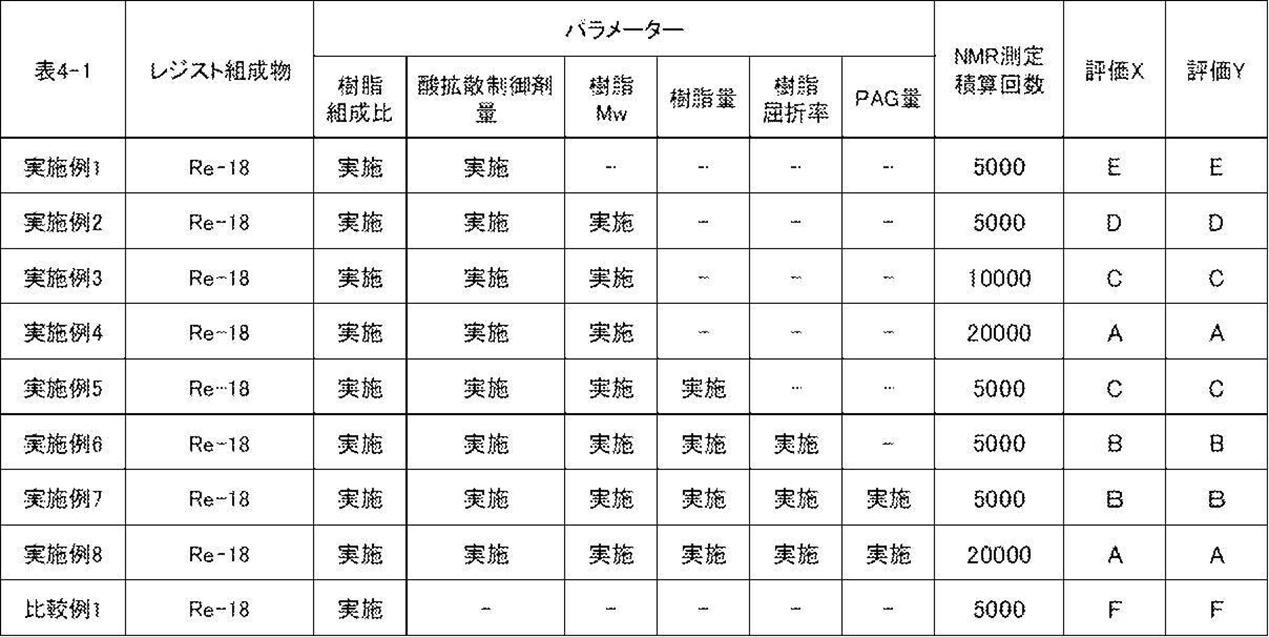
なかでも、実施例2~4の比較から、積算回数が10000回以上(好ましくは、20000回以上)の場合、より効果が優れることが確認された。
また、実施例1~8の比較から、パラメーターの数が、3以上(好ましくは4以上、より好ましくは5以上)の場合、より効果が優れることが確認された。
なお、上記では対象レジスト組成物のパターンサイズと目標パターンサイズ(25nm)との差の絶対値が0.5nm以下かどうかを許容範囲として判断したが、上記差の絶対値をより小さくした場合(例えば、0.1nm以下)でも、上記実施例1~8と同様に、パラメーターの数が増えるほどより優れた効果が得られた。
まず、回帰分析用レジスト組成物であるレジスト組成物Re-19~Re-35を用いて<回帰分析用パターンサイズ取得>にて得られた回帰分析用パターンサイズに対して、酸分解性樹脂に含まれる各繰り返し単位の全繰り返し単位に対する含有量と、光酸発生剤のレジスト組成物中の全固形分質量に対する含有量とを説明変数とし、目標パターンサイズ(25nm)を目的変数として、重回帰分析を行った。
なお、得られたロット番号が異なる樹脂A-36においては、実際の製造条件の誤差により、各繰り返し単位の含有量、重量平均分子量、および、分子量分布等が上記目標値(各繰り返し単位に対する含有量:41.5モル%、11.5モル%、47.0モル%、重量平均分子量:7200、分子量分布:1.60)に対して差があった。つまり、各ロット番号の樹脂A-36の各繰り返し単位の含有量、重量平均分子量、および、分子量分布等は、目標値に対してズレていた。
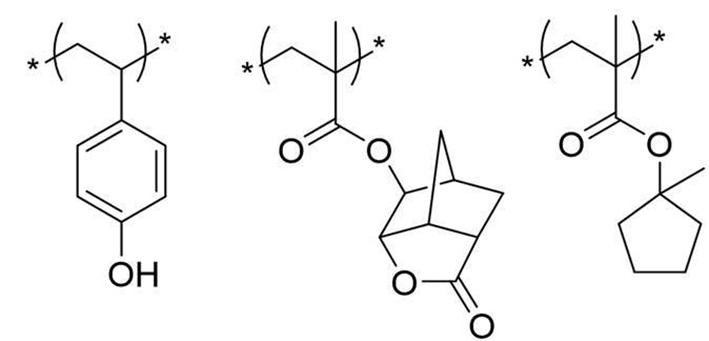
樹脂A-36:78.3質量%
光酸発生剤B-2:21.7質量%
溶剤F-1/溶剤F-2:40/60
次に、上記<NMR測定>にて算出された対象レジスト組成物に使用される樹脂A-36に含まれる各繰り返し単位の全繰り返し単位に対する含有量、及び、光酸発生剤B-2の対象レジスト組成物中の全固形分質量に対する含有量を、重回帰式に代入して、対象レジスト組成物のパターンサイズを算出した。
得られた対象レジスト組成物のパターンサイズと、目標パターンサイズ(25nm)とを比較して、その差の絶対値が0.5nm超であれば、組成調整用の対象レジスト組成物として選択した。
また、上記手順を繰り返し実施した際に、対象レジスト組成物のパターンサイズと、目標パターンサイズ(25nm)との差の絶対値が0.5nm以下である対象レジスト組成物(以下、単に「対象レジスト組成物Y2」ともいう。)も10種用意した。
次に、この決定された配合量に基づいて、上記対象レジスト組成物X2に含まれるロット番号の樹脂A-36を用いて、レジスト組成物を調製した。回帰分析用レジスト組成物の代わりに上記調製されたレジスト組成物を用いて、上記<回帰分析用パターンサイズ取得>に記載の処理を実施して、パターンを形成し、そのパターンの線幅と目標パターンサイズ(25nm)との差の絶対値が0.5nm以内であれば「合格」、0.5nm超であれば「不合格」とした。
10種の対象レジスト組成物X2に対して、上記処理を実施して、以下の基準に従って評価した。
A:合格が10回
B:合格が8~9回
C:合格が6~7回
D:合格が4~5回
E:合格が2~3回
F:合格が1回以下
10種の対象レジスト組成物Y2に対して、上記処理を実施して、以下の基準に従って評価した。
A:合格が10回
B:合格が8~9回
C:合格が6~7回
D:合格が4~5回
E:合格が2~3回
F:合格が1回以下
重回帰分析を行う際の説明変数として、酸分解性樹脂に含まれる各繰り返し単位の全繰り返し単位に対する含有量と、光酸発生剤のレジスト組成物中の全固形分質量に対する含有量と、酸分解性樹脂の重量平均分子量とを選択し、更に、対象レジスト組成物に使用される樹脂A-36に含まれる各繰り返し単位の全繰り返し単位に対する含有量、光酸発生剤B-2の対象レジスト組成物中の全固形分質量に対する含有量、及び、樹脂A-36の重量平均分子量を、重回帰式に代入して、対象レジスト組成物のパターンサイズを算出した以外は、実施例9と同様の手順に従って、評価を実施した。
樹脂A-36に含まれる各繰り返し単位の全繰り返し単位に対する含有量を測定する際のNMR測定の積算回数を5000回から10000回に変更した以外は、実施例10と同様の手順に従って、評価を実施した。
樹脂A-36に含まれる各繰り返し単位の全繰り返し単位に対する含有量を測定する際のNMR測定の積算回数を5000回から20000回に変更した以外は、実施例10と同様の手順に従って、評価を実施した。
重回帰分析を行う際の説明変数として、酸分解性樹脂に含まれる各繰り返し単位の全繰り返し単位に対する含有量と、光酸発生剤のレジスト組成物中の全固形分質量に対する含有量と、酸分解性樹脂の重量平均分子量と、酸分解性樹脂のレジスト組成物中の全固形分質量に対する含有量とを選択し、更に、対象レジスト組成物に使用される樹脂A-36に含まれる各繰り返し単位の全繰り返し単位に対する含有量、光酸発生剤B-2の対象レジスト組成物中の全固形分質量に対する含有量、樹脂A-36の重量平均分子量、及び、樹脂A-36の対象レジスト組成物中の全固形分質量に対する含有量を、重回帰式に代入して、対象レジスト組成物のパターンサイズを算出した以外は、実施例9と同様の手順に従って、評価を実施した。
重回帰分析を行う際の説明変数として、酸分解性樹脂に含まれる各繰り返し単位の全繰り返し単位に対する含有量と、光酸発生剤のレジスト組成物中の全固形分質量に対する含有量と、酸分解性樹脂の重量平均分子量と、酸分解性樹脂のレジスト組成物中の全固形分質量に対する含有量と、酸分解性樹脂の屈折率とを選択し、更に、対象レジスト組成物に使用される樹脂A-36に含まれる各繰り返し単位の全繰り返し単位に対する含有量、光酸発生剤B-2の対象レジスト組成物中の全固形分質量に対する含有量、樹脂A-36の重量平均分子量、樹脂A-36の対象レジスト組成物中の全固形分質量に対する含有量、及び、樹脂A-36の屈折率を、重回帰式に代入して、対象レジスト組成物のパターンサイズを算出した以外は、実施例9と同様の手順に従って、評価を実施した。
重回帰分析を行う際の説明変数として、酸分解性樹脂に含まれる各繰り返し単位の全繰り返し単位に対する含有量のみを選択し、更に、対象レジスト組成物に使用される樹脂A-36に含まれる各繰り返し単位の全繰り返し単位に対する含有量を、重回帰式に代入して、対象レジスト組成物のパターンサイズを算出し、パターンサイズと目標パターンサイズとの比(パターンサイズ/目標パターンサイズ)(例えば、1.1)を求めて、対象レジスト組成物の光酸発生剤の含有量にその比を掛けた数値になるように、光酸発生剤B-2の量を調整した以外は、実施例9と同様の手順に従って、評価を実施した。
また、上記実施例で述べた「酸分解性樹脂のレジスト組成物中の全固形分質量に対する含有量」、及び、「光酸発生剤のレジスト組成物中の全固形分質量に対する含有量」は、各レジスト組成物中の仕込み量から求めた。
表4-2中、「樹脂組成比」は「酸分解性樹脂に含まれる各繰り返し単位の全繰り返し単位に対する含有量」を意味し、「PAG量」は「光酸発生剤のレジスト組成物中の全固形分質量に対する含有量」を意味し、「樹脂Mw」は「酸分解性樹脂の重量平均分子量」を意味し、「樹脂量」は「酸分解性樹脂のレジスト組成物中の全固形分質量に対する含有量」を意味し、「樹脂屈折率」は「酸分解性樹脂の屈折率」を意味する。
各パラメーターのうち、重回帰分析に使用したものを「実施」と示す。
表4-2中、「評価X」とは10種の対象レジスト組成物X2を使用した場合の評価結果であり、「評価Y」とは10種の対象レジスト組成物Y2を使用した場合の評価結果である。
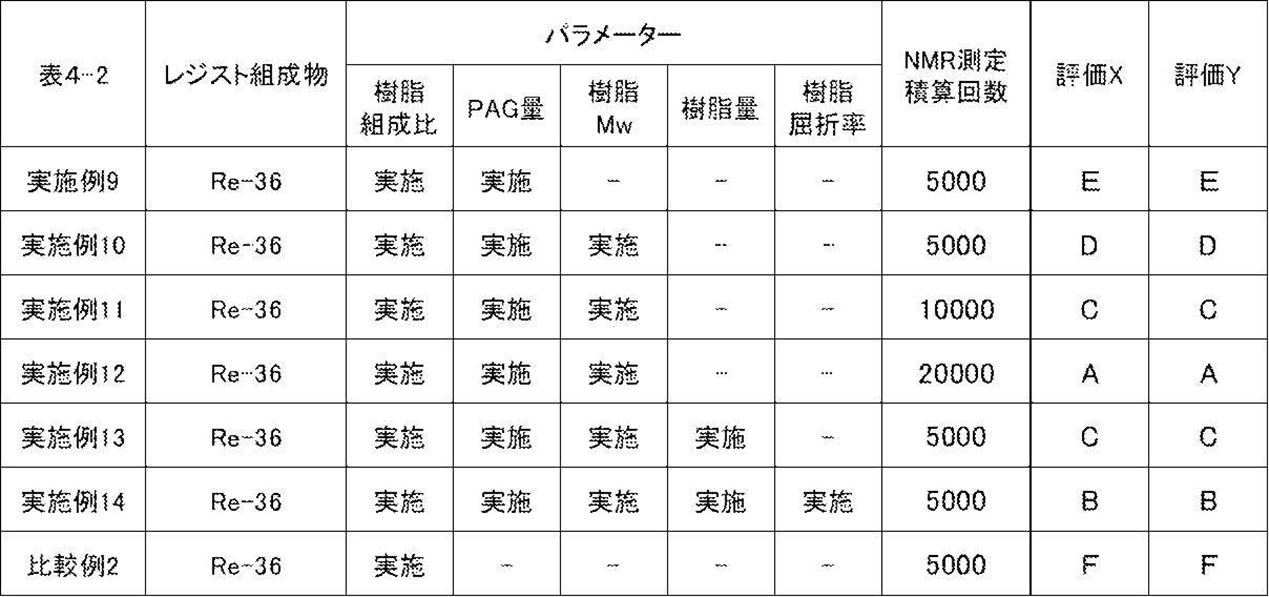
まず、回帰分析用レジスト組成物であるレジスト組成物Re-37~Re-57を用いて<回帰分析用パターンサイズ取得>にて得られた回帰分析用パターンサイズに対して、酸分解性樹脂に含まれる各繰り返し単位の全繰り返し単位に対する含有量と、酸拡散制御剤のレジスト組成物中の全固形分質量に対する含有量とを説明変数とし、目標パターンサイズ(25nm)を目的変数として、重回帰分析を行った。
なお、得られたロット番号が異なる樹脂A-58においては、実際の製造条件の誤差により、各繰り返し単位の含有量、重量平均分子量、および、分子量分布等が上記目標値(各繰り返し単位に対する含有量:31.2モル%、28.9モル%、29.6モル%、10.3モル%、重量平均分子量:8200、分子量分布:1.65)に対して差があった。つまり、各ロット番号の樹脂A-58の各繰り返し単位の含有量、重量平均分子量、および、分子量分布等は、目標値に対してズレていた。

樹脂A-58:76.1質量%
光酸発生剤B-3:16.8質量%
酸拡散制御剤C-1:1.1質量%
疎水性樹脂E-1:6.9質量%
溶剤F-1/溶剤F-3/溶剤F-4:80/10/10
次に、上記<NMR測定>にて算出された対象レジスト組成物に使用される樹脂A-58に含まれる各繰り返し単位の全繰り返し単位に対する含有量、及び、酸拡散制御剤C-1の対象レジスト組成物中の全固形分質量に対する含有量を、重回帰式に代入して、対象レジスト組成物のパターンサイズを算出した。
得られた対象レジスト組成物のパターンサイズと、目標パターンサイズ(25nm)とを比較して、その差の絶対値が0.5nm超であれば、組成調整用の対象レジスト組成物として選択した。
また、上記手順を繰り返し実施した際に、対象レジスト組成物のパターンサイズと、目標パターンサイズ(25nm)との差の絶対値が0.5nm以下である対象レジスト組成物(以下、単に「対象レジスト組成物Y3」ともいう。)も10種用意した。
次に、この決定された配合量に基づいて、上記対象レジスト組成物X3に含まれるロット番号の樹脂A-58を用いて、レジスト組成物を調製した。回帰分析用レジスト組成物の代わりに上記調製されたレジスト組成物を用いて、上記<回帰分析用パターンサイズ取得>に記載の処理を実施して、パターンを形成し、そのパターンの線幅と目標パターンサイズ(25nm)との差の絶対値が0.5nm以内であれば「合格」、0.5nm超であれば「不合格」とした。
10種の対象レジスト組成物X3に対して、上記処理を実施して、以下の基準に従って評価した。
A:合格が10回
B:合格が8~9回
C:合格が6~7回
D:合格が4~5回
E:合格が2~3回
F:合格が1回以下
10種の対象レジスト組成物Y3に対して、上記処理を実施して、以下の基準に従って評価した。
A:合格が10回
B:合格が8~9回
C:合格が6~7回
D:合格が4~5回
E:合格が2~3回
F:合格が1回以下
重回帰分析を行う際の説明変数として、酸分解性樹脂に含まれる各繰り返し単位の全繰り返し単位に対する含有量と、酸拡散制御剤のレジスト組成物中の全固形分質量に対する含有量と、酸分解性樹脂の重量平均分子量とを選択し、更に、対象レジスト組成物に使用される樹脂A-58に含まれる各繰り返し単位の全繰り返し単位に対する含有量、酸拡散制御剤C-1の対象レジスト組成物中の全固形分質量に対する含有量、及び、樹脂A-58の重量平均分子量を、重回帰式に代入して、対象レジスト組成物のパターンサイズを算出した以外は、実施例15と同様の手順に従って、評価を実施した。
樹脂A-58に含まれる各繰り返し単位の全繰り返し単位に対する含有量を測定する際のNMR測定の積算回数を5000回から10000回に変更した以外は、実施例16と同様の手順に従って、評価を実施した。
樹脂A-58に含まれる各繰り返し単位の全繰り返し単位に対する含有量を測定する際のNMR測定の積算回数を5000回から20000回に変更した以外は、実施例16と同様の手順に従って、評価を実施した。
重回帰分析を行う際の説明変数として、酸分解性樹脂に含まれる各繰り返し単位の全繰り返し単位に対する含有量と、酸拡散制御剤のレジスト組成物中の全固形分質量に対する含有量と、酸分解性樹脂の重量平均分子量と、酸分解性樹脂のレジスト組成物中の全固形分質量に対する含有量とを選択し、更に、対象レジスト組成物に使用される樹脂A-58に含まれる各繰り返し単位の全繰り返し単位に対する含有量、酸拡散制御剤C-1の対象レジスト組成物中の全固形分質量に対する含有量、樹脂A-58の重量平均分子量、及び、樹脂A-58の対象レジスト組成物中の全固形分質量に対する含有量を、重回帰式に代入して、対象レジスト組成物のパターンサイズを算出した以外は、実施例15と同様の手順に従って、評価を実施した。
重回帰分析を行う際の説明変数として、酸分解性樹脂に含まれる各繰り返し単位の全繰り返し単位に対する含有量と、酸拡散制御剤のレジスト組成物中の全固形分質量に対する含有量と、酸分解性樹脂の重量平均分子量と、酸分解性樹脂のレジスト組成物中の全固形分質量に対する含有量と、酸分解性樹脂の屈折率とを選択し、更に、対象レジスト組成物に使用される樹脂A-58に含まれる各繰り返し単位の全繰り返し単位に対する含有量、酸拡散制御剤C-1の対象レジスト組成物中の全固形分質量に対する含有量、樹脂A-58の重量平均分子量、樹脂A-58の対象レジスト組成物中の全固形分質量に対する含有量、及び、樹脂A-58の屈折率を、重回帰式に代入して、対象レジスト組成物のパターンサイズを算出した以外は、実施例15と同様の手順に従って、評価を実施した。
重回帰分析を行う際の説明変数として、酸分解性樹脂に含まれる各繰り返し単位の全繰り返し単位に対する含有量と、酸拡散制御剤のレジスト組成物中の全固形分質量に対する含有量と、酸分解性樹脂の重量平均分子量と、酸分解性樹脂のレジスト組成物中の全固形分質量に対する含有量と、酸分解性樹脂の屈折率と、光酸発生剤のレジスト組成物中の全固形分質量に対する含有量とを選択し、更に、対象レジスト組成物に使用される樹脂A-58に含まれる各繰り返し単位の全繰り返し単位に対する含有量、酸拡散制御剤C-1の対象レジスト組成物中の全固形分質量に対する含有量、樹脂A-58の重量平均分子量、樹脂A-58の対象レジスト組成物中の全固形分質量に対する含有量、樹脂A-58の屈折率、及び、光酸発生剤B-3の対象レジスト組成物中の全固形分質量に対する含有量を、重回帰式に代入して、対象レジスト組成物のパターンサイズを算出した以外は、実施例15と同様の手順に従って、評価を実施した。
樹脂A-58に含まれる各繰り返し単位の全繰り返し単位に対する含有量を測定する際のNMR測定の積算回数を5000回から20000回に変更した以外は、実施例21と同様の手順に従って、評価を実施した。
重回帰分析を行う際の説明変数として、酸分解性樹脂に含まれる各繰り返し単位の全繰り返し単位に対する含有量のみを選択し、更に、対象レジスト組成物に使用される樹脂A-58に含まれる各繰り返し単位の全繰り返し単位に対する含有量を、重回帰式に代入して、対象レジスト組成物のパターンサイズを算出し、パターンサイズと目標パターンサイズとの比(パターンサイズ/目標パターンサイズ)(例えば、1.1)を求めて、対象レジスト組成物の酸拡散制御剤の含有量にその比を掛けた数値になるように、酸拡散制御剤C-1の量を調整した以外は、実施例15と同様の手順に従って、評価を実施した。
上記実施例で述べた「酸分解性樹脂のレジスト組成物中の全固形分質量に対する含有量」、「酸拡散制御剤のレジスト組成物中の全固形分質量に対する含有量」、及び、「光酸発生剤のレジスト組成物中の全固形分質量に対する含有量」は、各レジスト組成物中の仕込み量から求めた。
表4-3中、「樹脂組成比」は「酸分解性樹脂に含まれる各繰り返し単位の全繰り返し単位に対する含有量」を意味し、「酸拡散制御剤量」は「酸拡散制御剤のレジスト組成物中の全固形分質量に対する含有量」を意味し、「樹脂Mw」は「酸分解性樹脂の重量平均分子量」を意味し、「樹脂量」は「酸分解性樹脂のレジスト組成物中の全固形分質量に対する含有量」を意味し、「樹脂屈折率」は「酸分解性樹脂の屈折率」を意味し、「PAG量」は「光酸発生剤のレジスト組成物中の全固形分質量に対する含有量」を意味する。
各パラメーターのうち、重回帰分析に使用したものを「実施」と示す。
表4-3中、「評価X」とは10種の対象レジスト組成物X3を使用した場合の評価結果であり、「評価Y」とは10種の対象レジスト組成物Y3を使用した場合の評価結果である。

まず、回帰分析用レジスト組成物であるレジスト組成物Re-59~Re-77を用いて<回帰分析用パターンサイズ取得>にて得られた回帰分析用パターンサイズに対して、酸分解性樹脂に含まれる各繰り返し単位の全繰り返し単位に対する含有量と、酸拡散制御剤のレジスト組成物中の全固形分質量に対する含有量とを説明変数とし、目標パターンサイズ(25nm)を目的変数として、重回帰分析を行った。
なお、得られたロット番号が異なる樹脂A-78においては、実際の製造条件の誤差により、各繰り返し単位の含有量、重量平均分子量、および、分子量分布等が上記目標値(各繰り返し単位に対する含有量:33.0モル%、33.0モル%、34.0モル%、重量平均分子量:7100、分子量分布:1.64)に対して差があった。つまり、各ロット番号の樹脂A-78の各繰り返し単位の含有量、重量平均分子量、および、分子量分布等は、目標値に対してズレていた。
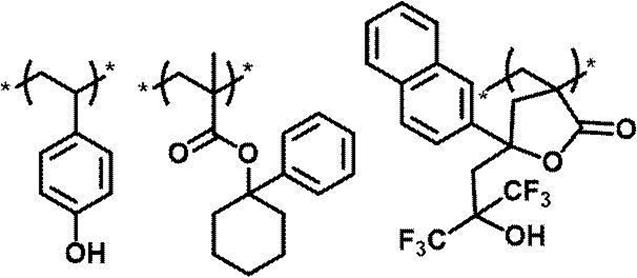
樹脂A-78:82.1質量%
光酸発生剤B-4:12.7質量%
酸拡散制御剤C-2:5.2質量%
溶剤F-1/溶剤F-5:90/10
次に、上記<NMR測定>にて算出された対象レジスト組成物に使用される樹脂A-78に含まれる各繰り返し単位の全繰り返し単位に対する含有量、及び、酸拡散制御剤C-2の対象レジスト組成物中の全固形分質量に対する含有量を、重回帰式に代入して、対象レジスト組成物のパターンサイズを算出した。
得られた対象レジスト組成物のパターンサイズと、目標パターンサイズ(25nm)とを比較して、その差の絶対値が0.5nm超であれば、組成調整用の対象レジスト組成物として選択した。
また、上記手順を繰り返し実施した際に、対象レジスト組成物のパターンサイズと、目標パターンサイズ(25nm)との差の絶対値が0.5nm以下である対象レジスト組成物(以下、単に「対象レジスト組成物Y4」ともいう。)も10種用意した。
次に、この決定された配合量に基づいて、上記対象レジスト組成物X4に含まれるロット番号の樹脂A-78を用いて、レジスト組成物を調製した。回帰分析用レジスト組成物の代わりに上記調製されたレジスト組成物を用いて、上記<回帰分析用パターンサイズ取得>に記載の処理を実施して、パターンを形成し、そのパターンの線幅と目標パターンサイズ(25nm)との差の絶対値が0.5nm以内であれば「合格」、0.5nm超であれば「不合格」とした。
10種の対象レジスト組成物X4に対して、上記処理を実施して、以下の基準に従って評価した。
A:合格が10回
B:合格が8~9回
C:合格が6~7回
D:合格が4~5回
E:合格が2~3回
F:合格が1回以下
10種の対象レジスト組成物Y4に対して、上記処理を実施して、以下の基準に従って評価した。
A:合格が10回
B:合格が8~9回
C:合格が6~7回
D:合格が4~5回
E:合格が2~3回
F:合格が1回以下
重回帰分析を行う際の説明変数として、酸分解性樹脂に含まれる各繰り返し単位の全繰り返し単位に対する含有量と、酸拡散制御剤のレジスト組成物中の全固形分質量に対する含有量と、酸分解性樹脂の重量平均分子量とを選択し、更に、対象レジスト組成物に使用される樹脂A-78に含まれる各繰り返し単位の全繰り返し単位に対する含有量、酸拡散制御剤C-2の対象レジスト組成物中の全固形分質量に対する含有量、及び、樹脂A-78の重量平均分子量を、重回帰式に代入して、対象レジスト組成物のパターンサイズを算出した以外は、実施例23と同様の手順に従って、評価を実施した。
樹脂A-78に含まれる各繰り返し単位の全繰り返し単位に対する含有量を測定する際のNMR測定の積算回数を5000回から10000回に変更した以外は、実施例24と同様の手順に従って、評価を実施した。
樹脂A-78に含まれる各繰り返し単位の全繰り返し単位に対する含有量を測定する際のNMR測定の積算回数を5000回から20000回に変更した以外は、実施例24と同様の手順に従って、評価を実施した。
重回帰分析を行う際の説明変数として、酸分解性樹脂に含まれる各繰り返し単位の全繰り返し単位に対する含有量と、酸拡散制御剤のレジスト組成物中の全固形分質量に対する含有量と、酸分解性樹脂の重量平均分子量と、酸分解性樹脂のレジスト組成物中の全固形分質量に対する含有量とを選択し、更に、対象レジスト組成物に使用される樹脂A-78に含まれる各繰り返し単位の全繰り返し単位に対する含有量、酸拡散制御剤C-2の対象レジスト組成物中の全固形分質量に対する含有量、樹脂A-78の重量平均分子量、及び、樹脂A-78の対象レジスト組成物中の全固形分質量に対する含有量を、重回帰式に代入して、対象レジスト組成物のパターンサイズを算出した以外は、実施例23と同様の手順に従って、評価を実施した。
重回帰分析を行う際の説明変数として、酸分解性樹脂に含まれる各繰り返し単位の全繰り返し単位に対する含有量と、酸拡散制御剤のレジスト組成物中の全固形分質量に対する含有量と、酸分解性樹脂の重量平均分子量と、酸分解性樹脂のレジスト組成物中の全固形分質量に対する含有量と、酸分解性樹脂の屈折率とを選択し、更に、対象レジスト組成物に使用される樹脂A-78に含まれる各繰り返し単位の全繰り返し単位に対する含有量、酸拡散制御剤C-2の対象レジスト組成物中の全固形分質量に対する含有量、樹脂A-78の重量平均分子量、樹脂A-78の対象レジスト組成物中の全固形分質量に対する含有量、及び、樹脂A-78の屈折率を、重回帰式に代入して、対象レジスト組成物のパターンサイズを算出した以外は、実施例23と同様の手順に従って、評価を実施した。
重回帰分析を行う際の説明変数として、酸分解性樹脂に含まれる各繰り返し単位の全繰り返し単位に対する含有量と、酸拡散制御剤のレジスト組成物中の全固形分質量に対する含有量と、酸分解性樹脂の重量平均分子量と、酸分解性樹脂のレジスト組成物中の全固形分質量に対する含有量と、酸分解性樹脂の屈折率と、光酸発生剤のレジスト組成物中の全固形分質量に対する含有量とを選択し、更に、対象レジスト組成物に使用される樹脂A-78に含まれる各繰り返し単位の全繰り返し単位に対する含有量、酸拡散制御剤C-2の対象レジスト組成物中の全固形分質量に対する含有量、樹脂A-78の重量平均分子量、樹脂A-78の対象レジスト組成物中の全固形分質量に対する含有量、樹脂A-78の屈折率、及び、光酸発生剤B-4の対象レジスト組成物中の全固形分質量に対する含有量を、重回帰式に代入して、対象レジスト組成物のパターンサイズを算出した以外は、実施例23と同様の手順に従って、評価を実施した。
樹脂A-78に含まれる各繰り返し単位の全繰り返し単位に対する含有量を測定する際のNMR測定の積算回数を5000回から20000回に変更した以外は、実施例29と同様の手順に従って、評価を実施した。
重回帰分析を行う際の説明変数として、酸分解性樹脂に含まれる各繰り返し単位の全繰り返し単位に対する含有量のみを選択し、更に、対象レジスト組成物に使用される樹脂A-78に含まれる各繰り返し単位の全繰り返し単位に対する含有量を、重回帰式に代入して、対象レジスト組成物のパターンサイズを算出し、パターンサイズと目標パターンサイズとの比(パターンサイズ/目標パターンサイズ)(例えば、1.1)を求めて、対象レジスト組成物の酸拡散制御剤の含有量にその比を掛けた数値になるように、酸拡散制御剤C-2の量を調整した以外は、実施例23と同様の手順に従って、評価を実施した。
上記実施例で述べた「酸分解性樹脂のレジスト組成物中の全固形分質量に対する含有量」、「酸拡散制御剤のレジスト組成物中の全固形分質量に対する含有量」、及び、「光酸発生剤のレジスト組成物中の全固形分質量に対する含有量」は、各レジスト組成物中の仕込み量から求めた。
表4-4中、「樹脂組成比」は「酸分解性樹脂に含まれる各繰り返し単位の全繰り返し単位に対する含有量」を意味し、「酸拡散制御剤量」は「酸拡散制御剤のレジスト組成物中の全固形分質量に対する含有量」を意味し、「樹脂Mw」は「酸分解性樹脂の重量平均分子量」を意味し、「樹脂量」は「酸分解性樹脂のレジスト組成物中の全固形分質量に対する含有量」を意味し、「樹脂屈折率」は「酸分解性樹脂の屈折率」を意味し、「PAG量」は「光酸発生剤のレジスト組成物中の全固形分質量に対する含有量」を意味する。
各パラメーターのうち、重回帰分析に使用したものを「実施」と示す。
表4-4中、「評価X」とは10種の対象レジスト組成物X4を使用した場合の評価結果であり、「評価Y」とは10種の対象レジスト組成物Y4を使用した場合の評価結果である。

まず、回帰分析用レジスト組成物であるレジスト組成物Re-79~Re-93を用いて<回帰分析用パターンサイズ取得>にて得られた回帰分析用パターンサイズに対して、酸分解性樹脂に含まれる各繰り返し単位の全繰り返し単位に対する含有量と、光酸発生剤のレジスト組成物中の全固形分質量に対する含有量とを説明変数とし、目標パターンサイズ(25nm)を目的変数として、重回帰分析を行った。
なお、得られたロット番号が異なる樹脂A-94においては、実際の製造条件の誤差により、各繰り返し単位の含有量、重量平均分子量、および、分子量分布等が上記目標値(各繰り返し単位に対する含有量:25モル%、45モル%、30モル%、重量平均分子量:7600、分子量分布:1.8)に対して差があった。つまり、各ロット番号の樹脂A-94の各繰り返し単位の含有量、重量平均分子量、および、分子量分布等は、目標値に対してズレていた。

樹脂A-94:76.6質量%
光酸発生剤B-5:18.8質量%
酸拡散制御剤C-3:4.6質量%
溶剤F-1/溶剤F-2:20/80
次に、上記<NMR測定>にて算出された対象レジスト組成物に使用される樹脂A-94に含まれる各繰り返し単位の全繰り返し単位に対する含有量、及び、光酸発生剤B-5の対象レジスト組成物中の全固形分質量に対する含有量を、重回帰式に代入して、対象レジスト組成物のパターンサイズを算出した。
得られた対象レジスト組成物のパターンサイズと、目標パターンサイズ(25nm)とを比較して、その差の絶対値が0.5nm超であれば、組成調整用の対象レジスト組成物として選択した。
また、上記手順を繰り返し実施した際に、対象レジスト組成物のパターンサイズと、目標パターンサイズ(25nm)との差の絶対値が0.5nm以下である対象レジスト組成物(以下、単に「対象レジスト組成物Y5」ともいう。)も10種用意した。
次に、この決定された配合量に基づいて、上記対象レジスト組成物X5に含まれるロット番号の樹脂A-94を用いて、レジスト組成物を調製した。回帰分析用レジスト組成物の代わりに上記調製されたレジスト組成物を用いて、上記<回帰分析用パターンサイズ取得>に記載の処理を実施して、パターンを形成し、そのパターンの線幅と目標パターンサイズ(25nm)との差の絶対値が0.5nm以内であれば「合格」、0.5nm超であれば「不合格」とした。
10種の対象レジスト組成物X5に対して、上記処理を実施して、以下の基準に従って評価した。
A:合格が10回
B:合格が8~9回
C:合格が6~7回
D:合格が4~5回
E:合格が2~3回
F:合格が1回以下
10種の対象レジスト組成物Y5に対して、上記処理を実施して、以下の基準に従って評価した。
A:合格が10回
B:合格が8~9回
C:合格が6~7回
D:合格が4~5回
E:合格が2~3回
F:合格が1回以下
重回帰分析を行う際の説明変数として、酸分解性樹脂に含まれる各繰り返し単位の全繰り返し単位に対する含有量と、光酸発生剤のレジスト組成物中の全固形分質量に対する含有量と、酸分解性樹脂の重量平均分子量とを選択し、更に、対象レジスト組成物に使用される樹脂A-94に含まれる各繰り返し単位の全繰り返し単位に対する含有量、光酸発生剤B-5の対象レジスト組成物中の全固形分質量に対する含有量、及び、樹脂A-94の重量平均分子量を、重回帰式に代入して、対象レジスト組成物のパターンサイズを算出した以外は、実施例31と同様の手順に従って、評価を実施した。
樹脂A-94に含まれる各繰り返し単位の全繰り返し単位に対する含有量を測定する際のNMR測定の積算回数を5000回から10000回に変更した以外は、実施例32と同様の手順に従って、評価を実施した。
樹脂A-94に含まれる各繰り返し単位の全繰り返し単位に対する含有量を測定する際のNMR測定の積算回数を5000回から20000回に変更した以外は、実施例32と同様の手順に従って、評価を実施した。
重回帰分析を行う際の説明変数として、酸分解性樹脂に含まれる各繰り返し単位の全繰り返し単位に対する含有量と、光酸発生剤のレジスト組成物中の全固形分質量に対する含有量と、酸分解性樹脂の重量平均分子量と、酸分解性樹脂のレジスト組成物中の全固形分質量に対する含有量とを選択し、更に、対象レジスト組成物に使用される樹脂A-94に含まれる各繰り返し単位の全繰り返し単位に対する含有量、光酸発生剤B-5の対象レジスト組成物中の全固形分質量に対する含有量、樹脂A-94の重量平均分子量、及び、樹脂A-94の対象レジスト組成物中の全固形分質量に対する含有量を、重回帰式に代入して、対象レジスト組成物のパターンサイズを算出した以外は、実施例31と同様の手順に従って、評価を実施した。
重回帰分析を行う際の説明変数として、酸分解性樹脂に含まれる各繰り返し単位の全繰り返し単位に対する含有量と、光酸発生剤のレジスト組成物中の全固形分質量に対する含有量と、酸分解性樹脂の重量平均分子量と、酸分解性樹脂のレジスト組成物中の全固形分質量に対する含有量と、酸分解性樹脂の屈折率とを選択し、更に、対象レジスト組成物に使用される樹脂A-94に含まれる各繰り返し単位の全繰り返し単位に対する含有量、光酸発生剤B-5の対象レジスト組成物中の全固形分質量に対する含有量、樹脂A-94の重量平均分子量、樹脂A-94の対象レジスト組成物中の全固形分質量に対する含有量、及び、樹脂A-94の屈折率を、重回帰式に代入して、対象レジスト組成物のパターンサイズを算出した以外は、実施例31と同様の手順に従って、評価を実施した。
重回帰分析を行う際の説明変数として、酸分解性樹脂に含まれる各繰り返し単位の全繰り返し単位に対する含有量と、光酸発生剤のレジスト組成物中の全固形分質量に対する含有量と、酸分解性樹脂の重量平均分子量と、酸分解性樹脂のレジスト組成物中の全固形分質量に対する含有量と、酸分解性樹脂の屈折率と、酸拡散制御剤のレジスト組成物中の全固形分質量に対する含有量とを選択し、更に、対象レジスト組成物に使用される樹脂A-94に含まれる各繰り返し単位の全繰り返し単位に対する含有量、光酸発生剤B-5の対象レジスト組成物中の全固形分質量に対する含有量、樹脂A-94の重量平均分子量、樹脂A-94の対象レジスト組成物中の全固形分質量に対する含有量、樹脂A-94の屈折率、及び、酸拡散制御剤C-3の対象レジスト組成物中の全固形分質量に対する含有量を、重回帰式に代入して、対象レジスト組成物のパターンサイズを算出した以外は、実施例31と同様の手順に従って、評価を実施した。
樹脂A-94に含まれる各繰り返し単位の全繰り返し単位に対する含有量を測定する際のNMR測定の積算回数を5000回から20000回に変更した以外は、実施例37と同様の手順に従って、評価を実施した。
重回帰分析を行う際の説明変数として、酸分解性樹脂に含まれる各繰り返し単位の全繰り返し単位に対する含有量のみを選択し、更に、対象レジスト組成物に使用される樹脂A-94に含まれる各繰り返し単位の全繰り返し単位に対する含有量を、重回帰式に代入して、対象レジスト組成物のパターンサイズを算出し、パターンサイズと目標パターンサイズとの比(パターンサイズ/目標パターンサイズ)(例えば、1.1)を求めて、対象レジスト組成物の光酸発生剤の含有量にその比を掛けた数値になるように、光酸発生剤B-5の量を調整した以外は、実施例31と同様の手順に従って、評価を実施した。
上記実施例で述べた「酸分解性樹脂のレジスト組成物中の全固形分質量に対する含有量」、「酸拡散制御剤のレジスト組成物中の全固形分質量に対する含有量」、及び、「光酸発生剤のレジスト組成物中の全固形分質量に対する含有量」は、各レジスト組成物中の仕込み量から求めた。
表4-5中、「樹脂組成比」は「酸分解性樹脂に含まれる各繰り返し単位の全繰り返し単位に対する含有量」を意味し、「PAG量」は「光酸発生剤のレジスト組成物中の全固形分質量に対する含有量」を意味し、「樹脂Mw」は「酸分解性樹脂の重量平均分子量」を意味し、「樹脂量」は「酸分解性樹脂のレジスト組成物中の全固形分質量に対する含有量」を意味し、「樹脂屈折率」は「酸分解性樹脂の屈折率」を意味し、「酸拡散制御剤量」は「酸拡散制御剤のレジスト組成物中の全固形分質量に対する含有量」を意味する。
各パラメーターのうち、重回帰分析に使用したものを「実施」と示す。
表4-5中、「評価X」とは10種の対象レジスト組成物X5を使用した場合の評価結果であり、「評価Y」とは10種の対象レジスト組成物Y5を使用した場合の評価結果である。

まず、回帰分析用レジスト組成物であるレジスト組成物Re-95~Re-119を用いて<回帰分析用パターンサイズ取得>にて得られた回帰分析用パターンサイズに対して、酸分解性樹脂に含まれる各繰り返し単位の全繰り返し単位に対する含有量と、酸拡散制御剤のレジスト組成物中の全固形分質量に対する含有量とを説明変数とし、目標パターンサイズ(25nm)を目的変数として、重回帰分析を行った。
なお、得られたロット番号が異なる樹脂A-120においては、実際の製造条件の誤差により、各繰り返し単位の含有量、重量平均分子量、および、分子量分布等が上記目標値(各繰り返し単位に対する含有量:35モル%、24モル%、35モル%、3モル%、3モル%、重量平均分子量:4600、分子量分布:1.54)に対して差があった。つまり、各ロット番号の樹脂A-120の各繰り返し単位の含有量、重量平均分子量、および、分子量分布等は、目標値に対してズレていた。

樹脂A-120:77.8質量%
光酸発生剤B-6:19.4質量%
酸拡散制御剤C-4:2.8質量%
溶剤F-1/溶剤F-2/溶剤F-6/溶剤F-3:85/7/7/1
次に、上記<NMR測定>にて算出された対象レジスト組成物に使用される樹脂A-120に含まれる各繰り返し単位の全繰り返し単位に対する含有量、及び、酸拡散制御剤C-4の対象レジスト組成物中の全固形分質量に対する含有量を、重回帰式に代入して、対象レジスト組成物のパターンサイズを算出した。
得られた対象レジスト組成物のパターンサイズと、目標パターンサイズ(25nm)とを比較して、その差の絶対値が0.5nm超であれば、組成調整用の対象レジスト組成物として選択した。
また、上記手順を繰り返し実施した際に、対象レジスト組成物のパターンサイズと、目標パターンサイズ(25nm)との差の絶対値が0.5nm以下である対象レジスト組成物(以下、単に「対象レジスト組成物Y6」ともいう。)も10種用意した。
次に、この決定された配合量に基づいて、上記対象レジスト組成物X6に含まれるロット番号の樹脂A-120を用いて、レジスト組成物を調製した。回帰分析用レジスト組成物の代わりに上記調製されたレジスト組成物を用いて、上記<回帰分析用パターンサイズ取得>に記載の処理を実施して、パターンを形成し、そのパターンの線幅と目標パターンサイズ(25nm)との差の絶対値が0.5nm以内であれば「合格」、0.5nm超であれば「不合格」とした。
10種の対象レジスト組成物X6に対して、上記処理を実施して、以下の基準に従って評価した。
A:合格が10回
B:合格が8~9回
C:合格が6~7回
D:合格が4~5回
E:合格が2~3回
F:合格が1回以下
10種の対象レジスト組成物Y6に対して、上記処理を実施して、以下の基準に従って評価した。
A:合格が10回
B:合格が8~9回
C:合格が6~7回
D:合格が4~5回
E:合格が2~3回
F:合格が1回以下
重回帰分析を行う際の説明変数として、酸分解性樹脂に含まれる各繰り返し単位の全繰り返し単位に対する含有量と、酸拡散制御剤のレジスト組成物中の全固形分質量に対する含有量と、酸分解性樹脂の重量平均分子量とを選択し、更に、対象レジスト組成物に使用される樹脂A-120に含まれる各繰り返し単位の全繰り返し単位に対する含有量、酸拡散制御剤C-4の対象レジスト組成物中の全固形分質量に対する含有量、及び、樹脂A-120の重量平均分子量を、重回帰式に代入して、対象レジスト組成物のパターンサイズを算出した以外は、実施例39と同様の手順に従って、評価を実施した。
樹脂A-120に含まれる各繰り返し単位の全繰り返し単位に対する含有量を測定する際のNMR測定の積算回数を5000回から10000回に変更した以外は、実施例40と同様の手順に従って、評価を実施した。
樹脂A-120に含まれる各繰り返し単位の全繰り返し単位に対する含有量を測定する際のNMR測定の積算回数を5000回から20000回に変更した以外は、実施例40と同様の手順に従って、評価を実施した。
重回帰分析を行う際の説明変数として、酸分解性樹脂に含まれる各繰り返し単位の全繰り返し単位に対する含有量と、酸拡散制御剤のレジスト組成物中の全固形分質量に対する含有量と、酸分解性樹脂の重量平均分子量と、酸分解性樹脂のレジスト組成物中の全固形分質量に対する含有量とを選択し、更に、対象レジスト組成物に使用される樹脂A-120に含まれる各繰り返し単位の全繰り返し単位に対する含有量、酸拡散制御剤C-4の対象レジスト組成物中の全固形分質量に対する含有量、樹脂A-120の重量平均分子量、及び、樹脂A-120の対象レジスト組成物中の全固形分質量に対する含有量を、重回帰式に代入して、対象レジスト組成物のパターンサイズを算出した以外は、実施例39と同様の手順に従って、評価を実施した。
重回帰分析を行う際の説明変数として、酸分解性樹脂に含まれる各繰り返し単位の全繰り返し単位に対する含有量と、酸拡散制御剤のレジスト組成物中の全固形分質量に対する含有量と、酸分解性樹脂の重量平均分子量と、酸分解性樹脂のレジスト組成物中の全固形分質量に対する含有量と、酸分解性樹脂の屈折率とを選択し、更に、対象レジスト組成物に使用される樹脂A-120に含まれる各繰り返し単位の全繰り返し単位に対する含有量、酸拡散制御剤C-4の対象レジスト組成物中の全固形分質量に対する含有量、樹脂A-
120の重量平均分子量、樹脂A-120の対象レジスト組成物中の全固形分質量に対する含有量、及び、樹脂A-120の屈折率を、重回帰式に代入して、対象レジスト組成物のパターンサイズを算出した以外は、実施例39と同様の手順に従って、評価を実施した。
重回帰分析を行う際の説明変数として、酸分解性樹脂に含まれる各繰り返し単位の全繰り返し単位に対する含有量と、酸拡散制御剤のレジスト組成物中の全固形分質量に対する含有量と、酸分解性樹脂の重量平均分子量と、酸分解性樹脂のレジスト組成物中の全固形分質量に対する含有量と、酸分解性樹脂の屈折率と、光酸発生剤のレジスト組成物中の全固形分質量に対する含有量とを選択し、更に、対象レジスト組成物に使用される樹脂A-120に含まれる各繰り返し単位の全繰り返し単位に対する含有量、酸拡散制御剤C-4の対象レジスト組成物中の全固形分質量に対する含有量、樹脂A-120の重量平均分子量、樹脂A-120の対象レジスト組成物中の全固形分質量に対する含有量、樹脂A-120の屈折率、及び、光酸発生剤B-6の対象レジスト組成物中の全固形分質量に対する含有量を、重回帰式に代入して、対象レジスト組成物のパターンサイズを算出した以外は、実施例39と同様の手順に従って、評価を実施した。
樹脂A-120に含まれる各繰り返し単位の全繰り返し単位に対する含有量を測定する際のNMR測定の積算回数を5000回から20000回に変更した以外は、実施例45と同様の手順に従って、評価を実施した。
重回帰分析を行う際の説明変数として、酸分解性樹脂に含まれる各繰り返し単位の全繰り返し単位に対する含有量のみを選択し、更に、対象レジスト組成物に使用される樹脂A-120に含まれる各繰り返し単位の全繰り返し単位に対する含有量を、重回帰式に代入して、対象レジスト組成物のパターンサイズを算出し、パターンサイズと目標パターンサイズとの比(パターンサイズ/目標パターンサイズ)(例えば、1.1)を求めて、対象レジスト組成物の酸拡散制御剤の含有量にその比を掛けた数値になるように、酸拡散制御剤C-4の量を調整した以外は、実施例39と同様の手順に従って、評価を実施した。
上記実施例で述べた「酸分解性樹脂のレジスト組成物中の全固形分質量に対する含有量」、「酸拡散制御剤のレジスト組成物中の全固形分質量に対する含有量」、及び、「光酸発生剤のレジスト組成物中の全固形分質量に対する含有量」は、各レジスト組成物中の仕込み量から求めた。
表4-6中、「樹脂組成比」は「酸分解性樹脂に含まれる各繰り返し単位の全繰り返し単位に対する含有量」を意味し、「酸拡散制御剤量」は「酸拡散制御剤のレジスト組成物中の全固形分質量に対する含有量」を意味し、「樹脂Mw」は「酸分解性樹脂の重量平均分子量」を意味し、「樹脂量」は「酸分解性樹脂のレジスト組成物中の全固形分質量に対する含有量」を意味し、「樹脂屈折率」は「酸分解性樹脂の屈折率」を意味し、「PAG量」は「光酸発生剤のレジスト組成物中の全固形分質量に対する含有量」を意味する。
各パラメーターのうち、重回帰分析に使用したものを「実施」と示す。
表4-6中、「評価X」とは10種の対象レジスト組成物X6を使用した場合の評価結果であり、「評価Y」とは10種の対象レジスト組成物Y6を使用した場合の評価結果である。
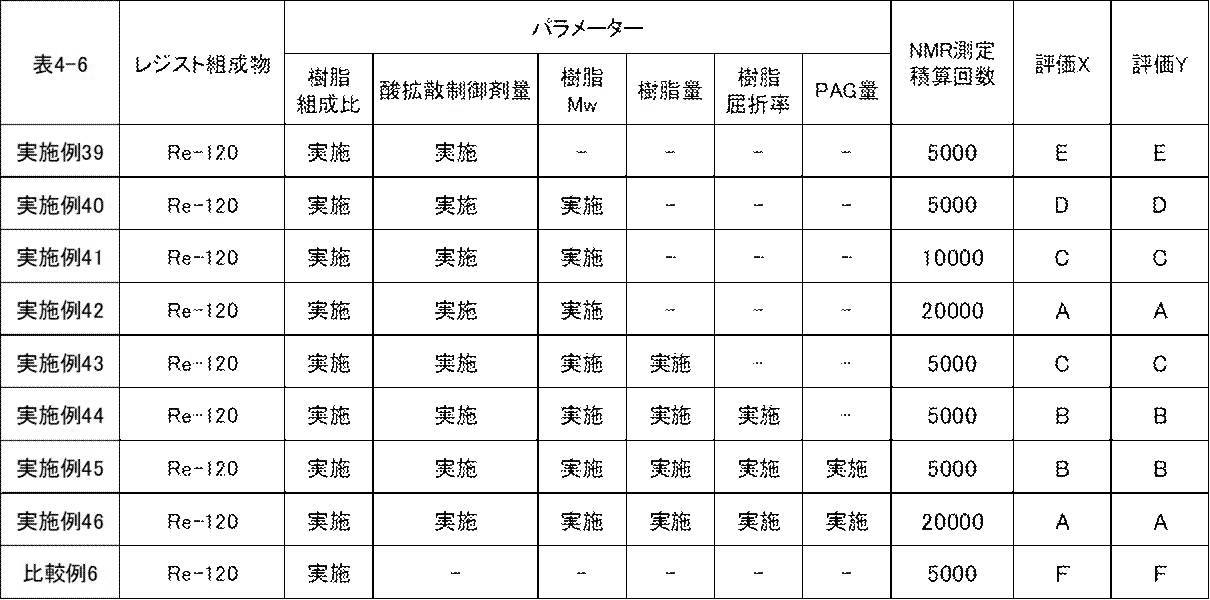
12 処理部
14 入力部
16 表示部
18 製造部
20 設定部
21 取得部
22 解析部
23 算出部
24 判定部
25 変更部
26 決定部
27 表示制御部
28 メモリ
29 制御部
S10、S12、S14、S16、S18、S20、S22、S24 ステップ
Claims (10)
- 酸の作用により分解して極性基を生じる基を有する酸分解性樹脂、及び、光酸発生剤を含むレジスト組成物における、
前記酸分解性樹脂に含まれる繰り返し単位の全繰り返し単位に対する含有量と、
前記レジスト組成物中の成分の含有量を少なくとも含む物理量とのそれぞれを、パラメーターとして設定する設定工程と、
前記パラメーターの少なくとも1つを変数として、少なくとも前記酸分解性樹脂及び前記光酸発生剤を含む回帰分析用レジスト組成物を複数作製し、
作製した前記回帰分析用レジスト組成物の各々の、回帰分析用パターンサイズを取得する取得工程と、
前記取得工程により得られた、前記回帰分析用パターンサイズに対して、前記変数としたパラメーターを説明変数とし、前記目標パターンサイズを目的変数として、回帰分析を行う分析工程と、
前記回帰分析用レジスト組成物中の成分と同じ種類の成分を含む、対象レジスト組成物中の成分である前記酸分解性樹脂に含まれる繰り返し単位の全繰り返し単位に対する含有量を、核磁気共鳴分光法により測定し、
得られた前記酸分解性樹脂に含まれる繰り返し単位の全繰り返し単位に対する含有量、及び、前記対象レジスト組成物の前記説明変数のうちの前記物理量を用いて、前記分析工程における前記回帰分析に基づいて、前記対象レジスト組成物のパターンサイズを算出する算出工程と、
前記算出工程により得られた、前記対象レジスト組成物の前記パターンサイズと、前記目標パターンサイズとを比較する比較工程と、
前記比較工程において、前記対象レジスト組成物の前記パターンサイズと前記目標パターンサイズとの差が許容範囲内である場合、前記分析工程の前記回帰分析に基づいて、前記対象レジスト組成物の配合量を決定する決定工程と、
前記決定工程において決定された前記配合量に基づきレジスト組成物を製造する製造工程とを有し、
前記比較工程において、前記対象レジスト組成物の前記パターンサイズと前記目標パターンサイズとの差が、許容範囲外である場合、前記対象レジスト組成物の前記パターンサイズと前記目標パターンサイズとの差が許容範囲内になるように、前記対象レジスト組成物の配合量を変更する変更工程を更に有する、レジスト組成物の製造方法。 - 前記核磁気共鳴分光法における積算回数が、5000回以上である、請求項1に記載のレジスト組成物の製造方法。
- 前記核磁気共鳴分光法における積算回数が、10000回以上である、請求項1又は2に記載のレジスト組成物の製造方法。
- 前記核磁気共鳴分光法における積算回数が、20000回以上である、請求項1~3のいずれか1項に記載のレジスト組成物の製造方法。
- 前記物理量が、前記酸分解性樹脂の前記レジスト組成物中の全固形分質量に対する含有量である、請求項1~4のいずれか1項に記載のレジスト組成物の製造方法。
- 前記物理量が、前記光酸発生剤の前記レジスト組成物中の全固形分質量に対する含有量である、請求項1~5のいずれか1項に記載のレジスト組成物の製造方法。
- 前記物理量が、前記酸分解性樹脂の重量平均分子量である、請求項1~6のいずれか1項に記載のレジスト組成物の製造方法。
- 前記回帰分析は、多変量解析である、請求項1~7のいずれか1項に記載のレジスト組成物の製造方法。
- 前記製造工程において製造されたレジスト組成物は、極紫外線を用いた露光に利用される、請求項1~8のいずれか1項に記載のレジスト組成物の製造方法。
- 請求項1~9のいずれか1項に記載の製造方法にて製造されたレジスト組成物を用いてレジスト膜を形成する工程と、
前記レジスト膜を露光する工程と、
現像液を用いて、露光された前記レジスト膜を現像し、パターンを形成する工程とを、有するパターン形成方法。
Priority Applications (4)
| Application Number | Priority Date | Filing Date | Title |
|---|---|---|---|
| EP21779704.2A EP4130879A4 (en) | 2020-03-31 | 2021-03-08 | METHOD FOR MANUFACTURING RESIST COMPOSITION AND METHOD FOR FORMING PATTERNS |
| JP2022511717A JP7343694B2 (ja) | 2020-03-31 | 2021-03-08 | レジスト組成物の製造方法、パターン形成方法 |
| KR1020227031338A KR102711197B1 (ko) | 2020-03-31 | 2021-03-08 | 레지스트 조성물의 제조 방법, 패턴 형성 방법 |
| US17/903,158 US20230045851A1 (en) | 2020-03-31 | 2022-09-06 | Method for producing resist composition and pattern forming method |
Applications Claiming Priority (2)
| Application Number | Priority Date | Filing Date | Title |
|---|---|---|---|
| JP2020-062773 | 2020-03-31 | ||
| JP2020062773 | 2020-03-31 |
Related Child Applications (1)
| Application Number | Title | Priority Date | Filing Date |
|---|---|---|---|
| US17/903,158 Continuation US20230045851A1 (en) | 2020-03-31 | 2022-09-06 | Method for producing resist composition and pattern forming method |
Publications (1)
| Publication Number | Publication Date |
|---|---|
| WO2021199940A1 true WO2021199940A1 (ja) | 2021-10-07 |
Family
ID=77929107
Family Applications (1)
| Application Number | Title | Priority Date | Filing Date |
|---|---|---|---|
| PCT/JP2021/009032 Ceased WO2021199940A1 (ja) | 2020-03-31 | 2021-03-08 | レジスト組成物の製造方法、パターン形成方法 |
Country Status (6)
| Country | Link |
|---|---|
| US (1) | US20230045851A1 (ja) |
| EP (1) | EP4130879A4 (ja) |
| JP (1) | JP7343694B2 (ja) |
| KR (1) | KR102711197B1 (ja) |
| TW (1) | TWI854110B (ja) |
| WO (1) | WO2021199940A1 (ja) |
Families Citing this family (1)
| Publication number | Priority date | Publication date | Assignee | Title |
|---|---|---|---|---|
| JP7088399B1 (ja) * | 2021-12-17 | 2022-06-21 | Dic株式会社 | ノボラック型フェノール樹脂の探索方法、情報処理装置、及びプログラム |
Citations (24)
| Publication number | Priority date | Publication date | Assignee | Title |
|---|---|---|---|---|
| JPH03270227A (ja) | 1990-03-20 | 1991-12-02 | Mitsubishi Electric Corp | 微細パターンの形成方法 |
| JPH09219355A (ja) * | 1995-03-08 | 1997-08-19 | Matsushita Electric Ind Co Ltd | パターン形成方法 |
| JP2002090991A (ja) | 2000-09-13 | 2002-03-27 | Fuji Photo Film Co Ltd | ポジ型レジスト組成物 |
| JP2004235468A (ja) | 2003-01-30 | 2004-08-19 | Tokyo Electron Ltd | 熱的処理方法および熱的処理装置 |
| JP2008083384A (ja) | 2006-09-27 | 2008-04-10 | Fujifilm Corp | ポジ型レジスト組成物及びそれを用いたパターン形成方法 |
| US20080248425A1 (en) | 2007-03-28 | 2008-10-09 | Fujifilm Corporation | Positive resist composition and pattern-forming method |
| JP2009267112A (ja) | 2008-04-25 | 2009-11-12 | Tokyo Electron Ltd | エッチングマスク形成方法、エッチング方法、および半導体デバイスの製造方法 |
| US20100020297A1 (en) | 2003-06-06 | 2010-01-28 | Tokyo Electron Limited | Method for improving surface roughness of processed film of substrate and apparatus for processing substrate |
| JP2010175859A (ja) | 2009-01-29 | 2010-08-12 | Fujifilm Corp | 感活性光線または感放射線性樹脂組成物、およびこれを用いたパターン形成方法 |
| JP2011248019A (ja) | 2010-05-25 | 2011-12-08 | Fujifilm Corp | パターン形成方法及び感活性光線性又は感放射線性樹脂組成物 |
| JP2012032544A (ja) | 2010-07-29 | 2012-02-16 | Fujifilm Corp | 感活性光線性又は感放射線性樹脂組成物、並びに、それを用いたレジスト膜及びパターン形成方法 |
| WO2012053434A1 (ja) * | 2010-10-18 | 2012-04-26 | 三菱レイヨン株式会社 | リソグラフィー用共重合体およびその製造方法、レジスト組成物、パターンが形成された基板の製造方法、共重合体の評価方法、共重合体組成解析方法 |
| US20120251948A1 (en) | 2011-03-28 | 2012-10-04 | Fujifilm Corporation | Actinic ray-sensitive or radiation-sensitive resin composition, and actinic ray-sensitive or radiation-sensitive film and pattern forming method using the same composition |
| JP2013011833A (ja) | 2011-06-01 | 2013-01-17 | Jsr Corp | パターン形成方法及び現像液 |
| JP2013164509A (ja) | 2012-02-10 | 2013-08-22 | Tokyo Ohka Kogyo Co Ltd | パターン形成方法 |
| JP2013228681A (ja) | 2012-03-29 | 2013-11-07 | Fujifilm Corp | 感活性光線性又は感放射線性樹脂組成物、並びにそれを用いた感活性光線性又は感放射線性膜及びパターン形成方法 |
| WO2014002808A1 (ja) | 2012-06-25 | 2014-01-03 | 東京エレクトロン株式会社 | レジストマスクの処理方法 |
| JP2014010245A (ja) | 2012-06-28 | 2014-01-20 | Fujifilm Corp | パターン形成方法、感活性光線性又は感放射線性樹脂組成物、レジスト膜、電子デバイスの製造方法及び電子デバイス |
| JP2014041327A (ja) | 2012-07-27 | 2014-03-06 | Fujifilm Corp | 感活性光線性又は感放射線性樹脂組成物、それを用いたレジスト膜、パターン形成方法、電子デバイスの製造方法、及び電子デバイス |
| JP2014041328A (ja) | 2012-07-27 | 2014-03-06 | Fujifilm Corp | パターン形成方法、感活性光線性又は感放射線性樹脂組成物、レジスト膜、これらを用いた電子デバイスの製造方法、及び、電子デバイス |
| JP2014134686A (ja) | 2013-01-10 | 2014-07-24 | Fujifilm Corp | ネガ型レジスト組成物、それを用いたレジスト膜及びパターン形成方法、並びにレジスト膜を備えたマスクブランクス |
| JP2014219664A (ja) | 2013-04-08 | 2014-11-20 | Jsr株式会社 | レジスト組成物、レジストパターン形成方法及びレジスト用溶媒 |
| JP2015227468A (ja) * | 2009-07-07 | 2015-12-17 | 三菱レイヨン株式会社 | リソグラフィー用共重合体およびリソグラフィー組成物 |
| JP2019211531A (ja) | 2018-05-31 | 2019-12-12 | 日本ゼオン株式会社 | Euvリソグラフィ用ポジ型レジスト組成物およびレジストパターン形成方法 |
Family Cites Families (5)
| Publication number | Priority date | Publication date | Assignee | Title |
|---|---|---|---|---|
| EP1143296A3 (en) * | 1995-03-08 | 2003-12-17 | Matsushita Electric Industrial Co., Ltd | Method for forming pattern |
| TWI455948B (zh) * | 2009-07-07 | 2014-10-11 | Mitsubishi Rayon Co | 聚合體的製造方法、微影用聚合體、光阻組成物及基板的製造方法 |
| JP5437165B2 (ja) * | 2010-05-24 | 2014-03-12 | 三菱レイヨン株式会社 | 共重合体組成解析方法及びそのプログラム |
| JP6721157B2 (ja) * | 2015-07-22 | 2020-07-08 | 株式会社平間理化研究所 | 現像液の成分濃度測定方法及び装置、並びに、現像液管理方法及び装置 |
| JP6871839B2 (ja) * | 2017-10-31 | 2021-05-12 | 信越化学工業株式会社 | レジストの品質管理方法及びレジストの品質予測モデルを得る方法 |
-
2021
- 2021-03-08 JP JP2022511717A patent/JP7343694B2/ja active Active
- 2021-03-08 EP EP21779704.2A patent/EP4130879A4/en active Pending
- 2021-03-08 WO PCT/JP2021/009032 patent/WO2021199940A1/ja not_active Ceased
- 2021-03-08 KR KR1020227031338A patent/KR102711197B1/ko active Active
- 2021-03-12 TW TW110108848A patent/TWI854110B/zh active
-
2022
- 2022-09-06 US US17/903,158 patent/US20230045851A1/en active Pending
Patent Citations (25)
| Publication number | Priority date | Publication date | Assignee | Title |
|---|---|---|---|---|
| JPH03270227A (ja) | 1990-03-20 | 1991-12-02 | Mitsubishi Electric Corp | 微細パターンの形成方法 |
| JPH09219355A (ja) * | 1995-03-08 | 1997-08-19 | Matsushita Electric Ind Co Ltd | パターン形成方法 |
| JP2002090991A (ja) | 2000-09-13 | 2002-03-27 | Fuji Photo Film Co Ltd | ポジ型レジスト組成物 |
| JP2004235468A (ja) | 2003-01-30 | 2004-08-19 | Tokyo Electron Ltd | 熱的処理方法および熱的処理装置 |
| US20100020297A1 (en) | 2003-06-06 | 2010-01-28 | Tokyo Electron Limited | Method for improving surface roughness of processed film of substrate and apparatus for processing substrate |
| JP2008083384A (ja) | 2006-09-27 | 2008-04-10 | Fujifilm Corp | ポジ型レジスト組成物及びそれを用いたパターン形成方法 |
| US20080248425A1 (en) | 2007-03-28 | 2008-10-09 | Fujifilm Corporation | Positive resist composition and pattern-forming method |
| JP2009267112A (ja) | 2008-04-25 | 2009-11-12 | Tokyo Electron Ltd | エッチングマスク形成方法、エッチング方法、および半導体デバイスの製造方法 |
| JP2010175859A (ja) | 2009-01-29 | 2010-08-12 | Fujifilm Corp | 感活性光線または感放射線性樹脂組成物、およびこれを用いたパターン形成方法 |
| JP2015227468A (ja) * | 2009-07-07 | 2015-12-17 | 三菱レイヨン株式会社 | リソグラフィー用共重合体およびリソグラフィー組成物 |
| JP2011248019A (ja) | 2010-05-25 | 2011-12-08 | Fujifilm Corp | パターン形成方法及び感活性光線性又は感放射線性樹脂組成物 |
| JP2012032544A (ja) | 2010-07-29 | 2012-02-16 | Fujifilm Corp | 感活性光線性又は感放射線性樹脂組成物、並びに、それを用いたレジスト膜及びパターン形成方法 |
| WO2012053434A1 (ja) * | 2010-10-18 | 2012-04-26 | 三菱レイヨン株式会社 | リソグラフィー用共重合体およびその製造方法、レジスト組成物、パターンが形成された基板の製造方法、共重合体の評価方法、共重合体組成解析方法 |
| US20120251948A1 (en) | 2011-03-28 | 2012-10-04 | Fujifilm Corporation | Actinic ray-sensitive or radiation-sensitive resin composition, and actinic ray-sensitive or radiation-sensitive film and pattern forming method using the same composition |
| JP2013011833A (ja) | 2011-06-01 | 2013-01-17 | Jsr Corp | パターン形成方法及び現像液 |
| JP2013164509A (ja) | 2012-02-10 | 2013-08-22 | Tokyo Ohka Kogyo Co Ltd | パターン形成方法 |
| JP2013228681A (ja) | 2012-03-29 | 2013-11-07 | Fujifilm Corp | 感活性光線性又は感放射線性樹脂組成物、並びにそれを用いた感活性光線性又は感放射線性膜及びパターン形成方法 |
| US20150004533A1 (en) | 2012-03-29 | 2015-01-01 | Fujifilm Corporation | Actinic ray-sensitive or radiation-sensitive resin composition, and, actinic ray-sensitive or radiation-sensitive film and pattern forming method, each using the same |
| WO2014002808A1 (ja) | 2012-06-25 | 2014-01-03 | 東京エレクトロン株式会社 | レジストマスクの処理方法 |
| JP2014010245A (ja) | 2012-06-28 | 2014-01-20 | Fujifilm Corp | パターン形成方法、感活性光線性又は感放射線性樹脂組成物、レジスト膜、電子デバイスの製造方法及び電子デバイス |
| JP2014041327A (ja) | 2012-07-27 | 2014-03-06 | Fujifilm Corp | 感活性光線性又は感放射線性樹脂組成物、それを用いたレジスト膜、パターン形成方法、電子デバイスの製造方法、及び電子デバイス |
| JP2014041328A (ja) | 2012-07-27 | 2014-03-06 | Fujifilm Corp | パターン形成方法、感活性光線性又は感放射線性樹脂組成物、レジスト膜、これらを用いた電子デバイスの製造方法、及び、電子デバイス |
| JP2014134686A (ja) | 2013-01-10 | 2014-07-24 | Fujifilm Corp | ネガ型レジスト組成物、それを用いたレジスト膜及びパターン形成方法、並びにレジスト膜を備えたマスクブランクス |
| JP2014219664A (ja) | 2013-04-08 | 2014-11-20 | Jsr株式会社 | レジスト組成物、レジストパターン形成方法及びレジスト用溶媒 |
| JP2019211531A (ja) | 2018-05-31 | 2019-12-12 | 日本ゼオン株式会社 | Euvリソグラフィ用ポジ型レジスト組成物およびレジストパターン形成方法 |
Non-Patent Citations (5)
| Title |
|---|
| "EUV Resist Curing Technique for LWR Reduction and Etch Selectivity Enhancement", PROC. OF SPIE, vol. 8328 |
| "Semiconductor Process Text Book", 2007 |
| ACS NANO, vol. 4, no. 8, pages 4815 - 4823 |
| JOURNAL OF THE INTERNATIONAL SOCIETY FOR OPTICAL ENGINEERING (PROC. OF SPIE, vol. 6924, 2008, pages 692420 |
| See also references of EP4130879A4 |
Also Published As
| Publication number | Publication date |
|---|---|
| JPWO2021199940A1 (ja) | 2021-10-07 |
| TWI854110B (zh) | 2024-09-01 |
| JP7343694B2 (ja) | 2023-09-12 |
| US20230045851A1 (en) | 2023-02-16 |
| EP4130879A4 (en) | 2023-09-20 |
| KR20220140592A (ko) | 2022-10-18 |
| TW202141190A (zh) | 2021-11-01 |
| EP4130879A1 (en) | 2023-02-08 |
| KR102711197B1 (ko) | 2024-09-27 |
Similar Documents
| Publication | Publication Date | Title |
|---|---|---|
| JP7101773B2 (ja) | 感活性光線性又は感放射線性樹脂組成物、パターン形成方法、電子デバイスの製造方法、樹脂 | |
| JP7221308B2 (ja) | 感活性光線性又は感放射線性樹脂組成物、レジスト膜、パターン形成方法、電子デバイスの製造方法 | |
| JP7200267B2 (ja) | 感活性光線性又は感放射線性樹脂組成物、レジスト膜、パターン形成方法、電子デバイスの製造方法 | |
| WO2021199841A1 (ja) | 感活性光線性又は感放射線性樹脂組成物、パターン形成方法、レジスト膜、電子デバイスの製造方法 | |
| JPWO2020158417A1 (ja) | 感活性光線性又は感放射線性樹脂組成物、レジスト膜、パターン形成方法、電子デバイスの製造方法 | |
| JPWO2020158313A1 (ja) | 感活性光線性又は感放射線性樹脂組成物、レジスト膜、パターン形成方法、電子デバイスの製造方法 | |
| WO2019187881A1 (ja) | Euv光用ネガ型感光性組成物、パターン形成方法、電子デバイスの製造方法 | |
| WO2017154345A1 (ja) | 感活性光線性又は感放射線性樹脂組成物、レジスト膜、パターン形成方法、電子デバイスの製造方法 | |
| WO2019039290A1 (ja) | 感活性光線性又は感放射線性樹脂組成物、レジスト膜、パターン形成方法、電子デバイスの製造方法、レジスト膜付きマスクブランクス、レジスト膜付きマスクブランクスのパターン形成方法 | |
| JPWO2020105505A1 (ja) | 感活性光線性又は感放射線性樹脂組成物、レジスト膜、パターン形成方法、電子デバイスの製造方法 | |
| JP6780092B2 (ja) | 感活性光線性又は感放射線性樹脂組成物、レジスト膜、パターン形成方法、電子デバイスの製造方法 | |
| WO2020241099A1 (ja) | 感活性光線性又は感放射線性樹脂組成物、パターン形成方法、電子デバイスの製造方法 | |
| JP2025061144A (ja) | 感活性光線性又は感放射線性樹脂組成物、パターン形成方法、レジスト膜、電子デバイスの製造方法 | |
| JPWO2020095641A1 (ja) | 感放射線性樹脂組成物、レジスト膜、パターン形成方法、電子デバイスの製造方法 | |
| JPWO2020129476A1 (ja) | 感活性光線性又は感放射線性樹脂組成物、レジスト膜、パターン形成方法、及び電子デバイスの製造方法 | |
| JPWO2020066485A1 (ja) | 感活性光線性又は感放射線性樹脂組成物、レジスト膜、パターン形成方法、電子デバイスの製造方法 | |
| JP7343694B2 (ja) | レジスト組成物の製造方法、パターン形成方法 | |
| WO2017169746A1 (ja) | 感活性光線性又は感放射線性樹脂組成物、レジスト膜、パターン形成方法、電子デバイスの製造方法、レジスト膜付きマスクブランクス、レジスト膜付きマスクブランクスのパターン形成方法 | |
| WO2021065549A1 (ja) | 感活性光線性又は感放射線性樹脂組成物、感活性光線性又は感放射線性膜、パターン形成方法、及び、電子デバイスの製造方法 | |
| WO2020255585A1 (ja) | 活性光線又は放射線の照射によって酸を発生する化合物の精製方法、感活性光線性又は感放射線性樹脂組成物の製造方法、パターン形成方法、電子デバイスの製造方法 | |
| KR102898321B1 (ko) | 감활성광선성 또는 감방사선성 수지 조성물, 감활성광선성 또는 감방사선성막, 패턴 형성 방법 및 전자 디바이스의 제조 방법 | |
| KR102689228B1 (ko) | 패턴 형성 방법, 전자 디바이스의 제조 방법, 감활성광선성 또는 감방사선성 수지 조성물, 레지스트막 | |
| KR102635086B1 (ko) | Euv광용 감광성 조성물, 패턴 형성 방법, 전자 디바이스의 제조 방법 | |
| CN116897320A (zh) | 感光化射线性或感放射线性树脂组合物、抗蚀剂膜、图案形成方法、电子器件的制造方法 | |
| JP2025152064A (ja) | 感活性光線性又は感放射線性樹脂組成物、感活性光線性又は感放射線性膜、パターン形成方法、及び電子デバイスの製造方法 |
Legal Events
| Date | Code | Title | Description |
|---|---|---|---|
| 121 | Ep: the epo has been informed by wipo that ep was designated in this application |
Ref document number: 21779704 Country of ref document: EP Kind code of ref document: A1 |
|
| ENP | Entry into the national phase |
Ref document number: 2022511717 Country of ref document: JP Kind code of ref document: A |
|
| ENP | Entry into the national phase |
Ref document number: 20227031338 Country of ref document: KR Kind code of ref document: A |
|
| NENP | Non-entry into the national phase |
Ref country code: DE |
|
| ENP | Entry into the national phase |
Ref document number: 2021779704 Country of ref document: EP Effective date: 20221031 |