WO2021237342A1 - Process for recycling contaminated solid materials and purification of gases - Google Patents
Process for recycling contaminated solid materials and purification of gases Download PDFInfo
- Publication number
- WO2021237342A1 WO2021237342A1 PCT/CA2021/050700 CA2021050700W WO2021237342A1 WO 2021237342 A1 WO2021237342 A1 WO 2021237342A1 CA 2021050700 W CA2021050700 W CA 2021050700W WO 2021237342 A1 WO2021237342 A1 WO 2021237342A1
- Authority
- WO
- WIPO (PCT)
- Prior art keywords
- dha
- process according
- microwave
- waste
- treatment
- Prior art date
- Legal status (The legal status is an assumption and is not a legal conclusion. Google has not performed a legal analysis and makes no representation as to the accuracy of the status listed.)
- Ceased
Links
Classifications
-
- B—PERFORMING OPERATIONS; TRANSPORTING
- B09—DISPOSAL OF SOLID WASTE; RECLAMATION OF CONTAMINATED SOIL
- B09B—DISPOSAL OF SOLID WASTE NOT OTHERWISE PROVIDED FOR
- B09B3/00—Destroying solid waste or transforming solid waste into something useful or harmless
- B09B3/40—Destroying solid waste or transforming solid waste into something useful or harmless involving thermal treatment, e.g. evaporation
-
- B—PERFORMING OPERATIONS; TRANSPORTING
- B01—PHYSICAL OR CHEMICAL PROCESSES OR APPARATUS IN GENERAL
- B01D—SEPARATION
- B01D53/00—Separation of gases or vapours; Recovering vapours of volatile solvents from gases; Chemical or biological purification of waste gases, e.g. engine exhaust gases, smoke, fumes, flue gases, aerosols
- B01D53/34—Chemical or biological purification of waste gases
- B01D53/46—Removing components of defined structure
- B01D53/68—Halogens or halogen compounds
-
- B—PERFORMING OPERATIONS; TRANSPORTING
- B01—PHYSICAL OR CHEMICAL PROCESSES OR APPARATUS IN GENERAL
- B01D—SEPARATION
- B01D53/00—Separation of gases or vapours; Recovering vapours of volatile solvents from gases; Chemical or biological purification of waste gases, e.g. engine exhaust gases, smoke, fumes, flue gases, aerosols
- B01D53/34—Chemical or biological purification of waste gases
- B01D53/46—Removing components of defined structure
- B01D53/68—Halogens or halogen compounds
- B01D53/70—Organic halogen compounds
-
- B—PERFORMING OPERATIONS; TRANSPORTING
- B01—PHYSICAL OR CHEMICAL PROCESSES OR APPARATUS IN GENERAL
- B01D—SEPARATION
- B01D2251/00—Reactants
- B01D2251/70—Organic acids
-
- B—PERFORMING OPERATIONS; TRANSPORTING
- B01—PHYSICAL OR CHEMICAL PROCESSES OR APPARATUS IN GENERAL
- B01D—SEPARATION
- B01D2257/00—Components to be removed
- B01D2257/20—Halogens or halogen compounds
- B01D2257/204—Inorganic halogen compounds
- B01D2257/2042—Hydrobromic acid
-
- B—PERFORMING OPERATIONS; TRANSPORTING
- B01—PHYSICAL OR CHEMICAL PROCESSES OR APPARATUS IN GENERAL
- B01D—SEPARATION
- B01D2257/00—Components to be removed
- B01D2257/20—Halogens or halogen compounds
- B01D2257/204—Inorganic halogen compounds
- B01D2257/2045—Hydrochloric acid
-
- B—PERFORMING OPERATIONS; TRANSPORTING
- B01—PHYSICAL OR CHEMICAL PROCESSES OR APPARATUS IN GENERAL
- B01D—SEPARATION
- B01D2257/00—Components to be removed
- B01D2257/20—Halogens or halogen compounds
- B01D2257/204—Inorganic halogen compounds
- B01D2257/2047—Hydrofluoric acid
-
- B—PERFORMING OPERATIONS; TRANSPORTING
- B01—PHYSICAL OR CHEMICAL PROCESSES OR APPARATUS IN GENERAL
- B01D—SEPARATION
- B01D2257/00—Components to be removed
- B01D2257/20—Halogens or halogen compounds
- B01D2257/206—Organic halogen compounds
- B01D2257/2064—Chlorine
-
- B—PERFORMING OPERATIONS; TRANSPORTING
- B01—PHYSICAL OR CHEMICAL PROCESSES OR APPARATUS IN GENERAL
- B01D—SEPARATION
- B01D2257/00—Components to be removed
- B01D2257/30—Sulfur compounds
- B01D2257/302—Sulfur oxides
-
- B—PERFORMING OPERATIONS; TRANSPORTING
- B01—PHYSICAL OR CHEMICAL PROCESSES OR APPARATUS IN GENERAL
- B01D—SEPARATION
- B01D2257/00—Components to be removed
- B01D2257/70—Organic compounds not provided for in groups B01D2257/00 - B01D2257/602
- B01D2257/702—Hydrocarbons
- B01D2257/7022—Aliphatic hydrocarbons
-
- B—PERFORMING OPERATIONS; TRANSPORTING
- B01—PHYSICAL OR CHEMICAL PROCESSES OR APPARATUS IN GENERAL
- B01D—SEPARATION
- B01D2258/00—Sources of waste gases
- B01D2258/02—Other waste gases
-
- B—PERFORMING OPERATIONS; TRANSPORTING
- B01—PHYSICAL OR CHEMICAL PROCESSES OR APPARATUS IN GENERAL
- B01D—SEPARATION
- B01D53/00—Separation of gases or vapours; Recovering vapours of volatile solvents from gases; Chemical or biological purification of waste gases, e.g. engine exhaust gases, smoke, fumes, flue gases, aerosols
- B01D53/34—Chemical or biological purification of waste gases
- B01D53/46—Removing components of defined structure
- B01D53/48—Sulfur compounds
- B01D53/50—Sulfur oxides
- B01D53/507—Sulfur oxides by treating the gases with other liquids
-
- B—PERFORMING OPERATIONS; TRANSPORTING
- B01—PHYSICAL OR CHEMICAL PROCESSES OR APPARATUS IN GENERAL
- B01D—SEPARATION
- B01D53/00—Separation of gases or vapours; Recovering vapours of volatile solvents from gases; Chemical or biological purification of waste gases, e.g. engine exhaust gases, smoke, fumes, flue gases, aerosols
- B01D53/34—Chemical or biological purification of waste gases
- B01D53/46—Removing components of defined structure
- B01D53/72—Organic compounds not provided for in groups B01D53/48 - B01D53/70, e.g. hydrocarbons
-
- Y—GENERAL TAGGING OF NEW TECHNOLOGICAL DEVELOPMENTS; GENERAL TAGGING OF CROSS-SECTIONAL TECHNOLOGIES SPANNING OVER SEVERAL SECTIONS OF THE IPC; TECHNICAL SUBJECTS COVERED BY FORMER USPC CROSS-REFERENCE ART COLLECTIONS [XRACs] AND DIGESTS
- Y02—TECHNOLOGIES OR APPLICATIONS FOR MITIGATION OR ADAPTATION AGAINST CLIMATE CHANGE
- Y02C—CAPTURE, STORAGE, SEQUESTRATION OR DISPOSAL OF GREENHOUSE GASES [GHG]
- Y02C20/00—Capture or disposal of greenhouse gases
- Y02C20/30—Capture or disposal of greenhouse gases of perfluorocarbons [PFC], hydrofluorocarbons [HFC] or sulfur hexafluoride [SF6]
Definitions
- the present invention relates generally to processes for recycling contaminated solid materials including plastic materials such as electronic waste (E-waste) plastic materials. More specifically, the invention relates to such a process that uses a microwave-pyrolysis and that is environmental-friendly. The invention also relates to a process for purifying a gas emission.
- plastic materials such as electronic waste (E-waste) plastic materials.
- E-waste electronic waste
- the invention also relates to a process for purifying a gas emission.
- Plastic fraction accounts for 25-30% of the E-wastes, and this plastic material is typically composed of high-quality polymers such as polycarbonate (PC), polypropylene (PP), high impact polystyrene (HIPS), and acrylonitrile butadiene styrene (ABS) (Das et al., 2021 [2]).
- PC polycarbonate
- PP polypropylene
- HIPS high impact polystyrene
- ABS acrylonitrile butadiene styrene
- the plastic material in E-waste usually also contains highly toxic substances including heavy metals (e.g., Pb, Hg, and Cd) and brominated flame retardants (BFRs) (Damrongsiri et al. , 2016 [3]; Dehnath et al. , 2018 [4]).
- heavy metals e.g., Pb, Hg, and Cd
- BFRs brominated flame retardants
- the concentration of Pb in cathode-ray tubes (CRTs) and printing wiring boards was reported to be 429-9,900 mg/kg and 18,060-400,560 mg/kg, respectively, amounts which significantly exceed the permissible limit of 10 pg/L (Olubanjo et al., 2015 [6]).
- FRs Flame retardants
- nitrogen- and phosphorous-based FRs brominated FRs are the most commonly used.
- they are persistent, bio- accumulative and toxic in nature (Kefeni et al., 2011 [5]).
- the broadly used BFRs in the plastics of electric and electronic products include: tetrabromobisphenol A (TBBPA), polybrominated diphenyl ethers (PBDEs), hexabromocyclo dodecane (HBCD), and polybrominated biphenyls (PBB); among which TBBPA represents around 60% of the total volume of BFRs (Ortuno et al., 2014 [7]).
- TBBPA tetrabromobisphenol A
- PBDEs polybrominated diphenyl ethers
- HBCD hexabromocyclo dodecane
- PBB polybrominated biphenyls
- Brominated aromatic compounds are precursors to polybrominated dibenzo-p-dioxins (PBDD) and polybrominated dibenzo furans (PBDF), which are known to present serious environmental problems (Wong et al., 2007 [8]) and to have harmful impacts on human health (Lilienthal et al., 2009 [9]).
- PBDD polybrominated dibenzo-p-dioxins
- PBDF polybrominated dibenzo furans
- E-waste plastics recycling generally consists of mechanical, chemical, and thermal processes.
- the approaches typically include grinding, washing, separation, drying, re-granulation, extrusion, and compounding where the recycled material can be further processed into secondary products such as 3D printer filaments (Mohammed et al., 2017 [10]).
- the mechanical recycling of E-waste plastics into secondary products is often determined by the purity of the E-waste plastics.
- the presence of heavy metals and BFRs negatively affects the purity of the E-waste plastics and thus leads to a shift towards chemical and thermal recycling approaches.
- Emitted toxic substances include volatile and semi-volatile organic compounds (VOCs, e.g., chlorobenzene, bromobenzene, tribromomethane, bromomethane, and dibromomethane), dioxins, other halogenated compounds (e.g., HBr, HCI), and common flue gas components (Stewart et al., 2003 [12]).
- VOCs volatile and semi-volatile organic compounds
- Hydrothermal treatment is an effective approach to remove BFRs from E-waste plastics and convert them into value-added fuels and chemicals (Yin et al., 2011 [13]).
- Zhao et al. 2019, [14] hydrothermally treated E-waste plastics in subcritical water and converted them into 81.4-97.6 wt.% of organic product containing styrene, bisphenol A, caprolactam and other valuable compounds that can be reused to produce polymer or other chemicals.
- solid product with a microstructure was also generated from the hydrothermal treatment of E-waste plastics, which demonstrates the potential to be used as absorbent.
- factors such as high installation cost, requirement for a high-pressure resistant reactor and handling of a pressurized reactor, limit the large-scale application of E-waste plastics recycling by hydrothermal treatment (Das et al., 2021 [2]).
- Pyrolysis is a thermochemical recycling approach that can convert E-waste plastics into oil, solid and gas phases in an oxygen-free condition. Even though pyrolysis is effective in diverting E-waste plastics from landfill by their conversion into valuable products, the generation of wax during the process and the formation of halogenated gases such as HBr and HCI make pyrolysis less suitable for recycling contaminated E-waste plastics (Zhang et al., 2021 [15]).
- a catalyst has been introduced into pyrolysis in order to limit the formation of brominated components; however, issues such as occurrence of catalyst deactivation caused by Br fixation and coke formation, remain to be addressed before any widescale utilization of catalytic pyrolysis (Liu et al., 2014 [16]; Hall et al., 2008 [17]).
- the inventors have designed and performed an environmental-friendly process for recycling contaminated solid materials including plastic materials such as electronic waste (E- waste) plastic materials. More specifically, the invention relates to such a process that uses a heating process including microwave-pyrolysis, and also uses a dehalogenation agent (DHA).
- the process according to the invention yields a solid phase, an oil phase, and a gas phase.
- the gas phase is further subjected to a purification treatment.
- the gas purification treatment according to the invention may be adapted for the purification of gases emitted from other processes.
- the process comprises pre-treating a raw contaminated solid material then submitting the pre-treated material to a heating process such as microwave-pyrolysis for example yielding a solid phase, an oil phase, and a gas phase.
- the gas phase is further treated such as to remove unwanted components including acidic gases (halogenated gases), volatile organic compounds (VOCs), and sulfur-containing compounds such as sulfur oxides (SOx). Accordingly, the process of the invention leads to the production of a clean solid, an oil phase, and a purified gas phase.
- each of the pre-treatment of the raw contaminated solid material and the purification treatment of the gas emitted during the heating process is performed using a dehalogenation agent (DHA) comprising an organophosphorus (OP) compound.
- DHA dehalogenation agent
- OP organophosphorus
- the DHA agent used is regenerated using a regeneration agent (RGA) and further re-used in the process.
- RAA regeneration agent
- the pre-treated material is mixed with a microwave absorber prior to performing the microwave-pyrolysis.
- the microwave absorber assists in the melting of the plastic material.
- the melting process is preformed prior to the microwave-pyrolysis.
- the invention thus provides the following in accordance with aspects thereof: (1) A process for recycling contaminated solid material, comprising heating the material yielding a solid phase, an oil phase, and a gas phase, wherein the material is subjected to a pre-treatment involving a dehalogenation agent (DHA) prior to the heating.
- DHA dehalogenation agent
- a regeneration agent comprising an acid compound or proton donor; optionally the acidic compound is an inorganic acid (HCI or H 2 SO 4 ) or an organic acid.
- the purified gas is substantially free of chemicals of concern (CoCs) including acidic gases, volatile organic compounds (VOCs), and sulfur- containing compounds; optionally the acidic gases are halogenated gases including HCI, HBr, and HF; optionally the VOCs are propylene, 1,3-butadiene, chloromethane, bromomethane, chloroethane, and vinyl chloride; optionally the sulfur-containing compounds are sulfur oxides (SOx).
- CoCs chemicals of concern
- VOCs volatile organic compounds
- SOx sulfur oxides
- a process for recycling a contaminated plastic material comprising the steps of: (a) subjecting the material to a pre-treatment involving a dehalogenation agent (DHA) to yield a pre-treated material; (b) subjecting the pre-treated material to a heating process to yield a solid phase, an oil phase, and a gas phase; (c) separating the solid phase, the oil phase, and the gas phase; (d) subjecting the gas phase to a purification treatment involving a further dehalogenation agent (DHA) to yield a purified gas and a reacted DHA; (e) separating the purified gas and the reacted DHA; (f) subjecting the reacted DHA to a regeneration process to yield a regenerated DHA; and (g) directing the regenerated DHA for use at steps (a) and/or step (d).
- DHA dehalogenation agent
- a first DAH is used at step (a) and a second DHA agent is used at step (d); and the first DHA and the second DHA may be the same or different.
- the dehalogenation agent comprises an organophosphorus compound.
- Ri and R2 are each independently Ci to C20 a linear or branched, cyclic or non-cyclic, saturated or unsaturated alkyl group, optionally comprising a heteroatom which is O, S or N.
- Ri and R2 are each independently a Cs to C20 or a Ce to C16 or a C16 a linear or branched, cyclic or non-cyclic, saturated or unsaturated alkyl group, optionally comprising a heteroatom which is O, S or N.
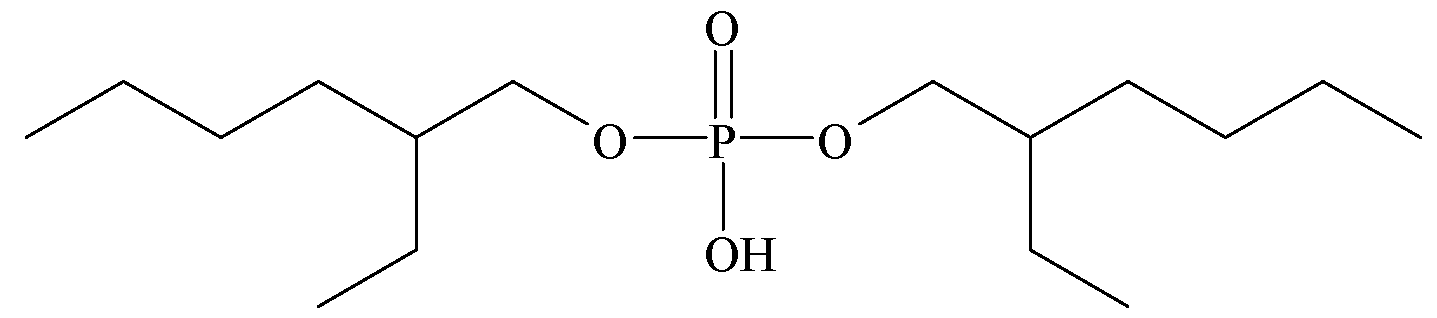
- the dehalogenation agent comprises a compound selected from the group consisting of: di-(2-ethylhexyl) phosphoric acid, bis(2-ethylhexyl) hydrophosphoric acid, di-(2-ethylhexyl) orthophosphoric acid, 0,0- bis(2-ethylhexyl)phosphoric acid, orthophosphoric acid 2-ethylhexyl alcohol, phosphoric acid di(2-ethylhexyl) ester, and Hostarex PA 216TM.
- a process for recycling contaminated solid material comprising subjecting the material to a microwave-pyrolysis yielding a solid phase, an oil phase, and a gas phase, wherein the material is subjected to a pre-treatment involving a dehalogenation agent (DHA) prior to the microwave-pyrolysis.
- DHA dehalogenation agent
- a process for purifying a gas emission comprising allowing the gas emission to react with a dehalogenation agent (DHA) yielding a purified gas and a reacted DHA, and separating the purified and reacted DHA.
- DHA dehalogenation agent
- a process according to claim further comprising subjecting the reacted DHA to a regeneration process to yield a regenerated DHA.
- Figure 1 Schematic diagram outlining the process according to the invention.
- Figure 2 Flow chart outlining the experimental procedure applied in the pre-treatment.
- Figure 3 Flow chart outlining the experimental procedure used in the microwave- pyrolysis and the gas purification step.
- Figure 4 Image showing the regenerated DHA floating on the surface of the liquid.
- FIG. 5 SEM band characterization of the untreated heavy fraction plastic. Note: The Lithium band is associated with the X-ray detector window.
- Figure 6 FT-IR spectrum of the untreated feedstock.
- Figure 7 SEM images of (A) untreated feedstock; (B) pre-treated feedstock obtained from pre-treatment using DHA at 25°C; (C) pre-treated feedstock obtained from pre-treatment using DHA at 60°C; (D) pre-treated feedstock obtained from pre-treatment using toluene-DHA.
- Figure 8 Investigation on the removal efficiency of chemicals of concern with different pre-treatment conditions.
- A untreated feedstock (solid);
- B pre-treated feedstock obtained from pre-treatment using DHA at 25°C (dotted);
- C pre-treated feedstock obtained from pre treatment using DHA at 60°C (dashdot);
- D pre-treated feedstock obtained from pre treatment using toluene-DHA (longdash).
- Figure 9 FT-IR spectra of untreated (solid), pre-treated with ECOC (emulsion- containing organophosphoric compound) at25°C (dotted), and pre-treated with ECOC at60°C (dotdash) for 6 hours in the range of 650-1000 cm 1 .
- ECOC emulsion- containing organophosphoric compound
- Figure 10 FT-IR spectra of untreated (solid), treated with DHA for 2 hours (dotted), for 4 hours (dotdash), and for 6 hours (longdash) at 60°C in the range of 650-1000 cm -1 .
- Figure 11 FT-IR spectrum of untreated (solid), treated with ECOC for 2 hours (dotted), for 4 hours (dotdash), and for 6 hours (longdash) at 60°C in the range of 1100-1700 cm -1 .
- Figure 12 FT-IR spectra of unreacted and reacted ECOC obtained from pre-treatment at various reaction conditions.
- Figure 13 The boiling point distribution of liquid oil obtained from microwave pyrolysis of E-waste plastics.
- Figure 14 FT-IR spectra of untreated (solid) and reacted (longdash) DHA obtained from DHA-assisted gas purification from 1600-600 cm 1 .
- Figure 15 FT-IR spectra of unreacted (solid) and reacted (longdash) DHA in the range of 1600-900 cm- 1 .
- Figure 16 FT-IR spectrum of regenerated DHA.
- Figure 17 FT-IR spectrum of fresh DHA (Millipore Sigma, 2021 [36]).
- the words “comprising” (and any form of comprising, such as “comprise” and “comprises”), “having” (and any form of having, such as “have” and “has”), “including” (and any form of including, such as “include” and “includes”) or “containing” (and any form of containing, such as “contain” and “contains”), are inclusive or open-ended and do not exclude additional, unrecited elements or process steps.
- the term “dehalogenation agent” refers to a chemical agent suitable for removing halogens and/or halogen-containing compounds from a material.
- the dehalogenation agent comprises an organophosphorus compound.
- term “emulsion-containing organophosphoric compound” (ECOC) is also used to designate the dehalogenation agent.
- microwave-pyrolysis refers to a pyrolysis process using a microwave heating technique.
- microwave absorber refers to material that absorbs microwaves and becomes heated. Such material is used in the microwave-pyrolysis and transfers its heat to the plastic material, thus assisting in the melting of the plastic material. Accordingly, a microwave absorber is used when the raw contaminated solid material contains plastic. Use of a microwave absorber may not be necessary when the raw material itself is a microwave absorber.
- the microwave absorber used is a carbon-based material such as for example SiC or carbon itself.
- contaminated solid material refers to the raw material used in the invention.
- the material may consist of any solid material that is contaminated and contains chemicals of concern (CoC) as defined herein below.
- Such solid materials include plastic materials and electronic waste plastic materials as defined herein below.
- E-waste plastic material or “E-waste plastics” refers to the raw material used in this invention.
- the material consists of waste from various electronic equipment and contains chemicals of concern as defined herein above.
- gas emission refers to a gas stream emitted during the process of the invention.
- gas emitted during the microwave-pyrolysis also refers to a gas emitted during any other process such as for example the combustion of E-waste, organic waste, oil or coal. It is to be understood that the gas purification treatment according to the invention may be applied to gases emitted during other processes.
- chemicals of concern refers to chemicals present in the raw material used in the process of the invention. It is generally not desirable to have such chemicals present in solid materials discarded in the nature. Such chemicals are generally harmful to the nature or the health of humans.
- chemicals of concern comprise for example: acidic gases including halogenated gases such as HCI, HBr, and HF; volatile organic compounds (VOCs) including propylene, 1,3-butadiene, chloromethane, bromomethane, chloroethane, and vinyl chloride; and sulfur-containing compounds including sulfur oxides (SOx).
- regeneration agent refers to a chemical used in the process of the invention to retrieve the dehalogenation agent (DHA) after use.
- the regeneration agent comprises a proton donor such as an acid.
- the acid may be inorganic (HCI, H 2 SO 4 ) or organic.
- the inventors have designed and performed a process for recycling contaminated solid materials including plastic materials such as electronic waste (E-waste) plastic materials. More specifically, the invention relates to such a process that uses a heating process including but not limited to microwave-pyrolysis. The process also uses a dehalogenation agent (DHA). The process according to the invention yields a solid phase, an oil phase, and a gas phase. The gas phase is further subjected to a purification treatment. The gas purification treatment according to the invention may be adapted for the purification of gases emitted from other processes.
- DHA dehalogenation agent
- DHA solution was prepared by mixing an organophosphorus (OP) compound and distilled water.
- the DHA solution is also referred to herein as emulsion-containing organophosphoric compound (ECOC).
- ECOC emulsion-containing organophosphoric compound
- di-(2-ethylhexyl) phosphoric acid was used as OP.
- the OP dosage is between about 0.1 to 30 vol.%, preferably between about 1 to 10 vol.%, most preferably between about 1 to 5 vol.%.
- toluene-ECOC chemical of concern
- FIG. 2 The flow chart for the experimental procedure used in the pre-treatment step is illustrated in Figure 2.
- feedstock was mixed with pre treatment solutions (ECOC or toluene-DHA) under constant stirring at 25°C or 60°C for a certain time, for example 2, 4, and 6 hours.
- pre treatment solutions ECOC or toluene-DHA
- the liquid fraction referred to herein as reacted ECOC, which was collected and stored for further analyses.
- the solid fraction was subjected to washing to remove any traces of ECOC, followed by drying.
- the regeneration process for the reacted DHA obtained from the pre-treatment and also from the gas purification was carried out using a regeneration agent (RGA) which a proton donor such as an acid.
- RGA regeneration agent
- the amount of RGA used was chosen to be equivalent to the amount of the DHA such as to ensure regeneration of a maximum amount of DHA.
- the RGA dosage is between about 0.1 to 30 vol.%, preferably between about 1 to 10 vol.%, most preferably between about 1 to 5 vol.%; and the duration of the regeneration process is about 1 to 30 minutes.
- Table 1 Summary of the analytical techniques used at each step.
- a strong peak was identified at 1303 cm -1 and this could be ascribed to the C-F stretching (Limcharoen et al., 2013 [27]).
- Another peak at 1182 cm -1 corresponding to C-0 of esters can be identified in the feedstock, which implies the feedstock might contain PC (Annamalai et al., 2020 [28]).
- the peaks at 1080 cm -1 and 667 cm -1 could be ascribed to the presence of BFR in the feedstock (Grigorescu et al., 2020 [29]).
- a strong peak of epoxy group was found at 829 cm -1 in the feedstock (Shen et al., 2018 [30]).
- Several peaks at 686 cm -1 and 752 cm -1 can be due to the presence of Pb-O-Pb and C-CI bond in the feedstock, respectively.
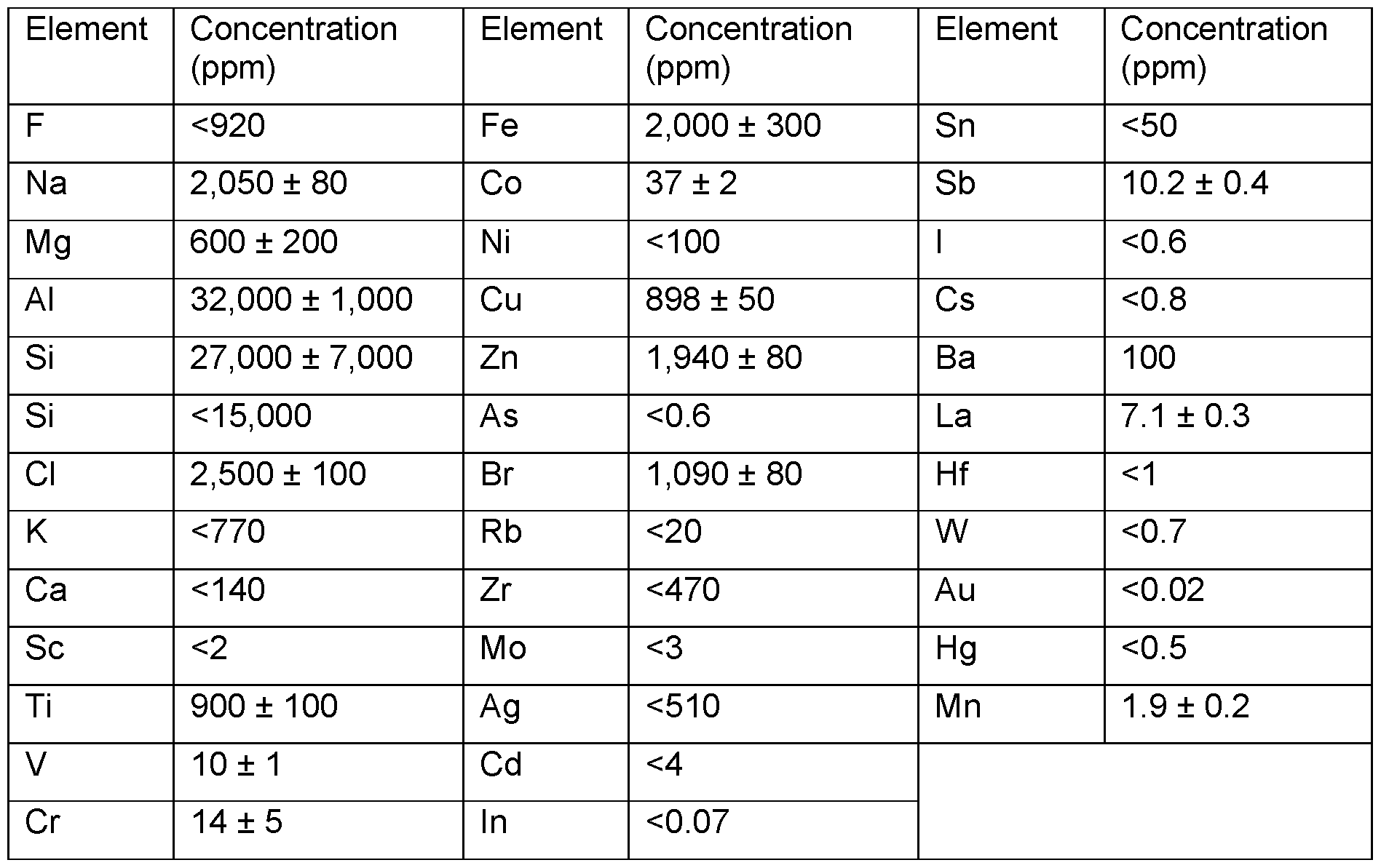
- Figure 8 shows a reduction in the peak areas for all CoCs including F, Co, Br, Pb, and Cl in the pre-treated feedstock obtained from pre-treatment using DHA solution (ECOC) at 25 or 60°C.
- ECOC DHA solution
- DHA pre-treatment showed a positive role in removing Br, Cl, F, Co, and Pb from the contaminated E-waste plastics.
- this pre-treatment performed at room temperature led to a similar pre-treatment efficiency with that performed at higher temperatures (i.e., 60°C). From the FT-IR analysis of reacted DHA, the high stability of DHA during the pre-treatment can be observed.
- the organic compounds in the pyrolysis oil were analyzed by GC-MS equipped with a HP-5MS capillary column.
- the main components of pyrolysis oil (with a relative peak area > 1%) are summarized in Table 5 below.
- the components are classified in the table based on the structure characteristics (i.e., phenols, aromatic hydrocarbons excluding phenols, N- containing compounds, and others including compounds difficult to classify). It should be noted that only volatile compounds having a boiling point lower than 300°C can be detected by the GC-MS.
- a number of organic compounds can be detected in the pyrolysis oil from E-waste plastics, and some compounds can be utilized to produce other chemicals after separation.
- Table 5 A summary of the main chemical compounds in the oil phase obtained from microwave pyrolysis of BFR-containing E-waste plastics. Microwave pyrolysis - TGA
- TGA analysis of oil obtained from microwave-pyrolysis of contaminated E-waste plastics was conducted to estimate its boiling point distribution.
- a simulated boiling point graph of the oil is shown in Figure 13 and six distinct boiling point ranges including: 0-150°C, 150-200°C, 200-250°C, 250-300°C, 300-350°C, and 3350°C were identified.
- the untreated gas phase obtained from the microwave- pyrolysis of contaminated E-waste plastics was purified using DHA to remove or eliminate halogenated gases (e.g., HCI, HBr, and HF), VOCs, sulfur-containing compounds, and others.
- halogenated gases e.g., HCI, HBr, and HF
- Table 7 The removal efficiency of selected VOCs obtained from DHA-assisted gas purification.
- the regenerated DHA was characterized using FT-IR analysis, and compared with the FT-IR spectrum of fresh DHA. As can be seen in Figure 16 and Figure 17, the FT-IR spectrum of regenerated and fresh DHA was similar, indicating the effectiveness of the regeneration step.
- the present invention provides an alternative and environmental-friendly recycling approach for contaminated E-waste plastics.
- the process according to the invention comprises a pre-treatment of the raw feedstock, a microwave-pyrolysis of the pre-treated feedstock, gas purification.
- the pretreatment and the gas purification comprise use of a dehalogenation agent which can be regenerated and re used in the process.
- emission of halogenated gases, VOCs and sulfur-containing compounds which are commonly observed in the thermal degradation of E-waste plastics can meet the environmental regulations.
- DHA-assisted gas purification reduced the amounts of HF and HCI, from 18 ppm to 0.74 ppm and from 2.2 ppm to ⁇ 0.36 ppm, respectively; and the concentration of HBr was below 0.15 ppm. Accordingly, the gas purification according to the invention is effective in removing acidic gases including HF, HCI, and HBr.
- the DHA-assisted gas purification according to the invention led to removal efficiencies of 95.73%, 99.95%, 98.25%, 99.21%, and 98.03% for 1 ,3-butadiene, chloromethane, bromomethane, chloroethane, and vinyl chloride, respectively.
- the microwave may be applied at a frequency range between about 915 MHz to about 2450 GHz.
- other heating techniques than microwave may be used in the process.
- Such heating techniques may be for example induction heating, ultrasound, electromagnetic waves at other frequencies than microwave frequencies, electric field, magnetic field, plasma, or combinations thereof.
- the process according to the invention embodies a system for performing the process and may be readily scaled up and integrated in an industrial facility. As will be understood by a skilled person, such system and facility are within the scope of the present invention.
- the process may be batch operated, semi-batch operated, continuous flow operated, or combinations thereof. Also, in embodiments of the invention, the process may be s small scale, medium scale, large scale, or combinations thereof.
Landscapes
- Engineering & Computer Science (AREA)
- Chemical & Material Sciences (AREA)
- Environmental & Geological Engineering (AREA)
- General Chemical & Material Sciences (AREA)
- Biomedical Technology (AREA)
- Analytical Chemistry (AREA)
- Health & Medical Sciences (AREA)
- Oil, Petroleum & Natural Gas (AREA)
- Chemical Kinetics & Catalysis (AREA)
- Physics & Mathematics (AREA)
- Thermal Sciences (AREA)
- Separation, Recovery Or Treatment Of Waste Materials Containing Plastics (AREA)
- Production Of Liquid Hydrocarbon Mixture For Refining Petroleum (AREA)
Abstract
Description




Claims


Priority Applications (2)
| Application Number | Priority Date | Filing Date | Title |
|---|---|---|---|
| US17/309,661 US12377451B2 (en) | 2020-05-25 | 2021-05-25 | Process for recycling contaminated solid materials and purification of gases |
| CA3122008A CA3122008C (en) | 2020-05-25 | 2021-05-25 | Process for recycling contaminated solid materials and purification of gases |
Applications Claiming Priority (2)
| Application Number | Priority Date | Filing Date | Title |
|---|---|---|---|
| US202063029693P | 2020-05-25 | 2020-05-25 | |
| US63/029,693 | 2020-05-25 |
Publications (1)
| Publication Number | Publication Date |
|---|---|
| WO2021237342A1 true WO2021237342A1 (en) | 2021-12-02 |
Family
ID=78745708
Family Applications (1)
| Application Number | Title | Priority Date | Filing Date |
|---|---|---|---|
| PCT/CA2021/050700 Ceased WO2021237342A1 (en) | 2020-05-25 | 2021-05-25 | Process for recycling contaminated solid materials and purification of gases |
Country Status (1)
| Country | Link |
|---|---|
| WO (1) | WO2021237342A1 (en) |
Cited By (1)
| Publication number | Priority date | Publication date | Assignee | Title |
|---|---|---|---|---|
| CN114456820A (en) * | 2022-01-27 | 2022-05-10 | 成都皓耘浩劢科技有限责任公司 | Biomass microwave heating method and biomass structure |
Citations (4)
| Publication number | Priority date | Publication date | Assignee | Title |
|---|---|---|---|---|
| JP2002020535A (en) * | 2000-07-11 | 2002-01-23 | Kubota Corp | Halogen-containing plastic processing method and processing apparatus using the same |
| CN102743963A (en) * | 2011-04-19 | 2012-10-24 | 张步芳 | Dehalogenation pot |
| WO2019141504A1 (en) * | 2018-01-20 | 2019-07-25 | Bürkle Consulting Gmbh | Mechanochemical process for producing valuable products free from persistent organic pollutants and other organohalogen compounds from waste comprising plastics and plastic laminates |
| WO2021087059A1 (en) * | 2019-10-31 | 2021-05-06 | Eastman Chemical Company | Pyrolysis method and system for recycled waste |
-
2021
- 2021-05-25 WO PCT/CA2021/050700 patent/WO2021237342A1/en not_active Ceased
Patent Citations (4)
| Publication number | Priority date | Publication date | Assignee | Title |
|---|---|---|---|---|
| JP2002020535A (en) * | 2000-07-11 | 2002-01-23 | Kubota Corp | Halogen-containing plastic processing method and processing apparatus using the same |
| CN102743963A (en) * | 2011-04-19 | 2012-10-24 | 张步芳 | Dehalogenation pot |
| WO2019141504A1 (en) * | 2018-01-20 | 2019-07-25 | Bürkle Consulting Gmbh | Mechanochemical process for producing valuable products free from persistent organic pollutants and other organohalogen compounds from waste comprising plastics and plastic laminates |
| WO2021087059A1 (en) * | 2019-10-31 | 2021-05-06 | Eastman Chemical Company | Pyrolysis method and system for recycled waste |
Non-Patent Citations (3)
| Title |
|---|
| BRYAN C . DRAVIS ET AL.: "Enzymatic Dehalogenation of Gas Phase Substrates with Haloalkane Dehalogenase", BIOTECHNOLOGY AND BIOENGINEERING, vol. 69, no. 3, 5 August 2000 (2000-08-05), pages 235 - 241, XP071114954, DOI: 10.1002/1097-0290(20000805)69:3<235::AID-BIT1>3.0.CO;2-D * |
| XIAONING YANG ET AL.: "Pyrolysis and dehalogenation of plastics from waste electrical and electronic equipment (WEEE): A review", WASTE MANAGEMENT, vol. 33, 27 August 2012 (2012-08-27), pages 462 - 473, XP028983235, [retrieved on 20130000], DOI: 10.1016/j.wasman.2012.07.025 * |
| YINGNA CHANG ET AL.: "Converting Polyvinyl Chloride Plastic Wastes to Carbonaceous Materials via Room-Temperature Dehalogenation for High-Performance Supercapacitor", ACS APPLIED ENERGY MATERIALS, vol. 1, 12 September 2018 (2018-09-12), pages 5685 - 5693, XP055876567 * |
Cited By (2)
| Publication number | Priority date | Publication date | Assignee | Title |
|---|---|---|---|---|
| CN114456820A (en) * | 2022-01-27 | 2022-05-10 | 成都皓耘浩劢科技有限责任公司 | Biomass microwave heating method and biomass structure |
| CN114456820B (en) * | 2022-01-27 | 2022-11-11 | 成都皓耘浩劢科技有限责任公司 | Biomass microwave heating method and biomass structure |
Similar Documents
| Publication | Publication Date | Title |
|---|---|---|
| Wang et al. | Recycling of non-metallic fractions from waste electrical and electronic equipment (WEEE): A review | |
| Charitopoulou et al. | Novel trends in the thermo-chemical recycling of plastics from WEEE containing brominated flame retardants | |
| Shen et al. | Thermochemical treatment of non-metallic residues from waste printed circuit board: Pyrolysis vs. combustion | |
| Hall et al. | Separation and recovery of materials from scrap printed circuit boards | |
| Yang et al. | Pyrolysis and dehalogenation of plastics from waste electrical and electronic equipment (WEEE): A review | |
| Hadi et al. | Waste printed circuit board recycling techniques and product utilization | |
| Guo et al. | A review of mechanochemistry applications in waste management | |
| US4662948A (en) | On-site removal of PCB and dioxins from soils | |
| Hense et al. | PYROLYSIS OF WASTE ELECTRICAL AND ELECTRONIC EQUIPMENT (WEEE) FOR RECOVERING METALS AND ENERGY: PREVIOUS ACHIEVEMENTS AND CURRENT APPROACHES. | |
| Zhang et al. | Enhanced dehalogenation and coupled recovery of complex electronic display housing plastics by sub/supercritical CO2 | |
| Kuttiyathil et al. | Combating toxic emissions from thermal recycling of polymeric fractions laden with novel brominated flame retardants (NBFRs) in e-waste: an in-situ approach using Ca (OH) 2 | |
| Hornung et al. | Detoxification of brominated pyrolysis oils | |
| Chen et al. | New insights into the debromination mechanism of non-metallic fractions of waste printed circuit boards via alkaline-enhanced subcritical water route | |
| Ryoo et al. | Destruction and removal of PCBs in waste transformer oil by a chemical dechlorination process | |
| US5149444A (en) | Process for the decontamination of soils, sediments, and sludges | |
| WO2021237342A1 (en) | Process for recycling contaminated solid materials and purification of gases | |
| Lu et al. | Mechanochemical dehalogenation of brominated flame retardants and preliminary application for recycling BFR-containing plastic waste | |
| JP2025534824A (en) | How to recycle flame-retardant polyester | |
| Tanaka et al. | Mechanochemical dechlorination of chlorinated compounds | |
| Li et al. | Analysis of the effect of heating rate on pyrolysis kinetics and product composition of copper-containing waste circuit boards | |
| CA3122008C (en) | Process for recycling contaminated solid materials and purification of gases | |
| US12377451B2 (en) | Process for recycling contaminated solid materials and purification of gases | |
| Malhotra et al. | Chemical methods for the treatment of e-waste | |
| Buekens et al. | The treatment of plastic in automobile shredder residue | |
| KR101963625B1 (en) | Catalytic co-pyrolysis of e-PCB and plastics using Zeolite |
Legal Events
| Date | Code | Title | Description |
|---|---|---|---|
| ENP | Entry into the national phase |
Ref document number: 3122008 Country of ref document: CA Kind code of ref document: A |
|
| 121 | Ep: the epo has been informed by wipo that ep was designated in this application |
Ref document number: 21814329 Country of ref document: EP Kind code of ref document: A1 |
|
| NENP | Non-entry into the national phase |
Ref country code: DE |
|
| 122 | Ep: pct application non-entry in european phase |
Ref document number: 21814329 Country of ref document: EP Kind code of ref document: A1 |
|
| WWG | Wipo information: grant in national office |
Ref document number: 17309661 Country of ref document: US |