WO2022018373A1 - Combinaison de souches de lactobacilles et son utilisation en sante animale - Google Patents
Combinaison de souches de lactobacilles et son utilisation en sante animale Download PDFInfo
- Publication number
- WO2022018373A1 WO2022018373A1 PCT/FR2021/051348 FR2021051348W WO2022018373A1 WO 2022018373 A1 WO2022018373 A1 WO 2022018373A1 FR 2021051348 W FR2021051348 W FR 2021051348W WO 2022018373 A1 WO2022018373 A1 WO 2022018373A1
- Authority
- WO
- WIPO (PCT)
- Prior art keywords
- strain
- mixture
- microorganisms
- salivarius
- reuteri
- Prior art date
- Legal status (The legal status is an assumption and is not a legal conclusion. Google has not performed a legal analysis and makes no representation as to the accuracy of the status listed.)
- Ceased
Links
Classifications
-
- A—HUMAN NECESSITIES
- A23—FOODS OR FOODSTUFFS; TREATMENT THEREOF, NOT COVERED BY OTHER CLASSES
- A23K—FODDER
- A23K10/00—Animal feeding-stuffs
- A23K10/10—Animal feeding-stuffs obtained by microbiological or biochemical processes
- A23K10/16—Addition of microorganisms or extracts thereof, e.g. single-cell proteins, to feeding-stuff compositions
- A23K10/18—Addition of microorganisms or extracts thereof, e.g. single-cell proteins, to feeding-stuff compositions of live microorganisms
-
- A—HUMAN NECESSITIES
- A23—FOODS OR FOODSTUFFS; TREATMENT THEREOF, NOT COVERED BY OTHER CLASSES
- A23L—FOODS, FOODSTUFFS OR NON-ALCOHOLIC BEVERAGES, NOT OTHERWISE PROVIDED FOR; PREPARATION OR TREATMENT THEREOF
- A23L33/00—Modifying nutritive qualities of foods; Dietetic products; Preparation or treatment thereof
- A23L33/10—Modifying nutritive qualities of foods; Dietetic products; Preparation or treatment thereof using additives
- A23L33/135—Bacteria or derivatives thereof, e.g. probiotics
-
- A—HUMAN NECESSITIES
- A61—MEDICAL OR VETERINARY SCIENCE; HYGIENE
- A61K—PREPARATIONS FOR MEDICAL, DENTAL OR TOILETRY PURPOSES
- A61K35/00—Medicinal preparations containing materials or reaction products thereof with undetermined constitution
- A61K35/66—Microorganisms or materials therefrom
- A61K35/74—Bacteria
- A61K35/741—Probiotics
- A61K35/744—Lactic acid bacteria, e.g. enterococci, pediococci, lactococci, streptococci or leuconostocs
- A61K35/747—Lactobacilli, e.g. L. acidophilus or L. brevis
-
- A—HUMAN NECESSITIES
- A61—MEDICAL OR VETERINARY SCIENCE; HYGIENE
- A61K—PREPARATIONS FOR MEDICAL, DENTAL OR TOILETRY PURPOSES
- A61K9/00—Medicinal preparations characterised by special physical form
- A61K9/0012—Galenical forms characterised by the site of application
- A61K9/0053—Mouth and digestive tract, i.e. intraoral and peroral administration
-
- A—HUMAN NECESSITIES
- A61—MEDICAL OR VETERINARY SCIENCE; HYGIENE
- A61K—PREPARATIONS FOR MEDICAL, DENTAL OR TOILETRY PURPOSES
- A61K9/00—Medicinal preparations characterised by special physical form
- A61K9/0087—Galenical forms not covered by A61K9/02 - A61K9/7023
- A61K9/0095—Drinks; Beverages; Syrups; Compositions for reconstitution thereof, e.g. powders or tablets to be dispersed in a glass of water; Veterinary drenches
-
- A—HUMAN NECESSITIES
- A61—MEDICAL OR VETERINARY SCIENCE; HYGIENE
- A61K—PREPARATIONS FOR MEDICAL, DENTAL OR TOILETRY PURPOSES
- A61K9/00—Medicinal preparations characterised by special physical form
- A61K9/08—Solutions
-
- A—HUMAN NECESSITIES
- A61—MEDICAL OR VETERINARY SCIENCE; HYGIENE
- A61K—PREPARATIONS FOR MEDICAL, DENTAL OR TOILETRY PURPOSES
- A61K9/00—Medicinal preparations characterised by special physical form
- A61K9/10—Dispersions; Emulsions
-
- A—HUMAN NECESSITIES
- A61—MEDICAL OR VETERINARY SCIENCE; HYGIENE
- A61K—PREPARATIONS FOR MEDICAL, DENTAL OR TOILETRY PURPOSES
- A61K9/00—Medicinal preparations characterised by special physical form
- A61K9/10—Dispersions; Emulsions
- A61K9/107—Emulsions ; Emulsion preconcentrates; Micelles
-
- A—HUMAN NECESSITIES
- A61—MEDICAL OR VETERINARY SCIENCE; HYGIENE
- A61K—PREPARATIONS FOR MEDICAL, DENTAL OR TOILETRY PURPOSES
- A61K9/00—Medicinal preparations characterised by special physical form
- A61K9/10—Dispersions; Emulsions
- A61K9/12—Aerosols; Foams
-
- A—HUMAN NECESSITIES
- A61—MEDICAL OR VETERINARY SCIENCE; HYGIENE
- A61K—PREPARATIONS FOR MEDICAL, DENTAL OR TOILETRY PURPOSES
- A61K9/00—Medicinal preparations characterised by special physical form
- A61K9/14—Particulate form, e.g. powders, Processes for size reducing of pure drugs or the resulting products, Pure drug nanoparticles
- A61K9/19—Particulate form, e.g. powders, Processes for size reducing of pure drugs or the resulting products, Pure drug nanoparticles lyophilised, i.e. freeze-dried, solutions or dispersions
-
- A—HUMAN NECESSITIES
- A61—MEDICAL OR VETERINARY SCIENCE; HYGIENE
- A61K—PREPARATIONS FOR MEDICAL, DENTAL OR TOILETRY PURPOSES
- A61K9/00—Medicinal preparations characterised by special physical form
- A61K9/20—Pills, tablets, discs, rods
- A61K9/2004—Excipients; Inactive ingredients
-
- A—HUMAN NECESSITIES
- A61—MEDICAL OR VETERINARY SCIENCE; HYGIENE
- A61K—PREPARATIONS FOR MEDICAL, DENTAL OR TOILETRY PURPOSES
- A61K9/00—Medicinal preparations characterised by special physical form
- A61K9/48—Preparations in capsules, e.g. of gelatin, of chocolate
- A61K9/4841—Filling excipients; Inactive ingredients
-
- A—HUMAN NECESSITIES
- A61—MEDICAL OR VETERINARY SCIENCE; HYGIENE
- A61P—SPECIFIC THERAPEUTIC ACTIVITY OF CHEMICAL COMPOUNDS OR MEDICINAL PREPARATIONS
- A61P1/00—Drugs for disorders of the alimentary tract or the digestive system
-
- A—HUMAN NECESSITIES
- A61—MEDICAL OR VETERINARY SCIENCE; HYGIENE
- A61P—SPECIFIC THERAPEUTIC ACTIVITY OF CHEMICAL COMPOUNDS OR MEDICINAL PREPARATIONS
- A61P31/00—Antiinfectives, i.e. antibiotics, antiseptics, chemotherapeutics
- A61P31/04—Antibacterial agents
-
- C—CHEMISTRY; METALLURGY
- C12—BIOCHEMISTRY; BEER; SPIRITS; WINE; VINEGAR; MICROBIOLOGY; ENZYMOLOGY; MUTATION OR GENETIC ENGINEERING
- C12N—MICROORGANISMS OR ENZYMES; COMPOSITIONS THEREOF; PROPAGATING, PRESERVING, OR MAINTAINING MICROORGANISMS; MUTATION OR GENETIC ENGINEERING; CULTURE MEDIA
- C12N1/00—Microorganisms; Compositions thereof; Processes of propagating, maintaining or preserving microorganisms or compositions thereof; Processes of preparing or isolating a composition containing a microorganism; Culture media therefor
- C12N1/20—Bacteria; Culture media therefor
-
- C—CHEMISTRY; METALLURGY
- C12—BIOCHEMISTRY; BEER; SPIRITS; WINE; VINEGAR; MICROBIOLOGY; ENZYMOLOGY; MUTATION OR GENETIC ENGINEERING
- C12N—MICROORGANISMS OR ENZYMES; COMPOSITIONS THEREOF; PROPAGATING, PRESERVING, OR MAINTAINING MICROORGANISMS; MUTATION OR GENETIC ENGINEERING; CULTURE MEDIA
- C12N1/00—Microorganisms; Compositions thereof; Processes of propagating, maintaining or preserving microorganisms or compositions thereof; Processes of preparing or isolating a composition containing a microorganism; Culture media therefor
- C12N1/20—Bacteria; Culture media therefor
- C12N1/205—Bacterial isolates
-
- C—CHEMISTRY; METALLURGY
- C12—BIOCHEMISTRY; BEER; SPIRITS; WINE; VINEGAR; MICROBIOLOGY; ENZYMOLOGY; MUTATION OR GENETIC ENGINEERING
- C12R—INDEXING SCHEME ASSOCIATED WITH SUBCLASSES C12C - C12Q, RELATING TO MICROORGANISMS
- C12R2001/00—Microorganisms ; Processes using microorganisms
- C12R2001/01—Bacteria or Actinomycetales ; using bacteria or Actinomycetales
- C12R2001/225—Lactobacillus
Definitions
- the present invention describes a combination of lactobacilli (or lactic acid bacteria), namely a strain of Lactobacillus reuteri and a strain of Lactobacillus salivarius, and its use for the prevention and/or treatment of necrotic enteritis in animals, in especially the chicken.
- poultry we mean domestic birds belonging to the gallinaceans or even to the palmipeds which are bred for their meat, their eggs and their feathers.
- the term “poultry” covers a wide range of birds, ranging from native and commercial chicken breeds to Muscovy ducks, mallards, turkeys, guinea fowl, geese, quails, pigeons, ostriches or pheasants. The most consumed poultry meat is chicken meat.
- Poultry meat is mainly produced in large-scale intensive farming.
- the global poultry industry has become a high profit generating sector whose success is intimately linked to the health of animals and more specifically to their healthy gastrointestinal tract, which ensures the efficient absorption of feed given to poultry.
- avian diseases that is to say those affecting birds, can generate significant financial losses, due to the high mortality rate and low feed efficiency.
- These infections can be of bacterial, fungal, viral or parasitic origin.
- the most common bacterial infections in birds are infections due to Escherichia coli, Salmonella spp, Clostridium perfringens, Pasteurella multocida, Staphylococcus aureus, Mycobacterium avium, Mycoplasma gallisepticum, Mycoplasma synoviae, Mycoplasma meleagridis, Mycoplasma iowae, Clostridium sordellii or Clostridium septicum.
- These are the cause of various diseases such as chronic respiratory disease in poultry, avian cholera, gangrenous dermatitis, necrotic enteritis or avian tuberculosis.
- Clostridium Bacteria of the genus Clostridium (or clostridia) are Gram-positive anaerobic bacilli that produce endospores. They are ubiquitous, meaning they are found in the environment and in the gastrointestinal tract of animals. It should be noted that these bacteria are, for the most part, non-pathogenic. Many of these bacteria are widely used in industrial fermentations, for example in the synthesis of chemical compounds such as acetate, butyrate, lactate, ethanol, carbon dioxide or solvents.
- Clostridium Despite certain bacteria of the genus Clostridium (C.) are known for their pathogenic power. These include C. botulinum, C. tetani, C. difficile, C. perfringens, C. novyi, and C. septicum. Clostridia cause several disorders, including ulcerative enteritis caused by C. colinum or necrotic enteritis caused by C. perfringens.
- Necrotic enteritis or necrotizing enteritis is a disease affecting farms in all poultry regions of the world. This pathology is more common in broilers, but laying hens and turkeys can also be affected.
- C. perfringens The ability of C. perfringens to cause this pathology depends on the production of certain extracellular toxins and enzymes that cause intestinal cell degradation, such as lecithinases or necrotizing toxins.
- C. perfringens produces and secretes alpha-toxin (a-toxin), a lecithinase causing hemolysis and tissue necrosis, or even b-toxin (or Necrotic enteritis toxin B-like or NetB) causing the formation of endospores in the membrane of intestinal cells.
- a-toxin alpha-toxin
- b-toxin or Necrotic enteritis toxin B-like or NetB
- the bacterium C. perfringens is naturally present in the intestine. As an opportunistic bacterium, it needs the intestinal balance to be compromised to colonize, proliferate and express its toxins, and thus cause necrotic enteritis. Studies have shown in particular that simple infection by C. perfringens alone is not sufficient to induce pathology. the Triggering of necrotic enteritis requires the presence of conditions called predisposing factors such as coccidiosis, a disease caused by the parasite Eimeria spp, diet or even immunosuppression or animal stress.
- predisposing factors such as coccidiosis, a disease caused by the parasite Eimeria spp, diet or even immunosuppression or animal stress.
- necrotic enteritis negatively affects the feed conversion rate in farm animals, i.e. the animals must consume more feed to have the same weight gain. This type of necrotic enteritis is problematic as it negatively impacts productivity and profitability resulting in reduced animal size and weight.
- necrotic enteritis The most common signs to identify necrotic enteritis are the appearance of drowsiness in animals, lack of energy and appetite, diarrhea, dehydration or lack of appetite. Chickens usually die within 1-2 hours after symptoms appear. Mortality rates associated with necrotic enteritis are usually between 2 and 10% but can sometimes be as high as 50%. The condition is characterized by the sudden increase in flock mortality, with birds usually dying without warning signs.
- Necrotic enteritis is therefore responsible each year for colossal economic losses worldwide, estimated at more than 6 billion dollars in 2015. These losses are due to the costs of disease control measures and the decrease in production in terms of weight and mortality of animals on farms.
- antibiotics that is to say the administration of growth promoters (or AGP for Antibiotics Growth Promoters) such as avoparcin, bacitracin and virginiamycin, is very effective in the prevention and control of necrotic enteritis.
- growth promoters or AGP for Antibiotics Growth Promoters
- avoparcin bacitracin
- virginiamycin bacitracin
- These AGPs promote animal growth and improve feed conversion efficiency. It should be noted that these compounds are also used in human medicine, at higher concentrations.
- necrotic enteritis such as the use of NetB toxoids, or vaccination with Eimeria, a unicellular parasite, in order to reduce the prevalence of coccidiosis known to be an important predisposing factor for necrotic enteritis.
- lactic acid bacteria are widely used in the food industry as a biological food preservative or in factory farming for the prevention of infectious and zoonotic diseases. These bacteria are also used to improve the performance of animal husbandry through the production of digestive enzymes, volatile fatty acids and/or vitamins, which contribute to increasing the digestibility of nutrients and improving feed conversion rate. These lactic acid bacteria are notably found under the name of probiotics.
- antibiotics or AGP are examples of animals additives or food products, in particular probiotics.
- probiotics are defined as live microorganisms that confer a health benefit to the host, when consumed in sufficient concentrations. They can interact with the host to improve immunity, intestinal homeostasis, stimulate metabolism or even reduce the risk of infection by opportunistic pathogens.
- Some probiotic bacteria interfere with or even annihilate the pathogenicity of disease-causing microbial agents, for example by eliminating or inhibiting the growth of pathogenic bacteria in the intestinal lumen.
- Most bacterial probiotics belong to lactic acid bacteria.
- One of the main characteristics of this group of bacteria is their ability to produce lactic acid, in a strain-dependent manner, by homo or hetero-fermentative fermentation of glucose.
- Lactic acid bacteria belong to the phylum Firmicutes, class Bacilli and order Lactobacillales.
- the taxon called lactic acid bacteria includes cocci, Gram-positive bacilli or coccobacilli, non spondees, anaerobes or facultative aerobes with a G+C percentage of less than 50%. These bacteria are acidophilic with an optimum growth pH between 3.5 and 6.5. Most strains have nutritional requirements and require rich media to grow. This group includes 10 genera, the best known of which are Lactobacillus, Pediococcus, Lactococcus, Enterococcus, Streptococcus, Leuconostoc and Carnobacterium.
- Lactobacillus Within lactic acid bacteria, the most represented genus is that of Lactobacillus (Lb.) with more than 253 species described to date (http://www.bacterio.net/lactobacillus.html).
- Lactobacilli are widely used in the development of probiotics, in particular because of their ability to survive the extreme conditions found in the gastrointestinal tract, their good ability to adhere to intestinal cells, making it possible to increase the retention of probiotics in intestine, properties of eliminating or inhibiting the growth of pathogenic bacteria in the intestinal lumen.
- CN 105861399 also describes the use of a specific strain of Lb. plantarum to prevent necrotic enteritis in broiler chickens by inhibiting the growth of C. perfringens.
- Document WO2006/133472 describes a complex mixture of 5 microorganisms inhibiting C. perfringens, consisting of E. faecium DSM 16211, L. reuteri DSM 16350, L. salivarius DSM 16351, P. acidilactici DSM 16210 and B. animalis DSM 16284. This document specifies that these specific strains of L. reuteri and L. salivarius are more effective in inhibiting E. coli than C. perfringens.
- Document WO2016/170280 recommends the use of Bacteroides thetaiotaomicron, optionally combined with L. reuteri and/or L. salivarius, in particular to treat enteritis.
- KLOSE et al. (Veterinary Microbiology, 2010, 144 (3-4): 515-21) have evaluated the antagonistic activity of various intestinal bacteria, including L. reuteri and L. salivarius, against C. perfringens and report a large heterogeneity between species.
- Ren et al. (Microorganisms, 2019, 7(12): 684) reported a synergistic effect between probiotic (L. agilis or L. salivarius) and phytobiotic on the intestinal microbiota of young broiler chickens.
- the articles “un” and “une” are used to refer to one or more (for example at least one) units of the grammatical object of the article.
- an element designates at least one element, that is to say one or more elements.
- a bacterium strain or an isolated peptide is a bacterium strain or peptide extracted from the natural environment in which it is usually found, be it a living plant or animal for example.
- a strain of bacteria or a peptide naturally present in a living animal is not a strain of bacteria or an isolated peptide within the meaning of the invention, while the same strain of bacteria or peptide, partially or completely separated from the others elements present in its natural context, is for its part “isolated” within the meaning of the invention.
- a strain of bacteria or an isolated peptide may exist in a substantially purified form, or may exist in a non-native environment such as, for example, a host cell.
- the Applicant has identified a new specific combination of lactic acid bacteria, useful for combating necrotic enteritis, in particular in farm animals such as chickens.
- the present invention relates to a mixture of microorganisms comprising a strain of Lactobacillus reuteri and a strain of Lactobacillus salivarius.
- mixture is meant the association of at least 2 different species of microorganisms, advantageously of at least 2 distinct strains of bacteria, even more advantageously of at least 2 strains of lactic acid bacteria (lactobacilli or Lactobacillus ) distinct.
- a mixture of microorganisms according to the invention may comprise one or more strains of Lb. reuteri and one or more strains of Lb. salivarius, and possibly other microorganisms, including other bacteria.
- the present invention relates to a mixture of lactic acid bacteria consisting of at least one strain of Lb. reuteri and at least one strain of Lb. salivarius.
- the mixture of lactic acid bacteria consists of a strain of Lb. reuteri and at least one strain of Lb. salivarius, possibly from two strains of Lb. salivarius.
- the mixture of lactic acid bacteria consists of a strain of Lb. reuteri and a strain of Lb. salivarius.
- the specific mixture according to the invention is capable of reducing or inhibiting the growth and/or the activity of the bacterium C. perfringens.
- growth of the bacterium C. perfringens is meant a set of mechanisms leading to an increase in the dry biomass of bacteria. It is the growth of the bacterial cell in size, mass and/or volume but also the growth of a population by cell division.
- C. perfringens the pathogenic or even toxigenic activity of this bacterium. These include the production or secretion of toxins, such as NetB and a-toxin, or enzymes. It may also be the ability of C. perfringens to adhere to the gastrointestinal tract or even colonize it.
- the mixture according to the invention allows a reduction or even an inhibition of the production and/or of the secretion of the toxins NetB and ⁇ -toxin.
- the mixture according to the invention comprises the strain of Lb. reuteri deposited at the CNCM (National Collection of Cultures of Microorganisms, Institut Pasteur, 25 rue du Dondel Roux, 75724 Paris Cedex 15) under number 1-5500 dated March 04, 2020.
- CNCM National Collection of Cultures of Microorganisms, Institut Pasteur, 25 rue du Dondel Roux, 75724 Paris Cedex 15
- the mixture according to the invention comprises the strain of Lb. salivarius deposited at the CNCM (National Collection of Cultures of Microorganisms, Institut Pasteur, 25 rue du Dondel Roux, 75724 Paris Cedex 15) under number 1-5501 dated March 04, 2020 and/or the strain of Lb. salivarius filed with the CNCM under number 1-5502 dated March 04, 2020.
- CNCM National Collection of Cultures of Microorganisms, Institut Pasteur, 25 rue du Do Budapest Roux, 75724 Paris Cedex 15
- the mixture of microorganisms according to the invention comprises or consists of:
- the mixture according to the invention comprises or consists of:
- the mixture contains other microorganisms, advantageously other probiotics.
- the mixture contains other microorganisms chosen from: bacteria of the genus Lactobacillus, bacteria of the genus Bifidobacterium, bacteria of the genus Streptococcus, bacteria of the genus Enterococcus, bacteria of the genus Pediococcus, bacteria of the genus Bacillus, yeasts, and combinations thereof.
- the Lactobacillus bacterium is chosen from the group consisting of: Lb acidophilus, Lb. lactis, Lb. helveticus, Lb. brevis, Lb. casei, Lb. plantarum, Lb. salivarius, advantageously another strain of Lb salivarius, Lb. reuteri, advantageously another strain of Lb reuteri, Lb. bifidus, lb. bulgaricus, Lb. caucasicus, Lb. rhamnosus, Lb. gasseri, Lb. sakei, Lb. fermentum, and combinations thereof.
- the Bifidobacterium bacterium is chosen from the group consisting of: B. bifidum, B. longum, B. infantis, B.breve, B. adolescentis, B. animalis, B. lactis, and combinations thereof.
- the Streptococcus bacterium is chosen from the group consisting of: S. thermophilus, S. lactis, S. cremoris, S. diacetylcatis, and combinations thereof.
- the Enterococcus bacterium is chosen from the group consisting of: E.faecium, E.faecalis, and their combinations
- the Pediococcus bacterium is P. acidilactici.
- the Bacillus bacterium is chosen from the group consisting of: B. subtilis, B. velezensis, B. licheniformis, B. coagulans, B. pumilus, and their combinations.
- the yeast is chosen from the group consisting of: Candida Kefyr, Saccharomyces florentinus, Saccharomyces cerevisiae, Saccharomyces cerevisiae var. boulardii, and combinations thereof.
- the present invention relates to a composition
- a composition comprising a mixture of microorganisms as defined above.
- composition according to the invention may comprise the usual adjuvants or excipients used in the field considered, such as hydrophilic or lipophilic thickeners or gelling agents, palatables, hydrophilic or lipophilic additives, preservatives, antioxidants, diluents, vitamins, minerals, suspending agents, cellulosic derivatives, absorbents, cryoprotective agents or dyes.
- adjuvants or excipients used in the field considered, such as hydrophilic or lipophilic thickeners or gelling agents, palatables, hydrophilic or lipophilic additives, preservatives, antioxidants, diluents, vitamins, minerals, suspending agents, cellulosic derivatives, absorbents, cryoprotective agents or dyes.
- the composition according to the invention comprises nutritive substances which can be used as a support and/or prebiotic substances advantageously chosen from fructo-oligosaccharides, inulins, isomalto-oligosaccharides, lactitol, lactosucrose, lactulose, pyrodextrins, soy oligosaccharides, transgalacto-oligosaccharides, xylo-oligosaccharides, vitamins, in particular vitamin E.
- nutritive substances which can be used as a support and/or prebiotic substances advantageously chosen from fructo-oligosaccharides, inulins, isomalto-oligosaccharides, lactitol, lactosucrose, lactulose, pyrodextrins, soy oligosaccharides, transgalacto-oligosaccharides, xylo-oligosaccharides, vitamins, in particular vitamin E.
- the composition according to the invention comprises at least one compound chosen from the following group: zeolites, calcium carbonate, calcium sulphate, magnesium carbonate, talc, trehalose, chitosan , shellac, albumin, starch, skimmed milk powder, whey, whey powder, maltodextrins, lactose, inulin, dextroses, celluloses, clays including sepiolite, derivatives of yeasts and cereals, vegetable oils or a solvent chosen from water or a physiological solution.
- zeolites calcium carbonate, calcium sulphate, magnesium carbonate, talc, trehalose, chitosan , shellac, albumin, starch, skimmed milk powder, whey, whey powder, maltodextrins, lactose, inulin, dextroses, celluloses, clays including sepiolite, derivatives of yeasts and cereals, vegetable oils or a solvent chosen from water or
- the composition according to the invention comprises a coating material advantageously chosen from maltodextrins, guar seed flour, gum arabic, alginates, modified starch and starch derivatives, dextrins, cellulose derivatives such as cellulose ester and cellulose ether, proteins such as gelatin, albumin, casein, gluten, gum arabic, gum tragacanth, lipids such as waxes, paraffin, stearic acid, mono- and diglycerides.
- a coating material advantageously chosen from maltodextrins, guar seed flour, gum arabic, alginates, modified starch and starch derivatives, dextrins, cellulose derivatives such as cellulose ester and cellulose ether, proteins such as gelatin, albumin, casein, gluten, gum arabic, gum tragacanth, lipids such as waxes, paraffin, stearic acid, mono- and diglycerides.
- the mixture or composition according to the invention may be in the form of a powder, a capsule, a spray, a solution, an emulsion, a suspension or a dispersion.
- the mixture or the composition according to the invention is in dry or liquid form, in particular in freeze-dried, dried, pressed, liquid or frozen form, advantageously in freeze-dried form.
- the mixture or composition according to the invention is intended to be administered orally.
- the mixture or the composition may be in various suitable galenic forms, for example in the form of a lyophilisate to be poured and dissolved in drinking water, of a liquid to be poured over food or in water. drink, tablets, powder packaged in capsules or any other suitable form.
- it is a powder or lyophilisate to be poured and dissolved in the drinking water of the animals.
- the mixture or the composition according to the invention contains the lactobacilli according to the invention at a final concentration of between 10 5 and 10 9 CFU ('Colony Forming Unit or unit forming a colony)/mL of the mixture or of the composition according to the invention, advantageously between 10 6 and 10 8 CFU/mL, for example at a final concentration of 10 7 CFU/mL.
- This concentration can be understood as the concentration of each microorganism, advantageously bacteria, even more advantageously lactobacillus, present in the mixture or the composition, advantageously in the drinking water of the animals.
- it is the concentration of all the microorganisms, advantageously bacteria, even more advantageously lactobacilli, present in the mixture or the composition.
- a mixture according to the invention may comprise or consist of a strain of Lb. reuteri and a strain of Lb. salivarius at a concentration of 0.5x10 7 CFU/mL each.
- the invention relates to the use of a mixture or of a composition according to the invention as an additive or food product for animal purposes.
- additive or food product a composition whose purpose is to supplement the traditional diet and comprising nutrients or other substances having a nutritional or physiological effect. As already said, it may be an additive to drinking water or to foods such as, for example, cereals and/or legumes such as soya.
- the term “drink” is used for ingested products in liquid form and the term “food” for those in solid form.
- the mixture or the composition according to the invention can be added to the drink or to the food of extemporaneously, or can be introduced in particular into foods at the time of their manufacture, for example by mixing or coating.
- the mixture or the composition according to the invention is added to the beverage or to the food so that the lactobacilli represent from 10 8 to 10 14 CFU/kg of the beverage or of the food, advantageously 10 10 to 10 12 CFU/kg.
- the invention relates to the use of a mixture or a composition as described above, as well as beverages and foods containing them, for combating necrotic enteritis in animals, at know to prevent and/or treat this pathology.
- the efficacy on necrotic enteritis can be evaluated by determining a lesion score in the intestines of the animals:
- - score 0 corresponds to a healthy intestine
- - score 1 corresponds to a thin and friable intestine
- - score 3 corresponds to an intestine showing large lesions visible through the outer wall of the intestinal tract.
- necrotic enteritis can also be assessed by monitoring animal weight. As mentioned previously, intestinal damage decreases feed conversion which induces weight loss in animals.
- the animal targeted by the present invention is a poultry, advantageously a chicken, preferably a broiler (or farmed chicken).
- the mixture or composition according to the invention is administered or ingested orally.
- the intake can be systematic for all animals from birth or can be decided upon the appearance of symptoms or even death in the farm.
- the treatment is carried out as a preventive measure, that is to say before the appearance of any symptoms, as soon as the animals are born or after a few days. Even more advantageously, the treatment continues until the death of the animals, which generally occurs at 40 days for poultry.
- the intake can take place once a day, or even at every drink intake or of food, or perhaps separated by several days.
- it is taken daily.
- a preferred dosage corresponds to daily administration, in the form of a food supplement at a concentration of 10 7 CFU/mL (equivalent to 10 7 CFU/g), throughout the life of the animal.
- the invention relates to strains of lactobacilli of interest due to their inhibitory activity on the growth and/or activity of Clostridium perfringens listed below: strain Lb. reuteri filed with the CNCM (National Collection of Cultures of Microorganisms, Institut Pasteur, 25 rue du Do Budapest Roux, 75724 Paris Cedex 15) under number 1-5500 dated March 04, 2020; the Lb strain. salivarius deposited at the CNCM (National Collection of Cultures of Microorganisms, Institut Pasteur, 25 rue du Do Budapest Roux, 75724 Paris Cedex 15) under number 1-5501 dated March 04, 2020; the Lb strain. salivarius deposited at the CNCM (National Collection of Cultures of Microorganisms, Institut Pasteur, 25 rue du Do Budapest Roux, 75724 Paris Cedex 15) under number 1-5502 dated March 04, 2020.
- CNCM National Collection of Cultures of Microorganisms, Institut Pasteur, 25 rue du Do Frankfurt Roux, 75724 Paris
- Figure 1 shows the effectiveness of the bacterial mixture according to the invention in terms of chicken weight.
- the letters (a, b, c) indicate statistically significant differences.
- FIG. 2 represents the effectiveness of the bacterial mixture according to the invention in terms of the lesion score of the chickens.
- the letters (a, b, c) indicate statistically significant differences.
- the strain of C. perfringens used in the example is a strain of C. perfringens isolated from a chicken suffering from necrotic enteritis.
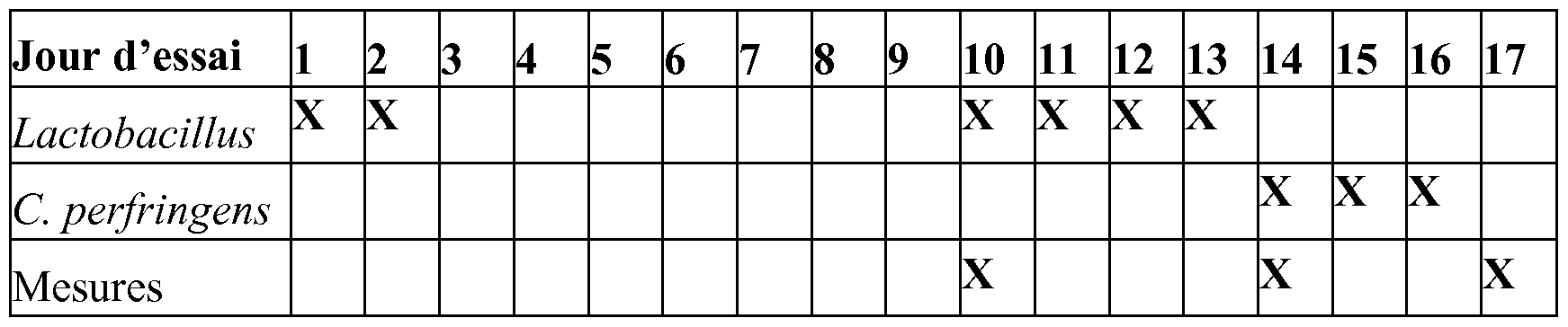
- the in vivo experiments took place for 17 days on 150 chickens (30 per experimental condition). The trial started on hatch day. During the tests, the lactobacilli were administered alone ⁇ Lb. reuteri, Lb. salivarius) or in combination ⁇ Lb. reuteri + Lb. salivarius), by gavage once a day, on days 1 and 2, then on day 10 to day 13.
- the chickens were reared in cages giving an average surface area of 432 cm 2 per chicken.
- the cages were placed on several levels in an air-conditioned room maintained at an ambient temperature throughout the study, and qualified for tests with a biological risk level 2. Lighting was provided 24/24 hours during all the duration of the study.
- the birds were given water and food ad-libitum, that is, they were fed to satiety.
- the diet for the first 9 days is based on corn and soy. After day 10, the growth diet includes wheat (Tables 1 and 2). Both diets are given as a mash.
- Table 1 represents the composition of diets by ingredients (g/100g)
- Table 2 represents the approximate composition of diets (g/100g) 1-2/ Vaccination
- the chickens were vaccinated on day 1 with “Advent@9X”.
- This vaccine contains live oocysts of Eiineria acervulina, E. maxima and E. tenell, gentamicin and amphotericin B as preservatives. The aim is to help prevent avian coccidiosis caused by these pathogens.
- the chickens were vaccinated intraocular way against infectious bursal disease by Intervet bursal Vac-G603 is a vaccine containing live attenuated viruses.
- the wild-type C. perfringens strain was cultured in thioglycollate broth overnight at 37°C perfringens was then administered at a concentration of 10 7 CFU/mL in a 3 mL oral gavage dose administered in sterile thioglycollate, at using a 20 mL syringe and a 20 gauge dosing needle, from 14 th to 16 th days of age. After administration, birds were hand-restrained for 5-10s to confirm delivery of the correct dose and freedom from stress.
- the strains of lactic acid bacteria were cultured in MRS broth (from Man-Rogosa-Sharpe) at 37° C. overnight.
- the 1st and 2nd days of age 250 to 500 pL suspension of Lactobacillus than 10 7 CFU / mL (final concentration alone or the mixture of two strains Lb and Lb salivarius reuteri, that is to say 0 5x10 7 CFU/mL each concerning the mixture) were administered orally to the birds.
- the dosage is increased to 1 mL, while maintaining the concentration at 10 7 CFU/mL.
- the control groups (T- and T+) received the same volume of sterile PBS solution. Negative control birds were treated first to reduce the risk of cross contamination.
- Index letters (a, b, c) indicate statistically significant differences. Groups with the same letter do not differ significantly.
- the chickens of the group treated with the mixture of Lb. reuteri and Lb. salivarius have similar weights (753.13g) to those of the group of non-challenged chickens (765g), which are significantly different from the infected group (699.58g).
- a significant decrease in intestinal lesions is obtained on the chickens of the group treated with the Lb mixture. reuteri and Lb. salivarius which present a score of lesions (1.00) similar to that of the group of non-challenged T- chickens (0.88) and significantly different from that of the infected T+ group (1.67).
Landscapes
- Health & Medical Sciences (AREA)
- Life Sciences & Earth Sciences (AREA)
- Chemical & Material Sciences (AREA)
- General Health & Medical Sciences (AREA)
- Medicinal Chemistry (AREA)
- Engineering & Computer Science (AREA)
- Public Health (AREA)
- Veterinary Medicine (AREA)
- Pharmacology & Pharmacy (AREA)
- Animal Behavior & Ethology (AREA)
- Epidemiology (AREA)
- Organic Chemistry (AREA)
- Microbiology (AREA)
- Bioinformatics & Cheminformatics (AREA)
- Biotechnology (AREA)
- Zoology (AREA)
- Wood Science & Technology (AREA)
- Genetics & Genomics (AREA)
- Mycology (AREA)
- Chemical Kinetics & Catalysis (AREA)
- General Chemical & Material Sciences (AREA)
- Nuclear Medicine, Radiotherapy & Molecular Imaging (AREA)
- Biomedical Technology (AREA)
- Biochemistry (AREA)
- Dispersion Chemistry (AREA)
- General Engineering & Computer Science (AREA)
- Molecular Biology (AREA)
- Virology (AREA)
- Tropical Medicine & Parasitology (AREA)
- Polymers & Plastics (AREA)
- Communicable Diseases (AREA)
- Oncology (AREA)
- Nutrition Science (AREA)
- Food Science & Technology (AREA)
- Physiology (AREA)
- Animal Husbandry (AREA)
- Fodder In General (AREA)
- Medicines Containing Material From Animals Or Micro-Organisms (AREA)
- Micro-Organisms Or Cultivation Processes Thereof (AREA)
Abstract
Description



Claims
Priority Applications (5)
| Application Number | Priority Date | Filing Date | Title |
|---|---|---|---|
| EP21755531.7A EP4181938A1 (fr) | 2020-07-20 | 2021-07-19 | Combinaison de souches de lactobacilles et son utilisation en sante animale |
| CN202180059788.1A CN116075237B (zh) | 2020-07-20 | 2021-07-19 | 乳杆菌菌株的组合及其在动物健康中的用途 |
| BR112023000712A BR112023000712A2 (pt) | 2020-07-20 | 2021-07-19 | Mistura de micro-organismos, composição, uso de uma mistura ou de uma composição, e, cepa |
| US18/016,622 US20230285476A1 (en) | 2020-07-20 | 2021-07-19 | Combination of lactobacillus strains and use thereof in animal health |
| MX2023000840A MX2023000840A (es) | 2020-07-20 | 2021-07-19 | Combinacion de cepas de lactobacillus y uso de las mismas en salud animal. |
Applications Claiming Priority (2)
| Application Number | Priority Date | Filing Date | Title |
|---|---|---|---|
| FRFR2007632 | 2020-07-20 | ||
| FR2007632A FR3112557B1 (fr) | 2020-07-20 | 2020-07-20 | Combinaison de souches de lactobacilles et son utilisation en sante animale |
Publications (1)
| Publication Number | Publication Date |
|---|---|
| WO2022018373A1 true WO2022018373A1 (fr) | 2022-01-27 |
Family
ID=73698948
Family Applications (1)
| Application Number | Title | Priority Date | Filing Date |
|---|---|---|---|
| PCT/FR2021/051348 Ceased WO2022018373A1 (fr) | 2020-07-20 | 2021-07-19 | Combinaison de souches de lactobacilles et son utilisation en sante animale |
Country Status (7)
| Country | Link |
|---|---|
| US (1) | US20230285476A1 (fr) |
| EP (1) | EP4181938A1 (fr) |
| CN (1) | CN116075237B (fr) |
| BR (1) | BR112023000712A2 (fr) |
| FR (1) | FR3112557B1 (fr) |
| MX (1) | MX2023000840A (fr) |
| WO (1) | WO2022018373A1 (fr) |
Families Citing this family (3)
| Publication number | Priority date | Publication date | Assignee | Title |
|---|---|---|---|---|
| CN115466699B (zh) * | 2022-09-28 | 2023-03-31 | 成都大熊猫繁育研究基地 | 熊猫源唾液乳杆菌及在治疗或预防炎症性肠病中的应用 |
| CN117143783B (zh) * | 2023-10-30 | 2024-03-22 | 杭州微致生物科技有限公司 | 一种唾液联合乳杆菌vb330及其应用 |
| CN118909847B (zh) * | 2024-07-25 | 2025-05-13 | 广东海洋大学 | 一株贝莱斯芽孢杆菌g14菌株及其应用 |
Citations (4)
| Publication number | Priority date | Publication date | Assignee | Title |
|---|---|---|---|---|
| WO2006133472A1 (fr) | 2005-06-14 | 2006-12-21 | Erber Aktiengesellschaft | Produit alimentaire, fourrager et/ou additif pour eau potable probiotiques, bons pour la sante et la performance et leur utilisation |
| EP2287286A1 (fr) | 2008-04-30 | 2011-02-23 | GenMont Biotech Inc. | Isolats de Lactobacillus dotés d'activités anti-inflammatoire et leurs utilisations |
| CN105861399A (zh) | 2016-06-17 | 2016-08-17 | 浙江大学 | 预防鸡坏死性肠炎的植物乳杆菌及其应用 |
| WO2016170280A1 (fr) | 2015-04-23 | 2016-10-27 | Institut National De La Recherche Agronomique | La prévention ou le traitement d'une infection par bacteroides thetaiotaomicron |
Family Cites Families (4)
| Publication number | Priority date | Publication date | Assignee | Title |
|---|---|---|---|---|
| CN102159224A (zh) * | 2008-05-23 | 2011-08-17 | 爱尔伯股份公司 | 益生的饲料添加剂和/或饮用水添加剂及其用途 |
| AT506877B1 (de) * | 2008-05-23 | 2011-05-15 | Erber Ag | Probiotischer futtermittel- und/oder trinkwasserzusatz und verwendung |
| CN103114051A (zh) * | 2012-11-15 | 2013-05-22 | 上海交大昂立股份有限公司 | 一种罗伊氏乳杆菌及其应用 |
| CN105770355A (zh) * | 2016-03-17 | 2016-07-20 | 青岛根源生物技术集团有限公司 | 一种预防肉鸡坏死性肠炎的复合制剂及其应用 |
-
2020
- 2020-07-20 FR FR2007632A patent/FR3112557B1/fr active Active
-
2021
- 2021-07-19 WO PCT/FR2021/051348 patent/WO2022018373A1/fr not_active Ceased
- 2021-07-19 EP EP21755531.7A patent/EP4181938A1/fr active Pending
- 2021-07-19 US US18/016,622 patent/US20230285476A1/en active Pending
- 2021-07-19 CN CN202180059788.1A patent/CN116075237B/zh active Active
- 2021-07-19 BR BR112023000712A patent/BR112023000712A2/pt unknown
- 2021-07-19 MX MX2023000840A patent/MX2023000840A/es unknown
Patent Citations (4)
| Publication number | Priority date | Publication date | Assignee | Title |
|---|---|---|---|---|
| WO2006133472A1 (fr) | 2005-06-14 | 2006-12-21 | Erber Aktiengesellschaft | Produit alimentaire, fourrager et/ou additif pour eau potable probiotiques, bons pour la sante et la performance et leur utilisation |
| EP2287286A1 (fr) | 2008-04-30 | 2011-02-23 | GenMont Biotech Inc. | Isolats de Lactobacillus dotés d'activités anti-inflammatoire et leurs utilisations |
| WO2016170280A1 (fr) | 2015-04-23 | 2016-10-27 | Institut National De La Recherche Agronomique | La prévention ou le traitement d'une infection par bacteroides thetaiotaomicron |
| CN105861399A (zh) | 2016-06-17 | 2016-08-17 | 浙江大学 | 预防鸡坏死性肠炎的植物乳杆菌及其应用 |
Non-Patent Citations (5)
| Title |
|---|
| KLOSE ET AL., VETERINARY MICROBIOLOGY, vol. 144, no. 3-4, 2010, pages 515 - 21 |
| KLOSE V ET AL: "In vitro antagonistic activities of animal intestinal strains against swine-associated pathogens", VETERINARY MICROBIOLOGY, ELSEVIER BV, NL, vol. 144, no. 3-4, 26 August 2010 (2010-08-26), pages 515 - 521, XP027208319, ISSN: 0378-1135, [retrieved on 20100220] * |
| PRESCOTT ET AL., CAN. VET. J., vol. 19, 1978, pages 181 - 183 |
| REN ET AL., MICROORGANISMS, vol. 7, no. 12, 2019, pages 684 |
| REN HAO ET AL: "Synergistic Effects of Probiotics and Phytobiotics on the Intestinal Microbiota in Young Broiler Chicken", MICROORGANISMS, vol. 7, no. 12, 11 December 2019 (2019-12-11), pages 684, XP055790474, DOI: 10.3390/microorganisms7120684 * |
Also Published As
| Publication number | Publication date |
|---|---|
| FR3112557A1 (fr) | 2022-01-21 |
| BR112023000712A2 (pt) | 2023-01-31 |
| FR3112557B1 (fr) | 2025-12-05 |
| CN116075237B (zh) | 2025-12-19 |
| CN116075237A (zh) | 2023-05-05 |
| MX2023000840A (es) | 2023-04-18 |
| EP4181938A1 (fr) | 2023-05-24 |
| US20230285476A1 (en) | 2023-09-14 |
Similar Documents
| Publication | Publication Date | Title |
|---|---|---|
| AU2013338774B2 (en) | Methods and compositions for stimulating beneficial bacteria in the gastrointestinal tract | |
| US9404162B2 (en) | Feline probiotic bifidobacteria and methods | |
| EP2754354B1 (fr) | Procédé d'utilisation d'une souche de bacillus subtilis pour renforcer la santé des animaux | |
| US9192177B2 (en) | Feline probiotic Lactobacilli | |
| Harimurti et al. | Probiotics in poultry | |
| KR101636096B1 (ko) | 배변 회수·배변량 개선제 | |
| EP2931289B1 (fr) | Chitine ou ses derives pour la prevention et/ou le traitement de parasitoses | |
| EP4181938A1 (fr) | Combinaison de souches de lactobacilles et son utilisation en sante animale | |
| US11141442B2 (en) | Tributyrin compositions and methods therefor | |
| JP2013538827A (ja) | 腎機能を増強させるための組成物および方法 | |
| CA3198168A1 (fr) | Composition symbiotique comme additif d'alimentation pour les porcelets ou les truies et son utilisation | |
| Lorenzoni | Poultry diseases influenced by gastrointestinal health: traditional treatments and innovative solutions | |
| JP2022521576A (ja) | バシラエン産生細菌またはその調製物を含有する組成物 | |
| WO2017137547A1 (fr) | Composition probiotique permettant de favoriser la croissance juvénile de l'animal d'élevage | |
| AU2011202947B2 (en) | Feline probiotic lactobacilli | |
| JP6487106B1 (ja) | 免疫機能向上用食品組成物 | |
| CA3073105A1 (fr) | Souches de lactobacillus stimulant la croissance | |
| WO2023036957A1 (fr) | Utilisation de faecalibacterium pour traiter une infection par un virus respiratoire | |
| FR3078609A1 (fr) | Composition pour diminuer la sensibilite au gluten | |
| Jantarathin | INCREASING VIABILITY OF PROBIOTIC BACTERIA CO-ENCAPSULATED WITH PREBIOTIC FOR DISEASE RESISTANCE IN WHITE SHRIMP Litopenaeus vannamei | |
| JP2019094313A (ja) | 腹部膨満感改善用組成物及び腹部膨満感改善作用を有する物質又は組成物をスクリーニングする方法 | |
| BRPI1104336B1 (pt) | composição de suplemento nutricional para avestruz, método de preparação de uma composição de suplemento nutricional para avestruz e método para a manutenção de um grupo de avestruzes |
Legal Events
| Date | Code | Title | Description |
|---|---|---|---|
| 121 | Ep: the epo has been informed by wipo that ep was designated in this application |
Ref document number: 21755531 Country of ref document: EP Kind code of ref document: A1 |
|
| WWE | Wipo information: entry into national phase |
Ref document number: 202337001151 Country of ref document: IN |
|
| WWE | Wipo information: entry into national phase |
Ref document number: 2023101120 Country of ref document: RU |
|
| REG | Reference to national code |
Ref country code: BR Ref legal event code: B01A Ref document number: 112023000712 Country of ref document: BR |
|
| ENP | Entry into the national phase |
Ref document number: 112023000712 Country of ref document: BR Kind code of ref document: A2 Effective date: 20230113 |
|
| NENP | Non-entry into the national phase |
Ref country code: DE |
|
| ENP | Entry into the national phase |
Ref document number: 2021755531 Country of ref document: EP Effective date: 20230220 |
|
| WWG | Wipo information: grant in national office |
Ref document number: 2023101120 Country of ref document: RU |