WO2022019235A1 - 腎障害の抑制におけるビタミンb12の利用 - Google Patents
腎障害の抑制におけるビタミンb12の利用 Download PDFInfo
- Publication number
- WO2022019235A1 WO2022019235A1 PCT/JP2021/026807 JP2021026807W WO2022019235A1 WO 2022019235 A1 WO2022019235 A1 WO 2022019235A1 JP 2021026807 W JP2021026807 W JP 2021026807W WO 2022019235 A1 WO2022019235 A1 WO 2022019235A1
- Authority
- WO
- WIPO (PCT)
- Prior art keywords
- iodine
- vitamin
- salt
- pharmaceutically acceptable
- based contrast
- Prior art date
- Legal status (The legal status is an assumption and is not a legal conclusion. Google has not performed a legal analysis and makes no representation as to the accuracy of the status listed.)
- Ceased
Links
Images




Classifications
-
- A—HUMAN NECESSITIES
- A61—MEDICAL OR VETERINARY SCIENCE; HYGIENE
- A61P—SPECIFIC THERAPEUTIC ACTIVITY OF CHEMICAL COMPOUNDS OR MEDICINAL PREPARATIONS
- A61P13/00—Drugs for disorders of the urinary system
- A61P13/12—Drugs for disorders of the urinary system of the kidneys
-
- A—HUMAN NECESSITIES
- A61—MEDICAL OR VETERINARY SCIENCE; HYGIENE
- A61K—PREPARATIONS FOR MEDICAL, DENTAL OR TOILETRY PURPOSES
- A61K31/00—Medicinal preparations containing organic active ingredients
- A61K31/185—Acids; Anhydrides, halides or salts thereof, e.g. sulfur acids, imidic, hydrazonic or hydroximic acids
- A61K31/19—Carboxylic acids, e.g. valproic acid
- A61K31/195—Carboxylic acids, e.g. valproic acid having an amino group
- A61K31/197—Carboxylic acids, e.g. valproic acid having an amino group the amino and the carboxyl groups being attached to the same acyclic carbon chain, e.g. gamma-aminobutyric acid [GABA], beta-alanine, epsilon-aminocaproic acid or pantothenic acid
- A61K31/198—Alpha-amino acids, e.g. alanine or edetic acid [EDTA]
-
- A—HUMAN NECESSITIES
- A61—MEDICAL OR VETERINARY SCIENCE; HYGIENE
- A61K—PREPARATIONS FOR MEDICAL, DENTAL OR TOILETRY PURPOSES
- A61K31/00—Medicinal preparations containing organic active ingredients
- A61K31/185—Acids; Anhydrides, halides or salts thereof, e.g. sulfur acids, imidic, hydrazonic or hydroximic acids
- A61K31/19—Carboxylic acids, e.g. valproic acid
- A61K31/20—Carboxylic acids, e.g. valproic acid having a carboxyl group bound to a chain of seven or more carbon atoms, e.g. stearic, palmitic, arachidic acids
- A61K31/201—Carboxylic acids, e.g. valproic acid having a carboxyl group bound to a chain of seven or more carbon atoms, e.g. stearic, palmitic, arachidic acids having one or two double bonds, e.g. oleic, linoleic acids
-
- A—HUMAN NECESSITIES
- A61—MEDICAL OR VETERINARY SCIENCE; HYGIENE
- A61K—PREPARATIONS FOR MEDICAL, DENTAL OR TOILETRY PURPOSES
- A61K31/00—Medicinal preparations containing organic active ingredients
- A61K31/70—Carbohydrates; Sugars; Derivatives thereof
- A61K31/7135—Compounds containing heavy metals
- A61K31/714—Cobalamins, e.g. cyanocobalamin, i.e. vitamin B12
Definitions
- the present invention relates to the use of vitamin B 12 in the suppression of renal damage. Specifically, it relates to an inhibitor of renal damage induced by an iodine-based contrast agent, which comprises vitamin B 12 or a pharmaceutically acceptable salt thereof.
- the present invention also relates to a composition for inhibiting the binding of transcobalamin 2 to an iodo-based contrast agent, which comprises vitamin B 12 or a pharmaceutically acceptable salt thereof as an active ingredient.
- X-ray contrast technology has extremely important significance in clinical situations such as grasping pathological conditions and deciding medical treatment policies, but it is difficult to visualize the tissues because the attenuation of X-rays is small in soft tissues other than bone. It is known that the attenuation of X-rays is proportional to the material density and proportional to the cube of the atomic number of the constituent elements. So far, iodine compounds have attracted attention in the development of contrast media used transvascularly. A contrast medium containing such an iodine compound as an active ingredient is referred to as an iodine-based contrast medium.
- ionic contrast media As a contrast medium having the same skeleton, there are an ionic contrast medium and a non-ionic contrast medium.
- an ionic contrast medium increases the osmotic pressure at the same iodine content and causes side effects such as vascular pain. Therefore, the indication for intravascular administration of ionic contrast media is not domestic.
- Nonionic contrast media have been developed to improve safety by reducing osmotic pressure.
- Typical examples of nonionic contrast media used transvascularly are ioxylan, iopromide, iohexol, ioversol, iomeprol and the like. These molecular weights are almost the same, and the iodine content per unit weight is also almost the same. Therefore, it is considered that the attenuation (contrast effect) of X-rays when these are used is almost the same.
- dimer-type contrast media having two triiodobenzene rings in the molecule such as iotrolane and iodixanol, have also been developed, and the physical properties of isotonicity have been obtained. ..
- Contrast-induced nephropathy is known as a serious side effect of contrast-enhanced agents. Therefore, there is concern about the onset and progression of nephropathy. In addition, use may be contraindicated in principle in patients with already impaired renal function, and therefore use may be abandoned.
- Patent Document 1 describes an agent for suppressing renal damage induced by an iodine-based contrast medium.
- the active ingredient of the inhibitor is cilastatin or a pharmaceutically acceptable salt thereof.
- Cilastatin inhibits the binding of megalin to iodine-based contrast media and exerts an inhibitory effect.
- An object of the present invention is to provide a new means for suppressing a renal disorder induced by an iodine-based contrast medium.
- vitamin B 12 is effective in suppressing renal disorders induced by iodine based contrast agents.
- vitamin B 12 inhibits the binding of iodine-based contrast media to transcobalamin 2.
- the present invention includes, but is not limited to, the following aspects.
- Vitamin B 12 or a pharmaceutically acceptable salt thereof is selected from the group consisting of cyanocobalamin, hydroxocobalamin, methylcobalamin, adenosylcobalamin, and pharmaceutically acceptable salts thereof [1].
- the inhibitor described in. [3] A compound in which the iodine-based contrast agent has one or more 2,4,6-triiodophenyl groups in a chemical structure in which the 3-position and / or 5-position may be substituted with a substituent.
- the present invention can suppress renal damage induced by an iodine-based contrast medium.
- the iodine-based contrast agent binds to transcobalamin 2 and the resulting conjugate binds to megalin. It is considered that the iodine-based contrast medium is taken up into cells via megalin and causes renal damage.
- Vitamin B 12 was found to suppress the binding of the contrast agent to transcobalamin 2. Therefore, vitamin B 12 is considered to suppress renal damage induced by iodine-based contrast media through such suppression.
- the term "suppress" used for renal disorders in the present specification means that the symptoms caused by the iodine-based contrast medium are not expressed at all, and that the symptoms are alleviated as compared with the case where only the iodine-based contrast medium is used. It means that the iodine-based contrast medium can be used when the use of the iodine-based contrast medium is abandoned due to a pre-existing symptom.
- the "alleviation” includes reducing the degree of the symptom and completely eliminating the symptom.
- prevention refers to “prevention”, which means that the symptoms of the disease are not expressed at all or are alleviated more than the symptoms when only the iodine-based contrast medium is used, and this is included in “suppression”.
- a drug for "suppressing" the renal disorder is referred to as an “suppressant”.
- FIG. 1 shows the ratio (I / N ratio) of iodine content to nitrogen content by the EMPA method.
- FIG. 2 shows an immunohistochemical staining image of the kidney with an anti-KIM-1 antibody.
- FIG. 3 shows an image of kidney tissue staining by PAS staining.
- FIG. 4 shows the results of binding analysis of transcobalamin 2 and megalin by QCM.
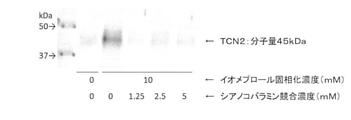
- FIG. 5 shows the band of TCN2 obtained by performing Western blotting.
- FIG. 6 shows the band of TCN2 obtained by performing Western blotting.
- FIG. 7 shows the band of TCN2 obtained by performing Western blotting.
- FIG. 8 shows the band of TCN2 obtained by performing Western blotting.
- FIG. 9 shows the band of TCN2 obtained by performing Western blotting.
- FIG. 1 shows the ratio (I / N ratio) of iodine content to nitrogen content by the EMPA method.
- FIG. 2 shows an immunohistochemical staining image of the kidney with
- FIG. 10 shows the band of TCN2 obtained by performing Western blotting.
- FIG. 11 shows the ratio (I / N ratio) of the iodine content to the nitrogen content by the EMPA method.
- FIG. 12 shows the ratio (I / N ratio) of iodine content to nitrogen content by the EMPA method.
- FIG. 13 shows the relative iodine content ratio corrected for the ratio of iodine content (I / N ratio) to nitrogen content by the EMPA method.
- FIG. 14 shows the urinary KIM-1 concentration.
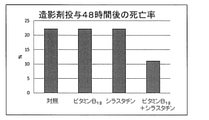
- FIG. 15 shows the mouse mortality rate after administration of the contrast medium.
- Vitamin B 12 refers to cobalamin in a broad sense and cyanocobalamin in a narrow sense. Vitamin B 12 used in the present invention, is a broad cobalamin.
- vitamin B 12 or a pharmaceutically acceptable salt thereof is used.
- vitamin B 12 produces a hydrate
- the use of a hydrate is also included in the scope of the present invention. This reference to hydrates also applies to other active ingredients described below.
- the type of vitamin B 12 or a pharmaceutically acceptable salt thereof is not particularly limited, but is preferably selected from the group consisting of cyanocobalamin, hydroxocobalamin, methylcobalamin, adenosylcobalamin, and pharmaceutically acceptable salts thereof. Will be done. Particularly preferred are selected from the group consisting of cyanocobalamin, hydroxocobalamin, methylcobalamin, and pharmaceutically acceptable salts thereof.
- Examples of pharmaceutically acceptable salts of the vitamin B 12 alkali metal salts such as lithium salts, sodium salts, potassium salts; alkaline earth metal salts such as magnesium salts, calcium salts; the zinc salts, aluminum salts; organic Amin salts such as choline salt, ethanolamine salt, trimethylamine salt, triethylamine salt, dicyclohexylamine salt, dibenzylamine salt, phenethylbenzylamine salt, prokine salt, morpholine salt, pyridine salt, piperidine salt, piperazine salt, N-ethylpiperidine.
- alkali metal salts such as lithium salts, sodium salts, potassium salts
- alkaline earth metal salts such as magnesium salts, calcium salts
- organic Amin salts such as choline salt, ethanolamine salt, trimethylamine salt, triethylamine salt, dicyclohexylamine salt, dibenzylamine salt, pheneth
- Salts ammonium salts; basic amino acid salts such as lysine salts, arginine salts; inorganic salts such as sulfates, hydrochlorides, hydrobromates, nitrates, phosphates, perchlorates; organic acid salts such as Gate, acetate, trifluoroacetate, oxalate, lactate, maleate, fumarate, tartrate, citrate, ascorbate; sulfonates such as methanesulfonate, isethionate. , Benzin sulfonate, p-toluene sulfonate, camphor sulfonate.
- the inhibitor of the present invention may contain two or more salts of vitamin B 12. As confirmed, the range of pharmaceutically acceptable salts of all active ingredients herein also includes salt hydrates.
- Vitamin B 12 or a pharmaceutically acceptable salt thereof can be produced and obtained, for example, by using a commercially available product, or by a method known per se or a method according to a known method. Vitamin B 12 or a pharmaceutically acceptable salt thereof can suppress the indirect binding of iodine-based contrast media to megaline.
- the iodine-based contrast agent is preferably one or more (preferably one, two, or three, more preferably one or more) in which the 3-position and / or 5-position may be substituted with a substituent. It is selected from two, more preferably one) compounds having 2,4,6-triiodophenyl groups in their chemical structure, and pharmaceutically acceptable salts thereof.
- the iodine-based contrast agent is preferably nonionic.
- the nonionic contrast medium means a contrast medium having no ionic functional group.
- a typical ionic functional group is a carboxyl group.
- the iodine-based contrast agent is preferably selected from the group consisting of ioxylan, iopromide, iohexol, ioversol, iomeprol, iotrolan, iodixanol, ioxagluic acid, iotroxic acid, amidotrizoic acid, iotaramic acid, and pharmaceutically acceptable salts thereof. And more preferably selected from the group consisting of iomeprol, ioversol, iodixanol, iopromid, iohexol, and pharmaceutically acceptable salts thereof.
- An example of a pharmaceutically acceptable salt of the compound is, if the compound has a carboxyl group, a base addition salt at the carboxyl group, wherein the compound is an amino group, an imino group or a basic heterocycle. When it has a basic nitrogen atom such as a group, an acid addition salt at the nitrogen atom can be mentioned.
- the base addition salt examples include alkali metal salts such as lithium salt, sodium salt, potassium salt; alkaline earth metal salts such as calcium salt, magnesium salt; zinc salt, aluminum salt; ammonium salt; organic amine salt, for example.
- alkali metal salts such as lithium salt, sodium salt, potassium salt
- alkaline earth metal salts such as calcium salt, magnesium salt; zinc salt, aluminum salt; ammonium salt
- organic amine salt for example.
- Examples of the acid addition salts include inorganic acid salts such as sulfates, hydrochlorides, hydrobromates, nitrates, phosphates, perchlorates; organic acid salts such as formates, acetates, trifluoro. Acetates, oxalates, lactates, maleates, fumarates, tartrates, citrates, ascorbinates; sulphonates such as methanesulphonates, isethions, benzenesulphonates, p- Includes toluene sulfonate and camphor sulfonate.
- inorganic acid salts such as sulfates, hydrochlorides, hydrobromates, nitrates, phosphates, perchlorates
- organic acid salts such as formates, acetates, trifluoro. Acetates, oxalates, lactates, maleates, fumarates, tartrates, citrates, ascorbinates
- the inhibitor of the present invention may contain two or more salts of the contrast agent.
- the iodine-based contrast medium can be produced and obtained, for example, by using a commercially available product, or by a method known per se or a method according to a known method.
- the present invention is, as an active ingredient comprising a vitamin B 12 or a pharmaceutically acceptable salt thereof, an inhibitor of renal disorders induced by iodine based contrast agents.
- an active ingredient comprising a vitamin B 12 or a pharmaceutically acceptable salt thereof, an inhibitor of renal disorders induced by iodine based contrast agents.
- Specific iodine-based contrast media and preferable iodine-based contrast media are as described above.
- the renal disorder can be induced via megalin by an iodine-based contrast agent.
- Major expression site in vivo of megalin, proximal tubular epithelial cells (primarily luminal membrane) kidney because of the vitamin B 12 or a pharmaceutically salt may be allowed, by iodine based contrast agents It is particularly useful for suppressing (ie, as an inhibitor) the proximal tubular epithelial cell damage induced via megalin and the renal damage associated therewith.
- Renal disorders induced by iodine-based contrast agents include contrast agent (sex) nephropathy, contrast agent (sex) nephropathy, contrast agent (sex) nephritis, contrast agent (sex) renal failure, and contrast agent (sex) kidney.
- Inhibitor of the present invention vitamin B 12 or a pharmaceutically acceptable salt thereof, in an amount effective to inhibit the renal failure induced by iodine based contrast agents.
- an example of the daily dose of vitamin B 12 or a salt thereof for an adult is 0.01 to 100 mg, or 0.1 to 10 mg.
- the inhibitor can be administered in one dose or in several divided doses so that the dose is within such a range. Further, an administration method such as intermittent administration such as alternate day administration and alternate day administration can also be used.
- Iodine based contrast agents can be used in combination with vitamin B 12 or a pharmaceutically acceptable salt thereof.
- the therapeutic unit of the iodine-based contrast medium to be used is not particularly limited, but can be determined by a person skilled in the art as necessary based on publicly known documents and the like.
- the package insert of "Iomeron (registered trademark)" of Bracco Eisai Co., Ltd., which is a product containing a contrast medium whose common name is "Iomeprol” indicates the amount used as follows.
- the inhibitor of the present invention may contain yet another active ingredient.
- the inhibitors of the invention may contain silastatin or a pharmaceutically acceptable salt thereof.
- Silastatin is (Z) -7-[[(R) -2-Amino-2-carboxyethyl] thio] -2-[[[(S) -2,2-dimipenemiclopyl] carbonyl] amino] -2-heptenonic acid. That is.
- Examples of pharmaceutically acceptable salts of silastatin include alkali metal salts such as lithium salt, sodium salt, potassium salt; alkaline earth metal salts such as magnesium salt, calcium salt; zinc salt, aluminum salt; organic amine salt.
- alkali metal salts such as lithium salt, sodium salt, potassium salt
- alkaline earth metal salts such as magnesium salt, calcium salt
- zinc salt, aluminum salt organic amine salt.
- Ammonium salt includes basic amino acid salts such as lysine salt and arginine salt.
- the inhibitor of the present invention may contain two or more salts of cilastatin.
- a particularly preferred salt is sodium silastatin.
- the composition suppresses renal damage induced by an iodine-based contrast agent by using silastatin or a pharmaceutically acceptable salt thereof. It is contained in an effective amount.
- an example of the daily dose of cilastatin or a salt thereof for an adult is 1.0 to 2.0 g, or 1.0 to 1.5 g.
- the inhibitor can be administered in one dose or in several divided doses so that the dose is within such a range. Further, an administration method such as intermittent administration such as alternate day administration and alternate day administration can also be used.
- the present invention relates to, in one aspect, a composition for inhibiting the binding of transcobalamin 2 to an iodo-based contrast agent, which comprises vitamin B 12 or a pharmaceutically acceptable salt thereof as an active ingredient.
- vitamin B 12 inhibits the binding of an iodo contrast agent to transcobalamin 2.
- Transcobalamin 2 is one of the transport proteins of vitamin B 12 (molecular weight is about 45 kDa). It is considered that this inhibitory effect leads to suppression of renal damage induced by iodine-based contrast media.
- composition of the present invention contains vitamin B 12 or a pharmaceutically acceptable salt thereof in an effective amount.
- the effective amount can be determined with reference to the above-mentioned dosage and the like for the inhibitor of the present invention.
- the form of the inhibitor and the composition of the present invention is not particularly limited, but is a solid agent such as a powder, a granule, a capsule, a tablet or a chewable agent, a solution agent, a liquid agent such as a syrup agent, an injection agent, a spray agent or the like. Can be in the form of. A preferred form is an injection.
- the inhibitors and compositions of the present invention may contain a pharmaceutically acceptable carrier, as required by the pharmaceutical.
- the carrier include excipients and solvents.
- additional ingredients that may be included in the inhibitors of the invention are binders, pH regulators, disintegrants, chelating agents, solubilizing agents, suspending agents, emulsifiers, tonicity agents, stabilizers, etc. It is a painkiller, a preservative, an antioxidant, a lubricant, a flavoring agent, and a coloring agent.
- Excipients include saccharides such as lactose, glucose and D-mannitol; starches; organic excipients such as cellulose such as crystalline cellulose; inorganic excipients such as dicalcium phosphate, calcium carbonate and kaolin. And so on.
- the solvent include purified water, physiological saline and the like.
- the binder include pregelatinized starch, gelatin, gum arabic, methyl cellulose, carboxymethyl cellulose, sodium carboxymethyl cellulose, crystalline cellulose, D-mannitol, trehalose, hydroxypropyl cellulose, hydroxypropylmethyl cellulose, polyvinylpyrrolidone, polyvinyl alcohol and the like.
- Examples of the pH adjuster include hydrochloric acid, sodium hydroxide and the like.
- Examples of the disintegrant include low-degree-of-substitution hydroxypropyl cellulose, chemically modified cellulose and starches, alginic acid and the like.
- Examples of the chelating agent include calcium edetate disodium hydrate, calcium edetate sodium hydrate and the like.
- Examples of the solubilizing agent include polyethylene glycol, propylene glycol, trehalose, benzyl benzoate, ethanol, sodium carbonate, sodium citrate, sodium salicylate, sodium acetate and the like.
- suspending agent or emulsifier examples include celluloses such as sodium lauryl sulfate, gum arabic, gelatin, lecithin, glycerin monostearate, polyvinyl alcohol, polyvinylpyrrolidone, and sodium carboxymethyl cellulose; polysorbates; and polyoxyethylene hydrogenated castor oil.
- examples of the tonicity agent include sodium chloride, potassium chloride, saccharides, glycerin, urea and the like.
- stabilizer examples include polyethylene glycol, sodium dextran sulfate, and other amino acids.
- the soothing agent include glucose, calcium gluconate, procaine hydrochloride and the like.
- Examples of the preservative include paraoxybenzoic acid esters, chlorobutanol, benzyl alcohol, phenethyl alcohol, dehydroacetic acid, sorbic acid and the like.
- Examples of the antioxidant include sulfites, ascorbic acid and the like.
- (Method and use) Inhibitor of the present invention in another aspect, the vitamin B 12 or a pharmaceutically acceptable salt, for use in the inhibition of the renal failure induced by iodine based contrast agents.
- Specific examples and preferable examples of vitamin B 12 , iodine-based contrast media, salts thereof, and renal disorders are as described above.
- the use may further be combined with the administration of an effective amount of an iodine-based contrast agent.
- Iodinated contrast agents, vitamin B 12 or simultaneously with pharmaceutically acceptable salts thereof can be administered at separately or time interval.
- iodine contrast media, vitamin B 12 or prior to the administration of a pharmaceutically acceptable salt thereof, prior to its administration or may be administered after the administration, or even a combination thereof of two or more good.
- the inhibitor of the present invention is, in another aspect, a method for suppressing renal damage induced by an iodine-based contrast medium, and an effective amount of vitamin B 12 or a vitamin B 12 thereof is used for a subject in need thereof.
- a method comprising administering a pharmaceutically acceptable salt.
- Specific examples and preferable examples of vitamin B 12 , iodine-based contrast media, salts thereof, and renal disorders are as described above.
- the method may further comprise administering to the subject an effective amount of an iodine-based contrast agent.
- Iodinated contrast agents, vitamin B 12 or simultaneously with pharmaceutically acceptable salts thereof can be administered at separately or time interval.
- iodine contrast media, vitamin B 12 or prior to the administration of a pharmaceutically acceptable salt thereof, prior to its administration or may be administered after the administration, or even a combination thereof of two or more good.
- the individual ingredients or agents can be administered in divided or single formulations.
- the effective amount of vitamin B 12 or a pharmaceutically acceptable salt thereof and the effective amount of the iodine-based contrast medium can be determined based on the above-mentioned doses and the like with respect to the inhibitor of the present invention.
- subjects in need of suppression of renal damage induced by iodine-based contrast media are subjects who have or are at risk of having renal damage, and those symptoms before administration of iodine-based contrast media.
- the subject is preferably a mammal, such as a human; domestic animals such as mice, rats, rabbits, guinea pigs, hamsters, monkeys, sheep, horses, cows, pigs, donkeys, dogs, cats; or other experimental animals. Humans are particularly preferred.
- composition for inhibiting the binding of the iodine-based contrast agent of the present invention to transcobalamin 2 is, in another aspect, the iodine-based contrast agent and transcobalamin 2 of vitamin B 12 or a pharmaceutically acceptable salt thereof. It is used in a method of inhibiting binding to.
- Specific examples and preferred examples of vitamin B 12 , iodine-based contrast agents, and salts thereof are as described above with respect to inhibitors.
- composition for inhibiting the binding between the iodine-based contrast agent and transcobalamin 2 of the present invention is, in another aspect, a method for inhibiting the binding between the iodine-based contrast agent and transcobalamin 2.
- a method for inhibiting the binding between the iodine-based contrast agent and transcobalamin 2. to a subject in need thereof, which method comprises administering a vitamin B 12 or a pharmaceutically acceptable salt thereof effective amount.
- Specific examples and preferred examples of vitamin B 12 , iodine-based contrast agents, and salts thereof are as described above with respect to inhibitors.
- the subject is preferably a mammal, such as a human; domestic animals such as mice, rats, rabbits, guinea pigs, hamsters, monkeys, sheep, horses, cows, pigs, donkeys, dogs, cats; or other experimental animals. Humans are particularly preferred.
- the effective amount of vitamin B 12 or a pharmaceutically acceptable salt thereof can be determined with reference to the above-mentioned dosage and the like for the inhibitor of the present invention.
- (Numerical range) For clarity, the numerical range represented by the lower and upper limits herein, eg, "1.0-2.0 g", includes those lower and upper limits.
- Iomeprol is the Japanese Pharmacopoeia Iomeprol injection solution ("Iomeron (registered trademark) 350" (Bracco Eisai Co., Ltd.)). rice field.
- Iohexol bulk powder Tokyo Kasei Kogyo Co., Ltd .; I0903
- Iopromid bulk powder Sigma-Aldrich; 1344804-400
- Iodixanol bulk powder The United State Pharmaceutical Convention, Inc; 1343517
- Iohexol bulk powder Toronto Research Chemicals Inc; 1737000
- Iomeprol bulk powder BOC Sciences
- silastatin sodium silastatin (SIGMA-ALDRICH Japan GK: C5743) was used.
- the animal species used was C57BL / 6J mice (male 9-12 weeks old, Charles River Laboratories International).
- the vitamin B 12 used was cyanocobalamin (Fujifilm Wako Junyaku Co., Ltd .; 224-00344), methylcobalamin (Fujifilm Wako Junyaku Co., Ltd .; 1134-14263), and hydroxocobalamin acetate (Fujifilm Wako Junyaku Co., Ltd.). It was 087-05633).
- Patent Document 1 when an iodine-based contrast agent is administered to C57BL / 6J mice, a contrast agent nephropathy model can be created. In this model, increased serum creatinine levels, increased expression of KIM-1 in proximal tubular epithelial cells, and increased vacuoles of proximal tubular epithelial cells compared to controls to which the contrast agent was not administered. was recognized. Patent Document 1 describes that silastatin suppresses the uptake of a megalin-dependent iodine-based contrast medium into proximal tubular epithelial cells, and silastatin suppresses renal damage.
- Vitamin B 12 co-administering groups (dissolved in saline) 100 [mu] L (total amount 200 [mu] L), saline (NS) iomeprol 100 [mu] L + Saline 100 [mu] L is for co-administration, the tail vein The administration was performed, and the kidney was removed 3 hours after the administration.
- a 3 mm thick section including the part of the kidney stem was prepared from the right kidney, the section was embedded in OCT compound, cryofixed with liquid nitrogen, and the cryofixed section was -80. Stored at ° C. The stored sections were sliced into 4 ⁇ m thick slices with a cryostat (CM1850; Leica), and the obtained sections were attached to a carbon table dedicated to EPMA and freeze-dried overnight. Sections created, EPMA according to the following methods (EPMA1610; Shimadzu Ltd, Kyoto, Japan) and analyzed by, the difference in uptake of the contrast agent with the vitamin B 12 co-administration group and the physiological saline coadministration group observed I checked if it was.
- EPMA1610 Shimadzu Ltd, Kyoto, Japan
- EMP electron microprobe
- the "thin film quantification method" can be applied to the analysis of biological samples such as kidney tissue sections. Since the intensity of characteristic X-rays generated when a target biological sample is irradiated with an electron beam is proportional to the number of existing atoms, the number of atoms is also indirectly compared by comparing the intensity of characteristic X-rays. It is possible.
- nitrogen (N) in the biological sample is the main component of the cell protein, so the distribution of nitrogen is consistent with the distribution of the cellular components of the section, and the distribution of the cellular components varies, and the section It has been reported that it can be used as an internal standard when considering thickness (Tanaka et al., BMJ Open, 2014, Volume 4, e004407; Moriyama et al., Am J Respir Crit Care Med, 2007, Vol. 176, Pages 70-77).
- the iodine (I) between the samples is relatively quantified by taking the ratio (I / N) of the intensity of the characteristic X-rays of iodine (I) and nitrogen (N) in a certain area of the biological sample. Can be compared.
- X-ray count ratio (X-ray count of Iodine / unit area) / (X-ray count of Nitrogen / unit area)
- vitamin B 12 was believed to inhibit the proximal tubular epithelium contrast agent uptake into cells of the majority of cortical portion was analyzed.
- nephropathy inhibitory effect (Test Example 2) nephropathy inhibitory effect of vitamin B 12 Vitamin B 12, iodine-based contrast medium and the vitamin B 12 is co-administered to C57BL / 6J mice were analyzed and the results ..
- RESULTS 14 days after the left kidney of C57BL / 6J mice was removed, the right kidney stem was ligated for 30 minutes and then reperfused. Twenty-four hours after reperfusion, C57BL / 6J mice were grouped as follows and the following drugs were administered to the tail vein.
- Vitamin B 12 simultaneous administration group Iomeprol 200 ⁇ L + 1 mg / mL cyanocobalamin solution 100 ⁇ L
- Saline simultaneous administration group (control) Iomeprol 200 ⁇ L + saline 100 ⁇ L
- urine was stored in a metabolic cage for 24 hours before dissection, and dissected 48 hours after drug administration, and urinary Kidney Injection Molecule-1 (KIM-1) was measured. The measurement of KIM-1 in urine was requested to Oriental Yeast Co., Ltd.
- kidney was removed, KIM-1 immunostaining was performed, and histological evaluation of the right kidney was performed.
- a 3 mm-thick section including the part of the renal stem of the right kidney was prepared, fixed with a 4% paraformaldehyde phosphate buffer, and then with a microtom (REM-710; Yamato Kohki Industrial Co., Ltd.).
- the slices were sliced to a thickness of 4 ⁇ m, and the obtained strips were immunostained with KIM-1, which is a marker for nephropathy.
- VECTASTAIN Elite ABC Kit VECTOR LABORATORIES
- KIM-1 expression was evaluated only in the outer cortical layer containing the S1 and S2 segments in which the expression of megalin was high.
- KIM-1 expression was widely observed mainly in the S1 and S2 segments (enclosed part in FIG. 2).
- the vitamin B 12 co-administration group how the expression of KIM-1 is reduced has been confirmed (Fig. 2).
- vitamin B 12 has an effect of suppressing renal damage caused by a contrast medium.
- Test Example 3 Binding of transcobalamin 2 and megalin The mechanism by which vitamin B 12 suppresses renal damage induced by iodine-based contrast media was examined.
- Patent Document 1 shows the possibility that the contrast medium binds to megalin via a carrier substance and causes the renal disorder.
- Test Example 3 was carried out to show that transcobalamin 2 binds to megalin like the carrier substance. Specifically, the binding between megalin and transcobalamin 2 was verified using the quartz crystal microbalance method (QCM method).
- METHODS Megalin purified from the Sprague-Dawley rat (SD rat) kidney was immobilized on quartz according to the method of Orlando et al. Specifically, using Immobilization Kit for AFFINIX (registered trademark, manufactured by Initiative Co., Ltd.), prepared to 62.5 ⁇ g / mL by Buffer A attached to the kit according to the protocol recommended in the kit. The megalin solution was placed on a crystal placed in a holder and solidified.
- Immobilization Kit for AFFINIX registered trademark, manufactured by Initiative Co., Ltd.
- a crystal on which megalin was immobilized was placed on the measuring instrument AFFINIX (registered trademark) Q8 (manufactured by Initiative Co., Ltd.), and after confirming that the frequency was stable, recombinant rat transcobalamin 2 (TCN2: LifeSpan BioSciences, Inc.) ) (1.5 ⁇ g) was injected (total injection volume) and the frequency was measured over time. More specifically, the crystal on which megalin was immobilized was immersed in a 200 ⁇ L buffer, and after confirming the stabilization of the frequency, transcobalamin 2 was injected and the frequency was measured. Bovine serum albumin (BSA) instead of megalin was measured in the same manner using quartz immobilized in the same amount as megalin as a control, and the specific binding ability of transcobalamin 2 to megalin was analyzed.
- BSA bovine serum albumin
- the frequency was reduced by about 20 to 30 Hz, whereas when transcobalamin 2 was injected, the frequency was significantly reduced (about 200 Hz) (FIG. 4). From this result, the binding of transcobalamin 2 to megalin was confirmed.
- Method 1 Preparation of immobilized beads
- FG beads registered trademark
- grain diameter 0.2 ⁇ m manufactured by Tamagawa Seiki Co., Ltd.
- Iomeprol bulk powder was used as an iodine-based contrast medium.
- the bulk powder was solid-phased by chemical bonding at a charging concentration of 0 mM, 3 mM and 10 mM.
- transcobalamin 2 (TCN2: LifeSpan BioSciences, Inc) was dissolved in a 100 mM KCL aqueous solution to prepare a transcobalamin 2 solution having a concentration of 25 ng / ⁇ L.
- the washed solid-phase beads described above were dispersed in 200 ⁇ L of a transcobalamin 2 solution and incubated at 4 ° C. for 4 hours. After incubation, the immobilized beads were separated into the bottom of the liquid using a magnetic force, the supernatant was removed, and the remaining immobilized beads were dispersed and washed 3 times with 200 ⁇ L of 100 mM KCL buffer. Then, 40 ⁇ L of electrophoresis sample buffer (0.25 M Tris-HCl (pH 6.8), 0.02% BPB, 8% SDS, 40% glycerol, 20% 2-mercaptoethanol) was added to the washed solidified beads. After mixing with distilled water at the same magnification and heating at 98 ° C. for 5 minutes, the immobilized beads were separated using magnetic force, and the supernatant was recovered as a transcobalamin 2 -containing sample (sample for Western blotting).
- electrophoresis sample buffer (0.25 M Tris-HC
- HRP horseradish peroxidas
- Dako horseradish peroxidas 0.25 ⁇ g / mL at room temperature for 1 hour. Then, the band was detected with a chemiluminescent substrate for Western blotting (SuperSignal TM West Femto Maximum Sensitivity Substrate; Thermo Scientific TM).
- TCN2 functions as a carrier substance of iodine-based contrast medium and can mediate the binding to megalin. Shown. Next, an experiment was conducted to confirm the possibility that vitamin B 12 inhibits the binding between the iodine-based contrast medium and TCN2.
- Iomeprol bulk powder Iobersole bulk powder, Iodixanol bulk powder, Iopromide bulk powder, and Iohexol bulk powder were used. Evaluation was made using these solid phase beads.
- the solid-phase beads were prepared according to the method of Test Example 4.
- Vitamin B 12 cyanocobalamin, methylcobalamin, or hydroxocobalamin
- silastatin iomeprol (iodo-based contrast agent) were used as test substances competing for the above binding.
- Cilastatin and iomeplol are positive controls for inhibition.
- FIGS. 6 to 10 show the results of cyanocobalamin
- FIG. 9 shows the results of methylcobalamin
- FIG. 10 shows the results of hydroxocobalamin, silastatin, and an unimmobilized contrast medium (iomeprol).
- Test Example 7 Comparison of iodo-based contrast agent uptake inhibitory effect by combination of cilastatin alone and vitamin B 12 and silastatin In Test Example 6, the uptake of iodine-based contrast medium was inhibited by the combined use group of vitamin B 12 and cilastatin. It had been. The effect of silastatin on the uptake inhibitory effect of the iodine-based contrast medium shown in Patent Document 1 was compared.
- Method-1 The uptake inhibitory effect of silastatin was evaluated by EMPA according to the method described in Test Example 1. Specifically, C57BL / 6J mice (male 9-12 weeks old) were used, and the drug was administered by the following method.
- the N ratio is divided by the I / N ratio of the physiological saline simultaneous administration group of each test, and the corrected iodine (I) content (iodine amount relative ratio) of the a) -c) group is relatively a) -c). evaluated.
- Result-1 The results are shown in FIG. Result-2
- results are shown in FIG. c) cyanocobalamin + Cilastatin combination group, a) cyanocobalamin coadministration group (significantly contrast medium in comparison with vitamin B 12 only) uptake was inhibited.
- Vitamin B 12 and cilastatin an inhibitory effect on renal failure due to iodine-based contrast medium, we were investigated using renal injury model ..
- the mortality rate of each group (9 individuals in one group) 48 hours after the administration of the contrast medium is shown in FIG.
- the combined use of silastatin and vitamin B 12 (cyanocobalamine) was able to significantly reduce mortality.
Landscapes
- Health & Medical Sciences (AREA)
- Life Sciences & Earth Sciences (AREA)
- Veterinary Medicine (AREA)
- Pharmacology & Pharmacy (AREA)
- Chemical & Material Sciences (AREA)
- Public Health (AREA)
- Medicinal Chemistry (AREA)
- General Health & Medical Sciences (AREA)
- Animal Behavior & Ethology (AREA)
- Epidemiology (AREA)
- Bioinformatics & Cheminformatics (AREA)
- Urology & Nephrology (AREA)
- Organic Chemistry (AREA)
- Nuclear Medicine, Radiotherapy & Molecular Imaging (AREA)
- General Chemical & Material Sciences (AREA)
- Engineering & Computer Science (AREA)
- Molecular Biology (AREA)
- Chemical Kinetics & Catalysis (AREA)
- Pharmaceuticals Containing Other Organic And Inorganic Compounds (AREA)
- Medicines Containing Antibodies Or Antigens For Use As Internal Diagnostic Agents (AREA)
Abstract
本発明の課題の一つは、ヨード系造影剤により誘発される腎障害の抑制剤を提供することである。 本発明は、ビタミンB12又は薬学的に許容されるその塩を用いる。
Description
本発明は、腎障害の抑制におけるビタミンB12の利用に関する。具体的には、ビタミンB12又はその薬学的に許容可能な塩を含む、ヨード系造影剤によって誘発される腎障害の抑制剤に関する。また、本発明は、有効成分としてビタミンB12又はその薬学的に許容可能な塩を含む、ヨード系造影剤とトランスコバラミン2との結合を阻害するための組成物にも関する。
X線造影技術は、病態把握や診療方針の決定等の臨床場面において極めて重要な意義を有するが、骨以外の軟部組織ではX線の減衰が小さいため、組織の描出は困難である。X線の減衰は物質密度に比例し、構成する元素の原子番号の3乗に比例することが知られている。これまで、経血管的に用いられる造影剤開発においては、ヨード化合物が着目されてきた。このようなヨード化合物を有効成分とする造影剤をヨード系造影剤と称する。
現在、水溶性の造影剤として用いられる物質は、いずれもトリヨードベンゼン環を基本骨格として有する。同骨格を有する造影剤として、イオン性の造影剤と非イオン性の造影剤とが存在する。しかしながら、イオン性の造影剤は、同一ヨード含量における浸透圧を高め、血管痛等の副作用を生じることが知られている。そのため、イオン性の造影剤の血管内投与への適応は国内ではない。
浸透圧低減による安全性向上のため、非イオン性の造影剤が開発されている。経血管的に用いられる非イオン性の造影剤の代表例は、イオキシラン、イオプロミド、イオヘキソール、イオベルソール、イオメプロール等である。これらの分子量はほぼ同じであり、単位量あたりのヨード含量もほぼ同一である。そのため、これらを用いた場合のX線の減衰(造影効果)はほぼ同程度と考えられる。さらに、単位ヨード含量あたりの分子数を低下させるために、トリヨードベンゼン環を分子内に二つ有するダイマー型の造影剤、例えばイオトロラン、イオジキサノールも開発され、等浸透圧性という物性が得られている。
造影剤による重大副作用として、造影剤腎症が知られている。そのため、腎症の発症や進行が懸念される。また、腎機能が既に低下している患者では使用が原則禁忌とされる場合があり、そのために使用が断念されることもある。
造影剤により誘発される腎障害の発生機序として、血管収縮による腎血流量の低下と腎髄質の低酸素状態、さらに活性酸素による傷害が想定されている。そのため、抗酸化作用のあるN-アセチルシステインやスタチン、血管拡張作用や腎血流増加作用のあるhANP等による造影剤腎症発症予防効果が期待され、多くの臨床研究が行われてきた。しかしながら、いずれも有効性が示されていない。
現在、造影剤により誘発される腎障害の予防法として推奨されている方法は、生理食塩水や重曹輸液等の等張性輸液製剤の、造影検査の前後における経静脈的投与である(非特許文献1)。しかしながら、この方法は、高いエビデンスレベルで有効性が証明されている訳ではない。
特許文献1には、ヨード系造影剤によって誘発される腎障害の抑制剤が記載されている。当該抑制剤の有効成分は、シラスタチン又はその薬学的に許容可能な塩である。シラスタチンは、メガリンとヨード系造影剤との結合を阻害し、抑制効果を発揮する。
特許文献1には、ヨード系造影剤によって誘発される腎障害の抑制剤が記載されている。当該抑制剤の有効成分は、シラスタチン又はその薬学的に許容可能な塩である。シラスタチンは、メガリンとヨード系造影剤との結合を阻害し、抑制効果を発揮する。
日本腎臓学会・日本医学放射線学会・日本循環器学会 共同編集、腎障害患者におけるヨード造影剤使用に関するガイドライン 2012、第50~79ページ
本発明の課題は、ヨード系造影剤により誘発される腎障害を抑制するための新たな手段を提供することである。
本発明者らは、上記課題を解決すべく鋭意検討を行った結果、ビタミンB12がヨード系造影剤によって誘発される腎障害の抑制に有効であることを見出した。また、ビタミンB12が、ヨード系造影剤とトランスコバラミン2との結合を阻害することも見出した。
本発明は以下の態様を包含するが、それらに限定されない。
[1]有効成分としてビタミンB12又はその薬学的に許容可能な塩を含む、ヨード系造影剤によって誘発される腎障害の抑制剤。
[2]ビタミンB12又はその薬学的に許容可能な塩が、シアノコバラミン、ヒドロキソコバラミン、メチルコバラミン、アデノシルコバラミン、及びそれらの薬学的に許容可能な塩からなる群から選択される、[1]に記載の抑制剤。
[3]前記ヨード系造影剤が、3位及び/又は5位が置換基で置換されていてもよい一つ又は複数の2,4,6-トリヨードフェニル基を化学構造中に有する化合物、及びそれらの薬学的に許容可能な塩からなる群より選択される、[1]又は[2]に記載の抑制剤。
[4]さらにシラスタチン又はその薬学的に許容可能な塩を含む、[1]~[3]のいずれか一項に記載の抑制剤。
[5]注射剤の形態である、[1]~[4]のいずれか一項に記載の抑制剤。
[6]有効成分としてビタミンB12又はその薬学的に許容可能な塩を含む、ヨード系造影剤とトランスコバラミン2との結合を阻害するための組成物。
[1]有効成分としてビタミンB12又はその薬学的に許容可能な塩を含む、ヨード系造影剤によって誘発される腎障害の抑制剤。
[2]ビタミンB12又はその薬学的に許容可能な塩が、シアノコバラミン、ヒドロキソコバラミン、メチルコバラミン、アデノシルコバラミン、及びそれらの薬学的に許容可能な塩からなる群から選択される、[1]に記載の抑制剤。
[3]前記ヨード系造影剤が、3位及び/又は5位が置換基で置換されていてもよい一つ又は複数の2,4,6-トリヨードフェニル基を化学構造中に有する化合物、及びそれらの薬学的に許容可能な塩からなる群より選択される、[1]又は[2]に記載の抑制剤。
[4]さらにシラスタチン又はその薬学的に許容可能な塩を含む、[1]~[3]のいずれか一項に記載の抑制剤。
[5]注射剤の形態である、[1]~[4]のいずれか一項に記載の抑制剤。
[6]有効成分としてビタミンB12又はその薬学的に許容可能な塩を含む、ヨード系造影剤とトランスコバラミン2との結合を阻害するための組成物。
本発明は、ヨード系造影剤によって誘発される腎障害を抑制することができる。
本発明に関連して、ヨード系造影剤は、トランスコバラミン2に結合し、生成した結合体がメガリンに結合することが見出された。そして、ヨード系造影剤は、メガリンを介して細胞内に取り込まれて、腎障害を生じるものと考えられる。ビタミンB12は、当該造影剤のトランスコバラミン2への結合を抑制することが見出された。よって、ビタミンB12は、そのような抑制を介して、ヨード系造影剤によって誘発される腎障害を抑制するものと考えられる。
本発明に関連して、ヨード系造影剤は、トランスコバラミン2に結合し、生成した結合体がメガリンに結合することが見出された。そして、ヨード系造影剤は、メガリンを介して細胞内に取り込まれて、腎障害を生じるものと考えられる。ビタミンB12は、当該造影剤のトランスコバラミン2への結合を抑制することが見出された。よって、ビタミンB12は、そのような抑制を介して、ヨード系造影剤によって誘発される腎障害を抑制するものと考えられる。
また、ビタミンB12とシラスタチンとを併用することで、ヨード系造影剤により誘発される腎障害をより効果的に抑制出来ることが見出された。
なお、本明細書において腎障害に関して使用される「抑制する」との用語は、ヨード系造影剤によって生じる症状を全く発現させないこと、ヨード系造影剤のみを使用したときよりも症状を軽減すること、事前に存在していた症状によりヨード系造影剤の使用を断念していた場合にヨード系造影剤を使用可能とすること等を意味する。そして、前記「軽減」は、前記症状の程度を低減させること、及び前記症状を完全に消失させること含む。本明細書では、疾患の症状を全く発現させないか、又は前記ヨード系造影剤のみを使用したときの症状よりも軽減することを「予防」と称し、それは「抑制」に包含される。また、前記腎障害を「抑制する」ための医薬を「抑制剤」と称する。
なお、本明細書において腎障害に関して使用される「抑制する」との用語は、ヨード系造影剤によって生じる症状を全く発現させないこと、ヨード系造影剤のみを使用したときよりも症状を軽減すること、事前に存在していた症状によりヨード系造影剤の使用を断念していた場合にヨード系造影剤を使用可能とすること等を意味する。そして、前記「軽減」は、前記症状の程度を低減させること、及び前記症状を完全に消失させること含む。本明細書では、疾患の症状を全く発現させないか、又は前記ヨード系造影剤のみを使用したときの症状よりも軽減することを「予防」と称し、それは「抑制」に包含される。また、前記腎障害を「抑制する」ための医薬を「抑制剤」と称する。
(ビタミンB12)
ビタミンB12は広義ではコバラミン、狭義ではシアノコバラミンを指す。本発明に用いられるビタミンB12は、広義のコバラミンである。
ビタミンB12は広義ではコバラミン、狭義ではシアノコバラミンを指す。本発明に用いられるビタミンB12は、広義のコバラミンである。
本発明においてはビタミンB12又はその薬学的に許容可能な塩を用いる。確認的に記載するが、ビタミンB12が水和物を生成する場合には、水和物を用いる場合も本発明の範囲に含まれる。水和物に関するこの言及は、後述する他の有効成分にも適用される。
ビタミンB12又はその薬学的に許容可能な塩の種類は特に限定されないが、好ましくは、シアノコバラミン、ヒドロキソコバラミン、メチルコバラミン、アデノシルコバラミン、及びそれらの薬学的に許容可能な塩からなる群から選択される。特に好ましいものは、シアノコバラミン、ヒドロキソコバラミン、メチルコバラミン、及びそれらの薬学的に許容可能な塩からなる群から選択される。
ビタミンB12の薬学的に許容可能な塩の例には、アルカリ金属塩、例えばリチウム塩、ナトリウム塩、カリウム塩;アルカリ土類金属塩、例えばマグネシウム塩、カルシウム塩;亜鉛塩、アルミニウム塩;有機アミン塩、例えばコリン塩、エタノールアミン塩、トリメチルアミン塩、トリエチルアミン塩、ジシクロヘキシルアミン塩、ジベンジルアミン塩、フェネチルベンジルアミン塩、プロカイン塩、モルホリン塩、ピリジン塩、ピペリジン塩、ピペラジン塩、N-エチルピペリジン塩;アンモニウム塩;塩基性アミノ酸塩、例えばリジン塩、アルギニン塩;無機酸塩、例えば硫酸塩、塩酸塩、臭化水素酸塩、硝酸塩、リン酸塩、過塩素酸塩;有機酸塩、例えばギ酸塩、酢酸塩、トリフルオロ酢酸塩、シュウ酸塩、乳酸塩、マレイン酸塩、フマル酸塩、酒石酸塩、クエン酸塩、アスコルビン酸塩;スルホン酸塩、例えばメタンスルホン酸塩、イセチオン酸塩、ベンゼンスルホン酸塩、p-トルエンスルホン酸塩、カンファースルホン酸塩が含まれる。本発明の抑制剤は、ビタミンB12の二種類以上の塩を含有してもよい。確認的に記載するが、本明細書において、全ての有効成分の薬学的に許容可能な塩の範囲には、塩水和物も含まれる。
ビタミンB12又はその薬学的に許容可能な塩は、例えば市販品を用いるか、又はそれ自体公知の方法若しくは公知の方法に準じる方法によって製造・入手することができる。
ビタミンB12又はその薬学的に許容可能な塩は、ヨード系造影剤のメガリンへの間接的な結合を抑制できる。
ビタミンB12又はその薬学的に許容可能な塩は、ヨード系造影剤のメガリンへの間接的な結合を抑制できる。
(ヨード系造影剤)
本発明においては、ヨード系造影剤により誘発される腎障害を、ビタミンB12又はその薬学的に許容可能な塩によって抑制する。ヨード系造影剤は、好ましくは、3位及び/又は5位が置換基で置換されていてもよい一つ又は複数の(好ましくは一つ、二つ、又は三つの、より好ましくは一つ又は二つの、より好ましくは一つの)2,4,6-トリヨードフェニル基を化学構造中に有する化合物、及びそれらの薬学的に許容可能な塩から選択される。ヨード系造影剤は、好ましくは非イオン性である。ここで、非イオン性の造影剤とは、イオン性の官能基を有さない造影剤を意味する。典型的なイオン性の官能基はカルボキシル基である。ヨード系造影剤は、好ましくは、イオキシラン、イオプロミド、イオヘキソール、イオベルソール、イオメプロール、イオトロラン、イオジキサノール、イオキサグル酸、イオトロクス酸、アミドトリゾ酸、イオタラム酸、及びそれらの薬学的に許容可能な塩からなる群より選択され、より好ましくは、イオメプロール、イオベルソール、イオジキサノール、イオプロミド、イオヘキソール、及びそれらの薬学的に許容可能な塩からなる群より選択される。
本発明においては、ヨード系造影剤により誘発される腎障害を、ビタミンB12又はその薬学的に許容可能な塩によって抑制する。ヨード系造影剤は、好ましくは、3位及び/又は5位が置換基で置換されていてもよい一つ又は複数の(好ましくは一つ、二つ、又は三つの、より好ましくは一つ又は二つの、より好ましくは一つの)2,4,6-トリヨードフェニル基を化学構造中に有する化合物、及びそれらの薬学的に許容可能な塩から選択される。ヨード系造影剤は、好ましくは非イオン性である。ここで、非イオン性の造影剤とは、イオン性の官能基を有さない造影剤を意味する。典型的なイオン性の官能基はカルボキシル基である。ヨード系造影剤は、好ましくは、イオキシラン、イオプロミド、イオヘキソール、イオベルソール、イオメプロール、イオトロラン、イオジキサノール、イオキサグル酸、イオトロクス酸、アミドトリゾ酸、イオタラム酸、及びそれらの薬学的に許容可能な塩からなる群より選択され、より好ましくは、イオメプロール、イオベルソール、イオジキサノール、イオプロミド、イオヘキソール、及びそれらの薬学的に許容可能な塩からなる群より選択される。
前記化合物の薬学的に許容可能な塩の例としては、前記化合物がカルボキシル基を有する場合には、当該カルボキシル基における塩基付加塩であり、前記化合物がアミノ基、イミノ基若しくは塩基性の複素環基等の塩基性窒素原子を有する場合には、当該窒素原子における酸付加塩を挙げることができる。
前記塩基付加塩の例には、アルカリ金属塩、例えばリチウム塩、ナトリウム塩、カリウム塩;アルカリ土類金属塩、例えばカルシウム塩、マグネシウム塩;亜鉛塩、アルミニウム塩;アンモニウム塩;有機アミン塩、例えばメグルミン塩、コリン塩、エタノールアミン塩、トリメチルアミン塩、トリエチルアミン塩、ジシクロヘキシルアミン塩、ジエタノールアミン塩、トリエタノールアミン塩、モルホリン塩、ピリジン塩、ピペリジン塩、ピペラジン塩、プロカイン塩、N,N’-ジベンジルエチレンジアミン塩が含まれる。
前記酸付加塩の例には、無機酸塩、例えば硫酸塩、塩酸塩、臭化水素酸塩、硝酸塩、リン酸塩、過塩素酸塩;有機酸塩、例えばギ酸塩、酢酸塩、トリフルオロ酢酸塩、シュウ酸塩、乳酸塩、マレイン酸塩、フマル酸塩、酒石酸塩、クエン酸塩、アスコルビン酸塩;スルホン酸塩、例えばメタンスルホン酸塩、イセチオン酸塩、ベンゼンスルホン酸塩、p-トルエンスルホン酸塩、カンファースルホン酸塩が含まれる。
本発明の抑制剤は、造影剤の二種類以上の塩を含有してもよい。
ヨード系造影剤は、例えば市販品を用いるか、又はそれ自体公知の方法若しくは公知の方法に準じる方法によって製造・入手することができる。
ヨード系造影剤は、例えば市販品を用いるか、又はそれ自体公知の方法若しくは公知の方法に準じる方法によって製造・入手することができる。
(抑制剤)
一態様において、本発明は、有効成分としてビタミンB12又はその薬学的に許容可能な塩を含む、ヨード系造影剤によって誘発される腎障害の抑制剤である。具体的なヨード系造影剤や、好ましいヨード系造影剤は、上記したとおりである。
一態様において、本発明は、有効成分としてビタミンB12又はその薬学的に許容可能な塩を含む、ヨード系造影剤によって誘発される腎障害の抑制剤である。具体的なヨード系造影剤や、好ましいヨード系造影剤は、上記したとおりである。
当該腎障害は、ヨード系造影剤によってメガリンを介して誘発され得る。メガリンの生体内における主要な発現部位は、腎臓近位尿細管上皮細胞(主に、管腔側膜)であるため、ビタミンB12又はその薬学的に許容され得る塩は、ヨード系造影剤により、メガリンを介して誘発される近位尿細管上皮細胞障害やそれに派生する腎障害を抑制するために(即ち、抑制剤として)、特に有用である。
ヨード系造影剤によって誘発される腎障害には、造影剤(性)腎症、造影剤(性)腎障害、造影剤(性)腎炎、造影剤(性)腎不全、造影剤(性)腎臓病、薬剤(性)腎症、薬剤(性)腎障害、薬剤(性)腎炎、薬剤(性)腎不全、薬剤(性)腎臓病、急性腎症、急性腎障害、急性腎炎、急性腎不全、急性腎臓病、慢性腎症、慢性腎障害、慢性腎炎、慢性腎不全、慢性腎臓病、尿細管(性)腎症、尿細管(性)腎障害、尿細管(性)腎炎、尿細管(性)腎不全、尿細管(性)腎臓病、尿細管間質(性)腎症、尿細管間質(性)腎障害、尿細管間質(性)腎炎、尿細管間質(性)腎不全、尿細管間質(性)腎臓病、閉塞性腎症、閉塞性腎障害、閉塞性腎炎、閉塞性腎不全、閉塞性腎臓病、急性腎炎症候群、急速進行性腎炎症候群、慢性腎炎症候群、ネフローゼ症候群、腎血管れん縮、急性尿細管壊死が含まれる。
(有効成分の量)
本発明の抑制剤は、ビタミンB12又はその薬学的に許容可能な塩を、ヨード系造影剤により誘発される腎障害を抑制するのに有効な量で含有する。腎障害の場合、成人に対するビタミンB12又はその塩の1日当たりの投与量の例は、0.01~100mg、又は0.1~10mgである。投与量がこのような範囲となるよう、当該抑制剤を、1回で、又は数回に分けて投与することができる。また、隔日投与、隔々日投与等の間歇投与等の投与方法も用いることができる。
本発明の抑制剤は、ビタミンB12又はその薬学的に許容可能な塩を、ヨード系造影剤により誘発される腎障害を抑制するのに有効な量で含有する。腎障害の場合、成人に対するビタミンB12又はその塩の1日当たりの投与量の例は、0.01~100mg、又は0.1~10mgである。投与量がこのような範囲となるよう、当該抑制剤を、1回で、又は数回に分けて投与することができる。また、隔日投与、隔々日投与等の間歇投与等の投与方法も用いることができる。
ヨード系造影剤は、ビタミンB12又はその薬学的に許容され得る塩と併用され得る。その場合、弊用されるヨード系造影剤の治療単位は、特に限定されないが、公知文献等により当業者が必要に応じて決定することができる。例えば、一般名が「イオメプロール」である造影剤を含む製品であるブラッコ・エーザイ株式会社の「イオメロン(登録商標)」の添付文書には、その使用量が以下の通りに示されている。

(シラスタチン)
本発明の抑制剤は、さらに別の有効成分を含有してもよい。具体的には、本発明の抑制剤は、シラスタチン又はその薬学的に許容可能な塩を含んでもよい。
本発明の抑制剤は、さらに別の有効成分を含有してもよい。具体的には、本発明の抑制剤は、シラスタチン又はその薬学的に許容可能な塩を含んでもよい。
シラスタチンは、(Z)-7-[[(R)-2-Amino-2-carboxyethyl]thio]-2-[[[(S)-2,2-dimethylcyclopropyl]carbonyl]amino]-2-heptenoic acidのことである。
シラスタチンの薬学的に許容可能な塩の例には、アルカリ金属塩、例えばリチウム塩、ナトリウム塩、カリウム塩;アルカリ土類金属塩、例えばマグネシウム塩、カルシウム塩;亜鉛塩、アルミニウム塩;有機アミン塩、例えばコリン塩、エタノールアミン塩、トリメチルアミン塩、トリエチルアミン塩、ジシクロヘキシルアミン塩、ジベンジルアミン塩、フェネチルベンジルアミン塩、プロカイン塩、モルホリン塩、ピリジン塩、ピペリジン塩、ピペラジン塩、N-エチルピペリジン塩;アンモニウム塩;塩基性アミノ酸塩、例えばリジン塩、アルギニン塩が含まれる。本発明の抑制剤は、シラスタチンの二種類以上の塩を含有してもよい。特に好ましい塩は、シラスタチンナトリウムである。
本発明の抑制剤がシラスタチン又はその薬学的に許容可能な塩を含有する場合、当該組成物は、シラスタチン又はその薬学的に許容可能な塩を、ヨード系造影剤により誘発される腎障害を抑制するのに有効な量で含有する。腎障害の場合、成人に対するシラスタチン又はその塩の1日当たりの投与量の例は、1.0~2.0g、又は1.0~1.5gである。投与量がこのような範囲となるよう、当該抑制剤を、1回で、又は数回に分けて投与することができる。また、隔日投与、隔々日投与等の間歇投与等の投与方法も用いることができる。
(トランスコバラミン2結合阻害)
本発明は、一態様において、有効成分としてビタミンB12又はその薬学的に許容可能な塩を含む、ヨード系造影剤とトランスコバラミン2との結合を阻害するための組成物に関する。
本発明は、一態様において、有効成分としてビタミンB12又はその薬学的に許容可能な塩を含む、ヨード系造影剤とトランスコバラミン2との結合を阻害するための組成物に関する。
本発明に関連して、本発明者らは、ビタミンB12が、ヨード系造影剤とトランスコバラミン2との結合を阻害することを見出した。トランスコバラミン2は、ビタミンB12の輸送タンパク質の一つである(分子量は約45kDaである)。この阻害効果が、ヨード系造影剤によって誘発される腎障害の抑制につながるものと考えられる。
本発明の組成物は、ビタミンB12又はその薬学的に許容可能な塩を有効量で含有する。当該有効量は、本発明の抑制剤に関して上記した投与量等を参考にして定めることができる。
(剤型)
本発明の抑制剤及び組成物の形態は、特に限定されないが、散剤、顆粒剤、カプセル剤、錠剤、チュアブル剤等の固形剤、溶液剤、シロップ剤等の液剤、注射剤、又はスプレー剤等の形態とすることができる。好ましい形態は、注射剤である。
本発明の抑制剤及び組成物の形態は、特に限定されないが、散剤、顆粒剤、カプセル剤、錠剤、チュアブル剤等の固形剤、溶液剤、シロップ剤等の液剤、注射剤、又はスプレー剤等の形態とすることができる。好ましい形態は、注射剤である。
(他の成分)
本発明の抑制剤及び組成物は、製剤上の必要に応じて、薬学的に許容され得る担体を含んでもよい。担体としては、例えば、賦形剤、溶剤が挙げられる。本発明の抑制剤に含まれてもよいさらなる成分の例は、結合剤、pH調整剤、崩壊剤、キレート剤、溶解補助剤、懸濁化剤、乳化剤、等張化剤、安定化剤、無痛化剤、防腐剤、抗酸化剤、滑沢剤、矯味矯臭剤、着色剤である。
本発明の抑制剤及び組成物は、製剤上の必要に応じて、薬学的に許容され得る担体を含んでもよい。担体としては、例えば、賦形剤、溶剤が挙げられる。本発明の抑制剤に含まれてもよいさらなる成分の例は、結合剤、pH調整剤、崩壊剤、キレート剤、溶解補助剤、懸濁化剤、乳化剤、等張化剤、安定化剤、無痛化剤、防腐剤、抗酸化剤、滑沢剤、矯味矯臭剤、着色剤である。
賦形剤としては、乳糖、ブドウ糖、D-マンニトール等の糖類;でんぷん類;結晶セルロース等のセルロース類等の有機系賦形剤;リン酸二カルシウム、炭酸カルシウム、カオリン等の無機系賦形剤等が挙げられる。溶剤としては、精製水、生理的食塩水等が挙げられる。結合剤としては、α化デンプン、ゼラチン、アラビアゴム、メチルセルロース、カルボキシメチルセルロース、カルボキシメチルセルロースナトリウム、結晶セルロース、D-マンニトール、トレハロース、ヒドロキシプロピルセルロース、ヒドロキシプロピルメチルセルロース、ポリビニルピロリドン、ポリビニルアルコール等が挙げられる。pH調整剤としては、塩酸、水酸化ナトリウム等が挙げられる。崩壊剤としては、低置換度ヒドロキシプロピルセルロース、化学修飾されたセルロースやデンプン類、アルギン酸等が挙げられる。キレート剤としては、エデト酸カルシウム2ナトリウム水和物、エデト酸カルシウムナトリウム水和物等が挙げられる。溶解補助剤としては、ポリエチレングリコール、プロピレングリコール、トレハロース、安息香酸ベンジル、エタノール、炭酸ナトリウム、クエン酸ナトリウム、サリチル酸ナトリウム、酢酸ナトリウム等が挙げられる。懸濁化剤あるいは乳化剤としては、ラウリル硫酸ナトリウム、アラビアゴム、ゼラチン、レシチン、モノステアリン酸グリセリン、ポリビニルアルコール、ポリビニルピロリドン、カルボキシメチルセルロースナトリウム等のセルロース類;ポリソルベート類;ポリオキシエチレン硬化ヒマシ油等が挙げられる。等張化剤としては、塩化ナトリウム、塩化カリウム、糖類、グリセリン、尿素等が挙げられる。安定化剤としては、ポリエチレングリコール、デキストラン硫酸ナトリウム、その他のアミノ酸類等が挙げられる。無痛化剤としては、ブドウ糖、グルコン酸カルシウム、塩酸プロカイン等が挙げられる。防腐剤としては、パラオキシ安息香酸エステル類、クロロブタノール、ベンジルアルコール、フェネチルアルコール、デヒドロ酢酸、ソルビン酸等が挙げられる。抗酸化剤としては、亜硫酸塩、アスコルビン酸等が挙げられる。
(方法及び使用)
本発明の抑制剤は、別の側面では、ビタミンB12又はその薬学的に許容可能な塩の、ヨード系造影剤によって誘発される腎障害の抑制における使用である。ビタミンB12、ヨード系造影剤、それらの塩、及び腎障害の具体例と好ましい例は、上記したとおりである。当該使用は、さらに、有効量のヨード系造影剤の投与と組み合わせてもよい。ヨード系造影剤は、ビタミンB12又はその薬学的に許容可能な塩と同時に、別々に又は時間間隔をおいて投与することができる。例えば、ヨード系造影剤は、ビタミンB12又はその薬学的に許容可能な塩の投与と同時、その投与前、もしくはその投与後に投与してもよいし、又はそれらの二つ以上を組合せてもよい。
本発明の抑制剤は、別の側面では、ビタミンB12又はその薬学的に許容可能な塩の、ヨード系造影剤によって誘発される腎障害の抑制における使用である。ビタミンB12、ヨード系造影剤、それらの塩、及び腎障害の具体例と好ましい例は、上記したとおりである。当該使用は、さらに、有効量のヨード系造影剤の投与と組み合わせてもよい。ヨード系造影剤は、ビタミンB12又はその薬学的に許容可能な塩と同時に、別々に又は時間間隔をおいて投与することができる。例えば、ヨード系造影剤は、ビタミンB12又はその薬学的に許容可能な塩の投与と同時、その投与前、もしくはその投与後に投与してもよいし、又はそれらの二つ以上を組合せてもよい。
また、本発明の抑制剤は、別の側面では、ヨード系造影剤によって誘発される腎障害の抑制のための方法であって、それを必要とする対象に、有効量のビタミンB12又はその薬学的に許容可能な塩を投与することを含む方法である。ビタミンB12、ヨード系造影剤、それらの塩、及び腎障害の具体例と好ましい例は、上記したとおりである。当該方法は、さらに、有効量のヨード系造影剤を当該対象に投与することを含んでもよい。ヨード系造影剤は、ビタミンB12又はその薬学的に許容可能な塩と同時に、別々に又は時間間隔をおいて投与することができる。例えば、ヨード系造影剤は、ビタミンB12又はその薬学的に許容可能な塩の投与と同時、その投与前、もしくはその投与後に投与してもよいし、又はそれらの二つ以上を組合せてもよい。
前記併用投与において、個々の成分又は薬剤は、分割された又は単一の製剤で投与することができる。
ビタミンB12又はその薬学的に許容可能な塩の有効量とヨード系造影剤の有効量は、本発明の抑制剤に関して上記した投与量等にもとづいて定めることができる。
ビタミンB12又はその薬学的に許容可能な塩の有効量とヨード系造影剤の有効量は、本発明の抑制剤に関して上記した投与量等にもとづいて定めることができる。
本明細書において、「ヨード系造影剤によって誘発される腎障害の抑制が必要な対象」とは、腎障害の症状を有するか、有するリスクのある対象、及びヨード系造影剤投与前に当該症状が存在し、ヨード系造影剤の投与が禁忌とされる対象等を意味する。当該対象は、好ましくは哺乳動物、例えば、ヒト;マウス、ラット、ウサギ、モルモット、ハムスター、サル、ヒツジ、ウマ、ウシ、ブタ、ロバ、イヌ、ネコ等の家畜;又は他の実験動物であり、特にヒトが好ましい。
本発明のヨード系造影剤とトランスコバラミン2との結合を阻害するための組成物は、別の側面では、ビタミンB12又はその薬学的に許容可能な塩の、ヨード系造影剤とトランスコバラミン2との結合を阻害する方法における使用である。ビタミンB12、ヨード系造影剤、及びそれらの塩の具体例と好ましい例は、抑制剤に関して上記したとおりである。
また、本発明のヨード系造影剤とトランスコバラミン2との結合を阻害するための組成物は、別の側面では、ヨード系造影剤とトランスコバラミン2との結合を阻害するための方法であって、それを必要とする対象に、有効量のビタミンB12又はその薬学的に許容可能な塩を投与することを含む方法である。ビタミンB12、ヨード系造影剤、及びそれらの塩の具体例と好ましい例は、抑制剤に関して上記したとおりである。当該対象は、好ましくは哺乳動物、例えば、ヒト;マウス、ラット、ウサギ、モルモット、ハムスター、サル、ヒツジ、ウマ、ウシ、ブタ、ロバ、イヌ、ネコ等の家畜;又は他の実験動物であり、特にヒトが好ましい。
ビタミンB12又はその薬学的に許容可能な塩の有効量は、本発明の抑制剤に関して上記した投与量等を参考にして定めることができる。
(数値範囲)
明確化のために記載すると、本明細書において下限値と上限値によって表されている数値範囲、例えば「1.0~2.0g」は、それら下限値及び上限値を含む。
(数値範囲)
明確化のために記載すると、本明細書において下限値と上限値によって表されている数値範囲、例えば「1.0~2.0g」は、それら下限値及び上限値を含む。
以下に実施例に基づいて本発明を説明するが、本発明はこれらの実施例に限定されるものではない。
使用されたヨード系造影剤(以下、単に「造影剤」とも記載する。)の内、イオメプロールは日本薬局方イオメプロール注射液(「イオメロン(登録商標)350」(ブラッコ・エーザイ株式会社))であった。ただし、造影剤の「原末」に関しては、イオヘキソール原末(東京化成工業株式会社;I0903)、イオプロミド原末(シグマアルドリッチ;1344804-400)、イオジキサノール原末(The United State Pharmacopecial Convention,Inc;1343517)、イオベルソール原末(Toronto Research Chemicals Inc;1737000)、イオメプロール原末(BOC Sciences)を用いた。また、シラスタチンについては、シラスタチンナトリウム(シグマアルドリッチ(SIGMA-ALDRICH)ジャパン合同会社:C5743)を用いた。
使用されたヨード系造影剤(以下、単に「造影剤」とも記載する。)の内、イオメプロールは日本薬局方イオメプロール注射液(「イオメロン(登録商標)350」(ブラッコ・エーザイ株式会社))であった。ただし、造影剤の「原末」に関しては、イオヘキソール原末(東京化成工業株式会社;I0903)、イオプロミド原末(シグマアルドリッチ;1344804-400)、イオジキサノール原末(The United State Pharmacopecial Convention,Inc;1343517)、イオベルソール原末(Toronto Research Chemicals Inc;1737000)、イオメプロール原末(BOC Sciences)を用いた。また、シラスタチンについては、シラスタチンナトリウム(シグマアルドリッチ(SIGMA-ALDRICH)ジャパン合同会社:C5743)を用いた。
使用した動物種は、C57BL/6Jマウス(雄性9-12週齢、Charles River Laboratories International)であった。
用いたビタミンB12は、シアノコバラミン(富士フイルム和光純薬株式会社;224-00344)、メチルコバラミン(富士フイルム和光純薬株式会社;1134-14263)、ヒドロキソコバラミン酢酸塩(富士フイルム和光純薬株式会社;087-05633)であった。
用いたビタミンB12は、シアノコバラミン(富士フイルム和光純薬株式会社;224-00344)、メチルコバラミン(富士フイルム和光純薬株式会社;1134-14263)、ヒドロキソコバラミン酢酸塩(富士フイルム和光純薬株式会社;087-05633)であった。
特許文献1に記載されているとおり、C57BL/6Jマウスにヨード系造影剤を投与すると、造影剤腎症モデルを作成することができる。当該モデルでは、当該造影剤が投与されなかった対照と比較して、血清クレアチニン量の上昇、近位尿細管上皮細胞におけるKIM-1の発現量増大、近位尿細管上皮細胞の空胞の増加が認められた。特許文献1においては、シラスタチンが近位尿細管上皮細胞へのメガリン依存性のヨード系造影剤の取り込みを抑制すること、及びシラスタチンが腎障害を抑制することが記載されている。
(試験例1) ビタミンB12のヨード系造影剤取り込み阻害作用
本試験例は、マウスを用いて、ビタミンB12が、近位尿細管上皮細胞へのヨード系造影剤の取り込みを阻害することを示す。この検証のために、電子線マイクロアナライザ(Electron probe microanalyzer(EPMA))を用いた。
本試験例は、マウスを用いて、ビタミンB12が、近位尿細管上皮細胞へのヨード系造影剤の取り込みを阻害することを示す。この検証のために、電子線マイクロアナライザ(Electron probe microanalyzer(EPMA))を用いた。
方法
C57BL/6Jマウスを下記の通り群分けし、下記の薬剤を尾静脈投与した。
a)ビタミンB12同時投与群:イオメプロール100μL+1mg/mLシアノコバラミン液100μL
b)生理食塩水同時投与群(対照):イオメプロール100μL+生理食塩水100μL
ビタミンB12同時投与群にはイオメプロール100μL+1mg/mLシアノコバラミン液(生理食塩水で溶解)100μL(合計量200μL)を、生理食塩水(NS)同時投与にはイオメプロール100μL+生理食塩水100μLを、尾静脈より投与し、投与後3時間で腎臓を摘出した。右腎を解析に使用するため、右腎から腎茎の部分を含む3mm厚の切片を作成し、当該切片をOCTコンパウンドに包埋し、液体窒素で凍結固定を行い、凍結固定切片を-80℃で保存した。保存された当該切片を、クライオスタット(CM1850;Leica)で4μm厚に薄切し、得られた切片を、EPMA専用のカーボン台に貼付し、凍結乾燥を一晩行った。作成した切片は、以下の方法に従ってEPMA(EPMA1610;Shimadzu Ltd,Kyoto,Japan)で分析し、ビタミンB12同時投与群と生理食塩水同時投与群との間で造影剤の取り込みに差が認められるかどうかを確認した。
C57BL/6Jマウスを下記の通り群分けし、下記の薬剤を尾静脈投与した。
a)ビタミンB12同時投与群:イオメプロール100μL+1mg/mLシアノコバラミン液100μL
b)生理食塩水同時投与群(対照):イオメプロール100μL+生理食塩水100μL
ビタミンB12同時投与群にはイオメプロール100μL+1mg/mLシアノコバラミン液(生理食塩水で溶解)100μL(合計量200μL)を、生理食塩水(NS)同時投与にはイオメプロール100μL+生理食塩水100μLを、尾静脈より投与し、投与後3時間で腎臓を摘出した。右腎を解析に使用するため、右腎から腎茎の部分を含む3mm厚の切片を作成し、当該切片をOCTコンパウンドに包埋し、液体窒素で凍結固定を行い、凍結固定切片を-80℃で保存した。保存された当該切片を、クライオスタット(CM1850;Leica)で4μm厚に薄切し、得られた切片を、EPMA専用のカーボン台に貼付し、凍結乾燥を一晩行った。作成した切片は、以下の方法に従ってEPMA(EPMA1610;Shimadzu Ltd,Kyoto,Japan)で分析し、ビタミンB12同時投与群と生理食塩水同時投与群との間で造影剤の取り込みに差が認められるかどうかを確認した。
EPMAによる生体試料における元素の定量法
EPMAは、電子線を対象物に照射する事により発生する各元素に特有の特性X線の波長と強度とから、構成元素を分析する電子マイクロプローブ(EMP)装置の一つであり、EMPで解析することで切片に含まれるヨード含量を評価できる(Norbyら、Scanning Microsc、1990年、第4巻、第651~666ページ)。ヨード系造影剤は生体内で代謝を受けないことが分かっており、ヨード含量分布を解析することでヨード系造影剤そのものの挙動を検証することが可能である。
EPMAは、電子線を対象物に照射する事により発生する各元素に特有の特性X線の波長と強度とから、構成元素を分析する電子マイクロプローブ(EMP)装置の一つであり、EMPで解析することで切片に含まれるヨード含量を評価できる(Norbyら、Scanning Microsc、1990年、第4巻、第651~666ページ)。ヨード系造影剤は生体内で代謝を受けないことが分かっており、ヨード含量分布を解析することでヨード系造影剤そのものの挙動を検証することが可能である。
腎組織切片等の生体試料の分析には「薄膜の定量法」が応用できる。対象の生体試料に電子線を照射した際に発生する特性X線の強度は、存在する原子の数に比例するため、特性X線の強度を比較することで、原子数も間接的に比較することが可能である。
しかしながら、「薄膜の定量法」においては、単純な特性X線の強度は、細胞成分の分布のばらつき、切片の厚さの影響を受けて変動することから、それらの精密かつ定量的な比較は難しい。
EPMAによる生体試料測定において、生体試料中の窒素(N)は細胞蛋白の主成分であることから、窒素の分布は、切片の細胞成分の分布と一致し、細胞成分の分布のばらつき、切片の厚さを考慮する際の内部標準として使用できることが報告されている(Tanakaら、BMJ Open、2014年、第4巻、e004407;Moriyamaら、Am J Respir Crit Care Med、2007年、第176巻、第70-77ページ)。
したがって、生体試料の一定の面積における、ヨード(I)と窒素(N)との特性X線の強度の比率(I/N)をとることで、試料間のヨード(I)を相対的に定量比較できる。
X-ray count ratio=(X-ray count of Iodine/単位面積)/(X-ray count of Nitrogen/単位面積)
この原理を利用して、上記の実験で得られた切片をEPMAで分析し、一定面積に含まれるヨードの相対的な定量比較を行った。
この原理を利用して、上記の実験で得られた切片をEPMAで分析し、一定面積に含まれるヨードの相対的な定量比較を行った。
結果
皮質エリアを含む1980μm×1980μmの領域を解析し、500μm2のエリア7箇所を皮質エリアから重なりのないよう選択し、7箇所のエリアのI/N X-ray ratioの平均値を算出し、その値を1個体あたりのI/N X-ray ratioとし、a)、b)各群10個体ずつで定量比較を行った。その結果、a)ビタミンB12同時投与群では、b)生理食塩水同時投与群(対照)に比べて有意(t検定)にI/N X-ray ratioが低い結果となった(図1)。即ち、ビタミンB12同時投与群では、解析した切片の皮質の細胞に含まれるヨード含量が少ないことが分かった。
皮質エリアを含む1980μm×1980μmの領域を解析し、500μm2のエリア7箇所を皮質エリアから重なりのないよう選択し、7箇所のエリアのI/N X-ray ratioの平均値を算出し、その値を1個体あたりのI/N X-ray ratioとし、a)、b)各群10個体ずつで定量比較を行った。その結果、a)ビタミンB12同時投与群では、b)生理食塩水同時投与群(対照)に比べて有意(t検定)にI/N X-ray ratioが低い結果となった(図1)。即ち、ビタミンB12同時投与群では、解析した切片の皮質の細胞に含まれるヨード含量が少ないことが分かった。
以上のことから、ビタミンB12は、解析対象とした皮質部分の大半を占める近位尿細管上皮細胞への造影剤の取り込みを抑制していると考えられた。
(試験例2) ビタミンB12の腎障害抑制効果
ビタミンB12の腎障害抑制効果を確認するため、C57BL/6Jマウスにヨード系造影剤とビタミンB12とを同時投与し、その結果を解析した。
(試験例2) ビタミンB12の腎障害抑制効果
ビタミンB12の腎障害抑制効果を確認するため、C57BL/6Jマウスにヨード系造影剤とビタミンB12とを同時投与し、その結果を解析した。
方法
C57BL/6Jマウスの左腎を摘出して14日後、右腎茎を30分間結紮し、その後再灌流を行った。再灌流の24時間後に、C57BL/6Jマウスを下記の通りに群分けし、下記の薬剤を尾静脈投与した。
C57BL/6Jマウスの左腎を摘出して14日後、右腎茎を30分間結紮し、その後再灌流を行った。再灌流の24時間後に、C57BL/6Jマウスを下記の通りに群分けし、下記の薬剤を尾静脈投与した。
a)ビタミンB12同時投与群:イオメプロール200μL+1mg/mLシアノコバラミン液100μL
b)生理食塩水同時投与群(対照):イオメプロール200μL+生理食塩水100μL
各群について、解剖前の24時間、代謝ケージで蓄尿を行い、薬剤投与後48時間後に解剖し、尿中Kidney Innjury Molecule-1(KIM-1)を測定した。尿中KIM-1の測定はオリエンタル酵母工業株式会社へ依頼した。
b)生理食塩水同時投与群(対照):イオメプロール200μL+生理食塩水100μL
各群について、解剖前の24時間、代謝ケージで蓄尿を行い、薬剤投与後48時間後に解剖し、尿中Kidney Innjury Molecule-1(KIM-1)を測定した。尿中KIM-1の測定はオリエンタル酵母工業株式会社へ依頼した。
さらに右腎を摘出し、KIM-1免疫染色を実施して、右腎の組織学的評価を行った。具体的には、右腎の腎茎の部分を含む3mm厚の切片を作成し、それを4%paraformaldehyde phosphate bufferで固定後、マイクロトーム(REM-710;Yamato Kohki Industrial Co.,Ltd.)で4μm厚に薄切し、得られた薄片について、腎障害マーカーであるKIM-1の免疫染色を行った。免疫染色ではVECTASTAIN Elite ABC Kit(VECTOR LABORATORIES社)を用いた。また、KIM-1抗体にはgoat anti-mouse KIM-1 antibody (1:700, AF1817; R&D Systems)を、二次抗体にはビオチン標識anti-goat IgG (1:200, VECTOR LABORATORIES社)を用いた。
結果
組織のKIM-1の発現に関して、メガリンの発現が多いS1、S2セグメントが含まれる皮質外層に限定して評価を行った。b)生理食塩水同時投与群では、S1、S2セグメントを中心に広範にKIM-1の発現が認められた(図2囲み部分)。一方、ビタミンB12同時投与群では、KIM-1の発現が低下している様子が確認された(図2)。
組織のKIM-1の発現に関して、メガリンの発現が多いS1、S2セグメントが含まれる皮質外層に限定して評価を行った。b)生理食塩水同時投与群では、S1、S2セグメントを中心に広範にKIM-1の発現が認められた(図2囲み部分)。一方、ビタミンB12同時投与群では、KIM-1の発現が低下している様子が確認された(図2)。
また、PAS染色においても、b)生理食塩水同時投与群(対照)で空胞変性の所見、即ち障害所見が観察された(図3矢印)のに対し、a)ビタミンB12同時投与群では、そのような障害所見は認められなかった。
以上より、ビタミンB12は造影剤による腎障害を抑制する効果を持つことが分かった。
(試験例3) トランスコバラミン2とメガリンとの結合
ビタミンB12がヨード系造影剤によって誘発される腎障害を抑制するメカニズムを検証した。
(試験例3) トランスコバラミン2とメガリンとの結合
ビタミンB12がヨード系造影剤によって誘発される腎障害を抑制するメカニズムを検証した。
特許文献1には、造影剤がキャリアー物質を介してメガリンと結合し、当該腎障害を生じている可能性が示されている。試験例3は、当該キャリアー物質のようにトランスコバラミン2がメガリンと結合することを示すために実施された。具体的には、メガリンとトランスコバラミン2との結合を、水晶振動子マイクロバランス法(QCM法)を用いて検証した。
方法
Orlandoらの方法に従いSprague-Dawleyラット(SDラット)腎臓より精製したメガリンを水晶上に固相化した。具体的には、Immobilization Kit for AFFINIX(登録商標、株式会社イニシアム製)を用いて、前記キットにおいて推奨されているプロトコールに従い、前記キットの付属のBuffer Aにより62.5μg/mLになるように調製したメガリン溶液を、ホルダーに設置した水晶にのせて固相化した。
Orlandoらの方法に従いSprague-Dawleyラット(SDラット)腎臓より精製したメガリンを水晶上に固相化した。具体的には、Immobilization Kit for AFFINIX(登録商標、株式会社イニシアム製)を用いて、前記キットにおいて推奨されているプロトコールに従い、前記キットの付属のBuffer Aにより62.5μg/mLになるように調製したメガリン溶液を、ホルダーに設置した水晶にのせて固相化した。
メガリンを固相化した水晶を、測定機器AFFINIX(登録商標)Q8(株式会社イニシアム製)に設置し、周波数が安定したことを確認した後、組換えラットトランスコバラミン2(TCN2:LifeSpan BioSciences,Inc)(1.5μg)を注入(総注入量)し、周波数を経時的に測定した。より詳細には、メガリンを固相化した水晶を200μLのバッファーに浸漬し、周波数の安定化を確認後、トランスコバラミン2を注入し、周波数を測定した。メガリンの代わりにウシ血清アルブミン(BSA)をメガリンと同量で固相化した水晶を対照として同様に測定し、トランスコバラミン2のメガリンに対する特異的な結合能を解析した。
結果
対照においては周波数が20~30Hz低下した程度であったのに対し、トランスコバラミン2を注入した場合には、周波数が著しく(200Hz程度)低下した(図4)。この結果から、トランスコバラミン2のメガリンへの結合が確認された。
対照においては周波数が20~30Hz低下した程度であったのに対し、トランスコバラミン2を注入した場合には、周波数が著しく(200Hz程度)低下した(図4)。この結果から、トランスコバラミン2のメガリンへの結合が確認された。
(試験例4) 造影剤とトランスコバラミン2との結合
トランスコバラミン2とヨード系造影剤との結合特異性を、造影剤を固相化した磁気ビーズ(以下、「固相化ビーズ」とも記載する。)を用い、以下の方法で検証した。
トランスコバラミン2とヨード系造影剤との結合特異性を、造影剤を固相化した磁気ビーズ(以下、「固相化ビーズ」とも記載する。)を用い、以下の方法で検証した。
方法
1)固相化ビーズの作製
グリシジルメタクリレートで被覆された磁気ビーズ(FG beads(登録商標)/粒経0.2μm:多摩川精機株式会社製)を分散した溶媒に、ヨード系造影剤の原末を用事溶解し、前記磁気ビーズの表面に存在するカルボキシル基と造影剤の水酸基とを化学結合させて、固相化ビーズを作製した。
1)固相化ビーズの作製
グリシジルメタクリレートで被覆された磁気ビーズ(FG beads(登録商標)/粒経0.2μm:多摩川精機株式会社製)を分散した溶媒に、ヨード系造影剤の原末を用事溶解し、前記磁気ビーズの表面に存在するカルボキシル基と造影剤の水酸基とを化学結合させて、固相化ビーズを作製した。
ヨード系造影剤としてイオメプロール原末を用いた。当該原末を0mM、3mM、10mMの仕込み濃度で化学結合により固相化した。イオメプロールの固相化ビーズの作製は多摩川精機株式会社へ依頼した。
2)ウェスタンブロット(WB)用試料の調製
1)において0mM、3mM、10mMの造影剤仕込み濃度で作製した固相化ビーズ5mgを、200μLの100mM KCLバッファー(20mM HEPES-NaOH(pH7.9)、100mM KCl、1mM MgCl2、0.2mM CaCl2、0.2mM EDTA、10%(v/v) glycerol、0.1% NP-40、1mM DTT、0.2mM PMSF)中で分散・洗浄した。
1)において0mM、3mM、10mMの造影剤仕込み濃度で作製した固相化ビーズ5mgを、200μLの100mM KCLバッファー(20mM HEPES-NaOH(pH7.9)、100mM KCl、1mM MgCl2、0.2mM CaCl2、0.2mM EDTA、10%(v/v) glycerol、0.1% NP-40、1mM DTT、0.2mM PMSF)中で分散・洗浄した。
次いで、トランスコバラミン2(TCN2:LifeSpan BioSciences,Inc)を100mM KCL水溶液中に溶解し、濃度25ng/μLのトランスコバラミン2溶液を調製した。
上記の洗浄された固相化ビーズをトランスコバラミン2溶液200μL中に分散し、4℃で4時間インキュベートした。インキュベート後、磁力を用いて固相化ビーズを液中の底部に分離させ、上清を除去し、残存する固相化ビーズについて、200μLの100mM KCLバッファーによる分散・洗浄を3回繰り返した。その後、洗浄した固相化ビーズに40μLの電気泳動サンプルバッファー(0.25M Tris-HCl(pH6.8)、0.02% BPB、8% SDS、40% glycerol、20% 2-メルカプトエタノール)を蒸留水と等倍で混和して加えて98℃で5分間加熱した後、磁力を用いて固相化ビーズを分離し、上清をトランスコバラミン2含有サンプル(ウェスタンブロット用試料)として回収した。
3)抗トランスコバラミン2抗体を用いたWBによる解析
トランスコバラミン2含有サンプルについて、4~15パーセントのグラディエントゲル(バイオ・ラッド社製)を用いて還元条件のSDS電気泳動を実施、展開物をpolyvinylidene fluoride(PVDF)膜にトランスファーした。当該膜を、5%スキムミルク含有緩衝液でブロッキングした後、1次抗体としてpolyclonal rabbit抗トランスコバラミン2抗体(Bioss社のポリクローナル抗体)2μg/mLと室温で2時間反応させた。2次抗体としてhorseradish peroxidas(HRP)標識されたpolyclonal goat anti rabbit IgG (Dako社) 0.25μg/mLと室温で1時間反応させた。その後、ウェスタンブロット用化学発光基質(SuperSignalTM West Femto Maximum Sensitivity Substrate;Thermo ScientificTM)でバンドを検出した。
トランスコバラミン2含有サンプルについて、4~15パーセントのグラディエントゲル(バイオ・ラッド社製)を用いて還元条件のSDS電気泳動を実施、展開物をpolyvinylidene fluoride(PVDF)膜にトランスファーした。当該膜を、5%スキムミルク含有緩衝液でブロッキングした後、1次抗体としてpolyclonal rabbit抗トランスコバラミン2抗体(Bioss社のポリクローナル抗体)2μg/mLと室温で2時間反応させた。2次抗体としてhorseradish peroxidas(HRP)標識されたpolyclonal goat anti rabbit IgG (Dako社) 0.25μg/mLと室温で1時間反応させた。その後、ウェスタンブロット用化学発光基質(SuperSignalTM West Femto Maximum Sensitivity Substrate;Thermo ScientificTM)でバンドを検出した。
結果
結果を図5に示す。ヨード系造影剤のビーズ上の固相化濃度が高くなるほど、加熱溶出サンプル由来のトランスコバラミン2に対応するバンドの強さも増強していた。したがって、トランスコバラミン2(TCN2)とビーズに固相化された造影剤とが特異的に結合したことが示された。
結果を図5に示す。ヨード系造影剤のビーズ上の固相化濃度が高くなるほど、加熱溶出サンプル由来のトランスコバラミン2に対応するバンドの強さも増強していた。したがって、トランスコバラミン2(TCN2)とビーズに固相化された造影剤とが特異的に結合したことが示された。
(試験例5) ヨード系造影剤とTCN2との結合に対するビタミンB12の阻害作用
試験例3~4において、TCN2はヨード系造影剤のキャリアー物質として機能し、メガリンへの結合を媒介することが示された。次に、ビタミンB12が、ヨード系造影剤とTCN2との結合を阻害する可能性を確認するための実験を実施した。
試験例3~4において、TCN2はヨード系造影剤のキャリアー物質として機能し、メガリンへの結合を媒介することが示された。次に、ビタミンB12が、ヨード系造影剤とTCN2との結合を阻害する可能性を確認するための実験を実施した。
ヨード系造影剤としては、イオメプロール原末、イオベルソール原末、イオジキサノール原末、イオプロミド原末、及びイオヘキソール原末を用いた。これらの固相化ビーズを用いて評価した。固相化ビーズの作製は、試験例4の方法に準じた。
上記結合に競合させる試験物質として、ビタミンB12(シアノコバラミン、メチルコバラミン、又はヒドロキソコバラミン)、シラスタチン、及びイオメプロール(ヨード系造影剤)を用いた。シラスタチンとイオメプロールは、阻害に関する陽性対照である。
方法
1)固相化ビーズとTCN2との反応に対する競合試験試料
100mM KCLバッファー(試験例4に記載のもの)を用いて以下の溶液を作成し、4℃2時間反応させた。
1)固相化ビーズとTCN2との反応に対する競合試験試料
100mM KCLバッファー(試験例4に記載のもの)を用いて以下の溶液を作成し、4℃2時間反応させた。
a)25ng/μLのTCN2を含有し、試験物質を含有しない溶液
b)25ng/μLのTCN2と試験物質とを含有する溶液
なお、b)の溶液において、試験物質は、図6~図10に示す濃度で加えた。
b)25ng/μLのTCN2と試験物質とを含有する溶液
なお、b)の溶液において、試験物質は、図6~図10に示す濃度で加えた。
次に、試験例4の方法に従って分散・洗浄して得られた2種の5mgの固相化ビーズを、上記溶液に加え、4℃4時間インキュベートした。溶液とビーズとの組合せは以下のいずれかで実施した。
a)溶液+0mMの造影剤仕込み濃度で作製した固相化ビーズ(対照)
a)溶液+10mMの造影剤仕込み濃度で作製した固相化ビーズ(競合なし)
b)溶液+10mMの造影剤仕込み濃度で作製した固相化ビーズ(ビタミンB12、イオメプロール、又はシラスタチンによる競合)
その後、試験例4の方法に準じて処理を行い、各反応液から加熱溶出(トランスコバラミン2含有)サンプルを調製した。
a)溶液+10mMの造影剤仕込み濃度で作製した固相化ビーズ(競合なし)
b)溶液+10mMの造影剤仕込み濃度で作製した固相化ビーズ(ビタミンB12、イオメプロール、又はシラスタチンによる競合)
その後、試験例4の方法に準じて処理を行い、各反応液から加熱溶出(トランスコバラミン2含有)サンプルを調製した。
2)抗体を用いたWB法による解析
1)で得られた加熱溶出(トランスコバラミン2含有)サンプルの各々について、試験例4の方法に従ってWBを行った。
1)で得られた加熱溶出(トランスコバラミン2含有)サンプルの各々について、試験例4の方法に従ってWBを行った。
結果
結果を、図6~図10に示す。図6~8はシアノコバラミンの結果を、図9はメチルコバラミンの結果を、図10はヒドロキソコバラミン、シラスタチン、固相化されていない造影剤(イオメプロール)の結果を示す。
結果を、図6~図10に示す。図6~8はシアノコバラミンの結果を、図9はメチルコバラミンの結果を、図10はヒドロキソコバラミン、シラスタチン、固相化されていない造影剤(イオメプロール)の結果を示す。
ビタミンB12の共存条件下でTCN2のバンドは減弱していることから、固相化ビーズへのTCN2の結合量は、ビタミンB12によって減少したと考えられる。したがって、ビタミンB12が、各種ヨード系造影剤とTCN2との結合を阻害することが明らかとなった。
(試験例6) ビタミンB12とシラスタチンとの併用によるヨード系造影剤取り込み阻害作用
特許文献1に、シラスタチンがヨード系造影剤による腎障害を抑制することが示されている。本試験例では、ビタミンB12とシラスタチンとを併用した場合の当該造影剤の腎臓への取り込み阻害効果を検討した。
特許文献1に、シラスタチンがヨード系造影剤による腎障害を抑制することが示されている。本試験例では、ビタミンB12とシラスタチンとを併用した場合の当該造影剤の腎臓への取り込み阻害効果を検討した。
方法
ビタミンB12(シアノコバラミン)及びシラスタチンを同時投与した場合の、EMPAによるヨードの検出結果を比較した。
ビタミンB12(シアノコバラミン)及びシラスタチンを同時投与した場合の、EMPAによるヨードの検出結果を比較した。
試験例1に記載の方法に準じて、EMPAによる解析を行った。C57BL/6Jマウス(雄性9-12週齢)を用い、薬剤投与は以下の方法で行った。
併用群)イオメプロール100μL+2mg/mLシアノコバラミン液50μL+400mg/kgシラスタチン液50μL
対照群)イオメプロール100μL+生理食塩水100μL
結果
結果を図11に示す。ビタミンB12併用群で対照群(生理食塩水同時投与群)に比して有意にヨードの検出量が低下していた。ビタミンB12とシラスタチンとを併用した場合においても、腎臓へのヨード系造影剤の取り込みが阻害されることがわかった。
併用群)イオメプロール100μL+2mg/mLシアノコバラミン液50μL+400mg/kgシラスタチン液50μL
対照群)イオメプロール100μL+生理食塩水100μL
結果
結果を図11に示す。ビタミンB12併用群で対照群(生理食塩水同時投与群)に比して有意にヨードの検出量が低下していた。ビタミンB12とシラスタチンとを併用した場合においても、腎臓へのヨード系造影剤の取り込みが阻害されることがわかった。
(試験例7) シラスタチン単独と、ビタミンB12とシラスタチンとの併用によるヨード系造影剤取り込み阻害作用の比較
試験例6において、ビタミンB12とシラスタチンとの併用群によりヨード系造影剤の取り込みが阻害されていた。特許文献1に示されている、シラスタチンによるヨード系造影剤の取り込み阻害作用との効果の比較を行った。
試験例6において、ビタミンB12とシラスタチンとの併用群によりヨード系造影剤の取り込みが阻害されていた。特許文献1に示されている、シラスタチンによるヨード系造影剤の取り込み阻害作用との効果の比較を行った。
方法-1
シラスタチンによる取り込み阻害効果を、試験例1に記載の方法に準じて、EMPAにより評価した。具体的にはC57BL/6Jマウス(雄性9-12週齢)を用い、以下の方法で薬剤投与を行った。
シラスタチンによる取り込み阻害効果を、試験例1に記載の方法に準じて、EMPAにより評価した。具体的にはC57BL/6Jマウス(雄性9-12週齢)を用い、以下の方法で薬剤投与を行った。
併用群)イオメプロール100μL+400mg/kgシラスタチン液100μL
対照群)イオメプロール100μL+生理食塩水100μL
方法-2
ヨード系造影剤と、a)シアノコバラミン同時投与群(試験例1)、b)シラスタチン同時投与群(本試験例7/結果-1)、c)シアノコバラミン+シラスタチン同時投与群(試験例6)の効果を比較するため、EPMAでの取り込み抑制効果の解析結果を、対照である生理食塩水同時投与群のI/N比を基準として、具体的には、a)-c)各試験群のI/N比を各試験の生理食塩水同時投与群のI/N比で除し、a)-c)群の補正ヨード(I)含量(ヨウ素量相対比)としてa)-c)を相対的に評価した。
対照群)イオメプロール100μL+生理食塩水100μL
方法-2
ヨード系造影剤と、a)シアノコバラミン同時投与群(試験例1)、b)シラスタチン同時投与群(本試験例7/結果-1)、c)シアノコバラミン+シラスタチン同時投与群(試験例6)の効果を比較するため、EPMAでの取り込み抑制効果の解析結果を、対照である生理食塩水同時投与群のI/N比を基準として、具体的には、a)-c)各試験群のI/N比を各試験の生理食塩水同時投与群のI/N比で除し、a)-c)群の補正ヨード(I)含量(ヨウ素量相対比)としてa)-c)を相対的に評価した。
結果-1
図12に結果を示す。
結果-2
図13に結果を示す。c)シアノコバラミン+シラスタチン併用群は、a)シアノコバラミン同時投与群(ビタミンB12のみ)に比して有意に造影剤の取り込みが阻害されていた。
図12に結果を示す。
結果-2
図13に結果を示す。c)シアノコバラミン+シラスタチン併用群は、a)シアノコバラミン同時投与群(ビタミンB12のみ)に比して有意に造影剤の取り込みが阻害されていた。
(試験例8) ビタミンB12とシラスタチンとの併用による腎障害抑制効果
ビタミンB12とシラスタチンとを併用した場合の、ヨード系造影剤による腎障害に対する抑制効果を、腎障害モデルを用いて検討した。
ビタミンB12とシラスタチンとを併用した場合の、ヨード系造影剤による腎障害に対する抑制効果を、腎障害モデルを用いて検討した。
方法
試験例2に準じた。薬剤の投与は以下の条件で行った。
a)イオメプロール200μL+1mg/mLシアノコバラミン液100μL
b)イオメプロール200μL+生理食塩水100μL
c)イオメプロール200μL+2mg/mLシアノコバラミン液50μL+400mg/kgシラスタチン液50μL
d)イオメプロール200μL+400mg/kgシラスタチン液100μL
結果
造影剤投与48時間後の尿中KIM-1濃度の測定結果を図14に示す。ビタミンB12(シアノコバラミン)及びシラスタチンをそれぞれ単独で投与した場合と比較して、シアノコバラミンとシラスタチンとを併用した場合の方が、腎障害が強く抑制されていたことが明らかとなった。
試験例2に準じた。薬剤の投与は以下の条件で行った。
a)イオメプロール200μL+1mg/mLシアノコバラミン液100μL
b)イオメプロール200μL+生理食塩水100μL
c)イオメプロール200μL+2mg/mLシアノコバラミン液50μL+400mg/kgシラスタチン液50μL
d)イオメプロール200μL+400mg/kgシラスタチン液100μL
結果
造影剤投与48時間後の尿中KIM-1濃度の測定結果を図14に示す。ビタミンB12(シアノコバラミン)及びシラスタチンをそれぞれ単独で投与した場合と比較して、シアノコバラミンとシラスタチンとを併用した場合の方が、腎障害が強く抑制されていたことが明らかとなった。
また、造影剤投与48時間後の各群(1群9個体)の死亡率を図15に示す。シラスタチンとビタミンB12(シアノコバラミン)との併用により、死亡率を著しく低減させることができた。
これらのことから、ビタミンB12とシラスタチンとの併用が顕著に優れた効果をもたらすことが明らかとなった。
本発明により、ヨード系造影剤によって誘発される腎障害の抑制剤を提供することができる。
Claims (6)
- 有効成分としてビタミンB12又はその薬学的に許容可能な塩を含む、ヨード系造影剤によって誘発される腎障害の抑制剤。
- ビタミンB12又はその薬学的に許容可能な塩が、シアノコバラミン、ヒドロキソコバラミン、メチルコバラミン、アデノシルコバラミン、及びそれらの薬学的に許容可能な塩からなる群から選択される、請求項1に記載の抑制剤。
- 前記ヨード系造影剤が、3位及び/又は5位が置換基で置換されていてもよい一つ又は複数の2,4,6-トリヨードフェニル基を化学構造中に有する化合物、及びそれらの薬学的に許容可能な塩からなる群より選択される、請求項1又は2に記載の抑制剤。
- さらにシラスタチン又はその薬学的に許容可能な塩を含む、請求項1~3のいずれか一項に記載の抑制剤。
- 注射剤の形態である、請求項1~4のいずれか一項に記載の抑制剤。
- 有効成分としてビタミンB12又はその薬学的に許容可能な塩を含む、ヨード系造影剤とトランスコバラミン2との結合を阻害するための組成物。
Priority Applications (4)
| Application Number | Priority Date | Filing Date | Title |
|---|---|---|---|
| CN202180058976.2A CN116133655A (zh) | 2020-07-22 | 2021-07-16 | 维生素b12在抑制肾损伤中的应用 |
| US18/017,013 US20230346823A1 (en) | 2020-07-22 | 2021-07-16 | Utilization of vitamin b12 in inhibiting renal disorder |
| EP21845355.3A EP4186515A4 (en) | 2020-07-22 | 2021-07-16 | Utilization of vitamin b12 in inhibiting renal disorder |
| JP2022537979A JPWO2022019235A1 (ja) | 2020-07-22 | 2021-07-16 |
Applications Claiming Priority (2)
| Application Number | Priority Date | Filing Date | Title |
|---|---|---|---|
| JP2020-125095 | 2020-07-22 | ||
| JP2020125095 | 2020-07-22 |
Publications (1)
| Publication Number | Publication Date |
|---|---|
| WO2022019235A1 true WO2022019235A1 (ja) | 2022-01-27 |
Family
ID=79729508
Family Applications (1)
| Application Number | Title | Priority Date | Filing Date |
|---|---|---|---|
| PCT/JP2021/026807 Ceased WO2022019235A1 (ja) | 2020-07-22 | 2021-07-16 | 腎障害の抑制におけるビタミンb12の利用 |
Country Status (5)
| Country | Link |
|---|---|
| US (1) | US20230346823A1 (ja) |
| EP (1) | EP4186515A4 (ja) |
| JP (1) | JPWO2022019235A1 (ja) |
| CN (1) | CN116133655A (ja) |
| WO (1) | WO2022019235A1 (ja) |
Citations (2)
| Publication number | Priority date | Publication date | Assignee | Title |
|---|---|---|---|---|
| JP2017535522A (ja) * | 2014-09-29 | 2017-11-30 | フレッド ハッチンソン キャンサー リサーチ センター | ストレスタンパク質誘導剤を使用して獲得細胞抵抗性を誘導するための組成物、キット及び方法 |
| WO2019208777A1 (ja) | 2018-04-27 | 2019-10-31 | 国立大学法人 新潟大学 | 腎障害の抑制におけるシラスタチンの利用 |
Family Cites Families (4)
| Publication number | Priority date | Publication date | Assignee | Title |
|---|---|---|---|---|
| DE10206159A1 (de) * | 2002-02-14 | 2003-08-28 | Kosmas Kg | Mittel, enthaltend Folsäure, Vitamin B6 und Vitamin B12, und dessen Verwendung |
| CA2691691C (en) * | 2007-06-20 | 2013-09-24 | Seth J. Baum | Compositions and methods of treating chronic kidney disease |
| CA2915708C (en) * | 2013-06-18 | 2018-02-06 | Aminomedix Inc. | Compositions and methods for the preparation of kidney protective agents comprising amifostine and amino acids |
| KR20170086851A (ko) * | 2016-01-19 | 2017-07-27 | 임대식 | 신장보호용 약학조성물과 신장보호활성을 갖는 조영제 조성물 |
-
2021
- 2021-07-16 EP EP21845355.3A patent/EP4186515A4/en not_active Withdrawn
- 2021-07-16 JP JP2022537979A patent/JPWO2022019235A1/ja not_active Withdrawn
- 2021-07-16 US US18/017,013 patent/US20230346823A1/en active Pending
- 2021-07-16 WO PCT/JP2021/026807 patent/WO2022019235A1/ja not_active Ceased
- 2021-07-16 CN CN202180058976.2A patent/CN116133655A/zh active Pending
Patent Citations (2)
| Publication number | Priority date | Publication date | Assignee | Title |
|---|---|---|---|---|
| JP2017535522A (ja) * | 2014-09-29 | 2017-11-30 | フレッド ハッチンソン キャンサー リサーチ センター | ストレスタンパク質誘導剤を使用して獲得細胞抵抗性を誘導するための組成物、キット及び方法 |
| WO2019208777A1 (ja) | 2018-04-27 | 2019-10-31 | 国立大学法人 新潟大学 | 腎障害の抑制におけるシラスタチンの利用 |
Non-Patent Citations (7)
| Title |
|---|
| "Guidelines on the Use of Iodinated Contrast Media in Patients with Kidney Disease", 2012, JSN, JRS AND JCS JOINT WORKING GROUP, pages: 50 - 79 |
| ANONYMOUS: " X-ray contrast agent List of indications by formulation", JAPAN RADIOLOGICAL SOCIETY, CONTRAST AGENT SAFETY COMMITTEE, 1 April 2020 (2020-04-01), pages 1, XP055901198, Retrieved from the Internet <URL:http://radiology.jp/content/files/zoei20200401_02.pdf> [retrieved on 20220315] * |
| MORIYAMA ET AL., AM JRESPIR CRIT CARE MED, vol. 176, 2007, pages 70 - 77 |
| NORBY ET AL., SCANNING MICROSC, vol. 4, 1990, pages 651 - 666 |
| See also references of EP4186515A4 |
| TANAKA ET AL., BMJ OPEN, vol. 4, 2014, pages e004407 |
| UCHIYAMA, YUKINOBU: "Transcobalamin deficiency", SEIBUTSU-BUTSURI-KAGAKU /JOURNAL OF ELECTROPHORESIS, vol. 38, no. 403, 1994, JP , pages 61 - 68, XP009542243, ISSN: 0031-9082, DOI: 10.2198/sbk.38.403 * |
Also Published As
| Publication number | Publication date |
|---|---|
| EP4186515A1 (en) | 2023-05-31 |
| CN116133655A (zh) | 2023-05-16 |
| EP4186515A4 (en) | 2024-01-03 |
| US20230346823A1 (en) | 2023-11-02 |
| JPWO2022019235A1 (ja) | 2022-01-27 |
Similar Documents
| Publication | Publication Date | Title |
|---|---|---|
| US12171731B2 (en) | Methods and compositions for the treatment of steatosis-associated disorders | |
| Renkema et al. | The calcium-sensing receptor promotes urinary acidification to prevent nephrolithiasis | |
| AU2013259526B2 (en) | New methods | |
| EP3494969B1 (en) | Sterile therapeutic composition formulated for enteral administration comprising one or more amino acids for use in restoring or enhancing small intestine barrier function of a patient having injury to the small intestine mucosa | |
| JP6548803B1 (ja) | 腎障害の抑制におけるシラスタチンの利用 | |
| Matsushita et al. | The acute kidney injury to chronic kidney disease transition in a mouse model of acute cardiorenal syndrome emphasizes the role of inflammation | |
| JP6891385B2 (ja) | トラジピタントによる治療方法 | |
| JP2016517883A (ja) | X連鎖副腎白質ジストロフィーの処置におけるソベチロムの使用 | |
| Dohil et al. | Twice-daily cysteamine bitartrate therapy for children with cystinosis | |
| ES3035910T3 (en) | Medicinal composition for preventing or treating secondary hyperparathyroidism under maintenance dialysis | |
| US20230014055A1 (en) | Treatment of Immune-Related Disorders, Kidney Disorders, Liver Disorders, Hemolytic Disorders, and Oxidative Stress-Associated Disorders Using NRH, NARH and Reduced Derivatives Thereof | |
| Zhang et al. | Clopidogrel attenuates lithium-induced alterations in renal water and sodium channels/transporters in mice | |
| Yang et al. | Hyperoside attenuates osteoarthritis progression by targeting PI3K/Akt/NF-κB signaling pathway: in vitro and in vivo studies | |
| JP2021502404A (ja) | 線維症の治療のための組成物および方法 | |
| WO2022019235A1 (ja) | 腎障害の抑制におけるビタミンb12の利用 | |
| WO2025078880A1 (en) | Mitochondria-targeted antioxidants for use in the treatment of cell balloooning-associated diseases, such as non-alcoholic fatty liver disease (nafld) and non-alcoholic steatohepatitis (nash) | |
| KR102512518B1 (ko) | 페마피브레이트를 함유하는 의약 | |
| Goodman | Survival of a dog with accidental colchicine overdose | |
| JP7754472B2 (ja) | 腎障害、非感染性炎症及び血管疾患を予防又は治療するための医薬 | |
| JPWO2011111355A1 (ja) | L−セリンを含有する末梢神経障害の予防・治療剤 | |
| US20070292533A1 (en) | Copper lowering treatment of autoimmune diseases | |
| JP2025531823A (ja) | Clec16aの機能不全または欠損に関連する症状を改善するための組成物および方法 | |
| AU2003231828B2 (en) | Copper lowering treatment of inflammatory and fibrotic diseases | |
| JPH04248941A (ja) | 腎不全病態モデル動物 | |
| AU2007201085A1 (en) | Copper lowering treatment of inflammatory and fibrotic diseases |
Legal Events
| Date | Code | Title | Description |
|---|---|---|---|
| 121 | Ep: the epo has been informed by wipo that ep was designated in this application |
Ref document number: 21845355 Country of ref document: EP Kind code of ref document: A1 |
|
| ENP | Entry into the national phase |
Ref document number: 2022537979 Country of ref document: JP Kind code of ref document: A |
|
| NENP | Non-entry into the national phase |
Ref country code: DE |
|
| ENP | Entry into the national phase |
Ref document number: 2021845355 Country of ref document: EP Effective date: 20230222 |