WO2022019272A1 - エイコサペンタエン酸を生産する微生物 - Google Patents
エイコサペンタエン酸を生産する微生物 Download PDFInfo
- Publication number
- WO2022019272A1 WO2022019272A1 PCT/JP2021/026983 JP2021026983W WO2022019272A1 WO 2022019272 A1 WO2022019272 A1 WO 2022019272A1 JP 2021026983 W JP2021026983 W JP 2021026983W WO 2022019272 A1 WO2022019272 A1 WO 2022019272A1
- Authority
- WO
- WIPO (PCT)
- Prior art keywords
- strain
- fish
- epa
- shewanella
- mutant
- Prior art date
- Legal status (The legal status is an assumption and is not a legal conclusion. Google has not performed a legal analysis and makes no representation as to the accuracy of the status listed.)
- Ceased
Links
Images


Classifications
-
- A—HUMAN NECESSITIES
- A23—FOODS OR FOODSTUFFS; TREATMENT THEREOF, NOT COVERED BY OTHER CLASSES
- A23K—FODDER
- A23K10/00—Animal feeding-stuffs
- A23K10/10—Animal feeding-stuffs obtained by microbiological or biochemical processes
- A23K10/16—Addition of microorganisms or extracts thereof, e.g. single-cell proteins, to feeding-stuff compositions
-
- A—HUMAN NECESSITIES
- A23—FOODS OR FOODSTUFFS; TREATMENT THEREOF, NOT COVERED BY OTHER CLASSES
- A23L—FOODS, FOODSTUFFS OR NON-ALCOHOLIC BEVERAGES, NOT OTHERWISE PROVIDED FOR; PREPARATION OR TREATMENT THEREOF
- A23L17/00—Food-from-the-sea products; Fish products; Fish meal; Fish-egg substitutes; Preparation or treatment thereof
-
- A—HUMAN NECESSITIES
- A23—FOODS OR FOODSTUFFS; TREATMENT THEREOF, NOT COVERED BY OTHER CLASSES
- A23L—FOODS, FOODSTUFFS OR NON-ALCOHOLIC BEVERAGES, NOT OTHERWISE PROVIDED FOR; PREPARATION OR TREATMENT THEREOF
- A23L33/00—Modifying nutritive qualities of foods; Dietetic products; Preparation or treatment thereof
- A23L33/10—Modifying nutritive qualities of foods; Dietetic products; Preparation or treatment thereof using additives
- A23L33/115—Fatty acids or derivatives thereof; Fats or oils
- A23L33/12—Fatty acids or derivatives thereof
-
- A—HUMAN NECESSITIES
- A23—FOODS OR FOODSTUFFS; TREATMENT THEREOF, NOT COVERED BY OTHER CLASSES
- A23L—FOODS, FOODSTUFFS OR NON-ALCOHOLIC BEVERAGES, NOT OTHERWISE PROVIDED FOR; PREPARATION OR TREATMENT THEREOF
- A23L33/00—Modifying nutritive qualities of foods; Dietetic products; Preparation or treatment thereof
- A23L33/10—Modifying nutritive qualities of foods; Dietetic products; Preparation or treatment thereof using additives
- A23L33/135—Bacteria or derivatives thereof, e.g. probiotics
-
- C—CHEMISTRY; METALLURGY
- C12—BIOCHEMISTRY; BEER; SPIRITS; WINE; VINEGAR; MICROBIOLOGY; ENZYMOLOGY; MUTATION OR GENETIC ENGINEERING
- C12N—MICROORGANISMS OR ENZYMES; COMPOSITIONS THEREOF; PROPAGATING, PRESERVING, OR MAINTAINING MICROORGANISMS; MUTATION OR GENETIC ENGINEERING; CULTURE MEDIA
- C12N1/00—Microorganisms; Compositions thereof; Processes of propagating, maintaining or preserving microorganisms or compositions thereof; Processes of preparing or isolating a composition containing a microorganism; Culture media therefor
- C12N1/20—Bacteria; Culture media therefor
-
- C—CHEMISTRY; METALLURGY
- C12—BIOCHEMISTRY; BEER; SPIRITS; WINE; VINEGAR; MICROBIOLOGY; ENZYMOLOGY; MUTATION OR GENETIC ENGINEERING
- C12N—MICROORGANISMS OR ENZYMES; COMPOSITIONS THEREOF; PROPAGATING, PRESERVING, OR MAINTAINING MICROORGANISMS; MUTATION OR GENETIC ENGINEERING; CULTURE MEDIA
- C12N15/00—Mutation or genetic engineering; DNA or RNA concerning genetic engineering, vectors, e.g. plasmids, or their isolation, preparation or purification; Use of hosts therefor
- C12N15/09—Recombinant DNA-technology
- C12N15/63—Introduction of foreign genetic material using vectors; Vectors; Use of hosts therefor; Regulation of expression
- C12N15/74—Vectors or expression systems specially adapted for prokaryotic hosts other than E. coli, e.g. Lactobacillus, Micromonospora
-
- C—CHEMISTRY; METALLURGY
- C12—BIOCHEMISTRY; BEER; SPIRITS; WINE; VINEGAR; MICROBIOLOGY; ENZYMOLOGY; MUTATION OR GENETIC ENGINEERING
- C12N—MICROORGANISMS OR ENZYMES; COMPOSITIONS THEREOF; PROPAGATING, PRESERVING, OR MAINTAINING MICROORGANISMS; MUTATION OR GENETIC ENGINEERING; CULTURE MEDIA
- C12N15/00—Mutation or genetic engineering; DNA or RNA concerning genetic engineering, vectors, e.g. plasmids, or their isolation, preparation or purification; Use of hosts therefor
- C12N15/09—Recombinant DNA-technology
- C12N15/63—Introduction of foreign genetic material using vectors; Vectors; Use of hosts therefor; Regulation of expression
- C12N15/79—Vectors or expression systems specially adapted for eukaryotic hosts
- C12N15/80—Vectors or expression systems specially adapted for eukaryotic hosts for fungi
-
- C—CHEMISTRY; METALLURGY
- C12—BIOCHEMISTRY; BEER; SPIRITS; WINE; VINEGAR; MICROBIOLOGY; ENZYMOLOGY; MUTATION OR GENETIC ENGINEERING
- C12N—MICROORGANISMS OR ENZYMES; COMPOSITIONS THEREOF; PROPAGATING, PRESERVING, OR MAINTAINING MICROORGANISMS; MUTATION OR GENETIC ENGINEERING; CULTURE MEDIA
- C12N15/00—Mutation or genetic engineering; DNA or RNA concerning genetic engineering, vectors, e.g. plasmids, or their isolation, preparation or purification; Use of hosts therefor
- C12N15/09—Recombinant DNA-technology
- C12N15/63—Introduction of foreign genetic material using vectors; Vectors; Use of hosts therefor; Regulation of expression
- C12N15/79—Vectors or expression systems specially adapted for eukaryotic hosts
- C12N15/80—Vectors or expression systems specially adapted for eukaryotic hosts for fungi
- C12N15/81—Vectors or expression systems specially adapted for eukaryotic hosts for fungi for yeasts
-
- C—CHEMISTRY; METALLURGY
- C12—BIOCHEMISTRY; BEER; SPIRITS; WINE; VINEGAR; MICROBIOLOGY; ENZYMOLOGY; MUTATION OR GENETIC ENGINEERING
- C12N—MICROORGANISMS OR ENZYMES; COMPOSITIONS THEREOF; PROPAGATING, PRESERVING, OR MAINTAINING MICROORGANISMS; MUTATION OR GENETIC ENGINEERING; CULTURE MEDIA
- C12N5/00—Undifferentiated human, animal or plant cells, e.g. cell lines; Tissues; Cultivation or maintenance thereof; Culture media therefor
- C12N5/10—Cells modified by introduction of foreign genetic material
-
- C—CHEMISTRY; METALLURGY
- C12—BIOCHEMISTRY; BEER; SPIRITS; WINE; VINEGAR; MICROBIOLOGY; ENZYMOLOGY; MUTATION OR GENETIC ENGINEERING
- C12P—FERMENTATION OR ENZYME-USING PROCESSES TO SYNTHESISE A DESIRED CHEMICAL COMPOUND OR COMPOSITION OR TO SEPARATE OPTICAL ISOMERS FROM A RACEMIC MIXTURE
- C12P7/00—Preparation of oxygen-containing organic compounds
- C12P7/64—Fats; Fatty oils; Ester-type waxes; Higher fatty acids, i.e. having at least seven carbon atoms in an unbroken chain bound to a carboxyl group; Oxidised oils or fats
Definitions
- the present invention is characterized by administering a newly isolated eicosapentaenoic acid (EPA) mass-producing bacterium Shewanella sp. GI35 strain or a mutant strain thereof, a feed containing the same, and the feed.
- EPA eicosapentaenoic acid
- the present invention relates to a method for producing fish that produces EPA in the body.
- EPA belongs to omega 3 polyunsaturated fatty acid ( ⁇ 3-polyunsaturated fatty acid; ⁇ 3-PUFA) and is an essential fatty acid for the development, differentiation and growth of animals.
- -It is a functional lipid that has an onset inhibitory effect on cardiovascular diseases such as myocardial infarction (Non-Patent Documents 1 and 2).
- many vertebrates including humans do not have the fatty acid unsaturated enzyme group involved in the biosynthesis of ⁇ 3-PUFA and cannot make EPA by themselves (Non-Patent Document 3). Therefore, it is necessary to take it from the outside world as a meal or the like, and active intake of sardines and mackerel containing PUFA is recommended, and supplements and foods containing a large number of EPAs are commercially available.
- Patent Document 1 Non-Patent Documents 4 and 5
- EPA is a polyunsaturated fatty acid having 5 cis-type double bonds and 20 carbon atoms, and has a property of being easily oxidized by oxygen, light, temperature and the like.
- Non-Patent Document 6 Since the lipid peroxide produced by the decomposition of EPA has a harmful effect on the living body, it takes a lot of cost and time to separate and purify EPA and quantitatively produce it, and there is a problem in using it as a health food or a pharmaceutical product. It remains (Non-Patent Document 6).
- Saltwater fish and migratory fish need to ingest EPA from outside the body. Ingestion of EPA from outside the body is also preferable for freshwater fish. Therefore, in aquaculture, fish meal is usually mixed in aquaculture feed such as salmon, trout, and yellowtail at a ratio of about 40 to 50%. Fish meal contains EPA and DHA. The main raw material for fish meal is sardine, but its catch has decreased significantly, and feeds using soybeans and corn as the main raw materials are being developed. However, plant feed does not contain essential fatty acids such as EPA and DHA, and it remains an urgent task to secure the quantity of EPA and DHA necessary for addition to feed and to eliminate the price increase. The healthy seedlings are maintained by adding fish meal as a feed for fry farming.
- Non-Patent Document 7 When seedlings of salmonaceae fish grown on EPA and DHA-enriched diets are released into rivers, the catch is an increase in immature fish mortality due to EPA deficiency due to the scarcity of sources of these polyunsaturated fatty acids in rivers. It has been pointed out that this will lead to a decrease, and the establishment of stable mass production technology is awaited by improving the healthy seedlings of juveniles with a new technology that continuously supplies EPA (Non-Patent Document 7).
- the present inventors have made extensive studies to solve the above problems, and succeeded in isolating the EPA-producing bacterium of the genus Shewanella from the intestinal tract of the Haze family fish Isaza, which is endemic to Lake Biwa.
- the invention was completed.
- the present invention provides the following. (1) Shewanella sp. GI35 strain (Shewanella sp. GI35 strain) (Independent Administrative Institution Product Evaluation Technology Infrastructure Organization Patent Microorganisms Depositary Center Trust No. NITE BP-03244) or a mutant strain thereof. (2) Feed containing Shewanella sp. GI35 strain or a mutant strain thereof. (3) A method for producing a fish in which the Shewanella sp. GI35 strain or a mutant thereof is present in the intestinal tract, which comprises administering the Shewanella sp. GI35 strain or a mutant strain thereof to fish.
- a method for producing fish that produces eicosapentaenoic acid (EPA) in the body which comprises administering the Shewanella sp. GI35 strain or a mutant strain thereof to fish.
- Fish in which the Shewanella sp. GI35 strain or its mutant strain is present in the intestinal tract (excluding Isaza in which the G Shewanella sp. GI35 strain is present in the intestinal tract).
- Fish in which the Shewanella sp. GI35 strain or a mutant strain thereof is present in the intestinal tract and produces EPA in the body (excluding Isaza in which the Shewanella sp. GI35 strain is present in the intestinal tract).
- a method for producing a fish whose growth is promoted which comprises administering the Shewanella sp. GI35 strain or a mutant strain thereof to fish.
- a method for producing a fish having a modified intestinal flora which comprises administering the Shewanella sp. GI35 strain or a mutant strain thereof to the fish.
- a method for producing EPA which comprises culturing a Shewanella sp. GI35 strain or a mutant strain thereof.
- a method for producing EPA which comprises culturing a host cell into which a gene cluster involved in EPA production of Shewanella sp. GI35 strain or a mutant of the gene cluster is introduced.
- the Shewanella GI35 strain of the present invention produces a large amount of EPA and survives well in the intestinal tract.
- EPA is continuously and stably supplied to the host from this strain that survives in the intestinal tract and becomes continuously present. That is, the host will be able to produce EPAs in the body.
- animals rich in EPA are provided.
- EPA which is an omega-3 polyunsaturated fatty acid
- the growth of animals can be promoted and / or the intestinal bacterial flora can be modified.
- FIG. 1 shows the results of investigating the effect of temperature on the growth of the Shewanella GI35 strain isolated from the intestinal tract of Isaza.
- FIG. 2 shows the results of gas chromatography examination of EPA production by the Shewanella GI35 strain at low temperature (4 ° C) and high temperature (18 ° C) (upper chart and lower chart, respectively).
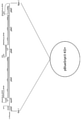
- FIG. 3 shows the scheme of the expression vector into which the pfa operon of the Shewanella GI35 strain was introduced.
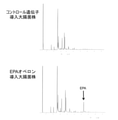
- the lower chart of FIG. 4 shows the results of gas chromatography examination of EPA production by Escherichia coli transformed by introducing an expression vector into which a pfa operon of Shewanella GI35 strain was introduced (lower chart).
- FIG. 4 shows the results of gas chromatography examination of EPA production by Escherichia coli into which a pBlueScriptII KS (+) plasmid having no foreign gene incorporated as a control.
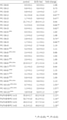
- FIG. 5 shows the results of examining the polyunsaturated fatty acid content in the lipid of rainbow trout to which a fish feed containing Shewanella GI35 strain was administered.
- PC indicates phosphatidylcholine.
- the EPA on the right shoulder of the molecular species name means that the molecular species contains an EPA.
- the DHA described on the right shoulder of the molecular species name means that the molecular species contains DHA.
- the field-change indicates how many times the GI35-fed is compared to the control.
- the PUFA-containing PC ( ⁇ n) is the ratio (%) of the PC molecules having n or more double bonds of the fatty acid chain to the total PC molecules.
- the p-value is a t-test value.
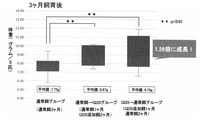
- FIG. 6 is a graph showing the growth promoting effect (3 months breeding) of juvenile rainbow trout by a feed containing Shewanella GI35 strain.
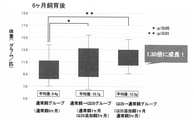
- FIG. 7 is a graph showing the growth promoting effect (6 months breeding) of juvenile rainbow trout by a feed containing Shewanella GI35 strain.
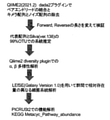
- FIG. 8 is a chart showing the procedure of metagenomic analysis.
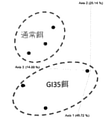
- FIG. 9 is a graph showing the result of analyzing the diversity of the flora by the main coordinate analysis (result of ⁇ diversity analysis: Weightened UniFracs distance).
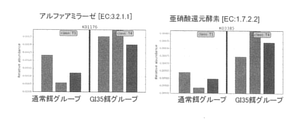
- FIG. 10 is a graph comparing the functional profiles of bacterial flora by predictive metagenomic analysis by PICRUSt.
- the three bars in each group show the abundance of bacteria with amylase (left panel) or nitrite reductase (right panel) in the intestinal flora of three randomly selected individuals from each group.
- the present inventors have succeeded in isolating a new bacterium of the genus Shewanella that produces a large amount of EPA from the intestinal tract of the goby family Isaza, which is endemic to Lake Biwa.
- the present inventors named this bacterium Shewanella sp. GI35 strain.
- This strain is an independent administrative agency product evaluation with an address in Room 2-5-8 Kazusakamatari, Kisarazu City, Chiba Prefecture, postal code 292-0818, based on the Budapest Treaty on International Approval of Deposit of Microorganisms in Patent Procedures.
- GI35 strain Shewanella sp. GI35 strain may be referred to as “GI35 strain”.
- the GI35 strain produces a large amount of EPA (several times the amount of Shewanella livingstonesis Ac10 strain, which is a highly EPA-producing bacterium-compared to the literature value), survives well in the intestinal tract, and becomes continuously present. Moreover, the GI35 strain proliferates well even at a relatively high temperature (room temperature, for example, about 18 ° C.) as a bacterium of the genus Shewanella, and produces a large amount of EPA.
- the GI35 strain is a novel bacterial strain characterized by these special properties.
- the present invention provides, in one embodiment, a GI35 strain or a variant thereof.
- the mutant strain of the GI35 strain is a mutant strain derived from the GI35 strain.
- the mutant strain of the GI35 strain may be a natural mutant strain or an artificial mutant strain.
- Methods for producing artificial mutant strains are known, including gene recombination, genome editing, treatment with agents such as N-methyl-N'-nitro-N-nitrosoguanidine (NTG) and ethyl methanesulfonic acid (EMS), and ultraviolet rays. Methods such as irradiation can be mentioned, but the method is not limited thereto.
- mutant strain of the GI35 strain examples include, but are not limited to, a strain having a higher EPA-producing ability than the GI35 strain, a strain that proliferates well at a higher temperature, and a strain having excellent intestinal colonization.
- the whole genome sequence of the mutant strain of the GI35 strain is 70% or more, preferably 80% or more, more preferably 90% or more, still more preferably 95% or more, and most preferably 98% or more with respect to the whole genome sequence of the GI35 strain. It may have a homology of% or more. Sequence homology between genomes can be examined using known programs such as FASTA and BLAST.
- the mutant of the GI35 strain has the same EPA-producing ability as the GI35 strain.
- the equivalent EPA-producing ability means 70% or more, preferably 80% or more, more preferably 90% or more, still more preferably 100% or more, and most preferably 120% or more.
- the present invention provides, in a further embodiment, a feed containing the GI35 strain or a mutant strain thereof.
- the animal to which the feed of the present invention is administered may be any kind of animal and is not particularly limited. Examples of animals to which the feed of the present invention is administered include poultry such as fish, chickens, quails, schimen butterflies and ducks, domestic animals such as cows, pigs, goats, sheep, horses and donkeys, dogs, cats, rabbits and hamsters. It may be a pet of the quail.
- poultry such as fish, chickens, quails, schimen butterflies and ducks
- domestic animals such as cows, pigs, goats, sheep, horses and donkeys, dogs, cats, rabbits and hamsters. It may be a pet of the quail.
- the feed of the present invention is administered to fish.
- Fish is a collective name for Hagfish, Cephalaspidomorphis, Cartilaginous fish and Teleost.
- fish and fish are synonymous.
- the feed of the present invention can be administered to all kinds of fish.
- the feed of the present invention can be administered regardless of whether it is a freshwater fish, a saltwater fish, or a migratory fish. Since saltwater fish and migratory fish (salmon, trout, etc.) lack any of the enzymes required for EPA biosynthesis, or the activity of those enzymes is weak, they cannot produce EPA by themselves. It is effective to administer the feed to saltwater fish and migratory fish.
- the feed of the present invention can be administered regardless of whether it is a fry, an immature fish or an adult fish.
- the feed of the present invention is administered to fry and immature fish.
- the feed of the present invention is administered to farmed fish.
- farmed fish include salmon, trout, yellowtail, madai, amberjack, bluefin tuna, trout, flounder, striped jack, horse mackerel, amberjack, amberjack, kawahagi, sea bass, blackiso, koi, rainbow trout, yamame trout, eel, and ayu. Not limited to these.
- the shape of the feed containing the GI35 strain of the present invention or a mutant strain thereof is not particularly limited, but may be the same shape as the known animal feed.
- Examples of the shape of the feed of the present invention include, but are not limited to, moist pellets, dry pellets, powders, crumbles, and pastes.
- the feed of the present invention can be produced as a raw material for animal feed, in the process of producing animal feed, or by adding or mixing GI35 strain or a variant thereof to animal feed products. Techniques such as addition and mixing of GI35 strain or a mutant strain thereof are known. By culturing the GI35 strain or a mutant strain thereof, a required amount of cells can be obtained. The culture of the GI35 strain or its mutant strain will be described later.
- the GI35 strain obtained by culturing or a mutant strain thereof can be separated from the medium by a method such as centrifugation.
- the obtained GI35 strain or a mutant strain thereof can also be dried by a method such as freeze-drying.
- a freeze-dried product of the GI35 strain or a variant thereof or a culture solution of the GI35 strain or a variant thereof may be mixed in the process of producing an animal feed.
- the resulting animal feed may be impregnated with a culture solution of the GI35 strain or its mutant strain, or may be sprinkled with a freeze-dried product of the GI35 strain or its mutant strain.
- the feed of the present invention is produced so that all or part of the GI35 strain or its mutant strain in the feed can reach the intestines of animals as live bacteria.
- the blending amount of the GI35 strain or its mutant strain in the feed can be appropriately changed according to the type and size of the animal, the components in the feed, and the like.
- the dose of the feed containing the GI35 strain or its mutant strain can also be appropriately changed according to the type and size of the animal.
- the dose of the feed containing the GI35 strain or a variant thereof may be similar to that of a normal feed.
- the feed of the present invention may be used in combination with other feeds.
- the GI35 strain survives well in the intestinal tract of fish and becomes continuously present in the intestinal tract. Therefore, by administering the GI35 strain or its mutant strain to fish, it is possible to obtain a fish in which the GI35 strain or its mutant strain is present in the intestinal tract.
- the method for administering the GI35 strain or its mutant strain to fish may be any method and is not particularly limited, but generally, the GI35 strain or its mutant strain is mixed with the feed and administered. Fish in which the GI35 strain or its mutant strain is present in the intestinal tract can continuously and stably produce EPA in the body.
- the present invention provides a method for producing a fish in which the GI35 strain or a variant thereof is present in the intestinal tract, which comprises administering the GI35 strain or a variant thereof to fish.
- the present invention provides, in a further aspect, a method for producing a fish that produces an EPA in the body, which comprises administering the GI35 strain or a mutant strain thereof to the fish.
- the administration in the invention of these aspects may be carried out by administering the above feed.
- the present invention comprises fish in which the GI35 strain or a variant thereof is present in the intestinal tract (excluding Isaza in which the GI35 strain is present in the intestinal tract), and the GI35 strain or a variant thereof is present in the intestinal tract and EPA. (Excluding Isaza, in which the GI35 strain is present in the intestinal tract) is provided.
- These fish can produce EPA continuously and stably in the body, and their meat has a high EPA content.
- Freshwater fish can produce only a small amount of EPA by themselves.
- the fish to which the feed of the present invention is administered can continuously and stably produce EPA in the body of saltwater fish, migratory fish and freshwater fish. That is, by administering the feed of the present invention, EPA-rich fish can be obtained continuously and stably. Eating EPA-rich fish is expected to maintain and improve health and prevent cardiovascular and lifestyle-related diseases.
- the present invention provides, in a further aspect, a method for producing a growth-promoted fish, which comprises administering a GI35 strain or a mutant strain thereof to a fish.
- a method for producing a growth-promoted fish which comprises administering a GI35 strain or a mutant strain thereof to a fish.
- the growth of fish can be promoted.
- the GI35 strain or a mutant strain thereof may be administered throughout the period of fry, or may be administered transiently during the period of fry.
- the fish obtained by the method of this embodiment may be EPA-rich fish.
- the present invention provides, in a further aspect, a method for producing a fish having a modified intestinal bacterial flora, which comprises administering a GI35 strain or a variant thereof to a fish.
- a method for producing a fish having a modified intestinal bacterial flora which comprises administering a GI35 strain or a variant thereof to a fish.
- the intestinal flora after growth can be modified.
- the administration of the GI35 strain or its mutant strain is as described above.
- the activity of various enzymes possessed by the intestinal flora can be enhanced or suppressed.
- the activity of the enzyme related to the promotion of digestion and absorption of food may be enhanced, or the activity of the enzyme contributing to the improvement of meat quality may be enhanced.
- the fish obtained by the method of this embodiment may be EPA-rich fish.
- the present invention provides, in a further aspect, a method for producing EPA, which comprises culturing a GI35 strain or a mutant strain thereof.
- the method for culturing the GI35 strain or its mutant strain may be any culture method as long as the GI35 strain or its mutant strain can proliferate and produce EPA.
- the GI35 strain or a mutant strain thereof may be cultured in the same manner as the known method for culturing Shewanella bacteria.
- the GI35 strain or a variant thereof may be cultured in a medium containing glucose, peptone, yeast extract, salt and other inorganic salts.
- the medium may be either a liquid medium or a solid medium.
- shaking culture, stirring culture, static culture and the like may be used. Flasks, jars, tanks and the like may be used as the culture container.
- the GI35 strain can grow at about 4 ° C to about 37 ° C, and about 18 ° C to about 30 ° C is suitable for growth.
- a preferable culture temperature compatible with a sufficiently high EPA production amount is about 4 ° C to about 20 ° C.
- One of ordinary skill in the art can select and determine the culture conditions suitable for the GI35 strain or a mutant strain thereof.
- the amount of EPA in the medium can be measured, for example, using gas chromatography.
- the produced EPA can be recovered from the culture medium or cells by a known method.
- the method for preserving the GI35 strain or its mutant strain may be the same as the method for preserving known bacteria of the genus Shewanella.
- Examples of the storage method include, but are not limited to, storage in slants and freeze-drying.
- the present invention provides, in still another embodiment, a method for producing EPA, which comprises culturing a host cell into which a gene cluster involved in EPA production of a GI35 strain or a mutant of the gene cluster is introduced.
- the present inventors have succeeded in whole-genome cloning of the gene cluster pfa operon involved in EPA production of the GI35 strain.
- EPA can be produced by incorporating this operon into an expression vector, introducing the vector into a host cell (for example, Escherichia coli, etc.), and culturing the host cell.
- a host cell for example, Escherichia coli, etc.
- Each component of the pfa operon may be incorporated into a separate expression vector for use.
- Various expression vectors and host cells that can be used in this method are known, and can be appropriately selected and used.
- Examples of the gene cluster involved in EPA production of the GI35 strain that can be used in the method for producing EPA of the present invention include those having the base sequence shown by SEQ ID NO: 1 (pfa operon).
- the gene cluster involved in EPA production of the GI35 strain contains five genes, pfaA, pfaB, pfaC, pfaD and pfaE.
- the nucleotide sequence of pfaA is represented by the nucleotide sequence of positions 2413 to 10503 of SEQ ID NO: 1.
- the nucleotide sequence of pfaB is represented by the nucleotide sequence of positions 10500 to 12794 of SEQ ID NO: 1.
- the nucleotide sequence of pfaC is shown by the nucleotide sequence of positions 12791 to 18724 of SEQ ID NO: 1.
- the nucleotide sequence of pfaD is shown by the nucleotide sequence of positions 18835 to 20481 of SEQ ID NO: 1.
- the complementary strand sequence of the nucleotide sequence of pfaE is represented by the nucleotide sequence of positions 30 to 899 of SEQ ID NO: 1.
- the mutant of the gene cluster involved in the EPA production of the GI35 strain may contain genes corresponding to pfaA, pfaB, pfaC, pfaD and pfaE of the GI35 strain.
- the base sequences of the genes corresponding to pfaA, pfaB, pfaC, pfaD and pfaE are 70% or more, preferably 80% or more, more preferably 80% or more, respectively, with respect to the base sequences of pfaA, pfaB, pfaC, pfaD and pfaE of the PI35 strain. May have 90% or more, more preferably 95% or more, and most preferably 98% or more homology (except when all the above five genes have 100% homology).
- the mutant of the gene cluster involved in EPA production of the GI35 strain is 70% or more, preferably 80% or more, more preferably 90% or more, still more preferably 95% with respect to the base sequence represented by SEQ ID NO: 1. As mentioned above, the one having 98% or more homology may be most preferable. Sequence homology between genes can be examined using known programs such as FASTA and BLAST. Further, the mutant of the gene cluster involved in the EPA production of the GI35 strain may have a base sequence corresponding to the base sequence represented by SEQ ID NO: 1 of the mutant strain of the GI35 strain.
- the mutant of the gene cluster involved in EPA production of the GI35 strain is 70% or more, preferably 80% or more, more preferably 90% or more, as compared with the case of using the gene cluster involved in EPA production of the GI35 strain. , More preferably 100% or more, most preferably 120% or more EPA production.
- Variants of the gene cluster involved in EPA production of the GI35 strain can be produced by known methods such as gene recombination such as site-specific mutagenesis, genome editing, and chemical methods.
- the introduction of a gene cluster involved in EPA production into a host cell is usually performed by introducing an expression vector incorporating the gene cluster into the cell.
- the type of expression vector, the method of incorporating the gene group into the expression vector, and the method of introducing the gene are known, and can be appropriately selected depending on the type of host cell, the size and base sequence of the transgene, and the like. All of pfaA, pfaB, pfaC, pfaD and pfaE may be incorporated into one expression vector and introduced into a host cell, or may be divided into a plurality of expression vectors and incorporated into the cells.
- the present invention provides, in yet another embodiment, a cell into which a gene cluster involved in EPA production of the GI35 strain or a mutant of the gene cluster has been introduced.
- Such cells can be cultured to produce an EPA.
- the cell may be any of a microbial cell, an animal cell, and a plant cell, and is not particularly limited, and typical examples thereof include bacterial cells such as Escherichia coli cells and bacillus cells.
- the present invention provides, in still another embodiment, a food or drink containing the GI35 strain or a mutant strain thereof.
- Foods and drinks include foods, beverages, and health foods such as supplements and so-called tokuho.
- the GI35 strain or a mutant strain thereof survives in the intestinal tract and is continuously present in the intestinal tract, so that EPA is continuously produced in the body. This is expected to maintain and improve health and prevent cardiovascular diseases and lifestyle-related diseases. Specifically, it can be expected to have effects such as reduction of triglyceride and suppression of platelet aggregation. Since the GI35 strain is a bacterium that inhabits the intestinal tract of Isaza, which is considered to be edible, feeds and foods and drinks containing it are highly safe.
- the food and drink of the present invention can be produced by adding and mixing the GI35 strain or a variant thereof to the food and drink raw material, in the process of manufacturing the food and drink, or to the food and drink product.
- a freeze-dried product of the GI35 strain or its mutant strain or a culture solution of the GI35 strain or its mutant strain may be mixed in the process of producing a food or drink.
- the finished food or drink may be impregnated with a culture solution of the GI35 strain or its mutant strain, or may be sprinkled with a freeze-dried product of the GI35 strain or its mutant strain.
- the food and drink of the present invention is produced so that all or part of the GI35 strain or its mutant strain in the food and drink can reach the intestines of animals as live bacteria.
- Supplements and health foods may be produced in the same manner as or similar to the production of known pharmaceutical products.
- the shape of the food and drink of the present invention may be any shape, for example, the same shape as the existing food and drink, or the shape of a drink, paste, cream, tablet, powder, granule, capsule or the like. May be. Moreover, you may use the food and drink of this invention as a food additive.
- the intake amount of the food and drink of the present invention is not particularly limited.
- a fish in which the GI35 strain or a variant thereof is present in the intestinal tract (excluding Isaza in which the GI35 strain is present in the intestinal tract), or a GI35 strain or a variant thereof is present in the intestinal tract.
- the present invention provides food and drink processed from fish that produce EPA in the body (excluding isaza in which the GI35 strain is present in the intestinal tract). These fish are rich in EPA. Therefore, foods and drinks made by processing these fish are also rich in EPA, and by ingesting them, the intake of EPA is increased, health is maintained and promoted, cardiovascular diseases, lifestyle-related diseases, etc. It is expected to lead to the prevention of. Specifically, it can be expected to have effects such as reduction of triglyceride and suppression of platelet aggregation.
- the food and drink processed from the above fish also includes foods, beverages, and health foods such as supplements and so-called tokuho.
- the shape of the food or drink processed from the fish may be any shape.
- the food or drink processed from the above fish may be a whole or a part of the fish cooked according to a normal cooking method (for example, boiled, baked, steamed, sashimi, etc.), and the whole or a part of the fish. May be mixed with other ingredients.
- the food or drink processed from the fish may be an extract of the whole or a part of the fish (for example, in the form of a capsule containing the extract), or the whole or a part of the fish may be dried into powder or granules. , Tablets, flakes and the like.
- the entire genome sequence of the GI35 strain was determined and the species was identified. PCR was performed with prokaryotic rDNA universal primers (8EF and 1492R) to obtain about 1.5 kb, which is almost the entire length of 16S rDNA. When the molecular phylogenetic analysis of this base sequence was performed, it showed 91.1% homology with the base sequence of Shewanella putrefaciens. From this result, it was shown that the GI35 strain is closely related to Shewanella putrefaciens. Next, the whole genome sequence of the GI35 strain of about 5.56 Mb was determined by the whole genome shotgun sequencing method using the NextSeq system (Illumina).
- GI35 strain is a new species. As explained above, the GI35 strain was deposited at the National Institute of Technology and Evaluation Patent Microorganisms Depositary, and was given the receipt number NITE ABP-03244 on July 8, 2020, and was deposited on August 25, 2020. It was given the number NITE BP-03244.
- the EPA production mode of the GI35 strain was examined.
- the fungus was cultured in LB medium (10 g tryptone / 5 g yeast extract / 10 g NaCl / 1 L) at 4 ° C. for about 24 hours and at 18 ° C. for about 12 hours.
- LB medium 10 g tryptone / 5 g yeast extract / 10 g NaCl / 1 L
- FIG. 2 The content of EPA in the produced phospholipid constituent fatty acids was as follows.
- the literature values of Shewanella livingstonesis Ac10 strain which is a highly EPA-producing bacterium isolated from Antarctic seawater (Kawamoto et al.
- GI35 strain 4.2% (18 ° C); 12.3% (4 ° C) Ac10 strain: 0.7% (18 ° C); 5.1% (4 ° C) From the above results, it was shown that the GI35 strain has an extremely high EPA-producing ability. Further, it was considered that the preferable culture temperature compatible with a sufficiently high EPA production amount was about 4 ° C to about 20 ° C.
- the GI35 strain is fed to fish, survives and proliferates in the intestinal tract, and is continuously present in the intestinal tract to continuously supply EPA from the body.
- the rainbow trout fry were divided into a group (GI35-fed) and a non-ingestion group (control) in which the GI35 strain was ingested for one week together with a normal feed containing fish meal (Marubeni Nisshin trout feeding Super A), and the GI35 strain. After administration, the animals were bred for 2 weeks on a normal feed containing no bacteria.
- Metagenomic analysis of the intestinal bacterial flora of GI35 strain-administered fry By metagenomic analysis of the gut microbiota, changes in the gut microbiota due to GI35 ingestion and the expected changes in metabolic activity were identified.
- nitric oxide (NO) produced by the action of nitrite reductase is a strong signal transduction substance and has a function of activating various physiological functions, and its action is to thicken the gastrointestinal mucosa and promote blood circulation. The action is known. Therefore, it is assumed that the digestion and absorption of food is promoted by increasing the activity of nitrite reductase in the intestinal tract.
- administration of the GI35 strain to fish can increase the intestinal bacterial flora that promotes digestion and absorption of feed. It was found that this effect was obtained by transient administration of the GI35 strain.
- the present invention is very useful in the livestock industry, fisheries, especially aquaculture, and food industries.
- the GI35 strain was deposited at the National Institute of Technology and Evaluation Patent Microorganisms Depositary Center, which has an address in Room 2-5-8, Kazusakamatari, Kisarazu City, Chiba Prefecture, and received the receipt number NITE ABP- on July 8, 2020. It was given 03244 and was given the accession number NITE BP-03244 on August 25, 2020.
- SEQ ID NO: 1 indicates the base sequence of the full-length Pfa operon predicted from the entire genome sequence of the GI35 strain.
Landscapes
- Life Sciences & Earth Sciences (AREA)
- Health & Medical Sciences (AREA)
- Engineering & Computer Science (AREA)
- Chemical & Material Sciences (AREA)
- Genetics & Genomics (AREA)
- Zoology (AREA)
- Organic Chemistry (AREA)
- Biotechnology (AREA)
- Wood Science & Technology (AREA)
- Bioinformatics & Cheminformatics (AREA)
- Biomedical Technology (AREA)
- General Engineering & Computer Science (AREA)
- Microbiology (AREA)
- Biochemistry (AREA)
- General Health & Medical Sciences (AREA)
- Mycology (AREA)
- Polymers & Plastics (AREA)
- Food Science & Technology (AREA)
- Molecular Biology (AREA)
- Nutrition Science (AREA)
- Plant Pathology (AREA)
- Biophysics (AREA)
- Physics & Mathematics (AREA)
- Oil, Petroleum & Natural Gas (AREA)
- Medicinal Chemistry (AREA)
- Tropical Medicine & Parasitology (AREA)
- Virology (AREA)
- Animal Husbandry (AREA)
- Chemical Kinetics & Catalysis (AREA)
- General Chemical & Material Sciences (AREA)
- Cell Biology (AREA)
- Physiology (AREA)
- Marine Sciences & Fisheries (AREA)
- Fodder In General (AREA)
- Micro-Organisms Or Cultivation Processes Thereof (AREA)
- Acyclic And Carbocyclic Compounds In Medicinal Compositions (AREA)
Abstract
本発明は、シェワネラ属GI35株(Shewanella sp. GI35株)(独立行政法人製品評価技術基盤機構 特許微生物寄託センター 受託番号 NITE BP-03244)またはその変異株、該菌株を含む飼料、および該飼料を魚類に投与することを特徴とする、エイコサペンタエン酸(EPA)を体内で産生する魚類の製造方法等を提供する。
Description
本発明は、新規に単離されたエイコサペンタエン酸(eicosapentaenoic acid; EPA)著量産生細菌Shewanella sp. GI35株またはその変異株、それを含む飼料、および該飼料を投与することを特徴とする、EPAを体内で産生する魚類の製造方法等に関する。
EPAは、オメガ3多価不飽和脂肪酸(ω3-polyunsaturated fatty acid; ω3-PUFA)に属し、動物の発達分化・成長に必須の脂肪酸であり、炎症応答の抑制、免疫機能の制御、脳血管障害・心筋梗塞などの心血管系疾患に対して発症抑制作用を示す機能性脂質である(非特許文献1、2)。一方、ヒトを含む多くの脊椎動物は、ω3-PUFAの生合成に関わる脂肪酸不飽和酵素群を持たず、自らEPAを作ることができない(非特許文献3)。このため、食事等として外界から摂取する必要があり、PUFAを含むイワシやサバなどの積極的な摂取が推奨され、さらに数多くのEPAを含むサプリメントや食品が市販されている。
EPAの調製法については、魚油からの精製、海洋性微細藻類であるラビリンチュラ類や極地や深海の様な低温環境から単離されたEPA高産生菌を用いた方法の開発が試みられている(特許文献1、非特許文献4、5)。一方、EPAは、シス型の二重結合を5個有する炭素数20の高度不飽和脂肪酸であり、酸素・光・温度等により容易に酸化されやすい性質を有している。EPAの分解により生ずる過酸化脂質は生体に有害な作用を及ぼすことから、EPAの分離精製、量的生産には多大なコストと時間がかかり、健康食品や医薬品として利用する上での問題点が残されている(非特許文献6)。
海水魚および通し回遊魚はEPAを体外から摂取する必要がある。淡水魚にとってもEPAの体外からの摂取は好ましい。そのため養殖漁業においては、サケ、マス、ブリ等の養殖飼料には通常40~50%程度の割合で魚粉が配合されている。魚粉にはEPAおよびDHAが含まれている。魚粉の主原料はマイワシであるが、その漁獲量は著しく減少しており、大豆やコーンを主原料とする飼料の開発が行われている。しかし、植物性飼料にはEPAおよびDHA等の必須脂肪酸が含まれず、飼料への添加に必要なEPAおよびDHAの量的確保と価格高騰の解消が喫緊の課題として残されている。稚魚の養殖飼料としても魚粉を添加することにより健苗性を維持している。EPAおよびDHA強化食で成長したサケ科魚類の種苗が河川に放流された場合には、河川ではこれら高度不飽和脂肪酸の供給源が乏しい為、EPAの欠乏による未成魚の死亡率の増加が漁獲量減少を招くことが指摘されており、持続的にEPAを供給する新技術により稚魚の健苗性を向上し、安定した量産技術の確立も待たれている(非特許文献7)。
これまでにEPAを含む魚類用飼料についても検討されている。EPA産生菌をワムシ等に取り込ませ、稚魚の飼料として使用することによりEPAを強化することが報告されている(特許文献2)。しかし、EPA産生菌をワムシ等に取り込ませる工程を含むため、飼料の調製が面倒である。しかもこの飼料を投与された稚魚の体内でEPAが持続的かつ安定的に産生されることは記載も示唆もされていない。また、プロバイオティクスについての研究では、摂食した生菌が腸管内で生残し、継続的に腸管内に存在することはほとんどの場合不可能であると考えられている(非特許文献8)。
Lancet 1, 1143-1145, 1971; J. Cardiol., 67, 22-27 2016.
Biochem. Societ. Transac. 45, 1105-1115, 2017.
Oikos, 125, 749-760,2016.
Appl. Environ. Microbiol. 82, 218-231, 2016.
Methods Enzymol. 605, 3-32, 2018.
Biotech. Advances 20, 491-515, 2003.
渡辺智治、DHA高含有魚油添加飼料によるサケ・マスの遊泳力強化, Japanese, 北海道立総合研究機構 試験研究は今, No.877, 2019).
光岡知足、プロバイオティクスの歴史と進化, Japanese Journal of Lactic Acid Bacteria 22, 26-37, 2011.
上記の事情に鑑みると、動物体内で持続的かつ安定的なEPA生産を可能にする飼料、ならびに体内で持続的かつ安定的にEPAを産生する魚などの動物を提供する必要がある。
本発明者らは、上記課題を解決せんと鋭意研究を重ね、琵琶湖固有種のハゼ科魚類イサザ(Gymmnogobius isaza)の腸管内からShewanella属のEPA高産生菌を単離することに成功し、本発明を完成させるに至った。
すなわち本発明は以下のものを提供する。
(1)シェワネラ属GI35株(Shewanella sp. GI35株)(独立行政法人製品評価技術基盤機構 特許微生物寄託センター 受託番号 NITE BP-03244)またはその変異株。
(2)Shewanella sp. GI35株またはその変異株を含む飼料。
(3)Shewanella sp. GI35株またはその変異株を魚類に投与することを特徴とする、Shewanella sp. GI35株またはその変異株が腸管内に存在する魚類の製造方法。
(4)Shewanella sp. GI35株またはその変異株を魚類に投与することを特徴とする、エイコサペンタエン酸(EPA)を体内で産生する魚類の製造方法。
(5)Shewanella sp. GI35株またはその変異株が腸管内に存在する魚類(GShewanella sp. GI35株が腸管内に存在するイサザを除く)。
(6)Shewanella sp. GI35株またはその変異株が腸管内に存在し、EPAを体内で産生する魚類(Shewanella sp. GI35株が腸管内に存在するイサザを除く)。
(7)Shewanella sp. GI35株またはその変異株を魚類に投与することを特徴とする、成長が促進された魚類の製造方法。
(8)Shewanella sp. GI35株またはその変異株を魚類に投与することを特徴とする、腸内細菌叢が改変された魚類の製造方法。
(9)Shewanella sp. GI35株またはその変異株を培養することを特徴とする、EPAの製造方法。
(10)Shewanella sp. GI35株のEPA産生に関わる遺伝子群または該遺伝子群の変異体を導入した宿主細胞を培養することを特徴とする、EPAの製造方法。
(11)Shewanella sp. GI35株のEPA産生に関わる遺伝子群または該遺伝子群の変異体を導入した細胞。
(12)Shewanella sp. GI35株またはその変異株を含む飲食物。
(13)(5)~(8)のいずれか記載の魚類を加工した飲食物。
(1)シェワネラ属GI35株(Shewanella sp. GI35株)(独立行政法人製品評価技術基盤機構 特許微生物寄託センター 受託番号 NITE BP-03244)またはその変異株。
(2)Shewanella sp. GI35株またはその変異株を含む飼料。
(3)Shewanella sp. GI35株またはその変異株を魚類に投与することを特徴とする、Shewanella sp. GI35株またはその変異株が腸管内に存在する魚類の製造方法。
(4)Shewanella sp. GI35株またはその変異株を魚類に投与することを特徴とする、エイコサペンタエン酸(EPA)を体内で産生する魚類の製造方法。
(5)Shewanella sp. GI35株またはその変異株が腸管内に存在する魚類(GShewanella sp. GI35株が腸管内に存在するイサザを除く)。
(6)Shewanella sp. GI35株またはその変異株が腸管内に存在し、EPAを体内で産生する魚類(Shewanella sp. GI35株が腸管内に存在するイサザを除く)。
(7)Shewanella sp. GI35株またはその変異株を魚類に投与することを特徴とする、成長が促進された魚類の製造方法。
(8)Shewanella sp. GI35株またはその変異株を魚類に投与することを特徴とする、腸内細菌叢が改変された魚類の製造方法。
(9)Shewanella sp. GI35株またはその変異株を培養することを特徴とする、EPAの製造方法。
(10)Shewanella sp. GI35株のEPA産生に関わる遺伝子群または該遺伝子群の変異体を導入した宿主細胞を培養することを特徴とする、EPAの製造方法。
(11)Shewanella sp. GI35株のEPA産生に関わる遺伝子群または該遺伝子群の変異体を導入した細胞。
(12)Shewanella sp. GI35株またはその変異株を含む飲食物。
(13)(5)~(8)のいずれか記載の魚類を加工した飲食物。
本発明のShewanella GI35株はEPAを著量産生し、腸管内によく生残する。本菌を含む飼料を動物に投与すると、腸管内に生残し、継続的に存在するようになった本菌株から持続的、安定的にEPAが宿主に供給される。すなわち、宿主は体内でEPAを産生できるようになる。かくして、EPAを豊富に含む動物が提供される。このような動物を食することによりオメガ3多価不飽和脂肪酸であるEPAを摂取することができ、健康が維持・増進され、心血管系疾患や生活習慣病等の予防が期待される。また、本菌を含む飼料を投与することにより、動物の生育を促進、および/または腸内細菌叢を改変することができる。
上述のごとく、本発明者らは、琵琶湖固有種のハゼ科魚類イサザの腸管内から、EPAを著量産生するShewanella属の新種の細菌を単離することに成功した。本発明者らは、この細菌をShewanella sp. GI35株と命名した。本菌株は、特許手続上の微生物の寄託の国際的承認に関するブダペスト条約に基づいて、郵便番号292-0818 千葉県木更津市かずさ鎌足2-5-8 122号室に住所を有する独立行政法人製品評価技術基盤機構 特許微生物寄託センターに寄託され、2020年7月8日付で受領番号 NITE ABP-03244を付与され、2020年8月25日付で受託番号 NITE BP-03244を付与された。本明細書においてShewanella sp. GI35株を「GI35株」という場合がある。
GI35株はEPAを著量産生し(EPA高産生菌であるShewanella livingstonesis Ac10株の数倍量-文献値との比較)、腸管内によく生残し、継続的に存在するようになる。しかも、GI35株はShewanella属の菌としては比較的高温(室温、例えば約18℃)でもよく増殖し、EPAを多く産生する。GI35株はこれらの特別な性質により特徴づけられる新規な細菌株である。
したがって、本発明は、1つの態様において、GI35株またはその変異株を提供する。GI35株の変異株は、GI35株に由来する変異株である。GI35株の変異株は自然変異株であってもよく、人工変異株であってもよい。人工変異株の作製方法は公知であり、遺伝子組換え、ゲノム編集、N-メチル-N’-ニトロ-N-ニトロソグアニジン(NTG)、エチルメタンスルホン酸(EMS)などの薬剤での処理、紫外線照射などの方法が挙げられるが、これらに限定されない。GI35株の変異株の例としては、GI35株よりもEPA産生能が高い株、より高い温度でよく増殖する株、腸管内定着性が優れた株などが挙げられるが、これらに限定されない。GI35株の変異株は、その全ゲノム配列が、GI35株の全ゲノム配列に対して70%以上、好ましくは80%以上、より好ましくは90%以上、さらに好ましくは95%以上、最も好ましくは98%以上の相同性を有するものであってもよい。ゲノム間の配列相同性は、FASTAやBLASTなどの公知のプログラムを用いて調べることができる。ただし、GI35株の変異体は、GI35株と同等のEPA産生能を有するものである。ここで、EPA産生能が同等とは、70%以上、好ましくは80%以上、より好ましくは90%以上、さらに好ましくは100%以上、最も好ましくは120%以上を意味する。
本発明は、さらなる態様において、GI35株またはその変異株を含む飼料を提供する。本発明の飼料が投与される動物はあらゆる種類の動物であってよく、特に限定されない。本発明の飼料が投与される動物の例としては、魚類、ニワトリ、ウズラ、シチメンチョウ、アヒルなどの家禽、ウシ、ブタ、ヤギ、ヒツジ、ウマ、ロバなどの家畜、イヌ、ネコ、ウサギ、ハムスターなどのペットなどであってもよい。本発明の飼料を動物に投与することにより、動物の腸管内にGI35株またはその変異株が生残し、継続的に存在するようになり、EPAが動物体内において持続的に産生されるようになるので、動物の健康増進に役立つと考えられる。好ましくは、本発明の飼料は魚類に投与される。魚類は、メクラウナギ綱、頭甲綱、軟骨魚綱および硬骨魚綱をひとまとめにした称呼である。本明細書では、魚類と魚は同義とする。本発明の飼料をあらゆる種類の魚に投与することができる。本発明の飼料は淡水魚、海水魚、通し回遊魚を問わず投与することができる。海水魚や通し回遊魚(サケ・マス類など)はEPA生合成に必要な酵素のいずれかを欠損しているか、あるいはそれらの酵素の活性が弱く、自らEPAを作り出すことができないので、本発明の飼料を海水魚や通し回遊魚に投与すると効果的である。本発明の飼料は稚魚、未成魚、成魚を問わず投与することができる。好ましくは、本発明の飼料は稚魚、未成魚に投与される。典型的には、本発明の飼料は養殖魚に投与される。養殖魚の例としては、サケ、マス、ブリ、マダイ、カンパチ、クロマグロ、トラフグ、ヒラメ、シマアジ、マアジ、ヒラマサ、イシダイ、カワハギ、スズキ、クロイソ、コイ、ニジマス、ヤマメ、ウナギ、アユなどが挙げられるがこれらに限定されない。
本発明のGI35株またはその変異株を含む飼料の形状は特に限定されないが、公知の動物用飼料と同様の形状であってよい。本発明の飼料の形状の例としては、モイストペレット、ドライペレット、粉末、クランブル、練り餌などが挙げられるが、これらに限定されない。本発明の飼料は、動物用飼料の原料に、あるいは動物用飼料の製造過程において、あるいは動物用飼料製品に、GI35株またはその変異株を添加、混合等することによって製造されうる。GI35株またはその変異株の添加、混合等の手法は公知である。GI35株またはその変異株を培養することにより、必要量の菌体を得ることができる。GI35株またはその変異株の培養については後で説明する。培養によって得られたGI35株またはその変異株を遠心分離等の方法により培地から分離することができる。得られたGI35株またはその変異株を凍結乾燥等の方法により乾燥させることもできる。動物用飼料の製造工程においてGI35株またはその変異株の凍結乾燥品あるいはGI35株またはその変異株の培養液を混合してもよい。あるいはできあがった動物用飼料にGI35株またはその変異株の培養液を染み込ませる、あるいはGI35株またはその変異株の凍結乾燥品をまぶしてもよい。飼料中のGI35株またはその変異株の全部または一部が生菌として動物の腸に到達できるように、本発明の飼料を製造する。
動物の種類やサイズ、飼料中の成分などに応じて、飼料中のGI35株またはその変異株の配合量を適宜変更することができる。GI35株またはその変異株を含む飼料の投与量も動物の種類やサイズに応じて適宜変更することができる。一例において、GI35株またはその変異株を含む飼料の投与量は通常の飼料と同様であってもよい。
本発明の飼料を、他の飼料と組み合わせて使用してもよい。
魚粉にはEPAやDHAなどが含まれており、養殖飼料に魚粉が配合されている。しかし、魚粉の原料であるマイワシの漁獲量が著しく減少しているため、養殖飼料への魚粉の配合が困難となり、量を減らさざるを得ない。そのため、大豆やコーンを主原料とする魚粉代替飼料の開発が行われている。しかし、植物性原料にはEPAやDHA等の必須脂肪酸が含まれていない。そこで、植物性原料にGI35株またはその変異株を混合して本発明の飼料を製造し、使用することにより、上記課題を解決することができる。また、EPA・DHA強化食で成長したサケ科魚類の種苗が河川に放流された場合に、EPAの欠乏による未成魚の死亡率の増加が漁獲量減少を招いている。かかる状況下において、本発明の飼料をサケ科魚類の稚魚に投与しておけば、河川に放流された場合であっても持続的かつ安定的に種苗体内でEPAが産生され、死亡率を低下させることができ、漁獲量減少を食い止めることができる。
実施例に示すように、GI35株は魚類の腸管内においてよく生残し、腸管内に継続的に存在するようになる。したがって、GI35株またはその変異株を魚類に投与することによって、GI35株またはその変異株が腸管内に存在する魚類を得ることができる。魚類へのGI35株またはその変異株の投与方法はいずれの方法であってもよく、特に限定されないが、一般的には、GI35株またはその変異株を飼料に混ぜて投与する。GI35株またはその変異株が腸管内に存在する魚類は、体内でEPAを持続的、安定的に産生することができる。
したがって、本発明は、さらなる態様において、GI35株またはその変異株を魚類に投与することを特徴とする、GI35株またはその変異株が腸管内に存在する魚類の製造方法を提供する。
本発明は、さらなる態様において、GI35株またはその変異株を魚類に投与することを特徴とする、EPAを体内で産生する魚類の製造方法を提供する。
これらの態様の発明における投与は、上記飼料を投与することにより行ってもよい。
本発明は、さらなる態様において、GI35株またはその変異株が腸管内に存在する魚類(GI35株が腸管内に存在するイサザを除く)、およびGI35株またはその変異株が腸管内に存在し、EPAを体内で産生する魚類(GI35株が腸管内に存在するイサザを除く)を提供する。これらの魚類はEPAを体内で持続的、安定的に産生することができ、それらの肉のEPA含量も高い。
海水魚および通し回遊魚はEPAを自ら産生することができない。淡水魚は少量のEPAしか自ら産生することができない。これに対して、本発明の飼料を投与された魚類は、海水魚、通し回遊魚および淡水魚ともにEPAを体内で持続的、安定的に産生できるようになる。すなわち、本発明の飼料を投与することによって、EPAに富む魚を持続的、安定的に得ることができる。EPAに富む魚を食することによって、健康が維持、増進され、心血管系疾患や生活習慣病等の予防につながると期待される。
本発明は、さらなる態様において、GI35株またはその変異株を魚類に投与することを特徴とする、成長が促進された魚類の製造方法を提供する。GI35株またはその変異株を魚類に投与することにより、魚類の成長を促進することができる。例えば、GI35株またはその変異株を、稚魚である期間を通して投与してもよく、稚魚である期間において一過的に投与してもよい。この態様の方法で得られる魚類は、EPAに富む魚類であってもよい。
本発明は、さらなる態様において、GI35株またはその変異株を魚類に投与することを特徴とする、腸内細菌叢が改変された魚類の製造方法を提供する。GI35株またはその変異株を魚類に投与することにより、成長後の腸内細菌叢を改変することができる。GI35株またはその変異株の投与については上で説明したとおりである。この態様の方法を用いて腸内細菌叢を改変することにより、腸内細菌叢が有する様々な酵素の活性を亢進または抑制することができる。例えば、食物の消化吸収促進に関連する酵素の活性を亢進させてもよく、肉質の向上に資する酵素の活性を亢進させてもよい。この態様の方法で得られる魚類は、EPAに富む魚類であってもよい。
本発明は、さらなる態様において、GI35株またはその変異株を培養することを特徴とする、EPAの製造方法を提供する。
GI35株またはその変異株の培養方法は、GI35株またはその変異株が増殖してEPAを産生することができるものであれば、いずれの培養方法であってもよい。公知のShewanella属の細菌の培養方法と同様の方法でGI35株またはその変異株を培養してもよい。例えば、グルコース、ペプトン、酵母エキス、食塩および他の無機塩類を含む培地にてGI35株またはその変異株を培養してもよい。培地は液体培地、固体培地いずれであってもよい。液体培養の場合、振盪培養、撹拌培養、静置培養などであってもよい。培養容器としてフラスコ、ジャー、タンク等を用いてもよい。GI35株は約4℃~約37℃で増殖可能であり、約18℃~約30℃が増殖に好適である。一方、十分に高いEPA産生量と両立する好ましい培養温度は約4℃~約20℃である。当業者は、GI35株またはその変異株に適した培養条件を選択し、決定することができる。培地中のEPA量は、例えばガスクロマトグラフィーを用いて測定することができる。生産されたEPAを、公知の方法により培養液または菌体から回収することができる。
GI35株またはその変異株の保存方法は、公知のShewanella属の細菌の保存方法と同様であってよい。保存方法としては、スラントでの保存、凍結乾燥などが挙げられるが、これらに限定されない。
本発明は、さらにもう1つの態様において、GI35株のEPA産生に関わる遺伝子群または該遺伝子群の変異体を導入した宿主細胞を培養することを特徴とする、EPAの製造方法を提供する。
本発明者らは、GI35株のEPA産生に関わる遺伝子群pfaオペロンの全ゲノムクローニングに成功した。このオペロンを発現ベクターに組み込んで、該ベクターを宿主細胞(例えば大腸菌など)に導入し、宿主細胞を培養することにより、EPAを製造することができる。pfaオペロンの各成分を別々の発現ベクターに組み込んで用いてもよい。この方法に使用できる発現ベクターや宿主細胞は様々なものが公知であり、適宜選択して用いることができる。
本発明のEPAの製造方法に使用しうるGI35株のEPA産生に関わる遺伝子群の例として、配列番号:1で示される塩基配列を有するもの(pfaオペロン)が挙げられる。GI35株のEPA産生に関わる遺伝子群は、pfaA、pfaB、pfaC、pfaDおよびpfaEの5つの遺伝子を含む。pfaAのヌクレオチド配列は配列番号:1の2413~10503番目のヌクレオチド配列で示される。pfaBのヌクレオチド配列は配列番号:1の10500~12794番目のヌクレオチド配列で示される。pfaCのヌクレオチド配列は配列番号:1の12791~18724番目のヌクレオチド配列で示される。pfaDのヌクレオチド配列は配列番号:1の18835~20481番目のヌクレオチド配列で示される。pfaEのヌクレオチド配列の相補鎖配列は配列番号:1の30~899番目のヌクレオチド配列で示される。GI35株のEPA産生に関わる遺伝子群の変異体は、GI35株のpfaA、pfaB、pfaC、pfaDおよびpfaEに相当する遺伝子を含むものであってもよい。pfaA、pfaB、pfaC、pfaDおよびpfaEに相当する遺伝子の塩基配列は、それぞれ、PI35株のpfaA、pfaB、pfaC、pfaDおよびpfaEの塩基配列に対して70%以上、好ましくは80%以上、より好ましくは90%以上、さらに好ましくは95%以上、最も好ましくは98%以上の相同性を有するものであってもよい(ただし上記5つの遺伝子がすべて100%の相同性を有する場合を除く)。また、GI35株のEPA産生に関わる遺伝子群の変異体は、配列番号:1で示される塩基配列に対して70%以上、好ましくは80%以上、より好ましくは90%以上、さらに好ましくは95%以上、最も好ましくは98%以上の相同性を有するものであってもよい。遺伝子間の配列相同性は、FASTAやBLASTなどの公知のプログラムを用いて調べることができる。また、GI35株のEPA産生に関わる遺伝子群の変異体は、GI35株の変異株の配列番号:1で示される塩基配列に相当する塩基配列を有するものであってもよい。ただし、GI35株のEPA産生に関わる遺伝子群の変異体は、GI35株のEPA産生に関わる遺伝子群を使用した場合と比較して、70%以上、好ましくは80%以上、より好ましくは90%以上、さらに好ましくは100%以上、最も好ましくは120%以上のEPA産生をもたらすものである。GI35株のEPA産生に関わる遺伝子群の変異体は、部位特異的変異導入などの遺伝子組換え、ゲノム編集、化学的方法などの公知の方法にて作製されうる。
EPA産生に関わる遺伝子群の宿主細胞への導入は、通常は、当該遺伝子群を組み込んだ発現ベクターを細胞に導入することにより行われる。発現ベクターの種類、発現ベクターへの遺伝子群の組み込み方法およびその導入方法は公知であり、宿主細胞の種類および導入遺伝子のサイズや塩基配列などに応じて、適宜選択されうる。pfaA、pfaB、pfaC、pfaDおよびpfaEをすべて1つの発現ベクターに組み込んで宿主細胞に導入してもよく、複数の発現ベクターに分けて組み込んで、これらのベクターを細胞に導入してもよい。
本発明は、さらにもう1つの態様において、GI35株のEPA産生に関わる遺伝子群または該遺伝子群の変異体を導入した細胞を提供する。かかる細胞を培養してEPAを製造することができる。細胞は、微生物細胞、動物細胞、植物細胞いずれの細胞であってもよく、特に限定されないが、典型例として大腸菌細胞、枯草菌細胞などの細菌細胞が挙げられる。
本発明は、さらにもう1つの態様において、GI35株またはその変異株を含む飲食物を提供する。飲食物は、食品、飲料、およびサプリメントやいわゆるトクホなどの健康食品を包含する。本発明の飲食物を摂取することによって、GI35株またはその変異株が腸管内に生残し、継続的に腸管内に存在するようになり、EPAが持続的に体内で産生されるようになる。このことは、健康を維持・増進させて、心血管系疾患や生活習慣病等の予防につながると期待される。具体的には、中性脂肪の低下や、血小板凝集の抑制などの効果が期待できる。GI35株は、食用とされているイサザの腸管内に生息する菌であるから、それを含む飼料や飲食物は安全性が高い。
本発明の飲食物は、飲食物の原料に、あるいは飲食物の製造過程において、あるいは飲食物製品に、GI35株またはその変異株を添加、混合することによって製造されうる。飲食物の製造工程においてGI35株またはその変異株の凍結乾燥品またはGI35株またはその変異株の培養液を混合してもよい。あるいはできあがった飲食物にGI35株またはその変異株の培養液を染み込ませる、あるいはGI35株またはその変異株の凍結乾燥品をまぶしてもよい。飲食物中のGI35株またはその変異株の全部または一部が生菌として動物の腸に到達できるように、本発明の飲食物を製造する。公知の医薬品の製造と同様またはそれに準ずる方法にてサプリメントや健康食品を製造してもよい。
本発明の飲食物の形状はいずれの形状であってもよく、例えば、既存の飲食物と同様の形状であってもよく、あるいはドリンク、ペースト、クリーム、錠剤、粉末、顆粒、カプセルなどの形状であってもよい。また、本発明の飲食物を食品添加物として用いてもよい。
上述のごとく、本発明の飲食物は安全性が高いので、本発明の飲食物の摂取量は特に制限はない。
本発明は、さらにもう1つの態様において、GI35株またはその変異株が腸管内に存在する魚類(GI35株が腸管内に存在するイサザを除く)、またはGI35株またはその変異株が腸管内に存在し、EPAを体内で産生する魚類(GI35株が腸管内に存在するイサザを除く)を加工した飲食物を提供する。これらの魚類はEPAを豊富に含む。したがって、これらの魚類を加工した飲食物もまたEPAを豊富に含むものであり、それらを摂取することによりEPA摂取量が増加し、健康が維持・増進され、心血管系疾患や生活習慣病等の予防につながると期待される。具体的には、中性脂肪の低下や、血小板凝集の抑制などの効果が期待できる。
上記魚類を加工した飲食物もまた、食品、飲料、およびサプリメントやいわゆるトクホなどの健康食品を包含する。上記魚類を加工した飲食物の形状はいずれの形状であってもよい。上記魚類を加工した飲食物は、魚類の全体または一部を通常の調理法に従って調理(例えば、煮る、焼く、蒸す、刺身にする等)したものであってもよく、魚類の全体または一部を他の食材と混合したものであってもよい。あるいは、上記魚類を加工した飲食物は、魚類の全体または一部の抽出物であってもよく(例えばエキスを封入したカプセル剤の形状)、魚類の全体または一部を乾燥させて粉末、顆粒、錠剤、フレーク等の形状にしたものであってもよい。上記魚類を加工した飲食物の摂取量は特に制限はない。
本明細書中で使用する用語は、特に断らない限り、生物学、微生物学、生化学、水産学等の分野において通常に理解されている意味に解される。
以下に実施例を示して本発明をより詳細かつ具体的に説明するが、実施例は本発明の範囲を限定するものではない。
(1)イサザ腸管内からのEPA著量産生株GI35の単離および同定
本発明者らは、琵琶湖固有種のハゼ科魚類イサザが、淡水魚では例外的にEPAを多量に蓄積することを見いだした。その一方で、本発明者らは、イサザ体内のEPA産生酵素の代謝活性が低いこと明らかにした。そこで、本発明者らは、イサザのEPA摂取経路の一環として、腸管内細菌叢の解析を行ったところ、EPAを高産生するShewanella属の海洋細菌がイサザ腸管内に存在することを見出した。一方、琵琶湖の固有種で中層を回遊するホンモロコ(Gnathopogon caerulescens)の個体から同菌が検出されないことからイサザ 固有の腸管内細菌であると考えられた。
本発明者らは、琵琶湖固有種のハゼ科魚類イサザが、淡水魚では例外的にEPAを多量に蓄積することを見いだした。その一方で、本発明者らは、イサザ体内のEPA産生酵素の代謝活性が低いこと明らかにした。そこで、本発明者らは、イサザのEPA摂取経路の一環として、腸管内細菌叢の解析を行ったところ、EPAを高産生するShewanella属の海洋細菌がイサザ腸管内に存在することを見出した。一方、琵琶湖の固有種で中層を回遊するホンモロコ(Gnathopogon caerulescens)の個体から同菌が検出されないことからイサザ 固有の腸管内細菌であると考えられた。
さらに、イサザ腸管内よりEPA産生細菌の同定を試み、Shewanella属細菌の単離培養に成功した。単離した菌株群のEPA産生能を元に有用菌株の同定を行い、EPA著量産生菌であるGI35株について詳細な解析を進めた。
まず、GI35株の全ゲノム配列を決定して種同定を行った。原核生物rDNAユニバーサルプライマー(8EFと1492R)でPCRを行い、16S rDNAのほぼ全長にあたる約1.5kb取得した。この塩基配列の分子系統解析を行ったところ、Shewanella putrefaciensの塩基配列と91.1%の相同性を示した。この結果から、GI35株がShewanella putrefaciensと近縁種であることが示された。次に、NextSeqシステム(イルミナ社)を用いた全ゲノムショットガンシークエンシング法によって約5.56MbのGI35株全ゲノム配列を決定した。ANI法(Average Nucleotide Identity法)により種同定を行った結果、ANI値が86%(95%未満)であるため異種と判定され、Shewanella属菌GI35株は新種であることが明らかとなった。上で説明したとおり、GI35株は独立行政法人製品評価技術基盤機構 特許微生物寄託センターに寄託され、2020年7月8日付で受領番号 NITE ABP-03244を付与され、2020年8月25日付で受託番号 NITE BP-03244を付与された。
(2)GI35株の温度依存的増殖およびEPA産生様式
GI35株の温度依存的増殖について調べた。GI35株を異なる温度で液体培養したときの菌の増殖を濁度増分で追跡した。結果を図1に示す。GI35株は4℃~37℃で増殖可能であり、18℃~30℃が増殖に好適であることがわかった。
GI35株の温度依存的増殖について調べた。GI35株を異なる温度で液体培養したときの菌の増殖を濁度増分で追跡した。結果を図1に示す。GI35株は4℃~37℃で増殖可能であり、18℃~30℃が増殖に好適であることがわかった。
GI35株のEPA産生様式について検討を行った。菌の培養は、LB培地(10g トリプトン/5g イースト抽出物/10g NaCl/1L)にて4℃で約24時間、18℃で約12時間行った。その結果、GI35株は低温培養下(4℃)および高温培養下(18℃)の両方において多量のEPAを産生することが明らかとなった(図2)。産生されたリン脂質構成脂肪酸に占めるEPAの含有率は以下のとおりであった。比較のため、南極海水より単離されたEPA高産生菌であるShewanella livingstonesis Ac10株の文献値(Kawamoto et al.(2009) Journal of Bacteriology 191, 632-640)も示す。
GI35株: 4.2%(18℃); 12.3%(4℃)
Ac10株: 0.7%(18℃); 5.1%(4℃)
以上の結果より、GI35株が極めて高いEPA産生能を有することが示された。また、十分に高いEPA産生量と両立する好ましい培養温度は約4℃~約20℃であると考えられた。
GI35株: 4.2%(18℃); 12.3%(4℃)
Ac10株: 0.7%(18℃); 5.1%(4℃)
以上の結果より、GI35株が極めて高いEPA産生能を有することが示された。また、十分に高いEPA産生量と両立する好ましい培養温度は約4℃~約20℃であると考えられた。
(3)GI35株からのEPA産生に関わる遺伝子群Pfaオペロンの全ゲノムクローニング、およびPfaオペロンを導入した大腸菌でのEPA産生
GI35株よりEPA産生に関わる遺伝子群Pfaオペロンの全ゲノムクローニングに成功した。GI35株の全ゲノム配列から予想されたPfaオペロン全長(配列番号:1)を含む領域をPCRにて増幅し、Not IおよびKpn IサイトでpBlueScript II KS+に組み込んで発現ベクターを得た(図3)。EPA産生能を有さない大腸菌(E.coli)に上記発現ベクターを導入した形質転換体を作製したところ、当該大腸菌がEPAを産生することが明らかとなった(図4下段)。コントロールとして外来遺伝子を組み込んでいないpBlueScript II KS(+)プラスミドを導入した大腸菌はEPAを産生しなかった(図4上段)。
GI35株よりEPA産生に関わる遺伝子群Pfaオペロンの全ゲノムクローニングに成功した。GI35株の全ゲノム配列から予想されたPfaオペロン全長(配列番号:1)を含む領域をPCRにて増幅し、Not IおよびKpn IサイトでpBlueScript II KS+に組み込んで発現ベクターを得た(図3)。EPA産生能を有さない大腸菌(E.coli)に上記発現ベクターを導入した形質転換体を作製したところ、当該大腸菌がEPAを産生することが明らかとなった(図4下段)。コントロールとして外来遺伝子を組み込んでいないpBlueScript II KS(+)プラスミドを導入した大腸菌はEPAを産生しなかった(図4上段)。
(4)GI35株を投与したニジマス稚魚におけるEPA産生
GI35株を魚類に摂食させ、腸管内で生残・増殖させ、腸管内に継続的に存在させることにより、体内からの持続的なEPA供給が可能であるか否かについて検討を進めた。具体的には、ニジマス稚魚を、魚粉を含む通常飼料(日清丸紅 マス餌付スーパーA)と共にGI35株を1週間摂取した群(GI35-fed)と非摂取群(control)に分け、GI35株の投与後、菌を含まない通常飼料で2週間飼育した。さらに、飼料中の高度不飽和脂肪酸等の脂質成分を除去した脱脂飼料に切り替え、2週間飼育後に個体の脂質(ホスファチジルコリン)中の高度不飽和脂肪酸含量をGI35株摂取群と非摂取群間で比較した。その結果、GI35株摂取群でEPA及びDHAの含量が有意に増加していることが観察された(図5)。ニジマスは、EPAを生合成するΔ5脂肪酸不飽和化酵素は有さないが、EPAからDHAを生合成するΔ6脂肪酸不飽和化酵素を有することから、GI35株から供給されたEPAはDHAに変換されたものと考えられた(EPAからDHAへの変換についてはAquaculture 315, 131-143, 2011; Scientific Reports 7, 3889, 2017参照)。一方、GI35株摂取後、2週間通常餌で飼育した個体においては、GI35株摂取群(GI35-fed)と非摂取群(control)での高度不飽和脂肪酸含量には有意な違いは認められなかった(データ示さず)。この結果は、通常飼料中には多量の高度不飽和脂肪酸が含まれている為に、GI35株由来のEPA供給による有意な差が生じなかった事によると考えられる。これらの知見により、1週間摂取したGI35株が腸管内で生残し、継続的に存在し、4週間後においても個体内で持続的にEPAを供給していることが明らかとなった。
GI35株を魚類に摂食させ、腸管内で生残・増殖させ、腸管内に継続的に存在させることにより、体内からの持続的なEPA供給が可能であるか否かについて検討を進めた。具体的には、ニジマス稚魚を、魚粉を含む通常飼料(日清丸紅 マス餌付スーパーA)と共にGI35株を1週間摂取した群(GI35-fed)と非摂取群(control)に分け、GI35株の投与後、菌を含まない通常飼料で2週間飼育した。さらに、飼料中の高度不飽和脂肪酸等の脂質成分を除去した脱脂飼料に切り替え、2週間飼育後に個体の脂質(ホスファチジルコリン)中の高度不飽和脂肪酸含量をGI35株摂取群と非摂取群間で比較した。その結果、GI35株摂取群でEPA及びDHAの含量が有意に増加していることが観察された(図5)。ニジマスは、EPAを生合成するΔ5脂肪酸不飽和化酵素は有さないが、EPAからDHAを生合成するΔ6脂肪酸不飽和化酵素を有することから、GI35株から供給されたEPAはDHAに変換されたものと考えられた(EPAからDHAへの変換についてはAquaculture 315, 131-143, 2011; Scientific Reports 7, 3889, 2017参照)。一方、GI35株摂取後、2週間通常餌で飼育した個体においては、GI35株摂取群(GI35-fed)と非摂取群(control)での高度不飽和脂肪酸含量には有意な違いは認められなかった(データ示さず)。この結果は、通常飼料中には多量の高度不飽和脂肪酸が含まれている為に、GI35株由来のEPA供給による有意な差が生じなかった事によると考えられる。これらの知見により、1週間摂取したGI35株が腸管内で生残し、継続的に存在し、4週間後においても個体内で持続的にEPAを供給していることが明らかとなった。
(1)GI35株含有飼料によるニジマス稚魚の成長促進(3ヶ月飼育)
(i)実験方法
(a)摂餌条件
通常餌グループ:ニジマス用飼料(日清丸紅 マス餌付スーパーA)(通常餌:魚粉を約40%含む)にて3ヶ月飼育した。
通常餌→GI35グループ:通常餌にて1ヶ月飼育し、その後、GI35株を添加(~3x10⁹ cells/g 飼料)した通常餌(GI35添加餌)にて2ヶ月飼育した。
GI35→通常餌グループ:GI35添加餌にて1ヶ月飼育し、その後、通常餌にて2ヶ月飼育した。
(b)体重測定
5匹を1群として、水槽内の全個体について体重を測定した。
図6の縦軸は、1群当たりの平均体重として示してある。
それぞれのグループの測定数は、
通常餌グループ:20群
通常餌→GI35グループ:11群
GI35→通常餌グループ:15群
であった。
(i)実験方法
(a)摂餌条件
通常餌グループ:ニジマス用飼料(日清丸紅 マス餌付スーパーA)(通常餌:魚粉を約40%含む)にて3ヶ月飼育した。
通常餌→GI35グループ:通常餌にて1ヶ月飼育し、その後、GI35株を添加(~3x10⁹ cells/g 飼料)した通常餌(GI35添加餌)にて2ヶ月飼育した。
GI35→通常餌グループ:GI35添加餌にて1ヶ月飼育し、その後、通常餌にて2ヶ月飼育した。
(b)体重測定
5匹を1群として、水槽内の全個体について体重を測定した。
図6の縦軸は、1群当たりの平均体重として示してある。
それぞれのグループの測定数は、
通常餌グループ:20群
通常餌→GI35グループ:11群
GI35→通常餌グループ:15群
であった。
(ii)結果
結果を図6に示す。
通常餌→GI35グループおよびGI35→通常餌グループのいずれも、通常餌グループに比して顕著な(p<0.01)成長促進(体重増加)が観察された。
通常餌→GI35グループとGI35→通常餌グループの体重増加に有意な差は認められず、GI35の初期投与により成長が顕著に促進されることが明らかとなった。
通常餌→GI35グループおよびGI35→通常餌グループのいずれにおいても稚魚の斃死は観察されず、GI35株の長期摂取による毒性は全く認められなかった。
これらの結果から以下のことが言える。
・GI35株の長期摂取による毒性は認められない。
・GI35株の摂取により顕著に成長が促進される。
・GI35株の一過的な摂取により、2ヶ月後においても成長促進が維持されていることが明らかとなった。
結果を図6に示す。
通常餌→GI35グループおよびGI35→通常餌グループのいずれも、通常餌グループに比して顕著な(p<0.01)成長促進(体重増加)が観察された。
通常餌→GI35グループとGI35→通常餌グループの体重増加に有意な差は認められず、GI35の初期投与により成長が顕著に促進されることが明らかとなった。
通常餌→GI35グループおよびGI35→通常餌グループのいずれにおいても稚魚の斃死は観察されず、GI35株の長期摂取による毒性は全く認められなかった。
これらの結果から以下のことが言える。
・GI35株の長期摂取による毒性は認められない。
・GI35株の摂取により顕著に成長が促進される。
・GI35株の一過的な摂取により、2ヶ月後においても成長促進が維持されていることが明らかとなった。
(2)GI35株含有飼料によるニジマス稚魚の成長促進(6ヶ月飼育)
(i)実験方法
(a)摂餌条件
通常餌グループ:ニジマス用飼料(日清丸紅 マス餌付スーパーA およびマス稚魚スーパー)(通常餌:魚粉を約40%含む)にて6ヶ月飼育した。
通常餌→GI35グループ:通常餌にて1ヶ月飼育し、その後、GI35株を添加(~3x10⁹ cells/g 飼料)した通常餌(GI35添加餌)にて5ヶ月飼育
GI35→通常餌グループ:GI35添加餌にて1ヶ月飼育し、その後、通常餌にて5ヶ月飼育
(b)体重測定
各水槽より20個体を無作為に採取し、体重を測定した。
図7の縦軸は、1匹当たりの平均体重を示してある。
それぞれのグループの測定数は、
通常餌グループ:20匹
通常餌→GI35グループ:20匹
GI35→通常餌グループ:20匹
であった。
(i)実験方法
(a)摂餌条件
通常餌グループ:ニジマス用飼料(日清丸紅 マス餌付スーパーA およびマス稚魚スーパー)(通常餌:魚粉を約40%含む)にて6ヶ月飼育した。
通常餌→GI35グループ:通常餌にて1ヶ月飼育し、その後、GI35株を添加(~3x10⁹ cells/g 飼料)した通常餌(GI35添加餌)にて5ヶ月飼育
GI35→通常餌グループ:GI35添加餌にて1ヶ月飼育し、その後、通常餌にて5ヶ月飼育
(b)体重測定
各水槽より20個体を無作為に採取し、体重を測定した。
図7の縦軸は、1匹当たりの平均体重を示してある。
それぞれのグループの測定数は、
通常餌グループ:20匹
通常餌→GI35グループ:20匹
GI35→通常餌グループ:20匹
であった。
(ii)結果
結果を図7に示す。
GI35→通常餌グループ(初期摂取グループ)で、顕著な成長促進(p<0.01)が観察された。
通常餌→GI35グループ(長期摂取グループ)でも、有意な成長促進(p<0.05)が観察されたが、初期摂取グループに比べその効果は低かった。
通常餌→GI35グループおよびGI35→通常餌グループのいずれにおいても稚魚の斃死は観察されず、GI35株のさらなる長期摂取による毒性は全く認められなかった。
これらの結果から以下のことが言える。
GI35株の5ヶ月間に渡る長期摂取によっても毒性は認められない。実際、その後もGI35株の投与を6ヶ月間継続し、飼育を終了するまで、斃死は認められなかった。
2)GI35株摂取による成長促進効果は顕著である。
3)GI35株による成長促進効果は、継続的な摂取を必要とせず、一過的な摂取によりその効果が持続する。
結果を図7に示す。
GI35→通常餌グループ(初期摂取グループ)で、顕著な成長促進(p<0.01)が観察された。
通常餌→GI35グループ(長期摂取グループ)でも、有意な成長促進(p<0.05)が観察されたが、初期摂取グループに比べその効果は低かった。
通常餌→GI35グループおよびGI35→通常餌グループのいずれにおいても稚魚の斃死は観察されず、GI35株のさらなる長期摂取による毒性は全く認められなかった。
これらの結果から以下のことが言える。
GI35株の5ヶ月間に渡る長期摂取によっても毒性は認められない。実際、その後もGI35株の投与を6ヶ月間継続し、飼育を終了するまで、斃死は認められなかった。
2)GI35株摂取による成長促進効果は顕著である。
3)GI35株による成長促進効果は、継続的な摂取を必要とせず、一過的な摂取によりその効果が持続する。
GI35株を投与したニジマス稚魚の腸内細菌叢のメタゲノム解析
実施例2の(2)の示す方法で得られた6ヶ月飼育後の、通常餌グループの稚魚、およびGI35→通常餌グループの稚魚について、腸内細菌叢のメタゲノム解析により、GI35摂取による腸内細菌叢の変化とその結果生じると予測される代謝活性の変化を特定した。
実施例2の(2)の示す方法で得られた6ヶ月飼育後の、通常餌グループの稚魚、およびGI35→通常餌グループの稚魚について、腸内細菌叢のメタゲノム解析により、GI35摂取による腸内細菌叢の変化とその結果生じると予測される代謝活性の変化を特定した。
(1)実験方法
以下の手順1~6によりライブラリー作製およびシーケンシングを行った。
1.各グループより無作為にそれぞれ3個体を採取し、腸内容物よりQIAamp DNA Microbiome Kit を用いてDNA を抽出・精製した。
2.DNA溶液の定量測定:Synergy LX (BioTek)とQuanti Fluor dsDNA System (Promega)を用いて、DNA溶液の濃度を測定した。
3.ライブラリー作製:2-steptailed PCR 法を用いて、16s rDNAライブラリーを作製した。
4.ライブラリーの定量:Synergy H1 (BioTek)とQuantiFluor dsDNA Systemを用いて、作製されたライブラリーの濃度を測定した。
5.ライブラリーの品質確認:Fragment Analyzer dsDNA 915 Reagent Kit (Advanced Analytical Technologies)を用いて、作製したライブラリーの品質確認を行った。
6.シーケンシング解析:MiSeq システムとMiSeq Reagent Kit v3 (Illumina)を用いて、2x300bpの条件でシーケンシングを行った。
以下の手順1~6によりライブラリー作製およびシーケンシングを行った。
1.各グループより無作為にそれぞれ3個体を採取し、腸内容物よりQIAamp DNA Microbiome Kit を用いてDNA を抽出・精製した。
2.DNA溶液の定量測定:Synergy LX (BioTek)とQuanti Fluor dsDNA System (Promega)を用いて、DNA溶液の濃度を測定した。
3.ライブラリー作製:2-steptailed PCR 法を用いて、16s rDNAライブラリーを作製した。
4.ライブラリーの定量:Synergy H1 (BioTek)とQuantiFluor dsDNA Systemを用いて、作製されたライブラリーの濃度を測定した。
5.ライブラリーの品質確認:Fragment Analyzer dsDNA 915 Reagent Kit (Advanced Analytical Technologies)を用いて、作製したライブラリーの品質確認を行った。
6.シーケンシング解析:MiSeq システムとMiSeq Reagent Kit v3 (Illumina)を用いて、2x300bpの条件でシーケンシングを行った。
メタゲノム解析は図8に示す手順で行った。
(2)実験結果
(i)主座標分析による菌叢の多様性の解析:β多様性解析
図9に示すように、通常餌グループとGI35→通常餌グループでは細菌叢が顕著に異なっていた。この結果から、GI35株を稚魚に投与することにより、成長後の腸内細菌叢の改変を行うことができることがわかった。そしてこの効果は、一過的なGI35株の投与によって得られることがわかった。
(i)主座標分析による菌叢の多様性の解析:β多様性解析
図9に示すように、通常餌グループとGI35→通常餌グループでは細菌叢が顕著に異なっていた。この結果から、GI35株を稚魚に投与することにより、成長後の腸内細菌叢の改変を行うことができることがわかった。そしてこの効果は、一過的なGI35株の投与によって得られることがわかった。
(ii)PICRUStによる予測メタゲノム解析を用いる細菌叢の機能プロファイル比較
図10に結果を示す。通常餌グループと比較して、GI35→通常餌グループにおいて、アルファアミラーゼ活性および亜硝酸還元酵素活性を有する菌種の増加が認められた。
腸管内でのアルファアミラーゼ活性の亢進は、飼料に含まれるデンプンの消化・吸収を助け、個体の成長への寄与が多大であると推察される。腸管内での亜硝酸還元酵素活性の亢進は、亜硝酸の除去を促進し、個体の恒常性維持に重要と考えられる。また、亜硝酸還元酵素の作用で生成する一酸化窒素(NO)は、強いシグナル伝達物質であり、様々な生理機能を活性化する機能を有し、その作用として消化管粘膜の肥厚や血行促進作用が知られている。そのため、腸管内での亜硝酸還元酵素活性の亢進により食物の消化吸収が促進されると想定される。
以上まとめると、GI35株を魚類に投与することにより、飼料の消化・吸収を促進する腸内細菌叢を増加させ得ることがわかった。そしてこの効果は、一過的なGI35株の投与によって得られることがわかった。
図10に結果を示す。通常餌グループと比較して、GI35→通常餌グループにおいて、アルファアミラーゼ活性および亜硝酸還元酵素活性を有する菌種の増加が認められた。
腸管内でのアルファアミラーゼ活性の亢進は、飼料に含まれるデンプンの消化・吸収を助け、個体の成長への寄与が多大であると推察される。腸管内での亜硝酸還元酵素活性の亢進は、亜硝酸の除去を促進し、個体の恒常性維持に重要と考えられる。また、亜硝酸還元酵素の作用で生成する一酸化窒素(NO)は、強いシグナル伝達物質であり、様々な生理機能を活性化する機能を有し、その作用として消化管粘膜の肥厚や血行促進作用が知られている。そのため、腸管内での亜硝酸還元酵素活性の亢進により食物の消化吸収が促進されると想定される。
以上まとめると、GI35株を魚類に投与することにより、飼料の消化・吸収を促進する腸内細菌叢を増加させ得ることがわかった。そしてこの効果は、一過的なGI35株の投与によって得られることがわかった。
本発明のGI35株またはその変異株およびそれを含む飼料を動物に投与することにより、EPAを豊富に含む動物が持続的、安定的に提供される。また、本発明のGI35株またはその変異株およびそれを含む飼料を投与することにより、動物の成長を促進、および/または腸内細菌叢を改変することができる。したがって、本発明は、畜産業、漁業、特に養殖漁業、および食品産業などにおいて非常に有用である。
GI35株は、千葉県木更津市かずさ鎌足2-5-8 122号室に住所を有する独立行政法人製品評価技術基盤機構 特許微生物寄託センターに寄託され、2020年7月8日付で受領番号 NITE ABP-03244を付与され、2020年8月25日付で受託番号 NITE BP-03244を付与された。
配列番号1は、GI35株全ゲノム配列から予想されたPfaオペロン全長の塩基配列を示す。
本願は、2020年7月20日出願の日本国特許出願第2020-123809号を基礎とする優先権主張出願であり、参照により当該日本国特許出願の全内容を本願に取り入れる。
Claims (13)
- シェワネラ属GI35株(Shewanella sp. GI35株)(独立行政法人製品評価技術基盤機構 特許微生物寄託センター 受託番号 NITE BP-03244)またはその変異株。
- Shewanella sp. GI35株またはその変異株を含む飼料。
- Shewanella sp. GI35株またはその変異株を魚類に投与することを特徴とする、Shewanella sp. GI35株またはその変異株が腸管内に存在する魚類の製造方法。
- Shewanella sp. GI35株またはその変異株を魚類に投与することを特徴とする、エイコサペンタエン酸(EPA)を体内で産生する魚類の製造方法。
- Shewanella sp. GI35株またはその変異株が腸管内に存在する魚類(Shewanella sp. GI35株が腸管内に存在するイサザを除く)。
- Shewanella sp. GI35株またはその変異株が腸管内に存在し、EPAを体内で産生する魚類(Shewanella sp. GI35株が腸管内に存在するイサザを除く)。
- Shewanella sp. GI35株またはその変異株を魚類に投与することを特徴とする、成長が促進された魚類の製造方法。
- Shewanella sp. GI35株またはその変異株を魚類に投与することを特徴とする、腸内細菌叢が改変された魚類の製造方法。
- Shewanella sp. GI35株またはその変異株を培養することを特徴とする、EPAの製造方法。
- Shewanella sp. GI35株のEPA産生に関わる遺伝子群または該遺伝子群の変異体を導入した宿主細胞を培養することを特徴とする、EPAの製造方法。
- Shewanella sp. GI35株のEPA産生に関わる遺伝子群または該遺伝子群の変異体を導入した細胞。
- Shewanella sp. GI35株またはその変異株を含む飲食物。
- 請求項5~8のいずれか1項記載の魚類を加工した飲食物。
Priority Applications (1)
| Application Number | Priority Date | Filing Date | Title |
|---|---|---|---|
| JP2022538002A JPWO2022019272A1 (ja) | 2020-07-20 | 2021-07-19 |
Applications Claiming Priority (2)
| Application Number | Priority Date | Filing Date | Title |
|---|---|---|---|
| JP2020-123809 | 2020-07-20 | ||
| JP2020123809 | 2020-07-20 |
Publications (1)
| Publication Number | Publication Date |
|---|---|
| WO2022019272A1 true WO2022019272A1 (ja) | 2022-01-27 |
Family
ID=79728755
Family Applications (1)
| Application Number | Title | Priority Date | Filing Date |
|---|---|---|---|
| PCT/JP2021/026983 Ceased WO2022019272A1 (ja) | 2020-07-20 | 2021-07-19 | エイコサペンタエン酸を生産する微生物 |
Country Status (2)
| Country | Link |
|---|---|
| JP (1) | JPWO2022019272A1 (ja) |
| WO (1) | WO2022019272A1 (ja) |
Cited By (1)
| Publication number | Priority date | Publication date | Assignee | Title |
|---|---|---|---|---|
| WO2023140321A1 (ja) * | 2022-01-20 | 2023-07-27 | ホロバイオ株式会社 | 新規生物育種技術 |
Citations (1)
| Publication number | Priority date | Publication date | Assignee | Title |
|---|---|---|---|---|
| JPH0646864A (ja) * | 1992-05-15 | 1994-02-22 | Sagami Chem Res Center | イコサペンタエン酸合成酵素群をコードする遺伝子及びイコサペンタエン酸の製造方法 |
-
2021
- 2021-07-19 WO PCT/JP2021/026983 patent/WO2022019272A1/ja not_active Ceased
- 2021-07-19 JP JP2022538002A patent/JPWO2022019272A1/ja active Pending
Patent Citations (1)
| Publication number | Priority date | Publication date | Assignee | Title |
|---|---|---|---|---|
| JPH0646864A (ja) * | 1992-05-15 | 1994-02-22 | Sagami Chem Res Center | イコサペンタエン酸合成酵素群をコードする遺伝子及びイコサペンタエン酸の製造方法 |
Non-Patent Citations (2)
| Title |
|---|
| 2003 * |
| SUITO TAKUTO, NAGAO KOHJIRO, HATANO MASATAKA, KOHASHI KENICHI, TANABE AIKO, OZAKI HIROMICHI, KAWAMOTO JUN, KURIHARA TATSUO, MIOKA : "Synthesis of omega-3 long-chain polyunsaturated fatty acid-rich triacylglycerols in an endemic goby, Gymnogobius isaza, from Lake Biwa, Japan", JOURNAL OF BIOCHEMISTRY, OXFORD UNIVERSITY PRESS, GB, vol. 164, no. 2, 1 August 2018 (2018-08-01), GB , pages 127 - 140, XP055901184, ISSN: 0021-924X, DOI: 10.1093/jb/mvy035 * |
Cited By (1)
| Publication number | Priority date | Publication date | Assignee | Title |
|---|---|---|---|---|
| WO2023140321A1 (ja) * | 2022-01-20 | 2023-07-27 | ホロバイオ株式会社 | 新規生物育種技術 |
Also Published As
| Publication number | Publication date |
|---|---|
| JPWO2022019272A1 (ja) | 2022-01-27 |
Similar Documents
| Publication | Publication Date | Title |
|---|---|---|
| Ma et al. | Dietary microencapsulated oil improves immune function and intestinal health in Nile tilapia fed with high-fat diet | |
| Miranda et al. | Role of exposure to lactic acid bacteria from foods of animal origin in human health | |
| Farzanfar | The use of probiotics in shrimp aquaculture | |
| JP2010161944A (ja) | 新型カゼイ菌の亜種(sg96)及びこれを含有する菌抑制組成物及びその用途 | |
| KR100541379B1 (ko) | 사료 첨가물 및 그 제조방법 | |
| JP4813902B2 (ja) | 抗ストレス剤 | |
| WO2022019272A1 (ja) | エイコサペンタエン酸を生産する微生物 | |
| Bunnoy et al. | Dietary administration of yeast (Saccharomyces cerevisiae) hydrolysate from sugar byproducts promotes the growth, survival, immunity, microbial community and disease resistance to VP (AHPND) in Pacific white shrimp (Litopenaeus vannamei) | |
| Hassanien et al. | Physiological and haematological responses of the Nile tilapia (Oreochromis niloticus) fed on diets supplemented with probiotics | |
| Sahandi et al. | Possible effects of probiotic strains on suppression of Vibrio and enhancement of growth in rotifer, Brachionus plicatilis. | |
| Hilmi et al. | Influence of adding fermented whey cheese into drinking water of laying hens | |
| Moxley et al. | Improved growth and survival of post-larval Haliotis midae in response to probiotic biofilm diets | |
| Gupta et al. | Effect of dietary probiotic improval (Lactobacillus sporogenes and Saccharomyces cerevisiae) on growth and feed utilization of Macrobrachium rosenbergii post larvae | |
| Hassaan et al. | The influence of synbiotic on growth and expression of GH, GHR1 and IGF-I genes in Oreochromis niloticus L fingerlings | |
| Asadian et al. | Growth promoting effects of a multi-strain probiotic on common carp (Cyprinus carpio) fingerlings | |
| JP2004147620A (ja) | 栄養強化飼料 | |
| KR20200015173A (ko) | 뱀장어 사료내 항생제 대체를 위한 신바이오틱스 개발 | |
| KR20240032900A (ko) | 새우목 생물의 사육용 조성물, 및 새우목 감염증에 대한 예방 또는 치료용 조성물 | |
| Roy et al. | Probiotic supplements in aquaculture: Latest developments and future trends | |
| Jafaryan et al. | Effects of bioencapsulated Daphnia magna with Saccharomyces cerevisiae on the growth and feeding performance of Persian sturgeon (Acipenser persicus) larvae | |
| Nwogu et al. | Application of probiotics in Nigeria aquaculture: current status, challenges and prospects | |
| JP7066593B2 (ja) | 藻類改変体を含む飲食品、飼料、又は餌料 | |
| Abdel Gayed et al. | A review of some prebiotics and probiotics supplementation effects on farmed fishes: with special reference to Mannan oligosaccharides (MOS) | |
| Singh et al. | Effect of Aqua-Mos on growth performance and survivability of climbing perch (Anabas testudineus) during larval rearing | |
| Jinia et al. | Effect of probiotics on growth, feed utilization and whole body proximate composition of pabda (Ompok pabda) juvenile |
Legal Events
| Date | Code | Title | Description |
|---|---|---|---|
| 121 | Ep: the epo has been informed by wipo that ep was designated in this application |
Ref document number: 21845201 Country of ref document: EP Kind code of ref document: A1 |
|
| ENP | Entry into the national phase |
Ref document number: 2022538002 Country of ref document: JP Kind code of ref document: A |
|
| NENP | Non-entry into the national phase |
Ref country code: DE |
|
| 122 | Ep: pct application non-entry in european phase |
Ref document number: 21845201 Country of ref document: EP Kind code of ref document: A1 |