WO2022024903A1 - ニトロ化合物検出素子 - Google Patents
ニトロ化合物検出素子 Download PDFInfo
- Publication number
- WO2022024903A1 WO2022024903A1 PCT/JP2021/027267 JP2021027267W WO2022024903A1 WO 2022024903 A1 WO2022024903 A1 WO 2022024903A1 JP 2021027267 W JP2021027267 W JP 2021027267W WO 2022024903 A1 WO2022024903 A1 WO 2022024903A1
- Authority
- WO
- WIPO (PCT)
- Prior art keywords
- amino acid
- acid sequence
- mutation
- substitution
- seq
- Prior art date
- Legal status (The legal status is an assumption and is not a legal conclusion. Google has not performed a legal analysis and makes no representation as to the accuracy of the status listed.)
- Ceased
Links
Images



Classifications
-
- G—PHYSICS
- G01—MEASURING; TESTING
- G01N—INVESTIGATING OR ANALYSING MATERIALS BY DETERMINING THEIR CHEMICAL OR PHYSICAL PROPERTIES
- G01N33/00—Investigating or analysing materials by specific methods not covered by groups G01N1/00 - G01N31/00
- G01N33/48—Biological material, e.g. blood, urine; Haemocytometers
- G01N33/50—Chemical analysis of biological material, e.g. blood, urine; Testing involving biospecific ligand binding methods; Immunological testing
- G01N33/5005—Chemical analysis of biological material, e.g. blood, urine; Testing involving biospecific ligand binding methods; Immunological testing involving human or animal cells
-
- C—CHEMISTRY; METALLURGY
- C07—ORGANIC CHEMISTRY
- C07K—PEPTIDES
- C07K14/00—Peptides having more than 20 amino acids; Gastrins; Somatostatins; Melanotropins; Derivatives thereof
- C07K14/435—Peptides having more than 20 amino acids; Gastrins; Somatostatins; Melanotropins; Derivatives thereof from animals; from humans
- C07K14/43504—Peptides having more than 20 amino acids; Gastrins; Somatostatins; Melanotropins; Derivatives thereof from animals; from humans from invertebrates
- C07K14/43563—Peptides having more than 20 amino acids; Gastrins; Somatostatins; Melanotropins; Derivatives thereof from animals; from humans from invertebrates from insects
-
- C—CHEMISTRY; METALLURGY
- C07—ORGANIC CHEMISTRY
- C07K—PEPTIDES
- C07K14/00—Peptides having more than 20 amino acids; Gastrins; Somatostatins; Melanotropins; Derivatives thereof
- C07K14/435—Peptides having more than 20 amino acids; Gastrins; Somatostatins; Melanotropins; Derivatives thereof from animals; from humans
- C07K14/705—Receptors; Cell surface antigens; Cell surface determinants
-
- G—PHYSICS
- G01—MEASURING; TESTING
- G01N—INVESTIGATING OR ANALYSING MATERIALS BY DETERMINING THEIR CHEMICAL OR PHYSICAL PROPERTIES
- G01N33/00—Investigating or analysing materials by specific methods not covered by groups G01N1/00 - G01N31/00
- G01N33/48—Biological material, e.g. blood, urine; Haemocytometers
- G01N33/50—Chemical analysis of biological material, e.g. blood, urine; Testing involving biospecific ligand binding methods; Immunological testing
- G01N33/53—Immunoassay; Biospecific binding assay; Materials therefor
- G01N33/5308—Immunoassay; Biospecific binding assay; Materials therefor for analytes not provided for elsewhere, e.g. nucleic acids, uric acid, worms, mites
-
- G—PHYSICS
- G01—MEASURING; TESTING
- G01N—INVESTIGATING OR ANALYSING MATERIALS BY DETERMINING THEIR CHEMICAL OR PHYSICAL PROPERTIES
- G01N33/00—Investigating or analysing materials by specific methods not covered by groups G01N1/00 - G01N31/00
- G01N33/48—Biological material, e.g. blood, urine; Haemocytometers
- G01N33/50—Chemical analysis of biological material, e.g. blood, urine; Testing involving biospecific ligand binding methods; Immunological testing
- G01N33/53—Immunoassay; Biospecific binding assay; Materials therefor
- G01N33/543—Immunoassay; Biospecific binding assay; Materials therefor with an insoluble carrier for immobilising immunochemicals
- G01N33/554—Immunoassay; Biospecific binding assay; Materials therefor with an insoluble carrier for immobilising immunochemicals the carrier being a biological cell or cell fragment, e.g. bacteria, yeast cells
-
- C—CHEMISTRY; METALLURGY
- C12—BIOCHEMISTRY; BEER; SPIRITS; WINE; VINEGAR; MICROBIOLOGY; ENZYMOLOGY; MUTATION OR GENETIC ENGINEERING
- C12N—MICROORGANISMS OR ENZYMES; COMPOSITIONS THEREOF; PROPAGATING, PRESERVING, OR MAINTAINING MICROORGANISMS; MUTATION OR GENETIC ENGINEERING; CULTURE MEDIA
- C12N15/00—Mutation or genetic engineering; DNA or RNA concerning genetic engineering, vectors, e.g. plasmids, or their isolation, preparation or purification; Use of hosts therefor
- C12N15/09—Recombinant DNA-technology
- C12N15/63—Introduction of foreign genetic material using vectors; Vectors; Use of hosts therefor; Regulation of expression
- C12N15/79—Vectors or expression systems specially adapted for eukaryotic hosts
- C12N15/85—Vectors or expression systems specially adapted for eukaryotic hosts for animal cells
-
- G—PHYSICS
- G01—MEASURING; TESTING
- G01N—INVESTIGATING OR ANALYSING MATERIALS BY DETERMINING THEIR CHEMICAL OR PHYSICAL PROPERTIES
- G01N2333/00—Assays involving biological materials from specific organisms or of a specific nature
- G01N2333/435—Assays involving biological materials from specific organisms or of a specific nature from animals; from humans
- G01N2333/705—Assays involving receptors, cell surface antigens or cell surface determinants
-
- G—PHYSICS
- G01—MEASURING; TESTING
- G01N—INVESTIGATING OR ANALYSING MATERIALS BY DETERMINING THEIR CHEMICAL OR PHYSICAL PROPERTIES
- G01N2430/00—Assays, e.g. immunoassays or enzyme assays, involving synthetic organic compounds as analytes
-
- G—PHYSICS
- G01—MEASURING; TESTING
- G01N—INVESTIGATING OR ANALYSING MATERIALS BY DETERMINING THEIR CHEMICAL OR PHYSICAL PROPERTIES
- G01N2520/00—Use of whole organisms as detectors of pollution
Definitions
- This disclosure relates to a nitro compound detection element and the like.
- Non-Patent Document 1 Non-Patent Document 1
- insects On the other hand, in recent years, the olfactory function of insects is said to have high recognition specificity of odorants, and its use in odor sensors and the like is being sought.
- an olfactory receptor complex formed by an olfactory receptor that recognizes odorants and an olfactory receptor co-receptor, and when activated by the olfactory substance, the above complex is formed. It exhibits ion channel activity, thereby detecting olfactory substances.
- insect olfactory receptors can detect nitro compounds.
- the present disclosure is to provide a nitro compound detection technique.
- the present inventor has found that the insect olfactory receptor into which a specific type or a specific mutation is introduced has nitro compound responsiveness.
- the present inventor has completed the invention of the present disclosure as a result of further research based on this finding. That is, the present disclosure includes the following aspects.
- Item 1 The amino acid sequence 1A shown in SEQ ID NO: 1 or the amino acid sequence 1B having 80% or more identity with the amino acid sequence 1A is mutated, and mutation 1a: a part or all of the region of the first extracellular loop. Amino acid sequence 1C containing a deletion of; (2) The amino acid sequence 2A shown in SEQ ID NO: 2 or the amino acid sequence 2B having 80% or more identity with the amino acid sequence 2A is mutated, and mutation 2a: consists of L60, M138 and A152 in the amino acid sequence 2A.
- Amino acid sequence 2C comprising a substitution 2ax of at least one amino acid selected from the group or a substitution 2ay corresponding to the substitution 2ax in the amino acid sequence 2B; (3)
- the amino acid sequence 3A shown in SEQ ID NO: 3 or the amino acid sequence 3B having 80% or more identity with the amino acid sequence 3A is mutated, and mutation 3a: S114, A120, H162, V186 in the amino acid sequence 3A. , V352, and S368, the substitution 3ax of the amino acid group or the substitution 3ay corresponding to the substitution 3ax in the amino acid sequence 3B, and mutation 3b: non-charged amino acid in the region from the third extracellular loop to the third intracellular loop.
- Amino acid sequence 3C including substitutions for charged amino acids; (4) The amino acid sequence 4A shown in SEQ ID NO: 4 or the amino acid sequence 4B having 80% or more identity with the amino acid sequence 4A is mutated, and mutation 4a: M61, C104, R112, G181 in the amino acid sequence 4A. , V189, and I327, comprising a substitution 4ax of the amino acid group or a substitution 4ay corresponding to the substitution 4ax in the amino acid sequence 4B; or (5) the amino acid sequence 5A or the amino acid sequence shown in SEQ ID NO: 5.
- the amino acid sequence 5B having an identity of 80% or more with 5A is mutated and comprises a mutation 5a: a substitution 5ax corresponding to the amino acid substitution 5ax of L178 in the amino acid sequence 5A or a substitution 5ay corresponding to the substitution 5ax in the amino acid sequence 5B.
- Amino acid sequence 5C A nitro compound detection device consisting of an olfactory receptor protein containing.
- Item 1A (1) The amino acid sequence 1A shown in SEQ ID NO: 1 or the amino acid sequence 1B having 80% or more identity with the amino acid sequence 1A is mutated, and mutation 1a: a part or all of the region of the first extracellular loop. Amino acid sequence 1C containing a deletion of; (2) The amino acid sequence 2A shown in SEQ ID NO: 2 or the amino acid sequence 2B having 80% or more identity with the amino acid sequence 2A is mutated, and mutation 2a: consists of L60, M138 and A152 in the amino acid sequence 2A.
- Amino acid sequence 2C comprising a substitution 2ax of at least one amino acid selected from the group or a substitution 2ay corresponding to the substitution 2ax in the amino acid sequence 2B; (3)
- the amino acid sequence 3A shown in SEQ ID NO: 3 or the amino acid sequence 3B having 80% or more identity with the amino acid sequence 3A is mutated, and mutation 3a: S114, A120, H162, V186 in the amino acid sequence 3A. , V352, and S368, the substitution 3ax of the amino acid group or the substitution 3ay corresponding to the substitution 3ax in the amino acid sequence 3B, and mutation 3b: non-charged amino acid in the region from the third extracellular loop to the third intracellular loop.
- Amino acid sequence 3C including substitutions for charged amino acids; (4) The amino acid sequence 4A shown in SEQ ID NO: 4 or the amino acid sequence 4B having 80% or more identity with the amino acid sequence 4A is mutated, and mutation 4a: M61, C104, R112, G181 in the amino acid sequence 4A. , V189, and I327, comprising a substitution 4ax of the amino acid group or a substitution 4ay corresponding to the substitution 4ax in the amino acid sequence 4B; or (5) the amino acid sequence 5A or the amino acid sequence shown in SEQ ID NO: 5.
- the amino acid sequence 5B having an identity of 80% or more with 5A is mutated and comprises a mutation 5a: a substitution 5ax corresponding to the amino acid substitution 5ax of L178 in the amino acid sequence 5A or a substitution 5ay corresponding to the substitution 5ax in the amino acid sequence 5B.
- Amino acid sequence 5C Use of olfactory receptor proteins, including, as a nitro compound detection device.
- Item 1B (1) The amino acid sequence 1A shown in SEQ ID NO: 1 or the amino acid sequence 1B having 80% or more identity with the amino acid sequence 1A is mutated, and mutation 1a: a part or all of the region of the first extracellular loop. Amino acid sequence 1C containing a deletion of; (2) The amino acid sequence 2A shown in SEQ ID NO: 2 or the amino acid sequence 2B having 80% or more identity with the amino acid sequence 2A is mutated, and mutation 2a: consists of L60, M138 and A152 in the amino acid sequence 2A.
- Amino acid sequence 2C comprising a substitution 2ax of at least one amino acid selected from the group or a substitution 2ay corresponding to the substitution 2ax in the amino acid sequence 2B; (3)
- the amino acid sequence 3A shown in SEQ ID NO: 3 or the amino acid sequence 3B having 80% or more identity with the amino acid sequence 3A is mutated, and mutation 3a: S114, A120, H162, V186 in the amino acid sequence 3A. , V352, and S368, the substitution 3ax of the amino acid group or the substitution 3ay corresponding to the substitution 3ax in the amino acid sequence 3B, and mutation 3b: non-charged amino acid in the region from the third extracellular loop to the third intracellular loop.
- Amino acid sequence 3C including substitutions for charged amino acids; (4) The amino acid sequence 4A shown in SEQ ID NO: 4 or the amino acid sequence 4B having 80% or more identity with the amino acid sequence 4A is mutated, and mutation 4a: M61, C104, R112, G181 in the amino acid sequence 4A. , V189, and I327, comprising a substitution 4ax of the amino acid group or a substitution 4ay corresponding to the substitution 4ax in the amino acid sequence 4B; or (5) the amino acid sequence 5A or the amino acid sequence shown in SEQ ID NO: 5.
- the amino acid sequence 5B having an identity of 80% or more with 5A is mutated and comprises a mutation 5a: a substitution 5ax corresponding to the amino acid substitution 5ax of L178 in the amino acid sequence 5A or a substitution 5ay corresponding to the substitution 5ax in the amino acid sequence 5B.
- Amino acid sequence 5C Use of olfactory receptor proteins, including, for the manufacture of nitro compound detection devices.
- the deletion region in mutation 1a is the region from the N-terminal amino acid to 5 to 30 amino acids;
- the amino acid after the mutation of L60 in the above mutation 2a is proline, the amino acid after the mutation of M138 is a branched chain amino acid, and / or the amino acid after the mutation of A152 is a hydrophilic neutral amino acid;
- the amino acid after the mutation of S114 in the mutation 3a is an aliphatic amino acid, the amino acid after the mutation of A120 is an acidic amino acid, the amino acid after the mutation of H162 is an aromatic amino acid, and the amino acid after the mutation of V186 is fat.
- the mutated amino acid of V352 is a sulfur-containing amino acid, and the mutated amino acid of S368 is proline;
- the number of said substitutions for uncharged amino acids in said mutation 3b is 6-18;
- the amino acid after the mutation of M61 in the above mutation 4a is a hydrophilic neutral amino acid
- the amino acid after the mutation of C104 is a basic amino acid
- the amino acid after the mutation of R112 is a hydrophilic neutral amino acid
- the mutation of G181 is a hydrophilic neutral amino acid
- the latter amino acid is an aliphatic amino acid
- the amino acid after the mutation of V189 is a branched amino acid
- the amino acid after the mutation of I327 is a branched amino acid
- the amino acid after the mutation of L178 in the above mutation 5a is proline, Item 2.
- the deletion region in mutation 1a is the region from the N-terminal amino acid to 15 to 25 amino acids;
- the amino acid after the mutation of L60 in the mutation 2a is proline, the amino acid after the mutation of M138 is isoleucine, and / or the amino acid after the mutation of A152 is treonin; the amino acid after the mutation of S114 in the mutation 3a.
- Is alanine the amino acid after the mutation of A120 is glutamic acid
- the amino acid after the mutation of H162 is tyrosine
- the amino acid after the mutation of V186 is alanin
- the amino acid after the mutation of V352 is methionine
- S368 is the amino acid after the mutation of V352 is methionine
- the post-mutation amino acid of is proline;
- the number of said substitutions for uncharged amino acids in said mutation 3b is 8-14;
- the amino acid after the mutation of M61 in the mutation 4a is threonine, the amino acid after the mutation of C104 is arginine, the amino acid after the mutation of R112 is glutamine, the amino acid after the mutation of G181 is alanine, and that of V189.
- the post-mutation amino acid is isoleucine and the post-mutation amino acid of I327 is valine;
- the amino acid after the mutation of L178 in the above mutation 5a is proline, Item 2.
- Item 4. The nitro compound detecting element according to any one of Items 1 to 3, wherein the nitro compound is a compound having a structure in which a nitro group is directly linked to a benzene ring and / or a compound containing two or more nitro groups.
- olfactory receptor protein General formula (1) in the corresponding wild-type olfactory receptor proteins: ⁇ 7 X 1 X 2 Z 1 X 3 X 4 Z 2 Z 3 ⁇ 6 U ⁇ 5 ⁇ 4 ⁇ 3 ⁇ 2 ⁇ 1 X 5 X 6 [In the formula, X 1 to X 6 and Z 1 to Z 3 indicate amino acids derived from the amino acid sequence of the wild-type insect olfactory receptor, ⁇ 1 indicates a hydrophobic amino acid, and ⁇ 2 to ⁇ 7 are independent of each other. Indicates an uncharged polar amino acid or a hydrophobic amino acid, and U indicates an uncharged polar amino acid.
- X 1 and X 2 are positively charged polar amino acids in the amino acid sequence A, X 1 and / or X 2 are substituted in the amino acid sequence B, and X 1 is an uncharged polar amino acid. And / or X 2 is a hydrophobic amino acid, Satisfy at least one of the conditions selected from the group consisting of Item 4.
- the nitro compound detection element according to any one of Items 1 to 4.
- Item 6 (1) The amino acid sequence 1A shown in SEQ ID NO: 1 or the amino acid sequence 1B having 80% or more identity with the amino acid sequence 1A is mutated, and mutation 1a: a part or all of the region of the first extracellular loop. Amino acid sequence 1C containing a deletion of; (2) The amino acid sequence 2A shown in SEQ ID NO: 2 or the amino acid sequence 2B having 80% or more identity with the amino acid sequence 2A is mutated, and mutation 2a: consists of L60, M138 and A152 in the amino acid sequence 2A.
- Amino acid sequence 2C comprising a substitution 2ax of at least one amino acid selected from the group or a substitution 2ay corresponding to the substitution 2ax in the amino acid sequence 2B; (3)
- the amino acid sequence 3A shown in SEQ ID NO: 3 or the amino acid sequence 3B having 80% or more identity with the amino acid sequence 3A is mutated, and mutation 3a: S114, A120, H162, V186 in the amino acid sequence 3A. , V352, and S368, the substitution 3ax of the amino acid group or the substitution 3ay corresponding to the substitution 3ax in the amino acid sequence 3B, and mutation 3b: non-charged amino acid in the region from the third extracellular loop to the third intracellular loop.
- Amino acid sequence 3C including substitution with a charged amino acid; or (4) Amino acid sequence 4A shown in SEQ ID NO: 4 or amino acid sequence 4B having 80% or more identity with the amino acid sequence 4A is mutated, resulting in mutation 4a.
- Amino acid sequence 4C comprising a substitution 4ax of the amino acid group consisting of M61, C104, R112, G181, V189, and I327 in the amino acid sequence 4A or a substitution 4ay corresponding to the substitution 4ax in the amino acid sequence 4B.
- Including the olfactory receptor protein Including the olfactory receptor protein.
- Item 7 A polynucleotide comprising the coding sequence of the olfactory receptor protein according to Item 6.
- Item 8 A cell containing the polynucleotide according to Item 7.
- Item 9 A non-human animal containing the cell according to item 8.
- a nitro compound detection sensor comprising a lipid bilayer membrane including the nitro compound detection element according to any one of Items 1 to 5, cells, or a non-human animal containing the cells.
- Item 10A Use as a nitro compound detection sensor for a lipid bilayer including the nitro compound detection element according to any one of Items 1 to 5, a cell, or a non-human animal containing the cell.
- Item 10B Use for manufacturing a nitro compound detection sensor for a lipid bilayer including the nitro compound detection element according to any one of Items 1 to 5, a cell, or a non-human animal containing the cell.
- Item 11 Item 5.
- a method for detecting a nitro compound which comprises contacting the nitro compound detection element according to any one of Items 1 to 5 or the nitro compound detection sensor according to Item 10 with a nitro compound.
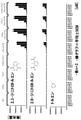
- the measurement results of the nitro compound (2,3-dinitrotoluene, 2,6-dinitrotoluene) response activity of the Anopheles olfactory receptor 28 and its variants are shown (Test Example 1).
- the upper part of the graph shows the olfactory receptors used (WT indicates wild type, others indicate mutation sites).
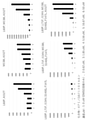
- the measurement results of the nitro compound (4-amino-2,6-dinitrotoluene) response activity of the Anopheles olfactory receptor 47 and its variants are shown (Test Example 2).
- the upper part of the graph shows the olfactory receptors used (WT indicates wild type, others indicate mutation sites).
- the measurement results of the nitro compound (4-amino-2,6-dinitrotoluene) response activity of the Anopheles olfactory receptor 47 and its variants are shown (Test Example 2).
- the upper part of the graph shows the mutation site of the olfactory receptor used.
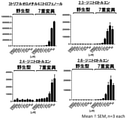
- the measurement results of the nitro compound (3-nitrotoluene, 4-nitrotoluene, or toluene) response activity of the Anopheles olfactory receptor 47 and its variants are shown (Test Example 2).
- the upper part of the graph shows the olfactory receptor used (wild type or 7-fold mutation (Example 12)).
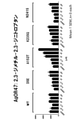
- the measurement results of the nitro compound (2,3-dimethyl-2,3-dinitrobutane) response activity of the Anopheles olfactory receptor 47 and its mutant are shown (Test Example 2).
- the upper part of the graph shows the olfactory receptors used (WT indicates wild type, others indicate mutation sites).
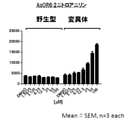
- the measurement results of the nitro compound (2-nitroaniline) response activity of Anopheles olfactory receptor 6 and its variants are shown (Test Example 3).
- the upper part of the graph shows the used olfactory receptors (wild type, mutant type).
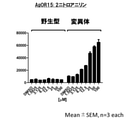
- the measurement results of the nitro compound (2-nitroaniline) response activity of Anopheles olfactory receptor 15 and its variants are shown (Test Example 4).
- the upper part of the graph shows the used olfactory receptors (wild type, mutant type).
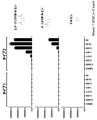
- the measurement results of the nitro compound (2,4-dinitrotoluene, 4-nitrotoluene) response activity of Shimaka olfactory receptor 4 are shown (Test Example 5).
- the upper part of the graph shows the olfactory receptors used.
- the measurement results of the nitro compound (3-nitrotoluene) response activity of the Hamadaraka olfactory receptor 28 and the mouse olfactory receptor Olfr256_17 are shown (Test Example 6).
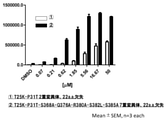
- the measurement results of the response activity of the nitro compound (2,3-dinitrotoluene) when further amino acid substitution is introduced in the 7th transmembrane region of the Anopheles olfactory receptor 28 are shown (Test Example 7).
- the horizontal axis shows the concentration of the test substance in the culture solution (DMSO shows 0 ⁇ M).
- the expressions “contains” and “contains” include the concepts of “contains”, “contains”, “substantially consists” and “consists only”.
- the term “identity” of an amino acid sequence refers to the degree of coincidence of two or more comparable amino acid sequences with respect to each other. Therefore, the higher the match between two amino acid sequences, the higher the identity or similarity of those sequences.
- the level of amino acid sequence identity is determined, for example, using FASTA, a tool for sequence analysis, with default parameters.
- the algorithm BLAST by Karlin and Altschul Karlin S, Altschul SF.
- conservative substitution means that an amino acid residue is replaced with an amino acid residue having a similar side chain. For example, substitution between amino acid residues having basic side chains such as lysine, arginine, and histidine is a conservative substitution.
- amino acid residues having acidic side chains such as aspartic acid and glutamic acid
- amino acid residues having non-charged polar side chains such as glycine, asparagine, glutamine, serine, threonine, tyrosine and cysteine
- Amino acid residues with non-polar side chains such as proline, phenylalanine, methionine and tryptophan
- amino acid residues with ⁇ -branched side chains such as treonine, valine and isoleucine
- aromatic side chains such as tyrosine, phenylalanine, tryptophan and histidine Substitutions between amino acid residues are also conservative substitutions.
- nucleotides such as DNA and RNA may be subjected to known chemical modifications as illustrated below.
- Substituting the phosphate residue (phosphate) of each nucleotide with a chemically modified phosphate residue such as phosphorothioate (PS), methylphosphonate, or phosphorodithionate to prevent degradation by hydrolases such as nucleases. Can be done.
- the hydroxyl group at the 2-position of the sugar (ribose) of each ribonucleotide is converted into -OR (R is, for example, CH3 (2'-O-Me), CH2CH2OCH3 (2'-O-MOE), CH2CH2NHC (NH) NH2, It may be replaced with CH2CONHCH3, CH2CH2CN, etc.).
- R is, for example, CH3 (2'-O-Me), CH2CH2OCH3 (2'-O-MOE), CH2CH2NHC (NH) NH2, It may be replaced with CH2CONHCH3, CH2CH2CN, etc.
- the base moiety pyrimidine, purine
- examples thereof include those in which the phosphoric acid moiety and the hydroxyl moiety are modified with a biotin, an amino group, a lower alkylamine group, an acetyl group and the like, but the present invention is not limited thereto.
- BNA LNA
- BNA LNA or the like in which the formation of the sugar portion is fixed to N type by cross-linking the 2'oxygen and 4'carbon of the sugar part of the nucleotide can also be preferably used.
- the olfactory receptor protein is a membrane protein having a transmembrane structure, and its amino-terminal (hereinafter, may be referred to as "N-terminal”) to carboxyl-terminal (hereinafter, may be referred to as "C-terminal”).
- N-terminal region N-terminal region (NT), 1st transmembrane domain (TM1), 1st extracellular loop (EC1), 2nd transmembrane domain (TM2), 1st intracellular loop (IC1), 3rd Transmembrane domain (TM3), 2nd extracellular loop (EC2), 4th transmembrane domain (TM4), 2nd intracellular loop (IC2), 5th transmembrane domain (TM5), 3rd extracellular loop (EC3) ), The 6th transmembrane domain (TM6), the 3rd intracellular loop (IC3), the 7th transmembrane domain (TM7), and the C-terminal region (CT) are linked.
- TMpred K. Hofmann, W.
- amino acid mutations are specifically deletions, substitutions, insertions, or additions of amino acids.
- the olfactory receptor protein may be deleted with an amino acid having little effect on the chemical response activity, and may be, for example, an olfactory receptor peptide in which a part of amino acids other than the transmembrane region is deleted. ..
- the position of an amino acid in the amino acid sequence may be indicated by the amino acid position character notation + the amino acid number when counted from the N-terminal amino acid.
- amino acid position character notation the amino acid number when counted from the N-terminal amino acid.
- A153 indicates alanine, which is the 153rd amino acid from the N-terminal.
- nitro compound responsiveness means that the olfactory receptor recognizes the nitro compound, and the olfactory receptor complex formed by the olfactory receptor and the olfactory receptor co-receptor is activated to activate the ion channel.
- the olfactory receptor responsiveness to nitro compounds can be measured using the ion channel activity of the olfactory receptor complex formed by the olfactory receptor and the olfactory receptor co-receptor in contact with the nitro compound as an index.
- olfactory receptors For example, (a) olfactory receptors, (b) olfactory receptor co-receptors, and (c) proteins that develop color or emit light by ions (calcium ions, etc.) that flow into cells when the olfactory receptors respond.
- the cells to be treated are brought into contact with the nitro compound, and the amount of luminescence of the cells is measured. It is determined that the larger the measured luminescence amount, the higher the nitro compound responsiveness of the olfactory receptor. Specific examples of measuring the responsiveness of the nitro compound are described in Test Example 1-2 and Test Example 1-3 described later.
- the olfactory receptor protein is obtained by mutating (1) the amino acid sequence 1A shown in SEQ ID NO: 1 or the amino acid sequence 1B having 80% or more identity with the amino acid sequence 1A, resulting in mutation 1a. : Amino acid sequence 1C containing deletion of part or all of the region of the first extracellular loop; (2) The amino acid sequence 2A shown in SEQ ID NO: 2 or the amino acid sequence 2B having 80% or more identity with the amino acid sequence 2A is mutated, and mutation 2a: consists of L60, M138 and A152 in the amino acid sequence 2A.
- Amino acid sequence 2C comprising a substitution 2ax of at least one amino acid selected from the group or a substitution 2ay corresponding to the substitution 2ax in the amino acid sequence 2B; (3)
- the amino acid sequence 3A shown in SEQ ID NO: 3 or the amino acid sequence 3B having 80% or more identity with the amino acid sequence 3A is mutated, and mutation 3a: S114, A120, H162, V186 in the amino acid sequence 3A. , V352, and S368, the substitution 3ax of the amino acid group or the substitution 3ay corresponding to the substitution 3ax in the amino acid sequence 3B, and mutation 3b: non-charged amino acid in the region from the third extracellular loop to the third intracellular loop.
- Amino acid sequence 3C including substitutions for charged amino acids; (4) The amino acid sequence 4A shown in SEQ ID NO: 4 or the amino acid sequence 4B having 80% or more identity with the amino acid sequence 4A is mutated, and mutation 4a: M61, C104, R112, G181 in the amino acid sequence 4A. , V189, and I327, comprising a substitution 4ax of the amino acid group or a substitution 4ay corresponding to the substitution 4ax in the amino acid sequence 4B; or (5) the amino acid sequence 5A or the amino acid sequence shown in SEQ ID NO: 5.
- the amino acid sequence 5B having an identity of 80% or more with 5A is mutated and comprises a mutation 5a: a substitution 5ax corresponding to the amino acid substitution 5ax of L178 in the amino acid sequence 5A or a substitution 5ay corresponding to the substitution 5ax in the amino acid sequence 5B.
- Amino acid sequence 5C (In the present specification, it may be referred to as "the olfactory receptor protein of the present disclosure"). This will be described below.
- amino acid sequence 1C is a sequence obtained by mutating the amino acid sequence 1A shown in SEQ ID NO: 1 or the amino acid sequence 1B having 80% or more identity with the amino acid sequence 1A. It is not particularly limited as long as it contains a deletion of a part or all of the region of.
- Amino acid sequence 1A is the amino acid sequence of the olfactory receptor 28 that is endogenously expressed (inherently possessed) by Anopheles gambiae.
- the amino acid sequence 1B is the nitro compound responsiveness of the protein (protein 1B) consisting of the sequence in which the mutation 1a is introduced into the sequence, and the protein (protein 1A) consisting of the sequence in which the mutation 1a is introduced into the amino acid sequence 1A. It is not particularly limited as long as it is not significantly reduced from the responsiveness of the nitro compound.
- the nitro compound responsiveness of protein 1B is, for example, 50% or more, preferably 60% or more, more preferably 70% or more, still more preferably 80% or more, still more preferable, with respect to 100% nitro compound responsiveness of protein 1A. Is over 90%.
- amino acid sequence 1B to amino acid sequence 1A is preferably 85% or more, more preferably 90% or more, still more preferably 95% or more, still more preferably 97% or more, and particularly preferably 99% or more. And less than 100%.
- the amino acid sequence 1B is preferably the amino acid sequence described in (1B') below: (1B') Amino acid sequence 1B', in which one or more amino acids are mutated with respect to the amino acid sequence 1A.
- the "plurality” is, for example, 2 to 20, preferably 2 to 10, more preferably 2 to 5, still more preferably 2 to 3, and even more preferably 2. ..
- Amino acid mutations in amino acid sequence 1B with respect to amino acid sequence 1A include, for example, substitutions, deletions, additions, insertions, etc., preferably substitutions, and more preferably conservative substitutions.
- Amino acid sequence 1B is preferably an amino acid sequence of an olfactory receptor derived from an insect.
- "derived from” means that the organism is endogenously expressed (inherently possessed).
- the insects include endophytic upper-order insects, and more preferably dipteran insects such as mosquitoes and Drosophila; scaly insects such as Kaikogae; and membranous insects such as honeybees. , More preferably, dipteran insects such as mosquitoes and Drosophila, and even more preferably mosquitoes.
- insects of the mosquito family include Anopheles gambiae, Aedes aegypti, and Culex quinquefasciatus.
- insects of the Drosophila family include Drosophila melanogaster, Drosophila pseudoobscura, and Drosophila virillis.
- insects of the family Bombyx include Bombyx mori, Bombyx mandarina, and Trilocha varians.
- honeybee family insects include honeybee (Apis mellifera), honeybee (Apis florea), honeybee (Apis dorsata), and Apis dorsata (Bombus terrestris).
- Mutation 1a is a deletion of a part or all of the region of the first extracellular loop.
- the first extracellular loop is the region of 30 amino acids from the 55th amino acid to the 84th amino acid from the N-terminal in the amino acid sequence 1A.
- Mutation 1a is more preferably a region of 5 to 30 amino acids from the N-terminal amino acid of the first extracellular loop, still more preferably a region of 10 to 25 amino acids from the N-terminal amino acid, and even more preferably a region of 10 to 25 amino acids from the N-terminal amino acid. It is in the region of ⁇ 25 amino acids.
- mutation 1a it is preferable that a part of the C-terminal side of the first transmembrane domain, which is a region adjacent to the N-terminal side of the first extracellular loop, is further deleted.
- the region of 1 to 5 amino acids including the C-terminal amino acid of the first transmembrane domain is deleted.
- Amino acid sequence 1C preferably further comprises substitution 1bx corresponding to substitution 1bx of at least one amino acid selected from the group consisting of T25 and P31 in mutation 1b: amino acid sequence 1A or substitution 1bx in amino acid sequence 1B.
- corresponding substitution indicates that the substitution is at the same position on the alignment sequence when the two sequences are compared by BLAST (setting is the default).
- the substitution corresponding to T25 in the amino acid sequence 1A is the substitution of the amino acid at the same position as T25 in the amino acid sequence 1A in the amino acid sequence 1B in the alignment sequence obtained by comparing the amino acid sequence 1A and the amino acid sequence 1B. Is shown. Further, the amino acid after the substitution in the amino acid sequence 1A and the amino acid after the substitution in the amino acid sequence 1B are the same.
- the amino acid after mutation of T25 or the corresponding amino acid in mutation 1b is preferably a basic amino acid.
- the basic amino acid include lysine, arginine, histidine and the like, and among these, lysine is particularly preferable.
- the amino acid after the mutation of P31 or the corresponding amino acid in the mutation 1b is preferably a hydrophilic neutral amino acid.
- hydrophilic neutral amino acid include serine, threonine, asparagine, glutamine and the like, and among these, threonine is particularly preferable.
- Amino acid sequence 1C can contain other amino acid mutations (eg, substitutions, conservative substitutions) as long as the nitro compound responsiveness is not significantly impaired. As an example, it is possible to further enhance the nitro compound responsiveness by introducing a specific mutation in the 7th transmembrane domain.
- the number of other amino acid mutations is, for example, 1 to 50, 1 to 20, 1 to 10, and 1 to 5.
- amino acid sequence 1C specifically, for example, the amino acid sequence shown in SEQ ID NO: 21, 25, 27, or 29, or 80% or more (preferably 85% or more, more preferably 90% or more, and further) with the amino acid sequence.
- Amino acid sequences having an identity of preferably 95% or more, more preferably 97% or more, particularly preferably 99% or more, and less than 100%) can be mentioned.
- amino acid sequence 2C The amino acid sequence 2C is obtained by mutating the amino acid sequence 2A shown in SEQ ID NO: 2 or the amino acid sequence 2B having 80% or more identity with the amino acid sequence 2A, and mutation 2a: L60, M138 and A152 in the amino acid sequence 2A. It is not particularly limited as long as it includes the substitution 2ax of at least one amino acid selected from the group consisting of the above or the substitution 2ay corresponding to the substitution 2ax in the amino acid sequence 2B.
- Amino acid sequence 2A is the amino acid sequence of the olfactory receptor 47 that is endogenously expressed (inherently possessed) by Anopheles gambiae.
- the amino acid sequence 2B is the nitro compound responsiveness of the protein (protein 2B) consisting of the sequence in which the mutation 2a is introduced into the sequence, and the protein (protein 2A) consisting of the sequence in which the mutation 2a is introduced into the amino acid sequence 2A. It is not particularly limited as long as it is not significantly reduced from the responsiveness of the nitro compound.
- the nitro compound responsiveness of protein 2B is, for example, 50% or more, preferably 60% or more, more preferably 70% or more, still more preferably 80% or more, still more preferable, with respect to 100% nitro compound responsiveness of protein 2A. Is over 90%.
- amino acid sequence 2B to amino acid sequence 2A is preferably 85% or more, more preferably 90% or more, still more preferably 95% or more, still more preferably 97% or more, and particularly preferably 99% or more. And less than 100%.
- the amino acid sequence 2B is preferably the amino acid sequence described in (2B') below: (2B') Amino acid sequence 2B', in which one or more amino acids are mutated with respect to the amino acid sequence 2A.
- the "plurality” is, for example, 2 to 20, preferably 2 to 10, more preferably 2 to 5, still more preferably 2 to 3, and even more preferably 2. ..
- Amino acid mutations in amino acid sequence 2B with respect to amino acid sequence 2A include, for example, substitutions, deletions, additions, insertions, etc., preferably substitutions, and more preferably conservative substitutions.
- Amino acid sequence 2B is preferably an amino acid sequence of an olfactory receptor derived from an insect.
- the olfactory receptor derived from insects is the same as the definition in "2-1. Amino acid sequence 1C" above.
- Mutation 2a is a substitution 2ax of at least one amino acid selected from the group consisting of L60, M138 and A152 in the amino acid sequence 2A or a substitution 2ay corresponding to the substitution 2ax in the amino acid sequence 2B.
- the “corresponding substitution” is the same as the definition in “2-1. Amino acid sequence 1C” above.
- the amino acid after mutation of L60 or the corresponding amino acid in mutation 2a is preferably proline.
- the amino acid after mutation of M138 or the corresponding amino acid in mutation 2a is preferably a branched chain amino acid.
- branched chain amino acid examples include valine, isoleucine, leucine and the like, and among these, isoleucine is particularly preferable.
- the amino acid after mutation of A152 or the corresponding amino acid in mutation 2a is preferably a hydrophilic neutral amino acid.
- hydrophilic neutral amino acid include serine, threonine, asparagine, glutamine and the like, and among these, threonine is particularly preferable.
- Mutation 2a preferably contains at least one substitution of M138 and A152 or a corresponding amino acid substitution, more preferably both of these substitutions or a corresponding amino acid substitution.
- the amino acid sequence 2C is preferably in the substitution 2bx or amino acid sequence 2B of at least one amino acid selected from the group consisting of further mutation 2b: D5, L71, I134, S140, F147, K235, and N241 in amino acid sequence 2A. Includes substitution 2by corresponding to substitution 2bx.
- the amino acid after the mutation of D5 or the corresponding amino acid in the mutation 2b is preferably an acidic amino acid.
- the acidic amino acid include aspartic acid, glutamic acid and the like, and among these, glutamic acid is particularly preferable.
- the amino acid after the mutation of L71 or the corresponding amino acid in the mutation 2b is preferably an aromatic amino acid.
- the aromatic amino acid include phenylalanine, tyrosine, tryptophan and the like, and among these, phenylalanine is particularly preferable.
- the amino acid after mutation of I134 or the corresponding amino acid in mutation 2b is preferably a branched chain amino acid.
- branched chain amino acid examples include valine, isoleucine, leucine and the like, and among these, valine is particularly preferable.
- the amino acid after the mutation of S140 or the corresponding amino acid in the mutation 2b is preferably an aliphatic amino acid.
- the aliphatic amino acid include alanine, glycine, valine, isoleucine, leucine and the like, and among these, glycine is particularly preferable.
- the amino acid after mutation of F147 or the corresponding amino acid in mutation 2b is preferably a branched chain amino acid.
- Examples of the branched chain amino acid include valine, isoleucine, leucine and the like, and among these, leucine is particularly preferable.
- the amino acid after mutation of K235 or the corresponding amino acid in mutation 2b is preferably a hydrophilic neutral amino acid.
- hydrophilic neutral amino acid include serine, threonine, asparagine, glutamine and the like, and among these, glutamine is particularly preferable.
- the amino acid after mutation of N241 or the corresponding amino acid in mutation 2b is preferably a hydrophilic neutral amino acid.
- hydrophilic neutral amino acid include serine, threonine, asparagine, glutamine and the like, and among these, serine is particularly preferable.
- Mutation 2b preferably comprises a substitution of L71F or a corresponding amino acid substitution, more preferably a substitution of L71F and I134 or a corresponding amino acid substitution, and even more preferably a substitution of L71F, I134, and S140 or corresponding. Includes amino acid substitutions, more preferably L71F, I134, S140, and F147 substitutions or corresponding amino acid substitutions.
- Amino acid sequence 2C can contain other amino acid mutations (eg, substitutions, conservative substitutions) as long as the nitro compound responsiveness is not significantly impaired. As an example, it is possible to further enhance the nitro compound responsiveness by introducing a specific mutation in the 7th transmembrane domain.
- the number of other amino acid mutations is, for example, 1 to 50, 1 to 20, 1 to 10, and 1 to 5.
- amino acid sequence 2C specifically, for example, the amino acid sequence shown by SEQ ID NO: 63, 67, 71, 73, 75, 77, or 79, or 80% or more (preferably 85% or more, more preferably) with the amino acid sequence.
- amino acid sequences having 90% or more, more preferably 95% or more, even more preferably 97% or more, particularly preferably 99% or more, and less than 100%) identity.
- amino acid sequence 3C The amino acid sequence 3C is obtained by mutating the amino acid sequence 3A shown in SEQ ID NO: 3 or the amino acid sequence 3B having 80% or more identity with the amino acid sequence 3A. , V186, V352, and S368, the substitution 3ax of the amino acid group or the substitution 3ay corresponding to the substitution 3ax in the amino acid sequence 3B, and the mutation 3b: charged amino acids in the region from the third extracellular loop to the third intracellular loop. Is not particularly limited as long as it includes substitution with an uncharged amino acid.
- Amino acid sequence 3A is an amino acid sequence of the olfactory receptor 6 that is endogenously expressed (inherently possessed) by Anopheles gambiae.
- the amino acid sequence 3B consists of a nitro compound responsiveness of a protein (protein 3B) consisting of a sequence in which mutation 3a and mutation 3b are introduced into the sequence, and a sequence in which mutation 3a and mutation 3b are introduced into amino acid sequence 3A. It is not particularly limited as long as it is not significantly reduced from the nitro compound responsiveness of the protein (protein 3A).
- the nitro compound responsiveness of protein 3B is, for example, 50% or more, preferably 60% or more, more preferably 70% or more, still more preferably 80% or more, still more preferable, with respect to 100% nitro compound responsiveness of protein 3A. Is over 90%.
- the identity of the amino acid sequence 3B with respect to the amino acid sequence 3A is preferably 85% or more, more preferably 90% or more, still more preferably 95% or more, still more preferably 97% or more, and particularly preferably 99% or more. And less than 100%.
- the amino acid sequence 3B is preferably the amino acid sequence described in (3B') below: (3B') Amino acid sequence 3B', in which one or more amino acids are mutated with respect to the amino acid sequence 3A.
- the "plurality” is, for example, 2 to 20, preferably 2 to 10, more preferably 2 to 5, still more preferably 2 to 3, and even more preferably 2. ..
- Amino acid mutations in amino acid sequence 3B to amino acid sequence 3A include, for example, substitutions, deletions, additions, insertions, etc., preferably substitutions, and more preferably conservative substitutions.
- Amino acid sequence 3B is preferably an amino acid sequence of an olfactory receptor derived from an insect.
- the olfactory receptor derived from insects is the same as the definition in "2-1. Amino acid sequence 1C" above.
- Mutation 3a is a substitution 3ax corresponding to the substitution 3ax of the amino acid group consisting of S114, A120, H162, V186, V352, and S368 in the amino acid sequence 3A or the substitution 3ax in the amino acid sequence 3B.
- the “corresponding substitution” is the same as the definition in “2-1. Amino acid sequence 1C” above.
- the amino acid after the mutation of S114 or the corresponding amino acid in the mutation 3a is preferably an aliphatic amino acid.
- the aliphatic amino acid include alanine, glycine, valine, isoleucine, leucine and the like, and among these, alanine is particularly preferable.
- the amino acid after the mutation of A120 or the corresponding amino acid in the mutation 3a is preferably an acidic amino acid.
- the acidic amino acid include aspartic acid, glutamic acid and the like, and among these, glutamic acid is particularly preferable.
- the amino acid after the mutation of H162 or the corresponding amino acid in the mutation 3a is preferably an aromatic amino acid.
- aromatic amino acid include phenylalanine, tyrosine, tryptophan and the like, and among these, tyrosine is particularly preferable.
- the amino acid after the mutation of V186 or the corresponding amino acid in the mutation 3a is preferably an aliphatic amino acid.
- the aliphatic amino acid include alanine, glycine, valine, isoleucine, leucine and the like, and among these, alanine is particularly preferable.
- the amino acid after mutation of V352 or the corresponding amino acid in mutation 3a is preferably a sulfur-containing amino acid.
- the sulfur-containing amino acid include methionine and cysteine, and among these, methionine is particularly preferable.
- the amino acid after mutation of S368 or the corresponding amino acid in mutation 3a is preferably proline.
- Mutant 3b is an uncharged amino acid of a charged amino acid in the region from the extracellular loop 3 to the intracellular loop 3 (that is, the region consisting of the extracellular loop 3, transmembrane domain, and intracellular loop 3). Replacement with.
- the third extracellular loop is the region of 69 amino acids from the N-terminal to the 211th amino acid to the 279th amino acid in the amino acid sequence 3A.
- the 6th transmembrane domain is the region of 23 amino acids from the N-terminal to the 280th amino acid to the 302nd amino acid in the amino acid sequence 3A.
- the intracellular loop in the third cell is the region of 76 amino acids from the N-terminal to the 303rd amino acid to the 378th amino acid in the amino acid sequence 3A.
- the charged amino acids are acidic amino acids and basic amino acids, and specifically, lysine, arginine, histidine, aspartic acid, and glutamic acid. In mutation 3b, some or all of the charged amino acids are replaced with uncharged amino acids.
- the uncharged amino acid is not particularly limited as long as it is an amino acid other than the charged amino acid.
- the number of substitutions with uncharged amino acids is usually plural, for example 5 to 25 or more, preferably 6 to 18, and more preferably 8 to 14.
- Amino acid sequence 3C can contain other amino acid mutations (eg, substitutions, conservative substitutions) as long as the nitro compound responsiveness is not significantly impaired. As an example, it is possible to further enhance the nitro compound responsiveness by introducing a specific mutation in the 7th transmembrane domain.
- the number of other amino acid mutations is, for example, 1 to 60, 1 to 20, 1 to 10, and 1 to 5.
- amino acid sequence 3C specifically, for example, the amino acid sequence shown in SEQ ID NO: 81, or 80% or more (preferably 85% or more, more preferably 90% or more, still more preferably 95% or more, more than that of the amino acid sequence. Further preferably, an amino acid sequence having an identity of 97% or more, particularly preferably 99% or more, and less than 100%) can be mentioned.
- amino acid sequence 4C The amino acid sequence 4C is obtained by mutating the amino acid sequence 4A shown in SEQ ID NO: 4 or the amino acid sequence 4B having 80% or more identity with the amino acid sequence 4A.
- G181, V189, and I327 are not particularly limited as long as they include the substitution 4ax of the amino acid group or the substitution 4ay corresponding to the substitution 4ax in the amino acid sequence 4B.
- Amino acid sequence 4A is the amino acid sequence of the olfactory receptor 15 that is endogenously expressed (inherently possessed) by Anopheles gambiae.
- the amino acid sequence 4B is the nitro compound responsiveness of the protein (protein 4B) consisting of the sequence in which the mutation 4a is introduced into the sequence, and the protein (protein 4A) consisting of the sequence in which the mutation 4a is introduced into the amino acid sequence 4A. It is not particularly limited as long as it is not significantly reduced from the responsiveness of the nitro compound.
- the nitro compound responsiveness of protein 4B is, for example, 50% or more, preferably 60% or more, more preferably 70% or more, still more preferably 80% or more, still more preferable, with respect to 100% nitro compound responsiveness of protein 4A. Is over 90%.
- the identity of the amino acid sequence 4B with respect to the amino acid sequence 4A is preferably 85% or more, more preferably 90% or more, still more preferably 95% or more, still more preferably 97% or more, and particularly preferably 99% or more. And less than 100%.
- the amino acid sequence 4B is preferably the amino acid sequence described in (4B') below: (4B') Amino acid sequence 4B', in which one or more amino acids are mutated with respect to the amino acid sequence 4A.
- the "plurality” is, for example, 2 to 20, preferably 2 to 10, more preferably 2 to 5, still more preferably 2 to 3, and even more preferably 2. ..
- Amino acid mutations of amino acid sequence 4B to amino acid sequence 4A include, for example, substitutions, deletions, additions, insertions, etc., preferably substitutions, and more preferably conservative substitutions.
- Amino acid sequence 4B is preferably an amino acid sequence of an olfactory receptor derived from an insect.
- the olfactory receptor derived from insects is the same as the definition in "2-1. Amino acid sequence 1C" above.
- Mutation 4a is a substitution 4ax corresponding to the substitution 4ax of the amino acid group consisting of M61, C104, R112, G181, V189, and I327 in the amino acid sequence 4A or the substitution 4ax in the amino acid sequence 4B.
- the “corresponding substitution” is the same as the definition in “2-1. Amino acid sequence 1C” above.
- the amino acid after mutation of M61 or the corresponding amino acid in mutation 4a is preferably a hydrophilic neutral amino acid.
- hydrophilic neutral amino acid include serine, threonine, asparagine, glutamine and the like, and among these, threonine is particularly preferable.
- the amino acid after the mutation of C104 or the corresponding amino acid in the mutation 4a is preferably a basic amino acid.
- the basic amino acid include lysine, arginine, histidine and the like, and among these, arginine is particularly preferable.
- the amino acid after mutation of R112 or the corresponding amino acid in mutation 4a is preferably a hydrophilic neutral amino acid.
- hydrophilic neutral amino acid include serine, threonine, asparagine, glutamine and the like, and among these, glutamine is particularly preferable.
- the amino acid after the mutation of G181 or the corresponding amino acid in the mutation 4a is preferably an aliphatic amino acid.
- the aliphatic amino acid include alanine, glycine, valine, isoleucine, leucine and the like, and among these, alanine is particularly preferable.
- the amino acid after mutation of V189 or the corresponding amino acid in mutation 4a is preferably a branched chain amino acid.
- the branched chain amino acid include valine, isoleucine, leucine and the like, and among these, isoleucine is particularly preferable.
- the amino acid after mutation of I327 or the corresponding amino acid in mutation 4a is preferably a branched chain amino acid.
- the branched chain amino acid include valine, isoleucine, leucine and the like, and among these, valine is particularly preferable.
- Amino acid sequence 4C can contain other amino acid mutations (eg, substitutions, conservative substitutions) as long as the nitro compound responsiveness is not significantly impaired. As an example, it is possible to further enhance the nitro compound responsiveness by introducing a specific mutation in the 7th transmembrane domain.
- the number of other amino acid mutations is, for example, 1 to 50, 1 to 20, 1 to 10, and 1 to 5.
- amino acid sequence 4C specifically, for example, the amino acid sequence shown in SEQ ID NO: 83, or 80% or more (preferably 85% or more, more preferably 90% or more, still more preferably 95% or more, more than that of the amino acid sequence. Further preferably, an amino acid sequence having an identity of 97% or more, particularly preferably 99% or more, and less than 100%) can be mentioned.
- amino acid sequence 5C The amino acid sequence 5C is obtained by mutating the amino acid sequence 5A shown in SEQ ID NO: 5 or the amino acid sequence 5B having 80% or more identity with the amino acid sequence 5A. It is not particularly limited as long as it includes 5ax or the substitution 5ay corresponding to the substitution 5ax in the amino acid sequence 5B.
- Amino acid sequence 5A is an amino acid sequence of the olfactory receptor 4 that is endogenously expressed (inherently possessed) by Aedes aegypti.
- the amino acid sequence 5B is the nitro compound responsiveness of the protein (protein 5B) consisting of the sequence in which the mutation 5a is introduced into the sequence, and the protein (protein 5A) consisting of the sequence in which the mutation 5a is introduced into the amino acid sequence 5A. It is not particularly limited as long as it is not significantly reduced from the responsiveness of the nitro compound.
- the nitro compound responsiveness of protein 5B is, for example, 50% or more, preferably 60% or more, more preferably 70% or more, still more preferably 80% or more, still more preferable, with respect to 100% nitro compound responsiveness of protein 5A. Is over 90%.
- the identity of the amino acid sequence 5B with respect to the amino acid sequence 5A is preferably 85% or more, more preferably 90% or more, still more preferably 95% or more, still more preferably 97% or more, and particularly preferably 99% or more. And less than 100%.
- amino acid sequence 5B is preferably the amino acid sequence described in (5B') below:
- Amino acid sequence 5B' in which one or more amino acids are mutated with respect to the amino acid sequence 5A.
- the "plurality” is, for example, 2 to 20, preferably 2 to 10, more preferably 2 to 5, still more preferably 2 to 3, and even more preferably 2. ..
- Amino acid mutations in amino acid sequence 5B with respect to amino acid sequence 5A include, for example, substitutions, deletions, additions, insertions, etc., preferably substitutions, and more preferably conservative substitutions.
- Amino acid sequence 5B is preferably an amino acid sequence of an olfactory receptor derived from an insect.
- the olfactory receptor derived from insects is the same as the definition in "2-1. Amino acid sequence 1C" above.
- Mutation 5a is the substitution 5ax of the amino acid of L178 in the amino acid sequence 5A or the substitution 5ay corresponding to the substitution 5ax in the amino acid sequence 5B.
- the “corresponding substitution” is the same as the definition in “2-1. Amino acid sequence 1C” above.
- the amino acid after mutation of L178 or the corresponding amino acid in mutation 5a is preferably proline.
- Amino acid sequence 5C can contain other amino acid mutations (eg, substitutions, conservative substitutions) as long as the nitro compound responsiveness is not significantly impaired. As an example, it is possible to further enhance the nitro compound responsiveness by introducing a specific mutation in the 7th transmembrane domain.
- the number of other amino acid mutations is, for example, 1 to 50, 1 to 20, 1 to 10, and 1 to 5.
- amino acid sequence 5C specifically, for example, the amino acid sequence shown in SEQ ID NO: 85, or 80% or more (preferably 85% or more, more preferably 90% or more, still more preferably 95% or more, more than that of the amino acid sequence. Further preferably, an amino acid sequence having an identity of 97% or more, particularly preferably 99% or more, and less than 100%) can be mentioned.
- the olfactory receptor protein of the present disclosure is, in one embodiment, the general formula (1): in the corresponding wild-type olfactory receptor protein.
- ⁇ 7 X 1 X 2 Z 1 X 3 X 4 Z 2 Z 3 ⁇ 6 U ⁇ 5 ⁇ 4 ⁇ 3 ⁇ 2 ⁇ 1 X 5 X 6
- X 1 to X 6 and Z 1 to Z 3 indicate amino acids derived from the amino acid sequence of the wild-type insect olfactory receptor
- ⁇ 1 indicates a hydrophobic amino acid
- ⁇ 2 to ⁇ 7 are independent of each other.
- U indicates an uncharged polar amino acid.
- X 1 and X 2 are positively charged polar amino acids in the amino acid sequence A, X 1 and / or X 2 are substituted in the amino acid sequence B, and X 1 is an uncharged polar amino acid. And / or X 2 is a hydrophobic amino acid, At least one condition selected from the group consisting of can be satisfied.
- the "corresponding wild-type olfactory receptor” means an olfactory receptor consisting of any of the amino acid sequences 1A to 5A.
- the amino acid sequence A represented by the general formula (1) may be contained in the 7th transmembrane region.
- the olfactory receptor protein of the present disclosure is a protein or peptide having an amino acid sequence other than the amino acid sequences 1C to 5C, for example, a protein tag, a fluorescent protein, a photoprotein, a signal sequence, etc., as long as the responsiveness to the nitro compound is not significantly impaired. May be added.
- the protein tag include biotin, His tag, FLAG tag, Halo tag, MBP tag, HA tag, Myc tag, V5 tag, PA tag and the like.
- the olfactory receptor protein of the present disclosure may be chemically modified as long as the responsiveness to the nitro compound is not significantly impaired.
- the olfactory receptor protein of the present disclosure may have a C-terminal of either a carboxyl group (-COOH), a carboxylate (-COO- ) , an amide (-CONH 2 ) or an ester (-COOR).
- R in the ester is, for example, a C 1-6 alkyl group such as methyl, ethyl, n-propyl, isopropyl, n-butyl; for example, a C 3-8 cycloalkyl group such as cyclopentyl, cyclohexyl; for example, phenyl. , C 6-12 aryl groups such as ⁇ -naphthyl; phenyl-C 1-2 alkyl groups such as benzyl, phenethyl; C 7- such as ⁇ -naphthyl-C 1-2 alkyl groups such as ⁇ -naphthylmethyl. 14 Alalkyl group; Pivaloyloxymethyl group etc. are used.
- the olfactory receptor protein of the present disclosure may have a carboxyl group (or carboxylate) other than the C-terminal amidated or esterified.
- the ester in this case, for example, the above-mentioned C-terminal ester or the like is used.
- the amino group of the amino acid residue at the N-terminal is a protective group (for example, a C 1-6 acyl group such as C 1-6 alkanoyl such as a formyl group or an acetyl group).
- a protective group for example, a C 1-6 acyl group such as C 1-6 alkanoyl such as a formyl group or an acetyl group.
- Protected, N-terminal glutamine residues that can be cleaved and produced in vivo are pyroglutamine-oxidized, substituents on the side chains of amino acids in the molecule (eg -OH, -SH, amino groups, etc.)
- An imidazole group, an indole group, a guanidino group, etc. are protected by a suitable protective group (eg, a C 1-6 acyl group such as a C 1-6 alkanoyl group such as a formyl group or an acetyl group), or a sugar.
- a suitable protective group eg, a C 1-6 acyl group such as a C 1-6 alkanoyl group such as a formyl group or an acetyl group
- Complex proteins such as so-called glycoproteins to which chains are bound are also included.
- the olfactory receptor protein of the present disclosure may be in the form of a salt with an acid or a base.
- the salt is not particularly limited, and either an acidic salt or a basic salt can be adopted.
- acidic salts include inorganic acid salts such as hydrochloride, hydrobromide, sulfate, nitrate, and phosphate; acetate, propionate, tartrate, fumarate, maleate, and apple.
- Organic acid salts such as acid salts, citrates, methane sulfonates and paratoluene sulfonates; amino acid salts such as asparagates and glutamates can be mentioned.
- basic salts include alkali metal salts such as sodium salt and potassium salt; alkaline earth metal salts such as calcium salt and magnesium salt.
- the olfactory receptor protein of the present disclosure may be in the form of a solvate.
- the solvent is not particularly limited, and examples thereof include water, ethanol, glycerol, acetic acid and the like.
- the olfactory receptor protein of the present disclosure can be easily produced according to a known genetic engineering method. For example, it can be produced by using PCR, restriction enzyme cleavage, DNA ligation technology, in vitro transcription / translation technology, recombinant protein production technology, and the like.
- the present disclosure may be referred to as a polynucleotide comprising the coding sequence of the olfactory receptor protein of the present disclosure (in the present specification, "polynucleotide of the present disclosure”. ), Cells comprising the polynucleotides of the present disclosure (sometimes referred to herein as “cells of the present disclosure”), non-human animals comprising the cells of the present disclosure (in the present specification, "the present specification”. Also referred to as “disclosure non-human animals”). These will be described below.
- the coding sequence of the olfactory receptor protein of the present disclosure is not particularly limited as long as it is a polynucleotide consisting of a base sequence encoding the olfactory receptor protein of the present disclosure.
- the polynucleotide of the present disclosure in one embodiment, comprises an expression cassette of the olfactory receptor protein of the present disclosure.
- the expression cassette of the olfactory receptor protein of the present disclosure is not particularly limited as long as it is a polynucleotide capable of expressing the olfactory receptor protein of the present disclosure in cells.
- Typical examples of the expression cassette of the olfactory receptor protein of the present disclosure include a polynucleotide and a polynucleotide containing a coding sequence of the olfactory receptor protein of the present disclosure arranged under the control of the promoter.
- the promoter contained in the expression cassette of the olfactory receptor protein of the present disclosure is not particularly limited and can be appropriately selected according to the target cell.
- various pol II promoters can be used.
- the polII promoter is not particularly limited, and examples thereof include a CMV promoter, an EF1 promoter, an SV40 promoter, and an MSCV promoter.
- Other promoters include, for example, tryptophan promoters such as trc and tac, lac promoters, T7 promoters, T5 promoters, T3 promoters, SP6 promoters, arabinose-inducible promoters, cold shock promoters, tetracycline-inducible promoters and the like.
- the expression cassettes of the olfactory receptor proteins of the present disclosure are optionally other elements (eg, multicloning sites (MCS), drug resistance genes, origins of replication, enhancer sequences, repressor sequences, insulator sequences, reporter proteins).
- MCS multicloning sites
- drug resistance genes e.g., drug resistance genes, origins of replication, enhancer sequences, repressor sequences, insulator sequences, reporter proteins.
- a coding sequence, a drug resistance gene coding sequence, etc. may be included.
- the polynucleotides of the present disclosure can be in the form of vectors.
- An appropriate vector is selected according to the purpose of use (cloning, protein expression) and also considering the type of host cell.
- Vectors hosting Escherichia coli include M13 phage or variants thereof, ⁇ phage or variants thereof, pBR322 or variants thereof (pB325, pAT153, pUC8, etc.), and vectors hosting yeast include pYepSec1, pMFa, pYES2. , PPIC3.5K, etc., pAc, pVL, etc. can be exemplified as a vector having an insect cell as a host, and pcDNA, pCDM8, pMT2PC, etc. can be exemplified as a vector having a mammalian cell as a host.
- the cells of the present disclosure are not particularly limited as long as they contain the polynucleotide of the present disclosure.
- Examples of cells include Escherichia coli K12 and other Escherichia coli, Bacillus subtilis MI114 and other Bacillus bacteria, Saccharomyces cerevisiae AH22 and other yeast, Spodoptera frugiperda-derived Sf cell lineage, and Trichoplusia ni-derived High Five cell lineage, and olfactory nerve cells.
- Examples include animal cells such as insect cells and COS7 cells.
- animal cells are preferably cultured cells derived from mammals, specifically, COS7 cells, CHO cells, HEK293 cells, HEK293FT cells, Hela cells, PC12 cells, N1E-115 cells, SH-SY5Y cells and the like. Be done.
- the cells of the present disclosure preferably contain the coding sequence of the olfactory receptor co-receptor of insects from the viewpoint that they can be used as they are for the nitro compound detection use described later.
- the olfactory receptor co-receptor of insects is a membrane protein having a 7-transmembrane structure similar to the olfactory receptor, but it does not recognize odorants by itself and forms a heterocomplex with the olfactory receptor. Function.
- the olfactory receptor complex which is a heterocomplex composed of olfactory receptors and olfactory receptor co-receptors, has ion channel activity that is activated by odorants, and when activated, sodium ions ( Inflow of cations such as Na + ) and calcium ion (Ca 2+ ) into the cell.
- the cells of the present disclosure contain a coding sequence of a protein that develops color or emits light by an ion (calcium ion or the like) that flows into the cell when the olfactory receptor responds.
- a protein that develops color or emits light by an ion (calcium ion or the like) that flows into the cell when the olfactory receptor responds.
- proteins include aequorin, Yellow Cameleon (YC), GCaMP and the like.
- the cells of the present disclosure preferably contain a calcium ion-dependent fluorescent dye (eg, Fura-2, Fluo-3, Fluo-4, etc.).
- the cells of the present disclosure contain the olfactory receptor protein of the present disclosure, that is, the olfactory receptor protein of the present disclosure is expressed in the cells of the present disclosure.
- the olfactory receptor protein of the present disclosure has a 7-transmembrane structure and is therefore placed on the cell membrane as a membrane protein.
- the non-human animals of the present disclosure are not particularly limited as long as they contain the cells of the present disclosure.
- the non-human animal is not particularly limited, but insects are preferable from the viewpoint of being suitable for the nitro compound detection application described later.
- the explanation for insects is the same as in "2-1. Amino acid sequence 1C" above.
- the cells of the present disclosure in the non-human animals of the present disclosure preferably contain olfactory nerve cells.
- the olfactory receptor protein of the present disclosure has an activity of allowing cations (sodium ion (Na + ), calcium ion (Ca 2+ ), etc.) to flow into the cell in response to a nitro compound.
- the nitro compound can be detected by detecting this cation, or by detecting a behavioral change based on the activation of olfactory nerve cells induced by the influx of this cation. Therefore, the olfactory receptor protein of the present disclosure can be used as a nitro compound detection element.
- the present disclosure in one embodiment, comprises a nitro compound detection element (the detection element of the present disclosure) composed of the olfactory receptor protein of the present disclosure, a cell containing the detection element of the present disclosure, and a lipid containing the detection element of the present disclosure.
- the present invention relates to a nitro compound detection sensor (detection sensor of the present disclosure) comprising a heavy membrane (artificial cell membrane) or a non-human animal containing the cell.
- the nitro compound is not particularly limited as long as it is a compound containing a nitro group.
- the nitro compound include a compound having a structure in which a nitro group is directly linked to a benzene ring, a compound containing two or more nitro groups, and the like.
- Specific examples of the nitro compound include 2-nitrotoluene, 3-nitrotoluene, 4-nitrotoluene, 2,3-dinitrotoluene, 2,4-dinitrotoluene, 2,6-dinitrotoluene, and 4-amino-2,6-di.
- a nitro compound detection sensor comprising the cells or lipid bilayers of the present disclosure signals when it detects a nitro compound response (eg, light) in, for example, a container holding the cells or lipid bilayers of the present disclosure, the cells of the present disclosure. It is provided with a sensor for output and a determination device for detecting a nitro compound based on the signal.
- a nitro compound response eg, light
- the nitro compound detection sensor including the non-human animal of the present disclosure includes, for example, a detection unit (for example, a moving body sensor, a vibration sensor, a sound sensor, etc.) for detecting the movement of the non-human animal of the present disclosure.
- a detection unit for example, a moving body sensor, a vibration sensor, a sound sensor, etc.
- OR indicates an olfactory receptor (Odorant receptor)
- Orco indicates an olfactory receptor co-receptor (Odorant receptor co-receptor)
- Ag indicates Anopheles gambiae
- Aa indicates an Anopheles gambiae. Indicates Nettai Shimaka (Aedes aegypti).
- Test example 1 Measurement of AgOR28 responsiveness to nitro compounds The response activity of olfactory receptors (wild-type AgOR28 and mutant AgOR28) to nitro compounds was measured.
- Test Example 1-1 Preparation of expression plasmid ⁇ Comparative example 1 .
- a type AgOR28 expression plasmid (pcDNA3.1-AgOR28) was obtained.
- PCR primers designed to convert threonine, which is the 25th amino acid residue in the amino acid sequence of wild-type AgOR28, to lysine (CAGAGGCATGGCCAAGAAGATCCAGAACAGC (SEQ ID NO: 13), GCTGTTCTGGATCTTTGGCCATGCCTCTG (SEQ ID NO: 14)) were synthesized. Using these primers, PCR amplification using pcDNA3.1-AgOR28 as a template was performed.
- the PCR reaction was performed using KOD-Plus-Neo (TOYOBO), and the composition of the reaction solution was 1 x PCR buffer for KOD-Plus-Neo, 0.2 mM dNTPs, 1.5 mM DDL4, 0.2 ⁇ M according to the attached protocol. It was prepared with primer, 1U KOD-Plus-Neo DNA polymerase, and the final liquid volume was 50 ⁇ L.
- the reaction cycle was 16 cycles of pre-denaturation 95 ° C for 30 seconds, denaturation 95 ° C for 30 seconds, annealing 55 ° C for 1 minute, and extension reaction 68 ° C for 10 minutes.
- DpnI 0.4 ⁇ L was added to 20 ⁇ L of the obtained PCR product, and the mixture was treated at 37 ° C. for 2 hours and then transformed into Escherichia coli (DH5 ⁇ ).
- the transformed Escherichia coli was inoculated on an LB plate to which ampicillin had been added, and cultured at 37 ° C. to form colonies. Two colonies were selected and cultured again in LB liquid medium. Then, the nucleotide sequences of the plasmids they carry were determined, and a mutant AgOR28 (T25K mutation) expression plasmid was obtained.
- Example 1 Preparation of mutant AgOR28 (22a.a deletion) expression plasmid> The coding sequence (base sequence: SEQ ID NO: 21) of the mutant AgOR28 (22a.a deletion) (amino acid sequence: SEQ ID NO: 21) in which the 22 amino acids from the 52nd to the 73rd are continuously deleted in the amino acid sequence of the wild AgOR28. A plasmid (pcDNA3.1) containing 22) was prepared.
- Primer F1 TACCGAGCTCGGATCATGGCCAGACTGGTGCTG (SEQ ID NO: 23)
- Primer R1 GATATCTGCAGAATT TTACTGCTGGTTGATGGTC (SEQ ID NO: 24)
- Primer F2 GCCAGCCTGTGCGTGCCAGTCCTACCTGGTGGTGGACACCAAG (SEQ ID NO: 90)
- Primer R1 Synthesized.
- PCR using primer F1 and primer R2 and PCR using primer F2 and primer R1 were carried out, and each amplification product was electrophoresed on an agarose gel and purified.
- the purified products were mixed at a molar ratio of 1: 1 and allowed to stand at room temperature for 5 minutes after 5 minutes at 95 ° C.
- Reaction solution containing 10 ⁇ L of this mixed solution and having a final volume of 50 ⁇ L (1U KOD -Plus- Neo DNA polymerase (TOYOBO), 1.5 mM DDL4 (TOYOBO), 0.2 mM dNTPs Mix (TOYOBO), 1 x PCR Buffer for KOD plus neo PCR (TOYOBO)) was prepared, and after 2 minutes at 94 ° C, two cycles of 95 ° C for 30 seconds, 63 ° C for 30 seconds, and 68 ° C for 1 minute and 50 seconds were performed.
- PCR reaction solution was prepared with the composition of 1 x PCR buffer for KOD -Plus- Neo, 0.2 mM dNTPs, 1.5 mM DDL4, 0.2 ⁇ M primer, and 1 U KOD -Plus- Neo DNA polymerase, and the final solution volume was 50 ⁇ L. After pre-denaturation at 94 ° C for 2 minutes, 30 cycles of denaturation at 98 ° C for 10 seconds, annealing at 63 ° C for 30 seconds, and extension reaction at 68 ° C for 1 minute and 50 seconds were performed.
- the obtained PCR amplified fragment and the pcDNA3.1 expression plasmid fragment cleaved by BamHI and EcoRI were subjected to an In-Fusion reaction using the In-Fusion HD Cloning Kit (Takara Bio Inc.) according to the attached protocol. Connected. After completion of the reaction, it was transformed into Escherichia coli (DH5 ⁇ ) using the In-Fusion reaction solution.
- the transformed Escherichia coli was inoculated on an LB plate to which ampicillin had been added and cultured at 37 ° C. to form colonies. Two colonies were selected and cultured again in LB liquid medium. Then, the nucleotide sequences of the plasmids they carry were determined to obtain expression plasmids.
- the amino acid sequence of wild-type AgOR28 is TMpred (K. Hofmann, W. Stoffel, TMbase-a database of membrane spanning proteins segments, Biol. Chem. Hoppe-Seyler, 374 (1993), p. 166, https: // When the structure was predicted (conditions were default) using embnet.vital-it.ch/software/TMPRED_form.html), the 55th to 84th amino acid regions were predicted to be the first extracellular loop. From this, it was found that the deletion region was the first extracellular loop.
- Example 2 Preparation of mutant AgOR28 (T25K mutation, 22a.a deletion) expression plasmid> Treonin, which is the 25th amino acid residue in the amino acid sequence of wild AgOR28, is mutated to lysine, and 22 amino acids from 52nd to 73rd.
- a plasmid pcDNA3.1
- base sequence base sequence: SEQ ID NO: 26
- amino acid sequence SEQ ID NO: 25
- Example 3 Preparation of mutant AgOR28 (P31T mutation, 22a.a deletion) expression plasmid> Proline, which is the 31st amino acid residue in the amino acid sequence of wild AgOR28, is mutated to treonine, and 22 amino acids from 52nd to 73rd.
- a plasmid (pcDNA3.1) containing the coding sequence (base sequence: SEQ ID NO: 28) of the mutant AgOR28 (P31T mutation, 22a.a deletion) (amino acid sequence: SEQ ID NO: 27) was prepared. did. Specifically, it was prepared in the same manner as in Comparative Example 3 except that the mutant AgOR28 (22a.a deleted) expression plasmid (Example 1) was used as a PCR template.
- Example 4 Preparation of mutant AgOR28 (T25K-P31T double mutation, 22a.a deletion) expression plasmid> Treonin, which is the 25th amino acid residue in the amino acid sequence of wild-type AgOR28, is mutated to lysine, and the 31st amino acid residue AgOR28 (T25K-P31T double mutation, 22a.a deletion) (amino acid sequence: SEQ ID NO: 29) in which proline is mutated to treonin and 22 amino acids from 52nd to 73rd are continuously deleted. ) Code sequence (base sequence: SEQ ID NO: 30) was prepared (pcDNA3.1). Specifically, it was prepared in the same manner as in Comparative Example 3 except that a mutant AgOR28 (T25K mutant, 22a.a deletion) expression plasmid (Example 2) was used as a PCR template.
- Dm (NT-TM4) AmORCO the amino acid sequence from the N-terminal region (NT) to the 4th transmembrane domain (TM4) (the amino acid sequence from the N-terminal amino acid residue to the 234th amino acid residue) is the same as that of Drosophila. It is derived from the receptor (Dm (NT-TM4), and the amino acid sequence from the second intracellular loop to the C-terminal region is derived from the bee co-receptor (Am (IC2-CT)).
- Test Example 1-2 Introduction of expression plasmid into cells HEK293FT cells (purchased from Invitrogen) were seeded in a 10 cm petri dish at 3 ⁇ 10 ⁇ 6 cells / petri dish, and in DMEM medium containing 10% FBS (manufactured by Nakaraitesk) at 37 ° C., 5 The cells were cultured under% CO2 conditions for about 24 hours.
- GAP GFP-equolin
- Test Example 1-3 Activity measurement When GFP-aequorin (GAP) binds to calcium ions, it is activated in the presence of a substrate such as coelenterazine and emits green fluorescence. Therefore, since the increase in intracellular calcium ion concentration of GAP-expressing cells directly appears as an increase in the amount of fluorescence, whether or not the olfactory receptor complex functions as an ion channel by adding a test substance is determined. It can be measured from the change in the amount of fluorescence.
- GAP GFP-aequorin
- the culture medium of the transformed cells was removed and replaced with Assay buffer (0.5 ⁇ M coelenterazine h (manufactured by Promega) and Hanks-HEPES (20 mM pH 7.4) containing 0.3% BSA), and further 4 The cells were allowed to stand at room temperature for hours. Next, using Flexstation 3 (manufactured by Molecular devices), the test substance corresponding to the olfactory receptor was added to the culture medium of the cells, and the amount of luminescence of the cells was measured.
- Assay buffer 0.5 ⁇ M coelenterazine h (manufactured by Promega) and Hanks-HEPES (20 mM pH 7.4) containing 0.3% BSA
- Test example 2 Measurement of AgOR47 responsiveness to nitro compounds The response activity of olfactory receptors (wild-type AgOR47 and mutant AgOR47) to nitro compounds was measured.
- Test Example 2-1 Preparation of expression plasmid ⁇ Comparative example 5 .
- a type AgOR47 expression plasmid (pcDNA3.1-AgOR47) was obtained.
- mutant AgOR47 (L71F mutation) expression plasmid > A plasmid containing the coding sequence (base sequence: SEQ ID NO: 36) of the mutant AgOR47 (L71F mutation) (amino acid sequence: SEQ ID NO: 35) in which leucine, which is the 71st amino acid residue in the amino acid sequence of wild AgOR47, is mutated to phenylalanine. (PcDNA3.1) was prepared as follows.
- PCR primers (primer F: CTATCGCCGAGGGCATGTTCAGCTTCAATACCACC (SEQ ID NO: 37) and primer R: GGTGGTATTGAAGCTGAACATGCCCTCGGCGATAG (SEQ ID NO: 38)) designed to convert leucine, the 71st amino acid residue in the amino acid sequence of wild-type AgOR47, to phenylalanine. did.
- primers PCR amplification using pcDNA3.1-AgOR47 as a template was performed (reaction procedure and conditions are by a conventional method).
- the amplified PCR reaction solution was digested with DpnI and then transformed into Escherichia coli (DH5 ⁇ ).
- the transformed Escherichia coli was inoculated on an LB plate to which ampicillin had been added, and cultured at 37 ° C. to form colonies. Two colonies were selected and cultured again in LB liquid medium. Then, the nucleotide sequences of the plasmids they carry were determined, and a mutant AgOR47 (L71F mutation) expression plasmid was obtained.
- primer F GTGTTCGCCATGACCGGCTCTACAATCGCCGG (SEQ ID NO: 45) and primer R: CCGGCGATTGTAGAGCCGGTCATGGCGAACAC (SEQ ID NO: 46) were used as PCR primers.
- primer F CAATCGCCGGCATGTTCTACACCTACTACACC (SEQ ID NO: 49) and primer R: GGTGTAGTAGGTGTAGAACATGCCGGCGATTG (SEQ ID NO: 50) were used as PCR primers.
- mutant AgOR47 (D5E mutation) expression plasmid > Includes the coding sequence (base sequence: SEQ ID NO: 52) of mutant AgOR47 (D5E mutation) (amino acid sequence: SEQ ID NO: 51) in which aspartic acid, which is the fifth amino acid residue in the amino acid sequence of wild-type AgOR47, is mutated to glutamic acid.
- a plasmid (pcDNA3.1) was prepared.
- mutant AgOR47 (K235Q mutation) expression plasmid > A plasmid containing the coding sequence (base sequence: SEQ ID NO: 56) of the mutant AgOR47 (K235Q mutation) (amino acid sequence: SEQ ID NO: 55) in which lysine, which is the 235th amino acid residue in the amino acid sequence of wild-type AgOR47, is mutated to glutamine. (PcDNA3.1) was prepared.
- primer F GATCGGACCCGTTGACCAGTATACTGCAGAGCTG
- primer R CAGCTCTGCAGTATACTGGTCAACGGGTCCGATC
- mutant AgOR47 (N241S mutation) expression plasmid > A plasmid containing the coding sequence (base sequence: SEQ ID NO: 60) of the mutant AgOR47 (N241S mutation) (amino acid sequence: SEQ ID NO: 59) in which asparagine, which is the 241st amino acid residue in the amino acid sequence of wild-type AgOR47, is mutated to serine. (PcDNA3.1) was prepared.
- primer F GTATACTGCAGAGCTGAGTGAAATTATCGAACTTCAC (SEQ ID NO: 61) and primer R: GTGAAGTTCGATAATTTCACTCAGCTCTGCAGTATAC (SEQ ID NO: 62) were used as PCR primers.
- Example 5 Preparation of mutant AgOR47 (L60P mutation) expression plasmid> A plasmid containing the coding sequence (base sequence: SEQ ID NO: 32) of the mutant AgOR47 (L60P mutation) (amino acid sequence: SEQ ID NO: 31) in which leucine, which is the 60th amino acid residue in the amino acid sequence of wild AgOR47, is mutated to proline. (PcDNA3.1) was prepared.
- primer F CTACGAGACAATCCCGCAGTGCTTCCGGTC (SEQ ID NO: 33) and primer R: GACCGGAAGCACTGCGGGATTGTCTCGTAG (SEQ ID NO: 34) were used as PCR primers.
- Example 6 Preparation of mutant AgOR47 (M138I mutation) expression plasmid> A plasmid containing the coding sequence (base sequence: SEQ ID NO: 64) of the mutant AgOR47 (M138I mutation) (amino acid sequence: SEQ ID NO: 63) in which methionine, which is the 138th amino acid residue in the amino acid sequence of wild-type AgOR47, is mutated to isoleucine. (PcDNA3.1) was prepared.
- Example 7 Preparation of mutant AgOR47 (A152T mutation) expression plasmid> A plasmid containing the coding sequence (base sequence: SEQ ID NO: 68) of the mutant AgOR47 (Amino acid sequence: SEQ ID NO: 67) in which alanine, which is the 152nd amino acid residue in the amino acid sequence of wild-type AgOR47, is mutated to threonine. (PcDNA3.1) was prepared.
- primer F GGAATGTTTTACACCTACTACACGAAAGATTCGGAATATTCC (SEQ ID NO: 69) and primer R: GGAATATTCCGAATCTTTCGTGTAGTAGGTGTAAAACATTCC (SEQ ID NO: 70) were used as PCR primers.
- Example 8 Preparation of mutant AgOR47 (L60P-A152T double mutation) expression plasmid> Mutant AgOR47 (L60P-A152T double mutation) having L60P--A152T double mutation in the amino acid sequence of wild-type AgOR47 (amino acid sequence: SEQ ID NO: 71) ) Code sequence (base sequence: SEQ ID NO: 72) was prepared (pcDNA3.1). Specifically, first, an expression plasmid was prepared in the same manner as in Example 7 except that the mutant AgOR47 (L60P mutation) expression plasmid (Example 5) was used as a PCR template.
- Example 9 Preparation of mutant AgOR47 (M138I-A152T double mutation) expression plasmid> Mutant AgOR47 (M138I-A152T double mutation) having M138I-A152T double mutation in the amino acid sequence of wild-type AgOR47 (amino acid sequence: SEQ ID NO: 73) A plasmid (pcDNA3.1) containing the coding sequence of (base sequence: SEQ ID NO: 74) was prepared. Specifically, it was prepared in the same manner as in Example 7 except that the mutant AgOR47 (M138I mutation) expression plasmid (Example 6) was used as a PCR template.
- Example 10 Preparation of mutant AgOR47 (L60P-M138I-A152T triple mutation) expression plasmid> Mutant AgOR47 (L60P-M138I-A152T triple mutation) (amino acid) having L60P-M138I-A152T triple mutation in the amino acid sequence of wild-type AgOR47 A plasmid (pcDNA3.1) containing the coding sequence of the sequence: SEQ ID NO: 75) (base sequence: SEQ ID NO: 76) was prepared. Specifically, it was prepared in the same manner as in Example 6 except that the mutant AgOR47 (L60P-A152T double mutation) expression plasmid (Example 8) was used as a PCR template.
- Example 11 Preparation of mutant AgOR47 (L60P-L71F-I134V-S140G-F147L quintuple mutation) expression plasmid> Code sequence of mutant AgOR47 (L60P-L71F-I134V-S140G-F147L quintuple mutation) (amino acid sequence: SEQ ID NO: 108) having a quintuple mutation in the amino acid sequence of wild-type AgOR47.
- a plasmid (pcDNA3.1) containing the base sequence: SEQ ID NO: 109) was prepared.
- a mutant AgOR47 (L60P multiple mutation) expression plasmid (Example 5) was used as a template for PCR, and mutations were sequentially introduced using the primers used in the above comparative example.
- Example 12 Preparation of mutant AgOR47 (L60P-L71F-I134V-M138I-S140G-F147L-A152T 7-fold mutation) expression plasmid> Mutant AgOR47 (L60P-L71F-I134V-M138I-S140G-F147L-A152T 7-fold mutation) with L60P-L71F-I134V-M138I-S140G-F147L-A152T 7-fold mutation in the amino acid sequence of wild-type AgOR47 (amino acid sequence: A plasmid (pcDNA3.1) containing the coding sequence of SEQ ID NO: 77) (base sequence: SEQ ID NO: 78) was prepared.
- Example 11 the mutant AgOR47 (L60P-L71F-I134V-S140G-F147L quintuple mutation) expression plasmid (Example 11) as a template for PCR, the primers used in the above Examples and Comparative Examples were used. It was made by introducing sequential mutations using it.
- Example 13 Preparation of mutant AgOR47 (L60P-L71F-I134V-M138I-S140G-F147L 6-fold mutation) expression plasmid> Mutant AgOR47 (L60P-L71F-I134V-M138I-S140G-F147L 6-fold mutation) with L60P-L71F-I134V-M138I-S140G-F147L 6-fold mutation in the amino acid sequence of wild-type AgOR47 (amino acid sequence: SEQ ID NO: 79) A plasmid (pcDNA3.1) containing the coding sequence of (base sequence: SEQ ID NO: 80) was prepared.
- Example 11 a mutant AgOR47 (L60P-L71F-I134V-S140G-F147L quintuple mutation) expression plasmid (Example 11) was used as a PCR template, and mutations were made using the primers used in the above examples. Was introduced and produced.
- Test Example 2-2 Introduction of expression plasmid into cells and activity measurement
- the expression plasmid was introduced into cells in the same manner as in Test Example 1-2, and the activity was measured in the same manner as in Test Example 1-3.
- the test substance is 4-amino-2,6-dinitrotoluene, 3-trifluoromethyl-4-nitrophenol, 2,3-dinitrotoluene, 2,6-dinitrotoluene, or 2,3. -Dimethyl-2,3-dinitrobutane was used.
- the results are shown in Figures 2 to 6.
- the Anopheles olfactory receptor 47 which contains a substitution of at least one amino acid selected from the group consisting of A61, M138, and A152, was found to be nitro compound responsive.
- the Anopheles olfactory receptor 47 which does not contain the deletion, did not show nitro compound responsiveness.
- Test example 3 Measurement of AgOR6 responsiveness to nitro compounds The response activity of olfactory receptors (wild-type AgOR6 and mutant AgOR6) to nitro compounds was measured.
- Test Example 3-1 Preparation of expression plasmid ⁇ Comparative Example 13 .
- a type AgOR6 expression plasmid (pcDNA3.1-AgOR6) was obtained.
- Example 14 Preparation of mutant AgOR6 expression plasmid>
- serine which is the 114th amino acid residue
- alanin which is the 120th amino acid residue
- histidine which is the 162nd amino acid residue
- valine which is the 186th amino acid residue
- valine which is the 352nd amino acid residue
- serine which is the 368th amino acid residue
- the coding sequence of the mutant AgOR6 (amino acid sequence: SEQ ID NO: 81) in which is substituted (including the replacement of 11 charged amino acids with uncharged amino acids in the region from the 3rd extracellular loop to the 3rd intracellular loop) (amino acid sequence: SEQ ID NO: 81).
- a plasmid (pcDNA3.1) containing the base sequence: SEQ ID NO: 82) was prepared. Specifically, a double-stranded DNA having a mutant AgOR6 (amino acid sequence: SEQ ID NO: 81) coding sequence (base sequence: SEQ ID NO: 82) is synthesized on either DNA strand to obtain pcDNA3.1. Upon introduction, a mutant AgOR6 expression plasmid (pcDNA3.1-AgOR6) was obtained. ..
- Test Example 3-2 Introduction of expression plasmid into cells and activity measurement The expression plasmid was introduced into cells in the same manner as in Test Example 1-2, and the activity was measured in the same manner as in Test Example 1-3. In this test example, 2-nitroaniline was used as the test substance.
- the results are shown in Fig. 7.
- the mutant Anopheles olfactory receptor 6 was found to be responsive to nitro compounds.
- the wild-type Anopheles olfactory receptor 6 did not show nitro compound responsiveness.
- Test example 4 Measurement of nitro compound responsiveness of AgOR15 The response activity of olfactory receptors (wild-type AgOR15 and mutant AgOR15) to nitro compounds was measured.
- Test Example 4-1 Preparation of expression plasmid ⁇ Comparative Example 14 .
- a type AgOR15 expression plasmid (pcDNA3.1-AgOR15) was obtained.
- Example 15 Preparation of mutant AgOR15 expression plasmid>
- methionine which is the 61st amino acid residue
- cysteine which is the 104th amino acid residue
- arginine which is the 112th amino acid residue
- glutamine is mutated to glutamine.
- glycine which is the 181st amino acid residue
- valine which is the 189th amino acid residue
- isoleucine which is the 327th amino acid residue
- a plasmid (pcDNA3.1) containing the coding sequence (base sequence: SEQ ID NO: 84) of AgOR15 (amino acid sequence: SEQ ID NO: 83) was prepared.
- base sequence: SEQ ID NO: 84 amino acid sequence: SEQ ID NO: 83
- M61T-C104R-R112Q-G181A-V189I-I327V6 multiple mutants were prepared.
- Primer set for introducing M61T mutation CCCGACCTTGAGATAACGATCATTGGCACCGCTG (base sequence: SEQ ID NO: 94) and CAGCGGTGCCAATGATCGTTATCTCAAGGTCGGG (base sequence: SEQ ID NO: 95)
- Primer set for C104R mutation introduction CCCAAACGGTTATCCGTGCGTCACCTCCCGCG (base sequence: SEQ ID NO: 96) and CGCGGGAGGTGACGCACGGATAACCGTTTGGG (base sequence: SEQ ID NO: 97)
- R112Q Primer set for mutagenesis CCTCCCGCGGTGGTCCAGCATTTGACGACCCAG (base sequence: SEQ ID NO: 98) and CTGGGTCGTCAAATGCTGGACCACCGCGGGAGG (base sequence: SEQ ID NO: 99)
- G181A Primer set for mutagenesis CAGACTCGCACCTCGGCTACGCACTACCTGATC (base sequence: SEQ ID NO: 100) and GATCAGG
- Test Example 4-2 Introduction of expression plasmid into cells and activity measurement The expression plasmid was introduced into cells in the same manner as in Test Example 1-2, and the activity was measured in the same manner as in Test Example 1-3. In this test example, 2-nitroaniline was used as the test substance.
- the results are shown in Fig. 8.
- the mutant Anopheles olfactory receptor 15 was found to be responsive to nitro compounds.
- the wild-type Anopheles olfactory receptor 15 did not show nitro compound responsiveness.
- Test example 5 Measurement of nitro compound responsiveness of AaOR4 The response activity of olfactory receptors (two wild-type AaOR4) to nitro compounds was measured.
- Test Example 5-1 Preparation of expression plasmid ⁇ Comparative Example 15 .
- Wild-type AaOR4 type 1 expression plasmid (pcDNA3.1-AaOR4 type 1) was obtained.
- Example 16 Preparation of wild-type AaOR4 type 2 expression plasmid> The coding sequence (base sequence: SEQ ID NO: 86) of wild-type AaOR4 type 2 (amino acid sequence: SEQ ID NO: 85) in which leucine, which is the 178th amino acid residue in the amino acid sequence of wild-type AaOR4 type 1, is mutated to proline.
- a plasmid containing (pcDNA3.1) was prepared. Specifically, it was produced as follows.
- PCR primers (GGGTCAAGCTATTTCCGTACGTGATTTGGTTC (SEQ ID NO: 106), GAACCAAATCACGTACGGAAATAGCTTGACCC (SEQ ID NO: 107)) designed to convert leucine, which is the 178th amino acid residue in the amino acid sequence of wild-type AaOR4, to proline were synthesized.
- PCR amplification using pcDNA3.1-AaOR4 type 1 as a template was performed (reaction procedure and conditions are by a conventional method).
- the amplified PCR reaction solution was digested with DpnI and then transformed into Escherichia coli (DH5 ⁇ ). The transformed E.
- coli was inoculated on a plate to which ampicillin had been added and cultured at 37 ° C. to form colonies. Two colonies were selected and cultured again in LB liquid medium. Then, the nucleotide sequences of the plasmids they carry were determined, and wild-type AaOR4 type 2 (L178P mutation) expression plasmids were obtained.
- Test Example 5-2 Introduction of expression plasmid into cells and activity measurement The expression plasmid was introduced into cells in the same manner as in Test Example 1-2, and the activity was measured in the same manner as in Test Example 1-3. In this test example, 2,4-dinitrotoluene, 4-nitrotoluene, or toluene was used as the test substance.
- Wild-type AaOR4 type 2 was found to be nitro compound responsive.
- wild-type AaOR4 type 1 did not show nitro compound responsiveness.
- Test example 6 Comparison with the prior art It is known that cells introduced with the mouse olfactory receptor Olfr256_17 react with nitro compounds. It is known that such cells can be produced by introducing a plasmid encoding the mouse olfactory receptor Olfr256_17, G protein (G ⁇ 15_olf), receptor transport protein (RTP1S), and GAP. Therefore, in this test example, such cells (mouse olfactory receptor-expressing cells) were prepared, and the cells obtained by one embodiment of the present invention (mutant AgOR28 (T25K mutation, 22a.a deletion)) (implementation). The responsiveness of the nitro compound was compared with the cells into which Example 2) was introduced (Test Example 1-2)).
- An expression vector of 88) (Ga15_olf / pBK-CMV) and an expression vector of RTPS (amino acid sequence: SEQ ID NO: 89) (mRTP1S / pcDNA3.1) were prepared according to a conventional method.
- HEK293FT cells purchased from Invitrogen
- HEK293FT cells were seeded in a 10 cm petri dish at 3 ⁇ 10 ⁇ 6 cells / petri dish, and in DMEM medium containing 10% FBS (manufactured by Nacalai Tesque) at 37 ° C and 5% CO2 conditions. Incubated for 24 hours.
- mice olfactory receptor expressing cells 4 hours after the start of transfection, seeded on a 96-well plate at 9 ⁇ 10 ⁇ 4 cells / well, and in DMEM medium (manufactured by Nacalai Tesque) containing 10% FBS, under 37 ° C. and 5% CO2 conditions for about 24 hours. It was cultured. As a result, transformed cells into which the mouse olfactory receptor Olfr256_17, G protein, and receptor transport protein expression plasmid, and GAP expression plasmid were introduced transiently were obtained (mouse olfactory receptor expressing cells).
- Test Example 1 The activity was measured in the same manner as in -3. In this test example, 3-nitrotoluene was used as the test substance.
- mutant AgOR28 (T25K mutation, 22a.a deletion) can detect nitro compounds with higher sensitivity and activity than mouse olfactory receptors.
- Test example 7 Introduction of amino acid mutation into the 7th transmembrane region Further amino acid substitution (S368A, Q376A, R380A, in Example 4) of the mutant AgOR28 (T25K-P31T double mutation, 22a.a deletion) (Example 4)
- the expression plasmid of the mutant AgOR28 (T25K-P31T-S368A-Q376A-R380A-S382L-S385A 7-fold mutation, 22a.a deletion) into which S382L, S385A) was introduced was subjected to PCR in the same manner as in Example 4. It was prepared using the mutation introduction technology.
- the expression plasmid was introduced into cells in the same manner as in Test Example 1-2, and the activity was measured in the same manner as in Test Example 1-3. In this test example, 2,3-dinitrotoluene was used as the test substance.
Landscapes
- Health & Medical Sciences (AREA)
- Life Sciences & Earth Sciences (AREA)
- Chemical & Material Sciences (AREA)
- Immunology (AREA)
- Molecular Biology (AREA)
- Engineering & Computer Science (AREA)
- Biomedical Technology (AREA)
- Urology & Nephrology (AREA)
- Hematology (AREA)
- General Health & Medical Sciences (AREA)
- Medicinal Chemistry (AREA)
- Biochemistry (AREA)
- Organic Chemistry (AREA)
- Zoology (AREA)
- Cell Biology (AREA)
- Tropical Medicine & Parasitology (AREA)
- Microbiology (AREA)
- Proteomics, Peptides & Aminoacids (AREA)
- General Physics & Mathematics (AREA)
- Gastroenterology & Hepatology (AREA)
- Genetics & Genomics (AREA)
- Pathology (AREA)
- Biotechnology (AREA)
- Biophysics (AREA)
- Toxicology (AREA)
- Food Science & Technology (AREA)
- Physics & Mathematics (AREA)
- Analytical Chemistry (AREA)
- Insects & Arthropods (AREA)
- Mycology (AREA)
- Peptides Or Proteins (AREA)
- Micro-Organisms Or Cultivation Processes Thereof (AREA)
Abstract
Description
(2)配列番号2に示されるアミノ酸配列2A又は前記アミノ酸配列2Aと80%以上の同一性を有するアミノ酸配列2Bが変異してなり、変異2a:前記アミノ酸配列2AにおけるL60、M138及びA152からなる群より選択される少なくとも1種のアミノ酸の置換2ax又は前記アミノ酸配列2Bにおける前記置換2axに対応する置換2ayを含む、アミノ酸配列2C;
(3)配列番号3に示されるアミノ酸配列3A又は前記アミノ酸配列3Aと80%以上の同一性を有するアミノ酸配列3Bが変異してなり、変異3a:前記アミノ酸配列3AにおけるS114、A120、H162、V186、V352、及びS368からなるアミノ酸群の置換3ax又は前記アミノ酸配列3Bにおける前記置換3axに対応する置換3ay、並びに変異3b:第3細胞外ループから第3細胞内ループまでの領域における荷電アミノ酸の非荷電アミノ酸への置換を含む、アミノ酸配列3C;
(4)配列番号4に示されるアミノ酸配列4A又は前記アミノ酸配列4Aと80%以上の同一性を有するアミノ酸配列4Bが変異してなり、変異4a:前記アミノ酸配列4AにおけるM61、C104、R112、G181、V189、及びI327からなるアミノ酸群の置換4ax又は前記アミノ酸配列4Bにおける前記置換4axに対応する置換4ayを含む、アミノ酸配列4C; 又は
(5)配列番号5に示されるアミノ酸配列5A又は前記アミノ酸配列5Aと80%以上の同一性を有するアミノ酸配列5Bが変異してなり、変異5a:前記アミノ酸配列5AにおけるL178のアミノ酸の置換5ax又は前記アミノ酸配列5Bにおける前記置換5axに対応する置換5ayを含む、アミノ酸配列5C
を含む嗅覚受容体タンパク質からなる、ニトロ化合物検出素子。
(2)配列番号2に示されるアミノ酸配列2A又は前記アミノ酸配列2Aと80%以上の同一性を有するアミノ酸配列2Bが変異してなり、変異2a:前記アミノ酸配列2AにおけるL60、M138及びA152からなる群より選択される少なくとも1種のアミノ酸の置換2ax又は前記アミノ酸配列2Bにおける前記置換2axに対応する置換2ayを含む、アミノ酸配列2C;
(3)配列番号3に示されるアミノ酸配列3A又は前記アミノ酸配列3Aと80%以上の同一性を有するアミノ酸配列3Bが変異してなり、変異3a:前記アミノ酸配列3AにおけるS114、A120、H162、V186、V352、及びS368からなるアミノ酸群の置換3ax又は前記アミノ酸配列3Bにおける前記置換3axに対応する置換3ay、並びに変異3b:第3細胞外ループから第3細胞内ループまでの領域における荷電アミノ酸の非荷電アミノ酸への置換を含む、アミノ酸配列3C;
(4)配列番号4に示されるアミノ酸配列4A又は前記アミノ酸配列4Aと80%以上の同一性を有するアミノ酸配列4Bが変異してなり、変異4a:前記アミノ酸配列4AにおけるM61、C104、R112、G181、V189、及びI327からなるアミノ酸群の置換4ax又は前記アミノ酸配列4Bにおける前記置換4axに対応する置換4ayを含む、アミノ酸配列4C; 又は
(5)配列番号5に示されるアミノ酸配列5A又は前記アミノ酸配列5Aと80%以上の同一性を有するアミノ酸配列5Bが変異してなり、変異5a:前記アミノ酸配列5AにおけるL178のアミノ酸の置換5ax又は前記アミノ酸配列5Bにおける前記置換5axに対応する置換5ayを含む、アミノ酸配列5C
を含む嗅覚受容体タンパク質の、ニトロ化合物検出素子としての使用。
(2)配列番号2に示されるアミノ酸配列2A又は前記アミノ酸配列2Aと80%以上の同一性を有するアミノ酸配列2Bが変異してなり、変異2a:前記アミノ酸配列2AにおけるL60、M138及びA152からなる群より選択される少なくとも1種のアミノ酸の置換2ax又は前記アミノ酸配列2Bにおける前記置換2axに対応する置換2ayを含む、アミノ酸配列2C;
(3)配列番号3に示されるアミノ酸配列3A又は前記アミノ酸配列3Aと80%以上の同一性を有するアミノ酸配列3Bが変異してなり、変異3a:前記アミノ酸配列3AにおけるS114、A120、H162、V186、V352、及びS368からなるアミノ酸群の置換3ax又は前記アミノ酸配列3Bにおける前記置換3axに対応する置換3ay、並びに変異3b:第3細胞外ループから第3細胞内ループまでの領域における荷電アミノ酸の非荷電アミノ酸への置換を含む、アミノ酸配列3C;
(4)配列番号4に示されるアミノ酸配列4A又は前記アミノ酸配列4Aと80%以上の同一性を有するアミノ酸配列4Bが変異してなり、変異4a:前記アミノ酸配列4AにおけるM61、C104、R112、G181、V189、及びI327からなるアミノ酸群の置換4ax又は前記アミノ酸配列4Bにおける前記置換4axに対応する置換4ayを含む、アミノ酸配列4C; 又は
(5)配列番号5に示されるアミノ酸配列5A又は前記アミノ酸配列5Aと80%以上の同一性を有するアミノ酸配列5Bが変異してなり、変異5a:前記アミノ酸配列5AにおけるL178のアミノ酸の置換5ax又は前記アミノ酸配列5Bにおける前記置換5axに対応する置換5ayを含む、アミノ酸配列5C
を含む嗅覚受容体タンパク質の、ニトロ化合物検出素子の製造のための使用。
前記変異2aにおけるL60の変異後のアミノ酸がプロリンであり、M138の変異後のアミノ酸が分岐鎖アミノ酸であり、且つ/或いはA152の変異後のアミノ酸が親水性中性アミノ酸であり;
前記変異3aにおけるS114の変異後のアミノ酸が脂肪族アミノ酸であり、A120の変異後のアミノ酸が酸性アミノ酸であり、H162の変異後のアミノ酸が芳香族アミノ酸であり、V186の変異後のアミノ酸が脂肪族アミノ酸であり、V352の変異後のアミノ酸が含硫アミノ酸であり、S368の変異後のアミノ酸がプロリンであり;
前記変異3bにおける非荷電アミノ酸への前記置換の数が6~18であり;
前記変異4aにおけるM61の変異後のアミノ酸が親水性中性アミノ酸であり、C104の変異後のアミノ酸が塩基性アミノ酸であり、R112の変異後のアミノ酸が親水性中性アミノ酸であり、G181の変異後のアミノ酸が脂肪族アミノ酸であり、V189の変異後のアミノ酸が分岐鎖アミノ酸であり、且つI327の変異後のアミノ酸が分岐鎖アミノ酸であり;
前記変異5aにおけるL178の変異後のアミノ酸がプロリンである、
項1に記載のニトロ化合物検出素子。
前記変異2aにおけるL60の変異後のアミノ酸がプロリンであり、M138の変異後のアミノ酸がイソロイシンであり、且つ/或いはA152の変異後のアミノ酸がトレオニンであり;前記変異3aにおけるS114の変異後のアミノ酸がアラニンであり、A120の変異後のアミノ酸がグルタミン酸であり、H162の変異後のアミノ酸がチロシンであり、V186の変異後のアミノ酸がアラニンであり、V352の変異後のアミノ酸がメチオニンであり、S368の変異後のアミノ酸がプロリンであり;
前記変異3bにおける非荷電アミノ酸への前記置換の数が8~14であり;
前記変異4aにおけるM61の変異後のアミノ酸がトレオニンであり、C104の変異後のアミノ酸がアルギニンであり、R112の変異後のアミノ酸がグルタミンであり、G181の変異後のアミノ酸がアラニンであり、V189の変異後のアミノ酸がイソロイシンであり、且つI327の変異後のアミノ酸がバリンであり;
前記変異5aにおけるL178の変異後のアミノ酸がプロリンである、
項1又は2に記載のニトロ化合物検出素子。
対応する野生型嗅覚受容体タンパク質中の一般式(1):
φ7X1X2Z1X3X4Z2Z3φ6Uφ5φ4φ3φ2φ1X5X6
[式中、X1~X6及びZ1~Z3は野生型昆虫嗅覚受容体のアミノ酸配列に由来するアミノ酸を示し、φ1は疎水性アミノ酸を示し、φ2~φ7はそれぞれ独立して無電荷極性アミノ酸又は疎水性アミノ酸を示し、Uは無電荷極性アミノ酸を示す。]
で示されるアミノ酸配列Aが変異してなるアミノ酸配列Bを含み、
下記条件1~3:
(条件1)前記アミノ酸配列Bにおいて、X3及び/又はX4が置換しており、X3が分岐鎖アミノ酸であり且つ/或いはX4が無電荷極性アミノ酸であること、
(条件2)前記アミノ酸配列AにおいてX5及びX6が共に正電荷極性アミノ酸である場合に、前記アミノ酸配列Bにおいて、X6が正電荷極性アミノ酸以外のアミノ酸であること、及び(条件3)前記アミノ酸配列AにおいてX1及びX2の一方又は両方が正電荷極性アミノ酸である場合に、前記アミノ酸配列Bにおいて、X1及び/又はX2が置換しており、X1が無電荷極性アミノ酸であり且つ/或いはX2が疎水性アミノ酸であること、
からなる群より選択される少なくとも1種の条件を満たす、
項1~4のいずれかに記載のニトロ化合物検出素子。
(2)配列番号2に示されるアミノ酸配列2A又は前記アミノ酸配列2Aと80%以上の同一性を有するアミノ酸配列2Bが変異してなり、変異2a:前記アミノ酸配列2AにおけるL60、M138及びA152からなる群より選択される少なくとも1種のアミノ酸の置換2ax又は前記アミノ酸配列2Bにおける前記置換2axに対応する置換2ayを含む、アミノ酸配列2C;
(3)配列番号3に示されるアミノ酸配列3A又は前記アミノ酸配列3Aと80%以上の同一性を有するアミノ酸配列3Bが変異してなり、変異3a:前記アミノ酸配列3AにおけるS114、A120、H162、V186、V352、及びS368からなるアミノ酸群の置換3ax又は前記アミノ酸配列3Bにおける前記置換3axに対応する置換3ay、並びに変異3b:第3細胞外ループから第3細胞内ループまでの領域における荷電アミノ酸の非荷電アミノ酸への置換を含む、アミノ酸配列3C;又は
(4)配列番号4に示されるアミノ酸配列4A又は前記アミノ酸配列4Aと80%以上の同一性を有するアミノ酸配列4Bが変異してなり、変異4a:前記アミノ酸配列4AにおけるM61、C104、R112、G181、V189、及びI327からなるアミノ酸群の置換4ax又は前記アミノ酸配列4Bにおける前記置換4axに対応する置換4ayを含む、アミノ酸配列4C
を含む、嗅覚受容体タンパク質。
本明細書中において、「含有」及び「含む」なる表現については、「含有」、「含む」、「実質的にからなる」及び「のみからなる」という概念を含む。
本明細書において、アミノ酸配列の「同一性」とは、2以上の対比可能なアミノ酸配列の、お互いに対するアミノ酸配列の一致の程度をいう。従って、ある2つのアミノ酸配列の一致性が高いほど、それらの配列の同一性又は類似性は高い。アミノ酸配列の同一性のレベルは、例えば、配列分析用ツールであるFASTAを用い、デフォルトパラメータを用いて決定される。若しくは、Karlin及びAltschulによるアルゴリズムBLAST(Karlin S, Altschul SF.“Methods for assessing the statistical significance of molecular sequence features by using general scoringschemes”Proc Natl Acad Sci USA.87:2264-2268(1990)、KarlinS,Altschul SF.“Applications and statistics for multiple high-scoring segments in molecular sequences.”Proc Natl Acad Sci USA.90:5873-7(1993))を用いて決定できる。このようなBLASTのアルゴリズムに基づいたBLASTXと呼ばれるプログラムが開発されている。これらの解析方法の具体的な手法は公知であり、National Center of Biotechnology Information(NCBI)のウェブサイト(http://www.ncbi.nlm.nih.gov/)を参照すればよい。また、塩基配列の「同一性」も上記に準じて定義される。 本明細書中において、「保存的置換」とは、アミノ酸残基が類似の側鎖を有するアミノ酸残基に置換されることを意味する。例えば、リジン、アルギニン、ヒスチジンといった塩基性側鎖を有するアミノ酸残基同士で置換されることが、保存的な置換にあたる。その他、アスパラギン酸、グルタミン酸といった酸性側鎖を有するアミノ酸残基;グリシン、アスパラギン、グルタミン、セリン、トレオニン、チロシン、システインといった非帯電性極性側鎖を有するアミノ酸残基;アラニン、バリン、ロイシン、イソロイシン、プロリン、フェニルアラニン、メチオニン、トリプトファンといった非極性側鎖を有するアミノ酸残基;トレオニン、バリン、イソロイシンといったβ-分枝側鎖を有するアミノ酸残基;チロシン、フェニルアラニン、トリプトファン、ヒスチジンといった芳香族側鎖を有するアミノ酸残基同士での置換も同様に、保存的な置換にあたる。
本開示は、その一態様において、(1)配列番号1に示されるアミノ酸配列1A又は前記アミノ酸配列1Aと80%以上の同一性を有するアミノ酸配列1Bが変異してなり、変異1a:第1細胞外ループの一部又は全部の領域の欠失を含む、アミノ酸配列1C;
(2)配列番号2に示されるアミノ酸配列2A又は前記アミノ酸配列2Aと80%以上の同一性を有するアミノ酸配列2Bが変異してなり、変異2a:前記アミノ酸配列2AにおけるL60、M138及びA152からなる群より選択される少なくとも1種のアミノ酸の置換2ax又は前記アミノ酸配列2Bにおける前記置換2axに対応する置換2ayを含む、アミノ酸配列2C;
(3)配列番号3に示されるアミノ酸配列3A又は前記アミノ酸配列3Aと80%以上の同一性を有するアミノ酸配列3Bが変異してなり、変異3a:前記アミノ酸配列3AにおけるS114、A120、H162、V186、V352、及びS368からなるアミノ酸群の置換3ax又は前記アミノ酸配列3Bにおける前記置換3axに対応する置換3ay、並びに変異3b:第3細胞外ループから第3細胞内ループまでの領域における荷電アミノ酸の非荷電アミノ酸への置換を含む、アミノ酸配列3C;
(4)配列番号4に示されるアミノ酸配列4A又は前記アミノ酸配列4Aと80%以上の同一性を有するアミノ酸配列4Bが変異してなり、変異4a:前記アミノ酸配列4AにおけるM61、C104、R112、G181、V189、及びI327からなるアミノ酸群の置換4ax又は前記アミノ酸配列4Bにおける前記置換4axに対応する置換4ayを含む、アミノ酸配列4C; 又は
(5)配列番号5に示されるアミノ酸配列5A又は前記アミノ酸配列5Aと80%以上の同一性を有するアミノ酸配列5Bが変異してなり、変異5a:前記アミノ酸配列5AにおけるL178のアミノ酸の置換5ax又は前記アミノ酸配列5Bにおける前記置換5axに対応する置換5ayを含む、アミノ酸配列5C
を含む嗅覚受容体タンパク質(本明細書において、「本開示の嗅覚受容体タンパク質」と示すこともある。)に関する。以下に、これについて説明する。
アミノ酸配列1Cは、配列番号1に示されるアミノ酸配列1A又は前記アミノ酸配列1Aと80%以上の同一性を有するアミノ酸配列1Bが、変異してなる配列であって、変異1a:第1細胞外ループの一部又は全部の領域の欠失を含む限り、特に制限されない。
(1B’)アミノ酸配列1Aに対して1若しくは複数個のアミノ酸が変異したアミノ酸配列1B’、である。
アミノ酸配列2Cは、配列番号2に示されるアミノ酸配列2A又は前記アミノ酸配列2Aと80%以上の同一性を有するアミノ酸配列2Bが変異してなり、変異2a:前記アミノ酸配列2AにおけるL60、M138及びA152からなる群より選択される少なくとも1種のアミノ酸の置換2ax又は前記アミノ酸配列2Bにおける前記置換2axに対応する置換2ayを含む限り、特に制限されない。
(2B’)アミノ酸配列2Aに対して1若しくは複数個のアミノ酸が変異したアミノ酸配列2B’、である。
アミノ酸配列3Cは、配列番号3に示されるアミノ酸配列3A又は前記アミノ酸配列3Aと80%以上の同一性を有するアミノ酸配列3Bが変異してなり、変異3a:前記アミノ酸配列3AにおけるS114、A120、H162、V186、V352、及びS368からなるアミノ酸群の置換3ax又は前記アミノ酸配列3Bにおける前記置換3axに対応する置換3ay、並びに変異3b:第3細胞外ループから第3細胞内ループまでの領域における荷電アミノ酸の非荷電アミノ酸への置換を含む限り、特に制限されない。
(3B’)アミノ酸配列3Aに対して1若しくは複数個のアミノ酸が変異したアミノ酸配列3B’、である。
アミノ酸配列4Cは、配列番号4に示されるアミノ酸配列4A又は前記アミノ酸配列4Aと80%以上の同一性を有するアミノ酸配列4Bが変異してなり、変異4a:前記アミノ酸配列4AにおけるM61、C104、R112、G181、V189、及びI327からなるアミノ酸群の置換4ax又は前記アミノ酸配列4Bにおける前記置換4axに対応する置換4ayを含む限り、特に制限されない。
(4B’)アミノ酸配列4Aに対して1若しくは複数個のアミノ酸が変異したアミノ酸配列4B’、である。
アミノ酸配列5Cは、配列番号5に示されるアミノ酸配列5A又は前記アミノ酸配列5Aと80%以上の同一性を有するアミノ酸配列5Bが変異してなり、変異5a:前記アミノ酸配列5AにおけるL178のアミノ酸の置換5ax又は前記アミノ酸配列5Bにおける前記置換5axに対応する置換5ayを含む限り、特に制限されない。
(5B’)アミノ酸配列5Aに対して1若しくは複数個のアミノ酸が変異したアミノ酸配列5B’、である。
本開示の嗅覚受容体タンパク質は、その一態様において、対応する野生型嗅覚受容体タンパク質中の一般式(1):
φ7X1X2Z1X3X4Z2Z3φ6Uφ5φ4φ3φ2φ1X5X6
[式中、X1~X6及びZ1~Z3は野生型昆虫嗅覚受容体のアミノ酸配列に由来するアミノ酸を示し、φ1は疎水性アミノ酸を示し、φ2~φ7はそれぞれ独立して無電荷極性アミノ酸又は疎水性アミノ酸を示し、Uは無電荷極性アミノ酸を示す。]
で示されるアミノ酸配列Aが変異してなるアミノ酸配列Bを含み、
下記条件1~3:
(条件1)前記アミノ酸配列Bにおいて、X3及び/又はX4が置換しており、X3が分岐鎖アミノ酸であり且つ/或いはX4が無電荷極性アミノ酸であること、
(条件2)前記アミノ酸配列AにおいてX5及びX6が共に正電荷極性アミノ酸である場合に、前記アミノ酸配列Bにおいて、X6が正電荷極性アミノ酸以外のアミノ酸であること、及び(条件3)前記アミノ酸配列AにおいてX1及びX2の一方又は両方が正電荷極性アミノ酸である場合に、前記アミノ酸配列Bにおいて、X1及び/又はX2が置換しており、X1が無電荷極性アミノ酸であり且つ/或いはX2が疎水性アミノ酸であること、
からなる群より選択される少なくとも1種の条件を満たすことができる。
本開示は、その一態様において、本開示の嗅覚受容体タンパク質のコード配列を含む、ポリヌクレオチド(本明細書において、「本開示のポリヌクレオチド」と示すこともある。)、本開示のポリヌクレオチドを含む、細胞(本明細書において、「本開示の細胞」と示すこともある。)、本開示の細胞を含む、非ヒト動物(本明細書において、「本開示の非ヒト動物」と示すこともある。)に関する。以下に、これらについて説明する。
本開示の嗅覚受容体タンパク質は、ニトロ化合物に応答して、細胞内に陽イオン(ナトリウムイオン(Na+)、カルシウムイオン(Ca2+)等)を流入させる活性を有する。この陽イオンを検出することにより、或いはこの陽イオンの流入により惹起される嗅神経細胞活性化に基づく行動変化を検知することにより、ニトロ化合物を検出することができる。このため、本開示の嗅覚受容体タンパク質は、ニトロ化合物検出素子として利用することができる。
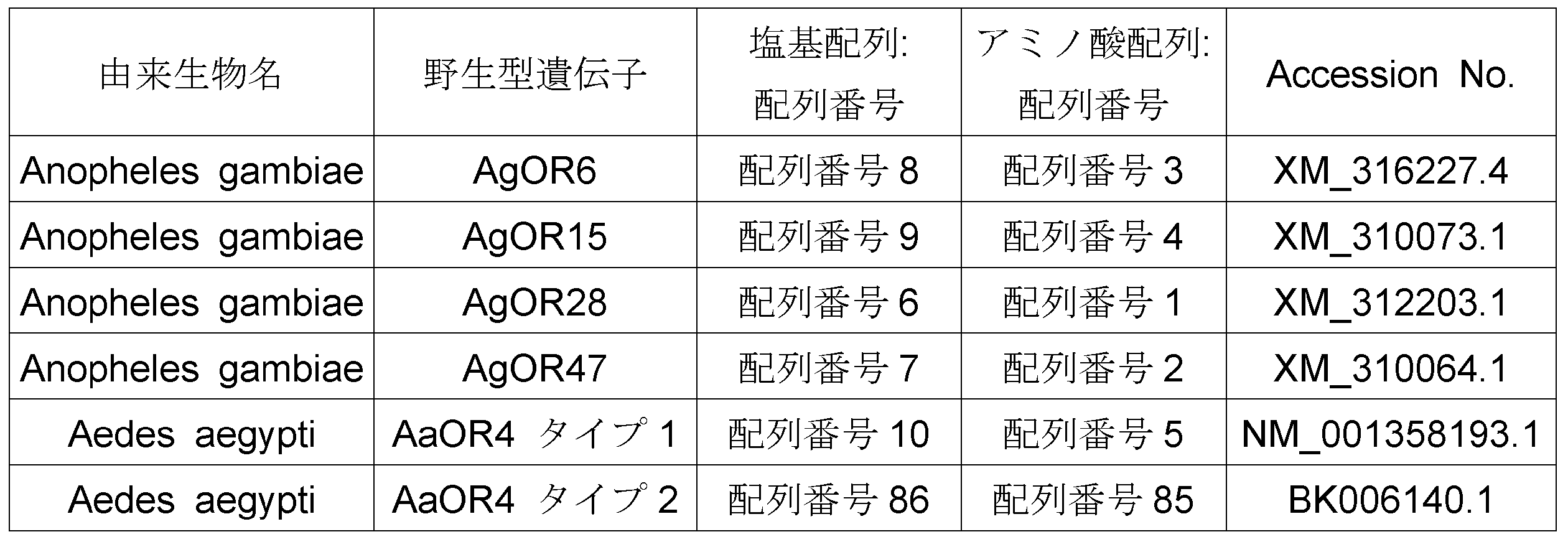
嗅覚受容体(野生型AgOR28及び変異型AgOR28)のニトロ化合物に対する応答活性を測定した。
<比較例1.野生型AgOR28発現プラスミドの作製>
いずれか一方のDNA鎖に、野生型AgOR28(アミノ酸配列:配列番号1)のコード配列(塩基配列:配列番号6)を有する二本鎖DNAを合成して、pcDNA3.1に導入して、野生型AgOR28発現プラスミド(pcDNA3.1-AgOR28)を得た。
野生型AgOR28のアミノ酸配列において25番目のアミノ酸残基であるトレオニンがリジンに変異した変異型AgOR28(T25K変異)(アミノ酸配列:配列番号11)のコード配列(塩基配列:配列番号12)を含むプラスミド(pcDNA3.1)を、以下のように作製した。
野生型AgOR28のアミノ酸配列において31番目のアミノ酸残基であるプロリンがトレオニンに変異した変異型AgOR28(P31T変異)(アミノ酸配列:配列番号15)のコード配列(塩基配列:配列番号16)を含むプラスミド(pcDNA3.1)を、作製した。具体的には、PCRプライマーとして、プライマーF:CAGATCCAGAACAGCACCATCGACCTGTACGTG(配列番号17)及びプライマーR:CACGTACAGGTCGATGGTGCTGTTCTGGATCTG(配列番号18)を使用する以外は、比較例2と同様にして作製した。
野生型AgOR28のアミノ酸配列において52番目から73番目までの22アミノ酸を連続して欠失した変異型AgOR28(22a.a欠失)(アミノ酸配列:配列番号21)のコード配列(塩基配列:配列番号22)を含むプラスミド(pcDNA3.1)を、作製した。具体的には、PCRプライマーとして、プライマーF1:TACCGAGCTCGGATCATGGCCAGACTGGTGCTG(配列番号23)、プライマーR1:GATATCTGCAGAATT TTACTGCTGGTTGATGGTC(配列番号24)、プライマーF2: GCCAGCCTGTGCGTGCCCCAGTTCACCTACCTGGTGGTGGACACCAAG(配列番号90)、プライマーR2:CACCAGGTAGGTGAACTGGGGCACGCACAGGCTGGCGATAGGGATG(配列番号91)を合成した。野生型AgOR28を鋳型として、プライマーF1とプライマーR2を用いたPCRとプライマーF2とプライマーR1を用いたPCRを実施し、それぞれの増幅産物をアガロースゲルで電気泳動し精製した。精製産物を1:1のモル比で混合し、95℃ 5分間後、室温で5分間静置した。この混合液10μLを含む最終液量50μLの反応液(1U KOD -Plus- Neo DNA polymerase (TOYOBO)、1.5mM MgSO4 (TOYOBO)、0.2mM dNTPs Mix (TOYOBO)、1 x PCR Buffer for KOD plus neo PCR (TOYOBO))を調製し、94℃ 2分の後、95℃ 30秒、63℃ 30秒、68℃ 1分50秒を1サイクルとする反応を2サイクル行った。この反応液5μLをとり、プライマーF1とプライマーR1を用いたPCRを実施した。PCR反応液は、1 x PCR buffer for KOD -Plus- Neo、0.2 mM dNTPs、1.5 mM MgSO4、0.2μM primer、1 U KOD -Plus- Neo DNA polymeraseの組成で調製し、最終液量を50 μLとし、プレ変性 94℃ 2分の後、変性 98℃ 10秒、アニーリング63 ℃30秒、伸長反応 68℃ 1分50秒を1サイクルとする反応を30サイクル行った。得られたPCR増幅断片と、BamHIおよびEcoRIによって切断したpcDNA3.1発現プラスミド断片を、In-Fusion HD Cloning Kit(タカラバイオ株式会社)を用いて、添付のプロトコルに則ってIn-Fusion反応を行って連結した。反応終了後、In-Fusion反応液を用いて、大腸菌(DH5α)にトランスフォームした。トランスフォーム後の大腸菌を、アンピシリンを添加済みのLBプレートに播種して、37℃で培養してコロニーを形成させた。コロニーを2つ選択し、再度LB液体培地で培養した。その後、それらが保持するプラスミドの塩基配列を決定し、発現プラスミドを得た。
既報(特開2018-50556号公報)に従って、ショウジョウバエ共受容体の一部とミツバチ共受容体の一部との融合タンパク質Dm(NT-TM4)AmORCO(アミノ酸配列:配列番号92)のコード配列(塩基配列:配列番号93)を含むプラスミド(pcDNA3.1)を、作製した。Dm(NT-TM4)AmORCOでは、N末端領域(NT)から第4膜貫通ドメイン(TM4)までのアミノ酸配列(そのN末端アミノ酸残基から234番目のアミノ酸残基までのアミノ酸配列)がショウジョウバエ共受容体由来(Dm(NT-TM4)であり、第2細胞内ループからC末端領域までのアミノ酸配列がミツバチ共受容体由来(Am(IC2-CT))である。
HEK293FT細胞(Invitrogen社から購入)を10cmシャーレに3×10^6cells/シャーレで播種し、10% FBSを含むDMEM培地(ナカライテスク社製)中で、37℃、5%CO2条件下にて約24時間培養した。作製したいずれかの嗅覚受容体発現プラスミド1.5μgと、嗅覚受容体共受容体発現プラスミド3.0μgと、GFP-イクオリン(GAP)発現プラスミド8μgとを、12.5μLのPlus試薬及び31.25μLのリポフェクトアミンLTX(Invitrogen社製)と混合し、10分間保持した。その後、この混合液を上記細胞にトランスフェクションした。トランスフェクション開始4時間後に96wellプレートに9×10^4cells/wellで播種し、10%FBSを含むDMEM培地(ナカライテスク社製)中で、37℃、5%CO2条件下にて約24時間培養した。これにより、嗅覚受容体発現プラスミド、嗅覚受容体共受容体発現プラスミド、及びGAP発現プラスミドがトランジェントに導入された形質転換細胞を得た。
GFP-イクオリン(GAP)はカルシウムイオンと結合すると、セレンテラジン等の基質の存在下で活性化されて緑色蛍光を発する。したがって、GAPを発現する細胞の細胞内カルシウムイオン濃度の上昇は直接、蛍光量の増大として現れることになるため、被検物質の添加により嗅覚受容体複合体がイオンチャネルとして機能しているかどうかを蛍光量の変化から測定することができる。
嗅覚受容体(野生型AgOR47及び変異型AgOR47)のニトロ化合物に対する応答活性を測定した。
<比較例5.野生型AgOR47発現プラスミドの作製>
いずれか一方のDNA鎖に、野生型AgOR47(アミノ酸配列:配列番号2)のコード配列(塩基配列:配列番号7)を有する二本鎖DNAを合成して、pcDNA3.1に導入して、野生型AgOR47発現プラスミド(pcDNA3.1-AgOR47)を得た。
野生型AgOR47のアミノ酸配列において71番目のアミノ酸残基であるロイシンがフェニルアラニンに変異した変異型AgOR47(L71F変異)(アミノ酸配列:配列番号35)のコード配列(塩基配列:配列番号36)を含むプラスミド(pcDNA3.1)を、以下のように作製した。
野生型AgOR47のアミノ酸配列において134番目のアミノ酸残基であるイソロイシンがバリンに変異した変異型AgOR47(I134V変異)(アミノ酸配列:配列番号39)のコード配列(塩基配列:配列番号40)を含むプラスミド(pcDNA3.1)を、作製した。具体的には、PCRプライマーとして、プライマーF:CATCTTCACCAACGGCGTCGTGTTCGCCATGAC(配列番号41)及びプライマーR:GGTCATGGCGAACACGACGCCGTTGGTGAAGATG(配列番号42)を使用する以外は、比較例6と同様にして作製した。
野生型AgOR47のアミノ酸配列において140番目のアミノ酸残基であるセリンがグリシンに変異した変異型AgOR47(S140G変異)(アミノ酸配列:配列番号43)のコード配列(塩基配列:配列番号44)を含むプラスミド(pcDNA3.1)を、作製した。具体的には、PCRプライマーとして、プライマーF:GTGTTCGCCATGACCGGCTCTACAATCGCCGG(配列番号45)及びプライマーR:CCGGCGATTGTAGAGCCGGTCATGGCGAACAC(配列番号46)を使用する以外は、比較例6と同様にして作製した。
野生型AgOR47のアミノ酸配列において147番目のアミノ酸残基であるフェニルアラニンがロイシンに変異した変異型AgOR47(F147L変異)(アミノ酸配列:配列番号47)のコード配列(塩基配列:配列番号48)を含むプラスミド(pcDNA3.1)を、作製した。具体的には、PCRプライマーとして、プライマーF:CAATCGCCGGCATGTTCTACACCTACTACACC(配列番号49)及びプライマーR:GGTGTAGTAGGTGTAGAACATGCCGGCGATTG(配列番号50)を使用する以外は、比較例6と同様にして作製した。
野生型AgOR47のアミノ酸配列において5番目のアミノ酸残基であるアスパラギン酸がグルタミン酸に変異した変異型AgOR47(D5E変異)(アミノ酸配列:配列番号51)のコード配列(塩基配列:配列番号52)を含むプラスミド(pcDNA3.1)を、作製した。具体的には、PCRプライマーとして、プライマーF:ATGGTTGTGTTCGAACCACTGGACGACCC(配列番号53)及びプライマーR:GGGTCGTCCAGTGGTTCGAACACAACCAT(配列番号54)を使用する以外は、比較例6と同様にして作製した。
野生型AgOR47のアミノ酸配列において235番目のアミノ酸残基であるリジンがグルタミンに変異した変異型AgOR47(K235Q変異)(アミノ酸配列:配列番号55)のコード配列(塩基配列:配列番号56)を含むプラスミド(pcDNA3.1)を、作製した。具体的には、PCRプライマーとして、プライマーF:GATCGGACCCGTTGACCAGTATACTGCAGAGCTG(配列番号57)及びプライマーR:CAGCTCTGCAGTATACTGGTCAACGGGTCCGATC(配列番号58)を使用する以外は、比較例6と同様にして作製した。
野生型AgOR47のアミノ酸配列において241番目のアミノ酸残基であるアスパラギンがセリンに変異した変異型AgOR47(N241S変異)(アミノ酸配列:配列番号59)のコード配列(塩基配列:配列番号60)を含むプラスミド(pcDNA3.1)を、作製した。具体的には、PCRプライマーとして、プライマーF:GTATACTGCAGAGCTGAGTGAAATTATCGAACTTCAC(配列番号61)及びプライマーR:GTGAAGTTCGATAATTTCACTCAGCTCTGCAGTATAC(配列番号62)を使用する以外は、比較例6と同様にして作製した。
野生型AgOR47のアミノ酸配列において60番目のアミノ酸残基であるロイシンがプロリンに変異した変異型AgOR47(L60P変異)(アミノ酸配列:配列番号31)のコード配列(塩基配列:配列番号32)を含むプラスミド(pcDNA3.1)を、作製した。具体的には、PCRプライマーとして、プライマーF:CTACGAGACAATCCCGCAGTGCTTCCGGTC(配列番号33)及び及びプライマーR:GACCGGAAGCACTGCGGGATTGTCTCGTAG(配列番号34))を使用する以外は、比較例6と同様にして作製した。
野生型AgOR47のアミノ酸配列において138番目のアミノ酸残基であるメチオニンがイソロイシンに変異した変異型AgOR47(M138I変異)(アミノ酸配列:配列番号63)のコード配列(塩基配列:配列番号64)を含むプラスミド(pcDNA3.1)を、作製した。具体的には、PCRプライマーとして、プライマーF:GGCGTCGTGTTCGCCATCACCGGCTCTACAATC(配列号番65)及びプライマーR:GATTGTAGAGCCGGTGATGGCGAACACGACGCC(配列番号66)を使用する以外は、比較例6と同様にして作製した。
野生型AgOR47のアミノ酸配列において152番目のアミノ酸残基であるアラニンがトレオニンに変異した変異型AgOR47(A152T変異)(アミノ酸配列:配列番号67)のコード配列(塩基配列:配列番号68)を含むプラスミド(pcDNA3.1)を、作製した。具体的には、PCRプライマーとして、プライマーF:GGAATGTTTTACACCTACTACACGAAAGATTCGGAATATTCC(配列番号69)及びプライマーR:GGAATATTCCGAATCTTTCGTGTAGTAGGTGTAAAACATTCC(配列番号70)を使用する以外は、比較例6と同様にして作製した。
野生型AgOR47のアミノ酸配列においてL60P-L71F-I134V-S140G-F147L 5重変異を有する変異型AgOR47(L60P-L71F-I134V-S140G-F147L 5重変異)(アミノ酸配列:配列番号108)のコード配列(塩基配列:配列番号109)を含むプラスミド(pcDNA3.1)を、作製した。具体的には、PCRの鋳型として変異型AgOR47(L60P重変異)発現プラスミド(実施例5)を鋳型として、上記比較例で使用したプライマーを使用して順次変異を導入して作製した。
野生型AgOR47のアミノ酸配列においてL60P-L71F-I134V-M138I-S140G-F147L-A152T 7重変異を有する変異型AgOR47(L60P-L71F-I134V-M138I-S140G-F147L-A152T 7重変異)(アミノ酸配列:配列番号77)のコード配列(塩基配列:配列番号78)を含むプラスミド(pcDNA3.1)を、作製した。具体的には、まず、PCRの鋳型として変異型AgOR47(L60P-L71F-I134V-S140G-F147L 5重変異)発現プラスミド(実施例11)を鋳型として、上記実施例及び比較例で使用したプライマーを使用して順次変異を導入して作製した。
野生型AgOR47のアミノ酸配列においてL60P-L71F-I134V-M138I-S140G-F147L 6重変異を有する変異型AgOR47(L60P-L71F-I134V-M138I-S140G-F147L 6重変異)(アミノ酸配列:配列番号79)のコード配列(塩基配列:配列番号80)を含むプラスミド(pcDNA3.1)を、作製した。具体的には、PCRの鋳型として変異型AgOR47(L60P-L71F-I134V-S140G-F147L 5重変異)発現プラスミド(実施例11)を使用して、上記実施例で使用したプライマーを使用して変異を導入して作製した。
試験例1-2と同様にして発現プラスミドを細胞へ導入し、試験例1-3と同様にして活性測定した。本試験例では、被検物質として、4-アミノ-2,6-ジニトロトルエン、3-トリフルオロメチル-4-ニトロフェノール、2,3-ジニトロトルエン、2,6-ジニトロトルエン、又は2,3-ジメチル-2,3-ジニトロブタンを使用した。
嗅覚受容体(野生型AgOR6及び変異型AgOR6)のニトロ化合物に対する応答活性を測定した。
<比較例13.野生型AgOR6発現プラスミドの作製>
いずれか一方のDNA鎖に、野生型AgOR6(アミノ酸配列:配列番号3)のコード配列(塩基配列:配列番号8)を有する二本鎖DNAを合成して、pcDNA3.1に導入して、野生型AgOR6発現プラスミド(pcDNA3.1-AgOR6)を得た。
野生型AgOR6のアミノ酸配列において114番目のアミノ酸残基であるセリンがアラニンに変異し、120番目のアミノ酸残基であるアラニンがグルタミン酸に変異し、162番目のアミノ酸残基であるヒスチジンがチロシンに変異し、186番目のアミノ酸残基であるバリンがアラニンに変異し、352番目のアミノ酸残基であるバリンがメチオニンに変異し、368番目のアミノ酸残基であるセリンがプロリンに変異し、79アミノ酸領域が置換(第3細胞外ループから第3細胞内ループまでの領域における11個の荷電アミノ酸の非荷電アミノ酸への置換を含む)された変異型AgOR6(アミノ酸配列:配列番号81)のコード配列(塩基配列:配列番号82)を含むプラスミド(pcDNA3.1)を、作製した。具体的には、いずれか一方のDNA鎖に、変異型AgOR6(アミノ酸配列:配列番号81)のコード配列(塩基配列:配列番号82)を有する二本鎖DNAを合成して、pcDNA3.1に導入して、変異型AgOR6発現プラスミド(pcDNA3.1-AgOR6)を得た。
。
試験例1-2と同様にして発現プラスミドを細胞へ導入し、試験例1-3と同様にして活性測定した。本試験例では、被検物質として、2-ニトロアニリンを使用した。
嗅覚受容体(野生型AgOR15及び変異型AgOR15)のニトロ化合物に対する応答活性を測定した。
<比較例14.野生型AgOR15発現プラスミドの作製>
いずれか一方のDNA鎖に、野生型AgOR15(アミノ酸配列:配列番号4)のコード配列(塩基配列:配列番号9)を有する二本鎖DNAを合成して、pcDNA3.1に導入して、野生型AgOR15発現プラスミド(pcDNA3.1-AgOR15)を得た。
野生型AgOR15のアミノ酸配列において61番目のアミノ酸残基であるメチオニンがトレオニンに変異し、104番目のアミノ酸残基であるシステインがアルギニンに変異し、112番目のアミノ酸残基であるアルギニンがグルタミンに変異し、181番目のアミノ酸残基であるグリシンがアラニンに変異し、189番目のアミノ酸残基であるバリンがイソロイシンに変異し、327番目のアミノ酸残基であるイソロイシンがバリンに変異してなる変異型AgOR15(アミノ酸配列:配列番号83)のコード配列(塩基配列:配列番号84)を含むプラスミド(pcDNA3.1)を、作製した。具体的には、
野生型AgOR15発現プラスミドを鋳型にして、以下のプライマーを使用し、M61T-C104R-R112Q-G181A-V189I-I327V6重変異体を作製した。
CCCGACCTTGAGATAACGATCATTGGCACCGCTG(塩基配列:配列番号94)およびCAGCGGTGCCAATGATCGTTATCTCAAGGTCGGG(塩基配列:配列番号95) C104R変異導入用プライマーセット
CCCAAACGGTTATCCGTGCGTCACCTCCCGCG(塩基配列:配列番号96)およびCGCGGGAGGTGACGCACGGATAACCGTTTGGG(塩基配列:配列番号97) R112Q変異導入用プライマーセット
CCTCCCGCGGTGGTCCAGCATTTGACGACCCAG(塩基配列:配列番号98)およびCTGGGTCGTCAAATGCTGGACCACCGCGGGAGG(塩基配列:配列番号99) G181A変異導入用プライマーセット
CAGACTCGCACCTCGGCTACGCACTACCTGATC(塩基配列:配列番号100)およびGATCAGGTAGTGCGTAGCCGAGGTGCGAGTCTG(塩基配列:配列番号101) V189I変異導入用プライマーセット
CTACCTGATCTTCGGTATCGTCATGACGCCTACC(塩基配列:配列番号102)およびGGTAGGCGTCATGACGATACCGAAGATCAGGTAG(塩基配列:配列番号103) I327V変異導入用プライマーセット
CGTGTAGCACATACCGTTTACGAAAGTGGCTGG(塩基配列:配列番号104)およびCCAGCCACTTTCGTAAACGGTATGTGCTACACG(塩基配列:配列番号105)。
試験例1-2と同様にして発現プラスミドを細胞へ導入し、試験例1-3と同様にして活性測定した。本試験例では、被検物質として、2-ニトロアニリンを使用した。
嗅覚受容体(2種の野生型AaOR4)のニトロ化合物に対する応答活性を測定した。
<比較例15.野生型AaOR4タイプ1発現プラスミドの作製>
いずれか一方のDNA鎖に、野生型AaOR4タイプ1(アミノ酸配列:配列番号5)のコード配列(塩基配列:配列番号10)を有する二本鎖DNAを合成して、pcDNA3.1に導入して、野生型AaOR4タイプ1発現プラスミド(pcDNA3.1- AaOR4タイプ1)を得た。
野生型AaOR4タイプ1のアミノ酸配列において178番目のアミノ酸残基であるロイシンがプロリンに変異してなる野生型AaOR4タイプ2(アミノ酸配列:配列番号85)のコード配列(塩基配列:配列番号86)を含むプラスミド(pcDNA3.1)を、作製した。具体的には、以下のようにして作製した。
試験例1-2と同様にして発現プラスミドを細胞へ導入し、試験例1-3と同様にして活性測定した。本試験例では、被検物質として、2,4-ジニトロトルエン、4-ニトロトルエン、又はトルエンを使用した。
マウス嗅覚受容体Olfr256_17を導入した細胞がニトロ化合物に反応することが知られている。そのような細胞は、マウス嗅覚受容体Olfr256_17、Gタンパク質(Gα15_olf)、受容体輸送タンパク質(RTP1S)、及びGAPをコードするプラスミドを導入することにより作製できることが知られている。そこで、本試験例では、このような細胞(マウス嗅覚受容体発現細胞)を作製し、本発明の一実施態様で得られた細胞(変異型AgOR28(T25K変異、22a.a欠失)(実施例2)が導入された細胞(試験例1-2))と、ニトロ化合物応答性を比較した。
変異型AgOR28(T25K-P31T 2重変異、22a.a欠失)(実施例4)の第7膜貫通領域においてさらにアミノ酸置換(S368A, Q376A, R380A, S382L, S385A)が導入されてなる変異型AgOR28(T25K-P31T-S368A-Q376A-R380A-S382L-S385A 7重変異、22a.a欠失)の発現プラスミドを、実施例4等と同様にPCRによる変異導入技術を利用して作製した。試験例1-2と同様にして発現プラスミドを細胞へ導入し、試験例1-3と同様にして活性測定した。本試験例では、被検物質として、2,3-ジニトロトルエンを使用した。
Claims (10)
- (1)配列番号1に示されるアミノ酸配列1A又は前記アミノ酸配列1Aと80%以上の同一性を有するアミノ酸配列1Bが変異してなり、変異1a:第1細胞外ループの一部又は全部の領域の欠失を含む、アミノ酸配列1C;
(2)配列番号2に示されるアミノ酸配列2A又は前記アミノ酸配列2Aと80%以上の同一性を有するアミノ酸配列2Bが変異してなり、変異2a:前記アミノ酸配列2AにおけるL60、M138及びA152からなる群より選択される少なくとも1種のアミノ酸の置換2ax又は前記アミノ酸配列2Bにおける前記置換2axに対応する置換2ayを含む、アミノ酸配列2C;
(3)配列番号3に示されるアミノ酸配列3A又は前記アミノ酸配列3Aと80%以上の同一性を有するアミノ酸配列3Bが変異してなり、変異3a:前記アミノ酸配列3AにおけるS114、A120、H162、V186、V352、及びS368からなるアミノ酸群の置換3ax又は前記アミノ酸配列3Bにおける前記置換3axに対応する置換3ay、並びに変異3b:第3細胞外ループから第3細胞内ループまでの領域における荷電アミノ酸の非荷電アミノ酸への置換を含む、アミノ酸配列3C;
(4)配列番号4に示されるアミノ酸配列4A又は前記アミノ酸配列4Aと80%以上の同一性を有するアミノ酸配列4Bが変異してなり、変異4a:前記アミノ酸配列4AにおけるM61、C104、R112、G181、V189、及びI327からなるアミノ酸群の置換4ax又は前記アミノ酸配列4Bにおける前記置換4axに対応する置換4ayを含む、アミノ酸配列4C; 又は
(5)配列番号5に示されるアミノ酸配列5A又は前記アミノ酸配列5Aと80%以上の同一性を有するアミノ酸配列5Bが変異してなり、変異5a:前記アミノ酸配列5AにおけるL178のアミノ酸の置換5ax又は前記アミノ酸配列5Bにおける前記置換5axに対応する置換5ayを含む、アミノ酸配列5C
を含む嗅覚受容体タンパク質からなる、ニトロ化合物検出素子。 - 前記変異1aにおける欠失領域がN末端のアミノ酸から5~30アミノ酸の領域であり;前記変異2aにおけるL60の変異後のアミノ酸がプロリンであり、M138の変異後のアミノ酸が分岐鎖アミノ酸であり、且つ/或いはA152の変異後のアミノ酸が親水性中性アミノ酸であり;
前記変異3aにおけるS114の変異後のアミノ酸が脂肪族アミノ酸であり、A120の変異後のアミノ酸が酸性アミノ酸であり、H162の変異後のアミノ酸が芳香族アミノ酸であり、V186の変異後のアミノ酸が脂肪族アミノ酸であり、V352の変異後のアミノ酸が含硫アミノ酸であり、S368の変異後のアミノ酸がプロリンであり;
前記変異3bにおける非荷電アミノ酸への前記置換の数が6~18であり;
前記変異4aにおけるM61の変異後のアミノ酸が親水性中性アミノ酸であり、C104の変異後のアミノ酸が塩基性アミノ酸であり、R112の変異後のアミノ酸が親水性中性アミノ酸であり、G181の変異後のアミノ酸が脂肪族アミノ酸であり、V189の変異後のアミノ酸が分岐鎖アミノ酸であり、且つI327の変異後のアミノ酸が分岐鎖アミノ酸であり;
前記変異5aにおけるL178の変異後のアミノ酸がプロリンである、
請求項1に記載のニトロ化合物検出素子。 - 前記変異1aにおける欠失領域がN末端のアミノ酸から15~25アミノ酸の領域であり;前記変異2aにおけるL60の変異後のアミノ酸がプロリンであり、M138の変異後のアミノ酸がイソロイシンであり、且つ/或いはA152の変異後のアミノ酸がトレオニンであり;前記変異3aにおけるS114の変異後のアミノ酸がアラニンであり、A120の変異後のアミノ酸がグルタミン酸であり、H162の変異後のアミノ酸がチロシンであり、V186の変異後のアミノ酸がアラニンであり、V352の変異後のアミノ酸がメチオニンであり、S368の変異後のアミノ酸がプロリンであり;
前記変異3bにおける非荷電アミノ酸への前記置換の数が8~14であり;
前記変異4aにおけるM61の変異後のアミノ酸がトレオニンであり、C104の変異後のアミノ酸がアルギニンであり、R112の変異後のアミノ酸がグルタミンであり、G181の変異後のアミノ酸がアラニンであり、V189の変異後のアミノ酸がイソロイシンであり、且つI327の変異後のアミノ酸がバリンであり;
前記変異5aにおけるL178の変異後のアミノ酸がプロリンである、
請求項1又は2に記載のニトロ化合物検出素子。 - 前記ニトロ化合物が、ベンゼン環にニトロ基が直接連結してなる構造を含む化合物、且つ/或いはニトロ基を2つ以上含む化合物である、請求項1~3のいずれかに記載のニトロ化合物検出素子。
- 前記嗅覚受容体タンパク質が、
対応する野生型嗅覚受容体タンパク質中の一般式(1):
φ7X1X2Z1X3X4Z2Z3φ6Uφ5φ4φ3φ2φ1X5X6
[式中、X1~X6及びZ1~Z3は野生型昆虫嗅覚受容体のアミノ酸配列に由来するアミノ酸を示し、φ1は疎水性アミノ酸を示し、φ2~φ7はそれぞれ独立して無電荷極性アミノ酸又は疎水性アミノ酸を示し、Uは無電荷極性アミノ酸を示す。]
で示されるアミノ酸配列Aが変異してなるアミノ酸配列Bを含み、
下記条件1~3:
(条件1)前記アミノ酸配列Bにおいて、X3及び/又はX4が置換しており、X3が分岐鎖アミノ酸であり且つ/或いはX4が無電荷極性アミノ酸であること、
(条件2)前記アミノ酸配列AにおいてX5及びX6が共に正電荷極性アミノ酸である場合に、前記アミノ酸配列Bにおいて、X6が正電荷極性アミノ酸以外のアミノ酸であること、及び(条件3)前記アミノ酸配列AにおいてX1及びX2の一方又は両方が正電荷極性アミノ酸である場合に、前記アミノ酸配列Bにおいて、X1及び/又はX2が置換しており、X1が無電荷極性アミノ酸であり且つ/或いはX2が疎水性アミノ酸であること、
からなる群より選択される少なくとも1種の条件を満たす、
請求項1~4のいずれかに記載のニトロ化合物検出素子。 - (1)配列番号1に示されるアミノ酸配列1A又は前記アミノ酸配列1Aと80%以上の同一性を有するアミノ酸配列1Bが変異してなり、変異1a:第1細胞外ループの一部又は全部の領域の欠失を含む、アミノ酸配列1C;
(2)配列番号2に示されるアミノ酸配列2A又は前記アミノ酸配列2Aと80%以上の同一性を有するアミノ酸配列2Bが変異してなり、変異2a:前記アミノ酸配列2AにおけるL60、M138及びA152からなる群より選択される少なくとも1種のアミノ酸の置換2ax又は前記アミノ酸配列2Bにおける前記置換2axに対応する置換2ayを含む、アミノ酸配列2C;
(3)配列番号3に示されるアミノ酸配列3A又は前記アミノ酸配列3Aと80%以上の同一性を有するアミノ酸配列3Bが変異してなり、変異3a:前記アミノ酸配列3AにおけるS114、A120、H162、V186、V352、及びS368からなるアミノ酸群の置換3ax又は前記アミノ酸配列3Bにおける前記置換3axに対応する置換3ay、並びに変異3b:第3細胞外ループから第3細胞内ループまでの領域における荷電アミノ酸の非荷電アミノ酸への置換を含む、アミノ酸配列3C;又は
(4)配列番号4に示されるアミノ酸配列4A又は前記アミノ酸配列4Aと80%以上の同一性を有するアミノ酸配列4Bが変異してなり、変異4a:前記アミノ酸配列4AにおけるM61、C104、R112、G181、V189、及びI327からなるアミノ酸群の置換4ax又は前記アミノ酸配列4Bにおける前記置換4axに対応する置換4ayを含む、アミノ酸配列4C
を含む、嗅覚受容体タンパク質。 - 請求項6に記載の嗅覚受容体タンパク質のコード配列を含む、ポリヌクレオチド。
- 請求項7に記載のポリヌクレオチドを含む、細胞。
- 請求項8に記載の細胞を含む、非ヒト動物。
- 請求項1~5のいずれかに記載のニトロ化合物検出素子を含む脂質二重膜、細胞、又は前記細胞を含む非ヒト動物を備える、ニトロ化合物検出センサ。
Priority Applications (4)
| Application Number | Priority Date | Filing Date | Title |
|---|---|---|---|
| CN202180059241.1A CN116171107A (zh) | 2020-07-27 | 2021-07-21 | 硝基化合物检测元件 |
| EP21851121.0A EP4190901A4 (en) | 2020-07-27 | 2021-07-21 | ELEMENT FOR DETECTING NITRO COMPOUNDS |
| JP2022540236A JPWO2022024903A1 (ja) | 2020-07-27 | 2021-07-21 | |
| US18/006,997 US20230266301A1 (en) | 2020-07-27 | 2021-07-21 | Nitro compound detection element |
Applications Claiming Priority (2)
| Application Number | Priority Date | Filing Date | Title |
|---|---|---|---|
| JP2020126686 | 2020-07-27 | ||
| JP2020-126686 | 2020-07-27 |
Publications (1)
| Publication Number | Publication Date |
|---|---|
| WO2022024903A1 true WO2022024903A1 (ja) | 2022-02-03 |
Family
ID=80036856
Family Applications (1)
| Application Number | Title | Priority Date | Filing Date |
|---|---|---|---|
| PCT/JP2021/027267 Ceased WO2022024903A1 (ja) | 2020-07-27 | 2021-07-21 | ニトロ化合物検出素子 |
Country Status (6)
| Country | Link |
|---|---|
| US (1) | US20230266301A1 (ja) |
| EP (1) | EP4190901A4 (ja) |
| JP (1) | JPWO2022024903A1 (ja) |
| CN (1) | CN116171107A (ja) |
| TW (1) | TW202221020A (ja) |
| WO (1) | WO2022024903A1 (ja) |
Cited By (1)
| Publication number | Priority date | Publication date | Assignee | Title |
|---|---|---|---|---|
| WO2024225293A1 (ja) * | 2023-04-28 | 2024-10-31 | 住友化学株式会社 | センサタンパク質の活性測定用細胞の製造方法 |
Citations (4)
| Publication number | Priority date | Publication date | Assignee | Title |
|---|---|---|---|---|
| JP2014054218A (ja) * | 2012-09-13 | 2014-03-27 | Sumitomo Chemical Co Ltd | 忌避剤候補物質のスクリーニング方法 |
| WO2017106914A1 (en) * | 2015-12-22 | 2017-06-29 | Commonwealth Scientific And Industrial Research Organisation | Method of screening |
| JP2018050556A (ja) | 2016-09-29 | 2018-04-05 | 住友化学株式会社 | 嗅覚受容体共受容体 |
| WO2018062201A1 (ja) * | 2016-09-29 | 2018-04-05 | 住友化学株式会社 | 嗅覚受容体複合体及びそれを発現する細胞 |
Family Cites Families (2)
| Publication number | Priority date | Publication date | Assignee | Title |
|---|---|---|---|---|
| CN110467661A (zh) * | 2018-05-11 | 2019-11-19 | 中国农业科学院植物保护研究所 | 一种氨基酸序列及其在识别气味化合物中的应用 |
| TW202221013A (zh) * | 2020-07-27 | 2022-06-01 | 日商住友化學股份有限公司 | 突變型昆蟲嗅覺受體蛋白質 |
-
2021
- 2021-07-21 CN CN202180059241.1A patent/CN116171107A/zh active Pending
- 2021-07-21 US US18/006,997 patent/US20230266301A1/en active Pending
- 2021-07-21 TW TW110126722A patent/TW202221020A/zh unknown
- 2021-07-21 EP EP21851121.0A patent/EP4190901A4/en active Pending
- 2021-07-21 WO PCT/JP2021/027267 patent/WO2022024903A1/ja not_active Ceased
- 2021-07-21 JP JP2022540236A patent/JPWO2022024903A1/ja active Pending
Patent Citations (4)
| Publication number | Priority date | Publication date | Assignee | Title |
|---|---|---|---|---|
| JP2014054218A (ja) * | 2012-09-13 | 2014-03-27 | Sumitomo Chemical Co Ltd | 忌避剤候補物質のスクリーニング方法 |
| WO2017106914A1 (en) * | 2015-12-22 | 2017-06-29 | Commonwealth Scientific And Industrial Research Organisation | Method of screening |
| JP2018050556A (ja) | 2016-09-29 | 2018-04-05 | 住友化学株式会社 | 嗅覚受容体共受容体 |
| WO2018062201A1 (ja) * | 2016-09-29 | 2018-04-05 | 住友化学株式会社 | 嗅覚受容体複合体及びそれを発現する細胞 |
Non-Patent Citations (5)
| Title |
|---|
| DATABASE UNIPROTKB 12 April 2017 (2017-04-12), ANONYMOUS : "SubName: Full=Odorant receptor 28 {ECO:0000313|EnsemblMetazoa:AGAP002722-PA};", XP055890478, retrieved from UNIPROT Database accession no. A0A1S4GFY3 * |
| K. HOFMANNW. STOFFEL: "TMbase - a database of membrane spanning proteins segments", BIOL. CHEM. HOPPE-SEYLER, vol. 374, 1993, pages 166, Retrieved from the Internet <URL:https://(embnet.vital-it.ch/software/TMPRED_form.html> |
| KARLIN SALTSCHUL SF: "Applications and statistics for multiple high-scoring segments in molecular sequences", PROC NATL ACAD SCI USA., vol. 90, 1993, pages 5873 - 7, XP001030852, DOI: 10.1073/pnas.90.12.5873 |
| KARLIN SALTSCHUL SF: "Methods for assessing the statistical significance of molecular sequence features by using general scorings schemes", PROC NATL ACAD SCI USA., vol. 87, 1990, pages 2264 - 2268 |
| LI JHADDAD RCHEN SSANTOS VLUETJE CW: "A broadly tuned mouse odorant receptor that detects nitrotoluenes", J NEUROCHEM, vol. 121, no. 6, June 2012 (2012-06-01), pages 881 - 890, XP093021785, DOI: 10.1111/j.1471-4159.2012.07740.x |
Cited By (1)
| Publication number | Priority date | Publication date | Assignee | Title |
|---|---|---|---|---|
| WO2024225293A1 (ja) * | 2023-04-28 | 2024-10-31 | 住友化学株式会社 | センサタンパク質の活性測定用細胞の製造方法 |
Also Published As
| Publication number | Publication date |
|---|---|
| EP4190901A1 (en) | 2023-06-07 |
| EP4190901A4 (en) | 2024-11-27 |
| TW202221020A (zh) | 2022-06-01 |
| CN116171107A (zh) | 2023-05-26 |
| US20230266301A1 (en) | 2023-08-24 |
| JPWO2022024903A1 (ja) | 2022-02-03 |
Similar Documents
| Publication | Publication Date | Title |
|---|---|---|
| JP7835677B2 (ja) | 変異型昆虫嗅覚受容体タンパク質 | |
| Yan et al. | Microtubule acetylation is required for mechanosensation in Drosophila | |
| Komatsu et al. | Mutations in a cyclic nucleotide–gated channel lead to abnormal thermosensation and chemosensation in C. elegans | |
| Krautwurst et al. | Identification of ligands for olfactory receptors by functional expression of a receptor library | |
| Tobaben et al. | A trimeric protein complex functions as a synaptic chaperone machine | |
| Coburn et al. | A putative cyclic nucleotide–gated channel is required for sensory development and function in C. elegans | |
| BE1015281A5 (fr) | Recepteurs gaba-b. | |
| Zylka et al. | Discovery of a putative heme-binding protein family (SOUL/HBP) by two-tissue suppression subtractive hybridization and database searches | |
| Smith et al. | Defining specificity determinants of cGMP mediated gustatory sensory transduction in Caenorhabditis elegans | |
| JP7113415B1 (ja) | 変異型mad7タンパク質 | |
| JP6789051B2 (ja) | 嗅覚受容体複合体及びそれを発現する細胞 | |
| Long et al. | A new arylalkylamine N-acetyltransferase in silkworm (Bombyx mori) affects integument pigmentation | |
| JP2019074379A (ja) | 生ニンニク様香料素材のスクリーニング方法 | |
| JP2019037197A (ja) | ロースト様香料素材のスクリーニング方法 | |
| US20230266301A1 (en) | Nitro compound detection element | |
| JP2019129772A (ja) | 2−ヘプタノンの匂いを抑制する物質のスクリーニング方法 | |
| US20020009772A1 (en) | Novel human calcium channels and related probes, cell lines and mehtods | |
| Estrada et al. | Addition of positive charges at the C-terminal peptide region of CssII, a mammalian scorpion peptide toxin, improves its affinity for sodium channels Nav1. 6 | |
| JP2019129773A (ja) | 2−ノナノンの匂いを抑制する物質のスクリーニング方法 | |
| JP2019010058A (ja) | フェノリック香料素材のスクリーニング方法 | |
| Abramova et al. | Disruption of grin2A, an epilepsy-associated gene, produces altered spontaneous swim behavior in zebrafish | |
| US20040082773A1 (en) | Modified PAR receptors, their preparation and their uses for selecting compounds which modulate PAR activity | |
| JP2023172979A (ja) | ポリペプチド | |
| JP2000023680A (ja) | 昆虫アセチルコリン受容体サブユニットをコ―ドする核酸 | |
| EP2149606B1 (en) | Nucleic acid molecules and methods for identifying modulators of GPR84 activity |
Legal Events
| Date | Code | Title | Description |
|---|---|---|---|
| 121 | Ep: the epo has been informed by wipo that ep was designated in this application |
Ref document number: 21851121 Country of ref document: EP Kind code of ref document: A1 |
|
| ENP | Entry into the national phase |
Ref document number: 2022540236 Country of ref document: JP Kind code of ref document: A |
|
| WWE | Wipo information: entry into national phase |
Ref document number: 2021851121 Country of ref document: EP |
|
| NENP | Non-entry into the national phase |
Ref country code: DE |
|
| ENP | Entry into the national phase |
Ref document number: 2021851121 Country of ref document: EP Effective date: 20230227 |