WO2022025209A1 - 自己組織化ペプチド - Google Patents
自己組織化ペプチド Download PDFInfo
- Publication number
- WO2022025209A1 WO2022025209A1 PCT/JP2021/028175 JP2021028175W WO2022025209A1 WO 2022025209 A1 WO2022025209 A1 WO 2022025209A1 JP 2021028175 W JP2021028175 W JP 2021028175W WO 2022025209 A1 WO2022025209 A1 WO 2022025209A1
- Authority
- WO
- WIPO (PCT)
- Prior art keywords
- peptide
- self
- gel
- composition
- gelling
- Prior art date
- Legal status (The legal status is an assumption and is not a legal conclusion. Google has not performed a legal analysis and makes no representation as to the accuracy of the status listed.)
- Ceased
Links
Images




Classifications
-
- C—CHEMISTRY; METALLURGY
- C07—ORGANIC CHEMISTRY
- C07K—PEPTIDES
- C07K14/00—Peptides having more than 20 amino acids; Gastrins; Somatostatins; Melanotropins; Derivatives thereof
- C07K14/435—Peptides having more than 20 amino acids; Gastrins; Somatostatins; Melanotropins; Derivatives thereof from animals; from humans
- C07K14/475—Growth factors; Growth regulators
-
- A—HUMAN NECESSITIES
- A61—MEDICAL OR VETERINARY SCIENCE; HYGIENE
- A61K—PREPARATIONS FOR MEDICAL, DENTAL OR TOILETRY PURPOSES
- A61K47/00—Medicinal preparations characterised by the non-active ingredients used, e.g. carriers or inert additives; Targeting or modifying agents chemically bound to the active ingredient
- A61K47/30—Macromolecular organic or inorganic compounds, e.g. inorganic polyphosphates
- A61K47/42—Proteins; Polypeptides; Degradation products thereof; Derivatives thereof, e.g. albumin, gelatin or zein
-
- A—HUMAN NECESSITIES
- A61—MEDICAL OR VETERINARY SCIENCE; HYGIENE
- A61K—PREPARATIONS FOR MEDICAL, DENTAL OR TOILETRY PURPOSES
- A61K9/00—Medicinal preparations characterised by special physical form
- A61K9/0012—Galenical forms characterised by the site of application
- A61K9/0014—Skin, i.e. galenical aspects of topical compositions
-
- A—HUMAN NECESSITIES
- A61—MEDICAL OR VETERINARY SCIENCE; HYGIENE
- A61K—PREPARATIONS FOR MEDICAL, DENTAL OR TOILETRY PURPOSES
- A61K9/00—Medicinal preparations characterised by special physical form
- A61K9/0012—Galenical forms characterised by the site of application
- A61K9/0019—Injectable compositions; Intramuscular, intravenous, arterial, subcutaneous administration; Compositions to be administered through the skin in an invasive manner
-
- A—HUMAN NECESSITIES
- A61—MEDICAL OR VETERINARY SCIENCE; HYGIENE
- A61K—PREPARATIONS FOR MEDICAL, DENTAL OR TOILETRY PURPOSES
- A61K9/00—Medicinal preparations characterised by special physical form
- A61K9/06—Ointments; Bases therefor; Other semi-solid forms, e.g. creams, sticks, gels
-
- A—HUMAN NECESSITIES
- A61—MEDICAL OR VETERINARY SCIENCE; HYGIENE
- A61P—SPECIFIC THERAPEUTIC ACTIVITY OF CHEMICAL COMPOUNDS OR MEDICINAL PREPARATIONS
- A61P25/00—Drugs for disorders of the nervous system
-
- A—HUMAN NECESSITIES
- A61—MEDICAL OR VETERINARY SCIENCE; HYGIENE
- A61P—SPECIFIC THERAPEUTIC ACTIVITY OF CHEMICAL COMPOUNDS OR MEDICINAL PREPARATIONS
- A61P25/00—Drugs for disorders of the nervous system
- A61P25/28—Drugs for disorders of the nervous system for treating neurodegenerative disorders of the central nervous system, e.g. nootropic agents, cognition enhancers, drugs for treating Alzheimer's disease or other forms of dementia
-
- A—HUMAN NECESSITIES
- A61—MEDICAL OR VETERINARY SCIENCE; HYGIENE
- A61P—SPECIFIC THERAPEUTIC ACTIVITY OF CHEMICAL COMPOUNDS OR MEDICINAL PREPARATIONS
- A61P9/00—Drugs for disorders of the cardiovascular system
-
- A—HUMAN NECESSITIES
- A61—MEDICAL OR VETERINARY SCIENCE; HYGIENE
- A61P—SPECIFIC THERAPEUTIC ACTIVITY OF CHEMICAL COMPOUNDS OR MEDICINAL PREPARATIONS
- A61P9/00—Drugs for disorders of the cardiovascular system
- A61P9/10—Drugs for disorders of the cardiovascular system for treating ischaemic or atherosclerotic diseases, e.g. antianginal drugs, coronary vasodilators, drugs for myocardial infarction, retinopathy, cerebrovascula insufficiency, renal arteriosclerosis
-
- C—CHEMISTRY; METALLURGY
- C07—ORGANIC CHEMISTRY
- C07K—PEPTIDES
- C07K14/00—Peptides having more than 20 amino acids; Gastrins; Somatostatins; Melanotropins; Derivatives thereof
- C07K14/001—Peptides having more than 20 amino acids; Gastrins; Somatostatins; Melanotropins; Derivatives thereof by chemical synthesis
-
- C—CHEMISTRY; METALLURGY
- C07—ORGANIC CHEMISTRY
- C07K—PEPTIDES
- C07K14/00—Peptides having more than 20 amino acids; Gastrins; Somatostatins; Melanotropins; Derivatives thereof
- C07K14/435—Peptides having more than 20 amino acids; Gastrins; Somatostatins; Melanotropins; Derivatives thereof from animals; from humans
- C07K14/475—Growth factors; Growth regulators
- C07K14/4753—Hepatocyte growth factor; Scatter factor; Tumor cytotoxic factor II
-
- C—CHEMISTRY; METALLURGY
- C07—ORGANIC CHEMISTRY
- C07K—PEPTIDES
- C07K14/00—Peptides having more than 20 amino acids; Gastrins; Somatostatins; Melanotropins; Derivatives thereof
- C07K14/435—Peptides having more than 20 amino acids; Gastrins; Somatostatins; Melanotropins; Derivatives thereof from animals; from humans
- C07K14/475—Growth factors; Growth regulators
- C07K14/50—Fibroblast growth factor [FGF]
-
- C—CHEMISTRY; METALLURGY
- C07—ORGANIC CHEMISTRY
- C07K—PEPTIDES
- C07K14/00—Peptides having more than 20 amino acids; Gastrins; Somatostatins; Melanotropins; Derivatives thereof
- C07K14/435—Peptides having more than 20 amino acids; Gastrins; Somatostatins; Melanotropins; Derivatives thereof from animals; from humans
- C07K14/705—Receptors; Cell surface antigens; Cell surface determinants
-
- C—CHEMISTRY; METALLURGY
- C07—ORGANIC CHEMISTRY
- C07K—PEPTIDES
- C07K14/00—Peptides having more than 20 amino acids; Gastrins; Somatostatins; Melanotropins; Derivatives thereof
- C07K14/435—Peptides having more than 20 amino acids; Gastrins; Somatostatins; Melanotropins; Derivatives thereof from animals; from humans
- C07K14/78—Connective tissue peptides, e.g. collagen, elastin, laminin, fibronectin, vitronectin or cold insoluble globulin [CIG]
-
- C—CHEMISTRY; METALLURGY
- C07—ORGANIC CHEMISTRY
- C07K—PEPTIDES
- C07K17/00—Carrier-bound or immobilised peptides; Preparation thereof
- C07K17/02—Peptides being immobilised on, or in, an organic carrier
- C07K17/04—Peptides being immobilised on, or in, an organic carrier entrapped within the carrier, e.g. gel, hollow fibre
-
- C—CHEMISTRY; METALLURGY
- C07—ORGANIC CHEMISTRY
- C07K—PEPTIDES
- C07K7/00—Peptides having 5 to 20 amino acids in a fully defined sequence; Derivatives thereof
- C07K7/04—Linear peptides containing only normal peptide links
- C07K7/06—Linear peptides containing only normal peptide links having 5 to 11 amino acids
-
- C—CHEMISTRY; METALLURGY
- C07—ORGANIC CHEMISTRY
- C07K—PEPTIDES
- C07K7/00—Peptides having 5 to 20 amino acids in a fully defined sequence; Derivatives thereof
- C07K7/04—Linear peptides containing only normal peptide links
- C07K7/08—Linear peptides containing only normal peptide links having 12 to 20 amino acids
-
- C—CHEMISTRY; METALLURGY
- C12—BIOCHEMISTRY; BEER; SPIRITS; WINE; VINEGAR; MICROBIOLOGY; ENZYMOLOGY; MUTATION OR GENETIC ENGINEERING
- C12N—MICROORGANISMS OR ENZYMES; COMPOSITIONS THEREOF; PROPAGATING, PRESERVING, OR MAINTAINING MICROORGANISMS; MUTATION OR GENETIC ENGINEERING; CULTURE MEDIA
- C12N5/00—Undifferentiated human, animal or plant cells, e.g. cell lines; Tissues; Cultivation or maintenance thereof; Culture media therefor
- C12N5/0068—General culture methods using substrates
-
- A—HUMAN NECESSITIES
- A61—MEDICAL OR VETERINARY SCIENCE; HYGIENE
- A61K—PREPARATIONS FOR MEDICAL, DENTAL OR TOILETRY PURPOSES
- A61K38/00—Medicinal preparations containing peptides
-
- C—CHEMISTRY; METALLURGY
- C07—ORGANIC CHEMISTRY
- C07K—PEPTIDES
- C07K2319/00—Fusion polypeptide
-
- C—CHEMISTRY; METALLURGY
- C12—BIOCHEMISTRY; BEER; SPIRITS; WINE; VINEGAR; MICROBIOLOGY; ENZYMOLOGY; MUTATION OR GENETIC ENGINEERING
- C12N—MICROORGANISMS OR ENZYMES; COMPOSITIONS THEREOF; PROPAGATING, PRESERVING, OR MAINTAINING MICROORGANISMS; MUTATION OR GENETIC ENGINEERING; CULTURE MEDIA
- C12N2533/00—Supports or coatings for cell culture, characterised by material
- C12N2533/50—Proteins
Definitions
- the present invention relates to a gelation composition containing a self-assembling peptide, a gelling agent, and a gelling agent as active ingredients, a composition for preparing a sustained release gel, a sustained release gel, and a method for producing a sustained release gel.
- Peptides that can form hydrogels are used for culturing cells and tissues as biomaterials with excellent biocompatibility and biodegradability, and have been increasingly applied to the field of regenerative medicine in recent years. Has been done. For example, it is expected to be applied as a scaffolding material (artificial extracellular matrix, cell scaffolding material, etc.) that adheres to cells and organs inside and outside the living body, and as a regenerative medical material for tissue regeneration.
- Non-Patent Documents 1 to 5 As the peptide gelling agent conventionally used, gelatin and collagen extracted from animal tissues, matrigel derived from mouse sarcoma cells, and the like have been widely used for culturing cells and tissues.
- animal-derived peptide gelling agents do not always have a uniform molecular weight distribution and component composition, and the quality varies from production lot to production lot.
- Non-Patent Documents 1 to 5 when introduced into a living body, the risk of causing allergies or unknown infectious diseases due to trace components or contamination mixed in the extract cannot be avoided (Non-Patent Documents 1 to 5).
- the synthetic small molecule peptide gelling agent can be synthesized with high purity by solution synthesis or solid phase synthesis as a peptide having a specific amino acid sequence. Therefore, there is an advantage that the quality of each production lot is stable and the contamination is extremely small.
- Synthetic low-molecular-weight peptide gelling agents include (i) an amphipathic peptide in which one or two amino acids are linked to an aromatic site (such as a cinnamoyl group or Fmoc group), and (ii) the terminal of a ⁇ -sheet-forming peptide.
- an amphipathic peptide in which a long-chain alkyl chain (palmitoyle group, etc.) is linked to the peptide and (iii) an amphipathic peptide in which hydrophilic amino acids and hydrophobic amino acids are alternately linked (Non-Patent Documents 6 to 7). ).
- the synthetic small molecule peptide gelling agent corresponding to (iii) above is considered to be particularly suitable for clinical application because it does not contain an unnatural skeleton and can be composed only of natural amino acids (Non-Patent Documents 8 to 10). ..
- the synthetic small molecule peptide gelling agents developed so far have problems that they are difficult to gel under physiological conditions and that the production cost is high due to the large chain length.
- a biofunctional molecule such as a protein may be complexed with the peptide gelling agent, or a further complexed biofunctional molecule may be sustained from the gel for a long period of time.
- it is necessary to be able to gel under physiological temperature and physiological pH conditions where the biofunctional molecule does not denature. ..
- the (RADA) 4 peptide which is a representative example of (iii) above, gels under acidic conditions, but does not gel under physiological pH conditions. Under acidic conditions, many biofunctional molecules such as proteins are denatured, reducing their activity or inactivating them. Therefore, it is difficult to complex biofunctional molecules such as proteins in a hydrogel formed from the (RADA) 4 peptide in an active state, and its availability as a regenerative medicine material is limited. In addition, a technique for continuously releasing the complexed biofunctional molecule from the gel over a long period of time has not been established.
- An object of the present invention is to provide a peptide gelling agent that gels under physiological conditions and has a relatively small chain length, and a sustained release gel based on the peptide gelling agent.
- amphipathic peptide in which hydrophilic amino acids and hydrophobic amino acids are alternately linked, which can be gelled under physiological temperature and physiological pH conditions.
- a gelling agent comprising the self-assembling peptide according to any one of [1] to [3] or the fusion peptide according to any one of [4] to [6].
- the gelling composition according to [8] which comprises two or more gelling agents.
- An artificial extracellular matrix comprising a gelled self-assembled peptide according to any one of [1] to [3] or a fusion peptide according to any one of [4] to [6].
- the gelling agent according to [7] or the gelling composition according to [8] or [9], which is in a sol state, is maintained at a temperature equal to or lower than the gelling temperature in water or an aqueous solution.
- a gelling method for gelling the gelling agent or gelling composition [12] The method according to [11], wherein the temperature at which the gelling agent or the gelling composition is maintained in water or an aqueous solution is in the range of 4 to 60 ° C.
- the gelling agent or the gelling composition contains any one or more anions selected from the group consisting of hydrogen carbonate ion, carbonate ion, citrate ion, tartrate ion, and sulfate ion.
- a composition for preparing a sustained release gel which comprises a gelling agent composed of a first self-assembling peptide and a functional molecule obtained by linking a second self-assembling peptide with a functional moiety.
- the first and second self-assembling peptides independently have the following formula: Xaa-Yaa-Zaa-Yaa-Xaa-Yaa-Zaa-Yaa-Xaa (In the formula, Xaa is independently Ile or Met, Yaa is independently Asp, Glu, Lys, or Arg, and Zaa is independently Ala or Gly).
- composition for preparing a sustained-release gel which is a functional peptide and / or a small molecule compound.
- the composition for preparing a sustained release gel according to (1), wherein the N-terminal and / or C-terminal of the first and / or second self-assembled peptide is Arg.
- the composition for preparing a sustained release gel according to (1), wherein the two amino acids at the N-terminal and / or C-terminal of the first and / or the second self-assembled peptide are Arg.
- composition for preparing a sustained release gel according to any one of (1) to (3) which comprises two or more gelling agents.
- the functional peptide is selected from the group consisting of vascular endothelial growth factor (VEGF), fibroblast growth factor (FGF), and hepatocyte growth factor (HGF).
- VEGF vascular endothelial growth factor
- FGF fibroblast growth factor
- HGF hepatocyte growth factor
- a pharmaceutical composition comprising the sustained release gel according to (7).
- the pharmaceutical composition according to (8) which is for transplantation.
- the pharmaceutical composition according to (8) or (9) for promoting angiogenesis and / or suppressing neurodegeneration.
- the pharmaceutical composition according to any one of (8) to (10) for use in the treatment and / or prevention of nerve tissue damage and / or ischemia.
- a method for producing a sustained-release gel which is obtained after the step of mixing the composition for preparing a sustained-release gel according to any one of (1) to (6) with water or an aqueous solution, and the mixing step.
- a method comprising the step of gelling the mixture to be gelled by keeping it at a temperature below the gelling temperature.
- (14) The anion according to (13), wherein in the mixing step, any one or more anions selected from the group consisting of hydrogen carbonate ion, carbonate ion, citrate ion, tartrate ion, and sulfate ion are further mixed. the method of.
- (15) The method according to (13) or (14), wherein the sustained release gel in the gel state has a pH of 6.0 to 8.0.
- (16) The method according to any one of (13) to (15), wherein the concentration of the gelling agent in the sustained release gel is 0.4% by weight to 10% by weight.
- the self-assembled peptide of the present invention it is possible to provide a peptide gelling agent that gels under physiological conditions and has a relatively small chain length, and a sustained release gel based on the peptide gelling agent.
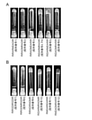
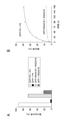
- (A) It is a figure which shows the result of having measured the uptake rate of the VEGF-P4 fusion peptide into the P4 peptide gel, and the uptake rate of the VEGF peptide into the P4 peptide gel.
- (B) It is a figure which shows the result of having measured the release rate of a VEGF-P4 fusion peptide from a P4 peptide gel, and the release rate of a VEGF peptide from a P4 peptide gel.
- the figure shows the average value of the results of three measurements, and the error bar shows the standard deviation.
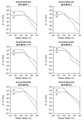
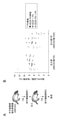
- (A) It is a figure which shows the method of performing the gait function analysis before and after administration of a peptide gel to a mouse cerebral infarction model, and evaluating the therapeutic effect.
- (B) It is a figure which shows the walking function analysis result before and after administration of a peptide gel to a mouse cerebral infarction model. The average value of the results under each condition is shown by a line. “*” Indicates a significant difference (P ⁇ 0.05, student's t-test) with respect to P4 peptide gel alone administration.
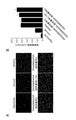
- (F) The volume of the penumbra region after administration of the peptide gel is shown.
- the figure shows the measurement results of 7 animals as a boxplot.
- the bottom edge of the beard, the bottom edge of the box, the line inside the box, the top edge of the box, and the top edge of the beard in the box plot are the minimum, first quartile, median, third quartile, and maximum, respectively. Indicates a value.
- the minimum and maximum values shall be the minimum and maximum values within the range of the first interquartile range-1.5 x interquartile range (IQR) to the third interquartile range + 1.5 x IQR, and this range. Observations that deviate from are plotted as outliers.
- “*” Indicates a significant difference (P ⁇ 0.05, student's t-test) with respect to P4 peptide gel alone administration.
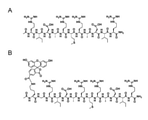
- A It is a figure which shows the structure of a P4 peptide (RIDARMRADIR, SEQ ID NO: 4).
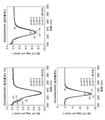
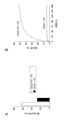
- B It is a figure which shows the structure of the K (FAM) -G-P4 fusion peptide in which fluorescein is ligated to the P4 peptide. It is a figure which shows the result of having measured the release rate of a K (FAM) -G-P4 fusion peptide from a P4 peptide gel.
- (A) It is a figure which shows the result of having measured the UV absorption spectrum of the K (FAM) -G-P4 fusion peptide released from the P4 peptide gel at each time point of 0, 1, 4, 24, and 72 hours.
- (B) It is a figure which shows the release rate (%) of a K (FAM) -G-P4 fusion peptide from a P4 peptide gel. It is a figure which shows the result of having tested the gel formation ability with the additional 5 kinds of peptide samples. Gelation of peptide samples was tested by the same method as in FIG.
- the first aspect of the present invention is a self-assembling peptide and a fusion peptide.
- the self-assembled peptide of this embodiment contains a core peptide consisting of the amino acid sequence represented by the formula: Xaa-Yaa-Zaa-Yaa-Xaa-Yaa-Zaa-Yaa-Xaa.
- Xaa independently indicates isoleucine (I / Ile) or methionine (M / Met)
- Yaa independently indicates aspartic acid (D / Asp), glutamic acid (E / Glu), lysine (K / Lys), Or, it indicates arginine (R / Arg), and Zaa independently indicates alanin (A / Ala) or glycine (G / Gly).
- the fusion peptide of this embodiment is a peptide obtained by linking the self-assembling peptide of this embodiment to a functional peptide.
- the self-assembled peptide and fusion peptide of this embodiment can be gelled under physiological conditions.
- self-assembled peptide refers to a peptide that can be solidified under specific temperature and pressure conditions from a sol state dissolved in water or an aqueous solution to a gel state.
- collagen including glue, gelatin and jelly
- RRADA radioactive peptide
- Self-organization means that small molecules spontaneously assemble in a dispersion medium by intramolecular interaction or the like to form a three-dimensional three-dimensional structure.
- sugars polysaccharides such as starch and glucomannan
- the above-mentioned collagens highly absorbable polymers (sodium polyacrylate) and the like are in the form of fibers by self-assembly in water or an aqueous solution under specific conditions.
- a one-dimensional structure is formed, and when they are entangled with each other, a gel state having a three-dimensional structure is obtained.
- gelling agents The self-assembling peptide of the present invention is a kind of gelling agent.
- the "sol” refers to a liquid in which colloidal particles are dispersed in a dispersion medium to have fluidity.
- a colloid made of a gelling agent is fluidized in a dispersion medium by raising the temperature of the gel.
- the "colloid” refers to a state in which molecules and ions are aggregated into fine particles and dispersed in a medium.
- the fine particles that form colloids are called “colloidal particles”.
- the "sol state” refers to a liquid state in which colloidal particles are dispersed in a dispersion medium and have fluidity.
- Solidification is a phase transition phenomenon from a gel state to a sol state.
- Gel refers to a solidified colloidal particle that self-assembles in a dispersion medium, loses fluidity, and solidifies.
- the "gel state” refers to a state in which colloidal particles self-assemble in a dispersion medium, lose their fluidity, and solidify. Generally, the state of solidification by lowering the temperature of the sol corresponds to this.
- Gelification is a phase transition phenomenon from a sol state to a gel state.
- the term “gelling temperature” refers to the temperature at which the gelling agent undergoes a phase transition from the sol state to the gel state.
- the “solification temperature” means the temperature at which the gelling agent undergoes a phase transition from the gel state to the sol state.
- the gelling temperature and the solizing temperature may be the same or different. Usually, whether the temperature is the same or different depends on the type of gelling agent.
- the term "peptide” refers to an amino acid polymer having one or more peptide bonds.
- the "peptide” is not limited by the number of amino acid residues contained in the peptide. Therefore, the “peptide” includes oligopeptides containing several amino acid residues such as dipeptides and tripeptides, and polypeptides containing a large number of amino acid residues. Therefore, not only so-called proteins but also fragmented ones and those to which other peptides are linked by peptide bonds are included.
- fusion peptide refers to a self-assembled peptide of this embodiment linked to a functional peptide.
- the link between the self-assembling peptide and the functional peptide may be a covalent bond or a supramolecular interaction.
- the covalent bond is not limited, and includes, for example, a peptide bond, a disulfide bond, and the like.
- the term "supramolecular interaction” means a non-covalent interaction between molecules. Examples of supramolecular interactions include hydrogen bonds, hydrophobic interactions or hydrophobic bonds, electrostatic interactions or ionic bonds, salt bridges, and coordination bonds.
- the functional peptide is preferably linked to the N-terminus and / or C-terminus of the self-assembled peptide, and the binding is preferably a covalent bond.
- a preferred covalent bond is a peptide bond.
- the term "functional peptide” refers to a peptide having a specific biological function in vivo or extracellularly, or intracellularly or extracellularly.
- the term “specific biological function” is not limited as long as it is a function that can have an arbitrary effect on biomolecules such as proteins and nucleic acids, cells, tissues or individuals. Specific biological functions may be natural or non-natural, and examples thereof include cell adhesion function, signal transduction function, binding function, linking function, labeling function, metabolic function and the like.
- the linking function corresponds to, for example, the function of linking a biomolecule such as another peptide or nucleic acid having a specific biological function, a small molecule compound, or a metal ion.
- Examples thereof include a function of mediating antigen-antibody binding or receptor ligand interaction, a function of binding biomolecules such as RNA and / or DNA, and a function of binding nickel ion, copper ion and the like.
- the labeling function corresponds to the function of labeling biomolecules such as proteins and nucleic acids, cells, tissues and individuals. For example, a fluorescent label, an epitope label, and the like can be mentioned.
- biocompatibility means a property that can be introduced into a living body. In particular, it refers to a property in which a certain material has no toxicity or side effects to a living body, or even if it has, it is extremely slight, and / or a property in which a foreign substance is not recognized in the living body and is not excluded.
- peptide has biocompatibility means, for example, a peptide that has no risk of causing allergies or unknown infectious diseases to the human body because there is no biological contamination, or has very little risk. .. Examples of biocompatible peptides include chemically synthesized peptides and the like.
- the term "living body” refers to cells (including cultured cells), tissues, organs, or individuals. Not limited, but for example, cells, tissues, or organs derived from humans or non-human individuals, or cells derived from humans or non-human individuals, such as cells or tissues obtained by differentiating from ES cells or iPS cells. Can be mentioned. Preferably, it is a human-derived cell, a tissue or organ composed of human-derived cells, or a human individual.
- the term "physiological condition” refers to conditions such as temperature and pH that do not substantially impair the structure and activity of biomolecules, the structure and function of cells and tissues, or the activity and survival of individuals. More specifically, the conditions that can exist in the living body or in the cell are applicable.
- the physiological condition means a condition in which a biomolecule such as a protein is not denatured or is not easily denatured.
- the physiological pH is not limited as long as it is a pH at which biomolecules such as proteins do not denature or are difficult to denature.
- pH is in the range of 4.0 to 10.0
- pH is in the range of 5.0 to 9.0
- pH is in the range of 6.0 to 8.0
- pH is in the range of 6.5 to 7.5, for example, pH 7.4.
- the physiological temperature is not limited as long as it is a temperature at which biomolecules such as proteins do not denature or are difficult to denature.
- the temperature is in the range of 0 to 65 ° C, 4 to 60 ° C, 20 to 50 ° C, or 30 to 40 ° C, for example, 37 ° C.
- amino acid includes both natural amino acids and unnatural amino acids.
- An unnatural amino acid is, for example, an amino acid having an arbitrary chemically modifying group or substituent.
- amino acids include any optical isomer and may be either D-form or L-form.
- hydrophobic amino acid refers to an amino acid having hydrophobicity or an amino acid having high hydrophobicity.
- alanine Al / A
- glycine Gly / G
- proline Pro / P
- valine Val / V
- leucine Leu / L
- isoleucine Ile / I
- methionine Metal / M
- Cysteine Cis / C
- Phenylalanine Phe / F
- Tyrosine Tyrosine
- Trp / W Tryptophan
- hydrophilic amino acid refers to an amino acid having hydrophilicity or an amino acid having high hydrophilicity.
- aspartic acid Aspartic acid (Asp / D), glutamic acid (Glu / E), lysine (Lys / K), histidine (His / H), arginine (Arg / R) and the like are included.
- plural means, for example, 2 to 10, 2 to 7, 2 to 5, 2 to 4, 2 to 3, or 2 pieces.
- amino acid identity refers to the amino acid sequences of two peptides to be compared, which are aligned by inserting appropriate gaps in one or both of them as necessary so that the number of matching amino acid residues is maximized. The ratio (%) of the number of matching amino acid residues to the total number of amino acid residues when aligned. Alignment of two amino acid sequences to calculate amino acid identity can be performed using known programs such as Blast, FASTA, and Clustal W.
- substitution of an amino acid
- substitution means, unless otherwise specified, a preservation of similar properties such as charge, side chain, polarity, and aromaticity among the 20 amino acids that make up a natural protein. Substitution within a group of amino acids. For example, uncharged polar amino acid group (Gly, Asn, Gln, Ser, Thr, Cys, Tyr), branched chain amino acid group (Leu, Val, Ile), neutral amino acid group (Gly, Ile) having a low polar side chain.
- the composition of the self-assembling peptide of this embodiment will be specifically described below.
- the self-assembled peptide of this embodiment is composed of a polypeptide comprising a core peptide consisting of an amino acid sequence selected based on a specific rule, or a polypeptide consisting of the core peptide.
- core peptide is a 9-amino acid peptide that constitutes part or all of the self-assembled peptide of the present invention.
- the core peptide is a peptide in which hydrophobic amino acids and hydrophilic amino acids are alternately linked by peptide bonds, and the amino acid sequence thereof is selected based on a specific rule.
- the self-assembling peptide of this embodiment has the following formula: Xaa-Yaa-Zaa-Yaa-Xaa-Yaa-Zaa-Yaa-Xaa (In the formula, Xaa is independently Ile or Met, Yaa is independently Asp, Glu, Lys, or Arg, and Zaa is independently Ala or Gly). Containing or consisting of a core peptide consisting of the amino acid sequence represented by.
- the self-assembling peptide of this embodiment has the following formula: Xaa-Yaa-Zaa-Yaa-Xaa-Yaa-Zaa-Yaa-Xaa (In the formula, Xaa is independently Ile or Met, Yaa is independently Asp or Arg, and Zaa is independently Ala or Gly). Containing or consisting of a core peptide consisting of the amino acid sequence represented by.
- the self-assembled peptide of this embodiment contains one or more core peptides or consists of one or more core peptides.
- the self-assembled peptide of this embodiment may contain one or two core peptides.
- the two core peptides may have the same amino acid sequence or may have different amino acid sequences.
- the self-assembled peptide of this embodiment may be free of additional amino acid residues on the N-terminal and C-terminal sides of the core peptide, in which case the self-assembled peptide of this embodiment is. It consists only of core peptides.
- Examples of such self-assembling peptides are IRARMDADI (SEQ ID NO: 28), IRADMRADI (SEQ ID NO: 29), IRADMDARI (SEQ ID NO: 30), IDARMRADI (SEQ ID NO: 31), IDARMDARI (SEQ ID NO: 32), IDADMRARI (SEQ ID NO: 32).
- IRGDIRGDI SEQ ID NO: 34
- IRGDMRGDI SEQ ID NO: 35
- IRADIRADM SEQ ID NO: 36
- IDARMRADM SEQ ID NO: 37
- MDARIDARI SEQ ID NO: 38
- MDADMRARI SEQ ID NO: 39
- IRGDMRADI SEQ ID NO: 46
- IRADMRGDI SEQ ID NO: 47
- IRGDIRGDI SEQ ID NO: 48
- IRGDIRADI SEQ ID NO: 49
- IRADIRGDI SEQ ID NO: 50
- the self-assembled peptide of this embodiment is a peptide consisting of one amino acid residue or a plurality of amino acid residues on the N-terminal side and / or the C-terminal side of the core peptide (hereinafter, each ". It may contain "N-terminal peptide” and "C-terminal peptide”).
- the N-terminal and / or C-terminal amino acid residues of the self-assembled peptide of this embodiment may be hydrophilic amino acids.
- the N-terminal peptide and / or C-terminal peptide in the self-assembled peptide of this embodiment may each contain one or more hydrophilic amino acids.
- the N-terminus and / or C-terminus of the self-assembling peptide may be Arg. That is, the self-assembled peptide of this embodiment may have only its N-terminal being Arg, its C-terminal only being Arg, or its N-terminal and C-terminal being both Arg. good.
- self-assembling peptides are RIRARMDADIR (SEQ ID NO: 1), RIRADMRADIR (SEQ ID NO: 2), RIRADMDARIR (SEQ ID NO: 3), RIDARMRADIR (SEQ ID NO: 4), RIDARMDARIR (SEQ ID NO: 5), RIDADMRARIR (SEQ ID NO: 5).
- RIRGDIRGDIR SEQ ID NO: 7
- RIRGDMRGDIR SEQ ID NO: 8
- RIRADIRADMR SEQ ID NO: 9
- RIDARMRADMR SEQ ID NO: 10
- RMDARIDARIR SEQ ID NO: 11
- RMDADMRARIR SEQ ID NO: 12
- RIRGDMRADIR SEQ ID NO: 41
- RIRADMRGDIR SEQ ID NO: 42
- RIRGDIRGDIR SEQ ID NO: 43
- RIRGDIRADIR SEQ ID NO: 44
- RIRADIRGDIR SEQ ID NO: 45
- the N-terminal and / or C-terminal 2 amino acids of the self-assembling peptide may both be Arg. That is, the self-assembled peptide of this embodiment may have only its N-terminus being an Arg-Arg dipeptide, only its C-terminus being an Arg-Arg dipeptide, or both its N-terminus and C-terminus being Arg. -It may be an Arg dipeptide.
- Amino acids other than glycine constituting the self-assembled peptide of this embodiment can be used regardless of optical isomers. That is, either D-form or L-form may be used.
- the total length of the amino acid sequence constituting the self-assembled peptide is 25 amino acids or less.
- it may be 20 amino acids or less, 15 amino acids or less, or 10 amino acids or less. More specifically, it may be 14 amino acids, 13 amino acids, 12 amino acids, 11 amino acids, 10 amino acids, or 9 amino acids.
- the self-assembled peptide of this embodiment consists of a core peptide, in which case the total length of the amino acid sequence is 9 amino acids.
- the self-assembled peptide of this embodiment is an 11 amino acid peptide containing a core peptide, and both its N-terminal and C-terminal may be Arg.
- the self-assembling peptide of this embodiment is a 13 amino acid peptide containing a core peptide, and both its N-terminal and C-terminal may be Arg-Arg dipeptides.
- a modifying group may be optionally added to the amino group of the N-terminal amino acid residue and the carboxy group of the C-terminal amino acid residue of the self-assembled peptide of this embodiment.
- an acetyl group may be added to the N-terminal of the self-assembled peptide of this embodiment.
- NH 2 amide may be added to the C-terminal of the self-assembled peptide of this embodiment.
- the fusion peptide of this embodiment is a peptide obtained by linking a functional peptide to the self-assembling peptide of this embodiment.
- the link between the self-assembling peptide and the functional peptide may be, for example, by covalent bonds or supramolecular interactions.
- the supramolecular interaction may be a hydrogen bond, a hydrophobic interaction, an electrostatic interaction, a coordination bond, or the like.
- the fusion peptide of this embodiment is, for example, a peptide obtained by linking a functional peptide at an arbitrary position of the self-assembling peptide of this embodiment by a covalent bond such as a peptide bond or via a linker. ..
- the position where the functional peptide is linked to the self-assembled peptide of this embodiment may be, for example, the N-terminal and / or the C-terminal of the self-assembled peptide.
- the self-assembled peptide of this embodiment is "linked to the N-terminal and / or C-terminal of the functional peptide by peptide binding"
- the self-assembled peptide of this embodiment is linked only to the N-terminal of the functional peptide.
- the case shall include both the case where it is connected only to the C-terminal and the case where it is connected to both the N-terminal and the C-terminal.
- the functional peptide may be linked to the side chain of an amino acid residue other than the N-terminal or C-terminal of the self-assembled peptide of this embodiment.
- the functional peptide constituting the fusion peptide of this embodiment is a peptide having a specific biological function in the living body or in the cell. Its functions include, but are not limited to, cell adhesion function, signal transduction function, binding function, linking function, labeling function, or metabolic function.
- the functional peptide constituting the fusion peptide of this embodiment is a fusion peptide for purposes of use, cell culture, control of cell adhesion, proliferation, differentiation, etc., culture, formation, regeneration, or vascular induction of tissues or organs. It can be selected according to the purpose.
- the functional peptide in the present invention is not limited, and examples thereof include cell adhesion molecules, extracellular matrix molecules, secretory proteins, binding proteins, enzymes, marker proteins, and artificial peptides, and peptide fragments thereof.
- cell adhesion molecule as used herein is a molecule involved in adhesion between cells or between cells and extracellular matrix on the surface of cells. Although not limited, examples thereof include cadherins such as N-cadherin, integrins, and selectins.
- extracellular matrix molecule is a molecule that constitutes the extracellular matrix. Examples thereof include, but are not limited to, laminin, collagen, fibronectin and the like.
- a “secretory protein” is a protein that is produced intracellularly and secreted extracellularly. Examples thereof include, but are not limited to, vascular endothelial cell growth factor (VEGF), fibroblast growth factor (FGF), hepatocyte growth factor (HGF), platelet-derived growth factor (PDGF), cytokines and the like.
- a "binding protein” is a protein that specifically binds to a specific molecule. For example, but not limited to, antibodies or antibody fragments or antigens that mediate antigen-antibody binding, (strept) avidin, maltose-binding protein (MBP), receptors or ligands that mediate receptor-ligand interactions, DNA-binding proteins, RNA.
- Bound proteins and the like can be mentioned.
- the functional peptide is a DNA-binding protein or an RNA-binding protein
- the nucleic acid molecule to which the functional peptide binds can be bound to another one or a plurality of nucleic acid molecules by forming a multiple spiral structure or the like.
- the "marker protein” is a protein that can serve as a marker when detecting cells, proteins, or the like.
- a polypeptide capable of determining the expression or presence / absence of a target protein based on its activity is applicable.
- Examples include, but are not limited to, fluorescent proteins such as GFP, photoproteins such as luciferin or aequorin, and enzymes such as horseradish peroxidase (HRP) or alkaline phosphatase (AP).
- the "artificial peptide” is also called a tag peptide, and is an oligopeptide composed of artificially synthesized several to a dozen amino acids. Examples thereof include epitope tags such as FLAG tags, histidine tags, HA tags and DAP tags, and His tags and GST tags.
- the self-assembling peptide or fusion peptide of this embodiment may optionally have one or more chemically modifying groups bonded thereto.
- the structure of the chemically modifying group is not particularly limited, but is a portion that imparts a desired function to the self-assembled peptide or fusion peptide to which the chemically modifying group is bound. Desired functions include, for example, a labeling function, a linker function, a linking function, a binding function, and the like.
- Examples of the chemically modifying group that imparts a labeling function include a color-developing group and a fluorescent group (for example, fluorescein and the like).
- Examples of chemically modifying groups that impart linker function include any polymer (eg, alkylene, etc.).
- Examples of chemical modifying groups that impart a binding function include compounds such as biotin.
- examples of the chemically modifying group that can bind to the self-assembling peptide or fusion peptide of this embodiment include lipids, sugars, aptamers, and receptor ligands.
- Lipids include lipids such as cholesterol and fatty acids (eg, vitamin E, vitamin A, vitamin D), fat-soluble vitamins such as vitamin K, intermediate metabolites such as acyl CoA, glycolipids, glycerides, and derivatives thereof. It can be exemplified.
- examples of the sugar include glucose, sucrose and the like.
- the self-assembled peptide of the present invention can be gelled under physiological conditions. For example, under 1 atm conditions, it is possible to gel, for example, in the range of 20 to 50 ° C or 30 to 40 ° C, and in the range of pH 6.0 to 8.0 or pH 6.5 to 7.5. be. Therefore, the gel can be formed without losing the activity of biomolecules such as proteins embedded in the gel, or in a state where at least a part of the activity is retained.
- the total length of the amino acid sequence of the self-assembled peptide of this embodiment is 9 to 25 amino acids and the chain length is relatively small, it can be chemically synthesized in large quantities at low cost. Since it can be synthesized with high purity by solution synthesis or solid-phase synthesis, the quality of each production lot is stable and there is an advantage that contamination is extremely small.
- the self-assembled peptide and fusion peptide of this embodiment have biocompatibility and can be introduced into a living body.
- the self-assembled peptide and fusion peptide of this embodiment can also be synthesized using a gene expression system.
- gene expression system refers to an expression system capable of expressing a foreign gene in a host cell, or an cell-free gene expression system.
- the nucleic acid encoding the self-assembling peptide and the fusion peptide of this embodiment is introduced into an autonomously replicableable expression vector such as a plasmid or Bacmid, and introduced into a host such as Escherichia coli, insect cells, and cultured cells. It is also possible to synthesize the self-assembling peptide and the fusion peptide of this embodiment.
- nucleic acid for example, DNA
- expression vector containing the nucleic acid and a host cell into which the expression vector has been introduced are also provided.
- the second aspect of the present invention is a gelling agent.
- the gelling agent of this embodiment comprises the self-assembling peptide or fusion peptide of the first embodiment. According to the gelling agent of this embodiment, a phase transition from a sol state to a gel state, that is, gelation is possible by changing the temperature.
- the "gelling agent” is composed of the self-assembling peptide or fusion peptide of the first aspect, and can be gelled under desired conditions, for example, physiological conditions based on the difference in the amino acid sequence thereof. It is a gelling agent that can be used. Therefore, the basic composition of the gelling agent in this embodiment is substantially the same as the content described in "1-3. Composition" in the self-assembling peptide of the first aspect or the fusion peptide of the first aspect. Therefore, the specific description thereof will be omitted here.
- the pH of the gelling agent in this embodiment is not limited. For example, pH 4.0 to 10.0, pH 5.0 to 9.0, pH 6.0 to 8.0, or pH 6.5 to 7.5, for example pH 7.4.
- a third aspect of the present invention is a gelled composition.
- the gelling composition of this embodiment contains the gelling agent according to the second aspect as an essential active ingredient, and also includes a gelling-promoting ingredient, a carrier, and the like.
- the gelling composition of this embodiment can be gelled by maintaining it in water or an aqueous solution at a temperature equal to or lower than the gelling temperature.
- the gelled composition of the present invention is composed of an active ingredient and other ingredients.
- the components other than the active ingredient are not particularly limited, and examples thereof include components and carriers that can promote gelation of the gelling composition. Hereinafter, each component will be specifically described.
- the gelling composition of this embodiment contains one kind or two or more kinds of gelling agents according to the second aspect as essential active ingredients. That is, it includes the self-assembling peptide and / or the fusion peptide of the first aspect.
- the gelling agent according to the second aspect as an active ingredient may be one kind or a combination of two or more different kinds. For example, one type of self-assembling peptide and one type of fusion peptide of the first aspect can be combined.
- the gelled composition of this embodiment can also contain a drug or the like as another active ingredient.
- drug is a concept including low molecular weight compounds, peptides (including enzymes and antibodies), or nucleic acids (including RNAi molecules such as miRNA, siRNA, and shRNA, antisense nucleic acids, aptamers, etc.).
- Drugs are not limited, but are therapeutic drugs for the purpose of treating diseases and alleviating symptoms, test drugs for detecting and diagnosing diseases, pesticides for the purpose of repelling and exterminating pests and vermin, and virus-killing drugs. Or, it includes various kinds of chemicals such as disinfectants for the purpose of sterilization.
- the agent included in the gelled composition of this embodiment is not limited to one type, but may be two or more types.
- the amount (content) of the gelling agent according to the second aspect to be blended in the gelling composition is not particularly limited. It may be determined as appropriate in consideration of the gelation conditions.
- the type and / or effective amount of the gelling agent included in the gelling composition subject information, gelling composition. It may be appropriately determined according to the dosage form and the type of carrier or additive described later.
- the concentration of the gelling agent according to the second aspect of the gelling composition is not limited, but may be, for example, 0.4% by weight or more and 10% by weight or less, and 1.0% by weight or more and 10% by weight or less. For example, it may be 1.0% by weight or more and 2.0% by weight or less.
- the term "effective amount" is an amount necessary for the gelling agent to exert its function as an active ingredient in the gelling composition, and has side effects harmful to the living body to which the gelling agent is applied. An amount that is given little or no. This effective amount may vary depending on various conditions such as subject information, route of administration, and frequency of administration.
- the "subject” refers to a living body to which the pharmaceutical composition is applied. For example, humans, domestic animals (cattle, horses, sheep, goats, pigs, chickens, ostriches, etc.), race horses, pet animals (dogs, cats, rabbits, etc.), experimental animals (mouses, rats, guinea pigs, monkeys, marmosets, etc.) Etc.
- the "subject information" is various individual information of the living body to which the gelled composition is applied.
- a subject he / she is suffering from a general health condition, a disease / disease. In some cases, it includes the degree and severity of the disease, age, weight, gender, diet, drug sensitivity, presence / absence of concomitant drugs, resistance to treatment, and the like.
- the final effective amount of the gelling agent and the applied amount calculated based on the gelling agent are finally determined by the judgment of a doctor, a dentist, a veterinarian, etc., depending on the information of each subject and the like. To.
- the gelling composition of this embodiment may contain a component capable of promoting the gelation, if necessary.
- the gelation-promoting component include, but are not limited to, a component having an effect of lowering the solubility of a protein. This is because, in general, a component having an effect of reducing the solubility of a protein can promote gelation of a peptide gelling agent.
- the component having the effect of lowering the solubility of the protein is not limited, and examples thereof include cations and anions having the effect of lowering the solubility of the protein. Cations and anions having this effect are well known to those of skill in the art as the Hofmeister series. Examples of anions include hydrogen carbonate ion, carbonate ion, citrate ion, tartrate ion, sulfate ion and the like. Examples of cations include lithium ion, sodium ion, potassium ion, magnesium ion, calcium ion and the like.
- the concentration of cations and anions that have the effect of reducing the solubility of proteins is not particularly limited. For example, it may be 1 mM or more, 5 mM or more, 10 mM or more, 20 mM or more, 30 mM or more, or 40 mM or more.
- the total concentration of bicarbonate ion and carbonate ion is 1 mM or more, 5 mM or more, considering that hydrogen carbonate ion and carbonate ion are usually in an equilibrium state in the aqueous solution. , 10 mM or more, 20 mM or more, 30 mM or more, or 40 mM or more, for example, 44 mM.
- composition of this embodiment can contain a pharmaceutically acceptable carrier, if necessary.
- pharmaceutically acceptable carrier refers to an additive commonly used in the field of pharmaceutical technology.
- solvents, excipients, fillers, emulsifiers, fluid addition regulators, lubricants, human serum albumin and the like can be mentioned.
- the solvent may be, for example, water or any other pharmaceutically acceptable aqueous solution, or a pharmaceutically acceptable organic solvent, but water or any other pharmaceutically acceptable aqueous solution is preferable.
- aqueous solution include physiological saline, isotonic solution containing glucose and other auxiliary agents, phosphate buffer solution, sodium acetate buffer solution, and any medium used for cell culture, tissue culture, and the like.
- auxiliary agent include D-sorbitol, D-mannose, D-mannitol, sodium chloride, low-concentration nonionic surfactants, polyoxyethylene sorbitan fatty acid esters, and the like.
- the medium a commercially available medium may be used. MCDB131 medium, William medium E, IPL41 medium, Fischer's medium and the like may be used.
- Excipients include, for example, sugars such as monosaccharides, disaccharides, cyclodextrins and polysaccharides, metal salts, citric acid, tartrate acid, glycine, polyethylene glycol, pluronic, kaolin, silicic acid, or combinations thereof. Be done.
- Examples of the filler include petrolatum, the sugar and / or calcium phosphate.
- emulsifier examples include sorbitan fatty acid ester, glycerin fatty acid ester, sucrose fatty acid ester, and propylene glycol fatty acid ester.
- Examples of the flow addition regulator and lubricant include silicate, talc, stearate or polyethylene glycol.
- solubilizers In addition to the above, if necessary, solubilizers, suspending agents, diluents, dispersants, surfactants, painkillers, stabilizers, pH regulators, absorption promoters, and bulking agents commonly used in pharmaceuticals. , Moisturizers, moisturizers, wetting agents, adsorbents, flavoring agents, disintegration inhibitors, coating agents, coloring agents, preservatives, preservatives, antioxidants, fragrances, flavoring agents, sweeteners, buffers, etc. It may also contain a tensioning agent or the like as appropriate.
- Such a carrier is mainly used for facilitating the formation of a dosage form, maintaining the dosage form and the drug effect, and making the gelling agent, which is an active ingredient, less susceptible to decomposition by enzymes in the living body. Therefore, it may be used as needed.
- the pH of the gelling composition of this embodiment is not limited.
- it may be a physiological pH, in the range of pH 4.0 to 10.0, in the range of pH 5.0 to 9.0, in the range of pH 6.0 to 8.0, or in the range of pH 6.5 to 7.5, for example pH 7.4.
- the gelling composition of this embodiment can be gelled by maintaining it in water or an aqueous solution at a temperature equal to or lower than the gelling temperature.
- the gelation temperature is basically based on that of the self-assembling peptide or fusion peptide constituting the gelling agent which is the active ingredient. Therefore, the gelled composition of this embodiment is, for example, under 1 atm conditions, in the range of 4 to 80 ° C, in the range of 10 to 70 ° C, in the range of 15 to 60 ° C, in the range of 20 to 50 ° C, or. It can gel at temperatures in the range of 30-40 ° C, such as 37 ° C.
- the gelling composition of this embodiment contains a fusion peptide
- the gel does not substantially lose the activity of the functional peptide constituting the fusion peptide, or retains at least a part of the activity.
- the chemical composition can be gelled under physiological conditions. Therefore, after the gelation composition of this embodiment is gelled, the function based on the biological function of the functional peptide constituting the fusion peptide can be exhibited.
- angiogenesis in the gel can be induced by transplanting the gelled gelled composition into a living body by a surgical method or the like.
- the gelled composition of this embodiment can also be used as an artificial extracellular matrix in vivo or in vitro. Also in this case, after the gelation composition of this embodiment is gelled, the function based on the biological function of the functional peptide constituting the fusion peptide can be exhibited.
- the functional peptide for example, extracellular matrix molecules such as laminin and N-cadherin can be used.
- the gelled composition gelled in the body enables control of cell adhesion, proliferation, differentiation, etc., and formation, regeneration, etc. of tissues or organs in the gel.
- the target site is surgically operated after the control of cell adhesion, proliferation, differentiation, etc., and the formation, regeneration, etc. of a tissue or organ are sufficiently achieved at the administration site. It is also possible to remove the gelled composition from the transplant site by making an incision by surgery or the like.
- the dosage form of the gelled composition of this embodiment is not particularly limited.
- it may be a solid agent that can be introduced into a target site.
- its shape does not matter.
- solid dosage forms such as powders, powders, granules, and tablets, it may be in the form of a member for transplantation. Since the solid agent is a solid, the gelled composition as a solid agent is usually in a gel state.
- the application method of the gelled composition of this embodiment is not particularly limited, but is preferably parenteral administration, and more preferably topical administration.
- Local administration includes, for example, intramuscular administration, subcutaneous administration, tissue administration, and organ administration.
- the gelled composition of this embodiment may be introduced into a target site in a gel state.
- the target site can be surgically incised and transplanted in a gel state.
- the dose may be any amount as long as it is effective for the active ingredient to respond. The effective amount is appropriately selected depending on the subject information.
- the gelled composition of this embodiment can be removed from the administration site, if necessary.
- the administration site can be surgically incised and surgically removed in a gel state.
- a fourth aspect of the present invention is an artificial extracellular matrix.
- the artificial extracellular matrix of this embodiment is composed of the gelling agent according to the second aspect or the gelling composition according to the third aspect.
- the artificial extracellular matrix of this embodiment can be used either in vitro or in vivo.
- the activity of the functional peptide constituting the fusion peptide can be retained.
- the “artificial extracellular matrix” is a scaffold material for cell culture or tissue regeneration, and controls cell adhesion, proliferation, differentiation, etc., and cultures and formations of transplanted cells, transplanted tissues or transplanted organs, A material that can be regenerated.
- the artificial extracellular matrix may be used in vitro or may be used in vivo.
- control of cell adhesion, proliferation, differentiation, etc means promotion and / or suppression of cell adhesion, proliferation, differentiation, etc.
- the artificial extracellular matrix of this embodiment is composed of the gelling agent according to the second aspect or the gelling composition according to the third aspect. Therefore, the basic composition in this embodiment is substantially the same as the composition of the gelling agent of the second aspect or the gelling composition described in the third aspect.
- the artificial extracellular matrix of this embodiment is, in principle, a gelling agent in a gel state. This is because in order to function as a scaffold for cells, a certain degree of rigidity is required for the cells to adhere, and a liquid sol usually cannot achieve that purpose.
- the functional peptide constituting the fusion peptide controls, for example, the formation, regeneration, etc. of a molecule that controls cell adhesion, proliferation, differentiation, etc., or a tissue or organ. It is a molecule that does.
- a molecule that controls cell adhesion, proliferation, differentiation, etc. or a tissue or organ.
- It is a molecule that does.
- the functional peptide constituting the fusion peptide that can be contained in the artificial extracellular matrix of this embodiment is preferably a cell adhesion molecule or an extracellular matrix molecule, for example, laminin or N-cadherin.
- the artificial extracellular matrix of this embodiment enables control of cell adhesion, proliferation, differentiation, etc. in vitro or in vivo, or enables formation, regeneration, etc. of a tissue or organ.
- the shape of the artificial extracellular matrix can be processed according to the desired shape of the target cell, tissue or organ.
- the artificial extracellular matrix of the present invention can be molded by pouring it into a mold in a sol state and gelling it.
- the artificial extracellular matrix of the present invention can be formed into a desired shape by solifying a part of the gel by local heat treatment.
- a fifth aspect of the present invention is a method for gelling a gelling agent or a gelling composition of the present invention.
- the gelation method of the present invention includes, as an essential step, maintaining the gelling agent or gelling composition of the present invention in a sol state at a temperature equal to or lower than the gelling temperature in water or an aqueous solution. By this step, the gelling agent or gelling composition of the present invention can undergo a phase transition from a sol state to a gel state.
- the temperature used in this step differs depending on the type of gelling agent or gelling composition used, and may be appropriately determined according to the type.
- the gel of the present invention at 4 to 80 ° C, 10 to 70 ° C, 15 to 60 ° C, 20 to 50 ° C or 30 to 40 ° C, for example 37 ° C.
- Agents or gelling compositions may be retained.
- temperature conditions are preferable in which the activity of the functional peptide constituting the fusion peptide is not lost or at least a part of the activity remains, for example.
- Use temperature conditions within the range of 4-80 ° C, 10-70 ° C, 15-60 ° C, 20-50 ° C, or 30-40 ° C, for example 37 ° C. be able to.
- the temperature control method used in this step is not particularly limited, and a known method may be used.
- a method of arranging a gelling agent or a gelling composition in a constant temperature bath or the like can be mentioned.
- the gelling agent or pre-gelling composition used in this step may contain a component capable of promoting the gelation.
- a component capable of promoting the gelation for example, a component having an effect of lowering the solubility of a protein can be used, but is not limited.
- anions having this effect include hydrogen carbonate ion, carbonate ion, citrate ion, tartrate ion, sulfate ion and the like.
- Examples of the cation having such an effect include lithium ion, sodium ion, potassium ion, magnesium ion, calcium ion and the like.
- the concentration of the above components is not particularly limited.
- it may be 1 mM or more, 5 mM or more, 10 mM or more, 20 mM or more, 30 mM or more, or 40 mM or more.
- the total concentration of bicarbonate ion and carbonate ion is 1 mM or more, 5 mM or more, considering that hydrogen carbonate ion and carbonate ion are usually in an equilibrium state in the aqueous solution.
- 10 mM or more, 20 mM or more, 30 mM or more, or 40 mM or more for example, 44 mM or more.
- the pH of the gelling agent or pre-gelling composition used in this step in the gel state is not limited.
- the pH is in the range of 4.0 to 10.0
- the pH is in the range of 5.0 to 9.0
- the pH is in the range of 6.0 to 8.0
- the pH is in the range of 6.5 to 7.5, for example, pH 7.4.
- the concentration of the gelling agent used in this step or the gelling agent contained in the pre-gelling composition is not limited, but may be, for example, 0.4% by weight or more and 10% by weight or less, or 1.0% by weight or more and 10% by weight or less. For example, it may be 1.0% by weight or more and 2.0% by weight or less.
- composition for Sustained Release Gel Preparation 6-1 is a composition for preparing a sustained release gel.
- the composition for preparing a sustained release gel of the present invention contains a gelling agent and a functional molecule as essential active ingredients, and also includes a gelation-promoting ingredient, a carrier and the like.
- the gel can be formed while maintaining the activity of the functional molecule under physiological conditions, and the functional molecule can be further released.
- sustained release means the gradual release of a substance into space. As used herein, it means that substances contained in the gel are gradually released from the gel. For example, it means that a substance is dissipated at a slower rate than it is dissipated when it is not contained in a gel.
- a functional molecule is slowly released from a gel implanted in a living body, the functional molecule is released over a long period of time in the surrounding space (for example, a disease site, a damaged site, a tissue, or an organ in which the gel is embedded). Exists and its functionality is provided.
- the term “long term” or “long term” means a period longer than the period during which the substance continues to be released under normal conditions. Specifically, it means that the substance not contained in the gel continues to be released under the same conditions for a longer period of time.
- the specific period varies depending on the type of substance, but for example, 1 hour or more, 2 hours or more, 3 hours or more, 6 hours or more, half a day or more, 1 day or more, 2 days or more, 3 days or more, 1 week or more, 2 Weeks or more, 1 month or more, 2 months or more, 3 months or more, 4 months or more, 6 months or more, or 1 year or more.
- VEGF Vascular endothelial growth factor
- VEGF vascular endothelial growth factor
- VEGF generally functions as a homodimer.
- VEGF includes VEGF-A, VEGF-B, VEGF-C, VEGF-D, VEGF-E, placental growth factor-1 (PlGF-1), PlGF-2, and splicing variants thereof. Isoform etc. are included.
- Four splicing variants of VEGF-A isoforms in humans are known: VEGF121, VEGF165, VEGF189, and VEGF206.
- fibroblast growth factor is a peptide having various functions such as functions in development, angiogenesis, and wound healing.
- FGF fibroblast growth factor
- 22 types of FGFs FGF1 to FGF14 and FGF16 to FGF23, are known.
- hepatocyte growth factor is a peptide having various activities such as cell proliferation, anti-cell death, and angiogenesis.
- composition for preparing a sustained release gel of the present invention is composed of an active ingredient and other ingredients.
- the components other than the active ingredient are not particularly limited, and examples thereof include components, carriers, and other agents that can promote gelation of the composition for preparing a sustained release gel.
- each component will be specifically described.
- composition for preparing a sustained release gel of the present invention contains a gelling agent and a functional molecule.
- the composition of the gelling agent contained in the composition for preparing a sustained release gel of the present invention conforms to the composition of the gelling agent composed of a self-assembling peptide in the second aspect. Therefore, the composition of the self-assembling peptide constituting the gelling agent (hereinafter referred to as “first self-assembling peptide”) conforms to the composition of the self-assembling peptide of the first aspect.
- the functional molecule contained in the composition for preparing a sustained-release gel of the present invention is referred to as a self-assembling peptide (hereinafter, referred to as a “second self-assembling peptide” in distinction from the above-mentioned first self-assembling peptide. ) And the functional part are linked.
- the composition of the second self-assembling peptide also conforms to the composition of the self-assembling peptide of the first aspect.
- amino acid sequences of the first and second self-assembled peptides are selected independently of each other. Therefore, the amino acid sequences may be the same or different.
- the first self-assembling peptide constituting the gelling agent and the second self-assembling peptide contained in the functional molecule are independent.
- the following formula: Xaa-Yaa-Zaa-Yaa-Xaa-Yaa-Zaa-Yaa-Xaa-Yaa-Zaa-Yaa-Xaa (In the formula, Xaa is independently Ile or Met, Yaa is independently Asp, Glu, Lys, or Arg, and Zaa is independently Ala or Gly). It contains one or two core peptides consisting of the amino acid sequence shown by, and the total length of the amino acid sequences constituting the first and second self-assembled peptides is 25 amino acids or less.
- composition for preparing a sustained release gel of the present invention may contain two or more gelling agents. That is, the composition for preparing a sustained release gel of the present invention may contain two or more different self-assembling peptides as the first self-assembling peptide.
- the link between the second self-assembling peptide and the functional moiety may be a covalent bond or a supramolecular interaction.
- the covalent bond and supramolecular interaction are in accordance with the description of the first aspect.
- the functional moiety is preferably linked to the N-terminus and / or C-terminus of the second self-assembled peptide, and the binding is preferably a covalent bond.
- the covalent bond is, for example, a peptide bond.
- the functional moiety contained in the functional molecule is a functional peptide and / or a small molecule compound.
- the functional peptide referred to here shall be in accordance with the description of the first aspect.
- the functional peptide may be vascular endothelial growth factor (VEGF), fibroblast growth factor (FGF), and / or hepatocyte growth factor (HGF).
- VEGF vascular endothelial growth factor
- FGF fibroblast growth factor
- HGF hepatocyte growth factor
- VEGF may be any peptide belonging to the VEGF family, its variants or isoforms, variants, or peptide fragments.
- examples of any peptide belonging to the VEGF family include VEGF-A, VEGF-B, VEGF-C, VEGF-D, VEGF-E, PlGF-1, and PlGF-2.
- VEGF-A has at least four splicing isoforms of VEGF121, VEGF165, VEGF189, and VEGF206, whichever is acceptable.
- VEGF may be human VEGF as well as VEGF orthologs of non-human species, such as mammalian species such as mice, rats, rabbits, cows, cynomolgus monkeys, and marmosets.
- VEGF is human VEGF165 or VEGF165 ortholog.
- human VEGF165 include hVEGFA165 having the amino acid sequence shown in SEQ ID NO: 27 and an SNP variant thereof.
- VEGF165 ortholog include, but are not limited to, the mouse ortholog mVegfa164 having the amino acid sequence shown in SEQ ID NO: 40.
- the VEGF variant or peptide fragment has VEGF activity equal to or higher than that of VEGF (for example, angiogenesis promoting activity and / or neurodegenerative inhibitory activity).
- variants of VEGF165 are amino acid sequences in which one or more amino acids are deleted, substituted or added in the amino acid sequence shown in SEQ ID NO: 27 or SEQ ID NO: 40, or represented by SEQ ID NO: 27 or SEQ ID NO: 40.
- examples thereof include VEGF165 variants having an amino acid sequence having 60% or more, 70% or more, 80% or more, 85% or more, 90% or more, 95% or more, or 99% or more identity with the amino acid sequence.
- FGF may be any peptide belonging to the FGF family (for example, FGF1 to FGF14 and FGF16 to FGF23), a variant thereof, an isoform, a variant, or a peptide fragment.
- the species from which FGF is derived is not limited. Therefore, the FGF may be a human FGF (eg, hFGF2 consisting of the amino acid sequence shown in SEQ ID NO: 21) or an FGF ortholog of a non-human species (eg, a mammalian species). It is preferable that the variant or peptide fragment of FGF has FGF activity equal to or higher than that of FGF (for example, angiogenesis promoting activity and / or neurodegenerative inhibitory activity).
- HGF is not particularly limited, and may be any variant, isoform, variant, or peptide fragment of HGF.
- the species from which HGF is derived is not limited. Therefore, the HGF may be a human HGF (eg, hHGF consisting of the amino acid sequence set forth in SEQ ID NO: 22) or an HGF ortholog of a non-human species (eg, a mammalian species). It is preferable that the variant or peptide fragment of HGF has HGF activity equal to or higher than that of HGF (for example, angiogenesis promoting activity and / or neurodegenerative degeneration suppressing activity).
- the amount (content) of the gelling agent and the functional molecule contained in the composition for preparing a sustained release gel is not particularly limited. It may be determined as appropriate in consideration of gelation conditions and the use of sustained release gel.
- the sustained-release gel preparation composition of the present invention is administered in vivo, the types of gelling agents and functional molecules included in the sustained-release gel preparation composition and / or their effectiveness. The amount may be appropriately determined according to the information of the subject, the dosage form of the composition for preparing a sustained release gel, and the type of carrier or additive described later.
- the concentration of the gelling agent contained in the composition for preparing a sustained release gel is not limited, but may be, for example, 0.4% by weight or more and 10% by weight or less, and 1.0% by weight or more and 10% by weight or less. For example, it may be 1.0% by weight or more and 2.0% by weight or less.
- the concentration of the functional molecule contained in the composition for preparing a sustained-release gel is not limited, but may be 1 / 100,000 to 1/100 or 1 / 10,000 to 1 / 1,000 of the concentration of the gelling agent.
- It may be, for example, 1 ⁇ 10 -6 % by weight or more and 0.1% by weight or less, 1 ⁇ 10 -5 % by weight or more and 1 ⁇ 10 -2 % by weight or less, or 1 ⁇ 10 -4 % by weight or more and 1 ⁇ 10 -3 . It may be less than% by weight.
- composition for preparing sustained-release gel of the present invention is a component that can promote gelation (gelation-promoting component), which is pharmaceutically acceptable. Possible carriers and / or other agents can be included.
- gelation-promoting component and carrier are in accordance with the description of the third aspect.
- drugs are not particularly limited, and examples thereof include drugs having the same pharmacological effect as functional molecules, antibiotics, and the like.
- composition for preparing a sustained release gel of this embodiment gelation can be performed under physiological conditions that do not impair the activity of the functional molecule, and the functional molecule can be further released from the gel.
- the gel prepared from the composition for preparing a sustained release gel of this embodiment has high uptake efficiency of functional molecules and has excellent sustained release property.
- the seventh aspect of the present invention is a sustained release gel.
- the sustained release gel of this embodiment contains water or an aqueous solution in addition to the composition of the composition for preparing a sustained release gel according to the sixth aspect. Therefore, in the sustained release gel of this embodiment, the basic composition other than water or aqueous solution is substantially the same as the composition of the composition for preparing sustained release gel according to the sixth aspect.
- the pH of the sustained release gel of this embodiment is not particularly limited, and is, for example, in the range of pH 4.0 to 10.0, in the range of pH 5.0 to 9.0, in the range of pH 6.0 to 8.0, or in the range of pH 6.5 to 7.5.
- pH 7.4 The pH of the sustained release gel of this embodiment is preferably a pH at which the activity of the functional molecule contained in the gel is not lost or at least a part of the activity is maintained.
- the concentration of the gelling agent contained in the sustained release gel of this embodiment is not particularly limited, and may be, for example, 0.4% by weight or more and 10% by weight or less, or 1.0% by weight or more and 10% by weight or less, for example, 1.0% by weight. It may be 2.0% by weight or less.
- the sustained release gel of this embodiment can contain the functional molecule without losing its activity, and can continue to release the functional molecule for a long period of time.
- the sustained release gel of this embodiment is easy to process its shape.
- the shape of the sustained release gel can be processed according to the place to be embedded in the living body (for example, a diseased part, a damaged part, etc.).
- composition Eighth aspect of the present invention is a pharmaceutical composition.
- the pharmaceutical composition of this embodiment comprises the sustained release gel of the seventh aspect. Therefore, the composition of the pharmaceutical composition of this embodiment is based on the description of the sixth to seventh aspects except for the following composition.
- the functional peptide contained in the functional molecule is, for example, VEGF, FGF, and / or HGF.
- the pharmaceutical composition of the present invention is for transplantation.
- the pharmaceutical composition of the present invention can be transplanted, for example, by surgically incising a target site.
- composition of the present invention can be used for promoting angiogenesis and / or suppressing neurodegeneration.
- the target disease of the pharmaceutical composition of the present invention is not particularly limited. Effective for the treatment and / or prevention of any disease by using a functional peptide or a low molecular weight compound effective for the treatment and / or prevention of the disease as the functional portion of the functional molecule contained in the pharmaceutical composition of the present invention. This is because it is possible to provide a sustained-release pharmaceutical composition.
- Specific target diseases include, but are not limited to, nerve tissue damage and / or ischemia.
- nerve tissue damage includes both central nerve tissue damage and peripheral nerve tissue damage.
- Central nervous system injuries include brain injuries and spinal cord injuries.
- Brain injury is, for example, traumatic brain injury, cerebrovascular accident, or the like. Cerebrovascular accidents include both cerebral infarction (ischemic cerebrovascular accidents) and cerebral hemorrhage.
- Spinal cord injuries include, for example, cervical spinal cord injury, thoracic spinal cord injury, lumbar spinal cord injury, sacral cord injury, and the like.
- Peripheral nerve tissue damage includes damage in any peripheral nerve tissue. For example, damage to motor nerves, sensory nerves, and autonomic nerves.
- ischemia is ischemia in any organ or tissue. Examples thereof include lower limb ischemia (for example, arteriosclerosis obliterans and severe lower limb ischemia thereof), ischemic heart disease (for example, myocardial infarction, etc.), and the above-mentioned cerebrovascular accidents.
- lower limb ischemia for example, arteriosclerosis obliterans and severe lower limb ischemia thereof
- ischemic heart disease for example, myocardial infarction, etc.
- treatment includes, but is not limited to, curative and prophylactic treatment. Prevention also includes prevention of onset, progression, and recurrence.
- the functions of functional peptides and small molecule compounds contained in functional molecules can be exerted in vivo for a longer period of time, and the therapeutic effect can be increased. ..
- Cerebrovascular accidents can be detected at risk by imaging tests such as CT and MRI, and the onset can be prevented by the pharmaceutical composition of the present invention.
- the pharmaceutical composition of the present invention can prevent the recurrence.
- a ninth aspect of the present invention is a method for producing a sustained release gel. According to the method for producing a sustained release gel of this embodiment, a sustained release gel containing a functional molecule or a functional moiety that maintains at least a part of the activity can be produced.
- Step 9-2 Step In the method for producing a sustained-release gel of the present invention, the step of mixing the composition for preparing a sustained-release gel according to the sixth aspect with water or an aqueous solution (mixing step), and the mixture obtained after the mixing step have a gelation temperature or lower. A step of gelling by maintaining the temperature (gelling step) is included as an essential step.
- components that can promote gelation in the gelling step may be further mixed.
- the composition of such a gelation-promoting component shall be in accordance with the description of the third aspect, and the description thereof will be omitted here.
- the temperature used in the gelling step, the temperature control method used in the gelling step, the pH of the gel in the gel state, and the concentration of the gelling agent in the sustained release gel are the same as those described in the fifth aspect.
- Example 1 Fluidity test of peptide sample> (Purpose) Develop self-assembling peptides that gel under physiological conditions. (Method) (1) Chemical synthesis of peptides A total of 18 types of peptides: RIRARMDADIR (SEQ ID NO: 1), RIRADMRADIR (SEQ ID NO: 2), RIRADMDARIR (SEQ ID NO: 3), RIDARMRADIR (SEQ ID NO: 4), RIDARMDARIR (SEQ ID NO: 5), RIDADMRARIR (SEQ ID NO: 5) SEQ ID NO: 6), RIRGDIRGDIR (SEQ ID NO: 7), RIRGDMRGDIR (SEQ ID NO: 8), RIRADIRADMR (SEQ ID NO: 9), RIDARMRADMR (SEQ ID NO: 10), RMDARIDARIR (SEQ ID NO: 11), RMDADMRARIR (SEQ ID NO: 12), RVRVRVDVDVR (SEQ ID NO: 12) Fmoc peptide
- Fmoc-NH-SA resin (Watanabe Chemical Co., Ltd.) in a tube for solid-phase synthesis (Hypep Laboratory Co., Ltd., tube for solid-phase synthesis, LibraTube body tube 5 mL, cap for solid-phase synthesis, LibraTube top cap made of polypropylene) ) (250 mg, 0.10 mmol) was immersed in N, N'-dimethylformamide (DMF) (Kishida Chemical Co., Ltd.) overnight and expanded. Piperidine (Kishida Chemical Co., Ltd.) (20% in DMF, 2 mL) was added, the mixture was vortexed for 1 minute, and then the reaction solution was removed.
- DMF N, N'-dimethylformamide
- N-terminal amino acid (0.30 mmol) with condensing agent cocktail (700 ⁇ L), N, N-diisopropylethylamine (DIEA) (Nakalitesk Co., Ltd.) and N-methyl-2-pyrrolidone (NMP) (Kishida Chemical Co., Ltd.)
- DIEA N, N-diisopropylethylamine
- NMP N-methyl-2-pyrrolidone
- the condensing agent cocktail used was prepared by premixing HBTU (Watanabe Chemical Co., Ltd.) 3.05 g, HOBt ⁇ H 2 O (Watanabe Chemical Co., Ltd.) 1.25 g, and DMF 16 mL. The mixture was shaken at room temperature for 15 minutes, after which the reaction solution was removed. The solvent was removed by washing 5 times with DMF (2 mL). A small amount of resin was taken out, and it was confirmed that the resin did not develop color using the TNBS Test Kit (Tokyo Chemical Industry Co., Ltd.). The solvent was removed by washing with methylene chloride (2 mL) and DMF (2 mL) three times each.
- the peptide was cut out from the resin by the following procedure and freeze-dried.
- the deprotected cocktail was added to the resin dried in a desiccator, shaken lightly every 30 minutes at room temperature, and allowed to stand for 90 minutes.
- the deprotected cocktail used was prepared by mixing 2375 ⁇ L of trifluoroacetic acid (TFA) (Kishida Chemical Co., Ltd.), 62.5 ⁇ L of triisopropylsilane (TIS) (Tokyo Kasei Kogyo Co., Ltd.), and 62.5 ⁇ L of water in advance.
- the filtrate was collected in a 15 mL centrifuge tube.
- Figures 1 and 2 show the results of the fluidity test for each peptide sample.
- 12 peptide samples RIRARMDADIR (SEQ ID NO: 1), RIRADMRADIR (SEQ ID NO: 2), RIRADMDARIR (SEQ ID NO: 3), RIDARMRADIR (SEQ ID NO: 4), RIDARMDARIR (SEQ ID NO: 5), RIDADMRARIR (SEQ ID NO: 5).
- SEQ ID NO: 6 RIRGDIRGDIR (SEQ ID NO: 7), RIRGDMRGDIR (SEQ ID NO: 8), RIRADIRADMR (SEQ ID NO: 9), RIDARMRADMR (SEQ ID NO: 10), RMDARIDARIR (SEQ ID NO: 11), and RMDADMRARIR (SEQ ID NO: 12) are microscopic. It was shown that after the tube was turned upside down, part or all of it remained on the bottom side of the microtube, lost its fluidity and gelled (FIG. 1).
- RVRVRVDVDVR SEQ ID NO: 13
- RVRVDVRVDVR SEQ ID NO: 14
- RVRVDVDVRVR SEQ ID NO: 15
- RVDVRVRVDVR SEQ ID NO: 16
- RVDVRVDVRVR SEQ ID NO: 17
- RVDVDVRVRVRVRVR SEQ ID NO: 17
- the 12 peptides showing gelation in FIG. 1 have Arg or Asp as hydrophilic amino acid residues at positions 1, 3, 5, 7, 9, and 11 from the N-terminal side, and 2, from the N-terminal side, It has Ile, Met, Ala, or Gly as a hydrophobic residue at the 4, 6, 8 and 10th positions.
- the 6 types of peptides not gelled in FIG. 2 have Arg or Asp as hydrophilic amino acid residues at positions 1, 3, 5, 7, 9, and 11 from the N-terminal side, which is the above 12 types. It is similar to the peptide of, but differs in that it has Val as a hydrophobic residue at the 2, 4, 6, 8 and 10 positions from the N-terminal side.
- Example 2 Rheological characteristics of peptide gel> (Purpose) Analyze the rheological properties of gels formed by self-assembled peptides.
- the rheological characteristics of the peptide sample were measured using a rheometer (Malvern Panalytical, Kinexus lab +) for a 250 ⁇ L sample. Specifically, the sample was sandwiched between plates with a gap of 0.2 mm, and measurement was performed at 20 ° C.
- the storage modulus G'and the loss modulus G'of the gel formed from each peptide can be obtained.
- the storage modulus G' is inside the object among the energy generated by the external force and strain on the object.
- the component to be preserved, the loss elastic modulus G "represents the component that diffuses to the outside.
- the storage elastic modulus G' generally exceeds the loss elastic modulus G'.
- Table 1 shows the results of comparison between the storage elastic modulus G'measured for the above 6 types of peptide samples and the storage elastic modulus G'of a known peptide gel.
- the gels formed by the peptides of the invention are dramatically more elastic than known gelled peptides such as (RADA) 4 , SPG178, and K 2 (QFQL) 3 K 2 . It was shown to have a rate. That is, the peptide of the present invention can form a gel that is dramatically harder than a known peptide gelling agent.
- SPG178 a known peptide gelling agent, forms a gel under conditions of pH 7.0 and a concentration of 1.0 or 1.5 wt%, but the storage modulus G'of this gel is only 70-300.
- Komatsu, S. et al. Plos One, 2014, 9 (7), e102778. For reference, it is less than the elastic modulus of mayonnaise and ketchup shown in Table 2 below (about 10 3 ).
- K 2 (QFQL) 3 K 2 forms a gel in PBS (pH 7.4) under the condition of 2.0% by weight concentration, and the storage of this gel.
- the elastic modulus G' is less than 500 (Bakota, EL et al. Biomacromolecules, 2013, 14 (5), 1370-1378.), which is less than the elastic modulus of mayonnaise and ketchup shown in Table 2 (about 10 3 ). .. Therefore, it is difficult to use the gel formed from K 2 (QFQL) 3 K 2 in a stable manner at the time of introduction into the living body.
- the storage elastic modulus G'of the gel formed by the peptide of the present invention reaches 4,000 to 60,000 (Table 1), and has an elastic modulus equal to or higher than that of konjac and coffee jelly (about 104) shown in Table 2 . Indicated.
- the peptide of the present invention has a dramatically superior elastic modulus and excellent durability as compared with known peptide gelling agents.
- the peptide of the present invention has a shorter amino acid sequence than known gelled peptides such as (RADA) 4 , SPG178, and K 2 (QFQL) 3 K 2 , it can be chemically synthesized in large quantities at low cost. It is also advantageous in that it can be done.
- Circular dichroism spectra are measured for the purpose of analyzing the three-dimensional structure of self-assembled peptides.
- "Circular dichroism” refers to a phenomenon in which when a protein absorbs circularly polarized light, there is a difference in absorbance between left-handed circularly polarized light and right-handed circularly polarized light.
- ⁇ -sheet structure is included in the three-dimensional structure of the protein, a negative Cotton effect around 220 nm is observed in the circular dichroism spectrum.
- RIDARMRADIR peptide SEQ ID NO: 4
- RIRADMRADIR peptide SEQ ID NO: 2
- RIDARMDARIR peptide SEQ ID NO: 5
- Circular dichroism spectra at ° C, 40 ° C, 60 ° C, and 80 ° C, and circular dichroism spectra after recooling from 80 ° C to 20 ° C were measured.
- the circular dichroism spectrum was measured using an assembled cell (GL Science, AB20-UV-0.1, cell length 0.1 mm) using a JASCO J-1100 CD Spectrometer. The measurement range was 190-400 nm, the data acquisition interval was 0.2 nm, the scanning speed was 200 nm / min, and the sample concentration was 1.0% by weight. Temperature control during circular dichroism spectrum measurement was performed using a JASCO temperature control unit and a water-cooled Pelchesel holder PTC-514.
- RIRADMRADIR peptide SEQ ID NO: 2
- RIDARMRADIR peptide SEQ ID NO: 4
- RIDARMDARIR peptide SEQ ID NO: 5
- a 1.0% by weight peptide sample was prepared in the same manner as in Example 1.
- a chamber coated with the peptide by dropping 50 ⁇ L of the peptide sample onto a chamber slide (Millipore, Millicell EZ 8-well glass) and drying under reduced pressure using a centrifugal concentrator (TAITEC, VC-96W). A slide was made.
- the RIRADMRADIR peptide (SEQ ID NO: 2), RIDARMRADIR peptide (SEQ ID NO: 4), and RIDARMDARIR peptide (SEQ ID NO: 5) of the present invention have cell adhesion equal to or higher than that of the (RADA) 4 peptide. Shown to have. From this result, it was shown that the peptide gelling agent of the present invention can be used as an artificial extracellular matrix or a cell scaffold material having cell adhesion.
- GFP-P4 fusion peptide A plasmid expressing a GFP-P4 fusion peptide in which a peptide (P4 peptide) consisting of the amino acid sequence RIDARMRADIR (SEQ ID NO: 4) is fused to the C-terminal side of the GFP protein, and a P4 peptide are fused.
- a plasmid expressing the untreated GFP protein was prepared by the following method.
- the sequence portion encoding GFP and 6xHisTag was PCR amplified with the CAG-Fw1 primer (SEQ ID NO: 23) and the P4-Rv1 primer (SEQ ID NO: 24). ..
- the amplification product was used as a template for PCR amplification with a CAG-Fw2 primer (SEQ ID NO: 25) and a P4-Rv2 primer (SEQ ID NO: 26) to obtain a GFP-P4 fragment.
- the GFP-P4 fragment was cleaved with NheI / XhoI and then inserted into pCAG-CST to prepare a pCAG-GFP-P4 plasmid for expressing the GFP-P4 fusion peptide.
- GFP-P4 fusion peptide by the method described in the past literature by the present inventors (Oshikawa, M. et al., Adv Healthc Mater. 2017; 6 (11): 10.1002 / adhm.201700183, PMID: 28488337). And GFP protein were expressed and extracted. Specifically, pCAG-GFP-P4 and pCAG-GFP plasmids were gene-introduced into 293T cells. After culturing for 4 days, cells were lysed with 500 ⁇ L of cytolytic solution (0.5% Nonidet P-40, 120 mM NaCl, 50 mM Tris-HCl (pH 8.0)).
- the concentrations of the obtained GFP-P4 fusion peptide, GFP-RADA16 fusion peptide, and GFP protein were measured by the sandwich ELISA method.
- An anti-GFP chicken antibody (Abcam, ab13970) was used as the immobilized antibody, and an anti-GFP rabbit antibody (Abcam, ab290) was used as the detection antibody.
- the GFP protein not fused with the P4 peptide was hardly incorporated into the P4 peptide gel (Fig. 6A, "GFP + P4").
- the GFP-P4 fusion peptide was incorporated into the P4 peptide gel with an extremely high efficiency of over 90% (Fig. 6A, "GFP-P4 + P4").
- the GFP-RADA16 fusion peptide was efficiently incorporated into the RADA16 peptide gel, but the incorporation efficiency was lower than 70% (Fig. 6A, "GFP-RADA16 + RADA16").
- Example 6 Sustained release of GFP-P4 fusion peptide from peptide gel> (Purpose) The release rate of the GFP-P4 fusion peptide from the P4 peptide gel is measured and the sustained release characteristics are evaluated.
- the release rate was measured by the following method.
- the P4 peptide gel incorporating the GFP-P4 fusion peptide or the RADA16 peptide gel incorporating the GFP-RADA16 fusion peptide was suspended in 200 ⁇ L of PBS solution containing 10% FBS, and a high-speed shaker was used.
- the mixture was continuously stirred under the conditions of 37 ° C. and 500 rpm.
- the concentration of the GFP fusion peptide or GFP contained in the supernatant of the sample was measured by the sandwich ELISA method and released into the supernatant.
- Example 7 Incorporation of VEGF-P4 fusion peptide into peptide gel> (Purpose) The efficiency of incorporation into a P4 peptide gel is evaluated for a VEGF-P4 fusion peptide formed by linking a VEGF peptide and a P4 peptide.
- a plasmid expressing a VEGF-P4 fusion peptide in which a peptide (P4 peptide) consisting of the amino acid sequence RIDARMRADIR (SEQ ID NO: 4) is fused to the C-terminal side of the VEGF peptide, and a VEGF peptide in which the P4 peptide is not fused are prepared by the following method. Made.
- the sequence portion encoding VEGF and 6xHisTag was PCR amplified with CAG-Fw1 primer (SEQ ID NO: 23) and P4-Rv1 primer (SEQ ID NO: 24). ..
- the amplification product was used as a template for PCR amplification with a CAG-Fw2 primer (SEQ ID NO: 25) and a P4-Rv2 primer (SEQ ID NO: 26) to obtain a VEGF-P4 fragment.
- the VEGF-P4 fragment was cleaved with NheI / XhoI and then inserted into pCAG-CST to prepare a pCAG-VEGF-P4 plasmid for expressing the VEGF-P4 fusion peptide.
- VEGF-P4 fusion peptide by the method described in the past literature by the present inventors (Oshikawa, M. et al., Adv Healthc Mater. 2017; 6 (11): 10.1002 / adhm.201700183, PMID: 28488337). And VEGF peptide were expressed and extracted. Specifically, pCAG-VEGF-P4 and pCAG-VEGF plasmids were introduced into 293T cells and cultured for 7 days to obtain a culture supernatant.
- This fraction is subjected to a 0.1 ⁇ PBS (137 mM NaCl, 2.70 mM KCl, 0.810 mM Na 2 HPO 4 , 0.147 mM KH 2 PO 4 (pH 7.4)) solution on an ultrafiltration column (Merck, amicon ultra 10K). Was replaced with and concentrated.
- PBS 137 mM NaCl, 2.70 mM KCl, 0.810 mM Na 2 HPO 4 , 0.147 mM KH 2 PO 4 (pH 7.4)
- the concentrations of the obtained VEGF-P4 fusion peptide and VEGF peptide were measured by the sandwich ELISA method.
- An anti-VEGF goat antibody (R & D, AF-493-NA) was used as the immobilized antibody, and a biotinylated anti-VEGF goat antibody (R & D, R & D BAF493) was used as the detection antibody.
- the uptake efficiency into the peptide gel was measured by the same method as in Example 5, and the uptake rate (%) was determined.
- the results of measuring the uptake rate of the VEGF-P4 fusion peptide into the P4 peptide gel and the uptake rate of the VEGF peptide into the P4 peptide gel are shown in FIG. 7A.
- the VEGF-P4 fusion peptide showed a higher uptake rate into the P4 peptide gel than the VEGF peptide not fused with the P4 peptide. From this result, it was shown that the fusion of the P4 peptide with the VEGF peptide greatly promoted the uptake into the P4 peptide gel.
- FIG. 7B The results of measuring the release rates of the VEGF-P4 fusion peptide and the VEGF peptide from the P4 peptide gel are shown in FIG. 7B. Almost no release of VEGF peptide was observed from the P4 peptide gel (Fig. 7B, "VEGF + P4"). In contrast, the VEGF-P4 fusion peptide was released from the P4 peptide gel for a long period of time, and the release rate reached about 50% after 168 hours. From this result, it was shown that excellent sustained-release characteristics can be obtained by encapsulating the VEGF-P4 fusion peptide in a P4 peptide gel.
- Example 9 Effect of P4 peptide gel containing VEGF-P4 fusion peptide on walking function improvement in mouse cerebral infarction model> (Purpose)
- a P4 peptide gel containing a VEGF-P4 fusion peptide is implanted in the brain of a mouse cerebral infarction model to evaluate the therapeutic effect on gait injury.
- FIG. 8A "walking function analysis 1"
- peptide gel was administered from the distal part of the middle cerebral artery of the craniotomy when the dMCAO model was created (Fig. 8A, "injection”).
- the dose was 2 ⁇ L per individual.
- a gait function analysis was performed on the 7th day after administration (14th day after the preparation of the cerebral infarction model) (FIG.
- walking function analysis 2 "walking function analysis 2"
- perfusion fixation was performed to prepare a brain section.
- the walking function was evaluated by calculating the ratio of the number of steps that the foot slipped to the total number of steps (number of steps taken off / total number of steps (%)).
- FIG. 8B The result of administration of the peptide gel to the mouse cerebral infarction model is shown in FIG. 8B.
- P4 alone VEGF-P4 fusion peptide alone
- VEGF-P4 alone VEGF-P4 fusion peptide alone
- VEGF-P4 + P4 alone P4 peptide gel containing VEGF peptide without P4 peptide fusion
- VEGF-P4 fusion peptide encapsulated in P4 peptide gel promotes recovery of gait dysfunction caused by cerebral infarction. From this result and the results of the following examples, by slowly releasing the VEGF-P4 fusion peptide from the P4 peptide gel, the VEGF function can be supplied for a long period of time, and angiogenesis (Example 11), It was shown that suppression of neurodegenerative disease (Example 12) and suppression of decrease in the number of nerve cells (Example 13) were continuously promoted, and brain function was rapidly recovered from cerebral infarction.
- Example 10 Effect on volume of damage center and penumbra region> (Purpose) In each condition of Example 9, the presence or absence of a volume difference between the damage center and the penumbra region is examined. (Method) A brain section of the distal middle cerebral artery to which the peptide gel was administered in Example 9 was prepared. This section was stained with DyLight 488-labeled tomato lectin (LEL) (Vector, DL-1174) for activated microglia visualization, neuron marker anti-NeuN antibody (Millipore, MAB377), and DAPI (Sigma, D9542). Nuclear staining with the above was performed at the same time.
- LEL DyLight 488-labeled tomato lectin
- the LEL-positive region showing activated microglia was defined as the center of injury (core), and the LEL-negative and NeuN weakly positive region was defined as the penumbra region.
- the volumes of the central damage center and the penumbra region were measured using stereology (Micro Brightfield Japan, stereoinvestigator). (result) Damage centered when P4 peptide gel without VEGF peptide alone, VEGF-P4 fusion peptide alone, VEGF peptide without P4 peptide fused, and P4 peptide gel containing VEGF-P4 fusion peptide were administered. No significant change was observed in the volume of the peptide and the penumbra region (Fig. 9). Based on this result, changes in the number of cells of each cell type were examined in Examples 11 to 13 below.
- Example 11 Angiogenesis promoting effect> (Purpose) Under each condition of Example 9, the presence or absence of an angiogenesis promoting effect is examined. (Method) Under each condition of Example 9, EdU was administered every 8 hours for 1 week after administration of the peptide gel, and brain sections were prepared after perfusion fixation. The administration of EdU was carried out according to the method described in the past literature (Oshikawa, M., et al., Development, 2017, 144 (18), 3303-3314.) By the present inventors.
- Laminin-positive cells which are markers of vascular endothelial cells, were visualized with an anti-laminin antibody (Abcam, ab11575), and EdU was visualized by a click reaction using Alexa 647 Azide (Invitrogen, A10277). The number of laminin-positive cells and the number of EdU / laminin co-positive cells in the penumbra region were measured by stereology. (result) A P4 peptide gel containing a VEGF-P4 fusion peptide was administered as compared with the case where the P4 peptide gel without VEGF peptide alone, the VEGF-P4 fusion peptide alone, and the VEGF peptide without P4 peptide fusion were administered.
- Example 12 Neurodegenerative inhibitory effect> (Purpose) Under each condition of Example 9, the presence or absence of a neurodegenerative inhibitory effect is examined. (Method) The number of FJC-positive cells in the penumbra region after tissue staining using Fluoro-Jade C (FJC) (Biosenses, TR-100-FJT) containing a fluorescent dye that specifically binds to degenerative neurons and DAPI. was measured by stereology. (result) When a P4 peptide gel containing a VEGF-P4 fusion peptide was administered, a decrease in the number of FJC-positive cells was observed (Fig. 11). From this result, it was shown that the sustained release of the VEGF-P4 fusion peptide from the P4 peptide gel suppresses neurodegeneration in the penumbra region after cerebral infarction.
- FJC Fluoro-Jade C
- Example 13 Effect of suppressing decrease in the number of nerve cells> (Purpose) Under each condition of Example 9, the presence or absence of the effect of suppressing the decrease in the number of nerve cells is examined.
- Method Immunohistochemical staining was performed with the neuron marker anti-NeuN antibody, and nuclear staining was performed with DAPI (Sigma, D9542). The number of NeuN-positive cells in the penumbra region was measured stereologically.
- DAPI Sigma, D9542
- the number of NeuN-positive cells in the penumbra region was measured stereologically.
- Result A significant increase in the number of NeuN-positive cells was observed when the P4 peptide gel containing the VEGF-P4 fusion peptide was administered (Fig. 12). From this result, it was shown that the decrease in the number of nerve cells in the penumbra region after cerebral infarction was suppressed by the sustained release of the VEGF-P4 fusion peptide from the P4 peptide gel.
- Example 14 Sustained release of K (FAM) -G-P4 fusion peptide from P4 peptide gel> (Purpose) The release rate of the FAM-P4 fusion peptide, which is formed by linking fluorescein (FAM) and a self-assembled peptide, from the P4 peptide gel is measured. (Method) (1) Incorporation of FAM-P4 fusion peptide into P4 peptide gel A K (FAM) -G-P4 fusion peptide in which fluorescein is linked to a peptide (P4 peptide, FIG.
- FIG. 13A consisting of the amino acid sequence RIDARMRADIR (SEQ ID NO: 4) It was synthesized (Fig. 13B). Specifically, 5 (6) -Carboxyfluorescein and KG-P4-resin were bound by a solid-phase synthesis reaction, and a K (FAM) -G-P4 fusion peptide was synthesized by excision from the resin using TFA. To 1.0 wt% P4 peptide solution, 1 / 100,000 molar ratio of K (FAM) -G-P4 fusion peptide and DMEM + HEPES solution were added to make 100 ⁇ L, and the mixture was mixed.
- RIDARMRADIR SEQ ID NO: 4
- the release rate of the K (FAM) -G-P4 fusion peptide from the P4 peptide gel was measured according to the method of Example 6.
- the concentration of the released K (FAM) -G-P4 fusion peptide was determined based on the absorbance at 495 nm by measuring the UV absorption spectrum. Ratio of release at 0, 1, 4, 24, and 72 hours to the initial amount of K (FAM) -G-P4 fusion peptide incorporated into the P4 peptide gel (release rate (%)). )It was determined.
- Example 15 Preparation of further self-assembling peptide and fluidity test> (Purpose) Develop additional self-assembling peptides that gel under physiological conditions. (Method and result) By the same method as in Examples 1 (1) to (3), five additional peptides: RIRGDMRADIR (SEQ ID NO: 41), RIRADMRGDIR (SEQ ID NO: 42), RIRGDIRGDIR (SEQ ID NO: 43), RIRGDIRADIR (SEQ ID NO: 44). , And RIRADIRGDIR (SEQ ID NO: 45) were synthesized and subjected to gelation and fluidity tests. FIG. 15 shows the results of the fluidity test for each peptide sample.
- RIRGDMRADIR SEQ ID NO: 41
- RIRADMRGDIR SEQ ID NO: 42
- RIRGDIRGDIR SEQ ID NO: 43
- RIRGDIRADIR SEQ ID NO: 44
- RIRADIRGDIR SEQ ID NO: 45
Landscapes
- Health & Medical Sciences (AREA)
- Chemical & Material Sciences (AREA)
- Life Sciences & Earth Sciences (AREA)
- Organic Chemistry (AREA)
- General Health & Medical Sciences (AREA)
- Medicinal Chemistry (AREA)
- Proteomics, Peptides & Aminoacids (AREA)
- Genetics & Genomics (AREA)
- Biochemistry (AREA)
- Molecular Biology (AREA)
- Biophysics (AREA)
- Animal Behavior & Ethology (AREA)
- Veterinary Medicine (AREA)
- Pharmacology & Pharmacy (AREA)
- Public Health (AREA)
- Gastroenterology & Hepatology (AREA)
- Engineering & Computer Science (AREA)
- Zoology (AREA)
- Bioinformatics & Cheminformatics (AREA)
- Toxicology (AREA)
- Chemical Kinetics & Catalysis (AREA)
- General Chemical & Material Sciences (AREA)
- Epidemiology (AREA)
- Biomedical Technology (AREA)
- Nuclear Medicine, Radiotherapy & Molecular Imaging (AREA)
- Neurosurgery (AREA)
- Neurology (AREA)
- Cardiology (AREA)
- Heart & Thoracic Surgery (AREA)
- Inorganic Chemistry (AREA)
- Wood Science & Technology (AREA)
- Dermatology (AREA)
- Biotechnology (AREA)
- Cell Biology (AREA)
- Hospice & Palliative Care (AREA)
- Psychiatry (AREA)
- General Engineering & Computer Science (AREA)
- Microbiology (AREA)
- Immunology (AREA)
- Urology & Nephrology (AREA)
Abstract
生理的条件下でゲル化し、かつ鎖長が比較的小さなペプチドゲル化剤、及びそれに基づく徐放性ゲルを提供することを課題とする。 ヒドロゲル化する自己組織化ペプチドであって、以下の式:Xaa-Yaa-Zaa-Yaa-Xaa-Yaa-Zaa-Yaa-Xaa(式中、Xaaは独立してIle又はMetであり、Yaaは独立してAsp、Glu、Lys、又はArgであり、Zaaは独立してAla又はGlyである)で示されるアミノ酸配列からなるコアペプチドを1個又は2個含み、前記自己組織化ペプチドを構成するアミノ酸配列の全長が25アミノ酸以下である、前記自己組織化ペプチドを提供する。
Description
本発明は自己組織化ペプチド、ゲル化剤、ゲル化剤を有効成分として含むゲル化組成物、徐放性ゲル調製用組成物、徐放性ゲル、及び徐放性ゲルの作製方法に関する。
ヒドロゲルを形成することができるペプチド(ペプチドゲル化剤)は、生体適合性や生分解性の優れたバイオマテリアルとして細胞や組織の培養に用いられており、近年では再生医療分野への応用が進められている。例えば、生体内外で細胞や臓器等と接着する足場材料(人工細胞外マトリックスや細胞足場材料等)や組織再生のための再生医療材料としての応用が期待されている。
従来から利用されているペプチドゲル化剤としては、動物組織から抽出されるゼラチンやコラーゲン、マウス肉腫細胞に由来するマトリゲル等が、細胞や組織の培養に幅広く用いられてきた。しかし、動物由来のペプチドゲル化剤は、分子量分布や成分組成が必ずしも均一ではなく、製造ロットごとの品質に差がある。また、生体内に導入される場合には、抽出物中に混入する微量成分やコンタミネーションによってアレルギーや未知の感染症を生じるリスクも避けることができない(非特許文献1~5)。
動物由来のペプチドゲル化剤の上記問題点を克服し得る有力な材料として、化学的に合成される低分子ペプチドゲル化剤(合成低分子ペプチドゲル化剤)の開発が進められている。合成低分子ペプチドゲル化剤は、特定のアミノ酸配列を有するペプチドとして、溶液合成や固相合成法によって高純度で合成することが可能である。それ故、製造ロットごとの品質は安定しており、コンタミネーションも極めて少ないという利点がある。
合成低分子ペプチドゲル化剤には、(i)1個又は2個のアミノ酸と芳香族性部位(シンナモイル基やFmoc基等)を連結した両親媒性ペプチド、(ii)βシート形成ペプチドの末端に長鎖アルキル鎖(パルミトイル基等)を連結した両親媒性ペプチド、(iii)親水性アミノ酸と疎水性アミノ酸を交互に連結した両親媒性ペプチド等が知られている(非特許文献6~7)。上記(iii)に該当する合成低分子ペプチドゲル化剤は、非天然骨格を含まず、天然アミノ酸のみから構成され得るため、特に臨床応用に適していると考えられる(非特許文献8~10)。
しかし、これまでに開発された合成低分子ペプチドゲル化剤は、生理的条件下でゲル化しにくい点や、鎖長が大きいために製造コストが高い点が問題となっている。ペプチドゲル化剤に特定の機能を持たせるためにはペプチドゲル化剤にタンパク質等の生体機能分子を複合化することや、さらに複合化させた生体機能分子をゲルから長期間に亘って持続的に放出させることが必要となるが、生体機能分子の活性を保持したまま複合化するためには、生体機能分子が変性しない生理的温度かつ生理的pH条件下でゲル化し得ることが必要である。
例えば、上記(iii)の代表例である(RADA)4ペプチドは、酸性条件下ではゲル化するが、生理的なpH条件下ではゲル化しない。酸性条件では、タンパク質等の生体機能分子の多くが変性し、活性が低下するか又は失活する。それ故、(RADA)4ペプチドから形成されるヒドロゲル中に、タンパク質等の生体機能分子を活性な状態で複合化することは困難であり、再生医療材料としての利用可能性は制限されている。また、複合化させた生体機能分子をゲルから長期間に亘って持続的に放出させる技術は確立されていない。
したがって、再生医療材料としての利用可能性をさらに広げるために、生理的条件下でヒドロゲル形成を可能とし、かつ鎖長が比較的小さな合成低分子ペプチドゲル化剤、並びにそれに基づく徐放技術が必要とされている。
Vukicevic, S. et al., Experimental Cell Research, 1992, 202, 1-8.
Vallier, L. et al., Journal of Cell Science, 2005, 118, 4495-4509.
Cooperman, L. and Michaeli, D., Journal of the American Academy of Dermatology, 1984, 10, 638-646.
Lynn, A.K. et al., Journal of Biomedical Materials Research Part B Applied Biomaterials, 2004, 71, 343-354.
Scott, M.R. et al., Proceedings of the National Academy of Sciences of the United States of America, 1999, 96, 15137-15142.
Dasgupta, A. et al., RSC Advances, 2013, 3, 9117-9149.
Jonker, A.M. et al., Chemistry of Materials, 2012, 24, 759-773.
Zhang, S. et al., Proceedings of the National Academy of Sciences of the United States of America, 1993, 90, 3334-3338.
Zhang, S. et al., Biopolymers, 1994, 34, 663-672.
Zhang, S. et al., Biomaterials 1995, 16, 1385-1393.
本発明の目的は、生理的条件下でゲル化し、かつ鎖長が比較的小さなペプチドゲル化剤、及びそれに基づく徐放性ゲルを提供することである。
上記課題を解決するために、本発明者らは、親水性アミノ酸と疎水性アミノ酸を交互に連結した両親媒性ペプチドで、生理的温度かつ生理的pH条件下でゲル化し得るペプチドを探索した。
その結果、特定の親水性アミノ酸と疎水性アミノ酸が交互に連結した両親媒性ペプチドが、生理的条件下でゲルを形成し得ることを見出した。さらに鋭意研究を重ねた結果、当該ペプチドが従来のペプチドゲル化剤に比べて飛躍的に高い弾性率を有すること、並びに当該ペプチドから形成されるゲルが極めて優れた徐放特性を有することを見出し、本発明を完成するに至った。本発明は上記新たな知見に基づくもので、以下の[1]~[15]、及び(1)~(16)を提供する。
[1]ヒドロゲル化する自己組織化ペプチドであって、以下の式:
Xaa-Yaa-Zaa-Yaa-Xaa-Yaa-Zaa-Yaa-Xaa
(式中、Xaaは独立してIle又はMetであり、Yaaは独立してAsp、Glu、Lys、又はArgであり、Zaaは独立してAla又はGlyである)
で示されるアミノ酸配列からなるコアペプチドを1個又は2個含み、前記自己組織化ペプチドを構成するアミノ酸配列の全長が25アミノ酸以下である、前記自己組織化ペプチド。
[2]自己組織化ペプチドのN末端及び/又はC末端がArgである、[1]に記載の自己組織化ペプチド。
[3]自己組織化ペプチドのN末端及び/又はC末端の2アミノ酸がいずれもArgである、[1]に記載の自己組織化ペプチド。
[4][1]~[3]のいずれかに記載の自己組織化ペプチドに機能性ペプチドを連結してなる融合ペプチド。
[5]前記連結が共有結合又は超分子相互作用によるものである、[4]に記載の融合ペプチド。
[6]機能性ペプチドが、ラミニン、VEGF、又はN-カドヘリンである、[4]又は[5]に記載の融合ペプチド。
[7][1]~[3]のいずれかに記載の自己組織化ペプチド、又は[4]~[6]のいずれかに記載の融合ペプチドからなるゲル化剤。
[8][7]に記載のゲル化剤を有効成分として含む、ゲル化組成物。
[9]ゲル化剤を2種以上含む、[8]に記載のゲル化組成物。
[10]ゲル化した、[1]~[3]のいずれかに記載の自己組織化ペプチド、又は[4]~[6]のいずれかに記載の融合ペプチドを含む、人工細胞外マトリックス。
[11]ゾル状態にある、[7]に記載のゲル化剤、又は[8]若しくは[9]に記載のゲル化組成物を水中又は水溶液中でそのゲル化温度以下の温度で維持することにより前記ゲル化剤又はゲル化組成物をゲル化する、ゲル化方法。
[12]ゲル化剤又はゲル化組成物を水中又は水溶液中で維持する前記温度が4~60℃の範囲内である、[11]に記載の方法。
[13]前記ゲル化剤又は前記ゲル化組成物が、炭酸水素イオン、炭酸イオン、クエン酸イオン、酒石酸イオン、及び硫酸イオンからなる群から選択されるいずれか1種以上の陰イオンを含む、[11]又は[12]に記載の方法。
[14]ゲル状態時の前記ゲル化剤又は前記ゲル化組成物がpH 6.0~8.0である、[11]~[13]のいずれかに記載の方法。
[15]前記ゲル化剤及び/又は前記ゲル化組成物の濃度が0.4重量%~10重量%である、[11]~[14]のいずれかに記載の方法。
Xaa-Yaa-Zaa-Yaa-Xaa-Yaa-Zaa-Yaa-Xaa
(式中、Xaaは独立してIle又はMetであり、Yaaは独立してAsp、Glu、Lys、又はArgであり、Zaaは独立してAla又はGlyである)
で示されるアミノ酸配列からなるコアペプチドを1個又は2個含み、前記自己組織化ペプチドを構成するアミノ酸配列の全長が25アミノ酸以下である、前記自己組織化ペプチド。
[2]自己組織化ペプチドのN末端及び/又はC末端がArgである、[1]に記載の自己組織化ペプチド。
[3]自己組織化ペプチドのN末端及び/又はC末端の2アミノ酸がいずれもArgである、[1]に記載の自己組織化ペプチド。
[4][1]~[3]のいずれかに記載の自己組織化ペプチドに機能性ペプチドを連結してなる融合ペプチド。
[5]前記連結が共有結合又は超分子相互作用によるものである、[4]に記載の融合ペプチド。
[6]機能性ペプチドが、ラミニン、VEGF、又はN-カドヘリンである、[4]又は[5]に記載の融合ペプチド。
[7][1]~[3]のいずれかに記載の自己組織化ペプチド、又は[4]~[6]のいずれかに記載の融合ペプチドからなるゲル化剤。
[8][7]に記載のゲル化剤を有効成分として含む、ゲル化組成物。
[9]ゲル化剤を2種以上含む、[8]に記載のゲル化組成物。
[10]ゲル化した、[1]~[3]のいずれかに記載の自己組織化ペプチド、又は[4]~[6]のいずれかに記載の融合ペプチドを含む、人工細胞外マトリックス。
[11]ゾル状態にある、[7]に記載のゲル化剤、又は[8]若しくは[9]に記載のゲル化組成物を水中又は水溶液中でそのゲル化温度以下の温度で維持することにより前記ゲル化剤又はゲル化組成物をゲル化する、ゲル化方法。
[12]ゲル化剤又はゲル化組成物を水中又は水溶液中で維持する前記温度が4~60℃の範囲内である、[11]に記載の方法。
[13]前記ゲル化剤又は前記ゲル化組成物が、炭酸水素イオン、炭酸イオン、クエン酸イオン、酒石酸イオン、及び硫酸イオンからなる群から選択されるいずれか1種以上の陰イオンを含む、[11]又は[12]に記載の方法。
[14]ゲル状態時の前記ゲル化剤又は前記ゲル化組成物がpH 6.0~8.0である、[11]~[13]のいずれかに記載の方法。
[15]前記ゲル化剤及び/又は前記ゲル化組成物の濃度が0.4重量%~10重量%である、[11]~[14]のいずれかに記載の方法。
(1)徐放性ゲル調製用組成物であって、第1の自己組織化ペプチドからなるゲル化剤、及び第2の自己組織化ペプチドと機能性部分とを連結してなる機能性分子を含み、前記第1及び第2の自己組織化ペプチドは、独立して、以下の式:
Xaa-Yaa-Zaa-Yaa-Xaa-Yaa-Zaa-Yaa-Xaa
(式中、Xaaは独立してIle又はMetであり、Yaaは独立してAsp、Glu、Lys、又はArgであり、Zaaは独立してAla又はGlyである)
で示されるアミノ酸配列からなるコアペプチドを1個又は2個含むものであり、前記第1及び第2の自己組織化ペプチドを構成するアミノ酸配列の全長が25アミノ酸以下であり、前記機能性部分は機能性ペプチド及び/又は低分子化合物である、前記徐放性ゲル調製用組成物。
(2)第1及び/又は第2の自己組織化ペプチドのN末端及び/又はC末端がArgである、(1)に記載の徐放性ゲル調製用組成物。
(3)第1及び/又は第2の自己組織化ペプチドのN末端及び/又はC末端の2アミノ酸がいずれもArgである、(1)に記載の徐放性ゲル調製用組成物。
(4)ゲル化剤を2種以上含む、(1)~(3)のいずれかに記載の徐放性ゲル調製用組成物。
(5)前記連結が共有結合又は超分子相互作用によるものである、(1)~(4)のいずれかに記載の徐放性ゲル調製用組成物。
(6)機能性ペプチドが血管内皮細胞増殖因子(VEGF)、線維芽細胞増殖因子(FGF)、及び肝細胞増殖因子(HGF)からなる群から選択される、(1)~(5)のいずれかに記載の徐放性ゲル調製用組成物。
(7)(1)~(6)のいずれかに記載の徐放性ゲル調製用組成物を含む、徐放性ゲル。
(8)(7)に記載の徐放性ゲルを含む、医薬組成物。
(9)移植用である、(8)に記載の医薬組成物。
(10)血管新生促進及び/又は神経変性抑制のための、(8)又は(9)に記載の医薬組成物。
(11)神経組織損傷及び/又は虚血の治療及び/又は予防に用いるための、(8)~(10)のいずれかに記載の医薬組成物。
(12)神経組織損傷が脳梗塞である、(11)に記載の医薬組成物。
(13)徐放性ゲルの作製方法であって、(1)~(6)のいずれかに記載の徐放性ゲル調製用組成物を水又は水溶液と混合する工程、及び前記混合工程後に得られる混合物をゲル化温度以下の温度に維持することによりゲル化させる工程を含む方法。
(14)前記混合工程で、炭酸水素イオン、炭酸イオン、クエン酸イオン、酒石酸イオン、及び硫酸イオンからなる群から選択されるいずれか1種以上の陰イオンをさらに混合する、(13)に記載の方法。
(15)ゲル状態時の前記徐放性ゲルがpH 6.0~8.0である、(13)又は(14)に記載の方法。
(16)前記徐放性ゲル中のゲル化剤の濃度が0.4重量%~10重量%である、(13)~(15)のいずれかに記載の方法。
本明細書は本願の優先権の基礎となる日本国特許出願番号2020-128805号、2020-146597号の開示内容を包含する。
Xaa-Yaa-Zaa-Yaa-Xaa-Yaa-Zaa-Yaa-Xaa
(式中、Xaaは独立してIle又はMetであり、Yaaは独立してAsp、Glu、Lys、又はArgであり、Zaaは独立してAla又はGlyである)
で示されるアミノ酸配列からなるコアペプチドを1個又は2個含むものであり、前記第1及び第2の自己組織化ペプチドを構成するアミノ酸配列の全長が25アミノ酸以下であり、前記機能性部分は機能性ペプチド及び/又は低分子化合物である、前記徐放性ゲル調製用組成物。
(2)第1及び/又は第2の自己組織化ペプチドのN末端及び/又はC末端がArgである、(1)に記載の徐放性ゲル調製用組成物。
(3)第1及び/又は第2の自己組織化ペプチドのN末端及び/又はC末端の2アミノ酸がいずれもArgである、(1)に記載の徐放性ゲル調製用組成物。
(4)ゲル化剤を2種以上含む、(1)~(3)のいずれかに記載の徐放性ゲル調製用組成物。
(5)前記連結が共有結合又は超分子相互作用によるものである、(1)~(4)のいずれかに記載の徐放性ゲル調製用組成物。
(6)機能性ペプチドが血管内皮細胞増殖因子(VEGF)、線維芽細胞増殖因子(FGF)、及び肝細胞増殖因子(HGF)からなる群から選択される、(1)~(5)のいずれかに記載の徐放性ゲル調製用組成物。
(7)(1)~(6)のいずれかに記載の徐放性ゲル調製用組成物を含む、徐放性ゲル。
(8)(7)に記載の徐放性ゲルを含む、医薬組成物。
(9)移植用である、(8)に記載の医薬組成物。
(10)血管新生促進及び/又は神経変性抑制のための、(8)又は(9)に記載の医薬組成物。
(11)神経組織損傷及び/又は虚血の治療及び/又は予防に用いるための、(8)~(10)のいずれかに記載の医薬組成物。
(12)神経組織損傷が脳梗塞である、(11)に記載の医薬組成物。
(13)徐放性ゲルの作製方法であって、(1)~(6)のいずれかに記載の徐放性ゲル調製用組成物を水又は水溶液と混合する工程、及び前記混合工程後に得られる混合物をゲル化温度以下の温度に維持することによりゲル化させる工程を含む方法。
(14)前記混合工程で、炭酸水素イオン、炭酸イオン、クエン酸イオン、酒石酸イオン、及び硫酸イオンからなる群から選択されるいずれか1種以上の陰イオンをさらに混合する、(13)に記載の方法。
(15)ゲル状態時の前記徐放性ゲルがpH 6.0~8.0である、(13)又は(14)に記載の方法。
(16)前記徐放性ゲル中のゲル化剤の濃度が0.4重量%~10重量%である、(13)~(15)のいずれかに記載の方法。
本明細書は本願の優先権の基礎となる日本国特許出願番号2020-128805号、2020-146597号の開示内容を包含する。
本発明の自己組織化ペプチドによれば、生理的条件下でゲル化し、かつ鎖長が比較的小さなペプチドゲル化剤、及びそれに基づく徐放性ゲルを提供することができる。
1.自己組織化ペプチド及び融合ペプチド
1-1.概要
本発明の第1の態様は、自己組織化ペプチド及び融合ペプチドである。本態様の自己組織化ペプチドは、式:Xaa-Yaa-Zaa-Yaa-Xaa-Yaa-Zaa-Yaa-Xaaで示されるアミノ酸配列からなるコアペプチドを含む。ここでXaaは独立してイソロイシン(I/Ile)又はメチオニン(M/Met)を示し、Yaaは独立してアスパラギン酸(D/Asp)、グルタミン酸(E/Glu)、リジン(K/Lys)、又はアルギニン(R/Arg)を示し、Zaaは独立してアラニン(A/Ala)又はグリシン(G/Gly)を示す。本態様の融合ペプチドは、本態様の自己組織化ペプチドを機能性ペプチドに連結してなるペプチドである。本態様の自己組織化ペプチド及び融合ペプチドは、生理的条件下でゲル化することができる。
1-1.概要
本発明の第1の態様は、自己組織化ペプチド及び融合ペプチドである。本態様の自己組織化ペプチドは、式:Xaa-Yaa-Zaa-Yaa-Xaa-Yaa-Zaa-Yaa-Xaaで示されるアミノ酸配列からなるコアペプチドを含む。ここでXaaは独立してイソロイシン(I/Ile)又はメチオニン(M/Met)を示し、Yaaは独立してアスパラギン酸(D/Asp)、グルタミン酸(E/Glu)、リジン(K/Lys)、又はアルギニン(R/Arg)を示し、Zaaは独立してアラニン(A/Ala)又はグリシン(G/Gly)を示す。本態様の融合ペプチドは、本態様の自己組織化ペプチドを機能性ペプチドに連結してなるペプチドである。本態様の自己組織化ペプチド及び融合ペプチドは、生理的条件下でゲル化することができる。
1-2.用語の定義
本明細書で頻用する以下の用語について定義する。
本明細書において「自己組織化ペプチド」とは、水又は水溶液に溶解したゾル状態から、固有の温度及び圧力条件下で固化し、ゲル状態になり得るペプチドをいう。例えば、コラーゲン(膠、ゼラチン、ゼリーを含む)や(RADA)4ペプチド等が該当する。
本明細書で頻用する以下の用語について定義する。
本明細書において「自己組織化ペプチド」とは、水又は水溶液に溶解したゾル状態から、固有の温度及び圧力条件下で固化し、ゲル状態になり得るペプチドをいう。例えば、コラーゲン(膠、ゼラチン、ゼリーを含む)や(RADA)4ペプチド等が該当する。
「自己組織化」とは、小分子が分散媒中で分子間相互作用等により自発的に集合し、3次元立体構造を形成することをいう。例えば、糖(デンプン、グルコマンナン等の多糖類)、前述のコラーゲン、高吸収性高分子(ポリアクリル酸ナトリウム)等は、固有の条件下で水又は水溶液中において、自己組織化によってファイバー状の1次元構造を形成し、さらにそれらが絡み合うことで3次元立体構造を有したゲル状態になる。自己組織化によりゲル化する物質を、本明細書では、しばしば「ゲル化剤」と表記する。本発明の自己組織化ペプチドは、ゲル化剤の一種である。
「ゾル」とは、コロイド粒子が分散媒中に分散して、流動性を有する液体状態となったものをいう。例えば、ゲルを昇温することによってゲル化剤からなるコロイドが分散媒中で流動化したものが該当する。「コロイド」とは、分子やイオンが凝集して微粒子となり、媒質中に分散している状態をいう。コロイドを形成する微粒子を「コロイド粒子」と呼ぶ。
「ゾル状態」とは、コロイド粒子が分散媒中に分散し、流動性を有した液体状態をいう。例えば、ゲル化剤を水や水溶液等の分散媒中に分散させた状態や、ゲルを昇温させることによって流動化した状態が該当する。
「ゾル化」とは、ゲル状態からゾル状態への相転移現象である。
「ゾル状態」とは、コロイド粒子が分散媒中に分散し、流動性を有した液体状態をいう。例えば、ゲル化剤を水や水溶液等の分散媒中に分散させた状態や、ゲルを昇温させることによって流動化した状態が該当する。
「ゾル化」とは、ゲル状態からゾル状態への相転移現象である。
「ゲル」とは、コロイド粒子が分散媒中で自己組織化し、流動性を失って固化し、固体状となったものをいう。
「ゲル状態」とは、コロイド粒子が分散媒中で自己組織化し、流動性を失って固化した状態をいう。一般的には、ゾルを降温させることによって固化した状態が該当する。
「ゲル化」とは、ゾル状態からゲル状態への相転移現象である。
「ゲル状態」とは、コロイド粒子が分散媒中で自己組織化し、流動性を失って固化した状態をいう。一般的には、ゾルを降温させることによって固化した状態が該当する。
「ゲル化」とは、ゾル状態からゲル状態への相転移現象である。
本明細書において「ゲル化温度」とは、ゲル化剤が、ゾル状態からゲル状態に相転移する温度をいう。「ゾル化温度」とは、ゲル化剤が、ゲル状態からゾル状態に相転移する温度をいう。一のゲル化剤において、ゲル化温度とゾル化温度は、同一であってもよく、異なっていてもよい。通常、同一温度であるか、異なる温度であるかは、ゲル化剤の種類に基づく。
本明細書において「ペプチド」とは、1つ以上のペプチド結合を有するアミノ酸ポリマーをいう。「ペプチド」は、ペプチドに含まれるアミノ酸残基の数によって限定されない。したがって、「ペプチド」には、ジペプチドやトリペプチド等の数個のアミノ酸残基を含むオリゴペプチドから、多数のアミノ酸残基を含むポリペプチドまでが包含される。したがって、いわゆるタンパク質のみならず、断片化されたものや、ペプチド結合によって他のペプチドが連結されたものも包含される。
本明細書において「融合ペプチド」とは、本態様の自己組織化ペプチドに機能性ペプチドを連結したものをいう。自己組織化ペプチドと機能性ペプチドとの間の連結は、共有結合又は超分子相互作用であってもよい。共有結合は限定せず、例えばペプチド結合、ジスルフィド結合等が含まれる。本明細書において「超分子相互作用」とは、分子間の非共有結合性の相互作用を意味する。超分子相互作用には、水素結合、疎水性相互作用若しくは疎水結合、静電相互作用若しくはイオン結合、塩橋、配位結合等が例示される。限定はしないが、機能性ペプチドは、自己組織化ペプチドのN末端及び/又はC末端に連結することが好ましく、さらに結合は、共有結合であることが好ましい。好ましい共有結合は、ペプチド結合である。
本明細書において「機能性ペプチド」とは、生体内若しくは生体外、又は細胞内若しくは細胞外において、特定の生物学的機能を有するペプチドをいう。本明細書において「特定の生物学的機能」とは、タンパク質や核酸等の生体分子、細胞、組織又は個体に任意の影響を与え得る機能であれば限定しない。特定の生物学的機能は天然又は非天然を問わず、例えば細胞接着機能、シグナル伝達機能、結合機能、連結機能、標識機能、代謝機能等が例示される。連結機能は、例えば特定の生物学的機能を有する他のペプチドや核酸等の生体分子、低分子化合物、又は金属イオンを連結させる機能が該当する。抗原抗体結合又は受容体リガンド相互作用を媒介する機能、RNA及び/又はDNA等の生体分子を結合する機能、ニッケルイオン、銅イオン等を結合する機能等が例示される。標識機能は、タンパク質や核酸等の生体分子、細胞、組織及び個体を標識する機能が該当する。例えば、蛍光標識やエピトープ標識等が挙げられる。
本明細書において「生体適合性」とは、生体への導入が可能である性質をいう。特に、ある材料が生体に対する毒性や副作用を有しないか、有していても極めて軽微である性質、及び/又は生体内において異物認識されず、排除されることがない性質をいう。本明細書において、「ペプチドが生体適合性を有する」とは、例えば、生物由来のコンタミネーションがないため人体に対してアレルギーや未知の感染症を生じるリスクがないか、非常に少ないペプチドをいう。生体適合性を有するペプチドには、例えば化学的に合成されたペプチド等が挙げられる。
本明細書において「生体」とは、細胞(培養細胞を含む)、組織、器官、又は個体をいう。限定はしないが、例えばヒト若しくはヒト以外の個体に由来する細胞、組織、若しくは器官、又はヒト若しくはヒト以外の個体に由来する細胞、例えばES細胞やiPS細胞から分化して得られる細胞や組織が挙げられる。好ましくは、ヒト由来の細胞、ヒト由来の細胞からなる組織若しくは器官、又はヒト個体である。
本明細書において「生理的条件」とは、生体分子の構造や活性、細胞や組織の構造や機能、又は個体の活動や生存が実質的に損なわれない、温度やpH等の条件をいう。より具体的には、生体内若しくは細胞内で存在し得る条件が該当する。本明細書において、生理的条件は、特にタンパク質等の生体分子が変性しない、又は変性しにくい条件を意味する。本明細書において、生理的pHは、タンパク質等の生体分子が変性しない、又は変性しにくいpHであれば限定しない。例えば、pH 4.0~10.0の範囲内、pH 5.0~9.0の範囲内、pH 6.0~8.0の範囲内、又はpH 6.5~7.5の範囲内、例えばpH 7.4である。本明細書において、生理的温度は、タンパク質等の生体分子が変性しない、又は変性しにくい温度であれば限定しない。例えば0~65℃、4~60℃、20~50℃、又は30~40℃の範囲内の温度、例えば37℃である。
本明細書において「アミノ酸」は、天然アミノ酸及び非天然アミノ酸のいずれも包含する。非天然アミノ酸は、例えば任意の化学修飾基や置換基を有するアミノ酸である。本明細書においてアミノ酸は任意の光学異性体を含み、D体又はL体のいずれであってもよい。
本明細書において「疎水性アミノ酸」とは、疎水性を有するアミノ酸又は疎水性の高いアミノ酸をいう。例えば、アラニン(Ala/A)、グリシン(Gly/G)、プロリン(Pro/P)、バリン(Val/V)、ロイシン(Leu/L)、イソロイシン(Ile/I)、メチオニン(Met/M)、システイン(Cis/C)、フェニルアラニン(Phe/F)、チロシン(Tyr/Y)、及びトリプトファン(Trp/W)等が含まれる。
本明細書において「親水性アミノ酸」とは、親水性を有するアミノ酸又は親水性の高いアミノ酸をいう。例えば、アスパラギン酸(Asp/D)、グルタミン酸(Glu/E)、リジン(Lys/K)、ヒスチジン(His/H)、及びアルギニン(Arg/R)等が含まれる。
本明細書において「複数個」とは、例えば、2~10個、2~7個、2~5個、2~4個、2~3個、又は2個をいう。
本明細書において「アミノ酸同一性」とは、比較する2つのペプチドのアミノ酸配列において、アミノ酸残基の一致数が最大となるように、必要に応じて一方又は双方に適宜ギャップを挿入して整列化(アラインメント)したときの、全アミノ酸残基数における一致アミノ酸残基数の割合(%)をいう。アミノ酸同一性を算出するための2つのアミノ酸配列の整列化は、Blast、FASTA、ClustalW等の既知プログラムを用いて行うことができる。
本明細書において「(アミノ酸の)置換」とは、特に断りの無い場合、天然のタンパク質を構成する20種類のアミノ酸間において、電荷、側鎖、極性、芳香族性等の性質の類似する保存的アミノ酸群内での置換をいう。例えば、低極性側鎖を有する無電荷極性アミノ酸群(Gly, Asn, Gln, Ser, Thr, Cys, Tyr)、分枝鎖アミノ酸群(Leu, Val, Ile)、中性アミノ酸群(Gly, Ile, Val, Leu, Ala, Met, Pro)、親水性側鎖を有する中性アミノ酸群(Asn, Gln, Thr, Ser, Tyr,Cys)、酸性アミノ酸群(Asp, Glu)、塩基性アミノ酸群(Arg, Lys, His)、芳香族アミノ酸群(Phe, Tyr, Trp)内での置換が挙げられる。これらの群内でのアミノ酸置換であれば、ペプチドの性質に変化を生じにくいことが知られているため好ましい。
1-3.構成
1-3-1.自己組織化ペプチド
本態様の自己組織化ペプチドにおける構成について、以下で具体的に説明をする。
本態様の自己組織化ペプチドは、特定の規則に基づいて選択されるアミノ酸配列からなるコアペプチドを含んでなるポリペプチド、又は該コアペプチドからなるポリペプチドによって構成される。
1-3-1.自己組織化ペプチド
本態様の自己組織化ペプチドにおける構成について、以下で具体的に説明をする。
本態様の自己組織化ペプチドは、特定の規則に基づいて選択されるアミノ酸配列からなるコアペプチドを含んでなるポリペプチド、又は該コアペプチドからなるポリペプチドによって構成される。
本明細書において「コアペプチド」とは、本発明の自己組織化ペプチドの一部又は全部を構成する9アミノ酸のペプチドである。本発明において、コアペプチドは疎水性アミノ酸と親水性アミノ酸を交互にペプチド結合で連結してなるペプチドであり、そのアミノ酸配列は特定の規則に基づいて選択される。
具体的には、本態様の自己組織化ペプチドは、以下の式:
Xaa-Yaa-Zaa-Yaa-Xaa-Yaa-Zaa-Yaa-Xaa
(式中、Xaaは独立してIle又はMetであり、Yaaは独立してAsp、Glu、Lys、又はArgであり、Zaaは独立してAla又はGlyである)
で示されるアミノ酸配列からなるコアペプチドを含む、又は該コアペプチドからなる。
Xaa-Yaa-Zaa-Yaa-Xaa-Yaa-Zaa-Yaa-Xaa
(式中、Xaaは独立してIle又はMetであり、Yaaは独立してAsp、Glu、Lys、又はArgであり、Zaaは独立してAla又はGlyである)
で示されるアミノ酸配列からなるコアペプチドを含む、又は該コアペプチドからなる。
一実施形態において、本態様の自己組織化ペプチドは、以下の式:
Xaa-Yaa-Zaa-Yaa-Xaa-Yaa-Zaa-Yaa-Xaa
(式中、Xaaは独立してIle又はMetであり、Yaaは独立してAsp又はArgであり、Zaaは独立してAla又はGlyである)
で示されるアミノ酸配列からなるコアペプチドを含む、又は該コアペプチドからなる。
Xaa-Yaa-Zaa-Yaa-Xaa-Yaa-Zaa-Yaa-Xaa
(式中、Xaaは独立してIle又はMetであり、Yaaは独立してAsp又はArgであり、Zaaは独立してAla又はGlyである)
で示されるアミノ酸配列からなるコアペプチドを含む、又は該コアペプチドからなる。
本態様の自己組織化ペプチドは、1個以上のコアペプチドを含む、又は1個以上のコアペプチドからなる。例えば、本態様の自己組織化ペプチドは、1個又は2個のコアペプチドを含んでもよい。
本態様の自己組織化ペプチドが2個のコアペプチドが含む場合、2個のコアペプチドは同一のアミノ酸配列からなるものであってもよく、又は異なるアミノ酸配列からなるものであってもよい。
一実施形態では、本態様の自己組織化ペプチドは、コアペプチドのN末端側及びC末端側にさらなるアミノ酸残基を含まないものであってもよく、その場合、本態様の自己組織化ペプチドはコアペプチドのみからなる。そのような自己組織化ペプチドの例として、IRARMDADI(配列番号28)、IRADMRADI(配列番号29)、IRADMDARI(配列番号30)、IDARMRADI(配列番号31)、IDARMDARI(配列番号32)、IDADMRARI(配列番号33)、IRGDIRGDI(配列番号34)、IRGDMRGDI(配列番号35)、IRADIRADM(配列番号36)、IDARMRADM(配列番号37)、MDARIDARI(配列番号38)、MDADMRARI(配列番号39)、IRGDMRADI(配列番号46)、IRADMRGDI(配列番号47)、IRGDIRGDI(配列番号48)、IRGDIRADI(配列番号49)、及びIRADIRGDI(配列番号50)が挙げられる。
一実施形態では、本態様の自己組織化ペプチドは、コアペプチドのN末端側及び/又はC末端側に、1個のアミノ酸残基、又は複数個のアミノ酸残基からなるペプチド(以下、それぞれ「N末端側ペプチド」、「C末端側ペプチド」と表記する)を含んでもよい。本態様の自己組織化ペプチドのN末端及び/又はC末端のアミノ酸残基は親水性アミノ酸であってもよい。本態様の自己組織化ペプチドにおけるN末端側ペプチド及び/又はC末端側ペプチドは、それぞれ1個以上の親水性アミノ酸を含んでもよい。
一実施形態では、自己組織化ペプチドのN末端及び/又はC末端はArgであってもよい。すなわち、本態様の自己組織化ペプチドは、そのN末端のみがArgであってもよく、そのC末端のみがArgであってもよく、又はそのN末端及びC末端の両方がArgであってもよい。そのような自己組織化ペプチドの例として、RIRARMDADIR(配列番号1)、RIRADMRADIR(配列番号2)、RIRADMDARIR(配列番号3)、RIDARMRADIR(配列番号4)、RIDARMDARIR(配列番号5)、RIDADMRARIR(配列番号6)、RIRGDIRGDIR(配列番号7)、RIRGDMRGDIR(配列番号8)、RIRADIRADMR(配列番号9)、RIDARMRADMR(配列番号10)、RMDARIDARIR(配列番号11)、RMDADMRARIR(配列番号12)、RIRGDMRADIR(配列番号41)、RIRADMRGDIR(配列番号42)、RIRGDIRGDIR(配列番号43)、RIRGDIRADIR(配列番号44)、及びRIRADIRGDIR(配列番号45)が挙げられる。
さらなる実施形態では、自己組織化ペプチドのN末端及び/又はC末端の2アミノ酸がいずれもArgであってもよい。すなわち、本態様の自己組織化ペプチドは、そのN末端のみがArg-Argジペプチドであってもよく、C末端のみがArg-Argジペプチドであってもよく、又はN末端及びC末端の両方がArg-Argジペプチドであってもよい。
本態様の自己組織化ペプチドを構成するグリシン以外のアミノ酸は、光学異性体を問わず使用することができる。すなわち、D体又はL体のいずれを使用してもよい。
自己組織化ペプチドを構成するアミノ酸配列の全長は、25アミノ酸以下である。例えば、20アミノ酸以下、15アミノ酸以下、又は10アミノ酸以下であってもよい。より具体的には、14アミノ酸、13アミノ酸、12アミノ酸、11アミノ酸、10アミノ酸、又は9アミノ酸であってもよい。
一実施形態では、本態様の自己組織化ペプチドはコアペプチドからなり、その場合アミノ酸配列の全長は9アミノ酸である。
別の実施形態では、本態様の自己組織化ペプチドはコアペプチドを含む11アミノ酸のペプチドであり、そのN末端及びC末端の両方がArgであってもよい。
さらに別の実施形態では、本態様の自己組織化ペプチドはコアペプチドを含む13アミノ酸のペプチドであり、そのN末端及びC末端の両方がArg-Argジペプチドであってもよい。
本態様の自己組織化ペプチドのN末端アミノ酸残基のアミノ基、及びC末端アミノ酸残基のカルボキシ基には、任意に修飾基が付加されていてもよい。例えば、本態様の自己組織化ペプチドのN末端はアセチル基が付加されていてもよい。また、本態様の自己組織化ペプチドのC末端はNH2アミドが付加されていてもよい。
1-3-2.融合ペプチド
本態様の融合ペプチドは、本態様の自己組織化ペプチドに機能性ペプチドを連結してなるペプチドである。自己組織化ペプチドと機能性ペプチドの間の連結は、例えば共有結合又は超分子相互作用によるものであってもよい。一実施形態において、超分子相互作用は、水素結合、疎水性相互作用、静電相互作用、配位結合等であってもよい。
本態様の融合ペプチドは、本態様の自己組織化ペプチドに機能性ペプチドを連結してなるペプチドである。自己組織化ペプチドと機能性ペプチドの間の連結は、例えば共有結合又は超分子相互作用によるものであってもよい。一実施形態において、超分子相互作用は、水素結合、疎水性相互作用、静電相互作用、配位結合等であってもよい。
本態様の融合ペプチドは、限定はしないが、例えば、本態様の自己組織化ペプチドの任意の位置で機能性ペプチドをペプチド結合等の共有結合により、又はリンカーを介して連結してなるペプチドである。本態様の自己組織化ペプチドに機能性ペプチドが連結される位置は、例えば自己組織化ペプチドのN末端及び/又はC末端であってもよい。本態様の自己組織化ペプチドが「機能性ペプチドのN末端及び/又はC末端にペプチド結合で連結」されるとは、本態様の自己組織化ペプチドが機能性ペプチドのN末端にのみ連結される場合、C末端にのみ連結される場合、並びにN末端及びC末端の両方に連結される場合のいずれをも包含するものとする。この他、本態様の自己組織化ペプチドのN末端やC末端以外のアミノ酸残基の側鎖に機能性ペプチドが連結されていてもよい。
本態様の融合ペプチドを構成する機能性ペプチドは、前述のように、生体内又は細胞内において、特定の生物学的機能を有するペプチドである。その機能は、限定はしないが、例えば、細胞接着機能、シグナル伝達機能、結合機能、連結機能、標識機能、又は代謝機能が挙げられる。
また、本態様の融合ペプチドを構成する機能性ペプチドは、使用目的、細胞培養、細胞の接着、増殖、分化等の制御、組織又は器官の培養、形成、再生、又は血管誘導等の融合ペプチドの目的に応じて選択することができる。
本発明における機能性ペプチドは限定しないが、例えば、細胞接着分子、細胞外マトリックス分子、分泌タンパク質、結合タンパク質、酵素、マーカータンパク質、及び人工ペプチド、並びにそれらのペプチド断片が挙げられる。ここでいう「細胞接着分子」とは、細胞の表面で細胞間、又は細胞と細胞外マトリックス間の接着に関わる分子である。限定はしないが、例えば、N-カドヘリン等のカドヘリン、インテグリン、セレクチン等が挙げられる。「細胞外マトリックス分子」とは、細胞外マトリックスを構成する分子である。限定はしないが、例えば、ラミニン、コラーゲン、フィブロネクチン等が挙げられる。「分泌タンパク質」とは、細胞内で作られ、細胞外に分泌されるタンパク質である。限定はしないが、例えば、血管内皮細胞増殖因子(VEGF)、線維芽細胞成長因子(FGF)、肝細胞増殖因子(HGF)、血小板由来成長因子(PDGF)、サイトカイン等が挙げられる。「結合タンパク質」とは、特定の分子と特異的に結合するタンパク質である。限定はしないが、例えば、抗原抗体結合を媒介する抗体若しくは抗体断片又は抗原、(ストレプト)アビジン、マルトース結合タンパク質(MBP)、受容体リガンド相互作用を媒介する受容体又はリガンド、DNA結合タンパク質、RNA結合タンパク質等が挙げられる。特に、機能性ペプチドがDNA結合タンパク質又はRNA結合タンパク質である場合、機能性ペプチドが結合する核酸分子は他の1つ又は複数の核酸分子と多重らせん構造の形成等によって結合することができる。「マーカータンパク質」とは、細胞やタンパク質等を検出する際に標識となりうるタンパク質である。通常は、その活性に基づいて目的とするタンパク質の発現や存在の有無を判別できるポリペプチドが該当する。限定はしないが、例えば、GFP等の蛍光タンパク質、ルシフェリン、又はイクオリン等の発光タンパク質、ホースラディッシュペルオキシダーゼ(HRP)、又はアルカリホスファターゼ(AP)等の酵素が挙げられる。「人工ペプチド」とは、タグペプチドとも呼ばれ、人工的に合成された数~十数アミノ酸からなるオリゴペプチドである。例えば、FLAGタグ、ヒスチジンタグ、HAタグ、DAPタグ等のエピトープタグ、及びHisタグやGSTタグ等が挙げられる。
また、本態様の自己組織化ペプチド又は融合ペプチドは、任意に1以上の化学修飾基を結合していてもよい。化学修飾基の構造は特に限定しないが、それを結合する自己組織化ペプチド又は融合ペプチドに所望の機能を付与する部分である。所望の機能としては、例えば標識機能、リンカー機能、連結機能、及び結合機能等が挙げられる。標識機能を付与する化学修飾基の例としては、発色基や蛍光基(例えばフルオレセイン等)が挙げられる。リンカー機能を付与する化学修飾基の例としては、任意のポリマー(例えば、アルキレン等)が挙げられる。結合機能を付与する化学修飾基の例としては、ビオチン等の化合物が挙げられる。その他、本態様の自己組織化ペプチド又は融合ペプチドに結合することができる化学修飾基としては、脂質、糖、アプタマー、受容体のリガンド等が挙げられる。脂質としては、コレステロール、脂肪酸等の脂質(例えば、ビタミンE、ビタミンA,ビタミンD)、ビタミンK等の脂溶性ビタミン、アシルCoA等の中間代謝物、糖脂質、グリセリド、並びにそれらの誘導体等を例示することができる。糖としては、例えば、グルコース、及びスクロース等が挙げられる。
1-4.効果
本発明の自己組織化ペプチドは、生理的条件下でゲル化することができる。例えば、1気圧条件下では、例えば、20~50℃の範囲内又は30~40℃の範囲内、かつpH 6.0~8.0の範囲内又はpH 6.5~7.5の範囲内でゲル化することが可能である。それ故、ゲル中に包埋するタンパク質等の生体分子の活性が失われることなく、又は少なくともその活性の一部を保持した状態で、ゲルを形成することができる。
本発明の自己組織化ペプチドは、生理的条件下でゲル化することができる。例えば、1気圧条件下では、例えば、20~50℃の範囲内又は30~40℃の範囲内、かつpH 6.0~8.0の範囲内又はpH 6.5~7.5の範囲内でゲル化することが可能である。それ故、ゲル中に包埋するタンパク質等の生体分子の活性が失われることなく、又は少なくともその活性の一部を保持した状態で、ゲルを形成することができる。
本態様の自己組織化ペプチドは、アミノ酸配列の全長が9アミノ酸~25アミノ酸であり、鎖長が比較的小さいため、低コストで大量に化学合成することができる。溶液合成や固相合成法によって高純度に合成することができるため、製造ロットごとの品質は安定しており、コンタミネーションも極めて少ないという利点がある。
本態様の自己組織化ペプチド及び融合ペプチドは、生体適合性を有し、生体への導入が可能である。
本態様の自己組織化ペプチド及び融合ペプチドは、遺伝子発現系を用いて合成することも可能である。本明細書において「遺伝子発現系」とは、宿主細胞内で外来の遺伝子を発現できる発現系、又は無細胞遺伝子発現系をいう。例えば、本態様の自己組織化ペプチド及び融合ペプチドをコードする核酸をプラスミド若しくはバクミド(Bacmid)のような自律複製可能な発現ベクターに導入し、大腸菌、昆虫細胞、培養細胞等の宿主に導入することによって、本態様の自己組織化ペプチド及び融合ペプチドを合成することも可能である。
また、本態様の自己組織化ペプチド及び融合ペプチドをコードする核酸(例えばDNA)、当該核酸を含む発現ベクター、並びに当該発現ベクターを導入した宿主細胞もまた提供される。
2.ゲル化剤
2-1.概要
本発明の第2の態様は、ゲル化剤である。本態様のゲル化剤は、第1態様の自己組織化ペプチド又は融合ペプチドからなる。本態様のゲル化剤によれば、温度変化によって、ゾル状態からゲル状態への相転移、すなわちゲル化が可能である。
2-1.概要
本発明の第2の態様は、ゲル化剤である。本態様のゲル化剤は、第1態様の自己組織化ペプチド又は融合ペプチドからなる。本態様のゲル化剤によれば、温度変化によって、ゾル状態からゲル状態への相転移、すなわちゲル化が可能である。
2-2.構成
本態様において「ゲル化剤」とは、第1態様の自己組織化ペプチド又は融合ペプチドで構成され、そのアミノ酸配列の違いに基づき、所望の条件、例えば生理的条件下でゲル化させることができるゲル化剤である。
したがって、本態様におけるゲル化剤の基本構成は、第1態様の自己組織化ペプチド又は第1態様の融合ペプチドにおける「1-3.構成」に記載の内容と実質的に同一である。それ故、ここでは、その具体的な説明は省略する。
本態様におけるゲル化剤のpHは、限定はしない。例えばpH 4.0~10.0の範囲内、pH 5.0~9.0の範囲内、pH 6.0~8.0の範囲内、又はpH 6.5~7.5の範囲内、例えばpH 7.4である。
本態様において「ゲル化剤」とは、第1態様の自己組織化ペプチド又は融合ペプチドで構成され、そのアミノ酸配列の違いに基づき、所望の条件、例えば生理的条件下でゲル化させることができるゲル化剤である。
したがって、本態様におけるゲル化剤の基本構成は、第1態様の自己組織化ペプチド又は第1態様の融合ペプチドにおける「1-3.構成」に記載の内容と実質的に同一である。それ故、ここでは、その具体的な説明は省略する。
本態様におけるゲル化剤のpHは、限定はしない。例えばpH 4.0~10.0の範囲内、pH 5.0~9.0の範囲内、pH 6.0~8.0の範囲内、又はpH 6.5~7.5の範囲内、例えばpH 7.4である。
3.ゲル化組成物
3-1.概要
本発明の第3の態様はゲル化組成物である。本態様のゲル化組成物は、第2態様に記載のゲル化剤を必須の有効成分とし、他にゲル化促進成分や担体等を包含してなる。本態様のゲル化組成物は、水中又は水溶液中でそのゲル化温度以下の温度で維持することによってゲル化することが可能である。
3-1.概要
本発明の第3の態様はゲル化組成物である。本態様のゲル化組成物は、第2態様に記載のゲル化剤を必須の有効成分とし、他にゲル化促進成分や担体等を包含してなる。本態様のゲル化組成物は、水中又は水溶液中でそのゲル化温度以下の温度で維持することによってゲル化することが可能である。
3-2.構成
3-2-1.構成成分
本発明のゲル化組成物は、有効成分及びそれ以外の成分によって構成されている。有効成分以外の成分は特に限定はしないが、例えば、ゲル化組成物のゲル化を促進し得る成分や担体等が挙げられる。以下、各構成成分について具体的に説明をする。
3-2-1.構成成分
本発明のゲル化組成物は、有効成分及びそれ以外の成分によって構成されている。有効成分以外の成分は特に限定はしないが、例えば、ゲル化組成物のゲル化を促進し得る成分や担体等が挙げられる。以下、各構成成分について具体的に説明をする。
(1)有効成分
本態様のゲル化組成物は、必須の有効成分として1種類、又は2種類以上の第2態様に記載のゲル化剤を含む。すなわち、第1態様の自己組織化ペプチド及び/又は融合ペプチドを包含している。有効成分としての第2態様に記載のゲル化剤は、1種類であっても、又は異なる2種類以上の組み合わせであってもよい。例えば、第1態様の自己組織化ペプチドと融合ペプチドを各々1種類ずつ組み合わせることができる。
本態様のゲル化組成物は、必須の有効成分として1種類、又は2種類以上の第2態様に記載のゲル化剤を含む。すなわち、第1態様の自己組織化ペプチド及び/又は融合ペプチドを包含している。有効成分としての第2態様に記載のゲル化剤は、1種類であっても、又は異なる2種類以上の組み合わせであってもよい。例えば、第1態様の自己組織化ペプチドと融合ペプチドを各々1種類ずつ組み合わせることができる。
本態様のゲル化組成物は、他の有効成分として、薬剤等を包含することもできる。本明細書において「薬剤」とは、低分子化合物、ペプチド(酵素及び抗体を含む)、又は核酸(miRNA、siRNA、shRNA等のRNAi分子、アンチセンス核酸、アプタマー等を含む)を含む概念である。薬剤は、限定はしないが、疾患等の治療や症状軽減を目的とする治療医薬、疾患等を検出、診断するための検査医薬、害虫、害獣の忌避や駆除を目的とする農薬、殺ウイルス又は殺菌を目的とする消毒薬等、様々な種類の薬剤を包含する。本態様のゲル化組成物に包含される薬剤は、1種だけでなく、2種以上であってもよい。
ゲル化組成物に配合される第2態様に記載のゲル化剤の量(含有量)は、特に限定はされない。ゲル化の条件を勘案して適宜定めればよい。また、本発明のゲル化組成物を生体内に投与する場合には、そのゲル化組成物に包含されるゲル化剤の種類及び/又はその有効量、被験体の情報、ゲル化組成物の剤形、並びに後述する担体又は添加物の種類に応じて適宜定めればよい。具体的には、ゲル化組成物に第2態様に記載のゲル化剤の濃度は、限定はしないが、例えば0.4重量%以上10重量%以下、1.0重量%以上10重量%以下であればよく、例えば1.0重量%以上2.0重量%以下であってもよい。本明細書において「有効量」とは、ゲル化組成物においてゲル化剤が有効成分としての機能を発揮する上で必要な量であって、かつそれを適用する生体に対して有害な副作用をほとんど又は全く付与しない量をいう。この有効量は、被験体の情報、投与経路、及び投与回数等の様々な条件によって変化し得る。ここで「被験体」とは、医薬組成物の適用対象となる生体をいう。例えば、ヒト、家畜(ウシ、ウマ、ヒツジ、ヤギ、ブタ、ニワトリ、ダチョウ等)、競走馬、愛玩動物(イヌ、ネコ、ウサギ等)、実験動物(マウス、ラット、モルモット、サル、マーモセット等)等が該当する。好ましくはヒトである(この場合、特に「被験者」という)。また、「被験体の情報」とは、ゲル化組成物を適用する生体の様々な個体情報であって、例えば、被験者の場合であれば、全身の健康状態、疾患・病害に罹患している場合にはその進行度や重症度、年齢、体重、性別、食生活、薬剤感受性、併用薬物の有無及び治療に対する耐性等を含む。ゲル化剤の最終的な有効量、及びそれに基づいて算出される適用量は、個々の被験体の情報等に応じて、最終的には医師、歯科医師、又は獣医師等の判断によって決定される。
(2)ゲル化促進成分
本態様のゲル化組成物は、必要に応じてそのゲル化を促進し得る成分を含んでもよい。ゲル化促進成分としては、限定しないが、例えばタンパク質の溶解度を低下させる効果を有する成分が挙げられる。一般的に、タンパク質の溶解度を低下させる効果を有する成分は、ペプチドゲル化剤のゲル化を促進し得るためである。
本態様のゲル化組成物は、必要に応じてそのゲル化を促進し得る成分を含んでもよい。ゲル化促進成分としては、限定しないが、例えばタンパク質の溶解度を低下させる効果を有する成分が挙げられる。一般的に、タンパク質の溶解度を低下させる効果を有する成分は、ペプチドゲル化剤のゲル化を促進し得るためである。
タンパク質の溶解度を低下させる効果を有する成分は限定せず、例えばタンパク質の溶解度を低下させる効果を有する陽イオン及び陰イオン等が挙げられる。当該効果を有する陽イオン及び陰イオンは、ホフマイスターシリーズとして当業者に周知である。陰イオンであれば、例えば、炭酸水素イオン、炭酸イオン、クエン酸イオン、酒石酸イオン、硫酸イオン等が挙げられる。陽イオンであれば、リチウムイオン、ナトリウムイオン、カリウムイオン、マグネシウムイオン、カルシウムイオン等が挙げられる。
タンパク質の溶解度を低下させる効果を有する陽イオン及び陰イオンの濃度は特に限定しない。例えば、1 mM以上、5 mM以上、10 mM以上、20 mM以上、30 mM以上、又は40 mM以上であってもよい。炭酸水素イオン又は炭酸イオンを用いる場合には、水溶液中では炭酸水素イオンと炭酸イオンは通常平衡状態にあることを考慮し、炭酸水素イオンと炭酸イオンの合計濃度は、1 mM以上、5 mM以上、10 mM以上、20 mM以上、30 mM以上、又は40 mM以上、例えば、44 mMであってもよい。
(3)担体
本態様のゲル化組成物は、必要に応じて薬学的に許容可能な担体を含むことができる。
本明細書において「薬学的に許容可能な担体」とは、製剤技術分野において通常使用する添加剤をいう。例えば、溶媒、賦形剤、充填剤、乳化剤、流動添加調節剤、滑沢剤、ヒト血清アルブミン等が挙げられる。
本態様のゲル化組成物は、必要に応じて薬学的に許容可能な担体を含むことができる。
本明細書において「薬学的に許容可能な担体」とは、製剤技術分野において通常使用する添加剤をいう。例えば、溶媒、賦形剤、充填剤、乳化剤、流動添加調節剤、滑沢剤、ヒト血清アルブミン等が挙げられる。
溶媒は、例えば、水若しくはそれ以外の薬学的に許容し得る水溶液、又は薬学的に許容される有機溶剤のいずれであってもよいが、好ましくは水若しくはそれ以外の薬学的に許容し得る水溶液である。水溶液としては、例えば、生理食塩水、ブドウ糖やその他の補助剤を含む等張液、リン酸塩緩衝液、酢酸ナトリウム緩衝液、細胞培養や組織培養等に用いられる任意の培地等が挙げられる。補助剤としては、例えば、D-ソルビトール、D-マンノース、D-マンニトール、塩化ナトリウム、その他にも低濃度の非イオン性界面活性剤、ポリオキシエチレンソルビタン脂肪酸エステル類等が挙げられる。培地は、市販培地を使用してもよく、一例を挙げればDMEM培地、ハムF12培地、DMEM/F12培地、マッコイ5A培地、イーグルMEM培地、αMEM培地、MEM培地、RPMI1640培地、イスコフ改変ダルベッコ培地、MCDB131培地、ウィリアム培地E、IPL41培地、Fischer's培地等を使用してもよい。
賦形剤には、例えば、単糖、二糖類、シクロデキストリン及び多糖類のような糖、金属塩、クエン酸、酒石酸、グリシン、ポリエチレングリコール、プルロニック、カオリン、ケイ酸、又はそれらの組み合わせが挙げられる。
充填剤としては、ワセリン、前記糖及び/又はリン酸カルシウムが例として挙げられる。
乳化剤としては、ソルビタン脂肪酸エステル、グリセリン脂肪酸エステル、ショ糖脂肪酸エステル、プロピレングリコール脂肪酸エステルが例として挙げられる。
流動添加調節剤及び滑沢剤としては、ケイ酸塩、タルク、ステアリン酸塩又はポリエチレングリコールが例として挙げられる。
上記の他にも、必要であれば医薬において通常用いられる可溶化剤、懸濁剤、希釈剤、分散剤、界面活性剤、無痛化剤、安定剤、pH調節剤、吸収促進剤、増量剤、付湿剤、保湿剤、湿潤剤、吸着剤、矯味矯臭剤、崩壊抑制剤、コーティング剤、着色剤、保存剤、防腐剤、抗酸化剤、香料、風味剤、甘味剤、緩衝剤、等張化剤等を適宜含むこともできる。
このような担体は、主として剤形形成を容易にし、また剤形及び薬剤効果を維持する他、有効成分であるゲル化剤が生体内の酵素等によって分解を受け難くするために用いられるものであって、必要に応じて適宜使用すればよい。
3-2-2.ゲル化組成物の性質
本態様のゲル化組成物のpHは、限定はしない。例えば生理的pHであってもよく、pH 4.0~10.0の範囲内、pH 5.0~9.0の範囲内、pH 6.0~8.0の範囲内、又はpH 6.5~7.5の範囲内、例えばpH 7.4である。
本態様のゲル化組成物のpHは、限定はしない。例えば生理的pHであってもよく、pH 4.0~10.0の範囲内、pH 5.0~9.0の範囲内、pH 6.0~8.0の範囲内、又はpH 6.5~7.5の範囲内、例えばpH 7.4である。
本態様のゲル化組成物は、水中又は水溶液中でそのゲル化温度以下の温度で維持することによってゲル化し得る。当該ゲル化温度は、原則的には有効成分であるゲル化剤を構成する自己組織化ペプチド又は融合ペプチドのそれに基づく。したがって、本態様のゲル化組成物は、例えば1気圧条件下において、4~80℃の範囲内、10~70℃の範囲内、15~60℃の範囲内、20~50℃の範囲内又は30~40℃の範囲内の温度、例えば37℃でゲル化し得る。
本態様のゲル化組成物が融合ペプチドを含む場合には、当該融合ペプチドを構成する機能性ペプチドの活性が実質的に失われることなく、又は少なくともその活性の一部を保持したままで、ゲル化組成物を生理的条件下でゲル化させることができる。それ故、本態様のゲル化組成物がゲル化した後において、当該融合ペプチドを構成する機能性ペプチドの生物学的機能に基づく機能が発揮され得る。例えば、機能性ペプチドとしてVEGFを用いる場合には、ゲル化したゲル化組成物を外科的方法等により生体内に移植することによって、当該ゲルにおける血管形成を誘導することができる。
また、本態様のゲル化組成物は、生体内又は生体外において人工細胞外マトリックスとして使用することもできる。この場合も、本態様のゲル化組成物がゲル化した後、当該融合ペプチドを構成する機能性ペプチドの生物学的機能に基づく機能が発揮され得る。機能性ペプチドとして、例えば、ラミニンやN-カドヘリン等の細胞外マトリックス分子を用いることができる。人工細胞外マトリックスとして使用する場合、体内でゲル化したゲル化組成物は、当該ゲルにおいて細胞の接着、増殖、分化等の制御、及び組織又は器官の形成、再生等を可能とする。
被験体に導入された本態様のゲル化組成物は、投与部位において細胞の接着、増殖、分化等の制御、及び組織又は器官の形成、再生等が十分に達成された後、対象部位を外科手術等により切開して、ゲル化組成物を移植部位から除去することも可能である。
3-2-3.剤形
本態様のゲル化組成物の剤形は、特に限定しない。例えば、対象部位への導入が可能な固形剤であってもよい。固形剤の場合、その形状は問わない。粉剤、散剤、顆粒剤、錠剤等の一般的な固形剤形の他、移植用部材としての形状であってもよい。固形剤は固体であることから、固形剤としてのゲル化組成物は、通常ゲル状態である。
本態様のゲル化組成物の剤形は、特に限定しない。例えば、対象部位への導入が可能な固形剤であってもよい。固形剤の場合、その形状は問わない。粉剤、散剤、顆粒剤、錠剤等の一般的な固形剤形の他、移植用部材としての形状であってもよい。固形剤は固体であることから、固形剤としてのゲル化組成物は、通常ゲル状態である。
3-2-4.適用方法
本態様のゲル化組成物の適用方法は、特に限定しないが、好ましくは非経口投与であり、さらに好ましくは局所投与である。局所投与には、例えば、筋肉内投与、皮下投与、組織投与、及び器官投与が該当する。本態様のゲル化組成物を局所投与する場合には、本態様のゲル化組成物をゲル状態のまま対象部位に導入してもよい。例えば、対象部位を外科手術により切開して、ゲル状態のまま移植することができる。投与量は、有効成分が奏効する上で有効な量であればよい。有効量は、被験体情報に応じて適宜選択される。
本態様のゲル化組成物の適用方法は、特に限定しないが、好ましくは非経口投与であり、さらに好ましくは局所投与である。局所投与には、例えば、筋肉内投与、皮下投与、組織投与、及び器官投与が該当する。本態様のゲル化組成物を局所投与する場合には、本態様のゲル化組成物をゲル状態のまま対象部位に導入してもよい。例えば、対象部位を外科手術により切開して、ゲル状態のまま移植することができる。投与量は、有効成分が奏効する上で有効な量であればよい。有効量は、被験体情報に応じて適宜選択される。
3-2-5.除去方法
本態様のゲル化組成物は、必要に応じて、投与部位から除去することができる。例えば、外科手術により投与部位を切開して、ゲル状態のまま外科的に除去することができる。
本態様のゲル化組成物は、必要に応じて、投与部位から除去することができる。例えば、外科手術により投与部位を切開して、ゲル状態のまま外科的に除去することができる。
4.人工細胞外マトリックス
4-1.概要
本発明の第4の態様は人工細胞外マトリックスである。本態様の人工細胞外マトリックスは、第2態様に記載のゲル化剤、又は第3態様に記載のゲル化組成物で構成される。本態様の人工細胞外マトリックスは、生体外又は生体内のいずれでも使用することができる。本態様の人工細胞外マトリックスが融合ペプチドを含む場合、当該融合ペプチドを構成する機能性ペプチドの活性を保持することができる。
4-1.概要
本発明の第4の態様は人工細胞外マトリックスである。本態様の人工細胞外マトリックスは、第2態様に記載のゲル化剤、又は第3態様に記載のゲル化組成物で構成される。本態様の人工細胞外マトリックスは、生体外又は生体内のいずれでも使用することができる。本態様の人工細胞外マトリックスが融合ペプチドを含む場合、当該融合ペプチドを構成する機能性ペプチドの活性を保持することができる。
4-2.構成
本明細書において「人工細胞外マトリックス」とは、細胞培養又は組織再生用の足場材料であり、細胞の接着、増殖、分化等の制御、移植細胞、移植組織又は移植器官の培養、形成、再生等を可能とする材料をいう。人工細胞外マトリックスは、生体外で使用してもよく、又は生体内で使用してもよい。
本明細書において「人工細胞外マトリックス」とは、細胞培養又は組織再生用の足場材料であり、細胞の接着、増殖、分化等の制御、移植細胞、移植組織又は移植器官の培養、形成、再生等を可能とする材料をいう。人工細胞外マトリックスは、生体外で使用してもよく、又は生体内で使用してもよい。
本明細書において「細胞の接着、増殖、分化等の制御」とは、細胞の接着、増殖、分化の促進及び/又は抑制をいう。
本態様の人工細胞外マトリックスは、第2態様に記載のゲル化剤、又は第3態様に記載のゲル化組成物で構成される。したがって、本態様における基本構成は、第2態様のゲル化剤、又は第3態様に記載のゲル化組成物の構成と実質的に同一である。
本態様の人工細胞外マトリックスは、原則としてゲル状態のゲル化剤である。これは、細胞の足場として機能するには、細胞が固着するための一定の剛性が必要であり、液体状のゾルでは、通常、その目的を達成し得ないためである。
本態様の人工細胞外マトリックスが融合ペプチドを含む場合、当該融合ペプチドを構成する機能性ペプチドは、例えば細胞の接着、増殖、分化等を制御する分子、又は組織若しくは器官の形成、再生等を制御する分子である。例えば、細胞接着分子、細胞外マトリックス分子、分泌タンパク質、結合タンパク質、酵素、マーカータンパク質及び人工ペプチド、並びにそれらのペプチド断片である。本態様の人工細胞外マトリックスに含まれ得る融合ペプチドを構成する機能性ペプチドは、好ましくは細胞接着分子、細胞外マトリックス分子であり、例えばラミニン、N-カドヘリンである。
4-3.効果
本態様の人工細胞外マトリックスは、生体外又は生体内において、細胞の接着、増殖、分化等の制御を可能にし、又は組織若しくは器官の形成、再生等を可能にする。
本態様の人工細胞外マトリックスは、生体外又は生体内において、細胞の接着、増殖、分化等の制御を可能にし、又は組織若しくは器官の形成、再生等を可能にする。
本態様の人工細胞外マトリックスを生体内で用いる使用態様は、「3.ゲル化組成物」の「3-2.構成」に記載されており、ここではその具体的な説明は省略する。
本態様の人工細胞外マトリックスを用いる場合には、対象とする細胞、組織又は器官の目的とする形状に合わせて人工細胞外マトリックスの形状を加工することができる。例えば、本発明の人工細胞外マトリックスは、ゾル状態にて鋳型に流し込み、ゲル化させることで成形することができる。或いは、本発明の人工細胞外マトリックスは、局所的な加熱処理により、ゲルの一部をゾル化し、目的の形状に成形することが可能である。
5.ゲル化方法
5-1.概要
本発明の第5の態様は、本発明のゲル化剤又はゲル化組成物のゲル化方法である。
5-1.概要
本発明の第5の態様は、本発明のゲル化剤又はゲル化組成物のゲル化方法である。
5-2.方法
5-2-1.工程
本発明のゲル化方法は、ゾル状態にある、本発明のゲル化剤又はゲル化組成物を水中又は水溶液中でそのゲル化温度以下の温度で維持することを必須の工程として含む。本工程により、本発明のゲル化剤又はゲル化組成物は、ゾル状態からゲル状態へと相転移することができる。
5-2-1.工程
本発明のゲル化方法は、ゾル状態にある、本発明のゲル化剤又はゲル化組成物を水中又は水溶液中でそのゲル化温度以下の温度で維持することを必須の工程として含む。本工程により、本発明のゲル化剤又はゲル化組成物は、ゾル状態からゲル状態へと相転移することができる。
本工程において使用する温度は、使用するゲル化剤又はゲル化組成物の種類によって異なるので、その種類に応じて適宜定めればよい。例えば、4~80℃の範囲内、10~70℃の範囲内、15~60℃の範囲内、20~50℃の範囲内又は30~40℃の範囲内、例えば37℃において本発明のゲル化剤又はゲル化組成物を維持してもよい。特に本態様の人工細胞外マトリックスが融合ペプチドを含む場合には、当該融合ペプチドを構成する機能性ペプチドの活性が失われない、又はその活性の少なくとも一部が残存する温度条件が好ましく、例えば、4~80℃の範囲内、10~70℃の範囲内、15~60℃の範囲内、20~50℃の範囲内、又は30~40℃の範囲内、例えば37℃の温度条件を使用することができる。
本工程で用いる温度の制御方法は特に限定せず、公知の方法を用いればよい。例えば、ゲル化剤又はゲル化組成物を恒温槽等に配置する方法等が挙げられる。
本工程に供するゲル化剤又は前ゲル化組成物は、そのゲル化を促進し得る成分を含んでもよい。ゲル化促進成分としては、限定しないが、例えばタンパク質の溶解度を低下させる効果を有する成分を使用することができる。当該効果を有する陰イオンとしては、例えば、炭酸水素イオン、炭酸イオン、クエン酸イオン、酒石酸イオン、硫酸イオン等が挙げられる。当該効果を有する陽イオンとしては、リチウムイオン、ナトリウムイオン、カリウムイオン、マグネシウムイオン、カルシウムイオン等が挙げられる。上記成分の濃度は特に限定しない。例えば、1 mM以上、5 mM以上、10 mM以上、20 mM以上、30 mM以上、又は40 mM以上であってもよい。炭酸水素イオン又は炭酸イオンを用いる場合には、水溶液中では炭酸水素イオンと炭酸イオンは通常平衡状態にあることを考慮し、炭酸水素イオンと炭酸イオンの合計濃度は、1 mM以上、5 mM以上、10 mM以上、20 mM以上、30 mM以上、又は40 mM以上、例えば、44 mM以上であってもよい。
本工程に供するゲル化剤又は前ゲル化組成物のゲル状態時におけるpHは、限定はしない。例えばpH 4.0~10.0の範囲内、pH 5.0~9.0の範囲内、pH 6.0~8.0の範囲内、又はpH 6.5~7.5の範囲内、例えばpH 7.4である。
本工程に供するゲル化剤、又は前ゲル化組成物に含まれるゲル化剤の濃度は、限定はしないが、例えば0.4重量%以上10重量%以下、又は1.0重量%以上10重量%以下であればよく、例えば1.0重量%以上2.0重量%以下であってもよい。
6.徐放性ゲル調製用組成物
6-1.概要
本発明の第6の態様は、徐放性ゲル調製用組成物である。本発明の徐放性ゲル調製用組成物は、ゲル化剤及び機能性分子を必須の有効成分とし、他にゲル化促進成分や担体等を包含してなる。本態様の徐放性ゲル調製用組成物によれば、生理的条件下で機能性分子の活性を維持しながらゲルを形成させ、さらに機能性分子を徐放させることができる。
6-1.概要
本発明の第6の態様は、徐放性ゲル調製用組成物である。本発明の徐放性ゲル調製用組成物は、ゲル化剤及び機能性分子を必須の有効成分とし、他にゲル化促進成分や担体等を包含してなる。本態様の徐放性ゲル調製用組成物によれば、生理的条件下で機能性分子の活性を維持しながらゲルを形成させ、さらに機能性分子を徐放させることができる。
6-2.用語の定義
本明細書において「徐放」とは、物質が空間中に徐々に放出されることをいう。本明細書では、特にゲルに含まれる物質が、ゲルから徐々に放散されることをいう。例えば、物質がゲルに内包されていない場合に放散される速度よりも遅い速度で放散されることをいう。生体内に埋め込まれたゲルから機能性分子が徐放される場合、その周囲の空間(例えば、ゲルが埋め込まれた疾患部位、損傷部位、組織、又は器官)では長期間に亘って機能性分子が存在し、その機能が提供される。
本明細書において「徐放」とは、物質が空間中に徐々に放出されることをいう。本明細書では、特にゲルに含まれる物質が、ゲルから徐々に放散されることをいう。例えば、物質がゲルに内包されていない場合に放散される速度よりも遅い速度で放散されることをいう。生体内に埋め込まれたゲルから機能性分子が徐放される場合、その周囲の空間(例えば、ゲルが埋め込まれた疾患部位、損傷部位、組織、又は器官)では長期間に亘って機能性分子が存在し、その機能が提供される。
本明細書において「長期」又は「長期間」とは、通常の条件下で物質が放散され続ける期間よりも長い期間を意味する。具体的には、ゲルに内包されていない物質が同一条件下で放散され続ける期間よりも長いことを意味する。具体的な期間は物質の種類によって異なるが、例えば、1時間以上、2時間以上、3時間以上、6時間以上、半日以上、1日以上、2日以上、3日以上、1週間以上、2週間以上、1か月以上、2か月以上、3か月以上、4か月以上、6か月以上、又は1年以上の期間が該当する。
「血管内皮細胞増殖因子(Vascular endothelial growth factor;VEGF)」は、血管形成及び血管新生に関与する一群の糖タンパク質である。VEGFは一般的にホモ二量体として機能する。VEGFには、VEGF-A、VEGF-B、VEGF-C、VEGF-D、VEGF-E、胎盤増殖因子-1(placental growth factor-1; PlGF-1)、PlGF-2、及びそのスプライシングバリアント等のアイソフォーム等が含まれる。ヒトにおけるVEGF-Aアイソフォームには、VEGF121、VEGF165、VEGF189、及びVEGF206の4種類のスプライシングバリアントが知られている。
本明細書において、「線維芽細胞増殖因子(fibroblast growth factor;FGF)」は、発生、血管新生、及び創傷治癒における機能等の様々な機能を有するペプチドである。ヒトではFGF1~FGF14及びFGF16~FGF23の22種類のFGFが知られている。
本明細書において、「肝細胞増殖因子(hepatocyte growth factor;HGF)」は、細胞増殖、抗細胞死、血管新生等の多彩な活性を有するペプチドである。
6-3.構成
本発明の徐放性ゲル調製用組成物は、有効成分及びそれ以外の成分によって構成されている。有効成分以外の成分は特に限定はしないが、例えば、徐放性ゲル調製用組成物のゲル化を促進し得る成分、担体、及び他の薬剤等が挙げられる。以下、各構成成分について具体的に説明をする。
本発明の徐放性ゲル調製用組成物は、有効成分及びそれ以外の成分によって構成されている。有効成分以外の成分は特に限定はしないが、例えば、徐放性ゲル調製用組成物のゲル化を促進し得る成分、担体、及び他の薬剤等が挙げられる。以下、各構成成分について具体的に説明をする。
(1)有効成分
本発明の徐放性ゲル調製用組成物は、ゲル化剤及び機能性分子を含む。
本発明の徐放性ゲル調製用組成物に含まれるゲル化剤の構成は、第2態様において自己組織化ペプチドからなるゲル化剤の構成に準じる。したがって、ゲル化剤を構成する自己組織化ペプチド(以下、「第1の自己組織化ペプチド」と表記する)の構成は、第1態様の自己組織化ペプチドの構成に準じる。
本発明の徐放性ゲル調製用組成物は、ゲル化剤及び機能性分子を含む。
本発明の徐放性ゲル調製用組成物に含まれるゲル化剤の構成は、第2態様において自己組織化ペプチドからなるゲル化剤の構成に準じる。したがって、ゲル化剤を構成する自己組織化ペプチド(以下、「第1の自己組織化ペプチド」と表記する)の構成は、第1態様の自己組織化ペプチドの構成に準じる。
本発明の徐放性ゲル調製用組成物に含まれる機能性分子は、自己組織化ペプチド(以下、上記第1の自己組織化ペプチドと区別して、「第2の自己組織化ペプチド」と表記する)と、機能性部分とを連結してなる分子である。第2の自己組織化ペプチドの構成もまた、第1態様の自己組織化ペプチドの構成に準じる。
第1及び第2の自己組織化ペプチドのアミノ酸配列は互いに独立して選択される。したがって、そのアミノ酸配列は同一であっても、又は異なるものであってもよい。
具体的には、本発明の徐放性ゲル調製用組成物において、ゲル化剤を構成する第1の自己組織化ペプチド、及び機能性分子に含まれる第2の自己組織化ペプチドは、独立して、以下の式:
Xaa-Yaa-Zaa-Yaa-Xaa-Yaa-Zaa-Yaa-Xaa
(式中、Xaaは独立してIle又はMetであり、Yaaは独立してAsp、Glu、Lys、又はArgであり、Zaaは独立してAla又はGlyである)
で示されるアミノ酸配列からなるコアペプチドを1個又は2個含むものであり、第1及び第2の自己組織化ペプチドを構成するアミノ酸配列の全長は25アミノ酸以下である。
Xaa-Yaa-Zaa-Yaa-Xaa-Yaa-Zaa-Yaa-Xaa
(式中、Xaaは独立してIle又はMetであり、Yaaは独立してAsp、Glu、Lys、又はArgであり、Zaaは独立してAla又はGlyである)
で示されるアミノ酸配列からなるコアペプチドを1個又は2個含むものであり、第1及び第2の自己組織化ペプチドを構成するアミノ酸配列の全長は25アミノ酸以下である。
本発明の徐放性ゲル調製用組成物は、ゲル化剤を2種以上含んでもよい。すなわち、本発明の徐放性ゲル調製用組成物には、第1の自己組織化ペプチドとして、2種以上の異なる自己組織化ペプチドが含まれていてもよい。
上記の機能性分子において、第2の自己組織化ペプチドと機能性部分との間の連結は、共有結合又は超分子相互作用であってもよい。共有結合、及び超分子相互作用については、第1態様の記載に準じる。限定はしないが、機能性部分は、第2の自己組織化ペプチドのN末端及び/又はC末端に連結することが好ましく、さらに結合は、共有結合であることが好ましい。共有結合は、例えばペプチド結合である。
本発明の徐放性ゲル調製用組成物において、機能性分子に含まれる機能性部分は、機能性ペプチド及び/又は低分子化合物である。ここでいう機能性ペプチドは、第1態様の記載に準じるものとする。限定しないが、例えば、機能性ペプチドは血管内皮細胞増殖因子(VEGF)、線維芽細胞増殖因子(FGF)、及び/又は肝細胞増殖因子(HGF)であってもよい。
VEGFは、VEGFファミリーに属する任意のペプチド、そのバリアントやアイソフォーム、変異体、又はペプチド断片のいずれであってもよい。ここでVEGFファミリーに属する任意のペプチドには、VEGF-A、VEGF-B、VEGF-C、VEGF-D、VEGF-E、PlGF-1、及びPlGF-2が例示される。特にVEGFがVEGF-Aである場合、VEGF-AにはVEGF121、VEGF165、VEGF189、及びVEGF206の少なくとも4種類のスプライシングアイソフォームが存在するが、そのいずれであってもよい。
VEGFが由来する生物種は限定しない。したがって、VEGFは、ヒトのVEGF、並びにヒト以外の種のVEGFオルソログ、例えばマウス、ラット、ウサギ、ウシ、カニクイザル、マーモセット等の哺乳動物種のVEGFオルソログであってもよい。
一実施形態では、VEGFはヒトVEGF165又はVEGF165オルソログである。ヒトVEGF165は、例えば配列番号27で示すアミノ酸配列からなるhVEGFA165や、そのSNP変異体等が挙げられる。VEGF165オルソログには、限定しないが、例えば配列番号40で示すアミノ酸配列からなるマウスオルソログmVegfa164等が挙げられる。
VEGFの変異体又はペプチド断片は、VEGFと同等以上のVEGF活性(例えば血管新生促進活性及び/又は神経変性抑制活性等)を有することが好ましい。VEGF165の変異体の例としては、配列番号27又は配列番号40で示すアミノ酸配列において、1若しくは複数個のアミノ酸が欠失、置換若しくは付加されたアミノ酸配列、又は配列番号27又は配列番号40で示すアミノ酸配列と60%以上、70%以上、80%以上、85%以上、90%以上、95%以上、又は99%以上の同一性を有するアミノ酸配列からなるVEGF165変異体等が挙げられる。
FGFは、FGFファミリーに属する任意のペプチド(例えばFGF1~FGF14及びFGF16~FGF23)、そのバリアントやアイソフォーム、変異体、又はペプチド断片のいずれであってもよい。FGFが由来する生物種は限定しない。したがって、FGFは、ヒトのFGF(例えば配列番号21で示すアミノ酸配列からなるhFGF2)、又はヒト以外の生物種(例えば哺乳動物種)のFGFオルソログであってもよい。FGFの変異体又はペプチド断片は、FGFと同等以上のFGF活性(例えば血管新生促進活性及び/又は神経変性抑制活性等)を有することが好ましい。
HGFは、特に限定せず、HGFの任意のバリアントやアイソフォーム、変異体、又はペプチド断片のいずれであってもよい。HGFが由来する生物種は限定しない。したがって、HGFは、ヒトのHGF(例えば配列番号22で示すアミノ酸配列からなるhHGF)、又はヒト以外の生物種(例えば哺乳動物種)のHGFオルソログであってもよい。HGFの変異体又はペプチド断片は、HGFと同等以上のHGF活性(例えば血管新生促進活性及び/又は神経変性抑制活性等)を有することが好ましい。
徐放性ゲル調製用組成物に配合されるゲル化剤及び機能性分子の量(含有量)は、特に限定はされない。ゲル化条件や徐放性ゲルの用途を勘案して適宜定めればよい。また、本発明の徐放性ゲル調製用組成物を生体内に投与する場合には、その徐放性ゲル調製用組成物に包含されるゲル化剤及び機能性分子の種類及び/又はその有効量は、被験体の情報、徐放性ゲル調製用組成物の剤形、並びに後述する担体又は添加物の種類に応じて適宜定めればよい。具体的には、徐放性ゲル調製用組成物に含まれるゲル化剤の濃度は、限定はしないが、例えば0.4重量%以上10重量%以下、1.0重量%以上10重量%以下であればよく、例えば1.0重量%以上2.0重量%以下であってもよい。徐放性ゲル調製用組成物に含まれる機能性分子の濃度は、限定はしないが、ゲル化剤の濃度の100,000分の1~100分の1、又は10,000分の1~1,000分の1であってもよく、例えば1×10-6重量%以上0.1重量%以下、1×10-5重量%以上1×10-2重量%以下、又は1×10-4重量%以上1×10-3重量%以下であってもよい。
(2)ゲル化促進成分、担体、及び他の薬剤
本発明の徐放性ゲル調製用組成物は、必要に応じてそのゲル化を促進し得る成分(ゲル化促進成分)、薬学的に許容可能な担体、及び/又は他の薬剤を含むことができる。ゲル化促進成分及び担体は第3態様の記載に準じる。
本発明の徐放性ゲル調製用組成物は、必要に応じてそのゲル化を促進し得る成分(ゲル化促進成分)、薬学的に許容可能な担体、及び/又は他の薬剤を含むことができる。ゲル化促進成分及び担体は第3態様の記載に準じる。
他の薬剤は、特に制限せず、例えば、機能性分子と同様の薬理効果を有する薬剤や、抗生物質等が挙げられる。
また、本発明の徐放性ゲル調製用組成物の剤形、適用方法、及び除去方法は、第3態様の「3-2-3.剤形」、「3-2-4.適用方法」、及び「3-2-5.除去方法」に準じる。
6-4.効果
本態様の徐放性ゲル調製用組成物によれば、機能性分子の活性を損なわない生理的条件でゲル化させることができ、さらに機能性分子をゲルから徐放させることができる。本態様の徐放性ゲル調製用組成物から調製されるゲルは、機能性分子の取り込み効率が高く、優れた徐放性を有する。
本態様の徐放性ゲル調製用組成物によれば、機能性分子の活性を損なわない生理的条件でゲル化させることができ、さらに機能性分子をゲルから徐放させることができる。本態様の徐放性ゲル調製用組成物から調製されるゲルは、機能性分子の取り込み効率が高く、優れた徐放性を有する。
7.徐放性ゲル
7-1.構成
本発明の第7の態様は徐放性ゲルである。
本態様の徐放性ゲルは、第6態様に記載の徐放性ゲル調製用組成物の構成に加えて、水又は水溶液を含む。したがって、本態様の徐放性ゲルにおいて、水又は水溶液以外の基本構成は、第6態様に記載の徐放性ゲル調製用組成物の構成と実質的に同一である。
7-1.構成
本発明の第7の態様は徐放性ゲルである。
本態様の徐放性ゲルは、第6態様に記載の徐放性ゲル調製用組成物の構成に加えて、水又は水溶液を含む。したがって、本態様の徐放性ゲルにおいて、水又は水溶液以外の基本構成は、第6態様に記載の徐放性ゲル調製用組成物の構成と実質的に同一である。
本態様の徐放性ゲルのpHは、特に制限せず、例えばpH 4.0~10.0の範囲内、pH 5.0~9.0の範囲内、pH 6.0~8.0の範囲内、又はpH 6.5~7.5の範囲内、例えばpH 7.4である。本態様の徐放性ゲルのpHは、好ましくはゲルに内包される機能性分子の活性が失われない、又はその活性の少なくとも一部が維持される、pHである。
本態様の徐放性ゲルに含まれるゲル化剤の濃度は、特に限定せず、例えば0.4重量%以上10重量%以下、又は1.0重量%以上10重量%以下であればよく、例えば1.0重量%以上2.0重量%以下であってもよい。
7-2.効果
本態様の徐放性ゲルは、機能性分子をその活性が失われることなく内包することが可能であり、機能性分子を長期間に亘って放出し続けることができる。
本態様の徐放性ゲルは、形状の加工が容易である。例えば、生体内に埋め込む場所(例えば、疾患部位、損傷部位等)に合わせて徐放性ゲルの形状を加工することができる。
本態様の徐放性ゲルは、機能性分子をその活性が失われることなく内包することが可能であり、機能性分子を長期間に亘って放出し続けることができる。
本態様の徐放性ゲルは、形状の加工が容易である。例えば、生体内に埋め込む場所(例えば、疾患部位、損傷部位等)に合わせて徐放性ゲルの形状を加工することができる。
8.医薬組成物
8-1.構成
本発明の第8の態様は医薬組成物である。本態様の医薬組成物は、第7態様の徐放性ゲルを含む。したがって、本態様の医薬組成物の構成は、下記の構成以外については、第6~7態様の記載に準じる。本発明の医薬組成物において、機能性分子に含まれる機能性ペプチドは、例えばVEGF、FGF、及び/又はHGFである。
8-1.構成
本発明の第8の態様は医薬組成物である。本態様の医薬組成物は、第7態様の徐放性ゲルを含む。したがって、本態様の医薬組成物の構成は、下記の構成以外については、第6~7態様の記載に準じる。本発明の医薬組成物において、機能性分子に含まれる機能性ペプチドは、例えばVEGF、FGF、及び/又はHGFである。
一実施形態において、本発明の医薬組成物は移植用である。本発明の医薬組成物は、例えば対象部位を外科手術により切開して、移植することができる。
また、本発明の医薬組成物は、血管新生促進及び/又は神経変性抑制のために使用することができる。
本発明の医薬組成物の対象疾患は特に限定しない。本発明の医薬組成物に含まれる機能性分子の機能性部分として疾患に対する治療及び/又は予防に有効な機能性ペプチド又は低分子化合物を用いることによって、任意の疾患の治療及び/又は予防に有効な徐放性の医薬組成物を提供することができるためである。具体的な対象疾患としては、以下に限定しないが、神経組織損傷及び/又は虚血が挙げられる。
本明細書において「神経組織損傷」は、中枢神経組織損傷及び末梢神経組織損傷のいずれも包含する。
中枢神経組織損傷には、脳損傷及び脊髄損傷が含まれる。脳損傷は、例えば外傷性脳損傷、脳血管障害等である。脳血管障害は、脳梗塞(虚血性脳血管障害)及び脳出血のいずれも包含する。脊髄損傷は、例えば頚髄損傷、胸髄損傷、腰髄損傷、仙髄損傷等である。
末梢神経組織損傷は、任意の末梢神経組織における損傷が包含される。例えば運動神経、感覚神経、及び自律神経の損傷が挙げられる。
本明細書において「虚血」は、任意の器官や組織における虚血である。例えば、下肢虚血(例えば、閉塞性動脈硬化症や、その重症型である重症下肢虚血)、虚血性心疾患(例えば、心筋梗塞等)や、上記の脳血管障害等が挙げられる。
本明細書において、治療は、限定しないが、根治的治療及び予防的治療を含む。また、予防は、発症予防、進行予防、及び再発予防を含む。
8-2.効果
本発明の医薬組成物を対象者の疾患部位、損傷部位、虚血部位、又はその近傍部位に移植することによって、VEGF等の機能性分子を長期間に亘って持続的に放出し続けることが可能となり、血管新生の促進や神経変性の抑制をもたらすことができる。或いは、本発明の医薬組成物を対象者の体内の特定の部位に移植することによって、機能性分子を長期間に亘って全身に持続的に放出し続けることもできる。
本発明の医薬組成物を対象者の疾患部位、損傷部位、虚血部位、又はその近傍部位に移植することによって、VEGF等の機能性分子を長期間に亘って持続的に放出し続けることが可能となり、血管新生の促進や神経変性の抑制をもたらすことができる。或いは、本発明の医薬組成物を対象者の体内の特定の部位に移植することによって、機能性分子を長期間に亘って全身に持続的に放出し続けることもできる。
したがって、本発明の医薬組成物によれば、機能性分子に含まれる機能性ペプチドや低分子化合物の機能を生体内でより長期的に発揮させることが可能となり、治療効果を増大させることができる。
脳血管障害はCT検査やMRI検査等の画像検査でリスク発見が可能であり、本発明の医薬組成物によってその発症を予防することができる。また、脳梗塞等の脳血管障害は再発性が高いが、本発明の医薬組成物によってその再発を予防することもできる。
9.徐放性ゲルの作製方法
9-1.概要
本発明の第9の態様は、徐放性ゲルの作製方法である。本態様の徐放性ゲル作製方法によれば、活性の少なくとも一部を維持する機能性分子又は機能性部分を含む徐放性ゲルを作製することができる。
9-1.概要
本発明の第9の態様は、徐放性ゲルの作製方法である。本態様の徐放性ゲル作製方法によれば、活性の少なくとも一部を維持する機能性分子又は機能性部分を含む徐放性ゲルを作製することができる。
9-2.工程
本発明の徐放性ゲル作製方法は、第6態様の徐放性ゲル調製用組成物を水又は水溶液と混合する工程(混合工程)、及び混合工程後に得られる混合物をゲル化温度以下の温度に維持することによりゲル化させる工程(ゲル化工程)を必須の工程として含む。
本発明の徐放性ゲル作製方法は、第6態様の徐放性ゲル調製用組成物を水又は水溶液と混合する工程(混合工程)、及び混合工程後に得られる混合物をゲル化温度以下の温度に維持することによりゲル化させる工程(ゲル化工程)を必須の工程として含む。
混合工程では、ゲル化工程におけるゲル化を促進し得る成分をさらに混合してもよい。そのようなゲル化促進成分の構成は第3態様の記載に準じるものとし、ここでの説明は省略する。
ゲル化工程において使用する温度、ゲル化工程で用いる温度の制御方法、ゲル状態時におけるゲルのpHは、徐放性ゲル中のゲル化剤の濃度は、第5態様の記載に準じる。
<実施例1:ペプチドサンプルの流動性試験>
(目的)
生理的条件下でゲル化する自己組織化ペプチドを開発する。
(方法)
(1)ペプチドの化学合成
計18種類のペプチド:RIRARMDADIR(配列番号1)、RIRADMRADIR(配列番号2)、RIRADMDARIR(配列番号3)、RIDARMRADIR(配列番号4)、RIDARMDARIR(配列番号5)、RIDADMRARIR(配列番号6)、RIRGDIRGDIR(配列番号7)、RIRGDMRGDIR(配列番号8)、RIRADIRADMR(配列番号9)、RIDARMRADMR(配列番号10)、RMDARIDARIR(配列番号11)、RMDADMRARIR(配列番号12)、RVRVRVDVDVR(配列番号13)、RVRVDVRVDVR(配列番号14)、RVRVDVDVRVR(配列番号15)、RVDVRVRVDVR(配列番号16)、RVDVRVDVRVR(配列番号17)、及びRVDVDVRVRVR(配列番号18)を、ポリスチレンレジンを用いるFmocペプチド固相合成法によって、以下の方法によりそれぞれ0.10 mmolスケールで合成した。合成されたペプチドのN末端にはアセチル基が結合しており、C末端はNH2アミドである。
(目的)
生理的条件下でゲル化する自己組織化ペプチドを開発する。
(方法)
(1)ペプチドの化学合成
計18種類のペプチド:RIRARMDADIR(配列番号1)、RIRADMRADIR(配列番号2)、RIRADMDARIR(配列番号3)、RIDARMRADIR(配列番号4)、RIDARMDARIR(配列番号5)、RIDADMRARIR(配列番号6)、RIRGDIRGDIR(配列番号7)、RIRGDMRGDIR(配列番号8)、RIRADIRADMR(配列番号9)、RIDARMRADMR(配列番号10)、RMDARIDARIR(配列番号11)、RMDADMRARIR(配列番号12)、RVRVRVDVDVR(配列番号13)、RVRVDVRVDVR(配列番号14)、RVRVDVDVRVR(配列番号15)、RVDVRVRVDVR(配列番号16)、RVDVRVDVRVR(配列番号17)、及びRVDVDVRVRVR(配列番号18)を、ポリスチレンレジンを用いるFmocペプチド固相合成法によって、以下の方法によりそれぞれ0.10 mmolスケールで合成した。合成されたペプチドのN末端にはアセチル基が結合しており、C末端はNH2アミドである。
固相合成用チューブ(株式会社ハイペップ研究所、固相合成用チューブポリプロピレン製LibraTube本体チューブ5 mL、固相合成用キャップポリプロピレン製LibraTube上部キャップ)中で、Fmoc-NH-SAレジン(渡辺化学株式会社)(250 mg, 0.10 mmol)をN,N’-ジメチルホルムアミド(DMF)(キシダ化学株式会社)中で1晩浸漬し、膨張させた。ピぺリジン(キシダ化学株式会社)(20% in DMF, 2 mL)を加え、1分間ボルテックスで攪拌し、その後反応溶液を除去した。ピペリジン(20% in DMF, 2 mL)を加え、室温で10分間振盪し、その後反応溶液を除去した。DMF(2 mL)で5回洗浄し、溶媒を除去した。レジンを少量取り出し、TNBS Test Kit(東京化成工業株式会社)を用いてレジンが呈色することを確認した。塩化メチレン(株式会社ゴードー)(2 mL)、DMF(2 mL)でそれぞれ3回ずつ洗浄し、溶媒を除去した。N末端のアミノ酸(0.30 mmol)に縮合剤カクテル(700 μL)、N,N-ジイソプロピルエチルアミン(DIEA)(ナカライテスク株式会社)とN-メチル-2-ピロリドン(NMP)(キシダ化学株式会社)の混合液(DIEA/NMP = 2.75/14.25 (v/v), 700 μL)を加えて溶解させ、レジンに添加した。縮合剤カクテルは、HBTU(渡辺化学株式会社)3.05 g、HOBt・H2O(渡辺化学株式会社)1.25 g、DMF 16 mLを予め混合し調製したものを使用した。室温で15分間振盪し、その後反応溶液を除去した。DMF(2 mL)で5回洗浄し、溶媒を除去した。レジンを少量取り出し、TNBS Test Kit(東京化成工業株式会社)を用いてレジンが呈色しないことを確認した。塩化メチレン(2 mL)、DMF(2 mL)でそれぞれ3回ずつ洗浄し、溶媒を除去した。以降、アミノ酸配列に従って上記の操作を繰り返し、ペプチド鎖を伸長した。ペプチド鎖の伸長には、Fmoc-Ala-OH・H2O、Fmoc-Asp(OtBu)-OH、Fmoc-Arg(Pbf)-OH、Fmoc-Val-OH、Fmoc-Ile-OH、Fmoc-Met-OH、及びFmoc-Gly-OH(渡辺化学株式会社)を使用した。
ペプチドを伸長後、溶媒を除去し、無水酢酸(関東化学株式会社)(25%塩化メチレン溶液、2 mL)を加え、室温で5分間振盪し、その後反応溶液を除去した。DMF(2 mL)で5回洗浄し、溶媒を除去した。レジンを少量取り出し、TNBS Test Kitを用いてレジンが呈色しないことを確認した。塩化メチレン(2 mL)、DMF(2 mL)でそれぞれ3回ずつ洗浄し、溶媒を除去した。
次に以下の手順でペプチドをレジンから切り出し、凍結乾燥した。デシケーター内で乾燥させたレジンに脱保護カクテルを加え、室温で30分ごとに軽く振盪し、90分間静置させた。脱保護カクテルは、トリフルオロ酢酸(TFA)(キシダ化学株式会社)2375 μL、トリイソプロピルシラン(TIS)(東京化成工業株式会社)62.5 μL、水62.5 μLを予め混合し調製したものを使用した。濾液を15 mL遠沈管に回収した。合成チューブにTFA(500 μL)を加え、濾液を先ほどの遠沈管に回収した。この操作を3回繰り返した。濾液を回収した遠沈管にジエチルエーテル(キシダ化学株式会社)(40 mL)を加え、十分に攪拌した。遠心分離(4℃, 3500×g, 5分)し、上澄みを除去した。この操作を3回繰り返した。10分間ドラフト内で静置し、乾燥させた後、デシケーターで2時間以上乾燥させた。乾燥後のサンプルをイオン交換水に分散させ、凍結乾燥した。
(2)自己組織化ペプチドを含むゲルの作製
1 mLのミクロチューブ管(内径5 mm、高さ5 cmのガラス製容器;マルエム、型番No.1)に凍結乾燥後のペプチド粉末2.5 mgとD-MEM(1×ペニシリン、4.0 mM HEPES、44 mM NaHCO3含有;pH 7.4)250 μLを加え、水浴型超音波装置(AS12GTU、35 kHz、60 W)中で超音波を照射することによってペプチドを1.0重量%濃度で分散させた。その後、CO2インキュベータ(37℃、CO2濃度5%)内にて、ミクロチューブ管の底面を下にして垂直に立てた状態で48時間静置した。ペニシリン(Life Technologies Corporation、型番15140148)はカビの発生を防ぐ目的で抗菌剤として100 U/mLにて使用し、CO2インキュベータは生体内と近い条件でゲル化を行うために用いた。
1 mLのミクロチューブ管(内径5 mm、高さ5 cmのガラス製容器;マルエム、型番No.1)に凍結乾燥後のペプチド粉末2.5 mgとD-MEM(1×ペニシリン、4.0 mM HEPES、44 mM NaHCO3含有;pH 7.4)250 μLを加え、水浴型超音波装置(AS12GTU、35 kHz、60 W)中で超音波を照射することによってペプチドを1.0重量%濃度で分散させた。その後、CO2インキュベータ(37℃、CO2濃度5%)内にて、ミクロチューブ管の底面を下にして垂直に立てた状態で48時間静置した。ペニシリン(Life Technologies Corporation、型番15140148)はカビの発生を防ぐ目的で抗菌剤として100 U/mLにて使用し、CO2インキュベータは生体内と近い条件でゲル化を行うために用いた。
(3)流動性試験
ペプチドサンプルが流動性を失ってゲル化しているかどうかを試験するために、CO2インキュベータ(37℃、CO2濃度5%)内でサンプルを密封し、インキュベータ外に取り出し速やかにミクロチューブ管を上下反転させ、ペプチドサンプルの写真を撮影して記録した。ペプチドサンプルの一部又は全部がミクロチューブ管の底面側に残っている場合に、ペプチドサンプルが流動性を失い、ゲル化していると判断した。これに対して、ペプチドサンプルの全部がミクロチューブ管のキャップ側に落下する場合には、ペプチドサンプルがゲル化していないと判断した。
ペプチドサンプルが流動性を失ってゲル化しているかどうかを試験するために、CO2インキュベータ(37℃、CO2濃度5%)内でサンプルを密封し、インキュベータ外に取り出し速やかにミクロチューブ管を上下反転させ、ペプチドサンプルの写真を撮影して記録した。ペプチドサンプルの一部又は全部がミクロチューブ管の底面側に残っている場合に、ペプチドサンプルが流動性を失い、ゲル化していると判断した。これに対して、ペプチドサンプルの全部がミクロチューブ管のキャップ側に落下する場合には、ペプチドサンプルがゲル化していないと判断した。
(結果)
図1及び2に各ペプチドサンプルに対する流動性試験の結果を示す。
18種類のペプチドのうち、12種類のペプチドサンプル:RIRARMDADIR(配列番号1)、RIRADMRADIR(配列番号2)、RIRADMDARIR(配列番号3)、RIDARMRADIR(配列番号4)、RIDARMDARIR(配列番号5)、RIDADMRARIR(配列番号6)、RIRGDIRGDIR(配列番号7)、RIRGDMRGDIR(配列番号8)、RIRADIRADMR(配列番号9)、RIDARMRADMR(配列番号10)、RMDARIDARIR(配列番号11)、及びRMDADMRARIR(配列番号12)は、ミクロチューブ管の上下反転後に、その一部又は全部がミクロチューブ管の底面側に留まり、流動性を失ってゲル化していることが示された(図1)。
図1及び2に各ペプチドサンプルに対する流動性試験の結果を示す。
18種類のペプチドのうち、12種類のペプチドサンプル:RIRARMDADIR(配列番号1)、RIRADMRADIR(配列番号2)、RIRADMDARIR(配列番号3)、RIDARMRADIR(配列番号4)、RIDARMDARIR(配列番号5)、RIDADMRARIR(配列番号6)、RIRGDIRGDIR(配列番号7)、RIRGDMRGDIR(配列番号8)、RIRADIRADMR(配列番号9)、RIDARMRADMR(配列番号10)、RMDARIDARIR(配列番号11)、及びRMDADMRARIR(配列番号12)は、ミクロチューブ管の上下反転後に、その一部又は全部がミクロチューブ管の底面側に留まり、流動性を失ってゲル化していることが示された(図1)。
一方、Valを含む6種類のペプチド:RVRVRVDVDVR(配列番号13)、RVRVDVRVDVR(配列番号14)、RVRVDVDVRVR(配列番号15)、RVDVRVRVDVR(配列番号16)、RVDVRVDVRVR(配列番号17)、及びRVDVDVRVRVR(配列番号18)は、いずれも同一条件下において、サンプルのほぼすべてがミクロチューブ管のキャップ側に落下し、ゲル化しなかった(図2)。
図1においてゲル化を示した12種類のペプチドは、N末端側から1、3、5、7、9、11番目に親水性アミノ酸残基としてArg又はAspを有し、N末端側から2、4、6、8、10番目の位置に疎水性残基としてIle、Met、Ala、又はGlyを有する。これに対し、図2においてゲル化しなかった6種類のペプチドは、N末端側から1、3、5、7、9、11番目に親水性アミノ酸残基としてArg又はAspを有する点で前記12種類のペプチドと類似しているが、N末端側から2、4、6、8、10番目の位置に疎水性残基としてValを有する点で異なっている。両者は疎水性アミノ酸と親水性アミノ酸を交互にペプチド結合で連結してなるペプチドである点で類似しており、非常によく似た化学的特性を有することが予想される。それにもかかわらず、N末端側から2、4、6、8、10番目の位置の疎水性残基としてValではなくIle、Met、Ala、又はGlyが配置される場合にのみ生理的条件下でゲル化し得ることは予想外であった。
<実施例2:ペプチドゲルのレオロジー特性>
(目的)
自己組織化ペプチドによって形成されるゲルのレオロジー特性を解析する。
(目的)
自己組織化ペプチドによって形成されるゲルのレオロジー特性を解析する。
(方法)
実施例1で調製した1.0重量%濃度のゲルのうち、例として6種類のペプチドサンプル:RIRARMDADIRペプチド(配列番号1)、RIRADMRADIRペプチド(配列番号2)、RIDARMRADIRペプチド(配列番号4)、RIDARMDARIRペプチド(配列番号5)、RIDADMRARIRペプチド(配列番号6)、及びRIRGDMRGDIRペプチド(配列番号8)によって形成されるゲルについて、そのレオロジー特性を測定した。
実施例1で調製した1.0重量%濃度のゲルのうち、例として6種類のペプチドサンプル:RIRARMDADIRペプチド(配列番号1)、RIRADMRADIRペプチド(配列番号2)、RIDARMRADIRペプチド(配列番号4)、RIDARMDARIRペプチド(配列番号5)、RIDADMRARIRペプチド(配列番号6)、及びRIRGDMRGDIRペプチド(配列番号8)によって形成されるゲルについて、そのレオロジー特性を測定した。
ペプチドサンプルのレオロジー特性の測定は、レオメーター(Malvern Panalytical、Kinexus lab+)を用いて250 μLのサンプルに対して行った。具体的には、0.2 mmのギャップでサンプルをプレートで挟み、20℃にて測定を行った。
レオロジー特性の測定によって、各ペプチドから形成されるゲルの貯蔵弾性率G’と損失弾性率G”が得られる。貯蔵弾性率G’は物体に外力とひずみにより生じたエネルギーのうち物体の内部に保存する成分、損失弾性率G”は外部へ拡散する成分を表す。測定試料がゲルである場合、一般的に貯蔵弾性率G’が損失弾性率G”を上回る。
(結果)
6種類のペプチドサンプルについてレオロジー特性を測定した結果を図3に示す。
測定した6種類のペプチドサンプルでは、いずれも貯蔵弾性率G’が損失弾性率G”を上回っていた。この結果から、測定した6種類のペプチドサンプルから形成される非流動性固形物はゲルであることが示された。
6種類のペプチドサンプルについてレオロジー特性を測定した結果を図3に示す。
測定した6種類のペプチドサンプルでは、いずれも貯蔵弾性率G’が損失弾性率G”を上回っていた。この結果から、測定した6種類のペプチドサンプルから形成される非流動性固形物はゲルであることが示された。
上記6種類のペプチドサンプルについて測定された貯蔵弾性率G’と公知のペプチドゲルの貯蔵弾性率G’とを比較した結果を以下の表1に示す。
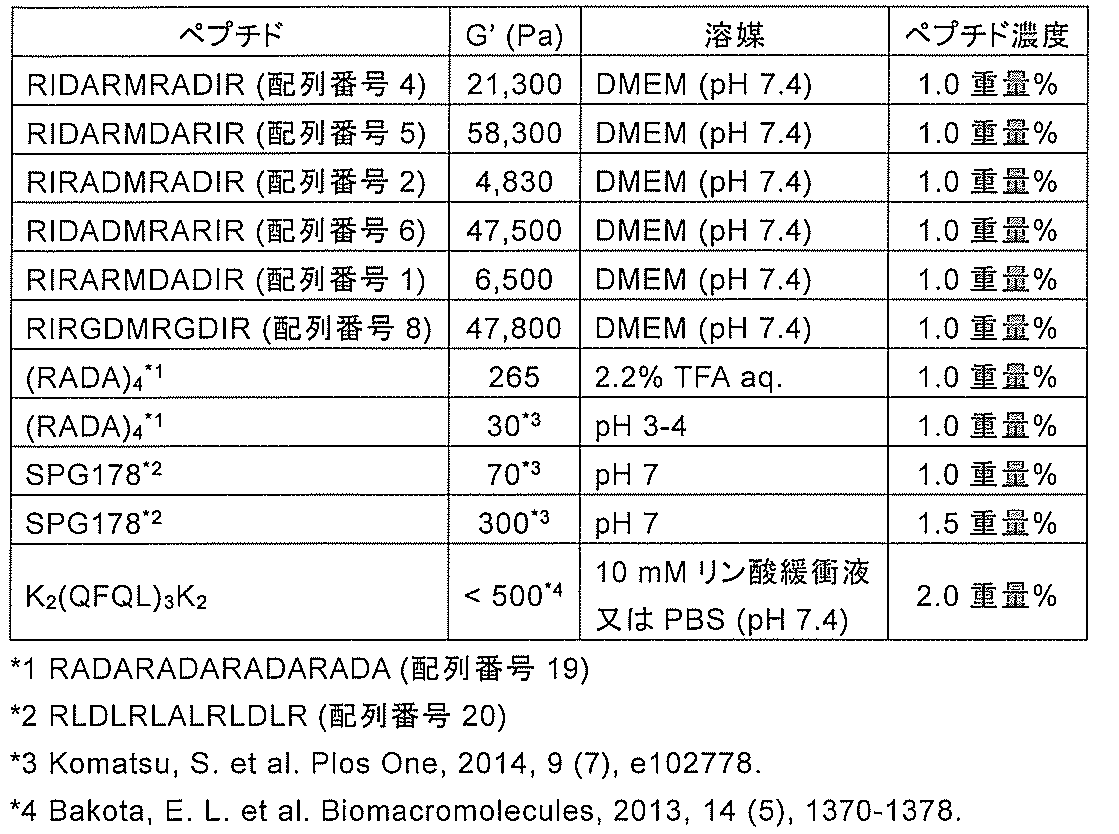
表1に示すように、本発明のペプチドによって形成されるゲルは、(RADA)4、SPG178、及びK2(QFQL)3K2等の公知のゲル化ペプチドと比較して飛躍的に高い弾性率を有することが示された。すなわち、本発明のペプチドは、公知のペプチドゲル化剤と比較して飛躍的に硬いゲルを形成することができる。
例えば、表1において、公知のペプチドゲル化剤であるSPG178は、pH 7.0、及び1.0又は1.5重量%濃度の条件でゲルを形成するが、このゲルの貯蔵弾性率G’は70~300に過ぎず(Komatsu, S. et al. Plos One, 2014, 9 (7), e102778.)、参考のため以下の表2に示すマヨネーズやケチャップの弾性率(約103)にも満たない。
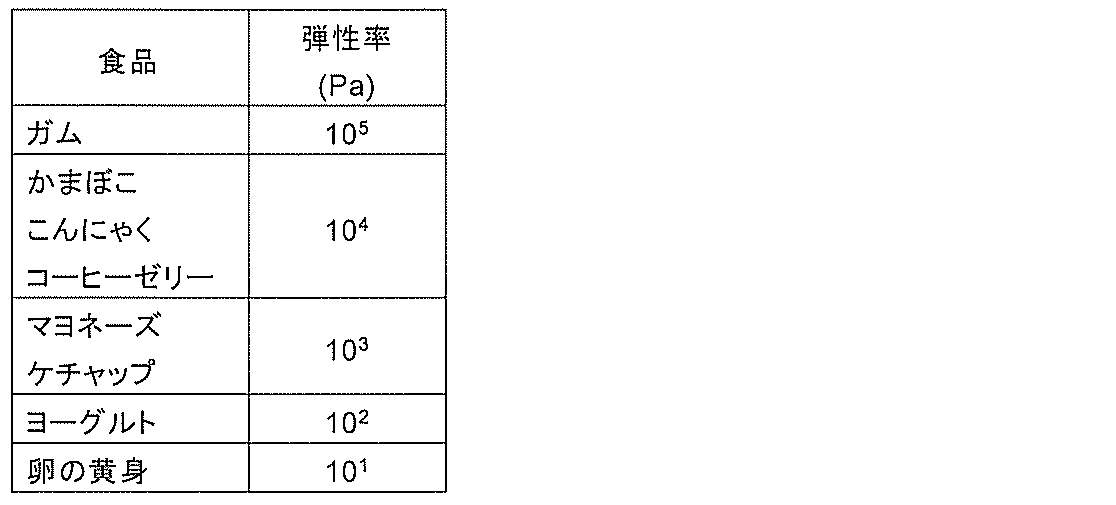
また、表1に示す別の公知のペプチドゲル化剤であるK2(QFQL)3K2は、2.0重量%濃度の条件下PBS(pH 7.4)中でゲルを形成するが、このゲルの貯蔵弾性率G’は500未満であり(Bakota, E. L. et al. Biomacromolecules, 2013, 14 (5), 1370-1378.)、表2に示すマヨネーズやケチャップの弾性率(約103)にも満たない。それ故、K2(QFQL)3K2から形成されるゲルでは、生体内導入時の安定的使用が困難である。
一方、本発明のペプチドによって形成されるゲルの貯蔵弾性率G’は4,000~60,000に達し(表1)、表2に示すこんにゃくやコーヒーゼリー(約104)と同等又はそれ以上の弾性率を示した。
以上の結果から、本発明のペプチドは、公知のペプチドゲル化剤と比較して飛躍的に優れた弾性率を有し、優れた耐用性を有することが示された。
さらに、本発明のペプチドは、(RADA)4、SPG178、及びK2(QFQL)3K2等の公知のゲル化ペプチドと比較してアミノ酸配列が短いため、低コストで大量に化学合成することができる点でも有利である。
<実施例3:円偏光二色性スペクトルの測定>
(目的)
自己組織化ペプチドの立体構造を解析する目的で円偏光二色性スペクトルを測定する。
「円偏光二色性」とは、タンパク質が円偏光を吸収する際に左円偏光と右円偏光に対して吸光度に差が生じる現象のことをいう。タンパク質の立体構造にβシート構造が含まれている場合、円偏光二色性スペクトルにおいて220 nm付近の負のコットン効果が観測される。
(目的)
自己組織化ペプチドの立体構造を解析する目的で円偏光二色性スペクトルを測定する。
「円偏光二色性」とは、タンパク質が円偏光を吸収する際に左円偏光と右円偏光に対して吸光度に差が生じる現象のことをいう。タンパク質の立体構造にβシート構造が含まれている場合、円偏光二色性スペクトルにおいて220 nm付近の負のコットン効果が観測される。
(方法)
実施例1で調製した1.0重量%濃度のペプチドゲルのうち、例として3種類のペプチド:RIDARMRADIRペプチド(配列番号4)、RIRADMRADIRペプチド(配列番号2)、及びRIDARMDARIRペプチド(配列番号5)について、20℃、40℃、60℃、及び80℃における円偏光二色性スペクトル、並びに80℃から20℃に再冷却した際の円偏光二色性スペクトルを測定した。
実施例1で調製した1.0重量%濃度のペプチドゲルのうち、例として3種類のペプチド:RIDARMRADIRペプチド(配列番号4)、RIRADMRADIRペプチド(配列番号2)、及びRIDARMDARIRペプチド(配列番号5)について、20℃、40℃、60℃、及び80℃における円偏光二色性スペクトル、並びに80℃から20℃に再冷却した際の円偏光二色性スペクトルを測定した。
円偏光二色性スペクトルは、JASCO J-1100 CD Spectrometerを使用して、組立セル(GL Science、AB20-UV-0.1、セル長0.1 mm)を用いて測定した。測定範囲は190-400 nm、データ取込間隔は0.2 nm、走査速度は200 nm/分、試料濃度は1.0重量%であった。円偏光二色性スペクトル測定時における温度制御は、JASCO 温調ユニット及び水冷ペルチェセルホルダ PTC-514を用いて行った。
(結果)
円偏光二色性スペクトルの測定結果を図4に示す。
RIDARMRADIRペプチド(配列番号4)、RIRADMRADIRペプチド(配列番号2)、及びRIDARMDARIRペプチド(配列番号5)の3種類のペプチドサンプルはいずれも、220 nm付近で負のコットン効果を示した。これは、βシート構造に帰属される特徴的なシグナルであることから、ゲルを形成するペプチドがβシート状に自己集合していることが示された。
円偏光二色性スペクトルの測定結果を図4に示す。
RIDARMRADIRペプチド(配列番号4)、RIRADMRADIRペプチド(配列番号2)、及びRIDARMDARIRペプチド(配列番号5)の3種類のペプチドサンプルはいずれも、220 nm付近で負のコットン効果を示した。これは、βシート構造に帰属される特徴的なシグナルであることから、ゲルを形成するペプチドがβシート状に自己集合していることが示された。
3種類のペプチドサンプルについて、220 nm付近の負のコットン効果は20~80℃の条件下で維持された。よって、ペプチドゲルを構成するβシート構造が20~80℃の温度範囲において安定に維持されていることが示された。
<実施例4:細胞接着性の評価>
(目的)
ペプチドゲルの細胞接着性を評価する。
(目的)
ペプチドゲルの細胞接着性を評価する。
(方法)
実施例1で調製したペプチドゲルのうち、例として3種類のペプチド:RIRADMRADIRペプチド(配列番号2)、RIDARMRADIRペプチド(配列番号4)、及びRIDARMDARIRペプチド(配列番号5)について、細胞接着性を評価する。
実施例1と同様の方法で1.0重量%濃度のペプチドサンプルを調製した。50 μLのペプチドサンプルをチャンバースライド(Millipore社、Millicell EZ 8-well glass)上に滴下し、遠心式濃縮機(TAITEC社、VC-96W)を用いて減圧乾燥することによって、ペプチドをコートしたチャンバースライドを作製した。1.8×10⁵個のマウス胎仔由来3T3細胞(NIH3T3細胞)を10%血清を含有するDMEM培地(44 mM NaHCO3含有、Gibco社、11995-065)250 μLに懸濁し、ペプチドをコートしたチャンバースライドに播種した後、CO2インキュベータ(37℃、CO2濃度5%)内で30分間インキュベートした。PBSでチャンバースライドを洗浄して非接着細胞を除去した。洗浄後に残った接着細胞を4%PFAで固定後、DAPI染色を行った。接着細胞数はサンプリングバイアスを排除した厳密な定量手法であるステレオロジーにて測定した。具体的には、300 μm×300 μmの領域中で100 μm×100 μmのフレームを9箇所作成し、その各フレーム内にいる細胞数を数えた。得られた細胞数に基づいて1 mm×1 mmの領域中の細胞数への換算を行った。本実施例では、細胞接着性のペプチドゲルを形成することが知られている(RADA)4ペプチド(配列番号19)を対照として使用した。
実施例1で調製したペプチドゲルのうち、例として3種類のペプチド:RIRADMRADIRペプチド(配列番号2)、RIDARMRADIRペプチド(配列番号4)、及びRIDARMDARIRペプチド(配列番号5)について、細胞接着性を評価する。
実施例1と同様の方法で1.0重量%濃度のペプチドサンプルを調製した。50 μLのペプチドサンプルをチャンバースライド(Millipore社、Millicell EZ 8-well glass)上に滴下し、遠心式濃縮機(TAITEC社、VC-96W)を用いて減圧乾燥することによって、ペプチドをコートしたチャンバースライドを作製した。1.8×10⁵個のマウス胎仔由来3T3細胞(NIH3T3細胞)を10%血清を含有するDMEM培地(44 mM NaHCO3含有、Gibco社、11995-065)250 μLに懸濁し、ペプチドをコートしたチャンバースライドに播種した後、CO2インキュベータ(37℃、CO2濃度5%)内で30分間インキュベートした。PBSでチャンバースライドを洗浄して非接着細胞を除去した。洗浄後に残った接着細胞を4%PFAで固定後、DAPI染色を行った。接着細胞数はサンプリングバイアスを排除した厳密な定量手法であるステレオロジーにて測定した。具体的には、300 μm×300 μmの領域中で100 μm×100 μmのフレームを9箇所作成し、その各フレーム内にいる細胞数を数えた。得られた細胞数に基づいて1 mm×1 mmの領域中の細胞数への換算を行った。本実施例では、細胞接着性のペプチドゲルを形成することが知られている(RADA)4ペプチド(配列番号19)を対照として使用した。
(結果)
接着細胞のDAPI染色と接着細胞数を図5に示す。
Sigmacote(シグマアルドリッチ社、SL2-25ML)でチャンバースライド表面をシリコン化処理した場合(図5、「Sigmacote」)、及びチャンバースライド表面を処理せず積極的な接着を促進しない場合(図5、「noncoat」)では、チャンバースライドに接着する細胞の数が少なかった。これに対して、本発明のRIRADMRADIRペプチド(配列番号2)、RIDARMRADIRペプチド(配列番号4)、及びRIDARMDARIRペプチド(配列番号5)は、(RADA)4ペプチドと同等か又はそれ以上の細胞接着性を有することが示された。
この結果から、本発明のペプチドゲル化剤が、細胞接着性を有する人工細胞外マトリックスや細胞足場材として使用し得ることが示された。
接着細胞のDAPI染色と接着細胞数を図5に示す。
Sigmacote(シグマアルドリッチ社、SL2-25ML)でチャンバースライド表面をシリコン化処理した場合(図5、「Sigmacote」)、及びチャンバースライド表面を処理せず積極的な接着を促進しない場合(図5、「noncoat」)では、チャンバースライドに接着する細胞の数が少なかった。これに対して、本発明のRIRADMRADIRペプチド(配列番号2)、RIDARMRADIRペプチド(配列番号4)、及びRIDARMDARIRペプチド(配列番号5)は、(RADA)4ペプチドと同等か又はそれ以上の細胞接着性を有することが示された。
この結果から、本発明のペプチドゲル化剤が、細胞接着性を有する人工細胞外マトリックスや細胞足場材として使用し得ることが示された。
<実施例5:GFP-P4融合ペプチドのペプチドゲルへの取り込み>
(目的)
GFPタンパク質と自己組織化ペプチドとを連結してなる融合ペプチドについて、ペプチドゲルへの取り込みの効率を評価する。なお、以降の実施例では、本発明の自己組織化ペプチドの一例としてアミノ酸配列RIDARMRADIR(配列番号4)からなるペプチド(以下、「P4ペプチド」と表記する)を用いるが、P4ペプチドで得られる効果は本発明の他のすべての自己組織化ペプチドについても同様に得られることは明らかである。
(目的)
GFPタンパク質と自己組織化ペプチドとを連結してなる融合ペプチドについて、ペプチドゲルへの取り込みの効率を評価する。なお、以降の実施例では、本発明の自己組織化ペプチドの一例としてアミノ酸配列RIDARMRADIR(配列番号4)からなるペプチド(以下、「P4ペプチド」と表記する)を用いるが、P4ペプチドで得られる効果は本発明の他のすべての自己組織化ペプチドについても同様に得られることは明らかである。
(方法)
(1)P4ペプチド溶液の調製
配列番号4で示すアミノ酸配列からなるP4ペプチドを1.0重量%濃度で含むP4ペプチド溶液を、実施例1と同様の方法で調製した。
(1)P4ペプチド溶液の調製
配列番号4で示すアミノ酸配列からなるP4ペプチドを1.0重量%濃度で含むP4ペプチド溶液を、実施例1と同様の方法で調製した。
(2)GFP-P4融合ペプチドの調製
GFPタンパク質のC末端側にアミノ酸配列RIDARMRADIR(配列番号4)からなるペプチド(P4ペプチド)を融合したGFP-P4融合ペプチドを発現するプラスミド、及びP4ペプチドを融合していないGFPタンパク質を発現するプラスミドを以下の方法で作製した。
GFPタンパク質のC末端側にアミノ酸配列RIDARMRADIR(配列番号4)からなるペプチド(P4ペプチド)を融合したGFP-P4融合ペプチドを発現するプラスミド、及びP4ペプチドを融合していないGFPタンパク質を発現するプラスミドを以下の方法で作製した。
特願2020-45109に記載のpCAG-GFP-RADA16プラスミドを鋳型として、GFP及び6xHisTagをコードする配列部分をCAG-Fw1プライマー(配列番号23)及びP4-Rv1プライマー(配列番号24)でPCR増幅した。次に、その増幅産物を鋳型としてCAG-Fw2プライマー(配列番号25)及びP4-Rv2プライマー(配列番号26)でPCR増幅し、GFP-P4断片を取得した。GFP-P4断片をNheI/XhoIで切断後、pCAG-CSTに挿入することにより、GFP-P4融合ペプチドを発現するためのpCAG-GFP-P4プラスミドを作製した。
次に本発明者らによる過去の文献(Oshikawa, M. et al., Adv Healthc Mater. 2017;6(11):10.1002/adhm.201700183, PMID: 28488337)に記載の方法によってGFP-P4融合ペプチド及びGFPタンパク質を発現及び抽出した。具体的には、pCAG-GFP-P4及びpCAG-GFPプラスミドを293T細胞に遺伝子導入した。4日間培養した後、細胞溶解液(0.5% Nonidet P-40, 120 mM NaCl, 50 mM Tris-HCl (pH8.0))500 μLで細胞を溶解した。この溶解画分を限外濾過カラム(メルク社、amicon ultra 10K)を使用して、0.1×PBS(137 mM NaCl, 2.70 mM KCl, 0.810 mM Na2HPO4, 0.147 mM KH2PO4 (pH7.4))溶液に置換して濃縮した。また、対照として使用したGFP-RADA16融合ペプチドは、特願2020-45109に開示される方法によって調製した。
得られたGFP-P4融合ペプチド、GFP-RADA16融合ペプチド、及びGFPタンパク質の濃度はサンドイッチELISA法によって測定した。固相化抗体には抗GFPニワトリ抗体(アブカム社, ab13970)、検出抗体には抗GFPウサギ抗体(アブカム社, ab290)を用いた。
(3)GFP取り込み率の測定
1.5 mLチューブに、2%P4ペプチド溶液又は1%RADA16ペプチド溶液50 μLに対して、モル比が105分の1となるようにH2Oで希釈したGFP-P4融合ペプチド溶液、GFP-RADA16融合ペプチド溶液、又はGFP溶液を40 μL加え(GFP融合ペプチド又はGFPの「添加量」という)、さらに100 mM HEPES溶液を加えた10×DMEM溶液(サーモフィッシャーサイエンティフィック社, 12100061)を10 μL加え、ピペッティング操作でゲル化させた。その後、PBS溶液(137 mM NaCl, 2.70 mM KCl, 8.10 mM Na2HPO4, 1.47 mM KH2PO4 (pH7.4))500 μLで3回洗浄した。これらの上清中のGFP融合ペプチド又はGFPの濃度をサンドイッチELISA法で測定し、これを非取り込み画分(GFP融合ペプチド又はGFPの「非取り込み量」という)とすることによって、GFP融合ペプチド又はGFPの「取り込み量」を[添加量-非取り込み量]として計算し、取り込み率(%)=取り込み量/添加量を決定した。
1.5 mLチューブに、2%P4ペプチド溶液又は1%RADA16ペプチド溶液50 μLに対して、モル比が105分の1となるようにH2Oで希釈したGFP-P4融合ペプチド溶液、GFP-RADA16融合ペプチド溶液、又はGFP溶液を40 μL加え(GFP融合ペプチド又はGFPの「添加量」という)、さらに100 mM HEPES溶液を加えた10×DMEM溶液(サーモフィッシャーサイエンティフィック社, 12100061)を10 μL加え、ピペッティング操作でゲル化させた。その後、PBS溶液(137 mM NaCl, 2.70 mM KCl, 8.10 mM Na2HPO4, 1.47 mM KH2PO4 (pH7.4))500 μLで3回洗浄した。これらの上清中のGFP融合ペプチド又はGFPの濃度をサンドイッチELISA法で測定し、これを非取り込み画分(GFP融合ペプチド又はGFPの「非取り込み量」という)とすることによって、GFP融合ペプチド又はGFPの「取り込み量」を[添加量-非取り込み量]として計算し、取り込み率(%)=取り込み量/添加量を決定した。
(結果)
GFP-P4融合ペプチドのP4ペプチドゲルへの取り込み率、GFPタンパク質のP4ペプチドゲルへの取り込み率、GFP-RADA16融合ペプチドのRADA16ペプチドゲルへの取り込み率、及びGFPタンパク質のRADA16ペプチドゲルへの取り込み率の測定結果を図6Aに示す。
GFP-P4融合ペプチドのP4ペプチドゲルへの取り込み率、GFPタンパク質のP4ペプチドゲルへの取り込み率、GFP-RADA16融合ペプチドのRADA16ペプチドゲルへの取り込み率、及びGFPタンパク質のRADA16ペプチドゲルへの取り込み率の測定結果を図6Aに示す。
P4ペプチドを融合していないGFPタンパク質は、P4ペプチドゲルにほとんど取り込まれなかった(図6A、「GFP + P4」)。これに対して、GFP-P4融合ペプチドは、P4ペプチドゲルに90%を超える極めて高い効率で取り込まれた(図6A、「GFP-P4 + P4」)。一方、GFP-RADA16融合ペプチドは、RADA16ペプチドゲルに効率的に取り込まれたが、取り込み効率は70%よりも低かった(図6A、「GFP-RADA16 + RADA16」)。
以上の結果から、GFPにP4ペプチドを融合することによって、P4ペプチドゲルへの取り込み率を大幅に増大させることが示された。また、RADA16ペプチドと比べて、P4ペプチドは取り込み率を大幅に上昇することが示された。
<実施例6:GFP-P4融合ペプチドのペプチドゲルからの徐放>
(目的)
GFP-P4融合ペプチドのP4ペプチドゲルからの放出率を測定し、徐放特性を評価する。
(目的)
GFP-P4融合ペプチドのP4ペプチドゲルからの放出率を測定し、徐放特性を評価する。
(方法)
放出率の測定は以下の方法で行った。実施例5においてGFP-P4融合ペプチドを取り込ませたP4ペプチドゲル、又はGFP-RADA16融合ペプチドを取り込ませたRADA16ペプチドゲルを、10%FBSを含む200 μLのPBS溶液中で懸濁し、高速振盪機(東京理化器械社、CM-1000)を用いて、37℃、500 rpmの条件で連続撹拌した。0、6、12、24、72、96、及び168時間後の各時点において、サンプルの上清に含まれるGFP融合ペプチド又はGFPの濃度をサンドイッチELISA法で測定して、上清中に放出されたGFP融合ペプチド又はGFPの量(「放出量」という)を決定し、放出率(%)=放出量/取り込み量を決定した。
放出率の測定は以下の方法で行った。実施例5においてGFP-P4融合ペプチドを取り込ませたP4ペプチドゲル、又はGFP-RADA16融合ペプチドを取り込ませたRADA16ペプチドゲルを、10%FBSを含む200 μLのPBS溶液中で懸濁し、高速振盪機(東京理化器械社、CM-1000)を用いて、37℃、500 rpmの条件で連続撹拌した。0、6、12、24、72、96、及び168時間後の各時点において、サンプルの上清に含まれるGFP融合ペプチド又はGFPの濃度をサンドイッチELISA法で測定して、上清中に放出されたGFP融合ペプチド又はGFPの量(「放出量」という)を決定し、放出率(%)=放出量/取り込み量を決定した。
(結果)
GFP-P4融合ペプチドのP4ペプチドゲルからの放出率、及びGFP-RADA16融合ペプチドのRADA16ペプチドゲルからの放出率を測定した結果を図6Bに示す。GFP-RADA16融合ペプチドでは、RADA16ペプチドゲルからの放出が6時間以降でほとんど認められず、168時間後における放出率は5%程度に過ぎなかった(図6B、「GFP-RADA16 + RADA16」)。これに対して、GFP-P4融合ペプチドはP4ペプチドゲルから放出が長時間持続し、168時間後の放出率は40%近くにまで達した。
この結果から、P4ペプチドは、RADA16ペプチドと比較して、より長時間に亘ってより多くの機能性分子の放出を可能にすることが示された。したがって、P4ペプチドゲルが優れた徐放効果を有することが示された。
GFP-P4融合ペプチドのP4ペプチドゲルからの放出率、及びGFP-RADA16融合ペプチドのRADA16ペプチドゲルからの放出率を測定した結果を図6Bに示す。GFP-RADA16融合ペプチドでは、RADA16ペプチドゲルからの放出が6時間以降でほとんど認められず、168時間後における放出率は5%程度に過ぎなかった(図6B、「GFP-RADA16 + RADA16」)。これに対して、GFP-P4融合ペプチドはP4ペプチドゲルから放出が長時間持続し、168時間後の放出率は40%近くにまで達した。
この結果から、P4ペプチドは、RADA16ペプチドと比較して、より長時間に亘ってより多くの機能性分子の放出を可能にすることが示された。したがって、P4ペプチドゲルが優れた徐放効果を有することが示された。
<実施例7:VEGF-P4融合ペプチドのペプチドゲルへの取り込み>
(目的)
VEGFペプチドとP4ペプチドとを連結してなるVEGF-P4融合ペプチドについて、P4ペプチドゲルへの取り込みの効率を評価する。
(目的)
VEGFペプチドとP4ペプチドとを連結してなるVEGF-P4融合ペプチドについて、P4ペプチドゲルへの取り込みの効率を評価する。
(方法)
VEGFペプチドのC末端側にアミノ酸配列RIDARMRADIR(配列番号4)からなるペプチド(P4ペプチド)を融合したVEGF-P4融合ペプチド、及びP4ペプチドを融合していないVEGFペプチドを発現するプラスミドを以下の方法で作製した。
VEGFペプチドのC末端側にアミノ酸配列RIDARMRADIR(配列番号4)からなるペプチド(P4ペプチド)を融合したVEGF-P4融合ペプチド、及びP4ペプチドを融合していないVEGFペプチドを発現するプラスミドを以下の方法で作製した。
特願2020-45109に記載のpCAG-VEGF-A16Gプラスミドを鋳型として、VEGF及び6xHisTagをコードする配列部分をCAG-Fw1プライマー(配列番号23)及びP4-Rv1プライマー(配列番号24)でPCR増幅した。次に、その増幅産物を鋳型としてCAG-Fw2プライマー(配列番号25)及びP4-Rv2プライマー(配列番号26)でPCR増幅し、VEGF-P4断片を取得した。VEGF-P4断片をNheI/XhoIで切断後、pCAG-CSTに挿入することにより、VEGF-P4融合ペプチドを発現するためのpCAG-VEGF-P4プラスミドを作製した。
次に本発明者らによる過去の文献(Oshikawa, M. et al., Adv Healthc Mater. 2017;6(11):10.1002/adhm.201700183, PMID: 28488337)に記載の方法によってVEGF-P4融合ペプチド及びVEGFペプチドを発現及び抽出した。具体的には、pCAG-VEGF-P4及びpCAG-VEGFプラスミドを293T細胞に遺伝子導入し、これを7日間培養することによって、培養上清を得た。この画分を限外濾過カラム(メルク社、amicon ultra 10K)で、0.1×PBS(137 mM NaCl , 2.70 mM KCl , 0.810 mM Na2HPO4, 0.147 mM KH2PO4 (pH7.4))溶液に置換して濃縮した。
得られたVEGF-P4融合ペプチド、及びVEGFペプチドの濃度はサンドイッチELISA法によって測定した。固相化抗体には抗VEGFヤギ抗体(R&D社, AF-493-NA)、検出抗体にはビオチン化抗VEGFヤギ抗体(R&D社, R&D BAF493)を用いた。
ペプチドゲルへの取り込み効率の測定は実施例5と同様の方法で行い、取り込み率(%)を決定した。
ペプチドゲルへの取り込み効率の測定は実施例5と同様の方法で行い、取り込み率(%)を決定した。
(結果)
VEGF-P4融合ペプチドのP4ペプチドゲルへの取り込み率、及びVEGFペプチドのP4ペプチドゲルへの取り込み率を測定した結果を図7Aに示す。
VEGF-P4融合ペプチドは、P4ペプチドを融合していないVEGFペプチドに比べて、P4ペプチドゲルへの高い取り込み率を示した。この結果から、VEGFペプチドへのP4ペプチドの融合により、P4ペプチドゲルへの取り込みが大きく促進されることが示された。
VEGF-P4融合ペプチドのP4ペプチドゲルへの取り込み率、及びVEGFペプチドのP4ペプチドゲルへの取り込み率を測定した結果を図7Aに示す。
VEGF-P4融合ペプチドは、P4ペプチドを融合していないVEGFペプチドに比べて、P4ペプチドゲルへの高い取り込み率を示した。この結果から、VEGFペプチドへのP4ペプチドの融合により、P4ペプチドゲルへの取り込みが大きく促進されることが示された。
<実施例8:VEGF-P4融合ペプチドのP4ペプチドゲルからの徐放>
(目的)
VEGF-P4融合ペプチドのP4ペプチドゲルからの放出率を測定し、徐放特性を評価する。(方法)
0、6、12、24、72、96、及び168時間後の各時点において、サンプルの上清に含まれるVEGF-P4融合ペプチド又はVEGFペプチドの濃度をサンドイッチELISA法で測定した。P4ペプチドゲル中に取り込まれていたVEGF-P4融合ペプチド又はVEGFペプチドの量に対する、各時点における放出量の割合(放出率(%))=放出量/取り込み量を決定した。
(結果)
VEGF-P4融合ペプチド及びVEGFペプチドのP4ペプチドゲルからの放出率を測定した結果を図7Bに示す。VEGFペプチドは、P4ペプチドゲルからの放出がほとんど認められなかった(図7B、「VEGF + P4」)。これに対して、VEGF-P4融合ペプチドはP4ペプチドゲルからの放出が長期間に亘って持続し、168時間後には放出率が約50%に達した。
この結果から、VEGF-P4融合ペプチドをP4ペプチドゲルに内包させることによって優れた徐放特性が得られることが示された。
(目的)
VEGF-P4融合ペプチドのP4ペプチドゲルからの放出率を測定し、徐放特性を評価する。(方法)
0、6、12、24、72、96、及び168時間後の各時点において、サンプルの上清に含まれるVEGF-P4融合ペプチド又はVEGFペプチドの濃度をサンドイッチELISA法で測定した。P4ペプチドゲル中に取り込まれていたVEGF-P4融合ペプチド又はVEGFペプチドの量に対する、各時点における放出量の割合(放出率(%))=放出量/取り込み量を決定した。
(結果)
VEGF-P4融合ペプチド及びVEGFペプチドのP4ペプチドゲルからの放出率を測定した結果を図7Bに示す。VEGFペプチドは、P4ペプチドゲルからの放出がほとんど認められなかった(図7B、「VEGF + P4」)。これに対して、VEGF-P4融合ペプチドはP4ペプチドゲルからの放出が長期間に亘って持続し、168時間後には放出率が約50%に達した。
この結果から、VEGF-P4融合ペプチドをP4ペプチドゲルに内包させることによって優れた徐放特性が得られることが示された。
<実施例9:VEGF-P4融合ペプチドを含むP4ペプチドゲルによる、マウス脳梗塞モデルの歩行機能改善効果>
(目的)
VEGF-P4融合ペプチドを内包するP4ペプチドゲルをマウス脳梗塞モデルの脳内に埋め込み、歩行傷害に対する治療効果を評価する。
(目的)
VEGF-P4融合ペプチドを内包するP4ペプチドゲルをマウス脳梗塞モデルの脳内に埋め込み、歩行傷害に対する治療効果を評価する。
(方法)
ペプチドゲルの作製は1.5mlチューブに、2%P4ペプチド溶液25 μLに対して、モル比が105分の1となるようにH2Oで希釈したVEGF-P4融合ペプチド又はVEGFペプチドを25 μL加えた。ピペッティングの後CO2インキュベータで3日間静置してゲルを形成させた。
マウス脳梗塞モデルは、本発明者らが過去に報告した中大脳動脈遠位部梗塞(dMCAO)モデルを用いた(Oshikawa, M. et al., Adv Healthc Mater. 2017;6(11):10.1002/adhm.201700183, PMID: 28488337)。脳梗塞モデル作製後7日目に、本発明者らによる過去の文献(Jinnou, H., et al., Cell Stem Cell., 2018, 22(1), 128-137.e9., PMID: 29276142)に記載の方法に準じて1回目の歩行機能解析を行った(図8A、「歩行機能解析1」)。1回目の歩行機能解析の後、dMCAOモデル作製時に開頭した側頭部の中大脳動脈遠位部からペプチドゲルを投与した(図8A、「注入」)。投与量は1個体あたり2 μLとした。投与後7日目(脳梗塞モデル作製後14日目)に歩行機能解析を行い(図8A、「歩行機能解析2」)、その後に灌流固定を行い、脳切片を作製した。歩行機能の評価は、総歩数のうち足を滑らせた歩数の割合(踏み外し回数/総歩数(%))を算出して行った。
ペプチドゲルの作製は1.5mlチューブに、2%P4ペプチド溶液25 μLに対して、モル比が105分の1となるようにH2Oで希釈したVEGF-P4融合ペプチド又はVEGFペプチドを25 μL加えた。ピペッティングの後CO2インキュベータで3日間静置してゲルを形成させた。
マウス脳梗塞モデルは、本発明者らが過去に報告した中大脳動脈遠位部梗塞(dMCAO)モデルを用いた(Oshikawa, M. et al., Adv Healthc Mater. 2017;6(11):10.1002/adhm.201700183, PMID: 28488337)。脳梗塞モデル作製後7日目に、本発明者らによる過去の文献(Jinnou, H., et al., Cell Stem Cell., 2018, 22(1), 128-137.e9., PMID: 29276142)に記載の方法に準じて1回目の歩行機能解析を行った(図8A、「歩行機能解析1」)。1回目の歩行機能解析の後、dMCAOモデル作製時に開頭した側頭部の中大脳動脈遠位部からペプチドゲルを投与した(図8A、「注入」)。投与量は1個体あたり2 μLとした。投与後7日目(脳梗塞モデル作製後14日目)に歩行機能解析を行い(図8A、「歩行機能解析2」)、その後に灌流固定を行い、脳切片を作製した。歩行機能の評価は、総歩数のうち足を滑らせた歩数の割合(踏み外し回数/総歩数(%))を算出して行った。
(結果)
マウス脳梗塞モデルにペプチドゲルを投与した結果を図8Bに示す。VEGFペプチドを含まないP4ペプチドゲル単独(「P4単独」)、VEGF-P4融合ペプチド単独(「VEGF-P4単独」)、及びP4ペプチドを融合していないVEGFペプチドを内包するP4ペプチドゲル(「VEGF + P4単独」)を投与した場合には、歩行機能の改善が認められなかった。これに対して、VEGF-P4融合ペプチドを内包するP4ペプチドゲル(「VEGF-P4 + P4単独」)を投与した場合において、総歩数のうち足を滑らせた歩数の割合が低下し、歩行機能に対する改善効果が認められた。
マウス脳梗塞モデルにペプチドゲルを投与した結果を図8Bに示す。VEGFペプチドを含まないP4ペプチドゲル単独(「P4単独」)、VEGF-P4融合ペプチド単独(「VEGF-P4単独」)、及びP4ペプチドを融合していないVEGFペプチドを内包するP4ペプチドゲル(「VEGF + P4単独」)を投与した場合には、歩行機能の改善が認められなかった。これに対して、VEGF-P4融合ペプチドを内包するP4ペプチドゲル(「VEGF-P4 + P4単独」)を投与した場合において、総歩数のうち足を滑らせた歩数の割合が低下し、歩行機能に対する改善効果が認められた。
したがって、VEGF-P4融合ペプチドをP4ペプチドゲルに内包させて投与することによって、脳梗塞で生じる歩行機能障害の回復を促進することが示された。この結果と以降の実施例の結果から、VEGF-P4融合ペプチドをP4ペプチドゲルから徐放させることによって、VEGF機能を長期間に亘って供給することが可能となり、血管新生(実施例11)、神経変性抑制(実施例12)、及び神経細胞数の減少抑制(実施例13)が持続的に促進され、脳機能が脳梗塞から速やかに回復することが示された。
<実施例10:損傷中心部とペナンブラ領域の体積への影響>
(目的)
実施例9の各条件において、損傷中心部とペナンブラ領域の体積の差の有無を検討する。
(方法)
実施例9においてペプチドゲルを投与した中大脳動脈遠位部の脳切片を作製した。この切片に対して、DyLight 488標識トマトレクチン(LEL)(ベクター社, DL-1174)染色による活性化ミクログリア可視化、ニューロンマーカー抗NeuN抗体(ミリポア社, MAB377)による染色、DAPI(シグマ社, D9542)による核染色を同時に行った。活性化ミクログリアを示すLEL陽性領域を損傷中心部(core)、LEL陰性かつNeuN弱陽性領域をペナンブラ(penumbra)領域とした。損傷中心部及びペナンブラ領域の各々の体積を、ステレオロジー(マイクロブライトフィールドジャパン社, stereoinvestigator)を用いて測定した。
(結果)
VEGFペプチドを含まないP4ペプチドゲル単独、VEGF-P4融合ペプチド単独、P4ペプチドを融合していないVEGFペプチド、及びVEGF-P4融合ペプチドを内包するP4ペプチドゲルを投与したいずれの場合においても、損傷中心部とペナンブラ領域の体積に有意な変化は認められなかった(図9)。この結果に基づいて、以下の実施例11~13では各細胞種の細胞数の変化について検討した。
(目的)
実施例9の各条件において、損傷中心部とペナンブラ領域の体積の差の有無を検討する。
(方法)
実施例9においてペプチドゲルを投与した中大脳動脈遠位部の脳切片を作製した。この切片に対して、DyLight 488標識トマトレクチン(LEL)(ベクター社, DL-1174)染色による活性化ミクログリア可視化、ニューロンマーカー抗NeuN抗体(ミリポア社, MAB377)による染色、DAPI(シグマ社, D9542)による核染色を同時に行った。活性化ミクログリアを示すLEL陽性領域を損傷中心部(core)、LEL陰性かつNeuN弱陽性領域をペナンブラ(penumbra)領域とした。損傷中心部及びペナンブラ領域の各々の体積を、ステレオロジー(マイクロブライトフィールドジャパン社, stereoinvestigator)を用いて測定した。
(結果)
VEGFペプチドを含まないP4ペプチドゲル単独、VEGF-P4融合ペプチド単独、P4ペプチドを融合していないVEGFペプチド、及びVEGF-P4融合ペプチドを内包するP4ペプチドゲルを投与したいずれの場合においても、損傷中心部とペナンブラ領域の体積に有意な変化は認められなかった(図9)。この結果に基づいて、以下の実施例11~13では各細胞種の細胞数の変化について検討した。
<実施例11:血管新生促進効果>
(目的)
実施例9の各条件において、血管新生促進効果の有無を検討する。
(方法)
実施例9の各条件下において、ペプチドゲルの投与後に、EdUを8時間おきに1週間投与し、灌流固定後に脳切片を作製した。EdUの投与は、本発明者らによる過去の文献(Oshikawa, M., et al., Development, 2017, 144(18), 3303-3314.)に記載の方法に準じて行った。血管内皮細胞のマーカーであるラミニンの陽性細胞を抗ラミニン抗体(アブカム社, ab11575)で可視化し、EdUはAlexa 647 Azide(Invitrogen社, A10277)を用いたクリック反応によって可視化した。ペナンブラ領域におけるラミニン陽性細胞数、及びEdU/ラミニン共陽性細胞数をステレオロジーによって測定した。
(結果)
VEGFペプチドを含まないP4ペプチドゲル単独、VEGF-P4融合ペプチド単独、及びP4ペプチドを融合していないVEGFペプチドを投与した場合と比較して、VEGF-P4融合ペプチドを内包するP4ペプチドゲルを投与した場合では、ラミニン陽性細胞数、及びEdU/ラミニン共陽性細胞数の有意な増加が認められた(図10)。
この結果から、VEGF-P4融合ペプチドをP4ペプチドゲルから徐放させることによって、VEGF機能の長期に亘る持続的な供給が可能となり、脳梗塞後のペナンブラ領域において血管新生が促進されることが示された。
(目的)
実施例9の各条件において、血管新生促進効果の有無を検討する。
(方法)
実施例9の各条件下において、ペプチドゲルの投与後に、EdUを8時間おきに1週間投与し、灌流固定後に脳切片を作製した。EdUの投与は、本発明者らによる過去の文献(Oshikawa, M., et al., Development, 2017, 144(18), 3303-3314.)に記載の方法に準じて行った。血管内皮細胞のマーカーであるラミニンの陽性細胞を抗ラミニン抗体(アブカム社, ab11575)で可視化し、EdUはAlexa 647 Azide(Invitrogen社, A10277)を用いたクリック反応によって可視化した。ペナンブラ領域におけるラミニン陽性細胞数、及びEdU/ラミニン共陽性細胞数をステレオロジーによって測定した。
(結果)
VEGFペプチドを含まないP4ペプチドゲル単独、VEGF-P4融合ペプチド単独、及びP4ペプチドを融合していないVEGFペプチドを投与した場合と比較して、VEGF-P4融合ペプチドを内包するP4ペプチドゲルを投与した場合では、ラミニン陽性細胞数、及びEdU/ラミニン共陽性細胞数の有意な増加が認められた(図10)。
この結果から、VEGF-P4融合ペプチドをP4ペプチドゲルから徐放させることによって、VEGF機能の長期に亘る持続的な供給が可能となり、脳梗塞後のペナンブラ領域において血管新生が促進されることが示された。
<実施例12:神経変性抑制効果>
(目的)
実施例9の各条件において、神経変性抑制効果の有無を検討する。
(方法)
変性ニューロンに特異的に結合する蛍光色素を含むFluoro-Jade C(FJC)(バイオセンシズ社, TR-100-FJT)、及びDAPIを用いて組織染色を行った後、ペナンブラ領域におけるFJC陽性細胞数をステレオロジーにて測定した。
(結果)
VEGF-P4融合ペプチドを内包するP4ペプチドゲルを投与した場合では、FJC陽性細胞の数の減少が認められた(図11)。この結果から、VEGF-P4融合ペプチドをP4ペプチドゲルから徐放させることによって、脳梗塞後のペナンブラ領域における神経変性が抑制されることが示された。
(目的)
実施例9の各条件において、神経変性抑制効果の有無を検討する。
(方法)
変性ニューロンに特異的に結合する蛍光色素を含むFluoro-Jade C(FJC)(バイオセンシズ社, TR-100-FJT)、及びDAPIを用いて組織染色を行った後、ペナンブラ領域におけるFJC陽性細胞数をステレオロジーにて測定した。
(結果)
VEGF-P4融合ペプチドを内包するP4ペプチドゲルを投与した場合では、FJC陽性細胞の数の減少が認められた(図11)。この結果から、VEGF-P4融合ペプチドをP4ペプチドゲルから徐放させることによって、脳梗塞後のペナンブラ領域における神経変性が抑制されることが示された。
<実施例13:神経細胞数の減少抑制効果>
(目的)
実施例9の各条件において、神経細胞数の減少抑制効果の有無を検討する。
(方法)
ニューロンマーカーの抗NeuN抗体で免疫組織染色を行い、DAPI(シグマ社, D9542)で核染色を行った。ペナンブラ領域におけるNeuN陽性細胞の数をステレオロジーにて測定した。
(結果)
VEGF-P4融合ペプチドを内包するP4ペプチドゲルを投与した場合において、NeuN陽性細胞の数の有意な増加が認められた(図12)。この結果から、VEGF-P4融合ペプチドをP4ペプチドゲルから徐放させることによって、脳梗塞後のペナンブラ領域における神経細胞数の減少が抑制されることが示された。
(目的)
実施例9の各条件において、神経細胞数の減少抑制効果の有無を検討する。
(方法)
ニューロンマーカーの抗NeuN抗体で免疫組織染色を行い、DAPI(シグマ社, D9542)で核染色を行った。ペナンブラ領域におけるNeuN陽性細胞の数をステレオロジーにて測定した。
(結果)
VEGF-P4融合ペプチドを内包するP4ペプチドゲルを投与した場合において、NeuN陽性細胞の数の有意な増加が認められた(図12)。この結果から、VEGF-P4融合ペプチドをP4ペプチドゲルから徐放させることによって、脳梗塞後のペナンブラ領域における神経細胞数の減少が抑制されることが示された。
<実施例14:K(FAM)-G-P4融合ペプチドのP4ペプチドゲルからの徐放>
(目的)
フルオレセイン(FAM)と自己組織化ペプチドとを連結してなるFAM-P4融合ペプチドについて、P4ペプチドゲルからの放出率を測定する。
(方法)
(1)FAM-P4融合ペプチドのP4ペプチドゲルへの取り込み
アミノ酸配列RIDARMRADIR(配列番号4)からなるペプチド(P4ペプチド、図13A)とフルオレセインとを連結したK(FAM)-G-P4融合ペプチドを合成した(図13B)。具体的には、5(6)-CarboxyfluoresceinとKG-P4-resinを固相合成反応で結合させ、TFAを用いたレジンからの切り出しによってK(FAM)-G-P4融合ペプチドを合成した。1.0重量%濃度P4ペプチド溶液に対して、モル比で1/100,000量のK(FAM)-G-P4融合ペプチド、及びDMEM+HEPES溶液を加えて100 μLに調整し、混合した。5,000 rpmで5分間遠心後、上清を可能な限り採取し、1.5 mLチューブに回収し-20℃で保存した。
(2)放出率の測定
K(FAM)-G-P4融合ペプチドのP4ペプチドゲルからの放出率の測定は、実施例6の方法に準じて行った。放出されたK(FAM)-G-P4融合ペプチドの濃度は、UV吸収スペクトルを測定し、495 nmにおける吸光度に基づいて決定した。P4ペプチドゲル中に取り込まれていた当初のK(FAM)-G-P4融合ペプチドの量に対する、0、1、4、24、及び72時間の各時点における放出量の割合(放出率(%))を決定した。
(結果)
K(FAM)-G-P4融合ペプチドのP4ペプチドゲルからの放出率を測定した結果を図14に示す。K(FAM)-G-P4融合ペプチドの46.1%が72時間かけて放出されることが明らかになった。この結果から、低分子をP4ペプチドに融合した場合においても、P4ペプチドゲルから長期間に亘って放出が持続することが示された。
(目的)
フルオレセイン(FAM)と自己組織化ペプチドとを連結してなるFAM-P4融合ペプチドについて、P4ペプチドゲルからの放出率を測定する。
(方法)
(1)FAM-P4融合ペプチドのP4ペプチドゲルへの取り込み
アミノ酸配列RIDARMRADIR(配列番号4)からなるペプチド(P4ペプチド、図13A)とフルオレセインとを連結したK(FAM)-G-P4融合ペプチドを合成した(図13B)。具体的には、5(6)-CarboxyfluoresceinとKG-P4-resinを固相合成反応で結合させ、TFAを用いたレジンからの切り出しによってK(FAM)-G-P4融合ペプチドを合成した。1.0重量%濃度P4ペプチド溶液に対して、モル比で1/100,000量のK(FAM)-G-P4融合ペプチド、及びDMEM+HEPES溶液を加えて100 μLに調整し、混合した。5,000 rpmで5分間遠心後、上清を可能な限り採取し、1.5 mLチューブに回収し-20℃で保存した。
(2)放出率の測定
K(FAM)-G-P4融合ペプチドのP4ペプチドゲルからの放出率の測定は、実施例6の方法に準じて行った。放出されたK(FAM)-G-P4融合ペプチドの濃度は、UV吸収スペクトルを測定し、495 nmにおける吸光度に基づいて決定した。P4ペプチドゲル中に取り込まれていた当初のK(FAM)-G-P4融合ペプチドの量に対する、0、1、4、24、及び72時間の各時点における放出量の割合(放出率(%))を決定した。
(結果)
K(FAM)-G-P4融合ペプチドのP4ペプチドゲルからの放出率を測定した結果を図14に示す。K(FAM)-G-P4融合ペプチドの46.1%が72時間かけて放出されることが明らかになった。この結果から、低分子をP4ペプチドに融合した場合においても、P4ペプチドゲルから長期間に亘って放出が持続することが示された。
<実施例15:さらなる自己組織化ペプチドの作製と流動性試験>
(目的)
生理的条件下でゲル化する、さらなる自己組織化ペプチドを開発する。
(方法と結果)
実施例1の(1)~(3)と同様の方法により、さらなる5種類のペプチド:RIRGDMRADIR(配列番号41)、RIRADMRGDIR(配列番号42)、RIRGDIRGDIR(配列番号43)、RIRGDIRADIR(配列番号44)、及びRIRADIRGDIR(配列番号45)を合成し、ゲル化及び流動性試験を行った。
図15に各ペプチドサンプルに対する流動性試験の結果を示す。RIRGDMRADIR(配列番号41)、RIRADMRGDIR(配列番号42)、RIRGDIRGDIR(配列番号43)、RIRGDIRADIR(配列番号44)、及びRIRADIRGDIR(配列番号45)はいずれもミクロチューブ管の上下反転後に、その全部がミクロチューブ管の底面側に留まり、流動性を失ってゲル化していることが示された(図15)。
本明細書で引用した全ての刊行物、特許及び特許出願はそのまま引用により本明細書に組み入れられるものとする。
(目的)
生理的条件下でゲル化する、さらなる自己組織化ペプチドを開発する。
(方法と結果)
実施例1の(1)~(3)と同様の方法により、さらなる5種類のペプチド:RIRGDMRADIR(配列番号41)、RIRADMRGDIR(配列番号42)、RIRGDIRGDIR(配列番号43)、RIRGDIRADIR(配列番号44)、及びRIRADIRGDIR(配列番号45)を合成し、ゲル化及び流動性試験を行った。
図15に各ペプチドサンプルに対する流動性試験の結果を示す。RIRGDMRADIR(配列番号41)、RIRADMRGDIR(配列番号42)、RIRGDIRGDIR(配列番号43)、RIRGDIRADIR(配列番号44)、及びRIRADIRGDIR(配列番号45)はいずれもミクロチューブ管の上下反転後に、その全部がミクロチューブ管の底面側に留まり、流動性を失ってゲル化していることが示された(図15)。
本明細書で引用した全ての刊行物、特許及び特許出願はそのまま引用により本明細書に組み入れられるものとする。
Claims (31)
- ヒドロゲル化する自己組織化ペプチドであって、以下の式:
Xaa-Yaa-Zaa-Yaa-Xaa-Yaa-Zaa-Yaa-Xaa
(式中、Xaaは独立してIle又はMetであり、Yaaは独立してAsp、Glu、Lys、又はArgであり、Zaaは独立してAla又はGlyである)
で示されるアミノ酸配列からなるコアペプチドを1個又は2個含み、前記自己組織化ペプチドを構成するアミノ酸配列の全長が25アミノ酸以下である、前記自己組織化ペプチド。 - 自己組織化ペプチドのN末端及び/又はC末端がArgである、請求項1に記載の自己組織化ペプチド。
- 自己組織化ペプチドのN末端及び/又はC末端の2アミノ酸がいずれもArgである、請求項1に記載の自己組織化ペプチド。
- 請求項1~3のいずれか一項に記載の自己組織化ペプチドに機能性ペプチドを連結してなる融合ペプチド。
- 前記連結が共有結合又は超分子相互作用によるものである、請求項4に記載の融合ペプチド。
- 機能性ペプチドが、ラミニン、VEGF、又はN-カドヘリンである、請求項4又は5に記載の融合ペプチド。
- 請求項1~3のいずれか一項に記載の自己組織化ペプチド、又は請求項4~6のいずれか一項に記載の融合ペプチドからなるゲル化剤。
- 請求項7に記載のゲル化剤を有効成分として含む、ゲル化組成物。
- ゲル化剤を2種以上含む、請求項8に記載のゲル化組成物。
- ゲル化した、請求項1~3のいずれか一項に記載の自己組織化ペプチド、又は請求項4~6のいずれか一項に記載の融合ペプチドを含む、人工細胞外マトリックス。
- ゾル状態にある、請求項7に記載のゲル化剤、又は請求項8若しくは9に記載のゲル化組成物を水中又は水溶液中でそのゲル化温度以下の温度で維持することにより前記ゲル化剤又は前記ゲル化組成物をゲル化する、ゲル化方法。
- 前記ゲル化剤又は前記ゲル化組成物を水中又は水溶液中で維持する前記温度が4~60℃の範囲内である、請求項11に記載の方法。
- 前記ゲル化剤又は前記ゲル化組成物が、炭酸水素イオン、炭酸イオン、クエン酸イオン、酒石酸イオン、及び硫酸イオンからなる群から選択されるいずれか1種以上の陰イオンを含む、請求項11又は12に記載の方法。
- ゲル状態時の前記ゲル化剤又は前記ゲル化組成物がpH 6.0~8.0である、請求項11~13のいずれか一項に記載の方法。
- 前記ゲル化剤及び/又は前記ゲル化組成物の濃度が0.4重量%~10重量%である、請求項11~14のいずれか一項に記載の方法。
- 徐放性ゲル調製用組成物であって、
第1の自己組織化ペプチドからなるゲル化剤、及び第2の自己組織化ペプチドと機能性部分とを連結してなる機能性分子を含み、
前記第1及び第2の自己組織化ペプチドは、独立して、以下の式:
Xaa-Yaa-Zaa-Yaa-Xaa-Yaa-Zaa-Yaa-Xaa
(式中、Xaaは独立してIle又はMetであり、Yaaは独立してAsp、Glu、Lys、又はArgであり、Zaaは独立してAla又はGlyである)
で示されるアミノ酸配列からなるコアペプチドを1個又は2個含むものであり、
前記第1及び第2の自己組織化ペプチドを構成するアミノ酸配列の全長が25アミノ酸以下であり、
前記機能性部分は機能性ペプチド及び/又は低分子化合物である、
前記徐放性ゲル調製用組成物。 - 第1及び/又は第2の自己組織化ペプチドのN末端及び/又はC末端がArgである、請求項16に記載の徐放性ゲル調製用組成物。
- 第1及び/又は第2の自己組織化ペプチドのN末端及び/又はC末端の2アミノ酸がいずれもArgである、請求項16に記載の徐放性ゲル調製用組成物。
- ゲル化剤を2種以上含む、請求項16~18のいずれか一項に記載の徐放性ゲル調製用組成物。
- 前記連結が共有結合又は超分子相互作用によるものである、請求項16~19のいずれか一項に記載の徐放性ゲル調製用組成物。
- 機能性ペプチドが血管内皮細胞増殖因子(VEGF)、線維芽細胞増殖因子(FGF)、及び肝細胞増殖因子(HGF)からなる群から選択される、請求項16~20のいずれか一項に記載の徐放性ゲル調製用組成物。
- 請求項16~21のいずれか一項に記載の徐放性ゲル調製用組成物を含む、徐放性ゲル。
- 請求項22に記載の徐放性ゲルを含む、医薬組成物。
- 移植用である、請求項23に記載の医薬組成物。
- 血管新生促進及び/又は神経変性抑制のための、請求項23又は24に記載の医薬組成物。
- 神経組織損傷及び/又は虚血の治療及び/又は予防に用いるための、請求項23~25のいずれか一項に記載の医薬組成物。
- 前記神経組織損傷が脳梗塞である、請求項26に記載の医薬組成物。
- 徐放性ゲルの作製方法であって、
請求項16~21のいずれか一項に記載の徐放性ゲル調製用組成物を水又は水溶液と混合する工程、及び
前記混合工程後に得られる混合物をゲル化温度以下の温度に維持することによりゲル化させる工程
を含む方法。 - 前記混合工程で、炭酸水素イオン、炭酸イオン、クエン酸イオン、酒石酸イオン、及び硫酸イオンからなる群から選択されるいずれか1種以上の陰イオンをさらに混合する、請求項28に記載の方法。
- ゲル状態時の前記徐放性ゲルがpH 6.0~8.0である、請求項28又は29に記載の方法。
- 前記徐放性ゲル中のゲル化剤の濃度が0.4重量%~10重量%である、請求項28~30のいずれか一項に記載の方法。
Priority Applications (3)
| Application Number | Priority Date | Filing Date | Title |
|---|---|---|---|
| EP21850578.2A EP4137505A4 (en) | 2020-07-30 | 2021-07-29 | SELF-ASSEMBLING PEPTIDE |
| JP2022539576A JP7805589B2 (ja) | 2020-07-30 | 2021-07-29 | 自己組織化ペプチド |
| US17/999,313 US12617827B2 (en) | 2020-07-30 | 2021-07-29 | Self-assembling peptide |
Applications Claiming Priority (4)
| Application Number | Priority Date | Filing Date | Title |
|---|---|---|---|
| JP2020-128805 | 2020-07-30 | ||
| JP2020128805 | 2020-07-30 | ||
| JP2020-146597 | 2020-09-01 | ||
| JP2020146597 | 2020-09-01 |
Publications (1)
| Publication Number | Publication Date |
|---|---|
| WO2022025209A1 true WO2022025209A1 (ja) | 2022-02-03 |
Family
ID=80036322
Family Applications (1)
| Application Number | Title | Priority Date | Filing Date |
|---|---|---|---|
| PCT/JP2021/028175 Ceased WO2022025209A1 (ja) | 2020-07-30 | 2021-07-29 | 自己組織化ペプチド |
Country Status (3)
| Country | Link |
|---|---|
| EP (1) | EP4137505A4 (ja) |
| JP (1) | JP7805589B2 (ja) |
| WO (1) | WO2022025209A1 (ja) |
Cited By (2)
| Publication number | Priority date | Publication date | Assignee | Title |
|---|---|---|---|---|
| WO2023210774A1 (ja) * | 2022-04-27 | 2023-11-02 | 国立研究開発法人科学技術振興機構 | 化合物及びその使用 |
| WO2025100512A1 (ja) * | 2023-11-10 | 2025-05-15 | 地方独立行政法人神奈川県立産業技術総合研究所 | ゲル分解活性を有する改変型ペプチド |
Citations (8)
| Publication number | Priority date | Publication date | Assignee | Title |
|---|---|---|---|---|
| JP2010504972A (ja) * | 2006-09-26 | 2010-02-18 | マサチューセッツ・インスティテュート・オブ・テクノロジー | 修飾自己組織化ペプチド |
| WO2014133027A1 (ja) * | 2013-02-26 | 2014-09-04 | 株式会社スリー・ディー・マトリックス | ハイドロゲル |
| US20150005228A1 (en) * | 2012-08-29 | 2015-01-01 | Agency For Science, Technology And Research | Peptides and uses thereof |
| JP2016528018A (ja) * | 2013-08-22 | 2016-09-15 | アーチ・バイオサージェリー・インコーポレイテッド | 流体の移動を制御するための移植可能なメッシュ |
| JP2020045109A (ja) | 2018-09-14 | 2020-03-26 | 株式会社サンカ | ハンドル付き収納ケース |
| WO2020171161A1 (ja) * | 2019-02-20 | 2020-08-27 | 国立大学法人東京農工大学 | 自己組織化ペプチド |
| JP2020128805A (ja) | 2019-02-12 | 2020-08-27 | 株式会社ジェイテクト | 駆動力伝達装置及びその製造方法 |
| JP2020146597A (ja) | 2019-03-11 | 2020-09-17 | 株式会社ヤマト | 薬注点選定方法 |
Family Cites Families (1)
| Publication number | Priority date | Publication date | Assignee | Title |
|---|---|---|---|---|
| CN108997487B (zh) * | 2018-09-04 | 2021-06-15 | 黑龙江八一农垦大学 | 抗逆相关蛋白z76在调控植物抗逆性中的应用 |
-
2021
- 2021-07-29 JP JP2022539576A patent/JP7805589B2/ja active Active
- 2021-07-29 EP EP21850578.2A patent/EP4137505A4/en active Pending
- 2021-07-29 WO PCT/JP2021/028175 patent/WO2022025209A1/ja not_active Ceased
Patent Citations (8)
| Publication number | Priority date | Publication date | Assignee | Title |
|---|---|---|---|---|
| JP2010504972A (ja) * | 2006-09-26 | 2010-02-18 | マサチューセッツ・インスティテュート・オブ・テクノロジー | 修飾自己組織化ペプチド |
| US20150005228A1 (en) * | 2012-08-29 | 2015-01-01 | Agency For Science, Technology And Research | Peptides and uses thereof |
| WO2014133027A1 (ja) * | 2013-02-26 | 2014-09-04 | 株式会社スリー・ディー・マトリックス | ハイドロゲル |
| JP2016528018A (ja) * | 2013-08-22 | 2016-09-15 | アーチ・バイオサージェリー・インコーポレイテッド | 流体の移動を制御するための移植可能なメッシュ |
| JP2020045109A (ja) | 2018-09-14 | 2020-03-26 | 株式会社サンカ | ハンドル付き収納ケース |
| JP2020128805A (ja) | 2019-02-12 | 2020-08-27 | 株式会社ジェイテクト | 駆動力伝達装置及びその製造方法 |
| WO2020171161A1 (ja) * | 2019-02-20 | 2020-08-27 | 国立大学法人東京農工大学 | 自己組織化ペプチド |
| JP2020146597A (ja) | 2019-03-11 | 2020-09-17 | 株式会社ヤマト | 薬注点選定方法 |
Non-Patent Citations (17)
| Title |
|---|
| BAKOTA, E. L. ET AL., BIOMACROMOLECULES, vol. 14, no. 5, 2013, pages 1370 - 1378 |
| COOPERMAN, L.MICHAELI, D., JOURNAL OF THE AMERICAN ACADEMY OF DERMATOLOGY, vol. 10, 1984, pages 638 - 646 |
| DASGUPTA, A. ET AL., RSC ADVANCES, vol. 3, 2013, pages 9117 - 9149 |
| JINNOU, H. ET AL., CELL STEM CELL, vol. 22, no. 1, 2018, pages 128 - 137 |
| JONKER, A.M. ET AL., CHEMISTRY OF MATERIALS, vol. 24, 2012, pages 759 - 773 |
| KOMATSU, S. ET AL., PLOS ONE, vol. 9, no. 7, 2014, pages e102778 |
| LYNN, A.K. ET AL., JOURNAL OF BIOMEDICAL MATERIALS RESEARCH PART B APPLIED BIOMATERIALS, vol. 71, 2004, pages 343 - 354 |
| OSHIKAWA, M. ET AL., ADV HEALTHC MATER, vol. 6, no. 11, 2017 |
| OSHIKAWA, M. ET AL., ADV HEALTHC MATER., vol. 6, no. 11, 2017 |
| OSHIKAWA, M. ET AL., DEVELOPMENT, vol. 144, no. 18, 2017, pages 3303 - 3314 |
| SCOTT, M.R. ET AL., PROCEEDINGS OF THE NATIONAL ACADEMY OF SCIENCES OF THE UNITED STATES OF AMERICA, vol. 96, 1999, pages 15137 - 15142 |
| See also references of EP4137505A4 |
| VALLIER, L. ET AL., JOURNAL OF CELL SCIENCE, vol. 118, 2005, pages 4495 - 4509 |
| VUKICEVIC, S. ET AL., EXPERIMENTAL CELL RESEARCH, vol. 202, 1992, pages 1 - 8 |
| ZHANG, S ET AL., PROCEEDINGS OF THE NATIONAL ACADEMY OF SCIENCES OF THE UNITED STATES OF AMERICA, vol. 90, 1993, pages 3334 - 3338 |
| ZHANG, S. ET AL., BIOMATERIALS, vol. 16, 1995, pages 1385 - 1393 |
| ZHANG, S. ET AL., BIOPOLYMERS, vol. 34, 1994, pages 663 - 672 |
Cited By (2)
| Publication number | Priority date | Publication date | Assignee | Title |
|---|---|---|---|---|
| WO2023210774A1 (ja) * | 2022-04-27 | 2023-11-02 | 国立研究開発法人科学技術振興機構 | 化合物及びその使用 |
| WO2025100512A1 (ja) * | 2023-11-10 | 2025-05-15 | 地方独立行政法人神奈川県立産業技術総合研究所 | ゲル分解活性を有する改変型ペプチド |
Also Published As
| Publication number | Publication date |
|---|---|
| US20230203116A1 (en) | 2023-06-29 |
| JP7805589B2 (ja) | 2026-01-26 |
| EP4137505A1 (en) | 2023-02-22 |
| JPWO2022025209A1 (ja) | 2022-02-03 |
| EP4137505A4 (en) | 2024-05-15 |
Similar Documents
| Publication | Publication Date | Title |
|---|---|---|
| JP7537678B2 (ja) | 自己組織化ペプチドを含む組成物 | |
| Zhao et al. | Assembly of bifunctional aptamer–fibrinogen macromer for VEGF delivery and skin wound healing | |
| US8759300B2 (en) | Polypeptides and methods of use | |
| US20130101628A1 (en) | Novel vegf mimetic peptide-based scaffolds for therapeutic angiogenesis and methods for their use | |
| JP2017501136A (ja) | バイオファブリケーション及びプリンティングのための構成要素としての自己組織化ペプチド、ペプチド模倣体及びペプチド結合体 | |
| JP2006517537A (ja) | Dna結合タンパク質の使用 | |
| JP7466876B2 (ja) | 自己組織化ペプチド | |
| PT2402369E (pt) | Fragmentos peptídicos para induzir a síntese de proteínas da matriz extracelular | |
| US20180319867A1 (en) | Polymerized peptide and gel having collagen-like structure | |
| US8691944B2 (en) | Fibronectin polypeptides and methods of use | |
| US20180016304A1 (en) | Self-assembling ultrashort aliphatic depsipeptides for biomedical applications | |
| Sever et al. | Tenascin-C derived signaling induces neuronal differentiation in a three-dimensional peptide nanofiber gel | |
| JP7805589B2 (ja) | 自己組織化ペプチド | |
| Li et al. | Adaptive enzyme-responsive self-assembling multivalent apelin ligands for targeted myocardial infarction therapy | |
| US12318503B2 (en) | Functional amyloid hydrogels and applications thereof | |
| US12617827B2 (en) | Self-assembling peptide | |
| US20250243453A1 (en) | Cell cultivation or proliferation substrate | |
| JP2017538683A (ja) | 抗血管形成薬としてのオリゴペプチド体 | |
| KR20240135690A (ko) | 절두된 및 융합 단백질 | |
| JP2003529345A (ja) | 新規走触性ペプチド | |
| WO2025100512A1 (ja) | ゲル分解活性を有する改変型ペプチド | |
| WO2025100511A1 (ja) | 融合ペプチド | |
| US20240010694A1 (en) | Hydrogels containing affibodies and uses thereof | |
| TW202511278A (zh) | 具有vegfr-2促效劑活性的肽複合物 | |
| WO2026064790A1 (en) | Novel peptide compositions and their use for the treatment of skin and mucous membrane wounds and in cosmetic applications |
Legal Events
| Date | Code | Title | Description |
|---|---|---|---|
| 121 | Ep: the epo has been informed by wipo that ep was designated in this application |
Ref document number: 21850578 Country of ref document: EP Kind code of ref document: A1 |
|
| ENP | Entry into the national phase |
Ref document number: 2022539576 Country of ref document: JP Kind code of ref document: A Ref document number: 2021850578 Country of ref document: EP Effective date: 20221114 |
|
| NENP | Non-entry into the national phase |
Ref country code: DE |