WO2022085762A1 - 皮膚感作性測定試薬、化合物、及び皮膚感作性の測定方法 - Google Patents
皮膚感作性測定試薬、化合物、及び皮膚感作性の測定方法 Download PDFInfo
- Publication number
- WO2022085762A1 WO2022085762A1 PCT/JP2021/038929 JP2021038929W WO2022085762A1 WO 2022085762 A1 WO2022085762 A1 WO 2022085762A1 JP 2021038929 W JP2021038929 W JP 2021038929W WO 2022085762 A1 WO2022085762 A1 WO 2022085762A1
- Authority
- WO
- WIPO (PCT)
- Prior art keywords
- group
- carbon atoms
- cycloalkyl
- hydrogen atom
- mercapto
- Prior art date
- Legal status (The legal status is an assumption and is not a legal conclusion. Google has not performed a legal analysis and makes no representation as to the accuracy of the status listed.)
- Ceased
Links
Images
Classifications
-
- G—PHYSICS
- G01—MEASURING; TESTING
- G01N—INVESTIGATING OR ANALYSING MATERIALS BY DETERMINING THEIR CHEMICAL OR PHYSICAL PROPERTIES
- G01N21/00—Investigating or analysing materials by the use of optical means, i.e. using sub-millimetre waves, infrared, visible or ultraviolet light
- G01N21/75—Systems in which material is subjected to a chemical reaction, the progress or the result of the reaction being investigated
- G01N21/77—Systems in which material is subjected to a chemical reaction, the progress or the result of the reaction being investigated by observing the effect on a chemical indicator
-
- C—CHEMISTRY; METALLURGY
- C07—ORGANIC CHEMISTRY
- C07C—ACYCLIC OR CARBOCYCLIC COMPOUNDS
- C07C323/00—Thiols, sulfides, hydropolysulfides or polysulfides substituted by halogen, oxygen or nitrogen atoms, or by sulfur atoms not being part of thio groups
- C07C323/50—Thiols, sulfides, hydropolysulfides or polysulfides substituted by halogen, oxygen or nitrogen atoms, or by sulfur atoms not being part of thio groups containing thio groups and carboxyl groups bound to the same carbon skeleton
- C07C323/51—Thiols, sulfides, hydropolysulfides or polysulfides substituted by halogen, oxygen or nitrogen atoms, or by sulfur atoms not being part of thio groups containing thio groups and carboxyl groups bound to the same carbon skeleton having the sulfur atoms of the thio groups bound to acyclic carbon atoms of the carbon skeleton
- C07C323/60—Thiols, sulfides, hydropolysulfides or polysulfides substituted by halogen, oxygen or nitrogen atoms, or by sulfur atoms not being part of thio groups containing thio groups and carboxyl groups bound to the same carbon skeleton having the sulfur atoms of the thio groups bound to acyclic carbon atoms of the carbon skeleton with the carbon atom of at least one of the carboxyl groups bound to nitrogen atoms
-
- A—HUMAN NECESSITIES
- A61—MEDICAL OR VETERINARY SCIENCE; HYGIENE
- A61K—PREPARATIONS FOR MEDICAL, DENTAL OR TOILETRY PURPOSES
- A61K31/00—Medicinal preparations containing organic active ingredients
- A61K31/16—Amides, e.g. hydroxamic acids
- A61K31/165—Amides, e.g. hydroxamic acids having aromatic rings, e.g. colchicine, atenolol, progabide
-
- C—CHEMISTRY; METALLURGY
- C07—ORGANIC CHEMISTRY
- C07C—ACYCLIC OR CARBOCYCLIC COMPOUNDS
- C07C323/00—Thiols, sulfides, hydropolysulfides or polysulfides substituted by halogen, oxygen or nitrogen atoms, or by sulfur atoms not being part of thio groups
- C07C323/23—Thiols, sulfides, hydropolysulfides or polysulfides substituted by halogen, oxygen or nitrogen atoms, or by sulfur atoms not being part of thio groups containing thio groups and nitrogen atoms, not being part of nitro or nitroso groups, bound to the same carbon skeleton
- C07C323/39—Thiols, sulfides, hydropolysulfides or polysulfides substituted by halogen, oxygen or nitrogen atoms, or by sulfur atoms not being part of thio groups containing thio groups and nitrogen atoms, not being part of nitro or nitroso groups, bound to the same carbon skeleton at least one of the nitrogen atoms being part of any of the groups, X being a hetero atom, Y being any atom
- C07C323/40—Y being a hydrogen or a carbon atom
- C07C323/41—Y being a hydrogen or an acyclic carbon atom
-
- C—CHEMISTRY; METALLURGY
- C07—ORGANIC CHEMISTRY
- C07C—ACYCLIC OR CARBOCYCLIC COMPOUNDS
- C07C323/00—Thiols, sulfides, hydropolysulfides or polysulfides substituted by halogen, oxygen or nitrogen atoms, or by sulfur atoms not being part of thio groups
- C07C323/50—Thiols, sulfides, hydropolysulfides or polysulfides substituted by halogen, oxygen or nitrogen atoms, or by sulfur atoms not being part of thio groups containing thio groups and carboxyl groups bound to the same carbon skeleton
- C07C323/62—Thiols, sulfides, hydropolysulfides or polysulfides substituted by halogen, oxygen or nitrogen atoms, or by sulfur atoms not being part of thio groups containing thio groups and carboxyl groups bound to the same carbon skeleton having the sulfur atom of at least one of the thio groups bound to a carbon atom of a six-membered aromatic ring of the carbon skeleton
- C07C323/63—Thiols, sulfides, hydropolysulfides or polysulfides substituted by halogen, oxygen or nitrogen atoms, or by sulfur atoms not being part of thio groups containing thio groups and carboxyl groups bound to the same carbon skeleton having the sulfur atom of at least one of the thio groups bound to a carbon atom of a six-membered aromatic ring of the carbon skeleton the carbon skeleton being further substituted by nitrogen atoms, not being part of nitro or nitroso groups
-
- C—CHEMISTRY; METALLURGY
- C07—ORGANIC CHEMISTRY
- C07K—PEPTIDES
- C07K7/00—Peptides having 5 to 20 amino acids in a fully defined sequence; Derivatives thereof
- C07K7/04—Linear peptides containing only normal peptide links
- C07K7/06—Linear peptides containing only normal peptide links having 5 to 11 amino acids
-
- G—PHYSICS
- G01—MEASURING; TESTING
- G01N—INVESTIGATING OR ANALYSING MATERIALS BY DETERMINING THEIR CHEMICAL OR PHYSICAL PROPERTIES
- G01N30/00—Investigating or analysing materials by separation into components using adsorption, absorption or similar phenomena or using ion-exchange, e.g. chromatography or field flow fractionation
- G01N30/02—Column chromatography
- G01N30/04—Preparation or injection of sample to be analysed
- G01N30/06—Preparation
-
- C—CHEMISTRY; METALLURGY
- C07—ORGANIC CHEMISTRY
- C07C—ACYCLIC OR CARBOCYCLIC COMPOUNDS
- C07C2601/00—Systems containing only non-condensed rings
- C07C2601/02—Systems containing only non-condensed rings with a three-membered ring
-
- G—PHYSICS
- G01—MEASURING; TESTING
- G01N—INVESTIGATING OR ANALYSING MATERIALS BY DETERMINING THEIR CHEMICAL OR PHYSICAL PROPERTIES
- G01N21/00—Investigating or analysing materials by the use of optical means, i.e. using sub-millimetre waves, infrared, visible or ultraviolet light
- G01N21/75—Systems in which material is subjected to a chemical reaction, the progress or the result of the reaction being investigated
- G01N21/77—Systems in which material is subjected to a chemical reaction, the progress or the result of the reaction being investigated by observing the effect on a chemical indicator
- G01N2021/7769—Measurement method of reaction-produced change in sensor
- G01N2021/7786—Fluorescence
-
- G—PHYSICS
- G01—MEASURING; TESTING
- G01N—INVESTIGATING OR ANALYSING MATERIALS BY DETERMINING THEIR CHEMICAL OR PHYSICAL PROPERTIES
- G01N30/00—Investigating or analysing materials by separation into components using adsorption, absorption or similar phenomena or using ion-exchange, e.g. chromatography or field flow fractionation
- G01N30/02—Column chromatography
- G01N30/04—Preparation or injection of sample to be analysed
- G01N30/06—Preparation
- G01N2030/067—Preparation by reaction, e.g. derivatising the sample
Definitions
- the present invention relates to a skin sensitization measuring reagent, a compound, and a skin sensitizing measuring method.
- Skin sensitization is not limited to symptoms such as local blisters and erythema in the area exposed to the substance, but may be accompanied by a serious and life-threatening systemic allergic reaction called anaphylaxis.
- skin sensitization is considered to be one of the important toxicity because it requires management to avoid exposure for a long period of time once it develops.
- test methods such as Test
- Test methods have been widely used for many years.
- research and development of alternative methods for animal experiments have been promoted due to ethical and social demands such as animal welfare.
- In vitro tests include ARE-Nrf2 luciferase KeratinoSens TM test method (KeratinoSens is a registered trademark), LuSens (ARE-NrF2 luciferase Lusense Test cell) Sensitization Test) and IL-8 Lucassay are known.
- Non-Patent Documents 1 and 2 describe methods for utilizing two types of peptides (cysteine peptide and lysine peptide) as nucleophiles. Further, Patent Documents 1 and 2 describe a skin sensitization measuring reagent and a skin sensitizing measuring method using an aryl ring-introduced cysteine derivative and an aryl ring-introduced lysine derivative as a nucleophile. (Also called ADRA).
- Non-Patent Documents 1 and 2 and Patent Documents 1 and 2 two types of reagents containing cysteine and lysine are separately chemically reacted with a test substance, measured and quantified separately, and depletion. ) Is calculated, so it takes time to evaluate. Therefore, a test method for detecting and evaluating a skin sensitizing substance using a peptide containing these two types of amino acids has also been reported.
- the synthetic heptapeptide Cor1C-420 (Ac-Asn-Lys-Lys-Cys-Asp-Leu-Phe) (N of human Coronin 1 protein, which is a site showing extremely high reactivity with an electrophoretic reagent).
- This is a test method for measuring by LC-MS (liquid chromatography / mass spectrum analysis) using a sequence derived from the sequence around cysteine at the 420th residue from the end (Non-Patent Document 3), and all of them have low detection sensitivity. Therefore, it is a test method that cannot be optically detected such as UV and visible light. Further, it is not effective to shorten the measurement time by including cysteine and lysine.
- Non-Patent Document 4 describes that (1) the peptide-test substance adduct (covalent bond) and the oxidation of the peptide can be distinguished, and (2) the concentration of the test substance in the reaction solution can be lowered, so that the test substance is precipitated. (3) Since the prepared concentration of the test substance can be lowered, the problem of solubility of the test substance is reduced, and (4) There is no problem of co-eluting because it is an LC-MS measurement. (5) Five points are described in which a highly reactive test substance can be evaluated more accurately by performing kinetic measurement.
- Non-Patent Document 5 includes three types of cysteine peptide and lysine peptide used in DPRA (Direct Peptide Reactionity Assay) described in Non-Patent Documents 1 and 2, and synthetic heptapeptide Cor1C-420 described in Non-Patent Document 3. It is stated that high prediction accuracy can be obtained by evaluating. Further, Patent Document 3 describes a skin sensitization detection reagent in which a fluorescent dye is bound to the end of a peptide having an amino group and a thiol group in the same molecule.
- Gerberick G.F., Vassallo, J.D., Bailey, R.E., Chainy, J.G., Morrall, S.W. and Lepoittevin, J.P. Gerberick, G.F., Vassallo, J.D., Foertsch, L.M., Price, B.B., Chainy, J.G. and Lepoittevin, J.P. (2007). Quantification of chemical peptide reactivity for screening contact , 417-27. Denny MK, Richards AM, Wemke GR, Shyr Y, Liebler DC. (2006) Cytosolic and nuclear protein targets of thiol-reactive electrophiles.
- Japanese Unexamined Patent Publication No. 2011-59102 Japanese Unexamined Patent Publication No. 2014-37995 Japanese Unexamined Patent Publication No. 2009-22466
- Non-Patent Documents 1 and 2 the molar absorption coefficients of the two peptides used themselves are low, and only a short wavelength of 220 nm can be detected. Therefore, the residual ratio of these peptides is low.
- the quantification sensitivity is low and that phenomena such as co-elution between the peptide and the test substance are likely to occur and the quantification is often difficult.
- the method described in Non-Patent Document 3 is a test method in which optical detection of UV, visible light, etc. is difficult, there is a problem that evaluation by mass spectrometry is required.
- this test method does not have the effect of shortening the measurement time by including cysteine and lysine.
- Non-Patent Document 4 does not describe efficiency improvement by shortening the measurement time.
- the method described in Non-Patent Document 5 has a problem that the optical quantitative sensitivity is low.
- the peptide used in the method described in Patent Document 3 has a thiol group derived from cysteine and an ⁇ -amino group of an amino acid, but this peptide has low reactivity with a test substance having weak skin sensitization. , It may be judged as false negative, which has been a problem.
- the present invention solves the problem of providing a skin sensitization measuring reagent, a compound, and a skin sensitization measuring method capable of measuring the sensitization of a test substance with high sensitivity using one kind of reagent. It should be an issue.
- the present inventors have measured skin sensitivities of organic compounds having a mercapto group and a hydrazide structure and having an absorption spectrum in the ultraviolet, visible light or near-infrared region. We have found that it can be used as a reagent, and have completed the present invention. According to the present invention, the following inventions are provided.
- a 1 represents a nitrogen atom or the following linking group.
- R 11 , R 12 , R 13 and R 14 are independently hydrogen atoms, an alkyl group having 1 to 10 carbon atoms, an alkenyl group having 2 to 10 carbon atoms, an alkynyl group having 2 to 10 carbon atoms, and 3 to 10 carbon atoms.
- -CO-NJ 1- or -NH-CO-NH- may be contained, and J 1 represents a hydrogen atom or an alkyl group having 1 to 3 carbon atoms, and the above-mentioned alkyl group, alkenyl group, alkynyl group, etc.
- the cycloalkyl group or cycloalkenyl group is a cycloalkyl group having 3 to 6 carbon atoms, a cycloalkenyl group having 5 to 6 carbon atoms, an amino group, a cyano group, a mercapto group, a mercaptomethyl group, a hydroxyl group, a phenyl group, or a hydroxyphenyl. It may have a substituent selected from a group, a pyridyl group, a naphthyl group, a thienyl group, or a frill group. * Indicates the connection position with X 1 , Y 1 , and Z 1 .
- X 1 and X 2 are an alkyl group having 1 or more carbon atoms having one or more mercapto groups, an alkenyl group having 2 to 10 carbon atoms having one or more mercapto groups, and 2 to 2 carbon atoms having one or more mercapto groups.
- O)-, -NJ 2 -CO-, -CO-NJ 2- , or -NH-CO-NH- may be contained, where J 2 represents a hydrogen atom or an alkyl group having 1 to 3 carbon atoms.
- the above-mentioned alkyl group, alkenyl group, alkynyl group, cycloalkyl group, or cycloalkenyl group is a cycloalkyl group having 3 to 6 carbon atoms, a cycloalkenyl group having 5 to 6 carbon atoms, an amino group, a cyano group, or a mercaptomethyl group.
- Y1 and Y2 represent groups having 6 to 20 carbon atoms including a structure having an absorption spectrum in the ultraviolet, visible light or near-infrared region.
- Z 1 and Z 2 indicate -CO-NR 21 NR 22 R 23 , and R 21 , R 22 and R 23 each independently indicate a hydrogen atom or an alkyl group having 1 to 10 carbon atoms.
- a 10 represents a nitrogen atom or a trivalent linking group.
- X 10 is an alkyl group having 1 to 10 carbon atoms having one or more mercapto groups, an alkenyl group having 2 to 10 carbon atoms having one or more mercapto groups, and an alkynyl having 2 to 10 carbon atoms having one or more mercapto groups.
- It represents an alkyl group, a heteroalkylalkyl group having 3 to 10 carbon atoms having one or more mercapto groups, or a mercapto group, and these are -O-, -C (O)-, -OC (O)-in the molecular chain.
- -NJ 101 -CO-, -CO-NJ 101- , or -NH-CO-NH- may be contained, wherein J 101 represents a hydrogen atom or an alkyl group having 1 to 3 carbon atoms and is the above-mentioned alkyl.
- the group, alkenyl group, alkynyl group, cycloalkyl group, or cycloalkenyl group is a cycloalkyl group having 3 to 6 carbon atoms, a cycloalkenyl group having 5 to 6 carbon atoms, an amino group, a cyano group, a mercaptomethyl group, a hydroxyl group, and the like. It may have a substituent selected from a phenyl group, a hydroxyphenyl group, a pyridyl group, a naphthyl group, a thienyl group, or a frill group.
- Y 10 represents a group having 6 to 20 carbon atoms including a structure having an absorption spectrum in the ultraviolet, visible light or near-infrared region.
- L represents an amino group.
- a 3 represents a trivalent hydrocarbon group having 1 or 2 carbon atoms.
- R 3 represents a hydrogen atom, an alkyl group having 1 to 10 carbon atoms, or a cycloalkyl group having 3 to 10 carbon atoms, which are -O-, -C (O)-, and -OC (O) in the molecular chain.
- J 31 represents a hydrogen atom or an alkyl group having 1 to 3 carbon atoms and is described above.
- the alkyl group or cycloalkyl group of is a cycloalkyl group having 3 to 6 carbon atoms, an amino group, a cyano group, a mercapto group, a hydroxyl group, a carboxy group, a phenyl group, a hydroxyphenyl group, a pyridyl group, a naphthyl group, a thienyl group, and the like.
- X 3 has an alkyl group having 1 to 10 carbon atoms having one or more mercapto groups, a cycloalkyl group having 3 to 10 carbon atoms having one or more mercapto groups, and 7 to 12 carbon atoms having one or more mercapto groups. It represents an arylalkyl group, a heteroalkylalkyl group having 3 to 10 carbon atoms having one or more mercapto groups, or a mercapto group, and these are -O-, -C (O)-, -OC (O) in the molecular chain.
- J 32 represents a hydrogen atom or an alkyl group having 1 to 3 carbon atoms and is described above.
- the alkyl group or cycloalkyl group is composed of a cycloalkyl group having 3 to 6 carbon atoms, an amino group, a cyano group, a hydroxyl group, a carboxy group, a phenyl group, a hydroxyphenyl group, a pyridyl group, a naphthyl group, a thienyl group, or a frill group. It may have a substituent of choice.
- Y3 represents a group having 6 to 20 carbon atoms including a structure having an absorption spectrum in the ultraviolet, visible light or near-infrared region.
- Z 3 indicates -CO-NR 31 NR 32 R 33 , and R 31 , R 32 , and R 33 each independently indicate a hydrogen atom or an alkyl group having 1 to 10 carbon atoms.
- A4 represents a trivalent hydrocarbon group having 1 or 2 carbon atoms.
- R4 represents a hydrogen atom, an alkyl group having 1 to 10 carbon atoms, or a cycloalkyl group having 3 to 10 carbon atoms, which are -O-, -C (O)-, and -OC (O) in the molecular chain.
- J 41 represents a hydrogen atom or an alkyl group having 1 to 3 carbon atoms and is described above.
- the alkyl group or cycloalkyl group of is a cycloalkyl group having 3 to 6 carbon atoms, an amino group, a cyano group, a mercapto group, a hydroxyl group, a carboxy group, a phenyl group, a hydroxyphenyl group, a pyridyl group, a naphthyl group, a thienyl group, and the like.
- X4 has an alkyl group having 1 to 10 carbon atoms having one or more mercapto groups, a cycloalkyl group having 3 to 10 carbon atoms having one or more mercapto groups, and 7 to 12 carbon atoms having one or more mercapto groups. It represents an arylalkyl group, a heteroalkylalkyl group having 3 to 10 carbon atoms having one or more mercapto groups, or a mercapto group, and these are -O-, -C (O)-, -OC (O) in the molecular chain.
- J 42 represents a hydrogen atom or an alkyl group having 1 to 3 carbon atoms and is described above.
- the alkyl group or cycloalkyl group is composed of a cycloalkyl group having 3 to 6 carbon atoms, an amino group, a cyano group, a hydroxyl group, a carboxy group, a phenyl group, a hydroxyphenyl group, a pyridyl group, a naphthyl group, a thienyl group, or a frill group. It may have a substituent of choice.
- Y4 represents a group having 6 to 20 carbon atoms including a structure having an absorption spectrum in the ultraviolet, visible light or near-infrared region.
- Z 4 indicates -CO-NR 41 NR 42 R 43 , and R 41 , R 42 , and R 43 each independently indicate a hydrogen atom or an alkyl group having 1 to 10 carbon atoms.
- a 5 represents a trivalent hydrocarbon group having 1 or 2 carbon atoms.
- R 5 represents a hydrogen atom, an alkyl group having 1 to 10 carbon atoms, or a cycloalkyl group having 3 to 10 carbon atoms, which are -O-, -C (O)-, and -OC (O) in the molecular chain.
- J 51 represents a hydrogen atom or an alkyl group having 1 to 3 carbon atoms and is described above.
- the alkyl group or cycloalkyl group of is a cycloalkyl group having 3 to 6 carbon atoms, an amino group, a cyano group, a mercapto group, a hydroxyl group, a carboxy group, a phenyl group, a hydroxyphenyl group, a pyridyl group, a naphthyl group, a thienyl group, and the like.
- X 5 has an alkyl group having 1 to 10 carbon atoms having one or more mercapto groups, a cycloalkyl group having 3 to 10 carbon atoms having one or more mercapto groups, and 7 to 12 carbon atoms having one or more mercapto groups. It represents an arylalkyl group, a heteroalkylalkyl group having 3 to 10 carbon atoms having one or more mercapto groups, or a mercapto group, and these are -O-, -C (O)-, -OC (O) in the molecular chain.
- J 52 represents a hydrogen atom or an alkyl group having 1 to 3 carbon atoms and is described above.
- the alkyl group or cycloalkyl group is composed of a cycloalkyl group having 3 to 6 carbon atoms, an amino group, a cyano group, a hydroxyl group, a carboxy group, a phenyl group, a hydroxyphenyl group, a pyridyl group, a naphthyl group, a thienyl group, or a frill group. It may have a substituent of choice.
- Y5 represents a group having 6 to 20 carbon atoms including a structure having an absorption spectrum in the ultraviolet, visible light or near-infrared region.
- Z 5 indicates -CO-NR 51 NR 52 R 53 , and R 51 , R 52 , and R 53 each independently indicate a hydrogen atom or an alkyl group having 1 to 10 carbon atoms.
- Q indicates a hydrogen atom, a carboxyl group, a hydroxyl group, or a primary amide structure, or -CO-NR 5a NR 5b R 5c , and R 5a , R 5b , and R 5c are independent hydrogen atoms. Alternatively, it indicates an alkyl group having 1 to 10 carbon atoms.
- R 6 represents a hydrogen atom, an alkyl group having 1 to 10 carbon atoms, or a cycloalkyl group having 3 to 10 carbon atoms, which are -O-, -C (O)-, and -OC (O) in the molecular chain.
- R 6 represents a hydrogen atom, an alkyl group having 1 to 10 carbon atoms, or a cycloalkyl group having 3 to 10 carbon atoms, which are -O-, -C (O)-, and -OC (O) in the molecular chain.
- )-, -NJ 61 -CO-, -CO-NJ 61- , or -NH-CO-NH- may be contained, where J 61 represents a hydrogen atom or an alkyl group having 1 to 3 carbon atoms and is described above.
- the alkyl group or cycloalkyl group of is a cycloalkyl group having 3 to 6 carbon atoms, an amino group, a cyano group, a mercapto group, a hydroxyl group, a carboxy group, a phenyl group, a hydroxyphenyl group, a pyridyl group, a naphthyl group, a thienyl group, and the like. Alternatively, it may have a substituent selected from a frill group.
- X 6 has an alkyl group having 1 to 10 carbon atoms having one or more mercapto groups, a cycloalkyl group having 3 to 10 carbon atoms having one or more mercapto groups, and 7 to 12 carbon atoms having one or more mercapto groups. It represents an arylalkyl group, a heteroalkylalkyl group having 3 to 10 carbon atoms having one or more mercapto groups, or a mercapto group, and these are -O-, -C (O)-, -OC (O) in the molecular chain.
- J 62 represents a hydrogen atom or an alkyl group having 1 to 3 carbon atoms and is described above.
- the alkyl group or cycloalkyl group is composed of a cycloalkyl group having 3 to 6 carbon atoms, an amino group, a cyano group, a hydroxyl group, a carboxy group, a phenyl group, a hydroxyphenyl group, a pyridyl group, a naphthyl group, a thienyl group, or a frill group. It may have a substituent of choice.
- Z 6 indicates -CO-NR 61 NR 62 R 63 , and R 61 , R 62 , and R 63 each independently indicate a hydrogen atom or an alkyl group having 1 to 10 carbon atoms.
- n indicates 0 or 1 and represents m represents 0 or 1.
- R 7 represents a hydrogen atom, an alkyl group having 1 to 10 carbon atoms, or a cycloalkyl group having 3 to 10 carbon atoms, which are -O-, -C (O)-, and -OC (O) in the molecular chain.
- J 71 represents a hydrogen atom or an alkyl group having 1 to 3 carbon atoms and is described above.
- the alkyl group or cycloalkyl group is a cycloalkyl group having 3 to 6 carbon atoms, an amino group, a cyano group, a mercapto group, a hydroxyl group, a carboxy group, a phenyl group, a hydroxyphenyl group, a pyridyl group, a naphthyl group, a thienyl group, and the like.
- X 7 has an alkyl group having 1 to 10 carbon atoms having one or more mercapto groups, a cycloalkyl group having 3 to 10 carbon atoms having one or more mercapto groups, and 7 to 12 carbon atoms having one or more mercapto groups. It represents an arylalkyl group, a heteroalkylalkyl group having 3 to 10 carbon atoms having one or more mercapto groups, or a mercapto group, and these are -O-, -C (O)-, -OC (O) in the molecular chain.
- J 72 represents a hydrogen atom or an alkyl group having 1 to 3 carbon atoms and is described above.
- the alkyl group or cycloalkyl group is composed of a cycloalkyl group having 3 to 6 carbon atoms, an amino group, a cyano group, a hydroxyl group, a carboxy group, a phenyl group, a hydroxyphenyl group, a pyridyl group, a naphthyl group, a thienyl group, or a frill group. It may have a substituent of choice.
- W indicates NR 71 -NR 72 R 73
- R 71 , R 72 , and R 73 indicate a hydrogen atom or an alkyl group having 1 to 3 carbon atoms.
- n indicates 0 or 1.
- R 3 represents a hydrogen atom, an alkyl group having 1 to 10 carbon atoms, or a cycloalkyl group having 3 to 10 carbon atoms, which are -O-, -C (O)-, and -OC (O) in the molecular chain.
- )-, -NJ 31 -CO-, -CO-NJ 31- , or -NH-CO-NH- may be contained, where J 31 represents a hydrogen atom or an alkyl group having 1 to 3 carbon atoms and is described above.
- the alkyl group or cycloalkyl group of is a cycloalkyl group having 3 to 6 carbon atoms, an amino group, a cyano group, a mercapto group, a hydroxyl group, a carboxy group, a phenyl group, a hydroxyphenyl group, a pyridyl group, a naphthyl group, a thienyl group, and the like. Alternatively, it may have a substituent selected from a frill group.
- X 3 has an alkyl group having 1 to 10 carbon atoms having one or more mercapto groups, a cycloalkyl group having 3 to 10 carbon atoms having one or more mercapto groups, and 7 to 12 carbon atoms having one or more mercapto groups. It represents an arylalkyl group, a heteroalkylalkyl group having 3 to 10 carbon atoms having one or more mercapto groups, or a mercapto group, and these are -O-, -C (O)-, -OC (O) in the molecular chain.
- J 32 represents a hydrogen atom or an alkyl group having 1 to 3 carbon atoms and is described above.
- the alkyl group or cycloalkyl group is composed of a cycloalkyl group having 3 to 6 carbon atoms, an amino group, a cyano group, a hydroxyl group, a carboxy group, a phenyl group, a hydroxyphenyl group, a pyridyl group, a naphthyl group, a thienyl group, or a frill group. It may have a substituent of choice.
- Y3 represents a group having 6 to 20 carbon atoms including a structure having an absorption spectrum in the ultraviolet, visible light or near-infrared region.
- Z 3 indicates -CO-NR 31 NR 32 R 33 , and R 31 , R 32 , and R 33 each independently indicate a hydrogen atom or an alkyl group having 1 to 10 carbon atoms.
- A4 represents a trivalent hydrocarbon group having 1 or 2 carbon atoms.
- R4 represents a hydrogen atom, an alkyl group having 1 to 10 carbon atoms, or a cycloalkyl group having 3 to 10 carbon atoms, which are -O-, -C (O)-, and -OC (O) in the molecular chain.
- J 41 represents a hydrogen atom or an alkyl group having 1 to 3 carbon atoms and is described above.
- the alkyl group or cycloalkyl group of is a cycloalkyl group having 3 to 6 carbon atoms, an amino group, a cyano group, a mercapto group, a hydroxyl group, a carboxy group, a phenyl group, a hydroxyphenyl group, a pyridyl group, a naphthyl group, a thienyl group, and the like.
- X4 has an alkyl group having 1 to 10 carbon atoms having one or more mercapto groups, a cycloalkyl group having 3 to 10 carbon atoms having one or more mercapto groups, and 7 to 12 carbon atoms having one or more mercapto groups. It represents an arylalkyl group, a heteroalkylalkyl group having 3 to 10 carbon atoms having one or more mercapto groups, or a mercapto group, and these are -O-, -C (O)-, -OC (O) in the molecular chain.
- J 42 represents a hydrogen atom or an alkyl group having 1 to 3 carbon atoms and is described above.
- the alkyl group or cycloalkyl group is composed of a cycloalkyl group having 3 to 6 carbon atoms, an amino group, a cyano group, a hydroxyl group, a carboxy group, a phenyl group, a hydroxyphenyl group, a pyridyl group, a naphthyl group, a thienyl group, or a frill group. It may have a substituent of choice.
- Y4 represents a group having 6 to 20 carbon atoms including a structure having an absorption spectrum in the ultraviolet, visible light or near-infrared region.
- Z 4 indicates -CO-NR 41 NR 42 R 43 , and R 41 , R 42 , and R 43 each independently indicate a hydrogen atom or an alkyl group having 1 to 10 carbon atoms.
- a 5 represents a trivalent hydrocarbon group having 1 or 2 carbon atoms.
- R 5 represents a hydrogen atom, an alkyl group having 1 to 10 carbon atoms, or a cycloalkyl group having 3 to 10 carbon atoms, which are -O-, -C (O)-, and -OC (O) in the molecular chain.
- J 51 represents a hydrogen atom or an alkyl group having 1 to 3 carbon atoms and is described above.
- the alkyl group or cycloalkyl group is a cycloalkyl group having 3 to 6 carbon atoms, an amino group, a cyano group, a mercapto group, a hydroxyl group, a carboxy group, a phenyl group, a hydroxyphenyl group, a pyridyl group, a naphthyl group, a thienyl group, and the like.
- X 5 has an alkyl group having 1 to 10 carbon atoms having one or more mercapto groups, a cycloalkyl group having 3 to 10 carbon atoms having one or more mercapto groups, and 7 to 12 carbon atoms having one or more mercapto groups. It represents an arylalkyl group, a heteroalkylalkyl group having 3 to 10 carbon atoms having one or more mercapto groups, or a mercapto group, and these are -O-, -C (O)-, -OC (O) in the molecular chain.
- J 52 represents a hydrogen atom or an alkyl group having 1 to 3 carbon atoms and is described above.
- the alkyl group or cycloalkyl group is composed of a cycloalkyl group having 3 to 6 carbon atoms, an amino group, a cyano group, a hydroxyl group, a carboxy group, a phenyl group, a hydroxyphenyl group, a pyridyl group, a naphthyl group, a thienyl group, or a frill group. It may have a substituent of choice.
- Y5 represents a group having 6 to 20 carbon atoms including a structure having an absorption spectrum in the ultraviolet, visible light or near-infrared region.
- Z 5 indicates -CO-NR 51 NR 52 R 53 , and R 51 , R 52 , and R 53 each independently indicate a hydrogen atom or an alkyl group having 1 to 10 carbon atoms.
- Q indicates a hydrogen atom, a carboxyl group, a hydroxyl group, or a primary amide structure, or -CO-NR 5a NR 5b R 5c , and R 5a , R 5b , and R 5c are independent hydrogen atoms. Alternatively, it indicates an alkyl group having 1 to 10 carbon atoms.
- R 6 represents a hydrogen atom, an alkyl group having 1 to 10 carbon atoms, or a cycloalkyl group having 3 to 10 carbon atoms, which are -O-, -C (O)-, and -OC (O) in the molecular chain.
- R 6 represents a hydrogen atom, an alkyl group having 1 to 10 carbon atoms, or a cycloalkyl group having 3 to 10 carbon atoms, which are -O-, -C (O)-, and -OC (O) in the molecular chain.
- )-, -NJ 61 -CO-, -CO-NJ 61- , or -NH-CO-NH- may be contained, where J 61 represents a hydrogen atom or an alkyl group having 1 to 3 carbon atoms and is described above.
- the alkyl group or cycloalkyl group of is a cycloalkyl group having 3 to 6 carbon atoms, an amino group, a cyano group, a mercapto group, a hydroxyl group, a carboxy group, a phenyl group, a hydroxyphenyl group, a pyridyl group, a naphthyl group, a thienyl group, and the like. Alternatively, it may have a substituent selected from a frill group.
- X 6 has an alkyl group having 1 to 10 carbon atoms having one or more mercapto groups, a cycloalkyl group having 3 to 10 carbon atoms having one or more mercapto groups, and 7 to 12 carbon atoms having one or more mercapto groups. It represents an arylalkyl group, a heteroalkylalkyl group having 3 to 10 carbon atoms having one or more mercapto groups, or a mercapto group, and these are -O-, -C (O)-, -OC (O) in the molecular chain.
- J 62 represents a hydrogen atom or an alkyl group having 1 to 3 carbon atoms and is described above.
- the alkyl group or cycloalkyl group is composed of a cycloalkyl group having 3 to 6 carbon atoms, an amino group, a cyano group, a hydroxyl group, a carboxy group, a phenyl group, a hydroxyphenyl group, a pyridyl group, a naphthyl group, a thienyl group, or a frill group. It may have a substituent of choice.
- Z 6 indicates -CO-NR 61 NR 62 R 63 , and R 61 , R 62 , and R 63 each independently indicate a hydrogen atom or an alkyl group having 1 to 10 carbon atoms.
- n indicates 0 or 1 and represents m represents 0 or 1.
- R 7 represents a hydrogen atom, an alkyl group having 1 to 10 carbon atoms, or a cycloalkyl group having 3 to 10 carbon atoms, which are -O-, -C (O)-, and -OC (O) in the molecular chain.
- J 71 represents a hydrogen atom or an alkyl group having 1 to 3 carbon atoms and is described above.
- the alkyl group or cycloalkyl group of is a cycloalkyl group having 3 to 6 carbon atoms, an amino group, a cyano group, a mercapto group, a hydroxyl group, a carboxy group, a phenyl group, a hydroxyphenyl group, a pyridyl group, a naphthyl group, a thienyl group, and the like.
- X 7 has an alkyl group having 1 to 10 carbon atoms having one or more mercapto groups, a cycloalkyl group having 3 to 10 carbon atoms having one or more mercapto groups, and 7 to 12 carbon atoms having one or more mercapto groups. It represents an arylalkyl group, a heteroalkylalkyl group having 3 to 10 carbon atoms having one or more mercapto groups, or a mercapto group, and these are -O-, -C (O)-, -OC (O) in the molecular chain.
- J 72 represents a hydrogen atom or an alkyl group having 1 to 3 carbon atoms and is described above.
- the alkyl group or cycloalkyl group is composed of a cycloalkyl group having 3 to 6 carbon atoms, an amino group, a cyano group, a hydroxyl group, a carboxy group, a phenyl group, a hydroxyphenyl group, a pyridyl group, a naphthyl group, a thienyl group, or a frill group. It may have a substituent of choice.
- W indicates NR 71 -NR 72 R 73
- R 71 , R 72 , and R 73 indicate a hydrogen atom or an alkyl group having 1 to 3 carbon atoms.
- n indicates 0 or 1.
- test substance is at least one of a plant extract consisting of fragrances, essential oils, polymer compounds, pharmaceuticals, pesticides, foods, chemical products, and natural product-derived components, according to ⁇ 11>.
- a method for measuring skin sensitization ⁇ 13> The measurement of skin sensitization according to ⁇ 11> or ⁇ 12>, which comprises chromatographically treating the reaction product obtained in the step of reacting the skin sensitization measuring reagent with the test substance.
- Method. ⁇ 14> The optical measurement is a measurement using a fluorescence detector, and the excitation wavelength is 200 to 600 nm and the fluorescence wavelength is 200 to 800 nm, whichever is one of ⁇ 11> to ⁇ 13>. The method for measuring skin sensitization described.
- the sensitization property of a test substance can be measured with high sensitivity using one kind of reagent.
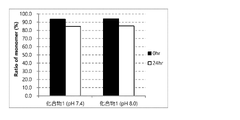
- FIG. 1 shows the results of calculating the residual ratio of compound 1 immediately after preparation of the solution (0 hours) and after 24 hours.
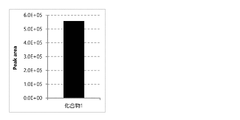
- FIG. 2 shows the results of measuring the fluorescence intensity (peak area in HPLC) immediately after preparation of the solution (0 hours) for compound 1.
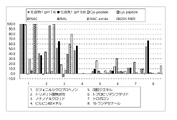
- FIG. 3 shows the No. 1 shown in Table 2. The result of comparing the depletion of each nucleophile in the substance 1 to 8 is shown.
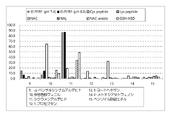
- FIG. 4 shows the No. 1 shown in Table 2. The result of comparing the depletion of each nucleophile in 9 to 15 substances is shown.
- the measurement of skin sensitization means to include the test of skin sensitization, and also includes the determination of the presence or absence of skin sensitization based on a certain standard, and the quantitative measurement of skin sensitization. It means.
- Skin sensitization is caused by a complex process consisting of many stages. The first event is that the test substance penetrates through the skin and then covalently binds to proteins in the skin. Therefore, by evaluating this covalent bond, it is considered possible to predict whether or not the test substance of interest is skin sensitizing. It is known that the reaction between the protein in the skin and the test substance is due to about five organic chemical reactions. The amino acids involved in these five reactions are known to be the SH group of cysteine and the NH 2 group of lysine.
- the present invention by using an organic compound having an absorption spectrum in the ultraviolet, visible light or near-infrared region, it is possible to quantify with a dilute evaluation reagent and the concentration of the test substance, so that precipitation due to poor dissolution does not occur. Quantitability can be improved.
- an organic compound having a mercapto group and a hydrazide structure in the same molecule it has become possible to evaluate skin sensitization in one operation. Since the hydrazide group has high reactivity with a aldehyde-based test substance having low sensitivity or the stability of the reaction product is high, the conventional evaluation method which may be a false negative in the present invention. The false negative rate can be reduced as compared with.
- the skin sensitization measuring reagent of the present invention contains an organic compound having a mercapto group and a hydrazide structure and having an absorption spectrum in the ultraviolet, visible light or near-infrared region as a measurement main agent.
- the organic compound used in the present invention is a compound having an absorption spectrum in the ultraviolet, visible light or near-infrared region and exhibiting absorption in the as-is or solution state, preferably in the wavelength region of 190 to 2500 nm, and more preferably. It is a compound that exhibits absorption in the region of a wavelength of 200 to 700 nm.
- the organic compound used in the present invention is preferably a compound having light emission at 200 to 800 nm, more preferably a compound having light emission at 200 to 700 nm, and further preferably a compound having light emission at 250 to 650 nm.
- the organic compound used in the present invention is preferably a compound represented by the following formula (1) or (2), and more preferably a compound represented by the following formula (1).
- a 1 represents a nitrogen atom or the following linking group.
- R 11 , R 12 , R 13 and R 14 are independently hydrogen atoms, an alkyl group having 1 to 10 carbon atoms, an alkenyl group having 2 to 10 carbon atoms, an alkynyl group having 2 to 10 carbon atoms, and 3 to 10 carbon atoms. It represents 10 cycloalkyl groups or cycloalkenyl groups with 3-10 carbon atoms, which are -O-, -C (O)-, -OC (O)-, -NJ 1 -CO-, in the molecular chain.
- J 1 represents a hydrogen atom or an alkyl group having 1 to 3 carbon atoms, and the above-mentioned alkyl group, alkenyl group, alkynyl group, etc.
- the cycloalkyl group or cycloalkenyl group is a cycloalkyl group having 3 to 6 carbon atoms, a cycloalkenyl group having 5 to 6 carbon atoms, an amino group, a cyano group, a mercapto group, a mercaptomethyl group, a hydroxyl group, a phenyl group, or a hydroxyphenyl.
- X 1 and X 2 are an alkyl group having 1 to 10 carbon atoms having one or more mercapto groups, an alkenyl group having 1 or more mercapto groups and 2 to 10 carbon atoms, and 2 to 2 carbon atoms having one or more mercapto groups.
- J 2 represents an alkyl group having 1 to 3 carbon atoms and is described above.
- the group, alkenyl group, alkynyl group, cycloalkyl group, or cycloalkenyl group is a cycloalkyl group having 3 to 6 carbon atoms, a cycloalkenyl group having 5 to 6 carbon atoms, an amino group, a cyano group, a mercaptomethyl group, a hydroxyl group, and the like.
- Y1 and Y2 represent groups having 6 to 20 carbon atoms including a structure having an absorption spectrum in the ultraviolet, visible light or near-infrared region.
- Z 1 and Z 2 indicate -CO-NR 21 NR 22 R 23 , and R 21 , R 22 and R 23 each independently indicate a hydrogen atom or an alkyl group having 1 to 10 carbon atoms.
- R 11 , R 12 , R 13 and R 14 are preferably hydrogen atoms or alkyl groups having 1 to 10 carbon atoms independently of each other.
- R 11 , R 12 , R 13 and R 14 are more preferably hydrogen atoms or methyl groups.
- R 11 , R 12 , R 13 and R 14 are particularly preferably hydrogen atoms.
- X 1 and X 2 preferably have an alkyl group having 1 to 10 carbon atoms having one or more mercapto groups, an arylalkyl group having 7 to 12 carbon atoms having one or more mercapto groups, and one or more mercapto groups. It shows a heteroalkylalkyl group or a mercapto group having 3 to 10 carbon atoms, and these are -O-, -C (O)-, -OC (O)-, -NJ2 - CO-, -CO in the molecular chain. It may contain -NJ 2- or -NH-CO-NH-, where J 2 represents a hydrogen atom or an alkyl group having 1 to 3 carbon atoms.
- Y 1 and Y 2 preferably represent groups having 10 to 20 carbon atoms, including structures having absorption spectra in the ultraviolet, visible or near infrared regions.
- R 21 , R 22 and R 23 are preferably hydrogen atoms.
- the organic compound used in the present invention is more preferably a compound represented by the following formula (10).
- a 10 represents a nitrogen atom or a trivalent linking group.
- X 10 is an alkyl group having 1 to 10 carbon atoms having one or more mercapto groups, an alkenyl group having 2 to 10 carbon atoms having one or more mercapto groups, and an alkynyl having 2 to 10 carbon atoms having one or more mercapto groups.
- It represents an alkyl group, a heteroalkylalkyl group having 3 to 10 carbon atoms having one or more mercapto groups, or a mercapto group, and these are -O-, -C (O)-, -OC (O)-in the molecular chain.
- -NJ 101 -CO-, -CO-NJ 101- , or -NH-CO-NH- may be contained, wherein J 101 represents a hydrogen atom or an alkyl group having 1 to 3 carbon atoms and is the above-mentioned alkyl.
- alkenyl group, alkynyl group, cycloalkyl group, or cycloalkenyl group is a cycloalkyl group having 3 to 6 carbon atoms, a cycloalkenyl group having 5 to 6 carbon atoms, an amino group, a cyano group, a mercaptomethyl group, a hydroxyl group, and the like. It may have a substituent selected from a phenyl group, a hydroxyphenyl group, a pyridyl group, a naphthyl group, a thienyl group, or a frill group.
- Y 10 represents a group having 6 to 20 carbon atoms including a structure having an absorption spectrum in the ultraviolet, visible light or near-infrared region.
- L represents an amino group.
- a 10 preferably represents a trivalent linking group, more preferably Is shown.
- the X 10 preferably has an alkyl group having 1 to 10 carbon atoms having one or more mercapto groups, an arylalkyl group having 7 to 12 carbon atoms having one or more mercapto groups, and 3 carbon atoms having one or more mercapto groups. It shows ⁇ 10 heteroalkylalkyl groups or mercapto groups, which are -O-, -C (O)-, -OC (O)-, -NJ 101-CO-, -CO-NJ 101 in the molecular chain. -Or -NH-CO-NH- may be contained, and J 101 represents a hydrogen atom or an alkyl group having 1 to 3 carbon atoms.
- Y 10 preferably represents a group having 10 to 20 carbon atoms including a structure having an absorption spectrum in the ultraviolet, visible light or near-infrared region.
- the structure having an absorption spectrum in the ultraviolet, visible light or near-infrared region means the structure of the compound having absorption in the region from 200 nm to 2500 nm.
- the compound having absorption in the region from 200 nm to 2500 nm include naphthalene derivative, anthracene derivative, phenanthrene derivative, tetracene derivative, pentasenne derivative, benzopyrene derivative, chrysen derivative, pyrene derivative, triphenylene derivative, corannelen derivative, coronen derivative and ovalen.
- aclysine derivatives luciferin derivatives, pyranine derivatives, stilben derivatives, benzofuran derivatives, dihydroquinoxalinone derivatives, phthalimidinyl derivatives, dansyl derivatives, merocyanine derivatives, perylene derivatives, acridin derivatives, perylene derivatives, luciferin derivatives, pyranine derivatives, stilben derivatives, Rhodamine derivative, coumarin derivative, 4- (dicyanomethylene) -2-methyl-6- (4-dimethylaminostyryl) -4H-pyran (DCM) derivative, pyrromethene derivative, fluorescein derivative, umbelliferone derivative, benzothiazole derivative, Examples thereof include benzoxaziazole derivatives, ciconin derivatives, fluoranthene derivatives, carbazole derivatives, tetraphen derivatives, chrysene derivatives, acenaften derivatives, fluorene derivative
- Diazol NBD-CL
- Fluorothein Isothiocyanate FITC
- Rhodamine B Isothiocyanate RBITC
- 4-Fluoro-7-Nitro-2,1,3-benzoxaziazole NBD-F
- 4- (N, N-dimethylaminosulfonyl) -7-fluoro-2,1,3-benzoxaziazole DBD-F
- 4- (N-phthalimidinyl) benzenesulfonic acid chloride PISYL-CL
- 4-amino Sulfonyl-7-fluoro-2,1,3-benzoxaziazole ABD-F
- N- [4- (6-dimethylamino-2-benzofuranyl) phenyl] maleimide DBPM
- 2- (4-maleimide) Phenyl) -6-methylbenzothiazole MPM
- N- (9-acridinyl) maleimide NAM
- the organic compound used in the present invention is more preferably a compound represented by the following formula (3), (4) or (5). According to the present invention, a compound represented by the following formula (3), (4) or (5) is provided.
- a 3 , A 4 and A 5 represent trivalent hydrocarbon groups having 1 or 2 carbon atoms.
- R 3 , R 4 , and R 5 represent a hydrogen atom, an alkyl group having 1 to 10 carbon atoms, or a cycloalkyl group having 3 to 10 carbon atoms, which are -O-, -C (O) in the molecular chain.
- )-, -OC (O)-, -NJ 31 -CO-, -CO-NJ 31- , or -NH-CO-NH- may be contained, in which J 31 is a hydrogen atom or has 1 to 3 carbon atoms.
- the above-mentioned alkyl group or cycloalkyl group is a cycloalkyl group having 3 to 6 carbon atoms, an amino group, a cyano group, a mercapto group, a hydroxyl group, a carboxy group, a phenyl group, a hydroxyphenyl group, or a pyridyl group. , A naphthyl group, a thienyl group, or a substituent selected from a frill group.
- X 3 , X 4 and X 5 have an alkyl group having 1 to 10 carbon atoms having one or more mercapto groups, a cycloalkyl group having 3 to 10 carbon atoms having one or more mercapto groups, and one or more mercapto groups. It represents an arylalkyl group having 7 to 12 carbon atoms, a heteroalkylalkyl group having 3 to 10 carbon atoms having one or more mercapto groups, or a mercapto group, which are -O-, -C (O)-in the molecular chain.
- J 32 is a hydrogen atom or an alkyl having 1 to 3 carbon atoms.
- the above-mentioned alkyl group or cycloalkyl group indicates a group, and the cycloalkyl group having 3 to 6 carbon atoms, an amino group, a cyano group, a hydroxyl group, a carboxy group, a phenyl group, a hydroxyphenyl group, a pyridyl group, a naphthyl group and a thienyl group.
- Y3 , Y4, and Y5 represent groups having 6 to 20 carbon atoms including structures having absorption spectra in the ultraviolet, visible, or near - infrared regions.
- Z 3 indicates -CO-NR 31 NR 32 R 33 , and R 31 , R 32 , and R 33 each independently indicate a hydrogen atom or an alkyl group having 1 to 10 carbon atoms.
- Z 4 indicates -CO-NR 41 NR 42 R 43 , and R 41 , R 42 , and R 43 each independently indicate a hydrogen atom or an alkyl group having 1 to 10 carbon atoms.
- Z 5 indicates -CO-NR 51 NR 52 R 53 , and R 51 , R 52 , and R 53 each independently indicate a hydrogen atom or an alkyl group having 1 to 10 carbon atoms.
- Q indicates a hydrogen atom, a carboxyl group, a hydroxyl group, or a primary amide structure, or -CO-NR 5a NR 5b R 5c , and R 5a , R 5b , and R 5c are independent hydrogen atoms. Alternatively, it indicates an alkyl group having 1 to 10 carbon atoms.
- A3 , A4, and A5 are preferably A3, A4 , and A5.
- R 3 , R 4 , and R 5 preferably represent a hydrogen atom or an alkyl group having 1 to 10 carbon atoms, and more preferably a hydrogen atom or a methyl group.
- the X 3 , X 4 and X 5 preferably have an alkyl group having 1 to 10 carbon atoms having one or more mercapto groups, an arylalkyl group having 7 to 12 carbon atoms having one or more mercapto groups, and one mercapto group.
- Y3 , Y4, and Y5 preferably represent groups having 10 to 20 carbon atoms, including structures having absorption spectra in the ultraviolet, visible, or near-infrared regions.
- R 21 , R 22 and R 23 preferably represent a hydrogen atom.
- Q preferably exhibits a primary amide structure.
- Y 1 , Y 2 , Y 3 , Y 4 , Y 5 , and Y 10 are preferably groups that emit fluorescence.
- the organic compound used in the present invention is more preferably a compound represented by the following formula (6). According to the present invention, a compound represented by the following formula (6) is provided.
- R 6 represents a hydrogen atom, an alkyl group having 1 to 10 carbon atoms, or a cycloalkyl group having 3 to 10 carbon atoms, which are -O-, -C (O)-, and -OC (O) in the molecular chain.
- )-, -NJ 61 -CO-, -CO-NJ 61- , or -NH-CO-NH- may be contained, where J 61 represents a hydrogen atom or an alkyl group having 1 to 3 carbon atoms and is described above.
- the alkyl group or cycloalkyl group is a cycloalkyl group having 3 to 6 carbon atoms, an amino group, a cyano group, a mercapto group, a hydroxyl group, a carboxy group, a phenyl group, a hydroxyphenyl group, a pyridyl group, a naphthyl group, a thienyl group, and the like. Alternatively, it may have a substituent selected from a frill group.
- X 6 has an alkyl group having 1 to 10 carbon atoms having one or more mercapto groups, a cycloalkyl group having 3 to 10 carbon atoms having one or more mercapto groups, and 7 to 12 carbon atoms having one or more mercapto groups. It represents an arylalkyl group, a heteroalkylalkyl group having 3 to 10 carbon atoms having one or more mercapto groups, or a mercapto group, and these are -O-, -C (O)-, -OC (O) in the molecular chain.
- J 62 represents a hydrogen atom or an alkyl group having 1 to 3 carbon atoms and is described above.
- the alkyl group or cycloalkyl group is composed of a cycloalkyl group having 3 to 6 carbon atoms, an amino group, a cyano group, a hydroxyl group, a carboxy group, a phenyl group, a hydroxyphenyl group, a pyridyl group, a naphthyl group, a thienyl group, or a frill group. It may have a substituent of choice.
- Z 6 indicates -CO-NR 61 NR 62 R 63 , and R 61 , R 62 , and R 63 each independently indicate a hydrogen atom or an alkyl group having 1 to 10 carbon atoms.
- n indicates 0 or 1 and represents m represents 0 or 1.
- R6 preferably represents a hydrogen atom or a methyl group.
- the X 6 is preferably an alkyl group having 1 to 10 carbon atoms having one or more mercapto groups, an arylalkyl group having 7 to 12 carbon atoms having one or more mercapto groups, and 3 carbon atoms having one or more mercapto groups.
- ⁇ 10 heteroalkylalkyl groups or mercapto groups are shown, which are -O-, -C (O)-, -OC (O)-, -NJ 62-CO-, -CO-NJ 62 in the molecular chain.
- J 62 indicates a hydrogen atom or an alkyl group having 1 to 3 carbon atoms.
- R 61 , R 62 , and R 63 preferably represent a hydrogen atom.
- n preferably indicates 1.
- m preferably indicates 0.
- the organic compound used in the present invention is particularly preferably a compound represented by the following formula (7). According to the present invention, a compound represented by the following formula (7) is provided.
- R 7 represents a hydrogen atom, an alkyl group having 1 to 10 carbon atoms, or a cycloalkyl group having 3 to 10 carbon atoms, which are -O-, -C (O)-, and -OC (O) in the molecular chain.
- )-, -NJ 71 -CO-, -CO-NJ 71- , or -NH-CO-NH- may be contained, where J 71 represents a hydrogen atom or an alkyl group having 1 to 3 carbon atoms and is described above.
- the alkyl group or cycloalkyl group is a cycloalkyl group having 3 to 6 carbon atoms, an amino group, a cyano group, a mercapto group, a hydroxyl group, a carboxy group, a phenyl group, a hydroxyphenyl group, a pyridyl group, a naphthyl group, a thienyl group, and the like. Alternatively, it may have a substituent selected from a frill group.
- X 7 has an alkyl group having 1 to 10 carbon atoms having one or more mercapto groups, a cycloalkyl group having 3 to 10 carbon atoms having one or more mercapto groups, and 7 to 12 carbon atoms having one or more mercapto groups. It represents an arylalkyl group, a heteroalkylalkyl group having 3 to 10 carbon atoms having one or more mercapto groups, or a mercapto group, and these are -O-, -C (O)-, -OC (O) in the molecular chain.
- J 72 represents a hydrogen atom or an alkyl group having 1 to 3 carbon atoms and is described above.
- the alkyl group or cycloalkyl group is composed of a cycloalkyl group having 3 to 6 carbon atoms, an amino group, a cyano group, a hydroxyl group, a carboxy group, a phenyl group, a hydroxyphenyl group, a pyridyl group, a naphthyl group, a thienyl group, or a frill group. It may have a substituent of choice.
- W indicates NR 71 -NR 72 R 73 , and R 71 , R 72 , and R 73 indicate a hydrogen atom or an alkyl group having 1 to 3 carbon atoms.
- n indicates 0 or 1.
- R 7 preferably represents a hydrogen atom or a methyl group.
- the X 7 is preferably an alkyl group having 1 to 10 carbon atoms having one or more mercapto groups, an arylalkyl group having 7 to 12 carbon atoms having one or more mercapto groups, and 3 carbon atoms having one or more mercapto groups.
- ⁇ 10 heteroalkylalkyl groups or mercapto groups are shown, which are -O-, -C (O)-, -OC (O)-, -NJ 72-CO-, -CO-NJ 72 in the molecular chain.
- J 72 indicates a hydrogen atom or an alkyl group having 1 to 3 carbon atoms.
- R 71 , R 72 , and R 73 preferably represent a hydrogen atom.
- n preferably indicates 1.
- Alkyl groups having 1 to 10 carbon atoms include, for example, methyl group, ethyl group, propyl group, isopropyl group, butyl group, isobutyl group, sec-butyl group, tert-butyl group, pentyl group, isopentyl group, neopentyl group, and the like. Examples thereof include a tert-pentyl group, a hexyl group, a heptyl group, an octyl group, a nonyl group, and a decyl group.
- the alkenyl group having 2 to 10 carbon atoms is, for example, a vinyl group, a 1-propenyl group, a 2-propenyl group, a 1-butenyl group, a 2-butenyl group, a 3-butenyl group, a 1,3-butenyl group, 1-.
- Examples thereof include a pentenyl group, a 1-hexenyl group, a 1-heptenyl group, a 1-octenyl group, a 1-nonenyl group, a 1-decenyl group and the like.
- the alkynyl group having 2 to 10 carbon atoms is, for example, an ethynyl group, a 1-propynyl group, a 1-butynyl group, a 1-pentynyl group, a 1-hexynyl group, a 1-heptynyl group, a 1-octynyl group, a 1-nonyl group. , 1-decynyl group and the like can be mentioned.
- Examples of the cycloalkyl group having 3 to 10 carbon atoms include a cyclopropyl group, a cyclobutyl group, a cyclopentyl group, a cyclohexyl group, a cycloheptyl group, a cyclooctyl group, a cyclononyl group, a cyclodecyl group and the like.
- Examples of the cycloalkenyl group having 3 to 10 carbon atoms include a cyclopropenyl group, a cyclobutenyl group, a cyclopentenyl group, a cyclohexenyl group, a cycloheptenyl group, a cyclooctenyl group, a cyclononenyl group, a cyclodecenyl group and the like.
- Examples of the arylalkyl group having 7 to 12 carbon atoms include a phenylmethyl group and a phenylethyl group.
- Examples of the heteroalkylalkyl group having 3 to 10 carbon atoms include the following structures. * Indicates the connection point. If the structure has an asymmetric carbon, it shall contain all possible stereoisomers.
- the organic compound used in the present invention can be produced by a chemical synthesis method.
- compound 1 described in Examples is an intermediate N- (2-(2- (2-( Naphthalene-1-yl) Acetyl) -S-trityl-L-Cysteine is then synthesized by reacting this intermediate with hydrazine monohydrate in the presence of 1,1'-carbonyldiimidazole. Can be done.
- the organic compound used in the present invention can be produced by using a known peptide synthesis method. Specifically, it can be produced according to the method described in the synthesis of compounds 6 to 12 and 14 in the examples described later. That is, the organic compound used in the present invention can be synthesized by performing solid-phase peptide synthesis using a commercially available automatic peptide synthesizer.
- NMP N-methyl-2-pyrrolidone
- Fmoc amino acid cyano-hydroxyimino-acetic acid ethyl ester
- NMP solution of diiropropylethylamine NMP solution of diisopropylcarbodiimide
- piperidine N-methyl-2-pyrrolidone
- the NMP solution and the NMP solution of anhydrous acetic acid can be set and synthesized.
- Fmoc deprotection, washing with NMP, condensation of Fmoc amino acids, and washing with NMP are set as one cycle, and the peptide chain can be extended by repeating this cycle.
- the skin sensitization measuring reagent of the present invention may consist of only the above-mentioned organic compound, and may contain one or more additives in addition to the above-mentioned organic compound which is the main drug for measurement. You may. Examples of additives include pH regulators, stabilizers, and the like.
- the skin sensitization measuring reagent of the present invention is prepared by dissolving the above-mentioned main agent for measurement and, if necessary, the above-mentioned additive in water, an aqueous buffer solution, an organic solvent, or a mixed solvent thereof. May be.
- the skin sensitizer measuring reagent of the present invention may be provided in any form of solution, liquid, solid (powder, granule, lyophilized product, tablet, etc.).
- the method for measuring skin sensitization of the present invention is: (1) The skin sensitization measuring reagent of the present invention is reacted with the test substance, and (2) the amount of the skin sensitization measuring reagent after the reaction or the amount of the product of the reaction is optically measured. To detect by target measurement, including.
- the skin sensitization measuring reagent of the present invention is dissolved in, for example, an aqueous buffer such as a phosphate buffer or an organic solvent such as dimethyl sulfoxide (DMSO), and further, if necessary, an aqueous buffer such as a phosphate buffer. It may be used in a form diluted with a buffer solution or another organic solvent as a concentration of the above organic compound, for example, about 0.01 ⁇ mol / L to about 1 mol / L, usually about 1 ⁇ mol / L to about 100 ⁇ mol / L.
- an aqueous buffer such as a phosphate buffer or an organic solvent such as dimethyl sulfoxide (DMSO)
- DMSO dimethyl sulfoxide
- the type of the test substance is not particularly limited, but is, for example, at least one of a plant extract composed of fragrances, essential oils, polymer compounds, pharmaceuticals, pesticides, foods, chemical products, and natural product-derived components.
- the test substance is, for example, water or an organic solvent such as methanol, ethanol, acetonitrile, acetone, DMSO (dimethyl sulfoxide) or a mixed solvent thereof, for example, at a concentration of about 0.01 ⁇ mol / L to about 1 mol / L, usually about about.
- It may be dissolved to a concentration of about 0.1 mmol / L to about 500 mmol / L, and is preferably 0.1 mmol / L to 100 mmol / L, more preferably 0, for the purpose of preventing precipitation of the test substance. It may be dissolved so as to have a concentration of 1 mmol / L to 10 mmol / L.
- the organic compound and the test substance solution which are the main agents for measuring the skin sensitization reagent of the present invention, are mixed and reacted so that the molar concentration ratio of the organic compound and the test substance is, for example, 1: 200 to 10: 1. Just let me do it.
- the reaction is carried out by stirring or allowing the solution containing the organic compound and the test substance to be stirred or allowed to stand for about 1 minute to about 2 days while keeping the temperature in a temperature range of, for example, about 4 ° C to about 60 ° C. be able to.
- the skin sensitization property of the test substance can be measured.
- the residual amount of the organic compound and / or the amount of the reaction product of the organic compound and the test substance in the mixed solution of the skin sensitization measurement reagent solution and the test substance solution are produced. Should be analyzed.
- the reaction rate constants of the organic compound and the test substance can be obtained, the reaction rate constants of different test substances can be compared, and the reaction rate constants of the test substances can be skin-sensitized by animal experiments.
- the skin sensitivities of the test substance can be evaluated by comparing with the reaction rate constants obtained for the compounds whose presence or absence of sex and strength have been confirmed.
- the skin sensitization measuring reagent may cause some changes in the reaction solution, prepare a reaction solution (control group) containing only the test substance as necessary. Then, analysis may be performed and correction may be made based on the value of the remaining amount in the reaction solution.
- the method of the present invention may include chromatographic treatment of the reaction product obtained in the step of reacting the skin sensitization measuring reagent with the test substance. That is, the method for analyzing the compound and the compound produced by the above reaction is not particularly limited, but for example, the above reaction is carried out by high performance liquid chromatography (HPLC), gas chromatography (GC), thin layer chromatography (TLC) or the like. The compound produced by the above-mentioned organic compound and the test substance can be separated and analyzed.
- HPLC high performance liquid chromatography
- GC gas chromatography
- TLC thin layer chromatography
- Examples of the chromatograph method that can be used for the HPLC, GC, or TLC include reverse phase, normal phase, and ion exchange.
- Commercially available columns and TLCs that can be used for such chromatographic techniques include, for example, CAPCELL-PAK (manufactured by Osaka Soda), L-column ODS (manufactured by Chemical Evaluation Research Organization), and Shodex Asahipak (Showa) as LC columns. (Made by Denko) and the like, and examples of the TLC plate include silica gel 60F254 (manufactured by Merck) and Silica Gel Plate (manufactured by Nakaraitesk).
- the method for detecting the compound produced by the above reaction or the remaining organic compound is not particularly limited, but examples of the detectors that can be used in the HPLC analysis include an ultraviolet-visible detector, a near-infrared detector, and a fluorescence detection. Examples include a device, a differential refractometer detector, an electric conductivity detector, and an evaporative light scattering detector. Examples of the ultraviolet-visible detector include a single-wavelength ultraviolet-visible detector, a two-wavelength ultraviolet-visible detector, and a photodiode array detector.
- detectors that can be used for such detection methods include an ultraviolet visible detector, a differential refractometer detector, and in the case of an electrical conductivity detector, manufactured by Shimadzu, Hitachi, Waters, and Shiseido. Examples of the detector and the evaporative light scattering detector include those manufactured by Shimadzu Corporation.
- the reduction rate of the skin sensitization measuring reagent (also referred to as a nucleating reagent) after the reaction between the test substance and the skin sensitization measuring reagent is detected by optical measurement using an ultraviolet detector.
- an ultraviolet detector a commercially available detector can be used, and examples thereof include those manufactured by Shimadzu Corporation, Waters, Hitachi, and Agilent Technologies.
- the detection wavelength is preferably 200 to 700 nm, more preferably 200 to 600 nm, more preferably 220 to 550 nm, still more preferably 280 to 480 nm. ..
- the reduction rate of the skin sensitization measuring reagent (also referred to as a nucleating reagent) after the reaction between the test substance and the skin sensitizing measuring reagent is optically measured using a fluorescence detector. May be detected by. Molecules in the ground state absorb the excitation light and transition to the excited state. Part of the absorbed excitation energy is deactivated by vibrational energy or the like, and the light emitted when returning to the ground state after a non-radiative transition to a position with a low vibrational level is fluorescence.
- Optical measurement using a fluorescence detector is generally said to be an analytical method that is 103 times or more more sensitive than the absorptiometry.
- a fluorescent substance since a fluorescent substance is to be measured, it has excellent selectivity and is used as an analytical means for a very small amount. Since the fluorescence intensity is proportional to the concentration of the fluorescent substance, quantitative analysis can be performed by creating a calibration curve.
- the fluorescence detector a commercially available detector can be used, and examples thereof include Shimadzu, Waters, Hitachi, Agilent Technologies, and Osaka Soda.
- the excitation wavelength is preferably 200 to 800 nm, more preferably 200 to 600 nm, still more preferably 200 to 550 nm, and even more preferably 200 to 500 nm. Particularly preferably, it is 200 to 480 m.
- the fluorescence wavelength is preferably 200 to 1000 nm, more preferably 200 to 800 nm, still more preferably 200 to 700 nm, and particularly preferably 200 to 650 nm.
- the rate of decrease of the skin sensitization measuring reagent is the average of the peak areas of the skin sensitization measuring reagent (also called nucleophilic reagent) in the optical measurement using the ultraviolet detector or the fluorescence detector. From the value, it can be calculated according to the following formula.
- Decrease rate of nucleophile [1- (average value of peak area of unreacted nucleophile after reaction / average value of peak area of standard nucleophile)] ⁇ 100
- the detection in the measuring method using the skin sensitization measuring reagent of the present invention is not limited to the above, and for example, refer to the method described in JP-A-2003-14761 or JP-A-2008-139275. It may be carried out by detecting ions having a specific mass based on the molecular weight or the like.
- the present invention will be described in detail below with reference to examples, but the present invention is not limited thereto.
- Compound 3 is S-trityl-isocysteine (synthesized by the method described in the literature, Bioorganic and Medicinal Chemistry, 2008, 2008, instead of S-trityl-L-cysteine (Cys (Trt) -OH) used in the synthesis of compound 1. It was synthesized according to the synthesis method of compound 1 except that vol. 16, # 1, p.65) was used.
- Compound 4 replaces S-trityl-L-cysteine (Cys (Trt) -OH) used in the synthesis of compound 1 with (2R) -2- (methylamino) -3-[(triphenylmethyl) sulfanyl] propionic acid ( It was synthesized according to the synthesis method of Compound 1 except that (ChemShuttle) was used.
- Compound 5 conforms to the method for synthesizing compound 1 except that 4-mercaptophenylalanine (manufactured by Chemspace) was used instead of S-trityl-L-cysteine (Cys (Trt) -OH) used for the synthesis of compound 1.
- Chemspace 4-mercaptophenylalanine
- TFA Trifluoroacetic acid
- the intermediate crude product was dissolved in 2 mL of dimethylformamide (manufactured by Wako Pure Chemical Industries, Ltd.), and 32 mg (0.2 mmol) of 1,1'-carbonyldiimidazole (manufactured by Wako Pure Chemical Industries, Ltd.) was added. And stirred for 2 hours. Next, 25 mg (0.5 mmol) of hydrazine monohydrate (manufactured by Wako Pure Chemical Industries, Ltd.) was added and stirred for 2 hours.
- N- ⁇ -Fmoc-N- ⁇ -alloc-L-diaminoprionic acid (Iris Biotech) adjusted to 0.5 mol / L methylene chloride solution on a resin swollen with methylene chloride (manufactured by Fujifilm Wako Pure Chemical Industries, Ltd.) (Manufactured by) 0.075 mmol and 0.4 mL of diisopropylethylamine (manufactured by Tokyo Kasei Co., Ltd.) were added and shaken for 2 hours. After the reaction, the cells were washed with methylene chloride and N-methyl-2-pyrrolidone (manufactured by Wako Pure Chemical Industries, Ltd.).
- the intermediate crude product was dissolved in 2 mL of dimethylformamide (manufactured by Wako Pure Chemical Industries, Ltd.), and 32 mg (0.2 mmol) of 1,1'-carbonyldiimidazole (manufactured by Wako Pure Chemical Industries, Ltd.) was added. And stirred for 2 hours. Next, 25 mg (0.5 mmol) of hydrazine monohydrate (manufactured by Wako Pure Chemical Industries, Ltd.) was added and stirred for 2 hours.
- N- ⁇ - (9-Fluorenylmethoxycarbonyl) -L-aspartic acid ⁇ -allyl ester manufactured by Watanabe Chemical Industries, Ltd.
- 1-naphthyl acetic acid manufactured by Wako Pure Chemical Industries, Ltd.
- hydrazine monohydrate manufactured by Wako Pure Chemical Industries, Ltd. was condensed.
- the intermediate crude product was dissolved in 2 mL of dimethylformamide (manufactured by Wako Pure Chemical Industries, Ltd.), and 32 mg (0.2 mmol) of 1,1'-carbonyldiimidazole (manufactured by Wako Pure Chemical Industries, Ltd.) was added. And stirred for 2 hours. Next, 25 mg (0.5 mmol) of hydrazine monohydrate (manufactured by Wako Pure Chemical Industries, Ltd.) was added and stirred for 2 hours.
- reaction solution was cooled to room temperature, 25 mg (0.5 mmol) of hydrazine monohydrate (manufactured by Wako Pure Chemical Industries, Ltd.) was added, and the mixture was stirred for 1 hour.
- water is added to the reaction solution, extracted with ethyl acetate (manufactured by Fujifilm Wako Pure Chemical Industries, Ltd.), the organic layer is washed with water and saturated saline, and then anhydrous sodium sulfate (manufactured by Fujifilm Wako Pure Chemical Industries, Ltd.). It was dried in. Anhydrous sodium sulfate was filtered off, and the filtrate was distilled off in vacuum.
- TSA trifluoroacetic acid
- n -Hexane manufactured by Fujifilm Wako Pure Chemical Industries, Ltd.
- Methyl-t-butyl ether manufactured by Fujifilm Wako Pure Chemical Industries, Ltd.
- TFA Trifluoroacetic acid
- Peptide solid-phase synthesis method using an automatic peptide synthesizer was performed using an automatic peptide synthesizer (SyroI manufactured by Biotage). Resin for solid phase synthesis, 4 equivalents of Fmoc amino acid (0.5 mol / L) N-methyl-2-pyrrolidone (NMP) solution to the resin, 4 equivalents of cyano-hydroxyimino to the resin in the synthesizer.
- NMP N-methyl-2-pyrrolidone
- Synthesis was carried out by setting an NMP solution of acetate ethyl ester (1 mol / L), an NMP solution of 4 equivalents of diisopropylcarbodiimide (1 mol / L) and an NMP solution of piperidine (20% v / v) with respect to the resin. Fmoc deprotection (20 minutes), washing with NMP, condensation of Fmoc amino acids (1 hour), and washing with NMP were set as one cycle, and the peptide chain was extended by repeating this cycle.
- MS mass spectrum
- ESI Electron-ray Ionization
- ⁇ Test method (1) Preparation of various solutions (1-1) 0.1 mmol / L EDTA aqueous solution 1) Weigh 37.2 mg of EDTA ⁇ 2Na ⁇ 2H2O (manufactured by Dojin Kagaku) in a 15 mL volume conical tube and use a 25 mL measuring pipette. Add 10 mL of distilled water (manufactured by Koyakusho, water for injection according to the Japanese Pharmacopoeia) and dissolve (10 mmol / L EDTA aqueous solution).
- HPLC Mobile Phase B 0.1% (v / v) TFA acetonitrile solution Add 1.0 mL of TFA to 1 L of HPLC grade acetonitrile (manufactured by Fujifilm Wako Pure Chemical Industries, Ltd., for HPLC).
- nucleophile stock solution Preparation of nucleophile stock solution
- DMSO manufactured by Wako Pure Chemical Industries, Ltd.
- 2 mmol / L nucleophile solution 2) Add 149.5 mL of the same buffer solution to a 500 mL container using a 50 mL measuring pipette, add 0.5 mL of the above 2 mmol / L nucleophile solution, mix by inversion, and dilute 300 times. (6.667 ⁇ mol / L). This solution is stored frozen at -70 ° C or lower.
- test substance solution One type of solvent that can prepare a 1 mmol / L test substance solution is selected according to the priority of the acetonitrile solution of water, acetonitrile, acetone and 5% DMSO.
- water, acetonitrile, or acetone When water, acetonitrile, or acetone is selected, first prepare a 20 mmol / L test substance solution. A solvent is added to the test substance weighed in an appropriate amount so as to form a 20 mmol / L solution, and the mixture is completely dissolved. Then, a part of the 20 mmol / L solution is separated and diluted 20 times with the same solvent to prepare a 1 mmol / L test substance solution.
- a 20 mmol / L DMSO solution is prepared in the same manner as above. Then, a part of this is separated and diluted 20-fold with acetonitrile to prepare a 1 mmol / L test substance solution.
- test substance solution was prepared on a 96-well plate (U96 PP-0.5 ML NATURAL, Thermo (NUNC)) mainly using a 12-pipette, and according to the following dose. Add reagents. Nucleophile: 150 ⁇ L Test substance solution: 50 ⁇ L
- reaction stop solution for UV detection (2.5% (v / v)
- TFA aqueous solution is added in an amount of 50 ⁇ L each to stop the reaction.
- 180 ⁇ L of the reaction stop solution for fluorescence detection (0.5% (v / v) TFA aqueous solution) is dispensed to a new plate, and 20 ⁇ L of the reaction solution after incubation is added thereto to carry out the reaction. Stop it.
- HPLC measurement The HPLC measurement conditions for the nucleophile are shown below. As the elution condition, condition 1, condition 2 or condition 3 was selected depending on the nucleophile.
- Evaluation item (7-1) Stability of nucleophile (particularly, degree of oxidation of cysteine) Immediately after preparing the reaction solution (0 hours) and after incubating the reaction solution at 25 ° C. for 24 hours (24 hours), the reaction solution is measured by HPLC-UV, respectively. At this time, since the nucleophile and the oxidants and variants of the nucleophile can be confirmed on HPLC, the residual rate of the nucleophile is calculated based on the following formula.
- Reactivity is described in the prior art DPRA depletion of cysteine peptide and lysine peptide, NAC and NAL reduction rate in ADRA, NAC (NAC-amide) having an amide N-terminal, JP-A-2009-222466.
- the reduction rate of the reagent was compared.
- Example 1 One type of nucleophile (Compound 1) was evaluated. The following compounds were also evaluated in the same manner as a comparative control of reactivity with 15 kinds of evaluation substances. Cys peptide: Lys peptide
- NAC N- [2- (Naphthalene-1-yl) Acetyl] Cysteine NAL: ⁇ -N- [2- (Naphthalene-1-yl) Acetyl] Lysine NAC-amide: (R) -3-Mercapto-2- (2- (Naphthalene-1-yl) acetamide) Propanamide
- GSH-NBD The compound according to paragraph 0043 of JP-A-2009-222466.
- the four types of diethyl sulfate, 3-propylidenephthalide, tropolone, and phenylbenzoate were less reactive than the cysteine peptide or lysine peptide, but all of them were peptides. Was 5% or more, and some reactivity was confirmed.
- it is a non-sensitizing substance in 1-bromobutane and 1-iodohexane, which are reactive with cysteine peptide in DPRA, no reactivity is observed in compound 1, and the actual sensitization information (non-sensitization information). The result was commensurate with the creativity).
- the four substances other than the above showed the same level of reactivity as the cysteine peptide or lysine peptide.
- compound 1 When compared with NAC-amide, compound 1 showed higher reactivity with respect to 5 types of sensitizing substances, trimellitic anhydride, methyl pyruvate, 10-undecenal, ⁇ -pentylcinnamaldehyde, and cyclamen aldehyde. ..
- compound 1 When compared with GSH-NBD, compound 1 showed higher reactivity with respect to 5 types of sensitizing substances, methyl pyruvate, diethyl sulfate, 10-undecenal, ⁇ -pentylcinnamaldehyde, and cyclamen aldehyde.
- GSH-NBD had higher reactivity with respect to trimellitic acid anhydride and nonanoyl chloride, but the depletion of compound 1 was 35% or more, confirming sufficient reactivity.
- NAC-amide and GSH-NBD to 15 kinds of evaluation substances, 5.6%, which is a judgment condition in the method for predicting skin sensitization by NAC alone in ADRA of the prior art. Skin sensitization was predicted using depletion as a criterion.
- Table 3 shows a comparison of the results of this compound 1 between the prediction results of NAC-amide and GSH-NBD performed above and the prediction results of DPRA and ADRA published in the literature.
- sensitizing substances nonanoyl chloride, methyl pyruvate, 10-undecenal, ⁇ -pentylcinnamaldehyde
- DPRA ⁇ -pentylcinnamaldehyde
- eight sensitizing substances that were erroneously negative by ADRA methyl pyruvate, diethyl sulfate, 3-propylidenephthalide, tropolone, 10-undecenal, ⁇ -pentylcinnamaldehyde, phenylbenzoate, cyclamen aldehyde
- NAC-amide compounds for 5 types of sensitizing substances (trimeritic anhydride, methyl pyruvate, 3-propylidenephthalide, 10-undecenal, ⁇ -pentylcinnamaldehyde) that were erroneously determined to be negative. In 1, it was correctly determined to be positive.
- GSH-NBD 4 types of sensitizing substances (methyl pyruvate, diethyl sulfate, 3-propyridenephthalide, ⁇ -pentylcinnamaldehyde) that were erroneously determined to be negative were correctly positive for compound 1. It was judged.
- two types of non-sensitizing substances (1-bromobutane and 1-iodohexane) that were erroneously determined to be positive by DPRA were correctly determined to be negative by Compound 1.
- compound 1 may be able to predict sensitizing substances with higher sensitivity than the prior arts DPRA and ADRA, and it is possible to correctly evaluate sensitizing substances that were difficult to predict by conventional skin sensitization measurement methods. It is considered to be highly sexual.
Landscapes
- Chemical & Material Sciences (AREA)
- Organic Chemistry (AREA)
- Health & Medical Sciences (AREA)
- Life Sciences & Earth Sciences (AREA)
- General Health & Medical Sciences (AREA)
- Physics & Mathematics (AREA)
- Biochemistry (AREA)
- Immunology (AREA)
- Pathology (AREA)
- Analytical Chemistry (AREA)
- General Physics & Mathematics (AREA)
- Medicinal Chemistry (AREA)
- Biophysics (AREA)
- Plasma & Fusion (AREA)
- Chemical Kinetics & Catalysis (AREA)
- Proteomics, Peptides & Aminoacids (AREA)
- Engineering & Computer Science (AREA)
- Molecular Biology (AREA)
- Genetics & Genomics (AREA)
- Epidemiology (AREA)
- Veterinary Medicine (AREA)
- Public Health (AREA)
- Animal Behavior & Ethology (AREA)
- Pharmacology & Pharmacy (AREA)
- Plural Heterocyclic Compounds (AREA)
- Investigating Or Analysing Materials By The Use Of Chemical Reactions (AREA)
Abstract
本発明は、一種類の試薬を用いて高感度で被験物質の感作性を測定することができる皮膚感作性測定試薬、化合物、及び皮膚感作性の測定方法を提供することを課題とする。本発明によれば、メルカプト基とヒドラジド構造とを有し、かつ、紫外、可視光又は近赤外域に吸収スペクトルを有する有機化合物を測定主薬として含む、皮膚感作性測定試薬;皮膚感作性測定試薬において使用するための化合物;並びに、皮膚感作性測定試薬を用いる皮膚感作性の測定方法が提供される。
Description
本発明は、皮膚感作性測定試薬、化合物、及び皮膚感作性の測定方法に関する。
皮膚感作性(アレルギー)は、物質に暴露された箇所の局所的な水疱及び紅斑などの症状に留まらず、アナフィラキシーという重篤で生命に危険を及ぼす全身性のアレルギー反応を伴う場合がある。また、皮膚感作性は一旦発症すると長期にわたって暴露を回避する管理も必要となることなどから、重要な毒性の一つと考えられている。
化学物質の皮膚感作性を評価する方法として、従来からモルモットを使用する試験法が一般的に知られており、アジュバントを用いるGPMT(Guinea Pig Maximisation Test)や非アジュバント試験であるビューラー法(Buehler Test)などの試験法が長年広く利用されてきた。これに対して、近年、動物愛護などの倫理的、社会的な要請から動物実験代替法の研究及び開発が進められている。
動物を用いない皮膚感作性試験法として、主にin vitro試験の開発が進んでいる。in vitro試験としては、ARE-Nrf2 luciferase KeratinoSensTM test method(KeratinoSensは登録商標)、LuSens(ARE-NrF2 lusiferase LuSens test method)、h-CLAT(human Cell Line Activation Test)、U-SENS(Myeloid U937 Skin Sensitization Test)及びIL-8 Luc assayなどが知られている。
一方、培養細胞を用いない試験法としては、in chemico試験がある。化学反応によるin chemico試験は、培養細胞を用いないため、特別な技術、知識及び設備が不要である等、多くの点で利点がある。例えば、非特許文献1及び2には、2種類のペプチド(システインペプチド及びリジンペプチド)を求核試薬として利用する方法が記載されている。また、特許文献1及び2には、アリール環を導入したシステイン誘導体、及びアリール環を導入したリジン誘導体を求核試薬とする皮膚感作性測定試薬及び皮膚感作性測定方法が記載されている(ADRAとも称する)。
非特許文献1及び2、並びに特許文献1及び2に記載の方法では、システインとリジンを含む2種類の試薬を別々に被験物質と化学反応させて、別々に測定・定量して減少率(depletion)を算出するため、評価に時間がかかる。そこで、この2種類のアミノ酸を含むペプチドを利用して、皮膚感作性物質を検出及び評価する試験法も報告されている。しかし、いずれも合成ヘプタペプチドCor1C-420(Ac-Asn-Lys-Lys-Cys-Asp-Leu-Phe)(求電子試薬に対して非常に高い反応性を示す部位であるヒトCoronin 1タンパクのN末端から420残基目のシステイン周りの配列に由来する(非特許文献3)を用いて、LC-MS(液体クロマトグラフィー・質量スペクトル分析)により測定する試験法であり、いずれも検出感度が低いため、UVや可視光などの光学的な検出は不可能な試験法である。また、システインとリジンを含むことで測定時間が短縮されることを効果とはしていない。
非特許文献4には、(1)ペプチド-被験物質付加体(共有結合体)とペプチドの酸化が区別できること、(2)反応液中の被験物質濃度を下げることができるため、被験物質の沈殿の問題がないこと、(3)被験物質の調製濃度を下げられるため、被験物質の溶解性の問題が少なくなること、(4)LC-MS測定であるため、共溶出の問題がないこと、(5)速度論的測定を行うことで、反応性の高い被験物質をより正確に評価できること、の5点が記載されている。また非特許文献5には、非特許文献1及び2に記載のDPRA(Direct Peptide Reactivity Assay )で使用するシステインペプチドおよびリジンペプチドと、非特許文献3に記載の合成ヘプタペプチドCor1C-420の3種類を評価することで、高い予測精度が得られることが記載されている。さらに、特許文献3には、アミノ基とチオール基を同一分子に有するペプチドの末端に蛍光色素を結合させた皮膚感作性検出試薬が記載されている。
Gerberick, G.F., Vassallo, J.D., Bailey, R.E., Chaney, J.G., Morrall, S.W. and Lepoittevin, J.P. (2004). Development of a peptide reactivity assay for screening contact allergens. Toxicological Sciences, 81(2), 332-43.
Gerberick, G.F., Vassallo, J.D., Foertsch, L.M., Price, B.B., Chaney, J.G. and Lepoittevin, J.P. (2007). Quantification of chemical peptide reactivity for screening contact allergens: a classification tree model approach. Toxicological Sciences, 97(2), 417-27.
Denny MK, Richards AM, Wemke GR, Shyr Y, Liebler DC. (2006) Cytosolic and nuclear protein targets of thiol-reactive electrophiles. Chemical Research in Toxicology, 19, 20-29.
Natsch A, Gfeller H. (2008). LC-MS-based characterization of the peptide reactivity of chemicals to improve the in vitro prediction of the skin sensitization potential. Toxicological Sciences, 106(2), 464-78.
Wong CL, Lam AL, Smith MT, Ghassabian S. (2016). Evaluation of a High-Throughput Peptide Reactivity Format Assay for Assessment of the Skin Sensitization Potential of Chemicals. Frontiers in Pharmacology, 14, 7(53), 1-14.
非特許文献1及び2に記載されている皮膚感作性測定法においては、使用する2種類のペプチド自体のモル吸光係数が低く、かつ220nmの短波長しか検出できないため、これらのペプチドの残存率をHPLC-UV法で定量するには、定量感度が低いことや、ペプチドと被験物質との共溶出などの現象が起こりやすく、定量が困難な場合が多いという問題点があった。非特許文献3に記載されている方法は、UVや可視光などの光学的な検出は困難な試験法であるため、質量分析によって評価が必要であるという問題点がある。また、この試験法は、システインとリジンを含むことで測定時間が短縮されることを効能としていない。非特許文献4においては測定時間短縮による効率化は記載されていない。非特許文献5に記載の方法は、光学的な定量感度が低いという問題がある。また、特許文献3に記載の方法で用いるペプチドは、システイン由来のチオール基及びアミノ酸のα-アミノ基を有しているが、このペプチドは弱い皮膚感作性を有する被験物質に対する反応性が低く、偽陰性と判定される場合があり、問題となっていた。
本発明は、一種類の試薬を用いて高感度で被験物質の感作性を測定することができる皮膚感作性測定試薬、化合物、及び皮膚感作性の測定方法を提供することを解決すべき課題とする。
本発明者らは上記課題を解決するために鋭意検討した結果、メルカプト基とヒドラジド構造とを有し、かつ、紫外、可視光又は近赤外域に吸収スペクトルを有する有機化合物を皮膚感作性測定試薬として用いることができることを見出し、本発明を完成するに至った。本発明によれば、以下の発明が提供される。
<1> メルカプト基とヒドラジド構造とを有し、かつ、紫外、可視光又は近赤外域に吸収スペクトルを有する有機化合物を測定主薬として含む、皮膚感作性測定試薬。
<2> 上記有機化合物が、下記式(1)又は(2)で表される、<1>に記載の皮膚感作性測定試薬。

式中、
A1は、窒素原子、又は以下の連結基を示す。

R11、R12、R13およびR14はそれぞれ独立に、水素原子、炭素数1~10のアルキル基、炭素数2~10のアルケニル基、炭素数2~10のアルキニル基、炭素数3~10のシクロアルキル基、又は炭素数3~10のシクロアルケニル基を示し、これらは分子鎖中に-O-、-C(O)-、-OC(O)-、-NJ1-CO-、-CO-NJ1-、又は-NH-CO-NH-を含んでいてもよく、J1は水素原子又は炭素数1~3のアルキル基を示し、上記のアルキル基、アルケニル基、アルキニル基、シクロアルキル基、又はシクロアルケニル基は、炭素数3~6のシクロアルキル基、炭素数5~6のシクロアルケニル基、アミノ基、シアノ基、メルカプト基、メルカプトメチル基、水酸基、フェニル基、ヒドロキシフェニル基、ピリジル基、ナフチル基、チエニル基、又はフリル基から選択される置換基を有していてもよい。
*は、X1、Y1、Z1との連結位置を示す。
X1およびX2は、メルカプト基を1個以上有する炭素数1~10のアルキル基、メルカプト基を1個以上有する炭素数2~10のアルケニル基、メルカプト基を1個以上有する炭素数2~10のアルキニル基、メルカプト基を1個以上有する炭素数3~10のシクロアルキル基、メルカプト基を1個以上有する炭素数3~10のシクロアルケニル基、メルカプト基を1個以上有する炭素数7~12のアリールアルキル基、メルカプト基を1個以上有する炭素数3~10のヘテロアルキルアルキル基、又はメルカプト基を示し、これらは分子鎖中に-O-、-C(O)-、-OC(O)-、-NJ2-CO-、-CO-NJ2-、又は-NH-CO-NH-を含んでいてもよく、J2は水素原子又は炭素数1~3のアルキル基を示し、上記のアルキル基、アルケニル基、アルキニル基、シクロアルキル基、又はシクロアルケニル基は、炭素数3~6のシクロアルキル基、炭素数5~6のシクロアルケニル基、アミノ基、シアノ基、メルカプトメチル基、水酸基、フェニル基、ヒドロキシフェニル基、ピリジル基、ナフチル基、チエニル基、又はフリル基から選択される置換基を有していてもよい。
Y1およびY2は、紫外、可視光又は近赤外域に吸収スペクトルを有する構造を含む炭素数6~20の基を示す。
Z1およびZ2は、-CO-NR21NR22R23を示し、R21、R22、及びR23はそれぞれ独立して、水素原子又は炭素数1~10のアルキル基を示す。
<3> 上記有機化合物が、下記式(10)で表される、<1>に記載の皮膚感作性測定試薬。

式中、
A10は、窒素原子、又は3価の連結基を示し、
X10は、メルカプト基を1個以上有する炭素数1~10のアルキル基、メルカプト基を1個以上有する炭素数2~10のアルケニル基、メルカプト基を1個以上有する炭素数2~10のアルキニル基、メルカプト基を1個以上有する炭素数3~10のシクロアルキル基、メルカプト基を1個以上有する炭素数3~10のシクロアルケニル基、メルカプト基を1個以上有する炭素数7~12のアリールアルキル基、メルカプト基を1個以上有する炭素数3~10のヘテロアルキルアルキル基、又はメルカプト基を示し、これらは分子鎖中に-O-、-C(O)-、-OC(O)-、-NJ101-CO-、-CO-NJ101-、又は-NH-CO-NH-を含んでいてもよく、J101は水素原子又は炭素数1~3のアルキル基を示し、上記のアルキル基、アルケニル基、アルキニル基、シクロアルキル基、又はシクロアルケニル基は、炭素数3~6のシクロアルキル基、炭素数5~6のシクロアルケニル基、アミノ基、シアノ基、メルカプトメチル基、水酸基、フェニル基、ヒドロキシフェニル基、ピリジル基、ナフチル基、チエニル基、又はフリル基から選択される置換基を有していてもよい。
Y10は、紫外、可視光又は近赤外域に吸収スペクトルを有する構造を含む炭素数6~20の基を示し、
Lは、アミノ基を示す。
<4> 上記有機化合物が、下記式(3)、(4)又は(5)で表される、<1>に記載の皮膚感作性測定試薬。

式中、
A3は、炭素数1又は2の3価の炭化水素基を示し、
R3は、水素原子、炭素数1~10のアルキル基、又は炭素数3~10のシクロアルキル基を示し、これらは分子鎖中に-O-、-C(O)-、-OC(O)-、-NJ31-CO-、-CO-NJ31-、又は-NH-CO-NH-を含んでいてもよく、J31は水素原子又は炭素数1~3のアルキル基を示し、上記のアルキル基、又はシクロアルキル基は、炭素数3~6のシクロアルキル基、アミノ基、シアノ基、メルカプト基、水酸基、カルボキシ基、フェニル基、ヒドロキシフェニル基、ピリジル基、ナフチル基、チエニル基、又はフリル基から選択される置換基を有していてもよい。
X3は、メルカプト基を1個以上有する炭素数1~10のアルキル基、メルカプト基を1個以上有する炭素数3~10のシクロアルキル基、メルカプト基を1個以上有する炭素数7~12のアリールアルキル基、メルカプト基を1個以上有する炭素数3~10のヘテロアルキルアルキル基、又はメルカプト基を示し、これらは分子鎖中に-O-、-C(O)-、-OC(O)-、-NJ32-CO-、-CO-NJ32-、又は-NH-CO-NH-を含んでいてもよく、J32は水素原子又は炭素数1~3のアルキル基を示し、上記のアルキル基、又はシクロアルキル基は、炭素数3~6のシクロアルキル基、アミノ基、シアノ基、水酸基、カルボキシ基、フェニル基、ヒドロキシフェニル基、ピリジル基、ナフチル基、チエニル基、又はフリル基から選択される置換基を有していてもよい。
Y3は、紫外、可視光又は近赤外域に吸収スペクトルを有する構造を含む炭素数6~20の基を示す。
Z3は、-CO-NR31NR32R33を示し、R31、R32、及びR33はそれぞれ独立して、水素原子又は炭素数1~10のアルキル基を示す。

式中、
A4は、炭素数1又は2の3価の炭化水素基を示し、
R4は、水素原子、炭素数1~10のアルキル基、又は炭素数3~10のシクロアルキル基を示し、これらは分子鎖中に-O-、-C(O)-、-OC(O)-、-NJ41-CO-、-CO-NJ41-、又は-NH-CO-NH-を含んでいてもよく、J41は水素原子又は炭素数1~3のアルキル基を示し、上記のアルキル基、又はシクロアルキル基は、炭素数3~6のシクロアルキル基、アミノ基、シアノ基、メルカプト基、水酸基、カルボキシ基、フェニル基、ヒドロキシフェニル基、ピリジル基、ナフチル基、チエニル基、又はフリル基から選択される置換基を有していてもよい。
X4は、メルカプト基を1個以上有する炭素数1~10のアルキル基、メルカプト基を1個以上有する炭素数3~10のシクロアルキル基、メルカプト基を1個以上有する炭素数7~12のアリールアルキル基、メルカプト基を1個以上有する炭素数3~10のヘテロアルキルアルキル基、又はメルカプト基を示し、これらは分子鎖中に-O-、-C(O)-、-OC(O)-、-NJ42-CO-、-CO-NJ42-、又は-NH-CO-NH-を含んでいてもよく、J42は水素原子又は炭素数1~3のアルキル基を示し、上記のアルキル基、又はシクロアルキル基は、炭素数3~6のシクロアルキル基、アミノ基、シアノ基、水酸基、カルボキシ基、フェニル基、ヒドロキシフェニル基、ピリジル基、ナフチル基、チエニル基、又はフリル基から選択される置換基を有していてもよい。
Y4は、紫外、可視光又は近赤外域に吸収スペクトルを有する構造を含む炭素数6~20の基を示す。
Z4は、-CO-NR41NR42R43を示し、R41、R42、及びR43はそれぞれ独立して、水素原子又は炭素数1~10のアルキル基を示す。

式中、
A5は、炭素数1又は2の3価の炭化水素基を示し、
R5は、水素原子、炭素数1~10のアルキル基、又は炭素数3~10のシクロアルキル基を示し、これらは分子鎖中に-O-、-C(O)-、-OC(O)-、-NJ51-CO-、-CO-NJ51-、又は-NH-CO-NH-を含んでいてもよく、J51は水素原子又は炭素数1~3のアルキル基を示し、上記のアルキル基、又はシクロアルキル基は、炭素数3~6のシクロアルキル基、アミノ基、シアノ基、メルカプト基、水酸基、カルボキシ基、フェニル基、ヒドロキシフェニル基、ピリジル基、ナフチル基、チエニル基、又はフリル基から選択される置換基を有していてもよい。
X5は、メルカプト基を1個以上有する炭素数1~10のアルキル基、メルカプト基を1個以上有する炭素数3~10のシクロアルキル基、メルカプト基を1個以上有する炭素数7~12のアリールアルキル基、メルカプト基を1個以上有する炭素数3~10のヘテロアルキルアルキル基、又はメルカプト基を示し、これらは分子鎖中に-O-、-C(O)-、-OC(O)-、-NJ52-CO-、-CO-NJ52-、又は-NH-CO-NH-を含んでいてもよく、J52は水素原子又は炭素数1~3のアルキル基を示し、上記のアルキル基、又はシクロアルキル基は、炭素数3~6のシクロアルキル基、アミノ基、シアノ基、水酸基、カルボキシ基、フェニル基、ヒドロキシフェニル基、ピリジル基、ナフチル基、チエニル基、又はフリル基から選択される置換基を有していてもよい。
Y5は、紫外、可視光又は近赤外域に吸収スペクトルを有する構造を含む炭素数6~20の基を示す。
Z5は、-CO-NR51NR52R53を示し、R51、R52、及びR53はそれぞれ独立して、水素原子又は炭素数1~10のアルキル基を示す。
Qは、水素原子、カルボキシル基、水酸基、または1級アミド構造を示すか、あるいは-CO-NR5aNR5bR5cを示し、R5a、R5b、及びR5cはそれぞれ独立して、水素原子又は炭素数1~10のアルキル基を示す。
<5> 上記有機化合物が、下記式(6)で表される、<1>に記載の皮膚感作性測定試薬。

式中、
R6は、水素原子、炭素数1~10のアルキル基、又は炭素数3~10のシクロアルキル基を示し、これらは分子鎖中に-O-、-C(O)-、-OC(O)-、-NJ61-CO-、-CO-NJ61-、又は-NH-CO-NH-を含んでいてもよく、J61は水素原子又は炭素数1~3のアルキル基を示し、上記のアルキル基、又はシクロアルキル基は、炭素数3~6のシクロアルキル基、アミノ基、シアノ基、メルカプト基、水酸基、カルボキシ基、フェニル基、ヒドロキシフェニル基、ピリジル基、ナフチル基、チエニル基、又はフリル基から選択される置換基を有していてもよい。
X6は、メルカプト基を1個以上有する炭素数1~10のアルキル基、メルカプト基を1個以上有する炭素数3~10のシクロアルキル基、メルカプト基を1個以上有する炭素数7~12のアリールアルキル基、メルカプト基を1個以上有する炭素数3~10のヘテロアルキルアルキル基、又はメルカプト基を示し、これらは分子鎖中に-O-、-C(O)-、-OC(O)-、-NJ62-CO-、-CO-NJ62-、又は-NH-CO-NH-を含んでいてもよく、J62は水素原子又は炭素数1~3のアルキル基を示し、上記のアルキル基、又はシクロアルキル基は、炭素数3~6のシクロアルキル基、アミノ基、シアノ基、水酸基、カルボキシ基、フェニル基、ヒドロキシフェニル基、ピリジル基、ナフチル基、チエニル基、又はフリル基から選択される置換基を有していてもよい。
Z6は、-CO-NR61NR62R63を示し、R61、R62、及びR63はそれぞれ独立して、水素原子又は炭素数1~10のアルキル基を示す。
nは、0あるいは1を示し、
mは、0あるいは1を示す。
<6> 上記有機化合物が、下記式(7)で表される、<1>に記載の皮膚感作性測定試薬。

式中、
R7は、水素原子、炭素数1~10のアルキル基、又は炭素数3~10のシクロアルキル基を示し、これらは分子鎖中に-O-、-C(O)-、-OC(O)-、-NJ71-CO-、-CO-NJ71-、又は-NH-CO-NH-を含んでいてもよく、J71は水素原子又は炭素数1~3のアルキル基を示し、上記のアルキル基、又はシクロアルキル基は、炭素数3~6のシクロアルキル基、アミノ基、シアノ基、メルカプト基、水酸基、カルボキシ基、フェニル基、ヒドロキシフェニル基、ピリジル基、ナフチル基、チエニル基、又はフリル基から選択される置換基を有していてもよい。
X7は、メルカプト基を1個以上有する炭素数1~10のアルキル基、メルカプト基を1個以上有する炭素数3~10のシクロアルキル基、メルカプト基を1個以上有する炭素数7~12のアリールアルキル基、メルカプト基を1個以上有する炭素数3~10のヘテロアルキルアルキル基、又はメルカプト基を示し、これらは分子鎖中に-O-、-C(O)-、-OC(O)-、-NJ72-CO-、-CO-NJ72-、又は-NH-CO-NH-を含んでいてもよく、J72は水素原子又は炭素数1~3のアルキル基を示し、上記のアルキル基、又はシクロアルキル基は、炭素数3~6のシクロアルキル基、アミノ基、シアノ基、水酸基、カルボキシ基、フェニル基、ヒドロキシフェニル基、ピリジル基、ナフチル基、チエニル基、又はフリル基から選択される置換基を有していてもよい。
Wは、NR71-NR72R73を示し、R71、R72、及びR73は、水素原子、又は炭素数1~3のアルキル基を示し、
nは0あるいは1を示す。
<7> Y1、Y2、Y3、Y4、Y5、及びY10が、蛍光を発する基である、<2>から<4>の何れか一に記載の皮膚感作性測定試薬。
<8> 下記式(3)、(4)又は(5)で表される化合物。

式中、
A3は、炭素数1又は2の3価の炭化水素基を示し、
R3は、水素原子、炭素数1~10のアルキル基、又は炭素数3~10のシクロアルキル基を示し、これらは分子鎖中に-O-、-C(O)-、-OC(O)-、-NJ31-CO-、-CO-NJ31-、又は-NH-CO-NH-を含んでいてもよく、J31は水素原子又は炭素数1~3のアルキル基を示し、上記のアルキル基、又はシクロアルキル基は、炭素数3~6のシクロアルキル基、アミノ基、シアノ基、メルカプト基、水酸基、カルボキシ基、フェニル基、ヒドロキシフェニル基、ピリジル基、ナフチル基、チエニル基、又はフリル基から選択される置換基を有していてもよい。
X3は、メルカプト基を1個以上有する炭素数1~10のアルキル基、メルカプト基を1個以上有する炭素数3~10のシクロアルキル基、メルカプト基を1個以上有する炭素数7~12のアリールアルキル基、メルカプト基を1個以上有する炭素数3~10のヘテロアルキルアルキル基、又はメルカプト基を示し、これらは分子鎖中に-O-、-C(O)-、-OC(O)-、-NJ32-CO-、-CO-NJ32-、又は-NH-CO-NH-を含んでいてもよく、J32は水素原子又は炭素数1~3のアルキル基を示し、上記のアルキル基、又はシクロアルキル基は、炭素数3~6のシクロアルキル基、アミノ基、シアノ基、水酸基、カルボキシ基、フェニル基、ヒドロキシフェニル基、ピリジル基、ナフチル基、チエニル基、又はフリル基から選択される置換基を有していてもよい。
Y3は、紫外、可視光又は近赤外域に吸収スペクトルを有する構造を含む炭素数6~20の基を示す。
Z3は、-CO-NR31NR32R33を示し、R31、R32、及びR33はそれぞれ独立して、水素原子又は炭素数1~10のアルキル基を示す。

式中、
A4は、炭素数1又は2の3価の炭化水素基を示し、
R4は、水素原子、炭素数1~10のアルキル基、又は炭素数3~10のシクロアルキル基を示し、これらは分子鎖中に-O-、-C(O)-、-OC(O)-、-NJ41-CO-、-CO-NJ41-、又は-NH-CO-NH-を含んでいてもよく、J41は水素原子又は炭素数1~3のアルキル基を示し、上記のアルキル基、又はシクロアルキル基は、炭素数3~6のシクロアルキル基、アミノ基、シアノ基、メルカプト基、水酸基、カルボキシ基、フェニル基、ヒドロキシフェニル基、ピリジル基、ナフチル基、チエニル基、又はフリル基から選択される置換基を有していてもよい。
X4は、メルカプト基を1個以上有する炭素数1~10のアルキル基、メルカプト基を1個以上有する炭素数3~10のシクロアルキル基、メルカプト基を1個以上有する炭素数7~12のアリールアルキル基、メルカプト基を1個以上有する炭素数3~10のヘテロアルキルアルキル基、又はメルカプト基を示し、これらは分子鎖中に-O-、-C(O)-、-OC(O)-、-NJ42-CO-、-CO-NJ42-、又は-NH-CO-NH-を含んでいてもよく、J42は水素原子又は炭素数1~3のアルキル基を示し、上記のアルキル基、又はシクロアルキル基は、炭素数3~6のシクロアルキル基、アミノ基、シアノ基、水酸基、カルボキシ基、フェニル基、ヒドロキシフェニル基、ピリジル基、ナフチル基、チエニル基、又はフリル基から選択される置換基を有していてもよい。
Y4は、紫外、可視光又は近赤外域に吸収スペクトルを有する構造を含む炭素数6~20の基を示す。
Z4は、-CO-NR41NR42R43を示し、R41、R42、及びR43はそれぞれ独立して、水素原子又は炭素数1~10のアルキル基を示す。

式中、
A5は、炭素数1又は2の3価の炭化水素基を示し、
R5は、水素原子、炭素数1~10のアルキル基、又は炭素数3~10のシクロアルキル基を示し、これらは分子鎖中に-O-、-C(O)-、-OC(O)-、-NJ51-CO-、-CO-NJ51-、又は-NH-CO-NH-を含んでいてもよく、J51は水素原子又は炭素数1~3のアルキル基を示し、上記のアルキル基、又はシクロアルキル基は、炭素数3~6のシクロアルキル基、アミノ基、シアノ基、メルカプト基、水酸基、カルボキシ基、フェニル基、ヒドロキシフェニル基、ピリジル基、ナフチル基、チエニル基、又はフリル基から選択される置換基を有していてもよい。
X5は、メルカプト基を1個以上有する炭素数1~10のアルキル基、メルカプト基を1個以上有する炭素数3~10のシクロアルキル基、メルカプト基を1個以上有する炭素数7~12のアリールアルキル基、メルカプト基を1個以上有する炭素数3~10のヘテロアルキルアルキル基、又はメルカプト基を示し、これらは分子鎖中に-O-、-C(O)-、-OC(O)-、-NJ52-CO-、-CO-NJ52-、又は-NH-CO-NH-を含んでいてもよく、J52は水素原子又は炭素数1~3のアルキル基を示し、上記のアルキル基、又はシクロアルキル基は、炭素数3~6のシクロアルキル基、アミノ基、シアノ基、水酸基、カルボキシ基、フェニル基、ヒドロキシフェニル基、ピリジル基、ナフチル基、チエニル基、又はフリル基から選択される置換基を有していてもよい。
Y5は、紫外、可視光又は近赤外域に吸収スペクトルを有する構造を含む炭素数6~20の基を示す。
Z5は、-CO-NR51NR52R53を示し、R51、R52、及びR53はそれぞれ独立して、水素原子又は炭素数1~10のアルキル基を示す。
Qは、水素原子、カルボキシル基、水酸基、または1級アミド構造を示すか、あるいは-CO-NR5aNR5bR5cを示し、R5a、R5b、及びR5cはそれぞれ独立して、水素原子又は炭素数1~10のアルキル基を示す。
<9> 下記式(6)で表される化合物。

式中、
R6は、水素原子、炭素数1~10のアルキル基、又は炭素数3~10のシクロアルキル基を示し、これらは分子鎖中に-O-、-C(O)-、-OC(O)-、-NJ61-CO-、-CO-NJ61-、又は-NH-CO-NH-を含んでいてもよく、J61は水素原子又は炭素数1~3のアルキル基を示し、上記のアルキル基、又はシクロアルキル基は、炭素数3~6のシクロアルキル基、アミノ基、シアノ基、メルカプト基、水酸基、カルボキシ基、フェニル基、ヒドロキシフェニル基、ピリジル基、ナフチル基、チエニル基、又はフリル基から選択される置換基を有していてもよい。
X6は、メルカプト基を1個以上有する炭素数1~10のアルキル基、メルカプト基を1個以上有する炭素数3~10のシクロアルキル基、メルカプト基を1個以上有する炭素数7~12のアリールアルキル基、メルカプト基を1個以上有する炭素数3~10のヘテロアルキルアルキル基、又はメルカプト基を示し、これらは分子鎖中に-O-、-C(O)-、-OC(O)-、-NJ62-CO-、-CO-NJ62-、又は-NH-CO-NH-を含んでいてもよく、J62は水素原子又は炭素数1~3のアルキル基を示し、上記のアルキル基、又はシクロアルキル基は、炭素数3~6のシクロアルキル基、アミノ基、シアノ基、水酸基、カルボキシ基、フェニル基、ヒドロキシフェニル基、ピリジル基、ナフチル基、チエニル基、又はフリル基から選択される置換基を有していてもよい。
Z6は、-CO-NR61NR62R63を示し、R61、R62、及びR63はそれぞれ独立して、水素原子又は炭素数1~10のアルキル基を示す。
nは、0あるいは1を示し、
mは、0あるいは1を示す。
<10> 下記式(7)で表される化合物。

式中、
R7は、水素原子、炭素数1~10のアルキル基、又は炭素数3~10のシクロアルキル基を示し、これらは分子鎖中に-O-、-C(O)-、-OC(O)-、-NJ71-CO-、-CO-NJ71-、又は-NH-CO-NH-を含んでいてもよく、J71は水素原子又は炭素数1~3のアルキル基を示し、上記のアルキル基、又はシクロアルキル基は、炭素数3~6のシクロアルキル基、アミノ基、シアノ基、メルカプト基、水酸基、カルボキシ基、フェニル基、ヒドロキシフェニル基、ピリジル基、ナフチル基、チエニル基、又はフリル基から選択される置換基を有していてもよい。
X7は、メルカプト基を1個以上有する炭素数1~10のアルキル基、メルカプト基を1個以上有する炭素数3~10のシクロアルキル基、メルカプト基を1個以上有する炭素数7~12のアリールアルキル基、メルカプト基を1個以上有する炭素数3~10のヘテロアルキルアルキル基、又はメルカプト基を示し、これらは分子鎖中に-O-、-C(O)-、-OC(O)-、-NJ72-CO-、-CO-NJ72-、又は-NH-CO-NH-を含んでいてもよく、J72は水素原子又は炭素数1~3のアルキル基を示し、上記のアルキル基、又はシクロアルキル基は、炭素数3~6のシクロアルキル基、アミノ基、シアノ基、水酸基、カルボキシ基、フェニル基、ヒドロキシフェニル基、ピリジル基、ナフチル基、チエニル基、又はフリル基から選択される置換基を有していてもよい。
Wは、NR71-NR72R73を示し、R71、R72、及びR73は、水素原子、又は炭素数1~3のアルキル基を示し、
nは0あるいは1を示す。
<11> (1)<1>から<7>の何れか一に記載の皮膚感作性測定試薬と被験物質とを反応させること、及び
(2)上記反応後の上記皮膚感作性測定試薬の量、又は上記反応の生成物の量を、光学的測定により検出すること、
を含む皮膚感作性の測定方法。
<12> 上記被験物質が、香料、精油、高分子化合物、医薬品、農薬、食品、化学製品、及び天然物由来成分からなる植物抽出液のうちの少なくとも1種である、<11>に記載の皮膚感作性の測定方法。
<13> 上記皮膚感作性測定試薬と上記被験物質とを反応させる工程で得られる反応物を、クロマトグラフィー処理することを含む、<11>又は<12>に記載の皮膚感作性の測定方法。
<14> 上記光学的測定が蛍光検出器を用いた測定であって、励起波長が200~600nmであって、蛍光波長が200~800nmである、<11>から<13>のいずれか一に記載の皮膚感作性の測定方法。
<2> 上記有機化合物が、下記式(1)又は(2)で表される、<1>に記載の皮膚感作性測定試薬。
A1は、窒素原子、又は以下の連結基を示す。
*は、X1、Y1、Z1との連結位置を示す。
X1およびX2は、メルカプト基を1個以上有する炭素数1~10のアルキル基、メルカプト基を1個以上有する炭素数2~10のアルケニル基、メルカプト基を1個以上有する炭素数2~10のアルキニル基、メルカプト基を1個以上有する炭素数3~10のシクロアルキル基、メルカプト基を1個以上有する炭素数3~10のシクロアルケニル基、メルカプト基を1個以上有する炭素数7~12のアリールアルキル基、メルカプト基を1個以上有する炭素数3~10のヘテロアルキルアルキル基、又はメルカプト基を示し、これらは分子鎖中に-O-、-C(O)-、-OC(O)-、-NJ2-CO-、-CO-NJ2-、又は-NH-CO-NH-を含んでいてもよく、J2は水素原子又は炭素数1~3のアルキル基を示し、上記のアルキル基、アルケニル基、アルキニル基、シクロアルキル基、又はシクロアルケニル基は、炭素数3~6のシクロアルキル基、炭素数5~6のシクロアルケニル基、アミノ基、シアノ基、メルカプトメチル基、水酸基、フェニル基、ヒドロキシフェニル基、ピリジル基、ナフチル基、チエニル基、又はフリル基から選択される置換基を有していてもよい。
Y1およびY2は、紫外、可視光又は近赤外域に吸収スペクトルを有する構造を含む炭素数6~20の基を示す。
Z1およびZ2は、-CO-NR21NR22R23を示し、R21、R22、及びR23はそれぞれ独立して、水素原子又は炭素数1~10のアルキル基を示す。
<3> 上記有機化合物が、下記式(10)で表される、<1>に記載の皮膚感作性測定試薬。
A10は、窒素原子、又は3価の連結基を示し、
X10は、メルカプト基を1個以上有する炭素数1~10のアルキル基、メルカプト基を1個以上有する炭素数2~10のアルケニル基、メルカプト基を1個以上有する炭素数2~10のアルキニル基、メルカプト基を1個以上有する炭素数3~10のシクロアルキル基、メルカプト基を1個以上有する炭素数3~10のシクロアルケニル基、メルカプト基を1個以上有する炭素数7~12のアリールアルキル基、メルカプト基を1個以上有する炭素数3~10のヘテロアルキルアルキル基、又はメルカプト基を示し、これらは分子鎖中に-O-、-C(O)-、-OC(O)-、-NJ101-CO-、-CO-NJ101-、又は-NH-CO-NH-を含んでいてもよく、J101は水素原子又は炭素数1~3のアルキル基を示し、上記のアルキル基、アルケニル基、アルキニル基、シクロアルキル基、又はシクロアルケニル基は、炭素数3~6のシクロアルキル基、炭素数5~6のシクロアルケニル基、アミノ基、シアノ基、メルカプトメチル基、水酸基、フェニル基、ヒドロキシフェニル基、ピリジル基、ナフチル基、チエニル基、又はフリル基から選択される置換基を有していてもよい。
Y10は、紫外、可視光又は近赤外域に吸収スペクトルを有する構造を含む炭素数6~20の基を示し、
Lは、アミノ基を示す。
<4> 上記有機化合物が、下記式(3)、(4)又は(5)で表される、<1>に記載の皮膚感作性測定試薬。
A3は、炭素数1又は2の3価の炭化水素基を示し、
R3は、水素原子、炭素数1~10のアルキル基、又は炭素数3~10のシクロアルキル基を示し、これらは分子鎖中に-O-、-C(O)-、-OC(O)-、-NJ31-CO-、-CO-NJ31-、又は-NH-CO-NH-を含んでいてもよく、J31は水素原子又は炭素数1~3のアルキル基を示し、上記のアルキル基、又はシクロアルキル基は、炭素数3~6のシクロアルキル基、アミノ基、シアノ基、メルカプト基、水酸基、カルボキシ基、フェニル基、ヒドロキシフェニル基、ピリジル基、ナフチル基、チエニル基、又はフリル基から選択される置換基を有していてもよい。
X3は、メルカプト基を1個以上有する炭素数1~10のアルキル基、メルカプト基を1個以上有する炭素数3~10のシクロアルキル基、メルカプト基を1個以上有する炭素数7~12のアリールアルキル基、メルカプト基を1個以上有する炭素数3~10のヘテロアルキルアルキル基、又はメルカプト基を示し、これらは分子鎖中に-O-、-C(O)-、-OC(O)-、-NJ32-CO-、-CO-NJ32-、又は-NH-CO-NH-を含んでいてもよく、J32は水素原子又は炭素数1~3のアルキル基を示し、上記のアルキル基、又はシクロアルキル基は、炭素数3~6のシクロアルキル基、アミノ基、シアノ基、水酸基、カルボキシ基、フェニル基、ヒドロキシフェニル基、ピリジル基、ナフチル基、チエニル基、又はフリル基から選択される置換基を有していてもよい。
Y3は、紫外、可視光又は近赤外域に吸収スペクトルを有する構造を含む炭素数6~20の基を示す。
Z3は、-CO-NR31NR32R33を示し、R31、R32、及びR33はそれぞれ独立して、水素原子又は炭素数1~10のアルキル基を示す。
A4は、炭素数1又は2の3価の炭化水素基を示し、
R4は、水素原子、炭素数1~10のアルキル基、又は炭素数3~10のシクロアルキル基を示し、これらは分子鎖中に-O-、-C(O)-、-OC(O)-、-NJ41-CO-、-CO-NJ41-、又は-NH-CO-NH-を含んでいてもよく、J41は水素原子又は炭素数1~3のアルキル基を示し、上記のアルキル基、又はシクロアルキル基は、炭素数3~6のシクロアルキル基、アミノ基、シアノ基、メルカプト基、水酸基、カルボキシ基、フェニル基、ヒドロキシフェニル基、ピリジル基、ナフチル基、チエニル基、又はフリル基から選択される置換基を有していてもよい。
X4は、メルカプト基を1個以上有する炭素数1~10のアルキル基、メルカプト基を1個以上有する炭素数3~10のシクロアルキル基、メルカプト基を1個以上有する炭素数7~12のアリールアルキル基、メルカプト基を1個以上有する炭素数3~10のヘテロアルキルアルキル基、又はメルカプト基を示し、これらは分子鎖中に-O-、-C(O)-、-OC(O)-、-NJ42-CO-、-CO-NJ42-、又は-NH-CO-NH-を含んでいてもよく、J42は水素原子又は炭素数1~3のアルキル基を示し、上記のアルキル基、又はシクロアルキル基は、炭素数3~6のシクロアルキル基、アミノ基、シアノ基、水酸基、カルボキシ基、フェニル基、ヒドロキシフェニル基、ピリジル基、ナフチル基、チエニル基、又はフリル基から選択される置換基を有していてもよい。
Y4は、紫外、可視光又は近赤外域に吸収スペクトルを有する構造を含む炭素数6~20の基を示す。
Z4は、-CO-NR41NR42R43を示し、R41、R42、及びR43はそれぞれ独立して、水素原子又は炭素数1~10のアルキル基を示す。
A5は、炭素数1又は2の3価の炭化水素基を示し、
R5は、水素原子、炭素数1~10のアルキル基、又は炭素数3~10のシクロアルキル基を示し、これらは分子鎖中に-O-、-C(O)-、-OC(O)-、-NJ51-CO-、-CO-NJ51-、又は-NH-CO-NH-を含んでいてもよく、J51は水素原子又は炭素数1~3のアルキル基を示し、上記のアルキル基、又はシクロアルキル基は、炭素数3~6のシクロアルキル基、アミノ基、シアノ基、メルカプト基、水酸基、カルボキシ基、フェニル基、ヒドロキシフェニル基、ピリジル基、ナフチル基、チエニル基、又はフリル基から選択される置換基を有していてもよい。
X5は、メルカプト基を1個以上有する炭素数1~10のアルキル基、メルカプト基を1個以上有する炭素数3~10のシクロアルキル基、メルカプト基を1個以上有する炭素数7~12のアリールアルキル基、メルカプト基を1個以上有する炭素数3~10のヘテロアルキルアルキル基、又はメルカプト基を示し、これらは分子鎖中に-O-、-C(O)-、-OC(O)-、-NJ52-CO-、-CO-NJ52-、又は-NH-CO-NH-を含んでいてもよく、J52は水素原子又は炭素数1~3のアルキル基を示し、上記のアルキル基、又はシクロアルキル基は、炭素数3~6のシクロアルキル基、アミノ基、シアノ基、水酸基、カルボキシ基、フェニル基、ヒドロキシフェニル基、ピリジル基、ナフチル基、チエニル基、又はフリル基から選択される置換基を有していてもよい。
Y5は、紫外、可視光又は近赤外域に吸収スペクトルを有する構造を含む炭素数6~20の基を示す。
Z5は、-CO-NR51NR52R53を示し、R51、R52、及びR53はそれぞれ独立して、水素原子又は炭素数1~10のアルキル基を示す。
Qは、水素原子、カルボキシル基、水酸基、または1級アミド構造を示すか、あるいは-CO-NR5aNR5bR5cを示し、R5a、R5b、及びR5cはそれぞれ独立して、水素原子又は炭素数1~10のアルキル基を示す。
<5> 上記有機化合物が、下記式(6)で表される、<1>に記載の皮膚感作性測定試薬。
R6は、水素原子、炭素数1~10のアルキル基、又は炭素数3~10のシクロアルキル基を示し、これらは分子鎖中に-O-、-C(O)-、-OC(O)-、-NJ61-CO-、-CO-NJ61-、又は-NH-CO-NH-を含んでいてもよく、J61は水素原子又は炭素数1~3のアルキル基を示し、上記のアルキル基、又はシクロアルキル基は、炭素数3~6のシクロアルキル基、アミノ基、シアノ基、メルカプト基、水酸基、カルボキシ基、フェニル基、ヒドロキシフェニル基、ピリジル基、ナフチル基、チエニル基、又はフリル基から選択される置換基を有していてもよい。
X6は、メルカプト基を1個以上有する炭素数1~10のアルキル基、メルカプト基を1個以上有する炭素数3~10のシクロアルキル基、メルカプト基を1個以上有する炭素数7~12のアリールアルキル基、メルカプト基を1個以上有する炭素数3~10のヘテロアルキルアルキル基、又はメルカプト基を示し、これらは分子鎖中に-O-、-C(O)-、-OC(O)-、-NJ62-CO-、-CO-NJ62-、又は-NH-CO-NH-を含んでいてもよく、J62は水素原子又は炭素数1~3のアルキル基を示し、上記のアルキル基、又はシクロアルキル基は、炭素数3~6のシクロアルキル基、アミノ基、シアノ基、水酸基、カルボキシ基、フェニル基、ヒドロキシフェニル基、ピリジル基、ナフチル基、チエニル基、又はフリル基から選択される置換基を有していてもよい。
Z6は、-CO-NR61NR62R63を示し、R61、R62、及びR63はそれぞれ独立して、水素原子又は炭素数1~10のアルキル基を示す。
nは、0あるいは1を示し、
mは、0あるいは1を示す。
<6> 上記有機化合物が、下記式(7)で表される、<1>に記載の皮膚感作性測定試薬。
R7は、水素原子、炭素数1~10のアルキル基、又は炭素数3~10のシクロアルキル基を示し、これらは分子鎖中に-O-、-C(O)-、-OC(O)-、-NJ71-CO-、-CO-NJ71-、又は-NH-CO-NH-を含んでいてもよく、J71は水素原子又は炭素数1~3のアルキル基を示し、上記のアルキル基、又はシクロアルキル基は、炭素数3~6のシクロアルキル基、アミノ基、シアノ基、メルカプト基、水酸基、カルボキシ基、フェニル基、ヒドロキシフェニル基、ピリジル基、ナフチル基、チエニル基、又はフリル基から選択される置換基を有していてもよい。
X7は、メルカプト基を1個以上有する炭素数1~10のアルキル基、メルカプト基を1個以上有する炭素数3~10のシクロアルキル基、メルカプト基を1個以上有する炭素数7~12のアリールアルキル基、メルカプト基を1個以上有する炭素数3~10のヘテロアルキルアルキル基、又はメルカプト基を示し、これらは分子鎖中に-O-、-C(O)-、-OC(O)-、-NJ72-CO-、-CO-NJ72-、又は-NH-CO-NH-を含んでいてもよく、J72は水素原子又は炭素数1~3のアルキル基を示し、上記のアルキル基、又はシクロアルキル基は、炭素数3~6のシクロアルキル基、アミノ基、シアノ基、水酸基、カルボキシ基、フェニル基、ヒドロキシフェニル基、ピリジル基、ナフチル基、チエニル基、又はフリル基から選択される置換基を有していてもよい。
Wは、NR71-NR72R73を示し、R71、R72、及びR73は、水素原子、又は炭素数1~3のアルキル基を示し、
nは0あるいは1を示す。
<7> Y1、Y2、Y3、Y4、Y5、及びY10が、蛍光を発する基である、<2>から<4>の何れか一に記載の皮膚感作性測定試薬。
<8> 下記式(3)、(4)又は(5)で表される化合物。
A3は、炭素数1又は2の3価の炭化水素基を示し、
R3は、水素原子、炭素数1~10のアルキル基、又は炭素数3~10のシクロアルキル基を示し、これらは分子鎖中に-O-、-C(O)-、-OC(O)-、-NJ31-CO-、-CO-NJ31-、又は-NH-CO-NH-を含んでいてもよく、J31は水素原子又は炭素数1~3のアルキル基を示し、上記のアルキル基、又はシクロアルキル基は、炭素数3~6のシクロアルキル基、アミノ基、シアノ基、メルカプト基、水酸基、カルボキシ基、フェニル基、ヒドロキシフェニル基、ピリジル基、ナフチル基、チエニル基、又はフリル基から選択される置換基を有していてもよい。
X3は、メルカプト基を1個以上有する炭素数1~10のアルキル基、メルカプト基を1個以上有する炭素数3~10のシクロアルキル基、メルカプト基を1個以上有する炭素数7~12のアリールアルキル基、メルカプト基を1個以上有する炭素数3~10のヘテロアルキルアルキル基、又はメルカプト基を示し、これらは分子鎖中に-O-、-C(O)-、-OC(O)-、-NJ32-CO-、-CO-NJ32-、又は-NH-CO-NH-を含んでいてもよく、J32は水素原子又は炭素数1~3のアルキル基を示し、上記のアルキル基、又はシクロアルキル基は、炭素数3~6のシクロアルキル基、アミノ基、シアノ基、水酸基、カルボキシ基、フェニル基、ヒドロキシフェニル基、ピリジル基、ナフチル基、チエニル基、又はフリル基から選択される置換基を有していてもよい。
Y3は、紫外、可視光又は近赤外域に吸収スペクトルを有する構造を含む炭素数6~20の基を示す。
Z3は、-CO-NR31NR32R33を示し、R31、R32、及びR33はそれぞれ独立して、水素原子又は炭素数1~10のアルキル基を示す。
A4は、炭素数1又は2の3価の炭化水素基を示し、
R4は、水素原子、炭素数1~10のアルキル基、又は炭素数3~10のシクロアルキル基を示し、これらは分子鎖中に-O-、-C(O)-、-OC(O)-、-NJ41-CO-、-CO-NJ41-、又は-NH-CO-NH-を含んでいてもよく、J41は水素原子又は炭素数1~3のアルキル基を示し、上記のアルキル基、又はシクロアルキル基は、炭素数3~6のシクロアルキル基、アミノ基、シアノ基、メルカプト基、水酸基、カルボキシ基、フェニル基、ヒドロキシフェニル基、ピリジル基、ナフチル基、チエニル基、又はフリル基から選択される置換基を有していてもよい。
X4は、メルカプト基を1個以上有する炭素数1~10のアルキル基、メルカプト基を1個以上有する炭素数3~10のシクロアルキル基、メルカプト基を1個以上有する炭素数7~12のアリールアルキル基、メルカプト基を1個以上有する炭素数3~10のヘテロアルキルアルキル基、又はメルカプト基を示し、これらは分子鎖中に-O-、-C(O)-、-OC(O)-、-NJ42-CO-、-CO-NJ42-、又は-NH-CO-NH-を含んでいてもよく、J42は水素原子又は炭素数1~3のアルキル基を示し、上記のアルキル基、又はシクロアルキル基は、炭素数3~6のシクロアルキル基、アミノ基、シアノ基、水酸基、カルボキシ基、フェニル基、ヒドロキシフェニル基、ピリジル基、ナフチル基、チエニル基、又はフリル基から選択される置換基を有していてもよい。
Y4は、紫外、可視光又は近赤外域に吸収スペクトルを有する構造を含む炭素数6~20の基を示す。
Z4は、-CO-NR41NR42R43を示し、R41、R42、及びR43はそれぞれ独立して、水素原子又は炭素数1~10のアルキル基を示す。
A5は、炭素数1又は2の3価の炭化水素基を示し、
R5は、水素原子、炭素数1~10のアルキル基、又は炭素数3~10のシクロアルキル基を示し、これらは分子鎖中に-O-、-C(O)-、-OC(O)-、-NJ51-CO-、-CO-NJ51-、又は-NH-CO-NH-を含んでいてもよく、J51は水素原子又は炭素数1~3のアルキル基を示し、上記のアルキル基、又はシクロアルキル基は、炭素数3~6のシクロアルキル基、アミノ基、シアノ基、メルカプト基、水酸基、カルボキシ基、フェニル基、ヒドロキシフェニル基、ピリジル基、ナフチル基、チエニル基、又はフリル基から選択される置換基を有していてもよい。
X5は、メルカプト基を1個以上有する炭素数1~10のアルキル基、メルカプト基を1個以上有する炭素数3~10のシクロアルキル基、メルカプト基を1個以上有する炭素数7~12のアリールアルキル基、メルカプト基を1個以上有する炭素数3~10のヘテロアルキルアルキル基、又はメルカプト基を示し、これらは分子鎖中に-O-、-C(O)-、-OC(O)-、-NJ52-CO-、-CO-NJ52-、又は-NH-CO-NH-を含んでいてもよく、J52は水素原子又は炭素数1~3のアルキル基を示し、上記のアルキル基、又はシクロアルキル基は、炭素数3~6のシクロアルキル基、アミノ基、シアノ基、水酸基、カルボキシ基、フェニル基、ヒドロキシフェニル基、ピリジル基、ナフチル基、チエニル基、又はフリル基から選択される置換基を有していてもよい。
Y5は、紫外、可視光又は近赤外域に吸収スペクトルを有する構造を含む炭素数6~20の基を示す。
Z5は、-CO-NR51NR52R53を示し、R51、R52、及びR53はそれぞれ独立して、水素原子又は炭素数1~10のアルキル基を示す。
Qは、水素原子、カルボキシル基、水酸基、または1級アミド構造を示すか、あるいは-CO-NR5aNR5bR5cを示し、R5a、R5b、及びR5cはそれぞれ独立して、水素原子又は炭素数1~10のアルキル基を示す。
<9> 下記式(6)で表される化合物。
R6は、水素原子、炭素数1~10のアルキル基、又は炭素数3~10のシクロアルキル基を示し、これらは分子鎖中に-O-、-C(O)-、-OC(O)-、-NJ61-CO-、-CO-NJ61-、又は-NH-CO-NH-を含んでいてもよく、J61は水素原子又は炭素数1~3のアルキル基を示し、上記のアルキル基、又はシクロアルキル基は、炭素数3~6のシクロアルキル基、アミノ基、シアノ基、メルカプト基、水酸基、カルボキシ基、フェニル基、ヒドロキシフェニル基、ピリジル基、ナフチル基、チエニル基、又はフリル基から選択される置換基を有していてもよい。
X6は、メルカプト基を1個以上有する炭素数1~10のアルキル基、メルカプト基を1個以上有する炭素数3~10のシクロアルキル基、メルカプト基を1個以上有する炭素数7~12のアリールアルキル基、メルカプト基を1個以上有する炭素数3~10のヘテロアルキルアルキル基、又はメルカプト基を示し、これらは分子鎖中に-O-、-C(O)-、-OC(O)-、-NJ62-CO-、-CO-NJ62-、又は-NH-CO-NH-を含んでいてもよく、J62は水素原子又は炭素数1~3のアルキル基を示し、上記のアルキル基、又はシクロアルキル基は、炭素数3~6のシクロアルキル基、アミノ基、シアノ基、水酸基、カルボキシ基、フェニル基、ヒドロキシフェニル基、ピリジル基、ナフチル基、チエニル基、又はフリル基から選択される置換基を有していてもよい。
Z6は、-CO-NR61NR62R63を示し、R61、R62、及びR63はそれぞれ独立して、水素原子又は炭素数1~10のアルキル基を示す。
nは、0あるいは1を示し、
mは、0あるいは1を示す。
<10> 下記式(7)で表される化合物。
R7は、水素原子、炭素数1~10のアルキル基、又は炭素数3~10のシクロアルキル基を示し、これらは分子鎖中に-O-、-C(O)-、-OC(O)-、-NJ71-CO-、-CO-NJ71-、又は-NH-CO-NH-を含んでいてもよく、J71は水素原子又は炭素数1~3のアルキル基を示し、上記のアルキル基、又はシクロアルキル基は、炭素数3~6のシクロアルキル基、アミノ基、シアノ基、メルカプト基、水酸基、カルボキシ基、フェニル基、ヒドロキシフェニル基、ピリジル基、ナフチル基、チエニル基、又はフリル基から選択される置換基を有していてもよい。
X7は、メルカプト基を1個以上有する炭素数1~10のアルキル基、メルカプト基を1個以上有する炭素数3~10のシクロアルキル基、メルカプト基を1個以上有する炭素数7~12のアリールアルキル基、メルカプト基を1個以上有する炭素数3~10のヘテロアルキルアルキル基、又はメルカプト基を示し、これらは分子鎖中に-O-、-C(O)-、-OC(O)-、-NJ72-CO-、-CO-NJ72-、又は-NH-CO-NH-を含んでいてもよく、J72は水素原子又は炭素数1~3のアルキル基を示し、上記のアルキル基、又はシクロアルキル基は、炭素数3~6のシクロアルキル基、アミノ基、シアノ基、水酸基、カルボキシ基、フェニル基、ヒドロキシフェニル基、ピリジル基、ナフチル基、チエニル基、又はフリル基から選択される置換基を有していてもよい。
Wは、NR71-NR72R73を示し、R71、R72、及びR73は、水素原子、又は炭素数1~3のアルキル基を示し、
nは0あるいは1を示す。
<11> (1)<1>から<7>の何れか一に記載の皮膚感作性測定試薬と被験物質とを反応させること、及び
(2)上記反応後の上記皮膚感作性測定試薬の量、又は上記反応の生成物の量を、光学的測定により検出すること、
を含む皮膚感作性の測定方法。
<12> 上記被験物質が、香料、精油、高分子化合物、医薬品、農薬、食品、化学製品、及び天然物由来成分からなる植物抽出液のうちの少なくとも1種である、<11>に記載の皮膚感作性の測定方法。
<13> 上記皮膚感作性測定試薬と上記被験物質とを反応させる工程で得られる反応物を、クロマトグラフィー処理することを含む、<11>又は<12>に記載の皮膚感作性の測定方法。
<14> 上記光学的測定が蛍光検出器を用いた測定であって、励起波長が200~600nmであって、蛍光波長が200~800nmである、<11>から<13>のいずれか一に記載の皮膚感作性の測定方法。
本発明によれば、一種類の試薬を用いて高感度で被験物質の感作性を測定することができる。
本明細書において、「~」とはその前後に記載される数値を下限値及び上限値として含む意味で使用される。
本明細書において皮膚感作性の測定とは皮膚感作性の検定を含む意味であり、また、一定の基準の皮膚感作性の有無の判断、及び皮膚感作性の定量的測定を含む意味である。
本明細書において皮膚感作性の測定とは皮膚感作性の検定を含む意味であり、また、一定の基準の皮膚感作性の有無の判断、及び皮膚感作性の定量的測定を含む意味である。
医薬、農薬、及び化粧品等の製品に含まれる化学物質は、皮膚感作性を有さない物質であることが重要であり、化学物質の皮膚感作性を予測する方法を確立する必要がある。皮膚感作性は、多くの段階からなる複雑な過程によって発症する。最初の事象は、被験物質が皮膚から浸透した後、皮膚内のタンパクと共有結合することである。したがって、この共有結合性を評価することにより、対象の被験物質が皮膚感作性であるか否かを予測することができると考えられる。皮膚内のタンパクと被験物質との反応は、およそ5つの有機化学反応によることが知られている。この5つの反応に関わるアミノ酸は、システインのSH基とリジンのNH2基であることが知られている。このため、特許文献1及び2に記載の皮膚感作性の測定においては、システインとリジンのN末端に、UV領域に高いモル吸光係数を有するナフタレン環を導入した2種類の求核試薬をそれぞれ化学合成し、この2種類の求核試薬と被験物質とを反応させて、未反応の求核試薬を定量することにより、被験物質との反応性を算出し、皮膚感作性の予測を行っている。
本発明においては、紫外、可視光又は近赤外域に吸収スペクトルを有する有機化合物を使用することにより、希薄な評価試薬と被験物質濃度において定量することができるため、溶解不良による析出が起こらず、定量性を向上することができる。
本発明においては、メルカプト基とヒドラジド構造とを同一分子内に有する有機化合物を使用することにより、1回の作業で皮膚感作性を評価することが可能になった。
ヒドラジド基は感作性が低いアルデヒド系被験物質に対して反応性が高い、あるいは、反応生成物の安定性が高いことから、本発明においては、偽陰性になる場合があった従来の評価方法と比較して、偽陰性率を低減することができる。
本発明においては、メルカプト基とヒドラジド構造とを同一分子内に有する有機化合物を使用することにより、1回の作業で皮膚感作性を評価することが可能になった。
ヒドラジド基は感作性が低いアルデヒド系被験物質に対して反応性が高い、あるいは、反応生成物の安定性が高いことから、本発明においては、偽陰性になる場合があった従来の評価方法と比較して、偽陰性率を低減することができる。
本発明の皮膚感作性測定試薬は、メルカプト基とヒドラジド構造とを有し、かつ、紫外、可視光又は近赤外域に吸収スペクトルを有する有機化合物を測定主薬として含む。
本発明で用いる有機化合物は、紫外、可視光又は近赤外域に吸収スペクトルを有し、そのままの状態又は溶液状態で、好ましくは波長190~2500nmの領域で吸収を示す化合物であり、さらに好ましくは波長200~700nmの領域に吸収を示す化合物である。
本発明において用いる有機化合物は、好ましくは200~800nmに発光を有する化合物であり、より好ましくは200~700nmに発光を有する化合物であり、さらに好ましくは250~650nmに発光を有する化合物である。
本発明で用いる有機化合物は、好ましくは下記式(1)又は(2)で表される化合物であり、より好ましくは下記式(1)で表される化合物である。
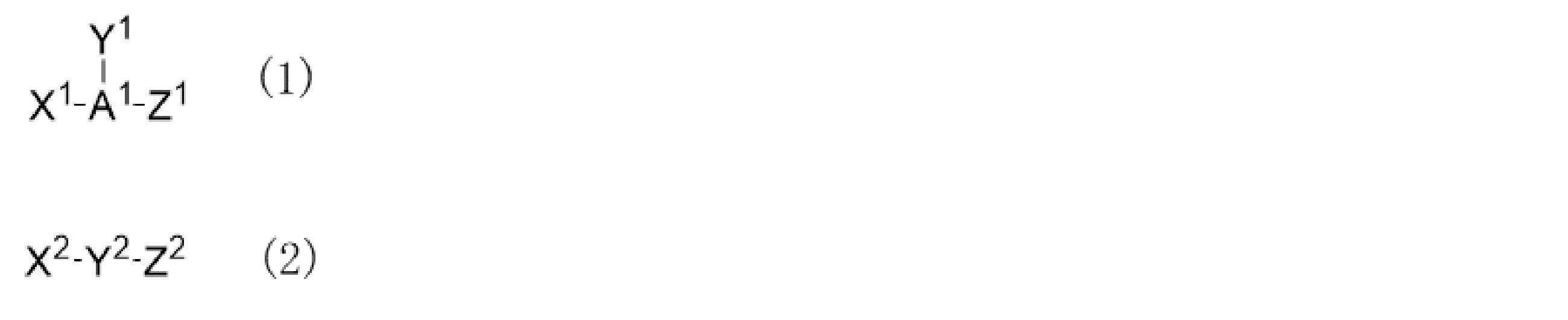
A1は、窒素原子、又は以下の連結基を示す。

*は、X1、Y1、Z1との連結位置を示す。
X1およびX2は、メルカプト基を1個以上有する炭素数1~10のアルキル基、メルカプト基を1個以上有する炭素数2~10のアルケニル基、メルカプト基を1個以上有する炭素数2~10のアルキニル基、メルカプト基を1個以上有する炭素数3~10のシクロアルキル基、メルカプト基を1個以上有する炭素数3~10のシクロアルケニル基、メルカプト基を1個以上有する炭素数7~12のアリールアルキル基、メルカプト基を1個以上有する炭素数3~10のヘテロアルキルアルキル基、又はメルカプト基を示し、これらは分子鎖中に-O-、-C(O)-、-OC(O)-、-NJ2-CO-、-CO-NJ2-、又は-NH-CO-NH-を含んでいてもよく、J2は炭素数1~3のアルキル基を示し、上記のアルキル基、アルケニル基、アルキニル基、シクロアルキル基、又はシクロアルケニル基は、炭素数3~6のシクロアルキル基、炭素数5~6のシクロアルケニル基、アミノ基、シアノ基、メルカプトメチル基、水酸基、フェニル基、ヒドロキシフェニル基、ピリジル基、ナフチル基、チエニル基、又はフリル基から選択される置換基を有していてもよい。
Y1およびY2は、紫外、可視光又は近赤外域に吸収スペクトルを有する構造を含む炭素数6~20の基を示す。
Z1およびZ2は、-CO-NR21NR22R23を示し、R21、R22、及びR23はそれぞれ独立して、水素原子又は炭素数1~10のアルキル基を示す。
R11、R12、R13およびR14は、好ましくは、それぞれ独立に、水素原子、又は炭素数1~10のアルキル基である。
R11、R12、R13およびR14は、より好ましくは、水素原子またはメチル基である。
R11、R12、R13およびR14は、特に好ましくは、水素原子である。
R11、R12、R13およびR14は、より好ましくは、水素原子またはメチル基である。
R11、R12、R13およびR14は、特に好ましくは、水素原子である。
X1およびX2は、好ましくは、メルカプト基を1個以上有する炭素数1~10のアルキル基、メルカプト基を1個以上有する炭素数7~12のアリールアルキル基、メルカプト基を1個以上有する炭素数3~10のヘテロアルキルアルキル基、又はメルカプト基を示し、これらは分子鎖中に-O-、-C(O)-、-OC(O)-、-NJ2-CO-、-CO-NJ2-、又は-NH-CO-NH-を含んでいてもよく、J2は水素原子又は炭素数1~3のアルキル基を示す。
Y1およびY2は、好ましくは、紫外、可視光又は近赤外域に吸収スペクトルを有する構造を含む炭素数10~20の基を示す。
R21、R22、及びR23は、好ましくは水素原子である。
Y1およびY2は、好ましくは、紫外、可視光又は近赤外域に吸収スペクトルを有する構造を含む炭素数10~20の基を示す。
R21、R22、及びR23は、好ましくは水素原子である。
本発明で用いる有機化合物は、より好ましくは下記式(10)で表される化合物である。

A10は、窒素原子、又は3価の連結基を示し、
X10は、メルカプト基を1個以上有する炭素数1~10のアルキル基、メルカプト基を1個以上有する炭素数2~10のアルケニル基、メルカプト基を1個以上有する炭素数2~10のアルキニル基、メルカプト基を1個以上有する炭素数3~10のシクロアルキル基、メルカプト基を1個以上有する炭素数3~10のシクロアルケニル基、メルカプト基を1個以上有する炭素数7~12のアリールアルキル基、メルカプト基を1個以上有する炭素数3~10のヘテロアルキルアルキル基、又はメルカプト基を示し、これらは分子鎖中に-O-、-C(O)-、-OC(O)-、-NJ101-CO-、-CO-NJ101-、又は-NH-CO-NH-を含んでいてもよく、J101は水素原子又は炭素数1~3のアルキル基を示し、上記のアルキル基、アルケニル基、アルキニル基、シクロアルキル基、又はシクロアルケニル基は、炭素数3~6のシクロアルキル基、炭素数5~6のシクロアルケニル基、アミノ基、シアノ基、メルカプトメチル基、水酸基、フェニル基、ヒドロキシフェニル基、ピリジル基、ナフチル基、チエニル基、又はフリル基から選択される置換基を有していてもよい。
Y10は、紫外、可視光又は近赤外域に吸収スペクトルを有する構造を含む炭素数6~20の基を示し、
Lは、アミノ基を示す。
A10は、好ましくは、3価の連結基を示し、より好ましくは、

を示す。
X10は、好ましくは、メルカプト基を1個以上有する炭素数1~10のアルキル基、メルカプト基を1個以上有する炭素数7~12のアリールアルキル基、メルカプト基を1個以上有する炭素数3~10のヘテロアルキルアルキル基、又はメルカプト基を示し、これらは分子鎖中に-O-、-C(O)-、-OC(O)-、-NJ101-CO-、-CO-NJ101-、又は-NH-CO-NH-を含んでいてもよく、J101は水素原子又は炭素数1~3のアルキル基を示す。
Y10は、好ましくは、紫外、可視光又は近赤外域に吸収スペクトルを有する構造を含む炭素数10~20の基を示す。
Y10は、好ましくは、紫外、可視光又は近赤外域に吸収スペクトルを有する構造を含む炭素数10~20の基を示す。
紫外、可視光又は近赤外域に吸収スペクトルを有する構造とは、200nmから2500nmまでの領域に吸収を有する化合物の構造をいう。200nmから2500nmまでの領域に吸収を有する化合物としては、例えば、ナフタレン誘導体、アントラセン誘導体、フェナントレン誘導体、テトラセン誘導体、ペンタセンン誘導体、ベンゾピレン誘導体、クリセン誘導体、ピレン誘導体、トリフェニレン誘導体、コランニュレン誘導体、コロネン誘導体、オバレン誘導体、アクリジン誘導体、ルシフェリン誘導体、ピラニン誘導体、スチルベン誘導体、ベンゾフラン誘導体、ジヒドロキノキサリノン誘導体、フタルイミジニル誘導体、ダンシル誘導体、メロシアニン誘導体、ペリレン誘導体、アクリジン誘導体、ペリレン誘導体、ルシフェリン誘導体、ピラニン誘導体、スチルベン誘導体、ローダミン誘導体、クマリン誘導体、4-(ジシアノメチレン)-2-メチル-6-(4-ジメチルアミノスチリル)-4H-ピラン (DCM) 誘導体、ピロメテン誘導体、フルオレセイン誘導体、ウンベリフェロン誘導体、ベンゾチアゾール誘導体、ベンゾキサジアゾール誘導体、シコニン誘導体、フルオランテン誘導体、カルバゾール誘導体、テトラフェン誘導体、クリセン誘導体、アセナフテン誘導体、フルオレン誘導体等を挙げることができる。具体的には、2-ナフチルアセチルクロリド、4-(5,6-ジメトキシ-N-フタルイミジニル)ベンゼンスルホン酸クロリド (DPS-CL)、4-クロロ-7-ニトロ-2,1,3-ベンゾキサジアゾール(NBD-CL)、フルオロセインイソチオシアネート(FITC)、ローダミンBイソチオシアネート(RBITC)、4-フルオロ-7-ニトロ-2,1,3-ベンゾキサジアゾール(NDB-F)、4-(N,N-ジメチルアミノスルホニル)-7-フルオロ-2,1,3-ベンゾキサジアゾール(DBD-F)、4-(N-フタルイミジニル)ベンゼンスルホン酸クロリド(PHISYL-CL)、4-アミノスルホニル-7-フルオロ-2,1,3-ベンゾキサジアゾール(ABD-F)、N-[4-(6-ジメチルアミノ-2-ベンゾフラニル)フェニル]マレイミド(DBPM)、2-(4-マレイミドフェニル)-6-メチルベンゾチアゾール(MBPM)、N-(9-アクリジニル)マレイミド(NAM)、4-クロロ-7-スルホベンゾフラザン アンモニウム塩(SBD-CL)、7-フルオロベンゾフラザン-4-スルホン酸アンモニウム塩(SBD-F)、1,2-ジアミノ-4,5-ジメトキシベンゼン(DDB)、4-(N,N-ジメチルアミノスルホニル)-7-ヒドラジノ-2,1,3-ベンゾキサジアゾール(DBD-H)、4-ヒドラジノ-7-ニトロ-2,1,3-ベンゾオキサジアゾールヒドラジン(DBD-H)、2,2′-ジチオジ(1-ナフチルアミン) (DTAN)、4-アミノ-3-ペンテン-2-オン(FLUORAL-P)、1,2-アミノ-4,5-メチレンジオキシベンゼン(MDB)、4-(5,6-ジメトキシベンゾチアゾール-2-イル)安息香酸ヒドラジド(BHBT)、4-(N,N-ジメチルアミノスルフホニル)-7-(N-ヒドラジノカルボニルメチル-N-メチル)アミノ-2,1,3-ベンゾキサジアゾール (DBD-CO-HZ)、4-(N-ヒドラジノカルボニルメチル-N-メチルアミノ)-7-ニトロ-2,1,3-ベンゾキサジアゾール(NBD-CO-HZ)、3-ブロモメチル-6,7-ジメトキシ-1-メチル-1,2-ジヒドロキノキサリン-2-オン(BR-DMEQ)、4-ブロモメチル-7-メトキシクマリン(BR-MMC)、4-(N,N-ジメチルアミノスルホニル)-7-ピペラジノ-2,1,3-ベンゾキサジアゾール(DBD-PZ)、4-ニトロ-7-ピペラジノ-2,1,3-ベンゾキサジアゾール (NBD-PZ)、4-(N,N-ジメチルアミノスルホニル)-7-(2-アミノエチルアミノ)-2,1,3-ベンゾキサジアゾール (DBD-ED)、3-クロロカルボニル-6,7-ジメトキシ-1-メチル-2(1H)-キノキサリノン(DMEQ-COCL)、2-(5-クロロカルボニル-2-オキサゾールイル)-5,6-メチレンジオキシベンゾフラン(OMB-COCL)等から誘導される化合物が挙げられる。
本発明で用いる有機化合物としては、より好ましくは、下記式(3)、(4)又は(5)で表される化合物である。本発明によれば、下記式(3)、(4)又は(5)で表される化合物が提供される。

A3、A4、及びA5は、炭素数1又は2の3価の炭化水素基を示す。
R3、R4、及びR5は、水素原子、炭素数1~10のアルキル基、又は炭素数3~10のシクロアルキル基を示し、これらは分子鎖中に-O-、-C(O)-、-OC(O)-、-NJ31-CO-、-CO-NJ31-、又は-NH-CO-NH-を含んでいてもよく、J31は水素原子又は炭素数1~3のアルキル基を示し、上記のアルキル基、又はシクロアルキル基は、炭素数3~6のシクロアルキル基、アミノ基、シアノ基、メルカプト基、水酸基、カルボキシ基、フェニル基、ヒドロキシフェニル基、ピリジル基、ナフチル基、チエニル基、又はフリル基から選択される置換基を有していてもよい。
X3、X4及びX5は、メルカプト基を1個以上有する炭素数1~10のアルキル基、メルカプト基を1個以上有する炭素数3~10のシクロアルキル基、メルカプト基を1個以上有する炭素数7~12のアリールアルキル基、メルカプト基を1個以上有する炭素数3~10のヘテロアルキルアルキル基、又はメルカプト基を示し、これらは分子鎖中に-O-、-C(O)-、-OC(O)-、-NJ32-CO-、-CO-NJ32-、又は-NH-CO-NH-を含んでいてもよく、J32は水素原子又は炭素数1~3のアルキル基を示し、上記のアルキル基、又はシクロアルキル基は、炭素数3~6のシクロアルキル基、アミノ基、シアノ基、水酸基、カルボキシ基、フェニル基、ヒドロキシフェニル基、ピリジル基、ナフチル基、チエニル基、又はフリル基から選択される置換基を有していてもよい。
Y3、Y4、及びY5は紫外、可視光又は近赤外域に吸収スペクトルを有する構造を含む炭素数6~20の基を示す。
Z3は、-CO-NR31NR32R33を示し、R31、R32、及びR33はそれぞれ独立して、水素原子又は炭素数1~10のアルキル基を示す。
Z4は、-CO-NR41NR42R43を示し、R41、R42、及びR43はそれぞれ独立して、水素原子又は炭素数1~10のアルキル基を示す。
Z5は、-CO-NR51NR52R53を示し、R51、R52、及びR53はそれぞれ独立して、水素原子又は炭素数1~10のアルキル基を示す。
Qは、水素原子、カルボキシル基、水酸基、または1級アミド構造を示すか、あるいは-CO-NR5aNR5bR5cを示し、R5a、R5b、及びR5cはそれぞれ独立して、水素原子又は炭素数1~10のアルキル基を示す。
R3、R4、及びR5は、水素原子、炭素数1~10のアルキル基、又は炭素数3~10のシクロアルキル基を示し、これらは分子鎖中に-O-、-C(O)-、-OC(O)-、-NJ31-CO-、-CO-NJ31-、又は-NH-CO-NH-を含んでいてもよく、J31は水素原子又は炭素数1~3のアルキル基を示し、上記のアルキル基、又はシクロアルキル基は、炭素数3~6のシクロアルキル基、アミノ基、シアノ基、メルカプト基、水酸基、カルボキシ基、フェニル基、ヒドロキシフェニル基、ピリジル基、ナフチル基、チエニル基、又はフリル基から選択される置換基を有していてもよい。
X3、X4及びX5は、メルカプト基を1個以上有する炭素数1~10のアルキル基、メルカプト基を1個以上有する炭素数3~10のシクロアルキル基、メルカプト基を1個以上有する炭素数7~12のアリールアルキル基、メルカプト基を1個以上有する炭素数3~10のヘテロアルキルアルキル基、又はメルカプト基を示し、これらは分子鎖中に-O-、-C(O)-、-OC(O)-、-NJ32-CO-、-CO-NJ32-、又は-NH-CO-NH-を含んでいてもよく、J32は水素原子又は炭素数1~3のアルキル基を示し、上記のアルキル基、又はシクロアルキル基は、炭素数3~6のシクロアルキル基、アミノ基、シアノ基、水酸基、カルボキシ基、フェニル基、ヒドロキシフェニル基、ピリジル基、ナフチル基、チエニル基、又はフリル基から選択される置換基を有していてもよい。
Y3、Y4、及びY5は紫外、可視光又は近赤外域に吸収スペクトルを有する構造を含む炭素数6~20の基を示す。
Z3は、-CO-NR31NR32R33を示し、R31、R32、及びR33はそれぞれ独立して、水素原子又は炭素数1~10のアルキル基を示す。
Z4は、-CO-NR41NR42R43を示し、R41、R42、及びR43はそれぞれ独立して、水素原子又は炭素数1~10のアルキル基を示す。
Z5は、-CO-NR51NR52R53を示し、R51、R52、及びR53はそれぞれ独立して、水素原子又は炭素数1~10のアルキル基を示す。
Qは、水素原子、カルボキシル基、水酸基、または1級アミド構造を示すか、あるいは-CO-NR5aNR5bR5cを示し、R5a、R5b、及びR5cはそれぞれ独立して、水素原子又は炭素数1~10のアルキル基を示す。
A3、A4、及びA5は、好ましくは、

を示す。
R3、R4、及びR5は、好ましくは水素原子、又は炭素数1~10のアルキル基を示し、より好ましくは水素原子、又はメチル基を示す。
X3、X4及びX5は、好ましくは、メルカプト基を1個以上有する炭素数1~10のアルキル基、メルカプト基を1個以上有する炭素数7~12のアリールアルキル基、メルカプト基を1個以上有する炭素数3~10のヘテロアルキルアルキル基、又はメルカプト基を示し、これらは分子鎖中に-O-、-C(O)-、-OC(O)-、-NJ32-CO-、-CO-NJ32-、又は-NH-CO-NH-を含んでいてもよく、J32は水素原子又は炭素数1~3のアルキル基を示す。
Y3、Y4、及びY5は、好ましくは、紫外、可視光又は近赤外域に吸収スペクトルを有する構造を含む炭素数10~20の基を示す。
R21、R22、及びR23は、好ましくは水素原子を示す。
Qは、好ましくは1級アミド構造を示す。
R3、R4、及びR5は、好ましくは水素原子、又は炭素数1~10のアルキル基を示し、より好ましくは水素原子、又はメチル基を示す。
X3、X4及びX5は、好ましくは、メルカプト基を1個以上有する炭素数1~10のアルキル基、メルカプト基を1個以上有する炭素数7~12のアリールアルキル基、メルカプト基を1個以上有する炭素数3~10のヘテロアルキルアルキル基、又はメルカプト基を示し、これらは分子鎖中に-O-、-C(O)-、-OC(O)-、-NJ32-CO-、-CO-NJ32-、又は-NH-CO-NH-を含んでいてもよく、J32は水素原子又は炭素数1~3のアルキル基を示す。
Y3、Y4、及びY5は、好ましくは、紫外、可視光又は近赤外域に吸収スペクトルを有する構造を含む炭素数10~20の基を示す。
R21、R22、及びR23は、好ましくは水素原子を示す。
Qは、好ましくは1級アミド構造を示す。
本発明においては、Y1、Y2、Y3、Y4、Y5、及びY10としては、蛍光を発する基であることが好ましい。
本発明で用いる有機化合物としては、さらに好ましくは下記式(6)で表される化合物である。本発明によれば、下記式(6)で表される化合物が提供される。

R6は、水素原子、炭素数1~10のアルキル基、又は炭素数3~10のシクロアルキル基を示し、これらは分子鎖中に-O-、-C(O)-、-OC(O)-、-NJ61-CO-、-CO-NJ61-、又は-NH-CO-NH-を含んでいてもよく、J61は水素原子又は炭素数1~3のアルキル基を示し、上記のアルキル基、又はシクロアルキル基は、炭素数3~6のシクロアルキル基、アミノ基、シアノ基、メルカプト基、水酸基、カルボキシ基、フェニル基、ヒドロキシフェニル基、ピリジル基、ナフチル基、チエニル基、又はフリル基から選択される置換基を有していてもよい。
X6は、メルカプト基を1個以上有する炭素数1~10のアルキル基、メルカプト基を1個以上有する炭素数3~10のシクロアルキル基、メルカプト基を1個以上有する炭素数7~12のアリールアルキル基、メルカプト基を1個以上有する炭素数3~10のヘテロアルキルアルキル基、又はメルカプト基を示し、これらは分子鎖中に-O-、-C(O)-、-OC(O)-、-NJ62-CO-、-CO-NJ62-、又は-NH-CO-NH-を含んでいてもよく、J62は水素原子又は炭素数1~3のアルキル基を示し、上記のアルキル基、又はシクロアルキル基は、炭素数3~6のシクロアルキル基、アミノ基、シアノ基、水酸基、カルボキシ基、フェニル基、ヒドロキシフェニル基、ピリジル基、ナフチル基、チエニル基、又はフリル基から選択される置換基を有していてもよい。
Z6は、-CO-NR61NR62R63を示し、R61、R62、及びR63はそれぞれ独立して、水素原子又は炭素数1~10のアルキル基を示す。
nは、0あるいは1を示し、
mは、0あるいは1を示す。
X6は、メルカプト基を1個以上有する炭素数1~10のアルキル基、メルカプト基を1個以上有する炭素数3~10のシクロアルキル基、メルカプト基を1個以上有する炭素数7~12のアリールアルキル基、メルカプト基を1個以上有する炭素数3~10のヘテロアルキルアルキル基、又はメルカプト基を示し、これらは分子鎖中に-O-、-C(O)-、-OC(O)-、-NJ62-CO-、-CO-NJ62-、又は-NH-CO-NH-を含んでいてもよく、J62は水素原子又は炭素数1~3のアルキル基を示し、上記のアルキル基、又はシクロアルキル基は、炭素数3~6のシクロアルキル基、アミノ基、シアノ基、水酸基、カルボキシ基、フェニル基、ヒドロキシフェニル基、ピリジル基、ナフチル基、チエニル基、又はフリル基から選択される置換基を有していてもよい。
Z6は、-CO-NR61NR62R63を示し、R61、R62、及びR63はそれぞれ独立して、水素原子又は炭素数1~10のアルキル基を示す。
nは、0あるいは1を示し、
mは、0あるいは1を示す。
R6は、好ましくは、水素原子、又はメチル基を示す。
X6は、好ましくは、メルカプト基を1個以上有する炭素数1~10のアルキル基、メルカプト基を1個以上有する炭素数7~12のアリールアルキル基、メルカプト基を1個以上有する炭素数3~10のヘテロアルキルアルキル基、又はメルカプト基を示し、これらは分子鎖中に-O-、-C(O)-、-OC(O)-、-NJ62-CO-、-CO-NJ62-、又は-NH-CO-NH-を含んでいてもよく、J62は水素原子又は炭素数1~3のアルキル基を示す。
R61、R62、及びR63は、好ましくは水素原子を示す。
nは、好ましくは1を示す。
mは、好ましくは0を示す。
X6は、好ましくは、メルカプト基を1個以上有する炭素数1~10のアルキル基、メルカプト基を1個以上有する炭素数7~12のアリールアルキル基、メルカプト基を1個以上有する炭素数3~10のヘテロアルキルアルキル基、又はメルカプト基を示し、これらは分子鎖中に-O-、-C(O)-、-OC(O)-、-NJ62-CO-、-CO-NJ62-、又は-NH-CO-NH-を含んでいてもよく、J62は水素原子又は炭素数1~3のアルキル基を示す。
R61、R62、及びR63は、好ましくは水素原子を示す。
nは、好ましくは1を示す。
mは、好ましくは0を示す。
本発明で用いる有機化合物としては、特に好ましくは下記式(7)で表される化合物である。本発明によれば、下記式(7)で表される化合物が提供される。

R7は、水素原子、炭素数1~10のアルキル基、又は炭素数3~10のシクロアルキル基を示し、これらは分子鎖中に-O-、-C(O)-、-OC(O)-、-NJ71-CO-、-CO-NJ71-、又は-NH-CO-NH-を含んでいてもよく、J71は水素原子又は炭素数1~3のアルキル基を示し、上記のアルキル基、又はシクロアルキル基は、炭素数3~6のシクロアルキル基、アミノ基、シアノ基、メルカプト基、水酸基、カルボキシ基、フェニル基、ヒドロキシフェニル基、ピリジル基、ナフチル基、チエニル基、又はフリル基から選択される置換基を有していてもよい。
X7は、メルカプト基を1個以上有する炭素数1~10のアルキル基、メルカプト基を1個以上有する炭素数3~10のシクロアルキル基、メルカプト基を1個以上有する炭素数7~12のアリールアルキル基、メルカプト基を1個以上有する炭素数3~10のヘテロアルキルアルキル基、又はメルカプト基を示し、これらは分子鎖中に-O-、-C(O)-、-OC(O)-、-NJ72-CO-、-CO-NJ72-、又は-NH-CO-NH-を含んでいてもよく、J72は水素原子又は炭素数1~3のアルキル基を示し、上記のアルキル基、又はシクロアルキル基は、炭素数3~6のシクロアルキル基、アミノ基、シアノ基、水酸基、カルボキシ基、フェニル基、ヒドロキシフェニル基、ピリジル基、ナフチル基、チエニル基、又はフリル基から選択される置換基を有していてもよい。
Wは、NR71-NR72R73を示し、R71、R72、及びR73は、水素原子、又は炭素数1~3のアルキル基を示し、
nは0あるいは1を示す。
X7は、メルカプト基を1個以上有する炭素数1~10のアルキル基、メルカプト基を1個以上有する炭素数3~10のシクロアルキル基、メルカプト基を1個以上有する炭素数7~12のアリールアルキル基、メルカプト基を1個以上有する炭素数3~10のヘテロアルキルアルキル基、又はメルカプト基を示し、これらは分子鎖中に-O-、-C(O)-、-OC(O)-、-NJ72-CO-、-CO-NJ72-、又は-NH-CO-NH-を含んでいてもよく、J72は水素原子又は炭素数1~3のアルキル基を示し、上記のアルキル基、又はシクロアルキル基は、炭素数3~6のシクロアルキル基、アミノ基、シアノ基、水酸基、カルボキシ基、フェニル基、ヒドロキシフェニル基、ピリジル基、ナフチル基、チエニル基、又はフリル基から選択される置換基を有していてもよい。
Wは、NR71-NR72R73を示し、R71、R72、及びR73は、水素原子、又は炭素数1~3のアルキル基を示し、
nは0あるいは1を示す。
R7は、好ましくは、水素原子、又はメチル基を示す。
X7は、好ましくは、メルカプト基を1個以上有する炭素数1~10のアルキル基、メルカプト基を1個以上有する炭素数7~12のアリールアルキル基、メルカプト基を1個以上有する炭素数3~10のヘテロアルキルアルキル基、又はメルカプト基を示し、これらは分子鎖中に-O-、-C(O)-、-OC(O)-、-NJ72-CO-、-CO-NJ72-、又は-NH-CO-NH-を含んでいてもよく、J72は水素原子又は炭素数1~3のアルキル基を示す。
R71、R72、及びR73は、好ましくは水素原子を示す。
nは、好ましくは1を示す。
X7は、好ましくは、メルカプト基を1個以上有する炭素数1~10のアルキル基、メルカプト基を1個以上有する炭素数7~12のアリールアルキル基、メルカプト基を1個以上有する炭素数3~10のヘテロアルキルアルキル基、又はメルカプト基を示し、これらは分子鎖中に-O-、-C(O)-、-OC(O)-、-NJ72-CO-、-CO-NJ72-、又は-NH-CO-NH-を含んでいてもよく、J72は水素原子又は炭素数1~3のアルキル基を示す。
R71、R72、及びR73は、好ましくは水素原子を示す。
nは、好ましくは1を示す。
炭素数1から10のアルキル基とは、例えば、メチル基、エチル基、プロピル基、イソプロピル基、ブチル基、イソブチル基、sec-ブチル基、tert-ブチル基、ペンチル基、イソペンチル基、ネオペンチル基、tert-ペンチル基、ヘキシル基、ヘプチル基、オクチル基、ノニル基、及びデシル基などを挙げることができる。
炭素数2~10のアルケニル基とは、例えば、ビニル基、1-プロペニル基、2-プロペニル基、1-ブテニル基、2-ブテニル基、3-ブテニル基、1,3-ブテニル基、1-ペンテニル基、1-ヘキセニル基、1-ヘプテニル基、1-オクテニル基、1-ノネニル基、1-デセニル基等を挙げることができる。
炭素数2~10のアルキニル基とは、例えば、エチニル基、1-プロピニル基、1-ブチニル基、1-ペンチニル基、1-ヘキシニル基、1-ヘプチニル基、1-オクチニル基、1-ノニル基、1-デシニル基等を挙げることができる。
炭素数3~10のシクロアルキル基とは、例えば、シクロプロピル基、シクロブチル基、シクロペンチル基、シクロへキシル基、シクロヘプチル基、シクロオクチル基、シクロノニル基、シクロデシル基等を挙げることができる。
炭素数3~10のシクロアルケニル基とは、例えば、シクロプロペニル基、シクロブテニル基、シクロペンテニル基、シクロヘキセニル基、シクロヘプテニル基、シクロオクテニル基、シクロノネニル基、シクロデセニル基等を挙げることができる。
炭素数7~12のアリールアルキル基としては、フェニルメチル基、フェニルエチル基等を挙げることができる。
炭素数3~10のヘテロアルキルアルキル基としては、以下の構造を挙げることができる。*は結合点を示す。構造中に不斉炭素を有する場合は、取り得る全ての立体異性体を含むものとする。

炭素数2~10のアルケニル基とは、例えば、ビニル基、1-プロペニル基、2-プロペニル基、1-ブテニル基、2-ブテニル基、3-ブテニル基、1,3-ブテニル基、1-ペンテニル基、1-ヘキセニル基、1-ヘプテニル基、1-オクテニル基、1-ノネニル基、1-デセニル基等を挙げることができる。
炭素数2~10のアルキニル基とは、例えば、エチニル基、1-プロピニル基、1-ブチニル基、1-ペンチニル基、1-ヘキシニル基、1-ヘプチニル基、1-オクチニル基、1-ノニル基、1-デシニル基等を挙げることができる。
炭素数3~10のシクロアルキル基とは、例えば、シクロプロピル基、シクロブチル基、シクロペンチル基、シクロへキシル基、シクロヘプチル基、シクロオクチル基、シクロノニル基、シクロデシル基等を挙げることができる。
炭素数3~10のシクロアルケニル基とは、例えば、シクロプロペニル基、シクロブテニル基、シクロペンテニル基、シクロヘキセニル基、シクロヘプテニル基、シクロオクテニル基、シクロノネニル基、シクロデセニル基等を挙げることができる。
炭素数7~12のアリールアルキル基としては、フェニルメチル基、フェニルエチル基等を挙げることができる。
炭素数3~10のヘテロアルキルアルキル基としては、以下の構造を挙げることができる。*は結合点を示す。構造中に不斉炭素を有する場合は、取り得る全ての立体異性体を含むものとする。
<有機化合物の合成方法>
本発明で用いる有機化合物は、化学合成法により製造することができる。一例として、実施例に記載の化合物1は、1-ナフチル酢酸を1,1’-カルボニルジイミダゾールの存在下でS-トリチル-L-システインと反応させて中間体であるN-(2-(ナフタレン-1-イル)アセチル)-S-トリチル-L-システインを製造し、次いでこの中間体に1,1’-カルボニルジイミダゾールの存在下でヒドラジン一水和物を反応させることにより合成することができる。
本発明で用いる有機化合物は、化学合成法により製造することができる。一例として、実施例に記載の化合物1は、1-ナフチル酢酸を1,1’-カルボニルジイミダゾールの存在下でS-トリチル-L-システインと反応させて中間体であるN-(2-(ナフタレン-1-イル)アセチル)-S-トリチル-L-システインを製造し、次いでこの中間体に1,1’-カルボニルジイミダゾールの存在下でヒドラジン一水和物を反応させることにより合成することができる。
あるいは、本発明で用いる有機化合物は、公知のペプチド合成法を用いて製造することが可能である。具体的には、後記する実施例における化合物6~12及び14の合成に記載した方法に準じて製造することができる。即ち、本発明で用いる有機化合物は、市販のペプチド自動合成装置を用いてペプチド固相合成を行うことにより合成することができる。
合成装置に固相合成用レジン、Fmocアミノ酸のN-メチル-2-ピロリドン (NMP) 溶液、シアノ-ヒドロキシイミノ-酢酸エチルエステル、及びジイロプロピルエチルアミンのNMP溶液、ジイソプロピルカルボジイミドのNMP溶液、ピペリジンのNMP溶液、及び無水酢酸のNMP溶液をセットし合成を行うことができる。Fmoc脱保護、NMPによる洗浄、Fmocアミノ酸の縮合、NMPによる洗浄を1サイクルとし、このサイクルを繰り返すことで、ペプチド鎖を伸長させることができる。
<皮膚感作性測定試薬>
本発明の皮膚感作性測定試薬は、上記の有機化合物のみからなるものであってもよく、測定主薬である上記の有機化合物のほかに1又は2以上の添加剤を含んでいるものであってもよい。添加剤の例としては、pH調整剤、安定化剤、等が挙げられる。また、本発明の皮膚感作性測定試薬は、上記の測定主薬及び必要に応じて上記の添加剤を、水、水性緩衝液、有機溶媒、又はこれらいずれかの混合溶媒等に溶解させたものであってもよい。
本発明の皮膚感作性測定試薬は、溶液、液体状、固体状(粉末、顆粒、凍結乾燥物、錠剤等)のいずれの形態で提供されてもよい。
本発明の皮膚感作性測定試薬は、上記の有機化合物のみからなるものであってもよく、測定主薬である上記の有機化合物のほかに1又は2以上の添加剤を含んでいるものであってもよい。添加剤の例としては、pH調整剤、安定化剤、等が挙げられる。また、本発明の皮膚感作性測定試薬は、上記の測定主薬及び必要に応じて上記の添加剤を、水、水性緩衝液、有機溶媒、又はこれらいずれかの混合溶媒等に溶解させたものであってもよい。
本発明の皮膚感作性測定試薬は、溶液、液体状、固体状(粉末、顆粒、凍結乾燥物、錠剤等)のいずれの形態で提供されてもよい。
<皮膚感作性測定方法>
本発明の皮膚感作性の測定方法は、
(1)本発明の皮膚感作性測定試薬と被験物質とを反応させること、及び
(2)上記反応後の上記皮膚感作性測定試薬の量、又は上記反応の生成物の量を、光学的測定により検出すること、
を含む。
本発明の皮膚感作性の測定方法は、
(1)本発明の皮膚感作性測定試薬と被験物質とを反応させること、及び
(2)上記反応後の上記皮膚感作性測定試薬の量、又は上記反応の生成物の量を、光学的測定により検出すること、
を含む。
本発明の皮膚感作性測定試薬は、例えば、リン酸緩衝液などの水系緩衝液、またはジメチルスルホキシド(DMSO)などの有機溶媒に溶解し、さらに、必要に応じてリン酸緩衝液などの水系緩衝液または別の有機溶媒で希釈した形態で、例えば約0.01μmol/L~約1mol/L程度、通常約1μmol/L~約100μmol/L程度の上記有機化合物の濃度として使用すればよい。
被験物質の種類は特に限定されないが、例えば、香料、精油、高分子化合物、医薬品、農薬、食品、化学製品、及び天然物由来成分からなる植物抽出液のうちの少なくとも1種である。被験物質は、例えば、水またはメタノール、エタノール、アセトニトリル、アセトン、DMSO(ジメチルスルホキシド)などの有機溶媒またはこれらの混合溶媒に、例えば約0.01μmol/L~約1mol/L程度の濃度、通常約0.1mmol/L~約500mmol/L程度の濃度となるように溶解すればよく、被験物質の析出を防ぐ目的においては、好ましくは、0.1mmol/L~100mmol/L、より好ましくは、0.1mmol/L~10mmol/Lの濃度となるように溶解すればよい。
本発明の皮膚感作性測定試薬の測定主薬である上記有機化合物と被験物質溶液とは、上記有機化合物と被験物質のモル濃度比が例えば1:200~10:1となるように混合し反応させればよい。反応は、上記有機化合物と被験物質とを含む溶液を、例えば約4℃~約60℃程度の温度範囲にて保温しながら、通常約1分~約2日間程度攪拌又は静置することによって行うことができる。
上記反応により、上記有機化合物と被験物質との反応性を調べることによって、被験物質の皮膚感作性を測定することができる。上記の反応性を調べるためには、皮膚感作性測定試薬溶液と被験物質溶液との混合液中における上記有機化合物の残存量及び/又は上記有機化合物と被験物質との反応生成物の生成量を分析すればよい。この分析を経時的に行うことにより、上記有機化合物と被験物質との反応速度定数を求め、異なる被験物質の反応速度定数を比較することや、被験物質の反応速度定数を動物実験により皮膚感作性の有無や強度が確認されている化合物について求めた反応速度定数と比較することにより、被験物質の皮膚感作性を評価することができる。
なお、残存量を分析する場合、皮膚感作性測定試薬は反応液中で何らかの変化を起こす可能性がある場合は、必要に応じて被験物質のみを含まない反応液(コントロール群)を別途用意して分析を行い、この反応液中の残量の値を元にして補正しても良い。
本発明の方法においては、皮膚感作性測定試薬と被験物質とを反応させる工程で得られる反応物を、クロマトグラフィー処理することを含んでいてもよい。即ち、化合物及び上記反応により生成した化合物の分析方法としては、特に限定されないが、例えば、高速液体クロマトグラフィー(HPLC)、ガスクロマトグラフィー(GC)、薄層クロマトグラフィー(TLC)などにより、上記反応により生成した化合物、上記有機化合物及び被験物質を分離して分析することができる。
上記HPLC、GC又はTLCに用いることのできるクロマトグラフ手法としては、逆相、順相、イオン交換などを挙げることができる。このようなクロマトグラフ手法に使用可能な市販のカラムやTLCとしては、例えば、LCカラムとしてはCAPCELL-PAK(大阪ソーダ製)、L-column ODS(化学品評価研究機構製)、Shodex Asahipak (昭和電工製)などを挙げることができ、TLCプレートではシリカゲル60F254(メルク社製)、Silica Gel Plate(ナカライテスク社製)などを挙げることができる。
上記反応により生成した化合物又は残存する上記有機化合物の検出方法は、特に限定されないが、例えば上記HPLC分析で利用することのできる検出器としては、紫外可視検出器、近赤外検出器、蛍光検出器、示差屈折率検出器、電気伝導度検出器、蒸発光散乱検出器などが挙げられる。紫外可視検出器としては、例えば、単波長紫外可視検出器、二波長紫外可視検出器、フォトダイオードアレイ検出器などを挙げることができる。また、このような検出法に使用可能な市販の検出器としては、紫外可視検出器、示差屈折率検出器、電気伝導度検出器の場合、島津製作所製、日立製作所製、ウォーターズ製、資生堂製などの検出器、蒸発光散乱検出器としては島津製作所製などが挙げられる。
本発明の一例においては、被験物質と皮膚感作性測定試薬との反応後の皮膚感作性測定試薬(求核試薬とも言う)の減少率を、紫外線検出器を用いた光学的測定により検出してもよい。紫外線検出器としては、市販の検出器を使用することができ、島津製作所社製、ウォーターズ社製、日立製作所社製、アジレント・テクノロジー社製などが挙げられる。
紫外線検出器を用いた光学的測定においては、検出波長は、好ましくは200~700nmであり、より好ましくは200~600nmであり、より好ましくは220~550nmであり、さらに好ましくは280~480nmである。
本発明の別の例においては、被験物質と皮膚感作性測定試薬との反応後の皮膚感作性測定試薬(求核試薬とも言う)の減少率を、蛍光検出器を用いた光学的測定により検出してもよい。
基底状態の分子は、励起光を吸収して励起状態へ遷移する。吸収した励起エネルギーの一部は、振動エネルギーなどにより失活し、振動準位の低い位置に無輻射遷移した後、基底状態に戻る際に発する光が蛍光である。蛍光検出器を用いた光学的測定は、吸光光度法に比べて一般に103倍以上高感度な分析手法と言われる。さらに蛍光物質を測定対象とするため、選択性に優れ、かつ極微量の分析手段として用いられる。蛍光強度は蛍光物質の濃度に比例するため、検量線を作成することで定量分析が可能である。蛍光検出器としては、市販の検出器を使用することができ、島津製作所社製、ウォーターズ社製、日立製作所社製、アジレント・テクノロジー社製、大阪ソーダ社製などが挙げられる。
基底状態の分子は、励起光を吸収して励起状態へ遷移する。吸収した励起エネルギーの一部は、振動エネルギーなどにより失活し、振動準位の低い位置に無輻射遷移した後、基底状態に戻る際に発する光が蛍光である。蛍光検出器を用いた光学的測定は、吸光光度法に比べて一般に103倍以上高感度な分析手法と言われる。さらに蛍光物質を測定対象とするため、選択性に優れ、かつ極微量の分析手段として用いられる。蛍光強度は蛍光物質の濃度に比例するため、検量線を作成することで定量分析が可能である。蛍光検出器としては、市販の検出器を使用することができ、島津製作所社製、ウォーターズ社製、日立製作所社製、アジレント・テクノロジー社製、大阪ソーダ社製などが挙げられる。
蛍光検出器を用いた光学的測定においては、励起波長が好ましくは200~800nmであり、より好ましくは200~600nmであり、さらに好ましくは200~550nmであり、さらに一層好ましくは200~500nmであり、特に好ましくは200~480mである。蛍光波長は、好ましくは200~1000nmであり、より好ましくは200~800nmであり、さらに好ましくは200~700nmであり、特に好ましくは200~650nmである。
皮膚感作性測定試薬(求核試薬とも言う)の減少率は、紫外線検出器または蛍光検出器を用いた光学的測定における皮膚感作性測定試薬(求核試薬とも言う)のピーク面積の平均値から、次式に従って計算することができる。
求核試薬の減少率(% depletion)=[1-(反応後の未反応の求核試薬のピーク面積の平均値/標準の求核試薬のピーク面積の平均値)]×100
本発明の皮膚感作性測定試薬を用いた測定方法における検出は、上記に限定されず、例えば、特開2003-14761号公報又は特開2008-139275号公報に記載の方法を参照して、分子量等に基づく、特定の質量のイオン検出により行ってもよい。
以下に実施例により本発明を詳細に説明するが、本発明はこれらに限定されるものではない。
以下に実施例により本発明を詳細に説明するが、本発明はこれらに限定されるものではない。
<用語の説明>
EDTA:エチレンジアミン四酢酸
TFA:トリフルオロ酢酸
DMSO:ジメチルスルホキシド
NMP:N-メチル-2-ピロリドン
EDTA:エチレンジアミン四酢酸
TFA:トリフルオロ酢酸
DMSO:ジメチルスルホキシド
NMP:N-メチル-2-ピロリドン


(化合物1の合成)
1-ナフチル酢酸(富士フイルム和光純薬社製)269mgとジメチルホルムアミド10mL(富士フイルム和光純薬社製)をナスフラスコに入れて溶解させ、1,1’-カルボニルジイミダゾール(富士フイルム和光純薬社製)234mgを添加して2時間攪拌した。その後、S-トリチル-L-システイン(Cys(Trt)-OH)(東京化成社製)500mgと、N,N-ジイソプロピルエチルアミン(富士フイルム和光純薬社製)250μLを添加し、2時間攪拌した。反応終了後、反応液に水を加え、酢酸エチル(富士フイルム和光純薬社製)で抽出し、有機層を水および飽和食塩水で洗浄後、無水硫酸ナトリウム(富士フイルム和光純薬社製)で乾燥した。無水硫酸ナトリウムをろ別した後にろ液を真空留去することによって中間粗生成物 Nー(2ー(ナフタレン-1-イル)アセチル)-S-トリチル-L-システイン690mgを得た。
1-ナフチル酢酸(富士フイルム和光純薬社製)269mgとジメチルホルムアミド10mL(富士フイルム和光純薬社製)をナスフラスコに入れて溶解させ、1,1’-カルボニルジイミダゾール(富士フイルム和光純薬社製)234mgを添加して2時間攪拌した。その後、S-トリチル-L-システイン(Cys(Trt)-OH)(東京化成社製)500mgと、N,N-ジイソプロピルエチルアミン(富士フイルム和光純薬社製)250μLを添加し、2時間攪拌した。反応終了後、反応液に水を加え、酢酸エチル(富士フイルム和光純薬社製)で抽出し、有機層を水および飽和食塩水で洗浄後、無水硫酸ナトリウム(富士フイルム和光純薬社製)で乾燥した。無水硫酸ナトリウムをろ別した後にろ液を真空留去することによって中間粗生成物 Nー(2ー(ナフタレン-1-イル)アセチル)-S-トリチル-L-システイン690mgを得た。
次に、中間粗生成物690mgとジメチルホルムアミド10mL(富士フイルム和光純薬社製)をナスフラスコに入れて溶解させ、1,1’-カルボニルジイミダゾール(富士フイルム和光純薬社製)230mgを添加して2時間攪拌した。次に、ヒドラジン一水和物(富士フイルム和光純薬社製)72mgを添加して2時間攪拌した。その後、反応液に水を加え、酢酸エチル(富士フイルム和光純薬社製)で抽出し、有機層を水および飽和食塩水で洗浄後、無水硫酸ナトリウム(富士フイルム和光純薬社製)で乾燥した。無水硫酸ナトリウムをろ別した後にろ液を真空留去した。
次に、上記留去物にトリフルオロ酢酸(TFA)(富士フイルム和光純薬社製):トリイソプロピルシラン(東京化成社製):水(=95:2.5:2.5)2mLを添加した。2時間攪拌した後に減圧下で溶媒を留去した。得られた残渣を液体クロマトグラフィーにて精製した後、減圧下溶媒を留去し、凍結乾燥することによって白色固体(化合物1)を95mg得た。
Observed MS(ESI m/z):304.3 (M+H)、RT(min):1.03
Observed MS(ESI m/z):304.3 (M+H)、RT(min):1.03
(化合物2~5の合成)
化合物1の合成法に準じて合成した。
化合物2は、化合物1の合成に用いたS-トリチル-L-システイン(Cys(Trt)-OH)の代わりにS-トリチル-L-ホモシステイン(文献記載の方法で合成、Journal of Medicinal Chemistry, 1996, vol. 39,#7,p.136)を用いた以外は化合物1の合成法に準じて合成した。
化合物3は、化合物1の合成に用いたS-トリチル-L-システイン(Cys(Trt)-OH)の代わりにS-トリチル-イソシステイン(文献記載の方法で合成、Bioorganic and Medicinal Chemistry, 2008, vol. 16,#1,p.65)を用いた以外は化合物1の合成法に準じて合成した。
化合物4は、化合物1の合成に用いたS-トリチル-L-システイン(Cys(Trt)-OH)の代わりに(2R)-2-(methylamino)-3-[(triphenylmethyl)sulfanyl]propanoic acid(ChemShuttle社製)を用いた以外は化合物1の合成法に準じて合成した。
化合物5は、化合物1の合成に用いたS-トリチル-L-システイン(Cys(Trt)-OH)の代わりに4-メルカプトフェニルアラニン(Chemspace社製)を用いた以外は化合物1の合成法に準じて合成した。
化合物1の合成法に準じて合成した。
化合物2は、化合物1の合成に用いたS-トリチル-L-システイン(Cys(Trt)-OH)の代わりにS-トリチル-L-ホモシステイン(文献記載の方法で合成、Journal of Medicinal Chemistry, 1996, vol. 39,#7,p.136)を用いた以外は化合物1の合成法に準じて合成した。
化合物3は、化合物1の合成に用いたS-トリチル-L-システイン(Cys(Trt)-OH)の代わりにS-トリチル-イソシステイン(文献記載の方法で合成、Bioorganic and Medicinal Chemistry, 2008, vol. 16,#1,p.65)を用いた以外は化合物1の合成法に準じて合成した。
化合物4は、化合物1の合成に用いたS-トリチル-L-システイン(Cys(Trt)-OH)の代わりに(2R)-2-(methylamino)-3-[(triphenylmethyl)sulfanyl]propanoic acid(ChemShuttle社製)を用いた以外は化合物1の合成法に準じて合成した。
化合物5は、化合物1の合成に用いたS-トリチル-L-システイン(Cys(Trt)-OH)の代わりに4-メルカプトフェニルアラニン(Chemspace社製)を用いた以外は化合物1の合成法に準じて合成した。
(化合物6の合成)
2-Chlorotrityl chloride resin(渡辺化学工業社製)を固相合成用レジンとして用いて、ペプチド固相合成を行った。レジンは0.05mmol相当量を使用した。塩化メチレン(富士フイルム和光純薬社製)で膨潤させたレジンに、0.5mol/Lの塩化メチレン溶液に調整したN-α-(9-Fluorenylmethoxycarbonyl)-L-aspartic acid β-allyl ester(渡辺化学工業社製)0.075mmolとジイソプロピルエチルアミン0.4mL(東京化成社製)を添加し2時間振とうさせた。反応後、塩化メチレンとN-メチル-2-ピロリドン(富士フイルム和光純薬社製)で洗浄した。次に、1-ナフチル酢酸(富士フイルム和光純薬社製)の縮合とアリル基の脱保護を行った後、2-[(Triphenylmethyl)sulfanyl]ethanamine(Combi-Blocks社製)を縮合した。ペプチド合成終了後、レジンをジクロロメタン(富士フイルム和光純薬社製)で洗浄したのち、減圧下溶媒を留去した。トリフルオロ酢酸(TFA)(富士フイルム和光純薬社製):トリイソプロピルシラン(東京化成社製):水(=95:2.5:2.5)2mLを加え、ペプチドをレジンから切断しながら脱保護も同時に行った。2時間後、レジンをろ別し、ろ液にn-ヘキサン(富士フイルム和光純薬社製):メチル-t-ブチルエーテル(富士フイルム和光純薬社製)(=1:1)12mLを加え、固体を生じさせた。遠心分離によって固体を沈殿させた後、上澄みを除去した。メチル-t-ブチルエーテル(富士フイルム和光純薬社製)で固体を洗浄後、減圧下溶媒を留去した。次に、中間粗生成物をジメチルホルムアミド2mL(富士フイルム和光純薬社製)に溶解させ、1,1’-カルボニルジイミダゾール(富士フイルム和光純薬社製)32mg(0.2mmol)を添加して2時間攪拌した。次に、ヒドラジン一水和物(富士フイルム和光純薬社製)25mg(0.5mmol)を添加して2時間攪拌した。その後、反応液に水を加え、酢酸エチル(富士フイルム和光純薬社製)で抽出し、有機層を水および飽和食塩水で洗浄後、無水硫酸ナトリウム(富士フイルム和光純薬社製)で乾燥した。無水硫酸ナトリウムをろ別した後にろ液を真空留去した。得られた残渣を液体クロマトグラフィーにて精製した後、減圧下溶媒を留去し、凍結乾燥することによって白色固体を得た。
2-Chlorotrityl chloride resin(渡辺化学工業社製)を固相合成用レジンとして用いて、ペプチド固相合成を行った。レジンは0.05mmol相当量を使用した。塩化メチレン(富士フイルム和光純薬社製)で膨潤させたレジンに、0.5mol/Lの塩化メチレン溶液に調整したN-α-(9-Fluorenylmethoxycarbonyl)-L-aspartic acid β-allyl ester(渡辺化学工業社製)0.075mmolとジイソプロピルエチルアミン0.4mL(東京化成社製)を添加し2時間振とうさせた。反応後、塩化メチレンとN-メチル-2-ピロリドン(富士フイルム和光純薬社製)で洗浄した。次に、1-ナフチル酢酸(富士フイルム和光純薬社製)の縮合とアリル基の脱保護を行った後、2-[(Triphenylmethyl)sulfanyl]ethanamine(Combi-Blocks社製)を縮合した。ペプチド合成終了後、レジンをジクロロメタン(富士フイルム和光純薬社製)で洗浄したのち、減圧下溶媒を留去した。トリフルオロ酢酸(TFA)(富士フイルム和光純薬社製):トリイソプロピルシラン(東京化成社製):水(=95:2.5:2.5)2mLを加え、ペプチドをレジンから切断しながら脱保護も同時に行った。2時間後、レジンをろ別し、ろ液にn-ヘキサン(富士フイルム和光純薬社製):メチル-t-ブチルエーテル(富士フイルム和光純薬社製)(=1:1)12mLを加え、固体を生じさせた。遠心分離によって固体を沈殿させた後、上澄みを除去した。メチル-t-ブチルエーテル(富士フイルム和光純薬社製)で固体を洗浄後、減圧下溶媒を留去した。次に、中間粗生成物をジメチルホルムアミド2mL(富士フイルム和光純薬社製)に溶解させ、1,1’-カルボニルジイミダゾール(富士フイルム和光純薬社製)32mg(0.2mmol)を添加して2時間攪拌した。次に、ヒドラジン一水和物(富士フイルム和光純薬社製)25mg(0.5mmol)を添加して2時間攪拌した。その後、反応液に水を加え、酢酸エチル(富士フイルム和光純薬社製)で抽出し、有機層を水および飽和食塩水で洗浄後、無水硫酸ナトリウム(富士フイルム和光純薬社製)で乾燥した。無水硫酸ナトリウムをろ別した後にろ液を真空留去した。得られた残渣を液体クロマトグラフィーにて精製した後、減圧下溶媒を留去し、凍結乾燥することによって白色固体を得た。
(化合物7の合成)
化合物7は、化合物6の合成に用いた2-[(Triphenylmethyl)sulfanyl]ethanamineの代わりに(R)-2-amino-3-(tritylthio)propan-1-ol(AstaTech社製)を用いた以外は化合物6の合成法に準じて合成した。
化合物7は、化合物6の合成に用いた2-[(Triphenylmethyl)sulfanyl]ethanamineの代わりに(R)-2-amino-3-(tritylthio)propan-1-ol(AstaTech社製)を用いた以外は化合物6の合成法に準じて合成した。
(化合物8の合成)
2-Chlorotrityl chloride resin(渡辺化学工業社製)を固相合成用レジンとして用いて、ペプチド固相合成を行った。レジンは0.05mmol相当量を使用した。塩化メチレン(富士フイルム和光純薬社製)で膨潤させたレジンに、0.5mol/Lの塩化メチレン溶液に調整したN-α-(9-Fluorenylmethoxycarbonyl)-L-aspartic acid β-allyl ester(文献記載の方法で合成、Organic Letters,2013,vol. 15,#19,p.5076)0.075mmolとジイソプロピルエチルアミン0.4 mL(東京化成社製)を添加し2時間振とうさせた。反応後、塩化メチレンとN-メチル-2-ピロリドン(富士フイルム和光純薬社製)で洗浄した。次に、1-ナフチル酢酸(富士フイルム和光純薬社製)の縮合とアリル基の脱保護を行った後、S-トリチルーL-システインーアリルエステル(文献記載の方法で合成、Organic Letters, 2013,vol.15,#19,p.5076)の縮合とアリル基の脱保護を行った後、さらに、3-アミノピリジン(富士フイルム和光純薬社製)の縮合を行った。
2-Chlorotrityl chloride resin(渡辺化学工業社製)を固相合成用レジンとして用いて、ペプチド固相合成を行った。レジンは0.05mmol相当量を使用した。塩化メチレン(富士フイルム和光純薬社製)で膨潤させたレジンに、0.5mol/Lの塩化メチレン溶液に調整したN-α-(9-Fluorenylmethoxycarbonyl)-L-aspartic acid β-allyl ester(文献記載の方法で合成、Organic Letters,2013,vol. 15,#19,p.5076)0.075mmolとジイソプロピルエチルアミン0.4 mL(東京化成社製)を添加し2時間振とうさせた。反応後、塩化メチレンとN-メチル-2-ピロリドン(富士フイルム和光純薬社製)で洗浄した。次に、1-ナフチル酢酸(富士フイルム和光純薬社製)の縮合とアリル基の脱保護を行った後、S-トリチルーL-システインーアリルエステル(文献記載の方法で合成、Organic Letters, 2013,vol.15,#19,p.5076)の縮合とアリル基の脱保護を行った後、さらに、3-アミノピリジン(富士フイルム和光純薬社製)の縮合を行った。
ペプチド合成終了後、レジンをジクロロメタン(富士フイルム和光純薬社製)で洗浄したのち、減圧下溶媒を留去した。トリフルオロ酢酸(TFA)(富士フイルム和光純薬社製):トリイソプロピルシラン(東京化成社製):水(=95:2.5:2.5)2mLを加え、ペプチドをレジンから切断しながら脱保護も同時に行った。2時間後、レジンをろ別し、ろ液にn-ヘキサン(富士フイルム和光純薬社製):メチル-t-ブチルエーテル(富士フイルム和光純薬社製)(=1:1)12mLを加え、固体を生じさせた。遠心分離によって固体を沈殿させた後、上澄みを除去した。メチル-t-ブチルエーテル(富士フイルム和光純薬社製)で固体を洗浄後、減圧下溶媒を留去した。次に、中間粗生成物をジメチルホルムアミド2mL(富士フイルム和光純薬社製)に溶解させ、1,1’-カルボニルジイミダゾール(富士フイルム和光純薬社製)32mg(0.2mmol)を添加して2時間攪拌した。次に、ヒドラジン一水和物(富士フイルム和光純薬社製)25mg(0.5mmol)を添加して2時間攪拌した。その後、反応液に水を加え、酢酸エチル(富士フイルム和光純薬社製)で抽出し、有機層を水および飽和食塩水で洗浄後、無水硫酸ナトリウム(富士フイルム和光純薬社製)で乾燥した。無水硫酸ナトリウムをろ別した後にろ液を真空留去した。得られた残渣を液体クロマトグラフィーにて精製した後、減圧下溶媒を留去し、凍結乾燥することによって白色固体を得た。
(化合物9の合成)
化合物9は、化合物8の合成に用いた3-アミノピリジンの代わりにシクロプロピルアミン(東京化成社製)を用いた以外は化合物8の合成法に準じて合成した。
化合物9は、化合物8の合成に用いた3-アミノピリジンの代わりにシクロプロピルアミン(東京化成社製)を用いた以外は化合物8の合成法に準じて合成した。
(化合物10の合成)
2-Chlorotrityl chloride resin(渡辺化学工業社製)を固相合成用レジンとして用いて、ペプチド固相合成を行った。レジンは0.05mmol相当量を使用した。塩化メチレン(富士フイルム和光純薬社製)で膨潤させたレジンに、0.5mol/Lの塩化メチレン溶液に調整したN-α-Fmoc-N-β-alloc-L-diaminopropionic acid(Iris Biotech社製)0.075mmolとジイソプロピルエチルアミン0.4mL(東京化成社製)を添加し2時間振とうさせた。反応後、塩化メチレンとN-メチル-2-ピロリドン(富士フイルム和光純薬社製)で洗浄した。次に、1-ナフチル酢酸(富士フイルム和光純薬社製)の縮合とアリル基の脱保護を行った後、N-α-(9-Fluorenylmethoxycarbonyl)-S-trityl-L-cysteine(渡辺化学工業社製)を縮合した。次に、Fmoc基を脱保護した後、2-チオフェンカルボン酸(富士フイルム和光純薬社製)を縮合し、N-メチル-2-ピロリドンで洗浄した。
2-Chlorotrityl chloride resin(渡辺化学工業社製)を固相合成用レジンとして用いて、ペプチド固相合成を行った。レジンは0.05mmol相当量を使用した。塩化メチレン(富士フイルム和光純薬社製)で膨潤させたレジンに、0.5mol/Lの塩化メチレン溶液に調整したN-α-Fmoc-N-β-alloc-L-diaminopropionic acid(Iris Biotech社製)0.075mmolとジイソプロピルエチルアミン0.4mL(東京化成社製)を添加し2時間振とうさせた。反応後、塩化メチレンとN-メチル-2-ピロリドン(富士フイルム和光純薬社製)で洗浄した。次に、1-ナフチル酢酸(富士フイルム和光純薬社製)の縮合とアリル基の脱保護を行った後、N-α-(9-Fluorenylmethoxycarbonyl)-S-trityl-L-cysteine(渡辺化学工業社製)を縮合した。次に、Fmoc基を脱保護した後、2-チオフェンカルボン酸(富士フイルム和光純薬社製)を縮合し、N-メチル-2-ピロリドンで洗浄した。
ペプチド合成終了後、レジンをジクロロメタン(富士フイルム和光純薬社製)で洗浄したのち、減圧下溶媒を留去した。トリフルオロ酢酸(TFA)(富士フイルム和光純薬社製):トリイソプロピルシラン(東京化成社製):水(=95:2.5:2.5)2mLを加え、ペプチドをレジンから切断しながら脱保護も同時に行った。2時間後、レジンをろ別し、ろ液にn-ヘキサン(富士フイルム和光純薬社製):メチル-t-ブチルエーテル(富士フイルム和光純薬社製)(=1:1)12mLを加え、固体を生じさせた。遠心分離によって固体を沈殿させた後、上澄みを除去した。メチル-t-ブチルエーテル(富士フイルム和光純薬社製)で固体を洗浄後、減圧下溶媒を留去した。次に、中間粗生成物をジメチルホルムアミド2mL(富士フイルム和光純薬社製)に溶解させ、1,1’-カルボニルジイミダゾール(富士フイルム和光純薬社製)32mg(0.2mmol)を添加して2時間攪拌した。次に、ヒドラジン一水和物(富士フイルム和光純薬社製)25mg(0.5mmol)を添加して2時間攪拌した。その後、反応液に水を加え、酢酸エチル(富士フイルム和光純薬社製)で抽出し、有機層を水および飽和食塩水で洗浄後、無水硫酸ナトリウム(富士フイルム和光純薬社製)で乾燥した。無水硫酸ナトリウムをろ別した後にろ液を真空留去した。得られた残渣を液体クロマトグラフィーにて精製した後、減圧下溶媒を留去し、凍結乾燥することによって白色固体を得た。
(化合物11の合成)
2-Chlorotrityl chloride resin(渡辺化学工業社製)を固相合成用レジンとして用いて、ペプチド固相合成を行った。レジンは0.05mmol相当量を使用した。塩化メチレン(富士フイルム和光純薬社製)で膨潤させたレジンに、0.5mol/Lの塩化メチレン溶液に調整した(9H-fluoren-9-yl)methyl N-(2-sulfanylethyl)carbamate(文献記載の方法で合成、Tetrahedron Letters, 2005,vol.46,# 43,p.7443)0.075mmolとジイソプロピルエチルアミン0.4mL(東京化成社製)を添加し2時間振とうさせた。反応後、塩化メチレンとN-メチル-2-ピロリドン(富士フイルム和光純薬社製)で洗浄した。次に、N-α-(9-Fluorenylmethoxycarbonyl)-L-aspartic acid β-allyl ester(渡辺化学工業社製)と、1-ナフチル酢酸(富士フイルム和光純薬社製)の縮合を行った。アリル基の脱保護を行った後、ヒドラジン一水和物(富士フイルム和光純薬社製)を縮合した。
2-Chlorotrityl chloride resin(渡辺化学工業社製)を固相合成用レジンとして用いて、ペプチド固相合成を行った。レジンは0.05mmol相当量を使用した。塩化メチレン(富士フイルム和光純薬社製)で膨潤させたレジンに、0.5mol/Lの塩化メチレン溶液に調整した(9H-fluoren-9-yl)methyl N-(2-sulfanylethyl)carbamate(文献記載の方法で合成、Tetrahedron Letters, 2005,vol.46,# 43,p.7443)0.075mmolとジイソプロピルエチルアミン0.4mL(東京化成社製)を添加し2時間振とうさせた。反応後、塩化メチレンとN-メチル-2-ピロリドン(富士フイルム和光純薬社製)で洗浄した。次に、N-α-(9-Fluorenylmethoxycarbonyl)-L-aspartic acid β-allyl ester(渡辺化学工業社製)と、1-ナフチル酢酸(富士フイルム和光純薬社製)の縮合を行った。アリル基の脱保護を行った後、ヒドラジン一水和物(富士フイルム和光純薬社製)を縮合した。
ペプチド合成終了後、レジンをジクロロメタン(富士フイルム和光純薬社製)で洗浄したのち、減圧下溶媒を留去した。トリフルオロ酢酸(TFA)(富士フイルム和光純薬社製):トリイソプロピルシラン(東京化成社製):水(=95:2.5:2.5)2mLを加え、ペプチドをレジンから切断しながら脱保護も同時に行った。2時間後、レジンをろ別し、ろ液にn-ヘキサン(富士フイルム和光純薬社製):メチル-t-ブチルエーテル(富士フイルム和光純薬社製)(=1:1)12mLを加え、固体を生じさせた。遠心分離によって固体を沈殿させた後、上澄みを除去した。メチル-t-ブチルエーテル(富士フイルム和光純薬社製)で固体を洗浄後、減圧下溶媒を留去した。得られた残渣を液体クロマトグラフィーにて精製した後、減圧下溶媒を留去し、凍結乾燥することによって白色固体を得た。
(化合物12の合成)
化合物12は、化合物11の合成に用いた(9H-fluoren-9-yl)methyl N-(2-sulfanylethyl)carbamate の代わりに(9H-fluoren-9-yl)methyl (R)-2-(mercaptomethyl)pyrrolidine-1-carboxylate(文献記載の方法で合成、Synlett,2010,#7,p.1037)を用いた以外は化合物11の合成法に準じて合成した。
化合物12は、化合物11の合成に用いた(9H-fluoren-9-yl)methyl N-(2-sulfanylethyl)carbamate の代わりに(9H-fluoren-9-yl)methyl (R)-2-(mercaptomethyl)pyrrolidine-1-carboxylate(文献記載の方法で合成、Synlett,2010,#7,p.1037)を用いた以外は化合物11の合成法に準じて合成した。
(化合物13の合成)
7-クロロ-4-ニトロベンゾ-2-オキサ-1,3-ジアゾール(東京化成社製)120mg(0.6mmol)とジメチルホルムアミド10mL(富士フイルム和光純薬社製)をナスフラスコに入れて溶解させ、S-トリチル-L-システイン(Cys(Trt)-OH)(東京化成社製)200mg(0.55mmol)と, N,N-ジイソプロピルエチルアミン(富士フイルム和光純薬社製)250μLを添加し、2時間攪拌した。反応終了後、反応液に水を加え、酢酸エチル(富士フイルム和光純薬社製)で抽出し、有機層を水および飽和食塩水で洗浄後、無水硫酸ナトリウム(富士フイルム和光純薬社製)で乾燥した。
7-クロロ-4-ニトロベンゾ-2-オキサ-1,3-ジアゾール(東京化成社製)120mg(0.6mmol)とジメチルホルムアミド10mL(富士フイルム和光純薬社製)をナスフラスコに入れて溶解させ、S-トリチル-L-システイン(Cys(Trt)-OH)(東京化成社製)200mg(0.55mmol)と, N,N-ジイソプロピルエチルアミン(富士フイルム和光純薬社製)250μLを添加し、2時間攪拌した。反応終了後、反応液に水を加え、酢酸エチル(富士フイルム和光純薬社製)で抽出し、有機層を水および飽和食塩水で洗浄後、無水硫酸ナトリウム(富士フイルム和光純薬社製)で乾燥した。
次に、中間粗生成物全量とジメチルホルムアミド5mL(富士フイルム和光純薬社製)をナスフラスコに入れて溶解させ、1,1’-カルボニルジイミダゾール(富士フイルム和光純薬社製)113mg(0.7mmol)を添加して2時間攪拌した。次に、ヒドラジン一水和物(富士フイルム和光純薬社製)50mg(1.0mmol)を添加して2時間攪拌した。その後、反応液に水を加え、酢酸エチル(富士フイルム和光純薬社製)で抽出し、有機層を水および飽和食塩水で洗浄後、無水硫酸ナトリウム(富士フイルム和光純薬社製)で乾燥した。無水硫酸ナトリウムをろ別した後にろ液を真空留去した。
次に、上記留去物にトリフルオロ酢酸(TFA)(富士フイルム和光純薬社製):トリイソプロピルシラン(東京化成社製):水(=95:2.5:2.5)2mLを添加した。2時間攪拌した後に減圧下で溶媒を留去した。得られた残渣を液体クロマトグラフィーにて精製した後、減圧下溶媒を留去し、凍結乾燥することによって白色固体を得た。
(化合物14の合成)
2-Chlorotrityl chloride resin(渡辺化学工業社製)を固相合成用レジンとして用いて、ペプチド固相合成を行った。レジンは0.05mmol相当量を使用した。塩化メチレン(富士フイルム和光純薬社製)で膨潤させたレジンに、0.5mol/Lの塩化メチレン溶液に調整したN-α-(9-Fluorenylmethoxycarbonyl)-L-aspartic acid β-allyl ester(渡辺化学工業社製)0.075mmolとジイソプロピルエチルアミン0.4mL(東京化成社製)を添加し2時間振とうさせた。反応後、塩化メチレンとN-メチル-2-ピロリドン(富士フイルム和光純薬社製)で洗浄した。次に、2-[(Triphenylmethyl)sulfanyl]ethanamine(Combi-Blocks社製)の縮合とアリル基の脱保護を行った後、mono-Fmoc ethylene diamine hydrochlorideを縮合した。次に、Fmoc基を脱保護した後、7-クロロ-4-ニトロベンゾ-2-オキサ-1,3-ジアゾール(東京化成社製)12mg(0.06mmol)のN-メチル-2-ピロリドン溶液2mLを添加して1時間振とうし、N-メチル-2-ピロリドンで洗浄した。
2-Chlorotrityl chloride resin(渡辺化学工業社製)を固相合成用レジンとして用いて、ペプチド固相合成を行った。レジンは0.05mmol相当量を使用した。塩化メチレン(富士フイルム和光純薬社製)で膨潤させたレジンに、0.5mol/Lの塩化メチレン溶液に調整したN-α-(9-Fluorenylmethoxycarbonyl)-L-aspartic acid β-allyl ester(渡辺化学工業社製)0.075mmolとジイソプロピルエチルアミン0.4mL(東京化成社製)を添加し2時間振とうさせた。反応後、塩化メチレンとN-メチル-2-ピロリドン(富士フイルム和光純薬社製)で洗浄した。次に、2-[(Triphenylmethyl)sulfanyl]ethanamine(Combi-Blocks社製)の縮合とアリル基の脱保護を行った後、mono-Fmoc ethylene diamine hydrochlorideを縮合した。次に、Fmoc基を脱保護した後、7-クロロ-4-ニトロベンゾ-2-オキサ-1,3-ジアゾール(東京化成社製)12mg(0.06mmol)のN-メチル-2-ピロリドン溶液2mLを添加して1時間振とうし、N-メチル-2-ピロリドンで洗浄した。
ペプチド合成終了後、レジンをジクロロメタン(富士フイルム和光純薬社製)で洗浄したのち、減圧下溶媒を留去した。トリフルオロ酢酸(TFA)(富士フイルム和光純薬社製):トリイソプロピルシラン(東京化成社製):水(=95:2.5:2.5)2mLを加え、ペプチドをレジンから切断しながら脱保護も同時に行った。2時間後、レジンをろ別し、ろ液にn-ヘキサン(富士フイルム和光純薬社製):メチル-t-ブチルエーテル(富士フイルム和光純薬社製)(=1:1)12mLを加え、固体を生じさせた。遠心分離によって固体を沈殿させた後、上澄みを除去した。メチル-t-ブチルエーテル(富士フイルム和光純薬社製)で固体を洗浄後、減圧下溶媒を留去した。次に、中間粗生成物をジメチルホルムアミド2mL(富士フイルム和光純薬社製)に溶解させ、1,1’-カルボニルジイミダゾール(富士フイルム和光純薬社製)32mg(0.2mmol)を添加して2時間攪拌した。次に、ヒドラジン一水和物(富士フイルム和光純薬社製)25mg(0.5mmol)を添加して2時間攪拌した。その後、反応液に水を加え、酢酸エチル(富士フイルム和光純薬社製)で抽出し、有機層を水および飽和食塩水で洗浄後、無水硫酸ナトリウム(富士フイルム和光純薬社製)で乾燥した。無水硫酸ナトリウムをろ別した後にろ液を真空留去した。得られた残渣を液体クロマトグラフィーにて精製した後、減圧下溶媒を留去し、凍結乾燥することによって白色固体を得た。
(化合物15の合成)
2,6-Naphthalendiacetic acid(A1 Biochem Lab社製)300mgとN-ヒドロキシスクシンイミド(東京化成社製)295mgとジメチルホルムアミド10mL(富士フイルム和光純薬社製)をナスフラスコに入れた。次に、1-(3-ジメチルアミノプロピル)-3-エチルカルボジイミド塩酸塩(同仁化学研究所社製)671mgを添加し、2時間攪拌した。反応終了後、反応液に水を加え、酢酸エチル(富士フイルム和光純薬社製)で抽出し、有機層を水および飽和食塩水で洗浄後、無水硫酸ナトリウム(富士フイルム和光純薬社製)で乾燥した。無水硫酸ナトリウムをろ別し、ろ液を真空留去した。その後、残留物をシリカゲルクロマトグラフィー(n-ヘキサン(富士フイルム和光純薬社製):酢酸エチル(富士フイルム和光純薬社製)=1:0~0.7:0.3)で精製して白色固体ビス(1, 5-ジオキソピロリジン-1-イル)2,2’-(ナフタレン-2,6-ジイル)ジアセテート480mgを得た。
Observed MS(ESI m/z):439.2 (M+H)、RT(min):1.21
2,6-Naphthalendiacetic acid(A1 Biochem Lab社製)300mgとN-ヒドロキシスクシンイミド(東京化成社製)295mgとジメチルホルムアミド10mL(富士フイルム和光純薬社製)をナスフラスコに入れた。次に、1-(3-ジメチルアミノプロピル)-3-エチルカルボジイミド塩酸塩(同仁化学研究所社製)671mgを添加し、2時間攪拌した。反応終了後、反応液に水を加え、酢酸エチル(富士フイルム和光純薬社製)で抽出し、有機層を水および飽和食塩水で洗浄後、無水硫酸ナトリウム(富士フイルム和光純薬社製)で乾燥した。無水硫酸ナトリウムをろ別し、ろ液を真空留去した。その後、残留物をシリカゲルクロマトグラフィー(n-ヘキサン(富士フイルム和光純薬社製):酢酸エチル(富士フイルム和光純薬社製)=1:0~0.7:0.3)で精製して白色固体ビス(1, 5-ジオキソピロリジン-1-イル)2,2’-(ナフタレン-2,6-ジイル)ジアセテート480mgを得た。
Observed MS(ESI m/z):439.2 (M+H)、RT(min):1.21
次に、ビス(1, 5-ジオキソピロリジン-1-イル)2,2’-(ナフタレン-2,6-ジイル)ジアセテートを56mg(0.13mmol)とS-トリチル-L-システインアミド(Combi-Blocks社製)23mg(0.06mmol)とジメチルホルムアミド1mL(富士フイルム和光純薬社製)をナスフラスコに入れ、65℃のオイルバスに浸けて3時間攪拌した。その後、反応液を室温まで冷却させ、ヒドラジン一水和物(富士フイルム和光純薬社製)25mg(0.5mmol)を添加し1時間攪拌した。反応終了後、反応液に水を加え、酢酸エチル(富士フイルム和光純薬社製)で抽出し、有機層を水および飽和食塩水で洗浄後、無水硫酸ナトリウム(富士フイルム和光純薬社製)で乾燥した。無水硫酸ナトリウムをろ別し、ろ液を真空留去した。次に、トリフルオロ酢酸(TFA)(富士フイルム和光純薬社製):トリイソプロピルシラン(東京化成社製):水(=95:2.5:2.5)1mLを加え、2時間後n-ヘキサン(富士フイルム和光純薬社製):メチル-t-ブチルエーテル(富士フイルム和光純薬社製)(=1:1)6mLを加え、固体を生じさせた。遠心分離によって固体を沈殿させた後、上澄みを除去した。メチル-t-ブチルエーテル(富士フイルム和光純薬社製)で固体を洗浄後、減圧下溶媒を留去した。得られた残渣を液体クロマトグラフィーにて精製した後、減圧下溶媒を留去し、凍結乾燥することによって白色固体を得た。
(比較例1の合成)
Rink Amide-ChemMatrix(Biotage社製)(0.45mmol/g)を固相合成用レジンとして用いて、ペプチド固相合成を行った。レジンは111.1mg(0.05mmol)使用した。
(S)-2-((((9H-フルオレン-9-イル)メトキシ)カルボニル)アミノ)-S-トリチル-L-システイン (Fmoc-Cys(Trt)-OH)(渡辺化学工業社製)、1-ナフチル酢酸(富士フイルム和光純薬社製)の順に縮合を行った。伸長終了後、レジンをジクロロメタン(富士フイルム和光純薬社製)で洗浄したのち、減圧下溶媒を留去した。トリフルオロ酢酸(TFA)(富士フイルム和光純薬社製):トリイソプロピルシラン(東京化成社製):水(=95:2.5:2.5)2mLを加え、ペプチドをレジンから切断しながら脱保護も同時に行った。2時間後、レジンをろ別し、ろ液にn-ヘキサン(富士フイルム和光純薬社製):メチル-t-ブチルエーテル(富士フイルム和光純薬社製)(=1:1)12mLを加え、固体を生じさせた。遠心分離によって固体を沈殿させた後、上澄みを除去した。メチル-t-ブチルエーテル(富士フイルム和光純薬社製)で固体を洗浄後、減圧下溶媒を留去した。得られた残渣を液体クロマトグラフィーにて精製した後、減圧下溶媒を留去し、凍結乾燥することによって白色固体を6.4mg得た。
Observed MS(ESI m/z):289.2(M+H)、RT(min):1.09
Rink Amide-ChemMatrix(Biotage社製)(0.45mmol/g)を固相合成用レジンとして用いて、ペプチド固相合成を行った。レジンは111.1mg(0.05mmol)使用した。
(S)-2-((((9H-フルオレン-9-イル)メトキシ)カルボニル)アミノ)-S-トリチル-L-システイン (Fmoc-Cys(Trt)-OH)(渡辺化学工業社製)、1-ナフチル酢酸(富士フイルム和光純薬社製)の順に縮合を行った。伸長終了後、レジンをジクロロメタン(富士フイルム和光純薬社製)で洗浄したのち、減圧下溶媒を留去した。トリフルオロ酢酸(TFA)(富士フイルム和光純薬社製):トリイソプロピルシラン(東京化成社製):水(=95:2.5:2.5)2mLを加え、ペプチドをレジンから切断しながら脱保護も同時に行った。2時間後、レジンをろ別し、ろ液にn-ヘキサン(富士フイルム和光純薬社製):メチル-t-ブチルエーテル(富士フイルム和光純薬社製)(=1:1)12mLを加え、固体を生じさせた。遠心分離によって固体を沈殿させた後、上澄みを除去した。メチル-t-ブチルエーテル(富士フイルム和光純薬社製)で固体を洗浄後、減圧下溶媒を留去した。得られた残渣を液体クロマトグラフィーにて精製した後、減圧下溶媒を留去し、凍結乾燥することによって白色固体を6.4mg得た。
Observed MS(ESI m/z):289.2(M+H)、RT(min):1.09
ペプチド自動合成装置によるペプチド固相合成法
ペプチド自動合成装置(Biotage社製 SyroI)を用いてペプチド固相合成を行った。合成装置に固相合成用レジン、レジンに対して4当量のFmocアミノ酸 (0.5mol/L)のN-メチル-2-ピロリドン(NMP)溶液、レジンに対して4当量のシアノ-ヒドロキシイミノ-酢酸エチルエステル(1mol/L)のNMP溶液、レジンに対して4当量のジイソプロピルカルボジイミド(1mol/L)のNMP溶液、ピペリジン(20%v/v)のNMP溶液をセットし合成を行った。Fmoc脱保護(20分)、NMPによる洗浄、Fmocアミノ酸の縮合(1時間)、NMPによる洗浄を1サイクルとし、このサイクルを繰り返すことで、ペプチド鎖を伸長させた。
ペプチド自動合成装置(Biotage社製 SyroI)を用いてペプチド固相合成を行った。合成装置に固相合成用レジン、レジンに対して4当量のFmocアミノ酸 (0.5mol/L)のN-メチル-2-ピロリドン(NMP)溶液、レジンに対して4当量のシアノ-ヒドロキシイミノ-酢酸エチルエステル(1mol/L)のNMP溶液、レジンに対して4当量のジイソプロピルカルボジイミド(1mol/L)のNMP溶液、ピペリジン(20%v/v)のNMP溶液をセットし合成を行った。Fmoc脱保護(20分)、NMPによる洗浄、Fmocアミノ酸の縮合(1時間)、NMPによる洗浄を1サイクルとし、このサイクルを繰り返すことで、ペプチド鎖を伸長させた。
アリル基の脱保護においては、テトラキス(トリフェニルホスフィン)パラジウム(0)(東京化成社製)58mg(0.05mmol)とクロロホルム(富士フイルム和光純薬社製)1.85mLと酢酸(富士フイルム和光純薬社製)0.1mLとNメチルモルホリン(富士フイルム和光純薬社製)0.05mLを添加し、2時間振とうさせた。反応終了後、NMPで洗浄した。
得られた粗生成物の精製は液体クロマトグラフィーによって行った。
カラム:Waters社製 X Select CSH Prep C18 5μm OBD(19x250mm)
カラム温度:40度
流速:20ml/min
検出波長:220nm、254nm
溶媒:A液:0.1%ギ酸-水
B液:0.1%ギ酸-アセトニトリル
Fmocアミノ酸は渡辺化学工業株式会社より入手した。
N-メチル-2-ピロリドン、ジイロプロピルエチルアミン、ジイソプロピルカルボジイミド、ピペリジン、無水酢酸は富士フイルム和光純薬株式会社から入手した。シアノ-ヒドロキシイミノ-酢酸エチルエステルは東京化成工業株式会社より入手した。
カラム:Waters社製 X Select CSH Prep C18 5μm OBD(19x250mm)
カラム温度:40度
流速:20ml/min
検出波長:220nm、254nm
溶媒:A液:0.1%ギ酸-水
B液:0.1%ギ酸-アセトニトリル
Fmocアミノ酸は渡辺化学工業株式会社より入手した。
N-メチル-2-ピロリドン、ジイロプロピルエチルアミン、ジイソプロピルカルボジイミド、ピペリジン、無水酢酸は富士フイルム和光純薬株式会社から入手した。シアノ-ヒドロキシイミノ-酢酸エチルエステルは東京化成工業株式会社より入手した。
質量スペクトル(MS)は、ACQUITY SQD LC/MS System(Waters社、イオン化法:ESI(ElectroSpray Ionization、エレクトロスプレーイオン化)法を用いて測定した。
保持時間(RT)は、ACQUITY SQD LC/MS System(Waters社)を用いて測定し、分(min)で示した。
カラム:Waters社製BEHC 18 1.7μm,2.1x30 mm
溶媒:A液:0.1%ギ酸-水
B液:0.1%ギ酸-アセトニトリル
グラジエントサイクル:0.00min(A液/B液=95/5)、2.00min(A液/B液=5/95)、3.00min(A液/B液=95/5)
流速:0.5mL/min
カラム温度:室温
検出波長:254nm
保持時間(RT)は、ACQUITY SQD LC/MS System(Waters社)を用いて測定し、分(min)で示した。
カラム:Waters社製BEHC 18 1.7μm,2.1x30 mm
溶媒:A液:0.1%ギ酸-水
B液:0.1%ギ酸-アセトニトリル
グラジエントサイクル:0.00min(A液/B液=95/5)、2.00min(A液/B液=5/95)、3.00min(A液/B液=95/5)
流速:0.5mL/min
カラム温度:室温
検出波長:254nm
(比較例2の合成)
特開2009-222466の実施例1~5を参考に合成した。
特開2009-222466の実施例1~5を参考に合成した。
<試験法>
(1)各種溶液調製
(1-1)0.1mmol/L EDTA水溶液
1) 15mL容量のコニカルチューブにEDTA・2Na・2H2O(同仁化学製)を37.2mg秤量し、25mLメスピペットを使って10mLの蒸留水(光製薬製、日本薬局方注射用水)を加え、溶解させる(10mmol/L EDTA水溶液)。
2) 100mL容量の容器に蒸留水(光製薬製、日本薬局方注射用水)を50mLメスピペットを使って49.5mL加え、そこに上記1)の10mmol/L EDTA水溶液を0.5ml添加して混合し100倍希釈する (0.1mmol/L EDTA水溶液)。
(1)各種溶液調製
(1-1)0.1mmol/L EDTA水溶液
1) 15mL容量のコニカルチューブにEDTA・2Na・2H2O(同仁化学製)を37.2mg秤量し、25mLメスピペットを使って10mLの蒸留水(光製薬製、日本薬局方注射用水)を加え、溶解させる(10mmol/L EDTA水溶液)。
2) 100mL容量の容器に蒸留水(光製薬製、日本薬局方注射用水)を50mLメスピペットを使って49.5mL加え、そこに上記1)の10mmol/L EDTA水溶液を0.5ml添加して混合し100倍希釈する (0.1mmol/L EDTA水溶液)。
(1-2)100mmol/Lリン酸緩衝液(pH7.4およびpH8.0)
1) 100mL容量の容器に無水リン酸二水素ナトリウム(富士フイルム和光純薬社製、特級)を0.6g秤量し、50mLメスピペットを使って50mLの蒸留水(光製薬製、日本薬局方注射用水)を加え、溶解させる。
2) 500mL容量の容器に50mL(又は100mL)メスピペットを使って300mLの蒸留水(光製薬製、日本薬局方注射用水)を加える。
3) 無水リン酸水素二ナトリウム(富士フイルム和光純薬社製、特級)を4.26g秤量し、2)の蒸留水(光製薬製、日本薬局方注射用水)に添加して溶解させる。
4) pHメーターでpH測定しながら、3)の無水リン酸水素二ナトリウム溶液に1)の無水リン酸二水素ナトリウム溶液を25mLメスピペットを使って適量添加し、pH7.4またはpH8.0に調製する。
5) 50mLメスピペットを使って4)の溶液から299mLを新たな500mL容量の容器に移し、そこに0.1mmol/L EDTA水溶液を1mL添加して300mLにする。この溶液中のEDTAの濃度は0.33μmol/Lであり、反応液中での濃度は0.25μmol/Lとなる。
6) 上記溶液を0.22μmのフィルターでろ過滅菌する。
1) 100mL容量の容器に無水リン酸二水素ナトリウム(富士フイルム和光純薬社製、特級)を0.6g秤量し、50mLメスピペットを使って50mLの蒸留水(光製薬製、日本薬局方注射用水)を加え、溶解させる。
2) 500mL容量の容器に50mL(又は100mL)メスピペットを使って300mLの蒸留水(光製薬製、日本薬局方注射用水)を加える。
3) 無水リン酸水素二ナトリウム(富士フイルム和光純薬社製、特級)を4.26g秤量し、2)の蒸留水(光製薬製、日本薬局方注射用水)に添加して溶解させる。
4) pHメーターでpH測定しながら、3)の無水リン酸水素二ナトリウム溶液に1)の無水リン酸二水素ナトリウム溶液を25mLメスピペットを使って適量添加し、pH7.4またはpH8.0に調製する。
5) 50mLメスピペットを使って4)の溶液から299mLを新たな500mL容量の容器に移し、そこに0.1mmol/L EDTA水溶液を1mL添加して300mLにする。この溶液中のEDTAの濃度は0.33μmol/Lであり、反応液中での濃度は0.25μmol/Lとなる。
6) 上記溶液を0.22μmのフィルターでろ過滅菌する。
(1-3)反応停止液
1)UV検出用反応停止液(2.5%(v/v)TFA水溶液)
蒸留水(富士フイルム和光純薬社製)100mLにTFA(富士フイルム和光純薬製、特級)を2.5mL添加する。
2)蛍光検出用反応停止液(0.5%(v/v)TFA水溶液)
蒸留水(富士フイルム和光純薬社製)100mLにTFA(富士フイルム和光純薬製、特級)を0.5mL添加する。
1)UV検出用反応停止液(2.5%(v/v)TFA水溶液)
蒸留水(富士フイルム和光純薬社製)100mLにTFA(富士フイルム和光純薬製、特級)を2.5mL添加する。
2)蛍光検出用反応停止液(0.5%(v/v)TFA水溶液)
蒸留水(富士フイルム和光純薬社製)100mLにTFA(富士フイルム和光純薬製、特級)を0.5mL添加する。
(1-4)HPLC移動相A:0.1%(v/v)TFA水溶液
蒸留水(富士フイルム和光純薬社製)1LにTFAを1.0mL添加する。
蒸留水(富士フイルム和光純薬社製)1LにTFAを1.0mL添加する。
(1-5)HPLC移動相B:0.1%(v/v)TFAアセトニトリル溶液
HPLCグレードのアセトニトリル(富士フイルム和光純薬社製、HPLC用)1LにTFA1.0mLを添加する。
HPLCグレードのアセトニトリル(富士フイルム和光純薬社製、HPLC用)1LにTFA1.0mLを添加する。
(2)求核試薬ストック液調製
1試験では同一のストック溶液を使用し、1試験毎に使い切れる量に小分けして保存する。具体的な調製例を以下に示す。
1) 求核試薬は、その分子量に応じてDMSO(富士フイルム和光純薬社製)に溶解し、2mmol/Lの求核試薬溶液を調製する。
2) 500mL容量の容器に同緩衝液を50mLメスピペットを使って149.5mL加え、そこに上記の2mmol/Lの求核試薬溶液を0.5mL添加し、転倒混和をして300倍希釈する(6.667μmol/L)。この溶液は、-70℃以下で冷凍保管する。
1試験では同一のストック溶液を使用し、1試験毎に使い切れる量に小分けして保存する。具体的な調製例を以下に示す。
1) 求核試薬は、その分子量に応じてDMSO(富士フイルム和光純薬社製)に溶解し、2mmol/Lの求核試薬溶液を調製する。
2) 500mL容量の容器に同緩衝液を50mLメスピペットを使って149.5mL加え、そこに上記の2mmol/Lの求核試薬溶液を0.5mL添加し、転倒混和をして300倍希釈する(6.667μmol/L)。この溶液は、-70℃以下で冷凍保管する。
(3)被験物質溶液の調製
1mmol/Lの被験物質溶液が調製できる溶媒を水、アセトニトリル、アセトン及び5%DMSOのアセトニトリル溶液の優先順位に従って1種類選定する。水、アセトニトリル、アセトンを選定した場合には、まず20mmol/Lの被験物質溶液を調製する。適当量秤量した被験物質に対して、20mmol/L溶液になるように溶媒を加えて、完全に溶解する。その後、20mmol/L溶液の一部を分取し、同じ溶媒で20倍希釈して、1mmol/Lの被験物質溶液を調製する。5質量%DMSOのアセトニトリル溶液を選定した場合には、上記同様、20mmol/LのDMSO溶液を調製する。その後、この一部を分取し、アセトニトリルで20倍希釈して、1mmol/Lの被験物質溶液を調製する。
1mmol/Lの被験物質溶液が調製できる溶媒を水、アセトニトリル、アセトン及び5%DMSOのアセトニトリル溶液の優先順位に従って1種類選定する。水、アセトニトリル、アセトンを選定した場合には、まず20mmol/Lの被験物質溶液を調製する。適当量秤量した被験物質に対して、20mmol/L溶液になるように溶媒を加えて、完全に溶解する。その後、20mmol/L溶液の一部を分取し、同じ溶媒で20倍希釈して、1mmol/Lの被験物質溶液を調製する。5質量%DMSOのアセトニトリル溶液を選定した場合には、上記同様、20mmol/LのDMSO溶液を調製する。その後、この一部を分取し、アセトニトリルで20倍希釈して、1mmol/Lの被験物質溶液を調製する。
(4)反応
(4-1)添加
被験物質溶液は96ウェルプレート(U96 PP-0.5 ML NATURAL、Thermo (NUNC)社)上で主に12連ピペットを用いて調製し、以下の用量に従って試薬を添加する。
求核試薬:150μL
被験物質溶液:50μL
(4-1)添加
被験物質溶液は96ウェルプレート(U96 PP-0.5 ML NATURAL、Thermo (NUNC)社)上で主に12連ピペットを用いて調製し、以下の用量に従って試薬を添加する。
求核試薬:150μL
被験物質溶液:50μL
(4-2)反応
プレートシール(TORASTTM 96well Seal E Type、島津ジーエルシー社)でしっかり密封し、プレートシェーカー(Titramax 100、Heidolph社)で攪拌する。遠心機でスピンダウンしたのち、25℃、24時間、遮光状態でインキュベートする。
プレートシール(TORASTTM 96well Seal E Type、島津ジーエルシー社)でしっかり密封し、プレートシェーカー(Titramax 100、Heidolph社)で攪拌する。遠心機でスピンダウンしたのち、25℃、24時間、遮光状態でインキュベートする。
(4-3)反応停止
24時間インキュベートした後、プレートシールを剥がし、後述のHPLC測定において、UV検出で測定する場合は各サンプルにUV検出用反応停止液(2.5%(v/v)TFA水溶液)を50μLずつ添加して反応を停止させる。蛍光検出で測定する場合は新たなプレートに蛍光検出用反応停止液(0.5%(v/v)TFA水溶液)を180μL分注し、そこにインキュベート後の反応液を20μL添加して反応を停止させる。
24時間インキュベートした後、プレートシールを剥がし、後述のHPLC測定において、UV検出で測定する場合は各サンプルにUV検出用反応停止液(2.5%(v/v)TFA水溶液)を50μLずつ添加して反応を停止させる。蛍光検出で測定する場合は新たなプレートに蛍光検出用反応停止液(0.5%(v/v)TFA水溶液)を180μL分注し、そこにインキュベート後の反応液を20μL添加して反応を停止させる。
(5)HPLC測定
求核試薬のHPLC測定条件を以下に示す。なお、溶出条件は、求核試薬によって、条件1、条件2又は条件3を選択した。
求核試薬のHPLC測定条件を以下に示す。なお、溶出条件は、求核試薬によって、条件1、条件2又は条件3を選択した。

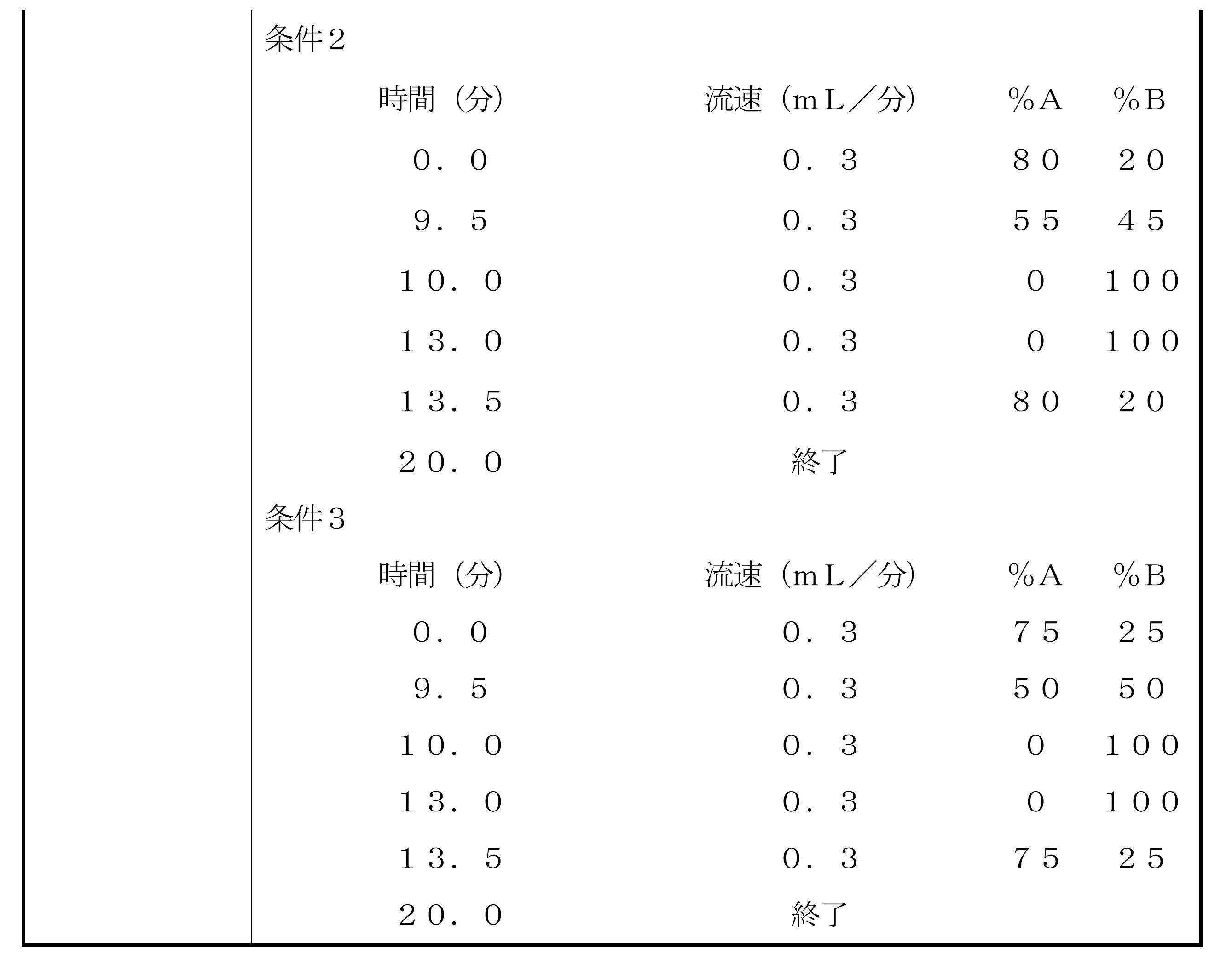
(6)データ解析
(6-1)減少率の算出
求核試薬のピーク面積の平均値から、次式に従って求核試薬の減少率を計算する。
求核試薬の減少率(%depletion)=[1-(反応後の未反応の求核試薬のピーク面積/標準の求核試薬ピーク面積の平均値)]×100
(6-1)減少率の算出
求核試薬のピーク面積の平均値から、次式に従って求核試薬の減少率を計算する。
求核試薬の減少率(%depletion)=[1-(反応後の未反応の求核試薬のピーク面積/標準の求核試薬ピーク面積の平均値)]×100
(7)評価項目
(7-1)求核試薬の安定性(特に、システインの酸化の程度)
反応液調製直後(0時間)及び反応液を25℃、24時間インキュベーションした後(24時間)の反応液を、それぞれHPLC-UVで測定する。この際、求核試薬と求核試薬の酸化体および変化体がHPLC上で確認できるため、下記式に基づいて、求核試薬の残存率を算出する。
(7-1)求核試薬の安定性(特に、システインの酸化の程度)
反応液調製直後(0時間)及び反応液を25℃、24時間インキュベーションした後(24時間)の反応液を、それぞれHPLC-UVで測定する。この際、求核試薬と求核試薬の酸化体および変化体がHPLC上で確認できるため、下記式に基づいて、求核試薬の残存率を算出する。
求核試薬の残存率(%)=求核試薬の面積値/(求核試薬の面積値+求核試薬の酸化体の面積値+求核試薬の変化体の面積値)×100
(7-2)求核試薬の蛍光検出感度
蛍光検出は、ナフタレン環の持つ蛍光(励起波長:284nm、蛍光波長:333nmで検出されるピーク面積)を求める。
蛍光検出は、ナフタレン環の持つ蛍光(励起波長:284nm、蛍光波長:333nmで検出されるピーク面積)を求める。
(7-3)感作性物質との反応性評価
反応性の評価には、以下の表に示す15物質を使用した。なお、これら15物質は先行技術のDPRAおよびADRAにおいて感作性と非感作性を区別するのが困難な物質を含むように選んだ。
反応性の評価には、以下の表に示す15物質を使用した。なお、これら15物質は先行技術のDPRAおよびADRAにおいて感作性と非感作性を区別するのが困難な物質を含むように選んだ。
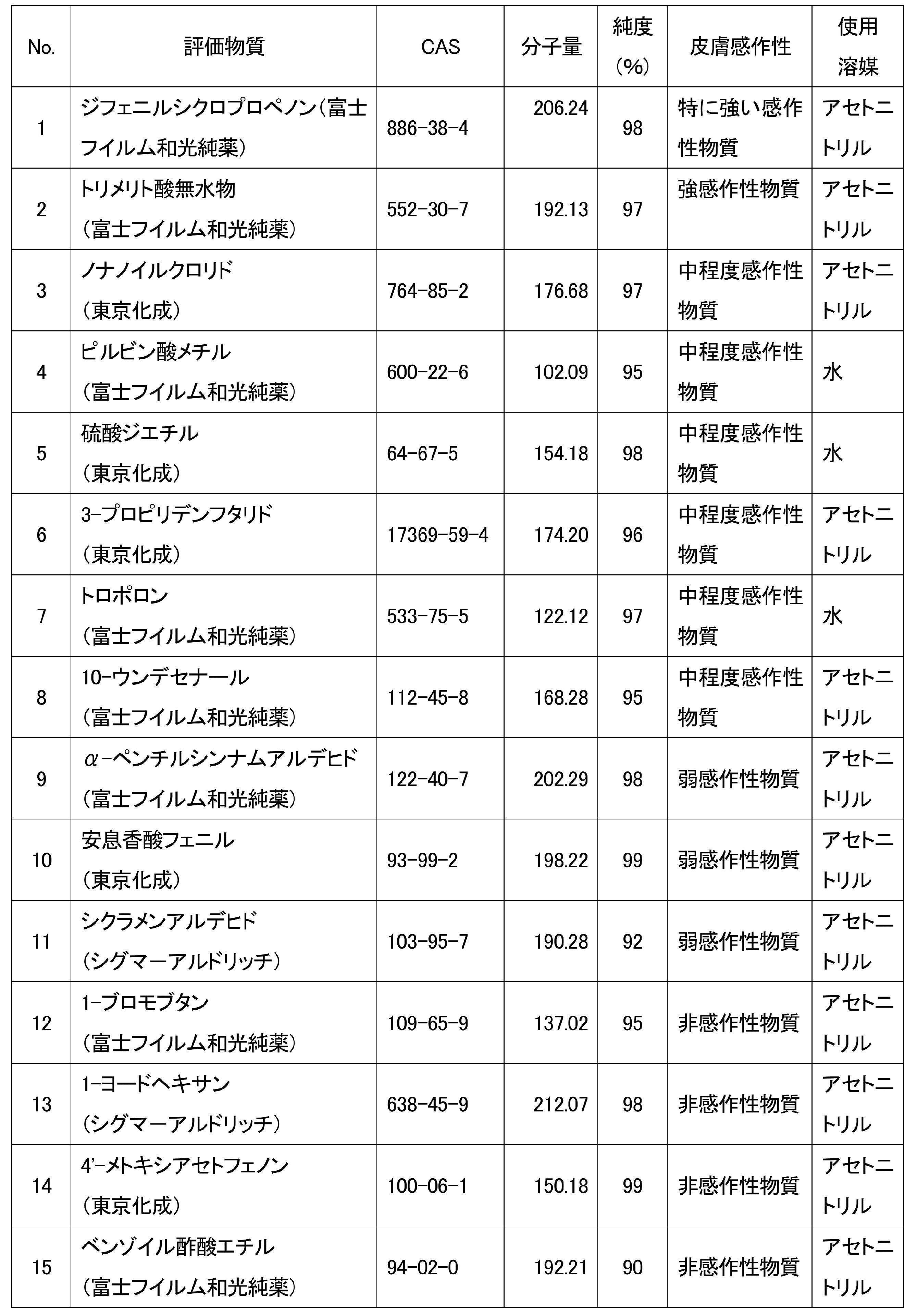
反応性は、先行技術のDPRAにおけるシステインペプチドおよびリジンペプチドの減少率(depletion)、ADRAにおけるNACおよびNALの減少率、N末端がアミド型のNAC(NAC-amide)、特開2009-222466に記載の試薬(GSH-NBD)の減少率と比較した。
<実施例1>
求核試薬1種類(化合物1)を評価した。なお、15種類の評価物質に対する反応性の比較対照として、以下の化合物についても同様に評価した。
Cys peptide:
Lys peptide
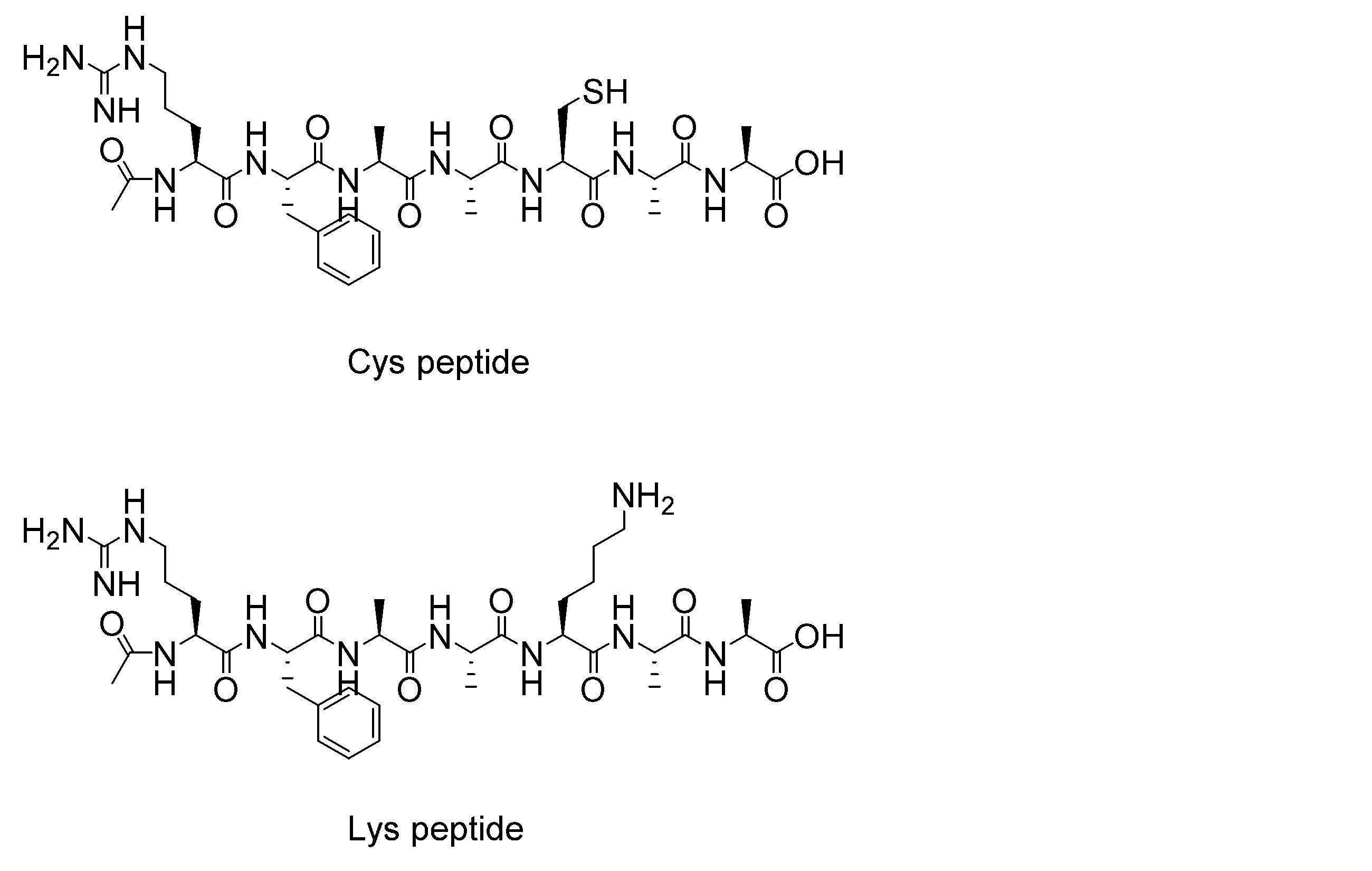
求核試薬1種類(化合物1)を評価した。なお、15種類の評価物質に対する反応性の比較対照として、以下の化合物についても同様に評価した。
Cys peptide:
Lys peptide
NAC:N-[2-(ナフタレン-1-イル)アセチル]システイン
NAL:α-N-[2-(ナフタレン-1-イル)アセチル]リジン
NAC-amide:(R)-3-メルカプト-2-(2-(ナフタレン-1-イル)アセトアミド)プロパンアミド
GSH-NBD:特開2009-222466の段落0043に記載の化合物
NAL:α-N-[2-(ナフタレン-1-イル)アセチル]リジン
NAC-amide:(R)-3-メルカプト-2-(2-(ナフタレン-1-イル)アセトアミド)プロパンアミド
GSH-NBD:特開2009-222466の段落0043に記載の化合物
(被験物質及び溶液調製)
上記の「(7-3)感作性物質との反応性評価」に示した15物質について、1mmol/L溶液を調製して試験に使用した。なお、化合物1については上記の「(2)求核試薬ストック液調製」において6.667μmol/L溶液を調製する際にpH7.4またはpH8.0の緩衝液を使用して調製したストック液を用い、NAC-amideおよびGSH-NBDについてはpH8.0の緩衝液を使用して調製したストック液のみを用いた。
上記の「(7-3)感作性物質との反応性評価」に示した15物質について、1mmol/L溶液を調製して試験に使用した。なお、化合物1については上記の「(2)求核試薬ストック液調製」において6.667μmol/L溶液を調製する際にpH7.4またはpH8.0の緩衝液を使用して調製したストック液を用い、NAC-amideおよびGSH-NBDについてはpH8.0の緩衝液を使用して調製したストック液のみを用いた。
(測定条件)
上記の「(5)HPLC測定」に記載のHPLC測定条件により、求核試薬depletion(%)を求めた。ただし、GSH-NBDにおいてはHPLCにおける検出を、検出波長338nmのUV検出で実施した。
上記の「(5)HPLC測定」に記載のHPLC測定条件により、求核試薬depletion(%)を求めた。ただし、GSH-NBDにおいてはHPLCにおける検出を、検出波長338nmのUV検出で実施した。
(結果)
(1)求核試薬の安定性
化合物1について、溶液調製直後(0時間)及び24時間経過後の残存率を算出した。結果を図1に示す。化合物1は0時間で90%以上、24時間経過後でも85%以上残存しており、大きく残存率が減少することはなかった。
(1)求核試薬の安定性
化合物1について、溶液調製直後(0時間)及び24時間経過後の残存率を算出した。結果を図1に示す。化合物1は0時間で90%以上、24時間経過後でも85%以上残存しており、大きく残存率が減少することはなかった。
(2)求核試薬の蛍光検出感度
pH8.0の緩衝液を用いてストック溶液を調製した求核試薬について、溶液調製直後(0時間)における蛍光強度(HPLCにおけるピーク面積)を測定した。結果を図2に示す。求核試薬を定量するのに十分なピーク面積が検出された。
pH8.0の緩衝液を用いてストック溶液を調製した求核試薬について、溶液調製直後(0時間)における蛍光強度(HPLCにおけるピーク面積)を測定した。結果を図2に示す。求核試薬を定量するのに十分なピーク面積が検出された。
(3)求核試薬の反応性
化合物1について、15種類の評価物質についての反応性を算出した。上記の「(7-3)感作性物質との反応性評価」の表2に記載のNo.1から8の物質における各求核試薬のdepletionと比較した結果を図3に、No.9から15の物質における同様の結果を図4に示す。
化合物1について、15種類の評価物質についての反応性を算出した。上記の「(7-3)感作性物質との反応性評価」の表2に記載のNo.1から8の物質における各求核試薬のdepletionと比較した結果を図3に、No.9から15の物質における同様の結果を図4に示す。
その結果、まずDPRAにおけるシステインペプチド(Cys peptide)およびリジンペプチド(Lys peptide)と比較した場合、感作性物質であるノナノイルクロリド、ピルビン酸メチル、10-ウンデセナール、α-ペンチルシンナムアルデヒド、シクラメンアルデヒドの5種類について化合物1の方がシステインペプチドおよびリジンペプチドよりも高い反応性を示した。これに対し、同じく感作性物質の内、硫酸ジエチル、3-プロピリデンフタリド、トロポロン、安息香酸フェニルの4種類についてはシステインペプチドまたはリジンペプチドと比較すると反応性が低かったが、いずれもdepletionが5%以上あり、ある程度の反応性が確認された。また、非感作性物質であるが、DPRAにおいてシステインペプチドと反応性がみられる1-ブロモブタンおよび1-ヨードヘキサンにおいては化合物1では反応性は見られず、実際の感作性情報(非感作性)に見合った結果となった。上記以外の4物質(ジフェニルシクロプロペノン、トリメリト酸無水物、4'-メトキシアセトフェノン、ベンゾイル酢酸エチル)については、システインペプチドまたはリジンペプチドと同程度の反応性を示した。
次にADRAにおけるNACおよびNALと比較した場合、感作性物質であるジフェニルシクロプロペノン、ノナノイルクロリド、ピルビン酸メチル、硫酸ジエチル、トロポロン、10-ウンデセナール、α-ペンチルシンナムアルデヒド、安息香酸フェニル、シクラメンアルデヒドの9種類についてNACおよびNALよりも高い反応性を示した。一方、トリメリト酸無水物については化合物1よりもNALの方が高い反応性を示したが、化合物1のdepletionは41.0%(pH7.4)および37.2%(pH8.0)であり、十分な反応性が確認された。上記以外の5物質(3-プロピリデンフタリド、1-ブロモブタン、1-ヨードヘキサン、4'-メトキシアセトフェノン、ベンゾイル酢酸エチル)については、NACまたはNALと同程度の反応性を示した。
NAC-amideと比較した場合、感作性物質であるトリメリト酸無水物、ピルビン酸メチル、10-ウンデセナール、α-ペンチルシンナムアルデヒド、シクラメンアルデヒドの5種類について化合物1の方が高い反応性を示した。上記以外の10物質(ジフェニルシクロプロペノン、ノナノイルクロリド、硫酸ジエチル、3-プロピリデンフタリド、トロポロン、安息香酸フェニル、1-ブロモブタン、1-ヨードヘキサン、4'-メトキシアセトフェノン、ベンゾイル酢酸エチル)については、NAC-amideと同程度の反応性を示した。
GSH-NBDと比較した場合、感作性物質であるピルビン酸メチル、硫酸ジエチル、10-ウンデセナール、α-ペンチルシンナムアルデヒド、シクラメンアルデヒドの5種類について化合物1の方が高い反応性を示した。これに対し、トリメリト酸無水物およびノナノイルクロリドについてはGSH-NBDのほうが高い反応性であったが、化合物1のdepletionはいずれも35%以上であり、十分な反応性が確認された。上記以外の8物質(ジフェニルシクロプロペノン、3-プロピリデンフタリド、トロポロン、安息香酸フェニル、1-ブロモブタン、1-ヨードヘキサン、4'-メトキシアセトフェノン、ベンゾイル酢酸エチル)については化合物1とGSH-NBDで同程度の反応性であった。
化合物1、NAC-amideおよびGSH-NBDにおける15種類の評価物質に対する反応性(depletion)について、先行技術のADRAにおいてNAC単独で皮膚感作性を予測する方法における判定条件である5.6%のdepletionを判定基準として皮膚感作性の予測を行った。この化合物1の結果について、上記で行ったNAC-amideおよびGSH-NBDの予測結果と文献で公表されているDPRAおよびADRAの予測結果それぞれとの比較を表3に示す。

上記の結果、DPRAでは誤って陰性と判定された感作性物質4種類(ノナノイルクロリド、ピルビン酸メチル、10-ウンデセナール、α-ペンチルシンナムアルデヒド)について、化合物1では正しく陽性と判定された。同様にADRAでは誤って陰性と判定された感作性物質8種類(ピルビン酸メチル、硫酸ジエチル、3-プロピリデンフタリド、トロポロン、10-ウンデセナール、α-ペンチルシンナムアルデヒド、安息香酸フェニル、シクラメンアルデヒド)について、化合物1では正しく陽性と判定された。NAC-amideに対しては、誤って陰性と判定された感作性物質5種類(トリメリト酸無水物、ピルビン酸メチル、3-プロピリデンフタリド、10-ウンデセナール、α-ペンチルシンナムアルデヒド)について化合物1では正しく陽性と判定された。GSH-NBDに対しては、誤って陰性と判定された感作性物質4種類(ピルビン酸メチル、硫酸ジエチル、3-プロピリデンフタリド、α-ペンチルシンナムアルデヒド)について、化合物1では正しく陽性と判定された。また、DPRAでは誤って陽性と判定された非感作性物質2種類(1-ブロモブタン、1-ヨードヘキサン)について、化合物1では正しく陰性と判定された。
以上より、化合物1は先行技術のDPRAおよびADRAよりも高感度に感作性物質を予測できる可能性があり、従来の皮膚感作測定方法では予測が難しかった感作性物質も正しく評価できる可能性が高いと考えられる。
Claims (14)
- メルカプト基とヒドラジド構造とを有し、かつ、紫外、可視光又は近赤外域に吸収スペクトルを有する有機化合物を測定主薬として含む、皮膚感作性測定試薬。
- 前記有機化合物が、下記式(1)又は(2)で表される、請求項1に記載の皮膚感作性測定試薬。

A1は、窒素原子、又は以下の連結基を示す。

*は、X1、Y1、Z1との連結位置を示す。
X1およびX2は、メルカプト基を1個以上有する炭素数1~10のアルキル基、メルカプト基を1個以上有する炭素数2~10のアルケニル基、メルカプト基を1個以上有する炭素数2~10のアルキニル基、メルカプト基を1個以上有する炭素数3~10のシクロアルキル基、メルカプト基を1個以上有する炭素数3~10のシクロアルケニル基、メルカプト基を1個以上有する炭素数7~12のアリールアルキル基、メルカプト基を1個以上有する炭素数3~10のヘテロアルキルアルキル基、又はメルカプト基を示し、これらは分子鎖中に-O-、-C(O)-、-OC(O)-、-NJ2-CO-、-CO-NJ2-、又は-NH-CO-NH-を含んでいてもよく、J2は水素原子又は炭素数1~3のアルキル基を示し、前記のアルキル基、アルケニル基、アルキニル基、シクロアルキル基、又はシクロアルケニル基は、炭素数3~6のシクロアルキル基、炭素数5~6のシクロアルケニル基、アミノ基、シアノ基、メルカプトメチル基、水酸基、フェニル基、ヒドロキシフェニル基、ピリジル基、ナフチル基、チエニル基、又はフリル基から選択される置換基を有していてもよい。
Y1およびY2は、紫外、可視光又は近赤外域に吸収スペクトルを有する構造を含む炭素数6~20の基を示す。
Z1およびZ2は、-CO-NR21NR22R23を示し、R21、R22、及びR23はそれぞれ独立して、水素原子又は炭素数1~10のアルキル基を示す。 - 前記有機化合物が、下記式(10)で表される、請求項1に記載の皮膚感作性測定試薬。

A10は、窒素原子、又は3価の連結基を示し、
X10は、メルカプト基を1個以上有する炭素数1~10のアルキル基、メルカプト基を1個以上有する炭素数2~10のアルケニル基、メルカプト基を1個以上有する炭素数2~10のアルキニル基、メルカプト基を1個以上有する炭素数3~10のシクロアルキル基、メルカプト基を1個以上有する炭素数3~10のシクロアルケニル基、メルカプト基を1個以上有する炭素数7~12のアリールアルキル基、メルカプト基を1個以上有する炭素数3~10のヘテロアルキルアルキル基、又はメルカプト基を示し、これらは分子鎖中に-O-、-C(O)-、-OC(O)-、-NJ101-CO-、-CO-NJ101-、又は-NH-CO-NH-を含んでいてもよく、J101は水素原子又は炭素数1~3のアルキル基を示し、前記のアルキル基、アルケニル基、アルキニル基、シクロアルキル基、又はシクロアルケニル基は、炭素数3~6のシクロアルキル基、炭素数5~6のシクロアルケニル基、アミノ基、シアノ基、メルカプトメチル基、水酸基、フェニル基、ヒドロキシフェニル基、ピリジル基、ナフチル基、チエニル基、又はフリル基から選択される置換基を有していてもよい。
Y10は、紫外、可視光又は近赤外域に吸収スペクトルを有する構造を含む炭素数6~20の基を示し、
Lは、アミノ基を示す。 - 前記有機化合物が、下記式(3)、(4)又は(5)で表される、請求項1に記載の皮膚感作性測定試薬。
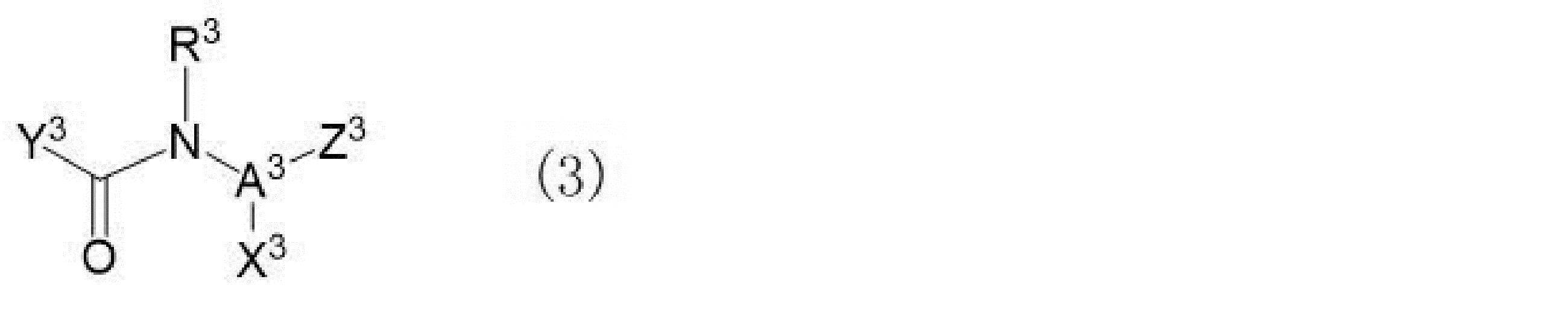
A3は、炭素数1又は2の3価の炭化水素基を示し、
R3は、水素原子、炭素数1~10のアルキル基、又は炭素数3~10のシクロアルキル基を示し、これらは分子鎖中に-O-、-C(O)-、-OC(O)-、-NJ31-CO-、-CO-NJ31-、又は-NH-CO-NH-を含んでいてもよく、J31は水素原子又は炭素数1~3のアルキル基を示し、前記のアルキル基、又はシクロアルキル基は、炭素数3~6のシクロアルキル基、アミノ基、シアノ基、メルカプト基、水酸基、カルボキシ基、フェニル基、ヒドロキシフェニル基、ピリジル基、ナフチル基、チエニル基、又はフリル基から選択される置換基を有していてもよい。
X3は、メルカプト基を1個以上有する炭素数1~10のアルキル基、メルカプト基を1個以上有する炭素数3~10のシクロアルキル基、メルカプト基を1個以上有する炭素数7~12のアリールアルキル基、メルカプト基を1個以上有する炭素数3~10のヘテロアルキルアルキル基、又はメルカプト基を示し、これらは分子鎖中に-O-、-C(O)-、-OC(O)-、-NJ32-CO-、-CO-NJ32-、又は-NH-CO-NH-を含んでいてもよく、J32は水素原子又は炭素数1~3のアルキル基を示し、前記のアルキル基、又はシクロアルキル基は、炭素数3~6のシクロアルキル基、アミノ基、シアノ基、水酸基、カルボキシ基、フェニル基、ヒドロキシフェニル基、ピリジル基、ナフチル基、チエニル基、又はフリル基から選択される置換基を有していてもよい。
Y3は、紫外、可視光又は近赤外域に吸収スペクトルを有する構造を含む炭素数6~20の基を示す。
Z3は、-CO-NR31NR32R33を示し、R31、R32、及びR33はそれぞれ独立して、水素原子又は炭素数1~10のアルキル基を示す。

A4は、炭素数1又は2の3価の炭化水素基を示し、
R4は、水素原子、炭素数1~10のアルキル基、又は炭素数3~10のシクロアルキル基を示し、これらは分子鎖中に-O-、-C(O)-、-OC(O)-、-NJ41-CO-、-CO-NJ41-、又は-NH-CO-NH-を含んでいてもよく、J41は水素原子又は炭素数1~3のアルキル基を示し、前記のアルキル基、又はシクロアルキル基は、炭素数3~6のシクロアルキル基、アミノ基、シアノ基、メルカプト基、水酸基、カルボキシ基、フェニル基、ヒドロキシフェニル基、ピリジル基、ナフチル基、チエニル基、又はフリル基から選択される置換基を有していてもよい。
X4は、メルカプト基を1個以上有する炭素数1~10のアルキル基、メルカプト基を1個以上有する炭素数3~10のシクロアルキル基、メルカプト基を1個以上有する炭素数7~12のアリールアルキル基、メルカプト基を1個以上有する炭素数3~10のヘテロアルキルアルキル基、又はメルカプト基を示し、これらは分子鎖中に-O-、-C(O)-、-OC(O)-、-NJ42-CO-、-CO-NJ42-、又は-NH-CO-NH-を含んでいてもよく、J42は水素原子又は炭素数1~3のアルキル基を示し、前記のアルキル基、又はシクロアルキル基は、炭素数3~6のシクロアルキル基、アミノ基、シアノ基、水酸基、カルボキシ基、フェニル基、ヒドロキシフェニル基、ピリジル基、ナフチル基、チエニル基、又はフリル基から選択される置換基を有していてもよい。
Y4は、紫外、可視光又は近赤外域に吸収スペクトルを有する構造を含む炭素数6~20の基を示す。
Z4は、-CO-NR41NR42R43を示し、R41、R42、及びR43はそれぞれ独立して、水素原子又は炭素数1~10のアルキル基を示す。

A5は、炭素数1又は2の3価の炭化水素基を示し、
R5は、水素原子、炭素数1~10のアルキル基、又は炭素数3~10のシクロアルキル基を示し、これらは分子鎖中に-O-、-C(O)-、-OC(O)-、-NJ51-CO-、-CO-NJ51-、又は-NH-CO-NH-を含んでいてもよく、J51は水素原子又は炭素数1~3のアルキル基を示し、前記のアルキル基、又はシクロアルキル基は、炭素数3~6のシクロアルキル基、アミノ基、シアノ基、メルカプト基、水酸基、カルボキシ基、フェニル基、ヒドロキシフェニル基、ピリジル基、ナフチル基、チエニル基、又はフリル基から選択される置換基を有していてもよい。
X5は、メルカプト基を1個以上有する炭素数1~10のアルキル基、メルカプト基を1個以上有する炭素数3~10のシクロアルキル基、メルカプト基を1個以上有する炭素数7~12のアリールアルキル基、メルカプト基を1個以上有する炭素数3~10のヘテロアルキルアルキル基、又はメルカプト基を示し、これらは分子鎖中に-O-、-C(O)-、-OC(O)-、-NJ52-CO-、-CO-NJ52-、又は-NH-CO-NH-を含んでいてもよく、J52は水素原子又は炭素数1~3のアルキル基を示し、前記のアルキル基、又はシクロアルキル基は、炭素数3~6のシクロアルキル基、アミノ基、シアノ基、水酸基、カルボキシ基、フェニル基、ヒドロキシフェニル基、ピリジル基、ナフチル基、チエニル基、又はフリル基から選択される置換基を有していてもよい。
Y5は、紫外、可視光又は近赤外域に吸収スペクトルを有する構造を含む炭素数6~20の基を示す。
Z5は、-CO-NR51NR52R53を示し、R51、R52、及びR53はそれぞれ独立して、水素原子又は炭素数1~10のアルキル基を示す。
Qは、水素原子、カルボキシル基、水酸基、または1級アミド構造を示すか、あるいは-CO-NR5aNR5bR5cを示し、R5a、R5b、及びR5cはそれぞれ独立して、水素原子又は炭素数1~10のアルキル基を示す。 - 前記有機化合物が、下記式(6)で表される、請求項1に記載の皮膚感作性測定試薬。

R6は、水素原子、炭素数1~10のアルキル基、又は炭素数3~10のシクロアルキル基を示し、これらは分子鎖中に-O-、-C(O)-、-OC(O)-、-NJ61-CO-、-CO-NJ61-、又は-NH-CO-NH-を含んでいてもよく、J61は水素原子又は炭素数1~3のアルキル基を示し、前記のアルキル基、又はシクロアルキル基は、炭素数3~6のシクロアルキル基、アミノ基、シアノ基、メルカプト基、水酸基、カルボキシ基、フェニル基、ヒドロキシフェニル基、ピリジル基、ナフチル基、チエニル基、又はフリル基から選択される置換基を有していてもよい。
X6は、メルカプト基を1個以上有する炭素数1~10のアルキル基、メルカプト基を1個以上有する炭素数3~10のシクロアルキル基、メルカプト基を1個以上有する炭素数7~12のアリールアルキル基、メルカプト基を1個以上有する炭素数3~10のヘテロアルキルアルキル基、又はメルカプト基を示し、これらは分子鎖中に-O-、-C(O)-、-OC(O)-、-NJ62-CO-、-CO-NJ62-、又は-NH-CO-NH-を含んでいてもよく、J62は水素原子又は炭素数1~3のアルキル基を示し、前記のアルキル基、又はシクロアルキル基は、炭素数3~6のシクロアルキル基、アミノ基、シアノ基、水酸基、カルボキシ基、フェニル基、ヒドロキシフェニル基、ピリジル基、ナフチル基、チエニル基、又はフリル基から選択される置換基を有していてもよい。
Z6は、-CO-NR61NR62R63を示し、R61、R62、及びR63はそれぞれ独立して、水素原子又は炭素数1~10のアルキル基を示す。
nは、0あるいは1を示し、
mは、0あるいは1を示す。 - 前記有機化合物が、下記式(7)で表される、請求項1に記載の皮膚感作性測定試薬。

R7は、水素原子、炭素数1~10のアルキル基、又は炭素数3~10のシクロアルキル基を示し、これらは分子鎖中に-O-、-C(O)-、-OC(O)-、-NJ71-CO-、-CO-NJ71-、又は-NH-CO-NH-を含んでいてもよく、J71は水素原子又は炭素数1~3のアルキル基を示し、前記のアルキル基、又はシクロアルキル基は、炭素数3~6のシクロアルキル基、アミノ基、シアノ基、メルカプト基、水酸基、カルボキシ基、フェニル基、ヒドロキシフェニル基、ピリジル基、ナフチル基、チエニル基、又はフリル基から選択される置換基を有していてもよい。
X7は、メルカプト基を1個以上有する炭素数1~10のアルキル基、メルカプト基を1個以上有する炭素数3~10のシクロアルキル基、メルカプト基を1個以上有する炭素数7~12のアリールアルキル基、メルカプト基を1個以上有する炭素数3~10のヘテロアルキルアルキル基、又はメルカプト基を示し、これらは分子鎖中に-O-、-C(O)-、-OC(O)-、-NJ72-CO-、-CO-NJ72-、又は-NH-CO-NH-を含んでいてもよく、J72は水素原子又は炭素数1~3のアルキル基を示し、前記のアルキル基、又はシクロアルキル基は、炭素数3~6のシクロアルキル基、アミノ基、シアノ基、水酸基、カルボキシ基、フェニル基、ヒドロキシフェニル基、ピリジル基、ナフチル基、チエニル基、又はフリル基から選択される置換基を有していてもよい。
Wは、NR71-NR72R73を示し、R71、R72、及びR73は、水素原子、又は炭素数1~3のアルキル基を示し、
nは0あるいは1を示す。 - Y1、Y2、Y3、Y4、Y5、及びY10が、蛍光を発する基である、請求項2から4の何れか一項に記載の皮膚感作性測定試薬。
- 下記式(3)、(4)又は(5)で表される化合物。
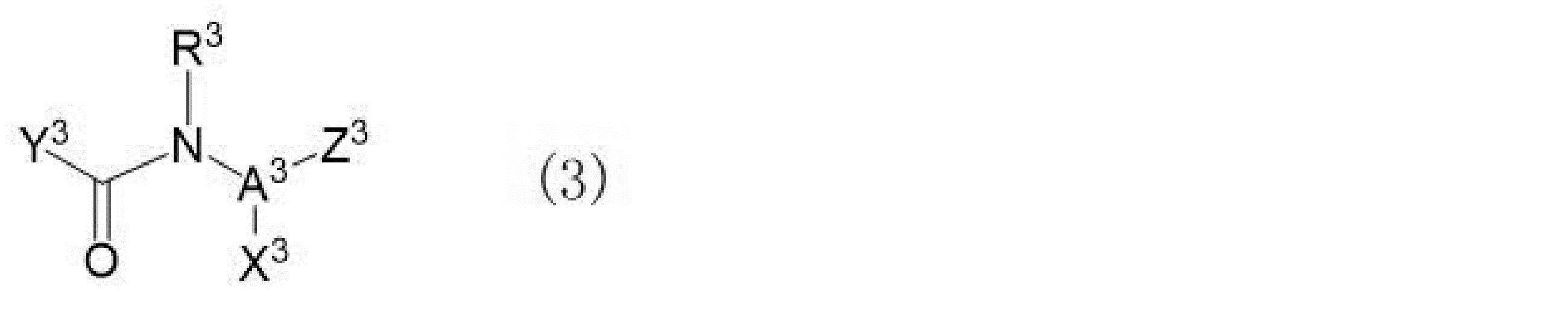
A3は、炭素数1又は2の3価の炭化水素基を示し、
R3は、水素原子、炭素数1~10のアルキル基、又は炭素数3~10のシクロアルキル基を示し、これらは分子鎖中に-O-、-C(O)-、-OC(O)-、-NJ31-CO-、-CO-NJ31-、又は-NH-CO-NH-を含んでいてもよく、J31は水素原子又は炭素数1~3のアルキル基を示し、前記のアルキル基、又はシクロアルキル基は、炭素数3~6のシクロアルキル基、アミノ基、シアノ基、メルカプト基、水酸基、カルボキシ基、フェニル基、ヒドロキシフェニル基、ピリジル基、ナフチル基、チエニル基、又はフリル基から選択される置換基を有していてもよい。
X3は、メルカプト基を1個以上有する炭素数1~10のアルキル基、メルカプト基を1個以上有する炭素数3~10のシクロアルキル基、メルカプト基を1個以上有する炭素数7~12のアリールアルキル基、メルカプト基を1個以上有する炭素数3~10のヘテロアルキルアルキル基、又はメルカプト基を示し、これらは分子鎖中に-O-、-C(O)-、-OC(O)-、-NJ32-CO-、-CO-NJ32-、又は-NH-CO-NH-を含んでいてもよく、J32は水素原子又は炭素数1~3のアルキル基を示し、前記のアルキル基、又はシクロアルキル基は、炭素数3~6のシクロアルキル基、アミノ基、シアノ基、水酸基、カルボキシ基、フェニル基、ヒドロキシフェニル基、ピリジル基、ナフチル基、チエニル基、又はフリル基から選択される置換基を有していてもよい。
Y3は、紫外、可視光又は近赤外域に吸収スペクトルを有する構造を含む炭素数6~20の基を示す。
Z3は、-CO-NR31NR32R33を示し、R31、R32、及びR33はそれぞれ独立して、水素原子又は炭素数1~10のアルキル基を示す。

A4は、炭素数1又は2の3価の炭化水素基を示し、
R4は、水素原子、炭素数1~10のアルキル基、又は炭素数3~10のシクロアルキル基を示し、これらは分子鎖中に-O-、-C(O)-、-OC(O)-、-NJ41-CO-、-CO-NJ41-、又は-NH-CO-NH-を含んでいてもよく、J41は水素原子又は炭素数1~3のアルキル基を示し、前記のアルキル基、又はシクロアルキル基は、炭素数3~6のシクロアルキル基、アミノ基、シアノ基、メルカプト基、水酸基、カルボキシ基、フェニル基、ヒドロキシフェニル基、ピリジル基、ナフチル基、チエニル基、又はフリル基から選択される置換基を有していてもよい。
X4は、メルカプト基を1個以上有する炭素数1~10のアルキル基、メルカプト基を1個以上有する炭素数3~10のシクロアルキル基、メルカプト基を1個以上有する炭素数7~12のアリールアルキル基、メルカプト基を1個以上有する炭素数3~10のヘテロアルキルアルキル基、又はメルカプト基を示し、これらは分子鎖中に-O-、-C(O)-、-OC(O)-、-NJ42-CO-、-CO-NJ42-、又は-NH-CO-NH-を含んでいてもよく、J42は水素原子又は炭素数1~3のアルキル基を示し、前記のアルキル基、又はシクロアルキル基は、炭素数3~6のシクロアルキル基、アミノ基、シアノ基、水酸基、カルボキシ基、フェニル基、ヒドロキシフェニル基、ピリジル基、ナフチル基、チエニル基、又はフリル基から選択される置換基を有していてもよい。
Y4は、紫外、可視光又は近赤外域に吸収スペクトルを有する構造を含む炭素数6~20の基を示す。
Z4は、-CO-NR41NR42R43を示し、R41、R42、及びR43はそれぞれ独立して、水素原子又は炭素数1~10のアルキル基を示す。

A5は、炭素数1又は2の3価の炭化水素基を示し、
R5は、水素原子、炭素数1~10のアルキル基、又は炭素数3~10のシクロアルキル基を示し、これらは分子鎖中に-O-、-C(O)-、-OC(O)-、-NJ51-CO-、-CO-NJ51-、又は-NH-CO-NH-を含んでいてもよく、J51は水素原子又は炭素数1~3のアルキル基を示し、前記のアルキル基、又はシクロアルキル基は、炭素数3~6のシクロアルキル基、アミノ基、シアノ基、メルカプト基、水酸基、カルボキシ基、フェニル基、ヒドロキシフェニル基、ピリジル基、ナフチル基、チエニル基、又はフリル基から選択される置換基を有していてもよい。
X5は、メルカプト基を1個以上有する炭素数1~10のアルキル基、メルカプト基を1個以上有する炭素数3~10のシクロアルキル基、メルカプト基を1個以上有する炭素数7~12のアリールアルキル基、メルカプト基を1個以上有する炭素数3~10のヘテロアルキルアルキル基、又はメルカプト基を示し、これらは分子鎖中に-O-、-C(O)-、-OC(O)-、-NJ52-CO-、-CO-NJ52-、又は-NH-CO-NH-を含んでいてもよく、J52は水素原子又は炭素数1~3のアルキル基を示し、前記のアルキル基、又はシクロアルキル基は、炭素数3~6のシクロアルキル基、アミノ基、シアノ基、水酸基、カルボキシ基、フェニル基、ヒドロキシフェニル基、ピリジル基、ナフチル基、チエニル基、又はフリル基から選択される置換基を有していてもよい。
Y5は、紫外、可視光又は近赤外域に吸収スペクトルを有する構造を含む炭素数6~20の基を示す。
Z5は、-CO-NR51NR52R53を示し、R51、R52、及びR53はそれぞれ独立して、水素原子又は炭素数1~10のアルキル基を示す。
Qは、水素原子、カルボキシル基、水酸基、または1級アミド構造を示すか、あるいは-CO-NR5aNR5bR5cを示し、R5a、R5b、及びR5cはそれぞれ独立して、水素原子又は炭素数1~10のアルキル基を示す。 - 下記式(6)で表される化合物。

R6は、水素原子、炭素数1~10のアルキル基、又は炭素数3~10のシクロアルキル基を示し、これらは分子鎖中に-O-、-C(O)-、-OC(O)-、-NJ61-CO-、-CO-NJ61-、又は-NH-CO-NH-を含んでいてもよく、J61は水素原子又は炭素数1~3のアルキル基を示し、前記のアルキル基、又はシクロアルキル基は、炭素数3~6のシクロアルキル基、アミノ基、シアノ基、メルカプト基、水酸基、カルボキシ基、フェニル基、ヒドロキシフェニル基、ピリジル基、ナフチル基、チエニル基、又はフリル基から選択される置換基を有していてもよい。
X6は、メルカプト基を1個以上有する炭素数1~10のアルキル基、メルカプト基を1個以上有する炭素数3~10のシクロアルキル基、メルカプト基を1個以上有する炭素数7~12のアリールアルキル基、メルカプト基を1個以上有する炭素数3~10のヘテロアルキルアルキル基、又はメルカプト基を示し、これらは分子鎖中に-O-、-C(O)-、-OC(O)-、-NJ62-CO-、-CO-NJ62-、又は-NH-CO-NH-を含んでいてもよく、J62は水素原子又は炭素数1~3のアルキル基を示し、前記のアルキル基、又はシクロアルキル基は、炭素数3~6のシクロアルキル基、アミノ基、シアノ基、水酸基、カルボキシ基、フェニル基、ヒドロキシフェニル基、ピリジル基、ナフチル基、チエニル基、又はフリル基から選択される置換基を有していてもよい。
Z6は、-CO-NR61NR62R63を示し、R61、R62、及びR63はそれぞれ独立して、水素原子又は炭素数1~10のアルキル基を示す。
nは、0あるいは1を示し、
mは、0あるいは1を示す。 - 下記式(7)で表される化合物。

R7は、水素原子、炭素数1~10のアルキル基、又は炭素数3~10のシクロアルキル基を示し、これらは分子鎖中に-O-、-C(O)-、-OC(O)-、-NJ71-CO-、-CO-NJ71-、又は-NH-CO-NH-を含んでいてもよく、J71は水素原子又は炭素数1~3のアルキル基を示し、前記のアルキル基、又はシクロアルキル基は、炭素数3~6のシクロアルキル基、アミノ基、シアノ基、メルカプト基、水酸基、カルボキシ基、フェニル基、ヒドロキシフェニル基、ピリジル基、ナフチル基、チエニル基、又はフリル基から選択される置換基を有していてもよい。
X7は、メルカプト基を1個以上有する炭素数1~10のアルキル基、メルカプト基を1個以上有する炭素数3~10のシクロアルキル基、メルカプト基を1個以上有する炭素数7~12のアリールアルキル基、メルカプト基を1個以上有する炭素数3~10のヘテロアルキルアルキル基、又はメルカプト基を示し、これらは分子鎖中に-O-、-C(O)-、-OC(O)-、-NJ72-CO-、-CO-NJ72-、又は-NH-CO-NH-を含んでいてもよく、J72は水素原子又は炭素数1~3のアルキル基を示し、前記のアルキル基、又はシクロアルキル基は、炭素数3~6のシクロアルキル基、アミノ基、シアノ基、水酸基、カルボキシ基、フェニル基、ヒドロキシフェニル基、ピリジル基、ナフチル基、チエニル基、又はフリル基から選択される置換基を有していてもよい。
Wは、NR71-NR72R73を示し、R71、R72、及びR73は、水素原子、又は炭素数1~3のアルキル基を示し、
nは0あるいは1を示す。 - (1)請求項1から7の何れか一項に記載の皮膚感作性測定試薬と被験物質とを反応させること、及び
(2)前記反応後の前記皮膚感作性測定試薬の量、又は前記反応の生成物の量を、光学的測定により検出すること、
を含む皮膚感作性の測定方法。 - 前記被験物質が、香料、精油、高分子化合物、医薬品、農薬、食品、化学製品、及び天然物由来成分からなる植物抽出液のうちの少なくとも1種である、請求項11に記載の皮膚感作性の測定方法。
- 前記皮膚感作性測定試薬と前記被験物質とを反応させる工程で得られる反応物を、クロマトグラフィー処理することを含む、請求項11又は12に記載の皮膚感作性の測定方法。
- 前記光学的測定が蛍光検出器を用いた測定であって、励起波長が200~600nmであって、蛍光波長が200~800nmである、請求項11から13のいずれか一項に記載の皮膚感作性の測定方法。
Priority Applications (3)
| Application Number | Priority Date | Filing Date | Title |
|---|---|---|---|
| JP2022557605A JP7750853B2 (ja) | 2020-10-22 | 2021-10-21 | 皮膚感作性測定試薬、化合物、及び皮膚感作性の測定方法 |
| EP21882902.6A EP4234537A4 (en) | 2020-10-22 | 2021-10-21 | REAGENT FOR MEASURING SKIN SENSITIZATION, COMPOUND AND METHOD FOR MEASURING SKIN SENSITIZATION |
| US18/303,575 US20230258569A1 (en) | 2020-10-22 | 2023-04-20 | Reagent for measuring skin sensitization, compound, and method for measuring skin sensitization |
Applications Claiming Priority (2)
| Application Number | Priority Date | Filing Date | Title |
|---|---|---|---|
| JP2020177157 | 2020-10-22 | ||
| JP2020-177157 | 2020-10-22 |
Related Child Applications (1)
| Application Number | Title | Priority Date | Filing Date |
|---|---|---|---|
| US18/303,575 Continuation US20230258569A1 (en) | 2020-10-22 | 2023-04-20 | Reagent for measuring skin sensitization, compound, and method for measuring skin sensitization |
Publications (1)
| Publication Number | Publication Date |
|---|---|
| WO2022085762A1 true WO2022085762A1 (ja) | 2022-04-28 |
Family
ID=81290670
Family Applications (1)
| Application Number | Title | Priority Date | Filing Date |
|---|---|---|---|
| PCT/JP2021/038929 Ceased WO2022085762A1 (ja) | 2020-10-22 | 2021-10-21 | 皮膚感作性測定試薬、化合物、及び皮膚感作性の測定方法 |
Country Status (4)
| Country | Link |
|---|---|
| US (1) | US20230258569A1 (ja) |
| EP (1) | EP4234537A4 (ja) |
| JP (1) | JP7750853B2 (ja) |
| WO (1) | WO2022085762A1 (ja) |
Families Citing this family (3)
| Publication number | Priority date | Publication date | Assignee | Title |
|---|---|---|---|---|
| JP1711931S (ja) * | 2021-10-19 | 2022-04-06 | 印刷機 | |
| USD1013032S1 (en) * | 2022-05-20 | 2024-01-30 | Kyocera Corporation | Inkjet printer |
| USD1013031S1 (en) * | 2022-05-20 | 2024-01-30 | Kyocera Corporation | Inkjet printer |
Citations (8)
| Publication number | Priority date | Publication date | Assignee | Title |
|---|---|---|---|---|
| JPS5745458A (en) * | 1980-09-02 | 1982-03-15 | Fuji Photo Film Co Ltd | Immunologic method for trace analysis |
| JP2003014761A (ja) | 2001-06-29 | 2003-01-15 | Sumitomo Chem Co Ltd | 皮膚感作性検定方法 |
| JP2008139275A (ja) | 2006-11-02 | 2008-06-19 | Sumitomo Chemical Co Ltd | 皮膚感作性検定方法 |
| JP2009222466A (ja) | 2008-03-14 | 2009-10-01 | Sumitomo Chemical Co Ltd | 蛍光システイン誘導体を用いる感作性検定方法及び蛍光システイン誘導体 |
| JP2011059102A (ja) | 2009-08-13 | 2011-03-24 | Fujifilm Corp | 皮膚感作性測定試薬 |
| JP2014037995A (ja) | 2012-08-13 | 2014-02-27 | Fujifilm Corp | 皮膚感作性測定試薬 |
| US20140227793A1 (en) * | 2013-02-14 | 2014-08-14 | California Institute Of Technology | Compositions and methods for glycan sequencing |
| WO2020045621A1 (ja) * | 2018-08-31 | 2020-03-05 | 富士フイルム株式会社 | 皮膚感作性の測定方法および皮膚感作性測定試薬 |
Family Cites Families (3)
| Publication number | Priority date | Publication date | Assignee | Title |
|---|---|---|---|---|
| ES2061586T3 (es) * | 1987-10-30 | 1994-12-16 | American Cyanamid Co | Analogos disulfuricos de agentes antitumorales ll-e33288. |
| EP2207030A4 (en) * | 2007-10-05 | 2010-12-08 | Univ Hokkaido | DEVICE FOR AUTOMATIC PRE-TREATMENT OF A SUGAR CHAIN |
| WO2021060477A1 (ja) * | 2019-09-26 | 2021-04-01 | 富士フイルム株式会社 | 皮膚感作性測定試薬、皮膚感作性の測定方法、及び化合物 |
-
2021
- 2021-10-21 EP EP21882902.6A patent/EP4234537A4/en active Pending
- 2021-10-21 WO PCT/JP2021/038929 patent/WO2022085762A1/ja not_active Ceased
- 2021-10-21 JP JP2022557605A patent/JP7750853B2/ja active Active
-
2023
- 2023-04-20 US US18/303,575 patent/US20230258569A1/en active Pending
Patent Citations (8)
| Publication number | Priority date | Publication date | Assignee | Title |
|---|---|---|---|---|
| JPS5745458A (en) * | 1980-09-02 | 1982-03-15 | Fuji Photo Film Co Ltd | Immunologic method for trace analysis |
| JP2003014761A (ja) | 2001-06-29 | 2003-01-15 | Sumitomo Chem Co Ltd | 皮膚感作性検定方法 |
| JP2008139275A (ja) | 2006-11-02 | 2008-06-19 | Sumitomo Chemical Co Ltd | 皮膚感作性検定方法 |
| JP2009222466A (ja) | 2008-03-14 | 2009-10-01 | Sumitomo Chemical Co Ltd | 蛍光システイン誘導体を用いる感作性検定方法及び蛍光システイン誘導体 |
| JP2011059102A (ja) | 2009-08-13 | 2011-03-24 | Fujifilm Corp | 皮膚感作性測定試薬 |
| JP2014037995A (ja) | 2012-08-13 | 2014-02-27 | Fujifilm Corp | 皮膚感作性測定試薬 |
| US20140227793A1 (en) * | 2013-02-14 | 2014-08-14 | California Institute Of Technology | Compositions and methods for glycan sequencing |
| WO2020045621A1 (ja) * | 2018-08-31 | 2020-03-05 | 富士フイルム株式会社 | 皮膚感作性の測定方法および皮膚感作性測定試薬 |
Non-Patent Citations (13)
| Title |
|---|
| AKIMOTO MIYUKI, YUSUKE YAMAMOTO,SHINICHI WATANABE,HIROAKI YAMAGA,KOUSUKE YOSHIDA,KOJI WAKABAYASHI,YU TAHARA,NOBUYUKI HORIE,KEIICHI: "Oxidation of a cysteine-derived nucleophilic reagent by dimethyl sulfoxide in the amino acid derivative reactivity assay", JOURNAL OF APPLIED TOXICOLOGY, vol. 40, 12 February 2020 (2020-02-12), pages 843 - 854, XP055923392, DOI: 10.1002/jat.3948 * |
| BIOORGANIC AND MEDICINAL CHEMISTRY, vol. 16, no. 1, 2008, pages 65 |
| CHO SUN-A; AN SUSUN; PARK JAE-HAK: "High-throughput screening (HTS)-based spectrophotometric direct peptide reactivity assay (Spectro-DPRA) to predict human skin sensitization potential", TOXICOLOGY LETTERS, ELSEVIER, AMSTERDAM, NL, vol. 314, 8 July 2019 (2019-07-08), AMSTERDAM, NL, pages 27 - 36, XP085762702, ISSN: 0378-4274, DOI: 10.1016/j.toxlet.2019.07.014 * |
| DENNEHY M. K.RICHARDS K. A. M.WERNKE G. R.SHYR YLIEBLER D. C.: "Cytosolic and nuclear protein targets of thiol-reactive electrophiles", CHEMICAL RESEARCH IN TOXICOLOGY, vol. 19, 2006, pages 20 - 29 |
| GERBERICK, G. F.VASSALLO, J. D.BAILEY, R. E.CHANEY, J. G.MORRALL, S. WLEPOITTEVIN, J. P.: "Development of a peptide reactivity assay for screening contact allergens", TOXICOLOGICAL SCIENCES, vol. 81, no. 2, 2004, pages 332 - 343, XP002559161, DOI: 10.1093/toxsci/kfh213 |
| GERBERICK, G. F.VASSALLO, J. D.FOERTSCH, L. M.PRICE, B. B.CHANEY, J. G.LEPOITTEVIN, J. P: "Quantification of chemical peptide reactivity for screening contact allergens: a classification tree model approach", TOXICOLOGICAL SCIENCES, vol. 97, no. 2, 2007, pages 417 - 427, XP002559162, DOI: 10.1093/toxsci/kfm064 |
| JOURNAL OF MEDICINAL CHEMISTRY, vol. 39, no. 7, 1996, pages 136 |
| NATSCH A.GFELLER H.: "LC-MS-based characterization of the peptide reactivity of chemicals to improve the in vitro prediction of the skin sensitization potential", TOXICOLOGICAL SCIENCES, vol. 106, no. 2, 2008, pages 464 - 478, XP055813090, DOI: 10.1093/toxsci/kfn194 |
| ORGANIC LETTERS, vol. 15, no. 19, 2013, pages 5076 |
| See also references of EP4234537A4 |
| SUTO HIDENORI, TAMAKI HIGAKI, SAKI KITANO, YU OKUDA, NOBUYUKI HORIE, TAKAFUMI YAMAGUCHI: "Perspectives on the Current State of Evaluation of Skin Sensitization", vol. 2019, no. 3, 1 January 2019 (2019-01-01), pages 24 - 36, XP055923388 * |
| TETRAHEDRON LETTERS, vol. 46, no. 43, 2005, pages 7443 |
| WONG C. LLAM A. L.SMITH M. T.GHASSABIAN S.: "Evaluation of a High-Throughput Peptide Reactivity Format Assay for Assessment of the Skin Sensitization Potential of Chemicals", FRONTIERS IN PHARMACOLOGY, vol. 7, no. 53, 2016, pages 1 - 14 |
Also Published As
| Publication number | Publication date |
|---|---|
| US20230258569A1 (en) | 2023-08-17 |
| JP7750853B2 (ja) | 2025-10-07 |
| EP4234537A4 (en) | 2024-05-29 |
| JPWO2022085762A1 (ja) | 2022-04-28 |
| EP4234537A1 (en) | 2023-08-30 |
Similar Documents
| Publication | Publication Date | Title |
|---|---|---|
| Bailey et al. | Chemiluminescent detection of enzymatically produced hydrogen sulfide: substrate hydrogen bonding influences selectivity for H2S over biological thiols | |
| Kim et al. | Ratiometric detection of nanomolar concentrations of heparin in serum and plasma samples using a fluorescent chemosensor based on peptides | |
| Yang et al. | Design of a simultaneous target and location-activatable fluorescent probe for visualizing hydrogen sulfide in lysosomes | |
| Jiang et al. | Quantitative imaging of glutathione in live cells using a reversible reaction-based ratiometric fluorescent probe | |
| Chen et al. | A specific nucleophilic ring-opening reaction of aziridines as a unique platform for the construction of hydrogen polysulfides sensors | |
| US20230258569A1 (en) | Reagent for measuring skin sensitization, compound, and method for measuring skin sensitization | |
| Pandey et al. | Aggregation induced emission of an anionic tetraphenylethene derivative for efficient protamine sensing | |
| Qian et al. | Rationally modifying the dicyanoisophorone fluorophore for sensing cysteine in living cells and mice | |
| Wang et al. | A novel pyrazoline-based selective fluorescent probe for detecting reduced glutathione and its application in living cells and serum | |
| Wang et al. | A novel near-infrared styryl-BODIPY fluorescent probe for discrimination of GSH and its application in living cells | |
| Guo et al. | Self-assembled nanosensor based on squaraine dye for specific recognition and detection of human serum albumin | |
| Li et al. | A water-soluble conjugated polymer with pendant disulfide linkages to PEG chains: a highly efficient ratiometric probe with solubility-induced fluorescence conversion for thiol detection | |
| CN103289681B (zh) | 谷胱甘肽荧光探针及其制备方法和用途 | |
| Hou et al. | Evaluating the effect of hydrogen sulfide in the idiopathic pulmonary fibrosis model with a fluorescent probe | |
| CN103351335A (zh) | 一种荧光增强检测含巯基氨基酸的荧光分子探针的合成及应用 | |
| Zhang et al. | Sensitive and Selective Fluorescent Probe for Selenol in Living Cells Designed via ap K a Shift Strategy | |
| Zhang et al. | A selective fluorescent probe for thiols based on α, β-unsaturated acyl sulfonamide | |
| Lu et al. | Determination of non-protein cysteine in human serum by a designed BODIPY-based fluorescent probe | |
| JP7104793B2 (ja) | 皮膚感作性の測定方法および皮膚感作性測定試薬 | |
| Liu et al. | A specific fluorescent probe for fast detection and cellular imaging of cysteine based on a water-soluble conjugated polymer combined with copper (II) | |
| Zheng et al. | Quantitative determination of protamine using a fluorescent protein chromophore-based AIE probe | |
| Li et al. | Novel coumarin-based sensitive and selective fluorescent probes for biothiols in aqueous solution and in living cells | |
| Li et al. | Chloro-hydroxyl-merocyanine based turn-on fluorescent probes for the detection of hydrazine in water and living cells | |
| Hrichi et al. | Analytical methods for the quantification of cisplatin, carboplatin, and oxaliplatin in various matrices over the last two decades | |
| JP7273173B2 (ja) | 皮膚感作性測定試薬、皮膚感作性の測定方法、及び化合物 |
Legal Events
| Date | Code | Title | Description |
|---|---|---|---|
| 121 | Ep: the epo has been informed by wipo that ep was designated in this application |
Ref document number: 21882902 Country of ref document: EP Kind code of ref document: A1 |
|
| ENP | Entry into the national phase |
Ref document number: 2022557605 Country of ref document: JP Kind code of ref document: A |
|
| NENP | Non-entry into the national phase |
Ref country code: DE |
|
| ENP | Entry into the national phase |
Ref document number: 2021882902 Country of ref document: EP Effective date: 20230522 |