WO2022107833A1 - 重合体、難燃性組成物、及び重合体の製造方法 - Google Patents
重合体、難燃性組成物、及び重合体の製造方法 Download PDFInfo
- Publication number
- WO2022107833A1 WO2022107833A1 PCT/JP2021/042345 JP2021042345W WO2022107833A1 WO 2022107833 A1 WO2022107833 A1 WO 2022107833A1 JP 2021042345 W JP2021042345 W JP 2021042345W WO 2022107833 A1 WO2022107833 A1 WO 2022107833A1
- Authority
- WO
- WIPO (PCT)
- Prior art keywords
- group
- compound
- general formula
- polymer
- flame
- Prior art date
- Legal status (The legal status is an assumption and is not a legal conclusion. Google has not performed a legal analysis and makes no representation as to the accuracy of the status listed.)
- Ceased
Links
Classifications
-
- C—CHEMISTRY; METALLURGY
- C07—ORGANIC CHEMISTRY
- C07F—ACYCLIC, CARBOCYCLIC OR HETEROCYCLIC COMPOUNDS CONTAINING ELEMENTS OTHER THAN CARBON, HYDROGEN, HALOGEN, OXYGEN, NITROGEN, SULFUR, SELENIUM OR TELLURIUM
- C07F9/00—Compounds containing elements of Groups 5 or 15 of the Periodic Table
- C07F9/02—Phosphorus compounds
- C07F9/547—Heterocyclic compounds, e.g. containing phosphorus as a ring hetero atom
- C07F9/6564—Heterocyclic compounds, e.g. containing phosphorus as a ring hetero atom having phosphorus atoms, with or without nitrogen, oxygen, sulfur, selenium or tellurium atoms, as ring hetero atoms
- C07F9/6571—Heterocyclic compounds, e.g. containing phosphorus as a ring hetero atom having phosphorus atoms, with or without nitrogen, oxygen, sulfur, selenium or tellurium atoms, as ring hetero atoms having phosphorus and oxygen atoms as the only ring hetero atoms
- C07F9/657163—Heterocyclic compounds, e.g. containing phosphorus as a ring hetero atom having phosphorus atoms, with or without nitrogen, oxygen, sulfur, selenium or tellurium atoms, as ring hetero atoms having phosphorus and oxygen atoms as the only ring hetero atoms the ring phosphorus atom being bound to at least one carbon atom
- C07F9/657172—Heterocyclic compounds, e.g. containing phosphorus as a ring hetero atom having phosphorus atoms, with or without nitrogen, oxygen, sulfur, selenium or tellurium atoms, as ring hetero atoms having phosphorus and oxygen atoms as the only ring hetero atoms the ring phosphorus atom being bound to at least one carbon atom the ring phosphorus atom and one oxygen atom being part of a (thio)phosphinic acid ester: (X = O, S)
-
- C—CHEMISTRY; METALLURGY
- C08—ORGANIC MACROMOLECULAR COMPOUNDS; THEIR PREPARATION OR CHEMICAL WORKING-UP; COMPOSITIONS BASED THEREON
- C08F—MACROMOLECULAR COMPOUNDS OBTAINED BY REACTIONS ONLY INVOLVING CARBON-TO-CARBON UNSATURATED BONDS
- C08F30/00—Homopolymers or copolymers of compounds having one or more unsaturated aliphatic radicals, each having only one carbon-to-carbon double bond, and containing phosphorus, selenium, tellurium or a metal
- C08F30/02—Homopolymers or copolymers of compounds having one or more unsaturated aliphatic radicals, each having only one carbon-to-carbon double bond, and containing phosphorus, selenium, tellurium or a metal containing phosphorus
-
- C—CHEMISTRY; METALLURGY
- C07—ORGANIC CHEMISTRY
- C07F—ACYCLIC, CARBOCYCLIC OR HETEROCYCLIC COMPOUNDS CONTAINING ELEMENTS OTHER THAN CARBON, HYDROGEN, HALOGEN, OXYGEN, NITROGEN, SULFUR, SELENIUM OR TELLURIUM
- C07F9/00—Compounds containing elements of Groups 5 or 15 of the Periodic Table
- C07F9/02—Phosphorus compounds
- C07F9/28—Phosphorus compounds with one or more P—C bonds
- C07F9/30—Phosphinic acids [R2P(=O)(OH)]; Thiophosphinic acids ; [R2P(=X1)(X2H) (X1, X2 are each independently O, S or Se)]
- C07F9/32—Esters thereof
-
- C—CHEMISTRY; METALLURGY
- C07—ORGANIC CHEMISTRY
- C07F—ACYCLIC, CARBOCYCLIC OR HETEROCYCLIC COMPOUNDS CONTAINING ELEMENTS OTHER THAN CARBON, HYDROGEN, HALOGEN, OXYGEN, NITROGEN, SULFUR, SELENIUM OR TELLURIUM
- C07F9/00—Compounds containing elements of Groups 5 or 15 of the Periodic Table
- C07F9/02—Phosphorus compounds
- C07F9/28—Phosphorus compounds with one or more P—C bonds
- C07F9/38—Phosphonic acids [RP(=O)(OH)2]; Thiophosphonic acids ; [RP(=X1)(X2H)2(X1, X2 are each independently O, S or Se)]
-
- C—CHEMISTRY; METALLURGY
- C07—ORGANIC CHEMISTRY
- C07F—ACYCLIC, CARBOCYCLIC OR HETEROCYCLIC COMPOUNDS CONTAINING ELEMENTS OTHER THAN CARBON, HYDROGEN, HALOGEN, OXYGEN, NITROGEN, SULFUR, SELENIUM OR TELLURIUM
- C07F9/00—Compounds containing elements of Groups 5 or 15 of the Periodic Table
- C07F9/02—Phosphorus compounds
- C07F9/28—Phosphorus compounds with one or more P—C bonds
- C07F9/38—Phosphonic acids [RP(=O)(OH)2]; Thiophosphonic acids ; [RP(=X1)(X2H)2(X1, X2 are each independently O, S or Se)]
- C07F9/40—Esters thereof
-
- C—CHEMISTRY; METALLURGY
- C07—ORGANIC CHEMISTRY
- C07F—ACYCLIC, CARBOCYCLIC OR HETEROCYCLIC COMPOUNDS CONTAINING ELEMENTS OTHER THAN CARBON, HYDROGEN, HALOGEN, OXYGEN, NITROGEN, SULFUR, SELENIUM OR TELLURIUM
- C07F9/00—Compounds containing elements of Groups 5 or 15 of the Periodic Table
- C07F9/02—Phosphorus compounds
- C07F9/28—Phosphorus compounds with one or more P—C bonds
- C07F9/50—Organo-phosphines
- C07F9/53—Organo-phosphine oxides; Organo-phosphine thioxides
-
- C—CHEMISTRY; METALLURGY
- C08—ORGANIC MACROMOLECULAR COMPOUNDS; THEIR PREPARATION OR CHEMICAL WORKING-UP; COMPOSITIONS BASED THEREON
- C08F—MACROMOLECULAR COMPOUNDS OBTAINED BY REACTIONS ONLY INVOLVING CARBON-TO-CARBON UNSATURATED BONDS
- C08F2/00—Processes of polymerisation
- C08F2/44—Polymerisation in the presence of compounding ingredients, e.g. plasticisers, dyestuffs, fillers
-
- C—CHEMISTRY; METALLURGY
- C08—ORGANIC MACROMOLECULAR COMPOUNDS; THEIR PREPARATION OR CHEMICAL WORKING-UP; COMPOSITIONS BASED THEREON
- C08F—MACROMOLECULAR COMPOUNDS OBTAINED BY REACTIONS ONLY INVOLVING CARBON-TO-CARBON UNSATURATED BONDS
- C08F220/00—Copolymers of compounds having one or more unsaturated aliphatic radicals, each having only one carbon-to-carbon double bond, and only one being terminated by only one carboxyl radical or a salt, anhydride ester, amide, imide or nitrile thereof
- C08F220/02—Monocarboxylic acids having less than ten carbon atoms; Derivatives thereof
- C08F220/10—Esters
- C08F220/12—Esters of monohydric alcohols or phenols
- C08F220/14—Methyl esters, e.g. methyl (meth)acrylate
-
- C—CHEMISTRY; METALLURGY
- C08—ORGANIC MACROMOLECULAR COMPOUNDS; THEIR PREPARATION OR CHEMICAL WORKING-UP; COMPOSITIONS BASED THEREON
- C08F—MACROMOLECULAR COMPOUNDS OBTAINED BY REACTIONS ONLY INVOLVING CARBON-TO-CARBON UNSATURATED BONDS
- C08F220/00—Copolymers of compounds having one or more unsaturated aliphatic radicals, each having only one carbon-to-carbon double bond, and only one being terminated by only one carboxyl radical or a salt, anhydride ester, amide, imide or nitrile thereof
- C08F220/02—Monocarboxylic acids having less than ten carbon atoms; Derivatives thereof
- C08F220/10—Esters
- C08F220/12—Esters of monohydric alcohols or phenols
- C08F220/16—Esters of monohydric alcohols or phenols of phenols or of alcohols containing two or more carbon atoms
- C08F220/18—Esters of monohydric alcohols or phenols of phenols or of alcohols containing two or more carbon atoms with acrylic or methacrylic acids
- C08F220/1807—C7-(meth)acrylate, e.g. heptyl (meth)acrylate or benzyl (meth)acrylate
-
- C—CHEMISTRY; METALLURGY
- C08—ORGANIC MACROMOLECULAR COMPOUNDS; THEIR PREPARATION OR CHEMICAL WORKING-UP; COMPOSITIONS BASED THEREON
- C08F—MACROMOLECULAR COMPOUNDS OBTAINED BY REACTIONS ONLY INVOLVING CARBON-TO-CARBON UNSATURATED BONDS
- C08F220/00—Copolymers of compounds having one or more unsaturated aliphatic radicals, each having only one carbon-to-carbon double bond, and only one being terminated by only one carboxyl radical or a salt, anhydride ester, amide, imide or nitrile thereof
- C08F220/02—Monocarboxylic acids having less than ten carbon atoms; Derivatives thereof
- C08F220/10—Esters
- C08F220/40—Esters of unsaturated alcohols, e.g. allyl (meth)acrylate
-
- C—CHEMISTRY; METALLURGY
- C08—ORGANIC MACROMOLECULAR COMPOUNDS; THEIR PREPARATION OR CHEMICAL WORKING-UP; COMPOSITIONS BASED THEREON
- C08K—Use of inorganic or non-macromolecular organic substances as compounding ingredients
- C08K5/00—Use of organic ingredients
- C08K5/49—Phosphorus-containing compounds
- C08K5/51—Phosphorus bound to oxygen
- C08K5/52—Phosphorus bound to oxygen only
- C08K5/529—Esters containing heterocyclic rings not representing cyclic esters of phosphoric or phosphorous acids
-
- C—CHEMISTRY; METALLURGY
- C08—ORGANIC MACROMOLECULAR COMPOUNDS; THEIR PREPARATION OR CHEMICAL WORKING-UP; COMPOSITIONS BASED THEREON
- C08L—COMPOSITIONS OF MACROMOLECULAR COMPOUNDS
- C08L33/00—Compositions of homopolymers or copolymers of compounds having one or more unsaturated aliphatic radicals, each having only one carbon-to-carbon double bond, and only one being terminated by only one carboxyl radical, or of salts, anhydrides, esters, amides, imides or nitriles thereof; Compositions of derivatives of such polymers
- C08L33/04—Homopolymers or copolymers of esters
- C08L33/06—Homopolymers or copolymers of esters of esters containing only carbon, hydrogen and oxygen, which oxygen atoms are present only as part of the carboxyl radical
- C08L33/10—Homopolymers or copolymers of methacrylic acid esters
- C08L33/12—Homopolymers or copolymers of methyl methacrylate
-
- C—CHEMISTRY; METALLURGY
- C08—ORGANIC MACROMOLECULAR COMPOUNDS; THEIR PREPARATION OR CHEMICAL WORKING-UP; COMPOSITIONS BASED THEREON
- C08L—COMPOSITIONS OF MACROMOLECULAR COMPOUNDS
- C08L43/00—Compositions of homopolymers or copolymers of compounds having one or more unsaturated aliphatic radicals, each having only one carbon-to-carbon double bond, and containing boron, silicon, phosphorus, selenium, tellurium or a metal; Compositions of derivatives of such polymers
- C08L43/02—Homopolymers or copolymers of monomers containing phosphorus
-
- C—CHEMISTRY; METALLURGY
- C09—DYES; PAINTS; POLISHES; NATURAL RESINS; ADHESIVES; COMPOSITIONS NOT OTHERWISE PROVIDED FOR; APPLICATIONS OF MATERIALS NOT OTHERWISE PROVIDED FOR
- C09K—MATERIALS FOR MISCELLANEOUS APPLICATIONS, NOT PROVIDED FOR ELSEWHERE
- C09K21/00—Fireproofing materials
- C09K21/14—Macromolecular materials
-
- C—CHEMISTRY; METALLURGY
- C08—ORGANIC MACROMOLECULAR COMPOUNDS; THEIR PREPARATION OR CHEMICAL WORKING-UP; COMPOSITIONS BASED THEREON
- C08K—Use of inorganic or non-macromolecular organic substances as compounding ingredients
- C08K5/00—Use of organic ingredients
- C08K5/49—Phosphorus-containing compounds
- C08K5/51—Phosphorus bound to oxygen
- C08K5/52—Phosphorus bound to oxygen only
- C08K5/527—Cyclic esters
-
- C—CHEMISTRY; METALLURGY
- C08—ORGANIC MACROMOLECULAR COMPOUNDS; THEIR PREPARATION OR CHEMICAL WORKING-UP; COMPOSITIONS BASED THEREON
- C08K—Use of inorganic or non-macromolecular organic substances as compounding ingredients
- C08K5/00—Use of organic ingredients
- C08K5/49—Phosphorus-containing compounds
- C08K5/51—Phosphorus bound to oxygen
- C08K5/53—Phosphorus bound to oxygen bound to oxygen and to carbon only
- C08K5/5317—Phosphonic compounds, e.g. R—P(:O)(OR')2
- C08K5/5333—Esters of phosphonic acids
-
- C—CHEMISTRY; METALLURGY
- C08—ORGANIC MACROMOLECULAR COMPOUNDS; THEIR PREPARATION OR CHEMICAL WORKING-UP; COMPOSITIONS BASED THEREON
- C08L—COMPOSITIONS OF MACROMOLECULAR COMPOUNDS
- C08L2201/00—Properties
- C08L2201/02—Flame or fire retardant/resistant
Definitions
- the present invention relates to a polymer containing a specific phosphorus-containing structural unit, a flame-retardant composition containing the polymer, and a method for producing the polymer.
- Patent Document 1 discloses a methacrylic resin composition obtained by polymerizing a polymerizable composition containing a monomer composition, a phosphoric acid ester, and an antioxidant, and the above-mentioned phosphoric acid. As the ester, a halogenated phosphoric acid ester and the like are described.
- Patent Document 2 describes a flame-retardant acrylic artificial product obtained by curing a composition containing a resin component, an inorganic filler, a crosslinkable vinyl monomer, and an acrylic acid ester and / or a crosslinkable vinyl monomer.
- a composition containing a resin component, an inorganic filler, a crosslinkable vinyl monomer, and an acrylic acid ester and / or a crosslinkable vinyl monomer a flame-retardant acrylic artificial product obtained by curing a composition containing a resin component, an inorganic filler, a crosslinkable vinyl monomer, and an acrylic acid ester and / or a crosslinkable vinyl monomer.
- Marble is disclosed, and aluminum hydroxide and the like are described as the above-mentioned inorganic filler.
- Patent Document 1 Although a halogen-containing compound is used in Patent Document 1, dehalogenation is desired from the viewpoint of environmental load and the like, and there is a problem that toxic gas is generated during combustion. Further, when an inorganic flame retardant is added as in Patent Document 2, there is a problem that turbidity is generated and transparency is lost. Further, if a large amount of flame retardant is added to improve the flame retardancy, the performance of the casting plate itself deteriorates and further softens during combustion, which causes a problem of inducing ignition to the surroundings.
- the present inventors have excellent flame retardancy due to the inclusion of a specific phosphorus-containing structural unit in the polymer, and deterioration of physical properties such as softening occurs during heating. We found that it would be difficult to complete the present invention.
- R 1 represents a hydrogen atom or a methyl group.
- R 2 and R 3 independently have an alkyl group having 1 to 6 carbon atoms, an alkyloxy group having 1 to 6 carbon atoms, and a carbon number of carbon atoms.
- 2 to 6 alkenyl groups, 2 to 6 carbon alkenyloxy groups, 7 to 12 carbon aralkyl groups, 7 to 12 carbon aralkyloxy groups, 6 to 12 carbon aryl groups and 6 to 12 carbons Represents one selected from the group consisting of aryloxy groups of.
- R 2 and R 3 may be bonded to each other, and n is an integer of 0 to 7).
- R 11 represents a hydrogen atom or a methyl group.
- R 12 and R 13 independently have an alkyl group having 1 to 6 carbon atoms, an alkyloxy group having 1 to 6 carbon atoms, and a carbon number of carbon atoms.
- 2 to 6 alkenyl groups, 2 to 6 carbon alkenyloxy groups, 7 to 12 carbon aralkyl groups, 7 to 12 carbon aralkyloxy groups, 6 to 12 carbon aryl groups and 6 to 12 carbons Represents one selected from the group consisting of aryloxy groups of.
- R 12 and R 13 may be bonded to each other, and m is an integer of 0 to 7).
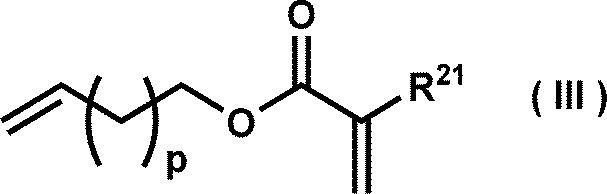
- the compound (B) represented by the following general formula (III) and the polymerizable monomer (C) are prepared from a phosphinic acid ester compound, a phosphonic acid monoester compound, and a phosphite diester compound.
- a method for producing a polymer which comprises a step of polymerizing in the presence of at least one subphosphoric acid ester compound (D) selected from the above group.
- R 21 represents a hydrogen atom or a methyl group.
- P is an integer of 0 to 7.
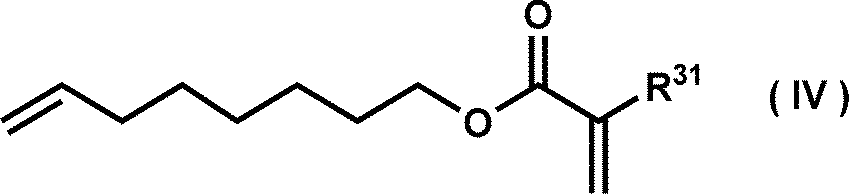
- R 31 represents a hydrogen atom or a methyl group.
- R 21 represents a hydrogen atom or a methyl group.
- P is an integer of 0 to 7.
- R 31 represents a hydrogen atom or a methyl group.
- a polymer, a flame-retardant composition, and a method for producing a polymer which are excellent in flame retardancy and are less likely to cause deterioration of physical properties such as softening during heating.
- the polymer of the present embodiment is excellent in flame retardancy and can suppress deterioration of physical properties such as softening during heating.
- the flame-retardant composition containing the above polymer has a low combustion rate and almost no combustion droplets (drip). Further, by using the above-mentioned polymer or flame-retardant composition, it is possible to provide a flame-retardant sheet and a flame-retardant plate having excellent flame retardancy. Further, by adopting the method for producing the polymer including a specific step, the polymer can be easily obtained. Then, by adopting the compound represented by the above general formula (II), good flame retardancy can be exhibited.
- the polymer of this embodiment contains a structural unit represented by the following general formula (I).
- R 1 represents a hydrogen atom or a methyl group, and a methyl group is preferable from the viewpoint of polymerization operability.
- R 2 and R 3 are independently an alkyl group having 1 to 6 carbon atoms, an alkyloxy group having 1 to 6 carbon atoms, an alkenyl group having 2 to 6 carbon atoms, and 2 to 6 carbon atoms, respectively.
- R 2 and R 3 may be coupled to each other.
- the alkyl groups having 1 to 6 carbon atoms represented by R 2 and R 3 include a methyl group, an ethyl group, an n-propyl group, an isopropyl group, an n-butyl group, an isobutyl group and a sec-butyl group.
- Examples thereof include a group, a tert-butyl group, an n-pentyl group, an isopentyl group, a neopentyl group, an n-hexyl group, a cyclopropyl group, a cyclobutyl group, a cyclopentyl group, a cyclohexyl group and the like.
- the alkyloxy groups having 1 to 6 carbon atoms represented by R 2 and R 3 include a methoxy group, an ethoxy group, an n-propyloxy group, an isopropyloxy group, an n-butyloxy group and an isobutyloxy group.
- a methoxy group an ethoxy group
- an n-propyloxy group an isopropyloxy group
- Se-butyloxy group, tert-butyloxy group, n-pentyloxy group isopentyl
- alkenyl group having 2 to 6 carbon atoms represented by R 2 and R 3 a vinyl group, an allyl group, a propenyl group, an isopropenyl group, a butenyl group, an isobutenyl group, a pentenyl group and a hexenyl group ( cis-3-hexenyl group, etc.), cyclohexenyl group, etc. can be mentioned.
- the alkenyloxy group having 2 to 6 carbon atoms represented by R2 and R3 includes a vinyloxy group, an allyloxy group, a propenyloxy group, an isopropenyloxy group, a butenyloxy group, and an isopentenyloxy group. Examples thereof include a pentenyloxy group, a hexenyloxy group (cis-3-hexenyloxy group, etc.), a cyclohexenyloxy group, and the like.
- examples of the aralkyl group having 7 to 12 carbon atoms represented by R 2 and R 3 include a benzyl group, a 2-phenylethyl group, a 2-phenylpropyl group and the like.
- examples of the aralkyloxy group having 7 to 12 carbon atoms represented by R 2 and R 3 include a benzyloxy group, a 2-phenylethyloxy group, a 2-phenylpropyloxy group and the like.
- examples of the aryl group having 6 to 12 carbon atoms represented by R 2 and R 3 include a phenyl group, a 2-methylphenyl group, a 2,4-dimethylphenyl group, a 2-naphthyl group and the like. ..
- examples of the aryloxy group having 6 to 12 carbon atoms represented by R 2 and R 3 include a phenoxy group, a 2-methylphenoxy group, a 2,4-dimethylphenoxy group, a 2-naphthoxy group and the like. Be done.
- R2 and R3 are preferably an ethoxy group, an n-butyloxy group, a phenoxy group and a phenyl group, and more preferably a phenoxy group and a phenyl group.
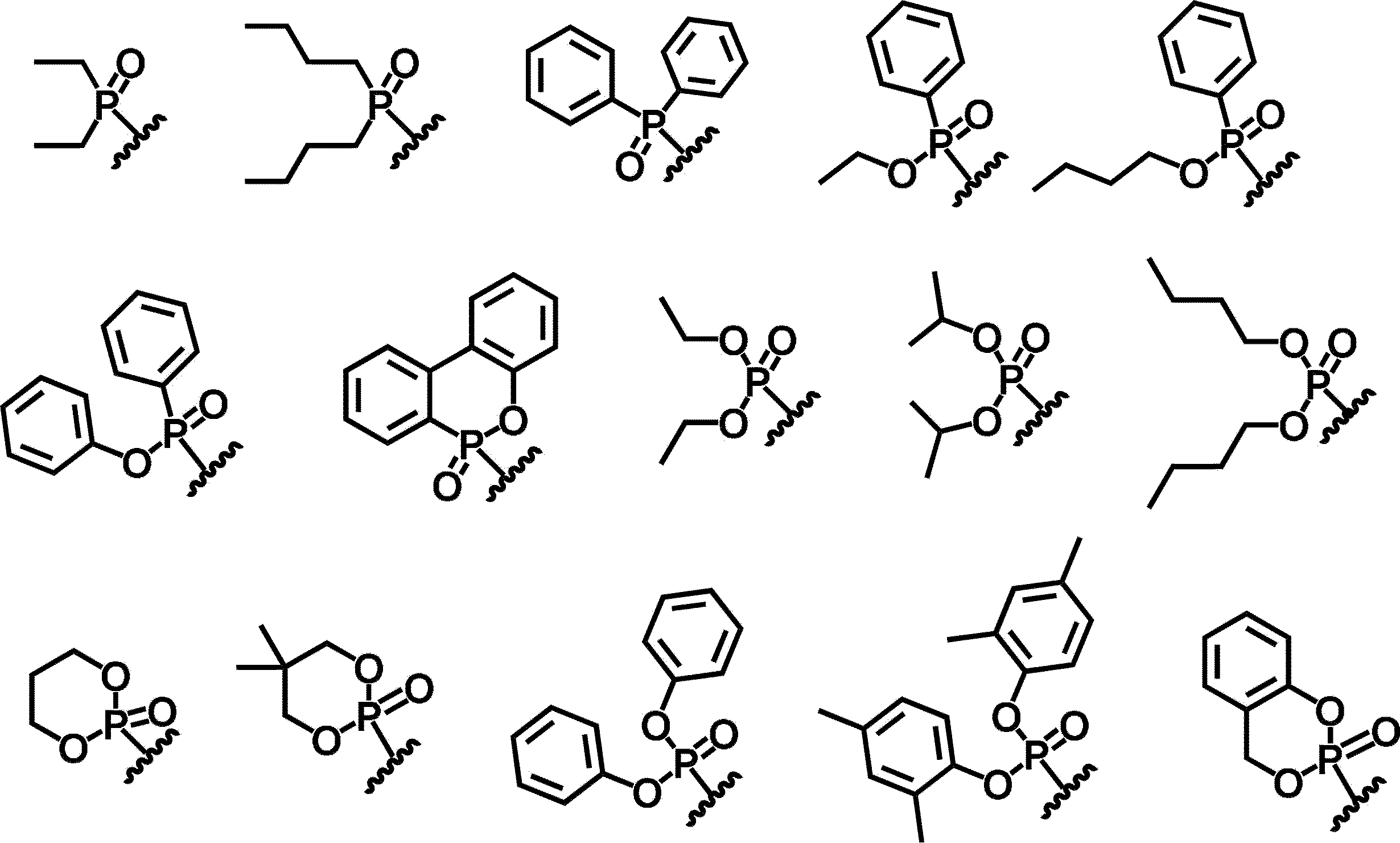
- examples of the structure of the phosphorus atom-containing portion containing R 2 and R 3 include the following structures.
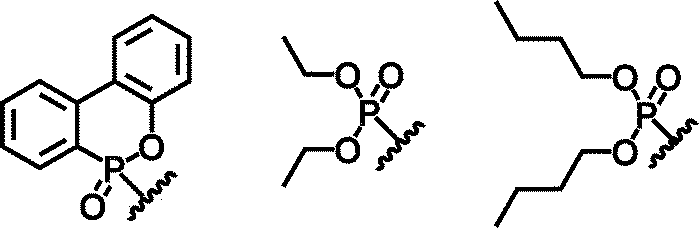
- the structure of the phosphorus atom-containing portion containing R 2 and R 3 is preferably as follows.
- n is an arbitrary integer of 0 to 7, preferably 2 to 6 from the viewpoint of improving the physical characteristics of the obtained polymer and the flame-retardant composition when heated, preferably 3 to 3. It is more preferably 6 and even more preferably 5.
- the content of the structural unit represented by the general formula (I) in the polymer of the present embodiment is preferably 1 to 99% by mass, more preferably 5 to 80% by mass, and 10 to 10 to 80% by mass. It is more preferably 70% by mass, and even more preferably 10 to 60% by mass.
- the content of the structural unit represented by the general formula (I) is within the above range, it becomes easier to suppress deterioration of physical properties such as softening during heating while improving flame retardancy.
- the polymer of this embodiment may contain a structural unit other than the structural unit represented by the general formula (I).
- the polymer can exhibit decorativeness and the like by containing, for example, a structural unit derived from the polymerizable monomer (C).
- the polymerizable monomer (C) include a vinyl monomer, a (meth) acrylic acid alkyl ester, a (meth) acrylic acid ester, a (meth) acrylate, and an unsaturated dicarboxylic acid.
- the (meth) acrylic acid ester for example, one having a cyclic structure, a hydroxyl group, or an epoxy group at the terminal can be used.
- the (meth) acrylate for example, one having an alkylene glycol structure, a silane or a silyl group terminal can be used.
- Examples of the vinyl monomer include styrene, 2-methylstyrene, vinyl acetate, vinyl chloride and the like.
- Examples of the (meth) acrylic acid alkyl ester include methyl (meth) acrylate, propyl (meth) acrylate, butyl (meth) acrylate, pentyl (meth) acrylate, hexyl (meth) acrylate, and 2-ethylhexyl (meth) acrylate. Be done.
- Examples of the (meth) acrylic acid ester having a cyclic structure include cyclohexyl (meth) acrylate, dicyclopentanyl (meth) acrylate, dicyclopentenyl (meth) acrylate, dicyclopentenyloxyethyl (meth) acrylate, and adamantyl (meth). Examples thereof include acrylate, 3-hydroxyadamantyl (meth) acrylate, 2-methyl-2-adamantyl (meth) acrylate and the like.
- Examples of the (meth) acrylic acid ester having a hydroxyl group include 2-hydroxyethyl (meth) acrylate, hydroxypropyl (meth) acrylate, hydroxybutyl (meth) acrylate, and caprolactone-modified 2-hydroxyethyl (meth) acrylate.
- Examples of the (meth) acrylic acid ester having an epoxy group at the terminal include glycidyl (meth) acrylate, 3,4-epoxycyclohexylmethyl (meth) acrylate and the like.
- Examples of the (meth) acrylate having an alkylene glycol structure include methoxydiethylene glycol (meth) acrylate, ethoxydiethylene glycol (meth) acrylate, isooctyloxydiethylene glycol (meth) acrylate, phenoxytriethylene glycol (meth) acrylate, and methoxytriethylene glycol (meth). ) Acrylate, methoxypolyethylene glycol (meth) acrylate and the like.
- Examples of the (meth) acrylate at the end of the silane or silyl group include 2-trimethylsiloxyethyl (meth) acrylate.
- Examples of the unsaturated dicarboxylic acid include maleic anhydride and its derivatives.
- the polymerizable monomer (C) a compound having two or more polymerizable groups in the molecule (excluding the compound (B) described later) may be used.
- the compound having two or more polymerizable groups in the molecule include ethylene glycol di (meth) acrylate, diethylene glycol di (meth) acrylate, dipropylene glycol di (meth) acrylate, and tripropylene glycol di (meth) acrylate.
- a hydroxyl group-containing multivalent (meth) acrylic acid ester may be used as the polymerizable monomer (C).
- the hydroxyl group-containing polyvalent (meth) acrylic acid ester include glycerol di (meth) acrylate, trimethylolpropane di (meth) acrylate, pentaerythritol tri (meth) acrylate, pentaerythritol di (meth) acrylate, and dipentaerythritol. Examples thereof include monohydroxypenta (meth) acrylate.
- methyl (meth) acrylate and butyl (meth) acrylate are preferable, and methyl methacrylate is more preferable, from the viewpoint of processability and decorativeness.
- One type of these polymerizable monomers (C) may be used alone, or two or more types may be used in combination.
- the content of the structural unit derived from the polymerizable monomer (C) in the polymer of the present embodiment is not particularly limited, but is preferably 1 to 99% by mass, and is preferably 10 to 98% by mass. Is more preferable, 30 to 95% by mass is further preferable, and 40 to 90% by mass is further preferable.
- the content of the structural unit derived from the polymerizable monomer (C) is within the above range, the processability and decorativeness of the polymer can be improved while improving the flame retardancy.
- polymerizable monomers (C) can be polymerized to some extent and used as syrup before being mixed with other components for the purpose of operability and shortening of the polymerization time. This operation may be applied to all the polymerizable monomer (C) or only a part thereof.
- the polymer of this embodiment is produced by applying a known polymerization method such as cationic polymerization, anionic polymerization, or radical polymerization to a polymerizable monomer forming a structural unit represented by the general formula (I). can do.
- a known polymerization method such as cationic polymerization, anionic polymerization, or radical polymerization
- the compound (A) represented by the following general formula (II) may be used.
- a method (1) for producing a polymer in which a raw material composition containing the compound (A) and the above-mentioned polymerizable monomer (C) as an optional component is polymerized by the above-mentioned known polymerization method can be adopted. ..
- a polymer containing a structural unit represented by the general formula (I) can be obtained, and a large amount of phosphorus atom can be contained in the molecular structure of the polymer. , Elution of phosphorus-containing components due to heating, exudation (also called bleed-out), etc. do not occur, and good performance can be maintained.
- R 11 , R 12 and R 13 are the same as R 1 , R 2 and R 3 in the general formula (I), respectively, and duplicate description will be omitted here.
- R 11 , R 12 , and R 13 are the same as those of R 1 , R 2 , and R 3 in the above general formula (I), respectively, and redundant description will be omitted here.
- m is an arbitrary integer of 0 to 7, preferably 2 to 6 from the viewpoint of improving the physical characteristics of the obtained polymer and the flame-retardant composition when heated, preferably 3 to 3. It is more preferably 6 and even more preferably 5.
- the compound (A) can be synthesized, for example, by utilizing and applying a known chemical reaction.
- the amount of the compound (A) added is not particularly limited, but the total amount of the raw materials is 100 parts by mass from the viewpoint of improving the flame retardancy of the flame-retardant composition described later. When it is, it is preferably 0.1 part by mass or more, more preferably 1.0 part by mass or more, and further preferably 5.0 part by mass or more. Further, the upper limit of the addition amount of the compound (A) is preferably 50 parts by mass or less, and more preferably 30 parts by mass or less when the total amount of the raw materials is 100 parts by mass from the viewpoint of moldability. It may be 20 parts by mass or less.
- the polymer production method of the present embodiment includes a compound (B) represented by the general formula (III), a polymerizable monomer (C), and the like.
- a production method comprising a step of polymerizing in the presence of at least one phosphite-based ester compound (D) selected from the group consisting of a phosphinic acid ester compound, a phosphonic acid monoester compound, and a phosphite diester compound. It may be (2).
- the polymer of the present embodiment can be produced by applying a known polymerization method to the raw material composition containing the compound (A).
- a polymer can be obtained without requiring a multi-step process.
- the group consisting of the compound (B) represented by the general formula (III), the polymerizable monomer (C), and the phosphinic acid ester compound, the phosphonic acid monoester compound, and the phosphorous acid diester compound from the group consisting of the compound (B) represented by the general formula (III), the polymerizable monomer (C), and the phosphinic acid ester compound, the phosphonic acid monoester compound, and the phosphorous acid diester compound.
- a molded product may be obtained by preparing a composition (raw material composition) containing at least one selected hypophosphorous acid ester compound (D), then injecting the above raw material composition into a mold, polymerizing and curing the mixture. It is possible.
- R 21 represents a hydrogen atom or a methyl group, and a methyl group is preferable from the viewpoint of polymerization operability.
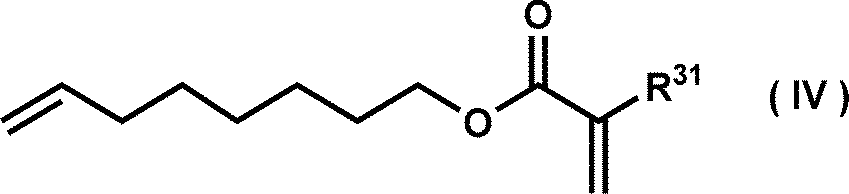
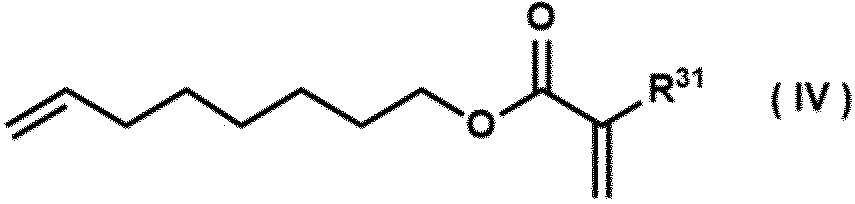
- the compound (B) is preferably a compound represented by the following general formula (IV).
- R 31 represents a hydrogen atom or a methyl group, and a methyl group is preferable from the viewpoint of polymerization operability.
- the amount of the compound (B) added is not particularly limited.
- the amount of the compound (B) added is 0.1 part by mass or more when the total amount of the raw materials is 100 parts by mass. It is preferably 3.0 parts by mass or more, more preferably 10 parts by mass or more.
- the upper limit of the amount of the compound (B) added is not particularly limited.
- the amount of the compound (B) added is preferably 50 parts by mass or less, and more preferably 40 parts by mass or less. It is preferable, and it may be 30 parts by mass or less.
- the preferred embodiment of the addition amount of the compound (B) can be read as a preferred embodiment of the content of the compound (B) with respect to 100 parts by mass of the total amount of the raw material composition.
- Polymerizable monomer (C) In the method (2) for producing a polymer, the polymerizable monomer (C) used is the same as the above-mentioned polymerizable monomer (C), and redundant description will be omitted here.
- Phosphorous acid ester compound (D) examples include diphenylphosphine oxide, diethylphosphine oxide, dibutylphosphine oxide and the like.
- subphosphorous acid monoester compound examples include ethylphenylphosphinate, butylphenylphosphinate, phenylphenylphosphinate, 9,10-dihydro-9-oxa-10-phosphaphenanthrene-10-oxide and the like.
- Examples of the phosphite diester compound include diethyl phosphite, diisopropyl phosphite, dibutyl phosphite, 1,3-dioxa-2-phosphacyclohexane-2-oxide, and 1,3-dioxa-5,5. -Dimethyl-2-phosphacyclohexane-2-oxide, diphenyl phosphite, bis (2,4-dimethyl) phosphite, 1,2,3,4-tetrahydro-1,3-dioxa-2-phospha -Naphthalene-2-oxide and the like can be mentioned.
- One of these phosphorous acid ester compounds (D) may be used alone, or two or more thereof may be used in combination.
- the phosphite-based ester compound (D) has diethyl phosphite, dibutyl phosphite, diphenyl phosphite, 9,10-dihydro-9-oxa from the viewpoint of raw material mixing and flame retardancy.
- -10-Phosphaphenantren-10-oxide is preferred, and diethyl phosphite, dibutyl phosphite, 9,10-dihydro-9-oxa-10-phosphaphenantren-10-oxide are more preferred.
- the amount of the phosphorous acid ester compound (D) added is not particularly limited.
- the amount of the phosphite-based ester compound (D) added is 0 when the total amount of the raw materials is 100 parts by mass. .1 part by mass or more is preferable, 3.0 parts by mass or more is more preferable, and 10 parts by mass or more may be used, or 15 parts by mass or more may be used. Further, the upper limit of the amount of the phosphorous acid ester compound (D) added is not particularly limited.
- the amount of the phosphorous acid ester compound (D) added is preferably 30 parts by mass or less, preferably 25 parts by mass or less, when the total amount of the raw materials is 100 parts by mass. Is more preferable.
- the preferred embodiment of the addition amount of the subphosphoric acid ester compound (D) can be read as a preferred embodiment of the content of the subphosphoric acid ester compound (D) with respect to 100 parts by mass of the total amount of the raw material composition.
- the amount of the phosphorous acid ester compound (D) added to 100 mol% of the compound (B) is not particularly limited.
- the amount of the phosphite-based ester compound (D) added to 100 mol% of the compound (B) is preferably 40 mol% or more, preferably 50 mol% or more. It is more preferably 60 mol% or more, still more preferably 90 mol% or more.
- the subphosphoric acid ester compound (D) with respect to 100 mol% of the above compound (B)
- the addition amount of is preferably 160 mol% or less, more preferably 150 mol% or less.
- a preferred embodiment of the amount of the subphosphoric acid ester compound (D) added to 100 mol% of the compound (B) is the subphosphoric acid ester compound (D) to 100 mol% of the compound (B) in the raw material composition. It can be read as a preferred embodiment of the content of.
- a radical polymerization initiator (E) As the method (2) for producing a polymer, a radical polymerization initiator (E) may be used.
- the type of the radical polymerization initiator (E) is not particularly limited and may be appropriately selected depending on the type of the compound (B) to be used, the polymerizable monomer (C), the phosphite ester compound (D) and the like. can do.
- Examples of the radical polymerization initiator (E) include a thermal radical polymerization initiator that generates radicals by heat, a photoradical polymerization initiator that generates radicals by light, and the like.
- thermal radical polymerization initiator examples include azo compound systems such as 2,2'-azobisisobutyronitrile (AIBN) and 2,2'-azobis (2,4-dimethylvaleronitrile) (ADVN); benzoyl.
- AIBN 2,2'-azobisisobutyronitrile
- ADVN 2,2'-azobis (2,4-dimethylvaleronitrile
- Diacyl peroxides such as peroxides; Peroxyesters such as t-butylperoxybenzoate; Hydroperoxides such as cumenehydroperoxides; Dialkyl peroxides such as dicumyl peroxides; Ketone peroxides such as methylethyl ketone peroxides and acetylacetone peroxides; Peroxyketals ; Alkyl peroxide type; Organic peroxides such as percarbonate type can be mentioned.
- a commercially available product can be used as the photoradical polymerization initiator.
- Irgacure registered trademark, the same shall apply hereinafter
- Irgacure 184 Irgacure 2959, Irgacure 127, Irgacure 907, Irgacure 369, Irgacure 379, Irgacure 819, Irgacure 784, Irgacure OXE01, Irgacure OXE02, Irgacure OXE02, Irgacure SF4 and above.
- Etc. can be mentioned. These may be used alone or in combination of two or more.
- the amount of the radical polymerization initiator (E) added is not particularly limited, but in order to obtain a polymer having a sufficient degree of polymerization, it should be 0.001 part by mass or more when the total amount of the raw materials is 100 parts by mass. It is preferably 0.001 part by mass or more and 3 parts by mass or less.
- the polymer production method (2) may be carried out using a mold.
- a mold By polymerizing and curing using a mold, the shape of the mold can be imparted to the polymer, and as a result, a cured product of the polymer having excellent flame retardancy can be obtained.
- Molds include a pair of plate-like bodies such as reinforced glass, chrome-plated plate, or stainless steel plate and a gasket made of soft vinyl chloride resin, and a pair of endless belts that travel in the same direction at the same speed. Examples thereof include a mold composed of a gasket that runs at the same speed as both endless belts on the facing surfaces and both side portions thereof.
- the flame-retardant composition containing the polymer is injected. Can be obtained in a state where the shape of the mold is given.
- the polymerization temperature is preferably set to two stages of primary curing at 40 to 90 ° C. and subsequent secondary curing at 110 to 140 ° C. from the viewpoint of increasing transparency and polymerization rate.
- the flame-retardant composition of this embodiment contains a polymer containing a structural unit represented by the above general formula (I). Since the phosphorus atom is contained in the molecular structure of the polymer, elution and exudation of the phosphorus-containing component due to heating do not occur, and the flame-retardant composition can maintain good flame retardancy.
- the ratio of the polymer contained in the flame-retardant composition is not particularly limited, but from the viewpoint of flame retardancy, it is preferably 0.1 part by mass or more with respect to 100 parts by mass of the flame-retardant composition. It is more preferably 1.0 part by mass or more.
- the upper limit of the proportion of the polymer contained in the flame-retardant composition is not particularly limited, but is preferably 50 parts by mass or less, and more preferably 30 parts by mass or less in consideration of molding processability.
- Flame retardant compositions include diluents, pigments, dyes, fillers, UV absorbers, thickeners, hyposhrinkants, antioxidants, plasticizers, aggregates, flame retardants, stabilizers, fiber reinforcements, etc. It may contain various additives such as antioxidants, leveling agents and anti-dripping agents.
- the use of the polymer and the flame-retardant composition of this embodiment is not particularly limited, but the polymer and the flame-retardant composition can be suitably used for a sheet, a polymer plate, a molded plate, a coating, an adhesive, an adhesive and the like having particularly flame-retardant properties.
- a flame-retardant sheet or a flame-retardant plate is mentioned as a preferable embodiment in which the polymer and the flame-retardant composition of this embodiment are used.
- a flame-retardant sheet or a flame-retardant plate made of a polymer and a flame-retardant composition is excellent in that it does not contain harmful halogen atoms and that deterioration of physical properties such as drip does not easily occur during heating.
- the flame-retardant sheet and the flame-retardant plate can be processed into an arbitrary three-dimensional shape by secondary molding by a known method.
- the secondary molding method include vacuum forming and compressed air forming.
- the flame-retardant sheet or flame-retardant plate is preheated to an appropriate temperature using a heating furnace or the like, and then vacuum, compressed, air, mechanical pressure, and a combination thereof are used to form a desired shape. Can be processed.
- Example 1 Synthesis of compound (A) 40.30 g (116.99 mmol) of compound (a1) obtained in Production Example 1 and 19.53 g (193.03 mmol) of triethylamine were placed in a nitrogen-substituted four-necked flask. And 200 g of acetonitrile was added, and the mixture was stirred at 10 ° C. or lower, then 14.67 g (140.39 mmol) of methacrylic acid chloride was added dropwise, and the mixture was stirred at room temperature (25 ° C.) for 2 hours.
- Example 2 A test piece having a length of 127 mm, a width of 13 mm, and a thickness of 3.2 mm was cut out from the obtained sheet. The following combustion test was performed using the test piece and evaluated. The evaluation results of the obtained combustion test are shown in Table 1. In Table 1, blanks indicate no compounding. Further, Examples 2, 3 and 5 to 9 are examples in which the above-mentioned polymer production method (2) is adopted, and Example 4 is an example in which the above-mentioned polymer production method (1) is adopted. ..
- Example 4 of Table 1 the sheet using the polymer containing the structural unit represented by the general formula (I) has a low combustion rate, does not generate drip, and has a flame-retardant carbonized layer on the surface. However, no bleed-out was confirmed. As described above, it can be seen that Example 4 exhibits excellent flame retardancy. Further, the polymers produced by the polymer production method (2) as in Examples 2, 3 and 5 to 9 also showed excellent flame retardancy as in Example 4. On the other hand, the drip of the sheet of Comparative Example 1 using the polymer not containing the structural unit represented by the general formula (I) was dropped.
- Comparative Example 2 using the polymer not containing the structural unit represented by the general formula (I) had a high combustion rate, and in addition, a flame-retardant carbonized layer was not confirmed. As described above, Comparative Examples 1 and 2 could not show excellent flame retardancy.
- the polymer of the present invention has excellent flame retardancy and is less likely to cause deterioration of physical properties such as softening during heating. Therefore, the polymer of the present invention and the flame-retardant composition containing the polymer can be used for applications requiring flame retardancy, particularly flame-retardant sheets, flame-retardant plates, flame-retardant paints and coatings. , It can be suitably applied to flame-retardant adhesives, flame-retardant adhesives, flame-retardant fibers and the like.
Landscapes
- Chemical & Material Sciences (AREA)
- Organic Chemistry (AREA)
- Health & Medical Sciences (AREA)
- Chemical Kinetics & Catalysis (AREA)
- Medicinal Chemistry (AREA)
- Polymers & Plastics (AREA)
- Life Sciences & Earth Sciences (AREA)
- Biochemistry (AREA)
- General Health & Medical Sciences (AREA)
- Molecular Biology (AREA)
- Engineering & Computer Science (AREA)
- Materials Engineering (AREA)
- Compositions Of Macromolecular Compounds (AREA)
- Addition Polymer Or Copolymer, Post-Treatments, Or Chemical Modifications (AREA)
- Polymerisation Methods In General (AREA)
Abstract
Description
難燃性を付与する方法として、例えば、特許文献1及び2に挙げるような方法が検討されてきた。具体的に、特許文献1には、単量体組成物、リン酸エステル、及び酸化防止剤を含有する重合性組成物を重合して得られるメタクリル樹脂組成物が開示されており、上記リン酸エステルとしてハロゲン化リン酸エステル等が記載されている。また、特許文献2には、樹脂成分、無機充填材、架橋性ビニル単量体、並びに、アクリル酸エステル及び/または架橋性ビニル単量体を含む組成物を硬化してなる難燃性アクリル人工大理石が開示されており、上記無機充填材として水酸化アルミニウム等が記載されている。
[1]下記一般式(I)で表される構造単位を含む重合体。

(一般式(I)中、R1は水素原子又はメチル基を表す。R2、R3はそれぞれ独立して炭素数1~6のアルキル基、炭素数1~6のアルキルオキシ基、炭素数2~6のアルケニル基、炭素数2~6のアルケニルオキシ基、炭素数7~12のアラルキル基、炭素数7~12のアラルキルオキシ基、炭素数6~12のアリール基及び炭素数6~12のアリールオキシ基からなる群より選ばれるいずれかを表す。R2、R3は互いに結合してもよく、nは0~7の整数である。)
[2]前記一般式(I)におけるnが5である、上記[1]に記載の重合体。
[3]上記[1]または[2]に記載の重合体を含む難燃性組成物。
[4]上記[1]若しくは[2]に記載の重合体または上記[3]に記載の難燃性組成物を用いてなる、難燃シートまたは難燃板。
[5]下記一般式(II)で表される化合物(A)。
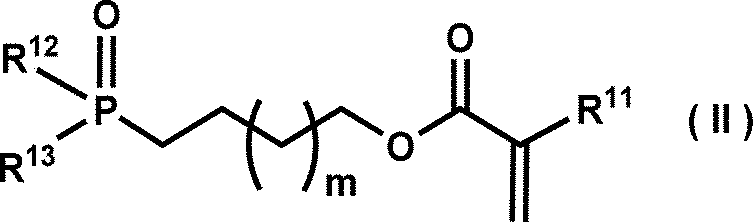
(一般式(II)中、R11は水素原子又はメチル基を表す。R12、R13はそれぞれ独立して炭素数1~6のアルキル基、炭素数1~6のアルキルオキシ基、炭素数2~6のアルケニル基、炭素数2~6のアルケニルオキシ基、炭素数7~12のアラルキル基、炭素数7~12のアラルキルオキシ基、炭素数6~12のアリール基及び炭素数6~12のアリールオキシ基からなる群より選ばれるいずれかを表す。R12、R13は互いに結合してもよく、mは0~7の整数である。)
[6]前記一般式(II)におけるmが5である、上記[5]に記載の化合物(A)。
[7]下記一般式(III)で表される化合物(B)と、重合性単量体(C)と、を亜ホスフィン酸エステル化合物、亜ホスホン酸モノエステル化合物、及び亜リン酸ジエステル化合物からなる群より選ばれる少なくとも1種の亜リン酸系エステル化合物(D)の存在下、重合する工程を含む、重合体の製造方法。
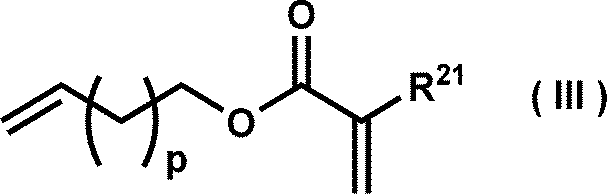
(一般式(III)中、R21は水素原子又はメチル基を表す。pは0~7の整数である。)
[8]前記化合物(B)が下記一般式(IV)で表される、上記[7]に記載の重合体の製造方法。
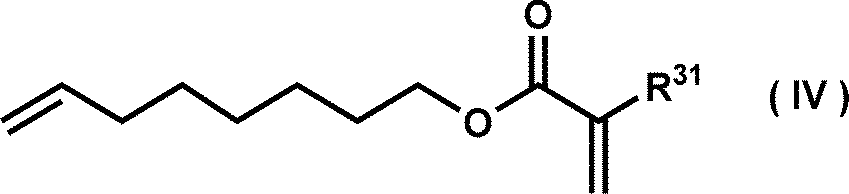
(一般式(IV)中、R31は水素原子又はメチル基を表す。)
[9]前記化合物(B)100モル%に対する前記亜リン酸系エステル化合物(D)の添加量が40~160モル%である、上記[7]又は[8]に記載の重合体の製造方法。
[10]下記一般式(III)で表される化合物(B)と、重合性単量体(C)と、亜ホスフィン酸エステル化合物、亜ホスホン酸モノエステル化合物、及び亜リン酸ジエステル化合物からなる群より選ばれる少なくとも1種の亜リン酸系エステル化合物(D)とを含む、組成物。
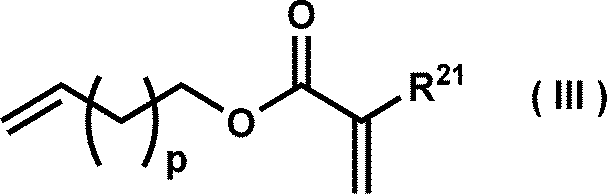
(一般式(III)中、R21は水素原子又はメチル基を表す。pは0~7の整数である。)
[11]前記化合物(B)が下記一般式(IV)で表される、上記[10]に記載の組成物。
(一般式(IV)中、R31は水素原子又はメチル基を表す。)
[12]前記化合物(B)100モル%に対する前記亜リン酸系エステル化合物(D)の含有量が40~160モル%である、上記[9]又は[10]に記載の組成物。
また本明細書において、実施態様の好ましい形態を示すが、個々の好ましい形態を2つ以上組み合わせたものもまた、好ましい形態である。数値範囲で示した事項について、いくつかの数値範囲がある場合、それらの下限値と上限値とを選択的に組み合わせて好ましい形態とすることができる。
なお、本明細書において、「XX~YY」との数値範囲の記載がある場合、「XX以上YY以下」を意味する。また、本明細書において「(メタ)アクリレート」は、メタクリレート及びアクリレートを意味する。
上記重合体を含む難燃性組成物は、燃焼速度が小さく、かつ燃焼滴下物(ドリップ)がほとんど無い。さらに、上記重合体または難燃性組成物を用いることにより、難燃性に優れた難燃シート及び難燃板を提供することができる。
また、特定の工程を含む上記重合体の製造方法を採用することにより、上記重合体を簡便に得ることができる。そして、上記一般式(II)で表される化合物を採用することにより、難燃性について良好な性能を発揮することができる。
本実施態様の重合体は、下記一般式(I)で表される構造単位を含む。

本実施態様の重合体は、一般式(I)で表される構造単位以外の構造単位を含んでいてもよい。重合体は、例えば、重合性単量体(C)に由来する構造単位を含むことにより、加飾性などを発現し得る。
重合性単量体(C)としては、ビニル単量体、(メタ)アクリル酸アルキルエステル、(メタ)アクリル酸エステル、(メタ)アクリレート、不飽和ジカルボン酸等が挙げられる。(メタ)アクリル酸エステルとしては、例えは、環状構造、水酸基、または末端にエポキシ基を有するものを用いることができる。また、(メタ)アクリレートとしては、例えば、アルキレングリコール構造、シランまたはシリル基末端を有するものを用いることができる。
(メタ)アクリル酸アルキルエステルとしては、メチル(メタ)アクリレート、プロピル(メタ)アクリレート、ブチル(メタ)アクリレート、ペンチル(メタ)アクリレート、ヘキシル(メタ)アクリレート、2-エチルヘキシル(メタ)アクリレート等が挙げられる。
不飽和ジカルボン酸としては、無水マレイン酸及びその誘導体等が挙げられる。
本実施態様の重合体は、一般式(I)で表される構造単位を形成する重合性単量体に、カチオン重合、アニオン重合、またはラジカル重合などの公知の重合方法を適用することにより製造することができる。
(化合物(A))
一般式(I)で表される構造単位を形成する重合性単量体としては、下記一般式(II)で表される化合物(A)を使用してもよい。例えば、化合物(A)と、任意成分として上記重合性単量体(C)とを含む原料組成物を、上記公知の重合方法により重合する重合体の製造方法(1)を採用することができる。
化合物(A)を使用することにより、一般式(I)で表される構造単位を含む重合体を得ることができ、さらにその重合体の分子構造内にリン原子を多量含有させることができるため、加熱によるリン含有成分の溶出、染み出し(ブリードアウトともいう)などが起こらず、良好な性能を維持できる。

上記化合物(A)は、例えば、公知の化学反応を利用及び応用することにより合成することができる。
本実施態様の重合体の製造方法は、上述した重合体の製造方法(1)の他に、一般式(III)で表される化合物(B)と、重合性単量体(C)と、を亜ホスフィン酸エステル化合物、亜ホスホン酸モノエステル化合物、及び亜リン酸ジエステル化合物からなる群より選ばれる少なくとも1種の亜リン酸系エステル化合物(D)の存在下、重合する工程を含む製造方法(2)であってもよい。
上述したように、本実施態様の重合体は、化合物(A)を含む原料組成物を、公知の重合方法を適用して製造することができる。一方で、重合体の製造方法(2)を採用することにより、多段階の工程を必要とすることなく重合体を得ることができる。さらに、一般式(III)で表される化合物(B)、重合性単量体(C)、並びに、亜ホスフィン酸エステル化合物、亜ホスホン酸モノエステル化合物、及び亜リン酸ジエステル化合物からなる群より選ばれる少なくとも1種の亜リン酸系エステル化合物(D)を含む組成物(原料組成物)とし、次いで上記原料組成物を鋳型に注入し、重合及び硬化することで、成形体を得ることも可能である。
化合物(B)は、下記一般式(III)で表される。

また、上記観点から、化合物(B)は下記一般式(IV)で表される化合物であることが好ましい。
なお、上記化合物(B)の添加量の好ましい態様は、原料組成物の総量100質量部に対する化合物(B)の含有量の好ましい態様として読み替えることができる。
重合体の製造方法(2)において、使用する重合性単量体(C)は上記重合性単量体(C)と同じであり、ここでは重複する説明を省略する。
亜ホスフィン酸エステル化合物としては、例えば、ジフェニルホスフィンオキシド、ジエチルホスフィンオキシド、ジブチルホスフィンオキシド等が挙げられる。
なお、上記亜リン酸系エステル化合物(D)の添加量の好ましい態様は、原料組成物の総量100質量部に対する亜リン酸系エステル化合物(D)の含有量の好ましい態様として読み替えることができる。
なお、上記化合物(B)100モル%に対する亜リン酸系エステル化合物(D)の添加量の好ましい態様は、原料組成物における、化合物(B)100モル%に対する亜リン酸系エステル化合物(D)の含有量の好ましい態様として読み替えることができる。
重合体の製造方法(2)は、ラジカル重合開始剤(E)を用いてもよい。ラジカル重合開始剤(E)の種類には、特に制限はなく、使用する化合物(B)、重合性単量体(C)、亜リン酸系エステル化合物(D)の種類等に応じて適宜選択することができる。ラジカル重合開始剤(E)としては、例えば、熱でラジカルを発生する熱ラジカル重合開始剤、光でラジカルを発生する光ラジカル重合開始剤等が挙げられる。
また、鋳型には、重合体の原料組成物に加え、後述の難燃性組成物に用いることができる各種添加剤を添加した組成物を注入することにより、重合体を含む難燃性組成物の硬化物を、鋳型の形状が付与された状態で得ることができる。
本実施態様の難燃性組成物は、上記一般式(I)で表される構造単位を含む重合体を含有する。重合体の分子構造内にリン原子を含有するため、加熱によるリン含有成分の溶出、及び染み出しなどが起こらず、難燃性組成物は良好な難燃性を維持できる。
難燃性組成物は、希釈剤、顔料、染料、充填剤、紫外線吸収剤、増粘剤、低収縮化剤、老化防止剤、可塑剤、骨材、難燃剤、安定剤、繊維強化材、酸化防止剤、レベリング剤、たれ止め剤等の各種添加剤を含んでもよい。
本実施態様の重合体及び難燃性組成物の用途に特に制限はないが、特に難燃性を有するシート、重合板、成形板、コーティング、粘着剤、接着剤などに好適に使用できる。
難燃シートまたは難燃板をあらかじめ加熱炉等を用いて適温に加熱した後、真空、圧縮、空気、機械的な圧力、及びこれらの組合せを用いて型に沿わせることで、所望の形状に加工することができる。
<化合物(A)の合成>
[製造例1]及び[実施例1]の合成方法により、下記反応式に示す各化合物を合成し、一般式(II)で表される化合物(A)(下記反応式中の化学式A-1で示される化合物)を合成した。

窒素置換した四つ口フラスコに、7-オクテノール 15.00g(116.99mmol)、9,10-ジヒドロ-9-オキサ-10-フォスファフェナントレン-10-オキサイド 26.60g(122.84mmol)、及びトルエン 100gを加え、60℃に加熱した。そこに、パーブチルO 1.27g(5.85mmol)を加え、1時間撹拌した。反応液を冷却し、濃縮して化合物(a1)を含む溶液 45.15gを得た。
窒素置換した四つ口フラスコに、製造例1で得られた化合物(a1) 40.30g(116.99mmol)、トリエチルアミン 19.53g(193.03mmol)、及びアセトニトリル 200gを加え、10℃以下で撹拌し、次いで、メタクリル酸クロリド 14.67g(140.39mmol)を滴下し、室温(25℃)で2時間撹拌した。反応液にイオン交換水 81.5g、N,N-ジメチルアミノピリジン 0.13gを加え、室温で撹拌した。反応液に酢酸エチル 733.8gを加えて有機層を抽出し、得られた抽出液を4wt%塩酸 672.4g、6wt%炭酸水素ナトリウム水溶液 1048.6g、飽和食塩水 587.9gで洗浄し、有機層を濃縮した。硫酸ナトリウムで乾燥後、シリカゲルカラムクロマトグラフィーで精製し、上記化学式A-1で示される化合物(A) 33.00g(80.01mmol、68.4mol%)を得た。得られた化合物(A)の1H-NMRの測定結果を以下に示す。
[実施例2~9]、[比較例1、2]
撹拌子を入れたビーカーに、表1中の原料の混合物を加え、完全に溶解するまで撹拌し、原料組成物(原料液)とした。ステンレス板(厚さ2mm、20cm角)2枚と塩化ビニル樹脂製ガスケットより構成されるセルに、上記原料液を注入し、60℃の温水バス中で6時間、次いで130℃のオーブンにて2時間重合させて、厚さ3.2mmのシートを得た。
得られたシートから長さ127mm×幅13mm×厚さ3.2mmの試験片を切り出した。該試験片を用いて下記燃焼試験を行い評価した。得られた燃焼試験の評価結果を表1に示した。
なお、表1中、空欄は配合なしを表す。また、実施例2、3、及び5~9は上述の重合体の製造方法(2)を採用した例であり、実施例4は上述の重合体の製造方法(1)を採用した例である。
[燃焼速度]
3.2mm厚の試験片を、23℃、50%RHの環境下に18時間静置した。JIS K 6911:1995 A試験に準拠し、水平に保持した試験片にバーナーで30秒間接炎した。試験片三本の平均値をとり、それぞれの燃焼の速度(mm/秒)によって難燃性を評価した。燃焼速度は、数値が小さいほど難燃性に優れる。
上記燃焼速度試験において、燃焼中に試験片から垂れが起こり、ドリップが落下するか判定した。垂れが起こらないまたはドリップが落下しなければ「A」、落下すれば「B」と評価した。
上記燃焼試験終了後の試験片を目視で観察し、リン含有成分に起因する黒色の難燃炭化層の生成が確認できれば「あり」、確認できなければ「なし」と評価した。
上記のように作成した試験片の表面を観察し、リン含有成分のブリードアウト(溶出、染み出し)の有無を目視と触覚により判定した。ブリードアウトが確認できなければ「なし」、確認できれば「あり」と評価した。

表1中の原料は、以下のとおりである。
〈化合物(A)〉
・化合物(A-1):上記[製造例1]及び[実施例1]の合成方法により得られた、上記化学式A-1で示される化合物
・化合物(B-1):7-オクテニルメタクリレート(株式会社クラレ製)(下記化学式B-1で示される化合物)

・MMA:メチルメタクリレート(株式会社クラレ製)
・DOPO:9,10-ジヒドロ-9-オキサ-10-フォスファフェナントレン-10-オキサイド(東京化成工業株式会社製)
・亜リン酸ジエチル:亜リン酸ジエチル(富士フイルム和光純薬株式会社製)
・V-65:2,2’-アゾビス(2,4-ジメチルバレロニトリル)(富士フイルム和光純薬株式会社製)
・PERHEXA(登録商標) C:1,1-ジ(ターシャリーブチルペルオキシ)シクロヘキサン(日油株式会社製)
また、実施例2、3、及び5~9のように、重合体の製造方法(2)で製造した重合体においても、実施例4と同様、優れた難燃性を示した。
一方、一般式(I)で表される構造単位を含まない重合体を用いた比較例1のシートは、ドリップが落下した。また、一般式(I)で表される構造単位を含まない重合体を用いた比較例2のシートは、燃焼速度が大きく、加えて難燃炭化層が確認されなかった。このように比較例1及び2は、優れた難燃性を示すことができなかった。
Claims (12)
- 下記一般式(I)で表される構造単位を含む重合体。

(一般式(I)中、R1は水素原子又はメチル基を表す。R2、R3はそれぞれ独立して炭素数1~6のアルキル基、炭素数1~6のアルキルオキシ基、炭素数2~6のアルケニル基、炭素数2~6のアルケニルオキシ基、炭素数7~12のアラルキル基、炭素数7~12のアラルキルオキシ基、炭素数6~12のアリール基及び炭素数6~12のアリールオキシ基からなる群より選ばれるいずれかを表す。R2、R3は互いに結合してもよく、nは0~7の整数である。) - 前記一般式(I)におけるnが5である、請求項1に記載の重合体。
- 請求項1または2に記載の重合体を含む難燃性組成物。
- 請求項1若しくは2に記載の重合体または請求項3に記載の難燃性組成物を用いてなる、難燃シートまたは難燃板。
- 下記一般式(II)で表される化合物(A)。

(一般式(II)中、R11は水素原子又はメチル基を表す。R12、R13はそれぞれ独立して炭素数1~6のアルキル基、炭素数1~6のアルキルオキシ基、炭素数2~6のアルケニル基、炭素数2~6のアルケニルオキシ基、炭素数7~12のアラルキル基、炭素数7~12のアラルキルオキシ基、炭素数6~12のアリール基及び炭素数6~12のアリールオキシ基からなる群より選ばれるいずれかを表す。R12、R13は互いに結合してもよく、mは0~7の整数である。) - 前記一般式(II)におけるmが5である、請求項5に記載の化合物(A)。
- 下記一般式(III)で表される化合物(B)と、重合性単量体(C)と、を亜ホスフィン酸エステル化合物、亜ホスホン酸モノエステル化合物、及び亜リン酸ジエステル化合物からなる群より選ばれる少なくとも1種の亜リン酸系エステル化合物(D)の存在下、重合する工程を含む、重合体の製造方法。
(一般式(III)中、R21は水素原子又はメチル基を表す。pは0~7の整数である。) - 前記化合物(B)が下記一般式(IV)で表される、請求項7に記載の重合体の製造方法。
(一般式(IV)中、R31は水素原子又はメチル基を表す。) - 前記化合物(B)100モル%に対する前記亜リン酸系エステル化合物(D)の添加量が40~160モル%である、請求項7又は8に記載の重合体の製造方法。
- 下記一般式(III)で表される化合物(B)と、重合性単量体(C)と、亜ホスフィン酸エステル化合物、亜ホスホン酸モノエステル化合物、及び亜リン酸ジエステル化合物からなる群より選ばれる少なくとも1種の亜リン酸系エステル化合物(D)とを含む、組成物。

(一般式(III)中、R21は水素原子又はメチル基を表す。pは0~7の整数である。) - 前記化合物(B)が下記一般式(IV)で表される、請求項10に記載の組成物。

(一般式(IV)中、R31は水素原子又はメチル基を表す。) - 前記化合物(B)100モル%に対する前記亜リン酸系エステル化合物(D)の含有量が40~160モル%である、請求項10又は11に記載の組成物。
Priority Applications (5)
| Application Number | Priority Date | Filing Date | Title |
|---|---|---|---|
| US18/037,455 US20230407076A1 (en) | 2020-11-20 | 2021-11-17 | Polymer, flame-retardant composition, and method for producing polymer |
| EP21894706.7A EP4249528A4 (en) | 2020-11-20 | 2021-11-17 | POLYMER, FLAME-RETARDANT COMPOSITION AND METHOD FOR PRODUCING THE POLYMER |
| KR1020237015447A KR20230109625A (ko) | 2020-11-20 | 2021-11-17 | 중합체, 난연성 조성물, 및 중합체의 제조 방법 |
| JP2022563815A JP7812800B2 (ja) | 2020-11-20 | 2021-11-17 | 重合体、難燃性組成物、及び重合体の製造方法 |
| CN202180077060.1A CN116438280A (zh) | 2020-11-20 | 2021-11-17 | 聚合物、阻燃性组合物和聚合物的制造方法 |
Applications Claiming Priority (2)
| Application Number | Priority Date | Filing Date | Title |
|---|---|---|---|
| JP2020-193633 | 2020-11-20 | ||
| JP2020193633 | 2020-11-20 |
Publications (1)
| Publication Number | Publication Date |
|---|---|
| WO2022107833A1 true WO2022107833A1 (ja) | 2022-05-27 |
Family
ID=81708047
Family Applications (1)
| Application Number | Title | Priority Date | Filing Date |
|---|---|---|---|
| PCT/JP2021/042345 Ceased WO2022107833A1 (ja) | 2020-11-20 | 2021-11-17 | 重合体、難燃性組成物、及び重合体の製造方法 |
Country Status (7)
| Country | Link |
|---|---|
| US (1) | US20230407076A1 (ja) |
| EP (1) | EP4249528A4 (ja) |
| JP (1) | JP7812800B2 (ja) |
| KR (1) | KR20230109625A (ja) |
| CN (1) | CN116438280A (ja) |
| TW (1) | TW202229527A (ja) |
| WO (1) | WO2022107833A1 (ja) |
Citations (5)
| Publication number | Priority date | Publication date | Assignee | Title |
|---|---|---|---|---|
| JP2007126551A (ja) * | 2005-11-02 | 2007-05-24 | Fujifilm Corp | 蛍光性重合体微粒子、蛍光検出キット及び蛍光検出方法 |
| JP2007177203A (ja) * | 2005-12-01 | 2007-07-12 | Hitachi Chem Co Ltd | リン含有重合体及びこれを用いた樹脂組成物、並びに、プリプレグ、金属張積層板、封止材、感光性フィルム、レジストパターンの形成方法及びプリント配線板 |
| JP2012236979A (ja) * | 2011-04-27 | 2012-12-06 | Toyota Motor Corp | ホスホン酸系電解質、膜電極接合体および燃料電池 |
| WO2018062475A1 (ja) * | 2016-09-30 | 2018-04-05 | 株式会社クラレ | ホスホネート基を有する共重合体組成物 |
| WO2018124205A1 (ja) * | 2016-12-28 | 2018-07-05 | 片山化学工業株式会社 | リン含有(メタ)アクリル酸エステル誘導体 |
Family Cites Families (9)
| Publication number | Priority date | Publication date | Assignee | Title |
|---|---|---|---|---|
| JP3160531B2 (ja) | 1996-07-09 | 2001-04-25 | エムアールシー・デュポン株式会社 | 難燃性アクリル人工大理石 |
| JPWO2007091551A1 (ja) * | 2006-02-06 | 2009-07-02 | 日本ゼオン株式会社 | 架橋性樹脂成形体の製造方法 |
| JP5015114B2 (ja) * | 2008-10-29 | 2012-08-29 | 日東電工株式会社 | 感光性樹脂組成物およびそれを用いたフレキシブルプリント配線回路基板の製法ならびにカバー絶縁層を有するフレキシブルプリント配線回路基板 |
| JP2010106215A (ja) * | 2008-10-31 | 2010-05-13 | Nippon Zeon Co Ltd | プリプレグ及び積層体 |
| KR101351614B1 (ko) * | 2010-11-05 | 2014-02-17 | 제일모직주식회사 | 난연 내스크래치성 폴리카보네이트 수지 조성물 |
| WO2014088153A1 (ko) * | 2012-12-07 | 2014-06-12 | 제일모직 주식회사 | (메타)아크릴계 공중합체 및 이를 포함하는 열가소성 수지 |
| EP2957579B1 (en) * | 2013-02-18 | 2019-10-02 | Kuraray Co., Ltd. | Copolymer and molded body |
| JP6213131B2 (ja) | 2013-10-10 | 2017-10-18 | 三菱ケミカル株式会社 | メタクリル樹脂組成物及びその製造方法並びに樹脂成形体 |
| JP2019211253A (ja) * | 2018-05-31 | 2019-12-12 | キヤノン株式会社 | カートリッジ |
-
2021
- 2021-11-17 KR KR1020237015447A patent/KR20230109625A/ko active Pending
- 2021-11-17 US US18/037,455 patent/US20230407076A1/en active Pending
- 2021-11-17 JP JP2022563815A patent/JP7812800B2/ja active Active
- 2021-11-17 EP EP21894706.7A patent/EP4249528A4/en active Pending
- 2021-11-17 CN CN202180077060.1A patent/CN116438280A/zh active Pending
- 2021-11-17 WO PCT/JP2021/042345 patent/WO2022107833A1/ja not_active Ceased
- 2021-11-19 TW TW110143120A patent/TW202229527A/zh unknown
Patent Citations (5)
| Publication number | Priority date | Publication date | Assignee | Title |
|---|---|---|---|---|
| JP2007126551A (ja) * | 2005-11-02 | 2007-05-24 | Fujifilm Corp | 蛍光性重合体微粒子、蛍光検出キット及び蛍光検出方法 |
| JP2007177203A (ja) * | 2005-12-01 | 2007-07-12 | Hitachi Chem Co Ltd | リン含有重合体及びこれを用いた樹脂組成物、並びに、プリプレグ、金属張積層板、封止材、感光性フィルム、レジストパターンの形成方法及びプリント配線板 |
| JP2012236979A (ja) * | 2011-04-27 | 2012-12-06 | Toyota Motor Corp | ホスホン酸系電解質、膜電極接合体および燃料電池 |
| WO2018062475A1 (ja) * | 2016-09-30 | 2018-04-05 | 株式会社クラレ | ホスホネート基を有する共重合体組成物 |
| WO2018124205A1 (ja) * | 2016-12-28 | 2018-07-05 | 片山化学工業株式会社 | リン含有(メタ)アクリル酸エステル誘導体 |
Non-Patent Citations (4)
| Title |
|---|
| BESSE V., LE PLUART L., COOK W. D., PHAM T.-N., MADEC P.-J.: "Synthesis and polymerization kinetics of acrylamide phosphonic acids and esters as new dentine adhesives", JOURNAL OF POLYMER SCIENCE PART A: POLYMER CHEMISTRY, vol. 51, no. 1, 1 January 2013 (2013-01-01), US , pages 149 - 157, XP055931556, ISSN: 0887-624X, DOI: 10.1002/pola.26339 * |
| BESSE VINCENT, LE PLUART LOÏC, COOK WAYNE D., PHAM THI-NHÀN, MADEC PIERRE-JEAN: "Polymerization kinetics of phosphonic acids and esters using an iodonium initiator", JOURNAL OF POLYMER SCIENCE PART A: POLYMER CHEMISTRY, vol. 51, no. 23, 1 December 2013 (2013-12-01), US , pages 5046 - 5055, XP055931561, ISSN: 0887-624X, DOI: 10.1002/pola.26935 * |
| CHMELA ŠTEFAN, FIEDLEROVÁ AGNESA, LIPTAJ TIBOR, CATEL YOHANN, MOSZNER NORBERT: "Determination of homopolymerization kinetics and copolymerization with methyl methacrylate of diethyl 9-(methacryloyloxy)-2-oxo-nonylphosphonate, 9-(methacryloyloxy)-2-oxo-nonylphosphonic acid and diethyl 9-(methacryloyloxy)-nonylphosphonate", E-POLYMERS, vol. 18, no. 3, 24 May 2018 (2018-05-24), DE , pages 205 - 216, XP055931552, ISSN: 2197-4586, DOI: 10.1515/epoly-2017-0155 * |
| See also references of EP4249528A4 * |
Also Published As
| Publication number | Publication date |
|---|---|
| TW202229527A (zh) | 2022-08-01 |
| EP4249528A1 (en) | 2023-09-27 |
| JPWO2022107833A1 (ja) | 2022-05-27 |
| JP7812800B2 (ja) | 2026-02-10 |
| US20230407076A1 (en) | 2023-12-21 |
| KR20230109625A (ko) | 2023-07-20 |
| CN116438280A (zh) | 2023-07-14 |
| EP4249528A4 (en) | 2024-11-06 |
Similar Documents
| Publication | Publication Date | Title |
|---|---|---|
| JP4925506B2 (ja) | 透明性耐熱樹脂の製造方法 | |
| TWI602871B (zh) | 成形體 | |
| CN112004843B (zh) | 固化性优异的组合物 | |
| WO2007077888A1 (ja) | 硬化性組成物 | |
| JP2010523734A (ja) | 防炎性共重合体及びこれを用いた難燃性熱可塑性樹脂組成物 | |
| JP5915251B2 (ja) | 硬化性樹脂組成物及びその硬化成形物 | |
| CN103635520A (zh) | 树脂组合物和成型体 | |
| CN103013077B (zh) | 一种uv固化耐刮擦聚碳酸酯及其制备方法 | |
| CN112004837B (zh) | 聚合物以及使用了该聚合物的氧吸收剂和树脂组合物 | |
| JPWO2011024806A1 (ja) | 難燃剤、その製造方法、及びそれを含有する難燃性熱可塑性樹脂組成物 | |
| JP7812800B2 (ja) | 重合体、難燃性組成物、及び重合体の製造方法 | |
| JP7812799B2 (ja) | 重合体、難燃性組成物、及び重合体の製造方法 | |
| JP6376300B1 (ja) | 硬化性組成物、及び接着剤組成物 | |
| JP2020015800A (ja) | 難燃性を向上させた硬化性樹脂組成物およびその硬化物 | |
| JP2015074740A (ja) | メタクリル樹脂組成物及びその製造方法並びに樹脂成形体 | |
| JP2017014481A (ja) | 熱硬化性樹脂組成物及びその樹脂成形物 | |
| JP7352906B2 (ja) | リン酸エステル系難燃剤、(メタ)アクリル系樹脂組成物及び樹脂成形体 | |
| JP2022075060A (ja) | 硬化性組成物 | |
| JP2022083241A (ja) | 硬化性組成物、及び接着剤組成物、並びに硬化性組成物の製造方法。 | |
| JP2000313785A (ja) | 難燃性成形材料用樹脂組成物 | |
| JPWO2019031485A1 (ja) | メタクリル樹脂注型板とその製造方法 | |
| KR900000416B1 (ko) | 아크릴계 수지 주형판의 제조방법 | |
| JP2024000685A (ja) | 樹脂組成物及び樹脂成形体、及びその製造方法 | |
| WO2023249036A1 (ja) | 樹脂組成物及び樹脂成形体、及びその製造方法 | |
| CN120623689A (zh) | 一种高性能亚克力板材及其制造方法 |
Legal Events
| Date | Code | Title | Description |
|---|---|---|---|
| 121 | Ep: the epo has been informed by wipo that ep was designated in this application |
Ref document number: 21894706 Country of ref document: EP Kind code of ref document: A1 |
|
| ENP | Entry into the national phase |
Ref document number: 2022563815 Country of ref document: JP Kind code of ref document: A |
|
| WWE | Wipo information: entry into national phase |
Ref document number: 18037455 Country of ref document: US |
|
| NENP | Non-entry into the national phase |
Ref country code: DE |
|
| ENP | Entry into the national phase |
Ref document number: 2021894706 Country of ref document: EP Effective date: 20230620 |