WO2022113221A1 - Procédé et dispositif de présentation d'informations, et programme - Google Patents
Procédé et dispositif de présentation d'informations, et programme Download PDFInfo
- Publication number
- WO2022113221A1 WO2022113221A1 PCT/JP2020/043927 JP2020043927W WO2022113221A1 WO 2022113221 A1 WO2022113221 A1 WO 2022113221A1 JP 2020043927 W JP2020043927 W JP 2020043927W WO 2022113221 A1 WO2022113221 A1 WO 2022113221A1
- Authority
- WO
- WIPO (PCT)
- Prior art keywords
- route
- information
- congestion
- information presentation
- travel route
- Prior art date
- Legal status (The legal status is an assumption and is not a legal conclusion. Google has not performed a legal analysis and makes no representation as to the accuracy of the status listed.)
- Ceased
Links
Images



Classifications
-
- G—PHYSICS
- G01—MEASURING; TESTING
- G01C—MEASURING DISTANCES, LEVELS OR BEARINGS; SURVEYING; NAVIGATION; GYROSCOPIC INSTRUMENTS; PHOTOGRAMMETRY OR VIDEOGRAMMETRY
- G01C21/00—Navigation; Navigational instruments not provided for in groups G01C1/00 - G01C19/00
- G01C21/26—Navigation; Navigational instruments not provided for in groups G01C1/00 - G01C19/00 specially adapted for navigation in a road network
- G01C21/34—Route searching; Route guidance
- G01C21/36—Input/output arrangements for on-board computers
- G01C21/3691—Retrieval, searching and output of information related to real-time traffic, weather, or environmental conditions
-
- G—PHYSICS
- G01—MEASURING; TESTING
- G01C—MEASURING DISTANCES, LEVELS OR BEARINGS; SURVEYING; NAVIGATION; GYROSCOPIC INSTRUMENTS; PHOTOGRAMMETRY OR VIDEOGRAMMETRY
- G01C21/00—Navigation; Navigational instruments not provided for in groups G01C1/00 - G01C19/00
- G01C21/26—Navigation; Navigational instruments not provided for in groups G01C1/00 - G01C19/00 specially adapted for navigation in a road network
- G01C21/34—Route searching; Route guidance
- G01C21/3407—Route searching; Route guidance specially adapted for specific applications
- G01C21/3423—Multimodal routing
-
- G—PHYSICS
- G01—MEASURING; TESTING
- G01C—MEASURING DISTANCES, LEVELS OR BEARINGS; SURVEYING; NAVIGATION; GYROSCOPIC INSTRUMENTS; PHOTOGRAMMETRY OR VIDEOGRAMMETRY
- G01C21/00—Navigation; Navigational instruments not provided for in groups G01C1/00 - G01C19/00
- G01C21/26—Navigation; Navigational instruments not provided for in groups G01C1/00 - G01C19/00 specially adapted for navigation in a road network
- G01C21/34—Route searching; Route guidance
- G01C21/3453—Special cost functions, i.e. other than distance or default speed limit of road segments
- G01C21/3492—Special cost functions, i.e. other than distance or default speed limit of road segments employing speed data or traffic data, e.g. real-time or historical
Definitions
- This disclosure relates to information presentation methods, information presentation devices and programs.
- a travel route from the user's departure point to the destination which is a combination of public transportation means such as trains and transportation means such as automobiles and walking, is searched and presented to the user. Information is being presented.
- the required time may change depending on the number of people who simultaneously use the route using the means of transportation. Therefore, the congestion situation of the route is of great concern to the user. Further, even if the difference in the required time due to the congestion situation is not large, the congestion of the route may cause physical and mental distress to the user who uses the route. Therefore, the congestion situation should be fully considered when selecting a travel route.
- Patent Document 1 describes a technique for presenting information on a congestion status (hereinafter referred to as "congestion information") on a route using public transportation such as a train to a user.
- congestion information information on a congestion status
- the user at the platform of the station is presented with the current congestion status of each vehicle of the desired train and the congestion transition information for each vehicle up to the station where the user gets off.
- Patent Document 2 discloses a technique for presenting congestion information to a user on a route using a car or a walk.
- the future number of any moving object (pedestrian, automobile, bicycle, etc.) traveling on the road is estimated and presented for each road.
- JP-A-2007-249705A Japanese Unexamined Patent Publication No. 202-140333
- the travel route from the departure point to the destination may consist of multiple routes with different means of transportation (hereinafter referred to as "partial routes").
- partial routes As mentioned above, congestion should be taken into account when choosing a travel route.
- the techniques described in Patent Documents 1 and 2 are techniques for presenting congestion information on a route using a single means of transportation, and the congestion situation as a whole of the travel route is not sufficiently considered. Therefore, the user needs to acquire the congestion information of each of the partial routes constituting the travel route, and to judge the congestion status of the entire travel route by himself / herself based on the congestion information of each acquired partial route. There was a problem.
- An object of the present disclosure made in view of the above-mentioned problems is an information presentation method, an information presentation device, and a program capable of presenting to the user the congestion status of a travel route composed of a plurality of partial routes as a whole. Is to provide.
- the information presentation method is an information presentation method for presenting a travel route from a departure point to a destination designated by a user, and includes a search step for searching the travel route and a search step.
- the searched travel route is composed of a plurality of partial routes having different means of travel
- the travel is provided with congestion information regarding the overall congestion status of the travel route according to the degree of congestion of each of the plurality of partial routes.
- the information presenting device is an information presenting device that presents a travel route from a departure point to a destination designated by a user, and is a route search for searching the travel route.
- the searched travel route is composed of a plurality of partial routes having different transportation means, the congestion information regarding the congestion status of the entire travel route according to the degree of congestion of each of the plurality of partial routes is provided.
- An information presenting unit that is added to the travel route and presented to the user.
- the program according to the present disclosure causes the computer to function as the above-mentioned information presenting device.
- the information presentation method, the information presentation device, and the program according to the present disclosure it is possible to present to the user the congestion status of the movement route composed of a plurality of partial routes as a whole.
- FIG. 1 It is a figure which shows the configuration example of the information presentation system which includes the information presentation apparatus which concerns on one Embodiment of this disclosure. It is a flowchart which shows an example of the operation of the information presenting apparatus shown in FIG. It is a figure which shows an example of the information presentation by the root information forming part shown in FIG. It is a figure which shows another example of the information presentation by the root information forming part shown in FIG. It is a figure which shows still another example of the information presentation by the root information forming part shown in FIG. It is a figure which shows still another example of the information presentation by the root information forming part shown in FIG.
- FIG. 1 is a diagram showing a configuration example of an information presentation system 1 including a server 20 as an information presentation device according to an embodiment of the present disclosure.
- the information presentation system 1 according to the present embodiment is congested with respect to the overall congestion status of a travel route composed of a plurality of routes (partial routes) using different means of transportation from the departure point to the destination specified by the user. It presents information to the user.
- the information presentation system 1 includes a client terminal 10 and a server 20.
- the client terminal 10 is a terminal used by a user who checks a movement route from a departure place to a destination.
- the client terminal 10 is, for example, a smartphone, a tablet terminal, a personal computer (Personal Computer: PC), or the like.
- the client terminal 10 has a function of accepting an operation input of a user and a function of presenting information to the user.
- the server 20 is a computer that provides a route information presentation service that presents information about a travel route.
- the server 20 is installed on a network such as the Internet, and can communicate with the client terminal 10 via the network.
- the server 20 provides a route information presentation service to the client terminal 10 via the network.
- the client terminal 10 includes an input unit 11 and an output unit 12.
- the input unit 11 accepts operation input by the user.
- the input unit 11 is, for example, a keyboard or a touch panel.
- the input unit 11 receives the operation input for specifying the departure place, destination, departure date and time, arrival date and time, etc.
- the input unit 11 makes a search request for the travel route including the input departure place, destination, departure date and time, arrival date and time, and the like. Send to server 20.
- the output unit 12 presents various information provided by the server 20 to the user.
- the output unit 12 is, for example, a display included in the client terminal 10, displays information provided by the server 20, and presents it to the user.
- the output unit 12 may present the information provided by the server 20 to the user by, for example, voice output.
- the server 20 includes a route DB (Database) 21, a congestion information update unit 22, a route search unit 23, and a route information forming unit 24 as an information presentation unit.
- a route DB Database
- a congestion information update unit 22 a congestion information update unit 22
- a route search unit 23 a route information forming unit 24 as an information presentation unit.
- the root DB 21 is, for example, an arbitrary memory such as an HDD (Hard Disk Drive), SSD (Solid State Drive), EEPROM (Electrically Erasable Programmable Read-Only Memory), ROM (Read-Only Memory), and RAM (Random Access Memory). Consists of.
- HDD Hard Disk Drive
- SSD Solid State Drive
- EEPROM Electrically Erasable Programmable Read-Only Memory
- ROM Read-Only Memory
- RAM Random Access Memory
- the route DB 21 stores information on a plurality of travel routes from an arbitrary departure point to a destination.
- Information on a single travel route includes, for example, node information (starting point and destination), means of transportation (train, car, walking, etc.), required time, congestion information on partial routes that make up the travel route, and barrier-free support.
- Situations for example, support for users with hearing / visual impairment (for example, presence / absence of Braille blocks, voice guidance devices, etc.), support for users of wheelchairs / baby carriages (for example, presence / absence of slopes, elevators, etc.))
- the congestion information of the partial route may include the congestion information for each time zone.
- the congestion information update unit 22 acquires the congestion status for each partial route from the outside on a regular or irregular basis, and generates congestion information for each partial route.
- the congestion information update unit 22 generates congestion information for the partial route by, for example, calculating a value (congestion degree) that quantifies the congestion status of the acquired partial route.
- the congestion information update unit 22 calculates the degree of congestion for each time zone for each of the plurality of partial routes constituting the travel route, using the statistics of the past congestion status and the future congestion prediction, and the congestion for each time zone. Information may be generated.
- any existing technique such as the techniques described in the above-mentioned Patent Documents 1 and 2 can be used, and thus the description thereof is omitted. do.
- the congestion information updating unit 22 updates the congestion information of the corresponding partial route stored in the route DB 21 by the congestion information of the generated partial route.
- the route search unit 23 When the route search unit 23 receives the search request from the client terminal 10, the route search unit 23 searches the route DB 21 for the travel route from the departure place to the destination included in the search request. When the search request includes the departure time or the arrival time, the route search unit 23 searches for the departure or arrival travel route according to the time. Since any existing method can be used for the search of the travel route by the route search unit 23, the description thereof will be omitted.
- the route search unit 23 acquires information such as the searched travel route, congestion information for each partial route included in the travel route, and information on barrier-free support status for each partial route from the route DB 21, and outputs the information to the route information forming unit 24. do.
- the route information forming unit 24 forms information such as a travel route searched by the route search unit 23 into a predetermined display format and transmits it to the client terminal 10.
- the information transmitted to the client terminal 10 is presented to the user by being displayed by the output unit 12.
- the route information forming unit 24 moves the congestion information of the entire movement route according to the degree of congestion of each of the plurality of partial routes. It is added to the route and presented to the user.
- the route information forming unit 24 calculates the degree of congestion of the movement route as a whole based on the congestion information of each of the plurality of partial routes. For example, assume that the travel route is composed of partial route A, partial route B, and partial route C, and the degree of congestion is shown in the range of 0.0 to 3.0.
- the route information forming unit 24 has, for example, the partial route A.
- the method of calculating the degree of congestion of the travel route as a whole is not limited to the above-mentioned method.
- the route information forming unit 24 may calculate the congestion degree of the entire movement route by weighting the congestion degree of each of the partial routes according to the required time of each of the plurality of partial routes constituting the movement route. good.
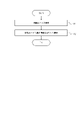
- FIG. 2 is a flowchart showing an example of the operation of the server 20 according to the present embodiment, and is a diagram for explaining an information presentation method by the server 20 as an information presentation device.
- the route search unit 23 When the route search unit 23 receives the search request from the client terminal 10, it searches for the travel route from the departure place to the destination included in the search request (step S11).
- the route information forming unit 24 outputs information on the travel route searched by the route search unit 23 to the client terminal 10 and presents it to the user.
- the route information forming unit 24 provides congestion information regarding the congestion status of the entire travel route according to the degree of congestion of each of the plurality of partial routes. To generate. Then, the route information forming unit 24 adds the congestion information of the generated movement route as a whole to the movement route and presents it to the user (step S12).
- the information presentation method includes a search step (step S11) and a presentation step (step S12).
- the route search unit 23 searches for a travel route from the departure point to the destination designated by the user.
- the route information forming unit 24 is congested as a whole of the movement route according to the degree of congestion of each of the plurality of partial routes. Congestion information about the situation is added to the travel route and presented to the user.
- the information presentation method it is possible to present to the user the congestion information of the entire travel route according to the congestion degree of each of the plurality of partial routes constituting the travel route.
- 3 to 6 are diagrams showing an example of information presentation by the route information forming unit 24.
- FIG. 3 is a diagram showing an example of information presentation to which congestion information as a whole of the movement route is added.
- the route information forming unit 24 displays a list of candidates for a plurality of movement routes from the departure point to the destination.
- the route information forming unit 24 displays the required time, the number of transfers, the walking distance, and the congestion information of the travel route as a whole for each travel route. In this way, by presenting the congestion information as a whole of the movement route for each movement route, the user can determine the movement route in consideration of the congestion information as a whole.
- the example shown in FIG. 3 shows an example of displaying congestion information as a whole of a movement route in three stages.
- the route information forming unit 24 prepares a human-shaped figure (a figure for three people) displayed in a predetermined color in association with each of a plurality of movement routes. Then, the route information forming unit 24 displays a part or all of the humanoid figures for three people in a color different from the original color according to the degree of congestion of the moving route as a whole.
- the route information forming unit 24 uses a color different from the original color of one of the three humanoid figures corresponding to the moving route (for example, one of the three humanoid figures corresponding to the moving route. For example, it is displayed in green). Further, the route information forming unit 24, for example, for a moving route having an overall congestion degree of 1 or more and less than 2, colors two of the three humanoid figures corresponding to the moving route. Display in a color different from the original color (for example, yellow).
- the route information forming unit 24 displays all three corresponding figures corresponding to the moving route in a color different from the original color (for example, red). ). Note that FIG. 3 shows the difference in color due to the difference in hatching.
- the route information forming unit 24 may not only present the congestion information itself (for example, the degree of congestion) of the travel route as a whole, but also summarize and present the congestion information (digest presentation).
- Presenting the congestion information in summary means not only presenting the congestion information in a graphic form as shown in FIG. 3, but also in various modes that allow the user to intuitively grasp the overall congestion status of the travel route. Including presenting.
- the route information forming unit 24 may be able to change the display order using the degree of congestion as a key in displaying a list of candidates for a plurality of moving routes. For example, the route information forming unit 24 may be displayed at a higher level as the movement route has a lower degree of congestion.
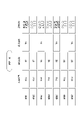
- FIG. 4 is a diagram showing an example in which the congestion information of each of a plurality of partial routes constituting the travel route is presented from a bird's-eye view of the entire travel route as the congestion information of the entire travel route. For example, when one movement route is selected from the list of candidates for a plurality of movement routes shown in FIG. 3, information is presented with a bird's-eye view of the entire movement route as shown in FIG.
- the route information forming unit 24 has three partial routes (partial route from A station to B station, B) constituting a movement route from the departure point (A station) to the destination (D station).
- the partial route from station to C station and the partial route from C station to D station) are displayed.
- the route information forming unit 24 presents congestion information for each of the three partial routes.
- the route information forming unit 24 presents congestion information for each of the three partial routes A, B, and C in each time zone.
- the route information forming unit 24 may connect the time zones in which the use of each partial route is expected with a line based on the required time of each partial route. By doing so, the user can grasp the congestion situation over time when moving from the departure point to the destination along the movement route.
- the route information forming unit 24 moves according to the movement route according to the designated time, and the route information forming unit 24 constitutes a plurality of movement routes.
- Congestion information may be presented during the time period when each partial route is expected to be used. For example, as shown in FIG. 5, when the route information forming unit 24 moves according to a movement route according to a designated time, the route information forming unit 24 is in a time zone in which each of the plurality of partial routes constituting the movement route is expected to be used. Congestion information may be highlighted. In the example shown in FIG.
- the route information forming unit 24 highlights congestion information in a time zone in which each of the plurality of partial routes is expected to be used by enclosing it in a rectangle. Further, as shown in FIG. 5, the route information forming unit 24 may highlight a line connecting time zones in which each of the plurality of partial routes is expected to be used. When the departure time and the arrival time are not specified, the route information forming unit 24 may, for example, highlight the congestion information in the first time zone among the time zones in which the congestion information is presented.
- the route information forming unit 24 may switch the time zone for presenting the congestion information of each of the plurality of partial routes constituting the movement route. For example, the route information forming unit 24 may present the congestion information of each of the plurality of partial routes in the changed time zone when the operation of advancing or delaying the time zone for presenting the congestion information by a predetermined time is performed.
- a predetermined time for example, 10 minutes
- the operation button is displayed on the output unit 12, and the operation button is displayed. It may be performed by the operation input of.
- the route information forming unit 24 may move the highlighting back and forth according to the operation of advancing or delaying the time zone for presenting the congestion information.
- the congestion status in each time zone is clearly indicated by highlighting, so that the user can determine the preferred time zone for traveling in consideration of the congestion status in the time zones before and after the desired time. can.
- the route information forming unit 24 may present a time zone in which the degree of congestion as a whole of the travel route is small, based on the congestion information for each time zone of each of the plurality of partial routes constituting the travel route. Specifically, the route information forming unit 24 has a low degree of congestion as a whole of the travel route, for example, within a predetermined time (for example, 30 minutes) before and after the time designated as the departure time or the arrival time. You may search for the time zone and present it. Therefore, for example, as shown in FIG. 6, the route information forming unit 24 recommends an earlier or later time zone than a time zone in which each of the plurality of partial routes constituting the movement route is used according to the designated time. You may.
- FIG. 6 shows an example in which congestion information in a recommended time zone is displayed by enclosing it in a rectangle, and time zones in which each of a plurality of partial routes is expected to be used are connected by a thick line and highlighted.
- the range for searching for a time zone with a low degree of congestion before and after the specified time may be set by the user or may be preset in the system.
- the route information forming unit 24 calculates the congestion degree of the entire travel route in each time zone within a predetermined time range before and after the designated time, and for example, the calculated congestion degree is the minimum time zone.
- the degree of congestion can be calculated as the average of the degree of congestion of each of the plurality of partial routes constituting the movement route.
- the server 20 moves in consideration of factors that make it difficult for the user to move (whether or not a wheelchair is used, whether or not a baby carriage is used, whether or not there is a hearing or visual impairment), in addition to the degree of congestion. You may present the route. In this case, the server 20 receives, for example, designation of a departure place, a destination, a departure time, an arrival time, and input such as whether or not a wheelchair / baby carriage is used, and whether or not there is a hearing / visual impairment.
- a selection button for selecting whether or not a baby carriage is used, and a selection button for selecting whether or not a baby carriage is used, and the operation to the selection button is displayed is displayed. It may be done by input.
- the route search unit 23 inputs information on factors that make it difficult for the user to move, such as the use of a wheelchair / baby carriage, hearing / visual impairment, etc., as well as the designation of the departure place, destination, departure time, arrival time, etc. Then, based on that information, the travel route is searched. As described above, the route DB 21 stores information on the barrier-free response status in the partial route. Based on this information, the route search unit 23 searches for a movement route considering factors that make it difficult for the user to move. For example, when the user uses a wheelchair or a baby carriage, the route search unit 23 searches for a travel route on which a slope or an elevator is installed.
- the route search unit 23 may search for a travel route that can be used for wheelchairs and baby carriages and a travel route that can be used for hearing and visual impairments, regardless of the presence or absence of information on factors that make it difficult for the user to move. Since any existing method can be used to search for a travel route that can be used for wheelchairs and baby carriages and a travel route that can be used for hearing and visual impairments, the description thereof will be omitted.
- the server 20 as the information presenting device includes a route search unit 23 and a route information forming unit 24 as an information presenting unit.
- the route search unit 23 searches for a travel route.
- the route information forming unit 24 provides congestion information regarding the congestion status of the entire travel route according to the congestion of each of the plurality of partial routes. , Attached to the travel route and presented to the user.
- the present disclosure it is possible to present to the user the congestion status of the movement route composed of a plurality of partial routes as a whole. As a result, the user can determine the congestion status of the travel route as a whole without acquiring the congestion information of each partial route, so that the travel route can be quickly selected in consideration of the congestion status. ..
- a computer to function as each part of the server 20 described above.
- a computer stores a program describing processing contents that realize the functions of each part of the server 20 in the storage unit of the computer, and the CPU (Central Processing Unit) of the computer reads and executes this program. It can be realized by. That is, the program can make the computer function as the server 20 described above.
- CPU Central Processing Unit
- this program may be recorded on a computer-readable medium. It can be installed on a computer using a computer-readable medium.
- the computer-readable medium on which the program is recorded may be a non-transient recording medium.
- the non-transient recording medium is not particularly limited, but may be, for example, a recording medium such as a CD-ROM or a DVD-ROM. This program can also be provided via a network.
- each component can be rearranged so as not to be logically inconsistent, and a plurality of components can be combined or divided into one.
- Information presentation system 10 Client terminal 11 Input section 12 Output section 20 Server (information presentation device) 21 Congestion information update section 22 Route DB 23 Route search section 24 Route information shaping section (information presentation section)
Landscapes
- Engineering & Computer Science (AREA)
- Radar, Positioning & Navigation (AREA)
- Remote Sensing (AREA)
- Automation & Control Theory (AREA)
- General Physics & Mathematics (AREA)
- Physics & Mathematics (AREA)
- Biodiversity & Conservation Biology (AREA)
- Environmental Sciences (AREA)
- Environmental & Geological Engineering (AREA)
- Ecology (AREA)
- Life Sciences & Earth Sciences (AREA)
- Atmospheric Sciences (AREA)
- Navigation (AREA)
Abstract
Selon la présente divulgation, un serveur (20) en tant que dispositif de présentation d'informations comprend : une unité de recherche d'itinéraire (23) qui recherche un itinéraire mobile ; et une unité de formation d'informations d'itinéraire (24), en tant qu'unité de présentation d'informations, qui, lorsque le trajet de déplacement recherché est configuré à partir d'une pluralité d'itinéraires partiels que différents moyens de déplacement suivent, ajoute, à la voie de déplacement, des informations de congestion concernant une situation de congestion globale de l'itinéraire mobile en fonction d'un degré d'encombrement de chacune de la pluralité d'itinéraires partiels, et présente à l'utilisateur l'itinéraire de déplacement à ajout d'informations de congestion.
Priority Applications (2)
| Application Number | Priority Date | Filing Date | Title |
|---|---|---|---|
| US18/038,438 US20240003703A1 (en) | 2020-11-26 | 2020-11-26 | Information presentation method, information presentation device, and program |
| PCT/JP2020/043927 WO2022113221A1 (fr) | 2020-11-26 | 2020-11-26 | Procédé et dispositif de présentation d'informations, et programme |
Applications Claiming Priority (1)
| Application Number | Priority Date | Filing Date | Title |
|---|---|---|---|
| PCT/JP2020/043927 WO2022113221A1 (fr) | 2020-11-26 | 2020-11-26 | Procédé et dispositif de présentation d'informations, et programme |
Publications (1)
| Publication Number | Publication Date |
|---|---|
| WO2022113221A1 true WO2022113221A1 (fr) | 2022-06-02 |
Family
ID=81755703
Family Applications (1)
| Application Number | Title | Priority Date | Filing Date |
|---|---|---|---|
| PCT/JP2020/043927 Ceased WO2022113221A1 (fr) | 2020-11-26 | 2020-11-26 | Procédé et dispositif de présentation d'informations, et programme |
Country Status (2)
| Country | Link |
|---|---|
| US (1) | US20240003703A1 (fr) |
| WO (1) | WO2022113221A1 (fr) |
Citations (4)
| Publication number | Priority date | Publication date | Assignee | Title |
|---|---|---|---|---|
| JP2016218073A (ja) * | 2016-07-12 | 2016-12-22 | 株式会社ナビタイムジャパン | 情報処理システム、情報処理装置、情報処理方法、および、情報処理プログラム |
| JP2018200325A (ja) * | 2018-09-13 | 2018-12-20 | 株式会社ナビタイムジャパン | 情報処理システム、情報処理装置、情報処理方法、および、情報処理プログラム |
| JP2019035658A (ja) * | 2017-08-15 | 2019-03-07 | 株式会社ナビタイムジャパン | 情報処理システム、情報処理プログラム、情報処理装置および情報処理方法 |
| JP2020112565A (ja) * | 2020-03-10 | 2020-07-27 | 株式会社ナビタイムジャパン | 情報処理システム、情報処理装置、情報処理方法、および、情報処理プログラム |
Family Cites Families (13)
| Publication number | Priority date | Publication date | Assignee | Title |
|---|---|---|---|---|
| US7912628B2 (en) * | 2006-03-03 | 2011-03-22 | Inrix, Inc. | Determining road traffic conditions using data from multiple data sources |
| US8024110B2 (en) * | 2007-05-22 | 2011-09-20 | Xanavi Informatics Corporation | Method of estimation of traffic information, device of estimation of traffic information and car navigation device |
| US9970776B2 (en) * | 2015-04-08 | 2018-05-15 | Nec Corporation | WiFi-based indoor positioning and navigation as a new mode in multimodal transit applications |
| US9846041B2 (en) * | 2015-10-20 | 2017-12-19 | OneMarket Network LLC | Time regulated navigation of travel through an airport |
| JP6289516B2 (ja) * | 2016-01-20 | 2018-03-07 | ヤフー株式会社 | 情報提供装置、情報提供方法、プログラム、および端末装置の制御方法 |
| JP6838451B2 (ja) * | 2017-03-23 | 2021-03-03 | 日本電気株式会社 | 混雑情報送信端末装置、混雑状況評価システム、混雑状況評価方法、及び、混雑情報送信プログラム |
| US11222299B1 (en) * | 2017-08-31 | 2022-01-11 | Amazon Technologies, Inc. | Indoor deliveries by autonomous vehicles |
| JP7081279B2 (ja) * | 2018-04-05 | 2022-06-07 | トヨタ自動車株式会社 | 情報処理装置および情報処理方法 |
| US11035676B2 (en) * | 2018-06-11 | 2021-06-15 | Here Global B.V. | Navigation system and method for providing navigational assistance at a venue |
| JP7346890B2 (ja) * | 2019-04-17 | 2023-09-20 | トヨタ自動車株式会社 | 経路探索装置及びコンピュータプログラム |
| KR20190109338A (ko) * | 2019-09-06 | 2019-09-25 | 엘지전자 주식회사 | 로봇 제어 방법 및 로봇 |
| KR20220056718A (ko) * | 2020-10-28 | 2022-05-06 | 현대자동차주식회사 | 경로 생성 장치 및 방법 |
| US20230135554A1 (en) * | 2021-11-01 | 2023-05-04 | Here Global B.V. | Method and apparatus for managing movement in an indoor space |
-
2020
- 2020-11-26 US US18/038,438 patent/US20240003703A1/en active Pending
- 2020-11-26 WO PCT/JP2020/043927 patent/WO2022113221A1/fr not_active Ceased
Patent Citations (4)
| Publication number | Priority date | Publication date | Assignee | Title |
|---|---|---|---|---|
| JP2016218073A (ja) * | 2016-07-12 | 2016-12-22 | 株式会社ナビタイムジャパン | 情報処理システム、情報処理装置、情報処理方法、および、情報処理プログラム |
| JP2019035658A (ja) * | 2017-08-15 | 2019-03-07 | 株式会社ナビタイムジャパン | 情報処理システム、情報処理プログラム、情報処理装置および情報処理方法 |
| JP2018200325A (ja) * | 2018-09-13 | 2018-12-20 | 株式会社ナビタイムジャパン | 情報処理システム、情報処理装置、情報処理方法、および、情報処理プログラム |
| JP2020112565A (ja) * | 2020-03-10 | 2020-07-27 | 株式会社ナビタイムジャパン | 情報処理システム、情報処理装置、情報処理方法、および、情報処理プログラム |
Also Published As
| Publication number | Publication date |
|---|---|
| US20240003703A1 (en) | 2024-01-04 |
Similar Documents
| Publication | Publication Date | Title |
|---|---|---|
| CN106663260B (zh) | 信息提示装置、方法以及程序 | |
| JP6995338B2 (ja) | 情報処理システム、情報処理プログラム、情報処理装置および情報処理方法 | |
| CN107544990A (zh) | 信息处理方法及装置 | |
| JP2019099069A (ja) | 情報処理システム、情報処理プログラム、情報処理装置および情報処理方法 | |
| JP4131745B1 (ja) | ナビゲーションシステム、経路探索サーバおよび経路探索方法ならびに端末装置 | |
| JP3835214B2 (ja) | ドライブルート設定装置及びドライブルート設定プログラム | |
| JP3534228B2 (ja) | 目的地案内装置 | |
| WO2022113221A1 (fr) | Procédé et dispositif de présentation d'informations, et programme | |
| JP2005195518A (ja) | ナビゲーション装置 | |
| JP2012021788A (ja) | ナビゲーションシステム及びpoi情報提供方法 | |
| JP6629498B2 (ja) | 情報処理システム、情報処理方法および情報処理プログラム | |
| US20240019263A1 (en) | Information processing apparatus, information processing method, and moving object | |
| JP2018066681A (ja) | 情報処理システム、情報処理プログラム、情報処理装置、および情報処理方法 | |
| JP5792491B2 (ja) | 案内システム | |
| JP2011158385A (ja) | ナビゲーション装置 | |
| JP7095892B2 (ja) | 情報処理システム、情報処理方法および情報処理プログラム | |
| KR20120042023A (ko) | 지하철 막차시간 계산방법 및 장치 | |
| KR20210113026A (ko) | 여행 계획 생성 관리 서비스 제공 방법 및 여행 계획 생성 관리 서비스 제공 시스템 | |
| JP2009180509A (ja) | 車両用案内支援装置、車両用案内支援方法及びプログラム | |
| JP2006053154A (ja) | 電子地図データおよび経路探索装置 | |
| JP2022037505A (ja) | ナビゲーション装置、プログラム | |
| JP4695939B2 (ja) | 統合駅システム及び駅管理方法 | |
| JP7672381B2 (ja) | 情報処理装置、情報処理方法、および情報処理プログラム | |
| JP7629900B2 (ja) | 情報処理装置、情報処理方法、および情報処理プログラム | |
| US20230384108A1 (en) | Information processing method, information processing device, and non-transitory computer readable recording medium |
Legal Events
| Date | Code | Title | Description |
|---|---|---|---|
| 121 | Ep: the epo has been informed by wipo that ep was designated in this application |
Ref document number: 20963486 Country of ref document: EP Kind code of ref document: A1 |
|
| WWE | Wipo information: entry into national phase |
Ref document number: 18038438 Country of ref document: US |
|
| NENP | Non-entry into the national phase |
Ref country code: DE |
|
| 122 | Ep: pct application non-entry in european phase |
Ref document number: 20963486 Country of ref document: EP Kind code of ref document: A1 |
|
| NENP | Non-entry into the national phase |
Ref country code: JP |