WO2022185964A1 - 通信制御装置、ネットワーク装置、通信制御システム、通信制御方法及び情報通信方法 - Google Patents
通信制御装置、ネットワーク装置、通信制御システム、通信制御方法及び情報通信方法 Download PDFInfo
- Publication number
- WO2022185964A1 WO2022185964A1 PCT/JP2022/006869 JP2022006869W WO2022185964A1 WO 2022185964 A1 WO2022185964 A1 WO 2022185964A1 JP 2022006869 W JP2022006869 W JP 2022006869W WO 2022185964 A1 WO2022185964 A1 WO 2022185964A1
- Authority
- WO
- WIPO (PCT)
- Prior art keywords
- base station
- communication
- wireless communication
- request
- communication device
- Prior art date
- Legal status (The legal status is an assumption and is not a legal conclusion. Google has not performed a legal analysis and makes no representation as to the accuracy of the status listed.)
- Ceased
Links
Images














Classifications
-
- H—ELECTRICITY
- H04—ELECTRIC COMMUNICATION TECHNIQUE
- H04W—WIRELESS COMMUNICATION NETWORKS
- H04W16/00—Network planning, e.g. coverage or traffic planning tools; Network deployment, e.g. resource partitioning or cells structures
- H04W16/14—Spectrum sharing arrangements between different networks
-
- H—ELECTRICITY
- H04—ELECTRIC COMMUNICATION TECHNIQUE
- H04W—WIRELESS COMMUNICATION NETWORKS
- H04W28/00—Network traffic management; Network resource management
- H04W28/16—Central resource management; Negotiation of resources or communication parameters, e.g. negotiating bandwidth or QoS [Quality of Service]
-
- H—ELECTRICITY
- H04—ELECTRIC COMMUNICATION TECHNIQUE
- H04W—WIRELESS COMMUNICATION NETWORKS
- H04W16/00—Network planning, e.g. coverage or traffic planning tools; Network deployment, e.g. resource partitioning or cells structures
- H04W16/24—Cell structures
- H04W16/28—Cell structures using beam steering
-
- H—ELECTRICITY
- H04—ELECTRIC COMMUNICATION TECHNIQUE
- H04W—WIRELESS COMMUNICATION NETWORKS
- H04W52/00—Power management, e.g. Transmission Power Control [TPC] or power classes
- H04W52/04—Transmission power control [TPC]
- H04W52/06—TPC algorithms
- H04W52/14—Separate analysis of uplink or downlink
- H04W52/143—Downlink power control
-
- H—ELECTRICITY
- H04—ELECTRIC COMMUNICATION TECHNIQUE
- H04W—WIRELESS COMMUNICATION NETWORKS
- H04W52/00—Power management, e.g. Transmission Power Control [TPC] or power classes
- H04W52/04—Transmission power control [TPC]
- H04W52/18—TPC being performed according to specific parameters
- H04W52/24—TPC being performed according to specific parameters using SIR [Signal to Interference Ratio] or other wireless path parameters
- H04W52/243—TPC being performed according to specific parameters using SIR [Signal to Interference Ratio] or other wireless path parameters taking into account interferences
-
- H—ELECTRICITY
- H04—ELECTRIC COMMUNICATION TECHNIQUE
- H04W—WIRELESS COMMUNICATION NETWORKS
- H04W52/00—Power management, e.g. Transmission Power Control [TPC] or power classes
- H04W52/04—Transmission power control [TPC]
- H04W52/18—TPC being performed according to specific parameters
- H04W52/28—TPC being performed according to specific parameters using user profile, e.g. mobile speed, priority or network state, e.g. standby, idle or non-transmission
- H04W52/283—Power depending on the position of the mobile
-
- H—ELECTRICITY
- H04—ELECTRIC COMMUNICATION TECHNIQUE
- H04W—WIRELESS COMMUNICATION NETWORKS
- H04W52/00—Power management, e.g. Transmission Power Control [TPC] or power classes
- H04W52/04—Transmission power control [TPC]
- H04W52/38—TPC being performed in particular situations
- H04W52/42—TPC being performed in particular situations in systems with time, space, frequency or polarisation diversity
Definitions
- the present invention relates to a communication control device, a network device, a communication control system, a communication control method, and an information communication method.
- Non-Patent Document 1 and Non-Patent Document 2 based on a request for a transmission power value and a request for a frequency band from a base station, use of the frequency band and power transmission of the base station are permitted. be. Specifically, for example, if the interference to the protection area (PPA, PAL Protection Area) of a base station with the right of Priority Access License (PAL) is below the threshold value, GAA (General Authorized Access) , transmission at the requested power value in the requested frequency band is permitted.
- PPA protection area
- PAL Priority Access License
- the wider the frequency band used by a base station the greater the amount of data that can be transmitted and received by a wireless terminal communicating with that base station. For example, if the frequency band is 5 MHz wide and 10 MHz wide, the amount of data that can be transmitted and received is approximately doubled.
- Non-Patent Document 2 In the frequency sharing mechanism put into practical use by Non-Patent Document 2, once the permitted frequency band is used, even if the amount of data communicated by the user (wireless terminal) of the base station is very small relative to the frequency band. However, it can continue to transmit on the same frequency band. Similarly, once a transmission power value has been granted, it can continue to transmit at the same transmission power value even if the wireless terminal is only in the vicinity of the base station. That is, even if the base station reduces the transmission power value to achieve narrower coverage and is still able to connect with the wireless terminal, the base station can continue to transmit at the same transmission power value.
- the present disclosure provides a communication control device, a network device, a communication control system, a communication control method, and an information communication method that make it possible to improve the utilization efficiency of frequency bands.
- the communication control device of the present disclosure is a receiving unit that receives a radio wave use request for the first wireless communication device; a transmitting unit that transmits a communication status information acquisition request indicating a communication status of the second wireless communication device when the request is received; After the acquisition request is transmitted, the communication status information of the second wireless communication device is received, and based on the communication status information of the second wireless communication device, a condition for radio wave use by the first wireless communication device is determined. a control unit that Prepare.
- a network device of the present disclosure includes a receiving unit that receives a communication status information acquisition request indicating a communication status of a second wireless communication device from a communication control device that determines a radio wave usage condition of the first wireless communication device; a control unit that monitors communication of the second wireless communication device and generates communication status information of the second wireless communication device; a transmission unit configured to transmit communication status information of the second wireless communication device to the communication control device when the acquisition request is received; Prepare.
- the communication control system of the present disclosure is A communication control system comprising a communication control device capable of communicating with a management device that manages the use of radio waves, and a network device connected to a communication network
- the communication control device is a receiving unit that receives a radio wave use request from the management device to the first wireless communication device; a transmission unit configured to transmit a communication status information acquisition request indicating a communication status of a second wireless communication device connected to the communication network to the network device when the request is received;
- the network device a receiving unit that receives the acquisition request from the communication control device; a control unit that monitors communication of the second wireless communication device and generates communication status information of the second wireless communication device; a transmission unit that transmits the communication status information of the second wireless communication device to the communication control device when the acquisition request is received;
- the communication control device includes a control unit that receives the communication status information from the network device and determines conditions for use of radio waves by the first wireless communication device based on the communication status information.
- the communication control method of the present disclosure includes receiving a request to use radio waves for the first wireless communication device; when the request is received, transmitting a communication status information acquisition request indicating the communication status of the second wireless communication device; receiving the communication status information of the second wireless communication device after the acquisition request is transmitted, and determining conditions for radio wave use by the first wireless communication device based on the communication status information of the second wireless communication device; .
- An information communication method of the present disclosure receives a communication status information acquisition request indicating a communication status of a second wireless communication device from a communication control device that determines a radio wave usage condition of the first wireless communication device, monitoring communication of the second wireless communication device and generating communication status information of the second wireless communication device; When the acquisition request is received, the communication status information of the second wireless communication device is transmitted to the communication control device.
- FIG. 1 is a block diagram showing a schematic configuration of a communication control system according to the present disclosure
- FIG. 1 is a block diagram showing an example of a configuration of a communication control device according to an embodiment of the present disclosure
- FIG. 1 is a block diagram showing an example of a gateway device according to an embodiment of the present disclosure
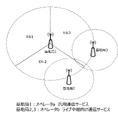
- FIG. 2 shows an example of two wireless communication systems operated by different operators
- FIG. FIG. 2 is a diagram showing an example of the overall configuration of a system in specific example 1
- FIG. 10 is a diagram showing coexistence conditions in specific example 1
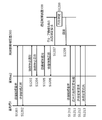
- FIG. 4 is a diagram showing a sequence for applying to a frequency management device for permission to use radio waves or frequencies
- FIG. 4 is a diagram showing an example of a sequence in which a frequency management device requests a coexistence determination to a communication control device;
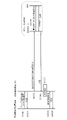
- FIG. 4 is a diagram showing an example of a sequence between each base station and a frequency management device after starting operation;
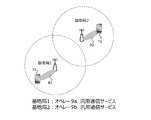
- 2 shows an example of two wireless communication systems operated by different operators;
- FIG. FIG. 11 is a diagram showing an example of the overall configuration of a system in specific example 2;
- FIG. 11 is an explanatory diagram of coexistence conditions in specific example 2;
- FIG. 3 is a diagram showing each area within a cell of a base station;
- FIG. 3 is a diagram showing each area within a cell of a base station;
- FIG. 4 is a diagram showing a sequence of applying for permission to use radio waves (permission to transmit) to a frequency management device;
- FIG. 4 is a diagram showing an example of a sequence in which a frequency management device requests a coexistence determination to a communication control device; The figure which shows an example of the sequence during stadium service operation.
- FIG. 4 is a diagram showing an example of a sequence related to coexistence determination performed by a communication control device during operation of a live service; The figure which shows an example of the sequence in the case of ending a live service.
- FIG. 4 is a diagram showing an example in which the coverage of each base station changes according to the movement of a terminal during live service provision; 2 shows an example of two wireless communication systems operated by different operators; FIG. FIG.
- FIG. 11 is a diagram showing an example of the overall configuration of a system in specific example 2;
- FIG. 10 is a diagram showing coexistence conditions of base stations in specific example 2;
- FIG. 25 is a detailed explanatory diagram of the coexistence conditions of FIG. 24;
- FIG. 4 is a diagram showing a sequence for applying to a frequency management device for permission to use radio waves or frequencies;
- FIG. 4 is a diagram showing an example of a sequence in which a frequency management device requests a coexistence determination to a communication control device;
- FIG. 10 is a diagram showing an example of a sequence between each base station and a frequency management device after the start of operation;
- FIG. 10 is a diagram showing an example of a sequence related to coexistence determination performed by a communication control apparatus during service operation by each base station; The figure which shows an example of a sequence in the case of ending a service.
- FIG. 1 is a block diagram showing a schematic configuration of a communication control system according to the present disclosure.
- a communication control system according to the present disclosure includes a communication control device 100 , a frequency management device 300 and a plurality of wireless communication systems 501 , 502 and 550 . Although three wireless communication systems are shown in FIG. 1, the number of wireless communication systems may be one, two, or four or more.
- a wireless communication system 501 includes base stations 401A to 401C, a core network configuration device 700A, and a gateway device 600A.
- a wireless communication system 502 includes base stations 401D, 401E, 401F, a core network configuration device 700B, and a gateway device 600B.
- the base stations 401A to 401F are examples of the first wireless communication device or the second wireless communication device according to this embodiment.
- the wireless communication device according to the present disclosure is not limited to a base station and may be an access point.
- the wireless communication device according to the present disclosure may be a terminal device, a device that performs D2D communication, or a moving relay base station that operates as a base station or access point.
- the wireless communication device according to the present disclosure may be a CBSD (Citizens Broadband Radio Service Device).
- Any base station will be referred to as base station 401 when there is no particular distinction between base stations.
- An arbitrary core network constituent device is referred to as a core network constituent device 700 when each core network constituent device is not distinguished.
- Any gateway device is referred to as a gateway device 600 when the gateway devices are not distinguished from each other.
- the core network configuration device 700 and the gateway device 600 are shown as separate devices in FIG. 1, both devices may be integrated.
- the gateway device 600 corresponds to the network device according to this embodiment.
- the set of core network configuration device 700 and gateway device 600 corresponds to the network device according to this embodiment.
- the wireless communication systems 501 and 502 are operated by different companies (operators).
- the number of base stations included in one wireless communication system may be any number of one or more.
- Each base station 401 uses a frequency band that can be shared between the wireless communication systems 501 and 502 (shared frequency band) to communicate with other devices (for example, terminals within the communication coverage of each base station 401, other base stations 401, etc.). ) for wireless communication.
- the base station 401 can also perform wireless communication with other devices (for example, terminals, etc.) using frequency bands other than the shared frequency band.
- Wireless communication systems 501 and 502 are, by way of example, cellular systems. However, the wireless communication systems 501, 502 are not limited to cellular systems and may be other types of wireless communication systems.
- the shared frequency band according to the present embodiment is a frequency band that can be shared between the wireless communication systems 501 and 502, but may be a frequency band that can be shared within a single wireless communication system 501 or 502.
- the wireless communication system 550 is a wireless communication system having a different priority than the wireless communication systems 501 and 502 regarding the use of the shared frequency band.
- wireless communication system 550 is a wireless communication system having a higher or lower priority than wireless communication systems 501,502.
- Examples of high priority radio communication systems include naval ship radar systems.
- Examples of low priority wireless communication systems include systems similar to wireless communication systems 501, 502 (eg, cellular systems, etc.). It is assumed that wireless communication systems 501 and 502 are wireless communication systems that have the same priority as each other regarding the use of the shared frequency band.
- the frequency management device 300 is a device that manages radio wave usage or frequency usage of the wireless communication systems 501 , 502 , 550 .
- the frequency management device 300 corresponds to SAS (Spectrum Access System) in CBRS (Citizens Broadband Radio Service), but is not limited to this.
- SAS Specific Access System
- CBRS Compute Broadband Radio Service
- the frequency management device 300 In a frequency band (shared frequency band) that can be shared between the radio communication systems 501 and 502, the frequency management device 300 notifies the base station 401 (first radio communication device) of the usage conditions of the shared frequency band (for example, the shared frequency band conditions related to usable frequency or transmission power, etc.).
- the calculated conditions of use are referred to as general conditions of use.
- the shared frequency band includes, by way of example, multiple frequencies (shared frequencies or sub-bands) each having a non-interfering relationship, and the multiple frequencies may be independently selectable.
- the frequency management device 300 transmits radio waves to the base station 401 based on the usage status of the shared frequency band of another base station 401 in the same or another wireless communication system and the usage status of the shared frequency band of other types of wireless communication systems. Calculate the conditions of use (general conditions of use).
- the general conditions of use include, for example, identifiers of frequencies (shared frequencies) that can be used by the base station 401, maximum transmission power values that can be used on the frequencies, and the like.
- the frequency management device 300 calculates the conditions stipulated by the US frequency sharing disclosed in Non-Patent Document 1 as general usage conditions.
- the frequency management device 300 may calculate the general usage conditions by other methods. For example, based on how far apart base stations whose positions are identified by longitude and latitude are, and how much transmission power is required to share the same frequency with each base station (whether or not interference occurs). , the general conditions of use may be calculated.
- the frequency management device 300 receives from the base station 401 a request for using radio waves in the shared frequency band (radio wave use request).
- radio wave use request examples include a request to calculate a usable frequency or transmission power value or beam in the shared frequency band, or a request for permission to use the frequency, transmission power or beam specified by the base station 401 in the shared frequency band.
- the radio wave use request may include information on the frequency, transmission power value, or beam that the base station 401 requests to use.
- the frequency management device 300 When receiving a radio wave use request from the base station 401, the frequency management device 300 sets the usage conditions (general usage conditions) of the shared frequency band to the base station 401 by providing the location information of the base station 401, the same and other wireless communication It is calculated using the positional information of other base stations 401 in the system.
- the frequency management apparatus 300 allows radio wave use between base stations belonging to different groups from the base station 401 that has transmitted the radio wave use request, and other types of radio communication systems (including, for example, high-priority radio communication systems). If the request does not meet the general conditions of use, the radio use request by the base station 401 is disallowed.
- the frequency requested by the radio wave usage request may not be included in the frequencies allowed under the general use conditions.
- base stations 401A to 401F belong to the same group. In this embodiment, it is assumed that only this group exists, but other groups may exist.
- the frequency management apparatus 300 instructs the communication control apparatus 100 to A radio wave use request (coexistence determination request) relating to the station 401 is transmitted.
- the coexistence determination request requests base station 401 to calculate frequencies, transmission power values, beams, etc. that can be used in the group, using information about each base station in the group to which base station 401 belongs. include. That is, the coexistence determination request includes a request to calculate radio wave use conditions (coexistence conditions) between base station 401 and other base stations belonging to the same group.
- the coexistence condition includes, for example, the identifier of a frequency (shared frequency) that can be used by the base station 401 within the group, the maximum transmission power value that can be used on that frequency, and the like.
- the frequency management device 300 receives a response including the determination result (for example, coexistence conditions including usable frequencies, etc.) from the communication control device 100 .
- Frequency management apparatus 300 transmits a response to the request from base station 401 to base station 401 based on the general usage conditions and the determination result (coexistence condition).
- the response includes frequencies, transmission power, beams, etc. that can be used by the base station 401 (parameter information of radio waves that can be used by the base station 401).
- the response may contain information such as the availability of the requested frequency, transmit power or beam.
- the frequency management apparatus 300 cannot approve the request because the frequency or the like requested by the base station 401 does not satisfy the general use conditions or does not satisfy the coexistence conditions, one or more other candidate frequencies, transmission power, or Beams, etc. may be determined as alternative suggestions.
- the determined proposal may be included in the response.
- the gateway devices 600 (600A, 600B) and the core network configuration devices 700 (700A, 700B) are part of the devices that make up the core network.
- the core network in the cellular system is, for example, EPC (Enhanced Packetized Core) in the LTE system and 5GC (5G Core) in 5G.
- EPC Enhanced Packetized Core
- 5G Core 5GC
- the core network configuration device 700 communicates with wireless communication terminals (hereinafter referred to as terminals) via the base station 401 to monitor the status of the terminals and provide services in response to requests from the terminals.
- the service is, for example, connection to the Internet outside the wireless communication system.
- it may also be a data processing service that exists within a wireless communication system.
- a terminal is, for example, a UE (User Equipment), an IOT terminal, a modem, a smartphone, or the like (the same shall apply hereinafter).
- the gateway device 600 acquires information (communication status information) on the communication status of the terminal or base station 401 from the core network configuration device 700 .
- the gateway device 600 transmits communication status information acquired through the core network configuration device 700 (information obtained by processing the acquired communication status information is also included in the communication status information) to the communication control device 100 .
- the communication status information is information based on, for example, the frequency of the terminal or base station, the amount of communication data, or the position. Also, information related to antennas used by the base station and the terminal, such as beam information used by the base station or the terminal, or other information may be used.
- the gateway device 600 has an API (Application Program Interface) for providing communication status information obtained through the core network configuration device 700 in response to an inquiry from the communication control device 100 .
- the gateway device 600 receives an acquisition request for information on the base station 401 from the communication control device 100 through an API.
- the communication control device 100 requests the gateway device 600 to provide the communication status information through an API. That is, the communication control device 100 transmits a communication status information acquisition request to the gateway device 600 .
- the communication control apparatus 100 transmits a communication status information acquisition request for the base station 401 and other base stations 401 (other base stations in the same group as the base station) in the wireless communication system.
- the communication control apparatus 100 transmits a request for acquiring communication status information regarding terminals communicating with the base station 401 and terminals communicating with other base stations 401 through the API.
- a request to acquire communication status information about a base station and a request to acquire communication status information about a terminal belonging to a base station may be included in the same request or may be separate requests.
- the gateway device 600 transmits the acquired communication status information to the communication control device 100 via API. Based on the communication status information received from the gateway device 600 , the communication control device 100 calculates the radio wave usage conditions (coexistence conditions) of the base station 401 . The communication control device 100 transmits to the frequency management device 300 information indicating permission to use or continue to use the frequency or transmission power that satisfies the coexistence condition.
- the communication control apparatus 100 When the communication control apparatus 100 receives a coexistence determination request for the base station 401 from the frequency management apparatus 300, it calculates or determines the coexistence condition for the base station 401 concerned. In order to calculate or determine the coexistence condition, the communication control device 100 transmits the communication status information acquisition request to each gateway device 600 .
- a base station from which communication status information is to be acquired is another base station 401 in the same group as the base station 401 .
- only base stations belonging to a radio communication system of an operator different from the operator of the base station 401 (operator of the radio communication system including the base station 401) may be targeted. .
- such a method is conceivable when the operator can control interference between base stations operated by the same operator. In this case, it is sufficient to calculate the coexistence condition only between operators with different base stations.
- the communication control device 100 calculates the coexistence condition based on the communication status information acquired from each gateway device 600, and determines whether the request can be permitted (for example, whether the requested frequency can be used) based on the coexistence condition. do. Also, the communication control apparatus 100 may determine frequencies and the like that can be used by other base stations 401 in the same group as the base station 401 based on the coexistence conditions. If the frequency or the like requested by the base station 401 does not satisfy the coexistence condition, the communication control apparatus 100 determines that the requested frequency or the like cannot be used. The communication control device 100 transmits a response including the result of the determination (usable frequencies or information on usability or the like) to the frequency management device 300 . Also, the communication control device 100 may transmit a response including the calculated coexistence condition to the frequency management device 300 .
- the wireless communication systems 501 and 502 are inferior to the wireless communication system 550 in using the shared frequency band. That is, when the radio communication system 550 with a high priority uses a frequency in the shared frequency band (when there is interference in the frequency), the radio communication systems 501 and 502 with a low priority do not satisfy the above-mentioned general conditions of use, This frequency cannot be used.
- the base station when a base station belonging to one of the radio communication systems 501 and 502 is using the frequency first, and the radio communication system 550 starts using the frequency later, the base station must stop using On the other hand, if the wireless communication system 550 has a lower priority than the wireless communication systems 501 and 502, the wireless communication system 550 is inferior to the wireless communication systems 501 and 502 in using the shared frequency band.
- Each gateway device 600 acquires the communication status information based on the monitoring of the communication of the base station 401 or the terminal by the core network configuration device 700 in response to the communication status information acquisition request (inquiry) from the communication control device 100 . Specifically, for example, the gateway device 600 acquires the aforementioned communication status information (including information obtained by processing the communication status information) for calculating the coexistence condition. In response to an acquisition request from the communication control device 100, the gateway device 600 acquires communication status information of base stations belonging to the same wireless communication system as the gateway device 600 and terminals communicating with the base stations.
- the base station specified by the communication control device 100 in the acquisition request is the base station that requested the use of radio waves, or another base station within the same group as the base station.
- the gateway device 600 may periodically acquire the communication status information in preparation for a future inquiry (receipt of an acquisition request) from the communication control device 100 and store it in the internal storage unit.
- the communication control device 100 and the gateway device 600 (600A, 600B) according to the present disclosure will be described in detail below.
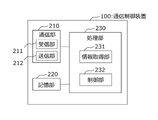
- FIG. 2 is a block diagram showing an example of the configuration of the communication control device 100 according to the embodiment of the present disclosure.
- the communication control device 100 includes a communication section 210 , a storage section 220 and a processing section 230 .
- Communication unit 210 includes a receiving unit 211 that receives information and a transmitting unit 212 that transmits information.
- Processing unit 230 includes an information acquisition unit 231 and a control unit 232 .
- the communication unit 210 transmits and receives information.
- the communication unit 210 includes a transmission unit that transmits information and a reception unit that receives information.
- the communication unit 210 includes a communication interface for wired or wireless communication.
- communication unit 210 includes one or more antennas.
- Communication unit 210 transmits information to other nodes and receives information from other nodes.
- Other nodes include, for example, frequency management device 300 and gateway device 600 .
- the communication interface with frequency management device 300 and the communication interface with gateway device 600 may be different or the same.
- Other nodes may also include base stations.
- the storage unit 220 temporarily or permanently stores programs and data for operating the communication control device 100 .
- the storage unit 220 is a recording medium such as a memory device, hard disk, or optical disk.
- the memory device may be non-volatile memory or volatile memory.
- the processing unit 230 provides various functions of the communication control device 100.
- the processing unit 230 is connected to the communication unit 210 and the storage unit 220 .
- the processing unit 230 includes an information acquisition unit 231 and a control unit 232 .
- the processing unit 230 may further include elements other than the information acquisition unit 231 and the control unit 232 . That is, the processing unit 230 can also perform operations other than the operations of the information acquisition unit 231 and the control unit 232 .
- the information acquisition unit 231 acquires information on the wireless communication system (501, 502, 550), information on an arbitrary base station 401 belonging to the wireless communication system, or information on a terminal communicating with the base station 401, to the gateway device 600, the frequency management device. 300 or both.
- the terminal may be a terminal that communicates with the base station 401 related to the coexistence determination request, or a terminal that communicates with another base station 401 belonging to the same group (first group) as the base station 401 concerned.
- the information acquisition unit 231 obtains, as communication status information about the base station 401, information about the position of the base station 401 (for example, longitude, latitude, and height above ground), information about the amount of communication data of the base station 401, or Parameter information of the beam being used (information on the shape of the beam) may also be included.
- the information acquisition unit 231 obtains, as communication status information of a terminal wirelessly communicating with an arbitrary base station 401, for example, information based on the position of the terminal (latitude, longitude, height above ground), or information based on the distance from the communication base station 401 to the terminal. Get distance and direction information. Also, when the coverage of the base station 401 is divided into an arbitrary number and an ID is given to each divided area, the information of the area ID corresponding to the position where the terminal is communicating may be obtained.
- the information acquisition unit 231 may acquire information about the amount of communication data between the terminal and the base station 401 as the communication status information of the terminal.
- the information about the amount of communication data is, for example, the total amount of data transmitted or received on at least one of uplink and downlink through the base station. Alternatively, it may be the total amount of data having a specific priority.
- the information acquisition unit 231 may acquire the following information as communication status information.
- the information acquisition unit 231 may acquire information (antenna-related information) on the antenna of the base station 401 or the terminal.
- Antenna-related information may include antenna dimensions, polarization information, number of antenna elements, spacing between antenna elements, antenna size, antenna orientation, applicable transmission modes, or formable beam patterns, or the like.
- the information acquisition unit 231 may acquire information about the device class of the base station 401 or the terminal.
- the information about the device class may indicate the device class, or may indicate parameters such as maximum transmission power defined by the device class.
- the information acquisition unit 231 may acquire information regarding the priority of the wireless communication system regarding the use of the shared frequency band.
- Information about priority may indicate a priority.
- the information acquisition unit 231 may acquire information about the user type of the wireless communication system.
- the information about the user type may indicate the user type.
- the user type may be a business operator, an individual, or a public entity.
- the information acquisition unit 231 may acquire information about the system type of the wireless communication system.
- Information about the system type may indicate the system type.
- the system type may be DECT (Digital Enhanced Cordless Telecommunications) or disaster prevention radio.
- the information acquisition unit 231 may further acquire other information related to the wireless communication system from the frequency management device 300 or the gateway device 600.
- the information acquisition unit 231 may acquire information other than the information described above.
- the information acquisition unit 231 may receive a coexistence determination request from the frequency management device 300 to a certain base station 401 as the timing for acquiring the communication status information of the base station 401 or the terminal. At this time, the information acquisition unit 231 obtains, for example, the communication status information of the base station 401 and terminals communicating with the base station 401, other base stations in the same group as the base station 401, and communication with the other base stations. Acquire the communication status information of the terminal.
- the destination of the acquisition request is the corresponding gateway device 600 or frequency management device 300 .
- the coexistence determination request includes, for example, an inquiry about frequencies, transmission power values, beams, etc. that can be used by the base station 401, or an inquiry about availability of frequencies, transmission power values, beams, etc. requested by the base station 401.
- control unit 232 When receiving a coexistence determination request for a certain base station 401 , the control unit 232 calculates a usage condition (coexistence condition) for the shared frequency band within the group for that base station 401 . In order to calculate the coexistence condition, the control unit 232 controls at least one of the base station 401, a terminal communicating with the base station 401, another base station 401 in the same group, and the other base station 401. Use contextual information.
- the coexistence condition may include information (identification information) identifying frequencies that can be used by the base station 401 in the shared frequency band.
- the coexistence condition may also include a transmittable transmit power value (eg, maximum transmit power value) of the base station 401 for a shared frequency band or available frequencies.
- the coexistence conditions may also include parameter information of usable beams (usable space) of the base station 401 for shared frequency bands or usable frequencies.
- the usable space is a space that does not interfere with other base stations even if the received power of the signal transmitted by the base station 401 exceeds a predetermined power.
- Information specifying usable frequencies, transmission power values, and usable spaces (beams, etc.) is an example of radio wave parameter information usable by the base station 401 .
- each usable space corresponds to a space in which frequencies can be used.
- the base station 401 may configure a space in which the frequency can be used by beam-type transmission with sharp directivity realized by using a so-called MIMO antenna composed of a plurality of antenna elements. .
- the control unit 232 can determine the frequency, transmission power, beam, etc. that the base station 401 can use, or determine whether or not to use the frequency, transmission power, beam, etc. requested by the base station 401. If the frequency requested by the base station 401 cannot be used, the control unit 232 determines a frequency that can be used in the group by the base station 401 from other candidate frequencies in the shared frequency band. may Usable frequencies, availability of requested frequencies, frequencies determined from candidates, etc. are examples of usage conditions that satisfy the requirements of the base station 401, or examples of parameter information of radio waves that can be used by the base station 401. be. Control unit 232 transmits a response (answer) including the determination result to frequency management device 300 via communication unit 210 . The control unit 232 may transmit information indicating the calculated coexistence condition to the frequency management device 300 .
- a base station belonging to a certain wireless communication system (assumed as base station A) and a base station belonging to another wireless communication system (assumed as base station B) have overlapping cells (coverage) in a certain shared frequency band.
- the shared frequency band may be allocated according to the communication data amount or the number of terminals connected to each of the base stations A and B.
- FIG. For example, if the shared frequency band is 100 MHz wide and the traffic ratio is 1:1, the base station belonging to one wireless communication system uses 50 MHz wide, and the base station belonging to another wireless communication system also uses 50 MHz.
- the bandwidth may be changed accordingly (change the utility condition).
- the amount of communication data at the time of determination may be used, or the amount of communication data that continues from a certain point in the past until the time of determination may be used for determination. For example, it may be determined using a certain rule, such as the average of the past hour. Alternatively, it may be determined based on the future communication data amount predicted from the past communication data amount.
- a usable frequency can be shared according to the attribute information of terminals connected to base station A and base station B, or the attribute information of applications used by the terminals or base stations. It may be calculated as a condition. For example, application A may be prioritized over application B, allowing more bandwidth to the base station using application A.
- the sharing condition may be calculated based on the location information of the terminal within the coverage of the base stations A and B.
- the transmission power of base station B is adjusted so as to eliminate the overlapping portion (i.e., the transmission power of base station B is smaller) may be calculated as the coexistence condition. Assume that after this, the terminal communicating with the base station A disappears from the overlapping portion, and the terminal communicating with the base station B moves and enters the overlapping portion.
- the transmission power is adjusted so that the overlapping part is excluded from the coverage of base station A (that is, the transmission power of base station A is reduced), and the transmission power is adjusted so that the overlapping part is included in the coverage of base station B. (That is, increasing the transmission power of the base station B) may be calculated as the coexistence condition.
- the algorithm for calculating the shared conditions is executed by the control unit 232 of the communication control device 100 as a processing algorithm upon agreement between the operator of one wireless system and the operator of another wireless system.
- FIG. 3 is a block diagram showing an example of the gateway device 600 according to the embodiment of the present disclosure.
- Gateway device 600 includes communication unit 610 , storage unit 620 and processing unit 630 .
- the processing unit 630 includes an information acquisition unit 631 and a control unit 632 .
- the communication unit 610 transmits and receives information.
- Communication unit 610 includes a receiving unit 611 that receives information and a transmitting unit 612 that transmits information.
- Communication unit 610 includes a communication interface for performing wired or wireless communication.
- communication unit 610 includes one or more antennas.
- Communication unit 610 transmits information to other nodes and receives information from other nodes.
- other nodes include the communication control device 100 or the core network component device 700 .
- the communication interface with the communication control device 100 and the communication interface with the core network configuration device 700 may be different or the same.
- the communication unit 610 may receive and execute a data write request or data read request to the storage unit 620 from the communication control device 100 or another device (for example, an operation terminal or an input device). In this case, the communication unit 610 transmits the processing result of the write request to the communication control device 100 or another device or the read data to the request source device.
- the storage unit 620 is a database that temporarily or permanently stores data.
- the storage unit 620 is a recording medium such as a memory device, hard disk, or optical disk.
- the memory device may be non-volatile memory or volatile memory.
- the storage unit 620 temporarily or permanently stores programs and data for operation of the gateway device 600 .
- the storage unit 620 is a recording medium such as a memory device, hard disk, or optical disk.
- the memory device may be non-volatile memory or volatile memory.
- the storage unit 620 stores information (communication control information, etc.) acquired by the information acquisition unit 631 and processed communication control information.
- the processing unit 630 provides various functions of the gateway device 600.
- the processing unit 630 is connected to the communication unit 610 and the storage unit 620 .
- the processing unit 630 includes an information acquisition unit 631 and a control unit 632 .
- the processing unit 630 may further include elements other than the information acquisition unit 631 and the control unit 632 . That is, the processing unit 630 can also perform operations other than the operations of the information acquisition unit 631 and the control unit 632 .
- the information acquisition unit 631 obtains information (communication status information, etc.) on an arbitrary base station 401 and a terminal communicating with the arbitrary base station 401 via the core network configuration device 700 that monitors communication between the base station 401 and the terminal. get.
- the communication status information may include information regarding the number of terminals communicating with the base station 401 .
- the number of terminals may be the number classified by terminal type.
- the radio system used by the base station 401 for communication with terminals, or the radio system used when the base station 401 performs negotiations with the frequency management device 300 (for example, requesting use of radio waves). May contain relevant information.
- the radio system is, for example, a communication system (time division multiplexing, space division multiplexing, frequency division multiplexing, etc.), and detailed settings in the communication system (for example, in the case of time division multiplexing, the ratio of time for uplink communication and downlink communication, etc. ) may be included.
- the communication status information may be the frequency, transmission power value, or beam parameter information used by the base station 401 .
- the communication status information may also include the frequency and transmission power value that the base station requests the frequency management device 300 to use.
- the communication status information regarding the base station 401 is not limited to the above example.
- the communication status information may include the location information of the base station 401 and the antenna-related information described above.
- the information acquisition unit 631 acquires terminal-related information (communication status information, etc.) via the core network configuration device 700 .
- Examples of communication status information about terminals are as described above.
- Another example of the communication status information regarding the terminal will be described (however, it partially overlaps with the above description).
- the communication status information may include the amount of data per unit time or the history of the amount of data with which the terminal communicates with the base station (that is, the amount of current or past data).
- the data amount may be a data amount classified by data type (uplink, downlink, control information, communication priority).
- the communication status information regarding the terminal is not limited to the above example, and may be information other than the above example.
- the information acquisition unit 631 acquires information such as communication status information on the above-described base stations and terminals, for example, at regular time intervals, and stores the acquired information in the storage unit 620 .
- control unit 632 processes the communication status information acquired by the information acquisition unit 631 .
- the communication status information after processing is also included in the communication status information according to this embodiment.
- Control unit 632 stores the processed communication status information in storage unit 620 .
- the control unit 632 processes the communication status information according to the type of request assumed as an information acquisition request from the communication control device 100 . Processing may be performed in advance for each type of request prior to receipt of the request. This allows an immediate response upon receipt of the request. An example of processing the communication status information is shown below.
- control unit 632 determines the number (quantity) of terminals communicating with the base station 401 for the past 24 hours, the value for the past hour, the current value, the predicted value for the future one hour, and the predicted value for the future 24 hours.
- a value or the like may be calculated and stored in the storage unit 620 .
- the type of terminal may determine which of these time types predictions are required.
- the communication data amount of the terminal communicating with the base station 401 for example, information is calculated for each time (past, present, future), terminal type, application type, and communication priority, and the storage unit 620 can be stored in For example, the amount of communication data is measured for each application type and stored in the storage unit 620 .
- the location information of the terminal communicating with the base station 401 may be calculated for each time (past, present, future), terminal type, and application type, and stored in the storage unit 620 .
- a specific example is "a heat map within the coverage of a base station as a prediction of the positions of all terminals over the next 24 hours".
- a heatmap may represent, for example, the distribution of probabilities that a terminal is present at each location within the coverage of the base station. The probabilities may be sorted by color.
- the control unit 632 may perform processing to prevent the communication control device 100 from specifying the individual information of the terminal when processing the communication status information. For example, when a surveillance camera (IOT terminal) always present at the same position is transmitting video data, the communication control device 100 may be able to estimate that the terminal is a surveillance camera from the information received from the gateway device 600. There is Therefore, in order to prevent the individual information of the terminal from being easily estimated, for example, communication control information including intentionally random errors (for example, position information is intentionally changed at random intervals) is transmitted to the communication control apparatus 100. may
- a group in specific example 1 includes a plurality of base stations (radio communication devices) belonging to a plurality of radio communication systems with equal priority.
- a plurality of wireless communication systems are operated by different operators.
- a plurality of base stations may be located, for example, at different arbitrary heights.
- a plurality of base stations may be arranged at different heights within a certain area.
- multiple base stations may be located on different floors of a building, or multiple house roofs at different heights, or may be located at different heights on one or more utility poles. good too.
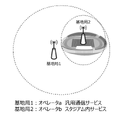
- FIG. 4 shows an example of two wireless communication systems operated by different operators.
- One radio communication system is operated by operator a and includes a base station 1 .
- the base station 1 provides general purpose communication services.
- general-purpose communication services are, for example, telephone services and Internet connection services.
- the other radio communication system is operated by operator b and includes base station 2 .
- Stadium services are, for example, local data provision services for event participants in the stadium, or high quality communication services for live relaying of events to the outside.
- the base station 1 After the installation of base station 1, operator a's base station 1 basically always provides service.
- the base station 2 of the operator b does not always provide service after installation of the base station 2, but basically provides service only when an event is held in the stadium.
- the radio communication system of operator a corresponds to the radio communication system 501 in FIG. 1
- the radio communication system of operator b corresponds to the radio communication system 502 in FIG. 1 (however, the number of base stations is different).
- General communication services and stadium services can coexist using frequency bands that at least partially overlap or interfere with each other.
- both services use the same frequency band (shared frequency band).
- shared frequency band By dividing the shared frequency band, for example, both services can be implemented simultaneously without interference.
- Dividing the shared frequency band may include selecting and using different frequencies for both services when the shared frequency band includes a plurality of mutually orthogonal (non-interfering) frequencies. When one service is not in operation, it is possible for the other service to use all of the shared frequency band.
- FIG. 5 shows an example of the overall configuration of the system in Concrete Example 1.
- the radio communication system of the general communication service operated by operator a is a cellular system and includes 5GC_1 as core network.
- the radio communication system for stadium services operated by operator b is a cellular system and includes 5GC_2 as core network.
- 5GC_1 includes a configuration in which a core network configuration device 700_1 and a gateway device 600_1 are integrated as a network device according to this embodiment.
- the gateway device 600_1 has a role as a gateway function, which is a new network function (NF) of 5GC_1, and is described as GW600_1.
- a core network configuration device 700_1 is connected to the base station 1 .
- 5GC_2 includes a configuration in which a core network configuration device 700_2 and a gateway device 600_2 are integrated as a network device according to this embodiment.
- the gateway device 600_2 has a role as a gateway function, which is a new network function (NF) of 5GC_2, and is described as GW600_2.
- a core network component device 700_2 is connected to the base station 2 .
- the base station 1 and the base station 2 are connected to the frequency management device 300 by wire or wirelessly.
- the general-purpose communication service 5GC_1 and the stadium-specific communication service 5GC_2 are connected to the communication control device 100.
- FIG. 6(A) shows an example of coexistence conditions (radio wave use conditions) of base station 1 and base station 2 in this specific example.
- the coexistence condition is a frequency usage condition (radio wave usage condition) for allowing the base station 1 and the base station 2 to provide services at the same time.
- the storage unit 220 of the communication control device 100 stores the coexistence conditions shown in FIG. 6A in tabular form.
- the storage unit 220 also stores identification information of groups to which each base station belongs. Available transmission bandwidths (frequency bandwidths) of the base station 1 and the base station 2 are shown according to the implementation status of the stadium service.
- the shared frequency band is 100MHz.
- operator b's system base station 2, etc.
- base station 2 When the stadium service is not being implemented, operator b's system (base station 2, etc.) is stopped. At this time, all of the shared frequency band of 100 MHz can be allocated (allowed) to the base station 1 (or operator a). For example, operator a can provide communication services by base station 1 using all 100 MHZ.
- the transmission bandwidths that can be assigned to base station 1 and base station 2 are controlled according to three cases (Case 1, Case 2, Case 3).
- Case 1 a transmission bandwidth of 80 MHz can be assigned to base station 1, and a transmission bandwidth of 20 MHz can be assigned to base station 2.
- Case 2 a transmission bandwidth of 50 MHz can be assigned to base station 1, and a transmission bandwidth of 50 MHz can be assigned to base station 2.
- Case 3 a transmission bandwidth of 20 MHz can be assigned to base station 1 and a transmission bandwidth of 80 MHz can be assigned to base station 2 .
- Fig. 6(B) shows the definitions of Case1 to Case3.
- the initial state is Case1.
- transitions are made between Case 1 to Case 3 according to the number of users of the general-purpose communication service (the number of users of base station 1) and the amount of communication data in stadium service status (the amount of communication data of base station 2). .
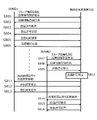
- FIG. 7 shows a sequence of applying for permission to use radio waves or frequencies to the frequency management device 300 when the base station 1 and the base station 2 each start their services.
- the base station 1 transmits a request (installation information registration request) to the frequency management device 300 to register the base station 1 in the frequency management device 300 (S801).
- the installation registration request is made, for example, when the base station 1 is newly installed.
- Information about the base station 1 is included in the installation information registration request.
- the information about the base station includes, for example, the identifier of the base station 1, the location information of the base station 1, the specification information of the base station 1, the group information to which the base station 1 belongs, and the like.
- the frequency management device 300 transmits to the base station 1 a response (installation information registration response) to the effect that registration for the frequency management device 300 has been completed (S802).
- the frequency management apparatus 300 may determine whether registration is permitted based on the installation position of the base station 1 or the like. For example, whether or not registration is permitted may be determined based on the geographical positional relationship with other registered base stations.
- the base station 1 transmits a frequency usage permission request (transmission permission request) to the frequency management device 300 (S803).
- the transmission permission request includes information related to the frequency requested to be used, such as the frequency requested to be used (transmission frequency) and the transmission power value.
- the frequencies requested for use may be the entire shared frequency band. In this example, it is assumed that the frequency requested for use is the entire shared frequency band.
- the frequency management device 300 calculates the general use conditions for using radio waves, and if the general use conditions are met, permits the use of the requested frequency. At this point, there are no higher priority systems using the shared frequency band and base stations in other groups using the shared frequency band, and there are no base stations in the same group using the shared frequency band. There are no other base stations. Therefore, the condition that the entire shared frequency band can be used is calculated as the general usage condition.
- the frequency management device 300 determines that the requested frequency (in this example, the entire shared frequency band) satisfies the general conditions of use and is available for use.
- the frequency management device 300 transmits a response (transmission permission response or use permission response) permitting the use of the frequency (S804).
- the base station 1 starts transmission (service) on the frequency or the like permitted by the transmission permission response. After that, the base station 1 periodically transmits a request for continued use of the frequency (continuous transmission request or continuous use request) to the frequency management apparatus 300 (S805). As long as the general use conditions are satisfied, the frequency management device 300 transmits a response for permission of continued use (continuous transmission response or continuous use response) to the base station 1 (S806).
- the installation information registration request is a request to register the base station 2 with the frequency management device 300 .
- the base station 2 may be installed after the service of the base station 1 is started, or may be installed before the service of the base station 1 is started.
- Information on the base station 2 is included in the installation information registration request.
- the information about the base station includes, for example, the identifier of the base station 2, the location information of the base station 2, the specification information of the base station 2, the group information to which the base station 2 belongs, and the like.
- the frequency management device 300 transmits to the base station 2 a response (installation information registration response) to the effect that the registration for the frequency management device 300 has been completed (S808).
- the frequency management apparatus 300 may determine whether or not registration is permitted based on the installation position of the base station 2 or the like. For example, whether or not registration is permitted may be determined based on the geographical positional relationship with other registered base stations.
- the base station 2 requests transmission permission from the frequency management device 300 (S809).
- the transmission permission request includes information related to the frequency requested to be used, such as the frequency requested to be used (transmission frequency) and the transmission power value. In this example, it is assumed that the frequency requested to be used is the entire shared frequency band.
- the frequency management device 300 calculates the general use conditions for using radio waves, and if the general use conditions are met, permits the use of the requested frequency.
- the general use condition is not satisfied, and the frequency management device 300 transmits a request (coexistence determination request) to the communication control device 100 to calculate a condition (coexistence condition) for allowing the base station 2 to coexist with the base station 1. do.
- the frequency management device 300 determines the frequencies to be used by the base stations 2 and 1 based on the response (response) including the coexistence determination result from the communication control device 100 (S810). Requesting the communication control device 100 to calculate the coexistence condition in this way and determining the usable frequency based on the response from the communication control device 100 is referred to as coexistence permission determination or transmission permission determination.
- the coexistence determination request includes, for example, the frequency and transmission power value that the base station 2 requests to use, and the frequency and transmission power value that the base station 1 is using.
- FIG. 8 is a diagram showing an example of a sequence in which the frequency management device 300 requests the communication control device 100 to determine coexistence.
- the frequency management device 300 transmits a coexistence determination request to the communication control device 100 (S901).
- the control unit 232 of the communication control apparatus 100 performs coexistence determination for the base station 1 and the base station 2 based on the coexistence condition of the group to which the base station 1 and the base station 2 belong. For example, if the frequency requested by the base station 2 does not interfere with the frequency used by the base station 1 in the same group used in the shared frequency band, the frequency requested by the base station 2 is used. Permit (S902).
- the communication control device 100 transmits a response (response) including information permitting the frequency requested by the base station 2 to the frequency management device 300 (S903).
- the control unit 232 of the communication control apparatus 100 controls the base station 1 and the base station based on the coexistence condition. 2 determines usable frequencies and the like (at step S902).
- the control unit 232 transmits to the frequency management device 300 a response (response) including information permitting the use of the determined frequency or the like for at least the base station 2 out of the base stations 1 and 2 (S903).
- the frequency management device 300 When the frequency management device 300 needs to change the frequency to the base station 1, it transmits a frequency change request (transmission change request) in response to the transmission continuation request (S811).
- the transmission change request contains the frequency (80 MHz wide in the example above) for which the change is requested.
- the base station 1 transmits a change request (transmission change request) including the changed frequency to the frequency management device 300 (S812), and the frequency management device 300 responds (transmission change response) permitting the use of the changed frequency. is transmitted to the base station 1 (S813). After that, the base station 1 transmits at the changed frequency (80 MHz width).
- the frequency management device 300 If the frequency management device 300 permits a change to a frequency different from the frequency requested by the base station 2 (if the frequency requested by the base station 2 cannot be permitted), the frequency management device 300 sends a transmission rejection response and a frequency change request in S809. It is transmitted as a response to the received transmission permission request (S814).
- the transmission change request contains the frequency (20 MHz wide in the example above) for which the change is requested.
- the base station 2 transmits to the frequency management device 300 a transmission permission request (use permission request) including the frequency for which the change has been requested (S815), and the frequency management device 300 sends a response (transmission permission request) permitting use of the frequency. response) to the base station 2 (S816). After that, the base station 2 transmits on the permitted frequency (20 MHz width).
- FIG. 9 shows an example of a sequence between the base station 1, the base station 2, and the frequency management device 300 after starting operation.
- service has started, that is, radio wave transmission has already been performed.
- the base station 1 and the base station 2 periodically transmit a transmission continuation request to the frequency management device 300 (S1001, S1003).
- the frequency management device 300 transmits a transmission continuation response indicating permission to continue transmission to the base stations 1 and 2 as long as the general conditions of use are satisfied for base stations or systems outside the group (S1002, S1004). ).
- the processes of steps S1001 and S1002 are repeated at regular intervals, and the processes of steps S1003 and S1004 are repeated at regular intervals.
- the frequency management apparatus 300 transmits a coexistence determination request requesting a coexistence determination of the base stations 1 and 2 to the communication control apparatus 100 as a transmission change determination (S1005) (S1005).
- the predetermined timing is, for example, the timing at which a transmission continuation request is received from one of the base stations, the timing at which a certain period of time has elapsed since the previous coexistence determination, or the like.
- the coexistence decision here includes, for example, a decision as to whether or not it is necessary to change the frequencies used by the base stations 1 and 2 from the current frequencies.
- the coexistence determination request may include group information to which base station 1 and base station 2 belong, for example.
- the frequency management device 300 receives a reply including the change of the frequency of the base station 1 and the base station 2 and the frequency after the change from the communication control device 100, the frequency management device 300 receives from the base station 1 and the base station 2 A transmission change request is transmitted in response to the transmission continuation request (S1006, S1007, S1010, S1011).
- the transmission change request requests to change the frequency to be used to the frequency after change.
- the base station 1 and the base station 2 transmit a request (transmission change request) including the frequency requested to be changed to the frequency management apparatus 300 (S1008, S1012).
- the frequency management device 300 transmits a response permitting the change to the frequency (transmission change response) to the base stations 1 and 2 (S1009, S1013). Thereafter, the base station 1 and the base station 2 each transmit on the frequencies permitted to be changed.
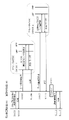
- FIG. 10 shows an example of a sequence among the communication control device 100, 5GC_1, 5GC_2, and the frequency management device 300, which is involved in the coexistence determination performed by the communication control device 100 during operation of the stadium service.
- the communication control device 100 When the communication control device 100 receives a coexistence determination request (request for use of radio waves) from the frequency management device 300 (S1101), it transmits a reception confirmation response to the frequency management device 300 (S1102). Based on the coexistence determination request, the communication control device 100 acquires information necessary for coexistence determination from the GW 600_1 of 5GC_1 and the GW 600_2 of 5GC_2.
- the communication control apparatus 100 After receiving a coexistence determination request from the frequency management apparatus 300, the communication control apparatus 100 sends a request for surveying the number of users of the base station 1 (user number survey request) as information necessary for coexistence determination to: It is transmitted to GW 600_1 of 5GC_1 (S1103).
- the user number survey request is an example of a communication status information acquisition request regarding the base station 1 .
- the communication control device 100 also transmits a request for investigation of the communication data amount of the base station 2 (data amount investigation request) to the GW 600_2 of 5GC_2 (S1107).
- the user number survey request is an example of a communication status information acquisition request regarding the base station 2 .
- the GW 600_1 of 5GC_1 When the GW 600_1 of 5GC_1 receives the user number investigation request from the communication control device 100, it transmits a user number acquisition request (user number request) to the AMF that manages the user number information of the base station 1 (S1104).
- the AMF is part of the elements that make up the core network configuration device 700_1.
- the GW 600_1 of 5GC_1 receives a response including the information on the number of users from the AMF (S1105), it processes the information on the number of users according to the type of user count survey request, and transmits a response including the processed information (S1106). ). Examples of processed information include the average number of users or the maximum number of users for a certain period of time. An example of information processing is as described above.
- a user count request is provided when a user count survey request is received, but regardless of whether or not a user count survey request is received, a user count request is provided periodically or at other times to obtain user count information. You can leave it. Then, the acquired information may be processed in advance according to the variation of the type of user count survey request and stored in the storage unit 620 . This makes it possible to immediately respond to the user count survey request.
- the GW 600_2 of 5GC_2 Upon receiving the data amount investigation request from the communication control device 100, the GW 600_2 of 5GC_2 transmits a data amount acquisition request (data amount request) to the UPF that manages the data amount information of the base station 2 (S1108).
- the UPF is part of the elements that make up the core network configuration device 700_1.
- the GW 600_2 of 5GC_2 receives a response including data amount information from the UPF (S1109), it processes the data amount information according to the type of user count survey request, and transmits a response including the processed information (S1110). ).
- Examples of post-processing information include an average amount of data or a maximum amount of data for a certain period of time. An example of information processing is as described above.
- the data volume request is provided when the data volume survey request is received, but regardless of whether the data volume survey request is received, the data volume request is provided periodically or at other times to obtain data volume information. may Then, the acquired information may be processed in advance according to the variation of the type of data amount investigation request and stored in the storage unit 620 .
- the GW 600_2 of 5GC_2 inquires of the data amount to the UPF, the inquiry may be made indirectly through SMF, which is another 5GC entity.
- the communication control device 100 performs coexistence determination for base station 1 and base station 2 based on information acquired from GW 600_1 and GW 600_2. For example, if the currently applied Case is Case 1 in FIG. 6B and the acquired information matches Case 2 in FIG. It decides to change the frequency of 2. That is, it decides to change the frequency of base station 1 from 80 MHz width to 50 MHz width, and to change the frequency of base station 2 from 20 MHz width to 50 MHz width. As another example, if the currently applied Case is Case 2 in FIG. 6B and the acquired information matches Case 3 in FIG. and decide to change the frequency of the base station 2 .
- the communication control device 100 may store information indicating the determined content (coexistence determination result) in the storage unit 220 .
- the communication control device 100 When the communication control device 100 receives a request (investigation result request) to acquire the coexistence determination result from the frequency management device 300 (S1112), it transmits information including the coexistence determination result to the frequency management device 300 (S1113). Alternatively, the communication control device 100 may transmit a response including the result of the coexistence determination to the frequency management device 300 after the coexistence determination is completed without waiting for the investigation result request.
- frequency management apparatus 300 transmits a frequency change request to base station 1 and base station 2 as a response to each request to continue transmission.
- Base station 1 and base station 2 transmit frequency change requests (transmission change requests) to frequency management apparatus 300 .
- the frequency management device 300 transmits a response (transmission change response) permitting the frequency change to the base stations 1 and 2 .
- FIG. 11 shows an example of a sequence between the base station 1, the base station 2, the frequency management device 300 and the communication control device 100 when the stadium service by the base station 2 is ended.
- Steps S1201 and S1202 are the same as steps S1001 and S1002 in FIG. That is, the base station 1 periodically transmits a transmission continuation request to the frequency management device 300 (S1201), and the frequency management device 300 transmits a transmission continuation response to the transmission continuation request of the base station 1 (S1201). S1202).
- the base station 2 transmits a frequency usage stop notification (transmission stop notification) for terminating the stadium service to the frequency management device 300 (S1203).
- the frequency management device 300 transmits an acknowledgment (transmission stop response) to the stop notification (S1204).
- the base station 2 further transmits an installation release notification to the frequency management device 300 ( S1205).
- the frequency management device 300 transmits a reception response (installation cancellation response) to the installation cancellation notification (S1206).
- the frequency management device 300 After stopping the radio transmission (frequency use) of the base station 2, the frequency management device 300 transmits a coexistence determination request to the communication control device 100 (S1207).
- the configuration of the coexistence determination request is the same as that of the coexistence determination request transmitted in step S1101 of FIG.
- the communication control apparatus 100 determines the frequency to be used by the base station 1 when the stadium service is not provided by the base station 2, based on the coexistence conditions shown in FIG. 6A (S1208). In this example, the frequency of base station 1 is determined to be 100 MHz wide.
- a reply including the determined frequency is transmitted (S1209).
- the frequency management device 300 transmits a transmission change request requesting that the frequency to be used be changed to the changed frequency in response to the transmission continuation request received from the base station 1 (S1210, S1211).
- the base station 1 transmits a request (transmission change request) including the frequency requested to be changed to the frequency management device 300 (S1212).
- the frequency management device 300 transmits a response (transmission change response) permitting the change to the frequency to the base station 1 (S1213). From then on, the base station 1 performs transmission on the frequency permitted to be changed (100 MHz width in this example).
- FIG. 12 shows an example of two wireless communication systems operated by different operators.
- One radio communication system is operated by operator a and includes a base station 1 .
- the base station 1 provides general purpose communication services.
- general-purpose communication services are, for example, telephone services and Internet connection services.
- the other radio communication system is operated by operator b and includes base station 2 and base station 3 .
- live service is, for example, a data communication service accompanying movement, and communication data is not limited to video or audio.
- the base station 1 of the operator a basically always provides service after the base station 1 is installed.
- operator b's base station 2 and base station 3 do not always provide service after installation of base station 2 and base station 3, but basically provide service only when a live event is held. do.
- the radio communication system of operator a corresponds to the radio communication system 501 in FIG. 1
- the radio communication system of operator b corresponds to the radio communication system 502 in FIG. 1 (however, the number of base stations is different).
- General communication services and live services can coexist using frequency bands that at least partially overlap or interfere with each other.
- both services use the same frequency band (shared frequency band).
- shared frequency band By dividing the shared frequency band, for example, both services can be implemented simultaneously without interference.
- Dividing the shared frequency band may include selecting and using different frequencies for both services when the shared frequency band includes a plurality of mutually orthogonal (non-interfering) frequencies. When one service is not in operation, it is possible for the other service to use all of the shared frequency band.
- the base station 1 forms three cells (cell 1, cell 2, and cell 3) corresponding to multiple antennas. Cells 1-3 are also referred to as coverages 1-3.
- the base station 1 has three directional antennas with a directivity angle of approximately 120 degrees, and can cover all directions of 360 degrees using the three directional antennas. Also, the transmission power of the three directional antennas can be independently controlled.
- FIG. 13 shows an example of the overall configuration of the system in Specific Example 2.
- the radio communication system of the general communication service operated by operator a is a cellular system and includes 5GC_1 as core network.
- the radio communication system of the live service operated by operator b is a cellular system and includes 5GC_2 as core network.
- 5GC_1 comprises a core network configuration device 700_1 as a network device according to this embodiment. Unlike the specific example 1, 5GC_1 does not include a gateway device, but a configuration including a gateway device is also possible. A core network configuration device 700_1 is connected to the base station 1 .
- 5GC_2 includes a configuration in which a core network configuration device 700_2 and a gateway device 600_2 are integrated as a network device according to this embodiment.
- the gateway device 600_2 has a role as a gateway function, which is a new network function (NF) of 5GC_2, and is described as GW600_2.
- the core network configuration device 700_2 is connected to the base station 2 and base station 3 via AMF, and is also connected to base station 2 and base station 3 via UPF.
- the base station 1, base station 2, and base station 3 are connected to the frequency management device 300 by wire or wirelessly.
- FIG. 14(A) shows coexistence conditions for base station 1, base station 2, and base station 3 in this specific example.
- the coexistence condition is a frequency usage condition (radio wave usage condition) for allowing the base station 1, the base station 2, and the base station 3 to provide services at the same time.
- the storage unit 220 of the communication control device 100 stores the coexistence conditions shown in FIG. 14(A).
- the storage unit 220 also stores identification information of groups to which each base station belongs.
- the transmission power (effective radiation power) of the base station 1, the base station 2, and the base station 3, which is permitted according to the implementation status of the live service, is shown.
- the illustrated transmission power value may be an actual power value or a percentage (%) of the maximum transmission power value.
- the range (size) of the cells 1 to 3 of the base station 1, the cell of the base station 2, and the cell of the base station 3 can be controlled.
- the base stations 1 to 3 use the same frequencies or mutually interfering frequencies (for example, the base stations 1 to 3 all have a width of 100 MHz).
- each of cells 1 to 3 of base station 1 (or operator a) can use a transmission power value of 100 (maximum value). That is, each of the three antennas provided in the base station 1 can transmit radio waves with a transmission power value of 100.
- the transmission power available in the three cells (antennas) of base station 1, base station 2 and base station 3 is controlled according to three cases (Case 1, Case 2, Case 3). be done.
- Case 1 cell 1 and cell 3 of base station 1 can use transmission power of 100
- cell 2 can use transmission power of 50
- base station 2 can use transmission power of 50
- base station 3 does not transmit ( ie the transmit power is zero).
- cell 1 of base station 1 can use transmission power of 100
- cells 2 and 3 can use transmission power of 50
- base station 2 and base station 3 can use transmission power of 50.
- cell 1 and cell 2 of base station 1 can use a transmit power of 100, cell 3 can use a transmit power of 50, base station 2 does not transmit (i.e., the transmit power is zero), and base station 3 has a transmit power of 50 are available.
- Fig. 14(B) shows the definitions of Case1 to Case3.
- the initial state is Case2.
- areas areas 2a, area 2b
- areas areas 3a, area 3b
- Transition is performed between Case1 to Case3.
- FIG. 15 shows areas 2a and 2b within the cell of the base station 2 and areas 3a and 3b within the cell of the base station 3.
- FIG. 15 shows areas 2a and 2b within the cell of the base station 2 and areas 3a and 3b within the cell of the base station 3.
- Area 2a is an area far from base station 3 among the cells (coverage) when base station 2 transmits at a transmission power of 50.
- an area far from the base station 3 has no or little interference with the base station 3, or a terminal communicating with the base station 3 (for example, existing in an overlapping area of the cells of the base station 2 and the base station 3).
- This is an area where there is no or little interference from Area 2b is an area close to base station 3 among the cells (coverage) when base station 2 transmits at a transmission power of 50.
- the area 3b is an area far from the base station 2 among the cells (coverage) when the base station 3 transmits at a transmission power of 50.
- an area far from the base station 2 has no or little interference with the base station 2, or a terminal communicating with the base station 2 (for example, existing in an overlapping area of the cells of the base station 2 and the base station 3).
- the area 3a is an area close to the base station 2 among the cells (coverage) when the base station 2 transmits at a transmission power of 50.
- FIG. 16 shows that when the system of operator a (base station 1) and the system of operator b (base station 2 and base station 3) respectively start services, permission to use radio waves (permission to transmit) is given to frequency management device 300. Indicates the sequence to apply. In this example, it is assumed that base stations 1 to 3 all use the same frequency or frequencies that interfere with each other.
- the base station 1 transmits a request (installation information registration request) to the frequency management device 300 to register the base station 1 in the frequency management device 300 (S1601).
- the installation registration request is made, for example, when the base station 1 is newly installed.
- Information about the base station 1 is included in the installation information registration request.
- the information about the base station includes, for example, the identifier of the base station 1, the location information of the base station 1, the specification information of the base station 1 (for example, usable transmission power value, frequency, etc.), the group information to which the base station 1 belongs, and the like.
- the frequency management device 300 transmits to the base station 1 a response (installation information registration response) to the effect that the registration for the frequency management device 300 has been completed (S1602).
- the frequency management apparatus 300 may determine whether registration is permitted based on the installation position of the base station 1 or the like. For example, whether or not registration is permitted may be determined based on the geographical positional relationship with other registered base stations.
- the base station 1 transmits a radio wave use permission request (transmission permission request) to the frequency management device 300 (S1603).
- the transmission permission request includes information related to the transmission power value to be used, and may also include information on the frequency to be used.
- the frequency management device 300 calculates the general usage conditions for radio wave use, and if the general usage conditions are met, permits the use of the transmission power, etc. requested by the base station. At this point, there are no higher priority systems using the shared frequency band and base stations in other groups using the shared frequency band, and there are no base stations in the same group using the shared frequency band. There are no base stations. Therefore, the condition that the requested transmission power value can be used is calculated. Frequency management apparatus 300 determines that the requested transmission power value satisfies the general usage conditions and that the transmission power value can be used. The frequency management device 300 transmits a response (transmission permission response or use permission response) permitting the use of the transmission power value (S1604).
- a response transmission permission response or use permission response
- the base station 1 starts transmission (service) with the transmission power value or the like permitted by the transmission permission response. Thereafter, the base station 1 periodically transmits a request for continued use of the frequency (request for continued transmission or request for continued use) to the frequency management device 300 (S1605). As long as the general usage conditions are satisfied, the frequency management device 300 transmits a response for permission of continued use (transmission continuation response or continuous use response) to the base station 1 (S1606).
- the installation information registration request is a request to register the base station 2 with the frequency management device 300 .
- the base station 2 may be installed after the service of the base station 1 is started, or may be installed before the service of the base station 1 is started.
- Information on the base station 2 is included in the installation information registration request.
- the information about the base station includes, for example, the identifier of the base station 2, the location information of the base station 2, the specification information of the base station 2, the group information to which the base station 2 belongs, and the like.
- the frequency management device 300 transmits to the base station 2 a response (installation information registration response) to the effect that the registration for the frequency management device 300 has been completed (S1608).
- the frequency management apparatus 300 may determine whether or not registration is permitted based on the installation position of the base station 2 or the like. For example, whether or not registration is permitted may be determined based on the geographical positional relationship with other registered base stations.
- the base station 2 requests transmission permission from the frequency management device 300 (S1609).
- the transmission permission request includes information about the transmission power value to be used, and may further include the frequency to be used and the like.
- the frequency management device 300 calculates the general usage conditions for radio wave use, and if the general usage conditions are satisfied, permits the use of the requested transmission power.
- the general usage condition is not satisfied, and the frequency management device 300 transmits a request (coexistence determination request) to the communication control device 100 to calculate a condition (coexistence condition) for allowing the base station 2 to coexist with the base station 1. do.
- the frequency management apparatus 300 determines the transmission power to be used by the base stations 2 and 1 based on the response including the coexistence determination result from the communication control apparatus 100 (S1610).
- Requesting the communication control device 100 to calculate such a coexistence condition and determining the usable transmission power value based on the response from the communication control device 100 is called coexistence permission determination or transmission permission determination.
- the coexistence determination request includes the transmission power value requested to be used by the base station 2, presence/absence of terminals within the areas 2a and 2b of the base station 2, and the like. Furthermore, the coexistence determination request may include the transmission power value used by the base station 1 and the like.
- FIG. 17 is a diagram showing an example of a sequence in which the frequency management device 300 requests the communication control device 100 to determine coexistence.
- the frequency management device 300 transmits a coexistence determination request to the communication control device 100 (S1701).
- the control unit 232 of the communication control apparatus 100 performs coexistence determination for the base station 1 and the base station 2 based on the coexistence condition of the group to which the base station 1 and the base station 2 belong (S1702). For example, based on the existence or non-existence of terminals in the areas 2a and 2b of the base station 2, the permissible transmission power value (transmission power value for each antenna) for the base station 1 and the permissible transmission power value for the base station 2 are determined. do.
- a response (response) to permit the transmission power value requested by the base station 2 is transmitted to the frequency management device 300. (S1703). If the transmission power value requested by the base station 2 is not included in the transmission power value allowable by the base station 2, refusal information indicating that the transmission power requested by the base station 2 cannot be permitted is sent to the base station 2. A response (response) including the determined transmission power value is transmitted to the frequency management device 300 (S1703). Also, when the transmission power value of base station 1 is changed, a response (response) including the changed transmission power value of base station 1 is transmitted to frequency management apparatus 300 (at S1703).
- base station 2 is about to start a new service.
- the communication control apparatus 100 decides to transition to Case 2, sets the transmission power of base station 2 to 50, and sets the transmission powers of cells 1 to 3 of base station 1 to 100, 50, and 50, respectively. .
- the base station 2 requests transmission power of 50 or less, it transmits a permission response to the frequency management device 300 .
- the base station 2 requests transmission power exceeding transmission power 50, it transmits a response including rejection information and transmission power 50 to the frequency management apparatus 300.
- the frequency management device 300 transmits a transmission power change request (transmission change request) in response to the transmission continuation request (S1611).
- the transmission change request includes the changed transmission power (transmission power 50 for cell 2 and cell 3 in the above example).
- the base station 1 transmits a change request (transmission change request) including the changed transmission power to the frequency management device 300 (S1612), and the frequency management device 300 sends a response (transmission change request) permitting use of the changed transmission power (S1612). response) to the base station 1 (S1613). After that, the base station 1 performs transmission in the cell 2 and the cell 3 with the changed transmission power.
- the frequency management device 300 When the frequency management device 300 permits transmission power different from the transmission power requested by the base station 2 (when the transmission power requested by the base station 2 cannot be permitted), the frequency management device 300 sends a transmission rejection response and a transmission power change request to It is transmitted as a response to the transmission permission request received in S1609 (S1614).
- the transmission change request includes the changed transmission power value (50 in the above example).
- the base station 2 transmits a transmission permission request (usage permission request) including the transmission power value requested to be changed to the frequency management device 300 (S1615), and the frequency management device 300 permits the use of the transmission power value.
- a response (transmission permission response) is transmitted to the base station 2 (S1616). Thereafter, the base station 2 performs transmission with the permitted transmission power value. That is, operator b starts live service between the terminal and base station 2 .
- the base station 1 periodically transmits a request for continuous use of the frequency (continuous transmission request or continuous use request) to the frequency management device 300 (S1617). As long as the general use conditions are satisfied, the frequency management device 300 transmits a response for permission of continued use (transmission continuation response or continued use response) to the base station 1 (S1618).
- the base station 3 After starting the service of the base station 2, in order for the operator b to start the live service using the base station 3, the base station 3 requests the frequency management device 300 to register the base station 3 in the frequency management device 300 (installation information registration request). ) is transmitted (S1619). Note that the base station 3 may be installed after the service of the base station 2 is started, or may be installed before the service of the base station 2 is started.
- Information on the base station 3 is included in the installation information registration request.
- the information about the base station includes, for example, the identifier of the base station 3, the location information of the base station 3, the specification information of the base station 3, the group information to which the base station 3 belongs, and the like.
- the frequency management device 300 transmits to the base station 3 a response (installation information registration response) to the effect that registration for the frequency management device 300 has been completed (S1620).
- the frequency management apparatus 300 may determine whether or not registration is permitted based on the installation position of the base station 3 or the like. For example, whether or not registration is permitted may be determined based on the geographical positional relationship with other registered base stations.
- the base station 3 transmits a transmission permission request to the frequency management device 300 (S1621).
- the transmission permission request includes a transmission power value to be used and the like.
- the frequency management device 300 calculates the general usage conditions for radio wave use, and if the general usage conditions are satisfied, permits the use of the requested transmission power.
- the frequency management apparatus 300 issues a communication control request (coexistence determination request) for calculating conditions (coexistence conditions) for allowing the base station 3 to coexist with the base stations 1 and 2. Send to device 100 .
- the frequency management apparatus 300 determines the transmission power to be used by the base station 3 and the base stations 1 and 2 based on the response including the coexistence determination result from the communication control apparatus 100 (S1622). Requesting the communication control device 100 to calculate the coexistence condition in this way and determining the usable transmission power value based on the response from the communication control device 100 is referred to as coexistence permission determination or transmission permission determination.
- the coexistence determination request includes the transmission power value requested to be used by the base station 3, presence/absence of terminals within the areas 3a and 3b of the base station 3, and the like. Furthermore, the coexistence determination request may include the transmission power values used by the base stations 1 and 2, the presence or absence of terminals within the areas 2a and 2b of the base station 2, and the like.
- the frequency management device 300 transmits a coexistence determination request to the communication control device 100 (S1701).
- the control unit 232 of the communication control apparatus 100 performs coexistence determination for the base stations 1 to 3 based on the coexistence conditions of the group to which the base stations 1 to 3 belong (S1702). For example, based on the presence or absence of terminals in areas 3a and 3b of the base station 3 and areas 2a and 2b of the base station 2, the permissible transmission power value (transmission power value for each antenna) of the base station 1 and the base station 2 and the base station 3 to determine the allowable transmission power values.
- a response (response) to permit the transmission power value requested by the base station 3 is transmitted to the frequency management apparatus 300. (S1703). If the transmission power value requested by the base station 3 is not included in the transmission power value allowable by the base station 3, refusal information indicating that the transmission power requested by the base station 3 cannot be permitted is sent to the base station 3. A response (response) including the determined transmission power value is transmitted to the frequency management device 300 (S1703).
- the base station 3 is about to start a new service. If the base station 3 requests a transmission power of 50 or less, it transmits a permission response to the frequency management device 300 . When the base station 3 requests transmission power exceeding transmission power 50, it transmits a response including rejection information and transmission power 50 to the frequency management device 300. FIG. There is no change in transmission power in base station 1 and base station 2 .
- the frequency management device 300 When the frequency management device 300 permits transmission power different from the transmission power requested by the base station 3 (when the transmission power requested by the base station 3 cannot be permitted), the frequency management device 300 sends a transmission rejection response and a transmission power change request to It is transmitted as a response to the transmission permission request received in S1621 (S1623).
- the transmission change request includes the changed transmission power value (50 in the above example).
- the base station 3 transmits a transmission permission request (usage permission request) including the transmission power value requested to be changed to the frequency management device 300 (S1624), and the frequency management device 300 permits the use of the transmission power value.
- a response (transmission permission response) is transmitted to the base station 3 (S1625). Thereafter, the base station 3 performs transmission with the permitted transmission power value. That is, operator b starts live service between the terminal and base station 3 .
- the base station 2 periodically transmits a request for continuous use of the frequency (continuous transmission request or continuous use request) to the frequency management device 300 (S1626). As long as the general usage conditions are satisfied, the frequency management device 300 transmits a response for permission of continued use (transmission continuation response or continuous use response) to the base station 1 (S1627).
- FIG. 18 shows an example of a sequence between the base stations 1, 2 and 3 and the frequency management device 300 during live service operation.
- base station 1, base station 2, and base station 3 service has started, that is, radio wave transmission has already been performed.
- Base station 1, base station 2, and base station 3 periodically transmit a transmission continuation request to frequency management device 300 (S1801, S1803, S1805).
- the frequency management device 300 transmits to base stations 1, 2, and 3 a transmission continuation response indicating permission to continue transmission to base stations or systems outside the group as long as the general conditions of use are satisfied. (S1802, S1804, S1806).
- the processes of steps S1801 and S1802, the processes of steps S1803 and S1804, and the processes of steps S1805 and S1806 are each repeated at regular intervals.
- Frequency management apparatus 300 transmits a coexistence determination request requesting coexistence determination of base stations 1 to 3 to communication control apparatus 100 as transmission change determination (S1807) at a predetermined timing.
- the predetermined timing is, for example, the timing at which a transmission continuation request is received from one of the base stations, the timing at which a certain period of time has elapsed since the previous coexistence determination, or the like.
- the coexistence determination here includes determination as to whether or not it is necessary to change the transmission power used by the base stations 1 to 3 from the current transmission power.
- the coexistence determination request may include, for example, group information to which the base stations 1-3 belong.
- frequency management device 300 when frequency management device 300 receives a reply from communication control device 100 that includes a change in the transmission power of base stations 1 to 3 and the changed transmission power, frequency management device 300 receives from base station 1 to base station 3 A transmission change request is transmitted in response to the transmission continuation request (S1808, S1809, S1812, S1813, S1816, S1817).
- the transmission change request requests to change the transmission power to be used to the changed transmission power.
- the base stations 1 to 3 transmit a request (transmission change request) including the transmission power requested to be changed to the frequency management apparatus 300 (S1810, S1814, S1818).
- the frequency management device 300 transmits a response permitting the change to the transmission power (transmission change response) to the base stations 1 to 3 (S1811, S1815, S1819). Thereafter, the base stations 1 to 3 each perform transmission with the transmission power permitted to be changed.
- FIG. 19 shows an example of a sequence among the communication control device 100, the operator b's 5GC_2, and the frequency management device 300, which is involved in the coexistence determination performed by the communication control device 100 during operation of the live service.
- the communication control device 100 When the communication control device 100 receives the coexistence determination request from the frequency management device 300 (S1901), it transmits a reception confirmation response to the frequency management device 300 (S1902). Based on the coexistence determination request, the communication control device 100 acquires information necessary for coexistence determination from the GW 600_2 of 5GC_2.
- the communication control apparatus 100 After receiving a coexistence determination request from the frequency management apparatus 300, the communication control apparatus 100 sets the number of terminals (number of users) of the base stations 2 and 3 and the location of the terminals as information necessary for the coexistence determination.
- a survey request (survey request) is transmitted to GW 600_2 of 5GC_2 (S1903). This investigation request is an example of a request to acquire communication status information regarding base station 2 and base station 3 .
- the GW 600_2 of 5GC_2 Upon receiving the investigation request from the communication control device 100, the GW 600_2 of 5GC_2 requests the AMF, which manages the number of terminals and terminal positions of the base stations 2 and 3, to acquire the number of terminals and terminal positions (user number request). is transmitted (S1904).
- the AMF is part of the elements that make up the core network configuration device 700_1.
- the GW 600_2 of 5GC_2 receives a response including the information on the number of terminals and the location of the terminals from the AMF (S1905), it processes the information on the number of terminals and the location of the terminals according to the type of survey request, and sends a response including the processed information. Send (S1906).
- Examples of processed information include the average number of terminals or the maximum number of terminals in each area of base station 2 and base station 3 for a certain period of time.
- An example of information processing is as described above.
- the processed information may be data representing changes in terminal information (the number of terminals, terminal positions, etc.) within a certain period of time.
- acquisition requests are provided to AMF when survey requests are received, but regardless of receipt of survey requests, acquisition requests are provided to AMF periodically or at other times to obtain information on the number of terminals and terminal locations. may be obtained.
- the information may be processed in advance according to the variation of the type of investigation request and stored in the storage unit 620 as the communication status information. This allows immediate response to survey requests.
- the communication control device 100 performs coexistence determination for the base stations 1 to 3 based on the information acquired from the GW 600_2 (S1907). For example, when the currently applied Case is Case 2 in FIG. 14B and the acquired information matches Case 3 in FIG. and the transmission power of base station 2 are changed. That is, it decides to change the transmission power of cell 2 of base station 1 from 50 to 100, and to change the transmission power of base station 2 from 50 to zero (no transmission). As another example, when the currently applied Case is Case 2 in FIG. 14B and the acquired information matches Case 1 in FIG. decides to change the transmission power of the cell 3 and the transmission power of the base station 3 .
- the communication control device 100 may store information indicating the determined content (coexistence determination result) in the storage unit 220 .
- the communication control device 100 When the communication control device 100 receives a coexistence determination result acquisition request (survey result request) from the frequency management device 300 (S1908), it transmits information including the coexistence determination result to the frequency management device 300 (S1909). Alternatively, the communication control device 100 may transmit information including the coexistence determination result to the frequency management device 300 after the coexistence determination is completed without waiting for the investigation result request.
- the operation after the frequency management device 300 receives the information including the coexistence determination result is the same as steps S1808 to S1819 in FIG. That is, when it is necessary to change the transmission power, the frequency management device 300 requests the base station 1, the base station 2, and the base station 3 to change the transmission power in response to their respective transmission continuation requests. Send.
- Base station 1 , base station 2 , and base station 3 transmit a transmission power change request (transmission change request) to frequency management apparatus 300 .
- the frequency management device 300 transmits a response (transmission change response) permitting the change of transmission power to the base station 1, the base station 2, and the base station 3.
- FIG. 20 shows an example of the sequence among the base stations 1 to 3, the frequency management device 300 and the communication control device 100 when the live service by the base stations 2 and 3 is terminated.
- Steps S2001 and S2002 are the same as steps S1201 and S1202 in FIG. That is, the base station 1 periodically transmits a transmission continuation request to the frequency management device 300 (S2001), and the frequency management device 300 transmits a transmission continuation response to the transmission continuation request of the base station 1 (S2001). S2002).
- Steps S2003 to S2006 are the same as steps S1203 to S1206 in FIG. That is, the base station 2 transmits a radio wave usage stop notification (transmission stop notification) for terminating the live service to the frequency management apparatus 300 (S2003).
- the frequency management device 300 transmits an acknowledgment (transmission stop response) to the stop notification (S2004).
- the base station 2 When stopping the operation of the base station 2, such as by stopping the power supply of the base station 2, to stop transmission and reception with the frequency management device 300, the base station 2 further transmits an installation release notification to the frequency management device 300 ( S2005).
- the frequency management device 300 transmits a reception response (installation cancellation response) to the installation cancellation notification (S2006).
- the base station 3 also transmits a radio wave usage stop notification (transmission stop notification) for terminating the live service to the frequency management device 300 (S2007).
- the frequency management device 300 transmits an acknowledgment (transmission stop response) to the stop notification (S2008).
- the base station 3 further transmits an installation release notification to the frequency management device 300 ( S2009).
- the frequency management device 300 transmits a reception response (installation cancellation response) in response to the installation cancellation notification (S2010).
- the frequency management device 300 After stopping the radio transmission (frequency use) of the base stations 2 and 3, the frequency management device 300 transmits a coexistence determination request to the communication control device 100 (S2011).
- the configuration of the coexistence determination request is the same as the coexistence determination request transmitted in step S1207 of FIG.
- the communication control apparatus 100 determines the transmission power to be used by the base station 1 when live services are not provided by the base stations 2 and 3, based on the coexistence conditions shown in FIG. 14A (S2012). In this example, the transmission power of cells 1 to 3 of base station 1 is determined to be 100, and a reply including the determined transmission power is transmitted (S2013).
- steps S2014 to S2017 the same processing as steps S1210 to S1213 in FIG. 11 is performed. That is, the frequency management device 300 transmits a transmission change request requesting to change the transmission power to be used to the changed transmission power in response to the transmission continuation request received from the base station 1 (S2014, S2015).
- the base station 1 transmits a request (transmission change request) including the transmission power value requested to be changed to the frequency management device 300 (S2016), and the frequency management device 300 sends a response (transmission change response) to the base station 1 (S2017). After that, the base station 1 performs transmission with the transmission power permitted to be changed.
- FIG. 21 shows an example in which the cell (coverage) of each base station changes according to the movement of the terminal during live service provision.
- FIG. 21A shows the state before the start of the live service (no service). At this time, the transmission power of base station 1 is 100 in all of cells 1-3. On the other hand, the coverage of base station 2 and base station 3 is not formed.
- FIG. 21(B) shows the coverage of base stations 1 to 3 when live service is started by base stations 2 and 3 and the transition to Case 2 is made. There is no terminal in the coverage of either base station 2 or base station 3. The transmit power of cell 2 and cell 3 of base station 1 is set to 50, resulting in less coverage. The transmit power of cell 1 is 100 and the coverage does not change. Base station 2 and base station 3 are provided with a coverage of transmit power 50 .
- terminals exist only in area 2a of base station 2 (area far from base station 3).
- the transmit power of cell 3 of base station 1 is increased to 100; This expands the cell 3 (coverage) of the base station 1 .
- the transmission power of the base station 3 is set to zero, so that the cell of the base station 3 disappears.
- the terminal moves to area 2b of base station 2 (an area close to base station 3).
- the transmit power of cell 3 of base station 1 is reduced to 50 and cell 3 of base station 1 (coverage) is reduced. Also, the transmission power of the base station 3 is set to 50, and a cell of the base station 3 is formed.
- the terminal moves to area 3b of base station 3 (an area far from base station 2).
- the transmission power of base station 2 is set to zero, and the cell of base station 2 disappears.
- the transmission power of cell 2 of base station 1 is increased to 100 and cell 2 (coverage) of base station 1 is expanded.
- the live service of base station 2 and base station 3 is terminated, and the transmission power of base station 2 and base station 3 is set to zero. As a result, the cells of base station 2 and base station 3 are eliminated.
- the transmission power of cell 3 of base station 1 is set to 100 and cell 3 is expanded.
- FIG. 22 shows an example of two wireless communication systems operated by different operators.
- One radio communication system is operated by operator a and includes a base station 1 .
- the base station 1 provides general purpose communication services.
- general-purpose communication services are, for example, telephone services and Internet connection services.
- the other radio communication system is operated by operator b and includes base station 2 .
- the base station 2 also provides general-purpose communication services.
- the base station 1 of operator a and the base station 2 of operator b basically always provide service after the base station 1 and base station 2 are installed.
- the radio communication system of operator a corresponds to the radio communication system 501 in FIG. 1
- the radio communication system of operator b corresponds to the radio communication system 502 in FIG. 1 (however, the number of base stations is different).
- the cells (coverage) of base station 1 and base station 1 are indicated by circles with dotted lines centering on each other.
- beams B1 and B2 which are radio waves with directivity, are used. That is, when a terminal is within the coverage of a base station, the base station and the terminal can communicate using beams.
- base station 1 and base station 2 use the same or mutually interfering frequencies (for example, both base station 1 and base station 2 have a width of 100 MHz).
- beams may be used, or omni-directional communication (omni communication) may be performed.
- FIG. 23 shows an example of the overall configuration of the system in Specific Example 2.
- the block diagram of FIG. 23 is the same as the block diagram of FIG. 5, but differs from FIG. 5 in that operator b provides general-purpose communication services.
- FIG. 24 shows the coexistence conditions of the base stations in this specific example.
- the coexistence conditions as shown in FIG. 24 are stored in advance in the storage unit 220 of the communication control device 100 .
- the coexistence condition in FIG. 24 defines that the beam of base station 1 is prioritized when the beam of base station 1 and the beam of base station 2 overlap.
- FIG. 25 is an explanatory diagram of the coexistence conditions in FIG.
- beam B1 of base station 1 and beam B2 of base station 2 do not overlap. Therefore, both beams B1 and B2 can be transmitted (coexisted) at the same time.
- FIG. 24C the beam B1 of the base station 1 and the beam of the base station 2 overlap. In this case, priority is given to the connection between the base station 1 and the terminal T1. That is, beam transmission between base station 2 and terminal T2 is prohibited, and beam transmission is permitted only between base station 1 and terminal T1.
- the control unit 232 of the communication control device 100 has a function of determining whether both beams overlap.
- FIG. 26 shows a sequence for applying to the frequency management device 300 for permission to use radio waves or frequencies when base station 1 and base station 2 each start their services.
- the base station 1 transmits to the frequency management device 300 a request (installation information registration request) to register the base station 1 in the frequency management device 300 (S2501).
- the installation registration request is made, for example, when the base station 1 is newly installed.
- Information about the base station 1 is included in the installation information registration request.
- the information about the base station includes, for example, the identifier of the base station 1, the location information of the base station 1, the specification information of the base station 1, the group information to which the base station 1 belongs, and the like.
- the frequency management device 300 transmits to the base station 1 a response (installation information registration response) to the effect that the registration for the frequency management device 300 has been completed (S2502).
- the frequency management apparatus 300 may determine whether registration is permitted based on the installation position of the base station 1 or the like. For example, whether or not registration is permitted may be determined based on the geographical positional relationship with other registered base stations.
- the base station 1 transmits a beam use permission request (transmission permission request) to the frequency management device 300 (S2503).
- the permission to transmit request includes information related to the beam requested to be used, such as the parameters of the beam requested to be used. In addition, information on the frequency requested to be used may be included.
- the frequency management device 300 calculates the general use conditions for radio wave use, and if the general use conditions are met, permits the use of the requested beam. At this point, there are no higher priority systems using the shared frequency band and base stations in other groups using the shared frequency band, and there are no base stations in the same group using the shared frequency band. There are no base stations. Therefore, a condition that any beam can be used is calculated as a general use condition.
- Frequency manager 300 determines that the requested beam satisfies general usage conditions and is available for use.
- the frequency management device 300 transmits a response (transmission permission response or use permission response) permitting the use of beams (S2504).
- the base station 1 starts transmission (service) using the beam or the like permitted by the transmission permission response.
- the base station 1 periodically transmits a request for continuous use of the frequency and beam (continuous transmission request or continuous use request) to the frequency management device 300 (S2505).
- the frequency management device 300 transmits a response (continuous transmission response or continuous usage response) to the base station 1 for permitting continued use of the frequency and beam (S2506).
- the base station 2 After installing the base station 1, the operator a starts service using the base station 1, and then the operator b starts service using the base station 2. Therefore, the base station 2 issues an installation information registration request to the frequency management device 300. is transmitted (S2507).
- the installation information registration request is a request to register the base station 2 with the frequency management device 300 .
- the base station 2 may be installed after the service of the base station 1 is started, or may be installed before the service of the base station 1 is started.
- Information on the base station 2 is included in the installation information registration request.
- the information about the base station includes, for example, the identifier of the base station 2, the location information of the base station 2, the specification information of the base station 2, the group information to which the base station 2 belongs, and the like.
- the frequency management device 300 transmits to the base station 2 a response (installation information registration response) to the effect that the registration for the frequency management device 300 has been completed (S2508).
- the frequency management apparatus 300 may determine whether or not registration is permitted based on the installation position of the base station 2 or the like. For example, whether or not registration is permitted may be determined based on the positional relationship with other registered base stations.
- the base station 2 transmits a transmission permission request to the frequency management device 300 (S2509).
- the permission to transmit request includes information related to the beam requested to be used, such as the parameters of the beam requested to be used. It may further include information on the frequency requested to be used.
- the frequency management device 300 calculates the general usage conditions for radio wave use, and if the general usage conditions are met, permits the use of the requested frequency and beam.
- the general usage condition is not satisfied, and the frequency management device 300 transmits a request (coexistence determination request) to the communication control device 100 to calculate a condition (coexistence condition) for allowing the base station 2 to coexist with the base station 1. do.
- the frequency management apparatus 300 determines whether or not the beam of the base station 2 can be used based on the response (response) including the result of the coexistence determination from the communication control apparatus 100 (S2510).
- Requesting the communication control device 100 to calculate the coexistence condition and determining whether or not to use the beam transmission of the base station 2 based on the response from the communication control device 100 is referred to as a coexistence permission decision or a transmission permission decision.
- the coexistence determination request includes beam parameters and the like that the base station 2 requests to use. Furthermore, the coexistence determination request may include parameters of the beams used by the base station 1 and the like.
- FIG. 27 is a diagram showing an example of a sequence in which the frequency management device 300 requests the communication control device 100 to determine coexistence.
- the frequency management device 300 transmits a coexistence determination request to the communication control device 100 (S2601).
- the control unit 232 of the communication control apparatus 100 performs coexistence determination for the base station 1 and the base station 2 based on the coexistence condition of the group to which the base station 1 and the base station 2 belong. For example, if the beam requested by base station 2 does not interfere with the beam of base station 1 in the same group that is using the shared frequency band, the beam requested by base station 2 is permitted. (S2602).
- the communication control apparatus 100 transmits a response (response) indicating that the beam or the like requested by the base station 2 is permitted to the frequency management apparatus 300 (S2603). Whether or not to interfere is determined, for example, based on the location information of base station 1, base station 2, terminal T1, and terminal T2. Further, beam parameter information of base station 1 and base station 2 may be used. Furthermore, when terminal T1 and terminal T2 perform beam transmission, beam parameter information of terminal T1 and terminal T2 may be used.
- the control unit 232 of the communication control apparatus 100 determines whether the beam requested by the base station 2 interferes with the beam of the base station 1. If the beam requested by the base station 2 interferes with the beam of the base station 1, the control unit 232 of the communication control apparatus 100 does not permit the use of the beam requested by the base station 2. Determine (at S2602). The control unit 232 transmits a response (response) instructing not to perform beam transmission to the frequency management device 300 (at S2603).
- a beam stop request (transmission change request) is transmitted (S2511).
- the transmission change request contains an instruction to stop.
- the base station 1 transmits a change request (transmission change request) including an acknowledgment of beam stop to the frequency management device 300 (S2512), and the frequency management device 300 sends a response (transmission change response) prohibiting the use of the beam to the base station. It is transmitted to station 1 (S2513). After that, the base station 1 does not perform beam transmission.
- the frequency management device 300 When stopping beam transmission to the base station 2, the frequency management device 300 transmits a beam stop request (transmission change request) in response to the transmission continuation request (S2514).
- the transmission change request contains an instruction to stop.
- the base station 2 transmits a change request (transmission change request) including an acknowledgment of beam stop to the frequency management device 300 (S2515), and the frequency management device 300 sends a response (transmission change response) prohibiting the use of the beam to the base station. It is transmitted to station 2 (S2516). Base station 2 does not transmit beams.
- FIG. 28 shows an example of the sequence between the base stations 1 and 2 and the frequency management device 300 after starting operation.
- Base station 1 and base station 2 periodically transmit a transmission continuation request to frequency management device 300 (S2701, S2703).
- the frequency management device 300 transmits a transmission continuation response indicating permission to continue transmission to the base station 1 and the base station 2 as long as the general conditions of use are satisfied for the out-of-group base stations or systems (S2702, S2704). ).
- the processes of steps S2701 and S2702 are repeated at regular intervals, and the processes of steps S2703 and S2704 are repeated at regular intervals.
- the frequency management apparatus 300 transmits a coexistence determination request requesting a coexistence determination of the base stations 1 and 2 to the communication control apparatus 100 as transmission change determination (S2705).
- the predetermined timing is, for example, the timing at which a transmission continuation request is received from one of the base stations, the timing at which a certain period of time has elapsed since the previous coexistence determination, or the like.
- the coexistence determination here includes determination as to whether or not the current beams can be used by the base station 1 and the base station 2 .
- the coexistence determination request may include group information to which base station 1 and base station 2 belong, for example.
- the frequency management device 300 When the frequency management device 300 receives a response (response) from the communication control device 100 to the effect that the current beams of the base station 1 and the base station 2 can be used as a response to the coexistence determination request, the frequency management device 300 does nothing.
- the frequency management apparatus 300 when the frequency management apparatus 300 receives from the communication control apparatus 100 a response to instruct the beam transmission stop of the base station 1 or the base station 2, the frequency management apparatus 300 responds to the transmission continuation request received from the base station 1 or the base station 2. , a transmission change request is transmitted (S2706, S2707, S2710, S2711). The transmission change request requests to stop beam transmission.
- the base station 1 or base station 2 Upon receiving the transmission change request, the base station 1 or base station 2 transmits a transmission change request including approval to stop the beam (or change the transmission power to 0) to the frequency management device 300 (S2708, S2712).
- the frequency management device 300 transmits a response (transmission change response) permitting suspension of beam transmission to the base station 1 or base station 2 (S2709, S2713).
- FIG. 29 shows an example of a sequence among the communication control device 100, 5GC_1, 5GC_2, and the frequency management device 300, which is involved in the coexistence determination performed by the communication control device 100 during service operation by the base stations 1 and 2.
- the communication control device 100 Upon receiving the coexistence determination request from the frequency management device 300 (S2801), the communication control device 100 transmits a response confirming receipt to the frequency management device 300 (S2802). Based on the coexistence determination request, the communication control device 100 acquires information necessary for coexistence determination from the GW 600_1 of 5GC_1 and the GW 600_2 of 5GC_2.
- the communication control apparatus 100 receives a request to investigate the position of the terminal in the cell of the base station 1 (terminal position investigation request) as information necessary for the coexistence judgment. ) to GW 600_1 of 5GC_1 (S2803).
- a survey request corresponds to an example of communication status information of a terminal that communicates with the base station 1 .
- the communication control apparatus 100 also transmits a request to investigate the position of the terminal in the cell of the base station 2 (terminal position investigation request) to the GW 600_2 of 5GC_2 (S2807).
- a survey request corresponds to an example of communication status information of a terminal that communicates with the base station 2 .
- the GW 600_1 of 5GC_1 Upon receiving the terminal location survey request from the communication control device 100, the GW 600_1 of 5GC_1 provides a request to acquire the terminal location (terminal location request) to the AMF that manages the terminal location (S2804).
- the AMF is part of the elements that make up the core network configuration device 700_1.
- the GW 600_1 of 5GC_1 receives a response including terminal location information from the AMF (S2805), it processes the terminal location information according to the type of the terminal location survey request, and transmits a response including the processed information (S2806). ). Examples of information after processing include a history of terminal positions at fixed time intervals, a terminal position a fixed time ago, a current position of the terminal, and a predicted future position of the terminal.
- a terminal location request is provided when a terminal location survey request is received. may be obtained. Then, the acquired information may be processed according to the variation of the type of terminal investigation request, and the processed information may be stored in the storage unit 620 . This makes it possible to immediately respond to a terminal location survey request.
- the GW 600_2 of 5GC_2 Upon receiving the terminal location survey request from the communication control device 100, the GW 600_2 of 5GC_2 provides a request to acquire the terminal location (terminal location request) to the AMF that manages the terminal location (S2808).
- the AMF is part of the elements that make up the core network configuration device 700_1.
- the GW 600_2 of 5GC_2 receives a response including terminal location information from the AMF (S2809), it processes the terminal location information according to the type of the terminal location survey request, and transmits a response including the processed information (S2810). ). Examples of information after processing include a history of terminal positions at fixed time intervals, a terminal position a fixed time ago, a current position of the terminal, and a predicted future position of the terminal.
- a terminal location request is provided when a terminal location survey request is received. may be obtained. Then, the acquired information may be processed in advance according to the variation of the type of terminal investigation request, and the processed information may be stored in the storage unit 620 . This makes it possible to immediately respond to a terminal location survey request.
- the communication control device 100 performs coexistence determination for base station 1 and base station 2 based on the information acquired from GW 600_1 and GW 600_2 (S2811). For example, it is calculated whether or not the beam between the base station 1 and the terminal T1 and the beam between the base station 2 and the terminal T2 overlap. for the coexistence conditions indicated).
- the communication control device 100 may store information indicating the determined content (coexistence determination result) in the storage unit 220 .
- the communication control device 100 When the communication control device 100 receives a coexistence determination result acquisition request (survey result request) from the frequency management device 300 (S2812), it transmits information including the coexistence determination result to the frequency management device 300 (S2813). The communication control device 100 may transmit a response including the result of the coexistence determination to the frequency management device 300 after the coexistence determination is completed without waiting for the investigation result request.
- the operation after the frequency management device 300 receives the information including the coexistence determination result is the same as steps S2706 to S2713 in FIG.
- FIG. 30 shows an example of the sequence among the base station 1, the base station 2, the frequency management device 300 and the communication control device 100 when the service by the base station 2 is terminated.
- the base station 1 periodically transmits a transmission continuation request to the frequency management device 300 (S2901), and the frequency management device 300 transmits a transmission continuation response in response to the transmission continuation request of the base station 1 (S2902). .
- the base station 2 transmits a frequency usage or beam transmission stop notification (transmission stop notification) for terminating the service to the frequency management device 300 (S2903).
- the frequency management device 300 transmits an acknowledgment (transmission stop response) to the stop notification (S2904).
- the base station 2 further transmits an installation release notification to the frequency management device 300 ( S2905).
- the frequency management device 300 transmits a reception response (installation cancellation response) to the installation cancellation notification (S2906).
- the frequency management device 300 After stopping the radio wave transmission (frequency use) of the base station 2, the frequency management device 300 transmits a coexistence determination request to the communication control device 100 (S2907).
- the configuration of the coexistence determination request is the same as that of the coexistence determination request transmitted in step S2801 of FIG.
- the communication control apparatus 100 determines whether or not the beam of the base station 1 can be used when the service is not provided by the base station 2 based on the coexistence conditions (S2908). In the example of the coexistence condition in FIG. 24, beam transmission from base station 1 is prioritized over base station 2, so beam transmission from base station 1 is permitted regardless of the presence or absence of beam transmission from base station 2.
- the communication control unit 20 transmits a response including information on whether or not beam transmission of the base station 1 is possible (beam transmission is possible in this example) (S2909).
- the frequency management device 300 determines that beam transmission is permitted to the base station 1, it suffices to transmit a transmission continuation response in the same manner as in step S2902.
- the frequency management apparatus 300 determines that the beam transmission is not possible for the base station 1, it requests the beam transmission stop (or the transmission power to be zero) in response to the transmission continuation request received from the base station 1.
- a transmission change request is transmitted (S2910, S2911).
- the base station 1 transmits to the frequency management apparatus 300 a request (transmission change request) including an acknowledgment of beam transmission stop (S2912), and the frequency management apparatus 300 responds (transmission change response) permitting the beam transmission to be stopped. is transmitted to the base station 1 (S2913). Thereafter, the base station 1 is prohibited from performing beam transmission with the terminal T1 until beam transmission is permitted in subsequent coexistence determinations.
- the control unit 232 of the communication control apparatus 100 controls the shape of the beam allowed for the base station 1 and the beam shape allowed for the base station 2 according to the positional relationship between the base station 1 and the terminal T1 and the positional relationship between the base station 2 and the terminal T2.
- the shape of the beam to be used may be calculated or determined as a coexistence condition.
- Parameter information of beams that can be used by the base station 1 and the base station 2 according to the positions of the base station 1, the terminal 1, the base station 2, and the terminal 1 may be stored in advance in a coexistence condition table. If the positional relationship between the base stations 1 and 2 and the terminals T1 and T2 makes it impossible for the beams to coexist, beam transmission from one of the base stations 1 and 2 may be prohibited.
- the communication control apparatus 100 decides to change the beam shape allowed for the base station 1 or the base station 2, it transmits a response including parameter information after the beam shape change for the base station 1 or the base station 2 to the frequency management apparatus 300. You may
- the sharing scheme according to this embodiment can easily coexist with a frequency band sharing scheme that has already been put into practical use.
- This embodiment can be applied not only when a plurality of wireless communication systems share a predetermined shared frequency band, but also when a plurality of wireless communication systems use adjacent frequency bands without interference. .
- the frequency management device 300 and the communication control device 100 may be integrated, and all processing may be performed by one communication control device. Alternatively, one base station may send a common request or inquiry to the frequency management device and communication control device.
- the frequency management device 300 may control the base station using not only the frequency bandwidth and transmission power (effective radiation power), but also more detailed wireless communication settings, such as TDD Configuration settings.
- this disclosure can also take the following configurations.
- a receiving unit that receives a radio wave use request for the first wireless communication device; a transmitting unit that transmits a communication status information acquisition request indicating a communication status of the second wireless communication device when the request is received; Control for receiving communication status information of the second wireless communication device after transmission of the acquisition request, and determining conditions for use of radio waves by the first wireless communication device based on the communication status information of the second wireless communication device.
- the first wireless communication device belongs to a first group of a plurality of wireless communication devices;
- the communication control device according to item 1 wherein the second radio communication device is at least one radio communication device different from the first radio communication device among the plurality of radio communication devices belonging to the first group.
- [Item 3] 3.
- the receiving unit receives the request for use of radio waves from a management device that manages use of radio waves,
- the transmission unit transmits the acquisition request to a network device that manages the communication status of the second wireless communication device, 4.
- the communication control device according to any one of items 1 to 3, wherein the control unit receives communication status information of the second wireless communication device from the network device.
- the transmission unit transmits a communication status information acquisition request indicating the communication status of the first wireless communication device to another network device that manages the communication status of the first wireless communication device, The control unit receives the communication status information of the first wireless communication device from the other network device, and controls the use of radio waves by the first wireless communication device based on the communication status information of the first wireless communication device. 5.
- the communication control device according to item 4, which determines a condition.
- the control unit determines radio wave usage parameters that satisfy the radio wave usage conditions, and transmits a response including the parameters.
- the communication status information of the second wireless communication device includes information on the number of terminals communicating with the second wireless communication device within the coverage of the second wireless communication device. Communications controller.
- the communication status information is information about a position of a communication device that communicates with the second radio communication device within the coverage of the second radio communication device. communication controller. [Item 10] 10.
- the communication control device according to any one of items 1 to 9, wherein the control unit determines a frequency usable by the first wireless communication device as the radio wave use condition. [Item 11] 11. The communication control device according to any one of items 1 to 10, wherein the control unit determines permissible transmission power for the first wireless communication device as the radio wave use condition. [Item 12] The control unit determines the transmission power for each of the plurality of antennas in the second radio communication device according to the position of the terminal communicating with the first radio communication device in the coverage of the first radio communication device. 12. A communication control device according to item 11.
- the control unit determines a condition for use of radio waves by the second wireless communication device, and transmits a request to change a parameter related to use of radio waves by the second wireless communication device to a value that satisfies the determined condition. 13.
- the communication control device according to any one of 12.
- the control unit receives location information of a first terminal that communicates with the first wireless communication device in the coverage of the first wireless communication device, The control unit receives location information of a second terminal that communicates with the second wireless communication device in the coverage of the second wireless communication device, The control unit controls communication between the first terminal and the first wireless communication device and communication between the second terminal and the first wireless communication device based on the location information of the first terminal and the location information of the second terminal. 14.
- the communication control device according to any one of items 1 to 13, wherein the condition of interference with the communication is determined, and the conditions for using the radio waves are determined according to the interference condition.
- the control unit controls the state of interference between a first beam formed between the first terminal and the first wireless communication device and a second beam formed between the second terminal and the second wireless communication device. 15. The communication control device according to item 14.
- Control device [Item 18] a receiving unit for receiving a communication status information acquisition request indicating the communication status of the second wireless communication device from the communication control device that determines the radio wave usage conditions of the first wireless communication device; a control unit that monitors communication of the second wireless communication device and generates communication status information of the second wireless communication device; a transmission unit configured to transmit communication status information of the second wireless communication device to the communication control device when the acquisition request is received;
- the network device according to item 18, wherein the communication status information includes information about the number of terminals communicating with the second wireless communication device within the coverage of the second wireless communication device.
- the communication status information includes information about communication data amount of the second wireless communication device.
- the communication status information includes information about a position of a terminal that communicates with the second wireless communication device within coverage of the second wireless communication device.
- a communication control system comprising a communication control device capable of communicating with a management device that manages the use of radio waves, and a network device connected to a communication network
- the communication control device is a receiving unit that receives a radio wave use request from the management device to the first wireless communication device; a transmission unit configured to transmit a communication status information acquisition request indicating a communication status of a second wireless communication device connected to the communication network to the network device when the request is received;
- the network device a receiving unit that receives the acquisition request from the communication control device; a control unit that monitors communication of the second wireless communication device and generates communication status information of the second wireless communication device; a transmission unit that transmits the communication status information of the second wireless communication device to the communication control device when the acquisition request is received;
- the communication control system wherein the communication control device includes a control unit that receives the communication status information from the network device and determines conditions for use of radio waves by the first wireless communication device based on the communication status information.
- communication control device 210 communication unit 220: storage unit 230: processing unit 231: information acquisition unit 232: control unit 300: frequency management device 401: base stations 501, 502, 550: wireless communication system 600: gateway device 610: Communication unit 620: Storage unit 630: Processing unit 700: Core network constituent device
Landscapes
- Engineering & Computer Science (AREA)
- Computer Networks & Wireless Communication (AREA)
- Signal Processing (AREA)
- Quality & Reliability (AREA)
- Mobile Radio Communication Systems (AREA)
Abstract
Description
第1無線通信装置に関する電波使用の要求を受信する受信部と、
前記要求が受信された場合に、第2無線通信装置の通信状況を示す通信状況情報の取得要求を送信する送信部と、
前記取得要求が送信された後、前記第2無線通信装置の通信状況情報を受信し、前記第2無線通信装置の前記通信状況情報に基づき、前記第1無線通信装置による電波使用の条件を決定する制御部と、
を備える。
前記第2無線通信装置の通信を監視し、前記第2無線通信装置の通信状況情報を生成する制御部と、
前記取得要求が受信された場合に、前記第2無線通信装置の通信状況情報を前記通信制御装置に送信する送信部と、
を備える。
電波使用を管理する管理装置と通信可能な通信制御装置と、通信ネットワークに接続されるネットワーク装置とを備えた通信制御システムであって、
前記通信制御装置は、
前記管理装置から第1無線通信装置に対する電波使用の要求を受信する受信部と、
前記要求が受信された場合に、前記通信ネットワークに接続された第2無線通信装置の通信状況を示す通信状況情報の取得要求を、前記ネットワーク装置に送信する送信部と、を備え、
前記ネットワーク装置は、
前記通信制御装置から前記取得要求を受信する受信部と、
前記第2無線通信装置の通信を監視し、前記第2無線通信装置の通信状況情報を生成する制御部と、
前記取得要求が受信された場合に、前記第2無線通信装置の前記通信状況情報を前記通信制御装置に送信する送信部と、を備え、
前記通信制御装置は、前記ネットワーク装置から前記通信状況情報を受信し、前記通信状況情報に基づき、前記第1無線通信装置による電波使用の条件を決定する制御部を備える。
第1無線通信装置に対する電波使用の要求を受信し、
前記要求が受信された場合に、第2無線通信装置の通信状況を示す通信状況情報の取得要求を送信し、
前記取得要求が送信された後、前記第2無線通信装置の通信状況情報を受信し、前記第2無線通信装置の通信状況情報に基づき、前記第1無線通信装置による電波使用の条件を決定する。
前記第2無線通信装置の通信を監視し、前記第2無線通信装置の通信状況情報を生成し、
前記取得要求が受信された場合に、前記第2無線通信装置の前記通信状況情報を前記通信制御装置に送信する。
図1は、本開示に係る通信制御システムの概略的な構成を示すブロック図である。
本開示に係る通信制御システムは、通信制御装置100、周波数管理装置300、複数の無線通信システム501,502,550を備えている。図1では無線通信システムが3つ示されているが、無線通信システムの数は1でも、2でも、4以上でもよい。無線通信システム501は、基地局401A~401C、コアネットワーク構成装置700A及びゲートウェイ装置600Aを備え、無線通信システム502は、基地局401D、401E、401F、コアネットワーク構成装置700B及びゲートウェイ装置600Bを備えている。
情報取得部231は、無線通信システム(501,502,550)に関する情報、無線通信システムに属する任意の基地局401、又は当該基地局401と通信する端末に関する情報を、ゲートウェイ装置600、周波数管理装置300又はこれらの両方から取得する。端末は、共存判定要求に係る基地局401と通信する端末でもよいし、当該基地局401と同じグループ(第1グループ)に属する他の基地局401と通信する端末でもよい。
制御部232は、ある基地局401に対する共存判定要求を受信した場合に、当該基地局401に対しグループ内における共用周波数帯域の使用条件(共存条件)を算出する。制御部232は、共存条件の算出のために、当該基地局401、基地局401と通信する端末、同じグループ内の他の基地局401、及び当該他の基地局401のうちの少なくとも1つの通信状況情報を用いる。
ある無線通信システムに属する基地局(基地局Aとする)と、別の無線通信システムに属する基地局(基地局Bとする)が、ある共用周波数帯域において、各々のセル(カバレージ)に重なりがあるとする。この場合、基地局A及び基地局Bのそれぞれと接続している端末の通信データ量又は台数の比に応じて共用周波数帯域を配分してもよい。例えば、共用周波数帯域が100MHz幅で、通信量の比が1:1であれば、ある無線通信システムに属する基地局は50MHz幅を使用し、別の無線通信システムに属する基地局も50MHzを使用することを共用条件とする。通信データ量の比が変化したら、帯域幅をそれに応じて変化(効用条件を変更)させてもよい。通信データ量の変化の判断方法として、判断時点での通信データ量を用いてもよいし、過去のある時点から判断時点までの継続する通信データ量に基づいて判断してもよい。例えば、あるルール、例えば過去1時間の平均などを用いて判断してもよい。または、過去の通信データ量から予測される将来の通信データ量に基づいて判断してもよい。
制御部632は、情報取得部631によって取得された通信状況情報を加工する。加工後の通信状況情報も、本実施形態に係る通信状況情報に含まれる。制御部632は、加工された通信状況情報を記憶部620に格納する。制御部632は、通信制御装置100からの情報の取得要求として想定される要求の種類に応じて、通信状況情報の加工を行う。加工は当該要求の受信前に要求の各種類に応じて予め行っておいてもよい。これにより、当該要求の受信時に即時に応答することができる。以下、通信状況情報を加工する例を示す。
(具体例1)
具体例1におけるグループは、優先度の等しい複数の無線通信システムに属する複数の基地局(無線通信装置)を含む。複数の無線通信システムは、それぞれ異なるオペレータによって運用される。複数の基地局は、例えば異なる任意の高さに配置されていてもよい。なお、複数の基地局が、一定のエリア内において、異なる高さに配置されていてもよい。具体例として、複数の基地局が、建物の異なる階、又は、異なる高さの複数の家屋の屋根に配置されていてもよいし、1つ又は複数の電柱における異なる高さに配置されていてもよい。
図12は、異なるオペレータによって運用される2つの無線通信システムの例を示す。一方の無線通信システムはオペレータaによって運用され、基地局1を含む。基地局1は汎用通信サービスを提供する。ここで、汎用通信サービスとは、例えば、電話サービス、インターネット接続サービスである。他方の無線通信システムはオペレータbによって運用され、基地局2及び基地局3を含む。基地局2及び基地局3は、ライブ中継向けの通信サービス(=ライブサービス)を提供する。ライブサービスとは、例えば、移動を伴うデータ通信サービスであって、通信データは映像又は音声に限定されるものではない。オペレータaの基地局1は、基地局1の設置後は、基本的に、常にサービスを提供している。一方、オペレータbの基地局2及び基地局3は、基地局2及び基地局3の設置後、常にサービスを提供しているのではなく、基本的にライブイベントが行われるときのみにサービスを提供する。一例としてオペレータaの無線通信システムは図1の無線通信システム501に対応し、オペレータbの無線通信システムは図1の無線通信システム502に対応する(但し基地局の台数は異なる)。
図21(B)は、基地局2及び基地局3によるライブサービスが開始され、Case2に遷移したときの基地局1~3のカバレージを示す。基地局2及び基地局3のいずれのカバレージにも端末が存在しない。基地局1のセル2及びセル3の送信電力は50にされ、カバレージが小さくなる。セル1の送信電力は100であり、カバレージは変化しない。基地局2及び基地局3には、送信電力50のカバレージが形成される。
図22は、異なるオペレータによって運用される2つの無線通信システムの例を示す。一方の無線通信システムはオペレータaによって運用され、基地局1を含む。基地局1は汎用通信サービスを提供する。ここで、汎用通信サービスとは、例えば、電話サービス、インターネット接続サービスである。他方の無線通信システムはオペレータbによって運用され、基地局2を含む。基地局2も基地局1と同様、汎用通信サービスを提供する。オペレータaの基地局1及びオペレータbの基地局2は、基地局1及び基地局2の設置後は、基本的に、常にサービスを提供している。一例としてオペレータaの無線通信システムは図1の無線通信システム501に対応し、オペレータbの無線通信システムは図1の無線通信システム502に対応する(但し基地局の台数は異なる)。
[項目1]
第1無線通信装置に関する電波使用の要求を受信する受信部と、
前記要求が受信された場合に、第2無線通信装置の通信状況を示す通信状況情報の取得要求を送信する送信部と、
前記取得要求の送信後、前記第2無線通信装置の通信状況情報を受信し、前記第2無線通信装置の前記通信状況情報に基づき、前記第1無線通信装置による電波使用の条件を決定する制御部と、
を備えた通信制御装置。
[項目2]
前記第1無線通信装置は、複数の無線通信装置の第1グループに属し、
前記第2無線通信装置は、前記第1グループに属する前記複数の無線通信装置のうち前記第1無線通信装置と異なる少なくとも1つの無線通信装置である
項目1に記載の通信制御装置。
[項目3]
前記第1無線通信装置のオペレータは、前記第2無線通信装置のオペレータと異なる
項目1又は2に記載の通信制御装置。
[項目4]
前記受信部は、電波使用を管理する管理装置から前記電波使用の要求を受信し、
前記送信部は、前記取得要求を、前記第2無線通信装置の通信状況を管理するネットワーク装置に送信し、
前記制御部は、前記第2無線通信装置の通信状況情報を前記ネットワーク装置から受信する
項目1~3のいずれか一項に記載の通信制御装置。
[項目5]
前記送信部は、前記第1無線通信装置の通信状況を管理する他のネットワーク装置に前記第1無線通信装置の通信状況を示す通信状況情報の取得要求を送信し、
前記制御部は、前記他のネットワーク装置から前記第1無線通信装置の前記通信状況情報を受信し、前記第1無線通信装置の通信状況情報に基づき、前記第1無線通信装置による前記電波使用の条件を決定する
項目4に記載の通信制御装置。
[項目6]
前記制御部は、前記電波使用の条件を満たす電波使用のパラメータを決定し、前記パラメータを含む応答を送信する
項目1~5のいずれか一項に記載の通信制御装置。
[項目7]
前記第2無線通信装置の通信状況情報は、前記第2無線通信装置のカバレージ内で前記第2無線通信装置と通信する端末の台数に関する情報を含む
項目1~6のいずれか一項に記載の通信制御装置。
[項目8]
前記第2無線通信装置の通信状況情報は、前記第2無線通信装置の通信データ量に関する情報を含む
項目1~7のいずれか一項に記載の通信制御装置。
[項目9]
前記第2無線通信装置の通信状況情報は、前記第2無線通信装置のカバレージ内で前記第2無線通信装置と通信する通信装置の位置に関する情報である
項目1~8のいずれか一項に記載の通信制御装置。
[項目10]
前記制御部は、前記電波使用の条件として、前記第1無線通信装置が使用可能な周波数を決定する
項目1~9のいずれか一項に記載の通信制御装置。
[項目11]
前記制御部は、前記電波使用の条件として、前記第1無線通信装置に許容可能な送信電力を決定する
項目1~10のいずれか一項に記載の通信制御装置。
[項目12]
前記制御部は、前記第1無線通信装置のカバレージにおいて前記第1無線通信装置と通信する端末が存在する位置に応じて、前記第2無線通信装置における複数のアンテナごとに前記送信電力を決定する
項目11に記載の通信制御装置。
[項目13]
前記制御部は、前記第2無線通信装置による電波使用の条件を決定し、決定した前記条件を満たす値に、前記第2無線通信装置の電波使用に関するパラメータを変更する要求を送信する
項目1~12のいずれか一項に記載の通信制御装置。
[項目14]
前記制御部は、前前記第1無線通信装置のカバレージにおいて記第1無線通信装置と通信する第1端末の位置情報を受信し、
前記制御部は、前記第2無線通信装置のカバレージにおいて前記第2無線通信装置と通信する第2端末の位置情報を受信し、
前記制御部は、前記第1端末の位置情報と前記第2端末の位置情報とに基づき前記第1端末及び前記第1無線通信装置間の通信と、前記第2端末及び第1無線通信装置間の通信との干渉の状況を判断し、前記干渉の状況に応じて、前記電波使用の条件を決定する
項目1~13のいずれか一項に記載の通信制御装置。
[項目15]
前記制御部は、前記第1端末及び前記第1無線通信装置間で形成される第1ビームと、前記第2端末及び前記第2無線通信装置間で形成される第2ビームとの干渉の状況を判断する
項目14に記載の通信制御装置。
[項目16]
前記制御部は、前記第1ビームと前記第2ビームが干渉する場合は、前記第1無線通信装置又は前記第2無線通信装置に対する電波使用の停止要求を送信する
項目15に記載の通信制御装置。
[項目17]
前記制御部は、前記第1ビームと前記第2ビームが干渉する場合は、前記第1ビーム及び前記第2ビームの少なくとも一方のビーム形状を変更する要求を送信する
項目15又は16に記載の通信制御装置。
[項目18]
第1無線通信装置の電波の使用条件を決定する通信制御装置から、第2無線通信装置の通信状況を示す通信状況情報の取得要求を受信する受信部と、
前記第2無線通信装置の通信を監視し、前記第2無線通信装置の通信状況情報を生成する制御部と、
前記取得要求が受信された場合に、前記第2無線通信装置の通信状況情報を前記通信制御装置に送信する送信部と、
を備えたネットワーク装置。
[項目19]
前記通信状況情報は、前記第2無線通信装置のカバレージ内で前記第2無線通信装置と通信する端末の台数に関する情報を含む
項目18に記載のネットワーク装置。
[項目20]
前記通信状況情報は、前記第2無線通信装置の通信データ量に関する情報を含む
項目18又は19に記載のネットワーク装置。
[項目21]
前記通信状況情報は、前記第2無線通信装置のカバレージ内で前記第2無線通信装置と通信する端末の位置に関する情報を含む
項目18~20のいずれか一項に記載のネットワーク装置。
[項目22]
電波使用を管理する管理装置と通信可能な通信制御装置と、通信ネットワークに接続されるネットワーク装置とを備えた通信制御システムであって、
前記通信制御装置は、
前記管理装置から第1無線通信装置に対する電波使用の要求を受信する受信部と、
前記要求が受信された場合に、前記通信ネットワークに接続された第2無線通信装置の通信状況を示す通信状況情報の取得要求を、前記ネットワーク装置に送信する送信部と、を備え、
前記ネットワーク装置は、
前記通信制御装置から前記取得要求を受信する受信部と、
前記第2無線通信装置の通信を監視し、前記第2無線通信装置の通信状況情報を生成する制御部と、
前記取得要求が受信された場合に、前記第2無線通信装置の前記通信状況情報を前記通信制御装置に送信する送信部と、を備え、
前記通信制御装置は、前記ネットワーク装置から前記通信状況情報を受信し、前記通信状況情報に基づき、前記第1無線通信装置による電波使用の条件を決定する制御部を備えた
通信制御システム。
[項目23]
第1無線通信装置に対する電波使用の要求を受信し、
前記要求が受信された場合に、第2無線通信装置の通信状況を示す通信状況情報の取得要求を送信し、
前記取得要求が送信された後、前記第2無線通信装置の通信状況情報を受信し、前記第2無線通信装置の通信状況情報に基づき、前記第1無線通信装置による電波使用の条件を決定する
通信制御方法。
[項目24]
第1無線通信装置の電波の使用条件を決定する通信制御装置から、第2無線通信装置の通信状況を示す通信状況情報の取得要求を受信し、
前記第2無線通信装置の通信を監視し、前記第2無線通信装置の通信状況情報を生成し、
前記取得要求が受信された場合に、前記第2無線通信装置の前記通信状況情報を前記通信制御装置に送信する
情報通信方法。
210:通信部
220:記憶部
230:処理部
231:情報取得部
232:制御部
300:周波数管理装置
401:基地局
501、502、550:無線通信システム
600:ゲートウェイ装置
610:通信部
620:記憶部
630:処理部
700:コアネットワーク構成装置
Claims (24)
- 第1無線通信装置に関する電波使用の要求を受信する受信部と、
前記要求が受信された場合に、第2無線通信装置の通信状況を示す通信状況情報の取得要求を送信する送信部と、
前記取得要求の送信後、前記第2無線通信装置の通信状況情報を受信し、前記第2無線通信装置の前記通信状況情報に基づき、前記第1無線通信装置による電波使用の条件を決定する制御部と、
を備えた通信制御装置。 - 前記第1無線通信装置は、複数の無線通信装置の第1グループに属し、
前記第2無線通信装置は、前記第1グループに属する前記複数の無線通信装置のうち前記第1無線通信装置と異なる少なくとも1つの無線通信装置である
請求項1に記載の通信制御装置。 - 前記第1無線通信装置のオペレータは、前記第2無線通信装置のオペレータと異なる
請求項1に記載の通信制御装置。 - 前記受信部は、電波使用を管理する管理装置から前記電波使用の要求を受信し、
前記送信部は、前記取得要求を、前記第2無線通信装置の通信状況を管理するネットワーク装置に送信し、
前記制御部は、前記第2無線通信装置の通信状況情報を前記ネットワーク装置から受信する
請求項1に記載の通信制御装置。 - 前記送信部は、前記第1無線通信装置の通信状況を管理する他のネットワーク装置に前記第1無線通信装置の通信状況を示す通信状況情報の取得要求を送信し、
前記制御部は、前記他のネットワーク装置から前記第1無線通信装置の前記通信状況情報を受信し、前記第1無線通信装置の通信状況情報に基づき、前記第1無線通信装置による前記電波使用の条件を決定する
請求項4に記載の通信制御装置。 - 前記制御部は、前記電波使用の条件を満たす電波使用のパラメータを決定し、前記パラメータを含む応答を送信する
請求項1に記載の通信制御装置。 - 前記第2無線通信装置の通信状況情報は、前記第2無線通信装置のカバレージ内で前記第2無線通信装置と通信する端末の台数に関する情報を含む
請求項1に記載の通信制御装置。 - 前記第2無線通信装置の通信状況情報は、前記第2無線通信装置の通信データ量に関する情報を含む
請求項1に記載の通信制御装置。 - 前記第2無線通信装置の通信状況情報は、前記第2無線通信装置のカバレージ内で前記第2無線通信装置と通信する通信装置の位置に関する情報である
請求項1に記載の通信制御装置。 - 前記制御部は、前記電波使用の条件として、前記第1無線通信装置が使用可能な周波数を決定する
請求項1に記載の通信制御装置。 - 前記制御部は、前記電波使用の条件として、前記第1無線通信装置に許容可能な送信電力を決定する
請求項1に記載の通信制御装置。 - 前記制御部は、前記第1無線通信装置のカバレージにおいて前記第1無線通信装置と通信する端末が存在する位置に応じて、前記第2無線通信装置における複数のアンテナごとに前記送信電力を決定する
請求項11に記載の通信制御装置。 - 前記制御部は、前記第2無線通信装置による電波使用の条件を決定し、決定した前記条件を満たす値に、前記第2無線通信装置の電波使用に関するパラメータを変更する要求を送信する
請求項1に記載の通信制御装置。 - 前記制御部は、前前記第1無線通信装置のカバレージにおいて記第1無線通信装置と通信する第1端末の位置情報を受信し、
前記制御部は、前記第2無線通信装置のカバレージにおいて前記第2無線通信装置と通信する第2端末の位置情報を受信し、
前記制御部は、前記第1端末の位置情報と前記第2端末の位置情報とに基づき前記第1端末及び前記第1無線通信装置間の通信と、前記第2端末及び第1無線通信装置間の通信との干渉の状況を判断し、前記干渉の状況に応じて、前記電波使用の条件を決定する
請求項1に記載の通信制御装置。 - 前記制御部は、前記第1端末及び前記第1無線通信装置間で形成される第1ビームと、前記第2端末及び前記第2無線通信装置間で形成される第2ビームとの干渉の状況を判断する
請求項14に記載の通信制御装置。 - 前記制御部は、前記第1ビームと前記第2ビームが干渉する場合は、前記第1無線通信装置又は前記第2無線通信装置に対する電波使用の停止要求を送信する
請求項15に記載の通信制御装置。 - 前記制御部は、前記第1ビームと前記第2ビームが干渉する場合は、前記第1ビーム及び前記第2ビームの少なくとも一方のビーム形状を変更する要求を送信する
請求項15に記載の通信制御装置。 - 第1無線通信装置の電波の使用条件を決定する通信制御装置から、第2無線通信装置の通信状況を示す通信状況情報の取得要求を受信する受信部と、
前記第2無線通信装置の通信を監視し、前記第2無線通信装置の通信状況情報を生成する制御部と、
前記取得要求が受信された場合に、前記第2無線通信装置の通信状況情報を前記通信制御装置に送信する送信部と、
を備えたネットワーク装置。 - 前記通信状況情報は、前記第2無線通信装置のカバレージ内で前記第2無線通信装置と通信する端末の台数に関する情報を含む
請求項18に記載のネットワーク装置。 - 前記通信状況情報は、前記第2無線通信装置の通信データ量に関する情報を含む
請求項18に記載のネットワーク装置。 - 前記通信状況情報は、前記第2無線通信装置のカバレージ内で前記第2無線通信装置と通信する端末の位置に関する情報を含む
請求項18に記載のネットワーク装置。 - 電波使用を管理する管理装置と通信可能な通信制御装置と、通信ネットワークに接続されるネットワーク装置とを備えた通信制御システムであって、
前記通信制御装置は、
前記管理装置から第1無線通信装置に対する電波使用の要求を受信する受信部と、
前記要求が受信された場合に、前記通信ネットワークに接続された第2無線通信装置の通信状況を示す通信状況情報の取得要求を、前記ネットワーク装置に送信する送信部と、を備え、
前記ネットワーク装置は、
前記通信制御装置から前記取得要求を受信する受信部と、
前記第2無線通信装置の通信を監視し、前記第2無線通信装置の通信状況情報を生成する制御部と、
前記取得要求が受信された場合に、前記第2無線通信装置の前記通信状況情報を前記通信制御装置に送信する送信部と、を備え、
前記通信制御装置は、前記ネットワーク装置から前記通信状況情報を受信し、前記通信状況情報に基づき、前記第1無線通信装置による電波使用の条件を決定する制御部を備えた
通信制御システム。 - 第1無線通信装置に対する電波使用の要求を受信し、
前記要求が受信された場合に、第2無線通信装置の通信状況を示す通信状況情報の取得要求を送信し、
前記取得要求が送信された後、前記第2無線通信装置の通信状況情報を受信し、前記第2無線通信装置の通信状況情報に基づき、前記第1無線通信装置による電波使用の条件を決定する
通信制御方法。 - 第1無線通信装置の電波の使用条件を決定する通信制御装置から、第2無線通信装置の通信状況を示す通信状況情報の取得要求を受信し、
前記第2無線通信装置の通信を監視し、前記第2無線通信装置の通信状況情報を生成し、
前記取得要求が受信された場合に、前記第2無線通信装置の前記通信状況情報を前記通信制御装置に送信する
情報通信方法。
Priority Applications (3)
| Application Number | Priority Date | Filing Date | Title |
|---|---|---|---|
| EP22763020.9A EP4304230A4 (en) | 2021-03-01 | 2022-02-21 | COMMUNICATION CONTROL DEVICE, NETWORK DEVICE, COMMUNICATION CONTROL SYSTEM, COMMUNICATION CONTROL METHOD, AND INFORMATION COMMUNICATION METHOD |
| US18/278,626 US20240236692A9 (en) | 2021-03-01 | 2022-02-21 | Communication control device, network device, communication control system, communication control method, and information communication method |
| CN202280017120.5A CN116918365A (zh) | 2021-03-01 | 2022-02-21 | 通信控制设备、网络设备、通信控制系统、通信控制方法和信息通信方法 |
Applications Claiming Priority (2)
| Application Number | Priority Date | Filing Date | Title |
|---|---|---|---|
| JP2021-032086 | 2021-03-01 | ||
| JP2021032086A JP2024057113A (ja) | 2021-03-01 | 2021-03-01 | 通信制御装置、ネットワーク装置、通信制御システム、通信制御方法及び情報通信方法 |
Publications (1)
| Publication Number | Publication Date |
|---|---|
| WO2022185964A1 true WO2022185964A1 (ja) | 2022-09-09 |
Family
ID=83154368
Family Applications (1)
| Application Number | Title | Priority Date | Filing Date |
|---|---|---|---|
| PCT/JP2022/006869 Ceased WO2022185964A1 (ja) | 2021-03-01 | 2022-02-21 | 通信制御装置、ネットワーク装置、通信制御システム、通信制御方法及び情報通信方法 |
Country Status (5)
| Country | Link |
|---|---|
| US (1) | US20240236692A9 (ja) |
| EP (1) | EP4304230A4 (ja) |
| JP (1) | JP2024057113A (ja) |
| CN (1) | CN116918365A (ja) |
| WO (1) | WO2022185964A1 (ja) |
Citations (5)
| Publication number | Priority date | Publication date | Assignee | Title |
|---|---|---|---|---|
| WO2011158502A1 (ja) * | 2010-06-18 | 2011-12-22 | 日本電気株式会社 | 無線制御装置、第二送信局送信電力決定方法およびプログラム |
| WO2013160979A1 (ja) * | 2012-04-27 | 2013-10-31 | 日本電気株式会社 | 管理装置、基地局、共用周波数の使用制御方法、及びコンピュータ可読媒体 |
| JP2019054477A (ja) * | 2017-09-19 | 2019-04-04 | 株式会社国際電気通信基礎技術研究所 | 通信調停装置、コンピュータに実行させるためのプログラム、プログラムを記録したコンピュータ読み取り可能な記録媒体およびデータ構造 |
| WO2020137922A1 (ja) * | 2018-12-27 | 2020-07-02 | ソニー株式会社 | 情報処理装置、情報処理方法、及び情報処理端末装置 |
| WO2020195145A1 (ja) * | 2019-03-25 | 2020-10-01 | ソニー株式会社 | 通信制御装置、通信装置、及び通信制御方法 |
Family Cites Families (9)
| Publication number | Priority date | Publication date | Assignee | Title |
|---|---|---|---|---|
| US9066238B2 (en) * | 2010-02-22 | 2015-06-23 | Spectrum Bridge. Inc. | System and method for spectrum sharing among plural wireless radio networks |
| WO2013183331A1 (ja) * | 2012-06-05 | 2013-12-12 | ソニー株式会社 | 通信制御装置、基地局、端末装置及び通信制御方法 |
| US8831655B2 (en) * | 2012-06-05 | 2014-09-09 | Apple Inc. | Methods and apparatus for coexistence of wireless subsystems in a wireless communication device |
| JP2017135686A (ja) * | 2016-01-29 | 2017-08-03 | 国立研究開発法人情報通信研究機構 | 周波数管理装置 |
| US20170295578A1 (en) * | 2016-04-06 | 2017-10-12 | Qualcomm Incorporated | Bandwidth expansion in channel coexistence |
| WO2018087663A1 (en) * | 2016-11-08 | 2018-05-17 | Telefonaktiebolaget Lm Ericsson (Publ) | A method and a controlling node for controlling resources in a shared channel |
| WO2018175639A1 (en) * | 2017-03-21 | 2018-09-27 | Spidercloud Wireless, Inc. | Systems and methods for dynamically allocating spectrum among cross-interfering radio nodes of wireless communications systems |
| US10680769B2 (en) * | 2018-10-01 | 2020-06-09 | Motorola Solutions, Inc. | Interference coordination in communication systems with dynamic spectrum management |
| US11722907B2 (en) * | 2020-05-18 | 2023-08-08 | Electronics And Telecommunications Research Institute | Method and apparatus for determining operating conditions for frequency coexistence |
-
2021
- 2021-03-01 JP JP2021032086A patent/JP2024057113A/ja active Pending
-
2022
- 2022-02-21 EP EP22763020.9A patent/EP4304230A4/en not_active Withdrawn
- 2022-02-21 WO PCT/JP2022/006869 patent/WO2022185964A1/ja not_active Ceased
- 2022-02-21 CN CN202280017120.5A patent/CN116918365A/zh not_active Withdrawn
- 2022-02-21 US US18/278,626 patent/US20240236692A9/en active Pending
Patent Citations (5)
| Publication number | Priority date | Publication date | Assignee | Title |
|---|---|---|---|---|
| WO2011158502A1 (ja) * | 2010-06-18 | 2011-12-22 | 日本電気株式会社 | 無線制御装置、第二送信局送信電力決定方法およびプログラム |
| WO2013160979A1 (ja) * | 2012-04-27 | 2013-10-31 | 日本電気株式会社 | 管理装置、基地局、共用周波数の使用制御方法、及びコンピュータ可読媒体 |
| JP2019054477A (ja) * | 2017-09-19 | 2019-04-04 | 株式会社国際電気通信基礎技術研究所 | 通信調停装置、コンピュータに実行させるためのプログラム、プログラムを記録したコンピュータ読み取り可能な記録媒体およびデータ構造 |
| WO2020137922A1 (ja) * | 2018-12-27 | 2020-07-02 | ソニー株式会社 | 情報処理装置、情報処理方法、及び情報処理端末装置 |
| WO2020195145A1 (ja) * | 2019-03-25 | 2020-10-01 | ソニー株式会社 | 通信制御装置、通信装置、及び通信制御方法 |
Non-Patent Citations (1)
| Title |
|---|
| See also references of EP4304230A4 * |
Also Published As
| Publication number | Publication date |
|---|---|
| EP4304230A1 (en) | 2024-01-10 |
| EP4304230A4 (en) | 2024-08-28 |
| US20240137775A1 (en) | 2024-04-25 |
| CN116918365A (zh) | 2023-10-20 |
| JP2024057113A (ja) | 2024-04-24 |
| US20240236692A9 (en) | 2024-07-11 |
Similar Documents
| Publication | Publication Date | Title |
|---|---|---|
| US11451969B2 (en) | Communication control device and communication control method | |
| EP2878144B1 (en) | Proximity service discovery using a licensed frequency spectrum | |
| JP2024534843A (ja) | 圏外回避のための再構成可能なリレー発見 | |
| JP4772582B2 (ja) | コグニティブ無線システム | |
| CN107534867B (zh) | 用于在多个无线系统之间交换信息的装置、方法和程序 | |
| CN112218263B (zh) | 一种数据处理的方法、装置和系统 | |
| Mancuso et al. | Protocol to access white-space (paws) databases: Use cases and requirements | |
| JP7243719B2 (ja) | 通信制御装置、通信制御方法およびコンピュータプログラム | |
| US11910302B2 (en) | Multi-band channel discovery for WLAN | |
| TW201806351A (zh) | 通訊控制裝置、無線通訊裝置、方法及程式 | |
| KR20230127255A (ko) | 네트워크 간 통신을 위한 방법 및 장치 | |
| US11202208B2 (en) | Communication control device, communication control determination device, and method | |
| WO2022185964A1 (ja) | 通信制御装置、ネットワーク装置、通信制御システム、通信制御方法及び情報通信方法 | |
| KR101992195B1 (ko) | 무선 통신 시스템에서 기기의 동작 모드 결정 방법 및 장치 | |
| JPWO2019150857A1 (ja) | 通信制御装置、通信制御方法およびコンピュータプログラム | |
| JP6431428B2 (ja) | 構築装置及び構築方法 | |
| CN116097733B (zh) | 接入网管理配置的方法、系统及装置 | |
| Döbler et al. | Lama: Location-assisted medium access for position-beaconing applications | |
| US20250254010A1 (en) | Electronic device, communication method and computer program product | |
| JP7435765B2 (ja) | 無線制御方法、無線制御装置および無線制御システム | |
| Zhu et al. | Regret benefit ratio link scheduler for wireless backhaul with directional antennas | |
| WO2013161280A1 (ja) | 無線システムにおける周波数管理装置および周波数管理方法 | |
| CN116723515A (zh) | 毫米波频谱资源共享方法、资源池反射器、设备及介质 | |
| Thakre et al. | Dynamic spectrum access gaining devices for wireless sensor network | |
| Probasco et al. | RFC 6953: Protocol to Access White-Space (PAWS) Databases: Use Cases and Requirements |
Legal Events
| Date | Code | Title | Description |
|---|---|---|---|
| 121 | Ep: the epo has been informed by wipo that ep was designated in this application |
Ref document number: 22763020 Country of ref document: EP Kind code of ref document: A1 |
|
| WWE | Wipo information: entry into national phase |
Ref document number: 18278626 Country of ref document: US |
|
| WWE | Wipo information: entry into national phase |
Ref document number: 202280017120.5 Country of ref document: CN |
|
| WWE | Wipo information: entry into national phase |
Ref document number: 2022763020 Country of ref document: EP |
|
| NENP | Non-entry into the national phase |
Ref country code: DE |
|
| ENP | Entry into the national phase |
Ref document number: 2022763020 Country of ref document: EP Effective date: 20231002 |
|
| NENP | Non-entry into the national phase |
Ref country code: JP |
|
| WWW | Wipo information: withdrawn in national office |
Ref document number: 2022763020 Country of ref document: EP |