WO2022196634A1 - Élément électroluminescent organique et dispositif électronique - Google Patents
Élément électroluminescent organique et dispositif électronique Download PDFInfo
- Publication number
- WO2022196634A1 WO2022196634A1 PCT/JP2022/011316 JP2022011316W WO2022196634A1 WO 2022196634 A1 WO2022196634 A1 WO 2022196634A1 JP 2022011316 W JP2022011316 W JP 2022011316W WO 2022196634 A1 WO2022196634 A1 WO 2022196634A1
- Authority
- WO
- WIPO (PCT)
- Prior art keywords
- substituted
- group
- unsubstituted
- ring
- general formula
- Prior art date
- Legal status (The legal status is an assumption and is not a legal conclusion. Google has not performed a legal analysis and makes no representation as to the accuracy of the status listed.)
- Ceased
Links
Images
Classifications
-
- C—CHEMISTRY; METALLURGY
- C09—DYES; PAINTS; POLISHES; NATURAL RESINS; ADHESIVES; COMPOSITIONS NOT OTHERWISE PROVIDED FOR; APPLICATIONS OF MATERIALS NOT OTHERWISE PROVIDED FOR
- C09K—MATERIALS FOR MISCELLANEOUS APPLICATIONS, NOT PROVIDED FOR ELSEWHERE
- C09K11/00—Luminescent materials, e.g. electroluminescent or chemiluminescent
- C09K11/06—Luminescent materials, e.g. electroluminescent or chemiluminescent containing organic luminescent materials
-
- C—CHEMISTRY; METALLURGY
- C07—ORGANIC CHEMISTRY
- C07D—HETEROCYCLIC COMPOUNDS
- C07D209/00—Heterocyclic compounds containing five-membered rings, condensed with other rings, with one nitrogen atom as the only ring hetero atom
- C07D209/56—Ring systems containing three or more rings
- C07D209/80—[b, c]- or [b, d]-condensed
- C07D209/82—Carbazoles; Hydrogenated carbazoles
-
- C—CHEMISTRY; METALLURGY
- C07—ORGANIC CHEMISTRY
- C07D—HETEROCYCLIC COMPOUNDS
- C07D405/00—Heterocyclic compounds containing both one or more hetero rings having oxygen atoms as the only ring hetero atoms, and one or more rings having nitrogen as the only ring hetero atom
- C07D405/02—Heterocyclic compounds containing both one or more hetero rings having oxygen atoms as the only ring hetero atoms, and one or more rings having nitrogen as the only ring hetero atom containing two hetero rings
-
- C—CHEMISTRY; METALLURGY
- C07—ORGANIC CHEMISTRY
- C07D—HETEROCYCLIC COMPOUNDS
- C07D405/00—Heterocyclic compounds containing both one or more hetero rings having oxygen atoms as the only ring hetero atoms, and one or more rings having nitrogen as the only ring hetero atom
- C07D405/14—Heterocyclic compounds containing both one or more hetero rings having oxygen atoms as the only ring hetero atoms, and one or more rings having nitrogen as the only ring hetero atom containing three or more hetero rings
-
- C—CHEMISTRY; METALLURGY
- C07—ORGANIC CHEMISTRY
- C07D—HETEROCYCLIC COMPOUNDS
- C07D491/00—Heterocyclic compounds containing in the condensed ring system both one or more rings having oxygen atoms as the only ring hetero atoms and one or more rings having nitrogen atoms as the only ring hetero atoms, not provided for by groups C07D451/00 - C07D459/00, C07D463/00, C07D477/00 or C07D489/00
- C07D491/02—Heterocyclic compounds containing in the condensed ring system both one or more rings having oxygen atoms as the only ring hetero atoms and one or more rings having nitrogen atoms as the only ring hetero atoms, not provided for by groups C07D451/00 - C07D459/00, C07D463/00, C07D477/00 or C07D489/00 in which the condensed system contains two hetero rings
- C07D491/04—Ortho-condensed systems
- C07D491/044—Ortho-condensed systems with only one oxygen atom as ring hetero atom in the oxygen-containing ring
- C07D491/048—Ortho-condensed systems with only one oxygen atom as ring hetero atom in the oxygen-containing ring the oxygen-containing ring being five-membered
-
- C—CHEMISTRY; METALLURGY
- C07—ORGANIC CHEMISTRY
- C07D—HETEROCYCLIC COMPOUNDS
- C07D493/00—Heterocyclic compounds containing oxygen atoms as the only ring hetero atoms in the condensed system
- C07D493/02—Heterocyclic compounds containing oxygen atoms as the only ring hetero atoms in the condensed system in which the condensed system contains two hetero rings
- C07D493/04—Ortho-condensed systems
-
- C—CHEMISTRY; METALLURGY
- C07—ORGANIC CHEMISTRY
- C07D—HETEROCYCLIC COMPOUNDS
- C07D495/00—Heterocyclic compounds containing in the condensed system at least one hetero ring having sulfur atoms as the only ring hetero atoms
- C07D495/02—Heterocyclic compounds containing in the condensed system at least one hetero ring having sulfur atoms as the only ring hetero atoms in which the condensed system contains two hetero rings
- C07D495/04—Ortho-condensed systems
-
- C—CHEMISTRY; METALLURGY
- C07—ORGANIC CHEMISTRY
- C07D—HETEROCYCLIC COMPOUNDS
- C07D519/00—Heterocyclic compounds containing more than one system of two or more relevant hetero rings condensed among themselves or condensed with a common carbocyclic ring system not provided for in groups C07D453/00 or C07D455/00
-
- C—CHEMISTRY; METALLURGY
- C07—ORGANIC CHEMISTRY
- C07F—ACYCLIC, CARBOCYCLIC OR HETEROCYCLIC COMPOUNDS CONTAINING ELEMENTS OTHER THAN CARBON, HYDROGEN, HALOGEN, OXYGEN, NITROGEN, SULFUR, SELENIUM OR TELLURIUM
- C07F5/00—Compounds containing elements of Groups 3 or 13 of the Periodic Table
- C07F5/02—Boron compounds
- C07F5/027—Organoboranes and organoborohydrides
-
- H—ELECTRICITY
- H10—SEMICONDUCTOR DEVICES; ELECTRIC SOLID-STATE DEVICES NOT OTHERWISE PROVIDED FOR
- H10K—ORGANIC ELECTRIC SOLID-STATE DEVICES
- H10K50/00—Organic light-emitting devices
-
- H—ELECTRICITY
- H10—SEMICONDUCTOR DEVICES; ELECTRIC SOLID-STATE DEVICES NOT OTHERWISE PROVIDED FOR
- H10K—ORGANIC ELECTRIC SOLID-STATE DEVICES
- H10K50/00—Organic light-emitting devices
- H10K50/10—OLEDs or polymer light-emitting diodes [PLED]
- H10K50/11—OLEDs or polymer light-emitting diodes [PLED] characterised by the electroluminescent [EL] layers
- H10K50/12—OLEDs or polymer light-emitting diodes [PLED] characterised by the electroluminescent [EL] layers comprising dopants
-
- H—ELECTRICITY
- H10—SEMICONDUCTOR DEVICES; ELECTRIC SOLID-STATE DEVICES NOT OTHERWISE PROVIDED FOR
- H10K—ORGANIC ELECTRIC SOLID-STATE DEVICES
- H10K85/00—Organic materials used in the body or electrodes of devices covered by this subclass
- H10K85/60—Organic compounds having low molecular weight
- H10K85/649—Aromatic compounds comprising a hetero atom
- H10K85/654—Aromatic compounds comprising a hetero atom comprising only nitrogen as heteroatom
-
- H—ELECTRICITY
- H10—SEMICONDUCTOR DEVICES; ELECTRIC SOLID-STATE DEVICES NOT OTHERWISE PROVIDED FOR
- H10K—ORGANIC ELECTRIC SOLID-STATE DEVICES
- H10K85/00—Organic materials used in the body or electrodes of devices covered by this subclass
- H10K85/60—Organic compounds having low molecular weight
- H10K85/649—Aromatic compounds comprising a hetero atom
- H10K85/657—Polycyclic condensed heteroaromatic hydrocarbons
-
- H—ELECTRICITY
- H10—SEMICONDUCTOR DEVICES; ELECTRIC SOLID-STATE DEVICES NOT OTHERWISE PROVIDED FOR
- H10K—ORGANIC ELECTRIC SOLID-STATE DEVICES
- H10K85/00—Organic materials used in the body or electrodes of devices covered by this subclass
- H10K85/60—Organic compounds having low molecular weight
- H10K85/649—Aromatic compounds comprising a hetero atom
- H10K85/657—Polycyclic condensed heteroaromatic hydrocarbons
- H10K85/6572—Polycyclic condensed heteroaromatic hydrocarbons comprising only nitrogen in the heteroaromatic polycondensed ring system, e.g. phenanthroline or carbazole
-
- H—ELECTRICITY
- H10—SEMICONDUCTOR DEVICES; ELECTRIC SOLID-STATE DEVICES NOT OTHERWISE PROVIDED FOR
- H10K—ORGANIC ELECTRIC SOLID-STATE DEVICES
- H10K85/00—Organic materials used in the body or electrodes of devices covered by this subclass
- H10K85/60—Organic compounds having low molecular weight
- H10K85/649—Aromatic compounds comprising a hetero atom
- H10K85/657—Polycyclic condensed heteroaromatic hydrocarbons
- H10K85/6574—Polycyclic condensed heteroaromatic hydrocarbons comprising only oxygen in the heteroaromatic polycondensed ring system, e.g. cumarine dyes
-
- H—ELECTRICITY
- H10—SEMICONDUCTOR DEVICES; ELECTRIC SOLID-STATE DEVICES NOT OTHERWISE PROVIDED FOR
- H10K—ORGANIC ELECTRIC SOLID-STATE DEVICES
- H10K85/00—Organic materials used in the body or electrodes of devices covered by this subclass
- H10K85/60—Organic compounds having low molecular weight
- H10K85/649—Aromatic compounds comprising a hetero atom
- H10K85/657—Polycyclic condensed heteroaromatic hydrocarbons
- H10K85/6576—Polycyclic condensed heteroaromatic hydrocarbons comprising only sulfur in the heteroaromatic polycondensed ring system, e.g. benzothiophene
-
- H—ELECTRICITY
- H10—SEMICONDUCTOR DEVICES; ELECTRIC SOLID-STATE DEVICES NOT OTHERWISE PROVIDED FOR
- H10K—ORGANIC ELECTRIC SOLID-STATE DEVICES
- H10K85/00—Organic materials used in the body or electrodes of devices covered by this subclass
- H10K85/60—Organic compounds having low molecular weight
- H10K85/658—Organoboranes
-
- C—CHEMISTRY; METALLURGY
- C07—ORGANIC CHEMISTRY
- C07B—GENERAL METHODS OF ORGANIC CHEMISTRY; APPARATUS THEREFOR
- C07B2200/00—Indexing scheme relating to specific properties of organic compounds
- C07B2200/05—Isotopically modified compounds, e.g. labelled
-
- C—CHEMISTRY; METALLURGY
- C09—DYES; PAINTS; POLISHES; NATURAL RESINS; ADHESIVES; COMPOSITIONS NOT OTHERWISE PROVIDED FOR; APPLICATIONS OF MATERIALS NOT OTHERWISE PROVIDED FOR
- C09K—MATERIALS FOR MISCELLANEOUS APPLICATIONS, NOT PROVIDED FOR ELSEWHERE
- C09K2211/00—Chemical nature of organic luminescent or tenebrescent compounds
- C09K2211/10—Non-macromolecular compounds
- C09K2211/1018—Heterocyclic compounds
-
- H—ELECTRICITY
- H10—SEMICONDUCTOR DEVICES; ELECTRIC SOLID-STATE DEVICES NOT OTHERWISE PROVIDED FOR
- H10K—ORGANIC ELECTRIC SOLID-STATE DEVICES
- H10K2101/00—Properties of the organic materials covered by group H10K85/00
- H10K2101/20—Delayed fluorescence emission
-
- H—ELECTRICITY
- H10—SEMICONDUCTOR DEVICES; ELECTRIC SOLID-STATE DEVICES NOT OTHERWISE PROVIDED FOR
- H10K—ORGANIC ELECTRIC SOLID-STATE DEVICES
- H10K2101/00—Properties of the organic materials covered by group H10K85/00
- H10K2101/90—Multiple hosts in the emissive layer
-
- H—ELECTRICITY
- H10—SEMICONDUCTOR DEVICES; ELECTRIC SOLID-STATE DEVICES NOT OTHERWISE PROVIDED FOR
- H10K—ORGANIC ELECTRIC SOLID-STATE DEVICES
- H10K50/00—Organic light-emitting devices
- H10K50/10—OLEDs or polymer light-emitting diodes [PLED]
- H10K50/11—OLEDs or polymer light-emitting diodes [PLED] characterised by the electroluminescent [EL] layers
Definitions
- the present invention relates to organic electroluminescence elements and electronic devices.
- organic electroluminescence device When a voltage is applied to an organic electroluminescence device (hereinafter sometimes referred to as an "organic EL device"), holes are injected into the light-emitting layer from the anode, and electrons are injected into the light-emitting layer from the cathode. Then, in the light-emitting layer, the injected holes and electrons recombine to form excitons. At this time, singlet excitons are generated at a rate of 25% and triplet excitons are generated at a rate of 75% according to the electron spin statistical law. Fluorescent organic EL devices using light emission from singlet excitons are being applied to full-color displays such as mobile phones and televisions, but it is said that the internal quantum efficiency is limited to 25%. Therefore, studies have been made to improve the performance of organic EL elements. Performance of an organic EL element includes, for example, luminance, emission wavelength, chromaticity, luminous efficiency, driving voltage, and life.
- TADF Thermally activated Delayed Fluorescence
- ⁇ ST small energy difference
- TADF properties thermally activated delayed fluorescence
- TADF compounds include, for example, compounds in which a donor site and an acceptor site are bound in the molecule. It has been known.
- Patent Literature 1 and Patent Literature 2 describe an organic electroluminescence device using a delayed fluorescent compound.
- An object of the present invention is to provide an organic electroluminescence element with high performance, particularly long life and high luminous efficiency, and to provide an electronic device equipped with the organic electroluminescence element.
- the present invention comprises an anode, a cathode, and a light-emitting layer included between the anode and the cathode, wherein the light-emitting layer is represented by the following general formula (2): including a fluorescent compound M2 and a compound M3 represented by the following general formula (3), wherein the singlet energy S 1 (M2) of the compound M2 and the singlet energy S 1 (M3) of the compound M3 and satisfy the relationship of the following formula (Equation 1). S 1 (M3)>S 1 (M2) (Equation 1)
- a 2 is a group represented by the following general formula (21)
- D 2 is a group represented by the following general formula (22)
- CN is a cyano group
- k is 1, 2, 3 or 4
- m is 1, 2, 3 or 4
- n is 1 or 2
- t is 0, 1, 2 or 3
- k+m+n+t 6, and when k is 2, 3 or 4, the plurality of A 2 are the same or different; when m is 2, 3 or 4, the plurality of D 2 are the same or different from each other; When t is 2 or 3, the multiple Rx are the same or different.
- Rx in the general formula (2), R 201 to R 205 which do not form the substituted or unsubstituted monocyclic ring in the general formula (21) and do not form the substituted or unsubstituted condensed ring, and R 211 to R 214 and R 241 to R 244 which do not form a substituted or unsubstituted monocyclic ring and which do not form a substituted or unsubstituted condensed ring in the general formula (22) are each independently hydrogen atom, a substituted or unsubstituted alkyl group having 1 to 50 carbon atoms, a substituted or unsubstituted haloalkyl group having 1 to 50 carbon atoms, a substituted or unsubstituted alkenyl group having 2 to 50 carbon atoms, a substituted or unsubstituted alkynyl group having 2 to 50 carbon atoms, a substituted or unsubstituted cycloalkyl group having 3
- R 219 and R 220 are each independently hydrogen atom, a substituted or unsubstituted alkyl group having 1 to 50 carbon atoms, a substituted or unsubstituted haloalkyl group having 1 to 50 carbon atoms, a substituted or unsubstituted alkenyl group having 2 to 50 carbon atoms, a substituted or unsubstituted alkynyl group having 2 to 50 carbon atoms, a substituted or unsubstituted alkynyl group having 2 to 50 carbon atoms, a substituted or unsubstituted alkynyl group having 2 to 50 carbon atoms, a substituted or unsubstituted alkynyl group having 2 to 50 carbon atoms, a substituted or unsubstituted alkynyl group having 2 to 50 carbon atoms, a substituted or unsubstituted alkynyl group having 2 to 50 carbon atoms, a substituted or unsubsti
- A3 is a substituted or unsubstituted aryl group having 6 to 50 ring-forming carbon atoms, or a substituted or unsubstituted heterocyclic group having 5 to 50 ring-forming atoms
- L3 is single bond, a substituted or unsubstituted arylene group having 6 to 50 ring carbon atoms, a substituted or unsubstituted divalent heterocyclic group having 5 to 50 ring atoms, two groups selected from the group consisting of a substituted or unsubstituted arylene group having 6 to 50 ring-forming carbon atoms and a substituted or unsubstituted divalent heterocyclic group having 5 to 50 ring-forming atoms are bonded a divalent group formed, or a substituted or unsubstituted arylene group having 6 to 30 ring-forming carbon atoms and a substituted or unsubstituted divalent heterocyclic group having 5 to 30 ring-forming atoms
- R 311 is a phenyl structure
- R 312 is a biphenyl structure
- R 313 is the structure represented by the general formula (30A).
- R901 , R902 , R903 , R904 , R905 , R906 , R907 , R908 , R909 , R931 , R932 , R933 , R934 , R 935 , R 936 and R 937 are each independently hydrogen atom, a substituted or unsubstituted alkyl group having 1 to 50 carbon atoms, a substituted or unsubstituted cycloalkyl group having 3 to 50 ring carbon atoms, a substituted or unsubstituted aryl group having 6 to 50 ring-forming carbon atoms, or a substituted or unsubstituted heterocyclic group having 5 to 50 ring-forming atoms, When multiple R901 , R902 , R903 , R90
- an electronic device equipped with the above-described organic electroluminescence element according to one aspect of the present invention.
- an organic electroluminescence device with high performance, particularly long life and high luminous efficiency.
- an electronic device equipped with the organic electroluminescence element.
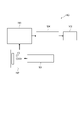
- FIG. 1 is a schematic diagram of an apparatus for measuring transient PL
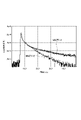
- FIG. 4 is a diagram showing an example of a decay curve of transient PL
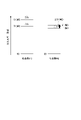
- FIG. 3 is a diagram showing the energy level relationship between compound M3 and compound M2 in a light-emitting layer of an example of the organic electroluminescence device according to the first embodiment of the present invention.
- FIG. 4 is a diagram showing energy levels of compound M3, compound M2, and compound M1 in a light-emitting layer of an example of the organic electroluminescence device according to the second embodiment of the present invention, and a relationship of energy transfer.
- a hydrogen atom includes isotopes with different neutron numbers, ie, protium, deuterium, and tritium.
- a hydrogen atom that is, a hydrogen atom, a deuterium atom, or Assume that the tritium atoms are bonded.
- the number of ring-forming carbon atoms refers to the ring itself of a compound having a structure in which atoms are bonded in a ring (e.g., monocyclic compounds, condensed ring compounds, bridged compounds, carbocyclic compounds, and heterocyclic compounds). represents the number of carbon atoms among the atoms that When the ring is substituted with a substituent, the carbon contained in the substituent is not included in the number of ring-forming carbon atoms. The same applies to the "number of ring-forming carbon atoms" described below unless otherwise specified.
- a benzene ring has 6 ring carbon atoms
- a naphthalene ring has 10 ring carbon atoms
- a pyridine ring has 5 ring carbon atoms
- a furan ring has 4 ring carbon atoms.
- the 9,9-diphenylfluorenyl group has 13 ring-forming carbon atoms
- the 9,9′-spirobifluorenyl group has 25 ring-forming carbon atoms.
- the number of ring-forming carbon atoms in the benzene ring substituted with the alkyl group is 6.
- the naphthalene ring substituted with an alkyl group has 10 ring-forming carbon atoms.
- the number of ring-forming atoms refers to compounds (e.g., monocyclic compounds, condensed ring compounds, bridged compounds, carbocyclic compound, and heterocyclic compound) represents the number of atoms constituting the ring itself. Atoms that do not constitute a ring (e.g., a hydrogen atom that terminates the bond of an atom that constitutes a ring) and atoms contained in substituents when the ring is substituted by substituents are not included in the number of ring-forming atoms. The same applies to the "number of ring-forming atoms" described below unless otherwise specified.
- the pyridine ring has 6 ring-forming atoms
- the quinazoline ring has 10 ring-forming atoms
- the furan ring has 5 ring-forming atoms.
- hydrogen atoms bonded to the pyridine ring or atoms constituting substituents are not included in the number of atoms forming the pyridine ring. Therefore, the number of ring-forming atoms of the pyridine ring to which hydrogen atoms or substituents are bonded is 6.
- the expression "substituted or unsubstituted XX to YY carbon number ZZ group” represents the number of carbon atoms when the ZZ group is unsubstituted, and is substituted. Do not include the number of carbon atoms in the substituents.
- "YY” is larger than “XX”, “XX” means an integer of 1 or more, and “YY” means an integer of 2 or more.
- "YY" is larger than “XX”, “XX” means an integer of 1 or more, and "YY” means an integer of 2 or more.
- an unsubstituted ZZ group represents a case where a "substituted or unsubstituted ZZ group" is an "unsubstituted ZZ group", and a substituted ZZ group is a "substituted or unsubstituted ZZ group”. is a "substituted ZZ group”.
- "unsubstituted” in the case of "substituted or unsubstituted ZZ group” means that a hydrogen atom in the ZZ group is not replaced with a substituent.
- a hydrogen atom in the "unsubstituted ZZ group” is a protium atom, a deuterium atom, or a tritium atom.
- substituted in the case of “substituted or unsubstituted ZZ group” means that one or more hydrogen atoms in the ZZ group are replaced with a substituent.
- substituted in the case of "a BB group substituted with an AA group” similarly means that one or more hydrogen atoms in the BB group are replaced with an AA group.
- the number of ring-forming carbon atoms in the "unsubstituted aryl group” described herein is 6 to 50, preferably 6 to 30, more preferably 6 to 18, unless otherwise specified. .
- the number of ring-forming atoms of the "unsubstituted heterocyclic group” described herein is 5 to 50, preferably 5 to 30, more preferably 5 to 18, unless otherwise specified. be.
- the number of carbon atoms in the "unsubstituted alkyl group” described herein is 1-50, preferably 1-20, more preferably 1-6, unless otherwise specified.
- the number of carbon atoms in the "unsubstituted alkenyl group” described herein is 2-50, preferably 2-20, more preferably 2-6, unless otherwise specified in the specification.
- the number of carbon atoms in the "unsubstituted alkynyl group” described herein is 2-50, preferably 2-20, more preferably 2-6, unless otherwise specified in the specification.
- the number of ring-forming carbon atoms in the "unsubstituted cycloalkyl group” described herein is 3 to 50, preferably 3 to 20, more preferably 3 to 6, unless otherwise specified. be.
- the number of ring-forming carbon atoms in the "unsubstituted arylene group” described herein is 6 to 50, preferably 6 to 30, more preferably 6 to 18, unless otherwise specified. .
- the number of ring-forming atoms of the "unsubstituted divalent heterocyclic group” described herein is 5 to 50, preferably 5 to 30, more preferably 5, unless otherwise specified herein. ⁇ 18.
- the number of carbon atoms in the "unsubstituted alkylene group” described herein is 1-50, preferably 1-20, more preferably 1-6, unless otherwise specified.
- unsubstituted aryl group refers to the case where "substituted or unsubstituted aryl group” is “unsubstituted aryl group", and substituted aryl group is “substituted or unsubstituted aryl group” It refers to a "substituted aryl group”.
- aryl group includes both "unsubstituted aryl group” and “substituted aryl group”.
- a "substituted aryl group” means a group in which one or more hydrogen atoms of an "unsubstituted aryl group” are replaced with a substituent.
- substituted aryl group examples include, for example, a group in which one or more hydrogen atoms of the "unsubstituted aryl group” of Specific Example Group G1A below is replaced with a substituent, and a substituted aryl group of Specific Example Group G1B below.
- Examples include:
- the examples of the "unsubstituted aryl group” and the examples of the “substituted aryl group” listed here are only examples, and the “substituted aryl group” described herein includes the following specific examples A group in which the hydrogen atom bonded to the carbon atom of the aryl group itself in the "substituted aryl group” of Group G1B is further replaced with a substituent, and the hydrogen atom of the substituent in the "substituted aryl group” of Specific Example Group G1B below Furthermore, groups substituted with substituents are also included.
- aryl group (specific example group G1A): phenyl group, a p-biphenyl group, m-biphenyl group, an o-biphenyl group, p-terphenyl-4-yl group, p-terphenyl-3-yl group, p-terphenyl-2-yl group, m-terphenyl-4-yl group, m-terphenyl-3-yl group, m-terphenyl-2-yl group, o-terphenyl-4-yl group, o-terphenyl-3-yl group, o-terphenyl-2-yl group, 1-naphthyl group, 2-naphthyl group, anthryl group, benzoanthryl group, a phenanthryl group, a benzophenanthryl group, a phenalenyl group, a pyrenyl group, a chryseny
- aryl group (specific example group G1B): o-tolyl group, m-tolyl group, p-tolyl group, para-xylyl group, meta-xylyl group, an ortho-xylyl group, para-isopropylphenyl group, meta-isopropylphenyl group, an ortho-isopropylphenyl group, para-t-butylphenyl group, meta-t-butylphenyl group, ortho-t-butylphenyl group, 3,4,5-trimethylphenyl group, 9,9-dimethylfluorenyl group, 9,9-diphenylfluorenyl group, 9,9-bis(4-methylphenyl)fluorenyl group, 9,9-bis(4-isopropylphenyl)fluorenyl group, 9,9-bis(4-t-butylphenyl) fluorenyl group, a cyanophenyl group,
- heterocyclic group is a cyclic group containing at least one heteroatom as a ring-forming atom. Specific examples of heteroatoms include nitrogen, oxygen, sulfur, silicon, phosphorus, and boron atoms.
- a “heterocyclic group” as described herein is a monocyclic group or a condensed ring group.
- a “heterocyclic group” as described herein is either an aromatic heterocyclic group or a non-aromatic heterocyclic group.
- specific examples of the "substituted or unsubstituted heterocyclic group" described herein include the following unsubstituted heterocyclic groups (specific example group G2A), and substituted heterocyclic groups ( Specific example group G2B) and the like can be mentioned.
- unsubstituted heterocyclic group refers to the case where “substituted or unsubstituted heterocyclic group” is “unsubstituted heterocyclic group”, and substituted heterocyclic group refers to “substituted or unsubstituted "Heterocyclic group” refers to a "substituted heterocyclic group”.
- heterocyclic group refers to a "substituted heterocyclic group”.
- a “substituted heterocyclic group” means a group in which one or more hydrogen atoms of an "unsubstituted heterocyclic group” are replaced with a substituent.
- Specific examples of the "substituted heterocyclic group” include groups in which the hydrogen atoms of the "unsubstituted heterocyclic group” of the following specific example group G2A are replaced, and examples of the substituted heterocyclic groups of the following specific example group G2B. mentioned.
- the examples of the "unsubstituted heterocyclic group” and the examples of the “substituted heterocyclic group” listed here are only examples, and the "substituted heterocyclic group” described herein specifically includes A group in which the hydrogen atom bonded to the ring-forming atom of the heterocyclic group itself in the "substituted heterocyclic group" of Example Group G2B is further replaced with a substituent, and a substituent in the "substituted heterocyclic group" of Specific Example Group G2B A group in which the hydrogen atom of is further replaced with a substituent is also included.
- Specific example group G2A includes, for example, the following nitrogen atom-containing unsubstituted heterocyclic groups (specific example group G2A1), oxygen atom-containing unsubstituted heterocyclic groups (specific example group G2A2), sulfur atom-containing unsubstituted (specific example group G2A3), and a monovalent heterocyclic group derived by removing one hydrogen atom from the ring structures represented by the following general formulas (TEMP-16) to (TEMP-33) (specific example group G2A4).
- nitrogen atom-containing unsubstituted heterocyclic groups specifically example group G2A1
- oxygen atom-containing unsubstituted heterocyclic groups specifically example group G2A2
- sulfur atom-containing unsubstituted specifically example group G2A3
- a monovalent heterocyclic group derived by removing one hydrogen atom from the ring structures represented by the following general formulas (TEMP-16) to (TEMP-33) (specific example group G2A4).
- Specific example group G2B includes, for example, the following substituted heterocyclic group containing a nitrogen atom (specific example group G2B1), substituted heterocyclic group containing an oxygen atom (specific example group G2B2), substituted heterocyclic ring containing a sulfur atom group (specific example group G2B3), and one or more hydrogen atoms of a monovalent heterocyclic group derived from a ring structure represented by the following general formulas (TEMP-16) to (TEMP-33) as a substituent Including substituted groups (example group G2B4).
- an unsubstituted heterocyclic group containing a nitrogen atom (specific example group G2A1): pyrrolyl group, an imidazolyl group, a pyrazolyl group, a triazolyl group, a tetrazolyl group, an oxazolyl group, an isoxazolyl group, an oxadiazolyl group, a thiazolyl group, an isothiazolyl group, a thiadiazolyl group, a pyridyl group, a pyridazinyl group, a pyrimidinyl group, pyrazinyl group, a triazinyl group, an indolyl group, an isoindolyl group, an indolizinyl group, a quinolidinyl group, quinolyl group, an isoquinolyl group, cinnolyl group, a phthalazinyl group, a quinazolinyl
- an unsubstituted heterocyclic group containing an oxygen atom (specific example group G2A2): a furyl group, an oxazolyl group, an isoxazolyl group, an oxadiazolyl group, xanthenyl group, benzofuranyl group, an isobenzofuranyl group, a dibenzofuranyl group, a naphthobenzofuranyl group, a benzoxazolyl group, a benzisoxazolyl group, a phenoxazinyl group, a morpholino group, a dinaphthofuranyl group, an azadibenzofuranyl group, a diazadibenzofuranyl group, azanaphthobenzofuranyl group and diazanaphthobenzofuranyl group;
- X A and Y A are each independently an oxygen atom, a sulfur atom, NH, or CH 2 . However, at least one of X A and Y A is an oxygen atom, a sulfur atom, or NH.
- the monovalent heterocyclic groups derived from the represented ring structures include monovalent groups obtained by removing one hydrogen atom from these NH or CH2 .
- a substituted heterocyclic group containing a nitrogen atom (specific example group G2B1): (9-phenyl)carbazolyl group, (9-biphenylyl)carbazolyl group, (9-phenyl) phenylcarbazolyl group, (9-naphthyl)carbazolyl group, diphenylcarbazol-9-yl group, a phenylcarbazol-9-yl group, a methylbenzimidazolyl group, ethylbenzimidazolyl group, a phenyltriazinyl group, a biphenylyltriazinyl group, a diphenyltriazinyl group, a phenylquinazolinyl group and a biphenylylquinazolinyl group;
- a substituted heterocyclic group containing an oxygen atom (specific example group G2B2): a phenyldibenzofuranyl group, methyldibenzofuranyl group, A t-butyldibenzofuranyl group and a monovalent residue of spiro[9H-xanthene-9,9′-[9H]fluorene].
- a substituted heterocyclic group containing a sulfur atom (specific example group G2B3): a phenyldibenzothiophenyl group, a methyldibenzothiophenyl group, A t-butyldibenzothiophenyl group and a monovalent residue of spiro[9H-thioxanthene-9,9′-[9H]fluorene].
- the "one or more hydrogen atoms of the monovalent heterocyclic group” means that at least one of the hydrogen atoms bonded to the ring-forming carbon atoms of the monovalent heterocyclic group, XA and YA is NH.
- unsubstituted alkyl group refers to the case where "substituted or unsubstituted alkyl group” is “unsubstituted alkyl group”
- substituted alkyl group refers to the case where "substituted or unsubstituted alkyl group” is It refers to a "substituted alkyl group”.
- alkyl group includes both an "unsubstituted alkyl group” and a "substituted alkyl group”.
- a “substituted alkyl group” means a group in which one or more hydrogen atoms in an "unsubstituted alkyl group” are replaced with a substituent.
- Specific examples of the "substituted alkyl group” include groups in which one or more hydrogen atoms in the following "unsubstituted alkyl group” (specific example group G3A) are replaced with substituents, and substituted alkyl groups (specific examples Examples of group G3B) and the like can be mentioned.
- the alkyl group in the "unsubstituted alkyl group” means a chain alkyl group.
- the "unsubstituted alkyl group” includes a linear “unsubstituted alkyl group” and a branched “unsubstituted alkyl group”.
- the examples of the "unsubstituted alkyl group” and the examples of the “substituted alkyl group” listed here are only examples, and the "substituted alkyl group” described herein includes specific example group G3B A group in which the hydrogen atom of the alkyl group itself in the "substituted alkyl group” of Specific Example Group G3B is further replaced with a substituent, and a group in which the hydrogen atom of the substituent in the "substituted alkyl group” of Specific Example Group G3B is further replaced by a substituent included.
- - unsubstituted alkyl group (specific example group G3A): methyl group, ethyl group, n-propyl group, isopropyl group, n-butyl group, isobutyl group, s-butyl group and t-butyl group.
- - substituted alkyl group (specific example group G3B): heptafluoropropyl group (including isomers), pentafluoroethyl group, 2,2,2-trifluoroethyl group and trifluoromethyl group;
- Substituted or unsubstituted alkenyl group Specific examples of the "substituted or unsubstituted alkenyl group" described in the specification (specific example group G4) include the following unsubstituted alkenyl groups (specific example group G4A) and substituted alkenyl groups (specific example group G4B) and the like.
- unsubstituted alkenyl group refers to the case where "substituted or unsubstituted alkenyl group” is “unsubstituted alkenyl group", "substituted alkenyl group” means "substituted or unsubstituted alkenyl group ” is a “substituted alkenyl group”.
- alkenyl group simply referring to an “alkenyl group” includes both an “unsubstituted alkenyl group” and a “substituted alkenyl group”.
- a “substituted alkenyl group” means a group in which one or more hydrogen atoms in an "unsubstituted alkenyl group” are replaced with a substituent.
- Specific examples of the "substituted alkenyl group” include groups in which the following "unsubstituted alkenyl group” (specific example group G4A) has a substituent, and substituted alkenyl groups (specific example group G4B). be done.
- - unsubstituted alkenyl group (specific example group G4A): a vinyl group, allyl group, 1-butenyl group, 2-butenyl group, and 3-butenyl group.
- - substituted alkenyl group (specific example group G4B): 1,3-butandienyl group, 1-methylvinyl group, 1-methylallyl group, 1,1-dimethylallyl group, a 2-methylallyl group and a 1,2-dimethylallyl group;
- Substituted or unsubstituted alkynyl group Specific examples of the "substituted or unsubstituted alkynyl group" described in the specification (specific example group G5) include the following unsubstituted alkynyl groups (specific example group G5A).
- unsubstituted alkynyl group refers to the case where "substituted or unsubstituted alkynyl group” is "unsubstituted alkynyl group”.
- alkynyl group means "unsubstituted includes both "alkynyl group” and "substituted alkynyl group”.
- a “substituted alkynyl group” means a group in which one or more hydrogen atoms in an "unsubstituted alkynyl group” are replaced with a substituent.
- Specific examples of the "substituted alkynyl group” include groups in which one or more hydrogen atoms in the following "unsubstituted alkynyl group” (specific example group G5A) are replaced with substituents.
- Substituted or unsubstituted cycloalkyl group Specific examples of the "substituted or unsubstituted cycloalkyl group” described in the specification (specific example group G6) include the following unsubstituted cycloalkyl groups (specific example group G6A), and substituted cycloalkyl groups ( Specific example group G6B) and the like can be mentioned.
- unsubstituted cycloalkyl group refers to the case where "substituted or unsubstituted cycloalkyl group” is “unsubstituted cycloalkyl group", and substituted cycloalkyl group refers to "substituted or unsubstituted It refers to the case where "cycloalkyl group” is “substituted cycloalkyl group”.
- cycloalkyl group means "unsubstituted cycloalkyl group” and “substituted cycloalkyl group”. including both.
- a “substituted cycloalkyl group” means a group in which one or more hydrogen atoms in an "unsubstituted cycloalkyl group” are replaced with a substituent.
- Specific examples of the "substituted cycloalkyl group” include groups in which one or more hydrogen atoms in the following "unsubstituted cycloalkyl group” (specific example group G6A) are replaced with substituents, and substituted cycloalkyl groups (Specific example group G6B) and the like.
- the examples of the "unsubstituted cycloalkyl group” and the examples of the “substituted cycloalkyl group” listed here are only examples, and the "substituted cycloalkyl group” described herein specifically includes A group in which one or more hydrogen atoms bonded to a carbon atom of the cycloalkyl group itself in the “substituted cycloalkyl group” of Example Group G6B is replaced with a substituent, and in the “substituted cycloalkyl group” of Specific Example Group G6B A group in which a hydrogen atom of a substituent is further replaced with a substituent is also included.
- an unsubstituted cycloalkyl group (specific example group G6A): a cyclopropyl group, cyclobutyl group, a cyclopentyl group, a cyclohexyl group, 1-adamantyl group, 2-adamantyl group, 1-norbornyl group and 2-norbornyl group.
- G7 A group represented by -Si (R 901 ) (R 902 ) (R 903 )
- Specific examples of the group represented by —Si(R 901 )(R 902 )(R 903 ) described in the specification include: -Si(G1)(G1)(G1), - Si (G1) (G2) (G2), - Si (G1) (G1) (G2), -Si(G2)(G2)(G2), -Si(G3)(G3)(G3) and -Si(G6)(G6)(G6) is mentioned.
- G1 is a "substituted or unsubstituted aryl group" described in specific example group G1.
- G2 is a "substituted or unsubstituted heterocyclic group” described in Specific Example Group G2.
- G3 is a "substituted or unsubstituted alkyl group” described in specific example group G3.
- G6 is a "substituted or unsubstituted cycloalkyl group” described in specific example group G6.
- a plurality of G1's in -Si(G1)(G1)(G1) are the same or different from each other.
- a plurality of G2 in -Si (G1) (G2) (G2) are the same or different from each other.
- a plurality of G1's in -Si(G1)(G1)(G2) are the same or different from each other.
- a plurality of G2 in -Si(G2)(G2)(G2) are the same or different from each other.
- a plurality of G3 in -Si(G3)(G3)(G3) are the same or different from each other.
- a plurality of G6 in -Si(G6)(G6)(G6) are the same or different from each other.
- G1 is a "substituted or unsubstituted aryl group” described in specific example group G1.
- G2 is a "substituted or unsubstituted heterocyclic group” described in Specific Example Group G2.
- G3 is a "substituted or unsubstituted alkyl group” described in specific example group G3.
- G6 is a "substituted or unsubstituted cycloalkyl group” described in specific example group G6.
- G9 A group represented by -S- (R 905 )
- Specific examples of the group represented by -S-(R 905 ) described in the specification include: -S(G1), -S(G2), -S (G3) and -S (G6) is mentioned.
- G1 is a "substituted or unsubstituted aryl group” described in specific example group G1.
- G2 is a "substituted or unsubstituted heterocyclic group” described in Specific Example Group G2.
- G3 is a "substituted or unsubstituted alkyl group” described in specific example group G3.
- G6 is a "substituted or unsubstituted cycloalkyl group” described in specific example group G6.
- G1 is a "substituted or unsubstituted aryl group” described in specific example group G1.
- G2 is a "substituted or unsubstituted heterocyclic group” described in Specific Example Group G2.
- G3 is a "substituted or unsubstituted alkyl group” described in specific example group G3.
- G6 is a "substituted or unsubstituted cycloalkyl group” described in specific example group G6.
- a plurality of G1's in -N(G1)(G1) are the same or different from each other.
- a plurality of G2 in -N(G2)(G2) are the same or different from each other.
- a plurality of G3s in -N(G3)(G3) are the same or different from each other.
- a plurality of G6 in -N(G6)(G6) are the same or different from each other.
- halogen atom described in this specification (specific example group G11) include a fluorine atom, a chlorine atom, a bromine atom, an iodine atom, and the like.
- the "substituted or unsubstituted fluoroalkyl group” described in this specification means that at least one hydrogen atom bonded to a carbon atom constituting the alkyl group in the "substituted or unsubstituted alkyl group” is replaced with a fluorine atom. Also includes a group (perfluoro group) in which all hydrogen atoms bonded to carbon atoms constituting the alkyl group in the "substituted or unsubstituted alkyl group” are replaced with fluorine atoms.
- the carbon number of the “unsubstituted fluoroalkyl group” is 1-50, preferably 1-30, more preferably 1-18, unless otherwise specified in the specification.
- a "substituted fluoroalkyl group” means a group in which one or more hydrogen atoms of a “fluoroalkyl group” are replaced with a substituent.
- substituted fluoroalkyl group described in this specification includes a group in which one or more hydrogen atoms bonded to the carbon atoms of the alkyl chain in the "substituted fluoroalkyl group” are further replaced with a substituent, and A group in which one or more hydrogen atoms of a substituent in a "substituted fluoroalkyl group” is further replaced with a substituent is also included.
- Specific examples of the "unsubstituted fluoroalkyl group” include groups in which one or more hydrogen atoms in the above “alkyl group” (specific example group G3) are replaced with fluorine atoms.
- Substituted or unsubstituted haloalkyl group "Substituted or unsubstituted haloalkyl group” described herein means that at least one hydrogen atom bonded to a carbon atom constituting the alkyl group in the "substituted or unsubstituted alkyl group" is replaced with a halogen atom Also includes a group in which all hydrogen atoms bonded to carbon atoms constituting the alkyl group in the "substituted or unsubstituted alkyl group” are replaced with halogen atoms.
- the carbon number of the “unsubstituted haloalkyl group” is 1-50, preferably 1-30, more preferably 1-18, unless otherwise specified in the specification.
- a "substituted haloalkyl group” means a group in which one or more hydrogen atoms of a “haloalkyl group” are replaced with a substituent.
- the "substituted haloalkyl group" described in this specification includes a group in which one or more hydrogen atoms bonded to the carbon atoms of the alkyl chain in the "substituted haloalkyl group” are further replaced with a substituent group, and a “substituted A group in which one or more hydrogen atoms of the substituent in the "haloalkyl group of" is further replaced with a substituent is also included.
- Specific examples of the "unsubstituted haloalkyl group” include groups in which one or more hydrogen atoms in the above “alkyl group” (specific example group G3) are replaced with halogen atoms.
- a haloalkyl group may be referred to as a halogenated alkyl group.
- Substituted or unsubstituted alkoxy group A specific example of the "substituted or unsubstituted alkoxy group" described in this specification is a group represented by -O(G3), where G3 is the "substituted or unsubstituted alkyl group".
- the carbon number of the "unsubstituted alkoxy group” is 1-50, preferably 1-30, more preferably 1-18, unless otherwise specified in the specification.
- Substituted or unsubstituted alkylthio group A specific example of the "substituted or unsubstituted alkylthio group” described in this specification is a group represented by -S(G3), wherein G3 is the "substituted or unsubstituted alkyl group".
- the carbon number of the “unsubstituted alkylthio group” is 1-50, preferably 1-30, more preferably 1-18, unless otherwise specified in the specification.
- Substituted or unsubstituted aryloxy group Specific examples of the “substituted or unsubstituted aryloxy group” described in this specification are groups represented by —O(G1), where G1 is the “substituted or an unsubstituted aryl group”.
- the number of ring-forming carbon atoms in the "unsubstituted aryloxy group” is 6-50, preferably 6-30, more preferably 6-18, unless otherwise specified in the specification.
- ⁇ "Substituted or unsubstituted trialkylsilyl group” Specific examples of the "trialkylsilyl group” described in this specification are groups represented by -Si(G3)(G3)(G3), where G3 is the group described in Specific Example Group G3. It is a "substituted or unsubstituted alkyl group”. A plurality of G3 in -Si(G3)(G3)(G3) are the same or different from each other. The number of carbon atoms in each alkyl group of the "trialkylsilyl group” is 1-50, preferably 1-20, more preferably 1-6, unless otherwise specified in the specification.
- a specific example of the "substituted or unsubstituted aralkyl group” described in this specification is a group represented by -(G3)-(G1), wherein G3 is the group described in Specific Example Group G3. It is a "substituted or unsubstituted alkyl group", and G1 is a "substituted or unsubstituted aryl group” described in specific example group G1.
- an "aralkyl group” is a group in which a hydrogen atom of an "alkyl group” is replaced with an "aryl group” as a substituent, and is one aspect of a “substituted alkyl group”.
- An “unsubstituted aralkyl group” is an "unsubstituted alkyl group” substituted with an "unsubstituted aryl group", and the number of carbon atoms in the "unsubstituted aralkyl group” is unless otherwise specified herein. , 7-50, preferably 7-30, more preferably 7-18.
- substituted or unsubstituted aralkyl group include a benzyl group, 1-phenylethyl group, 2-phenylethyl group, 1-phenylisopropyl group, 2-phenylisopropyl group, phenyl-t-butyl group, ⁇ -naphthylmethyl group, 1- ⁇ -naphthylethyl group, 2- ⁇ -naphthylethyl group, 1- ⁇ -naphthylisopropyl group, 2- ⁇ -naphthylisopropyl group, ⁇ -naphthylmethyl group, 1- ⁇ -naphthylethyl group , 2- ⁇ -naphthylethyl group, 1- ⁇ -naphthylisopropyl group, and 2- ⁇ -naphthylisopropyl group.
- a substituted or unsubstituted aryl group described herein is preferably a phenyl group, p-biphenyl group, m-biphenyl group, o-biphenyl group, p-terphenyl- 4-yl group, p-terphenyl-3-yl group, p-terphenyl-2-yl group, m-terphenyl-4-yl group, m-terphenyl-3-yl group, m-terphenyl- 2-yl group, o-terphenyl-4-yl group, o-terphenyl-3-yl group, o-terphenyl-2-yl group, 1-naphthyl group, 2-naphthyl group, anthryl group, phenanthryl group , pyrenyl group, chrysenyl group, triphenylenyl group, fluorenyl group, 9,9′-spirobifluorenyl group,
- substituted or unsubstituted heterocyclic groups described herein are preferably pyridyl, pyrimidinyl, triazinyl, quinolyl, isoquinolyl, quinazolinyl, benzimidazolyl, phenyl, unless otherwise stated herein.
- nantholinyl group carbazolyl group (1-carbazolyl group, 2-carbazolyl group, 3-carbazolyl group, 4-carbazolyl group, or 9-carbazolyl group), benzocarbazolyl group, azacarbazolyl group, diazacarbazolyl group , dibenzofuranyl group, naphthobenzofuranyl group, azadibenzofuranyl group, diazadibenzofuranyl group, dibenzothiophenyl group, naphthobenzothiophenyl group, azadibenzothiophenyl group, diazadibenzothiophenyl group, ( 9-phenyl)carbazolyl group ((9-phenyl)carbazol-1-yl group, (9-phenyl)carbazol-2-yl group, (9-phenyl)carbazol-3-yl group, or (9-phenyl)carbazole -4-yl group), (9-
- a carbazolyl group is specifically any one of the following groups unless otherwise specified in the specification.
- the (9-phenyl)carbazolyl group is specifically any one of the following groups, unless otherwise stated in the specification.
- a dibenzofuranyl group and a dibenzothiophenyl group are specifically any of the following groups, unless otherwise specified.
- substituted or unsubstituted alkyl groups described herein are preferably methyl, ethyl, propyl, isopropyl, n-butyl, isobutyl, and t- butyl group and the like.
- the "substituted or unsubstituted arylene group” described herein is derived from the above "substituted or unsubstituted aryl group” by removing one hydrogen atom on the aryl ring. is the base of the valence.
- Specific examples of the “substituted or unsubstituted arylene group” include the “substituted or unsubstituted aryl group” described in specific example group G1 by removing one hydrogen atom on the aryl ring. Induced divalent groups and the like can be mentioned.
- Substituted or unsubstituted divalent heterocyclic group Unless otherwise specified, the "substituted or unsubstituted divalent heterocyclic group” described herein is the above “substituted or unsubstituted heterocyclic group” except that one hydrogen atom on the heterocyclic ring is removed. is a divalent group derived from Specific examples of the "substituted or unsubstituted divalent heterocyclic group" (specific example group G13) include one hydrogen on the heterocyclic ring from the "substituted or unsubstituted heterocyclic group” described in specific example group G2. Examples include divalent groups derived by removing atoms.
- Substituted or unsubstituted alkylene group Unless otherwise specified, the "substituted or unsubstituted alkylene group” described herein is derived from the above “substituted or unsubstituted alkyl group” by removing one hydrogen atom on the alkyl chain. is the base of the valence. Specific examples of the “substituted or unsubstituted alkylene group” (specific example group G14) include the “substituted or unsubstituted alkyl group” described in specific example group G3 by removing one hydrogen atom on the alkyl chain. Induced divalent groups and the like can be mentioned.
- the substituted or unsubstituted arylene group described in this specification is preferably any group of the following general formulas (TEMP-42) to (TEMP-68), unless otherwise specified in this specification.
- Q 1 to Q 10 each independently represent a hydrogen atom or a substituent.
- * represents a binding position.
- Q 1 to Q 10 each independently represent a hydrogen atom or a substituent.
- Formulas Q9 and Q10 may be linked together through a single bond to form a ring.
- * represents a binding position.
- Q 1 to Q 8 are each independently a hydrogen atom or a substituent.
- * represents a binding position.
- the substituted or unsubstituted divalent heterocyclic group described herein is preferably any group of the following general formulas (TEMP-69) to (TEMP-102), unless otherwise specified herein is.
- Q 1 to Q 9 are each independently a hydrogen atom or a substituent.
- Q 1 to Q 8 are each independently a hydrogen atom or a substituent.
- R 921 and R 922 when “one or more pairs of two or more adjacent pairs of R 921 to R 930 are combined to form a ring", is a pair of R 921 and R 922 , a pair of R 922 and R 923 , a pair of R 923 and R 924 , a pair of R 924 and R 930 , a pair of R 930 and R 925 , R 925 and R 926 , R 926 and R 927 , R 927 and R 928 , R 928 and R 929 , and R 929 and R 921 .
- one or more pairs means that two or more of the groups consisting of two or more adjacent groups may form a ring at the same time.
- R 921 and R 922 are bonded together to form ring Q A
- R 925 and R 926 are bonded together to form ring Q B
- the general formula (TEMP-103) The represented anthracene compound is represented by the following general formula (TEMP-104).
- a group consisting of two or more adjacent pairs forms a ring is not limited to the case where a group consisting of two adjacent "two” is combined as in the above example, but It also includes the case where a pair is combined.
- R 921 and R 922 are bonded together to form ring Q A
- R 922 and R 923 are bonded together to form ring Q C
- the adjacent three R 921 , R 922 and R 923
- the anthracene compound represented by the general formula (TEMP-103) has It is represented by the general formula (TEMP-105).
- ring Q A and ring Q C share R 922 .
- the "monocyclic ring” or “condensed ring” to be formed may be a saturated ring or an unsaturated ring as the structure of only the formed ring. Even when “one pair of adjacent pairs" forms a “single ring” or a “fused ring", the “single ring” or “fused ring” is a saturated ring, or Unsaturated rings can be formed.
- ring Q A and ring Q B formed in the general formula (TEMP-104) are each a “monocyclic ring” or a "fused ring”.
- the ring Q A and the ring Q C formed in the general formula (TEMP-105) are “fused rings”.
- the ring Q A and the ring Q C in the general formula (TEMP-105) form a condensed ring by condensing the ring Q A and the ring Q C. If ring Q A in the general formula (TMEP-104) is a benzene ring, ring Q A is monocyclic. When the ring Q A of the general formula (TMEP-104) is a naphthalene ring, the ring Q A is a condensed ring.
- Unsaturated ring means an aromatic hydrocarbon ring or an aromatic heterocyclic ring.
- a “saturated ring” means an aliphatic hydrocarbon ring or a non-aromatic heterocyclic ring.
- Specific examples of the aromatic hydrocarbon ring include structures in which the groups listed as specific examples in the specific example group G1 are terminated with a hydrogen atom.
- Specific examples of the aromatic heterocyclic ring include structures in which the aromatic heterocyclic groups listed as specific examples in the specific example group G2 are terminated with a hydrogen atom.
- Specific examples of the aliphatic hydrocarbon ring include structures in which the groups listed as specific examples in the specific example group G6 are terminated with a hydrogen atom.
- Forming a ring means forming a ring only with a plurality of atoms of the mother skeleton, or with a plurality of atoms of the mother skeleton and one or more arbitrary elements.
- the ring Q A formed by combining R 921 and R 922 shown in the general formula (TEMP-104) has the carbon atom of the anthracene skeleton to which R 921 is bonded and the anthracene skeleton to which R 922 is bonded. It means a ring formed by a skeleton carbon atom and one or more arbitrary elements.
- R 921 and R 922 form a ring Q A , the carbon atom of the anthracene skeleton to which R 921 is bound, the carbon atom of the anthracene skeleton to which R 922 is bound, and four carbon atoms and form a monocyclic unsaturated ring, the ring formed by R 921 and R 922 is a benzene ring.
- the "arbitrary element” is preferably at least one element selected from the group consisting of carbon element, nitrogen element, oxygen element, and sulfur element, unless otherwise specified in this specification.
- a bond that does not form a ring may be terminated with a hydrogen atom or the like, or may be substituted with an “optional substituent” described later.
- the ring formed is a heterocycle.
- One or more arbitrary elements constituting a monocyclic or condensed ring are preferably 2 or more and 15 or less, more preferably 3 or more and 12 or less, unless otherwise specified in the present specification. , more preferably 3 or more and 5 or less.
- “monocyclic ring” and “condensed ring” “monocyclic ring” is preferred, unless otherwise stated in the present specification.
- the “saturated ring” and the “unsaturated ring” the “unsaturated ring” is preferred, unless otherwise specified in the present specification.
- “monocyclic” is preferably a benzene ring.
- the “unsaturated ring” is preferably a benzene ring.
- the substituent is, for example, the “optional substituent” described later.
- substituents in the case where the above “monocyclic ring” or “condensed ring” has a substituent are the substituents described in the section “Substituents described herein” above.
- the substituent is, for example, the “optional substituent” described later.
- substituents in the case where the above "monocyclic ring” or “condensed ring” has a substituent are the substituents described in the section "Substituents described herein" above. The above is the case where “one or more pairs of two or more adjacent pairs are bonded to each other to form a substituted or unsubstituted monocyclic ring", and “one or more pairs of two or more adjacent pairs are combined with each other to form a substituted or unsubstituted condensed ring"("combine to form a ring").
- the substituent in the case of “substituted or unsubstituted” is, for example, an unsubstituted alkyl group having 1 to 50 carbon atoms, an unsubstituted alkenyl group having 2 to 50 carbon atoms, an unsubstituted alkynyl group having 2 to 50 carbon atoms, an unsubstituted cycloalkyl group having 3 to 50 ring carbon atoms, —Si(R 901 ) (R 902 ) (R 903 ), —O—(R 904 ), -S-(R 905 ), -N(R 906 )(R 907 ), halogen atom, cyano group, nitro group, a group selected from the group consisting of an unsubstituted aryl group
- the two or more R 901 are the same or different from each other, when two or more R 902 are present, the two or more R 902 are the same or different from each other; when two or more R 903 are present, the two or more R 903 are the same or different from each other, when two or more R 904 are present, the two or more R 904 are the same or different from each other; when two or more R 905 are present, the two or more R 905 are the same or different from each other, when two or more R 906 are present, the two or more R 906 are the same or different from each other; When two or more R 907 are present, the two or more R 907 are the same or different from each other.
- the substituents referred to above as "substituted or unsubstituted” are an alkyl group having 1 to 50 carbon atoms, It is a group selected from the group consisting of an aryl group having 6 to 50 ring carbon atoms and a heterocyclic group having 5 to 50 ring atoms.
- the substituents referred to above as "substituted or unsubstituted” are an alkyl group having 1 to 18 carbon atoms, It is a group selected from the group consisting of an aryl group having 6 to 18 ring carbon atoms and a heterocyclic group having 5 to 18 ring atoms.
- any adjacent substituents may form a “saturated ring” or an “unsaturated ring”, preferably a substituted or unsubstituted saturated 5 forming a membered ring, a substituted or unsubstituted saturated 6-membered ring, a substituted or unsubstituted unsaturated 5-membered ring, or a substituted or unsubstituted unsaturated 6-membered ring, more preferably a benzene ring do.
- any substituent may have further substituents. Substituents further possessed by the optional substituents are the same as the above optional substituents.
- the numerical range represented using “AA to BB” has the numerical value AA described before “AA to BB” as the lower limit, and the numerical value BB described after “AA to BB” as the upper limit.
- An organic EL device comprises an organic layer between both electrodes of an anode and a cathode.
- This organic layer includes at least one layer composed of an organic compound.
- this organic layer is formed by laminating a plurality of layers composed of an organic compound.
- the organic layer may further contain an inorganic compound.
- at least one layer of the organic layers is a light-emitting layer. Therefore, the organic layer may be composed of, for example, one light-emitting layer, or may include layers that can be employed in an organic EL device.
- the layer that can be employed in the organic EL device is not particularly limited, but for example, at least one selected from the group consisting of a hole injection layer, a hole transport layer, an electron injection layer, an electron transport layer, and a barrier layer. layer.
- the organic EL device of the present embodiment has an anode, a cathode, and a light-emitting layer included between the anode and the cathode, and the light-emitting layer is represented by the following general formula (2): including a fluorescent compound M2 and a compound M3 represented by the following general formula (3), wherein the singlet energy S 1 (M2) of the compound M2 and the singlet energy S 1 (M3) of the compound M3 satisfies the relationship of the following formula (Equation 1). S 1 (M3)>S 1 (M2) (Equation 1)
- the delayed fluorescence compound M2 represented by the following general formula (2) has a structure in which the benzene of the general formula (2) is substituted with a group represented by the following general formula (21) (for example, a phenyl group).
- a group represented by the following general formula (21) for example, a phenyl group.
- the present inventors have found that a delayed fluorescence compound M2 represented by the following general formula (2) and a carbazole-containing compound M3 represented by the following general formula (3) are combined into a light-emitting layer, whereby holes is appropriately injected into the light-emitting layer, the light-emitting efficiency is improved, and an organic EL device having a long life and high efficiency is realized.
- the compound M2 is preferably a dopant material (also referred to as a guest material, emitter, or light-emitting material), and the compound M3 is a host material (also referred to as a matrix material).
- a dopant material also referred to as a guest material, emitter, or light-emitting material
- the compound M3 is a host material (also referred to as a matrix material).
- a host material also referred to as a matrix material
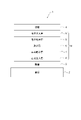
- FIG. 1 shows a schematic configuration of an example of the organic EL element in this embodiment.
- the organic EL element 1 includes a translucent substrate 2 , an anode 3 , a cathode 4 , and an organic layer 10 arranged between the anode 3 and the cathode 4 .
- the organic layer 10 is configured by stacking a hole injection layer 6, a hole transport layer 7, a light emitting layer 5, an electron transport layer 8, and an electron injection layer 9 in this order from the anode 3 side.
- the light-emitting layer may contain a metal complex.
- the light-emitting layer preferably does not contain a phosphorescent material (a phosphorescent dopant material). In one aspect of this embodiment, the light-emitting layer preferably does not contain a heavy metal complex and a phosphorescent rare earth metal complex. Examples of heavy metal complexes include iridium complexes, osmium complexes, and platinum complexes.
- the light-emitting layer preferably does not contain a phosphorescent metal complex, and preferably does not contain a metal complex.
- Compound M2 The light-emitting layer of the organic EL device of this embodiment contains a compound M2 represented by the following general formula (2).
- Compound M2 of the present embodiment is a thermally activated delayed fluorescent compound.
- a 2 is a group represented by the following general formula (21)
- D 2 is a group represented by the following general formula (22)
- CN is a cyano group
- k is 1, 2, 3 or 4
- m is 1, 2, 3 or 4
- n is 1 or 2
- t is 0, 1, 2 or 3
- k+m+n+t 6, and when k is 2, 3 or 4, the plurality of A 2 are the same or different; when m is 2, 3 or 4, the plurality of D 2 are the same or different from each other; When t is 2 or 3, the multiple Rx are the same or different.
- Rx in the general formula (2), R 201 to R 205 which do not form the substituted or unsubstituted monocyclic ring in the general formula (21) and do not form the substituted or unsubstituted condensed ring, and R 211 to R 214 and R 241 to R 244 which do not form a substituted or unsubstituted monocyclic ring and which do not form a substituted or unsubstituted condensed ring in the general formula (22) are each independently hydrogen atom, a substituted or unsubstituted alkyl group having 1 to 50 carbon atoms, a substituted or unsubstituted haloalkyl group having 1 to 50 carbon atoms, a substituted or unsubstituted alkenyl group having 2 to 50 carbon atoms, a substituted or unsubstituted alkynyl group having 2 to 50 carbon atoms, a substituted or unsubstituted cycloalkyl group having 3 to 50
- R 219 and R 220 are each independently hydrogen atom, a substituted or unsubstituted alkyl group having 1 to 50 carbon atoms, a substituted or unsubstituted haloalkyl group having 1 to 50 carbon atoms, a substituted or unsubstituted alkenyl group having 2 to 50 carbon atoms, a substituted or unsubstituted alkynyl group having 2 to 50 carbon atoms, a substituted or unsubstituted alkynyl group having 2 to 50 carbon atoms, a substituted or unsubstituted alkynyl group having 2 to 50 carbon atoms, a substituted or unsubstituted alkynyl group having 2 to 50 carbon atoms, a substituted or unsubstituted alkynyl group having 2 to 50 carbon atoms, a substituted or unsubstituted alkynyl group having 2 to 50 carbon atoms, a substituted or unsubsti
- Each R 937 is independently hydrogen atom, a substituted or unsubstituted alkyl group having 1 to 50 carbon atoms, a substituted or unsubstituted cycloalkyl group having 3 to 50 ring carbon atoms, a substituted or unsubstituted aryl group having 6 to 50 ring-forming carbon atoms, or a substituted or unsubstituted heterocyclic group having 5 to 50 ring-forming atoms,
- the multiple R 901 are present, the multiple R 901 are the same or different from each other,
- the multiple R 902 are present, the multiple R 902 are the same or different from each other,
- the multiple R 903 the multiple R 903
- n in the general formula (2) is 2.
- Compound M2 is also preferably a dicyanobenzene compound in which two cyano groups are bonded to a benzene ring.
- Compound M2 is also preferably a compound represented by the following general formula (201).
- Compound M2 is also preferably a compound represented by the following general formula (210) or general formula (230).
- n in compound M2 is preferably 2.
- Compound M2 is also preferably a compound represented by the following general formula (211).
- D 21 and D 22 are each independently synonymous with D 2 in the general formula (2)
- a 2 and Rx are respectively synonymous with A 2 and Rx in the general formula (2)
- D21 and D22 are the same or different from each other.
- k in compound M2 is preferably 1 or 2, more preferably 2.
- Compound M2 is also preferably a compound represented by the following general formula (202) or general formula (203).
- a 21 and A 22 are each independently synonymous with A 2 in the general formula (2)
- D 2 and Rx are respectively synonymous with D 2 and Rx in the general formula (2)
- a 21 and A 22 are the same or different from each other.
- Compound M2 is also preferably a compound represented by the following general formula (221).
- a 21 and A 22 are each independently synonymous with A 2 in the general formula (2)
- D 21 and D 22 are each independently synonymous with D 2 in the general formula (2)
- -CN and NC- represent a cyano group.
- Rx, R 201 to R 205 that do not form the substituted or unsubstituted monocyclic ring and do not form the substituted or unsubstituted condensed ring, and the substituted or unsubstituted monocyclic ring R 211 to R 214 and R 241 to R 244 which do not form a substituted or unsubstituted condensed ring are each independently a hydrogen atom, a substituted or unsubstituted alkyl group having 1 to 50 carbon atoms, a substituted Alternatively, it is preferably an unsubstituted aryl group having 6 to 50 ring-forming carbon atoms, or a substituted or unsubstituted heterocyclic group having 5 to 50 ring-forming atoms.
- Rx, R 201 to R 205 that do not form the substituted or unsubstituted monocyclic ring and do not form the substituted or unsubstituted condensed ring, and the substituted or unsubstituted monocyclic ring and R 211 to R 214 and R 241 to R 244 which do not form a substituted or unsubstituted condensed ring are each independently a hydrogen atom or a substituted or unsubstituted aryl having 6 to 50 ring carbon atoms It is preferably a group.
- Rx, R 201 to R 205 that do not form the substituted or unsubstituted monocyclic ring and do not form the substituted or unsubstituted condensed ring, and the substituted or unsubstituted monocyclic ring and R 211 to R 214 and R 241 to R 244 which do not form a substituted or unsubstituted condensed ring are preferably hydrogen atoms.
- At least one ring G preferably has a ring structure represented by the general formula (25).
- the group represented by the general formula (22) is preferably any group selected from the group consisting of the following general formulas (a1) to (a6).
- R 211 to R 214 and R 241 to R 244 are respectively synonymous with R 211 to R 214 and R 241 to R 244 in the general formula (22);
- X 21 has the same definition as X 21 in the general formula (25),
- R 219 and R 220 are respectively synonymous with R 219 and R 220 in the general formula (24),
- * in the general formulas (a1) to (a6) indicates the bonding position with the benzene ring in the general formula (2).
- X 21 in compound M2 is preferably a sulfur atom.
- R 211 to R 214 and R 241 to R 244 which do not form the substituted or unsubstituted monocyclic ring and do not form the substituted or unsubstituted condensed ring in the general formula (22), and the general formula ( R 219 and R 220 which do not form a substituted or unsubstituted monocyclic ring and do not form a substituted or unsubstituted condensed ring in 24) are each independently hydrogen atom, a substituted or unsubstituted alkyl group having 1 to 50 carbon atoms, A substituted or unsubstituted aryl group having 6 to 50 ring carbon atoms or a substituted or unsubstituted heterocyclic group having 5 to 50 ring atoms is preferred.
- R 211 to R 214 and R 241 to R 244 which do not form the substituted or unsubstituted monocyclic ring and do not form the substituted or unsubstituted condensed ring in the general formula (22), and the general formula ( R 219 and R 220 which do not form a substituted or unsubstituted monocyclic ring and do not form a substituted or unsubstituted condensed ring in 24) are each independently A hydrogen atom or a substituted or unsubstituted aryl group having 6 to 50 ring carbon atoms is preferred.
- R 211 to R 214 and R 241 to R 244 which do not form the substituted or unsubstituted monocyclic ring and do not form the substituted or unsubstituted condensed ring in the general formula (22), and the general formula ( R 219 and R 220 which do not form a substituted or unsubstituted monocyclic ring and do not form a substituted or unsubstituted condensed ring in 24) are preferably hydrogen atoms.
- D2 in compound M2 is preferably any group selected from the group consisting of the groups represented by general formulas (a1) to (a6).
- D 21 and D 22 in compound M2 are each independently preferably any group selected from the group consisting of the groups represented by the general formulas (a1) to (a6).
- Compound M2 is also preferably a compound represented by the following general formula (222).
- R 201 to R 205 each independently have the same meaning as R 201 to R 205 in the general formula (21), and D 21 and D 22 each independently represent the general It has the same meaning as D2 in formula ( 2 ).
- the plurality of R 201 are the same or different from each other
- the plurality of R 202 are the same or different from each other
- the plurality of R 203 are the same or different from each other
- the plurality of R 204 are the same or different from each other
- the plurality of R 205 are the same or different from each other
- the plurality of R 211 are the same or different from each other
- the plurality of R 212 are the same or different from each other different
- the plurality of R 213 are the same or different from each other
- the plurality of R 214 are the same or different from each other
- the plurality of R 241 are the same or different from each other
- the plurality of R 242 are
- the plurality of R 243 may be the same or different from each other
- the plurality of R 244 may be the same or different from each other.
- one or more pairs of adjacent two or more of R 211 to R 214 and R 241 to R 244 are bonded to each other to form a substituted or unsubstituted monocyclic ring. or may be joined together to form a substituted or unsubstituted fused ring.
- the compound M2 may be a compound in which the definition of D2 in the general formula ( 2 ) is changed according to the following alternative definitions.
- D2 is any group selected from the group consisting of the group represented by the general formula ( 22) and the group represented by the following general formula (23).
- R 251 to R 258 in the general formula (23) are combined with each other to form a substituted or unsubstituted monocyclic ring, or combined with each other to form a substituted or unsubstituted fused ring, or not combined with each other,
- R 251 to R 258 that do not form a substituted or unsubstituted monocyclic ring and do not form a substituted or unsubstituted condensed ring are each independently hydrogen atom, a substituted or unsubstituted alkyl group having 1 to 50 carbon atoms, a substituted or unsubstituted haloalkyl group having 1 to 50 carbon atoms, a substituted or unsubstituted alkenyl group having 2 to 50 carbon atoms, a substituted or unsubstituted alkynyl group having 2 to 50 carbon atoms, a substituted or unsubstituted cycloalkyl group having 3 to
- the organic EL device of this embodiment may be an organic EL device containing, in a light-emitting layer, the compound M3 and the compound M2 where D2 in the general formula ( 2 ) is the above alternative definition of D2.
- R 251 to R 258 that do not form a substituted or unsubstituted monocyclic ring and do not form a substituted or unsubstituted condensed ring are each independently a hydrogen atom, a substituted or unsubstituted carbon It is preferably an alkyl group having 1 to 50 carbon atoms, a substituted or unsubstituted aryl group having 6 to 50 ring carbon atoms, or a substituted or unsubstituted heterocyclic group having 5 to 50 ring atoms.
- R 251 to R 258 that do not form a substituted or unsubstituted monocyclic ring and do not form a substituted or unsubstituted condensed ring are each independently a hydrogen atom, or a substituted or unsubstituted An aryl group having 6 to 50 ring-forming carbon atoms is preferred.
- R 251 to R 258 that do not form a substituted or unsubstituted monocyclic ring and do not form a substituted or unsubstituted condensed ring are preferably hydrogen atoms.
- px and py in the general formula (23) are 2, at least one ring J is a ring structure represented by the general formula (25), and at least one ring K is the general formula A ring structure represented by (25) is preferred.
- px in the general formula (23) is 2
- the two rings J are preferably a ring structure represented by the general formula (24) and a ring structure represented by the general formula (25).
- py in the general formula (23) is 2
- the two rings K are preferably a ring structure represented by the general formula (24) and a ring structure represented by the general formula (25).
- a 2 in compound M2 is preferably any group selected from the group consisting of groups represented by the following general formulas (A21) to (A25).
- a 21 and A 22 in compound M2 are each independently preferably any group selected from the group consisting of groups represented by the following general formulas (A21) to (A25).
- R 200 that does not form a substituted or unsubstituted monocyclic ring and does not form a substituted or unsubstituted condensed ring is independently hydrogen atom, a substituted or unsubstituted alkyl group having 1 to 50 carbon atoms, a substituted or unsubstituted haloalkyl group having 1 to 50 carbon atoms, a substituted or unsubstituted alkenyl group having 2 to 50 carbon atoms, a substituted or unsubstituted alkynyl group having 2 to 50 carbon atoms, a substituted or unsubstituted cycloalkyl group having 3 to 50
- A2 in compound M2 is preferably any group selected from the group consisting of groups represented by general formulas (A21), (A24) and (A25).
- a 21 and A 22 in compound M2 are each independently preferably any group selected from the group consisting of groups represented by the general formulas (A21), (A24) and (A25).
- A2 in compound M2 is preferably a group represented by general formula (A21).
- a 21 and A 22 in compound M2 are preferably groups represented by general formula (A21).
- a 2 in compound M2 is a group represented by the general formula (A21), does not form the substituted or unsubstituted monocyclic ring in the general formula (A21), and R 200 that does not form a condensed ring is preferably a hydrogen atom.
- Each R 200 that does not form a substituted or unsubstituted monocyclic ring and does not form a substituted or unsubstituted condensed ring in the general formulas (A21) to (A25) is each independently a hydrogen atom, a substituted or It is preferably an unsubstituted alkyl group having 1 to 50 carbon atoms, a substituted or unsubstituted aryl group having 6 to 50 ring-forming carbon atoms, or a substituted or unsubstituted heterocyclic group having 5 to 50 ring-forming atoms. .
- Each R 200 that does not form a substituted or unsubstituted monocyclic ring and does not form a substituted or unsubstituted condensed ring in the general formulas (A21) to (A25) is each independently a hydrogen atom, or a substituted Alternatively, it is preferably an unsubstituted aryl group having 6 to 50 ring-forming carbon atoms.
- R 200 which does not form a substituted or unsubstituted monocyclic ring and does not form a substituted or unsubstituted condensed ring in the general formulas (A21) to (A25) is preferably a hydrogen atom.
- the substituent in the case of "substituted or unsubstituted” is a halogen atom, an unsubstituted alkyl group having 1 to 25 carbon atoms, an unsubstituted aryl group having 6 to 25 ring carbon atoms, or unsubstituted is preferably a heterocyclic group having 5 to 25 ring atoms.
- the substituent in the case of "substituted or unsubstituted” is an unsubstituted alkyl group having 1 to 10 carbon atoms, an unsubstituted aryl group having 6 to 12 ring-forming carbon atoms, or an unsubstituted ring-forming A heterocyclic group having 5 to 12 atoms is preferred.
- the group represented by -O-(R 904 ) is a hydroxy group when R 904 is a hydrogen atom.
- the group represented by -S-(R 905 ) is a thiol group when R 905 is a hydrogen atom.
- the group represented by -Ge(R 933 )(R 934 )(R 935 ) is a substituted germanium group when R 933 , R 934 and R 935 are substituents.
- the group represented by -B(R 936 )(R 937 ) is a substituted boryl group when R 936 and R 937 are substituents.
- Delayed fluorescence is explained on pages 261-268 of "Physical properties of organic semiconductor devices" (edited by Chihaya Adachi, published by Kodansha). In that literature, if the energy difference ⁇ E13 between the excited singlet state and the excited triplet state of the fluorescent light-emitting material can be reduced, the reverse energy from the excited triplet state to the excited singlet state, which usually has a low transition probability, It has been described that translocation occurs with high efficiency and the development of Thermally Activated delayed Fluorescence (TADF). Furthermore, FIG. 10.38 in the document explains the generation mechanism of delayed fluorescence.
- Compound M2 in the present embodiment is preferably a compound that exhibits thermally activated delayed fluorescence generated by such a mechanism.
- delayed fluorescence emission can be confirmed by transient PL (Photo Luminescence) measurement.
- Transient PL measurement is a method of irradiating a sample with a pulse laser to excite it, and measuring the attenuation behavior (transient characteristics) of PL emission after stopping the irradiation.
- PL emission in the TADF material is classified into an emission component from singlet excitons generated by the first PL excitation and an emission component from singlet excitons generated via triplet excitons.
- the lifetime of singlet excitons generated by the first PL excitation is on the order of nanoseconds and is very short. Therefore, the light emission from the singlet excitons is rapidly attenuated after irradiation with the pulse laser.
- delayed fluorescence is emitted from singlet excitons generated via long-lived triplet excitons, so it gradually decays.
- the emission intensity derived from delayed fluorescence can be obtained.
- FIG. 2 A schematic diagram of an exemplary apparatus for measuring transient PL is shown in FIG. An example of a transient PL measurement method and delayed fluorescence behavior analysis using FIG. 2 will be described.
- a transient PL measurement apparatus 100 in FIG. A streak camera 104 for forming a dimensional image and a personal computer 105 for taking in and analyzing a two-dimensional image are provided. Note that the measurement of transient PL is not limited to the apparatus shown in FIG.
- the sample housed in the sample chamber 102 is obtained by forming a thin film on a quartz substrate, which is doped with a doping material at a concentration of 12% by mass with respect to the matrix material.
- a thin film sample housed in the sample chamber 102 is irradiated with a pulse laser from the pulse laser unit 101 to excite the doping material. Emission is extracted in a direction 90 degrees to the irradiation direction of the excitation light, the extracted light is spectroscopically separated by the spectroscope 103 , and a two-dimensional image is formed in the streak camera 104 .
- a two-dimensional image can be obtained in which the vertical axis corresponds to time, the horizontal axis corresponds to wavelength, and the bright spots correspond to emission intensity.
- By cutting out this two-dimensional image along a predetermined time axis it is possible to obtain an emission spectrum in which the vertical axis is the emission intensity and the horizontal axis is the wavelength. Also, by cutting out the two-dimensional image along the wavelength axis, it is possible to obtain an attenuation curve (transient PL) in which the vertical axis is the logarithm of the emission intensity and the horizontal axis is time.
- the following reference compound H1 was used as the matrix material, and the following reference compound D1 was used as the doping material to prepare the thin film sample A as described above, and the transient PL measurement was performed.
- the attenuation curves were analyzed using the thin film sample A and thin film sample B described above.
- a thin film sample B was prepared as described above using the following reference compound H2 as a matrix material and the aforementioned reference compound D1 as a doping material.
- Fig. 3 shows attenuation curves obtained from transient PL measured for thin film sample A and thin film sample B.
- the vertical axis is the luminous intensity and the horizontal axis is the time. Based on this emission decay curve, the fluorescence intensity of the fluorescence emitted from the singlet excited state generated by photoexcitation and the delayed fluorescence emitted from the singlet excited state generated by reverse energy transfer via the triplet excited state ratio can be estimated.
- the ratio of the intensity of delayed fluorescence that decays slowly to the intensity of fluorescence that decays quickly is relatively large.
- Prompt luminescence is luminescence immediately observed from the excited state after excitation with pulsed light (light emitted from a pulse laser) having a wavelength that the delayed fluorescent material absorbs.
- Delayed luminescence is luminescence that is not observed immediately after excitation by the pulsed light, but is observed thereafter.
- a sample prepared by the following method is used for measuring the delayed fluorescence of compound M2.
- compound M2 is dissolved in toluene to prepare a dilute solution with an absorbance of 0.05 or less at the excitation wavelength to remove the self-absorption contribution.
- the sample solution is freeze-degassed and sealed in a cell with a lid under an argon atmosphere to obtain an oxygen-free sample solution saturated with argon.
- the fluorescence spectrum of the above sample solution is measured with a spectrofluorophotometer FP-8600 (manufactured by JASCO Corporation), and the fluorescence spectrum of the ethanol solution of 9,10-diphenylanthracene is also measured under the same conditions. Using the fluorescence area intensity of both spectra, Morris et al. J. Phys. Chem. 80 (1976) 969, to calculate the total fluorescence quantum yield.
- the amount and ratio of prompt luminescence and delay luminescence can be determined by a method similar to that described in “Nature 492, 234-238, 2012” (reference document 1). It should be noted that the device used to calculate the amounts of Prompt emission and Delay emission is not limited to the device described in Reference Document 1 or the device described in FIG. In the present embodiment, when the amount of prompt luminescence (immediate luminescence) of the compound to be measured (compound M2) is X P and the amount of delay luminescence (delayed luminescence) is X D , the value of X D /X P is preferably 0.05 or more. The amount and ratio of prompt luminescence and delay luminescence of compounds other than compound M2 in this specification are measured in the same manner as the amount and ratio of prompt luminescence and delay luminescence of compound M2.
- the difference (S 1 ⁇ T 77K ) between the lowest excited singlet energy S 1 and the energy gap T 77K at 77[K] is defined as ⁇ ST.
- the difference ⁇ ST (M2) between the lowest excited singlet energy S 1 (M2) of compound M2 and the energy gap T 77K (M2) of compound M2 at 77 [K] is preferably less than 0.3 eV, more preferably 0 It is less than 0.2 eV, more preferably less than 0.1 eV, and even more preferably less than 0.01 eV. That is, ⁇ ST(M2) preferably satisfies the relationship of the following formulas (Equation 10), (Equation 11), (Equation 12), or (Equation 13).
- the energy gap at 77 [K] differs from the triplet energy that is usually defined. Measurement of triplet energy is performed as follows. First, a sample is prepared by sealing a solution of a compound to be measured in an appropriate solvent in a quartz glass tube.
- the phosphorescence spectrum (vertical axis: phosphorescent emission intensity, horizontal axis: wavelength) was measured at a low temperature (77 [K]), and a tangent line was drawn with respect to the rise on the short wavelength side of the phosphorescence spectrum, Based on the wavelength value at the intersection of the tangent line and the horizontal axis, triplet energy is calculated from a predetermined conversion formula.
- the heat-activated delayed fluorescence compound is preferably a compound having a small ⁇ ST. When ⁇ ST is small, even at a low temperature (77 [K]), intersystem crossing and reverse intersystem crossing are likely to occur, and an excited singlet state and an excited triplet state coexist.
- the spectrum measured in the same manner as above includes light emission from both the excited singlet state and the excited triplet state, and it is difficult to distinguish from which state the light is emitted.
- basically the value of the triplet energy is considered to be dominant. Therefore, in this embodiment, although the measurement method is the same as the normal triplet energy T, in order to distinguish the difference in its strict meaning, the value measured as follows is referred to as the energy gap T 77K . .
- the phosphorescence spectrum (vertical axis: phosphorescent emission intensity, horizontal axis: wavelength) is measured at a low temperature (77 [K]), and a tangent line is drawn to the rise on the short wavelength side of this phosphorescent spectrum.
- a tangent line to the rise on the short wavelength side of the phosphorescence spectrum is drawn as follows.
- This tangent line increases in slope as the curve rises (ie as the vertical axis increases).
- the tangent line drawn at the point where the value of this slope takes the maximum value is taken as the tangent line to the rise on the short wavelength side of the phosphorescence spectrum.
- the maximum point with a peak intensity of 15% or less of the maximum peak intensity of the spectrum is not included in the maximum value on the shortest wavelength side described above, and is closest to the maximum value on the short wavelength side.
- the tangent line drawn at the point where the value is taken is taken as the tangent line to the rise on the short wavelength side of the phosphorescence spectrum.
- F-4500 type spectrofluorophotometer body manufactured by Hitachi High Technology Co., Ltd. can be used for measurement of phosphorescence.
- the measuring device is not limited to this, and measurement may be performed by combining a cooling device, a cryogenic container, an excitation light source, and a light receiving device.
- a method for measuring the lowest excited singlet energy S1 using a solution includes the following method.
- a 10 ⁇ mol/L toluene solution of the compound to be measured is prepared, placed in a quartz cell, and the absorption spectrum (vertical axis: absorption intensity, horizontal axis: wavelength) of this sample is measured at room temperature (300 K).
- a tangent line is drawn with respect to the fall on the long wavelength side of this absorption spectrum, and the wavelength value ⁇ edge [nm] at the intersection of the tangent line and the horizontal axis is substituted into the following conversion formula (F2) to obtain the lowest excited singlet energy.
- F2 conversion formula
- S 1 [eV] 1239.85/ ⁇ edge
- Examples of the absorption spectrum measuring device include, but are not limited to, a spectrophotometer manufactured by Hitachi (device name: U3310).
- a tangent to the fall on the long wavelength side of the absorption spectrum is drawn as follows. Among the maximum values of the absorption spectrum, consider the tangent line at each point on the curve when moving from the maximum value on the longest wavelength side to the long wavelength direction on the spectrum curve. This tangent line repeats the slope decreasing and then increasing as the curve falls (that is, as the value on the vertical axis decreases). The tangent line drawn at the point where the slope value takes the minimum value on the long wavelength side (except when the absorbance is 0.1 or less) is taken as the tangent line to the fall on the long wavelength side of the absorption spectrum. The maximum absorbance value of 0.2 or less is not included in the maximum value on the longest wavelength side.
- Compound M2 according to the present embodiment is produced by using known alternative reactions and raw materials according to the target object according to the synthesis method described in the examples described later or by following the synthesis method. can.
- Specific examples of the compound M2 of the present embodiment include the following compounds. However, the present invention is not limited to specific examples of these compounds.
- deuterium atoms are denoted as D in chemical formulas, and light hydrogen atoms are denoted as H or omitted.
- Compound M3 The light-emitting layer of the organic EL device of this embodiment contains a compound M3 represented by the following general formula (3).
- Compound M3 of the present embodiment may be a thermally activated delayed fluorescent compound or a compound that does not exhibit thermally activated delayed fluorescence, but is preferably a compound that does not exhibit thermally activated delayed fluorescence.
- A3 is a substituted or unsubstituted aryl group having 6 to 50 ring-forming carbon atoms, or a substituted or unsubstituted heterocyclic group having 5 to 50 ring-forming atoms
- L3 is single bond, a substituted or unsubstituted arylene group having 6 to 50 ring carbon atoms, a substituted or unsubstituted divalent heterocyclic group having 5 to 50 ring atoms, two groups selected from the group consisting of a substituted or unsubstituted arylene group having 6 to 50 ring-forming carbon atoms and a substituted or unsubstituted divalent heterocyclic group having 5 to 50 ring-forming atoms are bonded a divalent group formed, or a substituted or unsubstituted arylene group having 6 to 30 ring-forming carbon atoms and a substituted or unsubstituted divalent heterocyclic group having 5 to 30 ring-forming atoms
- R901 , R902 , R903 , R904 , R905 , R906 , R907 , R908 , R909 , R931 , R932 , R933 , R934 , R935 , R936 and R 937 are each independently hydrogen atom, a substituted or unsubstituted alkyl group having 1 to 50 carbon atoms, a substituted or unsubstituted cycloalkyl group having 3 to 50 ring carbon atoms, a substituted or unsubstituted aryl group having 6 to 50 ring-forming carbon atoms, or a substituted or unsubstituted heterocyclic group having 5 to 50 ring-forming atoms,
- the multiple R 901 are present, the multiple R 901 are the same or different from each other,
- the multiple R 902 are present, the multiple R 902 are the same or different from each other,
- multiple R 903 the multiple R 90
- the organic EL element according to this embodiment may satisfy any one of the following conditions (PRV-1) to (PRV-8).
- R 311 is a phenyl structure
- R 312 is a biphenyl structure
- R 313 is the structure represented by the general formula (30A).
- R 311 is a phenyl structure
- R 312 is a biphenyl structure
- R 313 is the structure represented by the general formula (30A).
- R 311 contains a phenyl structure
- R 312 contains a biphenyl structure
- R 313 includes a structure represented by the general formula (30A).
- R 311 , R 312 and R 313 are a structure represented by the general formula (30A); The remaining two of R 311 , R 312 and R 313 each independently do not form the substituted or unsubstituted monocyclic ring in the general formula (3), and the substituted or unsubstituted condensed It is synonymous with R 31 to R 38 that do not form a ring. )
- R 311 , R 312 and R 313 each independently do not form the substituted or unsubstituted monocyclic ring in the general formula (3), and the substituted or unsubstituted is synonymous with R 31 to R 38 that do not form a condensed ring of
- the light-emitting layer does not contain any compound other than the compound M3 having a singlet energy higher than the singlet energy S 1 (M2) of the compound M2.
- the light-emitting layer does not contain the compound Mx3 represented by the general formula (300).
- Compound M3 is also preferably a compound represented by any one of the following general formulas (31) to (36).
- a 3 and L 3 are respectively synonymous with A 3 and L 3 in the general formula (3), one or more sets of adjacent two or more of R 341 to R 350 are combined with each other to form a substituted or unsubstituted monocyclic ring, or combined with each other to form a substituted or unsubstituted fused ring, or not combined with each other,
- X 31 is a sulfur atom, an oxygen atom, NR 352 or CR 353 R 354 ;
- the set consisting of R 353 and R 354 is combined with each other to form a substituted or unsubstituted monocyclic ring, or combined with each other to form a substituted or unsubstituted fused ring, or not combined with each other, R 341 to R 350 and R 352 that do not form a substituted or unsubstituted monocyclic ring and do not form a substituted or unsubstituted condensed ring, and R 352 do not form
- R 352 is a substituted or unsubstituted alkyl group having 1 to 50 carbon atoms, a substituted or unsubstituted aryl group having 6 to 50 ring-forming carbon atoms, or a substituted or unsubstituted 5 to 5 ring-forming atoms. 50 heterocyclic groups are preferred.
- R 353 and R 354 are each independently a substituted or unsubstituted alkyl group having 1 to 50 carbon atoms, A substituted or unsubstituted aryl group having 6 to 50 ring carbon atoms or a substituted or unsubstituted heterocyclic group having 5 to 50 ring atoms is preferred.
- X 31 is preferably a sulfur atom or an oxygen atom.
- a 3 is preferably a group represented by any one of general formulas (A31) to (A37) below.
- A3 is also preferably a group represented by general formula (A34), (A35) or (A37).
- Compound M3 is also preferably a compound represented by any one of the following general formulas (311) to (316).
- L 3 has the same definition as L 3 in the general formula (3),
- One or more sets of two or more adjacent ones of the plurality of R 300 are combined with each other to form a substituted or unsubstituted monocyclic ring, or combined with each other to form a substituted or unsubstituted fused ring, or not combined with each other, one or more sets of adjacent two or more of R 341 to R 350 are combined with each other to form a substituted or unsubstituted monocyclic ring, or combined with each other to form a substituted or unsubstituted fused ring, or not combined with each other, R 300 that does not form a substituted or unsubstituted monocyclic ring and does not form a substituted or unsubstituted condensed ring, and R 300 that does not form a substituted or unsubstituted monocyclic ring and does not form a substituted or unsubstituted R 341 to R
- Compound M3 is also preferably a compound represented by the following general formula (321).
- L 3 has the same definition as L 3 in the general formula (3), R 31 to R 38 and R 301 to R 308 each independently form R 31 to R 38 which do not form the above substituted or unsubstituted monocyclic ring and which do not form the above substituted or unsubstituted condensed ring; Synonymous. )
- L 3 is preferably a single bond or a substituted or unsubstituted arylene group having 6 to 50 ring-forming carbon atoms.
- L3 is preferably a single bond, a substituted or unsubstituted phenylene group, a substituted or unsubstituted biphenylene group, or a substituted or unsubstituted terphenylene group.
- L3 is preferably a group represented by general formula (317) below.
- each R 310 is independently synonymous with R 31 to R 38 which do not form a substituted or unsubstituted monocyclic ring and which do not form a substituted or unsubstituted condensed ring. and * independently indicate the binding position.
- L3 preferably also contains a divalent group represented by general formula (318) or general formula (319) below. In compound M3, L3 is also preferably a divalent group represented by general formula (318) or general formula (319) below.
- Compound M3 is also preferably a compound represented by the following general formula (322) or general formula (323).
- L31 is a substituted or unsubstituted arylene group having 6 to 50 ring carbon atoms, a substituted or unsubstituted divalent heterocyclic group having 5 to 50 ring atoms, or a substituted or unsubstituted arylene group having 6 to 50 ring atoms, and a substituted or unsubstituted 5 to 50 ring atoms is a divalent group formed by combining two groups selected from the group consisting of divalent heterocyclic groups of provided that L 31 includes a divalent group represented by the following general formula (318) or general formula (319), R 31 to R 38 , R 300 and R 321 to R 328 each independently do not form the above-mentioned substituted or unsubstituted monocyclic ring and do not form the above-mentioned substituted or unsubstituted condensed ring. Synonymous with R38. )
- R 302 in the general formula (318), R 303 in the general formula (318), R 303 in the general formula (319), R 304 not forming a ring represented by the general formula (320), and the general R 305 in formula (320) is each independently synonymous with R 31 to R 38 which do not form a substituted or unsubstituted monocyclic ring and which do not form a substituted or unsubstituted condensed ring;
- Each * in the general formulas (318) to (320) indicates a bonding position.
- the group represented by the general formula (319) as L 3 or L 31 is, for example, a group represented by the following general formula (319A).
- R 303 , R 304 and R 305 each independently do not form the substituted or unsubstituted monocyclic ring and do not form the substituted or unsubstituted condensed ring 31 to R 38 , and each * in the general formula (319A) indicates a binding position.
- Compound M3 is a compound represented by the general formula (322), and L 31 is preferably a group represented by the general formula (318).
- Compound M3 is also preferably a compound represented by the following general formula (324).
- R 31 to R 38 , R 300 and R 302 each independently do not form the substituted or unsubstituted monocyclic ring and the substituted or unsubstituted condensed ring is synonymous with R 31 to R 38 that do not form
- R 31 to R 38 which do not form a substituted or unsubstituted monocyclic ring and which do not form a substituted or unsubstituted condensed ring are each independently hydrogen atom, a substituted or unsubstituted alkyl group having 1 to 50 carbon atoms, a substituted or unsubstituted aryl group having 6 to 50 ring carbon atoms, A substituted or unsubstituted heterocyclic group having 5 to 50 ring-forming atoms, or a group represented by the general formula (3A), R B in the general formula (3A) is a substituted or unsubstituted alkyl group having 1 to 50 carbon atoms, A substituted or unsubstituted aryl group having 6 to 50 ring carbon atoms or a substituted or unsubstituted heterocyclic group having 5 to 50 ring atoms is preferred.
- R 31 to R 38 that do not form a substituted or unsubstituted monocyclic ring and do not form a substituted or unsubstituted condensed ring are each independently hydrogen atom, A substituted or unsubstituted aryl group having 6 to 50 ring carbon atoms, or a group represented by the general formula (3A), R 1 B in the general formula (3A) is preferably a substituted or unsubstituted aryl group having 6 to 50 ring-forming carbon atoms.
- R 31 to R 38 which do not form a substituted or unsubstituted monocyclic ring and which do not form a substituted or unsubstituted condensed ring are each independently hydrogen atom, A substituted or unsubstituted phenyl group, or a group represented by the general formula (3A), R 2 B in general formula (3A) is preferably a substituted or unsubstituted phenyl group.
- Compound M3 is also preferably a compound having no pyridine ring, pyrimidine ring, or triazine ring.
- L31 is single bond, A substituted or unsubstituted arylene group having 6 to 50 ring-forming carbon atoms, a trivalent group, a tetravalent group, a pentavalent group or a hexavalent group derived from the arylene group, or a substituted or unsubstituted ring A divalent group formed by combining two groups selected from the group consisting of arylene groups having 6 to 50 carbon atoms, a trivalent group derived from the divalent group, a tetravalent group, a pentavalent group or a hexavalent group, L32 is A single bond or a substituted or unsubstituted arylene group having 6 to 50 ring-forming carbon atoms is preferred.
- L31 is a single bond, or a substituted or unsubstituted arylene group having 6 to 50 ring carbon atoms, n3 is 1; L32 is A single bond or a substituted or unsubstituted arylene group having 6 to 50 ring-forming carbon atoms is preferred.
- L31 is single bond, a substituted or unsubstituted phenylene group, a substituted or unsubstituted biphenylene group, or a divalent group formed by combining two groups selected from the group consisting of a substituted or unsubstituted phenylene group and a substituted or unsubstituted biphenylene group, the divalent a trivalent group, a tetravalent group, a pentavalent group or a hexavalent group derived from the group, n3 is 1; L32 is single bond, A substituted or unsubstituted phenylene group or a substituted or unsubstituted biphenylene group is preferred.
- the substituent in the case of "substituted or unsubstituted” is a halogen atom, an unsubstituted alkyl group having 1 to 25 carbon atoms, an unsubstituted aryl group having 6 to 25 ring carbon atoms, or unsubstituted is preferably a heterocyclic group having 5 to 25 ring atoms.
- the substituent in the case of "substituted or unsubstituted” is an unsubstituted alkyl group having 1 to 10 carbon atoms, an unsubstituted aryl group having 6 to 12 ring-forming carbon atoms, or an unsubstituted ring-forming A heterocyclic group having 5 to 12 atoms is preferred.
- Compound M3 according to the present embodiment can be produced by a known method.
- Specific examples of compound M3 of the present embodiment include the following compounds. However, the present invention is not limited to specific examples of these compounds.
- the lowest excited singlet energy S 1 (M2) of the compound M2 and the lowest excited singlet energy S 1 (M3) of the compound M3 satisfy the relationship of the above formula (Equation 1). .
- the energy gap T 77K (M3) at 77 [K] of compound M3 is preferably larger than the energy gap T 77K (M2) at 77 [K] of compound M2. That is, it is preferable to satisfy the relationship of the following formula (Equation 5). T77K (M3)> T77K (M2) (Equation 5)
- the compound M2 mainly emits light in the light-emitting layer.
- FIG. 4 is a diagram showing an example of the relationship between the energy levels of compound M3 and compound M2 in a light-emitting layer.
- S0 represents the ground state.
- S1(M2) represents the lowest excited singlet state of compound M2
- T1(M2) represents the lowest excited triplet state of compound M2.
- S1(M3) represents the lowest excited singlet state of compound M3, and T1(M3) represents the lowest excited triplet state of compound M3.
- T1(M2) of the compound M2 changes to the lowest excited singlet state S1(M2) by thermal energy. It is possible to cross.
- the light-emitting layer does not contain a fluorescent dopant in the lowest excited singlet state S1 (M2) smaller than the lowest excited singlet state S1 of the compound M2, the compound Emission from the lowest excited singlet state S1(M2) of M2 can be observed. It is believed that the internal quantum efficiency can be theoretically increased to 100% by utilizing delayed fluorescence by this TADF mechanism.
- the thickness of the light-emitting layer in the organic EL element of the present embodiment is preferably 5 nm to 50 nm, more preferably 7 nm to 50 nm, and most preferably 10 nm to 50 nm. When it is 5 nm or more, formation of a light-emitting layer and adjustment of chromaticity are likely to be facilitated, and when it is 50 nm or less, an increase in driving voltage is likely to be suppressed.
- the content of compound M2 and compound M3 contained in the light-emitting layer is preferably, for example, within the following range.
- the content of compound M2 is preferably 10% by mass or more and 80% by mass or less, more preferably 10% by mass or more and 60% by mass or less, and even more preferably 20% by mass or more and 60% by mass or less.
- the content of compound M3 is preferably 20% by mass or more and 90% by mass or less, more preferably 40% by mass or more and 90% by mass or less, and even more preferably 40% by mass or more and 80% by mass or less. . Note that this embodiment does not exclude the case where the light-emitting layer contains a material other than the compound M2 and the compound M3.
- the light-emitting layer may contain only one type of compound M2, or may contain two or more types.
- the light-emitting layer may contain only one type of compound M3, or may contain two or more types.
- the substrate is used as a support for organic EL elements.
- the substrate for example, glass, quartz, plastic, or the like can be used.
- a flexible substrate may be used.
- a flexible substrate is a (flexible) substrate that can be bent, and examples thereof include plastic substrates made of polycarbonate, polyarylate, polyethersulfone, polypropylene, polyester, polyvinyl fluoride, and polyvinyl chloride. .
- Inorganic deposition films can also be used.
- anode For the anode formed on the substrate, it is preferable to use a metal, an alloy, an electrically conductive compound, a mixture thereof, or the like having a large work function (specifically, 4.0 eV or more).
- a metal, an alloy, an electrically conductive compound, a mixture thereof, or the like having a large work function (specifically, 4.0 eV or more).
- ITO Indium Tin Oxide
- indium oxide-tin oxide containing silicon or silicon oxide indium oxide-zinc oxide, tungsten oxide, and indium oxide containing zinc oxide , graphene and the like.
- gold Au
- platinum Pt
- nickel Ni
- tungsten W
- Cr chromium
- Mo molybdenum
- iron Fe
- Co cobalt
- Cu copper
- palladium Pd
- titanium Ti
- nitrides of metal materials eg, titanium nitride
- indium oxide-zinc oxide can be formed by a sputtering method using a target in which 1% by mass or more and 10% by mass or less of zinc oxide is added to indium oxide.
- indium oxide containing tungsten oxide and zinc oxide contains 0.5% by mass or more and 5% by mass or less of tungsten oxide and 0.1% by mass or more and 1% by mass or less of zinc oxide relative to indium oxide.
- a target it can be formed by a sputtering method.
- it may be produced by a vacuum vapor deposition method, a coating method, an inkjet method, a spin coating method, or the like.
- the hole injection layer formed in contact with the anode is formed using a composite material that facilitates hole injection regardless of the work function of the anode.
- materials that can be used as electrode materials such as metals, alloys, electrically conductive compounds, and mixtures thereof, as well as elements belonging to Groups 1 and 2 of the Periodic Table of the Elements.
- Elements belonging to group 1 or 2 of the periodic table which are materials with a small work function, that is, alkali metals such as lithium (Li) and cesium (Cs), magnesium (Mg), calcium (Ca), and strontium Alkaline earth metals such as (Sr), alloys containing these (e.g., MgAg, AlLi), rare earth metals such as europium (Eu) and ytterbium (Yb), and alloys containing these can also be used.
- anode using an alkali metal, an alkaline-earth metal, and the alloy containing these
- a vacuum deposition method and a sputtering method can be used.
- silver paste or the like when silver paste or the like is used, a coating method, an inkjet method, or the like can be used.
- cathode For the cathode, it is preferable to use a metal, an alloy, an electrically conductive compound, a mixture thereof, or the like having a small work function (specifically, 3.8 eV or less).
- cathode materials include elements belonging to Group 1 or Group 2 of the periodic table, that is, alkali metals such as lithium (Li) and cesium (Cs), magnesium (Mg), calcium (Ca ), alkaline earth metals such as strontium (Sr), and alloys containing these (e.g., MgAg, AlLi), rare earth metals such as europium (Eu) and ytterbium (Yb), and alloys containing these.
- alkali metals such as lithium (Li) and cesium (Cs)
- alkaline earth metals such as strontium (Sr)
- alloys containing these e.g., MgAg, AlLi
- a vacuum deposition method and a sputtering method can be used.
- a coating method, an inkjet method, or the like can be used.
- a cathode is formed using various conductive materials such as Al, Ag, ITO, graphene, silicon, or indium oxide-tin oxide containing silicon oxide, regardless of the magnitude of the work function. can do. These conductive materials can be deposited using a sputtering method, an inkjet method, a spin coating method, or the like.
- a hole injection layer is a layer containing a substance having a high hole injection property.
- Substances with high hole injection properties include molybdenum oxide, titanium oxide, vanadium oxide, rhenium oxide, ruthenium oxide, chromium oxide, zirconium oxide, hafnium oxide, tantalum oxide, silver oxide, Tungsten oxide, manganese oxide, or the like can be used.
- TDATA 4,4′,4′′-tris(N,N-diphenylamino)triphenylamine
- TDATA 4,4′,4′′-tris(N,N-diphenylamino)triphenylamine
- MTDATA 4,4′ , 4′′-tris[N-(3-methylphenyl)-N-phenylamino]triphenylamine
- DPAB 4,4′-bis[N-(4-diphenylaminophenyl)-N-phenyl Amino]biphenyl
- DNTPD 1,3,5-tris[N-(4-diphenylaminophenyl)-N-phenylamino]benzene
- DPA3B 1,3,5-tris[N-(4-diphenylaminophenyl)-N-phenylamino]benzene
- a polymer compound (oligomer, dendrimer, polymer, etc.) can also be used.
- a polymer compound oligomer, dendrimer, polymer, etc.
- poly(N-vinylcarbazole) (abbreviation: PVK)
- poly(4-vinyltriphenylamine) (abbreviation: PVTPA)
- PVTPA poly(4-vinyltriphenylamine)
- PTPDMA poly[N-(4- ⁇ N'-[4-(4-diphenylamino) phenyl]phenyl-N'-phenylamino ⁇ phenyl)methacrylamide]
- PTPDMA poly[N,N'-bis(4-butylphenyl)-N,N'-bis(phenyl)benzidine]
- polymer compounds such as Poly-TPD).
- polymer compounds added with acids such as poly(3,4-ethylenedioxythiophene)/poly(styrenesulfonic acid) (PEDOT/PSS) and polyaniline/poly(styrenesulfonic acid) (PAni/PSS) are used.
- PDOT/PSS poly(3,4-ethylenedioxythiophene)/poly(styrenesulfonic acid)
- PAni/PSS polyaniline/poly(styrenesulfonic acid)
- a hole-transport layer is a layer containing a substance having a high hole-transport property.
- Aromatic amine compounds, carbazole derivatives, anthracene derivatives and the like can be used in the hole transport layer.
- NPB 4,4'-bis[N-(1-naphthyl)-N-phenylamino]biphenyl
- TPD N,N'-bis(3-methylphenyl)-N,N'- Diphenyl-[1,1′-biphenyl]-4,4′-diamine
- BAFLP 4-phenyl-4′-(9-phenylfluoren-9-yl)triphenylamine
- BAFLP 4-phenyl-4′-bis[N-(9,9-dimethylfluoren-2-yl)-N-phenylamino]biphenyl
- DFLDPBi 4,4′,4′′-triphenyl
- the substances described here are mainly substances having a hole mobility of 10 ⁇ 6 cm 2 /(Vs) or more.
- Carbazole derivatives such as CBP, CzPA and PCzPA, and anthracene derivatives such as t-BuDNA, DNA and DAnth may be used for the hole transport layer.
- Polymer compounds such as poly(N-vinylcarbazole) (abbreviation: PVK) and poly(4-vinyltriphenylamine) (abbreviation: PVTPA) can also be used.
- PVK poly(N-vinylcarbazole)
- PVTPA poly(4-vinyltriphenylamine)
- other substances may be used as long as they have a higher hole-transport property than electron-transport property.
- the layer containing a substance with a high hole-transport property may be a single layer or a layer in which two or more layers containing the above substances are stacked.
- the electron transport layer is a layer containing a substance having a high electron transport property.
- the electron transport layer contains 1) metal complexes such as aluminum complexes, beryllium complexes and zinc complexes, 2) heteroaromatic compounds such as imidazole derivatives, benzimidazole derivatives, azine derivatives, carbazole derivatives and phenanthroline derivatives, and 3) polymer compounds. can be used.
- low-molecular-weight organic compounds include Alq, tris(4-methyl-8-quinolinolato)aluminum (abbreviation: Almq 3 ), bis(10-hydroxybenzo[h]quinolinato)beryllium (abbreviation: BeBq 2 ), Metal complexes such as BAlq, Znq, ZnPBO, and ZnBTZ can be used.
- 2-(4-biphenylyl)-5-(4-tert-butylphenyl)-1,3,4-oxadiazole abbreviation: PBD
- 1,3-bis[5- (ptert-butylphenyl)-1,3,4-oxadiazol-2-yl]benzene abbreviation: OXD-7
- 3-(4-tert-butylphenyl)-4-phenyl-5-(4- biphenylyl)-1,2,4-triazole abbreviation: TAZ
- Complex compounds such as triazole (abbreviation: p-EtTAZ), bathophenanthroline (abbreviation: BPhen), bathocuproine (abbreviation: BCP), 4,4'-bis(5-methylbenzoxa
- the substances mentioned here are mainly substances having an electron mobility of 10 ⁇ 6 cm 2 /(Vs) or more.
- a substance other than the above substances may be used for the electron-transporting layer as long as the substance has higher electron-transporting property than hole-transporting property.
- the electron transport layer may be a single layer or a layer in which two or more layers made of the above substances are laminated.
- a polymer compound can also be used for the electron transport layer.
- poly[(9,9-dihexylfluorene-2,7-diyl)-co-(pyridine-3,5-diyl)] (abbreviation: PF-Py)
- poly[(9,9-dioctylfluorene-2 ,7-diyl)-co-(2,2′-bipyridine-6,6′-diyl)] (abbreviation: PF-BPy) and the like can be used.
- the electron injection layer is a layer containing a substance with high electron injection properties.
- the electron injection layer includes lithium (Li), cesium (Cs), calcium (Ca), lithium fluoride (LiF), cesium fluoride (CsF), calcium fluoride (CaF 2 ), lithium oxide (LiOx), and the like.
- Alkali metals such as, alkaline earth metals, or compounds thereof can be used.
- a substance having an electron-transporting property containing an alkali metal, an alkaline earth metal, or a compound thereof, specifically, a substance containing magnesium (Mg) in Alq, or the like may be used. In this case, electron injection from the cathode can be performed more efficiently.
- a composite material obtained by mixing an organic compound and an electron donor (donor) may be used for the electron injection layer.
- a composite material has excellent electron-injecting and electron-transporting properties because electrons are generated in the organic compound by the electron donor.
- the organic compound is preferably a material that is excellent in transporting the generated electrons.
- a substance (metal complex, heteroaromatic compound, etc.) constituting the electron transport layer described above is used. be able to.
- the electron donor any substance can be used as long as it exhibits an electron donating property with respect to an organic compound.
- alkali metals, alkaline earth metals, and rare earth metals are preferred, and examples include lithium, cesium, magnesium, calcium, erbium, and ytterbium.
- alkali metal oxides and alkaline earth metal oxides are preferred, and examples thereof include lithium oxide, calcium oxide and barium oxide.
- Lewis bases such as magnesium oxide can also be used.
- An organic compound such as tetrathiafulvalene (abbreviation: TTF) can also be used.
- the method for forming each layer of the organic EL element of the present embodiment is not limited to those specifically mentioned above, but dry film formation methods such as a vacuum deposition method, a sputtering method, a plasma method, and an ion plating method, and spin coating methods.
- a known method such as a coating method, a dipping method, a flow coating method, or a wet film forming method such as an inkjet method can be employed.
- each organic layer of the organic EL element of the present embodiment is not limited except as specifically mentioned above. A range of several nanometers to 1 ⁇ m is usually preferable because an applied voltage is required and the efficiency deteriorates.
- the organic EL device according to this embodiment can be used in electronic devices such as display devices and light-emitting devices.
- the organic EL device of the second embodiment differs from the organic EL device of the first embodiment in that the light-emitting layer further contains a fluorescent compound M1.
- the light emitting layer includes the compound M3 represented by the general formula (3), the delayed fluorescent compound M2 represented by the general formula (2), and the fluorescent compound M1 including.
- Compound M1 is preferably a compound that does not exhibit heat-activated delayed fluorescence.
- compound M1 is preferably a dopant material
- compound M2 is preferably a host material
- compound M3 is preferably not a dopant material.
- Compound M1 of this embodiment is not a phosphorescent metal complex.
- Compound M1 is preferably not a heavy metal complex.
- compound M1 is preferably not a metal complex.
- a fluorescent material can be used as the compound M1 of the present embodiment.
- fluorescent materials include bisarylaminonaphthalene derivatives, aryl-substituted naphthalene derivatives, bisarylaminoanthracene derivatives, aryl-substituted anthracene derivatives, bisarylaminopyrene derivatives, aryl-substituted pyrene derivatives, bisarylamino chrysene derivatives, aryl-substituted chrysene derivatives, bisarylaminofluoranthene derivatives, aryl-substituted fluoranthene derivatives, indenoperylene derivatives, acenaphthofluoranthene derivatives, compounds containing boron atoms, pyrromethene boron complex compounds, compounds having a pyrromethene skeleton, metal complexes of compounds having a pyrromethene skeleton, diketo
- Compound M1 is preferably a compound that emits light with a maximum peak wavelength of 400 nm or more and 700 nm or less.
- the maximum peak wavelength refers to the maximum emission intensity in the fluorescence spectrum measured for a toluene solution in which the compound to be measured is dissolved at a concentration of 10 ⁇ 6 mol/liter or more and 10 ⁇ 5 mol/liter or less. It refers to the peak wavelength of the fluorescence spectrum.
- a spectrofluorophotometer (F-7000, manufactured by Hitachi High-Tech Science Co., Ltd.) is used as a measuring device.
- Compound M1 preferably exhibits red or green emission.
- red light emission refers to light emission having a maximum peak wavelength of fluorescence spectrum within the range of 600 nm or more and 660 nm or less.
- the maximum peak wavelength of the compound M1 is preferably 600 nm or more and 660 nm or less, more preferably 600 nm or more and 640 nm or less, still more preferably 610 nm or more and 630 nm or less.
- green light emission refers to light emission having a maximum peak wavelength of fluorescence spectrum within the range of 500 nm or more and 560 nm or less.
- the maximum peak wavelength of the compound M1 is preferably 500 nm or more and 560 nm or less, more preferably 500 nm or more and 540 nm or less, still more preferably 510 nm or more and 540 nm or less.
- blue light emission refers to light emission having a maximum peak wavelength of fluorescence spectrum within the range of 430 nm or more and 480 nm or less.
- the maximum peak wavelength of the compound M1 is preferably 430 nm or more and 480 nm or less, more preferably 440 nm or more and 480 nm or less.
- Measurement of the maximum peak wavelength of light emitted from the organic EL element is performed as follows.
- a spectral radiance spectrum is measured by a spectral radiance meter CS-2000 (manufactured by Konica Minolta Co., Ltd.) when a voltage is applied to the organic EL element so that the current density is 10 mA/cm 2 .
- the peak wavelength of the emission spectrum at which the emission intensity is maximum is measured, and this is defined as the maximum peak wavelength (unit: nm).
- the compound M1 is also preferably a compound represented by the following general formula (1).
- Ring A, ring B, ring D, ring E and ring F each independently a ring structure selected from the group consisting of a substituted or unsubstituted aryl ring having 6 to 30 ring-forming carbon atoms and a substituted or unsubstituted heterocyclic ring having 5 to 30 ring-forming atoms; one of ring B and ring D is present, or both ring B and ring D are present; When both ring B and ring D are present, ring B and ring D share the bond connecting Zc and Zh, one of ring E and ring F is present, or both ring E and ring F are present; when both ring E and ring F are present, ring E and ring F share a bond connecting Zf and Zi; Za is a nitrogen atom or a carbon atom, Zb is ring B, if present, is a nitrogen or carbon atom; when ring B is absent, an oxygen atom, a sulfur atom,
- the bond between Y and Za, the bond between Y and Zd, and the bond between Y and Ze are all single bonds, and these single bonds are covalent bonds, not coordinate bonds.
- the heterocyclic ring includes, for example, a ring structure (heterocyclic ring) obtained by removing the bond from the "heterocyclic group” exemplified in the above “substituent described herein”. These heterocycles may have a substituent or may be unsubstituted.
- the aryl ring includes, for example, a ring structure (aryl ring) obtained by removing the bond from the "aryl group” exemplified in the above "substituent described herein”. These aryl rings may have a substituent or may be unsubstituted.
- compound M1 is also preferably a compound represented by the following general formula (11).
- Ring A, ring D and ring E each independently a ring structure selected from the group consisting of a substituted or unsubstituted aryl ring having 6 to 30 ring-forming carbon atoms and a substituted or unsubstituted heterocyclic ring having 5 to 30 ring-forming atoms;
- Za is a nitrogen atom or a carbon atom
- Zb is an oxygen atom, a sulfur atom, NRb, C(Rb 1 )(Rb 2 ) or Si(Rb 3 )(Rb 4 );
- Zc is a nitrogen atom or a carbon atom,
- Zd is a nitrogen atom or a carbon atom,
- Ze is a nitrogen atom or a carbon atom
- Zf is a nitrogen atom or a carbon atom
- Zg is an oxygen atom, a sulfur atom, NRg, C(Rg 1 )(Rg 2 ) or Si(Rg 3 )(Rg 4
- compound M1 is also preferably a compound represented by the following general formula (15).
- Zb is an oxygen atom, a sulfur atom, NRb, C(Rb 1 )(Rb 2 ) or Si(Rb 3 )(Rb 4 );
- X 1 is CR 121 , a nitrogen atom, or a carbon atom bonded to X 12 by a single bond;
- X2 is CR 122 or a nitrogen atom;
- X 3 is CR 123 or a nitrogen atom;
- X 4 is CR 124 or a nitrogen atom,
- X 5 is CR 125 or a nitrogen atom;
- X 6 is CR 126 or a nitrogen atom;
- X7 is CR127 or a nitrogen atom;
- X 8 is CR 128 or a nitrogen atom;
- X 9 is CR 129 or a nitrogen atom;
- X 10 is CR 130 or a nitrogen atom;
- X 11 is CR 131 or a nitrogen atom;
- X 12
- compound M1 is also preferably a compound represented by the following general formula (16).
- R 161 to R 177 which do not form a substituted or unsubstituted monocyclic ring and which do not form a substituted or unsubstituted condensed ring are each independently hydrogen atom, a substituted or unsubstituted alkyl group having 1 to 50 carbon atoms, a substituted or unsubstituted alkenyl group having 2 to 50 carbon atoms, a substituted or unsubstituted alkynyl group having 2 to 50 carbon atoms, a substituted or unsubstituted cycloalkyl group having 3 to 50 ring carbon atoms, a substituted or unsubstituted aralkyl group having
- compound M1 is also preferably a compound represented by the following general formula (171) or general formula (172).
- Ring A, ring D and ring E each independently a ring structure selected from the group consisting of a substituted or unsubstituted aryl ring having 6 to 30 ring-forming carbon atoms and a substituted or unsubstituted heterocyclic ring having 5 to 30 ring-forming atoms;
- Za is a nitrogen atom or a carbon atom
- Zb is an oxygen atom, a sulfur atom or NRb
- Zc is a nitrogen atom or a carbon atom
- Zd is a carbon atom or a nitrogen atom
- Ze is a carbon atom or a nitrogen atom
- Zf is a nitrogen atom or a carbon atom
- Zh is a nitrogen atom or a carbon atom
- Zi is a nitrogen atom or a carbon atom
- Y is a boron atom, a phosphorus atom
- Rb and Rh are each independently a hydrogen
- compound M1 is also preferably a compound represented by the following general formula (18).
- r is 0 or 1, when r is 0, p and q are 1 and R W1 and R W2 exist; when r is 1, p and q are 0 and R W1 and R W2 are absent;
- X 81 is a nitrogen atom or CR 191 ;
- X 82 is a nitrogen atom or CR 192 ;
- X 83 is a single bond, an oxygen atom, a sulfur atom, Si(R 193 )(R 194 ), C(R 195 )(R 196 ) or BR 197 ;
- X 84 is R 801 or a carbon atom bonded to X 85 by a single bond;
- X 85 is R 812 or is a carbon atom bonded to X 84 by a single bond;
- Compound M1 according to the present embodiment is produced by using known alternative reactions and raw materials according to the target object according to the synthesis method described in the examples described later or by following the synthesis method. can.
- Specific examples of the compound M1 of the present embodiment include the following compounds. However, the present invention is not limited to specific examples of these compounds.
- the singlet energy S 1 (M2) of the compound M2 and the singlet energy S 1 (M1) of the compound M1 preferably satisfy the relationship of the following formula (Equation 2).
- the singlet energy S 1 (M3) of the compound M3 is preferably higher than the singlet energy S 1 (M1) of the compound M1.
- the singlet energy S 1 (M3) of the compound M3, the singlet energy S 1 (M2) of the compound M2, and the singlet energy S 1 (M1) of the compound M1 satisfy the relationship of the following formula (Equation 2B): is preferred.
- the fluorescent compound M1 mainly emits light in the light-emitting layer.
- the organic EL element of this embodiment preferably emits red light or green light.
- the contents of the compound M3, the compound M2, and the compound M1 contained in the light-emitting layer are preferably, for example, within the following ranges.
- the content of compound M3 is preferably 10% by mass or more and 80% by mass or less.
- the content of compound M2 is preferably 10% by mass or more and 80% by mass or less, more preferably 10% by mass or more and 60% by mass or less, and even more preferably 20% by mass or more and 60% by mass or less.
- the content of compound M1 is preferably 0.01% by mass or more and 10% by mass or less, more preferably 0.01% by mass or more and 5% by mass or less, and 0.01% by mass or more and 1% by mass or less. is more preferable.
- the upper limit of the total content of compound M3, compound M2, and compound M1 in the light-emitting layer is 100% by mass. It should be noted that this embodiment does not exclude materials other than the compound M3, the compound M2, and the compound M1 being included in the light-emitting layer.
- the light-emitting layer may contain only one type of compound M3, or may contain two or more types.
- the light-emitting layer may contain only one type of compound M2, or may contain two or more types.
- the light-emitting layer may contain only one type of compound M1, or may contain two or more types.
- FIG. 5 is a diagram showing an example of the energy level relationship of the compound M3, the compound M2, and the compound M1 in the light-emitting layer.
- S0 represents the ground state.
- S1(M1) represents the lowest excited singlet state of compound M1
- T1(M1) represents the lowest excited triplet state of compound M1.
- S1(M2) represents the lowest excited singlet state of compound M2, and T1(M2) represents the lowest excited triplet state of compound M2.
- S1(M3) represents the lowest excited singlet state of compound M3, and T1(M3) represents the lowest excited triplet state of compound M3.
- the organic EL device of the second embodiment can be used in electronic devices such as display devices and light-emitting devices.
- An electronic device includes the organic EL element according to any one of the above-described embodiments.
- Examples of electronic devices include display devices and light-emitting devices.
- Examples of display devices include display components (eg, organic EL panel modules, etc.), televisions, mobile phones, tablets, and personal computers.
- Light-emitting devices include, for example, illumination and vehicle lamps.
- the light-emitting layer is not limited to one layer, and a plurality of light-emitting layers may be laminated.
- the organic EL device has a plurality of light-emitting layers, at least one light-emitting layer should satisfy the conditions described in the above embodiments.
- the other light-emitting layer may be a fluorescent light-emitting layer or a phosphorescent light-emitting layer that utilizes light emission due to electronic transition from the triplet excited state directly to the ground state.
- the organic EL element has a plurality of light-emitting layers
- these light-emitting layers may be provided adjacent to each other, or a so-called tandem-type organic EL device in which a plurality of light-emitting units are stacked via an intermediate layer. It may be an EL element.
- a barrier layer may be provided adjacent to at least one of the anode side and the cathode side of the light emitting layer.
- a barrier layer is disposed in contact with the light-emitting layer and preferably blocks holes, electrons, and/or excitons.
- the barrier layer transports electrons, and holes reach a layer closer to the cathode than the barrier layer (e.g., electron transport layer). prevent you from doing
- the organic EL device includes an electron-transporting layer, it preferably includes the barrier layer between the light-emitting layer and the electron-transporting layer.
- the barrier layer transports holes, and electrons are transported to a layer closer to the anode than the barrier layer (for example, a hole transport layer). prevent it from reaching.
- the organic EL device includes a hole-transporting layer, it preferably includes the barrier layer between the light-emitting layer and the hole-transporting layer.
- a barrier layer may be provided adjacent to the light-emitting layer to prevent excitation energy from leaking from the light-emitting layer to its surrounding layers.
- Excitons generated in the light-emitting layer are prevented from moving to a layer closer to the electrode than the barrier layer (for example, an electron-transporting layer and a hole-transporting layer). It is preferable that the light-emitting layer and the barrier layer are bonded.
- Example 1 A 25 mm ⁇ 75 mm ⁇ 1.1 mm thick glass substrate (manufactured by Geomatec Co., Ltd.) with an ITO transparent electrode (anode) was subjected to ultrasonic cleaning in isopropyl alcohol for 5 minutes, followed by UV ozone cleaning for 1 minute. The film thickness of ITO was set to 130 nm. After washing, the glass substrate with the transparent electrode lines was mounted on a substrate holder of a vacuum vapor deposition apparatus. First, the compound HT-1 and the compound HA were added to the surface on which the transparent electrode lines were formed so as to cover the transparent electrodes. was co-deposited to form a hole injection layer with a thickness of 10 nm.
- the concentration of compound HT-1 in the hole injection layer was set to 97 mass %, and the concentration of compound HA was set to 3 mass %.
- compound HT-1 was deposited on this hole injection layer to form a first hole transport layer with a thickness of 110 nm.
- compound HT-2 was deposited on the first hole transport layer to form a second hole transport layer with a thickness of 5 nm.
- compound M3-10 was deposited on the second hole transport layer to form an electron blocking layer with a thickness of 5 nm.
- a compound M3-1 as the compound M3, a compound TADF-1 as the compound M2, and a compound FD as the compound M1 are co-deposited on the electron blocking layer to form a light-emitting layer with a thickness of 25 nm. formed.
- the concentration of compound M3-1 in the light-emitting layer was 74% by mass
- the concentration of compound TADF-1 was 25% by mass
- the concentration of compound FD was 1% by mass.
- compound HBL was vapor-deposited on the light emitting layer to form a hole blocking layer with a thickness of 5 nm.
- a compound ET was vapor-deposited on this hole blocking layer to form an electron transporting layer with a thickness of 50 nm.
- LiF was vapor-deposited on this electron transport layer to form an electron injection layer with a thickness of 1 nm.
- Metal aluminum (Al) was deposited on the electron injection layer to form a metal Al cathode with a film thickness of 80 nm.
- the element configuration of the organic EL element according to Example 1 is schematically shown as follows. ITO(130)/HT-1:HA(10,97%:3%)/HT-1(110)/HT-2(5)/M3-10(5)/M3-1:TADF-1:FD (25,74%:25%:1%)/HBL(5)/ET(50)/LiF(1)/Al(80)
- the numbers in parentheses indicate the film thickness (unit: nm).
- the percentage numbers (97%: 3%) indicate the proportions (% by mass) of the compound HT-1 and the compound HA in the hole injection layer, and the percentage numbers (74%: 25%). %: 1%) indicates the ratio (% by mass) of compound M3-1, compound TADF-1 and compound FD in the light-emitting layer.
- the same notation is used.
- Example 2 to 10 The organic EL devices according to Examples 2 to 10 were the same as in Example 1 except that compound M3-1 as compound M3 in the light-emitting layer of Example 1 was changed to compound M3 shown in Table 1. was made.
- Comparative example 1 The organic EL device according to Comparative Example 1 was prepared in the same manner as in Example 1 except that the compound M3-1 as the compound M3 in the light emitting layer of Example 1 was changed to the comparative compound Ref-1 shown in Table 1. made.
- Comparative example 2 The organic EL device according to Comparative Example 2 was prepared in the same manner as in Example 5 except that the compound TADF-1 as the compound M2 in the light emitting layer of Example 5 was changed to the comparative compound Ref-T1 shown in Table 1. made.
- Table 1 shows the evaluation results. Although the comparative compound Ref-1 used in Comparative Example 1 does not correspond to the compound M3, it is written in the same column as the compound M3 of Examples 1 to 10 for convenience. Comparative compound Ref-T1 used in Comparative Example 2 does not correspond to compound M2, but is listed in the same column as compound M2 of Examples 1 to 10 for convenience. Table 1 also shows the singlet energy S 1 or energy gap T 77K of compound M3, compound M2 and compound M1 used in the light-emitting layer of each example.
- maximum peak wavelength ⁇ p A spectral radiance spectrum was measured with a spectral radiance meter CS-2000 (manufactured by Konica Minolta, Inc.) when a voltage was applied to the device so that the current density was 10 mA/cm 2 .
- the maximum peak wavelength ⁇ p (unit: nm) was obtained from the obtained spectral radiance spectrum.
- a voltage (unit: V) was measured when electricity was applied between the anode and the cathode so that the current density was 10 mA/cm 2 .
- Example quantum efficiency EQE A spectral radiance spectrum was measured with a spectral radiance meter CS-2000 (manufactured by Konica Minolta, Inc.) when a voltage was applied to the device so that the current density was 10 mA/cm 2 . From the obtained spectral radiance spectrum, the external quantum efficiency EQE (unit: %) was calculated assuming that Lambassian radiation was performed.
- the organic EL devices of Examples 1 to 10 emitted light with a longer life and higher EQE than the organic EL devices of Comparative Examples 1 and 2.
- the fluorescence spectrum of the above sample solution was measured with a spectrofluorophotometer FP-8600 (manufactured by JASCO Corporation), and the fluorescence spectrum of an ethanol solution of 9,10-diphenylanthracene was also measured under the same conditions. Using the fluorescence area intensity of both spectra, Morris et al. J. Phys. Chem. 80 (1976) 969, the total fluorescence quantum yield was calculated according to formula (1).
- the delayed fluorescence emission in this example means that the amount of delayed emission (delayed emission) is 5% or more of the amount of prompt emission (immediate emission). Specifically, when the amount of prompt light emission (immediate light emission) is X P and the amount of delay light emission (delayed light emission) is X D , the value of X D /X P is 0.05 or more. means.
- the amount and ratio of prompt luminescence and delay luminescence can be determined by a method similar to that described in “Nature 492, 234-238, 2012” (reference document 1). It should be noted that the device used to calculate the amounts of Prompt emission and Delay emission is not limited to the device described in Reference Document 1 or the device described in FIG. Regarding compound TADF-1, it was confirmed that the amount of delayed luminescence (delayed luminescence) was 5% or more of the amount of prompt luminescence (immediate luminescence). Specifically, the compound TADF-1 was confirmed to have a value of X D /X P of 0.05 or more.
- T77K (Energy gap T77K ) Compounds M3-1, M3-2, M3-3, M3-4, M3-5, M3-6, M3-7, M3-8, M3-9, M3-10, Compound TADF-1 and Compound Ref-T1 of T77K was measured.
- T 77K was measured by the method for measuring the energy gap T 77K described in the above "Relationship between triplet energy and energy gap at 77 [K]".
- ⁇ ST ( ⁇ ST) ⁇ ST was calculated based on the measured lowest excited singlet energy S 1 and the energy gap T 77K at 77[K].
- the ⁇ ST values of compound TADF-1 and compound Ref-T1 are shown in Table 1. In the table, the notation " ⁇ 0.01" indicates that ⁇ ST was less than 0.01 eV.
- 1,5-dibromo-2,4-difluorobenzene 50 g, 184 mmol
- chlorotrimethylsilane 60 g, 552 mmol
- THF 200 mL
- 230 ml of lithium diisopropylamide 2M, THF solution
- intermediate M11 73 g, 175 mmol
- dichloromethane 200 mL
- Iodine monochloride 85 g, 525 mmol
- dichloromethane 200 mL
- saturated aqueous sodium hydrogen sulfite solution 100 mL
- the organic layer was extracted with dichloromethane
- the extracted organic layer was washed with water and brine
- the washed organic layer was dried over magnesium sulfate.
- the dried organic layer was concentrated on a rotary evaporator.
- the compound obtained after concentration was purified by silica gel column chromatography to give intermediate M12 (65 g, 124 mmol, 71% yield).
- the compound obtained after concentration was purified by silica gel column chromatography to give intermediate M13 (10 g, 24 mmol, 56% yield).
- the structure of the purified compound was identified by ASAP/MS.
- ASAP/MS is an abbreviation for Atmospheric Pressure Solid Analysis Probe Mass Spectrometry.
- intermediate M13 (10 g, 24 mmol), copper cyanide (10.6 g, 118 mmol), and DMF (15 mL) were placed in a 200 mL three-necked flask, and heated and stirred at 150°C for 8 hours. After stirring and cooling to room temperature, the reaction solution was poured into 10 mL of aqueous ammonia. Next, the organic layer was extracted with methylene chloride, the extracted organic layer was washed with water and brine, and the washed organic layer was dried with magnesium sulfate.
- intermediate M24 (2.23 g) was added to tert-butylbenzene (33 mL), cooled to ⁇ 20° C., and 1.9 M tert-butyllithium pentane solution (2.8 mL) was added dropwise. After the dropwise addition, the temperature was raised to 70° C. and the mixture was stirred for 30 minutes. After cooling to ⁇ 55° C., boron tribromide (0.57 mL) was added, the temperature was raised to room temperature, and the mixture was stirred for 1 hour.
- Organic EL element 2... Substrate, 3... Anode, 4... Cathode, 5... Light emitting layer, 6... Hole injection layer, 7... Hole transport layer, 8... Electron transport layer, 9... Electron injection layer.
Landscapes
- Chemical & Material Sciences (AREA)
- Organic Chemistry (AREA)
- Engineering & Computer Science (AREA)
- Materials Engineering (AREA)
- Physics & Mathematics (AREA)
- Spectroscopy & Molecular Physics (AREA)
- Optics & Photonics (AREA)
- Electroluminescent Light Sources (AREA)
- Nitrogen Condensed Heterocyclic Rings (AREA)
- Plural Heterocyclic Compounds (AREA)
- Heterocyclic Carbon Compounds Containing A Hetero Ring Having Oxygen Or Sulfur (AREA)
- Nitrogen And Oxygen Or Sulfur-Condensed Heterocyclic Ring Systems (AREA)
Abstract
Priority Applications (3)
| Application Number | Priority Date | Filing Date | Title |
|---|---|---|---|
| US18/282,302 US20240215440A1 (en) | 2021-03-15 | 2022-03-14 | Organic electroluminescent element and electronic device |
| CN202280021070.8A CN116998242A (zh) | 2021-03-15 | 2022-03-14 | 有机电致发光元件及电子设备 |
| KR1020237035199A KR20230156781A (ko) | 2021-03-15 | 2022-03-14 | 유기 일렉트로루미네센스 소자 및 전자 기기 |
Applications Claiming Priority (2)
| Application Number | Priority Date | Filing Date | Title |
|---|---|---|---|
| JP2021041802A JP2024094443A (ja) | 2021-03-15 | 2021-03-15 | 有機エレクトロルミネッセンス素子及び電子機器 |
| JP2021-041802 | 2021-03-15 |
Publications (1)
| Publication Number | Publication Date |
|---|---|
| WO2022196634A1 true WO2022196634A1 (fr) | 2022-09-22 |
Family
ID=83320446
Family Applications (1)
| Application Number | Title | Priority Date | Filing Date |
|---|---|---|---|
| PCT/JP2022/011316 Ceased WO2022196634A1 (fr) | 2021-03-15 | 2022-03-14 | Élément électroluminescent organique et dispositif électronique |
Country Status (5)
| Country | Link |
|---|---|
| US (1) | US20240215440A1 (fr) |
| JP (1) | JP2024094443A (fr) |
| KR (1) | KR20230156781A (fr) |
| CN (1) | CN116998242A (fr) |
| WO (1) | WO2022196634A1 (fr) |
Cited By (2)
| Publication number | Priority date | Publication date | Assignee | Title |
|---|---|---|---|---|
| WO2023238769A1 (fr) * | 2022-06-09 | 2023-12-14 | 出光興産株式会社 | Élément électroluminescent organique, composé et dispositif électronique |
| CN117800994A (zh) * | 2022-09-23 | 2024-04-02 | 江苏三月科技股份有限公司 | 一种含咔唑并芴结构的含硼有机化合物及其制备的有机电致发光器件 |
Citations (7)
| Publication number | Priority date | Publication date | Assignee | Title |
|---|---|---|---|---|
| WO2017099160A1 (fr) * | 2015-12-08 | 2017-06-15 | 出光興産株式会社 | Appareil électroluminescent el organique et instrument électronique |
| US20170186974A1 (en) * | 2015-12-24 | 2017-06-29 | Samsung Electronics Co., Ltd. | Condensed cyclic compound and organic light-emitting device including the same |
| WO2020022378A1 (fr) * | 2018-07-27 | 2020-01-30 | 出光興産株式会社 | Composé, matériau pour élément électroluminescent organique, élément électroluminescent organique, et dispositif électronique |
| WO2020085765A1 (fr) * | 2018-10-22 | 2020-04-30 | 주식회사 엘지화학 | Composé polycyclique et élément électroluminescent organique le comprenant |
| JP2020525438A (ja) * | 2017-06-23 | 2020-08-27 | 株式会社Kyulux | 有機発光ダイオードに用いられる組成物 |
| WO2021066059A1 (fr) * | 2019-10-01 | 2021-04-08 | 出光興産株式会社 | Composé, matériau pour élément électroluminescent organique, élément électroluminescent organique et dispositif électronique |
| WO2021235549A1 (fr) * | 2020-05-22 | 2021-11-25 | 株式会社Kyulux | Composé, matériau électroluminescent et élément électroluminescent |
Family Cites Families (2)
| Publication number | Priority date | Publication date | Assignee | Title |
|---|---|---|---|---|
| JP6553143B2 (ja) | 2012-05-09 | 2019-07-31 | ローム株式会社 | 半導体発光装置 |
| JP6991661B2 (ja) | 2017-12-15 | 2022-01-12 | 日本車輌製造株式会社 | 鉄道車両の車体支持装置 |
-
2021
- 2021-03-15 JP JP2021041802A patent/JP2024094443A/ja active Pending
-
2022
- 2022-03-14 US US18/282,302 patent/US20240215440A1/en active Pending
- 2022-03-14 KR KR1020237035199A patent/KR20230156781A/ko active Pending
- 2022-03-14 WO PCT/JP2022/011316 patent/WO2022196634A1/fr not_active Ceased
- 2022-03-14 CN CN202280021070.8A patent/CN116998242A/zh active Pending
Patent Citations (7)
| Publication number | Priority date | Publication date | Assignee | Title |
|---|---|---|---|---|
| WO2017099160A1 (fr) * | 2015-12-08 | 2017-06-15 | 出光興産株式会社 | Appareil électroluminescent el organique et instrument électronique |
| US20170186974A1 (en) * | 2015-12-24 | 2017-06-29 | Samsung Electronics Co., Ltd. | Condensed cyclic compound and organic light-emitting device including the same |
| JP2020525438A (ja) * | 2017-06-23 | 2020-08-27 | 株式会社Kyulux | 有機発光ダイオードに用いられる組成物 |
| WO2020022378A1 (fr) * | 2018-07-27 | 2020-01-30 | 出光興産株式会社 | Composé, matériau pour élément électroluminescent organique, élément électroluminescent organique, et dispositif électronique |
| WO2020085765A1 (fr) * | 2018-10-22 | 2020-04-30 | 주식회사 엘지화학 | Composé polycyclique et élément électroluminescent organique le comprenant |
| WO2021066059A1 (fr) * | 2019-10-01 | 2021-04-08 | 出光興産株式会社 | Composé, matériau pour élément électroluminescent organique, élément électroluminescent organique et dispositif électronique |
| WO2021235549A1 (fr) * | 2020-05-22 | 2021-11-25 | 株式会社Kyulux | Composé, matériau électroluminescent et élément électroluminescent |
Cited By (2)
| Publication number | Priority date | Publication date | Assignee | Title |
|---|---|---|---|---|
| WO2023238769A1 (fr) * | 2022-06-09 | 2023-12-14 | 出光興産株式会社 | Élément électroluminescent organique, composé et dispositif électronique |
| CN117800994A (zh) * | 2022-09-23 | 2024-04-02 | 江苏三月科技股份有限公司 | 一种含咔唑并芴结构的含硼有机化合物及其制备的有机电致发光器件 |
Also Published As
| Publication number | Publication date |
|---|---|
| JP2024094443A (ja) | 2024-07-10 |
| US20240215440A1 (en) | 2024-06-27 |
| KR20230156781A (ko) | 2023-11-14 |
| CN116998242A (zh) | 2023-11-03 |
Similar Documents
| Publication | Publication Date | Title |
|---|---|---|
| WO2022131344A1 (fr) | Élément électroluminescent organique et dispositif électronique | |
| WO2022260117A1 (fr) | Élément électroluminescent organique, dispositif d'affichage électroluminescent organique et équipement électronique | |
| WO2021015177A1 (fr) | Élément électroluminescent organique et dispositif électronique | |
| WO2022260119A1 (fr) | Composé, matériau pour éléments électroluminescents organiques, élément électroluminescent organique et dispositif électronique | |
| JP7749005B2 (ja) | 有機エレクトロルミネッセンス素子及び電子機器 | |
| JP2025150737A (ja) | 化合物、有機エレクトロルミネッセンス素子及び電子機器 | |
| JP7702388B2 (ja) | 化合物、有機エレクトロルミネッセンス素子用材料、有機エレクトロルミネッセンス素子及び電子機器 | |
| WO2022196634A1 (fr) | Élément électroluminescent organique et dispositif électronique | |
| WO2022260118A1 (fr) | Élément électroluminescent organique, dispositif d'affichage électroluminescent organique et équipement électronique | |
| JP7547072B2 (ja) | 化合物、有機エレクトロルミネッセンス素子用材料、有機エレクトロルミネッセンス素子及び電子機器 | |
| WO2025009539A1 (fr) | Composé, matériau pour élément électroluminescent organique, élément électroluminescent organique, et appareil électronique | |
| WO2024195402A1 (fr) | Composé, matériau d'élément électroluminescent, élément électroluminescent organique et dispositif électronique | |
| WO2023017704A1 (fr) | Élément électroluminescent organique, dispositif électronique et composé | |
| JP2023158501A (ja) | 化合物、有機エレクトロルミネッセンス素子用材料、有機エレクトロルミネッセンス素子及び電子機器 | |
| CN116568776A (zh) | 有机电致发光元件及电子设备 | |
| JP2023043138A (ja) | 化合物、有機エレクトロルミネッセンス素子用材料、有機エレクトロルミネッセンス素子及び電子機器 | |
| WO2023171688A1 (fr) | Composé, matériau d'élément électroluminescent organique, élément électroluminescent organique et dispositif électronique | |
| WO2025089188A1 (fr) | Composé, matériau d'élément électroluminescent, élément électroluminescent organique et dispositif électronique | |
| WO2023199999A1 (fr) | Composé, matériau pour éléments électroluminescents organiques, élément électroluminescent organique et dispositif électronique | |
| WO2025005150A1 (fr) | Composé, matériau pour élément luminescent, élément électroluminescent organique, et appareil électronique | |
| WO2023238769A1 (fr) | Élément électroluminescent organique, composé et dispositif électronique | |
| JP2023137921A (ja) | 化合物、有機エレクトロルミネッセンス素子用材料、有機エレクトロルミネッセンス素子及び電子機器 | |
| JP2023149671A (ja) | 化合物、有機エレクトロルミネッセンス素子用材料、有機エレクトロルミネッセンス素子及び電子機器 | |
| JP2023128955A (ja) | 化合物、有機エレクトロルミネッセンス素子用材料、有機エレクトロルミネッセンス素子及び電子機器 | |
| JP2025132789A (ja) | 化合物、発光素子材料、有機エレクトロルミネッセンス素子及び電子機器 |
Legal Events
| Date | Code | Title | Description |
|---|---|---|---|
| 121 | Ep: the epo has been informed by wipo that ep was designated in this application |
Ref document number: 22771380 Country of ref document: EP Kind code of ref document: A1 |
|
| WWE | Wipo information: entry into national phase |
Ref document number: 202280021070.8 Country of ref document: CN |
|
| WWE | Wipo information: entry into national phase |
Ref document number: 18282302 Country of ref document: US |
|
| ENP | Entry into the national phase |
Ref document number: 20237035199 Country of ref document: KR Kind code of ref document: A |
|
| WWE | Wipo information: entry into national phase |
Ref document number: 1020237035199 Country of ref document: KR |
|
| NENP | Non-entry into the national phase |
Ref country code: DE |
|
| 122 | Ep: pct application non-entry in european phase |
Ref document number: 22771380 Country of ref document: EP Kind code of ref document: A1 |
|
| NENP | Non-entry into the national phase |
Ref country code: JP |