WO2022210779A1 - 塩化ビニル樹脂組成物およびその製造方法、塩化ビニル樹脂成形体、並びに積層体 - Google Patents
塩化ビニル樹脂組成物およびその製造方法、塩化ビニル樹脂成形体、並びに積層体 Download PDFInfo
- Publication number
- WO2022210779A1 WO2022210779A1 PCT/JP2022/015681 JP2022015681W WO2022210779A1 WO 2022210779 A1 WO2022210779 A1 WO 2022210779A1 JP 2022015681 W JP2022015681 W JP 2022015681W WO 2022210779 A1 WO2022210779 A1 WO 2022210779A1
- Authority
- WO
- WIPO (PCT)
- Prior art keywords
- vinyl chloride
- chloride resin
- resin composition
- mixture
- mass
- Prior art date
- Legal status (The legal status is an assumption and is not a legal conclusion. Google has not performed a legal analysis and makes no representation as to the accuracy of the status listed.)
- Ceased
Links
Images

Classifications
-
- C—CHEMISTRY; METALLURGY
- C08—ORGANIC MACROMOLECULAR COMPOUNDS; THEIR PREPARATION OR CHEMICAL WORKING-UP; COMPOSITIONS BASED THEREON
- C08L—COMPOSITIONS OF MACROMOLECULAR COMPOUNDS
- C08L27/00—Compositions of homopolymers or copolymers of compounds having one or more unsaturated aliphatic radicals, each having only one carbon-to-carbon double bond, and at least one being terminated by a halogen; Compositions of derivatives of such polymers
- C08L27/02—Compositions of homopolymers or copolymers of compounds having one or more unsaturated aliphatic radicals, each having only one carbon-to-carbon double bond, and at least one being terminated by a halogen; Compositions of derivatives of such polymers not modified by chemical after-treatment
- C08L27/04—Compositions of homopolymers or copolymers of compounds having one or more unsaturated aliphatic radicals, each having only one carbon-to-carbon double bond, and at least one being terminated by a halogen; Compositions of derivatives of such polymers not modified by chemical after-treatment containing chlorine atoms
- C08L27/06—Homopolymers or copolymers of vinyl chloride
-
- B—PERFORMING OPERATIONS; TRANSPORTING
- B29—WORKING OF PLASTICS; WORKING OF SUBSTANCES IN A PLASTIC STATE IN GENERAL
- B29B—PREPARATION OR PRETREATMENT OF THE MATERIAL TO BE SHAPED; MAKING GRANULES OR PREFORMS; RECOVERY OF PLASTICS OR OTHER CONSTITUENTS OF WASTE MATERIAL CONTAINING PLASTICS
- B29B7/00—Mixing; Kneading
- B29B7/02—Mixing; Kneading non-continuous, with mechanical mixing or kneading devices, i.e. batch type
- B29B7/06—Mixing; Kneading non-continuous, with mechanical mixing or kneading devices, i.e. batch type with movable mixing or kneading devices
- B29B7/10—Mixing; Kneading non-continuous, with mechanical mixing or kneading devices, i.e. batch type with movable mixing or kneading devices rotary
-
- B—PERFORMING OPERATIONS; TRANSPORTING
- B29—WORKING OF PLASTICS; WORKING OF SUBSTANCES IN A PLASTIC STATE IN GENERAL
- B29B—PREPARATION OR PRETREATMENT OF THE MATERIAL TO BE SHAPED; MAKING GRANULES OR PREFORMS; RECOVERY OF PLASTICS OR OTHER CONSTITUENTS OF WASTE MATERIAL CONTAINING PLASTICS
- B29B9/00—Making granules
- B29B9/12—Making granules characterised by structure or composition
-
- B—PERFORMING OPERATIONS; TRANSPORTING
- B32—LAYERED PRODUCTS
- B32B—LAYERED PRODUCTS, i.e. PRODUCTS BUILT-UP OF STRATA OF FLAT OR NON-FLAT, e.g. CELLULAR OR HONEYCOMB, FORM
- B32B27/00—Layered products comprising a layer of synthetic resin
- B32B27/06—Layered products comprising a layer of synthetic resin as the main or only constituent of a layer, which is next to another layer of the same or of a different material
- B32B27/065—Layered products comprising a layer of synthetic resin as the main or only constituent of a layer, which is next to another layer of the same or of a different material of foam
-
- B—PERFORMING OPERATIONS; TRANSPORTING
- B32—LAYERED PRODUCTS
- B32B—LAYERED PRODUCTS, i.e. PRODUCTS BUILT-UP OF STRATA OF FLAT OR NON-FLAT, e.g. CELLULAR OR HONEYCOMB, FORM
- B32B27/00—Layered products comprising a layer of synthetic resin
- B32B27/18—Layered products comprising a layer of synthetic resin characterised by the use of special additives
-
- B—PERFORMING OPERATIONS; TRANSPORTING
- B32—LAYERED PRODUCTS
- B32B—LAYERED PRODUCTS, i.e. PRODUCTS BUILT-UP OF STRATA OF FLAT OR NON-FLAT, e.g. CELLULAR OR HONEYCOMB, FORM
- B32B27/00—Layered products comprising a layer of synthetic resin
- B32B27/18—Layered products comprising a layer of synthetic resin characterised by the use of special additives
- B32B27/22—Layered products comprising a layer of synthetic resin characterised by the use of special additives using plasticisers
-
- B—PERFORMING OPERATIONS; TRANSPORTING
- B32—LAYERED PRODUCTS
- B32B—LAYERED PRODUCTS, i.e. PRODUCTS BUILT-UP OF STRATA OF FLAT OR NON-FLAT, e.g. CELLULAR OR HONEYCOMB, FORM
- B32B27/00—Layered products comprising a layer of synthetic resin
- B32B27/30—Layered products comprising a layer of synthetic resin comprising vinyl (co)polymers; comprising acrylic (co)polymers
- B32B27/304—Layered products comprising a layer of synthetic resin comprising vinyl (co)polymers; comprising acrylic (co)polymers comprising vinyl halide (co)polymers, e.g. PVC, PVDC, PVF, PVDF
-
- C—CHEMISTRY; METALLURGY
- C08—ORGANIC MACROMOLECULAR COMPOUNDS; THEIR PREPARATION OR CHEMICAL WORKING-UP; COMPOSITIONS BASED THEREON
- C08J—WORKING-UP; GENERAL PROCESSES OF COMPOUNDING; AFTER-TREATMENT NOT COVERED BY SUBCLASSES C08B, C08C, C08F, C08G or C08H
- C08J3/00—Processes of treating or compounding macromolecular substances
- C08J3/12—Powdering or granulating
-
- C—CHEMISTRY; METALLURGY
- C08—ORGANIC MACROMOLECULAR COMPOUNDS; THEIR PREPARATION OR CHEMICAL WORKING-UP; COMPOSITIONS BASED THEREON
- C08J—WORKING-UP; GENERAL PROCESSES OF COMPOUNDING; AFTER-TREATMENT NOT COVERED BY SUBCLASSES C08B, C08C, C08F, C08G or C08H
- C08J3/00—Processes of treating or compounding macromolecular substances
- C08J3/18—Plasticising macromolecular compounds
-
- C—CHEMISTRY; METALLURGY
- C08—ORGANIC MACROMOLECULAR COMPOUNDS; THEIR PREPARATION OR CHEMICAL WORKING-UP; COMPOSITIONS BASED THEREON
- C08J—WORKING-UP; GENERAL PROCESSES OF COMPOUNDING; AFTER-TREATMENT NOT COVERED BY SUBCLASSES C08B, C08C, C08F, C08G or C08H
- C08J3/00—Processes of treating or compounding macromolecular substances
- C08J3/20—Compounding polymers with additives, e.g. colouring
- C08J3/203—Solid polymers with solid and/or liquid additives
-
- C—CHEMISTRY; METALLURGY
- C08—ORGANIC MACROMOLECULAR COMPOUNDS; THEIR PREPARATION OR CHEMICAL WORKING-UP; COMPOSITIONS BASED THEREON
- C08K—Use of inorganic or non-macromolecular organic substances as compounding ingredients
- C08K3/00—Use of inorganic substances as compounding ingredients
- C08K3/34—Silicon-containing compounds
-
- C—CHEMISTRY; METALLURGY
- C08—ORGANIC MACROMOLECULAR COMPOUNDS; THEIR PREPARATION OR CHEMICAL WORKING-UP; COMPOSITIONS BASED THEREON
- C08L—COMPOSITIONS OF MACROMOLECULAR COMPOUNDS
- C08L67/00—Compositions of polyesters obtained by reactions forming a carboxylic ester link in the main chain; Compositions of derivatives of such polymers
- C08L67/02—Polyesters derived from dicarboxylic acids and dihydroxy compounds
-
- B—PERFORMING OPERATIONS; TRANSPORTING
- B29—WORKING OF PLASTICS; WORKING OF SUBSTANCES IN A PLASTIC STATE IN GENERAL
- B29C—SHAPING OR JOINING OF PLASTICS; SHAPING OF MATERIAL IN A PLASTIC STATE, NOT OTHERWISE PROVIDED FOR; AFTER-TREATMENT OF THE SHAPED PRODUCTS, e.g. REPAIRING
- B29C39/00—Shaping by casting, i.e. introducing the moulding material into a mould or between confining surfaces without significant moulding pressure; Apparatus therefor
- B29C39/02—Shaping by casting, i.e. introducing the moulding material into a mould or between confining surfaces without significant moulding pressure; Apparatus therefor for making articles of definite length, i.e. discrete articles
- B29C39/10—Shaping by casting, i.e. introducing the moulding material into a mould or between confining surfaces without significant moulding pressure; Apparatus therefor for making articles of definite length, i.e. discrete articles incorporating preformed parts or layers, e.g. casting around inserts or for coating articles
-
- B—PERFORMING OPERATIONS; TRANSPORTING
- B29—WORKING OF PLASTICS; WORKING OF SUBSTANCES IN A PLASTIC STATE IN GENERAL
- B29C—SHAPING OR JOINING OF PLASTICS; SHAPING OF MATERIAL IN A PLASTIC STATE, NOT OTHERWISE PROVIDED FOR; AFTER-TREATMENT OF THE SHAPED PRODUCTS, e.g. REPAIRING
- B29C41/00—Shaping by coating a mould, core or other substrate, i.e. by depositing material and stripping-off the shaped article; Apparatus therefor
- B29C41/02—Shaping by coating a mould, core or other substrate, i.e. by depositing material and stripping-off the shaped article; Apparatus therefor for making articles of definite length, i.e. discrete articles
- B29C41/18—Slush casting, i.e. pouring moulding material into a hollow mould with excess material being poured off
-
- B—PERFORMING OPERATIONS; TRANSPORTING
- B29—WORKING OF PLASTICS; WORKING OF SUBSTANCES IN A PLASTIC STATE IN GENERAL
- B29K—INDEXING SCHEME ASSOCIATED WITH SUBCLASSES B29B, B29C OR B29D, RELATING TO MOULDING MATERIALS OR TO MATERIALS FOR MOULDS, REINFORCEMENTS, FILLERS OR PREFORMED PARTS, e.g. INSERTS
- B29K2027/00—Use of polyvinylhalogenides or derivatives thereof as moulding material
- B29K2027/06—PVC, i.e. polyvinylchloride
-
- B—PERFORMING OPERATIONS; TRANSPORTING
- B29—WORKING OF PLASTICS; WORKING OF SUBSTANCES IN A PLASTIC STATE IN GENERAL
- B29K—INDEXING SCHEME ASSOCIATED WITH SUBCLASSES B29B, B29C OR B29D, RELATING TO MOULDING MATERIALS OR TO MATERIALS FOR MOULDS, REINFORCEMENTS, FILLERS OR PREFORMED PARTS, e.g. INSERTS
- B29K2075/00—Use of PU, i.e. polyureas or polyurethanes or derivatives thereof, as moulding material
-
- B—PERFORMING OPERATIONS; TRANSPORTING
- B29—WORKING OF PLASTICS; WORKING OF SUBSTANCES IN A PLASTIC STATE IN GENERAL
- B29L—INDEXING SCHEME ASSOCIATED WITH SUBCLASS B29C, RELATING TO PARTICULAR ARTICLES
- B29L2009/00—Layered products
-
- B—PERFORMING OPERATIONS; TRANSPORTING
- B29—WORKING OF PLASTICS; WORKING OF SUBSTANCES IN A PLASTIC STATE IN GENERAL
- B29L—INDEXING SCHEME ASSOCIATED WITH SUBCLASS B29C, RELATING TO PARTICULAR ARTICLES
- B29L2031/00—Other particular articles
- B29L2031/30—Vehicles, e.g. ships or aircraft, or body parts thereof
- B29L2031/3055—Cars
-
- B—PERFORMING OPERATIONS; TRANSPORTING
- B32—LAYERED PRODUCTS
- B32B—LAYERED PRODUCTS, i.e. PRODUCTS BUILT-UP OF STRATA OF FLAT OR NON-FLAT, e.g. CELLULAR OR HONEYCOMB, FORM
- B32B2264/00—Composition or properties of particles which form a particulate layer or are present as additives
- B32B2264/10—Inorganic particles
-
- B—PERFORMING OPERATIONS; TRANSPORTING
- B32—LAYERED PRODUCTS
- B32B—LAYERED PRODUCTS, i.e. PRODUCTS BUILT-UP OF STRATA OF FLAT OR NON-FLAT, e.g. CELLULAR OR HONEYCOMB, FORM
- B32B2264/00—Composition or properties of particles which form a particulate layer or are present as additives
- B32B2264/30—Particles characterised by physical dimension
-
- B—PERFORMING OPERATIONS; TRANSPORTING
- B32—LAYERED PRODUCTS
- B32B—LAYERED PRODUCTS, i.e. PRODUCTS BUILT-UP OF STRATA OF FLAT OR NON-FLAT, e.g. CELLULAR OR HONEYCOMB, FORM
- B32B2266/00—Composition of foam
- B32B2266/02—Organic
- B32B2266/0214—Materials belonging to B32B27/00
- B32B2266/0278—Polyurethane
-
- B—PERFORMING OPERATIONS; TRANSPORTING
- B32—LAYERED PRODUCTS
- B32B—LAYERED PRODUCTS, i.e. PRODUCTS BUILT-UP OF STRATA OF FLAT OR NON-FLAT, e.g. CELLULAR OR HONEYCOMB, FORM
- B32B2605/00—Vehicles
- B32B2605/003—Interior finishings
-
- B—PERFORMING OPERATIONS; TRANSPORTING
- B32—LAYERED PRODUCTS
- B32B—LAYERED PRODUCTS, i.e. PRODUCTS BUILT-UP OF STRATA OF FLAT OR NON-FLAT, e.g. CELLULAR OR HONEYCOMB, FORM
- B32B2605/00—Vehicles
- B32B2605/08—Cars
-
- C—CHEMISTRY; METALLURGY
- C08—ORGANIC MACROMOLECULAR COMPOUNDS; THEIR PREPARATION OR CHEMICAL WORKING-UP; COMPOSITIONS BASED THEREON
- C08J—WORKING-UP; GENERAL PROCESSES OF COMPOUNDING; AFTER-TREATMENT NOT COVERED BY SUBCLASSES C08B, C08C, C08F, C08G or C08H
- C08J2327/00—Characterised by the use of homopolymers or copolymers of compounds having one or more unsaturated aliphatic radicals, each having only one carbon-to-carbon double bond, and at least one being terminated by a halogen; Derivatives of such polymers
- C08J2327/02—Characterised by the use of homopolymers or copolymers of compounds having one or more unsaturated aliphatic radicals, each having only one carbon-to-carbon double bond, and at least one being terminated by a halogen; Derivatives of such polymers not modified by chemical after-treatment
- C08J2327/04—Characterised by the use of homopolymers or copolymers of compounds having one or more unsaturated aliphatic radicals, each having only one carbon-to-carbon double bond, and at least one being terminated by a halogen; Derivatives of such polymers not modified by chemical after-treatment containing chlorine atoms
- C08J2327/06—Homopolymers or copolymers of vinyl chloride
-
- C—CHEMISTRY; METALLURGY
- C08—ORGANIC MACROMOLECULAR COMPOUNDS; THEIR PREPARATION OR CHEMICAL WORKING-UP; COMPOSITIONS BASED THEREON
- C08J—WORKING-UP; GENERAL PROCESSES OF COMPOUNDING; AFTER-TREATMENT NOT COVERED BY SUBCLASSES C08B, C08C, C08F, C08G or C08H
- C08J2367/00—Characterised by the use of polyesters obtained by reactions forming a carboxylic ester link in the main chain; Derivatives of such polymers
- C08J2367/02—Polyesters derived from dicarboxylic acids and dihydroxy compounds
-
- C—CHEMISTRY; METALLURGY
- C08—ORGANIC MACROMOLECULAR COMPOUNDS; THEIR PREPARATION OR CHEMICAL WORKING-UP; COMPOSITIONS BASED THEREON
- C08J—WORKING-UP; GENERAL PROCESSES OF COMPOUNDING; AFTER-TREATMENT NOT COVERED BY SUBCLASSES C08B, C08C, C08F, C08G or C08H
- C08J2427/00—Characterised by the use of homopolymers or copolymers of compounds having one or more unsaturated aliphatic radicals, each having only one carbon-to-carbon double bond, and at least one being terminated by a halogen; Derivatives of such polymers
- C08J2427/02—Characterised by the use of homopolymers or copolymers of compounds having one or more unsaturated aliphatic radicals, each having only one carbon-to-carbon double bond, and at least one being terminated by a halogen; Derivatives of such polymers not modified by chemical after-treatment
- C08J2427/04—Characterised by the use of homopolymers or copolymers of compounds having one or more unsaturated aliphatic radicals, each having only one carbon-to-carbon double bond, and at least one being terminated by a halogen; Derivatives of such polymers not modified by chemical after-treatment containing chlorine atoms
- C08J2427/06—Homopolymers or copolymers of vinyl chloride
-
- C—CHEMISTRY; METALLURGY
- C08—ORGANIC MACROMOLECULAR COMPOUNDS; THEIR PREPARATION OR CHEMICAL WORKING-UP; COMPOSITIONS BASED THEREON
- C08J—WORKING-UP; GENERAL PROCESSES OF COMPOUNDING; AFTER-TREATMENT NOT COVERED BY SUBCLASSES C08B, C08C, C08F, C08G or C08H
- C08J2467/00—Characterised by the use of polyesters obtained by reactions forming a carboxylic ester link in the main chain; Derivatives of such polymers
- C08J2467/02—Polyesters derived from dicarboxylic acids and dihydroxy compounds
-
- C—CHEMISTRY; METALLURGY
- C08—ORGANIC MACROMOLECULAR COMPOUNDS; THEIR PREPARATION OR CHEMICAL WORKING-UP; COMPOSITIONS BASED THEREON
- C08K—Use of inorganic or non-macromolecular organic substances as compounding ingredients
- C08K5/00—Use of organic ingredients
- C08K5/04—Oxygen-containing compounds
- C08K5/10—Esters; Ether-esters
- C08K5/12—Esters; Ether-esters of cyclic polycarboxylic acids
-
- C—CHEMISTRY; METALLURGY
- C08—ORGANIC MACROMOLECULAR COMPOUNDS; THEIR PREPARATION OR CHEMICAL WORKING-UP; COMPOSITIONS BASED THEREON
- C08L—COMPOSITIONS OF MACROMOLECULAR COMPOUNDS
- C08L2205/00—Polymer mixtures characterised by other features
- C08L2205/02—Polymer mixtures characterised by other features containing two or more polymers of the same C08L -group
- C08L2205/025—Polymer mixtures characterised by other features containing two or more polymers of the same C08L -group containing two or more polymers of the same hierarchy C08L, and differing only in parameters such as density, comonomer content, molecular weight, structure
-
- C—CHEMISTRY; METALLURGY
- C08—ORGANIC MACROMOLECULAR COMPOUNDS; THEIR PREPARATION OR CHEMICAL WORKING-UP; COMPOSITIONS BASED THEREON
- C08L—COMPOSITIONS OF MACROMOLECULAR COMPOUNDS
- C08L2205/00—Polymer mixtures characterised by other features
- C08L2205/03—Polymer mixtures characterised by other features containing three or more polymers in a blend
-
- C—CHEMISTRY; METALLURGY
- C08—ORGANIC MACROMOLECULAR COMPOUNDS; THEIR PREPARATION OR CHEMICAL WORKING-UP; COMPOSITIONS BASED THEREON
- C08L—COMPOSITIONS OF MACROMOLECULAR COMPOUNDS
- C08L2205/00—Polymer mixtures characterised by other features
- C08L2205/03—Polymer mixtures characterised by other features containing three or more polymers in a blend
- C08L2205/035—Polymer mixtures characterised by other features containing three or more polymers in a blend containing four or more polymers in a blend
Definitions
- the present invention relates to a vinyl chloride resin composition and its manufacturing method, a vinyl chloride resin molded article, and a laminate.
- Vinyl chloride resins are generally used in various applications because of their excellent properties such as cold resistance, heat resistance, and oil resistance.
- the skin composed of a vinyl chloride resin molded body or the skin composed of a vinyl chloride resin molded body is lined with a foam such as foamed polyurethane.
- Automobile interior materials such as laminates formed by
- the vinyl chloride resin molded body constituting the skin of automobile interior parts such as automobile instrument panels is, for example, a vinyl chloride resin composition containing vinyl chloride resin, a plasticizer, and additives such as stabilizers and pigments. It is manufactured by powder molding an object using a known molding method such as powder slush molding (see, for example, Patent Document 1).
- vinyl chloride resin vinyl chloride resin particles having a particle size of 30 ⁇ m or more and vinyl chloride resin fine particles having a particle size of less than 30 ⁇ m are used in combination, and trimellitic acid is used as a plasticizer.
- trimellitic acid is used as a plasticizer.
- Ester-based plasticizers, polyester-based plasticizers, etc., are used as stabilizers. use carbon black or the like to produce a skin made of a vinyl chloride resin molding by powder slush molding a vinyl chloride resin composition prepared by mixing these components.
- the vinyl chloride resin molded article obtained by powder-molding the vinyl chloride resin composition of the prior art has a tensile elongation when evaluated at a low temperature (hereinafter sometimes referred to as "low-temperature tensile elongation"). was found to have room for improvement.
- a further object of the present invention is to provide a laminate comprising the vinyl chloride resin molded article.
- the inventor of the present invention conducted intensive studies with the aim of solving the above problems.
- the present inventors have found that the vinyl chloride resin, the plasticizer, and the inorganic matter are contained, and the ratio C1/C2 between the concentration C1 of the inorganic matter in the inner layer and the concentration C2 of the inorganic matter in the outer layer is equal to or greater than a predetermined value.
- the inventors have found that a vinyl chloride resin molded article formed using a vinyl chloride resin composition containing mixture particles can exhibit excellent low-temperature tensile elongation, and have completed the present invention.
- an object of the present invention is to advantageously solve the above-described problems, and a vinyl chloride resin composition of the present invention includes mixed particles containing a vinyl chloride resin, a plasticizer, and an inorganic substance.
- C1 is the concentration of the inorganic substance inside the mixture particle
- C2 is the concentration of the inorganic substance in the outer layer of the mixture particle
- the ratio C1/C2 between C1 and C2 is 0.7 or more.
- a mixture particle containing a vinyl chloride resin, a plasticizer, and an inorganic substance, and having a ratio C1/C2 between the concentration C1 of the inorganic substance in the inner layer and the concentration C2 of the inorganic substance in the outer layer being equal to or greater than a predetermined value is obtained.
- the vinyl chloride resin composition contains, it is possible to form a vinyl chloride resin molding excellent in low-temperature tensile elongation.
- the ratio C1/C2 between the inorganic substance concentration C1 inside the mixture particle and the inorganic substance concentration C2 in the outer layer of the mixture particle can be measured by energy dispersive X-ray analysis of the cross section of the mixture particle. can.
- the element present inside the mixture particle in the energy dispersive X-ray analysis of the cross section of the mixture particle for which the element contained in the inorganic substance is to be measured, the element present inside the mixture particle
- the ratio c1/c2 of c1 and c2 where c1 is the count number of the element present in the outer layer of the mixture particle and c2 is the count number of the element present in the outer layer of the mixture particle, is the concentration C1 of the inorganic substance inside the mixture particle and the outer layer of the mixture particle can be obtained as a ratio C1/C2 to the concentration C2 of the inorganic substance.
- the vinyl chloride resin composition of the present invention preferably further contains fine particles made of vinyl chloride resin. If the vinyl chloride resin composition further contains fine particles made of vinyl chloride resin, the powder fluidity of the vinyl chloride resin composition can be improved.
- the vinyl chloride resin composition of the present invention preferably has an average particle size of 100 ⁇ m or more and 400 ⁇ m or less. If the average particle size of the vinyl chloride resin composition is within the predetermined range, the powder fluidity of the vinyl chloride resin composition can be improved.
- the "average particle size of the vinyl chloride resin composition" can be measured by the method described in Examples of this specification.
- the plasticizer preferably contains at least one of a trimellitate ester and a polyester.
- trimellitate ester and polyester By using at least one of trimellitate ester and polyester as a plasticizer, the low-temperature tensile elongation of the vinyl chloride resin molding can be further increased.
- the content of the plasticizer is 30 parts by mass or more and 200 parts by mass or less with respect to 100 parts by mass of the total content of the vinyl chloride resin in the vinyl chloride resin composition. is preferably If the content of the plasticizer is within the above predetermined range with respect to the total content of 100 parts by mass of the vinyl chloride resin in the vinyl chloride resin composition, the low-temperature tensile elongation of the vinyl chloride resin molding can be further increased. can be done.
- the vinyl chloride resin composition of the present invention is preferably used for powder molding.
- a vinyl chloride resin composition for powder slush molding a vinyl chloride resin molded article that can be favorably used as an automobile interior material such as an automobile instrument panel skin can be easily obtained.
- the vinyl chloride resin composition of the present invention is preferably used for powder slush molding.
- a vinyl chloride resin composition for powder slush molding it is possible to more easily obtain a vinyl chloride resin molded article that can be favorably used as an automobile interior material such as an automobile instrument panel skin.
- a further object of the present invention is to advantageously solve the above-described problems, and the vinyl chloride resin molded article of the present invention is characterized by being formed by molding any of the vinyl chloride resin compositions described above. and Thus, the vinyl chloride resin molded article obtained by molding the vinyl chloride resin composition described above is excellent in low-temperature tensile elongation.
- the vinyl chloride resin molded article of the present invention is preferably used for automobile instrument panel skins.
- the manufactured automotive instrument panel has a skin with excellent low-temperature tensile elongation.
- an object of the present invention is to advantageously solve the above problems, and a laminate of the present invention comprises a foamed polyurethane molded article and any one of the vinyl chloride resin molded articles described above. Characterized by A laminate comprising a foamed polyurethane molded article and the vinyl chloride resin molded article described above has a vinyl chloride resin molded article portion that is excellent in low-temperature tensile elongation.
- the laminate of the present invention is preferably for automotive instrument panels.
- the skin of the produced automobile instrument panel has excellent low-temperature tensile elongation.
- the method includes a step of obtaining a mixture, and a step of pulverizing the mixture to obtain mixture particles.
- a vinyl chloride resin composition that is produced by kneading a vinyl chloride resin, a plasticizer, and an inorganic substance and pulverizing the resulting mixture into particles has excellent low-temperature tensile elongation. Molded bodies can be formed.
- the vinyl-chloride resin composition which can form the vinyl-chloride resin molding excellent in low-temperature tensile elongation, and its manufacturing method can be provided. Moreover, according to the present invention, it is possible to provide a vinyl chloride resin molded article having excellent low-temperature tensile elongation. Furthermore, according to the present invention, it is possible to provide a laminate comprising the vinyl chloride resin molded article.
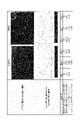
- Examples 1 to 3 images of cross sections of the mixture particles and measurement line segments, graphs obtained by EDX ray analysis (vertical axis: count number of elements, horizontal axis: number of points (measurement points)) and horizontal lines of the graph Images of the measurement line segments arranged side by side along the axis, the count number c1 of the elements present inside the mixture particles, the count number c2 of the elements present in the outer layer of the mixture particles, the ratio c1/c2 between c1 and c2, and It is a table
- the vinyl chloride resin composition of the present invention can be used, for example, when forming the vinyl chloride resin molded article of the present invention. Then, the vinyl chloride resin molded article formed using the vinyl chloride resin composition of the present invention can be suitably used as an automobile interior material, such as a skin provided for automobile interior parts such as automobile instrument panels and door trims. can be done. Moreover, the vinyl chloride resin molded article of the present invention can be used, for example, when forming the laminate of the present invention.
- a laminate formed using the vinyl chloride resin molded article of the present invention can be suitably used as an automobile interior material for manufacturing automobile interior parts such as automobile instrument panels and door trims.
- the vinyl chloride resin composition of the present invention can be produced, for example, using the method for producing the vinyl chloride resin composition of the present invention.
- the vinyl chloride resin composition of the present invention contains predetermined mixed particles containing a vinyl chloride resin, a plasticizer, and an inorganic substance. By using the vinyl chloride resin composition of the present invention, a vinyl chloride resin molded article having excellent low-temperature tensile elongation can be formed.
- the vinyl chloride resin composition of the present invention may further contain fine particles made of vinyl chloride resin (hereinafter sometimes referred to as "vinyl chloride resin fine particles") in addition to the above-mentioned predetermined mixture particles. preferable.
- the vinyl chloride resin composition of the present invention may further contain components other than the predetermined mixture particles and vinyl chloride resin fine particles within the range in which the desired effects of the present invention can be obtained.
- the mixed particles contain a vinyl chloride resin, a plasticizer, and an inorganic substance.
- the mixture particles may further contain components (other components) other than the vinyl chloride resin, the plasticizer, and the inorganic substance. That is, the mixed particles are particles made of a mixture containing a vinyl chloride resin, a plasticizer, an inorganic substance, and optionally other components.
- Vinyl chloride resin in addition to homopolymers composed of vinyl chloride monomer units, vinyl chloride containing vinyl chloride monomer units in an amount of preferably 50% by mass or more, more preferably 70% by mass or more is used. system copolymers.
- monomers (comonomers) that can be copolymerized with a vinyl chloride monomer that can constitute a vinyl chloride copolymer include, for example, those described in International Publication No. 2016/098344. can use things.
- these components may be used individually by 1 type, and may be used in combination of 2 or more types by arbitrary ratios.
- the vinyl chloride resin can be produced by any conventionally known production method such as suspension polymerization method, emulsion polymerization method, solution polymerization method, and bulk polymerization method.
- the vinyl chloride resin contained in the mixture particles is preferably produced by a suspension polymerization method.
- the average polymerization degree of the vinyl chloride resin contained in the mixture particles is preferably 800 or more, more preferably 900 or more, preferably 5000 or less, more preferably 3000 or less, and 2800 or less. is more preferable. If the average polymerization degree of the vinyl chloride resin contained in the mixture particles is at least the above lower limit, the physical strength of the vinyl chloride resin molded body formed using the vinyl chloride resin composition is sufficiently ensured, and the tensile elongation (especially at low temperature tensile elongation) can be improved. Vinyl chloride resin moldings with good tensile elongation are used, for example, as skins of automotive instrument panels with excellent ductility that break as designed without scattering fragments when an airbag is inflated and deployed.
- the average degree of polymerization of the vinyl chloride resin contained in the mixture particles is equal to or less than the above upper limit, the meltability of the vinyl chloride resin composition can be improved.
- the "average degree of polymerization" in the present invention can be measured according to JIS K6720-2.
- the ratio of the vinyl chloride resin contained in the mixture particles is preferably 70% by mass or more, preferably 80% by mass, when the total content of the vinyl chloride resin in the vinyl chloride resin composition is 100% by mass. It is more preferably 100% by mass, preferably 95% by mass or less, and more preferably 90% by mass or less. If the ratio of the vinyl chloride resin contained in the mixture particles to the total content of the vinyl chloride resin in the vinyl chloride resin composition is equal to or higher than the above lower limit, a vinyl chloride resin molded article formed using the vinyl chloride resin composition is obtained. Good tensile elongation (especially low-temperature tensile elongation) can be achieved while ensuring sufficient physical strength.
- the ratio of the vinyl chloride resin contained in the mixture particles to the total content of the vinyl chloride resin in the vinyl chloride resin composition is equal to or less than the above upper limit, the powder flowability of the vinyl chloride resin composition is sufficiently high. can be secured.
- the "total content of vinyl chloride resin in the vinyl chloride resin composition” includes the amount of vinyl chloride resin contained in the mixture particles described above and the vinyl chloride resin as an optional component described later. and the amount of particulates.
- the vinyl chloride resin used for preparing the mixture particles a particulate vinyl chloride resin is usually used.
- the vinyl chloride resin used in preparing the mixed particles can contain, for example, one or more than one type of vinyl chloride resin particles.
- "resin particles” refer to particles having a particle diameter of 30 ⁇ m or more.
- the average particle size of the vinyl chloride resin particles that can be used in preparing the mixture particles is usually 30 ⁇ m or more, preferably 50 ⁇ m or more, more preferably 100 ⁇ m or more, preferably 500 ⁇ m or less, and more preferably 200 ⁇ m or less. If the average particle size of the vinyl chloride resin particles is within the predetermined range, the vinyl chloride resin can be well mixed in the prepared mixture particles. It is possible to further improve the low-temperature tensile elongation of the vinyl chloride resin molded article formed by this method.
- the "average particle size of vinyl chloride resin particles" can be measured as a volume average particle size by a laser diffraction method in accordance with JIS Z8825.
- the plasticizer contained in the mixture particles is a component capable of imparting sufficient flexibility to the vinyl chloride resin molded article formed using the vinyl chloride resin composition.
- the mixture particles in the vinyl chloride resin composition contain a plasticizer, the resulting vinyl chloride resin molded article can exhibit sufficiently excellent low-temperature tensile elongation.
- the content of the plasticizer in the vinyl chloride resin composition is preferably 30 parts by mass or more, preferably 50 parts by mass or more, with respect to 100 parts by mass of the total vinyl chloride resin content in the vinyl chloride resin composition. More preferably, it is 70 parts by mass or more, still more preferably 80 parts by mass or more, preferably 200 parts by mass or less, more preferably 180 parts by mass or less, and 150 parts by mass or less. It is more preferably not more than 120 parts by mass, and even more preferably not more than 120 parts by mass. If the content of the plasticizer in the vinyl chloride resin composition is within the above-specified range, the low-temperature tensile elongation of the resulting vinyl chloride resin molding can be further improved.
- plasticizer for example, primary plasticizers and secondary plasticizers described in WO 2016/098344 can be used. These components may be used singly or in combination of two or more at any ratio.
- plasticizers described above from the viewpoint of further improving the low-temperature tensile elongation of the vinyl chloride resin molded article to be formed, it is preferable to use at least a primary plasticizer as the plasticizer, and the primary plasticizer and the secondary plasticizer are used in combination. is more preferable.
- Primary plasticizer Although the primary plasticizer is not particularly limited, it is preferable to use at least one of trimellitate and polyester. When at least one of trimellitate and polyester is used as the primary plasticizer, the low-temperature tensile elongation of the resulting vinyl chloride resin molding can be further improved. As the primary plasticizer, either one of the trimellitate ester and the polyester may be used alone, or both the trimellitate ester and the polyester may be mixed in an arbitrary ratio and used.
- the content of primary plasticizers such as trimellitate esters and polyesters in the plasticizer is not particularly limited, but is preferably 75% by mass or more, more preferably 88% by mass or more, and 93% by mass or more. is more preferably 99% by mass or less, more preferably 98% by mass or less, and even more preferably 97% by mass or less. If the content of the primary plasticizer in the plasticizer is within the above-specified range, the low-temperature tensile elongation of the vinyl chloride resin molded article to be formed can be further improved.
- the content of primary plasticizers such as trimellitic acid esters and polyesters in the vinyl chloride resin composition is 20 parts by mass or more with respect to 100 parts by mass of the total vinyl chloride resin content in the vinyl chloride resin composition. is preferably 40 parts by mass or more, more preferably 65 parts by mass or more, even more preferably 75 parts by mass or more, preferably 199 parts by mass or less, 179 parts by mass It is more preferably 148 parts by mass or less, even more preferably 118 parts by mass or less. If the content of the primary plasticizer in the vinyl chloride resin composition is within the above-specified range, the low-temperature tensile elongation of the vinyl chloride resin molded article to be formed can be further improved.
- Trimellitic acid esters that may be included in the primary plasticizer are preferably ester compounds of trimellitic acid and monohydric alcohols.
- the monohydric alcohol examples include, but are not limited to, 1-hexanol, 1-heptanol, 1-octanol, 2-ethylhexanol, 1-nonanol, 1-decanol, 1-undecanol, 1-dodecanol, and the like. of fatty alcohols.
- these monohydric alcohols aliphatic alcohols having 6 to 18 carbon atoms are preferable, and linear aliphatic alcohols having 6 to 18 carbon atoms are more preferable.
- the trimellitic acid ester is preferably a triesterified product obtained by esterifying substantially all the carboxy groups of trimellitic acid with the above-mentioned monohydric alcohol.
- the alcohol residue moieties in the triester product may be derived from the same alcohol, or may be derived from different alcohols.
- the trimellitate ester may consist of a single compound or a mixture of different compounds.
- trimellitate esters are tri-n-hexyl trimellitate, tri-n-heptyl trimellitate, tri-n-octyl trimellitate, tri-(2-ethylhexyl) trimellitate, tri-n-nonyl mellitic acid, tri-n-decyl trimellitate, triisodecyl trimellitate, tri-n-undecyl trimellitate, tri-n-dodecyl trimellitate, trialkyl trimellitate (with carbon number Different alkyl groups [wherein the number of carbon atoms is 6 to 18.
- esters having two or more kinds in the molecule trimellitic acid tri-n-alkyl esters (alkyl groups with different number of carbon atoms [wherein the number of carbon atoms is 6 to 18] in the molecule), mixtures thereof, and the like.
- trimellitic acid tri-n-alkyl esters alkyl groups with different number of carbon atoms [wherein the number of carbon atoms is 6 to 18] in the molecule
- trimellitic acid tri-n-alkyl esters alkyl groups with different number of carbon atoms [wherein the number of carbon atoms is 6 to 18] in the molecule
- trimellitic acid tri-n-alkyl esters esters having two or more alkyl groups with different carbon atoms [wherein the number of carbon atoms is 6 to 18] in the molecule
- trimellitic acid tri-n-alkyl esters esters having two or more alkyl groups with different carbon atoms [wherein the number of carbon atoms is 6 to 18] in
- polyesters containing structural units derived from phthalic acid can be used.
- these polyesters may be used individually by 1 type, and may mix and use 2 or more types by arbitrary ratios.
- polyesters containing structural units derived from adipic acid are preferably used as the polyester from the viewpoint of further improving the low-temperature tensile elongation of the vinyl chloride resin molded article to be formed.
- the secondary plasticizer is not particularly limited, but it is preferable to use an epoxidized vegetable oil. If an epoxidized vegetable oil is used as the secondary plasticizer, the low-temperature tensile elongation of the vinyl chloride resin molding to be formed can be further improved.
- the content of the secondary plasticizer such as epoxidized vegetable oil in the plasticizer is not particularly limited, but is preferably 1% by mass or more, more preferably 2% by mass or more, and 3% by mass or more. is more preferably 25% by mass or less, more preferably 12% by mass or less, and even more preferably 7% by mass or less. If the content ratio of the secondary plasticizer in the plasticizer is within the above-specified range, the low-temperature tensile elongation of the vinyl chloride resin molded article to be formed can be further improved.
- the content of the secondary plasticizer such as epoxidized vegetable oil in the vinyl chloride resin composition is 1 part by mass or more with respect to 100 parts by mass of the total content of the vinyl chloride resin in the vinyl chloride resin composition. It is preferably 2 parts by mass or more, more preferably 10 parts by mass or less, and more preferably 5 parts by mass or less. If the content of the secondary plasticizer in the vinyl chloride resin composition is within the above-specified range, the low-temperature tensile elongation of the resulting vinyl chloride resin molded article can be further improved.
- Epoxidized vegetable oils that may be included in the secondary plasticizer include, for example, epoxidized soybean oil, epoxidized linseed oil, and the like. Among them, it is preferable to use epoxidized soybean oil from the viewpoint of further improving the low-temperature tensile elongation of the vinyl chloride resin molded article to be formed.
- the inorganic substance contained in the mixture particles is not particularly limited in the vinyl chloride resin composition, but functions as, for example, a stabilizer, a pigment, a filler, and the like.
- the term “inorganic substance” refers to a substance that is not an organic substance
- the term “organic substance” refers to carbon monoxide, carbon dioxide, carbon disulfide, and other binary compounds (two-element compound), ternary compounds (compounds consisting of three elements) such as metal cyanide, metal carbonyl, phosgene, and carbonyl sulfide, and metal carbonates such as alkali metal carbonates and alkaline earth metal carbonates point to something
- the perchloric acid-treated hydrotalcite is a substance in which at least part of the carbonate anions in the hydrotalcite are replaced with perchlorate anions by treating the hydrotalcite with perchloric acid.
- Perchloric acid-treated hydrotalcite is prepared, for example, by adding the hydrotalcite to a dilute aqueous solution of perchloric acid, stirring, and then optionally filtering, dehydrating or drying to remove the carbonate anion in the hydrotalcite. It can be readily produced by substituting at least part of (CO 3 2 ⁇ ) with perchlorate anion (ClO 4 ⁇ ) (1 mol of carbonate anion is replaced by 2 mol of perchlorate anion).
- the molar ratio of the above hydrotalcite and the above perchloric acid can be set arbitrarily, but generally 0.1 to 2 mol of perchloric acid is used per 1 mol of hydrotalcite.
- the rate of substitution of carbonate anions with perchlorate anions in untreated (unsubstituted) hydrotalcite is preferably 50 mol% or more, more preferably 70 mol% or more, and even more preferably 85 mol% or more. Further, the substitution rate of carbonate anions in untreated (unsubstituted) hydrotalcite with perchlorate anions is preferably 95 mol % or less. Further improving the low-temperature tensile elongation of the formed vinyl chloride resin molding when the rate of substitution of the carbonate anion with the perchlorate anion in the untreated (unsubstituted) hydrotalcite is within the above-specified range. can be done.
- Hydrotalcite is a non-stoichiometric compound represented by the general formula: [Mg 1 ⁇ x Al x (OH) 2 ] x+ [(CO 3 ) x/2 ⁇ mH 2 O] x ⁇ An inorganic substance having a layered crystal structure consisting of a layer [Mg 1 ⁇ x Al x (OH) 2 ] x+ and a negatively charged intermediate layer [(CO 3 ) x/2 ⁇ mH 2 O] x ⁇ . .
- x is a number in the range from 0 to 0.33.
- a natural hydrotalcite is Mg6Al2 ( OH) 16CO3.4H2O .
- Mg4.5Al2 ( OH) 13CO3.3.5H2O is commercially available.
- a method for synthesizing synthetic hydrotalcite is described, for example, in Japanese Patent Publication No. 61-174270.
- the content of perchloric acid-treated hydrotalcite in the vinyl chloride resin composition is preferably 0.5 parts by mass or more with respect to 100 parts by mass of the total content of the vinyl chloride resin in the vinyl chloride resin composition. , More preferably 1 part by mass or more, more preferably 1.5 parts by mass or more, preferably 7 parts by mass or less, more preferably 6 parts by mass or less, 5.5 parts by mass Part or less is more preferable. If the content of the perchloric acid-treated hydrotalcite in the vinyl chloride resin composition is within the predetermined range, the low-temperature tensile elongation of the vinyl chloride resin molded article to be formed can be further improved.
- Zeolite has a general formula: M x/n .[(AlO 2 ) x .(SiO 2 ) y ].zH 2 O (wherein M is a metal ion of valence n, x+y is a tetrahedron per unit cell number and z is the number of moles of water).
- Types of M in the general formula include monovalent or divalent metals such as Na, Li, Ca, Mg, and Zn, and mixed types thereof.
- a zeolite in which M in the above general formula is Na is sometimes referred to as "sodium zeolite".
- the content of the zeolite in the vinyl chloride resin composition is not particularly limited, but for example, 0.1 parts by mass or more and 5 parts by mass with respect to 100 parts by mass of the total content of the vinyl chloride resin in the vinyl chloride resin composition. The following are preferable.
- inorganic substances that function as pigments include titanium white, which is a white pigment, and carbon black, which is a black pigment.
- Titanium white is a white pigment made of titanium dioxide (also called “titanium oxide”, “titania”, etc.).
- the content of titanium white (titanium dioxide) in the vinyl chloride resin composition is not particularly limited. It is preferably 5 parts by mass or more and 5 parts by mass or less.
- Carbon black is a black pigment containing carbon as a main component and containing oxygen, hydrogen and nitrogen.
- Specific examples of carbon black are thermal black, acetylene black, channel black, furnace black, lamp black and bone black.
- the content of carbon black in the vinyl chloride resin composition is not particularly limited. It is preferably less than or equal to parts.
- Inorganic substances that function as fillers include silica, talc, mica, calcium carbonate, clay, alumina and the like.
- the content of the inorganic substance functioning as a filler in the vinyl chloride resin composition can be appropriately adjusted within the range in which the desired effects of the present invention can be obtained.
- one of the inorganic substances described above may be used alone, or two or more thereof may be used in combination at an arbitrary ratio.
- the total content of inorganic substances in the vinyl chloride resin composition is preferably 1 part by mass or more with respect to 100 parts by mass of the total content of the vinyl chloride resin in the vinyl chloride resin composition, and is 1.5 parts by mass. It is more preferably at least 2 parts by mass, more preferably at least 2 parts by mass, preferably at most 20 parts by mass, more preferably at most 15 parts by mass, and at most 12 parts by mass. More preferred. If the total content of inorganic substances in the vinyl chloride resin composition is at least the above lower limit, the desired effect of each inorganic substance described above can be sufficiently exhibited.
- the total content of inorganic substances in the vinyl chloride resin composition is equal to or less than the above upper limit, a sufficiently high low-temperature tensile elongation of the vinyl chloride resin molded article to be formed can be ensured.
- the ratio C1/C2 between C1 and C2 must be 0.7 or more. , preferably 0.75 or more, more preferably 0.8 or more, still more preferably 0.85 or more, even more preferably 0.9 or more, and 1.0 or more more preferably 2 or less, more preferably 1.5 or less, still more preferably 1.4 or less, even more preferably 1.3 or less; 2 or less is even more preferable.
- the ratio C1/C2 between the concentration C1 of the inorganic matter inside the mixture particle and the concentration C2 of the inorganic matter in the outer layer of the mixture particle is 0.7 or more, the inorganic matter is not excessively distributed in the outer layer of the mixture particle.
- the vinyl chloride resin molded article is pulled at a low temperature, it is possible to suppress the occurrence of cutting originating from the inorganic substance present in the outer layer of the mixture particles, so that the low-temperature tensile elongation of the vinyl chloride resin molded article is improved. be able to.
- the ratio C1/C2 of the inorganic substance concentration C1 inside the mixture particle to the inorganic substance concentration C2 in the outer layer of the mixture particle is 2 or less, the inorganic substance is not excessively unevenly present inside the mixture particle.
- the vinyl chloride resin molded article is pulled at a low temperature, it is possible to suppress the occurrence of cutting originating from the inorganic substances present inside the mixture particles, so that the low-temperature tensile elongation of the vinyl chloride resin molded article is further improved.
- the ratio C1/C2 between the inorganic substance concentration C1 inside the mixture particle and the inorganic substance concentration C2 in the outer layer of the mixture particle is, for example, in the method for producing the vinyl chloride resin composition of the present invention described later, It can be adjusted by changing the timing of adding the inorganic substance, the conditions of the kneading process, the conditions of the pulverizing process, and the like.
- the ratio C1/C2 between the inorganic substance concentration C1 inside the mixture particle and the inorganic substance concentration C2 in the outer layer of the mixture particle can be measured by energy dispersive X-ray analysis of the cross section of the mixture particle. can.
- the element present inside the mixture particle in the energy dispersive X-ray analysis of the cross section of the mixture particle for which the element contained in the inorganic substance is to be measured, the element present inside the mixture particle
- the ratio c1/c2 of c1 and c2 where c1 is the count number of the element present in the outer layer of the mixture particle and c2 is the count number of the element present in the outer layer of the mixture particle, is the concentration C1 of the inorganic substance inside the mixture particle and the outer layer of the mixture particle can be obtained as a ratio C1/C2 to the concentration C2 of the inorganic substance.
- the element to be measured in the energy dispersive X-ray analysis is not particularly limited as long as it is an element contained in the inorganic substance described above. It is preferable to select from elements that are not contained in other components.
- the elements to be measured include magnesium (Mg) contained in magnesium-containing inorganic substances such as perchloric acid-treated hydrotalcite, and aluminum-containing inorganic substances such as perchloric acid-treated hydrotalcite and zeolite.
- magnesium (Mg) contained in magnesium-containing inorganic substances such as perchloric acid-treated hydrotalcite
- aluminum-containing inorganic substances such as perchloric acid-treated hydrotalcite and zeolite.
- titanium (Ti) contained in titanium-containing inorganic substances such as aluminum (Al) and titanium white (titanium dioxide)
- silicon (Si) contained in silicon-containing inorganic substances such as zeolite, silica, talc, and mica.
- the mixture particles when the mixture particles contain two or more inorganic substances, at least one of the two or more inorganic substances has a ratio C1/C2 of C1 to C2 of 0. 0.7 or more, preferably within the predetermined range.
- the two or more inorganic substances contained in the mixture particles if at least one inorganic substance has a ratio C1/C2 of C1 to C2 of 0.7 or more, the at least one inorganic substance is included in the mixture particles. Since it does not exist excessively in the outer layer, when the vinyl chloride resin molded article to be formed is pulled at a low temperature, the outer layer of the mixture particles is unlikely to be a starting point for cutting. can be improved to
- the ratio of inorganic substances satisfying the condition that C1/C2 is 0.7 or more is 100% by mass of the total inorganic substance content in the vinyl chloride resin composition. is preferably 20% by mass or more, more preferably 30% by mass or more, and even more preferably 40% by mass or more. If the ratio of inorganic substances satisfying the condition that C1/C2 is 0.7 or more to the total content of inorganic substances in the vinyl chloride resin composition is equal to or greater than the predetermined value, the low temperature of the vinyl chloride resin molded body is formed. Tensile elongation can be further improved.
- one inorganic substance contained in the mixture particles is a compound containing two or more elements
- at least one element among the two or more elements is measured, and the above energy dispersive X-ray analysis is performed. It is sufficient that the ratio C1/C2 obtained by performing is 0.7 or more, and is preferably within the predetermined range.
- the mixed particles may further contain components (other components) other than the components described above.
- Other components include, but are not particularly limited to, lubricants; stabilizers; release agents; dusting agents other than vinyl chloride resin fine particles described later; impact modifiers; antistatic agents; fillers; light stabilizers; foaming agents; pigments;
- the mixture particles may contain, for example, among the various additives described in WO 2016/098344, those that are organic substances can be used, and the preferred content can also be the same as described in International Publication No. 2016/098344.
- the vinyl chloride resin composition of the present invention preferably further contains fine particles of vinyl chloride resin, that is, fine particles of vinyl chloride resin, in addition to the above-mentioned mixture particles. If the vinyl chloride resin composition further contains vinyl chloride resin fine particles, the powder fluidity of the vinyl chloride resin composition can be improved. That is, in the vinyl chloride resin composition, the vinyl chloride resin fine particles can function as a dusting agent (powder fluidity improver).
- dusting agent dusting agent
- "resin fine particles” refer to particles having a particle diameter of less than 30 ⁇ m.
- the vinyl chloride resin constituting the vinyl chloride resin fine particles preferably contains 50% by mass or more, more preferably 70% by mass or more of vinyl chloride monomer units in addition to a homopolymer composed of vinyl chloride monomer units.
- Examples include vinyl chloride copolymers.
- Specific examples of monomers (comonomers) that can be copolymerized with a vinyl chloride monomer that can constitute a vinyl chloride copolymer include, for example, those described in International Publication No. 2016/098344. can use things.
- these components may be used individually by 1 type, and may be used in combination of 2 or more types by arbitrary ratios.
- the vinyl chloride resin fine particles are preferably produced by an emulsion polymerization method.
- the average degree of polymerization of the vinyl chloride resin constituting the vinyl chloride resin fine particles is preferably 500 or more, more preferably 700 or more, preferably 2600 or less, and more preferably 2400 or less. If the average degree of polymerization of the vinyl chloride resin constituting the vinyl chloride resin fine particles as the dusting agent is at least the above lower limit, the powder fluidity of the vinyl chloride resin composition is improved, and the vinyl chloride resin molded article to be formed is improved. The tensile elongation (especially low temperature tensile elongation) of can be improved.
- the meltability of the vinyl chloride resin composition is improved, and the surface smoothness of the vinyl chloride resin molding to be formed is improved.
- the average particle size of the vinyl chloride resin fine particles is usually less than 30 ⁇ m, preferably 10 ⁇ m or less, more preferably 5 ⁇ m or less, preferably 0.1 ⁇ m or more, and 1 ⁇ m or more. is more preferred. If the average particle diameter of the vinyl chloride resin fine particles is at least the above lower limit, the powder fluidity of the vinyl chloride resin composition can be improved, for example, without excessively reducing the size as a dusting agent. Further, when the average particle size of the vinyl chloride resin fine particles is equal to or less than the above upper limit, the meltability of the vinyl chloride resin composition is enhanced, and the surface smoothness of the vinyl chloride resin molded article to be formed can be improved.
- the "average particle size of vinyl chloride resin fine particles" can be measured as a volume average particle size by a laser diffraction method in accordance with JIS Z8825.
- the ratio of the vinyl chloride resin constituting the vinyl chloride resin fine particles may be 0% by mass when the total content of the vinyl chloride resin in the vinyl chloride resin composition is 100% by mass. It is preferably at least 10% by mass, more preferably at least 10% by mass, preferably at most 30% by mass, and more preferably at most 20% by mass. If the ratio of the vinyl chloride resin constituting the vinyl chloride resin fine particles to the total content of the vinyl chloride resin in the vinyl chloride resin composition is at least the above lower limit, the powder flowability of the vinyl chloride resin composition is further improved. be able to.
- the ratio of the vinyl chloride resin constituting the vinyl chloride resin fine particles to the total content of the vinyl chloride resin in the vinyl chloride resin composition is not more than the above upper limit, the vinyl chloride formed using the vinyl chloride resin composition It is possible to increase the physical strength of the resin molding.
- the average particle size of the vinyl chloride resin composition of the present invention is preferably 100 ⁇ m or more, more preferably 120 ⁇ m or more, still more preferably 150 ⁇ m or more, still more preferably 160 ⁇ m or more, and 400 ⁇ m. It is preferably 300 ⁇ m or less, more preferably 250 ⁇ m or less, and even more preferably 210 ⁇ m or less. If the average particle size of the vinyl chloride resin composition is within the predetermined range, the powder fluidity of the vinyl chloride resin composition can be improved.
- the average particle size of the vinyl chloride resin composition can be adjusted, for example, by changing the conditions of the pulverization step in the method for producing the vinyl chloride resin composition of the present invention, which will be described later.
- the method for producing a vinyl chloride resin composition of the present invention includes a step of kneading a vinyl chloride resin, a plasticizer, and an inorganic substance to obtain a mixture (kneading step), and a step of pulverizing the mixture to obtain mixture particles ( pulverization step).
- a vinyl chloride resin composition of the present invention it is possible to produce a vinyl chloride resin composition capable of forming a vinyl chloride resin molded article having excellent low-temperature tensile elongation.
- the vinyl chloride resin composition of the present invention described above can be produced.
- the method for producing the vinyl chloride resin composition of the present invention may further include steps (other steps) other than the kneading step and the pulverizing step described above.
- ⁇ Kneading process> the vinyl chloride resin, plasticizer, and inorganic matter are kneaded to obtain a mixture.
- the above components especially inorganic substances
- the low-temperature tensile elongation of the vinyl chloride resin molding formed using the vinyl chloride resin composition containing the mixture particles can be improved.
- the vinyl chloride resin, the plasticizer, and the components other than the inorganic substance (other components) may be further added and kneaded.
- the vinyl chloride resin is not particularly limited, but for example, the vinyl chloride resin particles described above are used as specific examples of the vinyl chloride resin that can be used when preparing the mixture particles in the section "vinyl chloride resin composition". be able to.
- the plasticizer and inorganic substance are not particularly limited, but for example, those exemplified as the plasticizer and inorganic substance contained in the mixture particles in the section “vinyl chloride resin composition” can be used, respectively.
- those exemplified as other components that can be contained in the mixture particles in the section of "vinyl chloride resin composition” can be used.
- the vinyl chloride resin, the plasticizer, the inorganic substance, and any other components may be separately charged into a kneader described later and kneaded, but the above components are premixed. It is preferable to put the obtained preliminary mixture into a kneader and knead it.
- the above components especially inorganic substances
- the above components can be better mixed and dispersed in the resulting mixture and the mixture particles obtained by pulverizing the same. can be done. Thereby, the low-temperature tensile elongation of the vinyl chloride resin molding formed using the vinyl chloride resin composition containing the mixture particles can be further improved.
- the method of pre-mixing the above components is not particularly limited, and includes a method of mixing by dry blending.
- the vinyl chloride resin, the inorganic substance, and any other component may be premixed by dry blending, and then the plasticizer may be added and further premixed.
- a Henschel mixer for dry blending.
- the temperature during dry blending is not particularly limited, and is preferably 50° C. or higher, more preferably 70° C. or higher, and preferably 200° C. or lower.
- the kneading of the above components or the premix containing the above components is not particularly limited, but is preferably carried out using a kneader.
- a kneader for example, an open-roll type continuous kneader, an extruder, a twin-screw extruder, or the like can be used.
- the open roll type continuous kneader for example, "Kneedex" manufactured by Nippon Coke Kogyo Co., Ltd. can be used.
- the temperature during kneading is not particularly limited, but is preferably 40° C. or higher and 200° C. or lower.
- the inlet temperature is set to 90 to 200 ° C., preferably 100 to 180 ° C.
- the outlet temperature is set to 40 to 170 ° C., preferably 50. It is preferably set to ⁇ 150°C.
- the mixture obtained by the kneading step is not particularly limited, but preferably molded into pellets by a known method. If the mixture obtained by the kneading step is molded into pellets, the mixture can be easily pulverized in the later-described pulverization step to obtain mixture particles.
- the mixture obtained in the kneading step is pulverized to obtain mixture particles.
- Pulverization of the mixture is not particularly limited, but is preferably performed using a pulverizer, for example.
- the pulverizer is not particularly limited as long as it can pulverize the mixture into particles having a desired particle size.
- the conditions of the pulverizer when pulverizing the mixture can be appropriately adjusted within the range in which the desired effects of the present invention can be obtained.
- the mixture particles obtained in the pulverization step can be used as they are as the vinyl chloride resin composition.
- the method for producing the vinyl chloride resin composition of the present invention may further include steps other than the kneading step and pulverizing step described above.
- steps include, for example, a step of adding vinyl chloride resin fine particles to the mixture particles obtained in the pulverization step.
- a vinyl chloride resin composition obtained by adding vinyl chloride resin fine particles to the mixture particles has excellent powder fluidity.
- the vinyl chloride resin fine particles for example, the vinyl chloride resin fine particles described above in the section "vinyl chloride resin composition" can be used.
- an optional component other than the vinyl chloride resin fine particles is added to the mixture particles obtained in the pulverization step within the range in which the desired effect of the present invention can be obtained. It may further include a step of adding (hereinafter sometimes referred to as “optional component addition step”).
- the method for producing the vinyl chloride resin composition of the present invention includes an optional component addition step preferably does not contain Moreover, when the method for producing the vinyl chloride resin composition of the present invention includes an optional component addition step, the optional component is preferably not inorganic (that is, organic).
- the vinyl chloride resin molded article of the present invention is characterized by being obtained by molding the vinyl chloride resin composition described above by any method. Since the vinyl chloride resin molded article of the present invention is formed using the vinyl chloride resin composition described above, it usually contains at least mixture particles containing a vinyl chloride resin, a plasticizer, and an inorganic substance. , excellent low-temperature tensile elongation. Therefore, the vinyl chloride resin molded article of the present invention can be suitably used as an automobile interior material such as an automobile instrument panel skin.
- the mold temperature during powder slush molding is not particularly limited, and is preferably 200° C. or higher, more preferably 220° C. or higher. It is more preferably 300° C. or lower, and more preferably 280° C. or lower.
- the following method for example, can be used without any particular limitation. That is, the vinyl chloride resin composition of the present invention is sprinkled on a mold within the above temperature range, left to stand for 5 seconds or more and 30 seconds or less, and then the excess vinyl chloride resin composition is shaken off. , Leave for 30 seconds or more and 3 minutes or less. After that, the mold is cooled to 10° C. or higher and 60° C. or lower, and the obtained vinyl chloride resin molded article of the present invention is removed from the mold. Then, a sheet-like molded body having the shape of the mold is obtained.
- the laminate of the present invention comprises a foamed polyurethane molded article and the vinyl chloride resin molded article described above.
- the vinyl chloride resin molding usually constitutes one surface of the laminate.
- the laminate of the present invention is formed using the vinyl chloride resin composition of the present invention, for example, and has a vinyl chloride resin molded article excellent in low-temperature tensile elongation, so it is suitable for automobile interior parts, especially automobiles. It is suitably used as an automobile interior material that forms an instrument panel.
- the method for laminating the foamed polyurethane molded article and the vinyl chloride resin molded article is not particularly limited, and for example, the following method can be used. That is, (1) a method in which a foamed polyurethane molded article and a vinyl chloride resin molded article are prepared separately and then bonded together by heat sealing, thermal bonding, or using a known adhesive; (2) vinyl chloride; Isocyanates and polyols, which are the raw materials of the foamed polyurethane molded article, are reacted on the resin molded article to polymerize them, and at the same time, the polyurethane is foamed by a known method to obtain a foamed polyurethane on the vinyl chloride resin molded article.
- the latter method (2) is preferable in that the process is simple and that the vinyl chloride resin molded article and the foamed polyurethane molded article are easily adhered firmly even when laminates of various shapes are obtained. is.
- the horizontal axis is measured by calculating the average value of the counts of the elements at a total of 11 points of the measurement point and the five measurement points on both sides of each measurement point on the measurement line segment.
- a graph was obtained with points (number of points) and the count number of elements on the vertical axis.
- the element count c1 at the measurement point corresponding to the center of the cross section of the mixture particle was defined as the element count c1 present inside the mixture particle.
- the number of elements at the measurement points located closer to the center of the cross section than the measurement point corresponding to the intersection of one side of the measurement line segment and the outer edge of the cross section of the mixture particle by 5 measurement points.
- the count number and the count number of the element at the measurement point located closer to the center of the cross section than the measurement point corresponding to the intersection of the other side of the measurement line segment and the outer edge of the cross section of the mixture particle by 5 measurement points The average value was taken as the count number c2 of the elements present in the outer layer of the mixture particles. Then, the ratio c1/c2 between the obtained c1 and c2 was calculated. In addition, it is assumed that 100 measurement points are present at equal intervals on the measurement line segment. The total was set to 30% or less of the length of the entire measured line segment.
- the above-described measurement and calculation are repeated for three randomly selected mixture particles in the vinyl chloride resin composition, and the average value of the obtained ratio c1/c2 is calculated as the inorganic concentration inside the mixture particles.
- the ratio of C1 to the concentration C2 of the inorganic substance in the outer layer of the mixture particles was defined as C1/C2.
- the image of the cross section of the mixture particle and the measurement line segment, the graph obtained by EDX ray analysis, the image of the measurement line segment arranged side by side on the horizontal axis of the graph, and the mixture particle The count number c1 of the elements present inside, the count number c2 of the elements present in the outer layer of the mixture particles, the ratio c1/c2 between c1 and c2, and the average value of c1/c2 (corresponding to C1/C2) are shown in FIG. and shown in FIG.
- the opening of one sieve is A ⁇ m
- the sieve top percentage when using the first sieve is X% (X>50)
- the sieve with a larger opening measured one before the first sieve is the second sieve.
- the opening of the second sieve is B ⁇ m
- the opening of the upper sieve when using the second sieve is Y% (Y ⁇ 50)
- Average particle size A + (B - A) x ⁇ (X - 50) / (X - Y) ⁇ was used to measure the average particle size of the vinyl chloride resin composition.
- thermo aging test After heating (thermal aging test)>> A laminate lined with a foamed polyurethane molded article was used as a sample. A heat aging test was performed by placing the sample in an oven and heating at a temperature of 130° C. for 100 hours. Next, the foamed polyurethane molded article was peeled off from the laminated body after heating to prepare only the vinyl chloride resin molded sheet. Then, the tensile breaking stress (MPa) and tensile breaking elongation (%) of the vinyl chloride resin molded sheet were measured under the same conditions as in the initial stage. The larger the tensile elongation at break, the better the vinyl chloride resin molded sheet in low-temperature tensile elongation after heating (heat aging test).
- MPa tensile breaking stress
- % tensile breaking elongation
- Example 1 ⁇ Preparation of vinyl chloride resin composition> The components shown in Table 1, excluding the plasticizer and the fine vinyl chloride resin dusting agent, were placed in a Henschel mixer and premixed. Then, when the temperature of the obtained first preliminary mixture rises to 80° C., all the plasticizer is added and dried (the plasticizer is absorbed by the vinyl chloride resin particles, which is the vinyl chloride resin, and the preliminary mixture is It refers to a state in which the mixture has become smooth.), and then cooled to 40°C or less to obtain a second preliminary mixture.
- the second preliminary mixture was introduced into an open-roll type continuous kneader ("Kneedex" manufactured by Nippon Coke Kogyo Co., Ltd.) set at an inlet temperature of 110 to 170 ° C. and an outlet temperature of 100 to 130 ° C., and kneaded. . Then, at the exit of the kneader, a 40 to 90° C. cylinder roll provided with holes was pressed, and the mixture extruded through the holes was cut with a fixed blade to obtain pellets of the mixture.
- Kneedex manufactured by Nippon Coke Kogyo Co., Ltd.
- the textured mold sprinkled with the vinyl chloride resin composition was left to stand in an oven set to a temperature of 200 ° C., and when 60 seconds had passed since the standing, the textured mold was cooled with cooling water. .
- the mold temperature was cooled to 40° C.
- the vinyl chloride resin molded sheet as the vinyl chloride resin molded product was removed from the mold.
- the tensile properties of the obtained vinyl chloride resin molded sheet were measured and evaluated according to the method described above. Table 1 shows the results.
- a mixed liquid was prepared by mixing the obtained polyol mixture and polymethylene polyphenylene polyisocyanate (polymeric MDI) at a ratio of 98 in index. Then, the prepared mixed solution was poured onto the vinyl chloride resin molded sheet laid in the mold as described above. After that, the mold was covered with an aluminum plate of 348 mm ⁇ 255 mm ⁇ 10 mm to seal the mold. After the mold was sealed and left for 5 minutes, the vinyl chloride resin molded sheet (thickness: 1 mm) as the skin was lined with the foamed polyurethane molding (thickness: 9 mm, density: 0.2 g/cm 3 ). A laminated laminate was formed. Then, the formed laminate was taken out from the mold, and the tensile properties of the vinyl chloride resin sheet in the laminate after heating (heat aging test) were measured and evaluated according to the method described above. Table 1 shows the results.
- Example 2 As shown in Table 1, when preparing the vinyl chloride resin composition of Example 1, 20 parts by mass of an ethylene-vinyl acetate copolymer (EVA) as an impact modifier other than the vinyl chloride resin was further added. A vinyl chloride resin composition, a vinyl chloride resin molded article, and a laminate were produced in the same manner as in Example 1, except that premixing was performed to obtain a first premix. Then, measurement and evaluation were performed in the same manner as in Example 1. Table 1 shows the results.
- EVA ethylene-vinyl acetate copolymer
- Example 3 As shown in Table 1, when preparing the vinyl chloride resin composition of Example 1, 98 parts by mass of trimellitic acid ester was added as a plasticizer instead of 100 parts by mass of adipic acid-based polyester, and as a pigment, Instead of 1 part by mass of titanium oxide, add 4 parts by mass of carbon black, change the amount of 12-hydroxystearic acid added as a release agent from 0.6 parts by mass to 0.4 parts by mass, and perform premixing. A vinyl chloride resin composition, a vinyl chloride resin molded article, and a laminate were produced in the same manner as in Example 1, except that a first preliminary mixture was obtained. Then, measurement and evaluation were performed in the same manner as in Example 1. Table 1 shows the results.
- Example 1 When the vinyl chloride resin composition of Example 1 was prepared, the vinyl chloride resin fine particles as a dusting agent were added to the second preliminary mixture without kneading and pulverization to obtain the vinyl chloride resin composition.
- a vinyl chloride resin composition, a vinyl chloride resin molding, and a laminate were produced in the same manner as in Example 1, except for the above. Then, measurement and evaluation were performed in the same manner as in Example 1. Table 1 shows the results.
- Example 2 When the vinyl chloride resin composition of Example 2 was prepared, the vinyl chloride resin composition was obtained by adding vinyl chloride resin fine particles as a dusting agent to the second preliminary mixture without performing kneading and pulverization. A vinyl chloride resin composition, a vinyl chloride resin molding, and a laminate were produced in the same manner as in Example 1, except for the above. Then, measurement and evaluation were performed in the same manner as in Example 1. Table 1 shows the results.
- the vinyl chloride resin moldings formed using the vinyl chloride resin compositions of Examples 1 to 3 containing the above are excellent in low-temperature tensile elongation.
- the vinyl chloride resin moldings formed using the vinyl chloride resin compositions of Comparative Examples 1 and 2 which do not contain the predetermined mixture particles, are inferior in low-temperature tensile elongation.
- the vinyl chloride resin composition which can form the vinyl chloride resin molding excellent in low-temperature tensile elongation can be provided. Moreover, according to the present invention, it is possible to provide a vinyl chloride resin molded article having excellent low-temperature tensile elongation. Furthermore, according to the present invention, it is possible to provide a laminate having the vinyl chloride resin molded article.
Landscapes
- Chemical & Material Sciences (AREA)
- Health & Medical Sciences (AREA)
- Chemical Kinetics & Catalysis (AREA)
- Medicinal Chemistry (AREA)
- Polymers & Plastics (AREA)
- Organic Chemistry (AREA)
- Engineering & Computer Science (AREA)
- Mechanical Engineering (AREA)
- Compositions Of Macromolecular Compounds (AREA)
Abstract
Description
具体的には、例えば、自動車インスツルメントパネルおよびドアトリム等の自動車内装部品の形成には、塩化ビニル樹脂成形体からなる表皮や塩化ビニル樹脂成形体からなる表皮に発泡ポリウレタン等の発泡体を裏打ちしてなる積層体などの自動車内装材が用いられている。
また、本発明は、低温引張伸びに優れた塩化ビニル樹脂成形体を提供することを目的とする。
さらに、本発明は、当該塩化ビニル樹脂成形体を備える積層体を提供することを目的とする。
なお、本発明において、混合物粒子の内部の無機物の濃度C1と、混合物粒子の外層の無機物の濃度C2との比C1/C2は、混合物粒子の断面のエネルギー分散型X線分析により測定することができる。
具体的には、本明細書の実施例に記載の方法の通り、無機物に含まれる元素を測定対象とする混合物粒子の断面のエネルギー分散型X線分析において、混合物粒子の内部に存在する当該元素のカウント数をc1とし、混合物粒子の外層に存在する当該元素のカウント数をc2とした場合におけるc1とc2との比c1/c2を、混合物粒子の内部の無機物の濃度C1と混合物粒子の外層の無機物の濃度C2との比C1/C2として求めることができる。
なお、「塩化ビニル樹脂組成物の平均粒子径」は、本明細書の実施例に記載方法により測定することができる。
また、本発明によれば、低温引張伸びに優れた塩化ビニル樹脂成形体を提供することができる。
さらに、本発明によれば、当該塩化ビニル樹脂成形体を備える積層体を提供することができる。
本発明の塩化ビニル樹脂組成物は、例えば、本発明の塩化ビニル樹脂成形体を形成する際に用いることができる。そして、本発明の塩化ビニル樹脂組成物を用いて形成した塩化ビニル樹脂成形体は、例えば、自動車インスツルメントパネルおよびドアトリム等の自動車内装部品が備える表皮などの、自動車内装材として好適に用いることができる。
また、本発明の塩化ビニル樹脂成形体は、例えば、本発明の積層体を形成する際に用いることができる。そして、本発明の塩化ビニル樹脂成形体を用いて形成した積層体は、例えば、自動車インスツルメントパネルおよびドアトリム等の自動車内装部品を製造する際に用いる自動車内装材として好適に用いることができる。
なお、本発明の塩化ビニル樹脂組成物は、例えば、本発明の塩化ビニル樹脂組成物の製造方法を用いて製造することができる。
本発明の塩化ビニル樹脂組成物は、塩化ビニル樹脂と、可塑剤と、無機物とを含有する所定の混合物粒子を含む。本発明の塩化ビニル樹脂組成物を用いれば、低温引張伸びに優れた塩化ビニル樹脂成形体を形成することができる。
なお、本発明の塩化ビニル樹脂組成物は、上記所定の混合物粒子以外に、塩化ビニル樹脂からなる微粒子(以下、「塩化ビニル樹脂微粒子」と称することがある。)を更に含んでいていることが好ましい。
また、本発明の塩化ビニル樹脂組成物は、本発明の所望の効果が得られる範囲内で、上記所定の混合物粒子および塩化ビニル樹脂微粒子以外の成分を更に含んでいてもよい。
混合物粒子は、塩化ビニル樹脂と、可塑剤と、無機物とを含有する。そして、混合物粒子は、塩化ビニル樹脂、可塑剤、および無機物以外の成分(その他の成分)を更に含んでいてもよい。即ち、混合物粒子は、塩化ビニル樹脂と、可塑剤と、無機物とを含有し、任意で、その他の成分を更に含む混合物からなる粒子である。
混合物粒子に含まれる塩化ビニル樹脂としては、塩化ビニル単量体単位からなる単独重合体の他、塩化ビニル単量体単位を好ましくは50質量%以上、より好ましくは70質量%以上含有する塩化ビニル系共重合体が挙げられる。そして、塩化ビニル系共重合体を構成し得る、塩化ビニル単量体と共重合可能な単量体(共単量体)の具体例としては、例えば、国際公開第2016/098344号に記載のものを使用することができる。また、これらの成分は、1種類を単独で用いてもよく、2種類以上を任意の比率で組み合わせて用いてもよい。
なお、本発明において「平均重合度」は、JIS K6720-2に準拠して測定することができる。
なお、本明細書中において、「塩化ビニル樹脂組成物中の塩化ビニル樹脂の総含有量」には、上述した混合物粒子に含まれる塩化ビニル樹脂の量と、後述する任意成分である塩化ビニル樹脂微粒子の量とが含まれるものとする。
なお、本明細書中において、「樹脂粒子」とは、粒子径が30μm以上の粒子を指す。
なお、本発明において、「塩化ビニル樹脂粒子の平均粒子径」は、JIS Z8825に準拠し、レーザー回折法により体積平均粒子径として測定することができる。
混合物粒子に含まれる可塑剤は、塩化ビニル樹脂組成物を用いて形成される塩化ビニル樹脂成形体に十分な柔軟性を付与し得る成分である。また、塩化ビニル樹脂組成物中の混合物粒子が可塑剤を含有することにより、形成される塩化ビニル樹脂成形体は十分に優れた低温引張伸びを発揮することができる。
塩化ビニル樹脂組成物中における可塑剤の含有量は、塩化ビニル樹脂組成物中の塩化ビニル樹脂の総含有量100質量部に対して、30質量部以上であることが好ましく、50質量部以上であることがより好ましく、70質量部以上であることが更に好ましく、80質量部以上であることが一層好ましく、200質量部以下であることが好ましく、180質量部以下であることがより好ましく、150質量部以下であることが更に好ましく、120質量部以下であることが一層好ましい。塩化ビニル樹脂組成物中の可塑剤の含有量が上記所定の範囲内であれば、形成される塩化ビニル樹脂成形体の低温引張伸びを更に向上させることができる。
可塑剤としては、例えば、国際公開第2016/098344号に記載の一次可塑剤および二次可塑剤などを使用することができる。これらの成分は、1種類を単独で用いてもよく、2種類以上を任意の比率で組み合わせて用いてもよい。
上述した可塑剤の中でも、形成される塩化ビニル樹脂成形体の低温引張伸びを更に向上させる観点から、可塑剤として、少なくとも一次可塑剤を用いることが好ましく、一次可塑剤および二次可塑剤を併用することがより好ましい。
一次可塑剤としては、特に限定されないが、トリメリット酸エステルおよびポリエステルの少なくとも一方を用いることが好ましい。一次可塑剤としてトリメリット酸エステルおよびポリエステルの少なくとも一方を用いれば、形成される塩化ビニル樹脂成形体の低温引張伸びを一層向上させることができる。一次可塑剤としては、トリメリット酸エステルおよびポリエステルのいずれか一方のみを用いてもよいし、トリメリット酸エステルおよびポリエステルの双方を任意の比率で混合して用いてもよい。
一次可塑剤中に含まれ得るトリメリット酸エステルは、好ましくは、トリメリット酸と一価アルコールとのエステル化合物である。
上記トリメリット酸エステルは、単一の化合物からなるものであってもよいし、異なる化合物の混合物であってもよい。
より好ましいトリメリット酸エステルの具体例は、トリメリット酸トリ-n-オクチル、トリメリット酸トリ-(2-エチルヘキシル)、トリメリット酸トリ-n-ノニル、トリメリット酸トリ-n-デシル、トリメリット酸トリ-n-アルキルエステル(炭素数が異なるアルキル基〔但し、炭素数は6~18である。〕を分子内に2種以上有するエステル)、およびこれらの混合物等である。
一次可塑剤に含まれ得るポリエステルとしては、特に限定されることはなく、例えば、アジピン酸由来の構造単位を含有するポリエステル(アジピン酸系ポリエステル)、セバシン酸由来の構造単位を含有するポリエステル(セバシン酸系ポリエステル)、およびフタル酸由来の構造単位を含有するポリエステル(フタル酸系ポリエステル)などのポリエステルを用いることができる。なお、これらのポリエステルは、1種を単独で用いてもよいし、2種以上を任意の比率で混合して用いてもよい。
中でも、形成される塩化ビニル樹脂成形体の低温引張伸びをより一層向上させる観点から、ポリエステルとしては、アジピン酸由来の構造単位を含有するポリエステル(アジピン酸系ポリエステル)を用いることが好ましい。
二次可塑剤としては、特に限定されないが、エポキシ化植物油を用いることが好ましい。二次可塑剤としてエポキシ化植物油を用いれば、形成される塩化ビニル樹脂成形体の低温引張伸びを一層向上させることができる。
二次可塑剤中に含まれ得るエポキシ化植物油としては、例えば、エポキシ化大豆油、エポキシ化亜麻仁油等が挙げられる。中でも、形成される塩化ビニル樹脂成形体の低温引張伸びをより一層向上させる観点から、エポキシ化大豆油を用いることが好ましい。
混合物粒子に含まれる無機物は、塩化ビニル樹脂組成物において、特に限定されないが、例えば、安定剤、顔料、充填剤等として機能する。
なお、本明細書中において、「無機物」とは、有機物ではない物質を指し、「有機物」とは、炭素化合物のうち、一酸化炭素、二酸化炭素、二硫化炭素等の二元化合物(二元素からなる化合物)、金属シアン化物、金属カルボニル、ホスゲン、硫化カルボニル等の三元化合物(三元素からなる化合物)、および、アルカリ金属炭酸塩、アルカリ土類金属炭酸塩等の金属炭酸塩を除いたものを指す。
過塩素酸処理ハイドロタルサイトは、例えば、ハイドロタルサイトを過塩素酸の希薄水溶液中に加えて撹拌し、その後必要に応じて、ろ過、脱水または乾燥することによって、ハイドロタルサイト中の炭酸アニオン(CO3 2-)の少なくとも一部を過塩素酸アニオン(ClO4 -)で置換して(炭酸アニオン1モルにつき過塩素酸アニオン2モルが置換する)、容易に製造することができる。上記ハイドロタルサイトと上記過塩素酸とのモル比は任意に設定できるが、一般には、ハイドロタルサイト1モルに対し、過塩素酸0.1~2モルとする。
塩化ビニル樹脂組成物中のチタンホワイト(二酸化チタン)の含有量は、特に限定されないが、例えば、塩化ビニル樹脂組成物中の塩化ビニル樹脂の総含有量100質量部に対して、0.1質量部以上5質量部以下であることが好ましい。
塩化ビニル樹脂組成物中のカーボンブラックの含有量は、特に限定されないが、例えば、塩化ビニル樹脂組成物中の塩化ビニル樹脂の総含有量100質量部に対して、0.1質量部以上5質量部以下であることが好ましい。
塩化ビニル樹脂組成物中の上記充填剤として機能する無機物の含有量は、本発明の所望の効果が得られる範囲内で適宜調整可能である。
ここで、混合物粒子の内部の無機物の濃度をC1とし、混合物粒子の外層の無機物の濃度をC2とした場合、C1とC2との比C1/C2は、0.7以上であることが必要であり、0.75以上であることが好ましく、0.8以上であることがより好ましく、0.85以上であることが更に好ましく、0.9以上であることが一層好ましく、1.0以上であることがより一層好ましく、2以下であることが好ましく、1.5以下であることがより好ましく、1.4以下であることが更に好ましく、1.3以下であることが一層好ましく、1.2以下であることがより一層好ましい。混合物粒子の内部の無機物の濃度C1と混合物粒子の外層の無機物の濃度C2との比C1/C2が0.7以上であれば、混合物粒子の外層に無機物が過度に偏って存在しないため、形成される塩化ビニル樹脂成形体を低温下で引っ張った際に、混合物粒子の外層に存在する無機物が起点となって切断が生じることを抑制できるので、塩化ビニル樹脂成形体の低温引張伸びを向上させることができる。一方、混合物粒子の内部の無機物の濃度C1と混合物粒子の外層の無機物の濃度C2との比C1/C2が2以下であれば、混合物粒子の内部に無機物が過度に偏って存在しないため、形成される塩化ビニル樹脂成形体を低温下で引っ張った際に、混合物粒子の内部に存在する無機物が起点となって切断が生じることを抑制できるので、塩化ビニル樹脂成形体の低温引張伸びを更に向上させることができる。
なお、本発明において、混合物粒子の内部の無機物の濃度C1と混合物粒子の外層の無機物の濃度C2との比C1/C2は、例えば、後述する本発明の塩化ビニル樹脂組成物の製造方法において、無機物を添加するタイミング、混練工程の条件、および粉砕工程の条件などを変更することによって調節することができる。
具体的には、本明細書の実施例に記載の方法の通り、無機物に含まれる元素を測定対象とする混合物粒子の断面のエネルギー分散型X線分析において、混合物粒子の内部に存在する当該元素のカウント数をc1とし、混合物粒子の外層に存在する当該元素のカウント数をc2とした場合におけるc1とc2との比c1/c2を、混合物粒子の内部の無機物の濃度C1と混合物粒子の外層の無機物の濃度C2との比C1/C2として求めることができる。
具体的には、測定対象とする元素としては、過塩素酸処理ハイドロタルサイト等のマグネシウム含有無機物に含まれるマグネシウム(Mg)、過塩素酸処理ハイドロタルサイト、ゼオライト等のアルミニウム含有無機物に含まれるアルミニウム(Al)、チタンホワイト(二酸化チタン)等のチタン含有無機物に含まれるチタン(Ti)、および、ゼオライト、シリカ、タルク、マイカ等のケイ素含有無機物に含まれるケイ素(Si)などが挙げられる。
混合物粒子は、上述した成分以外の成分(その他の成分)を更に含んでいてもよい。その他の成分としては、特に限定されることなく、滑剤;安定剤;離型剤;後述する塩化ビニル樹脂微粒子以外のダスティング剤;耐衝撃性改良剤;酸化防止剤;防カビ剤;難燃剤;帯電防止剤;充填剤;光安定剤;発泡剤;顔料;消臭剤;などの添加剤うち、無機物ではないもの(即ち、有機物であるもの)を用いることができる。
本発明の塩化ビニル樹脂組成物は、上述した混合物粒子に加えて、塩化ビニル樹脂からなる微粒子、即ち、塩化ビニル樹脂微粒子を更に含むことが好ましい。塩化ビニル樹脂組成物が塩化ビニル樹脂微粒子を更に含めば、塩化ビニル樹脂組成物の粉体流動性を向上させることができる。即ち、塩化ビニル樹脂組成物において、塩化ビニル樹脂微粒子は、ダスティング剤(粉体流動性改良剤)として機能し得る。
なお、本明細書中において、「樹脂微粒子」とは、粒子径が30μm未満の粒子を指す。
なお、本発明において、「塩化ビニル樹脂微粒子の平均粒子径」は、JIS Z8825に準拠し、レーザー回折法により体積平均粒子径として測定することができる。
本発明の塩化ビニル樹脂組成物の平均粒子径は、100μm以上であることが好ましく、120μm以上であることがより好ましく、150μm以上であることが更に好ましく、160μm以上であることが一層好ましく、400μm以下であることが好ましく、300μm以下であることがより好ましく、250μm以下であることが更に好ましく、210μm以下であることが一層好ましい。塩化ビニル樹脂組成物の平均粒子径が上記所定の範囲内であれば、塩化ビニル樹脂組成物の粉体流動性を向上させることができる。
なお、塩化ビニル樹脂組成物の平均粒子径は、例えば、後述する本発明の塩化ビニル樹脂組成物の製造方法における粉砕工程の条件などを変更することによって調節することができる。
本発明の塩化ビニル樹脂組成物の製造方法は、塩化ビニル樹脂と、可塑剤と、無機物とを混練して混合物を得る工程(混練工程)と、前記混合物を粉砕して混合物粒子を得る工程(粉砕工程)と、を含むことを特徴とする。本発明の塩化ビニル樹脂組成物の製造方法によれば、低温引張伸びに優れた塩化ビニル樹脂成形体を形成可能な塩化ビニル樹脂組成物を製造することができる。そして、本発明の塩化ビニル樹脂組成物の製造方法を用いれば、上述した本発明の塩化ビニル樹脂組成物を製造することができる。
なお、本発明の塩化ビニル樹脂組成物の製造方法は、上述した混練工程および粉砕工程以外の工程(その他の工程)を更に含んでいてもよい。
混練工程では、塩化ビニル樹脂と、可塑剤と、無機物とを混練して混合物を得る。上記混合物を混練することで、得られる混合物およびこれを粉砕して得られる混合物粒子中において上記成分(特に無機物)を良好に混合および分散させることができる。これにより、混合物粒子を含む塩化ビニル樹脂組成物を用いて形成される塩化ビニル樹脂成形体の低温引張伸びを向上させることができる。
なお、混練工程では、塩化ビニル樹脂、可塑剤、および無機物以外の成分(その他の成分)を更に加えて混練を行ってもよい。
混練機としては、例えば、オープンロール型連続式混練機、押出機、二軸押出機、等を用いることができる。そして、オープンロール型連続式混練機としては、例えば、日本コークス工業社製「ニーデックス」を用いることができる。
例えば、オープンロール型連続式混練機(ニーデックス)を用いて混練を行う場合、入口温度を90~200℃、好ましくは100~180℃に設定し、出口温度を40~170℃、好ましくは50~150℃に設定することが好ましい。
粉砕工程では、上記混練工程で得られた混合物を粉砕して、混合物粒子を得る。
混合物の粉砕は、特に限定されないが、例えば、粉砕機を用いて行うことが好ましい。そして、粉砕機としては、混合物を所望の粒子径の粒子に粉砕できるものであれば、特に限定されないが、例えば、ディスクミル、ボールミル、ビーズミル、ジェットミル等を用いることができる。
なお、混合物の粉砕を行う際の粉砕機の条件等は、本発明の所望の効果が得られる範囲内で適宜調整可能である。
なお、粉砕工程で得られた混合物粒子をそのまま塩化ビニル樹脂組成物として用いることもできる。
本発明の塩化ビニル樹脂組成物の製造方法は、上述した混練工程および粉砕工程以外のその他の工程を更に含んでいてもよい。
本発明の塩化ビニル樹脂成形体は、上述した塩化ビニル樹脂組成物を、任意の方法で成形することにより得られることを特徴とする。そして、本発明の塩化ビニル樹脂成形体は、上述した塩化ビニル樹脂組成物を用いて形成されているため、通常、少なくとも、塩化ビニル樹脂と可塑剤と無機物とを含有する混合物粒子を含んでおり、低温引張伸びに優れている。
したがって、本発明の塩化ビニル樹脂成形体は、自動車インスツルメントパネルの表皮などの自動車内装材として好適に用いることができる。
ここで、パウダースラッシュ成形により塩化ビニル樹脂成形体を形成する場合、パウダースラッシュ成形時の金型温度は、特に制限されることなく、200℃以上とすることが好ましく、220℃以上とすることがより好ましく、300℃以下とすることが好ましく、280℃以下とすることがより好ましい。
本発明の積層体は、発泡ポリウレタン成形体と、上述した塩化ビニル樹脂成形体とを有する。なお、塩化ビニル樹脂成形体は、通常、積層体の一方の表面を構成する。
そして、本発明の積層体は、例えば、本発明の塩化ビニル樹脂組成物を用いて形成され、低温引張伸びに優れた塩化ビニル樹脂成形体を有しているため、自動車内装部品、特に、自動車インスツルメントパネルを形成する自動車内装材として好適に用いられる。
そして、混合物粒子の内部の無機物の濃度C1と、混合物粒子の外層の無機物の濃度C2との比C1/C2、塩化ビニル樹脂組成物の平均粒子径、塩化ビニル樹脂成形シートの引張特性(引張応力および引張伸び)は、下記の方法で測定および評価した。
混合物粒子の内部の無機物の濃度C1と、混合物粒子の外層の無機物の濃度C2との比C1/C2は下記の方法により測定した。
まず、実施例および比較例で得られた塩化ビニル樹脂組成物に含まれる混合物粒子の断面(最大径が50μm以上のもの)について、マグネシウム(Mg)元素を測定対象とし、断面の中心部を横断する線分を測定範囲(測定線分)とするエネルギー分散型X線(Energy Dispersive X-ray spectroscopy;「EDX」または「EDS」と略記する場合がある)分析を行った。なお、上記分析を「EDX線分析」と称することにする。EDX線分析では、測定線分上に存在する測定点毎に、当該測定点およびその両側の5つの測定点の合計11点の元素のカウント数の平均値を算出することで、横軸を測定点(ポイント数)とし、縦軸を元素のカウント数とするグラフを得た。得られたグラフにおいて、混合物粒子の断面の中心部に相当する測定点の元素のカウント数を混合物粒子の内部に存在する元素のカウント数c1とした。また、得られたグラフにおいて、測定線分の一方の側と混合物粒子の断面の外縁との交点に相当する測定点よりも5測定点分だけ断面の中心部寄りに存在する測定点の元素のカウント数と、測定線分の他方の側と混合物粒子の断面の外縁との交点に相当する測定点よりも5測定点分だけ断面の中心部寄りに存在する測定点の元素のカウント数との平均値を、混合物粒子の外層に存在する元素のカウント数c2とした。そして、得られたc1とc2との比c1/c2を算出した。なお、測定線分には等間隔に測定点が100点存在するものとし、測定線分を設定する際は、測定線分のうち混合物粒子の断面の外縁からはみ出ている両端部分の長さの合計が、測定線分全体の長さに対して30%以下になるようにした。
上述した測定および算出を、塩化ビニル樹脂組成物中において無作為に選択した混合物粒子3個に対して繰り返して行い、得られた比c1/c2の平均値を、混合物粒子の内部の無機物の濃度C1と混合物粒子の外層の無機物の濃度C2との比C1/C2とした。
なお、各実施例および比較例について、混合物粒子の断面および測定線分の画像、EDX線分析で得られたグラフおよび当該グラフの横軸に並べて配置した測定線分の画像、並びに、混合物粒子の内部に存在する元素のカウント数c1、混合物粒子の外層に存在する元素のカウント数c2、c1とc2との比c1/c2、およびc1/c2の平均値(C1/C2に相当)を図1および図2に示す。
JIS Z 8815に記載のふるい分け試験方法通則に準拠して、下記の機器、ふるい(篩)、および計算式を用いて、塩化ビニル樹脂組成物のふるい上百分率を求めた。
使用機器:セイシン工業社製、ロボットシフターRPS-105M
使用ふるい:35メッシュ(目開き:417μm)、42メッシュ(目開き:351μm)、70メッシュ(目開き:210μm)、80メッシュ(目開き:175μm)、100メッシュ(目開き:147μm)、150メッシュ(目開き:104μm)、200メッシュ(目開き:74μm)
計算式:R=(m/T)×100 (R:ふるい上百分率[%]、m:ふるい上の質量[g]、T:回収試験試料の質量[g])
そして、上述した使用ふるいのうち、目開きが大きいふるいから順に用いて測定を行い、ふるい上百分率を求めた場合に、ふるい上百分率が初めて50%を超えるときのふるいを第1ふるいとし、第1ふるいの目開きをAμmとし、第1ふるいを用いたときのふるい上百分率をX%(X>50)とし、第1ふるいより1つ前に測定した目開きが大きいふるいを第2ふるいとし、第2ふるいの目開きをBμmとし、第2ふるいを用いたときのふるい上目開きをY%(Y≦50)としたときに、下記式:
平均粒子径=A+(B-A)×{(X-50)/(X-Y)}
を用いて、塩化ビニル樹脂組成物の平均粒子径を測定した。
<<初期>>
得られた塩化ビニル樹脂成形シートを、JIS K6251に記載の1号ダンベルで打ち抜き、JIS K7113に準拠して、引張速度200mm/分で、-25℃の低温下における引張破断応力(MPa)および引張破断伸び(%)を測定した。引張破断伸びの値が大きいほど、塩化ビニル樹脂成形シートは初期(未加熱状態)の低温引張伸びに優れている。
<<加熱(熱老化試験)後>>
発泡ポリウレタン成形体が裏打ちされた積層体を試料とした。当該試料をオーブンに入れ、温度130℃で100時間加熱する熱老化試験を実施した。次に、加熱後の積層体から発泡ポリウレタン成形体を剥離して、塩化ビニル樹脂成形シートのみを準備した。そして、上記初期の場合と同様の条件にて、塩化ビニル樹脂成形シートの引張破断応力(MPa)および引張破断伸び(%)を測定した。引張破断伸びの値が大きいほど、塩化ビニル樹脂成形シートは加熱(熱老化試験)後の低温引張伸びに優れている。
<塩化ビニル樹脂組成物の調製>
表1に示す配合成分のうち、可塑剤と、ダスティング剤である塩化ビニル樹脂微粒子とを除く成分をヘンシェルミキサーに入れて予備混合した。そして、得られた第1予備混合物の温度が80℃に上昇した時点で上記可塑剤を全て添加し、ドライアップ(可塑剤が、塩化ビニル樹脂である塩化ビニル樹脂粒子に吸収されて、上記予備混合物がさらさらになった状態をいう。)させた後、40℃以下に冷却して、第2予備混合物を得た。
第2予備混合物を、入口温度110~170℃、出口温度100~130℃の条件に設定したオープンロール型連続式混練機(日本コークス工業社製「ニーデックス」)に投入し、混練を行った。そして、当該混練機の出口にて、孔を設けた40~90℃のシリンダーロールを押し付けて、孔を通じて押し出された混合物を固定刃でカットすることで、混合物のペレットを得た。
そして、得られた混合物のペレットを、回転刃の温度:-10℃、回転刃の間隙:0.2mm、回転刃の回転数:600Hzの条件に設定した冷却機構付きディスクミル(日本コークス工業社製「セントリカッター」)に投入して粉砕を行い、混合物粒子の粉体を得た。
得られた混合物粒子の粉体に対して、表1に示すダスティング剤である塩化ビニル樹脂微粒子を添加して、塩化ビニル樹脂組成物を得た。
得られた塩化ビニル樹脂組成物を用いて、上述の方法に従って、混合物粒子の内部の無機物の濃度C1と混合物粒子の外層の無機物の濃度C2との比C1/C2、および、塩化ビニル樹脂組成物の平均粒子径を測定した。結果を表1に示す。
<塩化ビニル樹脂成形体の形成>
以下のようにして、寸法が200mm×300mm×1mmの塩化ビニル樹脂成形シートを調製した。
具体的には、上述で得られた塩化ビニル樹脂組成物を、温度250℃に加熱したシボ付き金型に振りかけ、任意の時間放置して溶融させた後、余剰の塩化ビニル樹脂組成物を振り落とした。その後、当該塩化ビニル樹脂組成物を振りかけたシボ付き金型を、温度200℃に設定したオーブン内に静置し、静置から60秒経過した時点で当該シボ付き金型を冷却水で冷却した。金型温度が40℃まで冷却された時点で、塩化ビニル樹脂成形体としての塩化ビニル樹脂成形シートを金型から脱型した。
そして、得られた塩化ビニル樹脂成形シート(寸法:200mm×300mm×1mm)について、上述の方法に従って、引張特性を測定、評価した。結果を表1に示す。
<積層体の形成>
得られた塩化ビニル樹脂成形シート(寸法:200mm×300mm×1mm)を、200mm×300mm×10mmの金型の中に、シボ付き面を下にして敷いた。
別途、プロピレングリコールのPO(プロピレンオキサイド)・EO(エチレンオキサイド)ブロック付加物(水酸基価28、末端EO単位の含有量=10%、内部EO単位の含有量4%)を50部、グリセリンのPO・EOブロック付加物(水酸基価21、末端EO単位の含有量=14%)を50部、水を2.5部、トリエチレンジアミンのエチレングリコール溶液(東ソー社製、商品名「TEDA-L33」)を0.2部、トリエタノールアミンを1.2部、トリエチルアミンを0.5部、および整泡剤(信越化学工業製、商品名「F-122」)を0.5部混合して、ポリオール混合物を得た。また、得られたポリオール混合物とポリメチレンポリフェニレンポリイソシアネート(ポリメリックMDI)とを、インデックスが98になる比率で混合した混合液を調製した。そして、調製した混合液を、上述の通り金型内に敷かれた塩化ビニル樹脂成形シートの上に注いだ。その後、348mm×255mm×10mmのアルミニウム板で上記金型に蓋をして、金型を密閉した。金型を密閉してから5分間放置することにより、表皮としての塩化ビニル樹脂成形シート(厚さ:1mm)に、発泡ポリウレタン成形体(厚み:9mm、密度:0.2g/cm3)が裏打ちされた積層体が、形成された。
そして、形成された積層体を金型から取り出し、積層体における塩化ビニル樹脂シートについて、上述の方法に従って、加熱(熱老化試験)後の引張特性を測定、評価した。結果を表1に示す。
表1に示す通り、実施例1の塩化ビニル樹脂組成物の調製の際に、塩化ビニル樹脂以外の耐衝撃性改良剤としてのエチレン-酢酸ビニル共重合体(EVA)20質量部を更に添加して予備混合を行い、第1予備混合物を得たこと以外は、実施例1と同様にして、塩化ビニル樹脂組成物、塩化ビニル樹脂成形体、および積層体を作製した。そして、実施例1と同様にして測定および評価を行った。結果を表1に示す。
表1に示す通り、実施例1の塩化ビニル樹脂組成物の調製の際に、可塑剤として、アジピン酸系ポリエステル100質量部に代えて、トリメリット酸エステル98質量部を添加し、顔料として、酸化チタン1質量部に代えて、カーボンブラック4質量部を添加し、離型剤としての12-ヒドロキシステアリン酸の添加量を0.6質量部から0.4質量部に変更して予備混合を行い、第1予備混合物を得たこと以外は、実施例1と同様にして、塩化ビニル樹脂組成物、塩化ビニル樹脂成形体、および積層体を作製した。そして、実施例1と同様にして測定および評価を行った。結果を表1に示す。
実施例1の塩化ビニル樹脂組成物の調製の際に、混練および粉砕を行わず、第2予備混合物に対してダスティング剤である塩化ビニル樹脂微粒子を添加して、塩化ビニル樹脂組成物を得たこと以外は、実施例1と同様にして、塩化ビニル樹脂組成物、塩化ビニル樹脂成形体、および積層体を作製した。そして、実施例1と同様にして測定および評価を行った。結果を表1に示す。
実施例2の塩化ビニル樹脂組成物の調製の際に、混練および粉砕を行わず、第2予備混合物に対してダスティング剤である塩化ビニル樹脂微粒子を添加して、塩化ビニル樹脂組成物を得たこと以外は、実施例1と同様にして、塩化ビニル樹脂組成物、塩化ビニル樹脂成形体、および積層体を作製した。そして、実施例1と同様にして測定および評価を行った。結果を表1に示す。

ニル樹脂粒子、平均重合度1300、平均粒子径110μm)
2)ADEKA社製、製品名「アデカサイザー PN-7650」
3)花王社製、製品名「トリメックスN-08」(トリメリット酸トリノルマルアルキル(C8,C10))
4)ADEKA社製、製品名「アデカサイザー O-130S」
5)協和化学工業社製、製品名「アルカマイザー(登録商標)5」
6)水澤化学工業社製、製品名「MIZUKALIZER DS」
7)大日精化社製、製品名「DA P-1050ホワイト」
8)大日精化社製、製品名「DA PX 1720(A)ブラック」
9)昭和電工社製、製品名「カレンズDK-1」
10)堺化学工業社、製品名「SAKAI SZ2000」
11)ADEKA社製、製品名「アデカスタブ LA-63P」
12)ADEKA社製、製品名「アデカスタブ SC-131」
13)ADEKA社製、製品名「アデカスタブ LS-12」
14)東ソー社製、製品名「ウルトラセン 13B53D」
15)新第一塩ビ社製、製品名「ZEST PQLTX」(乳化重合法で調製、平均重合度:800、平均粒子径:1.8μm)
一方、上記所定の混合物粒子を含まない比較例1~2の塩化ビニル樹脂組成物を用いて形成された塩化ビニル樹脂成形体は、低温引張伸びに劣ることが分かる。
また、本発明によれば、低温引張伸びに優れた塩化ビニル樹脂成形体を提供することができる。
さらに、本発明によれば、当該塩化ビニル樹脂成形体を有する積層体を提供することができる。
Claims (12)
- 塩化ビニル樹脂と、可塑剤と、無機物とを含有する混合物粒子を含み、
前記混合物粒子の内部の前記無機物の濃度をC1とし、前記混合物粒子の外層の前記無機物の濃度をC2として、C1とC2との比C1/C2が0.7以上である、塩化ビニル樹脂組成物。 - 塩化ビニル樹脂からなる微粒子を更に含む、請求項1に記載の塩化ビニル樹脂組成物。
- 平均粒子径が100μm以上400μm以下である、請求項1または2に記載の塩化ビニル樹脂組成物。
- 前記可塑剤がトリメリット酸エステルおよびポリエステルの少なくとも一方を含む、請求項1~3のいずれかに記載の塩化ビニル樹脂組成物。
- 前記可塑剤の含有量が、前記塩化ビニル樹脂組成物中の塩化ビニル樹脂の総含有量100質量部に対して、30質量部以上200質量部以下である、請求項1~4のいずれかに記載の塩化ビニル樹脂組成物。
- 粉体成形に用いられる、請求項1~5のいずれかに記載の塩化ビニル樹脂組成物。
- パウダースラッシュ成形に用いられる、請求項1~6のいずれかに記載の塩化ビニル樹脂組成物。
- 請求項1~7のいずれかに記載の塩化ビニル樹脂組成物を成形してなる、塩化ビニル樹脂成形体。
- 自動車インスツルメントパネル表皮用である、請求項8に記載の塩化ビニル樹脂成形体。
- 発泡ポリウレタン成形体と、請求項8または9に記載の塩化ビニル樹脂成形体とを有する、積層体。
- 自動車インスツルメントパネル用である、請求項10に記載の積層体。
- 塩化ビニル樹脂と、可塑剤と、無機物とを混練して混合物を得る工程と、
前記混合物を粉砕して混合物粒子を得る工程と、
を含む、塩化ビニル樹脂組成物の製造方法。
Priority Applications (4)
| Application Number | Priority Date | Filing Date | Title |
|---|---|---|---|
| EP22780990.2A EP4316771A4 (en) | 2021-03-29 | 2022-03-29 | VINYL CHLORIDE RESIN COMPOSITION AND PRODUCTION METHOD THEREOF, VINYL CHLORIDE RESIN MOLDED BODY, AND LAMINATE |
| US18/548,928 US20240052153A1 (en) | 2021-03-29 | 2022-03-29 | Vinyl chloride resin composition and method of producing same, vinyl chloride resin molded product, and laminate |
| JP2023511420A JPWO2022210779A1 (ja) | 2021-03-29 | 2022-03-29 | |
| CN202280009255.7A CN116745089A (zh) | 2021-03-29 | 2022-03-29 | 氯乙烯树脂组合物及其制造方法、氯乙烯树脂成型体以及层叠体 |
Applications Claiming Priority (2)
| Application Number | Priority Date | Filing Date | Title |
|---|---|---|---|
| JP2021055887 | 2021-03-29 | ||
| JP2021-055887 | 2021-03-29 |
Publications (1)
| Publication Number | Publication Date |
|---|---|
| WO2022210779A1 true WO2022210779A1 (ja) | 2022-10-06 |
Family
ID=83459503
Family Applications (1)
| Application Number | Title | Priority Date | Filing Date |
|---|---|---|---|
| PCT/JP2022/015681 Ceased WO2022210779A1 (ja) | 2021-03-29 | 2022-03-29 | 塩化ビニル樹脂組成物およびその製造方法、塩化ビニル樹脂成形体、並びに積層体 |
Country Status (5)
| Country | Link |
|---|---|
| US (1) | US20240052153A1 (ja) |
| EP (1) | EP4316771A4 (ja) |
| JP (1) | JPWO2022210779A1 (ja) |
| CN (1) | CN116745089A (ja) |
| WO (1) | WO2022210779A1 (ja) |
Cited By (2)
| Publication number | Priority date | Publication date | Assignee | Title |
|---|---|---|---|---|
| WO2025062938A1 (ja) * | 2023-09-22 | 2025-03-27 | 日本ゼオン株式会社 | 塩化ビニル樹脂組成物の製造方法 |
| WO2025249201A1 (ja) * | 2024-05-30 | 2025-12-04 | 日本ゼオン株式会社 | 粉体成形用塩化ビニル樹脂組成物、塩化ビニル樹脂成形体、および積層体 |
Citations (11)
| Publication number | Priority date | Publication date | Assignee | Title |
|---|---|---|---|---|
| JPH0559243A (ja) * | 1991-08-31 | 1993-03-09 | Hiroshima Kasei Ltd | 熱可塑性樹脂組成物及びその製法 |
| JPH0680788A (ja) * | 1992-06-17 | 1994-03-22 | Dainippon Ink & Chem Inc | 塩化ビニル系樹脂用着色剤、それを含む塗料、それらの製法 |
| JPH10182910A (ja) * | 1996-12-26 | 1998-07-07 | Sumitomo Bakelite Co Ltd | 塩化ビニル系樹脂組成物 |
| JP2009132032A (ja) * | 2007-11-30 | 2009-06-18 | Seed:Kk | 字消し及びその製造方法 |
| CN103992594A (zh) * | 2014-04-30 | 2014-08-20 | 安徽省宁国市明浩包装材料有限公司 | 一种耐油塑料制品及其生产方法 |
| WO2016098344A1 (ja) | 2014-12-17 | 2016-06-23 | 日本ゼオン株式会社 | 塩化ビニル樹脂組成物及びその製造方法、塩化ビニル樹脂成形体及びその製造方法、並びに、積層体 |
| JP2016518484A (ja) * | 2013-04-05 | 2016-06-23 | オムヤ インターナショナル アーゲー | 増加した充填剤含量を有する複合ポリマー材料の製造方法 |
| WO2019087534A1 (ja) * | 2017-11-02 | 2019-05-09 | 株式会社カネカ | 粉体成形用塩化ビニル系樹脂組成物、塩化ビニル系樹脂成形体及び積層体 |
| WO2020090556A1 (ja) * | 2018-10-31 | 2020-05-07 | 日本ゼオン株式会社 | 粉体成形用塩化ビニル樹脂組成物、塩化ビニル樹脂成形体および積層体 |
| WO2021261162A1 (ja) * | 2020-06-26 | 2021-12-30 | 日本ゼオン株式会社 | 塩化ビニル樹脂組成物、粉体成形用塩化ビニル樹脂組成物、塩化ビニル樹脂成形体および積層体の製造方法 |
| WO2022050027A1 (ja) * | 2020-09-07 | 2022-03-10 | 日本ゼオン株式会社 | 粉体成形用塩化ビニル樹脂組成物、塩化ビニル樹脂成形体および積層体 |
Family Cites Families (7)
| Publication number | Priority date | Publication date | Assignee | Title |
|---|---|---|---|---|
| JPH01207345A (ja) * | 1988-02-16 | 1989-08-21 | Nippon Pigumento Kk | 粉末成形加工用樹脂材料 |
| JP4402698B2 (ja) * | 2007-01-26 | 2010-01-20 | 株式会社シード | 字消し用エラストマー組成物、その製造方法、及び該組成物を用いた字消し |
| JP5093512B2 (ja) * | 2008-12-12 | 2012-12-12 | 日本ゼオン株式会社 | 粉体成形用塩化ビニル系樹脂組成物、塩化ビニル系樹脂成形体及び積層体 |
| JP5346861B2 (ja) * | 2010-03-29 | 2013-11-20 | 日立電線株式会社 | 再生塩化ビニル樹脂組成物用pvcマスターバッチ、塩化ビニル樹脂組成物及び電線・ケーブル並びに再生塩化ビニル樹脂組成物の製造方法及び電線・ケーブルの製造方法 |
| KR102070332B1 (ko) * | 2012-12-12 | 2020-01-28 | 제온 코포레이션 | 분체 성형용 염화비닐 수지 조성물, 염화비닐 수지 성형체 및 적층체 |
| JP6708201B2 (ja) * | 2015-03-10 | 2020-06-10 | 日本ゼオン株式会社 | 粉体成形用塩化ビニル樹脂組成物、塩化ビニル樹脂成形体及び積層体 |
| US11312849B2 (en) * | 2017-11-02 | 2022-04-26 | Kaneka Corporation | Vinyl chloride-based resin composition for powder molding, and vinyl chloride-based resin molded body and laminate |
-
2022
- 2022-03-29 US US18/548,928 patent/US20240052153A1/en active Pending
- 2022-03-29 CN CN202280009255.7A patent/CN116745089A/zh active Pending
- 2022-03-29 JP JP2023511420A patent/JPWO2022210779A1/ja active Pending
- 2022-03-29 WO PCT/JP2022/015681 patent/WO2022210779A1/ja not_active Ceased
- 2022-03-29 EP EP22780990.2A patent/EP4316771A4/en active Pending
Patent Citations (11)
| Publication number | Priority date | Publication date | Assignee | Title |
|---|---|---|---|---|
| JPH0559243A (ja) * | 1991-08-31 | 1993-03-09 | Hiroshima Kasei Ltd | 熱可塑性樹脂組成物及びその製法 |
| JPH0680788A (ja) * | 1992-06-17 | 1994-03-22 | Dainippon Ink & Chem Inc | 塩化ビニル系樹脂用着色剤、それを含む塗料、それらの製法 |
| JPH10182910A (ja) * | 1996-12-26 | 1998-07-07 | Sumitomo Bakelite Co Ltd | 塩化ビニル系樹脂組成物 |
| JP2009132032A (ja) * | 2007-11-30 | 2009-06-18 | Seed:Kk | 字消し及びその製造方法 |
| JP2016518484A (ja) * | 2013-04-05 | 2016-06-23 | オムヤ インターナショナル アーゲー | 増加した充填剤含量を有する複合ポリマー材料の製造方法 |
| CN103992594A (zh) * | 2014-04-30 | 2014-08-20 | 安徽省宁国市明浩包装材料有限公司 | 一种耐油塑料制品及其生产方法 |
| WO2016098344A1 (ja) | 2014-12-17 | 2016-06-23 | 日本ゼオン株式会社 | 塩化ビニル樹脂組成物及びその製造方法、塩化ビニル樹脂成形体及びその製造方法、並びに、積層体 |
| WO2019087534A1 (ja) * | 2017-11-02 | 2019-05-09 | 株式会社カネカ | 粉体成形用塩化ビニル系樹脂組成物、塩化ビニル系樹脂成形体及び積層体 |
| WO2020090556A1 (ja) * | 2018-10-31 | 2020-05-07 | 日本ゼオン株式会社 | 粉体成形用塩化ビニル樹脂組成物、塩化ビニル樹脂成形体および積層体 |
| WO2021261162A1 (ja) * | 2020-06-26 | 2021-12-30 | 日本ゼオン株式会社 | 塩化ビニル樹脂組成物、粉体成形用塩化ビニル樹脂組成物、塩化ビニル樹脂成形体および積層体の製造方法 |
| WO2022050027A1 (ja) * | 2020-09-07 | 2022-03-10 | 日本ゼオン株式会社 | 粉体成形用塩化ビニル樹脂組成物、塩化ビニル樹脂成形体および積層体 |
Non-Patent Citations (1)
| Title |
|---|
| See also references of EP4316771A4 |
Cited By (2)
| Publication number | Priority date | Publication date | Assignee | Title |
|---|---|---|---|---|
| WO2025062938A1 (ja) * | 2023-09-22 | 2025-03-27 | 日本ゼオン株式会社 | 塩化ビニル樹脂組成物の製造方法 |
| WO2025249201A1 (ja) * | 2024-05-30 | 2025-12-04 | 日本ゼオン株式会社 | 粉体成形用塩化ビニル樹脂組成物、塩化ビニル樹脂成形体、および積層体 |
Also Published As
| Publication number | Publication date |
|---|---|
| EP4316771A4 (en) | 2025-03-26 |
| EP4316771A1 (en) | 2024-02-07 |
| US20240052153A1 (en) | 2024-02-15 |
| CN116745089A (zh) | 2023-09-12 |
| JPWO2022210779A1 (ja) | 2022-10-06 |
Similar Documents
| Publication | Publication Date | Title |
|---|---|---|
| JP7367693B2 (ja) | 粉体成形用塩化ビニル樹脂組成物、塩化ビニル樹脂成形体および積層体 | |
| CN107001750A (zh) | 氯乙烯树脂组合物及其制造方法、氯乙烯树脂成型体及其制造方法以及层叠体 | |
| WO2022210779A1 (ja) | 塩化ビニル樹脂組成物およびその製造方法、塩化ビニル樹脂成形体、並びに積層体 | |
| EP3214127B1 (en) | Powder moldable vinyl chloride resin composition for real-stitched surface skin and method for producing the same, vinyl chloride resin molded product for real-stitched surface skin and method for producing the same, and laminate | |
| WO2022138937A1 (ja) | 塩化ビニル樹脂組成物、塩化ビニル樹脂成形体および積層体 | |
| WO2023276857A1 (ja) | 塩化ビニル樹脂組成物、塩化ビニル樹脂成形体および積層体 | |
| EP4212305A1 (en) | Vinyl chloride resin composition for powder molding, vinyl chloride resin molded body, and layered product | |
| CN115244126A (zh) | 氯乙烯树脂组合物、氯乙烯树脂成型体以及层叠体 | |
| WO2016075902A1 (ja) | 粉体成形用塩化ビニル樹脂組成物及びその製造方法、塩化ビニル樹脂成形体及びその製造方法、並びに、積層体 | |
| EP3604427A1 (en) | Vinyl chloride resin composition, vinyl chloride resin molded article, and laminate | |
| WO2020196396A1 (ja) | 塩化ビニル樹脂組成物、塩化ビニル樹脂成形体および積層体 | |
| EP4150010B1 (en) | Talc particulate | |
| JP6708201B2 (ja) | 粉体成形用塩化ビニル樹脂組成物、塩化ビニル樹脂成形体及び積層体 | |
| EP4365233A1 (en) | Vinyl chloride resin composition for powder molding, vinyl chloride resin molded body, and multilayer body | |
| CN118369381A (zh) | 增塑剂组合物、树脂组合物、树脂成型体及层叠体 | |
| JP2014009266A (ja) | ポリ乳酸樹脂組成物からなる熱成形品 | |
| EP3578602B1 (en) | Vinyl chloride resin composition, vinyl chloride resin molded product, and laminate | |
| JPH09263668A (ja) | 硬質塩化ビニール系樹脂組成物 | |
| WO2025062938A1 (ja) | 塩化ビニル樹脂組成物の製造方法 | |
| EP4410886A1 (en) | Vinyl chloride resin composition, vinyl chloride resin molded article, and laminate | |
| EP4502044A1 (en) | Vinyl chloride resin composition, vinyl chloride resin molded article, and laminate | |
| CN121002113A (zh) | 氯乙烯树脂组合物、氯乙烯树脂组合物的制造方法、氯乙烯树脂成型体以及层叠体 | |
| CN118900887A (zh) | 氯乙烯树脂组合物、氯乙烯树脂成型体以及层叠体 | |
| WO2024203254A1 (ja) | 塩化ビニル樹脂組成物、塩化ビニル樹脂成形体、及び積層体 | |
| EP4691771A1 (en) | Laminate and laminate production method |
Legal Events
| Date | Code | Title | Description |
|---|---|---|---|
| 121 | Ep: the epo has been informed by wipo that ep was designated in this application |
Ref document number: 22780990 Country of ref document: EP Kind code of ref document: A1 |
|
| WWE | Wipo information: entry into national phase |
Ref document number: 202280009255.7 Country of ref document: CN |
|
| WWE | Wipo information: entry into national phase |
Ref document number: 2023511420 Country of ref document: JP |
|
| WWE | Wipo information: entry into national phase |
Ref document number: 18548928 Country of ref document: US |
|
| WWE | Wipo information: entry into national phase |
Ref document number: 2022780990 Country of ref document: EP |
|
| NENP | Non-entry into the national phase |
Ref country code: DE |
|
| ENP | Entry into the national phase |
Ref document number: 2022780990 Country of ref document: EP Effective date: 20231030 |