WO2023025312A1 - Patient résistant aux inhibiteurs de parp traités avec th-302 - Google Patents
Patient résistant aux inhibiteurs de parp traités avec th-302 Download PDFInfo
- Publication number
- WO2023025312A1 WO2023025312A1 PCT/CN2022/115284 CN2022115284W WO2023025312A1 WO 2023025312 A1 WO2023025312 A1 WO 2023025312A1 CN 2022115284 W CN2022115284 W CN 2022115284W WO 2023025312 A1 WO2023025312 A1 WO 2023025312A1
- Authority
- WO
- WIPO (PCT)
- Prior art keywords
- cancer
- tumor
- mutations
- brca2
- brca1
- Prior art date
- Legal status (The legal status is an assumption and is not a legal conclusion. Google has not performed a legal analysis and makes no representation as to the accuracy of the status listed.)
- Ceased
Links
Images




Classifications
-
- A—HUMAN NECESSITIES
- A61—MEDICAL OR VETERINARY SCIENCE; HYGIENE
- A61K—PREPARATIONS FOR MEDICAL, DENTAL OR TOILETRY PURPOSES
- A61K45/00—Medicinal preparations containing active ingredients not provided for in groups A61K31/00 - A61K41/00
- A61K45/06—Mixtures of active ingredients without chemical characterisation, e.g. antiphlogistics and cardiaca
-
- A—HUMAN NECESSITIES
- A61—MEDICAL OR VETERINARY SCIENCE; HYGIENE
- A61K—PREPARATIONS FOR MEDICAL, DENTAL OR TOILETRY PURPOSES
- A61K31/00—Medicinal preparations containing organic active ingredients
- A61K31/66—Phosphorus compounds
- A61K31/675—Phosphorus compounds having nitrogen as a ring hetero atom, e.g. pyridoxal phosphate
-
- A—HUMAN NECESSITIES
- A61—MEDICAL OR VETERINARY SCIENCE; HYGIENE
- A61K—PREPARATIONS FOR MEDICAL, DENTAL OR TOILETRY PURPOSES
- A61K31/00—Medicinal preparations containing organic active ingredients
- A61K31/33—Heterocyclic compounds
- A61K31/395—Heterocyclic compounds having nitrogen as a ring hetero atom, e.g. guanethidine or rifamycins
- A61K31/435—Heterocyclic compounds having nitrogen as a ring hetero atom, e.g. guanethidine or rifamycins having six-membered rings with one nitrogen as the only ring hetero atom
- A61K31/44—Non condensed pyridines; Hydrogenated derivatives thereof
- A61K31/445—Non condensed piperidines, e.g. piperocaine
- A61K31/4523—Non condensed piperidines, e.g. piperocaine containing further heterocyclic ring systems
- A61K31/454—Non condensed piperidines, e.g. piperocaine containing further heterocyclic ring systems containing a five-membered ring with nitrogen as a ring hetero atom, e.g. pimozide, domperidone
-
- A—HUMAN NECESSITIES
- A61—MEDICAL OR VETERINARY SCIENCE; HYGIENE
- A61K—PREPARATIONS FOR MEDICAL, DENTAL OR TOILETRY PURPOSES
- A61K31/00—Medicinal preparations containing organic active ingredients
- A61K31/33—Heterocyclic compounds
- A61K31/395—Heterocyclic compounds having nitrogen as a ring hetero atom, e.g. guanethidine or rifamycins
- A61K31/495—Heterocyclic compounds having nitrogen as a ring hetero atom, e.g. guanethidine or rifamycins having six-membered rings with two or more nitrogen atoms as the only ring heteroatoms, e.g. piperazine or tetrazines
- A61K31/50—Pyridazines; Hydrogenated pyridazines
- A61K31/502—Pyridazines; Hydrogenated pyridazines ortho- or peri-condensed with carbocyclic ring systems, e.g. cinnoline, phthalazine
-
- A—HUMAN NECESSITIES
- A61—MEDICAL OR VETERINARY SCIENCE; HYGIENE
- A61K—PREPARATIONS FOR MEDICAL, DENTAL OR TOILETRY PURPOSES
- A61K31/00—Medicinal preparations containing organic active ingredients
- A61K31/33—Heterocyclic compounds
- A61K31/395—Heterocyclic compounds having nitrogen as a ring hetero atom, e.g. guanethidine or rifamycins
- A61K31/495—Heterocyclic compounds having nitrogen as a ring hetero atom, e.g. guanethidine or rifamycins having six-membered rings with two or more nitrogen atoms as the only ring heteroatoms, e.g. piperazine or tetrazines
- A61K31/50—Pyridazines; Hydrogenated pyridazines
- A61K31/5025—Pyridazines; Hydrogenated pyridazines ortho- or peri-condensed with heterocyclic ring systems
-
- A—HUMAN NECESSITIES
- A61—MEDICAL OR VETERINARY SCIENCE; HYGIENE
- A61K—PREPARATIONS FOR MEDICAL, DENTAL OR TOILETRY PURPOSES
- A61K31/00—Medicinal preparations containing organic active ingredients
- A61K31/33—Heterocyclic compounds
- A61K31/395—Heterocyclic compounds having nitrogen as a ring hetero atom, e.g. guanethidine or rifamycins
- A61K31/55—Heterocyclic compounds having nitrogen as a ring hetero atom, e.g. guanethidine or rifamycins having seven-membered rings, e.g. azelastine, pentylenetetrazole
-
- A—HUMAN NECESSITIES
- A61—MEDICAL OR VETERINARY SCIENCE; HYGIENE
- A61K—PREPARATIONS FOR MEDICAL, DENTAL OR TOILETRY PURPOSES
- A61K31/00—Medicinal preparations containing organic active ingredients
- A61K31/33—Heterocyclic compounds
- A61K31/395—Heterocyclic compounds having nitrogen as a ring hetero atom, e.g. guanethidine or rifamycins
- A61K31/55—Heterocyclic compounds having nitrogen as a ring hetero atom, e.g. guanethidine or rifamycins having seven-membered rings, e.g. azelastine, pentylenetetrazole
- A61K31/551—Heterocyclic compounds having nitrogen as a ring hetero atom, e.g. guanethidine or rifamycins having seven-membered rings, e.g. azelastine, pentylenetetrazole having two nitrogen atoms, e.g. dilazep
-
- A—HUMAN NECESSITIES
- A61—MEDICAL OR VETERINARY SCIENCE; HYGIENE
- A61P—SPECIFIC THERAPEUTIC ACTIVITY OF CHEMICAL COMPOUNDS OR MEDICINAL PREPARATIONS
- A61P35/00—Antineoplastic agents
-
- A—HUMAN NECESSITIES
- A61—MEDICAL OR VETERINARY SCIENCE; HYGIENE
- A61K—PREPARATIONS FOR MEDICAL, DENTAL OR TOILETRY PURPOSES
- A61K2300/00—Mixtures or combinations of active ingredients, wherein at least one active ingredient is fully defined in groups A61K31/00 - A61K41/00
Definitions
- the invention relates to a method for treating cancer, especially a method for treating cancer patients resistant to PARP inhibitors (PARPi).
- PARP inhibitors PARPi
- PARPi drug Olaparib The first human clinical trial of PARPi drug Olaparib confirmed for the first time that PARPi can inhibit the growth of tumor cells carrying BRCA1/2 mutations, which is mainly based on the theory of synthetic lethality (Ashworth, A., & Lord, CJ (2018 ).Synthetic lethal therapies for cancer: what's next after PARP inhibitors?.Nature rev iews.Clinical oncology,15(9),564–576.https://doi.org/10.1038/s41571-018-0055-6): PARP inhibitors can inhibit the DNA single-strand damage repair function of PARP, resulting in a large number of single-strand DNA damage in cells that cannot be repaired in time.
- Double-strand DNA damage with strong cytotoxicity can be mediated by BRCA1 and BRCA2 proteins in normal cells.
- BRCA1/2-deficient tumor cells double-strand DNA damage cannot be repaired, resulting in the eventual death of tumor cells.
- PARPi was originally developed for radiotherapy and chemotherapy sensitization, and preclinical studies support that PARPi can be developed as a single drug for the treatment of BRCA1/2 gene deficient cancers. Therefore, the initial target population for PA RPi-BRCA hypothesis verification was selected as carriers of BRCA1/2 germline mutation (gBRCA1/2).
- Niraparib and Rucaparib Two other PARPi have been approved in ovarian cancer: Niraparib and Rucaparib: FDA and EMA approve Niraparib maintenance regimen (regardless of BRCA1/2 status); Rucaparib It is also registered by the FDA and EMA as an optional treatment option for patients with BRCA1/2 mutation-related ovarian cancer who have previously received two lines of chemotherapy; and talazoparib has also been approved by the FDA for the treatment of BRCA Mutant/HER-2-negative metastatic breast cancer (Mateo, J., Lord, CJ, Serr a, V., Tutt, A., J., Castroviejo-Bermejo, M., Cruz, C., Oaknin, A., Kaye, SB, & de Bono, JS (2019). A decade of clinical development of PARP inhibitors in perspective. Annals of oncology: official journal of the European Society for Medical Oncology, 30(9), 1437–1447. https://doi.org/10.1093/annonc/md
- TH-302 (Evofosfamide, cas number 918633-87-1) is a 2-nitroimidazole-triggered hypoxia-activated prodrug (HAP) bromoifosfamide developed by Threshold Corporation of the United States. Under hypoxia, the inactive TH-302 prodrug released highly toxic Br-IPM. TH-302 has broad-spectrum biological activity in vivo and in vitro, specific hypoxia selective activation activity, induction of H2AX phosphorylation and DNA cross-linking activity, resulting in cell cycle arrest, so this compound has been developed by many pharmaceutical companies and scientific research institutes Development of anticancer drugs.
- HAP hypoxia-activated prodrug
- TH-302 has broad-spectrum activity against various tumors, and has excellent hypoxia-selective activity enhancement effect.
- Cytochrome P450 oxidoreductase reduces the prodrug TH-302 to obtain intermediate free radical anion, and then the free radical anion is unstable and decomposed into cytotoxic cytotoxin Br-IPM to play a role.
- the key step in this step is the one-electron reduction process. Studies have confirmed that the presence of oxygen will reverse the one-electron reduction process. It can be restored to produce stronger cytotoxicity.
- DNA repair mutant cell lines based on Chinese hamster ovary cells including cell lines lacking base excision, nucleotide excision, non-homologous end-joining repair or homologous end-joining repair (the cell line is a cell line lacking homologous source-dependent repair cell line) to test the in vitro cytotoxicity of TH-302.
- the study found that cell lines lacking homologous end-joining repair alone or combined with nucleotide excision were significantly more sensitive to TH-302 hypoxia. However, cell lines with defective base excision, nucleotide excision, or non-homologous end-joining repair alone had no effect on TH-302 sensitivity.
- H460 cell line human large cell lung cancer cells
- HCT116 cell line human colon cancer cell
- A375 cell line human malignant melanoma cells
- hypoxia targeting compositions and combinations thereof with a parp inhibitor and methods of use thereof it is pointed out that the use of hypoxia-activated drugs or their prodrugs (such as apaziquone, AQ4N, etanidazole, evofosfamide (TH-302), nimorazole, pimonidazole, porfiromycin, PR-104, tarloxotinib, tirapazamine (tirapazamine)) and PARPi have an additive effect when combined with PARPi.
- hypoxia-activated drugs or their prodrugs such as apaziquone, AQ4N, etanidazole, evofosfamide (TH-302), nimorazole, pimonidazole, porfiromycin, PR-104, tarloxotinib, tirapazamine (tirapazamine)
- PARPi have an additive effect when combined with PARPi.
- TH-302 single drug can have excellent therapeutic effect on PARPi-resistant cancer models!
- the present application provides the following cancer treatment methods.
- Therapeutic method which uses the drug containing the hypoxia-activated compound of formula (1) as a single drug or in combination to treat PARPi-resistant cancer and tumor patients:
- each R is independently selected from H, -CH 3 , -CH 2 CH 3
- each X is independently selected from Cl, Br, MsO, TsO and other leaving functional groups.
- Therapeutic method which uses the drug containing the hypoxia-activated compound of formula (1) in combination with PARP inhibitors to treat cancer and tumor patients resistant to PARP inhibitors:
- each R is independently selected from H, -CH 3 , -CH 2 CH 3
- each X is independently selected from Cl, Br, MsO, TsO and other leaving functional groups.
- the medicines mentioned herein refer to medicines or preparations, the prepared medicines contain the hypoxia-activated compound of formula (1) or their salts or solvates as active ingredients in a specific dose range, and/or the prepared medicines are specific dosage ranges. Dosage form, specific mode of administration.
- the prepared medicines, medicaments and preparations may also contain pharmaceutically acceptable auxiliary materials or excipients.
- the medicine can be in any dosage form for clinical application, such as tablet, suppository, dispersible tablet, enteric-coated tablet, chewable tablet, orally disintegrating tablet, capsule, sugar-coated agent, granule, dry powder, oral solution, small needle for injection , Freeze-dried powder for injection or large infusion.
- the pharmaceutically acceptable adjuvant or excipient in the medicine may include one or more of the following: diluent, solubilizer, disintegrant, suspending agent, lubricant, viscose Mixtures, fillers, flavoring agents, sweeteners, antioxidants, surfactants, preservatives, coating agents, and pigments, etc.
- Threshold related patents: WO2010048330A1, WO2012142520A2, and WO2008083101A1.
- Threshold related patents: WO2010048330A1, WO2012142520A2, and WO2008083101A1.
- the present invention will The text of the above application is incorporated in its entirety.
- TH-302 or its similar compounds It is a DNA alkylating agent anticancer drug with a wide range of cancer treatment potentials.
- Cancer refers to leukemias, lymphomas, carcinomas and other malignancies (including solid tumors) of potentially unrestricted growth that can spread locally by invasion and systemically by metastasis.
- cancers that can be treated include, but are not limited to, adrenal, bone, brain, breast, bronchi, colon and/or rectum, gallbladder, head and neck, kidney, larynx, liver, lung, nervous tissue, pancreas, prostate, Cancer of the parathyroid, skin, stomach, and thyroid.
- cancers include acute and chronic lymphocytic and granulocytic neoplasms, adenocarcinoma, adenoma, basal cell carcinoma, cervical dysplasia and carcinoma in situ, Ewing's sarcoma, epidermoid carcinoma, giant cell tumor, multiple Type glioblastoma, hair cell tumor, enteric ganglioneuroma, proliferative corneal neuroma, islet cell carcinoma, Kaposi's sarcoma, leiomyoma, leukemia, lymphoma, malignant carcinoid tumor, malignant melanoma , malignant hypercalcemia, marfanoid tumor, medullary epithelial carcinoma, metastatic skin cancer, mucosal neuroma, myeloma, mycosis fungoides, neuroblastoma, osteosarcoma, osteogenic and other sarcomas, Ovarian tumor, pheochromocytoma, polycythemia
- PARP is an enzyme, the full name is polyadenylate diphosphate-ribose polymerase (Poly ADP-ribose Polymerase, PARP).
- PARP is a DNA repair enzyme that plays a key role in the DNA repair pathway. PARP is activated when DNA is damaged and broken. As a molecular sensor of DNA damage, it has the function of recognizing and binding to the position of DNA breakage, and then activates and catalyzes the poly ADP-ribosylation of receptor proteins to participate in the DNA repair process. .
- PARP inhibitors inhibit the work of PARP enzymes, so that these PARP enzymes, which are equivalent to "repairmen", cannot work normally. If DNA damage is not repaired, cells will die.
- PARP inhibitors are used to specifically enter cancer cells, the PARP enzyme activity is inhibited and cannot function normally, and the DNA of cancer cells cannot be repaired. In this way, PARP inhibitors can only kill cancer cells but not normal cells.
- Synthetic lethality means that when two different genes (BRCA) or protein (PRAP) change at the same time, it will lead to cell death. However, if only one of these two genes/proteins is abnormal, it will not cause cell death.
- PARP inhibitors are compounds that inhibit PARP enzymes, that is, all substances that can inhibit the activity of PARP enzymes are PARP inhibitors.
- the PARP inhibitor here essentially refers to the drug containing the active ingredient of PARP inhibitor.
- Talazoparib indicated for adults with deleterious or suspected deleterious germline BRCA-mutated (gBRCAm) HER2-negative locally advanced or metastatic breast cancer.
- the commercially available dosage form is 0.25 mg/1 mg talazoparib tosylate capsules, 1 mg orally once a day, considering treatment interruption or dose reduction in case of adverse reactions:
- the oral dose is reduced to 0.75mg (three 0.25mg capsules), once a day;
- the oral dose is reduced to 0.5mg (two 0.25mg capsules), once a day;
- the oral dose was reduced to 0.25 mg (one 0.25 mg capsule), once a day.
- Niraparib for the maintenance treatment of adult patients with platinum-sensitive recurrent epithelial ovarian cancer, fallopian tube cancer or primary peritoneal cancer after complete remission or partial remission of platinum-containing chemotherapy.
- the commercially available dosage form is 100mg Niraparib Tosylate Capsules, 300mg orally once a day, until disease progression or intolerable adverse reactions occur. In the case of adverse reactions, consider treatment interruption or dose reduction:
- a second dose reduction can be made, from 2 capsules (200 mg) per day to 1 capsule per day (100 mg);
- Rucaparib for women with advanced ovarian cancer whose tumors carry a specific gene mutation (harmful BRCA) and who have been treated with two or more chemotherapy drugs.
- the commercially available dosage forms are tablets: 200mg, 250mg and 300mg, three specifications.
- the recommended dose is 600 mg orally twice daily with or without food. Continue treatment until disease progression or unacceptable toxicity. For adverse reactions, consider interruption of treatment or dose reduction.
- Olaparib for treatment-na ⁇ ve adult patients with germline or somatic BRCA-mutated (gBRCAm or sBRCAm) advanced epithelial ovarian, fallopian tube, or primary peritoneal cancer in complete or partial response to platinum-based chemotherapy Maintenance therapy after chemotherapy; maintenance therapy for adult patients with platinum-sensitive recurrent epithelial ovarian cancer, fallopian tube cancer or primary peritoneal cancer after complete remission or partial remission of platinum-based chemotherapy.
- the commercially available dosage forms are tablets: 150mg and 100mg, two specifications. The recommended dose is 300 mg (two 150 mg tablets) twice daily, equivalent to a total daily dose of 600 mg. 100mg tablet for dose reduction use:
- treatment interruption or dose reduction may be considered;
- the recommended dose is reduced to 250 mg (one 150 mg tablet, one 100 mg tablet), taken twice a day (equivalent to a total daily dose of 500 mg);
- the recommended dose is reduced to 200 mg (two 100 mg tablets) taken twice daily (equivalent to a total daily dose of 400 mg).
- Fluzoparib for the treatment of patients with platinum-sensitive recurrent ovarian cancer, fallopian tube cancer or primary peritoneal cancer with germline BRCA mutation (gBRCAm) who have previously received second-line or more chemotherapy.
- Commercially available capsules 50mg specification.
- Weekly doses of 480 mg/m 2 to about 670 mg/m 2 or, for example, 575 mg/m 2 are administered intravenously.
- TH-302 (Concentrate for Administration Solution) for clinical trials is a sterile liquid formulation of TH-302.
- TH-302 was formulated with 70% absolute ethanol, 25% dimethylacetamide and 5% polysorbate 80. It is supplied by the sponsor in a 10 mL glass vial with a rubber stopper and flip-off closure.
- TH-302 drug product is a clear, colorless to pale yellow solution substantially free of visible particles.
- each single-use vial contains TH-302 drug product in a nominal fill volume of 6.5 mL (equivalent to 100 mg/mL) and is clearly labeled as The batch number, route of administration, required storage conditions, name of the sponsor and appropriate precautionary labels required by applicable regulations are disclosed. It needs to be diluted according to the pharmacy manual before administration.
- TH-302 Dilute to a total volume of 500 mL (1000 mL for a total dose > 1000 mg) with commercially available 5% dextrose in water before administration to obtain the desired final concentration.
- Each dose of TH-302 was prepared with 5% dextrose in water without bis(2-ethylhexyl) phthalate (DEHP-free) and administered intravenously using a DEHP-free IV administration set.
- lyophilized preparations developed by Threshold can also be used:
- a solution (20 mL) of TH-302 (100 mg) and sucrose (1 g) was added to a lyophilized vial and lyophilized to produce a lyophilized unit dosage form of TH-302 with a drug loading of less than 5 mg/cm 3 .
- the unit dosage form is dissolved in 5% dextrose injection, and an appropriate amount of the solution is administered to the patient;
- TH-302 lyophilized preparations for injection are prepared in 100mL glass vials with a drug loading of 100mg/100ml. Store under controlled conditions, inject 250mL of 5% glucose injection into a freeze-dried preparation bottle when used, and infuse intravenously within 30 minutes through an infusion pump.
- Monotherapy that is, monotherapy.
- Combined use that is, combined drug therapy.
- Monotherapy refers to the use of only one anticancer drug in a course of treatment.
- Combination therapy refers to the simultaneous or successive use of two or more anticancer drugs in one course of treatment.
- combination therapy needs to explore different dosages and administration cycles according to the characteristics of the disease and the types of drugs used in combination. Only based on the above conditions can the combination drug treatment plan obtained through exploration be able to achieve better therapeutic effects than single drug therapy.
- the drug dosage and dosage cycle of the single drug and combined treatment regimens need to be obtained through clinical trials with reference to the dosage and dosage regimen of TH-302 and its similar compounds and PARPi mentioned above.
- damaged DNA repair enzymes are selected from:
- Nucleotide excision repair enzyme (nucleotide excision repair) damage
- base excision repair enzyme base excision repair
- Mismatch repair enzyme mismatch repair
- Impairment of one or more of the repair enzymes in the Fanconi's anemia pathway is Impairment of one or more of the repair enzymes in the Fanconi's anemia pathway.
- any one or more of damaged homologous recombination DNA repair enzymes, damaged nucleotide excision repair enzymes, and damaged base excision repair enzymes more preferably a single damaged homologous recombination DNA repair enzyme Or both homologous recombination DNA repair enzyme damage and nucleotide excision repair enzyme damage.
- the patient's tumor or cancer tissue is detected to have any one or two gene mutations in the genes corresponding to BRCA1 and BRCA2; or the patient is detected to have any one of the genes corresponding to BRCA1 and BRCA2 A genetic mutation or both genetic mutations.
- BRACAnalysis CDx a companion detection kit for Olaparib, is used to detect BRCA gene mutations in blood samples of ovarian cancer patients;
- BRCA1/2 Gene Mutation Detection Kit (Combined Probe-Anchor Polymerization Sequencing Method), which is used to detect germline mutations in exon regions and adjacent intron regions of BRCA1/2 genes in clinically diagnosed ovarian cancer and breast cancer patients carry out qualitative testing;
- Human BRCA1 gene and BRCA2 gene mutation detection kit (reversible terminal termination sequencing method), which can be used for the relevant medication guidance of PARP inhibitor olaparib tablets.
- BRCA1 and BRCA2 mutations include germline mutations (gBRCAm) and systemic mutations (sBRCAm) of BRCA1 and BRCA2 mutations.
- hypoxia-activating compound of formula (1) is selected from compounds of the following structures:
- TH-302 is preferred.
- the cancer and tumor are selected from ovarian cancer, breast cancer, pancreatic cancer, fallopian tube cancer, primary peritoneal cancer, gastric cancer, prostate cancer, lung cancer, liver cancer, colon cancer, rectal cancer, bladder cancer, etc.
- the lung cancer is preferably Non-small cell lung cancer, small cell lung cancer.
- Therapeutic method uses the drug monotherapy that contains the hypoxia activation compound of following formula to treat Olaparib Olaparib resistant ovarian cancer, breast cancer, pancreatic cancer, fallopian tube cancer, primary peritoneal cancer, gastric cancer, prostate cancer, non Patients with small cell lung cancer, small cell lung cancer, liver cancer, colon cancer, rectal cancer, bladder cancer:
- the patient's tumor or cancer tissue is detected to have any one or two gene mutations in the genes corresponding to BRCA1 and BRCA2; or the patient is detected to have any one of the genes corresponding to BRCA1 and BRCA2 A genetic mutation or both genetic mutations.
- Therapeutic method which uses the drug containing the hypoxia activation compound of the following formula in combination with Olaparib to treat Olaparib-resistant ovarian cancer, breast cancer, pancreatic cancer, fallopian tube cancer, primary peritoneal cancer, gastric cancer , prostate cancer, non-small cell lung cancer, small cell lung cancer, liver cancer, colon cancer, rectal cancer, bladder cancer patients:
- the patient's tumor or cancer tissue is detected to have any one or two gene mutations in the genes corresponding to BRCA1 and BRCA2; or the patient is detected to have any one of the genes corresponding to BRCA1 and BRCA2 A genetic mutation or both genetic mutations.
- a method of treatment comprising the following steps:
- the drug containing the hypoxia-activating compound of formula (1) is used for treatment alone or in combination with PARP inhibitors:
- each R is independently selected from H, -CH 3 , -CH 2 CH 3
- each X is independently selected from Cl, Br, MsO, TsO and other leaving functional groups.
- the TMB (Tumor Mutation Burden) level of the gene mutation is medium.
- hypoxia-activated compound of formula (1) in the preparation of drugs for the treatment of cancer in patients as a single drug or in combination with PARP inhibitors:
- the patient is a PARP inhibitor-resistant patient
- Each R is independently selected from H, -CH 3 , -CH 2 CH 3 , and each X is independently selected from Cl, Br, MsO, TsO and other leaving functional groups.
- the patient has impaired DNA repair enzymes
- the patient's tumor or cancer tissue is detected to have any one or two gene mutations in the genes corresponding to BRCA1 and BRCA2; or
- the patient is detected to have any one gene mutation or two gene mutations in the genes corresponding to BRCA1 and BRCA2.
- BRCA1 and BRCA2 mutations include germline mutations (gBRCAm) and systemic mutations (sBRCAm) of BRCA1 and BRCA2 mutations.
- hypoxia-activating compound of the formula (I) is selected from compounds of the following structures:
- the PARP inhibitor is selected from the group consisting of Olaparib, Rucaparib, Niraparib, Talazoparib, Fluzoparib, Pamiparib; or
- the cancer and tumor are selected from ovarian cancer, breast cancer, pancreatic cancer, fallopian tube cancer, primary peritoneal cancer, gastric cancer, prostate cancer, non-small cell lung cancer, small cell lung cancer, liver cancer, colon cancer, rectal cancer, and bladder cancer; or
- the TMB (Tumor Mutation Burden) level of the gene mutation is moderate.
- TMB Tumor mutation load (burden) is tumor gene mutation load
- TMB Tumor mutation load
- Mb represents every million bases
- CheckMate-032 This is a Phase II clinical trial of 401 advanced lung cancer patients who failed first-line treatment, receiving PD-1 inhibitors alone or in combination with Yipimu.
- TMB Tumor mutation load
- the effective rates of the three groups are 62%, 20%, and 23%, respectively, and the effective rate of the high TMB group is 3 times; and the median overall survival of the three groups were: 22.0 months, 3.6 months, 3.4 months - 22.0 months and 3.4 months, a difference of 6 times!
- the present invention also provides a drug for treating PARP inhibitor-resistant cancer and tumor patients, the drug contains the hypoxia-activating compound of formula (I), and the drug can be used alone or in combination to treat PARP inhibitor-resistant cancer , Tumor patients:
- each R is independently selected from H, -CH 3 , -CH 2 CH 3
- each X is independently selected from Cl, Br, MsO, TsO and other leaving functional groups.
- said patient has impaired DNA repair enzymes; or
- the patient's tumor or cancer tissue is detected to have any one or two gene mutations in the genes corresponding to BRCA1 and BRCA2; or
- the patient is detected to have any one gene mutation or two gene mutations in the genes corresponding to BRCA1 and BRCA2.
- the BRCA1 and BRCA2 mutations include germline mutations (gBRCAm) and systemic mutations (sBRCAm) of BRCA1 and BRCA2 mutations.
- hypoxia-activating compound of formula (1) is selected from compounds of the following structures:
- the PARP inhibitor is selected from the group consisting of Olaparib, Rucaparib, Niraparib, Talazoparib, Fluzoparib, Pamiparib; or
- the cancer and tumor are selected from ovarian cancer, breast cancer, pancreatic cancer, fallopian tube cancer, primary peritoneal cancer, gastric cancer, prostate cancer, non-small cell lung cancer, small cell lung cancer, liver cancer, colon cancer, rectal cancer, and bladder cancer; or
- the TMB (Tumor Mutation Burden) level of the gene mutation is moderate.
- the above-mentioned medicine should also add pharmaceutically acceptable auxiliary materials or excipients according to the characteristics of medicines, medicines and preparations.
- the medicine can be in any dosage form for clinical application, such as tablet, suppository, dispersible tablet, enteric-coated tablet, chewable tablet, orally disintegrating tablet, capsule, sugar-coated agent, granule, dry powder, oral solution, small needle for injection , Freeze-dried powder for injection or large infusion.
- the pharmaceutically acceptable adjuvant or excipient in the medicine may include one or more of the following: diluent, solubilizer, disintegrant, suspending agent, lubricant, viscose Mixtures, fillers, flavoring agents, sweeteners, antioxidants, surfactants, preservatives, coating agents, and pigments, etc.
- the above drugs can be used alone or in combination with PARPi drugs for treatment.
- Fig. 1 is the inhibitory rate curve of compound TH-302 and tirapazamine (tirapazamine) to Capan-1 cell line under normoxic and hypoxic conditions, wherein, con.Log (nM) represents the concentration value under the unit of nmol/L The logarithm value with base 10, inhibition represents inhibition rate;
- Fig. 2 is the inhibitory rate curve of compound TH-302 and tirapazamine (tirapazamine) to Capan-1 cell line under normoxic and hypoxic conditions, wherein, con.Log (nM) represents the concentration value under the unit of nmol/L The logarithm value with base 10, inhibition represents inhibition rate;
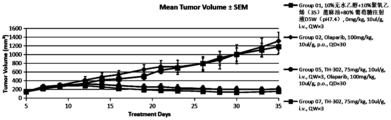
- Fig. 3 is the growth curve of the tumor volume of mice in each group in the subcutaneous model of human pancreatic cancer Capan-1;
- Figure 4 is a graph showing the relative tumor inhibition rates of mice in each group in the subcutaneous model of human pancreatic cancer Capan-1;
- Figure 5 is a graph of the body weight of mice in each group in the subcutaneous model of human pancreatic cancer Capan-1;
- Figure 6 is a graph showing the percent change in body weight of mice in each group in the subcutaneous model of human pancreatic cancer Capan-1;
- Fig. 7 is the growth curve of the tumor volume of mice in each group in the pancreatic cancer Capan-1CDX model
- Figure 8 is a graph showing the change in body weight over time in each treatment group in the pancreatic cancer Capan-1CDX model
- Figure 9 is a growth curve of the tumor volume of each group of mice in the lung cancer LU6429 PDX model
- Figure 10 is a graph showing the body weight of each treatment group over time in the lung cancer LU6429 PDX model
- Figure 11 is a growth curve of the tumor volume of each group of mice in the bladder cancer BL3325 PDX model
- Figure 12 is a graph showing the change in body weight over time in each treatment group in the bladder cancer BL3325 PDX model.
- a patient and “individual” are used interchangeably and refer to a mammal in need of cancer treatment.
- the patient is a human.
- the patient is a human being diagnosed with cancer.
- a "patient” or “individual” may refer to a non-human mammal, such as a non-human primate, dog, cat, rabbit, pig, mouse, for screening, characterization and evaluation of drugs and therapies or rats.
- Prodrug refers to a compound (or drug) that, upon administration or administration, is metabolized or otherwise converted to a biologically active or more active compound (or drug) with respect to at least one property.
- Prodrugs are chemically modified relative to the drug in such a way that they are less or inactive relative to the drug, but the chemical modification allows the corresponding drug to be produced by metabolism or other biological processes after administration of the prodrug.
- Prodrugs may have altered metabolic stability or delivery characteristics, fewer side effects or toxicity, or improved flavor relative to the active drug.
- Prodrugs can be synthesized using reactants other than the corresponding drug.
- Treating or “treating a patient” refers to administering, using or administering to a patient a therapeutically effective amount of a drug relevant to the present invention.
- administering or “administering” "using" a drug to a patient refers to direct administration or administration (which may be administered or administered to the patient by a medical professional or may be self-administered or administered) and/or indirect administration or administration, which may prescribe the drug the behavior of.
- direct administration or administration which may be administered or administered to the patient by a medical professional or may be self-administered or administered
- indirect administration or administration which may prescribe the drug the behavior of.
- a physician who instructs a patient to self-administer or administer a drug and/or provides a prescription for the drug to the patient is administering or administering the drug to the patient.
- a "therapeutically effective amount" of a drug means that when administered or administered or used to a patient with cancer, it will have a desired therapeutic effect (such as alleviation, improvement, remission or elimination of the clinical manifestations of one or more cancers in the patient) amount of drug.
- a therapeutic effect does not necessarily occur through the administration or administration of one dose, and may only occur after the administration or administration of a series of doses. Thus, a therapeutically effective amount may be administered or administered in one or more doses.
- Treatment of a condition or patient refers to steps taken to obtain beneficial or desired results (including clinical results).
- beneficial or desired clinical outcomes include, but are not limited to, alleviation or amelioration of one or more symptoms of cancer; reduction in extent of disease; delay or slowing of disease progression; amelioration, remission or stabilization of disease state; or other beneficial outcomes.
- treatment of cancer can result in a partial response or stable disease.
- Tumor cell refers to a tumor cell of any appropriate species (eg, a mammal such as murine, canine, feline, equine or human).
- TH-302 is a small molecule prodrug that can be activated under hypoxic conditions and release cytotoxins to kill tumor cells and tumor tissues.
- DLD1 human colon cancer cell line
- BRCA2 knockout DLD1-BRCA2-/- tumor cell line to detect Whether there is any difference in the killing ability of TH-302 to the above two tumor cell lines with or without BRCA2 protein expression.
- This clonogenic assay uses IC 90 (90% inhibitory concentration) value as an evaluation of the ability of compound TH-302 to kill cells.
- the specific experimental method is as follows:
- DLD1 and DLD1-BRCA2-/- cells were cultured in RPMI medium, added with 10% FBS and 1% double antibody, and cultured at 37°C and 5% CO 2 .
- the cells are routinely cultured until the cell saturation is 80%-90%, and the cells are collected when the number reaches the requirement.
- the cells were cultured in a 37°C, 5% CO 2 incubator for 2 days.
- the cells were resuspended with 3 mL of culture medium and seeded in a 6-well culture plate, wherein the density of DLD1-BRCA2-/- cells was 2000/well, and the density of DLD1 cells was 300/well.
- the IC 90 values of the test compound TH-302 in the two cells measured by the above-mentioned experimental method are listed in Table 1 below.
- Table 1 IC 90 data of the inhibitory effect of compound TH-302 on two tumor cell lines under hypoxic conditions
- the applicant specifically studied the in vitro cell proliferation inhibition experiments of hypoxia-activated anticancer prodrugs TH-302 and tirapazamine in Capan-1 and BxPc-3 cell lines under normoxia and hypoxia conditions, respectively.
- the Capan-1 cell line is a BRCA mutant cell line
- the BxPc-3 cell line is a BRCA wild-type cell line, that is, a non-BRCA mutant cell line.
- This experiment was used to verify the difference in the sensitivity of TH-302 and tirapazamine, which are both hypoxia-activated anticancer prodrugs, to BRCA mutations.
- hypoxic workstation Adjusts the hypoxic workstation to an anaerobic environment (O 2 ⁇ 0.01%) and confirm hypoxia in the workstation using an oxygen indicator.
- the 24-well plate with glass inserts was sent to the hypoxic workstation.
- the IC 50 of TH-302 in the BRCA mutant Capan-1 cell line was 0.82 ⁇ M
- the IC 50 in the BRCA wild-type BxPc-3 cell line was 3.07 ⁇ M.
- the difference is 3.7 times, indicating that BRCA mutation makes TH-302 have stronger proliferation inhibitory activity on tumor cell lines, that is, BRCA mutation will enhance the sensitivity of tumor cells to TH-302 drug.
- Tirapazamine which is also a hypoxia-activated anticancer prodrug, had an IC 50 of 29.06 ⁇ M in the BRCA-mutated Capan-1 cell line under hypoxic conditions, and an IC 50 of 29.06 ⁇ M in the BRCA wild-type BxPc-3 cell line.
- the IC 50 was 33.23 ⁇ M, with a difference of 1.1 times, and there was no significant difference, which indicated that tirapazamine had no correlation with BRCA mutations, that is, BRCA mutations did not significantly affect the proliferation inhibitory activity of tirapazamine on tumor cell lines, that is, BRCA The mutation did not enhance the sensitivity of tumor cells to the drug tirapazamine.
- Capan-1 CDX model is an olaparib-resistant model with a BRCA2 pathogenic variant.
- Each BALB/c female nude mouse was inoculated subcutaneously with 5 ⁇ 10 5 Capan-1 cells on the lower back of the right side, and the cells were resuspended in 1:1 PBS and Matrigel (0.1ml/mouse), and a total of 64 female mice were inoculated .
- the date of inoculation is June 23, 2021.
- the average tumor volume is 140mm 3 , the patients will be randomly divided into groups according to tumor size.
- test drug Olaparib 100mg/kg single drug group (Group 2), TH-302 75mg/kg and Olaparib 100mg/kg combined administration group (Group 5), TH-302 75mg/kg single drug group (Group 7) And 10% absolute ethanol + 10% polyoxyethylene (35) castor oil + 80% glucose injection D5W (pH7.4) vehicle control group, a total of 7 groups, 6 mice in each group.
- vehicle control group, TH-302 single drug and combined drug groups were given tail vein administration once a week for a total of three weeks; the test drug Olaparib group was administered orally by gavage once a day for a total of three weeks. Medicine for 30 days.
- the curative effect is evaluated according to the relative tumor inhibition rate TGI (%), and the safety evaluation is carried out according to the animal body weight change and death.
- the test drug Olaparib 100mg/kg (Group 2) treatment group had no tumor inhibitory effect on the 35th day after tumor cell inoculation, and the relative tumor inhibition rate TGI (%) was -7.1%, which was not statistically significantly different from the control group (p>0.05).
- the combined treatment group (Group 5) of Olaparib 100mg/kg and TH-302 75mg/kg had a significant tumor inhibitory effect on the 35th day after tumor cell inoculation, and there was a statistically significant difference compared with the control group (p ⁇ 0.001 ), the relative tumor inhibition rate TGI (%) was 84.47%.
- TH-302 75mg/kg monotherapy group (Group 7) showed a significant tumor inhibitory effect on the 35th day after tumor cell inoculation (Day 35), which was statistically significantly different from the control group (p ⁇ 0.001 ), the relative tumor inhibition rate TGI (%) was 87.66%.
- TGI tumor inhibition rate
- mice The tumor volumes of mice in different groups were measured on different days, and the average values were obtained. The results are shown in Table 7 below.
- Table 7 Changes in tumor volume of mice in each group with treatment time in the Capan-1 model of human pancreatic cancer (unit: mm 3 )
- Table 8 Drug efficacy analysis table of each group in the subcutaneous model of human pancreatic cancer Capan-1
- T/C% Relative tumor proliferation rate
- T and C are the average relative tumor volume (RTV) of the treatment group and the control group at a specific time point, respectively.
- Table 9 Relative tumor inhibition rates of tumors in each group in the human pancreatic cancer Capan-1 subcutaneous model
- mice The body weights of mice in different groups were measured on different days, and the average values were obtained. The results are shown in Table 10 below.
- Table 10 Body weight of mice on different days of inoculation in the subcutaneous animal model experiment of human pancreatic cancer Capan-1 treated with drugs
- Figure 5 is, the body weight curves of mice in each group in the subcutaneous model of human pancreatic cancer Capan-1.
- Capan-1 CDX model is indeed an Olaparib-resistant model, and Olaparib has no inhibitory effect on the tumor growth of this model, that is, it is resistant to Olaparib;
- TH-302 monotherapy has a good therapeutic effect on Olaparib-resistant pancreatic cancer (TGI is 82.67%);
- TH-302 combined with Olaparib has a good therapeutic effect on Olaparib-resistant pancreatic cancer (TGI is 87.43%);
- the TH-302 monotherapy group had a slightly better antitumor effect, but there was no significant difference (p>0.05);
- the inventors also studied the efficacy and safety of TH-302 in the olaparib-resistant lung cancer LU6429 PDX model and bladder cancer BL3325 PDX model.
- mice were subcutaneously inoculated with human pancreatic cancer Capan-1 cells to establish a subcutaneous transplantation model of human pancreatic cancer.
- the test is divided into test drug Olaparib 100mg/kg single drug group (Group 2), TH-302 50mg/kg single drug group (Group 3, QD), TH-302 100mg/kg single drug group (Group 4), TH-302 50mg/kg single drug group (Group 5, QW), TH-302 25mg/kg single drug group (Group 6), TH-302 25mg/kg and Olaparib 100mg/kg combined administration group (Group 7) and 10% no Water ethanol + 10% polyoxyethylene (35) castor oil + 80% glucose injection D5W (pH7.4) vehicle control group (Group 1), a total of 7 groups, 6 mice in each group.
- Olaparib 100mg/kg single drug group Group 2
- TH-302 50mg/kg single drug group Group 3, QD
- TH-302 100mg/kg single drug group Group 4
- the vehicle control group and each test drug of TH-302 were administered by tail vein injection.
- the TH-302 50mg/kg single-drug group (Group 3, QD) was administered once a day for 3 consecutive days, rested for 4 days, and then rested for two weeks; then administered daily for 3 consecutive days.
- TH-302 100mg/kg (Group 4, QW), 50mg/kg (Group 5, QW), 25mg/kg (Group 6, QW) single drug group and combined administration of TH-302 25mg/kg and Olaparib 100mg/kg TH-302 in Group 7 was administered once a week for a total of three weeks.
- the test drug Olaparib in each group was administered orally by gavage, once a day, for a total of 30 days.
- the specific administration route, dose and scheme in the human pancreatic cancer Capan-1 animal model are shown in Table 12.
- Table 12 Administration routes, doses and regimens in human-derived pancreatic cancer Capan-1 animal model
- the dosing volume is 10 ⁇ L/g.
- the tumor growth of each treatment group and control group was recorded on different days of the experiment, as shown in Table 13, and the growth curves of the tumor volumes of mice in each group are shown in FIG. 7 .
- the curative effect was evaluated according to the relative tumor proliferation rate and the relative tumor inhibition rate, and the efficacy analysis of each group is shown in Table 14.
- the results of the mouse body weight change rate on the 43rd day are shown in Table 15.
- the body weight of each treatment group changed with time The change curve is shown in Figure 8.
- Relative tumor proliferation rate, T/C% that is, at a certain time point, the percentage value of the relative tumor volume or tumor weight between the treatment group and the control group.
- T/C% T TW /C TW ⁇ 100% (T TW : the average tumor weight at the end of the experiment in the treatment group; C TW : the average tumor weight at the end of the experiment in the vehicle control group).
- T and C are the relative tumor volume (RTV) or tumor weight (TW) of the treatment group and the control group at a specific time point, respectively).
- Table 13 Changes in tumor volume of mice in each group with treatment time in the Capan-1 model of human pancreatic cancer (mm 3 )
- Table 14 Drug efficacy analysis table of each group in the subcutaneous model of human pancreatic cancer Capan-1
- Table 15 Body weight changes in each group in the human pancreatic cancer Capan-1 subcutaneous model
- mice in the vehicle control group were 1301.38 mm 3 on day 43 after tumor cell inoculation (Day 43).
- the average tumor volume of the test drug Olaparib 100mg/kg (Group 2) treatment group was 846.86mm 3 on the 43rd day after tumor cell inoculation (Day 43), and the relative tumor inhibition rate TGI (%) was 37.43%. There was no statistically significant difference (p>0.05).
- the test drug TH-302 50mg/kg treatment group (Group 3, QD) had an average tumor volume of 146.99mm 3 on the 43rd day after tumor cell inoculation (Day 43), which was statistically significantly different from the control group ( p ⁇ 0.001), the relative tumor inhibition rate TGI (%) was 89.17%.
- the test drug TH-302 100mg/kg treatment group (Group 4) had an average tumor volume of 124.68mm 3 on the 43rd day after tumor cell inoculation (Day 43), which was statistically significantly different from the control group (p ⁇ 0.001), and the relative tumor inhibition rate TGI (%) was 90.89%.
- the test drug TH-302 50mg/kg treatment group (Group 5, QW) had an average tumor volume of 263.45mm 3 on the 43rd day after tumor cell inoculation (Day 43), which was statistically significantly different from the control group ( p ⁇ 0.001), the relative tumor inhibition rate TGI (%) was 80.18%, and the complete tumor inhibition rate was 33.3%.
- TH-302 100mg/kg (Group 4), 50mg/kg (Group 5, QW) and 25mg/kg (Group 6) monotherapy groups showed a dose-dependent antitumor effect.
- TH-302 100mg/kg (Group 4, QW), 50mg/kg (Group 5, QW) monotherapy group compared with TH-302 25mg/kg monotherapy group (Group 6, QW) had statistically significant Sex difference (all p ⁇ 0.001).
- the combination therapy group of Olaparib 100mg/kg and TH-302 25mg/kg (Group 7) has better anti-tumor effect than Olaparib 100mg/kg (Group 2) and TH-302 25mg/kg single drug group (Group 6), statistics There are significant differences (p ⁇ 0.05 and p ⁇ 0.001), and the specific dose combination of Olaparib and TH-302 can show a synergistic effect on tumor inhibition.
- the LU6429 PDX model is an olaparib-resistant model with a BRCA2 pathogenic mutation.
- mice Balb/c nude female mice were inoculated subcutaneously
- the tumor mass of lung cancer LU6429 was used to establish the subcutaneous transplantation tumor model of human lung cancer.
- the test is divided into test drug Olaparib 50mg/kg single drug group (Group 02), TH-302 80mg/kg single drug group (Group 03), TH-302 40mg/kg single drug group (Group 04), TH-302 20mg/kg single drug group (Group 04), TH-302 20mg/kg kg single drug group (Group 05), TH-302 40mg/kg and Olaparib 50mg/kg combined administration group (Group 06), and glucose injection vehicle control group (Group 01).
- mice in each group There were 6 groups in this study, 6 mice in each group, in which the vehicle control group and TH-302 were given tail vein administration once a week for a total of 3 weeks; Olaparib was administered by intragastric administration and administered daily Medicine 1 time, a total of 28 days of administration.
- Table 16 shows the administration route, dosage and regimen in the lung cancer LU6429 animal model.
- Table 16 Administration route, dosage and regimen in animal model of lung cancer LU6429
- the administration volume is 10 ⁇ L/g; 2. QD ⁇ 28: once a day for 28 consecutive days; 3. QW ⁇ 3: once a week for 3 consecutive weeks.
- the tumor growth of each treatment group and control group was recorded on different days of the experiment, as shown in Table 17, and the growth curves of the tumor volumes of mice in each group are shown in FIG. 9 .
- the curative effect was evaluated according to the relative tumor proliferation rate and the relative tumor inhibition rate, and the efficacy analysis of each group is shown in Table 18. Record the changes in body weight after administration of the treatment group and the control group.
- the safety of each group in the subcutaneous model of lung cancer LU6429 is shown in Table 19, and the body weight change results of the mice on day 25 are shown in Table 10.
- Table 17 In Changes of tumor volume in each group of mice in lung cancer LU6429 model with treatment time (mm 3 )
- Table 18 In Drug efficacy analysis table of each group in the subcutaneous model of lung cancer LU6429
- Olaparib alone did not produce tumor inhibitory effect, showing the resistance of lung cancer LU6429 PDX model to Olaparib.
- the TH-302 80mg/kg (Group 03) dose treatment group the tumor of 1 mouse was completely cleared, and the clearance rate was 16.7%.
- the test drug TH-302 80mg/kg, 40mg/kg and 20mg/kg treatment groups had statistically significant differences (p ⁇ 0.05), showing dose dependence.
- mice in each test drug treatment group did not lose weight and were well tolerated.
- the BL3325 PDX model is an olaparib-resistant model with a BRCA2 pathogenic mutation.
- mice Balb/c nude female mice were inoculated subcutaneously
- the tumor mass of bladder cancer BL3325 was used to establish a subcutaneous transplanted tumor model of human bladder cancer.
- the test is divided into test drug Olaparib 50mg/kg single drug group (Group 02), TH-302 80mg/kg single drug group (Group 03), TH-302 40mg/kg single drug group (Group 04), TH-302 20mg/kg single drug group (Group 04), TH-302 20mg/kg kg single drug group (Group 05), TH-302 40mg/kg and Olaparib 50mg/kg combined administration group (Group 06), and glucose injection vehicle control group (Group 01).
- mice in each group There were 6 groups in this study, 6 mice in each group, in which the vehicle control group and TH-302 were given tail vein administration once a week for a total of 3 weeks; Olaparib was administered by intragastric administration and administered daily 1 dose, for a total of 30 days.
- Table 20 shows the administration route, dosage and regimen in the bladder cancer BL3325 animal model.
- Table 20 Administration route, dosage and regimen in bladder cancer BL3325 animal model
- the administration volume is 10 ⁇ L/g; 2. QD ⁇ 30: once a day for 30 consecutive days; 3. QW ⁇ 3: once a week for 3 weeks; 4. i.v. is tail vein administration, p.o. is intragastric administration.
- Table 21 In Changes of tumor volume in each group of mice in bladder cancer BL3325 model with treatment time (mm 3 )
- Table 22 In Drug efficacy analysis table of each group in bladder cancer BL3325 subcutaneous model
- Table 23 In Body weight changes of each group in bladder cancer BL3325 subcutaneous model
- Test drug TH-302 in 80mg/kg, 40mg/kg, 20mg/kg dose alone treatment group, and TH-302 40mg/kg combined with Olaparib 50mg/kg treatment group Bladder cancer BL3325 subcutaneous models all have significant anti-tumor proliferation effects, and Olaparib 50mg/kg alone has no significant anti-tumor effect.
- the TH-302 80mg/kg treatment group Group 03
- the combined treatment effect of TH-302 40mg/kg and Olaparib 50mg/kg was significantly better than that of Olaparib 50mg/kg alone, better than that of TH-302 40mg/kg alone, and the difference was significant.
- mice in each test drug treatment group did not lose weight and were well tolerated.
- the PARP inhibitor selected in the examples of the present application is Olaparib, Rucaparib, Niraparib, Talazoparib, Fluzoparib, Pamiparib, etc. It is also a PARP inhibitor, and its mechanism of action is similar to that of Olaparib, both of which block the function of enzymes involved in the repair of damaged DNA. Therefore, it can be inferred that Rucaparib, Niraparib, and Talazopa PARPi such as Talazoparib, Fluzoparib, and Pamiparib have similar tumor inhibitory efficacy to Olaparib in the above experiment.
- TH-302 is the DNA alkylating agent activated by hypoxia, the general formula compound of claim 1:
Landscapes
- Health & Medical Sciences (AREA)
- Veterinary Medicine (AREA)
- Chemical & Material Sciences (AREA)
- Medicinal Chemistry (AREA)
- Pharmacology & Pharmacy (AREA)
- Life Sciences & Earth Sciences (AREA)
- Animal Behavior & Ethology (AREA)
- General Health & Medical Sciences (AREA)
- Public Health (AREA)
- Epidemiology (AREA)
- Chemical Kinetics & Catalysis (AREA)
- General Chemical & Material Sciences (AREA)
- Nuclear Medicine, Radiotherapy & Molecular Imaging (AREA)
- Organic Chemistry (AREA)
- Pharmaceuticals Containing Other Organic And Inorganic Compounds (AREA)
- Medicines That Contain Protein Lipid Enzymes And Other Medicines (AREA)
Abstract
Priority Applications (5)
| Application Number | Priority Date | Filing Date | Title |
|---|---|---|---|
| JP2024513162A JP7762796B2 (ja) | 2021-08-27 | 2022-08-26 | Parp阻害剤に耐性のある患者のth-302による治療 |
| KR1020247008354A KR20240051965A (ko) | 2021-08-27 | 2022-08-26 | Th-302를 이용한 parp 억제제에 내성이 있는 환자의 치료 |
| CN202280058056.5A CN118076359A (zh) | 2021-08-27 | 2022-08-26 | 使用th-302治疗parp抑制剂耐药的患者 |
| US18/686,957 US20250387419A1 (en) | 2021-08-27 | 2022-08-26 | Parp inhibitor-resistant patient treated with th-302 |
| EP22860658.8A EP4393493A4 (fr) | 2021-08-27 | 2022-08-26 | Patient résistant aux inhibiteurs de parp traités avec th-302 |
Applications Claiming Priority (2)
| Application Number | Priority Date | Filing Date | Title |
|---|---|---|---|
| CN202110996009 | 2021-08-27 | ||
| CN202110996009.2 | 2021-08-27 |
Publications (1)
| Publication Number | Publication Date |
|---|---|
| WO2023025312A1 true WO2023025312A1 (fr) | 2023-03-02 |
Family
ID=85322487
Family Applications (1)
| Application Number | Title | Priority Date | Filing Date |
|---|---|---|---|
| PCT/CN2022/115284 Ceased WO2023025312A1 (fr) | 2021-08-27 | 2022-08-26 | Patient résistant aux inhibiteurs de parp traités avec th-302 |
Country Status (6)
| Country | Link |
|---|---|
| US (1) | US20250387419A1 (fr) |
| EP (1) | EP4393493A4 (fr) |
| JP (1) | JP7762796B2 (fr) |
| KR (1) | KR20240051965A (fr) |
| CN (1) | CN118076359A (fr) |
| WO (1) | WO2023025312A1 (fr) |
Cited By (4)
| Publication number | Priority date | Publication date | Assignee | Title |
|---|---|---|---|---|
| WO2023174319A1 (fr) * | 2022-03-15 | 2023-09-21 | 深圳艾欣达伟医药科技有限公司 | Méthode de traitement d'un patient atteint d'un cancer à mutation de brca |
| WO2024061346A1 (fr) * | 2022-09-22 | 2024-03-28 | 深圳艾欣达伟医药科技有限公司 | Utilisation d'un composé activé par hypoxie dans la préparation d'un médicament pour le traitement d'un patient atteint d'un cancer |
| WO2026084958A1 (fr) | 2024-10-14 | 2026-04-23 | Assembly Biosciences, Inc. | Composés hétéroaryles tricycliques utiles pour améliorer les réponses immunitaires innées |
| WO2026084955A1 (fr) | 2024-10-14 | 2026-04-23 | Assembly Biosciences, Inc. | Composés hétéroaryles tricycliques utiles pour améliorer les réponses immunitaires innées |
Citations (32)
| Publication number | Priority date | Publication date | Assignee | Title |
|---|---|---|---|---|
| WO2004087075A2 (fr) | 2003-03-28 | 2004-10-14 | Threshold Pharmaceuticals, Inc. | Compositions et methodes de traitement du cancer |
| WO2007002931A2 (fr) | 2005-06-29 | 2007-01-04 | Threshold Pharmaceuticals, Inc. | Prodrogues d'alkylateur de phosphoramidate |
| WO2008083101A1 (fr) | 2006-12-26 | 2008-07-10 | Threshold Pharmaceuticals, Inc. | Promédicaments d'alkylation de phosphoramidate pour le traitement du cancer |
| WO2008151253A1 (fr) | 2007-06-04 | 2008-12-11 | Threshold Pharmaceuticals, Inc. | Promédicaments d'agents antinéoplasiques activés par l'hypoxie |
| WO2009018163A1 (fr) | 2007-07-27 | 2009-02-05 | Threshold Pharmaceuticals, Inc. | Promédicaments d'anthracyclines activés par une hypoxie |
| WO2009033165A1 (fr) | 2007-09-06 | 2009-03-12 | Threshold Pharmaceuticals, Inc. | Promédicaments activés par l'hypoxie à base d'agents bis-alkylants |
| WO2010048330A1 (fr) | 2008-10-21 | 2010-04-29 | Threshold Pharmaceuticals, Inc. | Traitement du cancer à l’aide de promédicaments activés par l’hypoxie |
| WO2012006032A2 (fr) | 2010-06-28 | 2012-01-12 | Threshold Pharmaceuticals, Inc. | Traitement du cancer du sang |
| WO2012009288A2 (fr) | 2010-07-12 | 2012-01-19 | Threshold Pharmaceuticals, Inc. | Administration de promédicaments activés par hypoxie et d'agents anti-angiogéniques pour le traitement du cancer |
| WO2012135757A2 (fr) | 2011-04-01 | 2012-10-04 | Threshold Pharmaceuticals, Inc. | Procédés de traitement du cancer |
| WO2012142520A2 (fr) | 2011-04-15 | 2012-10-18 | Threshold Pharmaceuticals, Inc. | Forme posologique unitaire pour administration orale |
| WO2012145684A1 (fr) | 2011-04-22 | 2012-10-26 | The United States Of America, As Represented By The Secretary, Department Of Health & Human Services | Inducteurs d'hypoxie transitoire et leur utilisation |
| WO2013096684A1 (fr) | 2011-12-22 | 2013-06-27 | Threshold Pharmaceuticals, Inc. | Promédicaments activés par l'hypoxie et inhibiteurs de mtor utilisés pour le traitement du cancer |
| WO2013096687A1 (fr) | 2011-12-22 | 2013-06-27 | Threshold Pharmaceuticals, Inc. | Administration de promédicaments activés par l'hypoxie en combinaison à des inhibiteurs de chk1 pour le traitement du cancer |
| WO2013116385A1 (fr) | 2012-01-31 | 2013-08-08 | Threshold Pharmaceuticals, Inc. | Biomarqueur de prédiction pour thérapie à base de promédicament activé par hypoxie |
| WO2013126539A1 (fr) | 2012-02-21 | 2013-08-29 | Threshold Pharmaceuticals Inc. | Traitement du cancer |
| WO2013177633A1 (fr) | 2012-06-01 | 2013-12-05 | Bionomics Limited | Polythérapie comprenant un agent de perturbation vasculaire et un agent ciblant l'hypoxie |
| WO2014062856A1 (fr) | 2012-10-16 | 2014-04-24 | Halozyme, Inc. | Hypoxie et hyaluronane et leurs marqueurs pour le diagnostic et la surveillance de maladies et de pathologies, et méthodes associées |
| WO2014169035A1 (fr) | 2013-04-10 | 2014-10-16 | Threshold Pharmaceuticals, Inc. | Biomarqueur de prédiction et de réponse pour une thérapie anticancéreuse par th-302 |
| WO2015013448A1 (fr) | 2013-07-26 | 2015-01-29 | Threshold Pharmaceuticals, Inc. | Traitement d'un cancer du pancréas au moyen d'une combinaison d'un promédicament activé par l'hypoxie et d'un taxane |
| WO2015051921A1 (fr) | 2013-10-10 | 2015-04-16 | Merck Patent Gmbh | Synthèse d'ester d'acide 1-alkyl-2-amino-imidazol-5-carboxylique utilisant des dérivés d'ester de n-alkyle-glycine substitués par calpha |
| WO2015069489A1 (fr) | 2013-11-06 | 2015-05-14 | Merck Patent Gmbh | Biomarqueur prédictif pour thérapie à base de promédicament activé par l'hypoxie |
| WO2015171647A1 (fr) | 2014-05-05 | 2015-11-12 | Threshold Pharmaceuticals, Inc. | Traitement du cancer |
| WO2016011328A1 (fr) | 2014-07-17 | 2016-01-21 | Baker Cheryl | Traitement du cancer associant un rayonnement, des nanoparticules d'oxyde de cérium et un agent chimiothérapeutique |
| WO2016011195A1 (fr) | 2014-07-17 | 2016-01-21 | Threshold Pharmaceuticals, Inc. | Formes solides de th-302 et procédés associés |
| WO2016014390A1 (fr) | 2014-07-25 | 2016-01-28 | Merck Patent Gmbh | Compositions et méthodes pour polythérapie à base d'inhibiteurs de mek dans le traitement du cancer |
| WO2016081547A1 (fr) | 2014-11-19 | 2016-05-26 | Merck Patent Gmbh | Biomarqueur prédictif pour thérapie à base de promédicament activé par l'hypoxie |
| WO2018026606A1 (fr) | 2016-08-01 | 2018-02-08 | Threshold Pharmaceuticals, Inc. | Administration de promédicaments activés par l'hypoxie en combinaison à des agents immunomodulateurs pour le traitement du cancer |
| WO2019055786A1 (fr) | 2017-09-14 | 2019-03-21 | Lankenau Institute For Medical Research | Méthodes et compositions pour le traitement du cancer |
| WO2019173799A1 (fr) | 2018-03-08 | 2019-09-12 | Caris Science, Inc. | Sondes oligonucléotidiques et leurs utilisations |
| WO2020007106A1 (fr) | 2018-07-05 | 2020-01-09 | 深圳艾欣达伟医药科技有限公司 | Utilisation médicale d'évofosfamide contre le cancer |
| WO2020118251A2 (fr) | 2018-12-07 | 2020-06-11 | The Board Of Trustees Of The Leland Stanford Junior University | Compositions ciblant l'hypoxie et leurs associations avec un inhibiteur de parp et leurs méthodes d'utilisation |
Family Cites Families (1)
| Publication number | Priority date | Publication date | Assignee | Title |
|---|---|---|---|---|
| CN119384281A (zh) * | 2022-04-15 | 2025-01-28 | 深圳艾欣达伟医药科技有限公司 | 使用th-302单药或联用parp抑制剂治疗癌症的方法 |
-
2022
- 2022-08-26 WO PCT/CN2022/115284 patent/WO2023025312A1/fr not_active Ceased
- 2022-08-26 US US18/686,957 patent/US20250387419A1/en active Pending
- 2022-08-26 CN CN202280058056.5A patent/CN118076359A/zh active Pending
- 2022-08-26 EP EP22860658.8A patent/EP4393493A4/fr active Pending
- 2022-08-26 KR KR1020247008354A patent/KR20240051965A/ko active Pending
- 2022-08-26 JP JP2024513162A patent/JP7762796B2/ja active Active
Patent Citations (32)
| Publication number | Priority date | Publication date | Assignee | Title |
|---|---|---|---|---|
| WO2004087075A2 (fr) | 2003-03-28 | 2004-10-14 | Threshold Pharmaceuticals, Inc. | Compositions et methodes de traitement du cancer |
| WO2007002931A2 (fr) | 2005-06-29 | 2007-01-04 | Threshold Pharmaceuticals, Inc. | Prodrogues d'alkylateur de phosphoramidate |
| WO2008083101A1 (fr) | 2006-12-26 | 2008-07-10 | Threshold Pharmaceuticals, Inc. | Promédicaments d'alkylation de phosphoramidate pour le traitement du cancer |
| WO2008151253A1 (fr) | 2007-06-04 | 2008-12-11 | Threshold Pharmaceuticals, Inc. | Promédicaments d'agents antinéoplasiques activés par l'hypoxie |
| WO2009018163A1 (fr) | 2007-07-27 | 2009-02-05 | Threshold Pharmaceuticals, Inc. | Promédicaments d'anthracyclines activés par une hypoxie |
| WO2009033165A1 (fr) | 2007-09-06 | 2009-03-12 | Threshold Pharmaceuticals, Inc. | Promédicaments activés par l'hypoxie à base d'agents bis-alkylants |
| WO2010048330A1 (fr) | 2008-10-21 | 2010-04-29 | Threshold Pharmaceuticals, Inc. | Traitement du cancer à l’aide de promédicaments activés par l’hypoxie |
| WO2012006032A2 (fr) | 2010-06-28 | 2012-01-12 | Threshold Pharmaceuticals, Inc. | Traitement du cancer du sang |
| WO2012009288A2 (fr) | 2010-07-12 | 2012-01-19 | Threshold Pharmaceuticals, Inc. | Administration de promédicaments activés par hypoxie et d'agents anti-angiogéniques pour le traitement du cancer |
| WO2012135757A2 (fr) | 2011-04-01 | 2012-10-04 | Threshold Pharmaceuticals, Inc. | Procédés de traitement du cancer |
| WO2012142520A2 (fr) | 2011-04-15 | 2012-10-18 | Threshold Pharmaceuticals, Inc. | Forme posologique unitaire pour administration orale |
| WO2012145684A1 (fr) | 2011-04-22 | 2012-10-26 | The United States Of America, As Represented By The Secretary, Department Of Health & Human Services | Inducteurs d'hypoxie transitoire et leur utilisation |
| WO2013096684A1 (fr) | 2011-12-22 | 2013-06-27 | Threshold Pharmaceuticals, Inc. | Promédicaments activés par l'hypoxie et inhibiteurs de mtor utilisés pour le traitement du cancer |
| WO2013096687A1 (fr) | 2011-12-22 | 2013-06-27 | Threshold Pharmaceuticals, Inc. | Administration de promédicaments activés par l'hypoxie en combinaison à des inhibiteurs de chk1 pour le traitement du cancer |
| WO2013116385A1 (fr) | 2012-01-31 | 2013-08-08 | Threshold Pharmaceuticals, Inc. | Biomarqueur de prédiction pour thérapie à base de promédicament activé par hypoxie |
| WO2013126539A1 (fr) | 2012-02-21 | 2013-08-29 | Threshold Pharmaceuticals Inc. | Traitement du cancer |
| WO2013177633A1 (fr) | 2012-06-01 | 2013-12-05 | Bionomics Limited | Polythérapie comprenant un agent de perturbation vasculaire et un agent ciblant l'hypoxie |
| WO2014062856A1 (fr) | 2012-10-16 | 2014-04-24 | Halozyme, Inc. | Hypoxie et hyaluronane et leurs marqueurs pour le diagnostic et la surveillance de maladies et de pathologies, et méthodes associées |
| WO2014169035A1 (fr) | 2013-04-10 | 2014-10-16 | Threshold Pharmaceuticals, Inc. | Biomarqueur de prédiction et de réponse pour une thérapie anticancéreuse par th-302 |
| WO2015013448A1 (fr) | 2013-07-26 | 2015-01-29 | Threshold Pharmaceuticals, Inc. | Traitement d'un cancer du pancréas au moyen d'une combinaison d'un promédicament activé par l'hypoxie et d'un taxane |
| WO2015051921A1 (fr) | 2013-10-10 | 2015-04-16 | Merck Patent Gmbh | Synthèse d'ester d'acide 1-alkyl-2-amino-imidazol-5-carboxylique utilisant des dérivés d'ester de n-alkyle-glycine substitués par calpha |
| WO2015069489A1 (fr) | 2013-11-06 | 2015-05-14 | Merck Patent Gmbh | Biomarqueur prédictif pour thérapie à base de promédicament activé par l'hypoxie |
| WO2015171647A1 (fr) | 2014-05-05 | 2015-11-12 | Threshold Pharmaceuticals, Inc. | Traitement du cancer |
| WO2016011328A1 (fr) | 2014-07-17 | 2016-01-21 | Baker Cheryl | Traitement du cancer associant un rayonnement, des nanoparticules d'oxyde de cérium et un agent chimiothérapeutique |
| WO2016011195A1 (fr) | 2014-07-17 | 2016-01-21 | Threshold Pharmaceuticals, Inc. | Formes solides de th-302 et procédés associés |
| WO2016014390A1 (fr) | 2014-07-25 | 2016-01-28 | Merck Patent Gmbh | Compositions et méthodes pour polythérapie à base d'inhibiteurs de mek dans le traitement du cancer |
| WO2016081547A1 (fr) | 2014-11-19 | 2016-05-26 | Merck Patent Gmbh | Biomarqueur prédictif pour thérapie à base de promédicament activé par l'hypoxie |
| WO2018026606A1 (fr) | 2016-08-01 | 2018-02-08 | Threshold Pharmaceuticals, Inc. | Administration de promédicaments activés par l'hypoxie en combinaison à des agents immunomodulateurs pour le traitement du cancer |
| WO2019055786A1 (fr) | 2017-09-14 | 2019-03-21 | Lankenau Institute For Medical Research | Méthodes et compositions pour le traitement du cancer |
| WO2019173799A1 (fr) | 2018-03-08 | 2019-09-12 | Caris Science, Inc. | Sondes oligonucléotidiques et leurs utilisations |
| WO2020007106A1 (fr) | 2018-07-05 | 2020-01-09 | 深圳艾欣达伟医药科技有限公司 | Utilisation médicale d'évofosfamide contre le cancer |
| WO2020118251A2 (fr) | 2018-12-07 | 2020-06-11 | The Board Of Trustees Of The Leland Stanford Junior University | Compositions ciblant l'hypoxie et leurs associations avec un inhibiteur de parp et leurs méthodes d'utilisation |
Non-Patent Citations (9)
| Title |
|---|
| ASHWORTH, A.LORD, C. J.: "Synthetic Lethal Therapies for Cancer: What's Next after PARP Inhibitors?", NATURE REVIEWS. CLINICAL ONCOLOGY, vol. 15, no. 9, 2018, pages 564 - 576, XP036573545, DOI: 10.1038/s41571-018-0055-6 |
| CONROY, M.BORAD, M. J.BRYCE, A. H.: "Hypoxia-Activated Alkylating Agents in BRCAl-Mutant Ovarian Serous Carcinoma", CUREUS, vol. 9, no. 7, 2017, pages e1517 |
| HE LIZHAO-YI LIUNAYIYUAN WUYONG-CHANG CHENQUAN CHENGJING WANG: "PARP Inhibitor Resistance: the Underlying Mechanisms and Clinical Implications", MOL CANCER, vol. 19, no. 1, 20 June 2020 (2020-06-20), pages 107, XP055753848, DOI: 10.1186/s12943-020-01227-0 |
| MATEO, J.LORD, C. J.SERRA, V.TUTT, A.BALMANA, J.CASTROVIEJO-BERMEJO, M.CRUZ, C.OAKNIN, A.KAYE, S. BDE BONO, J. S.: "A Decade of Clinical Development of PARP Inhibitors in Perspective", ANNALS OF ONCOLOGY: OFFICIAL JOURNAL OF THE EUROPEAN SOCIETY FOR MEDICAL ONCOLOGY, vol. 30, no. 9, 2019, pages 1437 - 1447, XP055860728, DOI: 10.1093/annonc/mdz192 |
| MENG FEVANS J WBHUPATHI D ET AL.: "Molecular and Cellular Pharmacology of the Hypoxia-Activated Prodrug TH-302. [J", MOLECULAR CANCER THERAPEUTICS, vol. 11, no. 918633-87-1, 2012, pages 740, XP055039520, DOI: 10.1158/1535-7163.MCT-11-0634 |
| no. 912444-00-9 |
| ROSE, M.BURGESS, J. T.O'BYRNE, K.RICHARD, D. J.BOLDERSON, E.: "PARP Inhibitors: Clinical Relevance, Mechanisms of Action and Tumor Resistance", FRONTIERS IN CELL AND DEVELOPMENTAL BIOLOGY, vol. 8, 2020, pages 564601 |
| See also references of EP4393493A4 |
| VENA FRANCESCA, JIA RUOCHEN, ESFANDIARI ARMAN, GARCIA-GOMEZ JUAN J., RODRIGUEZ-JUSTO MANUEL, MA JIANGUO, SYED SAKEENA, CROWLEY LIN: "MEK inhibition leads to BRCA2 downregulation and sensitization to DNA damaging agents in pancreas and ovarian cancer models", ONCOTARGET, vol. 9, no. 14, 20 February 2018 (2018-02-20), pages 11592 - 11603, XP093039635, DOI: 10.18632/oncotarget.24294 * |
Cited By (4)
| Publication number | Priority date | Publication date | Assignee | Title |
|---|---|---|---|---|
| WO2023174319A1 (fr) * | 2022-03-15 | 2023-09-21 | 深圳艾欣达伟医药科技有限公司 | Méthode de traitement d'un patient atteint d'un cancer à mutation de brca |
| WO2024061346A1 (fr) * | 2022-09-22 | 2024-03-28 | 深圳艾欣达伟医药科技有限公司 | Utilisation d'un composé activé par hypoxie dans la préparation d'un médicament pour le traitement d'un patient atteint d'un cancer |
| WO2026084958A1 (fr) | 2024-10-14 | 2026-04-23 | Assembly Biosciences, Inc. | Composés hétéroaryles tricycliques utiles pour améliorer les réponses immunitaires innées |
| WO2026084955A1 (fr) | 2024-10-14 | 2026-04-23 | Assembly Biosciences, Inc. | Composés hétéroaryles tricycliques utiles pour améliorer les réponses immunitaires innées |
Also Published As
| Publication number | Publication date |
|---|---|
| US20250387419A1 (en) | 2025-12-25 |
| EP4393493A1 (fr) | 2024-07-03 |
| EP4393493A4 (fr) | 2025-08-27 |
| JP7762796B2 (ja) | 2025-10-30 |
| KR20240051965A (ko) | 2024-04-22 |
| CN118076359A (zh) | 2024-05-24 |
| JP2024531492A (ja) | 2024-08-29 |
Similar Documents
| Publication | Publication Date | Title |
|---|---|---|
| WO2023025312A1 (fr) | Patient résistant aux inhibiteurs de parp traités avec th-302 | |
| US20250228861A1 (en) | Cancer Treatments Using MTA-Cooperative PRMT5 Inhibitors | |
| US20230011378A1 (en) | Combination Therapy For Treatment Of Cancer | |
| CN106488776B (zh) | 包含糖皮质激素和edo-s101的组合 | |
| US20250186468A1 (en) | Method for treating patient with brca-mutated cancer | |
| CA2459822C (fr) | Traitement de la leucemie myeloide chronique, resistante ou intolerante au sti571, impliquant l'homoharringtonine seul ou en combinaison avec d'autres agents | |
| KR20240074779A (ko) | 약학적 조성물 및 이의 용도 | |
| US20240285640A1 (en) | Combination therapy for treating pik3ca-mutated cancer | |
| CN115006397A (zh) | 一种预防或治疗肿瘤疾病的药物用途 | |
| AU2023202746A1 (en) | Combination of a BCL-2 inhibitor and a MCL-1 inhibitor, uses and pharmaceutical compositions thereof | |
| WO2023198188A1 (fr) | Méthode de traitement du cancer faisant appel à th-302 seul ou en association avec un inhibiteur de parp | |
| US11890292B2 (en) | Compositions, methods, systems and/or kits for preventing and/or treating neoplasms | |
| CN113116895B (zh) | 用于治疗神经母细胞瘤的喹啉衍生物 | |
| CN115038447A (zh) | 用于治疗癌症的组合疗法 | |
| US20250186438A1 (en) | Treatment of clear cell renal cell carcinoma | |
| TW202434219A (zh) | 使用乏氧激活化合物治療對parp抑制劑耐藥的患者的藥物及其製藥用途 | |
| WO2024061346A1 (fr) | Utilisation d'un composé activé par hypoxie dans la préparation d'un médicament pour le traitement d'un patient atteint d'un cancer | |
| TW202517252A (zh) | Th-302單藥或聯用parp抑制劑及其用途 | |
| TW202537621A (zh) | 乏氧激活的化合物在製備治療癌症患者的藥物中的用途 | |
| Ricart et al. | Phase I and pharmacokinetic study of sequences of the rebeccamycin analogue NSC 655649 and cisplatin in patients with advanced solid tumors | |
| CN103826645A (zh) | 砷在癌症治疗保护中的用途 | |
| WO2024193693A1 (fr) | Composition pharmaceutique et utilisation associée | |
| TW202510890A (zh) | 治療brca突變癌症患者的方法 | |
| HK40092504A (zh) | 治疗癌症的bcl-2抑制剂和低甲基化剂的组合、其用途和药物组合物 | |
| US20210355223A1 (en) | Combinations for Treating Cancer |
Legal Events
| Date | Code | Title | Description |
|---|---|---|---|
| 121 | Ep: the epo has been informed by wipo that ep was designated in this application |
Ref document number: 22860658 Country of ref document: EP Kind code of ref document: A1 |
|
| WWE | Wipo information: entry into national phase |
Ref document number: 202280058056.5 Country of ref document: CN Ref document number: 2024513162 Country of ref document: JP |
|
| ENP | Entry into the national phase |
Ref document number: 20247008354 Country of ref document: KR Kind code of ref document: A |
|
| WWE | Wipo information: entry into national phase |
Ref document number: 2022860658 Country of ref document: EP |
|
| NENP | Non-entry into the national phase |
Ref country code: DE |
|
| ENP | Entry into the national phase |
Ref document number: 2022860658 Country of ref document: EP Effective date: 20240327 |