WO2023038436A1 - Procédé de préparation d'une cellule souche hématopoïétique dérivée de cellules souches pluripotentes et procédé de construction d'un modèle murin humanisé à l'aide de cellules souches hématopoïétiques ainsi préparées - Google Patents
Procédé de préparation d'une cellule souche hématopoïétique dérivée de cellules souches pluripotentes et procédé de construction d'un modèle murin humanisé à l'aide de cellules souches hématopoïétiques ainsi préparées Download PDFInfo
- Publication number
- WO2023038436A1 WO2023038436A1 PCT/KR2022/013463 KR2022013463W WO2023038436A1 WO 2023038436 A1 WO2023038436 A1 WO 2023038436A1 KR 2022013463 W KR2022013463 W KR 2022013463W WO 2023038436 A1 WO2023038436 A1 WO 2023038436A1
- Authority
- WO
- WIPO (PCT)
- Prior art keywords
- hours
- hematopoietic stem
- stem cells
- cells
- stem cell
- Prior art date
- Legal status (The legal status is an assumption and is not a legal conclusion. Google has not performed a legal analysis and makes no representation as to the accuracy of the status listed.)
- Ceased
Links
Images



Classifications
-
- A—HUMAN NECESSITIES
- A01—AGRICULTURE; FORESTRY; ANIMAL HUSBANDRY; HUNTING; TRAPPING; FISHING
- A01K—ANIMAL HUSBANDRY; AVICULTURE; APICULTURE; PISCICULTURE; FISHING; REARING OR BREEDING ANIMALS, NOT OTHERWISE PROVIDED FOR; NEW BREEDS OF ANIMALS
- A01K67/00—Rearing or breeding animals, not otherwise provided for; New or modified breeds of animals
- A01K67/027—New or modified breeds of vertebrates
-
- C—CHEMISTRY; METALLURGY
- C12—BIOCHEMISTRY; BEER; SPIRITS; WINE; VINEGAR; MICROBIOLOGY; ENZYMOLOGY; MUTATION OR GENETIC ENGINEERING
- C12N—MICROORGANISMS OR ENZYMES; COMPOSITIONS THEREOF; PROPAGATING, PRESERVING, OR MAINTAINING MICROORGANISMS; MUTATION OR GENETIC ENGINEERING; CULTURE MEDIA
- C12N5/00—Undifferentiated human, animal or plant cells, e.g. cell lines; Tissues; Cultivation or maintenance thereof; Culture media therefor
- C12N5/06—Animal cells or tissues; Human cells or tissues
- C12N5/0602—Vertebrate cells
- C12N5/0634—Cells from the blood or the immune system
- C12N5/0647—Haematopoietic stem cells; Uncommitted or multipotent progenitors
-
- A—HUMAN NECESSITIES
- A01—AGRICULTURE; FORESTRY; ANIMAL HUSBANDRY; HUNTING; TRAPPING; FISHING
- A01K—ANIMAL HUSBANDRY; AVICULTURE; APICULTURE; PISCICULTURE; FISHING; REARING OR BREEDING ANIMALS, NOT OTHERWISE PROVIDED FOR; NEW BREEDS OF ANIMALS
- A01K67/00—Rearing or breeding animals, not otherwise provided for; New or modified breeds of animals
- A01K67/027—New or modified breeds of vertebrates
- A01K67/0271—Chimeric vertebrates, e.g. comprising exogenous cells
-
- A—HUMAN NECESSITIES
- A01—AGRICULTURE; FORESTRY; ANIMAL HUSBANDRY; HUNTING; TRAPPING; FISHING
- A01K—ANIMAL HUSBANDRY; AVICULTURE; APICULTURE; PISCICULTURE; FISHING; REARING OR BREEDING ANIMALS, NOT OTHERWISE PROVIDED FOR; NEW BREEDS OF ANIMALS
- A01K2207/00—Modified animals
- A01K2207/12—Animals modified by administration of exogenous cells
-
- A—HUMAN NECESSITIES
- A01—AGRICULTURE; FORESTRY; ANIMAL HUSBANDRY; HUNTING; TRAPPING; FISHING
- A01K—ANIMAL HUSBANDRY; AVICULTURE; APICULTURE; PISCICULTURE; FISHING; REARING OR BREEDING ANIMALS, NOT OTHERWISE PROVIDED FOR; NEW BREEDS OF ANIMALS
- A01K2207/00—Modified animals
- A01K2207/15—Humanized animals
-
- A—HUMAN NECESSITIES
- A01—AGRICULTURE; FORESTRY; ANIMAL HUSBANDRY; HUNTING; TRAPPING; FISHING
- A01K—ANIMAL HUSBANDRY; AVICULTURE; APICULTURE; PISCICULTURE; FISHING; REARING OR BREEDING ANIMALS, NOT OTHERWISE PROVIDED FOR; NEW BREEDS OF ANIMALS
- A01K2217/00—Genetically modified animals
-
- A—HUMAN NECESSITIES
- A01—AGRICULTURE; FORESTRY; ANIMAL HUSBANDRY; HUNTING; TRAPPING; FISHING
- A01K—ANIMAL HUSBANDRY; AVICULTURE; APICULTURE; PISCICULTURE; FISHING; REARING OR BREEDING ANIMALS, NOT OTHERWISE PROVIDED FOR; NEW BREEDS OF ANIMALS
- A01K2227/00—Animals characterised by species
- A01K2227/10—Mammal
- A01K2227/105—Murine
-
- A—HUMAN NECESSITIES
- A01—AGRICULTURE; FORESTRY; ANIMAL HUSBANDRY; HUNTING; TRAPPING; FISHING
- A01K—ANIMAL HUSBANDRY; AVICULTURE; APICULTURE; PISCICULTURE; FISHING; REARING OR BREEDING ANIMALS, NOT OTHERWISE PROVIDED FOR; NEW BREEDS OF ANIMALS
- A01K2267/00—Animals characterised by purpose
- A01K2267/03—Animal model, e.g. for test or diseases
- A01K2267/0306—Animal model for genetic diseases
- A01K2267/0325—Animal model for autoimmune diseases
-
- A—HUMAN NECESSITIES
- A01—AGRICULTURE; FORESTRY; ANIMAL HUSBANDRY; HUNTING; TRAPPING; FISHING
- A01K—ANIMAL HUSBANDRY; AVICULTURE; APICULTURE; PISCICULTURE; FISHING; REARING OR BREEDING ANIMALS, NOT OTHERWISE PROVIDED FOR; NEW BREEDS OF ANIMALS
- A01K2267/00—Animals characterised by purpose
- A01K2267/03—Animal model, e.g. for test or diseases
- A01K2267/0337—Animal models for infectious diseases
-
- C—CHEMISTRY; METALLURGY
- C12—BIOCHEMISTRY; BEER; SPIRITS; WINE; VINEGAR; MICROBIOLOGY; ENZYMOLOGY; MUTATION OR GENETIC ENGINEERING
- C12N—MICROORGANISMS OR ENZYMES; COMPOSITIONS THEREOF; PROPAGATING, PRESERVING, OR MAINTAINING MICROORGANISMS; MUTATION OR GENETIC ENGINEERING; CULTURE MEDIA
- C12N2500/00—Specific components of cell culture medium
- C12N2500/30—Organic components
- C12N2500/38—Vitamins
-
- C—CHEMISTRY; METALLURGY
- C12—BIOCHEMISTRY; BEER; SPIRITS; WINE; VINEGAR; MICROBIOLOGY; ENZYMOLOGY; MUTATION OR GENETIC ENGINEERING
- C12N—MICROORGANISMS OR ENZYMES; COMPOSITIONS THEREOF; PROPAGATING, PRESERVING, OR MAINTAINING MICROORGANISMS; MUTATION OR GENETIC ENGINEERING; CULTURE MEDIA
- C12N2501/00—Active agents used in cell culture processes, e.g. differentation
- C12N2501/10—Growth factors
- C12N2501/115—Basic fibroblast growth factor (bFGF, FGF-2)
-
- C—CHEMISTRY; METALLURGY
- C12—BIOCHEMISTRY; BEER; SPIRITS; WINE; VINEGAR; MICROBIOLOGY; ENZYMOLOGY; MUTATION OR GENETIC ENGINEERING
- C12N—MICROORGANISMS OR ENZYMES; COMPOSITIONS THEREOF; PROPAGATING, PRESERVING, OR MAINTAINING MICROORGANISMS; MUTATION OR GENETIC ENGINEERING; CULTURE MEDIA
- C12N2501/00—Active agents used in cell culture processes, e.g. differentation
- C12N2501/10—Growth factors
- C12N2501/125—Stem cell factor [SCF], c-kit ligand [KL]
-
- C—CHEMISTRY; METALLURGY
- C12—BIOCHEMISTRY; BEER; SPIRITS; WINE; VINEGAR; MICROBIOLOGY; ENZYMOLOGY; MUTATION OR GENETIC ENGINEERING
- C12N—MICROORGANISMS OR ENZYMES; COMPOSITIONS THEREOF; PROPAGATING, PRESERVING, OR MAINTAINING MICROORGANISMS; MUTATION OR GENETIC ENGINEERING; CULTURE MEDIA
- C12N2501/00—Active agents used in cell culture processes, e.g. differentation
- C12N2501/10—Growth factors
- C12N2501/15—Transforming growth factor beta (TGF-β)
-
- C—CHEMISTRY; METALLURGY
- C12—BIOCHEMISTRY; BEER; SPIRITS; WINE; VINEGAR; MICROBIOLOGY; ENZYMOLOGY; MUTATION OR GENETIC ENGINEERING
- C12N—MICROORGANISMS OR ENZYMES; COMPOSITIONS THEREOF; PROPAGATING, PRESERVING, OR MAINTAINING MICROORGANISMS; MUTATION OR GENETIC ENGINEERING; CULTURE MEDIA
- C12N2501/00—Active agents used in cell culture processes, e.g. differentation
- C12N2501/10—Growth factors
- C12N2501/155—Bone morphogenic proteins [BMP]; Osteogenins; Osteogenic factor; Bone inducing factor
-
- C—CHEMISTRY; METALLURGY
- C12—BIOCHEMISTRY; BEER; SPIRITS; WINE; VINEGAR; MICROBIOLOGY; ENZYMOLOGY; MUTATION OR GENETIC ENGINEERING
- C12N—MICROORGANISMS OR ENZYMES; COMPOSITIONS THEREOF; PROPAGATING, PRESERVING, OR MAINTAINING MICROORGANISMS; MUTATION OR GENETIC ENGINEERING; CULTURE MEDIA
- C12N2501/00—Active agents used in cell culture processes, e.g. differentation
- C12N2501/10—Growth factors
- C12N2501/165—Vascular endothelial growth factor [VEGF]
-
- C—CHEMISTRY; METALLURGY
- C12—BIOCHEMISTRY; BEER; SPIRITS; WINE; VINEGAR; MICROBIOLOGY; ENZYMOLOGY; MUTATION OR GENETIC ENGINEERING
- C12N—MICROORGANISMS OR ENZYMES; COMPOSITIONS THEREOF; PROPAGATING, PRESERVING, OR MAINTAINING MICROORGANISMS; MUTATION OR GENETIC ENGINEERING; CULTURE MEDIA
- C12N2501/00—Active agents used in cell culture processes, e.g. differentation
- C12N2501/30—Hormones
- C12N2501/38—Hormones with nuclear receptors
- C12N2501/385—Hormones with nuclear receptors of the family of the retinoic acid recptor, e.g. RAR, RXR; Peroxisome proliferator-activated receptor [PPAR]
-
- C—CHEMISTRY; METALLURGY
- C12—BIOCHEMISTRY; BEER; SPIRITS; WINE; VINEGAR; MICROBIOLOGY; ENZYMOLOGY; MUTATION OR GENETIC ENGINEERING
- C12N—MICROORGANISMS OR ENZYMES; COMPOSITIONS THEREOF; PROPAGATING, PRESERVING, OR MAINTAINING MICROORGANISMS; MUTATION OR GENETIC ENGINEERING; CULTURE MEDIA
- C12N2501/00—Active agents used in cell culture processes, e.g. differentation
- C12N2501/70—Enzymes
- C12N2501/72—Transferases [EC 2.]
- C12N2501/727—Kinases (EC 2.7.)
-
- C—CHEMISTRY; METALLURGY
- C12—BIOCHEMISTRY; BEER; SPIRITS; WINE; VINEGAR; MICROBIOLOGY; ENZYMOLOGY; MUTATION OR GENETIC ENGINEERING
- C12N—MICROORGANISMS OR ENZYMES; COMPOSITIONS THEREOF; PROPAGATING, PRESERVING, OR MAINTAINING MICROORGANISMS; MUTATION OR GENETIC ENGINEERING; CULTURE MEDIA
- C12N2506/00—Differentiation of animal cells from one lineage to another; Differentiation of pluripotent cells
- C12N2506/02—Differentiation of animal cells from one lineage to another; Differentiation of pluripotent cells from embryonic cells
-
- C—CHEMISTRY; METALLURGY
- C12—BIOCHEMISTRY; BEER; SPIRITS; WINE; VINEGAR; MICROBIOLOGY; ENZYMOLOGY; MUTATION OR GENETIC ENGINEERING
- C12N—MICROORGANISMS OR ENZYMES; COMPOSITIONS THEREOF; PROPAGATING, PRESERVING, OR MAINTAINING MICROORGANISMS; MUTATION OR GENETIC ENGINEERING; CULTURE MEDIA
- C12N2506/00—Differentiation of animal cells from one lineage to another; Differentiation of pluripotent cells
- C12N2506/45—Differentiation of animal cells from one lineage to another; Differentiation of pluripotent cells from artificially induced pluripotent stem cells
Definitions
- the present invention relates to a method for producing pluripotent stem cell-derived hematopoietic stem cells and a method for producing a humanized mouse model using the prepared hematopoietic stem cells.
- Hematopoietic stem cells are derived from umbilical cord blood and exist mainly in the bone marrow and can produce blood cells such as red blood cells, white blood cells, and platelets through proliferation and differentiation. has Hematopoietic stem cells can produce about 4 X 10 11 blood cells per day in a stable state. These hematopoietic stem cells can be used not only to create humanized animal models, but also to treat hematological malignancies such as acute leukemia, chronic leukemia, aplastic anemia, myelodysplastic syndrome, and multiple myeloma, and solid cancers such as breast cancer, kidney cancer, and ovarian cancer. For the treatment of autoimmune diseases such as refractory systemic lupus erythematosus and refractory rheumatoid arthritis, hematopoietic stem cell transplantation is clinically active.
- autoimmune diseases such as refractory systemic lupus erythematosus and refractory rhe
- the present inventors solved the above problems by developing a method for easily obtaining hematopoietic stem cells differentiated from pluripotent stem cells with high efficiency only with an optimal combination of a small molecule compound and a protein growth factor without gene insertion.
- One aspect is (A) obtaining mesenchymal cells by primary culturing pluripotent stem cells (PSC) in a medium containing a GSK (glycogen synthase kinase) inhibitor; (B) inducing or differentiating the mesenchymal cells into hemangioblasts by secondary culture; (C) obtaining endothelial-to-hematopoietic transition (EHT)-induced hemangioblasts by tertiary culturing of the hemangioblasts; and (D) inducing or differentiating the EHT-induced hemangioblasts into hematopoietic stem cells by culturing them for the fourth time.
- PSC pluripotent stem cells
- GSK glycogen synthase kinase
- Another aspect provides a method for producing a humanized animal model, including the step of transplanting or injecting the hematopoietic stem cells prepared by the method for producing hematopoietic stem cells into a non-human subject.
- Another aspect provides a humanized animal model produced by the above humanized animal model production method.
- One aspect is (A) obtaining mesenchymal cells by primary culturing pluripotent stem cells (PSC) in a medium containing a GSK (glycogen synthase kinase) inhibitor; (B) inducing or differentiating the mesenchymal cells into hemangioblasts by secondary culture; (C) obtaining endothelial-to-hematopoietic transition (EHT)-induced hemangioblasts by tertiary culturing of the hemangioblasts; and (D) inducing or differentiating the EHT-induced hemangioblasts into hematopoietic stem cells by culturing for the fourth time.
- PSC pluripotent stem cells
- GSK glycogen synthase kinase
- hematopoietic stem cell refers to progenitor cells of undifferentiated bone marrow hematopoietic cells that produce red blood cells, white blood cells, and platelets, and is also called hematopoietic stem cells.
- Peripheral blood hematopoietic stem cells are hematopoietic stem cells derived from bone marrow and circulating in the bloodstream, and have the property of self-replicating and differentiating into mature cells.
- pluripotent stem cell refers to stem cells capable of differentiating into almost all types of cells constituting endoderm, mesoderm, and ectoderm.
- the pluripotent stem cells are capable of nearly permanent or long-term cell proliferation in an undifferentiated state by in vitro culture, exhibit a normal chromosome type, and under appropriate conditions, have three germ layers (ectoderm, mesoderm, and endoderm). It has the ability to differentiate into all cell types.
- embryonic stem cells obtained from embryonic tissues derived from fertilized eggs and blastocysts are included as representative pluripotent stem cells.
- embryonic stem cells have the possibility of immune rejection due to differences in histocompatibility antigens between donors and hosts, and gene-customized pluripotent stem cells that overcome this problem have been developed.
- One is cloned embryonic stem cells obtained from an embryo after replacing the nucleus of an egg with a somatic cell, and the other is induction of reverse differentiation into pluripotent stem cells that are almost identical to embryonic stem cells by inverting somatic cells through genetic manipulation.
- iPS induced pluripotent stem cell
- iPS induced pluripotent stem cells
- iPS induced pluripotent stem cells
- iPS induced pluripotent stem cells
- the pluripotent stem cells may be those selected from the group comprising embryonic stem cells or retrodifferentiated stem cells or similar cells isolated from early embryos, and embryonic germ cells isolated from primordial germ cells in the fetal period, and human pluripotency. may be stem cells.
- the hematopoietic stem cell preparation method may be a method for preparing pluripotent stem cell-derived hematopoietic stem cells, and specifically, a method for inducing/differentiating pluripotent stem cells into hematopoietic stem cells or enhancing the differentiation of pluripotent stem cells into hematopoietic stem cells.
- the hematopoietic stem cells prepared by the above method may be CD34-positive (CD34+) cells, specifically CD34-positive and CD45-positive (CD34+CD45+) cells.
- the term “differentiation” refers to a process in which non-specialized cells develop into specific cells, and in particular, includes a process in which stem cells develop into specific cells.
- pluripotent stem cells are used as cells having differentiation potential, and the pluripotent stem cells can differentiate into hematopoietic stem cells via mesenchymal (mesenchymal cells) and hemangioblasts.
- step (A) is a step of primary culturing pluripotent stem cells, and specifically, may be a step of inducing or differentiating pluripotent stem cells into mesenchymal cells (mesenchymal cells).
- the primary culturing step may be culturing pluripotent stem cells in a medium containing a GSK (glycogen synthase kinase) inhibitor, and the medium may be a mesenchymal differentiation/induction medium.
- GSK glycose kinase
- GSK inhibitor refers to substances targeting GSK1/2, which is an upstream molecule of GSK1/2 involved in the signal transduction process of GSK (glycogen synthase kinase).
- the GSK inhibitors include CHIR99021, 1-azakenpaullone, AZD2858, BIO, ARA014418, Indirubin-3'-monoxime, 5-Iodo-indirubin-3'-monoxime, kenpaullone, SB-415286, SB-216763, Maybridge SEW00923SC, (Z) -5-(2,3-Methylenedioxyphenyl)-imidazolidine-2,4-dione, TWS 119, CHIR98014, SB415286, Tideglusib, LY2090314, and pharmaceutically acceptable salts thereof. And, specifically, it may be CHIR99021 or a pharmaceutically acceptable salt thereof.
- CHIR99021 (6-[[2-[[4-(2,4-Dichlorophenyl)-5-(5-methyl-1H-imidazol-2-yl)-2-pyrimidinyl]amino]ethyl] amino]-3-pyridinecarbonitrile" is a GSK (glycogen synthase kinase) inhibitor that targets GSK1/2, an upstream molecule of GSK1/2 involved in the GSK signal transduction process.
- GSK glycose kinase
- the CHIR99021 is represented by the chemical formula of C 22 H 18 Cl 2 N 8 and may be represented by the structural formula of Chemical Formula 1 below.
- the CHIR99021 may be contained in the medium at a concentration of 2 to 8 uM, specifically 2 to 8 uM, 2 to 7.5 uM, 2 to 7 uM, 2 to 6.5 uM, 2 to 6 uM, 2 to 5.5 uM, 2.5 to 8 uM, 2.5 to 7.5 uM, 2.5 to 7 uM, 2.5 to 6.5 uM, 2.5 to 6 uM, 2.5 to 5.5 uM, 3 to 8 uM, 3 to 7.5 uM, 3 to 7 uM, 3 to 6.5 uM, 3 to 6 uM, 3 to 5.5 uM, 3.5 to 8 uM, 3.5 to 7.5 uM, 3.5 to 7 uM, 3.5 to 6.5 uM, 3.5 to 6 uM, 3.5 to 5.5 uM, 4 to 8 uM, 4 to 7.5 uM, 4 to 7 uM, 4 to 6.5 uM, 4 to 6 uM, 4 to 5.5 uM
- the medium in the primary culture step may not contain BMP4 and bFGF, and may specifically be a medium in which only a GSK inhibitor is added to the basal culture medium.
- the primary culturing step may be to culture the pluripotent stem cells for 24 hours to 72 hours, specifically 24 hours to 72 hours, 24 hours to 66 hours, 24 hours to 60 hours, 24 hours to 54 hours, 30 to 72 hours, 30 to 66 hours, 30 to 60 hours, 30 to 54 hours, 36 to 72 hours, 36 to 66 hours, 36 to 60 hours, 36 to 54 hours, 42 hours It may be to culture for 72 hours, 42 hours to 66 hours, 42 hours to 60 hours, or 42 hours to 54 hours.
- step (B) is a step of secondary culturing the primary cultured cells, specifically inducing or differentiating mesenchymal (mesenchymal cells) differentiated from pluripotent stem cells into hemangioblasts.
- mesenchymal mesenchymal cells differentiated from pluripotent stem cells into hemangioblasts.
- Hemangioblast is a pluripotent precursor cell capable of differentiating into hematopoietic stem cells or endothelial cells.
- hematopoiesis begins when blood islands appear in the yolk sac on embryonic day 7, and hematopoietic cells and vascular structures are formed from the blood islands.
- Hemangioblasts are progenitor cells that form blood islands.
- mesenchymal (mesenchymal cells) differentiated from primary cultured cells or pluripotent stem cells are treated with BMP4 (Bone Morphogenetic Protein 4), VEGF (Vascular endothelial growth factor) and bFGF (basic fibroblast growth factor).
- BMP4 Bisphogenetic Protein 4
- VEGF Vascular endothelial growth factor
- bFGF basic fibroblast growth factor
- the BMP4 may be contained in the medium at a concentration of 20 to 80 ng/ml, specifically, 20 to 80 ng/ml, 20 to 75 ng/ml, 20 to 70 ng/ml, 20 to 65 ng/ml , 20 to 60 ng/ml, 20 to 55 ng/ml, 25 to 80 ng/ml, 25 to 75 ng/ml, 25 to 70 ng/ml, 25 to 65 ng/ml, 25 to 60 ng/ml, 25-55 ng/ml, 30-80 ng/ml, 30-75 ng/ml, 30-70 ng/ml, 30-65 ng/ml, 30-60 ng/ml, 30-55 ng/ml, 35 to 80 ng/ml, 35 to 75 ng/ml, 35 to 70 ng/ml, 35 to 65 ng/ml, 35 to 60 ng/ml, 35 to 55 ng/ml, 40 to 80 ng/ml, 40 to 75 ng/ml
- the bFGF may be contained in the medium at a concentration of 80 to 120 ng/ml, specifically, 80 to 120 ng/ml, 80 to 115 ng/ml, 80 to 110 ng/ml, 80 to 105 ng/ml , 85-120 ng/ml, 85-115 ng/ml, 85-110 ng/ml, 85-105 ng/ml, 90-120 ng/ml, 90-115 ng/ml, 90-110 ng/ml, It may be included in the medium at a concentration of 90 to 105 ng/ml, 95 to 120 ng/ml, 95 to 115 ng/ml, 95 to 110 ng/ml, or 95 to 105 ng/ml.
- the VEGF may be contained in the medium at a concentration of 20 to 80 ng/ml, specifically, 20 to 80 ng/ml, 20 to 75 ng/ml, 20 to 70 ng/ml, 20 to 65 ng/ml , 20 to 60 ng/ml, 20 to 55 ng/ml, 25 to 80 ng/ml, 25 to 75 ng/ml, 25 to 70 ng/ml, 25 to 65 ng/ml, 25 to 60 ng/ml, 25-55 ng/ml, 30-80 ng/ml, 30-75 ng/ml, 30-70 ng/ml, 30-65 ng/ml, 30-60 ng/ml, 30-55 ng/ml, 35 to 80 ng/ml, 35 to 75 ng/ml, 35 to 70 ng/ml, 35 to 65 ng/ml, 35 to 60 ng/ml, 35 to 55 ng/ml, 40 to 80 ng/ml, 40 to 75 ng/ml
- the secondary culturing step may be culturing for 24 hours to 72 hours, specifically 24 hours to 72 hours, 24 hours to 66 hours, 24 hours to 60 hours, 24 hours to 54 hours, 30 hours to 72 hours , 30 hours to 66 hours, 30 hours to 60 hours, 30 hours to 54 hours, 36 hours to 72 hours, 36 hours to 66 hours, 36 hours to 60 hours, 36 hours to 54 hours, 42 hours to 72 hours, 42 hours It may be cultured for 42 hours to 66 hours, 42 hours to 60 hours, or 42 hours to 54 hours.
- step (C) is a step of tertiary culturing the secondary cultured cells, specifically, EHT (Endothelial-to-Hematopoietic Transition) to hemangioblasts differentiated from mesenchymal (mesenchymal cells).
- EHT Endothelial-to-Hematopoietic Transition
- Induction may be a step of obtaining EHT-induced hemangioblasts.
- Endothelial-to-Hematopoietic Transition refers to a process of transition from endothelial properties to hematopoietic properties, and specifically refers to inducing an increase in hematopoietic proficiency from cells exhibiting endothelial properties.
- the tertiary culturing may include culturing the secondary cultured cells or hemangioblasts differentiated from the mesenchyme in a medium containing a TGF-beta inhibitor, and the medium may be an EHT induction medium.
- TGF-beta inhibitor refers to a molecule that inhibits the TGF-beta pathway by inhibiting the interaction between TGF-beta and the TGF-beta receptor (TGF-betaR).
- the TGF-beta inhibitors include SB-431542 (SB4), galunisertib, LY2109761, SB525334, SP505124, GW788388, LY364947, RepSox, SD-208, vactosertib, LY3200882, PF-06952229 It may include one or more selected from the group consisting of pharmaceutically acceptable salts thereof, and may specifically be SB-431542 (SB4) or a pharmaceutically acceptable salt thereof.
- SB-431542 (SB4)
- SB4 TGF-beta inhibitor
- C 22 H 16 N 4 O 3 the chemical formula of C 22 H 16 N 4 O 3
- Chemical Formula 2 the structural formula of Chemical Formula 2 below.
- the SB-431542 may be contained in the medium at a concentration of 7 to 13 uM, specifically 7 to 13 uM, 7 to 12.5 uM, 7 to 12 uM, 7 to 11.5 uM, 7 to 11 uM, 7 to 10.5 uM uM, 7.5 to 13 uM, 7.5 to 12.5 uM, 7.5 to 12 uM, 7.5 to 11.5 uM, 7.5 to 11 uM, 7.5 to 10.5 uM, 8 to 13 uM, 8 to 12.5 uM, 8 to 12 uM, 8 to 11.5 uM, 8 to 11 uM, 8 to 10.5 uM, 8.5 to 13 uM, 8.5 to 12.5 uM, 8.5 to 12 uM, 8.5 to 11.5 uM, 8.5 to 11 uM, 8.5 to 10.5 uM, 9 to 13 uM, 9 to 12.5 uM, 9 to 12 uM, 9 to 11.5 uM, 9 to 11
- the medium of the tertiary culturing step may further contain retinoic acid (RA) or a pharmaceutically acceptable salt thereof.
- RA retinoic acid
- the retinoic acid may be contained in the medium at a concentration of 0.5 to 1.5 uM, specifically 0.5 to 1.5 uM, 0.5 to 1.3 uM, 0.5 to 1.1 uM, 0.7 to 1.5 uM, 0.7 to 1.3 uM, 0.7 to 1.1 uM, It may be included in the medium at a concentration of 0.9 to 1.5 uM, 0.9 to 1.3 uM, or 0.9 to 1.1 uM.
- the medium of the tertiary culturing step may further contain at least one selected from the group consisting of VEGF and bFGF, and specifically may further contain VEGF and bFGF.
- the VEGF and bFGF may be contained in the medium at a concentration of 20 to 80 ng/ml, respectively, specifically, 20 to 80 ng/ml, 20 to 75 ng/ml, 20 to 70 ng/ml, 20 to 65 ng/ml, 20-60 ng/ml, 20-55 ng/ml, 25-80 ng/ml, 25-75 ng/ml, 25-70 ng/ml, 25-65 ng/ml, 25-60 ng /ml, 25-55 ng/ml, 30-80 ng/ml, 30-75 ng/ml, 30-70 ng/ml, 30-65 ng/ml, 30-60 ng/ml, 30-55 ng/ml ml, 35-80 ng/ml, 35-75 ng/ml, 35-70 ng/ml, 35-65 ng/ml, 35-60 ng/ml, 35-55 ng/ml, 40-80 ng/ml ,
- the tertiary culturing step may be culturing for 12 hours to 44 hours, specifically 12 hours to 44 hours, 12 hours to 40 hours, 12 hours to 36 hours, 12 hours to 32 hours, 12 hours to 28 hours , 16 hours to 44 hours, 16 hours to 40 hours, 16 hours to 36 hours, 16 hours to 32 hours, 16 hours to 28 hours, 20 hours to 44 hours, 20 hours to 40 hours, 20 hours to 36 hours, 20 It may be incubated for 32 hours or 20 hours to 28 hours.
- step (D) is a step of culturing the tertiary cultured cells for the fourth time, and may be a step of differentiating/inducing hemangioblasts, specifically, EHT-induced hemangioblasts into hematopoietic stem cells.
- the differentiated hematopoietic stem cells may be CD34+ hematopoietic stem cells.
- the fourth culturing step may be culturing the third cultured cells or EHT-induced hemangioblasts in a medium containing polyvinyl alcohol (PVA) or a pharmaceutically acceptable salt thereof.
- the medium may be a hematopoietic stem cell differentiation/induction medium.
- the PVA may be contained in the medium at a concentration of 0.01% to 0.5% (w / v), specifically 0.01 to 0.5% (w / v), 0.01 to 0.4% (w / v), 0.01 to 0.3% (w/v), 0.01 to 0.2% (w/v), 0.01 to 0.15% (w/v), 0.03 to 0.5% (w/v), 0.03 to 0.4% (w/v), 0.03 to 0.3% (w/v), 0.03 to 0.2% (w/v), 0.03 to 0.15% (w/v), 0.05 to 0.5% (w/v), 0.05 to 0.4% (w/v), 0.05 to 0.3% (w/v), 0.05 to 0.2% (w/v), 0.05 to 0.15% (w/v), 0.07 to 0.5% (w/v), 0.07 to 0.4% (w/v), 0.07 to 0.3% (w/v), 0.07 to 0.2% (w/v), 0.07 to 0.15% (w/v), 0.09 to 0.5% (w/v), 0.09 to 0.4% (w/
- the medium in the fourth culturing step may further contain one or more selected from the group consisting of SCF (Stem cell factor) and bFGF, and may specifically further contain SCF and bFGF.
- SCF Stem cell factor
- bFGF bFGF
- the SCF may be contained in the medium at a concentration of 20 to 80 ng/ml, specifically, 20 to 80 ng/ml, 20 to 75 ng/ml, 20 to 70 ng/ml, 20 to 65 ng/ml , 20 to 60 ng/ml, 20 to 55 ng/ml, 25 to 80 ng/ml, 25 to 75 ng/ml, 25 to 70 ng/ml, 25 to 65 ng/ml, 25 to 60 ng/ml, 25-55 ng/ml, 30-80 ng/ml, 30-75 ng/ml, 30-70 ng/ml, 30-65 ng/ml, 30-60 ng/ml, 30-55 ng/ml, 35 to 80 ng/ml, 35 to 75 ng/ml, 35 to 70 ng/ml, 35 to 65 ng/ml, 35 to 60 ng/ml, 35 to 55 ng/ml, 40 to 80 ng/ml, 40 to 75 ng/ml,
- the bFGF may be contained in the medium at a concentration of 7 to 13 ng/ml, specifically 7 to 13 ng/ml, 7 to 12.5 ng/ml, 7 to 12 ng/ml, 7 to 11.5 ng/ml, 7-11 ng/ml, 7-10.5 ng/ml, 7.5-13 ng/ml, 7.5-12.5 ng/ml, 7.5-12 ng/ml, 7.5-11.5 ng/ml, 7.5-11 ng/ml, 7.5 to 10.5 ng/ml, 8 to 13 ng/ml, 8 to 12.5 ng/ml, 8 to 12 ng/ml, 8 to 11.5 ng/ml, 8 to 11 ng/ml, 8 to 10.5 ng/ml, 8.5 to 13 ng/ml, 8.5 to 12.5 ng/ml, 8.5 to 12 ng/ml, 8.5 to 11.5 ng/ml, 8.5 to 11 ng/ml, 8.5 to 10.5
- the medium of the fourth culturing step may not contain one or more selected from the group consisting of VEGF, IL-3, and IL-6, and specifically may not contain VEGF, IL-3, and IL-6. there is.
- the fourth culturing step may be culturing for 168 hours to 360 hours, specifically 168 hours to 360 hours, 168 hours to 348 hours, 168 hours to 336 hours, 168 hours to 324 hours, 168 hours to 312 hours , 168 hours to 300 hours, 168 hours to 288 hours, 192 hours to 360 hours, 192 hours to 348 hours, 192 hours to 336 hours, 192 hours to 324 hours, 192 hours to 312 hours, 192 hours to 300 hours, 192 time to 288 hours, 216 hours to 360 hours, 216 hours to 348 hours, 216 hours to 336 hours, 216 hours to 324 hours, 216 hours to 312 hours, 216 hours to 300 hours, 216 hours to 288 hours, 240 hours to 360 hours, 240 hours to 348 hours, 240 hours to 336 hours, 240 hours to 324 hours, 240 hours to 312 hours, 240 hours to 300 hours, or 240 hours to 288 hours.
- the hematopoietic stem cell production method may further include culturing to maintain hematopoietic stem cells differentiated from pluripotent stem cells.
- the step of culturing to maintain the hematopoietic stem cells is to maintain the biological/physiological characteristics of the differentiated hematopoietic stem cells, and may be specifically to maintain CD34 + potential by inhibiting aging and differentiation of the differentiated hematopoietic stem cells. .
- the culture for maintenance may be to use the medium of the fourth culture step, and may be cultured for 1 to 20 days.
- the method may further include the step of recovering hematopoietic stem cells differentiated from the cells cultured for the fourth time, specifically pluripotent stem cells.
- a conventional medium known in the art to be suitable for stem cell culture and differentiation may be used, for example, DMEM (Dulbecco's Modified Eagle's Medium), MEM (Minimal essential Medium) , BME (Basal Medium Eagle), RPMI1640, F-10, F-12, ⁇ -MEM ( ⁇ -Minimal essential Medium), GMEM (Glasgow's Minimal essential Medium), Iscove's Modified Dulbecco's Medium, Stempro 34-SFM and Stempro 34, etc.
- DMEM Dulbecco's Modified Eagle's Medium
- MEM Minimal essential Medium
- BME Base Medium Eagle
- RPMI1640 F-10, F-12
- ⁇ -MEM ⁇ -Minimal essential Medium
- GMEM Gasgow's Minimal essential Medium
- Iscove's Modified Dulbecco's Medium Stempro 34-SFM and Stempro 34, etc.
- the basal medium may be supplemented with additives.
- it may contain a neutral buffer (eg phosphate and/or high concentration bicarbonate) and a protein nutrient (eg serum such as FBS, serum replacement, albumin, or essential and non-essential amino acids such as glutamine) in an isotonic solution.
- a neutral buffer eg phosphate and/or high concentration bicarbonate
- a protein nutrient eg serum such as FBS, serum replacement, albumin, or essential and non-essential amino acids such as glutamine
- lipids fatty acids, cholesterol, HDL or LDL extracts from serum
- other components found in most preservative media of this kind e.g.
- the medium may contain antibiotics such as penicillin, streptomycin, gentamicin, or a mixture of two or more thereof.
- the method for producing hematopoietic stem cells is to differentiate pluripotent stem cells into hematopoietic stem cells, and 1) culture the pluripotent stem cells in a medium containing 4 to 6 uM CHIR99021 for about 2 days to mesenchyme (mesenchymal cell/mesenchymal stem) differentiation/induction into cells); 2) culturing the differentiated mesenchyme in a medium containing 40 to 60 ng/ml BMP4, 90 to 100 ng/ml bFGF, and 40 to 60 ng/ml VEGF for about 2 days to differentiate/induce into hemangioblasts; 3) inducing EHT by culturing hemangioblasts in a medium containing 40 to 60 ng/ml bFGF, 40 to 60 ng/ml VEGF, 9 to 11 uM SB-431542, and 0.8 to 1.2 uM retinoic acid for about 1 day ; and 4) culturing EHT-induced he
- a basic culture medium 200 ug/ml human transferrin, 2 mM L-glutamine, 0.5 mM L-ascobic acid, 0.45 mM MTG (1-thioglycerol) and Stempro 34-SFM (+ stempro supplement) medium containing 1% penicillin/streptomycin.
- Another aspect provides a method for producing a humanized animal model, including the step of transplanting or injecting the hematopoietic stem cells prepared by the method for producing hematopoietic stem cells into a non-human subject. Content overlapping with the foregoing is also applied to the above method.
- the humanized animal model may be mammals such as primates, mice, hamsters, guinea pigs, rats, dogs, cats, horses, and cows, and specifically may be mice.
- the step of transplanting or injecting the hematopoietic stem cells may be injecting the pluripotent stem cell-derived hematopoietic stem cells prepared by the above method into the tail vein of the mouse, and specifically, may be injecting 1-2 x 10 5 cells.
- the non-human subject may be an individual in which immune deficiency is induced due to a complete lack of functions such as T cells, B cells, and NK cells, and specifically, may be a radiation-treated NOD scid gamma (NSG) mouse.
- NSG radiation-treated NOD scid gamma
- Another aspect provides a humanized animal model produced by the above humanized animal model production method. Information overlapping with the aforementioned information is also applied to the animal model.
- the humanized animal model may be mammals such as primates, mice, hamsters, guinea pigs, rats, dogs, cats, horses, and cows, and specifically may be mice.
- the method can differentiate hematopoietic stem cells from pluripotent stem cells with high efficiency, as the optimal differentiation condition according to the combination of a small molecule compound and a protein growth factor is confirmed without gene insertion.
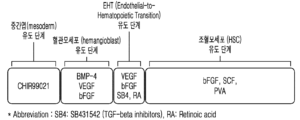
- FIG. 1 is a diagram schematically showing the novel pluripotent stem cell-derived hematopoietic stem cell differentiation protocol of the present invention.
- FIG. 2 is a diagram specifically describing the protocol for differentiating hematopoietic stem cells derived from pluripotent stem cells of the present invention.
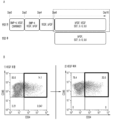
- Figure 3 is a view showing the results of comparative experiments to establish the primary conditions of the hematopoietic stem cell induction step.
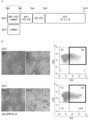
- Figure 4 is a view showing the results of comparative experiments to establish conditions for the mesenchymal induction step.
- 5 is a view showing the results of comparative experiments to establish conditions for the EHT induction step.
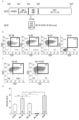
- FIG. 6 is a view showing the results of comparative experiments for establishing the secondary conditions of the hematopoietic stem cell induction step.
- FIG. 7 is a view showing a process for producing a humanized mouse model using hematopoietic stem cells prepared by the method of the present invention.
- FIG. 8 is a view schematically showing the method for producing hematopoietic stem cells of the present invention and the method for producing a humanized mouse model using the same.
- Example 1 Novel human pluripotent stem cell-derived hematopoietic stem cell differentiation protocol
- the present invention relates to a method for preparing human hematopoietic stem cells by differentiating human pluripotent stem cells and a method for preparing a humanized mouse using the hematopoietic stem cells prepared by the above method.
- the method includes 1) Mesoderm induction/differentiation step, 2) Hemangioblast induction/differentiation step, 3) Endothelial-to-Hematopoietic Transition (EHT) induction step, and 4) Hematopoietic stem cell, HSC) induction/differentiation steps, and essential low-molecular-weight compounds and/or growth factors can be treated at each step (FIG. 1).
- hPSC human pluripotent stem cells
- the basic differentiation medium was composed of the following composition: Stempro 34-SFM (+ stempro sup) + 200 ug/ml human transferrin + 2 mM L-glutamine + 0.5 mM L-ascorb. acid (L-Ascobic acid) + 0.45 mM MTG (1-thioglycerol) + 1% penicillin/streptomycin.
- CHIR99021 (5uM) alone as a representative example of a GSK inhibitor was treated for about 2 days.
- 50 ng/ml BMP4, 50 ng/ml VEGF, and 100 ng/ml bFGF were treated for 2 days to induce hemangioblasts.
- SB-431542 (10uM) and 1uM retinoic acid (RA) were added and cultured for about 1 day, and about 0.1% (w/v) PVA, 50 ng/ml SCF (Stem cell factor), and 10 ng/ml bFGF were added and cultured for 11 days (FIG. 2).
- hPSCs are differentiated by forming clusters into EBs (Embryonic bodies), dismantling the clusters into single cells, and extracting CD34 + HSCs to proceed with differentiation. and gene insertion was attempted to increase differentiation efficiency.
- the HSC differentiation method of the present invention has excellent effects in that HSCs can be differentiated with high efficiency and easily obtained only with an optimal combination of a low-differentiation compound and a protein growth factor without the above-mentioned complicated process and gene insertion.
- Example 2 Establishment of primary conditions of hematopoietic stem cell induction step
- VEGF Vascular endothelial growth factor
- HSC hemangioblasts
- VEGF Vascular endothelial growth factor
- the same conditions 50 ng/ml SCF, 10 ng/ml bFGF, 20 ng/ml IL-3 and 10 ng/ml IL-6) and hematopoietic stem cell differentiation results with or without VEGF (10 ng/ml) were confirmed (FIG. 3A).
- FACS was performed to determine the percentage of CD34 + CD45 + cells. Specifically, in order to identify cells expressing both CD34 and CD45, anti-CD34 antibody and anti-CD45 antibody to which the fluorescent substance PE and PerCP/Cy5.5 are linked, respectively, were mixed in a staining buffer (containing 1% FBS). PBS) at a ratio of 1:25. Cells were then stained with an antibody-containing cocktail at 4°C for 35 minutes. Then, after washing off the residual antibody with staining buffer, 200 ul of staining buffer was added and analyzed by flow cytometry.
- Example 3 Establishment of conditions for mesenchymal induction step
- BMP4 Breast Cancer Protein 4
- VEGF vascular endothelial growth factor 4
- CHIR99021 CHIR99021
- hemangioblasts in order to induce CD34 + HSC, hemangioblasts must be induced after mesenchymal induction. Since hemangioblasts can be differentiated into CD34 + HSCs by inducing Endothelial-to-Hematopoietic Transition (EHT), it is important to establish appropriate culture conditions to maximize the efficiency of EHT.
- EHT Endothelial-to-Hematopoietic Transition
- SB4 SB-431542
- VEGF and bFGF basic fibroblast growth factor
- Example 5 Establishment of secondary conditions of hematopoietic stem cell induction step
- IL-3 and IL-6 are mainly used in the culture process to maintain the CD34 + potential of hematopoietic stem cells differentiated from human pluripotent stem cells, but they promote aging and differentiation of differentiated hematopoietic stem cells.
- CD34 + potential maintenance efficiency may be slightly reduced. Therefore, the efficiency of maintaining hematopoietic stem cell differentiation was confirmed when PVA (polyvinyl alcohol) was treated instead of IL-3 and IL-6 previously treated in the hematopoietic stem cell induction and maintenance steps (FIG. 6A).
- Example 1 Based on the experimental results of Examples 2 to 5, a novel hematopoietic stem cell differentiation protocol of Example 1 was established, and humanized mice were prepared using the hematopoietic stem cells produced by the above method.
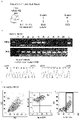
- human pluripotent stem cell-derived hematopoietic stem cells prepared by the method of Example 1 were injected into the tail vein of irradiated immunodeficient NSG mice. After 12 weeks of injection, the presence of human mitochondrial genes was confirmed in the peripheral blood of mice, and the presence or absence of human CD45-positive cells was confirmed in the peripheral blood of mice after 22 weeks of injection (FIG. 7A).
- a PCR reaction was performed to detect human mitochondrial DNA in the peripheral blood of the mouse. Specifically, 2x PCRBIO HS Taq Mix red was used as a polymerase, and the annealing temperature was 58 ° C. and performed at 35 cycles did Thereafter, the PCR reaction product was loaded on a 1% agarose gel containing EtBr at 100 v for 20 minutes to confirm the PCR band.
- the sequence of the primer used to detect human mitochondria is as follows.
- the hematopoietic stem cells prepared by the hematopoietic stem cell differentiation protocol method of Example 1 can be usefully used for producing a humanized animal model.
Landscapes
- Life Sciences & Earth Sciences (AREA)
- Health & Medical Sciences (AREA)
- Engineering & Computer Science (AREA)
- Zoology (AREA)
- Biomedical Technology (AREA)
- Environmental Sciences (AREA)
- Biotechnology (AREA)
- Chemical & Material Sciences (AREA)
- Bioinformatics & Cheminformatics (AREA)
- Hematology (AREA)
- Organic Chemistry (AREA)
- Wood Science & Technology (AREA)
- Genetics & Genomics (AREA)
- Cell Biology (AREA)
- Animal Husbandry (AREA)
- Animal Behavior & Ethology (AREA)
- Biodiversity & Conservation Biology (AREA)
- General Health & Medical Sciences (AREA)
- Developmental Biology & Embryology (AREA)
- Microbiology (AREA)
- Biochemistry (AREA)
- General Engineering & Computer Science (AREA)
- Immunology (AREA)
- Micro-Organisms Or Cultivation Processes Thereof (AREA)
- Veterinary Medicine (AREA)
Abstract
Priority Applications (3)
| Application Number | Priority Date | Filing Date | Title |
|---|---|---|---|
| EP22867704.3A EP4400581A4 (fr) | 2021-09-10 | 2022-09-07 | Procédé de préparation d'une cellule souche hématopoïétique dérivée de cellules souches pluripotentes et procédé de construction d'un modèle murin humanisé à l'aide de cellules souches hématopoïétiques ainsi préparées |
| US18/690,181 US20240376432A1 (en) | 2021-09-10 | 2022-09-07 | Method for preparing pluripotent stem cell-derived hematopoietic stem cell and method for constructing humanized mouse model by using hematopoietic stem cell thus prepared |
| JP2024515340A JP2024531626A (ja) | 2021-09-10 | 2022-09-07 | 分化全能性幹細胞由来の造血幹細胞の製造方法、及び製造された造血幹細胞を利用したヒト化マウスモデル作製方法 |
Applications Claiming Priority (2)
| Application Number | Priority Date | Filing Date | Title |
|---|---|---|---|
| KR20210121174 | 2021-09-10 | ||
| KR10-2021-0121174 | 2021-09-10 |
Publications (1)
| Publication Number | Publication Date |
|---|---|
| WO2023038436A1 true WO2023038436A1 (fr) | 2023-03-16 |
Family
ID=85506773
Family Applications (1)
| Application Number | Title | Priority Date | Filing Date |
|---|---|---|---|
| PCT/KR2022/013463 Ceased WO2023038436A1 (fr) | 2021-09-10 | 2022-09-07 | Procédé de préparation d'une cellule souche hématopoïétique dérivée de cellules souches pluripotentes et procédé de construction d'un modèle murin humanisé à l'aide de cellules souches hématopoïétiques ainsi préparées |
Country Status (5)
| Country | Link |
|---|---|
| US (1) | US20240376432A1 (fr) |
| EP (1) | EP4400581A4 (fr) |
| JP (1) | JP2024531626A (fr) |
| KR (1) | KR102904749B1 (fr) |
| WO (1) | WO2023038436A1 (fr) |
Families Citing this family (1)
| Publication number | Priority date | Publication date | Assignee | Title |
|---|---|---|---|---|
| WO2025116531A1 (fr) * | 2023-11-27 | 2025-06-05 | 한양대학교 산학협력단 | Procédé de production d'érythrocytes à partir de cellules progénitrices hématopoïétiques ou érythroïdes canines par culture in vitro |
Citations (4)
| Publication number | Priority date | Publication date | Assignee | Title |
|---|---|---|---|---|
| KR20180066263A (ko) * | 2015-11-04 | 2018-06-18 | 페이트 세러퓨틱스, 인코포레이티드 | 조혈 세포 분화를 유도하기 위한 방법 및 조성물 |
| US20200080059A1 (en) * | 2018-09-07 | 2020-03-12 | Wisconsin Alumni Research Foundation | Generation of hematopoietic progenitor cells from human pluripotent stem cells |
| WO2020204827A1 (fr) * | 2019-03-29 | 2020-10-08 | Agency For Science, Technology And Research | Organoïdes cérébraux à microglies suffisantes |
| WO2021049617A1 (fr) * | 2019-09-11 | 2021-03-18 | 国立大学法人 東京大学 | Milieu exempt de sérum ne contenant pas d'albumine et approprié pour la culture de cellules souches hématopoïétiques humaines, et procédé de culture sans albumine |
Family Cites Families (16)
| Publication number | Priority date | Publication date | Assignee | Title |
|---|---|---|---|---|
| CA2975268A1 (fr) * | 2015-02-20 | 2016-08-25 | Wisconsin Alumni Research Foundation | Production de populations cellulaires endotheliales arterielles |
| US20160304970A1 (en) * | 2015-04-17 | 2016-10-20 | University Of Southern California | Gene biomarker to diagnose metastic liver cancer and methods for targeting the same |
| JP6646311B2 (ja) * | 2015-07-17 | 2020-02-14 | 国立大学法人京都大学 | 多能性幹細胞から中胚葉前駆細胞および血液血管前駆細胞への分化誘導法 |
| PL3380086T3 (pl) * | 2015-11-25 | 2022-02-21 | Io Therapeutics, Inc. | Oporne na cyp26 agonisty selektywne względem rar-alfa w leczeniu nowotworu |
| WO2017164257A1 (fr) * | 2016-03-23 | 2017-09-28 | 国立大学法人京都大学 | Procédé d'induction de mésoderme ayant une capacité de différenciation de cellules sanguines élevée |
| WO2017193177A1 (fr) * | 2016-05-13 | 2017-11-16 | Murdoch Childrens Research Institute | Cellules souches/progénitrices hématopoïétiques |
| WO2019117444A1 (fr) * | 2017-12-11 | 2019-06-20 | 대한민국(관리부서 질병관리본부장) | Différenciation des immunocytes à l'aide de cellules souches pluripotentes |
| CN112041428B (zh) * | 2018-01-18 | 2024-05-24 | 新加坡科技研究局 | 用于在悬浮培养物中分化人多能干细胞系的方法 |
| CA3111704A1 (fr) * | 2018-09-18 | 2020-03-26 | University Health Network | Procedes de production d'angioblastes et de cellules de type endothelial sinusoidal et compositions correspondantes |
| JP2022036342A (ja) * | 2018-10-15 | 2022-03-08 | 勇 佐藤 | トップシール用食品収容容器 |
| CA3127593A1 (fr) * | 2019-01-22 | 2020-07-30 | Washington University | Compositions et procedes de generation de cellules souches hematopoietiques (csh) |
| CN111607566B (zh) * | 2019-02-22 | 2023-04-14 | 安徽中盛溯源生物科技有限公司 | 从人多能干细胞分化为造血祖细胞的方法及其应用 |
| CN114174494A (zh) * | 2019-05-31 | 2022-03-11 | 儿童医院医学中心 | 产生和扩增造血干细胞的方法 |
| GB201911957D0 (en) * | 2019-08-20 | 2019-10-02 | Adaptimmune Ltd | Methods of producing haemogenic progenitor cells from pluripotent stem cells |
| CA3171960A1 (fr) * | 2020-02-28 | 2021-09-02 | Purdue Research Foundation | Generation de cellules hematopoietiques de type aorte-gonades-mesonephros a partir de cellules souches pluripotentes humaines dans un etat defini |
| CN112608895B (zh) * | 2020-12-18 | 2024-02-27 | 深圳市济因生物科技有限公司 | 一种人多能干细胞分化的自然杀伤细胞及其制备方法与应用 |
-
2022
- 2022-09-07 WO PCT/KR2022/013463 patent/WO2023038436A1/fr not_active Ceased
- 2022-09-07 JP JP2024515340A patent/JP2024531626A/ja active Pending
- 2022-09-07 US US18/690,181 patent/US20240376432A1/en active Pending
- 2022-09-07 KR KR1020220113788A patent/KR102904749B1/ko active Active
- 2022-09-07 EP EP22867704.3A patent/EP4400581A4/fr active Pending
Patent Citations (4)
| Publication number | Priority date | Publication date | Assignee | Title |
|---|---|---|---|---|
| KR20180066263A (ko) * | 2015-11-04 | 2018-06-18 | 페이트 세러퓨틱스, 인코포레이티드 | 조혈 세포 분화를 유도하기 위한 방법 및 조성물 |
| US20200080059A1 (en) * | 2018-09-07 | 2020-03-12 | Wisconsin Alumni Research Foundation | Generation of hematopoietic progenitor cells from human pluripotent stem cells |
| WO2020204827A1 (fr) * | 2019-03-29 | 2020-10-08 | Agency For Science, Technology And Research | Organoïdes cérébraux à microglies suffisantes |
| WO2021049617A1 (fr) * | 2019-09-11 | 2021-03-18 | 国立大学法人 東京大学 | Milieu exempt de sérum ne contenant pas d'albumine et approprié pour la culture de cellules souches hématopoïétiques humaines, et procédé de culture sans albumine |
Non-Patent Citations (2)
| Title |
|---|
| CHENGYAN WANG, XUMING TANG, XIAOMENG SUN, ZHENCHUAN MIAO, YAXIN LV, YANLEI YANG, HUIDAN ZHANG, PENGBO ZHANG, YANG LIU, LIYING DU, : "TGFβ inhibition enhances the generation of hematopoietic progenitors from human ES cell-derived hemogenic endothelial cells using a stepwise strategy", CELL RESEARCH, SPRINGER SINGAPORE, SINGAPORE, vol. 22, no. 1, 1 January 2012 (2012-01-01), Singapore , pages 194 - 207, XP055602518, ISSN: 1001-0602, DOI: 10.1038/cr.2011.138 * |
| See also references of EP4400581A4 * |
Also Published As
| Publication number | Publication date |
|---|---|
| EP4400581A1 (fr) | 2024-07-17 |
| US20240376432A1 (en) | 2024-11-14 |
| EP4400581A4 (fr) | 2025-09-24 |
| KR102904749B1 (ko) | 2025-12-30 |
| KR20230038628A (ko) | 2023-03-21 |
| JP2024531626A (ja) | 2024-08-29 |
Similar Documents
| Publication | Publication Date | Title |
|---|---|---|
| AU784928B2 (en) | Hematopoietic differentiation of human embryonic stem cells | |
| WO2022145832A1 (fr) | Cellule tueuse naturelle dérivée d'une cellule souche pluripotente induite et son utilisation | |
| EP2658966B1 (fr) | Différenciation de cellules souches pluripotentes humaines en cellules de crête neurale multipotente | |
| CN106536718B (zh) | 胰芽细胞的制造方法及含有胰芽细胞的胰疾病治疗剂 | |
| CN110713973B (zh) | 一种诱导多能干细胞分化为间充质干细胞的培养基组合及方法 | |
| WO2014160413A1 (fr) | Différenciation in vitro de cellules souches pluripotentes en des cellules endodermiques du pancréas (pec) et cellules endocrine | |
| CN112585262A (zh) | 肠神经前体细胞的制造方法 | |
| JP2021522819A (ja) | インビトロベータ細胞分化に関連する細胞集団および遺伝子発現 | |
| Kumar et al. | Generation of an expandable intermediate mesoderm restricted progenitor cell line from human pluripotent stem cells | |
| Pryzhkova et al. | Adaptation of human testicular niche cells for pluripotent stem cell and testis development research | |
| WO2012008733A2 (fr) | Cellules souches issues de tissu de placenta primaire et agent thérapeutique contenant celles-ci | |
| KR102904749B1 (ko) | 전분화능 줄기세포 유래 조혈모세포 제조방법 및 상기 제조된 조혈모세포를 이용한 인간화 마우스 모델 제작방법 | |
| Zhang et al. | Retinol (vitamin A) maintains self‐renewal of pluripotent male germline stem cells (mGSCs) from adult mouse testis | |
| US20190017029A1 (en) | Generation of Expandable Cardiovascular Progenitor Cells | |
| Baazm et al. | Effects of different Sertoli cell types on the maintenance of adult spermatogonial stem cells in vitro | |
| JP2021512643A (ja) | 細胞誘導の方法 | |
| EP4621044A1 (fr) | Procédé de préparation de cellules de type cellules somatiques ovariennes humaines | |
| JP2023501003A (ja) | 無血清ヒト多能性幹細胞培養培地 | |
| JP2019083793A (ja) | 卵巣由来幹細胞の減数分裂誘導法 | |
| KR20230121683A (ko) | 3차원 장관 오가노이드 유래 장 줄기세포 집합체 배양을 위한 화학적 조성이 명확한 2차원 배양법 | |
| Guan et al. | Derivation and characteristics of pluripotent embryonic germ cells in duck | |
| WO2021233116A1 (fr) | Système de culture chimiquement défini et exempt de xeno pour cellules souches pluripotentes | |
| WO2010008157A2 (fr) | Procédé permettant de différencier des cellules souches de cellules ectodermiques | |
| EP2546334A1 (fr) | Procédé pour la prolifération "in vitro" de cellules issues de tissus d'origine endodermique | |
| JP2023549137A (ja) | 性腺体細胞のインビトロ誘導 |
Legal Events
| Date | Code | Title | Description |
|---|---|---|---|
| 121 | Ep: the epo has been informed by wipo that ep was designated in this application |
Ref document number: 22867704 Country of ref document: EP Kind code of ref document: A1 |
|
| ENP | Entry into the national phase |
Ref document number: 2024515340 Country of ref document: JP Kind code of ref document: A |
|
| WWE | Wipo information: entry into national phase |
Ref document number: 2022867704 Country of ref document: EP |
|
| NENP | Non-entry into the national phase |
Ref country code: DE |
|
| WWE | Wipo information: entry into national phase |
Ref document number: 18690181 Country of ref document: US |
|
| ENP | Entry into the national phase |
Ref document number: 2022867704 Country of ref document: EP Effective date: 20240410 |