WO2023045960A1 - 一种吡啶类衍生物及其用途 - Google Patents
一种吡啶类衍生物及其用途 Download PDFInfo
- Publication number
- WO2023045960A1 WO2023045960A1 PCT/CN2022/120154 CN2022120154W WO2023045960A1 WO 2023045960 A1 WO2023045960 A1 WO 2023045960A1 CN 2022120154 W CN2022120154 W CN 2022120154W WO 2023045960 A1 WO2023045960 A1 WO 2023045960A1
- Authority
- WO
- WIPO (PCT)
- Prior art keywords
- alkyl
- cycloalkyl
- halogen
- independently selected
- cyano
- Prior art date
- Legal status (The legal status is an assumption and is not a legal conclusion. Google has not performed a legal analysis and makes no representation as to the accuracy of the status listed.)
- Ceased
Links
Classifications
-
- C—CHEMISTRY; METALLURGY
- C07—ORGANIC CHEMISTRY
- C07D—HETEROCYCLIC COMPOUNDS
- C07D401/00—Heterocyclic compounds containing two or more hetero rings, having nitrogen atoms as the only ring hetero atoms, at least one ring being a six-membered ring with only one nitrogen atom
- C07D401/14—Heterocyclic compounds containing two or more hetero rings, having nitrogen atoms as the only ring hetero atoms, at least one ring being a six-membered ring with only one nitrogen atom containing three or more hetero rings
-
- A—HUMAN NECESSITIES
- A61—MEDICAL OR VETERINARY SCIENCE; HYGIENE
- A61K—PREPARATIONS FOR MEDICAL, DENTAL OR TOILETRY PURPOSES
- A61K31/00—Medicinal preparations containing organic active ingredients
- A61K31/33—Heterocyclic compounds
- A61K31/395—Heterocyclic compounds having nitrogen as a ring hetero atom, e.g. guanethidine or rifamycins
- A61K31/495—Heterocyclic compounds having nitrogen as a ring hetero atom, e.g. guanethidine or rifamycins having six-membered rings with two or more nitrogen atoms as the only ring heteroatoms, e.g. piperazine or tetrazines
- A61K31/505—Pyrimidines; Hydrogenated pyrimidines, e.g. trimethoprim
- A61K31/517—Pyrimidines; Hydrogenated pyrimidines, e.g. trimethoprim ortho- or peri-condensed with carbocyclic ring systems, e.g. quinazoline, perimidine
-
- A—HUMAN NECESSITIES
- A61—MEDICAL OR VETERINARY SCIENCE; HYGIENE
- A61K—PREPARATIONS FOR MEDICAL, DENTAL OR TOILETRY PURPOSES
- A61K31/00—Medicinal preparations containing organic active ingredients
- A61K31/33—Heterocyclic compounds
- A61K31/395—Heterocyclic compounds having nitrogen as a ring hetero atom, e.g. guanethidine or rifamycins
- A61K31/495—Heterocyclic compounds having nitrogen as a ring hetero atom, e.g. guanethidine or rifamycins having six-membered rings with two or more nitrogen atoms as the only ring heteroatoms, e.g. piperazine or tetrazines
- A61K31/505—Pyrimidines; Hydrogenated pyrimidines, e.g. trimethoprim
- A61K31/519—Pyrimidines; Hydrogenated pyrimidines, e.g. trimethoprim ortho- or peri-condensed with heterocyclic rings
-
- A—HUMAN NECESSITIES
- A61—MEDICAL OR VETERINARY SCIENCE; HYGIENE
- A61K—PREPARATIONS FOR MEDICAL, DENTAL OR TOILETRY PURPOSES
- A61K31/00—Medicinal preparations containing organic active ingredients
- A61K31/33—Heterocyclic compounds
- A61K31/395—Heterocyclic compounds having nitrogen as a ring hetero atom, e.g. guanethidine or rifamycins
- A61K31/55—Heterocyclic compounds having nitrogen as a ring hetero atom, e.g. guanethidine or rifamycins having seven-membered rings, e.g. azelastine, pentylenetetrazole
-
- A—HUMAN NECESSITIES
- A61—MEDICAL OR VETERINARY SCIENCE; HYGIENE
- A61K—PREPARATIONS FOR MEDICAL, DENTAL OR TOILETRY PURPOSES
- A61K45/00—Medicinal preparations containing active ingredients not provided for in groups A61K31/00 - A61K41/00
- A61K45/06—Mixtures of active ingredients without chemical characterisation, e.g. antiphlogistics and cardiaca
-
- A—HUMAN NECESSITIES
- A61—MEDICAL OR VETERINARY SCIENCE; HYGIENE
- A61P—SPECIFIC THERAPEUTIC ACTIVITY OF CHEMICAL COMPOUNDS OR MEDICINAL PREPARATIONS
- A61P35/00—Antineoplastic agents
-
- A—HUMAN NECESSITIES
- A61—MEDICAL OR VETERINARY SCIENCE; HYGIENE
- A61P—SPECIFIC THERAPEUTIC ACTIVITY OF CHEMICAL COMPOUNDS OR MEDICINAL PREPARATIONS
- A61P37/00—Drugs for immunological or allergic disorders
-
- C—CHEMISTRY; METALLURGY
- C07—ORGANIC CHEMISTRY
- C07D—HETEROCYCLIC COMPOUNDS
- C07D239/00—Heterocyclic compounds containing 1,3-diazine or hydrogenated 1,3-diazine rings
- C07D239/70—Heterocyclic compounds containing 1,3-diazine or hydrogenated 1,3-diazine rings condensed with carbocyclic rings or ring systems
- C07D239/72—Quinazolines; Hydrogenated quinazolines
- C07D239/86—Quinazolines; Hydrogenated quinazolines with hetero atoms directly attached in position 4
- C07D239/94—Nitrogen atoms
-
- C—CHEMISTRY; METALLURGY
- C07—ORGANIC CHEMISTRY
- C07D—HETEROCYCLIC COMPOUNDS
- C07D401/00—Heterocyclic compounds containing two or more hetero rings, having nitrogen atoms as the only ring hetero atoms, at least one ring being a six-membered ring with only one nitrogen atom
- C07D401/02—Heterocyclic compounds containing two or more hetero rings, having nitrogen atoms as the only ring hetero atoms, at least one ring being a six-membered ring with only one nitrogen atom containing two hetero rings
- C07D401/04—Heterocyclic compounds containing two or more hetero rings, having nitrogen atoms as the only ring hetero atoms, at least one ring being a six-membered ring with only one nitrogen atom containing two hetero rings directly linked by a ring-member-to-ring-member bond
-
- C—CHEMISTRY; METALLURGY
- C07—ORGANIC CHEMISTRY
- C07D—HETEROCYCLIC COMPOUNDS
- C07D409/00—Heterocyclic compounds containing two or more hetero rings, at least one ring having sulfur atoms as the only ring hetero atoms
- C07D409/02—Heterocyclic compounds containing two or more hetero rings, at least one ring having sulfur atoms as the only ring hetero atoms containing two hetero rings
- C07D409/04—Heterocyclic compounds containing two or more hetero rings, at least one ring having sulfur atoms as the only ring hetero atoms containing two hetero rings directly linked by a ring-member-to-ring-member bond
-
- C—CHEMISTRY; METALLURGY
- C07—ORGANIC CHEMISTRY
- C07D—HETEROCYCLIC COMPOUNDS
- C07D409/00—Heterocyclic compounds containing two or more hetero rings, at least one ring having sulfur atoms as the only ring hetero atoms
- C07D409/14—Heterocyclic compounds containing two or more hetero rings, at least one ring having sulfur atoms as the only ring hetero atoms containing three or more hetero rings
-
- C—CHEMISTRY; METALLURGY
- C07—ORGANIC CHEMISTRY
- C07D—HETEROCYCLIC COMPOUNDS
- C07D413/00—Heterocyclic compounds containing two or more hetero rings, at least one ring having nitrogen and oxygen atoms as the only ring hetero atoms
- C07D413/14—Heterocyclic compounds containing two or more hetero rings, at least one ring having nitrogen and oxygen atoms as the only ring hetero atoms containing three or more hetero rings
-
- C—CHEMISTRY; METALLURGY
- C07—ORGANIC CHEMISTRY
- C07D—HETEROCYCLIC COMPOUNDS
- C07D417/00—Heterocyclic compounds containing two or more hetero rings, at least one ring having nitrogen and sulfur atoms as the only ring hetero atoms, not provided for by group C07D415/00
- C07D417/14—Heterocyclic compounds containing two or more hetero rings, at least one ring having nitrogen and sulfur atoms as the only ring hetero atoms, not provided for by group C07D415/00 containing three or more hetero rings
-
- C—CHEMISTRY; METALLURGY
- C07—ORGANIC CHEMISTRY
- C07D—HETEROCYCLIC COMPOUNDS
- C07D471/00—Heterocyclic compounds containing nitrogen atoms as the only ring hetero atoms in the condensed system, at least one ring being a six-membered ring with one nitrogen atom, not provided for by groups C07D451/00 - C07D463/00
- C07D471/02—Heterocyclic compounds containing nitrogen atoms as the only ring hetero atoms in the condensed system, at least one ring being a six-membered ring with one nitrogen atom, not provided for by groups C07D451/00 - C07D463/00 in which the condensed system contains two hetero rings
- C07D471/04—Ortho-condensed systems
-
- C—CHEMISTRY; METALLURGY
- C07—ORGANIC CHEMISTRY
- C07D—HETEROCYCLIC COMPOUNDS
- C07D471/00—Heterocyclic compounds containing nitrogen atoms as the only ring hetero atoms in the condensed system, at least one ring being a six-membered ring with one nitrogen atom, not provided for by groups C07D451/00 - C07D463/00
- C07D471/02—Heterocyclic compounds containing nitrogen atoms as the only ring hetero atoms in the condensed system, at least one ring being a six-membered ring with one nitrogen atom, not provided for by groups C07D451/00 - C07D463/00 in which the condensed system contains two hetero rings
- C07D471/08—Bridged systems
-
- C—CHEMISTRY; METALLURGY
- C07—ORGANIC CHEMISTRY
- C07D—HETEROCYCLIC COMPOUNDS
- C07D471/00—Heterocyclic compounds containing nitrogen atoms as the only ring hetero atoms in the condensed system, at least one ring being a six-membered ring with one nitrogen atom, not provided for by groups C07D451/00 - C07D463/00
- C07D471/02—Heterocyclic compounds containing nitrogen atoms as the only ring hetero atoms in the condensed system, at least one ring being a six-membered ring with one nitrogen atom, not provided for by groups C07D451/00 - C07D463/00 in which the condensed system contains two hetero rings
- C07D471/10—Spiro-condensed systems
-
- C—CHEMISTRY; METALLURGY
- C07—ORGANIC CHEMISTRY
- C07D—HETEROCYCLIC COMPOUNDS
- C07D487/00—Heterocyclic compounds containing nitrogen atoms as the only ring hetero atoms in the condensed system, not provided for by groups C07D451/00 - C07D477/00
- C07D487/02—Heterocyclic compounds containing nitrogen atoms as the only ring hetero atoms in the condensed system, not provided for by groups C07D451/00 - C07D477/00 in which the condensed system contains two hetero rings
- C07D487/04—Ortho-condensed systems
-
- C—CHEMISTRY; METALLURGY
- C07—ORGANIC CHEMISTRY
- C07D—HETEROCYCLIC COMPOUNDS
- C07D487/00—Heterocyclic compounds containing nitrogen atoms as the only ring hetero atoms in the condensed system, not provided for by groups C07D451/00 - C07D477/00
- C07D487/02—Heterocyclic compounds containing nitrogen atoms as the only ring hetero atoms in the condensed system, not provided for by groups C07D451/00 - C07D477/00 in which the condensed system contains two hetero rings
- C07D487/08—Bridged systems
-
- C—CHEMISTRY; METALLURGY
- C07—ORGANIC CHEMISTRY
- C07D—HETEROCYCLIC COMPOUNDS
- C07D487/00—Heterocyclic compounds containing nitrogen atoms as the only ring hetero atoms in the condensed system, not provided for by groups C07D451/00 - C07D477/00
- C07D487/02—Heterocyclic compounds containing nitrogen atoms as the only ring hetero atoms in the condensed system, not provided for by groups C07D451/00 - C07D477/00 in which the condensed system contains two hetero rings
- C07D487/10—Spiro-condensed systems
-
- C—CHEMISTRY; METALLURGY
- C07—ORGANIC CHEMISTRY
- C07D—HETEROCYCLIC COMPOUNDS
- C07D519/00—Heterocyclic compounds containing more than one system of two or more relevant hetero rings condensed among themselves or condensed with a common carbocyclic ring system not provided for in groups C07D453/00 or C07D455/00
Definitions
- the invention relates to the field of medical technology, in particular to a compound used as a KRAS G12C inhibitor and/or PI3K protein inhibitor and its application.
- RAS protein is an important class of signaling molecules involved in various processes such as cell proliferation, differentiation, survival and motility.
- the RAS family consists of KRAS, NRAS and HRAS, etc. They have two states in the cell: an inactive state bound to GDP and an activated state bound to GTP. When RAS is activated, it can activate multiple downstream signaling pathways, including MAPK signaling pathway, PI3K signaling pathway, and Ral-GEFs signaling pathway, which play an important role in promoting cell survival, proliferation and cytokine release.
- RAS The activation of RAS depends on the phosphorylation of the receptor after the binding of signal molecules by tyrosine kinase receptors, exposing the binding site, and the complex of guanine nucleotide exchange factors (GEF, such as SOS1) and growth factor receptor binding protein (Grb2) Binding to this site, the SH2 domain of Grb2 binds to it to form a RTK/Grb2/SOS complex, and SHP2 can further promote the binding of this complex to RAS, prompting it to release GDP and bind GTP, thereby activating RAS.
- GEF guanine nucleotide exchange factors
- Grb2 growth factor receptor binding protein
- RAS Zika virus
- the RAS protein consists of 6 ⁇ sheets and 5 ⁇ helices, of which the 166 amino acids at the N-terminal form the G domain, while the C-terminal is the membrane binding region.
- the G domain (subdivided into G1-G5) is a functional domain that can directly bind to GDP/GTP, G2 (Switch I) binds to GTP, and G3 (Switch II) binds to GDP.
- KRAS is widely expressed in body tissues, and its mRNA level can be detected in almost all tissues. KRAS plays a role in the cell by participating in the hydrolysis of GTP.
- GTPase As a GTPase, it functions in catalyzing the conversion of guanine trinucleotide phosphate (GTP) and guanine dinucleotide phosphate (Guanosine diphosphate, GDP). Cell survival, migration and proliferation.
- KRAS is mainly combined with GDP and is in an inactive state
- GEF Guanine Nucleotide Exchange Factor
- SOS1 Guanine Nucleotide Exchange Factor
- GEF GEFase-activating protein
- RasGAP GTPase-activating protein
- KRAS is the main mutation in RAS, KRAS mutations widely occur in cancer patients, including 5-30% of lung cancer patients, 36-40% of colon cancer patients and about 90% of pancreatic cancer patients, in addition to other tumors such as uterus KRAS mutations have also been found in patients with endometrial cancer, skin cancer, and multiple myeloma.
- mutations at G12 are the main ones, accounting for 83%, followed by G13 at 14%, and Q61, etc.; G12 mutations are mainly G12V, G12D, and G12C. G12C mutations are present in 14% of patients with non-small cell lung cancer, 5% in colon cancer, and 2% in pancreatic ductal adenocarcinoma.
- the mutation of KRAS can promote its combination with GTP, and it is always in an activated state, continuously activating the growth of cells, thus leading to the occurrence of tumors. All these indicate that KRAS mutation has important value in clinical treatment.
- KRAS G12C mutation is a relatively common subtype of KRAS gene mutation, which refers to the mutation of glycine 12 to cysteine.
- KRAS G12C mutation is also the most common in lung cancer. According to the data reported in the literature (Nat Rev Drug Discov 2014; 13:828-851), KRAS G12C mutation accounts for about 10% of all lung cancer patients. For more than 30 years, there has been no breakthrough in finding drugs that specifically target KRAS, so KRAS is generally considered to be an "undruggable target" (Undruggable Target) protein target.
- KRAS G12C inhibitors have become one of the current hot areas of drug development.
- the literature (Nature.2013; 503:548-551) reported a class of covalent binding inhibitors targeting the KRAS G12C mutation, but the enzymatic activity of these compounds was not high and showed no activity at the cellular level.
- Another class of compounds reported in the literature (Science 2016; 351:604-608, Cancer Discov 2016; 6:316-29) exhibited ⁇ M level of cellular anti-proliferation activity at the cellular level, but its metabolic stability is poor and the activity is also very low. Difficult to improve further. Finding drugs that target RAS has been difficult.
- KRAS a common mutant KRAS G12C protein
- GTP and RAS Due to the strong binding ability of GTP and RAS, it is difficult to find small molecules that can competitively inhibit their binding; moreover, the surface of RAS protein is very smooth, and the structure lacks structural space for small molecules or drugs to bind.
- the University of California discovered through protein crystallography that KRAS, a common mutant KRAS G12C protein, forms a new pocket on the surface of the molecule after binding to GDP, and small molecule inhibitors can share with KRAS G12C protein at this site. binding to lock the protein in an inactive state.
- AraxesPharma has applied for several patents on KRAS G12C inhibitors.
- WO2016164675 and WO2016168540 have reported that a class of quinazoline derivatives have high enzyme binding activity and exhibit cell anti-proliferation activity at the ⁇ M level. Its structure is stable and has certain selectivity.
- Amgen WO2018119183
- AstraZeneca WO2018206539A1 respectively published patents on KRAS G12C inhibitors in 2018, and Amgen’s KRAS G12C inhibitor AMG-510 started a phase I clinical study in July 2018.
- KRAS G12C inhibitors Throughout the current KRAS G12C inhibitors reported in the literature, they all have an acrylamide fragment, which acts as a Michael addition receptor and a cysteine residue on the KRAS G12C mutein to form a covalent binding complex.
- a covalent binding inhibitor ARS-1620 targeting the KRAS G12C mutation The compound has good metabolic stability, exhibits nM level of anti-proliferation activity at the cellular level, and can effectively inhibit tumor growth in the pancreatic cancer MIA-Paca2 cell subcutaneous xenograft tumor model.
- the technical problem mainly solved by the present invention is to provide a kind of pyridine derivatives, which, as a selective inhibitor of KRAS mutation, has the advantages of high activity, good selectivity and low toxicity and side effects, and at the same time, it is aimed at producing resistance to other KRAS inhibitors.
- the drug-resistant mutation site also has a good inhibitory effect. In addition, it also shows a strong inhibitory effect on PI3K.
- the present invention provides a compound having the structure shown in formula I"" or its tautomer, meso, racemate, enantiomer, diastereomer In the form of its body or its mixture, pharmaceutically acceptable hydrate, solvate or salt:
- X is selected from NR 1 , S or S(O) 2 ;
- a 2 is selected from C, CH or N
- a 3 is selected from CR 8 , CR 9 R 10 or N
- a 4 is selected from CR 29 , CR 9 R 10 or N;
- Z 1 is a key or O
- E1 is NR 11 , CH or CH 2 ;
- B for The rings of B 1 and B 2 are 5-10 membered azacycloalkyl or 5-10 membered azacycloalkenyl, and the cycloalkyl or cycloalkenyl is monocyclic, spiro or bridged ring, B 1 selected from CR 12 or N, B 2 selected from CR 13 or N, and at least one of B 1 and B 2 is N;
- B for The ring where B 1 is located is a 4-8 membered azamonocycloalkyl group, B 1 is selected from CR 12 or N, and B 2 is selected from CR 13 R 13' or NR 14 ;
- B for The rings where B 1 and B 2 are located are 5-10 membered azacycloalkyl groups and are monocyclic, spiro or bridged rings, B 1 is selected from CR 12 or N, B 2 is selected from CR 13" or N, and B 1. At least one of B 2 is N; the ring of B 3 is 4-10 membered azacycloalkyl and is monocyclic, spiro or bridged ring, and B 3 is selected from CR 12' or N;
- B 1 is connected to the L terminal
- L is selected from a bond, NR 15 ;
- R 5 and R 6 are independently selected from hydrogen, halogen, cyano, alkyl, aliphatic heterocyclic group, aryl, heteroaryl, -OR a , -NR b R c , -C(O)R 16 , - S(O)R 16 , -S(O) 2 R 16 , -P(O)R 16 R 17 , -C(O)NR b R c , -C(O)OR a , wherein the alkyl , aliphatic heterocyclic group, aryl group, heteroaryl group are optionally substituted by one or more R 18 ;
- R 18 is independently selected from halogen, cyano, alkyl, cycloalkyl, heteroalicyclic, -OR a , -NR b R c , -C(O)R 16 , -C(O)NR b R c , -C(O)OR a ;
- R 1 , R 11 , R 14 , and R 15 are independently selected from hydrogen, alkyl, cycloalkyl, aliphatic heterocyclic, and -C(O)R 19 , wherein the alkyl, cycloalkyl, aliphatic Cyclic groups are optionally substituted by one or more of the following substituents: halogen, cyano, hydroxyl, amino, alkyl, cycloalkyl, heteroalicyclic;
- n 1 and n 5 are independently selected from 0, 1, 2, 3, 4;
- R 12 , R 12' , R 13 , R 13' , R 13" , R 7 , R 7' are each independently selected from hydrogen, halogen, cyano, alkyl, cycloalkyl, aliphatic heterocyclic group , aryl, heteroaryl, -OR n , -NR o R p , -C(O)R 20 , -C(O)NR o R p , -C(O)OR n , wherein, alkyl, ring Alkyl, heteroalicyclic, aryl, heteroaryl are optionally substituted by one or more R 21 ;
- R 21 is independently selected from halogen, cyano, alkyl, cycloalkyl, heteroalicyclic, -OR n , -NR o R p , -C(O)R 20 , -C(O)NR o R p , -C(O)OR n ;
- Z 1 is a bond, R 5 , R 6 and their connected atoms together form a 4-9 membered cycloalkenyl group, or R 5 , R 14 and their connected chain segments together form a 4-9 membered aliphatic heterocyclic group, or R 6 , R 13 and their connected chain segments together form a 4-9 membered cycloalkenyl group, or R 5 , R 13 and their connected chain segments together form a 4-9 membered alicyclic group, or R 6 , R 14 and The connected segments together form a 4-9 membered aliphatic heterocyclic group, or R 5 , R 6 and their connected atoms together form a 6-10-membered aryl group or a 5-10-membered heteroaryl group, wherein cycloalkenyl, Alicyclic, cycloaliphatic, aryl, heteroaryl are optionally substituted by one or more of the following substituents: halogen, cyano, hydroxyl, amino, alky
- R 2 is selected from hydrogen, halogen, cyano, alkyl, cycloalkyl, heterocyclyl, aryl, heteroaryl, -OR d , -NR e R f , -C(O)R 22 , -C (O)R e R f , -C(O)OR d , wherein alkyl, cycloalkyl, aliphatic heterocyclic, aryl, heteroaryl are optionally substituted by one or more R 23 ;
- R 23 is independently selected from halogen, cyano, alkyl, cycloalkyl, aliphatic heterocyclyl, -OR d , -NR e R f , -C(O)R 22 , -C(O)NR e R f , -C(O)OR d ;
- R 3 is selected from hydrogen, halogen, cyano, alkyl, cycloalkyl, heterocyclyl, aryl, heteroaryl, -OR g , -SR g , -NR h R i , -C(O)R 24 , -C(O)R h R i , -C(O)OR g , when ring E
- R3 can also be a carbonyl group formed by the carbon atoms connected to it, wherein an alkyl group, a cycloalkyl group, an aliphatic heterocyclic group, an aryl group, and a heteroaryl group are optionally substituted by one or more R25 ;
- R 25 is independently selected from halogen, cyano, alkyl, cycloalkyl, heteroalicyclic, -OR g , -NR h R i , -C(O)R 24 , -C(O)NR h R i , -C(O)OR g ;
- R is selected from alkyl, cycloalkyl, aliphatic heterocyclic group, aryl, heteroaryl, wherein, alkyl, cycloalkyl, aliphatic heterocyclic group, aryl, heteroaryl are optionally replaced by one or more R 26 are substituted;
- Each occurrence of R 26 is independently selected from halogen, cyano, alkyl, cycloalkyl, heteroalicyclic, aryl, heteroaryl, -OR j , -NR k R m , -C(O)R 27 , -C(O)NR k R m , -C(O)OR j , wherein the alkyl, cycloalkyl, aliphatic heterocyclic, aryl, and heteroaryl are optionally replaced by one or more R 28 replaced;
- R 28 is independently selected from halogen, cyano, alkyl, cycloalkyl, heteroalicyclic, -OR j , -NR k R m , -C(O)R 27 , -C(O)NR k R m , -C(O)OR j ;
- Each occurrence of R 8 , R 9 , R 10 , and R 29 is independently selected from hydrogen, halogen, cyano, alkyl, cycloalkyl, aliphatic heterocyclic, aryl, heteroaryl, -OR q , - NR r R s , -C(O)R 30 , -C(O)NR r R s , -C(O)OR q , among them, alkyl, cycloalkyl, aliphatic heterocyclic, aryl, heteroaryl
- the group is optionally substituted by one or more R 31 ;
- R 31 is independently selected from halogen, cyano, alkyl, cycloalkyl, heteroalicyclic, -OR q , -NR r R s , -C(O)R 30 , -C(O)NR r R s , -C(O)OR q ;
- R a , R b , R c , R d , R e , R f , R g , R h , R i , R j , R k , R m , R n , R o , R p , R q , R r , R s are each independently selected from H, alkyl, cycloalkyl, aliphatic heterocyclic group, -C(O)R 32 , wherein the alkyl, cycloalkyl, aliphatic heterocyclic group is optionally Substituted by one or more of the following substituents: halogen, cyano, hydroxyl, amino, alkyl, cycloalkyl, alkyl substituted or unsubstituted aliphatic heterocyclic group;
- R 16 , R 17 , R 19 , R 20 , R 22 , R 24 , R 27 , R 30 , and R 32 are each independently selected from H, alkyl, cycloalkyl, and aliphatic heterocyclic group, and the Alkyl, cycloalkyl, heteroalicyclic are optionally substituted with one or more of the following substituents: halogen, cyano, hydroxy, amino, alkyl, cycloalkyl, heteroalicyclic.
- the compound of the present invention has the structure shown in formula I"' or its tautomers, mesoforms, racemates, enantiomers, diastereoisomers In the form of its body or its mixture, pharmaceutically acceptable hydrate, solvate or salt:
- a 2 is selected from C, CH or N
- a 3 is selected from CR 8 , CR 9 R 10 or N
- a 4 is selected from CR 29 , CR 9 R 10 or N;
- Z 1 is a key or O
- B for The rings where B 1 and B 2 are located are 5-10 membered azacycloalkyl groups and are monocyclic, spiro or bridged rings, B 1 is selected from CR 12 or N, B 2 is selected from CR 13 or N, and B 1 , at least one of B2 is N;
- B for The ring where B 1 is located is a 4-8 membered azamonocycloalkyl group, B 1 is selected from CR 12 or N, and B 2 is selected from CR 13 R 13' or NR 14 ;
- B for The rings where B 1 and B 2 are located are 5-10 membered azacycloalkyl groups and are monocyclic, spiro or bridged rings, B 1 is selected from CR 12 or N, B 2 is selected from CR 13" or N, and B 1. At least one of B 2 is N; the ring of B 3 is 4-10 membered azacycloalkyl and is monocyclic, spiro or bridged ring, and B 3 is selected from CR 12' or N;
- B 1 is connected to the L terminal
- L is selected from a bond, NR 15 ;
- R 5 and R 6 are independently selected from hydrogen, halogen, cyano, alkyl, aliphatic heterocyclic group, aryl, heteroaryl, -OR a , -NR b R c , -C(O)R 16 , - S(O)R 16 , -S(O) 2 R 16 , -P(O)R 16 R 17 , -C(O)NR b R c , -C(O)OR a , wherein the alkyl , aliphatic heterocyclic group, aryl group, heteroaryl group are optionally substituted by one or more R 18 ;
- R 18 is independently selected from halogen, cyano, alkyl, cycloalkyl, heteroalicyclic, -OR a , -NR b R c , -C(O)R 16 , -C(O)NR b R c , -C(O)OR a ;
- R 1 , R 11 , R 14 , and R 15 are independently selected from hydrogen, alkyl, cycloalkyl, aliphatic heterocyclic, and -C(O)R 19 , wherein the alkyl, cycloalkyl, aliphatic Cyclic groups are optionally substituted by one or more of the following substituents: halogen, cyano, hydroxyl, amino, alkyl, cycloalkyl, heteroalicyclic;
- n 1 and n 5 are independently selected from 0, 1, 2, 3, 4;
- R 12 , R 12' , R 13 , R 13' , R 13" , R 7 , R 7' are each independently selected from hydrogen, halogen, cyano, alkyl, cycloalkyl, aliphatic heterocyclic group , aryl, heteroaryl, -OR n , -NR o R p , -C(O)R 20 , -C(O)NR o R p , -C(O)OR n , wherein, alkyl, ring Alkyl, heteroalicyclic, aryl, heteroaryl are optionally substituted by one or more R 21 ;
- R 21 is independently selected from halogen, cyano, alkyl, cycloalkyl, heteroalicyclic, -OR n , -NR o R p , -C(O)R 20 , -C(O)NR o R p , -C(O)OR n ;
- Z 1 is a bond, R 5 , R 6 and their connected atoms together form a 4-9 membered cycloalkenyl group, or R 5 , R 14 and their connected chain segments together form a 4-9 membered aliphatic heterocyclic group, or R 6 , R 13 and their connected chain segments together form a 4-9 membered cycloalkenyl group, or R 5 , R 13 and their connected chain segments together form a 4-9 membered alicyclic group, or R 6 , R 14 and The connected segments together form a 4-9 membered aliphatic heterocyclic group, or R 5 , R 6 and their connected atoms together form a 6-10-membered aryl group or a 5-10-membered heteroaryl group, wherein cycloalkenyl, Alicyclic, cycloaliphatic, aryl, heteroaryl are optionally substituted by one or more of the following substituents: halogen, cyano, hydroxyl, amino, alky
- R 2 is selected from hydrogen, halogen, cyano, alkyl, cycloalkyl, heterocyclyl, aryl, heteroaryl, -OR d , -NR e R f , -C(O)R 22 , -C (O)R e R f , -C(O)OR d , wherein alkyl, cycloalkyl, aliphatic heterocyclic, aryl, heteroaryl are optionally substituted by one or more R 23 ;
- R 23 is independently selected from halogen, cyano, alkyl, cycloalkyl, aliphatic heterocyclyl, -OR d , -NR e R f , -C(O)R 22 , -C(O)NR e R f , -C(O)OR d ;
- R 3 is selected from hydrogen, halogen, cyano, alkyl, cycloalkyl, heterocyclyl, aryl, heteroaryl, -OR g , -NR h R i , -C(O)R 24 , -C (O)R h R i , -C(O)OR g , when ring E
- R3 can also be a carbonyl group formed by the carbon atoms connected to it, wherein an alkyl group, a cycloalkyl group, an aliphatic heterocyclic group, an aryl group, and a heteroaryl group are optionally substituted by one or more R25 ;
- R 25 is independently selected from halogen, cyano, alkyl, cycloalkyl, heteroalicyclic, -OR g , -NR h R i , -C(O)R 24 , -C(O)NR h R i , -C(O)OR g ;
- R is selected from alkyl, cycloalkyl, aliphatic heterocyclic group, aryl, heteroaryl, wherein, alkyl, cycloalkyl, aliphatic heterocyclic group, aryl, heteroaryl are optionally replaced by one or more R 26 are substituted;
- Each occurrence of R 26 is independently selected from halogen, cyano, alkyl, cycloalkyl, heteroalicyclic, aryl, heteroaryl, -OR j , -NR k R m , -C(O)R 27 , -C(O)NR k R m , -C(O)OR j , wherein the alkyl, cycloalkyl, aliphatic heterocyclic, aryl, and heteroaryl are optionally replaced by one or more R 28 replaced;
- R 28 is independently selected from halogen, cyano, alkyl, cycloalkyl, heteroalicyclic, -OR j , -NR k R m , -C(O)R 27 , -C(O)NR k R m , -C(O)OR j ;
- Each occurrence of R 8 , R 9 , R 10 , and R 29 is independently selected from hydrogen, halogen, cyano, alkyl, cycloalkyl, aliphatic heterocyclic, aryl, heteroaryl, -OR q , - NR r R s , -C(O)R 30 , -C(O)NR r R s , -C(O)OR q , among them, alkyl, cycloalkyl, aliphatic heterocyclic, aryl, heteroaryl
- the group is optionally substituted by one or more R 31 ;
- R 31 is independently selected from halogen, cyano, alkyl, cycloalkyl, heteroalicyclic, -OR q , -NR r R s , -C(O)R 30 , -C(O)NR r R s , -C(O)OR q ;
- R a , R b , R c , R d , R e , R f , R g , R h , R i , R j , R k , R m , R n , R o , R p , R q , R r , R s are each independently selected from H, alkyl, cycloalkyl, aliphatic heterocyclic group, -C(O)R 32 , wherein the alkyl, cycloalkyl, aliphatic heterocyclic group is optionally Substituted by one or more of the following substituents: halogen, cyano, hydroxyl, amino, alkyl, cycloalkyl, aliphatic;
- R 16 , R 17 , R 19 , R 20 , R 22 , R 24 , R 27 , R 30 , and R 32 are each independently selected from H, alkyl, cycloalkyl, and aliphatic heterocyclic group, and the Alkyl, cycloalkyl, heteroalicyclic are optionally substituted with one or more of the following substituents: halogen, cyano, hydroxy, amino, alkyl, cycloalkyl, heteroalicyclic.
- the compound of the present invention has the structure shown in formula I' or its tautomers, mesoforms, racemates, enantiomers, diastereoisomers or its mixture form, pharmaceutically acceptable hydrate, solvate or salt:
- a 2 is selected from C or N
- a 3 is selected from CR 8 , CR 9 R 10 or N;
- Z 1 is a key or O
- B for The rings where B 1 and B 2 are located are 5-10 membered azacycloalkyl groups and are monocyclic, spiro or bridged rings, B 1 is selected from CR 12 or N, B 2 is selected from CR 13 or N, and B 1 , at least one of B2 is N;
- B for The ring where B 1 is located is a 4-8 membered azamonocycloalkyl group, B 1 is selected from CR 12 or N, and B 2 is selected from CR 13 R 13' or NR 14 ;
- B for The rings where B 1 and B 2 are located are 5-10 membered azacycloalkyl groups and are monocyclic, spiro or bridged rings, B 1 is selected from CR 12 or N, B 2 is selected from CR 13" or N, and B 1. At least one of B 2 is N; the ring of B 3 is 4-10 membered azacycloalkyl and is monocyclic, spiro or bridged ring, and B 3 is selected from CR 12' or N;
- B 1 is connected to the L terminal
- L is selected from a bond, NR 15 ;
- R 5 and R 6 are independently selected from hydrogen, halogen, cyano, alkyl, aliphatic heterocyclic group, aryl, heteroaryl, -OR a , -NR b R c , -C(O)R 16 , - S(O)R 16 , -S(O) 2 R 16 , -P(O)R 16 R 17 , -C(O)NR b R c , -C(O)OR a , wherein the alkyl , aliphatic heterocyclic group, aryl group, heteroaryl group are optionally substituted by one or more R 18 ;
- R 18 is independently selected from halogen, cyano, alkyl, cycloalkyl, heteroalicyclic, -OR a , -NR b R c , -C(O)R 16 , -C(O)NR b R c , -C(O)OR a ;
- R 1 , R 11 , R 14 , and R 15 are independently selected from hydrogen, alkyl, cycloalkyl, aliphatic heterocyclic, and -C(O)R 19 , wherein the alkyl, cycloalkyl, aliphatic Cyclic groups are optionally substituted by one or more of the following substituents: halogen, cyano, hydroxyl, amino, alkyl, cycloalkyl, heteroalicyclic;
- n 1 and n 5 are independently selected from 0, 1, 2, 3, 4;
- R 12 , R 12' , R 13 , R 13' , R 13" , R 7 , R 7' are each independently selected from hydrogen, halogen, cyano, alkyl, cycloalkyl, aliphatic heterocyclic group , aryl, heteroaryl, -OR n , -NR o R p , -C(O)R 20 , -C(O)NR o R p , -C(O)OR n , wherein, alkyl, ring Alkyl, heteroalicyclic, aryl, heteroaryl are optionally substituted by one or more R 21 ;
- R 21 is independently selected from halogen, cyano, alkyl, cycloalkyl, heteroalicyclic, -OR n , -NR o R p , -C(O)R 20 , -C(O)NR o R p , -C(O)OR n ;
- Z 1 is a bond, R 5 , R 6 and their connected atoms together form a 4-9 membered cycloalkenyl group, or R 5 , R 14 and their connected chain segments together form a 4-9 membered aliphatic heterocyclic group, or R 6 , R 13 and their connected chain segments together form a 4-9 membered cycloalkenyl group, or R 5 , R 13 and their connected chain segments together form a 4-9 membered alicyclic group, or R 6 , R 14 and The connected segments together form a 4-9 membered aliphatic heterocyclic group, or R 5 , R 6 and their connected atoms together form a 6-10-membered aryl group or a 5-10-membered heteroaryl group, wherein cycloalkenyl, Alicyclic, cycloaliphatic, aryl, heteroaryl are optionally substituted by one or more of the following substituents: halogen, cyano, hydroxyl, amino, alky
- R 2 is selected from hydrogen, halogen, cyano, alkyl, cycloalkyl, heterocyclyl, aryl, heteroaryl, -OR d , -NR e R f , -C(O)R 22 , -C (O)R e R f , -C(O)OR d , wherein alkyl, cycloalkyl, aliphatic heterocyclic, aryl, heteroaryl are optionally substituted by one or more R 23 ;
- R 23 is independently selected from halogen, cyano, alkyl, cycloalkyl, aliphatic heterocyclyl, -OR d , -NR e R f , -C(O)R 22 , -C(O)NR e R f , -C(O)OR d ;
- R 3 is selected from hydrogen, halogen, cyano, alkyl, cycloalkyl, heterocyclyl, aryl, heteroaryl, -OR g , -NR h R i , -C(O)R 24 , -C (O)R h R i , -C(O)OR g , when ring E
- R3 can also be a carbonyl group formed by the carbon atoms connected to it, wherein an alkyl group, a cycloalkyl group, an aliphatic heterocyclic group, an aryl group, and a heteroaryl group are optionally substituted by one or more R25 ;
- R 25 is independently selected from halogen, cyano, alkyl, cycloalkyl, heteroalicyclic, -OR g , -NR h R i , -C(O)R 24 , -C(O)NR h R i , -C(O)OR g ;
- R is selected from alkyl, cycloalkyl, aliphatic heterocyclic group, aryl, heteroaryl, wherein, alkyl, cycloalkyl, aliphatic heterocyclic group, aryl, heteroaryl are optionally replaced by one or more R 26 are substituted;
- Each occurrence of R 26 is independently selected from halogen, cyano, alkyl, cycloalkyl, heteroalicyclic, aryl, heteroaryl, -OR j , -NR k R m , -C(O)R 27 , -C(O)NR k R m , -C(O)OR j , wherein the alkyl, cycloalkyl, aliphatic heterocyclic, aryl, and heteroaryl are optionally replaced by one or more R 28 replaced;
- R 28 is independently selected from halogen, cyano, alkyl, cycloalkyl, heteroalicyclic, -OR j , -NR k R m , -C(O)R 27 , -C(O)NR k R m , -C(O)OR j ;
- R 8 , R 9 , R 10 , and R 29 are independently selected from hydrogen, halogen, cyano, alkyl, cycloalkyl, aliphatic heterocyclic, aryl, heteroaryl, -OR q , -NR r R s , -C(O)R 30 , -C(O)NR r R s , -C(O)OR q , wherein, alkyl, cycloalkyl, aliphatic heterocyclyl, aryl, heteroaryl are optionally Replaced by one or more R31 ;
- R 31 is independently selected from halogen, cyano, alkyl, cycloalkyl, heteroalicyclic, -OR q , -NR r R s , -C(O)R 30 , -C(O)NR r R s , -C(O)OR q ;
- R a , R b , R c , R d , R e , R f , R g , R h , R i , R j , R k , R m , R n , R o , R p , R q , R r , R s are each independently selected from H, alkyl, cycloalkyl, aliphatic heterocyclic group, -C(O)R 32 , wherein the alkyl, cycloalkyl, aliphatic heterocyclic group is optionally Substituted by one or more of the following substituents: halogen, cyano, hydroxyl, amino, alkyl, cycloalkyl, aliphatic;
- R 16 , R 17 , R 19 , R 20 , R 22 , R 24 , R 27 , R 30 , and R 32 are each independently selected from H, alkyl, cycloalkyl, and aliphatic heterocyclic group, and the Alkyl, cycloalkyl, heteroalicyclic are optionally substituted with one or more of the following substituents: halogen, cyano, hydroxy, amino, alkyl, cycloalkyl, heteroalicyclic.
- the compound of the present invention has the structure shown in formula I or its tautomer, mesomer, racemate, enantiomer, diastereoisomer or Its mixture form, pharmaceutically acceptable hydrate, solvate or salt:
- a 2 is selected from C or N
- a 3 is selected from CR 8 , CR 9 R 10 or N;
- B for The rings where B 1 and B 2 are located are 5-10 membered azacycloalkyl groups and are monocyclic, spiro or bridged rings, B 1 is selected from CR 12 or N, B 2 is selected from CR 13 or N, and B 1 , at least one of B2 is N;
- B for The ring where B 1 is located is a 4-8 membered azamonocycloalkyl group, B 1 is selected from CR 12 or N, and B 2 is selected from CR 13 R 13' or NR 14 ;
- B 1 is connected to the L terminal
- L is selected from a bond, NR 15 ;
- R 5 and R 6 are independently selected from hydrogen, halogen, cyano, alkyl, aliphatic heterocyclic group, aryl, heteroaryl, -C(O)R 16 , -S(O)R 16 , -S( O) 2 R 16 , -P(O)R 16 R 17 , -C(O)NR b R c , -C(O)OR a , wherein, the alkyl, aliphatic ring, aryl, hetero Aryl is optionally substituted by one or more R 18 ;
- R 18 is independently selected from halogen, cyano, alkyl, cycloalkyl, heteroalicyclic, -OR a , -NR b R c , -C(O)R 16 , -C(O)NR b R c , -C(O)OR a ;
- R 1 , R 11 , R 14 , and R 15 are independently selected from hydrogen, alkyl, cycloalkyl, aliphatic heterocyclic, and -C(O)R 19 , wherein the alkyl, cycloalkyl, aliphatic Cyclic groups are optionally substituted by one or more of the following substituents: halogen, cyano, hydroxyl, amino, alkyl, cycloalkyl, heteroalicyclic;
- n 1 is selected from 0, 1, 2, 3, 4;
- R 12 , R 13 , R 13' , and R 7 are each independently selected from hydrogen, halogen, cyano, alkyl, cycloalkyl, aliphatic heterocyclic, aryl, heteroaryl, -OR n , -NR o R p , -C(O)R 20 , -C(O)NR o R p , -C(O)OR n , wherein, alkyl, cycloalkyl, aliphatic heterocyclic, aryl, hetero Aryl is optionally substituted by one or more R 21 ;
- R 21 is independently selected from halogen, cyano, alkyl, cycloalkyl, heteroalicyclic, -OR n , -NR o R p , -C(O)R 20 , -C(O)NR o R p , -C(O)OR n ;
- R 5 , R 6 and their connected atoms together form a 4-9 membered cycloalkenyl group, or R 5 , R 14 and their connected segments together form a 4-9 membered aliphatic heterocyclic group, or R 6 , R 13 and its connected chain segments together form a 4-9 membered cycloalkenyl group, or R 5 , R 13 and their connected chain segments together form a 4-9 membered alicyclic group, or R 6 , R 14 and their connected chain segments Together they form a 4-9 membered aliphatic heterocyclic group;
- R 2 is selected from hydrogen, halogen, cyano, alkyl, cycloalkyl, heterocyclyl, aryl, heteroaryl, -OR d , -NR e R f , -C(O)R 22 , -C (O)R e R f , -C(O)OR d , wherein alkyl, cycloalkyl, aliphatic heterocyclic, aryl, heteroaryl are optionally substituted by one or more R 23 ;
- R 23 is independently selected from halogen, cyano, alkyl, cycloalkyl, aliphatic heterocyclyl, -OR d , -NR e R f , -C(O)R 22 , -C(O)NR e R f , -C(O)OR d ;
- R 3 is selected from hydrogen, halogen, cyano, alkyl, cycloalkyl, heterocyclyl, aryl, heteroaryl, -OR g , -NR h R i , -C(O)R 24 , -C (O)R h R i , -C(O)OR g , when ring E
- R3 can also be a carbonyl group formed by the carbon atoms connected to it, wherein an alkyl group, a cycloalkyl group, an aliphatic heterocyclic group, an aryl group, and a heteroaryl group are optionally substituted by one or more R25 ;
- R 25 is independently selected from halogen, cyano, alkyl, cycloalkyl, heteroalicyclic, -OR g , -NR h R i , -C(O)R 24 , -C(O)NR h R i , -C(O)OR g ;
- R is selected from alkyl, cycloalkyl, aliphatic heterocyclic group, aryl, heteroaryl, wherein, alkyl, cycloalkyl, aliphatic heterocyclic group, aryl, heteroaryl are optionally replaced by one or more R 26 are substituted;
- Each occurrence of R 26 is independently selected from halogen, cyano, alkyl, cycloalkyl, heteroalicyclic, aryl, heteroaryl, -OR j , -NR k R m , -C(O)R 27 , -C(O)NR k R m , -C(O)OR j , wherein the alkyl, cycloalkyl, aliphatic heterocyclic, aryl, and heteroaryl are optionally replaced by one or more R 28 replaced;
- R 28 is independently selected from halogen, cyano, alkyl, cycloalkyl, heteroalicyclic, -OR j , -NR k R m , -C(O)R 27 , -C(O)NR k R m , -C(O)OR j ;
- R 8 , R 9 , R 10 , and R 29 are independently selected from hydrogen, halogen, cyano, alkyl, cycloalkyl, aliphatic heterocyclic, aryl, heteroaryl, -OR q , -NR r R s , -C(O)R 30 , -C(O)NR r R s , -C(O)OR q , wherein, alkyl, cycloalkyl, aliphatic heterocyclyl, aryl, heteroaryl are optionally Replaced by one or more R31 ;
- R 31 is independently selected from halogen, cyano, alkyl, cycloalkyl, heteroalicyclic, -OR q , -NR r R s , -C(O)R 30 , -C(O)NR r R s , -C(O)OR q ;
- R a , R b , R c , R d , R e , R f , R g , R h , R i , R j , R k , R m , R n , R o , R p , R q , R r , R s are each independently selected from H, alkyl, cycloalkyl, aliphatic heterocyclic group, -C(O)R 32 , wherein the alkyl, cycloalkyl, aliphatic heterocyclic group is optionally Substituted by one or more of the following substituents: halogen, cyano, hydroxyl, amino, alkyl, cycloalkyl, aliphatic;
- R 16 , R 17 , R 19 , R 20 , R 22 , R 24 , R 27 , R 30 , and R 32 are each independently selected from H, alkyl, cycloalkyl, and aliphatic heterocyclic group, and the Alkyl, cycloalkyl, heteroalicyclic are optionally substituted with one or more of the following substituents: halogen, cyano, hydroxy, amino, alkyl, cycloalkyl, heteroalicyclic.
- Z 1 is a bond, which means that the two carbon atoms between R 5 and R 6 are a double bond connection structure:
- R 7 can be any substitutable position on ring B, and the rest of the similar situations are the same; but here, because the substituents on B 1 and B 2 are individually defined as For R 12 or R 13 , it should be understood that the substitutable position of R 7 does not include B 1 or B 2 .
- connection key of R 6 is It means that the configuration of R 6 on the alkenyl group is not fixed, it can be a Z configuration or an E configuration, and the rest of the similar situations are the same.
- R 5 , R 6 and their connected atoms together form a 4-9 membered cycloalkenyl group means that R 5 , R 6 and their joint connected alkenyl segments together form a 4-9 membered cycloalkenyl group, that is constitute It is a 4-9 membered cycloalkenyl group, and the rest of the similar cases are the same.
- R 5 , R 6 and the atoms connected together form a 6-10-membered aryl group or a 5-10-membered heteroaryl group means that R 5 , R 6 and the alkenyl segments they are connected together form a 6-10-membered heteroaryl group.
- R 5 , R 14 and their connected segments together form a 4-9 membered aliphatic heterocyclic group means that R 5 , R 14 and B 2 (NR 14 ) and carbonyl between them form a 4-9 membered aliphatic heterocyclic group.
- aliphatic heterocyclic group namely constitute It is a 4-9-membered aliphatic heterocyclic group, and the rest of the similar situations are the same.
- R 6 , R 13 and their connected segments together form a 4-9 membered cycloalkenyl group means that R 6 , R 13 and B 2 (CR 13 or CR 13 R 13' ), carbonyl, The alkenyl segments together form a 4-9 membered cycloalkenyl group, that is constitute It is a 4-9 membered cycloalkenyl group, and the rest of the similar cases are the same.
- Ring E express Can be one key or none, when When it is a key, R 11 is nothing at this time, that is, the ring E is when When it is nothing, that is, ring E is Further, when the ring E in is none, the case where R 3 and the carbon atom it connects together form a carbonyl group is that the ring E is
- the compound of the present invention has the structure shown in formula I" or its tautomer, mesoform, racemate, enantiomer, diastereoisomer or its mixture form, pharmaceutically acceptable hydrate, solvate or salt:
- the compound of the present invention has the structure shown in formula (I"'-1) or formula (I"'-2) or its tautomer, mesomer, racemate forms, enantiomers, diastereomers or mixtures thereof, pharmaceutically acceptable hydrates, solvates or salts:
- L is a bond, B 1 is N; or L is NR 15 , B 1 is CR 12 ;
- B is , B 1 is N, and B 2 is NR 14 .
- B is The rings of B 1 and B 2 are 6-9 membered azacycloalkyl or 6-9 membered azacycloalkenyl, and the cycloalkyl or cycloalkenyl is monocyclic or spirocyclic; or, B is The ring in which B 1 is located is a 4- to 6-membered azamonocycloalkyl group.
- B is The rings where B 1 and B 2 are located are 6-9 membered azacycloalkyl groups and are monocyclic or spiro rings; or, B is The ring where B1 is located is a 4-6 membered azamonocycloalkyl group;
- B is The rings where B 1 and B 2 are located are 5-6 membered azamonocycloalkyl, 6-membered azamonocycloalkenyl or 8-9 membered azaspirocycloalkyl; or, B is The ring where B 1 is located is a 4-membered azamonocycloalkyl group.
- B is The rings where B 1 and B 2 are located are 6-membered azamonocycloalkyl or 8-9 membered azaspirocycloalkyl; or, B is The ring where B1 is located is a 4-membered azamonocycloalkyl group;
- R 12 is selected from hydrogen, halogen, C1 ⁇ C6 alkyl, preferably hydrogen, halogen, C1 ⁇ C3 alkyl, more preferably hydrogen;
- R 13 is selected from hydrogen, halogen, C1-C6 alkyl, preferably hydrogen, halogen, C1-C3 alkyl, or R 13 and R 6 and their connected segments together form a 4-6 membered cycloalkenyl group, preferably R 13 Together with R6 and the chain segment connected to it, it forms a 5-membered cycloalkenyl group;
- R 14 is selected from hydrogen, C1 ⁇ C6 alkyl, C3 ⁇ C6 cycloalkyl, preferably hydrogen, C1 ⁇ C3 alkyl, wherein, the alkyl and cycloalkyl are optionally substituted by one or more of the following substituents : Halogen, cyano group, hydroxyl group, amino group, C1 ⁇ C6 alkyl group, C3 ⁇ C6 cycloalkyl group, 3 ⁇ 6 membered aliphatic heterocyclic group, or R 14 and R 5 and their connected segments together form 4 to 6 membered Aliphatic heterocyclic group, preferably R 14 and R 5 and their connected segments together form a 5-membered aliphatic heterocyclic group;
- B is The rings of B 1 and B 2 are 6-9 membered azabridged cycloalkyl groups, preferably 7-8 membered azabridged cycloalkyl groups, more preferably 8-membered azabridged cycloalkyl groups;
- B 1 and B 2 are 5-8 membered azacycloalkyl and monocyclic, spiro or bridged, preferably 5-8 membered azamonocycloalkyl, more preferably 6-7 membered nitrogen Heteromonocycloalkyl;
- the ring where B3 is located is a 4-8 membered azacycloalkyl and is monocyclic, spiro or bridged, preferably a 4-8 membered azamonocycloalkyl, more preferably 4-8 6-membered azamonocycloalkyl;
- R 12 , R 12' and R 13" are independently selected from hydrogen, halogen, C1-C6 alkyl, preferably hydrogen, halogen, C1-C3 alkyl, more preferably hydrogen;
- B 1 , B 2 , and B 3 are all N;
- the compound of the present invention has the structure shown in formula II or formula III or its isomers, tautomers, mesoforms, racemates, enantiomers, Diastereoisomers or their mixture forms, pharmaceutically acceptable hydrates, solvates or salts:
- the compound of the present invention has the structure shown in formula II or formula III or its isomers, tautomers, mesoforms, racemates, enantiomers, Diastereoisomers or their mixture forms, pharmaceutically acceptable hydrates, solvates or salts:
- the compound of the present invention has the structure shown in Formula IV or V or its isomers, tautomers, mesoforms, racemates, enantiomers, Diastereoisomers or their mixture forms, pharmaceutically acceptable hydrates, solvates or salts:
- n 1 is selected from 0, 1, 2, 3, preferably 0, 1, 2, more preferably 0 or 1.
- R 1 , R 11 , and R 15 are independently selected from hydrogen, halogen, C1-C6 alkyl, and C3-C6 cycloalkyl, wherein the alkyl and cycloalkyl are any Optionally substituted by one or more of the following substituents: halogen, cyano, hydroxyl, amino, C1 ⁇ C6 alkyl, C3 ⁇ C6 cycloalkyl, 3 ⁇ 6 membered aliphatic heterocyclic group; when ring E When it is a key, R 11 is none;
- R 1 , R 11 , and R 15 are independently selected from hydrogen, halogen, and C1-C3 alkyl, wherein the alkyl and cycloalkyl are optionally substituted by one or more of the following substituents: halogen, Cyano, hydroxyl, amino, C1 ⁇ C3 alkyl, C3 ⁇ C6 cycloalkyl;
- R 1 and R 15 are independently selected from hydrogen or methyl, preferably hydrogen;
- R 11 is selected from hydrogen or methyl, preferably methyl, when ring E in When it is a key, R 11 is none.
- the compound of the present invention has the structure shown in Formula II' or Formula III' or its isomers, tautomers, mesomers, racemates, enantiomers forms, diastereoisomers or mixtures thereof, pharmaceutically acceptable hydrates, solvates or salts:
- the compound of the present invention has the structure shown in formula IV' or formula V' or its isomers, tautomers, mesoforms, racemates, enantiomers forms, diastereoisomers or mixtures thereof, pharmaceutically acceptable hydrates, solvates or salts:
- the compounds of the present invention have structures shown in formula VI, VII, VIII or IX or their isomers, tautomers, mesomers, racemates, enantiomers isomers, diastereoisomers or mixtures thereof, pharmaceutically acceptable hydrates, solvates or salts:
- n 1 is selected from 0, 1, 2, 3, preferably 0, 1, 2, more preferably 0 or 1.
- R 5 and R 6 are independently selected from hydrogen, halogen, C1-C6 alkyl, C3-C6 cycloalkyl, 3-6 membered aliphatic heterocyclic group, 6-10 membered aromatic radical, 5-10 membered heteroaryl, -C(O)R 16 , -S(O)R 16 , -S(O) 2 R 16 , -P(O)R 16 R 17 , -C(O) NR b R c , -C(O)OR a , wherein alkyl, cycloalkyl, aliphatic heterocyclyl, aryl, heteroaryl are optionally substituted by one or more R 18 ;
- R 18 is independently selected from halogen, cyano, C1 ⁇ C6 alkyl, C3 ⁇ C6 cycloalkyl, -OR a , -NR b R c ;
- n 2 is selected from 0, 1, 2, 3, 4;
- n 3 is selected from 0, 1, 2, 3, 4;
- n 4 is selected from 0, 1, 2, 3, 4;
- R 5 and R 6 are independently selected from hydrogen, halogen, C1-C3 alkyl, 5-6 membered heteroaryl, -C(O)R 16 , -S(O) 2 R 16 , -P( O) R 16 R 17 , wherein the alkyl and heteroaryl groups are optionally substituted by one or more R 18 ;
- R 18 is independently selected from halogen, C1 ⁇ C3 alkyl, -OR a , -NR b R c ;
- n 2 is selected from 1, 2, 3;
- n 3 is selected from 1, 2, 3;
- n 4 is selected from 1, 2, 3;
- R 5 and R 6 are independently selected from H, F, -C(O)CH 3 , -C(O)CH 2 CH 2 CH 3 , -CH 2 N(CH 3 ) 2 , -CH 2 F , -S(O) 2 CH 3 , -P(O)(CH 3 ) 2 ,
- R 5 , R 6 and their connected atoms together form Or R 5 , R 14 and their linked segments together Or R 6 , R 13 and their linked segments together
- R 5 and R 6 are independently selected from H, F, -C(O)CH 3 , -C(O)CH 2 CH 2 CH 3 , -CH 2 F,
- R 5 is selected from H
- R 6 is selected from H, -C(O)CH 3 , -C(O)CH 2 CH 2 CH 3 , -CH 2 F,
- R 5 and R 6 are independently selected from hydrogen, halogen, C1-C6 alkyl, C3-C6 cycloalkyl, 3-6 membered aliphatic heterocyclic group, 6-10 membered aromatic radical, 5-10 membered heteroaryl, -C(O)R 16 , -S(O)R 16 , -S(O) 2 R 16 , -P(O)R 16 R 17 , -C(O) NR b R c , -C(O)OR a , -OR a , -NR b R c , wherein, alkyl, cycloalkyl, aliphatic heterocyclic, aryl, heteroaryl are optionally replaced by one or more R 18 are substituted;
- R 18 is independently selected from halogen, cyano, C1 ⁇ C6 alkyl, C3 ⁇ C6 cycloalkyl, -OR a , -NR b R c ;
- Z 1 is a bond, R 5 , R 6 and the atoms connected to them together form a 6-10 membered aryl group, wherein the aryl group is optionally substituted by one or more of the following substituents: halogen, cyano, hydroxyl, amino , C1 ⁇ C6 alkyl, C3 ⁇ C6 cycloalkyl, 3 ⁇ 6 membered aliphatic heterocyclic group;
- R 5 and R 6 are independently selected from hydrogen, halogen, C1-C3 alkyl, 5-6 membered heteroaryl, -C(O)R 16 , -S(O) 2 R 16 , -P( O)R 16 R 17 , -C(O)NR b R c , -C(O)OR a , -OR a , wherein the alkyl and heteroaryl groups are optionally substituted by one or more R 18 ;
- R 5 and R 6 are independently selected from hydrogen, halogen, C1-C3 alkyl, 5-6 membered heteroaryl, -C(O)R 16 , -S(O) 2 R 16 , -P( O) R 16 R 17 , -C(O)OR a , -OR a , wherein the alkyl and heteroaryl groups are optionally substituted by one or more R 18 ;
- R 18 is independently selected from halogen, C1 ⁇ C3 alkyl, -OR a , -NR b R c ;
- Z 1 is a bond, R 5 , R 6 and their connected atoms together form a phenyl group, wherein the phenyl group is optionally substituted by 1-2 of the following substituents: halogen, cyano, hydroxyl, amino, C1-C3 alkyl;
- R 5 and R 6 are independently selected from hydrogen, halogen, C1 ⁇ C3 alkyl, -C(O)R 16 , -S(O) 2 R 16 , -P(O)R 16 R 17 , - C(O)O-C1 ⁇ C3 alkyl, -O-C1 ⁇ C3 alkyl, 1H-1,2,3-triazolyl, oxazolyl, wherein the alkyl, 1H-1,2 , 3-triazolyl and oxazolyl are optionally substituted by 1 to 3 R 18 ;
- R 18 is independently selected from halogen, C1 ⁇ C3 alkyl, -OR a , -NR b R c ;
- Z 1 is a bond, and R 5 , R 6 and their connected atoms together form a phenyl group substituted by one hydroxyl group;
- R 5 and R 6 are independently selected from H, F, CN, -CH 2 OCH 3 , -C(CH 3 ) 3 , -CH(OH)CH 3 , C(O)CF 3 , -C( O)CH 2 CH 3 , -C(O)CH 3 , -C(O)NHCH 3 , -C(O)CH 2 CH 2 CH 3 , -CH 2 N(CH 3 ) 2 , -CH 2 F, -S(O) 2 CH 3 , -P(O)(CH 3 ) 2 , -CHCH 3 CH 3 , -CH 2 OCH 3 , CF 3 , -C(O)OCH 3 , -OCH 3 ;
- R 5 and R 6 are independently selected from H, F, -C(O)CH 3 , -C(O)CH 2 CH 2 CH 3 , -CH 2 N(CH 3 ) 2 , -CH 2 F , -S(O) 2 CH 3 , -P(O)(CH 3 ) 2 , -CHCH 3 CH 3 , -CH 2 OCH 3 , CF 3 , -C(O)OCH 3 , -OCH 3 ;
- Z 1 is a bond, R 5 , R 6 and the atoms connected together form
- R 5 is selected from H, F, CN, -CH(CH 3 ) 2 , CH(OH)CH 3 , -CH 2 OCH 3 , -OCH 3 , -C(O)CH 3
- R 6 is selected from H, -C(CH 3 ) 3 , -C(O)CH 3 , -C(O)CH 2 CH 2 CH 3 , -C(O)NHCH 3 , -CH 2 N(CH 3 ) 2 , -CH 2F , -CH 2 OCH 3 , CF 3 , -C(O)OCH 3 , -P(O)(CH 3 ), -S(O) 2 CH 3 , -C(O)CF 3 , -C(O)CH 2 CH 3 .
- R 5 is selected from H, F, -CHCH 3 CH 3 , -CH 2 OCH 3 , -OCH 3
- R 6 is selected from H, -C(O)CH 3 , -C(O)CH 2 CH 2 CH 3 , -CH 2 F, -CH 2 OCH 3 , CF 3 , -C(O) OCH3 .
- Z 1 is a bond;
- R 5 is H;
- R 6 is selected from H, -C(CH 3 ) 3 , -C(O)CH 3 , -C(O)CH 2 CH 2 CH 3 , -C(O)NHCH 3 , -CH 2 N(CH 3 ) 2 , -CH 2 F, -CH 2 OCH 3 , CF 3 , -C(O)OCH 3 , -P(O)(CH 3 ), -S(O) 2 CH 3 , -C(O)CF 3 ; preferably, R 6 is selected from H and -C(O)CH 3 ;
- each occurrence of R a , R b , and R c is independently selected from H, C1-C6 alkyl, -C(O)R 13 , wherein the alkyl is optionally Substituted by one or more of the following substituents: halogen, cyano, hydroxyl, amino, C1-C6 alkyl;
- each occurrence of R a , R b , and R c is independently selected from H, C1-C3 alkyl, wherein the alkyl is optionally substituted by one or more of the following substituents: halogen, C1-C3 alkyl;
- each occurrence of R a , R b , and R c is independently selected from H, C1-C3 alkyl, preferably H, methyl; more preferably methyl.
- R 2 is selected from hydrogen, halogen, cyano, C1 ⁇ C6 alkyl, C3 ⁇ C6 cycloalkyl, -OR d , -NR e R f , wherein, alkyl, cyclo Alkyl is optionally substituted by one or more R 14 , each occurrence of R 14 is independently selected from halogen, cyano, C1-C6 alkyl, C3-C6 cycloalkyl, -OR d , -NR e R f ;
- R 2 is selected from hydrogen, halogen, cyano, C1 ⁇ C3 alkyl, -OR d , -NR e R f , wherein, the alkyl is optionally substituted by one or more R 14 , each R 14 When appearing, independently selected from halogen, cyano, C1 ⁇ C3 alkyl, -OR d , -NR e R f ;
- R 2 is hydrogen
- each occurrence of R d , R e , and R f is independently selected from H, C1-C6 alkyl, and C3-C6 cycloalkyl, wherein the alkyl, cycloalkyl Optionally substituted by one or more of the following substituents: halogen, cyano, hydroxyl, amino, C1 ⁇ C6 alkyl, C3 ⁇ C6 cycloalkyl, alkyl substituted or unsubstituted C3 ⁇ C6 heterocycloalkyl;
- each occurrence of R d , R e , and R f is independently selected from H, C1-C3 alkyl, wherein the alkyl is optionally substituted by one or more of the following substituents: halogen, C1-C3 Alkyl, alkyl-substituted or unsubstituted 5-membered azacycloalkyl.
- each occurrence of R d , R e , and R f is independently selected from H, C1-C6 alkyl, and C3-C6 cycloalkyl, wherein the alkyl, cycloalkyl Optionally substituted by one or more of the following substituents: halogen, cyano, hydroxyl, amino, C1 ⁇ C6 alkyl, C3 ⁇ C6 cycloalkyl, C3 ⁇ C6 heterocycloalkyl;
- each occurrence of R d , R e , and R f is independently selected from H, C1-C3 alkyl, wherein the alkyl is optionally substituted by one or more of the following substituents: halogen, C1-C3 Alkyl, 5-membered azacycloalkyl;
- each occurrence of R d , R e , and R f is independently selected from H, C1-C3 alkyl, and said alkyl is optionally substituted by one or more of the following substituents: halogen, C1-C3 alkane base, R 33 is selected from H, C1-C6 alkyl, preferably C1-C3 alkyl, more preferably methyl.
- R 3 is selected from hydrogen, halogen, cyano, C1 ⁇ C6 alkyl, C3 ⁇ C6 cycloalkyl, 3 ⁇ 6 membered aliphatic heterocyclic group, -OR g , -C( O)OR g , -SR g , -NR h R i , when ring E When it is None, R3 can also be a carbonyl group formed by the carbon atoms connected to it, wherein the alkyl group, cycloalkyl group, and aliphatic heterocyclic group are optionally substituted by one or more R25 , and each occurrence of R25 When independently selected from halogen, cyano, C1 ⁇ C6 alkyl, C3 ⁇ C6 cycloalkyl, -OR g , -NR h R i ;
- R 3 is selected from hydrogen, halogen, cyano, C1 ⁇ C6 alkyl, C3 ⁇ C6 cycloalkyl, 3 ⁇ 6 membered aliphatic heterocyclic group, -OR g , -NR h R i , when ring E of When it is None, R3 can also be a carbonyl group formed by the carbon atoms connected to it, wherein the alkyl group, cycloalkyl group, and aliphatic heterocyclic group are optionally substituted by one or more R25 , and each occurrence of R25 When independently selected from halogen, cyano, C1 ⁇ C6 alkyl, C3 ⁇ C6 cycloalkyl, -OR g , -NR h R i ;
- R 3 is selected from hydrogen, halogen, cyano, C1 ⁇ C6 alkyl, -OR g , -C(O)OR g , -SR g , -NR h R i , when ring E When it is none, R3 can also be a carbonyl group formed by the carbon atoms connected to it, wherein the alkyl group is optionally substituted by one or more halogens or -OH;
- R 3 is selected from hydrogen, halogen, C1 ⁇ C3 alkyl, -OR g , -NR h R i , when ring E When it is None, R3 and the carbon atom to which it is connected together form a carbonyl group, wherein the alkyl group is optionally substituted by one or more R25 , and each occurrence of R25 is independently selected from halogen, cyano, C1 ⁇ C3 alkyl , -OR g , -NR h R i ;
- R 3 is selected from hydrogen, F, Cl, Br, methyl, -OR g , -NR h R i , when ring E When none, R 3 and the carbon atom connected to it together form a carbonyl group;
- R 3 is selected from hydrogen, Cl, methyl, -OR g , when ring E When none, R 3 and the carbon atom connected to it together form a carbonyl group;
- R 3 is selected from hydrogen, Cl, -OR g ;
- R 3 is selected from hydrogen, Cl, -CF 3 , -OCH 3 , -OCH 2 CH 3 , -OCF 3 , -OCHF 2 , -N(CH3) 2 , -CH 3 , -CH 2 OH, - OCH 2 CF 3 , -OH, -NHCH 3 , -SCH 3 , -OCD 3 , -CN, -C(O)OCH 3 .
- R 3 is selected from hydrogen, -OCH 3 , -OCH 2 CH 3 , -N(CH3) 2 , -CH 2 OH, -OCH 2 CF 3 , -SCH 3 , -OCD 3 , -CN, -C (O)OCH 3 ; preferably, R 3 is —OCH 3 .
- each occurrence of R g , Rh , and R i is independently selected from H, C1-C6 alkyl, and C3-C6 cycloalkyl, wherein the alkyl, cycloalkyl Optionally substituted by one or more of the following substituents: halogen, cyano, hydroxyl, amino, C1 ⁇ C6 alkyl;
- each occurrence of R g , Rh , and R i is independently selected from H, C1-C3 alkyl, cyclopropyl, and cyclopentyl, wherein the alkyl and cyclopropyl are optionally replaced by one or A plurality of the following substituents are substituted: halogen, C1 ⁇ C3 alkyl;
- each occurrence of R g , Rh , R i is independently selected from H, methyl, cyclopropyl, cyclopentyl, preferably methyl.
- each occurrence of R g , Rh , R i is independently selected from H, methyl, cyclopropyl, cyclopentyl, ethyl, trifluoromethyl, trifluoroethyl , Difluoromethyl, deuterated methyl.
- each occurrence of R g , Rh , R i is independently selected from H, methyl, cyclopropyl, cyclopentyl, ethyl;
- each occurrence of R g , Rh , R i is independently selected from H, methyl, cyclopropyl, ethyl.
- R 8 , R 9 , R 10 , and R 29 are independently selected from hydrogen, halogen, cyano, C1-C6 alkyl, C3-C6 cycloalkyl, -OR q , - NR r R s , wherein alkyl, cycloalkyl are optionally substituted by one or more R 31 ;
- Each occurrence of R 31 is independently selected from halogen, cyano, C1 ⁇ C6 alkyl, C3 ⁇ C6 cycloalkyl, -OR q , -NR r R s , -C(O)R 15 , -C(O) NR r R s , -C(O)OR q ; further, R 8 , R 9 , R 10 , and R 29 are independently selected from hydrogen, halogen, cyano, C1 ⁇ C3 alkyl, and -OR q , wherein, Alkyl, cycloalkyl are optionally substituted by one or more R31 ;
- R 31 is independently selected from halogen, C1 ⁇ C3 alkyl, -OR q ;
- R 8 and R 29 are independently selected from hydrogen, F, Cl, Br, C1-C3 alkyl, halogenated C1-C3 alkyl, -CN, -OR q , preferably hydrogen, Cl, OH;
- R 9 and R 10 are hydrogen
- R 8 , R 9 , R 10 , and R 29 are each independently selected from hydrogen, halogen, C1-C3 alkyl, -OR q , wherein the alkyl and cycloalkyl are optionally replaced by one or more R 31 replace;
- R 31 is independently selected from halogen, C1 ⁇ C3 alkyl, -OR q ;
- R 8 and R 29 are independently selected from hydrogen, F, Cl, Br, C1-C3 alkyl, -OR q , preferably hydrogen, Cl, OH;
- R 9 and R 10 are hydrogen; further, R 8 is selected from hydrogen, Cl, -CH 3 ; preferably, R 8 is selected from hydrogen, Cl, preferably hydrogen; R 29 is selected from hydrogen, OH, -CN, F, -CF 3 ; preferably, R 29 is selected from hydrogen, OH, -CN, F; preferably, R 29 is selected from hydrogen, OH, preferably hydrogen.
- each occurrence of R q , R r , and R s is independently selected from H, C1-C6 alkyl, and C3-C6 cycloalkyl, wherein the alkyl, cycloalkyl Optionally substituted by one or more of the following substituents: halogen, cyano, hydroxyl, amino, C1 ⁇ C6 alkyl;
- each occurrence of R q , R r , and R s is independently selected from H, C1-C3 alkyl, preferably H.
- R 4 is selected from C1 ⁇ C6 alkyl, C3 ⁇ C9 cycloalkyl, 3 ⁇ 6 membered heterocycloalkyl, 6 ⁇ 10 membered aryl, 5 ⁇ 10 membered heteroaryl , wherein, alkyl, cycloalkyl, heterocycloalkyl, aryl, heteroaryl are optionally substituted by one or more R 26 ;
- Each occurrence of R 26 is independently selected from halogen, cyano, C1 ⁇ C6 alkyl, C3 ⁇ C6 cycloalkyl, -OR j , -NR k R m , -C(O)R 27 , -C(O) NR k R m , -C(O)OR j , wherein the alkyl and cycloalkyl are optionally substituted by one or more R 28 ;
- R 28 is independently selected from halogen, cyano, alkyl, cycloalkyl, -OR j , -NR k R m ;
- R 4 is selected from C1 ⁇ C3 alkyl, C3 ⁇ C6 cycloalkyl, phenyl, 5 ⁇ 6 membered azaaryl, 5 ⁇ 6 membered thiaaryl, wherein, alkyl, cycloalkyl, Aryl, azaaryl, and thiaaryl are optionally substituted by 1 to 3 R 26 ;
- R 26 is independently selected from halogen, cyano, C1 ⁇ C3 alkyl, C3 ⁇ C6 cycloalkyl, -OR j , -NR k R m ;
- R 4 is selected from C1 ⁇ C3 alkyl, C3 ⁇ C6 cycloalkyl, phenyl, naphthyl, 5 ⁇ 6 membered azaaryl, 5 ⁇ 6 membered thiaaryl, wherein, alkyl Base, cycloalkyl, aryl, azaaryl, thiaaryl are optionally substituted by 1 to 3 R 26 ;
- R 26 is independently selected from halogen, cyano, C1-C3 alkyl, halogenated C1-C3 alkyl, -O(C1-C3 alkyl), -C(O)OH.
- R 4 is selected from C1 ⁇ C3 alkyl, cyclohexyl, phenyl, pyridyl, thienyl, naphthyl, pyrrolyl, thiazolyl, wherein, alkyl, cyclohexyl, phenyl, pyridyl , Thienyl is optionally substituted by 1 to 2 R 26 ;
- R 26 is independently selected from F, Cl, Br, cyano, unsubstituted or C1-C3 alkyl substituted by 1 to 3 halogens, -OR j , -C(O)OR j , more preferably F, Cl, methyl, methoxy, cyano, trifluoromethyl, -COOH;
- each occurrence of R 26 is independently selected from F, Cl, Br, cyano, C1-C3 alkyl unsubstituted or substituted by 1-3 halogens, -OR j , more preferably F, Cl, methane methoxy, cyano, trifluoromethyl.
- R 4 is selected from C1 ⁇ C3 alkyl, cyclohexyl, phenyl, pyridyl, thienyl, wherein, alkyl, cyclohexyl, phenyl, pyridyl, thienyl are optionally replaced by 1 ⁇ 2 R 26 substitutions; each occurrence of R 26 is independently selected from F, Cl, Br, C1-C3 alkyl, -OR j , preferably F, Cl, methyl, methoxy.
- R 4 is selected from C1 ⁇ C3 alkyl, cyclohexyl, phenyl, pyrrolyl, thiazolyl, wherein, alkyl, cyclohexyl, phenyl, pyrrolyl, thiazolyl are optionally replaced by 1 ⁇ 2 R 26 substitutions;
- R 26 is independently selected from F, Cl, Br, C1-C3 alkyl, -OR j , preferably F, Cl, methyl, methoxy.
- R 4 is selected from methyl, cyclohexyl,
- R 4 is selected from methyl, cyclohexyl, Preferably methyl, cyclohexyl, more preferred
- R 4 is selected from
- each occurrence of R 26 is independently selected from halogen, cyano, C1-C3 alkyl, C3-C6 cycloalkyl, -OR j , -NR k R m , wherein, The alkyl and cycloalkyl are optionally substituted by 1 to 3 R 28 ;
- R 28 is independently selected from halogen, cyano, C1 ⁇ C3 alkyl, -OR j , -NR k R m ;
- each occurrence of R 26 is independently selected from F, Cl, Br, cyano, C1-C3 alkyl unsubstituted or substituted by 1-3 halogens, -OR j , more preferably F, Cl, methyl group, methoxy group, cyano group, trifluoromethyl group;
- R 4 is selected from
- R 4 is selected from naphthyl and pyrrolyl, wherein, naphthyl and pyrrolyl are optionally substituted by 1 to 3 R 26 ;
- R 26 is as defined above;
- R 4 is selected from the following groups that are unsubstituted or substituted by 1 to 3 R 26 :
- R 36 is selected from H, C1 ⁇ C6 alkyl, preferably C1 ⁇ C3 alkyl, more preferably methyl;
- R is selected from
- each occurrence of R j , R k , and R m is independently selected from H, C1-C6 alkyl, and C3-C6 cycloalkyl, wherein the alkyl, cycloalkyl Optionally substituted by one or more of the following substituents: halogen, cyano, hydroxyl, amino, C1 ⁇ C6 alkyl;
- each occurrence of R j , R k , and R m is independently selected from H, C1-C3 alkyl, preferably C1-C3 alkyl, more preferably methyl.
- each occurrence of R 7 is independently selected from halogen, cyano, C1-C6 alkyl, -OR n , -NR o R p , -C(O)R 20 , - C(O)NR o R p , -C(O)OR n , wherein the alkyl group is optionally substituted by one or more R 21 ;
- R 21 is independently selected from halogen, cyano, C1 ⁇ C6 alkyl, -OR n , -NR o R p , -C(O)R 20 , -C(O)NR o R p , -C (O)OR n ;
- each occurrence of R 7 is independently selected from halogen, cyano, C1-C3 alkyl, -OR n , -NR o R, wherein the alkyl is optionally substituted by one or more R 21 ;
- R 21 is independently selected from halogen, cyano, C1 ⁇ C3 alkyl, -OR n , -NR o R p ;
- each occurrence of R 7 is independently selected from C1-C3 alkyl, wherein the alkyl is optionally substituted by one or more R 21 ;
- R21 is independently selected from halogen, cyano, C1-C3 alkyl, preferably cyano;
- R 7 is selected from hydrogen, methyl or -CH 2 CN;
- each occurrence of R 7' is independently selected from halogen, cyano, C1-C6 alkyl, -OR n , -NR o R p , -C(O)R 20 , -C(O)OR n , wherein the alkyl group is optionally substituted by 1 to 3 R 21s ;
- R 21 is independently selected from halogen, cyano, C1 ⁇ C6 alkyl, -OR n , -NR o R p ;
- each occurrence of R 7' is independently selected from halogen, cyano, C1 ⁇ C3 alkyl, -OR n , -NR o R, wherein the alkyl is optionally substituted by 1 to 2 R 21 ;
- R 21 is independently selected from halogen, cyano, C1 ⁇ C3 alkyl, -OR n , -NR o R p ;
- n 5 is selected from 0, 1, 2, 3, preferably 0, 1, 2, more preferably 0 or 1.
- each occurrence of R n , R o , and R p is independently selected from H, C1-C6 alkyl, and C3-C6 cycloalkyl, wherein the alkyl, cycloalkyl Optionally substituted by one or more of the following substituents: halogen, cyano, hydroxyl, amino, C1 ⁇ C6 alkyl;
- each occurrence of R n , R o , and R p is independently selected from H, C1-C3 alkyl.
- R 16 , R 17 , R 19 , R 20 , R 22 , R 24 , R 27 , R 30 , and R 32 are each independently selected from H, C1-C6 alkyl , the alkyl group is optionally substituted by one or more of the following substituents: halogen, cyano, hydroxyl, amino, C1-C6 alkyl;
- each occurrence of R 16 , R 17 , R 19 , R 20 , R 22 , R 24 , R 27 , R 30 , and R 32 is independently selected from H, C1-C3 alkyl, and the alkyl is optionally is substituted by one or more of the following substituents: halogen, hydroxyl, amino, C1-C3 alkyl;
- each occurrence of R 16 , R 17 , R 19 , R 20 , R 22 , R 24 , R 27 , R 30 , and R 32 is independently selected from C1-C3 alkyl groups, preferably methyl and propyl.
- the compound of the present invention has the structure shown in formula II, or its tautomer, mesomer, racemate, enantiomer, diastereoisomer or mixture thereof Form, pharmaceutically acceptable hydrate, solvate or salt:
- B for The rings of B 1 and B 2 are 6-9 membered azacycloalkyl or 6-9 membered azacycloalkenyl, and the cycloalkyl or cycloalkenyl is a monocyclic ring, a spiro ring or a bridged ring;
- R1 is H
- R2 is H
- Ring E express Can be one key or none, when When it is a key, R 11 is nothing at this time, that is, the ring E is when When it is nothing, that is, ring E is
- R 11 is selected from hydrogen or methyl
- R 8 is selected from hydrogen, Cl, -CH 3 ; preferably R 8 is hydrogen;
- R 29 is selected from hydrogen, OH, -CN, F, -CF 3 ; preferably R 29 is hydrogen;
- R 3 is selected from hydrogen, halogen, cyano, C1 ⁇ C6 alkyl, -OR g , -C(O)OR g , -SR g , -NR h R i , when ring E When it is none, R3 can also be a carbonyl group formed by the carbon atoms connected to it, wherein the alkyl group is optionally substituted by one or more halogens or -OH;
- R g , R h , R i are each independently selected from H, methyl, cyclopropyl, cyclopentyl, ethyl; preferably methyl;
- R is selected from C1 ⁇ C3 alkyl, C3 ⁇ C6 cycloalkyl, phenyl, naphthyl, 5 ⁇ 6 membered azaaryl, 5 ⁇ 6 membered thiaaryl, wherein, alkyl, cycloalkyl, Aryl, azaaryl, and thiaaryl are optionally substituted by 1 to 3 R 26 ;
- R26 is independently selected from halogen, cyano, C1 ⁇ C3 alkyl, halogenated C1 ⁇ C3 alkyl, -O(C1 ⁇ C3 alkyl), -C(O)OH;
- R 5 and R 6 are independently selected from hydrogen, halogen, C1-C3 alkyl, 5-6 membered heteroaryl, -C(O)R 16 , -S(O) 2 R 16 , -P(O)R 16 R 17 , -C(O)NR b R c , -C(O)OR a , -OR a , wherein the alkyl and heteroaryl groups are optionally substituted by one or more R 18 ;
- R 16 and R 17 are independently selected from C1-C3 alkyl groups
- R a , R b , and R c are each independently selected from H and C1-C3 alkyl;
- R 18 is independently selected from halogen, C1 ⁇ C3 alkyl, -OR a , -NR b R c ;
- R 7 is independently selected from C1-C3 alkyl, wherein the alkyl is optionally substituted by one or more substituents independently selected from halogen, cyano, and C1-C3 alkyl;
- n 1 is selected from 0 or 1;
- the compound of the present invention has the structure shown in formula VIII, or its tautomers, mesomers, racemates, enantiomers, diastereoisomers or mixtures thereof Form, pharmaceutically acceptable hydrate, solvate or salt:
- R1 is H
- R 3 is selected from hydrogen, halogen, cyano, C1 ⁇ C6 alkyl, -OR g , -C(O)OR g , -SR g , -NR h R i , wherein the alkyl is optionally replaced by one or more a halogen or -OH substitution;
- R g , R h , R i are each independently selected from H, methyl, cyclopropyl, cyclopentyl, ethyl; preferably methyl;
- R is selected from C1 ⁇ C3 alkyl, cyclohexyl, phenyl, pyridyl, thienyl, naphthyl, pyrrolyl, thiazolyl, wherein, alkyl, cyclohexyl, phenyl, pyridyl, thienyl, naphthyl , pyrrolyl, thiazolyl are optionally substituted by 1 to 2 R 26 ;
- R 26 is independently selected from F, Cl, Br, cyano, unsubstituted or C1-C3 alkyl substituted by 1 to 3 halogens, -OR j , -C(O)OR j ;
- R j is selected from H and C1 ⁇ C3 alkyl
- R 5 and R 6 are independently selected from hydrogen, halogen, C1-C3 alkyl, 5-6 membered heteroaryl, -C(O)R 16 , -S(O) 2 R 16 , -P(O)R 16 R 17 , -C(O)NR b R c , -C(O)OR a , -OR a , wherein the alkyl and heteroaryl groups are optionally substituted by one or more R 18 ;
- R 16 and R 17 are independently selected from C1-C3 alkyl groups
- R 18 is independently selected from halogen, C1 ⁇ C3 alkyl, -OR a , -NR b R c ;
- R a , R b , R c are each independently selected from H and C1-C3 alkyl;
- R 7 is independently selected from C1-C3 alkyl, wherein the alkyl is optionally substituted by one or more substituents independently selected from halogen, cyano, and C1-C3 alkyl;
- n 1 is selected from 0 or 1.
- the compound of the present invention has the structure shown in formula VIII, or its tautomers, mesomers, racemates, enantiomers, diastereoisomers or mixtures thereof Form, pharmaceutically acceptable hydrate, solvate or salt:
- R1 is H
- R 3 is selected from hydrogen, Cl, -CF 3 , -OCH 3 , -OCH 2 CH 3 , -OCF 3 , -OCHF 2 , -N(CH3) 2 , -CH 3 , -CH 2 OH, -OCH 2 CF 3 , -OH, -NHCH 3 , -SCH 3 , -OCD 3 , -CN, -C(O)OCH 3 ;
- R 4 is selected from methyl, cyclohexyl
- R 5 is selected from H, F, CN, -CH(CH 3 ) 2 , -CH(OH)CH 3 , -CH 2 OCH 3 , -OCH 3 , -C(O)CH 3 ;
- R 6 is selected from H, -C(CH 3 ) 3 , -C(O)CH 3 , -C(O)CH 2 CH 2 CH 3 , -C(O)NHCH 3 , -CH 2 N(CH 3 ) 2 , -CH 2 F, CH 2 OCH 3 , CF 3 , -C(O)OCH 3 , -P(O)(CH 3 ), -S(O) 2 CH 3 , -C(O)CF 3 , -C(O)CH 2 CH 3 .
- R 7 is selected from hydrogen, methyl or -CH 2 CN;
- n 1 is selected from 0 or 1.
- the compound structure is selected from one of the following:
- the present invention also provides the preparation method of above-mentioned compound, it comprises the following steps:
- S and S' are selected from halogen atoms, boronic acid groups or borate ester groups; the condition is: when S is selected from halogen atoms, S' is selected from boronic acid groups or borate ester groups, and when S' is selected from halogen atoms, S is selected from Boronic acid group or borate ester group.
- Formula (a), formula (b) compound all can refer to embodiment, and the compound nucleus (such as etc.), according to the method described in the examples and/or using the intermediate raw materials provided by the examples (such as etc.) are prepared.
- the present invention also provides a pharmaceutical composition, the active ingredient of which is selected from the above-mentioned compounds or their tautomers, mesomers, racemates, enantiomers, diastereomers One or more combinations of isomers or mixtures thereof, pharmaceutically acceptable hydrates, solvates or salts.
- the present invention also provides the above compounds or their tautomers, mesomers, racemates, enantiomers, diastereoisomers or mixtures thereof, pharmaceutically acceptable hydrates, Use of the solvate or salt or the above pharmaceutical composition in the preparation of KRAS inhibitors and/or PI3K inhibitors.
- the above KRAS inhibitors are selected from KRAS G12C inhibitors, KRAS G12V inhibitors, KRAS G12D inhibitors, KRAS G12S inhibitors, preferably KRAS G12C inhibitors; the PI3K inhibitors are PI3K ⁇ inhibitors and/or PI3K ⁇ inhibitors .
- the present invention also provides the above compounds or their tautomers, mesomers, racemates, enantiomers, diastereoisomers or mixtures thereof, pharmaceutically acceptable hydrates, Use of the solvate or salt or the above pharmaceutical composition in the preparation of medicines for treating diseases mediated by KRAS and/or PI3K.
- the present invention provides the above compounds or their tautomers, mesomers, racemates, enantiomers, diastereoisomers or mixtures thereof, pharmaceutically acceptable hydrates and solvents Compound or salt, or the above pharmaceutical composition, which is used for treating diseases mediated by KRAS and/or PI3K.
- the present invention provides a method for treating diseases mediated by KRAS and/or PI3K, comprising administering to the individual an effective amount of the above-mentioned compound or its tautomer, mesoform, racemate, enantiomer Isomers, diastereomers or mixtures thereof, pharmaceutically acceptable hydrates, solvates or salts, or the above-mentioned pharmaceutical compositions.
- the present invention provides the above compounds or their tautomers, mesomers, racemates, enantiomers, diastereoisomers or mixtures thereof, pharmaceutically acceptable hydrated Use of the compound, solvate or salt or the above-mentioned pharmaceutical composition in the preparation of a medicine for treating a disease mediated by one or more of KRAS G12C, PI3K ⁇ , and PI3K ⁇ .
- the present invention provides the above compounds or their tautomers, mesomers, racemates, enantiomers, diastereoisomers or mixtures thereof, pharmaceutically acceptable hydrates and solvents Compound or salt, or the above-mentioned pharmaceutical composition, which is used to treat diseases mediated by one or more of KRAS G12C, PI3K ⁇ , and PI3K ⁇ .
- a method for treating diseases mediated by one or more of KRAS G12C, PI3K ⁇ , and PI3K ⁇ comprising administering to the individual an effective amount of the above-mentioned compound or its tautomer, mesoform, racemate Rotary body, enantiomer, diastereoisomer or mixture thereof, pharmaceutically acceptable hydrate, solvate or salt, or the above-mentioned pharmaceutical composition.
- the disease is cancer or autoimmune disease.
- the cancer includes but not limited to non-small cell lung cancer, lung cancer, pancreatic cancer, ovarian cancer, bladder cancer, prostate cancer, chronic myeloid leukemia, colorectal cancer, brain cancer, liver cancer, kidney cancer, gastric cancer, breast cancer , Triple-negative breast cancer, skin cancer, melanoma, head and neck cancer, bone cancer, cervical cancer, pelvic cancer, vaginal cancer, oral cancer, lymphatic cancer, blood cancer, esophageal cancer, urinary tract cancer, nasal cavity cancer.
- the present invention also provides the above compounds or their tautomers, mesomers, racemates, enantiomers, diastereoisomers or mixtures thereof, pharmaceutically acceptable hydrates, Use of a solvate or a salt or the above-mentioned pharmaceutical composition in the preparation of a medicament for treating a disease resistant to an anticancer agent;
- the present invention also provides the above compounds or their tautomers, mesomers, racemates, enantiomers, diastereoisomers or mixtures thereof, pharmaceutically acceptable hydrates, A solvate or a salt, or the above-mentioned pharmaceutical composition, which is used for treating diseases resistant to anticancer agents.
- a method of treating a disease resistant to an anticancer agent comprising administering to said individual an effective amount of said compound or its tautomer, mesoform, racemate, enantiomer body, diastereoisomer or mixture thereof, pharmaceutically acceptable hydrate, solvate or salt, or the above pharmaceutical composition.
- the anticancer agent is selected from KRAS G12C inhibitors, KRAS G12V inhibitors, KRAS G12D inhibitors, KRAS G12S inhibitors, preferably KRAS G12C inhibitors;
- the KRAS G12C inhibitor is selected from AMG-510, MRTX-849, preferably AMG-510.
- the present invention also provides the above compounds or their tautomers, mesomers, racemates, enantiomers, diastereoisomers or mixtures thereof, pharmaceutically acceptable hydrates, Use of the solvate or salt or the above-mentioned pharmaceutical composition in the preparation of medicines for treating diseases that cause the overexpression of PI3K protein and/or KRAS G12C protein.
- the present invention also provides the above compounds or their tautomers, mesomers, racemates, enantiomers, diastereoisomers or mixtures thereof, pharmaceutically acceptable hydrates, Use of the solvate or salt, or the above-mentioned pharmaceutical composition in the preparation of medicines for treating diseases caused by excessive PI3K protein expression and/or KRAS G12C protein expression.
- the present invention provides the above compounds or their tautomers, mesomers, racemates, enantiomers, diastereoisomers or mixtures thereof, pharmaceutically acceptable hydrates and solvents Compound or salt, or the above-mentioned pharmaceutical composition, which is used for treating diseases caused by excessive PI3K protein expression and/or KRAS G12C protein expression.
- the present invention provides a method for treating diseases caused by excessive PI3K protein and/or KRAS G12C protein expression, comprising administering to the individual an effective amount of the above-mentioned compound or its tautomer, mesoform, racemate Rotary body, enantiomer, diastereoisomer or mixture thereof, pharmaceutically acceptable hydrate, solvate or salt, or the above-mentioned pharmaceutical composition.
- the salt pharmaceutical composition may contain pharmaceutically acceptable excipients.
- “Pharmaceutically acceptable” in the present invention refers to any substance that does not interfere with the effectiveness of the biological activity of the active ingredient and is non-toxic to the host to which it is administered.
- the pharmaceutically acceptable adjuvant of the present invention is the general term for all additional materials in the drug except the main drug, and the adjuvant should have the following properties: (1) have no toxic effect on the human body, and have almost no side effects; (2) have stable chemical properties , not easily affected by temperature, pH, storage time, etc.; (3) no incompatibility with the main drug, does not affect the curative effect and quality inspection of the main drug; (4) does not interact with packaging materials.
- auxiliary materials include but are not limited to fillers (diluents), lubricants (glidants or anti-adhesives), dispersants, wetting agents, adhesives, regulators, solubilizers, antioxidants, bacteriostats , emulsifier, disintegrant, etc.
- Binders include syrup, gum arabic, gelatin, sorbitol, tragacanth, cellulose and its derivatives (such as microcrystalline cellulose, sodium carboxymethyl cellulose, ethyl cellulose or hydroxypropyl methyl cellulose, etc.) , gelatin slurry, syrup, starch slurry or polyvinylpyrrolidone, etc.; fillers include lactose, powdered sugar, dextrin, starch and its derivatives, cellulose and its derivatives, inorganic calcium salts (such as calcium sulfate, calcium phosphate, phosphoric acid Calcium hydrogen, precipitated calcium carbonate, etc.), sorbitol or glycine, etc.; lubricants include micropowder silica gel, magnesium stearate, talcum powder, aluminum hydroxide, boric acid, hydrogenated vegetable oil, polyethylene glycol, etc.; disintegrants include starch and Its derivatives (such as sodium carboxymethyl starch, sodium starch glycolate, pre
- salts refers to a salt of a compound of the present invention with an acid or a base which is suitable for use as a medicine.
- the above-mentioned acids and bases are Lewis acids and bases in a broad sense.
- Acids suitable for forming salts include, but are not limited to: inorganic acids such as hydrochloric acid, hydrobromic acid, hydrofluoric acid, sulfuric acid, nitric acid, phosphoric acid, formic acid, acetic acid, propionic acid, oxalic acid, malonic acid, succinic acid, fumaric acid, Maleic acid, lactic acid, malic acid, tartaric acid, citric acid, picric acid, methanesulfonic acid, benzenemethanesulfonic acid, benzenesulfonic acid and other organic acids; and acidic amino acids such as aspartic acid and glutamic acid.
- the administration method of the compound or pharmaceutical composition of the present invention is not particularly limited, and representative administration methods include (but are not limited to): oral, parenteral (intravenous, intramuscular or subcutaneous), and topical administration.
- Solid dosage forms for oral administration include capsules, tablets, pills, powders and granules.
- the active compound is admixed with at least one conventional inert excipient (or carrier), such as sodium citrate or dicalcium phosphate, or with (a) fillers or extenders, for example, Starch, lactose, sucrose, glucose, mannitol and silicic acid; (b) binders such as hydroxymethylcellulose, alginates, gelatin, polyvinylpyrrolidone, sucrose and acacia; (c) humectants, For example, glycerol; (d) disintegrants, such as agar, calcium carbonate, potato starch or tapioca starch, alginic acid, certain complex silicates, and sodium carbonate; (e) slow agents, such as paraffin; (f) Absorption accelerators such as quaternary ammonium compounds; (g) wetting agents such as cetyl alcohol and glyceryl monostea, or
- Solid dosage forms such as tablets, dragees, capsules, pills, and granules can be prepared with coatings and shell materials, such as enteric coatings and others well known in the art. They may contain opacifying agents and, in such compositions, the release of the active compound or compounds may be in a certain part of the alimentary canal in a delayed manner.
- coatings and shell materials such as enteric coatings and others well known in the art. They may contain opacifying agents and, in such compositions, the release of the active compound or compounds may be in a certain part of the alimentary canal in a delayed manner.
- Examples of usable embedding components are polymeric substances and waxy substances.
- the active compounds can also be in microencapsulated form, if desired, with one or more of the above-mentioned excipients.
- Liquid dosage forms for oral administration include pharmaceutically acceptable emulsions, solutions, suspensions, syrups or tinctures.
- Liquid dosage forms may contain, in addition to the active compound, inert diluents conventionally used in the art, such as water or other solvents, solubilizers and emulsifiers, for example, ethanol, isopropanol, ethyl carbonate, ethyl acetate, propylene glycol, 1, 3-Butanediol, dimethylformamide and oils, especially cottonseed oil, peanut oil, corn germ oil, olive oil, castor oil and sesame oil or mixtures of these substances, etc.
- inert diluents conventionally used in the art, such as water or other solvents, solubilizers and emulsifiers, for example, ethanol, isopropanol, ethyl carbonate, ethyl acetate, propylene glycol, 1, 3-Butanediol
- compositions can also contain adjuvants, such as wetting agents, emulsifying and suspending agents, sweetening, flavoring, and perfuming agents.
- adjuvants such as wetting agents, emulsifying and suspending agents, sweetening, flavoring, and perfuming agents.
- Suspensions in addition to the active compounds, may contain suspending agents, for example, ethoxylated isostearyl alcohols, polyoxyethylene sorbitol and sorbitan esters, microcrystalline cellulose, aluminum methoxide and agar, or mixtures of these substances, and the like.
- suspending agents for example, ethoxylated isostearyl alcohols, polyoxyethylene sorbitol and sorbitan esters, microcrystalline cellulose, aluminum methoxide and agar, or mixtures of these substances, and the like.
- compositions for parenteral injection may comprise physiologically acceptable sterile aqueous or anhydrous solutions, dispersions, suspensions or emulsions, and sterile powders for reconstitution into sterile injectable solutions or dispersions.
- Suitable aqueous and non-aqueous carriers, diluents, solvents or vehicles include water, ethanol, polyols, and suitable mixtures thereof.
- Dosage forms for topical administration of a compound of this invention include ointments, powders, patches, sprays and inhalants.
- the active ingredient is mixed under sterile conditions with a physiologically acceptable carrier and any preservatives, buffers, or propellants which may be required, if necessary.
- the compounds of the invention can likewise be used in injectable preparations.
- the injection is selected from liquid injection (water injection), sterile powder for injection (powder injection) or tablet for injection (referring to molded tablet or machine-pressed tablet made by aseptic method of medicine, used for immediate use) Dissolved in water for injection, for subcutaneous or intramuscular injection).
- the powder for injection contains at least excipients in addition to the above compound.
- the excipients mentioned in the present invention are ingredients intentionally added to the drug, which should not have pharmacological properties in the amount used, but the excipients can facilitate the processing, dissolution or dissolution of the drug, and pass through the target. Delivery to the route of administration may contribute to stability.
- Optionally substituted by one or more means that it can be substituted by one or more specified substituents, and can also be unsubstituted; "multiple” in “one or more”, if not limited, then The minimum value is 2, and the maximum value is the value of the substitutable position of the substituted group.
- each substituent is selected independently of the other. Accordingly, each substituent may be the same as or different from another (or other) substituent.
- substitution means that a hydrogen atom in a molecule is replaced by a different group.
- Element means the number of skeleton atoms constituting the ring.
- the "key” mentioned in the present invention means that there is only one connecting key, and it can also be understood as “none”.
- alkyl groups mentioned in the optional substituents of R g and R 11 include deuterated alkyl groups.
- Alkyl refers to an aliphatic hydrocarbon group and refers to a saturated hydrocarbon group.
- the alkyl moiety may be straight-chain or branched-chain.
- Typical alkyl groups include, but are not limited to, methyl, ethyl, propyl, isopropyl, butyl, isobutyl, t-butyl, pentyl, hexyl, and the like.
- C1 ⁇ Cn used in the present invention includes C1 ⁇ C2, C1 ⁇ C3...C1 ⁇ Cn, n is an integer greater than one; the prefix as the substituent indicates the minimum value and the number of carbon atoms in the substituent Maximum, for example, "C1-C6 alkyl” refers to straight or branched chain alkyl groups containing 1 to 6 carbon atoms.
- Heteroalkyl refers to an alkyl group containing heteroatoms.
- Ring refers to any covalently closed structure, including, for example, carbocycles (such as aryl or cycloalkyl), heterocycles (such as heteroaryl or heterocycloalkyl), aromatic groups (such as aryl or heteroaryl ), non-aromatic (such as cycloalkyl or heterocycloalkyl).
- the "ring” mentioned in the present invention may be a single ring or a polycyclic ring, and may be a parallel ring, a spiro ring or a bridged ring.
- Cycloalkyl refers to a saturated cyclic hydrocarbon substituent.
- Cycloalkenyl refers to a cyclic substituent having at least one carbon-carbon double bond in the ring skeleton.
- Heterocycloalkyl refers to a saturated ring substituent containing a heteroatom in the ring backbone.
- Azacycloalkyl refers to a cycloalkyl group containing a nitrogen atom in the ring skeleton, and the same applies to other similar cases.
- Azamonocycloalkyl refers to an azacycloalkyl group with a monocyclic structure, and the same applies to other similar cases.
- Alicyclic group refers to a cyclic substituent without aromaticity, which may be cycloalkyl, cycloalkenyl or aliphatic heterocyclic group.
- Heteroalicyclic group refers to a substituent group formed by a heterocyclic compound containing at least one heteroatom in the ring skeleton and not possessing aromaticity, and “heterocycloalkyl” is included in “heteroalicyclic group”.
- Typical heteroalicyclic groups include, but are not limited to:
- Aryl means an aromatic monocyclic or polycyclic group whose planar ring has a delocalized ⁇ -electron system and contains 4n+2 ⁇ -electrons, where n is an integer; typical aryl groups include but not Limited to phenyl, naphthyl, phenanthrenyl, anthracenyl, fluorenyl and indenyl, etc.
- Heteroaryl refers to a monocyclic or polycyclic group containing heteroatoms and having aromaticity.
- Typical heteroaryl groups include, but are not limited to:
- alkyl, cycloalkyl, cycloalkenyl, alicyclic aliphatic, heterocyclyl, heterocycloalkyl, aryl, heteroaryl, etc. mentioned in the article can be unsubstituted alkyl, cycloalkyl, cycloalkenyl , alicyclic aliphatic, heterocyclic, heterocycloalkyl, aryl, heteroaryl, etc., can also be substituted alkyl, cycloalkyl, cycloalkenyl, alicyclic aliphatic, heterocyclic, heteroaryl Cycloalkyl, aryl, heteroaryl, etc.
- substitution means that the mentioned group can be replaced by one or more additional groups, the additional groups are each and independently selected from the common Substituent groups, such as halogen, cyano, hydroxyl, amino, carboxyl, alkyl, alkoxy, alkylamino, alkylthio, haloalkyl, cycloalkyl, heterocycloalkyl, aryl, heteroaryl, etc. wait.
- Alkoxy means -O-alkyl
- Alkylamino refers to -NH-alkyl or -N-(alkyl) 2 .
- Alkoxy means -S-alkyl
- Halogen or "halo" means fluorine, chlorine, bromine or iodine.
- Amino refers to -NH2 .
- a “subject” as used herein includes a human or a non-human animal.
- exemplary human subjects include human subjects (referred to as patients) or normal subjects with a disease such as a disease described herein.
- Non-human animals include all vertebrates, such as non-mammals and mammals, such as non-human primates, livestock and/or domesticated animals.
- an "effective amount” as used herein refers to an amount of a compound which, when administered, alleviates to some extent one or more symptoms of the disease being treated. Dosage regimens may be adjusted to provide the optimum desired response.
- the present invention provides a series of compounds with obvious inhibitory effects on KRAS and PI3K proteins, which provide new solutions for the treatment of diseases such as cancer with KRAS or PI3K as the target of treatment, and can be used to prepare and treat related diseases Drugs with broad application prospects.
- the compound of the present invention has a strong inhibitory effect on AMG-510 drug-resistant cancer cells, overcomes the problem of drug resistance caused by simple G12C inhibitors, and is expected to prolong the survival period of patients.
- the structures of the compounds of the present invention are determined by nuclear magnetic resonance (NMR) or/and liquid chromatography-mass chromatography (LC-MS). NMR chemical shifts ([delta]) are given in parts per million (ppm).
- the determination of NMR is carried out with AVANCE NEO 400MHz Bruker instrument, the determination solvent is deuterated dimethyl sulfoxide (DMSO-d 6 ), deuterated chloroform (CDCl 3 ), deuterated methanol (CD 3 OD), and the internal standard is tetramethyl sulfoxide trimethylsilane (TMS). MS was determined with an ISQ-EC Thermo Fisher LC-MS instrument.
- Prep-HPLC is a GX-281 Gilson chromatograph, and the separation methods are: (method 1) Sun Fire Prep C18 OBDTM 5 ⁇ m, 30 ⁇ 150mm Column, 0.04% HCl aqueous solution/acetonitrile; (method 2) Xbridge Prep C18 OBDTM 5 ⁇ m, 30 x 150mm Column, 10mM NH 4 HCO 3 aqueous solution/acetonitrile.
- the starting materials in the examples of the present invention are known and can be purchased in the market, or can be synthesized according to methods known in the art.
- reaction temperature is room temperature, which is 20°C to 30°C.
- DIPEA N,N-Diisopropylethylamine
- BINAP 1,1'-binaphthyl-2,2'-bisdiphenylphosphine
- N-(5-bromo-2-methoxypyridin-3-yl)-2,4-difluorobenzenesulfonamide 300mg, 0.790mmol
- 4-(6-(4,4,5,5 -Tetramethyl-1,3,2-dioxabor-2-yl)quinazolin-4-yl)piperazine-1-carboxylic acid tert-butyl ester 698mg, 1.580mmol
- Pd(dppf)Cl 2 58mg, 0.080mmol
- cesium carbonate 7.79mg, 2.390mmol
- N-(5-bromo-2-chloropyridin-3-yl)-2,4-difluorobenzenesulfonamide (450mg, 1.173mmol), double pinacol borate (298mg, 1.173mmol), Pd (dppf)Cl 2 (172mg, 0.235mmol) and potassium acetate (345mg, 3.519mmol) were dissolved in dioxane (10mL). After the addition was completed, the temperature was raised to 100°C under nitrogen protection and stirred for 4 hours.
- Methanesulfonyl chloride (2.3g, 20.087mmol) and pyridine (4.8g, 60.261mmol) were dissolved in acetonitrile (40mL), and 5-bromo-2-methoxypyridin-3-amine (3.4g, 16.739mmol) was added After the addition, stir at room temperature for 6 hours. After the reaction was finished, add water (50 mL) to quench the reaction, extract with ethyl acetate (100 mL ⁇ 2), combine the organic phases, dry over anhydrous sodium sulfate, filter, and concentrate the filtrate under reduced pressure.
- N-(5-bromo-2-methoxypyridin-3-yl)methanesulfonamide 500mg, 1.779mmol
- double pinacol borate 677.93mg, 2.669mmol
- Pd(dppf)Cl 2 130.25mg, 0.178mmol
- potassium acetate 523.13mg, 5.339mmol
- Methyl 2-amino-4-chlorobenzoate (5.0g, 26.940mmol) was dissolved in N,N-dimethylformamide (60mL), and N-bromosuccinimide (4.8 g, 26.940mmol), the addition was completed and stirred overnight at room temperature. After the reaction, add water (80 mL) to quench the reaction, extract with dichloromethane (200 mL ⁇ 2), combine the organic phases, dry over anhydrous sodium sulfate, filter, and concentrate the filtrate under reduced pressure.
- N-(5-(7-chloro-4-(piperazin-1-yl)quinazolin-6-yl)-2-methoxypyridin-3-yl)methylsulfonamide (95mg, 0.212mmol ) and acrylic acid (15.3mg, 0.212mmol) were dissolved in dichloromethane (3mL), and N,N-diisopropylethylamine (137mg, 1.060mmol) and HATU (89mg, 0.233mmol) were slowly added at -78°C , the addition was completed, and stirred at -78°C for 0.5 hours.
- 6-Bromo-4-chloroquinazoline 1.0 g, 4.133 mmol
- (S)-3-methylpiperazine-1-carboxylic acid tert-butyl ester 827,0 g, 4.133 mmol
- dimethyl sulfoxide 10 mL
- N,N-diisopropylethylamine 1.1 g, 8.266 mmol
- 6-Bromo-4-chloroquinazoline 500mg, 2.06mmol
- tert-butyl 2,6-diazaspiro[3.4]octane-2-carboxylate 523mg, 2.46mmol
- dimethylsulfoxide 10 mL
- N,N-diisopropylethylamine 799 mg, 6.18 mmol
- 6-(6-bromoquinazolin-4-yl)-2,6-diazaspiro[3.4]octane-2-carboxylic acid tert-butyl ester 350mg, 0.835mmol
- 2,4-difluoro- N-(2-methoxy-5-(4,4,5,5-tetramethyl-1,3,2-dioxabor-2-yl)pyridin-3-yl)benzenesulfonamide 350mg, 0.835mmol
- Pd(dppf)Cl 2 120mg, 0.167mmol
- cesium carbonate 540mg, 1.67mmol
- N-(5-(4-(2,6-diazaspiro[3.4]octane-6-yl)quinazolin-6-yl)-2-methoxypyridin-3-yl)-2 ,4-Difluorobenzenesulfonamide trifluoroacetate (100.0mg, 0.154mmol) was added into tetrahydrofuran (2mL), the reaction system was cooled to -70°C, and N,N-diisopropylethylamine (121mg , 0.924mmol), acrylic acid (18mg, 0.154mmol) and T 3 P (170mg, 0.278mmol), the addition was completed, and stirred at -70°C for 0.5 hours.
- N-(5-(4-((2S,5R)-2,5-dimethylpiperazin-1-yl)quinazolin-6-yl)-2-methoxypyridin-3-yl) -2,4-Difluorobenzenesulfonamide trifluoroacetate (100.0mg, 0.153mmol) was dissolved in tetrahydrofuran (2mL), the temperature of the reaction system was lowered to -70°C, and N,N-diisopropylethylamine was added in sequence (118mg, 0.918mmol), acrylic acid (12mg, 0.153mmol) and T 3 P (194mg, 0.306mmol) were added, and stirred at -70°C for 0.5 hours.
- N-(5-(4-((2S,5R)-2,5-dimethylpiperazin-1-yl)quinazolin-6-yl)-2-methoxypyridin-3-yl) -2,4-Difluorobenzenesulfonamide trifluoroacetate (100.0mg, 0.157mmol) was added into tetrahydrofuran (2mL), the temperature of the reaction system was lowered to -70°C, and N,N-diisopropylethylamine ( 121mg, 0.942mmol), 3-acetylacrylic acid (18mg, 0.157mmol) and T 3 P (180mg, 0.283mmol) were added, and stirred at -70°C for 1 hour.
- N-(5-(4-(2,7-diazaspiro[3.5]nonan-7-yl)quinazolin-6-yl)-2-methoxypyridin-3-yl)- 2,4-Difluorobenzenesulfonamide (60.0mg, 0.109mmol) was dissolved in tetrahydrofuran (2mL), the temperature of the reaction system was lowered to -78°C, and N,N-diisopropylethylamine (70.1mg, 0.543mmol ), acrylic acid (7.8mg, 0.109mmol) and 50% T 3 P ethyl acetate solution (69.4mg, 0.218mmol) were added and stirred at -78°C for 1 hour.
- N-(5-(4-(2,7-diazaspiro[3.5]nonan-7-yl)quinazolin-6-yl)-2-methoxypyridin-3-yl)- 2,4-Difluorobenzenesulfonamide (60.0mg, 0.109 mmol) was dissolved in tetrahydrofuran (2mL), cooled to -78°C, and N,N-diisopropylethylamine (70.1mg, 0.543mmol) and 2-Fluoroacrylic acid (9.8 mg, 0.109 mmol) and 50% T 3 P ethyl acetate solution (69.4 mg, 0.218 mmol) were added, and stirred at -78°C for 1 hour.
- N-(5-(4-(2,7-diazaspiro[3.5]nonan-7-yl)quinazolin-6-yl)-2-methoxypyridin-3-yl)- 2,4-Difluorobenzenesulfonamide (60.0mg, 0.109mmol) was dissolved in tetrahydrofuran (2mL), cooled to -78°C, and N,N-diisopropylethylamine (70.1mg, 0.543mmol), 3-Acetyl acrylic acid (12.4 mg, 0.109 mmol) and 50% T 3 P ethyl acetate solution (69.4 mg, 0.218 mmol) were added, and stirred at -78°C for 1 hour.
- N-(5-bromo-2-methoxypyridin-3-yl)-2,6-difluorobenzenesulfonamide (650mg, 1.715mmol), double pinacol borate (653.4mg, 2.573mmol ), Pd(dppf)Cl 2 (125.5mg, 0.172mmol) and potassium acetate (504.2mg, 5.145mmol) were dissolved in dioxane (30mL).
- N-(5-bromo-2-methoxypyridin-3-yl)-2,4-difluorobenzamide 500mg, 1.458mmol
- double pinacol borate 555.4mg, 2.187mmol
- Pd(dppf)Cl 2 106.7mg, 0.146mmol
- potassium acetate 428.6mg, 4.374mmol
- N-(5-bromo-2-methoxypyridin-3-yl)benzenesulfonamide 600.0mg, 1.755mmol
- double pinacol borate 534.7mg, 1.755mmol
- Pd (dppf )Cl 2 256.5mg, 0.351mmol
- potassium acetate 792.1mg, 8.070mmol
- N-(2-methoxy-5-(4-(piperazin-1-yl)quinazolin-6-yl)pyridin-3-yl)benzenesulfonamide (62.0mg, 0.130mmol) was dissolved in di In methyl chloride (2mL), the temperature of the reaction system was lowered to -78°C, and N,N-diisopropylethylamine (134.3mg, 1.041mmol), acrylic acid (9.4mg, 0.130mmol) and HATU (74.2mg, 0.195 mmol), the addition was completed, and stirred at -78°C for 1 hour.
- N-(5-bromo-2-methoxypyridin-3-yl)cyclohexanesulfonamide 500mg, 1.437mmol
- double pinacol borate 437.8mg, 1.724mmol
- Pd( dppf)Cl 2 210.0mg, 0.287mmol
- potassium acetate 647.7mg, 6.610mmol
- N-(2-methoxy-5-(4-(piperazin-1-yl)quinazolin-6-yl)pyridin-3-yl)cyclohexanesulfonamide 60mg, 0.124mmol was dissolved in In tetrahydrofuran (2mL), the temperature of the reaction system was lowered to -78°C, and N,N-diisopropylethylamine (96mg, 0.744mmol), acrylic acid (8.9mg, 0.124mmol) and 50% T 3 P ethyl acetate were added successively Ester solution (79.1 mg, 0.248 mmol) was added and stirred at -78°C for 1 hour.
- N-(5-(2-amino-4-(piperazin-1-yl)quinazolin-6-yl)-2-methoxypyridin-3-yl)-2,4-difluorobenzenesulfonic Amide (40mg, 0.076mmol) was dissolved in dichloromethane (1.5mL), the reaction system was cooled to -78°C, and N,N-diisopropylethylamine (49mg, 0.379mmol) and acrylic acid (11mg, 0.153mmol) and HATU (35mg, 0.092mmol). After the addition was complete, stir at -78°C for 1 hour.
- N-(5-(2-cyano-4-(piperazin-1-yl)quinazolin-6-yl)-2-methoxypyridin-3-yl)-2,4-difluorobenzene Dissolve sulfonamide (30mg, 0.056mmol) in tetrahydrofuran (2mL), cool the reaction system to -78°C, add N,N-diisopropylethylamine (36mg, 0.280mmol) and acrylic acid (4mg, 0.056mmol) in sequence and 50% T 3 P ethyl acetate solution (36mg, 0.112mmol) were added, and stirred at -78°C for 1 hour.
- N-(2-chloro-5-(4-(piperazin-1-yl)quinazolin-6-yl)pyridin-3-yl)-2,4-difluorobenzenesulfonamide (50mg, 0.097mmol ) was dissolved in tetrahydrofuran (2mL), the temperature of the reaction system was lowered to -78°C, and N,N-diisopropylethylamine (63mg, 0.485mmol), acrylic acid (4mg, 0.097mmol) and 50% T 3 P were added successively Ethyl acetate solution (123mg, 0.194mmol) was added and stirred at -78°C for 1 hour.
- N-(2-chloro-5-(4-(piperazin-1-yl)quinazolin-6-yl)pyridin-3-yl)-2,4-difluorobenzenesulfonamide (50mg, 0.097mmol ) was dissolved in tetrahydrofuran (2mL), the temperature of the reaction system was lowered to -78°C, and N,N-diisopropylethylamine (63mg, 0.485mmol) and (E)-4-oxopent-2-enoic acid were added successively (11 mg, 0.097 mmol) and 50% T 3 P ethyl acetate solution (123 mg, 0.194 mmol) were added, and stirred at -78°C for 1 hour.
- N-(5-bromo-2-chloropyridin-3-yl)-5-chlorothiophene-2-sulfonamide 500mg, 1.289mmol
- 4-(6-(4,4,5,5-tetramethyl yl-1,3,2-dioxabor-2-yl)quinazolin-4-yl)piperazine-1-carboxylic acid tert-butyl ester 624mg, 1.418mmol
- Pd(dppf)Cl 2 189mg, 0.258 mmol
- N-(5-bromo-2-methoxypyridin-3-yl)-5-chlorothiophene-2-sulfonamide 300mg, 0.782mmol
- 4-(6-(4,4,5,5- Tetramethyl-1,3,2-dioxabor-2-yl)quinazolin-4-yl)piperazine-1-carboxylic acid tert-butyl ester 370mg, 0.782mmol
- Pd(dppf)Cl 2 114mg , 0.156mmol
- cesium carbonate 750mg, 2.346mmol
- 6-bromo-4-chloroquinazoline 500mg, 2.053mmol
- 2,6-diazaspiro[3.4]octane-2-carboxylic acid tert-butyl ester 436mg, 2.464mmol
- triethylamine 623mg, 6.159mmol
- 6-(6-bromoquinazolin-4-yl)-2,6-diazaspiro[3.4]octane-2-carboxylic acid tert-butyl ester 400mg, 0.954mmol
- 2,6-difluoro- N-(2-methoxy-5-(4,4,5,5-tetramethyl-1,3,2-dioxaborolan-2-yl)pyridin-3-yl)benzenesulfonamide (447mg , 1.049mmol
- Pd(dppf)Cl 2 140mg, 0.191mmol
- cesium carbonate 932mg, 2.862mmol
- 6-(6-(5-((2,6-difluorophenyl)sulfonylamino)-6-methoxypyridin-3-yl)quinazolin-4-yl)-2,6-di Azaspiro[3.4]octane-2-carboxylic acid tert-butyl ester 500mg, 0.783mmol was dissolved in dichloromethane (4mL), and TFA (1.5mL) was slowly added dropwise under ice-cooling. After the addition was complete, it was stirred at room temperature for 1h.
- Example 42 Referring to the preparation method of Example 42, the compounds in the following examples were prepared with corresponding raw materials.
- N-(5-bromo-2-methoxypyridin-3-yl)-2,4-difluorobenzenesulfonamide 300mg, 0.790mmol
- 4-(6-(4,4,5,5 -Tetramethyl-1,3,2-dioxabor-2-yl)quinazolin-4-yl)piperazine-1-carboxylic acid tert-butyl ester 698mg, 1.580mmol
- Pd(dppf)Cl 2 58mg, 0.080mmol
- cesium carbonate 7.79mg, 2.390mmol
- Example 59 the compounds in the following examples were prepared from the corresponding starting materials.
Landscapes
- Chemical & Material Sciences (AREA)
- Organic Chemistry (AREA)
- Health & Medical Sciences (AREA)
- Animal Behavior & Ethology (AREA)
- General Health & Medical Sciences (AREA)
- Veterinary Medicine (AREA)
- Public Health (AREA)
- Life Sciences & Earth Sciences (AREA)
- Medicinal Chemistry (AREA)
- Pharmacology & Pharmacy (AREA)
- Epidemiology (AREA)
- Nuclear Medicine, Radiotherapy & Molecular Imaging (AREA)
- General Chemical & Material Sciences (AREA)
- Chemical Kinetics & Catalysis (AREA)
- Engineering & Computer Science (AREA)
- Bioinformatics & Cheminformatics (AREA)
- Immunology (AREA)
- Pharmaceuticals Containing Other Organic And Inorganic Compounds (AREA)
Abstract
Description


| 实施例编号 | PI3Kα抑制活性(IC 50,nM) | PI3Kδ抑制活性(IC 50,nM) |
| 实施例131 | 1.6 | 13.7 |
| 实施例132 | 3.6 | 29.2 |
| 实施例133 | 5.4 | 20.4 |
| Alpelisib | 10.0 | N.T. |
| Parsaclisib | N.T. | 6.0 |


| 实施例编号 | MIA PaCa-2(IC 50,nM) | 实施例编号 | MIA PaCa-2(IC 50,nM) |
| 实施例1 | 98 | 实施例173 | 9.2 |
| 实施例2 | 485 | 实施例174 | 15.6 |
| 实施例4 | 494 | 实施例175 | 22.8 |
| 实施例6 | 17.1 | 实施例176 | 29.3 |
| 实施例7 | 32.3 | 实施例177 | 25.9 |
| 实施例8 | 73.6 | 实施例178 | 43.1 |
| 实施例10 | 83.2 | 实施例179 | 87.8 |
| 实施例13 | 144.4 | 实施例180 | 45.2 |
| 实施例15 | 71.1 | 实施例181 | 56.2 |
| 实施例17 | 87.9 | 实施例182 | 201.6 |
| 实施例20 | 64.1 | 实施例184 | 60.2 |
| 实施例22 | 92.1 | 实施例185 | 103.6 |
| 实施例34 | 254.1 | 实施例186 | 52.9 |
| 实施例38 | 59.8 | 实施例187 | 173.3 |
| 实施例42 | 283.5 | 实施例188 | 865.3 |
| 实施例46 | 91.9 | 实施例190 | 108.2 |
| 实施例49 | 110 | 实施例191 | 54.22 |
| 实施例51 | 50.7 | 实施例192 | 827.1 |
| 实施例58 | 26.2 | 实施例193 | 114.9 |
| 实施例70 | 40.1 | 实施例194 | 782.1 |
| 实施例84 | 245.0 | 实施例195 | 93.3 |
| 实施例88 | 333.1 | 实施例196 | 154.6 |
| 实施例89 | 510.7 | 实施例197 | 21.3 |
| 实施例90 | 51.9 | 实施例198 | 8.7 |
| 实施例91 | 30.7 | 实施例199 | 41.1 |
| 实施例92 | 31.0 | 实施例200 | 40.5 |
| 实施例93 | 39.4 | 实施例201 | 31.9 |
| 实施例94 | 65.9 | 实施例202 | 11.6 |
| 实施例96 | 90.0 | 实施例203 | 51.4 |
| 实施例97 | 109.2 | 实施例204 | 114.8 |
| 实施例99 | 16.7 | 实施例205 | 78.9 |
| 实施例101 | 11.6 | 实施例206 | 21.0 |
| 实施例102 | 142.5 | 实施例207 | 73.3 |
| 实施例103 | 344.5 | 实施例208 | 1035 |
| 实施例104 | 138.7 | 实施例210 | 47.7 |
| 实施例109 | 94.2 | 实施例211 | 10.4 |
| 实施例111 | 44.4 | 实施例212 | 14.0 |
| 实施例116 | 106.7 | 实施例213 | 16.4 |
| 实施例122 | 105.8 | 实施例214 | 6.3 |
| 实施例123 | 84.1 | 实施例215 | 6.3 |
| 实施例124 | 58.4 | 实施例216 | 47.7 |
| 实施例131 | 25.0 | 实施例217 | 21.1 |
| 实施例132 | 16.1 | 实施例218 | 21.5 |
| 实施例133 | 12.0 | 实施例219 | 5.8 |
| 实施例134 | 19.6 | 实施例220 | 58.5 |
| 实施例135 | 9.1 | 实施例221 | 60.0 |
| 实施例136 | 6.6 | 实施例222 | 29.1 |
| 实施例137 | 6.8 | 实施例223 | 94.4 |
| 实施例138 | 10.5 | 实施例224 | 79.3 |
| 实施例144 | 58.7 | 实施例225 | 15.6 |
| 实施例145 | 77.2 | 实施例226 | 357.4 |
| 实施例150 | 58.5 | 实施例227 | 76.2 |
| 实施例152 | 68.8 | 实施例228 | 34.0 |
| 实施例153 | 56.7 | 实施例229 | 40.8 |
| 实施例154 | 28.8 | 实施例230 | 24.2 |
| 实施例155 | 77.6 | 实施例231 | 13.2 |
| 实施例158 | 139.8 | 实施例232 | 17.7 |
| 实施例159 | 357.4 | 实施例233 | 14.2 |
| 实施例160 | 48.4 | 实施例234 | 14.9 |
| 实施例161 | 67.8 | 实施例236 | 34.6 |
| 实施例165 | 250.5 | 实施例237 | 71.6 |
| 实施例166 | 368.9 | 实施例238 | 79.5 |
| 实施例167 | 111.7 | 实施例239 | 70.2 |
| 实施例168 | 48.5 | 实施例240 | 55.2 |
| 实施例169 | 31.7 | 实施例243 | 392.7 |
| 实施例170 | 118.0 | 实施例245 | 826.9 |
| 实施例171 | 12.6 | 实施例248 | 44.1 |
| 实施例172 | 171.2 | / | / |


Claims (42)
- 一种化合物,其特征在于,具有式I””所示结构或其互变异构体、内消旋体、外消旋体、对映异构体、非对映异构体或其混合物形式、药学上可接受的水合物、溶剂化物或盐:
 其中:T选自S(O) 2、C=O、CH 2或NHS(O) 2;X选自NR 1、S或S(O) 2;A 1选自CH、CH 2、C=O或N,A 2选自C、CH或N,A 3选自CR 8、CR 9R 10或N,A 4选自CR 29、CR 9R 10或N;Z 1为键或O;E 1为NR 11、CH或CH 2;B为B 1、B 2所在的环为5~10元氮杂环烷基或5~10元氮杂环烯基,所述环烷基或环烯基为单环、螺环或桥环,B 1选自CR 12或N,B 2选自CR 13或N,且B 1、B 2中至少有一个为N;
 或,B为B 1所在的环为4~8元氮杂单环烷基,B 1选自CR 12或N,B 2选自CR 13R 13’或NR 14;
 或,B为B 1、B 2所在的环为5~10元氮杂环烷基且为单环、螺环或桥环,B 1选自CR 12或N,B 2选自CR 13”或N,且B 1、B 2中至少有一个为N;B 3所在的环为4~10元氮杂环烷基且为单环、螺环或桥环,B 3选自CR 12’或N;
 B 1与L端连接;L选自键、NR 15;Y选自C=O、S(O) 2;R 5、R 6分别独立选自氢、卤素、氰基、烷基、脂杂环基、芳基、杂芳基、-OR a、-NR bR c、-C(O)R 16、-S(O)R 16、-S(O) 2R 16、-P(O)R 16R 17、-C(O)NR bR c、-C(O)OR a,其中,所述烷基、脂杂环基、芳基、杂芳基任选地被一个或多个R 18取代;R 18每次出现时独立选自卤素、氰基、烷基、环烷基、脂杂环基、-OR a、-NR bR c、-C(O)R 16、-C(O)NR bR c、-C(O)OR a;R 1、R 11、R 14、R 15分别独立选自氢、烷基、环烷基、脂杂环基、-C(O)R 19,其中,所述烷基、环烷基、脂杂环基任选地被一个或多个如下取代基取代:卤素、氰基、羟基、氨基、烷基、环烷基、脂杂环基;n 1、n 5分别独立选自0、1、2、3、4;R 12、R 12’、R 13、R 13’、R 13”、R 7、R 7’每次出现时分别独立选自氢、卤素、氰基、烷基、环烷基、脂杂环基、芳基、杂芳基、-OR n、-NR oR p、-C(O)R 20、-C(O)NR oR p、-C(O)OR n,其中,烷基、环烷基、脂杂环基、芳基、杂芳基任选地被一个或多个R 21取代;R 21每次出现时独立选自卤素、氰基、烷基、环烷基、脂杂环基、-OR n、-NR oR p、-C(O)R 20、-C(O)NR oR p、-C(O)OR n;或Z 1为键,R 5、R 6及其相连的原子共同组成4~9元环烯基,或R 5、R 14及其相连的链段共同组成4~9元脂杂环基,或R 6、R 13及其相连的链段共同组成4~9元环烯基,或R 5、R 13及其相连的链段共同组成4~9元脂环基,或R 6、R 14及其相连的链段共同组成4~9元脂杂环基,或R 5、R 6及其相连的原子共同组成6~10元芳基或5~10元杂芳基,其中,环烯基、脂杂环基、脂环基、芳基、杂芳基任选地被一个或多个如下取代基取代:卤素、氰基、羟基、氨基、烷基、环烷基、脂杂环基;R 2选自氢、卤素、氰基、烷基、环烷基、脂杂环基、芳基、杂芳基、-OR d、-NR eR f、-C(O)R 22、-C(O)R eR f、-C(O)OR d,其中,烷基、环烷基、脂杂环基、芳基、杂芳基任选地被一个或多个R 23取代;R 23每次出现时独立选自卤素、氰基、烷基、环烷基、脂杂环基、-OR d、-NR eR f、-C(O)R 22、-C(O)NR eR f、-C(O)OR d;R 3选自氢、卤素、氰基、烷基、环烷基、脂杂环基、芳基、杂芳基、-OR g、-SR g、-NR hR i、-C(O)R 24、-C(O)R hR i、-C(O)OR g,当环E中的“-----”为无时,R 3还可以是与其连接的碳原子共同组成羰基,其中,烷基、环烷基、脂杂环基、芳基、杂芳基任选地被一个或多个R 25取代;R 25每次出现时独立选自卤素、氰基、烷基、环烷基、脂杂环基、-OR g、-NR hR i、-C(O)R 24、-C(O)NR hR i、-C(O)OR g;R 4选自烷基、环烷基、脂杂环基、芳基、杂芳基,其中,烷基、环烷基、脂杂环基、芳基、杂芳基任选地被一个或多个R 26取代;R 26每次出现时独立选自卤素、氰基、烷基、环烷基、脂杂环基、芳基、杂芳基、-OR j、-NR kR m、-C(O)R 27、-C(O)NR kR m、-C(O)OR j,其中,所述烷基、环烷基、脂杂环基、芳基、杂芳基任选地被一个或多个R 28取代;R 28每次出现时独立选自卤素、氰基、烷基、环烷基、脂杂环基、-OR j、-NR kR m、-C(O)R 27、-C(O)NR kR m、-C(O)OR j;R 8、R 9、R 10、R 29每次出现时分别独立选自氢、卤素、氰基、烷基、环烷基、脂杂环基、芳基、杂芳基、-OR q、-NR rR s、-C(O)R 30、-C(O)NR rR s、-C(O)OR q,其中,烷基、环烷基、脂杂环基、芳基、杂芳基任选地被一个或多个R 31取代;当环E中的“-----”为一键时,R 11为无;R 31每次出现时独立选自卤素、氰基、烷基、环烷基、脂杂环基、-OR q、-NR rR s、-C(O)R 30、-C(O)NR rR s、-C(O)OR q;R a、R b、R c、R d、R e、R f、R g、R h、R i、R j、R k、R m、R n、R o、R p、R q、R r、R s每次出现时独立选自H、烷基、环烷基、脂杂环基、-C(O)R 32,其中,所述烷基、环烷基、脂杂环基任选地被一个或多个如下取代基取代:卤素、氰基、羟基、氨基、烷基、环烷基、烷基取代或未取代的脂杂环基;R 16、R 17、R 19、R 20、R 22、R 24、R 27、R 30、R 32每次出现时分别独立选自H、烷基、环烷基、脂杂环基,所述烷基、环烷基、脂杂环基任选地被一个或多个如下取代基取代:卤素、氰基、羟基、氨基、烷基、环烷基、脂杂环基。
 - 一种化合物,其特征在于,具有式I”’所示结构或其互变异构体、内消旋体、外消旋体、对映异构体、非对映异构体或其混合物形式、药学上可接受的水合物、溶剂化物或盐:
 其中:T选自S(O) 2、C=O、CH 2或NHS(O) 2;A 1选自CH、CH 2、C=O或N,A 2选自C、CH或N,A 3选自CR 8、CR 9R 10或N,A 4选自CR 29、CR 9R 10或N;Z 1为键或O;B为B 1、B 2所在的环为5~10元氮杂环烷基且为单环、螺环或桥环,B 1选自CR 12或N,B 2选自CR 13或N,且B 1、B 2中至少有一个为N;
 或,B为B 1所在的环为4~8元氮杂单环烷基,B 1选自CR 12或N,B 2选自CR 13R 13’或NR 14;
 或,B为B 1、B 2所在的环为5~10元氮杂环烷基且为单环、螺环或桥环,B 1选 自CR 12或N,B 2选自CR 13”或N,且B 1、B 2中至少有一个为N;B 3所在的环为4~10元氮杂环烷基且为单环、螺环或桥环,B 3选自CR 12’或N;
 B 1与L端连接;L选自键、NR 15;R 5、R 6分别独立选自氢、卤素、氰基、烷基、脂杂环基、芳基、杂芳基、-OR a、-NR bR c、-C(O)R 16、-S(O)R 16、-S(O) 2R 16、-P(O)R 16R 17、-C(O)NR bR c、-C(O)OR a,其中,所述烷基、脂杂环基、芳基、杂芳基任选地被一个或多个R 18取代;R 18每次出现时独立选自卤素、氰基、烷基、环烷基、脂杂环基、-OR a、-NR bR c、-C(O)R 16、-C(O)NR bR c、-C(O)OR a;R 1、R 11、R 14、R 15分别独立选自氢、烷基、环烷基、脂杂环基、-C(O)R 19,其中,所述烷基、环烷基、脂杂环基任选地被一个或多个如下取代基取代:卤素、氰基、羟基、氨基、烷基、环烷基、脂杂环基;n 1、n 5分别独立选自0、1、2、3、4;R 12、R 12’、R 13、R 13’、R 13”、R 7、R 7’每次出现时分别独立选自氢、卤素、氰基、烷基、环烷基、脂杂环基、芳基、杂芳基、-OR n、-NR oR p、-C(O)R 20、-C(O)NR oR p、-C(O)OR n,其中,烷基、环烷基、脂杂环基、芳基、杂芳基任选地被一个或多个R 21取代;R 21每次出现时独立选自卤素、氰基、烷基、环烷基、脂杂环基、-OR n、-NR oR p、-C(O)R 20、-C(O)NR oR p、-C(O)OR n;或Z 1为键,R 5、R 6及其相连的原子共同组成4~9元环烯基,或R 5、R 14及其相连的链段共同组成4~9元脂杂环基,或R 6、R 13及其相连的链段共同组成4~9元环烯基,或R 5、R 13及其相连的链段共同组成4~9元脂环基,或R 6、R 14及其相连的链段共同组成4~9元脂杂环基,或R 5、R 6及其相连的原子共同组成6~10元芳基或5~10元杂芳基,其中,环烯基、脂杂环基、脂环基、芳基、杂芳基任选地被一个或多个如下取代基取代:卤素、氰基、羟基、氨基、烷基、环烷基、脂杂环基;R 2选自氢、卤素、氰基、烷基、环烷基、脂杂环基、芳基、杂芳基、-OR d、-NR eR f、-C(O)R 22、-C(O)R eR f、-C(O)OR d,其中,烷基、环烷基、脂杂环基、芳基、杂芳基任选地被一个或多个R 23取代;R 23每次出现时独立选自卤素、氰基、烷基、环烷基、脂杂环基、-OR d、-NR eR f、-C(O)R 22、-C(O)NR eR f、-C(O)OR d;R 3选自氢、卤素、氰基、烷基、环烷基、脂杂环基、芳基、杂芳基、-OR g、-NR hR i、-C(O)R 24、-C(O)R hR i、-C(O)OR g,当环E中的“-----”为无时,R 3还可以是与其连接的碳原子共同组成羰基,其中,烷基、环烷基、脂杂环基、芳基、杂芳基任选地被一个或多个R 25取代;R 25每次出现时独立选自卤素、氰基、烷基、环烷基、脂杂环基、-OR g、-NR hR i、-C(O)R 24、-C(O)NR hR i、-C(O)OR g;R 4选自烷基、环烷基、脂杂环基、芳基、杂芳基,其中,烷基、环烷基、脂杂环基、芳基、杂芳基任选地被一个或多个R 26取代;R 26每次出现时独立选自卤素、氰基、烷基、环烷基、脂杂环基、芳基、杂芳基、-OR j、-NR kR m、-C(O)R 27、-C(O)NR kR m、-C(O)OR j,其中,所述烷基、环烷基、脂杂环基、芳基、杂芳基任选地被一个或多个R 28取代;R 28每次出现时独立选自卤素、氰基、烷基、环烷基、脂杂环基、-OR j、-NR kR m、-C(O)R 27、-C(O)NR kR m、-C(O)OR j;R 8、R 9、R 10、R 29每次出现时分别独立选自氢、卤素、氰基、烷基、环烷基、脂杂环基、芳基、杂芳基、-OR q、-NR rR s、-C(O)R 30、-C(O)NR rR s、-C(O)OR q,其中,烷基、环烷基、脂杂环基、芳 基、杂芳基任选地被一个或多个R 31取代;当环E中的“-----”为一键时,R 11为无;R 31每次出现时独立选自卤素、氰基、烷基、环烷基、脂杂环基、-OR q、-NR rR s、-C(O)R 30、-C(O)NR rR s、-C(O)OR q;R a、R b、R c、R d、R e、R f、R g、R h、R i、R j、R k、R m、R n、R o、R p、R q、R r、R s每次出现时独立选自H、烷基、环烷基、脂杂环基、-C(O)R 32,其中,所述烷基、环烷基、脂杂环基任选地被一个或多个如下取代基取代:卤素、氰基、羟基、氨基、烷基、环烷基、脂杂环基;R 16、R 17、R 19、R 20、R 22、R 24、R 27、R 30、R 32每次出现时分别独立选自H、烷基、环烷基、脂杂环基,所述烷基、环烷基、脂杂环基任选地被一个或多个如下取代基取代:卤素、氰基、羟基、氨基、烷基、环烷基、脂杂环基。
 - 根据权利要求1或2所述的化合物,其特征在于,
 选自如下基团:
 优选地,选自如下基团:
 优选
优选 更优选
更优选

- 根据权利要求1~3任一项所述的化合物,其特征在于,具有式I’所示结构或其互变异构体、内消旋体、外消旋体、对映异构体、非对映异构体或其混合物形式、药学上可接受的水合物、溶剂化物或盐:
 其中:T选自S(O) 2、C=O、CH 2或NHS(O) 2;A 1选自CH、CH 2、C=O或N,A 2选自C或N,A 3选自CR 8、CR 9R 10或N;Z 1、B、L、R 1、R 2、R 3、R 4、R 5、R 6、R 11、环E、R 29各自定义同式I””或I”’化合物。
 - 根据权利要求1~4任一项所述化合物,其特征在于,具有式I所示结构或其互变异构体、内消旋体、外消旋体、对映异构体、非对映异构体或其混合物形式、药学上可接受的水合物、溶剂化物或盐:
 其中:T选自S(O) 2或C=O;B为B 1、B 2所在的环为5~10元氮杂环烷基且为单环、螺环或桥环,B 1选自CR 12或N,B 2选自CR 13或N,且B 1、B 2中至少有一个为N;
 或,B为B 1所在的环为4~8元氮杂单环烷基,B 1选自CR 12或N,B 2选自CR 13R 13’或NR 14;
 B 1与L端连接;R 5、R 6分别独立选自氢、卤素、氰基、烷基、脂杂环基、芳基、杂芳基、-C(O)R 16、-S(O)R 16、-S(O) 2R 16、-P(O)R 16R 17、-C(O)NR bR c、-C(O)OR a,其中,所述烷基、脂杂环基、芳基、杂芳基任选地被一个或多个R 18取代;或R 5、R 6及其相连的原子共同组成4~9元环烯基,或R 5、R 14及其相连的链段共同组成4~9元脂杂环基,或R 6、R 13及其相连的链段共同组成4~9元环烯基,或R 5、R 13及其相连的链段共同组成4~9元脂环基,或R 6、R 14及其相连的链段共同组成4~9元脂杂环基;A 1、A 2、A 3、L、R 1、R 2、R 3、R 4、R 7、R 11、R 16、R 17、R a、R b、R c、R 12、R 13、R 13’、R 14、R 18、环E、R 29、n 1各自定义同式I’化合物。
 - 根据权利要求1~4任一项所述化合物,其特征在于,具有式I”所示结构或其互变异构体、内消旋体、外消旋体、对映异构体、非对映异构体或其混合物形式、药学上可接受的水合物、溶剂化物或盐:
 其中:T选自S(O) 2或C=O;A 1、A 2、A 3、L、B、R 1、R 2、R 3、R 4、R 5、R 6、R 11、环E、R 29各自定义同式I’化合物。
 - 根据权利要求1~3任一项所述化合物,其特征在于,具有式(I”’-1)或式(I”’-2)所示结构或其互变异构体、内消旋体、外消旋体、对映异构体、非对映异构体或其混合物形式、药学上可接受的水合物、溶剂化物或盐:

 其中:T选自S(O) 2或C=O。
 - 根据权利要求1~7任一项所述化合物,其特征在于,L为键,B 1为N;或L为NR 15,B 1为CR 12;进一步地,B为时,B 1为N,B 2为NR 14。

- 根据权利要求1~8任一项所述化合物,其特征在于,B为B 1、B 2所在的环为6~9元氮杂环烷基或6~9元氮杂环烯基,所述环烷基或环烯基为单环或螺环;或,B为
 B 1所在的环为4~6元氮杂单环烷基;
 进一步地,B为B 1、B 2所在的环为5~6元氮杂单环烷基、6元氮杂单环烯基或8~9元氮杂螺环烷基;或,B为
 B 1所在的环为4元氮杂单环烷基;
 进一步地,选自如下基团:
 R 12选自氢、卤素、C1~C6烷基,优选氢、卤素、C1~C3烷基,更优选氢;R 13选自氢、卤素、C1~C6烷基,优选氢、卤素、C1~C3烷基,或R 13与R 6及其相连的链段共同组成4~6元环烯基,优选R 13与R 6及其相连的链段共同组成5元环烯基;R 14选自氢、C1~C6烷基、C3~C6环烷基,优选氢、C1~C3烷基,其中,所述烷基、环烷基任选地被一个或多个如下取代基取代:卤素、氰基、羟基、氨基、C1~C6烷基、C3~C6环烷基、3~6元脂杂环基,或R 14与R 5及其相连的链段共同组成4~6元脂杂环基,优选R 14与R 5及其相连的链段共同组成5元脂杂环基;进一步地,选自
 优选
优选
 更优选地,
更优选地, 为
为

- 根据权利要求1~8任一项所述化合物,其特征在于,B为B 1、B 2所在的环为6~9元氮杂桥环烷基,优选为7~8元氮杂桥环烷基,更优选为8元氮杂桥环烷基;
 或B为B 1、B 2所在的环为5~8元氮杂环烷基且为单环、螺环或桥环,优选为5~8元氮杂单环烷基,更优选为6~7元氮杂单环烷基;B 3所在的环为4~8元氮杂环烷基且为单环、螺环或桥环,优选为4~8元氮杂单环烷基,更优选为4~6元氮杂单环烷基;
 进一步地,B 1选自CR 12或N,B 2选自CR 13”或N,且B 1、B 2中至少有一个为N;B 3选自CR 12’或N;R 12、R 12’、R 13”分别独立选自氢、卤素、C1~C6烷基,优选氢、卤素、C1~C3烷基,更优选氢;进一步地,B 1、B 2、B 3均为N;进一步地,为
 为
为

- 根据权利要求1~10任一项所述化合物,其特征在于,具有式II或式III所示结构或其异构体、互变异构体、内消旋体、外消旋体、对映异构体、非对映异构体或其混合物形式、药学上可接受的水合物、溶剂化物或盐:
 式II中:不为
 不为
不为 优选地,式II中: 当
 为
为 时,
时, 优选为
优选为

- 根据权利要求1~10任一项所述化合物,其特征在于,具有式IV或式V所示结构或其异构体、互变异构体、内消旋体、外消旋体、对映异构体、非对映异构体或其混合物形式、药学上可接受的水合物、溶剂化物或盐:

- 根据权利要求1~12任一项所述化合物,其特征在于,n 1选自0、1、2、3,优选0、1、2,更优选0或1;优选地n 5选自0、1、2、3,优选0、1、2,更优选0或1。
- 根据权利要求1~13任一项所述化合物,其特征在于,R 1、R 11、R 15分别独立选自氢、卤素、C1~C6烷基、C3~C6环烷基,其中,所述烷基、环烷基任选地被一个或多个如下取代基取代:卤素、氰基、羟基、氨基、C1~C6烷基、C3~C6环烷基、3~6元脂杂环基;当环E中的“-----”为一键时,R 11为无;进一步地,R 1、R 11、R 15分别独立选自氢、卤素、C1~C3烷基,其中,所述烷基、环烷基任选地被一个或多个如下取代基取代:卤素、氰基、羟基、氨基、C1~C3烷基、C3~C6环烷基;更进一步地,R 1、R 15分别独立选自氢或甲基,优选氢;R 11选自氢或甲基,优选甲基,当环E中的“-----”为一键时,R 11为无。
- 根据权利要求11~14任一项所述化合物,其特征在于,具有式II’、式III’、式IV’或式V’ 所示结构或其异构体、互变异构体、内消旋体、外消旋体、对映异构体、非对映异构体或其混合物形式、药学上可接受的水合物、溶剂化物或盐:


- 根据权利要求1~10任一项所述化合物,其特征在于,具有式VI、VII、VIII或IX所示结构或其异构体、互变异构体、内消旋体、外消旋体、对映异构体、非对映异构体或其混合物形式、药学上可接受的水合物、溶剂化物或盐:

 其中,n 1选自0、1、2、3,优选0、1、2,更优选0或1。
 - 根据权利要求1~16任一项所述化合物,其特征在于,R 5、R 6分别独立选自氢、卤素、C1~C6烷基、C3~C6环烷基、3~6元脂杂环基、6~10元芳基、5~10元杂芳基、-C(O)R 16、-S(O)R 16、-S(O) 2R 16、-P(O)R 16R 17、-C(O)NR bR c、-C(O)OR a,其中,烷基、环烷基、脂杂环基、芳基、杂芳基任选地被一个或多个R 18取代;R 18每次出现时独立选自卤素、氰基、C1~C6烷基、C3~C6环烷基、-OR a、-NR bR c;或R 5、R 6及其相连的原子共同组成n 2选自0、1、2、3、4;
 或R 5、R 14及其相连的链段共同组成n 3选自0、1、2、3、4;
 或R 6、R 13及其相连的链段共同组成n 4选自0、1、2、3、4;
 进一步地,R 5、R 6分别独立选自氢、卤素、C1~C3烷基、5~6元杂芳基、-C(O)R 16、-S(O) 2R 16、-P(O)R 16R 17,其中,所述烷基、杂芳基任选地被一个或多个R 18取代;R 18每次出现时独立选自卤素、C1~C3烷基、-OR a、-NR bR c;或R 5、R 6及其相连的原子共同组成n 2选自1、2、3;
 或R 5、R 14及其相连的链段共同组成n 3选自1、2、3;
 或R 6、R 13及其相连的链段共同组成n 4选自1、2、3;
 进一步地,R 5、R 6分别独立选自H、F、-C(O)CH 3、-C(O)CH 2CH 2CH 3、-CH 2N(CH 3) 2、-CH 2F、-S(O) 2CH 3、-P(O)(CH 3) 2、
 或R 5、R 6及其相连的原子共同组成或R 5、R 14及其相连的链段共同组成
 或R 6、R 13及其相连的链段共同组成
 进一步地,R 5、R 6分别独立选自H、F、-C(O)CH 3、-C(O)CH 2CH 2CH 3、-CH 2F、
 进一步地,R 5选自H、F,R 6选自H、-C(O)CH 3、-C(O)CH 2CH 2CH 3、-CH 2F、
 进一步地,的构型为
 优选地,R 5、R 6分别独立选自氢、卤素、C1~C6烷基、C3~C6环烷基、3~6元脂杂环基、6~10元芳基、5~10元杂芳基、-C(O)R 16、-S(O)R 16、-S(O) 2R 16、-P(O)R 16R 17、-C(O)NR bR c、-C(O)OR a、-OR a、-NR bR c,其中,烷基、环烷基、脂杂环基、芳基、杂芳基任选地被一个或多个R 18取代;R 18每次出现时独立选自卤素、氰基、C1~C6烷基、C3~C6环烷基、-OR a、-NR bR c;或Z 1为键,R 5、R 6及其相连的原子共同组成6~10元芳基,其中,芳基任选地被一个或多个如下取代基取代:卤素、氰基、羟基、氨基、C1~C6烷基、C3~C6环烷基、3~6元脂杂环基;进一步地,R 5、R 6分别独立选自氢、卤素、C1~C3烷基、5~6元杂芳基、-C(O)R 16、-S(O) 2R 16、-P(O)R 16R 17、-C(O)NR bR c、-C(O)OR a、-OR a,其中,所述烷基、杂芳基任选地被一个或多个R 18取代;进一步地,R 5、R 6分别独立选自氢、卤素、C1~C3烷基、5~6元杂芳基、-C(O)R 16、-S(O) 2R 16、-P(O)R 16R 17、-C(O)OR a、-OR a,其中,所述烷基、杂芳基任选地被一个或多个R 18取代;R 18每次出现时独立选自卤素、C1~C3烷基、-OR a、-NR bR c;或Z 1为键,R 5、R 6及其相连的原子共同组成苯基,其中,苯基任选地被1~2个如下取代基取 代:卤素、氰基、羟基、氨基、C1~C3烷基;进一步地,R 5、R 6分别独立选自氢、卤素、C1~C3烷基、-C(O)R 16、-S(O) 2R 16、-P(O)R 16R 17、-C(O)O-C1~C3烷基、-O-C1~C3烷基、1H-1,2,3-三氮唑基、恶唑基,其中,所述烷基、1H-1,2,3-三氮唑基、恶唑基任选地被1~3个R 18取代;R 18每次出现时独立选自卤素、C1~C3烷基、-OR a、-NR bR c;或Z 1为键,R 5、R 6及其相连的原子共同组成被1个羟基取代的苯基;进一步地,R 5、R 6分别独立选自H、F、CN、-C(CH 3) 3、-CH(OH)CH 3、-C(O)CF 3、-C(O)CH 2CH 3、-C(O)CH 3、-C(O)NHCH 3、-C(O)CH 2CH 2CH 3、-CH 2N(CH 3) 2、-CH 2F、-S(O) 2CH 3、-P(O)(CH 3) 2、-CHCH 3CH 3、-CH 2OCH 3、CF 3、
 -C(O)OCH 3、-OCH 3;
 或Z 1为键,R 5、R 6及其相连的原子共同组成
 进一步地,R 5选自H、F、CN、-CH(CH 3) 2、-CH(OH)CH 3、-CH 2OCH 3、-OCH 3、-C(O)CH 3,R 6选自H、-C(CH 3) 3、-C(O)CH 3、-C(O)CH 2CH 2CH 3、-C(O)NHCH 3、-CH 2N(CH 3) 2、-CH 2F、-CH 2OCH 3、CF 3、
 -C(O)OCH 3、-P(O)(CH 3)、-S(O) 2CH 3、-C(O)CF 3、-C(O)CH 2CH 3;
 进一步地,Z 1为键;R 5为H;R 6选自H、-C(CH 3) 3、-C(O)CH 3、-C(O)CH 2CH 2CH 3、-C(O)NHCH 3、-CH 2N(CH 3) 2、-CH 2F、-CH 2OCH 3、CF 3、
 -C(O)OCH 3、-P(O)(CH 3)、-S(O) 2CH 3、-C(O)CF 3;优选地,R 6选自H和-C(O)CH 3;
 进一步优选地,为

- 根据权利要求1~17任一项所述化合物,其特征在于,R a、R b、R c每次出现时独立选自H、C1~C6烷基、-C(O)R 13,其中,所述烷基任选地被一个或多个如下取代基取代:卤素、氰基、羟基、氨基、C1~C6烷基;进一步地,R a、R b、R c每次出现时独立选自H、C1~C3烷基,其中,所述烷基任选地被一个或多个如下取代基取代:卤素、C1~C3烷基;更进一步地,R a、R b、R c每次出现时独立选自H、C1~C3烷基,优选H、甲基;更优选甲基。
- 根据权利要求1~18任一项所述化合物,其特征在于,R 2选自氢、卤素、氰基、C1~C6烷基、C3~C6环烷基、-OR d、-NR eR f,其中,烷基、环烷基任选地被一个或多个R 14取代,R 14每次出现时独立选自卤素、氰基、C1~C6烷基、C3~C6环烷基、-OR d、-NR eR f;进一步地,R 2选自氢、卤素、氰基、C1~C3烷基、-OR d、-NR eR f,其中,烷基任选地被一个或多个R 14取代,R 14每次出现时独立选自卤素、氰基、C1~C3烷基、-OR d、-NR eR f;进一步地,R 2为氢。
- 根据权利要求1~19任一项所述化合物,其特征在于,R d、R e、R f每次出现时独立选自H、C1~C6烷基、C3~C6环烷基,其中,所述烷基、环烷基任选地被一个或多个如下取代基取代:卤素、 氰基、羟基、氨基、C1~C6烷基、C3~C6环烷基、烷基取代或未取代的C3~C6杂环烷基;进一步地,R d、R e、R f每次出现时独立选自H、C1~C3烷基,其中,所述烷基任选地被一个或多个如下取代基取代:卤素、C1~C3烷基、烷基取代或未取代的5元氮杂环烷基;更进一步地,R d、R e、R f每次出现时独立选自H、C1~C3烷基,所述烷基任选地被一个或多个如下取代基取代:卤素、C1~C3烷基、R 33选自H、C1~C6烷基,优选C1~C3烷基,更优选甲基。

- 根据权利要求1~20任一项所述化合物,其特征在于,R 3选自氢、卤素、氰基、C1~C6烷基、C3~C6环烷基、3~6元脂杂环基、-OR g、-C(O)OR g、-SR g、-NR hR i,当环E中的“-----”为无时,R 3还可以是与其连接的碳原子共同组成羰基,其中,烷基、环烷基、脂杂环基任选地被一个或多个R 25取代,所述R 25每次出现时独立选自卤素、氰基、C1~C6烷基、C3~C6环烷基、-OR g、-NR hR i;进一步地,R 3选自氢、卤素、氰基、C1~C6烷基、-OR g、-C(O)OR g、-SR g、-NR hR i,当环E中的“-----”为无时,R 3还可以是与其连接的碳原子共同组成羰基,其中,烷基任选地被一个或多个卤素或-OH取代;进一步地,R 3选自氢、卤素、C1~C3烷基、-OR g、-NR hR i,当环E中的“-----”为无时,R 3与其连接的碳原子共同组成羰基,其中,烷基任选地被一个或多个R 25取代,R 25每次出现时独立选自卤素、氰基、C1~C3烷基、-OR g、-NR hR i;进一步地,R 3选自氢、F、Cl、Br、甲基、-OR g、-NR hR i,当环E中的“-----”为无时,R 3与其连接的碳原子共同组成羰基;进一步地,R 3选自氢、Cl、甲基、-OR g,当环E中的“-----”为无时,R 3与其连接的碳原子共同组成羰基;进一步地,R 3选自氢、Cl、-OR g;进一步地,R 3选自氢、Cl、-CF 3、-OCH 3、-OCH 2CH 3、-OCF 3、-OCHF 2、-N(CH3) 2、-CH 3、-CH 2OH、-OCH 2CF 3、-OH、-NHCH 3、-SCH 3、-OCD 3、-CN、-C(O)OCH 3;进一步地,R 3选自氢、-OCH 3、-OCH 2CH 3、-N(CH3) 2、-CH 2OH、-OCH 2CF 3、-SCH 3、-OCD 3、-CN、-C(O)OCH 3;优选地,R 3为-OCH 3。
- 根据权利要求1~21任一项所述化合物,其特征在于,R g、R h、R i每次出现时独立选自H、C1~C6烷基、C3~C6环烷基,其中,所述烷基、环烷基任选地被一个或多个如下取代基取代:卤素、氰基、羟基、氨基、C1~C6烷基;进一步地,R g、R h、R i每次出现时独立选自H、C1~C3烷基、环丙基、环戊基,其中,所述烷基、环丙基任选地被一个或多个如下取代基取代:卤素、C1~C3烷基;更进一步地,R g、R h、R i每次出现时独立选自H、甲基、环丙基、环戊基,优选甲基。
- 根据权利要求22任一项所述化合物,其特征在于,R g、R h、R i每次出现时独立选自H、甲基、环丙基、环戊基、乙基、三氟甲基、三氟乙基、二氟甲基、氘代甲基;优选地,R g、R h、R i每次出现时独立选自H、甲基、环丙基、环戊基、乙基;优选地,R g、R h、R i每次出现时独立选自H、甲基、环丙基、乙基。
- 根据权利要求1~23任一项所述化合物,其特征在于,R 8、R 9、R 10、R 29分别独立选自氢、卤素、氰基、C1~C6烷基、C3~C6环烷基、-OR q、-NR rR s,其中,烷基、环烷基任选地被一个或多个R 31取代;R 31每次出现时独立选自卤素、氰基、C1~C6烷基、C3~C6环烷基、-OR q、-NR rR s、-C(O)R 15、-C(O)NR rR s、-C(O)OR q;进一步地,R 8、R 9、R 10、R 29分别独立选自氢、卤素、氰基、C1~C3烷基、-OR q,其中,烷基、环烷基任选地被一个或多个R 31取代;R 31每次出现时独立选自卤素、C1~C3烷基、-OR q;进一步地,R 8、R 29分别独立选自氢、F、Cl、Br、C1~C3烷基、卤代C1~C3烷基、-CN、-OR q,优选氢、Cl、OH;R 9、R 10为氢;进一步地,R 8选自氢、Cl、-CH 3,优选氢;R 29选自氢、OH、-CN、F、-CF 3,优选地,R 29选自氢、OH、-CN、F;更优选R 29为氢。
- 根据权利要求1~24任一项所述化合物,其特征在于,R q、R r、R s每次出现时独立选自H、C1~C6烷基、C3~C6环烷基,其中,所述烷基、环烷基任选地被一个或多个如下取代基取代:卤素、氰基、羟基、氨基、C1~C6烷基;进一步地,R q、R r、R s每次出现时独立选自H、C1~C3烷基,优选H。
- 根据权利要求1~25任一项所述化合物,其特征在于,R 4选自C1~C6烷基、C3~C9环烷基、3~6元杂环烷基、6~10元芳基、5~10元杂芳基,其中,烷基、环烷基、杂环烷基、芳基、杂芳基任选地被一个或多个R 26取代;R 26每次出现时独立选自卤素、氰基、C1~C6烷基、C3~C6环烷基、-OR j、-NR kR m、-C(O)R 27、-C(O)NR kR m、-C(O)OR j,其中,所述烷基、环烷基任选地被一个或多个R 28取代;R 28每次出现时独立选自卤素、氰基、烷基、环烷基、-OR j、-NR kR m;进一步地,R 4选自C1~C3烷基、C3~C6环烷基、苯基、5~6元氮杂芳基、5~6元硫杂芳基,其中,烷基、环烷基、芳基、氮杂芳基、硫杂芳基任选地被1~3个R 26取代;R 26每次出现时独立选自卤素、氰基、C1~C3烷基、C3~C6环烷基、-OR j、-NR kR m;进一步地,R 4选自C1~C3烷基、C3~C6环烷基、苯基、萘基、5~6元氮杂芳基、5~6元硫杂芳基,其中,烷基、环烷基、芳基、氮杂芳基、硫杂芳基任选地被1~3个R 26取代;R 26每次出现时独立选自卤素、氰基、C1~C3烷基、卤代C1~C3烷基、-O(C1~C3烷基)、-C(O)OH;进一步地,R 4选自C1~C3烷基、环己基、苯基、吡啶基、噻吩基、萘基、吡咯基、噻唑基,其中,烷基、环己基、苯基、吡啶基、噻吩基、萘基、吡咯基、噻唑基任选地被1~2个R 26取代;R 26每次出现时独立选自F、Cl、Br、C1~C3烷基、-OR j,优选F、Cl、甲基、甲氧基;R 26每次出现时独立选自卤素、氰基、C1~C3烷基、C3~C6环烷基、-OR j、-NR kR m,其中,所述烷基、环烷基任选地被1~3个R 28取代;R 28每次出现时独立选自卤素、氰基、C1~C3烷基、-OR j、-NR kR m;进一步地,R 26每次出现时独立选自F、Cl、Br、氰基、非取代或被1~3个卤素取代的C1~C3烷基、-OR j、-C(O)OR j,更优选为F、Cl、甲基、甲氧基、氰基、三氟甲基、-COOH;进一步地,R 4选自C1~C3烷基、环己基、苯基、吡咯基、噻唑基,其中,烷基、环己基、苯基、吡咯基、噻唑基任选地被1~2个R 26取代;R 26每次出现时独立选自F、Cl、Br、C1~C3烷基、-OR j,优选F、Cl、甲基、甲氧基;进一步地,R 4选自甲基、环己基、


 优选甲基、环己基、
 更优选
更优选
 优选地,R 4选自
 优选地,R 4选自
- 根据权利要求26所述化合物,其特征在于,所述R 4选自萘基、吡咯基,其中,萘基、吡咯基任选地被1~3个R 26取代;R 26如权利要求24或26中所定义;进一步地,所述R 4选自非取代或被1~3个R 26取代的如下基团:R 36选自H、C1~C6烷基,优选C1~C3烷基,更优选甲基;
 进一步地,所述R 4选自
- 根据权利要求1~27任一项所述化合物,其特征在于,R j、R k、R m每次出现时独立选自H、C1~C6烷基、C3~C6环烷基,其中,所述烷基、环烷基任选地被一个或多个如下取代基取代:卤素、氰基、羟基、氨基、C1~C6烷基;进一步地,R j、R k、R m每次出现时独立选自H、C1~C3烷基,优选C1~C3烷基,更优选甲基。
- 根据权利要求1~28任一项所述化合物,其特征在于,R 7每次出现时分别独立选自卤素、氰基、C1~C6烷基、-OR n、-NR oR p、-C(O)R 20、-C(O)NR oR p、-C(O)OR n,其中,烷基任选地被一个或多个R 21取代;R 21每次出现时独立选自卤素、氰基、C1~C6烷基、-OR n、-NR oR p、-C(O)R 20、-C(O)NR oR p、-C(O)OR n;进一步地,R 7每次出现时分别独立选自卤素、氰基、C1~C3烷基、-OR n、-NR oR,其中,烷基任选地被一个或多个R 21取代;R 21每次出现时独立选自卤素、氰基、C1~C3烷基、-OR n、-NR oR p;进一步地,R 7每次出现时分别独立选自C1~C3烷基,其中,烷基任选地被一个或多个R 21取代;R 21每次出现时独立选自卤素、氰基、C1~C3烷基,优选氰基;进一步地,R 7选自氢、甲基或-CH 2CN;进一步地,选自

 优选地,
优选地, 为
为

- 根据权利要求1~29任一项所述化合物,其特征在于,R 7’每次出现时分别独立选自卤素、氰基、C1~C6烷基、-OR n、-NR oR p、-C(O)R 20、-C(O)OR n,其中,烷基任选地被1~3个R 21取代;R 21每次出现时独立选自卤素、氰基、C1~C6烷基、-OR n、-NR oR p;进一步地,R 7’每次出现时分别独立选自卤素、氰基、C1~C3烷基、-OR n、-NR oR,其中,烷基任选地被1~2个R 21取代;R 21每次出现时独立选自卤素、氰基、C1~C3烷基、-OR n、-NR oR p;进一步地,n 5选自0、1、2、3,优选0、1、2,更优选0或1。
- 根据权利要求1~30任一项所述化合物,其特征在于,R n、R o、R p每次出现时独立选自H、C1~C6烷基、C3~C6环烷基,其中,所述烷基、环烷基任选地被一个或多个如下取代基取代:卤素、氰基、羟基、氨基、C1~C6烷基;进一步地,R n、R o、R p每次出现时独立选自H、C1~C3烷基。
- 根据权利要求1~31任意一项所述化合物,其特征在于,R 16、R 17、R 19、R 20、R 22、R 24、R 27、R 30、R 32每次出现时独立选自H、C1~C6烷基,所述烷基任选地被一个或多个如下取代基取代:卤素、氰基、羟基、氨基、C1~C6烷基;进一步地,R 16、R 17、R 19、R 20、R 22、R 24、R 27、R 30、R 32每次出现时独立选自H、C1~C3烷基,所述烷基任选地被一个或多个如下取代基取代:卤素、羟基、氨基、C1~C3烷基;进一步地,R 16、R 17、R 19、R 20、R 22、R 24、R 27、R 30、R 32每次出现时独立选自C1~C3烷基,优选甲基、丙基。
- 根据权利要求1~32任一项所述的化合物,其特征在于,具有式II所示结构,或其互变异构体、内消旋体、外消旋体、对映异构体、非对映异构体或其混合物形式、药学上可接受的水合物、 溶剂化物或盐:
 其中,为
其中,为
 B为B 1、B 2所在的环为6~9元氮杂环烷基或6~9元氮杂环烯基,所述环烷基或环烯基为单环或螺环或桥环;
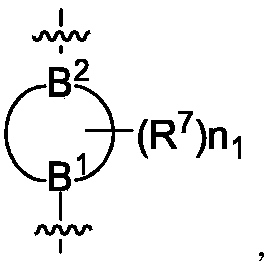 R 1为H;R 2为H;环E中的“-----”表示“-----”可以为一键或无,当“-----”为一键时,此时R 11为无,即环E为当“-----”为无时,即环E为
 当R 11存在时,R 11选自氢或甲基;R 8选自氢、Cl、-CH 3;优选R 8为氢;R 29选自氢、OH、-CN、F、-CF 3;优选R 29为氢;R 3选自氢、卤素、氰基、C1~C6烷基、-OR g、-C(O)OR g、-SR g、-NR hR i,当环E中的“-----”为无时,R 3还可以是与其连接的碳原子共同组成羰基,其中,烷基任选地被一个或多个卤素或-OH取代;R g、R h、R i每次出现时独立选自H、甲基、环丙基、环戊基、乙基;优选为甲基;R 4选自C1~C3烷基、C3~C6环烷基、苯基、萘基、5~6元氮杂芳基、5~6元硫杂芳基,其中,烷基、环烷基、芳基、氮杂芳基、硫杂芳基任选地被1~3个R 26取代;R 26每次出现时独立选自卤素、氰基、C1~C3烷基、卤代C1~C3烷基、-O(C1~C3烷基)、-C(O)OH;R 5、R 6分别独立选自氢、卤素、C1~C3烷基、5~6元杂芳基、-C(O)R 16、-S(O) 2R 16、-P(O)R 16R 17、-C(O)NR bR c、-C(O)OR a、-OR a,其中,所述烷基、杂芳基任选地被一个或多个R 18取代;R 16、R 17独立选自C1~C3烷基;R a、R b、R c每次出现时独立选自H和C1~C3烷基;R 18每次出现时独立选自卤素、C1~C3烷基、-OR a、-NR bR c;R 7每次出现时分别独立选自C1~C3烷基,其中,烷基任选地被一个或多个独立地选自卤素、氰基、C1~C3烷基的取代基取代;n 1选自0或1;优选地,选自如下基团:

- 根据权利要求1~33任一项所述的化合物,其特征在于,具有式VIII所示结构,或其互变异构体、内消旋体、外消旋体、对映异构体、非对映异构体或其混合物形式、药学上可接受的水合物、溶剂化物或盐:
 其中,R 1为H;R 3选自氢、卤素、氰基、C1~C6烷基、-OR g、-C(O)OR g、-SR g、-NR hR i,其中,烷基任选地被一个或多个卤素或-OH取代;R g、R h、R i每次出现时独立选自H、甲基、环丙基、环戊基、乙基;优选为甲基;R 4选自C1~C3烷基、环己基、苯基、吡啶基、噻吩基、萘基、吡咯基、噻唑基,其中,烷基、环己基、苯基、吡啶基、噻吩基、萘基、吡咯基、噻唑基任选地被1~2个R 26取代;R 26每次出现时独立选自F、Cl、Br、氰基、非取代或被1~3个卤素取代的C1~C3烷基、-OR j、-C(O)OR j;R j选自H和C1~C3烷基;R 5、R 6分别独立选自氢、卤素、C1~C3烷基、5~6元杂芳基、-C(O)R 16、-S(O) 2R 16、-P(O)R 16R 17、-C(O)NR bR c、-C(O)OR a、-OR a,其中,所述烷基、杂芳基任选地被一个或多个R 18取代;R 16、R 17独立选自C1~C3烷基;R 18每次出现时独立选自卤素、C1~C3烷基、-OR a、-NR bR c;R a、R b、R c每次出现时独立地选自H和C1~C3烷基;R 7每次出现时分别独立选自C1~C3烷基,其中,烷基任选地被一个或多个独立地选自卤素、氰基、C1~C3烷基的取代基取代;n 1选自0或1。
 - 根据权利要求34所述的化合物,或其互变异构体、内消旋体、外消旋体、对映异构体、非对映异构体或其混合物形式、药学上可接受的水合物、溶剂化物或盐:其中,R 1为H;R 3选自氢、Cl、-CF 3、-OCH 3、-OCH 2CH 3、-OCF 3、-OCHF 2、-N(CH3) 2、-CH 3、-CH 2OH、-OCH 2CF 3、-OH、-NHCH 3、-SCH 3、-OCD 3、-CN、-C(O)OCH 3;R 4选自甲基、环己基、

 R 5选自H、F、CN、-CH(CH 3) 2、-CH(OH)CH 3、-CH 2OCH 3、-OCH 3、-C(O)CH 3;R 6选自H、-C(CH 3) 3、-C(O)CH 3、-C(O)CH 2CH 2CH 3、-C(O)NHCH 3、-CH 2N(CH 3) 2、-CH 2F、-CH 2OCH 3、CF 3、
 -C(O)OCH 3、-P(O)(CH 3)、-S(O) 2CH 3、-C(O)CF 3、-C(O)CH 2CH 3;
 R 7选自氢、甲基或-CH 2CN;n 1选自0或1。
 - 以下化合物或其互变异构体、内消旋体、外消旋体、对映异构体、非对映异构体或其混合物形式、药学上可接受的水合物、溶剂化物或盐:


- 一种药用组合物,其特征在于,该药用组合物活性成份选自权利要求1~36任一项所述化合物或其互变异构体、内消旋体、外消旋体、对映异构体、非对映异构体或其混合物形式、药学上可接受的水合物、溶剂化物或盐中的一种或两种以上的组合。
- 权利要求1~36任一项所述化合物或其互变异构体、内消旋体、外消旋体、对映异构体、非对映异构体或其混合物形式、药学上可接受的水合物、溶剂化物或盐或权利要求37所述的药物组合物在制备KRAS抑制剂和/或PI3K抑制剂中的用途;进一步地,所述KRAS抑制剂选自KRAS G12C抑制剂、KRAS G12V抑制剂、KRAS G12D抑制剂、KRAS G12S抑制剂,优选KRAS G12C抑制剂;所述PI3K抑制剂为PI3Kα抑制剂和/或PI3Kδ抑制剂。
- 权利要求1~36任意一项所述化合物或其互变异构体、内消旋体、外消旋体、对映异构体、非对映异构体或其混合物形式、药学上可接受的水合物、溶剂化物或盐或权利要求37所述的药物组合物在制备用于治疗由KRAS和/或PI3K介导的疾病的药物中的用途;进一步地,所述由KRAS和/或PI3K介导的疾病包括由KRAS G12C、PI3Kα、PI3Kδ中的一种或多种介导的疾病;优选地,所述疾病为癌症或自身免疫性疾病;优选地,所述癌症选自:非小细胞肺癌、肺癌、胰腺癌、卵巢癌、膀胱癌、前列腺癌、慢性粒细胞白血病、结直肠癌、脑癌、肝癌、肾癌、胃癌、乳腺癌、三阴性乳腺癌、皮肤癌、黑色素癌、头颈癌、骨癌、宫颈癌、盆腔癌、阴道癌、口腔癌、淋巴癌、血癌、食管癌、尿道癌、鼻腔癌。
- 权利要求1~36任一项所述化合物或其互变异构体、内消旋体、外消旋体、对映异构体、非对映异构体或其混合物形式、药学上可接受的水合物、溶剂化物或盐或权利要求37所述的药物组合物在制备用于治疗对抗癌剂产生耐药的疾病的药物中的用途;进一步地,所述抗癌剂选自KRAS G12C抑制剂、KRAS G12V抑制剂、KRAS G12D抑制剂、KRAS G12S抑制剂,优选KRAS G12C抑制剂;进一步地,所述KRAS G12C抑制剂选自AMG-510、MRTX-849,优选AMG-510。
- 权利要求1~36任一项所述化合物或其互变异构体、内消旋体、外消旋体、对映异构体、非对映异构体或其混合物形式、药学上可接受的水合物、溶剂化物或盐或权利要求37所述的药物组合物在制备治疗致使PI3K蛋白和/或KRAS G12C蛋白过度表达的疾病的药物中的用途。
- 权利要求1~36任一项所述化合物或其互变异构体、内消旋体、外消旋体、对映异构体、非对映异构体、药学上可接受的水合物、溶剂化物或盐或权利要求37所述的药物组合物在制备治疗PI3K蛋白和/或KRAS G12C蛋白过度表达所致疾病的药物中的用途。
Priority Applications (8)
| Application Number | Priority Date | Filing Date | Title |
|---|---|---|---|
| US18/692,386 US20250145589A1 (en) | 2021-09-22 | 2022-09-21 | Pyridine derivative and use thereof |
| CN202280062853.0A CN117957219A (zh) | 2021-09-22 | 2022-09-21 | 一种吡啶类衍生物及其用途 |
| CA3232128A CA3232128A1 (en) | 2021-09-22 | 2022-09-21 | Pyridine derivative and use thereof |
| KR1020247008901A KR20240069725A (ko) | 2021-09-22 | 2022-09-21 | 피리딘 유도체 및 이의 용도 |
| JP2024517515A JP2024534526A (ja) | 2021-09-22 | 2022-09-21 | ピリジン系誘導体及びその使用 |
| EP22872006.6A EP4406948A4 (en) | 2021-09-22 | 2022-09-21 | PYRIDINE DERIVATIVE AND ITS USE |
| MX2024003363A MX2024003363A (es) | 2021-09-22 | 2022-09-21 | Derivado de piridina y uso del mismo. |
| AU2022349569A AU2022349569A1 (en) | 2021-09-22 | 2022-09-21 | Pyridine derivative and use thereof |
Applications Claiming Priority (6)
| Application Number | Priority Date | Filing Date | Title |
|---|---|---|---|
| CN202111108176 | 2021-09-22 | ||
| CN202111108176.5 | 2021-09-22 | ||
| CN202210089257 | 2022-01-25 | ||
| CN202210089257.3 | 2022-01-25 | ||
| CN202210227315 | 2022-03-08 | ||
| CN202210227315.4 | 2022-03-08 |
Publications (1)
| Publication Number | Publication Date |
|---|---|
| WO2023045960A1 true WO2023045960A1 (zh) | 2023-03-30 |
Family
ID=85720081
Family Applications (1)
| Application Number | Title | Priority Date | Filing Date |
|---|---|---|---|
| PCT/CN2022/120154 Ceased WO2023045960A1 (zh) | 2021-09-22 | 2022-09-21 | 一种吡啶类衍生物及其用途 |
Country Status (9)
| Country | Link |
|---|---|
| US (1) | US20250145589A1 (zh) |
| EP (1) | EP4406948A4 (zh) |
| JP (1) | JP2024534526A (zh) |
| KR (1) | KR20240069725A (zh) |
| CN (1) | CN117957219A (zh) |
| AU (1) | AU2022349569A1 (zh) |
| CA (1) | CA3232128A1 (zh) |
| MX (1) | MX2024003363A (zh) |
| WO (1) | WO2023045960A1 (zh) |
Cited By (23)
| Publication number | Priority date | Publication date | Assignee | Title |
|---|---|---|---|---|
| WO2023165581A1 (zh) * | 2022-03-03 | 2023-09-07 | 四川汇宇制药股份有限公司 | 一种吡啶类衍生物及其用途 |
| WO2024109233A1 (zh) * | 2022-11-22 | 2024-05-30 | 四川汇宇制药股份有限公司 | 一种嘧啶并芳环化合物及其制备方法和用途 |
| WO2024188229A1 (zh) * | 2023-03-13 | 2024-09-19 | 四川汇宇制药股份有限公司 | 喹唑啉衍生物的盐型、晶型、其制备方法及应用 |
| WO2024206858A1 (en) | 2023-03-30 | 2024-10-03 | Revolution Medicines, Inc. | Compositions for inducing ras gtp hydrolysis and uses thereof |
| WO2024229406A1 (en) | 2023-05-04 | 2024-11-07 | Revolution Medicines, Inc. | Combination therapy for a ras related disease or disorder |
| WO2025034702A1 (en) | 2023-08-07 | 2025-02-13 | Revolution Medicines, Inc. | Rmc-6291 for use in the treatment of ras protein-related disease or disorder |
| WO2025080946A2 (en) | 2023-10-12 | 2025-04-17 | Revolution Medicines, Inc. | Ras inhibitors |
| WO2025171296A1 (en) | 2024-02-09 | 2025-08-14 | Revolution Medicines, Inc. | Ras inhibitors |
| WO2025240847A1 (en) | 2024-05-17 | 2025-11-20 | Revolution Medicines, Inc. | Ras inhibitors |
| WO2025252655A1 (en) * | 2024-06-06 | 2025-12-11 | Syngenta Crop Protection Ag | Pesticidally active pyridopyrimidone compounds |
| WO2025255438A1 (en) | 2024-06-07 | 2025-12-11 | Revolution Medicines, Inc. | Methods of treating a ras protein-related disease or disorder |
| WO2025265060A1 (en) | 2024-06-21 | 2025-12-26 | Revolution Medicines, Inc. | Therapeutic compositions and methods for managing treatment-related effects |
| WO2026006747A1 (en) | 2024-06-28 | 2026-01-02 | Revolution Medicines, Inc. | Ras inhibitors |
| WO2026015825A1 (en) | 2024-07-12 | 2026-01-15 | Revolution Medicines, Inc. | Use of ras inhibitor for treating pancreatic cancer |
| WO2026015790A1 (en) | 2024-07-12 | 2026-01-15 | Revolution Medicines, Inc. | Methods of treating a ras related disease or disorder |
| WO2026015796A1 (en) | 2024-07-12 | 2026-01-15 | Revolution Medicines, Inc. | Methods of treating a ras related disease or disorder |
| WO2026015801A1 (en) | 2024-07-12 | 2026-01-15 | Revolution Medicines, Inc. | Methods of treating a ras related disease or disorder |
| WO2026035945A1 (en) | 2024-08-07 | 2026-02-12 | Tesseract Medicines Us, Llc | Covalent-induced drug conjugates targeting kras and comprising a topoisomerase payload |
| WO2026035947A1 (en) | 2024-08-07 | 2026-02-12 | Tesseract Medicines Us, Llc | Kras-targeting covalent-induced drug conjugates comprising a topoisomerase payload |
| WO2026050446A1 (en) | 2024-08-29 | 2026-03-05 | Revolution Medicines, Inc. | Ras inhibitors |
| WO2026064520A1 (en) | 2024-09-19 | 2026-03-26 | Tesseract Medicines Us, Llc | Covalent-induced drug conjugates targeting kras and comprising a tubulin inhibitor payload |
| WO2026064527A1 (en) | 2024-09-19 | 2026-03-26 | Tesseract Medicines Us, Llc | Kras-targeting covalent-induced drug conjugates comprising a tubulin inhibitor payload |
| WO2026072904A2 (en) | 2024-09-26 | 2026-04-02 | Revolution Medicines, Inc. | Compositions and methods for treating lung cancer |
Families Citing this family (1)
| Publication number | Priority date | Publication date | Assignee | Title |
|---|---|---|---|---|
| WO2026035776A1 (en) * | 2024-08-05 | 2026-02-12 | Frontier Medicines Corporation | Pi3k-alpha binding compounds and uses thereof |
Citations (13)
| Publication number | Priority date | Publication date | Assignee | Title |
|---|---|---|---|---|
| CN103987699A (zh) * | 2011-10-21 | 2014-08-13 | 诺华股份有限公司 | 作为pi3k调节剂的喹唑啉衍生物 |
| WO2014160177A2 (en) * | 2013-03-13 | 2014-10-02 | Exelixis, Inc. | Quinazoline inhibitors of pi3k |
| CN104302647A (zh) * | 2012-03-19 | 2015-01-21 | Cmg制药有限公司 | 新型吡啶并嘧啶衍生物及其用途 |
| WO2016044772A1 (en) * | 2014-09-18 | 2016-03-24 | Araxes Pharma Llc | Combination therapies for treatment of cancer |
| WO2016164675A1 (en) | 2015-04-10 | 2016-10-13 | Araxes Pharma Llc | Substituted quinazoline compounds and methods of use thereof |
| WO2016168540A1 (en) | 2015-04-15 | 2016-10-20 | Araxes Pharma Llc | Fused-tricyclic inhibitors of kras and methods of use thereof |
| CN106488910A (zh) * | 2013-10-10 | 2017-03-08 | 亚瑞克西斯制药公司 | Kras g12c的抑制剂 |
| WO2017070256A2 (en) * | 2015-10-19 | 2017-04-27 | Araxes Pharma Llc | Method for screening inhibitors of ras |
| US20180118757A1 (en) * | 2013-10-10 | 2018-05-03 | Araxes Pharma Llc | Substituted quinazolines as inhibitors of kras g12c |
| WO2018119183A2 (en) | 2016-12-22 | 2018-06-28 | Amgen Inc. | Kras g12c inhibitors and methods of using the same |
| WO2018206539A1 (en) | 2017-05-11 | 2018-11-15 | Astrazeneca Ab | Heteroaryl compounds that inhibit g12c mutant ras proteins |
| CN110022878A (zh) * | 2016-11-03 | 2019-07-16 | 密执安大学评议会 | Egfr/pi3k的小分子双重抑制剂及其用途 |
| WO2020216190A1 (zh) | 2019-04-22 | 2020-10-29 | 贝达药业股份有限公司 | 一种喹唑啉化合物及其在医药上的应用 |
Family Cites Families (2)
| Publication number | Priority date | Publication date | Assignee | Title |
|---|---|---|---|---|
| US9422298B2 (en) * | 2011-03-17 | 2016-08-23 | Cmg Pharmaceutical Co., Ltd. | Pyridopyrimidine derivatives and use thereof |
| CN118632843A (zh) * | 2022-03-03 | 2024-09-10 | 四川汇宇制药股份有限公司 | 一种吡啶类衍生物及其用途 |
-
2022
- 2022-09-21 KR KR1020247008901A patent/KR20240069725A/ko active Pending
- 2022-09-21 US US18/692,386 patent/US20250145589A1/en active Pending
- 2022-09-21 WO PCT/CN2022/120154 patent/WO2023045960A1/zh not_active Ceased
- 2022-09-21 MX MX2024003363A patent/MX2024003363A/es unknown
- 2022-09-21 CN CN202280062853.0A patent/CN117957219A/zh active Pending
- 2022-09-21 CA CA3232128A patent/CA3232128A1/en active Pending
- 2022-09-21 JP JP2024517515A patent/JP2024534526A/ja not_active Withdrawn
- 2022-09-21 EP EP22872006.6A patent/EP4406948A4/en active Pending
- 2022-09-21 AU AU2022349569A patent/AU2022349569A1/en active Pending
Patent Citations (13)
| Publication number | Priority date | Publication date | Assignee | Title |
|---|---|---|---|---|
| CN103987699A (zh) * | 2011-10-21 | 2014-08-13 | 诺华股份有限公司 | 作为pi3k调节剂的喹唑啉衍生物 |
| CN104302647A (zh) * | 2012-03-19 | 2015-01-21 | Cmg制药有限公司 | 新型吡啶并嘧啶衍生物及其用途 |
| WO2014160177A2 (en) * | 2013-03-13 | 2014-10-02 | Exelixis, Inc. | Quinazoline inhibitors of pi3k |
| CN106488910A (zh) * | 2013-10-10 | 2017-03-08 | 亚瑞克西斯制药公司 | Kras g12c的抑制剂 |
| US20180118757A1 (en) * | 2013-10-10 | 2018-05-03 | Araxes Pharma Llc | Substituted quinazolines as inhibitors of kras g12c |
| WO2016044772A1 (en) * | 2014-09-18 | 2016-03-24 | Araxes Pharma Llc | Combination therapies for treatment of cancer |
| WO2016164675A1 (en) | 2015-04-10 | 2016-10-13 | Araxes Pharma Llc | Substituted quinazoline compounds and methods of use thereof |
| WO2016168540A1 (en) | 2015-04-15 | 2016-10-20 | Araxes Pharma Llc | Fused-tricyclic inhibitors of kras and methods of use thereof |
| WO2017070256A2 (en) * | 2015-10-19 | 2017-04-27 | Araxes Pharma Llc | Method for screening inhibitors of ras |
| CN110022878A (zh) * | 2016-11-03 | 2019-07-16 | 密执安大学评议会 | Egfr/pi3k的小分子双重抑制剂及其用途 |
| WO2018119183A2 (en) | 2016-12-22 | 2018-06-28 | Amgen Inc. | Kras g12c inhibitors and methods of using the same |
| WO2018206539A1 (en) | 2017-05-11 | 2018-11-15 | Astrazeneca Ab | Heteroaryl compounds that inhibit g12c mutant ras proteins |
| WO2020216190A1 (zh) | 2019-04-22 | 2020-10-29 | 贝达药业股份有限公司 | 一种喹唑啉化合物及其在医药上的应用 |
Non-Patent Citations (8)
| Title |
|---|
| ADACHI, Y ET AL., CLIN CANCER RES, 8 September 2020 (2020-09-08) |
| CANCER DISCOV, vol. 6, 2016, pages 316 - 29 |
| MATTHEW, R. JANESYI LIU ET AL., CELL, vol. 172, 2018, pages 578 - 589 |
| NAT REV DRUG DISCOV, vol. 13, 2014, pages 828 - 851 |
| NATURE, vol. 503, 2013, pages 548 - 551 |
| SCIENCE, vol. 351, 2016, pages 604 - 608 |
| See also references of EP4406948A4 |
| XIE, J.Y ET AL., NATURE, vol. 577, 2020, pages 421 - 425 |
Cited By (23)
| Publication number | Priority date | Publication date | Assignee | Title |
|---|---|---|---|---|
| WO2023165581A1 (zh) * | 2022-03-03 | 2023-09-07 | 四川汇宇制药股份有限公司 | 一种吡啶类衍生物及其用途 |
| WO2024109233A1 (zh) * | 2022-11-22 | 2024-05-30 | 四川汇宇制药股份有限公司 | 一种嘧啶并芳环化合物及其制备方法和用途 |
| WO2024188229A1 (zh) * | 2023-03-13 | 2024-09-19 | 四川汇宇制药股份有限公司 | 喹唑啉衍生物的盐型、晶型、其制备方法及应用 |
| WO2024206858A1 (en) | 2023-03-30 | 2024-10-03 | Revolution Medicines, Inc. | Compositions for inducing ras gtp hydrolysis and uses thereof |
| WO2024229406A1 (en) | 2023-05-04 | 2024-11-07 | Revolution Medicines, Inc. | Combination therapy for a ras related disease or disorder |
| WO2025034702A1 (en) | 2023-08-07 | 2025-02-13 | Revolution Medicines, Inc. | Rmc-6291 for use in the treatment of ras protein-related disease or disorder |
| WO2025080946A2 (en) | 2023-10-12 | 2025-04-17 | Revolution Medicines, Inc. | Ras inhibitors |
| WO2025171296A1 (en) | 2024-02-09 | 2025-08-14 | Revolution Medicines, Inc. | Ras inhibitors |
| WO2025240847A1 (en) | 2024-05-17 | 2025-11-20 | Revolution Medicines, Inc. | Ras inhibitors |
| WO2025252655A1 (en) * | 2024-06-06 | 2025-12-11 | Syngenta Crop Protection Ag | Pesticidally active pyridopyrimidone compounds |
| WO2025255438A1 (en) | 2024-06-07 | 2025-12-11 | Revolution Medicines, Inc. | Methods of treating a ras protein-related disease or disorder |
| WO2025265060A1 (en) | 2024-06-21 | 2025-12-26 | Revolution Medicines, Inc. | Therapeutic compositions and methods for managing treatment-related effects |
| WO2026006747A1 (en) | 2024-06-28 | 2026-01-02 | Revolution Medicines, Inc. | Ras inhibitors |
| WO2026015825A1 (en) | 2024-07-12 | 2026-01-15 | Revolution Medicines, Inc. | Use of ras inhibitor for treating pancreatic cancer |
| WO2026015790A1 (en) | 2024-07-12 | 2026-01-15 | Revolution Medicines, Inc. | Methods of treating a ras related disease or disorder |
| WO2026015796A1 (en) | 2024-07-12 | 2026-01-15 | Revolution Medicines, Inc. | Methods of treating a ras related disease or disorder |
| WO2026015801A1 (en) | 2024-07-12 | 2026-01-15 | Revolution Medicines, Inc. | Methods of treating a ras related disease or disorder |
| WO2026035945A1 (en) | 2024-08-07 | 2026-02-12 | Tesseract Medicines Us, Llc | Covalent-induced drug conjugates targeting kras and comprising a topoisomerase payload |
| WO2026035947A1 (en) | 2024-08-07 | 2026-02-12 | Tesseract Medicines Us, Llc | Kras-targeting covalent-induced drug conjugates comprising a topoisomerase payload |
| WO2026050446A1 (en) | 2024-08-29 | 2026-03-05 | Revolution Medicines, Inc. | Ras inhibitors |
| WO2026064520A1 (en) | 2024-09-19 | 2026-03-26 | Tesseract Medicines Us, Llc | Covalent-induced drug conjugates targeting kras and comprising a tubulin inhibitor payload |
| WO2026064527A1 (en) | 2024-09-19 | 2026-03-26 | Tesseract Medicines Us, Llc | Kras-targeting covalent-induced drug conjugates comprising a tubulin inhibitor payload |
| WO2026072904A2 (en) | 2024-09-26 | 2026-04-02 | Revolution Medicines, Inc. | Compositions and methods for treating lung cancer |
Also Published As
| Publication number | Publication date |
|---|---|
| CN117957219A (zh) | 2024-04-30 |
| EP4406948A1 (en) | 2024-07-31 |
| CA3232128A1 (en) | 2023-03-30 |
| EP4406948A4 (en) | 2025-10-08 |
| AU2022349569A1 (en) | 2024-04-04 |
| JP2024534526A (ja) | 2024-09-20 |
| MX2024003363A (es) | 2024-04-04 |
| US20250145589A1 (en) | 2025-05-08 |
| KR20240069725A (ko) | 2024-05-20 |
Similar Documents
| Publication | Publication Date | Title |
|---|---|---|
| WO2023045960A1 (zh) | 一种吡啶类衍生物及其用途 | |
| CN111217797B (zh) | Rho相关蛋白激酶抑制剂、包含其的药物组合物及其制备方法和用途 | |
| CN110582491B (zh) | Rho相关蛋白激酶抑制剂、包含其的药物组合物及其制备方法和用途 | |
| JP6977111B2 (ja) | Irak4阻害剤としての二環式ヘテロシクリル誘導体 | |
| CN102665718B (zh) | 可用作pdk1抑制剂的杂环化合物 | |
| CN109195965B (zh) | Wdr5蛋白质-蛋白质结合的抑制剂 | |
| WO2019000682A1 (zh) | Rho相关蛋白激酶抑制剂、包含其的药物组合物及其制备方法和用途 | |
| CN111386118A (zh) | 作为rsv抑制剂的组合药物剂 | |
| CN115427035B (zh) | Enl/af9 yeats抑制剂 | |
| CN107922407B (zh) | 呼吸道合胞病毒抑制剂 | |
| WO2022199662A1 (zh) | 一种多环化合物及其应用 | |
| WO2023006097A1 (zh) | 一种双功能嵌合体杂环化合物及其作为雄激素受体降解剂的用途 | |
| CN112028870B (zh) | 一种具有苄氧基芳环结构的化合物,其制备方法和用途 | |
| CN112969694A (zh) | Rho相关蛋白激酶抑制剂、包含其的药物组合物及其用途 | |
| WO2014006554A1 (en) | 3-(PYRAZOLYL)-1H-PYRROLO[2,3-b]PYRIDINE DERIVATIVES AS KINASE INHIBITORS | |
| CN116710453A (zh) | 激酶抑制剂及其用途 | |
| TW202028210A (zh) | 用於治療與apj受體活性相關的病狀的化合物及組成物 | |
| CN103874697A (zh) | 二苯并氧杂*衍生物 | |
| WO2023165581A1 (zh) | 一种吡啶类衍生物及其用途 | |
| CN112513041B (zh) | 三环化合物 | |
| JP7843780B2 (ja) | 癌の処置に使用するための2,8-ジヒドロピラゾロ[3,4-b]インドール誘導体 | |
| CN103443107A (zh) | 噻唑并嘧啶化合物 | |
| WO2025237389A1 (zh) | 三环wrn抑制剂、其制备方法及其应用 | |
| HK40100224A (zh) | 激酶抑制剂及其用途 | |
| HK40082693B (zh) | 8-氧-3-氮杂二环[3.2.1]辛烷类化合物或其盐及其制备方法和用途 |
Legal Events
| Date | Code | Title | Description |
|---|---|---|---|
| 121 | Ep: the epo has been informed by wipo that ep was designated in this application |
Ref document number: 22872006 Country of ref document: EP Kind code of ref document: A1 |
|
| WWE | Wipo information: entry into national phase |
Ref document number: 202280062853.0 Country of ref document: CN Ref document number: 2022349569 Country of ref document: AU |
|
| ENP | Entry into the national phase |
Ref document number: 2024517515 Country of ref document: JP Kind code of ref document: A |
|
| WWE | Wipo information: entry into national phase |
Ref document number: 3232128 Country of ref document: CA |
|
| REG | Reference to national code |
Ref country code: BR Ref legal event code: B01A Ref document number: 112024005332 Country of ref document: BR |
|
| ENP | Entry into the national phase |
Ref document number: 2022349569 Country of ref document: AU Date of ref document: 20220921 Kind code of ref document: A |
|
| WWE | Wipo information: entry into national phase |
Ref document number: 2022872006 Country of ref document: EP |
|
| NENP | Non-entry into the national phase |
Ref country code: DE |
|
| ENP | Entry into the national phase |
Ref document number: 2022872006 Country of ref document: EP Effective date: 20240422 |
|
| ENP | Entry into the national phase |
Ref document number: 112024005332 Country of ref document: BR Kind code of ref document: A2 Effective date: 20240318 |
|
| WWP | Wipo information: published in national office |
Ref document number: 18692386 Country of ref document: US |