WO2023067834A1 - 非燃焼加熱型香味吸引器用たばこシートの製造方法 - Google Patents
非燃焼加熱型香味吸引器用たばこシートの製造方法 Download PDFInfo
- Publication number
- WO2023067834A1 WO2023067834A1 PCT/JP2022/018922 JP2022018922W WO2023067834A1 WO 2023067834 A1 WO2023067834 A1 WO 2023067834A1 JP 2022018922 W JP2022018922 W JP 2022018922W WO 2023067834 A1 WO2023067834 A1 WO 2023067834A1
- Authority
- WO
- WIPO (PCT)
- Prior art keywords
- tobacco
- sheet
- flavor inhaler
- combustion heating
- mixture
- Prior art date
- Legal status (The legal status is an assumption and is not a legal conclusion. Google has not performed a legal analysis and makes no representation as to the accuracy of the status listed.)
- Ceased
Links
Images

Classifications
-
- A—HUMAN NECESSITIES
- A24—TOBACCO; CIGARS; CIGARETTES; SIMULATED SMOKING DEVICES; SMOKERS' REQUISITES
- A24B—MANUFACTURE OR PREPARATION OF TOBACCO FOR SMOKING OR CHEWING; TOBACCO; SNUFF
- A24B9/00—Control of the moisture content of tobacco products, e.g. cigars, cigarettes, pipe tobacco
-
- A—HUMAN NECESSITIES
- A24—TOBACCO; CIGARS; CIGARETTES; SIMULATED SMOKING DEVICES; SMOKERS' REQUISITES
- A24B—MANUFACTURE OR PREPARATION OF TOBACCO FOR SMOKING OR CHEWING; TOBACCO; SNUFF
- A24B15/00—Chemical features or treatment of tobacco; Tobacco substitutes, e.g. in liquid form
- A24B15/10—Chemical features of tobacco products or tobacco substitutes
- A24B15/12—Chemical features of tobacco products or tobacco substitutes of reconstituted tobacco
-
- A—HUMAN NECESSITIES
- A24—TOBACCO; CIGARS; CIGARETTES; SIMULATED SMOKING DEVICES; SMOKERS' REQUISITES
- A24B—MANUFACTURE OR PREPARATION OF TOBACCO FOR SMOKING OR CHEWING; TOBACCO; SNUFF
- A24B15/00—Chemical features or treatment of tobacco; Tobacco substitutes, e.g. in liquid form
- A24B15/10—Chemical features of tobacco products or tobacco substitutes
- A24B15/12—Chemical features of tobacco products or tobacco substitutes of reconstituted tobacco
- A24B15/14—Chemical features of tobacco products or tobacco substitutes of reconstituted tobacco made of tobacco and a binding agent not derived from tobacco
-
- A—HUMAN NECESSITIES
- A24—TOBACCO; CIGARS; CIGARETTES; SIMULATED SMOKING DEVICES; SMOKERS' REQUISITES
- A24B—MANUFACTURE OR PREPARATION OF TOBACCO FOR SMOKING OR CHEWING; TOBACCO; SNUFF
- A24B15/00—Chemical features or treatment of tobacco; Tobacco substitutes, e.g. in liquid form
- A24B15/10—Chemical features of tobacco products or tobacco substitutes
- A24B15/16—Chemical features of tobacco products or tobacco substitutes of tobacco substitutes
-
- A—HUMAN NECESSITIES
- A24—TOBACCO; CIGARS; CIGARETTES; SIMULATED SMOKING DEVICES; SMOKERS' REQUISITES
- A24B—MANUFACTURE OR PREPARATION OF TOBACCO FOR SMOKING OR CHEWING; TOBACCO; SNUFF
- A24B15/00—Chemical features or treatment of tobacco; Tobacco substitutes, e.g. in liquid form
- A24B15/10—Chemical features of tobacco products or tobacco substitutes
- A24B15/16—Chemical features of tobacco products or tobacco substitutes of tobacco substitutes
- A24B15/167—Chemical features of tobacco products or tobacco substitutes of tobacco substitutes in liquid or vaporisable form, e.g. liquid compositions for electronic cigarettes
-
- A—HUMAN NECESSITIES
- A24—TOBACCO; CIGARS; CIGARETTES; SIMULATED SMOKING DEVICES; SMOKERS' REQUISITES
- A24B—MANUFACTURE OR PREPARATION OF TOBACCO FOR SMOKING OR CHEWING; TOBACCO; SNUFF
- A24B15/00—Chemical features or treatment of tobacco; Tobacco substitutes, e.g. in liquid form
- A24B15/18—Treatment of tobacco products or tobacco substitutes
- A24B15/28—Treatment of tobacco products or tobacco substitutes by chemical substances
- A24B15/30—Treatment of tobacco products or tobacco substitutes by chemical substances by organic substances
- A24B15/32—Treatment of tobacco products or tobacco substitutes by chemical substances by organic substances by acyclic compounds
-
- A—HUMAN NECESSITIES
- A24—TOBACCO; CIGARS; CIGARETTES; SIMULATED SMOKING DEVICES; SMOKERS' REQUISITES
- A24B—MANUFACTURE OR PREPARATION OF TOBACCO FOR SMOKING OR CHEWING; TOBACCO; SNUFF
- A24B3/00—Preparing tobacco in the factory
- A24B3/14—Forming reconstituted tobacco products, e.g. wrapper materials, sheets, imitation leaves, rods, cakes; Forms of such products
-
- A—HUMAN NECESSITIES
- A24—TOBACCO; CIGARS; CIGARETTES; SIMULATED SMOKING DEVICES; SMOKERS' REQUISITES
- A24C—MACHINES FOR MAKING CIGARS OR CIGARETTES
- A24C5/00—Making cigarettes; Making tipping materials for, or attaching filters or mouthpieces to, cigars or cigarettes
- A24C5/01—Making cigarettes for simulated smoking devices
-
- A—HUMAN NECESSITIES
- A24—TOBACCO; CIGARS; CIGARETTES; SIMULATED SMOKING DEVICES; SMOKERS' REQUISITES
- A24D—CIGARS; CIGARETTES; TOBACCO SMOKE FILTERS; MOUTHPIECES OF CIGARS OR CIGARETTES; MANUFACTURE OF TOBACCO SMOKE FILTERS OR MOUTHPIECES
- A24D1/00—Cigars; Cigarettes
- A24D1/20—Cigarettes specially adapted for simulated smoking devices
Definitions
- the present invention relates to a method for manufacturing a tobacco sheet for a non-combustion heating type flavor inhaler.
- a combustion-type flavor inhaler obtains flavor by burning tobacco fillings including leaf tobacco and tobacco sheets.
- Patent Literature 1 discloses a tobacco sheet used in a combustion type flavor inhaler.
- a non-combustion heating type flavor inhaler has been proposed that obtains flavor by heating a flavor source such as a tobacco sheet instead of burning it.
- the heating temperature of the non-combustion-heating flavor inhaler is lower than the combustion temperature of the combustion-type flavor inhaler, for example, about 400° C. or less.
- an aerosol generating agent can be added to the flavor source in the non-combustion heating type flavor inhaler from the viewpoint of increasing the amount of smoke.
- the aerosol-generating agent is vaporized by heating to generate an aerosol. Since the aerosol is supplied to the user together with flavor components such as tobacco components, the user can obtain sufficient flavor.
- a non-combustion heating flavor inhaler can comprise, for example, a tobacco-containing segment filled with tobacco sheets or the like, a cooling segment, and a filter segment.
- the axial length of the tobacco-containing segment of the non-combustion-heating flavor inhaler is generally shorter than the axial length of the tobacco-containing segment of the normal combustion-type flavor inhaler in relation to the heating heater. Therefore, in the non-combustion heating type flavor inhaler, a large amount of tobacco sheets are filled in the short tobacco-containing segments in order to secure the amount of aerosol generated during heating.
- non-combustion heating type flavor inhalers usually use tobacco sheets with low swelling, that is, high density tobacco sheets.
- the swelling property is a value indicating the volume of a tobacco sheet having a predetermined mass when notches are compressed under a constant pressure for a certain period of time.
- the present inventors believe that if a tobacco sheet with low swelling (high density) is used, the total heat capacity of the tobacco-containing segment increases. It was found that the tobacco sheet filled in the tobacco-containing segment does not sufficiently contribute to the generation of aerosol depending on the heating method and the capacity of the heater. In order to solve this problem, it is conceivable to reduce the total heat capacity of the tobacco-containing segment.
- the present inventors (1) reduce the specific heat of the tobacco raw material contained in the tobacco sheet, and (2) use a highly bulky (low-density) tobacco sheet. I considered using it. However, as for (1), it is difficult to reduce the specific heat of the tobacco raw material itself, so it was considered effective to reduce the total heat capacity of the tobacco-containing segment by (2). Therefore, it is desired to develop a highly bulky (low density) tobacco sheet suitable for non-combustion heating type flavor inhalers.
- An object of the present invention is to provide a tobacco sheet for a non-combustion heating type flavor inhaler with high swelling.
- the present invention includes the following embodiments.
- a method for manufacturing a tobacco sheet for a non-combustion heating type flavor inhaler comprising: A method for producing a tobacco sheet for a non-combustion heating type flavor inhaler, wherein the moisture reduction rate in drying is 0.8% WB/second or more.
- FIG. 1 It is a sectional view showing an example of a non-combustion heating type flavor inhaler concerning this embodiment.
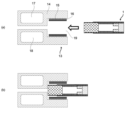
- An example of the non-combustion heating flavor inhalation system according to the present embodiment in which (a) the state before the non-combustion heating flavor inhaler is inserted into the heating device, and (b) the non-combustion heating flavor inhaler is heated. It is sectional drawing which shows the state which inserts into an apparatus and heats.
- a manufacturing method of a tobacco sheet for a non-combustion heating type flavor inhaler includes the following steps.
- a step of forming a mixture containing a tobacco raw material and an aerosol-generating agent into a sheet (hereinafter also referred to as a "forming step”); a step of drying the sheet-shaped mixture (hereinafter, a “drying step”). also called).
- the moisture reduction rate in the drying is 0.8% WB/second or more.
- the moisture reduction rate of the sheet-shaped mixture in the drying step (hereinafter also referred to as "sheet-shaped mixture") is 0.8% WB / sec or more, and the sheet-shaped mixture Since the moisture in the mixture evaporates rapidly, the sheet-like mixture is deformed into a three-dimensionally twisted shape (curling shape (crinkle, curl)) while retaining the aerosol-generating agent sufficiently, and is fixed. As a result, the obtained tobacco sheet becomes bulky and has high swelling properties. Therefore, by using the tobacco sheet manufactured by the method according to the present embodiment, the total heat capacity of the tobacco-containing segment can be reduced, and the tobacco sheet filled with the tobacco-containing segment can sufficiently contribute to aerosol generation. can be done.
- the tobacco sheet produced by the method according to the present embodiment preferably further contains a molding agent. The swelling property of the tobacco sheet is further improved.
- the method according to this embodiment includes at least the molding step and the drying step, but may include other steps.
- a mixture containing tobacco raw materials and an aerosol-generating agent is formed into a sheet.
- the tobacco raw material is not particularly limited as long as it contains tobacco components, and examples thereof include tobacco powder and tobacco extract.
- Tobacco powder includes, for example, leaf tobacco, core bones, residual stems, and the like. These may be used alone or in combination of two or more. By chopping these into a predetermined size, they can be used as tobacco powder.
- the size of the tobacco powder it is preferable that the cumulative 90% particle size (D90) in the volume-based particle size distribution measured by the dry laser diffraction method is 200 ⁇ m or more from the viewpoint of further improving the swelling property.
- the ratio of the tobacco raw material contained in 100% by mass of the mixture is preferably 45 to 95% by mass on a dry basis.
- the ratio of the tobacco raw material is 45% by mass or more, a sufficient tobacco aroma can be generated during heating.
- a sufficient amount of an aerosol-generating agent and a forming agent can be included.
- the proportion of the tobacco raw material is more preferably 60 to 90% by mass, more preferably 70 to 80% by mass on a dry weight basis.
- the ratio on a dry basis indicates the ratio on a dry basis, and indicates the ratio when all components other than water in the mixture are 100% by mass.
- Aerosol-generating agents include, for example, glycerin, propylene glycol, 1,3-butanediol and the like. These may be used alone or in combination of two or more.
- the ratio of the aerosol generating agent contained in 100% by mass of the mixture is preferably 4 to 50% by mass on a dry basis.
- the proportion of the aerosol-generating agent is 4% by mass or more, sufficient aerosol can be generated during heating from the viewpoint of quantity.
- the proportion of the aerosol generating agent is 50% by mass or less, sufficient aerosol can be generated during heating from the viewpoint of heat capacity.
- the proportion of the aerosol-generating agent is more preferably 6 to 40% by mass, still more preferably 8 to 30% by mass, particularly preferably 10 to 18% by mass, based on the dry weight.
- the mixture preferably further contains a molding agent.
- Molding agents include, for example, polysaccharides, proteins, synthetic polymers and the like. These may be used alone or in combination of two or more. Examples of polysaccharides include cellulose derivatives and naturally occurring polysaccharides.
- Cellulose derivatives include, for example, cellulose ethers such as methylcellulose, ethylcellulose, hydroxyethylcellulose, hydroxymethylethylcellulose, hydroxypropylcellulose, hydroxypropylmethylcellulose, benzylcellulose, tritylcellulose, cyanoethylcellulose, carboxymethylcellulose, carboxyethylcellulose, aminoethylcellulose; Organic acid esters such as cellulose, cellulose formate, cellulose propionate, cellulose butyrate, cellulose benzoate, cellulose phthalate, and tosyl cellulose; and inorganic acid esters such as cellulose nitrate, cellulose sulfate, cellulose phosphate, and cellulose xanthate. be done.
- cellulose ethers such as methylcellulose, ethylcellulose, hydroxyethylcellulose, hydroxymethylethylcellulose, hydroxypropylcellulose, hydroxypropylmethylcellulose, benzylcellulose, tritylcellulose
- Naturally occurring polysaccharides include guar gum, tara gum, roasted bean gum, tamarind seed gum, pectin, gum arabic, tragacanth gum, karaya gum, gutti gum, arabinogalactan, amaseed gum, cascha gum, psyllium seed gum, wormwood seed gum, Plant-derived polysaccharides such as glucan; Algae-derived polysaccharides such as carrageenan, agar, alginic acid, propylene glycol alginate, furcelleran, fukuronori extract; xanthan gum, gellan gum, curdlan, pullulan, Agrobacterium succinoglycan, welan gum , macrohomopsis gum, rhamsan gum, and other microorganism-derived polysaccharides; crustacean-derived polysaccharides, such as chitin, chitosan, and glucosamine;
- proteins examples include grain proteins such as wheat gluten and rye gluten.
- Synthetic polymers include, for example, polyphosphoric acid, sodium polyacrylate, polyvinylpyrrolidone, and the like.
- the ratio of the molding agent contained in 100% by mass of the mixture is preferably 0.1 to 15% by mass on a dry basis.
- the ratio of the molding agent is 0.1% by mass or more, the raw material mixture can be easily molded into a sheet. Further, since the ratio of the molding agent is 15% by mass or less, it is possible to sufficiently use other raw materials for ensuring the functions required for the tobacco-containing segment of the non-combustion heating type flavor inhaler.
- the ratio of the molding agent is more preferably 0.2 to 13% by mass, more preferably 1 to 10% by mass on a dry basis.
- the mixture further contains a first molding agent and a second molding agent, particularly from the viewpoint of achieving a satisfactory balance between the aerosol-generating agent retention performance and the curling shape maintenance performance of the manufactured tobacco sheet.
- a first molding agent and a second molding agent may be of different types, or the types of molding agents may be the same but the forms may be different.
- the first and second molding agents include the aforementioned polysaccharides, proteins, synthetic polymers, and the like.
- the ratio of the first molding agent contained in 100% by mass of the mixture is preferably 0.1 to 15% by mass on a dry basis.
- the ratio of the first molding agent is 0.1% by mass or more, the raw material mixture can be easily molded into a sheet. Further, since the ratio of the first molding agent is 15% by mass or less, it is possible to sufficiently use other raw materials for securing the functions required for the tobacco-containing segment of the non-combustion heating type flavor inhaler.
- the ratio of the first molding agent is more preferably 0.1 to 12% by mass, more preferably 0.1 to 10% by mass, even more preferably 0.1 to 7% by mass on a dry basis. It is particularly preferred to have
- the ratio of the second molding agent contained in 100% by mass of the mixture is preferably 0.1 to 15% by mass on a dry basis.
- the ratio of the second molding agent is 0.1% by mass or more, the raw material mixture can be easily molded into a sheet. Further, since the ratio of the second molding agent is 15% by mass or less, it is possible to sufficiently use other raw materials for securing the functions required for the tobacco-containing segment of the non-combustion heating type flavor inhaler.
- the ratio of the second molding agent is more preferably 0.1 to 12% by mass, more preferably 0.1 to 10% by mass, even more preferably 0.1 to 7% by mass on a dry basis. It is particularly preferred to have
- the first molding agent and the second molding agent are the same type of molding agent but different in form
- the first molding agent may be powder and the second molding agent may be solution or slurry.
- a molding agent can be directly mixed as powder as the first molding agent, and the molding agent can be dispersed or swollen in a solvent such as water and mixed as the second molding agent.
- Such a method can also provide the same effect as when two molding agents of different types are used.
- the mixture may further contain a reinforcing agent from the viewpoint of further improving physical properties.
- the reinforcing agent include fibrous materials such as fibrous (fibrous) pulp and fibrous synthetic cellulose, and liquid substances having a surface coating function that forms a film when dried, such as pectin suspension. These may be used alone or in combination of two or more.
- the mixture preferably further contains a fibrous material as a reinforcing agent from the viewpoint of further improving the swelling property.
- the ratio of the reinforcing agent contained in 100% by mass of the mixture is preferably 4 to 40% by mass on a dry basis. Within this range, other raw materials can be sufficiently used to secure the functions required for the tobacco-containing segment of the non-combustion-heating flavor inhaler.
- the ratio of the reinforcing agent is more preferably 4.5 to 35% by mass, more preferably 5 to 30% by mass on a dry basis.
- the ratio of the fibrous material contained in 100% by mass of the mixture is preferably 5 to 50% by mass on a dry basis.
- the mixture may further contain a humectant from the viewpoint of quality maintenance.
- moisturizing agents include sugar alcohols such as sorbitol, erythritol, xylitol, maltitol, lactitol, mannitol, and reduced maltose starch syrup. These may be used alone or in combination of two or more.
- the ratio of the moisturizing agent contained in 100% by mass of the mixture is preferably 1 to 15% by mass on a dry basis. Within this range, other raw materials can be sufficiently used to secure the functions required for the tobacco-containing segment of the non-combustion-heating flavor inhaler.
- the ratio of the moisturizing agent is more preferably 2 to 12% by mass, more preferably 3 to 10% by mass, based on the dry weight.
- the mixture may optionally contain a flavor such as a perfume and a flavoring agent. Colorants, wetting agents, preservatives, diluents such as inorganic substances, and the like may be included.
- the mixture can also contain water.
- the method for forming the mixture into a sheet is not particularly limited, it can be formed by a known method such as a rolling method.
- Examples of the method for forming the mixture into a sheet by rolling include a method including the following steps. (1) A step of mixing water, a tobacco raw material, an aerosol-generating agent, a molding agent, and a reinforcing agent to obtain a mixture. (2) A step of rolling the mixture by putting it into rolling rollers. (3) A step of peeling off the rolled product on the rolling roller with a doctor knife.
- each rolling roller may be heated or cooled, and the rotation speed of each rolling roller may be adjusted. Further, by adjusting the distance between the rolling rollers, it is possible to obtain a tobacco sheet having a desired basis weight.
- the moisture reduction rate of the sheet-like mixture in the drying step is 0.8% WB/second or more.
- the water content reduction rate is 0.8% WB/sec or more, the water content in the sheet-like mixture rapidly volatilizes, so that the sheet-like mixture has a three-dimensionally twisted shape while sufficiently retaining the aerosol generating agent. (curling shape (crinkled, curled)) and fixed.
- the moisture reduction rate is preferably 1.0% WB/sec or more, more preferably 1.3% WB/sec or more.
- the upper limit of the moisture reduction rate range is not particularly limited, but may be, for example, 15.0% WB/sec or less.
- the "water content reduction rate” is a value calculated by dividing the amount of water content reduction in the sheet mixture from the start of heating to the end of heating in the drying process by the time from the start of heating to the end of heating. is. The amount of moisture reduction can be measured and calculated using a heat drying moisture meter (eg, A&D Co., Ltd., Model No. MX-50). Also, "% WB" indicates the moisture content on a wet basis (wet basis).
- the airflow drying method is a method of drying by blowing high-temperature airflow onto the object to be dried.
- the water content reduction rate in the case of drying by the airflow drying method is calculated based on the amount of water content reduction during the time from the start to the end of the blowing of the high-temperature airflow.
- the temperature of the hot air blown onto the sheet-like mixture is preferably 140 to 350°C.
- the temperature of the hot air is 140°C or higher, a sufficient moisture reduction rate can be obtained.
- the temperature of the hot air is 350° C. or less, deterioration of quality due to heat can be suppressed.
- the temperature of the hot air is more preferably 150-320°C, more preferably 160-300°C.
- the wind speed of the hot air blown onto the sheet-like mixture is preferably 12 to 50 m/sec.
- a sufficient moisture reduction rate can be obtained by setting the hot air velocity to 12 m/sec or more. Further, by setting the hot air velocity to 50 m/sec or less, crushing of the sheet mixture can be suppressed.
- the wind speed of the hot air is more preferably 13-40 m/sec, more preferably 15-35 m/sec.
- the time (drying time) for blowing hot air to the sheet-like mixture is preferably 10 seconds or less.
- the drying time is more preferably 7 seconds or less, and even more preferably 6 seconds or less.
- the lower limit of the drying time range is not particularly limited, it can be, for example, 2 seconds or more.
- the water content in the sheet-like mixture before and after drying is 20 to 50% WB, and the water content in the sheet-like mixture after drying is 8 to 15% WB. preferable. Since the water content of the sheet-shaped mixture before and after drying is within the above range, the amount of change in the water content before and after drying is large, and the water content is reduced at the water content reduction speed in the present embodiment to sufficiently impart a curling shape. be able to. More preferably, the water content in the sheet-like mixture before drying is 20 to 45% WB, and the water content in the sheet-like mixture after drying is 8 to 15% WB.
- the water content contained in the sheet mixture after drying is 20 to 40% WB, and the water content in the sheet-like mixture after drying is 9 to 14% WB.
- the amount of water contained in the sheet-like mixture is a value measured by a heat drying type moisture meter (for example, A&D Co., Ltd., Model No. MX-50).
- a step of cutting the sheet-like mixture in addition to the forming step and the drying step, for example, between the forming step and the drying step, a step of cutting the sheet-like mixture, a step of spraying a coating agent etc. on the surface, etc. It may contain further.
- the step of cutting the sheet-like mixture for example, after cutting the sheet-like mixture into strips using a rotary roll blade, it is also cut in the length direction to obtain a sheet-like mixture having a length of 3 to 40 mm and a width of 3 to 40 mm. It can be sized from 0.5 to 3.0 mm.
- the thickness of the tobacco sheet obtained by the method according to this embodiment can be, for example, 100 to 1000 ⁇ m.
- the tobacco sheet manufactured by the method according to the present embodiment has a swelling property of 190 cc/100 g or more.
- the swelling property is 190 cc/100 g or more, the total heat capacity of the tobacco-containing segment of the non-combustion heating type flavor inhaler can be sufficiently reduced, and the tobacco sheet filled in the tobacco-containing segment is generated by aerosol generation. be able to contribute.
- the swelling property is more preferably 210 cc/100 g or more, more preferably 230 cc/100 g or more.
- the upper limit of the swelling range is not particularly limited, it can be, for example, 800 cc/100 g or less.
- the swelling property was evaluated by cutting a tobacco sheet into a size of 0.8 mm ⁇ 20 mm, leaving it in a conditioned room at 22° C. and 60% for 48 hours, and applying it to DD-60A (trade name, manufactured by Borgwald). It is a value measured by The measurement is carried out by placing 15 g of cut tobacco sheets in a cylindrical container with an inner diameter of 60 mm and compressing the container with a load of 3 kg for 30 seconds to obtain the volume.
- a non-combustion heated flavor inhaler comprises a tobacco-containing segment comprising a tobacco sheet manufactured by a method according to this embodiment. Since the non-combustion heating type flavor inhaler according to the present embodiment includes the tobacco-containing segment filled with the highly bulky tobacco sheet according to the present embodiment, the total heat capacity of the tobacco-containing segment can be sufficiently reduced. This allows the tobacco sheets loaded into the tobacco-containing segments to contribute more to aerosol generation.
- FIG. A non-combustion heating type flavor inhaler according to this embodiment is shown in FIG.
- a non-combustion heating flavor inhaler 1 shown in FIG. a center hole segment 4 and a filter segment 5.
- the non-combustion-heating flavor inhaler according to this embodiment may have segments other than the tobacco-containing segment, cooling segment, center hole segment, and filter segment.
- the axial length of the non-combustion heating type flavor inhaler according to the present embodiment is not particularly limited, but is preferably 40 mm or more and 90 mm or less, more preferably 50 mm or more and 75 mm or less, 50 mm or more, It is more preferably 60 mm or less.
- the circumference of the non-combustion heating flavor inhaler is preferably 16 mm or more and 25 mm or less, more preferably 20 mm or more and 24 mm or less, and even more preferably 21 mm or more and 23 mm or less.
- the length of the tobacco-containing segment is 20 mm
- the length of the cooling segment is 20 mm
- the length of the center hole segment is 8 mm
- the length of the filter segment is 7 mm.
- the length of the filter segment can be selected within a range of 4 mm or more and 10 mm or less.
- the ventilation resistance of the filter segments at that time is selected to be 15 mmH 2 O/seg or more and 60 mmH 2 O/seg or less per segment.
- a cigarette sheet manufactured by the method according to the present embodiment is filled in wrapping paper (hereinafter also referred to as a wrapper).
- the method of filling the tobacco sheet into the wrapping paper is not particularly limited.
- the tobacco sheet may be wrapped in a wrapper, or the tobacco sheet may be filled in a cylindrical wrapper.
- the shape of the tobacco sheet has a longitudinal direction such as a rectangular shape, the tobacco sheet may be filled in the wrapper such that the longitudinal direction is in an unspecified direction, and the tobacco-containing segment 2 may be packed in an axial direction or a longitudinal direction. They may be aligned and filled in a direction perpendicular to the axial direction.
- the cooling segment 3 may be configured by a cylindrical member 7.
- the tubular member 7 may be, for example, a paper tube formed by processing cardboard into a cylindrical shape.
- the tubular member 7 and the mouthpiece lining paper 12, which will be described later, are provided with perforations 8 penetrating both. Due to the presence of the perforations 8 outside air is introduced into the cooling segment 3 during suction. As a result, the vaporized aerosol component generated by heating the tobacco-containing segment 2 comes into contact with the outside air, and its temperature decreases, liquefying to form an aerosol.
- the diameter (spanning length) of the perforations 8 is not particularly limited, but may be, for example, 0.5 mm or more and 1.5 mm or less.
- the number of perforations 8 is not particularly limited, and may be one or two or more. For example, multiple perforations 8 may be provided on the circumference of the cooling segment 3 .
- the amount of outside air introduced through the perforations 8 is preferably 85% by volume or less, more preferably 80% by volume or less, relative to the total volume of the gas inhaled by the user.
- the ratio of the amount of outside air is 85% by volume or less, it is possible to sufficiently suppress reduction in flavor due to dilution by outside air.
- this is also called a ventilation ratio.
- the lower limit of the ventilation ratio range is preferably 55% by volume or more, more preferably 60% by volume or more.
- the cooling segment may also be a segment comprising a crumpled, pleated, gathered or folded sheet of suitable construction material.
- the cross-sectional profile of such elements may exhibit randomly oriented channels.
- the cooling segment may also include a bundle of longitudinally extending tubes.
- Such cooling segments may be formed, for example, from pleated, gathered, or folded sheet material wrapped with wrapping paper.
- the axial length of the cooling segment can be, for example, 7 mm or more and 28 mm or less, and can be, for example, 18 mm.
- the cooling segment can be substantially circular in its axial cross-sectional shape, and its diameter can be, for example, 5 mm or more and 10 mm or less, and can be, for example, about 7 mm.
- the center hole segment is composed of a filling layer having one or more hollow portions and an inner plug wrapper (inner wrapping paper) covering the filling layer.
- the center hole segment 4 is composed of a second filling layer 9 having a hollow portion and a second inner plug wrapper 10 covering the second filling layer 9 .
- the center hole segment 4 has the function of increasing the strength of the mouthpiece segment 6 .
- the second filling layer 9 is filled with, for example, cellulose acetate fibers at a high density, and a plasticizer containing triacetin is added in an amount of 6% by mass or more and 20% by mass or less based on the mass of cellulose acetate and hardened to have an inner diameter of ⁇ 1.0 mm.
- the second packed layer 9 has a high packing density of fibers, air and aerosol flow only in the hollow portion and hardly flow in the second packed layer 9 during suction. Since the second filling layer 9 inside the center hole segment 4 is a fiber filling layer, the feeling of touch from the outside during use hardly causes the user to feel uncomfortable. Note that the center hole segment 4 may not have the second inner plug wrapper 10 and may retain its shape by thermoforming.
- the configuration of the filter segment 5 is not particularly limited, it may be composed of a single or a plurality of packed layers.
- the outer side of the packing layer may be wrapped with one or more wrapping papers.
- the per-segment ventilation resistance of the filter segments 5 can be appropriately changed depending on the amount of filler, the material, and the like with which the filter segments 5 are filled.
- the ventilation resistance can be increased by increasing the amount of cellulose acetate fiber with which the filter segment 5 is filled.
- the packing density of the cellulose acetate fiber can be 0.13-0.18 g/cm 3 .
- the airflow resistance is a value measured by an airflow resistance measuring instrument (trade name: SODIMAX, manufactured by SODIM).
- the length of the circumference of the filter segment 5 is not particularly limited, it is preferably 16 to 25 mm, more preferably 20 to 24 mm, even more preferably 21 to 23 mm.
- the axial length of the filter segment 5 can be selected from 4 to 10 mm, and is selected so that its ventilation resistance is from 15 to 60 mmH 2 O/seg.
- the axial length of the filter segment 5 is preferably 5-9 mm, more preferably 6-8 mm.
- the cross-sectional shape of the filter segment 5 is not particularly limited, but may be, for example, circular, elliptical, or polygonal.
- the filter segment 5 may be directly added with destructible capsules containing perfume, perfume beads, and perfume.
- the center hole segment 4 and the filter segment 5 can be connected with an outer plug wrapper (outer wrapping paper) 11.
- the outer plug wrapper 11 can be, for example, cylindrical paper.
- the tobacco-containing segment 2, the cooling segment 3, and the connected center hole segment 4 and filter segment 5 can be connected by the mouthpiece lining paper 12. These connections can be made, for example, by applying glue such as vinyl acetate glue to the inner surface of the mouthpiece lining paper 12, inserting the three segments, and winding them.
- these segments may be divided into multiple times and connected with multiple lining papers.
- the non-combustion heating flavor inhalation system includes the non-combustion heating flavor inhaler according to this embodiment, and a heating device that heats the tobacco-containing segment of the non-combustion heating flavor inhaler.
- the non-combustion-heating flavor inhalation system according to the present embodiment may have a configuration other than the non-combustion-heating flavor inhaler and the heating device according to the present embodiment.
- the non-combustion heating flavor inhalation system shown in FIG. 2 includes a non-combustion heating flavor inhaler 1 according to this embodiment and a heating device 13 that heats the tobacco-containing segment of the non-combustion heating flavor inhaler 1 from the outside. Prepare.
- FIG. 2(a) shows the state before the non-combustion heating flavor inhaler 1 is inserted into the heating device 13, and FIG. indicates the state of
- the heating device 13 shown in FIG. 2 includes a body 14, a heater 15, a metal tube 16, a battery unit 17, and a control unit 18.
- the body 14 has a cylindrical recess 19, and a heater 15 and a metal tube are provided on the inner side surface of the recess 19 at positions corresponding to the tobacco-containing segments of the non-combustion heating flavor inhaler 1 inserted into the recess 19. 16 are arranged.
- the heater 15 can be a heater using electric resistance, and electric power is supplied from the battery unit 17 according to an instruction from the control unit 18 for temperature control, and the heater 15 is heated. The heat emitted from the heater 15 is transmitted to the tobacco-containing segment of the non-combustion heating flavor inhaler 1 through the metal pipe 16 with high thermal conductivity.
- FIG. 2(b) there is a gap between the outer circumference of the non-combustion-heating flavor inhaler 1 and the inner circumference of the metal tube 16 because it is schematically illustrated.
- the heating device 13 heats the tobacco-containing segment of the non-combustion-heating flavor inhaler 1 from the outside, but it may heat from the inside.
- the heating temperature of the heating device is not particularly limited, it is preferably 400°C or lower, more preferably 150°C or higher and 400°C or lower, and even more preferably 200°C or higher and 350°C or lower.
- the heating temperature indicates the temperature of the heater of the heating device.
- Tobacco lamina (leaf tobacco) was dry pulverized with a Hosokawa Micron ACM machine to obtain tobacco powder.
- the cumulative 90% particle diameter (D90) in the volume-based particle size distribution measured by the dry laser diffraction method is measured using a Mastersizer (trade name, manufactured by Spectris Co., Ltd., Malvern Panalytical Division). As a result, it was 200 ⁇ m.
- a tobacco sheet was manufactured using the tobacco powder as a tobacco raw material. Specifically, 78 parts by mass of the tobacco raw material, 12 parts by mass of glycerin as an aerosol generating agent, 1 part by mass of carboxymethyl cellulose swollen with water as a first molding agent, and 4 parts by mass of powdery carboxymethyl cellulose and 5 parts by mass of fibrous pulp as a reinforcing agent were mixed and kneaded by an extruder. The kneaded product was formed into a sheet by two pairs of metal rolls to obtain a rolled product. A rotating roll blade for noodle making was pressed against the rolled product, and the product was cut into strips with a width of 0.8 mm, and further cut into strips with a length of 20 mm to obtain a sheet-like mixture.
- the sheet-like mixture was rapidly dried by a flash drying method using a flash dryer under the conditions of a hot air temperature of 160°C, a wind speed of 25.4 m/sec, and a drying time of 5 seconds.
- the moisture reduction rate in the drying was 1.6% WB/sec.
- the water content in the sheet-like mixture before drying was 21.3% WB, and the water content in the sheet-like mixture after drying was 13.2% WB.
- the obtained tobacco sheet had a curling shape.
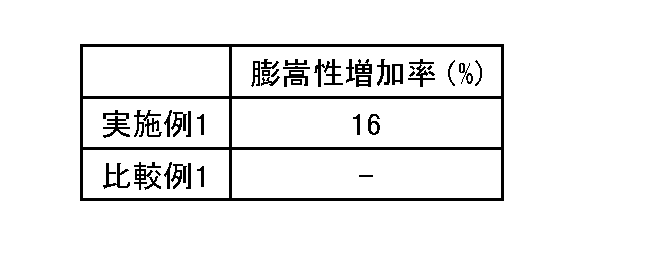
- the swelling property of the obtained tobacco sheet was measured. Specifically, after leaving the tobacco sheet in a conditioned room at 22° C. and 60% for 48 hours, the swelling property was measured with DD-60A (trade name, manufactured by Borgwald). The measurement was carried out by placing 15 g of tobacco sheet in a cylindrical container with an inner diameter of 60 mm and compressing the container with a load of 3 kg for 30 seconds to obtain the volume. Table 1 shows the results. In addition, in Table 1, the swelling property is shown as an increase rate (%) of the swelling property with respect to the reference value of the swelling property value of Comparative Example 1 described later.
- Example 1 A sheet-like mixture was prepared in the same manner as in Example 1. After that, it was dried at 80° C. for 240 seconds in an oven (trade name: FG-220, manufactured by ADVANTEC) in which hot air was circulated. The moisture reduction rate in the drying was 0.04% WB/sec. The water content in the sheet-like mixture before drying was 21.3% WB, and the water content in the sheet-like mixture after drying was 12.7% WB. The tobacco sheet obtained did not have a curling shape. The swelling property of the tobacco sheet was measured in the same manner as in Example 1. Table 1 shows the results.
- Example 1 in which the tobacco sheet was manufactured by the method according to the present embodiment, the swelling property was improved as compared with the tobacco sheet of Comparative Example 1, in which the moisture reduction rate during drying was less than 0.8% WB/sec. .
Landscapes
- Chemical & Material Sciences (AREA)
- Chemical Kinetics & Catalysis (AREA)
- General Chemical & Material Sciences (AREA)
- Health & Medical Sciences (AREA)
- General Health & Medical Sciences (AREA)
- Toxicology (AREA)
- Manufacture Of Tobacco Products (AREA)
Abstract
Description
前記シート状に成形された混合物を乾燥する工程と、
を含む、非燃焼加熱型香味吸引器用たばこシートの製造方法であって、
前記乾燥における水分低減速度が0.8%WB/秒以上である、非燃焼加熱型香味吸引器用たばこシートの製造方法。
本実施形態に係る非燃焼加熱型香味吸引器用たばこシート(以下、「たばこシート」ともいう。)の製造方法は、以下の工程を含む。たばこ原料と、エアロゾル発生剤と、を含む混合物をシート状に成形する工程(以下、「成形工程」ともいう。);前記シート状に成形された混合物を乾燥する工程(以下、「乾燥工程」ともいう)。ここで、前記乾燥における水分低減速度は0.8%WB/秒以上である。
<たばこ原料>
本工程では、たばこ原料と、エアロゾル発生剤と、を含む混合物をシート状に成形する。たばこ原料としては、たばこ成分が含まれるものであれば特に限定されないが、例えばたばこ粉末やたばこ抽出物が挙げられる。たばこ粉末としては、例えば葉たばこ、中骨、残幹等が挙げられる。これらは一種を用いてもよく、二種以上を併用してもよい。これらを所定の大きさに裁刻することで、たばこ粉末として使用することができる。たばこ粉末の大きさとしては、乾式レーザー回折法により測定される体積基準の粒度分布における累積90%粒子径(D90)が200μm以上であることが、更なる膨嵩性向上の観点から好ましい。
エアロゾル発生剤としては、例えばグリセリン、プロピレングリコール、1,3-ブタンジオール等が挙げられる。これらは一種を用いてもよく、二種以上を併用してもよい。前記混合物100質量%に含まれるエアロゾル発生剤の割合は、乾量基準で4~50質量%であることが好ましい。前記エアロゾル発生剤の割合が4質量%以上であることにより、量の観点から加熱時に十分なエアロゾルを発生させることができる。また、前記エアロゾル発生剤の割合が50質量%以下であることにより、熱容量の観点から加熱時に十分なエアロゾルを発生させることができる。前記エアロゾル発生剤の割合は、乾量基準で6~40質量%であることがより好ましく、8~30質量%であることがさらに好ましく、10~18質量%であることが特に好ましい。
前記混合物は、形状担保の観点から、さらに成型剤を含むことが好ましい。成型剤としては、例えば多糖類、タンパク、合成ポリマー等が挙げられる。これらは一種を用いてもよく、二種以上を併用してもよい。多糖類としては、例えばセルロース誘導体、天然由来の多糖類が挙げられる。
前記混合物は、更なる物性向上の観点から、さらに補強剤を含むことができる。補強剤としては、例えばファイバー状(繊維状)パルプ、ファイバー状合成セルロース等のファイバー状材料、ペクチン懸濁水など乾燥すると膜を形成する表面コーティング機能をもった液状物質等が挙げられる。これらは一種を用いてもよく、二種以上を併用してもよい。これらの中でも、膨嵩性がより向上する観点から、前記混合物は補強剤としてファイバー状材料をさらに含むことが好ましい。
前記混合物は、品質保持の観点から、さらに保湿剤を含むことができる。保湿剤としては、例えばソルビトール、エリスリトール、キシリトール、マルチトール、ラクチトール、マンニトール、還元麦芽糖水飴等の糖アルコール等が挙げられる。これらは一種を用いてもよく、二種以上を併用してもよい。
前記混合物は、前記たばこ原料、前記エアロゾル発生剤、前記成型剤(第一及び第二の成型剤)、前記補強剤、前記保湿剤以外にも、必要に応じて香料、呈味料等の香味料、着色剤、湿潤剤、保存料、無機物質等の希釈剤等を含むことができる。また、前記混合物は水を含むことができる。
前記混合物をシート状に成形する方法は特に限定されないが、例えば圧延法等の公知の方法で成形することができる。圧延法により前記混合物をシート状に成形する方法としては、例えば、以下の工程を含む方法を挙げることができる。
(1)水、たばこ原料、エアロゾル発生剤、成型剤、及び補強剤を混合して混合物を得る工程。
(2)当該混合物を圧延ローラーに投入して圧延する工程。
(3)圧延ローラー上の圧延成形品をドクターナイフで剥離する工程。
本工程では、前記成形工程によりシート状に成形された混合物を乾燥する。ここで、本実施形態に係る方法では、乾燥工程におけるシート状混合物の水分低減速度が0.8%WB/秒以上である。水分低減速度が0.8%WB/秒以上であることにより、シート状混合物中の水分が急速に揮発するため、シート状混合物がエアロゾル発生剤を十分に保持したまま三次元的にねじれた形状(カーリング形状(縮れ、カール))に変形し、固定化される。これにより、得られるたばこシートは嵩高くなり、高い膨嵩性を有することができる。前記水分低減速度は、1.0%WB/秒以上であることが好ましく、1.3%WB/秒以上であることがより好ましい。該水分低減速度の範囲の上限は特に限定されないが、例えば15.0%WB/秒以下であることができる。なお、本実施形態において「水分低減速度」は、乾燥工程における加熱開始時から加熱終了時までにおけるシート状混合物の水分低減量を、加熱開始から加熱終了までの時間で除して算出される値である。水分低減量は、加熱乾燥式水分計(例えば株式会社エー・アンド・デイ、型番MX-50)を用いることで測定、算出することができる。また、「%WB」は湿量基準(ウェットベース)での含水率を示す。
本実施形態に係る方法は、前記成形工程及び前記乾燥工程以外にも、例えば前記成形工程と前記乾燥工程との間にシート状混合物を切断する工程、表面にコーティング剤などを噴霧する工程等をさらに含んでもよい。シート状混合物を切断する工程では、例えば回転式ロール刃を用いてシート状混合物を短冊状に切断した後、長さ方向にも切断して、シート状混合物を長さ:3~40mm、幅:0.5~3.0mmのサイズにすることができる。本実施形態に係る方法により得られるたばこシートの厚みは、例えば100~1000μmであることができる。
本実施形態に係る方法で製造されるたばこシートの膨嵩性は、190cc/100g以上であることが好ましい。該膨嵩性が190cc/100g以上であることにより、非燃焼加熱型香味吸引器のたばこ含有セグメントの総熱容量を十分に低減することができ、たばこ含有セグメントに充填されたたばこシートがエアロゾル生成により寄与できるようになる。該膨嵩性は210cc/100g以上であることがより好ましく、230cc/100g以上であることがさらに好ましい。該膨嵩性の範囲の上限は特に限定されないが、例えば800cc/100g以下であることができる。なお、該膨嵩性は、たばこシートを0.8mm×20mmのサイズに裁刻し、22℃、60%の調和室内で48時間存置した後、DD-60A(商品名、ボルグワルド社製)にて測定される値である。測定は、裁刻されたたばこシート15gを内径60mmの円筒形容器に入れ、3kg荷重で30秒圧縮した時の容積を求めることで行われる。
本実施形態に係る非燃焼加熱型香味吸引器は、本実施形態に係る方法により製造されるたばこシートを含むたばこ含有セグメントを備える。本実施形態に係る非燃焼加熱型香味吸引器は、本実施形態に係る膨嵩性の高いたばこシートが充填されたたばこ含有セグメントを備えるため、たばこ含有セグメントの総熱容量を十分に低減することができ、たばこ含有セグメントに充填されたたばこシートがエアロゾル生成により寄与できるようになる。
たばこ含有セグメント2は、本実施形態に係る方法により製造されるたばこシートが巻紙(以下、ラッパーともいう)内に充填されている。たばこシートを巻紙(以下、ラッパーともいう)内に充填する方法は特に限定されないが、例えばたばこシートをラッパーで包んでもよく、筒状のラッパー内にたばこシートを充填してもよい。たばこシートの形状が矩形状のように長手方向を有する場合、たばこシートは該長手方向がラッパー内でそれぞれ不特定の方向となるように充填されていてもよく、たばこ含有セグメント2の軸方向又は該軸方向に対して垂直な方向となるように整列させて充填されていてもよい。
図1に示されるように、冷却セグメント3は筒状部材7で構成される態様を挙げることができる。筒状部材7は例えば厚紙を円筒状に加工した紙管であってもよい。
センターホールセグメントは1つまたは複数の中空部を有する充填層と、該充填層を覆うインナープラグラッパー(内側巻紙)とで構成される。例えば、図1に示されるように、センターホールセグメント4は、中空部を有する第二の充填層9と、第二の充填層9を覆う第二のインナープラグラッパー10とで構成される。センターホールセグメント4は、マウスピースセグメント6の強度を高める機能を有する。第二の充填層9は、例えば酢酸セルロース繊維が高密度で充填されトリアセチンを含む可塑剤が酢酸セルロース質量に対して、6質量%以上、20質量%以下添加されて硬化された内径φ1.0mm以上、φ5.0mm以下のロッドとすることができる。第二の充填層9は繊維の充填密度が高いため、吸引時は、空気やエアロゾルは中空部のみを流れることになり、第二の充填層9内はほとんど流れない。センターホールセグメント4内部の第二の充填層9が繊維充填層であることから、使用時の外側からの触り心地は、使用者に違和感を生じさせることが少ない。なお、センターホールセグメント4が第二のインナープラグラッパー10を持たず、熱成型によってその形が保たれていてもよい。
フィルターセグメント5の構成は特に限定されないが、単数または複数の充填層から構成されてよい。充填層の外側は一枚または複数枚の巻紙で巻装されてよい。フィルターセグメント5のセグメント当たりの通気抵抗は、フィルターセグメント5に充填される充填物の量、材料等により適宜変更することができる。例えば、充填物が酢酸セルロース繊維である場合、フィルターセグメント5に充填される酢酸セルロース繊維の量を増加させれば、通気抵抗を増加させることができる。充填物が酢酸セルロース繊維である場合、酢酸セルロース繊維の充填密度は0.13~0.18g/cm3であることができる。なお、通気抵抗は通気抵抗測定器(商品名:SODIMAX、SODIM製)により測定される値である。
本実施形態に係る非燃焼加熱型香味吸引システムは、本実施形態に係る非燃焼加熱型香味吸引器と、該非燃焼加熱型香味吸引器のたばこ含有セグメントを加熱する加熱装置と、を備える。本実施形態に係る非燃焼加熱型香味吸引システムは、本実施形態に係る非燃焼加熱型香味吸引器及び前記加熱装置以外に、他の構成を有していてもよい。
たばこラミナ(葉たばこ)をホソカワミクロンACM機にて乾式粉砕し、たばこ粉末を得た。該たばこ粉末について、マスターサイザー(商品名、スペクトリス株式会社マルバーン・パナリティカル事業部製)を用いて、乾式レーザー回折法により測定される体積基準の粒度分布における累積90%粒子径(D90)を測定したところ、200μmであった。
実施例1と同様の方法によりシート状混合物を作製した。その後、熱風が循環するオーブン(商品名:FG-220、ADVANTEC社製)内で、80℃で240秒乾燥した。該乾燥における水分低減速度は0.04%WB/秒であった。また、乾燥前のシート状混合物に含まれる水分量は21.3%WB、乾燥後のシート状混合物に含まれる水分量は12.7%WBであった。得られたたばこシートはカーリング形状を有していなかった。該たばこシートについて、実施例1と同様に膨嵩性を測定した。結果を表1に示す。
2 たばこ含有セグメント
3 冷却セグメント
4 センターホールセグメント
5 フィルターセグメント
6 マウスピースセグメント
7 筒状部材
8 穿孔
9 第二の充填層
10 第二のインナープラグラッパー
11 アウタープラグラッパー
12 マウスピースライニングペーパー
13 加熱装置
14 ボディ
15 ヒーター
16 金属管
17 電池ユニット
18 制御ユニット
19 凹部
Claims (14)
- たばこ原料と、エアロゾル発生剤と、を含む混合物をシート状に成形する工程と、
前記シート状に成形された混合物を乾燥する工程と、
を含む、非燃焼加熱型香味吸引器用たばこシートの製造方法であって、
前記乾燥における水分低減速度が0.8%WB/秒以上である、非燃焼加熱型香味吸引器用たばこシートの製造方法。 - 前記乾燥が気流乾燥方式で実施される、請求項1に記載の非燃焼加熱型香味吸引器用たばこシートの製造方法。
- 前記気流乾燥方式において、前記シート状に成形された混合物に吹き付ける熱風の温度が140~350℃である、請求項2に記載の非燃焼加熱型香味吸引器用たばこシートの製造方法。
- 前記気流乾燥方式において、前記シート状に成形された混合物に吹き付ける熱風の風速が12~50m/秒である、請求項2又は3に記載の非燃焼加熱型香味吸引器用たばこシートの製造方法。
- 乾燥前の前記シート状に成形された混合物に含まれる水分量が20~50%WBであり、乾燥後の前記シート状に成形された混合物に含まれる水分量が8~15%WBである、請求項1から4のいずれか一項に記載の非燃焼加熱型香味吸引器用たばこシートの製造方法。
- 前記たばこ原料が、葉たばこ、中骨及び残幹からなる群から選択される少なくとも一種のたばこ粉末である、請求項1から5のいずれか一項に記載の非燃焼加熱型香味吸引器用たばこシートの製造方法。
- 前記混合物100質量%に含まれる前記たばこ原料の割合が、乾量基準で45~95質量%である、請求項1から6のいずれか一項に記載の非燃焼加熱型香味吸引器用たばこシートの製造方法。
- 前記エアロゾル発生剤が、グリセリン、プロピレングリコール及び1,3-ブタンジオールからなる群から選択される少なくとも一つである、請求項1から7のいずれか一項に記載の非燃焼加熱型香味吸引器用たばこシートの製造方法。
- 前記混合物100質量%に含まれる前記エアロゾル発生剤の割合が、乾量基準で4~50質量%である、請求項1から8のいずれか一項に記載の非燃焼加熱型香味吸引器用たばこシートの製造方法。
- 前記混合物が成型剤をさらに含む、請求項1から9のいずれか一項に記載の非燃焼加熱型香味吸引器用たばこシートの製造方法。
- 前記成型剤が、多糖類、タンパク及び合成ポリマーからなる群から選択される少なくとも一つである、請求項10に記載の非燃焼加熱型香味吸引器用たばこシートの製造方法。
- 前記混合物100質量%に含まれる前記成型剤の割合が、乾量基準で0.1~15質量%である、請求項10又は11に記載の非燃焼加熱型香味吸引器用たばこシートの製造方法。
- 前記混合物が補強剤としてファイバー状材料をさらに含む、請求項1から12のいずれか一項に記載の非燃焼加熱型香味吸引器用たばこシートの製造方法。
- 前記混合物100質量%に含まれる前記ファイバー状材料の割合が、乾量基準で5~50質量%である、請求項13に記載の非燃焼加熱型香味吸引器用たばこシートの製造方法。
Priority Applications (5)
| Application Number | Priority Date | Filing Date | Title |
|---|---|---|---|
| CN202280069610.XA CN118102893A (zh) | 2021-10-18 | 2022-04-26 | 非燃烧加热型香味抽吸器用烟草片的制造方法 |
| KR1020247016115A KR20240093603A (ko) | 2021-10-18 | 2022-04-26 | 비연소 가열형 향미 흡인기용 담배 시트의 제조 방법 |
| EP22883147.5A EP4420530A4 (en) | 2021-10-18 | 2022-04-26 | METHOD FOR MANUFACTURING TOBACCO LEAF FOR HEATING-NOT-BURN TYPE FLAVOR INHALER |
| JP2023554241A JP7624083B2 (ja) | 2021-10-18 | 2022-04-26 | 非燃焼加熱型香味吸引器用たばこシートの製造方法 |
| US18/441,618 US20240180227A1 (en) | 2021-10-18 | 2024-02-14 | Manufacturing method for tobacco sheet for non-combustion heating-type flavor inhaler |
Applications Claiming Priority (2)
| Application Number | Priority Date | Filing Date | Title |
|---|---|---|---|
| JP2021170063 | 2021-10-18 | ||
| JP2021-170063 | 2021-10-18 |
Related Child Applications (1)
| Application Number | Title | Priority Date | Filing Date |
|---|---|---|---|
| US18/441,618 Continuation US20240180227A1 (en) | 2021-10-18 | 2024-02-14 | Manufacturing method for tobacco sheet for non-combustion heating-type flavor inhaler |
Publications (1)
| Publication Number | Publication Date |
|---|---|
| WO2023067834A1 true WO2023067834A1 (ja) | 2023-04-27 |
Family
ID=86058961
Family Applications (1)
| Application Number | Title | Priority Date | Filing Date |
|---|---|---|---|
| PCT/JP2022/018922 Ceased WO2023067834A1 (ja) | 2021-10-18 | 2022-04-26 | 非燃焼加熱型香味吸引器用たばこシートの製造方法 |
Country Status (6)
| Country | Link |
|---|---|
| US (1) | US20240180227A1 (ja) |
| EP (1) | EP4420530A4 (ja) |
| JP (1) | JP7624083B2 (ja) |
| KR (1) | KR20240093603A (ja) |
| CN (1) | CN118102893A (ja) |
| WO (1) | WO2023067834A1 (ja) |
Citations (3)
| Publication number | Priority date | Publication date | Assignee | Title |
|---|---|---|---|---|
| JPS6045914B2 (ja) | 1983-09-26 | 1985-10-12 | 日本たばこ産業株式会社 | しわ付シ−トたばこの製造法 |
| WO2018235956A1 (ja) * | 2017-06-22 | 2018-12-27 | 日本たばこ産業株式会社 | 香味発生セグメント、ならびにこれを備える香味発生物品および香味吸引システム |
| WO2021172255A1 (ja) * | 2020-02-27 | 2021-09-02 | 日本たばこ産業株式会社 | 喫煙システム |
Family Cites Families (4)
| Publication number | Priority date | Publication date | Assignee | Title |
|---|---|---|---|---|
| DE4005656C2 (de) * | 1990-02-22 | 1994-05-26 | Bat Cigarettenfab Gmbh | Verfahren und Vorrichtung zur Herstellung einer Tabak-Folie |
| CN104582512A (zh) * | 2012-08-31 | 2015-04-29 | 日本烟草产业株式会社 | 担载香料的香烟构成构件及含有其的香烟 |
| GB201917481D0 (en) * | 2019-11-29 | 2020-01-15 | Nicoventures Trading Ltd | Aerosol generation |
| CN113951541B (zh) | 2021-11-18 | 2023-02-07 | 湖北中烟工业有限责任公司 | 一种高烟草本香、高卷曲度的烟草薄片制备方法 |
-
2022
- 2022-04-26 JP JP2023554241A patent/JP7624083B2/ja active Active
- 2022-04-26 WO PCT/JP2022/018922 patent/WO2023067834A1/ja not_active Ceased
- 2022-04-26 KR KR1020247016115A patent/KR20240093603A/ko active Pending
- 2022-04-26 CN CN202280069610.XA patent/CN118102893A/zh active Pending
- 2022-04-26 EP EP22883147.5A patent/EP4420530A4/en active Pending
-
2024
- 2024-02-14 US US18/441,618 patent/US20240180227A1/en active Pending
Patent Citations (3)
| Publication number | Priority date | Publication date | Assignee | Title |
|---|---|---|---|---|
| JPS6045914B2 (ja) | 1983-09-26 | 1985-10-12 | 日本たばこ産業株式会社 | しわ付シ−トたばこの製造法 |
| WO2018235956A1 (ja) * | 2017-06-22 | 2018-12-27 | 日本たばこ産業株式会社 | 香味発生セグメント、ならびにこれを備える香味発生物品および香味吸引システム |
| WO2021172255A1 (ja) * | 2020-02-27 | 2021-09-02 | 日本たばこ産業株式会社 | 喫煙システム |
Non-Patent Citations (1)
| Title |
|---|
| See also references of EP4420530A4 |
Also Published As
| Publication number | Publication date |
|---|---|
| KR20240093603A (ko) | 2024-06-24 |
| US20240180227A1 (en) | 2024-06-06 |
| EP4420530A4 (en) | 2025-10-22 |
| EP4420530A1 (en) | 2024-08-28 |
| CN118102893A (zh) | 2024-05-28 |
| JP7624083B2 (ja) | 2025-01-29 |
| JPWO2023067834A1 (ja) | 2023-04-27 |
Similar Documents
| Publication | Publication Date | Title |
|---|---|---|
| JP7545576B2 (ja) | 非燃焼加熱型香味吸引器用たばこシート及びその製造方法、非燃焼加熱型香味吸引器、並びに非燃焼加熱型香味吸引システム | |
| WO2014016961A1 (ja) | 喫煙物品 | |
| JP7827643B2 (ja) | エアロゾル生成材料 | |
| US20240245103A1 (en) | Tobacco sheet for non-combustion heating-type flavor inhaler and method for manufacturing same, non-combustion heating-type flavor inhaler, and non-combustion heating-type flavor inhaling system | |
| US20240237696A1 (en) | Tobacco sheet for non-combustion heating-type flavor inhaler, non-combustion heating-type flavor inhaler, and non-combustion heating-type flavor inhalation system | |
| JP7618025B2 (ja) | 非燃焼加熱型香味吸引器用たばこシート、非燃焼加熱型香味吸引器、及び非燃焼加熱型香味吸引システム | |
| WO2023282170A1 (ja) | 非燃焼加熱型香味吸引器用たばこシート及びその製造方法、非燃焼加熱型香味吸引器、並びに非燃焼加熱型香味吸引システム | |
| JP7717154B2 (ja) | 非燃焼加熱型香味吸引器用たばこシート及びその製造方法、非燃焼加熱型香味吸引器、並びに非燃焼加熱型香味吸引システム | |
| JP7628604B2 (ja) | 非燃焼加熱型香味吸引器用たばこシート、非燃焼加熱型香味吸引器、及び非燃焼加熱型香味吸引システム | |
| WO2022230891A1 (ja) | 非燃焼加熱型香味吸引器用たばこシート、非燃焼加熱型香味吸引器、及び非燃焼加熱型香味吸引システム | |
| US20240245090A1 (en) | Tobacco sheet for non-combustion heating flavor inhaler, non-combustion heating flavor inhaler, and non-combustion heating flavor inhalation system | |
| JP7624083B2 (ja) | 非燃焼加熱型香味吸引器用たばこシートの製造方法 | |
| WO2023033060A1 (ja) | 非燃焼加熱型香味吸引器用たばこシート及びその製造方法、非燃焼加熱型香味吸引器、並びに非燃焼加熱型香味吸引システム | |
| WO2024189730A1 (ja) | 非燃焼加熱型香味吸引器用たばこシート、非燃焼加熱型香味吸引器、および非燃焼加熱型香味吸引システム | |
| WO2023282171A1 (ja) | 非燃焼加熱型香味吸引器用たばこシート及びその製造方法、非燃焼加熱型香味吸引器、並びに非燃焼加熱型香味吸引システム | |
| JP7813297B2 (ja) | 香味吸引物品用材料、加熱型香味吸引物品、及び加熱型香味吸引システム | |
| WO2022230885A1 (ja) | 非燃焼加熱型香味吸引器用たばこシート、非燃焼加熱型香味吸引器、及び非燃焼加熱型香味吸引システム | |
| WO2026054090A1 (ja) | エアロゾル生成セグメント、エアロゾル生成物品及び非燃焼型エアロゾル生成システム | |
| WO2023068214A1 (ja) | 香味吸引物品用材料、加熱型香味吸引物品、及び香味吸引物品用材料の製造方法 | |
| WO2023068213A1 (ja) | 香味吸引物品用材料、加熱型香味吸引物品、及び香味吸引物品用材料の製造方法 | |
| KR20250168662A (ko) | 압연 시트, 담배 충전제, 흡연 제품 및 압연 시트의 제조 방법 | |
| WO2025257963A1 (ja) | 圧力成形シートの製造方法、圧力成形シート、たばこ充填物、香味発生物品、及び非燃焼加熱型香味発生システム | |
| CN117241683A (zh) | 非燃烧加热型香味抽吸器用烟草片及其制造方法、非燃烧加热型香味抽吸器以及非燃烧加热型香味抽吸系统 |
Legal Events
| Date | Code | Title | Description |
|---|---|---|---|
| 121 | Ep: the epo has been informed by wipo that ep was designated in this application |
Ref document number: 22883147 Country of ref document: EP Kind code of ref document: A1 |
|
| WWE | Wipo information: entry into national phase |
Ref document number: 2023554241 Country of ref document: JP |
|
| WWE | Wipo information: entry into national phase |
Ref document number: 202280069610.X Country of ref document: CN |
|
| WWE | Wipo information: entry into national phase |
Ref document number: 2022883147 Country of ref document: EP |
|
| NENP | Non-entry into the national phase |
Ref country code: DE |
|
| ENP | Entry into the national phase |
Ref document number: 2022883147 Country of ref document: EP Effective date: 20240521 |