WO2023088145A1 - Procédé, appareil et dispositif de traitement de paquets - Google Patents
Procédé, appareil et dispositif de traitement de paquets Download PDFInfo
- Publication number
- WO2023088145A1 WO2023088145A1 PCT/CN2022/130827 CN2022130827W WO2023088145A1 WO 2023088145 A1 WO2023088145 A1 WO 2023088145A1 CN 2022130827 W CN2022130827 W CN 2022130827W WO 2023088145 A1 WO2023088145 A1 WO 2023088145A1
- Authority
- WO
- WIPO (PCT)
- Prior art keywords
- message
- segment identifier
- packet
- srh
- node
- Prior art date
- Legal status (The legal status is an assumption and is not a legal conclusion. Google has not performed a legal analysis and makes no representation as to the accuracy of the status listed.)
- Ceased
Links
Images




Classifications
-
- H—ELECTRICITY
- H04—ELECTRIC COMMUNICATION TECHNIQUE
- H04L—TRANSMISSION OF DIGITAL INFORMATION, e.g. TELEGRAPHIC COMMUNICATION
- H04L69/00—Network arrangements, protocols or services independent of the application payload and not provided for in the other groups of this subclass
- H04L69/16—Implementation or adaptation of Internet protocol [IP], of transmission control protocol [TCP] or of user datagram protocol [UDP]
- H04L69/161—Implementation details of TCP/IP or UDP/IP stack architecture; Specification of modified or new header fields
-
- H—ELECTRICITY
- H04—ELECTRIC COMMUNICATION TECHNIQUE
- H04L—TRANSMISSION OF DIGITAL INFORMATION, e.g. TELEGRAPHIC COMMUNICATION
- H04L45/00—Routing or path finding of packets in data switching networks
-
- H—ELECTRICITY
- H04—ELECTRIC COMMUNICATION TECHNIQUE
- H04L—TRANSMISSION OF DIGITAL INFORMATION, e.g. TELEGRAPHIC COMMUNICATION
- H04L45/00—Routing or path finding of packets in data switching networks
- H04L45/34—Source routing
-
- H—ELECTRICITY
- H04—ELECTRIC COMMUNICATION TECHNIQUE
- H04L—TRANSMISSION OF DIGITAL INFORMATION, e.g. TELEGRAPHIC COMMUNICATION
- H04L12/00—Data switching networks
- H04L12/28—Data switching networks characterised by path configuration, e.g. LAN [Local Area Networks] or WAN [Wide Area Networks]
- H04L12/46—Interconnection of networks
- H04L12/4633—Interconnection of networks using encapsulation techniques, e.g. tunneling
-
- H—ELECTRICITY
- H04—ELECTRIC COMMUNICATION TECHNIQUE
- H04L—TRANSMISSION OF DIGITAL INFORMATION, e.g. TELEGRAPHIC COMMUNICATION
- H04L45/00—Routing or path finding of packets in data switching networks
- H04L45/50—Routing or path finding of packets in data switching networks using label swapping, e.g. multi-protocol label switch [MPLS]
-
- H—ELECTRICITY
- H04—ELECTRIC COMMUNICATION TECHNIQUE
- H04L—TRANSMISSION OF DIGITAL INFORMATION, e.g. TELEGRAPHIC COMMUNICATION
- H04L45/00—Routing or path finding of packets in data switching networks
- H04L45/74—Address processing for routing
- H04L45/741—Routing in networks with a plurality of addressing schemes, e.g. with both IPv4 and IPv6
-
- H—ELECTRICITY
- H04—ELECTRIC COMMUNICATION TECHNIQUE
- H04L—TRANSMISSION OF DIGITAL INFORMATION, e.g. TELEGRAPHIC COMMUNICATION
- H04L69/00—Network arrangements, protocols or services independent of the application payload and not provided for in the other groups of this subclass
- H04L69/22—Parsing or analysis of headers
-
- H—ELECTRICITY
- H04—ELECTRIC COMMUNICATION TECHNIQUE
- H04L—TRANSMISSION OF DIGITAL INFORMATION, e.g. TELEGRAPHIC COMMUNICATION
- H04L2212/00—Encapsulation of packets
-
- H—ELECTRICITY
- H04—ELECTRIC COMMUNICATION TECHNIQUE
- H04L—TRANSMISSION OF DIGITAL INFORMATION, e.g. TELEGRAPHIC COMMUNICATION
- H04L69/00—Network arrangements, protocols or services independent of the application payload and not provided for in the other groups of this subclass
- H04L69/16—Implementation or adaptation of Internet protocol [IP], of transmission control protocol [TCP] or of user datagram protocol [UDP]
- H04L69/164—Adaptation or special uses of UDP protocol
Definitions
- the present application relates to the technical field of communication, and in particular to a message processing method, device and equipment.
- Segment routing is a protocol designed based on the concept of source routing to forward data packets on the network, and supports the explicit designation of the data packet forwarding path at the source node.
- IPv6 Internet Protocol Version 6
- SRv6 segment routing
- forwarding path information is carried by a segment routing header (SRH) that includes a segment identification list (SID list).
- SID list includes a plurality of segment identifiers (SIDs) arranged in sequence, each representing a plurality of segments, and each segment is an instruction or an instruction set for processing a message.
- the SRH is encapsulated in the message, and the SR network carries the process of processing the message through the segment identifier list therein.
- each SID in the SRv6 network is 128 bits (bit), and each time a SID is added to the SID list, the length of the SRH will increase by 128 bits, and the length of the message will also increase by 128 bits.
- the increase in the packet length will lead to the occupation of a large amount of network resources during the forwarding process, resulting in low utilization of network link bandwidth.
- the length of the SRH is too long, it will increase the difficulty of packet processing, making it difficult for the existing equipment to process the SRH effectively.
- a flavor is added to the SID to change the forwarding behavior of the node represented by the SID.
- the attachment behavior supported by SRv6SID may include: the penultimate Endpoint node performs SRH removal operation (Penultimate Segment POP of the SRH, PSP).
- the SRH can be removed at the penultimate Endpoint node.
- the tail node does not need to check the SRH information, but only needs to search the Local SID table according to the destination IPv6 address for processing.
- the present application provides a packet processing method, device and equipment to solve the problem that the existence of SRH affects the transmission efficiency of SRv6 packets.
- a packet processing method may include: a first device receives a first packet sent by a second device, where the first packet includes a first SRH.
- the first SRH may include one or more segment identifiers, and the one or more segment identifiers are used to indicate a segment for transmitting the first message.
- the first device After receiving the first packet, the first device will determine whether the first packet contains a first segment identifier, where the first segment identifier is a segment identifier corresponding to the first device.
- the first device deletes the first SRH in the first packet, and performs encapsulation to generate a second packet arts.
- the first device forwards the second packet according to the destination address in the second packet.
- the first device may delete the first SRH in the first message according to the actual situation, and perform an encapsulation operation to generate a second message, in which The first SRH is not included, thereby reducing bandwidth occupied by transmitting the second message and improving message transmission efficiency. That is, in the embodiment of the present application, when the first device needs to perform an encapsulation operation, the function of deleting the segment routing header on demand can be configured to reduce the occupation of bandwidth resources.
- the first device in response to determining that the first packet contains the first segment identifier, deletes the first SRH for the first packet, and executes The encapsulation operation generates the second message, including: the first device determines that the remaining SL of the segment in the first SRH is equal to 1 or the updated SL is equal to 0; in response to determining that the first message contains the first segment identifier and the SL is equal to 1 or the updated SL is equal to 0, the first device deletes the first SRH on the first packet, and performs an encapsulation operation to generate the second packet.
- the type of the first segment identifier is a binding segment identifier.
- the first segment identifier is a segment identifier of the End.B6 type bound to the SRv6 policy, or a segment identifier of the End.BM type bound to the SR-MPLS policy.
- the first segment identifier is an endpoint End.B6.Dod type segment identifier for on-demand deletion of an endpoint bound to an SRv6 policy, or an on-demand deletion of an endpoint bound to an SR-MPLS policy
- the first device performs an operation of deleting the first SRH on the first packet, and performs an encapsulation operation to generate a second packet, including: the first device converts the first The first SRH in a message is deleted, and a first message header is encapsulated in the first message to generate the second message.
- the first device when the first device deletes the first SRH, it can encapsulate the first packet header in the outer layer of the first packet, so as to perform the transmission of the second packet through the newly encapsulated first packet header path.
- the first packet header is an Internet Protocol Version 6 IPv6 basic header, an IPv6 header including the second SRH, or a Multiprotocol Label Switching MPLS header.
- the first device may determine the type of the encapsulated first packet header according to the actual application situation, for example, encapsulate the IPv6 basic header or encapsulate the IPv6 header containing the second SRH, wherein the second SRH may include One or more segment identifiers, where the one or more segment identifiers are used to indicate the segment for transmitting the second packet, or encapsulate the MPLS header.
- the first packet header includes path information, and the path information is used to indicate a transmission path of the second packet.
- the path information corresponds to the first segment identifier.
- the first SRH includes a second segment identifier
- the second segment identifier is used to indicate the next segment to transmit the first packet
- the path information is related to the second segment identifier. Segment ID corresponds.
- the second packet further includes a second packet header, and a destination address of the second packet header is identified by the second segment.
- the segment identifier list in the second SRH includes the path information, or the label stack of the MPLS header includes the path information.
- the second device is a host
- the payload of the first packet is a packet generated by the second device
- the second device is a forwarding device
- the first A message payload is a message received by the second device.
- the device to which the device that generates the first message is connected to the network and the device that is connected to the network when the device that finally receives the first message belongs to a different network domain .
- the method further includes: the first device sending the first segment identifier and indication information to the second device, the indication information being used to indicate that the first device has Ability to perform SRH delete operations.
- the first device may issue its own segment identifier and indication information to the second device, so as to indicate that the first device has the ability to delete the SRH through the indication information.
- the first device may directly issue the first piece of identification and indication information to the second device, or the first device may issue the first piece of identification and indication information to the second device through a controller.
- the indication information includes the function part identified in the first paragraph, or the indication information is an additional behavior flavor corresponding to the identification in the first paragraph.
- a method for issuing a segment identifier includes: a first device acquires a first segment identifier, the first segment identifier corresponds to the first device, and the first segment identifier is used to indicate The first device has the capability of performing an SRH deletion operation; and sends the first segment identifier to the second device.
- the second device can encapsulate the first identification into the corresponding message, so that when the message can be forwarded to the first device, the first device will Delete the SRH in the packet.
- the method further includes: the first device sends indication information corresponding to the first segment identifier to the second device, where the indication information is used to indicate that the segment corresponding to the third segment identifier has the ability to perform SRH deletion ability to operate.
- the indication information includes the Function part of the first paragraph identification, or the indication information is an additional behavior flavor corresponding to the first paragraph identification, or the indication information is a part of the first paragraph identification.
- the first device may directly send the locally generated first identifier to the second device, or may send the first identifier to the second device through a controller.
- the first segment identifier is a segment identifier of type End.B6, or a segment identifier of type End.BM.
- the first segment identifier is a segment identifier of type End.B6.Dod, or a segment identifier of type End.BM.Dod.
- a message processing device configured to apply to a first device, and includes: a receiving unit, configured to receive a first message sent by a second device, and the first message includes The first segment routing header SRH; a determining unit, configured to determine that the first message contains a first segment identifier, and the first segment identifier is a segment identifier corresponding to the first device; a generating unit, configured to respond to the determination
- the first message includes the first segment identifier, the operation of deleting the first SRH is performed on the first message, and an encapsulation operation is performed to generate a second message; a sending unit is configured to send the second message.
- the generating unit is specifically configured to determine that the remaining SL in the first SRH is equal to 1 or the updated SL is equal to 0; in response to determining that the first packet contains the first The segment identifier and the SL are equal to 1 or the updated SL is equal to 0, delete the first SRH for the first message, and perform an encapsulation operation to generate a second message.
- the type of the first segment identifier is a binding segment identifier.
- the first segment identifier is a segment identifier of the End.B6 type bound to the SRv6 policy, or a segment identifier of the End.BM type bound to the SR-MPLS policy.
- the first segment identifier is an endpoint End.B6.Dod type segment identifier for on-demand deletion of an endpoint bound to an SRv6 policy, or an on-demand deletion of an endpoint bound to an SR-MPLS policy
- the generating unit is specifically configured to delete the first SRH in the first packet, and encapsulate the first packet header in the first packet to generate the second message.
- the first packet header is an Internet Protocol Version 6 IPv6 basic header, an IPv6 header including the second SRH, or a Multiprotocol Label Switching MPLS header.
- the first packet header includes path information, and the path information is used to indicate a transmission path of the second packet.
- the path information corresponds to the first segment identifier.
- the first SRH includes a second segment identifier
- the second segment identifier is used to indicate the next segment to transmit the first packet
- the path information is related to the second segment identifier. Segment ID corresponds.
- the second packet further includes a second packet header, and a destination address of the second packet header is identified by the second segment.
- the segment identifier list in the second SRH includes the path information, or the label stack of the MPLS header includes the path information.
- the second device is a host
- the payload of the first packet is a packet generated by the second device
- the second device is a forwarding device
- the first A message payload is a message received by the second device.
- the device to which the device that generates the first message is connected to the network and the device that is connected to the network when the device that finally receives the first message belongs to a different network domain .
- the sending unit is further configured to send the first segment identifier and indication information to the second device, and the indication information is used to indicate that the first device has the ability to perform SRH deletion. ability to operate.
- the indication information is included in the Function part of the first segment identifier, or the indication information is an additional behavior flavor corresponding to the first segment identifier.
- an apparatus for issuing a segment identifier which is applied to a first device, and may include: an acquisition unit configured to acquire a first segment identifier, the first segment identifier corresponding to the first device, It is used to indicate that the first device has the capability of performing an SRH deletion operation; the sending unit is configured to send the first segment identifier to the second device, so that the second device encapsulates the first segment identifier into a corresponding message.
- the sending unit is further configured to send indication information corresponding to the first segment identifier to the second device, where the indication information is used to indicate that the segment corresponding to the first segment identifier has the ability to perform an SRH deletion operation Ability.
- the indication information includes the Function part of the first paragraph identification, or the indication information is an additional behavior flavor corresponding to the first paragraph identification, or the indication information is a part of the first paragraph identification.
- the sending unit is specifically configured to forward the first segment of identification to the second device through the controller.
- the first segment identifier is a segment identifier of type End.B6, or a segment identifier of type End.BM.
- the first segment identifier is a segment identifier of type End.B6.Dod, or a segment identifier of type End.BM.Dod.
- a packet processing system in a fifth aspect of the present application, includes: a first device and a second device.
- the second device is configured to send a first message to the first device, where the first message includes the first SRH; the first device is configured to perform the first aspect or any implementation described in the first aspect. Packet processing method.
- the first device may also be configured to execute the release segment identification method described in the second aspect or any implementation manner of the second aspect.
- a communication device in the sixth aspect of the present application, includes: a processor and a memory; the memory is used to store instructions or computer programs; the processor is used to execute all The above instruction or computer program, so that the communication device executes the message processing method described in the first aspect or any implementation manner of the first aspect, or executes the second aspect or any implementation manner described in the second aspect The method for publishing segment IDs described above.
- a computer-readable storage medium including instructions, which, when run on a computer, cause the computer to perform the message processing described in the first aspect or any implementation manner of the first aspect method, or execute the method for publishing segment identifiers described in the second aspect or any implementation manner of the second aspect.
- a chip including a memory and a processor.
- Memory is used to store instructions or program codes.
- the processor is used to call and run the instruction or program code from the memory, so as to execute the message processing method described in the first aspect or any implementation manner of the first aspect; or, the processor executes the above-mentioned second aspect or the second The method for publishing segment identifiers described in any one of the implementation manners of the aspect.
- a chip in the ninth aspect of the present application, includes a processor, but does not include a memory.
- the processor is used to read and execute instructions or program codes stored in the memory outside the chip.
- the processor executes the message processing method described in the first aspect or any implementation of the first aspect; or, the processor executes the publishing method described in the second aspect or any implementation of the second aspect Method for segment identification.
- the second device sends a first message to the first device, and the first message includes a first routing header SRH.
- the first device After receiving the first packet sent by the second device, the first device will judge whether the first packet includes a first segment identifier, and the first segment identifier is a segment identifier corresponding to the first device. When it is determined that the first packet includes the first segment identifier, the first device will delete the first SRH operation on the first packet, and perform an encapsulation operation to generate a second packet, so as to forward the second packet.
- the first device may delete the first SRH in the first message according to the actual situation, and perform encapsulation The operation generates a second message, and the second message does not include the first SRH, thereby reducing bandwidth occupied by transmitting the second message and improving message transmission efficiency. That is, in this application, when the first device needs to perform an encapsulation operation, the function of deleting the segment routing header on demand can be configured to reduce the occupation of bandwidth resources.
- FIG. 1 is a schematic diagram of an SRv6 packet format
- Figure 2a is a schematic diagram of SRv6 packet transmission
- Figure 2b is a schematic diagram of SRv6 packet transmission in an application scenario
- Figure 2c is a schematic diagram of SRv6 packet transmission in another application scenario
- Figure 2d is a schematic diagram of SRv6 packet transmission in another application scenario
- FIG. 2e is a schematic diagram of a message processing scenario provided by an embodiment of the present application.
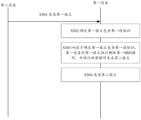
- FIG. 3 is a flow chart of a message processing method provided in an embodiment of the present application.
- FIG. 4 is a schematic diagram of another packet processing scenario provided by the embodiment of the present application.
- FIG. 5 is a schematic diagram of another packet processing scenario provided by the embodiment of the present application.
- FIG. 6 is a schematic diagram of a cross-domain message processing scenario provided by an embodiment of the present application.
- FIG. 7 is a flow chart of a method for identifying release segments provided by an embodiment of the present application.
- FIG. 8 is a schematic structural diagram of a message processing device provided in an embodiment of the present application.
- FIG. 9 is a schematic structural diagram of a release segment identification device provided by an embodiment of the present application.
- FIG. 10 is a schematic structural diagram of a communication device provided in an embodiment of the present application.
- FIG. 11 is a schematic structural diagram of another communication device provided by an embodiment of the present application.
- the packet processing process can be divided into several segments, and each segment is a specific processing behavior performed by a specific network device. Several segments are respectively executed by network devices on the message forwarding path to form the entire message processing process. Each segment has a corresponding segment identifier, or SID.
- a network device in an SRv6 network explicitly specifies the forwarding path of the packet by inserting a routing extension header SRH into the IPv6 packet, and adding the SIDs of all segments that the path passes through, that is, the SID List, in the SRH.
- nodes in the SRv6 network are divided into three roles: source node, transit node, and termination (Endpoint) node.
- a network node and a network device have the same meaning, and both refer to a switch, a router, a virtual routing device, a virtual forwarding device, or other forwarding devices.
- the source node is responsible for inserting the SRH extension header into the IPv6 header of the IPv6 message, or adding the IPv6 header outside the message and inserting the SRH extension header. This node introduces the packet flow into the SRv6 path defined by the Segment List in the SRH.
- the destination address of the IPv6 header can be set to the SID, and the SRH does not need to be inserted. Of course, SRH can also be inserted. If the Segment List contains multiple SIDs, the SRH needs to be inserted.
- the source node can be a host that generates SRv6 packets, or an edge device in an SRv6 domain.
- Transit node On the SRv6 path of the message, it does not participate in SRv6 processing, and only performs ordinary IPv6 message forwarding.
- the transit node can be a node that supports SRv6, or a node that does not support SRv6.
- Endpoint node performs SRv6-related processing on received SRv6 packets.
- the IPv6 destination address of the received SRv6 message must be the SID configured on the Endpoint node, and the node needs to process according to the SID instruction and update the SRH.
- SRv6 defines multiple types of SIDs. Different SIDs have different functions and indicate different forwarding actions. Among them, the SID is used to define a certain network function and represent a certain network command. SRv6SID adopts the form of IPv6 address. For example, End SID: used to identify a destination address prefix in the network. The forwarding action corresponding to the End SID is to reduce the value of SL in the SRH by 1, and take out the next SID from the SRH according to the SL and update it to the destination address of the IPv6 packet header, and then forward according to the IPv6 destination address lookup table.
- the SID of the Endpoint (endpoint with cross-connect to an array of layer-3adjacencies, End.X) cross-connected to the L3 adjacency array: used to identify a link in the network, the forwarding action corresponding to the End.X SID is based on The Layer 3 interface bound to the SID is forwarded to a specific next hop.
- SID additional behavior can change the forwarding behavior of SRv6 SID, so as to adapt to various business requirements.
- the supported SRv6SID additional behaviors include: ultimate segment pop of the SRH (USP), penultimate segment pop of the SRH (PSP), last hop decapsulation (ultimate segment decapsulation, USD), etc.
- USP ultimate segment pop of the SRH
- PSP penultimate segment pop of the SRH
- USD last hop decapsulation
- the SRH can be removed at the penultimate Endpoint node.
- the tail node does not need to check the SRH information, but only needs to search the Local SID table according to the destination IPv6 address for processing.
- the SRv6 node maintains a Local SID table, which records the SRv6SID generated by the node, as well as the operation instructions and forwarding information bound to the SRv6SID, such as virtual private network (virtual private network, VPN) instances, outgoing interfaces, and next hops.
- the SRv6 node After receiving the SRv6 message, the SRv6 node searches the Local SID table according to the SID in the message, and executes the forwarding action corresponding to the SID according to the search result.
- the packet encapsulation format of IPv6SR is: adding a new IPv6 basic header and SRH in front of the original data packet.
- FIG. 1 shows a schematic structural diagram of an SRv6 packet format.
- the packet header of the SRv6 packet includes an IPv6 packet header and an SRH.
- the IPv6 message header includes a version (Version) field, a traffic type (Traffic Type) field, a flow label (Flow Label) field, a payload length (Payload Length) field, a next message header (Next Header) field, and a hop count Limit (Hop Limit) field, source address (Source Address) field and destination address (Destination Address, DA) field.
- version (Version) field a traffic type (Traffic Type) field, a flow label (Flow Label) field, a payload length (Payload Length) field, a next message header (Next Header) field, and a hop count Limit (Hop Limit) field, source address (Source Address) field and destination address (Destination Address, DA) field.
- RRC Request for Comments
- SRH includes the next header (Next Header) field, header extension length (Hdr Ext Len) field, routing type (Routing Type) field, segment remaining (Segment Left) field, last index (Last Entry) field, mark ( Flags) field, tag (Tag) field and SID list.
- the meaning of each field can refer to the explanation in RFC8754.
- the SL field is also called the SL pointer. During the message forwarding process, the SL pointer points to each element in the SID list in turn, that is, with the different values of SL, segment[SL] is used to represent each element in the SID list .
- the SID list is composed of a plurality of elements segment list[0] to segment list[n] arranged in sequence, each element is a SID, and the length of each element is 128 bits.
- the SIDs in the SID list can be arranged from back to front, segment list[0] corresponds to the last executed segment, segment list[1] corresponds to the penultimate executed segment, and so on.
- the SRH includes the SL field.
- the head node of the forwarding path sets the value of the SL field to N minus 1 (N-1), where N is the SID included in the SID list quantity.
- N is the SID included in the SID list quantity.
- the network device corresponding to each SID in the SID list of the SRH that is, the endpoint node on the forwarding path, sequentially reduces the value of the SL field in the SRH of the packet by 1, that is, the value of the SL field The value is updated, and the segment list[SL] is copied to the DA field of the IPv6 header of the message, that is, the content of the DA field is updated.
- the application scenario includes an SRv6 network
- the SRv6 network includes network device A-network device E, wherein network device A is the source node, and network device E is the final destination node of the message.
- Network device C and network device E are Endpoint nodes, and network device B and network device D are transit nodes.
- the process of packet forwarding through the SRv6 path is as follows:
- the source address (Source Address, SA) in the IPv6 basic header is an address on node A
- node B After node B receives the message, it searches the routing table according to the destination address DA in the IPv6 header, and forwards the message to node C.
- node C After node C receives the message, it performs the following operations:
- node D After node D receives the message, it searches the routing table according to the destination address DA in the IPv6 header, and forwards the message to node E.
- the source node A when it encapsulates the SRH header, it may perform encapsulation in a reduced (Reduced) SRH manner.
- the encapsulated SRH header will not include the first segment identifier.
- the SRH header does not include the first SID (node C), but includes the second SID (node E).
- the End type SID supports PSP operation, so after receiving the message, node C can delete the SRH after updating the destination address DA in the IPv6 message header, so that when sending the message to node D, No need to carry SRH, reducing the waste of bandwidth resources.
- the SRH includes a binding segment identifier (binding SID, BSID), and the BSID will be bound to a SID list to indicate a forwarding path.
- binding SID binding SID
- the head node in the SR network receives a legal BSID, it will perform BSID-related operations.
- the defined BSID-related operations can be: according to the difference of the BSID function, Insert a new SRH header, or insert a new outer IPv6 header containing SRH.
- the bound segment identifier may include a segment identifier bound to an SRv6 policy (endpoint bound to an SRv6 policy, End.B6) type and an endpoint bound to an SR-MPLS policy (endpoint bound to an SR-MPLS policy , End.BM) type segment identification.
- End.B6 may include a segment identifier of type End.B6.Encaps and a segment identifier of type End.B6.Encaps.Red.
- the SRH of the SRv6 message sent by Node A to Node B includes the segment identifier x1 and the next segment Identify D, that is, SRH(D, x1).
- Node B reads the next segment identifier D from the SRH, and uses the segment identifier D to update the destination address in the header of the original IPv6 message.
- next hop is node C
- SRH(D, x1) is always carried in the message during the whole forwarding process.
- Node B When Node B is configured with the End.BM type binding segment identifier y1, after receiving the SRv6 message sent by Node A, Node B reads the next segment identifier D from the segment routing header SRH, and uses the segment identifier D updates the destination address in the original IPv6 packet header.
- the segment identifier x2 is the segment identifier of the End.B6.Encaps type configured on the B node, and the SRH of the SRv6 message sent by the A node to the B node includes the segment identifier x2 and the next segment identifier D, That is SRH(D, x2).
- Node B reads the next segment identifier D from the SRH, and uses the segment identifier D to update the destination address in the header of the original IPv6 message.
- the node B can look up the path information (B-P-C) to the device indicated by the segment identifier D from the routing table according to the segment identifier D, and then encapsulate an IPv6 header and an SRH according to the path information.
- the newly inserted SRH includes segment identifiers of node C and node P in turn, the source address of the newly encapsulated IPv6 message header is node B, and the destination address is node P.
- the node B sends the SRv6 message to the node P.
- the P node After receiving the SRv6 message, the P node reads the next segment identifier C from the segment routing header SRH, uses the segment identifier C to update the destination address in the outer IPv6 message header, and sends the message to node C.
- the P node can perform a PSP pop-up operation on the outbound SRH.
- the C node When the C node receives the message destination address as C, it will strip the IPv6
- the IPv6 packet header is forwarded, and the destination address of the inner layer IPv6 packet header is D.
- the PSP operation will not be performed on the SRH(D, x2), and the SRH(D, x2) will be carried on the B-P-C-D forwarding path.
- the segment identifier y2 is the segment identifier of the End.BM type configured on node B.
- node B After receiving the SRv6 message sent by node A, node B reads the next segment identifier D from the segment routing header SRH, and uses The segment identifier D updates the destination address in the original IPv6 packet header.
- node B can search the routing table for the path information (B-P-C) to the device indicated by the segment identifier D according to the segment identifier D, and repackage an MPLS label stack according to the path information, which includes formulating the MPLS path ( P, C).
- the node B sends the SRv6 message to the P node.
- the P node After receiving the SRv6 message, the P node sends the message to the node C according to the node specified in the MPLS label stack.
- node C receives the destination address of the packet as C, it strips the MPLS label and forwards the packet according to the inner IPv6 header whose destination address is D.
- the PSP operation will not be performed on the SRH(D,x2), and the SRH(D,x2) will be carried on the B-P-C-D forwarding path.
- the node where the currently defined binding segment identifier is located can encapsulate the received message carrying SRH, but is not allowed to perform pop-up operation on the received message carrying SRH, resulting in relatively high message transmission overhead. big.
- the message sent by node A to node D has only one final destination node D after specifying the source routing node except the node B where the BSID is located.
- the segment identifier x2 is the segment identifier of the End.B6.Insert type configured on node B.
- node B After receiving the SRv6 message sent by node A, node B reads the next segment from the segment routing header SRH Identify D, and determine the path information (P-C) of the device where the segment identifier D is located according to the segment identifier D, and add a new SRH between the original IPv6 packet header and the original SRH according to the path information, and add a new SRH to the new SRH A list of segment identifiers (C, P).
- Node B sends the message to Node P, and Node P reads the next segment identifier C from the outer SRH, uses the segment identifier C to update the destination address in the IPv6 message, and sends the updated message to Node C.
- node C After receiving the message, node C reads the segment identifier D from the inner SRH, and updates the destination address in the IPv6 message, so as to send the message to node D.
- the embodiment of the present application provides a message processing method, which is used to solve the problem of wasting bandwidth because the node where the segment identifier of a specific type is located cannot perform the pop-up operation of the segment routing header.
- the segment identifier x3 is the segment identifier of the End.B6.Encaps type configured on the B node, and the B node receives the SRv6 sent by the A node.
- the SL in the SRv6 message sent by node A to node B is still 1.
- this figure is a flow chart of a message transmission method provided in the embodiment of the present application. As shown in FIG. 3, the method may include:
- S301 The second device sends a first packet to the first device.
- the second device may send the first packet to the first device according to the destination address in the IPv6 header of the first packet, where the destination address in the IPv6 packet header is the first segment identifier corresponding to the first device.
- the first packet includes a first segment routing header SRH
- the first SRH may include one or more segment identifiers, and the one or more segment identifiers are used to indicate different segments for transmitting the first packet.
- the one or more segment identifiers may include the first segment identifier, or may not include the first segment identifier.
- the second device adopts the Reduced SRH mode to install the first SRH in the first message, the first SRH does not include the first segment identifier, but the destination address of the first message includes the first segment identifier.
- the second device may be a source node, a transit node or an Endpoint node.
- the second device When the second device is the source node, it may be the host that generates the first packet, or an edge device of the SRv6 network.
- the second device When the second device is an intermediate node, it only performs ordinary IPv6 message forwarding; when the second device is an Endpoint node, it performs SRv6-related processing on the received SRv6 message, and the segment identifier of the second device must be The destination address in the IPv6 header of the received SRv6 packet.
- the payload of the first packet is a packet generated by the second device, for example, the payload of the first packet is a user datagram protocol (user datagram protocol, UDP) header and a UDP payload.
- the payload of the first packet is a packet received by the second device, for example, the payload of the first packet may be an IPv4 packet, an IPv6 packet or an Ethernet packet.
- the second device When the second device is a source node, it will perform an SRH encapsulation operation on the obtained IPv6 message to obtain the first message, or when the second device is an Endpoint node, it will perform an update operation on the SRH to obtain the first message. Therefore, before the second device performs the encapsulation operation or updates the SRH, the first device will send the first segment identification and indication information to the second device, so that the second device can learn the segment identification and indication information of the first device.
- the indication information is used to indicate that the first device has the capability of performing the SRH deletion operation, and the indication information may include the Function part identified in the first segment, or the indication information is an additional behavior flavor corresponding to the identification in the first segment, or the indication information Part of the first paragraph tag itself.
- the first device may directly send the first identification and instruction information to the second device, or the first device may send the first identification and instruction information to the second device through the controller. Send the first identification and instruction information.
- the first device may also send the type of the first segment identifier to the second device, and the type of the first segment identifier may be a binding segment identifier, such as End.B6.Encaps, End.B6.Encaps.Red, End.B6.Encaps.Red, End .BM type.
- the type identified in the first paragraph is a predefined new type, for example, the predefined new types are End.B6.Encaps.DoD, End.B6.Encaps.Red.DOD, End.BM.DoD, where DoD means Delete on demand (delete on demand) the SRH header of the received message.
- the device to which the device generating the first message is connected when accessing the network and the device to which the device that finally receives the first message is connected to the network may be located in the same network domain or in different network domains.
- the network domain may be an autonomous system (autonomous system, AS) domain, an interior gateway protocol (interior gateway protocols, IGP) domain or a management domain.
- the management domain may include, for example, multiple AS domains, and the multiple AS domains are uniformly managed by the controller.
- the first device determines that the first packet includes the first segment identifier.
- the first device After receiving the first message, the first device will determine whether the first message includes the first segment identifier. If the first message includes the first segment identifier, the first device will The instruction performs a corresponding processing operation on the first packet. Specifically, the first device will determine whether the destination address in the first message is the first segment identification, if yes, it indicates that the first message is sent to the first device, then the first device will use the first segment identification command to perform the corresponding operation.
- the first device In response to determining that the first packet contains the first segment identifier, the first device performs an operation of deleting the first SRH on the first packet, and performs an encapsulation operation to generate a second packet.
- the first device When the first device determines that the first packet contains the first identifier, the first device deletes the first SRH in the first packet, and performs an encapsulation operation on the first packet to obtain the second packet.
- the first device may first perform a delete operation on the first SRH, and then perform an encapsulation operation on the first packet, or the first device may first perform an encapsulation operation on the first packet, and then perform a delete operation on the first SRH.
- the embodiments are not limited here.
- the first device When the first SRH also includes the second-segment identifier, before the first device deletes the first SRH, the first device will also read the second-segment identifier from the first-segment routing header, and update the first-segment identifier according to the second-segment identifier. Destination address in the message.
- the first device is Node B in Figure 2e.
- the node B will read the second segment identifier D from SRH(D, x2), and update the destination address in the IPv6 header to D.
- the second segment identifier is used to indicate the next segment of the first message to be transmitted.
- the encapsulation operation performed by the first device may include encapsulating the first packet header on the first packet to generate the second packet.
- the first packet header may be an IPv6 basic header, an IPv6 header including the second SRH, or an MPLS header, and the first packet header may include path information, so as to indicate the transmission path of the second packet through the path information.
- the first device encapsulates the IPv6 header including the second SRH in the outer layer of the first packet to generate the second packet.
- the second SRH includes multiple segment identifiers corresponding to the path information
- the source address of the first packet header is the address of the first device
- the destination address is the first segment identifier in the second SRH.
- the first device is node B in Figure 2e
- the determined path information is B-P-C
- the second SRH is (C, P).
- the first device When the type of the first segment identifier is End.BM or End.BM.DoD, the first device will encapsulate the MPLS header in the outer layer of the first message to generate the second message.
- the MPLS label stack of the MPLS header includes path information.
- the path information may be determined by the first device according to the first segment identifier, or when the first SRH includes the second segment identifier, the first device may determine it according to the second segment identifier.
- the corresponding relationship between the first segment identifier and the path information may be pre-configured on the first device. After the first device determines that the first packet includes the first segment identifier, it may obtain the first segment identifier and the above-mentioned corresponding relationship. path information. Alternatively, after reading the second identifier, the first device may use the second identifier as the destination address to search for path information from the routing table. That is, the first device may search for path information to the device where the second segment identifier is located by iterating the routing table.
- the first device determines the path information according to the second segment identifier and a pre-configured correspondence, where the correspondence includes the second segment identifier and the path information. That is, the first device can be pre-configured with a corresponding relationship, which is used to indicate the path information corresponding to the device where the second segment of identification is located.
- the first device reads the second segment of identification, according to the second segment of identification And the above corresponding relationship determines the path information, without routing iteration, and improves the packet forwarding efficiency.
- the second message further includes a second message header, and the destination address of the second message header is the second segment identifier.
- the second packet header is an IPv6 basic header, and is obtained by updating the IPv6 basic header in the first packet.
- the message sent by node B to node P is the second message
- S304 The first device sends the second packet.
- the first device After the first device generates the second message, it will forward the second message according to the first message header in the second message. Specifically, the first device sends the second packet to the device corresponding to the destination address in the header of the first packet.
- the second SRH may include a third segment identifier and a fourth segment identifier arranged in sequence, and the fourth segment identifier may be the last executed segment identifier among the plurality of segment identifiers included in the second SRH, and the third The instruction corresponding to the segment identifier is to perform an encapsulation operation, and the third segment identifier is the segment identifier of the third device.
- the first device sends the second packet to the third device.
- the first device receives the first packet sent by the second device, the first packet includes the first SRH and the first SRH includes the first segment identifier.
- the first segment identifier is a segment identifier corresponding to the first device, and the instruction corresponding to the first segment identifier is to perform an encapsulation operation.
- the first device After receiving the first packet sent by the second device, the first device will determine whether the first packet contains the first segment of the identifier.
- the first device After determining that the first packet contains the first segment identifier, the first device deletes the first SRH and performs an encapsulation operation to generate a second packet and send the second packet, wherein the second packet
- the first SRH is no longer included in the second packet, thereby reducing the bandwidth occupied by the second packet transmission and improving packet transmission efficiency. That is, in the embodiment of the present application, when the first device needs to perform an encapsulation operation, the function of deleting the segment routing header of the received message can be added as needed, so that the first device can delete the segment routing header in the message as needed, Reduce the occupation of bandwidth resources.
- the second device may be a host or a forwarding device, such as a router.
- the payload of the first packet is a packet generated by the second device.
- the payload of the first packet is a packet received by the second device.
- x is an SRv6BSID on Node B, for example, it can be End.B6.Encaps.DOD or End.B6.Encaps.Red.Dod type;
- y is the Another SRv6BSID, such as End.BM.DoD type, etc.
- the forwarding process of the message is as follows:
- Step 1 Node A sends a first packet to Node B.
- the segment identification information sent by node B is received before node A sends the first packet to node B.
- the segment identification information sent by Node B includes SID value (IPv6 address), segment identification type (such as End.B6.Encps, End.BM, etc.) and indication information.
- the indication information is used to indicate that the Node B has the ability to delete the segment routing header SRH in the received message as required.
- the indication information and the segment identifier can be combined into one field as one field.
- node A After receiving the segment identification information sent by node B, node A encapsulates the segment identification information in the obtained message, and uses the SID of node B as the destination node, thereby obtaining the first message.
- the payload in the first packet is a packet directly sent by node A, for example, may include a UDP header and a UDP payload.
- the payload in the first message is a message received by node A, which may be an IPv4 message, an IPv6 message or an Ethernet message.
- the SRH will not include the segment identifier of node B, but will include the segment identifier of node D, but the IPv6 basic header remains unchanged.
- Step 2 Node B reads the segment identifier D from the segment routing header SRH of the first message.
- Step 3 Node B updates the destination address in the IPv6 basic header in the first packet according to the segment identifier D.
- node B After node B receives the first message sent by node A, it reads the next segment identifier from the SRH of the first message, that is, the segment identifier D, and uses the destination address in the IPv6 basic header in the first message Update to segment ID D.
- Step 4 Node B obtains the path information to node D according to the segment identifier D.
- node B can know that the final destination node of the first message is node D by acquiring the segment identifier D, and obtain the path information to node D according to the segment identifier D.
- the node B may iterate the routing table according to the segment identifier D to obtain the path information, or the node B may obtain the path information according to the segment identifier D and the pre-configured correspondence between the path information and the segment identifier.
- pre-configuration is configured on Node B (segment identifier D: B-C), and when Node B obtains segment identifier D, it determines that the segment identifier D corresponds to B->C path information according to the above relationship.
- Step 5 Node B deletes the segment routing header SRH, and encapsulates the first message according to the path information to obtain the second message.
- the condition for deleting the SRH in the received message is to delete the SRH in the first message.
- the node B re-encapsulates the first packet according to the determined path information.
- MPLS label stack MPLS label stack
- Step 6 Node B sends the second packet to Node C.
- Step 7 Node C pops out the outer IPv6 basic header or the MPLS label stack in the second packet.
- Step 8 Node C sends the second message to node D according to the destination address in the inner IPv6 basic header in the second message.
- the nodes corresponding to the multiple segment identifiers that need to perform encapsulation operations are all configured with the SRH function that deletes received messages on demand to save transmission bandwidth .
- the SRH function that deletes received messages on demand to save transmission bandwidth.
- A.x is a certain SRv6BSID on node A, which can be the type of End.B6.Encaps or End.B6.Encaps.Red;
- A.y is a certain SRv6BSID on node A, which can be End.B6.Encaps or End.
- B.x is a certain SRv6BSID on node B, which can be the type of End.B6.Encaps or End.B6.Encaps.Red;
- B.y is a certain SRv6BSID on node B, which can be End.
- payload (Payload) is a message directly sent by host H1, for example, it can be UDP header + UDP Payload.
- Step 1 Node A receives the IPv6 packet sent by H1.
- the destination address of the IPv6 packet is A.x
- the A.x address is an SRv6BSID on node A.
- Node A encapsulates the message accordingly, and what is encapsulated is a tunnel starting from node A and ending at node D; the end point D of the tunnel can be determined when configuring A.x, or it can be determined by node A according to the received
- the next SID of the destination address of the message, namely H2 is determined through routing iteration; at the same time, node A updates the destination address in the IPv6 header to the next SID, namely H2.
- the encapsulation corresponding to the segment identifier A.x is an IPv6 basic header and an SRH header, wherein the SRH header specifies that the SID List is B.x and D, the source address of the IPv6 basic header is A, and the destination address is B.x.
- Step 2 Node B receives the destination address of the IPv6 message is B.x, and this B.x address is an SRv6BSID on Node B; Node B encapsulates the message accordingly, and the encapsulated is a node B as the starting point and Node C as the end point The tunnel; the end point C of the tunnel can be determined when B.x is configured, or it can be determined by node B through routing iteration according to the next SID of the destination address of the received message, that is, D; at the same time, node B converts IPv6
- node B Since there is only one D after the SID of B.x, which meets the condition of deleting the SRH in the received message on demand, node B will also delete the SRH in the received IPv6 message on demand, and then encapsulate it after deleting .
- Step 3 After node C receives the IPv6 message, it strips the outermost IPv6 basic header and forwards it according to the inner layer IPv6 basic header.
- the destination address of the inner layer message header is D.
- Step 4 After node D receives the IPv6 message, it strips the outermost IPv6 basic header, and forwards the message according to the inner layer IPv6 basic header.
- the destination address of the inner layer message header is H2. Say it is the transit node of this message.
- Step 1 Node A receives the destination address of the IPv6 message as A.y, and this A.y address is an SRv6BSID on node A (encapsulation operation is required); node A encapsulates the message accordingly, and what is encapsulated is an SRv6BSID with node A as The starting point is a tunnel with node D as the end point; the end point D of the tunnel can be determined when A.y is configured, or it can be determined by node A according to the next SID of the destination address of the received message, which is H2; at the same time, node A updates the destination address in the IPv6 header to the next SID, namely H2.
- node A Since there is only one H2 after the SID of A.y, which meets the condition of deleting the SRH in the received message on demand, node A will delete the SRH (H2, A.y) in the received IPv6 message on demand, and delete Then package it.
- the encapsulation corresponding to the segment identifier A.y is an IPv6 basic header and an SRH header, wherein the SRH header specifies the SID List as B.y and D, and the destination address as B.y. After the packet is encapsulated, node A sends the packet to node B.
- Step 2 Node B receives the IPv6 message, the destination address of the IPv6 message is B.y, and this B.y address is an SRv6BSID on B (encapsulation operation needs to be performed); Node B encapsulates the message accordingly, and the encapsulated is A tunnel with B as the starting point and C as the end point; the end point C of the tunnel can be determined when B.y is configured, or can be determined by node B according to the next SID of the destination address of the received message, which is D; At the same time, node B updates the destination address in the IPv6 basic header to the next SID, namely D.
- Node B Since there is only one D after the SID of B.y, which meets the condition of deleting the SRH in the received message on demand, node B will delete the SRH in the received IPv6 message on demand, and then encapsulate after deletion.
- Node B encapsulation is an MPLS label stack (C). After the packet is encapsulated, node B sends the packet to node C.
- Step 3 Node C receives the IPv6 message, strips the outermost MPLS label stack of the IPv6 message, and forwards it according to the IPv6 header of the message.
- the destination address of the message is D. For C, Say it is the transit node of this message.
- Step 4 Node D receives the IPv6 message, strips the IPv6 basic header of the outermost layer of the IPv6 message, and forwards it according to the IPv6 basic header of the message.
- the destination address of the message is H2, for For D, it is the transit node of this message.
- the device connected when the source node accesses the network and the device connected when the destination node accesses the network are respectively located in different network domains.
- the network domain may be an autonomous system AS domain, an interior gateway protocol IGP domain or a management domain.
- the management domain may include, for example, multiple AS domains, and the multiple AS domains are uniformly managed by the controller. For example, in the application scenario shown in Figure 6, host H1 accesses the network through node A, node A and node B belong to IGP domain 1, host H2 accesses the network through node C, and node C and node D belong to IGP domain 2.
- the domain composed of node A and node B can run the intermediate system-to-intermediate system (IS-IS) protocol, and the domain composed of node C and node D can run open shortest path first (open shortest path first).
- OSPF intermediate system-to-intermediate system
- BGP border gateway protocol
- IGP IGP protocols
- segment identifier A.x is an SRv6BSID on node A, which can be End.B6.Encaps or End.B6.Encaps.Red type
- segment identifier A.y is another SRv6BSID on node A, which can be End.BM type
- Payload It is a message directly sent by host H1, for example, it can be UDP header + UDP Payload.
- Step 1 Node A receives the IPv6 message sent by H1, the destination address in the message is A.x, and the A.x address is an SRv6BSID on node A (encapsulation operation is required).
- Node A encapsulates the message accordingly, and what is encapsulated is a tunnel with A as the starting point and D as the end point; the end point D of the tunnel can be determined when configuring A.x, or it can be determined by node A according to the received message It is determined by the next SID of the destination address, namely H2; at the same time, node A updates the destination address in the IPv6 header to the next SID, namely H2.
- node A When node A encapsulates the received message, there is only one H2 after A.x, which meets the condition of deleting the SRH in the received message on demand, then node A will encapsulate the SRH (H2, A.x ) to be deleted on demand, and then encapsulated after deletion.
- the encapsulation corresponding to the segment identifier A.x is an IPv6 basic header and an SRH header, wherein the SRH header specifies SID List as B, C and D, the source address of the IPv6 basic header is A, and the destination address is B.
- Step 2 Node B receives the IPv6 message sent by node A.
- the destination address of the IPv6 message is B.
- the destination address B can be a SID of type End or End.X configured on node B; node B will read Take the next SID in the SID List, which is C, update the destination address in the outer IPv6 header to C, and send the updated IPv6 message to node C.
- Step 3 Node C receives the IPv6 message sent by node B, the destination address of the IPv6 message is C, for example, the destination address C can be a SID of type End or End.X configured on node C; node C will read Take the next SID in the SID List, which is D, update the destination address in the outer IPv6 header to D, and send the updated IPv6 message to node D.
- node C since node C is configured with a SID of type End or End.X, and there is only one D after C in the SRH, node C can perform a PSP eject operation on the SRH. Therefore, the IPv6 message sent by node C to node D does not include the SRH.
- Step 4 After node D receives the message sent by node C, the destination address of the IPv6 message is D, then node D strips the outermost IPv6 header and forwards it according to the inner IPv6 header.
- the destination address of the inner layer IPv6 header is H2, which is the transit node of the message for D, and node D sends the message to the H2 node according to the destination address H2 of the inner layer message.
- Step 1 Node A receives the IPv6 message sent by H1, the destination address in the message is A.y, and this A.y address is an SRv6BSID on node A (encapsulation operation is required); node A encapsulates the message accordingly , what is encapsulated is a tunnel with A as the starting point and D as the end point; the end point D of the tunnel can be determined when A.y is configured, or it can be the next SID of node A according to the destination address of the received message, that is, H2 and determined; at the same time, node A updates the destination address in the IPv6 header to the next SID, that is, H2.
- node A When node A encapsulates the received message, there is only one H2 after A.y, which meets the condition of deleting the SRH in the received message on demand, then node A will encapsulate the SRH (H2, A.y) in the received IPv6 message ) to be deleted on demand, and then encapsulated after deletion.
- the encapsulation corresponding to the segment identifier A.y is an MPLS label stack, and the label switch path (label switch path, LSP) represented by the MPLS label stack will pass through B, C, and D in sequence.
- Step 2 After receiving the MPLS message, node B sends it to node C along the path of the LSP according to the label stack.
- Step 3 Node C receives the MPLS message, and sends it to node D along the path of the LSP according to the label stack.
- Step 4 Node D receives the MPLS message, strips the MPLS label stack in the message, and forwards the message according to the inner layer IPv6 header; the destination address of the inner layer IPv6 header is H2, which is this for D The transit node of the message, the node D sends the message to the H2 node according to the destination address H2 of the inner message.
- this figure is a flow chart of a method for publishing a segment identifier provided in an embodiment of the present application. As shown in FIG. 7, the method may include:
- S701 The first device acquires the first segment of identification.
- the first device may generate a first segment identifier locally, where the first segment identifier corresponds to the first device and is used to indicate that the first device has the capability of performing an SRH deletion operation.
- the first segment identifier may be a segment identifier of type End.B6, or a segment identifier of type End.BM.
- the first segment identifier is a segment identifier of type End.B6.Dod, or a segment identifier of type End.BM.Dod.
- the first device When the first device acquires the first segment identifier, it may also acquire indication information corresponding to the first segment identifier, where the indication information is used to indicate that the segment (first device) corresponding to the first segment identifier has the ability to perform the delete SRH deletion operation. ability.
- the indication information may include the Function part identified in the first paragraph, or the indication information is an additional behavior flavor corresponding to the first paragraph identification, or the indication information is a part of the first paragraph identification.
- the indication information may include the Function part identified in the first paragraph, or the indication information is an additional behavior flavor corresponding to the first paragraph identification, or the indication information is a part of the first paragraph identification.
- S702 The first device sends the first identifier to the second device.
- the first device After the first device obtains the first segment of identification, it will send the first segment of identification to the second device, so that the second device will encapsulate the first segment of identification into the corresponding message, and then when the message is forwarded to the second If there is one device, the first device may delete the SRH in the message according to the indication of the first segment identifier. Wherein, the second device may encapsulate the first segment identifier into the destination address of the packet, or encapsulate the first segment identifier into the SRH of the packet. At the same time, the first device may also send indication information corresponding to the first segment identifier to the second device.
- the first device may directly send the first identification and indication information to the second device, or send the first identification and indication information to the second device through the controller.
- embodiments of the present application provide a message processing device, a release segment identification device, and a network device, which will be described below with reference to the accompanying drawings.
- FIG. 8 this figure is a schematic structural diagram of a message processing device provided by an embodiment of the present application. As shown in FIG. 8 , the device can realize the function of the first device in the above-mentioned method embodiment.
- a unit 801 a determining unit 802 , a generating unit 803 and a sending unit 804 .
- the receiving unit 801 is configured to receive a first packet sent by the second device, where the first packet includes a first segment routing header SRH.
- a determining unit 802 configured to determine that the first packet includes a first segment identifier, where the first segment identifier is a segment identifier corresponding to the first device. For the specific implementation of the determining unit 802, reference may be made to the related description of S302.
- the generating unit 803 is configured to, in response to determining that the first packet contains the first segment identifier, perform an operation of deleting the first SRH on the first packet, and perform an encapsulation operation to generate a second packet.
- the generating unit 803 reference may be made to the related description of S303.
- the generating unit 803 is specifically configured to determine that the remaining SL in the first SRH is equal to 1 or the updated SL is equal to 0; in response to determining that the first packet contains the An identifier and the SL is equal to 1 or the updated SL is equal to 0, the first SRH is deleted for the first message, and an encapsulation operation is performed to generate a second message.
- the type of the first segment identifier is a binding segment identifier.
- the first segment identifier is a segment identifier of the End.B6 type bound to the SRv6 policy, or a segment identifier of the End.BM type bound to the SR-MPLS policy.
- the first segment identifier is an endpoint End.B6.Dod type segment identifier for on-demand deletion of an endpoint bound to an SRv6 policy, or an on-demand deletion of an endpoint bound to an SR-MPLS policy
- the generating unit 803 is specifically configured to delete the first SRH in the first packet, and encapsulate the first packet header in the first packet to generate the Describe the second message.
- the first packet header is an Internet Protocol Version 6 IPv6 basic header, an IPv6 header including the second SRH, or a Multiprotocol Label Switching MPLS header.
- the first packet header includes path information, and the path information is used to indicate a transmission path of the second packet.
- the path information corresponds to the first segment identifier.
- the first SRH includes a second segment identifier
- the second segment identifier is used to indicate the next segment to transmit the first packet
- the path information is related to the second segment identifier. Segment ID corresponds.
- the second packet further includes a second packet header, and a destination address of the second packet header is identified by the second segment.
- the segment identifier list in the second SRH includes the path information, or the label stack of the MPLS header includes the path information.
- the second device is a host
- the payload of the first packet is a packet generated by the second device
- the second device is a forwarding device
- the first A message payload is a message received by the second device.
- the device to which the device that generates the first message is connected to the network and the device that is connected to the network when the device that finally receives the first message belongs to a different network domain .
- the device further includes: a sending unit;
- the sending unit is configured to send the first segment identifier and indication information to the second device, where the indication information is used to indicate that the first device is capable of performing an SRH deletion operation.
- the sending unit For the specific implementation of the sending unit, reference may be made to the related description of S301 above.
- the indication information is included in the Function part of the first segment identifier, or the indication information is an additional behavior flavor corresponding to the first segment identifier.
- this figure is a structural diagram of an apparatus for publishing a segment identifier provided in an embodiment of the present application.
- the apparatus 900 can realize the functions of the above-mentioned first device, and the apparatus may include: an acquisition unit 901 and Sending unit 902.
- the acquiring unit 901 is configured to acquire a first segment identifier, where the first segment identifier corresponds to the first device, and is used to indicate that the first device has a capability of performing an SRH deletion operation.
- the acquiring unit 901 reference may be made to the related description of S701 above.
- the sending unit 902 is configured to send the first segment identifier to the second device, so that the second device encapsulates the first segment identifier into a corresponding packet.
- the sending unit 902 reference may be made to the related description of S702 above.
- the sending unit is further configured to send indication information corresponding to the first segment identifier to the second device, where the indication information is used to indicate that the segment corresponding to the first segment identifier has the ability to perform an SRH deletion operation Ability.
- the indication information includes the Function part of the first paragraph identification, or the indication information is an additional behavior flavor corresponding to the first paragraph identification, or the indication information is a part of the first paragraph identification.
- the sending unit 902 is specifically configured to send the first segment identifier to the second device through the controller.
- the first segment identifier is a segment identifier of type End.B6, or a segment identifier of type End.BM.
- the first segment identifier is a segment identifier of type End.B6.Dod, or a segment identifier of type End.BM.Dod.
- Fig. 10 is a schematic structural diagram of a communication device provided by an embodiment of the present application.
- the communication device may be, for example, the first device, the second device, or the third device in the method embodiment, or it may be the embodiment shown in Fig. 8
- the device implementation of the device 800 in the embodiment shown in FIG. 9 may also be the device realization of the device 900 in the embodiment shown in FIG. 9 .
- the communication device 1000 includes at least a processor 1010 .
- the communication device 1000 may also include a communication interface 1020 and a memory 1030 .
- the number of processors 1010 in the communication device 1000 may be one or more, and one processor is taken as an example in FIG. 10 .
- the processor 1010, the communication interface 1020, and the memory 1030 may be connected through a bus system or other methods, wherein, in FIG. 10 , connection through a bus system 1040 is taken as an example.
- the processor 1010 may be a CPU, an NP, or a combination of a CPU and an NP.
- the processor 1010 may further include a hardware chip.
- the aforementioned hardware chip may be an application-specific integrated circuit (application-specific integrated circuit, ASIC), a programmable logic device (programmable logic device, PLD) or a combination thereof.
- the aforementioned PLD may be a complex programmable logic device (complex programmable logic device, CPLD), a field-programmable gate array (field-programmable gate array, FPGA), a general array logic (generic array logic, GAL) or any combination thereof.
- the processor 1010 may perform an operation of deleting the first SRH on the first packet in the above method example, and perform related functions such as an encapsulation operation.
- the communication interface 1020 is used to receive and send packets, specifically, the communication interface 1020 may include a receiving interface and a sending interface. Wherein, the receiving interface may be used to receive messages, and the sending interface may be used to send messages.
- the number of communication interfaces 1020 may be one or more.
- the memory 1030 may include a volatile memory (English: volatile memory), such as a random-access memory (random-access memory, RAM); the memory 1030 may also include a non-volatile memory (English: non-volatile memory), such as a fast Flash memory (English: flash memory), hard disk (hard disk drive, HDD) or solid-state drive (solid-state drive, SSD); the memory 1030 may also include a combination of the above types of memory.
- volatile memory such as a random-access memory (random-access memory, RAM)
- non-volatile memory such as a fast Flash memory (English: flash memory), hard disk (hard disk drive, HDD) or solid-state drive (solid-state drive, SSD)
- the memory 1030 may also include a combination of the above types of memory.
- the memory 1030 stores operating systems and programs, executable modules or data structures, or their subsets, or their extended sets, where the programs may include various operating instructions for implementing various operations.
- the operating system may include various system programs for implementing various basic services and processing hardware-based tasks.
- the processor 1010 can read the program in the memory 1030 to implement the message processing method provided in the embodiment of the present application.
- the memory 1030 may be a storage device in the communication device 1000 , or may be a storage device independent of the communication device 1000 .
- the bus system 1040 may be a peripheral component interconnect standard (peripheral component interconnect, PCI) bus or an extended industry standard architecture (extended industry standard architecture, EISA) bus or the like.
- PCI peripheral component interconnect
- EISA extended industry standard architecture
- the bus system 1040 can be divided into address bus, data bus, control bus and so on. For ease of representation, only one thick line is used in FIG. 10 , but it does not mean that there is only one bus or one type of bus.
- FIG. 11 is a schematic structural diagram of another communication device 1100 provided by the embodiment of the present application.
- the communication device may be, for example, the first device, the second device, or the third device in the method embodiment, or it may also be the communication device shown in FIG. 8
- the communication device 1100 includes: a main control board 1110 and an interface board 1130 .
- the main control board 1110 is also called a main processing unit (main processing unit, MPU) or a route processing card (route processor card). Equipment maintenance, protocol processing functions.
- the main control board 1110 includes: a CPU 1111 and a memory 1112 .
- the interface board 1130 is also called a line interface unit card (line processing unit, LPU), a line card (line card), or a service board.
- the interface board 1130 is used to provide various service interfaces and implement data packet forwarding.
- the service interface includes but is not limited to an Ethernet interface, a POS (Packet over SONET/SDH) interface, etc., and the Ethernet interface is, for example, a flexible Ethernet service interface (Flexible Ethernet Clients, FlexE Clients).
- the interface board 1130 includes: a central processing unit 1131 , a network processor 1132 , a forwarding entry storage 1134 and a physical interface card (ph8sical interface card, PIC) 1133 .
- the CPU 1131 on the interface board 1130 is used to control and manage the interface board 1130 and communicate with the CPU 1111 on the main control board 1110 .
- the network processor 1132 is configured to implement message forwarding processing.
- the form of the network processor 1132 may be a forwarding chip.
- the processing of the uplink message includes: processing of the inbound interface of the message, lookup of the forwarding table; processing of the downlink message: lookup of the forwarding table, and so on.
- the physical interface card 1133 is used to realize the interconnection function of the physical layer, through which the original traffic enters the interface board 1130 , and the processed packets are sent out from the physical interface card 1133 .
- the physical interface card 1133 includes at least one physical interface, which is also called a physical port.
- the physical interface card 1133 is also called a daughter card, which can be installed on the interface board 1130, and is responsible for converting the photoelectric signal into a message, checking the validity of the message and forwarding it to the network processor 1132 for processing.
- the central processing unit 1131 of the interface board 1103 can also execute the functions of the network processor 1132 , such as implementing software forwarding based on a general-purpose CPU, so that the physical interface card 1133 does not need the network processor 1132 .
- the communication device 1100 includes multiple interface boards.
- the communication device 1100 further includes an interface board 1140
- the interface board 1140 includes: a central processing unit 1141 , a network processor 1142 , a forwarding entry storage 1144 and a physical interface card 1143 .
- the communications device 1100 further includes a switching fabric unit 1120 .
- the SFU 1120 may also be called a SFU (switch fabric unit, SFU).
- SFU switch fabric unit
- the SFU board 1120 is used to complete the data exchange between the interface boards.
- the interface board 1130 and the interface board 1140 may communicate through the switching fabric board 1120 .
- the main control board 1110 is coupled to the interface board 1130 .
- the main control board 1110, the interface board 1130, the interface board 1140, and the switching fabric board 1120 are connected to the system backplane through the system bus to implement intercommunication.
- an inter-process communication protocol IPC
- IPC inter-process communication
- the communication device 1100 includes a control plane and a forwarding plane.
- the control plane includes a main control board 1110 and a central processing unit 1131.
- the forwarding plane includes various components for performing forwarding, such as a forwarding entry storage 1134, a physical interface card 1133, and a network processing device 1132.
- the control plane executes routers, generates forwarding tables, processes signaling and protocol packets, configures and maintains device status, and other functions.
- the control plane sends the generated forwarding tables to the forwarding plane.
- the network processor 1132 The issued forwarding table looks up and forwards the packets received by the physical interface card 1133 .
- the forwarding table issued by the control plane may be stored in the forwarding table item storage 1134 . In some embodiments, the control plane and the forwarding plane can be completely separated and not on the same device.
- the sending unit and the receiving unit in the embodiment shown in FIG. 8 may be different physical interface cards, for example, the receiving unit 801 is equivalent to the physical interface card 1133 , and the sending unit 804 is equivalent to the physical interface card 1134 .
- the determining unit 802 or the generating unit 803 in the apparatus 800 may be equivalent to one or more of the central processing unit 1111 , the central processing unit 1131 , and the central processing unit 1141 in the communication device 1100 .
- the operations on the interface board 1140 in the embodiment of the present application are consistent with the operations on the interface board 1130 , and are not repeated for brevity.
- the communication device 1100 in this embodiment may correspond to the address requesting device or address assignment in each of the foregoing method embodiments, and the main control board 1110, the interface board 1130 and/or the interface board 1140 in the communication device 1100 may implement the above-mentioned
- the functions of the first device, the second device, or the third device in each method embodiment have functions and/or various steps implemented, and are not repeated here.
- main control boards there may be one or more main control boards, and when there are multiple main control boards, it may include an active main control board and a standby main control board.
- the communication device can have at least one SFU, and the data exchange between multiple interface boards can be realized through the SFU to provide large-capacity data exchange and processing capabilities. Therefore, the data access and processing capabilities of communication devices with a distributed architecture are greater than those with a centralized architecture.
- the form of the communication device can also be that there is only one board, that is, there is no switching fabric board, and the functions of the interface board and the main control board are integrated on this board.
- the central processing unit and the main control board on the interface board The central processing unit on the board can be combined into one central processing unit on the board to perform the superimposed functions of the two.
- This form of equipment has low data exchange and processing capabilities (for example, low-end switches or routers, etc.) equipment). Which architecture to use depends on the specific networking deployment scenario.
- the foregoing first device, second device, or third device may be implemented as a virtualization device.
- the virtualization device may be a virtual machine (English: Virtual Machine, VM) running a program for sending packets, and the virtual machine is deployed on a hardware device (for example, a physical server).
- a virtual machine refers to a complete computer system that is simulated by software and has complete hardware system functions and runs in a completely isolated environment.
- the virtual machine can be configured as the first device and the second device.
- the first device and the second device may be implemented based on a common physical server combined with a Network Functions Virtualization (Network Functions Virtualization, NFV) technology.
- the first device and the second device are virtual hosts, virtual routers or virtual switches. Those skilled in the art can combine the NFV technology to virtualize the first device, the second device or the third device with the above-mentioned functions on a general physical server by reading this application, which will not be repeated here.
- the embodiment of the present application also provides a chip, including a processor and an interface circuit, the interface circuit is used to receive instructions and transmit them to the processor; the processor, for example, can be a specific implementation form of the device 800 shown in FIG. 8 , which can be used to execute the method of obtaining the address prefix above.
- the processor is coupled with a memory, and the memory is used to store a program or an instruction, and when the program or instruction is executed by the processor, the system-on-a-chip implements the method in any one of the above method embodiments.
- processors in the chip system there may be one or more processors in the chip system.
- the processor can be realized by hardware or by software.
- the processor may be a logic circuit, an integrated circuit, or the like.
- the processor may be a general-purpose processor implemented by reading software codes stored in a memory.
- the memory can be integrated with the processor, or can be set separately from the processor, which is not limited in this application.
- the memory can be a non-transitory processor, such as a read-only memory ROM, which can be integrated with the processor on the same chip, or can be respectively arranged on different chips.
- the setting method of the processor is not specifically limited.
- the chip system may be a field programmable gate array (field programmable gate array, FPGA), an application specific integrated circuit (ASIC), or a system on chip (SoC), It can also be a central processing unit (central processor unit, CPU), it can also be a network processor (network processor, NP), it can also be a digital signal processing circuit (digital signal processor, DSP), it can also be a microcontroller (micro controller unit, MCU), and can also be a programmable logic device (programmable logic device, PLD) or other integrated chips.
- FPGA field programmable gate array
- ASIC application specific integrated circuit
- SoC system on chip
- An embodiment of the present application also provides a packet processing system, and the system includes: a first device and a second device.
- the second device is configured to send a first packet to the first device, where the first packet includes the first SRH; and the first device is configured to execute the packet processing method described in FIG. 3 .
- the first device is further configured to execute the method for publishing a segment identifier described in FIG. 7 .
- the embodiment of the present application also provides a computer-readable storage medium, including an instruction or a computer program, which, when run on a computer, causes the computer to execute the method for processing a message or the method for issuing a segment identifier provided in the above embodiments.
- the embodiment of the present application also provides a computer program product including an instruction or a computer program, which, when run on a computer, causes the computer to execute the method for processing a message or the method for issuing a segment identifier provided in the above embodiments.
- the embodiment of the present application also provides a chip, including a memory and a processor.
- Memory is used to store instructions or program codes.
- the processor is used to call and run the instruction or program code from the memory, so as to execute the message processing method; or, the processor executes the method for issuing segment identifiers.
- the embodiment of the present application also provides a chip.
- the chip includes a processor but does not include a memory.
- the processor is used to read and execute instructions or program codes stored in the memory outside the chip. When the instructions or program codes are executed When, the processor executes the message processing method; or, the processor executes the method for issuing segment identifiers.
- the disclosed system, device and method can be implemented in other ways.
- the device embodiments described above are only illustrative.
- the division of units is only a logical business division. In actual implementation, there may be other division methods.
- multiple units or components can be combined or integrated. to another system, or some features may be ignored, or not implemented.
- the mutual coupling or direct coupling or communication connection shown or discussed may be through some interfaces, and the indirect coupling or communication connection of devices or units may be in electrical, mechanical or other forms.
- a unit described as a separate component may or may not be physically separated, and a component displayed as a unit may or may not be a physical unit, that is, it may be located in one place, or may be distributed to multiple network units. Part or all of the units can be selected according to actual needs to achieve the purpose of the solution of this embodiment.
- each business unit in each embodiment of the present application may be integrated into one processing unit, each unit may exist separately physically, or two or more units may be integrated into one unit.
- the above-mentioned integrated units can be implemented in the form of hardware or in the form of software business units.
- the integrated unit is realized in the form of a software business unit and sold or used as an independent product, it can be stored in a computer-readable storage medium.
- the technical solution of the present application is essentially or part of the contribution to the prior art or all or part of the technical solution can be embodied in the form of a software product, and the computer software product is stored in a storage medium , including several instructions to make a computer device (which may be a personal computer, a server, or a network device, etc.) execute all or part of the steps of the methods in various embodiments of the present application.
- the aforementioned storage media include: U disk, mobile hard disk, read-only memory (ROM, Read-Only Memory), random access memory (RAM, Random Access Memory), magnetic disk or optical disc, etc., which can store program codes. .
- the services described in the present invention may be implemented by hardware, software, firmware or any combination thereof.
- the services may be stored on or transmitted over as one or more instructions or code on a computer-readable medium.
- Computer-readable media includes both computer storage media and communication media including any medium that facilitates transfer of a computer program from one place to another.
- a storage media may be any available media that can be accessed by a general purpose or special purpose computer.
Landscapes
- Engineering & Computer Science (AREA)
- Computer Networks & Wireless Communication (AREA)
- Signal Processing (AREA)
- Computer Security & Cryptography (AREA)
- Data Exchanges In Wide-Area Networks (AREA)
Abstract
La présente invention concerne un procédé de traitement de paquets. Un second dispositif envoie un premier paquet à un premier dispositif, le premier paquet comprenant un premier en-tête de routage de segment (SRH) ; après avoir reçu le premier paquet envoyé par le second dispositif, le premier dispositif détermine si le premier paquet comprend un premier identificateur de segment ; et lorsqu'il est déterminé que le premier paquet comprend le premier identificateur de segment, le premier dispositif supprime le premier SRH, exécute une opération d'encapsulation pour générer un second paquet, et transmet le second paquet. En d'autres termes, lorsqu'une fonction ou une instruction correspondant au premier identificateur de segment est : l'exécution d'une opération d'encapsulation, le premier dispositif peut supprimer le premier SRH dans le premier paquet en fonction d'une situation réelle après réception du premier paquet, et exécuter l'opération d'encapsulation pour générer un deuxième paquet, dans lequel le deuxième paquet ne comprend pas le premier SRH. Par conséquent, la largeur de bande occupée par la transmission du deuxième paquet est réduite et l'efficacité de la transmission des paquets est améliorée.
Priority Applications (2)
| Application Number | Priority Date | Filing Date | Title |
|---|---|---|---|
| EP22894682.8A EP4418634A4 (fr) | 2021-11-17 | 2022-11-09 | Procédé, appareil et dispositif de traitement de paquets |
| US18/663,207 US20240297844A1 (en) | 2021-11-17 | 2024-05-14 | Packet Processing Method and Apparatus, and Device |
Applications Claiming Priority (2)
| Application Number | Priority Date | Filing Date | Title |
|---|---|---|---|
| CN202111367033.6A CN116137632A (zh) | 2021-11-17 | 2021-11-17 | 一种报文处理方法、装置及设备 |
| CN202111367033.6 | 2021-11-17 |
Related Child Applications (1)
| Application Number | Title | Priority Date | Filing Date |
|---|---|---|---|
| US18/663,207 Continuation US20240297844A1 (en) | 2021-11-17 | 2024-05-14 | Packet Processing Method and Apparatus, and Device |
Publications (1)
| Publication Number | Publication Date |
|---|---|
| WO2023088145A1 true WO2023088145A1 (fr) | 2023-05-25 |
Family
ID=86334176
Family Applications (1)
| Application Number | Title | Priority Date | Filing Date |
|---|---|---|---|
| PCT/CN2022/130827 Ceased WO2023088145A1 (fr) | 2021-11-17 | 2022-11-09 | Procédé, appareil et dispositif de traitement de paquets |
Country Status (4)
| Country | Link |
|---|---|
| US (1) | US20240297844A1 (fr) |
| EP (1) | EP4418634A4 (fr) |
| CN (1) | CN116137632A (fr) |
| WO (1) | WO2023088145A1 (fr) |
Cited By (1)
| Publication number | Priority date | Publication date | Assignee | Title |
|---|---|---|---|---|
| WO2024250941A1 (fr) * | 2023-06-05 | 2024-12-12 | 大唐移动通信设备有限公司 | Procédé de transfert de paquets de données srv6, appareil et support de stockage |
Families Citing this family (2)
| Publication number | Priority date | Publication date | Assignee | Title |
|---|---|---|---|---|
| US20250030630A1 (en) * | 2022-06-28 | 2025-01-23 | New H3C Technologies Co., Ltd. | Packet processing |
| KR20240054840A (ko) * | 2022-10-19 | 2024-04-26 | 한국전자통신연구원 | 통신 시스템에서 세그먼트 라우팅의 선택적 바인딩 세그먼트를 기반으로 동적 네트워크 프로그래밍을 제공하기 위한 장치 및 방법 |
Citations (5)
| Publication number | Priority date | Publication date | Assignee | Title |
|---|---|---|---|---|
| CN105871721A (zh) * | 2015-01-19 | 2016-08-17 | 中兴通讯股份有限公司 | 一种段路由处理方法、处理装置及发送装置 |
| CN109561021A (zh) * | 2017-09-25 | 2019-04-02 | 华为技术有限公司 | 一种报文转发的方法及网络设备 |
| US20190104058A1 (en) * | 2017-10-04 | 2019-04-04 | Cisco Technology, Inc. | Segment Routing Network Processing of Packets including Operations Signaling and Processing of Packets in Manners Providing Processing and/or Memory Efficiencies |
| CN110557329A (zh) * | 2018-05-30 | 2019-12-10 | 中兴通讯股份有限公司 | 一种报文转发的方法、装置和节点 |
| CN112787927A (zh) * | 2021-03-26 | 2021-05-11 | 新华三信息安全技术有限公司 | 一种分段路由报文转发方法、装置及预设逻辑电路单元 |
Family Cites Families (6)
| Publication number | Priority date | Publication date | Assignee | Title |
|---|---|---|---|---|
| US10506083B2 (en) * | 2017-06-27 | 2019-12-10 | Cisco Technology, Inc. | Segment routing gateway storing segment routing encapsulating header used in encapsulating and forwarding of returned native packet |
| US10454822B2 (en) * | 2017-07-27 | 2019-10-22 | Cisco Technology, Inc. | Full-path validation in segment routing |
| US10574563B2 (en) * | 2018-01-26 | 2020-02-25 | Cisco Technology, Inc. | Seamless bidirectional forwarding detection discriminator based return path determination |
| US11019075B2 (en) * | 2018-06-26 | 2021-05-25 | Cisco Technology, Inc. | Providing processing and network efficiencies in protecting internet protocol version 6 segment routing packets and functions using security segment identifiers |
| WO2020048493A1 (fr) * | 2018-09-05 | 2020-03-12 | Huawei Technologies Co., Ltd. | Routage de segments dans un réseau mpls |
| US11134002B2 (en) * | 2018-10-22 | 2021-09-28 | Cisco Technology, Inc. | Packet network interworking including segment routing |
-
2021
- 2021-11-17 CN CN202111367033.6A patent/CN116137632A/zh active Pending
-
2022
- 2022-11-09 WO PCT/CN2022/130827 patent/WO2023088145A1/fr not_active Ceased
- 2022-11-09 EP EP22894682.8A patent/EP4418634A4/fr active Pending
-
2024
- 2024-05-14 US US18/663,207 patent/US20240297844A1/en active Pending
Patent Citations (5)
| Publication number | Priority date | Publication date | Assignee | Title |
|---|---|---|---|---|
| CN105871721A (zh) * | 2015-01-19 | 2016-08-17 | 中兴通讯股份有限公司 | 一种段路由处理方法、处理装置及发送装置 |
| CN109561021A (zh) * | 2017-09-25 | 2019-04-02 | 华为技术有限公司 | 一种报文转发的方法及网络设备 |
| US20190104058A1 (en) * | 2017-10-04 | 2019-04-04 | Cisco Technology, Inc. | Segment Routing Network Processing of Packets including Operations Signaling and Processing of Packets in Manners Providing Processing and/or Memory Efficiencies |
| CN110557329A (zh) * | 2018-05-30 | 2019-12-10 | 中兴通讯股份有限公司 | 一种报文转发的方法、装置和节点 |
| CN112787927A (zh) * | 2021-03-26 | 2021-05-11 | 新华三信息安全技术有限公司 | 一种分段路由报文转发方法、装置及预设逻辑电路单元 |
Non-Patent Citations (1)
| Title |
|---|
| See also references of EP4418634A4 |
Cited By (1)
| Publication number | Priority date | Publication date | Assignee | Title |
|---|---|---|---|---|
| WO2024250941A1 (fr) * | 2023-06-05 | 2024-12-12 | 大唐移动通信设备有限公司 | Procédé de transfert de paquets de données srv6, appareil et support de stockage |
Also Published As
| Publication number | Publication date |
|---|---|
| US20240297844A1 (en) | 2024-09-05 |
| EP4418634A4 (fr) | 2025-02-26 |
| EP4418634A1 (fr) | 2024-08-21 |
| CN116137632A (zh) | 2023-05-19 |
Similar Documents
| Publication | Publication Date | Title |
|---|---|---|
| CN110784411B (zh) | 建立bier转发表项的方法、装置和系统 | |
| JP7208386B2 (ja) | パケット転送方法、パケット送信装置、およびパケット受信装置 | |
| CN113691448B (zh) | SRv6业务链中转发报文的方法、SFF及SF设备 | |
| US12166667B2 (en) | Packet processing method, apparatus, and system | |
| CN115426305B (zh) | 报文处理方法、装置、系统及存储介质 | |
| WO2023088145A1 (fr) | Procédé, appareil et dispositif de traitement de paquets | |
| CN112468396B (zh) | 主机网络性能需求可编程化的方法、设备和系统 | |
| CN112737954B (zh) | 报文处理方法、装置、系统、设备及存储介质 | |
| CN111669422A (zh) | 报文的传输方法和设备 | |
| CN112019433A (zh) | 一种报文转发方法和装置 | |
| CN113542111A (zh) | 一种报文转发方法及网络设备 | |
| WO2022007702A1 (fr) | Procédé de traitement de message et dispositif de réseau | |
| CN113542112A (zh) | 一种报文转发方法及网络设备 | |
| CN116418628A (zh) | 一种vxlan报文传输方法、网络设备及系统 | |
| CN114301839B (zh) | 一种组播报文传输方法及装置 | |
| US20250055791A1 (en) | Packet processing method, apparatus, and system | |
| WO2023125774A1 (fr) | Procédé de transmission de paquet vxlan, dispositif de réseau, et système | |
| WO2023125767A1 (fr) | Procédé de transmission de message, dispositif de réseau et système | |
| CN114143142B (zh) | 一种报文传输方法及装置 | |
| WO2023231438A1 (fr) | Procédé d'envoi de messages, dispositif de réseau et système | |
| CN117478591A (zh) | 一种报文处理方法、网络设备及系统 | |
| CN117640502A (zh) | 一种段标识sid通告方法、网络设备及存储介质 | |
| CN116455805A (zh) | 一种路由选路的方法及相关设备 |
Legal Events
| Date | Code | Title | Description |
|---|---|---|---|
| 121 | Ep: the epo has been informed by wipo that ep was designated in this application |
Ref document number: 22894682 Country of ref document: EP Kind code of ref document: A1 |
|
| WWE | Wipo information: entry into national phase |
Ref document number: 2022894682 Country of ref document: EP |
|
| ENP | Entry into the national phase |
Ref document number: 2022894682 Country of ref document: EP Effective date: 20240516 |