WO2023176800A1 - 易解体接着シート、積層体、接合体、接合体の製造方法、及び接合体の解体方法 - Google Patents
易解体接着シート、積層体、接合体、接合体の製造方法、及び接合体の解体方法 Download PDFInfo
- Publication number
- WO2023176800A1 WO2023176800A1 PCT/JP2023/009716 JP2023009716W WO2023176800A1 WO 2023176800 A1 WO2023176800 A1 WO 2023176800A1 JP 2023009716 W JP2023009716 W JP 2023009716W WO 2023176800 A1 WO2023176800 A1 WO 2023176800A1
- Authority
- WO
- WIPO (PCT)
- Prior art keywords
- adhesive
- resin
- adhesive layer
- adhesive sheet
- easily dismantled
- Prior art date
- Legal status (The legal status is an assumption and is not a legal conclusion. Google has not performed a legal analysis and makes no representation as to the accuracy of the status listed.)
- Ceased
Links
Images
Classifications
-
- C—CHEMISTRY; METALLURGY
- C09—DYES; PAINTS; POLISHES; NATURAL RESINS; ADHESIVES; COMPOSITIONS NOT OTHERWISE PROVIDED FOR; APPLICATIONS OF MATERIALS NOT OTHERWISE PROVIDED FOR
- C09J—ADHESIVES; NON-MECHANICAL ASPECTS OF ADHESIVE PROCESSES IN GENERAL; ADHESIVE PROCESSES NOT PROVIDED FOR ELSEWHERE; USE OF MATERIALS AS ADHESIVES
- C09J7/00—Adhesives in the form of films or foils
- C09J7/30—Adhesives in the form of films or foils characterised by the adhesive composition
- C09J7/38—Pressure-sensitive adhesives [PSA]
-
- C—CHEMISTRY; METALLURGY
- C09—DYES; PAINTS; POLISHES; NATURAL RESINS; ADHESIVES; COMPOSITIONS NOT OTHERWISE PROVIDED FOR; APPLICATIONS OF MATERIALS NOT OTHERWISE PROVIDED FOR
- C09J—ADHESIVES; NON-MECHANICAL ASPECTS OF ADHESIVE PROCESSES IN GENERAL; ADHESIVE PROCESSES NOT PROVIDED FOR ELSEWHERE; USE OF MATERIALS AS ADHESIVES
- C09J7/00—Adhesives in the form of films or foils
- C09J7/30—Adhesives in the form of films or foils characterised by the adhesive composition
- C09J7/38—Pressure-sensitive adhesives [PSA]
- C09J7/381—Pressure-sensitive adhesives [PSA] based on macromolecular compounds obtained by reactions involving only carbon-to-carbon unsaturated bonds
- C09J7/385—Acrylic polymers
-
- B—PERFORMING OPERATIONS; TRANSPORTING
- B32—LAYERED PRODUCTS
- B32B—LAYERED PRODUCTS, i.e. PRODUCTS BUILT-UP OF STRATA OF FLAT OR NON-FLAT, e.g. CELLULAR OR HONEYCOMB, FORM
- B32B7/00—Layered products characterised by the relation between layers; Layered products characterised by the relative orientation of features between layers, or by the relative values of a measurable parameter between layers, i.e. products comprising layers having different physical, chemical or physicochemical properties; Layered products characterised by the interconnection of layers
- B32B7/04—Interconnection of layers
- B32B7/06—Interconnection of layers permitting easy separation
-
- C—CHEMISTRY; METALLURGY
- C09—DYES; PAINTS; POLISHES; NATURAL RESINS; ADHESIVES; COMPOSITIONS NOT OTHERWISE PROVIDED FOR; APPLICATIONS OF MATERIALS NOT OTHERWISE PROVIDED FOR
- C09J—ADHESIVES; NON-MECHANICAL ASPECTS OF ADHESIVE PROCESSES IN GENERAL; ADHESIVE PROCESSES NOT PROVIDED FOR ELSEWHERE; USE OF MATERIALS AS ADHESIVES
- C09J5/00—Adhesive processes in general; Adhesive processes not provided for elsewhere, e.g. relating to primers
-
- C—CHEMISTRY; METALLURGY
- C08—ORGANIC MACROMOLECULAR COMPOUNDS; THEIR PREPARATION OR CHEMICAL WORKING-UP; COMPOSITIONS BASED THEREON
- C08K—Use of inorganic or non-macromolecular organic substances as compounding ingredients
- C08K3/00—Use of inorganic substances as compounding ingredients
- C08K3/02—Elements
- C08K3/04—Carbon
-
- C—CHEMISTRY; METALLURGY
- C08—ORGANIC MACROMOLECULAR COMPOUNDS; THEIR PREPARATION OR CHEMICAL WORKING-UP; COMPOSITIONS BASED THEREON
- C08K—Use of inorganic or non-macromolecular organic substances as compounding ingredients
- C08K7/00—Use of ingredients characterised by shape
- C08K7/22—Expanded, porous or hollow particles
- C08K7/24—Expanded, porous or hollow particles inorganic
-
- C—CHEMISTRY; METALLURGY
- C09—DYES; PAINTS; POLISHES; NATURAL RESINS; ADHESIVES; COMPOSITIONS NOT OTHERWISE PROVIDED FOR; APPLICATIONS OF MATERIALS NOT OTHERWISE PROVIDED FOR
- C09J—ADHESIVES; NON-MECHANICAL ASPECTS OF ADHESIVE PROCESSES IN GENERAL; ADHESIVE PROCESSES NOT PROVIDED FOR ELSEWHERE; USE OF MATERIALS AS ADHESIVES
- C09J2203/00—Applications of adhesives in processes or use of adhesives in the form of films or foils
- C09J2203/37—Applications of adhesives in processes or use of adhesives in the form of films or foils for repositionable or removable tapes
-
- C—CHEMISTRY; METALLURGY
- C09—DYES; PAINTS; POLISHES; NATURAL RESINS; ADHESIVES; COMPOSITIONS NOT OTHERWISE PROVIDED FOR; APPLICATIONS OF MATERIALS NOT OTHERWISE PROVIDED FOR
- C09J—ADHESIVES; NON-MECHANICAL ASPECTS OF ADHESIVE PROCESSES IN GENERAL; ADHESIVE PROCESSES NOT PROVIDED FOR ELSEWHERE; USE OF MATERIALS AS ADHESIVES
- C09J2301/00—Additional features of adhesives in the form of films or foils
- C09J2301/30—Additional features of adhesives in the form of films or foils characterized by the chemical, physicochemical or physical properties of the adhesive or the carrier
- C09J2301/302—Additional features of adhesives in the form of films or foils characterized by the chemical, physicochemical or physical properties of the adhesive or the carrier the adhesive being pressure-sensitive, i.e. tacky at temperatures inferior to 30°C
-
- C—CHEMISTRY; METALLURGY
- C09—DYES; PAINTS; POLISHES; NATURAL RESINS; ADHESIVES; COMPOSITIONS NOT OTHERWISE PROVIDED FOR; APPLICATIONS OF MATERIALS NOT OTHERWISE PROVIDED FOR
- C09J—ADHESIVES; NON-MECHANICAL ASPECTS OF ADHESIVE PROCESSES IN GENERAL; ADHESIVE PROCESSES NOT PROVIDED FOR ELSEWHERE; USE OF MATERIALS AS ADHESIVES
- C09J2301/00—Additional features of adhesives in the form of films or foils
- C09J2301/40—Additional features of adhesives in the form of films or foils characterized by the presence of essential components
- C09J2301/41—Additional features of adhesives in the form of films or foils characterized by the presence of essential components additives as essential feature of the carrier layer
-
- C—CHEMISTRY; METALLURGY
- C09—DYES; PAINTS; POLISHES; NATURAL RESINS; ADHESIVES; COMPOSITIONS NOT OTHERWISE PROVIDED FOR; APPLICATIONS OF MATERIALS NOT OTHERWISE PROVIDED FOR
- C09J—ADHESIVES; NON-MECHANICAL ASPECTS OF ADHESIVE PROCESSES IN GENERAL; ADHESIVE PROCESSES NOT PROVIDED FOR ELSEWHERE; USE OF MATERIALS AS ADHESIVES
- C09J2301/00—Additional features of adhesives in the form of films or foils
- C09J2301/40—Additional features of adhesives in the form of films or foils characterized by the presence of essential components
- C09J2301/414—Additional features of adhesives in the form of films or foils characterized by the presence of essential components presence of a copolymer
-
- C—CHEMISTRY; METALLURGY
- C09—DYES; PAINTS; POLISHES; NATURAL RESINS; ADHESIVES; COMPOSITIONS NOT OTHERWISE PROVIDED FOR; APPLICATIONS OF MATERIALS NOT OTHERWISE PROVIDED FOR
- C09J—ADHESIVES; NON-MECHANICAL ASPECTS OF ADHESIVE PROCESSES IN GENERAL; ADHESIVE PROCESSES NOT PROVIDED FOR ELSEWHERE; USE OF MATERIALS AS ADHESIVES
- C09J2301/00—Additional features of adhesives in the form of films or foils
- C09J2301/50—Additional features of adhesives in the form of films or foils characterized by process specific features
- C09J2301/502—Additional features of adhesives in the form of films or foils characterized by process specific features process for debonding adherents
-
- C—CHEMISTRY; METALLURGY
- C09—DYES; PAINTS; POLISHES; NATURAL RESINS; ADHESIVES; COMPOSITIONS NOT OTHERWISE PROVIDED FOR; APPLICATIONS OF MATERIALS NOT OTHERWISE PROVIDED FOR
- C09J—ADHESIVES; NON-MECHANICAL ASPECTS OF ADHESIVE PROCESSES IN GENERAL; ADHESIVE PROCESSES NOT PROVIDED FOR ELSEWHERE; USE OF MATERIALS AS ADHESIVES
- C09J2433/00—Presence of (meth)acrylic polymer
Definitions
- the present invention relates to an easily dismantled adhesive sheet, a laminate, a bonded body, a method for manufacturing a bonded body, and a method for dismantling a bonded body.
- Adhesives are used to join members made of various materials such as resin, rubber, metal, glass, ceramics, and paper.
- easy-to-disassemble adhesives that have both sufficient adhesive strength depending on the purpose of use and the property of being able to be easily peeled off (dismantled) by lowering the adhesive strength at any timing have been studied.
- Demand for such easy-to-disassemble adhesives is increasing for purposes such as separate collection of bonding materials used to bond parts of dissimilar materials, repair/replacement of parts, and improved productivity through temporary adhesion during manufacturing processes. ing.
- stimulation methods such as heating, voltage application, light irradiation, and chemical immersion are being considered. This involves decomposition, expansion of additives, etc., and inorganic expansion agents such as resin microcapsules containing liquid low-boiling hydrocarbons and expanded graphite are used as expansion agents.
- Patent Document 1 discloses an adhesive body formed by bonding adherends with a thermosetting adhesive composition, the adhesive composition containing thermally expandable graphite in the thermosetting adhesive composition. body is described.
- Patent Document 2 discloses an adhesive sheet for bonding a non-metallic first member to be bonded and a non-metallic second member to be bonded, which is a removable adhesive having a glass transition temperature of 80 degrees or higher after curing.
- An adhesive sheet is described that includes an adhesive layer made of an adhesive and a metal member sandwiched between a pair of the adhesive layers.
- thermosetting adhesive composition described in Patent Document 1 is liquid, it is not possible to hold the adherend until the thermosetting adhesive composition is cured, resulting in poor workability.
- the adhesive sheet described in Patent Document 2 has poor adhesiveness when bonding adherends together, and does not have sufficient holding power until the adherends are bonded, and in a working environment, it takes until the adhesive hardens. There was a risk that the attachment position of the adherend would shift.
- the present invention was made in view of the above-mentioned situation, and an object of the present invention is to provide an easily dismantled adhesive sheet with excellent adhesiveness. Another object of the present invention is to provide a laminate using the above-mentioned easily dismantled adhesive sheet, a bonded body with excellent disassembly properties, a method for manufacturing the bonded body, and a method for disassembling the bonded body.
- the present inventor conducted extensive studies in order to solve the above problems. As a result, an easily disassembled adhesive sheet that has an adhesive layer containing an inorganic expansion agent and a resin and whose adhesive strength is controlled within a specific range has excellent adhesive properties and holding power. The present inventors have discovered that it is possible to obtain a bonded body that exhibits excellent adhesive strength for firmly adhering adherends, and disassembly that allows easy disassembly when desired, and has completed the present invention.
- Means for solving the above problem are as follows.
- An easily disassembled adhesive sheet comprising an adhesive layer containing an inorganic expansion agent and a resin, the adhesive layer having an adhesive force of 1.0 N/20 mm or more.
- the resin includes a second resin having a reactive functional group.
- the easily dismantled adhesive sheet according to [1] wherein the adhesive layer contains 1 to 40% by mass of the inorganic expansion agent.
- [5] Furthermore, it has a supporting base material, The easily disassembled adhesive sheet according to [1], comprising the adhesive layer on at least one surface of the supporting base material.
- [7] A laminate in which two or more adherends are attached using the easily dismantled adhesive sheet according to any one of [1] to [6].
- [8] A bonded body in which two or more adherends are bonded using the easily dismantled adhesive sheet according to any one of [1] to [6].
- [9] The bonded body according to [8], wherein the easily dismantled adhesive sheet has a space in which the inorganic expansion agent expands.
- a method for manufacturing a bonded body comprising a bonding step of curing the adhesive layer in the laminate according to [7] and bonding the two or more adherends.
- adherends can be easily bonded together, and the workability for adhesion can be improved. It is possible to obtain an easily dismantled adhesive sheet that exhibits excellent holding power that does not cause slippage or peeling during adhesion (bonding), and excellent adhesive strength that firmly adheres to adherends. Furthermore, the bonded body bonded using the easily dismantled adhesive sheet of the present invention has excellent disassembly properties, allowing it to be easily disassembled when desired.
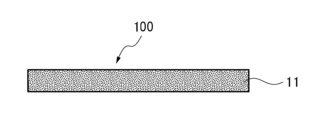
- FIG. 1 is a schematic cross-sectional view showing an easily dismantled adhesive sheet according to an embodiment of the present invention.
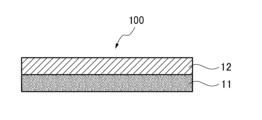
- FIG. 2 is a schematic cross-sectional view showing an easily dismantled adhesive sheet according to another embodiment of the present invention.
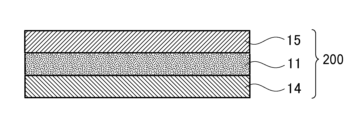
- FIG. 3 is a schematic cross-sectional view showing a joined body joined by an easily dismantled adhesive sheet according to an embodiment of the present invention.
- adheresiveness is a property that has both tackiness and adhesiveness. More specifically, “adhesiveness” refers to a property that can initially develop adhesive properties over time, and can develop adhesive properties after curing (reaction).
- Adhesion refers to the ability of two surfaces to be temporarily joined by external pressure sensitivity (microscopic pressure) based on the cohesive force based on the chemical structure of the composition, and to be able to be peeled off if necessary.
- Adhesion refers to the chemical reaction (curing) of the composition to produce a cured product, which allows two surfaces to be firmly joined.
- main component refers to a component contained in an amount exceeding 50% by mass, unless otherwise specified.
- percentages based on mass and the like are synonymous with percentages and the like based on weight.
- the easily dismantled adhesive sheet according to the embodiment of the present invention has an adhesive layer containing an inorganic expansion agent and a resin, and the adhesive force of the adhesive layer is 1.0 N/20 mm or more.
- FIG. 1 is a schematic cross-sectional view showing an easily disassembled adhesive sheet according to an embodiment of the present invention.
- the easily dismantled adhesive sheet 100 according to the present embodiment may consist of only the adhesive layer 11.
- FIG. 1 shows an adhesive layer having a single layer structure, the adhesive layer may have a multilayer structure of two or more layers.
- the easily disassembled adhesive sheet of this embodiment may include a support base material as shown in FIG. 2. Further, the easily dismantled adhesive sheet of the present embodiment may include an adhesive layer or an adhesive layer other than the adhesive layer 11. There are no particular restrictions on the pressure-sensitive adhesive layers or adhesive layers other than the pressure-sensitive adhesive layer 11, and known ones can be used depending on the purpose of the easily dismantled adhesive sheet, the material of the adherend, and the like.
- FIG. 3 is a schematic cross-sectional view showing a joined body joined by an easily dismantled adhesive sheet according to an embodiment of the present invention.
- the bonded body bonded by the easily dismantled adhesive sheet according to the embodiment of the present invention includes a first member 14 and a second member 15 as adherends with an adhesive layer 11 interposed therebetween.
- the bonded body 200 may be bonded using a method.
- An easily dismantled adhesive sheet includes the adhesive layer described above.
- the easily disassembled adhesive sheet of the present embodiment may be a sheet with a supporting base material having an adhesive layer on one side (FIG. 2) or both sides of a sheet-like base material (supporting base material), It may also be an easily disassembled adhesive sheet without a base material, such as a layer held on a release sheet.
- the concept of an easily disassembled adhesive sheet here may include what is called an adhesive tape, an adhesive label, an adhesive film, and the like.
- the adhesive layer is typically formed continuously, it is not limited to this form; for example, the adhesive layer may be formed in a regular or random pattern such as dots or stripes. It may be an attached layer.
- the easily disassembled adhesive sheet of this embodiment may be in the form of a roll or a sheet. Alternatively, it may be an easily disassembled adhesive sheet processed into various shapes.
- the adhesive layer according to the embodiment of the present invention is a sheet-like layer containing an inorganic expansion agent and a resin. Further, the adhesive force of the adhesive layer is 1.0 N/20 mm or more.
- the adhesive layer according to the embodiment of the present invention can be strongly bonded to an adherend by curing it after being applied to the adherend, and can bond two or more adherends to an easily disassembled adhesive sheet (adhesive sheet).
- a bonded body can be formed by bonding via a bonding layer (which may be an adhesion layer). It is preferable that the adhesive layer is cured by a reaction of at least one of polymerization and crosslinking of the resin contained in the adhesive layer.
- the resin contained in the adhesive layer preferably has a reactive functional group.
- the adhesive layer according to the embodiment of the present invention can be further hardened by at least one of polymerization and crosslinking reaction after being attached to an adherend.
- the adhesive layer is formed into a sheet shape from an adhesive composition.
- the adhesive composition contains an inorganic expansion agent and a resin, and can be formed into a sheet, forming a layer having an adhesive force of 1.0 N/20 mm or more.
- the adhesive layer (adhesive composition) according to the embodiment of the present invention contains an inorganic swelling agent. Contains an inorganic expansion agent, so by stimulating the adhesive layer, the inorganic expansion agent in the adhesive layer expands at the desired timing, destroying the adhesive layer and reducing adhesive strength. , the zygote can be dismantled.
- the type of stimulation is not particularly limited, and examples include stimulations such as heat, electricity, light, and chemical reactions, with heat being preferred.
- heating is preferred. At the time of heating, only the adhesive layer or the entire bonded body may be heated, and the means for heating is not particularly limited, and examples thereof include heating using a heating oven and electromagnetic induction heating.
- the heating temperature is preferably 130°C or higher, more preferably 150°C or higher, and even more preferably 180°C or higher. Further, from the viewpoint of disassembling the adherend without deforming or altering its properties, the temperature is preferably 400°C or lower, more preferably 370°C or lower, and even more preferably 350°C or lower.
- inorganic expanding agent examples include expanded graphite, vermiculite, silicates, vermelundite, aluminum phosphate, tanmagite, and hydrosultite, with expanded graphite being preferred.
- the inorganic swelling agent may be used alone or in combination of two or more.
- Expanded graphite is produced by treating natural graphite, pyrolytic graphite, quiche graphite, etc. with sulfuric acid, sodium nitrate, potassium permanganate, oxalic acid, halides, etc. to form intercalation compounds between the layers of graphite. .
- sulfuric acid sodium nitrate, potassium permanganate, oxalic acid, halides, etc.
- gas is generated from the intercalation compound, thereby expanding the graphite interlayers in a direction perpendicular to the carbon plane.
- the adhesive layer according to the embodiment of the present invention contains an inorganic expansion agent, when heat is applied to the bonded body formed using the easily dismantled adhesive sheet, the inorganic expansion agent expands and easily adheres to the adhesive layer. The bonded body can be dismantled without destroying the adherend and damaging the adherend.
- the average particle size of the expanded graphite particles before expansion is preferably 0.1 to 400 ⁇ m, more preferably 10 to 200 ⁇ m. If the particle size is 1 ⁇ m or more, the degree of expansion is excellent, and if the particle size is 400 ⁇ m or less, it is easy to disperse in the easily dismantled adhesive sheet.
- the expansion start temperature is preferably 130 to 400°C, more preferably 180 to 400°C, in view of the temperature at which the adhesive layer is formed by the adhesive composition, and the relationship between heat resistance durability and disassembly during use of the bonded product.
- the temperature is 350°C.
- the adhesive layer may contain an expansion aid if necessary.
- the amount of the inorganic swelling agent used varies depending on its type, but it is preferably 1% by mass or more from the viewpoint of facilitating cohesive failure of the adhesive layer and interfacial failure in the adhesive composition. It is more preferably 2% by mass or more, and even more preferably 5% by mass or more. Further, from the viewpoint of the adhesive strength of the adhesive layer, the content is preferably 40% by mass or less, more preferably 35% by mass or less, and even more preferably 30% by mass or less.
- the adhesive layer preferably contains 1 to 40% by mass of the inorganic expansion agent.
- the resin contained in the adhesive layer according to the embodiment of the present invention is not particularly limited, and may be at least one type of resin, preferably two or more types of resin. It is preferable that the resin according to the embodiment of the present invention includes a first resin having a crosslinked structure. Moreover, it is preferable that the resin according to the embodiment of the present invention includes a second resin having a reactive functional group.
- the adhesive layer according to the embodiment of the present invention more preferably contains two or more resins having different functional groups, a first resin having a crosslinked structure and a second resin having a reactive functional group. It is further preferable to include the following.
- having a crosslinked structure means that the resin has a crosslinkable group as a functional group, and at least a part of the resin has a crosslinked structure, and may or may not contain an uncrosslinked crosslinkable group. It's okay.
- having a reactive functional group refers to having an unreacted functional group, and the reactive functional group is a functional group that can undergo at least one of polymerization and crosslinking reactions.
- the second resin may or may not contain a crosslinked structure.
- the adhesive layer according to the embodiment of the present invention may further contain a third resin different from the first resin and the second resin.
- the resin contained in the adhesive layer corresponds to the resin contained in the adhesive composition forming the adhesive layer
- the resin contained in the adhesive composition forming the adhesive layer corresponds to the crosslinked resin contained in the adhesive composition forming the adhesive layer.
- At least a portion of the functional groups such as functional groups may be crosslinked.
- examples of the functional group included in the resin contained in the adhesive composition include a functional group that hardens by heating or the like.
- such functional groups include, for example, a carboxy group, an acid anhydride group, a hydroxyl group, a sulfonic acid group, a phosphoric acid group, an amino group, an amide group, an epoxy group, a cyano group, an isocyanate group, an alkoxysilyl group
- Examples include, but are not limited to, ethylenically unsaturated groups (eg, acryloyl group, methacryloyl group, vinyl group, allyl group, etc.), benzophenone structure, and the like.
- the resin according to the embodiment of the present invention includes a first resin having a crosslinked structure and a second resin having a reactive functional group. Further, it is preferable that the crosslinkable group corresponding to the crosslinked structure in the first resin is different from the reactive functional group possessed by the second resin.
- the first resin is preferably a resin containing a crosslinked structure in which at least a portion of crosslinkable groups selected from carboxy groups, hydroxyl groups, amino groups, etc. are crosslinked.
- the functional groups of the first resin in the adhesive composition be crosslinked, so that the first resin has a crosslinked structure and forms an adhesive layer.
- the second resin is preferably a resin containing a reactive functional group selected from a hydroxyl group, an epoxy group, an amide group, and the like.
- Examples of the resin according to the embodiment of the present invention include acrylic polymers, rubber polymers, polyester polymers, urethane polymers, epoxy polymers, polyether polymers, silicone polymers, polyamide polymers, fluorine polymers, Examples include various polymers such as thermoplastic resins, silicone compounds, and polyol compounds such as polypropylene glycol.
- the resin preferably includes a first resin having a crosslinked structure.
- the first resin since the first resin has a crosslinked structure, the cohesive force and adhesive force of the adhesive component are improved, and the adhesive force can be easily set to 1.0 N/20 mm or more. Become.
- the type of the first resin is not particularly limited, and those known in the field of adhesives can be used.
- one or more of polymers such as acrylic polymers, rubber polymers, polyester polymers, urethane polymers, polyether polymers, silicone polymers, polyamide polymers, and fluorine polymers are used as the first resin.
- the first resin may be included as From the viewpoint of adhesive performance, cost, etc., it is preferable that the first resin contains an acrylic polymer, a rubber polymer, or a urethane polymer. Among these, it is more preferable to use an acrylic polymer as the first resin from the viewpoint of adjusting the adhesive strength of the adhesive layer to a specific range.
- the adhesive layer containing an acrylic polymer as the first resin will be mainly described below, it is not intended that the adhesive layer in this embodiment be limited to one made of an acrylic polymer.
- acrylic polymer refers to a polymer containing monomer units derived from a monomer having at least one (meth)acryloyl group in one molecule, as monomer units constituting the polymer.
- a monomer having at least one (meth)acryloyl group in one molecule will also be referred to as an "acrylic monomer.”
- an acrylic polymer in this specification is defined as a polymer containing monomer units derived from acrylic monomers.
- Typical examples of acrylic polymers include acrylic polymers in which the proportion of acrylic monomers among all monomer components used in the synthesis of the acrylic polymer is greater than 50% by mass.
- (meth)acryloyl refers comprehensively to acryloyl and methacryloyl.
- (meth)acrylate comprehensively refers to acrylate and methacrylate
- (meth)acrylic comprehensively refers to acrylic and methacrylic.
- (Meth)acrylate is alkyl methacrylate and/or alkyl acrylate, specifically methyl (meth)acrylate, ethyl (meth)acrylate, propyl (meth)acrylate, isopropyl (meth)acrylate, butyl (meth)acrylate, ) acrylate, isobutyl (meth)acrylate, s-butyl (meth)acrylate, t-butyl (meth)acrylate, n-butyl (meth)acrylate, pentyl (meth)acrylate, isopentyl (meth)acrylate, hexyl (meth)acrylate , heptyl (meth)acrylate, octyl (meth)acrylate, 2-ethylhexyl (meth)acrylate, isooctyl (meth)acrylate, nonyl (meth)acrylate, isononyl (meth)acrylate, decyl (me
- the (meth)acrylate preferably includes an alkyl (meth)acrylate having 2 to 14 carbon atoms, more preferably an alkyl (meth)acrylate having 4 to 9 carbon atoms.
- (Meth)acrylates can be used alone or in combination of two or more.
- the blending ratio of (meth)acrylate is, for example, 70% by mass or more, preferably 80% by mass or more, and, for example, 99% by mass or less, preferably 98% by mass or less, based on the monomer component. .
- the monomer component can also further contain a copolymerizable monomer that can be copolymerized with (meth)acrylate.
- copolymerizable monomers include carboxyl group-containing monomers such as (meth)acrylic acid, itaconic acid, maleic acid, crotonic acid, and maleic anhydride, or their acid anhydrides, such as 2-hydroxyethyl (meth)acrylate, Hydroxyl group-containing (meth)acrylates such as 3-hydroxypropyl (meth)acrylate, for example (meth)acrylamide, N,N-dimethyl (meth)acrylamide, N-methylol (meth)acrylamide, N-methoxymethyl (meth)acrylate Amide group-containing monomers such as acrylamide, N-butoxymethyl (meth)acrylamide, vinyl esters such as vinyl acetate, aromatic vinyl compounds such as styrene, vinyltoluene, etc., (meth)acrylonitrile, e.g. -(meth)acryloylmorpholine, such as N-vinyl-2-pyrrolidone.
- the copolymerizable monomer preferably a carboxyl group-containing monomer or a hydroxyl group-containing (meth)acrylate, more preferably (meth)acrylic acid or 2-hydroxyethyl (meth)acrylate.
- copolymerizable monomers can be used alone or in combination of two or more.
- a combination of a carboxyl group-containing monomer and a hydroxyl group-containing (meth)acrylate is used, and more preferably a combination of (meth)acrylic acid and 2-hydroxyethyl (meth)acrylate is used.
- the blending ratio of the copolymerizable monomer is, for example, 0.1 parts by mass or more, preferably 0.3 parts by mass or more, and, for example, 15 parts by mass or less, based on 100 parts by mass of (meth)acrylate. Preferably, it is 10 parts by mass or less.
- (meth)acrylate and, if necessary, a copolymerizable monomer are mixed to prepare the monomer component, and this is subjected to, for example, solution polymerization, bulk polymerization, emulsion polymerization, various radical polymerization, etc.
- the reaction is carried out by a known polymerization method such as polymerization.
- the polymerization method includes solution polymerization.
- a monomer component and a polymerization initiator are mixed in a solvent to prepare a monomer solution, and then the monomer solution is heated.
- Examples of the solvent include organic solvents.
- organic solvents include aromatic solvents such as toluene, benzene, and xylene; ether solvents such as tetrahydrofuran; ketone solvents such as acetone and methyl ethyl ketone; ester solvents such as ethyl acetate; Examples include amide solvents such as N,N-dimethylformamide.
- the solvent can be used alone or in combination of two or more, and preferably, an aromatic solvent and an ester solvent are used in combination.
- the blending ratio of the solvent is, for example, 10 parts by mass or more, preferably 50 parts by mass or more, and, for example, 1000 parts by mass or less, preferably 500 parts by mass or less, based on 100 parts by mass of the monomer component. .
- polymerization initiator examples include peroxide polymerization initiators and azo polymerization initiators.
- peroxide-based polymerization initiators include organic peroxides such as peroxycarbonate, ketone peroxide, peroxyketal, hydroperoxide, dialkyl peroxide, diacyl peroxide, and peroxy ester.
- azo polymerization initiator examples include 2,2'-azobisisobutyronitrile, 2,2'-azobis(2-methylbutyronitrile), 2,2'-azobis(2,4-dimethylvaleronitrile), and 2,2'-azobis(2-methylbutyronitrile). (nitrile), dimethyl 2,2'-azobisisobutyrate, and other azo compounds.
- the polymerization initiator is an azo polymerization initiator.
- the blending ratio of the polymerization initiator is, for example, 0.01 parts by mass or more, preferably 0.05 parts by mass or more, and, for example, 5 parts by mass or less, preferably, with respect to 100 parts by mass of the monomer components. It is 3 parts by mass or less.
- the heating temperature is, for example, 50° C. or more and 80° C. or less, and the heating time is, for example, 1 hour or more and 24 hours or less.
- the monomer components are polymerized to obtain an acrylic polymer solution containing an acrylic polymer.
- the blending ratio of the first resin is, for example, 0 parts by mass or more, preferably 1 part by mass or more, more preferably 5 parts by mass or more, based on 100 parts by mass of all the resin components in the adhesive composition. For example, it is 100 parts by mass or less, preferably 90 parts by mass or less, more preferably 80 parts by mass or less.
- the second resin according to the embodiment of the present invention is preferably a resin having a reactive functional group.
- the reactive functional group include a hydroxyl group, an epoxy group, an amide group, and an epoxy group is preferred.
- Examples of the second resin according to the embodiment of the present invention include epoxy resin, phenol resin, acrylic resin, etc.
- the second resin preferably contains an epoxy resin.
- epoxy resin examples include bisphenol epoxy resins such as bisphenol A epoxy resin, bisphenol F epoxy resin, bisphenol S epoxy resin, and hydrogenated bisphenol A epoxy resin, naphthalene epoxy resins, biphenyl epoxy resins, etc.
- Epoxy resins such as dicyclo epoxy resins, alicyclic epoxy resins, such as triglycidyl isocyanurate epoxy resins, hydantoin epoxy resins, glycidyl ether epoxy resins, glycidyl amino epoxy resins, etc. can be mentioned.
- the epoxy resin is preferably a bisphenol-based epoxy resin, more preferably a bisphenol A-type epoxy resin.
- Epoxy resins can be used alone or in combination of two or more.
- the epoxy resin may be in any of liquid, semi-solid, and solid forms at room temperature, but it is preferable to use semi-solid epoxy resin alone, or to use liquid epoxy resin and solid epoxy resin together. For example, it can be used in combination with a resin. This makes it easier to form a tacky layered adhesive layer from the adhesive composition.
- the epoxy resin that is liquid at room temperature is liquid at 25°C.
- the viscosity of the liquid epoxy resin at 25°C is, for example, 30 Pa ⁇ s or more, preferably 80 Pa ⁇ s or more, and, for example, 500 Pa ⁇ s or less, preferably 300 Pa ⁇ s or less.
- the epoxy resin that is solid at room temperature is solid at 25°C.
- the softening point of the solid epoxy resin is, for example, 50°C or higher, preferably 55°C or higher.
- the blending ratio of the second resin is, for example, 0 parts by mass or more, preferably 5 parts by mass or more, more preferably 10 parts by mass or more, and even more preferably,
- the amount is 15 parts by mass or more, and is, for example, 95 parts by mass or less, preferably 90 parts by mass or less, and more preferably 85 parts by mass or less.
- the adhesive layer according to the embodiment of the present invention may further contain a third resin different from the first resin and the second resin.
- the third resin include resins different from the resins selected as the first resin and the second resin, which have a crosslinked structure and a reactive functional group that reacts with the components contained in the adhesive layer.
- the resin is selected from group-free resins.
- the third resin is a thermoplastic resin.
- thermoplastic resins include natural rubber, butyl rubber, isoprene rubber, chloroprene rubber, thermoplastic acrylic resin, ethylene-vinyl acetate copolymer, ethylene-acrylic acid copolymer, ethylene-acrylic acid ester copolymer, and polybutadiene.
- resins polycarbonate resins, thermoplastic polyimide resins, polyamide resins such as polyamide 6 and polyamide 6,6, phenoxy resins, vinyl butyral resins, acrylic resins, saturated polyester resins such as PET and PBT, polyamideimide resins, fluorine resins, etc. It will be done.
- it is selected from the group consisting of phenoxy resin, thermoplastic acrylic resin, and polyvinyl butyral resin.
- a commercially available product may be used as the third resin.
- commercially available phenoxy resins include “jER1256”, “jER1256B40", “jER4250” (manufactured by Mitsubishi Chemical Corporation), “YP-50S”, and “YP-50”. , YP-70, and FX-316 (manufactured by Nippon Steel Chemical & Materials), and examples of thermoplastic acrylic resins include Nanostrength M-22 and Nanostrength M-22N (manufactured by Arkema).
- examples of commercially available polyvinyl butyral resins include “Butvar B-79” and “Butvar B-72” (manufactured by Eastman Chemical).
- thermoplastic resins may be used alone or in combination of two or more.
- the thermoplastic resin is preferably a phenoxy resin or a thermoplastic acrylic resin, and more preferably a phenoxy resin, from the viewpoint of improving the cohesive force of the adhesive layer due to its high heat resistance.
- the blending ratio of the third resin is, for example, 0 parts by mass or more, preferably 1 part by mass or more, more preferably 5 parts by mass or more, based on 100 parts by mass of all the resin components in the adhesive composition. For example, it is 50 parts by mass or less, preferably 40 parts by mass or less, more preferably 30 parts by mass or less.
- the blending ratio of the first resin, second resin, and third resin is 0 to 100:0 to 100:0 to 0 to 100:0 to 100:0 to 100:0. 50 (however, at least one of the first resin and the second resin is more than 0), more preferably 1 to 90:1 to 90:1 to 40, and 5 to 80: More preferably, the ratio is 5 to 80:5 to 30.
- Crosslinking agent when the first resin having a crosslinked structure is blended into the adhesive composition, a crosslinking agent can also be blended when preparing the adhesive composition. Thereby, an adhesive layer can be formed. In addition, it becomes easier to control the adhesive force of the adhesive layer within a specific range.
- crosslinking agent examples include an isocyanate crosslinking agent, an aziridine crosslinking agent, an epoxy crosslinking agent, a metal chelate crosslinking agent, and preferably an isocyanate crosslinking agent.
- isocyanate crosslinking agent examples include aromatic diisocyanates such as tolylene diisocyanate and xylene diisocyanate, alicyclic diisocyanates such as isophorone diisocyanate, aliphatic diisocyanates such as hexamethylene diisocyanate, and modified products of these isocyanates. (Specifically, trimethylolpropane tolylene diisocyanate adduct, etc.).
- the crosslinking agent includes a modified isocyanate.
- the blending ratio of the crosslinking agent is, for example, 1 part by mass or more, preferably 3 parts by mass or more, and, for example, 20 parts by mass or less, preferably 15 parts by mass, based on 100 parts by mass of the first resin. It is as follows. Thereby, the adhesive strength of the adhesive layer may be adjusted.
- a curing agent can also be added to the adhesive composition. Thereby, the adhesive layer is cured to improve the adhesive force with the adherend, and it becomes easy to obtain an easily dismantled adhesive sheet having excellent adhesive force.
- the curing agent is a component that reacts with the resin contained in the adhesive composition to cure the adhesive.
- the curing agent may be appropriately selected from curing agents capable of curing the resin depending on the type and composition of the resin used.
- the curing agent is preferably an epoxy resin curing agent.
- the epoxy resin curing agent may be a thermosetting or photocuring type curing agent, and preferably a thermosetting type curing agent.
- the epoxy resin curing agent may be, for example, a nitrogen-containing curing agent that contains a nitrogen atom and reacts with an epoxy group.
- examples of such curing agents include tetramethylguanidine, imidazole or its derivatives, carboxylic acid hydrazides, tertiary amines, aromatic amines, aliphatic amines, dicyandiamide or its derivatives, and the like.
- epoxy resin curing agents include dicyandiamide, 3-methyl-1,2,3,6-tetrahydrophthalic anhydride, 4-methyl-1,2,3,6-tetrahydrophthalic anhydride, diethylenetriamine, triethylene Examples include tetramine.
- epoxy resin curing agent Commercially available products may be used as the epoxy resin curing agent.
- commercially available dicyandiamide products include "EH3636AS” (manufactured by ADEKA Corporation), dicyandiamide DD (manufactured by Nippon Carbide Industries, Ltd.), DICY7, DICY15 (manufactured by Mitsubishi Chemical Corporation), etc. .
- the blending ratio is, for example, 1% by mass or more, preferably 3% by mass or more, and, for example, 20% by mass or less, based on the pressure-sensitive adhesive composition. If the blending ratio of the curing agent is at least the above lower limit, the adhesive layer will have excellent adhesive properties.
- a curing accelerator can be added to the adhesive composition.
- imidazole compounds for example, imidazole compounds, tertiary amine compounds, phosphine compounds, urea compounds, etc. can be used.
- imidazole-based compounds various grades are on the market, for example, in the "Curezol” series from Shikoku Kasei Kogyo Co., Ltd.
- Curezol 2MZA-PW manufactured by Shikoku Kasei Kogyo Co., Ltd.
- Curesol 2PHZ-PW manufactured by Shikoku Kasei Kogyo Co., Ltd.
- Curezol 2MA-OK manufactured by Shikoku Kasei Kogyo Co., Ltd.
- urea-based compounds examples include Omicure U-52 (manufactured by CVC Thermoset Specialties) and 3-(3,4-dichlorophenyl)-1,1-dimethylurea (DCMU) (manufactured by Hodogaya Chemical Industry Co., Ltd.). It will be done.
- the curing accelerator can be used alone or in combination of two or more.
- the blending ratio of the curing accelerator can be appropriately selected depending on the type of curing agent and curing accelerator.
- the adhesive composition may contain appropriate additives depending on the use of the easily dismantled adhesive sheet.
- additives include, for example, tackifiers (for example, rosin derivative resins, polyterpene resins, petroleum resins, oil-soluble phenol resins, etc. that are solid, semi-solid, or liquid at room temperature), leveling agents, and crosslinking aids. agent, plasticizer, softener, antistatic agent, ultraviolet absorber, filler, anti-aging agent, antioxidant, light stabilizer, coloring agent (pigment, dye, etc.), blowing agent, etc.
- tackifiers for example, rosin derivative resins, polyterpene resins, petroleum resins, oil-soluble phenol resins, etc. that are solid, semi-solid, or liquid at room temperature
- leveling agents and crosslinking aids.
- agent plasticizer, softener, antistatic agent, ultraviolet absorber, filler, anti-aging agent, antioxidant, light stabilizer, coloring agent (pigment, dye, etc.), blowing agent, etc.
- the method for preparing the adhesive composition is not particularly limited, and for example, it can be obtained by preparing a liquid composition containing each component and a solvent and using a rotation-revolution stirrer.
- the adhesive layer may be formed into a sheet by applying an adhesive composition onto a base material, drying it, and removing the solvent.
- the method of providing the adhesive layer on the supporting base material is to directly apply the adhesive composition to the supporting base material to form the adhesive layer.
- a direct method may be used, or a transfer method may be used, in which the adhesive layer formed on the release surface is transferred to the base material.
- Another method for preparing an adhesive composition can be obtained by heating and kneading each component using a kneader such as a twin-screw kneader or a kneader.
- the adhesive layer may be obtained by compressing and stretching the adhesive composition by calender molding, extrusion molding, press molding, or the like to form the adhesive layer into a sheet shape.
- the thickness of the adhesive layer is not particularly limited, and is, for example, 1 ⁇ m or more, preferably 5 ⁇ m or more, more preferably 10 ⁇ m or more, and, for example, 3000 ⁇ m or less, preferably 1000 ⁇ m or less, more preferably, It is 500 ⁇ m or less.
- Adhesive strength of adhesive layer The adhesive force of the adhesive layer is 1.0 N/20 mm or more. That is, the adhesive layer has pressure-sensitive adhesive properties before curing. Note that the adhesive strength before curing refers to the adhesive strength that the adhesive layer has before curing. Specifically, after forming the adhesive layer with an adhesive composition, Adhesion is measured before the layer is cured.
- the adhesive force of the adhesive layer according to the embodiment of the present invention needs to be 1 N/20 mm or more, preferably 1.5 N/20 mm or more, and more preferably 2 N/20 mm or more.
- the adhesive strength of the present adhesive layer can be measured by performing a peel-off adhesive strength test in accordance with JIS Z 0237. That is, a polyethylene terephthalate film (trade name "Lumirror 25S10", manufactured by Toray Industries, Inc.) having a thickness of 25 ⁇ m is placed on one surface of the adhesive layer of the easily disassembled adhesive sheet.
- the adhesive layer has adhesive strength, it can be attached to the adherend before the adhesive layer is cured, and positioning and temporary fixing are possible. It becomes easier. Thereafter, the adhesive layer can be cured and bonded to an adherend, or two or more adherends can be bonded via an easily disassembled adhesive sheet.
- the easily disassembled adhesive sheet of this embodiment may include a support base material as shown in FIG. 2, as described above. That is, the easily disassembled adhesive sheet of the present embodiment may further include a support base material, and the above-mentioned adhesive layer may be provided on at least one surface of the support base material. Thereby, the easily disassembled adhesive sheet can be processed with high precision by punching or the like. Such an easily disassembled adhesive sheet is also preferable for applications in which it is processed into a specific shape or narrowed in width.
- the thickness of the support base material in this embodiment is preferably 100 ⁇ m or less, more preferably 80 ⁇ m or less, even more preferably 70 ⁇ m or less, even more preferably 50 ⁇ m or less, particularly preferably 30 ⁇ m or less.
- the thickness of the support substrate may be 20 ⁇ m or less, 12 ⁇ m or less, 7 ⁇ m or less, or 3 ⁇ m or less.
- the lower limit of the thickness of the supporting base material is not particularly limited. From the viewpoint of handleability, processability, etc. of the easily disassembled adhesive sheet, the thickness of the supporting base material is usually 0.5 ⁇ m or more (for example, 1 ⁇ m or more). In one embodiment, the thickness of the supporting base material may be 3 ⁇ m or more. In another embodiment, the thickness of the supporting base material can be 8 ⁇ m or more, 13 ⁇ m or more, or 16 ⁇ m or more.
- the structure and material of the supporting base material are not particularly limited, and are typically film-like base materials (also referred to as "base film").
- base film a base film containing a resin film can be preferably used.
- the base film is typically an independently shape-maintainable (independent) member.
- the base film in this embodiment may be substantially composed of such a base film.
- the base film may include an auxiliary layer in addition to the base film. Examples of the auxiliary layer include a colored layer, a reflective layer, an undercoat layer, an antistatic layer, etc. provided on the surface of the base film.
- the base film may be a porous film.
- the porous film is not particularly limited as long as it has a plurality of holes in the film (as long as the holes are formed), and examples thereof include foamed films, nonwoven fabrics, and the like.
- the easily dismantled adhesive sheet according to the embodiment of the present invention preferably has a space in which the inorganic expansion agent expands. Therefore, if the base film is a porous film, when the inorganic swelling agent expands, the pores (spaces) of the porous film will facilitate the expansion of the swelling agent, making it easier to dismantle the bonded body. be able to.
- the resin film is a film whose main component is a resin material (for example, a component contained in the resin film in an amount exceeding 50% by mass).
- resin films include polyolefin resin films such as polyethylene (PE), polypropylene (PP), and ethylene-propylene copolymers; polyethylene terephthalate (PET), polybutylene terephthalate (PBT), polyethylene naphthalate (PEN), etc.
- the resin film may be a rubber film such as a natural rubber film or a butyl rubber film. Among these, polyester films are preferred from the viewpoint of handling and processability, and among these, PET films are particularly preferred.
- the easily dismantled adhesive sheet according to the embodiment of the present invention is suitable for fixing or joining metal parts, resin parts, metal/resin composite parts, etc. used in boats, aircraft, automobiles, and the like.
- automobile batteries, bodies, motors, etc. must be collected separately due to environmental issues, and may require dismantling.
- the easily dismantled adhesive sheet according to the embodiment of the present invention is in sheet form, it has excellent processing accuracy, so it can be used in applications where it can be processed into a specific shape or made thinner, such as in portable electronic devices.
- Suitable for fixing and joining members. Electronic devices such as such portable electronic devices may need to be dismantled for purposes such as separate collection, repair/replacement of components, and productivity improvement through temporary adhesion during the manufacturing process.
- the easily disassembled adhesive sheet according to the embodiment of the present invention can be used for bonding various adherends.
- the easily dismantled adhesive sheet according to the embodiment of the present invention easily destroys the adhesive layer by stimulation such as heating, and the bonded body can be dismantled without damaging the adherend, so there is no need to separate and collect it. It can be suitably used for bonding adherends made of different materials or temporarily fixing members.
- the easily disassembled adhesive sheet according to the embodiment of the present invention can be used in a laminate, a bonded body, and a method for manufacturing a bonded body.
- the laminate according to the embodiment of the present invention is a laminate in which two or more adherends are attached using the easily dismantled adhesive sheet according to the embodiment of the present invention.
- the joined body according to the embodiment of the present invention is a joined body in which two or more adherends are joined using the easily dismantled adhesive sheet according to the embodiment of the present invention.
- the easily disassembled adhesive sheet may be a sheet consisting only of an adhesive layer without a base material, or a supporting base material. or a sheet comprising the adhesive layer on one side of a supporting base material and another adhesive layer or adhesive layer on the other side of the supporting base material. It is preferable. That is, in the laminates and bonded bodies according to the embodiments of the present invention, a supporting base material, an adhesive layer other than the adhesive layer, and an adhesive layer are provided between the adherend and the adhesive layer. etc. may exist.
- the bonded body according to the embodiment of the present invention has a space in the easily dismantled adhesive sheet in which the inorganic expansion agent expands.
- the space in the easily dismantled adhesive sheet in which the inorganic expansion agent expands is not particularly limited, but may include, for example, voids in the supporting base material.
- the easily dismantled adhesive sheet has a supporting base material, and the supporting base material is, for example, a porous film, when the inorganic expanding agent expands, the pores (spaces) of the porous film facilitate the expansion of the expanding agent. This makes it easier to disassemble the joined body.
- the method for manufacturing a bonded body according to an embodiment of the present invention includes a joining step of curing the adhesive layer in the laminate according to an embodiment of the present invention and joining the two or more adherends together.
- a method for dismantling a bonded body according to an embodiment of the present invention is a method for disassembling a bonded body according to an embodiment of the present invention, the bonded body being dismantled by applying stimulation to the adhesive layer of the bonded body. Includes the demolition process.
- the above description can be directly applied.
- the easily disassembled adhesive sheet is placed between the first member and the second member, which are adherends, and the first member By crimping the first member and the second member in a direction in which they are brought into close contact with each other, both can be attached and a laminate can be obtained. Thereafter, by curing the adhesive layer of the laminate attached using the easily dismantled adhesive sheet, the first member and the second member are bonded to the easily disassembled adhesive sheet (which may be an adhesive layer). ) is obtained. Furthermore, by applying a stimulus such as heat to the adhesive layer, the inorganic expansion agent in the adhesive layer expands and destroys the adhesive layer in the bonded product. can be disassembled to separate the first member and the second member.
- the temperature when forming the adhesive layer with the adhesive composition should be X°C
- the temperature when curing the adhesive layer should be When the temperature is Y° C. and the temperature at which the adhesive layer is destroyed and the bonded body is disassembled is Z° C., it is preferable that the relationship X ⁇ Y ⁇ Z is satisfied. This relationship is independent of whether heat is used to form, harden, or disassemble the adhesive layer.
- the materials of the first member and second member constituting the adherend and laminate are not particularly limited, but examples include copper, silver, gold, iron, tin, palladium, aluminum, and nickel. , titanium, chromium, zinc, etc., or alloys containing two or more of these; for example, polyimide resins, acrylic resins, polyether nitrile resins, polyether sulfone resins, polyester resins (polyethylene terephthalate, etc.); resins, polyethylene naphthalate resins, etc.), polyvinyl chloride resins, polyphenylene sulfide resins, polyether ether ketone resins, polyamide resins (so-called aramid resins, etc.), polyarylate resins, polycarbonate resins, liquid crystal polymers Examples include various resin materials such as (typically plastic materials), and inorganic materials such as alumina, zirconia, soda glass, quartz glass, and carbon. Further, the adherend may have either a single-layer structure or a
- An easily disassembled adhesive sheet comprising an adhesive layer containing an inorganic expansion agent and a resin, the adhesive layer having an adhesive force of 1.0 N/20 mm or more.
- [5] Furthermore, it has a supporting base material, The easily dismantled adhesive sheet according to any one of [1] to [4], comprising the adhesive layer on at least one surface of the supporting base material.
- [7] A laminate in which two or more adherends are attached using the easily dismantled adhesive sheet according to any one of [1] to [6].
- [8] A bonded body in which two or more adherends are bonded using the easily dismantled adhesive sheet according to any one of [1] to [6].
- [9] The bonded body according to [8], wherein the easily dismantled adhesive sheet has a space in which the inorganic expansion agent expands.
- a method for manufacturing a bonded body comprising a bonding step of curing the adhesive layer in the laminate according to [7] and bonding the two or more adherends.
- Example 1 to 8 An adhesive composition was prepared by blending each component in the amounts shown in Table 1, dissolving it in methyl ethyl ketone (MEK) as a solvent, and heating and kneading it at 23 ° C. for 15 minutes using a rotation-revolution stirrer. .
- MEK methyl ethyl ketone
- the adhesive composition was applied to a release-treated polyethylene terephthalate film (Diafoil MRF #38 manufactured by Mitsubishi Chemical Corporation) using a bar coater, and then heated (dried) at 80°C for 5 minutes in a heating oven. After removing the solvent, the mixture was formed into a sheet having a thickness of 50 ⁇ m to form an adhesive layer. Thereafter, the adhesive layer was brought into contact with another polyethylene terephthalate film (Diafoil MRE #38 manufactured by Mitsubishi Chemical Corporation) so that the adhesive layer was sandwiched between the two polyethylene terephthalate films, and an easily dismantled adhesive sheet was applied. Obtained.
- the adhesive strength of the adhesive layer before curing was measured in accordance with JIS Z 0237.
- One polyethylene terephthalate film of the easily disassembled adhesive sheet was peeled off, and a 25 ⁇ m thick polyethylene terephthalate film (trade name "Lumirror 25S10", manufactured by Toray Industries, Inc.) was placed on the exposed surface of the adhesive layer. Next, this was cut into a width of 20 mm, the other polyethylene terephthalate film was peeled off, and the surface of the exposed adhesive layer was placed on a stainless steel plate (SUS304BA) with a thickness of 2 mm. After bonding, a 2 kg roller was moved back and forth once to press them together. Thirty minutes after bonding, the peel adhesive strength was measured using a tensile compression tester (device name: "AGS-50NX", manufactured by Shimadzu Corporation) at a peel angle of 180° and a peel speed of 300 mm/min.
- a tensile compression tester device name: "AG
- the peeling state during the test is cohesive failure of the adhesive layer, it is impossible to correct positional deviation after lamination, and the adhesive sheet is unsuitable in terms of workability.
- the peel adhesive force is 1.0 N/20 mm or more, adherends can be easily bonded together.
- the holding power of the adhesive layer before curing was measured in accordance with JIS Z 0237.
- the easily dismantled adhesive sheet is cut into a size of 25 mm wide x 25 mm long, then one of the polyethylene terephthalate films is peeled off, and a SUS304BA plate 50 mm wide x 100 mm long x 2 mm thick is placed on the surface of the exposed adhesive layer. The tip of the was placed. Then, the other polyethylene terephthalate film was peeled off. Subsequently, a SUS304BA plate having a width of 30 mm, a length of 50 mm, and a thickness of 0.5 mm was bonded to the adhesive layer to obtain a laminate sample.
- the upper side of the SUS304BA plate of width 50mm x length 100mm x thickness 2mm was temporarily fixed, and a load of 100 g was applied to the lower side of the SUS304BA plate of width 30mm x length 50mm x thickness 0.5mm. It was confirmed whether it could be held for 60 minutes without shearing in an environment of 130°C. After holding for 60 minutes, the amount of change from the initial attachment position was measured and defined as the holding force (mm). Regarding the holding force, a measured value of 5 mm or less can be judged to be good.
- the shear adhesive strength of the cured adhesive layer was measured in accordance with JIS K 6850.
- Examples 1 to 7, Comparative Example 2 Cut the easily dismantled adhesive sheet into a size of 25 mm width x 10 mm length, then peel off one of the polyethylene terephthalate films, and add a SPCC-SD steel plate of 25 mm width x 100 mm length x 2 mm thickness to the exposed adhesive layer. The tip of the was placed. Then, the other polyethylene terephthalate film was peeled off. Subsequently, another SPCC-SD steel plate was bonded to the surface of the adhesive layer to obtain a laminate sample. Subsequently, the laminate was fixed with clips and stored in a heating oven at 130° C. for 60 minutes to cure the adhesive layer and obtain a bonded body.
- Shear adhesive strength (MPa) test force (N) / 250mm 2
- Comparative example 1 A 50 ⁇ m thick spacer was placed at the tip of the SPCC-SD steel plate so that the adhesive area was 250 mm 2 , and the adhesive of Comparative Example 1 was applied thereto. Another SPCC-SD steel plate was stacked and fixed with clips, and the adhesive was stored in a heating oven at 130° C. for 60 minutes to harden the adhesive to obtain a joined body of Comparative Example 1. The shear adhesive strength of the cured adhesive was measured in the same manner as in Example 1.
- Acrylic resin prepared product (Preparation of acrylic resin) Acrylic resin was prepared by the following procedure. In a four-necked flask equipped with a stirring blade, a thermometer, a nitrogen gas inlet tube, and a condenser, 100 parts by mass of n-butyl acrylate, 5 parts by mass of acrylic acid, and 2,2'-azobisisobutyro as a polymerization initiator were placed. Add 0.1 part of nitrile along with 100 parts by mass of ethyl acetate and 100 parts by mass of toluene, introduce nitrogen gas with gentle stirring and replace with nitrogen for 1 hour, then maintain the liquid temperature in the flask at around 55 ° C. A time polymerization reaction was carried out to prepare an acrylic resin solution having a weight average molecular weight of 600,000.
- Liquid epoxy resin jER828 manufactured by Mitsubishi Chemical Corporation Solid epoxy resin: jER1001 manufactured by Mitsubishi Chemical Corporation Phenoxy resin: jER1256 manufactured by Mitsubishi Chemical Corporation Crosslinking agent: Coronate L manufactured by Tosoh Corporation Curing agent: DICY7 manufactured by Mitsubishi Chemical Corporation Curing accelerator: DCMU manufactured by Hodogaya Chemical Industry Co., Ltd. Expanded graphite: GG210-200N manufactured by NeoGraf Co., Ltd.
- the present invention it is possible to easily bond adherends to each other, and the workability for adhesion can be improved. It is possible to provide an easily dismantled adhesive sheet that exhibits excellent holding power that does not cause slippage or peeling before being adhered (joined) to an adherend, and excellent adhesive strength that firmly adheres to an adherend. Furthermore, the bonded body bonded using the easily dismantled adhesive sheet of the present invention has excellent disassembly properties, allowing it to be easily disassembled when desired. Further, according to the present invention, it is possible to provide a laminate, a bonded body, a method for manufacturing a bonded body, and a method for dismantling a bonded body using the easily dismantled adhesive sheet.
Landscapes
- Chemical & Material Sciences (AREA)
- Organic Chemistry (AREA)
- Chemical Kinetics & Catalysis (AREA)
- Adhesive Tapes (AREA)
- Adhesives Or Adhesive Processes (AREA)
Abstract
Description
そして、近年、使用目的に応じた十分な接着強度と、任意のタイミングで接着強度を低下させ容易に剥離(解体)可能な性質を併せ持つ易解体性接着剤が検討されている。
このような易解体性接着剤は、異種材料の部材を接合した接合材の分別回収、部材の修理・交換、製造工程での仮接着による生産性向上等を目的とする用途での需要が高まっている。
また、特許文献2には非金属の第1の被接着部材と非金属の第2の被接着部材とを接着する接着シートであって、硬化後のガラス転移温度が80度以上の解体性接着剤からなる接着剤層と、一対の前記接着剤層によって挟まれた金属部材とを有する接着シートが記載されている。
また、特許文献2に記載の接着シートは、被着体を貼り合わせる際の粘着性に乏しく、被着体を接合するまでの保持力は十分ではなく、作業環境下では接着剤が硬化するまでに被着体の貼付位置がずれる虞があった。
〔1〕
無機膨張剤と、樹脂とを含む粘接着層を有し、前記粘接着層の粘着力が1.0N/20mm以上である、易解体接着シート。
〔2〕
前記樹脂は、架橋構造を有する第1の樹脂を含む、〔1〕に記載の易解体接着シート。
〔3〕
前記樹脂は、反応性官能基を有する第2の樹脂を含む、〔1〕に記載の易解体接着シート。
〔4〕
前記粘接着層は、前記無機膨張剤を1~40質量%含有する、〔1〕に記載の易解体接着シート。
〔5〕
さらに支持基材を有し、
前記支持基材の少なくとも一方の面に、前記粘接着層を備える、〔1〕に記載の易解体接着シート。
〔6〕
前記支持基材がフィルム状基材である、〔5〕に記載の易解体接着シート。
〔7〕
2以上の被着体が、〔1〕~〔6〕のいずれか1項に記載の易解体接着シートを用いて貼付された積層体。
〔8〕
2以上の被着体が、〔1〕~〔6〕のいずれか1項に記載の易解体接着シートを用いて接合された接合体。
〔9〕
前記易解体接着シート中に、前記無機膨張剤が膨張する空間を有する、〔8〕に記載の接合体。
〔10〕
〔7〕に記載の積層体における前記粘接着層を硬化して前記2以上の被着体を接合する接合工程を含む、接合体の製造方法。
〔11〕
〔8〕に記載の接合体を解体する方法であって、前記接合体における前記粘接着層に刺激を与えることにより前記接合体を解体する解体工程を含む、接合体の解体方法。
本明細書において「主成分」とは、特記しない場合、50質量%を超えて含まれる成分を指す。
また、本明細書において、質量を基準とする百分率等は、重量を基準とする百分率等と同義である。
本発明の実施形態に係る易解体接着シートは、無機膨張剤と、樹脂とを含む粘接着層を有し、前記粘接着層の粘着力は、1.0N/20mm以上である。
本発明の実施形態に係る粘接着層は、無機膨張剤と、樹脂とを含むシート状の層である。また、粘接着層の粘着力は1.0N/20mm以上である。
本発明の実施形態に係る粘接着層は、被着体に貼付後に硬化させることにより、被着体と強力に接合することができ、2以上の被着体を易解体接着シート(粘接着層であってもよい)を介して接合させ接合体を形成することができる。
粘接着層の硬化は、粘接着層に含まれる樹脂が重合または架橋の少なくとも一方の反応をすることによる硬化であることが好ましい。すなわち、粘接着層に含まれる樹脂は、反応性官能基を有することが好ましい。また、本発明の実施形態に係る粘接着層は、被着体に貼付後、さらに重合または架橋の少なくとも一方の反応により硬化し得ることが好ましい。
粘接着組成物は、無機膨張剤と、樹脂とを含有し、シート状に形成することができ、粘着力が1.0N/20mm以上の層を形成し得る。
本発明の実施形態に係る粘接着層(粘接着組成物)は、無機膨張剤を含有する。無機膨張剤を含有するため、粘接着層に刺激を与えることにより、粘接着層中の無機膨張剤を所望のタイミングで膨張させて粘接着層を破壊して接着力を低下させて、接合体を解体することができる。
刺激の種類には特に制限はなく、熱、電気、光、化学反応等の刺激が挙げられ、熱であることが好ましい。
熱による刺激によって接合体を解体する場合、加熱することが好ましい。
加熱の際は、粘接着層のみを加熱しても、接合体全体を加熱してもよく、その手段は特に限定されないが、例えば加熱オーブン、電磁誘導加熱による加熱が挙げられる。
加熱の温度は130℃以上であることが好ましく、150℃以上であることがより好ましく、180℃以上であることがさらに好ましい。また、被着体を変形・変質させずに解体するという観点から400℃以下であることが好ましく、370℃以下であることがより好ましく、350℃以下であることがさらに好ましい。
無機膨張剤は、1種単独で、または2種以上を併用することもできる。
本発明の実施形態に係る粘接着層は、無機膨張剤を含有するため、易解体接着シートを用いて形成した接合体に熱を加えることで、無機膨張剤が膨張して容易に粘接着層を破壊し、被着体を傷つけることなく接合体を解体することができる。
本発明の実施形態に係る易解体接着シートにおいて、粘着剤層は、前記無機膨張剤を1~40質量%含有することが好ましい。
本発明の実施形態に係る粘接着層が含有する樹脂としては、特に制限はなく、少なくとも1種の樹脂であってもよく、2種以上の樹脂であることが好ましい。
本発明の実施形態に係る樹脂は、架橋構造を有する第1の樹脂を含むことが好ましい。
また、本発明の実施形態に係る樹脂は、反応性官能基を有する第2の樹脂を含むことが好ましい。
本発明の実施形態に係る粘接着層は、官能基の異なる2種以上の樹脂を含有することがより好ましく、架橋構造を有する第1の樹脂と、反応性官能基を有する第2の樹脂とを含むことがさらに好ましい。
ここで、「架橋構造を有する」とは、樹脂が官能基として架橋性基を有し、その少なくとも一部が架橋した構造を有することをいい、未架橋の架橋性基を含んでいてもいなくてもよい。また、「反応性官能基を有する」とは、未反応の官能基を有することをいい、反応性官能基は重合または架橋の少なくとも一方の反応をすることができる官能基である。第2の樹脂は架橋構造を含んでいてもいなくてもよい。
本発明の実施形態に係る粘接着層は、上記第1の樹脂及び第2の樹脂とは異なる第3の樹脂をさらに含有してもよい。
このような官能基として具体的には、例えば、カルボキシ基、酸無水物基、水酸基、スルホン酸基、リン酸基、アミノ基、アミド基、エポキシ基、シアノ基、イソシアネート基、アルコキシシリル基、エチレン性不飽和基(例えばアクリロイル基、メタクリロイル基、ビニル基、アリル基等)、ベンゾフェノン構造等が挙げられるが、これらに限定されない。
本発明の実施形態に係る粘接着層において、樹脂は、架橋構造を有する第1の樹脂を含むことが好ましい。
本発明の実施形態に係る粘接着層において、第1の樹脂が架橋構造を有することにより、粘接着成分の凝集力と粘着力を向上させ、粘着力を1.0N/20mm以上とし易くなる。
また、「(メタ)アクリロイル」とは、アクリロイルおよびメタクリロイルを包括的に指す意味である。同様に、「(メタ)アクリレート」とはアクリレートおよびメタクリレートを、「(メタ)アクリル」とはアクリルおよびメタクリルを、それぞれ包括的に指す意味である。
本発明の実施形態に係る第2の樹脂は、反応性官能基を有する樹脂であることが好ましい。反応性官能基としては、例えば、水酸基、エポキシ基、アミド基などが挙げられ、エポキシ基であることが好ましい。
本発明の実施形態に係る第2の樹脂としては、例えば、エポキシ樹脂、フェノール樹脂、アクリル樹脂などが挙げられる、第2の樹脂としては、好ましくは、エポキシ樹脂を含有する。これにより、易解体接着シートと被着体とを簡便かつ強固に接着することができる。また、易解体接着シートとを介して2以上の被着体を簡便かつ強固に接着することができる。
本発明の実施形態に係る粘接着層は、上記第1の樹脂及び第2の樹脂とは異なる第3の樹脂をさらに含有してもよい。
第3の樹脂としては、上記第1の樹脂及び第2の樹脂として選択した樹脂と異なる種類の樹脂が挙げられ、架橋構造、および、粘接着層中に含まれる成分と反応する反応性官能基を有さない樹脂から選択されることが好ましい。
また、粘接着組成物に架橋構造を有する第1の樹脂が配合される場合は、粘接着組成物を調製するときに、架橋剤を配合することもできる。これにより、粘接着層を形成し得る。また、粘接着層の粘着力を特定の範囲としやすくなる。
架橋剤の配合割合は、第1の樹脂100質量部に対して、例えば、1質量部以上、好ましくは、3質量部以上であり、また、例えば、20質量部以下、好ましくは、15質量部以下である。これにより、粘接着層の粘着力を調整してもよい。
粘接着組成物には、硬化剤を配合することもできる。これにより、粘接着層を硬化させて被着体との接着力を向上させ、優れた接着力を有する易解体接着シートとしやすくなる。
エポキシ樹脂硬化剤は、熱硬化型又は光硬化型の硬化剤であってよく、好ましくは熱硬化型の硬化剤である。
硬化促進剤は、単独で用いることができ、2種以上を併用することもできる。
このような各種添加剤については、従来公知のものを常法により使用することができ、特に本発明を特徴づけるものではないので、詳細な説明は省略する。
そして、粘接着層は、基材の上に粘接着組成物を塗布し、乾燥させ、溶剤を除去することによりシート形成してもよい。
粘接着層の粘着力は1.0N/20mm以上である。すなわち、粘接着層は、硬化前に感圧接着性を有する。
なお、硬化前の粘着力とは、硬化する前の粘接着層が有する粘着力のことであり、具体的には、粘接着組成物により粘接着層を形成した後、粘接着層が硬化する前に測定した粘着力である。
本粘接着層の粘着力は、JIS Z 0237に準拠し、引き剥がし粘着力試験を行うことにより測定できる。すなわち、易解体接着シートの粘接着層の一方の表面に、厚さが25μmのポリエチレンテレフタレートフィルム(商品名「ルミラー25S10」、東レ社製)を配置する。
次いで、これを、幅20mmにカットし、粘接着層の他方の表面を厚さ2mmのステンレス板(SUS304BA)に配置し、貼り合わせた後に、2kgのローラーを1往復して圧着する。
貼り合せてから、30分後に、引張圧縮試験機(装置名「AGS-50NX」、島津製作所社製)にて、剥離角度180°、剥離速度300mm/分で剥離接着力を測定する。
その後、粘接着層を硬化し、被着体と接合することや、2以上の被着体を易解体接着シートを介して接合することができる。
また、本実施形態の易解体接着シートは、上述のとおり、図2に示すように支持基材を含んでいてもよい。すなわち、本実施形態の易解体接着シートは、さらに支持基材を有し、支持基材の少なくとも一方の面に、上記粘接着層を備えていてもよい。これにより、易解体粘着シートは、打ち抜き加工等によって精度よく加工され得る。このような易解体接着シートは、特定の形状に加工されたり、細幅化されて利用される用途にも好ましい。
多孔体フィルムはフィルム内に複数の孔を有するものであれば(孔が形成されていれば)特に限定されず、例えば、発泡体フィルム、不織布などが挙げられる。
本発明の実施形態に係る易解体接着シートは、易解体接着シート中に、無機膨張剤が膨張する空間を有することが好ましい。このため、基材フィルムが多孔体フィルムであれば、無機膨張剤が膨張する際に、多孔体フィルムの有する孔(空間)が膨張剤の膨張を容易にさせ、より簡易に接合体を解体することができる。
本発明の実施形態に係る易解体接着シートは、舟艇、航空機および自動車などに用いられる金属部品、樹脂部品および金属・樹脂複合部品などの固定や接合に好適である。中でも自動車バッテリー、ボディ、モータなどは環境課題を鑑みて分別回収が求められ、解体を要する場合がある。また、本発明の実施形態に係る易解体接着シートは、シート状であるため加工精度に優れるので、特定の形状に加工されたり、細幅化されて利用され得る用途、例えば、携帯電子機器における部材の固定や接合に好適である。そのような携帯電子機器等の電子機器は、分別回収、部材の修理・交換、製造工程での仮接着による生産性向上等を目的として、解体を要する場合がある。
本発明の実施形態に係る易解体接着シートは、積層体、接合体、及び接合体の製造方法に用いることができる。
本発明の実施形態に係る積層体は、2以上の被着体が、本発明の実施形態に係る易解体接着シートを用いて貼付された積層体である。
本発明の実施形態に係る接合体は、2以上の被着体が、本発明の実施形態に係る易解体接着シートを用いて接合された接合体である。
すなわち、本発明の実施形態に係る積層体、及び接合体においては、被着体と粘接着層との間に、支持基材、粘接着層以外の他の粘着剤層、接着剤層等が存在していてもよい。
易解体接着シート中に、無機膨張剤が膨張する空間としては、特に限定はないが、例えば、支持基材中の空隙を挙げることができる。易解体接着シートが支持基材を有し、支持基材が例えば多孔体フィルムである場合、無機膨張剤が膨張する際に、多孔体フィルムの有する孔(空間)が膨張剤の膨張を容易にさせ、より簡易に接合体を解体することができる。
本発明の実施形態に係る接合体の解体方法は、本発明の実施形態に係る接合体を解体する方法であって、前記接合体における前記粘接着層に刺激を与えることにより前記接合体を解体する解体工程を含む。
〔1〕
無機膨張剤と、樹脂とを含む粘接着層を有し、前記粘接着層の粘着力が1.0N/20mm以上である、易解体接着シート。
〔2〕
前記樹脂は、架橋構造を有する第1の樹脂を含む、〔1〕に記載の易解体接着シート。
〔3〕
前記樹脂は、反応性官能基を有する第2の樹脂を含む、〔1〕または〔2〕に記載の易解体接着シート。
〔4〕
前記粘接着層は、前記無機膨張剤を1~40質量%含有する、〔1〕~〔3〕のいずれか1項に記載の易解体接着シート。
〔5〕
さらに支持基材を有し、
前記支持基材の少なくとも一方の面に、前記粘接着層を備える、〔1〕~〔4〕のいずれか1項に記載の易解体接着シート。
〔6〕
前記支持基材がフィルム状基材である、〔5〕に記載の易解体接着シート。
〔7〕
2以上の被着体が、〔1〕~〔6〕のいずれか1項に記載の易解体接着シートを用いて貼付された積層体。
〔8〕
2以上の被着体が、〔1〕~〔6〕のいずれか1項に記載の易解体接着シートを用いて接合された接合体。
〔9〕
前記易解体接着シート中に、前記無機膨張剤が膨張する空間を有する、〔8〕に記載の接合体。
〔10〕
〔7〕に記載の積層体における前記粘接着層を硬化して前記2以上の被着体を接合する接合工程を含む、接合体の製造方法。
〔11〕
〔8〕または〔9〕に記載の接合体を解体する方法であって、前記接合体における前記粘接着層に刺激を与えることにより前記接合体を解体する解体工程を含む、接合体の解体方法。
表1に示す配合量で各成分を配合して、溶剤としてメチルエチルケトン(MEK)で溶解し、自転公転撹拌機を用いて23℃で15分間加熱混練することで、粘接着組成物を調製した。
その後、粘接着層を、別のポリエチレンテレフタレートフィルム(三菱ケミカル社製ダイアホイルMRE#38)に、粘接着層が2枚のポリエチレンテレフタレートフィルムに挟まれるように、接触させ易解体接着シートを得た。
表1に示す配合量で樹脂全成分を120℃にて30分間加圧式ニーダーを用いて充分混合した後、硬化剤、硬化促進剤および膨張黒鉛を加え、80℃にて15分間混合し粘接着組成物を調製し、液状の粘接着剤を得た。
表1に示す配合量で樹脂全成分を120℃にて30分間加圧式ニーダーを用いて充分混合した後、硬化剤、硬化促進剤および膨張黒鉛を加え、80℃にて15分間混合し粘接着組成物を調製した。
80℃で加熱された粘接着組成物を、剥離処理されているポリエチレンテレフタレートフィルムに塗布した。その後、別のポリエチレンテレフタレートフィルムに、粘接着組成物が2枚のポリエチレンテレフタレートフィルムに挟まれるように、接触させた。
80℃に加熱されたプレス機を用いて、50μmの厚みとなるようにシート状にプレス成形し比較例2の易解体接着シートを得た。
JIS Z 0237に準拠し、硬化前の粘接着層の粘着力の測定を行った。
易解体接着シートの一方のポリエチレンテレフタレートフィルムを剥離し、露出された粘接着層の表面に、厚さが25μmのポリエチレンテレフタレートフィルム(商品名「ルミラー25S10」、東レ社製)を配置した。
次いで、これを、幅20mmにカットし、他方のポリエチレンテレフタレートフィルムを剥離し、露出された粘接着層の表面を厚さ2mmのステンレス板(SUS304BA)に配置した。貼り合わせた後に、2kgのローラーを1往復して圧着した。
貼り合せてから、30分後に、引張圧縮試験機(装置名「AGS-50NX」、島津製作所社製)にて、剥離角度180°、剥離速度300mm/分で剥離接着力を測定した。
剥離接着力が1.0N/20mm以上であると、被着材同士を容易に貼り合わせることができる。
JIS Z 0237に準拠し、硬化前の粘接着層の保持力の測定を行った。
易解体接着シートを幅25mm×長さ25mmのサイズにカットし、その後、一方のポリエチレンテレフタレートフィルムを剥離し、露出された粘接着層の表面に幅50mm×長さ100mm×厚み2mmのSUS304BA板の先端を配置した。
次いで、他方のポリエチレンテレフタレートフィルムを剥離した。
続いて、幅30mm×長さ50mm×厚み0.5mmのSUS304BA板を粘接着層に貼り合わせて、積層体サンプルを得た。
次いで、試験体の幅50mm×長さ100mm×厚み2mmのSUS304BA板の上側を仮固定し、試験体の幅30mm×長さ50mm×厚み0.5mmのSUS304BA板の下側に100gの荷重をかけて130℃の環境下で60分間ずり等なく保持できるかを確認した。
60分間保持した後の、初期貼り付け位置から変化量を測定し、保持力(mm)とした。保持力は、5mm以下の測定値が良好と判断できる。
JIS K 6850に準拠し、硬化後の粘接着層の剪断接着力の測定を行った。
易解体接着シートを幅25mm×長さ10mmのサイズにカットし、その後、一方のポリエチレンテレフタレートフィルムを剥離し、露出された粘接着層に幅25mm×長さ100mm×厚み2mmのSPCC-SD鋼板の先端を配置した。次いで、他方のポリエチレンテレフタレートフィルムを剥離した。
続いて、他のSPCC-SD鋼板を粘接着層の表面に貼り合わせ、積層体サンプルを得た。
続いて、積層体をクリップで固定し、加熱オーブン中で130℃60分間保管して粘接着層を硬化し接合体を得た。
その後クリップを外し、引張圧縮試験機(装置名「TG-10kN」、ミネベア社製)にて、剪断方向(長さ方向)に、剥離速度5mm/分で、接合体の2つのSPCC-SD鋼板を引っ張り、2つのSPCC-SD鋼板のうち一方が剥がれた際の試験力を測定し剪断接着力とした。
剪断接着力(MPa)=試験力(N)/250mm2
SPCC-SD鋼板の先端に接着面積が250mm2となるように厚さ50μmのスペーサーを配置し、そこに比較例1の粘接着剤を塗布した。
別のSPCC-SD鋼板を重ね、クリップ止めにて固定し粘接着剤を加熱オーブン中で130℃60分間保管して、粘接着剤を硬化し比較例1の接合体を得た。
実施例1と同様の操作により硬化後の粘接着剤の剪断接着力の測定を行った。
接着力の評価方法と同様の方法により、2つのSPCC-SD鋼板を実施例及び比較例の易解体接着シート及び、粘接着剤により貼付し、それぞれ粘接着層及び粘接着剤を硬化して接着させた接合体サンプルを得た。
続いて、各接合体サンプルを加熱オーブン中で300℃30分間保管して加熱した。さらに、室温(25℃)下にて放置することにより試験体を冷却した。
続いて各接合体サンプルの、一方のSPCC-SD鋼板を持ち上げ、評価を行った。
この際、持ち上げた一方のSPCC-SD鋼板から、もう一方のSPCC-SD鋼板が自然に剥がれた場合を自然解体したと判断した。

(アクリル樹脂の調製)
アクリル樹脂は、以下の手順により調製した。
撹拌羽根、温度計、窒素ガス導入管、冷却器を備えた4つ口フラスコに、n-ブチルアクリレート100質量部、アクリル酸5質量部、重合開始剤として2,2’-アゾビスイソブチロニトリル0.1部を酢酸エチル100質量部とトルエン100質量部と共に加え、緩やかに撹拌しながら窒素ガスを導入して1時間窒素置換した後、フラスコ内の液温を55℃付近に保って15時間重合反応を行い、重量平均分子量60万のアクリル樹脂溶液を調製した。
固体エポキシ樹脂:三菱ケミカル株式会社製 jER1001
フェノキシ樹脂:三菱ケミカル株式会社製 jER1256
架橋剤:東ソー株式会社製 コロネートL
硬化剤:三菱ケミカル株式会社製DICY7
硬化促進剤:保土ヶ谷化学工業株式会社製 DCMU
膨張黒鉛:NeoGraf株式会社製GG210-200N
さらに、本発明によれば、該易解体接着シートを用いた積層体、接合体、接合体の製造方法、及び接合体の解体方法を提供することができる。
本出願は、2022年3月14日出願の日本特許出願(特願2022-39503)に基づくものであり、その内容はここに参照として取り込まれる。
11 粘接着層
12 支持基材
200 接合体
14 第1の部材
15 第2の部材
Claims (11)
- 無機膨張剤と、樹脂とを含む粘接着層を有し、前記粘接着層の粘着力が1.0N/20mm以上である、易解体接着シート。
- 前記樹脂は、架橋構造を有する第1の樹脂を含む、請求項1に記載の易解体接着シート。
- 前記樹脂は、反応性官能基を有する第2の樹脂を含む、請求項1に記載の易解体接着シート。
- 前記粘接着層は、前記無機膨張剤を1~40質量%含有する、請求項1に記載の易解体接着シート。
- さらに支持基材を有し、
前記支持基材の少なくとも一方の面に、前記粘接着層を備える、請求項1に記載の易解体接着シート。 - 前記支持基材がフィルム状基材である、請求項5に記載の易解体接着シート。
- 2以上の被着体が、請求項1~6のいずれか1項に記載の易解体接着シートを用いて貼付された積層体。
- 2以上の被着体が、請求項1~6のいずれか1項に記載の易解体接着シートを用いて接合された接合体。
- 前記易解体接着シート中に、前記無機膨張剤が膨張する空間を有する、請求項8に記載の接合体。
- 請求項7に記載の積層体における前記粘接着層を硬化して前記2以上の被着体を接合する接合工程を含む、接合体の製造方法。
- 請求項8に記載の接合体を解体する方法であって、前記接合体における前記粘接着層に刺激を与えることにより前記接合体を解体する解体工程を含む、接合体の解体方法。
Priority Applications (4)
| Application Number | Priority Date | Filing Date | Title |
|---|---|---|---|
| US18/846,998 US20250257246A1 (en) | 2022-03-14 | 2023-03-13 | Easily dismantling adhesive sheet, laminated body, joined body, method for producing joined body, and method for dismantling joined body |
| CN202380027625.4A CN118871541A (zh) | 2022-03-14 | 2023-03-13 | 易解体粘接片材、层叠体、接合体、接合体的制造方法及接合体的解体方法 |
| JP2024508170A JPWO2023176800A1 (ja) | 2022-03-14 | 2023-03-13 | |
| EP23770755.9A EP4495200A4 (en) | 2022-03-14 | 2023-03-13 | EASILY REMOVABLE ADHESIVE SHEET, LAMINATED, ASSEMBLED BODY, PRODUCTION METHOD FOR ASSEMBLED BODY, AND DISASSEMBLY METHOD FOR ASSEMBLED BODY |
Applications Claiming Priority (2)
| Application Number | Priority Date | Filing Date | Title |
|---|---|---|---|
| JP2022039503 | 2022-03-14 | ||
| JP2022-039503 | 2022-03-14 |
Publications (1)
| Publication Number | Publication Date |
|---|---|
| WO2023176800A1 true WO2023176800A1 (ja) | 2023-09-21 |
Family
ID=88023769
Family Applications (1)
| Application Number | Title | Priority Date | Filing Date |
|---|---|---|---|
| PCT/JP2023/009716 Ceased WO2023176800A1 (ja) | 2022-03-14 | 2023-03-13 | 易解体接着シート、積層体、接合体、接合体の製造方法、及び接合体の解体方法 |
Country Status (5)
| Country | Link |
|---|---|
| US (1) | US20250257246A1 (ja) |
| EP (1) | EP4495200A4 (ja) |
| JP (1) | JPWO2023176800A1 (ja) |
| CN (1) | CN118871541A (ja) |
| WO (1) | WO2023176800A1 (ja) |
Cited By (3)
| Publication number | Priority date | Publication date | Assignee | Title |
|---|---|---|---|---|
| US20250020261A1 (en) * | 2023-07-14 | 2025-01-16 | Ternium Argentina S.A. | Steel cladding system against abrasive wear of easy installation and maintenance |
| WO2026014350A1 (ja) * | 2024-07-08 | 2026-01-15 | 日東電工株式会社 | 熱伝導易解体接着組成物、熱伝導易解体接着シート、接合体、及び接合体の解体方法 |
| JP7825787B1 (ja) * | 2024-07-01 | 2026-03-06 | 三菱電機株式会社 | 接着構造体およびそれを用いた接着方法 |
Citations (5)
| Publication number | Priority date | Publication date | Assignee | Title |
|---|---|---|---|---|
| JP2000204332A (ja) * | 1999-01-08 | 2000-07-25 | Minnesota Mining & Mfg Co <3M> | 熱剥離性接着剤組成物および接着構造体 |
| JP2004189856A (ja) | 2002-12-10 | 2004-07-08 | Tokai Rubber Ind Ltd | 接着体およびそれを用いたリサイクル方法 |
| JP2006225544A (ja) * | 2005-02-18 | 2006-08-31 | Nagase Chemtex Corp | エポキシ樹脂接着剤 |
| JP2010106193A (ja) | 2008-10-31 | 2010-05-13 | Tokyo Institute Of Technology | 接着シート、構造物、及び構造物の剥離方法 |
| JP2022039503A (ja) | 2020-08-28 | 2022-03-10 | 日清紡マイクロデバイス株式会社 | スイッチング電源装置 |
Family Cites Families (4)
| Publication number | Priority date | Publication date | Assignee | Title |
|---|---|---|---|---|
| JP2001236074A (ja) * | 2000-02-21 | 2001-08-31 | Hayakawa Rubber Co Ltd | 剥離型防音材、剥離型制振材及びそれらの使用方法 |
| CN102405269A (zh) * | 2009-04-21 | 2012-04-04 | 日东电工株式会社 | 加热膨胀型再剥离性丙烯酸类粘合带或粘合片 |
| DE102009019483A1 (de) * | 2009-05-04 | 2010-11-11 | Eads Deutschland Gmbh | Klebstoff-Zusammensetzung für lösbare Klebeverbindungen und Modifikation der Verkapselungsmaterialien für gezielte Energieeinbringung |
| JP6407535B2 (ja) * | 2014-02-28 | 2018-10-17 | ソマール株式会社 | 粘着シート及び被着体積層物の製造方法 |
-
2023
- 2023-03-13 JP JP2024508170A patent/JPWO2023176800A1/ja active Pending
- 2023-03-13 WO PCT/JP2023/009716 patent/WO2023176800A1/ja not_active Ceased
- 2023-03-13 CN CN202380027625.4A patent/CN118871541A/zh active Pending
- 2023-03-13 EP EP23770755.9A patent/EP4495200A4/en active Pending
- 2023-03-13 US US18/846,998 patent/US20250257246A1/en active Pending
Patent Citations (5)
| Publication number | Priority date | Publication date | Assignee | Title |
|---|---|---|---|---|
| JP2000204332A (ja) * | 1999-01-08 | 2000-07-25 | Minnesota Mining & Mfg Co <3M> | 熱剥離性接着剤組成物および接着構造体 |
| JP2004189856A (ja) | 2002-12-10 | 2004-07-08 | Tokai Rubber Ind Ltd | 接着体およびそれを用いたリサイクル方法 |
| JP2006225544A (ja) * | 2005-02-18 | 2006-08-31 | Nagase Chemtex Corp | エポキシ樹脂接着剤 |
| JP2010106193A (ja) | 2008-10-31 | 2010-05-13 | Tokyo Institute Of Technology | 接着シート、構造物、及び構造物の剥離方法 |
| JP2022039503A (ja) | 2020-08-28 | 2022-03-10 | 日清紡マイクロデバイス株式会社 | スイッチング電源装置 |
Non-Patent Citations (2)
| Title |
|---|
| See also references of EP4495200A4 |
| YUKIO ARIMAN ET AL. : "Development of thermally releasable sheet "Revalpha"", 45TH SYMPOSIUM OF THE ADHESION SOCIETY OF JAPAN; TOKYO, JAPAN; JUNE 28-29, 2007, vol. 45, 15 June 2007 (2007-06-15) - 29 June 2007 (2007-06-29), pages 113 - 117, XP009549568 * |
Cited By (3)
| Publication number | Priority date | Publication date | Assignee | Title |
|---|---|---|---|---|
| US20250020261A1 (en) * | 2023-07-14 | 2025-01-16 | Ternium Argentina S.A. | Steel cladding system against abrasive wear of easy installation and maintenance |
| JP7825787B1 (ja) * | 2024-07-01 | 2026-03-06 | 三菱電機株式会社 | 接着構造体およびそれを用いた接着方法 |
| WO2026014350A1 (ja) * | 2024-07-08 | 2026-01-15 | 日東電工株式会社 | 熱伝導易解体接着組成物、熱伝導易解体接着シート、接合体、及び接合体の解体方法 |
Also Published As
| Publication number | Publication date |
|---|---|
| US20250257246A1 (en) | 2025-08-14 |
| EP4495200A4 (en) | 2026-03-11 |
| EP4495200A1 (en) | 2025-01-22 |
| CN118871541A (zh) | 2024-10-29 |
| JPWO2023176800A1 (ja) | 2023-09-21 |
Similar Documents
| Publication | Publication Date | Title |
|---|---|---|
| US11649379B2 (en) | Adhesion method, adhesion-structure, and adhesion kit | |
| EP4495200A1 (en) | Easily dismantled adhesive sheet, laminate, joined body, method for producing joined body, and method for dismantling joined body | |
| CN103998549B (zh) | 可热脱粘的粘合剂制品以及制备和使用此类制品的方法 | |
| EP3057163A1 (en) | Method for manufacturing fuel-cell membrane electrode assembly | |
| WO2010122943A1 (ja) | 加熱膨張型再剥離性アクリル系粘着テープ又はシート | |
| EP3057162A1 (en) | Pressure-sensitive adhesive sheet for conveying electrolyte membrane and method using said pressure-sensitive adhesive sheet to manufacture fuel-cell membrane electrode assembly | |
| KR20180100273A (ko) | 양면 점착 테이프 또는 시트, 및 피착체의 가공 방법 | |
| KR20120084682A (ko) | 점착 테이프 | |
| JP3007733B2 (ja) | 感圧性接着テ―プの製法 | |
| JP6375467B2 (ja) | 粘着剤、粘着フィルム、粘着テープ、およびフィルム基板 | |
| JP2000230159A (ja) | 粘着テープ用基材 | |
| WO2023276654A1 (ja) | カバーフィルム付き光学フィルム | |
| CN112457796B (zh) | 粘合片 | |
| JPH01247413A (ja) | 熱硬化性被覆用シート | |
| CN110662812A (zh) | 粘着片及电子设备 | |
| JP2007138015A (ja) | 粘着剤及びそれを用いた粘着シート | |
| JP7008748B2 (ja) | 接着方法 | |
| WO2024043288A1 (ja) | 接着剤組成物、接着剤層、接着シート、積層体、接合体、接合体の製造方法、及び接合体の解体方法 | |
| WO2026014350A1 (ja) | 熱伝導易解体接着組成物、熱伝導易解体接着シート、接合体、及び接合体の解体方法 | |
| TW202615583A (zh) | 熱傳導易拆解接著組合物、熱傳導易拆解接著片材、接合體及接合體之拆解方法 | |
| TW202332580A (zh) | 光學積層體及被覆光學膜 | |
| CN116042128A (zh) | 带剥离衬垫的光学粘合片 | |
| JP2024005501A (ja) | ゴム金属接合体の製造方法、粘接着シート及び接着シート | |
| CN117980426A (zh) | 光学粘合片 |
Legal Events
| Date | Code | Title | Description |
|---|---|---|---|
| 121 | Ep: the epo has been informed by wipo that ep was designated in this application |
Ref document number: 23770755 Country of ref document: EP Kind code of ref document: A1 |
|
| ENP | Entry into the national phase |
Ref document number: 2024508170 Country of ref document: JP Kind code of ref document: A |
|
| WWE | Wipo information: entry into national phase |
Ref document number: 202380027625.4 Country of ref document: CN |
|
| WWE | Wipo information: entry into national phase |
Ref document number: 2023770755 Country of ref document: EP |
|
| NENP | Non-entry into the national phase |
Ref country code: DE |
|
| ENP | Entry into the national phase |
Ref document number: 2023770755 Country of ref document: EP Effective date: 20241014 |
|
| WWP | Wipo information: published in national office |
Ref document number: 18846998 Country of ref document: US |