WO2023190238A1 - 潤滑剤 - Google Patents
潤滑剤 Download PDFInfo
- Publication number
- WO2023190238A1 WO2023190238A1 PCT/JP2023/011986 JP2023011986W WO2023190238A1 WO 2023190238 A1 WO2023190238 A1 WO 2023190238A1 JP 2023011986 W JP2023011986 W JP 2023011986W WO 2023190238 A1 WO2023190238 A1 WO 2023190238A1
- Authority
- WO
- WIPO (PCT)
- Prior art keywords
- lubricant
- hydrogen bond
- acid
- lubricant according
- mass
- Prior art date
- Legal status (The legal status is an assumption and is not a legal conclusion. Google has not performed a legal analysis and makes no representation as to the accuracy of the status listed.)
- Ceased
Links
Images


Classifications
-
- C—CHEMISTRY; METALLURGY
- C10—PETROLEUM, GAS OR COKE INDUSTRIES; TECHNICAL GASES CONTAINING CARBON MONOXIDE; FUELS; LUBRICANTS; PEAT
- C10M—LUBRICATING COMPOSITIONS; USE OF CHEMICAL SUBSTANCES EITHER ALONE OR AS LUBRICATING INGREDIENTS IN A LUBRICATING COMPOSITION
- C10M105/00—Lubricating compositions characterised by the base-material being a non-macromolecular organic compound
- C10M105/56—Lubricating compositions characterised by the base-material being a non-macromolecular organic compound containing nitrogen
- C10M105/58—Amines, e.g. polyalkylene polyamines, quaternary amines
- C10M105/60—Amines, e.g. polyalkylene polyamines, quaternary amines having amino groups bound to an acyclic or cycloaliphatic carbon atom
-
- C—CHEMISTRY; METALLURGY
- C10—PETROLEUM, GAS OR COKE INDUSTRIES; TECHNICAL GASES CONTAINING CARBON MONOXIDE; FUELS; LUBRICANTS; PEAT
- C10M—LUBRICATING COMPOSITIONS; USE OF CHEMICAL SUBSTANCES EITHER ALONE OR AS LUBRICATING INGREDIENTS IN A LUBRICATING COMPOSITION
- C10M2207/00—Organic non-macromolecular hydrocarbon compounds containing hydrogen, carbon and oxygen as ingredients in lubricant compositions
- C10M2207/02—Hydroxy compounds
- C10M2207/021—Hydroxy compounds having hydroxy groups bound to acyclic or cycloaliphatic carbon atoms
- C10M2207/022—Hydroxy compounds having hydroxy groups bound to acyclic or cycloaliphatic carbon atoms containing at least two hydroxy groups
-
- C—CHEMISTRY; METALLURGY
- C10—PETROLEUM, GAS OR COKE INDUSTRIES; TECHNICAL GASES CONTAINING CARBON MONOXIDE; FUELS; LUBRICANTS; PEAT
- C10M—LUBRICATING COMPOSITIONS; USE OF CHEMICAL SUBSTANCES EITHER ALONE OR AS LUBRICATING INGREDIENTS IN A LUBRICATING COMPOSITION
- C10M2207/00—Organic non-macromolecular hydrocarbon compounds containing hydrogen, carbon and oxygen as ingredients in lubricant compositions
- C10M2207/10—Carboxylix acids; Neutral salts thereof
- C10M2207/12—Carboxylix acids; Neutral salts thereof having carboxyl groups bound to acyclic or cycloaliphatic carbon atoms
- C10M2207/121—Carboxylix acids; Neutral salts thereof having carboxyl groups bound to acyclic or cycloaliphatic carbon atoms having hydrocarbon chains of seven or less carbon atoms
- C10M2207/123—Carboxylix acids; Neutral salts thereof having carboxyl groups bound to acyclic or cycloaliphatic carbon atoms having hydrocarbon chains of seven or less carbon atoms polycarboxylic
-
- C—CHEMISTRY; METALLURGY
- C10—PETROLEUM, GAS OR COKE INDUSTRIES; TECHNICAL GASES CONTAINING CARBON MONOXIDE; FUELS; LUBRICANTS; PEAT
- C10M—LUBRICATING COMPOSITIONS; USE OF CHEMICAL SUBSTANCES EITHER ALONE OR AS LUBRICATING INGREDIENTS IN A LUBRICATING COMPOSITION
- C10M2215/00—Organic non-macromolecular compounds containing nitrogen as ingredients in lubricant Compositions
- C10M2215/02—Amines, e.g. polyalkylene polyamines; Quaternary amines
- C10M2215/04—Amines, e.g. polyalkylene polyamines; Quaternary amines having amino groups bound to acyclic or cycloaliphatic carbon atoms
-
- C—CHEMISTRY; METALLURGY
- C10—PETROLEUM, GAS OR COKE INDUSTRIES; TECHNICAL GASES CONTAINING CARBON MONOXIDE; FUELS; LUBRICANTS; PEAT
- C10M—LUBRICATING COMPOSITIONS; USE OF CHEMICAL SUBSTANCES EITHER ALONE OR AS LUBRICATING INGREDIENTS IN A LUBRICATING COMPOSITION
- C10M2215/00—Organic non-macromolecular compounds containing nitrogen as ingredients in lubricant Compositions
- C10M2215/02—Amines, e.g. polyalkylene polyamines; Quaternary amines
- C10M2215/04—Amines, e.g. polyalkylene polyamines; Quaternary amines having amino groups bound to acyclic or cycloaliphatic carbon atoms
- C10M2215/041—Amines, e.g. polyalkylene polyamines; Quaternary amines having amino groups bound to acyclic or cycloaliphatic carbon atoms used as base material
-
- C—CHEMISTRY; METALLURGY
- C10—PETROLEUM, GAS OR COKE INDUSTRIES; TECHNICAL GASES CONTAINING CARBON MONOXIDE; FUELS; LUBRICANTS; PEAT
- C10N—INDEXING SCHEME ASSOCIATED WITH SUBCLASS C10M RELATING TO LUBRICATING COMPOSITIONS
- C10N2030/00—Specified physical or chemical properties which is improved by the additive characterising the lubricating composition, e.g. multifunctional additives
- C10N2030/06—Oiliness; Film-strength; Anti-wear; Resistance to extreme pressure
Definitions
- the present invention relates to a lubricant.
- Patent Document 1 discloses a lubricating oil composition containing an ionic liquid as a component.
- the present invention was made in view of the above problems, and an object of the present invention is to provide a lubricant that contains a carbon-neutral component, exhibits good lubricity, and is less corrosive to metals.
- a lubricant containing a deep eutectic solvent consisting of a hydrogen bond acceptor and a hydrogen bond donor and having a halogen atom content of 0.1% by mass or less can solve the above problems. , completed the present invention. That is, the present invention provides the following [1] to [3].
- the method for producing a lubricant according to [1] above, comprising the step of mixing a hydrogen bond acceptor and a hydrogen bond donor to obtain a deep eutectic solvent.
- a lubricant that contains a carbon-neutral component, exhibits good lubricity, and is less corrosive to metals.
- the lower and upper limits described in stages for preferred numerical ranges can be independently combined.
- the “preferred lower limit (10)” and “more preferable upper limit (60)” are combined to give “10 to 60.” You can also do that.
- the terms “more than”, “less than”, “less than”, and “greater than” in the description of numerical ranges are numerical values that can be combined arbitrarily.
- the lubricant of this embodiment contains a deep eutectic solvent consisting of a hydrogen bond acceptor and a hydrogen bond donor, and has a halogen atom content of 0.1% by mass or less. If the content of halogen atoms in the lubricant exceeds 0.1% by mass, the corrosivity to metals will increase.
- a deep eutectic solvent consisting of a hydrogen bond acceptor and a hydrogen bond donor
- the deep eutectic solvent contained in the lubricant of this embodiment is different from an ionic liquid consisting of cationic species and anionic species, and consists of a hydrogen bond acceptor and a hydrogen bond donor, and by mixing these two components, A eutectic melting point depression occurs.
- the deep eutectic solvent may be liquid or solid at room temperature (25°C), but from the perspective of handling as a lubricant, one that is liquid at room temperature (25°C) is preferable. preferable.
- the lubricant of this embodiment uses a deep eutectic solvent as a base, it preferably contains 50% by mass or more, and preferably 70% by mass or more of the deep eutectic solvent based on the total amount of the lubricant. More preferably, the content is more preferably 90% by mass or more.
- the deep eutectic solvent when used as an additive, the deep eutectic solvent may be contained in an amount of about 0.1 to 10% by mass based on the total amount of the lubricant.
- the hydrogen bond acceptor contained in the lubricant of this embodiment may be any hydrogen bond acceptor as long as it forms a eutectic with the hydrogen bond donor.
- the hydrogen bond acceptor since the content of halogen atoms in the lubricant of this embodiment needs to be 0.1% by mass or less, the hydrogen bond acceptor must not contain halogen atoms.
- a preferred example thereof is betaine.
- R 1 to R 3 are each independently a hydrocarbon group having 1 to 5 carbon atoms, and n is an integer of 1 to 3.
- the above R 1 to R 3 are each independently preferably an alkyl group having 1 to 3 carbon atoms, more preferably an alkyl group having 1 or 2 carbon atoms.
- the above n is preferably 1 or 2.
- a specific example of betaine represented by the above general formula (1) is N,N,N-trimethylglycine.
- the hydrogen bond acceptor one type of the above-described ones may be used alone, or two or more types may be used in combination.
- the hydrogen bond donor contained in the lubricant of this embodiment may be any hydrogen bond donor that forms a eutectic with the hydrogen bond acceptor.
- the hydrogen bond donor since the content of halogen atoms in the lubricant of this embodiment needs to be 0.1% by mass or less, the hydrogen bond donor must not contain halogen atoms.
- one or more selected from alcohols, carboxylic acids, and nitrogen-containing compounds Preferably, more specifically, one or more selected from alcohols, carboxylic acids, and nitrogen-containing compounds.
- the alcohol preferably has 1 to 20 carbon atoms, more preferably 2 to 6 carbon atoms.
- Specific examples of the alcohol include ethylene glycol, triethylene glycol, glycerin, pentaerythritol, dipentaerythritol, hexanediol, 1,4-butanediol, glucose, sucrose, xylose, mannitol, sorbitol, xylitol, D-sorbitol, Examples include polyhydric alcohols such as fructose, and aromatic alcohols such as phenol, cresol, resorcinol, hydroquinone, and phloroglucinol.
- the above carboxylic acid preferably has 1 to 20 carbon atoms, more preferably 1 to 12 carbon atoms, and even more preferably 2 to 6 carbon atoms.
- Specific examples of the above carboxylic acids include formic acid, acetic acid, propionic acid, butanoic acid, pentanoic acid, hexanoic acid, heptanoic acid, octanoic acid, nonanoic acid, decanoic acid, dodecanoic acid, tetradecanoic acid, pentadecanoic acid, hexadecanoic acid, and heptadecanic acid.
- fatty acids such as octadecanoic acid, eicosanoic acid, docosanoic acid, tetracosanoic acid, hexacosanoic acid, octacosanoic acid, triacontanic acid; hydroxy acids such as lactic acid, tartaric acid, malic acid, ascorbic acid, citric acid; adipic acid, malonic acid , dicarboxylic acids such as oxalic acid, succinic acid, suberic acid, itaconic acid; tricarboxylic acids such as 1,2,3-propanetricarboxylic acid; benzoic acid, phenylacetic acid, 3-phenylpropionic acid, 4-hydroxybenzoic acid, coffee Examples include aromatic carboxylic acids such as p-coumaric acid, trans-cinnamic acid, and gallic acid; keto acids such as levulinic acid.
- the nitrogen-containing compound preferably has 1 to 20 carbon atoms, more preferably 1 to 12 carbon atoms, and even more preferably 1 to 6 carbon atoms.
- Specific examples of the nitrogen-containing compounds include urea, thiourea, 1-methylurea, 1,3-dimethylurea, 1,1-dimethylurea, acetamide, benzamide, imidazole, benzimidazole, and the like.
- As the hydrogen bond donor one type of the above-described ones may be used alone, or two or more types may be used in combination.
- the content of the hydrogen bond acceptor is 25 to 75% by mass based on the total amount of the lubricant, and the content of the hydrogen bond donor is 25 to 75% by mass based on the total amount of the lubricant.
- 75% by mass more preferably, the content of the hydrogen bond acceptor is 35 to 65% by mass based on the total amount of lubricant, and the content of the hydrogen bond donor is 35% by mass based on the total amount of lubricant.
- ⁇ 65% by mass more preferably, the content of the hydrogen bond acceptor is 40 to 60% by mass based on the total amount of lubricant, and the content of the hydrogen bond donor is 40% by mass based on the total amount of lubricant. ⁇ 60% by mass.
- the molar ratio between the content of the hydrogen bond acceptor and the content of the hydrogen bond donor in the lubricant of the present embodiment is 0.1 to 20 mol of the hydrogen bond donor to 1 mol of the hydrogen bond acceptor.
- the amount is preferably from 0.2 to 5.0 mol, even more preferably from 0.5 to 4.0 mol, and particularly preferably from 0.8 to 3.0 mol.
- the lubricant of this embodiment is preferably composed only of the deep eutectic solvent from the viewpoint of carbon neutrality, but it may also contain one or more selected from mineral oil and synthetic oil. , mineral oil and synthetic oil. Even when lubricating oils contain one or more selected from mineral oils and synthetic oils, the amount of mineral oils and synthetic oils used can be reduced in proportion to the amount of deep eutectic solvent blended compared to conventional lubricating oils. Therefore, it can contribute to achieving carbon neutrality. Therefore, from the viewpoint of carbon neutrality, the total content of mineral oil and/or synthetic oil in the lubricant of this embodiment is preferably 0 to 50% by mass, and 0 to 50% by mass, based on the total amount of the lubricant. It is more preferably 30% by mass, and even more preferably from 0 to 10% by mass.
- Mineral oils include, for example, atmospheric residual oils obtained by atmospheric distillation of crude oils such as paraffinic crude oils, intermediate base crude oils, and naphthenic crude oils; and distillate oils obtained by vacuum distillation of these atmospheric residual oils.
- Examples include mineral oils obtained by subjecting the distillate to one or more refining treatments such as solvent deasphalting, solvent extraction, hydrocracking, solvent dewaxing, catalytic dewaxing, and hydrorefining.
- Examples of synthetic oils include poly ⁇ -olefins such as ⁇ -olefin homopolymers and ⁇ -olefin copolymers (for example, ⁇ -olefin copolymers having 8 to 14 carbon atoms such as ethylene- ⁇ -olefin copolymers).
- Examples include GTL base oil obtained by isomerizing (GasToLiquidsWAX)).
- the kinematic viscosity at 100°C is preferably 1.0 mm 2 /s or more, more preferably 2.0 mm 2 / s. s or more, more preferably 2.5 mm 2 /s or more, preferably 50.0 mm 2 /s or less, more preferably 30.0 mm 2 /s or less, still more preferably 20. It is 0 mm 2 /s or less.
- these upper limit values and lower limit values can be arbitrarily combined, and specifically, preferably 1.0 to 50.0 mm 2 /s, more preferably 2.0 to 30.0 mm 2 /s, More preferably, it is 2.5 to 20.0 mm 2 /s.
- the viscosity index of the lubricant is preferably 80 or more, more preferably 90 or more, and still more preferably 100 or more. Note that in this specification, kinematic viscosity and viscosity index mean values measured or calculated in accordance with JIS K 2283:2000.
- the lubricant of this embodiment may further contain a lubricant additive in addition to the deep eutectic solvent.
- a lubricant additive in addition to the deep eutectic solvent.
- those conventionally used as lubricant additives can be selected, such as antioxidants, detergent dispersants, extreme pressure agents, oiliness agents, pour point depressants, and viscosity index.
- One or more selected from the group consisting of improvers, rust preventives, copper deactivators, and antifoaming agents may be mentioned.
- additives such as pour point depressants, viscosity index improvers, and antifoaming agents are used in consideration of handling properties and solubility in lubricants, and additives such as pour point depressants, viscosity index improvers, and antifoaming agents are used in the above lubricants or other base oils, etc. It may be in the form of a solution that is diluted and dissolved in a portion of diluted oil.
- the content of the deep eutectic solvent is not particularly limited, but is preferably 60 to 99% based on the total amount (100% by mass) of the lubricant. % by weight, more preferably 70-98% by weight, even more preferably 80-97% by weight, particularly preferably 85-95% by weight.
- the lubricant of this embodiment may be in the form of a grease composition that further contains a thickener in addition to the above lubricant additives.
- the lubrication method of this embodiment uses the lubricant, and more specifically, is a method of lubricating metal members with the lubricant interposed therebetween.
- the method for producing a lubricant of this embodiment includes a step of mixing a hydrogen bond acceptor and a hydrogen bond donor to obtain a deep eutectic solvent. Details of the hydrogen bond acceptor and hydrogen bond donor are the same as described above.
- the lubricant manufacturing method of the present embodiment includes the step of obtaining a deep eutectic solvent in the above lubricant manufacturing method, and the step of mixing a lubricant additive at at least one of the timings after the step. It is something that you have. Details of the lubricant additive are the same as those described above.
- lubricant Applications of the lubricant of this embodiment include, for example, internal combustion engines, drive systems, hydraulic oil, automatic transmission oil, manual transmission oil, shock absorber oil, gear oil, fluid bearing oil, rolling bearing oil, and oil-impregnated bearing oil. Examples include oil, sliding surface oil, refrigeration machine oil, cutting oil, metal working oil such as plastic working oil, heat treatment oil, heat transfer oil, and the like.
- Example 1 11.7 g of solid N,N,N-trimethylglycine, which is a hydrogen bond acceptor, and 18.4 g of viscous liquid glycerin, which is a hydrogen bond donor, were placed in a beaker equipped with a stirring bar and stirred at 80° C. for 1 hour. However, the entire mixture became a homogeneous and transparent liquid. The kinematic viscosity and viscosity index at 40° C. of the obtained lubricant were measured, and a reciprocating friction test was conducted under the conditions shown below to measure the coefficient of kinetic friction at the 30th sliding reciprocation.
- Example 2 11.7 g of solid N,N,N-trimethylglycine, which is a hydrogen bond acceptor, and 13.4 g of solid malic acid, which is a hydrogen bond donor, were placed in a beaker equipped with a stirring bar and stirred at 80°C for 1 hour. As a result, the entire mixture became a homogeneous and transparent liquid. The obtained lubricant was measured for its kinematic viscosity and viscosity index at 40°C, and also subjected to a reciprocating friction test to measure the coefficient of kinetic friction at the 30th sliding reciprocation.
- Comparative example 1 The kinematic viscosity and viscosity index at 40°C were measured for mineral oil with a neutral fraction of 500, and a reciprocating friction test was conducted to measure the coefficient of kinetic friction at the 30th sliding reciprocation.
- Comparative example 2 A lubricant was prepared in the same manner as in Example 1, except that 27.8 g of tetrabutylammonium chloride (TBAC) was used as the hydrogen bond acceptor and 20.0 g of dodecanoic acid was used as the hydrogen bond donor. Regarding the obtained lubricant, the 40° C. kinematic viscosity and viscosity index were measured, and a reciprocating friction test was conducted to measure the kinetic friction coefficient at the 30th sliding reciprocation.
- TBAC tetrabutylammonium chloride
- Comparative example 3 A lubricant was prepared in the same manner as in Example 1, except that 13.9 g of choline chloride was used as the hydrogen bond acceptor and 13.4 g of glycerin was used as the hydrogen bond donor. The obtained lubricant was measured for its kinematic viscosity and viscosity index at 40°C, and also subjected to a reciprocating friction test to measure the coefficient of kinetic friction at the 30th sliding reciprocation.
Landscapes
- Chemical & Material Sciences (AREA)
- Chemical Kinetics & Catalysis (AREA)
- General Chemical & Material Sciences (AREA)
- Oil, Petroleum & Natural Gas (AREA)
- Organic Chemistry (AREA)
- Lubricants (AREA)
Abstract
Description
すなわち本発明は、下記[1]~[3]を提供する。
[1]水素結合アクセプター及び水素結合ドナーからなる深共晶溶媒を含有し、ハロゲン原子の含有量が0.1質量%以下である潤滑剤。
[2]前記[1]に記載の潤滑剤を用いる潤滑方法。
[3]水素結合アクセプター及び水素結合ドナーを混合して深共晶溶媒を得る工程を有する前記[1]の潤滑剤の製造方法。
本実施形態の潤滑剤は、水素結合アクセプター及び水素結合ドナーからなる深共晶溶媒を含有し、ハロゲン原子の含有量が0.1質量%以下のものである。
潤滑剤中のハロゲン原子の含有量が0.1質量%を超えると、金属に対する腐食性が高くなってしまう。
以下、本実施形態の潤滑剤に含まれる各成分について説明する。
本実施形態の潤滑剤に含まれる深共晶溶媒は、カチオン種及びアニオン種からなるイオン液体とは異なり、水素結合アクセプター及び水素結合ドナーからなるものであり、これら2つの成分を混合することで共晶融点降下が生じるものである。
深共晶溶媒は、常温(25℃)において液体のものであっても固体のものであってもよいが、潤滑剤としての取扱いの観点からは、常温(25℃)で液体であるものが好ましい。
一方で、上記深共晶溶媒を添加剤として用いる場合には、潤滑剤全量に対し、深共晶溶媒を0.1~10質量%程度含有してもよい。
本実施形態の潤滑剤に含まれる水素結合アクセプターとしては、水素結合ドナーと共晶を形成するものであればよい。しかしながら、上述のように、本実施形態の潤滑剤中におけるハロゲン原子の含有量は0.1質量%以下である事が必要であるため、水素結合アクセプターはハロゲン原子を含有しないものであることが好ましく、その具体例としてはベタインが挙げられる。
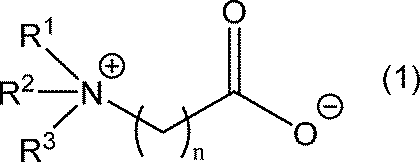
(式中、R1~R3は、それぞれ独立に、炭素数1~5の炭化水素基であり、nは1~3の整数である。)
上記R1~R3は、それぞれ独立に、炭素数1~3のアルキル基であることが好ましく、炭素数1又は2のアルキル基であることがより好ましい。
上記nは1又は2であることが好ましい。
上記一般式(1)で表されるベタインの具体例としては、N,N,N-トリメチルグリシンが挙げられる。
水素結合アクセプターとしては、上記したもののうち、1種を単独で用いてもよく、2種以上を組み合わせて用いてもよい。
本実施形態の潤滑剤に含まれる水素結合ドナーとしては、水素結合アクセプターと共晶を形成するものであればよい。しかしながら、上述のように、本実施形態の潤滑剤中におけるハロゲン原子の含有量は0.1質量%以下である事が必要であるため、水素結合ドナーはハロゲン原子を含有しないものであることが好ましく、より具体例には、アルコール、カルボン酸、含窒素化合物から選択される1種以上であることがより好ましい。
上記アルコールの具体例としては、エチレングリコール、トリエチレングリコール、グリセリン、ペンタエリスリトール、ジペンタエリスリトール、ヘキサンジオール、1,4-ブタンジオール、グルコース、スクロース、キシロース、マンニトール、ソルビトール、キシリトール、D-ソルビトール、フルクトース等の多価アルコール、フェノール、クレゾール、レゾルシノール、ヒドロキノン、フロログルシノール等の芳香族アルコールが挙げられる。
上記カルボン酸の具体例としては、蟻酸、酢酸、プロピオン酸、ブタン酸、ペンタン酸、ヘキサン酸、ヘプタン酸、オクタン酸、ノナン酸、デカン酸、ドデカン酸、テトラデカン酸、ペンタデカン酸、ヘキサデカン酸、ヘプタデカン酸、オクタデカン酸、エイコサン酸、ドコサン酸、テチラコサン酸、ヘキサコサン酸、オクタコサン酸、トリアコンタン酸等の脂肪酸;乳酸、酒石酸、リンゴ酸、アスコルビン酸、クエン酸、等のヒドロキシ酸;アジピン酸、マロン酸、シュウ酸、コハク酸、スベリン酸、イタコン酸等のジカルボン酸;1,2,3-プロパントリカルボン酸等のトリカルボン酸;安息香酸、フェニル酢酸、3-フェニルプロピオン酸、4-ヒドロキシ安息香酸、コーヒー酸、p-クマル酸、trans-ケイ皮酸、没食子酸等の芳香族カルボン酸;レブリン酸等のケト酸が挙げられる。
上記含窒素化合物の具体例としては、尿素、チオ尿素、1-メチル尿素、1,3-ジメチル尿素、1,1-ジメチル尿素、アセトアミド、ベンズアミド、イミダゾール、ベンズイミダゾール等が挙げられる。
水素結合ドナーとしては、上記したもののうち、1種を単独で用いてもよく、2種以上を組み合わせて用いてもよい。
本実施形態の潤滑剤は、前記深共晶溶媒のみからなるものである事が、カーボンニュートラルの観点からは好ましいが、鉱油及び合成油から選ばれる1種以上を含有するものであってもよく、鉱油及び合成油を含有するものであってもよい。鉱油及び合成油から選ばれる1種以上を含有する場合であっても、従来の潤滑油と比較して鉱油及び合成油の使用量を、深共晶溶媒の配合量に応じて低減することができるため、カーボンニュートラルの達成に貢献するものとできる。
このため、カーボンニュートラル性の観点からは、本実施形態の潤滑剤中における鉱油及び/又は合成油の合計含有量は、潤滑剤全量基準で、0~50質量%である事が好ましく、0~30質量%である事がより好ましく、0~10質量%である事がさらに好ましい。
潤滑剤の粘度指数としては、好ましくは80以上、より好ましくは90以上、更に好ましくは100以上である。
なお、本明細書において、動粘度及び粘度指数は、JIS K 2283:2000に準拠して測定又は算出された値を意味する。
当該潤滑剤用添加剤としては、従来より潤滑油用添加剤として用いられるものを選択可能であり、例えば、酸化防止剤、清浄分散剤、極圧剤、油性剤、流動点降下剤、粘度指数向上剤、防錆剤、銅不活性化剤、及び消泡剤からなる群から選択される1種以上が挙げられる。
なお、本明細書において、流動点降下剤、粘度指数向上剤、及び消泡剤等の添加剤は、ハンドリング性や潤滑剤への溶解性を考慮し、上記潤滑剤又は他の基油等の希釈油の一部に希釈し溶解させた溶液の形態であってもよい。
本実施形態の潤滑方法は、前記潤滑剤を用いたものであり、より具体的には、金属部材同士を、前記潤滑剤を介在させて潤滑する方法である。
本実施形態の潤滑剤の製造方法は、水素結合アクセプター及び水素結合ドナーを混合して深共晶溶媒を得る工程を有するものである。
水素結合アクセプター及び水素結合ドナーの詳細は、上述したものと同様である。
潤滑剤用添加剤の詳細は、上述したものと同様である。
本実施形態の潤滑剤の用途としては、例えば、内燃機関用、駆動系用、油圧作動油、自動変速機油、手動変速機油、緩衝器油、歯車油、流体軸受油、転がり軸受油、含油軸受油、摺動面油、冷凍機油、切削油、塑性加工油等の金属加工油、熱処理油及び熱媒体油などが挙げられる。
JIS K 2283:2000に準拠して測定又は算出した。
水素結合アクセプターである固体状のN,N,N-トリメチルグリシン11.7gと、水素結合ドナーである粘性液状のグリセリン18.4gとを撹拌子入りのビーカーに入れ80℃にて1時間攪拌したところ、全体が均一で透明な液状となった。
得られた潤滑剤について、40℃動粘度と粘度指数を測定し、また以下に示す条件で往復動摩擦試験を行い、摺動往復30回目の動摩擦係数を測定した。
・球材:SUJ2 1/2インチ
・摺動材:ステンレス(SUS304)、鋼板(SPCC-SD)
・試験温度:30℃
・摺動回数:30往復
・摺動速度:5mm/s
・ストローク幅:20mm
・荷重:1.0kgf
水素結合アクセプターである固体状のN,N,N-トリメチルグリシン11.7gと、水素結合ドナーである固体状のリンゴ酸13.4gとを撹拌子入りのビーカーに入れ80℃にて1時間攪拌したところ、全体が均一で透明な液状となった。
得られた潤滑剤について、40℃動粘度と粘度指数を測定し、また往復動摩擦試験を行い、摺動往復30回目の動摩擦係数を測定した。
500ニュートラル留分の鉱油について、40℃動粘度と粘度指数を測定し、また往復動摩擦試験を行い、摺動往復30回目の動摩擦係数を測定した。
水素結合アクセプターとしてテトラブチルアンモニウムクロリド(TBAC)27.8gを用い、また水素結合ドナーとしてドデカン酸20.0gを用いた以外は、実施例1と同様にして潤滑剤を調製した。
得られた潤滑剤について、40℃動粘度と粘度指数を測定し、また往復動摩擦試験を行い、摺動往復30回目の動摩擦係数を測定した。
水素結合アクセプターとして塩化コリン13.9gを用い、また水素結合ドナーとしてグリセリン13.4gを用いた以外は、実施例1と同様にして潤滑剤を調製した。
得られた潤滑剤について、40℃動粘度と粘度指数を測定し、また往復動摩擦試験を行い、摺動往復30回目の動摩擦係数を測定した。

Claims (12)
- 水素結合アクセプター及び水素結合ドナーからなる深共晶溶媒を含有し、ハロゲン原子の含有量が0.1質量%以下である潤滑剤。
- 前記水素結合アクセプターが、ベタインである請求項1に記載の潤滑剤。
- 前記ベタインが、下記一般式(1)で表されるものである請求項2に記載の潤滑剤。

(式中、R1~R3は、それぞれ独立に、炭素数1~5の炭化水素基であり、nは1~3の整数である。) - 前記水素結合ドナーが、アルコール、カルボン酸、含窒素化合物から選択される1種以上である請求項1~3のいずれか1項に記載の潤滑剤。
- 前記水素結合ドナーが、グリセリン又はリンゴ酸である請求項1~4のいずれか1項に記載の潤滑剤。
- さらに鉱油及び合成油からなる群から選択される1種以上を含有する請求項1~5のいずれか1項に記載の潤滑剤。
- 前記潤滑剤全量に対し、前記深共晶溶媒を50質量%以上含有する請求項1~6のいずれか1項に記載の潤滑剤。
- 前記水素結合アクセプターの潤滑剤全量基準での含有量が25~75質量%であり、前記水素結合ドナーの潤滑剤全量基準での含有量が25~75質量%である請求項1~7のいずれか1項に記載の潤滑剤。
- さらに潤滑剤用添加剤を含有する請求項1~8のいずれか1項に記載の潤滑剤。
- 請求項1~9のいずれか1項に記載の潤滑剤を用いる潤滑方法。
- 水素結合アクセプター及び水素結合ドナーを混合して深共晶溶媒を得る工程を有する請求項1~9のいずれか1項に記載の潤滑剤の製造方法。
- 前記深共晶溶媒を得る工程、及び、該工程の後の少なくともいずれかのタイミングで、さらに潤滑剤用添加剤を混合する工程を有する請求項11に記載の潤滑剤の製造方法。
Priority Applications (3)
| Application Number | Priority Date | Filing Date | Title |
|---|---|---|---|
| CN202380031475.4A CN118974218A (zh) | 2022-03-31 | 2023-03-24 | 润滑剂 |
| US18/851,359 US20250215344A1 (en) | 2022-03-31 | 2023-03-24 | Lubricant |
| EP23780248.3A EP4502125A4 (en) | 2022-03-31 | 2023-03-24 | LUBRICANT |
Applications Claiming Priority (2)
| Application Number | Priority Date | Filing Date | Title |
|---|---|---|---|
| JP2022061404A JP2023151663A (ja) | 2022-03-31 | 2022-03-31 | 潤滑剤 |
| JP2022-061404 | 2022-03-31 |
Publications (1)
| Publication Number | Publication Date |
|---|---|
| WO2023190238A1 true WO2023190238A1 (ja) | 2023-10-05 |
Family
ID=88201684
Family Applications (1)
| Application Number | Title | Priority Date | Filing Date |
|---|---|---|---|
| PCT/JP2023/011986 Ceased WO2023190238A1 (ja) | 2022-03-31 | 2023-03-24 | 潤滑剤 |
Country Status (6)
| Country | Link |
|---|---|
| US (1) | US20250215344A1 (ja) |
| EP (1) | EP4502125A4 (ja) |
| JP (1) | JP2023151663A (ja) |
| CN (1) | CN118974218A (ja) |
| TW (1) | TW202344674A (ja) |
| WO (1) | WO2023190238A1 (ja) |
Citations (1)
| Publication number | Priority date | Publication date | Assignee | Title |
|---|---|---|---|---|
| US20180223210A1 (en) * | 2017-02-06 | 2018-08-09 | Exxonmobil Chemical Patents Inc. | Low Transition Temperature Mixtures and Lubricating Oils Containing the Same |
Family Cites Families (3)
| Publication number | Priority date | Publication date | Assignee | Title |
|---|---|---|---|---|
| WO2016073149A1 (en) * | 2014-11-03 | 2016-05-12 | Exxonmobil Research And Engineering Company | Low transition temperature mixtures or deep eutectic solvents and processes for preparation thereof |
| WO2018144301A1 (en) * | 2017-02-06 | 2018-08-09 | Exxonmobil Chemical Patents Inc. | Low transition temperature mixtures and lubricating oils containing the same |
| EP4011354A1 (en) * | 2020-12-09 | 2022-06-15 | Beiersdorf AG | New cosmetics solvents based on two different components |
-
2022
- 2022-03-31 JP JP2022061404A patent/JP2023151663A/ja active Pending
-
2023
- 2023-03-24 EP EP23780248.3A patent/EP4502125A4/en active Pending
- 2023-03-24 CN CN202380031475.4A patent/CN118974218A/zh active Pending
- 2023-03-24 WO PCT/JP2023/011986 patent/WO2023190238A1/ja not_active Ceased
- 2023-03-24 US US18/851,359 patent/US20250215344A1/en active Pending
- 2023-03-29 TW TW112112013A patent/TW202344674A/zh unknown
Patent Citations (1)
| Publication number | Priority date | Publication date | Assignee | Title |
|---|---|---|---|---|
| US20180223210A1 (en) * | 2017-02-06 | 2018-08-09 | Exxonmobil Chemical Patents Inc. | Low Transition Temperature Mixtures and Lubricating Oils Containing the Same |
Non-Patent Citations (5)
| Title |
|---|
| ANTUNES MONICA; CAMPINHAS ANNE-SOPHIE; DE SA FREIRE MARIANA; CAETANO FERNANDO; DIOGO HERMINIO P.; COLACO ROGERIO; BRANCO LUIS C.; : "Deep eutectic solvents (DES) based on sulfur as alternative lubricants for silicon surfaces", JOURNAL OF MOLECULAR LIQUIDS, ELSEVIER, AMSTERDAM, NL, vol. 295, 11 September 2019 (2019-09-11), NL , XP085983303, ISSN: 0167-7322, DOI: 10.1016/j.molliq.2019.111728 * |
| DONATO MARIANA T.; SANTOS LUÍS; DIOGO HERMÍNIO P.; COLAÇO ROGÉRIO; BRANCO LUÍS C.; SARAMAGO BENILDE: "Eutectic systems containing an ionic liquid and PEG200 as lubricants for silicon surfaces: Effect of the mixture’s molar ratio", JOURNAL OF MOLECULAR LIQUIDS, ELSEVIER, AMSTERDAM, NL, vol. 350, 21 January 2022 (2022-01-21), NL , XP086960266, ISSN: 0167-7322, DOI: 10.1016/j.molliq.2022.118572 * |
| KHAN AMZAD, SINGH RAGHUVIR, GUPTA PIYUSH, GUPTA KANIKA, KHATRI OM P.: "Aminoguanidine-based deep eutectic solvents as environmentally-friendly and high-performance lubricant additives", JOURNAL OF MOLECULAR LIQUIDS, ELSEVIER, AMSTERDAM, NL, vol. 339, 1 October 2021 (2021-10-01), NL , pages 116829, XP093097333, ISSN: 0167-7322, DOI: 10.1016/j.molliq.2021.116829 * |
| MU LIWEN; MA XIAOFENG; GUO XIAOJING; CHEN MINJIAO; JI TUO; HUA JING; ZHU JIAHUA; SHI YIJUN: "Structural strategies to design bio-ionic liquid: Tuning molecular interaction with lignin for enhanced lubrication", JOURNAL OF MOLECULAR LIQUIDS, ELSEVIER, AMSTERDAM, NL, vol. 280, 1 January 1900 (1900-01-01), NL , pages 49 - 57, XP085637208, ISSN: 0167-7322, DOI: 10.1016/j.molliq.2019.02.022 * |
| See also references of EP4502125A4 * |
Also Published As
| Publication number | Publication date |
|---|---|
| US20250215344A1 (en) | 2025-07-03 |
| TW202344674A (zh) | 2023-11-16 |
| EP4502125A4 (en) | 2026-03-25 |
| JP2023151663A (ja) | 2023-10-16 |
| CN118974218A (zh) | 2024-11-15 |
| EP4502125A1 (en) | 2025-02-05 |
Similar Documents
| Publication | Publication Date | Title |
|---|---|---|
| JP5707589B2 (ja) | 潤滑剤組成物および潤滑液組成物 | |
| JP5693240B2 (ja) | 潤滑油組成物 | |
| JP5613678B2 (ja) | 潤滑グリース組成物 | |
| JP6895863B2 (ja) | グリース組成物 | |
| JP5766425B2 (ja) | グリース組成物 | |
| JP2014105252A (ja) | グリース組成物 | |
| JP7613365B2 (ja) | 潤滑油用添加剤およびこれを含有する潤滑油組成物 | |
| JP5231053B2 (ja) | 潤滑油組成物 | |
| JP2002363589A (ja) | 潤滑グリース組成物 | |
| WO2014207172A1 (en) | A drive system transmission lubricant oil composition | |
| JP2960561B2 (ja) | 樹脂製減速装置用グリース組成物 | |
| WO2023190238A1 (ja) | 潤滑剤 | |
| JP2020143258A (ja) | 錆止め油組成物及びその製造方法 | |
| JP7089899B2 (ja) | 潤滑油組成物、潤滑油組成物の製造方法及び駆動系機器 | |
| JP6857317B2 (ja) | 潤滑油組成物 | |
| CN116406418B (zh) | 水-二醇液压流体 | |
| JP2024071922A (ja) | グリース組成物 | |
| JP2002363590A (ja) | 潤滑グリース組成物 | |
| EP3230420B1 (en) | Lubricating oil composition for sliding glide surface | |
| RU2391386C1 (ru) | Пластичная смазка | |
| JP7782338B2 (ja) | 潤滑油用添加剤およびこれを含有する潤滑油組成物 | |
| CN115380102B (zh) | 水-二醇液压流体 | |
| JPH10338894A (ja) | 軽金属用潤滑油剤 | |
| JPH09176668A (ja) | 潤滑油組成物 | |
| CN118956468A (zh) | 一种高性能导轨油复合剂及制备方法 |
Legal Events
| Date | Code | Title | Description |
|---|---|---|---|
| 121 | Ep: the epo has been informed by wipo that ep was designated in this application |
Ref document number: 23780248 Country of ref document: EP Kind code of ref document: A1 |
|
| WWE | Wipo information: entry into national phase |
Ref document number: 18851359 Country of ref document: US |
|
| WWE | Wipo information: entry into national phase |
Ref document number: 202380031475.4 Country of ref document: CN |
|
| WWE | Wipo information: entry into national phase |
Ref document number: 2023780248 Country of ref document: EP |
|
| ENP | Entry into the national phase |
Ref document number: 2023780248 Country of ref document: EP Effective date: 20241031 |
|
| NENP | Non-entry into the national phase |
Ref country code: DE |
|
| WWP | Wipo information: published in national office |
Ref document number: 18851359 Country of ref document: US |