WO2023209785A1 - Station de base sans fil, équipement utilisateur et procédé de communication sans fil - Google Patents
Station de base sans fil, équipement utilisateur et procédé de communication sans fil Download PDFInfo
- Publication number
- WO2023209785A1 WO2023209785A1 PCT/JP2022/018785 JP2022018785W WO2023209785A1 WO 2023209785 A1 WO2023209785 A1 WO 2023209785A1 JP 2022018785 W JP2022018785 W JP 2022018785W WO 2023209785 A1 WO2023209785 A1 WO 2023209785A1
- Authority
- WO
- WIPO (PCT)
- Prior art keywords
- cell
- information
- slice
- slices
- unit
- Prior art date
- Legal status (The legal status is an assumption and is not a legal conclusion. Google has not performed a legal analysis and makes no representation as to the accuracy of the status listed.)
- Ceased
Links
Images


Classifications
-
- H—ELECTRICITY
- H04—ELECTRIC COMMUNICATION TECHNIQUE
- H04W—WIRELESS COMMUNICATION NETWORKS
- H04W48/00—Access restriction; Network selection; Access point selection
- H04W48/08—Access restriction or access information delivery, e.g. discovery data delivery
- H04W48/12—Access restriction or access information delivery, e.g. discovery data delivery using downlink control channel
-
- H—ELECTRICITY
- H04—ELECTRIC COMMUNICATION TECHNIQUE
- H04W—WIRELESS COMMUNICATION NETWORKS
- H04W48/00—Access restriction; Network selection; Access point selection
- H04W48/20—Selecting an access point
Definitions
- the present disclosure relates to a wireless base station, a terminal, and a wireless communication method that support network slicing.
- the 3rd Generation Partnership Project (3GPP(R)) specifies the 5th generation mobile communication system (5G, also known as New Radio (NR) or Next Generation (NG)), further referred to as Beyond 5G, 5G Evolution or 6G. We are also working on the specifications for the next generation.
- 5G also known as New Radio (NR) or Next Generation (NG)
- NR New Radio
- NG Next Generation
- Non-Patent Document 1 For example, in 3GPP Release 17, with regard to network slicing, which divides the radio access network (RAN) into multiple slices according to different service requirements, the user equipment (UE) needs to be aware of the slices supported by the RAN node. Enabling cell selection (including reselection) to be performed is being considered (Non-Patent Document 1).
- slice information is broadcast to the UE using a System Information Block (SIB), and a radio resource control layer (RRC) containing slice information is broadcast. ) messages are being considered.
- SIB System Information Block
- RRC radio resource control layer
- Non-Patent Document 2 slice information indicating the slice group should be broadcast. Furthermore, it has been agreed that slice grouping should be defined for each tracking area (TA) (Non-Patent Document 3).
- the UE recognizes the slice group configuration based on the slice information broadcasted into the cell by the SIB, but does not recognize the slice group configuration applied to other TAs, such as neighboring TAs adjacent to the current TA. cannot be recognized.
- the following disclosure has been made in view of this situation, and provides a wireless base station that can realize appropriate cell selection even when the configuration of grouped slices differs for each tracking area (TA).
- the purpose is to provide terminals and wireless communication methods.
- One aspect of the present disclosure includes a transmitting unit (system information transmitting unit 130) that transmits broadcast information to a terminal in a cell, a slice supported via the cell, and a tracking area associated with the slice. or a control unit (control unit 140) that includes a slice information list including cell identification information in the broadcast information.
- a transmitting unit that transmits broadcast information to a terminal in a cell, a slice supported via the cell, and a tracking area associated with the slice.
- control unit 140 that includes a slice information list including cell identification information in the broadcast information.
- the wireless base station includes a control unit (control unit 140) that includes a slice information list including tracking area or cell identification information in the message.
- One aspect of the present disclosure provides a receiving unit (system information receiving unit 220) that receives broadcast information broadcast within a cell, a slice included in the broadcast information and supported via the cell, and a slice that is supported via the cell.
- the terminal (UE 200) includes a control unit (control unit 250) that performs cell selection based on a slice information list including tracking area or cell identification information associated with the UE 200.
- One aspect of the present disclosure provides a receiving unit that receives a radio resource control layer message, a slice that is included in the message and is supported via a standby cell, and a tracking area or cell identification that is associated with the slice.
- the terminal includes a control unit that performs cell selection based on a slice information list including information.
- One aspect of the present disclosure provides a step in which a terminal receives broadcast information broadcast within a cell, and the terminal receives a slice included in the broadcast information and supported via the cell;
- This wireless communication method includes the step of performing cell selection based on a slice information list including associated tracking area or cell identification information.
- One aspect of the present disclosure provides a step in which a terminal receives a radio resource control layer message, and the terminal associates a slice included in the message and supported via a standby cell with the slice.
- the wireless communication method includes the step of performing cell selection based on a slice information list including tracking area or cell identification information that is assigned to a cell.
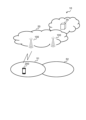
- FIG. 1 is an overall schematic configuration diagram of a wireless communication system 10.
- FIG. 2 is a functional block diagram of the gNB 100.
- FIG. 3 is a functional block diagram of the UE 200.
- FIG. 4 is an example of a slice group configuration broadcasted by SIB.
- FIG. 5 is a diagram illustrating a sequence example of a procedure for attaching the UE 200 to the network according to operation example 1.
- FIG. 6 is a diagram showing an example of the configuration of the SIB 16.
- FIG. 7 is a diagram showing a configuration example of FreqPriorityListSlicing.
- FIG. 8 is a diagram illustrating an example of an RRC layer control sequence according to operation example 2.
- FIG. 9 is a diagram showing an example of the hardware configuration of the gNB 100 and the UE 200.
- FIG. 10 is a diagram showing an example of the configuration of vehicle 2001.
- FIG. 1 is an overall schematic configuration diagram of a wireless communication system 10 according to the present embodiment.
- the wireless communication system 10 is a wireless communication system that complies with 5G New Radio (NR), and includes a Next Generation-Radio Access Network 20 (hereinafter referred to as NG-RAN20) and a user terminal 200 (User Equipment 200, hereinafter referred to as UE200). .
- NR 5G New Radio
- NG-RAN20 Next Generation-Radio Access Network 20
- UE200 User Equipment 200
- the wireless communication system 10 may be a wireless communication system that follows a system called Beyond 5G, 5G Evolution, or 6G.
- NG-RAN 20 includes a radio base station 100 (hereinafter referred to as gNB 100).
- gNB 100 radio base station 100
- the specific configuration of the wireless communication system 10 including the number of gNBs and UEs is not limited to the example shown in FIG. 1.
- NG-RAN20 actually includes multiple NG-RAN Nodes (may be abbreviated as RAN nodes), specifically gNB (or ng-eNB), and is the core network according to 5G, 5GC30. Connected. Note that NG-RAN20 and 5GC30 may be simply expressed as a "network.”
- the 5GC30 may be provided with an Access and Mobility Management Function 35 (hereinafter referred to as AMF35) that is included in the 5G system architecture and provides a mobility management function for the UE 200.
- AMF35 Access and Mobility Management Function 35
- the wireless communication system 10 can support network slicing.
- Network slicing is a technology that divides a single network into multiple slices that meet different service requirements.
- Network slicing may be interpreted as a technique for logically dividing configurations or resources according to various demands and characteristics of communication services.
- slices can be formed using an identifier called S-NSSAI (Single-Network Slice Selection Assistance Information).
- S-NSSAI Single-Network Slice Selection Assistance Information
- S-NSSAI may be used (carried around) between UE200, NG-RAN20, and 5GC30.
- SST service types
- eMBB enhanced Mobile Broadband
- mIoT massive Internet of Things
- URLLC Ultra-Reliable and Low Latency Communications
- the UE 200 may update the tracking area (TA) as it moves.
- the TAs 51 and 52 may be composed of one or more cells, and may be interpreted as a cell unit indicating the location of the managed UE 200 on the network. Note that TA51 and TA52 may be called RAN based notification area.
- the gNB 100 and the UE 200 may update the TA (Serving TA) to which the UE 200 belongs to the neighboring TA (Neighboring TA) as the UE 200 moves. Furthermore, gNB 100 and UE 200 may perform handover between cells when the measurement results of cell reception quality satisfy certain conditions.
- FIG. 2 is a functional block diagram of the gNB 100.
- the gNB 100 includes a wireless communication section 110, an RA processing section 120, a system information transmission section 130, and a control section 140.
- the wireless communication unit 110 transmits a downlink signal (DL signal) according to NR. Furthermore, the wireless communication unit 110 receives an uplink signal (UL signal) according to NR.
- DL signal downlink signal
- UL signal uplink signal
- the radio communication unit 110 can transmit a radio resource control layer (RRC) message to the UE 200 within the cell.
- RRC radio resource control layer
- the radio communication unit 110 constitutes a transmitting unit that transmits radio resource control layer messages to terminals within a cell.
- the message may include various RRC messages specified in 3GPP TS38.331. For example, RRCSetup, RRCReject, RRCReconfiguration, RRCReestablishment, RRCRelease, etc. may be included.
- the wireless communication unit 110 may receive an RRC message from the gNB 100.
- the message may include various RRC messages defined in 3GPP TS38.331. Specifically, RRC messages corresponding to the RRC messages described above may be included.
- the UE 200 in the cell may be interpreted as a UE waiting or located in the cell formed by the gNB 100.
- the RA processing unit 120 executes processing related to random access procedures (RA procedures). Specifically, the RA processing unit 120 may support contention-based RA procedures (CBRA) and contention-free RA procedures (CFRA). Additionally, the system information transmitter 130 may support four-step and two-step RA procedures. The random access procedure may be interpreted as a procedure for initial access by UE 200.
- RA procedures random access procedures
- CBRA contention-based RA procedures
- CFRA contention-free RA procedures
- the random access procedure may be interpreted as a procedure for initial access by UE 200.
- the RA processing unit 120 Based on instructions from the control unit 140, the RA processing unit 120 transmits configuration information indicating initial access configuration, specifically, random access channel (RACH) configuration, to the UE 200. It may be transmitted to the handover source radio base station.
- RACH random access channel
- the RACH configuration may be determined based on information regarding slices supported via the cell (which may be referred to as slice information). Such a RACH configuration may be called a slice-based RACH configuration.
- the system information transmitter 130 transmits system information within the cell formed by the gNB 100. Specifically, the system information transmitter 130 can transmit various System Information Blocks (SIBs) to the UE 200 within the cell. Such system information may be interpreted as broadcast information. In this embodiment, the system information transmitter 130 constitutes a transmitter that transmits broadcast information to terminals within the cell.
- SIBs System Information Blocks
- the SIB may include the SIB specified in 3GPP TS38.331.
- SIB1 may include information relevant when evaluating whether UE 200 is granted access to a cell, and may define scheduling other system information.
- SIB1 may include radio resource configuration information common to all UEs and prohibition information applied to integrated access control.
- SIB4 may include information related to inter-frequency cell reselection, that is, information regarding other NR frequencies related to cell reselection and inter-frequency neighboring cells.
- the information element (IE) may include frequency-common cell reselection parameters and cell-specific reselection parameters.
- the SIB16 may include the configuration of slice-specific cell reselection information. Specifically, the SIB16 may include an information element (IE) of FreqPriorityListSlicing. FreqPriorityListSlicing may indicate the priority of cell reselection for slicing. The configuration of FreqPriorityListSlicing will be described further later.
- IE information element
- the broadcast information may be SIBs other than the above-mentioned SIBs, or other types as long as the purpose is to broadcast some information to the UE 200.
- the broadcast information may be broadcast to multiple UEs, or may be unicast to a specific UE.
- the control unit 140 controls each functional block that configures the gNB 100.
- the control unit 140 can include information regarding slices supported via the cell in the broadcast information.
- the control unit 140 can include slice information in the system information (SIB) transmitted by the system information transmitting unit 130.
- SIB system information
- control unit 140 creates a slice information list that includes slices supported via cells and tracking areas (TA) or cell identification information (PCI: Physical Cell ID) that are associated with the slices. can be included in the broadcast information.
- TA tracking areas
- PCI cell identification information
- the control unit 140 can include FreqPriorityListSlicing (slice information list) including a TAC (Tracking Area Code), a TAC list, or a PCI list in the SIB 16.
- FreqPriorityListSlicing (slice information list) including a TAC (Tracking Area Code), a TAC list, or a PCI list in the SIB 16.
- the SIB 16 is an example, and other SIBs may be used.
- PLMN-IdentityInfoList may be added under FreqPriorityListSlicing (slice information list). More specifically, FreqPriorityListSlicing (slicing information list) including a TAC list (Tracking Area Identity may also be used) or PCI list for each PLMN identity can be included in the SIB16.
- control unit 140 can also include information regarding slices supported via the cell in the RRC message. Specifically, the control unit 140 can include slice information in the RRC message transmitted by the wireless communication unit 110.
- control unit 140 creates a slice information list that includes slices supported via cells and tracking areas (TA) or cell identification information (PCI: Physical Cell ID) that are associated with the slices. can be included in the RRC message.
- TA tracking areas
- PCI cell identification information
- the control unit 140 can include FreqPriorityListSlicing (slice information list) including a TAC (Tracking Area Code), a TAC list, or a PCI list in the RRCRelease.
- FreqPriorityListSlicing (slice information list) including a TAC (Tracking Area Code), a TAC list, or a PCI list in the RRCRelease.
- RRCRelease is an example, and other RRC messages may be used.
- PLMN-IdentityInfoList may be added under FreqPriorityListSlicing (slice information list). More specifically, FreqPriorityListSlicing (slicing information list) including a TAC list (Tracking Area Identity may also be used) or PCI list for each PLMN identity can be included in the SIB16.
- a slice supported via a cell may mean a slice supported by the cell itself formed by the gNB 100, or a slice supported by the area (for example, RAN-AreaCode) or radio access network (RAN) that includes the cell. May also refer to supporting slices.
- the information regarding slices may be any information that can identify slices supported via cells.
- the slice information may be S-NSSAI.
- the slice information may include information indicating the configuration of a slice group (slice group configuration) in which a plurality of slices are grouped. Grouping of slices may be defined for each tracking area (TA).
- TA tracking area
- the slice group configuration may include slice group identification information (such as a number), slice identification information (such as a number), and the types (service types) of slices included in the slice group.
- S-NSSAI may include Slice/Service type (SST) and Slice Differentiator (SD). Note that SD is an option and does not need to be included. S-NSSAI is specified in 3GPP TS23.003 Chapter 28.4.2.
- the SST may indicate the expected behavior of the network slice in terms of functionality and services. 8 bits may be assigned to SST.
- SD may complement SST and distinguish between multiple network slices of the same slice/service type. 24 bits may be allocated to SD.
- S-NSSAI SST or SD
- Slice ID may include only SST or may include SST and SD.
- NSSAI may include only SST or SST and SD.
- FIG. 3 is a functional block diagram of the UE 200.
- the UE 200 includes a wireless communication section 210, a system information reception section 220, an RA processing section 230, a slice selection section 240, and a control section 250.
- the wireless communication unit 210 transmits an uplink signal (UL signal) according to NR. Furthermore, the wireless communication unit 210 receives an uplink signal (DL signal) according to NR. A downlink signal (DL signal) according to NR is received from the gNB 100. Additionally, the system information receiving unit 220 may receive an RRC message from the gNB 100. The message may include various RRC messages defined in 3GPP TS38.331. In this embodiment, the system information receiving unit 220 constitutes a receiving unit that receives messages of the radio resource control layer.
- the system information receiving unit 220 receives system information broadcast within the cell. Specifically, the system information receiving unit 220 can receive various SIBs broadcast in the cell in which it is waiting (in which it resides). As described above, the SIB may include SIB16 and the like. In this embodiment, the system information receiving section 220 constitutes a receiving section that receives broadcast information broadcast within the cell.
- the RA processing unit 230 executes processing related to random access procedures (RA procedures).
- the RA processing unit 230 faces the system information transmitting unit 130 of the gNB 100, and may support the same RA procedure as the system information transmitting unit 130.
- the RA processing unit 230 transmits a random access preamble (msg. 1), receives a random access response (msg. 2), transmits a scheduled transmission (msg. 3), and performs contention resolution (msg. 4) can be received.
- the slice selection unit 240 selects a slice (network slice) according to the service executed in the UE 200.
- the services may include eMBB, mIoT, URLLC, etc., as described above.
- the slice selection unit 240 can notify information regarding the Slice group list and the priority of the list from the NAS (Non-Access Stratum) layer to the AS (Access Stratum) layer.
- NG-RAN20 may notify AMF35 of the slice support list and slice group support list.
- the AMF 35 may notify the UE 200 of the slice group list (called network slice AS group in the NAS) and the priority of the slice group via the non-access stratum (NAS).
- the UE 200 may notify the access layer (AS) of the slice group list and slice group priority from the NAS within the UE.
- the slice selection unit 240 is notified by the SIB4 based on the Slice ID (which may be a service type (SST)) selected in the past or the Slice ID (which may be a service type (SST)) notified by a paging message.
- a slice can be selected by considering both cellReselectionPriority and service type (that is, a frequency with a high priority is selected and the Slice ID (SST) supports the frequency).
- the UE 200 may perform cell reselection by selecting the frequencies in which the slice groups are supported in order of priority of the slice groups notified from the NAS. .
- the cell reselection priority may be derived according to the following rules.
- the UE derives reselection priorities for slice-based cell reselection using at least one of the following:
- ⁇ List of high-priority slice groups provided by the NAS (in order of priority) - Slice information for each frequency using sliceSpecificCellReselectionPriority for each slice group, if system information and/or dedicated signaling is provided. - cellReselectionPriority for each frequency, provided by system information and/or dedicated signaling. ⁇ Frequencies that support at least one priority slice group received from the NAS will have higher reselection priority than frequencies that do not support priority slice groups. ⁇ Frequencies that support at least one slice group will have the highest priority. Priority is given to slice groups with high frequencies according to the priority order provided by the NAS.
- sliceSpecificCellReselectionPriority Priority is given in the order of ⁇ Frequencies that support priority slice groups and frequencies that indicate sliceSpecificCellReselectionPriority for each slice group have a higher reselection frequency than frequencies that support priority slice groups without indicating slices for each slice group.
- - Frequencies that support non-priority slice groups are given priority according to cellReselectionPriority.
- the control unit 250 controls each functional block that configures the UE 200. In particular, in this embodiment, the control unit 250 can perform cell selection based on information regarding slices included in system information (broadcast information).
- system information for example SIB16, includes slices supported via cells and tracking areas (TA) or cell identification information (PCI: Physical Cell ID) associated with the slices.
- TA tracking area
- PCI Cell identification information
- FreqPriorityListSlicing scaling information list
- the control unit 250 may perform cell selection based on a slice information list included in such broadcast information and including slices supported via the cell and tracking area or cell identification information.
- control unit 250 can also perform cell selection based on information regarding slices included in the received RRC message.
- the information regarding the slice is information regarding the slice supported via the cell where the UE 200 is waiting, and may include S-NSSAI (NSSAI), SST, SD, etc.
- the RRC message (for example, RRCRelease) includes the slice supported via the cell and the tracking area (TA) or cell identification information (PCI: Physical Cell ID) associated with the slice.
- TA tracking area
- PCI cell identification information
- FreqPriorityListSlicing scaling information list
- the control unit 250 may perform cell selection based on a slice information list included in such an RRC message and including slices supported via the standby cell and tracking area or cell identification information.
- the control unit 250 can perform cell selection (which may include reselection) based on the slice selected by the slice selection unit 240. Specifically, the control unit 250 may select a cell in which a slice can be used according to the service performed in the UE 200.
- FIG. 4 is an example of the slice group configuration broadcasted by SIB.
- Slices #1 and 2 are grouped as Slice group #1.
- Slices #3 and 4 are grouped as Slice group #2.
- the service type of Slice #1, 2 is URLLC.
- the service type of Slice #3 and 4 is eMBB. In this way, identical or similar slices may be grouped together.
- the slices to be grouped may be different between the TA to which the UE 200 belongs and the adjacent TA adjacent to the TA.
- slice information can be reported by SliceInfoList included in FreqPriorityListSlicing by SIB16, but the relationship between slice groups and Tracking Area Codes (TACs) is not indicated at all. For this reason, when updating a TA, the UE 200 cannot recognize the slices supported by adjacent TAs, and there is a problem in that it cannot select cells with slices in mind.
- slice information including slice group configuration is broadcast using system information (SIB).
- SIB system information
- FIG. 5 shows a sequence example of a procedure for attaching the UE 200 to the network according to operation example 1.
- the NG-RAN 20 prior to cell selection by the UE 200, the NG-RAN 20 (gNB 100) broadcasts slice information within the cell using system information (SIB).
- SIB system information
- FreqPriorityListSlicing may include SliceInfoList, etc.
- FreqPriorityListSlicing may indicate the cell reselection priority for slicing, and more specifically may indicate a list of prioritized frequencies. Multiple FreqPriorityListSlicings may be entered, and a FreqPriorityListSlicing may be associated with a specific SIB.
- a SliceInfoList may contain one or more SliceInfos.
- SliceInfo may include slice group identification information (sliceGroupID), cell reselection priority (cellReselectionPriority, cellReselectionSubPriority), slice cell list (sliceCellListNR), and the like.
- sliceCellListNR may indicate a list of neighboring cells in the permission list (sliceAllowCellListNR) or exclusion list (sliceExcludeCellListNR) to be sliced.
- sliceAllowCellListNR may indicate the list of neighboring cells allowed for slicing. Cells not included in the list may be interpreted as not supporting the corresponding slice group and frequency pair. sliceExcludeCellListNR may indicate a list of neighboring cells excluded for slicing. Cells not included in the list may be interpreted as supporting the corresponding slice group and frequency pair.
- the UE 200 may receive an SIB including FreqPriorityListSlicing, for example SIB16, and select a cell according to the service type (slice) to be used based on the information included in FreqPriorityListSlicing. After selecting a cell, the UE 200 executes a random access procedure (RA procedure) and completes attachment to the network.
- SIB including FreqPriorityListSlicing
- SIB16 Service Type
- RA procedure random access procedure
- FIG. 6 shows a configuration example of the SIB 16 according to the operation example.
- FreqPriorityListSlicing may include a SliceInfoList made up of multiple SliceInfos.
- SliceInfoList may be associated with at least one of TAC, TAC list, or PCI list.
- SliceInfo may be associated with at least one of TAC, TAC list, or PCI list.
- Each SliceInfoList may be associated with frequency information (Current frequency, inter frequency1, inter frequency2).
- FIG. 7 shows a configuration example of FreqPriorityListSlicing.
- FreqPriorityListSlicing shown in FIG. 7 may be included in the SIB (for example, SIB16) as described above.
- a list of TACs (trackingAreaCodeList) and slice information of neighboring TAs (neighborTASliceCellList) may be included.
- slice groups may be associated with TAC, TAC list, or PCI list.
- the neighborTASliceCellList may be configured by PCI information.
- neighborTASliceCellList may include slice types (service types) and/or slice group configurations supported in the neighboring TA.
- neighborTASliceCellList may include slice information of not only neighboring TAs but also neighboring TAs.
- the TAC list may include the TAC of the TA to which the UE 200 belongs (self TA) or the TAC(s) of the adjacent TA(s). Furthermore, if the TAC (or TAC list) does not exist (absent), the slice group configuration (indicated by sliceInfoList) may be considered to be supported by the own TA and not supported by the adjacent TA.
- TAC may be interpreted as the code of the TA to which the cell indicated by the cellIdentity field belongs.
- FIG. 8 shows an example of an RRC layer control sequence according to operation example 2.
- the UE 200 executes the procedure for attaching to the network in the same way as in operation example 1 (see FIG. 5), but the Initial UE message to the AMF 35 is rejected.
- gNB100 transmits RRCRelease to UE200.
- the RRCRelease may include the above-mentioned FreqPriorityListSlicing.
- FreqPriorityListSlicing included in RRCRelease may have the same configuration as shown in FIG. 7.
- the slice information list (FreqPriorityListSlicing) included in the SIB (for example, SIB16) and/or the RRC message (for example, RRCRelease) includes TAC or PCI information that is associated with a slice (slice group). ing.
- the UE 200 can achieve appropriate cell selection based on the slice information list even when updating the TA.
- the TA Serving TA
- the neighboring TA Neighboring TA
- the UE 200 can now recognize the slice group configuration supported by the neighboring TA, and is slice-aware. (considered) cell selection can be realized.
- neighboring cell and neighboring TA are used, but the terms neighboring and neighboring may be used interchangeably.
- neighboring may mean a more limited area, and neighborhood may mean a wider area than adjacent.
- the words configure, activate, update, indicate, enable, specify, and select may be used interchangeably. good.
- link, associate, correspond, and map may be used interchangeably; allocate, assign, and monitor.
- map may also be read interchangeably.
- each functional block may be realized using one physically or logically coupled device, or may be realized using two or more physically or logically separated devices directly or indirectly (e.g. , wired, wireless, etc.) and may be realized using a plurality of these devices.
- the functional block may be realized by combining software with the one device or the plurality of devices.
- Functions include judgment, decision, judgment, calculation, calculation, processing, derivation, investigation, exploration, confirmation, reception, transmission, output, access, resolution, selection, selection, establishment, comparison, assumption, expectation, consideration, These include, but are not limited to, broadcasting, notifying, communicating, forwarding, configuring, reconfiguring, allocating, mapping, and assigning. I can't do it.
- a functional block (configuration unit) that performs transmission is called a transmitting unit or a transmitter. In either case, as described above, the implementation method is not particularly limited.
- FIG. 9 is a diagram showing an example of the hardware configuration of the device.
- the device may be configured as a computer device including a processor 1001, a memory 1002, a storage 1003, a communication device 1004, an input device 1005, an output device 1006, a bus 1007, and the like.
- the word “apparatus” can be read as a circuit, a device, a unit, etc.
- the hardware configuration of the device may include one or more of the devices shown in the figure, or may not include some of the devices.
- Each functional block of the device (see FIGS. 2 and 3) is realized by any hardware element of the computer device or a combination of hardware elements.
- each function in the device is performed by loading predetermined software (programs) onto hardware such as the processor 1001 and memory 1002, so that the processor 1001 performs calculations, controls communication by the communication device 1004, and controls the memory This is realized by controlling at least one of data reading and writing in the storage 1002 and the storage 1003.
- predetermined software programs
- the processor 1001 for example, operates an operating system to control the entire computer.
- the processor 1001 may be configured by a central processing unit (CPU) including an interface with peripheral devices, a control device, an arithmetic unit, registers, and the like.
- CPU central processing unit
- the processor 1001 reads programs (program codes), software modules, data, etc. from at least one of the storage 1003 and the communication device 1004 to the memory 1002, and executes various processes according to these.
- programs program codes
- software modules software modules
- data etc.
- the various processes described above may be executed by one processor 1001, or may be executed by two or more processors 1001 simultaneously or sequentially.
- Processor 1001 may be implemented by one or more chips. Note that the program may be transmitted from a network via a telecommunications line.
- the memory 1002 is a computer-readable recording medium, and includes at least one of Read Only Memory (ROM), Erasable Programmable ROM (EPROM), Electrically Erasable Programmable ROM (EEPROM), Random Access Memory (RAM), etc. may be done.
- Memory 1002 may be called a register, cache, main memory, or the like.
- the memory 1002 can store programs (program codes), software modules, etc. that can execute a method according to an embodiment of the present disclosure.
- the storage 1003 is a computer-readable recording medium, such as an optical disk such as a Compact Disc ROM (CD-ROM), a hard disk drive, a flexible disk, a magneto-optical disk (such as a compact disk, a digital versatile disk, or a Blu-ray disk). (registered trademark disk), smart card, flash memory (eg, card, stick, key drive), floppy disk, magnetic strip, etc.
- Storage 1003 may also be called auxiliary storage.
- the above-mentioned recording medium may be, for example, a database including at least one of memory 1002 and storage 1003, a server, or other suitable medium.
- the communication device 1004 is hardware (transmission/reception device) for communicating between computers via at least one of a wired network and a wireless network, and is also referred to as, for example, a network device, network controller, network card, communication module, etc.
- the communication device 1004 includes, for example, a high frequency switch, a duplexer, a filter, a frequency synthesizer, etc. to realize at least one of frequency division duplex (FDD) and time division duplex (TDD). It may be composed of.
- FDD frequency division duplex
- TDD time division duplex
- the input device 1005 is an input device (eg, keyboard, mouse, microphone, switch, button, sensor, etc.) that accepts input from the outside.
- the output device 1006 is an output device (for example, a display, a speaker, an LED lamp, etc.) that performs output to the outside. Note that the input device 1005 and the output device 1006 may have an integrated configuration (for example, a touch panel).
- each device such as the processor 1001 and the memory 1002 is connected by a bus 1007 for communicating information.
- the bus 1007 may be configured using a single bus, or may be configured using different buses for each device.
- the device includes hardware such as a microprocessor, a digital signal processor (DSP), an application specific integrated circuit (ASIC), a programmable logic device (PLD), and a field programmable gate array (FPGA).
- DSP digital signal processor
- ASIC application specific integrated circuit
- PLD programmable logic device
- FPGA field programmable gate array
- processor 1001 may be implemented using at least one of these hardwares.
- information notification is not limited to the aspects/embodiments described in this disclosure, and may be performed using other methods.
- information notification can be performed using physical layer signaling (e.g., Downlink Control Information (DCI), Uplink Control Information (UCI)), upper layer signaling (e.g., RRC signaling, Medium Access Control (MAC) signaling, broadcast information (Master Information Block (MIB), System Information Block (SIB)), other signals, or a combination thereof.
- RRC signaling may also be referred to as RRC messages, such as RRC Connection Setup (RRC Connection Setup). ) message, RRC Connection Reconfiguration message, etc.
- LTE Long Term Evolution
- LTE-A LTE-Advanced
- SUPER 3G IMT-Advanced
- 4th generation mobile communication system 4th generation mobile communication system
- 5th generation mobile communication system 5G
- 6th generation mobile communication system 6th generation mobile communication system
- xth generation mobile communication system x is an integer or decimal, for example
- Future Radio Access FAA
- New Radio NR
- W-CDMA registered trademark
- GSM® CDMA2000
- UMB Ultra Mobile Broadband
- IEEE 802.11 Wi-Fi®
- IEEE 802.16 WiMAX®
- IEEE 802.20 Ultra-WideBand (UWB), Bluetooth (registered trademark), other appropriate systems, and next-generation systems expanded based on these.
- a combination of multiple systems for example, a combination of at least one of LTE and LTE-A with 5G
- a combination of at least one of LTE and LTE-A with 5G may be applied.
- the specific operations performed by the base station in this disclosure may be performed by its upper node.
- various operations performed for communication with a terminal are performed by the base station and other network nodes other than the base station (e.g., MME or It is clear that this can be done by at least one of the following: (conceivable, but not limited to) S-GW, etc.).
- MME mobile phone
- S-GW network node
- Information, signals can be output from an upper layer (or lower layer) to a lower layer (or upper layer). It may be input/output via multiple network nodes.
- the input/output information may be stored in a specific location (for example, memory) or may be managed using a management table. Information that is input and output may be overwritten, updated, or additionally written. The output information may be deleted. The input information may be sent to other devices.
- Judgment may be made using a value expressed by 1 bit (0 or 1), a truth value (Boolean: true or false), or a comparison of numerical values (for example, a predetermined value). (comparison with a value).
- notification of prescribed information is not limited to being done explicitly, but may also be done implicitly (for example, not notifying the prescribed information). Good too.
- Software includes instructions, instruction sets, code, code segments, program code, programs, subprograms, software modules, whether referred to as software, firmware, middleware, microcode, hardware description language, or by any other name. , should be broadly construed to mean an application, software application, software package, routine, subroutine, object, executable, thread of execution, procedure, function, etc.
- software, instructions, information, etc. may be sent and received via a transmission medium.
- a transmission medium For example, if the software uses wired technology (coaxial cable, fiber optic cable, twisted pair, Digital Subscriber Line (DSL), etc.) and/or wireless technology (infrared, microwave, etc.) to When transmitted from a server or other remote source, these wired and/or wireless technologies are included within the definition of transmission medium.
- wired technology coaxial cable, fiber optic cable, twisted pair, Digital Subscriber Line (DSL), etc.
- wireless technology infrared, microwave, etc.
- data, instructions, commands, information, signals, bits, symbols, chips, etc. may refer to voltages, currents, electromagnetic waves, magnetic fields or magnetic particles, light fields or photons, or any of the foregoing. It may also be represented by a combination of
- At least one of the channel and the symbol may be a signal.
- the signal may be a message.
- a component carrier may also be called a carrier frequency, cell, frequency carrier, etc.
- system and “network” are used interchangeably.
- radio resources may be indicated by an index.
- base station BS
- wireless base station fixed station
- NodeB NodeB
- eNodeB eNodeB
- gNodeB gNodeB
- a base station is sometimes referred to by terms such as macrocell, small cell, femtocell, and picocell.
- a base station can accommodate one or more (eg, three) cells (also called sectors). If a base station accommodates multiple cells, the overall coverage area of the base station can be partitioned into multiple smaller areas, and each smaller area is divided into multiple subsystems (e.g., small indoor base stations (Remote Radio Communication services can also be provided by Head: RRH).
- RRH Remote Radio Communication services
- cell refers to part or all of the coverage area of a base station and/or base station subsystem that provides communication services in this coverage.
- the base station transmitting information to the terminal may be read as the base station instructing the terminal to control/operate based on the information.
- MS Mobile Station
- UE User Equipment
- a mobile station is defined by a person skilled in the art as a subscriber station, mobile unit, subscriber unit, wireless unit, remote unit, mobile device, wireless device, wireless communication device, remote device, mobile subscriber station, access terminal, mobile terminal, wireless It may also be referred to as a terminal, remote terminal, handset, user agent, mobile client, client, or some other suitable terminology.
- At least one of a base station and a mobile station may be called a transmitting device, a receiving device, a communication device, etc.
- the base station and the mobile station may be a device mounted on a mobile body, the mobile body itself, or the like.
- the moving object may be a vehicle (for example, a car, an airplane, etc.), an unmanned moving object (for example, a drone, a self-driving car, etc.), or a robot (manned or unmanned). ).
- at least one of the base station and the mobile station includes devices that do not necessarily move during communication operations.
- at least one of the base station and the mobile station may be an Internet of Things (IoT) device such as a sensor.
- IoT Internet of Things
- the base station in the present disclosure may be read as a mobile station (user terminal, hereinafter the same).
- communication between a base station and a mobile station is replaced with communication between multiple mobile stations (for example, it may be called Device-to-Device (D2D), Vehicle-to-Everything (V2X), etc.).
- D2D Device-to-Device
- V2X Vehicle-to-Everything
- each aspect/embodiment of the present disclosure may be applied.
- the mobile station may have the functions that the base station has.
- words such as "up” and “down” may be replaced with words corresponding to inter-terminal communication (for example, "side”).
- uplink channels, downlink channels, etc. may be replaced with side channels (or side links).
- the mobile station in the present disclosure may be read as a base station.
- the base station may have the functions that the mobile station has.
- a radio frame may be composed of one or more frames in the time domain. Each frame or frames in the time domain may be called a subframe. A subframe may further be composed of one or more slots in the time domain. A subframe may have a fixed time length (eg, 1 ms) that does not depend on numerology.
- the numerology may be a communication parameter applied to at least one of transmission and reception of a certain signal or channel.
- Numerology includes, for example, subcarrier spacing (SCS), bandwidth, symbol length, cyclic prefix length, transmission time interval (TTI), number of symbols per TTI, radio frame configuration, transmission and reception. It may also indicate at least one of a specific filtering process performed by the device in the frequency domain, a specific windowing process performed by the transceiver in the time domain, etc.
- a slot may be composed of one or more symbols (Orthogonal Frequency Division Multiplexing (OFDM) symbols, Single Carrier Frequency Division Multiple Access (SC-FDMA) symbols, etc.) in the time domain.
- OFDM Orthogonal Frequency Division Multiplexing
- SC-FDMA Single Carrier Frequency Division Multiple Access
- a slot may be a unit of time based on numerology.
- a slot may include multiple mini-slots. Each minislot may be made up of one or more symbols in the time domain. Furthermore, a mini-slot may also be called a sub-slot. A minislot may be made up of fewer symbols than a slot.
- a PDSCH (or PUSCH) transmitted in a time unit larger than a minislot may be referred to as a PDSCH (or PUSCH) mapping type A.
- PDSCH (or PUSCH) transmitted using minislots may be referred to as PDSCH (or PUSCH) mapping type B.
- Radio frames, subframes, slots, minislots, and symbols all represent time units when transmitting signals. Other names may be used for the radio frame, subframe, slot, minislot, and symbol.
- one subframe may be called a transmission time interval (TTI)
- TTI transmission time interval
- multiple consecutive subframes may be called a TTI
- one slot or minislot may be called a TTI.
- at least one of the subframe and TTI may be a subframe (1ms) in existing LTE, a period shorter than 1ms (for example, 1-13 symbols), or a period longer than 1ms. It may be.
- the unit representing TTI may be called a slot, minislot, etc. instead of a subframe.
- TTI refers to, for example, the minimum time unit for scheduling in wireless communication.
- a base station performs scheduling to allocate radio resources (frequency bandwidth, transmission power, etc. that can be used by each user terminal) to each user terminal on a TTI basis.
- radio resources frequency bandwidth, transmission power, etc. that can be used by each user terminal
- TTI is not limited to this.
- the TTI may be a unit of transmission time such as a channel-coded data packet (transport block), a code block, or a codeword, or may be a unit of processing such as scheduling or link adaptation. Note that when a TTI is given, the time interval (for example, the number of symbols) to which transport blocks, code blocks, code words, etc. are actually mapped may be shorter than the TTI.
- one slot or one minislot is called a TTI
- one or more TTIs may be the minimum time unit for scheduling.
- the number of slots (minislot number) that constitutes the minimum time unit of the scheduling may be controlled.
- a TTI with a time length of 1 ms may be called a normal TTI (TTI in LTE Rel. 8-12), normal TTI, long TTI, normal subframe, normal subframe, long subframe, slot, etc.
- TTI that is shorter than the normal TTI may be referred to as a shortened TTI, short TTI, partial or fractional TTI, shortened subframe, short subframe, minislot, subslot, slot, etc.
- long TTI e.g., normal TTI, subframe, etc.
- short TTI e.g., shortened TTI, etc.
- TTI with a time length of less than the long TTI and 1ms. It may also be read as a TTI having a TTI length of the above length.
- a resource block is a resource allocation unit in the time domain and frequency domain, and may include one or more continuous subcarriers in the frequency domain.
- the number of subcarriers included in an RB may be the same regardless of the new merology, and may be 12, for example.
- the number of subcarriers included in an RB may be determined based on newerology.
- the time domain of an RB may include one or more symbols and may be one slot, one minislot, one subframe, or one TTI in length.
- One TTI, one subframe, etc. may each be composed of one or more resource blocks.
- one or more RBs are classified into physical resource blocks (Physical RBs: PRBs), sub-carrier groups (Sub-Carrier Groups: SCGs), resource element groups (Resource Element Groups: REGs), PRB pairs, RB pairs, etc. May be called.
- a resource block may be configured by one or more resource elements (RE).
- RE resource elements
- 1 RE may be a radio resource region of 1 subcarrier and 1 symbol.
- Bandwidth Part (also called partial bandwidth, etc.) refers to a subset of contiguous common resource blocks for a certain numerology in a certain carrier. good.
- the common RB may be specified by an RB index based on a common reference point of the carrier.
- PRBs may be defined in a BWP and numbered within that BWP.
- BWP may include BWP for UL (UL BWP) and BWP for DL (DL BWP).
- BWP may include BWP for UL (UL BWP) and BWP for DL (DL BWP).
- One or more BWPs may be configured within one carrier for the UE.
- At least one of the configured BWPs may be active, and the UE may not expect to transmit or receive a given signal/channel outside the active BWP.
- “cell”, “carrier”, etc. in the present disclosure may be replaced with "BWP”.
- radio frames, subframes, slots, minislots, symbols, etc. described above are merely examples.
- the number of subframes included in a radio frame, the number of slots per subframe or radio frame, the number of minislots included in a slot, the number of symbols and RBs included in a slot or minislot, the number of symbols included in an RB The number of subcarriers, the number of symbols within a TTI, the symbol length, the cyclic prefix (CP) length, and other configurations can be changed in various ways.
- connection refers to any connection or coupling, direct or indirect, between two or more elements and to each other. It can include the presence of one or more intermediate elements between two elements that are “connected” or “coupled.”
- the bonds or connections between elements may be physical, logical, or a combination thereof. For example, "connection” may be replaced with "access.”
- two elements may include one or more electrical wires, cables, and/or printed electrical connections, as well as in the radio frequency domain, as some non-limiting and non-inclusive examples. , electromagnetic energy having wavelengths in the microwave and optical (both visible and non-visible) ranges, and the like.
- the reference signal can also be abbreviated as Reference Signal (RS), and may be called a pilot depending on the applied standard.
- RS Reference Signal
- the phrase “based on” does not mean “based solely on” unless explicitly stated otherwise. In other words, the phrase “based on” means both “based only on” and “based at least on.”
- any reference to elements using the designations "first,” “second,” etc. does not generally limit the amount or order of those elements. These designations may be used in this disclosure as a convenient way to distinguish between two or more elements. Thus, reference to a first and second element does not imply that only two elements may be employed therein or that the first element must precede the second element in any way.
- determining may encompass a wide variety of operations.
- “Judgment” and “decision” include, for example, judging, calculating, computing, processing, deriving, investigating, looking up, search, and inquiry. (e.g., searching in a table, database, or other data structure);
- “judgment” and “decision” refer to receiving (e.g., receiving information), transmitting (e.g., sending information), input, output, and access. (accessing) (for example, accessing data in memory) may be considered to be a “judgment” or “decision.”
- “judgment” and “decision” refer to resolving, selecting, choosing, establishing, comparing, etc.
- judgment and “decision” may include regarding some action as “judgment” and “decision.” Further, “judgment (decision)” may be read as “assuming", “expecting”, “considering”, etc.
- the term "A and B are different” may mean that "A and B are different from each other.” Note that the term may also mean that "A and B are each different from C”. Terms such as “separate” and “coupled” may also be interpreted similarly to “different.”
- FIG. 10 shows an example of the configuration of the vehicle 2001.
- the vehicle 2001 includes a drive unit 2002, a steering unit 2003, an accelerator pedal 2004, a brake pedal 2005, a shift lever 2006, left and right front wheels 2007, left and right rear wheels 2008, an axle 2009, an electronic control unit 2010, Equipped with various sensors 2021 to 2029, an information service section 2012, and a communication module 2013.
- the drive unit 2002 includes, for example, an engine, a motor, or a hybrid of an engine and a motor.
- the steering unit 2003 includes at least a steering wheel (also referred to as a steering wheel), and is configured to steer at least one of the front wheels and the rear wheels based on the operation of the steering wheel operated by the user.
- the electronic control unit 2010 includes a microprocessor 2031, memory (ROM, RAM) 2032, and communication port (IO port) 2033. Signals from various sensors 2021 to 2027 provided in the vehicle are input to the electronic control unit 2010.
- the electronic control unit 2010 may also be called an ECU (Electronic Control Unit).
- Signals from various sensors 2021 to 2028 include current signals from current sensor 2021 that senses motor current, front and rear wheel rotation speed signals obtained by rotation speed sensor 2022, and front wheel rotation speed signals obtained by air pressure sensor 2023. and rear wheel air pressure signal, vehicle speed signal acquired by vehicle speed sensor 2024, acceleration signal acquired by acceleration sensor 2025, accelerator pedal depression amount signal acquired by accelerator pedal sensor 2029, and brake pedal sensor 2026. These include a brake pedal depression amount signal, a shift lever operation signal acquired by the shift lever sensor 2027, and a detection signal for detecting obstacles, vehicles, pedestrians, etc. acquired by the object detection sensor 2028.
- the Information Services Department 2012 provides various devices such as car navigation systems, audio systems, speakers, televisions, and radios that provide various information such as driving information, traffic information, and entertainment information, as well as one or more devices that control these devices. It consists of an ECU.
- the information service unit 2012 provides various multimedia information and multimedia services to the occupants of the vehicle 1 using information acquired from external devices via the communication module 2013 and the like.
- the driving support system unit 2030 includes millimeter wave radar, LiDAR (Light Detection and Ranging), cameras, positioning locators (e.g. GNSS, etc.), map information (e.g. high definition (HD) maps, autonomous vehicle (AV) maps, etc.) ), gyro systems (e.g., IMU (Inertial Measurement Unit), INS (Inertial Navigation System), etc.), AI (Artificial Intelligence) chips, and AI processors that prevent accidents and reduce the driver's driving burden. It consists of various devices that provide functions for the purpose and one or more ECUs that control these devices. Further, the driving support system unit 2030 transmits and receives various information via the communication module 2013, and realizes a driving support function or an automatic driving function.
- GPS Light Detection and Ranging
- map information e.g. high definition (HD) maps, autonomous vehicle (AV) maps, etc.
- gyro systems e.g., IMU (Inertial Measurement Unit), INS (Iner
- the communication module 2013 can communicate with the microprocessor 2031 and the components of the vehicle 1 via the communication port.
- the communication module 2013 communicates with the drive unit 2002, steering unit 2003, accelerator pedal 2004, brake pedal 2005, shift lever 2006, left and right front wheels 2007, left and right rear wheels 2008, which are included in the vehicle 2001, through the communication port 2033.
- Data is transmitted and received between the axle 2009, the microprocessor 2031 and memory (ROM, RAM) 2032 in the electronic control unit 2010, and the sensors 2021 to 2028.
- the communication module 2013 is a communication device that can be controlled by the microprocessor 2031 of the electronic control unit 2010 and can communicate with external devices. For example, various information is transmitted and received with an external device via wireless communication.
- Communication module 2013 may be located either inside or outside electronic control unit 2010.
- the external device may be, for example, a base station, a mobile station, or the like.
- the communication module 2013 transmits the current signal from the current sensor input to the electronic control unit 2010 to an external device via wireless communication.
- the communication module 2013 also receives the front wheel and rear wheel rotational speed signals acquired by the rotational speed sensor 2022, the front wheel and rear wheel air pressure signals acquired by the air pressure sensor 2023, and the vehicle speed sensor, which are input to the electronic control unit 2010.
- the shift lever operation signal acquired by the sensor 2027, the detection signal for detecting obstacles, vehicles, pedestrians, etc. acquired by the object detection sensor 2028 are also transmitted to the external device via wireless communication.
- the communication module 2013 receives various information (traffic information, signal information, inter-vehicle information, etc.) transmitted from external devices, and displays it on the information service section 2012 provided in the vehicle. Communication module 2013 also stores various information received from external devices into memory 2032 that can be used by microprocessor 2031. Based on the information stored in the memory 2032, the microprocessor 2031 controls the drive unit 2002, steering unit 2003, accelerator pedal 2004, brake pedal 2005, shift lever 2006, left and right front wheels 2007, and left and right rear wheels provided in the vehicle 2001. 2008, axle 2009, sensors 2021 to 2028, etc. may be controlled.
- various information traffic information, signal information, inter-vehicle information, etc.
- Wireless communication system 20 NG-RAN 30 5GC 35AMF 51, 52 T.A.
- Control unit 200 UE 210 Wireless communication unit 220 System information reception unit 230 RA processing unit 240
- Slice selection unit 250 Control unit 1001 Processor 1002 Memory 1003 Storage 1004 Communication device 1005 Input device 1006 Output device 1007 Bus 2001 Vehicle 2002 Drive unit 2003 Steering unit 2004 Accelerator pedal 2005 brake Pedal 2006 Shift lever 2007 Left and right front wheels 2008 Left and right rear wheels 2009 Axle 2010 Electronic control unit 2012 Information service department 2013 Communication module 2021 Current sensor 2022 Rotation speed sensor 2023 Air pressure sensor 2024 Vehicle speed sensor 2025 Acceleration sensor 2026 Brake pedal sensor 2027 shift lever sensor 2028 Object detection sensor 2029 Accelerator pedal sensor 2030
Landscapes
- Engineering & Computer Science (AREA)
- Computer Security & Cryptography (AREA)
- Computer Networks & Wireless Communication (AREA)
- Signal Processing (AREA)
- Mobile Radio Communication Systems (AREA)
Abstract
La présente invention concerne une station de base sans fil qui transmet des informations de diffusion à un équipement utilisateur (UE) dans une cellule. La station de base sans fil inclut, dans les informations de diffusion, une liste d'informations de tranche comprenant une tranche qui est prise en charge dans la cellule, et des informations de zone de suivi ou d'identification de cellule qui sont associées à la tranche.
Priority Applications (1)
| Application Number | Priority Date | Filing Date | Title |
|---|---|---|---|
| PCT/JP2022/018785 WO2023209785A1 (fr) | 2022-04-25 | 2022-04-25 | Station de base sans fil, équipement utilisateur et procédé de communication sans fil |
Applications Claiming Priority (1)
| Application Number | Priority Date | Filing Date | Title |
|---|---|---|---|
| PCT/JP2022/018785 WO2023209785A1 (fr) | 2022-04-25 | 2022-04-25 | Station de base sans fil, équipement utilisateur et procédé de communication sans fil |
Publications (1)
| Publication Number | Publication Date |
|---|---|
| WO2023209785A1 true WO2023209785A1 (fr) | 2023-11-02 |
Family
ID=88518157
Family Applications (1)
| Application Number | Title | Priority Date | Filing Date |
|---|---|---|---|
| PCT/JP2022/018785 Ceased WO2023209785A1 (fr) | 2022-04-25 | 2022-04-25 | Station de base sans fil, équipement utilisateur et procédé de communication sans fil |
Country Status (1)
| Country | Link |
|---|---|
| WO (1) | WO2023209785A1 (fr) |
Citations (1)
| Publication number | Priority date | Publication date | Assignee | Title |
|---|---|---|---|---|
| WO2022080225A1 (fr) * | 2020-10-12 | 2022-04-21 | 京セラ株式会社 | Procédé de commande de communication |
-
2022
- 2022-04-25 WO PCT/JP2022/018785 patent/WO2023209785A1/fr not_active Ceased
Patent Citations (1)
| Publication number | Priority date | Publication date | Assignee | Title |
|---|---|---|---|---|
| WO2022080225A1 (fr) * | 2020-10-12 | 2022-04-21 | 京セラ株式会社 | Procédé de commande de communication |
Non-Patent Citations (1)
| Title |
|---|
| SPREADTRUM COMMUNICATIONS: "Discussion on remaining issues for slice based cell reselection", 3GPP DRAFT; R2-2202417, 3RD GENERATION PARTNERSHIP PROJECT (3GPP), MOBILE COMPETENCE CENTRE ; 650, ROUTE DES LUCIOLES ; F-06921 SOPHIA-ANTIPOLIS CEDEX ; FRANCE, vol. RAN WG2, no. electronic; 20220221 - 20220303, 14 February 2022 (2022-02-14), Mobile Competence Centre ; 650, route des Lucioles ; F-06921 Sophia-Antipolis Cedex ; France, XP052110381 * |
Similar Documents
| Publication | Publication Date | Title |
|---|---|---|
| WO2023203623A1 (fr) | Terminal, station de base et procédé de communication | |
| WO2023195182A1 (fr) | Terminal, station de base et procédé de communication | |
| WO2023195186A1 (fr) | Terminal, station de base et procédé de communication | |
| WO2023195141A1 (fr) | Terminal, station de base et procédé de communication | |
| WO2023175979A1 (fr) | Terminal, station de base et procédé de communication | |
| WO2023199415A1 (fr) | Terminal et procédé de communication sans fil | |
| WO2023209785A1 (fr) | Station de base sans fil, équipement utilisateur et procédé de communication sans fil | |
| JP7755656B2 (ja) | 端末及び無線通信方法 | |
| JP7806371B2 (ja) | 通信装置及び通信方法 | |
| JP7801371B2 (ja) | 端末、基地局及び通信方法 | |
| WO2023199446A1 (fr) | Terminal, station de base et procédé de communication | |
| WO2023152930A1 (fr) | Terminal, station de base et procédé de communication | |
| WO2023188038A1 (fr) | Station radio fixe et procédé de radiocommunication | |
| WO2023188212A1 (fr) | Terminal, station de base, et procédé de communication | |
| WO2023195083A1 (fr) | Terminal, station de base et procédé de communication | |
| WO2023199393A1 (fr) | Terminal, station de base et procédé de communication | |
| WO2025088814A1 (fr) | Terminal, station de base et procédé de communication | |
| WO2023188210A1 (fr) | Terminal, station de base, et procédé de communication | |
| WO2026033813A1 (fr) | Terminal et procédé de communication | |
| WO2024209634A1 (fr) | Terminal, procédé de communication et système de communication sans fil | |
| WO2023195183A1 (fr) | Terminal, station de base et procédé de communication | |
| WO2023195082A1 (fr) | Terminal, station de base et procédé de communication | |
| JP2026041938A (ja) | 端末、及び基地局 | |
| WO2023199391A1 (fr) | Terminal, station de base et procédé de communication | |
| WO2023195187A1 (fr) | Terminal, station de base et procédé de communication |
Legal Events
| Date | Code | Title | Description |
|---|---|---|---|
| 121 | Ep: the epo has been informed by wipo that ep was designated in this application |
Ref document number: 22940065 Country of ref document: EP Kind code of ref document: A1 |
|
| NENP | Non-entry into the national phase |
Ref country code: DE |
|
| 122 | Ep: pct application non-entry in european phase |
Ref document number: 22940065 Country of ref document: EP Kind code of ref document: A1 |
|
| NENP | Non-entry into the national phase |
Ref country code: JP |