WO2023224924A1 - Solid forms of a macrocyclic compounds as cftr modulators and their preparation - Google Patents
Solid forms of a macrocyclic compounds as cftr modulators and their preparation Download PDFInfo
- Publication number
- WO2023224924A1 WO2023224924A1 PCT/US2023/022263 US2023022263W WO2023224924A1 WO 2023224924 A1 WO2023224924 A1 WO 2023224924A1 US 2023022263 W US2023022263 W US 2023022263W WO 2023224924 A1 WO2023224924 A1 WO 2023224924A1
- Authority
- WO
- WIPO (PCT)
- Prior art keywords
- compound
- ppm
- formula
- theta
- degrees
- Prior art date
- Legal status (The legal status is an assumption and is not a legal conclusion. Google has not performed a legal analysis and makes no representation as to the accuracy of the status listed.)
- Ceased
Links
Classifications
-
- C—CHEMISTRY; METALLURGY
- C07—ORGANIC CHEMISTRY
- C07D—HETEROCYCLIC COMPOUNDS
- C07D498/00—Heterocyclic compounds containing in the condensed system at least one hetero ring having nitrogen and oxygen atoms as the only ring hetero atoms
- C07D498/02—Heterocyclic compounds containing in the condensed system at least one hetero ring having nitrogen and oxygen atoms as the only ring hetero atoms in which the condensed system contains two hetero rings
- C07D498/06—Peri-condensed systems
-
- A—HUMAN NECESSITIES
- A61—MEDICAL OR VETERINARY SCIENCE; HYGIENE
- A61P—SPECIFIC THERAPEUTIC ACTIVITY OF CHEMICAL COMPOUNDS OR MEDICINAL PREPARATIONS
- A61P11/00—Drugs for disorders of the respiratory system
-
- C—CHEMISTRY; METALLURGY
- C07—ORGANIC CHEMISTRY
- C07D—HETEROCYCLIC COMPOUNDS
- C07D213/00—Heterocyclic compounds containing six-membered rings, not condensed with other rings, with one nitrogen atom as the only ring hetero atom and three or more double bonds between ring members or between ring members and non-ring members
- C07D213/02—Heterocyclic compounds containing six-membered rings, not condensed with other rings, with one nitrogen atom as the only ring hetero atom and three or more double bonds between ring members or between ring members and non-ring members having three double bonds between ring members or between ring members and non-ring members
- C07D213/04—Heterocyclic compounds containing six-membered rings, not condensed with other rings, with one nitrogen atom as the only ring hetero atom and three or more double bonds between ring members or between ring members and non-ring members having three double bonds between ring members or between ring members and non-ring members having no bond between the ring nitrogen atom and a non-ring member or having only hydrogen or carbon atoms directly attached to the ring nitrogen atom
- C07D213/60—Heterocyclic compounds containing six-membered rings, not condensed with other rings, with one nitrogen atom as the only ring hetero atom and three or more double bonds between ring members or between ring members and non-ring members having three double bonds between ring members or between ring members and non-ring members having no bond between the ring nitrogen atom and a non-ring member or having only hydrogen or carbon atoms directly attached to the ring nitrogen atom with hetero atoms or with carbon atoms having three bonds to hetero atoms with at the most one bond to halogen, e.g. ester or nitrile radicals, directly attached to ring carbon atoms
- C07D213/78—Carbon atoms having three bonds to hetero atoms, with at the most one bond to halogen, e.g. ester or nitrile radicals
- C07D213/81—Amides; Imides
-
- C—CHEMISTRY; METALLURGY
- C07—ORGANIC CHEMISTRY
- C07D—HETEROCYCLIC COMPOUNDS
- C07D498/00—Heterocyclic compounds containing in the condensed system at least one hetero ring having nitrogen and oxygen atoms as the only ring hetero atoms
- C07D498/12—Heterocyclic compounds containing in the condensed system at least one hetero ring having nitrogen and oxygen atoms as the only ring hetero atoms in which the condensed system contains three hetero rings
- C07D498/16—Peri-condensed systems
Definitions
- CFTR Cystic Fibrosis Transmembrane Conductance Regulator
- Cystic fibrosis is a recessive genetic disease that affects approximately 88,000 children and adults worldwide. Despite progress in the treatment of CF, there is no cure.
- the most prevalent disease-causing mutation is a deletion of phenylalanine at position 508 of the CFTR amino acid sequence and is commonly referred to as the F508del mutation. This mutation occurs in many of the cases of cystic fibrosis and is associated with severe disease.
- CFTR is a cAMP/ATP-mediated anion channel that is expressed in a variety of cell types, including absorptive and secretory epithelia cells, where it regulates anion flux across the membrane, as well as the activity of other ion channels and proteins.
- epithelial cells normal functioning of CFTR is critical for the maintenance of electrolyte transport throughout the body, including respiratory and digestive tissue.
- CFTR is composed of 1480 amino acids that encode a protein which is made up of a tandem repeat of transmembrane domains, each containing six transmembrane helices and a nucleotide binding domain. The two transmembrane domains are linked by a large, polar, regulatory (R)-domain with multiple phosphorylation sites that regulate channel activity and cellular trafficking.
- Chloride transport takes place by the coordinated activity of ENaC (epithelial sodium channel) and CFTR present on the apical membrane and the Na + -K + -ATPase pump and Cl" channels expressed on the basolateral surface of the cell. Secondary active transport of chloride from the luminal side leads to the accumulation of intracellular chloride, which can then passively leave the cell via Cl" channels, resulting in a vectorial transport. Arrangement of Na + /2C17K + co-transporter, Na + -K + -ATPase pump and the basolateral membrane K + channels on the basolateral surface and CFTR on the luminal side coordinate the secretion of chloride. Because water is probably never actively transported itself, its flow across epithelia depends on tiny transepithelial osmotic gradients generated by the bulk flow of sodium and chloride.
- CFTR modulators have recently been identified. These modulators can be characterized as, for example, potentiators, correctors, potentiator enhancers/co- potentiators, amplifiers, readthrough agents, and nucleic acid therapies.
- CFTR modulators that increase the channel gating activity of mutant and wild-type CFTR at the epithelial cell surface are known as potentiators.
- Correctors improve faulty protein processing and resulting trafficking to the epithelial surface. Ghelani and Schneider-Futschik (2020) ACS Pharmacol. Transl. Sci. 3:4-10. There are three CFTR correctors approved by the U.S. FDA for treatment of cystic fibrosis.
- one aspect of the disclosure provides solid forms of a CFTR-modulating compound, (6/?)- 17 -amino- 12,12-dimethyl-6, 15 -bi s(trifluorom ethyl)- 19-oxa-3 ,4, 13,18- tetrazatricyclo[12.3.1.12,5]nonadeca-l(18),2,4,14,16-pentaen-6-ol (Compound I), and pharmaceutically acceptable salts thereof.
- Compound I can be depicted as having the following structure:
- a further aspect of the disclosure provides methods of preparing Compound I, stereoisomers of Compound I, deuterated derivatives of Compound I and its stereoisomers, and pharmaceutically acceptable salts of any of the foregoing.
- Crystalline forms are of interest in the pharmaceutical industry, where the control of the crystalline form(s) of the active ingredient may be desirable or even required. Reproducible processes for producing a compound with a particular crystalline form in high purity may be desirable for compounds intended to be used in pharmaceuticals, as different crystalline forms may possess different properties. For example, different crystalline forms may possess different chemical, physical, and/or pharmaceutical properties. In some embodiments, one or more crystalline forms disclosed herein may exhibit a higher level of purity, chemical stability, and/or physical stability. Certain crystalline forms (e.g., crystalline free form, crystalline salt, crystalline salt solvate, and crystalline salt hydrate forms of Compound I (collectively referred to as “crystalline forms”)) may exhibit lower hygroscopicity. Thus, the crystalline forms of this disclosure may provide advantages during drug substance manufacturing, storage, and handling. Thus, pharmaceutically acceptable crystalline forms of Compound I may be particularly useful for the production of drugs for the treatment of CFTR-mediated diseases.
- Amorphous forms of therapeutic compounds may also be of interest in the pharmaceutical industry, where crystalline forms are not especially bioavailable. Some amorphous forms may improve bioavailability and thus allow for administration of reduced dosages. For some compounds, amorphous forms provide the most biologically accessible form of the therapeutic.
- the crystalline form of Compound I is Compound I methanol solvate (wet). In some embodiments, the crystalline form of Compound I is Compound I methanol solvate (dry). In some embodiments, the crystalline form of Compound I is Compound I p-toluene sulfonic acid.
- the solid form of Compound I is an amorphous form. In some embodiments, the solid amorphous form of Compound I is Compound I neat amorphous form.
- compositions comprising at least one solid form chosen from solid forms of Compound I, pharmaceutically acceptable salts thereof, and deuterated derivives of any of the foregoing disclosed herein, which compositions may further include at least one additional active pharmaceutical ingredient and/or at least one carrier.
- compositions of the invention comprise Compound I in any of the pharmaceutically acceptable solid forms disclosed herein.
- compositions comprising Compound I in any of the pharmaceutically acceptable crystalline forms disclosed herein may optionally further comprise at least one compound chosen from Compound II, Compound III, Compound III- d, Compound IV, Compound V, Compound VI, Compound VII, Compound VIII, Compound IX, Compound X, and pharmaceutically acceptable salts and deuterated derivatives thereof.
- Another aspect of the invention provides methods of treating the CFTR-mediated disease cystic fibrosis comprising administering Compound I in any of the pharmaceutically acceptable solid forms disclosed herein, optionally as part of a pharmaceutical composition comprising at least one additional component (such as a carrier or additional active agent), to a subject in need thereof.
- additional component such as a carrier or additional active agent
- methods of treating the CFTR-mediated disease cystic fibrosis comprise administering Compound I in any of the pharmaceutically acceptable solid forms disclosed herein, and optionally further administering one or more additional CFTR modulating agents selected from (A)-l-(2,2-difluorobenzo[d][l,3]dioxol-5- yl)-A-(l-(2,3-dihydroxypropyl)-6-fluoro-2-(l-hydroxy-2-methylpropan-2-yl)-17/-indol-5- yl)cyclopropanecarboxamide (Compound II), A-[2,4-bis(l,l-dimethylethyl)-5- hydroxyphenyl]-l,4-dihydro-4-oxoquinoline-3 -carboxamide (Compound III) or A-(2-(tert- butyl)-5-hydroxy-4-(2-(methyl-d3)propan-2-yl-l,l,l,3,3,3-d
- a further aspect of the disclosure provides processes of making the solid forms of Compound I disclosed herein.
- Another aspect of the invention provides solid forms of Compound I, pharmaceutically acceptable salts thereof, and deuterated derivives of any of the foregoing disclosed herein, for use in any of the methods described herein.
- FIG. 1 provides an X-ray power diffraction (XRPD) pattern of Compound I neat Form A.
- FIG. 2 provides a differential scanning calorimetry (DSC) analysis of Compound I neat Form A.
- FIG. 3 provides an XRPD pattern of crystalline Compound I methanol solvate (wet).
- FIG. 4 provides a 13 C SSNMR spectrum of crystalline Compound I methanol solvate (wet).
- FIG. 5 provides a 19 F SSNMR spectrum of crystalline Compound I methanol solvate (wet).
- FIG. 6 provides an XRPD pattern of crystalline Compound I methanol solvate (dry).
- FIG. 7 provides a TGA curve for crystalline Compound I methanol solvate (dry).
- FIG. 8 provides a DSC analysis of crystalline Compound I methanol solvate (dry).
- FIG. 9 provides an XRPD pattern of crystalline Compound I p-toluene sulfonic acid.
- FIG. 10 provides a DSC analysis of crystalline Compound I p-toluene sulfonic acid.
- FIG. 11 provides a 13 C SSNMR spectrum of crystalline Compound I p-toluene sulfonic acid.
- FIG. 12 provides a 19 F SSNMR spectrum of crystalline Compound I p-toluene sulfonic acid.
- FIG. 13 provides an XRPD pattern of neat amorphous Compound I.
- FIG. 14 provides a TGA curve for neat amorphous Compound I.
- FIG. 15 provides a DSC analysis of neat amorphous Compound I.
- Compound I refers to (67?)-17-amino-12,12- dimethyl-6,15-bis(trifluoromethyl)-19-oxa-3,4,13,18-tetrazatricyclo[12.3.1.12,5]nonadeca- l(18),2,4,14,16-pentaen-6-ol, which can be depicted as having the following structure: (Compound I).
- Compound I may be a racemic mixture or an enantioenriched (e.g., >90% ee, >95% ee, > 98% ee) mixture of isomers.
- Compound I may be in the form of a pharmaceutically acceptable salt, solvate, and/or hydrate.
- Compound I and methods for making and using Compound I, stereoisomers of Compound I, deuterated derivatives of Compound I and its stereoisomers, and pharmaceutically acceptable salts of any of the foregoing are disclosed in WO 2022/109573, incorporated herein by reference.
- Compound II refers to (A)-l-(2,2-difhiorobenzo[d][l,3]dioxol-5- yl)-7V-(l-(2,3-dihydroxypropyl)-6-fluoro-2-(l-hydroxy-2-methylpropan-2-yl)-l/7-indol-5- yl)cyclopropanecarboxamide, which can be depicted with the following structure: (Compound II).
- Compound II may be in the form of a pharmaceutically acceptable salt.
- Compound II and methods of making and using Compound II are disclosed in WO 2010/053471, WO 2011/119984, WO 2011/133751, WO 2011/133951, and WO 2015/160787, each incorporated herein by reference.
- Compound III may also be in the form of a pharmaceutically acceptable salt.
- Compound III and methods of making and using Compound III are disclosed in WO 2006/002421, WO 2007/079139, WO 2010/108162, and WO 2010/019239, each incorporated herein by reference.
- a deuterated derivative of Compound III (Compound Ill-d) is employed in the compositions and methods disclosed herein.
- a chemical name for Compound Ill-d is 7V-(2-(tert-butyl)-5-hydroxy-4-(2-(methyl-d3)propan-2-yl-l ,1 ,1 ,3,3,3- d6)phenyl)-4-oxo-l,4-dihydroquinoline-3 -carboxamide, as depicted by the structure: (Compound Ill-d).
- Compound Ill-d may be in the form of a pharmaceutically acceptable salt.
- Compound Ill-d and methods of making and using Compound Ill-d are disclosed in WO 2012/158885, WO 2014/078842, and US Patent No. 8,865,902, incorporated herein by reference.
- Compound IV refers to 3-(6-(l-(2,2-difhiorobenzo[d][l,3]dioxol- 5-yl)cyclopropanecarboxamido)-3-methylpyridin-2-yl)benzoic acid, which is depicted by the chemical structure: (Compound IV).
- Compound IV may be in the form of a pharmaceutically acceptable salt.
- Compound IV and methods of making and using Compound IV are disclosed in WO 2007/056341, WO 2009/073757, and WO 2009/076142, incorporated herein by reference.
- Compound V refers to 7V-(l,3-dimethylpyrazol-4-yl)sulfonyl-6- [3-(3,3,3-trifluoro-2,2-dimethyl-propoxy)pyrazol-l-yl]-2-[(4S)-2,2,4-trimethylpyrrolidin-l- yl]pyridine-3 -carboxamide, which is depicted by the chemical structure: (Compound V).
- Compound V may be in the form of a pharmaceutically acceptable salt.
- Compound V and methods of making and using Compound V are disclosed in WO 2018/107100 and WO 2019/113476, incorporated herein by reference.
- Compound VI refers to 7V-(benzenesulfonyl)-6-[3-[2-[l- (trifluoromethyl) cyclopropyl]ethoxy]pyrazol-l-yl]-2-[(45)-2,2,4-trimethylpyrrolidin-l- yl]pyridine-3 -carboxamide, which is depicted by the chemical structure: (Compound VI).
- Compound VI may be in the form of a pharmaceutically acceptable salt.
- Compound VI and methods of making and using Compound VI are disclosed in WO 2018/064632, incorporated herein by reference.
- Compound VII refers to (145)-8-[3-(2- ⁇ dispiro[2.0.2. l]heptan-7- yl ⁇ ethoxy)-l/7-pyrazol-l-yl]-12,12-dimethyl-2X. 6 -thia-3,9,l l,18,23-pentaazatetracyclo [17.3.1.111,14.05,10]tetracosa-l(22),5,7,9,19(23),20-hexaene-2,2,4-trione, which is depicted by the chemical structure: (Compound VII).
- Compound VII may be in the form of a pharmaceutically acceptable salt.
- Compound VII and methods of making and using Compound VII are disclosed in WO 2019/161078, WO 2020/102346, and PCT Application No. PCT/US2020/046116, incorporated herein by reference.
- Compound VIII refers to (1 lA)-6-(2,6-dimethylphenyl)-l l-(2- methylpropyl)- 12- ⁇ spiro[2.3 ]hexan-5 -yl ⁇ -9-oxa-2k 6 -thia-3 ,5,12,19- tetraazatricyclo[12.3.1.14,8]nonadeca-l(17),4(19),5,7,14(18),15-hexaene-2,2,13-trione, which is depicted by the chemical structure: (Compound VIII).
- Compound VIII may be in the form of a pharmaceutically acceptable salt.
- Compound VIII and methods of making and using Compound VIII are disclosed in WO 2020/206080, incorporated herein by reference.
- Compound IX refers to A-(benzenesulfonyl)-6-(3-fluoro-5- isobutoxy-phenyl)-2-[(45)-2,2,4-trimethylpyrrolidin-l-yl]pyridine-3-carboxamide, which is depicted by the chemical structure: (Compound IX).
- Compound IX may be in the form of a pharmaceutically acceptable salt.
- Compound IX and methods of making and using Compound IX are disclosed in WO 2016/057572, incorporated herein by reference.
- “Compound X” as used herein, refers to A-[(6-amino-2-pyridyl)sulfonyl]-6-(3- fluoro-5-isobutoxy-phenyl)-2-[(45)-2,2,4-trimethylpyrrolidin-l-yl]pyridine-3-carboxamide, which is depicted by the chemical structure: (Compound X).
- Compound X may be in the form of a pharmaceutically acceptable salt.
- Compound X and methods of making and using Compound X are disclosed in WO 2016/057572, incorporated herein by reference.
- CFTR cystic fibrosis transmembrane conductance regulator
- CFTR modulator and “CFTR modulating compound” interchangeably refer to a compound that directly or indirectly increases the activity of CFTR.
- the increase in activity resulting from a CFTR modulator includes but is not limited to compounds that correct, potentiate, stabilize, and/or amplify CFTR.
- CFTR corrector refers to a compound that facilitates the processing and trafficking of CFTR to increase the amount of CFTR at the cell surface.
- CFTR potentiator refers to a compound that increases the channel activity of CFTR protein located at the cell surface, resulting in enhanced ion transport.
- CFTR potentiator enhancer As used herein, the term “CFTR potentiator enhancer,” “CFTR potentiation enhancer,” and “CFTR co-potentiator” are used interchangeably and refer to a compound that enhances CFTR potentiation.
- active pharmaceutical ingredient refers to a biologically active compound.
- patient and “subject” are used interchangeably and refer to an animal including humans.
- an effective dose and “effective amount” are used interchangeably herein and refer to that amount of a compound that produces the desired effect for which it is administered (e.g., improvement in CF or a symptom of CF, or lessening the severity of CF or a symptom of CF).
- the exact amount of an effective dose will depend on the purpose of the treatment and will be ascertainable by one skilled in the art using known techniques (see, e.g., Lloyd (1999) The Art, Science and Technology of Pharmaceutical Compounding).
- treatment generally mean the improvement of CF or one or more of its symptoms or lessening the severity of CF or one or more of its symptoms in a subject.
- Treatment includes, but is not limited to, the following: increased growth of the subject, increased weight gain, reduction of mucus in the lungs, improved pancreatic and/or liver function, reduction of chest infections, and/or reductions in coughing or shortness of breath. Improvements in or lessening the severity of any of these symptoms can be readily assessed according to standard methods and techniques known in the art.
- the term “in combination with,” when referring to two or more compounds, agents, or additional active pharmaceutical ingredients, means the administration of two or more compounds, agents, or active pharmaceutical ingredients to the patient prior to, concurrently with, or subsequent to each other.
- mutants can refer to mutations in the CFTR gene or the CFTR protein.
- a “CFTR gene mutation” refers to a mutation in the CFTR gene
- a “CFTR protein mutation” refers to a mutation in the CFTR protein.
- a genetic defect or mutation, or a change in the nucleotides in a gene results in a mutation in the CFTR protein translated from that gene, or a frame shift(s).
- F508del refers to a mutant CFTR protein which is lacking the amino acid phenylalanine at position 508, or to a mutant CFTR gene which encodes for a CFTR protein lacking the amino acid phenylalanine at position 508.
- the term “unsaturated” means that a moiety has one or more units of unsaturation.
- alkyl means a saturated or partially saturated, branched, or unbranched aliphatic hydrocarbon containing carbon atoms (such as, for example, 1, 2, 3, 4, 5, 6, 7, 8, 9, 10, 11, 12, 13, 14, 15, 16, 17, 18, 19, or 20 carbon atoms) in which one or more adjacent carbon atoms is interrupted by a double (alkenyl) or triple (alkynyl) bond.
- Alkyl groups may be substituted or unsubstituted.
- aliphatic or “aliphatic group,” as used herein, means a straight-chain (i.e., unbranched) or branched, substituted, or unsubstituted hydrocarbon chain that is completely saturated or that contains one or more units of unsaturation, or a monocyclic hydrocarbon or bicyclic hydrocarbon that is completely saturated or that contains one or more units of unsaturation, but which is not aromatic (also referred to herein as “cycloaliphatic,” “carbocycle,” or “cycloalkyl”), that has a single point of attachment to the rest of the molecule. Unless otherwise specified, aliphatic groups contain 1-20 aliphatic carbon atoms.
- aliphatic groups contain 1-10 aliphatic carbon atoms. In other embodiments, aliphatic groups contain 1-8 aliphatic carbon atoms. In still other embodiments, aliphatic groups contain 1-6 aliphatic carbon atoms, and in yet other embodiments aliphatic groups contain 1-4 aliphatic carbon atoms.
- cycloaliphatic refers to a monocyclic C3-8 hydrocarbon or bicyclic or tricyclic Cs-14 hydrocarbon that is completely saturated or that contains one or more units of unsaturation, but which is not aromatic, that has a single point of attachment to the rest of the molecule wherein any individual ring in said bicyclic ring system has 3-7 members.
- Suitable aliphatic groups include, but are not limited to, linear or branched, substituted or unsubstituted alkyl, alkenyl, alkynyl groups and hybrids thereof, such as (cycloalkyl)alkyl, (cycloalkenyl)alkyl, and (cycloalkyl)alkenyl.
- Suitable cycloaliphatic groups include cycloalkyl, bicyclic cycloalkyl (e.g., decalin), bridged bicycloalkyl such as norbomyl or [2.2.2]bicyclo-octyl, and bridged tricyclic such as adamantyl.
- halogen or “halo” means F, Cl, Br, or I.
- alkoxy refers to an alkyl or cycloalkyl covalently bonded to an oxygen atom. Alkoxy groups may be substituted or unsubstituted.
- cycloalkyl group refers to a cyclic, non-aromatic hydrocarbon group containing 3-12 carbons in a ring (such as, for example, 3-10 carbons). Cycloalkyl groups encompass monocyclic, bicyclic, tricyclic, bridged, fused, and spiro rings, including mono spiro and dispiro rings. Non-limiting examples of cycloalkyl groups are cyclopropyl, cyclobutyl, cyclopentyl, cyclohexyl, adamantyl, norbornyl, spiro[2.2]pentane, and dispiro[2.0.2.1]heptane. Cycloalkyl groups may be substituted or unsubstituted.
- heteroatom means one or more of oxygen, sulfur, nitrogen, phosphorus, or silicon (including any oxidized form of nitrogen, sulfur, phosphorus, or silicon; the quaternized form of any basic nitrogen; and a substitutable nitrogen of a heterocyclic ring, for example, N (as in 3,4-dihydro-2H-pyrrolyl), NH (as in pyrrolidinyl) or NR + (as in TV-substituted pyrrolidinyl)).
- heterocyclyl means non-aromatic monocyclic, bicyclic, tricyclic, polycyclic, bridged, fused, and spiro ring systems, including mono spiro and dispiro ring systems, in which one or more ring members is an independently chosen heteroatom.
- heterocycle means non-aromatic monocyclic, bicyclic, tricyclic, polycyclic, bridged, fused, and spiro ring systems, including mono spiro and dispiro ring systems, in which one or more ring members is an independently chosen heteroatom.
- heterocyclyl or “heterocyclic” group has three to fourteen ring members in which one or more ring members is a heteroatom independently chosen from oxygen, sulfur, nitrogen, and phosphorus, and each ring in the system contains three to seven ring members.
- aryl is a functional group or substituent derived from an aromatic ring and encompasses monocyclic aromatic rings and bicyclic, tricyclic, and fused ring systems wherein at least one ring in the system is aromatic.
- An aryl group may be optionally substituted with one or more substituents.
- Non-limiting examples of aryl groups include phenyl, naphthyl, and 1,2,3,4-tetrahydronaphthalenyl.
- heteroaryl refers to an aromatic ring comprising at least one ring atom that is a heteroatom, such as O, N, or S.
- Heteroaryl groups encompass monocyclic, bicyclic, and tricyclic ring systems having a total of five to fourteen ring members, wherein at least one ring in the system is aromatic, at least one ring in the system contains one or more heteroatoms, and wherein each ring in the system contains three to seven ring members.
- Non-limiting examples of heteroaryl rings include pyridine, quinoline, indole, and indoline.
- a heteroaryl group may be optionally substituted with one or more substituents.
- heteroaryl ring encompasses heteroaryl rings with various oxidation states, such as heteroaryl rings containing A-oxides and sulfoxides.
- Non-limiting examples of such heteroaryl rings include pyrimidine A-oxides, quinoline A-oxides, thiophene S-oxides, and pyrimidine A-oxides.
- Tert and Z- are used interchangeably and mean tertiary.
- stable refers to compounds that are not substantially altered when subjected to conditions to allow for their production, detection, and preferably their recovery, purification, and use for one or more of the purposes disclosed herein.
- solvent refers to any liquid in which the product is at least partially soluble (solubility of product >1 g/L).
- Non-limiting examples of suitable solvents include, for example, water (H2O), methanol (MeOH), methylene chloride or dichloromethane (DCM; CH2CI2), acetonitrile (MeCN; CH3CN), AA-dimethylformamide (DMF), dimethylsulfoxide (DMSO), methyl acetate (MeOAc), ethyl acetate (EtOAc), isopropyl acetate (IP Ac), tert-butyl acetate (Z-BuOAc), isopropyl alcohol (IP A), tetrahydrofuran (THF), 2-methyl tetrahydrofuran (2-MeTHF), methyl ethyl ketone (MEK), tert-butanol, diethyl ether (Et2O), methyl tert-butyl ether (MTBE), 1,4-di oxane, and A- methylpyr
- Non-limiting examples of useful protecting groups for amines include monovalent protecting groups, for example, /-butyl oxy carbonyl (Boc), benzyl (Bn), P-methoxyethoxytrityl (MEM), tetrahydropyranyl (THP), 9- fluorenylmethyloxycarbonyl (Fmoc), benzyloxycarbonyl (Cbz), formyl, acetyl (Ac), trifluoroacetyl (TFA), trityl (Tr), and -toluenesulfonyl (Ts); and divalent protecting groups, for example, benzylidene, 4,5-diphenyl-3-oxazolin-2-one, A-phthalimide, N- dichlorophthalimide, A-tetrachlorophthalimide, A-4-nitrophthalimide, A-thiodiglycoloyl amine, A-dithia
- Non-limiting examples of useful protecting groups for alcohols include, for example, acetyl (Ac), benzoyl (Bz), benzyl (Bn), ⁇ -methoxyethoxymethyl (MEM), dimethoxytrityl (DMT), methoxymethyl (MOM), methoxytrityl (MMT), -methoxybenzyl (PMB), pivaloyl (Piv), tetrahydropyranyl (THP), trityl (Tr), trimethyl silyl (TMS), triethylsilyl (TES), triisopropyl silyl (TIPS), t- butyldimethylsilyl (TBS), and Z-butyldiphenyl silyl (TBDPS).
- Non-limiting examples of useful protecting groups for carboxylic acids include, for example, methyl or ethyl esters, substituted alkyl esters such as 9-fluorenylmethyl, methoxymethyl (MOM), methylthiomethyl (MTM), tetrahydropyranyl (THP), tetrahydrofuranyl, P-methoxyethoxymethyl (MEM), 2- (trimethylsilyl)ethoxymethyl (SEM), benzyloxymethyl (BOM), pivaloyloxymethyl (POM), phenylacetoxymethyl, and cyanomethyl, acetyl (Ac), phenacyl, substituted phenacyl esters, 2,2,2-trichloroethyl, 2-haloethyl, co-chloroalkyl, 2-(trimethylsilyl)ethyl, 2-methylthioethyl, t- butyl, 3 -methyl-3 -pentyl,
- Non-limiting examples of amine bases include, for example, l,8-diazabicyclo[5.4.0]undec-7-ene (DBU), A-methylmorpholine (NMM), triethylamine (EtsN; TEA), diisopropylethyl amine (z-PnEtN; DIPEA), pyridine, 2, 2,6,6- tetramethylpiperidine, l,5,7-triazabicyclo[4.4.0]dec-5-ene (TBD), 7-methyl-l,5,7- triazabicyclo[4.4.0]dec-5-ene (MTBD), Z-Bu-tetramethylguanidine, pyridine, 1,5- diazabicyclo[4.3.0]non-5-ene (DBN), and potassium bis(trimethylsilyl)amide (KHMDS).
- DBU l,8-diazabicyclo[5.4.0]undec-7-ene
- NMM A-methylmorpholine
- Non-limiting examples of carbonate bases that may be used in this disclosure include, for example, sodium carbonate (Na2CCh), potassium carbonate (K2CO3), cesium carbonate (CS2CO3), lithium carbonate (Li2CO3), sodium bicarbonate (NaHCCh), and potassium bicarbonate (KHCO3).
- Non-limiting examples of alkoxide bases that may be used in this disclosure include, for example, /-AmOLi (lithium /-amyl ate), Z-AmONa (sodium /-amyl ate), Z-AmOK (potassium /-amylate), sodium Zc/'Z-butoxide (NaO/Bu), potassium Zc/'Z-butoxide (KO/Bu), and sodium methoxide (NaOMe; NaOCHs).
- hydroxide bases that may be used in this disclosure include, for example, lithium hydroxide (LiOH), sodium hydroxide (NaOH), and potassium hydroxide.
- Non-limiting examples of phosphate bases that may be used in this disclosure include, for example, sodium phosphate tribasic (NasPCh), potassium phosphate tribasic (K3PO4), potassium phosphate dibasic (K2HPO4), and potassium phosphate monobasic (KH2PO4).
- NasPCh sodium phosphate tribasic
- K3PO4 potassium phosphate tribasic
- K2HPO4 potassium phosphate dibasic
- KH2PO4 potassium phosphate monobasic
- Non-limiting examples of acids include, for example, trifluoroacetic acid (TFA), hydrochloric acid (HC1), methanesulfonic acid (MsOH), phosphoric acid (H3PO4), and sulfuric acid (H2SO4).
- TFA trifluoroacetic acid
- HC1 hydrochloric acid
- MsOH methanesulfonic acid
- H3PO4 phosphoric acid
- sulfuric acid H2SO4
- reducing conditions and “reducing reaction conditions” are used interchangeably to refer to reaction conditions that involve the use of a reducing agent.
- Non-limiting examples of reducing agents and reducing conditions that may be used in this disclosure include, for example, H2 and palladium on carbon; H2 and palladium on alumina; sodium dithionite (Na2S2O4); iron (Fe) and acetic acid (AcOH); and iron (Fe) and ammonium chloride (NH4CI).
- sulfonyl chloride means a compound in which a sulfonyl group (-SO2-) is singly bonded to a chloride atom (e.g, RSO2CI).
- Non-limiting examples of sulfonyl chlorides include, for example, methanesulfonyl chloride (MeSChCl), trifluoromethanesulfonyl chloride (F3CSO2CI) benzenesulfonyl chloride (PhSChCl), -toluenesulfonyl chloride (d-MeCeFUSChCl or TsCl), 2-nitrobenzylsulfonyl chloride (2- NO2C6H4SO2CI or 2-NsCl), and 4-nitrobenzylsulfonyl chloride (4-NO2C6H4SO2CI or 4- NsCl).
- MeSChCl methanesulfonyl chloride
- F3CSO2CI trifluoromethanesulfonyl chloride
- PhSChCl benzenesulfonyl chloride
- compound when referring to a compound of this disclosure, refers to a collection of molecules having an identical chemical structure, except that there may be isotopic variation among the constituent atoms of the molecules.
- an “optionally substituted” group may have a suitable substituent at each substitutable position of the group, and when more than one position in any given structure may be substituted with more than one substituent chosen from a specified group, the substituent may be either the same or different at each position.
- Combinations of substituents envisioned by this disclosure are preferably those that result in the formation of stable or chemically feasible compounds.
- stable compounds refers to compounds which possess sufficient stability to allow for their manufacture and which maintain the integrity of the compounds for a sufficient period of time to be useful for the purposes detailed herein (e.g., formulation into therapeutic products, intermediates for use in production of therapeutic compounds, isolatable or storable intermediates, and/or treating a disease or condition responsive to therapeutic agents).
- stereoisomer refers to both enantiomers and diastereomers.
- certain compounds of this invention may exist as separate stereoisomers or enantiomers and/or mixtures of those stereoisomers or enantiomers.
- a “wedge” or “hash” (••"'') bond to a stereogenic atom indicates a chiral center of known absolute stereochemistry (i.e. one stereoisomer).
- a “wavy” bond ( jjjd ) to a stereogenic atom indicates a chiral center of unknown absolute stereochemistry (i.e.
- a “wavy” bond (- ⁇ ) to a double-bonded carbon indicates a mixture of EIZ isomers.
- a (“straight”) bond to a stereogenic atom indicates where there is a mixture (e.g., a racemate or enrichment).
- two ’" (“straight”) bonds to a double-bonded carbon indicates that the double bond possesses the EIZ stereochemistry as drawn.
- a ' A i.e., a “wavy” line perpendicular to a “straight” bond to group “A” indicates that group “A” is a substituent whose point of attachment is at the end of the bond that terminates at the “wavy” line.
- Certain compounds disclosed herein may exist as tautomers and both tautomeric forms are intended, even though only a single tautomeric structure is depicted. For example, a description of Compound A is understood to include its tautomer Compound B and vice versa, as well as mixtures thereof:
- structures depicted herein are also meant to include all isomeric forms of the structure, e.g., geometric (or conformational), such as (Z) and (E) double bond isomers, and (Z) and (£) conformational isomers. Therefore, geometric and conformational mixtures of the compounds of the disclosure are within the scope of the disclosure.
- the term “pharmaceutically acceptable solid form” refers to a solid form of Compound I of this disclosure wherein the solid form (e.g., crystalline free form, crystalline salt, crystalline salt solvate, crystalline salt hydrate, and amorphous form) of Compound I is nontoxic and suitable for use in pharmaceutical compositions.
- the terms “about” and “approximately,” when used in connection with doses, amounts, or weight percents of ingredients of a composition or a dosage form, include the value of a specified dose, amount, or weight percent or a range of the dose, amount, or weight percent that is recognized by one of ordinary skill in the art to provide a pharmacological effect equivalent to that obtained from the specified dose, amount, or weight percent.
- the terms “about” and “approximately,” when used in connection with amounts, volumes, reaction times, reaction temperatures, etc., in methods or processes, may refer to an acceptable error for a particular value as determined by one of skill in the art, which depends in part on how the values is measured or determined.
- the terms “about” and “approximately” mean within 1, 2, 3, or 4 standard deviations. In certain embodiments, the terms “about” and “approximately” mean within 30%, 25%, 20%, 15%, 10%, 9%, 8%, 7%, 6%, 5%, 4%, 3%, 2%, 1%, 0.5%, 0.1%, or 0.05% of a given value or range. In some embodiments, the terms “about” and “approximately” mean within 15%, 10%, 5%, 4%, 3%, 2%, 1%, or 0.5% of a given value or range. In some embodiments, the terms “about” and “approximately” mean within 15% of a given value. In some embodiments, the terms “about” and “approximately” mean within 10% of a given value. As used herein, the symbol appearing immediately before a numerical value has the same meaning as the terms “about” and “approximately.”
- amorphous refers to a solid material having no long- range order in the position of its molecules.
- Amorphous solids are generally glasses or supercooled liquids in which the molecules are arranged in a random manner so that there is no well-defined arrangement, e.g., molecular packing, and no long-range order.
- Amorphous solids are generally rather isotropic, i.e., exhibit similar properties in all directions and do not have definite melting points. Intstead, they typically exhibit a glass transition temperature which marks a transition from glassy amorphous state to supercooled liquid amorphous state upon heating.
- an amorphous material is a solid material having no sharp characteristic crystalline peak(s) in its X-ray power diffraction (XRPD) pattern (i.e., is not crystalline as determined by XRPD). Instead, one or several broad peaks (e.g., halos) appear in its XRPD pattern. Broad peaks are characteristic of an amorphous solid. See US 2004/0006237 for a comparison of XRPDs of an amorphous material and crystalline material.
- a solid material may comprise an amorphous compound, and the material may, for example, be characterized by a lack of sharp characteristic crystalline peak(s) in its XRPD spectrum (i.e., the material is not crystalline, but is amorphous, as determined by XRPD). Instead, one or several broad peaks (e.g., halos) may appear in the XRPD pattern of the material. See US 2004/0006237 for a representative comparison of XRPDs of an amorphous material and crystalline material.
- a solid material, comprising an amorphous compound may be characterized by, for example, a wider temperature range for the melting of the solid material, as compared to the range for the melting of a pure crystalline solid. Other techniques, such as, for example, solid state NMR may also be used to characterize crystalline or amorphous forms.
- crystal form As used herein, the terms “crystal form,” “crystalline form,” and “Form” interchangeably refer to a crystal structure (or polymorph) having a particular molecular packing arrangement in the crystal lattice. Crystalline forms can be identified and distinguished from each other by one or more characterization techniques including, for example, X-ray powder diffraction (XRPD), single crystal X-ray diffraction, and solid state nuclear magnetic resonance (e.g., 13 C, 19 F, 15 N, and 31 P SSNMR).
- XRPD X-ray powder diffraction
- single crystal X-ray diffraction single crystal X-ray diffraction
- solid state nuclear magnetic resonance e.g., 13 C, 19 F, 15 N, and 31 P SSNMR
- the terms “crystalline Form A of Compound (I)” and “crystalline p-toluene sulfonic acid salt of Compound (I)” refer to unique crystalline forms that can be identified and distinguished from each other by one or more characterization techniques including, for example, XRPD, single crystal X-ray diffraction, and 13 C SSNMR.
- the novel crystalline forms are characterized by an X-ray powder diffractogram having one or more signals at one or more specified degree two-theta values (°20).
- free form refers to a non-ionized version of the compound in the solid state. Examples of free forms include free bases and free acids.
- meal form refers to an unsolvated and unhydrated free form version of a compound in the solid state.
- solvate refers to a crystal form comprising one or more molecules of a compound of the present disclosure and, incorporated into the crystal lattice, one or more molecules of a solvent or solvents in stoichiometric or nonstoichiometric amounts.
- solvent water
- solvate is referred to as a “hydrate.”
- a solid material may comprise a mixture of crystalline solids and amorphous solids.
- a solid material comprising an amorphous compound may also, for example, contain up to 30% of a crystalline solid.
- a solid material prepared to comprise an amorphous compound may also, for example, contain up to 25%, 20%, 15%, 10%, 5%, or 2% of a crystalline solid.
- the characterizing data such as XRPD, may contain indicators of both crystalline and amorphous solids.
- a crystalline form of this disclosure may contain up to 30% amorphous compound.
- a crystalline preparation of Compound I may contain up to 25%, 20%, 15%, 10%, 5%, or 2% of an amorphous solid.
- substantially amorphous refers to a solid material having little or no long-range order in the position of its molecules.
- substantially amorphous materials have less than 15% crystallinity (e.g., less than 10% crystallinity, less than 5% crystallinity, or less than 2% crystallinity).
- substantially amorphous includes the descriptor, “amorphous,” which refers to materials having no (0%) crystallinity.
- substantially crystalline refers to a solid material having little or no amorphous molecules.
- substantially crystalline materials have less than 15% amorphous molecules (e.g., less than 10% amorphous molecules, less than 5% amorphous molecules, or less than 2% amorphous molecules).
- substantially crystalline includes the descriptor “crystalline,” which refers to materials that are 100% crystalline form.
- ambient conditions means room temperature, open air condition and uncontrolled humidity condition.
- room temperature and “ambient temperature” mean 15 °C to 30 °C.
- X-ray powder diffractogram As used herein, the terms “X-ray powder diffractogram,” “X-ray powder diffraction pattern,” “XRPD pattern,” “XRPD spectrum” interchangeably refer to an experimentally obtained pattern plotting signal positions (on the abscissa) versus signal intensities (on the ordinate).
- a “signal” or “peak” as used herein refers to a point in the XRPD pattern where the intensity as measured in counts is at a local maximum.
- An XRPD peak is identified by its angular value as measured in degrees 20 (° 20), depicted on the abscissa of an X-ray powder diffractogram, which may be expressed, for example, as “a signal at . . . degrees two-theta,” “a signal at [a] two-theta value(s)of ...” and/or “a signal at at least . . . two-theta value(s) selected from . ...”
- the repeatability of the measured angular values is in the range of ⁇ 0.2° 20, i.e., the angular value can be at the recited angular value + 0.2 degrees two-theta, the angular value - 0.2 degrees two-theta, or any value between those two end points (angular value +0.2 degrees two-theta and angular value -0.2 degrees two-theta).
- the angular value can be at the recited angular value + 0.2 degrees two-theta, the angular value - 0.2 degrees two-theta, or any value between those two end points (angular value +0.2 degrees two-theta and angular value -0.2 degrees two-theta).
- One of ordinary skill in the art would recognize that one or more signals (or peaks) in an XRPD pattern may overlap and may, for example, not be apparent to the naked eye. Indeed, one of ordinary skill in the art would recognize that some art-recognized methods are capable of and suitable for
- signal intensities and “peak intensities” interchangeably refer to relative signal intensities within a given X-ray powder diffractogram. Factors that can affect the relative signal or peak intensities include sample thickness and preferred orientation (e.g., the crystalline particles are not distributed randomly).
- an X-ray powder diffractogram is “substantially similar to that in [a particular] Figure” when at least 90%, such as at least 95%, at least 98%, or at least 99%, of the signals in the two diffractograms overlap.
- substantially similarity one of ordinary skill in the art will understand that there may be variation in the intensities and/or signal positions in XRPD diffractograms even for the same crystalline form.
- the signal maximum values in XRPD diffractograms in degrees two-theta generally mean that value is identified as ⁇ 0.2 degrees two-theta of the reported value, an art-recognized variance.
- TGA thermogravimetric analysis
- TGA/DSC thermogravimetric analysis and differential scnning calorimetry
- DSC differential scanning calorimetry
- glass transition temperature refers to the temperature above which a hard and brittle “glassy” amorphous solid becomes viscous or rubbery.
- melting temperature As used herein, the term “melting temperature”, “melting point”, or “Tm” refers to the temperature at which a material transitions from a solid to a liquid phase.
- the term “dispersion” refers to a disperse system in which one substance, the dispersed phase, is distributed, in discrete units, throughout a second substance (the continuous phase or vehicle).
- the size of the dispersed phase can vary considerably (e.g., colloidal particles of nanometer dimension, to multiple microns in size).
- the dispersed phases can be solids, liquids, or gases. In the case of a solid dispersion, the dispersed and continuous phases are both solids.
- a solid dispersion can include, inter alia, a crystalline drug in an amorphous polymer; an amorphous drug in an amorphous polymer; an amorphous drug dispersed in an amorphous drug; or, alternatively, an amorphous drug dispersed in one or more excipients.
- a solid dispersion includes the polymer constituting the dispersed phase, and the drug constitute the continuous phase.
- a solid dispersion includes the drug constituting the dispersed phase, and the polymer constituting the continuous phase.
- the disclosure also provides processes for preparing salts of the compounds of the disclosure.
- a salt of a compound of this disclosure is formed between an acid and a basic group of the compound, such as an amino functional group, or a base and an acidic group of the compound, such as a carboxyl functional group.
- the salt is a pharmaceutically acceptable salt.
- the term “pharmaceutically acceptable salt” means any non-toxic salt that, upon administration to a recipient, is capable of providing, either directly or indirectly, a compound of this disclosure.
- Pharmaceutically acceptable salts of the compounds of this disclosure include those derived from suitable inorganic and organic acids and bases.
- a “pharmaceutically acceptable counterion” is an ionic portion of a salt that is not toxic when released from the salt upon administration to a recipient.
- the amount of the pharmaceutically acceptable salt form of the compound is the amount equivalent to the concentration of the free base of the compound.
- a “free base” form of a compound does not contain an ionically bonded salt. It is noted that the disclosed amounts of the compounds or their pharmaceutically acceptable salts thereof herein are based upon their free base form. For example, “10 mg of at least one compound chosen from Compound I and pharmaceutically acceptable salts thereof’ includes 10 mg of Compound I and a concentration of a pharmaceutically acceptable salt of Compound I equivalent to 10 mg of Compound I.
- Suitable pharmaceutically acceptable salts are, for example, those disclosed in S. M. Berge, et al. J. Pharm. Sci., 1977, 66, 1-19.
- Table 1 of that article provides the following pharmaceutically acceptable salts:
- Non-limiting examples of pharmaceutically acceptable salts derived from appropriate acids include: salts formed with inorganic acids, such as hydrochloric acid, hydrobromic acid, phosphoric acid, sulfuric acid, and perchloric acid; salts formed with organic acids, such as acetic acid, oxalic acid, maleic acid, tartaric acid, citric acid, succinic acid, or malonic acid; and salts formed by using other methods used in the art, such as ion exchange.
- inorganic acids such as hydrochloric acid, hydrobromic acid, phosphoric acid, sulfuric acid, and perchloric acid
- salts formed with organic acids such as acetic acid, oxalic acid, maleic acid, tartaric acid, citric acid, succinic acid, or malonic acid
- salts formed by using other methods used in the art such as ion exchange.
- Non-limiting examples of pharmaceutically acceptable salts include adipate, alginate, ascorbate, aspartate, benzenesulfonate, benzoate, bisulfate, borate, butyrate, camphorate, camphorsulfonate, citrate, cyclopentanepropionate, digluconate, dodecyl sulfate, ethanesulfonate, formate, fumarate, glucoheptonate, glycerophosphate, gluconate, hemisulfate, heptanoate, hexanoate, hydroiodide, 2-hydroxy-ethanesulfonate, lactobionate, lactate, laurate, lauryl sulfate, malate, maleate, malonate, methanesulfonate, 2- naphthalenesulfonate, nicotinate, nitrate, oleate, oxalate, palmitate, pamo
- Nonlimiting examples of pharmaceutically acceptable salts derived from appropriate bases include alkali metal, alkaline earth metal, ammonium, and N + (Ci-4alkyl)4 salts. This disclosure also envisions the quatemization of any basic nitrogen-containing groups of the compounds disclosed herein. Suitable non-limiting examples of alkali and alkaline earth metal salts include sodium, lithium, potassium, calcium, and magnesium. Further nonlimiting examples of pharmaceutically acceptable salts include ammonium, quaternary ammonium, and amine cations formed using counterions, such as halide, hydroxide, carboxylate, sulfate, phosphate, nitrate, lower alkyl sulfonate, and aryl sulfonate. Other suitable, non-limiting examples of pharmaceutically acceptable salts include besylate and glucosamine salts.
- the disclosure also is directed to processes for preparing isotope-labelled compounds of the afore-mentioned compounds, or pharmaceutically acceptable salts thereof, wherein the formula and variables of such compounds and salts are each and independently as described above or any other embodiments described above, provided that one or more atoms therein have been replaced by an atom or atoms having an atomic mass or mass number which differs from the atomic mass or mass number of the atom which usually occurs naturally (isotope-labelled).
- isotopes which are commercially available and suitable for the disclosure include isotopes of hydrogen, carbon, nitrogen, oxygen, phosphorus, fluorine, and chlorine, for example 2 H, 3 H, 13 C, 14 C, 15 N, 18 O, 17 0, 31 P, 32 P, 35 S, 18 F, and 36 C1, respectively.
- any atom not specifically designated as a particular isotope is meant to represent any stable isotope of that atom.
- a position is designated specifically as “H” or “hydrogen,” the position is understood to have hydrogen at its natural abundance isotopic composition.
- the term “derivative” refers to a collection of molecules having a chemical structure identical to a compound of this disclosure, except that one or more atoms of the molecule may have been substituted with another atom. Additionally, unless otherwise stated, structures depicted herein are also meant to include compounds that differ only in the presence of one or more isotopically enriched atoms. For example, compounds having the present structures except for the replacement of hydrogen by deuterium or tritium, or the replacement of a carbon by a 13 C or 14 C, are within the scope of this disclosure. Such compounds are useful as, for example, analytical tools, probes in biological assays, or compounds with improved therapeutic profiles.
- deuterated derivative(s) refers to a compound having the same chemical structure as a reference compound, with one or more hydrogen atoms replaced by a deuterium atom.
- the one or more hydrogens replaced by deuterium are part of an alkyl group.
- the one or more hydrogens replaced by deuterium are part of a methyl group.
- deuterium may be represented as “D .”
- deuterated derivatives of [a compound] and its stereoisomers, and pharmaceutically acceptable salts of any of the foregoing is intended to include deuterated derivatives of the specified compound, deuterated derivatives of any stereoisomers of that compound, and pharmaceutically acceptable salts of the specified compound, pharmaceutically acceptable salts of any of the stereoisomers of that compound, as well as pharmaceutically acceptable salts of deuterated derivatives of the specified compound or its stereoisomers.
- the derivative is a silicon derivative, in which at least one carbon atom in a disclosed compound has been replaced with silicon.
- the at least one carbon atom replaced with silicon may be a non-aromatic carbon.
- the at least one carbon atom replaced with silicon may be an aromatic carbon.
- the silicon derivatives of the invention may also have one or more hydrogen atoms replaced with deuterium and/or germanium.
- the derivative is a germanium derivative, in which at least one carbon atom in a disclosed compound has been replaced with germanium.
- the germanium derivatives of the invention may also have one or more hydrogen atoms replaced with deuterium and/or silicon.
- Another aspect of the disclosure provides solid forms of Compound I (e.g., crystalline forms, amorphous forms, solvates), which can be used in the methods of treatment and pharmaceutical compositions described herein.
- the invention provides neat amorphous forms of Compound I.
- the invention provides neat crystalline forms of Compound I.
- the invention provides solvate crystalline forms of Compound I.
- the invention provides crystalline Compound I methanol solvate (wet).
- FIG. 3 provides an X-ray powder diffractogram of crystalline Compound I methanol solvate (wet).
- crystalline Compound I methanol solvate (wet) is substantially pure.
- crystalline Compound I methanol solvate (wet) is substantially crystalline.
- crystalline Compound I methanol solvate (wet) is characterized by an X-ray powder diffractogram generated by an X-ray powder diffraction analysis with an incident beam of Cu Ka radiation.
- crystalline Compound I methanol solvate (wet) is characterized by an X-ray powder diffractogram having a signal at 25.5 ⁇ 0.2 degrees two- theta. In some embodiments, crystalline Compound I methanol solvate (wet) is characterized by an X-ray powder diffractogram having a signal at 21.0 ⁇ 0.2 degrees two-theta. In some embodiments, crystalline Compound I methanol solvate (wet) is characterized by an X-ray powder diffractogram having a signal at 20.5 ⁇ 0.2 degrees two-theta.
- crystalline Compound I methanol solvate (wet) is characterized by an X-ray powder diffractogram having a signal at 19.0 ⁇ 0.2 degrees two-theta. In some embodiments, crystalline Compound I methanol solvate (wet) is characterized by an X-ray powder diffractogram having a signal at 18.9 ⁇ 0.2 degrees two-theta. In some embodiments, crystalline Compound I methanol solvate (wet) is characterized by an X-ray powder diffractogram having a signal at 18.6 ⁇ 0.2 degrees two-theta.
- crystalline Compound I methanol solvate is characterized by an X-ray powder diffractogram having a signal at 16.9 ⁇ 0.2 degrees two-theta. In some embodiments, crystalline Compound I methanol solvate (wet) is characterized by an X-ray powder diffractogram having a signal at 15.0 ⁇ 0.2 degrees two-theta. In some embodiments, crystalline Compound I methanol solvate (wet) is characterized by an X-ray powder diffractogram having a signal at 14.6 ⁇ 0.2 degrees two-theta. In some embodiments, crystalline Compound I methanol solvate (wet) is characterized by an X-ray powder diffractogram having a signal at 8.4 ⁇ 0.2 degrees two-theta.
- crystalline Compound I methanol solvate (wet) is characterized by an X-ray powder diffractogram having signals at two or more of 25.5 ⁇ 0.2 degrees two-theta, 21.0 ⁇ 0.2 degrees two-theta, 20.5 ⁇ 0.2 degrees two-theta, 19.0 ⁇ 0.2 degrees two-theta, 18.9 ⁇ 0.2 degrees two-theta, 18.6 ⁇ 0.2 degrees two-theta, 16.9 ⁇ 0.2 degrees two-theta, 15.0 ⁇ 0.2 degrees two-theta, 14.6 ⁇ 0.2 degrees two-theta, and 8.4 ⁇ 0.2 degrees two-theta.
- crystalline Compound I methanol solvate (wet) is characterized by an X-ray powder diffractogram having signals at three or more of 25.5 ⁇ 0.2 degrees two-theta, 21.0 ⁇ 0.2 degrees two-theta, 20.5 ⁇ 0.2 degrees two-theta, 19.0 ⁇ 0.2 degrees two-theta, 18.9 ⁇ 0.2 degrees two-theta, 18.6 ⁇ 0.2 degrees two-theta, 16.9 ⁇ 0.2 degrees two-theta, 15.0 ⁇ 0.2 degrees two-theta, 14.6 ⁇ 0.2 degrees two-theta, and 8.4 ⁇ 0.2 degrees two-theta.
- crystalline Compound I methanol solvate (wet) is characterized by an X-ray powder diffractogram having signals at four or more of 25.5 ⁇ 0.2 degrees two-theta, 21.0 ⁇ 0.2 degrees two-theta, 20.5 ⁇ 0.2 degrees two-theta, 19.0 ⁇ 0.2 degrees two-theta, 18.9 ⁇ 0.2 degrees two-theta, 18.6 ⁇ 0.2 degrees two-theta, 16.9 ⁇ 0.2 degrees two-theta, 15.0 ⁇ 0.2 degrees two-theta, 14.6 ⁇ 0.2 degrees two-theta, and 8.4 ⁇ 0.2 degrees two-theta.
- crystalline Compound I methanol solvate (wet) is characterized by an X-ray powder diffractogram having signals at five or more of 25.5 ⁇ 0.2 degrees two-theta, 21.0 ⁇ 0.2 degrees two-theta, 20.5 ⁇ 0.2 degrees two-theta, 19.0 ⁇ 0.2 degrees two-theta, 18.9 ⁇ 0.2 degrees two-theta, 18.6 ⁇ 0.2 degrees two-theta, 16.9 ⁇ 0.2 degrees two-theta, 15.0 ⁇ 0.2 degrees two-theta, 14.6 ⁇ 0.2 degrees two-theta, and 8.4 ⁇ 0.2 degrees two-theta.
- crystalline Compound I methanol solvate (wet) is characterized by an X-ray powder diffractogram having signals at six or more of 25.5 ⁇ 0.2 degrees two-theta, 21.0 ⁇ 0.2 degrees two-theta, 20.5 ⁇ 0.2 degrees two-theta, 19.0 ⁇ 0.2 degrees two-theta, 18.9 ⁇ 0.2 degrees two-theta, 18.6 ⁇ 0.2 degrees two-theta, 16.9 ⁇ 0.2 degrees two-theta, 15.0 ⁇ 0.2 degrees two-theta, 14.6 ⁇ 0.2 degrees two-theta, and 8.4 ⁇ 0.2 degrees two-theta.
- crystalline Compound I methanol solvate (wet) is characterized by an X-ray powder diffractogram having signals at 25.5 ⁇ 0.2 degrees two- theta and 8.4 ⁇ 0.2 degrees two-theta. In some embodiments, crystalline Compound I methanol solvate (wet) is characterized by an X-ray powder diffractogram having signals at 20.5 ⁇ 0.2 degrees two-theta and 8.4 ⁇ 0.2 degrees two-theta.
- crystalline Compound I methanol solvate (wet) is characterized by an X-ray powder diffractogram having signals at 20.5 ⁇ 0.2 degrees two-theta and 16.9 ⁇ 0.2 degrees two- theta. In some embodiments, crystalline Compound I methanol solvate (wet) is characterized by an X-ray powder diffractogram having signals at 25.5 ⁇ 0.2 degrees two-theta, 20.5 ⁇ 0.2 degrees two-theta, and 8.4 ⁇ 0.2 degrees two-theta.
- crystalline Compound I methanol solvate (wet) is characterized by an X-ray powder diffractogram having signals at 20.5 ⁇ 0.2 degrees two-theta, 16.9 ⁇ 0.2 degrees two-theta, and 8.4 ⁇ 0.2 degrees two-theta. In some embodiments, crystalline Compound I methanol solvate (wet) is characterized by an X-ray powder diffractogram having signals at 25.5 ⁇ 0.2 degrees two- theta, 20.5 ⁇ 0.2 degrees two-theta, 16.9 ⁇ 0.2 degrees two-theta, and 8.4 ⁇ 0.2 degrees two- theta.
- crystalline Compound I methanol solvate (wet) is characterized by an X-ray powder diffractogram having signals at 25.5 ⁇ 0.2 degrees two- theta, 21.0 ⁇ 0.2 degrees two-theta, 20.5 ⁇ 0.2 degrees two-theta, 19.0 ⁇ 0.2 degrees two- theta, 18.9 ⁇ 0.2 degrees two-theta, 18.6 ⁇ 0.2 degrees two-theta, 16.9 ⁇ 0.2 degrees two- theta, 15.0 ⁇ 0.2 degrees two-theta, 14.6 ⁇ 0.2 degrees two-theta, and 8.4 ⁇ 0.2 degrees two- theta.
- crystalline Compound I methanol solvate (wet) is characterized by an X-ray powder diffractogram substantially similar to FIG. 3.
- crystalline Compound methanol solvate (wet) is characterized as having a 13 C SSNMR spectrum with a peak at 164.2 ⁇ 0.2 ppm. In some embodiments, crystalline Compound methanol solvate (wet) is characterized as having a 13 C SSNMR spectrum with a peak at 162.8 ⁇ 0.2 ppm. In some embodiments, crystalline Compound I methanol solvate (wet) is characterized as having a 13 C SSNMR spectrum with a signal at 145.6 ⁇ 0.2 ppm.
- crystalline Compound methanol solvate (wet) is characterized as having a 13 C SSNMR spectrum with a peak at 132.5 ⁇ 0.2 ppm. In some embodiments, crystalline Compound methanol solvate (wet) is characterized as having a 13 C SSNMR spectrum with a peak at 124.5 ⁇ 0.2 ppm. In some embodiments, crystalline Compound methanol solvate (wet) is characterized as having a 13 C SSNMR spectrum with a peak at 122.1 ⁇ 0.2 ppm. In some embodiments, crystalline Compound methanol solvate (wet) is characterized as having a 13 C SSNMR spectrum with a peak at 120.6 ⁇ 0.2 ppm.
- crystalline Compound I methanol solvate (wet) is characterized as having a 13 C SSNMR spectrum with a signal at 113.1 ⁇ 0.2 ppm. In some embodiments, crystalline Compound I methanol solvate (wet) is characterized as having a 13 C SSNMR spectrum with a signal at 73.5 ⁇ 0.2 ppm. In some embodiments, crystalline Compound I methanol solvate (wet) is characterized as having a 13 C SSNMR spectrum with a signal at 55.9 ⁇ 0.2 ppm.
- crystalline Compound methanol solvate (wet) is characterized as having a 13 C SSNMR spectrum with a peak at 49.7 ⁇ 0.2 ppm. In some embodiments, crystalline Compound I methanol solvate (wet) is characterized as having a 13 C SSNMR spectrum with a signal at 35.2 ⁇ 0.2 ppm. In some embodiments, crystalline Compound I methanol solvate (wet) is characterized as having a 13 C SSNMR spectrum with a signal at 31.1 ⁇ 0.2 ppm. In some embodiments, crystalline Compound I methanol solvate (wet) is characterized as having a 13 C SSNMR spectrum with a signal at 30.5 ⁇ 0.2 ppm.
- crystalline Compound methanol solvate (wet) is characterized as having a 13 C SSNMR spectrum with a peak at 29.3 ⁇ 0.2 ppm. In some embodiments, crystalline Compound methanol solvate (wet) is characterized as having a 13 C SSNMR spectrum with a peak at 27.4 ⁇ 0.2 ppm. In some embodiments, crystalline Compound I methanol solvate (wet) is characterized as having a 13 C SSNMR spectrum with a signal at 24.8 ⁇ 0.2 ppm. In some embodiments, crystalline Compound methanol solvate (wet) is characterized as having a 13 C SSNMR spectrum with a peak at 21.0 ⁇ 0.2 ppm. In some embodiments, crystalline Compound I methanol solvate (wet) is characterized as having a 13 C SSNMR spectrum with a signal at 19.0 ⁇ 0.2 ppm.
- crystalline Compound I methanol solvate (wet) is characterized as having a 13 C SSNMR spectrum with one or more signals selected from 164.2 ⁇ 0.2 ppm, 162.8 ⁇ 0.2 ppm, 145.6 ⁇ 0.2 ppm, 132.5 ⁇ 0.2 ppm, 124.5 ⁇ 0.2 ppm, 122.1 ⁇ 0.2 ppm, 120.6 ⁇ 0.2 ppm, 113.1 ⁇ 0.2 ppm, 73.5 ⁇ 0.2 ppm, 55.9 ⁇ 0.2 ppm, 49.7 ⁇ 0.2 ppm, 35.2 ⁇ 0.2 ppm, 31.1 ⁇ 0.2 ppm, 30.5 ⁇ 0.2 ppm, 29.3 ⁇ 0.2 ppm, 27.4 ⁇ 0.2 ppm, 24.8 ⁇ 0.2 ppm, 21.0 ⁇ 0.2 ppm, and 19.0 ⁇ 0.2 ppm.
- crystalline Compound I methanol solvate (wet) is characterized as having a 13 C SSNMR spectrum with two or more signals selected from 164.2 ⁇ 0.2 ppm, 162.8 ⁇ 0.2 ppm, 145.6 ⁇ 0.2 ppm, 132.5 ⁇ 0.2 ppm, 124.5 ⁇ 0.2 ppm, 122.1 ⁇ 0.2 ppm, 120.6 ⁇ 0.2 ppm, 113.1 ⁇ 0.2 ppm, 73.5 ⁇ 0.2 ppm, 55.9 ⁇ 0.2 ppm, 49.7 ⁇ 0.2 ppm, 35.2 ⁇ 0.2 ppm, 31.1 ⁇ 0.2 ppm, 30.5 ⁇ 0.2 ppm, 29.3 ⁇ 0.2 ppm, 27.4 ⁇ 0.2 ppm, 24.8 ⁇ 0.2 ppm, 21.0 ⁇ 0.2 ppm, and 19.0 ⁇ 0.2 ppm.
- crystalline Compound I methanol solvate (wet) is characterized as having a 13 C SSNMR spectrum with three or more signals selected from 164.2 ⁇ 0.2 ppm, 162.8 ⁇ 0.2 ppm, 145.6 ⁇ 0.2 ppm, 132.5 ⁇ 0.2 ppm, 124.5 ⁇ 0.2 ppm, 122.1 ⁇ 0.2 ppm, 120.6 ⁇ 0.2 ppm, 113.1 ⁇ 0.2 ppm, 73.5 ⁇ 0.2 ppm, 55.9 ⁇ 0.2 ppm, 49.7 ⁇ 0.2 ppm, 35.2 ⁇ 0.2 ppm, 31.1 ⁇ 0.2 ppm, 30.5 ⁇ 0.2 ppm, 29.3 ⁇ 0.2 ppm, 27.4 ⁇ 0.2 ppm, 24.8 ⁇ 0.2 ppm, 21.0 ⁇ 0.2 ppm, and 19.0 ⁇ 0.2 ppm.
- crystalline Compound I methanol solvate (wet) is characterized as having a 13 C SSNMR spectrum with four or more signals 164.2 ⁇ 0.2 ppm, 162.8 ⁇ 0.2 ppm, 145.6 ⁇ 0.2 ppm, 132.5 ⁇ 0.2 ppm, 124.5 ⁇ 0.2 ppm, 122.1 ⁇ 0.2 ppm, 120.6 ⁇ 0.2 ppm, 113.1 ⁇ 0.2 ppm, 73.5 ⁇ 0.2 ppm, 55.9 ⁇ 0.2 ppm, 49.7 ⁇ 0.2 ppm, 35.2 ⁇ 0.2 ppm, 31.1 ⁇ 0.2 ppm, 30.5 ⁇ 0.2 ppm, 29.3 ⁇ 0.2 ppm, 27.4 ⁇ 0.2 ppm, 24.8 ⁇ 0.2 ppm, 21.0 ⁇ 0.2 ppm, and 19.0 ⁇ 0.2 ppm.
- crystalline Compound I methanol solvate (wet) is characterized as having a 13 C SSNMR spectrum with five or more signals selected from 164.2 ⁇ 0.2 ppm, 162.8 ⁇ 0.2 ppm, 145.6 ⁇ 0.2 ppm, 132.5 ⁇ 0.2 ppm, 124.5 ⁇ 0.2 ppm,
- crystalline Compound I methanol solvate (wet) is characterized as having a 13 C SSNMR.
- crystalline Compound I methanol solvate (wet) is characterized as having a 13 C SSNMR spectrum with seven or more signals selected from 164.2 ⁇ 0.2 ppm, 162.8 ⁇ 0.2 ppm, 145.6 ⁇ 0.2 ppm, 132.5 ⁇ 0.2 ppm, 124.5 ⁇ 0.2 ppm, 122.1 ⁇ 0.2 ppm, 120.6 ⁇ 0.2 ppm,
- crystalline Compound I methanol solvate (wet) is characterized as having a 13 C SSNMR spectrum with eight or more signals selected from
- crystalline Compound I methanol solvate (wet) is characterized as having a 13 C SSNMR spectrum with signals at 164.2 ⁇ 0.2 ppm, 162.8 ⁇ 0.2 ppm, 145.6 ⁇ 0.2 ppm, 132.5 ⁇ 0.2 ppm, 124.5 ⁇ 0.2 ppm, 122.1 ⁇ 0.2 ppm, 120.6 ⁇ 0.2 ppm, and 113.1 ⁇ 0.2 ppm.
- crystalline Compound I methanol solvate (wet) is characterized as having a 13 C SSNMR spectrum with signals at 164.2 ⁇ 0.2 ppm, 162.8 ⁇ 0.2 ppm, 145.6 ⁇ 0.2 ppm, 132.5 ⁇ 0.2 ppm, 124.5 ⁇ 0.2 ppm, 122.1 ⁇ 0.2 ppm, 120.6 ⁇ 0.2 ppm, 113.1 ⁇ 0.2 ppm, 73.5 ⁇ 0.2 ppm, 55.9 ⁇ 0.2 ppm, 49.7 ⁇ 0.2 ppm, 35.2 ⁇ 0.2 ppm,
- crystalline Compound I methanol solvate (wet) is characterized as having a 13 C SSNMR spectrum with two or more signals selected from 145.6 ⁇ 0.2 ppm, 132.5 ⁇ 0.2 ppm, 113.1 ⁇ 0.2 ppm, 73.5 ⁇ 0.2 ppm, 55.9 ⁇ 0.2 ppm, 35.2 ⁇ 0.2 ppm, 31.1 ⁇ 0.2 ppm, 30.5 ⁇ 0.2 ppm, 24.8 ⁇ 0.2 ppm, and 19.0 ⁇ 0.2 ppm.
- crystalline Compound I methanol solvate (wet) is characterized as having a 13 C SSNMR spectrum with three or more signals selected from 145.6 ⁇ 0.2 ppm, 132.5 ⁇ 0.2 ppm, 113.1 ⁇ 0.2 ppm, 73.5 ⁇ 0.2 ppm, 55.9 ⁇ 0.2 ppm, 35.2 ⁇ 0.2 ppm, 31.1 ⁇ 0.2 ppm, 30.5 ⁇ 0.2 ppm, 24.8 ⁇ 0.2 ppm, and 19.0 ⁇ 0.2 ppm.
- crystalline Compound I methanol solvate (wet) is characterized as having a 13 C SSNMR.
- crystalline Compound I methanol solvate (wet) is characterized as having a 13 C SSNMR spectrum with five or more signals selected from 145.6 ⁇ 0.2 ppm, 132.5 ⁇ 0.2 ppm, 113.1 ⁇ 0.2 ppm, 73.5 ⁇ 0.2 ppm, 55.9 ⁇ 0.2 ppm, 35.2 ⁇ 0.2 ppm, 31.1 ⁇ 0.2 ppm, 30.5 ⁇ 0.2 ppm, 24.8 ⁇ 0.2 ppm, and 19.0 ⁇ 0.2 ppm.
- crystalline Compound I methanol solvate (wet) is characterized as having a 13 C SSNMR spectrum with six or more signals selected from 145.6 ⁇ 0.2 ppm, 132.5 ⁇ 0.2 ppm, 113.1 ⁇ 0.2 ppm, 73.5 ⁇ 0.2 ppm, 55.9 ⁇ 0.2 ppm, 35.2 ⁇ 0.2 ppm, 31.1 ⁇ 0.2 ppm, 30.5 ⁇ 0.2 ppm, 24.8 ⁇ 0.2 ppm, and 19.0 ⁇ 0.2 ppm.
- crystalline Compound I methanol solvate (wet) is characterized as having a 13 C SSNMR spectrum with seven or more signals selected from 145.6 ⁇ 0.2 ppm, 132.5 ⁇ 0.2 ppm, 113.1 ⁇ 0.2 ppm, 73.5 ⁇ 0.2 ppm, 55.9 ⁇ 0.2 ppm, 35.2 ⁇ 0.2 ppm, 31.1 ⁇ 0.2 ppm, 30.5 ⁇ 0.2 ppm, 24.8 ⁇ 0.2 ppm, and 19.0 ⁇ 0.2 ppm.
- crystalline Compound I methanol solvate (wet) is characterized as having a 13 C SSNMR spectrum with eight or more signals selected from 145.6 ⁇ 0.2 ppm, 132.5 ⁇ 0.2 ppm, 113.1 ⁇ 0.2 ppm, 73.5 ⁇ 0.2 ppm, 55.9 ⁇ 0.2 ppm, 35.2 ⁇ 0.2 ppm, 31.1 ⁇ 0.2 ppm, 30.5 ⁇ 0.2 ppm, 24.8 ⁇ 0.2 ppm, and 19.0 ⁇ 0.2 ppm.
- crystalline Compound I methanol solvate (wet) is characterized as having a 13 C SSNMR spectrum with nine or more signals selected from 145.6 ⁇ 0.2 ppm, 132.5 ⁇ 0.2 ppm, 113.1 ⁇ 0.2 ppm, 73.5 ⁇ 0.2 ppm, 55.9 ⁇ 0.2 ppm, 35.2 ⁇ 0.2 ppm, 31.1 ⁇ 0.2 ppm, 30.5 ⁇ 0.2 ppm, 24.8 ⁇ 0.2 ppm, and 19.0 ⁇ 0.2 ppm.
- crystalline Compound I methanol solvate (wet) is characterized as having a 13 C SSNMR spectrum with signals at 145.6 ⁇ 0.2 ppm and 132.5 ⁇ 0.2 ppm. In some embodiments, crystalline Compound I methanol solvate (wet) is characterized as having a 13 C SSNMR spectrum with signals at 145.6 ⁇ 0.2 ppm, 132.5 ⁇ 0.2 ppm, and 113.1 ⁇ 0.2 ppm.
- crystalline Compound I methanol solvate (wet) is characterized as having a 13 C SSNMR spectrum with signals at 145.6 ⁇ 0.2 ppm, 132.5 ⁇ 0.2 ppm, 113.1 ⁇ 0.2 ppm, and 73.5 ⁇ 0.2 ppm. In some embodiments, crystalline Compound I methanol solvate (wet) is characterized as having a 13 C SSNMR spectrum with signals at 145.6 ⁇ 0.2 ppm, 132.5 ⁇ 0.2 ppm, 113.1 ⁇ 0.2 ppm, 73.5 ⁇ 0.2 ppm, and 55.9 ⁇ 0.2 ppm.
- crystalline Compound I methanol solvate (wet) is characterized as having a 13 C SSNMR spectrum with signals at 145.6 ⁇ 0.2 ppm, 132.5 ⁇ 0.2 ppm, 113.1 ⁇ 0.2 ppm, 73.5 ⁇ 0.2 ppm, 55.9 ⁇ 0.2 ppm, and 35.2 ⁇ 0.2 ppm.
- crystalline Compound I methanol solvate (wet) is characterized as having a 13 C SSNMR spectrum with signals at 145.6 ⁇ 0.2 ppm, 132.5 ⁇ 0.2 ppm, 113.1 ⁇ 0.2 ppm, 73.5 ⁇ 0.2 ppm, 55.9 ⁇ 0.2 ppm, 35.2 ⁇ 0.2 ppm, 31.1 ⁇ 0.2 ppm, 30.5 ⁇ 0.2 ppm, 24.8 ⁇ 0.2 ppm, and 19.0 ⁇ 0.2 ppm.
- crystalline Compound I methanol solvate (wet) is characterized by a 13 C SSNMR spectrum substantially similar to FIG. 4.
- crystalline Compound I methanol solvate (wet) is characterized as having a 19 F MAS signal at -63.9 ⁇ 0.2 ppm. In some embodiments, crystalline Compound I methanol solvate (wet) is characterized as having a 19 F MAS signal at -76.6 ⁇ 0.2 ppm. In some embodiments, crystalline Compound I methanol solvate (wet) is characterized as having a 19 F MAS signal at -79.7 ⁇ 0.2 ppm.
- crystalline Compound I methanol solvate (wet) is characterized as having a 19 F MAS with two signals selected from -63.9 ⁇ 0.2 ppm, -76.6 ⁇ 0.2 ppm, and -79.7 ⁇ 0.2 ppm.
- crystalline Compound I methanol solvate (wet) is characterized as having 19 F MAS signals at -63.9 ⁇ 0.2 ppm, -76.6 ⁇ 0.2 ppm, and -79.7 ⁇ 0.2 ppm.
- crystalline Compound I methanol solvate (wet) is characterized by a 19 F MAS substantially similar to FIG. 5.
- Another aspect of the invention provides a method of making crystalline Compound I methanol solvate (wet).
- the method of making crystalline Compound I methanol solvate (wet) comprises: (i) combining Compound I neat Form A, water and methanol in a sealed vial, (ii) heating to 65 °C and stirring until a homogeneous slurry is formed, and (iii) cooling the slurry without stirring and allowing to sit at room temperature over 3 days, to yield crystalline Compound I methanol solvate (wet).
- the invention provides crystalline Compound I methanol solvate (dry).
- FIG. 6 provides an X-ray powder diffractogram of crystalline Compound I methanol solvate (dry).
- crystalline Compound I methanol solvate (dry) is substantially pure.
- crystalline Compound I methanol solvate (dry) is substantially crystalline.
- crystalline Compound I methanol solvate (dry) is characterized by an X-ray powder diffractogram generated by an X-ray powder diffraction analysis with an incident beam of Cu Ka radiation.
- crystalline Compound I methanol solvate (dry) is characterized by an X-ray powder diffractogram having a signal at 27.2 ⁇ 0.2 degrees two- theta. In some embodiments, crystalline Compound I methanol solvate (dry) is characterized by an X-ray powder diffractogram having a signal at 26.4 ⁇ 0.2 degrees two-theta. In some embodiments, crystalline Compound I methanol solvate (dry) is characterized by an X-ray powder diffractogram having a signal at 25.9 ⁇ 0.2 degrees two-theta.
- crystalline Compound I methanol solvate (dry) is characterized by an X-ray powder diffractogram having a signal at 21.4 ⁇ 0.2 degrees two-theta. In some embodiments, crystalline Compound I methanol solvate (dry) is characterized by an X-ray powder diffractogram having a signal at 19.3 ⁇ 0.2 degrees two-theta. In some embodiments, crystalline Compound I methanol solvate (dry) is characterized by an X-ray powder diffractogram having a signal at 18.1 ⁇ 0.2 degrees two-theta.
- crystalline Compound I methanol solvate (dry) is characterized by an X-ray powder diffractogram having a signal at 15.4 ⁇ 0.2 degrees two-theta. In some embodiments, crystalline Compound I methanol solvate (dry) is characterized by an X-ray powder diffractogram having a signal at 14.2 ⁇ 0.2 degrees two-theta. In some embodiments, crystalline Compound I methanol solvate (dry) is characterized by an X-ray powder diffractogram having a signal at 7.4 ⁇ 0.2 degrees two-theta.
- crystalline Compound I methanol solvate (dry) is characterized by an X-ray powder diffractogram having signals at two or more of 27.2 ⁇ 0.2 degrees two-theta, 26.4 ⁇ 0.2 degrees two-theta, 25.9 ⁇ 0.2 degrees two-theta, 21.4 ⁇ 0.2 degrees two-theta, 19.3 ⁇ 0.2 degrees two-theta, 18.1 ⁇ 0.2 degrees two-theta, 15.4 ⁇ 0.2 degrees two-theta, 14.2 ⁇ 0.2 degrees two-theta, and 7.4 ⁇ 0.2 degrees two-theta.
- crystalline Compound I methanol solvate (dry) is characterized by an X-ray powder diffractogram having signals at three or more of 27.2 ⁇ 0.2 degrees two-theta, 26.4 ⁇ 0.2 degrees two-theta, 25.9 ⁇ 0.2 degrees two-theta, 21.4 ⁇ 0.2 degrees two-theta, 19.3 ⁇ 0.2 degrees two-theta, 18.1 ⁇ 0.2 degrees two-theta, 15.4 ⁇ 0.2 degrees two-theta, 14.2 ⁇ 0.2 degrees two-theta, and 7.4 ⁇ 0.2 degrees two-theta.
- crystalline Compound I methanol solvate (dry) is characterized by an X-ray powder diffractogram having signals at four or more of 27.2 ⁇ 0.2 degrees two-theta, 26.4 ⁇ 0.2 degrees two-theta, 25.9 ⁇ 0.2 degrees two-theta, 21.4 ⁇ 0.2 degrees two-theta, 19.3 ⁇ 0.2 degrees two-theta, 18.1 ⁇ 0.2 degrees two-theta, 15.4 ⁇ 0.2 degrees two-theta, 14.2 ⁇ 0.2 degrees two-theta, and 7.4 ⁇ 0.2 degrees two-theta.
- crystalline Compound I methanol solvate (dry) is characterized by an X-ray powder diffractogram having signals at five or more of 27.2 ⁇ 0.2 degrees two-theta, 26.4 ⁇ 0.2 degrees two-theta, 25.9 ⁇ 0.2 degrees two-theta, 21.4 ⁇ 0.2 degrees two-theta, 19.3 ⁇ 0.2 degrees two-theta, 18.1 ⁇ 0.2 degrees two-theta, 15.4 ⁇ 0.2 degrees two-theta, 14.2 ⁇ 0.2 degrees two-theta, and 7.4 ⁇ 0.2 degrees two-theta.
- crystalline Compound I methanol solvate (dry) is characterized by an X-ray powder diffractogram having signals at six or more of 27.2 ⁇ 0.2 degrees two-theta, 26.4 ⁇ 0.2 degrees two-theta, 25.9 ⁇ 0.2 degrees two-theta, 21.4 ⁇ 0.2 degrees two-theta, 19.3 ⁇ 0.2 degrees two-theta, 18.1 ⁇ 0.2 degrees two-theta, 15.4 ⁇ 0.2 degrees two-theta, 14.2 ⁇ 0.2 degrees two-theta, and 7.4 ⁇ 0.2 degrees two-theta.
- crystalline Compound I methanol solvate (dry) is characterized by an X-ray powder diffractogram having signals at 25.9 ⁇ 0.2 degrees two- theta and 19.3 ⁇ 0.2 degrees two-theta. In some embodiments, crystalline Compound I methanol solvate (dry) is characterized by an X-ray powder diffractogram having signals at 19.3 ⁇ 0.2 degrees two-theta and 15.4 ⁇ 0.2 degrees two-theta.
- crystalline Compound I methanol solvate (dry) is characterized by an X-ray powder diffractogram having signals at 25.9 ⁇ 0.2 degrees two-theta, 19.3 ⁇ 0.2 degrees two-theta, and 15.4 ⁇ 0.2 degrees two-theta. In some embodiments, crystalline Compound I methanol solvate (dry) is characterized by an X-ray powder diffractogram having signals at 19.3 ⁇ 0.2 degrees two-theta, 18.1 ⁇ 0.2 degrees two-theta, and 15.4 ⁇ 0.2 degrees two-theta.
- crystalline Compound I methanol solvate (dry) is characterized by an X-ray powder diffractogram having signals at 25.9 ⁇ 0.2 degrees two-theta, 19.3 ⁇ 0.2 degrees two- theta, 18.1 ⁇ 0.2 degrees two-theta, and 15.4 ⁇ 0.2 degrees two-theta.
- crystalline Compound I methanol solvate (dry) is characterized by an X-ray powder diffractogram having signals at 27.2 ⁇ 0.2 degrees two- theta, 26.4 ⁇ 0.2 degrees two-theta, 25.9 ⁇ 0.2 degrees two-theta, 21.4 ⁇ 0.2 degrees two- theta, 19.3 ⁇ 0.2 degrees two-theta, 18.1 ⁇ 0.2 degrees two-theta, 15.4 ⁇ 0.2 degrees two- theta, 14.2 ⁇ 0.2 degrees two-theta, and 7.4 ⁇ 0.2 degrees two-theta.
- crystalline Compound I methanol solvate (dry) is characterized by an X-ray powder diffractogram substantially similar to FIG. 6.
- Compound I methanol solvate (dry) is characterized by a TGA thermogram showing a loss of approximately 1.2 % from ambient temperature up to about 182 °C.
- Compound I methanol solvate (dry) is characterized by a TGA thermogram substantially similar to FIG. 7.
- Compound I methanol solvate (dry) is characterized by a DSC thermogram showing endotherms at about 175 °C and at about 186 °C. In some embodiments, Compound I methanol solvate (dry) is characterized by a DSC thermogram substantially similar to FIG. 8.
- Another aspect of the invention provides a method of making crystalline Compound I methanol solvate (dry).
- the method of making crystalline Compound I methanol solvate (dry) comprises: (i) combining Compound I neat Form A, water and methanol in a sealed vial, (ii) heating to 65 °C and stirring until a homogeneous slurry is formed, (iii) cooling the slurry without stirring and allowing it to sit at room temperature over 3 days, and (iv) drying in a vacuum oven at 60 °C overnight to yield crystalline Compound I methanol solvate (dry).
- the invention provides crystalline Compound I p-toluene sulfonic acid.
- FIG. 9 provides an X-ray powder diffractogram of crystalline Compound I p- toluene sulfonic acid.
- crystalline Compound I p-toluene sulfonic acid is substantially pure. In some embodiments, crystalline Compound I p-toluene sulfonic acid is substantially crystalline. In some embodiments, crystalline Compound I p-toluene sulfonic acid is characterized by an X-ray powder diffractogram generated by an X-ray powder diffraction analysis with an incident beam of Cu Ka radiation.
- crystalline Compound I p-toluene sulfonic acid is characterized by an X-ray powder diffractogram having a signal at 5.7 ⁇ 0.2 degrees two- theta. In some embodiments, crystalline Compound I p-toluene sulfonic acid is characterized by an X-ray powder diffractogram having a signal at 5.8 ⁇ 0.2 degrees two-theta. In some embodiments, crystalline Compound I p-toluene sulfonic acid is characterized by an X-ray powder diffractogram having a signal at 7.4 ⁇ 0.2 degrees two-theta.
- crystalline Compound I p-toluene sulfonic acid is characterized by an X-ray powder diffractogram having a signal at 10.1 ⁇ 0.2 degrees two-theta. In some embodiments, crystalline Compound I p-toluene sulfonic acid is characterized by an X-ray powder diffractogram having a signal at 11.5 ⁇ 0.2 degrees two-theta. In some embodiments, crystalline Compound I p-toluene sulfonic acid is characterized by an X-ray powder diffractogram having a signal at 11.9 ⁇ 0.2 degrees two-theta.
- crystalline Compound I p-toluene sulfonic acid is characterized by an X-ray powder diffractogram having a signal at 14.9 ⁇ 0.2 degrees two-theta. In some embodiments, crystalline Compound I p-toluene sulfonic acid is characterized by an X-ray powder diffractogram having a signal at 15.9 ⁇ 0.2 degrees two-theta. In some embodiments, crystalline Compound I p-toluene sulfonic acid is characterized by an X-ray powder diffractogram having a signal at 16.2 ⁇ 0.2 degrees two-theta.
- crystalline Compound I p-toluene sulfonic acid is characterized by an X-ray powder diffractogram having a signal at 18.3 ⁇ 0.2 degrees two-theta. In some embodiments, crystalline Compound I p-toluene sulfonic acid is characterized by an X-ray powder diffractogram having a signal at 20.4 ⁇ 0.2 degrees two-theta. In some embodiments, crystalline Compound I p-toluene sulfonic acid is characterized by an X-ray powder diffractogram having a signal at 21.0 ⁇ 0.2 degrees two-theta.
- crystalline Compound I p-toluene sulfonic acid is characterized by an X-ray powder diffractogram having a signal at 21.6 ⁇ 0.2 degrees two-theta.
- crystalline Compound I p-toluene sulfonic acid C is characterized by an X-ray powder diffractogram having a signal at 22.8 ⁇ 0.2 degrees two-theta.
- crystalline Compound I p-toluene sulfonic acid is characterized by an X-ray powder diffractogram having a signal at 23.2 ⁇ 0.2 degrees two-theta.
- crystalline Compound I p-toluene sulfonic acid is characterized by an X-ray powder diffractogram having signals at two or more of 5.7 ⁇ 0.2 degrees two-theta, 5.8 ⁇ 0.2 degrees two-theta, 7.4 ⁇ 0.2 degrees two-theta, 10.1 ⁇ 0.2 degrees two-theta, 11.5 ⁇ 0.2 degrees two-theta, 11.9 ⁇ 0.2 degrees two-theta, 14.9 ⁇ 0.2 degrees two-theta, 15.9 ⁇ 0.2 degrees two-theta, 16.2 ⁇ 0.2 degrees two-theta, 18.3 ⁇ 0.2 degrees two-theta, 20.4 ⁇ 0.2 degrees two-theta, 21.0 ⁇ 0.2 degrees two-theta, 21.6 ⁇ 0.2 degrees two-theta, 22.8 ⁇ 0.2 degrees two-theta, and 23.2 ⁇ 0.2 degrees two-theta.
- crystalline Compound I p-toluene sulfonic acid is characterized by an X-ray powder diffractogram having signals at three or more of 5.7 ⁇ 0.2 degrees two-theta, 5.8 ⁇ 0.2 degrees two-theta, 7.4 ⁇ 0.2 degrees two-theta, 10.1 ⁇ 0.2 degrees two-theta, 11.5 ⁇ 0.2 degrees two-theta, 11.9 ⁇ 0.2 degrees two-theta, 14.9 ⁇ 0.2 degrees two-theta, 15.9 ⁇ 0.2 degrees two-theta, 16.2 ⁇ 0.2 degrees two-theta, 18.3 ⁇ 0.2 degrees two-theta, 20.4 ⁇ 0.2 degrees two-theta, 21.0 ⁇ 0.2 degrees two-theta, 21.6 ⁇ 0.2 degrees two-theta, 22.8 ⁇ 0.2 degrees two-theta, and 23.2 ⁇ 0.2 degrees two-theta.
- crystalline Compound I p-toluene sulfonic acid is characterized by an X-ray powder diffractogram having signals at four or more of 5.7 ⁇ 0.2 degrees two-theta, 5.8 ⁇ 0.2 degrees two-theta, 7.4 ⁇ 0.2 degrees two-theta, 10.1 ⁇ 0.2 degrees two-theta, 11.5 ⁇ 0.2 degrees two-theta, 11.9 ⁇ 0.2 degrees two-theta, 14.9 ⁇ 0.2 degrees two-theta, 15.9 ⁇ 0.2 degrees two-theta, 16.2 ⁇ 0.2 degrees two-theta, 18.3 ⁇ 0.2 degrees two-theta, 20.4 ⁇ 0.2 degrees two-theta, 21.0 ⁇ 0.2 degrees two-theta, 21.6 ⁇ 0.2 degrees two-theta, 22.8 ⁇ 0.2 degrees two-theta, and 23.2 ⁇ 0.2 degrees two-theta.
- crystalline Compound I p-toluene sulfonic acid is characterized by an X-ray powder diffractogram having signals at five or more of 5.7 ⁇ 0.2 degrees two-theta, 5.8 ⁇ 0.2 degrees two-theta, 7.4 ⁇ 0.2 degrees two-theta, 10.1 ⁇ 0.2 degrees two-theta, 11.5 ⁇ 0.2 degrees two-theta, 11.9 ⁇ 0.2 degrees two-theta, 14.9 ⁇ 0.2 degrees two-theta, 15.9 ⁇ 0.2 degrees two-theta, 16.2 ⁇ 0.2 degrees two-theta, 18.3 ⁇ 0.2 degrees two-theta, 20.4 ⁇ 0.2 degrees two-theta, 21.0 ⁇ 0.2 degrees two-theta, 21.6 ⁇ 0.2 degrees two-theta, 22.8 ⁇ 0.2 degrees two-theta, and 23.2 ⁇ 0.2 degrees two-theta.
- crystalline Compound I p-toluene sulfonic acid is characterized by an X-ray powder diffractogram having signals at six or more of 5.7 ⁇ 0.2 degrees two-theta, 5.8 ⁇ 0.2 degrees two-theta, 7.4 ⁇ 0.2 degrees two-theta, 10.1 ⁇ 0.2 degrees two-theta, 11.5 ⁇ 0.2 degrees two-theta, 11.9 ⁇ 0.2 degrees two-theta, 14.9 ⁇ 0.2 degrees two-theta, 15.9 ⁇ 0.2 degrees two-theta, 16.2 ⁇ 0.2 degrees two-theta, 18.3 ⁇ 0.2 degrees two-theta, 20.4 ⁇ 0.2 degrees two-theta, 21.0 ⁇ 0.2 degrees two-theta, 21.6 ⁇ 0.2 degrees two-theta, 22.8 ⁇ 0.2 degrees two-theta, and 23.2 ⁇ 0.2 degrees two-theta.
- crystalline Compound I p-toluene sulfonic acid is characterized by an X-ray powder diffractogram having signals at 5.7 ⁇ 0.2 degrees two-theta and 5.8 ⁇ 0.2 degrees two-theta.
- crystalline Compound I p-toluene sulfonic acid is characterized by an X-ray powder diffractogram having signals at 5.7 ⁇ 0.2 degrees two-theta, 5.8 ⁇ 0.2 degrees two-theta, and 7.4 ⁇ 0.2 degrees two-theta.
- crystalline Compound I p-toluene sulfonic acid is characterized by an X-ray powder diffractogram having signals at 5.7 ⁇ 0.2 degrees two-theta, 5.8 ⁇ 0.2 degrees two- theta, 7.4 ⁇ 0.2 degrees two-theta, and 10.1 ⁇ 0.2 degrees two-theta.
- crystalline Compound I p-toluene sulfonic acid is characterized by an X-ray powder diffractogram having signals at 5.7 ⁇ 0.2 degrees two-theta, 5.8 ⁇ 0.2 degrees two-theta, 7.4 ⁇ 0.2 degrees two-theta, 10.1 ⁇ 0.2 degrees two-theta, and 11.5 ⁇ 0.2 degrees two-theta.
- crystalline Compound I p-toluene sulfonic acid is characterized by an X- ray powder diffractogram having signals at 5.7 ⁇ 0.2 degrees two-theta, 5.8 ⁇ 0.2 degrees two-theta, 7.4 ⁇ 0.2 degrees two-theta, 10.1 ⁇ 0.2 degrees two-theta, 11.5 ⁇ 0.2 degrees two- theta, and 11.9 ⁇ 0.2 degrees two-theta.
- crystalline Compound I p-toluene sulfonic acid is characterized by an X-ray powder diffractogram substantially similar to FIG. 9.
- Compound I p-toluene sulfonic acid is characterized by a DSC thermogram showing endotherms at about 48 °C and at about 115 °C. In some embodiments, Compound I p-toluene sulfonic acid is characterized by a DSC thermogram substantially similar to FIG. 10.
- crystalline Compound I p-toluene sulfonic acid is characterized as having a 13 C SSNMR spectrum with a signal at 163.8 ⁇ 0.2 ppm. In some embodiments, crystalline Compound I p-toluene sulfonic acid is characterized as having a 13 C SSNMR. spectrum with a signal at 161.8 ⁇ 0.2 ppm. In some embodiments, crystalline Compound I p-toluene sulfonic acid is characterized as having a 13 C SSNMR spectrum with a signal at 160.9 ⁇ 0.2 ppm.
- crystalline Compound I p-toluene sulfonic acid is characterized as having a 13 C SSNMR spectrum with a signal at 152.9 ⁇ 0.2 ppm. In some embodiments, crystalline Compound I p-toluene sulfonic acid is characterized as having a 13 C SSNMR spectrum with a signal at 146.1 ⁇ 0.2 ppm. In some embodiments, crystalline Compound I p-toluene sulfonic acid is characterized as having a 13 C SSNMR spectrum with a signal at 141.0 ⁇ 0.2 ppm.
- crystalline Compound I p- toluene sulfonic acid is characterized as having a 13 C SSNMR spectrum with a signal at 139.3 ⁇ 0.2 ppm. In some embodiments, crystalline Compound I p-toluene sulfonic acid is characterized as having a 13 C SSNMR spectrum with a signal at 138.0 ⁇ 0.2 ppm. In some embodiments, crystalline Compound I p-toluene sulfonic acid is characterized as having a 13 C SSNMR spectrum with a signal at 136.7 ⁇ 0.2 ppm.
- crystalline Compound I p-toluene sulfonic acid is characterized as having a 13 C SSNMR spectrum with a signal at 132.5 ⁇ 0.2 ppm. In some embodiments, crystalline Compound I p-toluene sulfonic acid is characterized as having a 13 C SSNMR spectrum with a signal at 130.6 ⁇ 0.2 ppm. In some embodiments, crystalline Compound I p-toluene sulfonic acid is characterized as having a 13 C SSNMR spectrum with a signal at 127.8 ⁇ 0.2 ppm.
- crystalline Compound I p-toluene sulfonic acid is characterized as having a 13 C SSNMR spectrum with a signal at 126.7 ⁇ 0.2 ppm. In some embodiments, crystalline Compound I p- toluene sulfonic acid is characterized as having a 13 C SSNMR spectrum with a signal at 124.7 ⁇ 0.2 ppm. In some embodiments, crystalline Compound I p-toluene sulfonic acid is characterized as having a 13 C SSNMR spectrum with a signal at 122.1 ⁇ 0.2 ppm.
- crystalline Compound I p-toluene sulfonic acid is characterized as having a 13 C SSNMR spectrum with a signal at 114.5 ⁇ 0.2 ppm. In some embodiments, crystalline Compound I p-toluene sulfonic acid is characterized as having a 13 C SSNMR spectrum with a signal at 113.1 ⁇ 0.2 ppm. In some embodiments, crystalline Compound I p-toluene sulfonic acid is characterized as having a 13 C SSNMR spectrum with a signal at 110.3 ⁇ 0.2 ppm.
- crystalline Compound I p-toluene sulfonic acid is characterized as having a 13 C SSNMR spectrum with a signal at 75.5 ⁇ 0.2 ppm. In some embodiments, crystalline Compound I p-toluene sulfonic acid is characterized as having a 13 C SSNMR spectrum with a signal at 57.0 ⁇ 0.2 ppm. In some embodiments, crystalline Compound I p- toluene sulfonic acid is characterized as having a 13 C SSNMR spectrum with a signal at 48.6 ⁇ 0.2 ppm.
- crystalline Compound I p-toluene sulfonic acid is characterized as having a 13 C SSNMR spectrum with a signal at 35.0 ⁇ 0.2 ppm. In some embodiments, crystalline Compound I p-toluene sulfonic acid is characterized as having a 13 C SSNMR spectrum with a signal at 32.5 ⁇ 0.2 ppm. In some embodiments, crystalline Compound I p-toluene sulfonic acid is characterized as having a 13 C SSNMR spectrum with a signal at 31.0 ⁇ 0.2 ppm.
- crystalline Compound I p-toluene sulfonic acid is characterized as having a 13 C SSNMR spectrum with a signal at 29.8 ⁇ 0.2 ppm. In some embodiments, crystalline Compound I p-toluene sulfonic acid is characterized as having a 13 C SSNMR spectrum with a signal at 28.3 ⁇ 0.2 ppm. In some embodiments, crystalline Compound I p-toluene sulfonic acid is characterized as having a 13 C SSNMR spectrum with a signal at 26.2 ⁇ 0.2 ppm.
- crystalline Compound I p- toluene sulfonic acid is characterized as having a 13 C SSNMR spectrum with a signal at 25.0 ⁇ 0.2 ppm. In some embodiments, crystalline Compound I p-toluene sulfonic acid is characterized as having a 13 C SSNMR spectrum with a signal at 23.0 ⁇ 0.2 ppm. In some embodiments, crystalline Compound I p-toluene sulfonic acid is characterized as having a 13 C SSNMR spectrum with a signal at 19.5 ⁇ 0.2 ppm.
- crystalline Compound I p-toluene sulfonic acid is characterized as having a 13 C SSNMR spectrum with two or more signals selected from 141.0 ⁇ 0.2 ppm, 126.7 ⁇ 0.2 ppm, 57.0 ⁇ 0.2 ppm, 31.0 ⁇ 0.2 ppm, 25.0 ⁇ 0.2 ppm, 23.0 ⁇ 0.2 ppm, and 19.5 ⁇ 0.2 ppm.
- crystalline Compound I p-toluene sulfonic acid is characterized as having a 13 C SSNMR spectrum with three or more signals selected from 141.0 ⁇ 0.2 ppm, 126.7 ⁇ 0.2 ppm, 57.0 ⁇ 0.2 ppm, 31.0 ⁇ 0.2 ppm, 25.0 ⁇ 0.2 ppm, 23.0 ⁇ 0.2 ppm, and 19.5 ⁇ 0.2 ppm.
- crystalline Compound I p- toluene sulfonic acid is characterized as having a 13 C SSNMR spectrum with four or more signals selected from 141.0 ⁇ 0.2 ppm, 126.7 ⁇ 0.2 ppm, 57.0 ⁇ 0.2 ppm, 31.0 ⁇ 0.2 ppm, 25.0 ⁇ 0.2 ppm, 23.0 ⁇ 0.2 ppm, and 19.5 ⁇ 0.2 ppm.
- crystalline Compound I p-toluene sulfonic acid is characterized as having a 13 C SSNMR spectrum with five or more signals selected from 141.0 ⁇ 0.2 ppm, 126.7 ⁇ 0.2 ppm, 57.0 ⁇ 0.2 ppm, 31.0 ⁇ 0.2 ppm, 25.0 ⁇ 0.2 ppm, 23.0 ⁇ 0.2 ppm, and 19.5 ⁇ 0.2 ppm.
- crystalline Compound I p-toluene sulfonic acid is characterized as having a 13 C SSNMR.
- crystalline Compound I p-toluene sulfonic acid is characterized as having a 13 C SSNMR spectrum with signals at 141.0 ⁇ 0.2 ppm and 19.5 ⁇ 0.2 ppm. In some embodiments, crystalline Compound I p-toluene sulfonic acid is characterized as having a 13 C SSNMR spectrum with signals at 141.0 ⁇ 0.2 ppm, 23.0 ⁇ 0.2 ppm, and 19.5 ⁇ 0.2 ppm.
- crystalline Compound I p-toluene sulfonic acid is characterized as having a 13 C SSNMR spectrum with signals at 141.0 ⁇ 0.2 ppm, 57.0 ⁇ 0.2 ppm, 23.0 ⁇ 0.2 ppm, and 19.5 ⁇ 0.2 ppm.
- crystalline Compound I p-toluene sulfonic acid is characterized as having a 13 C SSNMR spectrum with signals at 141.0 ⁇ 0.2 ppm, 57.0 ⁇ 0.2 ppm, 25.0 ⁇ 0.2 ppm, 23.0 ⁇ 0.2 ppm, and 19.5 ⁇ 0.2 ppm.
- crystalline Compound I p-toluene sulfonic acid is characterized as having a 13 C SSNMR spectrum with signals at 141.0 ⁇ 0.2 ppm, 57.0 ⁇ 0.2 ppm, 31.0 ⁇ 0.2 ppm, 25.0 ⁇ 0.2 ppm, 23.0 ⁇ 0.2 ppm, and 19.5 ⁇ 0.2 ppm.
- crystalline Compound I p-toluene sulfonic acid is characterized as having a 13 C SSNMR spectrum with signals at 141.0 ⁇ 0.2 ppm, 126.7 ⁇ 0.2 ppm, 57.0 ⁇ 0.2 ppm, 31.0 ⁇ 0.2 ppm, 25.0 ⁇ 0.2 ppm, 23.0 ⁇ 0.2 ppm, and 19.5 ⁇ 0.2 ppm.
- crystalline Compound I p-toluene sulfonic acid is characterized as having a 13 C SSNMR spectrum with one or more signals selected from 163.8 ⁇ 0.2 ppm, 161.8 ⁇ 0.2 ppm, 160.9 ⁇ 0.2 ppm, 152.9 ⁇ 0.2 ppm, 146.1 ⁇ 0.2 ppm, 141.0 ⁇ 0.2 ppm, 139.3 ⁇ 0.2 ppm, 138.0 ⁇ 0.2 ppm, 136.7 ⁇ 0.2 ppm, 132.5 ⁇ 0.2 ppm, 130.6 ⁇ 0.2 ppm, 127.8 ⁇ 0.2 ppm, 126.7 ⁇ 0.2 ppm, 124.7 ⁇ 0.2 ppm, 122.1 ⁇ 0.2 ppm, 114.5 ⁇ 0.2 ppm, 113.1 ⁇ 0.2 ppm, 110.3 ⁇ 0.2 ppm, 75.5 ⁇ 0.2 ppm, 57.0 ⁇ 0.2 ppm, 48.6
- crystalline Compound I p-toluene sulfonic acid is characterized as having a 13 C SSNMR spectrum with two or more signals selected from 163.8 ⁇ 0.2 ppm, 161.8 ⁇ 0.2 ppm, 160.9 ⁇ 0.2 ppm, 152.9 ⁇ 0.2 ppm, 146.1 ⁇ 0.2 ppm, 141.0 ⁇ 0.2 ppm, 139.3 ⁇ 0.2 ppm, 138.0 ⁇ 0.2 ppm, 136.7 ⁇ 0.2 ppm, 132.5 ⁇ 0.2 ppm, 130.6 ⁇ 0.2 ppm, 127.8 ⁇ 0.2 ppm, 126.7 ⁇ 0.2 ppm, 124.7 ⁇ 0.2 ppm, 122.1 ⁇ 0.2 ppm, 114.5 ⁇ 0.2 ppm, 113.1 ⁇ 0.2 ppm, 110.3 ⁇ 0.2 ppm, 75.5 ⁇ 0.2 ppm, 57.0 ⁇ 0.2 ppm, 48.6 ⁇ 0.2
- crystalline Compound I p-toluene sulfonic acid is characterized as having a 13 C SSNMR.
- 0.2 ppm 32.5 ⁇ 0.2 ppm, 31.0 ⁇ 0.2 ppm, 29.8 ⁇ 0.2 ppm, 28.3 ⁇ 0.2 ppm, 26.2 ⁇ 0.2 ppm, 25.0 ⁇ 0.2 ppm, 23.0 ⁇ 0.2 ppm, and 19.5 ⁇ 0.2 ppm.
- crystalline Compound I p-toluene sulfonic acid is characterized as having a 13 C SSNMR spectrum with six or more signals selected 163.8 ⁇ 0.2 ppm, 161.8 ⁇ 0.2 ppm, 160.9 ⁇ 0.2 ppm, 152.9 ⁇ 0.2 ppm, 146.1 ⁇ 0.2 ppm, 141.0 ⁇ 0.2 ppm, 139.3 ⁇ 0.2 ppm, 138.0 ⁇ 0.2 ppm, 136.7 ⁇ 0.2 ppm, 132.5 ⁇ 0.2 ppm, 130.6 ⁇ 0.2 ppm, 127.8 ⁇ 0.2 ppm, 126.7 ⁇ 0.2 ppm, 124.7 ⁇ 0.2 ppm,
- crystalline Compound I p-toluene sulfonic acid is characterized as having a 13 C SSNMR spectrum with seven or more signals selected 163.8 ⁇ 0.2 ppm, 161.8 ⁇ 0.2 ppm, 160.9 ⁇ 0.2 ppm, 152.9 ⁇ 0.2 ppm, 146.1 ⁇ 0.2 ppm, 141.0 ⁇ 0.2 ppm, 139.3 ⁇ 0.2 ppm, 138.0 ⁇ 0.2 ppm, 136.7 ⁇ 0.2 ppm, 132.5 ⁇ 0.2 ppm, 130.6 ⁇ 0.2 ppm, 127.8 ⁇ 0.2 ppm,
- crystalline Compound I p-toluene sulfonic acid is characterized as having a 13 C SSNMR spectrum with eight or more signals selected 163.8 ⁇ 0.2 ppm, 161.8 ⁇ 0.2 ppm, 160.9 ⁇ 0.2 ppm, 152.9 ⁇ 0.2 ppm, 146.1 ⁇ 0.2 ppm, 141.0 ⁇ 0.2 ppm, 139.3 ⁇ 0.2 ppm, 138.0 ⁇ 0.2 ppm, 136.7 ⁇ 0.2 ppm, 132.5 ⁇ 0.2 ppm,
- crystalline Compound I p-toluene sulfonic acid is characterized as having a 13 C SSNMR spectrum with three or more signals selected from
- Compound I p-toluene sulfonic acid is characterized as having a 13 C SSNMR spectrum with four or more signals selected from 163.8 ⁇ 0.2 ppm, 161.8 ⁇ 0.2 ppm, 160.9 ⁇ 0.2 ppm, 152.9
- ⁇ 0.2 ppm 146.1 ⁇ 0.2 ppm, 141.0 ⁇ 0.2 ppm, 139.3 ⁇ 0.2 ppm, 138.0 ⁇ 0.2 ppm, 136.7 ⁇ 0.2 ppm, 132.5 ⁇ 0.2 ppm, 130.6 ⁇ 0.2 ppm, 127.8 ⁇ 0.2 ppm, 126.7 ⁇ 0.2 ppm, 124.7 ⁇ 0.2 ppm, 122.1 ⁇ 0.2 ppm, 114.5 ⁇ 0.2 ppm, 113.1 ⁇ 0.2 ppm, and 110.3 ⁇ 0.2 ppm.
- crystalline Compound I p-toluene sulfonic acid is characterized as having a 13 C SSNMR spectrum with five or more signals selected from 163.8 ⁇ 0.2 ppm, 161.8 ⁇ 0.2 ppm, 160.9 ⁇ 0.2 ppm, 152.9 ⁇ 0.2 ppm, 146.1 ⁇ 0.2 ppm, 141.0 ⁇ 0.2 ppm, 139.3 ⁇ 0.2 ppm, 138.0 ⁇ 0.2 ppm, 136.7 ⁇ 0.2 ppm, 132.5 ⁇ 0.2 ppm, 130.6 ⁇ 0.2 ppm, 127.8 ⁇ 0.2 ppm,
- crystalline Compound I p-toluene sulfonic acid is characterized as having a 13 C SSNMR spectrum with six or more signals selected from 163.8 ⁇ 0.2 ppm, 161.8 ⁇ 0.2 ppm, 160.9 ⁇ 0.2 ppm, 152.9 ⁇ 0.2 ppm, 146.1 ⁇ 0.2 ppm, 141.0 ⁇ 0.2 ppm, 139.3 ⁇ 0.2 ppm, 138.0 ⁇ 0.2 ppm, 136.7 ⁇ 0.2 ppm, 132.5 ⁇ 0.2 ppm, 130.6 ⁇ 0.2 ppm, 127.8 ⁇ 0.2 ppm, 126.7 ⁇ 0.2 ppm, 124.7 ⁇ 0.2 ppm, 122.1 ⁇ 0.2
- crystalline Compound I p-toluene sulfonic acid is characterized as having a 13 C SSNMR spectrum with signals at 163.8 ⁇ 0.2 ppm, 161.8 ⁇ 0.2 ppm, 160.9 ⁇ 0.2 ppm, 152.9 ⁇ 0.2 ppm, 146.1 ⁇ 0.2 ppm, 141.0 ⁇ 0.2 ppm, 139.3 ⁇ 0.2 ppm, 138.0 ⁇ 0.2 ppm, 136.7 ⁇ 0.2 ppm, 132.5 ⁇ 0.2 ppm, 130.6 ⁇ 0.2 ppm, 127.8 ⁇ 0.2 ppm, 126.7 ⁇ 0.2 ppm, 124.7 ⁇ 0.2 ppm, 122.1 ⁇ 0.2 ppm, 114.5 ⁇ 0.2 ppm, 113.1 ⁇ 0.2 ppm, and 110.3 ⁇ 0.2 ppm.
- crystalline Compound I p-toluene sulfonic acid is characterized as having a 13 C SSNMR spectrum with signals at 163.8 ⁇ 0.2 ppm, 161.8 ⁇ 0.2 ppm, 160.9 ⁇ 0.2 ppm, 152.9 ⁇ 0.2 ppm, 146.1 ⁇ 0.2 ppm, 141.0 ⁇ 0.2 ppm, 139.3 ⁇ 0.2 ppm, 138.0 ⁇ 0.2 ppm, 136.7 ⁇ 0.2 ppm, 132.5 ⁇ 0.2 ppm, 130.6 ⁇ 0.2 ppm, 127.8 ⁇ 0.2 ppm, 126.7 ⁇ 0.2 ppm, 124.7 ⁇ 0.2 ppm, 122.1 ⁇ 0.2 ppm, 114.5 ⁇ 0.2 ppm, 113.1 ⁇ 0.2 ppm, 110.3 ⁇ 0.2 ppm, 75.5 ⁇ 0.2 ppm, 57.0 ⁇ 0.2 ppm, 48.6 ⁇ 0.2 ppm,
- crystalline Compound I p-toluene sulfonic acid is characterized by a 13 C SSNMR spectrum substantially similar to FIG. 11.
- crystalline Compound I p-toluene sulfonic acid is characterized as having a 19 F MAS signal at -62.5 ⁇ 0.2 ppm. In some embodiments, crystalline Compound I p-toluene sulfonic acid is characterized as having a 19 F MAS signal at -64.2 ⁇ 0.2 ppm. In some embodiments, crystalline Compound I p-toluene sulfonic acid is characterized as having a 19 F MAS signal at -64.6 ⁇ 0.2 ppm.
- crystalline Compound I p-toluene sulfonic acid is characterized as having a 19 F MAS signal at -65.4 ⁇ 0.2 ppm. In some embodiments, crystalline Compound I p-toluene sulfonic acid is characterized as having a 19 F MAS signal at -66.1 ⁇ 0.2 ppm. In some embodiments, crystalline Compound I p-toluene sulfonic acid is characterized as having a 19 F MAS signal at -77.4 ⁇ 0.2 ppm.
- crystalline Compound I p-toluene sulfonic acid is characterized as having a 19 F MAS signal at -78.1 ⁇ 0.2 ppm. In some embodiments, crystalline Compound I p-toluene sulfonic acid is characterized as having a 19 F MAS signal at -79.7 ⁇ 0.2 ppm. In some embodiments, crystalline Compound I p-toluene sulfonic acid is characterized as having a 19 F MAS signal at -80.1 ⁇ 0.2 ppm.
- crystalline Compound I p-toluene sulfonic acid is characterized as having a 19 F MAS with two or more signals selected from -62.5 ⁇ 0.2 ppm, - 64.2 ⁇ 0.2 ppm, -64.6 ⁇ 0.2 ppm, -65.4 ⁇ 0.2 ppm, -66.1 ⁇ 0.2 ppm -77.4 ⁇ 0.2 ppm, -78.1 ⁇ 0.2 ppm, -79.7 ⁇ 0.2 ppm, -80.1 ⁇ 0.2 ppm.
- crystalline Compound I p-toluene sulfonic acid is characterized as having a 19 F MAS with three or more signals selected from -62.5 ⁇ 0.2 ppm, -64.2 ⁇ 0.2 ppm, -64.6 ⁇ 0.2 ppm, -65.4 ⁇ 0.2 ppm, -66.1 ⁇ 0.2 ppm -77.4 ⁇ 0.2 ppm, -78.1 ⁇ 0.2 ppm, -79.7 ⁇ 0.2 ppm, -80.1 ⁇ 0.2 ppm.
- crystalline Compound I p-toluene sulfonic acid is characterized as having a 19 F MAS with four or more signals selected from -62.5 ⁇ 0.2 ppm, -64.2 ⁇ 0.2 ppm, -64.6 ⁇ 0.2 ppm, -65.4 ⁇ 0.2 ppm, -66.1 ⁇ 0.2 ppm -77.4 ⁇ 0.2 ppm, -78.1 ⁇ 0.2 ppm, -79.7 ⁇ 0.2 ppm, -
- crystalline Compound I p-toluene sulfonic acid is characterized as having a 19 F MAS with five or more signals selected from -62.5 ⁇ 0.2 ppm, -
- crystalline Compound I p-toluene sulfonic acid is characterized as having a 19 F MAS with six or more signals selected from -62.5 ⁇ 0.2 ppm, -64.2 ⁇ 0.2 ppm, -64.6 ⁇ 0.2 ppm, -65.4 ⁇ 0.2 ppm, -66.1 ⁇ 0.2 ppm -77.4 ⁇ 0.2 ppm, -78.1 ⁇ 0.2 ppm, -79.7 ⁇ 0.2 ppm, -80.1 ⁇ 0.2 ppm.
- crystalline Compound I p-toluene sulfonic acid is characterized as having 19 F MAS signals at -62.5 ⁇ 0.2 ppm, -64.2 ⁇ 0.2 ppm, -64.6 ⁇ 0.2 ppm, -65.4 ⁇ 0.2 ppm, -66.1 ⁇ 0.2 ppm -77.4 ⁇ 0.2 ppm, -78.1 ⁇ 0.2 ppm, -79.7 ⁇ 0.2 ppm, - 80.1 ⁇ 0.2 ppm.
- crystalline Compound I p-toluene sulfonic acid is characterized by a 19 F MAS substantially similar to FIG. 12.
- Another aspect of the invention provides a method of making crystalline Compound I p-toluene sulfonic acid.
- the method of making crystalline Compound I p-toluene sulfonic acid comprises: (i) adding p-toluene sulfonic acid to Compound I neat Form A in a milling ball tube, (ii) adding methanol and water (60:40 v/v), (iii) ball milling at 7500 rpm for 3 cycles of 60 seconds with 10 second pauses, and (iv) drying the resulting material in a vacuum dry oven at 40 °C, to yield crystalline Compound I p-toluene sulfonic acid.
- the invention provides neat amorphous Compound I.
- neat amorphous Compound I is substantially pure.
- neat amorphous Compound I is substantially amorphous.
- neat amorphous Compound I is characterized by an X-ray powder diffractogram generated by an X-ray powder diffraction analysis with an incident beam of Cu Ka radiation. In some embodiments, neat amorphous Compound I is characterized by an X-ray powder diffractogram substantially similar to FIG. 13.
- a TGA thermogram of neat amorphous Compound I shows negligible weight loss from ambient temperature up until thermal degradation.
- the TGA thermogram of neat amorphous Compound I is substantially similar to FIG. 14
- the glass transition point of neat amorphous Compound I is measured using DSC. In some embodiments the glass transition of neat amorphous Compound I is 64.8 °C. In some embodiments recrystallization of Compound I occurs at 110.2 °C and melting occurs at 181.1 °C. In some embodiments, the DSC thermogram of neat amorphous Compound I is substantially similar to FIG. 15.
- Another aspect of the invention provides a method of making neat amorphous Compound I.
- the method of making neat amorphous Compound I comprises: (i) heating crystalline Compound I neat Form A to 200 °C, and (ii) cooling the resulting material to 10 °C to yield neat amorphous Compound I.
- Another aspect of the invention provides a method of making neat amorphous Compound I.
- the method of making neat amorphous Compound I comprises: (i) heating crystalline Compound I neat Form A to 200 °C at a rate of 10 °C per minute, and (ii) cooling the resulting material to 10 °C to yield neat amorphous Compound I.
- Compound I is prepared using a compound of the disclosure.
- Compound I is prepared using a compound of Formula I, Formula II, or Formula III:
- R a is selected from alcohol protecting groups; and - the compound of Formula I, Formula II, or Formula III is not a compound selected from /' '-[(2 ’)-2-benzyloxy-2-(trifluoromethyl)pent-4-enoyl]-6-( l, l- dimethylpent-4-enylamino)-3-nitro-5-(trifluoromethyl)pyridine-2-carbohydrazide; (6R)-6- benzyloxy- 12,12-dimethyl- 17-nitro-6, 15-bis(trifluoromethyl)- 19-oxa-3 ,4,13,18- tetrazatricyclo[12.3.1.12,5]nonadeca-l(18),2,4,8,14,16-hexaene (E/Z mixture); 7V'-[(27?)-2- benzyloxy-2-(trifluoromethyl)hex-5-enoyl]-6-[l,l-bis(trideuteriomethyl)but
- R a is selected from acetyl (Ac), benzoyl (Bz), benzyl (Bn), P-methoxyethoxymethyl (MEM), dimethoxytrityl (DMT), methoxymethyl (MOM), methoxytrityl (MMT), p-methoxybenzyl (PMB), pivaloyl (Piv), tetrahydropyranyl (THP), trityl (Tr), trimethyl silyl (TMS), triethylsilyl (TES), triisopropylsilyl (TIPS), t-butyldimethylsilyl (TBS), and Z-butyldiphenylsilyl (TBDPS).
- R a is Bn.
- Compound I is prepared using Compound 6:
- Compound I is prepared using a compound selected from:
- Compound 3 Compound 7, Compound 8, and Compound 2; or a pharmaceutically acceptable salt thereof.
- Compound I is prepared using a compound selected from: Formula XII, and or a pharmaceutically acceptable salt thereof, wherein: R a is selected from alcohol protecting groups, and R 1 is selected from -N(Boc)2, -NHBoc, -N(Phth), -NH(Cbz), and -NO2.
- R a is selected from acetyl (Ac), benzoyl (Bz), benzyl (Bn), P-methoxyethoxymethyl (MEM), dimethoxytrityl (DMT), methoxymethyl (MOM), methoxytrityl (MMT), p-methoxybenzyl (PMB), pivaloyl (Piv), tetrahydropyranyl (THP), trityl (Tr), trimethyl silyl (TMS), triethylsilyl (TES), triisopropylsilyl (TIPS), t-butyldimethylsilyl (TBS), and Z-butyldiphenylsilyl (TBDPS).
- R a is Bn.
- Compound I is prepared using a compound selected from:
- a compound of the disclosure is a compound of Formula I,
- R - R a is selected from alcohol protecting groups
- the compound of Formula I, Formula II, or Formula III is not a compound selected from A'-[(27?)-2-benzyloxy-2-(trifluoromethyl)pent-4-enoyl]-6-(l,l-dimethylpent-4- enylamino)-3-nitro-5-(trifluoromethyl)pyridine-2-carbohydrazide; (67?)-6-benzyloxy-12,12- dimethyl- 17 -nitro-6, 15 -bi s(trifluorom ethyl)- 19-oxa-3 ,4,13,18- tetrazatricyclo[12.3.1.12,5]nonadeca-l(18),2,4,8,14,16-hexaene E/Z mixture); 7V'-[(27?)-2- benzyloxy-2-(trifluoromethyl)hex-5-enoyl]-6-[l,l-bis(trideuteriomethyl)but-3-enylamino]-3- nitro
- R a is selected from acetyl (Ac), benzoyl (Bz), benzyl (Bn), P-methoxyethoxymethyl (MEM), dimethoxytrityl (DMT), methoxymethyl (MOM), methoxytrityl (MMT), p-methoxybenzyl (PMB), pivaloyl (Piv), tetrahydropyranyl (THP), trityl (Tr), trimethyl silyl (TMS), triethylsilyl (TES), triisopropylsilyl (TIPS), t-butyldimethylsilyl (TBS), and Z-butyldiphenylsilyl (TBDPS).
- R a is Bn.
- a compound of the disclosure is a compound of Formula I:
- R a is selected from alcohol protecting groups.
- R a is selected from acetyl (Ac), benzoyl (Bz), benzyl (Bn), P-methoxyethoxymethyl (MEM), dimethoxytrityl (DMT), methoxymethyl (MOM), methoxytrityl (MMT), p-methoxybenzyl (PMB), pivaloyl (Piv), tetrahydropyranyl (THP), trityl (Tr), trimethyl silyl (TMS), triethylsilyl (TES), triisopropylsilyl (TIPS), t-butyldimethylsilyl (TBS), and Z-butyldiphenylsilyl (TBDPS).
- R a is Bn.
- a compound of the disclosure is Compound 6:
- a compound of the disclosure is N-(2-aminoethyl)-2-aminoethyl-N-(2-aminoethyl)-2-aminoethyl-N-(2-aminoethyl)-2-aminoethyl-N-(2-aminoethyl)-2-aminoethyl-N-(2-aminoethyl)-2-aminoethyl-N-(2-aminoethyl)-2-aminoethyl-N-(2-aminoethyl)-2-aminoethyl-N-(2-aminoethyl)-2-aminoethyl-N-(2-aminoethyl)-2-aminoethyl-N-(2-aminoethyl)-2-aminoethyl-N-(2-aminoethyl)-2-aminoethyl-N
- R a is selected from alcohol protecting groups
- R 1 is selected from -N(Boc)2, -NHBoc, -N(Phth), -NH(Cbz), and -NO2.
- R a is selected from acetyl (Ac), benzoyl (Bz), benzyl (Bn), P-methoxyethoxymethyl (MEM), dimethoxytrityl (DMT), methoxymethyl (MOM), methoxytrityl (MMT), p-methoxybenzyl (PMB), pivaloyl (Piv), tetrahydropyranyl (THP), trityl (Tr), trimethyl silyl (TMS), triethylsilyl (TES), triisopropylsilyl (TIPS), t-butyldimethylsilyl (TBS), and Z-butyldiphenylsilyl (TBDPS).
- R a is Bn.
- a compound of the disclosure is:
- Compound I in any one of the pharmaceutically acceptable solid forms disclosed herein, acts as a CFTR modulator, i.e., it modulates CFTR activity in the body. Individuals suffering from a mutation in the gene encoding CFTR may benefit from receiving a CFTR modulator.
- a CFTR mutation may affect the CFTR quantity, i.e., the number of CFTR channels at the cell surface, or it may impact CFTR function, i.e., the functional ability of each channel to open and transport ions.
- Mutations affecting CFTR quantity include mutations that cause defective synthesis (Class I defect), mutations that cause defective processing and trafficking (Class II defect), mutations that cause reduced synthesis of CFTR (Class V defect), and mutations that reduce the surface stability of CFTR (Class VI defect). Mutations that affect CFTR function include mutations that cause defective gating (Class III defect) and mutations that cause defective conductance (Class IV defect). Some CFTR mutations exhibit characteristics of multiple classes. Certain mutations in the CFTR gene result in cystic fibrosis.
- the invention provides methods of treating, lessening the severity of, or symptomatically treating cystic fibrosis in a patient comprising administering to the patient an effective amount of Compound I in any one of the pharmaceutically acceptable crystalline and amorphous forms disclosed herein, alone or in combination with another active ingredient, such as another CFTR modulating agent.
- the patient has an F508del/minimal function (MF) genotype, F508del/F508del genotype (homozygous for the F508del mutation), F508del/gating genotype, or F508del/residual function (RF) genotype.
- MF F508del/minimal function
- F508del/F508del genotype homozygous for the F508del mutation
- F508del/gating genotype F508del/gating genotype
- F508del/residual function (RF) genotype F508del/residual
- the patient is heterozygous and has an F508del mutation on one allele and a mutation on the other allele selected from the table below:
- the invention provides methods of treating, lessening the severity of, or symptomatically treating cystic fibrosis in a patient comprising administering to the patient an effective amount of Compound I in any one of the pharmaceutically acceptable solid (e.g., crystalline or amorphous) forms disclosed herein.
- the pharmaceutically acceptable solid form of Compound I is a substantially amorphous form.
- the pharmaceutically acceptable solid form of Compound l is a substantially crystalline form.
- the method of treating, lessening the severity of, or symptomatically treating cystic fibrosis in a patient comprises administering to the patient an effective amount of Compound I in any one of the pharmaceutically acceptable crystalline forms disclosed herein.
- the pharmaceutically acceptable crystalline form of Compound I is Compound I methanol solvate (wet).
- the pharmaceutically acceptable crystalline form of Compound I is Compound I methanol solvate (dry).
- the pharmaceutically acceptable crystalline form of Compound I is Compound I p-toluene sulfonic acid.
- the method of treating, lessening the severity of, or symptomatically treating cystic fibrosis in a patient comprises administering to the patient an effective amount of Compound I in a pharmaceutically acceptable amorphous form disclosed herein.
- the pharmaceutically acceptable form of Compound I is neat amorphous Compound I.
- the method of treating, lessening the severity of, or symptomatically treating cystic fibrosis in a patient comprises administering to the patient an effective amount of Compound I as any one of the pharmaceutically acceptable solid (e.g., crystalline or amorphous) forms disclosed herein in combination with at least one additional active pharmaceutical ingredient.
- the at least one additional active pharmaceutical ingredient is a CFTR modulator.
- the at least one additional active pharmaceutical ingredient is a CFTR corrector.
- the at least one additional active pharmaceutical ingredient is a CFTR potentiator.
- the method of treating, lessening the severity of, or symptomatically treating cystic fibrosis in a patient comprises administering to the patient an effective amount of Compound I as any one of the pharmaceutically acceptable solid (e.g., crystalline or amorphous) forms disclosed herein in combination with at least one additional active pharmaceutical ingredient.
- the at least one additional active pharmaceutical ingredient is selected from Compound II, Compound III, Compound Ill-d, Compound IV, Compound V, Compound VI, Compound VII, Compound VIII, Compound IX, Compound X, and pharmaceutically acceptable salts and deuterated derivatives thereof.
- the method of treating, lessening the severity of, or symptomatically treating cystic fibrosis in a patient comprises administering to the patient an effective amount of Compound I as a solid form selected from Compound I methanol solvate (wet), Compound I methanol solvate (dry), Compound I p-toluene sulfonic acid, and neat amorphouos Compound I, in combination with at least one additional active pharmaceutical ingredient.
- the at least one additional active pharmaceutical ingredient is Compound II, Compound III, Compound Ill-d, Compound IV, Compound V, Compound VI, Compound VII, Compound VIII, Compound IX, Compound X, and pharmaceutically acceptable salts and deuterated derivatives thereof.
- the method of treating, lessening the severity of, or symptomatically treating cystic fibrosis in a patient comprises administering to the patient an effective amount of Compound I as a solid crystalline form selected from Compound I methanol solvate (wet), Compound I methanol solvate (dry), Compound I p-toluene sulfonic acid, and neat amorphouos Compound I, in combination with at least one additional active pharmaceutical ingredient.
- the at least one additional active pharmaceutical ingredient is Compound II, Compound III, Compound Ill-d, Compound IV, Compound V, Compound VI, Compound VII, Compound VIII, Compound IX, Compound X, and pharmaceutically acceptable salts and deuterated derivatives thereof
- the method of treating, lessening the severity of, or symptomatically treating cystic fibrosis in a patient comprises administering to the patient an effective amount of Compound I as a solid amorphous form that is neat amorphous Compound I, in combination with at least one additional active pharmaceutical ingredient.
- the at least one additional active pharmaceutical ingredient is Compound II, Compound III, Compound Ill-d, Compound IV, Compound V, Compound VI, Compound VII, Compound VIII, Compound IX, Compound X, and pharmaceutically acceptable salts and deuterated derivatives thereof.
- compositions comprising Compound I in any one of the pharmaceutically acceptable solid (e.g., crystalline or amorphous) forms disclosed herein.
- the pharmaceutical composition comprises Compound I in a solid form selected from Compound I methanol solvate (wet), Compound I methanol solvate (dry), and Compound I p-toluene sulfonic acid.
- the pharmaceutical composition comprises neat amorphous Compound I.
- the invention provides pharmaceutical compositions comprising Compound I in any one of the pharmaceutically acceptable solid (e.g., crystalline or amorphous) forms disclosed herein in combination with at least one additional active pharmaceutical ingredient.
- the at least one additional active pharmaceutical ingredient is a CFTR modulator. In some embodiments, the at least one additional active pharmaceutical ingredient is a CFTR corrector. In some embodiments, the at least one additional active pharmaceutical ingredient is a CFTR potentiator. In some embodiments, the pharmaceutical composition comprises Compound I as any one of the pharmaceutically acceptable crystalline forms disclosed herein and at least two additional active pharmaceutical ingredients, one of which is a CFTR corrector and one of which is a CFTR potentiator.
- At least one additional active pharmaceutical ingredient is Compound II, Compound III, Compound Ill-d, Compound IV, Compound V, Compound VI, Compound VII, Compound VIII, Compound IX, Compound X, and pharmaceutically acceptable salts and deuterated derivatives thereof.
- at least one additional active pharmaceutical ingredient is selected from mucolytic agents, bronchodilators, antibiotics, anti-infective agents, and antiinflammatory agents.
- the invention provides a pharmaceutical composition
- a pharmaceutical composition comprising (a) Compound I in any one of the pharmaceutically acceptable solid (e.g., crystalline or amorphous) forms disclosed herein, and (b) at least one pharmaceutically acceptable carrier.
- the invention provides pharmaceutical compositions comprising (a) Compound I in any one of the pharmaceutically acceptable solid (e.g., crystalline or amorphous) forms disclosed herein, (b) at least one compound chosen from Compound II, Compound III, Compound Ill-d, Compound IV, Compound V, Compound VI, Compound VII, Compound VIII, Compound IX, Compound X, and pharmaceutically acceptable salts and deuterated derivatives thereof, and (c) at least one pharmaceutically acceptable carrier.
- a pharmaceutically acceptable solid e.g., crystalline or amorphous
- the invention provides pharmaceutical compositions comprising (a) Compound I in a solid form selected from Compound I methanol solvate (wet), Compound I methanol solvate (dry), Compound I p-toluene sulfonic acid, and neat amorphouos Compound I, (b) at least one compound chosen from Compound II, Compound III, Compound Ill-d, Compound IV, Compound V, Compound VI, Compound VII, Compound VIII, Compound IX, Compound X, and pharmaceutically acceptable salts and deuterated derivatives thereof, and (c) at least one pharmaceutically acceptable carrier.
- compositions described herein are useful for treating cystic fibrosis and other CFTR-mediated diseases.
- compositions disclosed herein may optionally further comprise at least one pharmaceutically acceptable carrier.
- the at least one pharmaceutically acceptable carrier may be selected from adjuvants and vehicles.
- the at least one pharmaceutically acceptable carrier includes any and all solvents, diluents, other liquid vehicles, dispersion aids, suspension aids, surface active agents, isotonic agents, thickening agents, emulsifying agents, preservatives, solid binders, and lubricants, as suited to the particular dosage form desired.
- Remington The Science and Practice of Pharmacy, 21st edition, 2005, ed. D.B. Troy, Lippincott Williams & Wilkins, Philadelphia, and Encyclopedia of Pharmaceutical Technology, eds. J.
- Non-limiting examples of suitable pharmaceutically acceptable carriers include, but are not limited to, ion exchangers, alumina, aluminum stearate, lecithin, serum proteins (such as human serum albumin), buffer substances (such as phosphates, glycine, sorbic acid, and potassium sorbate), partial glyceride mixtures of saturated vegetable fatty acids, water, salts, and electrolytes (such as protamine sulfate, disodium hydrogen phosphate, potassium hydrogen phosphate, sodium chloride, and zinc salts), colloidal silica, magnesium trisilicate, polyvinyl pyrrolidone, polyacrylates, waxes, polyethylene-polyoxypropylene-block polymers, wool fat, sugars (such as lactose, glucose and sucrose), starches (such as corn starch and potato starch), cellulose and its derivatives (such as sodium carboxymethyl cellulose, ethyl cellulose and cellulose acetate), powdered tragacanth, malt, ge
- Compound I as substantially amorphous Compound I neat amorphous form (i.e., wherein less than 15% of Compound I is in crystalline form, wherein less than 10% of Compound I is in crystalline form, wherein less than 5% of Compound I is in crystalline form).
- the substantially amorphous Compound I neat amorphous form according to any one of Embodiments 1-5 characterized by a glass transition temperature of 64.8 °C.
- the substantially amorphous Compound I neat amorphous form according to any one of Embodiments 1-6 characterized by a DSC thermogram substantially similar to FIG. 15
- the substantially amorphous Compound I neat amorphous form according to any one of Embodiments 1-7 prepared by (i) heating crystalline Compound I Form A to 200 °C, and (ii) cooling the resulting material to 10 °C to yield neat amorphous Compound I.
- Substantially crystalline Compound I methanol solvate (i.e., wherein less than 15% of Compound I is in amorphous form, wherein less than 10% of Compound I is in amorphous form, wherein less than 5% of Compound I is in amorphous form).
- the substantially crystalline Compound I methanol solvate (wet) according to any one of Embodiments 9-11, characterized by an X-ray powder diffractogram having having a signal at two or more of 25.5 ⁇ 0.2 degrees two-theta, 21.0 ⁇ 0.2 degrees two-theta, 20.5 ⁇ 0.2 degrees two-theta, 19.0 ⁇ 0.2 degrees two-theta, 18.9 ⁇ 0.2 degrees two-theta, 18.6 ⁇ 0.2 degrees two-theta, 16.9 ⁇ 0.2 degrees two-theta, 15.0 ⁇ 0.2 degrees two-theta, 14.6 ⁇ 0.2 degrees two-theta, and 8.4 ⁇ 0.2 degrees two-theta.
- the substantially crystalline Compound I methanol solvate (wet) according to any one of Embodiments 9-12, characterized by an X-ray powder diffractogram having having a signal at three or more of 25.5 ⁇ 0.2 degrees two-theta, 21.0 ⁇ 0.2 degrees two-theta, 20.5 ⁇ 0.2 degrees two-theta, 19.0 ⁇ 0.2 degrees two-theta, 18.9 ⁇ 0.2 degrees two-theta, 18.6 ⁇ 0.2 degrees two-theta, 16.9 ⁇ 0.2 degrees two-theta, 15.0 ⁇ 0.2 degrees two-theta, 14.6 ⁇ 0.2 degrees two-theta, and 8.4 ⁇ 0.2 degrees two-theta.
- the substantially crystalline Compound I methanol solvate (wet) according to any one of Embodiments 9-13, characterized by an X-ray powder diffractogram having having a signal at four or more of 25.5 ⁇ 0.2 degrees two-theta, 21.0 ⁇ 0.2 degrees two-theta, 20.5 ⁇ 0.2 degrees two-theta, 19.0 ⁇ 0.2 degrees two-theta, 18.9 ⁇ 0.2 degrees two-theta, 18.6 ⁇ 0.2 degrees two-theta, 16.9 ⁇ 0.2 degrees two-theta, 15.0 ⁇ 0.2 degrees two-theta, 14.6 ⁇ 0.2 degrees two-theta, and 8.4 ⁇ 0.2 degrees two-theta.
- the substantially crystalline Compound I methanol solvate (wet) according to any one of Embodiments 9-14, characterized by an X-ray powder diffractogram having having a signal at five or more of 25.5 ⁇ 0.2 degrees two-theta, 21.0 ⁇ 0.2 degrees two-theta, 20.5 ⁇ 0.2 degrees two-theta, 19.0 ⁇ 0.2 degrees two-theta, 18.9 ⁇ 0.2 degrees two-theta, 18.6 ⁇ 0.2 degrees two-theta, 16.9 ⁇ 0.2 degrees two-theta, 15.0 ⁇ 0.2 degrees two-theta, 14.6 ⁇ 0.2 degrees two-theta, and 8.4 ⁇ 0.2 degrees two-theta.
- the substantially crystalline Compound I methanol solvate (wet) according to any one of Embodiments 9-15, characterized by an X-ray powder diffractogram having having a signal at six or more of 25.5 ⁇ 0.2 degrees two-theta, 21.0 ⁇ 0.2 degrees two- theta, 20.5 ⁇ 0.2 degrees two-theta, 19.0 ⁇ 0.2 degrees two-theta, 18.9 ⁇ 0.2 degrees two-theta, 18.6 ⁇ 0.2 degrees two-theta, 16.9 ⁇ 0.2 degrees two-theta, 15.0 ⁇ 0.2 degrees two-theta, 14.6 ⁇ 0.2 degrees two-theta, and 8.4 ⁇ 0.2 degrees two-theta.
- the substantially crystalline Compound I methanol solvate (wet) according to any one of Embodiments 9-16 characterized by an X-ray powder diffractogram having having signals at 20.5 ⁇ 0.2 degrees two-theta and 16.9 ⁇ 0.2 degrees two-theta.
- the substantially crystalline Compound I methanol solvate (wet) according to any one of Embodiments 9-16 characterized by an X-ray powder diffractogram having having signals at 25.5 ⁇ 0.2 degrees two-theta, 20.5 ⁇ 0.2 degrees two-theta, and 8.4 ⁇ 0.2 degrees two-theta.
- the substantially crystalline Compound I methanol solvate (wet) according to any one of Embodiments 9-16 characterized by an X-ray powder diffractogram having having signals at 25.5 ⁇ 0.2 degrees two-theta, 20.5 ⁇ 0.2 degrees two-theta, 16.9 ⁇ 0.2 degrees two-theta, and 8.4 ⁇ 0.2 degrees two-theta.
- the substantially crystalline Compound I methanol solvate (wet) according to any one of Embodiments 9-16, characterized by an X-ray powder diffractogram having having signals at 25.5 ⁇ 0.2 degrees two-theta, 21.0 ⁇ 0.2 degrees two-theta, 20.5 ⁇ 0.2 degrees two-theta, 19.0 ⁇ 0.2 degrees two-theta, 18.9 ⁇ 0.2 degrees two-theta, 18.6 ⁇ 0.2 degrees two-theta, 16.9 ⁇ 0.2 degrees two-theta, 15.0 ⁇ 0.2 degrees two-theta, 14.6 ⁇ 0.2 degrees two-theta, and 8.4 ⁇ 0.2 degrees two-theta.
- the substantially crystalline Compound I methanol solvate (wet) according to any one of Embodiments 9-24, characterized by a monoclinic crystal system, P2i space group, and the following unit cell dimensions measured at 100 K on a Rigaku diffractometer equipped with Cu K a radiation ( l.54178 A): a 6.7 ⁇ 0.1 A a 90° b 41.5 ⁇ 0.1 A p 92.1 ⁇ 0.1° c 14.2 ⁇ 0.1 A y 90°.
- the substantially crystalline Compound I methanol solvate (wet) according to any one of Embodiments 9-25, characterized by a 13 C SSNMR spectrum having one or more signals selected from 145.6 ⁇ 0.2 ppm, 132.5 ⁇ 0.2 ppm, 113.1 ⁇ 0.2 ppm, 73.5 ⁇ 0.2 ppm, 55.9 ⁇ 0.2 ppm, 35.2 ⁇ 0.2 ppm, 31.1 ⁇ 0.2 ppm, 30.5 ⁇ 0.2 ppm, 24.8 ⁇ 0.2 ppm, and 19.0 ⁇ 0.2 ppm.
- the substantially crystalline Compound I methanol solvate (wet) according to any one of Embodiments 9-26, characterized by a 13 C SSNMR spectrum having two or more signals selected from 145.6 ⁇ 0.2 ppm, 132.5 ⁇ 0.2 ppm, 113.1 ⁇ 0.2 ppm, 73.5 ⁇ 0.2 ppm, 55.9 ⁇ 0.2 ppm, 35.2 ⁇ 0.2 ppm, 31.1 ⁇ 0.2 ppm, 30.5 ⁇ 0.2 ppm, 24.8 ⁇ 0.2 ppm, and 19.0 ⁇ 0.2 ppm.
- the substantially crystalline Compound I methanol solvate (wet) according to any one of Embodiments 9-27, characterized by a 13 C SSNMR spectrum having three or more signals selected from 145.6 ⁇ 0.2 ppm, 132.5 ⁇ 0.2 ppm, 113.1 ⁇ 0.2 ppm, 73.5 ⁇ 0.2 ppm, 55.9 ⁇ 0.2 ppm, 35.2 ⁇ 0.2 ppm, 31.1 ⁇ 0.2 ppm, 30.5 ⁇ 0.2 ppm, 24.8 ⁇ 0.2 ppm, and 19.0 ⁇ 0.2 ppm.
- the substantially crystalline Compound I methanol solvate (wet) according to any one of Embodiments 9-28, characterized by a 13 C SSNMR spectrum having four or more signals selected from 145.6 ⁇ 0.2 ppm, 132.5 ⁇ 0.2 ppm, 113.1 ⁇ 0.2 ppm, 73.5 ⁇ 0.2 ppm, 55.9 ⁇ 0.2 ppm, 35.2 ⁇ 0.2 ppm, 31.1 ⁇ 0.2 ppm, 30.5 ⁇ 0.2 ppm, 24.8 ⁇ 0.2 ppm, and 19.0 ⁇ 0.2 ppm.
- the substantially crystalline Compound I methanol solvate (wet) according to any one of Embodiments 9-29, characterized by a 13 C SSNMR spectrum having five or more signals selected from 145.6 ⁇ 0.2 ppm, 132.5 ⁇ 0.2 ppm, 113.1 ⁇ 0.2 ppm, 73.5 ⁇ 0.2 ppm, 55.9 ⁇ 0.2 ppm, 35.2 ⁇ 0.2 ppm, 31.1 ⁇ 0.2 ppm, 30.5 ⁇ 0.2 ppm, 24.8 ⁇ 0.2 ppm, and 19.0 ⁇ 0.2 ppm.
- the substantially crystalline Compound I methanol solvate (wet) according to any one of Embodiments 9-30, characterized by a 13 C SSNMR spectrum having six or more signals selected from 145.6 ⁇ 0.2 ppm, 132.5 ⁇ 0.2 ppm, 113.1 ⁇ 0.2 ppm, 73.5 ⁇ 0.2 ppm, 55.9 ⁇ 0.2 ppm, 35.2 ⁇ 0.2 ppm, 31.1 ⁇ 0.2 ppm, 30.5 ⁇ 0.2 ppm, 24.8 ⁇ 0.2 ppm, and 19.0 ⁇ 0.2 ppm.
- the substantially crystalline Compound I methanol solvate (wet) according to any one of Embodiments 9-31, characterized by a 13 C SSNMR spectrum having signals at
- the substantially crystalline Compound I methanol solvate (wet) prepared by (i) combining Compound I neat Form A, water and methanol in a sealed vial, (ii) heating to 65 °C and stirring until a homogeneous slurry is formed, and (iii) cooling the slurry without stirring and allowing to sit at room temperature over 3 days, to yield crystalline Compound I methanol solvate (wet).
- Substantially crystalline Compound I methanol solvate (dry) i.e., wherein less than 15% of Compound I is in amorphous form, wherein less than 10% of Compound I is in amorphous form, wherein less than 5% of Compound I is in amorphous form.
- the substantially crystalline Compound I methanol solvate (dry) according to any one of Embodiments 48-50, characterized by an X-ray powder diffractogram having signals at two or more of 27.2 ⁇ 0.2 degrees two-theta, 26.4 ⁇ 0.2 degrees two-theta, 25.9 ⁇ 0.2 degrees two-theta, 21.4 ⁇ 0.2 degrees two-theta, 19.3 ⁇ 0.2 degrees two- theta, 18.1 ⁇ 0.2 degrees two-theta, 15.4 ⁇ 0.2 degrees two-theta, 14.2 ⁇ 0.2 degrees two-theta, and 7.4 ⁇ 0.2 degrees two-theta.
- the substantially crystalline Compound I methanol solvate (dry) according to any one of Embodiments 48-51, characterized by an X-ray powder diffractogram having signals at three or more of 27.2 ⁇ 0.2 degrees two-theta, 26.4 ⁇ 0.2 degrees two-theta, 25.9 ⁇ 0.2 degrees two-theta, 21.4 ⁇ 0.2 degrees two-theta, 19.3 ⁇ 0.2 degrees two- theta, 18.1 ⁇ 0.2 degrees two-theta, 15.4 ⁇ 0.2 degrees two-theta, 14.2 ⁇ 0.2 degrees two-theta, and 7.4 ⁇ 0.2 degrees two-theta.
- the substantially crystalline Compound I methanol solvate (dry) according to any one of Embodiments 48-52, characterized by an X-ray powder diffractogram having signals at four or more of 27.2 ⁇ 0.2 degrees two-theta, 26.4 ⁇ 0.2 degrees two-theta,
- the substantially crystalline Compound I methanol solvate (dry) according to any one of Embodiments 48-53, characterized by an X-ray powder diffractogram having signals at five or more of 27.2 ⁇ 0.2 degrees two-theta, 26.4 ⁇ 0.2 degrees two-theta,
- the substantially crystalline Compound I methanol solvate (dry) according to any one of Embodiments 48-54, characterized by an X-ray powder diffractogram having signals at six or more of 27.2 ⁇ 0.2 degrees two-theta, 26.4 ⁇ 0.2 degrees two-theta,
- the substantially crystalline Compound I methanol solvate (dry) according to any one of Embodiments 48-55, characterized by an X-ray powder diffractogram having signals at 25.9 ⁇ 0.2 degrees two-theta and 19.3 ⁇ 0.2 degrees two-theta.
- the substantially crystalline Compound I methanol solvate (dry) according to any one of Embodiments 48-57 characterized by an X-ray powder diffractogram having signals at 19.3 ⁇ 0.2 degrees two-theta, 18.1 ⁇ 0.2 degrees two-theta, and 15.4 ⁇ 0.2 degrees two-theta.
- the substantially crystalline Compound I methanol solvate (dry) according to any one of Embodiments 48-57 characterized by an X-ray powder diffractogram having signals at 25.9 ⁇ 0.2 degrees two-theta, 19.3 ⁇ 0.2 degrees two-theta, 18.1 ⁇ 0.2 degrees two-theta, and 15.4 ⁇ 0.2 degrees two-theta.
- the substantially crystalline Compound I methanol solvate (dry) according to any one of Embodiments 48-57, characterized by an X-ray powder diffractogram having signals at 27.2 ⁇ 0.2 degrees two-theta, 26.4 ⁇ 0.2 degrees two-theta, 25.9 ⁇ 0.2 degrees two-theta, 21.4 ⁇ 0.2 degrees two-theta, 19.3 ⁇ 0.2 degrees two-theta, 18.1 ⁇ 0.2 degrees two-theta, 15.4 ⁇ 0.2 degrees two-theta, 14.2 ⁇ 0.2 degrees two-theta, and 7.4 ⁇ 0.2 degrees two-theta.
- Substantially crystalline Compound I p-toluene sulfonic acid i.e., wherein less than 15% of Compound I is in amorphous form, wherein less than 10% of Compound I is in amorphous form, wherein less than 5% of Compound I is in amorphous form.
- the substantially crystalline Compound I p-toluene sulfonic acid according to Embodiment 64 or Embodiment 65 characterized by an X-ray powder diffractogram having signals at one or more of 5.7 ⁇ 0.2 degrees two-theta, 5.8 ⁇ 0.2 degrees two- theta, 7.4 ⁇ 0.2 degrees two-theta, 10.1 ⁇ 0.2 degrees two-theta, 11.5 ⁇ 0.2 degrees two-theta, 11.9 ⁇ 0.2 degrees two-theta, 14.9 ⁇ 0.2 degrees two-theta, 15.9 ⁇ 0.2 degrees two-theta, 16.2 ⁇ 0.2 degrees two-theta, 18.3 ⁇ 0.2 degrees two-theta, 20.4 ⁇ 0.2 degrees two-theta, 21.0 ⁇ 0.2 degrees two-theta, 21.6 ⁇ 0.2 degrees two-theta, 22.8 ⁇ 0.2 degrees two-theta, and 23.2 ⁇ 0.2 degrees two-theta.
- the substantially crystalline Compound I p-toluene sulfonic acid according to any one of embodiments 64-66, characterized by an X-ray powder diffractogram having signals at two or more of 5.7 ⁇ 0.2 degrees two-theta, 5.8 ⁇ 0.2 degrees two-theta, 7.4 ⁇ 0.2 degrees two-theta, 10.1 ⁇ 0.2 degrees two-theta, 11.5 ⁇ 0.2 degrees two-theta, 11.9 ⁇ 0.2 degrees two-theta, 14.9 ⁇ 0.2 degrees two-theta, 15.9 ⁇ 0.2 degrees two- theta, 16.2 ⁇ 0.2 degrees two-theta, 18.3 ⁇ 0.2 degrees two-theta, 20.4 ⁇ 0.2 degrees two-theta, 21.0 ⁇ 0.2 degrees two-theta, 21.6 ⁇ 0.2 degrees two-theta, 22.8 ⁇ 0.2 degrees two-theta, and 23.2 ⁇ 0.2 degrees two-theta.
- the substantially crystalline Compound I p-toluene sulfonic acid according to any one of embodiments 64-67, characterized by an X-ray powder diffractogram having signals at three or more of 5.7 ⁇ 0.2 degrees two-theta, 5.8 ⁇ 0.2 degrees two-theta, 7.4 ⁇ 0.2 degrees two-theta, 10.1 ⁇ 0.2 degrees two-theta, 11.5 ⁇ 0.2 degrees two- theta, 11.9 ⁇ 0.2 degrees two-theta, 14.9 ⁇ 0.2 degrees two-theta, 15.9 ⁇ 0.2 degrees two-theta, 16.2 ⁇ 0.2 degrees two-theta, 18.3 ⁇ 0.2 degrees two-theta, 20.4 ⁇ 0.2 degrees two-theta, 21.0 ⁇ 0.2 degrees two-theta, 21.6 ⁇ 0.2 degrees two-theta, 22.8 ⁇ 0.2 degrees two-theta, and 23.2 ⁇ 0.2 degrees two-theta.
- the substantially crystalline Compound I p-toluene sulfonic acid according to any one of embodiments 64-68, characterized by an X-ray powder diffractogram having signals at four or more of 5.7 ⁇ 0.2 degrees two-theta, 5.8 ⁇ 0.2 degrees two-theta, 7.4 ⁇ 0.2 degrees two-theta, 10.1 ⁇ 0.2 degrees two-theta, 11.5 ⁇ 0.2 degrees two-theta,
- the substantially crystalline Compound I p-toluene sulfonic acid according to any one of embodiments 64-69, characterized by an X-ray powder diffractogram having signals at five or more of 5.7 ⁇ 0.2 degrees two-theta, 5.8 ⁇ 0.2 degrees two-theta, 7.4 ⁇ 0.2 degrees two-theta, 10.1 ⁇ 0.2 degrees two-theta, 11.5 ⁇ 0.2 degrees two-theta,
- the substantially crystalline Compound I p-toluene sulfonic acid according to any one of embodiments 64-70, characterized by an X-ray powder diffractogram having signals at six or more of 5.7 ⁇ 0.2 degrees two-theta, 5.8 ⁇ 0.2 degrees two-theta, 7.4 ⁇ 0.2 degrees two-theta, 10.1 ⁇ 0.2 degrees two-theta, 11.5 ⁇ 0.2 degrees two-theta,
- the substantially crystalline Compound I p-toluene sulfonic acid according to any one of embodiments 64-71 characterized by an X-ray powder diffractogram having signals at 5.7 ⁇ 0.2 degrees two-theta and 5.8 ⁇ 0.2 degrees two-theta.
- the substantially crystalline Compound I p-toluene sulfonic acid according to any one of embodiments 64-71 characterized by an X-ray powder diffractogram having signals at 5.7 ⁇ 0.2 degrees two-theta, 5.8 ⁇ 0.2 degrees two-theta, and 7.4 ⁇ 0.2 degrees two-theta.
- the substantially crystalline Compound I p-toluene sulfonic acid according to any one of embodiments 64-71, characterized by an X-ray powder diffractogram having signals at .7 ⁇ 0.2 degrees two-theta, 5.8 ⁇ 0.2 degrees two-theta, 7.4 ⁇ 0.2 degrees two-theta, and 10.1 ⁇ 0.2 degrees two-theta.
- the substantially crystalline Compound I p-toluene sulfonic acid according to any one of embodiments 64-71, characterized by an X-ray powder diffractogram having signals at 5.7 ⁇ 0.2 degrees two-theta, 5.8 ⁇ 0.2 degrees two-theta, 7.4 ⁇ 0.2 degrees two-theta, 10.1 ⁇ 0.2 degrees two-theta, and 11.5 ⁇ 0.2 degrees two-theta.
- the substantially crystalline Compound I p-toluene sulfonic acid according to any one of embodiments 64-71 characterized by an X-ray powder diffractogram having signals at 5.7 ⁇ 0.2 degrees two-theta, 5.8 ⁇ 0.2 degrees two-theta, 7.4 ⁇ 0.2 degrees two-theta, 10.1 ⁇ 0.2 degrees two-theta, 11.5 ⁇ 0.2 degrees two-theta, and 11.9 ⁇ 0.2 degrees two-theta.
- the substantially crystalline Compound I p-toluene sulfonic acid according to any one of Embodiments 64-76 characterized by an X-ray powder diffractogram substantially similar to FIG. 9.
- the substantially crystalline Compound I p-toluene sulfonic acid according to any one of Embodiments 64-77, characterized by a 13 C SSNMR spectrum having one or more signals selected from 141.0 ⁇ 0.2 ppm, 126.7 ⁇ 0.2 ppm, 57.0 ⁇ 0.2 ppm, 31.0 ⁇ 0.2 ppm, 25.0 ⁇ 0.2 ppm, 23.0 ⁇ 0.2 ppm, and 19.5 ⁇ 0.2 ppm.
- the substantially crystalline Compound I p-toluene sulfonic acid according to any one of Embodiments 64-78, characterized by a 13 C SSNMR spectrum having two or more signals selected from 141.0 ⁇ 0.2 ppm, 126.7 ⁇ 0.2 ppm, 57.0 ⁇ 0.2 ppm, 31.0 ⁇ 0.2 ppm, 25.0 ⁇ 0.2 ppm, 23.0 ⁇ 0.2 ppm, and 19.5 ⁇ 0.2 ppm.
- the substantially crystalline Compound I p-toluene sulfonic acid according to any one of Embodiments 64-79, characterized by a 13 C SSNMR spectrum having three or more signals selected from 141.0 ⁇ 0.2 ppm, 126.7 ⁇ 0.2 ppm, 57.0 ⁇ 0.2 ppm, 31.0 ⁇ 0.2 ppm, 25.0 ⁇ 0.2 ppm, 23.0 ⁇ 0.2 ppm, and 19.5 ⁇ 0.2 ppm.
- the substantially crystalline Compound I p-toluene sulfonic acid according to any one of Embodiments 64-80, characterized by a 13 C SSNMR spectrum having four or more signals selected from 141.0 ⁇ 0.2 ppm, 126.7 ⁇ 0.2 ppm, 57.0 ⁇ 0.2 ppm, 31.0 ⁇ 0.2 ppm, 25.0 ⁇ 0.2 ppm, 23.0 ⁇ 0.2 ppm, and 19.5 ⁇ 0.2 ppm.
- the substantially crystalline Compound I p-toluene sulfonic acid according to any one of Embodiments 64-81, characterized by a 13 C SSNMR spectrum having five or more signals selected from 141.0 ⁇ 0.2 ppm, 126.7 ⁇ 0.2 ppm, 57.0 ⁇ 0.2 ppm, 31.0 ⁇ 0.2 ppm, 25.0 ⁇ 0.2 ppm, 23.0 ⁇ 0.2 ppm, and 19.5 ⁇ 0.2 ppm.
- the substantially crystalline Compound I p-toluene sulfonic acid according to any one of Embodiments 64-82 characterized by a 13 C SSNMR spectrum having six or more signals selected from 141.0 ⁇ 0.2 ppm, 126.7 ⁇ 0.2 ppm, 57.0 ⁇ 0.2 ppm, 31.0 ⁇ 0.2 ppm, 25.0 ⁇ 0.2 ppm, 23.0 ⁇ 0.2 ppm, and 19.5 ⁇ 0.2 ppm.
- the substantially crystalline Compound I p-toluene sulfonic acid according to any one of Embodiments 64-83 characterized by a 13 C SSNMR spectrum having signals at 141.0 ⁇ 0.2 ppm and 19.5 ⁇ 0.2 ppm.
- the substantially crystalline Compound I p-toluene sulfonic acid according to any one of Embodiments 64-82 characterized by a 13 C SSNMR spectrum having 141.0 ⁇ 0.2 ppm, 23.0 ⁇ 0.2 ppm, and 19.5 ⁇ 0.2 ppm.
- the substantially crystalline Compound I p-toluene sulfonic acid according to any one of Embodiments 64-82 characterized by a 13 C SSNMR spectrum having 141.0 ⁇ 0.2 ppm, 57.0 ⁇ 0.2 ppm, 23.0 ⁇ 0.2 ppm, and 19.5 ⁇ 0.2 ppm.
- the substantially crystalline Compound I p-toluene sulfonic acid according to any one of Embodiments 64-82, characterized by a 13 C SSNMR spectrum having 141.0 ⁇ 0.2 ppm, 57.0 ⁇ 0.2 ppm, 25.0 ⁇ 0.2 ppm, 23.0 ⁇ 0.2 ppm, and 19.5 ⁇ 0.2 ppm.
- the substantially crystalline Compound I p-toluene sulfonic acid according to any one of Embodiments 64-82, characterized by a 13 C SSNMR spectrum having 141.0 ⁇ 0.2 ppm, 57.0 ⁇ 0.2 ppm, 31.0 ⁇ 0.2 ppm, 25.0 ⁇ 0.2 ppm, 23.0 ⁇ 0.2 ppm, and 19.5 ⁇ 0.2 ppm.
- the substantially crystalline Compound I p-toluene sulfonic acid according to any one of Embodiments 64-82 characterized by a 13 C SSNMR spectrum having 141.0 ⁇ 0.2 ppm, 126.7 ⁇ 0.2 ppm, 57.0 ⁇ 0.2 ppm, 31.0 ⁇ 0.2 ppm, 25.0 ⁇ 0.2 ppm, 23.0 ⁇ 0.2 ppm, and 19.5 ⁇ 0.2 ppm.
- the substantially crystalline Compound I p-toluene sulfonic acid according to any one of Embodiments 64-89 characterized by a 13 C SSNMR spectrum substantially similar to FIG. 11.
- the substantially crystalline Compound I p-toluene sulfonic acid according to any one of Embodiments 64-90, characterized as having a 19 F MAS with one or more signals selected from -62.5 ⁇ 0.2 ppm, -64.2 ⁇ 0.2 ppm, -64.6 ⁇ 0.2 ppm, -65.4 ⁇ 0.2 ppm, -66.1 ⁇ 0.2 ppm -77.4 ⁇ 0.2 ppm, -78.1 ⁇ 0.2 ppm, -79.7 ⁇ 0.2 ppm, -80.1 ⁇ 0.2 ppm.
- the substantially crystalline Compound I p-toluene sulfonic acid according to any one of Embodiments 64-90, characterized as having a 19 F MAS with two or more signals selected from -62.5 ⁇ 0.2 ppm, -64.2 ⁇ 0.2 ppm, -64.6 ⁇ 0.2 ppm, -65.4 ⁇ 0.2 ppm, -66.1 ⁇ 0.2 ppm -77.4 ⁇ 0.2 ppm, -78.1 ⁇ 0.2 ppm, -79.7 ⁇ 0.2 ppm, -80.1 ⁇ 0.2 ppm.
- the substantially crystalline Compound I p-toluene sulfonic acid according to any one of Embodiments 64-90, characterized as having a 19 F MAS with three or more signals selected from -62.5 ⁇ 0.2 ppm, -64.2 ⁇ 0.2 ppm, -64.6 ⁇ 0.2 ppm, -65.4 ⁇ 0.2 ppm, -66.1 ⁇ 0.2 ppm -77.4 ⁇ 0.2 ppm, -78.1 ⁇ 0.2 ppm, -79.7 ⁇ 0.2 ppm, -80.1 ⁇ 0.2 ppm.
- the substantially crystalline Compound I p-toluene sulfonic acid according to any one of Embodiments 64-90, characterized as having a 19 F MAS with four or more signals selected from -62.5 ⁇ 0.2 ppm, -64.2 ⁇ 0.2 ppm, -64.6 ⁇ 0.2 ppm, -65.4 ⁇ 0.2 ppm, -66.1 ⁇ 0.2 ppm -77.4 ⁇ 0.2 ppm, -78.1 ⁇ 0.2 ppm, -79.7 ⁇ 0.2 ppm, -80.1 ⁇ 0.2 ppm.
- the substantially crystalline Compound I p-toluene sulfonic acid according to any one of Embodiments 64-90, characterized as having a 19 F MAS with five or more signals selected from -62.5 ⁇ 0.2 ppm, -64.2 ⁇ 0.2 ppm, -64.6 ⁇ 0.2 ppm, -65.4 ⁇ 0.2 ppm, -66.1 ⁇ 0.2 ppm -77.4 ⁇ 0.2 ppm, -78.1 ⁇ 0.2 ppm, -79.7 ⁇ 0.2 ppm, -80.1 ⁇ 0.2 ppm.
- the substantially crystalline Compound I p-toluene sulfonic acid according to any one of Embodiments 64-90, characterized as having a 19 F MAS with six or more signals selected from -62.5 ⁇ 0.2 ppm, -64.2 ⁇ 0.2 ppm, -64.6 ⁇ 0.2 ppm, -65.4 ⁇ 0.2 ppm, -66.1 ⁇ 0.2 ppm -77.4 ⁇ 0.2 ppm, -78.1 ⁇ 0.2 ppm, -79.7 ⁇ 0.2 ppm, -80.1 ⁇ 0.2 ppm.
- the substantially crystalline Compound I p-toluene sulfonic acid according to any one of Embodiments 64-90 characterized as having a 19 F MAS with signals at -62.5 ⁇ 0.2 ppm, -64.2 ⁇ 0.2 ppm, -64.6 ⁇ 0.2 ppm, -65.4 ⁇ 0.2 ppm, -66.1 ⁇ 0.2 ppm -77.4 ⁇ 0.2 ppm, -78.1 ⁇ 0.2 ppm, -79.7 ⁇ 0.2 ppm, -80.1 ⁇ 0.2 ppm
- the substantially crystalline Compound I p-toluene sulfonic acid according to any one of Embodiments 64-97 characterized by a 19 F MAS substantially similar to FIG.
- a pharmaceutical composition comprising Compound I according to any one of Embodiments 1-99 and a pharmaceutically acceptable carrier
- the pharmaceutical composition according to Embodiment 100 further comprising one or more additional thereapeutic agents.
- the pharmaceutical composition according to Embodiment 101 wherein the pharmaceutical composition comprises one or more additional CFTR modulating compounds.
- the pharmaceutical composition according to Embodiment 101 or Embodiment 102 wherein the pharmaceutical composition comprises one or more compounds selected from Compound II, Compound III, Compound Ill-d, Compound IV, Compound V, Compound VI, Compound VII, Compound VIII, Compound IX, Compound X, and pharmaceutically acceptable salts and deuterated derivatives thereof.
- a method of treating cystic fibrosis comprising administering the Compound I according to any one of Embodiments 1-99, or the pharmaceutical composition according to any one of Embodiments 101-103, to a subject in need thereof.
- the reducing conditions are selected from hydrogen gas (EE), palladium on carbon (Pd/C), and methanolic ammonia (NFE/MeOH); hydrogen gas (EE), palladium on carbon (Pd/C), and ethanolic ammonia (NEE/EtOH); hydrogen gas (EE), palladium on alumina (Pd/Al), and methanolic ammonia (NFE/MeOH); hydrogen gas (EE), palladium on alumina (Pd/Al), and methanolic ammonia (NEE/EtOH); hydrogen gas (EE), platinum on carbon (Pt/C), and methanolic ammonia (NFE/MeOH); hydrogen gas (H2), platinum on carbon (Pt/C), and ethanolic ammonia (NHs/EtOH); hydrogen gas (H2), platinum on alumina (Pt/ Al), and methanolic ammonia (NHs/MeOH); hydrogen gas (H2), platinum on alumina (Pt/ Al), and methanol
- Embodiment 5 or 6 wherein the reducing conditions are hydrogen gas (EE), palladium on carbon (Pd/C), and methanolic ammonia (NH 3 /MeOH).
- EE hydrogen gas
- Pd/C palladium on carbon
- NH 3 /MeOH methanolic ammonia
- the dehydrating reagent is selected from 2-chloro-l,3-dimethylimidazolinium chloride (DMC), -toluenesulfonyl chloride (/?-TsCl), 2-chloro-4,6-dimethoxy-l,3,5-triazine (CDMT), propylphosphonic anhydride (T3P), I '-carbonyldiimidazole (CDI), and 1- [bis(dimethylamino)methylene]-lH-l,2,3-triazolo[4,5-b]pyridinium 3-oxid hexafluorophosphate (HATU).
- DMC 2-chloro-l,3-dimethylimidazolinium chloride
- CDMT 2-chloro-4,6-dimethoxy-l,3,5-triazine
- T3P propylphosphonic anhydride
- CDI I '-carbonyldiimidazole
- HATU 1- [bis(d
- DMC 2- chloro-l,3-dimethylimidazolinium chloride
- the base is selected from l,4-diazabicyclo[2.2.2]octane (DABCO), tri ethylamine (EtsN), N- methylmorpholine (NMM), pyridine, and DIPEA (A,A-diisopropylethylamine).
- DABCO l,4-diazabicyclo[2.2.2]octane
- EtsN tri ethylamine
- NMM N- methylmorpholine
- pyridine pyridine
- DIPEA A,A-diisopropylethylamine
- the ruthenium catalyst is selected from di chlorofl, 3-bis(2, 4, 6-trimethylphenyl)-2-imidazolidinylidene][[5- f(dimethylamino)sulfonyl]-2-(l-methylethoxy-O)phenyl]methylene-C]ruthenium(II) (Zahn IB catalyst); dichlorofl, 3-bis(2, 4, 6-trimethylphenyl)-2-imidazolidinylidene](2- isopropoxyphenylmethylene)ruthenium(II); dichlorofl, 3-bis(2,6-isopropylphenyl)-2- imidazolidinylidene](2-isopropoxyphenylmethylene)ruthenium(II); (1,3- dimesitylimidazolidin-2-ylidene)dichloro(2-isopropoxy-5- nitrobenzylidene)ruthenium(II); di
- the peptide coupling agent is selected from 2-chloro-4,6-dimethoxy-l,3,5-triazine (CDMT), 1,1-carbonyl diimidazole (CDI), 2-chloro-l -methylpyridinium iodide (CMPI), l-[(l-(cyano-2- ethoxy-2-oxoethylideneaminooxy)dimethylamino- morpholinomethylene)]methanaminium hexafluorophosphate (COMU), isobutyl chloroformate (IBCF), and propanephosphonic acid anhydride (T3P).
- CDMT 2-chloro-4,6-dimethoxy-l,3,5-triazine
- CDI 1,1-carbonyl diimidazole
- CMPI 2-chloro-l -methylpyridinium iodide
- CMPI 2-chloro-l -methylpyridinium iodide
- the peptide coupling agent is 2-chloro-4,6-dimethoxy-l,3,5-triazine (CDMT).
- CDMT 2-chloro-4,6-dimethoxy-l,3,5-triazine
- the base is selected from ⁇ V-m ethylmorpholine (NMM), 1 -methylimidazole, tri ethylamine (EtsN), N,N, -diisopropylethylamine (DIPEA), and pyridine.
- the base is A-methylmorpholine (NMM).
- R b is selected from methyl (Me), ethyl (Et), //-propyl (//-Pr), isopropyl (z-Pr), and tert-butyl (Z-Bu).
- R b is methyl (Me).
- the hydroxide base is selected from lithium hydroxide (LiOH), sodium hydroxide (NaOH), potassium hydroxide (KOH), and cesium hydroxide (CsOH).
- - R b is selected from methyl (Me), ethyl (Et), //-propyl (//-Pr), isopropyl (z-Pr), and tert-butyl (t-Bu); and
- - X is selected from Cl and Br.
- R b is methyl (Me) and X is Cl.
- reacting the compound of Formula VI, or a deuterated derivative of the compound of Formula IV, or a salt of any of the foregoing, with compound 3, or a deuterated derivative of Compound 3, or a salt of any of the foregoing, is performed in the presence of a base.
- Embodiment 36 wherein the base is selected from sodium carbonate (NaHCCh), W-diisopropylethylamine (DIPEA), N-methylmorpholine (NMM), sodium bicarbonate (NaHCCh), potassium bicarbonate (KHCCh), potassium carbonate (K2CO3), and potassium phosphate dibasic (K2HPO4).
- the base is N,N, -dii sopropy 1 ethyl amine (DIPEA) .
- DIPEA N,N, -dii sopropy 1 ethyl amine
- Embodiments 34 to 38 wherein the method comprises converting a compound of Formula VII:
- the protic acid is selected from hydrochloric acid (HC1), trifluoroacetic acid (TFA),/?-toluenesulfonic acid (/?TsOH), and methanesulfonic acid (MsOH).
- HC1 hydrochloric acid
- TSA trifluoroacetic acid
- MsOH methanesulfonic acid
- HC1 hydrochloric acid
- the method comprises converting a compound of Formula VIII:
- the allylmagnesium halide is selected from allylmagnesium chloride and allylmagnesium bromide.
- the copper(I) halide is copper(I) bromide dimethyl sulfide complex.
- the method according to Embodiment 52 or 53 wherein converting the compound of Formula IX, or a deuterated derivative of the compound of Formula IX, or a salt of any of the foregoing, into the compound of Formula VIII, or a deuterated derivative of the compound of Formula VIII, or a salt of any of the foregoing, is performed in the presence of a sulfonyl halide and a base.
- the method according to Embodiment 54, wherein the sulfonyl halide is selected from -toluenesulfonyl chloride (/?-TsCl), benzenesulfonylchloride, and methanesulfonyl chloride (MsCl).
- Embodiment 54 or 55 wherein the sulfonyl halide is p- toluenesulfonyl chloride (/?-TsCl).
- the base is selected from sodium hydroxide (NaOH), potassium hydroxide (KOH), and lithium hydroxide (LiOH).
- the base is potassium hydroxide (KOH).
- the method according to Embodiment 60 or 61, wherein converting the compound of Formula X, or a deuterated derivative of the compound of Formula X, or a salt of any of the foregoing, into Compound 3, or a deuterated derivative of Compound 3, or a salt of any of the foregoing, is performed in the presence of thiourea and a protic acid.
- the protic acid is selected from hydrochloric acid (HC1), acetic acid (AcOH), and sulfuric acid (H2SO4).
- HC1 hydrochloric acid
- the protic acid is hydrochloric acid (HC1).
- the method comprises converting hex-5 -en-2-one: or a deuterated derivative of hex-5-en-2-one, or a salt of any of the foregoing, into the compound of Formula X, or a deuterated derivative of the compound of Formula X, or a salt of any of the foregoing, wherein X 1 is selected from F, Cl, and Br.
- Embodiment 65 wherein the method for converting hex-5- en-2-one, or a deuterated derivative of hex-5-en-2-one, or a salt of any of the foregoing, into the compound of Formula X, or a deuterated derivative of the compound of Formula X, or a salt of any of the foregoing, comprises:
- step (ii) reacting the product of step (i) with a 2-haloacetonitrile or a deuterated derivative of the 2-haloacetonitrile to produce a compound of Formula X, or a salt of any of the foregoing, wherein X 1 is selected from F, Cl, and Br.
- X 1 is selected from F, Cl, and Br.
- the methylmagnesium halide is selected from methylmagnesium chloride (MeMgCl), methylmagnesium bromide (MeMgBr), and methylmagnesium iodide (MeMgl).
- Embodiment 66 or 67 wherein the methylmagnesium halide is methylmagnesium chloride (MeMgCl).
- the 2- haloacetonitrile is selected from 2-fluoroacetonitrile, 2-chloroacetonitrile, and 2- bromoacetonitrile.
- X 1 is Cl and the 2-haloacetonitrile is 2-chloroacetonitrile.
- R - R a is selected from alcohol protecting groups
- the compound of Formula I, Formula II, or Formula III is not a compound selected from A'-[(2A)-2-benzyloxy-2-(trifluoromethyl)pent-4-enoyl]-6-(l, 1- dimethylpent-4-enylamino)-3-nitro-5-(trifluoromethyl)pyridine-2-carbohydrazide; (6A)-6-benzyloxy-12,12-dimethyl-17-nitro-6,15-bis(trifluoromethyl)-19-oxa- 3,4,13,18-tetrazatricyclo[12.3.1.12,5]nonadeca-l(18),2,4,8,14,16-hexaene (E/Z mixture); A'-[(2A)-2-benzyloxy-2-(trifluoromethyl)hex-5-enoyl]-6-[ 1,1- bis(trideuteriomethyl)but-3-enylamino]-3-nitro-5-(trifluoromethyl)pyridine-2- carbohydr
- R - R a is selected from alcohol protecting groups
- the compound of Formula I, Formula II, or Formula III is not a compound selected from A'-[(2A)-2-benzyloxy-2-(trifluoromethyl)pent-4-enoyl]-6-(l, 1- dimethylpent-4-enylamino)-3-nitro-5-(trifluoromethyl)pyridine-2-carbohydrazide; (6A)-6-benzyloxy-12,12-dimethyl-17-nitro-6,15-bis(trifluoromethyl)-19-oxa- 3,4,13,18-tetrazatricyclo[12.3.1.12,5]nonadeca-l(18),2,4,8,14,16-hexaene E/Z mixture); A'-[(2A)-2-benzyloxy-2-(trifluoromethyl)hex-5-enoyl]-6-[ 1,1- bis(trideuteriomethyl)but-3-enylamino]-3-nitro-5-(trifluoromethyl)pyridine-2- carbohydra
- R a is selected from alcohol protecting groups
- R 1 is selected from -N(Boc)2, -NHBoc, -N(Phth), -NH(Cbz), and -NO2.
- the reducing conditions are selected from hydrogen gas (EE), palladium on carbon (Pd/C), and methanolic ammonia (NEE/MeOH); hydrogen gas (EE), palladium on carbon (Pd/C), and ethanolic ammonia (NFE/EtOH); hydrogen gas (EE), palladium on alumina (Pd/Al), and methanolic ammonia (NEE/MeOH); hydrogen gas (EE), palladium on alumina (Pd/Al), and methanolic ammonia (NFE/EtOH); hydrogen gas (H2), platinum on carbon (Pt/C), and methanolic ammonia (NEE/MeOH); hydrogen gas (H2), platinum on carbon (Pt/C), and ethanolic ammonia (NFE/EtOH); hydrogen gas (H2), platinum on alumina (Pt/ Al), and methanolic ammonia (NFE/MeOH); hydrogen gas (H2), platinum on alumina (Pt/ Al), and m
- Embodiment 80 or 81 wherein the reducing conditions are hydrogen gas (H2), palladium on carbon (Pd/C), and methanolic ammonia (NH 3 /MeOH).
- H2 hydrogen gas
- Pd/C palladium on carbon
- NH 3 /MeOH methanolic ammonia
- Embodiment 83 wherein the acid is selected from trifluoroacetic acid (TFA), hydrochloric acid (HC1), methanesulfonic acid (MsOH), phosphoric acid (H PO4), and sulfuric acid (H2SO4).
- TFA trifluoroacetic acid
- HC1 hydrochloric acid
- MsOH methanesulfonic acid
- H PO4 phosphoric acid
- SO4SO4 sulfuric acid
- the method according to Embodiment 83 or 84 wherein the acid is trifluoroacetic acid (TFA).
- R a is selected from alcohol protecting groups
- R 1 is selected from -N(Boc)2, -NHBoc, -N(Phth), -NH(Cbz), and -NO2.
- the ruthenium catalyst is selected from di chlorofl, 3-bis(2, 4, 6-trimethylphenyl)-2-imidazolidinylidene][[5- f(dimethylamino)sulfonyl]-2-(l-methylethoxy-O)phenyl]methylene-C]ruthenium(II) (Zahn IB catalyst); dichlorofl, 3-bis(2, 4, 6-trimethylphenyl)-2-imidazolidinylidene](2- isopropoxyphenylmethylene)ruthenium(II); dichlorofl, 3-bis(2,6-isopropylphenyl)-2- imidazolidinylidene](2-isopropoxyphenylmethylene)ruthenium(II); (1,3- dimesitylimidazolidin-2-ylidene)dichloro(2-isopropoxy-5- nitrobenzylidene)ruthenium(II);
- R a is selected from alcohol protecting groups
- R 1 is selected from -N(Boc)2, -NHBoc, -N(Phth), -NH(Cbz), and -NO2.
- R a is benzyl (Bn).
- reacting Formula XIII, or a deuterated derivative of Formula XIII, or a salt of any of the foregoing, with a compound of Formula IV, or a stereoisomer of the compound of Formula IV, or a deuterated derivative of the compound of Formula IV or a stereoisomer thereof, or salts of any of the foregoing, is performed in the presence of a peptide coupling agent and a base.
- the peptide coupling agent is selected from 2-chloro-4,6-dimethoxy-l,3,5-triazine (CDMT), 1,1-carbonyl diimidazole (CDI), 2-chloro-l -methylpyridinium iodide (CMPI), l-[(l-(cyano-2- ethoxy-2-oxoethylideneaminooxy)dimethylamino- morpholinomethylene)]methanaminium hexafluorophosphate (COMU), isobutyl chloroformate (IBCF), and propanephosphonic acid anhydride (T3P).
- CDMT 2-chloro-4,6-dimethoxy-l,3,5-triazine
- CDI 1,1-carbonyl diimidazole
- CMPI 2-chloro-l -methylpyridinium iodide
- CMPI 2-chloro-l -methylpyridinium iodide
- a Bruker-Biospin 400 MHz wide-bore spectrometer equipped with Bruker-Biospin 4mm HFX probe was used. Samples were packed into 4mm ZrCh rotors and spun under Magic Angle Spinning (MAS) condition with spinning speed typically set to 12.5 kHz.
- the proton relaxation time was measured using ’H MAS Ti saturation recovery relaxation experiment in order to set up proper recycle delay of the 13 C cross-polarization (CP) MAS experiment.
- the fluorine relaxation time was measured using 19 F MAS Ti saturation recovery relaxation experiment in order to set up proper recycle delay of the 19 F MAS experiment.
- the CP contact time of carbon CPMAS experiment was set to 2 ms. A CP proton pulse with linear ramp (from 50% to 100%) was employed.
- the carbon Hartmann- Hahn match was optimized on external reference sample (glycine). Both carbon and fluorine spectra were recorded with proton decoupling using TPPM15 decoupling sequence with the field strength of approximately 100 kHz.
- TGA was used to investigate the presence of residual solvents in the lots characterized and to identify the temperature at which decomposition of the sample occurs. Unless provided otherwise in the following Examples, TGA data were collected on a TA instrument Discovery series with TRIOS system. TGA data for neat amorphous Compound I were collected on a Mettler Toledo TGA/DSC 3+ STARe System.
- the melting point or glass transition point of the material was measured using a Mettler Toledo TGA/DSC 3+ STARe System.
- DSC data for Compound I methanol solvate (dry) and Compound I p-toluene sulfonic acid were collected on a TA instrument Discovery series with TRIOS system.
- Example 1 Preparation of (61?)-17-amino-12,12-dimethyl-6,15-bis(trifluoromethyl)-19- oxa-3,4,13,18-tetrazatricyclo[12.3.1.12,5]nonadeca-l(18),2,4,14,16-pentaen-6-ol
- Step 2 6-(l,l-Dimethylpent-4-enylamino)-3-nitro-5-(trifluoromethyl)pyridine-2- carboxylic acid
- Methyl 6-(l, l-dimethylpent-4-enylamino)-3-nitro-5-(trifluoromethyl)pyridine-2- carboxylate (152.4 g, 421.7 mmol) was dissolved in methanol (750 mL) and treated with NaOH (750 mL of 2 M, 1.500 mol) under stirring (added all at once giving a slight exotherm from 30 °C to 40 °C). The solution was stirred at room temperate for 18 h. The deep red solution was concentrated under reduced pressure at 42 °C and the resulting orange red solution was treated with toluene (1 L).
- the phases were separated and the organic phase was washed twice with water (2 X 500 mL) and once with brine (400 mL).
- the organic phase was dried over MgSCU, filtered, evaporated and dried under vacuum to give 137 g of a deep orange mass of solid. This material was evaporated from acetonitrile ( ⁇ 1 L, to remove residual toluene) and dissolved in acetonitrile (600 mL) and warmed to ⁇ 60 °C.
- Step 3 A ⁇ -[(21?)-2-Benzyloxy-2-(trifluoromethyl)pent-4-enoyl]-6-(l,l- dimethylpent-4-enylamino)-3-nitro-5-(trifluoromethyl)pyridine-2- carbohydrazide
- Step 4 6-[5-[(ll?)-l-Benzyloxy-l-(trifluoromethyl)but-3-enyl]-l,3,4-oxadiazol-2- yl]-7V-(l,l-dimethylpent-4-enyl)-5-nitro-3-(trifluoromethyl)pyridin-2-amine [00227] 7V-[(2A)-2 -Benzyloxy -2-(trifluoromethyl)pent-4-enoyl]-6-(l, l-dimethylpent-4- enylamino)-3-nitro-5-(trifluoromethyl)pyridine-2-carbohydrazide (176.1 g, 285.2 mmol) was dissolved in acetonitrile (1.4 L) and heated to 55 °C.
- the yellow orange solution was treated with DIEA (124 mL, 711.9 mmol) followed by portion-wise addition of tosyl chloride (54.4 g, 285.3 mmol) over 15 min (exothermic, internal temperature kept between 55 °C and 60 °C by removing the heating mantel and slow addition) and the reaction was stirred at 55 - 60 °C for 45 min.
- the reaction solution was concentrated under reduced pressure at 40 °C and the residue was extracted with MTBE/heptane 1 : 1 (1.4 L) and water (1.4 L). The organic phase was washed once more with water (1.5 L), twice with 0.2M KHSO4 (2 X 1 L) and once with brine (0.5 L).
- Step 5 (61?)-6-Benzyloxy-12,12-dimethyl-17-nitro-6,15-bis(trifluoromethyl)-19- oxa-3,4,13,18-tetrazatricyclo[12.3.1.12,5]nonadeca-l(18),2,4,8,14,16-hexaene (E/Z mixture)
- This material was purified on two separate 3 kg silica gel columns using a gradient from 100 % hexanes to 10 % ethyl acetate in hexanes over 110 min followed by a gradient from 10 % ethyl acetate in hexanes to 100 % ethyl acetate over 10 minutes.
- One mixed fraction from the reverse-phase purification described above contained an impurity showing a mass one unit greater than the intended product described above. This fraction was concentrated and the residue was dissolved in 3.6 mL of methanol, then purified by reverse-phase prep HPLC through a Cis column using a gradient from 1 - 99 % acetonitrile in water (+ HC1 modifier) giving as a yellow solid, (67?)-12,12-dimethyl-6,15- bis(trifluoromethyl)-19-oxa-3,4,13,18-tetrazatricyclo[12.3.1.12,5]nonadeca-l(18),2,4,14,16- pentaene-6,17-diol (105 mg, 0.003%).
- Step 7 Solid form characterization of crystalline Compound I Form A (neat)
- the XRPD diffractogram for crystalline Compound I Form A (neat) produced by Step 6 and recrystallized from EtOH was acquired using the General X-Ray Powder Diffraction (XRPD) Method.
- the XRPD diffractogram for crystalline Compound I Form A (neat) is provided in FIG. 1, and the XRPD data are summarized below.
- the DSC data were collected with a ramp of 10.00 °C/min to 250.00 °C.
- the DSC thermogram for crystalline Compound I Form A (neat) produced by Step 6 is provided in FIG. 2.
- the thermogram shows a Tm onset of 180.8 °C, with a Tm peak at 183.18 °C, 62.32 J/g-
- HBE human bronchial epithelial cells derived from CF subjects heterozygous for F508del and a minimal function CFTR mutation (F508del/MF-HBE) and cultured as previously described (Neuberger T, Burton B, Clark H, Van Goor F Methods Mol Biol 2011 :741 : 39-54). After four days the apical media was removed, and the cells were grown at an air liquid interface for >14 days prior to use. This resulted in a monolayer of fully differentiated columnar cells that were ciliated, features that are characteristic of human bronchial airway epithelia.
- the basolateral solution contained (in mM) 145 NaCl, 0.83 K2HPO4, 3.3 KH2PO4, 1.2 MgCh, 1.2 CaCh, 10 Glucose, 10 HEPES (pH adjusted to 7.4 with NaOH) and the apical solution contained (in mM) 145 NaGluconate, 1.2 MgCh, 1.2 CaCh, 10 glucose, 10 HEPES (pH adjusted to 7.4 with NaOH) and 30 pM amiloride to block the epithelial sodium channel.
- the activity of the CFTR potentiator compounds on the CFTR-mediated Isc was determined in Ussing chamber studies as described above.
- the F508del/MF-HBE cell cultures were incubated with the potentiator compounds at a range of concentrations in combination with 10 pM (145)-8-[3-(2- ⁇ dispiro[2.0.2.1]heptan-7-yl ⁇ ethoxy)-lH-pyrazol-l- yl]-12, 12-dimethyl-2X.
- the CFTR-modulating activity for Compound I using the assay described in this example had an ECso of ⁇ 500 nM.
- a 30 mL vial with a magnetic stir bar was charged with Compound I neat Form A (0.15 g), water (1.1 mL) and Methanol (3.3 mL).
- the sealed vial was heated to 65 °C.
- the heating block was turned off and the stirring was stopped.
- the solution was allowed to cool naturally without stirring.
- the solution selfnucleated within an hour and the unstirred solution continued to cool and was allowed to sit at room temperature over 3 days. Then the sample was placed in a vac dry oven at 60 °C overnight.
- the powder, X-ray powder diffraction (XRPD), diffractogram of Compound I methanol solvate (dry) was acquired at room temperature in transmission mode using a PANalytical Empyrean system equipped with a sealed tube source and a PIXcel ID Medipix- 3 detector (Malvern PANalytical Inc, Westborough, Massachusetts).
- the X-Ray generator operated at a voltage of 45 kV and a current of 40 mA with copper radiation (1.54060 A).
- the powder sample was placed on a 96 well sample holder with mylar film and loaded into the instrument. The sample was scanned over the range of about 3° to about 40°29 with a step size of 0.0131303° and 49s per step.
- the results are shown in FIG. 6 and summarized in the table below.
- the powder, X-ray powder diffraction (XRPD), diffractogram of Compound I p- toluene sulfonic acid was acquired at room temperature in transmission mode using a PANalytical Empyrean system equipped with a sealed tube source and a PIXcel ID Medipix- 3 detector (Malvern PANalytical Inc, Westborough, Massachusetts).
- the X-Ray generator operated at a voltage of 45 kV and a current of 40 mA with copper radiation (1.54060 A).
- the powder sample was placed on a 96 well sample holder with mylar film and loaded into the instrument. The sample was scanned over the range of about 3° to about 40°29 with a step size of 0.0131303° and 49 s per step.
- the results are shown in FIG. 9 and summarized in the table below.
- Neat amorphous material for Compound I was made using using a Mettler Toledo TGA/DSC 3+ STARe System. About 8 mg of Compound I neat Form A was weighed on the DSC pan in triplicate. The temperature was increased up to 200 °C with a rate of 10 °C per minute and then cooled down to 10 °C. The amorphous material was recovered from the DSC pan.
- the XRPD pattern was recorded at room temperature in continuous mode using a PANalytical Empyrean X-ray Diffract meter (Almelo, The Netherlands).
- the X-Ray was generated using Cu tube operated at 45kV and 40 mA.
- Pixel Id detector was used with antiscatter slit P8.
- the Divergence optics is Bragg Brentano High Definition (BBHD) with a 10mm mask, 1/8 divergence slit, and /i anti-scatter slit.
- the continuous scan mode utilized a 0.0131 degree step size and count time of 13.77 seconds per step, integrated over the range from 4 to 40 degrees two-theta.
- the powder sample was placed on an indented area within a zero background holder and flattened with a glass slide. The results are shown in FIG. 13.
- thermogram for neat amorphous Compound I was collected on a Mettler Toledo TGA/DSC 3+ STARe System.
- the thermogram (FIG. 14) showed negligible weight loss from ambient temperature up until thermal degradation.
- the glass transition point of neat amorphous Compound I was measured using DSC heat/cool/reheat method. Neat amorphous material for Compound I was made using a Mettler Toledo TGA/DSC 3+ STARe System. About 3.5 mg of Compound I Form A was weighed on the DSC pan. The temperature was increased up to 200 °C with a rate of 10 °C per minute and then cooled down to -20 °C to generate a neat amorphous material. Then it was reheated up to 200 °C to detect the glass transition point. The glass transition of neat amorphous Compound I was observed at 64.8 °C and then recrystallization occurred at 110.2 °C resulted in melting at 181.1 °C. The DSC thermogram is shown at FIG. 15.
- a reactor was charged with 3.0 M MeMgBr in Et20 (1.822 kg, 5.094 L, 15.28 mol, 1.0 equiv.) and Et20 (9 L). The mixture was cooled to 0 °C with an ice/salt bath. To the reaction mixture was added dropwise hex-5-en-2-one (CAS # 109-49-9, 1,500 g, 1.77 L, 15.28 mol). The addition time was about 4.5 h. After the addition was complete the ice/salt bath was removed, and the mixture was stirred for 15 minutes at ⁇ 0 °C. The reaction mixture was stirred overnight, allowing it to warm up to room temperature. The reaction mixture was quenched with sat. aq.
- a reactor was charged with 2-methylhex-5-en-2-ol (4,822.8 g, 42.235 mol) and 2- chloroacetonitrile (17,995 g, 238.3 mol, 5.64 equiv.).
- the mixture was cooled to 2-0 °C (thermostat was at 0 °C) and sulfuric acid (4,305 g, 42.23 mol, 1 equiv.) was added in a small stream. Then the mixture started to warm, and the internal temperature rose to 58.4 °C (the thermostat was set at -5 °C). When the internal temperature dropped to 38 °C, the addition of sulfuric acid was continued (the thermostat was set at 20 °C). Total addition took 1 h 45 m.
- the liquid was siphoned from the bottom of the reactor, it appeared that the organic phase was already quite well separated but a thick layer of emulsion was on the top which contained still some organic phase.
- the wet filter cake was rinsed with 3 L of DCM, and the filtrate from this was used to extract the aqueous phase.
- the combined organic phase (-49-50 L) was dried over Na2SO4. The mixture was filtered, and the removed solids washed with 5 L DCM.
- the -50 L product solution was loaded into a reactor (set at -5 °C jacket temperature). To the product solution, 6 M HC1 in isopropanol (5 L, 30 mol, 1.5 equiv.) was added dropwise (internal temperature at the start of addition: 2 °C).
- a reaction flask was charged with allyl(chloro)magnesium in THF (205 mL, 2 M, 410 mmol) and anhydrous THF (200 mL). The solution was cooled to -30 °C and copper(I) bromide (dimethyl sulfide complex) (28 g, 136.2 mmol) was added. The reaction mixture was stirred at the same temperature for 30 min, then cooled to -78 °C. A solution of tert-butyl 2,2- dimethylaziridine-l -carboxylate (24.602 g, 136.49 mmol) in anhydrous THF (200 mL) was added to the reaction mixture dropwise.
- the reaction was stirred at the same temperature for 30 min, and then moved to a -20 °C freezer and stored for 3 h.
- the reaction was quenched with a saturated aqueous ammonium chloride solution (200 mL) at 0 °C.
- the reaction was stirred at room temperature for 10 minutes, then diluted with diethyl ether (200 mL).
- the solution was filtered through a pad of Celite and washed with ether (100 mL). The two layers were separated, and the aqueous layer was extracted with diethyl ether (2 X 200 mL).
- the combined organic layers were washed with brine (200 mL), dried over anhydrous magnesium sulfate and concentrated under vacuum.
- the residue was purified by silica gel chromatography using a gradient from 0 % to 10 % diethyl ether in hexanes to furnish, as a light yellow liquid, tert-butyl N-( 1,1 -dimethylpent-4-enyl)carbamate (18.6 g, 61 %).
- the reaction mixture was then poured into cooled ice-water (600 mL). The mixture was diluted with dichloromethane (300 mL) and then layers were separated. The aqueous phase was extracted with dichloromethane (2 X 200 mL). The combined organic phase was washed with water (2 X 300 mL) and brine (I X 200 mL), dried over anhydrous sodium sulfate, filtered and concentrated under reduced pressure to give as a light yellow solid, methyl l-oxido-5-(trifluoromethyl)pyridin-l-ium-2-carboxylate (47.6 g, 90 %).
- Trifluoroacetic anhydride (291.62 g, 193 mL, 1.3885 mol) was added dropwise to a mixture of methyl l-oxido-5-(trifluoromethyl)pyridin-l-ium-2-carboxylate (51.058 g, 230.66 mmol) in DMF (305 mL) at 0 °C. The mixture was then stirred at room temperature overnight. The mixture was concentrated under reduced pressure to remove excess of trifluoroacetic acid. The residual DMF solution was poured dropwise to a 0 °C cooled and stirring water volume (1000 mL). The precipitated solid was collected by filtration and then washed with water (300 mL).
- Step 3 2-Benzyloxy-2-(trifluoromethyl)pent-4-enoic acid (Compound 20) [00267] Into a solution of ethyl 2-benzyloxy-2-(trifluoromethyl)pent-4-enoate (28.99 g, 95.902 mmol) in methanol (150 mL) was added a solution of NaOH (7.6714 g, 191.80 mmol) in water (50 mL). The reaction mixture was stirred at 40 °C for 3 h. The reaction mixture was concentrated under vacuum, the residue was diluted with water (200 mL) and washed with diethyl ether (200 mL).
- Step 2 6-((2-Methylhex-5-en-2-yl)amino)-3-nitro-5-(trifluoromethyl)picolinic acid (Compound 2)
- the mixture was acidified by adding 6 M HC1 (38.609 mL, 231.653 mmol, 1.55 equiv.) dropwise via addition funnel, maintaining the temperature at ⁇ 30 °C. Stirred for 10 min and allowed phases to separate. Added 26 g silica gel and 26 g activated carbon to the organic layer and stirred at ambient temperature for a few hours. The mixture was filtered over a pad of diatomaceous earth and washed twice with 25 mL IP Ac. The filtrate was concentrated to an oil. Added 140 mL heptane and concentrated, and then repeated. Added 220 mL heptane to afford a slurry that was allowed to stir for NLT 2 h.
- CDMT (500.488 g, 2850.646 mmol, 1.1 equiv.) was added as a slurry in V,V-di methyl form am ide (900 mL, 2.879 M, 1 Vols). After addition the mixture was stirred for 1 h, Compound 23a (784.391 g, 2721.071 mmol, 1.05 equiv.) in N,N- dimethylformamide (900 mL, 2.879 M, 1 Vols) was then added to the mixture over 1.5 h.
- Step 5 (R)- 10-(Benzyloxy)-4,4-dimethyl-2 3 -nitro-2 5 , 10-bis(trifluoromethyl)-3- aza-l(2,5)-oxadiazola-2(2,6)-pyridinacyclodecaphan-7-ene (Compound 5)
- the reaction suspension was diluted with PhMe (40 mL, 2 VolEq) and concentrated to remove most of the DCM.
- the concentrate was diluted again with PhMe (160 mL, 8 VolEq) total volume.
- the suspension was heated at 100 °C.
- the reaction temperature was maintained at 100 - 105 °C for 5 - 6 h until complete reaction was confirmed by LC analysis.
- the suspension was cooled to RT and the solid (DABCOHCl and A,A-dimethylimidazolidinone) was removed by filtration.
- the filter-cake was washed with MTBE (40 mL, 2 Vols) twice.
- EtOH 210 mL, 15 VolEq
- EtOAc 70 mL, 5 VolEq
- 7 M NH 3 /MeOH 3.5 mL, , 24.5 mmol, 1 equiv.
- the reaction vessel was evacuated/backfilled with N2 three and the mixture was analyzed by LC for reaction completion.
- a portion of diatomaceous earth (2 g) was added to the reaction mixture and the suspension was filtered through a 1-cm diatomaceous earth-packed bed to remove the catalyst.
- the flask/filter-bed was washed with EtOH (3 x 10 mL)and the washings were combined with the filtrate and concentrated (45 °C/20 torr) to afford Compound I (11.5 g; 104% theory) as a bright yellow foam.
- Example 6 Alternative synthesis of (7?)-10-(benzyloxy)-4,4-dimethyl-2 3 -nitro-2 5 ,10- bis(trifluoromethyl)-3-aza-l(2,5)-oxadiazola-2(2,6)-pyridinacyclodecaphan-7-ene (Compound 5)
- Step 1 (l?)-6-(5-(2-(benzyloxy)-l,l,l-trifluoropent-4-en-2-yl)-l,3,4-oxadiazol-2- yl)-7V-(2-methylhex-5-en-2-yl)-5-nitro-3-(trifluoromethyl)pyridin-2-amine
- a suitable vessel with overhead stirring and nitrogen inlet is charged with 6-((2- methylhex-5-en-2-yl)amino)-3-nitro-5-(trifluoromethyl)picolinic acid (14.9 mmol, 1 eq.), (7?)-2-(benzyloxy)-2-(trifluoromethyl)pent-4-enehydrazide (15.6 mmol, 1.05 eq.), and acetonitrile (34.8 mL, 6 vol).
- the mixture is agitated, and T3P (33.1 g, 50 w/w% as a solution, 52.0 mmol, 3.5 eq) and DIPEA (89.2 mmol, 6 eq.) are charged to the reactor.
- the mixture is heated to an internal temperature of 78 °C and monitored by HPLC until desired reaction conversion is observed.
- the temperature is lowered to 25 °C and water (29 mL, 5 vol) is charged to the reactor, and the mixture is stirred for 10 minutes.
- MTBE (46.4 mL, 8 vol) is charged, stirred for 10 minutes, allowed to settle, and then separated.
- the organic layer is isolated and subsequently washed with 5% citric acid (29 mL, 5 vol), saturated sodium bicarbonate (29 mL, 5 vol), and water (29 mL, 5 vol).
- the organic layer is concentrated to an oil and used as is in subsequent processing.
- Step 2 (l?)-10-(benzyloxy)-4,4-dimethyl-2 3 -nitro-2 5 ,10-bis(trifluoromethyl)-3- aza-l(2,5)-oxadiazola-2(2,6)-pyridinacyclodecaphan-7-ene (Compound 5)
- Compound 5 can be produced from Compound 25 by employing a method analogous to the one described in Step 4 of Example 5.
- Example 7 Alternative synthesis of (61?)-17-amino-12,12-dimethyl-6,15- bis(trifluoromethyl)-19-oxa-3,4,13,18-tetrazatricyclo[12.3.1.12,5]nonadeca- l(18),2,4,14,16-pentaen-6-ol (Compound I)
- Step 1 tert-Butyl (l?)-(2-(5-(2-(benzyloxy)-l,l,l-trifluoropent-4-en-2-yl)-l,3,4- oxadiazol-2-yl)-6-((2-methylhex-5-en-2-yl)amino)-5-(trifluoromethyl)pyridin-3- yl)carbamate (Compound 27)
- T3P 33.1g, 50 w/w% as a solution, 52.0 mmol, 3.5 eq
- DIPEA 89.2 mmol, 6 eq.
- the mixture is heated to an internal temperature of 78 °C and monitored by HPLC until desired reaction conversion is observed.
- the temperature is lowered to 25 °C and water (29 mL, 5 vol) is charged to the reactor, and the mixture is stirred for 10 minutes.
- MTBE (46.4 mL, 8 vol) is charged, stirred for 10 minutes, allowed to settle, and then separated.
- Step 2 Butyl (l?)-(10-(benzyloxy)-4,4-dimethyl-2 5 ,10-bis(trifluoromethyl)-3- aza-l(2,5)-oxadiazola-2(2,6)-pyridinacyclodecaphan-7-en-2 3 -yl)carbamate
- Compound 28 can be produced from Compound 27 by employing a method analogous to the one described in Step 4 of Example 5.
- Step 3 (61?)-17-Amino-12,12-dimethyl-6,15-bis(trifluoromethyl)-19-oxa- 3,4,13,18-tetrazatricyclo[12.3.1.12,5]nonadeca-l(18),2,4,14,16-pentaen-6-ol
- Compound I can be produced by Compound 28 by employing a method analogous to the one described in Step 6 of Example 5.
Landscapes
- Chemical & Material Sciences (AREA)
- Organic Chemistry (AREA)
- Health & Medical Sciences (AREA)
- Medicinal Chemistry (AREA)
- Pharmacology & Pharmacy (AREA)
- Pulmonology (AREA)
- Chemical Kinetics & Catalysis (AREA)
- General Chemical & Material Sciences (AREA)
- Engineering & Computer Science (AREA)
- Nuclear Medicine, Radiotherapy & Molecular Imaging (AREA)
- Bioinformatics & Cheminformatics (AREA)
- Life Sciences & Earth Sciences (AREA)
- Animal Behavior & Ethology (AREA)
- General Health & Medical Sciences (AREA)
- Public Health (AREA)
- Veterinary Medicine (AREA)
- Pharmaceuticals Containing Other Organic And Inorganic Compounds (AREA)
- Medicines That Contain Protein Lipid Enzymes And Other Medicines (AREA)
- Organic Low-Molecular-Weight Compounds And Preparation Thereof (AREA)
Abstract
Description


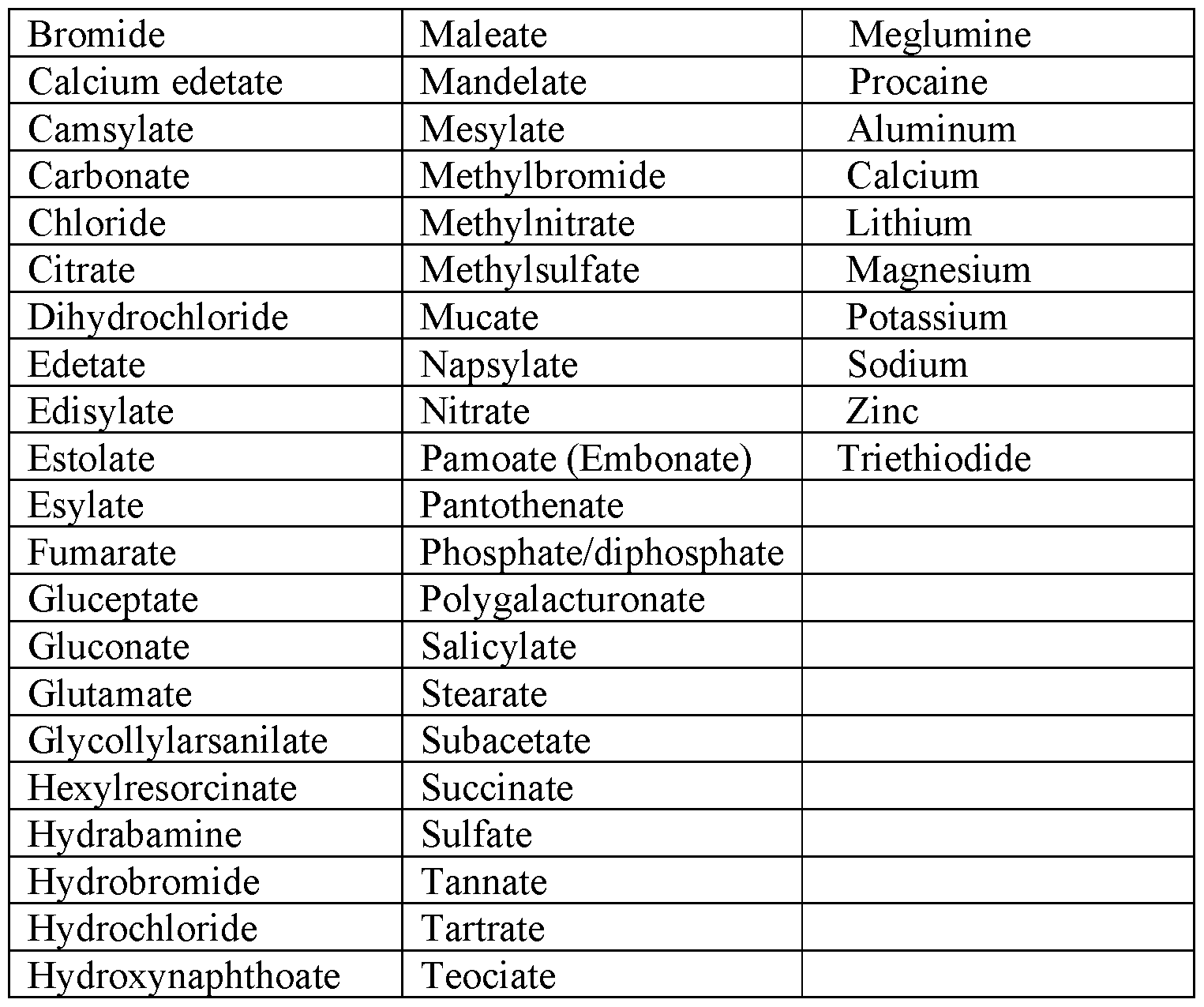


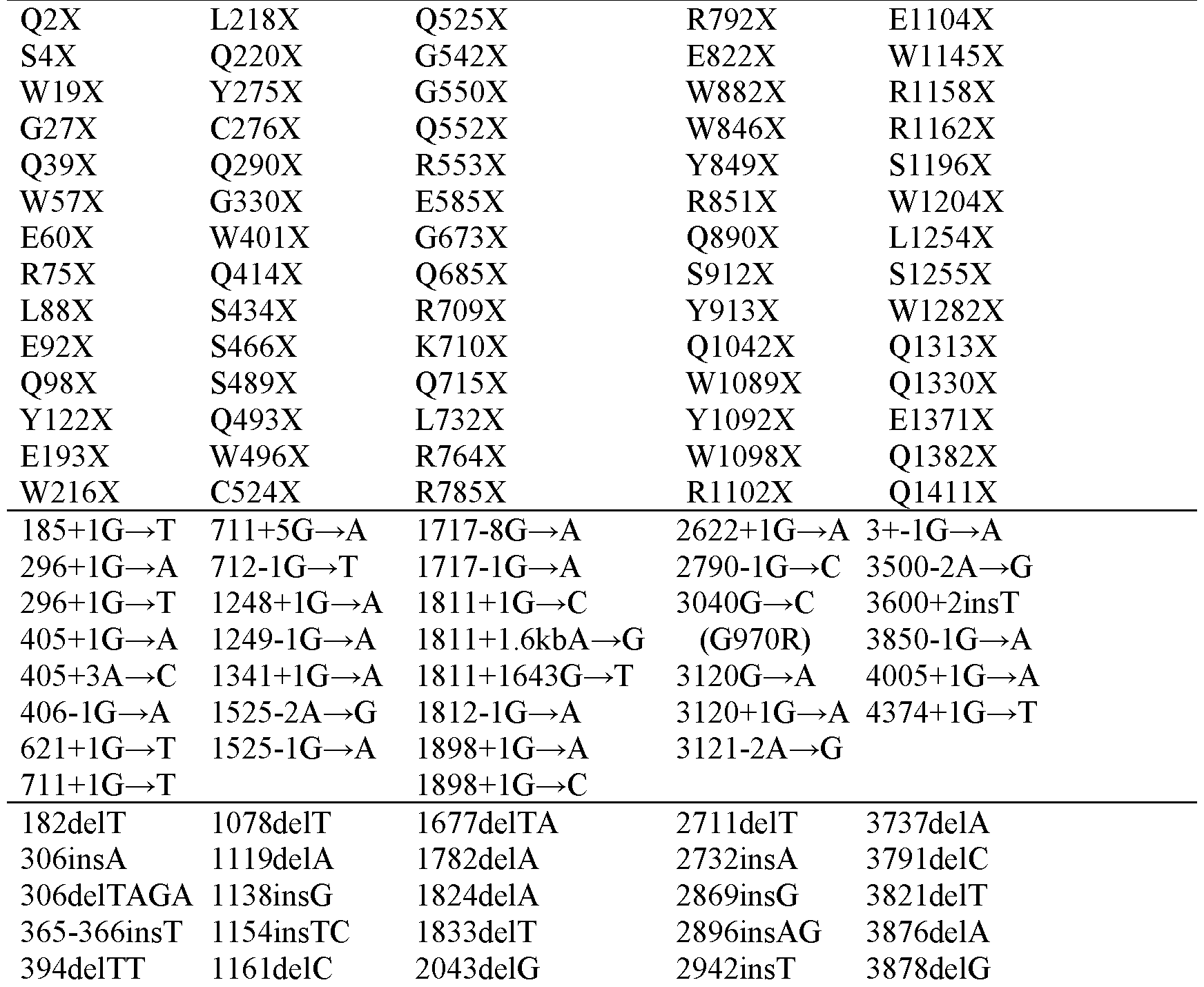


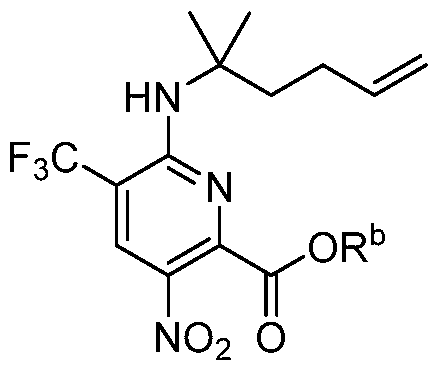


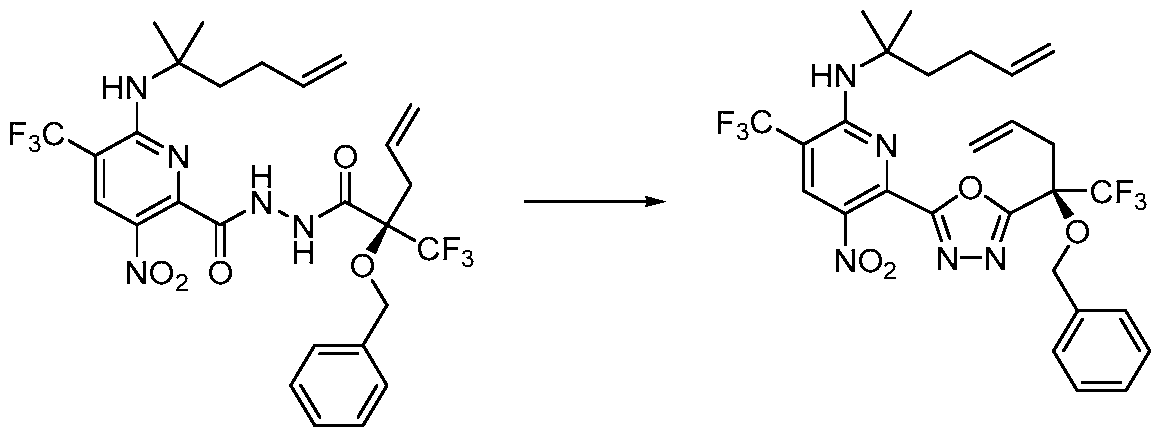


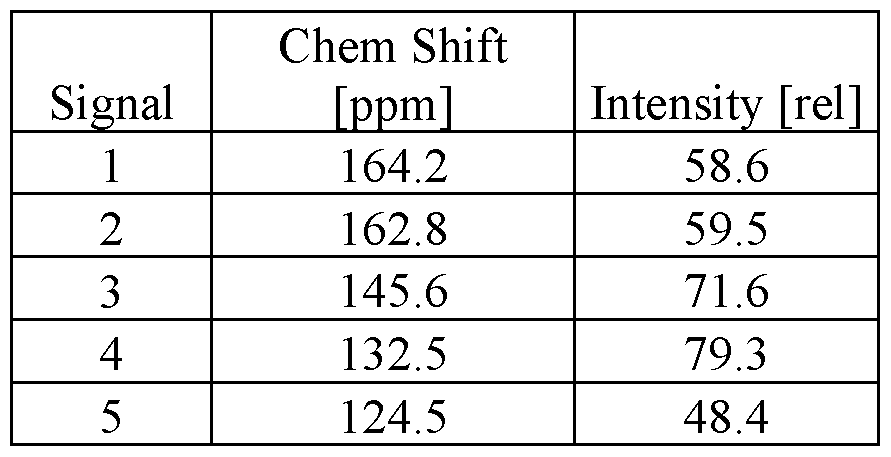


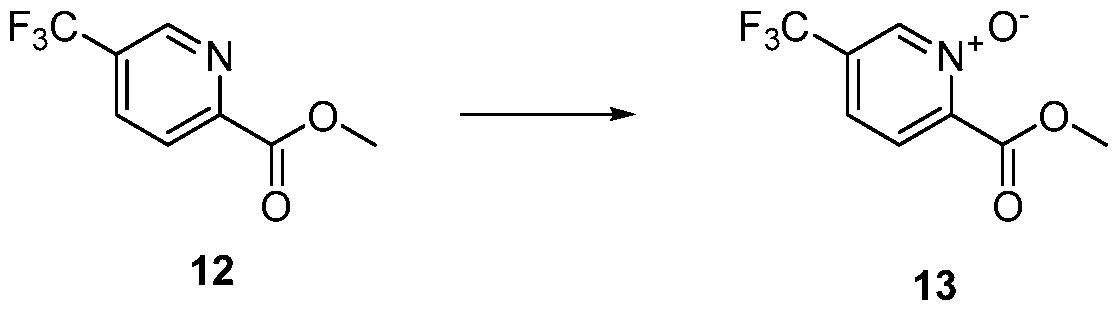


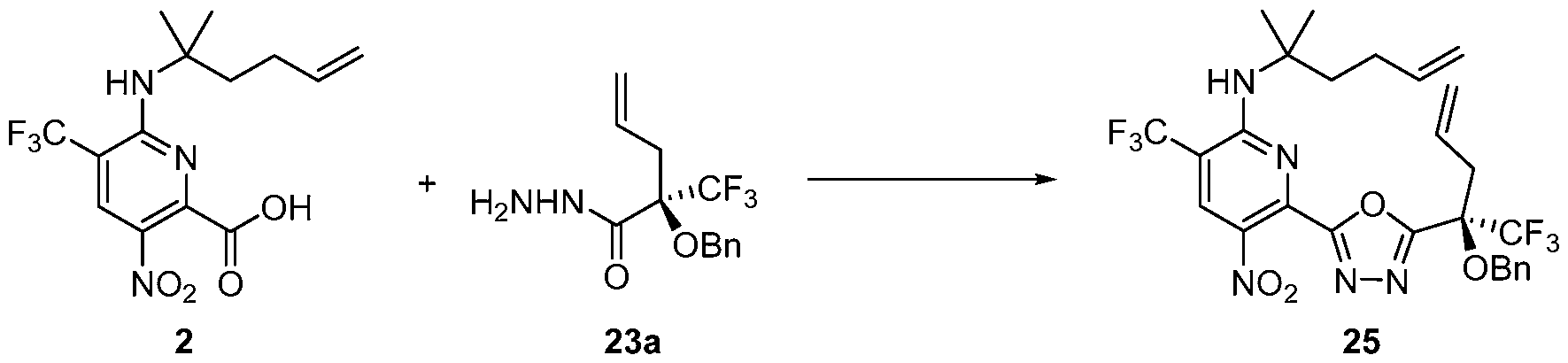


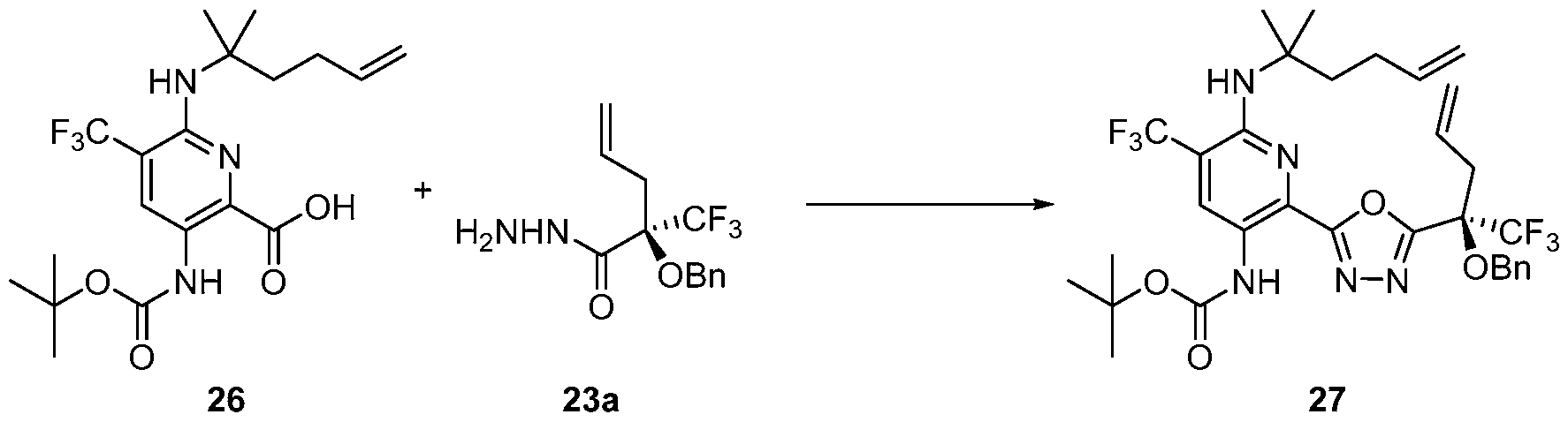


Claims


Priority Applications (6)
| Application Number | Priority Date | Filing Date | Title |
|---|---|---|---|
| US18/864,468 US20250340568A1 (en) | 2022-05-16 | 2023-05-15 | Solid forms of a macrocyclic compounds as cftr modulators and their preparation |
| CN202380053773.3A CN119731183A (en) | 2022-05-16 | 2023-05-15 | Solid forms of macrocyclic compounds as CFTR modulators and their preparation |
| EP23730290.6A EP4525986A1 (en) | 2022-05-16 | 2023-05-15 | Solid forms of a macrocyclic compounds as cftr modulators and their preparation |
| JP2024568064A JP2025517323A (en) | 2022-05-16 | 2023-05-15 | Solid forms of macrocyclic compounds as CFTR modulators and their preparation |
| AU2023272562A AU2023272562A1 (en) | 2022-05-16 | 2023-05-15 | Solid forms of a macrocyclic compounds as cftr modulators and their preparation |
| CA3253977A CA3253977A1 (en) | 2022-05-16 | 2023-05-15 | Solid forms of a macrocyclic compounds as cftr modulators and their preparation |
Applications Claiming Priority (4)
| Application Number | Priority Date | Filing Date | Title |
|---|---|---|---|
| US202263342392P | 2022-05-16 | 2022-05-16 | |
| US202263342408P | 2022-05-16 | 2022-05-16 | |
| US63/342,392 | 2022-05-16 | ||
| US63/342,408 | 2022-05-16 |
Publications (1)
| Publication Number | Publication Date |
|---|---|
| WO2023224924A1 true WO2023224924A1 (en) | 2023-11-23 |
Family
ID=86760389
Family Applications (1)
| Application Number | Title | Priority Date | Filing Date |
|---|---|---|---|
| PCT/US2023/022263 Ceased WO2023224924A1 (en) | 2022-05-16 | 2023-05-15 | Solid forms of a macrocyclic compounds as cftr modulators and their preparation |
Country Status (7)
| Country | Link |
|---|---|
| US (1) | US20250340568A1 (en) |
| EP (1) | EP4525986A1 (en) |
| JP (1) | JP2025517323A (en) |
| CN (1) | CN119731183A (en) |
| AU (1) | AU2023272562A1 (en) |
| CA (1) | CA3253977A1 (en) |
| WO (1) | WO2023224924A1 (en) |
Cited By (1)
| Publication number | Priority date | Publication date | Assignee | Title |
|---|---|---|---|---|
| WO2025076235A1 (en) | 2023-10-04 | 2025-04-10 | Vertex Pharmaceuticals Incorporated | Modulators of cystic fibrosis transmembrane conductance regulator |
Citations (26)
| Publication number | Priority date | Publication date | Assignee | Title |
|---|---|---|---|---|
| US20040006237A1 (en) | 2001-11-14 | 2004-01-08 | Teva Pharmaceutical Industries Ltd. | Amorphous and crystalline forms of losartan potassium and process for their preparation |
| WO2006002421A2 (en) | 2004-06-24 | 2006-01-05 | Vertex Pharmaceuticals Incorporated | Modulators of atp-binding cassette transporters |
| WO2007056341A1 (en) | 2005-11-08 | 2007-05-18 | Vertex Pharmaceuticals Incorporated | Heterocyclic modulators of atp-binding cassette transporters |
| WO2007079139A2 (en) | 2005-12-28 | 2007-07-12 | Vertex Pharmaceuticals, Inc. | Solid forms of n-[2,4-bis(1,1-dimethylethyl)-5-hydroxyphenyl]-1,4-dihydro-4-oxoquinoline-3-carboxamide |
| WO2009073757A1 (en) | 2007-12-07 | 2009-06-11 | Vertex Pharmaceuticals Incorporated | Solid forms of 3-(6-(1-(2,2-difluorobenzo[d][1,3] dioxol-5-yl) cyclopropanecarboxamido)-3-methylpyridin-2-yl) benzoic acid |
| WO2009076142A2 (en) | 2007-12-07 | 2009-06-18 | Vertex Pharmaceuticals Incorporated | Processes for producing cycloalkylcarboxiamido-pyridine benzoic acids |
| WO2010019239A2 (en) | 2008-08-13 | 2010-02-18 | Vertex Pharmaceuticals Incorporated | Pharmaceutical composition and administrations thereof |
| WO2010053471A1 (en) | 2008-11-06 | 2010-05-14 | Vertex Pharmaceuticals Incorporated | Modulators of atp-binding cassette transporters |
| WO2010108162A1 (en) | 2009-03-20 | 2010-09-23 | Vertex Pharmaceuticals Incorporated | Process for making modulators of cystic fibrosis transmembrane conductance regulator |
| WO2011119984A1 (en) | 2010-03-25 | 2011-09-29 | Vertex Pharmaceuticals Incorporated | Solid forms of (r)-1(2,2-difluorobenzo[d][1,3]dioxol-5-yl)-n-(1-(2,3-dihyderoxypropyl)-6-fluoro-2-(1-hydroxy-2-methylpropan-2-yl)-1h-indol-5-yl) cyclopropanecarboxamide |
| WO2011133951A1 (en) | 2010-04-22 | 2011-10-27 | Vertex Pharmaceuticals Incorporated | Pharmaceutical compositions and administrations thereof |
| WO2011133751A2 (en) | 2010-04-22 | 2011-10-27 | Vertex Pharmaceuticals Incorporated | Process of producing cycloalkylcarboxamido-indole compounds |
| WO2012158885A1 (en) | 2011-05-18 | 2012-11-22 | Concert Pharmaceuticals Inc. | Deuterated derivatives of ivacaftor |
| WO2013038386A1 (en) * | 2011-09-16 | 2013-03-21 | Novartis Ag | Heterocyclic compounds for the treatment of cystic fibrosis |
| WO2014078842A1 (en) | 2012-11-19 | 2014-05-22 | Concert Pharmaceuticals, Inc. | Deuterated cftr potentiators |
| US8865902B2 (en) | 2011-05-18 | 2014-10-21 | Concert Pharmaceuticals, Inc. | Deuterated CFTR potentiators |
| WO2015160787A1 (en) | 2014-04-15 | 2015-10-22 | Vertex Pharmaceuticals Incorporated | Pharmaceutical compositions for the treatment of cystic fibrosis transmembrane conductance regulator mediated diseases |
| WO2016057572A1 (en) | 2014-10-06 | 2016-04-14 | Mark Thomas Miller | Modulators of cystic fibrosis transmembrane conductance regulator |
| WO2018064632A1 (en) | 2016-09-30 | 2018-04-05 | Vertex Pharmaceuticals Incorporated | Modulator of cystic fibrosis transmembrane conductance regulator, pharmaceutical compositions, methods of treatment, and process for making the modulator |
| WO2018107100A1 (en) | 2016-12-09 | 2018-06-14 | Vertex Pharmaceuticals Incorporated | Modulator of cystic fibrosis transmembrane conductance regulator, pharmaceutical compositions, methods of treatment, and process for making the modulator |
| WO2019113476A2 (en) | 2017-12-08 | 2019-06-13 | Vertex Pharmaceuticals Incorporated | Processes for making modulators of cystic fibrosis transmembrane conductance regulator |
| WO2019161078A1 (en) | 2018-02-15 | 2019-08-22 | Vertex Pharmaceuticals Incorporated | Macrocycles as modulators of cystic fibrosis transmembrane conductance regulator, pharmaceutical compositions thereof, their use in the treatment of cycstic fibrosis, and process for making them |
| WO2020102346A1 (en) | 2018-11-14 | 2020-05-22 | Vertex Pharmaceuticals Incorporated | Methods of treatment for cystic fibrosis |
| WO2020206080A1 (en) | 2019-04-03 | 2020-10-08 | Vertex Pharmaceuticals Incorporated | Cystic fibrosis transmembrane conductance regulator modulating agents |
| WO2022032068A1 (en) * | 2020-08-07 | 2022-02-10 | Vertex Pharmaceuticals Incorporated | Modulators of cystic fibrosis transmembrane conductance regulator |
| WO2022109573A1 (en) | 2020-11-18 | 2022-05-27 | Vertex Pharmaceuticals Incorporated | Macrocycles containing a 1,3,4-oxadiazole ring for use as modulators of cystic fibrosis transmembrane conductance regulator |
-
2023
- 2023-05-15 CA CA3253977A patent/CA3253977A1/en active Pending
- 2023-05-15 US US18/864,468 patent/US20250340568A1/en active Pending
- 2023-05-15 WO PCT/US2023/022263 patent/WO2023224924A1/en not_active Ceased
- 2023-05-15 CN CN202380053773.3A patent/CN119731183A/en active Pending
- 2023-05-15 JP JP2024568064A patent/JP2025517323A/en active Pending
- 2023-05-15 EP EP23730290.6A patent/EP4525986A1/en active Pending
- 2023-05-15 AU AU2023272562A patent/AU2023272562A1/en active Pending
Patent Citations (26)
| Publication number | Priority date | Publication date | Assignee | Title |
|---|---|---|---|---|
| US20040006237A1 (en) | 2001-11-14 | 2004-01-08 | Teva Pharmaceutical Industries Ltd. | Amorphous and crystalline forms of losartan potassium and process for their preparation |
| WO2006002421A2 (en) | 2004-06-24 | 2006-01-05 | Vertex Pharmaceuticals Incorporated | Modulators of atp-binding cassette transporters |
| WO2007056341A1 (en) | 2005-11-08 | 2007-05-18 | Vertex Pharmaceuticals Incorporated | Heterocyclic modulators of atp-binding cassette transporters |
| WO2007079139A2 (en) | 2005-12-28 | 2007-07-12 | Vertex Pharmaceuticals, Inc. | Solid forms of n-[2,4-bis(1,1-dimethylethyl)-5-hydroxyphenyl]-1,4-dihydro-4-oxoquinoline-3-carboxamide |
| WO2009073757A1 (en) | 2007-12-07 | 2009-06-11 | Vertex Pharmaceuticals Incorporated | Solid forms of 3-(6-(1-(2,2-difluorobenzo[d][1,3] dioxol-5-yl) cyclopropanecarboxamido)-3-methylpyridin-2-yl) benzoic acid |
| WO2009076142A2 (en) | 2007-12-07 | 2009-06-18 | Vertex Pharmaceuticals Incorporated | Processes for producing cycloalkylcarboxiamido-pyridine benzoic acids |
| WO2010019239A2 (en) | 2008-08-13 | 2010-02-18 | Vertex Pharmaceuticals Incorporated | Pharmaceutical composition and administrations thereof |
| WO2010053471A1 (en) | 2008-11-06 | 2010-05-14 | Vertex Pharmaceuticals Incorporated | Modulators of atp-binding cassette transporters |
| WO2010108162A1 (en) | 2009-03-20 | 2010-09-23 | Vertex Pharmaceuticals Incorporated | Process for making modulators of cystic fibrosis transmembrane conductance regulator |
| WO2011119984A1 (en) | 2010-03-25 | 2011-09-29 | Vertex Pharmaceuticals Incorporated | Solid forms of (r)-1(2,2-difluorobenzo[d][1,3]dioxol-5-yl)-n-(1-(2,3-dihyderoxypropyl)-6-fluoro-2-(1-hydroxy-2-methylpropan-2-yl)-1h-indol-5-yl) cyclopropanecarboxamide |
| WO2011133951A1 (en) | 2010-04-22 | 2011-10-27 | Vertex Pharmaceuticals Incorporated | Pharmaceutical compositions and administrations thereof |
| WO2011133751A2 (en) | 2010-04-22 | 2011-10-27 | Vertex Pharmaceuticals Incorporated | Process of producing cycloalkylcarboxamido-indole compounds |
| WO2012158885A1 (en) | 2011-05-18 | 2012-11-22 | Concert Pharmaceuticals Inc. | Deuterated derivatives of ivacaftor |
| US8865902B2 (en) | 2011-05-18 | 2014-10-21 | Concert Pharmaceuticals, Inc. | Deuterated CFTR potentiators |
| WO2013038386A1 (en) * | 2011-09-16 | 2013-03-21 | Novartis Ag | Heterocyclic compounds for the treatment of cystic fibrosis |
| WO2014078842A1 (en) | 2012-11-19 | 2014-05-22 | Concert Pharmaceuticals, Inc. | Deuterated cftr potentiators |
| WO2015160787A1 (en) | 2014-04-15 | 2015-10-22 | Vertex Pharmaceuticals Incorporated | Pharmaceutical compositions for the treatment of cystic fibrosis transmembrane conductance regulator mediated diseases |
| WO2016057572A1 (en) | 2014-10-06 | 2016-04-14 | Mark Thomas Miller | Modulators of cystic fibrosis transmembrane conductance regulator |
| WO2018064632A1 (en) | 2016-09-30 | 2018-04-05 | Vertex Pharmaceuticals Incorporated | Modulator of cystic fibrosis transmembrane conductance regulator, pharmaceutical compositions, methods of treatment, and process for making the modulator |
| WO2018107100A1 (en) | 2016-12-09 | 2018-06-14 | Vertex Pharmaceuticals Incorporated | Modulator of cystic fibrosis transmembrane conductance regulator, pharmaceutical compositions, methods of treatment, and process for making the modulator |
| WO2019113476A2 (en) | 2017-12-08 | 2019-06-13 | Vertex Pharmaceuticals Incorporated | Processes for making modulators of cystic fibrosis transmembrane conductance regulator |
| WO2019161078A1 (en) | 2018-02-15 | 2019-08-22 | Vertex Pharmaceuticals Incorporated | Macrocycles as modulators of cystic fibrosis transmembrane conductance regulator, pharmaceutical compositions thereof, their use in the treatment of cycstic fibrosis, and process for making them |
| WO2020102346A1 (en) | 2018-11-14 | 2020-05-22 | Vertex Pharmaceuticals Incorporated | Methods of treatment for cystic fibrosis |
| WO2020206080A1 (en) | 2019-04-03 | 2020-10-08 | Vertex Pharmaceuticals Incorporated | Cystic fibrosis transmembrane conductance regulator modulating agents |
| WO2022032068A1 (en) * | 2020-08-07 | 2022-02-10 | Vertex Pharmaceuticals Incorporated | Modulators of cystic fibrosis transmembrane conductance regulator |
| WO2022109573A1 (en) | 2020-11-18 | 2022-05-27 | Vertex Pharmaceuticals Incorporated | Macrocycles containing a 1,3,4-oxadiazole ring for use as modulators of cystic fibrosis transmembrane conductance regulator |
Non-Patent Citations (16)
| Title |
|---|
| "Encyclopedia of Pharmaceutical Technology", 1988, MARCEL DEKKER |
| "Remington: The Science and Practice of Pharmacy", 2005, LIPPINCOTT WILLIAMS & WILKINS |
| AUGUSTINE, J.K.; VAIRAPERUMAL, V.; NARASIMHAN, S.; ALAGARSAMY, P.;RADHAKRISHNAN, A., TETRAHEDRON, vol. 65, 2009, pages 9989 |
| CUTTING, G. R. ET AL., NATURE, vol. 346, 1990, pages 366 - 369 |
| DEAN, M. ET AL., CELL, vol. 61, no. 863, 1990, pages 870 |
| GHELANISCHNEIDER-FUTSCHIK, ACS PHARMACOL. TRANSL. SCI., vol. 3, 2020, pages 4 - 10 |
| GREENEWUTS: "Protective Groups in Organic Synthesis", 2007, JOHN WILEY & SONS |
| KEREM, B-S. ET AL., PROC. NATL. ACAD. SCI. USA, vol. 87, 1990, pages 8447 - 8451 |
| KEREM, B-S. ET AL., SCIENCE, vol. 245, 1989, pages 1073 - 1080 |
| LI, C.DICKSON, H.D., TETT. LETT., vol. 50, 2009, pages 6435 |
| LLOYD: "The Art", SCIENCE AND TECHNOLOGY OF PHARMACEUTICAL COMPOUNDING, 1999 |
| M. BERGE ET AL., J. PHARM. SCI., vol. 66, 1977, pages 1 - 19 |
| MINO R CAIRA ED - MONTCHAMP JEAN-LUC: "Crystalline Polymorphism of Organic Compounds", TOPICS IN CURRENT CHEMISTRY; [TOPICS IN CURRENT CHEMISTRY], SPRINGER, BERLIN, DE, vol. 198, 1 January 1998 (1998-01-01), pages 163 - 208, XP008166276, ISSN: 0340-1022, [retrieved on 19990226], DOI: 10.1007/3-540-69178-2_5 * |
| NEUBERGER TBURTON BCLARK HVAN GOOR F, METHODS MOL BIOL, vol. 741, 2011, pages 39 - 54 |
| P. J. KOCIENSKI, PROTECTING GROUPS, 2005 |
| RICHARD J BASTIN ET AL: "Salt Selection and Optimisation Procedures for Pharmaceutical New Chemical Entities", ORGANIC PROCESS RESEARCH & DEVELOPMENT, AMERICAN CHEMICAL SOCIETY, US, vol. 4, no. 5, 19 July 2000 (2000-07-19), pages 427 - 435, XP008154792, ISSN: 1083-6160, [retrieved on 20000719], DOI: 10.1021/OP000018U * |
Cited By (1)
| Publication number | Priority date | Publication date | Assignee | Title |
|---|---|---|---|---|
| WO2025076235A1 (en) | 2023-10-04 | 2025-04-10 | Vertex Pharmaceuticals Incorporated | Modulators of cystic fibrosis transmembrane conductance regulator |
Also Published As
| Publication number | Publication date |
|---|---|
| US20250340568A1 (en) | 2025-11-06 |
| EP4525986A1 (en) | 2025-03-26 |
| CA3253977A1 (en) | 2023-11-23 |
| JP2025517323A (en) | 2025-06-05 |
| AU2023272562A1 (en) | 2024-11-07 |
| CN119731183A (en) | 2025-03-28 |
Similar Documents
| Publication | Publication Date | Title |
|---|---|---|
| US12384762B2 (en) | Modulator of the Cystic Fibrosis Transmembrane Conductance Regulator, pharmaceutical compositions, methods of treatment, and process for making the modulator | |
| TWI828358B (en) | Modulators of cystic fibrosis transmembrane conductance regulator, pharmaceutical compositions, methods of treatment, and process for making the modulators | |
| AU2017336156B2 (en) | Modulator of cystic fibrosis transmembrane conductance regulator, pharmaceutical compositions, methods of treatment, and process for making the modulator | |
| JP2022545633A (en) | Modulator of cystic fibrosis transmembrane conductance regulator | |
| EP4225763A1 (en) | Modulators of cystic fibrosis transmembrane conductance regulator | |
| WO2022076620A1 (en) | Modulators of cystic fibrosis transmembrane conductance regulator | |
| US12612416B2 (en) | Modulators of cystic fibrosis transmembrane conductance regulator | |
| JP2023545081A (en) | Cystic fibrosis transmembrane conductance regulator modulator | |
| EP4225446A1 (en) | Modulators of cystic fibrosis transmembrane conductance regulator | |
| JP2023552828A (en) | How to treat cystic fibrosis | |
| AU2023272562A1 (en) | Solid forms of a macrocyclic compounds as cftr modulators and their preparation | |
| JP2025505577A (en) | Preparation method and crystalline form of (6A,12A)-17-amino-12-methyl-6,15-bis(trifluoromethyl)-13,19-dioxa-3,4,18-triazatricyclo[12.3.1.12,5]nonadeca-1(18),2,4,14,16-pentaen-6-ol | |
| EP4476230A1 (en) | Modulators of cystic fibrosis transmembrane conductance regulator | |
| HK40049247A (en) | Crystalline form of a n-(pyrazol-4-yl)sulfonyl-6-(pyrazol-1-yl)-2-(pyrrolidin-1-yl)pyridine-3-carboxamide for treating cystic fibrosis | |
| WO2025076240A1 (en) | Solid forms of modulators of cystic fibrosis transmembrane conductance regulator | |
| EA049659B1 (en) | TRANSMEMBRANE CONDUCTANCE REGULATOR MODULATORS IN CYSTIC FIBROSIS | |
| HK40014130B (en) | Modulator of cystic fibrosis transmembrane conductance regulator, pharmaceutical compositions, methods of treatment, and process for making the modulator | |
| HK40014130A (en) | Modulator of cystic fibrosis transmembrane conductance regulator, pharmaceutical compositions, methods of treatment, and process for making the modulator | |
| HK40011778B (en) | Modulator of cystic fibrosis transmembrane conductance regulator, pharmaceutical compositions, methods of treatment, and process for making the modulator | |
| HK40011778A (en) | Modulator of cystic fibrosis transmembrane conductance regulator, pharmaceutical compositions, methods of treatment, and process for making the modulator |
Legal Events
| Date | Code | Title | Description |
|---|---|---|---|
| 121 | Ep: the epo has been informed by wipo that ep was designated in this application |
Ref document number: 23730290 Country of ref document: EP Kind code of ref document: A1 |
|
| WWE | Wipo information: entry into national phase |
Ref document number: AU2023272562 Country of ref document: AU |
|
| ENP | Entry into the national phase |
Ref document number: 2023272562 Country of ref document: AU Date of ref document: 20230515 Kind code of ref document: A |
|
| WWE | Wipo information: entry into national phase |
Ref document number: 2024568064 Country of ref document: JP |
|
| WWE | Wipo information: entry into national phase |
Ref document number: 2023730290 Country of ref document: EP |
|
| NENP | Non-entry into the national phase |
Ref country code: DE |
|
| ENP | Entry into the national phase |
Ref document number: 2023730290 Country of ref document: EP Effective date: 20241216 |
|
| WWE | Wipo information: entry into national phase |
Ref document number: 202380053773.3 Country of ref document: CN |
|
| WWP | Wipo information: published in national office |
Ref document number: 202380053773.3 Country of ref document: CN |
|
| WWP | Wipo information: published in national office |
Ref document number: 18864468 Country of ref document: US |