WO2023277638A1 - 락토바실러스 속 균주 3종을 포함하는 조성물 및 이의 용도 - Google Patents
락토바실러스 속 균주 3종을 포함하는 조성물 및 이의 용도 Download PDFInfo
- Publication number
- WO2023277638A1 WO2023277638A1 PCT/KR2022/009479 KR2022009479W WO2023277638A1 WO 2023277638 A1 WO2023277638 A1 WO 2023277638A1 KR 2022009479 W KR2022009479 W KR 2022009479W WO 2023277638 A1 WO2023277638 A1 WO 2023277638A1
- Authority
- WO
- WIPO (PCT)
- Prior art keywords
- composition
- muscle
- lactobacillus
- strain
- group
- Prior art date
- Legal status (The legal status is an assumption and is not a legal conclusion. Google has not performed a legal analysis and makes no representation as to the accuracy of the status listed.)
- Ceased
Links
Images
Classifications
-
- A—HUMAN NECESSITIES
- A23—FOODS OR FOODSTUFFS; TREATMENT THEREOF, NOT COVERED BY OTHER CLASSES
- A23K—FODDER
- A23K10/00—Animal feeding-stuffs
- A23K10/10—Animal feeding-stuffs obtained by microbiological or biochemical processes
- A23K10/16—Addition of microorganisms or extracts thereof, e.g. single-cell proteins, to feeding-stuff compositions
-
- A—HUMAN NECESSITIES
- A23—FOODS OR FOODSTUFFS; TREATMENT THEREOF, NOT COVERED BY OTHER CLASSES
- A23L—FOODS, FOODSTUFFS OR NON-ALCOHOLIC BEVERAGES, NOT OTHERWISE PROVIDED FOR; PREPARATION OR TREATMENT THEREOF
- A23L33/00—Modifying nutritive qualities of foods; Dietetic products; Preparation or treatment thereof
- A23L33/10—Modifying nutritive qualities of foods; Dietetic products; Preparation or treatment thereof using additives
- A23L33/135—Bacteria or derivatives thereof, e.g. probiotics
-
- A—HUMAN NECESSITIES
- A61—MEDICAL OR VETERINARY SCIENCE; HYGIENE
- A61K—PREPARATIONS FOR MEDICAL, DENTAL OR TOILETRY PURPOSES
- A61K35/00—Medicinal preparations containing materials or reaction products thereof with undetermined constitution
- A61K35/66—Microorganisms or materials therefrom
- A61K35/74—Bacteria
- A61K35/741—Probiotics
- A61K35/744—Lactic acid bacteria, e.g. enterococci, pediococci, lactococci, streptococci or leuconostocs
- A61K35/747—Lactobacilli, e.g. L. acidophilus or L. brevis
-
- A—HUMAN NECESSITIES
- A61—MEDICAL OR VETERINARY SCIENCE; HYGIENE
- A61P—SPECIFIC THERAPEUTIC ACTIVITY OF CHEMICAL COMPOUNDS OR MEDICINAL PREPARATIONS
- A61P1/00—Drugs for disorders of the alimentary tract or the digestive system
-
- A—HUMAN NECESSITIES
- A61—MEDICAL OR VETERINARY SCIENCE; HYGIENE
- A61P—SPECIFIC THERAPEUTIC ACTIVITY OF CHEMICAL COMPOUNDS OR MEDICINAL PREPARATIONS
- A61P21/00—Drugs for disorders of the muscular or neuromuscular system
-
- A—HUMAN NECESSITIES
- A61—MEDICAL OR VETERINARY SCIENCE; HYGIENE
- A61P—SPECIFIC THERAPEUTIC ACTIVITY OF CHEMICAL COMPOUNDS OR MEDICINAL PREPARATIONS
- A61P25/00—Drugs for disorders of the nervous system
- A61P25/28—Drugs for disorders of the nervous system for treating neurodegenerative disorders of the central nervous system, e.g. nootropic agents, cognition enhancers, drugs for treating Alzheimer's disease or other forms of dementia
-
- A—HUMAN NECESSITIES
- A61—MEDICAL OR VETERINARY SCIENCE; HYGIENE
- A61P—SPECIFIC THERAPEUTIC ACTIVITY OF CHEMICAL COMPOUNDS OR MEDICINAL PREPARATIONS
- A61P3/00—Drugs for disorders of the metabolism
- A61P3/04—Anorexiants; Antiobesity agents
-
- A—HUMAN NECESSITIES
- A61—MEDICAL OR VETERINARY SCIENCE; HYGIENE
- A61P—SPECIFIC THERAPEUTIC ACTIVITY OF CHEMICAL COMPOUNDS OR MEDICINAL PREPARATIONS
- A61P39/00—General protective or antinoxious agents
- A61P39/06—Free radical scavengers or antioxidants
-
- A—HUMAN NECESSITIES
- A61—MEDICAL OR VETERINARY SCIENCE; HYGIENE
- A61P—SPECIFIC THERAPEUTIC ACTIVITY OF CHEMICAL COMPOUNDS OR MEDICINAL PREPARATIONS
- A61P43/00—Drugs for specific purposes, not provided for in groups A61P1/00-A61P41/00
-
- A—HUMAN NECESSITIES
- A61—MEDICAL OR VETERINARY SCIENCE; HYGIENE
- A61P—SPECIFIC THERAPEUTIC ACTIVITY OF CHEMICAL COMPOUNDS OR MEDICINAL PREPARATIONS
- A61P9/00—Drugs for disorders of the cardiovascular system
-
- C—CHEMISTRY; METALLURGY
- C12—BIOCHEMISTRY; BEER; SPIRITS; WINE; VINEGAR; MICROBIOLOGY; ENZYMOLOGY; MUTATION OR GENETIC ENGINEERING
- C12N—MICROORGANISMS OR ENZYMES; COMPOSITIONS THEREOF; PROPAGATING, PRESERVING, OR MAINTAINING MICROORGANISMS; MUTATION OR GENETIC ENGINEERING; CULTURE MEDIA
- C12N1/00—Microorganisms; Compositions thereof; Processes of propagating, maintaining or preserving microorganisms or compositions thereof; Processes of preparing or isolating a composition containing a microorganism; Culture media therefor
- C12N1/20—Bacteria; Culture media therefor
-
- C—CHEMISTRY; METALLURGY
- C12—BIOCHEMISTRY; BEER; SPIRITS; WINE; VINEGAR; MICROBIOLOGY; ENZYMOLOGY; MUTATION OR GENETIC ENGINEERING
- C12N—MICROORGANISMS OR ENZYMES; COMPOSITIONS THEREOF; PROPAGATING, PRESERVING, OR MAINTAINING MICROORGANISMS; MUTATION OR GENETIC ENGINEERING; CULTURE MEDIA
- C12N1/00—Microorganisms; Compositions thereof; Processes of propagating, maintaining or preserving microorganisms or compositions thereof; Processes of preparing or isolating a composition containing a microorganism; Culture media therefor
- C12N1/20—Bacteria; Culture media therefor
- C12N1/205—Bacterial isolates
-
- A—HUMAN NECESSITIES
- A23—FOODS OR FOODSTUFFS; TREATMENT THEREOF, NOT COVERED BY OTHER CLASSES
- A23V—INDEXING SCHEME RELATING TO FOODS, FOODSTUFFS OR NON-ALCOHOLIC BEVERAGES AND LACTIC OR PROPIONIC ACID BACTERIA USED IN FOODSTUFFS OR FOOD PREPARATION
- A23V2002/00—Food compositions, function of food ingredients or processes for food or foodstuffs
-
- A—HUMAN NECESSITIES
- A23—FOODS OR FOODSTUFFS; TREATMENT THEREOF, NOT COVERED BY OTHER CLASSES
- A23V—INDEXING SCHEME RELATING TO FOODS, FOODSTUFFS OR NON-ALCOHOLIC BEVERAGES AND LACTIC OR PROPIONIC ACID BACTERIA USED IN FOODSTUFFS OR FOOD PREPARATION
- A23V2200/00—Function of food ingredients
- A23V2200/30—Foods, ingredients or supplements having a functional effect on health
- A23V2200/302—Foods, ingredients or supplements having a functional effect on health having a modulating effect on age
-
- A—HUMAN NECESSITIES
- A23—FOODS OR FOODSTUFFS; TREATMENT THEREOF, NOT COVERED BY OTHER CLASSES
- A23V—INDEXING SCHEME RELATING TO FOODS, FOODSTUFFS OR NON-ALCOHOLIC BEVERAGES AND LACTIC OR PROPIONIC ACID BACTERIA USED IN FOODSTUFFS OR FOOD PREPARATION
- A23V2200/00—Function of food ingredients
- A23V2200/30—Foods, ingredients or supplements having a functional effect on health
- A23V2200/316—Foods, ingredients or supplements having a functional effect on health having an effect on regeneration or building of ligaments or muscles
-
- A—HUMAN NECESSITIES
- A23—FOODS OR FOODSTUFFS; TREATMENT THEREOF, NOT COVERED BY OTHER CLASSES
- A23V—INDEXING SCHEME RELATING TO FOODS, FOODSTUFFS OR NON-ALCOHOLIC BEVERAGES AND LACTIC OR PROPIONIC ACID BACTERIA USED IN FOODSTUFFS OR FOOD PREPARATION
- A23V2200/00—Function of food ingredients
- A23V2200/30—Foods, ingredients or supplements having a functional effect on health
- A23V2200/32—Foods, ingredients or supplements having a functional effect on health having an effect on the health of the digestive tract
-
- A—HUMAN NECESSITIES
- A23—FOODS OR FOODSTUFFS; TREATMENT THEREOF, NOT COVERED BY OTHER CLASSES
- A23V—INDEXING SCHEME RELATING TO FOODS, FOODSTUFFS OR NON-ALCOHOLIC BEVERAGES AND LACTIC OR PROPIONIC ACID BACTERIA USED IN FOODSTUFFS OR FOOD PREPARATION
- A23V2200/00—Function of food ingredients
- A23V2200/30—Foods, ingredients or supplements having a functional effect on health
- A23V2200/332—Promoters of weight control and weight loss
-
- A—HUMAN NECESSITIES
- A23—FOODS OR FOODSTUFFS; TREATMENT THEREOF, NOT COVERED BY OTHER CLASSES
- A23V—INDEXING SCHEME RELATING TO FOODS, FOODSTUFFS OR NON-ALCOHOLIC BEVERAGES AND LACTIC OR PROPIONIC ACID BACTERIA USED IN FOODSTUFFS OR FOOD PREPARATION
- A23V2400/00—Lactic or propionic acid bacteria
- A23V2400/11—Lactobacillus
- A23V2400/143—Fermentum
-
- A—HUMAN NECESSITIES
- A23—FOODS OR FOODSTUFFS; TREATMENT THEREOF, NOT COVERED BY OTHER CLASSES
- A23V—INDEXING SCHEME RELATING TO FOODS, FOODSTUFFS OR NON-ALCOHOLIC BEVERAGES AND LACTIC OR PROPIONIC ACID BACTERIA USED IN FOODSTUFFS OR FOOD PREPARATION
- A23V2400/00—Lactic or propionic acid bacteria
- A23V2400/11—Lactobacillus
- A23V2400/169—Plantarum
-
- C—CHEMISTRY; METALLURGY
- C12—BIOCHEMISTRY; BEER; SPIRITS; WINE; VINEGAR; MICROBIOLOGY; ENZYMOLOGY; MUTATION OR GENETIC ENGINEERING
- C12R—INDEXING SCHEME ASSOCIATED WITH SUBCLASSES C12C - C12Q, RELATING TO MICROORGANISMS
- C12R2001/00—Microorganisms ; Processes using microorganisms
- C12R2001/01—Bacteria or Actinomycetales ; using bacteria or Actinomycetales
- C12R2001/225—Lactobacillus
-
- C—CHEMISTRY; METALLURGY
- C12—BIOCHEMISTRY; BEER; SPIRITS; WINE; VINEGAR; MICROBIOLOGY; ENZYMOLOGY; MUTATION OR GENETIC ENGINEERING
- C12R—INDEXING SCHEME ASSOCIATED WITH SUBCLASSES C12C - C12Q, RELATING TO MICROORGANISMS
- C12R2001/00—Microorganisms ; Processes using microorganisms
- C12R2001/01—Bacteria or Actinomycetales ; using bacteria or Actinomycetales
- C12R2001/225—Lactobacillus
- C12R2001/25—Lactobacillus plantarum
Definitions
- composition comprising three strains of the genus Lactobacillus and uses thereof.
- the microbiome refers to microorganisms existing in a specific environment and their entire bioinformation.
- the entire set of genetic information and products derived therefrom (genome, transcriptome, proteome, metabolome). Therefore, the human microbiome refers to microorganisms living inside and outside the human body and their entire bioinformation.
- Intestinal microbes supply nutrients that cannot be produced by the host's own enzymes alone, and are closely related to the host's metabolism and immune system, while preventing various diseases such as irritable bowel syndrome, obesity, atopy, depression, rheumatoid arthritis, autism spectrum disorder, and dementia. It has been reported to be associated with
- Korean Patent Registration No. 10-2049700 is a patent that discloses the activity of preventing or treating muscle diseases of the Lactobacillus reuteri ATG-F4 strain, but it is an invention using each single strain as an active ingredient, and mixed strains as an active ingredient The invention to do is a situation where there is no invention disclosed yet. Therefore, the present inventors tried to discover strains for the use of compositions applicable to food and medicine.
- Lactobacillus genus deposited with accession number KCTC 14105BP Lactobacillus sp. Belonging to the fermentum ( Lactobacillus fermentum ) GB102 strain, a lysate thereof, and any one selected from the group consisting of a culture solution; Any one selected from the group consisting of a Lactobacillus fermentum GB103 strain, a lysate thereof, and a culture medium belonging to the genus Lactobacillus ( Lactobacillus sp.) deposited under accession number KCTC 14106BP; And at least one selected from the group consisting of any one selected from the group consisting of a Lactobacillus plantarum GB104 strain, a lysate thereof, and a culture solution belonging to the genus Lactobacillus ( Lactobacillus sp.) deposited under accession number KCTC 14107BP, It is to provide a composition comprising two or three or more.
- Another aspect is the genus Lactobacillus deposited with accession number KCTC 14105BP ( Lactobacillus sp.) Belonging to fermentum ( Lactobacillus fermentum ) GB102 strain, a lysate thereof, and any one selected from the group consisting of a culture solution; Any one selected from the group consisting of a Lactobacillus fermentum GB103 strain, a lysate thereof, and a culture medium belonging to the genus Lactobacillus ( Lactobacillus sp.) deposited under accession number KCTC 14106BP; And at least one selected from the group consisting of any one selected from the group consisting of a Lactobacillus plantarum GB104 strain, a lysate thereof, and a culture solution belonging to the genus Lactobacillus ( Lactobacillus sp.) deposited under accession number KCTC 14107BP, It is to provide an anti-aging or antioxidant composition comprising two or three or more compositions as
- Another aspect is the genus Lactobacillus deposited with accession number KCTC 14105BP ( Lactobacillus sp.) Belonging to fermentum ( Lactobacillus fermentum ) GB102 strain, its lysate, and any one selected from the group consisting of a culture solution; Any one selected from the group consisting of a Lactobacillus fermentum GB103 strain, a lysate thereof, and a culture medium belonging to the genus Lactobacillus ( Lactobacillus sp.) deposited under accession number KCTC 14106BP; And at least one selected from the group consisting of any one selected from the group consisting of a Lactobacillus plantarum GB104 strain, a lysate thereof, and a culture solution belonging to the genus Lactobacillus ( Lactobacillus sp.) deposited under accession number KCTC 14107BP, It is to provide a composition for preventing, improving or treating aging-related diseases comprising a
- Another aspect is to provide a method for inhibiting aging comprising administering an effective amount of the composition to a subject in need thereof.
- Another aspect provides use of the composition for the manufacture of an anti-aging composition.
- Another aspect is the genus Lactobacillus deposited with accession number KCTC 14105BP ( Lactobacillus sp.) Belonging to fermentum ( Lactobacillus fermentum ) GB102 strain, its lysate, and any one selected from the group consisting of a culture solution; Any one selected from the group consisting of a Lactobacillus fermentum GB103 strain, a lysate thereof, and a culture medium belonging to the genus Lactobacillus ( Lactobacillus sp.) deposited under accession number KCTC 14106BP; And at least one selected from the group consisting of any one selected from the group consisting of a Lactobacillus plantarum GB104 strain, a lysate thereof, and a culture solution belonging to the genus Lactobacillus ( Lactobacillus sp.) deposited under accession number KCTC 14107BP, To provide a health functional food for preventing or improving muscle-related diseases or obesity comprising a composition
- Another aspect is the genus Lactobacillus deposited with accession number KCTC 14105BP ( Lactobacillus sp.) Belonging to fermentum ( Lactobacillus fermentum ) GB102 strain, its lysate, and any one selected from the group consisting of a culture solution; Any one selected from the group consisting of a Lactobacillus fermentum GB103 strain, a lysate thereof, and a culture medium belonging to the genus Lactobacillus ( Lactobacillus sp.) deposited under accession number KCTC 14106BP; And at least one selected from the group consisting of any one selected from the group consisting of a Lactobacillus plantarum GB104 strain, a lysate thereof, and a culture solution belonging to the genus Lactobacillus ( Lactobacillus sp.) deposited under accession number KCTC 14107BP,
- a pharmaceutical composition for preventing or treating muscle-related diseases or obesity comprising a composition compris
- Another aspect is to provide a method for preventing or treating muscle-related diseases comprising administering an effective amount of the composition to a subject in need thereof.
- Another aspect is to provide the use of the composition for the manufacture of health functional food for preventing or improving muscle-related diseases.
- Another aspect is to provide a method for preventing or treating obesity comprising administering an effective amount of the composition to a subject in need thereof.
- Another aspect is to provide the use of the composition for the production of health functional food for preventing or improving obesity.
- Another aspect is to provide the use of the composition for the manufacture of a pharmaceutical preparation for preventing or treating muscle-related diseases.
- Another aspect is to provide use of the composition for the preparation of a pharmaceutical formulation for preventing or treating obesity.
- Another aspect is the genus Lactobacillus deposited with accession number KCTC 14105BP ( Lactobacillus sp.) Belonging to fermentum ( Lactobacillus fermentum ) GB102 strain, its lysate, and any one selected from the group consisting of a culture solution; Any one selected from the group consisting of a Lactobacillus fermentum GB103 strain, a lysate thereof, and a culture medium belonging to the genus Lactobacillus ( Lactobacillus sp.) deposited under accession number KCTC 14106BP; And at least one selected from the group consisting of any one selected from the group consisting of a Lactobacillus plantarum GB104 strain, a lysate thereof, and a culture solution belonging to the genus Lactobacillus ( Lactobacillus sp.) deposited under accession number KCTC 14107BP, To provide a feed composition containing a composition containing two or three or more as an active ingredient.
- Lactobacillus genus deposited with accession number KCTC 14105BP Lactobacillus sp. Belonging to the fermentum ( Lactobacillus fermentum ) GB102 strain, a lysate thereof, and any one selected from the group consisting of a culture solution; Any one selected from the group consisting of a Lactobacillus fermentum GB103 strain, a lysate thereof, and a culture medium belonging to the genus Lactobacillus ( Lactobacillus sp.) deposited under accession number KCTC 14106BP; And at least one selected from the group consisting of any one selected from the group consisting of a Lactobacillus plantarum GB104 strain, a lysate thereof, and a culture solution belonging to the genus Lactobacillus ( Lactobacillus sp.) deposited under accession number KCTC 14107BP, Compositions comprising two or three or more are provided.
- the strain may be a composition that is live or dead bacteria.
- the mixed strain included in the composition may be included in an amount of 10 3 to 10 16 CFU/g.
- the composition may be administered orally.
- Another aspect is the genus Lactobacillus deposited with accession number KCTC 14105BP ( Lactobacillus sp.) Belonging to fermentum ( Lactobacillus fermentum ) GB102 strain, a lysate thereof, and any one selected from the group consisting of a culture solution; Any one selected from the group consisting of a Lactobacillus fermentum GB103 strain, a lysate thereof, and a culture medium belonging to the genus Lactobacillus ( Lactobacillus sp.) deposited under accession number KCTC 14106BP; And at least one selected from the group consisting of any one selected from the group consisting of a Lactobacillus plantarum GB104 strain, a lysate thereof, and a culture solution belonging to the genus Lactobacillus ( Lactobacillus sp.) deposited under accession number KCTC 14107BP, A composition containing two or three or more provides an anti-aging composition, an antioxidant composition, or
- the anti-aging may be one or more selected from the group consisting of anti-aging of muscle cells, anti-aging of nerve cells, anti-aging of skin cells, and anti-aging of the intestinal microbial environment.
- Another aspect is the genus Lactobacillus deposited with accession number KCTC 14105BP ( Lactobacillus sp.) Belonging to fermentum ( Lactobacillus fermentum ) GB102 strain, a lysate thereof, and any one selected from the group consisting of a culture solution; Any one selected from the group consisting of a Lactobacillus fermentum GB103 strain, a lysate thereof, and a culture medium belonging to the genus Lactobacillus ( Lactobacillus sp.) deposited under accession number KCTC 14106BP; And at least one selected from the group consisting of any one selected from the group consisting of a Lactobacillus plantarum GB104 strain, a lysate thereof, and a culture solution belonging to the genus Lactobacillus ( Lactobacillus sp.) deposited under accession number KCTC 14107BP, A composition containing two or three or more provides a health functional food for preventing or improving muscle
- the composition may reduce at least one or more from the group consisting of joint stiffness, muscle loss, power loss, speed loss, balance loss, endurance loss, and agility loss.
- the composition may be one or more selected from the group consisting of increasing exercise performance, restoring muscle coordination, mobility and gait, and increasing muscle mass and weakness.
- the pharmaceutical composition for preventing or treating muscle-related diseases increases exercise performance, restores muscle coordination, mobility and gait, increases muscle mass and strength, or increases the strength of the elderly. It may be to inhibit muscle strength loss.
- the muscle-related disease is sarcopenia, geriatric sarcopenia, muscular atrophy, muscular dystrophy, disuse muscle atrophy, motor neuron disease , inflammatory myopathy, neuromuscular junction disease, endocrine myopathy, muscle degeneration, muscle stiffness, amyotrophic sclerosis, myasthenia gravis, myositis, muscle calcification, muscle ossification, one or more selected from the group consisting of muscle weakness-related diseases and cachexia it could be
- Another aspect is the genus Lactobacillus deposited with accession number KCTC 14105BP ( Lactobacillus sp.) Belonging to fermentum ( Lactobacillus fermentum ) GB102 strain, a lysate thereof, and any one selected from the group consisting of a culture solution; Any one selected from the group consisting of a Lactobacillus fermentum GB103 strain, a lysate thereof, and a culture medium belonging to the genus Lactobacillus ( Lactobacillus sp.) deposited under accession number KCTC 14106BP; And at least one selected from the group consisting of any one selected from the group consisting of a Lactobacillus plantarum GB104 strain, a lysate thereof, and a culture solution belonging to the genus Lactobacillus ( Lactobacillus sp.) deposited under accession number KCTC 14107BP, A composition containing two or three or more provides a pharmaceutical composition for the prevention or treatment of muscle
- the composition may reduce at least one or more from the group consisting of joint stiffness, muscle loss, power loss, speed loss, balance loss, endurance loss, and agility loss.
- the composition may be selected from the group consisting of increasing exercise performance, restoring muscle coordination, mobility and gait, and increasing muscle mass and weakness,
- the muscle-related disease is sarcopenia, geriatric sarcopenia, muscular atrophy, muscular dystrophy, disuse muscle atrophy, motor neuron disease , inflammatory myopathy, neuromuscular junction disease, endocrine myopathy, muscle degeneration, muscle stiffness, amyotrophic sclerosis, myasthenia gravis, myositis, muscle calcification, muscle ossification, one or more selected from the group consisting of muscle weakness-related diseases and cachexia it could be
- Lactobacillus fermentum according to one aspect ( Lactobacillus fermentum ) GB102, GB103 strain and Lactobacillus plantarum ( Lactobacillus plantarum ) A mixture of GB104 strain; A composition containing a lysate thereof, a culture medium, or an extract of the culture medium as an active ingredient prevents muscle-related diseases or obesity, such as alleviating aging-induced muscle weakness symptoms or reducing changes in the intestinal microbial environment induced by aging. Or it can be usefully used for treatment.
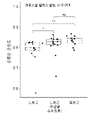
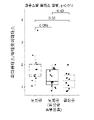
- 1 is a graph showing the change in evenness of the flora according to the combined administration of mixed strains and herbal medicines according to one embodiment.
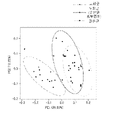
- Figure 2 is a graph showing the results of intestinal flora principal coordinates analysis (PCoA) according to the combined administration of mixed strains and herbal medicines according to one embodiment.
- PCoA principal coordinates analysis
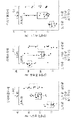
- Figure 3 is a graph showing the frequency difference between groups of major strains in the Firmicutes phylum according to mixed strains and combined administration of herbal medicines according to one embodiment.
- Figure 4 is a graph showing the frequency difference between groups of major strains in the Bacteroidetes phylum according to mixed strains and combined administration of herbal medicines according to one embodiment.
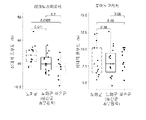
- 5 is a graph showing changes in the Firmicutes/Bacteroidetes ratio according to administration of a mixed strain composition according to an embodiment.
- Lactobacillus genus deposited with accession number KCTC 14105BP Lactobacillus sp. Belonging to the fermentum ( Lactobacillus fermentum ) GB102 strain, a lysate thereof, and any one selected from the group consisting of a culture solution; Any one selected from the group consisting of a Lactobacillus fermentum GB103 strain, a lysate thereof, and a culture medium belonging to the genus Lactobacillus ( Lactobacillus sp.) deposited under accession number KCTC 14106BP; And at least one selected from the group consisting of any one selected from the group consisting of a Lactobacillus plantarum GB104 strain, a lysate thereof, and a culture solution belonging to the genus Lactobacillus ( Lactobacillus sp.) deposited under accession number KCTC 14107BP, It is to provide a composition comprising two or three or more.
- the Lactobacillus fermentum GB102 strain, the Lactobacillus fermentum GB103 strain, and the Lactobacillus plantarum GB104 strain are live bacteria (live bacteria) or dead bacteria (dead bacteria). fungus). More specifically, the dead cells may be dead cells caused by heat treatment.
- Lactobacillus genus refers to the old Lactobacillus genus ( Lactobacillus sp . ) means.
- Lactobacillus has been renamed to Limosilactobacillus or Lactiplantibacillus , and the changed strain names may be used interchangeably in the present specification.
- Lactobacillus fermentum was changed to Limosilactobacillus fermentum
- Lactobacillus plantarum was changed to Lactobacillus plantarum .
- the strain name was changed to
- the term "culture” may be used interchangeably with “culture supernatant”, “conditioned culture medium” or “conditioned medium”, and may supply nutrients so that strains of the genus Lactobacillus can grow and survive in vitro. It may mean the entire medium including the strain obtained by culturing the strain in a medium for a certain period of time, its metabolites, extra nutrients, and the like.
- the culture solution may mean a culture solution obtained by removing the cells from the cell culture solution obtained by culturing the strain.
- the medium may be selected from known liquid medium or solid medium, and may be, for example, MRS liquid medium, GAM liquid medium, MRS agar medium, GAM agar medium, and BL agar medium, but is not limited thereto.
- lysate means a solution or suspension in an aqueous medium of cells of a microorganism such as broken Lactobacillus fermentum or Lactobacillus plantarum.
- a cell lysate contains, for example, macromolecules such as DNA, RNA, proteins, peptides, carbohydrates, lipids, etc. and/or micromolecules such as amino acids, sugars, fatty acids, etc., or fractions thereof.
- the lysate contains cell debris, which may be smooth or granular.
- Non-limiting examples of enzymes and mixtures of enzymes are proteases such as proteinase K, lipases or glycosidases;
- Non-limiting examples of chemicals are ionophores, detergents such as sodium dodecyl sulfate, acids or bases;
- Non-limiting examples of physical means are high pressure such as French pressing, osmotic pressure, temperature such as heat or cold.
- a method using an appropriate combination of enzymes other than proteolytic enzymes, acids, bases, and the like can also be used.
- the culture solution may include a culture solution itself obtained by culturing the strain, a concentrate thereof, or a lyophilized product or a culture supernatant obtained by removing the strain from the culture solution, a concentrate thereof, or a lyophilisate.
- Another aspect is the genus Lactobacillus deposited with accession number KCTC 14105BP ( Lactobacillus sp.) Belonging to fermentum ( Lactobacillus fermentum ) GB102 strain, a lysate thereof, and any one selected from the group consisting of a culture solution; Any one selected from the group consisting of a Lactobacillus fermentum GB103 strain, a lysate thereof, and a culture medium belonging to the genus Lactobacillus ( Lactobacillus sp.) deposited under accession number KCTC 14106BP; And at least one selected from the group consisting of any one selected from the group consisting of a Lactobacillus plantarum GB104 strain, a lysate thereof, and a culture solution belonging to the genus Lactobacillus ( Lactobacillus sp.) deposited under accession number KCTC 14107BP, It is to provide an anti-aging or antioxidant composition comprising two or three or more compositions as
- the term "included as an active ingredient” means that a strain of the genus Lactobacillus, an endoplasmic reticulum derived from the strain, a lysate of the strain, a culture medium, or an extract of a culture medium thereof are added, and various drugs are used for drug delivery and stabilization. It means that it is formulated in various forms by adding ingredients as subcomponents.
- the term "therapeutically effective amount” refers to a mixed strain composition for the methods and uses of the present invention or the present invention that elicits a biological or medical response or desired therapeutic effect in a patient that a researcher, physician, or other clinician seeks to obtain. means the amount of the pharmaceutical composition comprising the mixed strain for the methods and uses of.
- a therapeutically effective amount of a mixed strain composition may vary depending on factors such as the disease state, age, sex, and weight of the individual.
- a therapeutically effective amount is also one in which the therapeutically beneficial effects outweigh any toxic or detrimental effects.
- Another aspect is the genus Lactobacillus deposited with accession number KCTC 14105BP ( Lactobacillus sp. ) Belonging to fermentum ( Lactobacillus fermentum ) GB102 strain, a lysate thereof, and any one selected from the group consisting of a culture solution; Any one selected from the group consisting of a Lactobacillus fermentum GB103 strain, a lysate thereof, and a culture solution belonging to the genus Lactobacillus ( Lactobacillus sp.) deposited under accession number KCTC 14106BP; And at least one selected from the group consisting of any one selected from the group consisting of a Lactobacillus plantarum GB104 strain belonging to the genus Lactobacillus deposited with accession number KCTC 14107BP, a lysate thereof, and a culture solution, It is to provide a composition for preventing, improving or treating aging-related diseases comprising a composition containing two or three or more
- the mixed strain or mixed strain composition of the genus Lactobacillus may have antioxidant activity.
- the natural process of aging makes the body more susceptible to oxidative damage. Its anti-aging effects are mostly related to its antioxidant properties and free radical scavenging ability.
- oxidative damage has been proposed as one of the major causes of skeletal muscle decline that occurs with aging.
- the identification of free radicals as accelerators of the aging process may mean that their inhibition may limit the detrimental modifications they exert on organisms (particularly skeletal muscle). In other words, if molecules with antioxidant capacity are able to counteract oxidative damage, this could play an important role in preventing the development of aging-related conditions, including the neutralization process.
- Oxidative damage underlies the pathophysiological mechanism that causes sarcopenia (and other senile diseases), and interventions to enhance endogenous antioxidant defenses (eg, administration of antioxidants) result in inhibition of aging.
- sarcopenia and other senile diseases
- interventions to enhance endogenous antioxidant defenses eg, administration of antioxidants
- resveratrol a polyphenolic compound contained in red wine
- oxidative stress has been shown to increase bone turnover by causing an imbalance between cells responsible for bone formation and resorption.
- a mixed strain of the genus Lactobacillus according to an embodiment exhibiting antioxidant activity is useful for anti-aging or prevention, improvement, or treatment of age-related diseases. There are effects that can be used.
- administration of the mixed strain composition of the genus Lactobacillus can improve muscle strength decreased due to aging. Specifically, in one embodiment of the present invention, it was confirmed that the grip strength increased in the group in which the composition of the mixed strain of the genus Lactobacillus was administered to aged mice.
- administration of the mixed strain composition of the genus Lactobacillus can mitigate changes in the intestinal microbial environment due to aging.
- administration of the mixed strain composition of the genus Lactobacillus changes the intestinal flora of the aged mouse to be similar to that of the young mouse, thereby preventing or treating aging-related diseases such as obesity caused by the intestinal flora of the aged mouse.
- aging-related diseases such as obesity caused by the intestinal flora of the aged mouse.
- the intestinal flora of aging mice can induce obesity, and that the ratio of Firmicutes/Bacteroidetes is increased in aging mice (Binyamin et al., Genome Medicine, 2020). This suggests that the administration of the lactic acid bacteria mixed strain composition according to one embodiment can have a positive effect on the prevention and treatment of diseases such as obesity in aging mice.
- anti-aging includes delaying or preventing aging of a cell or object, or converting a senescent cell into a younger cell.
- the anti-aging may be one or more selected from the group consisting of anti-aging of skeletal muscle cells, anti-aging of nerve cells, anti-aging of skin cells, anti-aging of immune cells, and anti-aging of the intestinal microbial environment. there is.
- aging-related diseases may be muscle aging-related diseases (eg, sarcopenia) or obesity.
- prevention may refer to any action that suppresses or delays the onset of a disease state of a subject by administration of a pharmaceutical composition according to one aspect.
- treatment may refer to any activity in which symptoms of a disease state of an individual are improved or beneficially changed by administration of a pharmaceutical composition according to one aspect.
- muscle aging refers to the gradual weakening of muscle density and function as mitochondria in muscle fibers lose their activity or the number of mitochondria decreases due to aging, including sarcopenia. it means to
- muscle aging includes the decline of muscles caused by aging, for example, decline in muscle function (muscular strength, muscular endurance, muscle power, etc.) or muscle atrophy. It means that muscle mass is reduced by reduction or contraction. Due to muscle aging, muscle density and function may gradually deteriorate after the age of 30, and falls and fractures may occur easily. The cause of muscle aging may be a decrease in growth hormone and testosterone, a decrease in the body's ability to synthesize proteins, and a weakened ability to absorb proteins or calories associated with maintaining muscle density.
- sarcopenia used in the present invention is a disease in which the normal amount of muscle, muscle strength, and muscle function decrease due to malnutrition, reduced exercise, and aging. %, when you reach your 80s, you will lose up to half of your muscles.
- Sarcopenia causes complications such as diabetes, hyperlipidemia, obesity, etc., and is related to deterioration of overall body function and weakening of bones.
- muscle aging-related disease refers to diseases caused by changes in the state of muscles and abnormalities caused by aging.
- muscle loss due to aging is also referred to as age-related sarcopenia. do.
- the muscle-related disease is sarcopenia, geriatric sarcopenia, atony, muscular atrophy, muscular dystrophy, disuse muscle atrophy, movement motor neuron disease, inflammatory myopathy, neuromuscular junction disease, endocrine myopathy, muscle degeneration, myoclonus, amyotrophic sclerosis, myasthenia gravis, myositis, muscle calcification, muscle ossification, muscle weakness-related diseases and cachexia It may, but is not limited thereto.
- the above muscle aging-related diseases may be accompanied by muscle inflammation due to trauma, and the composition of the present invention has an effect of alleviating or improving muscle inflammation.
- the term "obesity” refers to a condition in which body fat is excessive.
- the obesity may be clinically a case where the body mass index (BMI) is 25 in Korea or 30 or more according to the World Health Organization (WHO).
- BMI body mass index
- WHO World Health Organization
- obesity refers to a case in which the body weight is higher than normal, but even if the body weight is not too much, obesity may be a case in which the proportion of body fat among the components of the body is high. The obesity can occur in both adults and children.
- the obesity is caused by not only weight gain, but also overeating, excessive drinking and bulimia, hypertension, diabetes, increased plasma insulin concentration, insulin resistance, hyperlipidemia, metabolic syndrome, insulin resistance syndrome, obesity-related gastroesophageal reflux, arteriosclerosis, hypercholesterolemia, uric acid It can lead to obesity-related diseases such as hyperemia, cardiac hypertrophy and left ventricular hypertrophy, lipodystrophy, non-alcoholic steatohepatitis, cardiovascular disease or polycystic ovary syndrome. Therefore, the composition can be used for prevention or treatment of not only obesity but also obesity-related diseases. In addition, the composition can be used for subjects who have a desire to lose weight even if they are not obese.
- the obesity may be due to various causes.
- the cause may be a high-fat diet, reduced exercise, genetics, psychological factors, endocrine abnormalities, metabolic abnormalities, social and environmental factors.
- the obesity may be induced by a high-fat diet.
- the composition according to one embodiment may include 0.001% by weight to 80% by weight of a mixed strain of the genus Lactobacillus based on the total weight of the composition.
- the dosage of the mixed strain of Lactobacillus may be 0.01 mg to 10,000 mg, 0.1 mg to 1000 mg, 1 mg to 100 mg, 0.01 mg to 1000 mg, 0.01 mg to 100 mg, 0.01 mg to 10 mg, or 0.01 mg to 1 mg.
- the strain is included in the composition in a therapeutically effective amount or nutritionally effective concentration, for example, one strain, two mixed strains, three mixed strains are 10 3 to 10 16 CFU / g, 10 3 to 10 15 CFU/g, 10 3 to 10 14 CFU/g, 10 3 to 10 13 CFU/g, 10 3 to 10 12 CFU/g, 10 4 to 10 16 CFU/g, 10 4 to 10 15 CFU/g, 10 4 to 10 14 CFU/g, 10 4 to 10 13 CFU/g, 10 4 to 10 12 CFU/g, 10 5 to 10 16 CFU/g, 10 5 to 10 15 CFU/g, 10 5 to 10 14 CFU /g, 10 5 to 10 13 CFU/g, 10 5 to 10 12 CFU/g, 10 6 to 10 13 CFU/g, 10 6 to 10 12 CFU/g, 10 7 to 10 13 CFU/g, 10 7 to 10 12 CFU/g, 10 8 to 10 13 CFU/g, or 10 8 to 10 12 CFU/g, or an equivalent number
- 1X10 3 to 1X10 16 CFU/g of live or dead cells may be divided and administered once or several times.
- the dosage may be prescribed in various ways depending on factors such as formulation method, administration method, patient's age, weight, sex, pathological condition, food, administration time, administration route, excretion rate and reaction sensitivity, and those skilled in the art can Dosage can be appropriately adjusted in consideration of these factors.
- the number of administrations can be once or twice or more within the range of clinically acceptable side effects, and administration can be performed at one or two or more sites.
- the same dosage per kg (body weight) as for humans is administered, or the above-described administration is performed at the volume ratio (eg, average value) of the organ (heart, etc.) between the target animal and the human.
- the amount converted into the amount can be administered.
- Possible routes of administration include oral, sublingual, parenteral (eg, subcutaneous, intramuscular, intraarterial, intraperitoneal, intrathecal, or intravenous), rectal, topical (including transdermal), inhalation, and injection, or implantable devices. or the insertion of substances.
- animals to be treated according to one embodiment include humans and other target mammals, and specifically include humans, monkeys, mice, rats, rabbits, sheep, cows, dogs, horses, and pigs.
- the composition includes a killed dried strain, and can be administered at 1 g to 10 g, 0.5 g to 1.5 g, 2.5 g to 3.5 g, or 4.5 g to 5.5 g once a day, once to 3 times a day. Can be administered twice.
- a pharmaceutical composition according to one embodiment may include a pharmaceutically acceptable carrier and/or additives.
- a pharmaceutically acceptable carrier and/or additives for example, sterile water, physiological saline, common buffers (phosphoric acid, citric acid, other organic acids, etc.), stabilizers, salts, antioxidants (ascorbic acid, etc.), surfactants, suspending agents, tonicity agents, or preservatives, etc. can do.
- it may also include combining organic substances such as biopolymers, inorganic substances such as hydroxyapatite, specifically collagen matrices, polylactic acid polymers or copolymers, polyethylene glycol polymers or copolymers, and chemical derivatives thereof.
- Lactobacillus genus bacteria may be dissolved or dispersed in a pharmaceutically acceptable carrier, or frozen in a dissolved or dispersed solution state. .
- the pharmaceutical composition according to one embodiment if necessary according to the administration method or dosage form, suspending agent, solubilizing agent, stabilizer, isotonic agent, preservative, anti-adsorption agent, surfactant, diluent, excipient, pH adjuster, analgesic agent, Buffers, reducing agents, antioxidants and the like may be appropriately included.
- Pharmaceutically acceptable carriers and agents suitable for the present invention including those exemplified above, are described in detail in Remington's Pharmaceutical Sciences, 19th ed., 1995.
- the pharmaceutical composition according to one embodiment is formulated in unit dosage form by using a pharmaceutically acceptable carrier and/or excipient according to a method that can be easily performed by those skilled in the art.
- the dosage form may be in the form of a solution, suspension or emulsion in an oil or aqueous medium, or in the form of a powder, granule, tablet or capsule.
- the pharmaceutical composition is administered in a pharmaceutically effective amount.
- pharmaceutically effective amount means an amount sufficient to treat a disease with a reasonable benefit/risk ratio applicable to medical treatment, and the effective dose level depends on the type, severity, drug activity, It may be determined according to factors including sensitivity to the drug, time of administration, route of administration and excretion rate, duration of treatment, drugs used concurrently, and other factors well known in the medical field.
- the composition of the present invention may be administered as an individual therapeutic agent or in combination with other therapeutic agents, may be administered sequentially or simultaneously with conventional therapeutic agents, and may be administered singly or in multiple doses. Considering all of the above factors, it is important to administer the amount that can obtain the maximum effect with the minimum amount without side effects, which can be easily determined by those skilled in the art.
- Another aspect is the genus Lactobacillus deposited with accession number KCTC 14105BP ( Lactobacillus sp.) Belonging to fermentum ( Lactobacillus fermentum ) GB102 strain, its lysate, and any one selected from the group consisting of a culture solution; Any one selected from the group consisting of a Lactobacillus fermentum GB103 strain, a lysate thereof, and a culture medium belonging to the genus Lactobacillus ( Lactobacillus sp.) deposited under accession number KCTC 14106BP; And at least one selected from the group consisting of any one selected from the group consisting of a Lactobacillus plantarum GB104 strain, a lysate thereof, and a culture solution belonging to the genus Lactobacillus ( Lactobacillus sp.) deposited under accession number KCTC 14107BP, To provide a health functional food for preventing or improving muscle-related diseases or obesity comprising a composition
- the health functional food may further include a food-acceptable carrier.
- the term "acceptable in food science” means that it exhibits characteristics that are not toxic to cells or humans exposed to the compound.
- the term “improvement” may refer to any activity that at least reduces a parameter related to the condition being treated, eg, the severity of a symptom.
- the health functional food may be used before or after the onset of the disease, simultaneously with or separately from a drug for treatment, for the prevention or improvement of cancer.
- the active ingredient may be added to food as it is or used together with other food or food ingredients, and may be appropriately used according to conventional methods.
- the mixing amount of the active ingredient can be suitably determined depending on the purpose of its use (for prevention or improvement).
- the health functional food may be added in an amount of about 15% by weight or less, more specifically about 10% by weight or less, based on the raw material.
- the amount may be less than the above range.
- the health functional food may be formulated as one selected from the group consisting of tablets, pills, powders, granules, powders, capsules and liquid formulations by further including one or more of carriers, diluents, excipients and additives.
- carriers diluents, excipients and additives.
- Examples of foods to which a compound according to one aspect may be added include various foods, powders, granules, tablets, capsules, syrups, beverages, gum, tea, vitamin complexes, health functional foods, and the like.
- carrier examples include lactose, dextrose, sucrose, sorbitol, mannitol, erythritol, starch, acacia gum, calcium phosphate, alginate, gelatin, calcium phosphate, calcium silicate, and microcrystalline cellulose.
- the health functional food may contain other ingredients as essential ingredients without particular limitation.
- it may contain various flavoring agents or natural carbohydrates as additional ingredients like a normal beverage.
- natural carbohydrates include monosaccharides such as glucose, fructose, and the like; disaccharides such as maltose, sucrose and the like; and polysaccharides, for example, conventional sugars such as dextrin, cyclodextrin, and the like, and sugar alcohols such as xylitol, sorbitol, and erythritol.
- natural flavoring agents thaumatin, stevia extract (eg, rebaudioside A, glycyrrhizin, etc.)
- synthetic flavoring agents sacharin, aspartame, etc.
- the ratio of the natural carbohydrates may be appropriately determined by a person skilled in the art.
- the health functional food is various nutrients, vitamins, minerals (electrolytes), flavors such as synthetic flavors and natural flavors, colorants and enhancers (cheese, chocolate, etc.), pectic acid and salts thereof , alginic acid and its salts, organic acids, protective colloidal thickeners, pH regulators, stabilizers, preservatives, glycerin, alcohol, carbonating agents used in carbonated beverages, and the like.
- vitamins, minerals electrophilic acids
- flavors such as synthetic flavors and natural flavors, colorants and enhancers (cheese, chocolate, etc.
- pectic acid and salts thereof alginic acid and its salts
- organic acids protective colloidal thickeners
- pH regulators pH regulators
- stabilizers stabilizers
- preservatives glycerin
- alcohol carbonating agents used in carbonated beverages, and the like.
- the health functional food may be provided in a mixture with conventionally known health functional food for preventing or improving muscle-related diseases or metabolic diseases or other existing health functional foods, and preventing or improving other muscle-related diseases or metabolic diseases.
- Functional health food for use may be conventionally known health functional food for preventing or improving metabolic diseases, existing health functional food, or newly developed health functional food.
- the health functional food includes other health functional foods having an effect of preventing or improving muscle-related diseases or metabolic diseases, it is important to mix the amount that can obtain the maximum effect with the minimum amount without side effects, which is known to those skilled in the art. can be easily determined by
- the food composition for preventing or improving muscle-related diseases and obesity includes all types of functional foods, nutritional supplements, health foods, and food additives,
- the food composition of can be prepared in various forms according to conventional methods known in the art.
- compositions herein may be considered food supplements.
- Food supplements also known as dietary supplements or nutritional supplements, can be considered another particular pharmaceutical product. It is intended to supplement the diet and is intended to provide nutrients or beneficial ingredients that may not be consumed or in sufficient quantities in a normal diet.
- Most dietary supplements are considered foods, but sometimes they are considered drugs, natural health products or nutraceutical products.
- food supplements include health functional foods. Food supplements are usually sold over the counter without a prescription. When dietary supplements take the form of pills or capsules, they contain the same excipients used in pharmaceuticals. However, dietary supplements may also be taken in the form of foods fortified with some nutrients (eg infant formula).
- a composition of the present invention is a food supplement.
- compositions according to the present invention may be administered as such or mixed with suitable edible liquids or solids or administered as tablets, pills, capsules, lozenges, granules, powders ), suspensions, sachets, syrups, or may be freeze-dried in unit dose form. It may also be in the form of monodoses of the lyophilized composition to be mixed in a separate liquid container provided with it prior to administration.
- the composition of the present invention may be included in various edible foods and foods, such as milk products in the case of infants.
- the term "edible product” includes, in its broadest sense, any product in any form capable of being consumed by an animal (e.g., a product received by the sense organs). products that can be imported).
- the term “food product” is understood to be an edible product that supplies nutritional support to the body. Foods of particular interest are food supplements and infant formulas.
- the food preferably contains oatmeal gruel, lactic acid fermented foods, resistant starch, dietary fibers, carbohydrates, proteins and glycated proteins. (carrier material) such as (glycosylated proteins).
- the bacterial cells of the present invention are homogenized with other ingredients such as cereals or powdered milk to constitute an infant formula.
- Another aspect is the genus Lactobacillus deposited with accession number KCTC 14105BP ( Lactobacillus sp.) Belonging to fermentum ( Lactobacillus fermentum ) GB102 strain, its lysate, any one selected from the group consisting of a culture medium and an extract of the culture medium; Any one selected from the group consisting of a Lactobacillus fermentum GB103 strain belonging to the genus Lactobacillus deposited with accession number KCTC 14106BP, a lysate thereof, a culture medium, and an extract of the culture medium; And Lactobacillus plantarum belonging to the genus Lactobacillus ( Lactobacillus sp.
- KCTC 14107BP accession number KCTC 14107BP. Selected from the group consisting of any one selected from the group consisting of GB104 strain, a lysate thereof, a culture medium, and an extract of the culture medium. It provides a feed composition for preventing or improving muscle-related diseases comprising a composition comprising at least one, two, or three or more as an active ingredient.
- the feed composition for preventing or improving aging-related diseases can be prepared by adding the mixed strain composition in an appropriate effective concentration range according to various feed manufacturing methods known in the art, and is a feed additive for the purpose of preventing or improving aging-related diseases. composition can be used.
- the “feed” may mean any natural or artificial diet, meal, etc., or component of the meal, intended for or suitable for consumption by an animal.
- the type of feed is not particularly limited, and feeds commonly used in the art may be used.
- Non-limiting examples of the feed include vegetable feeds such as grains, root fruits, food processing by-products, algae, fibers, pharmaceutical by-products, oils and fats, starches, meal or grain by-products: proteins, fats, and animal feeds such as oils and fats, mineral oils, fats and oils, unicellular proteins, zooplankton, or food.
- Lactobacillus fermentum Lactobacillus fermentum
- Lactobacillus plantarum Lactobacillus plantarum
- the Lactobacillus fermentum strain and the Lactobacillus plantarum strain of the present invention were isolated from vaginal samples of healthy women who visited a hospital for the purpose of health examination. Specifically, vaginal internal samples were taken with a cotton swab, pre-inoculated on a Rogosa SL (MRS) plate medium, and cultured for 48 hours in an anaerobic chamber at 37°C. When bacterial colonies grew, single colonies were subcultured onto fresh MRS plates for pure isolation. After pure separation, strain culture was performed using MRS medium.
- MRS Rogosa SL
- pancreatic lipolysis enzyme lipase
- pancreatic lipolytic enzyme Specifically, the ability to inhibit the activity of pancreatic lipolytic enzyme was obtained by diluting the strain of 1-1 to a concentration of 0.1 mg/mL, followed by 0.167 mM p-nitrophenylpalmitate (PNP; Sigma, USA) solution, 0.061 M Tris-HCl buffer (pH 8.5), put it on a plate with 0.3 mg/mL lipase solution, reacted at 25°C for 10 minutes, and then measured absorbance at 405 nm.
- PNP p-nitrophenylpalmitate
- 3T3-L1 cell viability of the strain obtained in 1-1 was measured using the MTT (3-(4,5-dimethylthiazol-2-yl)-2,5-diphenyltetrazolium bromide) method.
- 3T3-L1 cells were dispensed into a 96-well plate at a concentration of 16 ⁇ 10 4 cells/well, and the culture medium was removed after 24 hours of culture.
- lactic acid bacteria samples diluted by concentration 100, 1,000 ⁇ g/mL
- 20 ⁇ L of a 5 mg/mL MTT (Sigma, USA) solution was added, and incubated at 37° C. for 4 hours.
- the supernatant was removed, 200 ⁇ L of dimethyl sulfoxide (DMSO) was added, and absorbance was measured at 546 nm.
- DMSO dimethyl sulfoxide
- Lactobacillus fermentum GB102 (hereinafter referred to as 'GB102') and Lactobacillus fermentum GB103 showed low cytotoxicity and inhibitory effect on fat cell accumulation.
- 'GB103' Lactobacillus plantarum GB104
- 'GB104' Lactobacillus plantarum GB104
- Lactobacillus fermentum was changed to Limosilactobacillus fermentum
- the strain name was changed to Lactobacillus plantarum
- Lactobacillus plantarum was changed to Lactiplantibacillus plantarum . name has been changed
- the modified strain names of the existing strains were interchangeably described.
- 16S rRNA gene sequences were analyzed.
- the 16S rRNA gene sequence obtained through PCR using 27F and 1492R primers targeting the bacterial 16S rRNA gene was analyzed by the Sanger sequencing method, and Lactobacillus fermentum GB102, GB103 and Lactobacillus plantarum were analyzed.
- the 16s rRNA sequences of GB104 are shown as Sequence Listings 1, 2 and 3, respectively.
- GB102 and GB103 strains have the highest sequence similarity with the standard strain (type strain) of Limosilactobacillus fermentum . It was shown, and then Limosilactobacillus gorilla ( Limosilactobacillus gorilla ) and showed high sequence similarity.
- GB104 is a 16S rRNA sequence by showing a sequence similarity of 98% or more to 18 species of the genus Limosilactobacillus , including the standard strain of Lactiplantibacillus plantarum , and thus has a 16S rRNA gene sequence. cannot differentiate between species.
- GB104 is a strain belonging to Lactiplantibacillus plantarum through comparison of genome sequence average similarity (Average Nucleotide Identity, ANI) values after genome decoding.
- ANI Average Nucleotide Identity
- Lactobacillus fermentum Lactobacillus fermentum
- next-generation sequencing technology NGS
- bioinformatics technology were used to completely decipher the genome sequence of the strain and include it in the genome.
- the functions of the genes were inferred.
- specificity of the strain was confirmed through comparative analysis with the completely translated genome sequence of the same species.
- This strain was cultured for 4 hours in anaerobic conditions at 37 ° C in MRS liquid medium, and genomic DNA was extracted from the culture using the MG Genomic DNA purification kit (MGMED, Inc., Korea).
- Sequence analysis was performed using PacBio RS II equipment to obtain long read data with an average length of 10 kb or more, and sequence length of less than 500 bp with high accuracy to complement long read data with low accuracy Sequence analysis was performed using NovaSeq 6000 equipment to produce short read data.
- the long lead data was assembled into a highly complete GB102 and GB103 genome draft using the SMRT Analysis server's HGAP2 pipeline. SNP and InDel errors that may exist in the assembled draft genome sequence were corrected through long read data and short sequence data.
- CDS coding sequences
- rRNA and tRNA were predicted using the RFAM tool.
- Predicted CDSs were predicted by performing a homology search (applying the BLAST algorithm) based on the open UniProt database, GenBank nr database, Subsystem database, PFAM database, and COG database.
- the two strains GB102 and GB103 showed an ANI value of 95% or more compared to the Lactobacillus fermentum standard strain, proving that they belong to the Lactobacillus fermentum species (Table 2).
- the GB102 and GB103 strains are new species that have not been previously isolated and reported because they do not match 100% with the standard strain.
- strains GB102 and GB103 were also identified as different strains due to the large genomic distance.
- the present inventors named the GB102 and GB103 strains as “ Lactobacillus fermentum GB102” (Accession No.: KCTC 14105BP) and “ Lactobacillus fermentum GB103” (Accession No.: KCTC 14106BP) and named them as Korea Each was deposited at the Korean collection for type cultures (KCTC) at the Research Institute of Bioscience and Biotechnology on January 14, 2020.
- next-generation sequencing technology NGS
- bioinformatics technology were used to completely decipher the genome sequence of the strain and the genes included in the genome Their functions were inferred.
- specificity of the strain was confirmed through comparative analysis with the completely translated genome sequence of the same species.
- This strain was cultured for 4 hours in anaerobic conditions at 37 ° C in MRS liquid medium, and genomic DNA was extracted from the culture using the MG Genomic DNA purification kit (MGMED, Inc., Korea).
- sequence analysis was performed using PacBio RS II equipment, and fragment sequence data with a sequence length of less than 500 bp with high accuracy was produced to supplement long read data with low accuracy.
- sequence analysis was performed using a NovaSeq 6000 instrument.
- the long lead data was assembled into a highly complete GB104 genome draft using the SMRT Analysis server's HGAP2 pipeline. SNP and InDel errors that may exist in the assembled draft genome sequence were corrected through long read data and short sequence data.
- CDSs were predicted from the completed genome sequence using the Prodigal program, and rRNA and tRNA were predicted using the RFAM tool.
- Predicted CDSs were predicted by performing a homology search (applying the BLAST algorithm) based on the open UniProt database, GenBank nr database, Subsystem database, PFAM database, and COG database.
- the genome of GB104 is summarized in Table 3.
- this strain possessed the plantaricin gene group, which is a group of bacteriocin biosynthetic genes related to antibacterial activity found in Lactobacillus plantarum .
- plantaricin gene group which is a group of bacteriocin biosynthetic genes related to antibacterial activity found in Lactobacillus plantarum .
- it can be seen that it is a new species that has not been previously isolated and reported because it does not match 100% with the standard strain and reference strain.
- GB104 bacteria as " Lactobacillus plantarum GB104" (Accession Number: KCTC 14107BP) and submitted it to the Korean cell line bank (Korean collection for type cultures, KCTC), Korea Research Institute of Bioscience and Biotechnology, on January 2020. Deposited on the 14th of the month.
- DPPH free radical scavenging activity was evaluated to confirm the antioxidant ability of substances containing GB102, GB103 and GB104 strains as active ingredients or strains and auxiliary ingredients (vitamin B2 and red ginseng).
- the DPPH solution was prepared to be a 0.2 mM solution in 100% methanol.
- strains GB102, GB103, and GB104 and Lacticaseibacillus rhamnosus GG (formerly Lactobacillus rhamnosus GG , positive control) strains were inoculated into MRS broth and incubated at 37° C. for 16 hours. Thereafter, the strain culture medium was centrifuged (3600 rpm, 15 minutes) to obtain cultured lactic acid bacteria, washed twice with 1X PBS, and a mixture of three lactic acid bacteria of GB102, GB103, and GB104 5x10 9 CFU / mL concentration samples were prepared.
- a comparative strain of Lacticaseibacillus rhamnosus GG ( Lacticaseibacillus rhamnosus GG) was also prepared at a concentration of 5x10 9 CFU/ml.
- samples were prepared with vitamin B2 and red ginseng capsule contents at a concentration of 625 ug/mL, and L-ascorbic acid (positive control group) was prepared at a concentration of 12.5 ug/mL.
- DPPH radical scavenging activity was calculated by the following method.
- OD control Absorbance of PBS
- OD sample Absorbance of sample
- Lacticaseibacillus rhamnosus GG Lacticaseibacillus rhamnosus GG 1x10 9 CFU is about 26.2%
- L-ascorbic acid L-ascorbic acid
- 125 ug additives showed about 14%
- GB102, GB103, GB104 three lactic acid bacteria mixed 1x10 9 CFU was about 44.4%
- GB102, GB103, GB104 three lactic acid bacteria mixed 1x10 9 CFU + additives 125 ug had about 56.2% efficacy.
- the mixture of three lactic acid bacteria, GB102, GB103, and GB104 had superior antioxidant efficacy compared to the positive control lactic acid bacteria, Lacticaseibacillus rhamnosus GG.
- the natural process of aging makes the body more susceptible to oxidative damage.
- the anti-aging effect is mostly related to its antioxidant properties and free radical scavenging ability.
- oxidative damage has been proposed as one of the major causes of skeletal muscle decline that occurs with aging.
- the identification of free radicals as accelerators of the aging process may mean that their inhibition may limit the detrimental modifications they exert on organisms (particularly skeletal muscle). In other words, if molecules with antioxidant capacity are able to counteract oxidative damage, this could play an important role in preventing the development of aging-related conditions, including the neutralization process.
- Oxidative damage underlies the pathophysiological mechanism that causes sarcopenia (and other senile diseases), and interventions to enhance endogenous antioxidant defenses (eg, administration of antioxidants) result in inhibition of aging.
- sarcopenia and other senile diseases
- interventions to enhance endogenous antioxidant defenses eg, administration of antioxidants
- resveratrol a polyphenolic compound contained in red wine
- oxidative stress has been shown to increase bone turnover by causing an imbalance between cells responsible for bone formation and resorption.
- a mixed strain of the genus Lactobacillus according to an embodiment exhibiting antioxidant activity is useful for anti-aging or prevention, improvement, or treatment of age-related diseases. can be used
- DPPH free radical scavenging activity was evaluated to confirm the antioxidant activity of each strain of GB102, GB103 and GB104.
- a DPPH 0.2 mM solution was prepared using DPPH (Alfa Aesar) reagent in 100% methanol.
- DPPH Alfa Aesar
- GB102, GB103, GB104 strains and Lacticaseibacillus rhamnosus GG (positive control) strains were inoculated into MRS broth and incubated at 37°C for 16 hours. Thereafter, the strain culture was centrifuged (3600 rpm, 15 minutes) to obtain cultured lactic acid bacteria, washed twice with 1X PBS, and a sample of GB102, GB103, and GB104 mixed 5x10 9 CFU / ml concentration of three lactic acid bacteria was prepared.
- Lacticaseibacillus rhamnosus GG Lacticaseibacillus rhamnosus GG Comparative strains were also prepared at a concentration of 5x10 9 CFU/ml. 1x10 9 CFU (200 ul) of GB102, GB103, and GB104 lactic acid bacteria, respectively, and 1x10 9 CFU (200 ul) of a mixture of three lactic acid bacteria were mixed with 200 ul of a 0.2 mM DPPH solution and reacted in a dark room at room temperature for 30 minutes.
- the auxiliary ingredients co-administered with the mixed strains included herbal medicines, inulin, and vitamin B2, and Andong yam, adlay, red ginseng powder, and ganoderma lucidum were used as herbal medicines.
- the total content of herbal medicines (Andong yam, adlay, red ginseng powder, ganoderma lucidum), inulin, and vitamin B2 was 70.20 mg, and supplementary materials were administered at a total dose of 100.5 mg per mouse, including 30.30 mg of cryopreservative.
- Experimental group 1 is a mixed strain consisting of Lactobacillus fermentum GB102 and GB103 strains (Accession No. KTCT 14105BP, KCTC 14106BP) and Lactobacillus plantarum GB104 strain (Accession No. KCTC 14107BP).
- #7 lactic acid bacteria was orally administered.
- the mixed strain #7 lactic acid bacteria was administered at a dose of 5X10 8 CFU per mouse, and to maintain the guaranteed number of bacteria, Bifidobacterium animalis lactis ( Bifidobacterium animalis sub sp.
- Lactis strain and Lactobacillus Acidophilus ( Lactobacillus acidophilus ) was administered together.
- Experimental group 2 (G2) was orally administered a herbal medicine mixture consisting of Andong yam, adlay, red ginseng powder, and ganoderma lucidum, and auxiliary ingredients including inulin and vitamin B2. Sub-materials were administered at a dose of 100.5 mg per mouse as shown in Table 6 above.
- experimental group 3 (G3), mixed strains and supplementary materials were administered orally.
- Mice fed a normal chow diet (NCD) were set as a control. Each control group and experimental group used 15 mice.
- the experimental conditions of the above experimental group and control group are summarized in Table 7 below.
- grip strength was measured by holding the wire part of the Grip Strength device with the front two legs of the mouse using the Grip Strength device to confirm the improvement in muscle strength, and the results are shown in the table. 8.
- Myostatin ELISA analysis was performed on serum samples obtained after the end of the necropsy of aged mice fed the aged mouse control (PBS), mixed strain, supplementary material, and mixed strain + supplementary material.
- DGF-8/myostatin DuoSet (R&D systems) ELISA was used, and detailed experimental methods were performed based on the protocol provided by the manufacturer. Briefly, the analysis method was commonly described, the capture antibody of the product was incubated in a 96-well flat immunoplate (SPL) overnight at 4 ° C the day before, and then washed three times using 0.05% Tween 20 in PBS wash buffer the next day. Thereafter, blocking is performed at room temperature for 1 hour using 1% BSA in PBS sample diluent and washing is performed three times using wash buffer.
- SPL 96-well flat immunoplate
- Group PBS mixed strains supplementary material Mixed Strains + supplementary material Mean myostatin (ng/mL) 4689.8 ⁇ 364.7 4439.7 ⁇ 251.2 4363.2 ⁇ 200.6 3721.8 ⁇ 173.2
- the control group (PBS) was 4689.8 ⁇ 364.7 ng/mL, 4439.7 ⁇ 251.2 ng/mL when the mixed strain was administered alone, and 4363.2 ⁇ 200.6 ng/mL when the supplementary material was administered alone. measured in mL.
- the group ingesting the mixed strains and supplementary materials in combination was measured at 3721.8 ⁇ 173.2 ng/mL, confirming a statistically significant decrease in myostatin in the group ingesting the mixed strains and supplementary materials in combination compared to the group ingested alone.
- mice A total of three groups were formed to analyze changes in the intestinal flora, anti-aging and anti-obesity activities induced by the combined administration of lactic acid bacteria mixed strains and/or herbal medicines in aged mice.
- a group (15 mice) orally administered with phosphate-buffered saline (PBS) to 16-month-old C57BL/6 aging mice for 32 weeks and a group of 10-week-old C57BL/6 young mice (10 mice) were set as the control group.
- PBS phosphate-buffered saline
- mice 10-week-old C57BL/6 young mice
- Genomic DNA was extracted from frozen samples using FastDNA®SPIN Kit for soil (MP Bio). From each extracted DNA sample, the V3/V4 region of the 16S rRNA gene of the microbial flora was amplified by PCR using 341F and 805R primers (Table 10, SEQ ID NOs: 4 and 5) to which barcode sequences were fused.
- the amplified product was purified using AMPure XP beads (Beckman). Then, large-capacity sequencing data was produced from the purified products using the MiSeq (Illumina) platform. Denoising and paired sequence assembly of large-capacity sequences produced using the DADA2 program were performed. Sequence assembly using the published Mothur pipeline (Schloss PD et al. 2009. Introducing mothur: Open-source, platform-independent, community-supported software for describing and comparing microbial communities. Applied and Environmental Microbiology 75:7537-7541) OTUs clustering and biodiversity analysis of the sequence data were performed. The results are shown in Figures 1 to 5.
- the mixed strain and herbal medicine combined administration is the main strain inhabiting the aging mouse intestine, Firmicutes phylum Lachnospiraceae , Ruminococcaceae and Bacteroidetes were found to cause significant differences in the frequencies of Muribaculaceae , Rikenellaceae and Prevotellaceae .
- the Firmicutes/Bacteroidetes ratio which is known as an obesity-related indicator of intestinal flora
- the combined administration of the mixed strain of lactic acid bacteria and herbal medicines according to one embodiment changes the intestinal flora of the aging mouse to be similar to that of the young mouse, thereby preventing or treating aging-related diseases such as obesity caused by the intestinal flora of the aging mouse. It means what you can give.
- the mixed strain of lactic acid bacteria and herbal medicines were administered to aged mice, it was found that the ratio tended to be lower than that of the aging mouse control group.
Landscapes
- Health & Medical Sciences (AREA)
- Life Sciences & Earth Sciences (AREA)
- Chemical & Material Sciences (AREA)
- Engineering & Computer Science (AREA)
- General Health & Medical Sciences (AREA)
- Medicinal Chemistry (AREA)
- Organic Chemistry (AREA)
- Bioinformatics & Cheminformatics (AREA)
- Pharmacology & Pharmacy (AREA)
- Animal Behavior & Ethology (AREA)
- Public Health (AREA)
- Veterinary Medicine (AREA)
- Nuclear Medicine, Radiotherapy & Molecular Imaging (AREA)
- Chemical Kinetics & Catalysis (AREA)
- Microbiology (AREA)
- General Chemical & Material Sciences (AREA)
- Mycology (AREA)
- Zoology (AREA)
- Biotechnology (AREA)
- Biochemistry (AREA)
- Biomedical Technology (AREA)
- Genetics & Genomics (AREA)
- Wood Science & Technology (AREA)
- Polymers & Plastics (AREA)
- Molecular Biology (AREA)
- Neurology (AREA)
- Food Science & Technology (AREA)
- Child & Adolescent Psychology (AREA)
- Hematology (AREA)
- Obesity (AREA)
- Diabetes (AREA)
- Physical Education & Sports Medicine (AREA)
- Orthopedic Medicine & Surgery (AREA)
- Epidemiology (AREA)
- Virology (AREA)
- General Engineering & Computer Science (AREA)
- Tropical Medicine & Parasitology (AREA)
- Toxicology (AREA)
- Animal Husbandry (AREA)
- Physiology (AREA)
Abstract
Description
| 균주 | 종 (Species) | 표준 균주명 | 서열 유사도 (%) |
| GB102 | Limosilactobacillus fermentum | CECT 562(T) | 99.79 |
| Limosilactobacillus gorillae | KZ01(T) | 98.26 | |
| GB103 | Limosilactobacillus fermentum | CECT 562(T) | 99.93 |
| Limosilactobacillus gorillae | KZ01(T) | 98.13 | |
| GB104 | Lactiplantibacillus pentosus | DSM 20314(T) | 99.93 |
| Lactiplantibacillus argentoratensis | DSM 16365(T) | 99.87 | |
| Lactiplantibacillus plantarum | ATCC 14917(T) | 99.87 | |
| Lactiplantibacillus paraplantarum | DSM 10667(T) | 99.73 | |
| Lactiplantibacillus paraplantarum | DSM 10667(T) | 99.66 | |
| Lactiplantibacillus herbarum | TCF032-E4(T) | 98.92 | |
| Lactiplantibacillus daoliensis | 116-1A(T) | 98.82 | |
| Lactiplantibacillus pingfangensis | 382-1(T) | 98.81 | |
| Lactiplantibacillus daowaiensis | 203-3(T) | 98.75 | |
| Lactiplantibacillus nangangensis | 381-7(T) | 98.74 | |
| Lactiplantibacillus plajomi | NB53(T) | 98.72 | |
| Lactiplantibacillus fabifermentans | DSM 21115(T) | 98.72 | |
| Lactiplantibacillus garii | FI11369(T) | 98.61 | |
| Lactiplantibacillus xiangfangensis | LMG 26013(T) | 98.59 | |
| Lactiplantibacillus modestisalitolerans | NB466(T) | 98.52 | |
| Lactiplantibacillus mudanjiangensis | 11050(T) | 98.2 | |
| Lactiplantibacillus songbeiensis | 398-2(T) | 98.19 | |
| Lactiplantibacillus dongliensis | 218-3(T) | 98.12 |
| Strain name |
Genome size (bp) |
GC ratio | ANI values | ||||
| GB102 | GB103 | B1 28 | KZ01 | DSM 16045 |
|||
| GB102 | 2,039,432 | 51.88 | --- | 98.43 | 99.14 | 79.31 | 68.77 |
| GB103 | 2,260,513 | 51.25 | 98.51 | --- | 98.42 | 79.72 | 69.23 |
| B128 | 1,905,587 | 52.30 | 99.09 | 98.51 | --- | 79.42 | 68.66 |
| KZ01 | 1,641,621 | 48.11 | 79.05 | 79.37 | 79.11 | --- | 68.07 |
| DSM 16045 | 1,848,461 | 41.64 | 68.22 | 68.38 | 68.02 | 68.18 | --- |
| Features | Values | % |
| Genome size (bp) | 3,247,930 | 100.00 |
| DNA coding (bp) | 2,742,575 | 84.44 |
| DNA G+C (bp) | 1,445,117 | 44.49 |
| Total genes | 3,087 | 100.00 |
| Protein coding genes | 2,990 | 96.86 |
| Genes with function prediction | 2,517 | 81.54 |
| RNA genes | 87 | 2.82 |
| rRNA genes | 16 | 0.52 |
| tRNA genes | 68 | 2.20 |
| Pseudo genes | 10 | 0.32 |
| L-ascorbic acid | LGG | 홍삼+비타민B2 | 유산균 3종 | 유산균 3종+ 홍삼+비타민B2 | |
| DPPH radical scavenging activity(%) | 53.0±0.37 | 26.2±0.0 | 14.0±0.26 | 44.4±0.26 | 56.2±1.53 |
| GB102 | GB103 | GB104 | LGG | GB102+ GB103+ GB104 | |
| DPPH radical scavenging activity(%) | 64.1±1.48 | 41.0±0.28 | 34.5±1.79 | 38.1±0.03 | 53.0±0.20 |
| 안동참마 | 율무 | 이눌린 | 비타민B2 | 홍삼분말 | 영지 | 합계 | |
| 용량 | 12.51mg | 10.10mg | 18.20mg | 0.60mg | 16.28mg | 12.51mg | 70.20mg |
| Group | Experimental group | 투여물질 | 투여량 | 투여액량(ml/kg) | N |
| G1 | Control | PBS | - | 10 ml/kg | 15 |
| G2 | 혼합 균주 | 혼합 균주 | 5X10⁸CFU/head | 10 ml/kg | 15 |
| G3 | 부원료 | 부원료 | 100.5mg/head | 10 ml/kg | 15 |
| G4 | 혼합 균주 + 부원료 | 혼합 균주 + 부원료 | 5X10⁸CFU/head + 100.5mg/head | 10 ml/kg | 15 |
| Mean Grip strength (%) | Week 0 | Week 11 | Week 13 | Week 16 | Week 21 | Week 26 |
| PBS | 100 | 77.7 | 72.3 | 82.4 | 84.9 | 85.5 |
| 혼합 균주 | 100 | 82.5 | 82.1 | 91.3 | 94.6 | 95.4 |
| 부원료 | 100 | 81 | 75.7 | 86.3 | 85.8 | 88.7 |
| 혼합 균주 + 부원료 | 100 | 102.1 | 104.8 | 114.5 | 116.4 | 122.4 |
| Group | PBS | 혼합 균주 | 부원료 | 혼합 균주 + 부원료 |
| Mean myostatin(ng/mL) | 4689.8±364.7 | 4439.7±251.2 | 4363.2±200.6 | 3721.8±173.2 |
| 프라이머 | 염기서열(5' → 3') | 서열번호 |
| 341F | CCT ACG GGN GGC WGC AG | 4 |
| 805R | GAC TAC HVG GGT ATC TAA TCC | 5 |


Claims (25)
- 기탁번호 KCTC 14105BP로 기탁된 락토바실러스 속(Lactobacillus sp.)에 속하는 락토바실러스 퍼멘텀(Lactobacillus fermentum) GB102 균주, 이의 용해물(lysate), 및 배양액으로 이루어진 군으로부터 선택된 어느 하나;기탁번호 KCTC 14106BP로 기탁된 락토바실러스 속(Lactobacillus sp.)에 속하는 락토바실러스 퍼멘텀(Lactobacillus fermentum) GB103 균주, 이의 용해물, 및 배양액으로 이루어진 군으로부터 선택된 어느 하나; 및기탁번호 KCTC 14107BP로 기탁된 락토바실러스 속(Lactobacillus sp.)에 속하는 락토바실러스 플란타룸(Lactobacillus plantarum) GB104 균주, 이의 용해물, 및 배양액으로 이루어진 군으로부터 선택된 어느 하나로 이루어진 군으로부터 선택된 적어도 하나, 둘, 또는 셋 이상을 포함하는 조성물.
- 청구항 1에 있어서, 상기 균주는 생균 또는 사균인 것인 조성물.
- 청구항 1에 있어서, 상기 조성물에 포함되는 혼합 균주는 103 내지 1016 CFU/g의 양으로 포함되는 것인 조성물.
- 청구항 1에 있어서, 상기 조성물은 경구 투여되는 것인 조성물.
- 청구항 1에 있어서, 상기 조성물은 항노화용인 것인 조성물.
- 청구항 5에 있어서, 상기 항노화는 근육 세포의 항노화, 신경 세포의 항노화, 피부 세포의 항노화 및 장내 미생물 환경의 항노화로 이루어진 군으로부터 하나 이상 선택되는 것인 조성물.
- 유효량의 청구항 1의 조성물을 그를 필요로 하는 개체에 투여하는 단계를 포함하는 노화를 억제하는 방법.
- 항노화 조성물의 제조를 위한 청구항 1의 조성물의 용도.
- 청구항 1의 조성물을 유효성분으로 포함하는 근육 관련 질환 예방 또는 개선용 건강기능식품.
- 청구항 9에 있어서, 상기 조성물은 관절 경직, 근육 손실, 힘 손실, 속도 손실, 균형 손실, 지구력 손실 및 민첩성 손실로 이루어진 군에서 적어도 하나 이상을 감소시키는 것인 건강기능식품.
- 청구항 9에 있어서, 상기 조성물은 운동 수행능력을 증가시키고, 근육 조정력, 이동성 및 보행을 회복시키고, 근육량 및 약력을 증가시키는 것으로 이루어진 군에서 적어도 하나 이상 선택되는 것인 건강기능식품.
- 청구항 9에 있어서, 상기 근육 관련 질환은 근감소증(sarcopenia), 노인성 근감소증, 긴장감퇴증(atony), 근위축증(muscular atrophy), 근이영양증(muscular dystrophy), 폐용성 근위축증(disuse muscle atrophy), 동작 뉴런 질병(motor neuron disease), 염증성 근병증, 신경근 접합부 질병, 내분비성 근병증, 근육 퇴화, 근경직증, 근위축성 축삭경화증, 근무력증, 근염, 근육 석회화, 근육 골화, 근육약화 관련 질환 및 악액질(cachexia)으로 이루어진 군에서 하나 이상 선택되는 것인 건강기능식품.
- 유효량의 청구항 1의 조성물을 그를 필요로 하는 개체에 투여하는 단계를 포함하는 근육 관련 질환을 예방하거나 치료하는 방법.
- 근육 관련 질환 예방 또는 개선용 건강기능식품의 제조를 위한 청구항 1 조성물의 용도.
- 청구항 1의 조성물을 유효성분으로 포함하는 비만 예방 또는 개선용 건강기능식품.
- 유효량의 청구항 1의 조성물을 그를 필요로 하는 개체에 투여하는 단계를 포함하는 비만을 예방하거나 치료하는 방법.
- 비만의 예방 또는 개선용 건강기능식품의 제조를 위한 청구항 1의 조성물의 용도.
- 청구항 1의 조성물을 유효성분으로 포함하는 근육 관련 질환 예방 또는 치료용 약학적 조성물.
- 청구항 18에 있어서, 상기 조성물은 관절 경직, 근육 손실, 힘 손실, 속도 손실, 균형 손실, 지구력 손실 및 민첩성 손실로 이루어진 군에서 적어도 하나 이상을 감소시키는 것인 약학적 조성물.
- 청구항 18에 있어서, 상기 조성물은 운동 수행능력을 증가시키고, 근육 조정력, 이동성 및 보행을 회복시키고, 근육량 및 약력을 증가시키는 것으로 이루어진 군에서 적어도 하나 이상 선택되는 것인 약학적 조성물.
- 청구항 18에 있어서, 상기 근육 관련 질환은 근감소증(sarcopenia), 노인성 근감소증, 긴장감퇴증(atony), 근위축증(muscular atrophy), 근이영양증(muscular dystrophy), 폐용성 근위축증(disuse muscle atrophy), 동작 뉴런 질병(motor neuron disease), 염증성 근병증, 신경근 접합부 질병, 내분비성 근병증, 근육 퇴화, 근경직증, 근위축성 축삭경화증, 근무력증, 근염, 근육 석회화, 근육 골화, 근육약화 관련 질환 및 악액질(cachexia)으로 이루어진 군에서 하나 이상 선택되는 것인 약학적 조성물.
- 근육 관련 질환 예방 또는 치료용 약학적 제제의 제조를 위한 청구항 1의 조성물의 용도.
- 청구항 1의 조성물을 유효성분으로 포함하는 비만 예방 또는 치료용 약학적 조성물.
- 비만 예방 또는 치료용 약학적 제제의 제조를 위한 청구항 1의 조성물의 용도.
- 청구항 1의 조성물을 유효성분으로 포함하는 사료 조성물.
Priority Applications (6)
| Application Number | Priority Date | Filing Date | Title |
|---|---|---|---|
| JP2023580362A JP2024529268A (ja) | 2021-06-30 | 2022-06-30 | ラクトバチルス属の菌株3種を含む組成物、およびその用途 |
| EP22833691.3A EP4364583A4 (en) | 2021-06-30 | 2022-06-30 | COMPOSITION WITH THREE LACTOBACILLUS SP. STRAINS AND ITS USE |
| AU2022302837A AU2022302837B2 (en) | 2021-06-30 | 2022-06-30 | Composition comprising three lactobacillus sp. strains, and use thereof |
| CN202280058902.3A CN117881299A (zh) | 2021-06-30 | 2022-06-30 | 包含三种乳酸杆菌属菌株的组合物及其用途 |
| US18/270,925 US12350301B2 (en) | 2021-06-30 | 2022-06-30 | Composition comprising three Lactobacillus sp. strains, and use thereof |
| US19/227,022 US20260000720A1 (en) | 2021-06-30 | 2025-06-03 | Composition comprising three lactobacillus sp. strains, and use thereof |
Applications Claiming Priority (4)
| Application Number | Priority Date | Filing Date | Title |
|---|---|---|---|
| KR20210086148 | 2021-06-30 | ||
| KR10-2021-0086148 | 2021-06-30 | ||
| KR10-2022-0080568 | 2022-06-30 | ||
| KR1020220080568A KR102505232B1 (ko) | 2021-06-30 | 2022-06-30 | 락토바실러스 속 균주 3종을 포함하는 조성물 및 이의 용도 |
Related Child Applications (2)
| Application Number | Title | Priority Date | Filing Date |
|---|---|---|---|
| US18/270,925 A-371-Of-International US12350301B2 (en) | 2021-06-30 | 2022-06-30 | Composition comprising three Lactobacillus sp. strains, and use thereof |
| US19/227,022 Continuation US20260000720A1 (en) | 2021-06-30 | 2025-06-03 | Composition comprising three lactobacillus sp. strains, and use thereof |
Publications (1)
| Publication Number | Publication Date |
|---|---|
| WO2023277638A1 true WO2023277638A1 (ko) | 2023-01-05 |
Family
ID=84691909
Family Applications (1)
| Application Number | Title | Priority Date | Filing Date |
|---|---|---|---|
| PCT/KR2022/009479 Ceased WO2023277638A1 (ko) | 2021-06-30 | 2022-06-30 | 락토바실러스 속 균주 3종을 포함하는 조성물 및 이의 용도 |
Country Status (5)
| Country | Link |
|---|---|
| US (2) | US12350301B2 (ko) |
| JP (1) | JP2024529268A (ko) |
| KR (1) | KR20230034259A (ko) |
| AU (1) | AU2022302837B2 (ko) |
| WO (1) | WO2023277638A1 (ko) |
Cited By (1)
| Publication number | Priority date | Publication date | Assignee | Title |
|---|---|---|---|---|
| CN116769656A (zh) * | 2023-06-15 | 2023-09-19 | 厦门元之道生物科技有限公司 | 一种发酵粘液乳杆菌yys-k2及其应用 |
Families Citing this family (3)
| Publication number | Priority date | Publication date | Assignee | Title |
|---|---|---|---|---|
| TW202317162A (zh) * | 2021-06-16 | 2023-05-01 | 南韓商Gi細胞股份有限公司 | 發酵乳酸桿菌菌株與自然殺手細胞用於組合療法以抑制體重增加以及預防或治療代謝疾病的用途 |
| KR102796656B1 (ko) * | 2024-08-19 | 2025-04-22 | (주) 락토메이슨 | 근 감소증 개선용 혼합균주 및 이를 포함하는 조성물 |
| KR102873831B1 (ko) * | 2025-01-16 | 2025-10-17 | 충북대학교 산학협력단 | 리모시락토바실러스 퍼멘툼 efel6800 (kacc 81106bp) 균주, 그 배양물 및 그 사균체 중 선택되는 어느 하나를 포함하는 근위축 또는 근감소의 개선, 예방 치료를 위한 조성물 |
Citations (10)
| Publication number | Priority date | Publication date | Assignee | Title |
|---|---|---|---|---|
| KR20160098149A (ko) * | 2014-02-17 | 2016-08-18 | 경희대학교 산학협력단 | 비만 억제 효능을 갖는 신규 락토바실러스 플란타룸 및 이의 용도 |
| KR20160098955A (ko) * | 2015-02-10 | 2016-08-19 | 주식회사 지니스 | 비만 억제능을 갖는 균주 및 이를 함유하는 약학 조성물 |
| KR101981333B1 (ko) * | 2018-10-31 | 2019-05-23 | 주식회사 메디오젠 | 항비만 활성을 갖는 인체 유래 락토바실러스 퍼멘툼 mg4231 또는 락토바실러스 퍼멘툼 mg4244 균주 및 이를 포함하는 조성물 |
| KR102049700B1 (ko) | 2019-07-31 | 2019-11-28 | (주) 에이투젠 | 락토바실러스 루테리 atg-f4를 포함하는 근육질환 예방 또는 치료용 조성물 |
| KR20200034169A (ko) * | 2018-09-21 | 2020-03-31 | 전북대학교산학협력단 | 항균 활성, 항노화 활성 및 프로바이오틱스 특성을 가지는 락토바실러스 플란타룸 jdfm lp11 균주 및 이의 용도 |
| WO2020260958A1 (en) * | 2019-06-25 | 2020-12-30 | Synbio Tech Inc. | Methods for treating sarcopenia and maintaining or increasing muscle mass and muscle strength in elder subjects |
| KR20210058729A (ko) * | 2019-11-14 | 2021-05-24 | 가톨릭대학교 산학협력단 | 마이크로바이옴 혼합물을 포함하는 면역 질환의 예방 및 치료용 조성물 |
| KR20210086540A (ko) * | 2019-12-31 | 2021-07-08 | 주식회사 지아이바이옴 | 락토바실러스 플란타럼 균주 및 이를 포함하는 대사질환의 예방 또는 치료용 조성물 |
| KR20210086539A (ko) * | 2019-12-31 | 2021-07-08 | 주식회사 지아이바이옴 | 락토바실러스 퍼멘텀 균주 및 이를 포함하는 대사질환의 예방 또는 치료용 조성물 |
| KR20210086537A (ko) * | 2019-12-31 | 2021-07-08 | 주식회사 지아이바이옴 | 락토바실러스 퍼멘텀 균주 및 이를 포함하는 대사질환의 예방 또는 치료용 조성물 |
Family Cites Families (14)
| Publication number | Priority date | Publication date | Assignee | Title |
|---|---|---|---|---|
| DE602006018627D1 (en) * | 2005-09-08 | 2011-01-13 | Yakult Honsha Kk | Cholesterol-absorptionsinhibitor |
| US20150238549A1 (en) * | 2014-02-27 | 2015-08-27 | Mak Wood, Inc. | Probiotic dosage units |
| CN104127443B (zh) * | 2014-07-25 | 2017-11-10 | 吉林省农业科学院 | 一种植物乳杆菌c88与人参多糖组合物的制备方法 |
| CN104187634A (zh) | 2014-08-15 | 2014-12-10 | 胡安然 | 肌肉衰减综合征全营养配方食品 |
| KR101784847B1 (ko) * | 2016-05-10 | 2017-10-13 | 주식회사 하우동천 | 질염 예방 및 치료용 유산균 함유 조성물 및 이의 용도 |
| KR101938865B1 (ko) | 2016-11-03 | 2019-01-16 | 주식회사 쎌바이오텍 | 골 질환, 비만 및 지질 관련 대사성 질환의 예방 또는 치료용 조성물 |
| KR101938801B1 (ko) | 2017-11-20 | 2019-01-15 | 한국식품연구원 | 항산화 및 항노화 효과를 갖는 락토바실러스 사케이 WiKim0066 |
| WO2019157585A1 (en) * | 2018-02-13 | 2019-08-22 | Proviva Pharma Inc. | Probiotic formulations for the treatment and alleviation of metabolic and oxidative stress, inflammation and neurodegeneration |
| KR102105916B1 (ko) | 2018-05-29 | 2020-04-29 | 건국대학교 산학협력단 | 락토바실러스 플란타럼 및 인삼 추출물을 포함하는 코타지 치즈 및 이의 제조방법 |
| CN111067922A (zh) * | 2018-10-19 | 2020-04-28 | 临床营养国际(马来西亚)私人有限公司 | 一种延缓骨骼和肌肉衰老迹象的化合物 |
| KR102270939B1 (ko) | 2019-11-29 | 2021-06-30 | 주식회사 엘리샤코이 | 락토바실러스 아시도필루스 사균체를 유효성분으로 포함하는, 항노화용 화장료 조성물 |
| KR102447966B1 (ko) | 2020-06-09 | 2022-09-28 | 주식회사 바이오케어 | 녹용 유산균 발효물을 유효성분으로 포함하는 근육 질환 또는 근육 손상의 예방, 개선 또는 치료용 조성물 |
| CN111876356A (zh) * | 2020-08-03 | 2020-11-03 | 江西善行生物科技有限公司 | 一种具有抗衰老功能的发酵乳杆菌及其应用 |
| CN112586744B (zh) * | 2020-12-09 | 2023-05-02 | 杭州娃哈哈科技有限公司 | 一种可控制体重的益生菌片剂及其制备方法 |
-
2022
- 2022-06-30 JP JP2023580362A patent/JP2024529268A/ja active Pending
- 2022-06-30 US US18/270,925 patent/US12350301B2/en active Active
- 2022-06-30 WO PCT/KR2022/009479 patent/WO2023277638A1/ko not_active Ceased
- 2022-06-30 AU AU2022302837A patent/AU2022302837B2/en active Active
-
2023
- 2023-02-23 KR KR1020230024530A patent/KR20230034259A/ko active Pending
-
2025
- 2025-06-03 US US19/227,022 patent/US20260000720A1/en active Pending
Patent Citations (10)
| Publication number | Priority date | Publication date | Assignee | Title |
|---|---|---|---|---|
| KR20160098149A (ko) * | 2014-02-17 | 2016-08-18 | 경희대학교 산학협력단 | 비만 억제 효능을 갖는 신규 락토바실러스 플란타룸 및 이의 용도 |
| KR20160098955A (ko) * | 2015-02-10 | 2016-08-19 | 주식회사 지니스 | 비만 억제능을 갖는 균주 및 이를 함유하는 약학 조성물 |
| KR20200034169A (ko) * | 2018-09-21 | 2020-03-31 | 전북대학교산학협력단 | 항균 활성, 항노화 활성 및 프로바이오틱스 특성을 가지는 락토바실러스 플란타룸 jdfm lp11 균주 및 이의 용도 |
| KR101981333B1 (ko) * | 2018-10-31 | 2019-05-23 | 주식회사 메디오젠 | 항비만 활성을 갖는 인체 유래 락토바실러스 퍼멘툼 mg4231 또는 락토바실러스 퍼멘툼 mg4244 균주 및 이를 포함하는 조성물 |
| WO2020260958A1 (en) * | 2019-06-25 | 2020-12-30 | Synbio Tech Inc. | Methods for treating sarcopenia and maintaining or increasing muscle mass and muscle strength in elder subjects |
| KR102049700B1 (ko) | 2019-07-31 | 2019-11-28 | (주) 에이투젠 | 락토바실러스 루테리 atg-f4를 포함하는 근육질환 예방 또는 치료용 조성물 |
| KR20210058729A (ko) * | 2019-11-14 | 2021-05-24 | 가톨릭대학교 산학협력단 | 마이크로바이옴 혼합물을 포함하는 면역 질환의 예방 및 치료용 조성물 |
| KR20210086540A (ko) * | 2019-12-31 | 2021-07-08 | 주식회사 지아이바이옴 | 락토바실러스 플란타럼 균주 및 이를 포함하는 대사질환의 예방 또는 치료용 조성물 |
| KR20210086539A (ko) * | 2019-12-31 | 2021-07-08 | 주식회사 지아이바이옴 | 락토바실러스 퍼멘텀 균주 및 이를 포함하는 대사질환의 예방 또는 치료용 조성물 |
| KR20210086537A (ko) * | 2019-12-31 | 2021-07-08 | 주식회사 지아이바이옴 | 락토바실러스 퍼멘텀 균주 및 이를 포함하는 대사질환의 예방 또는 치료용 조성물 |
Non-Patent Citations (3)
| Title |
|---|
| "Remington's Pharmaceutical Sciences", 1995 |
| BINYAMIN ET AL., GENOME MEDICINE, 2020 |
| SCHLOSS PD ET AL.: "Introducing mothur: Open-source, platform-independent, community-supported software for describing and comparing microbial communities", APPLIED AND ENVIRONMENTAL MICROBIOLOGY, vol. 75, 2009, pages 7537 - 7541, XP055154024, DOI: 10.1128/AEM.01541-09 |
Cited By (1)
| Publication number | Priority date | Publication date | Assignee | Title |
|---|---|---|---|---|
| CN116769656A (zh) * | 2023-06-15 | 2023-09-19 | 厦门元之道生物科技有限公司 | 一种发酵粘液乳杆菌yys-k2及其应用 |
Also Published As
| Publication number | Publication date |
|---|---|
| US12350301B2 (en) | 2025-07-08 |
| AU2022302837A1 (en) | 2023-07-06 |
| AU2022302837B2 (en) | 2024-06-13 |
| JP2024529268A (ja) | 2024-08-06 |
| US20240050495A1 (en) | 2024-02-15 |
| AU2022302837A9 (en) | 2025-04-10 |
| KR20230034259A (ko) | 2023-03-09 |
| US20260000720A1 (en) | 2026-01-01 |
Similar Documents
| Publication | Publication Date | Title |
|---|---|---|
| KR102505232B1 (ko) | 락토바실러스 속 균주 3종을 포함하는 조성물 및 이의 용도 | |
| WO2023277638A1 (ko) | 락토바실러스 속 균주 3종을 포함하는 조성물 및 이의 용도 | |
| WO2023277636A1 (ko) | 락토바실러스 속 균주 및 한약재를 포함하는 병용 요법을 이용한 항노화 조성물 | |
| WO2010064777A1 (ko) | 신규한 락토바실러스 플란타룸 및 이를 포함하는 조성물 | |
| WO2011007922A1 (ko) | 신규한 락토바실러스 플란타룸 및 이를 포함하는 조성물 | |
| WO2011010770A1 (ko) | 신규한 락토바실러스 플란타룸 및 이를 포함하는 조성물 | |
| WO2022265431A1 (ko) | 대사성 질환의 예방 및 치료를 위한 락토바실러스 퍼멘텀 균주 및 조절 t 세포의 병용 투여 용도 | |
| WO2023055188A1 (ko) | 신규 프로바이오틱스 및 이의 용도 | |
| WO2019088379A1 (ko) | 신규 유산균 및 이의 용도 | |
| WO2020196992A1 (ko) | 비형광성 최종당화산물 억제용 조성물 및 이의 용도 | |
| WO2018186710A1 (ko) | 최종당화산물 저감 활성을 갖는 신규한 균주 및 이의 용도 | |
| WO2020091312A1 (ko) | 프로바이오틱스를 유효성분으로 포함하는 알코올성 장손상 예방 또는 치료용 조성물 | |
| WO2020130471A1 (ko) | 체중 또는 체지방 감소 효능을 갖는 신규 유산균 및 이의 용도 | |
| WO2020262755A1 (ko) | 장관면역 조절을 위한 신규한 프로바이오틱 조성물 | |
| WO2025263981A1 (en) | Composition comprising akkermansia sp. | |
| WO2024205297A1 (ko) | 신규 비피도박테리움 및/또는 락토바실러스 속 균주 또는 이들의 조합 및 이의 용도 | |
| WO2020045972A1 (ko) | 항비만 활성을 갖는 인체 유래 락토바실러스 퍼멘툼 엠지4231 또는 락토바실러스 퍼멘툼 엠지4244 균주 및 이를 포함하는 조성물 | |
| WO2010064778A1 (ko) | 신규한 락토바실러스 플란타룸 및 이를 포함하는 조성물 | |
| WO2022045513A1 (ko) | 락토바실러스 퍼멘텀을 포함하는 갱년기 예방 또는 치료용 조성물 | |
| WO2014196775A1 (ko) | 락토바실러스 브레비스 g-101 및 이의 용도 | |
| WO2022039561A1 (ko) | 클로스트리디움 디피실리 감염의 치료 또는 예방용 조성물 | |
| WO2022039514A1 (ko) | 락토바실러스 사케이 또는 이로부터 유래된 세포밖 소포체를 유효성분으로 포함하는 뇌질환의 치료용 조성물 | |
| WO2024107012A1 (ko) | 락티플란티바실러스 플란타룸 균주, 그의 유래의 배양액 및 그의 항알러지 용도 | |
| WO2024196187A1 (ko) | 면역 조절 기능을 가지는 신규한 라티락토바실러스 사케이 cnsc001wb (latilactobacillus sakei cnsc001wb) 균주 및 이의 용도 | |
| KR102297276B1 (ko) | 당뇨 및 고지혈증을 포함하는 대사성 질환의 예방 또는 치료 활성을 갖는 비피도박테리움 롱검 nbm 7-1 균주 |
Legal Events
| Date | Code | Title | Description |
|---|---|---|---|
| 121 | Ep: the epo has been informed by wipo that ep was designated in this application |
Ref document number: 22833691 Country of ref document: EP Kind code of ref document: A1 |
|
| WWE | Wipo information: entry into national phase |
Ref document number: 18270925 Country of ref document: US |
|
| ENP | Entry into the national phase |
Ref document number: 2022302837 Country of ref document: AU Date of ref document: 20220630 Kind code of ref document: A |
|
| ENP | Entry into the national phase |
Ref document number: 2023580362 Country of ref document: JP Kind code of ref document: A |
|
| WWE | Wipo information: entry into national phase |
Ref document number: 2022833691 Country of ref document: EP |
|
| NENP | Non-entry into the national phase |
Ref country code: DE |
|
| ENP | Entry into the national phase |
Ref document number: 2022833691 Country of ref document: EP Effective date: 20240130 |
|
| WWE | Wipo information: entry into national phase |
Ref document number: 202280058902.3 Country of ref document: CN |
|
| WWG | Wipo information: grant in national office |
Ref document number: 18270925 Country of ref document: US |