WO2024190865A1 - 脂質粒子 - Google Patents
脂質粒子 Download PDFInfo
- Publication number
- WO2024190865A1 WO2024190865A1 PCT/JP2024/009979 JP2024009979W WO2024190865A1 WO 2024190865 A1 WO2024190865 A1 WO 2024190865A1 JP 2024009979 W JP2024009979 W JP 2024009979W WO 2024190865 A1 WO2024190865 A1 WO 2024190865A1
- Authority
- WO
- WIPO (PCT)
- Prior art keywords
- lipid
- group
- lnp
- lipid particle
- mol
- Prior art date
- Legal status (The legal status is an assumption and is not a legal conclusion. Google has not performed a legal analysis and makes no representation as to the accuracy of the status listed.)
- Ceased
Links
Images




Classifications
-
- A—HUMAN NECESSITIES
- A61—MEDICAL OR VETERINARY SCIENCE; HYGIENE
- A61K—PREPARATIONS FOR MEDICAL, DENTAL OR TOILETRY PURPOSES
- A61K9/00—Medicinal preparations characterised by special physical form
- A61K9/48—Preparations in capsules, e.g. of gelatin, of chocolate
- A61K9/50—Microcapsules having a gas, liquid or semi-solid filling; Solid microparticles or pellets surrounded by a distinct coating layer, e.g. coated microspheres, coated drug crystals
- A61K9/51—Nanocapsules; Nanoparticles
- A61K9/5107—Excipients; Inactive ingredients
- A61K9/5123—Organic compounds, e.g. fats, sugars
-
- A—HUMAN NECESSITIES
- A61—MEDICAL OR VETERINARY SCIENCE; HYGIENE
- A61K—PREPARATIONS FOR MEDICAL, DENTAL OR TOILETRY PURPOSES
- A61K31/00—Medicinal preparations containing organic active ingredients
- A61K31/70—Carbohydrates; Sugars; Derivatives thereof
- A61K31/7084—Compounds having two nucleosides or nucleotides, e.g. nicotinamide-adenine dinucleotide, flavine-adenine dinucleotide
-
- A—HUMAN NECESSITIES
- A61—MEDICAL OR VETERINARY SCIENCE; HYGIENE
- A61K—PREPARATIONS FOR MEDICAL, DENTAL OR TOILETRY PURPOSES
- A61K31/00—Medicinal preparations containing organic active ingredients
- A61K31/70—Carbohydrates; Sugars; Derivatives thereof
- A61K31/7088—Compounds having three or more nucleosides or nucleotides
-
- A—HUMAN NECESSITIES
- A61—MEDICAL OR VETERINARY SCIENCE; HYGIENE
- A61K—PREPARATIONS FOR MEDICAL, DENTAL OR TOILETRY PURPOSES
- A61K31/00—Medicinal preparations containing organic active ingredients
- A61K31/70—Carbohydrates; Sugars; Derivatives thereof
- A61K31/7088—Compounds having three or more nucleosides or nucleotides
- A61K31/7105—Natural ribonucleic acids, i.e. containing only riboses attached to adenine, guanine, cytosine or uracil and having 3'-5' phosphodiester links
-
- A—HUMAN NECESSITIES
- A61—MEDICAL OR VETERINARY SCIENCE; HYGIENE
- A61K—PREPARATIONS FOR MEDICAL, DENTAL OR TOILETRY PURPOSES
- A61K31/00—Medicinal preparations containing organic active ingredients
- A61K31/70—Carbohydrates; Sugars; Derivatives thereof
- A61K31/7088—Compounds having three or more nucleosides or nucleotides
- A61K31/711—Natural deoxyribonucleic acids, i.e. containing only 2'-deoxyriboses attached to adenine, guanine, cytosine or thymine and having 3'-5' phosphodiester links
-
- A—HUMAN NECESSITIES
- A61—MEDICAL OR VETERINARY SCIENCE; HYGIENE
- A61K—PREPARATIONS FOR MEDICAL, DENTAL OR TOILETRY PURPOSES
- A61K31/00—Medicinal preparations containing organic active ingredients
- A61K31/70—Carbohydrates; Sugars; Derivatives thereof
- A61K31/7088—Compounds having three or more nucleosides or nucleotides
- A61K31/713—Double-stranded nucleic acids or oligonucleotides
-
- A—HUMAN NECESSITIES
- A61—MEDICAL OR VETERINARY SCIENCE; HYGIENE
- A61K—PREPARATIONS FOR MEDICAL, DENTAL OR TOILETRY PURPOSES
- A61K39/00—Medicinal preparations containing antigens or antibodies
- A61K39/0005—Vertebrate antigens
- A61K39/0011—Cancer antigens
-
- A—HUMAN NECESSITIES
- A61—MEDICAL OR VETERINARY SCIENCE; HYGIENE
- A61K—PREPARATIONS FOR MEDICAL, DENTAL OR TOILETRY PURPOSES
- A61K9/00—Medicinal preparations characterised by special physical form
- A61K9/0012—Galenical forms characterised by the site of application
- A61K9/0019—Injectable compositions; Intramuscular, intravenous, arterial, subcutaneous administration; Compositions to be administered through the skin in an invasive manner
-
- A—HUMAN NECESSITIES
- A61—MEDICAL OR VETERINARY SCIENCE; HYGIENE
- A61K—PREPARATIONS FOR MEDICAL, DENTAL OR TOILETRY PURPOSES
- A61K9/00—Medicinal preparations characterised by special physical form
- A61K9/48—Preparations in capsules, e.g. of gelatin, of chocolate
- A61K9/50—Microcapsules having a gas, liquid or semi-solid filling; Solid microparticles or pellets surrounded by a distinct coating layer, e.g. coated microspheres, coated drug crystals
- A61K9/51—Nanocapsules; Nanoparticles
- A61K9/5107—Excipients; Inactive ingredients
- A61K9/513—Organic macromolecular compounds; Dendrimers
- A61K9/5161—Polysaccharides, e.g. alginate, chitosan, cellulose derivatives; Cyclodextrin
-
- A—HUMAN NECESSITIES
- A61—MEDICAL OR VETERINARY SCIENCE; HYGIENE
- A61P—SPECIFIC THERAPEUTIC ACTIVITY OF CHEMICAL COMPOUNDS OR MEDICINAL PREPARATIONS
- A61P25/00—Drugs for disorders of the nervous system
-
- A—HUMAN NECESSITIES
- A61—MEDICAL OR VETERINARY SCIENCE; HYGIENE
- A61P—SPECIFIC THERAPEUTIC ACTIVITY OF CHEMICAL COMPOUNDS OR MEDICINAL PREPARATIONS
- A61P31/00—Antiinfectives, i.e. antibiotics, antiseptics, chemotherapeutics
-
- A—HUMAN NECESSITIES
- A61—MEDICAL OR VETERINARY SCIENCE; HYGIENE
- A61P—SPECIFIC THERAPEUTIC ACTIVITY OF CHEMICAL COMPOUNDS OR MEDICINAL PREPARATIONS
- A61P35/00—Antineoplastic agents
-
- A—HUMAN NECESSITIES
- A61—MEDICAL OR VETERINARY SCIENCE; HYGIENE
- A61P—SPECIFIC THERAPEUTIC ACTIVITY OF CHEMICAL COMPOUNDS OR MEDICINAL PREPARATIONS
- A61P37/00—Drugs for immunological or allergic disorders
- A61P37/02—Immunomodulators
- A61P37/04—Immunostimulants
-
- A—HUMAN NECESSITIES
- A61—MEDICAL OR VETERINARY SCIENCE; HYGIENE
- A61P—SPECIFIC THERAPEUTIC ACTIVITY OF CHEMICAL COMPOUNDS OR MEDICINAL PREPARATIONS
- A61P37/00—Drugs for immunological or allergic disorders
- A61P37/02—Immunomodulators
- A61P37/06—Immunosuppressants, e.g. drugs for graft rejection
-
- C—CHEMISTRY; METALLURGY
- C12—BIOCHEMISTRY; BEER; SPIRITS; WINE; VINEGAR; MICROBIOLOGY; ENZYMOLOGY; MUTATION OR GENETIC ENGINEERING
- C12N—MICROORGANISMS OR ENZYMES; COMPOSITIONS THEREOF; PROPAGATING, PRESERVING, OR MAINTAINING MICROORGANISMS; MUTATION OR GENETIC ENGINEERING; CULTURE MEDIA
- C12N15/00—Mutation or genetic engineering; DNA or RNA concerning genetic engineering, vectors, e.g. plasmids, or their isolation, preparation or purification; Use of hosts therefor
- C12N15/09—Recombinant DNA-technology
- C12N15/87—Introduction of foreign genetic material using processes not otherwise provided for, e.g. co-transformation
- C12N15/88—Introduction of foreign genetic material using processes not otherwise provided for, e.g. co-transformation using microencapsulation, e.g. using amphiphile liposome vesicle
-
- A—HUMAN NECESSITIES
- A61—MEDICAL OR VETERINARY SCIENCE; HYGIENE
- A61K—PREPARATIONS FOR MEDICAL, DENTAL OR TOILETRY PURPOSES
- A61K39/00—Medicinal preparations containing antigens or antibodies
- A61K2039/51—Medicinal preparations containing antigens or antibodies comprising whole cells, viruses or DNA/RNA
- A61K2039/53—DNA (RNA) vaccination
-
- A—HUMAN NECESSITIES
- A61—MEDICAL OR VETERINARY SCIENCE; HYGIENE
- A61K—PREPARATIONS FOR MEDICAL, DENTAL OR TOILETRY PURPOSES
- A61K39/00—Medicinal preparations containing antigens or antibodies
- A61K2039/555—Medicinal preparations containing antigens or antibodies characterised by a specific combination antigen/adjuvant
- A61K2039/55511—Organic adjuvants
- A61K2039/55555—Liposomes; Vesicles, e.g. nanoparticles; Spheres, e.g. nanospheres; Polymers
Definitions
- the present invention relates to lipid particles, etc.
- Lipid nanoparticles can encapsulate various drugs and are used as drug delivery carriers. With the recent outbreak of COVID-19, vaccines using LNPs to prevent infectious diseases have come into widespread use.
- LNPs used in vaccines contain polyethylene glycol (PEG)-modified lipids to inhibit particle aggregation (Patent Document 1).
- PEG polyethylene glycol
- PEG is an allergen, and since it is contained in various products used daily or for medical purposes, there is a high degree of contact with it, raising concerns about anaphylactic reactions caused by PEG.
- the present invention aims to provide lipid particles that can be produced without relying on PEG-modified lipids, or that have superior efficacy, safety, or stability to lipid particles that rely on PEG-modified lipids, or that have different immune dynamics from lipid particles that rely on PEG-modified lipids.
- the present inventors have conducted intensive research and have surprisingly found that the above problems can be solved by lipid particles that contain ionized lipids, phospholipids, and sterols as lipid constituents, and that contain modified polysaccharides that include hydrophobic groups. Based on this finding, the present inventors have conducted further research and have completed the present invention. That is, the present invention encompasses the following aspects.
- Item 1 A lipid particle that contains an ionized lipid, a phospholipid, and a sterol as lipid constituents, and also contains a modified polysaccharide that contains a hydrophobic group.
- the content of the ionized lipid is 35 to 70 mol% relative to 100 mol% of the lipids constituting the lipid particles,
- the content of the phospholipid is 4 to 25 mol% relative to 100 mol% of the lipids constituting the lipid particles, and the content of the sterol is 15 to 55 mol% relative to 100 mol% of the lipids constituting the lipid particles.
- Item 2. The lipid particle according to item 1.
- Item 3 The lipid particle according to item 1 or 2, wherein the constituent polysaccharide of the modified polysaccharide includes pullulan.
- Item 4 The lipid particle according to any one of items 1 to 3, wherein the hydrophobic group includes a hydrophobic group having a sterol skeleton.
- Item 5 The lipid particle according to any one of items 1 to 4, wherein the weight-average molecular weight of the modified polysaccharide is 5,000 to 2,000,000.
- Item 6 A lipid particle according to any one of items 1 to 5, containing a drug.
- Item 7 The lipid particle according to Item 6, wherein the drug is a nucleic acid.
- Item 8 The lipid particle according to Item 7, wherein the nucleic acid is at least one selected from mRNA, immunostimulatory double-stranded RNA, siRNA, miRNA, ribozyme, CpG oligo DNA, antisense oligo DNA, nucleic acid aptamer, degoy, double-stranded DNA for gene expression, and dinucleotide.
- the nucleic acid is at least one selected from mRNA, immunostimulatory double-stranded RNA, siRNA, miRNA, ribozyme, CpG oligo DNA, antisense oligo DNA, nucleic acid aptamer, degoy, double-stranded DNA for gene expression, and dinucleotide.
- Item 9 The lipid particle according to item 7 or 8, wherein the nucleic acid is mRNA or CpG oligo DNA.
- Item 10 The lipid particle according to any one of items 7 to 9, wherein the nucleic acid is mRNA.
- Item 11 The lipid particle according to any one of items 7 to 9, wherein the nucleic acid is a CpG oligo DNA.
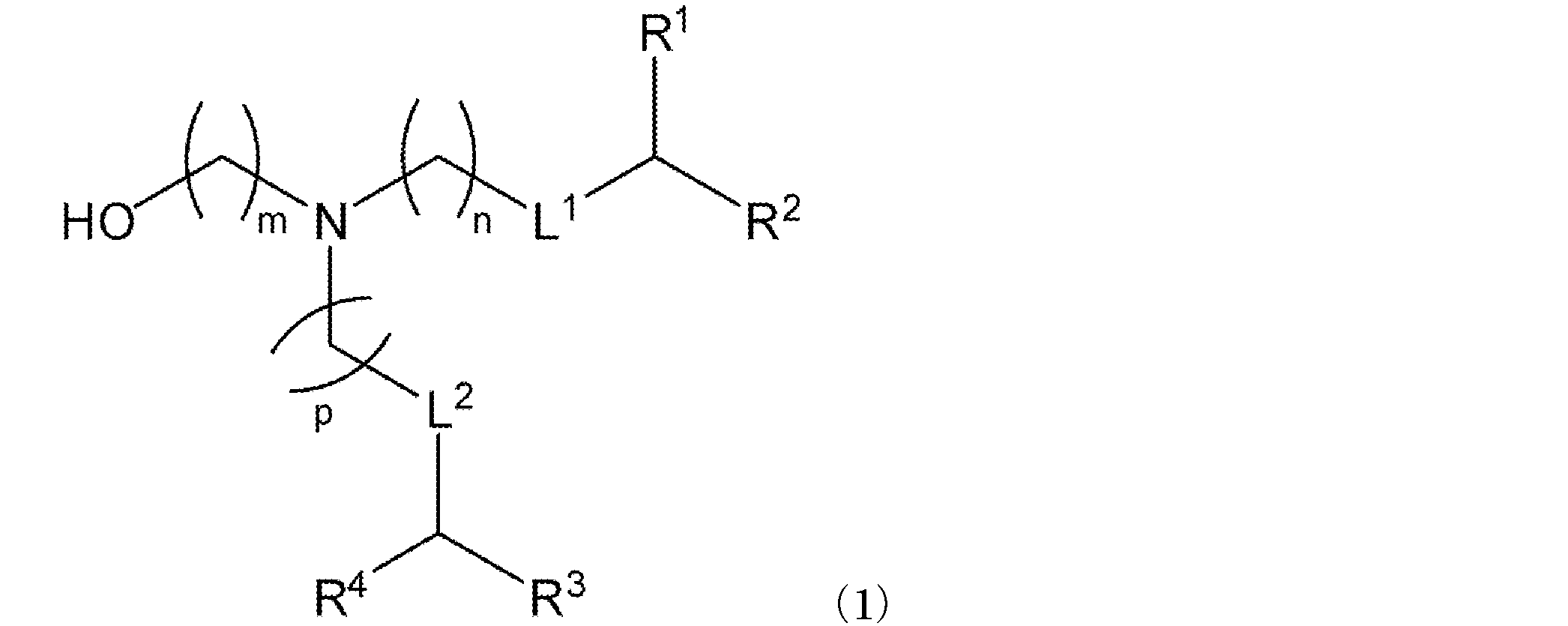
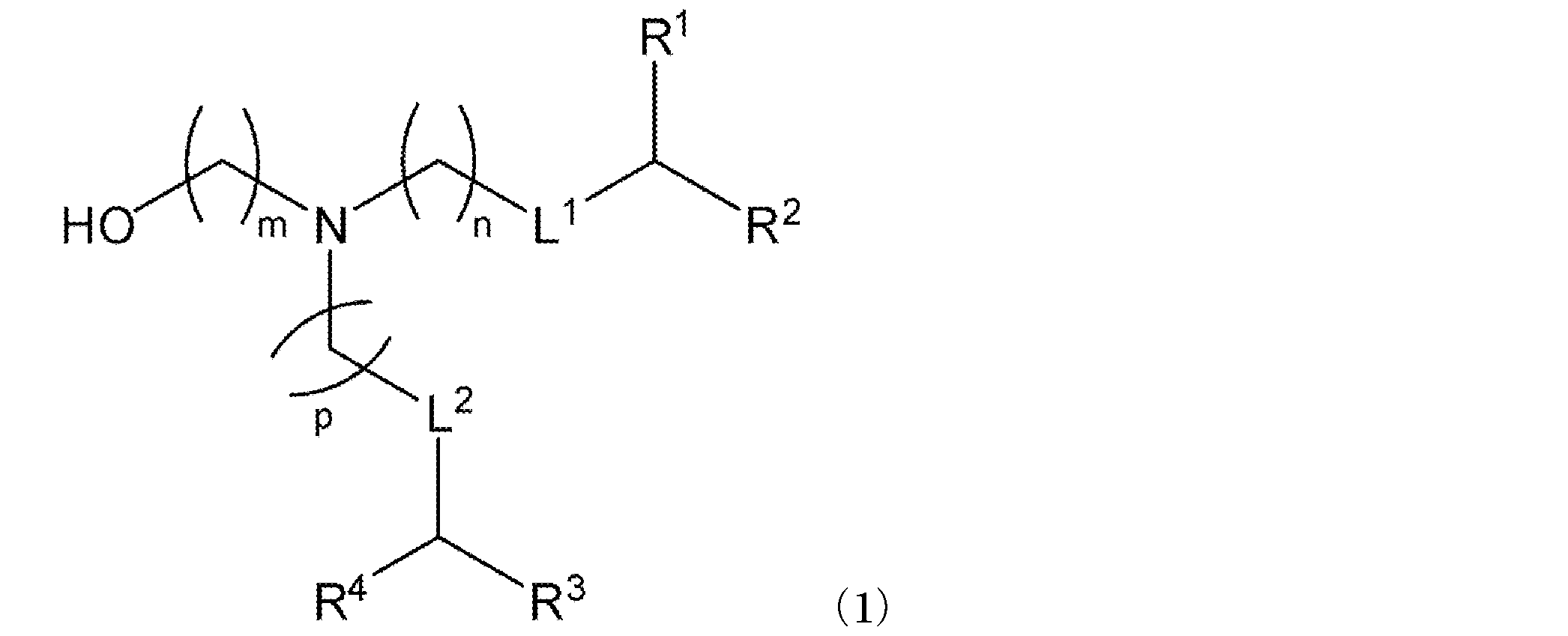
- the ionized lipid has the general formula (1):
- R1 represents an alkyl group.
- R2 represents an alkyl group.
- R3 represents an alkyl group.
- R4 represents an alkyl group or a hydrogen atom.
- m represents an integer from 1 to 8.
- n represents an integer from 3 to 10.
- p represents an integer from 3 to 10.
- a represents an integer of 3 to 5.
- b represents 0 or 1.
- c represents an integer of 0 to 4.
- R5 and R6 may be the same or different and represent an alkyl group or an alkenyl group.
- X represents an optionally substituted non-aromatic nitrogen-containing heterocyclic group or an optionally substituted amino group.
- amino lipids represented by the general formula (3):
- R7 and R8 are the same or different and each represents an alkyl group or an alkenyl group.
- Y represents an optionally substituted non-aromatic nitrogen-containing heterocyclic group or an optionally substituted amino group.
- E represents a linker.
- Item 12 The lipid particle according to any one of Items 1 to 11, wherein the lipid particle is at least one selected from the group consisting of amino lipids represented by the formula:
- Item 13 The particles according to Item 1, further comprising a conjugated lipid that inhibits particle aggregation.
- Item 14 A lipid particle according to any one of items 1 to 13, wherein the content of the complex lipid is 0 to 2 mol % relative to 100 mol % of the lipids constituting the lipid particle.
- Item 15 The lipid particle according to item 13 or 14, wherein the conjugated lipid is a polyethylene glycol-lipid conjugate.
- Item 16 A lipid particle according to any one of items 1 to 15, having a mass average particle diameter of 10 to 200 nm.
- Item 17 A pharmaceutical comprising the lipid particles described in any one of items 1 to 16.
- Item 18 The pharmaceutical according to Item 17, which is a therapeutic drug for cancer, immune disorders, central nervous system disorders, etc., an infectious disease vaccine, or a cancer vaccine.
- Item 18A A method for preventing or treating cancer, an immune disease, a central nervous system disease, or an infectious disease, comprising administering the lipid particles according to any one of items 1 to 16 to a subject (e.g., a patient) (preferably a subject with cancer, a subject with an immune disease, a subject with a central nervous system disease, a subject with an infectious disease, or a subject in need of cancer prevention, an immune disease prevention, a central nervous system disease prevention, or an infectious disease prevention).
- a subject e.g., a patient
- a subject with cancer a subject with an immune disease, a subject with a central nervous system disease, a subject with an infectious disease, or a subject in need of cancer prevention, an immune disease prevention, a central nervous system disease prevention, or an infectious disease prevention.
- Item 18B The lipid particles according to any one of items 1 to 16 for use as a therapeutic agent for cancer, immune disorders, central nervous system disorders, etc., or as an infectious disease vaccine or cancer vaccine.
- Item 18C Use of the lipid particle according to any one of Items 1 to 16 for producing a therapeutic drug for cancer, immune diseases, central nervous system diseases, etc., or an infectious disease vaccine or a cancer vaccine.
- Item 18D Use of the lipid particle according to any one of Items 1 to 16 as a therapeutic agent for cancer, immune diseases, central nervous system diseases, etc., or as an infectious disease vaccine or cancer vaccine.
- Item 19 The pharmaceutical agent according to item 17 or 18 for use in subcutaneous administration, intravenous administration, intramuscular administration, intranasal administration, or intratracheal administration.
- the present invention can provide lipid particles that can be produced without relying on PEG-modified lipids, or that have superior efficacy, safety, or stability to lipid particles that rely on PEG-modified lipids, or that have different immune dynamics from lipid particles that rely on PEG-modified lipids.
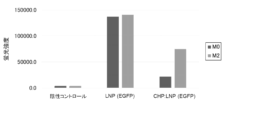
- Test Example 5 the results are shown for when LNP was added and then incubated overnight at 37°C without treatment at 4°C. Results are shown for when LNP(EGFP) (Reference Example 2) or CHP:LNP(EGFP) (Example 2) was added, and the negative control shows the results when no LNP was added. M0 shows the results when M0 macrophages were used, and M2 shows the results when M2-like macrophages were used. This shows the results in Test Example 5, where LNP was added, followed by treatment at 4° C. for 2 hours, then the medium was replaced and further incubation was performed overnight at 37° C. The meanings of each notation in the figure are the same as in FIG.
- the present invention relates to lipid particles (sometimes referred to as "lipid particles of the present invention” in this specification) that contain an ionized lipid, a phospholipid, and a sterol as lipids constituting the lipid particles, and also contain a modified polysaccharide containing a hydrophobic group. This will be described below.
- the ionizable lipid is not particularly limited as long as it is capable of forming lipid particles and is a lipid that exhibits a positive charge in the lipid particles.
- Examples of the ionizable lipid include [4-hydroxybutyl)azanediyl]di(hexane-6,1-diyl)bis(2-hexyldecanoate) (ALC-0315), 9-heptadecanyl 8- ⁇ (2-hydroxyethyl)[6-oxo-6-(undecyloxy)hexyl]amino ⁇ octanoate (SM-102), (6Z,9Z,28Z,31Z)-Heptatriaconta-6,9,28,31-tetraen-19-yl 4-(dimethylamino)butanoate (D-Lin-MC3-DMA), 1,2-Dilinoleyloxy-N,N-dimethylaminopropane (DLinDMA),
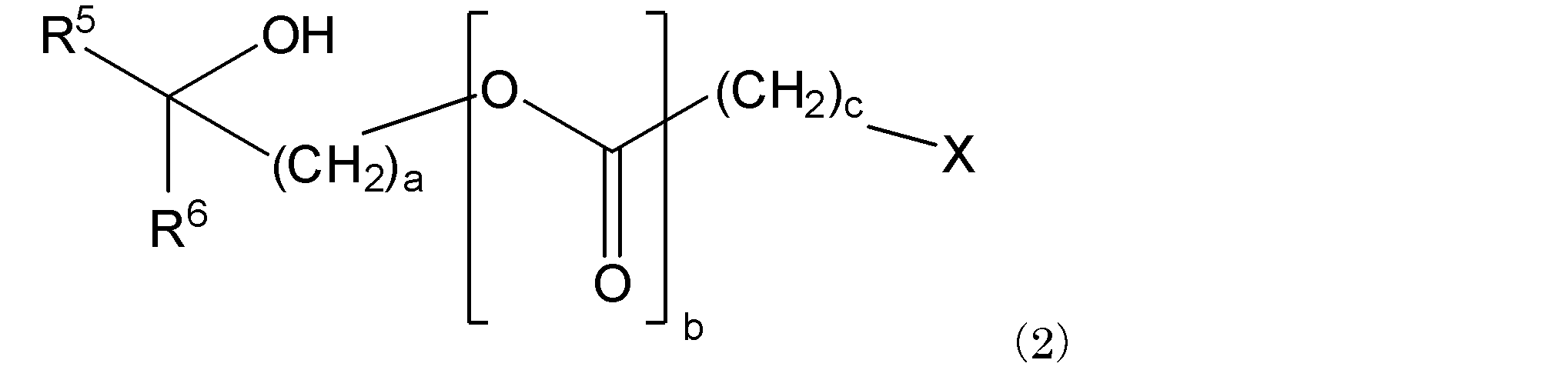
- the ionized lipid is preferably represented by the general formula (1) from the viewpoint of expression of the lipid particles of the present invention in cells, preferably antigen-presenting cells:
- R1 represents an alkyl group.
- R2 represents an alkyl group.
- R3 represents an alkyl group.
- R4 represents an alkyl group or a hydrogen atom.
- m represents an integer from 1 to 8.
- n represents an integer from 3 to 10.
- p represents an integer from 3 to 10.
- a represents an integer of 3 to 5.
- b represents 0 or 1.
- c represents an integer of 0 to 4.
- R5 and R6 may be the same or different and represent an alkyl group or an alkenyl group.
- X represents an optionally substituted non-aromatic nitrogen-containing heterocyclic group or an optionally substituted amino group.
- amino lipids represented by the general formula (3):
- R7 and R8 are the same or different and each represents an alkyl group or an alkenyl group.
- Y represents an optionally substituted non-aromatic nitrogen-containing heterocyclic group or an optionally substituted amino group.
- E represents a linker.
- the amino lipid is at least one selected from the group consisting of amino lipids represented by the following formula: By using the amino lipid, it is possible to more significantly exhibit the above-mentioned accumulation property.
- the alkyl group and the alkenyl group are linear or branched, and are particularly preferably linear.
- the lower limit of the number of carbon atoms of the alkyl group and the alkenyl group can be, for example, 1, 2, 3, 4, 5, 6, 7, 8, 9, or 10.
- the upper limit of the number of carbon atoms of the alkyl group and the alkenyl group can be, for example, 30, 25, 20, 18, 16, 15, 14, 13, 12, 11, 10, 9, 8, 7, 6, 5, or 4.
- the number of carbon atoms can be within a range that is any combination of the above upper and lower limits.
- the number of carbon atoms in the alkyl group represented by R1 is not particularly limited as long as the compound of general formula (1) is a lipid, and is, for example, 3 to 20. From the viewpoint of the accumulation property, the number of carbon atoms is preferably 3 to 12, more preferably 3 to 10, even more preferably 4 to 8, even more preferably 5 to 7, and particularly preferably 6.
- the number of carbon atoms in the alkyl group represented by R2 is not particularly limited as long as the compound of general formula (1) is a lipid, and is, for example, 3 to 20. From the viewpoint of the above-mentioned accumulation property, the number of carbon atoms is preferably 4 to 15, more preferably 5 to 12, even more preferably 6 to 10, still more preferably 7 to 9, and particularly preferably 8.
- the number of carbon atoms in the alkyl group represented by R3 is not particularly limited as long as the compound of general formula (1) is a lipid, and is, for example, 3 to 20. From the viewpoint of the above-mentioned accumulation property, the number of carbon atoms is preferably 3 to 12, more preferably 3 to 10, even more preferably 4 to 8, even more preferably 5 to 7, and particularly preferably 6.
- R4 is preferably an alkyl group.
- the number of carbon atoms in the alkyl group represented by R4 is not particularly limited as long as the compound of general formula (1) is a lipid, and is, for example, 3 to 20. From the viewpoint of the above-mentioned accumulation property, the number of carbon atoms is preferably 4 to 15, more preferably 5 to 12, even more preferably 6 to 10, still more preferably 7 to 9, and particularly preferably 8.
- L1 is preferably --O--C(.dbd.O)-- (the --O-- side of the divalent group represents the hydroxy group side in general formula (1)).
- L2 is preferably --O--C(.dbd.O)-- (the --O-- side of the divalent group represents the hydroxy group side in general formula (1)).
- m is preferably 2 to 6, more preferably 3 to 5, and particularly preferably 4.
- n is preferably 4 to 8, more preferably 5 to 7, and particularly preferably 6.
- p is preferably 4 to 8, more preferably 5 to 7, and particularly preferably 6.
- the number of carbon atoms in the alkyl group represented by R5 is not particularly limited as long as the compound of general formula (2) becomes a lipid, and is, for example, 12 to 24.
- the number of carbon atoms in the alkyl group represented by R 6 is not particularly limited as long as the compound of general formula (2) becomes a lipid, and is, for example, 12 to 24.
- the number of carbon atoms in the alkyl group represented by R7 is not particularly limited, so long as the compound of general formula (2) becomes a lipid, and is, for example, 12 to 24.
- the number of carbon atoms in the alkyl group represented by R 8 is not particularly limited, so long as the compound of general formula (2) becomes a lipid, and is, for example, 12 to 24.
- the substituent is preferably an alkyl group.
- alkyl groups include alkyl groups having 1 to 4 carbon atoms.
- a non-aromatic nitrogen-containing heterocyclic group is a monovalent group formed by removing one hydrogen atom from a non-aromatic nitrogen-containing heterocycle.
- non-aromatic nitrogen-containing heterocycles include pyrrolidinyl groups, piperidinyl groups, morpholinyl groups, and piperazinyl groups.
- the linker represented by E can be, for example, a linker having 1 to 10, preferably 3 to 8, atoms constituting the chain.
- the ionic lipid may be a single type or a combination of two or more types.
- the content of the ionic lipid is preferably 35 to 70 mol%, more preferably 40 to 65 mol%, even more preferably 45 to 60 mol%, and even more preferably 45 to 55 mol%, relative to 100 mol% of the lipids constituting the lipid particles, from the viewpoints of lipid particle formability, the above-mentioned accumulation property, stability, etc.
- Ionic lipids can be prepared by purchasing commercially available products, or can be produced according to or in accordance with known methods. For production, see, for example, WO2018/230710 and WO2010/129687.
- the phospholipids are not particularly limited as long as they are capable of forming lipid particles, but examples include phosphatidylcholine, phosphatidylethanolamine, phosphatidylserine, phosphatidylinositol, phosphatidic acid, lysophosphatidylcholine, lysophosphatidylethanolamine, etc.
- DSPC distearoylphosphatidylcholine
- DPPC dipalmitoylphosphatidylcholine
- DOPE dioleoylphosphatidylethanolamine
- POPC palmitoyloleoyl-phosphatidylcholine
- POPE palmitoyloleoyl-phosphatidylethanolamine
- POPG palmitoyloleoyl-phosphatidylglycerol
- DPPE dipalmitoyl-phosphatidylethanolamine
- DMPE dimyristoyl-phosphatidylethanolamine
- DSPE distearoyl-phosphatidylethanolamine
- monomethyl-phosphatidylethanolamine dimethyl-phosphatidylethanolamine
- DEPE dielaidoyl-phosphatidylethanolamine
- SOPE stearoyloleoyl-phosphatidylethanolamine
- EPC egg phosphatidylcholine
- the phospholipid is preferably phosphatidylcholine, more preferably DSPC, DPPC, etc., and even more preferably DSPC.
- the phospholipids can be one type alone or a combination of two or more types.
- the content of phospholipids is preferably 4 to 25 mol%, more preferably 4 to 20 mol%, even more preferably 4 to 15 mol%, even more preferably 6 to 12 mol%, and particularly preferably 8 to 11 mol%, based on 100 mol% of the lipids constituting the lipid particles, from the viewpoints of lipid particle formability, stability, etc.
- the sterol is not particularly limited as long as it has a sterol skeleton and is capable of forming lipid particles, but examples include cholesterol, cholesteryl hemisuccinate, lanosterol, dihydrolanosterol, desmosterol, dihydrocholesterol, phytosterol, phytosterol, stigmasterol, zymosterol, ergosterol, sitosterol, campesterol, brassicasterol, etc.
- cholesterol derivatives such as cholestanol, cholestanone, cholestenone, coprostanol, cholesteryl-2'-hydroxyethyl ether, and cholesteryl-4'-hydroxybutyl ether are also included.
- the sterol is preferably cholesterol from the viewpoints of lipid particle formation, stability, etc.
- the sterols can be one type alone or a combination of two or more types.
- the sterol content is preferably 15 to 55 mol%, more preferably 25 to 50 mol%, even more preferably 30 to 45 mol%, and even more preferably 35 to 45 mol%, relative to 100 mol% of the lipids constituting the lipid particles, from the viewpoints of lipid particle formability, stability, etc.
- the modified polysaccharide is not particularly limited as long as it is a compound obtained by modifying a polysaccharide and contains a hydrophobic group as a modifying group.
- a modified polysaccharide it has been found that by using a modified polysaccharide, it is possible to form lipid particles (particularly lipid particles containing each lipid in the above-mentioned content) without relying on PEG-modified lipids (preferably, no lipid is used, but a small amount of PEG may be contained as long as side reactions caused by PEG are avoided).
- the polysaccharides constituting the modified polysaccharides are not particularly limited as long as they are polymers in which the sugar residues are glycosidicly bonded.
- residues derived from monosaccharides such as glucose, mannose, galactose, and fucose, or from sugars such as disaccharides and oligosaccharides, can be used as the sugar residues constituting the polysaccharides.
- the sugar residues may be 1,2-, 1,3-, 1,4-, or 1,6-glycosidic bonds, and the bonds may be either ⁇ - or ⁇ -type bonds.
- the polysaccharides may be either linear or branched.
- the sugar residue is preferably a glucose residue
- examples of the polysaccharides include natural or synthetic pullulan, mannan, dextran, amylose, amylopectin, and the like.
- pullulan, mannan, dextran, and the like are preferably used, more preferably pullulan, mannan, and the like, and particularly preferably pullulan, and the like are used.
- the weight-average molecular weight of the polysaccharide is not particularly limited as long as the modified polysaccharide can form gelling particles, but is, for example, 5,000 to 2,000,000.
- the weight-average molecular weight is preferably 10,000 to 1,000,000, more preferably 20,000 to 500,000, even more preferably 40,000 to 250,000, and even more preferably 80,000 to 125,000.
- polysaccharides commercially available products can be used, or those obtained according to known manufacturing methods can be used.
- the hydrophobic group is not particularly limited as long as it is a group having hydrophobic properties. From the viewpoint of lipid particle formability, stability, etc., preferred examples of the hydrophobic group include hydrophobic groups having a sterol skeleton and hydrocarbon groups, and particularly preferred examples include hydrophobic groups having a sterol skeleton.
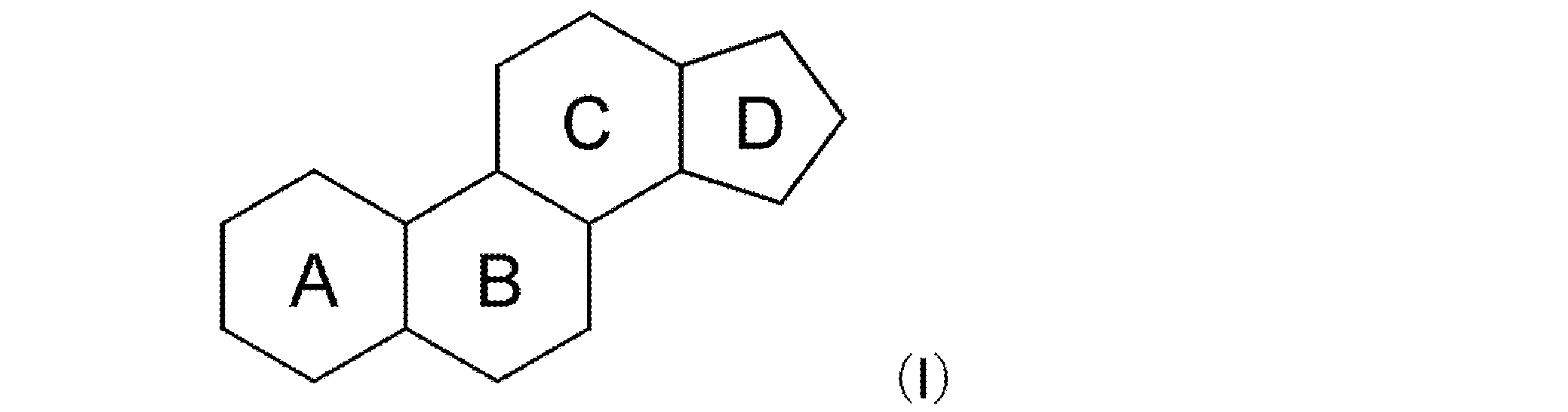
- the sterol skeleton is an alcohol with a hydroxy group bonded to the cyclopentahydrophenanthrene ring shown in formula (I).
- the symbols A through D in formula (I) represent each ring that makes up the cyclopentahydrophenanthrene ring.
- the cyclopentahydrophenanthrene ring may have a double bond, and the position of the hydroxyl group is not particularly limited.
- the sterol has a hydroxyl group bonded to the C-3 position and a double bond to the B ring, or the stanol has a hydroxyl group bonded to the C-3 position and is composed of a saturated ring.
- hydrophobic groups having a sterol skeleton include groups derived from compounds in which the sterol skeleton is modified, for example, by substituting a hydrocarbon group (e.g., a straight-chain or branched alkyl group having 1 to 20 carbon atoms) at the ring carbon.
- group derived from refers to a group obtained by removing a functional group such as a hydrogen atom or a hydroxyl group from a certain compound.
- hydrophobic groups having a sterol skeleton examples include cholesterol-derived groups, cholestanol-derived groups, lanosterol-derived groups, ergosterol-derived groups, ⁇ -sitosterol-derived groups, campesterol-derived groups, stigmasterol-derived groups, and brassicasterol-derived groups.
- sterol-derived groups such as cholesterol-derived groups, cholestanol-derived groups, lanosterol-derived groups, and ergosterol-derived groups, and more preferred are cholesterol-derived groups.
- the hydrocarbon group as the hydrophobic group is not particularly limited, and examples thereof include chain (preferably linear) hydrocarbon groups (preferably alkyl groups) having 8 to 50 carbon atoms (preferably 10 to 30, more preferably 12 to 20).
- the weight-average molecular weight of the modified polysaccharide is not particularly limited as long as the modified polysaccharide can form gelling particles, but is, for example, 5,000 to 2,000,000.
- the weight-average molecular weight is preferably 10,000 to 1,000,000, more preferably 20,000 to 500,000, even more preferably 40,000 to 250,000, and even more preferably 80,000 to 125,000.
- the number of hydrophobic groups contained in the modified polysaccharide is not particularly limited as long as the modified polysaccharide can form gelling particles, and is, for example, 1 to 10, preferably 1 to 5, per 100 sugar residues that form the polysaccharide.
- the hydrophobic group can be linked to the polysaccharide directly or indirectly (e.g., via a linker).
- a preferred modified polysaccharide is, for example, one in which the primary hydroxyl groups of, for example, 1 to 10 (preferably 1 to 5) saccharide units per 100 saccharide residues constituting the polysaccharide are represented by the formula (II): -O-( CH2 ) xCONH ( CH2 ) yNH -CO-O-R (II) (wherein R represents a hydrophobic group or a hydrocarbon group having a sterol skeleton; x represents 0 or 1; and y represents any positive integer), and y is preferably 1 to 8.
- the modified polysaccharides can be synthesized according to or in accordance with known methods (e.g., International Publication No. WO00/12564).
- One example is the following method. First, a diisocyanate compound represented by OCN-R A NCO (wherein R A is a hydrocarbon group having 1 to 50 carbon atoms) is reacted with a hydroxyl-containing hydrocarbon or sterol having 12 to 50 carbon atoms to produce an isocyanate group-containing hydrophobic compound in which one molecule of a hydroxyl-containing hydrocarbon or sterol having 12 to 50 carbon atoms is reacted.
- OCN-R A NCO wherein R A is a hydrocarbon group having 1 to 50 carbon atoms
- the resulting isocyanate group-containing hydrophobic compound is further reacted with a polysaccharide to produce a hydrophobic group-containing polysaccharide containing a hydrocarbon group or a steryl group having 12 to 50 carbon atoms as a hydrophobic group.
- the resulting reaction product is purified with a ketone solvent to produce a high-purity hydrophobic group-containing polysaccharide.
- the modified polysaccharides can be one type alone or a combination of two or more types.
- the content of the modified polysaccharide is, for example, 0.5 to 15 mol %, preferably 1 to 10 mol %, relative to 100 mol % of the lipids constituting the lipid particles, from the viewpoints of lipid particle formability, stability, etc.
- the lipid particles of the present invention may contain a complexed lipid (hereinafter simply referred to as a "complexed lipid”) that inhibits aggregation of the particles.
- the complexed lipid is not particularly limited as long as it can inhibit aggregation of lipid particles and can constitute lipid particles, and examples of the complexed lipid include polyethylene glycol (PEG)-lipid conjugates, polyamide (ATTA)-lipid conjugates, and cationic polymer-lipid conjugates (CPLs).
- the complexed lipid may contain PEG-lipids including, for example, PEG-diacylglycerol (DAG), PEG dialkyloxypropyl (DAA), PEG-phospholipid, PEG-ceramide (Cer), or a mixture thereof.
- PEG-lipids including, for example, PEG-diacylglycerol (DAG), PEG dialkyloxypropyl (DAA), PEG-phospholipid, PEG-ceramide (Cer), or a mixture thereof.
- the molecular weight of the PEG portion of the PEG-lipid conjugate is not particularly limited, and may be, for example, 200 to 10,000, preferably 500 to 7,000, more preferably 500 to 4,000, even more preferably 1,000 to 3,000, and even more preferably 1,500 to 2,500.
- the conjugated lipids can be one type alone or a combination of two or more types.
- the content of the complex lipid is, for example, 0 to 2 mol% relative to 100 mol% of the lipids constituting the lipid particles, from the viewpoints of lipid particle formability, stability, and avoidance of anaphylactic shock.
- the content is preferably 0 to 1 mol%, more preferably 0 to 0.5 mol%, even more preferably 0 to 0.2 mol%, even more preferably 0 to 0.1 mol%, particularly preferably 0 to 0.01 mol%, and especially preferably 0 mol% (no complex lipid is contained).
- the lipid particles of the present invention preferably contain a drug.
- Drugs are not particularly limited, but include, for example, nucleic acid adjuvants and anticancer drugs, and may be contained in combination.
- the drug is disposed inside the lipid particle of the present invention (separated from the outside of the lipid particle).
- the drug particularly, a nucleic acid
- the drug is disposed inside the lipid particle of the present invention in a state complexed with an ionized lipid.
- the nucleic acid of the present invention is not particularly limited, and examples thereof include mRNA, immunostimulatory double-stranded RNA (poly-IC RNA, etc.), siRNA, miRNA, ribozyme, CpG oligo DNA, antisense oligo DNA, nucleic acid aptamer, degoy, double-stranded DNA for gene expression, and dinucleotides.
- the nucleic acid may be not only DNA and RNA, but also anything that can be a pharmaceutical active ingredient, and includes those that have been subjected to known chemical modifications, as exemplified below.
- the phosphate residues of each nucleotide can be replaced with chemically modified phosphate residues, such as phosphorothioate (PS), methylphosphonate, and phosphorodithioate.
- the hydroxyl group at the 2nd position of the sugar (ribose) of each ribonucleotide may be replaced with -OR (R represents, for example, CH3 (2' - O-Me), CH2CH2OCH3 (2' - O -MOE), CH2CH2NHC (NH) NH2 , CH2CONHCH3 , CH2CH2CN , etc.).
- the base portion may be chemically modified, for example, by introducing a methyl group or a cationic functional group at the 5th position of the pyrimidine base, or by replacing the carbonyl group at the 2nd position with a thiocarbonyl.
- Further examples include those in which the phosphate portion or the hydroxyl portion is modified with, for example, biotin, an amino group, a lower alkylamine group, an acetyl group, etc., but are not limited to these.
- the term "nucleic acid” includes any of BNA (Bridged Nucleic Acid), LNA (Locked Nucleic Acid), PNA (Peptide Nucleic Acid), etc.
- the nucleic acid of the present invention can be preferably CpG oligo DNA or mRNA, particularly mRNA encoding a microbial antigen or a cancer antigen as described below.
- CpG oligo DNA is as follows: Class A: D35-CpG, ODN1585, ODN2216, ODN2336, etc.
- Class B K3-CpG, ODNBW006, ODN D-SL01, ODN1668, OND1826, OND2006 (CpG7909, PF-3512676), ODN2007, ODN684, etc.
- Class C ODN D-SL03, ODN 2395, ODN M362, etc.
- CpG-28 CpG-685 (GNKG-168), CpG-ODN C274, KSK-13 (KSK-CpG), CpG ODN 10104 (CpG-10104), CpG ODN-1585, ODN-5890, 1018-ISS, EMD-1201081 (HYB-2055, IMO-2055), etc.
- CpG oligo DNA may be a commercially available product, or may be one obtained according to a known manufacturing method.
- it may be a modified product containing a hydrophobic group A having a sterol skeleton based on the contents of US2022/0111061 A1, but is preferably not a modified product containing a hydrophobic group A having a sterol skeleton.
- examples of microbial antigens encoded by it include viral antigens, fungal antigens, etc.
- Viruses from which viral antigens are derived include, but are not limited to, influenza viruses (e.g., types A and B), rubella viruses, Ebola viruses, coronaviruses, measles viruses, chickenpox/shingles viruses, herpes simplex viruses, mumps viruses, arboviruses, respiratory syncytial viruses, SARS viruses, hepatitis viruses (e.g., hepatitis B viruses, hepatitis C viruses), yellow fever viruses, AIDS viruses, rabies viruses, hantaviruses, dengue viruses, Nipah viruses, and lyssaviruses; and non-enveloped viruses (viruses that do not have an envelope) such as adenoviruses, noroviruses, rotaviruses, human papillomaviruses, poliovirus
- influenza viruses
- the bacteria from which the bacterial antigen is derived are not particularly limited, but examples include Bordetella pertussis, Clostridium tetani, Corynebacterium diphtheriae, Salmonella, Helicobacter pylori, Clostridium perfringens, Clostridium botulinum, Campylobacter, Escherichia coli, Staphylococcus aureus, Streptococcus cereus, Vibrio parahaemolyticus, Propionibacterium acnes, Clostridium faecalis, Clostridium difficile, Streptococcus pneumoniae, Haemophilus influenzae, Moraxella, Klebsiella pneumoniae, Koinebacterium, Streptococcus hemolyticus, Pseudomonas aeruginosa, Staphylococcus aureus, Mycoplasma, Candida, Aspergillus, etc.
- the cancer antigens it encodes include, but are not limited to, ERK1, ERK2, MART-1/Melan-A, gp100, adenosine deaminase binding protein (ADAbp), FAP, cyclophilin b, colorectal-related antigen (CRC)-C017-1A/GA733, carcinoembryonic antigen (CEA), CAP-1, CAP-2, etv6, AML1, prostate-specific antigen (PSA), PSA-1, PSA-2, PSA-3, prostate-specific membrane antigen (PSMA), T-cell receptor/C D3-zeta chain, CD20, MAGE-A1, MAGE-A2, MAGE-A3, MAGE-A4, MAGE-A5, MAGE-A6, MAGE-A7, MAGE-A8, MAGE-A9, MAGE-A10, MAGE-A11, MAGE-A12, MAGE-Xp2 (MAGE-B2), MAGE-
- Target cancers are not particularly limited, and examples include leukemia (including chronic lymphocytic leukemia and acute lymphocytic leukemia), lymphoma (including non-Hodgkin's lymphoma, Hodgkin's lymphoma, T-cell lymphoma, B-cell lymphoma, Burkitt's lymphoma, malignant lymphoma, diffuse lymphoma, and follicular lymphoma), myeloma (including multiple myeloma), breast cancer, colon cancer, kidney cancer, stomach cancer, ovarian cancer, pancreatic cancer, cervical cancer, endometrial cancer, and esophageal cancer.
- leukemia including chronic lymphocytic leukemia and acute lymphocytic leukemia
- lymphoma including non-Hodgkin's lymphoma, Hodgkin's lymphoma, T-cell lymphoma, B-cell lymphoma, Burkitt's lymphoma, mal
- the adjuvant is not particularly limited as long as it exhibits an adjuvant function that supports or enhances the original function of the active ingredient when used in combination with the main active ingredient, but specifically can be selected from nucleic acids, lipopolysaccharides, lipopeptides, synthetic low molecular weight compounds, etc., and preferably CpG oligo DNA, poly IC RNA, imidazoquinolines (e.g., R848 and imiquimod), STING agonists (e.g., cyclic di-GMP), monophosphoryl lipids, lipopeptides, etc. are used.
- adjuvants include, for example, taxane drugs, anthracycline drugs, JAK/STAT inhibitors, indole deoxygenase (IDO) inhibitors, and tryptophan deoxygenase (TDO) inhibitors.
- IDO indole deoxygenase
- TDO tryptophan deoxygenase
- inhibitors include compounds that have an antagonistic effect against the factor, as well as neutralizing antibodies, siRNA, and antisense DNA against the factor.
- Anti-cancer drugs include, for example, alkylating agents, metabolic antagonists, microtubule inhibitors, antibiotic anti-cancer drugs, topoisomerase inhibitors, platinum preparations, molecular targeted drugs, hormones, and biological agents.
- the drug can be a single type or a combination of two or more types.
- the mass ratio of the drug to the lipid particle component CHP is 200 or less, more preferably 100 or less, and even more preferably 90 or less.
- the upper limit of the mass ratio can be, for example, 70, 50, 40, 30, 20, 10, or 8 and the lower limit of the mass ratio can be, for example, 0.01, 0.02, 0.05, 0.1, 0.2, 0.5, or 1.
- the above upper and lower limits can be combined in any manner.
- the liquid containing the lipid particles of the present invention can contain a drug (preferably a nucleic acid, more preferably an mRNA) at a concentration of, for example, 1 to 1000 ⁇ g/mL, preferably 5 to 500 ⁇ g/mL, more preferably 15 to 400 ⁇ g/mL, even more preferably 30 to 300 ⁇ g/mL, and even more preferably 50 to 200 ⁇ g/mL.
- a drug preferably a nucleic acid, more preferably an mRNA
- the lipid particles of the present invention may contain other components (other than the solvent) in addition to the above.
- other components include various components that are known to be incorporated into lipid particles, such as antioxidants and membrane proteins.
- Antioxidants can be included to prevent oxidation of the membrane, and are used as necessary as a component of the membrane.
- antioxidants used as components of the membrane include butylated hydroxytoluene, propyl gallate, tocopherol, tocopherol acetate, concentrated mixed tocopherols, vitamin E, ascorbic acid, L-ascorbic acid stearate, ascorbic acid palmitate, sodium bisulfite, sodium sulfite, sodium edetate, erythorbic acid, citric acid, etc.
- Membrane proteins can be included to add functionality to the membrane or to stabilize the membrane structure, and are used as membrane components as necessary.
- membrane proteins include surface membrane proteins, integral membrane proteins, albumin, and recombinant albumin.
- the content of other components is, for example, 10% by mass or less, preferably 5% by mass or less, more preferably 2% by mass or less, and even more preferably 1% by mass or less, relative to 100% by mass of the lipid particles of the present invention.
- the mass-average particle diameter of the lipid particles of the present invention is, for example, 200 nm or less, preferably 10 to 200 nm, more preferably 20 to 200 nm, even more preferably 40 to 190 nm, even more preferably 40 to 180 nm, and particularly preferably 40 to 160 nm.
- the particle diameter can be measured by dynamic light scattering.
- the lipid particles of the present invention are usually formed in an aqueous solution.
- aqueous solutions include various buffer solutions (e.g., acetate buffer, phosphate buffer, formate buffer, histidine buffer, etc.).
- the lipid particles of the present invention can be preferably produced by a method including a step of mixing an alcoholic solution containing the lipids constituting the lipid particles with an aqueous solution containing modified polysaccharides (preferably further containing a drug), or a step of mixing an alcoholic solution containing the lipids constituting the lipid particles with an aqueous solution (preferably further containing a drug) and an aqueous solution containing modified polysaccharides (step 1).
- the lipid particles of the present invention can be obtained simply and efficiently without relying on PEG-modified lipids or avoiding side reactions caused by PEG.
- the alcohol that is the solvent for the alcohol solution is not particularly limited as long as it is an alcohol that can dissolve lipids.
- a preferred example of the alcohol is ethanol.
- the alcohol solution preferably contains the lipids constituting the lipid particles in the molar ratio described above. This makes it possible to obtain lipid particles containing the lipids constituting the lipid particles in the molar ratio described above.
- the lipid concentration in the alcohol solution is, for example, 2 to 20 mM, preferably 4 to 12 M.
- An aqueous solution is a solution in which the solvent contains water (preferably the water content is 80% or more, 90% or more, 95% or more, or 100%).
- the concentration of the modified polysaccharide in the aqueous solution is, for example, 0.2 to 5 mg/mL, preferably 0.4 to 3 mg/mL, and more preferably 0.6 to 1.5 mg/mL.
- the mixing ratio of the aqueous solution to the alcohol solution is, for example, 1 to 20, preferably 2 to 4.
- the mixing method is not particularly limited as long as it allows the formation of lipid particles, but is usually performed by vigorously stirring with a vortex or the like.
- the mixture is mixed within the reaction system.
- Step 1 is usually carried out at room temperature or with heating.
- the lipid particles of the present invention are useful in that they can be produced without relying on PEG-modified lipids, and/or have superior efficacy, safety, or stability to lipid particles that rely on PEG-modified lipids, or have different immune dynamics from lipid particles that rely on PEG-modified lipids.
- a conjugated lipid that inhibits particle aggregation such as a PEG-modified lipid
- a conjugated lipid that inhibits particle aggregation such as a PEG-modified lipid
- a conjugated lipid that inhibits particle aggregation may be further included, and is useful in that it has superior efficacy, safety, or stability to lipid particles that rely on PEG-modified lipids, or has different immune dynamics from lipid particles that rely on PEG-modified lipids.
- Safety can be, for example, reduced anti-PEG antibody induction, reduced inflammation at the administration site, reduced fever after administration, etc.
- Stability refers to the stability of the formulation, and for example, the increase in particle size due to freezing and thawing is suppressed.
- lipid particles containing conventional PEG-modified lipids such as those used in COVID-19 vaccines, cannot withstand freezing and thawing, and the particle size increases with repeated freezing and thawing regardless of the presence or absence of an isotonic agent (Sucrose).
- the lipid particles of the present invention can improve the stability of the lipid particle formulation by containing modified polysaccharides such as CHP.
- the lipid particles of the present invention that do not contain PEG-modified lipids and are produced by the production method of Example 4 (Method 2) described below have even better stability against freezing and thawing, and can suppress the increase in particle size even without Sucrose.
- Immune dynamics can be, for example, differences in the quality of induced cellular immunity.
- the lipid particles of the present invention can encapsulate drugs and selectively accumulate in DC-SIGN (CD209)-expressing cells (e.g., M2-like macrophages and antigen-presenting cells). Therefore, the lipid particles of the present invention can be used, for example, as medicines, reagents, etc. (sometimes referred to as "drugs of the present invention” in the present specification), more specifically, as therapeutic drugs for cancer, immune diseases, diabetes-induced diseases, central nervous system diseases, etc., infectious disease vaccines, or cancer vaccines. Infectious disease vaccines are not particularly limited as long as they are vaccines used against infectious diseases, and include not only preventive vaccines but also therapeutic vaccines.
- the drug of the present invention is not particularly limited as long as it contains the lipid particles of the present invention, and may further contain additives as necessary.
- additives include bases, carriers, solvents, dispersants, emulsifiers, buffers, stabilizers, excipients, binders, disintegrants, lubricants, thickeners, moisturizers, colorants, fragrances, chelating agents, etc.
- the manner of use of the drug of the present invention is not particularly limited, and an appropriate manner of use can be adopted depending on the type of drug.
- the drug of the present invention can be used, for example, in vitro (e.g., added to the medium for cultured cells) or in vivo (e.g., administered to animals).
- Examples of mammals include humans, monkeys, mice, rats, dogs, cats, rabbits, pigs, horses, cows, sheep, goats, and deer.
- Examples of cells include animal cells.
- Examples of cells include blood cells, hematopoietic stem cells and progenitor cells, gametes (sperm, eggs), fibroblasts, epithelial cells, vascular endothelial cells, nerve cells, liver cells, keratinocytes, muscle cells, epidermal cells, endocrine cells, ES cells, iPS cells, tissue stem cells, and cancer cells.
- the drug of the present invention can be in any dosage form, for example, oral preparations such as tablets (including orally disintegrating tablets, chewable tablets, effervescent tablets, lozenges, jelly drops, etc.), pills, granules, fine granules, powders, hard capsules, soft capsules, dry syrups, liquids (including drinks, suspensions, syrups), and jellies, or parenteral preparations such as injectable preparations (for example, drip injections (e.g., intravenous drip preparations, etc.), intravenous injections, intramuscular injections, subcutaneous injections, and intradermal injections), topical preparations (for example, ointments, poultices, and lotions), suppositories, inhalants, eye drops, eye ointments, nasal drops, ear drops, and liposomes.
- oral preparations such as tablets (including orally disintegrating tablets, chewable tablets, effervescent tablets, lozenges, jelly drops, etc.), pills,
- the route of administration of the drug of the present invention is not particularly limited as long as the desired effect can be obtained, and examples of the route include oral administration; enteral administration such as tube feeding and enema administration; and parenteral administration such as intravenous administration, intraarterial administration, intramuscular administration, intracardiac administration, subcutaneous administration, intradermal administration, intraperitoneal administration, nasal administration, intratracheal administration, and eye drop administration.
- the content of the lipid particles of the present invention in the drug of the present invention depends on the mode of use, the subject of application, the condition of the subject of application, etc., and is not limited, but can be, for example, 0.0001 to 100% by weight, preferably 0.001 to 50% by weight.
- the dosage of the drug of the present invention when administered to an animal is not particularly limited as long as it is an effective amount that exerts a medicinal effect, and is usually, in terms of the weight of the lipid particles of the present invention, generally 0.1 to 1000 mg/kg body weight per day in the case of oral administration, and preferably 0.5 to 500 mg/kg body weight per day, and in the case of parenteral administration, 0.01 to 100 mg/kg body weight per day, and preferably 0.05 to 50 mg/kg body weight per day.
- the above dosages can be increased or decreased as appropriate depending on the age, pathological condition, symptoms, etc.
- Preparation Example 1 Preparation of pullulan nanogel According to the previous report (Macromolecules 1993, 23, 3062-3068), cholesterol-modified pullulan (CHP) was prepared by introducing 1.2 cholesterol molecules per 100 monosaccharides into pullulan with a weight-average molecular weight of 100,000. A pullulan nanogel solution was prepared using the prepared CHP by a known method.
- CHP cholesterol-modified pullulan
- LNP 1 mRNA: ovalbumin (OVA) mRNA
- OVA ovalbumin
- An ethanol solution (lipid concentration: 8 mM) of lipids mixed in a ratio (molar ratio) of ALC-0315 ([(4-Hydroxybutyl)azanediyl]di(hexane-6,1-diyl) bis(2-hexyldecanoate)):DSPC (Distearoylphosphatidylcholine):DMG-PEG200 (1,2-Dimyristoyl-sn-glycero-3-methoxypolyethylene glycol):Cholesterol 50:10:1.5:38.5 was prepared (Liquid B).
- the mixed solution was solvent-substituted with PBS using a dialysis membrane (MWCO; 3.5K).
- the collected solution was concentrated 5 times using an Amicon tube (MWCO; 30K) and passed through a 0.45 ⁇ m filter to obtain an LNP (OVA) solution (mass average particle size: 81nm, ELSZ-2000ZS Otsuka Electronics Co., Ltd.).
- Ribo Green Assay (Invitrogen) was performed, and the mRNA concentration was calculated to be 185 ⁇ g/mL.
- LNP 2 mRNA: EGFP mRNA
- mRNA for the fluorescent protein EGFP was used instead of OVA mRNA (mass average particle size: 75 nm, mRNA concentration: 186 ⁇ g/mL).
- LNP 3 mRNA: HPV E7 mRNA
- HPV E7 HPV E7 mRNA
- Example 1 Preparation of CHP:LNP 1 (mRNA: OVA mRNA) To 1 mL of the LNP (OVA) solution (Reference Example 1), the same amount of 10 mg/mL CHP aqueous solution was added and stirred for 30 minutes. The solution was passed through a 0.45 ⁇ m filter to obtain a CHP:LNP (OVA) solution (mass average particle size: 122 nm, mRNA concentration: 93 ⁇ g/mL). (Method 1).
- Example 2 Preparation of CHP:LNP 2 (mRNA: EGFP mRNA) A CHP:LNP(EGFP) solution was obtained in the same manner as in Example 1, except that the LNP(EGFP) solution (Reference Example 2) was used instead of the LNP(OVA) solution (Reference Example 1) (mass average particle size: 117 nm, mRNA concentration: 95 ⁇ g/mL) (Method 1).
- Example 3 Preparation of CHP:LNP 3 (mRNA: HPV E7 mRNA) A CHP:LNP(HPV E7) solution is obtained in the same manner as in Example 1, except that the LNP(HPV E7) solution (Reference Example 3) is used instead of the LNP(OVA) solution (Reference Example 1) (Method 1).
- Example 4 Preparation of CHP:LNP 4 (mRNA: OVA mRNA)
- An ethanol solution of lipids mixed in a molar ratio of MC3:DSPC:Cholesterol 50:10:40 (lipid concentration: 8 mM) was prepared (Solution B).
- the mixed solution was solvent-substituted with PBS using a dialysis membrane (MWCO; 3.5K).
- the collected solution was concentrated 5-fold using an Amicon tube (MWCO; 30K) and passed through a 0.45 ⁇ m filter to obtain a CHP:LNP(OVA) solution (mass average particle size: 155 nm, mRNA concentration: 70 ⁇ g/mL) (Method 2).
- the mixed solution was solvent-exchanged with PBS using a dialysis membrane (MWCO; 3.5K).
- the collected solution was concentrated 5-fold using an Amicon tube (MWCO; 30K) and passed through a 0.45 ⁇ m filter to obtain a CHP:LNP(EGFP) solution (weight average particle size: 135 nm, mRNA concentration: 82 ⁇ g/mL) (Method 2).
- Example 6 Preparation of CHP:LNP 6 (mRNA: HPV E7 mRNA) A CHP:LNP (HPV E7) solution is obtained in the same manner as in Example 4, except that HPV E7 mRNA is used instead of OVA mRNA (Method 2).
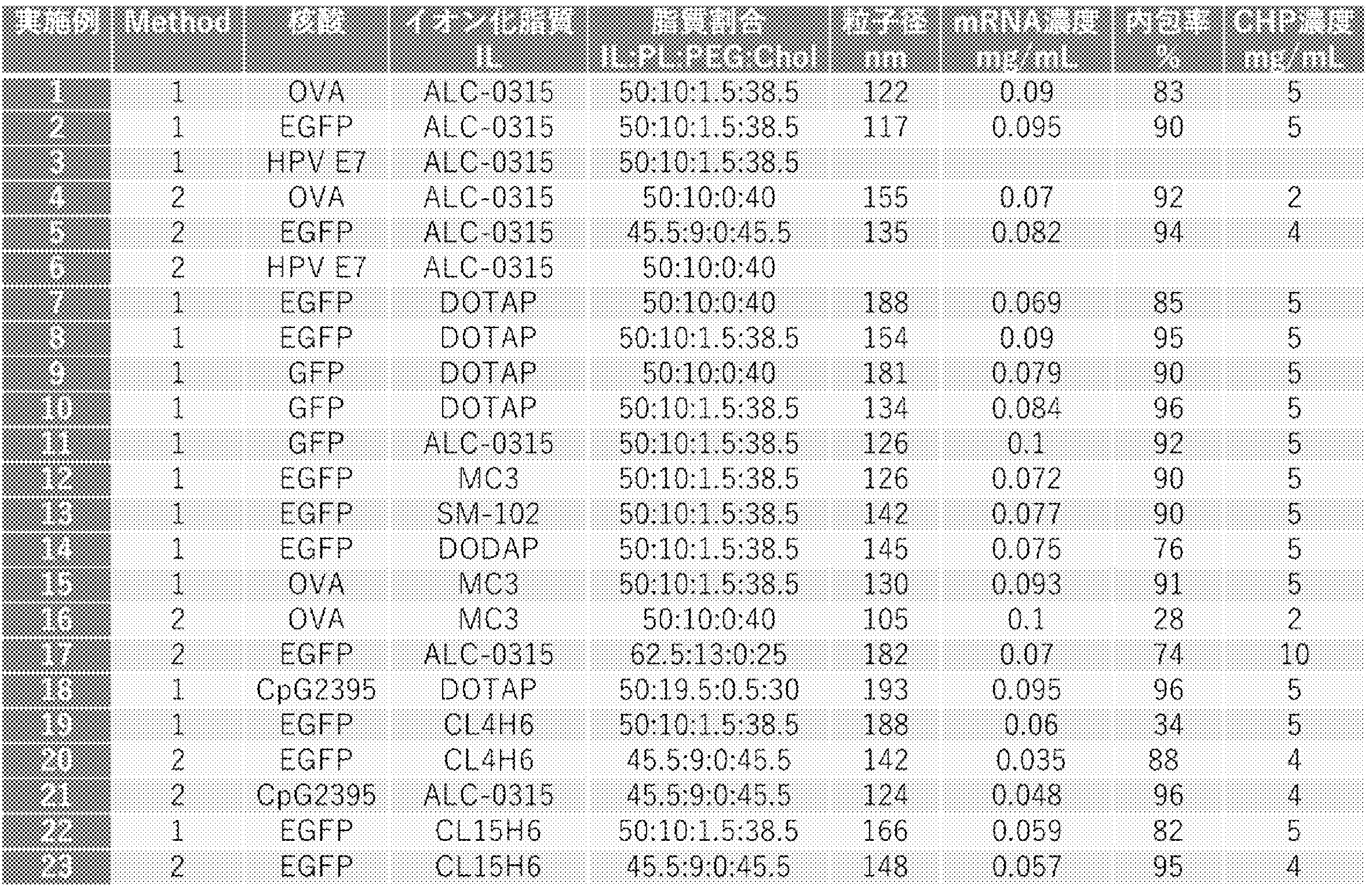
- Examples 7-23 Preparation of CHP:LNP 7 CHP:LNP was prepared using the methods (Method 1, Method 2), nucleic acid, ionized lipid, and lipid ratio shown in Table 1 below. The preparation compositions and physical properties of the CHP:LNP prepared in Examples 1 to 23 are shown in the table below.
- Example 58 Preparation of CHP:LNP 8 (mRNA: mCherry mRNA)
- a pullulan nanogel solution CHP concentration: 2 mg/mL, solvent PBS) was prepared by the method shown in Preparation Example 1 (Solution C).
- the mixed solution was solvent-substituted with PBS using a dialysis membrane (MWCO; 10K).
- the collected solution was concentrated 7-fold using an Amicon tube (MWCO; 100K) and passed through a 0.45 ⁇ m filter to obtain a CHP:LNP (mCherry) solution (weight average particle size: 131 nm, mRNA concentration: 135 ⁇ g/mL) (Method 3).
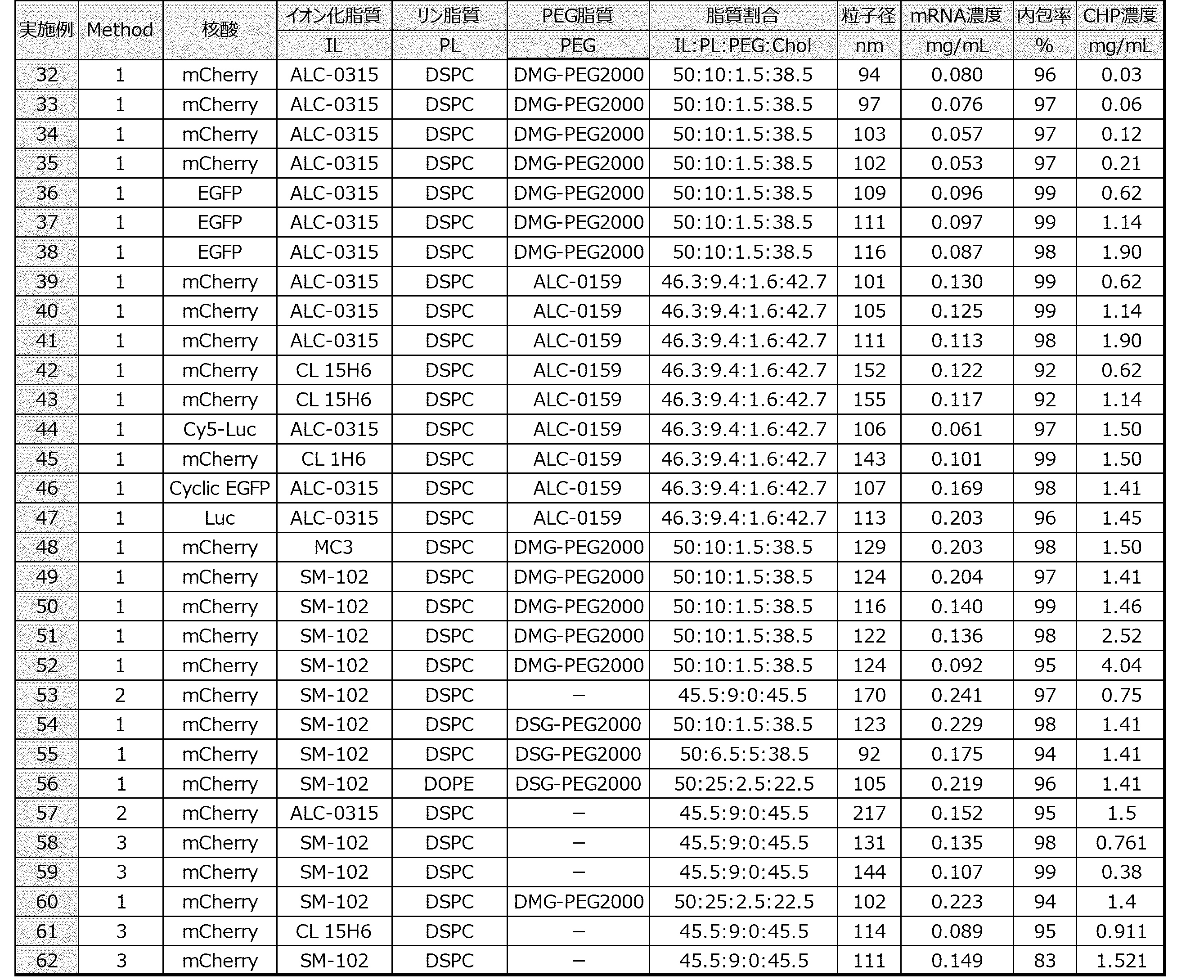
- Examples 24-57 and 59-62 Preparation of CHP:LNP 9 CHP:LNP was prepared using the preparation methods (Method 1, Method 2, Method 3), nucleic acid, ionized lipid, phospholipid, PEG-modified lipid, lipid ratio, and CHP concentration shown in Tables 2 and 3.
- the preparation compositions and physical properties of CHP:LNP prepared in Examples 24 to 62 are shown in the following table together with those of Examples 1 to 23.
- Test Example 1 Antigenicity evaluation test by immunization of mice CHP:LNP(OVA) (Example 1, Example 4) or LNP(OVA) (Reference Example 1) were subcutaneously administered at 10 ⁇ g of mRNA to C57BL/6 mice (Japan SLC). In addition, the same doses were intramuscularly administered to other mice for comparison. After 3 weeks, the same doses and administration methods were administered again, and after another week, blood samples were taken, and spleen cells and lymph nodes were collected.
- Spleen cells were promptly harvested and stimulated with OVA CD4 epitope peptide (ROCOLAND, Ovalbumin 323-339-OH) and OVA CD8 epitope peptide (ROCOLAND, OVA 257-264).
- Secreted IFN- ⁇ was measured using ELISA, and intracellular IFN- ⁇ , IL-2, and TNF ⁇ were measured using intracellular cytokine staining.
- expression analysis of multiple cell surface markers (CD3, CD4, CD8, CD127, CD62L, CD44, KLRG1, Tim-3, Lag-3, PD-1) will be performed on cells derived from the regional lymph nodes and collected spleen cells to analyze the status of T cells.
- antigen-presenting cells are identified by co-staining with cell surface markers such as CD11b, CD11c, F4/80, B220, and CD8a.
- cell surface markers such as CD11b, CD11c, F4/80, B220, and CD8a.
- SIGN-R1 an antibody against SIGN-R1
- OVA-specific antibodies in serum will be measured using ELISA.
- Test Example 2 Comparative toxicity test of CHP:LNP(OVA) and LNP(OVA) (1) Cytokine release syndrome CHP:LNP(OVA) (Example 1, Example 4) or LNP(OVA) (Reference Example 1) was subcutaneously administered at 10 ⁇ g as mRNA to C57BL/6 mice. Blood was collected over time, and the blood concentrations of IL-6, IL-1 ⁇ , etc. were measured by ELISA or multiplex bead-based assay panel (BioLegend).
- Example 1 Body temperature fluctuation CHP:LNP(OVA) (Example 1, Example 4) or LNP(OVA) (Reference Example 1) was subcutaneously administered at 10 ⁇ g as mRNA amount to C57BL/6 mice. Rectal body temperature was then measured over time.
- Test Example 3 Vaccine evaluation test by immunization of mice C57BL/6 mice are immunized subcutaneously with CHP:LNP (HPV E7) (Example 6) or LNP (HPV E7) (Reference Example 3) at 10 ⁇ g of mRNA. Two or three weeks later, a second immunization is performed with the same dose, and on the same day, 1 x 10 5 cells of a mouse lung cancer cell line (TC-1 cells) stably expressing HPV E7 protein are subcutaneously transplanted. The size of the tumor is then measured over time.
- CHP:LNP HPV E7
- LNP HPV E7
- Test Example 4 Immunogenicity test CHP:LNP(OVA) (Example 1, Example 4) or LNP(OVA) (Reference Example 1) is subcutaneously administered at 10 ⁇ g as mRNA to C57BL/6 mice. The same dose is then subcutaneously administered multiple times (2 to 5 times) at 2- or 3-week intervals. The amount of anti-PEG antibody and anti-CHP antibody in the blood is then measured by ELISA.
- Test Example 5 Functional evaluation test using human peripheral blood lymphocyte-derived macrophages CD14 positive monocytes were isolated from human peripheral blood and seeded in 500 ⁇ L of basal medium (RPMI, 10% fetal bovine serum, 50 ng/mL M-CSF) at 2 x 10⁵ cells/well on a 24-well tissue culture plate and cultured for 3 days in an incubator at 37°C and 5% CO2 . After that, the medium was replaced with 500 ⁇ L of basal medium and cultured for another 3 days.
- basal medium RPMI, 10% fetal bovine serum, 50 ng/mL M-CSF
- the medium was replaced with 500 ⁇ L of basal medium, while for differentiation induction of M2-like macrophages, the medium was replaced with 500 ⁇ L of differentiation induction medium containing 50 ng/mL IL-4, 50 ng/mL IL-6, 50 ng/mL IL-10, and 50 ng/mL IL-13, and cultured for two days.
- CHP:LNP (EGFP) (Example 2, Example 5) or LNP (EGFP) (Reference Example 2) containing 0.5 ⁇ g of mRNA was added to the basal medium, and after 2 hours of culture at 4 ° C., the medium was replaced with 500 ⁇ L and incubated overnight at 37 ° C. and 5% CO 2.
- Test Example 6 Experiment to confirm expression in antigen-presenting cells by subcutaneous administration to mice CHP:LNP(EGFP) (Example 5) or LNP(EGFP) (Reference Example 2) were subcutaneously administered at 10 ⁇ g of mRNA to C57BL/6 mice. After 24 hours, the inguinal lymph nodes were excised, and the cells were collected and analyzed by a flow cytometer.
- Test Example 7 Measurement of particle size before and after freezing and thawing CHP:LNP (Examples 19, 20, 23, 26-54, 57-62) was frozen once at -30°C and then thawed, and the particle size before and after freezing and thawing was measured.
- LNP with the same composition but not containing CHP (Reference Examples 19, 26, 32, 36, 39, 42, 44-50, 54, 60) was also frozen once at -30°C and then thawed, and the particle size before and after freezing and thawing was measured.
- Test Example 8 Functional evaluation test using human peripheral blood lymphocyte-derived macrophages-2 M0 macrophages and M2-like macrophages were prepared in the same manner as in Test Example 5, and CHP:LNP (mCherry) (Examples 51, 58, and 61) or LNP (mCherry) (Reference Example 50) containing 0.5 ⁇ g of mRNA was added to the basal medium and incubated overnight at 37 ° C. and 5% CO 2. After washing with PBS, 200 ⁇ L of Cell Dissociation solution (Biological Industries) was added, and the mixture was incubated at 37 ° C.
- PBS solvent
- Test Example 10 Experiment to confirm expression in nearby lymph nodes after subcutaneous administration to mice - 1 C57BL/6 mice were intradermally administered 5 ⁇ g of CHP:LNP(mCherry) (Example 40) or LNP(mCherry) (Reference Example 39) as mRNA around the right dorsal buttock. 17 hours after administration, the fluorescence intensity of mCherry protein was detected using an in vivo imaging device (Vilber Bio Imaging) to measure expression at the administration site and nearby lymph nodes (inguinal lymph nodes). In addition, the fluorescent protein was detected at the same wavelength in the excised nearby lymph nodes (inguinal lymph nodes) using the same device.
- an in vivo imaging device Vilber Bio Imaging
- Test Example 11 Evaluation of skin inflammation at the administration site - 2 After shaving the hair of C57BL/6 mice, 9.8 ⁇ g of CHP:LNP(EGFP) (Example 2) or LNP(EGFP) (Reference Example 2) was administered intradermally around the back and buttocks. Three and five days after administration, skin tissues were collected and fixed with 4% paraformaldehyde for 48 hours, and then replaced with a 70% ethanol solution. Then, HE staining and immunostaining with anti-IBA1 antibody were performed, and pathological observation was performed.
Landscapes
- Health & Medical Sciences (AREA)
- Life Sciences & Earth Sciences (AREA)
- Chemical & Material Sciences (AREA)
- General Health & Medical Sciences (AREA)
- Animal Behavior & Ethology (AREA)
- Public Health (AREA)
- Pharmacology & Pharmacy (AREA)
- Medicinal Chemistry (AREA)
- Veterinary Medicine (AREA)
- Engineering & Computer Science (AREA)
- Bioinformatics & Cheminformatics (AREA)
- Epidemiology (AREA)
- Organic Chemistry (AREA)
- Molecular Biology (AREA)
- Immunology (AREA)
- Biomedical Technology (AREA)
- Nuclear Medicine, Radiotherapy & Molecular Imaging (AREA)
- Chemical Kinetics & Catalysis (AREA)
- General Chemical & Material Sciences (AREA)
- Biochemistry (AREA)
- Genetics & Genomics (AREA)
- Physics & Mathematics (AREA)
- Optics & Photonics (AREA)
- Nanotechnology (AREA)
- Biotechnology (AREA)
- General Engineering & Computer Science (AREA)
- Wood Science & Technology (AREA)
- Zoology (AREA)
- Oncology (AREA)
- Microbiology (AREA)
- Neurology (AREA)
- Neurosurgery (AREA)
- Communicable Diseases (AREA)
- Biophysics (AREA)
- Plant Pathology (AREA)
- Mycology (AREA)
- Dermatology (AREA)
- Transplantation (AREA)
- Pharmaceuticals Containing Other Organic And Inorganic Compounds (AREA)
- Medicinal Preparation (AREA)
Abstract
Description
前記リン脂質の含有量が、前記脂質粒子構成脂質100モル%に対して4~25モル%であり、且つ
前記ステロールの含有量が、前記脂質粒子構成脂質100モル%に対して15~55モル%である、
項1に記載の脂質粒子。
であらわされるアミノ脂質、一般式(2):

で表されるアミノ脂質、及び一般式(3)

で表されるアミノ脂質からなる群より選択される少なくとも1種である、項1~11のいずれかに記載の脂質粒子。
項18D.項1~16のいずれかに記載の脂質粒子の、がん、免疫疾患、中枢性疾患等の治療薬、或いは感染症ワクチン又はがんワクチンとしての使用。
本発明は、その一態様において、脂質粒子であって、脂質粒子構成脂質としてイオン化脂質、リン脂質、及びステロールを含有し、且つ疎水性基を含む修飾多糖類を含有する、脂質粒子(本明細書において、「本発明の脂質粒子」と示すこともある。)、に関する。以下にこれについて説明する。
3]-ジオキソラン(DLin-K-C4-DMA)、2,2-ジリノレイル-5-ジメチルアミノメチル-[1,3]-ジオキサン(DLin-K6-DMA)、2,2-ジリノレイル-4-N-メチルペピアジノ(methylpepiazino)-[1,3]-ジオキソラン(DLin-K-MPZ)、2,2-ジリノレイル-4-ジメチルアミノメチル-[1,3]-ジオキソラン(DLin-K-DMA)、1,2-ジリノレイルカルバモイルオキシ-3-ジメチルアミノプロパン (DLin-C-DAP)、1,2-ジリノレイルオキシ(dilinoleyoxy)-3-(ジメチルアミノ)アセトキシプロパン(DLin-DAC)、1,2-ジリノレイルオキシ-3-モルホリノプロパン(DLin-MA)、1,2-ジリノレオイル-3-ジメチルアミノプロパン(DLinDAP)、1,2-ジリノレイルチオ-3-ジメチルアミノプロパン(DLin-S- DMA)、1-リノレオイル-2-リノレイルオキシ-3-ジメチルアミノプロパン(DLin-2-DMAP)、1,2-ジリノレイルオキシ-3-トリメチルアミノプロパンクロリド塩(DLin-TMA.Cl)、1,2-ジリノレオイル-3-トリメチルアミノプロパンクロリド塩(DLin-TAP.Cl)、1,2-ジリノレイルオキシ-3-(N-メチルピペラジノ)プロパン(DLin-MPZ)、3-(N,N-ジリノレイルアミノ)-1,2-プロパンジオール(DLinAP)、3-(N,N-ジオレイルアミノ)-1,2-プロパンジオ(propanedio)(DOAP)、1,2-ジリノレイルオキソ-3-(2-N,N-ジメチルアミノ)エトキシプロパン(DLin-EG-DMA)、N,N-ジオレイル-N,N-ジメチルアンモニウムクロリド(DODAC)、1,2-ジオレイルオキシ-N,N-ジメチルアミノプロパン(DODMA)、1,2-ジステアリルオキシ-N,N-ジメチルアミノプロパン(DSDMA)、N-(1-(2,3-ジオレイルオキシ)プロピル)-N,N,N-トリメチルアンモニウムクロリド(DOTMA)、N,N-ジステアリル-N,N-ジメチルアンモニウムブロミド(DDAB)、N-(1-(2,3-ジオレオイルオキシ)プロピル)-N,N,N-トリメチルアンモニウムクロリド(DOTAP)、3-(N-(N',N'-ジメチルアミノエタン)-カルバモイル)コレステロール(DC-Chol)、N-(1,2-ジミリスチルオキシプロパ-3-イル)-N,N-ジメチル-N-ヒドロキシエチルアンモニウムブロミド(DMRIE)、2,3-ジオレイルオキシ-N-[2(スペルミン-カルボキサミド)エチル]-N,N-ジメチル-1-プロパンアミニウムトリフルオロアセテート(DOSPA)、ジオクタデシルアミドグリシルスペルミン(DOGS)、3-ジメチルアミノ-2-(コレスタ-5-エン-3-β-オキシブタン-4-オキシ)-1-(cis,cis-9,12- オクタデカジエノキシ)プロパン (CLinDMA)、2-[5'-(コレスタ-5-エン-3-β-オキシ)-3'-オキサペントキシ)-3- ジメチル-1 -(cis,cis-9',1-2'-オクタデカジエノキシ)プロパン(CpLinDMA)、N,N-ジメチル-3,4-ジオレイルオキシベンジルアミン(DMOBA)、1,2-N,N'-ジオレイルカルバミル-3-ジメチルアミノプロパン(DOcarbDAP)、1,2-N,N'-ジリノレイルカルバミル-3-ジメチルアミノプロパン(DLincarbDAP)、1,1'-[7-[4-(ジプロピルアミノ)ブチル]-7-ヒドロキシ-1,13-トリデカネジイル] ジ-(9Z)-9-オクタデセノエート (CL 4H6)、5-ヒドロキシ-11-[[(9Z)-1-オキソ-9-オクタデセン-1-イル]オキシ]-5-[6-[[(9Z)-1-オキソ-9-オクタデセン-1-イル]オキシ]ヘキシル] ウンデシル 1-メチル-4-ピぺリジンカルボキシレート (CL 15H6)、1,1′-[7-[4-(ジメチルアミノ)ブチル]-7-ヒドロキシ-1,13-トリデカンジイル] ジ-(9Z)-9-オクタデカネート(CL 1H6)等が挙げられる。
で表されるアミノ脂質、一般式(2):

で表されるアミノ脂質、及び一般式(3)

で表されるアミノ脂質からなる群より選択される少なくとも1種である。当該アミノ脂質を用いることにより、上記集積性をより顕著に発揮させることが可能である。
クラスA:D35-CpG、ODN1585、ODN2216、ODN2336等
クラスB:K3-CpG、ODNBW006、ODN D-SL01、ODN1668、OND1826、OND2006(CpG7909、PF-3512676)、ODN2007、ODN684等
クラスC:ODN D-SL03、ODN 2395、ODN M362等
が挙げられる。
本発明の脂質粒子は、薬剤を内包することができ、またDC-SIGN(CD209)発現細胞(例えばM2様マクロファージや抗原提示細胞)へ選択的集積性を有する。このため、本発明の脂質粒子は、例えば医薬、試薬等(本明細書において、「本発明の薬剤」と示すこともある。)に、より具体的には、例えば、がん、免疫疾患、糖尿病起因性疾患、中枢性等の治療薬や、感染症ワクチン又はがんワクチンに利用することが可能である。感染症ワクチンとしては、感染症に対して使用されるワクチンであれば特に制限されず、予防用のワクチンだけでなく、治療用のワクチンも含まれる。
既報(Macromolecules 1993, 23, 3062-3068)の記載に従って、重量平均分子量100,000のプルランに100単糖あたりコレステロールが1.2個導入されたコレステロール修飾プルラン(CHP)を作製した。作製されたCHPを用いて、既知の方法で、プルランナノゲル溶液を調整した。
OVA mRNA水溶液(mRNA濃度:70μg/mL、溶媒:25mM NaAc, 154mM NaCl, pH=4.5)を調製した(A液)。ALC-0315([(4-Hydroxybutyl)azanediyl]di(hexane-6,1-diyl) bis(2-hexyldecanoate)):DSPC(Distearoylphosphatidylcholine):DMG-PEG200(1,2-Dimyristoyl-sn-glycero-3-methoxypolyethylene glycol):Cholesterol=50:10:1.5:38.5の割合(モル比)で混合した脂質のエタノール溶液(脂質濃度:8 mM)を調製した(B液)。調製したそれぞれの溶液を、iLiNPマイクロ流路チップ(ライラックファーマ)、或いは、NanoAssemblr(Precision NanoSystems)を用いて、流速500μL/min(iLiNPマイクロ流路チップ)あるいは、流速12mL/min (NanoAssemblr)(Flow Rate Ratio;A:B=3)で混合した。混合した溶液を、透析膜(MWCO;3.5K)を用いて、PBSへ溶媒置換した。回収した溶液を、アミコンチューブ(MWCO; 30K)を用いて5倍濃縮し、0.45μmのフィルターに通し、LNP(OVA)溶液を得た(質量平均粒子径:81nm、ELSZ-2000ZS大塚電子株式会社)。Ribo Green Assay (Invitrogen) を行い、mRNA濃度として、185μg/mLを算出した。
OVA mRNAに代えて蛍光タンパク質であるEGFPのmRNAを用いる以外は参考例1と同様にしてLNP(EGFP)溶液を得た(質量平均粒子径:75nm、mRNA濃度:186μg/mL)。
OVA mRNAに代えてヒトパピローマウイルスのE7タンパク質のmRNAを用いる以外は参考例1と同様にしてLNP(HPV E7)溶液を得る。
LNP(OVA)溶液(参考例1)1mLに対し、同量の10mg/mL CHP水溶液を加え、30分間攪拌した。0.45μmのフィルターに通し、CHP:LNP(OVA)溶液を得た(質量平均粒子径:122nm、mRNA濃度:93μg/mL)。(Method 1) 。
LNP(OVA)溶液(参考例1)に代えてLNP(EGFP)溶液(参考例2)を用いる以外は実施例1と同様にしてCHP:LNP(EGFP)溶液を得た(質量平均粒子径:117nm、mRNA濃度:95μg/mL)。(Method 1) 。
LNP(OVA)溶液(参考例1)に代えてLNP(HPV E7)溶液(参考例3)を用いる以外は実施例1と同様にしてCHP:LNP(HPV E7)溶液を得る。(Method 1) 。
OVA mRNA水溶液(mRNA濃度:70μg/mL、溶媒:1mg/mL CHP in 25mM NaAc, 154mM NaCl, pH=4.0)を調製した(A液)。MC3:DSPC:Cholesterol=50:10:40の割合(モル比)で混合した脂質のエタノール溶液(脂質濃度:8mM)を調製した(B液)。調製したそれぞれの溶液を、iLiNPマイクロ流路チップ、或いは、NanoAssemblrを用いて、流速500μL/min(iLiNPマイクロ流路チップ)、或いは、流速12mL/min(NanoAssemblr)(Flow Rate Ratio;A:B=3)で混合した。混合した溶液を、透析膜(MWCO;3.5K)を用いて、PBSへ溶媒置換した。回収した溶液を、アミコンチューブ(MWCO; 30K)を用いて5倍濃縮し、0.45μmのフィルターに通し、CHP :LNP(OVA)溶液を得た(質量平均粒子径:155nm、mRNA濃度:70μg/mL)。(Method 2) 。
EGFP mRNA水溶液(mRNA濃度:70μg/mL、溶媒:2mg/mL CHP in 25mM NaAc, 154mM NaCl, pH=4.0)を調製した(A液)。ALC-0315:DSPC:Cholesterol=45.5:9:45.5の割合(モル比)で混合した脂質のエタノール溶液(脂質濃度:8mM)を調製した(B液)。調製したそれぞれの溶液を、iLiNPマイクロ流路チップ、或いは、NanoAssemblrを用いて、流速500μL/min(iLiNPマイクロ流路チップ)、或いは、流速12mL/min(NanoAssemblr)(Flow Rate Ratio;A:B=3)で混合した。混合した溶液を、透析膜(MWCO;3.5K)を用いて、PBSへ溶媒置換した。回収した溶液を、アミコンチューブ(MWCO; 30K)を用いて5倍濃縮し、0.45μmのフィルターに通し、CHP:LNP(EGFP)溶液を得た(重量平均粒子径:135nm、mRNA濃度:82μg/mL)。(Method 2) 。
OVA mRNAに代えてHPV E7 mRNAを用いる以外は実施例4と同様にしてCHP:LNP(HPV E7)溶液を得る。(Method 2) 。
以下の表1に示す方法(Method1、Method2)、核酸、イオン化脂質、脂質割合を採用して、CHP: LNPを作製した。実施例1~23で作製したCHP:LNPの作製組成と物性値を以下の表に示す。
mCherry mRNA水溶液(mRNA濃度:70μg/mL、溶媒 25mM NaAc, 154mM NaCl, pH=4.0)を調製した(A液)。SM-102:DSPC:Cholesterol=45.5:9:45.5の割合(モル比)で混合した脂質のエタノール溶液(脂質濃度:8mM)を調製した(B液)。さらに、調整例1で示した方法で、プルランナノゲル溶液(CHP濃度:2mg/mL、溶媒 PBS)を調整した(C液)。調製したそれぞれの溶液を、NanoAssemblr(Precision NanoSystems)を用いて、流速12mL/min(Flow Rate Ratio;A:B=1:3:2.46)で混合した。混合した溶液を、透析膜(MWCO;10K)を用いて、PBSへ溶媒置換した。回収した溶液を、アミコンチューブ(MWCO; 100K)を用いて7倍濃縮し、0.45μmのフィルターに通し、CHP:LNP(mCherry)溶液を得た(重量平均粒子径:131nm、mRNA濃度:135μg/mL)。(Method 3)。
以下の表2及び表3に示す作製方法(Method1、Method2、Method3)、核酸、イオン化脂質、リン脂質、PEG修飾脂質、脂質割合、CHP濃度を採用して、CHP: LNPをそれぞれ作製した。実施例24~62で作製したCHP:LNPの作製組成と物性値を、実施例1~23と併せて以下の表に示す。

C57BL/6マウス(日本エスエルシー)に、CHP:LNP(OVA)(実施例1、実施例4)、またはLNP(OVA)(参考例1)を、mRNA量として10μgずつ皮下投与を行う。また、比較対象として、別のマウスに、それぞれ同用量にて筋肉内投与を行う。3週後に再び同じ用量と投与方法で投与を行い、さらに1 週間後に採血と脾臓細胞、所属リンパ節を採取する。
また、所属リンパ節由来細胞と回収した脾臓細胞について、複数細胞表面マーカー(CD3、CD4、CD8、CD127、CD62L、CD44、KLRG1、Tim-3、Lag-3、 PD-1)で発現解析を行い、T細胞の状態を解析する。
(1)サイトカイン放出症候群
C57BL/6マウスに、CHP:LNP(OVA)(実施例1、実施例4)、またはLNP(OVA)(参考例1)を、mRNA量として10μgずつ皮下投与を行う。経時的に採血を行い、IL-6やIL-1β等の血中濃度をELISA法またはmultiplex bead-based assay panel(BioLegend)で測定する。
C57BL/6マウスに、CHP:LNP(OVA)(実施例1、実施例4)、またはLNP(OVA)(参考例1)を、mRNA量として10μgずつ皮下投与を行う。24時間後に投与部位の皮膚を摘出する。皮膚の紅潮を観察した後、浸潤しているリンパ球数を測定する。
C57BL/6マウスに、CHP:LNP(OVA)(実施例1、実施例4)、またはLNP(OVA)(参考例1)を、mRNA量として10μgずつ皮下投与を行う。その後、経時的に体重変化を測定する。
C57BL/6マウスに、CHP:LNP(OVA)(実施例1、実施例4)、またはLNP(OVA)(参考例1)を、mRNA量として10μgずつ皮下投与を行う。その後、経時的に直腸体温を測定する。
C57BL/6マウスに、CHP:LNP(HPV E7)(実施例6)、またはLNP(HPV E7)(参考例3)を、mRNA量として10μgずつ皮下投与にて免疫する。2または3週間後、同用量にて2回目の免疫を行い、その同日に1x10⁵個のHPV E7タンパク安定発現マウス肺癌細胞株(TC-1細胞)を皮下に移植する。その後、腫瘍の大きさを経時的に測定する。
C57BL/6マウスに、CHP:LNP(OVA)(実施例1、実施例4)、またはLNP(OVA)(参考例1)を、mRNA量として10μgずつ皮下投与する。その後、2または3週間隔で同用量にて複数回(2回~5回)の皮下投与を行う。その後、血中の抗PEG抗体量と抗CHP抗体量をELISA法で測定する。
ヒトの末梢血からCD14陽性単球を単離し、24穴Tissue culture plateに、2 x 10⁵ 個/ウェルで500 μLの基礎培地(RPMI、10%ウシ胎児血清、50 ng/mL M-CSF)で播種し、37℃、5%CO2のインキュベーターで3日間培養した。その後、500μLの基礎培地で交換してさらに3日間培養した。M0マクロファージの分化誘導は、500μLの基礎培地で交換し、一方、M2様マクロファージへの分化誘導は、基礎培地に50 ng/mL IL-4、50 ng/mL IL-6、50 ng/mL IL-10、50 ng/mL IL-13を添加した、500 μLの分化誘導用培地で交換し、二日間培養した。mRNA量として0.5μgずつ含有したCHP:LNP(EGFP)(実施例2、実施例5)、またはLNP(EGFP)(参考例2)を、基礎培地に添加し、4℃条件のみ、2時間培養後、500 μLの培地に置換し、一晩37℃、5%CO2でインキュベートした。その後、PBSで洗浄後、200 μLのCell Dissociation 溶液(Biological Industries)を添加して、20分間、37℃でインキュベートし、200 μLのWash溶液(Miltenyi)を加え、ピペッティングにて細胞を剥がし、500gで5分間遠心して細胞を回収した。その後、PB450標識抗CD206抗体(BD Biosciences)と、APC標識抗DC-SIGN抗体(R&D Systems)で染色し、フローサイトメーターで解析した。
CHP:LNP(EGFP)(実施例2)またはLNP(EGFP)添加後、4℃での処理を経ずに37℃一晩インキュベートした場合の結果を図1に示す。また、CHP:LNP(EGFP)(実施例2)またはLNP(EGFP)添加後、4℃で2時間処理後、培地を交換し、37℃一晩インキュベートした場合の結果を図2に示す。また別実験で、CHP:LNP(EGFP)(実施例2)、PEGを含まないCHP:LNP(EGFP)(実施例5)またはLNP(EGFP)添加後、37℃一晩インキュベートした場合の結果を図3に示す。
C57BL/6マウスに、CHP:LNP(EGFP)(実施例5)、またはLNP(EGFP)(参考例2)を、mRNA量として10μgずつ皮下投与を行う。24時間後に鼠経リンパ節を摘出し、細胞を回収して、フローサイトメーターで解析を行う。
CHP:LNP(実施例19, 20, 23, 26~54, 57~62)を-30℃で一度凍結し、その後融解させ、凍結融解前後での粒子径を測定した。また、その比較対象としてCHPを含まない同じ組成のLNP(参考例19, 26, 32, 36, 39, 42, 44~50, 54,60)についても同様に、-30℃で一度凍結し、その後融解させ、凍結融解前後の粒子径を測定した。
得られた結果を以下の表4に示す。比較対象のCHPを含まないLNPは、凍結融解を一度行うだけで粒子径が増大するが、予想外にも、CHP:LNPは凍結融解前後で粒子径の増大が抑制されていた。以上から、CHPはLNPの安定性を向上する効果があるといえる。

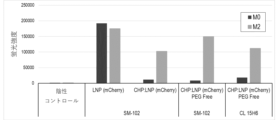
試験例5と同様の方法で、M0マクロファージとM2様マクロファージを準備し、mRNA量として0.5μgずつ含有したCHP:LNP(mCherry)(実施例51、58、61)、または、LNP(mCherry)(参考例50)を基礎培地に添加し、一晩37℃、5%CO2でインキュベートした。その後、PBSで洗浄後、200 μLのCell Dissociation 溶液(Biological Industries)を添加して、20分間、37℃でインキュベートし、200 μLのWash溶液(Miltenyi)を加え、ピペッティングにて細胞を剥がし、500gで5分間遠心して細胞を回収した。その後、PB450標識抗CD206抗体(BD Biosciences)と、APC標識抗DC-SIGN抗体(R&D Systems)で染色し、フローサイトメーターで解析した。
結果を図4に示す。CHPを付与したLNP(CHP:LNP)でのみ、DC-SIGN陰性細胞であるM0マクロファージに比べ、DC-SIGN陽性細胞であるM2様マクロファージで高発現していた。以上から、CHPを付与したLNPは、イオン化脂質に依らずDC-SIGN陽性細胞に選択的にmRNAの送達が可能であり、搭載したmRNAからタンパク質を発現できる性能があることが判った。
C57BL/6マウスに、CHP:LNP(mCherry)(実施例40)、PEG修飾脂質を含まないCHP:LNP(mCherry)(実施例57)、または、LNP(mCherry)(参考例39)を、mRNA量として10μgずつ皮下投与をした。試験群は各n=5とした。さらに3週間後に同用量にて再度皮下投与を行った。その1週間後に、血中の抗PEG抗体の量をELISA法(Life Diagnostics)で測定した。陰性コントロールとしては溶媒のみ(PBS)を投与した。
得られた結果を図5に示す。陰性コントロール、CHPを付与したLNP(CHP:LNP(mCherry))、CHPを付与したPEG修飾脂質を含まないLNP(CHP:LNP(mCherry)PEG Free)投与群と比較して、LNP(mCherry)投与群は、有意に抗PEG抗体(IgM)が検出された(*;p <0.05, unpaired t検定)。以上の結果から、CHPを付与したLNPは、PEG修飾脂質を含んでいても、抗PEG抗体に起因する副反応、例えば、アナフィラキシーや、繰り返し投与によって薬効が減弱するAccelerated blood clearance(ABC)現象を回避できる可能性を示唆している。
C57BL/6マウスに、CHP:LNP(mCherry)(実施例40)、またはLNP(mCherry)(参考例39)を、mRNA量として5μgずつを、右側背臀部周囲の皮内に投与した。投与後17時間目にin vivo イメージング機器(Vilber Bio Imaging)を用いて、mCherryタンパク質の蛍光強度を検出し、投与局所および近傍リンパ節(鼠経リンパ節)での発現を測定した。また、摘出した近傍リンパ節(鼠経リンパ節)を、同機器を用いて、同波長で蛍光タンパクを検出した。
投与局所の代表例の結果を図6に示す。また、摘出した近傍リンパ節(鼠経リンパ節)の代表例の結果を図7に示す。投与局所では、LNP(mCherry)は広く発現が確認できたが、CHP:LNP(mCherry)の発現は低く、一方、近傍リンパ節では、CHP:LNP(mCherry)のほうがLNP(mCherry)に比べて発現が高かった。また、摘出した近傍リンパ節では、LNP(mCherry)に比して、CHP:LNP(mCherry)で高い発現が確認できた。以上の結果は、皮内投与した場合、CHPを付与したLNPは、LNPに比べて近傍のリンパ節への送達能が優れていることを示している。
C57BL/6マウスを剃毛後、CHP:LNP(EGFP)(実施例2)、またはLNP(EGFP)(参考例2)を、mRNA量として9.8μgずつを、背臀部周囲の皮内に投与した。投与後3、5日目後に、それぞれ皮膚組織を採取し、4%パラホルムアルデヒドで48時間固定後、70%エタノール溶液に置換した。その後、HE染色と抗IBA1抗体による免疫染色を行い、病理観察を行った。
得られた結果を表5に示す。LNP(EGFP)の投与群では、炎症性細胞の浸潤、活性化マクロファージの指標であるIBA1陽性細胞の増加が、CHP:LNP(EGFP)投与群に比べて高かった。以上の結果は、脂質ナノ粒子の局所投与によって誘発される炎症が、CHPを付与したLNP(CHP:LNP)ではLNPに比べて抑制されることを示している。

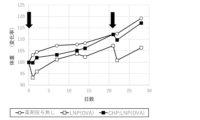
C57BL/6マウスに、CHP:LNP(OVA)(実施例1)、または、LNP(OVA)(参考例1)を、mRNA量として10μgずつを皮下投与した(0日目)。さらに、初回投与から3週間後(21日目)に、同用量にて再度皮下投与した。体重測定は、各投与日とその直後2日間は連続して測定し、さらに初回投与から28日目まで、週一回の頻度で行った。試験群は各n=3とした。比較対象群は薬液を何も投与を行わなかった。
得られた結果を図8に示す。各群の投与初日(0日目)の体重を100%と換算し、各群の平均値を用いてグラフ化した。なお、図中の矢印はLNPを投与した日を示す。その結果、LNP投与群では、各投与の翌日に体重減少が認められたが、一方、CHPを付与したLNP投与群では、その変化は軽微であり、薬剤未投与群と近い体重推移を示した。以上から、LNPにCHPを付与することによって、LNPに起因する体重減少という副作用を軽減できることが示された。
Claims (19)
- 脂質粒子であって、脂質粒子構成脂質としてイオン化脂質、リン脂質、及びステロールを含有し、且つ疎水性基を含む修飾多糖類を含有する、脂質粒子。
- 前記イオン化脂質の含有量が、前記脂質粒子構成脂質100モル%に対して35~70モル%であり、
前記リン脂質の含有量が、前記脂質粒子構成脂質100モル%に対して4~25モル%であり、且つ
前記ステロールの含有量が、前記脂質粒子構成脂質100モル%に対して15~55モル%である、
請求項1に記載の脂質粒子。 - 前記修飾多糖類の構成多糖類がプルランを含む、請求項1に記載の脂質粒子。
- 前記疎水性基がステロール骨格を有する疎水性基を含む、請求項1に記載の脂質粒子。
- 前記修飾多糖類の重量平均分子量が5000~2,000,000である、請求項1に記載の脂質粒子。
- 薬剤を含有する、請求項1に記載の脂質粒子。
- 前記薬剤が核酸である、請求項6に記載の脂質粒子。
- 前記核酸が、mRNA、免疫刺激性二本鎖RNA、 siRNA、miRNA、リボザイム、CpGオリゴDNA、アンチセンスオリゴDNA、核酸アプタマー、デゴイ、遺伝子発現用二本鎖DNA、及びジヌクレオチドから選択される少なくとも1つである、請求項7に記載の脂質粒子。
- 前記核酸がmRNAまたはCpGオリゴDNAである、請求項7に記載の脂質粒子。
- 前記核酸がmRNAである、請求項7に記載の脂質粒子。
- 前記核酸がCpGオリゴDNAである、請求項7に記載の脂質粒子。
- 前記イオン化脂質が一般式(1):

であらわされるアミノ脂質、一般式(2):
で表されるアミノ脂質、及び一般式(3)

で表されるアミノ脂質からなる群より選択される少なくとも1種である、請求項1に記載の脂質粒子。 - さらに、粒子の凝集を阻害する複合化脂質を含む請求項1に記載の粒子。
- 前記複合化脂質の含有量が、前記脂質粒子構成脂質100モル%に対して0~2モル%である、請求項13に記載の脂質粒子。
- 前記複合化脂質がポリエチレングリコール-脂質コンジュゲートである、請求項13に記載の脂質粒子。
- 質量平均粒子径が10~200nmである、請求項1に記載の脂質粒子。
- 請求項1~16のいずれかに記載の脂質粒子を含有する、医薬。
- がん、免疫疾患、中枢性疾患等の治療薬、感染症ワクチン又はがんワクチンである、請求項17に記載の医薬。
- 皮下投与、経静脈投与、筋肉内投与、経鼻投与又は気道内投与に用いるための、請求項17に記載の医薬。
Priority Applications (7)
| Application Number | Priority Date | Filing Date | Title |
|---|---|---|---|
| JP2024517587A JP7599258B1 (ja) | 2023-03-15 | 2024-03-14 | 脂質粒子 |
| CN202480026882.0A CN121013730A (zh) | 2023-03-15 | 2024-03-14 | 脂质颗粒 |
| US19/105,958 US20260000625A1 (en) | 2023-03-15 | 2024-03-14 | Lipid particle |
| KR1020257033497A KR20250155058A (ko) | 2023-03-15 | 2024-03-14 | 지질 입자 |
| EP24770968.6A EP4570269A4 (en) | 2023-03-15 | 2024-03-14 | LIPID PARTICLE |
| AU2024237452A AU2024237452A1 (en) | 2023-03-15 | 2024-03-14 | Lipid particle |
| JP2024205647A JP2025027022A (ja) | 2023-03-15 | 2024-11-26 | 脂質粒子 |
Applications Claiming Priority (2)
| Application Number | Priority Date | Filing Date | Title |
|---|---|---|---|
| JP2023-040536 | 2023-03-15 | ||
| JP2023040536 | 2023-03-15 |
Publications (1)
| Publication Number | Publication Date |
|---|---|
| WO2024190865A1 true WO2024190865A1 (ja) | 2024-09-19 |
Family
ID=92755351
Family Applications (1)
| Application Number | Title | Priority Date | Filing Date |
|---|---|---|---|
| PCT/JP2024/009979 Ceased WO2024190865A1 (ja) | 2023-03-15 | 2024-03-14 | 脂質粒子 |
Country Status (8)
| Country | Link |
|---|---|
| US (1) | US20260000625A1 (ja) |
| EP (1) | EP4570269A4 (ja) |
| JP (2) | JP7599258B1 (ja) |
| KR (1) | KR20250155058A (ja) |
| CN (1) | CN121013730A (ja) |
| AU (1) | AU2024237452A1 (ja) |
| TW (1) | TW202502300A (ja) |
| WO (1) | WO2024190865A1 (ja) |
Citations (10)
| Publication number | Priority date | Publication date | Assignee | Title |
|---|---|---|---|---|
| JPS58201711A (ja) * | 1982-05-19 | 1983-11-24 | Eisai Co Ltd | ユビデカレノン含有リポソ−ム被覆体 |
| WO2000012564A1 (en) | 1998-08-31 | 2000-03-09 | Nof Corporation | High-purity polysaccharide containing hydrophobic groups and process for producing the same |
| JP2005298644A (ja) * | 2004-04-09 | 2005-10-27 | Kazunari Akiyoshi | ナノゲル工学によるハイブリッドゲルの調製とバイオマテリアル応用 |
| JP2010507421A (ja) * | 2006-10-27 | 2010-03-11 | メディゲーネ アクチエンゲゼルシャフト | 粒子の製造のためのパーコレーション乾燥 |
| WO2010129687A1 (en) | 2009-05-05 | 2010-11-11 | Alnylam Pharmaceuticals, Inc | Methods of delivering oligonucleotides to immune cells |
| JP2010540498A (ja) * | 2007-09-28 | 2010-12-24 | ウニヴェルズィテーツシュピタール バーゼル | 癌の治療のための免疫リポソーム |
| US8058069B2 (en) | 2008-04-15 | 2011-11-15 | Protiva Biotherapeutics, Inc. | Lipid formulations for nucleic acid delivery |
| JP2012529464A (ja) * | 2009-06-10 | 2012-11-22 | グラクソスミスクライン バイオロジカルズ ソシエテ アノニム | 新規組成物 |
| WO2018230710A1 (ja) | 2017-06-15 | 2018-12-20 | 国立大学法人北海道大学 | siRNA細胞内送達のための脂質膜構造体 |
| US20220111061A1 (en) | 2020-09-10 | 2022-04-14 | United Immunity, Co., Ltd. | Complex |
-
2024
- 2024-03-14 AU AU2024237452A patent/AU2024237452A1/en active Pending
- 2024-03-14 WO PCT/JP2024/009979 patent/WO2024190865A1/ja not_active Ceased
- 2024-03-14 US US19/105,958 patent/US20260000625A1/en active Pending
- 2024-03-14 EP EP24770968.6A patent/EP4570269A4/en active Pending
- 2024-03-14 CN CN202480026882.0A patent/CN121013730A/zh active Pending
- 2024-03-14 TW TW113109556A patent/TW202502300A/zh unknown
- 2024-03-14 KR KR1020257033497A patent/KR20250155058A/ko active Pending
- 2024-03-14 JP JP2024517587A patent/JP7599258B1/ja active Active
- 2024-11-26 JP JP2024205647A patent/JP2025027022A/ja active Pending
Patent Citations (10)
| Publication number | Priority date | Publication date | Assignee | Title |
|---|---|---|---|---|
| JPS58201711A (ja) * | 1982-05-19 | 1983-11-24 | Eisai Co Ltd | ユビデカレノン含有リポソ−ム被覆体 |
| WO2000012564A1 (en) | 1998-08-31 | 2000-03-09 | Nof Corporation | High-purity polysaccharide containing hydrophobic groups and process for producing the same |
| JP2005298644A (ja) * | 2004-04-09 | 2005-10-27 | Kazunari Akiyoshi | ナノゲル工学によるハイブリッドゲルの調製とバイオマテリアル応用 |
| JP2010507421A (ja) * | 2006-10-27 | 2010-03-11 | メディゲーネ アクチエンゲゼルシャフト | 粒子の製造のためのパーコレーション乾燥 |
| JP2010540498A (ja) * | 2007-09-28 | 2010-12-24 | ウニヴェルズィテーツシュピタール バーゼル | 癌の治療のための免疫リポソーム |
| US8058069B2 (en) | 2008-04-15 | 2011-11-15 | Protiva Biotherapeutics, Inc. | Lipid formulations for nucleic acid delivery |
| WO2010129687A1 (en) | 2009-05-05 | 2010-11-11 | Alnylam Pharmaceuticals, Inc | Methods of delivering oligonucleotides to immune cells |
| JP2012529464A (ja) * | 2009-06-10 | 2012-11-22 | グラクソスミスクライン バイオロジカルズ ソシエテ アノニム | 新規組成物 |
| WO2018230710A1 (ja) | 2017-06-15 | 2018-12-20 | 国立大学法人北海道大学 | siRNA細胞内送達のための脂質膜構造体 |
| US20220111061A1 (en) | 2020-09-10 | 2022-04-14 | United Immunity, Co., Ltd. | Complex |
Non-Patent Citations (3)
| Title |
|---|
| MACROMOLECULES, vol. 23, 1993, pages 3062 - 3068 |
| MIZUTA RYOSUKE, SASAKI YOSHIHIRO, KATAGIRI KIYOFUMI, SAWADA SHIN-ICHI, AKIYOSHI KAZUNARI: "Reversible conjugation of biomembrane vesicles with magnetic nanoparticles using a self-assembled nanogel interface: single particle analysis using imaging flow cytometry", NANOSCALE ADVANCES, ROYAL SOCIETY OF CHEMISTRY, vol. 4, no. 8, 12 April 2022 (2022-04-12), pages 1999 - 2010, XP093210388, ISSN: 2516-0230, DOI: 10.1039/D1NA00834J * |
| See also references of EP4570269A4 |
Also Published As
| Publication number | Publication date |
|---|---|
| JPWO2024190865A1 (ja) | 2024-09-19 |
| EP4570269A4 (en) | 2025-10-22 |
| TW202502300A (zh) | 2025-01-16 |
| US20260000625A1 (en) | 2026-01-01 |
| KR20250155058A (ko) | 2025-10-29 |
| AU2024237452A1 (en) | 2025-10-23 |
| EP4570269A1 (en) | 2025-06-18 |
| JP2025027022A (ja) | 2025-02-26 |
| JP7599258B1 (ja) | 2024-12-13 |
| CN121013730A (zh) | 2025-11-25 |
Similar Documents
| Publication | Publication Date | Title |
|---|---|---|
| US20220396796A1 (en) | Rna for cancer therapy | |
| US20250367131A1 (en) | Ionizable lipids and methods of manufacture and use thereof | |
| US20200085944A1 (en) | Rna vaccine and immune checkpoint inhibitors for combined anticancer therapy | |
| US20210113466A1 (en) | Non-viral, non-cationic nanoparticles and uses thereof | |
| TW202227478A (zh) | 對細胞靶向遞送的藥劑及方法 | |
| CA3200234A1 (en) | Lipid nanoparticles for delivery of nucleic acids, and related methods of use | |
| US20130012922A1 (en) | Compositions and methods for the treatment of cancer | |
| US11260132B2 (en) | Engineered liposomes as cancer-targeted therapeutics | |
| CN121358500A (zh) | 靶向活化的免疫细胞以表达免疫细胞抑制分子的基于脂质的纳米粒及其用途 | |
| CN116917266A (zh) | 可离子化脂质及其制造和使用方法 | |
| CN117159492A (zh) | 一种含有唾液酸脂质衍生物的脂质纳米颗粒及其应用 | |
| JP7599258B1 (ja) | 脂質粒子 | |
| HK40125964A (en) | Lipid particle | |
| CA3286082A1 (en) | Lipid particle | |
| KR20220034014A (ko) | 복합체 | |
| CN121358499A (zh) | 靶向活化的免疫细胞以表达免疫细胞增强分子的基于脂质的纳米粒及其用途 | |
| US20250049904A1 (en) | Immunostimulatory compositions | |
| US20240398864A1 (en) | Pharmaceutical composition | |
| US20250375532A1 (en) | Dual affinity nanoparticles for the treatment of cancer | |
| WO2026093414A1 (en) | Lipid-based nanoparticles comprising membrane il-35 | |
| WO2008138658A2 (en) | Pharmaceutical compounds comprising abasic oligonucleotides | |
| US20160304558A1 (en) | Cationic lipid formulations for regressing established tumor | |
| WO2026106695A1 (en) | Targeted nanoparticles encapsulating water-soluble therapeutics, methods of production, and use | |
| WO2025153066A1 (zh) | 用于抑制钠电压门控通道α亚基10(SCN10A)基因表达的核酸及其用途 |
Legal Events
| Date | Code | Title | Description |
|---|---|---|---|
| WWE | Wipo information: entry into national phase |
Ref document number: 2024517587 Country of ref document: JP |
|
| 121 | Ep: the epo has been informed by wipo that ep was designated in this application |
Ref document number: 24770968 Country of ref document: EP Kind code of ref document: A1 |
|
| WWE | Wipo information: entry into national phase |
Ref document number: 2024770968 Country of ref document: EP |
|
| ENP | Entry into the national phase |
Ref document number: 2024770968 Country of ref document: EP Effective date: 20250313 |
|
| WWP | Wipo information: published in national office |
Ref document number: 2024770968 Country of ref document: EP |
|
| ENP | Entry into the national phase |
Ref document number: 1020257033497 Country of ref document: KR Free format text: ST27 STATUS EVENT CODE: A-0-1-A10-A15-NAP-PA0105 (AS PROVIDED BY THE NATIONAL OFFICE) |
|
| WWE | Wipo information: entry into national phase |
Ref document number: KR1020257033497 Country of ref document: KR Ref document number: 1020257033497 Country of ref document: KR |
|
| WWE | Wipo information: entry into national phase |
Ref document number: 202517095989 Country of ref document: IN |
|
| WWE | Wipo information: entry into national phase |
Ref document number: AU2024237452 Country of ref document: AU |
|
| NENP | Non-entry into the national phase |
Ref country code: DE |
|
| ENP | Entry into the national phase |
Ref document number: 2024237452 Country of ref document: AU Date of ref document: 20240314 Kind code of ref document: A |
|
| WWP | Wipo information: published in national office |
Ref document number: 1020257033497 Country of ref document: KR |
|
| WWP | Wipo information: published in national office |
Ref document number: 202517095989 Country of ref document: IN |