WO2024219352A1 - Système de support à distance - Google Patents
Système de support à distance Download PDFInfo
- Publication number
- WO2024219352A1 WO2024219352A1 PCT/JP2024/014955 JP2024014955W WO2024219352A1 WO 2024219352 A1 WO2024219352 A1 WO 2024219352A1 JP 2024014955 W JP2024014955 W JP 2024014955W WO 2024219352 A1 WO2024219352 A1 WO 2024219352A1
- Authority
- WO
- WIPO (PCT)
- Prior art keywords
- remote
- work
- information
- work vehicle
- control
- Prior art date
- Legal status (The legal status is an assumption and is not a legal conclusion. Google has not performed a legal analysis and makes no representation as to the accuracy of the status listed.)
- Ceased
Links
Images




Classifications
-
- G—PHYSICS
- G05—CONTROLLING; REGULATING
- G05D—SYSTEMS FOR CONTROLLING OR REGULATING NON-ELECTRIC VARIABLES
- G05D1/00—Control of position, course, altitude or attitude of land, water, air or space vehicles, e.g. using automatic pilots
- G05D1/20—Control system inputs
- G05D1/22—Command input arrangements
- G05D1/221—Remote-control arrangements
- G05D1/226—Communication links with the remote-control arrangements
-
- A—HUMAN NECESSITIES
- A01—AGRICULTURE; FORESTRY; ANIMAL HUSBANDRY; HUNTING; TRAPPING; FISHING
- A01B—SOIL WORKING IN AGRICULTURE OR FORESTRY; PARTS, DETAILS, OR ACCESSORIES OF AGRICULTURAL MACHINES OR IMPLEMENTS, IN GENERAL
- A01B69/00—Steering of agricultural machines or implements; Guiding agricultural machines or implements on a desired track
- A01B69/007—Steering or guiding of agricultural vehicles, e.g. steering of the tractor to keep the plough in the furrow
- A01B69/008—Steering or guiding of agricultural vehicles, e.g. steering of the tractor to keep the plough in the furrow automatic
-
- A—HUMAN NECESSITIES
- A01—AGRICULTURE; FORESTRY; ANIMAL HUSBANDRY; HUNTING; TRAPPING; FISHING
- A01B—SOIL WORKING IN AGRICULTURE OR FORESTRY; PARTS, DETAILS, OR ACCESSORIES OF AGRICULTURAL MACHINES OR IMPLEMENTS, IN GENERAL
- A01B69/00—Steering of agricultural machines or implements; Guiding agricultural machines or implements on a desired track
-
- G—PHYSICS
- G05—CONTROLLING; REGULATING
- G05D—SYSTEMS FOR CONTROLLING OR REGULATING NON-ELECTRIC VARIABLES
- G05D1/00—Control of position, course, altitude or attitude of land, water, air or space vehicles, e.g. using automatic pilots
- G05D1/20—Control system inputs
- G05D1/22—Command input arrangements
- G05D1/221—Remote-control arrangements
- G05D1/222—Remote-control arrangements operated by humans
-
- G—PHYSICS
- G05—CONTROLLING; REGULATING
- G05D—SYSTEMS FOR CONTROLLING OR REGULATING NON-ELECTRIC VARIABLES
- G05D1/00—Control of position, course, altitude or attitude of land, water, air or space vehicles, e.g. using automatic pilots
- G05D1/20—Control system inputs
- G05D1/22—Command input arrangements
- G05D1/221—Remote-control arrangements
- G05D1/227—Handing over between remote control and on-board control; Handing over between remote control arrangements
-
- H—ELECTRICITY
- H04—ELECTRIC COMMUNICATION TECHNIQUE
- H04Q—SELECTING
- H04Q9/00—Arrangements in telecontrol or telemetry systems for selectively calling a substation from a main station, in which substation desired apparatus is selected for applying a control signal thereto or for obtaining measured values therefrom
Definitions
- the present invention relates to a remote support system for remotely controlling a work machine.
- Patent Document 1 discloses a remote operation support system that prohibits a remote operator from remotely operating a work machine when the work machine is in a remote operation mode in which the work machine is remotely operated and when short-range wireless communication is established between the work machine and a mobile terminal carried by a worker (e.g., the operator of the actual machine).
- remote operation support system of Patent Document 1 when a work machine is in remote operation mode and an operator is near the work machine being remotely operated, remote operation of the work machine is prohibited and remote operation of the work machine is prevented in advance. As a result, an operator near the work machine does not notice that remote operation has been prevented in advance. Also, according to the remote operation support system of Patent Document 1, the remote operator must notify the operator that he or she will be leaving the work machine, and remote operation begins after the operator has left the work machine. As a result, remote operation cannot proceed smoothly. Also, from the perspective of the operator on the work machine side, since it is not known when remote operation will be performed, the reality is that the operator cannot smoothly manually operate or repair the work machine.
- the present invention aims to provide a remote support system that can smoothly support a remote operator in remotely controlling a work machine and a worker in manually controlling or repairing the work machine.
- the remote assistance system is a remote assistance system including a remote device that remotely controls a work machine, and a control device that is provided on the work machine and controls the work machine based on remote operation information related to the remote operation from the remote device, and includes an alarm device that notifies the work machine that the remote operation will be performed when the work machine receives the remote operation information transmitted from the remote device, and that notifies the work machine that the manual operation or repair will be performed when the remote device receives information regarding manual operation or repair of the work machine.
- the remote assistance system may include a communication terminal that transmits information to the remote device indicating that the work machine cannot be remotely controlled when the manual operation or repair is performed, and transmits information to the remote device indicating that the work machine can be remotely controlled when the manual operation or repair is not performed.
- the remote control device may stop the remote control when it receives information indicating that the remote control of the work machine is not possible, and may not stop the remote control when it receives information indicating that the remote control of the work machine is possible.
- the remote device may transmit information to the communication terminal indicating that the manual control or repair is not possible, and when the remote control is not to be performed, may transmit information to the communication terminal indicating that the manual control or repair is possible.
- the control device may operate the work machine based on the manual operation when the communication terminal receives information indicating that the manual operation is possible, and may not operate the work machine based on the manual operation when the communication terminal receives information indicating that the manual operation is not possible.
- the remote device may transmit a non-execution notification indicating that the remote control will not be performed to the communication terminal, and the communication terminal may report the non-execution notification.
- the communication terminal may be a first terminal carried by a worker, and the control device may determine that the remote control based on the remote control information is not possible if the position indicated by the position information of the first terminal is within a first range from the work machine, and may determine that the remote control of the work machine is possible if the position is outside the first range.
- the notification device may include a first notification device provided on the remote device, and the first notification device may notify at least one of whether the first terminal is located within the first range of the work machine and the distance between the work machine and the first terminal.
- the remote device may transmit the non-execution notification and a notification of the remote operation content indicated by the non-execution remote operation information to the communication terminal, the control device may transmit the non-execution notification and a notification of the non-execution remote operation content to the communication terminal, and the communication terminal may notify that the remote operation of the work machine has been non-executed and the non-execution remote operation content.
- the control device may restrict remote control based on the remote control information and transmit a restriction implementation notification to the first terminal indicating that remote control will be restricted, and the first terminal may notify that remote control of the work machine will be restricted and the remote control content indicated by the remote control information.
- the control device may acquire worker information indicating the worker who possesses the first terminal by communicating with the first terminal, and transmit the worker information and the location information to the remote device, and the first notification device may notify the worker information and the location information received by the remote device.
- the worker information may include contact information indicating contact information for the worker who possesses the first terminal, and the remote device may contact the contact information indicated by the contact information upon receiving a contact instruction from the remote operator.
- the remote device includes a storage device that stores a work plan, and the work plan is preset by arranging multiple scheduled work items in order of work time, the scheduled work items including the work items of the work machine, the work time indicating the scheduled start time to scheduled end time of the work items, the work content to be performed by a remote operator for the work items, and the work content to be performed by a worker for the work items, in the order of work time, and the first notification device may notify the work plan and the worker information received by the remote device.
- the first notification device may notify preparation for remote control when it is time to finish a work item by a worker who is located immediately before the remote control work item in the work plan, and the first notification device may notify the start of remote control if the first terminal is not located within the first range at the scheduled start time of the remote control work item, and the remote device may contact a contact point indicated by the contact information based on a contact instruction from the remote operator if the first terminal is located within the first range.
- the remote device may transmit a work preparation signal to the first terminal when the scheduled end time of the remote control work item is reached, and the first terminal may notify the user of work preparation upon receiving the work preparation signal, and the remote device may transmit a remote control stop signal to the first terminal upon receiving an instruction from the remote operator to stop remote control, and the first terminal may notify the user of the start of work upon receiving the remote control stop signal, and if the remote control stop signal has not been received even after the scheduled start time of the work item by the worker has passed, an alert may be issued urging the user to contact the remote device.
- the first notification device may include a display device that is provided on the remote device and that notifies the user that manual operation or repair is being performed.
- the communication terminal may be a second terminal that is provided on the work machine and that notifies the user that remote control is being performed.
- the present invention can provide assistance to facilitate smooth remote operation of a work machine by a remote operator and manual operation or repair of a work machine by a worker.
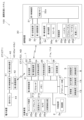
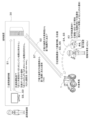
- FIG. 1 is a configuration diagram of a remote support system according to an embodiment of the present invention
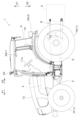
- 1 is a side view of a tractor, which is an example of a work vehicle.
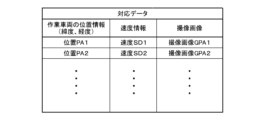
- FIG. 11 is a diagram illustrating an example of correspondence data.
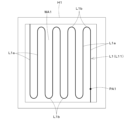
- FIG. 2 is a diagram showing an example of a planned driving route.
- FIG. 13 is a diagram showing an example of a remote operation screen.
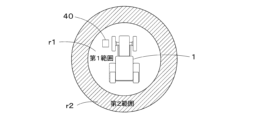
- FIG. 2 is a diagram showing an example of a first range and a second range of a work vehicle.
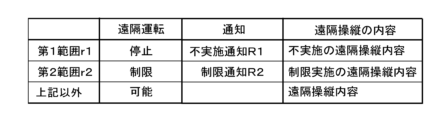
- 11 is a diagram showing how remote operation is stopped or restricted depending on the positional relationship between the work vehicle and the electronic device.
- FIG. FIG. 2 is a diagram showing a process flow in the remote support system.
- FIG. 2 is a diagram showing a process flow in the remote support system.
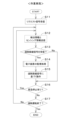
- FIG. 4 is a flowchart showing the operation of the work vehicle during remote driving.
- 5 is a flowchart showing the operation of a remote device when remotely controlling a work vehicle.
- 10 is a flowchart illustrating an example of a monitoring process of an electronic device.
- 10 is a flowchart illustrating an example of a notification process of the electronic device.
- FIG. 13 is a diagram showing an example of a notification screen when remote operation is not possible.
- FIG. 11 is a diagram illustrating an example of a work plan in the remote support system of the second embodiment.
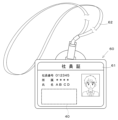
- FIG. 13 is a diagram showing an electronic device according to a first modified example.
- First Embodiment Fig. 1 is a configuration diagram of a remote assistance system 100 according to one embodiment of the present invention.
- the remote assistance system 100 includes a work vehicle 1, which is an example of a work machine, a remote device 30 that remotely controls the work vehicle 1 (work machine), and a communication terminal CT that outputs information to the remote device 30.
- the communication terminals CT include a first terminal CT1 that is a terminal carried by a worker, and a second terminal CT2 that is provided on the work vehicle 1.
- the first terminal CT1 is an electronic device 40 such as an IC tag.
- the first terminal CT1 (electronic device 40) is a device that indirectly transmits information to the remote device 30, and transmits information to the remote device 30 via the second terminal CT2.
- the second terminal CT2 notifies the user that remote control is being performed.
- the second terminal CT2 is a portable terminal device such as a tablet device or a smartphone, and is equipped with a display device 22 and a second communication device 23.
- the second terminal CT2 is a device that transmits information directly to the remote device 30.
- the first terminal CT1 may be a device that transmits information directly to the remote device 30.
- the second terminal CT2 may be a device that transmits information to the remote device 30 via the first terminal CT1.
- the communication terminal CT may be only one of the first terminal CT1 and the second terminal CT2.
- the remote assistance system 100 and the remote device 30 enable remote control (or remote operation) of the work vehicle 1 and remote monitoring of the work vehicle 1.
- the work vehicle 1 is a farm machine (also called a "remotely controlled agricultural machine") that can be remotely driven (e.g., remotely driven and remotely operated) by the remote device 30.
- the work vehicle 1 is, for example, a tractor.
- a tractor is an example of an agricultural machine that performs agricultural work in a field.
- the work machine may be an agricultural machine, construction machine, or working machine other than the work vehicle 1 (tractor).
- FIG. 2 is a side view of a tractor, which is an example of a work vehicle 1.
- the work vehicle 1 is equipped with a body 3.
- the body 3 is provided with a traveling device 7.
- the traveling device 7 is provided with front wheels 7F and rear wheels 7R on both the left and right sides of the body 3, and supports the body 3 so that it can travel.
- the traveling device 7 may be a crawler-type device.
- the vehicle body 3 is equipped with a prime mover 4, a transmission 5, a braking device 13 (Fig. 1), and a steering device 14 (Fig. 1).
- the prime mover 4 is composed of an engine (diesel engine, gasoline engine) or an electric motor.
- the transmission 5 varies the propulsive force of the traveling device 7 and switches the traveling device 7 between forward and reverse, for example by performing a gear change operation.
- the braking device 13 brakes the vehicle body 3.
- the steering device 14 steers the vehicle body 3.
- a driver's seat 10 and a control device 11 are provided inside the cabin 9.
- the work vehicle 1 is a tractor that can travel (drive) unmanned and perform work using the work device 2, but an operator seated in the driver's seat 10 can operate the control device 11 to travel the work vehicle 1 and perform work using the work device 2.
- the cabin 9 protects the driver's seat 10 by surrounding it from the front, rear, above, left and right sides. Note that the protection mechanism is not limited to the cabin 9 and may be a ROPS or the like.
- the direction indicated by arrow A1 in Figure 2 is the front of the work vehicle 1.
- the direction indicated by arrow A2 is the rear of the work vehicle 1.
- the direction indicated by arrow Z1 is above the work vehicle 1.
- the direction indicated by arrow Z2 is below the work vehicle 1.
- the direction perpendicular to the arrows A1, A2, Z1, and Z2 is the width direction (left-right direction) of the work vehicle 1.
- the near side in Figure 2 is the left side of the work vehicle 1, and the far side is the right side of the work vehicle 1.
- a coupling device 8 is provided at the rear of the vehicle body 3.
- the coupling device 8 is composed of a three-point link mechanism or the like.
- a work device 2 (implement, etc.) can be attached and detached to the coupling device 8.
- the coupling device 8 can also raise and lower the work device 2 and change the attitude of the work device 2.
- the work equipment 2 includes a tilling equipment for tilling, a fertilizer spreading equipment for spreading fertilizer, a pesticide spreading equipment for spreading pesticides, a harvesting equipment for harvesting, a harvesting equipment for cutting grass etc., a spreading equipment for spreading grass etc., a grass collecting equipment for collecting grass etc., a shaping equipment for shaping grass etc., etc. Each of these equipment can be attached to and detached from the work vehicle 1 by a coupling device 8.
- the work vehicle 1 performs agricultural work in the field using the work equipment 2.
- a bonnet 12 is provided in front of the cabin 9.
- the bonnet 12 is attached to the vehicle body 3.
- a storage room is formed between the bonnet 12 and the vehicle body 3. This storage room contains not only the engine 4, but also a cooling fan, a radiator, a battery, etc.
- the work vehicle 1 includes a second control device 21, a display device 22, a second communication device 23, a position detection device 24, a sensing device 25, a state detection device 26, a steering device 11, a group of actuators 27, a prime mover 4, a traveling device 7, a transmission 5, a braking device 13, a steering device 14, and a coupling device 8.
- the work vehicle 1 also includes an in-vehicle network such as CAN, LIN, or FlexRay.
- the second control device 21 is electrically connected to the display device 22, the second communication device 23, the position detection device 24, the sensing device 25, the state detection device 26, the steering device 11, the group of actuators 27, and the work device 2 coupled to the work vehicle 1 via the in-vehicle network.
- the second communication device 23 is, for example, an in-vehicle communication device, and is composed of an antenna, an IC (integrated circuit), an electric circuit, etc. for wireless communication via a mobile phone communication network, the Internet, or a wireless LAN. Therefore, the second communication device 23 can communicate wirelessly with the remote device 30.
- the second communication device 23 also has an interface for short-range wireless communication, and can also communicate wirelessly with the electronic device 40.
- the second control device 21 controls the travel of the work vehicle 1, the work performed by the work device 2, and other operations of the work vehicle 1 based on the sensing information of the sensing device 25, the detection information of the state detection device 26, the detection information of the position detection device 24, etc. Furthermore, when the second control device 21 receives remote control information (remote control signal) transmitted from the remote device 30 via the second communication device 23, it controls the travel of the work vehicle 1, the work performed by the work device 2, and other operations of the work vehicle 1 based on the remote control information in addition to the above information.
- remote control information remote control signal
- the second control device 21 determines, from the detection information of the object detection unit 25d, whether an object is approaching the work vehicle 1 or the work device 2 within a predetermined distance and there is a risk of contact. Then, when the second control device 21 determines that an object is approaching the work vehicle 1 or the work device 2 within a predetermined distance and there is a risk of contact, it controls the driving device 7 or the work device 2, etc., to automatically stop the driving or work of the work vehicle 1 and avoid contact with the object.
- the electronic device 40 is an IC tag carried by the operator of the work vehicle 1. As shown in FIG. 1, the electronic device 40 includes a third control device 41, a third communication device 42, and a third notification device 43.
- the third control device 41 is an IC chip that controls the electronic device 40 and also controls the third communication device 42 and the third alarm device 43.
- the second communication device 23 of the work vehicle 1 and the third communication device 42 of the electronic device 40 are equipped with an interface for short-range wireless communication. Therefore, the work vehicle 1 and the electronic device 40 can directly communicate with each other using short-range wireless signals such as BLE (Bluetooth (registered trademark) Low Energy) signals or UHF (Ultra High Frequency) signals. In other words, the work vehicle 1 and the electronic device 40 can communicate wirelessly.
- BLE Bluetooth (registered trademark) Low Energy
- UHF Ultra High Frequency
- the third notification device 43 is a device that issues various notifications to the worker.
- the third notification device 43 may be a display device 43a that issues notifications by display, a voice output device 43b that issues notifications by voice output, or a vibration generating device 43c that issues notifications by vibration.
- the display device 43a is a small LCD display or LED that displays various notifications.
- the voice output device 43b is a small speaker that outputs notification sounds related to various notifications.
- the vibration generating device 43c is a device that generates a constant vibration that is continuous or intermittent.
- the third notification device 43 is equipped with a display device 43a, a voice output device 43b, and a vibration generating device 43c, but may be equipped with at least one or more of them.
- the electronic device 40 may also include an operation button 44.
- the operation button 44 is a physical switch that accepts operation by the worker.
- the operation button 44 may be an icon button that is displayed on the display device 43a (a small liquid crystal display).
- the operation button 44 is used to input operation instructions from the worker.
- the third control device 41 performs control corresponding to the operation instructions to the operation button 44.
- the third control device 41 of the electronic device 40 accepts a first operation (one press operation) as an instruction for manual operation as an operation instruction to the operation button 44, and accepts a second operation (two consecutive press operations within a specified period) as an instruction for repair, and transmits this as information on manual operation of the work vehicle 1 or information on repair of the work vehicle 1 (including the work device 2) to the work vehicle 1.
- the work vehicle 1 Upon receiving the above information, the work vehicle 1 transmits information on manual operation or repair (for example, information on manual operation or repair information) to the remote device 30.
- the third control device 41 may transmit information on manual operation or repair to the work vehicle 1 when there is a first operation (one press operation) without specifying whether it is manual operation or repair.
- the remote device 30 As shown in FIG. 1, the remote device 30 is provided at a location away from the work vehicle 1.
- the remote device 30 allows the work vehicle 1 to be remotely controlled by a remote operator, and allows the state of the work vehicle 1 and the surrounding conditions of the work vehicle 1 to be monitored.
- the remote device 30 includes a first control device 31, a first storage device 32, a first communication device 33, a control device 35, and a first notification device 36.
- the first control device 31 is a processor that controls the operation of each part of the remote device 30. This processor functions as the first control device 31 that controls the operation of each part of the remote device 30, for example, by executing a remote control program stored in the first storage device 32.
- the internal memory 32a provided in the first control device 31 is a volatile or non-volatile memory. Various information and data used by the first control device 31 to control the operation of each part of the remote device 30 are stored in a readable and writable manner in the internal memory 32a.
- the first storage device 32 prestores control programs such as a remote control program for remotely operating the work vehicle 1 and a remote monitoring program for remotely monitoring the work vehicle 1, as well as various data.
- the first storage device 32 is, for example, an SSD (solid state drive) or an HDD (hard disk drive).
- the first communication device 33 is composed of an antenna, an IC, and an electric circuit for wireless communication via a mobile phone communication network, the Internet, or a wireless LAN.
- the first communication device 33 wirelessly communicates with the work vehicle 1 under the control of the first control device 31.
- the first communication device 33 receives various data transmitted from the second communication device 23 (detection information from the position detection device 24 and the status detection device 26, sensing information from the sensing device 25, etc.). For example, the first communication device 33 receives correspondence data that associates the position information of the work vehicle 1, the speed information of the work vehicle 1, and an image captured of the traveling direction of the work vehicle 1.
- the first notification device 36 includes a display device 34 and a speaker 36a.
- the speaker 36a outputs audio notifications to the remote operator.
- the display device 34 is, for example, a liquid crystal display, an organic EL display, or the like.
- the display device 34 displays information for remotely operating the work vehicle 1 under display control by the first control device 31.
- FIG. 5 is a diagram showing an example of a remote driving screen G2.
- the display device 34 displays the remote driving screen G2 as shown in FIG. 5.
- the remote driving screen G2 displays an image captured by the internal camera 25c1 (see FIG. 5)
- the remote driving screen G2 displays an image captured by the rear camera 25c2.
- the work vehicle 1 is stopped, for example, at least one of the image captured by the internal camera 25c1 (see FIG. 5) and the rear image captured by the rear camera 25c2 is displayed on the remote driving screen G2.
- the display device 34 is provided with a touch panel, for example, on the front side of the display screen, and touch operations on the display screen can be detected by the touch panel.
- the control device 35 is a device for remotely controlling the work vehicle 1.
- the control device 35 is equipped with a steering wheel 35a, an accelerator pedal 35b, a brake pedal 35c, and a gear shift lever 35d, which are arranged around the remote control seat.
- the remote operator sits in the remote control seat and operates the control device 35 to remotely control the travel of the work vehicle 1 or the work performed by the work device 2.
- the remote operator also monitors the work vehicle 1 and the surrounding conditions using the display device 34.
- the remote operator can also input specified information or instructions to the remote device 30 by operating the control device 35.
- the control device 35 may be a touchpad or a hardware switch, etc.
- the first control device 31 When the remote operator operates the control device 35 to input an operation instruction for the work vehicle 1, the first control device 31 generates remote control information corresponding to the operation instruction and transmits the remote control information to the work vehicle 1 via the first communication device 33. In other words, remote control information corresponding to the operation of the steering wheel 35a, accelerator pedal 35b, brake pedal 35c, and gear lever 35d is transmitted to the work vehicle 1.
- the second control device 21 of the work vehicle 1 receives remote control information from the remote device 30 via the second communication device 23, it operates each part of the work vehicle 1 based on the remote control information, the detection information of the position detection device 24, the sensing information of the sensing device 25, and the detection information of the state detection device 26, to control the running and steering of the work vehicle 1 and to control the work operation by the work device 2.
- the second control device 21 also transmits the detection information of the position detection device 24 and the status detection device 26, and the sensing information of the sensing device 25 to the remote device 30 via the second communication device 23.
- the first control device 31 of the remote device 30 receives the detection information of the position detection device 24 and the status detection device 26, and the sensing information of the sensing device 25 via the first communication device 33, it stores this information in the internal memory 32a and displays it on the display device 34.
- FIG. 4 is a diagram showing an example of the planned travel route L1.
- the remote device 30 can set the planned travel route L1.
- the first storage device 32 stores map information including the field H1 in advance. If the map information including the field H1 is not stored in the first storage device 32, the remote device 30 can access a map server (not shown) to obtain map information including the field H1 and store it in the first storage device 32.
- the first control device 31 reads out map information including the field H1 from the first storage device 32 and displays the field H1 shown in FIG. 4 on the display screen of the display device 34.
- the planned travel route L1 can be set in advance for the work area WA1 of the field H1 as shown in FIG. 4.
- the planned travel route L1 is made up of multiple straight-line paths L1a and multiple semicircular arc-shaped turning paths L1b that connect the ends of two adjacent straight-line paths L1a.
- the set planned travel route L1 is registered in the first storage device 32.
- the work vehicle 1 can also set the planned driving route L1 in advance. For example, the driver can get on the work vehicle 1 and actually drive the work vehicle 1 in the field H1, so that the second control device 21 of the work vehicle 1 can set the planned driving route L1 in the work area WA1 of the field H1.
- the remote device 30 can receive this planned driving route L1 from the work vehicle 1 and store it in the first storage device 32.
- the remote assistance system 100 includes a notification device ND.
- the notification device ND When the work vehicle 1 receives remote control information transmitted from the remote device 30, the notification device ND notifies that remote control will be performed, and when the remote device 30 receives information related to manual control or repair of the work vehicle 1, the notification device ND notifies that manual control or repair will be performed.
- the notification device ND includes a first notification device 36 and a communication terminal CT.
- FIG. 7A is a diagram showing the processing flow in the remote assistance system 100.
- the communication terminal CT notifies that remote control will be performed.
- the display device 22 of the second terminal CT2 and the third notification device 43 of the first terminal CT1 notify that remote control will be performed.
- the first notification device 36 of the remote device 30 notifies that manual control or repair will be performed when the remote device 30 receives information related to manual control or repair of the work vehicle 1 from the first terminal CT1 or the second terminal CT2.
- the communication terminal CT (first terminal CT1 or second terminal CT2) transmits information to the remote device 30 indicating that remote control of the work vehicle 1 is not possible when manual control or repair is being performed, and transmits information to the remote device 30 indicating that remote control of the work vehicle 1 is possible when manual control or repair is not being performed.
- the remote device 30 stops remote control when it receives information indicating that remote control of the work vehicle 1 is not possible (remote control not possible information), and does not stop remote control when it receives information indicating that remote control of the work vehicle 1 is possible (remote control possible information).
- the remote device 30 transmits information indicating that manual control or repair is not possible (manual control not possible information) to the communication terminal CT, and when remote control is not to be performed, it transmits information indicating that manual control or repair is possible (manual control possible information) to the communication terminal CT.
- the second control device 21 If the communication terminal CT (at least the second terminal CT2) receives information indicating that manual operation is possible, the second control device 21 operates the work vehicle based on manual operation, and if the communication terminal CT receives information indicating that manual operation is not possible, the second control device 21 does not operate the work vehicle 1 based on manual operation.
- FIG. 6A is a diagram showing an example of a first range r1 and a second range r2 of a work vehicle 1.
- a first range r1 for example, a circular first range r1 is set up to a predetermined first distance from the work vehicle 1.
- a second range r2 is set outside the first range r1.
- the second range r2 is an annular range up to a predetermined second distance from the work vehicle 1, excluding the first range r1.
- the electronic device 40 is located within the first range r1.
- FIG. 6B is a diagram showing that remote operation is stopped or restricted depending on the positional relationship between the work vehicle 1 and the electronic device 40. As shown in FIG. 6B, if the electronic device 40 is within the first range r1, remote operation is stopped, if the electronic device 40 is within the second range r2, remote operation is restricted, and if outside the second range r2, remote operation is permitted.
- the centers of the first range r1 and the second range r2 are not limited to the center of the work vehicle 1.
- the center of the work vehicle 1 may be changed depending on whether or not the work device 2 is attached to the coupling device 8 and the type of the work device 2.
- the overall center of the work vehicle 1 to which the work device 2 is coupled may be the center of the first range r1 and the second range r2.
- the first range r1 and the second range r2 may be ranges from the overall outline of the work vehicle 1 to which the work device 2 is coupled up to each preset distance.
- the remote device 30 transmits a non-execution notification R1 to the communication terminal CT, indicating that remote control will not be performed, and the communication terminal CT reports the non-execution notification R1.
- the second control device 21 determines that remote control based on the remote control information is not possible if the position indicated by the position information of the first terminal CT1 is within the first range r1 from the work vehicle 1, and determines that remote control of the work vehicle 1 is possible if the position is outside the first range r1.
- the first notification device 36 notifies at least one of whether the first terminal CT1 is located within the first range r1 of the work vehicle 1 and the distance between the work vehicle 1 and the first terminal CT1.
- the remote device 30 transmits a non-execution notification R1 and a notification of the remote control content indicated by the non-executed remote control information to the communication terminal CT, as shown in FIG. 6B.
- the second control device 21 transmits the non-execution notification R1 and a notification of the non-executed remote control content to the communication terminal CT.
- the communication terminal CT notifies that remote control of the work vehicle 1 has been non-executed and the non-executed remote control content.
- the first notification device 36 restricts remote control based on the remote control information and transmits a restriction implementation notification R2 to the first terminal CT1 indicating that remote control will be restricted.
- the first terminal CT1 notifies that remote control of the work vehicle 1 will be restricted and the remote control content indicated by the remote control information.
- the remote assistance system 100 is also capable of notifying the prevention of remote operation.
- the remote assistance system 100 When a worker is near a remotely operated work vehicle 1 (work machine), the remote assistance system 100 not only stops remote operation of the work vehicle 1 and prevents remote operation of the work vehicle 1 from occurring, but also notifies the worker near the work vehicle 1 that remote operation has been prevented.
- the remote device 30 inquires of the work vehicle 1 whether the electronic device 40 is located within the first range r1 of the work vehicle 1 (S2).
- the work vehicle 1 communicates with the electronic device 40 at short distances (S3) and determines whether the electronic device 40 is within the first range r1. If the reception strength of the signal from the electronic device 40 is equal to or greater than a first threshold, the work vehicle 1 determines that the electronic device 40 is within the first range r1 and transmits a non-execution notification R1 to the electronic device 40 (S4).
- the work vehicle 1 may determine the distance to the electronic device 40 based on the reception strength of the signal from the electronic device 40.
- the electronic device 40 receives the non-execution notification R1, it notifies the work vehicle 1 that remote driving has been canceled (S5), and transmits the operator information stored in the electronic device 40 to the work vehicle 1 (S6).
- the work vehicle 1 transmits to the remote device 30 whether or not the electronic device 40 is within the first range r1 (S6). Furthermore, if the work vehicle 1 has received the worker information, it transmits the worker information to the remote device 30.
- the remote device 30 rejects the remote driving (S7) and notifies the remote device 30 of who is present based on the worker information (S8).
- the work vehicle 1 is equipped with a second communication device 23 that communicates with the electronic device 40, and a second control device 21 that, when the electronic device 40 is located within a first range r1 from the work vehicle 1, does not perform remote driving based on remote control information and causes the second communication device 23 to transmit a non-execution notification R1 to the electronic device 40 indicating that remote driving will not be performed.
- the electronic device 40 includes a third communication device 42 that receives a non-execution notification R1 from the work vehicle 1, and a third notification device 43 that notifies the work vehicle 1 that remote operation based on the remote control information has been canceled based on the non-execution notification R1 received by the third communication device 42.
- the first communication device 33 of the remote device 30 transmits remote control information to the work vehicle 1.
- the second communication device 23 transmits information about the electronic device 40 to the remote device 30 and transmits a non-execution notification R1 to the electronic device 40.
- the second control device 21 When the second communication device 23 receives the remote control information, the second control device 21 causes the second communication device 23 to transmit position information indicating the position of the electronic device 40 relative to the work vehicle 1 to the remote device 30 as information regarding the electronic device 40. If the position indicated by the position information is within the first range r1, the first control device 31 determines that remote operation of the work vehicle 1 is not possible, and if it is outside the first range r1, determines that remote operation of the work vehicle 1 is possible.
- the first control device 31 determines that remote operation of the work vehicle 1 is possible, it causes the first communication device 33 to transmit a start signal to the work vehicle 1 to start remote operation of the work vehicle 1, and when it determines that remote operation of the work vehicle 1 is not possible, it causes the first communication device 33 to transmit a stop signal to the work vehicle 1 to indicate that remote operation of the work vehicle 1 is to be stopped.
- the remote device 30 is equipped with a first notification device 36 that notifies the remote operator.
- the first control device 31 causes the first notification device 36 to notify at least one of whether the electronic device 40 is located within the first range r1 of the work vehicle 1 and the distance between the work vehicle 1 and the electronic device 40 based on the position information.
- the second control device 21 causes the second communication device 23 to transmit the non-execution notification R1 and a notification of the remote operation content indicated by the non-execution remote operation information to the electronic device 40.
- the third notification device 43 notifies the electronic device 40 that remote operation of the work vehicle 1 has been non-executed and the non-execution remote operation content.
- the second control device 21 restricts and performs remote driving based on the remote control information, and causes the second communication device 23 to transmit a restriction implementation notification R2 indicating that remote driving will be restricted to the electronic device 40.
- the third notification device 43 notifies that remote driving of the work vehicle 1 will be restricted and the remote control content indicated by the remote control information.
- the second control device 21 communicates with the electronic device 40 to obtain worker information indicating the worker who owns the electronic device 40, and causes the second communication device 23 to transmit the worker information and location information to the remote device 30.
- the electronic device 40 pre-stores worker information about the worker who owns the electronic device 40.
- the worker information includes, for example, the worker's name and the worker's affiliation.
- the first control device 31 causes the first notification device 36 to notify the worker information and location information received by the first communication device 33.
- the worker information also includes contact information indicating the contact information of the worker who owns the electronic device 40.
- the contact information is, for example, information such as the worker's mobile phone number and the worker's email address.
- Figure 8A is a flowchart showing the operation of the work vehicle 1 during remote driving.
- Figure 8B is a flowchart showing the operation of the remote device 30 when remotely controlling the work vehicle 1.
- the first control device 31 causes the first communication device 33 to transmit a request signal requesting information detected by the work vehicle 1 to the work vehicle 1, as shown in FIG. 8B (S21).
- the second control device 21 of the work vehicle 1 when the second control device 21 of the work vehicle 1 receives a request signal from the remote device 30 via the second communication device 23 (S11), the second control device 21 causes the second communication device 23 to transmit the detection information of the position detection device 24 and the state detection device 26 and the sensing information of the sensing device 25 to the remote device 30 (S12).
- the detection information of the state detection device 26 includes the operation information of the work vehicle 1 and the work device 2 (at least one of the following information: the speed (or acceleration) of the work vehicle 1, the gear shift position of the transmission 5, the braking position of the braking device 13, and the operating position of the work device 2).
- the first control device 31 of the remote device 30 stores this information in the first storage device 32.
- the first control device 31 loads the detection information of the position detection device 24 and the status detection device 26, the sensing information of the sensing device 25, the device information indicating the specifications of the work vehicle 1 and the work device 2, and the map information of the surroundings of the work vehicle 1, which are stored in the first storage device 32, into the internal memory 32a (S23).
- the first communication device 33 receives device information indicating the specifications of the work vehicle 1 and the work device 2, and stores it in the first storage device 32.
- the first storage device 32 also stores map information of the area in which the work vehicle 1 is located in advance.
- the first control device 31 extracts the position of the work vehicle 1 from the detection information of the position detection device 24, and regards an area within a predetermined distance from the position of the work vehicle 1 as the periphery of the work vehicle 1, and reads the map information of that area from the first storage device 32 to the internal memory 32a.
- the first control device 31 may receive map information of an area within a predetermined distance from the position of the work vehicle 1 from an external server via the Internet or the like in S23 using the first communication device 33, and read the received map information.
- the first control device 31 causes the display device 34 to display the remote driving screen G2 based on the detection information from the position detection device 24 and the status detection device 26, the sensing information from the sensing device 25, the device information, and the map information (S24).
- the second control device 21 determines whether or not there is remote control information from the remote device 30 (S13). If the second control device 21 receives remote control information from the remote device 30 via the second communication device 23 (S13: YES), it performs monitoring processing of the electronic device 40 (S14).
- FIG. 8C is a flowchart showing an example of a monitoring process for the electronic device 40.
- the second control device 21 determines whether there is remote control information from the remote device 30 (S41). If there is remote control information from the remote device 30 (S41: YES), the second control device 21 acquires the position information of the electronic device 40 (S42).
- the second communication device 23 receives a signal from the electronic device 40 through short-range communication with the third communication device 42. If the reception strength of the signal from the electronic device 40 is equal to or greater than a first threshold, the second control device 21 determines that the electronic device 40 is within a first range r1, if the reception strength is less than the first threshold and equal to or greater than a second threshold, the second control device 21 determines that the electronic device 40 is within a second range r2, and if the reception strength is less than the second threshold or is unreceivable, the second control device 21 determines that the electronic device 40 is outside the second range r2.
- the second control device 21 causes the second communication device 23 to transmit the position information of the electronic device 40 to the remote device 30 (S43).
- the position information of the electronic device 40 is position information indicating that the electronic device 40 is within the first range r1, position information indicating that the electronic device 40 is within the second range r2, and position information indicating that the electronic device 40 is outside the second range r2.
- the second control device 21 determines that remote driving is not to be performed (S45). Then, the second communication device 23 transmits a non-execution notification R1 to the electronic device 40 (S46) in accordance with the control of the second control device 21, and transmits the remote control content that is not to be performed (S47). For example, the second control device 21 can identify the remote control content indicated by the remote control information from the remote device 30, and therefore can determine the remote control content that is not to be performed.
- the third control device 41 judges whether or not there is a non-execution notification R1 (S61). For example, when the third communication device 42 receives the non-execution notification R1, the third control device 41 judges that there is a non-execution notification R1 (S61: YES), and the third notification device 43 issues a non-execution notification (S62).
- the display device 43a displays a screen or lights up a display indicating that remote operation has been canceled.
- the audio output device 43b outputs a notification sound indicating that remote operation has been canceled.
- the vibration generating device 43c generates vibrations with a vibration pattern indicating that remote operation has been canceled.
- the third notification device 43 issues a notification of the non-executed remote operation content (S63). For example, when the non-executed remote operation content is the start of the prime mover 4 (engine) of the work vehicle 1, the third notification device 43 issues a notification that the start of the prime mover 4 has been canceled.
- the second control device 21 causes the second communication device 23 to receive worker information (e.g., the worker's name, contact information, etc.) from the electronic device 40, and causes the second communication device 23 to transmit the worker information (e.g., the worker's name, contact information, etc.) to the remote device 30 (S48).
- worker information e.g., the worker's name, contact information, etc.
- the second control device 21 restricts and executes the remote driving (S50).
- the vehicle speed may be restricted to a speed at which the electronic device 40 can be safely stopped at the distance to the electronic device 40 (for example, a vehicle speed calculated from the braking distance and the free running distance), or the movement from the current position to within the first range r1 may be permitted and restricted from moving any further, or the operation of the working device 2 may be restricted.
- the second communication device 23 transmits a restriction implementation notification R2 to the electronic device 40 according to the control of the second control device 21 (S51) and transmits the remote control content of the restriction implementation (S52).
- the second control device 21 can identify the remote control content indicated by the remote control information from the remote device 30, and therefore can determine the remote control content of the restriction implementation.
- the third control device 41 determines whether or not it has received the restriction implementation notification R2 (S64). For example, if the third communication device 42 has received the restriction implementation notification R2, the third control device 41 determines that the restriction implementation notification R2 has been received (S64: YES), and the third notification device 43 notifies the implementation of the restriction (S65).
- the display device 43a displays a screen or lights up to indicate that the remote driving has been restricted.
- the audio output device 43b outputs an alarm sound indicating that the remote driving has been restricted.
- the vibration generating device 43c generates vibrations with a vibration pattern indicating that the remote driving has been restricted.
- the third notification device 43 notifies the remote operation content of the restriction implementation (S66). For example, if the remote operation content of the restriction implementation is movement at a first driving speed of the work vehicle 1, the third notification device 43 notifies that the restriction implementation has been limited to a second driving speed that is slower than the first driving speed. On the other hand, in S64, the third control device 41 returns to S61 after S63, after S66, or if the restriction implementation notification R2 has not been received (S64: NO).
- the second control device 21 controls the travel of the work vehicle 1, the work performed by the work device 2, and other operations of the work vehicle 1 based on the sensing information from the sensing device 25, the detection information from the state detection device 26, the detection information from the position detection device 24, and the remote control information (S15).
- the work vehicle 1 operates according to the remote control information from the remote device 30.
- the second control device 21 operates the steering wheel 11a (FIG. 2), accelerator pedal, brake pedal, and shift lever 11d of the control device 11 according to various operation signals corresponding to the operation of the steering wheel 35a, accelerator pedal 35b, brake pedal 35c, and shift lever 35d by the remote operator.
- the second control device 21 sets an area up to a preset distance from the work vehicle 1 in the traveling direction of the work vehicle 1 as an emergency stop area. Therefore, when the work vehicle 1 is traveling under remote control by the remote device 30 and it is detected based on sensing information from the sensing device 25 that an obstacle has entered the emergency stop area, the second control device 21 automatically brings the work vehicle 1 to an emergency stop to avoid contact between the work vehicle 1 and the obstacle (S16: YES), and returns to S12.
- the second control device 21 determines whether or not remote operation is to be ended (S17). For example, if the second control device 21 receives an end signal for remote operation from the remote device 30 (S17: YES), it ends remote operation. On the other hand, if the second control device 21 does not receive an end signal for remote operation from the remote device 30 (S17: NO), it returns to S12.
- the first control device 31 determines whether remote driving is possible (S25). For example, when the first control device 31 receives information from the work vehicle 1 that the electronic device 40 is within the first range r1, it determines that remote driving is not possible (S25: NO), and the first notification device 36 or the display device 34 notifies that effect (S26). For example, the display device 34 displays the notification screen G3 shown in FIG. 9.
- FIG. 9 is a diagram showing an example of the notification screen G3 when remote driving is not possible.
- the notification screen G3 displays a message indicating that remote driving has been rejected and the reason for this, "Engine start is not possible because there is a worker nearby," as well as a message indicating information about the nearby worker (e.g., Mr. A) and his contact information (e.g., Mr. A's mobile phone number).
- the first control device 31 determines whether or not steering operation is being performed by the steering device 35 (S27). If steering operation is being performed by the steering device 35 (S27: YES), the first control device 31 causes the first communication device 33 to transmit remote steering information corresponding to the steering operation by the steering device 35 to the work vehicle 1 (S28). For example, remote steering information including various operation signals corresponding to the operation of the steering wheel 35a, accelerator pedal 35b, brake pedal 35c, and gear lever 35d by the remote operator is transmitted from the remote device 30 to the work vehicle 1.
- the first control device 31 performs a screen display update process (S29). That is, the first control device 31 performs a screen display update process each time it receives corresponding data from the work vehicle 1 during remote driving.
- the first communication device 33 of the remote device 30 sequentially receives detection information from the position detection device 24 and state detection device 26 from the work vehicle 1 and sensing information from the sensing device 25.
- the first communication device 33 sequentially receives corresponding data included in the detection information (i.e., corresponding data associating the image captured by the internal camera 25c1 with the speed information of the work vehicle 1 detected by the state detection device 26 and the position information of the work vehicle 1 detected by the position detection device 24) and performs a screen display update process.
- the first control device 31 determines whether or not remote operation has ended (S30). For example, if the remote operator has not instructed the first control device 31 to end remote operation (S30: NO), the first control device 31 returns to S27. On the other hand, if the remote operator has instructed the first control device 31 to end remote operation (S30: YES), the first control device 31 ends remote operation.
- a remote assistance system 100 including a remote device 30 that remotely controls a work machine (work vehicle 1), and a control device (second control device 21) that is provided on the work machine and controls the work machine based on remote operation information related to the remote operation from the remote device 30, and an alarm device ND that notifies the work machine that the remote operation will be performed when the work machine receives the remote operation information transmitted from the remote device 30, and that notifies the work machine that the manual operation or repair will be performed when the remote device 30 receives information related to manual operation or repair of the work machine.
- the notification device ND notifies the work machine (work vehicle 1) that remote control will be performed when it receives remote control information from the remote device 30, so that the operator of the work vehicle 1 can be notified that the work vehicle 1 will be remotely controlled.
- the operator who knows this can immediately leave the work vehicle 1 and put the work vehicle 1 in a state where it can be remotely controlled.
- the notification device ND notifies the work vehicle 1 that manual control or repair will be performed when the remote device 30 receives information regarding manual control or repair of the work vehicle 1, so that the remote operator can be notified of manual control or repair by the operator. This makes it possible to provide support for smooth remote control of the work vehicle 1 by the remote operator and manual control or repair of the work vehicle 1 by the operator.
- the remote assistance system 100 described in Item A1 is provided with a communication terminal CT that transmits information to the remote device 30 indicating that the work machine (work vehicle 1) cannot be remotely controlled when the manual operation or repair is performed, and transmits information to the remote device 30 indicating that the work machine can be remotely controlled when the manual operation or repair is not performed.
- the communication terminal CT can instruct the remote device 30 whether remote control is possible. Therefore, the remote device 30 can determine whether manual control or repair of the work machine (work vehicle 1) will be performed based on the information on whether remote control is possible from the communication terminal CT. In other words, if information indicating that remote control is not possible is received, it can determine that manual control or repair of the work vehicle 1 will be performed, and if information indicating that remote control is possible is received, it can determine that manual control or repair of the work vehicle 1 will not be performed.
- the remote control device 30 can reliably stop and continue remote control depending on whether the work machine (work vehicle 1) is being manually controlled or repaired.
- the remote device 30 transmits information to the communication terminal CT indicating that the manual operation or repair is not possible when the remote operation is performed, and transmits information to the communication terminal CT indicating that the manual operation or repair is possible when the remote operation is not performed.
- the remote device 30 can instruct the communication terminal CT whether or not the work machine (work vehicle 1) can be manually operated or repaired. In other words, it can instruct that manual operation or repair of the work vehicle 1 is possible because remote operation is not performed, or that manual operation or repair of the work vehicle 1 is not possible because remote operation is performed.
- the control device operates the work machine (work vehicle 1) based on the manual operation when the communication terminal CT receives information indicating that the manual operation is possible, and does not operate the work machine based on the manual operation when the communication terminal CT receives information indicating that the manual operation is not possible.
- This is the remote assistance system 100 described in Item A4.
- the work machine (work vehicle 1) can be placed in a state where it can be manually operated (in other words, a state where it is not remotely operated), and the worker can safely and reliably manually operate the work vehicle 1.
- the work vehicle 1 can be placed in a state where it cannot be manually operated (in other words, a state where it is remotely operated), and manual operation by the worker can be prohibited, allowing the work vehicle 1 to be preferably remotely operated.
- the remote device 30 transmits a non-execution notification R1 indicating that the remote operation will not be performed to the communication terminal CT, and the communication terminal CT notifies the non-execution notification R1.
- the communication terminal CT issues a non-operation notification R1, so that the operator of the work machine (work vehicle 1) can be informed that remote control will not be performed. The operator can operate or repair the work vehicle 1 manually with peace of mind.
- the communication terminal CT is a first terminal CT1 carried by a worker, and the control device (second control device 21) determines that the remote control based on the remote control information is not possible if the position indicated by the position information of the first terminal CT1 is within a first range r1 from the work machine (work vehicle 1), and determines that remote control of the work vehicle 1 is possible if the position is outside the first range r1.
- the first terminal CT1 is within the first range r1 of the work machine (work vehicle 1), that is, when the worker is within the first range r1 of the work vehicle 1, it can be determined that remote control is impossible, and the safety of the worker near the work vehicle 1 can be ensured.
- the worker is outside the first range r1 of the work vehicle 1, it can be determined that remote control is possible, and remote control can be ensured.
- the notification device ND includes the first notification device 36 provided on the remote device 30, and the first notification device 36 notifies at least one of whether the first terminal CT1 is located within the first range r1 of the work machine (work vehicle 1) and the distance between the work vehicle 1 and the first terminal CT1.
- the remote operator can know whether the first terminal CT1 is located within the first range r1 of the work machine (work vehicle 1) and at least one of the distances between the work vehicle 1 and the first terminal CT1, i.e., the positional relationship between the work vehicle 1 and the first terminal CT1, and can perform remote control after confirming the safety of the worker.
- the remote device 30 transmits the non-execution notification R1 and a notification of the remote operation content indicated by the non-execution remote operation information to the communication terminal CT, and the control device (second control device 21) transmits the non-execution notification R1 and a notification of the non-execution remote operation content to the communication terminal CT, and the communication terminal CT notifies the fact that remote operation of the work machine (work vehicle 1) has been non-executed and the non-execution remote operation content.
- the communication terminal CT notifies the user that remote control of the work machine (work vehicle 1) has been canceled and the details of the canceled remote control of the work vehicle 1. This allows the worker to know that remote control has not been canceled and the details of the canceled remote control. In other words, the worker can know the remote operator's intention for remote control.
- the control device (second control device 21) restricts remote control based on the remote control information when the first terminal CT1 is located within a second range r2 set outside the first range r1, and transmits a restriction implementation notification to the first terminal CT1 indicating that remote control will be restricted, and the first terminal CT1 notifies the first terminal CT1 that remote control of the work machine (work vehicle 1) will be restricted and the remote control content indicated by the remote control information.
- the first terminal CT1 notifies the operator that remote control of the work machine (work vehicle 1) will be restricted and the details of the restricted remote control of the work vehicle 1.
- the operator holding the first terminal CT1 within the second range r2 outside the first range r1 of the work vehicle 1 is notified of the restricted remote control and the details of the restricted remote control.
- operators around the work vehicle 1 can also understand the details of the restricted remote control.
- operators within the second range r2 of the work vehicle 1 can know the intention of the remote control by the remote operator.
- the control device acquires worker information indicating the worker who possesses the first terminal CT1 by communicating with the first terminal CT1, and transmits the worker information and the location information to the remote device 30, and the first notification device 36 notifies the remote device 30 of the worker information and the location information received by the remote device 30.
- This is the remote support system 100 described in Item A8.
- the control device (second control device 21) of the work vehicle 1 acquires worker information indicating the worker carrying the first terminal CT1 through communication with the first terminal CT1, and transmits the worker information and position information to the remote device 30.
- the first notification device 36 notifies the remote device 30 of the worker information and position information received. This allows the remote operator to know the worker involved in the decision not to perform remote control, and the positional relationship between the worker and the work vehicle 1.
- the worker information includes contact information indicating the contact information of the worker who possesses the first terminal CT1 (electronic device 40), and the remote device 30 (first control device 31) contacts the contact information indicated by the contact information when it receives a contact instruction from a remote operator.
- This is the remote support system 100 described in Item A11.
- the remote operator can contact the worker who is involved in the decision not to carry out remote operation.
- the remote operator can instruct the worker to leave the work vehicle 1, or check with the worker the work status of the work vehicle 1, and can easily and quickly decide whether to resume, wait, or cancel remote operation.
- the first notification device 36 is provided with a display device 34 that is provided on the remote device 30 and notifies that manual operation or repair is being performed.
- the display device 34 of the remote device 30 notifies that manual operation or repair is being performed when the remote device 30 receives information related to manual operation or repair of the work vehicle 1. This makes it possible to notify the remote operator of manual operation or repair by the worker.
- the second terminal CT2 is provided on the work vehicle 1 and notifies the user that remote control is being performed.
- the second terminal CT2 on the work vehicle 1 can notify the operator of the work vehicle 1 that remote control of the work vehicle 1 is being performed.
- the remote assistance system 100 has the following configuration.
- the remote assistance system 100 comprises a remote device 30, a work vehicle 1 (work machine) remotely operated by the remote device 30, and an electronic device 40 carried by an operator of the work vehicle 1.
- the remote device 30 comprises a first communication device 33 that communicates with the work vehicle 1, and a first control device 31 that causes the first communication device 33 to transmit remote operation information to the work vehicle 1.
- the work vehicle 1 comprises a second communication device 23 that communicates with the electronic device 40, and a second control device 21 that, when the electronic device 40 is located within a first range r1 from the work vehicle 1, does not perform remote operation based on the remote operation information and causes the second communication device 23 to transmit a non-execution notification R1 indicating that remote operation will not be performed to the electronic device 40.
- the electronic device 40 includes a third communication device 42 that receives a non-execution notification R1 from the work vehicle 1, and a third notification device 43 that notifies the work vehicle 1 that remote operation based on the remote control information has been canceled based on the non-execution notification R1 received by the third communication device 42.
- the work vehicle 1 when the worker carrying the electronic device 40 is within the first range r1, the work vehicle 1 does not perform remote driving even if it receives remote control information. This ensures the safety of workers near the work vehicle 1. Furthermore, since the electronic device 40 notifies the worker that remote driving of the work vehicle 1 has been suspended, the worker can know that an instruction to remotely drive the work vehicle 1 has been given. In other words, the worker can be proactively notified that remote driving has been prevented. This notification allows the worker to quickly perform work on the work vehicle 1 if there is work to be done, and if there is no work to be done, the worker can quickly move away from the work vehicle 1 and quickly cancel the suspension of remote driving. This makes it possible to immediately notice that remote driving has been prevented, and provides support for smooth remote driving.
- the first communication device 33 transmits remote control information to the work vehicle 1
- the second communication device 23 transmits information about the electronic device 40 to the remote device 30 and transmits a non-execution notification R1 to the electronic device 40.
- the first communication device 33 of the remote device 30 transmits remote control information to the work vehicle 1.
- the second communication device 23 of the work vehicle 1 transmits information about the electronic device 40 to the remote device 30 and transmits a non-execution notification R1 to the electronic device 40. Therefore, when the work vehicle 1 does not perform remote driving, it transmits information about the electronic device 40 to the remote device 30, so that the remote operator can grasp the status of the work vehicle 1 in which remote driving has not been performed.
- the work vehicle 1 transmits a non-execution notification R1 to the electronic device 40, so that the operator who possesses the electronic device 40 can be notified that remote driving has been prevented in advance.
- the remote operator can grasp the status of the work vehicle 1, and the operator near the work vehicle 1 can know that remote driving has been prevented in advance. This can assist the remote operator in remote operation and also ensure the safety of workers near the work vehicle 1.
- the second control device 21 causes the second communication device 23 to transmit position information indicating the position of the electronic device 40 relative to the work vehicle 1 as information regarding the electronic device 40 to the remote device 30, and the first control device 31 determines that remote driving of the work vehicle 1 is not possible if the position indicated by the position information is within the first range r1, and determines that remote driving of the work vehicle 1 is possible if it is outside the first range r1.
- the work vehicle 1 receives remote control information from the remote device 30, it transmits position information indicating the position of the electronic device 40 relative to the work vehicle 1 to the remote device 30 as information regarding the electronic device 40.
- the first control device 31 of the remote device 30 determines that remote driving of the work vehicle 1 is not possible if the position indicated by the position information is within the first range r1, and determines that remote driving of the work vehicle 1 is possible if it is outside the first range r1. Therefore, the remote device 30 can accurately determine whether remote driving of the work vehicle 1 is possible or not.
- the first control device 31 determines that remote driving of the work vehicle 1 is possible, it causes the first communication device 33 to transmit a start signal to the work vehicle 1 to start remote driving of the work vehicle 1, and when it determines that remote driving of the work vehicle 1 is not possible, it causes the first communication device 33 to transmit a stop signal indicating the stop of remote driving of the work vehicle 1 to the work vehicle 1.
- the remote device 30 transmits a start signal to the work vehicle 1 if the work vehicle 1 is capable of remote driving, and transmits a stop signal to the work vehicle 1 if the work vehicle 1 is not capable of remote driving. Therefore, the remote device 30 can accurately instruct the start and stop of remote driving of the work vehicle 1.
- the remote device 30 also includes a first notification device 36 that notifies the remote operator, and the first control device 31 causes the first notification device 36 to notify at least one of whether the electronic device 40 is located within the first range r1 of the work vehicle 1 and the distance between the work vehicle 1 and the electronic device 40 based on the position information.
- the first notification device 36 of the remote device 30 notifies at least one of whether the electronic device 40 is located within the first range r1 of the work vehicle 1 and the distance between the work vehicle 1 and the electronic device 40. Therefore, the remote operator can grasp the positional relationship between the work vehicle 1 and the electronic device 40 carried by a worker around the work vehicle 1 (i.e., the positional relationship between the work vehicle 1 and the worker).
- the second control device 21 also causes the second communication device 23 to transmit the non-execution notification R1 and a notification of the remote operation content indicated by the non-execution remote operation information to the electronic device 40, and the third notification device 43 notifies that remote operation of the work vehicle 1 has been non-executed and the non-executed remote operation content.
- the third notification device 43 of the electronic device 40 notifies that remote operation of the work vehicle 1 has been non-executed and the non-executed remote operation content of the work vehicle 1.
- the non-execution of remote operation and the non-executed remote operation content are notified to the worker who holds the electronic device 40 within the first range r1 of the work vehicle 1. Therefore, the worker around the work vehicle 1 can also understand the non-executed remote operation content. In other words, the worker around the work vehicle 1 can know the intention of the remote operator to remotely operate.
- the second control device 21 restricts remote driving based on the remote control information and causes the second communication device 23 to transmit a restriction implementation notification R2 indicating that remote driving will be restricted to the electronic device 40.
- the third notification device 43 notifies that remote driving of the work vehicle 1 will be restricted and the remote control content indicated by the remote control information. According to this configuration, the third notification device 43 of the electronic device 40 notifies that remote driving of the work vehicle 1 will be restricted and the remote control content of the work vehicle 1 that will be restricted.
- the restriction implementation of remote driving and the remote control content that is to be restricted are notified to a worker who holds the electronic device 40 located within the second range r2, which is outside the first range r1 of the work vehicle 1. Therefore, a worker in the vicinity of the work vehicle 1 can also grasp the remote control content that is to be restricted. That is, a worker in the second range r2 of the work vehicle 1 can know the remote operator's intention for remote operation.
- the second control device 21 also communicates with the electronic device 40 to obtain worker information indicating the worker who possesses the electronic device 40, and causes the second communication device 23 to transmit the worker information and position information to the remote device 30.
- the first control device 31 causes the first notification device 36 to notify the worker information and position information received by the first communication device 33.
- the work vehicle 1 obtains worker information indicating the worker who possesses the electronic device 40, and transmits the worker information and position information to the remote device 30, by communicating with the electronic device 40.
- the remote device 30 notifies the worker information and position information received from the electronic device 40.
- the remote operator can grasp the worker related to the non-execution of remote driving and the positional relationship between the worker and the work vehicle 1.
- the worker information also includes contact information indicating the contact information of the worker who possesses the electronic device 40, and when the first control device 31 receives a contact instruction from the remote operator, it contacts the contact information indicated in the contact information.
- the work vehicle 1 acquires worker information indicating the worker who possesses the electronic device 40 (including contact information indicating the contact information of the worker who possesses the electronic device 40) by communicating with the electronic device 40, and transmits the worker information and position information to the remote device 30.
- the remote device 30 receives a contact instruction from the remote operator, it contacts the contact information of the worker who possesses the electronic device 40. This allows the remote operator to contact the worker involved in the decision not to perform remote driving.
- the remote operator can instruct the worker to leave the work vehicle 1 or check with the worker the working status of the work vehicle 1, and can easily and quickly decide whether to resume, wait, or stop remote driving.
- the remote support system 100 of the second embodiment differs from the first embodiment in that it can mutually notify the electronic device 40 or the remote device 30 in conjunction with the work plan WP stored in the first storage device 32 of the remote device 30.
- Fig. 10 is a diagram showing an example of the work plan WP in the remote support system 100 of the second embodiment.
- a worker may be appropriately referred to as a field worker.
- the first storage device 32 of the remote device 30 stores a work plan WP, as shown in FIG. 10.
- the work plan WP is a pre-set list of multiple (e.g., 14) planned work items arranged in order of work time, including work items for the work machine (work vehicle 1), work times indicating the scheduled start and end times of the work items, the work content to be performed by the remote operator for the work items, and the work content to be performed by the worker for the work items.
- the work items for the work vehicle 1 are divided into major items and minor items.
- the major item is “machine maintenance” and the minor item is “refueling work”
- the major item is also “machine maintenance” and the minor item is “air pressure check”.
- the major item is “implement installation” and the minor items are, in order, “remote control start”, “vehicle body movement adjustment”, “remote control stop”, and “implement installation”.
- implement installation refers to the installation of the work device 2 (implement) to the coupling device 8.
- the work time is "07:05-07:10"
- the remote operator information (work content by the remote operator) is "Nothing in particular”
- the on-site worker work (work content by the worker) is "Refueling”.
- the work time is "07:10-07:14”
- the remote operator information is "Nothing in particular”
- the on-site worker work is "Check tire pressure”.
- the work time is "07:15-07:15”
- the remote operator information is "Remote control rights obtained”
- the on-site worker task is "Nothing in particular (leave the machine)”.
- the precautions for the third scheduled work item are "The remote operator must confirm that the on-site worker has finished their task and left the machine”. This precaution is not stored in the work plan WP, but it may be stored.
- the first control device 31 sends manual operation possible information to the communication terminal CT (first terminal CT1, second terminal CT2) to inform the operator of the work vehicle 1 that work is possible. The operator can then refuel the work vehicle 1 and check the air pressure.
- the communication terminal CT first terminal CT1, second terminal CT2
- the communication terminal CT receives the above manual operation possible information
- it sends remote operation not possible information to the remote device 30 via the operator's operation.
- the remote device 30 receives the remote operation not possible information and stops remote operation, i.e., prohibits remote operation.
- the communication terminal CT (first terminal CT1, second terminal CT2) transmits remote possible information to the remote device 30 when the worker performs a specified operation.
- the remote device 30 receives the remote possible information, it can understand that manual operation or repair will not be performed.
- the first control device 31 causes the first notification device 36 to notify the remote operator of the preparation for remote driving.
- the second scheduled work item in the work plan WP is located immediately before the third scheduled work item (i.e., the remote driving work item).
- the first notification device 36 notifies the remote operator of the preparation for remote driving.
- flag information e.g., the first flag is on
- the first control device 31 causes the first notification device 36 to notify the remote operator of the preparation for remote driving.
- the first flag indicates that the remote operator is notified, and when it is off, it indicates that the remote operator is not notified.
- the first notification device 36 when it is time to finish the second scheduled work item (scheduled end time: "07:14"), the first notification device 36 notifies the remote operator of that fact or that remote operation is to be prepared. For example, at least one of the first notification device 36 and the display device 34 notifies the remote operator that it is time to finish the second scheduled work item and that remote operation is to be prepared.
- the first control device 31 of the remote device 30 transmits manual operation denial information to the second terminal CT2 at the scheduled start time of the third scheduled work item (for example, "07:15").
- the communication terminal CT first terminal CT1, second terminal CT2
- receives the manual operation denial information it issues a remote operation notification and informs the operator of the work vehicle 1 that remote operation will be performed. If the electronic device 40 is not located within the first range r1 at the scheduled start time of the remote driving work item, in other words, if the on-site operator is away from the work vehicle 1, the first control device 31 starts remote operation.
- the first control device 31 contacts the contact indicated in the contact information based on a contact instruction from the remote operator.
- the first control device 31 contacts the contact indicated in the contact information (e.g., a mobile phone carried by the on-site worker) based on a contact instruction from the remote operator.
- worker information (including contact information indicating the worker's contact information) regarding the worker carrying the electronic device 40 located within the first range r1 is transmitted from the work vehicle 1 to the remote device 30, and the display device 34 displays a notification screen G3 (see FIG. 9) including the worker's contact information, so the remote operator can contact the worker.
- the first control device 31 causes the first notification device 36 to notify the work plan WP and the worker information received by the first communication device 33.
- the first control device 31 causes the display device 34 to display the work plan WP and worker information shown in FIG. 10.
- the first control device 31 may also cause the display device 34 to simultaneously display the notification screen G3 (see FIG. 9) and the work plan WP shown in FIG. 10 side by side.
- the first control device 31 may also cause the display device 34 to display the current scheduled work item (e.g., the third scheduled work item) of the work plan WP shown in FIG. 10 in a more emphasized manner than the other scheduled work items (all scheduled work items other than the third), and may also display the worker information (such as the worker's name and contact information) in a pop-up.
- the first control device 31 causes the work vehicle 1 to transmit a work preparation signal via the first communication device 33 when the scheduled end time of the remote driving work item arrives.
- the fifth scheduled work item in the work plan WP is a work item for remote driving
- the work item immediately following this i.e., the sixth scheduled work item
- the first control device 31 causes the work vehicle 1 to transmit a work preparation signal via the first communication device 33.
- flag information (e.g., the second flag is on) is stored in association with the fifth scheduled work item, and the first control device 31 causes the work vehicle 1 to transmit a work preparation signal via the first communication device 33 when there is flag information for the scheduled work item, in this case, when the second flag is on.
- the second flag indicates that, if it is on, a work preparation signal is to be sent to the work vehicle 1, and, if it is off, that a work preparation signal is not to be sent to the work vehicle 1.
- the work vehicle 1 When the work vehicle 1 receives the work preparation signal, it causes the second communication device 23 to transmit a work preparation notification to the electronic device 40.
- the electronic device 40 When the electronic device 40 receives the work preparation notification, it causes the third notification device 43 to notify the user of work preparation.
- the work vehicle 1 notifies the electronic device 40, and the electronic device 40 notifies the work vehicle 1 to prepare for work. Therefore, the worker can prepare for work on the work vehicle 1 by receiving the notification from the electronic device 40.
- the first control device 31 When the first control device 31 receives an instruction to stop remote control from the remote operator, it causes the work vehicle 1 to transmit a remote control stop signal via the first communication device 33.
- This stop signal may be manual control denial information.
- the work vehicle 1 When the work vehicle 1 receives a remote control stop signal, it causes the second communication device 23 to send a remote control stop notification to the electronic device 40.
- the electronic device 40 When the electronic device 40 receives the remote control stop notification, it causes the third notification device 43 to notify the start of work. As shown in FIG. 10, when the site worker is notified of the start of work by the third notification device 43 of the electronic device 40, he or she begins work on the work vehicle 1.
- the electronic device 40 causes the third notification device 43 to issue a notification urging the worker to contact the remote device 30.
- the on-site worker receives a notification from the third notification device 43 of the electronic device 40 urging the worker to contact the remote device 30
- the on-site worker contacts the remote operator.
- the on-site worker uses his or her own mobile phone or the like to contact the remote operator's mobile phone or the like, and urges the remote operator to output a notification to stop remote control.
- the remote device 30 is equipped with a first storage device 32 that stores a work plan WP, and the work plan WP is a pre-set list of multiple scheduled work items arranged in order of work time, including work items for the work machine (work vehicle 1), work times indicating the scheduled start time and scheduled end time for the work items, work content to be performed by a remote operator for the work items, and work content to be performed by a worker for the work items, and the first notification device 36 notifies the work plan WP and the worker information received by the remote device 30.
- the remote operator can know which of the multiple scheduled work items in the work plan WP have been decided not to be performed, and the worker related to the decision not to perform remote operation (i.e., the worker indicated by the worker information).
- the remote operator can grasp the progress of the scheduled work items in the work plan WP, and can predict, from the work plan WP, when remote operation will be resumed, etc.
- the first notification device 36 notifies preparation for remote driving when it is the scheduled end time of the work item by the worker located immediately before the remote driving work item in the work plan WP, the first notification device 36 notifies the start of remote driving if the first terminal (electronic device 40) is not located within the first range r1 at the scheduled start time of the remote driving work item, and the remote device 30 contacts the contact indicated by the contact information based on a contact instruction from the remote operator if the first terminal (electronic device 40) is located within the first range r1.
- the first notification device 36 when the scheduled end time of the work item by the worker located immediately before the remote driving work item in the work plan WP arrives, the first notification device 36 notifies the remote driving preparation, so that the remote driver can prepare for remote driving by such notification. If the electronic device 40 is not located within the first range r1 at the scheduled start time of the remote driving work item, the first notification device 36 notifies the start of remote driving, so that the remote driver can start remote driving by such notification. Note that when the electronic device 40 is located within the first range r1, the remote device 30 contacts the contact indicated by the contact information based on the contact instruction from the remote driver.
- the remote driver can urge the worker who is within the first range r1 of the work vehicle 1 to move outside the first range r1, and can smoothly resume remote driving.
- the remote driver can confirm with the worker who is within the first range r1 of the work vehicle 1 the reason why he is within the first range r1, and can wait for the resumption of remote driving. In this way, coordination between the remote operator and the worker can be ensured when remote operation begins.
- the remote device 30 transmits a work preparation signal to the first terminal (electronic device 40) when the scheduled end time of the remote control work item is reached, and the first terminal (electronic device 40) notifies the user of work preparation when it receives the work preparation signal, and when the remote device 30 receives an instruction to stop remote control from the remote operator, it transmits a remote control stop signal to the first terminal (electronic device 40), and when the first terminal (electronic device 40) receives the remote control stop signal, it notifies the user of the start of work, and when the remote control stop signal has not been received even after the scheduled start time of the worker's work item has passed, it notifies the user to contact the remote device 30.
- the display device 34 of the remote device 30 notifies the remote operator that manual operation or repair will be performed. This makes it possible to inform the remote operator that manual operation or repair will be performed by the worker.
- the second terminal CT2 of the work vehicle 1 can inform the operator of the work vehicle 1 that the work vehicle 1 is being remotely controlled.
- the first control device 31 sends a work preparation signal to the work vehicle 1 when the scheduled end time of the remote driving work item arrives.
- the work vehicle 1 causes the second communication device 23 to send a work preparation notification to the electronic device 40.
- the electronic device 40 causes the third notification device 43 to notify of work preparation.
- the first control device 31 sends a remote control stop signal to the work vehicle 1.
- the work vehicle 1 causes the second communication device 23 to send a remote control stop notification to the electronic device 40.
- the electronic device 40 When the electronic device 40 receives a notification to stop remote control, it causes the third notification device 43 to notify the start of work, and if the notification to stop remote control is not received even after the scheduled start time of the work item by the worker has passed, it causes the third notification device 43 to issue a notification urging the worker to contact the remote device 30.
- the work item immediately following the remote driving work item in the work plan WP is a work item to be performed by a worker
- a work preparation signal is sent from the remote device 30 to the work vehicle 1
- a work preparation notice is sent from the work vehicle 1 to the electronic device 40
- the work preparation is notified by the third notification device 43 of the electronic device 40.
- the first control device 31 can change the time schedule as appropriate when a delay occurs in the work plan WP. For example, the first control device 31 can change the work times of the scheduled work items after the delayed scheduled work item to an updated work plan WP that is shifted by the delay time. For example, if the time when the site worker leaves the work vehicle 1 is, for example, "07:22" compared to the scheduled end time of the third scheduled work item (for example, "07:15"), the first control device 31 changes the work times of the fourth and subsequent scheduled work items to an updated work plan WP that is delayed by the delay time (7 minutes). For example, the work time of the fourth scheduled work item is changed from "07:15-07:17" to "07:22-07:24", and the work times of the fifth and subsequent scheduled work items are changed in a similar manner.
- the first control device 31 of the remote device 30 may transmit the work plan WP to the communication terminal CT.
- the second terminal CT2 of the work vehicle 1 acquires the work plan WP and displays it on the display device 22. This allows the worker of the work vehicle 1 to check the contents of the work plan WP. Also, if the first terminal CT1 is a mobile terminal such as a mobile phone, or if the electronic device 40 has a display screen, the work plan WP may be acquired and displayed.
- Fig. 11 is a diagram showing an electronic device 40 according to a first modified example. As shown in Fig. 11, the electronic device 40 according to the first modified example has an IC tag built into an ID card 60 that indicates the name of a worker.
- the ID card 60 is, for example, an employee ID card.
- the ID card 60 comprises a rectangular thin plate-shaped main body 61, a neck strap 62 for wearing around the worker's neck, and an electronic device 40 (IC tag) built into the main body 61.
- Employee information such as employee number, department, name, and employee photo is printed on the front of the main body 61.
- the IC tag is provided on an ID card 60 that identifies the worker. This reduces the number of cases where the IC tag is not carried. This further improves the safety of workers near the work machine (work vehicle 1) and the reliability of notifications.
Landscapes
- Engineering & Computer Science (AREA)
- Life Sciences & Earth Sciences (AREA)
- Physics & Mathematics (AREA)
- Aviation & Aerospace Engineering (AREA)
- Radar, Positioning & Navigation (AREA)
- Remote Sensing (AREA)
- General Physics & Mathematics (AREA)
- Automation & Control Theory (AREA)
- Soil Sciences (AREA)
- Environmental Sciences (AREA)
- Mechanical Engineering (AREA)
- Computer Networks & Wireless Communication (AREA)
- Guiding Agricultural Machines (AREA)
Abstract
Priority Applications (3)
| Application Number | Priority Date | Filing Date | Title |
|---|---|---|---|
| JP2025515216A JPWO2024219352A1 (fr) | 2023-04-20 | 2024-04-15 | |
| EP24792627.2A EP4701220A1 (fr) | 2023-04-20 | 2024-04-15 | Système de support à distance |
| US19/361,423 US20260044147A1 (en) | 2023-04-20 | 2025-10-17 | Remote support system |
Applications Claiming Priority (2)
| Application Number | Priority Date | Filing Date | Title |
|---|---|---|---|
| JP2023069274 | 2023-04-20 | ||
| JP2023-069274 | 2023-04-20 |
Related Child Applications (1)
| Application Number | Title | Priority Date | Filing Date |
|---|---|---|---|
| US19/361,423 Continuation US20260044147A1 (en) | 2023-04-20 | 2025-10-17 | Remote support system |
Publications (1)
| Publication Number | Publication Date |
|---|---|
| WO2024219352A1 true WO2024219352A1 (fr) | 2024-10-24 |
Family
ID=93152412
Family Applications (1)
| Application Number | Title | Priority Date | Filing Date |
|---|---|---|---|
| PCT/JP2024/014955 Ceased WO2024219352A1 (fr) | 2023-04-20 | 2024-04-15 | Système de support à distance |
Country Status (4)
| Country | Link |
|---|---|
| US (1) | US20260044147A1 (fr) |
| EP (1) | EP4701220A1 (fr) |
| JP (1) | JPWO2024219352A1 (fr) |
| WO (1) | WO2024219352A1 (fr) |
Citations (5)
| Publication number | Priority date | Publication date | Assignee | Title |
|---|---|---|---|---|
| JP2019103422A (ja) * | 2017-12-11 | 2019-06-27 | 井関農機株式会社 | 作業車両 |
| JP2019167212A (ja) * | 2018-03-23 | 2019-10-03 | 株式会社豊田自動織機 | 産業車両用遠隔操作システム、産業車両、遠隔操作装置、産業車両用遠隔操作プログラム、及び産業車両用遠隔操作方法 |
| WO2020032267A1 (fr) * | 2018-08-10 | 2020-02-13 | 住友建機株式会社 | Pelle |
| JP2021088835A (ja) | 2019-12-03 | 2021-06-10 | コベルコ建機株式会社 | 遠隔操作支援サーバおよび遠隔操作支援システム |
| JP2022015048A (ja) * | 2020-07-08 | 2022-01-21 | 三菱ロジスネクスト株式会社 | 有人無人フォークリフトおよび荷役システム |
-
2024
- 2024-04-15 JP JP2025515216A patent/JPWO2024219352A1/ja active Pending
- 2024-04-15 EP EP24792627.2A patent/EP4701220A1/fr active Pending
- 2024-04-15 WO PCT/JP2024/014955 patent/WO2024219352A1/fr not_active Ceased
-
2025
- 2025-10-17 US US19/361,423 patent/US20260044147A1/en active Pending
Patent Citations (5)
| Publication number | Priority date | Publication date | Assignee | Title |
|---|---|---|---|---|
| JP2019103422A (ja) * | 2017-12-11 | 2019-06-27 | 井関農機株式会社 | 作業車両 |
| JP2019167212A (ja) * | 2018-03-23 | 2019-10-03 | 株式会社豊田自動織機 | 産業車両用遠隔操作システム、産業車両、遠隔操作装置、産業車両用遠隔操作プログラム、及び産業車両用遠隔操作方法 |
| WO2020032267A1 (fr) * | 2018-08-10 | 2020-02-13 | 住友建機株式会社 | Pelle |
| JP2021088835A (ja) | 2019-12-03 | 2021-06-10 | コベルコ建機株式会社 | 遠隔操作支援サーバおよび遠隔操作支援システム |
| JP2022015048A (ja) * | 2020-07-08 | 2022-01-21 | 三菱ロジスネクスト株式会社 | 有人無人フォークリフトおよび荷役システム |
Non-Patent Citations (1)
| Title |
|---|
| See also references of EP4701220A1 |
Also Published As
| Publication number | Publication date |
|---|---|
| JPWO2024219352A1 (fr) | 2024-10-24 |
| US20260044147A1 (en) | 2026-02-12 |
| EP4701220A1 (fr) | 2026-02-25 |
Similar Documents
| Publication | Publication Date | Title |
|---|---|---|
| US11940789B2 (en) | System and method for autonomous operation of a machine | |
| EP3272586B1 (fr) | Véhicule de travail | |
| US10732628B2 (en) | Sensor management device and sensor management method | |
| US20220264784A1 (en) | Automatic Travel System | |
| JP7826410B2 (ja) | 自律走行システム | |
| JP2025120310A (ja) | 自動走行システム | |
| CN110430746A (zh) | 农作业车辆的自主行驶系统 | |
| JP7503844B2 (ja) | 作業車両の遠隔制御システム、遠隔操作装置および遠隔制御方法 | |
| JP2019103421A (ja) | 作業車両の遠隔操作システム | |
| JP2020175890A (ja) | 作業車 | |
| JP7568490B2 (ja) | 自律走行システム | |
| WO2024219352A1 (fr) | Système de support à distance | |
| JP6938279B2 (ja) | 作業機の自動走行システム | |
| JP6815279B2 (ja) | 作業走行機能診断装置 | |
| JP2024094637A (ja) | 遠隔装置および遠隔操縦システム | |
| WO2024219351A1 (fr) | Dispositif distant et système de commande à distance | |
| US20250251725A1 (en) | Remote control assistance system for working machine, and remote apparatus | |
| WO2024219350A1 (fr) | Dispositif à distance et système d'actionnement à distance | |
| JP7055189B2 (ja) | 作業走行機能診断装置 | |
| WO2025142323A1 (fr) | Système d'actionnement à distance | |
| JP7757419B2 (ja) | 作業機の遠隔制御システム | |
| JP7788357B2 (ja) | 自動走行方法、自動走行システム、及び自動走行プログラム | |
| US20250013246A1 (en) | Traveling control method, traveling control program, and traveling control system | |
| WO2025142324A1 (fr) | Dispositif distant et système de commande à distance | |
| JP2025148677A (ja) | 動作制御方法、動作制御プログラム、及び動作制御システム |
Legal Events
| Date | Code | Title | Description |
|---|---|---|---|
| 121 | Ep: the epo has been informed by wipo that ep was designated in this application |
Ref document number: 24792627 Country of ref document: EP Kind code of ref document: A1 |
|
| ENP | Entry into the national phase |
Ref document number: 2025515216 Country of ref document: JP Kind code of ref document: A |
|
| WWE | Wipo information: entry into national phase |
Ref document number: 2025515216 Country of ref document: JP |
|
| WWE | Wipo information: entry into national phase |
Ref document number: 2024792627 Country of ref document: EP |
|
| NENP | Non-entry into the national phase |
Ref country code: DE |
|
| ENP | Entry into the national phase |
Ref document number: 2024792627 Country of ref document: EP Effective date: 20251120 |
|
| ENP | Entry into the national phase |
Ref document number: 2024792627 Country of ref document: EP Effective date: 20251120 |
|
| ENP | Entry into the national phase |
Ref document number: 2024792627 Country of ref document: EP Effective date: 20251120 |
|
| ENP | Entry into the national phase |
Ref document number: 2024792627 Country of ref document: EP Effective date: 20251120 |
|
| ENP | Entry into the national phase |
Ref document number: 2024792627 Country of ref document: EP Effective date: 20251120 |
|
| ENP | Entry into the national phase |
Ref document number: 2024792627 Country of ref document: EP Effective date: 20251120 |
|
| ENP | Entry into the national phase |
Ref document number: 2024792627 Country of ref document: EP Effective date: 20251120 |
|
| ENP | Entry into the national phase |
Ref document number: 2024792627 Country of ref document: EP Effective date: 20251120 |
|
| ENP | Entry into the national phase |
Ref document number: 2024792627 Country of ref document: EP Effective date: 20251120 |
|
| WWP | Wipo information: published in national office |
Ref document number: 2024792627 Country of ref document: EP |