WO2024252556A1 - Système d'optimisation, dispositif d'optimisation, procédé d'optimisation et programme - Google Patents
Système d'optimisation, dispositif d'optimisation, procédé d'optimisation et programme Download PDFInfo
- Publication number
- WO2024252556A1 WO2024252556A1 PCT/JP2023/021152 JP2023021152W WO2024252556A1 WO 2024252556 A1 WO2024252556 A1 WO 2024252556A1 JP 2023021152 W JP2023021152 W JP 2023021152W WO 2024252556 A1 WO2024252556 A1 WO 2024252556A1
- Authority
- WO
- WIPO (PCT)
- Prior art keywords
- culture
- optimized
- optimization
- candidate
- data
- Prior art date
- Legal status (The legal status is an assumption and is not a legal conclusion. Google has not performed a legal analysis and makes no representation as to the accuracy of the status listed.)
- Ceased
Links
Images




Classifications
-
- C—CHEMISTRY; METALLURGY
- C12—BIOCHEMISTRY; BEER; SPIRITS; WINE; VINEGAR; MICROBIOLOGY; ENZYMOLOGY; MUTATION OR GENETIC ENGINEERING
- C12M—APPARATUS FOR ENZYMOLOGY OR MICROBIOLOGY; APPARATUS FOR CULTURING MICROORGANISMS FOR PRODUCING BIOMASS, FOR GROWING CELLS OR FOR OBTAINING FERMENTATION OR METABOLIC PRODUCTS, i.e. BIOREACTORS OR FERMENTERS
- C12M1/00—Apparatus for enzymology or microbiology
- C12M1/34—Measuring or testing with condition measuring or sensing means, e.g. colony counters
-
- C—CHEMISTRY; METALLURGY
- C12—BIOCHEMISTRY; BEER; SPIRITS; WINE; VINEGAR; MICROBIOLOGY; ENZYMOLOGY; MUTATION OR GENETIC ENGINEERING
- C12M—APPARATUS FOR ENZYMOLOGY OR MICROBIOLOGY; APPARATUS FOR CULTURING MICROORGANISMS FOR PRODUCING BIOMASS, FOR GROWING CELLS OR FOR OBTAINING FERMENTATION OR METABOLIC PRODUCTS, i.e. BIOREACTORS OR FERMENTERS
- C12M1/00—Apparatus for enzymology or microbiology
- C12M1/36—Apparatus for enzymology or microbiology including condition or time responsive control, e.g. automatically controlled fermentors
Definitions
- This disclosure relates to an optimization system, an optimization device, an optimization method, and a program.
- the optimization device includes a calculation unit that calculates optimized candidate culture conditions for a microchannel device based on culture data acquired from the microchannel device; and a setting unit that sets candidate optimized culture conditions for the microchannel device in the microchannel device.
- This disclosure provides a technology that can optimize the culture conditions of culture strains.
- FIG. 1 is a diagram showing the overall configuration of an optimization system according to an embodiment.
- FIG. 2 is a functional block diagram showing the configuration of the microchannel device and the optimization device according to the embodiment.
- FIG. 3 is a diagram showing an example of culture data.
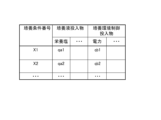
- FIG. 4 is a diagram illustrating an example of input amount data.
- FIG. 5 shows an example of the optimization calculation result data.
- FIG. 6 is a diagram illustrating an example of cost information data.
- FIG. 7 is a flowchart showing an example of the optimization process.
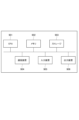
- FIG. 8 is a diagram showing a hardware configuration.
- the environmental control unit 27 controls the culture environment conditions of the culture unit 28.
- the culture environment conditions controlled by the environmental control unit 27 are not particularly limited, but include, for example, temperature, culture gas concentration, pressure (and partial pressures of CO 2 , oxygen, nitrogen, etc.), culture solution flow rate, light illuminance, light wavelength, etc.
- the number of culture environment condition parameters changed by the environmental control unit 27 is not limited, but it is preferable that the number of parameters, together with the parameters of the culture conditions set by the liquid delivery unit 21, is such that the Bayesian optimization calculation is likely to converge.
- the waste fluid reservoir 25E is a reservoir for storing waste fluid containing the culture after the measurement of culture data by the measurement unit 26 is completed.
- the optimization device 3 calculates optimized candidate culture conditions based on the culture data acquired from the microchannel device 2, and sets the optimized candidate culture conditions in the microchannel device 2.
- the optimization device 3 may set the optimized culture conditions calculated from the optimized candidate culture conditions in the mass culture device 1.
- the optimization device 3 performs optimization using black-box optimization such as Bayesian optimization or a genetic algorithm by repeatedly setting parameters calculated using the culture data acquired from the microchannel device 2 in the microchannel device 2, and calculates the optimized candidate culture conditions.
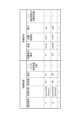
- 3 is a diagram showing an example of the culture data.
- the illustrated culture data is expressed in a table format and includes the culture results of the microchannel device 2 and the culture conditions of the microchannel device 2 for each culture.
- the culture results include an identification number, measurement date and time, number of individuals, other activity, size, size of specific parts, amount of by-products, amount of remaining food, amount of excrement, water quality, and the like.
- the culture conditions include a culture condition pattern number for the set parameters and various parameters set for that pattern number, including temperature, nutrient concentration, chemical concentration, pH, salinity, culture gas concentration, pressure (and partial pressures of CO2 , oxygen, nitrogen, etc.), culture flow rate, feed amount, light illuminance, light wavelength, etc.
- the optimization device 3 shown in the figure includes a calculation unit 31, a setting unit 32, and a storage unit 33.
- the calculation unit 31 receives culture data from the control unit 22 of the microchannel device 2.
- the setting unit 32 sets the optimized candidate culture conditions calculated by the calculation unit 31 in the microchannel device 2. Specifically, the setting unit 32 transmits the optimized candidate culture conditions to the microchannel device 2.
- the control unit 22 of the microchannel device 2 controls the environment control unit 27, the first liquid-feed pump 23, and the second liquid-feed pump 24 so as to achieve the optimized candidate culture conditions.
- the setting unit 32 may set optimized culture conditions in the mass culture apparatus in the mass culture apparatus 1.
- Various types of data are stored in the storage unit 33.
- the storage unit 33 stores culture data, input amount data, optimization calculation result data, and the like.
- Figure 6 shows an example of the structure of cost information data.
- the cost information data is represented, for example, in a table format, and includes the recording date and time, the unit price of the culture, the unit prices of various culture medium inputs, and the unit prices of various culture environment control inputs.
- Culture medium inputs include, for example, water, seawater, nutrients, chemicals, culture medium gas, feed, etc.
- Culture environment control inputs include consumables necessary for culture, such as electricity and culture environment control gas.
- step S1 the setting unit 32 of the optimization device 3 sets the culture conditions in the control unit 22 of the microchannel device 2.
- Initial culture conditions are set as the culture conditions first, and in the repetitions after the optimized culture candidate conditions are calculated in step S6, the optimized culture candidate conditions calculated previously are set as the culture conditions.
- step S2 the microchannel device 2 acquires the target strain being cultured from the mass culture device 1 via the liquid delivery unit 21.
- the target strain is, for example, first delivered to the sample reservoir 25A and then delivered to the culture unit 28.
- the solutions contained in the other reservoirs 25B to 25D are also delivered to the culture unit 28.
- the target strain and the solutions are mixed in the culture unit 28.
- the culture strain is cultured under the culture conditions set in S1.
- the culture environment conditions are controlled by the environment control unit 27.
- the culture environment conditions controlled by the environment control unit 27 are not particularly limited, and include, for example, temperature, culture gas concentration, pressure (and partial pressures of CO 2 , oxygen, nitrogen, etc.), culture solution flow rate, light illuminance, and light wavelength.
- the measurement unit 26 measures the culture cultivated in the culture unit 28 and acquires culture data.
- the culture data measured by the measurement unit 26 may include, for example, image data acquired by a microscope or imaging system, and sensor data acquired by a thermometer, a pressure gauge, a partial pressure gauge, a pH meter, a thermometer, etc.
- step S4 the microchannel device 2 transmits the culture data to the optimization device 3.
- step S8 the optimized culture candidate conditions calculated in steps S1 to S7 are converted into optimized culture conditions in the mass culture apparatus 1, and set in the mass culture apparatus 1.
- the optimization device 3 appropriately converts the input amounts in the optimized culture candidate conditions in the microchannel device 2 calculated into input amounts in the mass culture apparatus 1.
- the optimization device 3 can perform such conversion by storing, in the memory unit 33 of the optimization device 3, predetermined values (coefficients, etc.) corresponding to the culture in the mass culture apparatus 1 for each culture condition parameter of the microchannel device 2, and using these values in the calculation.
- step S9 the mass culture device 1 performs mass culture of the culture strain using the optimized culture conditions set in step S8.
- the optimized candidate culture conditions may be culture conditions that optimize the value of a predetermined objective function.
- This objective function may represent, but is not limited to, the relationship between the culture parameters and the culture yield, the absolute value of the difference between the desired culture yield and the culture yield, or an expected profit (Fig. 8).
- Objective function 1 As an objective function used in calculating the optimized candidate culture conditions, the following function that represents the relationship between the culture parameters and the culture yield can be used.
- the target culture product is an individual itself, for example, the culture yield can be measured by measuring the number of individuals with the measuring unit 26 of the microchannel device 2 using a counter function of a microscope system, and the measured value can be used to calculate the optimized candidate culture conditions.
- the program of the optimization device 3 may be stored in a computer-readable recording medium such as a HDD, SSD, a Universal Serial Bus (USB) memory, a Compact Disc (CD), or a Digital Versatile Disc (DVD), or may be distributed via a network.
- a computer-readable recording medium such as a HDD, SSD, a Universal Serial Bus (USB) memory, a Compact Disc (CD), or a Digital Versatile Disc (DVD), or may be distributed via a network.
- the computer-readable recording medium is, for example, a non-transitory recording medium.
- the present invention is not limited to the above-described embodiment, and various modifications are possible within the scope of the present invention.
- a computer includes a calculation unit that calculates optimal candidate culture conditions based on the culture data acquired from the microfluidic device; A setting unit that sets the optimized candidate culture conditions in the microfluidic device; A program to function as a (Item 9) 7.
- Item 10) Item 8.
Landscapes
- Chemical & Material Sciences (AREA)
- Bioinformatics & Cheminformatics (AREA)
- Health & Medical Sciences (AREA)
- Life Sciences & Earth Sciences (AREA)
- Engineering & Computer Science (AREA)
- Zoology (AREA)
- Wood Science & Technology (AREA)
- Organic Chemistry (AREA)
- Biotechnology (AREA)
- General Health & Medical Sciences (AREA)
- Sustainable Development (AREA)
- Microbiology (AREA)
- Biochemistry (AREA)
- General Engineering & Computer Science (AREA)
- Biomedical Technology (AREA)
- Genetics & Genomics (AREA)
- Medicinal Chemistry (AREA)
- Analytical Chemistry (AREA)
- Apparatus Associated With Microorganisms And Enzymes (AREA)
Abstract
La présente invention concerne un système d'optimisation incluant un dispositif à microcanaux (2) et un dispositif d'optimisation (3), le dispositif à microcanaux (2) étant pourvu : d'une zone d'alimentation en solution (21) pour alimenter une souche à cultiver pendant la culture à partir d'un dispositif de culture de masse (1) ; d'une zone de culture (28) pour cultiver la souche alimentée dans des conditions de culture prédéterminées ; et d'une zone de mesure (26) pour mesurer les données de culture de la souche mise en culture dans la zone de culture (28). Le dispositif d'optimisation (3) est doté : d'une unité de calcul (31) pour calculer les conditions de culture optimisées à partir des données de culture ; et d'une unité de réglage (32) pour régler les conditions de culture optimisées dans le dispositif à microcanaux (2).
Priority Applications (1)
| Application Number | Priority Date | Filing Date | Title |
|---|---|---|---|
| PCT/JP2023/021152 WO2024252556A1 (fr) | 2023-06-07 | 2023-06-07 | Système d'optimisation, dispositif d'optimisation, procédé d'optimisation et programme |
Applications Claiming Priority (1)
| Application Number | Priority Date | Filing Date | Title |
|---|---|---|---|
| PCT/JP2023/021152 WO2024252556A1 (fr) | 2023-06-07 | 2023-06-07 | Système d'optimisation, dispositif d'optimisation, procédé d'optimisation et programme |
Publications (1)
| Publication Number | Publication Date |
|---|---|
| WO2024252556A1 true WO2024252556A1 (fr) | 2024-12-12 |
Family
ID=93795406
Family Applications (1)
| Application Number | Title | Priority Date | Filing Date |
|---|---|---|---|
| PCT/JP2023/021152 Ceased WO2024252556A1 (fr) | 2023-06-07 | 2023-06-07 | Système d'optimisation, dispositif d'optimisation, procédé d'optimisation et programme |
Country Status (1)
| Country | Link |
|---|---|
| WO (1) | WO2024252556A1 (fr) |
Citations (2)
| Publication number | Priority date | Publication date | Assignee | Title |
|---|---|---|---|---|
| WO2019163551A1 (fr) * | 2018-02-26 | 2019-08-29 | 富士フイルム株式会社 | Procédé de gestion de dispositif de culture cellulaire, et système de gestion de dispositif de culture cellulaire |
| WO2022168774A1 (fr) * | 2021-02-08 | 2022-08-11 | 株式会社島津製作所 | Dispositif d'estimation, dispositif d'apprentissage, dispositif d'optimisation, procédé d'estimation, procédé d'apprentissage et procédé d'optimisation |
-
2023
- 2023-06-07 WO PCT/JP2023/021152 patent/WO2024252556A1/fr not_active Ceased
Patent Citations (2)
| Publication number | Priority date | Publication date | Assignee | Title |
|---|---|---|---|---|
| WO2019163551A1 (fr) * | 2018-02-26 | 2019-08-29 | 富士フイルム株式会社 | Procédé de gestion de dispositif de culture cellulaire, et système de gestion de dispositif de culture cellulaire |
| WO2022168774A1 (fr) * | 2021-02-08 | 2022-08-11 | 株式会社島津製作所 | Dispositif d'estimation, dispositif d'apprentissage, dispositif d'optimisation, procédé d'estimation, procédé d'apprentissage et procédé d'optimisation |
Similar Documents
| Publication | Publication Date | Title |
|---|---|---|
| Helleckes et al. | Machine learning in bioprocess development: from promise to practice | |
| JP7560037B2 (ja) | 細胞培養プロセス探索方法、細胞培養プロセス探索プログラム、及び細胞培養プロセス探索装置 | |
| JPWO2021166824A5 (fr) | ||
| Butean et al. | A review of artificial intelligence applications for biorefineries and bioprocessing: from data-driven processes to optimization strategies and real-time control | |
| US11728008B2 (en) | Machine learning and control systems and methods for learning and steering evolutionary dynamics | |
| Morrell et al. | The experiment data depot: a web-based software tool for biological experimental data storage, sharing, and visualization | |
| Lachance et al. | Minimal cells, maximal knowledge | |
| US20220328128A1 (en) | Downscaling parameters to design experiments and plate models for micro-organisms at small scale to improve prediction of performance at larger scale | |
| CN111615674B (zh) | 缩放工具 | |
| CN110945593A (zh) | 用于预测生物反应器中的过程的产出和对生物反应器中的过程建模的方法 | |
| Zulkower et al. | Robust reconstruction of gene expression profiles from reporter gene data using linear inversion | |
| JP2025503486A (ja) | 培養プロセスにおける培養条件を最適化するための方法およびシステム | |
| Becker et al. | Early‐stage sustainability assessment of biotechnological processes: A case study of citric acid production | |
| Gupta et al. | Plant reactome and PubChem: the Plant pathway and (Bio) chemical entity knowledgebases | |
| Hans et al. | Monitoring parallel robotic cultivations with online multivariate analysis | |
| Nelson et al. | Models for wine fermentation and their suitability for commercial applications | |
| CN106415561A (zh) | 多因素评分方法和系统 | |
| Moser et al. | A new concept for the rapid development of digital twin core models for bioprocesses in various reactor designs | |
| Whitford | Bioprocess intensification: technologies and goals | |
| JP7142501B2 (ja) | バイオガスの発生量を予測するための予測情報の作成方法、および、当該予測情報の利用 | |
| Gogna et al. | Predicting enviromically adapted varieties with big data | |
| WO2024252556A1 (fr) | Système d'optimisation, dispositif d'optimisation, procédé d'optimisation et programme | |
| Grant | Next-Generation Amplicon Sequencing: A cost-effective method for exploring microbial biodiversity | |
| Zhang et al. | Biofuser: a multi-source data fusion platform for fusing the data of fermentation process devices | |
| Mohanty et al. | Biochemical Reaction Engineering |
Legal Events
| Date | Code | Title | Description |
|---|---|---|---|
| 121 | Ep: the epo has been informed by wipo that ep was designated in this application |
Ref document number: 23940660 Country of ref document: EP Kind code of ref document: A1 |
|
| NENP | Non-entry into the national phase |
Ref country code: DE |