WO2024252557A1 - 光学セル及びこれを備える濃度測定装置 - Google Patents
光学セル及びこれを備える濃度測定装置 Download PDFInfo
- Publication number
- WO2024252557A1 WO2024252557A1 PCT/JP2023/021153 JP2023021153W WO2024252557A1 WO 2024252557 A1 WO2024252557 A1 WO 2024252557A1 JP 2023021153 W JP2023021153 W JP 2023021153W WO 2024252557 A1 WO2024252557 A1 WO 2024252557A1
- Authority
- WO
- WIPO (PCT)
- Prior art keywords
- optical cell
- light
- sample
- section
- measuring device
- Prior art date
- Legal status (The legal status is an assumption and is not a legal conclusion. Google has not performed a legal analysis and makes no representation as to the accuracy of the status listed.)
- Ceased
Links
Images


Classifications
-
- G—PHYSICS
- G01—MEASURING; TESTING
- G01N—INVESTIGATING OR ANALYSING MATERIALS BY DETERMINING THEIR CHEMICAL OR PHYSICAL PROPERTIES
- G01N21/00—Investigating or analysing materials by the use of optical means, i.e. using sub-millimetre waves, infrared, visible or ultraviolet light
- G01N21/01—Arrangements or apparatus for facilitating the optical investigation
- G01N21/03—Cuvette constructions
-
- G—PHYSICS
- G01—MEASURING; TESTING
- G01N—INVESTIGATING OR ANALYSING MATERIALS BY DETERMINING THEIR CHEMICAL OR PHYSICAL PROPERTIES
- G01N21/00—Investigating or analysing materials by the use of optical means, i.e. using sub-millimetre waves, infrared, visible or ultraviolet light
- G01N21/17—Systems in which incident light is modified in accordance with the properties of the material investigated
- G01N21/59—Transmissivity
Definitions
- the present invention relates to an optical cell for containing a sample when measuring the concentration of the sample by absorptiometry, and a concentration measuring device equipped with the same.
- Patent Document 1 discloses a technique relating to an apparatus for measuring the concentration of such a disinfectant solution by absorptiometry.
- Concentration measuring devices that measure the concentration of a sample by absorptiometry are equipped with an optical cell for containing the sample.
- the optical cell is detachable from the device and is replaced after each use (disposable), and is the part that the user touches most frequently during measurement work. This is the part that contains the sample and also affects the measurement accuracy.
- the optical cell is a component that affects workability and measurement accuracy, and an optical cell that can improve these points is desired.
- the present invention aims to provide an optical cell that can improve workability or measurement accuracy, and a concentration measuring device equipped with the same.
- an optical cell in which the sample is contained comprises a container section having a longitudinal direction and a lateral direction in a horizontal cross section, and a convex portion extending outward from the longitudinal side of the container section along the lateral direction.
- (Configuration 3) The optical cell according to claim 1, wherein the container portion has a substantially rectangular shape in horizontal cross section, and the protrusion portion is formed so as to extend a side surface along a short direction of the substantially rectangular shape.
- (Configuration 4) 4. The optical cell according to any one of configurations 1 to 3, wherein the cross-sectional area of the horizontal cross section is formed larger than that of the storage section, and the optical cell is provided with an inlet section formed at an upper end thereof.
- a concentration measuring device including the optical cell according to any one of configurations 1 to 6, comprising a receiving portion for receiving the optical cell, the receiving portion having a recess for receiving the convex portion only in a predetermined direction.
- (Configuration 8) The concentration measuring device according to configuration 7, further comprising a light emitting unit and a light receiving unit disposed opposite to a side surface along a short side direction of the storage unit, configured to irradiate light onto the sample along the long side direction of the storage unit and receive light that has passed through the sample.
- (Configuration 9) 9. The concentration measuring device according to claim 8, further comprising a sample temperature sensor disposed at a position facing a side surface along a longitudinal direction of the storage section.
- (Configuration 12) A concentration measuring device described in any of configurations 8 to 11, which is provided with a cell insertion sensor arranged below the light-emitting unit and the light-receiving unit and facing the storage unit, and after the cell insertion sensor detects the insertion of the optical cell, a process is performed to obtain transmittance or absorbance information of the optical cell itself as a reference using the light-emitting unit and the light-receiving unit.
- the optical cell of the present invention or a concentration measuring device equipped with the same can improve workability or measurement accuracy.
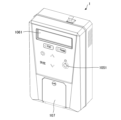
- FIG. 1 is a perspective view showing an external appearance of a concentration measuring device according to an embodiment of the present invention
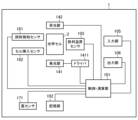
- FIG. 1 is a block diagram showing an outline of a configuration of a concentration measuring device according to an embodiment
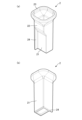
- FIG. 1 is a perspective view showing an external appearance of an optical cell according to an embodiment
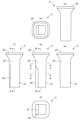
- FIG. 1 is a plan view showing an optical cell according to an embodiment
- 1 is a cross-sectional view showing an optical cell according to an embodiment
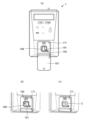
- 1 is a diagram showing a receiving portion of an optical cell of a concentration measuring device according to an embodiment
- 1 is a cross-sectional view of a cell holder unit of a concentration measuring device according to an embodiment of the present invention
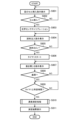
- 1 is a flowchart showing an outline of a processing operation of a concentration measuring device according to an embodiment of the present invention
- FIG. 1 is a perspective view showing the appearance of a concentration measuring device according to an embodiment of the present invention
- FIG. 2 is a block diagram showing an outline of the configuration of the concentration measuring device according to the embodiment.
- the concentration measuring device 1 of the present embodiment is a concentration measuring device that performs concentration measurement based on measurement of temperature and transmittance or absorbance for a disinfectant such as a glutaral aqueous solution or a phthalaral aqueous solution having a correlation between temperature, transmittance or absorbance, and concentration, an optical cell 2 for containing a disinfectant; a radiation temperature sensor 103 that functions as both a sample temperature sensor for measuring the temperature of the disinfectant and an environmental temperature sensor for measuring the environmental temperature; A light emitting unit 141 and a light receiving unit 142 which are optical sensors for measuring the transmittance or absorbance of a disinfectant; A storage unit 102 in which various data and programs necessary for the operation of the device are permanently or temporarily stored; an input unit 105 that is provided with input means such as a power button 1051 and operation buttons and serves as a user interface; an output unit 106 that is provided with a display screen 1061, an indicator, and other output means and serves as a user interface; a cover 107 that covers the optical
- FIG. 3 to 5 are diagrams showing the optical cell, respectively: FIG. 3(a): perspective view seen from above, FIG. 3(b): perspective view seen from below, FIG. 4(a): top view, FIG. 4(b): right side view, FIG. 4(c): left side view, FIG. 4(d): front view, FIG. 4(e): rear view, FIG. 4(f): bottom view, FIG. 5(a): cross-sectional view taken along line A-A in FIG. 4(c), FIG. 5(b): cross-sectional view taken along line B-B in FIG. 4(d), FIG. 5(c): cross-sectional view taken along line CC in FIG. 4(d), and FIG.
- the optical cell 2 is a container formed of a material that transmits the light emitted by the light emitting unit 141, and contains about several cc of a sample (disinfectant).
- the optical cell 2 is detachable from the concentration measuring device 1, and is basically a disposable member.
- the optical cell 2 of this embodiment as shown in FIGS.
- a container 21 for accommodating a sample the container 21 being located at the lower side of the optical cell 2 and having a shape having a longitudinal direction and a lateral direction in a horizontal cross section;
- a protrusion 24 extending outward from a side surface along the longitudinal direction of the storage portion 21 along a lateral direction;
- the configuration includes the following:
- the storage section 21 has a substantially rectangular shape in horizontal cross section
- the introduction section 22 has a substantially square shape in horizontal cross section
- the injection port section 23 connected to the introduction section 22 has a rounded square shape at its upper end.
- shape transition sections whose shape gradually changes from one cross-sectional shape to the other cross-sectional shape.
- the optical cell 2 of this embodiment having the above-mentioned configuration, is excellent in operability for injecting a sample, and can maintain measurement accuracy while reducing the amount of sample required for measurement.
- the injection port 23 has a rounded square shape that is close to a circle, which makes it easy to inject a sample using a pipette or a syringe.
- the capacity of the storage section 21 into which the sample is placed is reduced (specifically, the capacity is reduced from about 5 ml to about 2 ml).
- the reduction in the amount of liquid that must be injected not only improves operability, but also prevents the disinfectant from being wasted.
- the housing 21 has a rectangular cross section, i.e., has a longitudinal direction in a horizontal cross section, the optical path length for measurement by the optical sensor can be secured, and therefore, it is possible to maintain the measurement accuracy while reducing the capacity.
- the housing 21 has a longitudinal shape (i.e., has a wide side surface), it is possible to secure the measurement area for the radiation temperature sensor 103, and therefore, it is possible to maintain the measurement accuracy while reducing the capacity.
- the capacity is reduced and the surface area per volume is greater due to the rectangular cross section than a square cross section, the thermal equilibrium of the disinfectant is reached more quickly (thermal equilibrium is reached more quickly in cases where the temperatures of the optical cell and the disinfectant are different).
- the accommodation section 21, which has a rectangular cross section, is configured to be offset to one side (the right side) relative to the introduction section 22, which has a square cross section, so that the side surface (right side surface) opposite to the side surface on which the convex portion 24 of the accommodation section 21 and the introduction section 22 is formed is formed as a continuous flat surface.
- the convex portion 24 is formed to extend the side (back) along the short direction of the accommodating portion 21, and forms a short extension portion that extends outward along the short direction of the accommodating portion 21 in the bottom shape of the accommodating portion 21 (see Figure 4 (f)).
- the convex portion 24 constitutes a short-side extension portion that extends the short-side direction of the container portion 21 at the bottom of the optical cell 2, thereby improving the stability when the optical cell 2 is stood upright.
- the convex portion 24 is not rotationally symmetrical in a cross-sectional view of the optical cell 2, and the receiving portion 109 of the concentration measuring device 1 described below has a shape corresponding to this, so that the optical cell 2 can always be attached in a constant direction. Since the insertion direction of the optical cell is always constant, the stability of the measurement accuracy is improved.
- the concentration measuring device 1 has a receiving portion 109 into which the optical cell 2 is inserted.
- FIG. 6(a) is a diagram showing the state in which the cover 107 of the concentration measuring device 1 is open
- FIG. 6(b) is an enlarged perspective view of the receiving portion 109
- FIG. 6(c) is a diagram showing the state in which the optical cell 2 is attached in FIG. 6(b).
- the receiving portion 109 has a shape corresponding to the outer diameter shape of the optical cell 2, and has a recess 191 that receives the convex portion 24 of the optical cell 2 only in a specified direction so that the optical cell 2 is always attached in a specific direction.
- the receiving portion 109 Since the receiving portion 109 has a shape corresponding to the outer diameter shape of the optical cell 2, the optical cell 2 can be attached at a fixed position without rattling or the like in the concentration measuring device 1. This improves the stability of the measurement accuracy.
- the receiving portion 109 is provided with a marking 192 that indicates the correct insertion direction of the optical cell 2. By providing a marking that imitates the cross-sectional shape of the optical cell 2 (indicating the direction of the protrusion 24), usability is improved.
- the radiation temperature sensor 103 is provided at a position facing the area of the optical cell 2 attached to the concentration measuring device 1 in which the disinfectant is placed, and measures the temperature of the sample (disinfectant) in a non-contact manner.
- the radiation temperature sensor (sample temperature sensor) 103 is disposed on a side surface along the longitudinal direction of the accommodation section 21 of the optical cell 2 when the optical cell 2 is attached to the concentration measuring device 1, facing the side surface (right side surface) opposite to the side surface on which the convex portion 24 is formed.
- the right side surface of the accommodation section 21 is formed as a continuous flat surface without irregularities, and disposing the radiation temperature sensor 103 at a position facing this side surface increases the degree of freedom in installing the radiation temperature sensor 103.
- the right side surface of the accommodation section 21 is a surface along the longitudinal direction and has a large area, it is easy to ensure an area for measurement by the radiation temperature sensor 103.
- the radiation temperature sensor 103 is connected to the control and calculation unit 101 , and the reading of the sensor value and the like are controlled by the control and calculation unit 101 .
- the light-emitting unit 141 and the light-receiving unit 142 which are optical sensors for measuring the transmittance of the disinfectant, are each positioned so that the optical axis of the light-emitting unit 141 passes through the disinfectant in the optical cell 2 and so that the light-receiving unit 142 can receive the light that has passed through the disinfectant.
- the light-emitting unit 141 and the light-receiving unit 142 are arranged at positions facing the side surface along the short direction of the storage unit 21 of the optical cell 2 when the optical cell 2 is attached to the concentration measurement device 1, and are configured to irradiate light onto the sample along the longitudinal direction of the storage unit 21 and receive light that has passed through the sample.
- the light-emitting unit 141 is arranged at a position facing the back surface of the storage unit 21, and the light-receiving unit 142 is arranged at a position facing the front surface of the storage unit 21.
- the light-emitting unit 141 and the light-receiving unit 142 are arranged so that the height of the optical path from the light-emitting unit 141 to the light-receiving unit 142 is within the height range of the measurement area (measurement range) of the radiation temperature sensor (sample temperature sensor) 103.
- the light-emitting unit 141 is arranged to face one side (back side) of the optical cell 2, and the light-receiving unit 142 is arranged to face the opposite side (front side), with the optical path being within the height range of the measurement target range of the sample temperature sensor; however, the light-emitting unit 141 and the light-receiving unit 142 may be arranged in any manner as long as they are configured to receive light that has passed through the disinfectant.
- the light emitting unit 141 is connected to the control and calculation unit 101 via a driver circuit 1411 that drives light emission, and the timing of light emission and the like are controlled by the control and calculation unit 101 .
- the light receiving unit 142 is also connected to the control and calculation unit 101, and the control of reading the sensor value and the calculation process of the transmittance based on the sensor value are performed by the control and calculation unit 101.
- Figures 7A and 7B are cross-sectional views of the cell holder unit which holds the optical cell 2 to be inserted into the device and the substrate on which each sensor is mounted, where Figure 7(a) is a vertical cross-sectional view, and Figure 7(b) is a horizontal cross-sectional view taken along line E-E in Figure 7(a).
- the light emitting unit 141 and the light receiving unit 142 are configured to irradiate the disinfectant solution AS, which is a sample, with light along the longitudinal direction of the storage unit 21 and to receive the light transmitted through the disinfectant solution AS. This ensures the optical path length for measurement by the optical sensor, and therefore makes it possible to improve the measurement accuracy of the transmittance of the disinfectant solution AS while reducing the volume.
- the radiation temperature sensor 103 is disposed on a surface (a surface having a large area) along the longitudinal direction of the accommodation portion 21, facing the surface opposite to the surface on which the protrusion 24 is formed. Furthermore, the radiation temperature sensor 103, the light emitter 141 and the light receiver 142 are disposed at the same height, and "the optical path is within the height range of the measurement target range of the sample temperature sensor". With this configuration, the liquid temperature in the optical path (i.e., the portion where the transmittance is measured) can be measured, so that the measurement accuracy can be improved.
- Both the sample detection sensor 181 and the cell insertion sensor 182 are composed of optical sensors (light emitting portion and light receiving portion).
- the cell insertion sensor 182 which is a sensor for detecting that the optical cell 2 has been attached to the device, is disposed below the light-emitting unit 141 and the light-receiving unit 142 and in a position facing the storage unit 21. By being disposed below the light-emitting unit 141 and the light-receiving unit 142, it is ensured that the optical cell 2 is present in a position facing the light-emitting unit 141 and the light-receiving unit 142 when the optical cell 2 is detected by the cell insertion sensor 182.
- the sample detection sensor 181 which is a sensor for detecting that the disinfectant solution AS has been injected into the optical cell 2 attached to the device, is disposed at a position above the light-emitting unit 141 and the light-receiving unit 142 and facing the storage unit 21. By being positioned above the light-emitting unit 141 and the light-receiving unit 142, it is ensured that the disinfectant solution AS is present in the optical cell 2 at a position facing the light-emitting unit 141 and the light-receiving unit 142 when the disinfectant solution AS in the optical cell 2 is detected by the sample detection sensor 181.
- Both the sample detection sensor 181 and the cell insertion sensor 182 detect the insertion of the optical cell 2 and the injection of the disinfectant AS by a change in reflectance (light receiving level at the light receiving section).
- the sample detection sensor 181 and the cell insertion sensor 182 are connected to the control/calculation unit 101, and the control of the reading of the sensor values (and the light emission for that purpose) and the above-mentioned judgment processes based on the sensor values (changes in reflectance) are performed by the control/calculation unit 101.
- the input unit 105 and output unit 106 which are user interfaces, can use any input interface such as a button, a touch panel, or a voice input unit, or any output interface such as a visual display device such as an indicator or a display screen, or an auditory output unit such as a speaker.
- the input/output unit is not limited to an interface for a user, but may be any input/output unit for inputting and outputting information between the device and another device.
- the lid sensor 171 is also composed of an optical sensor (light-emitting section and light-receiving section) and is positioned opposite the cover 107 in the closed state. It detects whether the cover 107 is opened or closed by changes in reflectance (light receiving level at the light-receiving section).
- the lid sensor 171 is also connected to the control/calculation unit 101, and the control/calculation unit 101 controls the reading of the sensor value (and the light emission for that purpose), and determines whether the cover 107 is open or closed based on the sensor value (change in reflectance).
- the cell insertion sensor 182 and the lid sensor 171 are configured by optical sensors, but the present invention is not limited to this.
- the cell insertion sensor and the lid sensor may be configured by a sensor that detects a physical contact state.
- the memory unit 102 stores (permanently or temporarily stores) programs for executing the processes described below, and data necessary for executing the processes described below (as well as various other data and programs necessary for the operation of the device).
- the storage unit 102 may be any storage device capable of permanently or temporarily storing this information.
- the control/calculation unit 101 controls each part of the device and performs various calculation processes, and is configured using any semiconductor device that performs calculation processes and is equipped with a CPU (Central Processing Unit), such as a microcomputer.
- the control/calculation unit 101 has a function of executing the processes described below with reference to FIG. 8 while controlling each sensor, etc., based on a program stored in the storage unit 102.
- the control/calculation unit 101 is connected to each unit via an A/D conversion circuit, various filter circuits, etc. as necessary (circuits are provided appropriately to make the signals appropriate for input/output to the control/calculation unit 101).
- processing units for each function are implemented in software on a general-purpose device (configured by a program running on the control/calculation unit 101), but some or all of each function may also be configured in hardware (for example, by a dedicated IC, etc.).
- step 801 a process is executed to display on the display screen 1061 a message instructing the user to set an empty optical cell 2 in the concentration measuring device 1.
- step 802 it is monitored whether or not the optical cell 2 has been inserted based on the sensor value of the cell insertion sensor 182. Until the optical cell 2 is inserted, the message display process of step 801 is continued (step 802: No -> step 801), and when it is determined that the optical cell 2 has been inserted (step 802: Yes), the process proceeds to step 803.
- step 803 after the empty optical cell 2 is set in the concentration measuring device 1, a calibration process of the optical sensor (light emitting unit 141 and light receiving unit 142) is executed.
- This calibration involves measuring the transmittance (reference) of the empty optical cell 2, and calibrating the measurement by the optical sensor based on the value obtained thereby (a value specific to the empty optical cell 2). Since the optical cell 2 is assumed to be disposable and is replaced with a different (new) optical cell each time, the sensor is calibrated based on the transmittance specific to each optical cell 2 to improve the accuracy of the measurement.
- the calibration process itself is based on the same calculation method as in the past, and therefore a detailed explanation will be omitted here.
- Steps 802 and 803 perform "processing for acquiring transmittance or absorbance information of the optical cell itself as a reference by the light emitting unit and the light receiving unit after the insertion of the optical cell is detected by the cell insertion sensor.”
- error processing may be performed, such as displaying a warning message requesting the insertion of an empty cell.
- step 804 a message instructing the user to inject disinfectant into the cell is displayed on the display screen 1061.
- step 805 it is monitored whether or not the required amount of disinfectant has been injected into the optical cell 2 based on the sensor value of the sample detection sensor 181.
- the message display process of step 804 is continued until the required amount of disinfectant has been injected into the optical cell 2 (step 805: No -> step 804), and if it is determined that the required amount of disinfectant has been injected (step 805: Yes), the process proceeds to step 806, where timer 1 is started (timekeeping begins). Note that, although an example is shown here in which timer 1 is started after the required amount of disinfectant has been injected into the optical cell 2, timer 1 may also be started after the cover 107 is closed (timekeeping begins after step 808).
- step 807 a message instructing the user to close the cover 107 is displayed on the display screen 1061.
- step 808 it is monitored whether or not the cover 107 is closed based on the sensor value of the lid sensor 171.
- the message display process in step 807 is continued until the cover 107 is closed (step 808: No -> step 807), and when it is determined that the cover 107 is closed (step 808: Yes), the process proceeds to step 809.
- step 809 it is determined whether or not the timer 1 is equal to or greater than a predetermined value. If the timer 1 is equal to or greater than the predetermined value, the process proceeds to step 810 for determining the concentration.
- the process of step 809 is a process of waiting for a predetermined time after the disinfectant is injected into the optical cell 2 . Immediately after the injection of the disinfectant, the measured values of temperature and transmittance may vary due to liquid convection, air bubbles, etc. Or, if there is a difference between the temperature of the cell and the temperature of the disinfectant, the liquid temperature may not be stable immediately after the injection of the disinfectant.
- step 809 improves the accuracy of the measurement of the transmittance and liquid temperature by performing the measurement after a predetermined time has elapsed (after waiting for the injected disinfectant to settle).
- the "predetermined time” may be determined appropriately depending on the configuration of the device and the problem to be solved. For example, to solve the problem of liquid movement or air bubbles immediately after injection of the disinfectant, the time may be set to about 10 to 15 seconds.
- step 810 a concentration determination process is performed.
- the transmittance and temperature of the disinfectant and the environmental temperature, if necessary
- the concentration of the disinfectant is calculated based on these measured values.
- the process of calculating the concentration based on the measured transmittance and temperature is based on the same calculation method as in the past, so a detailed description thereof will be omitted here.
- Steps 805-810 perform "acquisition of temperature information by the sample temperature sensor, and acquisition of transmittance or absorbance information of the sample by the light-emitting unit and the light-receiving unit, a predetermined time after the sample detection sensor detects the injection of the sample into the optical cell.”
- a process is performed to output the concentration measured in step 810 from the output unit 106.
- the output process may be one in which an indicator displays whether or not a specified concentration (e.g., 0.3%) is met (e.g., turning on a Fail or Pass lamp) or one in which the concentration is specifically displayed as a numerical value.
- the optical cell 2 of this embodiment it is possible to improve the workability and measurement accuracy.
- the injection port 23 has a rounded square shape that is nearly circular, the operability of injecting a sample into the optical cell using a pipette or syringe is excellent.
- the volume of the container 21 in which the sample is placed can be reduced, improving workability and preventing waste of disinfectant.
- the storage section 21 has a longitudinal direction in a horizontal cross-sectional view, the optical path length for measurement by the optical sensor can be secured, and the measurement accuracy is improved while the capacity is reduced.
- a longitudinal shape i.e.
- a measurement area for the radiation temperature sensor 103 can be secured, and therefore the measurement accuracy is improved while the capacity is reduced. Since one side surface (the right side surface) of the storage section 21 and the introduction section 22 is formed as a continuous flat surface without any irregularities, there is a high degree of freedom in installing the radiation temperature sensor 103 in a position opposite this side surface.
- the convex portion 24 forms a short extension portion that extends outward along the short side of the storage portion 21 in the bottom shape of the storage portion 21, thereby improving the stability when the optical cell 2 is stood upright.
- the convex portion 24 is a convex portion that is not rotationally symmetrical in a cross-sectional view of the optical cell 2 and the receiving portion 109 of the concentration measuring device 1 has a shape corresponding to this, the optical cell 2 can always be attached in a constant direction. Since the insertion direction of the optical cell is always constant, the stability of the measurement accuracy is improved.
- the concentration measuring device 1 including the optical cell 2 of this embodiment also improves workability and measurement accuracy.
- the light-emitting unit 141 and the light-receiving unit 142 are positioned so that their optical path is located within the height range of the measurement area of the radiation temperature sensor 103, thereby making it possible to measure the liquid temperature in the optical path (i.e., the part where the transmittance is measured), thereby improving the measurement accuracy.
- the sample detection sensor 181 which is positioned below the light-emitting part 141 and the light-receiving part 142, can detect a state in which the optical cell 2 is present in a position opposite the light-emitting part 141 and the light-receiving part 142, and the calibration process is performed automatically, improving workability and measurement accuracy.
- the cell insertion sensor 182, which is disposed above the light-emitting unit 141 and the light-receiving unit 142, can detect a state in which the presence of disinfectant in the optical cell 2 is guaranteed at a position (on the optical path) opposite the light-emitting unit 141 and the light-receiving unit 142.
- the lid sensor 171 detects that the cover 107 is closed and automatically executes the concentration measurement process (conversely, the concentration measurement process is not executed unless the cover 107 is closed), improving workability and measurement accuracy.
- the convex portion 24 of the optical cell 2 is formed from the top to the bottom along the storage portion 21 (i.e., a plate-shaped or blade-shaped member), but the present invention is not limited to this (the convex portion is not limited to a plate-shaped or blade-shaped member).
- the convex portion is at least a "convex portion extending from the side along the longitudinal direction of the storage portion to the outside along the short direction", it can obtain the effect of specifying the insertion direction of the optical cell, and may be formed only in a part of the height direction of the storage portion 21.
- the convex portion form a "short extension portion" on the bottom surface portion, it is possible to obtain the effect of improving the self-supporting property of the optical cell, as in the embodiment.
- the number of convex portions is not limited to one, and multiple convex portions may be provided as long as they are not rotationally symmetrical in a horizontal cross section.
- the protrusion 24 is formed so as to extend the side surface (rear surface) along the short direction of the storage section 21, but the present invention is not limited to this, and the protrusion may be at least a "protrusion extending outward along the short direction from the side surface along the longitudinal direction of the storage section.
- it may be a protrusion formed so as to extend outward along the short direction from near the center of the side surface along the longitudinal direction of the storage section.
- a concentration measuring device that measures the concentration of disinfectants such as an aqueous glutaric acid solution or an aqueous phthalaric acid solution is used as an example, but the present invention is not limited to this, and the concept of the present invention can be applied to any measuring device that measures samples using optical cells such as those used in absorptiometry.
- a radiation temperature sensor which is a non-contact temperature sensor
- the present invention is not limited to this.
- any temperature sensor such as a contact type temperature sensor such as a thermocouple, can be used.
- Concentration measuring device 101 Control and calculation unit 102.
- Storage unit 103 Radiation temperature sensor (sample temperature sensor) 141. . . Light-emitting part 142. . . Light-receiving part 109. . . Receptacle part 191. . . Recess 181. . . Sample detection sensor 182. . . Cell insertion sensor 2. . . Optical cell 21. . . Storage part 22. . . Introduction part 23. . . Injection port part 24. . . Convex part (short extension part)
Landscapes
- Physics & Mathematics (AREA)
- Health & Medical Sciences (AREA)
- Life Sciences & Earth Sciences (AREA)
- Chemical & Material Sciences (AREA)
- Analytical Chemistry (AREA)
- Biochemistry (AREA)
- General Health & Medical Sciences (AREA)
- General Physics & Mathematics (AREA)
- Immunology (AREA)
- Pathology (AREA)
- Optical Measuring Cells (AREA)
- Investigating Or Analysing Materials By Optical Means (AREA)
Abstract
Description
洗浄に使用される消毒薬は比較的高価であるため、一定の回数若しくは期間繰り返し使用されるのが一般的であり、使用に際しては、定められた濃度を有していることを確認するための濃度測定が行われている。
このような消毒液の濃度測定を吸光光度法によって行う装置に関する技術が、特許文献1によって開示されている。
試料が収容されるものであり、測定精度にも影響を与える部品である。
このように、光学セルは作業性や測定精度に影響を与える部品であり、これらの点を向上し得る光学セルが求められている。
吸光光度法によって試料の濃度を測定する濃度測定装置において、試料が収容される光学セルであって、水平断面において長手方向と短手方向を有する収容部と、前記収容部の長手方向の側面から短手方向に沿って外側へと延びる凸部と、を備える、光学セル。
前記凸部が、前記収容部の底面形状において短手方向に沿って外側へと延びる短手延長部を形成する、構成1に記載の光学セル。
前記収容部が水平断面において略矩形の形状を有し、前記凸部が、略矩形の短手方向に沿った側面を延長するように形成されている、構成1又は2に記載の光学セル。
水平断面の断面積が前記収容部よりも大きく形成され、前記光学セルの上端部に形成された注入口部を備える、構成1から3の何れかに記載の光学セル。
水平断面の断面積が前記収容部よりも大きく形成され、前記注入口部と前記収容部との間に位置する導入部を備える、構成4に記載の光学セル。
前記収容部及び前記導入部の前記凸部が形成されている側面とは反対側の側面が、連続する平面として形成されている、構成5に記載の光学セル。
構成1から6に記載の光学セルを備える濃度測定装置であって、前記光学セルを受容する受容部であって、所定方向においてのみ前記凸部を受容する凹部を有する受容部を備える、濃度測定装置。
前記収容部の短手方向に沿った測面に対向する位置に、発光部と受光部を備えることにより、前記収容部の長手方向に沿って試料に光を照射し、試料を透過した光を受光するように構成された、構成7に記載の濃度測定装置。
前記収容部の長手方向に沿った側面に対向する位置に、試料温度センサを備える、構成8に記載の濃度測定装置。
前記試料温度センサの測定対象範囲の高さ範囲内に、前記発光部から前記受光部へと至る光路の高さが位置するように配置されている、構成9に記載の濃度測定装置。
前記試料温度センサが、前記凸部が形成されている側面とは反対側の側面に対向するように設けられている、構成9又は10に記載の濃度測定装置。
前記発光部及び前記受光部よりも下側であって前記収容部と対向する位置に配されたセル挿入センサを備え、前記セル挿入センサによって前記光学セルの挿入が検知された後に、前記発光部と前記受光部によってリファレンスとしての前記光学セル自体の透過率若しくは吸光度情報を取得する処理を実行する、構成8から11の何れかに記載の濃度測定装置。
前記発光部及び前記受光部よりも上側であって前記収容部と対向する位置に配された試料検知センサを備え、前記試料検知センサによって前記光学セルへの試料の注入が検知されてから所定時間経過後に、前記試料温度センサによる温度情報の取得処理、及び、前記発光部と前記受光部による試料の透過率若しくは吸光度情報の取得処理を実行する、構成9から12の何れかに記載の濃度測定装置。
消毒液を収容する光学セル2と、
消毒液の温度を測定するための試料温度センサ、及び、環境温度を測定するための環境温度センサの双方として機能する放射温度センサ103と、
消毒液の透過率若しくは吸光度を測定するための光学センサである発光部141及び受光部142と、
装置の動作に必要な各種のデータやプログラム等が常時若しくは一時的に格納されている記憶部102と、
電源ボタン1051や操作ボタン等の入力手段を備えて、ユーザインタフェースとなる入力部105と、
表示画面1061やインジケータ等の出力手段を備えて、ユーザインタフェースとなる出力部106と、
光学セル2が装置に取り付けられた状態で、装置の外部からの光が入り込まないように光学セル2を覆う蓋となるカバー107と、
カバー107の開閉をセンシングする蓋センサ171と、
光学セル2が装置に取り付けられたことを検知するためのセル挿入センサ182と、
装置に取り付けられた光学セル2に、試料(消毒液)が注入されたことを検知する試料検知センサ181と、
装置の各部の制御や、各種の演算処理を行い、濃度測定部としても機能する、制御・演算部101と、
を備えている。
なお、上記で「透過率若しくは吸光度」としている点に関し、吸光度は透過度の逆数の対数であり、透過率と吸光度の違いは本発明の適応において概念的な違いをもたらすものではない(例えば、吸光度として扱う場合には、上記関係式に基づいた変換等をすればよいものである)ため、以下単に「透過率」という。
光学セル2は、発光部141が発する光を透過させる部材で形成された容器であり、数cc程度の試料(消毒液)を収容する。光学セル2は、濃度測定装置1に対して着脱可能であり、基本的にはディスポーザブル(使い捨て)の部材である。
本実施形態の光学セル2は、図3~5に示されるように、
試料を収容する収容部であり、光学セル2の下部側において、水平断面において長手方向と短手方向を有する形状の収容部21と、
水平断面の断面積(水平断面の外径形状)が収容部21よりも大きく形成され、光学セル2の上端部に形成された注入口部23と、
水平断面の断面積(水平断面の外径形状)が収容部21よりも大きく、且つ、注入口部23より小さく形成され、注入口部23と収容部21との間に位置する導入部22と、
収容部21の長手方向に沿った側面から短手方向に沿って外側へと延びる凸部24と、
を備えた構成を有している。
本実施形態の光学セル2は、上記構成を有することにより、試料の注入の作業性に優れると共に、測定のための試料の必要量を低減させながら、測定精度を維持することができるものである。
即ち、注入口部23が円に近いような角丸正方形の形状を有していることにより、ピペットやシリンジを使用した試料の注入の作業性に優れているものである。また、収容部21を断面長方形にすることで、試料が入る収容部21の容量を低減している(具体的には、5ml程度から2ml程度に小容量化している)。注入しなければならない液量が低減されることにより、作業性の向上と共に消毒液を無駄にしないという効果も得られる。
加えて、収容部21が断面長方形であること、即ち、水平断面視で長手方向を有していることにより、光学センサによる測定の光路長を確保することができ、従って、小容量化をしつつも、測定精度を維持することが可能となるものである。さらに、長手方向を有する形状(即ち広い面積の側面を有する)ことにより、放射温度センサ103による計測エリアを確保することができ、従って、小容量化をしつつも、測定精度を維持することが可能となる。
また、小容量化されていること、及び、断面長方形であることにより体積当たりの表面積が断面正方形よりも大きいことにより、消毒液の熱平衡が早くなる(光学セルと消毒液の温度が異なるような場合において熱平衡が早くなる)という効果も得ることができる。
断面長方形の収容部21は、断面正方形の導入部22に対して、一方側(右側)へオフセットするように構成され、その結果、収容部21及び導入部22の凸部24が形成されている側面とは反対側の側面(右側面)が、連続する平面として形成されている。これにより、収容部21及び導入部22の一方側の側面(右側面)は、凹凸の無い連続した平面として形成され、この側面に対して対向する位置への放射温度センサ103の設置の自由度が高くなる。
凸部24が、光学セル2の底部において、収容部21の短手方向を延長する短手延長部を構成することにより、光学セル2を立たせる際の安定性が向上する。
また、凸部24が、光学セル2の断面視において回転対称ではない凸部であり、下記で説明する濃度測定装置1の受容部109がこれに対応する形状を有していることで、光学セル2を常に一定の方向で取り付けさせることができる。光学セルの挿入方向が常に一定であることよって、測定精度の安定性の向上が図られるものである。
図6(a)は、濃度測定装置1のカバー107を開けた状態を示す図であり、図6(b)は受容部109部分を拡大した斜視図、図6(c)は図6(b)において光学セル2を取り付けた状態を示す図である。
受容部109は、光学セル2の外径形状に対応した形状を有しており、光学セル2が常に特定の方向で取り付けられるように、所定方向においてのみ光学セル2の凸部24を受容する凹部191を有している。
受容部109が光学セル2の外径形状に対応した形状を有していることにより、光学セル2は濃度測定装置1に対してガタつき等を有せずに一定の位置で取り付けられることになる。これにより、測定精度の安定性の向上が図られる。
また、受容部109には、光学セル2の正しい挿入方向を示すマーキング192が設けられている。光学セル2の断面形状を模した(凸部24の方向を示した)マーキングを行うことで、ユーザビリティを向上している。
放射温度センサ(試料温度センサ)103は、光学セル2が濃度測定装置1に取り付けられた状態において、光学セル2の収容部21の長手方向に沿った側面であって、凸部24が形成されている側面とは反対側の側面(右側面)に対向する位置に、配置されている。前述のように、収容部21の右側面は、凹凸の無い連続した平面として形成されており、この側面に対して対向する位置に放射温度センサ103を配置することで、放射温度センサ103の設置の自由度が高くなるものである。また、収容部21の右側面は長手方向に沿った面であり、広い面積の側面であるため、放射温度センサ103による計測エリアを確保しやすいものである。
放射温度センサ103は、制御・演算部101と接続され、センサ値の読み取り等が制御・演算部101によって制御される。
発光部141及び受光部142は、光学セル2が濃度測定装置1に取り付けられた状態において、光学セル2の収容部21の短手方向に沿った測面に対向する位置に配置され、収容部21の長手方向に沿って試料に光を照射し、試料を透過した光を受光するように構成される。本実施形態では、収容部21の背面に対向する位置に発光部141が配置され、収容部21の正面に対向する位置に受光部142が配置される。
また、発光部141及び受光部142は、放射温度センサ(試料温度センサ)103の計測エリア(測定対象範囲)の高さ範囲内に、発光部141から受光部142へと至る光路の高さが位置するように配置されている。
なお、ここでは、光学セル2の一側面(背面)に対向するように発光部141が配され、反対側面(正面)に対向するように受光部142が配されておいり、その光路が試料温度センサの測定対象範囲の高さ範囲内であるものを例とするが、発光部141と受光部142は、消毒液を通った光を受光できる構成であれば、任意の配置とし得る。
発光部141は、発光を駆動するドライバ回路1411を介して制御・演算部101と接続され、発光のタイミング等が制御・演算部101によって制御される。
受光部142も、制御・演算部101と接続され、センサ値の読み取りの制御や、当該センサ値に基づく透過率の算出処理等が制御・演算部101によって行われる。
図7から理解されるように、発光部141及び受光部142は収容部21の長手方向に沿って試料である消毒液ASに光を照射し、消毒液ASを透過した光を受光するように構成されている。これにより、光学センサによる測定の光路長を確保することができ、従って、小容量化をしつつも、消毒液ASの透過率の測定精度を良好にすることが可能となるものである。
また、放射温度センサ103は、収容部21の長手方向に沿った面(広い面積を有する面)であって、凸部24が形成されている面とは逆の面に対向するように設けられている。
なお且つ、放射温度センサ103、発光部141及び受光部142は、同じ高さ位置に配置されており、「光路が試料温度センサの測定対象範囲の高さ範囲内」とされている。
当該構成により、光路(即ち、透過率が測定された部分)における液温を測定することができるため、測定精度を良好にすることが可能となるものである。
光学セル2が装置に取り付けられたことを検知するためのセンサであるセル挿入センサ182は、図7(a)に示されるように、発光部141及び受光部142よりも下側であって収容部21と対向する位置に配置される。発光部141及び受光部142よりも下側に位置することにより、セル挿入センサ182によって光学セル2が検知された状態においては、発光部141及び受光部142に対向する位置に光学セル2が存在していることが担保される。
装置に取り付けられた光学セル2に、消毒液ASが注入されたことを検知するためのセンサである試料検知センサ181は、発光部141及び受光部142よりも上側であって収容部21と対向する位置に配置される。発光部141及び受光部142よりも上側に位置することにより、試料検知センサ181によって光学セル2内の消毒液ASが検知された状態においては、発光部141及び受光部142に対向する位置において光学セル2内に消毒液ASが存在していることが担保される。
試料検知センサ181とセル挿入センサ182は、何れも、反射率(受光部における受光レベル)の変化により、光学セル2が挿入されたこと、及び、消毒液ASが注入されたことを検知する。
試料検知センサ181とセル挿入センサ182は、制御・演算部101と接続され、センサ値の読み取り(及びそのための発光)の制御や、当該センサ値(反射率の変化)に基づく上記の各判断処理等が制御・演算部101によって行われる。
なお、入出力部は、ユーザに対するインタフェースに限られるものではなく、他の装置との間で情報の入出力を行うための任意の入出力部であってよい。
蓋センサ171も制御・演算部101と接続され、センサ値の読み取り(及びそのための発光)の制御や、当該センサ値(反射率の変化)に基づくカバー107の開閉の判断処理等が制御・演算部101によって行われる。
なお、ここでは、セル挿入センサ182や蓋センサ171が光学センサによって構成されるものを例としたが、本発明をこれに限るものではない。例えば、物理的な接触状態を感知するセンサ等によってセル挿入センサや蓋センサを構成するものであってよい。
記憶部102は、これらの情報の常時若しくは一時的な記憶が可能な任意の記憶デバイスを用いるものであってよい。
なお、図では省略しているが、必要に応じてA/D変換回路や各種のフィルター回路等を介して制御・演算部101が各部と接続されること(制御・演算部101への入出力として適切な信号にするための回路を適宜設けること)は勿論である。
ここでは、各機能の処理部が、汎用的なデバイス上でソフトウェア的に実装される(制御・演算部101上で動作するプログラムによって構成される)ものを例としているが、それぞれの一部若しくは全部が、ハード的に(例えば専用のIC等によって)構成されるもの等であってもよい。
例えば電源ボタン1051の押し下げを契機とする等、濃度測定処理の開始が指示された際に、図8の処理が実行される。
ステップ801では、空の光学セル2を濃度測定装置1にセットするように指示するメッセージを表示画面1061に表示させる処理が実行される。
続くステップ802では、セル挿入センサ182のセンサ値に基づき、光学セル2が挿入されたか否かを監視する。光学セル2が挿入されるまではステップ801のメッセージ表示処理を継続し(ステップ802:No→ステップ801)、光学セル2が挿入されたと判断された場合には(ステップ802:Yes)、ステップ803へと移行する。
ステップ802、803により、「セル挿入センサによって光学セルの挿入が検知された後に、発光部と受光部によってリファレンスとしての光学セル自体の透過率若しくは吸光度情報を取得する処理」が行われる。
なお、ステップ802の処理において、消毒液が既に入っている光学セルが装置にセットされたと判断された場合には、例えば、空のセルの挿入を求める警告表示を行う等の、エラー処理を行わせるものであってもよい。
続くステップ805では、試料検知センサ181のセンサ値に基づき、光学セル2に消毒液が必要量注入されたか否かを監視する。光学セル2に消毒液が必要量注入されるまではステップ804のメッセージ表示処理を継続し(ステップ805:No→ステップ804)、必要量の消毒液が注入されたと判断された場合には(ステップ805:Yes)、ステップ806へと移行し、タイマ1をスタート(計時を開始)する。なお、ここでは光学セル2に消毒液が必要量注入された後にタイマ1をスタートするものを例としているが、カバー107が閉められた後にタイマ1をスタートする(ステップ808の後で、計時を開始する)ものであってもよい。
続くステップ808では、蓋センサ171のセンサ値に基づき、カバー107が閉じられたか否かを監視する。カバー107が閉じられるまではステップ807のメッセージ表示処理を継続し(ステップ808:No→ステップ807)、カバー107が閉じられたと判断された場合には(ステップ808:Yes)、ステップ809へと移行する。
ステップ809の処理は、光学セル2に消毒液が注入された後に、所定時間だけ待つ処理を行っているものである。
消毒液の注入直後は液体の対流、気泡などにより、温度や透過率の測定値にバラツキが生じ易い場合がある。または、セルの温度と消毒液の温度に相違があると、消毒液の注入直後は液温が安定しない場合もある。ステップ809の処理は、所定時間経過後に(注入された消毒液が落ち着くのを待って)測定を行わせることで、透過率、液温度の測定の精度を向上させているものである。
“所定時間”は、装置の構成や対象とする問題に応じて適宜定めればよい。例えば、消毒液の注入直後の液体動きや気泡の問題に対しては、例えば10~15秒程度放置させるようにするものであってよい。
当該処理では、消毒液の透過率と温度(及び必要に応じて環境温度)を測定して、これらの測定値に基づいて、消毒液の濃度を算出する処理が行われる。透過率と温度の測定値に基づいて、濃度を算出する処理自体は、従来と同様の計算方法に基づくものであるため、ここでの詳しい説明を省略する。
ステップ805-810により、「試料検知センサによって光学セルへの試料の注入が検知されてから所定時間経過後に、試料温度センサによる温度情報の取得処理、及び、発光部と受光部による試料の透過率若しくは吸光度情報の取得処理」が行われる。
当該出力処理は、所定の濃度(例えば0.3%)を満たしているか否かをインジケータで表示させる(例えば、FailやPassのランプを点灯させる)ものや、具体的に濃度を数値として表示させるもの等であってよい。
具体的には、注入口部23が円に近いような角丸正方形の形状を有していることにより、ピペットやシリンジを使用した光学セルへの試料の注入の作業性に優れている。
また、収容部21を断面長方形にすることで、試料が入る収容部21の容量を低減し、作業性の向上と共に消毒液の無駄が防止される。
加えて、収容部21が水平断面視で長手方向を有していることにより、光学センサによる測定の光路長を確保することができ、小容量化をしつつも、測定精度が向上されている。
また、長手方向を有する形状(即ち広い面積の側面を有する)ことにより、放射温度センサ103による計測エリアを確保することができ、従って、小容量化をしつつも、測定精度が向上されている。
収容部21及び導入部22の一方側の側面(右側面)が、凹凸の無い連続した平面として形成されているため、この側面に対して対向する位置への放射温度センサ103の設置の自由度が高い。
凸部24によって、収容部21の底面形状において、収容部21の短手方向に沿って外側へと延びる短手延長部が形成され、これにより、光学セル2を立たせる際の安定性が向上している。
また、凸部24が、光学セル2の断面視において回転対称ではない凸部であり、濃度測定装置1の受容部109がこれに対応する形状を有していることで、光学セル2を常に一定の方向で取り付けさせることができる。光学セルの挿入方向が常に一定であることよって、測定精度の安定性の向上が図られる。
具体的には、発光部141及び受光部142が、放射温度センサ103の計測エリアの高さ範囲内に、その光路が位置するように配置されていることで、光路(即ち、透過率が測定された部分)における液温を測定することができるため、測定精度を良好にすることができる。
発光部141及び受光部142よりも下側に配置された試料検知センサ181によって、発光部141及び受光部142に対向する位置に光学セル2が存在していることが担保された状態を検知することができ、且つ、自動的にキャリブレーション処理が実行されるため、作業性、測定精度が向上される。
発光部141及び受光部142よりも上側に配置されたセル挿入センサ182によって、発光部141及び受光部142に対向する位置(光路上)において光学セル2内に消毒液が存在していることが担保された状態を検知することができる。加えて、蓋センサ171によってカバー107が閉められたことを検知して、自動的に濃度測定処理が実行される(逆に言えば、カバー107が閉められない限り濃度測定処理が行われない)ため、作業性、測定精度が向上される。
また、凸部は、1か所に限られるものではなく、水平断面視で回転対称とならない限り、複数設けられるものであってもよい。
本実施形態では、凸部24が、収容部21の短手方向に沿った側面(背面)を延長するように形成されたものを例としているが、本発明をこれに限るものではなく、凸部は、少なくとも“収容部の長手方向に沿った側面から短手方向に沿って外側へと延びる凸部”であればよい。例えば、収容部の長手方向に沿った側面の中央付近から、短手方向に沿って外側へと延びるように形成された凸部などであっても構わない。
101...制御・演算部
102...記憶部
103...放射温度センサ(試料温度センサ)
141...発光部
142...受光部
109...受容部
191...凹部
181...試料検知センサ
182...セル挿入センサ
2...光学セル
21...収容部
22...導入部
23...注入口部
24...凸部(短手延長部)
Claims (13)
- 吸光光度法によって試料の濃度を測定する濃度測定装置において、試料が収容される光学セルであって、
水平断面において長手方向と短手方向を有する収容部と、
前記収容部の長手方向に沿った側面から短手方向に沿って外側へと延びる凸部と、
を備える、光学セル。 - 前記凸部が、前記収容部の底面形状において短手方向に沿って外側へと延びる短手延長部を形成する、請求項1に記載の光学セル。
- 前記収容部が水平断面において略矩形の形状を有し、前記凸部が、略矩形の短手方向に沿った側面を延長するように形成されている、請求項1に記載の光学セル。
- 水平断面の断面積が前記収容部よりも大きく形成され、前記光学セルの上端部に形成された注入口部を備える、請求項1に記載の光学セル。
- 水平断面の断面積が前記収容部よりも大きく形成され、前記注入口部と前記収容部との間に位置する導入部を備える、請求項4に記載の光学セル。
- 前記収容部及び前記導入部の前記凸部が形成されている側面とは反対側の側面が、連続する平面として形成されている、請求項5に記載の光学セル。
- 請求項1から6の何れかに記載の光学セルを備える濃度測定装置であって、前記光学セルを受容する受容部であって、所定方向においてのみ前記凸部を受容する凹部を有する受容部を備える、濃度測定装置。
- 前記収容部の短手方向に沿った測面に対向する位置に、発光部と受光部を備えることにより、前記収容部の長手方向に沿って試料に光を照射し、試料を透過した光を受光するように構成された、請求項7に記載の濃度測定装置。
- 前記収容部の長手方向に沿った側面に対向する位置に、試料温度センサを備える、請求項8に記載の濃度測定装置。
- 前記試料温度センサの測定対象範囲の高さ範囲内に、前記発光部から前記受光部へと至る光路の高さが位置するように配置されている、請求項9に記載の濃度測定装置。
- 前記試料温度センサが、前記凸部が形成されている側面とは反対側の側面に対向するように設けられている、請求項9に記載の濃度測定装置。
- 前記発光部及び前記受光部よりも下側であって前記収容部と対向する位置に配されたセル挿入センサを備え、
前記セル挿入センサによって前記光学セルの挿入が検知された後に、前記発光部と前記受光部によってリファレンスとしての前記光学セル自体の透過率若しくは吸光度情報を取得する処理を実行する、請求項8に記載の濃度測定装置。 - 前記発光部及び前記受光部よりも上側であって前記収容部と対向する位置に配された試料検知センサを備え、
前記試料検知センサによって前記光学セルへの試料の注入が検知されてから所定時間経過後に、前記試料温度センサによる温度情報の取得処理、及び、前記発光部と前記受光部による試料の透過率若しくは吸光度情報の取得処理を実行する、請求項9に記載の濃度測定装置。
Priority Applications (6)
| Application Number | Priority Date | Filing Date | Title |
|---|---|---|---|
| PCT/JP2023/021153 WO2024252557A1 (ja) | 2023-06-07 | 2023-06-07 | 光学セル及びこれを備える濃度測定装置 |
| CN202380067229.4A CN119895248B (zh) | 2023-06-07 | 2023-06-07 | 光学单元以及具备该光学单元的浓度测定装置 |
| JP2024513060A JP7475760B1 (ja) | 2023-06-07 | 2023-06-07 | 光学セル及びこれを備える濃度測定装置 |
| ARP240101387A AR132828A1 (es) | 2023-06-07 | 2024-05-31 | Célula óptica y aparato de medición de concentración proporcionado por la misma |
| MX2025000724A MX2025000724A (es) | 2023-06-07 | 2025-01-17 | Celda optica y aparato de medicion de concentracion provisto con la misma |
| CONC2025/0001336A CO2025001336A2 (es) | 2023-06-07 | 2025-02-06 | Célula óptica y aparato de medición de concentración proporcionado por la misma |
Applications Claiming Priority (1)
| Application Number | Priority Date | Filing Date | Title |
|---|---|---|---|
| PCT/JP2023/021153 WO2024252557A1 (ja) | 2023-06-07 | 2023-06-07 | 光学セル及びこれを備える濃度測定装置 |
Publications (1)
| Publication Number | Publication Date |
|---|---|
| WO2024252557A1 true WO2024252557A1 (ja) | 2024-12-12 |
Family
ID=90827077
Family Applications (1)
| Application Number | Title | Priority Date | Filing Date |
|---|---|---|---|
| PCT/JP2023/021153 Ceased WO2024252557A1 (ja) | 2023-06-07 | 2023-06-07 | 光学セル及びこれを備える濃度測定装置 |
Country Status (6)
| Country | Link |
|---|---|
| JP (1) | JP7475760B1 (ja) |
| CN (1) | CN119895248B (ja) |
| AR (1) | AR132828A1 (ja) |
| CO (1) | CO2025001336A2 (ja) |
| MX (1) | MX2025000724A (ja) |
| WO (1) | WO2024252557A1 (ja) |
Citations (5)
| Publication number | Priority date | Publication date | Assignee | Title |
|---|---|---|---|---|
| US4021124A (en) * | 1975-02-27 | 1977-05-03 | Kunststoff-Spritzgusswerk | Vessels for the optical observation of liquids |
| JPS5468679U (ja) * | 1977-10-25 | 1979-05-16 | ||
| WO2000075632A1 (en) * | 1999-06-03 | 2000-12-14 | Biochrom Limited | Disposable sample holder |
| JP2001503851A (ja) * | 1996-05-16 | 2001-03-21 | デイーゼ デイヤグノステイツカ セネセ ソチエタ レスポンサビリタ リミタータ | 電気光学装置を用いた有機液体の生物学的分析用の試験管 |
| JP2008026158A (ja) * | 2006-07-21 | 2008-02-07 | Matsushita Electric Ind Co Ltd | 測定セル、測定装置、並びに測定セルおよび測定装置を備えた測定システム |
Family Cites Families (3)
| Publication number | Priority date | Publication date | Assignee | Title |
|---|---|---|---|---|
| JPH11248622A (ja) * | 1998-02-27 | 1999-09-17 | Sekisui Chem Co Ltd | 尿検査装置 |
| JP4861042B2 (ja) * | 2006-04-17 | 2012-01-25 | 株式会社日立ハイテクマニファクチャ&サービス | 分光光度計 |
| DE102007019230A1 (de) * | 2006-05-15 | 2007-11-22 | Sartorius Biotech Gmbh | Probengefäß |
-
2023
- 2023-06-07 CN CN202380067229.4A patent/CN119895248B/zh active Active
- 2023-06-07 WO PCT/JP2023/021153 patent/WO2024252557A1/ja not_active Ceased
- 2023-06-07 JP JP2024513060A patent/JP7475760B1/ja active Active
-
2024
- 2024-05-31 AR ARP240101387A patent/AR132828A1/es unknown
-
2025
- 2025-01-17 MX MX2025000724A patent/MX2025000724A/es unknown
- 2025-02-06 CO CONC2025/0001336A patent/CO2025001336A2/es unknown
Patent Citations (5)
| Publication number | Priority date | Publication date | Assignee | Title |
|---|---|---|---|---|
| US4021124A (en) * | 1975-02-27 | 1977-05-03 | Kunststoff-Spritzgusswerk | Vessels for the optical observation of liquids |
| JPS5468679U (ja) * | 1977-10-25 | 1979-05-16 | ||
| JP2001503851A (ja) * | 1996-05-16 | 2001-03-21 | デイーゼ デイヤグノステイツカ セネセ ソチエタ レスポンサビリタ リミタータ | 電気光学装置を用いた有機液体の生物学的分析用の試験管 |
| WO2000075632A1 (en) * | 1999-06-03 | 2000-12-14 | Biochrom Limited | Disposable sample holder |
| JP2008026158A (ja) * | 2006-07-21 | 2008-02-07 | Matsushita Electric Ind Co Ltd | 測定セル、測定装置、並びに測定セルおよび測定装置を備えた測定システム |
Also Published As
| Publication number | Publication date |
|---|---|
| CN119895248B (zh) | 2026-04-14 |
| JP7475760B1 (ja) | 2024-04-30 |
| CN119895248A (zh) | 2025-04-25 |
| CO2025001336A2 (es) | 2025-02-13 |
| JPWO2024252557A1 (ja) | 2024-12-12 |
| AR132828A1 (es) | 2025-07-30 |
| MX2025000724A (es) | 2025-03-07 |
Similar Documents
| Publication | Publication Date | Title |
|---|---|---|
| US9091641B2 (en) | Sample measurement device, sample measurement system and sample measurement method | |
| EP2479575B1 (en) | Blood glucose meter | |
| US20060099703A1 (en) | Device for quantitative analysis of biological materials | |
| US6906802B2 (en) | System for analyzing sample liquids containing a position control unit | |
| WO1986005966A1 (en) | Blood sampling and analyzing system | |
| TWI412744B (zh) | Measuring device | |
| JP6811729B2 (ja) | 成分測定装置、成分測定方法及び成分測定プログラム | |
| US20090147262A1 (en) | Apparatus with a combination of a point light source and a single lens | |
| JP4986487B2 (ja) | 血液凝固時間測定装置 | |
| JP7475760B1 (ja) | 光学セル及びこれを備える濃度測定装置 | |
| RU2846678C2 (ru) | Оптическая кювета и устройство измерения концентрации, снабженное ею | |
| JP2017124040A (ja) | 成分測定装置、この装置の測定モード設定方法及びプログラム | |
| JP2010236943A (ja) | 血糖値測定装置、血糖値測定方法及びプログラム | |
| JP5992668B2 (ja) | 自動分析装置 | |
| JP4897838B2 (ja) | 成分測定装置 | |
| KR20090049355A (ko) | 비색법을 이용한 생체물질 분석용 측정기 | |
| JP2000235028A (ja) | 血液成分測定装置および血液成分測定方法 | |
| BR112024026387B1 (pt) | Célula óptica e aparelho de medição de concentração provido com a mesma | |
| JP2007105331A5 (ja) | ||
| JP7597343B1 (ja) | 濃度測定装置の測定温度の較正方法、及び、濃度測定装置 | |
| JP6130356B2 (ja) | 成分測定装置 | |
| JPH09266890A (ja) | 生体情報収集装置 | |
| KR20130134866A (ko) | 단일화모듈구성의 혈당측정장치 | |
| JP2008058250A (ja) | 分析装置 | |
| JP7109965B2 (ja) | 自動分析装置 |
Legal Events
| Date | Code | Title | Description |
|---|---|---|---|
| WWE | Wipo information: entry into national phase |
Ref document number: 2024513060 Country of ref document: JP |
|
| WWE | Wipo information: entry into national phase |
Ref document number: 2024140106 Country of ref document: RU |
|
| WWE | Wipo information: entry into national phase |
Ref document number: MX/A/2025/000724 Country of ref document: MX |
|
| REG | Reference to national code |
Ref country code: BR Ref legal event code: B01A Ref document number: 112024026387 Country of ref document: BR |
|
| 121 | Ep: the epo has been informed by wipo that ep was designated in this application |
Ref document number: 23940004 Country of ref document: EP Kind code of ref document: A1 |
|
| ENP | Entry into the national phase |
Ref document number: 112024026387 Country of ref document: BR Kind code of ref document: A2 Effective date: 20241217 |
|
| WWP | Wipo information: published in national office |
Ref document number: MX/A/2025/000724 Country of ref document: MX |
|
| WWE | Wipo information: entry into national phase |
Ref document number: 202380067229.4 Country of ref document: CN |
|
| WWE | Wipo information: entry into national phase |
Ref document number: 202547038014 Country of ref document: IN |
|
| WWP | Wipo information: published in national office |
Ref document number: 202380067229.4 Country of ref document: CN |
|
| WWE | Wipo information: entry into national phase |
Ref document number: P2025-01307 Country of ref document: AE |
|
| WWP | Wipo information: published in national office |
Ref document number: 202547038014 Country of ref document: IN |
|
| WWG | Wipo information: grant in national office |
Ref document number: MX/A/2025/000724 Country of ref document: MX |
|
| WWG | Wipo information: grant in national office |
Ref document number: 2024140106 Country of ref document: RU |
|
| WWE | Wipo information: entry into national phase |
Ref document number: 2501006845 Country of ref document: TH |
|
| NENP | Non-entry into the national phase |
Ref country code: DE |