WO2024252729A1 - Palier à roulement - Google Patents
Palier à roulement Download PDFInfo
- Publication number
- WO2024252729A1 WO2024252729A1 PCT/JP2024/004897 JP2024004897W WO2024252729A1 WO 2024252729 A1 WO2024252729 A1 WO 2024252729A1 JP 2024004897 W JP2024004897 W JP 2024004897W WO 2024252729 A1 WO2024252729 A1 WO 2024252729A1
- Authority
- WO
- WIPO (PCT)
- Prior art keywords
- life
- bearing
- rolling bearing
- flaking
- inclusion
- Prior art date
- Legal status (The legal status is an assumption and is not a legal conclusion. Google has not performed a legal analysis and makes no representation as to the accuracy of the status listed.)
- Ceased
Links
Images

Classifications
-
- F—MECHANICAL ENGINEERING; LIGHTING; HEATING; WEAPONS; BLASTING
- F16—ENGINEERING ELEMENTS AND UNITS; GENERAL MEASURES FOR PRODUCING AND MAINTAINING EFFECTIVE FUNCTIONING OF MACHINES OR INSTALLATIONS; THERMAL INSULATION IN GENERAL
- F16C—SHAFTS; FLEXIBLE SHAFTS; ELEMENTS OR CRANKSHAFT MECHANISMS; ROTARY BODIES OTHER THAN GEARING ELEMENTS; BEARINGS
- F16C33/00—Parts of bearings; Special methods for making bearings or parts thereof
- F16C33/30—Parts of ball or roller bearings
- F16C33/58—Raceways; Race rings
- F16C33/583—Details of specific parts of races
- F16C33/586—Details of specific parts of races outside the space between the races, e.g. end faces or bore of inner ring
-
- F—MECHANICAL ENGINEERING; LIGHTING; HEATING; WEAPONS; BLASTING
- F16—ENGINEERING ELEMENTS AND UNITS; GENERAL MEASURES FOR PRODUCING AND MAINTAINING EFFECTIVE FUNCTIONING OF MACHINES OR INSTALLATIONS; THERMAL INSULATION IN GENERAL
- F16C—SHAFTS; FLEXIBLE SHAFTS; ELEMENTS OR CRANKSHAFT MECHANISMS; ROTARY BODIES OTHER THAN GEARING ELEMENTS; BEARINGS
- F16C19/00—Bearings with rolling contact, for exclusively rotary movement
- F16C19/52—Bearings with rolling contact, for exclusively rotary movement with devices affected by abnormal or undesired conditions
-
- F—MECHANICAL ENGINEERING; LIGHTING; HEATING; WEAPONS; BLASTING
- F16—ENGINEERING ELEMENTS AND UNITS; GENERAL MEASURES FOR PRODUCING AND MAINTAINING EFFECTIVE FUNCTIONING OF MACHINES OR INSTALLATIONS; THERMAL INSULATION IN GENERAL
- F16C—SHAFTS; FLEXIBLE SHAFTS; ELEMENTS OR CRANKSHAFT MECHANISMS; ROTARY BODIES OTHER THAN GEARING ELEMENTS; BEARINGS
- F16C41/00—Other accessories, e.g. devices integrated in the bearing not relating to the bearing function as such
- F16C41/008—Identification means, e.g. markings, RFID-tags; Data transfer means
-
- F—MECHANICAL ENGINEERING; LIGHTING; HEATING; WEAPONS; BLASTING
- F16—ENGINEERING ELEMENTS AND UNITS; GENERAL MEASURES FOR PRODUCING AND MAINTAINING EFFECTIVE FUNCTIONING OF MACHINES OR INSTALLATIONS; THERMAL INSULATION IN GENERAL
- F16C—SHAFTS; FLEXIBLE SHAFTS; ELEMENTS OR CRANKSHAFT MECHANISMS; ROTARY BODIES OTHER THAN GEARING ELEMENTS; BEARINGS
- F16C19/00—Bearings with rolling contact, for exclusively rotary movement
- F16C19/02—Bearings with rolling contact, for exclusively rotary movement with bearing balls essentially of the same size in one or more circular rows
- F16C19/04—Bearings with rolling contact, for exclusively rotary movement with bearing balls essentially of the same size in one or more circular rows for radial load mainly
- F16C19/06—Bearings with rolling contact, for exclusively rotary movement with bearing balls essentially of the same size in one or more circular rows for radial load mainly with a single row or balls
-
- F—MECHANICAL ENGINEERING; LIGHTING; HEATING; WEAPONS; BLASTING
- F16—ENGINEERING ELEMENTS AND UNITS; GENERAL MEASURES FOR PRODUCING AND MAINTAINING EFFECTIVE FUNCTIONING OF MACHINES OR INSTALLATIONS; THERMAL INSULATION IN GENERAL
- F16C—SHAFTS; FLEXIBLE SHAFTS; ELEMENTS OR CRANKSHAFT MECHANISMS; ROTARY BODIES OTHER THAN GEARING ELEMENTS; BEARINGS
- F16C2300/00—Application independent of particular apparatuses
- F16C2300/02—General use or purpose, i.e. no use, purpose, special adaptation or modification indicated or a wide variety of uses mentioned
-
- F—MECHANICAL ENGINEERING; LIGHTING; HEATING; WEAPONS; BLASTING
- F16—ENGINEERING ELEMENTS AND UNITS; GENERAL MEASURES FOR PRODUCING AND MAINTAINING EFFECTIVE FUNCTIONING OF MACHINES OR INSTALLATIONS; THERMAL INSULATION IN GENERAL
- F16C—SHAFTS; FLEXIBLE SHAFTS; ELEMENTS OR CRANKSHAFT MECHANISMS; ROTARY BODIES OTHER THAN GEARING ELEMENTS; BEARINGS
- F16C33/00—Parts of bearings; Special methods for making bearings or parts thereof
- F16C33/30—Parts of ball or roller bearings
- F16C33/38—Ball cages
- F16C33/3837—Massive or moulded cages having cage pockets surrounding the balls, e.g. machined window cages
- F16C33/3862—Massive or moulded cages having cage pockets surrounding the balls, e.g. machined window cages comprising two annular parts joined together
- F16C33/3868—Massive or moulded cages having cage pockets surrounding the balls, e.g. machined window cages comprising two annular parts joined together made from metal, e.g. two cast parts joined by rivets
Definitions
- This disclosure relates to rolling bearings.
- Internal origin spalling is an inherent fatigue life of rolling bearing materials. Internal origin spalling occurs when a crack initiates at an inclusion (non-metallic inclusion) contained in the rolling bearing material and the crack propagates.
- Patent Document 1 describes a method for predicting the spalling life originating from an inclusion, taking into account the size of the inclusion inside the bearing.
- the size of inclusions present inside rolling bearings varies from one rolling bearing to another. As a result, even rolling bearings of the same model number may have different flaking lives caused by inclusions. For bearing users, being able to check the flaking life of each individual rolling bearing allows them to use the rolling bearing for an operating time close to its actual lifespan. This is advantageous because it improves economy by reducing the frequency of bearing replacement, etc.
- This disclosure therefore describes a rolling bearing whose individual flaking life can be confirmed.
- One aspect of the present disclosure is a rolling bearing in which a life information display indicating the flaking life starting from an inclusion or a corresponding information display corresponding to the flaking life is attached to the bearing body, the inclusion being an inclusion contained in the rolling bearing, and the flaking life being the life of the rolling bearing predicted based on the size of the inclusion.
- the flaking life of the rolling bearing can be confirmed based on the life information marking or corresponding information marking attached to the bearing body. Furthermore, this flaking life is predicted based on the size of the inclusions contained in the rolling bearing. In other words, this flaking life represents the life of each individual rolling bearing. In this way, with this rolling bearing, the individual flaking life can be confirmed based on the life information marking or corresponding information marking attached to the bearing body.
- the flaking life may be expressed as a multiple of the basic rating life.
- the bearing user can confirm how long the flaking life is compared to the basic rating life. This allows the bearing user to more easily perform various calculations, such as calculating the usable life of the rolling bearing.
- FIG. 1 is a partially cutaway view of a rolling bearing according to an embodiment.
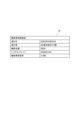
- FIG. 2 is a diagram showing an example of a bearing life inspection certificate indicating the flaking life of a rolling bearing.
- a rolling bearing In a rolling bearing, two objects, such as a rolling element and a raceway, repeatedly come into contact under a load. This causes stress concentration around inclusions (non-metallic inclusions) contained in the bearing material. Cracks then initiate from the inclusions, which then grow and lead to flaking (internal flaking).
- the flaking life originating from an inclusion which will be described below, is the life when the rolling bearing is used in appropriate conditions, such as when it is properly lubricated and used under a predetermined appropriate range of load.
- the rolling bearing 1 shown in FIG. 1 is a single-row deep groove ball bearing.
- the rolling bearing 1 is described as a single-row deep groove ball bearing as an example.
- the rolling bearing 1 may be a type of rolling bearing other than a single-row deep groove ball bearing.
- the rolling bearing 1 comprises a bearing body 10.
- the bearing body 10 is provided with a corresponding information display 20.
- the bearing body 10 comprises an inner ring 11, an outer ring 12, a plurality of balls (rolling elements) 13, and a cage 14.
- the inner ring 11 is an annular member.
- the outer peripheral surface of the inner ring 11 is provided with an inner ring raceway surface 11a that is grooved and extends in the circumferential direction.
- the outer ring 12 is an annular member disposed outside the inner ring 11.
- the inner peripheral surface of the outer ring 12 is provided with an outer ring raceway surface 12a that is grooved and extends in the circumferential direction.
- the plurality of balls 13 are sandwiched between the inner ring raceway surface 11a and the outer ring raceway surface 12a, and are arranged so as to be aligned in a row in the circumferential direction.
- the cage 14 holds the multiple balls 13 so that they can roll freely, while maintaining the circumferential spacing between the balls 13.
- the bearing body 10 may further include a contact or non-contact seal (not shown).
- the materials for the inner ring 11, outer ring 12, and balls 13 may be any steel that can be used for bearings, such as bearing steel, specially heat-treated steel, stainless steel, etc.
- the corresponding information display 20 is, as an example, attached to the end face along the axial direction of the outer ring 12.
- the corresponding information display 20 may be provided on the outer ring 12 by, for example, engraving, printing, etc.
- the corresponding information display 20 may be provided on a portion other than the end face of the outer ring 12 (for example, the inner ring 11, etc.).
- the corresponding information display 20 may be provided on at least one of the bearing body parts 10.
- the corresponding information display 20 may be the serial number (unique number) of the rolling bearing 1, a barcode, a two-dimensional code, etc.
- the corresponding information display 20 is information associated with the flaking life starting from an inclusion contained inside the rolling bearing 1.
- This inclusion is an inclusion contained inside the rolling bearing 1.
- This flaking life is the life of the rolling bearing 1 predicted based on the size of the inclusion contained in the rolling bearing 1.
- the corresponding information display 20 corresponds to the flaking life of the rolling bearing 1 to which the corresponding information display 20 is attached.
- the flaking life of the rolling bearing 1 to which the corresponding information display 20 is attached can be derived from the corresponding information display 20.
- the flaking life can be communicated to the bearing user by using paper media or by displaying it on a screen.
- a method for communicating the flaking life of the rolling bearing 1 to the bearing user from the corresponding information display 20 is described.
- the flaking life of the rolling bearing 1 may be communicated to the bearing user using the bearing life inspection certificate R shown in FIG. 2.
- the bearing life inspection certificate R may be written on paper, for example.
- the corresponding information display 20 is the serial number of the rolling bearing 1.
- the bearing life inspection certificate R shown in FIG. 2 indicates the serial number. Therefore, the bearing user can know which rolling bearing 1 the bearing life inspection certificate R corresponds to based on the serial number.
- the bearing life inspection certificate R may be provided to the bearing user together with the rolling bearing 1, for example, or separately from the rolling bearing 1.
- the bearing life inspection certificate R indicates the model number of the target bearing, the product serial number, the predicted flaking life, etc.
- the predicted flaking life (predicted life value) is expressed using a bearing life multiplier.
- the bearing life multiplier is a multiplier with respect to the basic rating life.
- the basic rating life may be a basic rating life L 10 .
- the basic rated life L10 is in units of [1 million revolutions]
- C is the basic dynamic load rating of the rolling bearing in units of [N]
- P is the dynamic equivalent load acting on the rolling bearing in units of [N]
- "p" is an index. This index p is set to 3 for ball bearings and 10/3 for roller bearings.
- the bearing user can identify the bearing life inspection certificate R that corresponds to the rolling bearing 1 in question based on the serial number, which is the corresponding information display 20, affixed to the bearing body 10. The bearing user can then confirm the flaking life of the rolling bearing 1 in question based on the information in the bearing life inspection certificate R that corresponds to the rolling bearing 1.
- the flaking life of the rolling bearing 1 may also be electronically transmitted to the bearing user via a display screen.
- life derivation information that associates (links) the corresponding information display 20 with the flaking life of the rolling bearing 1 is created in advance.
- the flaking life of the rolling bearing 1 may be derived from the corresponding information display 20 based on this life derivation information.
- a bearing user inputs a serial number as the corresponding information display 20 into a lifespan presentation device constituted by an electronic device such as a personal computer.
- the lifespan presentation device extracts the flaking life of the rolling bearing 1 that corresponds to the input serial number based on lifespan derivation information created in advance.
- the lifespan presentation device may then present the extracted flaking lifespan to the bearing user via a display screen or the like.
- the corresponding information display 20 may be a barcode or two-dimensional code.
- the bearing user has the reader of the life presentation device read the barcode or two-dimensional code.
- the life presentation device may extract the flaking life of the rolling bearing 1 corresponding to the read barcode, etc., based on life derivation information created in advance, and present it to the bearing user.
- the life presentation device can identify more information.
- the above-mentioned life derivation information may be stored on a server provided by a bearing supplier or the like.
- the bearing user inputs or reads the corresponding information display 20 on a website, for example.
- the server may then extract the flaking life corresponding to the inputted corresponding information display 20 based on the life derivation information, and present the extracted flaking life to the bearing user via the website.
- the bearing user can check the flaking life of the rolling bearing 1 based on the corresponding information display 20 attached to the rolling bearing 1.
- Step 1 a non-destructive inspection device capable of measuring the size and content of inclusions is prepared for the inner ring 11 and the outer ring 12 of the rolling bearing 1 whose flaking life is to be predicted.
- this non-destructive inspection device for example, an ultrasonic flaw detector is preferably used.
- this non-destructive inspection device is capable of detecting inclusions having a minimum size of about 50 ⁇ m.
- the method described in JP 2021-060373 A JP Patent No. 7092101 A
- JP 2021-060373 A JP Patent No. 7092101 A
- Step 2 A non-destructive inspection device is used to detect the size and content (number) of inclusions in the ranges corresponding to the stress volume immediately below the inner ring raceway surface 11a of the inner ring 11 and immediately below the outer ring raceway surface 12a of the outer ring 12.
- the ranges corresponding to the stress volume may be the range around the raceway surface where the inclusions cause spalling due to the action of stress. For example, for the inner ring 11, this range may be the range A surrounded by the dashed line in FIG. 1.
- the raceway to be measured is finished through multiple processing steps.
- the size and content of inclusions can be detected after any of the processing steps have been completed.
- the general and main processing steps for raceways are, for example, steelmaking, heat treatment (annealing)/forming, forging, turning, heat treatment (hardening/tempering), side grinding, external surface grinding, internal surface grinding, and superfinishing of the raceway, and are performed in this order.
- the inclusion content (cleanliness) of the material used may not be sufficient for the conditions of use, or there may be a large variation. In this case, it is advisable to carry out the inspection as early as possible in the processing steps. This makes it possible to eliminate products of insufficient quality caused by the amount of inclusions, and reduces the loss of having to carry out subsequent processes.
- the inclusion content (cleanliness) of the material used is sufficiently good for the conditions of use and the variation is small.
- the reliability of traceability can be increased by performing the inspection as late as possible in the process.
- the side surface is laser marked with information including the serial number (product number). This information is used to perform the inspection, and the results can be managed in the inspection system's database.
- JP 2021-060373 A discloses that non-destructive testing is performed underwater.
- General bearing steels can rust due to moisture.
- it is preferable to perform the test before the completion of finishing if the bearing includes unground surfaces such as chamfered portions, it is preferable to perform the test before or during a process prior to the completion of heat treatment), or, if the test is performed after the completion of finishing, to remove moisture from the raceway surface.
- Step 3 Based on the detection results of step 2, the maximum size of the inclusions contained in the range equivalent to the stress volume of the inner ring 11 and the outer ring 12 is statistically estimated.
- Step 4 Based on the estimated maximum size of the inclusion, the spalling life starting from the inclusion is predicted.
- various well-known methods can be used. For example, the method described in Japanese Patent No. 6408222 may be used as this prediction method.
- step 2 the inner ring 11 and outer ring 12 were measured for inclusions in the state in which they were actually manufactured.
- the material before the inner ring 11 and outer ring 12 are formed may be measured for inclusions.
- the same bearing life multiplier is applied to all rolling bearings that use raceways manufactured from materials of the same lot as the measured material.
- information that can identify the manufacturing lot is added as corresponding information markings to the rolling bearings and packaging.
- this flaking life of the rolling bearing 1 can be confirmed based on the corresponding information display 20 attached to the bearing body 10. Furthermore, this flaking life is predicted based on the size of the inclusions contained in the rolling bearing 1. In other words, this flaking life represents the life of each individual rolling bearing. In this way, with the rolling bearing 1, the individual flaking life can be confirmed based on the corresponding information display 20 attached to the bearing body 10.
- the flaking life is expressed as a multiple of the basic rating life.
- the bearing user can confirm how long the flaking life is compared to the basic rating life. This allows the bearing user to more easily perform various calculations, such as calculating the usable life of the rolling bearing.
- a life information display indicating the flaking life may be attached to the bearing body 10.
- This life information display may be the value of the flaking life itself.
- the life information display may be a display that makes it possible to estimate the flaking life or the level of the flaking life (such as a rank of long or short flaking life) based on this display.
Landscapes
- Engineering & Computer Science (AREA)
- General Engineering & Computer Science (AREA)
- Mechanical Engineering (AREA)
- Testing Of Devices, Machine Parts, Or Other Structures Thereof (AREA)
- Rolling Contact Bearings (AREA)
Abstract
Priority Applications (2)
| Application Number | Priority Date | Filing Date | Title |
|---|---|---|---|
| EP24818968.0A EP4678930A1 (fr) | 2023-06-05 | 2024-02-13 | Palier à roulement |
| JP2025525947A JPWO2024252729A1 (fr) | 2023-06-05 | 2024-02-13 |
Applications Claiming Priority (2)
| Application Number | Priority Date | Filing Date | Title |
|---|---|---|---|
| JP2023-092200 | 2023-06-05 | ||
| JP2023092200 | 2023-06-05 |
Publications (1)
| Publication Number | Publication Date |
|---|---|
| WO2024252729A1 true WO2024252729A1 (fr) | 2024-12-12 |
Family
ID=93795211
Family Applications (1)
| Application Number | Title | Priority Date | Filing Date |
|---|---|---|---|
| PCT/JP2024/004897 Ceased WO2024252729A1 (fr) | 2023-06-05 | 2024-02-13 | Palier à roulement |
Country Status (3)
| Country | Link |
|---|---|
| EP (1) | EP4678930A1 (fr) |
| JP (1) | JPWO2024252729A1 (fr) |
| WO (1) | WO2024252729A1 (fr) |
Citations (5)
| Publication number | Priority date | Publication date | Assignee | Title |
|---|---|---|---|---|
| JPH0792101A (ja) | 1993-09-24 | 1995-04-07 | Mazda Motor Corp | 表面検査装置 |
| JP2012203418A (ja) * | 2011-03-23 | 2012-10-22 | Ntn Corp | 機械要素部品の余寿命算出方法 |
| JP2015138018A (ja) * | 2014-01-24 | 2015-07-30 | 日本精工株式会社 | 転がり支持装置や動力伝達装置用構成部品の使用限界応力推定方法、及び該構成部品の疲れ寿命予測方法 |
| JP2017150820A (ja) * | 2016-02-22 | 2017-08-31 | Ntn株式会社 | 部品状態検知装置 |
| JP2021060373A (ja) | 2019-10-09 | 2021-04-15 | 日本精工株式会社 | 鋼材の清浄度評価方法 |
-
2024
- 2024-02-13 JP JP2025525947A patent/JPWO2024252729A1/ja active Pending
- 2024-02-13 EP EP24818968.0A patent/EP4678930A1/fr active Pending
- 2024-02-13 WO PCT/JP2024/004897 patent/WO2024252729A1/fr not_active Ceased
Patent Citations (6)
| Publication number | Priority date | Publication date | Assignee | Title |
|---|---|---|---|---|
| JPH0792101A (ja) | 1993-09-24 | 1995-04-07 | Mazda Motor Corp | 表面検査装置 |
| JP2012203418A (ja) * | 2011-03-23 | 2012-10-22 | Ntn Corp | 機械要素部品の余寿命算出方法 |
| JP2015138018A (ja) * | 2014-01-24 | 2015-07-30 | 日本精工株式会社 | 転がり支持装置や動力伝達装置用構成部品の使用限界応力推定方法、及び該構成部品の疲れ寿命予測方法 |
| JP6408222B2 (ja) | 2014-01-24 | 2018-10-17 | 日本精工株式会社 | 転がり支持装置や動力伝達装置用構成部品の疲れ寿命予測方法 |
| JP2017150820A (ja) * | 2016-02-22 | 2017-08-31 | Ntn株式会社 | 部品状態検知装置 |
| JP2021060373A (ja) | 2019-10-09 | 2021-04-15 | 日本精工株式会社 | 鋼材の清浄度評価方法 |
Non-Patent Citations (1)
| Title |
|---|
| See also references of EP4678930A1 |
Also Published As
| Publication number | Publication date |
|---|---|
| EP4678930A1 (fr) | 2026-01-14 |
| JPWO2024252729A1 (fr) | 2024-12-12 |
Similar Documents
| Publication | Publication Date | Title |
|---|---|---|
| JP5615726B2 (ja) | 転がり軸受の寿命推定装置および寿命推定方法 | |
| US8839679B2 (en) | Method of determining material dependent constants of a metal object on fatigue testing | |
| EP2873961B1 (fr) | Dispositif et procédé d'estimation de durée de vie de palier à rouleaux | |
| JP6408222B6 (ja) | 転がり支持装置や動力伝達装置用構成部品の疲れ寿命予測方法 | |
| US20140026674A1 (en) | Method for fatigue assessment of rolling bearing | |
| JP2014055941A (ja) | 転がり軸受の疲労進行度または残存寿命の予測方法 | |
| Michnej et al. | Fretting wear simulation in a clamped joint based on the example of a rail vehicle wheel set | |
| JP6587880B2 (ja) | 機械要素材料の品質保証方法および装置 | |
| WO2024252729A1 (fr) | Palier à roulement | |
| JP5749954B2 (ja) | 機械要素部品の余寿命算出方法 | |
| JP4013056B2 (ja) | 軸受負荷状態診断方法 | |
| JP2004251898A (ja) | 鋼の清浄度評価方法および転がり軸受並びにトロイダル形無段変速装置 | |
| JP2016114234A (ja) | 軌道輪の耐圧痕性評価方法 | |
| Takahashi et al. | Effects of axial clearance on surface initiated flaking in tapered roller bearings | |
| Sesana et al. | Influence of microinclusion in life of rolling elements: Experimental, microstructural, analytical and numerical investigation | |
| JP2014098409A (ja) | 転がり軸受の残存寿命予測方法 | |
| JP2016148393A (ja) | 転がり軸受ならびに転がり軸受の耐圧痕性および音響劣化度の評価方法 | |
| CN107254658B (zh) | 轴承部件和滚动轴承 | |
| JP2003035656A (ja) | 軸受用鋼の寿命推定方法 | |
| Chhotani et al. | End Hemispherical Cavities Roller: A Comparative Evaluation of Prospects of Higher Fatigue Life | |
| RU2765340C1 (ru) | Способ определения предела выносливости материала цилиндрической детали при кручении | |
| CN117454533A (zh) | 渗碳轴承钢热处理淬硬层深度的确认方法 | |
| Burdek | Physical modeling of the steel sheet topography in skin pass rolling and its influence on susceptibility of sheets to deep drawing | |
| JP2003075328A (ja) | 軸受用鋼の寿命推定方法 | |
| JP2005308207A (ja) | 自動調心ころ軸受 |
Legal Events
| Date | Code | Title | Description |
|---|---|---|---|
| 121 | Ep: the epo has been informed by wipo that ep was designated in this application |
Ref document number: 24818968 Country of ref document: EP Kind code of ref document: A1 |
|
| ENP | Entry into the national phase |
Ref document number: 2025525947 Country of ref document: JP Kind code of ref document: A |
|
| WWE | Wipo information: entry into national phase |
Ref document number: 2025525947 Country of ref document: JP |
|
| WWE | Wipo information: entry into national phase |
Ref document number: 2024818968 Country of ref document: EP |
|
| ENP | Entry into the national phase |
Ref document number: 2024818968 Country of ref document: EP Effective date: 20251006 |
|
| ENP | Entry into the national phase |
Ref document number: 2024818968 Country of ref document: EP Effective date: 20251006 |
|
| ENP | Entry into the national phase |
Ref document number: 2024818968 Country of ref document: EP Effective date: 20251006 |
|
| ENP | Entry into the national phase |
Ref document number: 2024818968 Country of ref document: EP Effective date: 20251006 |
|
| NENP | Non-entry into the national phase |
Ref country code: DE |
|
| WWP | Wipo information: published in national office |
Ref document number: 2024818968 Country of ref document: EP |