WO2024252770A1 - Trajet de transmission optique et son procédé de fabrication - Google Patents
Trajet de transmission optique et son procédé de fabrication Download PDFInfo
- Publication number
- WO2024252770A1 WO2024252770A1 PCT/JP2024/013708 JP2024013708W WO2024252770A1 WO 2024252770 A1 WO2024252770 A1 WO 2024252770A1 JP 2024013708 W JP2024013708 W JP 2024013708W WO 2024252770 A1 WO2024252770 A1 WO 2024252770A1
- Authority
- WO
- WIPO (PCT)
- Prior art keywords
- transmission line
- optical transmission
- optical
- light
- resin material
- Prior art date
- Legal status (The legal status is an assumption and is not a legal conclusion. Google has not performed a legal analysis and makes no representation as to the accuracy of the status listed.)
- Ceased
Links
Images





Classifications
-
- G—PHYSICS
- G02—OPTICS
- G02B—OPTICAL ELEMENTS, SYSTEMS OR APPARATUS
- G02B6/00—Light guides; Structural details of arrangements comprising light guides and other optical elements, e.g. couplings
- G02B6/10—Light guides; Structural details of arrangements comprising light guides and other optical elements, e.g. couplings of the optical waveguide type
- G02B6/12—Light guides; Structural details of arrangements comprising light guides and other optical elements, e.g. couplings of the optical waveguide type of the integrated circuit kind
- G02B6/13—Integrated optical circuits characterised by the manufacturing method
-
- G—PHYSICS
- G02—OPTICS
- G02B—OPTICAL ELEMENTS, SYSTEMS OR APPARATUS
- G02B6/00—Light guides; Structural details of arrangements comprising light guides and other optical elements, e.g. couplings
- G02B6/10—Light guides; Structural details of arrangements comprising light guides and other optical elements, e.g. couplings of the optical waveguide type
- G02B6/12—Light guides; Structural details of arrangements comprising light guides and other optical elements, e.g. couplings of the optical waveguide type of the integrated circuit kind
- G02B6/122—Basic optical elements, e.g. light-guiding paths
- G02B6/124—Geodesic lenses or integrated gratings
-
- G—PHYSICS
- G02—OPTICS
- G02B—OPTICAL ELEMENTS, SYSTEMS OR APPARATUS
- G02B6/00—Light guides; Structural details of arrangements comprising light guides and other optical elements, e.g. couplings
- G02B6/10—Light guides; Structural details of arrangements comprising light guides and other optical elements, e.g. couplings of the optical waveguide type
- G02B6/12—Light guides; Structural details of arrangements comprising light guides and other optical elements, e.g. couplings of the optical waveguide type of the integrated circuit kind
- G02B6/13—Integrated optical circuits characterised by the manufacturing method
- G02B6/138—Integrated optical circuits characterised by the manufacturing method by using polymerisation
-
- G—PHYSICS
- G02—OPTICS
- G02B—OPTICAL ELEMENTS, SYSTEMS OR APPARATUS
- G02B6/00—Light guides; Structural details of arrangements comprising light guides and other optical elements, e.g. couplings
- G02B6/24—Coupling light guides
- G02B6/26—Optical coupling means
Definitions
- This disclosure relates to an optical transmission line that transmits light through an optical transmission line on an element, and a method for manufacturing the same.
- Optical communication modules are being used in many fields to replace electrical communication modules that transmit electrical signals for high-speed, large-capacity digital communication.
- Optical communication modules are required to convert input electrical signals into optical signals and transmit them, and to receive optical signals from optical fibers and restore them to electrical signals for output.
- Light-emitting elements such as LEDs (Light Emitting Diodes) and VCSELs (Vertical Cavity Surface Emitting Lasers) are used to transmit optical signals, while light-receiving elements such as PDs (Photo Diodes) are used to receive optical signals.
- the light-emitting elements and driving circuit are electrically connected.
- the light-receiving elements and amplifier circuit are similarly electrically connected.
- Optical interconnection technology which uses optical waveguide devices to achieve hybrid integration, is attracting attention as a technology for efficiently connecting optical fibers, photoelectric conversion elements, etc.
- an optical transmission path is formed using a thermoplastic material.
- an arch-shaped optical transmission path is formed along the shape of a silicon substrate, connecting a first optical transmission end to a second optical transmission end in an optical circuit.
- a double-tube structure is used in which a thermoplastic core material and clad material are supplied from separate tanks, and a capillary that can move in three dimensions is used. While moving this capillary along the substrate, the core material and clad material are heated, ejected, and solidified to form the wiring.
- the diameter of the optical transmission path becomes small, and the connection strength at the connection between the optical element and the optical transmission path tends to be weak. In other words, the connection is easily disconnected by a small impact, etc.
- the purpose of this disclosure is to prevent the optical element and the optical transmission path from becoming disconnected due to vibrations, shocks, etc., during transportation or use.
- the optical transmission path disclosed herein is formed in an optical element having an optical waveguide, and transmits light emitted from an optical input/output section of the optical waveguide.
- the optical transmission path includes a connection section that connects to the optical waveguide, and a transmission line section that extends from the connection section.
- the connection section is connected to the optical waveguide, avoiding the optical input/output section, and is wider than the transmission line section.
- the optical transmission module disclosed herein comprises an optical element having an optical waveguide and the optical transmission path disclosed herein.
- the manufacturing method of the optical transmission path disclosed herein is a manufacturing method of an optical transmission path that is formed in an optical element having an optical waveguide and transmits light emitted from an optical input/output part of the optical waveguide. It includes a supplying step of supplying liquid resin material while moving a material supplying part, and a curing step of sequentially curing the supplied resin material and curing the resin material into a wire shape extending into the air.
- connection portion connected to the optical waveguide avoiding the optical input/output portion, has a width wider than the transmission line portion, improving the strength of the connection. This prevents the optical element and the optical transmission line from coming loose due to an impact or the like.
- the manufacturing method for the optical transmission line disclosed herein makes it possible to manufacture the optical transmission line disclosed herein.
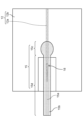
- FIG. 1 is a cross-sectional view illustrating a schematic configuration of an optical transmission module according to the present disclosure.
- FIG. 2 is a plan view corresponding to the optical transmission module in FIG.
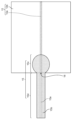
- FIG. 3 is a cross-sectional view that illustrates a schematic diagram of an optical transmission module according to a first modified example of the present disclosure.
- FIG. 4 is a plan view corresponding to the optical transmission module in FIG.
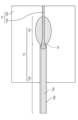
- FIG. 5 is a cross-sectional view illustrating a schematic configuration of an optical transmission module according to a third modified example of the present disclosure.
- FIG. 6 is a plan view corresponding to the optical transmission module in FIG. 7A to 7C are diagrams for explaining the manufacturing method of the optical transmission line of the present disclosure, taking the optical transmission module of FIG. 1 as an example.
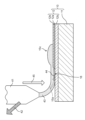
- FIG. 7A to 7C are diagrams for explaining the manufacturing method of the optical transmission line of the present disclosure, taking the optical transmission module of FIG. 1 as an example.
- FIG. 7A to 7C are diagrams for explaining the manufacturing method
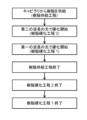
- FIG. 8 is a diagram illustrating a first sequence example when manufacturing an optical transmission line according to the present disclosure.
- FIG. 9 is a diagram illustrating a second sequence example when manufacturing an optical transmission line according to the present disclosure.
- FIG. 10 is a diagram illustrating a third example sequence for manufacturing an optical transmission line according to the present disclosure.
- FIG. 1 is a cross-sectional view that illustrates a light transmission module 20 according to an embodiment of the present disclosure
- FIG. 2 is a schematic plan view of the light transmission module 20 as viewed from above in FIG.
- the optical transmission module 20 includes an optical element 10 and an optical transmission path 15.
- the optical transmission path 15 is optically connected to an optical waveguide 12 provided in the optical element 10.
- connection portion 15c in the optical transmission path 15 is teardrop-shaped and wider than the transmission line portion 15d that extends from it. This increases the connection area between the connection portion 15c and the optical waveguide 12, preventing it from coming loose due to impact or the like.
- the connection portion 15c is rounded and bulges in the thickness direction as well.
- connection portion 15c is positioned to avoid the optical input/output portion 18 of the optical element 10, so that adverse effects on the optical connection between the optical waveguide 12 and the optical transmission path 15 are avoided.
- the optical element 10 may be, for example, a light-emitting element such as a laser, a light-receiving element such as a photodiode, SiPh (Silicon Photonics), PLC (Planar Lightwave Circuit), optical fiber, etc., and may be made of a Si wafer, GaAs, etc.
- the optical element 10 may also be, for example, a planar lightwave circuit made of a thin film of quartz glass deposited on a silicon substrate.
- the optical element 10 comprises a substrate 11 and an optical waveguide 12 provided on the substrate 11.
- the optical waveguide 12 includes a first clad layer 12b and a first core layer 12a surrounded by the first clad layer 12b.
- the first clad layer 12b is formed so as to cover the upper surface of the substrate 11.
- the first core layer 12a for example, having a diameter of 2 to 3 ⁇ m, is formed so as to be embedded inside the first clad layer 12b.
- the first core layer 12a in the optical waveguide 12 has a tapered shape with a narrow tip.
- the first cladding layer 12b in the area including the tapered portion is removed to expose the first core layer 12a. This forms an optical input/output section 18 through which light leaks out of the optical waveguide 12 from the tapered portion of the first core layer 12a.
- the first core layer 12a is formed by patterning a surface silicon layer of an SOI (silicon on insulator) substrate using, for example, photolithography and etching techniques, etc.
- the first cladding layer 12b is formed on the substrate 11 using a known deposition technique such as plasma CVD, using silicon oxide (SiO 2 ).
- the optical waveguide 12 may be made of quartz glass, organic polymers, and semiconductors such as silicon, silicon nitride (SiN), gallium arsenide, and indium phosphide (InP).
- semiconductors such as silicon, silicon nitride (SiN), gallium arsenide, and indium phosphide (InP).
- FIG. 2 shows only one first core layer 12a (and the optical input/output section 18 at its end), multiple first core layers 12a may be formed in the optical element 10, and an optical transmission path 15 may be provided for each of them.
- the optical transmission path 15 includes a second core layer 15a made of a resin through which light passes, and a second clad layer 15b covering the second core layer 15a.
- the second core layer 15a is preferably made of a material that has a high transmittance at the wavelength of the light input and output by the optical waveguide 12.
- the optical transmission path 15 may have either an SI (step index) type or a GI (graded index) type structure.
- SI type is a type in which the core layer and the cladding layer form an interface with a clear refractive index, and light is propagated by reflection at the interface.
- GI type is a type in which the refractive index is highest at the center of the core layer, and the refractive index gradually decreases toward the outside, and light is guided to the center of the core layer and propagates.
- crosstalk does not occur even if the pitch between cores is reduced.
- the technology disclosed herein is also applicable to the SI type.
- connection portion 15c in the optical transmission path 15 is made of the second cladding layer 15b, and is connected onto the first cladding layer 12b of the optical waveguide 12.
- the connection portion 15c has a teardrop shape that bulges out to a width greater than the transmission line portion 15d. This increases the connection area, and increases the strength of the connection between the connection portion 15c and the first cladding layer 12b.
- the connection portion 15c bulges out to a width and thickness greater than the diameter of the transmission line portion 15d.
- connection portion 15c is connected while avoiding the optical input/output portion 18 of the optical element 10.
- This provides a physical connection between the optical transmission path 15 and the optical waveguide 12 (the transmission line portion 15d can also partially contribute to the physical connection).
- the second core layer 15a in the optical transmission path 15 is formed so that its tip is connected to the first core layer 12a in the optical waveguide 12. This provides an optical connection between the optical waveguide 12 and the optical transmission path 15, allowing light to be transmitted between them.
- the second core layer 15a through which light passes in the optical transmission path 15 is connected to the first core layer 12a of the optical waveguide 12, realizing an optical connection for transmitting light.
- the connection portion 15c consisting of the second cladding layer 15b of the optical transmission path 15 spreads out in a teardrop shape to ensure a large connection area. This improves the strength of the connection compared to a case where the optical transmission path 15 is connected to the optical waveguide 12 by the transmission line portion 15d without the connection portion 15c, and makes it possible to suppress problems such as the optical transmission path 15 becoming detached due to impact.
- the diameter of the second core layer 15a is, for example, about 8 to 9 ⁇ m, and the diameter of the second cladding layer 15b is, for example, about 120 ⁇ m.
- the optical transmission path 15 can be formed using a photocurable resin (the manufacturing method will be described later).
- the curing mechanism is not particularly limited and may be radical polymerization, cationic polymerization, or the like.
- Materials for the second clad layer 15b of the optical transmission path 15 include bifunctional acrylate compounds (e.g., 2,2-bis[4-(acryloxydiethoxy)phenyl]propane), radical generators (e.g., tetra-n-butylammonium triphenyl-n-butylborate), and photosensitizer dyes that are reactive to ultraviolet wavelengths.
- Materials for the second core layer 15a include the above materials as well as diimonium dyes, which are photosensitizer dyes that are reactive to infrared wavelengths.
- the resin materials for forming the second core layer 15a and the second clad layer 15b are both materials whose hardening is accelerated by heat.
- connection form between the optical waveguide 12 and the optical transmission line 15 is not limited to that shown in Figures 1 and 2. Other examples of the connection form will be described below.
- an optical transmission module 20a constituting an edge coupler is shown in Fig. 3 and Fig. 4.
- an optical element 10 includes an optical waveguide 12 provided on a substrate 11, and the optical waveguide 12 includes a first clad layer 12b and a first core layer 12a, which is similar to the optical transmission module 20 in Fig. 1 and Fig. 2.
- the first core layer 12a is wrapped in the first cladding layer 12b and extends to the end face of the optical element 10, and the optical input/output section 18 is formed at the tip portion exposed at the end face.
- the optical transmission path 15 is also formed to extend from the end face at the position of the optical input/output section 18.
- the connection section 15c is connected to the upper surface of the first cladding layer 12b of the optical element 10, and is wider than the transmission line section 15d, forming a teardrop-like shape. This improves the strength of the connection.
- the second core layer 15a is connected to the first core layer 12a, realizing an optical connection between the optical waveguide 12 and the optical transmission path 15.
- an optical transmission module 20b constituting a grating coupler is shown in Fig. 5 and Fig. 6.
- the optical element 10 includes an optical waveguide 12 provided on a substrate 11, and the optical waveguide 12 includes a first clad layer 12b and a first core layer 12a, similar to the optical transmission module 20 in Fig. 1 and Fig. 2.
- a diffraction grating is provided at the end of the first core layer 12a (shown by a row of black squares in FIG. 5 and by a fan-shaped portion at the end of the first core layer 12a in FIG. 6), and this diffraction grating forms the optical input/output section 18 from which light leaks out.
- the optical transmission path 15 has a connection portion 15c connected onto the first clad layer 12b, avoiding the optical input/output portion 18, and a transmission line portion 15d is provided so that the second core layer 15a is connected to the optical input/output portion 18. Even in this configuration, the strength of the connection is improved by providing a teardrop-shaped connection portion 15c.
- Fig. 7 shows a process for forming the optical transmission line 15 in the optical element 10 corresponding to Fig. 1.
- the manufacturing method for the optical transmission line 15 is similar in the modified examples shown in Figs. 3 to 6.
- the method disclosed herein uses a capillary 41 (only the tip is shown) as a material supply unit to supply resin material 43 for forming the optical transmission path 15.
- the capillary 41 can eject (supply) liquid resin material 43 from its tip while moving.
- a photocurable resin is used as the liquid resin material 43.
- light 45 of a first wavelength irradiated from outside and light 44 of a second wavelength irradiated from the optical waveguide 12 are used.
- Resin material 43 is discharged while the tip of capillary 41 is moved, and light 45 of the first wavelength is irradiated while the focal position is moved in conjunction with the movement of capillary 41.
- Light 44 of the second wavelength is also irradiated through optical waveguide 12.
- the discharged resin material 43 is cured sequentially, and an optical transmission path 15 is formed according to the trajectory of the movement of the tip of capillary 41. This makes it possible to form optical transmission path 15 along another object, or in the form of a wire extending into the air. Note that if the resin only needs to be cured into the form of a wire extending into the air, this can be achieved with only light 45 of the first wavelength.
- the periphery of the optical transmission path 15 is hardened by the light 45 of the first wavelength, and the center portion is hardened by the light 44 of the second wavelength.
- the intensity of the light 45 of the first wavelength is adjusted so that it does not provide enough energy to harden the entire resin material 43.
- an optical transmission path 15 which includes a second core layer 15a and a second clad layer 15b that encases the second core layer 15a.
- connection portion 15c is formed at a position avoiding the optical input/output portion 18. That is, the tip of the capillary 41 is placed on the first core layer 12a avoiding the optical input/output portion 18, and the ejection of the resin material 43 begins. At this time, more resin material 43 is ejected than when forming the transmission line portion 15d, and light 45 of the first wavelength is irradiated. This forms the connection portion 15c that is wider than the transmission line portion 15d.
- the connection portion 15c is composed of the second cladding layer 15b.
- connection portion 15c ensures a large connection area and improves the reliability of the fixation. This results in a highly reliable optical transmission module 20.
- connection portion 15c After forming the connection portion 15c, the capillary 41 is moved so as to pass through the optical transmission path 15, and a transmission line portion 15d connected to the connection portion 15c is formed. A second core layer 15a is formed on the center side of the transmission line portion 15d by the second wavelength of light 44. Furthermore, the capillary 41 is moved away from the top surface of the optical element 10 (as shown by the arrow 42), and the portion of the transmission line portion 15d that extends into the air is formed.
- the second core layer 15a is shown in the process of being formed within the resin material 43 that has been discharged and is in the process of hardening.
- a portion of the second core layer 15a is formed within the resin material 43 near the light input/output section 18, light 44 of a second wavelength is propagated by the second core layer 15a, and a further second core layer 15a is formed in the portion beyond that.
- the second core layer 15a can be extended into the resin material 43 that is hardening into a wire shape.
- resin material 43 It is preferable to use a mixture of infrared curable resin and ultraviolet curable resin as the resin material 43.
- resin material 43 is filled in a tank connected to the capillary 41, and a controlled amount is discharged from the tip of the capillary 41.
- the first wavelength light 45 is focused from the outside and irradiated onto the extruded resin material 43 in conjunction with the movement of the capillary 41. This causes the optical transmission path 15 to harden from the outer periphery, forming it into a wire shape that extends into the air.
- the first wavelength light 45 mainly contributes to the formation of the second cladding layer 15b.
- an ultraviolet laser with a wavelength of about 150 to 500 nm is preferable. It is also preferable to use a femtosecond laser with a pulse width in femtosecond units. When a femtosecond laser is used, it is possible to harden the resin only at the tip of the capillary 41 where the laser is focused, and to avoid hardening of the resin in the surrounding area. Therefore, the optical transmission path 15 can be formed with high precision.
- the second wavelength light 44 is irradiated from the first core layer 12a of the optical waveguide 12. This hardens the center of the optical transmission path 15.
- the second wavelength light 44 mainly contributes to the formation of the second core layer 15a.
- the second wavelength light 44 is preferably an infrared laser with a wavelength of about 1300 to 1550 nm. This may be light emitted when an optical element 10 such as a VCSEL is in operation, or light incident from an optical fiber connected to the optical waveguide 12.
- thermal curing may be performed.
- a process may be performed in which provisional curing by light is performed to form the optical transmission path 15, and then the optical transmission path 15 is finally cured by heating (post-baking) to complete the optical transmission path 15.
- post-baking for example, a hot plate, oven, etc. is used to heat at a temperature range of 50 to 300°C for about 1 to 120 minutes to complete the curing (polymerization).
- a capillary that ejects the resin material 43 from its tip has been described as being used as the material supply unit.
- the material supply unit is not limited to this.
- a needle may be used.
- a hollow needle with an extended tip, such as a syringe needle, may be used as the needle.
- the material can be supplied by ejecting the resin material 43 from its tip like a capillary, and the needle is made of a light-shielding material such as metal, thereby preventing the resin from hardening inside.
- a needle with a non-hollow structure, such as a cone or cylinder may be used as the needle, and the material can be supplied by running the liquid resin material 43 along its surface. In this case, it is desirable to limit the range of light irradiation in order to prevent the resin material 43 from hardening midway through the needle.
- (First sequence example) 8 shows a first sequence example.
- a resin supplying step is started in which the resin material 43 is supplied (discharged) from the capillary 41.
- the position at which the discharge is stopped is a position that avoids the optical input/output unit 18.
- a resin curing step 1 is started in which the discharged resin material 43 is cured into a wire shape by irradiating light 45 of a first wavelength while moving the focal position in conjunction with the movement of the capillary 41.
- resin curing process 2 is started, in which light 44 of the second wavelength is irradiated from the first core layer 12a to cure the center side of the transmission line portion 15d. After the expected amount of resin material 43 is supplied, the resin supplying process is terminated. Then, resin curing process 1 and resin curing process 2 are terminated in sequence.
- the resin material 43 is cured from the outer periphery with light 45 of the first wavelength, and the uncured central portion is cured with light 44 of the second wavelength.
- the second core layer 15a and the second cladding layer 15b are molded integrally, so the bonding strength is high and peeling between them is suppressed.
- (Second sequence example) 9 shows a second sequence example.
- a resin supplying step is started in which a resin material 43 is supplied (discharged) from a capillary 41.
- a resin curing step 1 is started in which light 45 of a first wavelength is irradiated to cure the discharged resin material 43 while the focal position is moved in conjunction with the movement of the capillary 41.
- the intensity of the light 45 of the first wavelength is adjusted so that the center side of the resin supplying step 2 is left uncured.
- the expected amount of resin material 43 is supplied, and the resin supplying process is terminated.
- the outer peripheral side of the resin material 43 is hardened into a wire shape using light 45 of the first wavelength, and the resin hardening process 1 is then terminated.
- the resin curing process 2 is started by irradiating the first core layer 12a with light 44 of the second wavelength to harden the center side of the transmission line portion 15d. After the center side is hardened, the resin curing process 2 is terminated.
- This sequence also realizes a GI type optical transmission line 15 in which the refractive index gradually decreases from the center to the outside. In this case, too, the bonding strength between the second core layer 15a and the second cladding layer 15b is high, and peeling between them is suppressed.
- (Third sequence example) 10 shows a third sequence example.
- a resin supplying step is started in which a resin material 43 is supplied (discharged) from a capillary 41.
- a resin curing step 2 is started in which the center side of the resin material 43 is cured by irradiating light 44 having a second wavelength.
- a resin curing step 1 in which the resin material 43 is cured from the outer periphery side by irradiating light 45 having a first wavelength.
- the second core layer 15a is formed first, and then the second clad layer 15b is formed on the outside of the second core layer 15a.
- an SI-type optical transmission path 15 is formed that has an interface between the second core layer 15a and the second clad layer 15b.
- the technology disclosed herein improves the strength of the connection between the optical transmission path and the optical element, making it useful as an optical transmission path and an optical transmission module including the same. It is also useful as a method for manufacturing an optical transmission path with improved connection strength.
- Optical element 11 Substrate 12 Optical waveguide 12a First core layer 12b First clad layer 15 Optical transmission path 15a Second core layer 15b Second clad layer 15c Connection portion 15d Transmission line portion 18 Optical input/output portion 20 Optical transmission module 20a Optical transmission module 20b Optical transmission module 41 Capillary (material supply portion) 43 Resin material 44 Light of second wavelength 45 Light of first wavelength
Landscapes
- Physics & Mathematics (AREA)
- General Physics & Mathematics (AREA)
- Optics & Photonics (AREA)
- Engineering & Computer Science (AREA)
- Microelectronics & Electronic Packaging (AREA)
- Optical Integrated Circuits (AREA)
Abstract
L'invention concerne un trajet de transmission optique (15) qui est formé dans un élément optique (10) ayant un guide d'ondes optique (12) et qui transmet la lumière émise par une unité d'entrée/sortie optique (18) disposée sur le guide d'ondes optique (12) comprenant une partie de connexion (15c) qui est connectée au guide d'ondes optique (12), et une partie de ligne de transmission (15d) qui s'étend à partir de la partie de connexion (15c). La partie de connexion (15c) est connectée au guide d'ondes optique (12) tout en évitant la partie d'entrée/sortie optique (18), et a une largeur plus grande que la partie de ligne de transmission (15d).
Priority Applications (2)
| Application Number | Priority Date | Filing Date | Title |
|---|---|---|---|
| JP2025525959A JPWO2024252770A1 (fr) | 2023-06-05 | 2024-04-03 | |
| US19/404,529 US20260086285A1 (en) | 2023-06-05 | 2025-12-01 | Photonic interconnect and method for manufacturing same |
Applications Claiming Priority (2)
| Application Number | Priority Date | Filing Date | Title |
|---|---|---|---|
| JP2023092499 | 2023-06-05 | ||
| JP2023-092499 | 2023-06-05 |
Related Child Applications (1)
| Application Number | Title | Priority Date | Filing Date |
|---|---|---|---|
| US19/404,529 Continuation US20260086285A1 (en) | 2023-06-05 | 2025-12-01 | Photonic interconnect and method for manufacturing same |
Publications (1)
| Publication Number | Publication Date |
|---|---|
| WO2024252770A1 true WO2024252770A1 (fr) | 2024-12-12 |
Family
ID=93795780
Family Applications (1)
| Application Number | Title | Priority Date | Filing Date |
|---|---|---|---|
| PCT/JP2024/013708 Ceased WO2024252770A1 (fr) | 2023-06-05 | 2024-04-03 | Trajet de transmission optique et son procédé de fabrication |
Country Status (3)
| Country | Link |
|---|---|
| US (1) | US20260086285A1 (fr) |
| JP (1) | JPWO2024252770A1 (fr) |
| WO (1) | WO2024252770A1 (fr) |
Citations (11)
| Publication number | Priority date | Publication date | Assignee | Title |
|---|---|---|---|---|
| JPH0682643A (ja) * | 1992-07-30 | 1994-03-25 | Internatl Business Mach Corp <Ibm> | 表面へのポリマー導波管の押出し |
| JPH09243858A (ja) * | 1996-01-05 | 1997-09-19 | Fuji Xerox Co Ltd | 光伝送路形成方法、光伝送路形成装置および光回路 |
| JP2005275343A (ja) * | 2004-02-26 | 2005-10-06 | Ngk Spark Plug Co Ltd | 光導波路構造付きデバイス及びその製造方法 |
| JP2010230737A (ja) * | 2009-03-26 | 2010-10-14 | Fujikura Ltd | 光モジュール及び光の進行方向の変換方法 |
| JP2011102919A (ja) * | 2009-11-11 | 2011-05-26 | Hitachi Ltd | 光伝送モジュール及びその製造方法 |
| JP2017507357A (ja) * | 2014-02-21 | 2017-03-16 | ダウ コーニング コーポレーションDow Corning Corporation | 光コネクタの製造方法、及びその方法により製造された光コネクタを含む光デバイス |
| US20170343734A1 (en) * | 2015-05-05 | 2017-11-30 | Huawei Technologies Co., Ltd. | Optical coupling arrangement |
| US20180180818A1 (en) * | 2016-12-22 | 2018-06-28 | Huawei Technologies Co., Ltd. | Optical Edge Coupler with Controllable Mode Field for Photonic Chip |
| JP2018180027A (ja) * | 2017-04-03 | 2018-11-15 | 富士通株式会社 | 光モジュール、及びこれを用いた電子機器 |
| JP2018185491A (ja) * | 2017-04-27 | 2018-11-22 | 株式会社豊田中央研究所 | 光回路およびその製造方法 |
| JP2020191329A (ja) * | 2019-05-20 | 2020-11-26 | パナソニックIpマネジメント株式会社 | 半導体装置の実装構造、光モジュール、及び半導体装置の実装構造の製造方法 |
-
2024
- 2024-04-03 WO PCT/JP2024/013708 patent/WO2024252770A1/fr not_active Ceased
- 2024-04-03 JP JP2025525959A patent/JPWO2024252770A1/ja active Pending
-
2025
- 2025-12-01 US US19/404,529 patent/US20260086285A1/en active Pending
Patent Citations (11)
| Publication number | Priority date | Publication date | Assignee | Title |
|---|---|---|---|---|
| JPH0682643A (ja) * | 1992-07-30 | 1994-03-25 | Internatl Business Mach Corp <Ibm> | 表面へのポリマー導波管の押出し |
| JPH09243858A (ja) * | 1996-01-05 | 1997-09-19 | Fuji Xerox Co Ltd | 光伝送路形成方法、光伝送路形成装置および光回路 |
| JP2005275343A (ja) * | 2004-02-26 | 2005-10-06 | Ngk Spark Plug Co Ltd | 光導波路構造付きデバイス及びその製造方法 |
| JP2010230737A (ja) * | 2009-03-26 | 2010-10-14 | Fujikura Ltd | 光モジュール及び光の進行方向の変換方法 |
| JP2011102919A (ja) * | 2009-11-11 | 2011-05-26 | Hitachi Ltd | 光伝送モジュール及びその製造方法 |
| JP2017507357A (ja) * | 2014-02-21 | 2017-03-16 | ダウ コーニング コーポレーションDow Corning Corporation | 光コネクタの製造方法、及びその方法により製造された光コネクタを含む光デバイス |
| US20170343734A1 (en) * | 2015-05-05 | 2017-11-30 | Huawei Technologies Co., Ltd. | Optical coupling arrangement |
| US20180180818A1 (en) * | 2016-12-22 | 2018-06-28 | Huawei Technologies Co., Ltd. | Optical Edge Coupler with Controllable Mode Field for Photonic Chip |
| JP2018180027A (ja) * | 2017-04-03 | 2018-11-15 | 富士通株式会社 | 光モジュール、及びこれを用いた電子機器 |
| JP2018185491A (ja) * | 2017-04-27 | 2018-11-22 | 株式会社豊田中央研究所 | 光回路およびその製造方法 |
| JP2020191329A (ja) * | 2019-05-20 | 2020-11-26 | パナソニックIpマネジメント株式会社 | 半導体装置の実装構造、光モジュール、及び半導体装置の実装構造の製造方法 |
Also Published As
| Publication number | Publication date |
|---|---|
| US20260086285A1 (en) | 2026-03-26 |
| JPWO2024252770A1 (fr) | 2024-12-12 |
Similar Documents
| Publication | Publication Date | Title |
|---|---|---|
| US7113683B2 (en) | Optical waveguide device, manufacturing method thereof and optical communication apparatus | |
| JP3764640B2 (ja) | 光モジュール及びその製造方法 | |
| US5402511A (en) | Method of forming an improved tapered waveguide by selectively irradiating a viscous adhesive resin prepolymer with ultra-violet light | |
| US6932516B2 (en) | Surface optical device apparatus, method of fabricating the same, and apparatus using the same | |
| US20080031583A1 (en) | Flexible optical waveguide film, optical transceiver module, multi-channel optical transceiver module, and method of manufacturing flexible optical waveguide film | |
| JP6137777B2 (ja) | 半導体上の発光素子または受光素子と光導波路との間の光の接続損失を低減させることに役立つ、スペーサ樹脂パターンの設計 | |
| JP2005195651A (ja) | 光接続基板、光伝送システム、及び製造方法 | |
| JP2018189875A (ja) | 光接続構造およびその形成方法 | |
| WO2024252770A1 (fr) | Trajet de transmission optique et son procédé de fabrication | |
| JP4487643B2 (ja) | 光モジュール及びその製造方法 | |
| JP2004302325A (ja) | 光電気複合基板の製造方法 | |
| Hwang et al. | Parallel optical transmitter module using angled fibers and a V-grooved silicon optical bench for VCSEL array | |
| JP2006330697A (ja) | 光結合構造並びに光伝送機能内蔵基板およびその製造方法 | |
| JP4115894B2 (ja) | 複合光学装置 | |
| Lee et al. | Integration of polymer-based optical waveguide arrays and micro/nano-photonic devices for optical printed circuit board (O-PCB) application | |
| JP7617474B2 (ja) | 集積型光デバイスおよびその製造方法 | |
| JP7736080B2 (ja) | 光素子、光集積素子および光集積素子の製造方法 | |
| WO2003091777A1 (fr) | Structure de transmission optique, guide optique, procede de fabrication d'un guide d'ondes optique et coupleur d'interconnexion optique | |
| JP2004177730A (ja) | 三次元光導波路、三次元光結合構造、及び光通信システム | |
| JP2005003855A (ja) | 双方向光通信モジュールおよび光導波路素子および双方向光通信モジュール装置 | |
| JP2004053623A (ja) | 光路変換部を備える光導波基板およびその製造方法 | |
| JP7758039B2 (ja) | 光回路デバイス | |
| JP2010020085A (ja) | 光導波路構造体及びその製造方法、光モジュール | |
| JP2004334003A (ja) | 光結合素子の製造法及び光記録装置 | |
| JP4544210B2 (ja) | 光モジュール及びその製造方法 |
Legal Events
| Date | Code | Title | Description |
|---|---|---|---|
| 121 | Ep: the epo has been informed by wipo that ep was designated in this application |
Ref document number: 24819009 Country of ref document: EP Kind code of ref document: A1 |
|
| ENP | Entry into the national phase |
Ref document number: 2025525959 Country of ref document: JP Kind code of ref document: A |
|
| NENP | Non-entry into the national phase |
Ref country code: DE |