WO2024252973A1 - 位置認証を用いるファイル管理技術 - Google Patents
位置認証を用いるファイル管理技術 Download PDFInfo
- Publication number
- WO2024252973A1 WO2024252973A1 PCT/JP2024/019451 JP2024019451W WO2024252973A1 WO 2024252973 A1 WO2024252973 A1 WO 2024252973A1 JP 2024019451 W JP2024019451 W JP 2024019451W WO 2024252973 A1 WO2024252973 A1 WO 2024252973A1
- Authority
- WO
- WIPO (PCT)
- Prior art keywords
- terminal device
- key
- communication terminal
- file
- information communication
- Prior art date
- Legal status (The legal status is an assumption and is not a legal conclusion. Google has not performed a legal analysis and makes no representation as to the accuracy of the status listed.)
- Ceased
Links
Images




Classifications
-
- H—ELECTRICITY
- H04—ELECTRIC COMMUNICATION TECHNIQUE
- H04L—TRANSMISSION OF DIGITAL INFORMATION, e.g. TELEGRAPHIC COMMUNICATION
- H04L9/00—Cryptographic mechanisms or cryptographic arrangements for secret or secure communications; Network security protocols
- H04L9/08—Key distribution or management, e.g. generation, sharing or updating, of cryptographic keys or passwords
- H04L9/088—Usage controlling of secret information, e.g. techniques for restricting cryptographic keys to pre-authorized uses, different access levels, validity of crypto-period, different key- or password length, or different strong and weak cryptographic algorithms
-
- H—ELECTRICITY
- H04—ELECTRIC COMMUNICATION TECHNIQUE
- H04L—TRANSMISSION OF DIGITAL INFORMATION, e.g. TELEGRAPHIC COMMUNICATION
- H04L9/00—Cryptographic mechanisms or cryptographic arrangements for secret or secure communications; Network security protocols
- H04L9/08—Key distribution or management, e.g. generation, sharing or updating, of cryptographic keys or passwords
- H04L9/0816—Key establishment, i.e. cryptographic processes or cryptographic protocols whereby a shared secret becomes available to two or more parties, for subsequent use
- H04L9/0819—Key transport or distribution, i.e. key establishment techniques where one party creates or otherwise obtains a secret value, and securely transfers it to the other(s)
- H04L9/083—Key transport or distribution, i.e. key establishment techniques where one party creates or otherwise obtains a secret value, and securely transfers it to the other(s) involving central third party, e.g. key distribution center [KDC] or trusted third party [TTP]
- H04L9/0833—Key transport or distribution, i.e. key establishment techniques where one party creates or otherwise obtains a secret value, and securely transfers it to the other(s) involving central third party, e.g. key distribution center [KDC] or trusted third party [TTP] involving conference or group key
-
- H—ELECTRICITY
- H04—ELECTRIC COMMUNICATION TECHNIQUE
- H04L—TRANSMISSION OF DIGITAL INFORMATION, e.g. TELEGRAPHIC COMMUNICATION
- H04L9/00—Cryptographic mechanisms or cryptographic arrangements for secret or secure communications; Network security protocols
- H04L9/08—Key distribution or management, e.g. generation, sharing or updating, of cryptographic keys or passwords
- H04L9/0861—Generation of secret information including derivation or calculation of cryptographic keys or passwords
- H04L9/0872—Generation of secret information including derivation or calculation of cryptographic keys or passwords using geo-location information, e.g. location data, time, relative position or proximity to other entities
-
- H—ELECTRICITY
- H04—ELECTRIC COMMUNICATION TECHNIQUE
- H04L—TRANSMISSION OF DIGITAL INFORMATION, e.g. TELEGRAPHIC COMMUNICATION
- H04L9/00—Cryptographic mechanisms or cryptographic arrangements for secret or secure communications; Network security protocols
- H04L9/32—Cryptographic mechanisms or cryptographic arrangements for secret or secure communications; Network security protocols including means for verifying the identity or authority of a user of the system or for message authentication, e.g. authorization, entity authentication, data integrity or data verification, non-repudiation, key authentication or verification of credentials
- H04L9/321—Cryptographic mechanisms or cryptographic arrangements for secret or secure communications; Network security protocols including means for verifying the identity or authority of a user of the system or for message authentication, e.g. authorization, entity authentication, data integrity or data verification, non-repudiation, key authentication or verification of credentials involving a third party or a trusted authority
Definitions
- the present invention relates to a file management technology that uses location authentication, and in particular to a file management system and method that uses location authentication that utilizes encryption/decryption technology.
- file sharing services sometimes called online storage services or cloud storage services
- cloud storage services allow users to back up their files to a file management server on a network so that they can be restored later or sent to other users.
- Patent Document 1 discloses an online storage device in which hash data encrypted using encrypted data is stored together with a public key, and content is encrypted using the encrypted hash data.
- public key cryptography can be used to encrypt/decrypt files.
- a key pair consisting of a private key and a public key is generated for a user.
- the public key is used to encrypt files and can be made public to other users.
- the private key is used to decrypt files and should be managed secretly by the user.
- non-patent document 1 discloses a proxy re-encryption technology that enables a user Z other than user X and user Y to create encrypted file B encrypted with user Y's public key from encrypted file A encrypted with user X's public key, without knowing the private keys of user X and user Y.
- the information for converting encrypted file A into encrypted file B is sometimes called a proxy key.
- a common file transmission procedure is for a user to send a file to another user by encrypting the file with a password and sending it to the other user as an email attachment, followed by sending the password in the body of the email.
- emails transmitted over a communications network may be leaked or intercepted, and as long as the password is sent in the body of the email, this type of file transmission procedure cannot be considered foolproof in terms of security.
- the present invention aims to provide a new file transmission scheme that allows users to safely send files to desired recipients via a communications network.
- one of the objectives of the present invention is to provide a file management service that enables a receiving user (second user) to safely decrypt a file encrypted by a sending user (first user) without transmitting the file encrypted with a password (encryption key) and the password as is over a communications network.
- Another object of the present invention is to provide a file management service that enables a sending user to safely deliver an encrypted file to a recipient, even if there is a risk that the email transmitted over a communication network may be leaked or intercepted, and enables the recipient of the email (the recipient user) to safely decrypt the encrypted file.
- the present invention aims to propose a new scheme for controlling access to specific services by specific users.
- the present invention which aims to solve the above problems, comprises the following invention-specific matters or technical features:
- the present invention is a file management system that enables the transmission of files between a first information communication terminal device of a first user and a second information communication terminal device of a second user.
- the file management system includes a file management server that is communicatively connected to each of the first information communication terminal device and the second information communication terminal device, and a key terminal device that is communicatively connected to the file management server and is capable of acquiring geographical location information.
- the file management server acquires destination information including at least the identifier of the second user and the location of the file from the first information communication terminal device, receives a location authentication request including geographical location information from the key terminal device, determines whether location authentication is successful based on the location included in the destination information and the geographical location information included in the location authentication request, and transmits the result of the determination to the second information communication terminal device, and the second information communication terminal device decrypts the encrypted file in which the file is encrypted when the result of the determination indicates that the location authentication is successful.
- the first information communication terminal device generates a common key according to a predetermined function (e.g., a random number function) and creates the encrypted file using the generated common key.
- a predetermined function e.g., a random number function
- the first information communication terminal device uses a public key to generate a first ciphertext based on the common key, and transmits the generated first ciphertext to the file management server.
- the first ciphertext includes the common key encrypted using the public key.
- the second information communication terminal device generates a temporary key pair consisting of a temporary private key and a temporary public key according to a predetermined key generation algorithm, and stores the temporary private key of the temporary key pair.
- the key terminal device stores the temporary public key of the temporary key pair.
- the file management server cooperates with the key terminal device to generate a second ciphertext using the temporary public key, and transmits the generated second ciphertext to the second information communication terminal device.
- the file management server generates a proxy key using a master private key and the temporary public key held by the key terminal device, and generates the second ciphertext by applying the generated proxy key to the first ciphertext.
- the key terminal device obtains the common key by decrypting the first ciphertext using a master private key held by itself, and generates the second ciphertext by encrypting the common key using the temporary public key.
- the second information communication terminal device decrypts the second ciphertext using the temporary private key to obtain the common key, and decrypts the encrypted file using the common key obtained by decrypting the second ciphertext.
- the file management server acquires the temporary public key from the second information communication terminal device and transmits the acquired temporary public key to the key terminal device.
- the file management server obtains the temporary public key during login authentication by the second information communication terminal device.
- the file management server determines whether the login authentication is successful using multi-factor authentication based on the possession or use of the key terminal device.
- the receiving location is geographical location information designated by the first user.
- the geographical location information is designated based on a geographical map displayed on a user interface of the first information communication terminal device.
- the file management server determines whether the location authentication has been successful based on the geographical location information of the second information communication terminal device. In this case, the file management server determines that the location authentication has been successful when the geographical location information included in the location authentication request and the geographical location information of the second information communication terminal device each correspond to the receiving location included in the destination information.
- the geographical location information of the second information and communication terminal device is a GPS coordinate or a functional global IP address.
- the present invention is a file management server communicably connected to each of a first information communication terminal device of a first user, a second information communication terminal device of a second user, and a key terminal device 30.
- the file management server is configured to execute the following processes: acquiring destination information including at least an identifier of the second user and a file receiving location from the first information communication terminal device; receiving a location authentication request including geographical location information acquired by the key terminal device; determining whether location authentication is successful based on the receiving location included in the destination information and the geographical location information included in the location authentication request; and, if the location authentication is successful, transmitting to the second information communication terminal device a ciphertext used to decrypt an encrypted file in which the file was encrypted by the first information communication terminal device.
- the present invention is a file transmission method that enables the transmission of a file between a first information communication terminal device of a first user and a second information communication terminal device of a second user.
- the method includes: specifying destination information including an identifier of the second user and a receiving location of the file in the first information communication terminal device; generating an encrypted file by encrypting the file in the first information communication terminal device; acquiring the receiving location designated in a file management server; storing the generated encrypted file in the second information communication terminal device; transmitting geographical location information acquired in a key terminal device possessed by the second user from the key terminal device to the file management server; determining in the file management server whether the geographical location information corresponds to the designated receiving location and transmitting the result of the determination to the second information communication terminal device; and, when the result of the determination indicates that the geographical location information corresponds to the designated receiving location, decrypting the encrypted file in the second information communication terminal device to acquire the original file.
- Creating the encryption file includes generating a common key according to a predetermined function (e.g., a random number function) and creating the encryption file using the generated common key.
- a predetermined function e.g., a random number function
- the method further includes generating a first ciphertext based on the common key using the public key, and transmitting the generated first ciphertext to the file management server.
- the method includes generating a temporary key pair consisting of a temporary private key and a temporary public key in the second information communication terminal device according to a predetermined key generation algorithm, storing the temporary private key of the temporary key pair in the second information communication terminal device, storing the temporary public key of the temporary key pair in the key terminal device, generating a second ciphertext by the file management server using the temporary public key in cooperation with the key terminal device, and storing the generated second ciphertext in the second information communication terminal device.
- the method further includes, in the second information communication terminal device, decrypting the generated second ciphertext using the temporary private key to obtain the common key.
- Decrypting the encrypted file includes decrypting the encrypted file using the common key obtained by decrypting the second ciphertext.
- the method further includes, in the file management server, acquiring the temporary public key from the second information communication terminal device, and transmitting the acquired temporary public key to the key terminal device.
- the method includes obtaining the temporary public key in the file management server during login authentication by the second information communication terminal device.
- the method includes determining whether the login authentication has been successful by multi-factor authentication based on the possession or use of the key terminal device in the file management server.
- the present invention is a file management method executed by a file management server communicably connected to each of a first information communication terminal device of a first user and a second information communication terminal device and a key terminal device of a second user, the method including: acquiring destination information including at least an identifier of the second user and a file receiving location from the first information communication terminal device; receiving a location authentication request including geographical location information acquired by the key terminal device; determining whether location authentication is successful based on the receiving location included in the destination information and the geographical location information included in the location authentication request; and, if the location authentication is successful, transmitting information (ciphertext) used to decrypt an encrypted file in which the file was encrypted by the first information communication terminal device to the second information communication terminal device.
- information ciphertext
- the present invention is a system for controlling whether a service can be enjoyed on a second information communication terminal device of a second user by a first information communication terminal device of a first user.
- the system includes a server communicatively connected to each of the first information communication terminal device and the second information communication terminal device, and a key terminal device communicatively connected to the server and capable of acquiring geographical location information.
- the server acquires destination information including at least an identifier of the second user and a location where the service is enjoyed from the first information communication terminal device, receives a location authentication request including geographical location information from the key terminal device, judges whether location authentication has been successful based on the location included in the destination information and the geographical location information included in the location authentication request, and transmits the result of the judgment to the second information communication terminal device.
- the second information communication terminal device operates so as to be able to enjoy the service when the result of the judgment indicates that the location authentication has been successful.
- the present invention may be a computer program for causing a computing device to execute the above method, and a machine-readable recording medium that non-temporarily carries the computer program.
- the present invention is described as a file management system and a file transmission system, but regardless of the name, it can also be understood as, for example, an encryption/decryption system and method.
- a "system” includes a logical collection of multiple devices (or functional modules that realize a specific function), regardless of whether each device or functional module is physically configured as a single entity or as separate entities.
- the present invention allows a user to safely send a file to a desired recipient via a communications network.
- the present invention allows a receiving user to safely decrypt a file encrypted by a sender user without transmitting the file encrypted with a password (encryption key) and the password as is over the communications network.
- a file encrypted by a sending user can be safely delivered to a receiving user via a file management server, and the recipient of the email can safely decrypt the encrypted file.
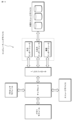
- FIG. 1 is a block diagram showing an example of a schematic configuration of a file management system according to an embodiment of the present invention.
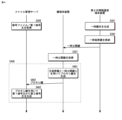
- FIG. 2 is a sequence chart for explaining an example of a schematic process in the file management system according to an embodiment of the present invention.
- FIG. 3 is a sequence chart for explaining an example of a schematic process in the file management system according to an embodiment of the present invention.
- FIG. 4 is a sequence chart for explaining an example of a proxy re-encryption process in the file management system according to an embodiment of the present invention.
- FIG. 5 is a sequence chart for explaining an example of a process for creating a second ciphertext by a key terminal device in a file management system according to an embodiment of the present invention.
- FIG. 1 is a block diagram showing an example of a schematic configuration of a file management system according to an embodiment of the present invention.
- FIG. 2 is a sequence chart for explaining an example of a schematic process in the file management system according to an embodiment of the present invention.
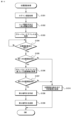
- FIG. 6 is a flowchart for explaining an example of a process for decrypting an encrypted file in the file management system according to an embodiment of the present invention.
- FIG. 7 is a diagram showing an example of a top screen displayed on a user interface of an information communication terminal device in a file management system according to an embodiment of the present invention.
- FIG. 8 is a diagram showing an example of a destination selection screen displayed on a user interface of an information communication terminal device in a file management system according to an embodiment of the present invention.
- FIG. 9 is a diagram showing an example of a receiving location registration screen displayed on a user interface of an information communication terminal device in a file management system according to an embodiment of the present invention.
- FIG. 7 is a diagram showing an example of a top screen displayed on a user interface of an information communication terminal device in a file management system according to an embodiment of the present invention.
- FIG. 8 is a diagram showing an example of a destination selection screen displayed on a user interface of an information communication terminal device in a file management system according
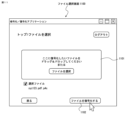
- FIG. 10 is a diagram showing an example of an encrypted file selection screen displayed on the user interface of an information communication terminal device in a file management system according to an embodiment of the present invention.
- FIG. 11 is a diagram showing an example of a decryption file selection screen displayed on the user interface of a communication terminal device in a file management system according to an embodiment of the present invention.
- FIG. 12 is a flowchart for explaining an example of a location authentication process in the file management system according to an embodiment of the present invention.
- FIG. 13 is a diagram showing an example of the hardware configuration of a computing device in a system according to an embodiment of the present invention.
- This embodiment is characterized in that, when a file is transmitted between a first user and a second user, the first user who sends the file encrypts the file and designates a location where the file is to be received, and the file can be decrypted only when the second user who receives the file is at the designated location. Whether or not the second user is at the designated location is determined based on location information of, for example, a smartphone (hereinafter, described as a key terminal device) that functions as a key terminal device possessed by the second user.
- a smartphone hereinafter, described as a key terminal device
- FIG. 1 is a block diagram showing an example of a schematic configuration of a file management system according to one embodiment of the present invention.
- the file management system 1 of this embodiment includes a file management server 10, a plurality of information communication terminal devices 20, and a key terminal device 30, which are communicatively connected to each other via a communication network N.
- the file management system 1 may also be configured to further include a key management server 40.
- the file management system 1 provides a so-called network storage service.
- the file management server 10 is a computing device that provides network storage services to users.
- the hardware configuration of the file management server 10 is shown, for example, in FIG. 13, but since such a configuration is known, a detailed description thereof will be omitted.
- the file management server 10 may be, for example, a storage system constructed using a SAN (Storage Area Network).
- the information and communication terminal device 20 is a computing device operated by a user, and may be, for example, but is not limited to, a desktop computer, a notebook computer, a tablet computer, a smartphone, a feature phone, or other intelligent devices.
- the information and communication terminal device 20 may be, for example, a computing device virtualized by desktop virtualization technology.
- the information and communication terminal device 20 is composed of hardware resources such as a CPU (processor), chipset, memory, communication module, user interface, etc., and software resources such as an operating system (which may include, for example, a kernel, various device drivers, standard libraries, etc., hereinafter referred to as "OS"). Under the control of the processor, the information and communication terminal device 20 executes various application programs on the OS to achieve desired functions.
- the information and communication terminal device 20 implements, for example, a mail client program and an encryption/decryption client program that realize the function of sending and receiving mail.
- the information and communication terminal device 20 may also implement a browser program that realizes a browser function.
- one of the multiple information communication terminal devices 20 is a first information communication terminal device 20a operated by a first user (sender user) who is the sender of the file, and the other is a second information communication terminal device 20b operated by a second user (recipient user) who is the recipient of the file. That is, the sender user operates the first information communication terminal device 20a to upload a file to the file management server 10, and one or more recipient users designated by the sender user download the file to the second information communication terminal device 20b, thereby enabling the transmission (handover) of the file between the sender user and the recipient user.
- a master key pair including a master private key and a master public key is assigned to the second information communication terminal device 20b.
- the recipient user is the key owner who owns the master key pair.
- the sender user designates the recipient user to whom he/she wishes to send a file
- the sender user designates the location where the recipient user should receive the file (reception location).
- the sender user may specify a location such as the recipient user's office or home as the receiving location.
- the second information communication terminal device 20b also generates a temporary key pair for temporary use when downloading a file from the file management server 10.
- the generated temporary key pair consists of a temporary private key and a temporary public key.
- the second information communication terminal device 20b secretly stores (memorizes) the generated temporary private key in memory.
- Secretly storing the temporary private key means that the temporary private key is never leaked outside the second information communication terminal device 20b. In other words, in the transfer of files as described above via the communication network N, the temporary private key is not known to any device other than the second information communication terminal device 20b.
- the sender user and the receiver user may be the same.
- a user may use the file management system 1 for file backup. That is, a user may back up a file on a first information communication terminal device 20a to the file management system 1 and restore the file on a second information communication terminal device 20b.
- the first information communication terminal device 20a and the second information communication terminal device 20b may be the same.
- the key terminal device 30 is a computing device operated by a recipient user, and may be, for example, a desktop computer, a notebook computer, a tablet computer, a smartphone, a feature phone, or other intelligent devices, but is not limited to these.
- the key terminal device 30 may be, for example, a computing device virtualized by desktop virtualization technology.
- the key terminal device 30 may be a dedicated device that enables processing related to public key cryptography and management of key pairs.
- a mobile device such as a smartphone is one aspect of the key terminal device 30.
- the key terminal device 30 has a function of acquiring geographical location information from, for example, a GPS system.
- the key terminal device 30 also implements a key management client program that realizes functions based on public key cryptography.
- the key terminal device 30 is associated with the second information communication terminal device 20b (encryption/decryption client program) via, for example, the identifier (e.g., email address) of the recipient user.
- the key terminal device 30 may be the same as the second information communication terminal device 20b.
- the key terminal device 30 generates a master key pair consisting of a master private key and a master public key, and secretly stores the generated master private key in memory.
- the key terminal device 30 executes a key management client program to generate a master key pair consisting of a master private key and a master public key, and stores the master private key in memory.
- the key terminal device 30 also performs a predetermined exchange with the key management server 40 in order to register the generated public key in the key management server 40.
- Storing the master private key secretly means that the master private key is never leaked outside the key terminal device 30. In other words, when transferring files as described above via the communication network N, the master private key cannot be known by any device other than the key terminal device 30.
- the key management server 40 is a computing device that has a database (not shown) that manages the public keys (i.e., master public keys) for each user (here, whether the user is a sender or a receiver).
- the key management server 40 can be, for example, a Web server computer that provides a Web API (Application Programming Interface) configured to output a public key in response to a user's inquiry, or a public key server computer conforming to OpenPKSD for publishing a public key based on OpenPGP technology.
- the key management server 40 typically receives the master public key sent from the key terminal device 30 and registers it in a database. In response to a query including a user's identifier, the key management server 40 also refers to the database, extracts the public key assigned to the user according to the user's identifier, and outputs it.
- a user identifier can be any information that can uniquely identify an individual user, such as an email address, address and name, social security number, tax number, national identification number, account names used for various public services, and various private services, or any combination thereof.
- the key management server 40 when a query is received that includes the identifier of a user that is not registered in the database, the key management server 40 generates a temporary key pair consisting of a temporary private key and a temporary public key, associates the generated temporary key pair with the identifier of the user, temporarily registers the key pair in the database, and transmits the temporary public key to the user.
- the key management server 40 When such an unregistered user registers the master public key of the master key pair generated in the key terminal device 30 in the key management server 40, the key management server 40 first transmits a temporary key pair to the key terminal device 30 using a secure communication means. After the temporary key pair is transmitted from the key management server 40 to the key terminal device 30, the key management server 40 invalidates the temporary key pair. As described above, the key terminal device 30 generates a new master key pair and transmits the master public key of the master key pair to the key management server 40. When the key management server 40 receives the master public key from the key terminal device 30, it registers it in its database.
- the file management server 10 and the key management server 40 are configured as separate computing devices, but this is not limited thereto and they may be configured as a single computing device.
- FIG. 2 and 3 are sequence charts for explaining an example of a schematic process in the file management system according to an embodiment of the present invention. Specifically, Fig. 2 is a flowchart showing an example of an upload process in the file management system 1, and Fig. 3 is a flowchart showing an example of a download process in the file management system 1.
- the sender user operates the first information communication terminal device 20a to specify or select one or more files to be backed up or handed over, one or more recipient users (second users) to receive the files, and information on the receiving location as destination information (S201).
- an identifier such as a user ID or an email address may be used to specify the user.
- geographical location information GPS coordinates, etc.
- the receiving location may be a place name, address, and/or name (such as a building name, office, or home) associated with the GPS coordinates.
- the receiving location may be a GPS coordinate obtained by geocoding via an external API from a point indicated by the user on a geographical map displayed on a user interface or an address entered by the user. The receiving location of the receiving user may be selected from those registered in advance.
- the sender user specifies the file, the recipient user, and the receiving location for the first information communication terminal device 20a, but this is not limiting.
- the sender user may set his/her own identifier and receiving location in advance for the first information communication terminal device 20a, and use these when backing up.
- the first information communication terminal device 20a may scan the files placed in the folder, and extract and specify the relevant files.
- the first information communication terminal device 20a sends a query including the identifier of the specified recipient user to the key management server 40 in order to obtain the key information (i.e., the public key) of the specified recipient user (S202).
- the key management server 40 refers to a database to identify the public key associated with the identifier indicated in the query (S203), and sends a response including the identified public key to the first information communication terminal device 20a (S204). Note that if the recipient user's public key (master public key) has been set in advance in the first information communication terminal device 20a via an information recording medium or the like, the above exchange between the first information communication terminal device 20a and the key management server 40 is omitted.
- the first information communication terminal device 20a generates a common key according to a predetermined function (S205).
- the common key is a random value generated using, for example, a random number function, and preferably has a sufficient bit length.
- the first information communication terminal device 20a encrypts the file using the generated common key to generate an encrypted file (hereinafter referred to as the "encrypted file") (S206).
- the common key is a key shared by the sending user and the receiving user. That is, the common key is used to encrypt a file to generate an encrypted file, and is also used to decrypt the encrypted file to generate the original file.
- the common key is also called a symmetric key or a shared key.
- Various techniques can be applied to encryption/decryption processes using a common key, including block encryption techniques such as IDEA, AES, and Camellia, and stream encryption techniques such as RC4, FISH, and MUGI.
- the common key may be the same for multiple files, or it may be different for each file.
- the common key may also be generated anew each time a file is backed up or transferred.
- an expiration date may be set for the common key, and the same common key may be used during the expiration date rather than being generated each time.
- the first information communication terminal device 20a uses the acquired master public key to encrypt the generated common key, thereby generating a first ciphertext (S207).
- the first information communication terminal device 20a may generate the first ciphertext by encrypting the common key and the receiving location together.
- the encryption process using the master public key is based on public key cryptography, and various techniques such as RSA cryptography, ElGamal cryptography, and elliptic curve cryptography may be applied.
- the first information communication terminal device 20a transmits a file upload request to the file management server 10, in which the encrypted file, the first ciphertext, and the receiving location are associated with the sender user (S208).
- the file management server 10 stores the encrypted file, the first ciphertext, and the receiving location in association with the sender user.
- the user operates the first information communication terminal device 20a to log in to the file management server 10, and uploads the encrypted file together with the first ciphertext and the receiving location to a specified storage area of the file management server 10. This completes the process related to the file upload by the sender user, and therefore, in subsequent processes, the sender user does not need to operate the first information communication terminal device 20a.
- the first information communication terminal device 20a may send an email with the encrypted file attached to the designated email address of the sender user, and may also send the first ciphertext associated with the sender user and the receiving location to the file management server 10.
- the recipient user can obtain the encrypted file without operating the second information communication terminal device 20b to access the file management server 10.
- the first information communication terminal device 20a can obtain the master public key from the key management server 40 or the like and can generate a common key as needed, so there is no need for the first information communication terminal device 20a to continue to hold and manage the master public key and common key within the first information communication terminal device 20a.
- the first information communication terminal device 20a does not need to know the private key (master private key) assigned to the recipient user in order for the second information communication terminal device 20b to decrypt the file.
- the second information communication terminal device 20b generates a temporary key pair consisting of a temporary public key and a temporary private key (S301) and secretly stores the temporary private key in the second information communication terminal device 20b (S302).
- the temporary key pair may be generated by the same public key encryption algorithm as the master key pair assigned to the recipient user, or may be generated by a different public key encryption algorithm.
- the generated temporary key pair is used temporarily by the second information communication terminal device 20b and may be generated each time a file is downloaded, or an expiration date may be set and the same temporary key pair may be used during the expiration date.
- the recipient user operates the second information communication terminal device 20b to request login authentication from the file management server 10 (S303).
- the file management server 10 obtains the recipient user's identifier/password and a temporary public key.
- the file management server 10 performs login authentication processing for the user (S304). If authentication by the login authentication processing is successful, the file management server 10 may obtain the temporary public key from the second information communication terminal device 20b.
- the login authentication may be, for example, multi-factor authentication in which the possession or use of the key terminal device 30 by the recipient user is one of the authentication factors. That is, when the recipient user operates the second information communication terminal device 20b to request login authentication from the file management server 10, the recipient user executes a key management client program on the key terminal device 30.
- the file management server 10 may obtain an execution status sent from the key terminal device 30 and additionally determine whether or not the key management client program is being executed on the key terminal device 30.
- the key management client program may be configured to accept authentication requests from the file management server 10 only for a specified period of time.
- the file management server 10 determines that the login authentication has been successful as a result of the authentication process for the login authentication request, it transmits an authentication result indicating that the login authentication has been successful to the second information communication terminal device 20b (S305). In addition, the file management server 10 transmits the temporary public key acquired from the second information communication terminal device 20b to the key terminal device 30 (S306), and in response, the key terminal device 30 stores the received temporary public key in memory (S307).
- the temporary public key of the temporary key pair generated by the second information communication terminal device 20b is transmitted to the key terminal device 30 via the file management server 10, but this is not limited and the temporary public key may be transmitted to the key terminal device 30 using other secure transmission means.
- the second information communication terminal device 20b may display a geometric pattern (e.g., a two-dimensional code) indicating the temporary public key on a user interface, and the user may operate the key terminal device 30 to read the displayed geometric pattern, thereby allowing the key terminal device 30 to obtain the temporary public key.
- the key terminal device 30 may transmit the temporary public key acquired from the second information communication terminal device 20b to the file management server 10, and the file management server 10 may perform login authentication processing based on the temporary public key acquired in response to the login authentication request from the second information communication terminal device 20b and the temporary public key acquired from the key terminal device 30.
- the key terminal device 30 may use the stored master private key to apply an electronic signature to the acquired temporary public key, and then transmit the temporary public key together with the electronic signature to the file management server 10.
- the file management server 10 may use the master public key to verify the validity of the received electronic signature.
- the second information communication terminal device 20b may transmit the temporary public key to the key terminal device 30, for example, by using short messaging or email.
- the second information communication terminal device 20b may transmit the temporary public key to the key terminal device 30 by communication according to the Bluetooth (registered trademark) standard or the NFC (Near Field Communication) standard, communication using a USB cable, wired communication via a network cable, Wi-Fi communication via a wireless access point, mobile communication via a carrier network, or the like, or may supply the temporary public key to the key terminal device 30 via a physical device such as a USB memory device.
- the second ciphertext corresponds to a common key encrypted using a temporary public key, and is information used to decrypt the encrypted file.
- the second ciphertext is generated based on the master private key stored in the key terminal device 30, the temporary public key transmitted from the second information communication terminal device 20b, and the first ciphertext stored in the file management server 10. Details of the second ciphertext generation process will be described later.
- the key terminal device 30 acquires its own geographical location information by executing the key management client program (S309).
- the key terminal device 30 acquires the geographical location information triggered by acquisition of the temporary public key.
- the geographical location information is, for example, GPS coordinates acquired using the GPS function of the key terminal device 30.
- the key terminal device 30 may use a location information service using WiFi (registered trademark).
- the key terminal device 30 transmits a location authentication request including the acquired geographical location information to the file management server 10 (S310).
- the geographical location information may be transmitted from the key terminal device 30 to the file management server 10, for example, during additional authentication of whether or not the key management client program is being executed on the key terminal device 30.
- the file management server 10 When the file management server 10 receives a location authentication request from the key terminal device 30, it determines whether the location authentication has been successful by determining whether the geographical location information indicated in the location authentication request corresponds to the receiving location specified by the first information communication terminal device 20a (S311). For example, the file management server 10 determines that the location authentication has been successful if the geographical location information is within a predetermined effective range from the receiving location specified by the sender user, taking into account errors in the geographical location information. Such an effective range can be set arbitrarily by the user, for example.
- the file management server 10 determines that the location authentication was successful, the file management server 10 transmits a determination result indicating that the location authentication was successful, including the generated second ciphertext, to the second information communication terminal device 20b (S312). In other words, the file management server 10 transmits the second ciphertext used to decrypt the encrypted file to the second information communication terminal device 20b only if the location authentication was successful.
- the second information communication terminal device 20b When the second information communication terminal device 20b receives the second ciphertext, it decrypts the second ciphertext using a temporary private key that it has secretly stored in itself to obtain the common key (S313). Next, the file management server 10 transmits the encrypted file to the second information communication terminal device 20b (S314), and the second information communication terminal device 20b obtains the encrypted file and stores it in a specified folder (S315). Note that the second information communication terminal device 20b may obtain the second ciphertext and the encrypted file together, rather than obtaining them separately.
- the sender user may send an email with an encrypted file attached from the first information communication terminal device 20a to the recipient user's email address, and the recipient user may receive the email on the second information communication terminal device 20b and store the attached file (encrypted file) in a specified folder.
- the recipient user does not need to log in to the file management server 10 from the second information communication terminal device 20b and download the encrypted file.
- the second information communication terminal device 20b uses the decrypted common key to decrypt the obtained encrypted file, thereby obtaining the original file (S316). This allows the file to be safely transferred between the sender user and the recipient user.
- the second information communication terminal device 20b cannot receive the second ciphertext, and instead receives a determination result indicating that location authentication has failed.
- the second information communication terminal device 20b receives the determination result indicating that location authentication has failed, it stops the decryption process of the encrypted file and presents, for example, an error message to the user.
- the common key remains secret from the file management server 10. Therefore, even the administrator of the file management server 10 cannot decrypt the encrypted file, further improving the security of file transfer.
- the second information communication terminal device 20b cannot acquire the second ciphertext from the file management server 10, and therefore cannot acquire the common key and therefore cannot decrypt the encrypted file, further improving the security of file transfer.
- Methods for performing the second ciphertext generation process include, for example, a method that uses proxy re-encryption (see FIG. 4) and a method in which the decryption and encryption processes are performed in the key terminal device 30 (see FIG. 5).
- FIG. 4 is a sequence chart illustrating an example of a proxy re-encryption process in a file management system according to one embodiment of the present invention.
- the key terminal device 30 generates a proxy key based on the master private key stored therein and the temporary public key transmitted from the second information communication terminal device 20b (S401). Note that here, it is assumed that the temporary public key is transmitted to the key terminal device 30 directly from the second information communication terminal device 20b, not via the file management server 10. Next, the key terminal device 30 transmits the generated proxy key to the file management server 10 (S402).
- the file management server 10 generates a second ciphertext by re-encrypting the first ciphertext received from and stored in the first information communication terminal device 20a with the proxy key transmitted from the key terminal device 30 (S403). As described above, if the location authentication is successful, the file management server 10 transmits the generated second ciphertext to the second information communication terminal device 20b (S312 in FIG. 3).
- a proxy re-encryption technique that can re-encrypt ciphertext using a public key cryptosystem of a master key pair can be applied to the generation of a temporary key pair.
- the master key pair "public key cryptosystem AFGH06" described in the above-mentioned non-patent document 1 can be applied to the present invention.
- the master key pair is based on a public key cryptosystem on an elliptic curve, but the temporary key pair is based on a public key cryptosystem over a finite field, and re-encryption can only be performed once.
- proxy re-encryption techniques can be applied, including the proxy re-encryption technique disclosed in Non-Patent Document 1.
- a master key pair and a temporary key pair are generated, encryption processing is performed using a public key, and decryption processing is performed using a private key.
- FIG. 5 is a sequence chart for explaining an example of a process for creating a second ciphertext by a key terminal device in a file management system according to one embodiment of the present invention.
- the key terminal device 30 acquires the temporary public key (S307).
- the temporary public key is assumed to have been transmitted directly from the second information communication terminal device 20b to the key terminal device 30, not via the file management server 10.
- the file management server 10 also transmits the first ciphertext to the key terminal device 30 (S501), and the key terminal device 30 acquires the first ciphertext (S502).
- the key terminal device 30 acquires the common key by decrypting the first ciphertext acquired from the file management server 10 using the master private key stored in itself (S503).
- the key terminal device 30 generates a second ciphertext by encrypting the decrypted common key using the temporary public key sent from the second information communication terminal device 20b (S504).
- the key terminal device 30 transmits the generated second ciphertext to the file management server 10 (S505), and the file management server 10 acquires the second ciphertext (S506).
- the file management server 10 transmits the generated second ciphertext to the second information communication terminal device 20b (S312 in FIG. 3).
- the key terminal device 30 uses the master private key to decrypt the common key from the first ciphertext, and then encrypts the common key using the temporary public key to generate the second ciphertext. Therefore, various public key cryptography systems can be used depending on the performance and use of the device by using the master key pair and the temporary key pair.
- An encrypted file is information obtained by encrypting a file with a common key.
- the first ciphertext is information obtained by encrypting the common key with the master public key.
- the first ciphertext is decrypted with the master private key to obtain the common key.
- the second ciphertext is information obtained by encrypting the common key with the temporary public key.
- a proxy key is derived from the temporary public key and the master private key.
- By applying the proxy key to the first ciphertext a second ciphertext is obtained while keeping the common key secret.
- the second ciphertext is decrypted with the temporary private key to obtain the common key.
- the original file is obtained.
- the master private key of the receiving user does not need to be output from the key terminal device 30 to the outside, and therefore can be managed safely without being exposed to third parties.
- the encrypted file can be decrypted only when the receiving user who possesses the key terminal device 30 operates the second information communication terminal device 20b at the receiving location specified by the sender user, thereby further improving the security of file transfer.
- the recipient user When the recipient user starts using the services of the file management system 1 of this embodiment, it is desirable that the recipient user installs a specified application program (i.e., a key management client program) in the key terminal device 30, and that the key terminal device 30 executes the key management client program under the control of the processor to generate a master key pair consisting of a master public key and a master private key, and transmits the master public key to register it in the key management server 40.
- a specified application program i.e., a key management client program
- the key management server 40 when a sender user attempts to upload a file to the file management server 10, the receiver user may not have yet started using the services of the file management system 1 of the present disclosure. In such a case, the key management server 40 generates a master key pair on behalf of the receiver user, allowing the sender user to upload the file in advance.
- the key management server 40 determines whether a public key associated with the identifier of the recipient user indicated in the inquiry sent from the first information communication terminal device 20a has been registered, and if the key management server 40 determines that the public key has not been registered, it generates a temporary key pair consisting of a temporary public key and a temporary private key, and registers the generated temporary public key in association with the identifier.
- a user associated with the identifier i.e., the recipient user
- the key management server 40 transmits the temporary private key to the key terminal device 30, and the key terminal device 30 stores it secretly as a master private key.
- the key management server 40 can then invalidate the temporary key pair.
- the sending user can store an encrypted file for the file to be sent to the receiving user in the file management server 10.
- the receiving user starts using the services of the file management system 1 in response to a communication from the sending user to the receiving user by email or the like, the file can be obtained by downloading it from the file management server 10.
- the recipient user After obtaining the encrypted file from the file management server 10 and decrypting the file, it is desirable for the recipient user to promptly generate a new master key pair in the key terminal device 30, transmit the master public key to the key management server 40, and update it to the master public key that he or she has generated.
- (Decoding process) 6 is a flow chart for explaining an example of a decryption process of an encrypted file in a file management system according to an embodiment of the present invention. This process is realized by the second information communication terminal device 20b executing a decryption program under the control of a processor, in cooperation with a specified hardware. In the following process, it is assumed that the second information communication terminal device 20b has already acquired the encrypted file designated by the sender user. It is also assumed that the key terminal device 30 has executed a key management client program and acquired a temporary public key.
- the second information communication terminal device 20b generates a temporary key pair consisting of a temporary public key and a temporary private key through the operation of the recipient user (S601), and secretly stores the temporary private key in memory (S602).
- the recipient user operates the second information communication terminal device 20b to request login authentication from the file management server 10 and logs in (S603).
- the second information communication terminal device 20b transmits the recipient user's identifier/password and temporary public key to the file management server 10.
- the file management server 10 performs login authentication processing.
- the file management server 10 cooperates with the key terminal device 30 to create a second ciphertext as described above.
- the receiver user operates the key terminal device 30 to execute the key management client program, and in response, the key terminal device 30 acquires its own geographical location information using, for example, a GPS function (S604) and transmits a location authentication request including the acquired geographical location information to the file management server 10 (S605).
- the file management server 10 determines whether the geographical location information indicated by the location authentication request corresponds to the receiving location specified by the sender user, and transmits the determination result to the second information communication terminal device 20b.
- the determination result indicating that the location authentication was successful includes the second ciphertext. Therefore, the second information communication terminal device 20b can acquire the second ciphertext only if the location authentication is successful.
- the key terminal device 30 acquires the geographical location information and transmits it to the file management server 10, but this is not limited thereto, and the second information communication terminal device 20b may acquire the geographical location information and transmit it to the file management server 10.
- the second information communication terminal device 20b determines whether the determination result indicates that the location authentication was successful, i.e., whether the determination result indicates that the second ciphertext was acquired (S607). If the second information communication terminal device 20b determines that the second ciphertext was acquired (Yes in S607), the second information communication terminal device 20b decrypts the second ciphertext using the temporary private key to acquire the common key (S608). Next, the second information communication terminal device 20b decrypts the encrypted file using the common key acquired by decryption to acquire the original file (S609). This allows the file to be safely transferred between the sender user and the receiver user.
- the second information communication terminal device 20b determines that the determination result indicates that the location authentication has failed (No in S607), it determines that the decryption has failed, performs a predetermined error process, and ends the decryption process (S610).
- a sender user who wishes to safely deliver a file to a recipient user operates the first information communication terminal device 20a to execute an encryption/decryption client program and log in to the file management server 10, causing the first information communication terminal device 20a to display a top screen 700, for example, as shown in FIG. 7, on the user interface.
- the sender user selects the "Encrypt" icon 701 on the top screen 700.
- the first information communication terminal device 20a displays a destination selection screen 800, for example, as shown in FIG. 8, on the user interface of the first information communication terminal device 20a.
- the sender user specifies the destination information to which the file is to be sent. That is, on the destination selection screen 800, the sender user checks the check box 801 to select a pre-registered destination (the recipient user's email address). If the recipient user is not registered, the sender user can select the "Add user" button 803 to display a user registration screen (not shown), and can register the recipient user by entering the necessary information on the user registration screen.
- the sender user also specifies the location where the sender user should receive the file on the destination selection screen 800. For example, the sender user selects the file receiving location from the pull-down menu 802. In this case, the sender user selects "add receiving location" to display a receiving location registration screen 900, such as that shown in FIG. 9, on the user interface, and specifies the receiving location of the receiver user.
- the sender user inputs the address of the recipient user's workplace in the address input field 901, and displays a geographical map of the surrounding area. That is, the first information communication terminal device 20a converts the input address into GPS coordinates using geocoding, and displays a pin 902a and an effective range 902b at a position corresponding to the address on the geographical map.
- the effective range 902b is a rough guideline that takes into account errors in the GPS coordinates.
- the user can change the size of the effective range 902b, for example, in a setting menu.
- the sender user can select and confirm the receiving location by clicking the pin 902a on the geographical map. Note that, although not shown, when the sender user clicks the pin 902a, he or she can assign any name (label) such as a building name, office, or home to the receiving location and register it.
- the sender user selects the desired destination and receiving location on the destination selection screen 800, and then selects the "Next" button 804.
- the first information communication terminal device 20a accesses the file management server 10, and the file management server 10 displays a file selection screen 1000, such as that shown in FIG. 10, on the user interface of the first information communication terminal device 20a.
- the sender user can select a file by dragging and dropping the desired file into the drag and drop area 1001 on the file selection screen 1000.
- the sender user may select a file from a file selection dialog box.
- the sender user can select multiple files. After selecting the desired files, the sender user selects the "Encrypt file” button 1002.
- the first information communication terminal device 20a When the sender user selects the "Encrypt file” button 1002, the first information communication terminal device 20a starts generating an encrypted file and a first ciphertext. That is, as described above, the first information communication terminal device 20a generates a common key according to a predetermined function, and uses the generated common key to encrypt the selected file to generate an encrypted file. The first information communication terminal device 20a also obtains a master public key from the key management server 40, and uses the obtained master public key to encrypt the common key to generate a first ciphertext. The first information communication terminal device 20a then transmits a file upload request including the encrypted file, the first ciphertext, the destination, and the receiving location to the file management server 10. As a result, the file management server 10 stores the encrypted file, the first ciphertext, and the receiving location in association with the sender user.
- the sender user may store the encrypted file in the storage device of the first information communication terminal device 20a in order to send the encrypted file by email, rather than uploading it to the file management server 10.
- the first information communication terminal device 20a may specify an email address as the destination and open an email sending window with the encrypted file specified as an attachment, by having the encryption/decryption client program work in conjunction with the email client program.
- the recipient user's second information communication terminal device 20b generates a temporary key pair and stores the temporary private key.
- the recipient user's key terminal device 30 stores the temporary public key.
- a recipient user who wishes to receive a file from a sender user operates the second information communication terminal device 20b to log in to the file management server 10 and display a top screen 700, for example, as shown in FIG. 7, on the user interface.
- the layout of the top screen 700 is the same for both the sender user and the recipient user.
- the recipient user selects the "Decrypt" icon 702 on the top screen 700.
- the second information communication terminal device 20b accesses the file management server 10, and the file management server 10 displays a file selection screen 1100, for example, as shown in FIG. 11, on the user interface of the second information communication terminal device 20b.
- the recipient user can select a file (encrypted file) by dragging and dropping the desired file into the drag and drop area 1101 on the file selection screen 1100.
- the recipient user may select an encrypted file from a file selection dialog box.
- the recipient user can select multiple encrypted files.
- the second information communication terminal device 20b displays a list of encrypted files that the recipient user can receive from the file management server 10, and the recipient user can select a desired encrypted file from the list of encrypted files.
- the recipient user may open the folder in which the encrypted files received by the second mail are saved, and select a desired encrypted file. After selecting the desired encrypted file, the recipient user selects the "Encrypt file" button 1102.
- the recipient user also selects the "Decrypt file” button 1102.
- the recipient user operates the key terminal device 30 to execute the key management client program.
- the file management server 10 acquires the second ciphertext in cooperation with the key terminal device 30.
- the key terminal device 30 also acquires its own geographical location information and transmits a location authentication request including the acquired geographical location information to the file management server 10.
- the file management server 10 receives the location authentication request from the key terminal device 30, it determines whether the geographical location information indicated by the location authentication request corresponds to the specified receiving location, and transmits the determination result to the second information communication terminal device 20b.
- the determination result indicating that the location authentication was successful includes the second ciphertext.
- the second information communication terminal device 20b acquires the second ciphertext from the file management server 10 due to the success of the location authentication, it uses the temporary private key to decrypt the acquired second ciphertext and generate a common key.
- the second information communication terminal device 20b uses the generated common key to decrypt the encrypted file and obtain the original file. This allows the file to be securely transferred between the sender user and the recipient user.
- the master private key of the receiving user does not need to be output from the key terminal device 30 to the outside, and therefore can be managed safely without being exposed to third parties.
- the encrypted file can be decrypted only when the receiving user who possesses the key terminal device 30 operates the second information communication terminal device 20b at the receiving location specified by the sender user, thereby further improving the security of file transfer.
- Second Embodiment is a modification of the first embodiment, and differs from the first embodiment in that the file can be decrypted only when both the information communication terminal device and the key terminal device of the second user who is the recipient of the file are present at the receiving location designated by the first user.
- the file can be decrypted only when both the information communication terminal device and the key terminal device of the second user who is the recipient of the file are present at the receiving location designated by the first user.
- the second information communication terminal device 20b itself may be implemented with a function for acquiring geographical position information.
- the second information communication terminal device 20b may be implemented with a GPS function.
- the second information communication terminal device 20b may be connected to a USB-standard device that has a GPS function.
- the second information communication terminal device 20b transmits the acquired geographical position information of itself, for example, after logging in to the file management server 10.
- the second information communication terminal device 20b when the second information communication terminal device 20b is a desktop computer or the like, it is generally not equipped with a GPS function, and there may be little motivation to connect an external GPS device. Therefore, in such a case, for example, a global IP address assigned to a router in the LAN to which the second information communication terminal device 20b is connected can be used as the geographical location information of the second information communication terminal device 20b. That is, in network communication, since the communication data transmitted from the second information communication terminal device 20b includes the global IP address assigned to the router, the file management server 10 can extract the global IP address from the communication data and estimate the geographical location of the second information communication terminal device 20b by referring to the IP address database. In general, since there is a tendency for errors to be large in location estimation using a global IP address, it is preferable for the file management server 10 to perform location authentication of the second user (second information communication terminal device 20b) by expanding the error tolerance range.
- FIG. 12 is a flowchart for explaining an example of location authentication processing by a file management server in a file management system according to one embodiment of the present invention.
- a global IP address is used to estimate the location of the second information communication terminal device 20b.
- the file management server 10 accepts a login authentication request sent from the second information communication terminal device 20b of the recipient user and performs login authentication (S1201). During login authentication, the file management server 10 obtains the recipient user's identifier/password and temporary public key from the second information communication terminal device 20b (S1202). At this time, the file management server 10 obtains from the communication data the global IP address assigned to the router in the LAN to which the second information communication terminal device 20b is connected (S1203).
- the file management server 10 After login authentication, the file management server 10 waits until it receives a location authentication request from the key terminal device 30 (S1204). When the file management server 10 receives the location authentication request from the key terminal device 30 (Yes in S1204), the file management server 10 judges the success or failure of the first location authentication process based on the location authentication request (S1205). That is, the file management server 10 judges whether the geographical location information indicated by the location authentication request (hereinafter referred to as "first geographical location information”) corresponds to the receiving location specified by the sender user. When the file management server 10 judges that the first geographical location information does not correspond to the specified receiving location (No in S1205), the file management server 10 transmits a judgment result indicating that the location authentication has failed to the second information communication terminal device 20b (S1210).
- first geographical location information indicated by the location authentication request
- the file management server 10 determines that the first geographical location information corresponds to the specified pick-up location (Yes in S1205), the file management server 10 refers to the IP address database based on the acquired global IP address and acquires the second geographical information (S1206). Next, the file management server 10 determines the success or failure of the second location authentication process based on the acquired second geographical location information (S1207). In other words, the file management server 10 determines whether the acquired second geographical location information corresponds to the specified pick-up location.
- the file management server 10 determines that the second geographical location information does not correspond to the specified receiving location (No in S1207), the file management server 10 similarly transmits a determination result indicating that the location authentication has failed to the second information communication terminal device 20b (S1210). That is, in this embodiment, it is not sufficient for the key terminal device 30 to be present at the specified receiving location; the second information communication terminal device 20b must also be present at the specified receiving location.
- the file management server 10 determines that the second geographical location information corresponds to the specified receiving location (Yes in S1207), the file management server 10 cooperates with the key terminal device 30 to generate a second ciphertext (S1208), as described above. Next, the file management server 10 transmits the generated second ciphertext to the second information communication terminal device 20b (S1209).
- the determination of whether the receiving user is at the receiving location specified by the sender user is made based not only on the first geographical location information indicated by the key terminal device 30 but also on the second geographical location information indicated by the second information communication terminal device 20b, so that the security of the file transfer can be further improved.
- the sender user can only decrypt the encrypted file at a location where the receiving user possesses the key terminal device 30 and where the second information communication terminal device 20b used by the receiving user is installed, so that the security of the file transfer can be further improved.
- the file management server 10 judges the success or failure of location authentication based on the second geographical location information of the second information communication terminal device 20b in addition to the first geographical location information acquired by the key terminal device 30.
- the success or failure of location authentication may be judged based on whether the second information communication terminal device 20b and the key terminal device 30 are connected to routers in the same LAN.
- the key terminal device 30 can connect to a Wi-Fi (registered trademark) access point provided by a router in a LAN.
- Wi-Fi registered trademark
- the key terminal device 30 switches the wireless communication connection from the carrier network to the access point. This allows the file management server 10 to obtain a global IP address assigned to the router in the LAN to which the key terminal device 30 is connected in network communication with the key terminal device 30.
- the file management server 10 obtains a global IP address from the second information communication terminal device 20b and obtains a global IP address from the key terminal device 30, and determines whether these global IP addresses match.
- the receiving user can only decrypt the encrypted file if he or she is at the receiving location specified by the sending user, and if the second information communication terminal device 20b and the key terminal device 30 are at that location (within the same LAN), further improving the security of file transfer.
- the determination based on geographical location information from the GPS function of the key terminal device 30 may be made or omitted.
- the second information communication terminal device 20b and the key terminal device 30 may be additionally determined whether the second information communication terminal device 20b and the key terminal device 30 are connected by Bluetooth (registered trademark) communication or near field communication (NFC). This allows the second information communication terminal device 20b and the key terminal device 30 to be estimated as being in the vicinity of the recipient user, and similarly increases the accuracy of determining whether the location authentication is successful.
- the second information communication terminal device 20b may display a geometric pattern (e.g., a two-dimensional code) indicating a one-time authentication code presented by the file management server 10 on a user interface, and the recipient user may operate the key terminal device 30 to read the displayed geometric pattern, thereby causing the key terminal device 30 to obtain it and transmit it to the file management server 10.
- the key terminal device 30 since the key terminal device 30 is location-authenticated by geographical location information provided by the GPS function, it may be estimated through such a display on the user interface that the second information communication terminal device 20b and the key terminal device 30 are in the vicinity of the recipient user.
- the information communication terminal device 20b and the key terminal device 30 operated by the second user may be the same device (e.g., a smartphone). In this case, the geographical location information of the information communication terminal device 20b and the key terminal device 30 will be the same.
- This embodiment is a modification or application of the above-mentioned first and second embodiments, and is characterized in that it controls so that only users who have successfully decrypted a file as a login to the service can enjoy the service. That is, while the above-mentioned embodiments have been described with a focus on a file sharing service using a distinctive authentication technique, this embodiment describes various examples of systems that apply the authentication technique according to the above-mentioned embodiments to allow users who have successfully acquired login information (decrypted a file) to use the service.
- the present invention can be applied to a company's security system (which can be considered to correspond to the file management system 1 shown in FIG. 1).
- a temporary worker dispatched from a staffing agency to a certain company can be allowed to access the server of the dispatching agency only from the company to which the worker is dispatched.
- the manager of the temporary worker (corresponding to the first user) can set the successful decryption of the file using location authentication as a condition for the temporary worker (corresponding to the second user) to log in to the server (corresponding to the file management server).
- the server in response to the successful decryption of the file, the server can allow the temporary worker to log in.
- the original file may contain login information
- the temporary worker may log in to the server using the login information contained in the decrypted file. This allows the temporary worker to log in to the server and enjoy the services provided by the server, provided that the temporary worker is actually physically present at the company to which the worker is dispatched.
- electronic tickets may be applied to electronic tickets, passes, coupons, authentication badges, etc. (hereinafter referred to as "electronic tickets, etc.”).
- electronic tickets, etc. include admission tickets to venues where events, etc. are held, tickets for boarding vehicles, and download/view tickets that are valid only at designated locations.
- an administrator corresponding to a first user
- an issuer that issues electronic tickets, etc. operates the information communication terminal device 20a to specify geographical location information indicating the location where the electronic tickets, etc. can be used and a purchaser (corresponding to a second user) who has purchased the electronic tickets, etc., and uploads an encrypted file related to the electronic tickets, etc., together with a first ciphertext, to a server.
- the purchaser of the electronic ticket, etc. can obtain the original file by decrypting the encrypted file using the information communication terminal device 20 functioning as a key terminal device 30 at a pre-specified location (venue, etc.), and can use this to enjoy various services.
- the purchaser enters the venue by having a scanner installed at the entrance gate of the venue read the geometric pattern indicated by the decrypted file (electronic ticket, etc.).
- the purchaser may obtain the content indicated by the decrypted file at the venue, or the purchaser may use the information indicated by the electronic ticket or the like to participate in a contest or service that can only be applied for at the venue.
- the sending user registers the receiving location, but this is not limited to the above.
- a system administrator of a company or business may specify the receiving locations collectively when the receiving users are employees of the company. This allows a company or business to improve the security of file transfers by specifying the receiving location for employees' files as the office, and setting a system policy that prohibits files from being received anywhere other than the office.
- steps, operations or functions may be performed in parallel or in a different order, provided that the results are not inconsistent.
- the steps, operations and functions described are provided merely as examples, and some of the steps, operations and functions may be omitted or may be combined together to form one, or other steps, operations or functions may be added, without departing from the spirit of the invention.
- Reference Signs List 1 For file management system 10
- second information communication terminal device 30 for key terminal device 40
Landscapes
- Engineering & Computer Science (AREA)
- Computer Security & Cryptography (AREA)
- Computer Networks & Wireless Communication (AREA)
- Signal Processing (AREA)
- Storage Device Security (AREA)
Abstract
Description
本実施形態は、第1のユーザと第2のユーザとの間でファイルの伝送を行う際に、ファイルの送り手である第1のユーザが、ファイルを暗号化するとともにファイルの受取場所を指定し、ファイルの受け手である第2のユーザが指定された受取場所にいる場合に限り、ファイルを復号化することができるようにしたことを特徴とする。第2のユーザが指定された受取場所にいるか否かは、第2のユーザが所持する鍵端末装置として機能する例えばスマートフォン(以下では、鍵端末装置として説明される。)の位置情報に基づいて判断される。
図2及び図3は、本発明の一実施形態に係るファイル管理システムにおける概略的処理の一例を説明するシーケンスチャートである。具体的には、図2は、ファイル管理システム1におけるアップロード処理の一例を示すフローチャートであり、図3は、ファイル管理システム1におけるダウンロード処理の一例を示すフローチャートである。
図2に示されるように、送り手側ユーザ(第1のユーザ)は、第1の情報通信端末装置20aを操作して、バックアップや受け渡しの対象となる1又はそれ以上のファイル、該ファイルの受け手となる1又はそれ以上の受け手側ユーザ(第2のユーザ)、及び受取場所に関する情報を宛先情報として指定又は選択する(S201)。ユーザの指定には、例えばユーザIDやメールアドレス等の識別子が用いられ得る。また、受取場所の指定は、例えば地理的位置情報(GPS座標等)が用いられ得る。この場合、ユーザビリティの観点から、受取場所は、GPS座標に関連付けられた地名、住所、及び/又は名称(ビル名やオフィス、自宅など)等であっても良い。また、受取場所は、ユーザインターフェース上に表示された地理的マップ上のユーザが指し示す地点又は入力する住所等から例えば外部APIを介してジオコーディングにより取得されるGPS座標であっても良い。受け手側ユーザの受取場所は、予め登録されたものの中から選択されても良い。
次に、ファイル管理システム1におけるダウンロード処理について説明する。上述したように、受け手側ユーザの主秘密鍵は、鍵端末装置30に秘密裏に格納されており、ファイルのダウンロードに際して、第1の情報通信端末装置20a、第2の情報通信端末装置20b、及びファイル管理サーバ10は、主秘密鍵を知得する必要はない。
(a)暗号ファイルは、ファイルを共通鍵で暗号化した情報である。
(b)第1暗号文は、共通鍵を主公開鍵で暗号化した情報である。
(c)第1暗号文を主秘密鍵で復号化すると、共通鍵が得られる。
(d)第2暗号文は、共通鍵を一時公開鍵で暗号化した情報である。
(e)一時公開鍵と主秘密鍵とからプロキシ鍵が得られる。
(f)第1暗号文にプロキシ鍵を適用することにより、共通鍵が秘匿されたまま、第2暗号文が得られる。
(g)第2暗号文を一時秘密鍵で復号化すると、共通鍵が得られる。
(h)暗号ファイルを共通鍵で復号化すると、元のファイルが得られる。
(復号化処理)
図6は、本発明の一実施形態に係るファイル管理システムにおける暗号ファイルの復号化処理の一例を説明するためのフローチャートである。かかる処理は、第2の情報通信端末装置20bが、プロセッサの制御の下、復号化プログラムを実行することにより、所定のハードウェアと協働して、実現される。なお、以下の処理では、第2の情報通信端末装置20bは、送り手側ユーザが指定した暗号ファイルを既に取得しているものとして説明する。また、鍵端末装置30は、鍵管理クライアントプログラムを実行し、一時公開鍵を取得しているものとする。
次に、以上のようなファイル管理システムにおける送り手側ユーザと受け手側ユーザとの間でのファイルの受け渡しの具体例を説明する。
本実施形態は、第1の実施形態の変形であり、ファイルの受け手である第2のユーザの情報通信端末装置及び鍵端末装置の双方が、第1のユーザによって指定された受取場所に存在する場合に限り、ファイルを復号化することができるようにした点で、第1の実施形態と異なっている。以下では、第1の実施形態と同じ事項については適宜その詳細な説明を省略する。
上記の例では、ファイル管理サーバ10は、鍵端末装置30によって取得された第1の地理的位置情報に加えて、第2の情報通信端末装置20bの第2の地理的位置情報に基づいて、位置認証の成否判定を行ったが、例えば、第2の情報通信端末装置20bと鍵端末装置30とが同じLAN内のルータに接続されているか否かに基づいて位置認証の成否の判定を行っても良い。
本実施形態は、上述の第1及び第2の実施形態の変形又は応用であり、サービスへのログインとしてファイルの復号化に成功したユーザのみが該サービスを享受し得るように制御することを特徴とする。つまり、上記実施形態では、特徴的な認証技術を用いたファイル共有サービスに着目して説明されたが、本実施形態では、上記実施形態に係る認証技術を応用して、ログイン情報の取得(ファイルの復号化)に成功したユーザに対してサービスが利用することができるようにした種々のシステムの例が説明される。
10…ファイル管理サーバ
20…情報通信端末装置
20a…第1の情報通信端末装置
20b…第2の情報通信端末装置
30…鍵端末装置
40…鍵管理サーバ
Claims (26)
- 第1のユーザの第1の情報通信端末装置と第2のユーザの第2の情報通信端末装置との間でファイルの伝送を可能にするファイル管理システムであって、
前記第1の情報通信端末装置及び前記第2の情報通信端末装置の各々と通信可能に接続するファイル管理サーバと、
前記ファイル管理サーバと通信可能に接続され、地理的位置情報を取得可能な鍵端末装置と、を備え、
前記ファイル管理サーバは、
前記第1の情報通信端末装置から少なくとも前記第2のユーザの識別子及び前記ファイルの受取場所を含む宛先情報を取得し、
前記鍵端末装置から地理的位置情報を含む位置認証要求を受信し、
前記宛先情報に含まれる前記受取場所と前記位置認証要求に含まれる前記地理的位置情報とに基づいて位置認証の成否の判定を行って、該判定の結果を前記第2の情報通信端末装置に送信し、
前記第2の情報通信端末装置は、前記判定の結果が前記位置認証が成功した旨を示す場合に、前記ファイルが暗号化された暗号ファイルを復号化する、
ファイル管理システム。 - 前記第1の情報通信端末装置は、所定の関数に従って、共通鍵を生成し、
生成された前記共通鍵を用いて前記暗号ファイルを作成する、
請求項1に記載のファイル管理システム。 - 前記第1の情報通信端末装置は、
公開鍵を用いて、前記共通鍵を暗号化した第1暗号文を生成し、
生成された前記第1暗号文を前記ファイル管理サーバに送信する、
請求項2に記載のファイル管理システム。 - 前記第2の情報通信端末装置は、
所定の鍵生成アルゴリズムに従って、一時秘密鍵と一時公開鍵とからなる一時鍵対を生成し、前記一時鍵対のうちの前記一時秘密鍵を格納し、
前記鍵端末装置は、前記一時鍵対のうちの前記一時公開鍵を格納し、
前記ファイル管理サーバは、前記鍵端末装置と協働して前記一時公開鍵を用いて第2暗号文を生成し、
前記位置認証が成功した場合に、生成された前記第2暗号文を含む前記判定の結果を前記第2の情報通信端末装置に送信する、
請求項3に記載のファイル管理システム。 - 前記第2の情報通信端末装置は、
前記共通鍵を取得するために、前記一時秘密鍵を用いて、前記第2暗号文を復号化し、
前記第2暗号文を復号化することにより取得される前記共通鍵を用いて前記暗号ファイルを復号化する、
請求項4に記載のファイル管理システム。 - 前記ファイル管理サーバは、
前記第2の情報通信端末装置から前記一時公開鍵を取得し、
取得された前記一時公開鍵を前記鍵端末装置に送信する、
請求項4に記載ファイル管理システム。 - 前記ファイル管理サーバは、前記第2の情報通信端末装置によるログイン認証に際して、前記一時公開鍵を取得する、
請求項6に記載のファイル管理システム。 - 前記ファイル管理サーバは、前記鍵端末装置の所持又は使用に基づく多要素認証により前記ログイン認証の成否を判定する、
請求項7に記載のファイル管理システム。 - 前記受取場所は、前記第1のユーザによって指定される地理的位置情報である、
請求項1に記載のファイル管理システム。 - 前記第1のユーザによって指定される前記地理的位置情報は、前記第1の情報通信端末装置のユーザインターフェース上に表示される地理的マップに基づいて指定される、
請求項9に記載のファイル管理システム。 - 前記ファイル管理サーバは、前記第2の情報通信端末装置の地理的位置情報に基づいて前記位置認証の成否を判定する、
請求項1に記載のファイル管理システム。 - 前記ファイル管理サーバは、前記位置認証要求に含まれる前記地理的位置情報及び前記第2の情報通信端末装置の前記地理的位置情報の各々が前記宛先情報に含まれる前記受取場所に対応する場合に、前記位置認証が成功したと判定する、
請求項11に記載のファイル管理システム。 - 前記第2の情報通信端末装置の前記地理的位置情報は、グローバルIPアドレスである、
請求項11に記載のファイル管理システム。 - 第1のユーザの第1の情報通信端末装置並びに第2のユーザの第2の情報通信端末装置及び鍵端末装置30の各々と通信可能に接続されるファイル管理サーバであって、
前記第1の情報通信端末装置から少なくとも前記第2のユーザの識別子及びファイルの受取場所を含む宛先情報を取得する処理と、
前記鍵端末装置によって取得される地理的位置情報を含む位置認証要求を受信する処理と、
前記宛先情報に含まれる前記受取場所と前記位置認証要求に含まれる前記地理的位置情報とに基づいて位置認証の成否の判定を行う処理と、
前記位置認証が成功する場合に、前記第1の情報通信端末装置によって前記ファイルが暗号化された暗号ファイルを復号化するために用いられる暗号文を前記第2の情報通信端末装置に送信する処理と、を実行するように構成された、
ファイル管理サーバ。 - 第1のユーザの第1の情報通信端末装置と第2のユーザの第2の情報通信端末装置との間でファイルの伝送を可能にするファイル伝送方法であって、
前記第1の情報通信端末装置において前記第2のユーザの識別子及び該ファイルの受取場所を含む宛先情報を指定することと、
前記第1の情報通信端末装置において前記ファイルを暗号化することにより暗号ファイルを生成することと、
ファイル管理サーバにおいて指定された前記受取場所を取得することと、
生成された前記暗号ファイルを前記第2の情報通信端末装置において格納することと、
前記第2のユーザが所持する鍵端末装置において取得された地理的位置情報を前記鍵端末装置から前記ファイル管理サーバに送信することと、
前記ファイル管理サーバにおいて前記地理的位置情報が前記指定された受取場所に対応するか否かを判定し、該判定の結果を前記第2の情報通信端末装置に送信することと、
前記判定の結果が前記地理的位置情報が前記指定された受取場所に対応する旨を示す場合に、前記第2の情報通信端末装置において元の前記ファイルを取得するために前記暗号ファイルを復号化することと、を含む、
ファイル伝送方法。 - 前記暗号ファイルを作成することは、所定の関数に従って、共通鍵を生成することと、
生成された前記共通鍵を用いて前記暗号ファイルを作成することと、を含む、
請求項15に記載のファイル伝送方法。 - 前記公開鍵を用いて、前記共通鍵を暗号化した第1暗号文を生成することと、
生成された前記第1暗号文を前記ファイル管理サーバに送信することと、を更に含む、
請求項16に記載のファイル伝送方法。 - 前記第2の情報通信端末装置において、所定の鍵生成アルゴリズムに従って、一時秘密鍵と一時公開鍵とからなる一時鍵対を生成することと、
前記第2の情報通信端末装置において前記一時鍵対のうちの前記一時秘密鍵を格納することと、
前記鍵端末装置において前記一時鍵対のうちの前記一時公開鍵を格納することと、
前記ファイル管理サーバが、前記鍵端末装置と協働して前記一時公開鍵を用いて第2暗号文を生成することと、
前記位置情報が前記指定された受取場所に対応する旨を示す前記判定の結果に基づいて、生成された前記第2暗号文を前記第2の情報通信端末装置において格納することと、を含む、
請求項17に記載のファイル伝送方法。 - 前記第2の情報通信端末装置において、前記共通鍵を取得するために、前記一時秘密鍵を用いて、前記第2暗号文を復号化することを更に含み、
前記暗号ファイルを復号化することは、前記第2暗号文を復号化することにより取得された前記共通鍵を用いて前記暗号ファイルを復号化することを含む、
請求項18に記載のファイル伝送方法。 - 前記ファイル管理サーバにおいて、
前記第2の情報通信端末装置から前記一時公開鍵を取得することと、
取得された前記一時公開鍵を前記鍵端末装置に送信することと、を更に含む、
請求項18に記載のファイル伝送方法。 - 前記ファイル管理サーバにおいて、前記第2の情報通信端末装置によるログイン認証に際して、前記一時公開鍵を取得すること、を更に含む、
請求項20に記載のファイル伝送方法。 - 前記ファイル管理サーバにおいて、前記鍵端末装置の所持又は使用に基づく多要素認証により前記ログイン認証の成否を判定すること、を更に含む、
請求項21に記載のファイル伝送方法。 - 前記受取場所は、前記第1のユーザによって指定される地理的位置情報である、
請求項15に記載のファイル伝送方法。 - 前記第1のユーザによって指定される前記地理的位置情報は、前記第1の情報通信端末装置のユーザインターフェース上に表示される地理的マップに基づいて指定される、
請求項23に記載のファイル伝送方法。 - 第1のユーザの第1の情報通信端末装置並びに第2のユーザの第2の情報通信端末装置及び鍵端末装置の各々と通信可能に接続されるファイル管理サーバにより実行されるファイル管理方法であって、
前記第1の情報通信端末装置から少なくとも前記第2のユーザの識別子及びファイルの受取場所を含む宛先情報を取得することと、
前記鍵端末装置によって取得される地理的位置情報を含む位置認証要求を受信することと、
前記宛先情報に含まれる前記受取場所と前記位置認証要求に含まれる前記地理的位置情報とに基づいて位置認証の成否の判定を行うことと、
前記位置認証が成功する場合に、前記第1の情報通信端末装置によって前記ファイルが暗号化された暗号ファイルを復号化するために用いられる情報を前記第2の情報通信端末装置に送信することと、を含む、
ファイル管理方法。 - 第1のユーザの第1の情報通信端末装置により、第2のユーザの第2の情報通信端末装置におけるサービスの享受の可否を制御するシステムであって、
前記第1の情報通信端末装置及び前記第2の情報通信端末装置の各々と通信可能に接続するサーバと、
前記サーバと通信可能に接続され、地理的位置情報を取得可能な鍵端末装置と、を備え、
前記サーバは、
前記第1の情報通信端末装置から少なくとも前記第2のユーザの識別子及び前記サービスの享受場所を含む宛先情報を取得し、
前記鍵端末装置から地理的位置情報を含む位置認証要求を受信し、
前記宛先情報に含まれる前記享受場所と前記位置認証要求に含まれる前記地理的位置情報とに基づいて位置認証の成否の判定を行って、該判定の結果を前記第2の情報通信端末装置に送信し、
前記第2の情報通信端末装置は、前記判定の結果が前記位置認証が成功した旨を示す場合に、前記サービスを享受するように動作する、
システム。
Priority Applications (1)
| Application Number | Priority Date | Filing Date | Title |
|---|---|---|---|
| EP24819205.6A EP4727053A1 (en) | 2023-06-07 | 2024-05-27 | File management technology using position authentication |
Applications Claiming Priority (2)
| Application Number | Priority Date | Filing Date | Title |
|---|---|---|---|
| JP2023094434A JP7664590B2 (ja) | 2023-06-07 | 2023-06-07 | 位置認証を用いるファイル管理技術 |
| JP2023-094434 | 2023-06-07 |
Publications (1)
| Publication Number | Publication Date |
|---|---|
| WO2024252973A1 true WO2024252973A1 (ja) | 2024-12-12 |
Family
ID=93795879
Family Applications (1)
| Application Number | Title | Priority Date | Filing Date |
|---|---|---|---|
| PCT/JP2024/019451 Ceased WO2024252973A1 (ja) | 2023-06-07 | 2024-05-27 | 位置認証を用いるファイル管理技術 |
Country Status (3)
| Country | Link |
|---|---|
| EP (1) | EP4727053A1 (ja) |
| JP (1) | JP7664590B2 (ja) |
| WO (1) | WO2024252973A1 (ja) |
Citations (4)
| Publication number | Priority date | Publication date | Assignee | Title |
|---|---|---|---|---|
| JP2008015669A (ja) * | 2006-07-04 | 2008-01-24 | Uchida Yoko Co Ltd | 電子データアクセス制御システム、プログラム及び情報記憶媒体 |
| JP2014507841A (ja) | 2011-01-07 | 2014-03-27 | トムソン ライセンシング | オンラインストレージのための装置及び方法、送信装置及び方法並びに受信装置及び方法 |
| JP2017195920A (ja) * | 2016-04-25 | 2017-11-02 | 株式会社thee moment | メッセージ配信ゲームシステム、メッセージ配信ゲーム方法及びプログラム |
| JP2021528793A (ja) * | 2018-05-11 | 2021-10-21 | ラティス セミコンダクタ コーポレーションLattice Semiconductor Corporation | プログラマブルロジックデバイスのためのキープロビジョニングシステム及び方法 |
Family Cites Families (3)
| Publication number | Priority date | Publication date | Assignee | Title |
|---|---|---|---|---|
| JP5181228B2 (ja) | 2006-12-15 | 2013-04-10 | 株式会社パレス興業 | 遊技情報の選択的且つ一元的なデータ共有及び不正防止ネットワークシステム |
| US8510848B1 (en) | 2009-02-02 | 2013-08-13 | Motorola Mobility Llc | Method and system for managing data in a communication network |
| JP5005107B1 (ja) | 2011-06-23 | 2012-08-22 | 誠 大島 | データ蓄積システム |
-
2023
- 2023-06-07 JP JP2023094434A patent/JP7664590B2/ja active Active
-
2024
- 2024-05-27 EP EP24819205.6A patent/EP4727053A1/en active Pending
- 2024-05-27 WO PCT/JP2024/019451 patent/WO2024252973A1/ja not_active Ceased
Patent Citations (4)
| Publication number | Priority date | Publication date | Assignee | Title |
|---|---|---|---|---|
| JP2008015669A (ja) * | 2006-07-04 | 2008-01-24 | Uchida Yoko Co Ltd | 電子データアクセス制御システム、プログラム及び情報記憶媒体 |
| JP2014507841A (ja) | 2011-01-07 | 2014-03-27 | トムソン ライセンシング | オンラインストレージのための装置及び方法、送信装置及び方法並びに受信装置及び方法 |
| JP2017195920A (ja) * | 2016-04-25 | 2017-11-02 | 株式会社thee moment | メッセージ配信ゲームシステム、メッセージ配信ゲーム方法及びプログラム |
| JP2021528793A (ja) * | 2018-05-11 | 2021-10-21 | ラティス セミコンダクタ コーポレーションLattice Semiconductor Corporation | プログラマブルロジックデバイスのためのキープロビジョニングシステム及び方法 |
Non-Patent Citations (1)
| Title |
|---|
| SHERMAN S.M. CHOWWENG JIANYANJIANG YANGROBERT H. DENG: "Efficient unidirectional proxy reencryption", PROGRESS IN CRYPTOLOGY - AFRICACRYPT 2010: THIRD INTERNATIONAL CONFERENCE ON CRYPTOLOGY IN AFRICA, vol. 6055, 3 May 2010 (2010-05-03), pages 316 - 332, Retrieved from the Internet <URL:https://ink.library.smu.edu.sg/sisresearch/1316> |
Also Published As
| Publication number | Publication date |
|---|---|
| JP2024176144A (ja) | 2024-12-19 |
| JP7664590B2 (ja) | 2025-04-18 |
| EP4727053A1 (en) | 2026-04-15 |
Similar Documents
| Publication | Publication Date | Title |
|---|---|---|
| US11943350B2 (en) | Systems and methods for re-using cold storage keys | |
| US9166781B2 (en) | Key change management apparatus and key change management method | |
| US11456998B2 (en) | System and method for encryption, storage and transmission of digital information | |
| US20150381580A1 (en) | System and method to use a cloud-based platform supported by an api to authenticate remote users and to provide pki- and pmi- based distributed locking of content and distributed unlocking of protected content | |
| EP3697053B1 (en) | Accessing encrypted user data at a multi-tenant hosted cloud service | |
| US20110302410A1 (en) | Secure document delivery | |
| KR101648364B1 (ko) | 대칭키 암호화와 비대칭키 이중 암호화를 복합적으로 적용한 암/복호화 속도개선 방법 | |
| CN104365127B (zh) | 用于在远程显示单元上追踪移动设备的方法 | |
| CN101213538A (zh) | 电子名片交换系统及方法 | |
| US12335375B2 (en) | System and method for secure electronic data transfer | |
| WO2019163040A1 (ja) | アクセス管理システム、及びそのプログラム | |
| KR102293610B1 (ko) | 보안 인스턴트 메시징 방법 및 장치 | |
| JP5012574B2 (ja) | 共通鍵自動共有システム及び共通鍵自動共有方法 | |
| KR101986690B1 (ko) | 메시지 종단간 암호화를 위한 키 체인 관리 방법 및 시스템 | |
| JP2006345261A (ja) | データ処理装置 | |
| JP2007053569A (ja) | 電子メールセキュリティ化装置及び該システム | |
| JP7577284B2 (ja) | 鍵端末に秘密鍵を秘匿したまま暗号ファイルを処理するストレージシステムのダウンロード端末、鍵端末、ならびに、ストレージサーバ | |
| JP7664590B2 (ja) | 位置認証を用いるファイル管理技術 | |
| JP6864884B2 (ja) | 暗号化データ管理システム、暗号化データ管理プログラム及び暗号化データ管理方法 | |
| JP2018032908A (ja) | 情報送信方法、情報処理方法、プログラム、復号方法、プログラム | |
| JP2016163198A (ja) | ファイル管理装置、ファイル管理システム、ファイル管理方法及びファイル管理プログラム | |
| JP4047318B2 (ja) | コンテンツ配信利用制御方法 | |
| US20240313951A1 (en) | Providing security for edge computing using location data | |
| Zeidler et al. | Towards a framework for privacy-preserving data sharing in portable clouds | |
| US20240283635A1 (en) | Communication system, user terminal, communication method, and communication program |
Legal Events
| Date | Code | Title | Description |
|---|---|---|---|
| 121 | Ep: the epo has been informed by wipo that ep was designated in this application |
Ref document number: 24819205 Country of ref document: EP Kind code of ref document: A1 |
|
| ENP | Entry into the national phase |
Ref document number: 2025526059 Country of ref document: JP Kind code of ref document: A |
|
| WWE | Wipo information: entry into national phase |
Ref document number: 2025526059 Country of ref document: JP |
|
| WWE | Wipo information: entry into national phase |
Ref document number: 2024819205 Country of ref document: EP |
|
| NENP | Non-entry into the national phase |
Ref country code: DE |
|
| ENP | Entry into the national phase |
Ref document number: 2024819205 Country of ref document: EP Effective date: 20260107 |
|
| ENP | Entry into the national phase |
Ref document number: 2024819205 Country of ref document: EP Effective date: 20260107 |
|
| ENP | Entry into the national phase |
Ref document number: 2024819205 Country of ref document: EP Effective date: 20260107 |
|
| ENP | Entry into the national phase |
Ref document number: 2024819205 Country of ref document: EP Effective date: 20260107 |
|
| ENP | Entry into the national phase |
Ref document number: 2024819205 Country of ref document: EP Effective date: 20260107 |
|
| WWP | Wipo information: published in national office |
Ref document number: 2024819205 Country of ref document: EP |