WO2024253961A1 - Sunscreen compositions and methods of use - Google Patents
Sunscreen compositions and methods of use Download PDFInfo
- Publication number
- WO2024253961A1 WO2024253961A1 PCT/US2024/031897 US2024031897W WO2024253961A1 WO 2024253961 A1 WO2024253961 A1 WO 2024253961A1 US 2024031897 W US2024031897 W US 2024031897W WO 2024253961 A1 WO2024253961 A1 WO 2024253961A1
- Authority
- WO
- WIPO (PCT)
- Prior art keywords
- skin
- composition
- oil
- compositions
- aspects
- Prior art date
- Legal status (The legal status is an assumption and is not a legal conclusion. Google has not performed a legal analysis and makes no representation as to the accuracy of the status listed.)
- Ceased
Links
Classifications
-
- A—HUMAN NECESSITIES
- A61—MEDICAL OR VETERINARY SCIENCE; HYGIENE
- A61K—PREPARATIONS FOR MEDICAL, DENTAL OR TOILETRY PURPOSES
- A61K8/00—Cosmetics or similar toiletry preparations
- A61K8/18—Cosmetics or similar toiletry preparations characterised by the composition
- A61K8/72—Cosmetics or similar toiletry preparations characterised by the composition containing organic macromolecular compounds
- A61K8/73—Polysaccharides
- A61K8/732—Starch; Amylose; Amylopectin; Derivatives thereof
-
- A—HUMAN NECESSITIES
- A61—MEDICAL OR VETERINARY SCIENCE; HYGIENE
- A61K—PREPARATIONS FOR MEDICAL, DENTAL OR TOILETRY PURPOSES
- A61K8/00—Cosmetics or similar toiletry preparations
- A61K8/18—Cosmetics or similar toiletry preparations characterised by the composition
- A61K8/30—Cosmetics or similar toiletry preparations characterised by the composition containing organic compounds
- A61K8/33—Cosmetics or similar toiletry preparations characterised by the composition containing organic compounds containing oxygen
- A61K8/35—Ketones, e.g. benzophenone
-
- A—HUMAN NECESSITIES
- A61—MEDICAL OR VETERINARY SCIENCE; HYGIENE
- A61K—PREPARATIONS FOR MEDICAL, DENTAL OR TOILETRY PURPOSES
- A61K8/00—Cosmetics or similar toiletry preparations
- A61K8/18—Cosmetics or similar toiletry preparations characterised by the composition
- A61K8/30—Cosmetics or similar toiletry preparations characterised by the composition containing organic compounds
- A61K8/33—Cosmetics or similar toiletry preparations characterised by the composition containing organic compounds containing oxygen
- A61K8/37—Esters of carboxylic acids
-
- A—HUMAN NECESSITIES
- A61—MEDICAL OR VETERINARY SCIENCE; HYGIENE
- A61K—PREPARATIONS FOR MEDICAL, DENTAL OR TOILETRY PURPOSES
- A61K8/00—Cosmetics or similar toiletry preparations
- A61K8/18—Cosmetics or similar toiletry preparations characterised by the composition
- A61K8/30—Cosmetics or similar toiletry preparations characterised by the composition containing organic compounds
- A61K8/40—Cosmetics or similar toiletry preparations characterised by the composition containing organic compounds containing nitrogen
-
- A—HUMAN NECESSITIES
- A61—MEDICAL OR VETERINARY SCIENCE; HYGIENE
- A61K—PREPARATIONS FOR MEDICAL, DENTAL OR TOILETRY PURPOSES
- A61K8/00—Cosmetics or similar toiletry preparations
- A61K8/18—Cosmetics or similar toiletry preparations characterised by the composition
- A61K8/96—Cosmetics or similar toiletry preparations characterised by the composition containing materials, or derivatives thereof of undetermined constitution
- A61K8/97—Cosmetics or similar toiletry preparations characterised by the composition containing materials, or derivatives thereof of undetermined constitution from algae, fungi, lichens or plants; from derivatives thereof
- A61K8/9783—Angiosperms [Magnoliophyta]
- A61K8/9789—Magnoliopsida [dicotyledons]
-
- A—HUMAN NECESSITIES
- A61—MEDICAL OR VETERINARY SCIENCE; HYGIENE
- A61Q—SPECIFIC USE OF COSMETICS OR SIMILAR TOILETRY PREPARATIONS
- A61Q17/00—Barrier preparations; Preparations brought into direct contact with the skin for affording protection against external influences, e.g. sunlight, X-rays or other harmful rays, corrosive materials, bacteria or insect stings
- A61Q17/04—Topical preparations for affording protection against sunlight or other radiation; Topical sun tanning preparations
-
- A—HUMAN NECESSITIES
- A61—MEDICAL OR VETERINARY SCIENCE; HYGIENE
- A61K—PREPARATIONS FOR MEDICAL, DENTAL OR TOILETRY PURPOSES
- A61K2800/00—Properties of cosmetic compositions or active ingredients thereof or formulation aids used therein and process related aspects
- A61K2800/20—Chemical, physico-chemical or functional or structural properties of the composition as a whole
- A61K2800/30—Characterized by the absence of a particular group of ingredients
Definitions
- the present invention relates generally to sunscreen compositions having a sun protection factor (SPF), and methods including such compositions for protecting skin from the deleterious effects of ultraviolet A (UVA) and ultraviolet B (UVB) radiation exposure from the sun.
- SPF sun protection factor
- UV radiation-filtering ingredients rely upon chemical ultraviolet (UV) radiation-filtering ingredients to elicit a suitable SPF for protecting skin from UV radiation exposure.
- UV radiation-filtering ingredients produce a greasy, inelegant feel when applied to skin, due to the high concentration of chemical UV filters in the composition necessary to achieve a desired SPF value.
- homosalate One of the ingredients utilized as a UV filter and as a solubilizing agent for other chemical UV filters in sunscreen compositions is homosalate. Given the safety concerns regarding potential endocrine disrupting properties of homosalate, homosalate is not recommended for use in sunscreen compositions at concentrations of greater 10%. To reduce homosalate in sunscreen compositions but still maintain the desired SPF upon reduction or removal of the homosalate, oils can be added to the compositions. These oils added to replace the homosalate can increase the oily feel of the compositions when applied to skin.
- UV-filtering ingredients to protect the skin evenly (e.g., to avoid variation in levels of UV damage or UV exposure), they must form a uniform layer of composition film covering the skin.
- Greasy or oily compositions do not spread uniformly on the skin and have a tendency to migrate and pool from point of application or a tendency to be easily removed from the skin.
- sunscreen compositions having little to no homosalate may also exhibit a reduction in the effective SPF provided by the active UV-filtering ingredients.
- a solution resides in sunscreen compositions having a combination of UVA and UVB filters and aluminum starch octenyl succinate that provide a desirable SPF (e.g., greater than 30), that protect skin from UVA and UVB radiation, and that have a pharmaceutically or cosmetically elegant feel.
- SPF e.g., greater than 30
- sunscreen compositions include little to no homosalate, yet still exhibit these desirable characteristics.
- compositions including aluminum starch octenylsuccinate reduces oiliness or greasiness of the compositions; reduces the greasy, inelegant feel of the compositions when applied to skin; and helps to leave the skin surface less oily.
- the compositions including aluminum starch octenylsuccinate can also be more easily applied in a uniform layer on the skin, which can increase the effective SPF value of the compositions.
- a sunscreen composition comprising a combination of organic UV filters and aluminum starch octenylsuccinate.
- the composition does not include homosalate.
- the sunscreen compositions may have a sun protection factor (SPF) of at least, at most, exactly, or between (inclusive or exclusive) any two of 20, 25, 30, 35, 40, 45, 50, 55, 60, 65, or 70, including any range or value derivable therein.
- the sunscreen compositions may have an SPF of about 30.
- the sunscreen compositions may have an SPF of about 40.
- the sunscreen compositions may have an SPF of about 50.
- the organic UV filters include a combination of avobenzone, octocrylene, and octisalate.
- the sunscreen compositions comprise 10 to 20% by weight of the organic UV filters.
- the sunscreen compositions comprise 2% to 5% by weight of avobenzone; 8% to 11% by weight of octocrylene; and/or 2% to 5% by weight, of octisalate.
- the sunscreen compositions comprise about 3% by weight of avobenzone; about 9% by weight of octocrylene; and/or about 3% by weight of octisalate.
- the composition includes one or more additional organic UV filters.
- the composition does not include a water-soluble UV filter.
- the sunscreen compositions comprise 0.01% to 5% by weight of aluminum starch octenylsuccinate. In some aspects, the sunscreen compositions comprise about 1% by weight of aluminum starch octenylsuccinate.
- the sunscreen compositions of the present disclosure include 2% to 5% by weight of avobenzone; 8% to 11% by weight of octocrylene; 2% to 5% by weight of octisalate; and/or 0.01% to 5% by weight of aluminum starch octenylsuccinate.
- the sunscreen compositions of the present disclosure include about 3% by weight of avobenzone; about 9% by weight of octocrylene; about 3% by weight of octisalate; and/or about 1% by weight of aluminum starch octenylsuccinate.
- the sunscreen compositions may further include one or more ingredients described herein.
- the sunscreen compositions may further include water, antioxidants, emulsifying agents, surfactants, film-forming agents, chelating agents, moisturizing agents, preservatives, and/or thickening agents.
- the sunscreen composition further includes any one of, any combination of, or all of capryl methicone, ceteareth-25, disodium ethylene dicocamide PEG- 15 disulfate, PVP/eicosene copolymer, glyceryl stearate, beeswax, glycerin, disodium EDTA, hydroxyacetophenone, propanediol, xanthan gum, ammonium acryloyldimethyltaurate/VP copolymer, phenoxyethanol, ethylhexylglycerin, dimethicone, and/or silica.
- the sunscreen composition can further include any one of, any combination of, or all of niacinamide, encapsulated resveratrol, oligopeptide- 1, and/or Opuntia ficus-indica fruit extract.
- the sunscreen composition can further include any one of, any combination of, or all of cetearyl alcohol, potassium hydroxide, caprylyl glycol, hexylene glycol, 1,2-hexanediol, decylene glycol, Cestrum latifolium leaf extract, calcium ketogluconate, tripeptide- 1, Centella asiatica meristem extract, Silybum marianum extract, 4- t-butylcyclohexanol, sodium PCA, Alpinia galanga leaf extract, and/or Saussurea involucrate extract.
- the sunscreen compositions of the present disclosure include avobenzone, octocrylene, octisalate, aluminum starch octenylsuccinate, capryl methicone, ceteareth-25, disodium ethylene dicocamide PEG- 15 disulfate, PVP/eicosene copolymer, glyceryl stearate, beeswax, glycerin, disodium EDTA, hydroxyacetophenone, propanediol, xanthan gum, ammonium acryloyldimethyltaurate/VP copolymer, phenoxyethanol, ethylhexylglycerin, dimethicone, and silica.
- the sunscreen compositions of the present disclosure include avobenzone, octocrylene, octisalate, aluminum starch octenylsuccinate, capryl methicone, ceteareth-25, disodium ethylene dicocamide PEG- 15 disulfate, PVP/eicosene copolymer, glyceryl stearate, beeswax, glycerin, disodium EDTA, hydroxyacetophenone, propanediol, xanthan gum, ammonium acryloyldimethyltaurate/VP copolymer, phenoxyethanol, ethylhexylglycerin, dimethicone, silica, niacinamide, encapsulated resveratrol, oligopeptide- 1, and Opuntia ficus -indica fruit extract.
- the sunscreen compositions of the present disclosure include avobenzone, octocrylene, octisalate, aluminum starch octenylsuccinate, capryl methicone, ceteareth-25, disodium ethylene dicocamide PEG- 15 disulfate, PVP/eicosene copolymer, glyceryl stearate, beeswax, glycerin, disodium EDTA, hydroxyacetophenone, propanediol, xanthan gum, ammonium acryloyldimethyltaurate/VP copolymer, phenoxyethanol, ethylhexylglycerin, dimethicone, silica, cetearyl alcohol, potassium hydroxide, caprylyl glycol, hexylene glycol, 1,2-hexanediol, decylene glycol, Cestrum latifolium leaf extract, calcium ketogluconate, tripeptide-
- the sunscreen composition is an emulsion, a lotion, a cream, a gel, a spray, or an ointment.
- oiliness of the skin surface is not significantly increased after application of the sunscreen composition.
- the sunscreen composition forms a uniform layer after application to the skin.
- the sunscreen compositions comprising a combination of organic UV filters and aluminum starch octenylsuccinate disclosed herein are described.
- a method for protecting skin from ultraviolet radiation includes topically applying to the skin any one of the sunscreen compositions disclosed herein comprising an effective amount of avobenzone, octocrylene, octisalate, and aluminum starch octenylsuccinate.
- the composition does not include homosalate.
- the composition does not include a water-soluble UV filter.
- the composition can be applied to facial skin, arm skin, hand skin, back skin, neck skin, leg skin, foot skin, stomach area skin, etc.
- the sunscreen composition is applied to facial skin.
- the sunscreen composition is applied to skin on a user’s arms or hands.
- the sunscreen composition is combined with one or more other skin care compositions prior to application to the skin.
- the skin is prone to sunburn and/or melanin overproduction after sun exposure before application of the composition.
- the skin is not sunburned.
- the skin is treated to reduce or prevent sunburn.
- the skin is treated to reduce or prevent melanin overproduction after sun exposure.
- oiliness of the skin surface is not significantly increased after application of the composition.
- the composition forms a uniform layer on the skin surface after application of the composition.
- the composition is combined with one or more other skin care compositions prior to application to the skin.
- the sunscreen compositions of the present disclosure can be pharmaceutically or cosmetically elegant or can have pleasant tactile properties.
- “Pharmaceutically elegant,” “cosmetically elegant,” and/or “pleasant tactile properties” describes a composition that has particular tactile properties that feel pleasant on the skin (e.g., compositions that are not too watery or greasy or oily, compositions that have a silky texture, compositions that are non-tacky or sticky, etc.).
- Pharmaceutically or cosmetically elegant can also relate to the creaminess or lubricity properties of the composition or to the moisture retaining properties of the composition.
- the sunscreen compositions are applied to skin multiple times per day or per week.
- the composition can be applied to skin 1, 2, 3, 4, 5, or more times per day.
- the composition can be applied to skin 1, 2, 3, 4, 5, 6, 7, or more per week.
- the composition can be applied to skin about 3 times per day.
- the composition can be applied to skin more than 3 times per day.
- the composition can be applied to skin about 7 times per week.
- the sunscreen composition can be combined with one or more skin care compositions for treating skin.
- the one or more skin care compositions affect a smoothing, hydrating, and/or age fighting effect on skin.
- the one or more skin care compositions are applied to the skin before application of the sunscreen composition to the skin.
- the one or more skin care compositions are applied to the skin after application of the sunscreen composition to the skin.
- the one or more skin care compositions are applied to the skin at the same time as application of the sunscreen composition to the skin.
- compositions of the present invention are formulated as a topical skin composition.
- the composition can have a dermatologically acceptable vehicle or carrier for the compounds, compositions and extracts.
- the compositions of the present invention can also include any one of, any combination of, or all of the following additional ingredients: water, a conditioning agent, a chelating agent, a moisturizing agent, a humectant, a surfactant, an oil, a pH adjuster, inorganic salts, a preservative, a thickening agent, a silicone- containing compound, an essential oil, a structuring agent, a vitamin, a pharmaceutical ingredient, or an antioxidant, other ingredients identified in this specification or those known in the art, or any combination of such ingredients or mixtures of such ingredients.
- the composition can include at least two, three, four, five, six, seven, eight, nine, ten, eleven, twelve, thirteen, fourteen, fifteen, sixteen, seventeen, or more, or all of the additional ingredients identified in the previous sentence.
- additional ingredients are identified throughout this specification and are incorporated into this section by reference.
- the amounts of such ingredients can range from 0.0001% to 99.9% by weight or volume of the composition, or any integer or range in between as disclosed in other sections of this specification, which are incorporated into this paragraph by reference.
- the compositions in non-limiting aspects, can have a pH of about 6 to about 9. In some aspects, the pH can be 1, 2, 3, 4, 5, 6, 7, 8, 9, 10, 11, 12, 13, or 14 (including any range or value derivable therein).
- the compositions can include a triglyceride. Non-limiting examples include small, medium, and large chain triglycerides. In certain aspects, the triglyceride is a medium chain triglyceride (e.g., caprylic capric triglyceride).
- the compositions can also include preservatives. Non-limiting examples of preservatives include phenoxyethanol, methylparaben, propylparaben, or any mixture of thereof. In some embodiments, the composition is paraben-free.
- the composition can be a lotion, cream, body butter, mask, scrub, wash, gel, serum, emulsion (e.g., oil-in-water, water-in-oil, silicone-in-water, water- in-silicone, water-in- oil-in-water, oil-in-water-in-oil, oil-in-water-in- silicone, etc.), solution (e.g., aqueous or hydroalcoholic solution), anhydrous base (e.g., lipstick or a powder), ointment, milk, paste, aerosol, solid forms, eye jelly, etc.
- the composition can be in powdered form (e.g., dried, lyophilized, particulate, etc.).
- compositions can be formulated for topical skin application at least 1, 2, 3, 4, 5, 6, 7, or more times a day during use.
- compositions can be storage stable or color stable, or both.
- the viscosity of the composition can be selected to achieve a desired result, e.g., depending on the type of composition desired, the viscosity of such composition can be from about 1 cps to well over 1 million cps or any range or integer derivable therein (e.g., 2 cps, 3, 4, 5, 6, 7, 8, 9, 10, 20, 30, 40, 50, 60, 70, 80, 90, 100, 200, 300, 400, 500, 600, 700, 800, 900, 1000, 2000, 3000, 4000, 5000, 6000, 7000, 8000, 9000, 10000, 20000, 30000, 40000, 50000, 60000, 70000, 80000, 90000, 100000, 200000, 300000, 400000, 500000, 600000, 700000, 800000, 90
- the composition is applied to clean skin. It is also contemplated that the compositions disclosed throughout this specification can be used as a leave-on or rinse- off composition.
- a leave-on composition can be one that is topically applied to skin and remains on the skin for a period of time (e.g., at least 5, 6, 7, 8, 9, 10, 20, or 30 minutes, or at least 1, 2, 3, 4, 5, 6, 7, 8, 9, 10, 11, 12, 13, 14, 15, 16, 17, 18, 19, 20, 21, 22, 23 or 24 hours, or overnight or throughout the day). In some instances, the composition is left on the skin to be absorbed.
- a rinse-off composition can be a product that is intended to be applied to the skin and then removed or rinsed from the skin (e.g., with water) within a period of time such as less than 5, 4, 3, 2, or 1 minute.
- An example of a rinse off composition can be a skin cleanser, shampoo, conditioner, or soap.
- An example of a leave-on composition can be a sunscreen, skin moisturizer, mask, overnight cream, or a day cream.
- Kits that include the compositions of the present invention are also contemplated.
- the composition is comprised in a container.
- the container can be a bottle, dispenser, or package.
- the container can dispense a pre-determined amount of the composition.
- the compositions is dispensed in a spray, mist, dollop, or liquid.
- the container can include indicia on its surface. The indicia can be a word, an abbreviation, a picture, or a symbol.
- a product comprising a composition of the present invention.
- the product can be a cosmetic product.
- the cosmetic product can be one of those described in other sections of this specification or those known to a person of skill in the art.
- Non-limiting examples of products include a sunscreen, a moisturizer, a cream, a lotion, an ointment, a skin softener, a serum, a spray, a gel, a wash, a body butter, a scrub, a foundation, a night cream, a lipstick, a cleanser, a toner, a mask, an anti-aging product, a deodorant, an antiperspirant, a perfume, a cologne, etc.
- Topical application means to apply or spread a composition onto the surface of lips or keratinous tissue.
- Topical skin composition includes compositions suitable for topical application on skin, lips, and/or keratinous tissue. Such compositions are typically dermatologically acceptable in that they do not have undue toxicity, incompatibility, instability, allergic response, and the like, when applied to lips, skin, and/or keratinous tissue. Topical skin care compositions of the present invention can have a selected viscosity to avoid significant dripping or pooling after application to lips, skin, and/or keratinous tissue.
- Aspect 1 is a sunscreen composition comprising avobenzone, octocrylene, octisalate, and aluminum starch octenylsuccinate.
- Aspect 2 is the sunscreen composition of aspect 1, wherein the composition does not include homosalate.
- Aspect 3 is the sunscreen composition of aspect 1 or 2, wherein the composition includes one or more additional organic UV filters.
- Aspect 4 is the sunscreen composition of any of aspects 1-3, wherein the composition does not include a water-soluble UV filter.
- Aspect 5 is the sunscreen composition of any of aspects 1-4, wherein the composition comprises: 2% to 5% by weight of the avobenzone; 8% to 11% by weight of the octocrylene; 2% to 5% by weight of the octisalate; and/or 0.01% to 5%, by weight of the aluminum starch octenylsuccinate.
- Aspect 6 is the sunscreen composition of any of aspects 1- 5, wherein the composition comprises: about 3% by weight of the avobenzone; about 9% by weight of the octocrylene; about 3% by weight of the octisalate; and/or about 1% by weight of the aluminum starch octenylsuccinate.
- Aspect 7 is the sunscreen composition of any one of aspects 1-6, further comprising: water; an antioxidant; an emulsifying agent; a surfactant; a film-forming agent; a chelating agent; a moisturizing agent; a preservative; and/or a thickening agent.
- Aspect 8 is the sunscreen composition of any one of aspects 1-7, further comprising capryl methicone, ceteareth-25, disodium ethylene dicocamide PEG-15 disulfate (Surfactant), PVP/eicosene copolymer, glyceryl stearate, beeswax, glycerin, disodium EDTA, hydroxyacetophenone, propanediol, xanthan gum, ammonium acryloyldimethyltaurate/VP copolymer, phenoxyethanol, ethylhexylglycerin, dimethicone, and/or silica.
- Aspect 9 is the sunscreen composition of any one of aspects 1-8, further comprising niacinamide, encapsulated resveratrol, oligopeptide- 1, and/or Opuntiaficus-indica fruit extract.
- Aspect 10 is the sunscreen composition of any one of aspects 1-9, further comprising cetearyl alcohol, potassium hydroxide, caprylyl glycol, hexylene glycol, 1,2-hexanediol, decylene glycol, Cestrum latifolium leaf extract, calcium ketogluconate, tripeptide- 1, Centella asiatica meristem extract, Silybum marianum extract, 4-t-butylcyclohexanol, sodium PCA, Alpinia galanga leaf extract, and/or Saussurea involucrate extract.
- Aspect 11 is the sunscreen composition of any one of aspects 1-10, wherein the composition is an emulsion, a lotion, a gel, or an ointment.
- Aspect 12 is the sunscreen composition of any one of aspects 1-11, wherein the composition has a sun protection factor (SPF) of at least 20, such as 20 to 50.
- Aspect 13 is the sunscreen composition of any one of aspects 1-12, wherein the composition has a sun protection factor (SPF) of about 30.
- Aspect 14 is a method for protecting skin from ultraviolet radiation, the method comprising topically applying to the skin a composition comprising an effective amount of avobenzone, octocry lene, octisalate, and aluminum starch octenylsuccinate.
- Aspect 15 is the method of aspect 14, wherein the composition does not include homosalate.
- Aspect 16 is the method of aspect 14 or 15, wherein the composition does not include a water-soluble UV filter.
- Aspect 17 is the method of any one of aspects 14-16, wherein the composition comprises: 2% to 5% by weight of the avobenzone; 8% to 11% by weight of the octocrylene; 2% to 5% by weight of the octisalate; and/or 0.1% to 3% by weight of the aluminum starch octenylsuccinate.
- Aspect 18 is the method of any one of aspects 14-17, wherein the skin is prone to sunburn and/or melanin overproduction after sun exposure and/or wherein the risk of sunburn and/or melanin overproduction in the skin when exposed to sun is reduced by the application of the composition to the skin before the exposure to the sun.
- Aspect 19 is the method of any one of aspects 14-18, wherein the skin is not sunburned.
- Aspect 20 is the method of any one of aspects 14-19, wherein the skin is treated to reduce or prevent melanin production in the skin.
- Aspect 21 is the method of any one of aspects 14-20, wherein the skin is treated to reduce or prevent sunburn.
- Aspect 22 is the method of any one of aspects 14-21, wherein oiliness of the skin surface is not significantly increased after application of the composition.
- Aspect 23 is the method of any one of aspects 1-22, where the composition forms a uniform layer on the skin surface after application of the composition.
- Aspect 24 is the method of any one of aspects 14- 23, wherein the composition is applied to facial skin.
- Aspect 25 is the method of any one of aspects 14-24, wherein the composition is applied to skin on a user’s arms or hands.
- Aspect 26 is the method of any one of aspects 14-25, wherein the composition is combined with one or more other skin care compositions prior to application to the skin.
- Aspect 27 is the method of any one of aspects 14-26, wherein the composition the sunscreen composition of any one of aspects 1-13.
- Keratinous tissue includes keratin-containing layers disposed as the outermost protective covering of mammals and includes, but is not limited to, lips, skin, hair, and nails.
- the terms “inhibiting” or “reducing” or any variation of these terms includes any measurable decrease or complete inhibition to achieve a desired result.
- the terms “promote” or “increase” or any variation of these terms includes any measurable increase, such as a measurable increase of a protein or molecule (e.g., matrix proteins such as fibronectin, laminin, collagen, or elastin or molecules such as hyaluronic acid) to achieve a desired result.
- the words “comprising” (and any form of comprising, such as “comprise” and “comprises”), “having” (and any form of having, such as “have” and “has”), “including” (and any form of including, such as “includes” and “include”) or “containing” (and any form of containing, such as “contains” and “contain”) are inclusive or open-ended and do not exclude additional, unrecited elements or method steps.
- compositions and methods for their use can “comprise,” “consist essentially of,” or “consist of’ any of the ingredients or steps disclosed throughout the specification.
- Consisting essentially of a basic and novel property of the compositions and methods of the present invention is the ability to protect skin from UV radiation (e.g., sun light).
- sunscreen compositions comprising a combination of combination of UVA and UVB filters and aluminum starch octenylsuccinate that can be topically applied to protect skin from UV radiation (e.g., sun light), reduce or prevent sunburn, and/or reduce or prevent melanin overproduction due to sun exposure and/or UV radiation exposure.
- the combination of UVA and UVB filters can include at least avobenzone, octocrylene, and octisalate.
- Avobenzone also known as butylmethoxydibenzoylmethane or 4-tert-butyl-4'- methoxydibenzoylmethane, is an oil soluble chemical agent having the structure:
- Avobenzone is capable of absorbing UV radiation from approximately 310 - 400 nm, which covers the UVA range.
- Avobenzone is one of the very few chemical sunscreens with good coverage of UVA spectrum and is used in products to absorb the full spectrum of UVA rays.
- Avobenzone degrades in sunlight and loses effectiveness over time. It is typically used with a stabilizer (e.g., octocrylene or homosalate). It is an organic compound and is commercially available from a wide range of sources.
- the compositions comprise 2% to 5% by weight of avobenzone.
- the compositions can comprise, consist essentially of, or consist of, in their final form, for example, at least, at most, exactly, between (inclusive or exclusive), or about 2%, 2.01%, 2.02%, 2.03%, 2.04%, 2.05%, 2.06%, 2.07%, 2.08%, 2.09%, 2.1%, 2.11%, 2.12%, 2.13%, 2.14%, 2.15%, 2.16%, 2.17%, 2.18%, 2.19%, 2.2%, 2.21%, 2.22%, 2.23%, 2.24%, 2.25%, 2.26%, 2.27%, 2.28%, 2.29%, 2.3%, 2.31%, 2.32%, 2.33%, 2.34%, 2.35%, 2.36%, 2.37%, 2.38%, 2.39%, 2.4%, 2.41%, 2.42%, 2.43%, 2.44%, 2.45%, 2.46%, 2.47%, 2.48%,
- Octocrylene is an oil soluble, water resistant chemical agent comprising an ester formed by the condensation of a diphenylcyanoacrylate with 2-ethylhexanol and has the following structure:
- Octocrylene is a viscous, oily liquid that is clear and colorless.
- the extended conjugation of the acrylate portion of the molecule absorbs UV radiation from approximately 280-350 nm, which covers the UVB and short UVA (a.k.a. UVA-2) range, protecting the skin from direct DNA damage.
- Octocrylene is a stable but relatively weak sunscreen, and is generally inadequate when used alone. It is capable of stabilizing other UV absorbers (e.g., avobenzone).
- the ethylhexanol portion is a fatty alcohol, adding emollient and oil-like (water resistant) properties.
- Octocrylene is commercially available from a wide range of sources.
- the compositions comprise 8% to 11% by weight of octocrylene.
- the compositions can comprise, consist essentially of, or consist of, in their final form, for example, at least, at most, exactly, between (inclusive or exclusive), or about 8%, 8.01%, 8.02%, 8.03%, 8.04%, 8.05%, 8.06%, 8.07%, 8.08%, 8.09%, 8.1%, 8.11%, 8.12%, 8.13%, 8.14%, 8.15%, 8.16%, 8.17%, 8.18%, 8.19%, 8.2%, 8.21%, 8.22%, 8.23%, 8.24%, 8.25%, 8.26%, 8.27%, 8.28%, 8.29%, 8.3%, 8.31%, 8.32%, 8.33%, 8.34%, 8.35%, 8.36%, 8.37%, 8.38%, 8.39%, 8.4%, 8.41%, 8.42%, 8.43%,
- Octisalate also known as octyl salicylate or 2-ethylhexyl salicylate
- Octisalate absorbs UVB (ultraviolet) rays from the sun.
- the salicylate portion of the molecule absorbs ultraviolet light, protecting skin from the harmful effects of exposure to sunlight.
- the ethylhexanol portion is a fatty alcohol, adding emollient and oil-like (water resistant) properties. It can also stabilize avobenzone and result in longer-lasting sun protection.
- the compositions comprise 2% to 5% by weight of octisalate.
- the compositions can comprise, consist essentially of, or consist of, in their final form, for example, at least, at most, exactly, between (inclusive or exclusive), or about 2%, 2.01%, 2.02%, 2.03%, 2.04%, 2.05%, 2.06%, 2.07%, 2.08%, 2.09%, 2.1%, 2.11%, 2.12%, 2.13%, 2.14%, 2.15%, 2.16%, 2.17%, 2.18%, 2.19%, 2.2%, 2.21%, 2.22%, 2.23%, 2.24%, 2.25%, 2.26%, 2.27%, 2.28%, 2.29%, 2.3%, 2.31%, 2.32%, 2.33%, 2.34%, 2.35%, 2.36%, 2.37%, 2.38%, 2.39%, 2.4%, 2.41%, 2.42%, 2.43%, 2.44%, 2.45%, 2.46%, 2.47%, 2.47%, 2.4
- Aluminum starch octenylsuccinate is the aluminum salt of the reaction product of octenylsuccinic anhydride with starch. It is a synthetic, powdery thickening agent, absorbent, viscosity-increasing agent, and anti-caking agent. It can also promote spreadability of products. When included in products, it can provide a powder-like matte finish and fast dry time.
- the compositions comprise 0.01% to 5% by weight of aluminum starch octenylsuccinate.
- the compositions can comprise, consist essentially of, or consist of, in their final form, for example, at least, at most, exactly, between (inclusive or exclusive), or about 0.01%, 0.02%, 0.03%, 0.04%, 0.05%, 0.06%, 0.07%, 0.08%, 0.09%, 0.1%, 0.11%, 0.12%, 0.13%, 0.14%, 0.15%, 0.16%, 0.17%, 0.18%, 0.19%, 0.2%, 0.21%, 0.22%, 0.23%, 0.24%, 0.25%, 0.26%, 0.27%, 0.28%, 0.29%, 0.3%, 0.31%, 0.32%, 0.33%, 0.34%, 0.35%, 0.36%, 0.37%, 0.38%, 0.39%, 0.4%, 0.41%, 0.42%, 0.43%, 0.44%, 0.
- This combination of ingredients can be used in different product forms to treat various skin conditions.
- the combination of ingredients can be formulated in an emulsion (e.g., oil in water, water in oil), a gel, a serum, a gel emulsion, a gel serum, a lotion, a mask, a scrub, a wash, a cream, or a body butter.
- an emulsion e.g., oil in water, water in oil
- a gel e.g., a serum, a gel emulsion, a gel serum, a lotion, a mask, a scrub, a wash, a cream, or a body butter.
- compositions comprising one or more additional organic UV filters, UV absorption, and /or reflective ingredients (e.g., chemical and physical sunblocks) that can be used in combination with the compositions of the present disclosure including avobenzone, octocrylene, and octisalate, as well as methods for use of such compositions in protecting skin from ultraviolet radiation.
- additional organic UV filters e.g., UV absorption, and /or reflective ingredients
- e.g., chemical and physical sunblocks e.g., chemical and physical sunblocks
- organic UV filters are recognized in the art for their use in protection from UV radiation and are contemplated herein.
- Non-limiting examples of organic UV filters which may be included in the disclosed compositions include, but are not limited to, a paraaminobenzoate derivative, a salicylate derivative, a cinnamate derivative, a benzophenone or an aminobenzophenone, an anthranillate derivative, a p,P-diphenylacrylate derivative, a benzylidenecamphor derivative, a phenylbenzimidazole derivative, a benzotriazole derivative, a triazine derivative, a bisresorcinyl triazine, an imidazoline derivative, a benzalmalonate derivative, a 4,4-diarylbutadiene derivative, a benzoxazole derivative, a merocyanine, malonitrile or a malonate diphenyl butadiene derivative, a chaicone derivative, and mixture
- Non-limiting examples of chemical sunblocks that can be used include octisalate, avobenzone, octocrylene, para-aminobenzoic acid (PABA), PABA esters (glyceryl PABA, amyldimethyl PABA and octyldimethyl PABA), butyl PABA, ethyl PABA, ethyl dihydroxypropyl PABA, benzophenones (oxybenzone, sulisobenzone, benzophenone, and benzophenone- 1 through 12), cinnamates (octyl methoxycinnamate (octinoxate), isoamyl p methoxycinnamate, octylmethoxy cinnamate, cinoxate, diisopropyl methyl cinnamate, DEA- methoxycinnamate, ethyl diisopropylcinnamate, glyceryl
- composition of the disclosure may include any suitable amount of one or more
- the composition includes about 10% to about 40%, by weight, of UV filters based on the total weight of the composition.
- the one or more UV filters may include any suitable UV filter or UV filter system, including, but not limited to, solid organic lipsoluble UV filters, such as, but not limited to, butyl methoxydibenzoylmethane, and ethylhexyl trazone, liposoluble organic UV filters, such as, but not limited to, cinnamate compounds, anthranilates, salicylate compounds, dibenzoylmethane compounds, such as avobenzone, camphor compounds, 13,13- diphenylacrylate compounds, triazine compounds, benzotriazole compounds, benzalmalonate compounds (particularly those cited in U.S. Pat. No.
- solid organic lipsoluble UV filters such as, but not limited to, butyl methoxydibenzoylmethane, and ethylhexyl trazone
- liposoluble organic UV filters such as, but not limited to, cinnamate compounds, anthranilates, salicylate compounds, dibenzoylme
- At least one UV filter or UV filter system may include (listed by INCI name): dibenzoylmethane compounds such as butylmethoxydibenzoylmethane (for example, as sold under the trade name PARSOL 1789® by DSM Nutritional Products, Inc.) and isopropyldibenzoylmethane; para-aminobenzoic and PABA ester compounds such as glyceryl PABA, amyldimethyl PABA, octyldimethyl PABA ethyl PABA, butyl PABA, ethyl dihydroxypropyl PABA, ethylhexyl dimethyl PABA (sold under the name ESCALOL 507® by ISP), and glyceryl PABA; salicylic derivatives such as homosalate (sold under the commercial name EUSOLEX® HMS by Rona/EM Industries) and ethylhexyl salicylate (
- compositions comprise 0.001% to 20% by weight of the one or more organic UV filters, UV absorption, and /or reflective ingredients (e.g., chemical and physical sunblocks) that can be used in combination with the compositions of the present disclosure including avobenzone, octocrylene, and octisalate.
- organic UV filters e.g., UV absorption
- reflective ingredients e.g., chemical and physical sunblocks
- compositions can comprise, consist essentially of, or consist of, in their final form, for example, at least, at most, exactly, between (inclusive or exclusive), or about 0.001%, 0.002%, 0.003%, 0.004%, 0.005%, 0.006%, 0.007%, 0.008%, 0.009%, 0.01%, 0.02%, 0.03%, 0.04%, 0.05%, 0.06%, 0.07%, 0.08%, 0.09%, 0.1%, 0.2%, 0.3%, 0.4%, 0.5%, 0.6%, 0.7%, 0.8%, 0.9%, 1%, 1.1%, 1.2%, 1.3%, 1.4%, 1.5%, 1.6%, 1.7%, 1.8%, 1.9%, 2%, 2.1%, 2.2%,
- compositions of the present invention can include any amount of the ingredients discussed in this specification.
- the compositions can also include any number of combinations of additional ingredients described throughout this specification (e.g., pigments, or additional cosmetic or pharmaceutical ingredients).
- the concentrations of the any ingredient within the compositions can vary.
- the compositions can comprise, consist essentially of, or consist of, in their final form, for example, at least about 0.0001%, 0.0002%, 0.0003%, 0.0004%, 0.0005%, 0.0006%, 0.0007%, 0.0008%, 0.0009%, 0.0010%, 0.0011%, 0.0012%, 0.0013%, 0.0014%, 0.0015%, 0.0016%, 0.0017%, 0.0018%, 0.0019%, 0.0020%, 0.0021%, 0.0022%, 0.0023%, 0.0024%, 0.0025%, 0.0026%, 0.0027%, 0.0028%, 0.0029%, 0.0030%, 0.0031%, 0.0032%, 0.0033%, 0.0034%, 0.0035%, 0.0036%, 0.0037%, 0.0038%, 0.0039%, 0.0040%, 0.0041%, 0.0042%, 0.0043%, 0.0044%, 0.0045%, 0.0046%,
- compositions of the present invention can include or be incorporated into all types of vehicles and carriers.
- vehicle or carrier can be a pharmaceutically or dermatologically acceptable vehicle or carrier.
- vehicles or carriers include water, glycerin, alcohol, oil, a silicon containing compound, a silicone compound, and wax. Variations and other appropriate vehicles will be apparent to the skilled artisan and are appropriate for use in the present invention.
- concentrations and combinations of the compounds, ingredients, and agents can be selected in such a way that the combinations are chemically compatible and do not form complexes which precipitate from the finished product.
- compositions of the present invention can be structured or formulated into a variety of different forms.
- Non-limiting examples include emulsions (e.g., water-in-oil, water-in-oil-in-water, oil-in-water, silicone-in-water, water- in- silicone, oil-in-water-in-oil, oil- in-water-in-silicone emulsions), creams, lotions, solutions (both aqueous and hydro-alcoholic), anhydrous bases (such as lipsticks and powders), gels, masks, scrubs, body butters, peels, and ointments. Variations and other structures will be apparent to the skilled artisan and are appropriate for use in the present invention.
- compositions can also include additional ingredients such as cosmetic ingredients and pharmaceutical active ingredients.
- additional ingredients such as cosmetic ingredients and pharmaceutical active ingredients.
- additional ingredients are described in the following subsections.
- fragrance agents artificial and natural; e.g., gluconic acid, phenoxyethanol, and triethanolamine
- dyes and color ingredients e.g., Blue 1, Blue 1 Lake, Red 40, titanium dioxide, D&C blue no. 4, D&C green no. 5, D&C orange no. 4, D&C red no. 17, D&C red no. 33, D&C violet no. 2, D&C yellow no. 10, and D&C yellow no.
- flavoring agents / aroma agents e.g., Stevia rebaudiana (sweetleaf) extract, and menthol
- adsorbents e.g., Stevia rebaudiana (sweetleaf) extract, and menthol
- lubricants solvents
- moisturizers including, e.g., emollients, humectants, film formers, occlusive agents, and agents that affect the natural moisturization mechanisms of the skin
- water-repellants e.g., UV absorbers (physical and chemical absorbers such as para-aminobenzoic acid (“PABA”) and corresponding PABA derivatives, titanium dioxide, zinc oxide, etc.), essential oils, vitamins (e.g., A, B, C, D, E, and K), trace metals (e.g., zinc, calcium and selenium), anti-irritants (e.g., steroids and non-steroidal antiinflammatories), botanical extracts (e.g., Aloe vera
- the extracts described herein can be extracts made through extraction methods known in the art and combinations thereof.
- extraction methods include the use of liquid-liquid extraction, solid phase extraction, aqueous extraction, ethyl acetate, alcohol, acetone, oil, supercritical carbon dioxide, heat, pressure, pressure drop extraction, ultrasonic extraction, etc.
- Extracts can be a liquid, solid, dried liquid, re-suspended solid, etc. 1.
- Non-limiting examples of moisturizing agents that can be used with the compositions of the present disclosure include caprylyl methicone, PVP/eicosene copolymer, dimethicone, caprylyl glycol, 4-t-butylcyclohexanol, niacinamide, oligopeptide- 1, opuntia ficus-indica fruit extract, Centella asiatica meristem extract, amino acids, chondroitin sulfate, diglycerin, erythritol, fructose, glucose, glycerin, glycerol polymers, glycol, 1,2,6-hexanetriol, honey, hyaluronic acid, hydrogenated honey, hydrogenated starch hydrolysate, inositol, lactitol, maltitol, maltose, mannitol, natural moisturizing factor, PEG- 15 butanediol, polyglyceryl sorbito
- acetylated lanolin examples include acetylated lanolin, acetylated lanolin alcohol, alanine, algae extract, Aloe barbadensis, Aloe barbadensis extract, Aloe barbadensis gel, Althea officinalis extract, apricot (Primus armeniaca) kernel oil, arginine, arginine aspartate, Arnica montana extract, aspartic acid, avocado (Persea gratissima) oil, barrier sphingolipids, butyl alcohol, beeswax, behenyl alcohol, beta-sitosterol, birch (Betula alba) bark extract, borage (Borago officinalis) extract, butcherbroom (Ruscus aculeatus) extract, butylene glycol, Calendula officinalis extract, Calendula officinalis oil, candelilla (Euphorbia cerifera) wax, canola oil,
- Non-limiting examples of antioxidants that can be used with the compositions of the present disclosure include hydroxyacetophenone, niacinamide, oligopeptide- 1, Centella asiatica meristem extract, opuntia ficus-indica fruit extract, Alpinia galanga leaf extract, Saussurea involucrate extract acetyl cysteine, ascorbic acid polypeptide, ascorbyl dipalmitate, ascorbyl methylsilanol pectinate, ascorbyl palmitate, ascorbyl stearate, BHA, BHT, t-butyl hydroquinone, cysteine, cysteine HC1, diamylhydroquinone, di-t-butylhydroquinone, dicetyl thiodipropionate, dioleyl tocopheryl methylsilanol, disodium ascorbyl sulfate, distearyl thiodipropionate, ditri
- compositions of the present disclosure can include a structuring agent.
- Structuring agent in certain aspects, assist in providing rheological characteristics to the composition to contribute to the composition’s stability.
- structuring agents can also function as an emulsifier or surfactant.
- Non-limiting examples of structuring agents include ceteareth-25, disodium ethylene dicocamide, PEG- 15 disulfate (CERALUTION ES) stearic acid, palmitic acid, stearyl alcohol, cetyl alcohol, behenyl alcohol, stearic acid, palmitic acid, the polyethylene glycol ether of stearyl alcohol having an average of about 1 to about 21 ethylene oxide units, the polyethylene glycol ether of cetyl alcohol having an average of about 1 to about 5 ethylene oxide units, and mixtures thereof.
- CERALUTION ES PEG- 15 disulfate
- the compositions do not include an emulsifier.
- the compositions can include one or more emulsifiers.
- Emulsifiers can reduce the interfacial tension between phases and improve the formulation and stability of an emulsion.
- the emulsifiers can be nonionic, cationic, anionic, and zwitterionic emulsifiers (see U.S. Pat. Nos. 5,011,681; 4,421,769; 3,755,560).
- Non-limiting examples include esters of glycerin, esters of propylene glycol, fatty acid esters of polyethylene glycol, fatty acid esters of polypropylene glycol, esters of sorbitol, esters of sorbitan anhydrides, carboxylic acid copolymers, esters and ethers of glucose, ethoxylated ethers, ethoxylated alcohols, alkyl phosphates, polyoxyethylene fatty ether phosphates, fatty acid amides, acyl lactylates, soaps, TEA stearate, DEA oleth-3 phosphate, polyethylene glycol 20 sorbitan monolaurate (polysorbate 20), polyethylene glycol 5 soya sterol, steareth-2, steareth-20, steareth-21, ceteareth-20, cetearyl glucoside, cetearyl alcohol, C12-13 pareth-3, PPG-2 methyl glucose ether distearate, P
- silicone containing compounds include any member of a family of polymeric products whose molecular backbone is made up of alternating silicon and oxygen atoms with side groups attached to the silicon atoms. By varying the -Si-O- chain lengths, side groups, and crosslinking, silicones can be synthesized into a wide variety of materials. They can vary in consistency from liquid to gel to solids.
- the silicone containing compounds that can be used in the context of the present invention include those described in this specification or those known to a person of ordinary skill in the art. Non-limiting examples include silicone oils (e.g., volatile and non-volatile oils), gels, and solids.
- the silicon containing compounds include silicone oils such as a polyorganosiloxane.
- silicone oils such as a polyorganosiloxane.
- polyorganosiloxanes include dimethicone, cyclomethicone, polysilicone-11, phenyl trimethicone, trimethylsilylamodimethicone, stearoxytrimethylsilane, or mixtures of these and other organosiloxane materials in any given ratio in order to achieve the desired consistency and application characteristics depending upon the intended application (e.g., to a particular area such as the skin, hair, or eyes).
- a “volatile silicone oil” includes a silicone oil have a low heat of vaporization, e.g., normally less than about 50 cal per gram of silicone oil.
- Non-limiting examples of volatile silicone oils include: cyclomethicones such as Dow Corning 344 Fluid, Dow Coming 345 Fluid, Dow Corning 244 Fluid, and Dow Coming 245 Fluid, Volatile Silicon 7207 (Union Carbide Corp., Danbury, Conn.); low viscosity dimethicones, e.g., dimethicones having a viscosity of about 50 cst or less (e.g., dimethicones such as Dow Coming 200-0.5 cst Fluid).
- the Dow Coming Fluids are available from Dow Corning Corporation, Midland, Michigan.
- Cyclomethicone and dimethicone are described in the Third Edition of the CTFA Cosmetic Ingredient Dictionary (incorporated by reference) as cyclic dimethyl polysiloxane compounds and a mixture of fully methylated linear siloxane polymers end-blocked with trimethylsiloxy units, respectively.
- Other non-limiting volatile silicone oils that can be used in the context of the present invention include those available from General Electric Co., Silicone Products Div., Waterford, N.Y. and SWS Silicones Div. of Stauffer Chemical Co., Adrian, Michigan.
- Exfoliating agents include ingredients that remove dead skin cells on the skin’s outer surface. These agents may act through mechanical, chemical, and/or other means.
- Nonlimiting examples of mechanical exfoliating agents include abrasives such as pumice, silica, cloth, paper, shells, beads, solid crystals, solid polymers, etc.
- Non-limiting examples of chemical exfoliating agents include acids and enzyme exfoliants. Acids that can be used as exfoliating agents include, but are not limited to, glycolic acid, lactic acid, citric acid, alpha hydroxy acids, beta hydroxy acids, etc. Other exfoliating agents known to those of skill in the art are also contemplated as being useful within the context of the present invention. 7. Essential Oils
- Essential oils include oils derived from herbs, flowers, trees, and other plants. Such oils are typically present as tiny droplets between the plant’ s cells and can be extracted by several method known to those of skill in the art (e.g., steam distilled, enfleurage (e.g., extraction by using fat), maceration, solvent extraction, or mechanical pressing). When these types of oils are exposed to air they tend to evaporate (e.g., a volatile oil). As a result, many essential oils are colorless, but with age they can oxidize and become darker. Essential oils are insoluble in water and are soluble in alcohol, ether, fixed oils (vegetal), and other organic solvents. Typical physical characteristics found in essential oils include boiling points that vary from about 160° to 240° C and densities ranging from about 0.759 to about 1.096.
- Essential oils typically are named by the plant from which the oil is found.
- rose oil or peppermint oil are derived from rose or peppermint plants, respectively.
- Non-limiting examples of essential oils that can be used in the context of the present invention include sesame oil, macadamia nut oil, tea tree oil, evening primrose oil, Spanish sage oil, Spanish rosemary oil, coriander oil, thyme oil, pimento berries oil, rose oil, anise oil, balsam oil, bergamot oil, rosewood oil, cedar oil, chamomile oil, sage oil, clary sage oil, clove oil, cypress oil, eucalyptus oil, fennel oil, sea fennel oil, frankincense oil, geranium oil, ginger oil, grapefruit oil, jasmine oil, juniper oil, lavender oil, lemon oil, lemongrass oil, lime oil, mandarin oil, marjoram oil, myrrh oil, neroli oil, orange oil,
- Thickening agents include substances which that can increase the viscosity of a composition.
- Thickeners include those that can increase the viscosity of a composition without substantially modifying the efficacy of the active ingredient within the composition. Thickeners can also increase the stability of the compositions of the present invention.
- thickeners include xanthan gum, PVP/Eicosene copolymer, ammonium acryloyldimethyltaurate/VP copolymer (ARISTOFLEX® AVC), cetearyl alcohol, phenoxyethanol, caprylyl glycol, Ethylhexylglycerin, hexylene glycol (BOTANISTAT PF-64), Silica, hydrogenated polyisobutene, trihydroxystearin, ammonium acryloyldimethyltaurate/VP copolymer, or a mixture of them.
- ARISTOFLEX® AVC ammonium acryloyldimethyltaurate/VP copolymer
- cetearyl alcohol phenoxyethanol
- caprylyl glycol phenoxyethanol
- Ethylhexylglycerin hexylene glycol
- Silica hydrogenated polyisobutene
- trihydroxystearin ammonium acryloyldimethylt
- Non-limiting examples of additional thickening agents that can be used in the context of the present invention include carboxylic acid polymers, crosslinked polyacrylate polymers, polyacrylamide polymers, polysaccharides, and gums.
- carboxylic acid polymers include crosslinked compounds containing one or more monomers derived from acrylic acid, substituted acrylic acids, and salts and esters of these acrylic acids and the substituted acrylic acids, wherein the crosslinking agent contains two or more carbon-carbon double bonds and is derived from a polyhydric alcohol (see U.S. Pat. Nos. 5,087,445; 4,509,949; 2,798,053; CTFA International Cosmetic Ingredient Dictionary, Fourth edition, 1991, pp. 12 and 80).
- carboxylic acid polymers examples include carbomers, which are homopolymers of acrylic acid crosslinked with allyl ethers of sucrose or pentaerythritol (e.g., CARBOPOETM 900 series from B. F. GOODRICH).
- Non-limiting examples of crosslinked polyacrylate polymers include cationic and nonionic polymers. Examples are described in U.S. Pat. Nos. 5,100,660; 4,849,484; 4,835,206; 4,628,078; 4,599,379).
- Non-limiting examples of polyacrylamide polymers include polyacrylamide, isoparaffin and laureth-7, multi-block copolymers of acrylamides and substituted acrylamides with acrylic acids and substituted acrylic acids.
- Non-limiting examples of polysaccharides include cellulose, carboxymethyl hydroxyethylcellulose, cellulose acetate propionate carboxylate, hydroxyethylcellulose, hydroxyethyl ethylcellulose, hydroxypropylcellulose, hydroxypropyl methylcellulose, methyl hydroxyethylcellulose, microcrystalline cellulose, sodium cellulose sulfate, and mixtures thereof.
- alkyl substituted cellulose where the hydroxy groups of the cellulose polymer is hydroxyalkylated (preferably hydroxy ethylated or hydroxypropylated) to form a hydroxyalkylated cellulose which is then further modified with a CIO -C30 straight chain or branched chain alkyl group through an ether linkage.
- these polymers are ethers of C10-C30 straight or branched chain alcohols with hydroxyalkylcelluloses.
- Other useful polysaccharides include scleroglucans comprising a linear chain of (1-3) linked glucose units with a (1-6) linked glucose every three units.
- Non-limiting examples of gums that can be used with the present invention include acacia, agar, algin, alginic acid, ammonium alginate, amylopectin, calcium alginate, calcium carrageenan, carnitine, carrageenan, dextrin, gelatin, gellan gum, guar gum, guar hydroxypropyltrimonium chloride, hectorite, hyaluronic acid, hydrated silica, hydroxypropyl chitosan, hydroxypropyl guar, karaya gum, kelp, locust bean gum, natto gum, potassium alginate, potassium carrageenan, propylene glycol alginate, sclerotium gum, sodium carboxymethyl dextran, sodium carrageenan, tragacanth gum, xanthan gum, and mixtures thereof.
- Non-limiting examples of preservatives that can be used in the context of the present invention include quaternary ammonium preservatives such as polyquatemium- 1 and benzalkonium halides (e.g., benzalkonium chloride (“BAC”) and benzalkonium bromide), parabens (e.g., methylparabens and propylparabens), phenoxyethanol, caprylyl glycol, chlorphenesin, benzyl alcohol, chlorobutanol, phenol, sorbic acid, thimerosal or combinations thereof.
- quaternary ammonium preservatives such as polyquatemium- 1 and benzalkonium halides (e.g., benzalkonium chloride (“BAC”) and benzalkonium bromide), parabens (e.g., methylparabens and propylparabens), phenoxyethanol, caprylyl glycol, chlorphenesin, benzyl alcohol, chlor
- Useful emollients include the following: (a) silicone oils and modifications thereof such as linear and cyclic poly dimethylsiloxanes; amino, alkyl, alkylaryl, and aryl silicone oils; (b) fats and oils including natural fats and oils such as jojoba, soybean, sunflower, rice bran, avocado, almond, olive, sesame, persic, castor, coconut, mink oils; cacao fat; beef tallow, lard; hardened oils obtained by hydrogenating the aforementioned oils; and synthetic mono, di and triglycerides such as myristic acid glyceride and 2-ethylhexanoic acid glyceride; (c) waxes such as carnauba, spermaceti, beeswax, lanolin, and derivatives thereof; (d) hydrophobic plant extracts; (e) hydrocarbons such as liquid paraffins, vaseline, microcrystalline wax, ceresin, squalene, pristan and
- vitamins, minerals, and skin nutrients such as vitamins A, E, and K; vitamin alkyl esters, including vitamin C alkyl esters; magnesium, calcium, and milk; (1) sunscreens such as octyl methoxyl cinnamate (Parsol MCX) and butyl methoxy benzoylmethane (Parsol 1789); (1) phospholipids; (m) polyhydric alcohols such as glycerine, propane diol and propylene glycol; and polyols such as polyethylene glycols; (n) antiaging compounds such as alpha hydroxy acids, beta hydroxy acids; and (o) mixtures of any of the foregoing components, and the like.
- sunscreens such as octyl methoxyl cinnamate (Parsol MCX) and butyl methoxy benzoylmethane (Parsol 1789); (1) phospholipids; (m) polyhydric alcohols such as glycerine, propane diol and propylene glycol; and poly
- tackifiers include, but are not limited to, aliphatic hydrocarbon resins, aromatic modified aliphatic hydrocarbon resins, hydrogenated polycyclopentadiene resins, polycyclopentadiene resins, gum rosins, gum rosin esters, wood rosins, wood rosin esters, tall oil rosins, tall oil rosin esters, polyterpenes, aromatic modified polyterpenes, terpene phenolics, aromatic modified hydrogenated polycyclopentadiene resins, hydrogenated aliphatic resin, hydrogenated aliphatic aromatic resins, hydrogenated terpenes and modified terpenes, hydrogenated rosin acids, hydrogenated rosin esters, polyisoprene, partially or fully hydrogenated polyisoprene, polybutenediene, partially or fully hydrogenated polybutenediene, and the like.
- the tackifier may be fully or partially hydrogenated.
- the tackifier may also be non-polar.
- the polar groups are not present, however, if they are present, they are preferably present in an amount of up to about 5% by weight, preferably up to about 2% by weight, and more preferably up to about 0.5% by weight.).
- compositions of the present invention also contain at least one cosmetically acceptable colorant such as a pigment or dyestuff.
- a cosmetically acceptable colorant such as a pigment or dyestuff.
- suitable pigments include, but are not limited to, inorganic pigments, organic pigments, lakes, pearlescent pigments, iridescent or optically variable pigments, and mixtures thereof.
- a pigment should be understood to mean inorganic or organic, white or colored particles.
- Said pigments may optionally be surface-treated within the scope of the present invention but are not limited to treatments such as silicones, perfluorinated compounds, lecithin, and amino acids.
- Surfactants useful as the surfactant components in the compositions of the present invention include PEG- 15 disulfate, glyceryl stearate, nonionic, anionic, cationic, and amphoteric (zwitterionic) surfactants and may be used in combination with each other.
- the pH adjustors include inorganic and organic acids and bases and in particular aqueous ammonia, citric acid, phosphoric acid, acetic acid, sodium hydroxide, lactic acid, levulinic acid, glycolic acid, tartaric acid, malic acid, pyrrolidonecarboxylic acid (PCA), succinic acid, citric acid, glutamic acid, 2-amino-2-methyl-l -propanol (AMP), and triethanolamine (TEA).
- aqueous ammonia citric acid, phosphoric acid, acetic acid, sodium hydroxide, lactic acid, levulinic acid, glycolic acid, tartaric acid, malic acid, pyrrolidonecarboxylic acid (PCA), succinic acid, citric acid, glutamic acid, 2-amino-2-methyl-l -propanol (AMP), and triethanolamine (TEA).
- Suitable reducing agents include, but are not limited to, thiourea, salts (such as sodium salts) of thiosulfate, sulfite, bisulfite, metabisulfite, borohydride, and hypophosphite, ascorbic acid and salts, esters, and derivatives thereof (e.g., ascorbyl palmitate and ascorbyl polypeptide), and tocopherols and salts, esters, and derivatives thereof (e.g., tocopherol acetate).
- salts such as sodium salts
- thiosulfate such as sodium salts
- sulfite such as sodium salts
- bisulfite such as sodium salts
- metabisulfite such ascorbyl palmitate and ascorbyl polypeptide
- tocopherols and salts, esters, and derivatives thereof e.g., tocopherol acetate.
- Other reducing agents are listed on pages 1655-56 of the INCI Handbook.
- compositions disclosed herein may optionally include a fragrance.
- a fragrance examples include natural oils or naturally derived materials, and synthetic fragrances such as hydrocarbons, alcohols, aldehydes, ketones, esters, lactones, ethers, nitriles, and polyfunctionals.
- Non-limiting examples of natural oils include the following: basil (Ocimum basilicum) oil, bay (Pimento acris) oil, bee balm (Monarda didymci) oil, bergamot (Citrus aurantium bergamia) oil, cardamom (Elettaria cardamomum) oil, cedarwood (Cedrus allanlica) oil, chamomile (Anthemis nobilis) oil, cinnamon (Cinnamomum cassia) oil, citronella (Cymbopogon nardus) oil, clary (Salvia sclarea) oil, clove (Eugenia caryophyllus) oil, cloveleaf (Eufenia caryophyllus) oil, Cyperus esculentus oil, cypress (Cupressus sempervirens) oil, Eucalyptus citriodora oil, Geranium maculatum oil, ginger (Zingiber
- Some non-limiting examples of synthetic hydrocarbon fragrances include caryophyllene, P-famesene, limonene, a-pinene, and, P-pinene.
- Some non-limiting examples of synthetic aldehyde fragrances include 2- methyl undecanal, citral, hexyl cinnamic aldehyde, isocycolcitral, lilial, and 10-undecenal.
- Some non-limiting examples of synthetic ketone fragrances include cashmeran, a-ionone, isocyclemone E, koavone, muscone, and tonalide.
- Some non-limiting examples of synthetic lactone fragrances include coumarin, jasmine lactone, muskalactone, and peach aldehyde.
- Some non-limiting examples of synthetic ether fragrances include ambroxan, anther, and galaxolide. Some non-limiting examples of synthetic nitrile fragrances include cinnamonitrile and germonitrile. Finally, some non-limiting examples of synthetic polyfunctional fragrances include amyl salicylate, isoeugenol, hedione, heliotropine, lyral, and vanillin.
- the foaming agents include, for example, sodium lauryl sulfate, sodium lauroyl sarcosine, sodium alkyl sulfosuccinates, sodium coconut oil fatty acid monoglycerol sulfonates, sodium a-olefin sulfonates, N-acylamino acid salts such as N-acyl glutamate, 2- alkyl-N-carboxymethyl-N-hydroxyethylimidazolinium betaine, maltitol fatty acid esters, sucrose fatty acid esters, polyglycerol fatty acid esters, fatty acid diethanolamides, polyoxyethylene sorbitan monostearate, polyoxyethylene hydrogenated castor oil and polyoxyethylene fatty acid esters. These foaming agents are usable either alone or in combination of two or more of them.
- Suitable tanning agents include, without limitation, alpha-hydroxy aldehydes and ketones, glyceraldehyde and related alcohol aldehydes, various indoles, imidazoles and derivatives thereof, and various approved pigmentation agents.
- Other suitable tanning agents include, without limitation, methyl glyoxal, glycerol aldehyde, erythrulose, alloxan, 2,3- dihydroxysuccindialdehyde, 2,3-dimethoxysuccindialdehyde, 2-amino-3-hydroxy- succindialdehyde and 2-benzylamino-3-hydroxysuccindialdehyde.
- Suitable astringents include, without limitation, aluminum citrate, aluminum lactate, extracts of birch, extracts of coffee, extracts of evening primrose, extracts of grape, extracts of henna, extracts of ivy, extracts of lemon, extracts of witch hazel, Ammonium and Potassium Alum, Aluminum Triphosphate, Aluminum Glycinate and Aluminum Phenolsulfate, Alcloxa, Aldioxa, Aluminum Stearate, Aluminum Sulfate and Aluminum Citrate, Sodium Aluminum Phosphate, Sodium Alum, Sodium Aluminum Chlorohydroxy Lactate, Calcium Lactate, Calcium Chloride, Calcium Sulfate Hydrate, Sodium Aluminum Lactate, Zinc Acetate, Zinc Chloride, Zinc Sulfate, Zinc Lactate, Zinc Zeolite, Zinc Phenolsulfonate, and combinations thereof. What is meant by an extract is either the whole fruit, bean, and/or plant or select constituents of such fruit, bean, and
- Suitable antiseptics include, without limitation, methyl, ethyl, propyl, or butyl ester of p-oxybenzoic acid, phenoxyethanol, o-phenylphenol, dehydroacetic acid, or salts thereof, p- cresol, m-cresol, o-chlor-m- xylenol, peppermint oil, Echinacea, bloodroot, cayenne, tea tree oil, wild bergamont, chaparral, stinging metal, bay, myrrh, rhatany bark, toothache tree, calendula, chamomile, mupirocin, neomycin sulfate, bacitracin, polymyxin B, 1-ofloxacin, tetracyclines (chlortetracycline hydrochloride, oxytetracycline hydrochloride and tetracycline hydrochloride), clindamycin phosphate, gentamicin sulf,
- Suitable antiperspirants and deodorants include, without limitation, zinc salts such as zinc sulfate and zinc chloride, glycinates such as aluminum zirconium glycinate, aluminum chlorohydrate, aluminum zirconium tetrachlorohydrex, zinc carbonate, orthophenylphenol, and quaternary ammonium compounds such as dimethyl benzyl ammonium chloride and hexamethonium chloride.
- zinc salts such as zinc sulfate and zinc chloride
- glycinates such as aluminum zirconium glycinate, aluminum chlorohydrate, aluminum zirconium tetrachlorohydrex, zinc carbonate, orthophenylphenol, and quaternary ammonium compounds such as dimethyl benzyl ammonium chloride and hexamethonium chloride.
- Examples of skin lighteners include, without limitation, hydroquinone, kojic acid, licorice and/or its derivatives, ascorbic acid and/or its derivatives, arbutin, bearberry extract, Glycyrrhiza glabra and its derivatives, Chlorella vulgaris extract, perilla extract, coconut fruit extract, and/or other depigmenting agents.
- biocides include, without limitation, triclosan, 3,4,4'- trichlorocarbanilide (triclocarban); 3, 4, 4 '-trifluoromethyl-4, 4 '-dichlorocarbanilide
- Pharmaceutical active agents are also contemplated as being useful with the compositions of the present invention.
- Non-limiting examples of pharmaceutical active agents include anti-acne agents, agents used to treat rosacea, analgesics, anesthetics, anorectals, antihistamines, anti-inflammatory agents including non-steroidal anti-inflammatory drugs, antibiotics, antifungals, antivirals, antimicrobials, anti-cancer actives, scabicides, pediculicides, antineoplastics, antiperspirants, antipruritics, antipsoriatic agents, antiseborrheic agents, biologically active proteins and peptides, burn treatment agents, cauterizing agents, depigmenting agents, depilatories, diaper rash treatment agents, enzymes, hair growth stimulants, hair growth retardants including DFMO and its salts and analogs, hemostatics, kerotolytics, canker sore treatment agents, cold sore treatment agents, dental and periodontal treatment agents, photosensitizing actives
- Kits are also contemplated as being used in certain aspects of the present invention.
- compositions of the present invention can be included in a kit.
- a kit can include a container.
- Containers can include a bottle, a metal tube, a laminate tube, a plastic tube, a dispenser, a pressurized container, a barrier container, a package, a compartment, a lipstick container, a compact container, cosmetic pans that can hold cosmetic compositions, or other types of containers such as injection or blow-molded plastic containers into which the dispersions or compositions or desired bottles, dispensers, or packages are retained.
- the kit and/or container can include indicia on its surface.
- the indicia for example, can be a word, a phrase, an abbreviation, a picture, or a symbol.
- the containers can dispense a pre-determined amount of the composition.
- the container can be squeezed (e.g., metal, laminate, or plastic tube) to dispense a desired amount of the composition.
- the composition can be dispensed as a spray, an aerosol, a liquid, a fluid, or a semi-solid.
- the containers can have spray, pump, or squeeze mechanisms.
- a kit can also include instructions for employing the kit components as well the use of any other compositions included in the container. Instructions can include an explanation of how to apply, use, and maintain the compositions.
- Tables 1 and 2 describe generic skin testing formulations in which the sunscreen agents and aluminum starch octenylsuccinate can be incorporated into to determine the efficacy and stability of the composition to protect skin from ultraviolet radiation, reduce or prevent sunburn, and/or reduce or prevent melanin overproduction due to sun exposure and/or UV radiation exposure.
- composition Procedure for making composition: Sprinkle Xanthan gum in water and mix for 10 min. Subsequently, add all ingredients in phase A and heat to 70-75 °C. Add all items in phase B to separate beaker and heat to 70-75 °C. Mix phases A and B at 70-75 °C. Continue mixing and allow composition to cool to 30 °C. Subsequently, add phase C ingredient while mixing.
- the active ingredients identified throughout this specification can be incorporated into composition as the active ingredient.
- the active ingredients can be individually used or combined in this composition.
- the concentration ranges of the active ingredients (or combination of active ingredients) can be modified as desired or needed by increasing or decreasing the amount of water.
- Example active ingredients which may be included include avobenzone, octocrylene, octisalate, and aluminum starch octenylsuccinate.
- phase A Add ingredients in phase A to beaker and heat to 70-75 °C while mixing. Subsequently, add the phase B ingredient with phase A and cool to 30 °C with mixing. Subsequently, add phase C ingredient while mixing.
- the active ingredients identified throughout this specification can be incorporated into composition as the active ingredient.
- the active ingredients can be individually used or combined in this composition.
- the concentration ranges of the active ingredients (or combination of active ingredients) can be modified as desired or needed by increasing or decreasing the amount of water.
- Example active ingredients which may be included include avobenzone, octocrylene, octisalate, and aluminum starch octenylsuccinate.
- Formulations 1-3 having the ingredients disclosed herein were prepared as topical skin compositions.
- the topical skin compositions can be prepared as a liquid, serum, cream, gel, cream gel, ointment, spray, emulsion, or gel emulsion.
- Formulations 1-3 in Tables 3-5 are examples of sunscreen compositions of the present disclosure prepared as lotions.
- *Formulation can be prepared by mixing the ingredients in a beaker under heat 70-75 °C until homogenous. Subsequently, the formulation can be cooled to standing room temperature (20-25 °C). Further, and if desired, additional ingredients can be added, for example, to modify the rheological properties of the composition.
- Formulation can be prepared by mixing the ingredients in a beaker under heat 70-75 °C until homogenous. Subsequently, the formulation can be cooled to standing room temperature (20-25 °C). Further, and if desired, additional ingredients can be added, for example, to modify the rheological properties of the composition. TABLE 5*
- the sun protection factor was determined for Formulations 1-3 provided in Tables 3-5, which represent sunscreen compositions of the present disclosure prepared as lotions.
- SPF is a measure of how much UV radiation (e.g., solar energy) is required to produce sunburn on protected skin (e.g., in the presence of sunscreen compositions) relative to the amount of UV radiation (e.g., solar energy) required to produce sunburn on unprotected skin (e.g., in the absence of sunscreen compositions).
- SPF values for Formulations 1-3 from Tables 3-5 were as follows: Formulation 1 (Table 3), SPF 43; Formulation 2, SPF 40 (Table 4); Formulation 3, unknown (Table 5).
- Assays that can be used to determine the efficacy of any one of the ingredients or any combination of ingredients or compositions having said combination of ingredients disclosed throughout the specification and claims can be determined by methods known to those of ordinary skill in the art. The following are non-limiting assays that can be used in the context of the present disclosure. It should be recognized that other testing procedures can be used, including, for example, objective and subjective procedures.
- a collagen stimulation assay can be used to determine the ability of any one of the active ingredients, combination of ingredients, or compositions having said combinations disclosed in the specification to increase expression of procollagen- 1, a precursor to collagen.
- Collagens (types I, II, III, IV and V) can be synthesized as precursor molecules called procollagens. These precursor molecules can contain additional peptide sequences, usually called “propeptides”, at both the amino-terminal and the carboxyterminal ends.
- procollagens can be assembled in the trimeric form and then cleaved at specific N- and C-terminal sites by specific endopeptidases, generating three fragments: procollagen- 1 N-terminal propeptide (PINP), Type I collagen, and procollagen- 1 carboxy-terminal propeptide (PICP).
- PINP procollagen- 1 N-terminal propeptide
- Type I collagen procollagen- 1 carboxy-terminal propeptide
- the function of the propeptides is to facilitate the winding of procollagen molecules into a triple-helical conformation within the endoplasmic reticulum.
- the propeptides can be cleaved off from the collagen triple helix molecule during its secretion, after which the triple helix collagens polymerize into extracellular collagen fibrils.
- the amount of the free propeptides reflects stoichiometrically the amount of collagen molecules synthesized (a relationship analogous to that between the carboxy-terminal peptide of proinsulin and the endogenously produced insulin).
- Collagen is an extracellular matrix protein critical for skin structure. Increased synthesis of collagen helps improve skin firmness and elasticity.
- Quantitative detection of PICP in fibroblast cell extracts and culture supernatants can be performed with an enzyme immunoassay kit (e.g., Takara #MK101) to assess the effects of the ingredients on the synthesis of PICP in skin.
- This bioassay can be used to examine effects on the production of procollagen peptide (a precursor to collagen) by human epidermal fibroblasts.
- the endpoint of this assay can be a spectrophotometric measurement that reflects the presence of procollagen peptide and cellular viability.
- the assay employs the quantitative sandwich enzyme immunoassay technique whereby a monoclonal antibody specific for procollagen peptide was pre-coated onto a microplate.
- Standard and samples can be pipetted into the wells and any procollagen peptide present was bound by the immobilized antibody. After washing away any unbound substances, an enzyme-linked polyclonal antibody specific for procollagen peptide can be added to the wells. Following a wash to remove any unbound antibody-enzyme reagent, a substrate solution can be added to the wells and color was developed in proportion to the amount of procollagen peptide bound in the initial step. Color development was stopped and the intensity of the color at 450 nm was measured using a microplate reader.
- subconfluent normal human adult epidermal fibroblasts (Cascade Biologies) can be cultivated in standard DMEM growth medium with 10% fetal bovine serum (Mediatech) at 37°C in 10% CO2. The cells can be treated with each of the tested ingredients and controls for 3 days. Following incubation, cell culture medium can be collected and the amount of Type I procollagen peptide secretion was quantified using the sandwich enzyme linked immuno-sorbant assay (ELISA) from Takara (#MK101) as explained above.
- ELISA sandwich enzyme linked immuno-sorbant assay
- Elastin Stimulation Assay Elastin is a connective tissue protein that helps skin resume shape after stretching or contracting. Elastin is also an important load-bearing protein used in places where mechanical energy is required to be stored. Elastin is made by linking many soluble tropoelastin protein molecules, in a reaction catalyzed by lysyl oxidase. Elastin secretion and elastin fibers can be monitored in cultured human fibroblasts by staining of cultured human fibroblasts using immunofluorescent antibodies directed against elastin by a direct ELISA sandwich method. A Meso Scale Discovery system SECTOR 2400 Imaging system can be used to analyze the results.
- Changes in elastin secretion and elastin fibers caused by one or more ingredients in the composition can be determined by incubating cultured human fibroblasts with the active ingredient for a period of time before probing the cells or a lysate thereof with antibodies directed against elastin.
- Laminin Stimulation Assay Laminin is a major protein in the dermal- epidermal junction (DEJ) (also referred to as the basement membrane).
- the DEJ is located between the dermis and the epidermis interlocks forming fingerlike projections called rete ridges.
- the cells of the epidermis receive their nutrients from the blood vessels in the dermis.
- the rete ridges increase the surface area of the epidermis that is exposed to these blood vessels and the needed nutrients.
- the DEJ provides adhesion of the two tissue compartments and governs the structural integrity of the skin.
- Laminin is a structural glycoprotein located in the DEJ. Together with fibronectin, laminin is considered the glue that holds the cells together, and both are secreted by dermal fibroblasts to help facilitate intra- and inter-cellular adhesion of the epidermal calls to the DEJ.
- Laminin secretion can be monitored by quantifying laminin in cell supernatants of cultured human fibroblasts treated for 3 days with culture medium with or without 1.0% final concentration of the test ingredient(s). Following incubation, laminin content can be measured using immunofluorescent antibodies directed against each protein in an enzyme linked immuno- sorbant assay (ELISA).
- ELISA enzyme linked immuno- sorbant assay
- Fibronectin Stimulation Assay Fibronectin is a major protein in the dermal- epidermal junction (DEJ) (also referred to as the basement membrane).
- the DEJ is located between the dermis and the epidermis interlocks forming fingerlike projections called rete ridges.
- the cells of the epidermis receive their nutrients from the blood vessels in the dermis.
- the rete ridges increase the surface area of the epidermis that is exposed to these blood vessels and the needed nutrients.
- the DEJ provides adhesion of the two tissue compartments and governs the structural integrity of the skin.
- Fibronectin is a structural glycoprotein located in the DEJ. Together with laminin, fibronectin is considered the glue that holds the cells together, and both are secreted by dermal fibroblasts to help facilitate intra- and inter-cellular adhesion of the epidermal calls to the DEJ.
- Fibronectin secretion can be monitored by quantifying fibronectin in cell supernatants of cultured human fibroblasts treated for 3 days with culture medium with or without 1.0% final concentration of the test ingredient(s). Following incubation, fibronectin content can be measured using immunofluorescent antibodies directed against each protein in an enzyme linked immuno-sorbant assay (ELISA).
- ELISA enzyme linked immuno-sorbant assay
- TNF-a Tumor Necrosis Factor Alpha
- the prototype ligand of the TNF superfamily, TNF-a is a pleiotropic cytokine that plays a central role in inflammation. Increase in its expression is associated with an up regulation in pro -inflammatory activity.
- This bioassay can be used to analyze the effect of any one of the active ingredients, combination of ingredients, or compositions having said combinations disclosed in the specification on the production of TNF-a by human epidermal keratinocytes.
- the endpoint of this assay can be a spectrophotometric measurement that reflects the presence of TNF-a and cellular viability.
- the assay employs the quantitative sandwich enzyme immunoassay technique whereby a monoclonal antibody specific for TNF-a has been pre-coated onto a microplate.
- Standards and samples can be pipetted into the wells and any TNF-a present is bound by the immobilized antibody.
- an enzyme-linked polyclonal antibody specific for TNF-a can be added to the wells.
- a substrate solution can be added to the wells and color develops in proportion to the amount of TNF-a bound in the initial step using a microplate reader for detection at 450nm. The color development can be stopped and the intensity of the color can be measured.
- Subconfluent normal human adult keratinocytes (Cascade Biologies) cultivated in EPILIFETM standard growth medium (Cascade Biologies) at 37°C in 5% CO2, can be treated with phorbol 12-myristate 13-acetate (PMA, lOng/ml, SIGMA CHEMICAL, #P1585-1MG) and any one of the active ingredients, combination of ingredients, or compositions having said combinations disclosed in the specification for 6 hours.
- PMA has been shown to cause a dramatic increase in TNF-a secretion which peaks at 6 hours after treatment.
- cell culture medium can be collected and the amount of TNF-a secretion quantified using a sandwich enzyme linked immuno-sorbant assay (ELISA) from R&D Systems (#DTA00C).
- ELISA sandwich enzyme linked immuno-sorbant assay
- Antioxidant (AO) Assay An in vitro bioassay that measures the total antioxidant capacity of any one of the ingredients, combination of ingredients, or compositions having said combinations disclosed in the specification. The assay relies on the ability of antioxidants in the sample to inhibit the oxidation of ABTS® (2,2'-azino-di-[3- ethylbenzthiazoline sulphonate]) to ABTS® + by metmyoglobin.
- the antioxidant system of living organisms includes enzymes such as superoxide dismutase, catalase, and glutathione peroxidase; macromolecules such as albumin, ceruloplasmin, and ferritin; and an array of small molecules, including ascorbic acid, a-tocopherol, P-carotene, reduced glutathione, uric acid, and bilirubin.
- enzymes such as superoxide dismutase, catalase, and glutathione peroxidase
- macromolecules such as albumin, ceruloplasmin, and ferritin
- small molecules including ascorbic acid, a-tocopherol, P-carotene, reduced glutathione, uric acid, and bilirubin.
- the sum of endogenous and food-derived antioxidants represents the total antioxidant activity of the extracellular fluid. Cooperation of all the different antioxidants provides greater protection against attack by reactive oxygen or nitrogen radicals, than any single compound alone.
- the overall antioxidant capacity may give more relevant biological information compared to that obtained by the measurement of individual components, as it considers the cumulative effect of all antioxidants present in plasma and body fluids.
- the capacity of the antioxidants in the sample to prevent ABTS® oxidation is compared with that of Trolox, a water-soluble tocopherol analogue, and is quantified as molar Trolox equivalents.
- Anti-Oxidant capacity kit # 709001 from CAYMAN CHEMICAL (Ann Arbor, Michigan USA) can be used as an in vitro bioassay to measure the total anti-oxidant capacity of each of any one of the active ingredients, combination of ingredients, or compositions having said combinations disclosed in the specification. The protocol can be followed according to manufacturer recommendations.
- ORAC Assay Oxygen Radical Absorption (or Absorbance) Capacity (ORAC) of any one of the active ingredients, combination of ingredients, or compositions having said combinations disclosed in the specification can also be assayed by measuring the antioxidant activity of such ingredients or compositions. Antioxidant activity indicates a capability to reduce oxidizing agents (oxidants). This assay quantifies the degree and length of time it takes to inhibit the action of an oxidizing agent, such as oxygen radicals, that are known to cause damage to cells (e.g., skin cells).
- the ORAC value of any one of the active ingredients, combination of ingredients, or compositions having said combinations disclosed in the specification can be determined by methods known to those of ordinary skill in the art (see U.S. Publication Nos.
- Zen-Bio ORAC Anti-oxidant Assay kit measures the loss of fluorescein fluorescence over time due to the peroxyl-radical formation by the breakdown of AAPH (2,2’-axobis-2-methyl propanimidamide, dihydrochloride).
- Trolox a water soluble vitamin E analog, serves as positive control inhibition fluorescein decay in a dose dependent manner.
- MMP-1 Matrix Metalloproteinase 1 Enzyme Activity
- MMP-1 substrates include collagen IV.
- the Molecular Probes Enz/Chek Gelatinase/ Collagenase Assay kit (#E12055) can be used to detect MMP-1 protease activity, and utilizes a Anorogenic gelatin substrate and tests proteolytic cleavage of the substrate by purified MMP-1 enzyme. Upon proteolytic cleavage of the substrate, bright green Auorescence is revealed and can be monitored using a Auorescent microplate reader to measure enzymatic activity. Test materials can be incubated in the presence or absence of the purified enzyme and substrate to determine their protease inhibitor capacity.
- MMP3 Matrix Metalloproteinase 3 and 9 Enzyme Activity
- MMP9 An in vitro matrix metalloprotease (MMP) inhibition assay.
- MMPs are extracellular proteases that play a role in many normal and disease states by virtue of their broad substrate specificity.
- MMP3 substrates include collagens, fibronectins, and laminin; while MMP9 substrates include collagen VII, fibronectins and laminin.
- this assay is designed to measure protease activity of MMPs using a thiopeptide as a chromogenic substrate (Ac-PLG-[2-mercapto-4-methyl-pentanoyl]-LG-OC2H5)5,6.
- the MMP cleavage site peptide bond is replaced by a thioester bond in the thiopeptide.
- Cyclooxygenase (COX) Assay An in vitro cyclooxygenase- 1 and -2 (COX-1, -2) inhibition assay.
- COX is a bifunctional enzyme exhibiting both cyclooxygenase and peroxidase activities.
- the cyclooxygenase activity converts arachidonic acid to a hydroperoxy endoperoxide (Prostaglandin G2; PGG2) and the peroxidase component reduces the endoperoxide (Prostaglandin H2; PGH2) to the corresponding alcohol, the precursor of prostaglandins, thromboxanes, and prostacyclins.
- This COX Inhibitor screening assay measures the peroxidase component of cyclooxygenases.
- the peroxidase activity is assayed colorimetrically by monitoring the appearance of oxidized N,N,N',N'-tetramethyl-p- phenylenediamine (TMPD).
- This inhibitor screening assay includes both COX-1 and COX-2 enzymes in order to screen isozyme- specific inhibitors.
- the Colormetric COX (ovine) Inhibitor screening assay (#760111, CAYMAN CHEMICAL) can be used to analyze the effects of each of the active ingredients, any one of the combination of ingredients, or compositions having said combinations disclosed in the specification on the activity of purified cyclooxygnase enzyme (COX-1 or COX-2).
- purified enzyme, heme and test extracts can be mixed in assay buffer and incubated with shaking for 15 min at room temperature. Following incubation, arachidonic acid and colorimetric substrate can be added to initiate the reaction. Color progression can be evaluated by colorimetric plate reading at 590nm. The percent inhibition of COX-1 or COX-2 activity can be calculated compared to non-treated controls to determine the ability of test extracts to inhibit the activity of purified enzyme.
- LO Lipoxygenase
- LO lipoxygenase
- LOs are non-heme iron-containing dioxygenases that catalyze the addition of molecular oxygen to fatty acids. Linoleate and arachidonate are the main substrates for LOs in plants and animals. Arachadonic acid may then be converted to hydroxyeicosotrienenoic (HETE) acid derivatives, that are subsequently converted to leukotrienes, potent inflammatory mediators.
- HETE hydroxyeicosotrienenoic
- This assay provides an accurate and convenient method for screening lipoxygenase inhibitors by measuring the hydroperoxides generated from the incubation of a lipoxygenase (5-, 12-, or 15- LO) with arachidonic acid.
- the Colorimetric LO Inhibitor screening kit (#760700, CAYMAN CHEMICAL) can be used to determine the ability of each of the active ingredients, any one of the combination of ingredients, or compositions having said combinations disclosed in the specification to inhibit enzyme activity.
- Purified 15-lipoxygenase and test ingredients can be mixed in assay buffer and incubated with shaking for 10 min at room temperature. Following incubation, arachidonic acid can be added to initiate the reaction and the mixtures can be incubated for an additional 10 min at room temperature.
- Colorimetric substrate can be added to terminate catalysis and color progression can be evaluated by fluorescence plate reading at 490nm.
- the percent inhibition of lipoxyganse activity can be calculated compared to nontreated controls to determine the ability of each of the active ingredients, any one of the combination of ingredients, or compositions having said combinations disclosed in the specification to inhibit the activity of purified enzyme.
- Lysyl Oxidase Assay A lysyl oxidase assay can be performed on skin cells (e.g., epidermal keratinocytes, fibroblasts, and/or dermal endothelial cells) to determine the ability of any one of the active ingredients, combination of ingredients, or compositions having said combinations disclosed in the specification to stimulate expression of lysyl oxidase in skin. Lysyl oxidase can catalyze crosslinking of elastin and collagens, thereby providing for a more structurally rigid matrix for skin. By increasing expression of lysyl oxidase, increased cross- linking of elastin and collagens can occur, which can be beneficial in reducing the appearance of fine lines, wrinkles, sagging skin, and/or non-elastic skin.
- skin cells e.g., epidermal keratinocytes, fibroblasts, and/or dermal endothelial cells
- Elastase Assay ENZCHEK® Elastase Assay (Kit# E- 12056) from MOLECULAR PROBES (Eugene, Oregon USA) can be used as an in vitro enzyme inhibition assay for measuring inhibition of elastase activity for each of the active ingredients, any one of the combination of ingredients, or compositions having said combinations disclosed in the specification.
- the ENZCHEK kit contains soluble bovine neck ligament elastin that can be labeled with dye such that the conjugate’s fluorescence can be quenched.
- the non-fluorescent substrate can be digested by elastase or other proteases to yield highly fluorescent fragments. The resulting increase in fluorescence can be monitored with a fluorescence microplate reader.
- Digestion products from the elastin substrate have absorption maxima at -505 nm and fluorescence emission maxima at -515 nm.
- the peptide, N-methoxysuccinyl-Ala-Ala-Pro- Val- chloromethyl ketone can be used as a selective, collective inhibitor of elastase when utilizing the ENZCHEK ELASTASE ASSAY KIT for screening for elastase inhibitors.
- Mushroom tyrosinase activity assay In mammalian cells, tyrosinase catalyzes two steps in the multi-step biosynthesis of melanin pigments from tyrosine (and from the polymerization of dopachrome). Tyrosinase is localized in melanocytes and produces melanin (aromatic quinone compounds) that imparts color to skin, hair, and eyes. Purified mushroom tyrosinase (from SIGMA) can be incubated with its substrate L-Dopa (from FISHER) in the presence or absence of each of the active ingredients, any one of the combination of ingredients, or compositions having said combinations disclosed in the specification.
- Pigment formation can be evaluated by colorimetric plate reading at 490nm.
- the percent inhibition of mushroom tyrosinase activity can be calculated compared to non-treated controls to determine the ability of test ingredients or combinations thereof to inhibit the activity of purified enzyme.
- Test extract inhibition was compared with that of kojic acid (SIGMA).
- B16 Pigmentation Assay Melanogenesis is the process by which melanocytes produce melanin, a naturally produced pigment that imparts color to skin, hair, and eyes. Inhibiting melanogenesis is beneficial to prevent skin darkening and lighten dark spots associated with aging.
- This bioassay utilizes B16-F1 melanocytes (ATCC), an immortalized mouse melanoma cell line, to analyze the effect of compounds on melanogenesis. The endpoint of this assay is a spectrophotometric measurement of melanin production and cellular viability.
- B16-F1 melanocytes can be cultivated in standard DMEM growth medium with 10% fetal bovine serum (MEDIATECH) at 37 °C in 10% CO2 and then treated with any one of the active ingredients, combination of ingredients, or compositions having said combinations disclosed in the specification for 6 days. Following incubation, melanin secretion is measured by absorbance at 405 nm and cellular viability is quantified
- MELANODERM Assay the efficacy of each of the active ingredients, any one of the combination of ingredients, or compositions having said combinations disclosed in the specification can be evaluated by using a skin analog, such as, for example, MELANODERM ⁇ M Melanocytes, one of the cells in the skin analog, stain positively when exposed to L-dihydroxyphenyl alanine (L-DOPA), a precursor of melanin.
- the skin analog, MELANODERMTM can be treated with a variety of bases containing each of the active ingredients, any one of the combination of ingredients, or compositions having said combinations disclosed in the specification or with the base alone as a control.
- an untreated sample of the skin analog can be used as a control.
- Ceramides in cell or tissue samples can be labeled with a mouse monoclonal antibody anti-ceramide (ENZO LIFE SCIENCE, ref ALX-804-196 clone MID15B4) diluted to 1/50 for 2 hours at room temperature with an amplifier system biotin / streptavidin. Video microscope observation can be performed to view ceramides (pink stain).
- a mouse monoclonal antibody anti-ceramide ENZO LIFE SCIENCE, ref ALX-804-196 clone MID15B4
- Filaggrin Changes in the production of filaggrin in keratinocytes due to each of the active ingredients, any one of the combination of ingredients, or compositions having said combinations disclosed in the specification can be measured.
- Filaggrin is the precursor to Natural Moisturizing Factor (NMF) in the skin. Increased NMF increases the moisture content of the skin.
- NMF Natural Moisturizing Factor
- Filaggrin production in treated and non-treated keratinocytes can be determined using a bioassay that analyzes filaggrin concentration in keratinocyte cell lysates.
- a non-limiting example of a bioassay that can be used to quantify filaggrin production is the PROTEINSIMPLE® SIMONTM western blotting protocol.
- NHEK normal human epidermal keratinocytes
- EPI-200 -MATTEK EPILIFE® growth media with calcium from Life Technologies M-EP-500-CA.
- NHEK are incubated in growth medium overnight at 37 °C in 5% CO2 prior to treatment.
- NHEK are then incubated in growth medium with 1% test compound/extract or no compound/extract (negative control) for 24 to 36 hours.
- the NHEK can then be washed, collected, and stored on ice or colder until lysed on ice using a lysis buffer and sonication.
- the protein concentrations of the samples can be determined and used to normalize the samples.
- the lysates can be stored at -80 °C until use in the quantification assay.
- the PROTEINSIMPLE® SIMONTM western blotting bioassay assay employs a quantitative western blotting immunoassay technique using an antibody specific for filaggrin to quantitatively detect filaggrin in the test samples.
- Cell samples are lysed and normalized for protein concentration. Normalized samples and molecular weight standards can then be loaded and ran on a denatured protein separation gel using capillary electrophoresis.
- the proteins in the gel are immobilized and immunoprobed using a primary antibody specific for filaggrin.
- the immobilized proteins can then be immunoprobed with an enzyme-linked detection antibody that binds the primary antibody.
- a chemiluminescent substrate solution can then be added to the immobilized proteins to allow chemiluminescent development in proportion to the amount of filaggrin bound in the immobilization.
- the chemiluminescent development is stopped at a specific time and the intensity of the chemiluminescent signal can be measured and compared to positive and negative controls.
- Occludin Changes in the production of occludin in keratinocytes due to each of the active ingredients, any one of the combination of ingredients, or compositions having said combinations disclosed in the specification can be measured.
- Occludin is a protein critical to the formulation of tight junctions and the skin’ s moisture barrier function.
- a non-limiting example of how occludin production in treated and non-treated keratinocytes can be determined is by the use of a bioassay that analyzes occludin concentration in keratinocyte cell lysates. The bioassay can be performed using PROTEINSIMPLE® SIMONTM western blotting protocol.
- HEKa adult human epidermal keratinocytes from Life Technologies (C-005-5C) can be grown at 37 °C and 5% CO2 for 24 hours in EPILIFETM growth media with calcium from Life Technologies (M-EP-500-CA) supplemented with Keratinocyte Growth Supplement (HKGS) from Life Technologies (S-101- 5).
- HEKa are then incubated in growth medium with test compound/extract, no compound/extract for negative control, or with ImM CaCh for positive control for 24 to 48 hours.
- the HEKa are then washed, collected, and stored on ice or colder until lysed on ice using a lysis buffer and sonication.
- the protein concentrations of the samples can be determined and used to normalize the samples.
- the lysates are stored at -80 °C until use in the bioassay.
- the PROTEINSIMPLE® SIMONTM western blotting bioassay assay employs a quantitative western blotting immunoassay technique using an antibody specific for occludin to quantitatively detect occludin in the test samples.
- Cell samples are lysed and normalized for protein concentration. Normalized samples and molecular weight standards are then loaded and ran on a denatured protein separation gel using capillary electrophoresis. The proteins in the gel are then immobilized and immunoprobed using a primary antibody specific for occludin. The immobilized proteins are immunoprobed with an enzyme-linked detection antibody that binds the primary antibody.
- a chemiluminescent substrate solution is then added to the immobilized proteins to allow chemiluminescent development in proportion to the amount of occludin bound in the immobilization.
- the chemiluminescent development can be stopped at a specific time and the intensity of the chemiluminescent signal can be measured and compared to positive and negative controls.
- HA is a polysaccharide involved in stabilization of the structure of the matrix and is involved in providing turgor pressure to tissue and cells.
- HA production in treated and non-treated adult human dermal fibroblasts (HDFa) cells can be determined using the Hyaluronan DuoSet ELISA kit from R&D Systems (DY3614).
- HDFa cells from Cascade Biologies (C-13-5C) are incubated at 37 °C and 10% CO2 in starvation medium (0.15% fetal bovine serum and 1% Penicillin Streptomycin solution in Dulbecco’s Modified Eagle Medium) for 72 hours prior to treatment.
- test compound phorbol 12-myristate 13-acetate from SIGMA-ALDRICH (P1585) and platelet derived growth factor from SIGMA-ALDRICH (P3201)
- test compound positive control
- platelet derived growth factor from SIGMA-ALDRICH (P3201)
- no additive for 24 hours.
- Media is then collected and frozen at -80 °C until use in the ELISA assay.
- the ELISA assay employs a quantitative sandwich enzyme immunoassay technique whereby a capture antibody specific for HA can be pre-coated onto a microplate.
- Standards and media from treated and untreated cells are pipetted into the microplate wells to enable any HA present to be bound by the immobilized antibody.
- an enzyme-linked detection antibody specific for HA is added to the wells.
- a substrate solution is added to the wells to allow color development in proportion to the amount of HA bound in the initial step. The color development is stopped at a specific time and the intensity of the color at 450nm can be measured using a microplate reader.
- the samples can be dried and soaked in paraffin using an automatic tissue processor Leica TP 1020. Sections of 5 microns can be performed with a microtome (Minot type LEICA RM2125) and mounted on SUPERFROSTTM histological slides. Microscopic observations can be performed by optical microscopy, using a LEICA ORTHOPLAN or LEICA DM LB microscope. Images can be taken with an OLYMPUS DP72 camera and CELL A D software. General morphology can be examined on paraffin sections stained with Masson's trichrome Goldner variant.
- the staining of hyaluronic acid can be performed with an anti-hyaluronic acid biotinylated protein (HABP) (SEIKAGAKU ref 400763-1 A) diluted to 1/100 for 1 hour at room temperature, with an amplifier system biotin / streptavidin (VECTOR, VECTASTAIN PK-7200).
- HABP anti-hyaluronic acid biotinylated protein
- Hyaluronidase Activity Changes in the activity of hyaluronidase due to each of the active ingredients, any one of the combination of ingredients, or compositions having said combinations disclosed in the specification can be measured.
- Hyaluronidase is an enzyme that degrades HA.
- HA is a polysaccharide involved in stabilization of the structure of the matrix and is involved in providing turgor pressure to tissue and cells.
- hyaluronidase activity can be determined using an in vitro protocol modified from SIGMA- ALDRICH protocol # EC 3.2.1.35.
- hyaluronidase type 1-S from SIGMA- ALDRICH H3506 is added to microplate reaction wells containing test compound or controls. Tannic acid can be used as a positive control inhibitor, no test compound can be added for the control enzyme, and wells with test compound or positive control but without hyaluronidase can be used as a background negative control.
- the wells are incubated at 37 °C for 10 minutes before addition of substrate (HA). Substrate is added and the reactions incubated at 37 °C for 45 minutes. A portion of each reaction solution is then transferred to and gently mixed in a solution of sodium acetate and acetic acid pH 3.75 to stop that portion of the reaction (stopped wells).
- PPAR-y Peroxisome Proliferator-Activated Receptor Gamma
- Activity Changes in the activity of PPAR-y due to each of the active ingredients, any one of the combination of ingredients, or compositions having said combinations disclosed in the specification can be measured.
- PPAR-y is a receptor critical for the production of sebum.
- the activity of PPAR-y can be determined using a bioassay that analyzes the ability of a test compound or composition to inhibit binding of a ligand.
- fluorescent small-molecule pan-PPAR ligand FLUORMONETM Pan-PPAR Green, available from Life Technologies (PV4894) can be used to determine if test compounds or compositions are able to inhibit binding of the ligand to PPAR-y.
- the samples wells include PPAR-y and fluorescent ligand and either: test compound or composition (test); a reference inhibitor, rosiglitazone (positive control); or no test compound (negative control).
- test test
- rosiglitazone positive control
- negative control no test compound
- the wells are incubated for a set period of time to allow the ligand opportunity to bind the PPAR-y.
- the fluorescence polarization of each sample well can then be measured and compared to the negative control well to determine the percentage of inhibition by the test compound or composition.
- Cytokine array Human epidermal keratinocytes are cultured to 70-80% confluency. The media in the plate is aspirated and 0.025% trypsin/EDTA is added. When the cells became rounded, the culture dish is gently tapped to release the cells. The trypsin/EDTA containing cells are removed from the culture dish and neutralized. Cells are centrifuged for 5 min. at 180 x g to form a pellet of cells. The supernatant is aspirated. The resulting pellet is resuspended in EPILIFETM media (Cascade Biologies). The cells are seeded in 6-well plates at approximately 10-20% confluency.
- the media is aspirated and 1.0 ml of EPILIFETM, along with phorbol 13-Myristate 12-acetate (“PMA”) (a known inducer of inflammation) and the test composition dilutions are added to two replicate wells (e.g., 1.0% ( lOOpl of 100X stock) and 0.1% (lOpl of 100X stock) test compositions are diluted into a final volume of 1 ml EPILIFETM Growth Medium). The media is gently swirled to ensure adequate mixing. In addition, 1.0 ml of EPILIFETM is added to the control wells, with and without additional PMA. The plates are then incubated at 37 ⁇ 1°C and 5.0+1% CO2 for approximately 5 hours after dosing. Following this 5-hour incubation, all media is collected in conical tubes and frozen at -70°C.
- PMA phorbol 13-Myristate 12-acetate
- a 16-pad hybridization chamber is attached to 16-pad FAST slides arrayed in triplicate with 16 anti-cytokine antibodies plus experimental controls (WHATMAN BIOSCIENCES), and the slides are placed into a FASTFrame (4 slides per frame) for processing.
- Arrays are blocked for 15 min. at room temperature using 70 ml S&S PROTEIN ARRAY BLOCKING BUFFER (WHATMAN SCHLEICHER AND SCHEULL). Blocking buffer is removed and 70 ml of each supernatant sample is added to each array.
- Arrays are incubated for 3 hours at room temperature with gentle agitation. Arrays are washed 3 times with TBS-T.
- Arrays are treated with 70 ml of an antibody cocktail, containing one biotinylated antibody corresponding to each of the arrayed capture antibodies. Arrays are incubated for 1 hour at room temperature with gentle agitation. Arrays are washed 3 times with TBS-T. Arrays are incubated with 70 ml of a solution containing streptavidin-Cy5 conjugate for 1 hour at room temperature with gentle agitation. Arrays are washed 3 times with TBS-T, quickly rinsed in de-ionized water, and dried.
- Slides can be imaged in a PERKIN-ELMER SCANARRAY 4000 confocal fluorescent imaging system.
- Array images can be saved and analyzed using IMAGING RESEARCH ARRAYVISION software. Briefly, spot intensities are determined by subtracting background signal. Spot replicates from each sample condition can be averaged and then compared to the appropriate controls.
- Endothelial Tube Formation Endothelial tube formation is involved in angiogenesis and micro-vessel capillary formation. Capillary formation and angiogenesis may contribute to redness and rosacea of the skin. The ability for endothelial cells to form tubes in the presence or absence of test extracts and compounds may be determined using a capillary tubule disruption assay with pre-formed primary human umbilical vein endothelial cells (HUVEC) in a cell culture system.
- HUVEC human umbilical vein endothelial cells
- HUVECs are cultured in vitro on Extracellular Matrix, which stimulates the attachment and tubular morphogenesis of endothelial cells to form capillary-like lumen structures.
- Extracellular Matrix which stimulates the attachment and tubular morphogenesis of endothelial cells to form capillary-like lumen structures.
- These in vitro formed capillary tubules are similar to human blood vessel capillaries in many aspects.
- the capillary tube assay is based on this phenomenon and is used for evaluation of potential vasculature targeting agents.
- HUVEC cultures are grown in a 5% CO2 37°C cell incubator.
- the full growth medium for HUVECs is Endothelial Cell Basal Medium (EBM) supplemented with 2% fetal bovine serum (FBS), 12 pg /ml bovine brain extract, 1 pg/ml hydrocortisone, and 1 pg/ml GA- 1000 (gentamicin-amphothericin).
- EBM Endothelial Cell Basal Medium
- FBS fetal bovine serum
- FBS fetal bovine serum
- 12 pg /ml bovine brain extract 1 pg/ml bovine brain extract
- 1 pg/ml hydrocortisone 1 pg/ml hydrocortisone
- GA- 1000 gentamicin-amphothericin
- HUVECs are pre-labeled with fluorescent agent Calcein AM and seeded in Extracellular Matrix coated 96-well culture plate with their full growth medium. After about four hours of the morphogenesis process, the endothelial capillary tubes should be formed. Then, test agent in designed doses in 50pl volume is applied into the formed capillary tubule cultures as treatment conditions. The no-treatment controls can be added with vehicle of test agents. SUTENT®, a FDA approved anti- angiogenic drug one concentration can be included as assay performance control. After about six hours of treatment, the endothelial tubule morphology in each well is examined by microscopy, imaged, and the capillary disrupting activities under treatment conditions can be quantitatively analyzed. Each test conditions can be conducted in duplicate wells, including controls.
- Keratinocyte Monolayer Permeability Changes in the permeability of a keratinocyte monolayer due to each of the active ingredients, any one of the combination of ingredients, or compositions having said combinations disclosed in the specification can be measured. Keratinocyte monolayer permeability is a measure of skin barrier integrity. Keratinocyte monolayer permeability in treated and non-treated keratinocytes can be determined using, as a non-limiting example, the In Vitro Vascular Permeability assay by MILLIPORE (ECM642). This assay analyzes endothelial cell adsorption, transport, and permeability.
- adult human epidermal keratinocytes from Life Technologies can be seeded onto a porous collagen-coated membrane within a collection well.
- the keratinocytes are then incubated for 24 hours at 37 °C and 5% CO2 in EPILIFETM growth media with calcium from LIFE TECHNOLOGIES (M-EP-500-CA) supplemented with Keratinocyte Growth Supplement (HKGS) from LIFE TECHNOLOGIES (S-101-5). This incubation time allows the cells to form a monolayer and occlude the membrane pores.
- the media is then replaced with fresh media with (test sample) or without (non-treated control) test compounds/extracts and the keratinocytes are incubated for an additional 48 hours at 37 °C and 5% CO2.
- the media is replaced with fresh media containing a high molecular weight Fluorescein isothiocyanate (FITC)-Dextran and the keratinocytes are incubated for 4 hours at 37 °C and 5% CO2.
- FITC Fluorescein isothiocyanate
- Oil Control Assay An assay to measure reduction of sebum secretion from sebaceous glands and/or reduction of sebum production from sebaceous glands can be assayed by using standard techniques known to those having ordinary skill in the art.
- the forehead can be used.
- Each of the active ingredients, any one of the combination of ingredients, or compositions having said combinations disclosed in the specification can be applied to one portion of the forehead once or twice daily for a set period of days (e.g., 1, 2, 3, 4, 5, 6, 7, 8, 9, 10, 11, 12, 13, 14, or more days), while another portion of the forehead is not treated with the composition.
- sebum secretion can be assayed by application of fine blotting paper to the treated and untreated forehead skin. This is done by first removing any sebum from the treated and untreated areas with moist and dry cloths. Blotting paper can then be applied to the treated and untreated areas of the forehead, and an elastic band can be placed around the forehead to gently press the blotting paper onto the skin. After 2 hours the blotting papers can be removed, allowed to dry and then transilluminated. Darker blotting paper correlates with more sebum secretion (or lighter blotting paper correlates with reduced sebum secretion.
- Erythema Assay An assay to measure the reduction of skin redness can be evaluated using a MINOLTA chroma meter. Skin erythema may be induced by applying a 0.2% solution of sodium dodecyl sulfate on the forearm of a subject. The area is protected by an occlusive patch for 24hrs. After 24 hrs, the patch is removed and the irritation-induced redness can be assessed using the a* values of the MINOLTA chroma meter. The a* value measures changes in skin color in the red region. Immediately after reading, the area is treated with the active ingredients, any one of the combination of ingredients, or compositions having said combinations disclosed in the specification. Repeat measurements can be taken at regular intervals to determine the formula’s ability to reduce redness and irritation.
- Skin Moisture/Hydration Assay Skin moisture/hydration benefits can be measured by using impedance measurements with the Nova Dermal Phase Meter.
- the impedance meter measures changes in skin moisture content.
- the outer layer of the skin has distinct electrical properties. When skin is dry it conducts electricity very poorly. As it becomes more hydrated increasing conductivity results. Consequently, changes in skin impedance (related to conductivity) can be used to assess changes in skin hydration.
- the unit can be calibrated according to instrument instructions for each testing day. A notation of temperature and relative humidity can also be made. Subjects can be evaluated as follows: prior to measurement they can equilibrate in a room with defined humidity (e.g., 30-50%) and temperature (e.g., 68-72°C).
- Skin Clarity and Reduction in Freckles and Age Spots Assay Skin clarity and the reduction in freckles and age spots can be evaluated using a Minolta Chromometer. Changes in skin color can be assessed to determine irritation potential due to product treatment using the a* values of the Minolta Chroma Meter. The a* value measures changes in skin color in the red region. This is used to determine whether each of the active ingredients, any one of the combination of ingredients, or compositions having said combinations disclosed in the specification is inducing irritation. The measurements can be made on each side of the face and averaged, as left and right facial values. Skin clarity can also be measured using the Minolta Meter.
- the measurement is a combination of the a*, b, and L values of the Minolta Meter and is related to skin brightness, and correlates well with skin smoothness and hydration. Skin reading is taken as above.
- skin clarity can be described as L/C where C is chroma and is defined as (a ⁇ + b ⁇ )l/2.
- Skin dryness, surface fine lines, skin smoothness, and skin tone can be evaluated with clinical grading techniques.
- clinical grading of skin dryness can be determined by a five point standard Kligman Scale: (0) skin is soft and moist; (1) skin appears normal with no visible dryness; (2) skin feels slightly dry to the touch with no visible flaking; (3) skin feels dry, tough, and has a whitish appearance with some scaling; and (4) skin feels very dry, rough, and has a whitish appearance with scaling. Evaluations can be made independently by two clinicians and averaged.
- Clinical Grading of Skin Tone Assay Clinical Grading of skin tone can be performed via a ten point analog numerical scale: (10) even skin of uniform, pinkish brown color. No dark, erythremic, or scaly patches upon examination with a hand held magnifying lens. Microtexture of the skin very uniform upon touch; (7) even skin tone observed without magnification. No scaly areas, but slight discolorations either due to pigmentation or erythema. No discolorations more than 1 cm in diameter; (4) both skin discoloration and uneven texture easily noticeable. Slight scaliness. Skin rough to the touch in some areas; and (1) uneven skin coloration and texture. Numerous areas of scaliness and discoloration, either hypopigmented, erythremic or dark spots. Large areas of uneven color more than 1 cm in diameter. Evaluations were made independently by two clinicians and averaged.
- Clinical Grading of Skin Smoothness Assay Clinical grading of skin smoothness can be analyzed via a ten point analog numerical scale: (10) smooth, skin is moist and glistening, no resistance upon dragging finger across surface; (7) somewhat smooth, slight resistance; (4) rough, visibly altered, friction upon rubbing; and (1) rough, flaky, uneven surface. Evaluations were made independently by two clinicians and averaged.
- SFLs superficial facial lines
- Skin Firmness Assay with a Hargens Ballistometer Skin firmness can be measured using a Hargens ballistometer, a device that evaluates the elasticity and firmness of the skin by dropping a small body onto the skin and recording its first two rebound peaks.
- the ballistometry is a small lightweight probe with a relatively blunt tip (4 square mm-contact area) was used. The probe penetrates slightly into the skin and results in measurements that are dependent upon the properties of the outer layers of the skin, including the stratum corneum and outer epidermis and some of the dermal layers.
- Skin softness/Suppleness Assay with a Gas Bearing Electrodynamometer Skin softness/suppleness can be evaluated using the Gas Bearing Electrodynamometer, an instrument that measures the stress/strain properties of the skin. The viscoelastic properties of skin correlate with skin moisturization. Measurements can be obtained on the predetermined site on the cheek area by attaching the probe to the skin surface with double-stick tape. A force of approximately 3.5 gm can be applied parallel to the skin surface and the skin displacement is accurately measured. Skin suppleness can then be calculated and is expressed as DSR (Dynamic Spring Rate in gm/mm).
- DSR Dynamic Spring Rate in gm/mm
- Appearance of Lines and Wrinkles Assay with Replicas The appearance of lines and wrinkles on the skin can be evaluated using replicas, which is the impression of the skin’s surface. Silicone rubber like material can be used. The replica can be analyzed by image analysis. Changes in the visibility of lines and wrinkles can be objectively quantified via the taking of silicon replicas form the subjects’ face and analyzing the replicas image using a computer image analysis system. Replicas can be taken from the eye area and the neck area, and photographed with a digital camera using a low angle incidence lighting. The digital images can be analyzed with an image processing program and are of the replicas covered by wrinkles or fine lines was determined.
- the surface contour of the skin can be measured by using the Profilometer/Stylus method. This includes either shining a light or dragging a stylus across the replica surface. The vertical displacement of the stylus can be fed into a computer via a distance transducer, and after scanning a fixed length of replica a cross-sectional analysis of skin profile can be generated as a two-dimensional curve. This scan can be repeated any number of times along a fix axis to generate a simulated 3-D picture of the skin. Ten random sections of the replicas using the stylus technique can be obtained and combined to generate average values.
- Ra is the arithmetic mean of all roughness (height) values computed by integrating the profile height relative to the mean profile height.
- Rt which is the maximum vertical distance between the highest peak and lowest trough, and Rz which is the mean peak amplitude minus the mean peak height. Values are given as a calibrated value in mm. Equipment should be standardized prior to each use by scanning metal standards of know values.
- compositions and/or methods disclosed and claimed herein can be made and executed without undue experimentation in light of the present disclosure. While the compositions and methods of this disclosure have been described in terms of preferred aspects, it will be apparent to those of skill in the art that variations may be applied to the compositions and/or methods and in the steps or in the sequence of steps of the method described herein without departing from the concept, spirit and scope of the invention. More specifically, it will be apparent that certain agents which are both chemically and physiologically related may be substituted for the agents described herein while the same or similar results would be achieved. All such similar substitutes and modifications apparent to those skilled in the art are deemed to be within the spirit, scope and concept of the invention as defined by the appended claims.
Landscapes
- Health & Medical Sciences (AREA)
- Life Sciences & Earth Sciences (AREA)
- Veterinary Medicine (AREA)
- Animal Behavior & Ethology (AREA)
- General Health & Medical Sciences (AREA)
- Public Health (AREA)
- Birds (AREA)
- Epidemiology (AREA)
- Dermatology (AREA)
- Emergency Medicine (AREA)
- Engineering & Computer Science (AREA)
- Biotechnology (AREA)
- Botany (AREA)
- Microbiology (AREA)
- Mycology (AREA)
- Cosmetics (AREA)
Abstract
Description


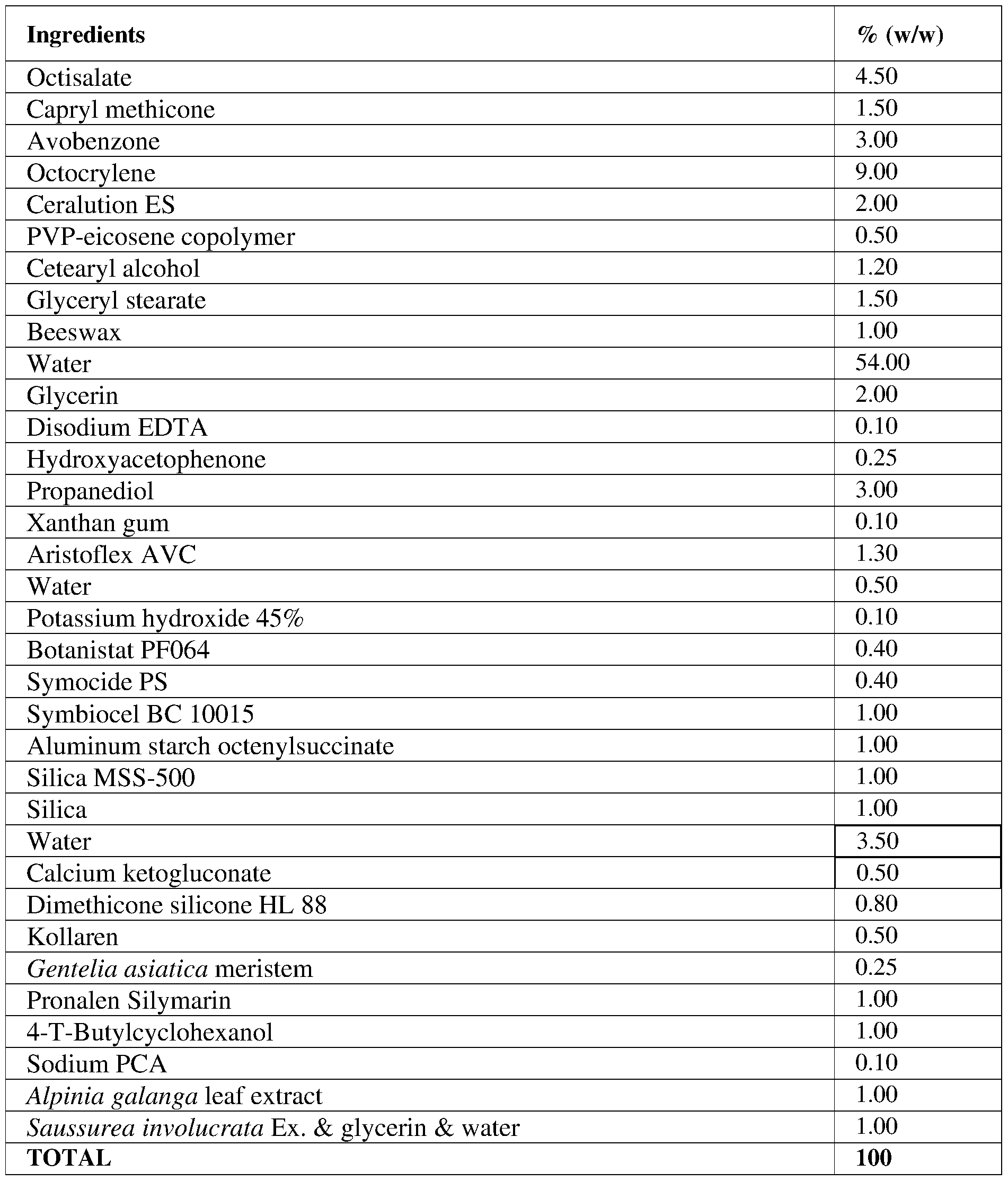

Claims
Priority Applications (2)
| Application Number | Priority Date | Filing Date | Title |
|---|---|---|---|
| EP24819817.8A EP4724153A1 (en) | 2023-06-06 | 2024-05-31 | Sunscreen compositions and methods of use |
| CN202480046944.4A CN121568680A (en) | 2023-06-06 | 2024-05-31 | Sunscreen compositions and methods of use |
Applications Claiming Priority (2)
| Application Number | Priority Date | Filing Date | Title |
|---|---|---|---|
| US202363471383P | 2023-06-06 | 2023-06-06 | |
| US63/471,383 | 2023-06-06 |
Publications (1)
| Publication Number | Publication Date |
|---|---|
| WO2024253961A1 true WO2024253961A1 (en) | 2024-12-12 |
Family
ID=93745822
Family Applications (1)
| Application Number | Title | Priority Date | Filing Date |
|---|---|---|---|
| PCT/US2024/031897 Ceased WO2024253961A1 (en) | 2023-06-06 | 2024-05-31 | Sunscreen compositions and methods of use |
Country Status (4)
| Country | Link |
|---|---|
| US (1) | US20240407996A1 (en) |
| EP (1) | EP4724153A1 (en) |
| CN (1) | CN121568680A (en) |
| WO (1) | WO2024253961A1 (en) |
Citations (5)
| Publication number | Priority date | Publication date | Assignee | Title |
|---|---|---|---|---|
| US20150118176A1 (en) * | 2013-10-29 | 2015-04-30 | Mary Kay Inc. | Cosmetic compositions |
| US9050475B2 (en) * | 2010-02-09 | 2015-06-09 | Md Solarsciences Corp. | High SPF sunscreen compositions |
| US20160008245A1 (en) * | 2014-07-11 | 2016-01-14 | Mary Kay Inc. | Sunscreen compositions and methods of their use |
| US20210093529A1 (en) * | 2019-09-30 | 2021-04-01 | Concept Matrix Solutions | Topical sunscreen |
| US20220323334A1 (en) * | 2017-07-13 | 2022-10-13 | Johnson & Johnson Consumer Inc. | Light aesthetic sunscreen compositions |
-
2024
- 2024-05-31 WO PCT/US2024/031897 patent/WO2024253961A1/en not_active Ceased
- 2024-05-31 US US18/680,001 patent/US20240407996A1/en active Pending
- 2024-05-31 EP EP24819817.8A patent/EP4724153A1/en active Pending
- 2024-05-31 CN CN202480046944.4A patent/CN121568680A/en active Pending
Patent Citations (5)
| Publication number | Priority date | Publication date | Assignee | Title |
|---|---|---|---|---|
| US9050475B2 (en) * | 2010-02-09 | 2015-06-09 | Md Solarsciences Corp. | High SPF sunscreen compositions |
| US20150118176A1 (en) * | 2013-10-29 | 2015-04-30 | Mary Kay Inc. | Cosmetic compositions |
| US20160008245A1 (en) * | 2014-07-11 | 2016-01-14 | Mary Kay Inc. | Sunscreen compositions and methods of their use |
| US20220323334A1 (en) * | 2017-07-13 | 2022-10-13 | Johnson & Johnson Consumer Inc. | Light aesthetic sunscreen compositions |
| US20210093529A1 (en) * | 2019-09-30 | 2021-04-01 | Concept Matrix Solutions | Topical sunscreen |
Non-Patent Citations (1)
| Title |
|---|
| SKINSTORE : "How many women buy skincare products or beauty products every year or every month or every quarter? How often do the buy beauty or skincare products, and how much do they typically spend per year on beauty or skincare products?", WONDER, 28 April 2017 (2017-04-28), pages 1 - 4, XP009559511 * |
Also Published As
| Publication number | Publication date |
|---|---|
| EP4724153A1 (en) | 2026-04-15 |
| CN121568680A (en) | 2026-02-24 |
| US20240407996A1 (en) | 2024-12-12 |
Similar Documents
| Publication | Publication Date | Title |
|---|---|---|
| US11918833B2 (en) | Cosmetic compositions and uses thereof | |
| US11696888B2 (en) | Topical compositions and methods | |
| EP4149417A1 (en) | Brightening booster technology and brightening ampule | |
| US20240285513A1 (en) | Topical composition against fine lines and wrinkles | |
| US12274777B2 (en) | Topical cosmetic compositions | |
| US20240390259A1 (en) | Mascara formulation | |
| US20260090980A1 (en) | Cosmetic compositions and methods of using the same | |
| US20240009097A1 (en) | Cosmetic composition | |
| US20220133622A1 (en) | Instant effect eye cream | |
| EP4724153A1 (en) | Sunscreen compositions and methods of use | |
| US20250000758A1 (en) | High separation dual phase eye make-up remover | |
| WO2024054923A2 (en) | Sunscreen compositions and methods of use | |
| EP4731171A2 (en) | Mineral facial sunscreen | |
| WO2025137712A1 (en) | Cosmetic compositions and methods of using same | |
| WO2025264660A1 (en) | Cosmetic composition comprising caffeine and melatonin | |
| WO2023200776A1 (en) | Skin cleanser compositions and methods for use | |
| WO2026024563A1 (en) | Topical skin composition and methods of using the same | |
| WO2024249292A2 (en) | Topical cosmetic compositions | |
| WO2023205433A1 (en) | Cosmetic compositions and methods of using same | |
| WO2025014750A2 (en) | Methods and compositions for ultraviolet protection of skin |
Legal Events
| Date | Code | Title | Description |
|---|---|---|---|
| 121 | Ep: the epo has been informed by wipo that ep was designated in this application |
Ref document number: 24819817 Country of ref document: EP Kind code of ref document: A1 |
|
| WWE | Wipo information: entry into national phase |
Ref document number: 2024819817 Country of ref document: EP |
|
| NENP | Non-entry into the national phase |
Ref country code: DE |
|
| ENP | Entry into the national phase |
Ref document number: 2024819817 Country of ref document: EP Effective date: 20260107 |
|
| ENP | Entry into the national phase |
Ref document number: 2024819817 Country of ref document: EP Effective date: 20260107 |
|
| ENP | Entry into the national phase |
Ref document number: 2024819817 Country of ref document: EP Effective date: 20260107 |
|
| ENP | Entry into the national phase |
Ref document number: 2024819817 Country of ref document: EP Effective date: 20260107 |
|
| ENP | Entry into the national phase |
Ref document number: 2024819817 Country of ref document: EP Effective date: 20260107 |
|
| WWP | Wipo information: published in national office |
Ref document number: 2024819817 Country of ref document: EP |