WO2024256597A1 - Adhesive photoprotective compounds and uses thereof - Google Patents
Adhesive photoprotective compounds and uses thereof Download PDFInfo
- Publication number
- WO2024256597A1 WO2024256597A1 PCT/EP2024/066476 EP2024066476W WO2024256597A1 WO 2024256597 A1 WO2024256597 A1 WO 2024256597A1 EP 2024066476 W EP2024066476 W EP 2024066476W WO 2024256597 A1 WO2024256597 A1 WO 2024256597A1
- Authority
- WO
- WIPO (PCT)
- Prior art keywords
- composition
- compound
- skin
- mmol
- acid
- Prior art date
- Legal status (The legal status is an assumption and is not a legal conclusion. Google has not performed a legal analysis and makes no representation as to the accuracy of the status listed.)
- Ceased
Links
Classifications
-
- C—CHEMISTRY; METALLURGY
- C07—ORGANIC CHEMISTRY
- C07D—HETEROCYCLIC COMPOUNDS
- C07D207/00—Heterocyclic compounds containing five-membered rings not condensed with other rings, with one nitrogen atom as the only ring hetero atom
- C07D207/02—Heterocyclic compounds containing five-membered rings not condensed with other rings, with one nitrogen atom as the only ring hetero atom with only hydrogen or carbon atoms directly attached to the ring nitrogen atom
- C07D207/44—Heterocyclic compounds containing five-membered rings not condensed with other rings, with one nitrogen atom as the only ring hetero atom with only hydrogen or carbon atoms directly attached to the ring nitrogen atom having three double bonds between ring members or between ring members and non-ring members
- C07D207/444—Heterocyclic compounds containing five-membered rings not condensed with other rings, with one nitrogen atom as the only ring hetero atom with only hydrogen or carbon atoms directly attached to the ring nitrogen atom having three double bonds between ring members or between ring members and non-ring members having two doubly-bound oxygen atoms directly attached in positions 2 and 5
- C07D207/448—Heterocyclic compounds containing five-membered rings not condensed with other rings, with one nitrogen atom as the only ring hetero atom with only hydrogen or carbon atoms directly attached to the ring nitrogen atom having three double bonds between ring members or between ring members and non-ring members having two doubly-bound oxygen atoms directly attached in positions 2 and 5 with only hydrogen atoms or radicals containing only hydrogen and carbon atoms directly attached to other ring carbon atoms, e.g. maleimide
- C07D207/452—Heterocyclic compounds containing five-membered rings not condensed with other rings, with one nitrogen atom as the only ring hetero atom with only hydrogen or carbon atoms directly attached to the ring nitrogen atom having three double bonds between ring members or between ring members and non-ring members having two doubly-bound oxygen atoms directly attached in positions 2 and 5 with only hydrogen atoms or radicals containing only hydrogen and carbon atoms directly attached to other ring carbon atoms, e.g. maleimide with hydrocarbon radicals, substituted by hetero atoms, directly attached to the ring nitrogen atom
-
- A—HUMAN NECESSITIES
- A61—MEDICAL OR VETERINARY SCIENCE; HYGIENE
- A61K—PREPARATIONS FOR MEDICAL, DENTAL OR TOILETRY PURPOSES
- A61K31/00—Medicinal preparations containing organic active ingredients
- A61K31/33—Heterocyclic compounds
- A61K31/395—Heterocyclic compounds having nitrogen as a ring hetero atom, e.g. guanethidine or rifamycins
- A61K31/40—Heterocyclic compounds having nitrogen as a ring hetero atom, e.g. guanethidine or rifamycins having five-membered rings with one nitrogen as the only ring hetero atom, e.g. sulpiride, succinimide, tolmetin, buflomedil
- A61K31/4015—Heterocyclic compounds having nitrogen as a ring hetero atom, e.g. guanethidine or rifamycins having five-membered rings with one nitrogen as the only ring hetero atom, e.g. sulpiride, succinimide, tolmetin, buflomedil having oxo groups directly attached to the heterocyclic ring, e.g. piracetam, ethosuximide
-
- A—HUMAN NECESSITIES
- A61—MEDICAL OR VETERINARY SCIENCE; HYGIENE
- A61K—PREPARATIONS FOR MEDICAL, DENTAL OR TOILETRY PURPOSES
- A61K8/00—Cosmetics or similar toiletry preparations
- A61K8/18—Cosmetics or similar toiletry preparations characterised by the composition
- A61K8/30—Cosmetics or similar toiletry preparations characterised by the composition containing organic compounds
- A61K8/49—Cosmetics or similar toiletry preparations characterised by the composition containing organic compounds containing heterocyclic compounds
- A61K8/4906—Cosmetics or similar toiletry preparations characterised by the composition containing organic compounds containing heterocyclic compounds with one nitrogen as the only hetero atom
- A61K8/4913—Cosmetics or similar toiletry preparations characterised by the composition containing organic compounds containing heterocyclic compounds with one nitrogen as the only hetero atom having five membered rings, e.g. pyrrolidone carboxylic acid
-
- A—HUMAN NECESSITIES
- A61—MEDICAL OR VETERINARY SCIENCE; HYGIENE
- A61P—SPECIFIC THERAPEUTIC ACTIVITY OF CHEMICAL COMPOUNDS OR MEDICINAL PREPARATIONS
- A61P17/00—Drugs for dermatological disorders
-
- A—HUMAN NECESSITIES
- A61—MEDICAL OR VETERINARY SCIENCE; HYGIENE
- A61P—SPECIFIC THERAPEUTIC ACTIVITY OF CHEMICAL COMPOUNDS OR MEDICINAL PREPARATIONS
- A61P27/00—Drugs for disorders of the senses
- A61P27/02—Ophthalmic agents
-
- A—HUMAN NECESSITIES
- A61—MEDICAL OR VETERINARY SCIENCE; HYGIENE
- A61Q—SPECIFIC USE OF COSMETICS OR SIMILAR TOILETRY PREPARATIONS
- A61Q17/00—Barrier preparations; Preparations brought into direct contact with the skin for affording protection against external influences, e.g. sunlight, X-rays or other harmful rays, corrosive materials, bacteria or insect stings
- A61Q17/005—Antimicrobial preparations
-
- A—HUMAN NECESSITIES
- A61—MEDICAL OR VETERINARY SCIENCE; HYGIENE
- A61Q—SPECIFIC USE OF COSMETICS OR SIMILAR TOILETRY PREPARATIONS
- A61Q17/00—Barrier preparations; Preparations brought into direct contact with the skin for affording protection against external influences, e.g. sunlight, X-rays or other harmful rays, corrosive materials, bacteria or insect stings
- A61Q17/04—Topical preparations for affording protection against sunlight or other radiation; Topical sun tanning preparations
-
- A—HUMAN NECESSITIES
- A61—MEDICAL OR VETERINARY SCIENCE; HYGIENE
- A61Q—SPECIFIC USE OF COSMETICS OR SIMILAR TOILETRY PREPARATIONS
- A61Q19/00—Preparations for care of the skin
- A61Q19/02—Preparations for care of the skin for chemically bleaching or whitening the skin
-
- A—HUMAN NECESSITIES
- A61—MEDICAL OR VETERINARY SCIENCE; HYGIENE
- A61Q—SPECIFIC USE OF COSMETICS OR SIMILAR TOILETRY PREPARATIONS
- A61Q19/00—Preparations for care of the skin
- A61Q19/08—Anti-ageing preparations
-
- A—HUMAN NECESSITIES
- A61—MEDICAL OR VETERINARY SCIENCE; HYGIENE
- A61K—PREPARATIONS FOR MEDICAL, DENTAL OR TOILETRY PURPOSES
- A61K2800/00—Properties of cosmetic compositions or active ingredients thereof or formulation aids used therein and process related aspects
- A61K2800/40—Chemical, physico-chemical or functional or structural properties of particular ingredients
- A61K2800/52—Stabilizers
Definitions
- the present invention relates to photoprotective compounds having adhesive properties. It also relates to a composition comprising the same and, more particularly, to a cosmetic or a sunscreen composition. It also relates to the use of such compounds in cosmetic and therapeutic applications. The invention also relates to the use of such compounds for reducing photodegradation and/or photoinstability of pharmaceuticals and cosmetics. The invention further relates to a material comprising a support and such a compound adhered to said support.
- UV light can be divided into three groups: UV-A (400-315 nm), UV-B (315-280 nm) and UV- C (280-100 nm).
- UV light, and more particularly UV-B light can have damaging short-term or long-term effects on the body. Serious skin damages may occur due to an exposure to UV light, such as an accelerated skin ageing or a skin cancer.
- UV light can have damaging short-term or long-term effects on the body.
- Serious skin damages may occur due to an exposure to UV light, such as an accelerated skin ageing or a skin cancer.
- the development of new sunscreens providing effective protection throughout the whole UV radiation spectrum has become a prime concern and a major issue.
- Many sunscreens are nowadays available on the market.
- the inventors have developed photoprotective compounds comprising a photoprotective moiety and functional group(s), both being linked to each other through a linker.
- the functional group(s) allows the photoprotective compound to be adhesive, and more particularly bioadhesive.
- the photoprotective compound can interact, through its functional group(s), with any support such as a biological, organic and/or inorganic support, which makes it particularly efficient in the photoprotection field.
- a compound according to the invention can be used in cosmetic or therapeutic applications, such as treating or preventing skin and mucosal diseases or conditions, or reducing photodegradation and/or photoinstability of a pharmaceutical active ingredient or a cosmetic.
- the present invention thus relates to a compound represented by the following formula (I): A[B-(C)v]w (I), wherein:
- A is a photoprotective moiety
- C is a functional group, v is an integer from 1 to 2000, and w is an integer from 1 to 6.
- the photoprotective moiety A is derived from a UV filter and/or a SPF booster.
- the photoprotective moiety A is derived from bemotrizinol, diethylamino hydroxybenzoyl hexyl benzoate, bisdisulizole disodium, meradimate, terephtalylidene dicamphor sulfonic acid, bisoctrizole, oxybenzone, sulisobenzone, iscotrizinol, octinoxate, octisalate, octyltriazone, padimate O, homosalate, amiloxate, octocrylene, PEG-25 PABA, ensulizole, trolamine salicylate, cinoxate, benzophenone-9, dioxybenzone, avobenzone, enzacamene, diethylhexyl naphthalate, diethylhex
- the photoprotective moiety A is derived from bemotrizinol, diethylamino hydroxybenzoyl hexyl benzoate, terephtalylidene dicamphor sulfonic acid, sulisobenzone, octisalate, octocrylene, ensulizole, avobenzone, polyester-8, bisdisulizole disodium, meradimate, oxybenzone-3, iscotrizinol, octanoate, octyltriazone, padimate O, cinoxate, benzophenone-9, or dioxybenzone.
- the photoprotective moiety A is derived from bemotrizinol, diethylamino hydroxybenzoyl hexyl benzoate, terephtalylidene dicamphor sulfonic acid, or octocrylene.
- the linker B is a linear polymer, a branched polymer, a hyperbranched polymer, a dendrimer, or a residue thereof In a more particular embodiment, the linker B further comprises at least one -S(O)2- group.
- the linker B is represented by the following formula (II): -[Y-(CH 2 )q-(O-CH2-CH2) P -Z-(CH2)s]k- (II), wherein:
- Y is selected from -O-, -NH-, and -C(O)-;
- q is an integer from 0 to 35, preferably from 0 to 12, more preferably from 0 to 6; with the proviso that, when Y is -O-, q is different from 0;
- p is an integer from 0 to 250, preferably from 0 to 50, more preferably from 0 to 12; and p+q is different from 0; or
- Y-(CH 2 ) q may form a heterocycle selected in the group consisting of a pyrrolidinyl and piperidinyl; and p is 0;
- Z is selected from a single bond, -NH-, -O-, -NH-C(O)-, -S-, and -S(O)2-;
- > s is an integer from 0 to 6;
- > k is an integer from 1 to 4, preferably from 1 to 2.
- Z is selected from -NH-, -O-, -NH-C(O)-, -S-, and -S(O)2-. In a more preferred embodiment, Z is -S(O)2-.
- the functional group C is chosen from an aldehyde, an acetal, thiocetal, a thiol, a maleimide, a Mickael acceptor, a vinylsulfone, a di sulfanyl pyridine, a sulfonylaziridine, an epoxide, a haloacetyl, an isocyanate, an isothiocyanate, a N- hydroxysuccinimide ester, a N-hydroxysulfosuccinimide ester, a hydroxy, an amino, an ammonium, a guanidinium, an imidocarbonate, a carboxylic acid, a carboxylic ester, an anhydride, a sulfonic acid, folic acid, biotin, streptavidin, avidin, antibodies, and single chain antibodies or fragments thereof, and derivatives thereof.
- the functional group C is chosen from a thiol, an acetal, a maleimide, a vinylsulfone, a disulfanylpyridine, a guanidinium, folic acid, biotin, and derivatives thereof, more preferably C is a maleimide or a derivative thereof.
- n is independently an integer from 0 to 250, preferably from 0 to 50, more preferably from 0 to 12, and t is independently an integer from 0 to 30, preferably from 0 to 12.
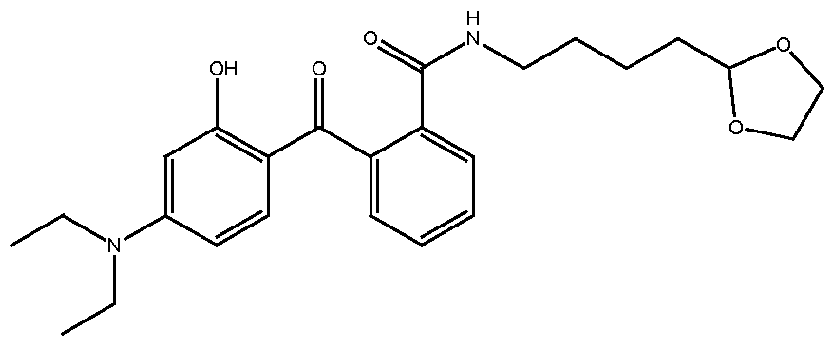
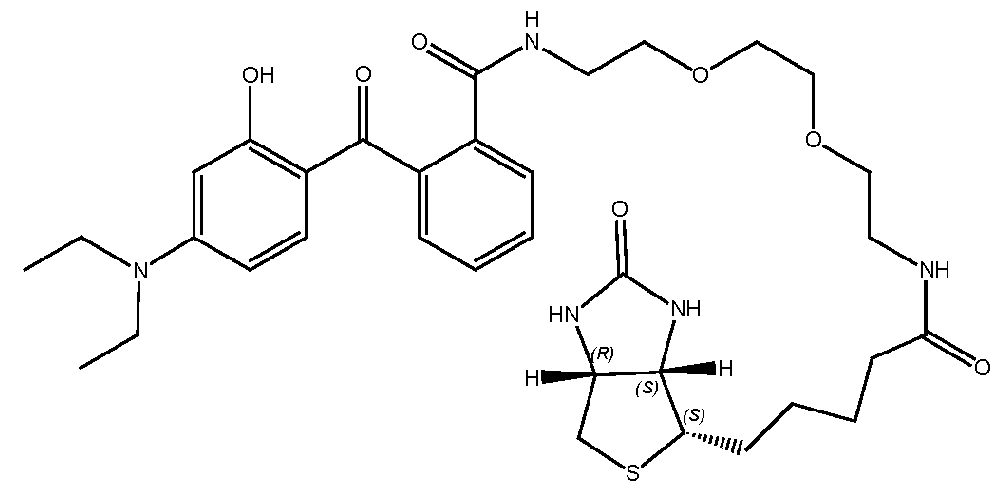
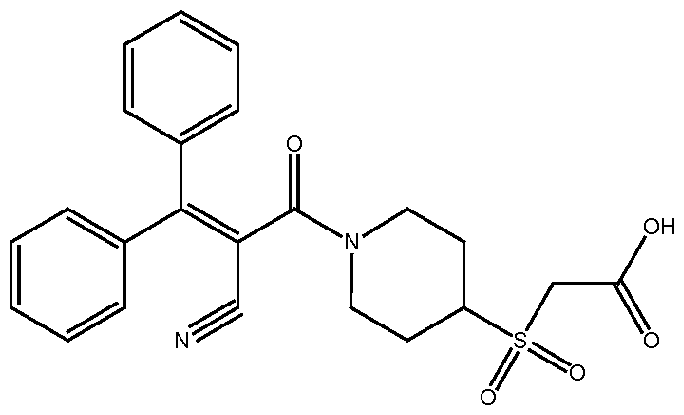
- the compound according to the invention is selected from the group consisting of:
- composition comprising at least one compound of formula (I) as defined herein and at least one excipient.
- said composition is a sunscreen composition or a cosmetic composition.
- said composition is a pharmaceutical or a veterinary composition.
- a further object of the present invention is a cosmetic use of a composition as defined herein, for combatting and/or reducing the signs of cutaneous ageing, such as the formation of wrinkles and/or fine lines, skin sagging, loss of firmness, loss of radiance and/or evenness of the complexion, and/or for reinforcing the skin barrier.
- Another object of the present invention is a cosmetic process for combatting and/or reducing the signs of cutaneous ageing, such as the formation of wrinkles and/or fine lines, skin sagging, loss of skin firmness, loss of radiance and/or evenness of the complexion, and/or for reinforcing the skin barrier, comprising applying topically to the skin, a composition as defined herein.
- Another object of the present invention is a kit comprising:
- washing composition preferably a powder, a shampoo, a soap, a lotion, a solution, a solid, a scrubbing, a scraper, a mousse, a foam, a syndet, a gel, a shower gel, a spray, a mist, a wax, a strip, an enzyme composition, a detergent composition, or a woven or non-woven fabric, and,
- the present invention also relates to a composition as defined herein, for use for treating and/or preventing a skin, mucosa, eye cornea, or skin appendage disease or condition.
- said skin, mucosa, eye cornea, or skin appendage disease or condition is chosen from lipodystrophy, keloid scars, acne, psoriasis, atopic dermatitis, actinic keratosis, rosacea, melasma, melanoma, Merker cell carcinoma, basal cell carcinoma, squamous cell carcinoma, scar treatments, wound healing, alopecia, vitiligo, urticaria (hives), cold sores, impetigo, eczema, rashes dermatitis, ichthyosis, warts, blisters, pruritus, gangrene, bruises, pustules, bacterial skin infections like leprosy, carbuncles, cellulitis, impetigo, fun
- a composition as defined herein or a composition for use as defined herein is a topical composition.
- a composition as defined herein or a composition for use as defined herein is in the form of a suspension, a cream, a spray, an aerosol, a butter, a stick, a gel, an ointment, a lotion, a solution, a solid, an emulsion, a micro-emulsion, an oil, a lyophilizate, a milk, a powder, a paste, a wax, a mousse, a patch, a film, a micelle, a liposome, or a foam.
- the present invention also relates to a use of at least one compound of formula (I) as defined herein for reducing photodegradation and/or photoinstability of a pharmaceutical active ingredient or a cosmetic.
- said at least one compound is in a form of a micelle or a liposome.
- Another object of the invention is a material comprising a support and at least one compound of formula (I) as defined herein, said compound being adhered to said support.
- said support is a natural or synthetic polymeric support, a natural or synthetic fiber support, a stone, a metal, a plastic, a rubber or a glass support.
- Photoprotective compound The present invention relates to a compound comprising a photoprotective moiety, functionalized with at least one functional group, which is linked to the photoprotective moiety through at least one linker.
- the linker(s) may linear, branched, hyperbranched, or dendritic, and may be polymeric or not.
- the functional group is able to render the compound of the invention adhesive, preferably bioadhesive.
- a compound of the invention is typically represented by the following formula (I): A[B-(C)v]w (I), wherein: A is a photoprotective moiety, B is a linker, C is a functional group, v is an integer from 1 to 2000, and w is an integer from 1 to 6.
- a compound of formula (I) according to the invention thus comprises a photoprotective moiety A linked to at least one linker B (w), having at least one functional group C (v).
- w represents the number of groups [B-(C)v] linked to the photoprotective moiety A.
- w is an integer from 1 to 6.
- the photoprotective moiety A is linked to 1 to 6 linkers B.
- w is an integer from 1 to 4, preferably from 1 to 3, and more preferably w is 1 or 2.
- v represents the number functional groups C linked to each linker B.
- v is an integer from 1 to 2000.
- each linker B is independently linked to 1 to 2000 functional groups C.
- the linker B comprises 2 functional groups C.
- v is an integer from 100 to 1000, preferably from 150 to 500, and more preferably from 150 to 250.
- v is 1 or 2, preferably 1.
- the photoprotective moiety A and the linker(s) B may be linked (or “bound”), covalently and/or non-covalently, for instance ionically, to each other.
- the photoprotective moiety A and the linker(s) B are linked covalently to each other.
- linker(s) B and the functional group(s) C may be linked (or “bound”), covalently and/or non-covalently, for instance ionically, to each other.
- linker(s) B and the functional group(s) C are linked covalently to each other.
- a compound of formula (I) comprises a photoprotective moiety A.
- a “photoprotective moiety” refers to a photoprotective agent deprived of one or more atoms or atom groups, wherein the photoprotective activity of the photoprotective moiety is substantially similar to that of the photoprotective agent from which it derives.
- a photoprotective agent is typically an organic substance which can block or absorb all or part of a light, in particular, a light that can cause damages on the subject or material to be protected, such as Ultraviolet (“UV”) light.
- a photoprotective agent is typically a UV filter, and/or a SPF booster.
- the photoprotective moiety A is derived from a UV filter and/or a SPF booster.
- a UV filter may be a UVA filter, such as a UVA I or UVA II filter, a UV B filter, or a combination thereof.
- UVA I filters include, but are not limited to, bemotrizinol, diethylamino hydroxybenzoyl hexyl benzoate (DHHB), bisdisulizole disodium, meradimate, or ecamsule.
- DHHB diethylamino hydroxybenzoyl hexyl benzoate
- UVA II/UVB filters include, but are not limited to, oxybenzone, sulisobenzone, iscotrizinol, octinoxate, octisalate, octyltriazone, padimate O, homosalate, amiloxate, octocrylene, PEG-25 PABA, ensulizole, trolamine salicylate, cinoxate, benzophenone-9, dioxybenzone, or avobenzone.
- UVA/UVB filters examples include, but are not limited to, enzacamene or bisoctrizole.
- a SPF booster may be a T-T quencher, an Excited state quencher, or a combination thereof.
- T-T quenchers include, but are not limited to, diethylhexyl naphthalate or diethylhexyl syringylidene.
- Excited state quenchers include, but are not limited to, tetramethylhydroxy piperidinol, sodium benzotriazolyl butylphenol sulfonate, benzotriazole dodecyl p-cresol sulfonate, polyester-8, acrylates copolymer, butyloctyl salicylate, bis(cyano butylacetate) anthracenediylidene, dimethylcapramide, or ethyl hexyl methoxycrylene.
- the photoprotective moiety A is derived from bemotrizinol, diethylamino hydroxybenzoyl hexyl benzoate (Uvinul® A Plus), bisdisulizole disodium, meradimate, terephtalylidene dicamphor sulfonic acid (also referred to as ecamsule), bisoctrizole, oxybenzone, sulisobenzone, iscotrizinol, octinoxate, octisalate, octyltriazone, padimate O, homosalate, amiloxate, octocrylene, PEG-25 PABA, ensulizole, trolamine salicylate, cinoxate, benzophenone-9, dioxybenzone, avobenzone, enzacamene, diethylhexyl naphthalate, diethylhexyl syringyliden
- the photoprotective moiety A is derived from bemotrizinol, diethylamino hydroxybenzoyl hexyl benzoate, terephtalylidene dicamphor sulfonic acid, sulisobenzone, octisalate, octocrylene, ensulizole, avobenzone, polyester-8, bisdisulizole disodium, meradimate, oxybenzone-3, iscotrizinol, octanoate, octyltriazone, padimate O, cinoxate, benzophenone-9, or dioxybenzone.
- the photoprotective moiety is derived from bemotrizinol, diethylamino hydroxybenzoyl hexyl benzoate, terephtalylidene dicamphor sulfonic acid, or octocrylene.
- the photoprotective moiety A is derived from terephtalylidene dicamphor sulfonic acid or diethylamino hydroxybenzoyl hexyl benzoate.
- the photoprotective moiety A is derived from a tris-aryltriazine.
- tris-aryltriazine include, but are not limited to, tris-aryltriazine compounds described in US 8,106,108.
- the photoprotective moiety A is derived from a hydroxyphenyl benzotriazole.
- hydroxyphenyl benzotriazole include, but are not limited to, bisoctrizole, benzenepropanoic acid, 3-(2H-benzotriazol-2-yl)- 5-(l, 1 -dimethylethyl)- 4-hydroxy-, and C?-C9-branched or linear alkyl esters thereof.
- C represents a functional group.
- a “functional group” is a group that is able to react with or bound to any support of any material, any tissues, cells, intracellular or extracellular materials, making the compound of formula (I) adhesive or bioadhesive.
- the functional group C is chosen from an aldehyde, an acetal, thiocetal, a thiol, a maleimide, a Mickael acceptor, a vinylsulfone, a di sulfanyl pyridine, a sulfonylaziridine, an epoxide, a haloacetyl, an isocyanate, an isothiocyanate, a N- hydroxysuccinimide ester, a N-hydroxysulfosuccinimide ester, a hydroxy, an amino, an ammonium, a guanidinium, an imidocarbonate, a carboxylic acid, a carboxylic ester, an anhydride, a sulfonic acid, folic acid, biotin, streptavidin, avidin, antibodies, and single chain antibodies or fragments thereof.
- C further includes any derivatives of such functional groups as above detailed.
- maleimide refers to the maleimide group and any derivative thereof.
- the maleimide (Mai) includes the two following groups of formula (Mai 1) and (Mai 2):
- the symbol “ - ” in a formula represents the bond by which a moiety of said formula is attached to the remainder of the molecule.
- said symbol represented above in (Mai 1) or (Mai 2) represents the bond by which the moiety is attached to the linker B.
- the functional group C is chosen from a thiol, an acetal, a maleimide, a vinylsulfone, a di sulfanylpyridine, a guanidinium, folic acid, biotin, and a derivative thereof
- C is a maleimide (also named “Mai”) or a derivative of maleimide as above disclosed. More preferably, C is Mai 1 or Mai 2.
- C represents a native functional group.
- a “native functional group” of a polymer is a functional group which is intrinsically present in the structure of the polymer and thus has not been converted into another functional group.
- hydroxy groups are native functional groups of cellulose
- carboxylic acids (or carboxylate) are native functional groups of a polymethacrylic acid.
- C represents a modified functional group.
- a “modified functional group” of a polymer is a functional group that results from the conversion of a native functional group as defined herein into another functional group, for instance, an aldehyde group resulting from oxidation of a hydroxy group of cellulose or a biotin linked to a hydroxy group of cellulose.
- the linker B is a functional group that results from the conversion of a native functional group as defined herein into another functional group, for instance, an aldehyde group resulting from oxidation of a hydroxy group of cellulose or a biotin linked to a hydroxy group of cellulose.
- a compound of formula (I) comprises at least one linker B (w).
- linker refers to any organic chain having at least one carbon, which links the photoprotective moiety to at least one functional group.
- the linker B may be linear, branched, hyperbranched, or dendritic. B may be polymeric or not.
- the linker B is biodegradable.
- biodegradable linker refers to a linker (or a compound) that will degrade or erode under physical, chemical, and/or biological conditions to smaller units or chemical species that are capable of being metabolized, eliminated, or excreted by the subject.
- the degradation time and speed are a function of composition and/or morphology. Degradation time can be from hours to weeks.
- the linker B is a linear polymer, a branched polymer, a hyperbranched polymer, a dendrimer (or “dendritic polymer”), or a residue thereof.
- linear polymer refers to a polymer which does not have any branches.
- branched polymer refers to a polymer having a linear chain substituted by primary branches, and optionally secondary branches.
- hyperbranched polymer refers to a polymer having randomly arranged primary and secondary branches.
- dendrimer also referred to as “dendritic polymer” or “dendronized polymer” refers to a repetitively branched polymer having a symmetric and organized tree-structure, in which branches originate from a common branch point.
- the term “residue of polymer” refers to a polymer deprived of one or more of its functional groups (such as -NH2, -COOH, -OH), or atom(s) thereof (such as H or -OH).
- the polymer of said linear, branched, hyperbranched, or dendritic polymer may be a homopolymer or a copolymer.
- the polymer of said linear, branched, hyperbranched, or dendritic polymer may be natural, semi-synthetic, hemi-synthetic, or synthetic.
- the term “homopolymer” generally refers to a polymer that is composed of identical monomers.
- copolymer generally refers to a polymer that is composed of two or more different monomers.
- the copolymer can be of any form, such as random, block, or graft.
- the copolymers can have any end-group.
- semi-synthetic, hemi-synthetic or synthetic polymers include, but are not limited to, poly(hydroxy acids) such as poly(lactic acid), poly(glycolic acid), and poly(lactic acid-co- glycolic acid), poly(lactide), poly(glycolide), poly(lactide-co-glycolide), polyanhydrides, polyorthoesters, polyamides, polycarbonates, polyglycerol, polyalkylenes such as polyethylene and polypropylene, polyalkylene glycols such as poly(ethylene glycol), polyalkylene oxides such as poly(ethylene oxide), polyalkylene terepthalates such as poly(ethylene terephthalate), polyvinyl alcohols, polyvinyl ethers, polyvinyl esters, polyvinyl halides such as poly(vinyl chloride), polyvinylpyrrolidone, polysiloxanes, poly(vinyl alcohols), poly(vinyl acetate), polystyrene
- the linker B further comprises at least one -S(O)2- group.
- the - S(O) 2 - group(s) may be at any position of the linker B.
- the -S(O)2- group(s) may be at one or two ends of the linker B and/or may interrupt the linker B at any position.
- the - S(O) 2 - group(s) advantageously improve the photoprotective properties of the compound of the invention. In particular, a higher refractive index and/or a higher transparency of the compound of the invention may be obtained.
- the linker B is linked to at least one functional groups C (v).
- the linker B comprises at least one residue of polymer.
- the functional group(s) C is(are) linked to the at least one residue of polymer of the linker B.
- C represents one or more functional groups of at least one residue of polymer of the linker (B).
- B-(C)v can be cellulose.
- B represents a residue of cellulose
- C represents hydroxy groups (that are native groups of cellulose)
- v is the number of hydroxy groups
- B-(C)v can also be aldehyde-modified cellulose.
- B represents a residue of cellulose
- C represents aldehyde groups (that are modified groups of cellulose)
- v is the number of aldehyde groups
- B-(C)v can also be biotin-modified cellulose.
- B represents a residue of cellulose
- C represents biotin groups (that are modified groups of cellulose)
- v is the number of biotin groups.
- linker B is represented by the following formula (II): -[Y-(CH2)q-(O-CH2-CH2) P -Z-(CH2)s]k- (II), wherein:
- Y is selected from -O-, -NH-, and -C(O)-;
- q is an integer from 0 to 35, preferably from 0 to 12, more preferably from 0 to 6; with the proviso that, when Y is -O-, q is different from 0;
- p is an integer from 0 to 250, preferably from 0 to 50, more preferably from 0 to 12; and p+q is different from 0; or
- Y-(CH2) q may form a heterocycle selected in the group consisting of a pyrrolidinyl and piperidinyl; and p is 0;
- Z is selected from a single bond, -NH-, -O-, -NH-C(O)-, -S-, and -S(O)2-;
- > s is an integer from 0 to 6;
- > k is an integer from 1 to 4, preferably from 1 to 2.
- linker B is represented by the following formula (II): -[Y-(CH2)q-(O-CH2-CH2)p-Z-(CH 2 )s]k- (II), in which:
- Y is selected from -O-, -NH-, and -C(O)-, preferably -O-; q is an integer from 1 to 35, preferably from 1 to 12, more preferably from 1 to 6; and p is an integer from 0 to 250, preferably from 0 to 50, more preferably from 0 to 12; or
- Y-(CH 2 ) q may form a heterocycle selected in the group consisting of a pyrrolidinyl and piperidinyl; and p is 0;
- Z is selected from a single bond, -NH-, -O-, -NH-C(O)-, -S-, and -S(O)2-;
- > s is an integer from 0 to 6;
- > k is an integer from 1 to 4, preferably from 1 to 2.
- the linker B is of formula (II), in which:
- Y is selected from -O-, -NH-, and -C(O)-, preferably -O-, and -NH-;
- q is an integer from 0 to 12, preferably from 0 to 6; with the proviso that, when Y is -O-, q is different from 0;
- p is an integer from 0 to 50, preferably from 0 to 20; more preferably from 0 to 12; and p+q is different from 0.
- p 0.
- p is an integer from 1 to 50, more preferably from 1 to 12.
- linker B is of formula (II), in which:
- Y-(CH2) q forms a heterocycle selected in the group consisting of a pyrrolidinyl and piperidinyl, and p is 0.
- Z is selected from a single bond, -NH-, -NH-C(O)- and -S(O)2-.
- Z is a single bond.
- Z is selected from -NH-, -O-, -NH-C(O)-, -S-, and -S(O)2-, more preferably Z is -S(O)2-.
- s is an integer from 0 to 2, and preferably, s is 0. In another particular embodiment, s is an integer from 1 to 6.
- k is 1.
- the linker B is of formula (II), in which:
- Y is selected from -O-, -NH-, and -C(O)-, preferably from -O- and -NH-;
- q is an integer from 0 to 35, preferably from 0 to 12, more preferably from 0 to 6; with the proviso that, when Y is -O-, q is different from 0;
- p is an integer from 0 to 50, preferably from 0 to 12, more preferably p is 0; and p+q is different from 0; or
- Y-(CH2) q may form a heterocycle selected in the group consisting of a pyrrolidinyl and piperidinyl; and p is 0;
- Z is selected from a single bond, -NH-, -O-, and -S(O)2-;
- s is 0 or 1, preferably 0;
- linker B is of formula (II), in which:
- Y is selected from -O- and -NH-; q is an integer from 1 to 12, preferably from 1 to 6; p is 0;
- the functional group C is preferably a disulfanylpyridine, a maleimide, a vinylsulfone, an acetal, or a derivative thereof, more preferably a maleimide or a derivative thereof.
- the linker B is of formula (II), in which: > Y-(CH2) q forms a heterocycle selected in the group consisting of a pyrrolidinyl and piperidinyl; and p is 0;
- > s is an integer from 1 to 6, preferably 1 to 3;
- the functional group C is preferably a carboxylic acid.
- the linker B is of formula (II), in which:
- Y is selected from -O- and -NH-; q is an integer from 1 to 12, more preferably from 1 to 6; p is an integer from 1 to 50, preferably from 1 to 12; and
- Z is selected from a single bond, -NH-, -O-, and -S(O)2-;
- the functional group C is preferably a biotin or a folic acid.
- linker B is of formula (II) in which:
- Y is selected from -O-, -NH-, and -C(O)-; q is an integer from 1 to 35, preferably from 2 to 12, more preferably from 2 to 4; p is an integer from 0 to 250, preferably from 0 to 50, more preferably from 0 to 12; and ; or
- Z is selected from -NH-, -O-, -NH-C(O)-, -S-, and -S(O)2-;
- > s is an integer from 1 to 6;
- the linker B is of formula (II), in which:
- Y is selected from -O-, and -NH-; q is an integer from 1 to 12, 1 to 6, preferably q from 2 to 4; p is an integer from 0 to 12, preferably from 0 to 6;
- Z is selected from -NH-C(O)-, and -S(O)2-, preferably -NH-C(O)-;
- > s is an integer from 1 to 6, preferably s is 2;
- the functional group C is preferably a maleimide (also named “Mai”) or a derivative of maleimide as above disclosed.
- the linker B is of formula (II) and further comprises a - S(O) 2 - group.
- said -S(O)2- group may be at any position of the group of formula (II).
- the linker B may be represented by the following formula (II’):
- Y is selected from -O-, -NH-, and -C(O)-, preferably -O-; q’ and q” are each an integer from 0 to 35, preferably from 1 to 12, more preferably from 1 to 6; q’ + q” is comprised between 0 and 35; with the proviso that, when Y is -O-, q’+q” is different from 0; p is an integer from 0 to 250, preferably from 0 to 50, more preferably from 0 to 12; and p+q is different from 0; or
- Z is selected from a single bond, -NH-, -O-, -NH-C(O)-, -S-, and -S(O)2-, preferably - NH-C(O)-;
- > s is an integer from 0 to 6, preferably from 1 to 4.
- > k is an integer from 1 to 4, preferably from 1 to 2, more preferably 1.
- linker B of formula (IF) includes, but is not limited to:
- - B is chosen from the following formulae:
- the moiety [B-(C)v] is such that: - v is 1,
- a compound of formula (I) according to the invention may be represented by the following formula (III):
- v is an integer from 1 to 15, preferably from 1 to 6, more preferably, v is 1 or 2, and even more preferably, v is 1. According to this more preferred embodiment, i.e. when v is 1, the functional group C is preferably at a terminal of the linker B of formula (II).
- one functional group C is preferably at a terminal of the linker B of formula (II), and the additional functional groups C may be at any position of the linker B .
- each of said additional functional groups C may each replace a hydrogen atom of the linker B of formula (II).
- n is independently an integer from 0 to 250, preferably from 0 to 50, more preferably from 0 to 12, and t is independently an integer from 0 to 30, preferably from 0 to 12.
- the moiety B-(C) V is represented by one of the following formulae:
- n is independently an integer from 0 to 250, preferably from 0 to 50, more preferably from 0 to 12, and t is independently an integer from 0 to 30, preferably from 0 to 12.
- the compound according to the invention is selected from the group consisting of:
- the compound according to the invention is selected from the group consisting of:
- the compound is 2-[4-(diethylamino)-2- hydroxy-benzoyl] benzoic acid, 2-[3-(2,5-dioxopyrrol-l-yl)propanoylamino]ethyl ester having the following formula:
- 2-[4-(diethylamino)-2-hydroxy-benzoyl] benzoic acid, 2-[3-(2,5-dioxopyrrol- l-yl)propanoylamino]ethyl ester is also referenced as “compound #17” or “MIO” or “DHHB- Mal eimide”.
- the compound is 8-(3-(2,5-dioxo-2,5- dihydro-lH-pyrrol-l-yl)propanamido)octyl 2-cyano-3,3-diphenylacrylate having the following formula:
- 8-(3-(2,5-dioxo-2,5-dihydro-lH-pyrrol-l-yl)propanamido)octyl 2-cyano-3,3- diphenylacrylate is also referenced as “compound #23” or “OOM” or “Octocrylene-Octyl- Mal eimide or “Octocrylene-Maleimide”.
- a compound of formula (I) is adhesive. More particularly, a compound of formula (I) can be bioadhesive.
- adheresive compound denotes a compound that is able to adhere, through one or more functional groups (e.g. functional groups C as defined herein), to any support, said support being biological, organic, and/or inorganic. More specifically, said compound adheres through one or more of its functional groups (e.g. functional groups C as defined herein), which are able to react with reactive groups or entities of said support.
- functional groups e.g. functional groups C as defined herein
- a “bioadhesive compound” refers to an adhesive compound as defined above, wherein the support is biological.
- biological supports include but are not limited to tissues (e.g. a skin), cells (e.g. chondrocytes, osteoblasts, fibroblasts, blood cells, plasmocytes), intracellular or extracellular materials (e.g. proteins, glycoproteins, collagen, elastin, glycosaminoglycans, proteoglycans).
- Reactive groups that can be found on said supports, and more particularly on said biological supports, include, but are not limited to, amine, ammonium, guanidinium, thiol, carboxylic acid, and carboxylate.
- Said functional groups C may advantageously react selectively with a particular reactive group found on said support.
- - maleimide, thiol, Mickael acceptors, sulfonylazeridine, vinylsulfone, isocyanate, or thiocyanate can typically be selective to thiol groups;
- - carboxylic acid, aldehyde, acetal, esters, NHS esters, sulfo-NHS esters, or anhydride can typically be selective to amine groups;
- - carboxylate can typically be selective to ammonium
- - amine can typically be selective to carboxylic acid
- - ammonium and guanidinium can typically be selective to carboxylate.
- a functional group C of a compound of formula (I) with a reactive group creates a bond such as amide, disulfide, thioether, thiocarbamate, imine, or ionic pair -NH3 + ,“OOC-.
- the bound created between a functional group of a compound of formula (I) and a reactive group of a support may be covalent or ionic. Said bound is advantageously reversible. Said bound may be cleaved by use of a cleaving material selected from chemical and physical agents (e.g. protein, peptide (e.g. glutathione), amino acid, enzyme (e.g. cathepsin B), thiol (e.g.
- dithiol e.g. dithiothreitol
- pH-modifier acid, base, solvent, and/or woven or non-woven tissue.
- a compound of formula (I) is biocompatible.
- biocompatible compound refers to a compound that is, along with any metabolites or degradation products thereof, generally non-toxic to the recipient, and do not cause any significant adverse effects to the recipient.
- biocompatible materials or compounds are compounds which do not elicit a significant inflammatory or immune response when administered to a patient.
- a compound of formula (I) is biodegradable.
- Another object of the invention is a composition comprising at least one compound of formula (I) as defined herein and at least one excipient.
- the composition comprises from 0.01 wt% to 99 wt% of compound of formula (I), preferably from 0.01 wt% to 90 wt%, more preferably from 1 wt% to 70 wt%, even more preferably from 5 wt% to 50 wt%, relative to the total weight of the composition.
- the composition according to the invention may in particular be in the form of a suspension, a cream, a spray, an aerosol, a butter, a stick, a gel, an ointment, a lotion, a solution, a solid, an emulsion, a micro-emulsion, an oil, a lyophilizate, a milk, a powder, a paste, a wax, a mousse, a patch, a film, a micelle, a liposome, or a foam.
- the composition can be prepared according to processes known to the skilled artisan.
- composition of the invention may comprise a solvent or a dispersion medium comprising, for instance, water, ethanol, one or more polyols (e.g., glycerol, propylene glycol, and liquid polyethylene glycol), oils, such as vegetable oils (e g., peanut oil, corn oil, sesame oil, etc ), and combinations thereof.
- a solvent or a dispersion medium comprising, for instance, water, ethanol, one or more polyols (e.g., glycerol, propylene glycol, and liquid polyethylene glycol), oils, such as vegetable oils (e g., peanut oil, corn oil, sesame oil, etc ), and combinations thereof.
- excipients include, but are not limited to, surfactants, dispersants, emulsifiers, pH modifying agents, pH-buffers, viscosity modifying agents, preservatives, polymerizers, pigments, colorants, stabilizing agents, glidants, diluents, binders, water-soluble polymers, lubricants, disintegrators, swelling agents, fillers, stabilizers, antioxidants, emulsifiers, emollients, penetration enhancers, propellants, gas, depigmenting agents, film forming agents, gelling agents, moisturizing agents, colorants, fragrance ingredients, exfoliants, solubilizers, solvents, binding agents, bulking agents, humectants, cleansing agents, elastomers, astringents, masking agents, anti-static agents, protectants, denaturants, absorbents, anti-caking agents, matting agents, structuring agents, oxidative agents, reducing agents, superfatting agents, active booster
- additional agents which may be comprised in the composition include, but are not limited to, desquaming agents, whitening agents, tensing effect agents soothing agents, antiirritant agents, sebo-regulating agents, wound healing agents, anti-inflammatory agents, antiacne agents, anti-glycation agents, slimming agents, self-tanning agents, anti-aging agents, antiwrinkle agents,
- Surfactants that can be used in the composition may be anionic, cationic, amphoteric or nonionic.
- anionic surfactants include, but are not limited to, carboxylate, sulfonate and sulfate ions-containing surfactants, such as sodium, potassium, ammonium of long chain alkyl sulfonates and alkyl aryl sulfonates such as sodium dodecylbenzene sulfonate; dialkyl sodium sulfosuccinates, such as sodium dodecylbenzene sulfonate; dialkyl sodium sulfosuccinates, such as sodium bis-(2-ethylthioxyl)-sulfosuccinate; sulfated castor oil, propylene glycol, lecithin, capric/caprylic triglycerides, PEG-12 oleate (FANCOL® HS3 US®), and alkyl sulfates such as sodium lau
- Cationic surfactants include, but are not limited to, quaternary ammonium compounds such as benzalkonium chloride, benzethonium chloride, cetrimonium bromide, stearyl dimethylbenzyl ammonium chloride, polyoxyethylene and coconut amine.
- nonionic surfactants include ethylene glycol monostearate, propylene glycol myristate, glyceryl monostearate, glyceryl stearate, polyglyceryl-4-oleate, sorbitan acylate, sucrose acylate, PEG- 150 laurate, PEG-400 monolaurate, polyoxyethylene monolaurate, polysorbates, polyoxyethylene octylphenyl ether, PEG- 1000 cetyl ether, polyoxyethylene tri decyl ether, polypropylene glycol butyl ether, POLOXAMER® 401, stearoyl monoisopropanolamide, polyoxyethylene hydrogenated tallow amide, but also emulsifying wax, glyceryl monooleate, polyoxyethylene alkyl ethers, polyoxyethylene castor oil derivatives, polysorbate, sorbitan esters, benzyl alcohol, benzyl benzoate, cyclodextrins
- amphoteric surfactants include sodium N-dodecyl-.beta.-alanine, sodium N-lauryl-.beta.- iminodipropionate, myristoamphoacetate, lauryl betaine and lauryl sulfobetaine.
- preservatives include, but are not limited to, benzoic acid, butylparaben, ethyl paraben, methyl paraben, propylparaben, sodium benzoate, sodium propionate, benzalkonium chloride, benzethonium chloride, benzyl alcohol, cetylpyridinium chloride, chlorobutanol, phenol, phenylethyl alcohol, perillic acid and thimerosal.
- water-soluble polymers include, but are not limited to, polyvinylpyrrolidone, dextran, carboxymethyl cellulose, and polyethylene glycol.
- Suitable stabilizers include, but are not limited to, butylated hydroxytoluene (BHT), ascorbic acid, its salts and esters, Vitamin E, tocopherol and its salts, sulfites such as sodium metabisulphite, cysteine and its derivatives, citric acid, propyl gallate, and butylated hydroxyanisole (BHA).
- BHT butylated hydroxytoluene
- ascorbic acid its salts and esters
- Vitamin E tocopherol and its salts
- sulfites such as sodium metabisulphite, cysteine and its derivatives
- citric acid propyl gallate
- propyl gallate butylated hydroxyanisole
- pH-buffer that can be used in the composition is triethanolamine.
- emollients include, but are not limited to, almond oil, castor oil, ceratonia extract, cetostearoyl alcohol, cetyl alcohol, cetyl esters wax, cholesterol, cottonseed oil, cyclomethicone, ethylene glycol palmitostearate, glycerin, glycerin monostearate, glyceryl monooleate, isopropyl myristate, isopropyl palmitate, lanolin, lecithin, light mineral oil, medium-chain triglycerides, mineral oil and lanolin alcohols, petrolatum, petrolatum and lanolin alcohols, soybean oil, starch, stearyl alcohol, sunflower oil, xylitol and combinations thereof.
- emulsifiers include, but are not limited to, acacia, anionic emulsifying wax, calcium stearate, carbomers, cetostearyl alcohol, cetyl alcohol, cholesterol, diethanolamine, ethylene glycol palmitostearate, glycerin monostearate, glyceryl monooleate, hydroxpropyl cellulose, hypromellose, lanolin, hydrous, lanolin alcohols, lecithin, medium-chain triglycerides, methylcellulose, mineral oil and lanolin alcohols, monobasic sodium phosphate, monoethanolamine, nonionic emulsifying wax, oleic acid, poloxamer, poloxamers, polyoxyethylene alkyl ethers, polyoxyethylene castor oil derivatives, polyoxyethylene sorbitan fatty acid esters, polyoxyethylene stearates, propylene glycol alginate, self-emulsifying glyceryl monostearate, sodium citrate dehydrate, sodium la
- penetration enhancers include, but are not limited to, fatty alcohols, fatty acid esters, fatty acids, fatty alcohol ethers, amino acids, phospholipids, lecithins, cholate salts, enzymes, amines and amides, complexing agents (liposomes, cyclodextrins, modified celluloses, and diimides), macrocyclics, such as macrocylic lactones, ketones, and anhydrides and cyclic ureas, surfactants, N-methyl pyrrolidones and derivatives thereof, DMSO and related compounds, ionic compounds, azone and related compounds, and solvents, such as alcohols, ketones, amides, polyols (e.g., glycols).
- propellant agents include, but are not limited to, dichlorofluoromethane, difluoroethane, isobutane, n-butane, propane, dichlorofluoromethane, nitrogen, carbon dioxide.
- desquaming agents include, but are not limited to, beta hydroxyacids, alpha hydroxy acids, urea, cinnamic acid, Saphora japonica extract, proteases like trypsine.
- depigmenting agents include, but are not limited to, vitamin C and its derivatives, ferulic acid, resorcinol, alpha and beta arbutin.
- anti-glycation agents include, but are not limited to, black tea extract and Vaccinium myrtillus extract.
- slimming agents include, but are not limited to, caffeine, tea extracts, Hedera helix extracts, and theobromine.
- soothing agents and anti-irritation agents include, but are not limited to, caffeine, vitamins E, C, B5, B3, glycyrrhetic acid, a salt or a derivative thereof.
- sebo-regulating agents include, but are not limited to, zinc salts such as zinc gluconate or zinc pidolate, vitamin B6, selenium chloride, and benzoyl peroxide.
- wound healing agents include, but are not limited to, arginine, hydroxyproline, chitosan and derivatives, propolis extracts, folic acid, and chitosan.
- self-tanning agent includes, but is not limited to, erythrulose.
- anti-aging agents include, but are not limited to, placenta extracts, beta glucan, fucoidan, sodium hyaluronate, and collagen.
- anti-static agents includes, but is not limited to, methyl sulfonyl methane.
- An example of bulking agent includes, but is not limited to, polypropylene A.
- film former examples include, but are not limited to, copolymer of l-vinyl-2-pyrrolidone and vinyl acetate, and Polyquatemium-6.
- composition of the invention can be administered orally, topically, parenterally, subcutaneously, epicutaneously, intra-dermically, transdermically, intramusculary, enterally, intranasally, intra-respiratory, intra-vascular, ophthalmic preparation, intra-vaginal, endo- urethral, or by nasal inhalation.
- the composition of the invention is administered sub-cutaneously, epicutaneously, intra-dermically, transdermically, or topically, preferably topically.
- the composition of the invention may be administered by microneedles, or patches.
- composition may in particular be applied to mucosa, comeum, epidermis, dermis, epithelium, endothelium, skin, skin appendages, connective tissues, or bone tissues, preferably skin, skin appendages or mucosa.
- the composition of the invention is selected from a sunscreen composition, a cosmetic composition, a dermatological composition, and a therapeutic composition.
- the composition is a sunscreen or a cosmetic composition.
- the composition of the invention is a topical composition.
- the topical composition comprises at least one compound of formula (I) as defined herein, and at least one topically acceptable excipient.
- a “topically acceptable excipient”, as used herein, denotes an excipient suitable for a topical application. Such an excipient can be judiciously chosen by the skilled artisan, for instance among the excipients described above.
- Said topical composition may be a dermatological composition, therapeutic composition and/or a cosmetic composition.
- the topical composition may in particular be in the form of a suspension, a cream, a spray, an aerosol, a butter, a stick, a gel, an ointment, a lotion, a solution, a solid, an emulsion, a microemulsion, an oil, a lyophilizate, a milk, a powder, a paste, a wax, a mousse, a patch, a fdm, a micelle, a liposome, or a foam.
- the composition can be prepared according to processes known to the skilled artisan.
- the topical composition is selected from a cream, a spray, a gel, an ointment, a lotion, an emulsion, a foam, a suspension and a milk.
- the topical composition may be applied to mucosa, corneum, epidermis, dermis, epithelium, endothelium, skin or skin appendages (e.g. hair and nails), preferably mucosa, skin or skin appendages.
- the composition of the invention is a cosmetic composition.
- Said cosmetic composition comprises at least one compound of formula (I) according to the invention, and at least one cosmetically acceptable excipient.
- a “cosmetically acceptable excipient”, as used herein, denotes an excipient suitable for a cosmetic application. Such an excipient can be judiciously chosen by the skilled artisan, for instance among the excipients described above.
- the cosmetic composition can be administered orally, topically, parenterally, sub-cutaneously, epicutaneously, intra-dermically, transdermically, intramusculary, enterally, intranasally, intra- respiratory, or by nasal inhalation.
- the cosmetic composition is administered topically.
- the cosmetic composition is atopical composition or a dermatological composition, more preferably a topical composition.
- the cosmetic composition may in particular be applied to mucosa, corneum, epidermis, dermis, epithelium, endothelium, skin or skin appendages (e.g. hair and nails), preferably mucosa, skin or skin appendages.
- the cosmetic composition may in particular be in the form of a suspension, a cream, a spray, an aerosol, a butter, a stick, a gel, an ointment, a lotion, a solution, a solid, an emulsion, a microemulsion, an oil, a lyophilizate, a milk, a powder, a paste, a wax, a mousse, a patch, a fdm, a micelle, a liposome, or a foam.
- the composition can be prepared according to processes known to the skilled artisan.
- composition of the invention may be particularly well-suited for combatting and/or reducing the signs of cutaneous ageing, such as the formation of wrinkles and/or fine lines, skin sagging, loss of firmness, loss of radiance and/or evenness of the complexion, and/or for reinforcing the skin barrier.
- the signs of cutaneous ageing may be related to intrinsic factors that are age-related, but also extrinsic factors, in particular UV-light exposure.
- An object of the invention relates to a cosmetic use of the composition of the invention for combatting and/or reducing the signs of cutaneous ageing, such as the formation of wrinkles and/or fine lines, skin sagging, loss of firmness, loss of radiance and/or evenness of the complexion, and/or for reinforcing the skin barrier.
- Another object of the invention is cosmetic process for combatting and/or reducing the signs of cutaneous ageing, such as the formation of wrinkles and/or fine lines, skin sagging, loss of skin firmness, loss of radiance and/or evenness of the complexion, and/or for reinforcing the skin barrier, comprising applying topically to the skin or its appendages, a composition of the invention.
- composition of the invention is a sunscreen composition.
- the sunscreen composition is advantageously applied topically (i.e. atopical composition).
- the sunscreen composition may in particular be in the form of a suspension, a cream, a spray, an aerosol, a butter, a stick, a gel, an ointment, a lotion, a solution, a solid, an emulsion, a microemulsion, an oil, a lyophilizate, a milk, a powder, a paste, a wax, a mousse, a patch, a film, a micelle, a liposome, or a foam.
- the sunscreen composition is a formulation sunscreen type butter.
- the composition of the invention is a therapeutic composition and, more particularly, said composition is a pharmaceutical composition or veterinary composition.
- the therapeutic composition comprises at least one compound of formula (I) according to the invention and at least one pharmaceutically acceptable excipient.
- pharmaceutically acceptable refers to compounds, materials, compositions, and/or dosage forms which are, within the scope of sound medical judgment, suitable for use in contact with the tissues of human beings and animals without excessive toxicity, irritation, allergic response, or other problems or complications commensurate with a reasonable benefit/risk ratio, in accordance with the guidelines of agencies such as the Food and Drug Administration.
- a “pharmaceutically acceptable excipient”, as used herein, refers to all components of a pharmaceutical or therapeutic composition which facilitate the manufacture, the preservation and/or the delivery of the composition in vivo.
- Pharmaceutically acceptable excipients include, but are not limited to, diluents, preservatives, binders, lubricants, disintegrators, swelling agents, fillers, stabilizers, and combinations thereof.
- the therapeutic composition can be administered orally, topically, parenterally, subcutaneously, epicutaneously, intra-dermically, transdermically, intramusculary, enterally, intranasally, intra-respiratory, or by nasal inhalation.
- the therapeutic composition is administered topically.
- the therapeutic composition is applied to a tissue chosen from the skin, skin appendages, mucosa, corneum, epidermis, dermis, epithelium, endothelium, connective tissues, bone tissues, and combinations thereof, preferably skin, skin appendages, mucosa, corneum, epidermis, dermis, epithelium, and endothelium, and more preferably skin, skin appendages, and mucosa.
- the therapeutic composition is applied to a circulating medium, such as blood or plasma.
- the therapeutic composition is a dermatological composition.
- Another object of the invention is a compound of formula (I) according to the invention or a composition of the invention (in particular, a therapeutic composition), for use in the treatment and/or prevention of a skin, a mucosa, an eye cornea, or skin appendage disease or condition.
- said skin, mucosa, eye cornea or skin appendage disease or condition is chosen from lipodystrophy, keloid scars, acne, psoriasis, atopic dermatitis, actinic keratosis, rosacea, melasma, melanoma, Merker cell carcinoma, basal cell carcinoma, squamous cell carcinoma, scar treatments, wound healing, alopecia, vitiligo, urticaria (hives), cold sores, impetigo, eczema, rashes dermatitis, ichthyosis, warts, blisters, pruritus, gangrene, bruises, pustules, bacterial skin infections like leprosy, carbuncles, cellulitis, impetigo, fungal infections like Athlete’s foot (intertrigo) and sporotrichosis, fungal nail infections, viral infection like herpes, sunburns, lice, scabies,
- said skin, mucosa, eye cornea or skin appendage disease or condition is chosen from lipodystrophy, keloid scars, acne, psoriasis, atopic dermatitis, actinic keratosis, rosacea, melasma, melanoma, Merker cell carcinoma, basal cell carcinoma, squamous cell carcinoma, scar treatments, wound healing, alopecia, vitiligo, urticaria (hives), cold sores, impetigo, eczema, rashes dermatitis, ichthyosis, warts, blisters, pruritus, gangrene, bruises, pustules, bacterial skin infections like leprosy, carbuncles, cellulitis, impetigo, fungal infections like Athlete’s foot (intertrigo) and sporotrichosis, fungal nail infections, viral infection like herpes, sunburns, lice, scabies,
- the terms “prevent,” “preventing,” or “prevention,” refer to any reduction, no matter how slight, of a subject's predisposition or risk for developing a condition, disease, disorder or symptom thereof.
- the subject is any subject, and preferably is a subject that is at risk for, or is predisposed to, developing a condition, disease, disorder.
- prevention includes either preventing the onset of a clinically evident condition, disease, disorder altogether or preventing the onset of a pre-clinically evident condition, disease, disorder in individuals at risk. This includes prophylactic treatment of subjects at risk of developing condition, disease, disorder.
- the terms “treat”, “treatment” or “treating” of a disease, disorder, or condition encompass alleviation of at least one symptom thereof, a reduction in the severity thereof, or the delay or inhibition of the progression thereof. Treatment need not mean that the disease, disorder, or condition is totally cured.
- a useful composition herein needs only to reduce the severity of a disease, disorder, or condition, reduce the severity of symptoms associated therewith, provide improvement to a patient or subject’s quality of life, or delay or inhibit the onset of a disease, disorder, or condition.
- Another object of the invention is a method for delivering at least one compound of formula (I) to a tissue of a subject in need thereof, comprising administering an effective amount of a composition of the invention.
- the present invention also provides a method of delivering at least one compound of formula (I) to a tissue of a subject, comprising: topically administering to a subject in need thereof a therapeutically effective amount of any presently described compositions useful in treating a disease, disorder, or condition of the tissue.
- said tissue is chosen from the skin, skin appendages, comeum, epidermis, dermis, epithelium, endothelium, connective tissues, bone tissues, and combinations thereof.
- said tissue is the skin, a skin appendage, or a mucosa.
- Effective amount refers to an amount of drug or composition of the invention as disclosed herein effective to alleviate, delay onset of, or prevent one or more symptoms of a disease or disorder.
- Another object of the invention is a method for treating or preventing a skin, a mucosa, an eye cornea or skin appendage disease or condition, comprising administering to a subject in need thereof, a composition of the invention (in particular, a therapeutic composition), said composition comprising at least one compound of formula (I) as defined herein.
- a composition of the invention in particular, a therapeutic composition
- said composition comprising at least one compound of formula (I) as defined herein.
- a further object of the invention is a method of treating or preventing a skin, a mucosa, an eye cornea or a skin appendage disease, disorder, or condition in a subject, comprising: topically administering to a subject in need thereof a therapeutically effective amount of any presently described compositions useful in treating a skin, a mucosa, or an eye cornea disease, disorder, or condition.
- the skin, mucosa, or eye cornea disease, disorder, or condition is selected from lipodystrophy, keloid scars, acne, psoriasis, atopic dermatitis, actinic keratosis, rosacea, melasma, melanoma, Merker cell carcinoma, basal cell carcinoma, squamous cell carcinoma, scar treatments, wound healing, alopecia, vitiligo, urticaria (hives), cold sores, impetigo, eczema, rashes dermatitis, ichthyosis, warts, blisters, pruritus, gangrene, bruises, pustules, bacterial skin infections like leprosy, carbuncles, cellulitis, impetigo, fungal infections like Athlete’s foot (intertrigo) and sporotrichosis, fungal nail infections, viral infection like herpes, sunburns, lice, scabies
- Another object of the invention is a use of a compound of formula (I) of the invention for making a composition for treating and/or preventing a skin, mucosa, eye cornea, skin appendage disease or condition.
- Another object of the invention is a compound of formula (I) of the invention or a composition of the invention (in particular, a therapeutic composition), for use in the treatment and/or prevention of a disease or condition selected in the group consisting of lipodystrophy, keloid scars, acne, psoriasis, atopic dermatitis, actinic keratosis, rosacea, melasma, melanoma, Merker cell carcinoma, basal cell carcinoma, squamous cell carcinoma, scar treatments, wound healing, alopecia, vitiligo, urticaria (hives), cold sores, impetigo, eczema, rashes dermatitis, ichthyosis, warts, blisters, pruritus, gangrene, bruises, pustules, bacterial skin infections like leprosy, carbuncles, cellulitis, impetigo, fungal infections like Athlete’s foot (intertrigo)
- Kit The present invention also relates to a kit comprising:
- the composition according to the invention in the kit is a topical composition.
- the composition according to the invention in the kit is a cosmetic or a sunscreen composition, preferably a sunscreen composition.
- washing composition refers to a composition which enables the removal of part or all of a composition according to the invention, previously applied to a tissue such as the skin, skin appendages or a mucosa of a subject. More specifically, the washing composition enables the removal of adhesive compounds.
- the washing composition may comprise at least one “washing agent” and, optionally one or more excipients.
- the “washing agent” refers to a chemical or biological agent which is able to break the bond between adhesive compounds adhered to a tissue and said tissue.
- the washing agent may be a protein, a peptide (e.g. glutathione), an amino acid, an enzyme (e.g. cathepsin B), a thiol (e.g. 2-mercaptoethanol, N-acetyl cysteine), a dithiol (e.g. dithiothreitol), a pH- modifier, an acid, a base, a solvent, a saline solution (e.g. sodium chloride solution) or a combination thereof.
- Said washing agent can be judiciously chosen by the skilled artisan, depending on the nature of the bond between adhesive compounds adhered to a tissue and said tissue.
- said washing composition is a powder, a shampoo, a soap, a lotion, a solution, a solid, a scrubbing, a scraper, a mousse, a foam, a syndet, a gel, a shower gel, a spray, a mist, a wax, a strip, an enzyme composition, a detergent composition or a woven or non-woven fabric.
- Another object of the invention is a use of at least one compound as defined herein for reducing photodegradation and/or photoinstability of a pharmaceutical active ingredient or a cosmetic.
- photodegradation refers to a partial or total degradation induced by the light, in particular UV-light.
- photoinstability refers to an instability induced by the light, in particular UV-light.
- a “pharmaceutical active ingredient” includes, without limitation, physically, physiologically or pharmacologically active substances.
- a pharmaceutical active ingredient is a substance that can be used for the treatment (e.g., therapeutic agent, vaccine antigen or antigenic material), prevention (e.g., prophylactic agent, vaccine), diagnosis (e.g., diagnostic agent), cure or mitigation of disease or illness.
- An active agent may also be a substance which affects the structure or function of the body, or pro-drugs, which become biologically active or more active after they have been placed in a predetermined physiological environment.
- a “cosmetic” is a substance used in cosmetics uses, methods and processes, such as a sunscreen, a dye, a fragrance, a deodorant, a microbiote modulator, a skin modifier, and a skin lipid modulator.
- the at least one compound used for reducing photodegradation and/or photoinstability of a pharmaceutical active ingredient or a cosmetic is in a form of a micelle or a liposome.
- Said pharmaceutical active ingredient or cosmetic may, in particular, be encapsulated within the at least one compound of the invention in a form of a micelle or a liposome.
- a further object of the invention is a material comprising a support and at least one compound as defined herein, said compound being adhered to said support.
- the support may be made of any organic and/or inorganic matter.
- the support is a natural or synthetic polymeric support, a natural or synthetic fiber support, a stone, a metal, a plastic, a rubber or a glass support.
- Compound #9 was prepared using the same protocol as for compound #8 replacing the 6- maleimido-1-hexanol by the folate-PEG-OH 1kDA (nanosoft polymers) and using DMF as solvent. At the end of reaction, DMF was evaporated, the residue precipitated in a mixture of methanol/acetone, washed several time with acetone and dried under vacuum.
- Compound #12 was prepared using the same protocol as for compound #11 replacing the 2- Phenyl-lH-benzimidazol-5-sulfonylchlorid hydrochloride by 2-hydroxy-4- methoxybenzophenone-5-sulfonyl chloride. 76 mg of the desired product were obtained as beige solid.
- the reaction mixture was washed with water, dilutes HCl, queous NaHCO3 and again with water, dried with Na2SO4 and the solvent was evaporated under vacuum.
- the crude product was filtered through a short silica column (solvent DCM/MeOH) and 98 mg of the desired ester was obtained as off-white solid. This later was uspended in 5 mL of THF and 1 mL of NaOH 1N was added.
- the reaction mixture was stirred 2 h at room temperature, acidified with HCl 0.5N and the precipitate filtered to give 75 mg ofhe desired product.
- tert-butyl N-[2-[(2-cyano-3,3- diphenyl-prop-2-enoyl)amino]ethyl]carbamate (3.14 g, 8.02 mmol) was charged in DCM (50 mL). At 5°C, TFA (40.5 mL, 529 mmol) was slowly added. The reaction was stirred at RT for 1 h (until end of gas evolution).
- N-(2-aminoethyl)-2-cyano- 3,3-diphenyl-prop-2-enamide (2.33 g, 8.01 mmol) was charged in 60 mL of DCM.
- 3- (maleimido)propionic acid N-hydroxysuccinimide ester (2.774 g, 10.42 mmol) was slowly added.
- the reaction was stirred at RT for 18 h, the solution washed with water (50 mL) and dried with Na2SO4.
- the crude product was filtered on a silica pad, eluted with DCM, AcOEt and acetone successively.
- tert-butyl -N-[2-(2- hydroxyethylsulfanyl)ethyl]carbamate (2.13 g, 9.63 mmol) was charged in DCM (50 mL), pyridine (973 pl) and a catalytic amount of DMAP. Then a solution of the previous acid chloride in DCM (20 mL) was slowly added. The reaction was stirred atRT for 1 h.
- the suspension was concentrated under vacuum to a residual volume of 3L (6vol) and EtOAc (5000.0 mL) was added then the mixture was stirred overnight at RT.
- the mixture was filtered through 25 ⁇ m filtering medium under vacuum to obtain a white powder.
- the product was washed by EtOAc (1000.0 mL) then dried under nitrogen for 2h at RT and for 18h at 50°C.
- the solid was manually milled and stirred into a reactor in presence of EtOAc (9000.0 mL) at 24°C for 2h then the solid was collected by filtration, dried under nitrogen for 1h and under vacuum at 45°C for 18h to give the desired product (705,970 g, 2,382 mol, 73%) as a white powder.
- the compounds bio adhesion was carried out in solution, for the protein binding, and for the specific binding of sulfhydryl-reactive chemical groups of cysteine.
- the compounds were mixed either with an equimolar solution of cysteine (two molar equivalent solution of cysteine for the compounds including two maleimides) or an excess of cysteine solution (five or ten times molar compound concentration) and were incubated 1 to 2 minutes in an Ethanol-lX PBS, pH 6.8 solution and in Ethanol-lX PBS, pH 6.0 solution for the compound #23.
- the compound and the compound bound to the cysteine were identified by LC-MSD (Agilent 1260 Infinity II equipped with an Uptisphere strategy C 18 or SunFire Cl 8 column) and assayed by HPLC using an Agilent Infinity II Prime UHPLC UV detector system.
- the separation was achieved by using a gradient phase of water and acetonitrile on an Agilent Poroshell 120 EC- C18 column (3 x 100 mm, 2.7 pM).
- Polylysine and Polylysine enriched in SH by thiolation of primary amines using Traut’s reagent were used for coating 96-well microplates.
- compound #23 (OOM) showed a bio adhesion on thiolated polylysine matrix whereas octocrylene, did not show a bio adhesion. Also, no bioadhesion of OOM on polylysine matrix (non thiolated) was observed. These results show the bio adhesion of compound #23 (OOM).
- UVB protection has been assessed ex vivo on pig skin by measuring the autofluorescence quenching.
- OOM Compound #23
- OCR Optocrylene
- Dottisol isosorbide dimethyl ether
- UVB protection was measured after respectively an excitation at 300 nm and a fluorescence emission was read at 460 nm. The results are shown in the following table 3.
- UVB protection of the pig skin provided by compound #23 is more than two times higher than the UVB protection brought by octocrylene (OCR).
- UVB protection of the pig skin provided by the OOM solution was reduced by 30 % compared to the initial protection before washing.
Landscapes
- Health & Medical Sciences (AREA)
- Life Sciences & Earth Sciences (AREA)
- Animal Behavior & Ethology (AREA)
- General Health & Medical Sciences (AREA)
- Public Health (AREA)
- Veterinary Medicine (AREA)
- Chemical & Material Sciences (AREA)
- Organic Chemistry (AREA)
- Dermatology (AREA)
- Medicinal Chemistry (AREA)
- Pharmacology & Pharmacy (AREA)
- Engineering & Computer Science (AREA)
- Bioinformatics & Cheminformatics (AREA)
- Chemical Kinetics & Catalysis (AREA)
- General Chemical & Material Sciences (AREA)
- Nuclear Medicine, Radiotherapy & Molecular Imaging (AREA)
- Epidemiology (AREA)
- Gerontology & Geriatric Medicine (AREA)
- Birds (AREA)
- Ophthalmology & Optometry (AREA)
- Pharmaceuticals Containing Other Organic And Inorganic Compounds (AREA)
- Cosmetics (AREA)
Abstract
Description






Claims
Priority Applications (6)
| Application Number | Priority Date | Filing Date | Title |
|---|---|---|---|
| AU2024305004A AU2024305004A1 (en) | 2023-06-14 | 2024-06-13 | Adhesive photoprotective compounds and uses thereof |
| CN202480038773.0A CN121586704A (en) | 2023-06-14 | 2024-06-13 | Adhesive photoprotective compounds and uses thereof |
| KR1020267000591A KR20260023015A (en) | 2023-06-14 | 2024-06-13 | Adhesive photoprotective compounds and their uses |
| IL324839A IL324839A (en) | 2023-06-14 | 2024-06-13 | Photoprotective adhesive compounds and their uses |
| EP24733558.1A EP4727919A1 (en) | 2023-06-14 | 2024-06-13 | Adhesive photoprotective compounds and uses thereof |
| MX2025014492A MX2025014492A (en) | 2023-06-14 | 2025-12-02 | Adhesive photoprotective compounds and uses thereof |
Applications Claiming Priority (2)
| Application Number | Priority Date | Filing Date | Title |
|---|---|---|---|
| US18/209,515 | 2023-06-14 | ||
| US18/209,515 US20230323028A1 (en) | 2019-12-19 | 2023-06-14 | Adhesive photoprotective compounds and uses thereof |
Publications (1)
| Publication Number | Publication Date |
|---|---|
| WO2024256597A1 true WO2024256597A1 (en) | 2024-12-19 |
Family
ID=91582025
Family Applications (1)
| Application Number | Title | Priority Date | Filing Date |
|---|---|---|---|
| PCT/EP2024/066476 Ceased WO2024256597A1 (en) | 2023-06-14 | 2024-06-13 | Adhesive photoprotective compounds and uses thereof |
Country Status (8)
| Country | Link |
|---|---|
| EP (1) | EP4727919A1 (en) |
| KR (1) | KR20260023015A (en) |
| CN (1) | CN121586704A (en) |
| AU (1) | AU2024305004A1 (en) |
| CL (1) | CL2025003808A1 (en) |
| IL (1) | IL324839A (en) |
| MX (1) | MX2025014492A (en) |
| WO (1) | WO2024256597A1 (en) |
Citations (5)
| Publication number | Priority date | Publication date | Assignee | Title |
|---|---|---|---|---|
| US20090156485A1 (en) * | 2005-11-24 | 2009-06-18 | Base Se | Method for coupling keratin-binding polypeptides with effector molecules which support carboxylic groups or sulfonic acid groups |
| US8106108B2 (en) | 2006-09-06 | 2012-01-31 | Carl Zeiss Vision Australia Holdings Limited | Ultraviolet light absorbing optical elements and compositions and methods for manufacture |
| WO2021123116A1 (en) * | 2019-12-19 | 2021-06-24 | Skinosive | Adhesive photoprotective compounds and uses thereof |
| US20230323028A1 (en) * | 2019-12-19 | 2023-10-12 | Skinosive | Adhesive photoprotective compounds and uses thereof |
| WO2023247598A1 (en) * | 2022-06-22 | 2023-12-28 | Skinosive | Multi-photoprotective compounds and uses thereof |
-
2024
- 2024-06-13 EP EP24733558.1A patent/EP4727919A1/en active Pending
- 2024-06-13 KR KR1020267000591A patent/KR20260023015A/en active Pending
- 2024-06-13 CN CN202480038773.0A patent/CN121586704A/en active Pending
- 2024-06-13 WO PCT/EP2024/066476 patent/WO2024256597A1/en not_active Ceased
- 2024-06-13 AU AU2024305004A patent/AU2024305004A1/en active Pending
- 2024-06-13 IL IL324839A patent/IL324839A/en unknown
-
2025
- 2025-12-02 MX MX2025014492A patent/MX2025014492A/en unknown
- 2025-12-03 CL CL2025003808A patent/CL2025003808A1/en unknown
Patent Citations (5)
| Publication number | Priority date | Publication date | Assignee | Title |
|---|---|---|---|---|
| US20090156485A1 (en) * | 2005-11-24 | 2009-06-18 | Base Se | Method for coupling keratin-binding polypeptides with effector molecules which support carboxylic groups or sulfonic acid groups |
| US8106108B2 (en) | 2006-09-06 | 2012-01-31 | Carl Zeiss Vision Australia Holdings Limited | Ultraviolet light absorbing optical elements and compositions and methods for manufacture |
| WO2021123116A1 (en) * | 2019-12-19 | 2021-06-24 | Skinosive | Adhesive photoprotective compounds and uses thereof |
| US20230323028A1 (en) * | 2019-12-19 | 2023-10-12 | Skinosive | Adhesive photoprotective compounds and uses thereof |
| WO2023247598A1 (en) * | 2022-06-22 | 2023-12-28 | Skinosive | Multi-photoprotective compounds and uses thereof |
Also Published As
| Publication number | Publication date |
|---|---|
| AU2024305004A1 (en) | 2025-12-18 |
| EP4727919A1 (en) | 2026-04-22 |
| KR20260023015A (en) | 2026-02-20 |
| MX2025014492A (en) | 2026-01-07 |
| IL324839A (en) | 2026-01-01 |
| CL2025003808A1 (en) | 2026-01-30 |
| CN121586704A (en) | 2026-02-27 |
Similar Documents
| Publication | Publication Date | Title |
|---|---|---|
| WO2021123116A1 (en) | Adhesive photoprotective compounds and uses thereof | |
| EP1272223B1 (en) | Therapeutic and diagnostic ligand systems comprising transport molecule binding properties and medicaments containing the same | |
| US20200000793A1 (en) | Topical formulations of targeted nitroxide agents | |
| US20050164991A1 (en) | 7-Oxo-DHEA compounds for treating keratinous conditions/afflictions | |
| JP2804177B2 (en) | Brain-retaining compound and its use | |
| CN101686925A (en) | Use of ascorbic acid derivatives for the functionalization of matrices | |
| EP1471067A1 (en) | Derivatives of 2-oxothiadiazoline-4-carboxylic acid and its use as active photoprotective agent | |
| KR19990023754A (en) | Quinazolinone derivatives and hair follicles, external skin preparations | |
| US8617524B2 (en) | Depigmenting keratin materials utilizing dithiolane compounds | |
| US20230323028A1 (en) | Adhesive photoprotective compounds and uses thereof | |
| US7022317B2 (en) | Heterocyclic derivatives of 2-oxothiazolidine-4-carboxylic acid, and use as active photoprotective agents | |
| US20060167223A1 (en) | Novel ampiphilic fluorocarbon molecular vectors for biomedical and medical use | |
| EP4727919A1 (en) | Adhesive photoprotective compounds and uses thereof | |
| US20030114532A1 (en) | Methods and compositions for inhibiting free radical polymerization in skin and hair | |
| EP4543872A1 (en) | Multi-photoprotective compounds and uses thereof | |
| CN100430067C (en) | Carboxylic acid-gated nitroxide (CGN) compounds and compositions and methods of using same | |
| EP4021383B1 (en) | Bioadhesive particles comprising active agents, and uses thereof | |
| NZ577827A (en) | Melatonin derivatives and their use as antioxidants | |
| CA2565708C (en) | 5,6-diphenyl-1,2,4-triazinic dimeric derivatives and the use thereof in the form of sun-protective agents | |
| EP1195377A1 (en) | Diesters of maleic or fumaric acid | |
| CN100591319C (en) | Merocyanine derivatives for cosmetic use | |
| KR100675552B1 (en) | Compound having antioxidant activity, preparation method thereof and composition for inhibiting skin aging containing same | |
| KR100899335B1 (en) | Adamantane Derivative Compounds Showing Elastase Inhibitory Effect and a Method for Preparing the Same | |
| TH2201003264A (en) | Adhesive light-blocking compounds and their use. |
Legal Events
| Date | Code | Title | Description |
|---|---|---|---|
| 121 | Ep: the epo has been informed by wipo that ep was designated in this application |
Ref document number: 24733558 Country of ref document: EP Kind code of ref document: A1 |
|
| WWE | Wipo information: entry into national phase |
Ref document number: AU2024305004 Country of ref document: AU |
|
| WWE | Wipo information: entry into national phase |
Ref document number: 2501008207 Country of ref document: TH |
|
| WWE | Wipo information: entry into national phase |
Ref document number: MX/A/2025/014492 Country of ref document: MX |
|
| WWE | Wipo information: entry into national phase |
Ref document number: 202517126715 Country of ref document: IN |
|
| ENP | Entry into the national phase |
Ref document number: 2024305004 Country of ref document: AU Date of ref document: 20240613 Kind code of ref document: A |
|
| REG | Reference to national code |
Ref country code: BR Ref legal event code: B01A Ref document number: 112025027233 Country of ref document: BR |
|
| WWE | Wipo information: entry into national phase |
Ref document number: 202593432 Country of ref document: EA |
|
| WWP | Wipo information: published in national office |
Ref document number: 202517126715 Country of ref document: IN |
|
| ENP | Entry into the national phase |
Ref document number: 1020267000591 Country of ref document: KR Free format text: ST27 STATUS EVENT CODE: A-0-1-A10-A15-NAP-PA0105 (AS PROVIDED BY THE NATIONAL OFFICE) |
|
| WWE | Wipo information: entry into national phase |
Ref document number: 1020267000591 Country of ref document: KR |
|
| WWP | Wipo information: published in national office |
Ref document number: MX/A/2025/014492 Country of ref document: MX |
|
| WWE | Wipo information: entry into national phase |
Ref document number: 2024733558 Country of ref document: EP |
|
| NENP | Non-entry into the national phase |
Ref country code: DE |
|
| ENP | Entry into the national phase |
Ref document number: 2024733558 Country of ref document: EP Effective date: 20260114 |
|
| ENP | Entry into the national phase |
Ref document number: 2024733558 Country of ref document: EP Effective date: 20260114 |
|
| WWE | Wipo information: entry into national phase |
Ref document number: 11202508035Q Country of ref document: SG |
|
| WWP | Wipo information: published in national office |
Ref document number: 11202508035Q Country of ref document: SG |
|
| ENP | Entry into the national phase |
Ref document number: 2024733558 Country of ref document: EP Effective date: 20260114 |
|
| ENP | Entry into the national phase |
Ref document number: 2024733558 Country of ref document: EP Effective date: 20260114 |
|
| WWP | Wipo information: published in national office |
Ref document number: 1020267000591 Country of ref document: KR |
|
| WWP | Wipo information: published in national office |
Ref document number: 2024733558 Country of ref document: EP |