WO2024256865A1 - Electrolytes and electrolyte components, additives, precursors thereof, and methods of manufacture - Google Patents
Electrolytes and electrolyte components, additives, precursors thereof, and methods of manufacture Download PDFInfo
- Publication number
- WO2024256865A1 WO2024256865A1 PCT/IB2024/000281 IB2024000281W WO2024256865A1 WO 2024256865 A1 WO2024256865 A1 WO 2024256865A1 IB 2024000281 W IB2024000281 W IB 2024000281W WO 2024256865 A1 WO2024256865 A1 WO 2024256865A1
- Authority
- WO
- WIPO (PCT)
- Prior art keywords
- reagent
- salt
- fluorination
- fluorination reagent
- solvent
- Prior art date
- Legal status (The legal status is an assumption and is not a legal conclusion. Google has not performed a legal analysis and makes no representation as to the accuracy of the status listed.)
- Ceased
Links
Classifications
-
- C—CHEMISTRY; METALLURGY
- C01—INORGANIC CHEMISTRY
- C01B—NON-METALLIC ELEMENTS; COMPOUNDS THEREOF; METALLOIDS OR COMPOUNDS THEREOF NOT COVERED BY SUBCLASS C01C
- C01B21/00—Nitrogen; Compounds thereof
- C01B21/082—Compounds containing nitrogen and non-metals and optionally metals
- C01B21/086—Compounds containing nitrogen and non-metals and optionally metals containing one or more sulfur atoms
-
- C—CHEMISTRY; METALLURGY
- C01—INORGANIC CHEMISTRY
- C01B—NON-METALLIC ELEMENTS; COMPOUNDS THEREOF; METALLOIDS OR COMPOUNDS THEREOF NOT COVERED BY SUBCLASS C01C
- C01B9/00—General methods of preparing halides
- C01B9/08—Fluorides
-
- H—ELECTRICITY
- H01—ELECTRIC ELEMENTS
- H01M—PROCESSES OR MEANS, e.g. BATTERIES, FOR THE DIRECT CONVERSION OF CHEMICAL ENERGY INTO ELECTRICAL ENERGY
- H01M10/00—Secondary cells; Manufacture thereof
- H01M10/05—Accumulators with non-aqueous electrolyte
- H01M10/052—Li-accumulators
-
- H—ELECTRICITY
- H01—ELECTRIC ELEMENTS
- H01M—PROCESSES OR MEANS, e.g. BATTERIES, FOR THE DIRECT CONVERSION OF CHEMICAL ENERGY INTO ELECTRICAL ENERGY
- H01M10/00—Secondary cells; Manufacture thereof
- H01M10/05—Accumulators with non-aqueous electrolyte
- H01M10/052—Li-accumulators
- H01M10/0525—Rocking-chair batteries, i.e. batteries with lithium insertion or intercalation in both electrodes; Lithium-ion batteries
-
- H—ELECTRICITY
- H01—ELECTRIC ELEMENTS
- H01M—PROCESSES OR MEANS, e.g. BATTERIES, FOR THE DIRECT CONVERSION OF CHEMICAL ENERGY INTO ELECTRICAL ENERGY
- H01M10/00—Secondary cells; Manufacture thereof
- H01M10/05—Accumulators with non-aqueous electrolyte
- H01M10/056—Accumulators with non-aqueous electrolyte characterised by the materials used as electrolytes, e.g. mixed inorganic/organic electrolytes
- H01M10/0564—Accumulators with non-aqueous electrolyte characterised by the materials used as electrolytes, e.g. mixed inorganic/organic electrolytes the electrolyte being constituted of organic materials only
- H01M10/0566—Liquid materials
- H01M10/0567—Liquid materials characterised by the additives
-
- H—ELECTRICITY
- H01—ELECTRIC ELEMENTS
- H01M—PROCESSES OR MEANS, e.g. BATTERIES, FOR THE DIRECT CONVERSION OF CHEMICAL ENERGY INTO ELECTRICAL ENERGY
- H01M10/00—Secondary cells; Manufacture thereof
- H01M10/05—Accumulators with non-aqueous electrolyte
- H01M10/056—Accumulators with non-aqueous electrolyte characterised by the materials used as electrolytes, e.g. mixed inorganic/organic electrolytes
- H01M10/0564—Accumulators with non-aqueous electrolyte characterised by the materials used as electrolytes, e.g. mixed inorganic/organic electrolytes the electrolyte being constituted of organic materials only
- H01M10/0566—Liquid materials
- H01M10/0568—Liquid materials characterised by the solutes
-
- H—ELECTRICITY
- H01—ELECTRIC ELEMENTS
- H01M—PROCESSES OR MEANS, e.g. BATTERIES, FOR THE DIRECT CONVERSION OF CHEMICAL ENERGY INTO ELECTRICAL ENERGY
- H01M10/00—Secondary cells; Manufacture thereof
- H01M10/05—Accumulators with non-aqueous electrolyte
- H01M10/056—Accumulators with non-aqueous electrolyte characterised by the materials used as electrolytes, e.g. mixed inorganic/organic electrolytes
- H01M10/0564—Accumulators with non-aqueous electrolyte characterised by the materials used as electrolytes, e.g. mixed inorganic/organic electrolytes the electrolyte being constituted of organic materials only
- H01M10/0566—Liquid materials
- H01M10/0569—Liquid materials characterised by the solvents
-
- H—ELECTRICITY
- H01—ELECTRIC ELEMENTS
- H01M—PROCESSES OR MEANS, e.g. BATTERIES, FOR THE DIRECT CONVERSION OF CHEMICAL ENERGY INTO ELECTRICAL ENERGY
- H01M2300/00—Electrolytes
- H01M2300/0017—Non-aqueous electrolytes
- H01M2300/0025—Organic electrolyte
-
- Y—GENERAL TAGGING OF NEW TECHNOLOGICAL DEVELOPMENTS; GENERAL TAGGING OF CROSS-SECTIONAL TECHNOLOGIES SPANNING OVER SEVERAL SECTIONS OF THE IPC; TECHNICAL SUBJECTS COVERED BY FORMER USPC CROSS-REFERENCE ART COLLECTIONS [XRACs] AND DIGESTS
- Y02—TECHNOLOGIES OR APPLICATIONS FOR MITIGATION OR ADAPTATION AGAINST CLIMATE CHANGE
- Y02E—REDUCTION OF GREENHOUSE GAS [GHG] EMISSIONS, RELATED TO ENERGY GENERATION, TRANSMISSION OR DISTRIBUTION
- Y02E60/00—Enabling technologies; Technologies with a potential or indirect contribution to GHG emissions mitigation
- Y02E60/10—Energy storage using batteries
Definitions
- methods for manufacturing battery electrolyte precursors comprise providing a fluorination reagent.
- fluorination reagents are crude fluorination reagents that can be further purified to provide a purified fluorination reagent.
- fluorination reagents are purified fluorination reagents.
- the fluorination reagent comprises a first salt and a second salt.
- the first salt comprises calcium and fluorine.
- methods provided herein comprise contacting a fluorination reagent with imidodisulfurylchloride or a salt thereof to provide a battery electrolyte precursor.
- methods for manufacturing battery electrolyte precursors can comprise the second salt comprising an anion.
- the anion of the second salt when combined with Ca 2+ to form a third salt, has a lattice energy greater than 2450 KJ/mol.
- a powder x-ray diffraction spectrum of the fluorination reagent comprises characteristic 29 reflections at about 21.9°, 30.3°, 31.6°, 43.4° and/or combinations thereof.
- a powder x-ray diffraction spectrum of the fluorination reagent comprises characteristic 29 reflections at about 28.1°, 49.0°, 52.3°, 54.1°, 60.0°, 69.7°and/or combinations thereof.
- fluorination reagents are crude fluorination reagents that can be further purified to provide a purified fluorination reagent.
- fluorination reagents are purified fluorination reagents.
- methods provided herein comprise combining a first salt with a second salt to form a mixed composition.
- the first salt can comprise calcium and fluorine.
- methods provided herein comprise applying mechanical force to a combination of a first salt and a second salt to form a mixed composition.
- methods provided herein comprise subjecting the mixed composition to a fluid composition and collecting a resultant fluid thereof.
- subjecting the mixed composition to a fluid composition produces a solid component and a resultant fluid.
- methods provided herein comprise concentrating the resultant fluid.
- concentrating the resultant fluid forms a crude fluorination reagent that can be further purified to provide a purified fluorination reagent.
- concentrating the resultant fluid produces a reagent concentrate or precipitate.
- methods provided herein comprise washing the fluorination reagent with a solvent to produce a reagent wash.
- washing the fluorination reagent provides a second solid component and fluid reagent wash.
- the reagent wash comprises a fluorination reagent.
- the reagent wash comprises a purified fluorination reagent.
- methods provided herein comprise concentrating the reagent wash to form a fluorination reagent.
- concentrating the reagent wash provides a purified fluorination reagent.
- the purified fluorination reagent has a higher concentration of fluorine compared to the crude fluorination reagent.
- methods provided herein comprise contacting fluorination reagents with starting reagents to provide fluorinated products.
- fluorination reagents are purified fluorination reagents.
- contacting fluorination reagents with imidodisulfurylchloride or a salt thereof provides a battery electrolyte precursor.
- methods for manufacturing battery electrolyte precursors, and methods for manufacturing fluorination reagents for providing battery electrolyte precursors can comprise contacting fluorination reagents with imidodisulfurylchloride or a salt thereof in an alkyl carbonate solvent (e.g., dimethyl carbonate).
- fluorination reagents are crude fluorination reagents that can be further purified to provide a purified fluorination reagent.
- fluorination reagents are purified fluorination reagents.
- alkyl carbonate solvent is dimethyl carbonate, diethyl carbonate, dipropyl carbonate, methyl ethyl carbonate, methyl propyl carbonate, ethyl propyl carbonate, and/or combinations thereof.
- the alkyl carbonate solvent is a fluoroalkyl carbonate solvent (e.g., trifluoroethyl carbonate, bis(trifluoroethyl) carbonate, trifluoroethyl methyl carbonate, and/or combinations thereof).
- a combination of the fluorination reagent, the alkyl carbonate solvent, and imidodisulfurylchloride or salt thereof is at any suitable temperature.
- a combination of the fluorination reagent, the alkyl carbonate solvent, and imidodisulfurylchloride or salt thereof is at a temperature of about 50 to about 150 °C. In some embodiments, a combination of the fluorination reagent, the alkyl carbonate solvent, and imidodisulfurylchloride or a salt thereof is at a temperature of about 80 °C about or more (e.g., about 100 °C or more).
- methods for manufacturing battery electrolyte precursors comprise providing a fluorination reagent.
- fluorination reagents are crude fluorination reagents that can be further purified to provide a purified fluorination reagent.
- fluorination reagents are purified fluorination reagents.
- the fluorination reagent comprises an alkali metal, fluoride, and at least one additional ion.
- the alkali metal is lithium, potassium, or sodium.
- methods provided herein comprise contacting imidodisulfurylchloride or a salt thereof with the fluorination reagent to provide a battery electrolyte precursor.
- methods for manufacturing battery electrolyte precursors comprise providing a fluorination reagent.
- the fluorination reagent comprises calcium and fluorine.
- methods provided herein comprise contacting imidodisulfurylchloride or a salt thereof with the fluorination reagent to provide a battery electrolyte precursor.
- methods for manufacturing fluorination reagents and methods for manufacturing fluorination reagents for providing battery electrolyte precursors provided herein can comprise adjusting the pH of the resultant fluid prior to concentrating the resultant fluid.
- the resultant fluid can be adjusted to a pH of about 5 to about 8 (e.g., about 6 to about 8).
- fluorination reagents are crude fluorination reagents that can be further purified to provide a purified fluorination reagent.
- fluorination reagents are purified fluorination reagents.
- pH of the resultant fluid is adjusted with an acid.
- the acid can comprise a strong acid, a weak acid, a polyprotic acid, and/or combinations thereof.
- the acid can comprise phosphoric acid, hydrochloric acid, formic acid, acetic acid, benzoic acid, boric acid, silicic acid, oxalic acid, sulfuric acid, sulfurous acid, carbonic acid, and/or combinations thereof.
- the acid can comprise hydrochloric acid, phosphoric acid, sulfuric acid, and/or combinations thereof.
- the resultant fluid can be adjusted to a pH of about 5 to about 10 (e.g., about 6 to about 9).
- the fluid composition has a pH of about 7 or more (e.g., about 10 or more).
- the fluid composition has a pH of about 12 to about 13.
- a combination of the fluid composition and the mixed composition is at any suitable temperature.
- a combination of the fluid composition and the mixed composition is at a temperature of about 0 to about 120 °C.
- a combination of the fluid composition and the mixed composition is at a temperature of 80 °C or more.
- a combination of the fluid composition and the mixed composition is at a temperature of 110 °C or less.
- the mixed composition is subjected to the fluid composition for any suitable time.
- the mixed composition is subjected to the fluid composition for about 0 hours to about 8 hours.
- the mixed composition is subjected to the fluid composition for about 1 hour or more.
- the mixed composition is subjected to the fluid composition for about 6 hours or less.
- the mixed composition is subjected to the fluid composition for about 2 hours.
- the fluid composition has a boiling point of about 30 °C or more (e.g., about 70 °C or more, about 120 °C or more). In some embodiments, the fluid composition has a boiling point of about 240 °C or less.
- a combination of the solvent and fluorination reagent is at any suitable temperature.
- fluorination reagents are crude fluorination reagents that can be further purified to provide a purified fluorination reagent. In some embodiments, fluorination reagents are purified fluorination reagents.
- a combination of the solvent and fluorination reagent is at a temperature of about - 20 to about 240 °C. In some embodiments, a combination of the solvent and fluorination reagent is at a temperature of about 80 °C or more. In some embodiments, a combination of the solvent and the fluorination reagent is at a temperature of about 60 °C. In some embodiments, a combination of the solvent and fluorination reagent is at a temperature of about 235 °C or less.
- fluorination reagents are washed with a solvent for about 4 hours to about 48 hours (e.g., about 8 hours to about 36 hours, about 10 hours to about 28 hours). In some embodiments, fluorination reagents are washed with a solvent for about 8 hours or more. In some embodiments, fluorination reagents are washed with a solvent for about 36 hours or less. In some embodiments, fluorination reagents are washed with a solvent for about 18 hours. In some embodiments, a solvent has a boiling point of about 30 °C or more (e.g., about 70 °C or more, about 120 °C or more).
- a solvent has a boiling point of about 240 °C or less.
- a solvent is an organic solvent, water, an alcohol, a polar aprotic solvent, a halocarbon, and/or combinations thereof.
- a fluid composition is an organic solvent, water, an alcohol, a polar aprotic solvent, a halocarbon, and/or combinations thereof.
- a solvent is acetonitrile, propionitrile, butyronitrile, toluene, 1,2- di chlorobenzene, chlorobenzene, fluorobenzene, 1,2-difluorobenzene, di chloroethane, trifluorotoluene, chloroform, sulfolane, DMF, DMSO, an alcohol (e.g., tert-butanol, tert-amyl alcohol), water, and/or combinations thereof.
- an alcohol e.g., tert-butanol, tert-amyl alcohol
- a fluid composition is acetonitrile, propionitrile, butyronitrile, toluene, 1,2-dichlorobenzene, chlorobenzene, fluorobenzene, 1,2-difluorobenzene, di chloroethane, trifluorotoluene, chloroform, sulfolane, DMF, DMSO, an alcohol (e.g., tert-butanol, tert-amyl alcohol), water, and/or combinations thereof.
- a solvent is acetonitrile, propionitrile, butyronitrile, and/or combinations thereof.
- a fluid composition is acetonitrile, propionitrile, butyronitrile, and/or combinations thereof.
- the mixed composition subjected to the fluid composition is provided as the first salt.
- the first salt is a recovered waste material.
- the first salt comprises low purity calcium and fluoride.
- the first salt can comprise calcium and fluorine in less than 80 weight percent in total.
- the first salt is CaF2 or Cas PC jsF.
- the second salt is a metal hydroxide, a metal sulphite, a metal sulphate, a carbonate, or an inorganic phosphate (e.g., a pyrophosphate).
- the second salt comprises NaOH, KOH, ISfeSCh, K2SO3, KHSO4, CaCO 3 , H2CO3, K2CO3, Na 2 CO 3 ., K4P2O7, Na 4 P 2 O7, Na 3 PO 4 , Li 3 PO 4 , KHCO3, K2CO3, NaHCO 3 , CS2CO3, K2HPO4, KH2PO4, K3PO4, KPO3, K5P3O10, K2SO4, titanium phosphate, aluminum phosphate, uranium phosphate, and/or combinations thereof.
- an amount of phosphorous in the fluorination reagent is about 1 ppm to about 25 ppm (e.g., about 1 ppm, about 10 ppm, about 20 ppm, or about 25 ppm). In some embodiments, an amount of phosphorous in the fluorination reagent is about 0.015 % to about 12.5 % by weight (wt %). In some embodiments, an amount of calcium in the fluorination reagent is about 0.01 % to about 15 % by weight (wt %).
- an amount of phosphorous in the fluorination reagent is about about 0.02 % to about 10 % by weight (wt %) (e.g., about 0.05 wt % to about 8 wt %, about 0.1 wt % to about 6 wt %, about 0.5 wt% to about 5 wt %, about 1 wt% to about 4 wt %). In some embodiments, an amount of phosphorous in the fluorination reagent is about 0.015 % by weight (wt %) or more (e.g., about 0.05 wt % or more, about 0.1 wt % or more, about 0.5 wt % or more).
- an amount of phosphorous in the fluorination reagent is about 5 % by weight (wt %) or less (e.g., about 3 wt % or less, about 2 wt % or less, about 1 wt % or less, about 0.5 wt % or less, about 0.1 wt % or less, about 0.05 wt % or less).
- a powder x-ray diffraction spectrum of the fluorination reagent comprises characteristic 29 reflections at about 5.2°, 31.5°, 36.8° and/or combinations thereof.
- methods for manufacturing battery electrolyte precursors and methods for manufacturing fluorination reagents for providing battery electrolyte precursors provided herein can comprise fluorination reagents.
- fluorination reagents are crude fluorination reagents that can be further purified to provide a purified fluorination reagent.
- fluorination reagents are purified fluorination reagents.
- crude fluorination reagents are purified at least in part using a filtration process.
- a filtrate is concentrated and/or dried during any step or process of any method described herein.
- the filtration process comprises passing any solution described herein through the same or a plurality of filtration modules a plurality of times (e.g., by making three or more consecutive passes through the same module and/or by passing once each through three consecutively coupled modules).
- a fluorine recovery of a filtration process employed herein is greater than 90% (e.g., greater than 95% or greater than 99%).
- a rejection of one or more contaminants by a filtration process employed in any method described herein is greater than 90% (e.g., greater than 95% or greater than 99%).
- a combination of the fluorination reagent and imidodisulfurylchloride or a salt thereof comprises a reaction mixture.
- the reaction mixture is at any suitable temperature. In some embodiments, the reaction mixture is at a temperature of about 55 to about 150 °C. In some embodiments, the reaction mixture is at a temperature of about 100 °C or less.
- the fluorination reagent is contacted with imidodisulfurylchloride or a salt thereof for any suitable time. In some embodiments, the fluorination reagent is contacted with imidodisulfurylchloride or a salt thereof for about 12 hours or more. In some embodiments, the fluorination reagent is contacted with imidodisulfurylchloride or a salt thereof for about 14 hours to about 22 hours.
- the fluorination reagent is contacted with imidodisulfurylchloride or a salt thereof for about 84 hours or less. In some embodiments, the fluorination reagent is contacted with imidodisulfurylchloride or a salt thereof for about 60 hours to about 80 hours.
- the reaction mixture further comprises a phase transfer agent, a base, and/or combinations thereof.
- the phase transfer agent is a crown ether (e.g., 18 crown 6), a cryptand, an ionic transfer agent (e.g., tetramethylammonium chloride), and/or a hydrogen-bonding phase transfer agent.
- the phase transfer agent is a crown ether (e.g., 18 crown 6).
- the base is a pyridine or a derivative thereof (e.g., DMAP).
- the reaction mixture further comprises a reaction solvent.
- the reaction solvent is an organic solvent, water, an alcohol, a polar aprotic solvent, a halocarbon, and/or combinations thereof.
- the reaction solvent is acetonitrile, propionitrile, pyridine, butyronitrile, toluene, 1,2-dichlorobenzene, chlorobenzene, fluorobenzene, 1,2-difluorobenzene, di chloroethane, trifluorotoluene, chloroform, DMF, DMSO, an alcohol (e.g., tert-butanol, tert-amyl alcohol), water, and/or combinations thereof.
- the reaction solvent is acetonitrile, propionitrile, pyridine, butyronitrile, and/or combinations thereof.
- imidodisulfurylchloride or a salt thereof comprises a leaving group.
- the leaving group is chlorine, iodine, or bromine.
- the battery electrolyte precursor comprises at least one additional fluorine (e.g., at least two additional fluorine) compared to imidodisulfurylchloride or a salt thereof.
- the battery electrolyte precursor is imidodisulfurylfluoride or a salt thereof.
- the at least one additional ion of the fluorination reagent comprises (i) at least one cation and at least one anion; or (ii) at least one zwitterion (e.g., psilocybin).
- the at least one cation comprises K + , Na + , Ca 2+ , Li + , or Cs + .
- the at least one anion comprises a hydroxide, a sulphate, a carbonate, a phosphate, a pyrophosphate.
- a molar ratio of the phase transfer agent to imidodisulfurylchloride or a salt thereof is about 0 to about 4.
- a molar ratio of the base to imidodisulfurylchloride or a salt thereof is about 0 to about 2. In some embodiments, a molar ratio of a fluorine equivalent content in the fluorination reagent to imidodisulfurylchloride or a salt thereof is about 0.1 or more.
- a yield of the battery electrolyte precursor is about 10% or more. In some embodiments, a yield of the battery electrolyte precursor is about 20% to about 80%. In some embodiments, a concentration of imidodisulfurylchloride or a salt thereof in the reaction solvent and/or alkyl carbonate solvent is about 0.01 M to about 3 M. In some embodiments, a concentration of imidodisulfurylchloride or a salt thereof in the reaction solvent is about 1 M or less. In some embodiments, a concentration of imidodisulfurylchloride or a salt thereof in the alkyl carbonate solvent is about 1 M or less. In some embodiments, the fluorination reagent is contacted with imidodisulfurylchloride or a salt thereof under mechanochemical conditions (e.g., ball mill).
- mechanochemical conditions e.g., ball mill
- the battery electrolyte precursor is contacted with an electrolyte agent (e.g., lithium perchlorate) to provide a battery electrolyte.
- an electrolyte agent e.g., lithium perchlorate
- the battery electrolyte precursor is contacted with the electrolyte agent for about 1 hour to about 4 hours (e.g., about 1.5 hours to about 3.5 hours).
- the battery electrolyte precursor is contacted with the electrolyte agent for about 2 hours.
- the battery electrolyte precursor is contacted with the electrolyte agent in an organic solvent (e.g., propionitrile, acetonitrile, DMF, DMSO, THF).
- the organic solvent is acetonitrile.
- a combination of the battery electrolyte precursor and the electrolyte agent is at any suitable temperature. In some embodiments, a combination of the battery electrolyte precursor and the electrolyte agent is at a temperature of about 10 to about 80 °C (e.g., about 20 to about 70 °C, about 30 to about 60 °C). In some embodiments, a combination of the the battery electrolyte precursor and the electrolyte agent is at a temperature of about 10 °C or more (e.g., about 15 °C or more, about 20 °C or more).
- a combination of the battery electrolyte precursor and the electrolyte agent is at a temperature of about 60 °C or less (e.g., about 50 °C or less, about 40 °C or less, about 30 °C or less). In some embodiments, a combination of the the battery electrolyte precursor and the electrolyte agent is at a temperature of about 25 °C (e.g., room temperature).
- the battery electrolyte is lithium bis(fluorosulfonyl)imide or a salt thereof. In some embodiments, a yield of the battery electrolyte is about 10% or more. In some embodiments, a yield of the battery electrolyte is about 20% to about 80%.
- FIG. 1 illustrates an exemplary schematic of using a fluorination reagent provided herein to fluorinate imidodisulfurylchloride or a salt thereof provided herein.
- FIG. 2 illustrates an exemplary schematic of using a fluorination reagent provided herein to fluorinate imidodisulfurylchloride or a salt thereof provided herein and varying solid reactant amounts (e.g., a base provided herein).
- FIG. 3 illustrates an exemplary schematic of using a fluorination reagent provided herein to fluorinate imidodisulfurylchloride or a salt thereof provided herein and varying solid reactant amounts (e.g., a phase transfer agent provided herein).
- a fluorination reagent provided herein to fluorinate imidodisulfurylchloride or a salt thereof provided herein and varying solid reactant amounts (e.g., a phase transfer agent provided herein).
- FIG. 4 illustrates an exemplary schematic of using a fluorination reagent provided herein in varying equivalents to fluorinate imidodisulfurylchloride or a salt thereof provided herein.
- FIG. 5 illustrates an exemplary schematic of using a fluorination reagent provided herein in varying equivalents to fluorinate imidodisulfurylchloride or a salt thereof provided herein and varying solid reactant amounts (e.g., a base provided herein).
- FIG. 6 illustrates an exemplary schematic of using a fluorination reagent provided herein to fluorinate imidodisulfurylchloride or a salt thereof provided herein and varying solvent and temperature used (e.g., propionitrile).
- a fluorination reagent provided herein to fluorinate imidodisulfurylchloride or a salt thereof provided herein and varying solvent and temperature used (e.g., propionitrile).
- FIG. 7 illustrates an exemplary schematic of using a fluorination reagent provided herein to fluorinate imidodisulfurylchloride or a salt thereof provided herein and varying solid reactant amounts (e.g., a phase transfer agent provided herein).
- FIG. 8A illustrates an exemplary schematic of using a fluorination reagent provided herein to fluorinate imidodisulfurylchloride or a salt thereof provided herein and varying solid reactant amounts (e.g., an organic base provided herein).
- FIG. 8B illustrates an exemplary schematic of using a fluorination reagent provided herein to fluorinate imidodisulfurylchloride or a salt thereof provided herein and varying solid reactant amounts (e.g., an organic base provided herein).
- FIG. 8C illustrates an exemplary schematic of using a fluorination reagent provided herein to fluorinate imidodisulfurylchloride or a salt thereof provided herein and varying solid reactant amounts (e.g., an organic base provided herein).
- FIG. 9 illustrates an exemplary schematic of using a fluorination reagent provided herein to fluorinate imidodisulfurylchloride potassium salt provided herein and varying solvent and temperature (e.g., propionitrile at 90 °C).
- a fluorination reagent provided herein to fluorinate imidodisulfurylchloride potassium salt provided herein and varying solvent and temperature (e.g., propionitrile at 90 °C).
- FIG. 10 illustrates an exemplary schematic of using a fluorination reagent provided herein to fluorinate imidodisulfurylchloride potassium salt provided herein, adding water and varying solvent and temperature (e.g., propionitrile at 90 °C).
- a fluorination reagent provided herein to fluorinate imidodisulfurylchloride potassium salt provided herein, adding water and varying solvent and temperature (e.g., propionitrile at 90 °C).
- FIG. 11 illustrates an exemplary schematic of using a fluorination reagent provided herein to fluorinate imidodisulfurylchloride potassium salt provided herein and adding water in varying equivalent amounts (e.g., 5 eq).
- FIG. 12 illustrates an exemplary schematic of using a fluorination reagent provided herein to fluorinate imidodisulfurylchloride potassium salt provided herein, adding water in varying equivalent amounts in dimethyl carbonate.
- FIG. 13 illustrates an exemplary schematic of using a fluorination reagent provided herein to fluorinate imidodisulfurylchloride potassium salt provided herein in dimethyl carbonate.
- FIG. 14 illustrates an exemplary schematic of using a fluorination reagent provided herein to fluorinate imidodisulfurylchloride potassium salt provided herein in propionitrile.
- FIG. 15 illustrates an exemplary schematic of using a fluorination reagent provided herein in varying equivalent amounts (e.g., 4 eq) to fluorinate imidodisulfurylchloride potassium salt provided herein in dimethyl carbonate.
- FIG. 16 illustrates an exemplary schematic of using a fluorination reagent provided herein in varying equivalents to fluorinate imidodisulfurylchloride potassium salt provided herein and varying solid reactant amounts (e.g., a base provided herein) in dimethyl carbonate.
- FIG. 17 illustrates an exemplary schematic of using a fluorination reagent provided herein to fluorinate imidodisulfurylchloride potassium salt provided herein in dimethyl carbonate at varying temperatures (e.g., 90 °C).
- FIG. 18 illustrates an exemplary schematic of using a fluorination reagent provided herein to fluorinate imidodisulfurylchloride potassium salt provided herein in dimethyl carbonate for varying reaction time (e.g., 8 hours).
- FIG. 19 illustrates an exemplary schematic of using and reusing a fluorination reagent provided herein to fluorinate imidodisulfurylchloride potassium salt provided herein.
- FIG. 20 illustrates an exemplary schematic of using and reusing a fluorination reagent provided herein to fluorinate imidodisulfurylchloride potassium salt provided herein.
- FIG. 21 illustrates an exemplary schematic of using a fluorination reagent provided herein to fluorinate imidodisulfurylchloride potassium salt provided herein and adding an alcohol (e.g., isopropyl alcohol) in propionitrile.
- an alcohol e.g., isopropyl alcohol
- FIG. 22 illustrates an exemplary schematic of using a fluorination reagent provided herein to fluorinate imidodisulfurylchloride potassium salt provided herein and varying solid reactant amounts (e.g., a phase transfer agent provided herein) in acetonitrile.
- a fluorination reagent provided herein to fluorinate imidodisulfurylchloride potassium salt provided herein and varying solid reactant amounts (e.g., a phase transfer agent provided herein) in acetonitrile.
- FIG. 23 illustrates an exemplary schematic of using a fluorination reagent provided herein to fluorinate imidodisulfurylchloride potassium salt provided herein varying reaction concentration (e.g., 0.125 M) in dimethyl carbonate.
- FIG. 24 illustrates an exemplary schematic of using a fluorination reagent provided herein to fluorinate imidodisulfurylchloride potassium salt without the presence of a solvent.
- FIG. 25 illustrates an exemplary schematic of a mechanochemical method for combining one or more salts provided herein.
- FIG. 26 illustrates an exemplary schematic of a process for manufacturing a fluorinating reagent provided herein.
- FIG. 27 illustrates an exemplary schematic of using a fluorination reagent (e.g., a purified fluorination reagent) provided herein to fluorinate imidodisulfurylchloride potassium salt provided herein.
- a fluorination reagent e.g., a purified fluorination reagent
- FIG. 28 illustrates an exemplary schematic of using a fluorination reagent (e.g., a purified fluorination reagent) provided herein to fluorinate imidodisulfurylchloride potassium salt provided herein in varying solvents (e.g., propionitrile) and temperature.
- a fluorination reagent e.g., a purified fluorination reagent
- fluorinate imidodisulfurylchloride potassium salt provided herein in varying solvents (e.g., propionitrile) and temperature.
- FIG. 29 illustrates an exemplary schematic of using a fluorination reagent (e.g., a purified fluorination reagent) provided herein in varying equivalents (e.g., 3 eq) to fluorinate imidodisulfurylchloride potassium salt provided herein in propionitrile.
- a fluorination reagent e.g., a purified fluorination reagent
- equivalents e.g., 3 eq
- FIG. 30 illustrates an exemplary schematic of using a fluorination reagent provided herein to fluorinate and isolate imidodisulfurylchloride potassium salt provided herein.
- FIG. 31 illustrates an exemplary schematic of converting imidodisulfurylfluoride potassium salt provided herein to lithium bis(fluorosulfonyl)imide.
- FIG. 32 illustrates an exemplary scheme of fluorinating a starting reagent provided herein.
- FIG. 33 illustrates an exemplary scheme of fluorinating a starting reagent provided herein.
- FIG. 34 illustrates an exemplary scheme of fluorinating a starting reagent provided herein.
- FIG. 35 illustrates an exemplary scheme of fluorinating a starting reagent provided herein.
- FIG. 36 illustrates an exemplary scheme of fluorinating a starting reagent provided herein.
- FIG. 37 illustrates an exemplary scheme of fluorinating a starting reagent provided herein.
- FIG. 38 illustrates an exemplary scheme of fluorinating a starting reagent provided herein.
- FIG. 39 illustrates an exemplary scheme of fluorinating a starting reagent provided herein.
- FIG. 40 illustrates an exemplary scheme of fluorinating a starting reagent provided herein.
- FIG. 41 illustrates an exemplary scheme of fluorinating a starting reagent provided herein.
- FIG. 42 illustrates an exemplary scheme of forming a salt form of a battery electrolyte precursor provided herein.
- FIG. 43 illustrates an exemplary scheme for forming a battery electrolyte provided herein.
- FIG. 44 illustrates an exemplary scheme for forming a battery electrolyte provided herein.
- FIG. 45 illustrates an exemplary scheme for forming a battery electrolyte provided herein.
- FIG. 46 illustrates an exemplary scheme for forming a battery electrolyte provided herein.
- FIG. 47 illustrates an exemplary scheme of fluorinating a starting reagent provided herein.
- FIG. 48 illustrates an exemplary scheme of fluorinating a starting reagent provided herein.
- FIG. 49 illustrates an exemplary scheme of fluorinating a starting reagent provided herein.
- FIG. 50 illustrates an exemplary scheme of fluorinating a starting reagent provided herein.
- FIG. 51 illustrates an exemplary scheme of fluorinating a starting reagent provided herein.
- FIG. 52 illustrates an exemplary scheme of fluorinating a starting reagent provided herein.
- FIG. 53 illustrates an exemplary scheme of fluorinating a starting reagent provided herein.
- FIG. 54 illustrates an exemplary schematic of a process for manufacturing a fluorination reagent useful in synthetic schemes provided herein.
- fluorination reagents and compositions useful for synthesizing battery electrolytes are provided herein.
- such reagents and compositions are useful in producing battery electrolytes in high-yields and/or without using toxic reagents, such as HF.
- fluorination reagents and compositions useful for synthesizing battery electrolyte precursors are provided herein.
- such reagents and compositions are useful in producing battery electrolyte precursors in high-yields and/or without using toxic reagents, such as HF.
- a method of manufacturing a battery electrolyte precursor comprising imidodisulfurylfluoride or a salt thereof.
- any of the methods provided herein can comprise contacting a fluorination reagent with imidodisulfurylchloride or a salt thereof to provide imidodisulfurylfluoride or a salt thereof (a battery electrolyte precursor).
- a method of manufacturing a battery electrolyte comprising lithium bis(fluorosulfonyl)imide or a salt thereof.
- any of the methods provided herein can comprise contacting a fluorination reagent with imidodisulfurylchloride or a salt thereof to provide lithium bis(fluorosulfonyl)imide or a salt thereof (a battery electrolyte).
- fluorination reagents and compositions are provided herein, as well as methods of making and using such fluorination reagents and compositions.
- such reagents and compositions are useful in producing fluorinated products in high yield and/or without the need for use of toxic reagents, such as HF.
- a method of manufacturing a fluorination reagent comprises (1) combining (e.g., in the solid state) a first salt with a second salt, the first salt comprising fluoride (e.g., and calcium); and (2) subjecting a combination of the first salt and the second salt to a (e.g., aqueous) fluid composition.
- the resultant fluid composition is subsequently concentrated (e.g., by evaporation or other suitable method) to produce a fluorination reagent composition.
- the fluorination reagent composition is further washed with a (e.g., organic) solvent (e.g., an alcohol, such as methanol) to produce a reagent wash.
- a (e.g., purified) fluorination reagent composition is recovered from the reagent wash (e.g., after filtering residual solids from the reagent wash).
- separating a purified fluorination reagent from residual solids and/or separating contaminants from a resultant solution can independently comprise: centrifugation (e.g., using a decanter centrifuge and/or a disk stack centrifuge), press filtration, microfiltration, nanofiltration, ultrafiltration, cross-flow membrane filtration and/or combinations thereof.
- centrifugation e.g., using a decanter centrifuge and/or a disk stack centrifuge
- press filtration microfiltration, nanofiltration, ultrafiltration, cross-flow membrane filtration and/or combinations thereof.
- crude fluorination reagents are purified at least in part using a filtration process.
- a filtrate is concentrated and/or dried during any step or process of any method described herein.
- the filtration process comprises passing any solution described herein through the same or a plurality of filtration modules a plurality of times (e.g., by making three or more consecutive passes through the same module and/or by passing once each through three consecutively coupled modules).
- a fluorine recovery of a filtration process employed herein is greater than 90% (e.g., greater than 95% or greater than 99%).
- a rejection of one or more contaminants by a filtration process employed in any method described herein is greater than 90% (e.g., greater than 95% or greater than 99%).
- a method of manufacturing a purified fluorination reagent comprising: a. combining a first salt with a second salt to form a mixed composition, the first salt comprising calcium and fluoride; b. subjecting the mixed composition to a fluid composition (to produce a solid component and a resultant fluid) and collecting a resultant fluid thereof; c. concentrating the resultant fluid to produce a crude fluorination reagent (e.g., a reagent concentrate or precipitate); d.
- a crude fluorination reagent e.g., a reagent concentrate or precipitate
- a solvent e.g., an alcohol
- a reagent wash a second solid component and fluid reagent wash
- concentrating the reagent wash to form a purified fluorination reagent (e.g., the purified fluorination reagent having a higher concentration of fluorine compared to the crude fluorination reagent).
- a method of manufacturing a purified fluorination reagent comprising: a. combining a first salt with a second salt to form a mixed composition, the first salt comprising calcium and fluoride; b. applying mechanical force to the mixed composition; c. subjecting the mixed composition to a fluid composition (to produce a solid component and a resultant fluid) and collecting a resultant fluid thereof; d. concentrating the resultant fluid to produce a crude fluorination reagent (e.g., a reagent concentrate or precipitate); e.
- a crude fluorination reagent e.g., a reagent concentrate or precipitate
- a solvent e.g., an alcohol
- a reagent wash a second solid component and fluid reagent wash
- concentrating the reagent wash to form a purified fluorination reagent (e.g., the purified fluorination reagent having a higher concentration of fluorine compared to the crude fluorination reagent).
- compositions or methods of providing comprising battery electrolytes or battery electrolyte precursors.
- a battery electrolyte or a battery electrolyte precursor provided herein comprises imidodisulfurylfluoride or a salt thereof (e.g. the product of any of the reactions illustrated in FIGs. 1-24, 27-30, 32-42, or 47-53).
- a battery electrolyte or a battery electrolyte precursor thereof is the precursor to lithium bis(fluorosulfonyl)imide, a Li-ion battery electrolyte.
- battery electrolytes or battery electrolyte precursors e.g., imidodisulfurylfluoride or salts thereof
- battery electrolytes or battery electrolyte precursors are useful for producing battery electrolytes without the use of toxic reagents such as HF.
- compositions or methods of providing comprising reagents or reagent compositions.
- reagents or reagent compositions provided herein are high purity and/or low- phosphorous reagents or reagent compositions.
- presence of high purity and/or low phosphorous allows for the use of a reagent or reagent composition that produces high yield fluorination (e.g., relative to otherwise similar reagents/compositions having lower purity and/or higher phosphorous content).
- reagent or reagent compositions provided herein provide an improved rate of fluorination (e.g., at least about 10% improved).
- reagents or reagent compositions provided herein have a higher fluorine content compared to (e.g., crude) reagents or reagent compositions provided herein.
- reagents or reagent compositions provide a rate of fluorination of a starting reagent (e.g., aromatic compound) that is higher when compared to a rate of fluorination provided by a (e.g., crude) reagent or reagent composition provided herein.
- any reagent e.g., fluorination reagent, such as a purified fluorination reagent, or crude fluorination reagent
- reagent or reagent composition e.g., any reagent or mixed composition, such as used in making of a reagent
- a first salt e.g., calcium fluoride
- a reagent or reagent composition provided herein comprises a first salt and a second salt (e.g., K2HPO4) provided herein.
- a reagent or reagent composition provided herein comprises a first salt provided herein.
- any reagent or reagent composition provided herein comprises a metal (e.g., alkali metal, alkaline earth metal).
- a reagent or reagent composition comprises an alkali metal.
- a reagent or reagent composition provided herein comprises an alkali metal (such as lithium, potassium, or sodium), fluoride, and (e.g., at least one additional) ion.
- any composition provided herein comprises an ion (e.g., at least one additional ion herein).
- a reagent e.g., fluorination reagent, such as a purified fluorination reagent, or crude fluorination reagent
- reagent e.g., any reagent or mixed composition, such as used in making of a reagent
- a reagent or reagent composition provided herein comprises at least one additional ion.
- a (e.g., salt or salt comprising a) composition provided herein comprises (e.g., at least one additional) ion.
- a (e.g., salt or salt comprising a) composition provided herein comprises at least one additional ion.
- an (e.g., at least one additional) ion provided herein comprises a cation, anion, and/or zwitterion.
- an (e.g., at least one) cation provided herein comprises an alkali metal, alkaline earth metal, transition metal, other metal, cationic complex or ligand, or the like.
- an (e.g., at least one) cation provided herein is K + , Na + , Rb + , Ca 2+ , Mg 2+ , Fe 2+ , Fe 3+ , Cu + , Cu 2+ , Ag + , Li + , NH 4 + , Sr + , Ba 2+ , Zn 2+ , Cd 2+ , Al 3+ , [Co(NH3)e] 3+ , or Cs + .
- (e.g., at least one) cation is K + , Na + , Ca 2+ , Li + , Co 3+ , Co 2+ , U 2+ , U 4+ , U 6+ , Ni 2+ , and/or Cs. +
- an (e.g., at least one) anion provided herein comprises a hydroxide, a sulphate, a carbonate, a phosphate, a pyrophosphate, a halide, a chlorate, a nitrate, a carbonate, a hydride, a sulfite, or the like.
- an (e.g., at least one) anion provided herein is a hydroxide, a sulphate, a carbonate, a phosphate, and/or a pyrophosphate.
- an (e.g., at least one) zwitterion provided herein comprises an amino acid, a betaine, sulfamic acid, an acid, an aromatic compound, and/or a phospholipid.
- an (e.g., at least one) zwitterion provided herein is an amino acid, trimethylglycine, cocamidopropyl betaine, sulfamic acid, anthranilic acid, psilocybin, and/or phosphatidylcholine.
- an (e.g., at least one) zwitterion provided herein is psilocybin.
- reagents and reagent compositions with high purity and/or low levels of impurities e.g., phosphorous, calcium, or the like.
- impurities e.g., phosphorous, calcium, or the like.
- high purity and low-content phosphorous allows for the use of a reagent or reagent composition that produces high-yield fluorination relative to other reagent or reagent compositions having low purity and/or higher phosphorous content.
- high purity and low-content calcium allows for the use of a reagent or reagent composition that produces high- yield fluorination relative to other reagent or reagent compositions having low purity and/or higher calcium content.
- low-content calcium and/or phosphorous and high purity reagent or reagent compositions allow substantially improved fluorination capabilities.
- crude fluorination reagents are purified at least in part using a filtration process.
- a filtrate is concentrated and/or dried during any step or process of any method described herein.
- the filtration process comprises passing any solution described herein through the same or a plurality of filtration modules a plurality of times (e.g., by making three or more consecutive passes through the same module and/or by passing once each through three consecutively coupled modules).
- a fluorine recovery of a filtration process employed herein is greater than 90% (e.g., greater than 95% or greater than 99%).
- a rejection of one or more contaminants by a filtration process employed in any method described herein is greater than 90% (e.g., greater than 95% or greater than 99%).
- an amount of phosphorous in the fluorination reagent is about 1 ppm to about 25 ppm (e.g., about 1 ppm, about 10 ppm, about 20 ppm, or about 25 ppm).
- any reagent or reagent composition provided herein (and/or produced or used herein) comprises low-content phosphorus.
- any reagent or reagent composition provided herein comprises phosphorous in an amount of about 0.015 % to about 12.5 % by weight (wt %) (w/w).
- a reagent or reagent composition provided herein comprises phosphorous in an amount of about 0.015 % by weight (wt %) or more (e.g., about 0.05 wt % or more, about 0.1 wt % or more, about 0.5 wt % or more).
- a reagent or reagent composition provided herein comprises phosphorous in an amount of about 1 % by weight or less (e.g., about 1 wt % or less, about 0.5 wt% or less, about 0.1 wt% or less, about 0.05 wt % or less).
- a reagent or reagent composition provided herein comprises phosphorous in an amount of about 0.05 % to about 10 wt % (e.g., about 0.1 wt % to about 6 wt %, about 0.5 wt% to about 5 wt %, about 1 wt% to about 4 wt %). In certain embodiments, a reagent or reagent composition provided herein comprises phosphorous in an amount of about 5 wt % or less (e.g., about 3 wt % or less, about 2 wt % or less, about 1 wt % or less, about 0.5 wt % or less, about 0.1 wt % or less). [0108] In specific embodiments, a reagent or reagent composition provided herein comprises phosphorous in an amount of about 0.05 wt % to about 0.2 wt %.
- any reagent or reagent composition provided herein comprises low-content calcium.
- any reagent or reagent composition provided herein (and/or produced or used herein) comprises calcium in an amount of about 0.01 % to about 15 % by weight (wt %) (w/w).
- a reagent or reagent composition provided herein comprises calcium in an amount of about 0.01 % by weight (wt %) or more (e.g., about 0.05 wt % or more, about 0.1 wt% or more, about 0.5 wt % or more, about 1 wt % or more).
- a reagent or reagent composition provided herein comprises calcium in an amount of about 2 % by weight or less (e.g., about 1 wt% or less, about 0.5 wt% or less, about 0.1 wt % or less, about 0.05 wt% or less).
- a reagent or reagent composition provided herein comprises calcium in an amount of about 0.05 wt % to about 12 wt % (e.g., about 0.1 wt % to about 8 wt %, about 0.5 wt % to about 4 wt %). In certain embodiments, a reagent or reagent composition provided herein comprises calcium in an amount of about 6 wt % or less (e.g., about 4 wt % or less, about 2 wt % or less, about 1 wt % or less, about 0.5 wt % or less, about 0.1 wt % or less, about 0.05 wt % or less).
- a reagent or reagent composition provided herein comprises calcium in an amount of about 0.01 % to about 0.05 wt %.
- a powder x-ray diffraction spectrum of a reagent or reagent composition provided herein comprises characteristic 29 reflections at about 28.1°. In some embodiments, a powder x-ray diffraction spectrum of a reagent or reagent composition provided herein comprises characteristic 29 reflections at 28.1°, 49.0°, and/or 52.3°. In some embodiments, a powder x-ray diffraction spectrum of a reagent or reagent composition provided herein comprises characteristic 29 reflections at 28.1°, 49.9°, 52.3°, 54.1°, 69.9°, and/or 69.7°.
- a powder x-ray diffraction spectrum of a reagent or reagent composition provided herein comprises characteristic 29 reflections at 28.1°, 49.9°, 52.3°, 54.1°, 69.9°, and 69.7°.
- a powder x-ray diffraction spectrum of a reagent or reagent composition provided herein comprises characteristic 29 reflections at about 21.9°. In some embodiments, a powder x-ray diffraction spectrum of a reagent or reagent composition provided herein comprises characteristic 29 reflections at 21.9°, 30.3°, and/or 31.6°. In certain embodiments, a powder x-ray diffraction spectrum of a reagent or reagent composition provided herein comprises characteristic 29 reflections at 21.9°, 39.3°, 31.6°, and/or 43.4°.
- a powder x-ray diffraction spectrum of a reagent or reagent composition provided herein comprises characteristic 29 reflections at 21.9°, 39.3°, 31.6°, and 43.4°.
- a powder x-ray diffraction spectrum of a reagent or reagent composition provided herein comprises characteristic 29 reflections at about 5.2°.
- a powder x-ray diffraction spectrum of a reagent or reagent composition provided herein comprises characteristic 29 reflections at 5.2°, 31.5°, and/or 36.8°.
- a powder x-ray diffraction spectrum of a reagent or reagent composition provided herein may further comprise peaks corresponding ⁇ 9.2°29 to one or more 2-theta values from Table 27.
- a powder x-ray diffraction spectrum of a reagent or reagent composition provided herein comprises characteristic 29 reflections at 5.2°, 31.5°, and 36.8°.
- any reagent or reagent composition provided herein comprises high-content fluorine.
- fluorine conversion refers to a relative proportion or percentage (%) of fluorine from a (e.g., first) salt or salt composition provided herein that is converted to a reagent or reagent composition provided herein.
- about 19 % to about 89 % of fluorine from a (e.g., first) salt or salt composition provided herein is converted into a (e.g., fluorination) reagent or reagent composition provided herein.
- about 39% to about 69% of fluorine from a (e.g., first) salt or salt composition provided herein is converted into a (e.g., fluorination) reagent or reagent composition provided herein.
- fluorine wt% or F wt% refers to fluorine content by weight in a reagent or reagent composition provided herein.
- Fluorine wt% or F wt% is measured by any suitable method (e.g., quantitative 19 F NMR).
- a weight % of fluorine (F wt%) in a (e.g., fluorination) reagent or reagent composition provided herein is about 8% to about 75% (e.g., about 19% to about 79%, about 29% to about 69%, about 39% to about 59%, about 45% to about 55%).
- a weight % of fluorine (F wt%) in a (e.g., fluorination) reagent or reagent composition provided herein is about 29% or more (e.g., about 39% or more, about 49% or more, about 59% or more, about 69% or more, about 79% or more). In still more specific embodiments, a weight % of fluorine (F wt%) in a (e.g., fluorination) reagent or reagent composition provided herein is about 75% or less.
- a (e.g., fluorination) reagent or reagent composition provided herein can have an XRPD pattern comprising peaks corresponding ⁇ 0.2°29 to at least 1, at least 2, at least 3, at least 5, at least 10, at least 20, at least 50, and/or at least 70 of the 2-theta values reported in Table 27 provided herein.
- a (e.g., fluorination) reagent or reagent composition provided herein can have an XRPD pattern comprising peaks corresponding ⁇ 0.2°29 to at least 10%, at least 30%, at least 50%, at least 70%, at least 90%, and/or 100% of the 2-theta values reported in Table 27 provided herein.
- a (e.g., fluorination) reagent or reagent composition provided herein can have an XRPD pattern comprising peaks corresponding ⁇ 0.2°29 to at least 30% of the 502-theta values reported in Table 27 provided herein (the (e.g., fluorination) reagent or reagent composition may have an XRPD pattern comprising peaks corresponding to at least 15 of the 2-theta values, modified ⁇ 0.2°29, in Table 27).
- a (e.g., fluorination) reagent or reagent composition provided herein (e.g., fluorination reagent C as provided herein in Example 26A).
- a method provided herein comprises combining a first salt and a second salt.
- any of the methods or compositions provided herein comprise a first salt.
- a first salt provided herein comprises fluoride.
- the first salt comprises calcium and fluoride.
- the first salt further comprises additional ions, such as cations and/or anions provided herein.
- the first salt comprises CaF2, CasfPO ⁇ F, and/or combinations thereof.
- the first salt or composition comprising the first salt comprises fluoride. In specific embodiments, the first salt or composition comprising the first salt comprises calcium and fluoride. In some embodiments, the first salt or composition comprising the first salt further comprises additional ions, such as cations and/or anions provided herein. In specific embodiments, the first salt or composition comprising the first salt comprises CaF2, CasfPO ⁇ F, and/or combinations thereof.
- a first salt e.g., a first salt provided herein
- a composition comprising a first salt provided herein is sourced from a material with low-value, low-purity, such as a waste material.
- the first salt provided herein is sourced from a waste material (e.g., calcium fluoride).
- a composition comprising the first salt provided herein is sourced from a waste material.
- provided herein are methods for manufacturing reagents or reagent composition with waste materials.
- a waste material e.g., a waste material provided herein
- a waste material provided herein is a (e.g., recovered) waste product (e.g., sourced from an industrial process).
- a waste material herein is a (e.g., recovered) waste product from an industrial process such as semiconductor manufacturing, fluorochemical manufacturing, pharmaceutical manufacturing, or the like.
- a waste material provided herein comprises fluorine (or a fluorinated salt), fluorapatite, calcium fluoride (e.g., in low purity), CFC-12, per- and polyfluoroalkyl substances (PF As), or the like.
- a waste material provided herein comprises fluorine, or a fluorinated salt (e.g., in low purity).
- a waste material provided herein comprises fluorine and calcium (e.g., in low purity).
- a waste material provided herein may be used as a raw, processed, or treated waste material to provide reagent or reagent compositions provided herein.
- the first salt or composition comprising the first salt comprises calcium and fluoride in a collective amount of about 20% or less. In some embodiments, the first salt or composition comprising the first salt comprises calcium and fluoride in a collective amount of about 30% or less. In certain embodiments, the first salt or composition comprising the first salt comprises calcium and fluoride in a collective amount of about 40% or less. In certain embodiments, the first salt or composition comprising the first salt comprises calcium and fluoride in a collective amount of about 50% or less. In some embodiments, the first salt or composition comprising the first salt comprises calcium and fluoride in a collective amount of about 60% or less.
- the first salt or composition comprising the first salt comprises calcium and fluoride in a collective amount of about 70% or less. In some embodiments, the first salt or composition comprising the first salt comprises calcium and fluoride in a collective amount of about 80% or less.
- the first salt comprises calcium and fluoride in a collective amount of about 20% or less. In some embodiments, the first salt comprises calcium and fluoride in a collective amount of about 30% or less. In certain embodiments, the first salt comprises calcium and fluoride in a collective amount of about 40% or less. In certain embodiments, the first salt comprises calcium and fluoride in a collective amount of about 50% or less. In some embodiments, the first salt comprises calcium and fluoride in a collective amount of about 60% or less. In some embodiments, the first salt comprises calcium and fluoride in a collective amount of about 70% or less. In some embodiments, the first salt comprises calcium and fluoride in a collective amount of about 80% or less.
- any of the methods or compositions provided herein comprise a second salt.
- a second salt provided herein comprises a metal, such as an alkali metal or an alkaline earth metal.
- the second salt comprises a metal (e.g., an alkali metal or an alkaline earth metal) and an anion (e.g., a phosphate, hydroxide, sulphate, carbonate, and/or sulphite).
- the second salt comprises sodium, lithium, cesium, potassium, and/or combinations thereof.
- the second salt further comprises phosphate (e.g., such as an inorganic phosphate or a pyrophosphate), hydroxide, carbonate, sulphite, and/or a sulphate.
- the second salt is NaOH, Na2SOs, K2SO3, KOH, KHSO4, K2HPO4, KH2PO4, K3PO4, Na 3 PO 4 , Li 3 PO 4 , K2CO3, Na 2 CO 3 , NaHCO 3 , CS2CO3, K2SO4, KPO3, K5P3O10, K4P2O7, Na4?2O7, titanium phosphate, aluminum phosphate, uranium phosphate, and/or combinations of one or more thereof.
- the second salt further comprises additional ions, such as cations and/or anions provided herein.
- the second salt or composition comprising the second salt comprises a metal, such as an alkali metal or an alkaline earth metal.
- the second salt or composition comprising the second salt comprises a metal (e.g., an alkali metal or an alkaline earth metal) and an anion (e.g., such as a phosphate, hydroxide, sulphate, carbonate, and/or sulphite).
- the second salt or composition comprising the second salt comprises sodium, lithium, cesium, potassium, and/or combinations thereof.
- the second salt further comprises phosphate (e.g., such as an inorganic phosphate or a pyrophosphate), hydroxide, carbonate, sulphite, and/or a sulphate.
- the second salt or composition comprising the second salt is NaOH, Na2SOs, K2SO3, KOH, KHSO4, K2HPO4, KH2PO4, K3PO4, Na 3 PO 4 , IJ3PO4, K2CO3, Na 2 CO 3 , NaHCO 3 , Cs 2 CO 3 , K2SO4, KPO3, K5P3O10, K4P2O7, Na4?2O7, titanium phosphate, aluminum phosphate, uranium phosphate, and/or combinations of one or more thereof.
- the second salt or composition comprising the second salt further comprises additional ions, such as cations and/or anions provided herein.
- any of the methods or compositions provided herein comprise a third salt.
- a third salt provided herein comprises calcium.
- a third salt provided herein further comprises an anion provided herein.
- a third salt provided herein comprises calcium and an anion provided herein (e.g., a phosphate, hydroxide, sulphate, carbonate, and/or sulphite).
- a combination of a first salt (or a composition comprising the first salt) and a second salt (or a composition comprising the second salt) of any method provided herein provides a third salt.
- a third salt provided herein comprises any cation (e.g., Ca 2+ ) of a first salt or composition comprising a first salt provided herein and any anion of a second salt or composition comprising a second salt provided herein.
- the third salt provided herein or a composition comprising the third salt comprises calcium.
- the third salt or composition comprising the third salt further comprises an anion provided herein.
- the third salt or a composition comprising the third salt comprises calcium and an anion provided herein (e.g., a phosphate, hydroxide, sulphate, carbonate, and/or sulphite).
- a combination of a first salt (or a composition comprising the first salt) and a second salt (or a composition comprising the second salt) of any method provided herein provides a third salt or composition comprising a third salt.
- a third salt or a composition comprising the third salt comprises any cation (e.g., Ca 2+ ) of a first salt or composition comprising a first salt provided herein and any anion of a second salt or composition comprising a second salt provided herein.
- a third salt or composition comprising a third salt provided herein has a lattice energy of about 2400 kJ/mol or more (e.g., about 2600 kJ/mol or more, about 3000 kJ/mol or more). In specific embodiments, the third salt or composition comprising the third salt has a lattice energy of about 2450 kJ or more. In still more specific embodiments, the third salt or composition comprising the third salt has a lattice energy of about 2630 kJ/mol or more.
- a lattice energy of a third salt or composition comprising the third salt provided herein is greater than a lattice energy of a first salt or composition comprising the first salt provided herein and/or a lattice energy of a second salt or composition comprising the second salt provided herein.
- reactivity of a third salt or composition comprising the third salt provided herein with a high lattice energy (e.g., about 2500 kJ/mol or more) is low.
- a composition or a method comprising combining a first salt (or a composition comprising the first salt) and a second salt (or a composition comprising the second salt) provided herein.
- a ratio of a first ion in a first salt (or a composition comprising the first salt) provided herein to a second ion in a second salt (or a composition comprising the second salt) provided herein is about 0.1 :5 to about 5:0.1.
- a ratio of the first ion in the first salt (or a composition comprising the first salt) to the second ion in the second salt (or a composition comprising the second salt) is about 1 : 1.
- a ratio of the first ion in the first salt (or a composition comprising the first salt) to the second ion in the second salt (or a composition comprising the second salt) is about 1 :2.
- the first salt (or a composition comprising the first salt) and the second salt (or a composition comprising the second salt) of any method provided herein are combined in any suitable manner (e.g., thereby providing a mixed composition described herein).
- both the first salt (or a composition comprising the first salt) and the second salt (or a composition comprising the second salt) are combined as solids.
- the first salt (or a composition comprising the first salt) and the second salt (or a composition comprising the second salt) are combined to form a solid salt combination.
- a method provided herein comprises applying a mechanical force to a mixed composition provided herein (e.g., comprising the first salt or a composition comprising the first salt and the second salt or a composition comprising the second salt).
- a mechanical force e.g., any suitable mechanical force provide herein is used.
- the first salt (or a composition comprising the first salt) and the second salt (or a composition comprising the second salt) of any method provided herein are combined in any suitable manner to provide a third salt provided herein or a composition comprising the third salt.
- a (e.g., mixed) composition provided herein comprises a first salt.
- the first salt comprises fluoride.
- the first salt comprises calcium and fluoride.
- a (e.g., mixed) composition provided herein comprises a second salt.
- a (e.g., mixed) composition provided herein comprises a reagent or reagent composition provided herein.
- a mixed composition provided herein is useful for directly fluorinating a compound (such as a starting reagent provided herein).
- a mechanical force e.g., a mechanical force provided herein
- comprises any suitable mechanical force such as by using a ball mill, a planetary mill, a mortar and pestle, a twin-screw-extruder, an attritor, a drum mill, an ultrasonic bath, a mechanical press, and/or combinations of one or more thereof.
- a mechanical force is applied using a high-shear mixer, an in-line homogenizer, one or more bead mills, and/or combinations thereof.
- mechanical force provided herein is provided with a ball mill.
- a ball mill provided herein comprises a jar and balls (e.g., with a weight of about 1 g to about 20 g).
- a first (e.g., salt) composition provided herein and a second (e.g., salt) composition provided herein are combined in a jar and balls are added.
- mechanical force provided herein is provided with a twin screw-extruder, such as by extruding a combination of (e.g., salt) compositions provided herein at varying screw speeds, screw temperatures, residence times, or the like.
- a twin screw-extruder provided herein is fixed with a gravimetric single screw feeder (e.g., hopper) for programmed addition of (e.g., salt) compositions provided herein.
- mechanical force is applied under any suitable condition, such as at a selected or varying frequency, time, temperature, cycles, or the like.
- a mechanical force provided herein is applied at a frequency of about 0.5 Hz to about 60 kHz (e.g., about 10 Hz to about 20 kHz).
- a mechanical force provided herein is applied at a frequency of about 5 Hz or more (e.g., about 10 Hz or more, about 20 Hz or more, about 30 Hz or more).
- a mechanical force provided herein is applied at about 35 Hz.
- a mechanical force provided herein is applied for about 1 cycle to about 50 cycles (e.g., about 5 to about 40 cycles, about 10 to about 30 cycles). In some embodiments, a mechanical force provided herein is applied for 1 cycle or more. In specific embodiments, a mechanical force provided herein is applied for 10 cycles. In some embodiments, mechanical force is applied to one or more compositions in solution-phase. In some embodiments, mechanical force is applied to one or more compositions in solid-phase.
- mechanical force provided herein is applied at a temperature of about 20 to about 300 ° C (e.g., about 50 to about 250 ° C, about 100 to about 200 ° C). In some embodiments, mechanical force provided herein is applied at a temperature of about 20 ° C or more (e.g., about 50 ° C or more, about 100 ° C or more, about 150 ° C or more). In some embodiments, the reaction mixture is refluxed at a reaction temperature. In some embodiments, the reaction temperature and/or a reflux temperature is about 100 to about 175 °C. In some embodiments, the reaction mixture is stirred in a pressure vessel. In some embodiments, the reaction is performed in a heated twin-screw extruder. In specific embodiments, mechanical force provided herein is applied at a temperature of about 25 ° C (e.g., at room temperature).
- a mechanical force provided herein is applied for about 5 minutes to about 3 hours (e.g., about 10 minutes to about 2.5 hours, about 20 minutes to about 2 hours, about 30 minutes to about 1.5 hours). In some embodiments, a mechanical force provided herein is applied for about 5 minutes or more (e.g., about 15 minutes or more, about 30 minutes or more, about 45 minutes or more, about 1 hour or more, about 2 hours or more). In specific embodiments, mechanical force provided herein is applied for about 45 minutes.
- varying time, frequency, temperature, and/or the like provides high yields of a reagent (e.g., fluorination reagent, such as a purified fluorination reagent, or crude fluorination reagent) or composition (e.g., any reagent or mixed composition, such as used in making of a reagent) provided herein.
- a reagent e.g., fluorination reagent, such as a purified fluorination reagent, or crude fluorination reagent
- composition e.g., any reagent or mixed composition, such as used in making of a reagent
- a method provided herein comprises combining a first composition and a second composition, the first composition comprising a first salt and the second composition comprising a second salt.
- the first and/or the second composition is a waste material provided herein (e.g., raw, processed, or treated waste material).
- a composition or a method comprising subjecting a (e.g., mixed) composition to a (e.g., fluid) composition.
- a (e.g., fluid) composition e.g., a (e.g., fluid) composition.
- the (e.g., mixed) composition of any method provided herein is subjected to a (e.g., fluid) composition (e.g., thereby forming a reagent or reagent composition, such as described herein).
- the (e.g., mixed) composition is subjected to a (e.g., fluid) composition under any suitable conditions, such as at any selected temperature, with any selected volume of fluid composition, with stirring or other agitation, at any selected pH (e.g., using a buffer), for any selected period of time, or the like.
- a (e.g., fluid) composition under any suitable conditions, such as at any selected temperature, with any selected volume of fluid composition, with stirring or other agitation, at any selected pH (e.g., using a buffer), for any selected period of time, or the like.
- an (e.g., fluid) composition provided herein comprises any suitable solvent.
- a fluid composition provided herein comprises a solvent (e.g., a solvent provided herein).
- a fluid composition provided herein comprises any suitable solvent (e.g., water or an organic solvent).
- a fluid composition provided herein comprises a solvent (e.g., water).
- a solvent provided herein is any suitable solvent, such as a polar aprotic solvent, water, an alcohol, an alkyl carbonate solvent, a halocarbon and/or a combination thereof.
- a solvent provided herein is acetonitrile, propionitrile, butyronitrile, toluene, 1,2-di chlorobenzene, chlorobenzene, fluorobenzene, 1,2-difluorobenzene, di chloroethane, trifluorotoluene, chloroform, sulfolane, DMF, DMSO, tert-butanol, dichloromethane (DCM), tert-amyl alcohol, water, dimethyl carbonate, diethyl carbonate, dipropyl carbonate, methyl ethyl carbonate, methyl propyl carbonate, ethyl propyl carbonate, trifluoroethyl carbonate, bis(trifluoroethyl carbonate, bis
- the solvent is dimethyl carbonate, diethyl carbonate, propylene carbonate, dipropyl carbonate, methyl ethyl carbonate, methyl propyl carbonate, ethyl propyl carbonate, trifluoroethyl carbonate, bis(trifluoroethyl) carbonate, trifluoroethyl methyl carbonate, ethylene carbonate, and/or combinations thereof.
- the solvent is acetonitrile, propionitrile, butyronitrile, toluene, 1,2-di chlorobenzene, chlorobenzene, fluorobenzene, 1,2-difluorobenzene, di chloroethane, trifluorotoluene, chloroform, sulfolane, DMF, DMSO, tert-butanol, dichloromethane (DCM), tert-amyl alcohol, water, dimethyl carbonate, diethyl carbonate, dipropyl carbonate, ethylene carbonate, dimethoxyethane, methyl ethyl carbonate, methyl propyl carbonate, ethyl propyl carbonate, trifluoroethyl carbonate, bis(trifluoroethyl) carbonate, trifluoroethyl methyl carbonate, THF, MeTHF, NMP, butyl acetate, dioxane, and/or
- a solvent provided herein is selected according to its characteristics, such as boiling point, ability to solubilize a composition provided herein, polarity, pH, or the like.
- a solvent e.g., a solvent provided herein
- a solvent provided herein has a boiling point of about 30 °C or more.
- a solvent provided herein has a boiling point of about 70 °C or more.
- a solvent or (e.g., fluid) composition provided herein has a boiling point of about 120 °C or more.
- a solvent or (e.g., fluid) composition provided herein has a boiling point of about 240 °C or less.
- a (e.g., mixed) composition provided herein is subjected to a (e.g., fluid) composition provided herein for about 0 to about 8 hours.
- a (e.g., mixed) composition is subjected to a (e.g., fluid) composition for about 1 hour or more.
- a (e.g., mixed) composition is subjected to a (e.g., fluid) composition for about 6 hours or less.
- a (e.g., mixed) composition is subjected to a (e.g., fluid) composition for about 2 hours.
- a combination of a (e.g., mixed) composition provided herein and a (e.g., fluid) composition provided herein is at a temperature of about 0 to about 120 °C. In some embodiments, a combination of a (e.g., mixed) composition and a (e.g., fluid) composition is at a temperature of about 80 °C or more. In certain embodiments, a combination of a (e.g., mixed) composition and a (e.g., fluid) composition is at a temperature of about 110 °C or less.
- the selected temperature of a combination of a (e.g., mixed) composition and (e.g., fluid) composition provided herein increases a yield of a reagent or reagent composition provided herein.
- a (e.g., mixed) composition provided herein is subjected to a (e.g., fluid) composition at a selected pH of about 3 to about 12.
- pH of a (e.g., fluid) composition provided herein can be modified in any suitable manner (e.g., by using a buffer).
- the selected pH is about 4 or more.
- the selected pH is about 7 or more.
- the selected pH is about 10 or more.
- a (e.g., mixed) composition of any method provided herein is subjected to a (e.g., fluid) composition provided herein, thereby forming a resultant fluid (e.g., comprising a (e.g., crude) reagent or reagent composition that can be further purified to provide a (e.g., purified reagent or reagent composition) and a washed (e.g., mixed) composition.
- the washed (e.g., mixed) composition is a solid.
- the resultant fluid comprises a reagent or reagent composition, such as described herein.
- the resultant fluid comprises a crude reagent or reagent composition provided herein.
- a method provided herein comprises adjusting pH (e.g., by any suitable means) of a (e.g., resultant) fluid described herein.
- the pH of a resultant fluid of any method provided herein is adjusted (e.g., using an acid, base, and/or buffer).
- pH of a resultant fluid provided herein is adjusted to a pH of about 5 to about 10.
- pH of a resultant fluid is adjusted to a pH of about 6 to about 9.
- pH of a resultant fluid is adjusted to a pH of about 6 to about 8 (e.g., thereby neutralizing the resultant fluid).
- a pH of a resultant fluid is adjusted based on a presence of an alkaline impurity in the first salt (e.g., to a pH of about 6).
- a pH of the resultant fluid is adjusted to a pH compatible with one or more downstream processes of a method described herein (e.g., a pH may be adjusted to about 7, about 8, or about 9 for a process requiring neutral or mildly basic solutions, such as when using a pH sensitive filtration media).
- the pH of the resultant fluid is adjusted for compatibility with and/or separation on one or more ion exchange columns.
- pH of a resultant fluid provided herein is adjusted to a pH of about 8 to about 14. In certain embodiments, pH of a resultant fluid is adjusted to a pH of about 12 to about 13.
- pH of a (e.g., resultant) fluid provided herein is adjusted with any suitable acid or base.
- pH of a resultant fluid is adjusted (e.g., neutralized) with a (e.g., polyprotic) acid.
- a resultant fluid described herein is neutralized.
- a base is any suitable base, such as a strong base, a weak base, an organic base, or the like.
- a base provided herein comprises a hydroxide, an amine, ammonia, a pyridine, and/or a combination thereof.
- a base provided herein is NaOH, KOH, or LiOH.
- a base provided herein is KOH.
- the washed (e.g., mixed) composition comprises a salt (e.g., a first salt as described herein).
- a method provided herein comprises combining the washed (e.g., mixed) composition and a second salt as provided herein (e.g., thereby forming a mixed composition described herein).
- a mixed composition provided herein comprises the washed (e.g., mixed) composition.
- a washed (e.g, mixed) composition described herein is provided as a first salt provided herein (e.g., thereby providing for sustainable manufacturing of a reagent or reagent composition described herein).
- providing a washed (e.g., mixed) composition described herein as the first salt in methods and compositions described herein provides for sustainable manufacturing of reagents or reagent compositions.
- providing a washed (e.g., mixed) composition described herein as the first salt in methods and compositions described herein reduces the cost of waste disposal and/or the cost manufacturing a reagent or reagent composition provided herein.
- provided herein is a composition or a method comprising concentrating a resultant fluid described herein (e.g., thereby forming a reagent or reagent composition, such as described herein).
- a resultant fluid provided herein is concentrated by any suitable method and/or to any suitable endpoint provided herein.
- concentrating a resultant fluid described herein provides a (e.g., crude) reagent or reagent composition (e.g., a reagent concentrate or precipitate).
- concentrating a resultant fluid described herein provides a crude reagent or reagent composition (e.g., a reagent concentrate or precipitate).
- the (e.g., crude) reagent or reagent composition is useful for directly fluorinating an organic compound provided herein (e.g., a starting reagent).
- any suitable concentration method is used, such as by drying, lyophilizing, evaporating (e.g., using a rotary evaporator), distilling, or the like.
- any fluid or wash provided herein is concentrated to any suitable endpoint (e.g., by about 10% or more).
- a resultant fluid described herein is concentrated by drying, evaporation, and/or a combination thereof.
- a resultant fluid described herein is concentrated under reduced pressure.
- a resultant fluid described herein is concentrated under reduced pressure thereby providing a (e.g., crude) reagent or reagent composition provided herein.
- alternate concentration methods may be performed prior to, during, after, or in place of drying, lyophilizing, evaporating, distilling or the like.
- alternate concentration methods comprise reverse osmosis, ultra-high pressure reverse osmosis, falling film evaporation, agitated thin film evaporation, spray-drying, and/or any combination of two or more thereof (e.g., up to, and including, a combination of all methods thereof).
- a composition or a method comprising washing a (e.g., crude) reagent or reagent composition with a (e.g., solvent) composition.
- a (e.g., solvent) composition is any suitable solvent.
- a (e.g., solvent) composition is any (e.g., organic) solvent (e.g., a solvent provided herein).
- the (e.g., crude) reagent or reagent composition of any method provided herein is washed with a (e.g., organic) solvent (e.g., thereby forming a reagent or reagent composition, such as described herein).
- a (e.g., crude) reagent or reagent composition provided herein is washed with a (e.g., organic) solvent under any suitable conditions, such as at a targeted temperature, with any selected volume of fluid composition, with stirring or other agitation, at any selected pH (e.g., using a buffer), at any selected temperature, for any selected period of time, or the like.
- a (e.g., crude) reagent or reagent composition provided herein is washed with an organic solvent (e.g., an alcohol).
- a (e.g., crude) reagent or reagent composition provided herein is washed with a (e.g., organic) solvent for about 4 hours to about 48 hours.
- a (e.g., crude) reagent or reagent composition provided herein is washed with a (e.g., organic) solvent for about 8 hours to about 36 hours.
- a (e.g., crude) reagent or reagent composition provided herein is washed with a (e.g., organic) solvent for about 10 hours to about 28 hours.
- a (e.g., crude) reagent or reagent composition provided herein is washed with a (e.g., organic) solvent for 8 hours or more.
- a (e.g., crude) reagent or reagent composition provided herein is washed with a (e.g., organic) solvent for 36 hours or less.
- a (e.g., crude) reagent or reagent composition provided herein is washed with a (e.g., organic) solvent for about 18 hours.
- a combination of a (e.g., crude) reagent or reagent composition provided and a (e.g., organic) solvent is at a temperature of about -20 to about 240 °C. In some embodiments, a combination of the (e.g., crude) reagent or reagent composition and the (e.g., organic) solvent is at a temperature of about 80 °C or more. In certain embodiments, a combination of the (e.g., crude) reagent or reagent composition and the (e.g., organic) solvent is at a temperature of about 235 °C or less.
- a (e.g., crude) reagent or reagent composition of any method provided herein is washed with a (e.g., organic) solvent described herein, thereby providing a reagent wash (e.g., a fluid reagent wash) and a washed (e.g., reagent) composition.
- a (e.g., crude) reagent or reagent composition of any method provided herein is washed with a (e.g., organic) solvent, thereby providing a reagent wash (e.g., comprising a (e.g., purified) reagent or reagent composition).
- the (e.g., fluid) reagent wash comprises a reagent or reagent composition, such as described herein.
- the (e.g., fluid) reagent wash comprises a purified reagent or reagent composition provided herein.
- provided herein is a composition or a method comprising concentrating a (e.g., fluid) reagent wash described herein (e.g., thereby forming a reagent or reagent composition, such as described herein).
- a (e.g., fluid) reagent wash provided herein is concentrated by any suitable method and/or to any suitable endpoint provided herein.
- concentrating (e.g., fluid) reagent wash provided herein provides and/or produces a (e.g., purified) reagent or reagent composition (e.g., a reagent wash concentrate or reagent precipitate).
- a (e.g., purified) reagent or reagent composition is useful for directly fluorinating an organic compound provided herein (e.g., a starting reagent).
- a reagent or reagent composition provided herein is activated, whereby the reagent or reagent composition comprises an (e.g., fluorination) reagent or reagent composition that can be used to fluorinate a starting reagent (e.g., organic compound) in that form.
- any reagent or reagent composition provided herein comprises a fluorination reagent or reagent composition.
- an (e.g., crude) reagent or reagent composition provided herein comprises a fluorination reagent or reagent composition provided herein.
- a (e.g., purified) reagent or reagent composition provided herein comprises a fluorination reagent or reagent composition provided herein.
- a reagent or reagent composition provided herein comprises a fluorination reagent or reagent composition provided herein (e.g., a mixed composition provided herein and/or a first salt provided herein).
- a method for fluorinating a starting reagent comprising imidodisulfurylchloride (e.g., the starting reagent illustrated in FIG. 2) or a salt thereof (e.g., a potassium salt, such as the starting reagent illustrated in FIG. 9).
- starting reagents provided herein comprise a leaving group (e.g., chlorine, iodine, bromine).
- a leaving group of a starting reagent provided herein is chlorine.
- imidodisulfurylchloride or a salt thereof provided herein is referred to by alternate names herein such as bis(chlorosulfonyl)amide or a salt thereof, bis(chlorosulfonyl)amine or a salt thereof, bis(chlorosulfonyl)imide or a salt thereof, or the like.
- imidodisulfurylchloride is referred to interchangeably by alternative names such as bis(chlorosulfonyl)amide or a salt thereof, Bis(chlorosulfonyl)amine or a salt thereof, N- chlorosulfonylsulfamoyl chloride or a salt thereof, imidodisulfuryl chloride or a salt thereof, imidodisulfurylchloride or a salt thereof, [(chi orosulfonyl)amino] sulfonyl chloride, bis(chlorosulfonyl)imide or a salt thereof, HN(SO2C1)2 or a salt thereof, imidobis(sulfonyl chloride) or a salt thereof, HN(SO2C1)2 or a salt thereof, or the like.
- provided herein are methods for fluorinating imidodisulfurylchloride or a salt thereof to provide a battery electrolyte precursor comprising imidodisulfurylfluoride or a salt thereof (e.g., the product of any of the reactions illustrated in FIGs. 1-24, 27-30, 32-42, or 47-53).
- methods for fluorinating imidodisulfurylchloride potassium salt are provided herein are methods for fluorinating imidodisulfurylchloride.
- a reagent or reagent composition provided herein is used to fluorinate imidodisulfurylchloride or a salt thereof provided herein to provide a high value, high yield battery electrolyte precursor without the use of toxic chemicals such as HF.
- a battery electrolyte precursor provided herein e.g., imidodisulfurylfluoride or imidodisulfurylfluoride potassium salt.
- a battery electrolyte precursor provided herein is isolated and/or concentrated (e.g., purified) by any suitable method such as by distillation, crystallization, recrystallization, sublimation, any suitable chromatography method (e.g., column, HPLC, or the like), trituration or the like.
- an isolation and/or concentration method comprises recrystallizing a battery electrolyte precursor provided herein in any suitable solvent (e.g., a solvent provided herein).
- a purification method comprises recrystallizing a battery electrolyte precursor provided herein in dichloromethane (e.g., in a minimum volume) thereby providing an (e.g., isolated) battery electrolyte precursor (e.g., thereby removing impurities).
- an isolation and/or concentration method e.g., an isolation or concentration method provided herein further comprises triturating a battery electrolyte precursor provided herein using any suitable method.
- a battery electrolyte precursor provided herein is triturated with any suitable solvent (e.g., a solvent provided herein) to provide a (e.g., isolated) battery electrolyte precursor provided herein.
- the triturating comprises crushing a solid in a solvent selected to remove impurities.
- triturating comprises evaporating the solvent from the crushed solid.
- a battery electrolyte precursor provided herein is triturated with chlorobenzene (e.g., in a minimum volume) to provide a (e.g., isolated) battery electrolyte precursor provided herein and co-evaporated with toluene in one or more rinses thereby providing a (e.g., isolated and/or concentrated) battery electrolyte precursor provided herein.
- salt forms of a battery electrolyte precursor provided herein are isolated by any suitable method.
- a salt form of a battery electrolyte precursor provided herein e.g., potassium imidodisulfurylfluoride
- a salt e.g., ammonium chloride
- a suitable solvent e.g., a polar solvent such as acetone, ethanol, methanol, isopropyl alcohol, or the like
- ammonium imidodisulfurylfluoride is yielded by contacting potassium imidodisulfurylfluoride and an ammonium salt (e.g., NH4CI) in a suitable solvent (e.g., isopropyl alcohol).
- an ammonium salt e.g., NH4CI
- a suitable solvent e.g., isopropyl alcohol.
- the salt form of the battery electrolyte precursor is important for providing high yields of a battery electrolyte provided herein.
- a battery electrolyte provided herein (e.g., lithium bis(fluorosulfonyl)imide or a salt thereof).
- a battery electrolyte comprises lithium bis(fluorosulfonyl)imide or a salt thereof.
- a method comprising contacting a battery electrolyte precursor (e.g., a battery electrolyte precursor provided herein) with an electrolyte agent (e.g., thereby providing a battery electrolyte).
- a battery electrolyte precursor e.g., a battery electrolyte precursor provided herein
- an electrolyte agent e.g., an electrolyte agent provided herein
- a battery electrolyte e.g., a battery electrolyte provided herein
- an electrolyte agent provided herein is any suitable electrolyte salt such as a lithium salt (e.g., lithium perchlorate).
- the electrolyte agent is lithium chloride, lithium hydroxide, lithium carbonate, lithium perchlorate, or a combination of two or more thereof.
- an electrolyte agent is lithium perchlorate.
- the electrolyte agent is lithium chloride.
- the electrolyte agent is lithium hydroxide.
- the electrolyte agent is lithium carbonate.
- the battery electrolyte precursor is contacted with the electrolyte agent under any suitable conditions, such as at any selected temperature, with stirring or other agitation, at any selected pH, for any selected period of time, or the like.
- an amount of an electrolyte agent is about 0 equivalents to about 5 equivalents of a battery electrolyte precursor (e.g., a battery electrolyte precursor provided herein) (e.g., about 0.5 to about 4 equivalents, about
- the amount of the electrolyte agent is about 0.5 or more (e.g., about 1 or more, about 2 or more, about 4) equivalents of the battery electrolyte precursor. In certain embodiments, the amount of the electrolyte agent is about 4 or less (e.g., about
- the amount of the electrolyte agent is about 1.1 equivalents of the battery electrolyte precursor. In yet more specific embodiments, the amount of the electrolyte agent is about 0.5 equivalents of the battery electrolyte precursor. In still more specific embodiments, the amount of the electrolyte agent is about 2 equivalents of the battery electrolyte precursor. In yet more specific embodiments, the amount of the electrolyte agent is about 1 equivalents of the battery electrolyte precursor. In still more specific embodiments, the amount of the electrolyte agent is about 0.99 equivalents of the battery electrolyte precursor. In yet more specific embodiments, the amount of the electrolyte agent is about 1.2 equivalents of the battery electrolyte precursor.
- a battery electrolyte precursor e.g., a battery electrolyte precursor provided herein
- an electrolyte agent e.g., an electrolyte agent provided herein
- any suitable solvent e.g., a solvent provided herein.
- a battery electrolyte precursor e.g., a battery electrolyte precursor provided herein
- an electrolyte agent e.g., an electrolyte agent provided herein
- organic solvent e.g., a solvent provided herein
- a battery electrolyte precursor e.g., a battery electrolyte precursor provided herein
- an electrolyte agent e.g., an electrolyte agent provided herein
- a combination of a battery electrolyte precursor (e.g., a battery electrolyte precursor provided herein) and a electrolyte agent (e.g., an electrolyte agent provided herein) is at a temperature of about 10 to about 80 °C (e.g., about 20 to about 70 °C, about 30 to about 60 °C).
- a combination of a battery electrolyte precursor (e.g., a battery electrolyte precursor provided herein) and a electrolyte agent (e.g., an electrolyte agent provided herein) is at a temperature of about 20 to about 120 °C (e.g., about 30 to about 100 °C, about 40 to about 80 °C). In some embodiments, a combination of the battery electrolyte precursor and the electrolyte agent is at a temperature of about 10 °C or more (e.g., about 15 °C or more, about 20 °C or more).
- a combination of the battery electrolyte precursor and the electrolyte agent is at a temperature of about 60 °C or less (e.g., about 50°C or less, about 40°C or less, about 30°C or less). In specific embodiments, a combination of the battery electrolyte precursor and the electrolyte agent is at a temperature of about 25 °C. In yet more specific embodiments, a combination of the battery electrolyte precursor and the electrolyte agent is at room temperature. In still more specific embodiments, a combination of the battery electrolyte precursor and the electrolyte agent is at a temperature of about 60 °C. In yet more specific embodiments, a combination of the battery electrolyte precursor and the electrolyte agent is at a temperature of about75 °C.
- a battery electrolyte precursor e.g., a battery electrolyte precursor provided herein
- an electrolyte agent e.g., an electrolyte agent provided herein
- the battery electrolyte precursor is contacted with the electrolyte agent for about 8 hours or less (e.g., about 6 hours or less, about 4 hours or less, about 3 hours or less, about 1 hour or less).
- the battery electrolyte precursor is contacted with the electrolyte agent for about 1 hour or more (e.g., about 2 hours or more, about 4 hours or more, about 8 hours or more). In specific embodiments, the battery electrolyte precursor is contacted with the electrolyte agent for about 2 hours.
- a composition or a method comprising contacting a starting reagent provided herein with a reagent or reagent composition described herein (e.g., thereby fluorinating the starting reagent and providing a fluorinated product).
- a starting reagent provided herein contacted with a reagent or reagent composition provided herein provides a battery electrolyte precursor provided herein.
- the starting reagent is contacted with the reagent or reagent composition under any suitable conditions, such as at any selected temperature, with stirring or other agitation, at any selected pH, for any selected period of time, or the like.
- a combination of a (e.g., fluorination) reagent or reagent composition provided herein and a starting reagent provided herein is at a temperature of about 20 to about 200 °C (e.g., about 60 to about 160 °C, about 70 to about 120 °C). In some embodiments, a combination of the (e.g., fluorination) reagent or reagent composition and the starting reagent is at a temperature of about 20 °C or more. In certain embodiments, a combination of the (e.g., fluorination) reagent or reagent composition and the starting reagent is at a temperature of about 40 °C or more.
- a combination of the (e.g., fluorination) reagent or reagent composition and the starting reagent is at a temperature of about 60 °C or more. In certain embodiments, a combination of the (e.g., fluorination) reagent or reagent composition and the starting reagent is at a temperature of about 80 °C or more. In some embodiments, a combination of the (e.g., fluorination) reagent or reagent composition and the starting reagent is at a temperature of about 100 °C or more.
- a combination of the (e.g., fluorination) reagent or reagent composition and the starting reagent is at a temperature of about 120 °C or more. In some embodiments, a combination of the (e.g., fluorination) reagent or reagent composition and the starting reagent is at a temperature of about 140 °C or more.
- the reaction mixture is refluxed at a reaction temperature. In some embodiments, the reaction temperature and/or a reflux temperature is about 100 to about 175 °C. In some embodiments, the reaction mixture is stirred in a pressure vessel. In some embodiments, the reaction is performed in a heated twin-screw extruder.
- a combination of the (e.g., fluorination) reagent or reagent composition and the starting reagent is at a temperature of about 75 °C. In still more specific embodiments, a combination of the (e.g., fluorination) reagent or reagent composition and the starting reagent is at a temperature of about 80 °C. In yet more specific embodiments, a combination of the (e.g., fluorination) reagent or reagent composition and the starting reagent is at a temperature of about 90 °C.
- a combination of the (e.g., fluorination) reagent or reagent composition and the starting reagent is at a temperature of about 110 °C. In yet more specific embodiments, a combination of the (e.g., fluorination) reagent or reagent composition and the starting reagent is at a temperature of about 115 °C. In still more specific embodiments, a combination of the (e.g., fluorination) reagent or reagent composition and the starting reagent is at a temperature of about 150 °C.
- a starting reagent provided herein is contacted with a (e.g., fluorination) reagent or reagent composition provided herein for about 1 hour to about 84 hours (e.g., about 2 hours to about 76 hours, about 3 hours to about 24 hours, about 4 hours to about 12 hours, about 5 hours to about 10 hours).
- the starting reagent is contacted with the (e.g., fluorination) reagent or reagent composition for about 30 hours or less (e.g., about 24 hours or less, about 18 hours or less, about 12 hours or less, about 8 hours or less).
- the starting reagent is contacted with the (e.g., fluorination) reagent or reagent composition for about 84 hours or less (e.g., about 72 hours or less). In some certain embodiments, the starting reagent is contacted with the (e.g., fluorination) reagent or reagent composition for about 1 hour or more (e.g., about 4 hours or more, about 16 hours or more, about 56 hours or more). In specific embodiments, the starting reagent is contacted with the (e.g., fluorination) reagent or reagent composition for about 6 hours.
- the starting reagent is contacted with the (e.g., fluorination) reagent or reagent composition for about 8 hours. In still more specific embodiments, the starting reagent is contacted with the (e.g., fluorination) reagent or reagent composition for about 18 hours. In yet more specific embodiments, the starting reagent is contacted with the (e.g., fluorination) reagent or reagent composition for about 66 hours.
- an amount of a (e.g., fluorination) reagent or reagent composition provided herein is about 0.1 equivalents to about 10 equivalents of a starting reagent provided herein. In some embodiments, the amount of the (e.g., fluorination) reagent or reagent composition is about 1 or more (e.g., about 2 or more, about 3 or more, about 4 or more, about 5 or more, about 6 or more, about 7 or more, about 8 or more, about 9 or more) equivalents of the starting reagent.
- the amount of the (e.g., fluorination) reagent or reagent composition is about 10 or less (e.g., about 8 or less, about 6 or less, about 4 or less, about 2 or less) equivalents of the starting reagent. In specific embodiments, the amount of the (e.g., fluorination) reagent or reagent composition is about 1 equivalent of the starting reagent. In still more specific embodiments, the amount of the (e.g., fluorination) reagent or reagent composition is about 2 equivalents of the starting reagent. In yet more specific embodiments, the amount of the (e.g., fluorination) reagent or reagent composition is about 3 equivalents of the starting reagent.
- the amount of the (e.g., fluorination) reagent or reagent composition is about 4 equivalents of the starting reagent. In yet more specific embodiments, the amount of the (e.g., fluorination) reagent or reagent composition is about 5 equivalents of the starting reagent. In still more specific embodiments, the amount of the (e.g., fluorination) reagent or reagent composition is about 6 equivalents of the starting reagent.
- contacting greater equivalents of an (e.g., fluorination) reagent or reagent composition relative to the starting reagent results in high yields of a battery electrolyte precursor provided herein.
- a starting reagent provided herein is contacted with a (e.g., fluorination) reagent or reagent composition provided herein under mechanochemical conditions to provide a battery electrolyte precursor provided herein.
- a (e.g., fluorination) reagent or reagent composition provided herein under mechanochemical conditions to provide a battery electrolyte precursor provided herein.
- any suitable mechanical force is used as provided herein and under any suitable conditions (e.g.., as provided herein).
- a starting reagent provided herein is combined with a (e.g., fluorination) reagent or reagent composition provided herein in a laboratory mixer mill (e.g. and milled for 2 hours at 35 Hz) thereby providing a battery electrolyte precursor provided herein.
- a starting reagent provided herein is contacted with a (e.g., fluorination) reagent or reagent composition provided herein in a reaction mixture.
- a reaction mixture provided herein comprises a starting reagent, a (e.g., fluorination) reagent or reagent composition, and a (e.g., reaction) solvent.
- a reaction mixture provided herein comprises a starting reagent, a (e.g., fluorination) reagent or reagent composition, and a reaction solvent.
- an (e.g., reaction) solvent is any suitable solvent (e.g., as provided herein).
- a reaction solvent is any suitable solvent (e.g., organic solvent) provided herein.
- the reaction solvent is acetonitrile, propionitrile, dimethyl carbonate (DMC), sulfolane, MeTHF, butyl acetate, dioxane, pyridine, butyronitrile, diethyl carbonate, NMP, and/or DMSO, and/or combinations of one or more thereof.
- the reaction solvent is acetonitrile, propionitrile, pyridine, and/or dimethylcarbonate, and/or combinations of one or more thereof.
- the (e.g., reaction) solvent is an alkyl carbonate solvent provided herein.
- the (e.g., reaction) solvent is ethylene carbonate, acetonitrile, propylene carbonate, propionitrile, sulfolane, diethyl carbonate, dimethoxyethane, and/or 2- methyltetrahydrofuran, and/or combinations of two or more thereof.
- a reaction mixture provided herein comprises a starting reagent provided herein, a (e.g., fluorination) reagent or reagent composition provided herein, a reaction solvent (e.g., a reaction solvent provided herein), a reaction base (e.g., a reaction base provided herein), water (e.g., deionized water), and/or an alcohol (e.g., an alcohol provided herein), and/or combinations of two or more thereof.
- a reaction solvent e.g., a reaction solvent provided herein
- a reaction base e.g., a reaction base provided herein
- water e.g., deionized water
- an alcohol e.g., an alcohol provided herein
- a reaction mixture provided herein further comprises a phase transfer agent.
- a reaction mixture provided herein comprises a starting reagent provided herein, a (e.g., fluorination) reagent or reagent composition provided herein, a reaction solvent (e.g., a reaction solvent provided herein), and a phase transfer reagent (e.g., a phase transfer agent provided herein).
- phase transfer agent e.g., a phase transfer agent provided herein
- a phase transfer agent is any suitable phase transfer agent, such as a crown ether, a cryptand, an ionic transfer agent (e.g., an ammonium salt), a hydrogen-bonding phase transfer agent, and/or a combination thereof.
- a phase transfer agent provided herein is Kryptofix 221, Kryptofix 222, 18-crown-6, (Dibenzo) 18-crown-6, (dicyclo)18-crown-6, 12- crown-4, 15-crown-5, 21-crown-7, cryptand-222, 30-crown-10, (dibenzo)30-crown-10, Schreiner’s urea, ammonium sulfate, ammonium bicarbonate, ammonium chloride (e.g., tetramethyl ammonium chloride (TMAC)), ammonium iodide, ammonium benzoate, benzyltrimethyl, ammonium hydroxide, ammonium carbonate, ammonium dichromate, ammonium acetate, ammonium bromide, sodium tetradecyl sulfate, ammonium iodate and/or combinations thereof.
- a phase transfer agent provided herein is 18-
- phase transfer agent e.g., a phase transfer agent provided herein
- an amount of a phase transfer agent is about 0 equivalents to about 8 equivalents of a starting reagent provided herein (e.g., about 0.05 to about 5 equivalents, about 0.1 to about 4 equivalents, about 0.5 to about 3 equivalents). In some embodiments, the amount of the phase transfer agent is about 0.05 or more (e.g., about 0.1 or more, about 0.5 or more, about 1 or more, about 2 or more) equivalents of the starting reagent.
- the amount of phase transfer agent is about 5 or less (e.g., about 3 or less, about 2 or less, about 1 or less, about 0.5 or less, about 0.1 or less) equivalents of the starting reagent. In specific embodiments, the amount of the phase transfer agent is about 1 equivalent of the starting reagent. In still more specific embodiments, the amount of the phase transfer agent is about 2 equivalents of the starting reagent. In yet more specific embodiments, the amount of the phase transfer agent is about 0.2 equivalents of the starting reagent. In still more specific embodiments, the amount of the phase transfer agent is about 0.5 equivalents of the starting reagent. In yet more specific embodiments, the amount of the phase transfer agent is about 0.1 equivalents of the starting reagent. In still more specific embodiments, the amount of the phase transfer agent is about 0.08 equivalents of the starting reagent.
- a reaction mixture provided herein further comprises a reaction base (e.g., a reaction base provided herein).
- a reaction mixture provided herein comprises a starting reagent provided herein, a (e.g., fluorination) reagent or reagent composition provided herein, a reaction solvent (e.g., a reaction solvent provided herein), and a reaction base (e.g., a reaction base provided herein).
- a reaction mixture provided herein comprises a starting reagent provided herein, a (e.g., fluorination) reagent or reagent composition provided herein, a reaction solvent (e.g., a reaction solvent provided herein), a phase transfer agent (e.g., a phase transfer agent provided herein), and a reaction base (e.g., a reaction base provided herein).
- a reaction solvent e.g., a reaction solvent provided herein
- phase transfer agent e.g., a phase transfer agent provided herein
- a reaction base e.g., a reaction base provided herein
- a reaction mixture provided herein comprises a starting reagent provided herein, a (e.g., fluorination) reagent or reagent composition provided herein, a reaction solvent (e.g., a reaction solvent provided herein), a phase transfer agent (e.g., a phase transfer agent provided herein), and one or more reaction bases (e.g., a reaction base provided herein).
- a reaction base e.g., a reaction base provided herein
- a reaction base provided herein is 4- dimethylaminopyridine (DMAP), diisopropylethylamine (DIPEA), and/or pyridine.
- DMAP dimethylaminopyridine
- DIPEA diisopropylethylamine
- a reaction base provided herein is pyridine.
- reaction base provided herein
- reaction mixture provided herein results in high yields of a battery electrolyte precursor provided herein.
- an amount of a reaction base is about 0 equivalents to about 5 equivalents of a starting reagent provided herein (e.g., about 0.1 to about 4 equivalents, about 0.2 to about 3 equivalents, about 0.5 to about 2 equivalents).
- the amount of the reaction base is about 0.05 or more (e.g., about 0.1 or more, about 0.5 or more, about 1 or more, about 2 or more) equivalents of the starting reagent.
- the amount of the reaction base is about 3 or less (e.g., about 2 or less, about 1.5 or less, about 1 or less, about 0.5 or less) equivalents of the starting reagent.
- the amount of the reaction base is about 0.2 equivalent of the starting reagent. In still more specific embodiments, the amount of the reaction base is about 1.2 equivalents of the starting reagent. In yet more specific embodiments, the amount of the reaction base is about 1 equivalents of the starting reagent. In still more specific embodiments, the amount of the reaction base is about 2 equivalents of the starting reagent. In yet more specific embodiments, the amount of the reaction base is about 0.5 equivalents of the starting reagent.
- a reaction mixture provided herein further comprises (e.g., deionized) water.
- a reaction mixture provided herein comprises a starting reagent provided herein, a (e.g., fluorination) reagent or reagent composition provided herein, a reaction solvent (e.g., a reaction solvent provided herein), a reaction base (e.g., a reaction base provided herein), and water.
- an amount of water is about 0 equivalents to about 15 equivalents of a starting reagent provided herein (e.g., about 1 to about 12 equivalents, about 2 to about 9 equivalents, about 3 to about 7 equivalents). In some embodiments, the amount of water is about 1 or more (e.g., about 2 or more, about 4 or more, about 6 or more, about 8 or more) equivalents of the starting reagent. In certain embodiments, the amount of water is about 12 or less (e.g., about 10 or less, about 5 or less, about 2 or less) equivalents of the starting reagent. In specific embodiments, the amount of water is about 10 equivalents of the starting reagent.
- a reaction mixture provided herein further comprises an alcohol (e.g., t-amyl alcohol).
- a reaction mixture provided herein comprises a starting reagent provided herein, a (e.g., fluorination) reagent or reagent composition provided herein, a reaction solvent (e.g., a reaction solvent provided herein), a reaction base (e.g., a reaction base provided herein), and an alcohol (e.g., an alcohol provided herein).
- an alcohol is any suitable alcohol, such as an alkyl alcohol, a diol, and/or a combination thereof.
- an alcohol provided herein is ethyl alcohol, methanol, isopropyl alcohol, t-amyl alcohol, butanol, ethylene glycol, propylene glycol, and/or a combination thereof.
- an alcohol provided herein is isopropyl alcohol, t-amyl alcohol, and/or ethylene glycol.
- an amount of alcohol is about 0 equivalents to about 10 equivalents of a starting reagent provided herein (e.g., about 1 to about 9 equivalents, about 2 to about 8 equivalents, about 3 to about 7 equivalents). In some embodiments, the amount of alcoholis about 1 or more (e.g., about 2 or more, about 3 or more, about 4 or more, about 8 or more) equivalents of the starting reagent. In certain embodiments, the amount of alcohol is about 9 or less (e.g., about 8 or less, about 7 or less, about 3 or less) equivalents of the starting reagent. In specific embodiments, the amount of alcohol is about 5 equivalents of the starting reagent.
- a starting reagent provided herein is contacted with a (e.g., fluorination) reagent or reagent composition provided herein with any selected volume of an (e.g., reaction) solvent.
- a (e.g., fluorination) reagent or reagent composition provided herein with any selected volume of an (e.g., reaction) solvent.
- a concentration of a starting reagent provided herein in a reaction mixture provided herein is about 0.05 M to about 1 M (e.g., about 0.1 M to about 0.75 M, about 0.2 M to about 0.5 M). In some embodiments, a concentration of the starting reagent in the reaction mixture is about 0.08 M or more (e.g., about 0.1 M or more, about 0.2 M or more, about 0.4 M or more). In certain embodiments, a concentration of the starting reagent in the reaction mixture is about 0.75 M or less (e.g., about 0.5 M or less, about 0.25 M or less). In specific embodiments, a concentration of the starting reagent in the reaction mixture is about 0.25 M.
- a concentration of the starting reagent in the reaction mixture is about 0.33 M. In still more specific embodiments, a concentration of the starting reagent in the reaction mixture is about 0.5 M. In yet more specific embodiments, a concentration of the starting reagent in the reaction mixture is about 0.125 M.
- a starting reagent provided herein contacted with a (e.g., fluorination) reagent or reagent composition provided herein provides a battery electrolyte precursor provided herein.
- a leaving group e.g., chlorine, iodine, bromine
- fluorine e.g., chlorine, iodine, bromine
- contacting a starting reagent provided herein with a (e.g., fluorination) reagent or reagent composition provided herein provides a battery electrolyte precursor provided herein in a yield of about 10% or more (e.g., about 20% or more, about 30% or more, about 40% or more, about 50% or more, about 60% or more, about 70% or more, about 80% or more, about 90% or more).
- a yield of a battery electrolyte precursor provided herein is about 10% to about 95% (e.g., about 20% to about 80%, about 30% to about 70%, about 40% to about 60%).
- a battery electrolyte precursor provided herein comprises imidodisulfurylfluoride or a salt thereof.
- imidodisulfurylfluoride or a salt thereof provided herein is referred to by alternate names herein such as potassium bis(fluorosulfonyl)amide or a salt thereof, Potassium bis(fluorosulfonyl)imide or a salt thereof, Potassium Bis(fluorosulfonyl)azanide or a salt thereof, potassium;bis(fluorosulfonyl)azanide or a salt thereof, Potassiumbis(fluorosulfonyl)imide or a salt thereof, Imidodisulfuryl fluoride, potassium salt (1 : 1), KFSI or a salt thereof, F2KNO4S2 or a salt thereof, potassiumbis(fluorosulfonyl)amide or a salt thereof, [bis(fluorosulfonyl)amide or a salt thereof, [bis(
- any of the steps provided herein can comprise any of the methods provided herein.
- Example 1 applying mechanical force to a combination of a first and second salt
- Example 2A reaction scheme for formation of bis(fluorosulfonyl)amide salt
- A(chlorosulfonyl)amide (also imidodisulfurylchloride herein) was added in slight excess to an oven dried screw-cap vial and diluted up with anhydrous acetonitrile to a concentration of 0.25M, under inert atmosphere.
- the remaining solid reactants (a fluorination reagent and optionally one or more of DMAP, 18-crown-6 provided herein) were added to a separate oven dried vial, followed by the solution of Z>A(chlorosulfonyl)amide. All liquid reactants (e.g., a solvent provided herein) were added at this time before sealing under a nitrogen atmosphere. The mixture was heated to the desired temperature for the required amount of time.
- Example 2B formation of bis(fluorosulfonyl)amide salt
- Example 2A The general procedure outlined in Example 2A was carried out using the fluorination reagents provided in Table 1 (6 eq).
- A(chlorosulfonyl)amide also imidodisulfurylchloride and “acid form” herein
- the additional solid reactant was 18-crown-6 (2 eq) and the liquid reactant was acetonitrile.
- the mixture was heated to 75 °C for 18 hours to yield bis(fluorosulfonyl)amide potassium salt.
- the relative yields are provided in Table 2.
- An exemplary reaction scheme is provided in FIG. 1.
- Example 2C formation of bis(fluorosulfonyl)amide salt with added base
- Example 2A The general procedure outlined in Example 2A was carried out using Fluorination reagent B in Table 1 (6 eq).
- A(chlorosulfonyl)amide also imidodisulfurylchloride herein
- the additional solid reactants were 18-crown-6 (2 eq) and varying equivalent amounts of 4-Dimethylaminopyridine (DMAP) provided in Table 3 (0, 0.2, and 1.2 eq).
- DMAP 4-Dimethylaminopyridine
- Example 2D formation of bis(fluorosulfonyl)amide salt with added phase transfer agent
- Example 2A The general procedure outlined in Example 2A was carried out using Fluorination reagent B in Table 1 (6 eq).
- A(chlorosulfonyl)amide also imidodisulfurylchloride herein
- the additional solid reactants were 4- Dimethylaminopyridine (DMAP) (0.2 eq) and varying equivalent amounts of 18-crown-6 provided in Table 4 (0, 0.1, 0.5, 1, and 2 eq).
- the liquid reactant was acetonitrile.
- Example 2A The general procedure outlined in Example 2A was carried out using the varying equivalent amounts of Fluorination reagent B provided in Table 5 (2, 4, and 6 eq).
- A(chlorosulfonyl)amide also imidodisulfurylchloride herein
- the additional solid reactant was 4-Dimethylaminopyridine (DMAP) (0.2 eq).
- DMAP 4-Dimethylaminopyridine
- the liquid reactant was acetonitrile.
- the mixture was heated to 75 °C for 18 hours to yield bis(fluorosulfonyl)amide potassium salt.
- the relative yields of bis(fluorosulfonyl)amide potassium salt are provided in Table 5.
- An exemplary reaction scheme using fluorination reagent B is provided in FIG. 4.
- Example 2A The general procedure outlined in Example 2A was carried out using calcium fluoride as a fluorination reagent (6 eq).
- A(chlorosulfonyl)amide also imidodisulfurylchloride herein
- the additional solid reactant was DMAP in varying equivalents amounts provided in Table 6 (0 and 2 eq) and the liquid reactant was acetonitrile.
- the mixture was heated to 75 °C for 18 hours to yield bis(fhrorosulfonyl)amide potassium salt.
- the relative yields are provided in Table 6.
- An exemplary reaction scheme is provided in FIG. 5. The yield of bis(fluorosulfonyl)amide potassium salt was lower than the yields observed using Fluorination reagent A and B.
- the /v.s(chlorosulfonyl)amide reaction was subjected to a solvent screen using the conditions provided in Table 7, whereby the temperature of the reaction was determined by the boiling point of the solvent and adjusted to minimize the hazards of a pressurized reaction, i.e. 5-10 °C below boiling point.
- the solvent was added before sealing under a nitrogen atmosphere and heating to the conditions provided in Table 7.
- the relative yields of bis(fluorosulfonyl)amide potassium salt are provided in Table 7.
- An exemplary reaction scheme is provided in FIG. 6. Table 7
- Example 6 formation of bis(fluorosulfonyl)amide salt varying phase transfer catalyst
- Example 8B formation of bis(fluorosulfonyl)amide salt with addition of organic base
- Example 8C formation of bis(fluorosulfonyl)amide salt with addition of organic base
- Example 10 formation of bis(fluorosulfonyl)amide salt varying reaction solvent
- Potassium Z>A(chlorosulfonyl)amide, Fluorination reagent B (6 eq), and DMAP (1-1.2 eq) were added to an oven dried screw-cap vial and dissolved in a solvent provided in Table 11.
- the potassium Z>A(chlorosulfonyl)amide reaction was subjected to a solvent screen using the conditions provided in Table 11, whereby the temperature of the reaction was determined by the boiling point of the solvent and adjusted to minimize the hazards of a pressurized reaction, i.e. 5- 10 °C below the boiling point.
- the solvent was added before sealing under a nitrogen atmosphere and heating to the conditions provided in Table 11.
- the relative yields of bis(fluorosulfonyl)amide potassium salt are provided in Table 11.
- An exemplary reaction scheme is provided in FIG. 9.
- Example 11 formation of bis(fluorosulfonyl)amide salt varying reaction solvent with added water
- Example 12 formation of bis(fluorosulfonyl)amide salt with added water
- Example 15 formation of bis(fluorosulfonyl)amide salt varying equivalents of fluorination reagent
- Example 16 formation of bis(fluorosulfonyl)amide salt varying equivalents of fluorination reagent
- Example 17 formation of bis(fluorosulfonyl)amide salt varying equivalents of added base
- Example 18 formation of bis(fluorosulfonyl)amide salt varying reaction temperature
- Example 19 formation of bis(fluorosulfonyl)amide salt varying reaction time
- Example 20 formation of bis(fluorosulfonyl)amide salt with recycled fluorination reagent
- Second reaction Fluorination reagent A was reused in the same reaction under the same conditions.
- the relative yields of the second reaction are provided in Table 21
- Example 21 formation of bis(fluorosulfonyl)amide salt with recycled fluorination reagent
- Second reaction Fluorination reagent B was reused in the same reaction under the same conditions.
- the relative yields of the second reaction are provided in Table 22.
- Example 23 formation of bis(fluorosulfonyl)amide salt with added phase transfer agent
- Example 24 formation of bis(fluorosulfonyl)amide salt varying reaction concentration
- Example 25 solid state formation of potassium bis(fluorosulfonyl)amide
- Dimethyl carbonate was provided in a form of Liquid Assisted Grinding (LAG). The relative yields are provided in Table 26.
- An exemplary reaction scheme is provided in FIG. 24.
- Example 26A formation of a reagent or reagent composition
- Additional purified reagents were prepared using a scheme similar to that provided in FIG. 54.
- a reactor described herein was charged with tripotassium phosphate, and mechanical force was applied according to methods described herein.
- the reactor was charged with calcium fluoride, heated to reflux, and aged before cooling to room temperature whilst continuing to apply mechanical force.
- a resultant suspension was charged into a benchtop centrifuge. The solids were then separated and were combined with water to form a slurry which was cycled through the centrifuge. The liquids were charged into a container equipped with an overhead stirrer and stirring commenced. The solution was charged with phosphoric acid until a pH of 6 was obtained and stirring was performed for 1 hour.
- Example 26B formation of bis(fluorosulfonyl)amide salt varying solvent
- Example 26C formation of bis(fluorosulfonyl)amide salt varying equivalents of fluorination reagent
- Example 30A formation of bis(fluorosulfonyl)amide salt varying equivalents of fluorination reagent
- Example 30B formation of bis(fluorosulfonyl)amide salt with addition of equivalents of water to reaction
- Example 30D formation of bis(fluorosulfonyl)amide varying reaction temperature
- Example 30E formation of bis(fluorosulfonyl)amide varying equivalents of 18- Crown-6
- Example 31 general procedure for formation of bis(fluorosulfonyl)amide
- Example 32A formation of bis(fluorosulfonyl)amide varying concentration of starting reagent
- Example 29 and 30A-30E were run on 0.5M (7.75 Vol.). A series of experiments were conducted varying the concentration of potassium bis(chlorosulfonyl)amide in the reaction solvent In the general procedure of Example 31, various concentrations were tested as shown in Table 36 below with fluorination reagent C of Example 26A as the fluorination reagent. An exemplary reaction scheme is provided in FIG. 37 Table 36
- Example 32B formation of bis(fluorosulfonyl)amide varying equivalent of fluorination reagent
- Example 32C formation of bis(fluorosulfonyl)amide varying temperature
- Example 34A general procedure formation of ammonium bis(fluorosulfonyl)amide from potassium bis(fluorosulfonyl)amide
- Example 34B formation of ammonium bis(fluorosulfonyl)amide varying solvent
- Example 35A formation of lithium ESI from potassium bis(fluorosulfonyl)amide
- Example 35B formation of lithium ESI from potassium bis(fluorosulfonyl)amide
- Example 35 A A variation of Example 35 A was carried out where acetonitrile was used as the solvent of choice, the results of which are provided in Table 42 below. An exemplary reaction scheme is provided in FIG. 44.
- Example 36 formation of lithium ESI from potassium bis(fluorosulfonyl)amide
- Example 37 synthesis of lithium bis(fluorosulfonyl)amide from potassium bis(chlorosulfonyl)amide
- Example 38B formation of bis(fluorosulfonyl)amide salt with added water in varying equivalents
- Example 38C formation of bis(fluorosulfonyl)amide salt varying equivalents of added base
- Example 38D formation of bis(fluorosulfonyl)amide salt varying atmosphere of reaction
Landscapes
- Chemical & Material Sciences (AREA)
- Engineering & Computer Science (AREA)
- Inorganic Chemistry (AREA)
- Electrochemistry (AREA)
- Manufacturing & Machinery (AREA)
- Chemical Kinetics & Catalysis (AREA)
- General Chemical & Material Sciences (AREA)
- Organic Chemistry (AREA)
- Condensed Matter Physics & Semiconductors (AREA)
- General Physics & Mathematics (AREA)
- Physics & Mathematics (AREA)
- Materials Engineering (AREA)
- Health & Medical Sciences (AREA)
- General Health & Medical Sciences (AREA)
- Secondary Cells (AREA)
Abstract
Description





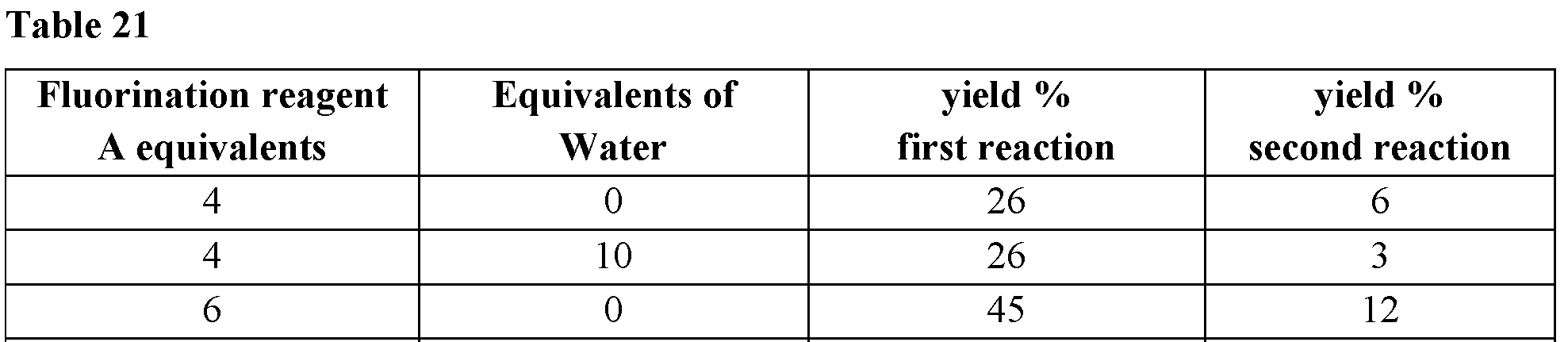





Claims
Priority Applications (5)
| Application Number | Priority Date | Filing Date | Title |
|---|---|---|---|
| CN202480053447.7A CN121729382A (en) | 2023-06-15 | 2024-06-13 | Electrolyte and electrolyte components, additives, precursors therefor, and methods of manufacture |
| KR1020267001252A KR20260025838A (en) | 2023-06-15 | 2024-06-13 | Electrolytes and electrolyte components, additives, precursors thereof, and methods for producing them |
| JP2025573688A JP2026524314A (en) | 2023-06-15 | 2024-06-13 | Electrolytes and electrolyte components, additives, their precursors, and methods for manufacturing them. |
| EP24740973.3A EP4727890A1 (en) | 2023-06-15 | 2024-06-13 | Electrolytes and electrolyte components, additives, precursors thereof, and methods of manufacture |
| MX2025015031A MX2025015031A (en) | 2023-06-15 | 2025-12-11 | Electrolytes and electrolyte components, additives, precursors thereof, and methods of manufacture |
Applications Claiming Priority (2)
| Application Number | Priority Date | Filing Date | Title |
|---|---|---|---|
| US202363521148P | 2023-06-15 | 2023-06-15 | |
| US63/521,148 | 2023-06-15 |
Publications (1)
| Publication Number | Publication Date |
|---|---|
| WO2024256865A1 true WO2024256865A1 (en) | 2024-12-19 |
Family
ID=91898782
Family Applications (1)
| Application Number | Title | Priority Date | Filing Date |
|---|---|---|---|
| PCT/IB2024/000281 Ceased WO2024256865A1 (en) | 2023-06-15 | 2024-06-13 | Electrolytes and electrolyte components, additives, precursors thereof, and methods of manufacture |
Country Status (6)
| Country | Link |
|---|---|
| EP (1) | EP4727890A1 (en) |
| JP (1) | JP2026524314A (en) |
| KR (1) | KR20260025838A (en) |
| CN (1) | CN121729382A (en) |
| MX (1) | MX2025015031A (en) |
| WO (1) | WO2024256865A1 (en) |
Citations (3)
| Publication number | Priority date | Publication date | Assignee | Title |
|---|---|---|---|---|
| RU2176236C1 (en) * | 2000-07-05 | 2001-11-27 | Институт химии твердого тела и механохимии СО РАН | Method of synthesis of fluorinated aromatic compounds and method of synthesis of fluorinating agent (variants) |
| WO2010010613A1 (en) * | 2008-07-23 | 2010-01-28 | 第一工業製薬株式会社 | Process for producing bis(fluorosulfonyl)imide anion compound, and ion-pair compound |
| WO2023118867A1 (en) * | 2021-12-22 | 2023-06-29 | Oxford University Innovation Limited | Caf2-based fluorination reagents, methods of preparation and uses thereof |
-
2024
- 2024-06-13 JP JP2025573688A patent/JP2026524314A/en active Pending
- 2024-06-13 CN CN202480053447.7A patent/CN121729382A/en active Pending
- 2024-06-13 WO PCT/IB2024/000281 patent/WO2024256865A1/en not_active Ceased
- 2024-06-13 EP EP24740973.3A patent/EP4727890A1/en active Pending
- 2024-06-13 KR KR1020267001252A patent/KR20260025838A/en active Pending
-
2025
- 2025-12-11 MX MX2025015031A patent/MX2025015031A/en unknown
Patent Citations (3)
| Publication number | Priority date | Publication date | Assignee | Title |
|---|---|---|---|---|
| RU2176236C1 (en) * | 2000-07-05 | 2001-11-27 | Институт химии твердого тела и механохимии СО РАН | Method of synthesis of fluorinated aromatic compounds and method of synthesis of fluorinating agent (variants) |
| WO2010010613A1 (en) * | 2008-07-23 | 2010-01-28 | 第一工業製薬株式会社 | Process for producing bis(fluorosulfonyl)imide anion compound, and ion-pair compound |
| WO2023118867A1 (en) * | 2021-12-22 | 2023-06-29 | Oxford University Innovation Limited | Caf2-based fluorination reagents, methods of preparation and uses thereof |
Also Published As
| Publication number | Publication date |
|---|---|
| KR20260025838A (en) | 2026-02-24 |
| JP2026524314A (en) | 2026-07-22 |
| CN121729382A (en) | 2026-03-24 |
| EP4727890A1 (en) | 2026-04-22 |
| MX2025015031A (en) | 2026-03-02 |
Similar Documents
| Publication | Publication Date | Title |
|---|---|---|
| AU2020401568B2 (en) | Process and method for refining lithium carbonate starting from an impure lithium chloride solution | |
| EP2835348B1 (en) | Method for producing fluorosulfate | |
| EP3045426B2 (en) | Granules or powder of disulfonylamide salt, and method for producing same | |
| US20240391774A1 (en) | Method for producing ultra-pure bis(chlorosulfonyl)imide | |
| KR20160002578A (en) | Mehtod of preparing lithium hydroxide | |
| JP6709686B2 (en) | Method for producing bis(fluorosulfonyl)imide alkali metal salt | |
| JP4848684B2 (en) | Method for producing high-purity 4-fluoro-1,3-dioxolan-2-one | |
| EP4727890A1 (en) | Electrolytes and electrolyte components, additives, precursors thereof, and methods of manufacture | |
| US20150044118A1 (en) | Low-chloride lipf6 | |
| KR20230163929A (en) | Method for crystallization of dissolved ammonium sulfate | |
| AU2024302261A1 (en) | Method of manufacture of an electrolyte precursor | |
| WO2024256863A1 (en) | Electrolytes and electrolyte components, additives, precursors thereof, and methods of manufacture | |
| AU2024305139A1 (en) | Fluorination methods, reagents, fluorinated compositions, and methods of manufacture | |
| EP1932829A1 (en) | Potassium perfluoroalkanesulfonates and process for production thereof | |
| CN113184824B (en) | Preparation method of lithium difluorophosphate | |
| EP2080753A1 (en) | Method for producing tris(perfluoroalkanesulfonyl)methide acid salt | |
| US4335091A (en) | Process for the manufacture of hydroxylammonium perchlorate | |
| WO2019044286A1 (en) | Method for producing perfluoroalkane sulfonylimide acid metal salt | |
| CN114436907A (en) | Environment-friendly preparation method of foaming agent | |
| EP4273096A1 (en) | Method for recovering lithium bis(fluorosulfonyl)imide | |
| CN116750774B (en) | One-pot process for co-producing alkali metals, including tetrafluoroborate and difluorophosphate. | |
| EP4683888A1 (en) | A process for preparing high-purity alkali metal hexafluorophosphate and the alkali metal hexafluorophosphate prepared therefrom |
Legal Events
| Date | Code | Title | Description |
|---|---|---|---|
| 121 | Ep: the epo has been informed by wipo that ep was designated in this application |
Ref document number: 24740973 Country of ref document: EP Kind code of ref document: A1 |
|
| WWE | Wipo information: entry into national phase |
Ref document number: MX/A/2025/015031 Country of ref document: MX |
|
| ENP | Entry into the national phase |
Ref document number: 2025573688 Country of ref document: JP Kind code of ref document: A |
|
| ENP | Entry into the national phase |
Ref document number: 1020267001252 Country of ref document: KR Free format text: ST27 STATUS EVENT CODE: A-0-1-A10-A15-NAP-PA0105 (AS PROVIDED BY THE NATIONAL OFFICE) |
|
| WWE | Wipo information: entry into national phase |
Ref document number: 1020267001252 Country of ref document: KR Ref document number: 202617003956 Country of ref document: IN |
|
| WWE | Wipo information: entry into national phase |
Ref document number: 2024740973 Country of ref document: EP |
|
| NENP | Non-entry into the national phase |
Ref country code: DE |
|
| ENP | Entry into the national phase |
Ref document number: 2024740973 Country of ref document: EP Effective date: 20260115 |
|
| ENP | Entry into the national phase |
Ref document number: 2024740973 Country of ref document: EP Effective date: 20260115 |
|
| ENP | Entry into the national phase |
Ref document number: 2024740973 Country of ref document: EP Effective date: 20260115 |
|
| ENP | Entry into the national phase |
Ref document number: 2024740973 Country of ref document: EP Effective date: 20260115 |
|
| WWP | Wipo information: published in national office |
Ref document number: 202617003956 Country of ref document: IN |
|
| WWP | Wipo information: published in national office |
Ref document number: 1020267001252 Country of ref document: KR |
|
| WWP | Wipo information: published in national office |
Ref document number: MX/A/2025/015031 Country of ref document: MX |
|
| WWP | Wipo information: published in national office |
Ref document number: 2024740973 Country of ref document: EP |