WO2024257557A1 - Sputtering apparatus - Google Patents
Sputtering apparatus Download PDFInfo
- Publication number
- WO2024257557A1 WO2024257557A1 PCT/JP2024/018542 JP2024018542W WO2024257557A1 WO 2024257557 A1 WO2024257557 A1 WO 2024257557A1 JP 2024018542 W JP2024018542 W JP 2024018542W WO 2024257557 A1 WO2024257557 A1 WO 2024257557A1
- Authority
- WO
- WIPO (PCT)
- Prior art keywords
- radical irradiation
- radical
- irradiation device
- target
- irradiation devices
- Prior art date
- Legal status (The legal status is an assumption and is not a legal conclusion. Google has not performed a legal analysis and makes no representation as to the accuracy of the status listed.)
- Ceased
Links
Images






Classifications
-
- C—CHEMISTRY; METALLURGY
- C23—COATING METALLIC MATERIAL; COATING MATERIAL WITH METALLIC MATERIAL; CHEMICAL SURFACE TREATMENT; DIFFUSION TREATMENT OF METALLIC MATERIAL; COATING BY VACUUM EVAPORATION, BY SPUTTERING, BY ION IMPLANTATION OR BY CHEMICAL VAPOUR DEPOSITION, IN GENERAL; INHIBITING CORROSION OF METALLIC MATERIAL OR INCRUSTATION IN GENERAL
- C23C—COATING METALLIC MATERIAL; COATING MATERIAL WITH METALLIC MATERIAL; SURFACE TREATMENT OF METALLIC MATERIAL BY DIFFUSION INTO THE SURFACE, BY CHEMICAL CONVERSION OR SUBSTITUTION; COATING BY VACUUM EVAPORATION, BY SPUTTERING, BY ION IMPLANTATION OR BY CHEMICAL VAPOUR DEPOSITION, IN GENERAL
- C23C14/00—Coating by vacuum evaporation, by sputtering or by ion implantation of the coating forming material
- C23C14/06—Coating by vacuum evaporation, by sputtering or by ion implantation of the coating forming material characterised by the coating material
- C23C14/0617—AIII BV compounds, where A is Al, Ga, In or Tl and B is N, P, As, Sb or Bi
-
- C—CHEMISTRY; METALLURGY
- C23—COATING METALLIC MATERIAL; COATING MATERIAL WITH METALLIC MATERIAL; CHEMICAL SURFACE TREATMENT; DIFFUSION TREATMENT OF METALLIC MATERIAL; COATING BY VACUUM EVAPORATION, BY SPUTTERING, BY ION IMPLANTATION OR BY CHEMICAL VAPOUR DEPOSITION, IN GENERAL; INHIBITING CORROSION OF METALLIC MATERIAL OR INCRUSTATION IN GENERAL
- C23C—COATING METALLIC MATERIAL; COATING MATERIAL WITH METALLIC MATERIAL; SURFACE TREATMENT OF METALLIC MATERIAL BY DIFFUSION INTO THE SURFACE, BY CHEMICAL CONVERSION OR SUBSTITUTION; COATING BY VACUUM EVAPORATION, BY SPUTTERING, BY ION IMPLANTATION OR BY CHEMICAL VAPOUR DEPOSITION, IN GENERAL
- C23C14/00—Coating by vacuum evaporation, by sputtering or by ion implantation of the coating forming material
- C23C14/22—Coating by vacuum evaporation, by sputtering or by ion implantation of the coating forming material characterised by the process of coating
- C23C14/34—Sputtering
-
- C—CHEMISTRY; METALLURGY
- C23—COATING METALLIC MATERIAL; COATING MATERIAL WITH METALLIC MATERIAL; CHEMICAL SURFACE TREATMENT; DIFFUSION TREATMENT OF METALLIC MATERIAL; COATING BY VACUUM EVAPORATION, BY SPUTTERING, BY ION IMPLANTATION OR BY CHEMICAL VAPOUR DEPOSITION, IN GENERAL; INHIBITING CORROSION OF METALLIC MATERIAL OR INCRUSTATION IN GENERAL
- C23C—COATING METALLIC MATERIAL; COATING MATERIAL WITH METALLIC MATERIAL; SURFACE TREATMENT OF METALLIC MATERIAL BY DIFFUSION INTO THE SURFACE, BY CHEMICAL CONVERSION OR SUBSTITUTION; COATING BY VACUUM EVAPORATION, BY SPUTTERING, BY ION IMPLANTATION OR BY CHEMICAL VAPOUR DEPOSITION, IN GENERAL
- C23C14/00—Coating by vacuum evaporation, by sputtering or by ion implantation of the coating forming material
- C23C14/22—Coating by vacuum evaporation, by sputtering or by ion implantation of the coating forming material characterised by the process of coating
- C23C14/34—Sputtering
- C23C14/3407—Cathode assembly for sputtering apparatus, e.g. Target
-
- C—CHEMISTRY; METALLURGY
- C23—COATING METALLIC MATERIAL; COATING MATERIAL WITH METALLIC MATERIAL; CHEMICAL SURFACE TREATMENT; DIFFUSION TREATMENT OF METALLIC MATERIAL; COATING BY VACUUM EVAPORATION, BY SPUTTERING, BY ION IMPLANTATION OR BY CHEMICAL VAPOUR DEPOSITION, IN GENERAL; INHIBITING CORROSION OF METALLIC MATERIAL OR INCRUSTATION IN GENERAL
- C23C—COATING METALLIC MATERIAL; COATING MATERIAL WITH METALLIC MATERIAL; SURFACE TREATMENT OF METALLIC MATERIAL BY DIFFUSION INTO THE SURFACE, BY CHEMICAL CONVERSION OR SUBSTITUTION; COATING BY VACUUM EVAPORATION, BY SPUTTERING, BY ION IMPLANTATION OR BY CHEMICAL VAPOUR DEPOSITION, IN GENERAL
- C23C14/00—Coating by vacuum evaporation, by sputtering or by ion implantation of the coating forming material
- C23C14/22—Coating by vacuum evaporation, by sputtering or by ion implantation of the coating forming material characterised by the process of coating
- C23C14/34—Sputtering
- C23C14/35—Sputtering by application of a magnetic field, e.g. magnetron sputtering
- C23C14/352—Sputtering by application of a magnetic field, e.g. magnetron sputtering using more than one target
-
- C—CHEMISTRY; METALLURGY
- C23—COATING METALLIC MATERIAL; COATING MATERIAL WITH METALLIC MATERIAL; CHEMICAL SURFACE TREATMENT; DIFFUSION TREATMENT OF METALLIC MATERIAL; COATING BY VACUUM EVAPORATION, BY SPUTTERING, BY ION IMPLANTATION OR BY CHEMICAL VAPOUR DEPOSITION, IN GENERAL; INHIBITING CORROSION OF METALLIC MATERIAL OR INCRUSTATION IN GENERAL
- C23C—COATING METALLIC MATERIAL; COATING MATERIAL WITH METALLIC MATERIAL; SURFACE TREATMENT OF METALLIC MATERIAL BY DIFFUSION INTO THE SURFACE, BY CHEMICAL CONVERSION OR SUBSTITUTION; COATING BY VACUUM EVAPORATION, BY SPUTTERING, BY ION IMPLANTATION OR BY CHEMICAL VAPOUR DEPOSITION, IN GENERAL
- C23C14/00—Coating by vacuum evaporation, by sputtering or by ion implantation of the coating forming material
- C23C14/22—Coating by vacuum evaporation, by sputtering or by ion implantation of the coating forming material characterised by the process of coating
- C23C14/50—Substrate holders
-
- C—CHEMISTRY; METALLURGY
- C23—COATING METALLIC MATERIAL; COATING MATERIAL WITH METALLIC MATERIAL; CHEMICAL SURFACE TREATMENT; DIFFUSION TREATMENT OF METALLIC MATERIAL; COATING BY VACUUM EVAPORATION, BY SPUTTERING, BY ION IMPLANTATION OR BY CHEMICAL VAPOUR DEPOSITION, IN GENERAL; INHIBITING CORROSION OF METALLIC MATERIAL OR INCRUSTATION IN GENERAL
- C23C—COATING METALLIC MATERIAL; COATING MATERIAL WITH METALLIC MATERIAL; SURFACE TREATMENT OF METALLIC MATERIAL BY DIFFUSION INTO THE SURFACE, BY CHEMICAL CONVERSION OR SUBSTITUTION; COATING BY VACUUM EVAPORATION, BY SPUTTERING, BY ION IMPLANTATION OR BY CHEMICAL VAPOUR DEPOSITION, IN GENERAL
- C23C14/00—Coating by vacuum evaporation, by sputtering or by ion implantation of the coating forming material
- C23C14/58—After-treatment
Definitions
- One embodiment of the present invention relates to a sputtering apparatus.
- one embodiment of the present invention relates to a sputtering apparatus equipped with a radical irradiation device.
- OLED organic light-emitting diode
- micro LED display devices or mini LED display devices in which tiny LED chips are mounted within the pixels of a circuit board, have been developed as next-generation display devices.
- LEDs are self-emitting elements similar to OLEDs.
- LEDs are composed of stable inorganic compounds containing gallium (Ga) or indium (In). Therefore, compared to OLED display devices, micro LED display devices are more likely to ensure high reliability.
- LED chips have high luminous efficiency and can achieve high brightness. Therefore, micro LED display devices or mini LED display devices are expected to be next-generation display devices with high reliability, high brightness, and high contrast.
- gallium nitride films used in micro LEDs and the like are generally formed on sapphire substrates at high temperatures of 800°C to 1000°C using MOCVD (Metal Organic Chemical Vapor Deposition) or HVPE (Hydride Vapor Phase Epitaxy).
- MOCVD Metal Organic Chemical Vapor Deposition
- HVPE HydroVPE
- a method for forming gallium nitride films by sputtering has been developed that allows film formation at relatively low temperatures (see, for example, Patent Document 1).
- micro-LEDs are formed by stacking multiple films with different compositions. With conventional sputtering equipment, it was necessary to prepare a target and chamber for each film with a different composition.
- one of the objects of one embodiment of the present invention is to provide a new sputtering device.
- a sputtering apparatus includes a substrate holder that holds a substrate, a target that is disposed opposite the substrate holder and whose relative positional relationship with the substrate holder is movable in a first direction, and a plurality of radical irradiation devices that irradiate radicals at different positions on the deposition surface of the substrate in the first direction.
- the amount of radicals generated by the plurality of radical irradiation devices can be individually adjusted.
- 1 is a top view showing an overview of a sputtering apparatus according to an embodiment of the present invention.
- 1 is a side view showing an overview of a sputtering apparatus according to an embodiment of the present invention.
- FIG. 13 is a top view showing an overview of a sputtering apparatus showing a modified example of an embodiment of the present invention.
- 1A to 1C are diagrams illustrating a sputtering method according to an embodiment of the present invention.
- 1A to 1C are diagrams illustrating a sputtering method according to an embodiment of the present invention.
- 1A to 1C are diagrams illustrating a sputtering method according to an embodiment of the present invention.
- 1A to 1C are diagrams illustrating a sputtering method according to an embodiment of the present invention.
- 1A to 1C are diagrams illustrating a sputtering method according to an embodiment of the present invention.
- 1A to 1C are diagrams illustrating a sputtering method according to an embodiment of the present invention.
- 1A to 1C are diagrams illustrating a sputtering method according to an embodiment of the present invention.
- 1A to 1C are diagrams illustrating a sputtering method according to an embodiment of the present invention.
- the direction from the first member to the second member is referred to as up or upward. Conversely, the direction from the second member to the first member is referred to as down or downward.
- up or downward are used in the explanation, but for example, the first member and the second member may be arranged so that their vertical relationship is reversed from that shown in the figure.
- the expression "second member on the first member” merely describes the vertical relationship between the first member and the second member as described above, and other members may be arranged between the first member and the second member.
- Up” or “down” refers to the stacking order in a structure in which multiple layers are stacked, and when the second member is expressed as being above the first member, the first member and the second member may not overlap in a planar view. On the other hand, when the second member is expressed as being vertically above the first member, it refers to a positional relationship in which the first member and the second member overlap in a planar view.
- a sputtering apparatus 10 according to one embodiment of the present invention and a sputtering method using the sputtering apparatus 10 will be described with reference to FIGS.
- FIG. 1 is a top view showing an overview of a sputtering apparatus according to an embodiment of the present invention.
- the sputtering apparatus 10 has a chamber 100, a target unit 200, a substrate holding unit 300, a radical irradiation unit 400, a control unit 600, a position control unit 610, and a moving mechanism 620.
- FIG. 1 shows a part of the chamber 100.
- the chamber 100 constitutes a closed space.
- the chamber 100 is provided with an exhaust port and a process gas supply port.
- the pressure inside the chamber 100 can be reduced through the exhaust port. Gases such as argon and nitrogen required for sputtering can be supplied into the chamber 100 through the process gas supply port.
- Substrate 310 which is the target for film formation, is held by substrate holding part 300.
- substrate 310 is held by substrate holding part 300 so that the main surface (film formation surface) of substrate 310 extends in the X-axis direction and the Z-axis direction.
- substrate 310 is held by substrate holding part 300 in a vertical position.
- the X-axis direction is sometimes referred to as the "first direction”.
- the Z-axis direction is sometimes referred to as the "second direction”.
- the Y-axis direction is sometimes referred to as the "third direction”.
- the target section 200 is disposed facing the substrate holding section 300.
- the target section 200 includes a target 210 and a backing plate 220.
- the target 210 is a flat target with a longitudinal axis in the Z-axis direction (FIG. 3), as will be described in detail later.
- the target 210 is made of a material having the same composition as the thin film formed on the deposition surface of the substrate 310, or containing an element contained in the thin film. For example, when a gallium nitride (GaN) thin film is formed on the deposition surface, the target 210 is made of GaN or gallium (Ga).
- the side of the target section 200 facing the substrate holding section 300 is called the front side, and the side of the target section 200 facing the radical irradiation device 400 is called the back side.
- the target 210 is fixed to the front side of the backing plate 220, for example, by indium or the like.
- a magnet or other member (not shown) is provided on the back of the backing plate 220.
- the magnet confines the electrons in the plasma, forming a high-concentration plasma region in front of the target 210.
- a process gas is ionized.
- argon is used as the process gas.
- the ionized argon is accelerated toward the target 210 in a sheath region formed between the plasma region and the target 210.
- the accelerated argon ions collide with the target 210, sputtering the target material.
- materials such as aluminum, aluminum nitride, indium, indium nitride, silicon, and silicon nitride are used as the target 210.
- Materials in which impurities (dopants) have been introduced into the above-mentioned materials may also be used as the target 210.
- materials in which magnesium or silicon has been introduced as a dopant into gallium nitride may also be used.
- Gallium nitride containing magnesium as a dopant functions as a P-type semiconductor.
- Gallium nitride containing silicon as a dopant functions as an N-type semiconductor.
- a holding mechanism 630 that holds the target section 200 is provided on the rear side of the backing plate 220.
- the holding mechanism 630 is disposed in the moving mechanism 620.
- the moving mechanism 620 controls the positions of the holding mechanism 630 and the target section 200 in the X-axis direction.
- a rail mechanism is used as the moving mechanism 620.
- other mechanisms may be used as the moving mechanism 620.
- the moving mechanism 620 is provided with a position control device 610.
- the position control device 610 detects the positions of the holding mechanism 630 and the target section 200 in the X-axis direction controlled by the moving mechanism 620.
- a rotary encoder is used as the position control device 610.
- the position control device 610 is connected to the control device 600. Based on a control signal from the control device 600, the position control device 610 controls the movement mechanism 620 to determine the positions of the holding mechanism 630 and the target unit 200 in the X-axis direction. Furthermore, the control device 600 acquires current position information of the holding mechanism 630 and the target unit 200 in the X-axis direction from the position control device 610.
- the control device 600 is connected to the radical irradiation device 400 (radical irradiation devices 410 to 440) described below. As will be described in detail below, the control device 600 controls the amount of radicals or the type of radicals generated by the radical irradiation devices 410 to 440.
- the target section 200 is movable, and the relative positional relationship between the target section 200 and the substrate holding section 300 changes in the X-axis direction.
- the position of the substrate holding section 300 is fixed in the X-axis direction, and the position of the target section 200 moves.
- the movement of the target section 200 in the X-axis direction may be a swing (reciprocating or repeating in the positive and negative directions on the X-axis) or a passage in one direction.
- the position of the target section 200 may be fixed in the X-axis direction, and the position of the substrate holding section 300 may move, or both the target section 200 and the substrate holding section 300 may move as described above.
- the radical irradiation device 400 is provided on the side wall of the chamber 100.
- the radical irradiation device 400 includes a radical irradiation device 410 (A), a radical irradiation device 420 (B), a radical irradiation device 430 (C), and a radical irradiation device 440 (D).
- the radical irradiation devices 410 to 440 are all arranged so as to irradiate radicals onto the film formation surface of the substrate 310.
- the radical irradiation positions of the radical irradiation devices 410 to 440 differ in the X-axis direction.
- the radical irradiation devices 410 to 440 are arranged side by side in the X-axis direction, thereby realizing the above-mentioned radical irradiation positions.
- the radical irradiation device 410 includes a radical generator 411, a pipe 412, and a radical outlet 413.
- the radical irradiation device 420 includes a radical generator 421, a pipe 422, and a radical outlet 423.
- the radical irradiation device 430 includes a radical generator 431, a pipe 432, and a radical outlet 433.
- the radical irradiation device 440 includes a radical generator 441, a pipe 442, and a radical outlet 443.
- the radical generators 411 to 441 are provided outside the chamber 100.
- the pipes 412 to 442 are connected to the radical generators 411 to 441, respectively, and each penetrate the side wall of the chamber 100.
- the radical outlets 413 to 443 are connected to the pipes 412 to 442, respectively, and are provided inside the chamber 100.
- the plasma power sources e.g., microwave power sources
- the plasma power sources 411-441 are controlled to be in the on state, generating plasma within the radical generators 411-441 and generating radicals resulting from the process gas.
- the amount of radicals generated can be adjusted by controlling the power supplied to the plasma power sources.
- the radicals generated in the radical generators 411-441 are guided into the chamber 100 through the pipes 412-442 and released into the chamber 100 from the radical release ports 413-443.
- the process gas supplied to the radical irradiation devices 410 to 440 is, for example, hydrogen (H 2 ) gas, ammonia (NH 3 ) gas, or nitrogen (N 2 ) gas.
- hydrogen gas is supplied to the radical irradiation device 410, and hydrogen radicals are supplied into the chamber 100.
- ammonia gas is supplied to the radical irradiation device 420, and ammonia radicals are supplied into the chamber 100.
- the ammonia radicals reach the thin film formed on the film formation surface of the substrate 310, the thin film is nitrided.
- the hydrogen radicals extract hydrogen from the ammonia radicals, thereby promoting the nitridation of the thin film.
- a gas other than the above may be used as the gas supplied to the radical irradiation device 400.
- the radical irradiation devices 410 to 440 can individually adjust the amount of radicals generated.
- the radical irradiation devices 410 to 440 may irradiate the substrate 310 with the same type of radicals, or at least some of the radical irradiation devices may irradiate the substrate 310 with a different type of radical than the other radical irradiation devices.
- the part of the radical irradiation devices is supplied with a gas different from that supplied with the other radical irradiation devices.
- the radical irradiation device 410 may be referred to as the "first radical irradiation device.”
- the radical irradiation device 420 adjacent to the radical irradiation device 410 may be referred to as the "second radical irradiation device.”
- FIG. 2 is a side view showing an overview of a sputtering apparatus according to one embodiment of the present invention.
- FIG. 2 is a view of the sputtering apparatus 10 as viewed in the Y-axis direction.
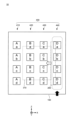
- the radical irradiation devices 410-440 are arranged in a matrix in the X-axis direction and the Z-axis direction.
- the X-axis direction may be referred to as the row direction
- the Z-axis direction may be referred to as the column direction.
- the radical irradiation device 410 includes radical irradiation devices Aa, Ab, Ac, and Ad.
- the radical irradiation devices Aa, Ab, Ac, and Ad are arranged in a line in the Z-axis direction, and the amount of radicals generated can be adjusted individually.
- the radical irradiation devices Aa, Ab, Ac, and Ad may irradiate the same type of radicals onto the substrate 310, or at least some of the radical irradiation devices may irradiate the substrate 310 with a different type of radical from the other radical irradiation devices.
- the radical irradiation device 420 includes radical irradiation devices Ba, Bb, Bc, and Bd.
- the radical irradiation devices Ba, Bb, Bc, and Bd are arranged in a line in the Z-axis direction, and the amount of radicals generated can be adjusted individually.
- the radical irradiation devices Ba, Bb, Bc, and Bd may irradiate the same type of radicals onto the substrate 310, or at least some of the radical irradiation devices may irradiate the substrate 310 with a different type of radical from the other radical irradiation devices.
- the radical irradiation device 430 includes radical irradiation devices Ca, Cb, Cc, and Cd.
- the radical irradiation devices Ca, Cb, Cc, and Cd are arranged in a line in the Z-axis direction, and the amount of radicals generated can be individually adjusted.
- the radical irradiation devices Ca, Cb, Cc, and Cd may irradiate the same type of radicals onto the substrate 310, or at least some of the radical irradiation devices may irradiate the substrate 310 with a type of radical different from that of the other radical irradiation devices.
- the radical irradiation device 440 includes radical irradiation devices Da, Db, Dc, and Dd.
- the radical irradiation devices Da, Db, Dc, and Dd are arranged in a line in the Z-axis direction, and the amount of radicals generated can be adjusted individually.
- the radical irradiation devices Da, Db, Dc, and Dd may irradiate the same type of radicals onto the substrate 310, or at least some of the radical irradiation devices may irradiate the substrate 310 with a different type of radical from the other radical irradiation devices.
- the radical irradiation device Aa may be referred to as the "first radical irradiation device,” the radical irradiation device Ba as the “second radical irradiation device,” and the radical irradiation device Ab as the “third radical irradiation device.”
- the radical irradiation devices Aa to Ad, the radical irradiation devices Ba to Bd, the radical irradiation devices Ca to Cd, and the radical irradiation devices Da to Dd may each be referred to as a "row unit" of radical irradiation devices.
- a row unit is a unit formed by the radical irradiation devices that are lined up in the Z-axis direction among the multiple radical irradiation devices. In this case, it can be said that the multiple row units of radical irradiation devices are arranged in a row in the X-axis direction.
- a row unit refers to one row of radical irradiation devices, but multiple rows of radical irradiation devices may be defined as a row unit. For example, two rows of radical irradiation devices may be defined as a row unit.
- the radical irradiation device can be controlled in units of rows.
- the radical irradiation device can be controlled so that the amount of radicals generated by the radical irradiation device of the selected specific row unit is greater than the amount of radicals generated by the radical irradiation device of the other row units.
- the radical irradiation device can be controlled so that the amount of radicals generated by the radical irradiation device of the other row units is 50% or less, 30% or less, 20% or less, or 10% or less of the amount of radicals generated by the radical irradiation device of the selected specific row unit.
- the amount of radicals generated by the radical irradiation device of the other row units may be zero.
- the amount of radicals generated it may be said that the radical irradiation device of the other row unit is in an off state.
- the radical irradiation device of the selected specific row unit is in an on state.
- the radical irradiation device of the selected specific row unit may be switched sequentially in the X-axis direction.
- the radical irradiation device 400 emits radicals perpendicular to the deposition surface of the substrate 310 on the rear side of the target unit 200, but this configuration is not limiting.
- the radical irradiation device 400 may be positioned on the rear side of the target unit 200 so as to emit radicals from a direction inclined relative to the deposition surface.
- the radical irradiation device 400 may be positioned so as to emit radicals parallel to the deposition surface.
- the sputtering apparatus 10 shown in FIG. 1 and FIG. 2 is capable of depositing a high-quality thin film by being configured to be able to individually control each radical irradiation device as described above.
- the film quality of the deposited thin film may be improved by controlling the radical irradiation device arranged in the area overlapping the target 210 to the off state and the radical irradiation device arranged in the area not overlapping the target 210 to the on state, or by controlling the amount of radicals generated by the radical irradiation device arranged in the area overlapping the target 210 to be less than the amount of radicals generated by the radical irradiation device arranged in the area not overlapping the target 210.
- the GaN layer tends to be deficient in nitrogen. Even in such a case, nitrogen can be replenished in the GaN layer by irradiating the GaN layer with nitrogen-containing radicals (for example, the above-mentioned ammonia radical irradiation and hydrogen radical irradiation) after the GaN layer is formed. In other words, the film quality of the GaN layer can be improved by this radical irradiation.
- nitrogen-containing radicals for example, the above-mentioned ammonia radical irradiation and hydrogen radical irradiation
- the film quality of the formed thin film may be improved by controlling the radical irradiation device arranged in the area overlapping with the target 210 to the on state and the radical irradiation device arranged in the area not overlapping with the target 210 to the off state, or by controlling so that the amount of radicals generated by the radical irradiation device arranged in the area overlapping with the target 210 is greater than the amount of radicals generated by the radical irradiation device arranged in the area not overlapping with the target 210.
- the GaN layer when forming a GaN layer by sputtering using a Ga target, can be formed by reactive sputtering in which Ga atoms (or Ga clusters) sputtered from the Ga target are deposited on the substrate 310 while being irradiated with nitrogen-containing radicals.
- the on/off state of the radical irradiation device or the amount of radicals generated may be controlled according to the in-plane distribution of the film thickness during film formation by the sputtering device 10. For example, if the film thickness of the peripheral portion of the substrate 310 is greater than that of the central portion, the amount of radicals generated by the radical irradiation device corresponding to the peripheral portion can be controlled to be greater than the amount of radicals generated by the radical irradiation device corresponding to the central portion. This control makes it possible to replenish nitrogen in the GaN layer in both the central and peripheral portions, thereby improving the film quality of the GaN layer.
- FIG. 3 is a top view showing an outline of a sputtering apparatus showing a modified example of one embodiment of the present invention.
- Fig. 1 shows an example of a configuration using a flat target, but
- Fig. 3 shows an example of a configuration using a rotary target.
- the configurations of the substrate holding unit 300 and the radical irradiation device 400 in Fig. 3 are the same as those of the substrate holding unit 300 and the radical irradiation device 400 in Fig. 1, so the description thereof will be omitted.
- a target unit 500 is provided in place of the target unit 200 in FIG. 1.
- the target unit 500 includes a support member 510, a fixing member 511, a yoke 512, a central magnet 513, a peripheral magnet 514, a backing tube 515, and a target 516. These members are shaped such that their elongated axis is in the Z-axis direction.
- the support member 510 is fixed to the chamber 100 so as to be rotatable.
- the fixed member 511 is connected to the support member 510 and extends from the support member 510 toward the backing tube 515.
- the yoke 512 is fixed to the end of the fixed member 511.
- the central magnet 513 and the peripheral magnets 514 are fixed to the yoke 512 and extend from the yoke 512 toward the backing tube 515.
- the ends of the central magnet 513 and the peripheral magnets 514 on the backing tube 515 side have a curved shape that follows the inner wall of the backing tube 515.
- the central magnet 513 and the peripheral magnets 514 have a linear shape extending in the Z-axis direction.
- the central magnet 513 and the peripheral magnets 514 rotate along the inner wall of the backing tube 515 with the support member 510 as the center.
- the support member 510 is fixed to the fixed member 511 and rotates together with the central magnet 513 and the peripheral magnets 514.
- the support member 510 may be fixed without rotating relative to the chamber 100.
- the fixed member 511 is connected to the support member 510 so as to be rotatable.
- the target 516 is fixed to the backing tube 515.
- the backing tube 515 and the target 516 have a cylindrical shape centered on an axis extending in the Z-axis direction, and rotate around the support member 510.
- the target 516 rotates independently of the central magnet 513 and the peripheral magnets 514. When there is no particular distinction between the central magnet 513 and the peripheral magnets 514, they may be simply referred to as "magnets.”
- the central magnet 513 has a polarity different from that of the peripheral magnets 514. That is, these magnets form a magnetic field from the central magnet 513 toward the peripheral magnets 514 (or vice versa). This magnetic field confines the electrons in the plasma, forming a high-concentration plasma region in the region corresponding to the central magnet 513 and the peripheral magnets 514.
- the process gas is ionized.
- argon is used as the process gas.
- the ionized argon is accelerated toward the target 516 in a sheath region formed between the plasma region and the target 516.
- the accelerated argon ions collide with the target 516, sputtering the target material.
- the amount of radicals generated and the type of radicals generated by the radical irradiation devices 400 arranged in the row and column direction are variable, so that appropriate radical irradiation conditions can be selected according to the characteristics of the sputtering device and the type of film to be formed.
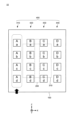
- FIG. 1 A sputtering method using the sputtering apparatus 10 according to one embodiment of the present invention will be described with reference to Figures 4A to 4D.
- the configuration of the sputtering apparatus 10 used in this embodiment is the same as that of the sputtering apparatus 10 shown in Figure 1, so a description thereof will be omitted.
- an embodiment in which a GaN layer is formed using the sputtering apparatus 10 using GaN as the target 210 will be described.
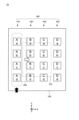
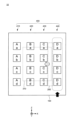
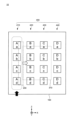
- [2-1. Sputtering method] 4A to 4D are diagrams for explaining a sputtering method according to an embodiment of the present invention.
- the target section 200 moves in the direction of the white arrow from the position shown in each figure.
- the radical irradiation device in the row surrounded by a dotted line of an approximately rectangular shape with rounded corners and indicated by a filled arrow is the selected radical irradiation device.
- the radical irradiation device is a radical irradiation device in the on state (the radical irradiation device in the area not surrounded by the dotted line is the radical irradiation device in the off state), or a radical irradiation device that generates more radicals than the other radical irradiation devices.
- the position of the target section 200 and the operation of each radical irradiation device 400 in the following description are realized by the control device 600, position control device 610, and movement mechanism 620 shown in FIG. 1 and FIG. 3.
- the target section 200 is moving in a direction away from the radical irradiation devices Aa-Ad and toward the radical irradiation devices Ba-Bd.
- the radical irradiation devices Aa-Ad are selected.
- the selected radical irradiation devices Aa-Ad are in an on state, and the other radical irradiation devices (Ba-Bd, Ca-Cd, Da-Dd) are in an off state.
- the amount of radicals generated by the selected radical irradiation devices Aa-Ad is greater than the amount of radicals generated by the other radical irradiation devices (Ba-Bd, Ca-Cd, Da-Dd).
- the target section 200 does not overlap with the radical irradiation devices Aa-Ad in a plan view of the film formation surface of the substrate 310.
- the target section 200 is moving in a direction away from the radical irradiation devices Ba to Bd and toward the radical irradiation devices Ca to Cd.
- the radical irradiation devices Ba to Bd are selected.
- the selected radical irradiation devices Ba to Bd are in an on state, and the other radical irradiation devices (Aa to Ad, Ca to Cd, Da to Dd) are in an off state.
- the amount of radicals generated by the selected radical irradiation devices Ba to Bd is greater than the amount of radicals generated by the other radical irradiation devices (Aa to Ad, Ca to Cd, Da to Dd).
- the target section 200 does not overlap with the radical irradiation devices Ba to Bd in a plan view of the film formation surface of the substrate 310.
- the target section 200 is moving in a direction away from the radical irradiation devices Ca to Cd and toward the radical irradiation devices Da to Dd.
- the radical irradiation devices Ca to Cd are selected.
- the selected radical irradiation devices Ca to Cd are in an on state, and the other radical irradiation devices (Aa to Ad, Ba to Bd, Da to Dd) are in an off state.
- the amount of radicals generated by the selected radical irradiation device Ca to Cd is greater than the amount of radicals generated by the other radical irradiation devices (Aa to Ad, Ba to Bd, Da to Dd).
- the target section 200 does not overlap with the radical irradiation devices Ca to Cd in a plan view of the film formation surface of the substrate 310.
- the target section 200 turns around at the right end of the substrate 310 and moves in a direction away from the radical irradiation devices Da to Dd and toward the radical irradiation devices Ca to Cd.
- the radical irradiation devices Da to Dd are selected.
- the selected radical irradiation devices Da to Dd are in an on state, and the other radical irradiation devices (Aa to Ad, Ba to Bd, Ca to Cd) are in an off state.
- the amount of radicals generated by the selected radical irradiation devices Da to Dd is greater than the amount of radicals generated by the other radical irradiation devices (Aa to Ad, Ba to Bd, Ca to Cd).
- the target section 200 does not overlap with the radical irradiation devices Da to Dd in a plan view of the film formation surface of the substrate 310.
- the target section 200 moves in the X-axis direction in the area overlapping with the multiple radical irradiation devices 400.
- the specific row-unit radical irradiation devices selected as described above are selected so as to follow the movement of the target section 200.
- the specific row-unit radical irradiation devices selected as described above are sequentially switched in the X-axis direction depending on the positional relationship between the substrate 310 and the target section 200 in the X-axis direction.
- the GaN layer tends to be deficient in nitrogen.
- [3-1. Sputtering method] 5A to 5D are diagrams for explaining a sputtering method according to an embodiment of the present invention.
- the target section 200 moves in the direction of the white arrow from the position shown in each figure.
- the radical irradiation devices in the row surrounded by a dotted line of an approximately rectangular shape with rounded corners and indicated by a black arrow are radical irradiation devices in the on state (radical irradiation devices in the area not surrounded by the dotted line are in the off state), or radical irradiation devices that generate more radicals than other radical irradiation devices.
- the position of the target section 200 and the operation of each radical irradiation device 400 in the following description are realized by the control device 600, position control device 610, and movement mechanism 620 shown in FIG. 1 and FIG. 3.
- the target section 200 is moving in a direction approaching the radical irradiation devices Ba to Bd from the area overlapping with the radical irradiation devices Aa to Ad.
- the radical irradiation devices Aa to Ad are selected.
- the selected radical irradiation devices Aa to Ad are in an on state, and the other radical irradiation devices (Ba to Bd, Ca to Cd, Da to Dd) are in an off state.
- the amount of radicals generated by the selected radical irradiation devices Aa to Ad is greater than the amount of radicals generated by the other radical irradiation devices (Ba to Bd, Ca to Cd, Da to Dd).
- the target section 200 overlaps with the radical irradiation devices Aa to Ad in a plan view of the film formation surface of the substrate 310.
- the target section 200 is moving in a direction approaching the radical irradiation devices Ca to Cd from the area overlapping with the radical irradiation devices Ba to Bd.
- the radical irradiation devices Ba to Bd are selected.
- the selected radical irradiation devices Ba to Bd are in an on state, and the other radical irradiation devices (Aa to Ad, Ca to Cd, Da to Dd) are in an off state.
- the amount of radicals generated by the selected radical irradiation devices Ba to Bd is greater than the amount of radicals generated by the other radical irradiation devices (Aa to Ad, Ca to Cd, Da to Dd).
- the target section 200 overlaps with the radical irradiation devices Ba to Bd in a plan view of the film formation surface of the substrate 310.
- the target section 200 is moving from the area overlapping with the radical irradiation devices Ca to Cd in a direction approaching the radical irradiation devices Da to Dd.
- the radical irradiation devices Ca to Cd are selected.
- the selected radical irradiation devices Ca to Cd are in an on state, and the other radical irradiation devices (Aa to Ad, Ba to Bd, Da to Dd) are in an off state.
- the amount of radicals generated by the selected radical irradiation device Ca to Cd is greater than the amount of radicals generated by the other radical irradiation devices (Aa to Ad, Ba to Bd, Da to Dd).
- the target section 200 overlaps with the radical irradiation devices Ca to Cd in a plan view of the film formation surface of the substrate 310.
- the target section 200 turns around at the right end of the substrate 310 and moves in a direction approaching the radical irradiation devices Ca to Cd from the area overlapping with the radical irradiation devices Da to Dd.
- the radical irradiation devices Da to Dd are selected.
- the selected radical irradiation devices Da to Dd are in the on state, and the other radical irradiation devices (Aa to Ad, Ba to Bd, Ca to Cd) are in the off state.
- the amount of radicals generated by the selected radical irradiation devices Da to Dd is greater than the amount of radicals generated by the other radical irradiation devices (Aa to Ad, Ba to Bd, Ca to Cd).
- the target section 200 overlaps with the radical irradiation devices Da to Dd in a plan view of the film formation surface of the substrate 310.
- the target section 200 moves in the X-axis direction in an area that overlaps with a plurality of radical irradiation devices 400. Then, when viewed in the Y-axis direction, the specific row-unit radical irradiation devices selected as described above are selected so as to overlap with the target section 200. In other words, the specific row-unit radical irradiation devices selected as described above are sequentially switched in the X-axis direction depending on the positional relationship between the substrate 310 and the target section 200 in the X-axis direction.
- the GaN layer when a GaN layer is formed by sputtering using a Ga target, the GaN layer can be formed by reactive sputtering, in which radical irradiation is performed simultaneously with the formation of the Ga film.
Landscapes
- Chemical & Material Sciences (AREA)
- Chemical Kinetics & Catalysis (AREA)
- Engineering & Computer Science (AREA)
- Materials Engineering (AREA)
- Mechanical Engineering (AREA)
- Metallurgy (AREA)
- Organic Chemistry (AREA)
- Physical Vapour Deposition (AREA)
Abstract
Description
本発明の一実施形態は、スパッタリング装置に関する。特に、本発明の一実施形態は、ラジカル照射装置が備えられたスパッタリング装置に関する。 One embodiment of the present invention relates to a sputtering apparatus. In particular, one embodiment of the present invention relates to a sputtering apparatus equipped with a radical irradiation device.
スマートフォン等の中小型表示装置においては、液晶又はOLED(Organic Light Emitting Diode)を用いた表示装置が既に製品化されている。これらのなかでも、自発光型素子であるOLEDを用いたOLED表示装置は、液晶表示装置と比べて、高コントラストでバックライトが不要という利点を有する。しかしながら、OLEDは有機化合物で構成されるため、有機化合物の劣化に起因してOLED表示装置の高信頼性を確保することが難しい。 For small and medium-sized display devices such as smartphones, display devices using liquid crystal or OLED (organic light-emitting diode) have already been commercialized. Among these, OLED display devices using OLED, which is a self-emitting element, have the advantage of high contrast and no need for backlight compared to liquid crystal display devices. However, because OLED is composed of organic compounds, it is difficult to ensure high reliability of OLED display devices due to degradation of the organic compounds.
近年、次世代表示装置として、回路基板の画素内に微小なLEDチップが実装された、いわゆるマイクロLED表示装置又はミニLED表示装置の開発が進められている。LEDは、OLEDと同様の自発光型素子である。ただし、LEDは、OLEDと異なり、ガリウム(Ga)又はインジウム(In)などを含む安定した無機化合物で構成される。したがって、OLED表示装置と比較すると、マイクロLED表示装置は高信頼性を確保しやすい。さらに、LEDチップは、発光効率が高く、高輝度を実現することができる。したがって、マイクロLED表示装置又はミニLED表示装置は、高信頼性、高輝度、及び高コントラストの次世代表示装置として期待されている。 In recent years, so-called micro LED display devices or mini LED display devices, in which tiny LED chips are mounted within the pixels of a circuit board, have been developed as next-generation display devices. LEDs are self-emitting elements similar to OLEDs. However, unlike OLEDs, LEDs are composed of stable inorganic compounds containing gallium (Ga) or indium (In). Therefore, compared to OLED display devices, micro LED display devices are more likely to ensure high reliability. Furthermore, LED chips have high luminous efficiency and can achieve high brightness. Therefore, micro LED display devices or mini LED display devices are expected to be next-generation display devices with high reliability, high brightness, and high contrast.
ところで、マイクロLEDなどで用いられる窒化ガリウム膜は、一般的には、サファイア基板上に、MOCVD(Metal Organic Chemical Vapor Deposition)又はHVPE(Hydride Vapor Phase Epitaxy)を用いて800℃~1000℃という高温で成膜されている。しかしながら、近年、比較的低温で成膜することができるスパッタリングによる窒化ガリウム膜の成膜方法が開発されている(例えば、特許文献1参照)。 Incidentally, gallium nitride films used in micro LEDs and the like are generally formed on sapphire substrates at high temperatures of 800°C to 1000°C using MOCVD (Metal Organic Chemical Vapor Deposition) or HVPE (Hydride Vapor Phase Epitaxy). However, in recent years, a method for forming gallium nitride films by sputtering has been developed that allows film formation at relatively low temperatures (see, for example, Patent Document 1).
マイクロLEDを構成する窒化ガリウム層を低温で成膜することができれば、ガラス基板上に直接マイクロLEDを形成することが可能である。マイクロLEDは、組成の異なる複数の膜を積層することで形成される。従来のスパッタリング装置では、組成の異なる膜ごとにターゲット及びチャンバを準備する必要があった。 If the gallium nitride layer that makes up a micro-LED can be deposited at low temperatures, it will be possible to form the micro-LED directly on a glass substrate. Micro-LEDs are formed by stacking multiple films with different compositions. With conventional sputtering equipment, it was necessary to prepare a target and chamber for each film with a different composition.
本発明の一実施形態は、上記問題に鑑み、新たなスパッタリング装置を提供することを目的の一つとする。 In consideration of the above problems, one of the objects of one embodiment of the present invention is to provide a new sputtering device.
本発明の一実施形態に係るスパッタリング装置は、基板を保持する基板保持部と、前記基板保持部と対向するように配置され、前記基板保持部との相対的な位置関係が第1方向に可動であるターゲットと、前記基板の成膜面におけるラジカルの照射位置が前記第1方向において互いに異なる複数のラジカル照射装置と、を備える。前記複数のラジカル照射装置は、個別にラジカル発生量を調整可能である。 A sputtering apparatus according to one embodiment of the present invention includes a substrate holder that holds a substrate, a target that is disposed opposite the substrate holder and whose relative positional relationship with the substrate holder is movable in a first direction, and a plurality of radical irradiation devices that irradiate radicals at different positions on the deposition surface of the substrate in the first direction. The amount of radicals generated by the plurality of radical irradiation devices can be individually adjusted.
以下に、本発明の各実施形態について、図面を参照しつつ説明する。以下の開示はあくまで一例にすぎない。当業者が、発明の主旨を保ちつつ、実施形態の構成を適宜変更することによって容易に想到し得る構成は、当然に本発明の範囲に含有される。図面は説明をより明確にするため、実際の態様に比べ、各部の幅、厚さ、形状等が模式的に表される場合がある。しかし、図示された形状はあくまで一例であって、本発明の解釈を限定しない。本明細書と各図において、既出の図に関して前述したものと同様の要素には、同一の符号を付して、詳細な説明を適宜省略することがある。 Below, each embodiment of the present invention will be described with reference to the drawings. The following disclosure is merely an example. Configurations that a person skilled in the art can easily come up with by appropriately modifying the configuration of the embodiment while maintaining the gist of the invention are naturally included within the scope of the present invention. In the drawings, the width, thickness, shape, etc. of each part may be shown diagrammatically compared to the actual embodiment in order to make the explanation clearer. However, the shapes shown are merely examples and do not limit the interpretation of the present invention. In this specification and each figure, elements similar to those described above with respect to the previous figures may be given the same reference numerals and detailed explanations may be omitted as appropriate.
本発明の各実施の形態において、第1部材から第2部材に向かう方向を上又は上方という。逆に、第2部材から第1部材に向かう方向を下又は下方という。このように、説明の便宜上、上方又は下方という語句を用いて説明するが、例えば、第1部材と第2部材との上下関係が図示と逆になるように配置されてもよい。以下の説明で、例えば第1部材上の第2部材という表現は、上記のように第1部材と第2部材との上下関係を説明しているに過ぎず、第1部材と第2部材との間に他の部材が配置されていてもよい。上方又は下方は、複数の層が積層された構造における積層順を意味するものであり、第1部材の上方の第2部材と表現する場合、平面視において、第1部材と第2部材とが重ならない位置関係であってもよい。一方、第1部材の鉛直上方の第2部材と表現する場合は、平面視において、第1部材と第2部材とが重なる位置関係を意味する。 In each embodiment of the present invention, the direction from the first member to the second member is referred to as up or upward. Conversely, the direction from the second member to the first member is referred to as down or downward. In this way, for convenience of explanation, the terms up or downward are used in the explanation, but for example, the first member and the second member may be arranged so that their vertical relationship is reversed from that shown in the figure. In the following explanation, for example, the expression "second member on the first member" merely describes the vertical relationship between the first member and the second member as described above, and other members may be arranged between the first member and the second member. "Up" or "down" refers to the stacking order in a structure in which multiple layers are stacked, and when the second member is expressed as being above the first member, the first member and the second member may not overlap in a planar view. On the other hand, when the second member is expressed as being vertically above the first member, it refers to a positional relationship in which the first member and the second member overlap in a planar view.
本明細書において「αはA、B又はCを含む」、「αはA、B及びCのいずれかを含む」、「αはA、B及びCからなる群から選択される一つを含む」、といった表現は、特に明示が無い限り、αがA~Cの複数の組み合わせを含む場合を排除しない。さらに、これらの表現は、αが他の要素を含む場合も排除しない。 In this specification, expressions such as "α includes A, B, or C," "α includes any of A, B, and C," and "α includes one selected from the group consisting of A, B, and C" do not exclude cases where α includes multiple combinations of A through C, unless otherwise specified. Furthermore, these expressions do not exclude cases where α includes other elements.
なお、以下の各実施形態は、技術的な矛盾を生じない限り、互いに組み合わせることができる。 The following embodiments can be combined with each other as long as no technical contradictions arise.
[1.第1実施形態]
図1~図3を参照して、本発明の一実施形態に係るスパッタリング装置10及びスパッタリング装置10を用いたスパッタリング方法について説明する。
[1. First embodiment]
A
[1-1.スパッタリング装置の構成]
図1は、本発明の一実施形態に係るスパッタリング装置の概要を示す上面図である。図1に示すように、スパッタリング装置10は、チャンバ100、ターゲット部200、基板保持部300、ラジカル照射装置400、制御装置600、位置制御装置610、及び移動機構620を有する。図1では、チャンバ100の一部が示されている。チャンバ100は閉空間を構成する。図示しないが、チャンバ100には排気口及びプロセスガス供給口が設けられている。排気口を介してチャンバ100内を減圧することができる。プロセスガス供給口を介してチャンバ100内にスパッタリングに必要なアルゴンや窒素などのガスを供給することができる。
[1-1. Configuration of the sputtering device]
FIG. 1 is a top view showing an overview of a sputtering apparatus according to an embodiment of the present invention. As shown in FIG. 1, the
基板保持部300に被成膜対象である基板310が保持される。図1の例では、基板310は、基板310の主面(成膜面)がX軸方向及びZ軸方向に拡がるように基板保持部300に保持される。換言すると、基板310は縦置きの状態で基板保持部300に保持される。X軸方向を「第1方向」という場合がある。Z軸方向を「第2方向」という場合がある。Y軸方向を「第3方向」という場合がある。
ターゲット部200は、基板保持部300と対向して配置されている。ターゲット部200は、ターゲット210及びバッキングプレート220を含む。詳細は後述するが、ターゲット210はZ軸方向に長手を有する平板型ターゲットである(図3)。ターゲット210は、基板310の成膜面に形成される薄膜と同じ組成、又は当該薄膜に含まれる元素を含む材質で構成される。例えば、当該成膜面に窒化ガリウム(GaN)薄膜が形成される場合、ターゲット210は、GaN又はガリウム(Ga)によって構成される。ターゲット部200に対して基板保持部300と対向する側を前面といい、ターゲット部200に対してラジカル照射装置400と対向する側を背面という。ターゲット210は、例えばインジウム等によってバッキングプレート220の前面に固定されている。
The
バッキングプレート220の背面には、磁石等の部材(図示せず)が設けられている。この磁石によってプラズマ中の電子が閉じ込められるため、ターゲット210の前面側には高濃度のプラズマ領域が形成される。当該プラズマ領域では、プロセスガスがイオン化される。プロセスガスとして、例えばアルゴンが用いられる。イオン化されたアルゴンは、プラズマ領域とターゲット210との間に形成されたシース領域においてターゲット210に向かって加速される。このように加速されたアルゴンイオンがターゲット210に衝突することで、ターゲット材料がスパッタリングされる。
A magnet or other member (not shown) is provided on the back of the
ターゲット210として、上記のGaN、Gaの他に、アルミニウム、窒化アルミニウム、インジウム、窒化インジウム、シリコン、及び窒化シリコン等の材質が用いられる。ターゲット210として、上記の材料に対して不純物(ドーパント)が導入された材料が用いられてもよい。例えば、窒化ガリウムに対してマグネシウム又はシリコンがドーパントとして導入された材料が用いられてもよい。ドーパントとしてマグネシウムを含む窒化ガリウムはP型半導体として機能する。ドーパントとしてシリコンを含む窒化ガリウムはN型半導体として機能する。
In addition to the above-mentioned GaN and Ga, materials such as aluminum, aluminum nitride, indium, indium nitride, silicon, and silicon nitride are used as the
バッキングプレート220の背面側には、ターゲット部200を保持する保持機構630が設けられている。保持機構630は、移動機構620に配置されている。移動機構620は、X軸方向における保持機構630及びターゲット部200の位置を制御する。移動機構620として、例えばレール機構が用いられる。ただし、移動機構620として、他の機構が用いられてもよい。移動機構620には、位置制御装置610が設けられている。位置制御装置610は、移動機構620によって制御された保持機構630及びターゲット部200のX軸方向における位置を検出する。位置制御装置610として、例えばロータリエンコーダが用いられる。
A
位置制御装置610は制御装置600に接続されている。制御装置600からの制御信号に基づいて、位置制御装置610が移動機構620を制御することで、X軸方向における保持機構630及びターゲット部200の位置が決定される。さらに、制御装置600は、位置制御装置610から現在の保持機構630及びターゲット部200のX軸方向における位置情報を取得する。制御装置600は、後述するラジカル照射装置400(ラジカル照射装置410~440)に接続されている。詳細は後述するが、制御装置600によって、ラジカル照射装置410~440によるラジカル発生量又はラジカルの種類が制御される。
The
ターゲット部200は可動であり、ターゲット部200と基板保持部300との相対的な位置関係がX軸方向に変化する。図1の例では、X軸方向において、基板保持部300の位置が固定され、ターゲット部200の位置が移動する。X軸方向におけるターゲット部200の移動は、揺動(X軸における正方向及び負方向の往復又は繰り返し)であってもよく、一方向の通過であってもよい。ただし、X軸方向において、ターゲット部200の位置が固定され、基板保持部300の位置が移動してもよく、ターゲット部200及び基板保持部300の両方が上記のように移動してもよい。
The
ラジカル照射装置400は、チャンバ100の側壁に設けられている。本実施形態では、ラジカル照射装置400は、ラジカル照射装置410(A)、ラジカル照射装置420(B)、ラジカル照射装置430(C)、及びラジカル照射装置440(D)を含む。ラジカル照射装置410~440は、いずれも基板310の成膜面にラジカルを照射するように配置されている。X軸方向において、ラジカル照射装置410~440によるラジカル照射位置は異なる。本実施形態では、ラジカル照射装置410~440がX軸方向に並んで配置されることで、上記のラジカル照射位置が実現される。
The
ラジカル照射装置410は、ラジカル発生器411、配管412、及びラジカル放出口413を含む。ラジカル照射装置420は、ラジカル発生器421、配管422、及びラジカル放出口423を含む。ラジカル照射装置430は、ラジカル発生器431、配管432、及びラジカル放出口433を含む。ラジカル照射装置440は、ラジカル発生器441、配管442、及びラジカル放出口443を含む。ラジカル発生器411~441は、チャンバ100の外部に設けられている。配管412~442は、それぞれラジカル発生器411~441に接続され、それぞれチャンバ100の側壁を貫通している。ラジカル放出口413~443は、それぞれ配管412~442に接続され、チャンバ100内に設けられている。
The
ラジカル照射装置410~440にプロセスガスが供給された状態で、ラジカル発生器411~441に設けられたプラズマ電源(例えば、マイクロ波電源)がオン状態に制御されることで、ラジカル発生器411~441内でプラズマが発生し、プロセスガスに起因するラジカルが発生する。このプラズマ電源に供給される電力を制御することで、ラジカル発生量を調整することができる。 When a process gas is supplied to the radical irradiation devices 410-440, the plasma power sources (e.g., microwave power sources) provided in the radical generators 411-441 are controlled to be in the on state, generating plasma within the radical generators 411-441 and generating radicals resulting from the process gas. The amount of radicals generated can be adjusted by controlling the power supplied to the plasma power sources.
ラジカル発生器411~441で発生したラジカルは、配管412~442を通ってチャンバ100内に誘導され、ラジカル放出口413~443からチャンバ100内に放出される。
The radicals generated in the radical generators 411-441 are guided into the
ラジカル照射装置410~440に供給されるプロセスガスは、例えば水素(H2)ガス、アンモニア(NH3)ガス、又は窒素(N2)ガスである。例えば、ラジカル照射装置410に水素ガスが供給され、水素ラジカルがチャンバ100内に供給された状態で、ラジカル照射装置420にアンモニアガスが供給され、アンモニアラジカルがチャンバ100内に供給される。アンモニアラジカルが基板310の成膜面に成膜された薄膜に到達することで、当該薄膜が窒化される。水素ラジカルは、アンモニアラジカルから水素を引き抜くことで、当該薄膜の窒化を促進させる。ラジカル照射装置400に供給されるガスとして、上記以外のガスが用いられてもよい。
The process gas supplied to the
ラジカル照射装置410~440は、個別にラジカル発生量を調整することができる。ラジカル照射装置410~440は、同じ種類のラジカルを基板310に照射してもよく、少なくとも一部のラジカル照射装置が他のラジカル照射装置とは異なる種類のラジカルを基板310に照射してもよい。この場合、当該一部のラジカル照射装置には、他のラジカル照射装置とは異なるガスが供給される。ラジカル照射装置410を「第1ラジカル照射装置」という場合がある。ラジカル照射装置410に隣接するラジカル照射装置420を「第2ラジカル照射装置」という場合がある。
The
図2は、本発明の一実施形態に係るスパッタリング装置の概要を示す側面図である。図2は、スパッタリング装置10をY軸方向に見た図である。図2に示すように、ラジカル照射装置410~440は、X軸方向及びZ軸方向において、マトリックス状に配置されている。以下の説明で、X軸方向を行方向といい、Z軸方向を列方向という場合がある。
FIG. 2 is a side view showing an overview of a sputtering apparatus according to one embodiment of the present invention. FIG. 2 is a view of the
ラジカル照射装置410は、ラジカル照射装置Aa、Ab、Ac、Adを含む。ラジカル照射装置Aa、Ab、Ac、Adは、Z軸方向に並んで配置されており、個別にラジカル発生量を調整することができる。ラジカル照射装置Aa、Ab、Ac、Adは、同じ種類のラジカルを基板310に照射してもよく、少なくとも一部のラジカル照射装置が他のラジカル照射装置とは異なる種類のラジカルを基板310に照射してもよい。
The
ラジカル照射装置420は、ラジカル照射装置Ba、Bb、Bc、Bdを含む。ラジカル照射装置Ba、Bb、Bc、Bdは、Z軸方向に並んで配置されており、個別にラジカル発生量を調整することができる。ラジカル照射装置Ba、Bb、Bc、Bdは、同じ種類のラジカルを基板310に照射してもよく、少なくとも一部のラジカル照射装置が他のラジカル照射装置とは異なる種類のラジカルを基板310に照射してもよい。
The
ラジカル照射装置430は、ラジカル照射装置Ca、Cb、Cc、Cdを含む。ラジカル照射装置Ca、Cb、Cc、Cdは、Z軸方向に並んで配置されており、個別にラジカル発生量を調整することができる。ラジカル照射装置Ca、Cb、Cc、Cdは、同じ種類のラジカルを基板310に照射してもよく、少なくとも一部のラジカル照射装置が他のラジカル照射装置とは異なる種類のラジカルを基板310に照射してもよい。
The
ラジカル照射装置440は、ラジカル照射装置Da、Db、Dc、Ddを含む。ラジカル照射装置Da、Db、Dc、Ddは、Z軸方向に並んで配置されており、個別にラジカル発生量を調整することができる。ラジカル照射装置Da、Db、Dc、Ddは、同じ種類のラジカルを基板310に照射してもよく、少なくとも一部のラジカル照射装置が他のラジカル照射装置とは異なる種類のラジカルを基板310に照射してもよい。
The
ラジカル照射装置Aaを「第1ラジカル照射装置」といい、ラジカル照射装置Baを「第2ラジカル照射装置」といい、ラジカル照射装置Abを「第3ラジカル照射装置」という場合がある。 The radical irradiation device Aa may be referred to as the "first radical irradiation device," the radical irradiation device Ba as the "second radical irradiation device," and the radical irradiation device Ab as the "third radical irradiation device."
ラジカル照射装置Aa~Ad、ラジカル照射装置Ba~Bd、ラジカル照射装置Ca~Cd、及びラジカル照射装置Da~Ddを、それぞれ「列単位」のラジカル照射装置という場合がある。つまり、列単位は、複数のラジカル照射装置のうち、Z軸方向に並ぶラジカル照射装置によって構成される単位である。この場合、複数の列単位のラジカル照射装置はX軸方向に並んで配置されているということができる。 The radical irradiation devices Aa to Ad, the radical irradiation devices Ba to Bd, the radical irradiation devices Ca to Cd, and the radical irradiation devices Da to Dd may each be referred to as a "row unit" of radical irradiation devices. In other words, a row unit is a unit formed by the radical irradiation devices that are lined up in the Z-axis direction among the multiple radical irradiation devices. In this case, it can be said that the multiple row units of radical irradiation devices are arranged in a row in the X-axis direction.
本実施形態では、列単位は1列のラジカル照射装置を指すが、複数列のラジカル照射装置をまとめて列単位と定義してもよい。例えば、2列のラジカル照射装置をまとめて列単位と定義してもよい。 In this embodiment, a row unit refers to one row of radical irradiation devices, but multiple rows of radical irradiation devices may be defined as a row unit. For example, two rows of radical irradiation devices may be defined as a row unit.
詳細は後述するが、基板310に対して成膜を行う際に、列単位でラジカル照射装置を制御することができる。例えば、選択された特定の列単位のラジカル照射装置によるラジカル発生量が、他の列単位のラジカル照射装置によるラジカル発生量より多くなるようにラジカル照射装置を制御することができる。例えば、他の列単位のラジカル照射装置によるラジカル発生量が、選択された特定の列単位のラジカル照射装置によるラジカル発生量の50%以下、30%以下、20%以下、又は10%以下になるようにラジカル照射装置を制御することができる。上記の制御において、他の列単位のラジカル照射装置によるラジカル発生量はゼロであってもよい。ラジカル発生量がゼロの場合、当該他の列単位のラジカル照射装置はオフ状態である、という場合がある。この場合、選択された特定の列単位のラジカル照射装置はオン状態である、ということができる。選択される特定の列単位のラジカル照射装置は、X軸方向に順次切り替えられてもよい。
The details will be described later, but when forming a film on the
上記のように、本実施形態では、ターゲット部200の背面側において、ラジカル照射装置400が、基板310の成膜面に対して垂直にラジカルを放出する構成を例示したが、この構成に限定されない。例えば、ターゲット部200の背面側において、ラジカル照射装置400が、当該成膜面に対して傾斜した方向からラジカルを放出するように配置されてもよい。又は、ラジカル照射装置400が、当該成膜面と平行にラジカルを放出するように配置されてもよい。
As described above, in this embodiment, a configuration has been exemplified in which the
本実施形態では、基板310に対して1つのターゲット部200が設けられた構成を例示したが、基板310に対して複数のターゲット部200が設けられていてもよい。
In this embodiment, a configuration in which one
[1-2.スパッタリング方法]
図1及び図2に示すスパッタリング装置10は、上記のように個々のラジカル照射装置を個別に制御可能な構成を備えることで、良質な薄膜を成膜することができる。
[1-2. Sputtering method]
The
例えば、基板310の成膜面に対する平面視において、ターゲット210と重なる領域に配置されたラジカル照射装置をオフ状態に制御し、ターゲット210と重ならない領域に配置されたラジカル照射装置をオン状態に制御する、又は、ターゲット210と重なる領域に配置されたラジカル照射装置によるラジカル発生量が、ターゲット210と重ならない領域に配置されたラジカル照射装置によるラジカル発生量より少なくなるように制御することで、成膜された薄膜の膜質を改善することができる場合がある。
For example, in a plan view of the deposition surface of the
具体的には、GaNターゲットを用いてスパッタリング法でGaN層を成膜すると、窒素が欠乏したGaN層が形成される傾向がある。そのような場合であっても、GaN層を成膜した後に、GaN層に対して窒素を含むラジカル照射(例えば、上記のアンモニアラジカル照射及び水素ラジカル照射)を行うことで、GaN層中に窒素を補充することができる。つまり、当該ラジカル照射によってGaN層の膜質を改善することができる。 Specifically, when a GaN layer is formed by sputtering using a GaN target, the GaN layer tends to be deficient in nitrogen. Even in such a case, nitrogen can be replenished in the GaN layer by irradiating the GaN layer with nitrogen-containing radicals (for example, the above-mentioned ammonia radical irradiation and hydrogen radical irradiation) after the GaN layer is formed. In other words, the film quality of the GaN layer can be improved by this radical irradiation.
又は、上記平面視において、ターゲット210と重なる領域に配置されたラジカル照射装置をオン状態に制御し、ターゲット210と重ならない領域に配置されたラジカル照射装置をオフ状態に制御する、又は、ターゲット210と重なる領域に配置されたラジカル照射装置によるラジカル発生量が、ターゲット210と重ならない領域に配置されたラジカル照射装置によるラジカル発生量より多くなるように制御することで、成膜された薄膜の膜質を改善することができる場合がある。
Alternatively, in the above plan view, the film quality of the formed thin film may be improved by controlling the radical irradiation device arranged in the area overlapping with the
具体的には、Gaターゲットを用いてスパッタリング法でGaN層を成膜する際に、GaターゲットからスパッタリングされるGa原子(又は、Gaクラスタ)を基板310に堆積しながら窒素を含むラジカル照射を行う反応性スパッタリングによってGaN層を形成することができる。
Specifically, when forming a GaN layer by sputtering using a Ga target, the GaN layer can be formed by reactive sputtering in which Ga atoms (or Ga clusters) sputtered from the Ga target are deposited on the
又は、スパッタリング装置10の成膜における膜厚の面内分布に応じて、ラジカル照射装置のオン/オフ状態の制御、又は、ラジカル発生量の制御を行ってもよい。例えば、基板310の周辺部分の膜厚が中央部分の膜厚より大きい場合、当該周辺部分に対応するラジカル照射装置によるラジカル発生量が、当該中央部分に対応するラジカル照射装置によるラジカル発生量より多くなるように制御することができる。この制御によって、中央部分及び周辺部分の両方において、GaN層中に窒素を補充することができるため、当該GaN層の膜質を改善することができる。
Alternatively, the on/off state of the radical irradiation device or the amount of radicals generated may be controlled according to the in-plane distribution of the film thickness during film formation by the sputtering
[1-3.スパッタリング装置の変形例]
図3は、本発明の一実施形態の変形例を示すスパッタリング装置の概要を示す上面図である。図1では平板型のターゲットが用いられた構成を例示したが、図3ではロータリターゲットが用いられた構成について説明する。図3の基板保持部300及びラジカル照射装置400の構成は、図1の基板保持部300及びラジカル照射装置400の構成と同様なので、これらの説明を省略する。
[1-3. Modifications of the sputtering device]
Fig. 3 is a top view showing an outline of a sputtering apparatus showing a modified example of one embodiment of the present invention. Fig. 1 shows an example of a configuration using a flat target, but Fig. 3 shows an example of a configuration using a rotary target. The configurations of the
図3に示すように、スパッタリング装置10では、図1のターゲット部200に代えてターゲット部500が設けられている。ターゲット部500は、支持部材510、固定部材511、ヨーク512、中央磁石513、周辺磁石514、バッキングチューブ515、及びターゲット516を含む。これらの部材は、Z軸方向に長手を有する形状である。
As shown in FIG. 3, in the
支持部材510は、チャンバ100に対して回動可能に固定されている。固定部材511は、支持部材510に接続され、支持部材510からバッキングチューブ515に向かって延びている。固定部材511の端部にヨーク512が固定されている。中央磁石513及び周辺磁石514はヨーク512に固定されており、ヨーク512からバッキングチューブ515に向かって延びている。中央磁石513及び周辺磁石514のバッキングチューブ515側の端部は、バッキングチューブ515の内壁に沿って湾曲した形状を有している。
The
中央磁石513及び周辺磁石514は、Z軸方向に延びた直線形状を有している。中央磁石513及び周辺磁石514は、支持部材510を中心としてバッキングチューブ515の内壁に沿って回動する。支持部材510は、固定部材511に固定され、中央磁石513及び周辺磁石514とともに回動する。ただし、支持部材510がチャンバ100に対して回動せずに固定されていてもよい。この場合、固定部材511は支持部材510に対して回動可能に接続される。
The
ターゲット516はバッキングチューブ515に固定されている。バッキングチューブ515及びターゲット516は、Z軸方向に延びる軸を中心とした円筒形状を有しており、支持部材510を中心として回動する。ターゲット516は、中央磁石513及び周辺磁石514とは独立して回動する。中央磁石513及び周辺磁石514を特に区別しない場合、これらを単に「磁石」という場合がある。
The
中央磁石513は周辺磁石514と異なる極性を有する。つまり、これらの磁石によって中央磁石513から周辺磁石514に向かう(又はその逆に向かう)磁場が形成される。この磁場によってプラズマ中の電子が閉じ込められるため、中央磁石513と周辺磁石514との間に対応する領域に高濃度のプラズマ領域が形成される。プラズマ領域では、プロセスガスがイオン化される。プロセスガスとして、例えばアルゴンが用いられる。イオン化したアルゴンは、プラズマ領域とターゲット516との間に形成されたシース領域においてターゲット516に向かって加速される。このように加速されたアルゴンイオンがターゲット516に衝突することで、ターゲット材料がスパッタリングされる。
The
以上のように、本実施形態に係るスパッタリング装置10によると、行列方向に配置されたラジカル照射装置400のラジカル発生量及び発生するラジカルの種類が可変なので、スパッタリング装置の特徴及び成膜される膜種に応じて、適切なラジカル照射条件を選択することができる。
As described above, according to the sputtering
[2.第2実施形態]
図4A~図4Dを参照して、本発明の一実施形態に係るスパッタリング装置10を用いたスパッタリング方法について説明する。本実施形態で用いられるスパッタリング装置10の構成は、図1に示すスパッタリング装置10の構成と同じなので、説明を省略する。本実施形態では、ターゲット210としてGaNが用いられたスパッタリング装置10を用いて、GaN層を形成する実施形態について説明する。
[2. Second embodiment]
A sputtering method using the
[2-1.スパッタリング方法]
図4A~図4Dは、本発明の一実施形態に係るスパッタリング方法を説明する図である。これらの図面において、ターゲット部200は、各図に示された位置から白抜きの矢印の方向に移動する。これらの図面において、角が丸みを帯びた略矩形の点線で囲まれ、黒塗りの矢印によって示された列のラジカル照射装置は、選択されたラジカル照射装置である。当該ラジカル照射装置は、オン状態のラジカル照射装置(点線で囲まれてない領域のラジカル照射装置はオフ状態のラジカル照射装置である)、又は、他のラジカル照射装置よりラジカル発生量が多いラジカル照射装置である。以下の説明におけるターゲット部200の位置と各ラジカル照射装置400の動作は、図1及び図3に示す制御装置600、位置制御装置610、及び移動機構620によって実現される。
[2-1. Sputtering method]
4A to 4D are diagrams for explaining a sputtering method according to an embodiment of the present invention. In these figures, the
図4Aに示すように、ターゲット部200は、ラジカル照射装置Aa~Adから離れる方向かつラジカル照射装置Ba~Bdに近づく方向に移動している。この状態において、ラジカル照射装置Aa~Adが選択されている。選択されたラジカル照射装置Aa~Adはオン状態であり、その他のラジカル照射装置(Ba~Bd、Ca~Cd、Da~Dd)はオフ状態である。又は、選択されたラジカル照射装置Aa~Adによるラジカル発生量は、その他のラジカル照射装置(Ba~Bd、Ca~Cd、Da~Dd)によるラジカル発生量より多い。図4Aでは、基板310の成膜面に対する平面視において、ターゲット部200はラジカル照射装置Aa~Adと重ならない。
As shown in FIG. 4A, the
図4Bに示すように、ターゲット部200は、ラジカル照射装置Ba~Bdから離れる方向かつラジカル照射装置Ca~Cdに近づく方向に移動している。この状態において、ラジカル照射装置Ba~Bdが選択されている。選択されたラジカル照射装置Ba~Bdはオン状態であり、その他のラジカル照射装置(Aa~Ad、Ca~Cd、Da~Dd)はオフ状態である。又は、選択されたラジカル照射装置Ba~Bdによるラジカル発生量は、その他のラジカル照射装置(Aa~Ad、Ca~Cd、Da~Dd)によるラジカル発生量より多い。図4Bでは、基板310の成膜面に対する平面視において、ターゲット部200がラジカル照射装置Ba~Bdと重ならない。
As shown in FIG. 4B, the
図4Cに示すように、ターゲット部200は、ラジカル照射装置Ca~Cdから離れる方向かつラジカル照射装置Da~Ddに近づく方向に移動している。この状態において、ラジカル照射装置Ca~Cdが選択されている。選択されたラジカル照射装置Ca~Cdはオン状態であり、その他のラジカル照射装置(Aa~Ad、Ba~Bd、Da~Dd)はオフ状態である。又は、選択されたラジカル照射装置Ca~Cdによるラジカル発生量は、その他のラジカル照射装置(Aa~Ad、Ba~Bd、Da~Dd)によるラジカル発生量より多い。図4Cでは、基板310の成膜面に対する平面視において、ターゲット部200がラジカル照射装置Ca~Cdと重ならない。
As shown in FIG. 4C, the
図4Dに示すように、ターゲット部200は、基板310の右端で折り返し、ラジカル照射装置Da~Ddから離れる方向かつラジカル照射装置Ca~Cdに近づく方向に移動している。この状態において、ラジカル照射装置Da~Ddが選択されている。選択されたラジカル照射装置Da~Ddはオン状態であり、その他のラジカル照射装置(Aa~Ad、Ba~Bd、Ca~Cd)はオフ状態である。又は、選択されたラジカル照射装置Da~Ddによるラジカル発生量は、その他のラジカル照射装置(Aa~Ad、Ba~Bd、Ca~Cd)によるラジカル発生量より多い。図4Dでは、基板310の成膜面に対する平面視において、ターゲット部200がラジカル照射装置Da~Ddと重ならない。
As shown in FIG. 4D, the
上記のように、本実施形態に係るスパッタリング方法において、Y軸方向に見たとき、ターゲット部200は、複数のラジカル照射装置400と重なる領域をX軸方向に移動する。そして、Y軸方向に見たとき、上記のように選択された特定の列単位のラジカル照射装置は、ターゲット部200の動きを追うように選択される。換言すると、上記のように選択される特定の列単位のラジカル照射装置は、基板310とターゲット部200とのX軸方向における位置関係に応じて、X軸方向に順次切り替えられる。
As described above, in the sputtering method according to this embodiment, when viewed in the Y-axis direction, the
上記のように、GaNターゲットを用いてGaN層をスパッタリング法で成膜すると、窒素が欠乏したGaN層が形成される傾向がある。しかし、本実施形態に係るスパッタリング法によると、GaN層を形成した後にラジカル照射を行うことで、GaN層中に窒素を補充することができる。 As described above, when a GaN layer is formed by sputtering using a GaN target, the GaN layer tends to be deficient in nitrogen. However, with the sputtering method according to this embodiment, it is possible to replenish nitrogen in the GaN layer by performing radical irradiation after the GaN layer is formed.
[3.第3実施形態]
図5A~図5Dを参照して、本発明の一実施形態に係るスパッタリング装置10を用いたスパッタリング方法について説明する。本実施形態で用いられるスパッタリング装置10の構成は、図1に示すスパッタリング装置10の構成と同じなので、説明を省略する。本実施形態では、ターゲット210としてGaが用いられたスパッタリング装置10を用いて、GaN層を形成する実施形態について説明する。
[3. Third embodiment]
5A to 5D, a sputtering method using the
[3-1.スパッタリング方法]
図5A~図5Dは、本発明の一実施形態に係るスパッタリング方法を説明する図である。これらの図面において、ターゲット部200は、各図に示された位置から白抜きの矢印の方向に移動する。これらの図面において、角が丸みを帯びた略矩形の点線で囲まれ、黒塗りの矢印によって示された列のラジカル照射装置は、オン状態のラジカル照射装置(点線で囲まれてない領域のラジカル照射装置はオフ状態)、又は、他のラジカル照射装置よりラジカル発生量が多いラジカル照射装置である。以下の説明におけるターゲット部200の位置と各ラジカル照射装置400の動作は、図1及び図3に示す制御装置600、位置制御装置610、及び移動機構620によって実現される。
[3-1. Sputtering method]
5A to 5D are diagrams for explaining a sputtering method according to an embodiment of the present invention. In these figures, the
図5Aに示すように、ターゲット部200は、ラジカル照射装置Aa~Adと重なる領域からラジカル照射装置Ba~Bdに近づく方向に移動している。この状態において、ラジカル照射装置Aa~Adが選択されている。選択されたラジカル照射装置Aa~Adはオン状態であり、その他のラジカル照射装置(Ba~Bd、Ca~Cd、Da~Dd)はオフ状態である。又は、選択されたラジカル照射装置Aa~Adによるラジカル発生量は、その他のラジカル照射装置(Ba~Bd、Ca~Cd、Da~Dd)によるラジカル発生量より多い。図5Aでは、基板310の成膜面に対する平面視において、ターゲット部200はラジカル照射装置Aa~Adと重なっている。
As shown in FIG. 5A, the
図5Bに示すように、ターゲット部200は、ラジカル照射装置Ba~Bdと重なる領域からラジカル照射装置Ca~Cdに近づく方向に移動している。この状態において、ラジカル照射装置Ba~Bdが選択されている。選択されたラジカル照射装置Ba~Bdはオン状態であり、その他のラジカル照射装置(Aa~Ad、Ca~Cd、Da~Dd)はオフ状態である。又は、選択されたラジカル照射装置Ba~Bdによるラジカル発生量は、その他のラジカル照射装置(Aa~Ad、Ca~Cd、Da~Dd)によるラジカル発生量より多い。図5Bでは、基板310の成膜面に対する平面視において、ターゲット部200はラジカル照射装置Ba~Bdと重なっている。
As shown in FIG. 5B, the
図5Cに示すように、ターゲット部200は、ラジカル照射装置Ca~Cdと重なる領域からラジカル照射装置Da~Ddに近づく方向に移動している。この状態において、ラジカル照射装置Ca~Cdが選択されている。選択されたラジカル照射装置Ca~Cdはオン状態であり、その他のラジカル照射装置(Aa~Ad、Ba~Bd、Da~Dd)はオフ状態である。又は、選択されたラジカル照射装置Ca~Cdによるラジカル発生量は、その他のラジカル照射装置(Aa~Ad、Ba~Bd、Da~Dd)によるラジカル発生量より多い。図5Cでは、基板310の成膜面に対する平面視において、ターゲット部200はラジカル照射装置Ca~Cdと重なっている。
As shown in FIG. 5C, the
図5Dに示すように、ターゲット部200は、基板310の右端で折り返し、ラジカル照射装置Da~Ddと重なる領域からラジカル照射装置Ca~Cdに近づく方向に移動している。この状態において、ラジカル照射装置Da~Ddが選択されている。選択されたラジカル照射装置Da~Ddはオン状態であり、その他のラジカル照射装置(Aa~Ad、Ba~Bd、Ca~Cd)はオフ状態である。又は、選択されたラジカル照射装置Da~Ddによるラジカル発生量は、その他のラジカル照射装置(Aa~Ad、Ba~Bd、Ca~Cd)によるラジカル発生量より多い。図5Dでは、基板310の成膜面に対する平面視において、ターゲット部200はラジカル照射装置Da~Ddと重なっている。
As shown in FIG. 5D, the
上記のように、本実施形態に係るスパッタリング方法において、Y軸方向に見たとき、ターゲット部200は、複数のラジカル照射装置400と重なる領域をX軸方向に移動する。そして、Y軸方向に見たとき、上記のように選択された特定の列単位のラジカル照射装置は、ターゲット部200と重なるように選択される。換言すると、上記のように選択される特定の列単位のラジカル照射装置は、基板310とターゲット部200とのX軸方向における位置関係に応じて、X軸方向に順次切り替えられる。
As described above, in the sputtering method according to this embodiment, when viewed in the Y-axis direction, the
上記のように、Gaターゲットを用いてGaN層をスパッタリング法で成膜する際に、Gaの成膜と同時にラジカル照射を行う反応性スパッタリングによってGaN層を形成することができる。 As described above, when a GaN layer is formed by sputtering using a Ga target, the GaN layer can be formed by reactive sputtering, in which radical irradiation is performed simultaneously with the formation of the Ga film.
本発明の実施形態として上述した各実施形態は、相互に矛盾しない限りにおいて、適宜組み合わせて実施することができる。また、各実施形態を基にして、当業者が適宜構成要素の追加、削除、もしくは設計変更を行ったもの、又は工程の追加、省略、もしくは条件変更を行ったものも、本発明の要旨を備えている限り、本発明の範囲に含まれる。 The above-described embodiments of the present invention may be combined as appropriate to the extent that they are not mutually inconsistent. Furthermore, if a person skilled in the art adds or removes components or modifies the design based on each embodiment, or adds or omits processes or modifies conditions, these are also included in the scope of the present invention as long as they incorporate the essence of the present invention.
上述した各実施形態の態様によりもたらされる作用効果とは異なる他の作用効果であっても、本明細書の記載から明らかなもの、又は当業者において容易に予測し得るものについては、当然に本発明によりもたらされるものと解される。 Even if there are other effects and advantages different from those brought about by the aspects of each of the above-mentioned embodiments, if they are clear from the description in this specification or can be easily predicted by a person skilled in the art, they are naturally understood to be brought about by the present invention.
10:スパッタリング装置、 100:チャンバ、 200:ターゲット部、 210:ターゲット、 220:バッキングプレート、 300:基板保持部、 310:基板、 400、410、420、430、440:ラジカル照射装置、 411、421、431、441:ラジカル発生器、 412、422、432、442:配管、 413、423、433、443:ラジカル放出口、 500:ターゲット部、 510:支持部材、 511:固定部材、 512:ヨーク、 513:中央磁石、 514:周辺磁石、 515:バッキングチューブ、 516:ターゲット 10: Sputtering device, 100: Chamber, 200: Target section, 210: Target, 220: Backing plate, 300: Substrate holder, 310: Substrate, 400, 410, 420, 430, 440: Radical irradiation device, 411, 421, 431, 441: Radical generator, 412, 422, 432, 442: Pipe, 413, 423, 433, 443: Radical outlet, 500: Target section, 510: Support member, 511: Fixing member, 512: Yoke, 513: Central magnet, 514: Peripheral magnet, 515: Backing tube, 516: Target
Claims (15)
前記基板保持部と対向し、前記基板保持部との相対的な位置関係が第1方向に可動であるターゲットと、
前記基板の成膜面におけるラジカルの照射位置が前記第1方向において互いに異なる複数のラジカル照射装置と、を備え、
前記複数のラジカル照射装置は、個別にラジカル発生量を調整可能であるスパッタリング装置。 A substrate holder for holding a substrate;
a target facing the substrate holding unit and movable in a first direction with respect to the substrate holding unit;
a plurality of radical irradiation devices each having different irradiation positions of radicals on the film formation surface of the substrate in the first direction;
The plurality of radical irradiation devices are sputtering devices capable of individually adjusting the amount of radicals generated.
前記成膜面は、前記第1方向及び前記第2方向に拡がっている、請求項1に記載のスパッタリング装置。 The target has a longitudinal direction in a second direction perpendicular to the first direction,
The sputtering apparatus according to claim 1 , wherein the deposition surface extends in the first direction and the second direction.
前記第1ラジカル照射装置と前記第2ラジカル照射装置とは、個別にラジカル発生量を調整可能である、請求項2に記載のスパッタリング装置。 the plurality of radical irradiation devices include a first radical irradiation device and a second radical irradiation device arranged side by side in the first direction,
3. The sputtering apparatus according to claim 2, wherein the first radical irradiation device and the second radical irradiation device are capable of individually adjusting the amount of radicals generated.
前記第1ラジカル照射装置と前記第3ラジカル照射装置とは、個別にラジカル発生量を調整可能である、請求項3に記載のスパッタリング装置。 the plurality of radical irradiation devices include a third radical irradiation device arranged in the second direction with respect to the first radical irradiation device,
4. The sputtering apparatus according to claim 3, wherein the first radical irradiation device and the third radical irradiation device are capable of individually adjusting the amount of radicals generated.
前記第1ラジカル照射装置と前記第2ラジカル照射装置には、異なるガスが供給され、
前記第1ラジカル照射装置と前記第2ラジカル照射装置とは、供給されたガスによって異なる種類のラジカルを照射する、請求項2に記載のスパッタリング装置。 the plurality of radical irradiation devices include a first radical irradiation device and a second radical irradiation device arranged side by side in the first direction,
Different gases are supplied to the first radical irradiation device and the second radical irradiation device,
The sputtering apparatus according to claim 2 , wherein the first radical irradiation device and the second radical irradiation device irradiate different types of radicals depending on supplied gases.
前記第1ラジカル照射装置と前記第3ラジカル照射装置には、異なるガスが供給され、
前記第1ラジカル照射装置と前記第3ラジカル照射装置とは、供給されたガスによって異なる種類のラジカルを照射する、請求項3又は5に記載のスパッタリング装置。 the plurality of radical irradiation devices include a third radical irradiation device arranged in the second direction with respect to the first radical irradiation device,
Different gases are supplied to the first radical irradiation device and the third radical irradiation device,
6. The sputtering apparatus according to claim 3, wherein the first radical irradiation device and the third radical irradiation device irradiate different types of radicals depending on supplied gases.
前記ラジカル発生量は、前記複数のラジカル照射装置のうち、前記第2方向に並ぶ列単位で調整可能である、請求項2に記載のスパッタリング装置。 The plurality of radical irradiation devices are arranged side by side in the first direction and the second direction,
3. The sputtering apparatus according to claim 2, wherein the amount of radicals generated is adjustable for each row of the plurality of radical irradiation devices arranged in the second direction.
前記第3方向から見たとき、前記特定の前記列単位の前記ラジカル照射装置は、前記ターゲットの動きを追うように選択される、請求項11に記載のスパッタリング装置。 When viewed from a third direction perpendicular to the first direction and the second direction, the target moves in the first direction through a region overlapping with the plurality of radical irradiation devices;
The sputtering apparatus according to claim 11 , wherein the radical irradiation devices in the particular row unit are selected to follow the movement of the target when viewed from the third direction.
前記第3方向から見たとき、前記ターゲットと重なるように前記特定の前記列単位の前記ラジカル照射装置が選択される、請求項11に記載のスパッタリング装置。 When viewed from a third direction perpendicular to the first direction and the second direction, the target moves in the first direction through a region overlapping with the plurality of radical irradiation devices;
The sputtering apparatus according to claim 11 , wherein the radical irradiation device of the specific row unit is selected so as to overlap with the target when viewed from the third direction.
Priority Applications (1)
| Application Number | Priority Date | Filing Date | Title |
|---|---|---|---|
| US19/378,454 US20260055500A1 (en) | 2023-06-13 | 2025-11-04 | Sputtering apparatus |
Applications Claiming Priority (2)
| Application Number | Priority Date | Filing Date | Title |
|---|---|---|---|
| JP2023097119 | 2023-06-13 | ||
| JP2023-097119 | 2023-06-13 |
Related Child Applications (1)
| Application Number | Title | Priority Date | Filing Date |
|---|---|---|---|
| US19/378,454 Continuation US20260055500A1 (en) | 2023-06-13 | 2025-11-04 | Sputtering apparatus |
Publications (1)
| Publication Number | Publication Date |
|---|---|
| WO2024257557A1 true WO2024257557A1 (en) | 2024-12-19 |
Family
ID=93851742
Family Applications (1)
| Application Number | Title | Priority Date | Filing Date |
|---|---|---|---|
| PCT/JP2024/018542 Ceased WO2024257557A1 (en) | 2023-06-13 | 2024-05-20 | Sputtering apparatus |
Country Status (2)
| Country | Link |
|---|---|
| US (1) | US20260055500A1 (en) |
| WO (1) | WO2024257557A1 (en) |
Cited By (1)
| Publication number | Priority date | Publication date | Assignee | Title |
|---|---|---|---|---|
| WO2025239293A1 (en) * | 2024-05-14 | 2025-11-20 | 株式会社ジャパンディスプレイ | Sputtering device |
Citations (3)
| Publication number | Priority date | Publication date | Assignee | Title |
|---|---|---|---|---|
| JP2014002293A (en) * | 2012-06-20 | 2014-01-09 | Canon Inc | Metal oxide film forming method, metal oxide film forming device, and method of manufacturing optical element with reflection preventive film |
| JP2021028964A (en) * | 2019-08-10 | 2021-02-25 | コミヤマエレクトロン株式会社 | Resin surface hydrophilization method, plasma processing device, laminate, and method for manufacturing laminate |
| JP2022512365A (en) * | 2018-12-17 | 2022-02-03 | アプライド マテリアルズ インコーポレイテッド | Scanned angled etching equipment and techniques that provide separate co-linear radicals and ions |
-
2024
- 2024-05-20 WO PCT/JP2024/018542 patent/WO2024257557A1/en not_active Ceased
-
2025
- 2025-11-04 US US19/378,454 patent/US20260055500A1/en active Pending
Patent Citations (3)
| Publication number | Priority date | Publication date | Assignee | Title |
|---|---|---|---|---|
| JP2014002293A (en) * | 2012-06-20 | 2014-01-09 | Canon Inc | Metal oxide film forming method, metal oxide film forming device, and method of manufacturing optical element with reflection preventive film |
| JP2022512365A (en) * | 2018-12-17 | 2022-02-03 | アプライド マテリアルズ インコーポレイテッド | Scanned angled etching equipment and techniques that provide separate co-linear radicals and ions |
| JP2021028964A (en) * | 2019-08-10 | 2021-02-25 | コミヤマエレクトロン株式会社 | Resin surface hydrophilization method, plasma processing device, laminate, and method for manufacturing laminate |
Cited By (1)
| Publication number | Priority date | Publication date | Assignee | Title |
|---|---|---|---|---|
| WO2025239293A1 (en) * | 2024-05-14 | 2025-11-20 | 株式会社ジャパンディスプレイ | Sputtering device |
Also Published As
| Publication number | Publication date |
|---|---|
| US20260055500A1 (en) | 2026-02-26 |
Similar Documents
| Publication | Publication Date | Title |
|---|---|---|
| JP6741594B2 (en) | System for depositing one or more layers on a substrate supported by a carrier, and methods of using the system | |
| US8668956B2 (en) | Vapor deposition particle emitting device, vapor deposition apparatus, vapor deposition method | |
| JP6466469B2 (en) | Evaporation sources for organic materials | |
| EP1995996A1 (en) | Film forming apparatus and method for manufacturing light emitting element | |
| US20130340680A1 (en) | Vapor deposition particle projection device and vapor deposition device | |
| JP7278193B2 (en) | Deposition equipment | |
| EP3080327A1 (en) | Evaporation source for organic material, apparatus having an evaporation source for organic material, system having an evaporation deposition apparatus with an evaporation source for organic materials, and method for operating an evaporation source for organic material | |
| JP2017509794A (en) | Evaporation sources for organic materials | |
| KR20190101303A (en) | Modular confined organic print head and system | |
| US20170016117A1 (en) | Scalable triode pecvd source and system | |
| US20260055500A1 (en) | Sputtering apparatus | |
| US20230366077A1 (en) | Film formation apparatus and film formation method | |
| US20210269912A1 (en) | Evaporation source for organic material, deposition apparatus for depositing organic materials in a vacuum chamber having an evaporation source for organic material, and method for evaporating organic material | |
| WO2022176422A1 (en) | Method for producing gallium nitride film | |
| JP2017538039A (en) | Material deposition system and method for depositing material in a material deposition system | |
| KR100449645B1 (en) | Method for depositing thin film using magnetic field | |
| US20260066248A1 (en) | Sputtering apparatus and sputtering method | |
| KR102201121B1 (en) | High vacuum oled deposition source and system | |
| US10643843B2 (en) | Film forming method and aluminum nitride film forming method for semiconductor apparatus | |
| KR102003151B1 (en) | Film forming method and aluminum nitride film forming method for semiconductor apparatus | |
| US11665951B2 (en) | Barrier film for electronic devices and substrates | |
| JP6833610B2 (en) | Evaporative Sources for Organic Materials, Devices with Evaporative Sources for Organic Materials, Systems with Evaporative Accumulation Devices Containing Evaporative Sources for Organic Materials, and Methods for Manipulating Evaporative Sources for Organic Materials | |
| WO2025239293A1 (en) | Sputtering device | |
| WO2026018628A1 (en) | Sputtering device | |
| WO2025243822A1 (en) | Sputtering device |
Legal Events
| Date | Code | Title | Description |
|---|---|---|---|
| 121 | Ep: the epo has been informed by wipo that ep was designated in this application |
Ref document number: 24823179 Country of ref document: EP Kind code of ref document: A1 |
|
| NENP | Non-entry into the national phase |
Ref country code: DE |