WO2024257721A1 - Composition for electrode formation and additive - Google Patents
Composition for electrode formation and additive Download PDFInfo
- Publication number
- WO2024257721A1 WO2024257721A1 PCT/JP2024/021021 JP2024021021W WO2024257721A1 WO 2024257721 A1 WO2024257721 A1 WO 2024257721A1 JP 2024021021 W JP2024021021 W JP 2024021021W WO 2024257721 A1 WO2024257721 A1 WO 2024257721A1
- Authority
- WO
- WIPO (PCT)
- Prior art keywords
- group
- carbon atoms
- substituent
- electrode
- forming composition
- Prior art date
- Legal status (The legal status is an assumption and is not a legal conclusion. Google has not performed a legal analysis and makes no representation as to the accuracy of the status listed.)
- Ceased
Links
Classifications
-
- H—ELECTRICITY
- H01—ELECTRIC ELEMENTS
- H01M—PROCESSES OR MEANS, e.g. BATTERIES, FOR THE DIRECT CONVERSION OF CHEMICAL ENERGY INTO ELECTRICAL ENERGY
- H01M4/00—Electrodes
- H01M4/02—Electrodes composed of, or comprising, active material
- H01M4/36—Selection of substances as active materials, active masses, active liquids
- H01M4/48—Selection of substances as active materials, active masses, active liquids of inorganic oxides or hydroxides
- H01M4/52—Selection of substances as active materials, active masses, active liquids of inorganic oxides or hydroxides of nickel, cobalt or iron
- H01M4/525—Selection of substances as active materials, active masses, active liquids of inorganic oxides or hydroxides of nickel, cobalt or iron of mixed oxides or hydroxides containing iron, cobalt or nickel for inserting or intercalating light metals, e.g. LiNiO2, LiCoO2 or LiCoOxFy
-
- H—ELECTRICITY
- H01—ELECTRIC ELEMENTS
- H01M—PROCESSES OR MEANS, e.g. BATTERIES, FOR THE DIRECT CONVERSION OF CHEMICAL ENERGY INTO ELECTRICAL ENERGY
- H01M10/00—Secondary cells; Manufacture thereof
- H01M10/05—Accumulators with non-aqueous electrolyte
- H01M10/052—Li-accumulators
- H01M10/0525—Rocking-chair batteries, i.e. batteries with lithium insertion or intercalation in both electrodes; Lithium-ion batteries
-
- H—ELECTRICITY
- H01—ELECTRIC ELEMENTS
- H01M—PROCESSES OR MEANS, e.g. BATTERIES, FOR THE DIRECT CONVERSION OF CHEMICAL ENERGY INTO ELECTRICAL ENERGY
- H01M10/00—Secondary cells; Manufacture thereof
- H01M10/42—Methods or arrangements for servicing or maintenance of secondary cells or secondary half-cells
- H01M10/4235—Safety or regulating additives or arrangements in electrodes, separators or electrolyte
-
- H—ELECTRICITY
- H01—ELECTRIC ELEMENTS
- H01M—PROCESSES OR MEANS, e.g. BATTERIES, FOR THE DIRECT CONVERSION OF CHEMICAL ENERGY INTO ELECTRICAL ENERGY
- H01M4/00—Electrodes
- H01M4/02—Electrodes composed of, or comprising, active material
- H01M4/04—Processes of manufacture in general
- H01M4/0402—Methods of deposition of the material
- H01M4/0404—Methods of deposition of the material by coating on electrode collectors
-
- H—ELECTRICITY
- H01—ELECTRIC ELEMENTS
- H01M—PROCESSES OR MEANS, e.g. BATTERIES, FOR THE DIRECT CONVERSION OF CHEMICAL ENERGY INTO ELECTRICAL ENERGY
- H01M4/00—Electrodes
- H01M4/02—Electrodes composed of, or comprising, active material
- H01M4/13—Electrodes for accumulators with non-aqueous electrolyte, e.g. for lithium-accumulators; Processes of manufacture thereof
-
- H—ELECTRICITY
- H01—ELECTRIC ELEMENTS
- H01M—PROCESSES OR MEANS, e.g. BATTERIES, FOR THE DIRECT CONVERSION OF CHEMICAL ENERGY INTO ELECTRICAL ENERGY
- H01M4/00—Electrodes
- H01M4/02—Electrodes composed of, or comprising, active material
- H01M4/13—Electrodes for accumulators with non-aqueous electrolyte, e.g. for lithium-accumulators; Processes of manufacture thereof
- H01M4/131—Electrodes based on mixed oxides or hydroxides, or on mixtures of oxides or hydroxides, e.g. LiCoOx
-
- H—ELECTRICITY
- H01—ELECTRIC ELEMENTS
- H01M—PROCESSES OR MEANS, e.g. BATTERIES, FOR THE DIRECT CONVERSION OF CHEMICAL ENERGY INTO ELECTRICAL ENERGY
- H01M4/00—Electrodes
- H01M4/02—Electrodes composed of, or comprising, active material
- H01M4/13—Electrodes for accumulators with non-aqueous electrolyte, e.g. for lithium-accumulators; Processes of manufacture thereof
- H01M4/136—Electrodes based on inorganic compounds other than oxides or hydroxides, e.g. sulfides, selenides, tellurides, halogenides or LiCoFy
-
- H—ELECTRICITY
- H01—ELECTRIC ELEMENTS
- H01M—PROCESSES OR MEANS, e.g. BATTERIES, FOR THE DIRECT CONVERSION OF CHEMICAL ENERGY INTO ELECTRICAL ENERGY
- H01M4/00—Electrodes
- H01M4/02—Electrodes composed of, or comprising, active material
- H01M4/13—Electrodes for accumulators with non-aqueous electrolyte, e.g. for lithium-accumulators; Processes of manufacture thereof
- H01M4/139—Processes of manufacture
-
- H—ELECTRICITY
- H01—ELECTRIC ELEMENTS
- H01M—PROCESSES OR MEANS, e.g. BATTERIES, FOR THE DIRECT CONVERSION OF CHEMICAL ENERGY INTO ELECTRICAL ENERGY
- H01M4/00—Electrodes
- H01M4/02—Electrodes composed of, or comprising, active material
- H01M4/13—Electrodes for accumulators with non-aqueous electrolyte, e.g. for lithium-accumulators; Processes of manufacture thereof
- H01M4/139—Processes of manufacture
- H01M4/1391—Processes of manufacture of electrodes based on mixed oxides or hydroxides, or on mixtures of oxides or hydroxides, e.g. LiCoOx
-
- H—ELECTRICITY
- H01—ELECTRIC ELEMENTS
- H01M—PROCESSES OR MEANS, e.g. BATTERIES, FOR THE DIRECT CONVERSION OF CHEMICAL ENERGY INTO ELECTRICAL ENERGY
- H01M4/00—Electrodes
- H01M4/02—Electrodes composed of, or comprising, active material
- H01M4/36—Selection of substances as active materials, active masses, active liquids
- H01M4/58—Selection of substances as active materials, active masses, active liquids of inorganic compounds other than oxides or hydroxides, e.g. sulfides, selenides, tellurides, halogenides or LiCoFy; of polyanionic structures, e.g. phosphates, silicates or borates
-
- H—ELECTRICITY
- H01—ELECTRIC ELEMENTS
- H01M—PROCESSES OR MEANS, e.g. BATTERIES, FOR THE DIRECT CONVERSION OF CHEMICAL ENERGY INTO ELECTRICAL ENERGY
- H01M4/00—Electrodes
- H01M4/02—Electrodes composed of, or comprising, active material
- H01M4/62—Selection of inactive substances as ingredients for active masses, e.g. binders, fillers
-
- H—ELECTRICITY
- H01—ELECTRIC ELEMENTS
- H01M—PROCESSES OR MEANS, e.g. BATTERIES, FOR THE DIRECT CONVERSION OF CHEMICAL ENERGY INTO ELECTRICAL ENERGY
- H01M4/00—Electrodes
- H01M4/02—Electrodes composed of, or comprising, active material
- H01M4/62—Selection of inactive substances as ingredients for active masses, e.g. binders, fillers
- H01M4/621—Binders
- H01M4/622—Binders being polymers
-
- H—ELECTRICITY
- H01—ELECTRIC ELEMENTS
- H01M—PROCESSES OR MEANS, e.g. BATTERIES, FOR THE DIRECT CONVERSION OF CHEMICAL ENERGY INTO ELECTRICAL ENERGY
- H01M4/00—Electrodes
- H01M4/02—Electrodes composed of, or comprising, active material
- H01M4/62—Selection of inactive substances as ingredients for active masses, e.g. binders, fillers
- H01M4/621—Binders
- H01M4/622—Binders being polymers
- H01M4/623—Binders being polymers fluorinated polymers
-
- H—ELECTRICITY
- H01—ELECTRIC ELEMENTS
- H01M—PROCESSES OR MEANS, e.g. BATTERIES, FOR THE DIRECT CONVERSION OF CHEMICAL ENERGY INTO ELECTRICAL ENERGY
- H01M4/00—Electrodes
- H01M4/02—Electrodes composed of, or comprising, active material
- H01M4/62—Selection of inactive substances as ingredients for active masses, e.g. binders, fillers
- H01M4/628—Inhibitors, e.g. gassing inhibitors, corrosion inhibitors
-
- H—ELECTRICITY
- H01—ELECTRIC ELEMENTS
- H01M—PROCESSES OR MEANS, e.g. BATTERIES, FOR THE DIRECT CONVERSION OF CHEMICAL ENERGY INTO ELECTRICAL ENERGY
- H01M4/00—Electrodes
- H01M4/02—Electrodes composed of, or comprising, active material
- H01M2004/026—Electrodes composed of, or comprising, active material characterised by the polarity
- H01M2004/028—Positive electrodes
-
- Y—GENERAL TAGGING OF NEW TECHNOLOGICAL DEVELOPMENTS; GENERAL TAGGING OF CROSS-SECTIONAL TECHNOLOGIES SPANNING OVER SEVERAL SECTIONS OF THE IPC; TECHNICAL SUBJECTS COVERED BY FORMER USPC CROSS-REFERENCE ART COLLECTIONS [XRACs] AND DIGESTS
- Y02—TECHNOLOGIES OR APPLICATIONS FOR MITIGATION OR ADAPTATION AGAINST CLIMATE CHANGE
- Y02E—REDUCTION OF GREENHOUSE GAS [GHG] EMISSIONS, RELATED TO ENERGY GENERATION, TRANSMISSION OR DISTRIBUTION
- Y02E60/00—Enabling technologies; Technologies with a potential or indirect contribution to GHG emissions mitigation
- Y02E60/10—Energy storage using batteries
Definitions
- the present invention relates to a composition and additive for forming an electrode.
- Lithium-ion secondary batteries have a high energy density per unit weight and volume, which contributes to making electronic devices smaller and lighter.
- the spread of electric vehicles has accelerated as part of efforts toward zero-emission automobiles, and there is a demand for even lower resistance, longer life, higher capacity, safety, and lower cost.
- Lithium-ion batteries generally have a three-layer structure of a positive electrode, a separator, and a negative electrode, which contains an electrolyte.
- the positive and negative electrodes are manufactured, for example, by coating a current collector with an electrode slurry made by mixing an active material, a conductive material, and a binder.
- the mainstream method for manufacturing negative electrodes is to coat the negative electrode slurry on copper foil, which serves as the current collector, and then dry it.
- the mainstream method for manufacturing positive electrodes is to prepare a positive electrode slurry using an organic solvent such as N-methylpyrrolidone as the solvent, and then coat it on aluminum foil, which serves as the current collector.
- Inorganic compounds such as transition metal oxides and transition metal chalcogens that contain alkali metals are known as positive electrode active materials for lithium-ion secondary batteries that can obtain a battery voltage of around 4 V.
- highly alkaline positive electrode active materials that contain large amounts of nickel and manganese are used to obtain high-capacity lithium-ion secondary batteries.
- high-nickel positive electrode active materials such as Li x NiO 2 have a high discharge capacity and are attractive positive electrode materials, but alkaline components such as LiOH, Li 2 O, LiHCO 3 , and Li 2 CO 3 are present on the surface, which are generated through proton exchange reactions with raw material residues or moisture, and through reactions with moisture and carbon dioxide in the air.
- the electrode slurry When such positive electrode active materials are used, the electrode slurry will thicken or gel, causing it to gradually lose fluidity. When the electrode slurry loses fluidity, not only does it become difficult to achieve a uniform coating thickness, but in some cases, coating may not be possible, resulting in waste of material.
- the main cause of this is thought to be that, in the process of manufacturing the positive electrode, the alkaline components present on the surface of the positive electrode active material, in the presence of trace amounts of moisture, promote the dehydrofluorination reaction of the fluorine-based binder, such as PVdF, which has a vinylidene fluoride structure and is used as a binder.
- the fluorine-based binder such as PVdF
- the alkaline components corrode the aluminum foil that is generally used as the current collector for the positive electrode, thereby increasing the resistance of the battery.
- the alkaline components also react with the electrolyte inside the battery, increasing the resistance of the battery and potentially shortening its lifespan.
- the thickening and gelling mentioned above can be suppressed by handling the raw materials and electrode slurry in a dry environment and controlling the water content, but the entire mass production process from preparing the electrode slurry to manufacturing the battery requires large-scale equipment, and the use of large amounts of electricity leads to increased costs and increased environmental impact, which can be problematic.
- Patent Document 1 discloses a technique for suppressing gelation of an electrode slurry by preparing the electrode slurry (positive electrode material slurry) so that it does not become strongly alkaline even when dispersed in water.
- preparing an electrode slurry so that it does not become strongly alkaline using the method described in Patent Document 1 not only requires strict pH control, but also requires a process in which the positive electrode active material is dispersed in water once, filtered from the dispersion to extract the positive electrode active material, and then dried. This results in cumbersome work and reduced yields.
- the above-mentioned process may cause a decrease in the performance of the positive electrode active material itself.
- Patent Document 2 reports a technology that uses a compound such as polyethylene oxide with an ultra-high molecular weight (weight average molecular weight of 2.2 million or more) to bind water through interaction with water (e.g., hydrogen bonding), thereby suppressing the reaction between the alkaline component of the positive electrode active material and water, thereby suppressing thickening and gelation.
- ultra-high molecular weight polymers with a strong thickening effect have handling problems, such as the time and cost required for uniform dissolution processing in a solvent, and the difficulty of making a high-concentration solution.
- the above-mentioned ultra-high molecular weight polymers have a high ability to bind water, there is a concern that the polymer itself may bring in water, and to prevent this, strict management of prior drying is required.
- Patent Document 3 and Patent Document 4 propose adding an organic acid or inorganic acid to the positive electrode of a lithium-ion secondary battery to suppress gelation of the electrode slurry (positive electrode mixture slurry).
- maleic acid, citraconic acid, and malonic acid are used in the positive electrode mixture
- Patent Document 4 acetic acid, phosphoric acid, sulfuric acid, etc. are used in the electrode slurry (positive electrode paste).
- neutralizing the alkali with an acid requires the addition of a large amount of acid, which may result in a decrease in the energy density of the battery and an increase in the battery resistance.
- the acid corrodes the device used to manufacture the electrodes.
- Patent Document 5 reports a method in which the positive electrode active material is treated with fluorine gas and the remaining LiOH is fixed as LiF, thereby preventing gelation and suppressing gas generation.
- fluorine gas is highly toxic and difficult to handle, and LiF produced as a by-product increases the internal resistance of the battery, reducing capacity, and capacity also decreases due to corrosion of the positive electrode active material by fluorine gas.
- the residual fluorine reacts with traces of moisture present in the active material and electrolyte to produce hydrogen fluoride, which is prone to cycle deterioration.
- Patent Document 6 reports that unreacted lithium hydroxide and impurities derived from the raw materials can be removed by washing with an aqueous solution containing a lithium salt.
- this method such as the increased environmental burden caused by the wastewater generated during washing and the costs associated with treating the wastewater.
- the present invention aims to provide an electrode-forming composition that can suppress thickening and gelling of electrode slurries using a simple method, thereby improving storage stability, increasing the solids concentration, and suppressing battery deterioration, as well as an additive that is effective in suppressing gelling of electrode-forming compositions.
- the inventors have conducted extensive research to achieve the above object, and have found that by adding a specific heterocycle-containing compound having a five-membered heterocycle with two or more N atoms and at least one group selected from the group consisting of a hydroxyl group and a thiol group to an electrode-forming composition containing at least a positive electrode active material, a binder, and a solvent, thickening and gelling of the composition can be suppressed and storage stability can be improved. Furthermore, an electrode produced using the electrode-forming composition of the present invention can suppress deterioration in a battery caused by alkaline components and can also improve battery characteristics.
- the present invention provides the following electrode-forming composition and additives.
- An electrode-forming composition comprising a heterocycle-containing compound, a positive electrode active material, a binder, and a solvent, The electrode-forming composition, wherein the heterocycle-containing compound has a five-membered heterocycle having two or more N atoms and at least one group selected from the group consisting of a hydroxy group and a thiol group. 2.
- each X a is independently a hydrogen atom, a lithium atom or a sodium atom.
- each X a is independently a hydrogen atom, a lithium atom or a sodium atom.
- the positive electrode active material contains 30 mass % or more of S, Fe or Ni.
- the dispersant is at least one selected from the group consisting of polyvinylpyrrolidone and polyacrylonitrile.
- An additive for an electrode-forming composition containing a positive electrode active material, a binder, and a solvent comprising a heterocycle-containing compound represented by any one of the following formulas (1) to (5): (Wherein, Z is N or C-L-R d ; R a to R d each independently represent a hydrogen atom, a halogen atom, a carboxy group, a hydroxy group, a thiol group, an amino group, an alkyl group having 1 to 6 carbon atoms which may have a substituent, an alkenyl group having 2 to 6 carbon atoms which may have a substituent, or an aryl group having 6 to 12 carbon atoms which may have a substituent; R a and R c may be bonded to each other to form a ring having 4 to 12 carbon atoms which may have a substituent;
- Additive 11 is a gelation inhibitor.
- R a to R d each independently represent a hydrogen atom, a halogen atom, a carboxy group, a hydroxy group, a thiol group, an amino group, an alkyl group having 1 to 6 carbon atoms which may have a substituent, an alkenyl group having 2 to 6 carbon atoms which may have a substituent, or an aryl group having 6 to 12 carbon atoms which may have a substituent; R a and R c may be bonded to each other to form a ring having 4 to 12 carbon atoms which may have a substituent;
- Each L is independently a single bond, a carbonyl group, an ether bond, an ester bond, or an amide bond;
- X a each independently represents a hydrogen atom, a lithium atom, a sodium atom, an alkyl group having 1 to 6 carbon atoms which may have a substituent, an aryl group having 6 to 12 carbon
- the electrode-forming composition of the present invention is resistant to thickening and gelling and has high storage stability, making it suitable for use in forming positive electrodes for energy storage devices.
- an energy storage device is manufactured with an electrode made using this composition, it is expected to provide benefits such as improved quality and yield due to the improved storage stability of the composition, reduced costs and reduced environmental impact due to a high concentration of solids, and suppression of deterioration within the battery caused by alkaline components, which can contribute to reducing the manufacturing costs of energy storage devices and improving battery characteristics.
- a protective film is formed on the surface of the alkaline component by adding a specific heterocycle-containing compound to the electrode-forming composition.
- This protective film suppresses the reaction between the alkaline component and the binder, especially the fluorine-based binder, and as a result, it is possible to suppress the thickening and gelling of the composition, and it is believed that the storage stability is improved.
- the electrode-forming composition of the present invention is a composition for forming an electrode that contains a heterocycle-containing compound, a positive electrode active material, a binder, and a solvent, and the heterocycle-containing compound has a five-membered heterocycle having two or more N atoms and at least one group selected from the group consisting of a hydroxyl group and a thiol group.
- the heterocyclic compound is preferably a heterocyclic compound represented by any one of the following formulas (1) to (5), more preferably a heterocyclic compound represented by any one of formulas (1), (2), (4) and (5), and even more preferably a heterocyclic compound represented by any one of formulas (1) and (4).
- R a to R d each independently represent a hydrogen atom, a halogen atom, a carboxy group, a hydroxy group, a thiol group, an amino group, an alkyl group having 1 to 6 carbon atoms which may have a substituent, an alkenyl group having 2 to 6 carbon atoms which may have a substituent, or an aryl group having 6 to 12 carbon atoms which may have a substituent; R a and R c may be bonded to each other to form a ring having 4 to 12 carbon atoms which may have a substituent;
- Each L is independently a single bond, a carbonyl group, an ether bond, an ester bond, or an amide bond;
- X a each independently represents a hydrogen atom, a lithium atom, a sodium atom, an alkyl group having 1 to 6 carbon atoms which may have a substituent, an aryl group having 6 to 12 carbon
- the above formulas (1) to (4) may be structural isomers when L is a single bond and at least one of R a to R d is a hydrogen atom or a halogen atom, or when X a is a hydrogen atom, a lithium atom, or a sodium atom.
- the isomers of the heterocycle-containing compound represented by formula (1) include the heterocycle-containing compounds represented by the following formulas (1-A) to (1-C)
- the isomers of the heterocycle-containing compound represented by formula (2) include the heterocycle-containing compounds represented by the following formulas (2-A) to (2-D)
- the isomers of the heterocycle-containing compound represented by formula (3) include the heterocycle-containing compounds represented by the following formulas (3-A) to (3-C)
- the isomers of the heterocycle-containing compound represented by formula (4) include the heterocycle-containing compounds represented by the following formulas (4-A) to (4-C).
- at least one of R a to R d is a hydroxyl group or a thiol group, they can be converted into a ketone group or a thioketone group to form a structural isomer.
- N and C-- Rd are preferred.
- the alkyl group having 1 to 6 carbon atoms, represented by R a to R d, may be any of linear, branched, and cyclic, and specific examples thereof include linear or branched alkyl groups having 1 to 6 carbon atoms, such as a methyl group, an ethyl group, an n-propyl group, an isopropyl group, an n-butyl group, an isobutyl group, an s-butyl group, a t-butyl group, an n-pentyl group, and an n-hexyl group; and cyclic alkyl groups having 3 to 6 carbon atoms, such as a cyclopropyl group, a cyclobutyl group, a cyclopentyl group, and a cyclohexyl group.
- Examples of the alkenyl group having 2 to 6 carbon atoms represented by R a to R d include an ethenyl group, an n-1-propenyl group, an n-2-propenyl group, a 1-methylethenyl group, an n-1-butenyl group, an n-2-butenyl group, an n-3-butenyl group, a 2-methyl-1-propenyl group, a 2-methyl-2-propenyl group, a 1-ethylethenyl group, a 1-methyl-1-propenyl group, a 1-methyl-2-propenyl group, and an n-1-pentenyl group.
- Examples of the aryl group having 6 to 12 carbon atoms represented by R a to R d include a phenyl group, a tolyl group, a 1-naphthyl group, and a 2-naphthyl group.
- Examples of the ring having 4 to 12 carbon atoms formed by bonding together of R a and R c include a cyclopentane ring, a cyclohexane ring, a benzene ring, a naphthalene ring, a triazole ring, a pyridine ring, and a pyrazine ring.
- the R a to R d may have a substituent.
- the substituent include a carboxy group, a hydroxy group, an aldehyde group, an ester group, a ketone group, an amino group, a phenyl group, a halogen atom, an alkoxysilyl group, an epoxy group, a carboxylic acid chloride group, and a thiol group.
- the alkoxysilyl group include a trimethoxysilyl group, a dimethoxymethylsilyl group, a methoxydimethylsilyl group, a triethoxysilyl group, a diethoxymethylsilyl group, and an ethoxydimethylsilyl group.
- a carboxy group, a hydroxy group, and a thiol group are preferred.
- the number of the substituents is preferably 1 to 6, and more preferably 1 to 3.
- R a to R d include a hydrogen atom, a carboxy group, a hydroxy group, a thiol group, an alkyl group having 1 to 6 carbon atoms which may have a substituent, an aryl group having 6 to 12 carbon atoms which may have a substituent, and a ring having 4 to 12 carbon atoms which may have a substituent and is formed by bonding R a and R c to each other.
- R a to R d a hydrogen atom, a carboxy group, a hydroxy group, a thiol group, an alkyl group having 1 to 6 carbon atoms, an aryl group having 6 to 12 carbon atoms, and an aromatic ring having 4 to 12 carbon atoms which may have a substituent and is formed by bonding R a and R c to each other are more preferable.
- R a to R d a hydrogen atom, a carboxy group, a hydroxy group, a thiol group, an alkyl group having 1 to 3 carbon atoms, an aryl group having 6 to 10 carbon atoms, and an aromatic ring having 6 to 10 carbon atoms which may have a substituent and is formed by bonding R a and R c to each other are even more preferable.
- R a to R d a hydrogen atom, a carboxy group, a hydroxy group, a thiol group, a methyl group, a phenyl group, and a benzene ring which may have a substituent and which is formed by bonding R a and R b to each other are more preferable.
- At least one of R a to R d is preferably a hydroxy group or a thiol group.
- L is preferably a single bond, an ester bond, or an amide bond, and more preferably a single bond.
- the alkyl group having 1 to 6 carbon atoms represented by Xa may be any of linear, branched, and cyclic, and specific examples thereof include linear or branched alkyl groups having 1 to 6 carbon atoms, such as a methyl group, an ethyl group, an n-propyl group, an isopropyl group, an n-butyl group, an isobutyl group, an s-butyl group, a t-butyl group, an n-pentyl group, and an n-hexyl group; and cyclic alkyl groups having 3 to 6 carbon atoms, such as a cyclopropyl group, a cyclobutyl group, a cyclopentyl group, and a cyclohexyl group.
- Examples of the aryl group having 6 to 12 carbon atoms represented by Xa include a phenyl group, a tolyl group, a 1-naphthyl group, and a 2-naphthyl group.
- the X a may have a substituent.
- substituents include a carboxy group, a hydroxy group, an aldehyde group, an ester group, a ketone group, an amino group, a phenyl group, a halogen atom, an alkoxysilyl group, an epoxy group, a carboxylic acid chloride group, and a thiol group.
- alkoxysilyl group include a trimethoxysilyl group, a dimethoxymethylsilyl group, a methoxydimethylsilyl group, a triethoxysilyl group, a diethoxymethylsilyl group, and an ethoxydimethylsilyl group.
- a carboxy group, a hydroxy group, a thiol group, and an alkoxysilyl group are preferred, and a carboxy group and a trimethoxysilyl group are more preferred.
- the X a has a substituent, the number of the substituents is preferably 1 to 6, and more preferably 1 to 3.
- the alkyl group having 1 to 10 carbon atoms, represented by R e may be any of linear, branched, and cyclic, and specific examples thereof include linear or branched alkyl groups having 1 to 10 carbon atoms, such as a methyl group, an ethyl group, an n-propyl group, an isopropyl group, a cyclopropyl group, an n-butyl group, an isobutyl group, an s-butyl group, a t-butyl group, an n-pentyl group, a neopentyl group, an n-hexyl group, an n-octyl group, an n-nonyl group, and an n-decyl group; and cyclic alkyl groups having 3 to 10 carbon atoms, such as a cyclopropyl group, a cyclobutyl group, a cyclopentyl group, a cyclohe
- Examples of the alkanol group having 1 to 10 carbon atoms represented by R e include a hydroxymethyl group, a hydroxyethyl group, a hydroxypropyl group, a hydroxybutyl group, a hydroxypentyl group, a hydroxyhexyl group, a hydroxyoctyl group, a hydroxynonyl group, and a hydroxydecyl group.
- Examples of the alkenyl group having 2 to 10 carbon atoms represented by R e include ethenyl group, n-1-propenyl group, n-2-propenyl group, 1-methylethenyl group, n-1-butenyl group, n-2-butenyl group, n-3-butenyl group, 2-methyl-1-propenyl group, 2-methyl-2-propenyl group, 1-ethylethenyl group, 1-methyl-1-propenyl group, 1-methyl-2-propenyl group, n-1-pentenyl group, and n-1-decenyl group.
- Examples of the aryl group having 6 to 12 carbon atoms represented by R e include a phenyl group, a tolyl group, a 1-naphthyl group, and a 2-naphthyl group.
- the above X a is preferably a hydrogen atom, a lithium atom, a sodium atom, an alkyl group having 1 to 6 carbon atoms which may have a substituent, an aryl group having 6 to 12 carbon atoms which may have a substituent, and --CH 2 NR e 2 .
- a hydrogen atom, a lithium atom, a sodium atom, an alkyl group having 1 to 4 carbon atoms, an aryl group having 6 to 10 carbon atoms, and --CH 2 NR e 2 are preferable.
- a hydrogen atom, a lithium atom, a sodium atom, an alkyl group having 1 to 3 carbon atoms, an aryl group having 6 to 8 carbon atoms, and --CH 2 NR e 2 are more preferable.
- a hydrogen atom, a lithium atom, a sodium atom, a methyl group, a phenyl group and --CH 2 NR e 2 are even more preferable.
- Xa is more preferably a hydrogen atom, a lithium atom or a sodium atom.
- Xa is most preferably a hydrogen atom.
- R e is preferably an alkyl group having 1 to 3 carbon atoms and an aryl group having 6 to 10 carbon atoms, more preferably a methyl group or a phenyl group.
- the alkyl group having 1 to 6 carbon atoms represented by Rf may be any of linear, branched, and cyclic, and specific examples thereof include linear or branched alkyl groups having 1 to 6 carbon atoms, such as a methyl group, an ethyl group, an n-propyl group, an isopropyl group, an n-butyl group, an isobutyl group, an s-butyl group, a t-butyl group, an n-pentyl group, and an n-hexyl group; and cyclic alkyl groups having 3 to 6 carbon atoms, such as a cyclopropyl group, a cyclobutyl group, a cyclopentyl group, and a cyclohexyl group.
- Examples of the alkenyl group having 2 to 6 carbon atoms represented by Rf include ethenyl, n-1-propenyl, n-2-propenyl, 1-methylethenyl, n-1-butenyl, n-2-butenyl, n-3-butenyl, 2-methyl-1-propenyl, 2-methyl-2-propenyl, 1-ethylethenyl, 1-methyl-1-propenyl, 1-methyl-2-propenyl, and n-1-pentenyl.
- Examples of the aryl group having 6 to 12 carbon atoms represented by Rf include a phenyl group, a tolyl group, a 1-naphthyl group, and a 2-naphthyl group.
- Rf is preferably a halogen atom, a carboxy group, a hydroxy group, an ester group, an amino group, a phenyl group, an alkoxysilyl group, an epoxy group, a carboxylic acid chloride group, a thiol group, an alkyl group having 1 to 6 carbon atoms, an alkenyl group having 2 to 6 carbon atoms, or an aryl group having 6 to 12 carbon atoms.
- Rf include a halogen atom, a carboxy group, a hydroxy group, an ester group, a phenyl group, an alkoxysilyl group, a thiol group, an alkyl group having 1 to 6 carbon atoms, an alkenyl group having 2 to 6 carbon atoms, and an aryl group having 6 to 12 carbon atoms.
- a hydroxy group, a thiol group and a methyl group are more preferable.
- n is preferably 0 to 2, and more preferably 1 to 2.
- heterocycle-containing compounds represented by the above formulas (1) to (5) are preferably heterocycle-containing compounds represented by the following formulas (1a) to (5a).
- R a to R c , R f , Z and X a are the same as above.
- the heterocycle-containing compound is more preferably a heterocycle-containing compound represented by any one of the following formulae (1b), (3b) to (5b).
- heterocycle-containing compound represented by the above formula (1) include the heterocycle-containing compounds represented by the following formulas (1-1) to (1-7).
- heterocycle-containing compound represented by the above formula (2) include the heterocycle-containing compounds represented by the following formulas (2-1) to (2-2).
- heterocycle-containing compound represented by the above formula (3) is the heterocycle-containing compound represented by the following formula (3-1).
- heterocycle-containing compound represented by the above formula (4) examples include the heterocycle-containing compounds represented by the following formulas (4-1) to (4-4).
- heterocycle-containing compound represented by the above formula (5) is the heterocycle-containing compound represented by the following formula (5-1):
- the content of the heterocycle-containing compound is preferably 0.001 to 4 mass% of the solid content, more preferably 0.001 to 2 mass%, even more preferably 0.001 to 0.5 mass%, even more preferably 0.001 to 0.3 mass%, and particularly preferably 0.001 to 0.2 mass%.
- An even more preferable lower limit of the content of the heterocycle-containing compound is 0.01 mass% of the solid content.
- the positive electrode active material preferably contains 30% by mass or more of S, Fe or Ni, because it improves the battery capacity, uses less rare metals, and is low cost.
- the upper limit is not particularly limited, but is usually 65% by mass or less.
- a material that satisfies the above conditions can be appropriately selected from various active materials that have been used in electrodes for energy storage devices such as secondary batteries.
- chalcogen compounds or lithium ion-containing chalcogen compounds that can adsorb and release lithium ions, polyanion compounds, sulfur alone and compounds thereof, etc. can be used.
- lithium ion-containing chalcogen compound examples include LiNiO2 , LixNiyM1 -yO2 ( M represents at least one metal element selected from the group consisting of Co, Mn, Ti, Cr, V, Al, Sn, Pb, and Zn , and 0.05 ⁇ x ⁇ 1.10 and 0.3 ⁇ y ⁇ 1.0), LiaNi(1-xy)CoxM1yM2zXwO2 ( M1 represents at least one metal element selected from the group consisting of Mn and Al, M 2 represents at least one selected from the group consisting of Zr, Ti, Mg, B, Zr, W, and V, and examples thereof include 1.00 ⁇ a ⁇ 1.50, 0.00 ⁇ x ⁇ 0.50, 0 ⁇ y ⁇ 0.50, 0.000 ⁇ z ⁇ 0.020, and 0.000 ⁇ w ⁇ 0.020).
- Examples of polyanion compounds include LiFePO4 , LiaMnbFecDdPO4 ( 1.00 ⁇ a ⁇ 1.15, 0.01 ⁇ b ⁇ 0.99, 0.01 ⁇ c ⁇ 0.99, 0.00 ⁇ d ⁇ 0.10, D is selected from Co, Mn, Ti, Cr, V, Al, Sn, Pb, and Zn, and at least a part of the compound has an olivine structure).
- Examples of sulfur compounds include sulfur, Li2S , FeS2 , TiS2 , MoS2 , and rubeanic acid. These positive electrode active materials can be used alone or in combination of two or more.
- LiaNi (1 - xy) CoxM1yM2zXwO2 ( M1 represents at least one selected from the group consisting of Mn and Al , M2 represents at least one selected from the group consisting of Zr, Ti , Mg , W and V, and 1.00 ⁇ a ⁇ 1.50, 0.00 ⁇ x ⁇ 0.50, 0 ⁇ y ⁇ 0.50, 0.000 ⁇ z ⁇ 0.020, 0.000 ⁇ w ⁇ 0.020) is preferred.
- These positive electrode active materials may be used alone or in combination of two or more.
- the content of the positive electrode active material is preferably 88.0 to 99.949% by mass, more preferably 88.0 to 99.899% by mass, and even more preferably 95.0 to 99.0% by mass, based on the solid content.
- the binder can be appropriately selected from known materials and is not particularly limited. Specific examples include fluorine-based binders such as polyvinylidene fluoride (PVdF), polytetrafluoroethylene; copolymers containing at least one monomer selected from the group consisting of vinylidene fluoride, tetrafluoroethylene, and hexafluoropropylene, and non-aqueous binders such as polyimide, ethylene-propylene-diene terpolymer, styrene-butadiene rubber, polyethylene, and polypropylene.
- PVdF polyvinylidene fluoride
- copolymers containing at least one monomer selected from the group consisting of vinylidene fluoride, tetrafluoroethylene, and hexafluoropropylene and non-aqueous binders such as polyimide, ethylene-propylene-diene terpolymer, styrene-butad
- the fluorine-based binder is modified with a polar functional group such as a carboxy group or a hydroxyl group.
- the polar functional group can be confirmed by the presence or absence of a clear peak detected in the range of 10 to 15 ppm in measurement by a nuclear magnetic resonance device (NMR device).
- NMR device nuclear magnetic resonance device
- the binders can be used alone or in combination of two or more.
- the weight average molecular weight (Mw) of the binder is usually about 600,000 to 3,000,000, preferably 700,000 to 2,000,000, and more preferably 700,000 to 1,500,000, from the viewpoint of improving the adhesion between the current collector and the electrode layer.
- the weight average molecular weight is a polystyrene-equivalent value measured by gel permeation chromatography (GPC).
- the content of the binder is preferably 0.05 to 8 mass% of the solid content, more preferably 0.05 to 5 mass%, even more preferably 0.05 to 4 mass%, even more preferably 0.1 to 3 mass%, particularly preferably 0.2 to 2 mass%, and most preferably 0.3 to 1.5 mass%.
- the electrode-forming composition of the present invention may further contain a conductive assistant to improve electrical conductivity.
- a conductive assistant include carbon materials such as graphite, carbon black, acetylene black (AB), vapor-grown carbon fiber, carbon nanotubes (CNT), carbon nanohorns, and graphene, and conductive polymers such as polyaniline, polypyrrole, polythiophene, polyacetylene, and polyacene.
- the conductive assistants may be used alone or in combination of two or more.
- the conductive assistant When the conductive assistant is included, its content is not particularly limited, but is preferably 0.05 to 5 mass% of the solid content, more preferably 0.05 to 4 mass%, even more preferably 0.1 to 3 mass%, and even more preferably 0.2 to 2 mass%. By keeping the content of the conductive assistant within the above range, good electrical conductivity can be obtained.
- the electrode-forming composition of the present invention may further contain a dispersant to improve the dispersibility of the active material and conductive assistant.
- the dispersant may be appropriately selected from those conventionally used as dispersants for conductive carbon materials such as CNT, but it is preferable to contain a nonionic polymer from the viewpoint of stability in the battery.
- the nonionic polymer include polyvinylpyrrolidone (PVP) and polymers having at least one group selected from the group consisting of a nitrile group, a hydroxy group, a carbonyl group, an amino group, a sulfonyl group, and an ether group.
- polymer examples include polyvinyl alcohol, polyacrylonitrile, polylactic acid, polyester, polyimide, polyphenyl ether, polyphenyl sulfone, polyethyleneimine, polyaniline, and the like.
- a polymer containing a pyrrolidone structure or a nitrile group is preferable, and polyvinylpyrrolidone and polyacrylonitrile are more preferable.
- the dispersants may be used alone or in combination of two or more.
- the dispersant When the dispersant is contained, its content is not particularly limited, but is preferably 0.001 to 0.5 mass % of the solid content, more preferably 0.001 to 0.3 mass %, and even more preferably 0.001 to 0.2 mass %. An even more preferable lower limit of the content of the dispersant is 0.01 mass % of the solid content.
- the total amount of the heterocycle-containing compound and the dispersant is preferably 0.001 to 1 mass % of the solid content, and more preferably 0.01 to 1 mass %.
- the electrode-forming composition of the present invention contains a solvent.
- the solvent is not particularly limited as long as it is one that has been conventionally used in the preparation of electrode-forming compositions, and examples of the solvent include water; ethers such as tetrahydrofuran (THF), diethyl ether, and 1,2-dimethoxyethane (DME); halogenated hydrocarbons such as methylene chloride, chloroform, and 1,2-dichloroethane; amides such as N,N-dimethylformamide (DMF), N,N-dimethylacetamide (DMAc), and N-methyl-2-pyrrolidone (NMP); ketones such as acetone, methyl ethyl ketone, methyl isobutyl ketone, and cyclohexanone; and alcohols such as methanol, ethanol, n-propanol, isopropanol, n-butanol, and t-butanol.
- the solvent examples include alcohols; aliphatic hydrocarbons such as n-heptane, n-hexane, and cyclohexane; aromatic hydrocarbons such as benzene, toluene, xylene, and ethylbenzene; glycol ethers such as ethylene glycol monoethyl ether, ethylene glycol monobutyl ether, and propylene glycol monomethyl ether; glycols such as ethylene glycol and propylene glycol; carbonates such as ethylene carbonate, propylene carbonate, dimethyl carbonate, diethyl carbonate, and methyl ethyl carbonate; and organic solvents such as ⁇ -butyrolactone, dimethyl sulfoxide (DMSO), dioxolane, and sulfolane. These solvents can be used alone or in combination of two or more.
- aliphatic hydrocarbons such as n-heptane, n-hexane, and cyclo
- the binder may be dissolved or dispersed in these solvents before use.
- Suitable solvents in this case include water, NMP, DMSO, ethylene carbonate, propylene carbonate, dimethyl carbonate, diethyl carbonate, methyl ethyl carbonate, ⁇ -butyrolactone, THF, dioxolane, sulfolane, DMF, DMAc, and the like.
- the solvent may be appropriately selected depending on the type of binder.
- a water-insoluble binder such as PVdF
- NMP is suitable
- water is suitable.
- the solids concentration of the electrode-forming composition of the present invention is set appropriately taking into consideration the coatability of the composition and the thickness of the electrode to be formed, but is usually about 60 to 92% by mass, preferably about 65 to 90% by mass, and more preferably about 70 to 85% by mass.
- the viscosity of the electrode-forming composition of the present invention is set appropriately taking into consideration the coating method, the thickness of the electrode to be formed, etc., but is usually about 100 to 2,000,000 mPa ⁇ s, preferably about 300 to 1,000,000 mPa ⁇ s, and more preferably about 400 to 800,000 mPa ⁇ s.
- the above viscosity is a value measured at 25°C using an E-type viscometer.
- the electrode-forming composition of the present invention can be obtained by mixing the above-mentioned components.
- the composition contains optional components other than the additive of the present invention (heterocycle-containing compound), the positive electrode active material, and the binder, the positive electrode additive and the active material may be mixed together with the optional components, or both components may be mixed in advance and then mixed with the optional components. Either method can produce the effects of the present invention.
- the electrode of the present invention comprises an electrode layer made of the above-described electrode-forming composition on at least one surface of a substrate serving as a current collector.
- the method of forming the electrode layer on the substrate includes a method of applying the prepared electrode-forming composition on the substrate to form a coating film, and then drying the coating film. This method is not particularly limited, and various conventionally known methods can be used. Specific examples of the coating method include various printing methods such as offset printing and screen printing, blade coating, dip coating, spin coating, bar coating, slit coating, inkjet printing, and die coating.
- the temperature is preferably about 50 to 400°C, and more preferably about 70 to 150°C.
- Substrates used for the above electrodes include, for example, metal substrates such as platinum, gold, iron, stainless steel, copper, aluminum, and lithium; alloy substrates made of any combination of these metals; oxide substrates such as indium tin oxide (ITO), indium zinc oxide (IZO), and antimony tin oxide (ATO); and carbon substrates such as glassy carbon, pyrolytic graphite, and carbon felt.
- the thickness of the substrate is not particularly limited, but in the present invention, it is preferably 1 to 100 ⁇ m, more preferably 3 to 30 ⁇ m, and most preferably 5 to 25 ⁇ m.
- the thickness of the electrode layer is not particularly limited, but is preferably about 0.01 to 1,000 ⁇ m, and more preferably about 5 to 300 ⁇ m. If the electrode layer is used as an electrode alone, it is preferable that the thickness be 10 ⁇ m or more.
- the electrodes may be pressed as necessary. Any commonly used pressing method may be used, but mold pressing and roll pressing are particularly preferred.
- the pressing pressure is not particularly limited, but is preferably 1 kN/cm or more, more preferably 2 kN/cm or more, and more preferably 5 kN/cm or more.
- the upper limit of the pressing pressure is not particularly limited, but is preferably 50 kN/cm or less.
- the secondary battery of the present invention is equipped with the electrodes described above, and more specifically, is configured with at least a pair of positive and negative electrodes, a separator interposed between the electrodes, and an electrolyte, with the positive electrode being configured with the electrode described above.
- the other components of the battery element may be appropriately selected from conventionally known components.
- Materials used for the separator include, for example, glass fiber, cellulose, porous polyolefin, polyamide, polyester, etc.
- the electrolyte may be either liquid or solid, and may be either aqueous or non-aqueous, but from the viewpoint of easily achieving sufficient performance for practical use, an electrolyte solution composed of an electrolyte salt and a solvent, etc., may be preferably used.
- Examples of the electrolyte salt include lithium salts such as LiPF6 , LiBF4 , LiN( SO2F ) 2 , LiN( C2F5SO2 ) 2 , LiAsF6, LiSbF6 , LiAlF4 , LiGaF4 , LiInF4 , LiClO4 , LiN ( CF3SO2 ) 2 , LiCF3SO3 , LiSiF6 , LiN ( CF3SO2 ), ( C4F9SO2 ) , and the like ;
- Examples of the electrolyte salt include metal iodides such as LiBr, NaBr, KBr, CsBr, CaBr, etc.
- electrolyte salts can be used alone or in combination of two or more.
- non-aqueous solvents include cyclic esters such as ethylene carbonate, propylene carbonate, butylene carbonate, and ⁇ -butyrolactone; ethers such as tetrahydrofuran and dimethoxyethane; chain esters such as methyl acetate, dimethyl carbonate, diethyl carbonate, and ethyl methyl carbonate; and nitriles such as acetonitrile.
- cyclic esters such as ethylene carbonate, propylene carbonate, butylene carbonate, and ⁇ -butyrolactone
- ethers such as tetrahydrofuran and dimethoxyethane
- chain esters such as methyl acetate, dimethyl carbonate, diethyl carbonate, and ethyl methyl carbonate
- nitriles such as acetonitrile.
- solid electrolyte inorganic solid electrolytes such as sulfide-based solid electrolytes and oxide-based solid electrolytes, and organic solid electrolytes such as polymer-based electrolytes can be suitably used. By using these solid electrolytes, it is possible to obtain an all-solid-state battery that does not use an electrolytic solution.
- Examples of the sulfide-based solid electrolyte include thiolithium-based materials such as Li2S - SiS2 -lithium compound (wherein the lithium compound is at least one selected from the group consisting of Li3PO4 , LiI and Li4SiO4 ) , Li2S - P2O5 , Li2S - B2S5 , and Li2S - P2S5 - GeS2 .
- Li2S - SiS2 -lithium compound wherein the lithium compound is at least one selected from the group consisting of Li3PO4 , LiI and Li4SiO4 ) , Li2S - P2O5 , Li2S - B2S5 , and Li2S - P2S5 - GeS2 .
- polymer solid electrolyte examples include polyethylene oxide materials and polymer compounds obtained by polymerizing or copolymerizing monomers such as hexafluoropropylene, tetrafluoroethylene, trifluoroethylene, ethylene, propylene, acrylonitrile, vinylidene chloride, acrylic acid, methacrylic acid, methyl acrylate, ethyl acrylate, methyl methacrylate, styrene, and vinylidene fluoride.
- the polymer solid electrolyte may contain a supporting salt and a plasticizer.
- the supporting salt contained in the polymer solid electrolyte may be lithium (fluorosulfonylimide), and the plasticizer may be succinonitrile.
- Batteries manufactured using the electrode-forming composition of the present invention have high battery characteristics even though they contain less fluorine binder compared to general secondary batteries.
- the type of secondary battery and the type of electrolyte are not particularly limited, and any type of battery such as a lithium ion battery, nickel hydrogen battery, manganese battery, or air battery may be used, but a lithium ion battery is preferred. There are also no particular limitations on the lamination method or production method.
- the electrode of the present invention described above can be punched out into a specified disk shape and used.
- a lithium-ion secondary battery can be produced by placing one electrode on the lid of a coin cell to which a washer and spacer are welded, placing a separator of the same shape impregnated with an electrolyte on top of that, placing the electrode of the present invention on top with the electrode layer facing down, placing a case and gasket on top, and sealing with a coin cell crimping machine.
- the present invention also provides an additive for an electrode-forming composition containing a positive electrode active material, a binder, and a solvent, the additive being composed of a heterocycle-containing compound represented by any one of the following formulas (1) to (5).
- the additive can be suitably used as a gelation inhibitor for an electrode-forming composition containing a positive electrode active material, a binder, and a solvent.
- R a to R d each independently represent a hydrogen atom, a halogen atom, a carboxy group, a hydroxy group, a thiol group, an amino group, an alkyl group having 1 to 6 carbon atoms which may have a substituent, an alkenyl group having 2 to 6 carbon atoms which may have a substituent, or an aryl group having 6 to 12 carbon atoms which may have a substituent; R a and R c may be bonded to each other to form a ring having 4 to 12 carbon atoms which may have a substituent;
- Each L is independently a single bond, a carbonyl group, an ether bond, an ester bond, or an amide bond;
- X a each independently represents a hydrogen atom, a lithium atom, a sodium atom, an alkyl group having 1 to 6 carbon atoms which may have a substituent, an aryl group having 6 to 12 carbon
- the positive electrode active material, binder, and solvent of the electrode-forming composition are also the same as those described above.
- the present invention further provides an additive solution for an electrode-forming composition containing a positive electrode active material, a binder, and a solvent, the additive solution being composed of an additive made of a heterocycle-containing compound represented by any one of the following formulas (1) to (5) and a solvent.
- the additive solution of the present invention it becomes easier to mix the additive into the electrode-forming composition.
- R a to R d each independently represent a hydrogen atom, a halogen atom, a carboxy group, a hydroxy group, a thiol group, an amino group, an alkyl group having 1 to 6 carbon atoms which may have a substituent, an alkenyl group having 2 to 6 carbon atoms which may have a substituent, or an aryl group having 6 to 12 carbon atoms which may have a substituent; R a and R c may be bonded to each other to form a ring having 4 to 12 carbon atoms which may have a substituent;
- Each L is independently a single bond, a carbonyl group, an ether bond, an ester bond, or an amide bond;
- X a each independently represents a hydrogen atom, a lithium atom, a sodium atom, an alkyl group having 1 to 6 carbon atoms which may have a substituent, an aryl group having 6 to 12 carbon
- the additive solution is preferably one in which the heterocycle-containing compound represented by any one of formulas (1) to (5) is dissolved or dispersed in a solvent, and more preferably one in which the heterocycle-containing compound is dissolved in a solvent.
- Usable solvents include those exemplified in the description of the electrode-forming composition.
- NMP propylene carbonate, ethylene carbonate, diethyl carbonate, dimethyl carbonate, and ethyl methyl carbonate are particularly suitable.
- the positive electrode active material and binder of the electrode-forming composition are also the same as those described above.
- the solids concentration of the additive solution of the present invention is set appropriately taking into consideration the saturation solubility in the solvent and storage stability, but is usually about 1 to 60 mass%, preferably about 3 to 55 mass%, and more preferably about 3 to 50 mass%.
- Rotation and revolution type mixer Thinky Mixer, atmospheric pressure type ARE-310
- Dry hole manufactured by Nihon Spindle Mfg. Co., Ltd.
- E-type viscometer manufactured by Toki Sangyo Co., Ltd., VISCOMETER TV-22, measurement temperature: 25° C., rotor: 1°34′ ⁇ R24. The viscosity was measured 5 minutes after the start of measurement.
- NCA Lithium nickel oxide (LiNi 0.88 Co 0.11 Al 0.01 O 2 , NCA-034H, Ni ratio: 55% by mass), manufactured by Ecopro Corporation
- Solef-5130 Polyvinylidene fluoride (PVdF), manufactured by SOLVAY
- AB Denka Black (registered trademark) Li100 (high purity acetylene black), manufactured by Denka Co., Ltd.
- NMP Nippon Refine Co., Ltd.
- A2 5-Mercapto-1-methyltetrazole, manufactured by Tokyo Chemical Industry Co., Ltd.
- A3 7-Hydroxy-5-methyl-[1,2,4]triazolo[1,5-a]pyrimidine, manufactured by Tokyo Chemical Industry Co., Ltd.
Landscapes
- Chemical & Material Sciences (AREA)
- Chemical Kinetics & Catalysis (AREA)
- Electrochemistry (AREA)
- General Chemical & Material Sciences (AREA)
- Engineering & Computer Science (AREA)
- Materials Engineering (AREA)
- Manufacturing & Machinery (AREA)
- Inorganic Chemistry (AREA)
- Battery Electrode And Active Subsutance (AREA)
Abstract
Description
本発明は、電極形成用組成物および添加剤に関する。 The present invention relates to a composition and additive for forming an electrode.
リチウムイオン二次電池は、重量や体積当たりのエネルギー密度が高いため、搭載電子機器の小型・軽量化に寄与している。近年は、自動車のゼロエミッションにむけた取り組みとして、電機自動車の普及が加速しており、その更なる低抵抗化、長寿命化、高容量化、安全性、低コスト化が求められている。 Lithium-ion secondary batteries have a high energy density per unit weight and volume, which contributes to making electronic devices smaller and lighter. In recent years, the spread of electric vehicles has accelerated as part of efforts toward zero-emission automobiles, and there is a demand for even lower resistance, longer life, higher capacity, safety, and lower cost.
リチウムイオン電池は、一般的に、正極、セパレータ、負極の3層構造が電解液を含む構造を有する。正極および負極は、例えば、活物質と導電材とバインダーを混合した電極スラリーを集電体に塗工して製造される。現在、負極の製造方法としては、集電体となる銅箔に負極用スラリーを塗工して乾燥するプロセスが主流であり、正極の製造方法としては、溶媒としてN-メチルピロリドン等の有機溶媒を用いた正極用スラリーを作製し、集電体となるアルミニウム箔に塗工するプロセスが主流である。 Lithium-ion batteries generally have a three-layer structure of a positive electrode, a separator, and a negative electrode, which contains an electrolyte. The positive and negative electrodes are manufactured, for example, by coating a current collector with an electrode slurry made by mixing an active material, a conductive material, and a binder. Currently, the mainstream method for manufacturing negative electrodes is to coat the negative electrode slurry on copper foil, which serves as the current collector, and then dry it. The mainstream method for manufacturing positive electrodes is to prepare a positive electrode slurry using an organic solvent such as N-methylpyrrolidone as the solvent, and then coat it on aluminum foil, which serves as the current collector.
リチウムイオン二次電池の正極活物質としては、4V前後の電池電圧を得ることができるものとして、アルカリ金属を含む遷移金属酸化物や遷移金属カルコゲンなどの無機化合物が知られている。このなかでも、高容量のリチウムイオン二次電池を得ることを目的として、ニッケルやマンガンを多く含むアルカリ性の高い正極活物質が使用されている。 Inorganic compounds such as transition metal oxides and transition metal chalcogens that contain alkali metals are known as positive electrode active materials for lithium-ion secondary batteries that can obtain a battery voltage of around 4 V. Among these, highly alkaline positive electrode active materials that contain large amounts of nickel and manganese are used to obtain high-capacity lithium-ion secondary batteries.
例えば、LixNiO2に代表されるハイニッケル正極活物質は、放電容量が高く、魅力的な正極材料であるが、表面に、原料の残渣もしくは水分とのプロトン交換反応、空気中の水分や炭酸ガスと反応して生成されるLiOH、Li2O、LiHCO3、Li2CO3といったアルカリ成分が存在する。 For example, high-nickel positive electrode active materials such as Li x NiO 2 have a high discharge capacity and are attractive positive electrode materials, but alkaline components such as LiOH, Li 2 O, LiHCO 3 , and Li 2 CO 3 are present on the surface, which are generated through proton exchange reactions with raw material residues or moisture, and through reactions with moisture and carbon dioxide in the air.
そのような正極活物質を使用した場合、電極スラリーが、増粘したり、ゲル化したりすることで、徐々に流動性を失う問題が生じる。電極スラリーが流動性を失うと、均質な塗工厚さを得ることが困難となるだけでなく、場合によっては、塗布が行えなくなり材料の無駄が生じてしまう。 When such positive electrode active materials are used, the electrode slurry will thicken or gel, causing it to gradually lose fluidity. When the electrode slurry loses fluidity, not only does it become difficult to achieve a uniform coating thickness, but in some cases, coating may not be possible, resulting in waste of material.
この主な原因としては、正極を作製する工程において、正極活物質表面に存在するアルカリ成分が、微量の水分の存在下において、バインダーとして使用するフッ化ビニリデン構造を有するPVdFに代表されるフッ素系バインダーの脱フッ化水素化反応を促進することが考えられている。 The main cause of this is thought to be that, in the process of manufacturing the positive electrode, the alkaline components present on the surface of the positive electrode active material, in the presence of trace amounts of moisture, promote the dehydrofluorination reaction of the fluorine-based binder, such as PVdF, which has a vinylidene fluoride structure and is used as a binder.
さらに、アルカリ成分は、正極の集電箔として一般的に用いられるアルミニウム箔を腐食することで電池を高抵抗化させる。また、上記アルカリ成分は、電池内において、電解液と反応して電池を高抵抗化させ、また寿命を悪化させるおそれがある。 Furthermore, the alkaline components corrode the aluminum foil that is generally used as the current collector for the positive electrode, thereby increasing the resistance of the battery. The alkaline components also react with the electrolyte inside the battery, increasing the resistance of the battery and potentially shortening its lifespan.
上述した増粘やゲル化は、原料や電極スラリーをドライ環境下で取り扱い、水分量を制御することによって、抑制することができるが、電極スラリーの調製から電池を製造するまでの一連の量産工程において大規模な設備が必要となり、また多量の電気を使用することによるコストアップや環境負荷の増加が問題となってしまう。 The thickening and gelling mentioned above can be suppressed by handling the raw materials and electrode slurry in a dry environment and controlling the water content, but the entire mass production process from preparing the electrode slurry to manufacturing the battery requires large-scale equipment, and the use of large amounts of electricity leads to increased costs and increased environmental impact, which can be problematic.
この問題を解決するため、例えば、特許文献1には、水に分散しても強いアルカリ性を示さないように電極スラリー(正極材スラリー)の調製を行うことで、電極スラリーのゲル化を抑制する技術等が開示されている。しかしながら、特許文献1に記載の方法で、強いアルカリ性を示さないように電極スラリーを調製することは、厳格なpH管理が必要となるだけでなく、正極活物質を一度、水に分散し、分散液から濾過して正極活物質を取り出した後、乾燥をするという処理が必要となる。その結果として、作業の煩雑さや歩留まりの低下を招いてしまう。また、上記のような処理は、正極活物質自体の性能低下を引き起こす可能性もある。 To solve this problem, for example, Patent Document 1 discloses a technique for suppressing gelation of an electrode slurry by preparing the electrode slurry (positive electrode material slurry) so that it does not become strongly alkaline even when dispersed in water. However, preparing an electrode slurry so that it does not become strongly alkaline using the method described in Patent Document 1 not only requires strict pH control, but also requires a process in which the positive electrode active material is dispersed in water once, filtered from the dispersion to extract the positive electrode active material, and then dried. This results in cumbersome work and reduced yields. Furthermore, the above-mentioned process may cause a decrease in the performance of the positive electrode active material itself.
また、特許文献2では、超高分子量(重量平均分子量が220万以上)のポリエチレンオキサイド等の化合物を使うことで、水との相互作用(例えば、水素結合)により水を拘束し、正極活物質のアルカリ成分と水との反応を抑制することで、増粘およびゲル化を抑制する技術が報告されている。しかしながら、超高分子量の増粘効果の強いポリマーは、溶媒への均一溶解処理に時間が必要でコストがかかり、また、高濃度溶液とすることが難しいといったハンドリング上の問題がある。また、上述した超高分子量ポリマーは、水を拘束する能力が高いことから、逆に、当該ポリマー自身が水を持ち込んでしまう懸念があり、これを防ぐために事前の乾燥に厳格な管理が必要である。 Also, Patent Document 2 reports a technology that uses a compound such as polyethylene oxide with an ultra-high molecular weight (weight average molecular weight of 2.2 million or more) to bind water through interaction with water (e.g., hydrogen bonding), thereby suppressing the reaction between the alkaline component of the positive electrode active material and water, thereby suppressing thickening and gelation. However, ultra-high molecular weight polymers with a strong thickening effect have handling problems, such as the time and cost required for uniform dissolution processing in a solvent, and the difficulty of making a high-concentration solution. In addition, because the above-mentioned ultra-high molecular weight polymers have a high ability to bind water, there is a concern that the polymer itself may bring in water, and to prevent this, strict management of prior drying is required.
特許文献3および特許文献4では、リチウムイオン二次電池の正極において、電極スラリー(正極合剤スラリー)のゲル化を抑制するため、有機酸または無機酸を添加することが提案されている。特許文献3では、マレイン酸、シトラコン酸、およびマロン酸が正極合剤に使用され、特許文献4では、酢酸や、リン酸、硫酸などが電極スラリー(正極ペースト)に使用されている。しかしながら、酸によりアルカリを中和するには、多量の添加を必要とし、その結果として、電池のエネルギー密度の低下や、電池の抵抗の増大を招くおそれがある。また、酸が、電極を作製する装置を腐食してしまう問題もある。 Patent Document 3 and Patent Document 4 propose adding an organic acid or inorganic acid to the positive electrode of a lithium-ion secondary battery to suppress gelation of the electrode slurry (positive electrode mixture slurry). In Patent Document 3, maleic acid, citraconic acid, and malonic acid are used in the positive electrode mixture, and in Patent Document 4, acetic acid, phosphoric acid, sulfuric acid, etc. are used in the electrode slurry (positive electrode paste). However, neutralizing the alkali with an acid requires the addition of a large amount of acid, which may result in a decrease in the energy density of the battery and an increase in the battery resistance. There is also the problem that the acid corrodes the device used to manufacture the electrodes.
特許文献5では、フッ素ガスを用いて正極活物質を処理し、残存LiOHをLiFとして固定化することで、ゲル化を防止できるとともに、ガス発生を抑制する方法が報告されている。しかながら、フッ素ガスは毒性が高く取り扱いが困難であり、また副生成物として生じるLiFが電池内部抵抗を高め、容量が低下し、正極活物質のフッ素ガスによる腐食によっても容量が低下する。さらに、残留フッ素は活物質中や電解液中に存在する微量な水分と反応してフッ化水素を生じてサイクル劣化を発生しやすいという問題があった。 Patent Document 5 reports a method in which the positive electrode active material is treated with fluorine gas and the remaining LiOH is fixed as LiF, thereby preventing gelation and suppressing gas generation. However, fluorine gas is highly toxic and difficult to handle, and LiF produced as a by-product increases the internal resistance of the battery, reducing capacity, and capacity also decreases due to corrosion of the positive electrode active material by fluorine gas. Furthermore, there is a problem in that the residual fluorine reacts with traces of moisture present in the active material and electrolyte to produce hydrogen fluoride, which is prone to cycle deterioration.
特許文献6では、リチウム塩を含む水溶液で洗浄することによって、未反応の水酸化リチウムや原料由来の不純物を除去することが報告されている。しかしながら、洗浄の際に出る排水による環境負荷の増加や排水の処理にともなうコストの面で課題がある。 Patent Document 6 reports that unreacted lithium hydroxide and impurities derived from the raw materials can be removed by washing with an aqueous solution containing a lithium salt. However, there are issues with this method, such as the increased environmental burden caused by the wastewater generated during washing and the costs associated with treating the wastewater.
本発明は、このような事情から、簡便な方法により、電極スラリーの増粘およびゲル化を抑制して、保存安定性が向上し、かつ固形分の高濃度化と、電池の劣化抑制が可能な電極形成用組成物、ならびに電極形成用組成物のゲル化抑制に効果的な添加剤を提供することを目的とする。 In light of these circumstances, the present invention aims to provide an electrode-forming composition that can suppress thickening and gelling of electrode slurries using a simple method, thereby improving storage stability, increasing the solids concentration, and suppressing battery deterioration, as well as an additive that is effective in suppressing gelling of electrode-forming compositions.
本発明者らは、上記目的を達成するために鋭意検討を重ねた結果、少なくとも正極活物質、バインダーおよび溶媒を含む電極形成用組成物に対して、N原子を2つ以上有する5員環のヘテロ環を有するとともに、ヒドロキシ基およびチオール基からなる群より選ばれる基を少なくとも1つ有する特定のヘテロ環含有化合物を添加することで、組成物の増粘やゲル化を抑制でき、保存安定性を高めることができることを見出した。さらに、本発明の電極形成用組成物を用いて作製した電極は、アルカリ成分に起因する電池内における劣化が抑制され、電池特性を高めることもできる。 The inventors have conducted extensive research to achieve the above object, and have found that by adding a specific heterocycle-containing compound having a five-membered heterocycle with two or more N atoms and at least one group selected from the group consisting of a hydroxyl group and a thiol group to an electrode-forming composition containing at least a positive electrode active material, a binder, and a solvent, thickening and gelling of the composition can be suppressed and storage stability can be improved. Furthermore, an electrode produced using the electrode-forming composition of the present invention can suppress deterioration in a battery caused by alkaline components and can also improve battery characteristics.
すなわち、本発明は、下記の電極形成用組成物および添加剤を提供する。
1. ヘテロ環含有化合物、正極活物質、バインダーおよび溶媒を含む電極形成用組成物であって、
上記ヘテロ環含有化合物が、N原子を2つ以上有する5員環のヘテロ環を有するとともに、ヒドロキシ基およびチオール基からなる群より選ばれる基を少なくとも1つ有するものである電極形成用組成物。
2. 上記ヘテロ環含有化合物が、下記式(1)~(5)のいずれかで表されるヘテロ環含有化合物である1の電極形成用組成物。
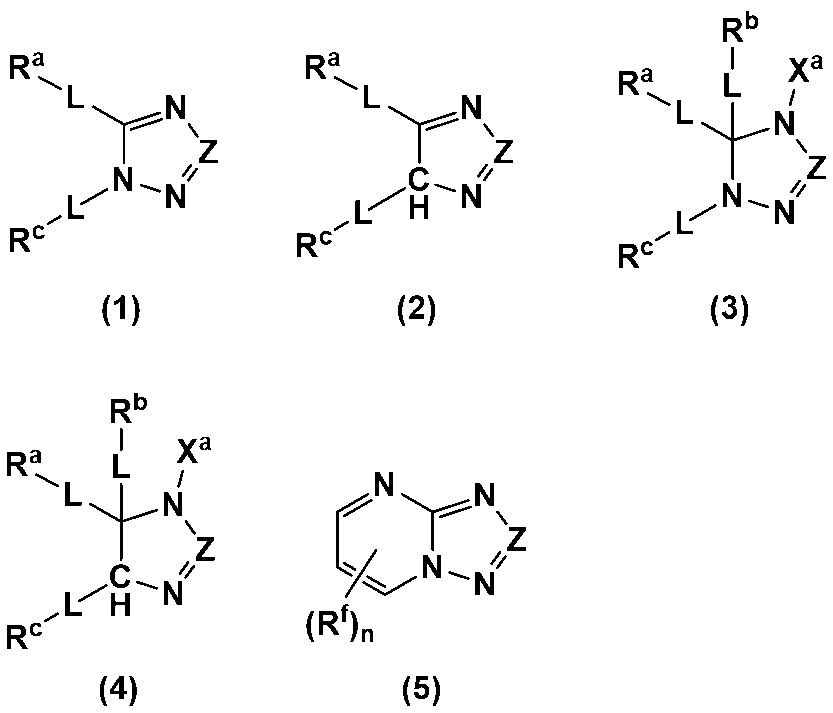
Ra~Rdは、それぞれ独立して、水素原子、ハロゲン原子、カルボキシ基、ヒドロキシ基、チオール基、アミノ基、置換基を有していてもよい炭素数1~6のアルキル基、置換基を有していてもよい炭素数2~6のアルケニル基、または置換基を有していてもよい炭素数6~12のアリール基であり、
RaおよびRcは、互いに結合して置換基を有していてもよい炭素数4~12の環を形成していてもよく、
Lは、それぞれ独立して、単結合、カルボニル基、エーテル結合、エステル結合またはアミド結合であり、
Xaは、それぞれ独立して、水素原子、リチウム原子、ナトリウム原子、置換基を有していてもよい炭素数1~6のアルキル基、置換基を有していてもよい炭素数6~12のアリール基または-CH2NRe
2であり、
Reは、炭素数1~10のアルキル基、炭素数1~10のアルカノール基、炭素数2~10のアルケニル基または炭素数6~12のアリール基であり、
Rfは、それぞれ独立して、ハロゲン原子、カルボキシ基、ヒドロキシ基、アルデヒド基、エステル基、ケトン基、アミノ基、フェニル基、アルコキシシリル基、エポキシ基、カルボン酸クロリド基、チオール基、炭素数1~6のアルキル基、炭素数2~6のアルケニル基、または炭素数6~12のアリール基であり、
nは、0~3の整数である。)
3. 上記Ra~RdおよびXaが有する置換基が、カルボキシ基、ヒドロキシ基、アルデヒド基、エステル基、ケトン基、アミノ基、フェニル基、ハロゲン原子、アルコキシシリル基、エポキシ基、カルボン酸クロリド基およびチオール基からなる群より選ばれる少なくとも1種である2の電極形成用組成物。
4. 上記Ra~Rdの少なくとも1つがヒドロキシ基またはチオール基である2または3の電極形成用組成物。
5. 上記Xaが、それぞれ独立して、水素原子、リチウム原子またはナトリウム原子である2~4のいずれかの電極形成用組成物。
6. さらに、導電助剤を含む1~5のいずれかの電極形成用組成物。
7. 上記正極活物質が、S、FeまたはNiを30質量%以上含むものである1~6のいずれかの電極形成用組成物。
8. さらに、分散剤を含み、その分散剤が、ピロリドン構造またはニトリル基を含むポリマーである1~7のいずれかの電極形成用組成物。
9. 上記分散剤が、ポリビニルピロリドンおよびポリアクリロニトリルからなる群より選ばれる少なくとも1種である8の電極形成用組成物。
10. 上記ヘテロ環含有化合物の含有量が、固形分中0.001~0.5質量%である1~9のいずれかの電極形成用組成物。
11. 正極活物質、バインダーおよび溶媒を含む電極形成用組成物用の添加剤であって、下記式(1)~(5)のいずれかで表されるヘテロ環含有化合物からなる添加剤。
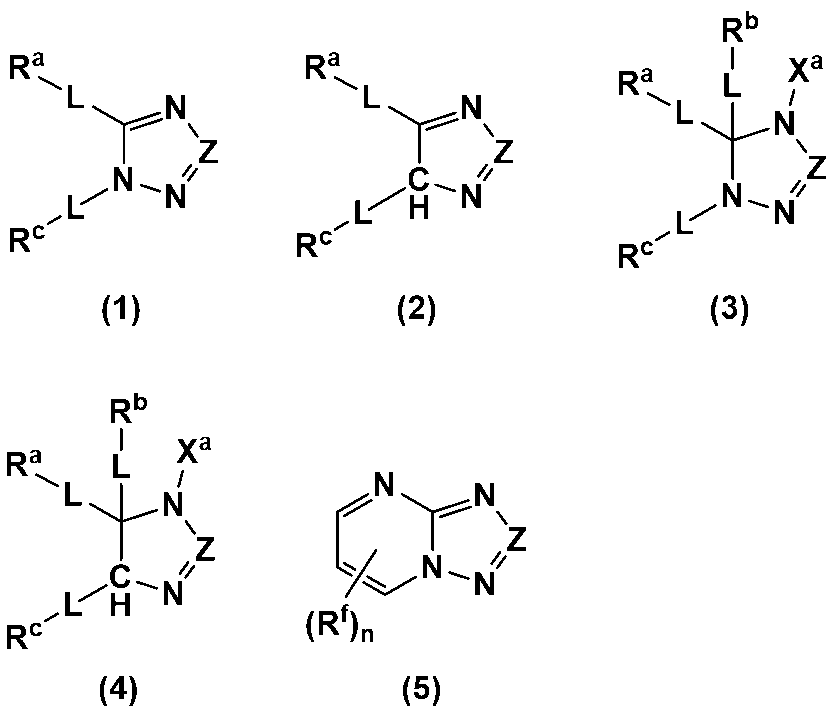
Ra~Rdは、それぞれ独立して、水素原子、ハロゲン原子、カルボキシ基、ヒドロキシ基、チオール基、アミノ基、置換基を有していてもよい炭素数1~6のアルキル基、置換基を有していてもよい炭素数2~6のアルケニル基、または置換基を有していてもよい炭素数6~12のアリール基であり、
RaおよびRcは、互いに結合して置換基を有していてもよい炭素数4~12の環を形成していてもよく、
Lは、それぞれ独立して、単結合、カルボニル基、エーテル結合、エステル結合またはアミド結合であり、
Xaは、それぞれ独立して、水素原子、リチウム原子、ナトリウム原子、置換基を有していてもよい炭素数1~6のアルキル基、置換基を有していてもよい炭素数6~12のアリール基または-CH2NRe
2であり、
Reは、炭素数1~10のアルキル基、炭素数1~10のアルカノール基、炭素数2~10のアルケニル基または炭素数6~12のアリール基であり、
Rfは、それぞれ独立して、ハロゲン原子、カルボキシ基、ヒドロキシ基、アルデヒド基、エステル基、ケトン基、アミノ基、フェニル基、アルコキシシリル基、エポキシ基、カルボン酸クロリド基、チオール基、炭素数1~6のアルキル基、炭素数2~6のアルケニル基、または炭素数6~12のアリール基であり、
nは、0~3の整数である。)
12. ゲル化抑制剤である11の添加剤。
13. 正極活物質、バインダーおよび溶媒を含む電極形成用組成物用の添加剤溶液であって、下記式(1)~(5)のいずれかで表されるヘテロ環含有化合物からなる添加剤および溶媒からなる添加剤溶液。
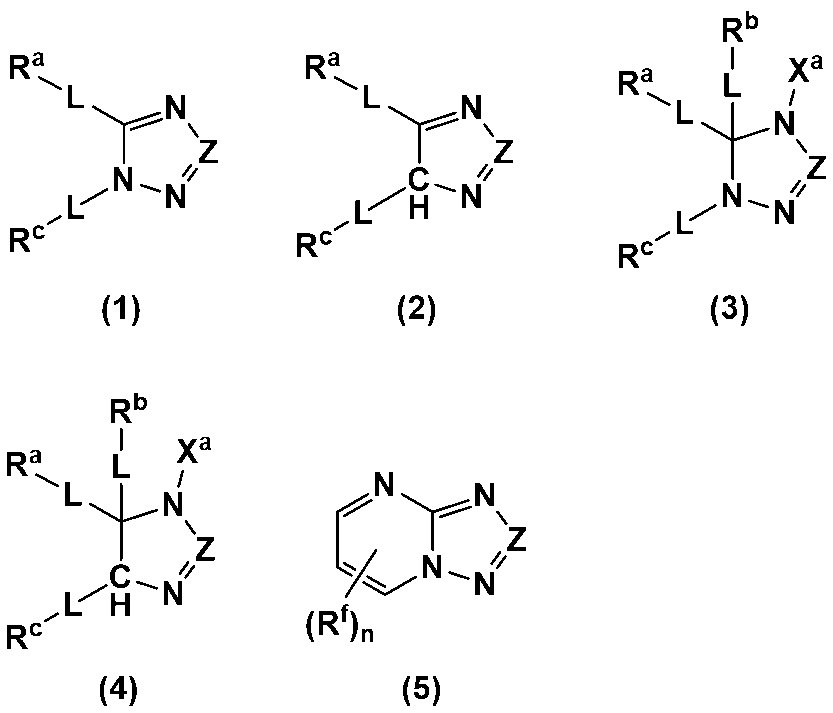
Ra~Rdは、それぞれ独立して、水素原子、ハロゲン原子、カルボキシ基、ヒドロキシ基、チオール基、アミノ基、置換基を有していてもよい炭素数1~6のアルキル基、置換基を有していてもよい炭素数2~6のアルケニル基、または置換基を有していてもよい炭素数6~12のアリール基であり、
RaおよびRcは、互いに結合して置換基を有していてもよい炭素数4~12の環を形成していてもよく、
Lは、それぞれ独立して、単結合、カルボニル基、エーテル結合、エステル結合またはアミド結合であり、
Xaは、それぞれ独立して、水素原子、リチウム原子、ナトリウム原子、置換基を有していてもよい炭素数1~6のアルキル基、置換基を有していてもよい炭素数6~12のアリール基または-CH2NRe
2であり、
Reは、炭素数1~10のアルキル基、炭素数1~10のアルカノール基、炭素数2~10のアルケニル基または炭素数6~12のアリール基であり、
Rfは、それぞれ独立して、ハロゲン原子、カルボキシ基、ヒドロキシ基、アルデヒド基、エステル基、ケトン基、アミノ基、フェニル基、アルコキシシリル基、エポキシ基、カルボン酸クロリド基、チオール基、炭素数1~6のアルキル基、炭素数2~6のアルケニル基、または炭素数6~12のアリール基であり、
nは、0~3の整数である。)
That is, the present invention provides the following electrode-forming composition and additives.
1. An electrode-forming composition comprising a heterocycle-containing compound, a positive electrode active material, a binder, and a solvent,
The electrode-forming composition, wherein the heterocycle-containing compound has a five-membered heterocycle having two or more N atoms and at least one group selected from the group consisting of a hydroxy group and a thiol group.
2. The electrode-forming composition according to 1, wherein the heterocycle-containing compound is a heterocycle-containing compound represented by any one of the following formulas (1) to (5):
R a to R d each independently represent a hydrogen atom, a halogen atom, a carboxy group, a hydroxy group, a thiol group, an amino group, an alkyl group having 1 to 6 carbon atoms which may have a substituent, an alkenyl group having 2 to 6 carbon atoms which may have a substituent, or an aryl group having 6 to 12 carbon atoms which may have a substituent;
R a and R c may be bonded to each other to form a ring having 4 to 12 carbon atoms which may have a substituent;
Each L is independently a single bond, a carbonyl group, an ether bond, an ester bond, or an amide bond;
X a each independently represents a hydrogen atom, a lithium atom, a sodium atom, an alkyl group having 1 to 6 carbon atoms which may have a substituent, an aryl group having 6 to 12 carbon atoms which may have a substituent, or —CH 2 NR e 2 ;
R e is an alkyl group having 1 to 10 carbon atoms, an alkanol group having 1 to 10 carbon atoms, an alkenyl group having 2 to 10 carbon atoms, or an aryl group having 6 to 12 carbon atoms;
Rf 's each independently represent a halogen atom, a carboxy group, a hydroxy group, an aldehyde group, an ester group, a ketone group, an amino group, a phenyl group, an alkoxysilyl group, an epoxy group, a carboxylic acid chloride group, a thiol group, an alkyl group having 1 to 6 carbon atoms, an alkenyl group having 2 to 6 carbon atoms, or an aryl group having 6 to 12 carbon atoms;
n is an integer from 0 to 3.
3. The electrode-forming composition according to 2, wherein the substituents possessed by the above R a to R d and X a are at least one selected from the group consisting of a carboxy group, a hydroxy group, an aldehyde group, an ester group, a ketone group, an amino group, a phenyl group, a halogen atom, an alkoxysilyl group, an epoxy group, a carboxylic acid chloride group and a thiol group.
4. The electrode-forming composition of 2 or 3, wherein at least one of R a to R d is a hydroxy group or a thiol group.
5. The electrode-forming composition according to any one of 2 to 4, wherein each X a is independently a hydrogen atom, a lithium atom or a sodium atom.
6. The electrode-forming composition according to any one of 1 to 5, further comprising a conductive assistant.
7. The electrode-forming composition according to any one of 1 to 6, wherein the positive electrode active material contains 30 mass % or more of S, Fe or Ni.
8. The electrode-forming composition according to any one of 1 to 7, further comprising a dispersant, the dispersant being a polymer containing a pyrrolidone structure or a nitrile group.
9. The electrode-forming composition according to 8, wherein the dispersant is at least one selected from the group consisting of polyvinylpyrrolidone and polyacrylonitrile.
10. The electrode-forming composition according to any one of 1 to 9, wherein the content of the heterocycle-containing compound is 0.001 to 0.5 mass % of the solid content.
11. An additive for an electrode-forming composition containing a positive electrode active material, a binder, and a solvent, the additive comprising a heterocycle-containing compound represented by any one of the following formulas (1) to (5):
R a to R d each independently represent a hydrogen atom, a halogen atom, a carboxy group, a hydroxy group, a thiol group, an amino group, an alkyl group having 1 to 6 carbon atoms which may have a substituent, an alkenyl group having 2 to 6 carbon atoms which may have a substituent, or an aryl group having 6 to 12 carbon atoms which may have a substituent;
R a and R c may be bonded to each other to form a ring having 4 to 12 carbon atoms which may have a substituent;
Each L is independently a single bond, a carbonyl group, an ether bond, an ester bond, or an amide bond;
X a each independently represents a hydrogen atom, a lithium atom, a sodium atom, an alkyl group having 1 to 6 carbon atoms which may have a substituent, an aryl group having 6 to 12 carbon atoms which may have a substituent, or —CH 2 NR e 2 ;
R e is an alkyl group having 1 to 10 carbon atoms, an alkanol group having 1 to 10 carbon atoms, an alkenyl group having 2 to 10 carbon atoms, or an aryl group having 6 to 12 carbon atoms;
Rf 's each independently represent a halogen atom, a carboxy group, a hydroxy group, an aldehyde group, an ester group, a ketone group, an amino group, a phenyl group, an alkoxysilyl group, an epoxy group, a carboxylic acid chloride group, a thiol group, an alkyl group having 1 to 6 carbon atoms, an alkenyl group having 2 to 6 carbon atoms, or an aryl group having 6 to 12 carbon atoms;
n is an integer from 0 to 3.
12. Additive 11 is a gelation inhibitor.
13. An additive solution for an electrode-forming composition containing a positive electrode active material, a binder, and a solvent, the additive solution comprising an additive comprising a heterocycle-containing compound represented by any one of the following formulas (1) to (5) and a solvent.
R a to R d each independently represent a hydrogen atom, a halogen atom, a carboxy group, a hydroxy group, a thiol group, an amino group, an alkyl group having 1 to 6 carbon atoms which may have a substituent, an alkenyl group having 2 to 6 carbon atoms which may have a substituent, or an aryl group having 6 to 12 carbon atoms which may have a substituent;
R a and R c may be bonded to each other to form a ring having 4 to 12 carbon atoms which may have a substituent;
Each L is independently a single bond, a carbonyl group, an ether bond, an ester bond, or an amide bond;
X a each independently represents a hydrogen atom, a lithium atom, a sodium atom, an alkyl group having 1 to 6 carbon atoms which may have a substituent, an aryl group having 6 to 12 carbon atoms which may have a substituent, or —CH 2 NR e 2 ;
R e is an alkyl group having 1 to 10 carbon atoms, an alkanol group having 1 to 10 carbon atoms, an alkenyl group having 2 to 10 carbon atoms, or an aryl group having 6 to 12 carbon atoms;
Rf 's each independently represent a halogen atom, a carboxy group, a hydroxy group, an aldehyde group, an ester group, a ketone group, an amino group, a phenyl group, an alkoxysilyl group, an epoxy group, a carboxylic acid chloride group, a thiol group, an alkyl group having 1 to 6 carbon atoms, an alkenyl group having 2 to 6 carbon atoms, or an aryl group having 6 to 12 carbon atoms;
n is an integer from 0 to 3.
本発明の電極形成用組成物は、増粘やゲル化が起こりにくく、高い保存安定性を有するものであり、エネルギー貯蔵デバイス用の正極電極の形成に好適に使用し得るものである。当該組成物を用いて作製される電極を備えたエネルギー貯蔵デバイスを製造した場合、組成物の保存安定性の向上による品質や歩留まりの向上、固形分の高濃度化によるコスト削減や環境負荷の低減、アルカリ成分に起因する電池内における劣化の抑制といったメリットが期待され、エネルギー貯蔵デバイスの製造コストの削減や電池特性の向上に寄与することができる。 The electrode-forming composition of the present invention is resistant to thickening and gelling and has high storage stability, making it suitable for use in forming positive electrodes for energy storage devices. When an energy storage device is manufactured with an electrode made using this composition, it is expected to provide benefits such as improved quality and yield due to the improved storage stability of the composition, reduced costs and reduced environmental impact due to a high concentration of solids, and suppression of deterioration within the battery caused by alkaline components, which can contribute to reducing the manufacturing costs of energy storage devices and improving battery characteristics.
なお、上記の増粘およびゲル化のメカニズム、ならびに、その抑制効果の発現のメカニズムは定かではないが、本発明では、電極形成用組成物に特定のヘテロ環含有化合物を添加することにより、アルカリ成分表面に保護皮膜が形成されるためと考えられる。この保護皮膜が、アルカリ成分とバインダー、特にフッ素系バインダーとの反応を抑制し、その結果として、組成物の増粘およびゲル化の抑制が可能となり、保存安定性を向上したものと考えられる。電極形成用組成物の増粘およびゲル化が抑制されることで、正極活物質および導電助剤等の固形分の分散性が良好となるので、均質な正極電極層を形成することが可能となる。また、電極スラリーにおける固形分の濃度を向上することも可能となり、エネルギー貯蔵デバイスを作るコストや環境負荷を低減できる。更には、アルカリ成分に由来する、集電箔として一般的に用いられるアルミニウム箔の腐食や、電解液との反応による電池特性の劣化を抑制することができる。ただし、これらは推定であって、本発明はこれらメカニズムに限定して解釈されない。 The mechanism of the thickening and gelling and the mechanism of the suppression effect are not clear, but in the present invention, it is believed that a protective film is formed on the surface of the alkaline component by adding a specific heterocycle-containing compound to the electrode-forming composition. This protective film suppresses the reaction between the alkaline component and the binder, especially the fluorine-based binder, and as a result, it is possible to suppress the thickening and gelling of the composition, and it is believed that the storage stability is improved. By suppressing the thickening and gelling of the electrode-forming composition, the dispersion of the solid content of the positive electrode active material and the conductive assistant is improved, making it possible to form a homogeneous positive electrode layer. It is also possible to improve the concentration of the solid content in the electrode slurry, which can reduce the cost and environmental load of producing an energy storage device. Furthermore, it is possible to suppress the corrosion of aluminum foil, which is generally used as a current collector foil, caused by the alkaline component, and the deterioration of battery characteristics due to the reaction with the electrolyte. However, these are presumptions, and the present invention is not limited to these mechanisms.
本発明の電極形成用組成物は、ヘテロ環含有化合物、正極活物質、バインダーおよび溶媒を含む電極形成用組成物であって、上記ヘテロ環含有化合物が、N原子を2つ以上有する5員環のヘテロ環を有するとともに、ヒドロキシ基およびチオール基からなる群より選ばれる基を少なくとも1つ有するものである。 The electrode-forming composition of the present invention is a composition for forming an electrode that contains a heterocycle-containing compound, a positive electrode active material, a binder, and a solvent, and the heterocycle-containing compound has a five-membered heterocycle having two or more N atoms and at least one group selected from the group consisting of a hydroxyl group and a thiol group.
上記ヘテロ環化合物としては、下記式(1)~(5)のいずれかで表されるヘテロ環含有化合物が好ましく、式(1)、(2)、(4)および(5)のいずかで表されるヘテロ環含有化合物がより好ましく、特に式(1)および(4)のいずかで表されるヘテロ環含有化合物が好ましくより一層好ましい。 The heterocyclic compound is preferably a heterocyclic compound represented by any one of the following formulas (1) to (5), more preferably a heterocyclic compound represented by any one of formulas (1), (2), (4) and (5), and even more preferably a heterocyclic compound represented by any one of formulas (1) and (4).

Ra~Rdは、それぞれ独立して、水素原子、ハロゲン原子、カルボキシ基、ヒドロキシ基、チオール基、アミノ基、置換基を有していてもよい炭素数1~6のアルキル基、置換基を有していてもよい炭素数2~6のアルケニル基、または置換基を有していてもよい炭素数6~12のアリール基であり、
RaおよびRcは、互いに結合して置換基を有していてもよい炭素数4~12の環を形成していてもよく、
Lは、それぞれ独立して、単結合、カルボニル基、エーテル結合、エステル結合またはアミド結合であり、
Xaは、それぞれ独立して、水素原子、リチウム原子、ナトリウム原子、置換基を有していてもよい炭素数1~6のアルキル基、置換基を有していてもよい炭素数6~12のアリール基または-CH2NRe
2であり、
Reは、炭素数1~10のアルキル基、炭素数1~10のアルカノール基、炭素数2~10のアルケニル基または炭素数6~12のアリール基であり、
Rfは、それぞれ独立して、ハロゲン原子、カルボキシ基、ヒドロキシ基、アルデヒド基、エステル基、ケトン基、アミノ基、フェニル基、アルコキシシリル基、エポキシ基、カルボン酸クロリド基、チオール基、炭素数1~6のアルキル基、炭素数2~6のアルケニル基、または炭素数6~12のアリール基であり、
nは、0~3の整数である。)
R a to R d each independently represent a hydrogen atom, a halogen atom, a carboxy group, a hydroxy group, a thiol group, an amino group, an alkyl group having 1 to 6 carbon atoms which may have a substituent, an alkenyl group having 2 to 6 carbon atoms which may have a substituent, or an aryl group having 6 to 12 carbon atoms which may have a substituent;
R a and R c may be bonded to each other to form a ring having 4 to 12 carbon atoms which may have a substituent;
Each L is independently a single bond, a carbonyl group, an ether bond, an ester bond, or an amide bond;
X a each independently represents a hydrogen atom, a lithium atom, a sodium atom, an alkyl group having 1 to 6 carbon atoms which may have a substituent, an aryl group having 6 to 12 carbon atoms which may have a substituent, or —CH 2 NR e 2 ;
R e is an alkyl group having 1 to 10 carbon atoms, an alkanol group having 1 to 10 carbon atoms, an alkenyl group having 2 to 10 carbon atoms, or an aryl group having 6 to 12 carbon atoms;
Rf 's each independently represent a halogen atom, a carboxy group, a hydroxy group, an aldehyde group, an ester group, a ketone group, an amino group, a phenyl group, an alkoxysilyl group, an epoxy group, a carboxylic acid chloride group, a thiol group, an alkyl group having 1 to 6 carbon atoms, an alkenyl group having 2 to 6 carbon atoms, or an aryl group having 6 to 12 carbon atoms;
n is an integer from 0 to 3.
上記式(1)~(4)は、Lが単結合かつRa~Rdの少なくとも1つが、水素原子もしくはハロゲン原子である場合、または、Xaが、水素原子、リチウム原子もしくはナトリウム原子の場合に、構造異性体であってもよい。具体的には、式(1)で表されるヘテロ環含有化合物の異性体としては、下記式(1-A)~(1-C)で表されるヘテロ環含有化合物、式(2)で表されるヘテロ環含有化合物の異性体としては、下記式(2-A)~(2-D)で表されるヘテロ環含有化合物、式(3)で表されるヘテロ環含有化合物の異性体としては、下記式(3-A)~(3-C)で表されるヘテロ環含有化合物、式(4)で表されるヘテロ環含有化合物の異性体としては、下記式(4-A)~(4-C)で表されるヘテロ環含有化合物がそれぞれ挙げられる。またRa~Rdの少なくとも1つが、ヒドロキシ基またはチオール基の場合、それらがケトン基またはチオケトン基となることで構造異性体を作ることもできる。 The above formulas (1) to (4) may be structural isomers when L is a single bond and at least one of R a to R d is a hydrogen atom or a halogen atom, or when X a is a hydrogen atom, a lithium atom, or a sodium atom. Specifically, the isomers of the heterocycle-containing compound represented by formula (1) include the heterocycle-containing compounds represented by the following formulas (1-A) to (1-C), the isomers of the heterocycle-containing compound represented by formula (2) include the heterocycle-containing compounds represented by the following formulas (2-A) to (2-D), the isomers of the heterocycle-containing compound represented by formula (3) include the heterocycle-containing compounds represented by the following formulas (3-A) to (3-C), and the isomers of the heterocycle-containing compound represented by formula (4) include the heterocycle-containing compounds represented by the following formulas (4-A) to (4-C). In addition, when at least one of R a to R d is a hydroxyl group or a thiol group, they can be converted into a ketone group or a thioketone group to form a structural isomer.

Zとしては、NおよびC-Rdが好ましい。 As Z, N and C-- Rd are preferred.
Ra~Rdで表される炭素数1~6のアルキル基としては、直鎖状、分岐鎖状、環状のいずれでもよく、その具体例としては、メチル基、エチル基、n-プロピル基、イソプロピル基、n-ブチル基、イソブチル基、s-ブチル基、t-ブチル基、n-ペンチル基、n-ヘキシル基等の炭素数1~6の直鎖または分岐鎖状アルキル基;シクロプロピル基、シクロブチル基、シクロペンチル基、シクロヘキシル基等の炭素数3~6の環状アルキル基が挙げられる。 The alkyl group having 1 to 6 carbon atoms, represented by R a to R d, may be any of linear, branched, and cyclic, and specific examples thereof include linear or branched alkyl groups having 1 to 6 carbon atoms, such as a methyl group, an ethyl group, an n-propyl group, an isopropyl group, an n-butyl group, an isobutyl group, an s-butyl group, a t-butyl group, an n-pentyl group, and an n-hexyl group; and cyclic alkyl groups having 3 to 6 carbon atoms, such as a cyclopropyl group, a cyclobutyl group, a cyclopentyl group, and a cyclohexyl group.
Ra~Rdで表される炭素数2~6のアルケニル基としては、エテニル基、n-1-プロペニル基、n-2-プロペニル基、1-メチルエテニル基、n-1-ブテニル基、n-2-ブテニル基、n-3-ブテニル基、2-メチル-1-プロペニル基、2-メチル-2-プロペニル基、1-エチルエテニル基、1-メチル-1-プロペニル基、1-メチル-2-プロペニル基、n-1-ペンテニル基等が挙げられる。 Examples of the alkenyl group having 2 to 6 carbon atoms represented by R a to R d include an ethenyl group, an n-1-propenyl group, an n-2-propenyl group, a 1-methylethenyl group, an n-1-butenyl group, an n-2-butenyl group, an n-3-butenyl group, a 2-methyl-1-propenyl group, a 2-methyl-2-propenyl group, a 1-ethylethenyl group, a 1-methyl-1-propenyl group, a 1-methyl-2-propenyl group, and an n-1-pentenyl group.
Ra~Rdで表される炭素数6~12のアリール基としては、フェニル基、トリル基、1-ナフチル基、2-ナフチル基等が挙げられる。 Examples of the aryl group having 6 to 12 carbon atoms represented by R a to R d include a phenyl group, a tolyl group, a 1-naphthyl group, and a 2-naphthyl group.
上記RaおよびRcが互いに結合して形成される炭素数4~12の環としては、シクロペンタン環、シクロヘキサン環、ベンゼン環、ナフタレン環、トリアゾール環、ピリジン環、ピラジン環等が挙げられる。 Examples of the ring having 4 to 12 carbon atoms formed by bonding together of R a and R c include a cyclopentane ring, a cyclohexane ring, a benzene ring, a naphthalene ring, a triazole ring, a pyridine ring, and a pyrazine ring.
上記Ra~Rdは置換基を有していてもよい。置換基としては、カルボキシ基、ヒドロキシ基、アルデヒド基、エステル基、ケトン基、アミノ基、フェニル基、ハロゲン原子、アルコキシシリル基、エポキシ基、カルボン酸クロリド基、チオール基等が挙げられる。上記アルコキシシリル基としては、トリメトキシシリル基、ジメトキシメチルシリル基、メトキシジメチルシリル基、トリエトキシシリル基、ジエトキシメチルシリル基、エトキシジメチルシリル基等が挙げられる。本発明では、カルボキシ基、ヒドロキシ基およびチオール基が好ましい。上記Ra~Rdが置換基を有する場合、その数は、1~6個が好ましく、1~3個がより好ましい。 The R a to R d may have a substituent. Examples of the substituent include a carboxy group, a hydroxy group, an aldehyde group, an ester group, a ketone group, an amino group, a phenyl group, a halogen atom, an alkoxysilyl group, an epoxy group, a carboxylic acid chloride group, and a thiol group. Examples of the alkoxysilyl group include a trimethoxysilyl group, a dimethoxymethylsilyl group, a methoxydimethylsilyl group, a triethoxysilyl group, a diethoxymethylsilyl group, and an ethoxydimethylsilyl group. In the present invention, a carboxy group, a hydroxy group, and a thiol group are preferred. When the R a to R d have a substituent, the number of the substituents is preferably 1 to 6, and more preferably 1 to 3.
上記Ra~Rdとしては、水素原子、カルボキシ基、ヒドロキシ基、チオール基、置換基を有していてもよい炭素数1~6のアルキル基、置換基を有していてもよい炭素数6~12のアリール基、ならびに、RaおよびRcが、互いに結合して形成される、置換基を有していてもよい炭素数4~12の環が好ましい。 Preferred examples of R a to R d include a hydrogen atom, a carboxy group, a hydroxy group, a thiol group, an alkyl group having 1 to 6 carbon atoms which may have a substituent, an aryl group having 6 to 12 carbon atoms which may have a substituent, and a ring having 4 to 12 carbon atoms which may have a substituent and is formed by bonding R a and R c to each other.
また、上記Ra~Rdとしては、水素原子、カルボキシ基、ヒドロキシ基、チオール基、炭素数1~6のアルキル基、炭素数6~12のアリール基、ならびに、RaおよびRcが、互いに結合して形成される、置換基を有していてもよい炭素数4~12の芳香環がより好ましい。 As the R a to R d , a hydrogen atom, a carboxy group, a hydroxy group, a thiol group, an alkyl group having 1 to 6 carbon atoms, an aryl group having 6 to 12 carbon atoms, and an aromatic ring having 4 to 12 carbon atoms which may have a substituent and is formed by bonding R a and R c to each other are more preferable.
さらに、上記Ra~Rdとしては、水素原子、カルボキシ基、ヒドロキシ基、チオール基、炭素数1~3のアルキル基、炭素数6~10のアリール基、ならびに、RaおよびRcが互いに結合して形成される、置換基を有していてもよい炭素数6~10の芳香環がより一層好ましい。 Furthermore, as the above R a to R d , a hydrogen atom, a carboxy group, a hydroxy group, a thiol group, an alkyl group having 1 to 3 carbon atoms, an aryl group having 6 to 10 carbon atoms, and an aromatic ring having 6 to 10 carbon atoms which may have a substituent and is formed by bonding R a and R c to each other are even more preferable.
さらに、上記Ra~Rdとしては、水素原子、カルボキシ基、ヒドロキシ基、チオール基、メチル基、フェニル基、ならびに、RaおよびRbが互いに結合して形成される、置換基を有していてもよいベンゼン環がさらに好ましい。 Further, as the above R a to R d , a hydrogen atom, a carboxy group, a hydroxy group, a thiol group, a methyl group, a phenyl group, and a benzene ring which may have a substituent and which is formed by bonding R a and R b to each other are more preferable.
また、上記ヘテロ環含有化合物は、Ra~Rdの少なくとも1つがヒドロキシ基またはチオール基であることが好ましい。 In the heterocycle-containing compound, at least one of R a to R d is preferably a hydroxy group or a thiol group.
Lとしては、単結合、エステル結合、アミド結合が好ましく、単結合がより好ましい。 L is preferably a single bond, an ester bond, or an amide bond, and more preferably a single bond.
Xaで表される炭素数1~6のアルキル基としては、直鎖状、分岐鎖状、環状のいずれでもよく、その具体例としては、メチル基、エチル基、n-プロピル基、イソプロピル基、n-ブチル基、イソブチル基、s-ブチル基、t-ブチル基、n-ペンチル基、n-ヘキシル基等の炭素数1~6の直鎖または分岐鎖状アルキル基;シクロプロピル基、シクロブチル基、シクロペンチル基、シクロヘキシル基等の炭素数3~6の環状アルキル基が挙げられる。 The alkyl group having 1 to 6 carbon atoms represented by Xa may be any of linear, branched, and cyclic, and specific examples thereof include linear or branched alkyl groups having 1 to 6 carbon atoms, such as a methyl group, an ethyl group, an n-propyl group, an isopropyl group, an n-butyl group, an isobutyl group, an s-butyl group, a t-butyl group, an n-pentyl group, and an n-hexyl group; and cyclic alkyl groups having 3 to 6 carbon atoms, such as a cyclopropyl group, a cyclobutyl group, a cyclopentyl group, and a cyclohexyl group.
Xaで表される炭素数6~12のアリール基としては、フェニル基、トリル基、1-ナフチル基、2-ナフチル基等が挙げられる。 Examples of the aryl group having 6 to 12 carbon atoms represented by Xa include a phenyl group, a tolyl group, a 1-naphthyl group, and a 2-naphthyl group.
上記Xaは置換基を有していてもよい。置換基としては、カルボキシ基、ヒドロキシ基、アルデヒド基、エステル基、ケトン基、アミノ基、フェニル基、ハロゲン原子、アルコキシシリル基、エポキシ基、カルボン酸クロリド基、チオール基等が挙げられる。上記アルコキシシリル基としては、トリメトキシシリル基、ジメトキシメチルシリル基、メトキシジメチルシリル基、トリエトキシシリル基、ジエトキシメチルシリル基、エトキシジメチルシリル基等が挙げられる。本発明では、カルボキシ基、ヒドロキシ基およびチオール基およびアルコキシシリル基が好ましく、カルボキシ基およびトリメトキシシリル基がより好ましい。上記Xaが置換基を有する場合、その数は、1~6個が好ましく、1~3個がより好ましい。 The X a may have a substituent. Examples of the substituent include a carboxy group, a hydroxy group, an aldehyde group, an ester group, a ketone group, an amino group, a phenyl group, a halogen atom, an alkoxysilyl group, an epoxy group, a carboxylic acid chloride group, and a thiol group. Examples of the alkoxysilyl group include a trimethoxysilyl group, a dimethoxymethylsilyl group, a methoxydimethylsilyl group, a triethoxysilyl group, a diethoxymethylsilyl group, and an ethoxydimethylsilyl group. In the present invention, a carboxy group, a hydroxy group, a thiol group, and an alkoxysilyl group are preferred, and a carboxy group and a trimethoxysilyl group are more preferred. When the X a has a substituent, the number of the substituents is preferably 1 to 6, and more preferably 1 to 3.
Reで表される炭素数1~10のアルキル基としては、直鎖状、分岐状または環状のいずれでもよく、その具体例としては、メチル基、エチル基、n-プロピル基、イソプロピル基、シクロプロピル基、n-ブチル基、イソブチル基、s-ブチル基、t-ブチル基、n-ペンチル基、ネオペンチル基、n-ヘキシル基、n-オクチル基、n-ノニルおよびn-デシル基等の炭素数1~10の直鎖または分岐鎖状アルキル基;シクロプロピル基、シクロブチル基、シクロペンチル基、シクロヘキシル基および1-アダマンチル基等の炭素数3~10の環状アルキル基が挙げられる。 The alkyl group having 1 to 10 carbon atoms, represented by R e, may be any of linear, branched, and cyclic, and specific examples thereof include linear or branched alkyl groups having 1 to 10 carbon atoms, such as a methyl group, an ethyl group, an n-propyl group, an isopropyl group, a cyclopropyl group, an n-butyl group, an isobutyl group, an s-butyl group, a t-butyl group, an n-pentyl group, a neopentyl group, an n-hexyl group, an n-octyl group, an n-nonyl group, and an n-decyl group; and cyclic alkyl groups having 3 to 10 carbon atoms, such as a cyclopropyl group, a cyclobutyl group, a cyclopentyl group, a cyclohexyl group, and a 1-adamantyl group.
Reで表される炭素数1~10のアルカノール基としては、ヒドロキシメチル基、ヒドロキシエチル基、ヒドロキシプロピル基、ヒドロキシブチル基、ヒドロキシペンチル基、ヒドロキシヘキシル基、ヒドロキシオクチル基、ヒドロキシノニル基、ヒドロキシデシル基等が挙げられる。 Examples of the alkanol group having 1 to 10 carbon atoms represented by R e include a hydroxymethyl group, a hydroxyethyl group, a hydroxypropyl group, a hydroxybutyl group, a hydroxypentyl group, a hydroxyhexyl group, a hydroxyoctyl group, a hydroxynonyl group, and a hydroxydecyl group.
Reで表される炭素数2~10のアルケニル基としては、エテニル基、n-1-プロペニル基、n-2-プロペニル基、1-メチルエテニル基、n-1-ブテニル基、n-2-ブテニル基、n-3-ブテニル基、2-メチル-1-プロペニル基、2-メチル-2-プロペニル基、1-エチルエテニル基、1-メチル-1-プロペニル基、1-メチル-2-プロペニル基、n-1-ペンテニル基、n-1-デセニル基等が挙げられる。 Examples of the alkenyl group having 2 to 10 carbon atoms represented by R e include ethenyl group, n-1-propenyl group, n-2-propenyl group, 1-methylethenyl group, n-1-butenyl group, n-2-butenyl group, n-3-butenyl group, 2-methyl-1-propenyl group, 2-methyl-2-propenyl group, 1-ethylethenyl group, 1-methyl-1-propenyl group, 1-methyl-2-propenyl group, n-1-pentenyl group, and n-1-decenyl group.
Reで表される炭素数6~12のアリール基としては、フェニル基、トリル基、1-ナフチル基、2-ナフチル基等が挙げられる。 Examples of the aryl group having 6 to 12 carbon atoms represented by R e include a phenyl group, a tolyl group, a 1-naphthyl group, and a 2-naphthyl group.
上記Xaとしては、水素原子、リチウム原子、ナトリウム原子、置換基を有していてもよい炭素数1~6のアルキル基、置換基を有していてもよい炭素数6~12のアリール基および-CH2NRe 2が好ましい。 The above X a is preferably a hydrogen atom, a lithium atom, a sodium atom, an alkyl group having 1 to 6 carbon atoms which may have a substituent, an aryl group having 6 to 12 carbon atoms which may have a substituent, and --CH 2 NR e 2 .
また、上記Xaとしては、水素原子、リチウム原子、ナトリウム原子、炭素数1~4のアルキル基、炭素数6~10のアリール基、および-CH2NRe 2が好ましい。 As the above-mentioned X a , a hydrogen atom, a lithium atom, a sodium atom, an alkyl group having 1 to 4 carbon atoms, an aryl group having 6 to 10 carbon atoms, and --CH 2 NR e 2 are preferable.
さらに、上記Xaとしては、水素原子、リチウム原子、ナトリウム原子、炭素数1~3のアルキル基、炭素数6~8のアリール基および-CH2NRe 2がより好ましい。 Furthermore, as the above X a , a hydrogen atom, a lithium atom, a sodium atom, an alkyl group having 1 to 3 carbon atoms, an aryl group having 6 to 8 carbon atoms, and --CH 2 NR e 2 are more preferable.
さらに、上記Xaとしては、水素原子、リチウム原子、ナトリウム原子、メチル基、フェニル基および-CH2NRe 2がより一層好ましい。 Furthermore, as the above X a , a hydrogen atom, a lithium atom, a sodium atom, a methyl group, a phenyl group and --CH 2 NR e 2 are even more preferable.
さらに、上記Xaとしては、水素原子、リチウム原子およびナトリウム原子がさらに好ましい。 Furthermore, the above Xa is more preferably a hydrogen atom, a lithium atom or a sodium atom.
さらに、上記Xaとしては、水素原子が最も好ましい。 Furthermore, the above Xa is most preferably a hydrogen atom.
上記Reとしては、炭素数1~3のアルキル基および炭素数6~10のアリール基が好ましく、メチル基およびフェニル基がより好ましい。 The above R e is preferably an alkyl group having 1 to 3 carbon atoms and an aryl group having 6 to 10 carbon atoms, more preferably a methyl group or a phenyl group.
Rfで表される炭素数1~6のアルキル基としては、直鎖状、分岐鎖状、環状のいずれでもよく、その具体例としては、メチル基、エチル基、n-プロピル基、イソプロピル基、n-ブチル基、イソブチル基、s-ブチル基、t-ブチル基、n-ペンチル基、n-ヘキシル基等の炭素数1~6の直鎖または分岐鎖状アルキル基;シクロプロピル基、シクロブチル基、シクロペンチル基、シクロヘキシル基等の炭素数3~6の環状アルキル基が挙げられる。 The alkyl group having 1 to 6 carbon atoms represented by Rf may be any of linear, branched, and cyclic, and specific examples thereof include linear or branched alkyl groups having 1 to 6 carbon atoms, such as a methyl group, an ethyl group, an n-propyl group, an isopropyl group, an n-butyl group, an isobutyl group, an s-butyl group, a t-butyl group, an n-pentyl group, and an n-hexyl group; and cyclic alkyl groups having 3 to 6 carbon atoms, such as a cyclopropyl group, a cyclobutyl group, a cyclopentyl group, and a cyclohexyl group.
Rfで表される炭素数2~6のアルケニル基としては、エテニル基、n-1-プロペニル基、n-2-プロペニル基、1-メチルエテニル基、n-1-ブテニル基、n-2-ブテニル基、n-3-ブテニル基、2-メチル-1-プロペニル基、2-メチル-2-プロペニル基、1-エチルエテニル基、1-メチル-1-プロペニル基、1-メチル-2-プロペニル基、n-1-ペンテニル基等が挙げられる。 Examples of the alkenyl group having 2 to 6 carbon atoms represented by Rf include ethenyl, n-1-propenyl, n-2-propenyl, 1-methylethenyl, n-1-butenyl, n-2-butenyl, n-3-butenyl, 2-methyl-1-propenyl, 2-methyl-2-propenyl, 1-ethylethenyl, 1-methyl-1-propenyl, 1-methyl-2-propenyl, and n-1-pentenyl.
Rfで表される炭素数6~12のアリール基としては、フェニル基、トリル基、1-ナフチル基、2-ナフチル基等が挙げられる。 Examples of the aryl group having 6 to 12 carbon atoms represented by Rf include a phenyl group, a tolyl group, a 1-naphthyl group, and a 2-naphthyl group.
上記Rfとしては、ハロゲン原子、カルボキシ基、ヒドロキシ基、エステル基、アミノ基、フェニル基、アルコキシシリル基、エポキシ基、カルボン酸クロリド基、チオール基、炭素数1~6のアルキル基、炭素数2~6のアルケニル基、および炭素数6~12のアリール基が好ましい。 The above-mentioned Rf is preferably a halogen atom, a carboxy group, a hydroxy group, an ester group, an amino group, a phenyl group, an alkoxysilyl group, an epoxy group, a carboxylic acid chloride group, a thiol group, an alkyl group having 1 to 6 carbon atoms, an alkenyl group having 2 to 6 carbon atoms, or an aryl group having 6 to 12 carbon atoms.
上記Rfとしては、ハロゲン原子、カルボキシ基、ヒドロキシ基、エステル基、フェニル基、アルコキシシリル基、チオール基、炭素数1~6のアルキル基、炭素数2~6のアルケニル基、および炭素数6~12のアリール基がより好ましい。 More preferred examples of Rf include a halogen atom, a carboxy group, a hydroxy group, an ester group, a phenyl group, an alkoxysilyl group, a thiol group, an alkyl group having 1 to 6 carbon atoms, an alkenyl group having 2 to 6 carbon atoms, and an aryl group having 6 to 12 carbon atoms.
上記Rfとしては、ヒドロキシ基、チオール基およびメチル基がより一層好ましい。 As the above Rf , a hydroxy group, a thiol group and a methyl group are more preferable.
nとしては、0~2が好ましく、1~2がより好ましい。 n is preferably 0 to 2, and more preferably 1 to 2.
上記式(1)~(5)で表されるヘテロ環含有化合物としては、下記式(1a)~(5a)で表されるヘテロ環含有化合物が好ましい。 The heterocycle-containing compounds represented by the above formulas (1) to (5) are preferably heterocycle-containing compounds represented by the following formulas (1a) to (5a).

上記ヘテロ環含有化合物は、下記式(1b)、(3b)~(5b)のいずれかで表されるヘテロ環含有化合物がより一層好ましい。 The heterocycle-containing compound is more preferably a heterocycle-containing compound represented by any one of the following formulae (1b), (3b) to (5b).
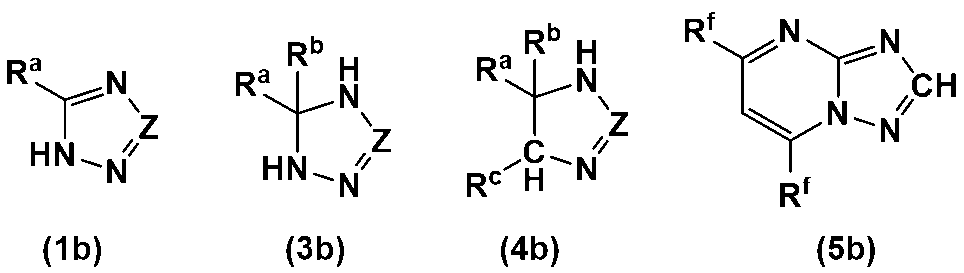
上記式(1)で表されるヘテロ環含有化合物の具体例としては、下記式(1-1)~(1-7)で表されるヘテロ環含有化合物が挙げられる。 Specific examples of the heterocycle-containing compound represented by the above formula (1) include the heterocycle-containing compounds represented by the following formulas (1-1) to (1-7).

上記式(2)で表されるヘテロ環含有化合物の具体例としては、下記式(2-1)~(2-2)で表されるヘテロ環含有化合物が挙げられる。 Specific examples of the heterocycle-containing compound represented by the above formula (2) include the heterocycle-containing compounds represented by the following formulas (2-1) to (2-2).
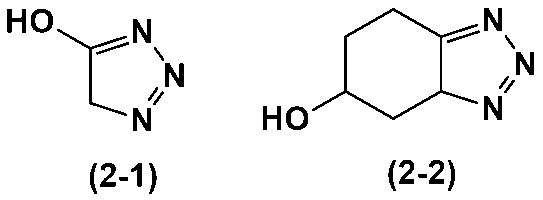
上記式(3)で表されるヘテロ環含有化合物の具体例としては、下記式(3-1)で表されるヘテロ環含有化合物が挙げられる。 A specific example of the heterocycle-containing compound represented by the above formula (3) is the heterocycle-containing compound represented by the following formula (3-1).
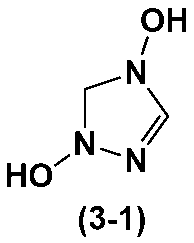
上記式(4)で表されるヘテロ環含有化合物の具体例としては、下記式(4-1)~(4-4)で表されるヘテロ環含有化合物が挙げられる。 Specific examples of the heterocycle-containing compound represented by the above formula (4) include the heterocycle-containing compounds represented by the following formulas (4-1) to (4-4).

上記式(5)で表されるヘテロ環含有化合物の具体例としては、下記式(5-1)で表されるヘテロ環含有化合物が挙げられる。 A specific example of the heterocycle-containing compound represented by the above formula (5) is the heterocycle-containing compound represented by the following formula (5-1):

上記ヘテロ環含有化合物の含有量は、固形分中0.001~4質量%が好ましく、より好ましくは0.001~2質量%、より一層好ましくは0.001~0.5質量%、さらに好ましくは0.001~0.3質量%、特に好ましくは0.001~0.2質量%である。また、上記ヘテロ環含有化合物の含有量のより一層好ましい下限は、固形分中0.01質量%である。ヘテロ環含有化合物の含有量を上記範囲内とすることにより、集電体と電極層の密着性を向上させることができ、得られる電池の電池特性も維持することができる。なお、本発明において、固形分とは、組成物を構成する溶媒以外の成分を意味する(以下、同様)。 The content of the heterocycle-containing compound is preferably 0.001 to 4 mass% of the solid content, more preferably 0.001 to 2 mass%, even more preferably 0.001 to 0.5 mass%, even more preferably 0.001 to 0.3 mass%, and particularly preferably 0.001 to 0.2 mass%. An even more preferable lower limit of the content of the heterocycle-containing compound is 0.01 mass% of the solid content. By setting the content of the heterocycle-containing compound within the above range, the adhesion between the current collector and the electrode layer can be improved, and the battery characteristics of the obtained battery can be maintained. In the present invention, the solid content means the components other than the solvent that constitute the composition (hereinafter the same).
正極活物質としては、電池容量をより向上させるとともに、希少金属の使用量が少なく、低コストである点から、S、FeまたはNiを30質量%以上含むものが好ましい。本発明では、希少金属の使用量を更に減らし、更に寿命の長い電池を得ることを考慮すると、FeまたはNiを35質量%以上含むものがより好ましく、45質量%以上含むものがより一層好ましい。また、その上限は、特に限定されるものではないが、通常、65質量%以下である。このような正極活物質としては、従来、二次電池等のエネルギー貯蔵デバイス用の電極に用いられている各種活物質から、上記の条件を満たすものを適宜選択して用いることができる。例えば、リチウム二次電池やリチウムイオン二次電池の場合、リチウムイオンを吸着・離脱可能なカルコゲン化合物またはリチウムイオン含有カルコゲン化合物、ポリアニオン系化合物、硫黄単体およびその化合物等を用いることができる。 The positive electrode active material preferably contains 30% by mass or more of S, Fe or Ni, because it improves the battery capacity, uses less rare metals, and is low cost. In the present invention, in consideration of further reducing the amount of rare metals used and obtaining a battery with a longer life, it is more preferable to use a material containing 35% by mass or more of Fe or Ni, and even more preferable to use a material containing 45% by mass or more. The upper limit is not particularly limited, but is usually 65% by mass or less. As such a positive electrode active material, a material that satisfies the above conditions can be appropriately selected from various active materials that have been used in electrodes for energy storage devices such as secondary batteries. For example, in the case of lithium secondary batteries and lithium ion secondary batteries, chalcogen compounds or lithium ion-containing chalcogen compounds that can adsorb and release lithium ions, polyanion compounds, sulfur alone and compounds thereof, etc. can be used.
リチウムイオン含有カルコゲン化合物としては、例えば、LiNiO2、LixNiyM1-yO2(Mは、Co、Mn、Ti、Cr、V、Al、Sn、Pb、およびZnから選ばれる少なくとも1種以上の金属元素を表し、0.05≦x≦1.10、0.3≦y≦1.0)、LiaNi(1-x-y)CoxM1
yM2
zXwO2(M1は、MnおよびAlからなる群より選ばれる少なくとも1種、M2は、Zr、Ti、Mg、B、Zr、WおよびVからなる群より選ばれる少なくとも1種を表し、1.00≦a≦1.50、0.00≦x≦0.50、0≦y≦0.50、0.000≦z≦0.020、0.000≦w≦0.020)等が挙げられる。
ポリアニオン系化合物としては、例えば、LiFePO4、LiaMnbFecDdPO4(1.00≦a≦1.15、0.01≦b≦0.99、0.01≦c≦0.99、0.00≦d≦0.10であり、Dが、Co、Mn、Ti、Cr、V、Al、Sn、Pb、およびZnから選ばれ、少なくとも一部がオリビン構造を有する)等が挙げられる。
硫黄化合物としては、例えば、硫黄、Li2S、FeS2、TiS2、MoS2、ルベアン酸等が挙げられる。
これらの正極活物質は、1種を単独で、または2種以上を組み合わせて用いることができる。
Examples of the lithium ion-containing chalcogen compound include LiNiO2 , LixNiyM1 -yO2 ( M represents at least one metal element selected from the group consisting of Co, Mn, Ti, Cr, V, Al, Sn, Pb, and Zn , and 0.05 ≦x≦1.10 and 0.3≦y≦1.0), LiaNi(1-xy)CoxM1yM2zXwO2 ( M1 represents at least one metal element selected from the group consisting of Mn and Al, M 2 represents at least one selected from the group consisting of Zr, Ti, Mg, B, Zr, W, and V, and examples thereof include 1.00≦a≦1.50, 0.00≦x≦0.50, 0≦y≦0.50, 0.000≦z≦0.020, and 0.000≦w≦0.020).
Examples of polyanion compounds include LiFePO4 , LiaMnbFecDdPO4 ( 1.00≦a ≦ 1.15, 0.01≦b≦0.99, 0.01 ≦c≦0.99, 0.00 ≦d≦0.10, D is selected from Co, Mn, Ti, Cr, V, Al, Sn, Pb, and Zn, and at least a part of the compound has an olivine structure).
Examples of sulfur compounds include sulfur, Li2S , FeS2 , TiS2 , MoS2 , and rubeanic acid.
These positive electrode active materials can be used alone or in combination of two or more.
本発明では、上記正極活物質の中でも、LiaNi(1-x-y)CoxM1 yM2 zXwO2(M1は、MnおよびAlからなる群より選ばれる少なくとも1種、M2は、Zr、Ti、Mg、WおよびVからなる群より選ばれる少なくとも1種を表し、1.00≦a≦1.50、0.00≦x≦0.50、0≦y≦0.50、0.000≦z≦0.020、0.000≦w≦0.020)が好ましい。これらの正極活物質は、1種を単独で、または2種以上を組み合わせて用いることができる。 In the present invention, among the above positive electrode active materials, LiaNi (1 - xy) CoxM1yM2zXwO2 ( M1 represents at least one selected from the group consisting of Mn and Al , M2 represents at least one selected from the group consisting of Zr, Ti , Mg , W and V, and 1.00≦a ≦ 1.50, 0.00≦x≦0.50, 0≦y≦0.50, 0.000≦z≦0.020, 0.000≦w≦0.020) is preferred. These positive electrode active materials may be used alone or in combination of two or more.
上記正極活物質の含有量は、固形分中88.0~99.949質量%が好ましく、より好ましくは88.0~99.899質量%、より一層好ましくは95.0~99.0質量%である。 The content of the positive electrode active material is preferably 88.0 to 99.949% by mass, more preferably 88.0 to 99.899% by mass, and even more preferably 95.0 to 99.0% by mass, based on the solid content.
上記バインダーとしては、公知の材料から適宜選択して用いることができ、特に限定されるものではないが、その具体例としては、ポリフッ化ビニリデン(PVdF)、ポリテトラフルオロエチレン;フッ化ビニリデン、テトラフルオロエチレンおよびヘキサフルオロプロピレンからなる群より選ばれる少なくとも1種のモノマーを含むコポリマー等のフッ素系バインダー、および、ポリイミド、エチレン-プロピレン-ジエン三元共重合体、スチレン-ブタジエンゴム、ポリエチレンおよびポリプロピレン等の非水系のバインダーが挙げられる。本発明では、組成物の保存安定性の向上の点から、フッ素系バインダーを用いることが好ましい。また、上記フッ素系バインダーは、カルボキシ基、水酸基等の極性官能基で変性されていることが好ましい。なお、上記極性官能基は、核磁気共鳴装置(NMR装置)による測定において、10~15ppmの範囲で検出される明確なピークの有無により確認することができる。上記バインダーは、1種を単独で、または2種以上を組み合わせて用いることができる。 The binder can be appropriately selected from known materials and is not particularly limited. Specific examples include fluorine-based binders such as polyvinylidene fluoride (PVdF), polytetrafluoroethylene; copolymers containing at least one monomer selected from the group consisting of vinylidene fluoride, tetrafluoroethylene, and hexafluoropropylene, and non-aqueous binders such as polyimide, ethylene-propylene-diene terpolymer, styrene-butadiene rubber, polyethylene, and polypropylene. In the present invention, it is preferable to use a fluorine-based binder from the viewpoint of improving the storage stability of the composition. In addition, it is preferable that the fluorine-based binder is modified with a polar functional group such as a carboxy group or a hydroxyl group. The polar functional group can be confirmed by the presence or absence of a clear peak detected in the range of 10 to 15 ppm in measurement by a nuclear magnetic resonance device (NMR device). The binders can be used alone or in combination of two or more.
上記バインダーの重量平均分子量(Mw)は、集電体と電極層の密着性を向上させる点から、通常、600,000~3,000,000程度であり、好ましくは700,000~2,000,000、より好ましくは700,000~1,500,000である。
なお、重量平均分子量は、ゲルパーミエーションクロマトグラフィー(GPC)によるポリスチレン換算値である。
The weight average molecular weight (Mw) of the binder is usually about 600,000 to 3,000,000, preferably 700,000 to 2,000,000, and more preferably 700,000 to 1,500,000, from the viewpoint of improving the adhesion between the current collector and the electrode layer.
The weight average molecular weight is a polystyrene-equivalent value measured by gel permeation chromatography (GPC).
上記バインダーの含有量は、コストを抑制し、また高いエネルギー密度を得るという観点から、固形分中0.05~8質量%が好ましく、より好ましくは0.05~5質量%、より一層好ましくは0.05~4質量%、さらに好ましくは0.1~3質量%、特に好ましくは0.2~2質量%、最も好ましくは0.3~1.5質量%である。 From the viewpoint of reducing costs and obtaining a high energy density, the content of the binder is preferably 0.05 to 8 mass% of the solid content, more preferably 0.05 to 5 mass%, even more preferably 0.05 to 4 mass%, even more preferably 0.1 to 3 mass%, particularly preferably 0.2 to 2 mass%, and most preferably 0.3 to 1.5 mass%.
本発明の電極形成用組成物には、さらに、電気伝導性をより良好にするために、導電助剤を含んでいてもよい。導電助剤としては、グラファイト、カーボンブラック、アセチレンブラック(AB)、気相成長炭素繊維、カーボンナノチューブ(CNT)、カーボンナノホーン、グラフェン等の炭素材料、ポリアニリン、ポリピロール、ポリチオフェン、ポリアセチレン、ポリアセン等の導電性高分子等が挙げられる。上記導電助剤は、1種を単独で、または2種以上を組み合わせて用いることができる。 The electrode-forming composition of the present invention may further contain a conductive assistant to improve electrical conductivity. Examples of the conductive assistant include carbon materials such as graphite, carbon black, acetylene black (AB), vapor-grown carbon fiber, carbon nanotubes (CNT), carbon nanohorns, and graphene, and conductive polymers such as polyaniline, polypyrrole, polythiophene, polyacetylene, and polyacene. The conductive assistants may be used alone or in combination of two or more.
上記導電助剤を含む場合、その含有量は、特に限定されるものではないが、固形分中0.05~5質量%が好ましく、より好ましくは0.05~4質量%、より一層好ましくは0.1~3質量%、さらに好ましくは0.2~2質量%である。導電助剤の含有量を上記範囲内とすることにより、良好な電気伝導性を得ることができる。 When the conductive assistant is included, its content is not particularly limited, but is preferably 0.05 to 5 mass% of the solid content, more preferably 0.05 to 4 mass%, even more preferably 0.1 to 3 mass%, and even more preferably 0.2 to 2 mass%. By keeping the content of the conductive assistant within the above range, good electrical conductivity can be obtained.
本発明の電極形成用組成物には、更に、上記活物質や導電助剤の分散性を向上させるために、分散剤を含んでいてもよい。上記分散剤としては、従来、CNT等の導電性炭素材料の分散剤として用いられているものから適宜選択することができるが、電池内における安定性の点から、非イオン性ポリマーを含むことが好ましい。上記非イオン性ポリマーとしては、ポリビニルピロリドン(PVP)、ならびに、ニトリル基、ヒドロキシ基、カルボニル基、アミノ基、スルホニル基およびエーテル基からなる群より選ばれる少なくとも1種の基を有するポリマー等が挙げられる。上記ポリマーの具体例としては、ポリビニルアルコール、ポリアクリロニトリル、ポリ乳酸、ポリエステル、ポリイミド、ポリフェニルエーテル、ポリフェニルスルホン、ポリエチレンイミン、ポリアニリン等が挙げられる。本発明では、ピロリドン構造またはニトリル基を含むポリマーが好ましく、ポリビニルピロリドンおよびポリアクリロニトリルがより好ましい。上記分散剤は、1種を単独で、または2種以上を組み合わせて用いることができる。 The electrode-forming composition of the present invention may further contain a dispersant to improve the dispersibility of the active material and conductive assistant. The dispersant may be appropriately selected from those conventionally used as dispersants for conductive carbon materials such as CNT, but it is preferable to contain a nonionic polymer from the viewpoint of stability in the battery. Examples of the nonionic polymer include polyvinylpyrrolidone (PVP) and polymers having at least one group selected from the group consisting of a nitrile group, a hydroxy group, a carbonyl group, an amino group, a sulfonyl group, and an ether group. Specific examples of the polymer include polyvinyl alcohol, polyacrylonitrile, polylactic acid, polyester, polyimide, polyphenyl ether, polyphenyl sulfone, polyethyleneimine, polyaniline, and the like. In the present invention, a polymer containing a pyrrolidone structure or a nitrile group is preferable, and polyvinylpyrrolidone and polyacrylonitrile are more preferable. The dispersants may be used alone or in combination of two or more.
上記分散剤を含む場合、その含有量は、特に限定されるものではないが、固形分中0.001~0.5質量%が好ましく、0.001~0.3質量%がより好ましく、0.001~0.2質量%がより一層好ましい。また、上記分散剤の含有量のより一層好ましい下限は、固形分中0.01質量%である。
また、得られる電極層と集電体との密着性を考慮すると、上記ヘテロ環含有化合物と上記分散剤との総量が、固形分中0.001~1質量%であることが好ましく、より好ましくは0.01~1質量%である。
When the dispersant is contained, its content is not particularly limited, but is preferably 0.001 to 0.5 mass % of the solid content, more preferably 0.001 to 0.3 mass %, and even more preferably 0.001 to 0.2 mass %. An even more preferable lower limit of the content of the dispersant is 0.01 mass % of the solid content.
In addition, in consideration of the adhesion between the obtained electrode layer and the current collector, the total amount of the heterocycle-containing compound and the dispersant is preferably 0.001 to 1 mass % of the solid content, and more preferably 0.01 to 1 mass %.
本発明の電極形成用組成物は溶媒を含む。溶媒としては、従来、電極形成用組成物の調製に用いられるものであれば特に限定されず、例えば、水;テトラヒドロフラン(THF)、ジエチルエーテル、1,2-ジメトキシエタン(DME)等のエーテル類;塩化メチレン、クロロホルム、1,2-ジクロロエタン等のハロゲン化炭化水素類;N,N-ジメチルホルムアミド(DMF)、N,N-ジメチルアセトアミド(DMAc)、N-メチル-2-ピロリドン(NMP)等のアミド類;アセトン、メチルエチルケトン、メチルイソブチルケトン、シクロヘキサノン等のケトン類;メタノール、エタノール、n-プロパノール、イソプロパノール、n-ブタノール、t-ブタノール等のアルコール類;n-ヘプタン、n-ヘキサン、シクロヘキサン等の脂肪族炭化水素類;ベンゼン、トルエン、キシレン、エチルベンゼン等の芳香族炭化水素類;エチレングリコールモノエチルエーテル、エチレングリコールモノブチルエーテル、プロピレングリコールモノメチルエーテル等のグリコールエーテル類;エチレングリコール、プロピレングリコール等のグリコール類;エチレンカーボネート、プロピレンカーボネート、ジメチルカーボネート、ジエチルカーボネート、メチルエチルカーボネート等のカーボネート類;γ-ブチロラクトン、ジメチルスルホキシド(DMSO)、ジオキソラン、スルホラン、等の有機溶媒が挙げられる。これらの溶媒は、1種を単独で、または2種以上を組み合わせて用いることができる。 The electrode-forming composition of the present invention contains a solvent. The solvent is not particularly limited as long as it is one that has been conventionally used in the preparation of electrode-forming compositions, and examples of the solvent include water; ethers such as tetrahydrofuran (THF), diethyl ether, and 1,2-dimethoxyethane (DME); halogenated hydrocarbons such as methylene chloride, chloroform, and 1,2-dichloroethane; amides such as N,N-dimethylformamide (DMF), N,N-dimethylacetamide (DMAc), and N-methyl-2-pyrrolidone (NMP); ketones such as acetone, methyl ethyl ketone, methyl isobutyl ketone, and cyclohexanone; and alcohols such as methanol, ethanol, n-propanol, isopropanol, n-butanol, and t-butanol. Examples of the solvent include alcohols; aliphatic hydrocarbons such as n-heptane, n-hexane, and cyclohexane; aromatic hydrocarbons such as benzene, toluene, xylene, and ethylbenzene; glycol ethers such as ethylene glycol monoethyl ether, ethylene glycol monobutyl ether, and propylene glycol monomethyl ether; glycols such as ethylene glycol and propylene glycol; carbonates such as ethylene carbonate, propylene carbonate, dimethyl carbonate, diethyl carbonate, and methyl ethyl carbonate; and organic solvents such as γ-butyrolactone, dimethyl sulfoxide (DMSO), dioxolane, and sulfolane. These solvents can be used alone or in combination of two or more.
なお、上記バインダーは、必要に応じてこれらの溶媒に溶解、もしくは分散させて使用してもよい。
この場合の好適な溶媒としては、水、NMP、DMSO、エチレンカーボネート、プロピレンカーボネート、ジメチルカーボネート、ジエチルカーボネート、メチルエチルカーボネート、γ-ブチロラクトン、THF、ジオキソラン、スルホラン、DMF、DMAc等が挙げられ、バインダーの種類に応じて適宜選択すればよいが、PVdF等の非水溶性のバインダーの場合はNMPが好適であり、水溶性のバインダーの場合は水が好適である。
If necessary, the binder may be dissolved or dispersed in these solvents before use.
Suitable solvents in this case include water, NMP, DMSO, ethylene carbonate, propylene carbonate, dimethyl carbonate, diethyl carbonate, methyl ethyl carbonate, γ-butyrolactone, THF, dioxolane, sulfolane, DMF, DMAc, and the like. The solvent may be appropriately selected depending on the type of binder. In the case of a water-insoluble binder such as PVdF, NMP is suitable, and in the case of a water-soluble binder, water is suitable.
本発明の電極形成用組成物の固形分濃度は、組成物の塗工性や形成する電極の厚さ等を勘案して適宜設定されるものではあるが、通常、60~92質量%程度であり、好ましくは65~90質量%程度、より好ましくは70~85質量%程度である。 The solids concentration of the electrode-forming composition of the present invention is set appropriately taking into consideration the coatability of the composition and the thickness of the electrode to be formed, but is usually about 60 to 92% by mass, preferably about 65 to 90% by mass, and more preferably about 70 to 85% by mass.
本発明の電極形成用組成物の粘度は、塗工方法や形成する電極の厚さ等を勘案して適宜設定されるものではあるが、通常、100~2,000,000mPa・s程度であり、好ましくは300~1,000,000mPa・s程度、より好ましくは400~800,000mPa・s程度である。上記粘度は、E型粘度計により25℃で測定した値である。 The viscosity of the electrode-forming composition of the present invention is set appropriately taking into consideration the coating method, the thickness of the electrode to be formed, etc., but is usually about 100 to 2,000,000 mPa·s, preferably about 300 to 1,000,000 mPa·s, and more preferably about 400 to 800,000 mPa·s. The above viscosity is a value measured at 25°C using an E-type viscometer.
本発明の電極形成用組成物は、上述した各成分を混合して得ることができる。なお、本発明の添加剤(ヘテロ環含有化合物)、正極活物質およびバインダー以外の任意成分を含む場合、正極添加剤と活物質は、任意成分と一緒に混合しても、両成分をあらかじめ混合した後、任意成分と混合してもよい。いずれの方法であっても、本発明の効果を発現させることができる。 The electrode-forming composition of the present invention can be obtained by mixing the above-mentioned components. When the composition contains optional components other than the additive of the present invention (heterocycle-containing compound), the positive electrode active material, and the binder, the positive electrode additive and the active material may be mixed together with the optional components, or both components may be mixed in advance and then mixed with the optional components. Either method can produce the effects of the present invention.
本発明の電極は、集電体である基板上の少なくとも一方の面に、上で説明した電極形成用組成物からなる電極層を備えるものである。
電極層を基板上に形成する方法としては、調製した電極形成用組成物を基板上に塗工して塗膜を形成した後、これを乾燥する方法が挙げられる。この方法は、特に限定されるものではなく、従来公知の各種方法を用いることができる。塗工法の具体例としては、オフセット印刷、スクリーン印刷等の各種印刷法、ブレードコート法、ディップコート法、スピンコート法、バーコート法、スリットコート法、インクジェット法、ダイコート法等が挙げられる。
The electrode of the present invention comprises an electrode layer made of the above-described electrode-forming composition on at least one surface of a substrate serving as a current collector.
The method of forming the electrode layer on the substrate includes a method of applying the prepared electrode-forming composition on the substrate to form a coating film, and then drying the coating film. This method is not particularly limited, and various conventionally known methods can be used. Specific examples of the coating method include various printing methods such as offset printing and screen printing, blade coating, dip coating, spin coating, bar coating, slit coating, inkjet printing, and die coating.
また、塗膜を乾燥する際、自然乾燥および加熱乾燥のいずれを採用してもよいが、製造効率の観点から加熱乾燥が好ましい。加熱乾燥を実施する場合、その温度は、50~400℃程度が好ましく、70~150℃程度がより好ましい。 When drying the coating, either natural drying or heat drying may be used, but heat drying is preferred from the viewpoint of manufacturing efficiency. When heat drying is performed, the temperature is preferably about 50 to 400°C, and more preferably about 70 to 150°C.
上記電極に用いられる基板としては、例えば、白金、金、鉄、ステンレス鋼、銅、アルミニウム、リチウム等の金属基板、これらの金属の任意の組み合わせからなる合金基板、インジウム錫酸化物(ITO)、インジウム亜鉛酸化物(IZO)、アンチモン錫酸化物(ATO)等の酸化物基板、またはグラッシーカーボン、パイロリティックグラファイト、カーボンフェルト等の炭素基板等が挙げられる。特に、基板の厚みは、特に限定されるものではないが、本発明においては、1~100μmが好ましく、3~30μmが好ましく、5~25μmが最も好ましい。 Substrates used for the above electrodes include, for example, metal substrates such as platinum, gold, iron, stainless steel, copper, aluminum, and lithium; alloy substrates made of any combination of these metals; oxide substrates such as indium tin oxide (ITO), indium zinc oxide (IZO), and antimony tin oxide (ATO); and carbon substrates such as glassy carbon, pyrolytic graphite, and carbon felt. In particular, the thickness of the substrate is not particularly limited, but in the present invention, it is preferably 1 to 100 μm, more preferably 3 to 30 μm, and most preferably 5 to 25 μm.
上記電極層の膜厚は、特に限定されるものではないが、好ましくは0.01~1,000μm程度、より好ましくは5~300μm程度である。なお、電極層を単独で電極とする場合は、その膜厚を10μm以上とすることが好ましい。 The thickness of the electrode layer is not particularly limited, but is preferably about 0.01 to 1,000 μm, and more preferably about 5 to 300 μm. If the electrode layer is used as an electrode alone, it is preferable that the thickness be 10 μm or more.
電極は、必要に応じてプレスしてもよい。プレス法は、一般に採用されている方法を用いることができるが、特に金型プレス法やロールプレス法が好ましい。また、プレス圧力は、特に限定されるものではないが、1kN/cm以上が好ましく、2kN/cm以上が好ましく、5kN/cm以上がより好ましい。また、上記プレス圧力の上限は、特に限定されるものではないが、50kN/cm以下が好ましい。 The electrodes may be pressed as necessary. Any commonly used pressing method may be used, but mold pressing and roll pressing are particularly preferred. The pressing pressure is not particularly limited, but is preferably 1 kN/cm or more, more preferably 2 kN/cm or more, and more preferably 5 kN/cm or more. The upper limit of the pressing pressure is not particularly limited, but is preferably 50 kN/cm or less.
本発明の二次電池は、上述した電極を備えたものであり、より具体的には、少なくとも一対の正負極と、これら各極間に介在するセパレータと、電解質とを備えて構成され、正極が、上述した電極から構成される。その他の電池素子の構成部材は従来公知のものから適宜選択して用いればよい。 The secondary battery of the present invention is equipped with the electrodes described above, and more specifically, is configured with at least a pair of positive and negative electrodes, a separator interposed between the electrodes, and an electrolyte, with the positive electrode being configured with the electrode described above. The other components of the battery element may be appropriately selected from conventionally known components.
上記セパレータに使用される材料としては、例えば、ガラス繊維、セルロース、多孔質ポリオレフィン、ポリアミド、ポリエステル等が挙げられる。 Materials used for the separator include, for example, glass fiber, cellulose, porous polyolefin, polyamide, polyester, etc.
上記電解質としては、液体、固体のいずれでもよく、また水系、非水系のいずれでもよいが、実用上十分な性能を容易に発揮させ得る観点から、電解質塩と溶媒等とから構成される電解液を好適に使用し得る。 The electrolyte may be either liquid or solid, and may be either aqueous or non-aqueous, but from the viewpoint of easily achieving sufficient performance for practical use, an electrolyte solution composed of an electrolyte salt and a solvent, etc., may be preferably used.
上記電解質塩としては、例えば、LiPF6、LiBF4、LiN(SO2F)2、LiN(C2F5SO2)2、LiAsF6、LiSbF6、LiAlF4、LiGaF4、LiInF4、LiClO4、LiN(CF3SO2)2、LiCF3SO3、LiSiF6、LiN(CF3SO2)、(C4F9SO2)等のリチウム塩、LiI、NaI、KI、CsI、CaI2等の金属ヨウ化物、4級イミダゾリウム化合物のヨウ化物塩、テトラアルキルアンモニウム化合物のヨウ化物塩および過塩素酸塩、LiBr、NaBr、KBr、CsBr、CaBr2等の金属臭化物等が挙げられる。これらの電解質塩は、1種を単独で、または2種以上を組み合わせて用いることができる。 Examples of the electrolyte salt include lithium salts such as LiPF6 , LiBF4 , LiN( SO2F ) 2 , LiN( C2F5SO2 ) 2 , LiAsF6, LiSbF6 , LiAlF4 , LiGaF4 , LiInF4 , LiClO4 , LiN ( CF3SO2 ) 2 , LiCF3SO3 , LiSiF6 , LiN ( CF3SO2 ), ( C4F9SO2 ) , and the like ; Examples of the electrolyte salt include metal iodides such as LiBr, NaBr, KBr, CsBr, CaBr, etc. , perchlorates and iodides of quaternary imidazolium compounds, iodides of tetraalkylammonium compounds, and metal bromides such as LiBr, NaBr, KBr, CsBr, and CaBr, etc. These electrolyte salts can be used alone or in combination of two or more.
上記溶媒としては、電池を構成する物質に対して腐食や分解を生じさせて性能を劣化させるものでなく、上記電解質塩を溶解するものであれば特に限定されない。例えば、非水系の溶媒として、エチレンカーボネート、プロピレンカーボネート、ブチレンカーボネート、γ-ブチロラクトン等の環状エステル類、テトラヒドロフラン、ジメトキシエタン等のエーテル類、酢酸メチル、ジメチルカーボネート、ジエチルカーボネート、エチルメチルカーボネート等の鎖状エステル類、アセトニトリル等のニトリル類等が用いられる。これらの溶媒は、1種を単独で、または2種以上を組み合わせて用いることができる。 The above-mentioned solvent is not particularly limited as long as it does not cause corrosion or decomposition of the materials constituting the battery, resulting in deterioration of performance, and dissolves the above-mentioned electrolyte salt. For example, non-aqueous solvents include cyclic esters such as ethylene carbonate, propylene carbonate, butylene carbonate, and γ-butyrolactone; ethers such as tetrahydrofuran and dimethoxyethane; chain esters such as methyl acetate, dimethyl carbonate, diethyl carbonate, and ethyl methyl carbonate; and nitriles such as acetonitrile. These solvents can be used alone or in combination of two or more.
また、固体電解質としては、硫化物系固体電解質および酸化物系固体電解質等の無機固体電解質や、高分子系電解質等の有機固体電解質を好適に用いることができる。これらの固体電解質を用いることで電解液を使用しない全固体電池を得ることができる。 Furthermore, as the solid electrolyte, inorganic solid electrolytes such as sulfide-based solid electrolytes and oxide-based solid electrolytes, and organic solid electrolytes such as polymer-based electrolytes can be suitably used. By using these solid electrolytes, it is possible to obtain an all-solid-state battery that does not use an electrolytic solution.
上記硫化物系固体電解質としては、Li2S-SiS2-リチウム化合物(ここで、リチウム化合物はLi3PO4、LiIおよびLi4SiO4からなる群より選ばれる少なくとも1種である)、Li2S-P2O5、Li2S-B2S5、Li2S-P2S5-GeS2等のチオリシコン系材料等を挙げることができる。 Examples of the sulfide-based solid electrolyte include thiolithium-based materials such as Li2S - SiS2 -lithium compound (wherein the lithium compound is at least one selected from the group consisting of Li3PO4 , LiI and Li4SiO4 ) , Li2S - P2O5 , Li2S - B2S5 , and Li2S - P2S5 - GeS2 .
上記酸化物系固体電解質としては、ガーネット型構造の酸化物であるLi5La3M2O12(M=Nb,Ta)やLi7La3Zr2O12、LISICONと総称されるγ-Li3PO4構造を基本とする酸素酸塩化合物、ペロブスカイト型、LIPONと総称されるLi3.3PO3.8N0.22、ナトリウム/アルミナ等を挙げることができる。
上記高分子系固体電解質としては、ポリエチレンオキシド系材料や、ヘキサフルオロプロピレン、テトラフルオロエチレン、トリフルオロエチレン、エチレン、プロピレン、アクリロニトリル、塩化ビニリデン、アクリル酸、メタクリル酸、メチルアクリレート、エチルアクリレート、メチルメタクリレート、スチレンおよびフッ化ビニリデン等のモノマーを重合又は共重合して得られる高分子化合物等を挙げることができる。なお、上記高分子系固体電解質には、支持塩および可塑剤を含んでいてもよい。
Examples of the oxide-based solid electrolyte include garnet-type structure oxides such as Li 5 La 3 M 2 O 12 (M = Nb, Ta) and Li 7 La 3 Zr 2 O 12 , oxygen acid salt compounds based on the γ-Li 3 PO 4 structure collectively known as LISICON, perovskite-type oxides such as Li 3.3 PO 3.8 N 0.22 collectively known as LIPON, and sodium/alumina.
Examples of the polymer solid electrolyte include polyethylene oxide materials and polymer compounds obtained by polymerizing or copolymerizing monomers such as hexafluoropropylene, tetrafluoroethylene, trifluoroethylene, ethylene, propylene, acrylonitrile, vinylidene chloride, acrylic acid, methacrylic acid, methyl acrylate, ethyl acrylate, methyl methacrylate, styrene, and vinylidene fluoride. The polymer solid electrolyte may contain a supporting salt and a plasticizer.
上記高分子系固体電解質に含まれる支持塩としては、リチウム(フルオロスルホニルイミド)等を挙げることができ、可塑剤としては、スクシノニトリル等を挙げることができる。 The supporting salt contained in the polymer solid electrolyte may be lithium (fluorosulfonylimide), and the plasticizer may be succinonitrile.
本発明の電極形成用組成物を用いて製造した電池は、一般的な二次電池と比較してフッ素バインダーが少なくても、高い電池特性を有するものとなる。 Batteries manufactured using the electrode-forming composition of the present invention have high battery characteristics even though they contain less fluorine binder compared to general secondary batteries.
二次電池の形態や電解質の種類は特に限定されるものではなく、リチウムイオン電池、ニッケル水素電池、マンガン電池、空気電池等のいずれの形態を用いてもよいが、リチウムイオン電池が好適である。ラミネート方法や生産方法についても特に限定されるものではない。 The type of secondary battery and the type of electrolyte are not particularly limited, and any type of battery such as a lithium ion battery, nickel hydrogen battery, manganese battery, or air battery may be used, but a lithium ion battery is preferred. There are also no particular limitations on the lamination method or production method.
コイン型に適用する場合、上述した本発明の電極を、所定の円盤状に打ち抜いて用いればよい。例えば、リチウムイオン二次電池は、コインセルのワッシャーとスペーサーが溶接されたフタに、一方の電極を設置し、その上に、電解液を含浸させた同形状のセパレータを重ね、さらに上から、電極層を下にして本発明の電極を重ね、ケースとガスケットを載せて、コインセルかしめ機で密封して作製することができる。 When applied to a coin cell, the electrode of the present invention described above can be punched out into a specified disk shape and used. For example, a lithium-ion secondary battery can be produced by placing one electrode on the lid of a coin cell to which a washer and spacer are welded, placing a separator of the same shape impregnated with an electrolyte on top of that, placing the electrode of the present invention on top with the electrode layer facing down, placing a case and gasket on top, and sealing with a coin cell crimping machine.
また、本発明は、正極活物質、バインダーおよび溶媒を含む電極形成用組成物用の添加剤として、下記式(1)~(5)のいずれかで表されるヘテロ環含有化合物からなる添加剤を提供する。上記添加剤は、正極活物質、バインダーおよび溶媒を含む電極形成用組成物用のゲル化抑制剤として好適に使用できるものである。 The present invention also provides an additive for an electrode-forming composition containing a positive electrode active material, a binder, and a solvent, the additive being composed of a heterocycle-containing compound represented by any one of the following formulas (1) to (5). The additive can be suitably used as a gelation inhibitor for an electrode-forming composition containing a positive electrode active material, a binder, and a solvent.

Ra~Rdは、それぞれ独立して、水素原子、ハロゲン原子、カルボキシ基、ヒドロキシ基、チオール基、アミノ基、置換基を有していてもよい炭素数1~6のアルキル基、置換基を有していてもよい炭素数2~6のアルケニル基、または置換基を有していてもよい炭素数6~12のアリール基であり、
RaおよびRcは、互いに結合して置換基を有していてもよい炭素数4~12の環を形成していてもよく、
Lは、それぞれ独立して、単結合、カルボニル基、エーテル結合、エステル結合またはアミド結合であり、
Xaは、それぞれ独立して、水素原子、リチウム原子、ナトリウム原子、置換基を有していてもよい炭素数1~6のアルキル基、置換基を有していてもよい炭素数6~12のアリール基または-CH2NRe
2であり、
Reは、炭素数1~10のアルキル基、炭素数1~10のアルカノール基、炭素数2~10のアルケニル基または炭素数6~12のアリール基であり、
Rfは、それぞれ独立して、ハロゲン原子、カルボキシ基、ヒドロキシ基、アルデヒド基、エステル基、ケトン基、アミノ基、フェニル基、アルコキシシリル基、エポキシ基、カルボン酸クロリド基、チオール基、炭素数1~6のアルキル基、炭素数2~6のアルケニル基、または炭素数6~12のアリール基であり、
nは、0~3の整数である。)
R a to R d each independently represent a hydrogen atom, a halogen atom, a carboxy group, a hydroxy group, a thiol group, an amino group, an alkyl group having 1 to 6 carbon atoms which may have a substituent, an alkenyl group having 2 to 6 carbon atoms which may have a substituent, or an aryl group having 6 to 12 carbon atoms which may have a substituent;
R a and R c may be bonded to each other to form a ring having 4 to 12 carbon atoms which may have a substituent;
Each L is independently a single bond, a carbonyl group, an ether bond, an ester bond, or an amide bond;
X a each independently represents a hydrogen atom, a lithium atom, a sodium atom, an alkyl group having 1 to 6 carbon atoms which may have a substituent, an aryl group having 6 to 12 carbon atoms which may have a substituent, or —CH 2 NR e 2 ;
R e is an alkyl group having 1 to 10 carbon atoms, an alkanol group having 1 to 10 carbon atoms, an alkenyl group having 2 to 10 carbon atoms, or an aryl group having 6 to 12 carbon atoms;
Rf 's each independently represent a halogen atom, a carboxy group, a hydroxy group, an aldehyde group, an ester group, a ketone group, an amino group, a phenyl group, an alkoxysilyl group, an epoxy group, a carboxylic acid chloride group, a thiol group, an alkyl group having 1 to 6 carbon atoms, an alkenyl group having 2 to 6 carbon atoms, or an aryl group having 6 to 12 carbon atoms;
n is an integer from 0 to 3.
式(1)~(5)において、Z、Ra~Rd、L、Xa、ReおよびRfの具体例については、電極形成用組成物の説明において例示したものと同じである。 In formulas (1) to (5), specific examples of Z, R.sub.a to R.sub.d , L, X.sub.a , R.sub.e and R.sub.f are the same as those exemplified in the description of the electrode-forming composition.
また、電極形成用組成物の正極活物質、バインダーおよび溶媒に関しても、上の説明において記載したものと同じである。 The positive electrode active material, binder, and solvent of the electrode-forming composition are also the same as those described above.
さらに、本発明は、正極活物質、バインダーおよび溶媒を含む電極形成用組成物用の添加剤溶液であって、下記式(1)~(5)のいずれかで表されるヘテロ環含有化合物からなる添加剤および溶媒からなる添加剤溶液を提供する。本発明の添加剤溶液を用いることで、電極形成用組成物に対して上記添加剤を混合しやすくなる。 The present invention further provides an additive solution for an electrode-forming composition containing a positive electrode active material, a binder, and a solvent, the additive solution being composed of an additive made of a heterocycle-containing compound represented by any one of the following formulas (1) to (5) and a solvent. By using the additive solution of the present invention, it becomes easier to mix the additive into the electrode-forming composition.
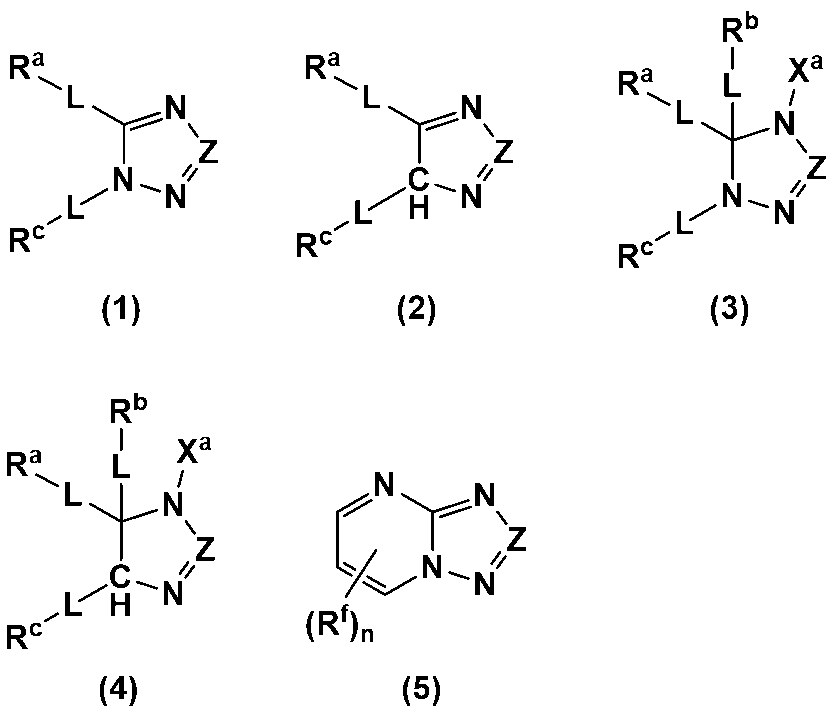
Ra~Rdは、それぞれ独立して、水素原子、ハロゲン原子、カルボキシ基、ヒドロキシ基、チオール基、アミノ基、置換基を有していてもよい炭素数1~6のアルキル基、置換基を有していてもよい炭素数2~6のアルケニル基、または置換基を有していてもよい炭素数6~12のアリール基であり、
RaおよびRcは、互いに結合して置換基を有していてもよい炭素数4~12の環を形成していてもよく、
Lは、それぞれ独立して、単結合、カルボニル基、エーテル結合、エステル結合またはアミド結合であり、
Xaは、それぞれ独立して、水素原子、リチウム原子、ナトリウム原子、置換基を有していてもよい炭素数1~6のアルキル基、置換基を有していてもよい炭素数6~12のアリール基または-CH2NRe
2であり、
Reは、炭素数1~10のアルキル基、炭素数1~10のアルカノール基、炭素数2~10のアルケニル基または炭素数6~12のアリール基であり、
Rfは、それぞれ独立して、ハロゲン原子、カルボキシ基、ヒドロキシ基、アルデヒド基、エステル基、ケトン基、アミノ基、フェニル基、アルコキシシリル基、エポキシ基、カルボン酸クロリド基、チオール基、炭素数1~6のアルキル基、炭素数2~6のアルケニル基、または炭素数6~12のアリール基であり、
nは、0~3の整数である。)
R a to R d each independently represent a hydrogen atom, a halogen atom, a carboxy group, a hydroxy group, a thiol group, an amino group, an alkyl group having 1 to 6 carbon atoms which may have a substituent, an alkenyl group having 2 to 6 carbon atoms which may have a substituent, or an aryl group having 6 to 12 carbon atoms which may have a substituent;
R a and R c may be bonded to each other to form a ring having 4 to 12 carbon atoms which may have a substituent;
Each L is independently a single bond, a carbonyl group, an ether bond, an ester bond, or an amide bond;
X a each independently represents a hydrogen atom, a lithium atom, a sodium atom, an alkyl group having 1 to 6 carbon atoms which may have a substituent, an aryl group having 6 to 12 carbon atoms which may have a substituent, or —CH 2 NR e 2 ;
R e is an alkyl group having 1 to 10 carbon atoms, an alkanol group having 1 to 10 carbon atoms, an alkenyl group having 2 to 10 carbon atoms, or an aryl group having 6 to 12 carbon atoms;
Rf 's each independently represent a halogen atom, a carboxy group, a hydroxy group, an aldehyde group, an ester group, a ketone group, an amino group, a phenyl group, an alkoxysilyl group, an epoxy group, a carboxylic acid chloride group, a thiol group, an alkyl group having 1 to 6 carbon atoms, an alkenyl group having 2 to 6 carbon atoms, or an aryl group having 6 to 12 carbon atoms;
n is an integer from 0 to 3.
式(1)~(5)において、Z、Ra~Rd、L、Xa、ReおよびRfの具体例については、電極形成用組成物の説明において例示したものと同じである。 In formulas (1) to (5), specific examples of Z, R.sub.a to R.sub.d , L, X.sub.a , R.sub.e and R.sub.f are the same as those exemplified in the description of the electrode-forming composition.
上記添加剤溶液は、式(1)~(5)のいずれかで表されるヘテロ環含有化合物が、溶媒に溶解または分散しているものが好ましく、溶媒に溶解しているものがより好ましい。 The additive solution is preferably one in which the heterocycle-containing compound represented by any one of formulas (1) to (5) is dissolved or dispersed in a solvent, and more preferably one in which the heterocycle-containing compound is dissolved in a solvent.
使用できる溶媒としては、電極形成用組成物の説明において例示したものと同様のものが挙げられる。本発明では、その中でも特にNMP、プロピレンカーボネート、エチレンカーボネート、ジエチルカーボネート、ジメチルカーボネート、エチルメチルカーボネートを好適に使用できる。 Usable solvents include those exemplified in the description of the electrode-forming composition. In the present invention, NMP, propylene carbonate, ethylene carbonate, diethyl carbonate, dimethyl carbonate, and ethyl methyl carbonate are particularly suitable.
また、電極形成用組成物の正極活物質およびバインダーに関しても、上の説明において記載したものと同じである。 The positive electrode active material and binder of the electrode-forming composition are also the same as those described above.
本発明の添加剤溶液の固形分濃度は、溶媒への飽和溶解度や保存安定性等を勘案して適宜設定されるものではあるが、通常、1~60質量%程度であり、好ましくは3~55質量%程度、より好ましくは3~50質量%程度である。 The solids concentration of the additive solution of the present invention is set appropriately taking into consideration the saturation solubility in the solvent and storage stability, but is usually about 1 to 60 mass%, preferably about 3 to 55 mass%, and more preferably about 3 to 50 mass%.
以下、実施例および比較例を挙げて、本発明をより具体的に説明するが、本発明は下記の実施例に限定されるものではない。なお、用いた装置は以下のとおりである。 The present invention will be explained in more detail below with examples and comparative examples, but the present invention is not limited to the following examples. The following equipment was used:
(1)自転・公転方式ミキサー:シンキ―(株)製、あわとり練太郎 大気圧タイプ ARE-310
(2)ドライブース:日本スピンドル製造(株)製
(3)E型粘度計:東機産業(株)製、VISCOMETER TV-22、測定温度:25℃、ロータ:1°34’×R24、の測定条件で測定開始後5分後の粘度を採用した。
(1) Rotation and revolution type mixer: Thinky Mixer, atmospheric pressure type ARE-310
(2) Dry hole: manufactured by Nihon Spindle Mfg. Co., Ltd. (3) E-type viscometer: manufactured by Toki Sangyo Co., Ltd., VISCOMETER TV-22, measurement temperature: 25° C., rotor: 1°34′×R24. The viscosity was measured 5 minutes after the start of measurement.
また、使用した原料等は以下のとおりである。
<活物質>
NCA:ニッケル酸リチウム(LiNi0.88Co0.11Al0.01O2、NCA-034H、Ni比率:55質量%)、Ecopro社製
<フッ素系バインダー>
Solef-5130:ポリフッ化ビニリデン(PVdF)、SOLVAY社製
<導電助剤>
AB:デンカブラック(登録商標)Li100(高純度アセチレンブラック)、デンカ(株)製
<溶媒>
NMP:日本リファイン(株)製
<添加剤A>
[実施例で使用した添加剤]
A1:2-Mercaptobenzimidazole、東京化成工業(株)製
A2:5-Mercapto-1-methyltetrazole、東京化成工業(株)製
A3:7-Hydroxy-5-methyl-[1,2,4]triazolo[1,5-a]pyrimidine、東京化成工業(株)製
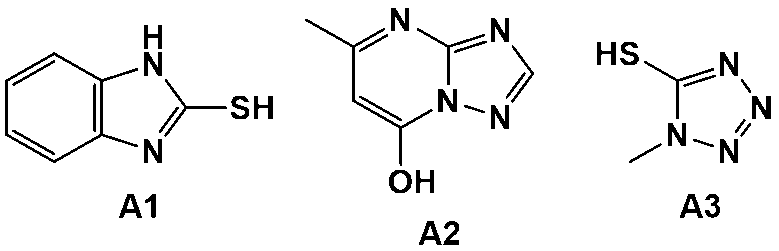
a1:Oxalic acid、富士フイルム和光純薬(株)製
a2:Piperonylic Acid、東京化成工業(株)製
a3:8-Quinolinol、東京化成工業(株)製
a4:Anthranil、東京化成工業(株)製
a5:Phthalazone、東京化成工業(株)製
a6:Pyridine、富士フイルム和光純薬(株)製
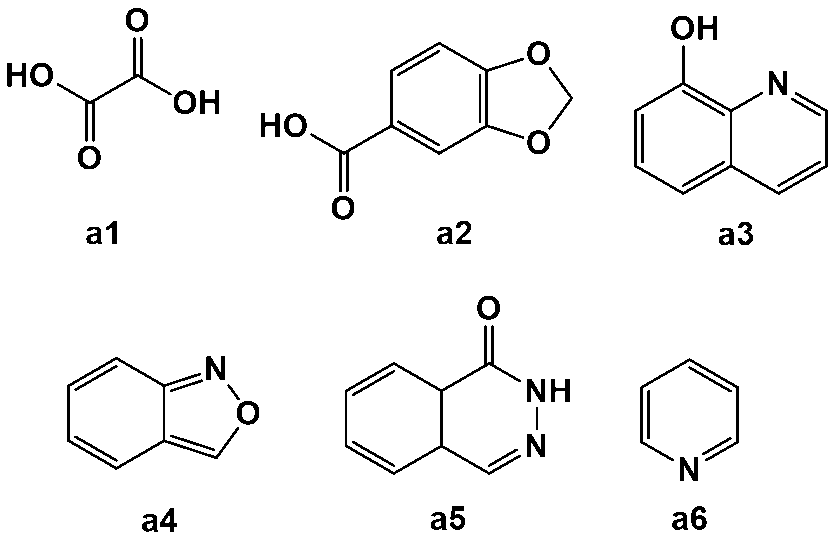
<Active material>
NCA: Lithium nickel oxide (LiNi 0.88 Co 0.11 Al 0.01 O 2 , NCA-034H, Ni ratio: 55% by mass), manufactured by Ecopro Corporation <fluorine-based binder>
Solef-5130: Polyvinylidene fluoride (PVdF), manufactured by SOLVAY <Conductive additive>
AB: Denka Black (registered trademark) Li100 (high purity acetylene black), manufactured by Denka Co., Ltd. <Solvent>
NMP: Nippon Refine Co., Ltd. <Additive A>
[Additives used in the examples]
A1: 2-Mercaptobenzimidazole, manufactured by Tokyo Chemical Industry Co., Ltd. A2: 5-Mercapto-1-methyltetrazole, manufactured by Tokyo Chemical Industry Co., Ltd. A3: 7-Hydroxy-5-methyl-[1,2,4]triazolo[1,5-a]pyrimidine, manufactured by Tokyo Chemical Industry Co., Ltd.
a1: Oxalic acid, manufactured by Fujifilm Wako Pure Chemical Industries, Ltd. a2: Piperonylic Acid, manufactured by Tokyo Chemical Industry Co., Ltd. a3: 8-Quinolinol, manufactured by Tokyo Chemical Industry Co., Ltd. a4: Anthranil, manufactured by Tokyo Chemical Industry Co., Ltd. a5: Phthalazone, manufactured by Tokyo Chemical Industry Co., Ltd. a6: Pyridine, manufactured by Fujifilm Wako Pure Chemical Industries, Ltd.
・正極用組成物(電極スラリー)の調製
[実施例1-1~1-3、比較例1-1~1-7]
各添加剤について5質量%のNMP溶液を調製した。PVdFの7質量%のNMP溶液を調製した。表1に示す組成比となるように、ドライブース内にて、正極活物質、バインダー溶液、導電助剤、添加剤溶液、NMP、水を混合し、自転・公転方式ミキサーを用いて混合することで、電極スラリーを得た。調製したスラリーの総量は、いずれも各20g、固形分は80質量%とし、スラリーの溶媒組成はNMP/H2O=97/3(質量比)となるように調整した。なお、上記水はスラリー中に水分量が多い状態を意図的に生み出すために添加している。
Preparation of Positive Electrode Composition (Electrode Slurry) [Examples 1-1 to 1-3, Comparative Examples 1-1 to 1-7]
A 5% by mass NMP solution was prepared for each additive. A 7% by mass NMP solution of PVdF was prepared. In a dry mixer, the positive electrode active material, binder solution, conductive assistant, additive solution, NMP, and water were mixed to obtain the composition ratio shown in Table 1, and mixed using a rotation/revolution type mixer to obtain an electrode slurry. The total amount of the slurry prepared was 20 g each, the solid content was 80% by mass, and the solvent composition of the slurry was adjusted to NMP/H 2 O=97/3 (mass ratio). The water was added to intentionally create a state in which the slurry had a high water content.
上記で得られたスラリーについて、調製直後にE型粘度計を用いて粘度測定を行った。また、24時間/40℃で保存した後に目視にてゲル化の有無を確認した。ゲル化していないものについては、同様にE型粘度計を用いて粘度測定を行うことで、増粘およびゲル化傾向の有無を確認し、以下の基準に基づいて判定した。表1にはこれらの評価もまとめた。
《判定基準》
A:ゲル化していないもの
B:組成物がゲル化し、電極形成への使用ができないもの
The slurries obtained above were subjected to viscosity measurement using an E-type viscometer immediately after preparation. In addition, the presence or absence of gelation was confirmed visually after storage at 40°C for 24 hours. For those that did not gel, the viscosity was similarly measured using an E-type viscometer to confirm the presence or absence of thickening and gelation tendency, and judged based on the following criteria. Table 1 also summarizes these evaluations.
"Judgment criteria"
A: Not gelled. B: The composition gelled and could not be used to form electrodes.
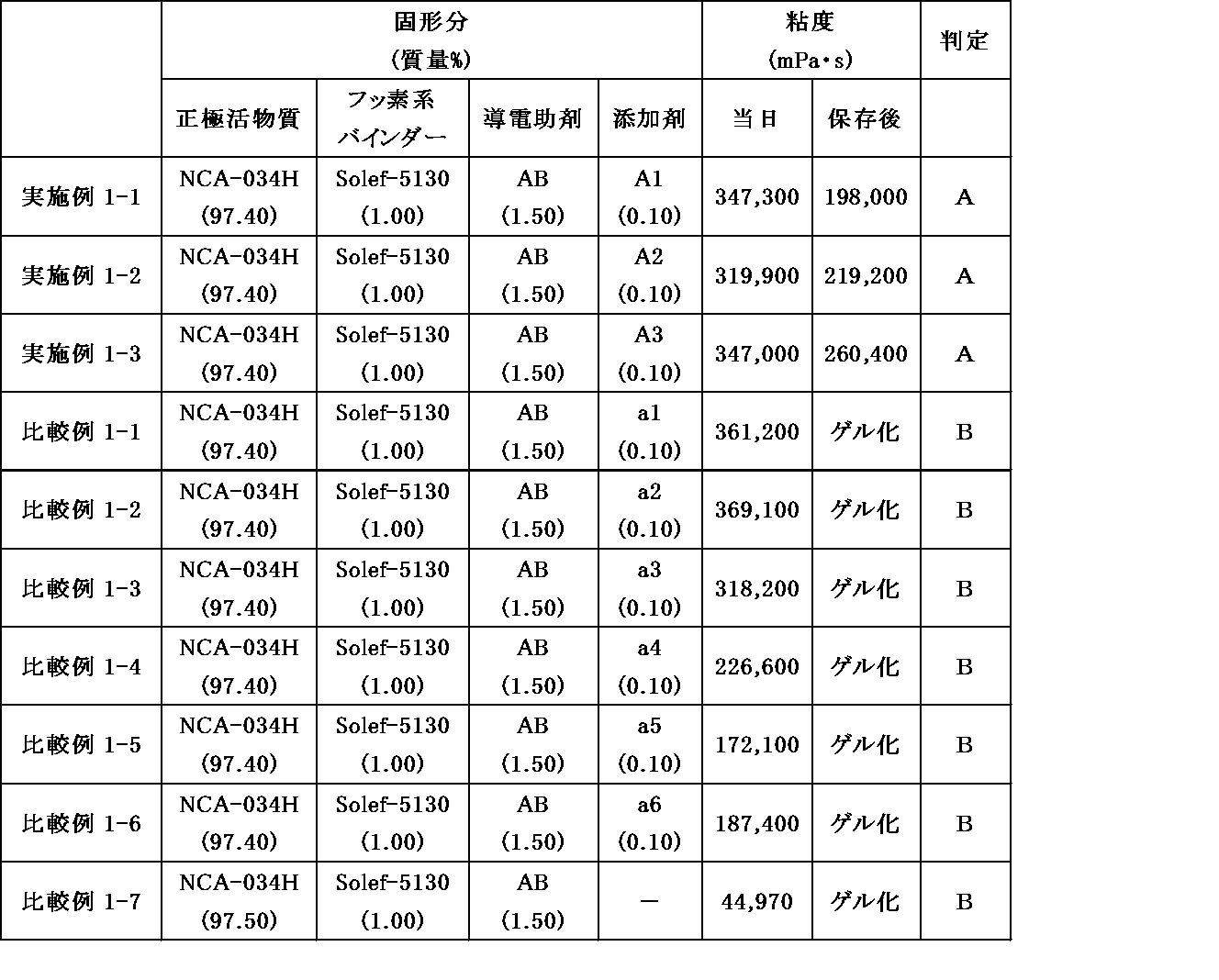
上記表1の結果より、特定のヘテロ環含有化合物を添加した本発明の電極形成用組成物において、増粘やゲル化が抑制され、保存安定性が向上したことが確認された。 The results in Table 1 above confirm that the electrode-forming composition of the present invention to which a specific heterocycle-containing compound has been added suppresses thickening and gelation, and improves storage stability.
Claims (13)
上記ヘテロ環含有化合物が、N原子を2つ以上有する5員環のヘテロ環を有するとともに、ヒドロキシ基およびチオール基からなる群より選ばれる基を少なくとも1つ有するものである電極形成用組成物。 An electrode-forming composition comprising a heterocycle-containing compound, a positive electrode active material, a binder, and a solvent,
The electrode-forming composition, wherein the heterocycle-containing compound has a five-membered heterocycle having two or more N atoms and at least one group selected from the group consisting of a hydroxy group and a thiol group.
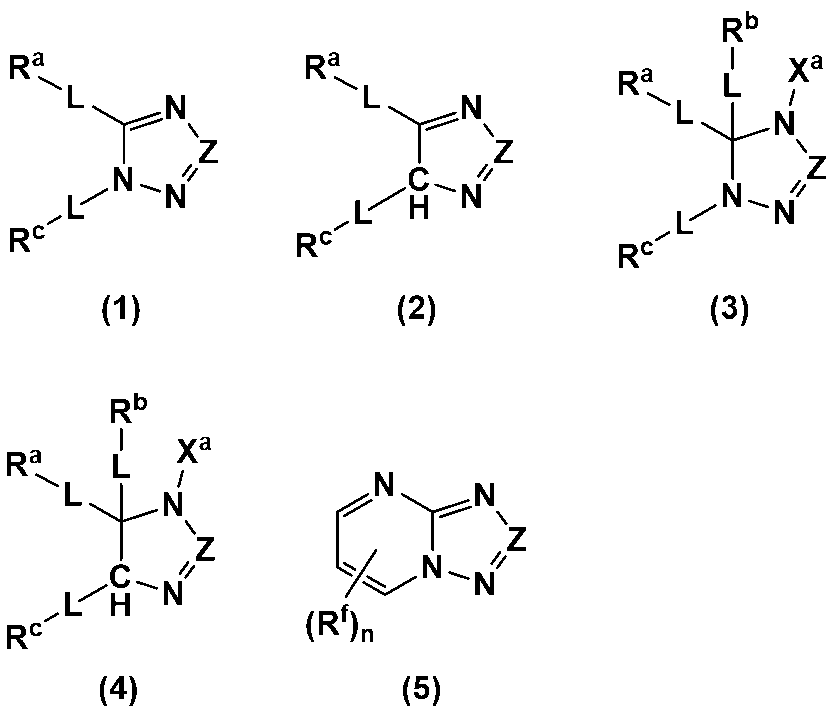
Ra~Rdは、それぞれ独立して、水素原子、ハロゲン原子、カルボキシ基、ヒドロキシ基、チオール基、アミノ基、置換基を有していてもよい炭素数1~6のアルキル基、置換基を有していてもよい炭素数2~6のアルケニル基、または置換基を有していてもよい炭素数6~12のアリール基であり、
RaおよびRcは、互いに結合して置換基を有していてもよい炭素数4~12の環を形成していてもよく、
Lは、それぞれ独立して、単結合、カルボニル基、エーテル結合、エステル結合またはアミド結合であり、
Xaは、それぞれ独立して、水素原子、リチウム原子、ナトリウム原子、置換基を有していてもよい炭素数1~6のアルキル基、置換基を有していてもよい炭素数6~12のアリール基または-CH2NRe 2であり、
Reは、炭素数1~10のアルキル基、炭素数1~10のアルカノール基、炭素数2~10のアルケニル基または炭素数6~12のアリール基であり、
Rfは、それぞれ独立して、ハロゲン原子、カルボキシ基、ヒドロキシ基、アルデヒド基、エステル基、ケトン基、アミノ基、フェニル基、アルコキシシリル基、エポキシ基、カルボン酸クロリド基、チオール基、炭素数1~6のアルキル基、炭素数2~6のアルケニル基、または炭素数6~12のアリール基であり、
nは、0~3の整数である。) 2. The electrode-forming composition according to claim 1, wherein the heterocycle-containing compound is a heterocycle-containing compound represented by any one of the following formulas (1) to (5):
R a to R d each independently represent a hydrogen atom, a halogen atom, a carboxy group, a hydroxy group, a thiol group, an amino group, an alkyl group having 1 to 6 carbon atoms which may have a substituent, an alkenyl group having 2 to 6 carbon atoms which may have a substituent, or an aryl group having 6 to 12 carbon atoms which may have a substituent;
R a and R c may be bonded to each other to form a ring having 4 to 12 carbon atoms which may have a substituent;
Each L is independently a single bond, a carbonyl group, an ether bond, an ester bond, or an amide bond;
X a each independently represents a hydrogen atom, a lithium atom, a sodium atom, an alkyl group having 1 to 6 carbon atoms which may have a substituent, an aryl group having 6 to 12 carbon atoms which may have a substituent, or —CH 2 NR e 2 ;
R e is an alkyl group having 1 to 10 carbon atoms, an alkanol group having 1 to 10 carbon atoms, an alkenyl group having 2 to 10 carbon atoms, or an aryl group having 6 to 12 carbon atoms;
Rf 's each independently represent a halogen atom, a carboxy group, a hydroxy group, an aldehyde group, an ester group, a ketone group, an amino group, a phenyl group, an alkoxysilyl group, an epoxy group, a carboxylic acid chloride group, a thiol group, an alkyl group having 1 to 6 carbon atoms, an alkenyl group having 2 to 6 carbon atoms, or an aryl group having 6 to 12 carbon atoms;
n is an integer from 0 to 3.
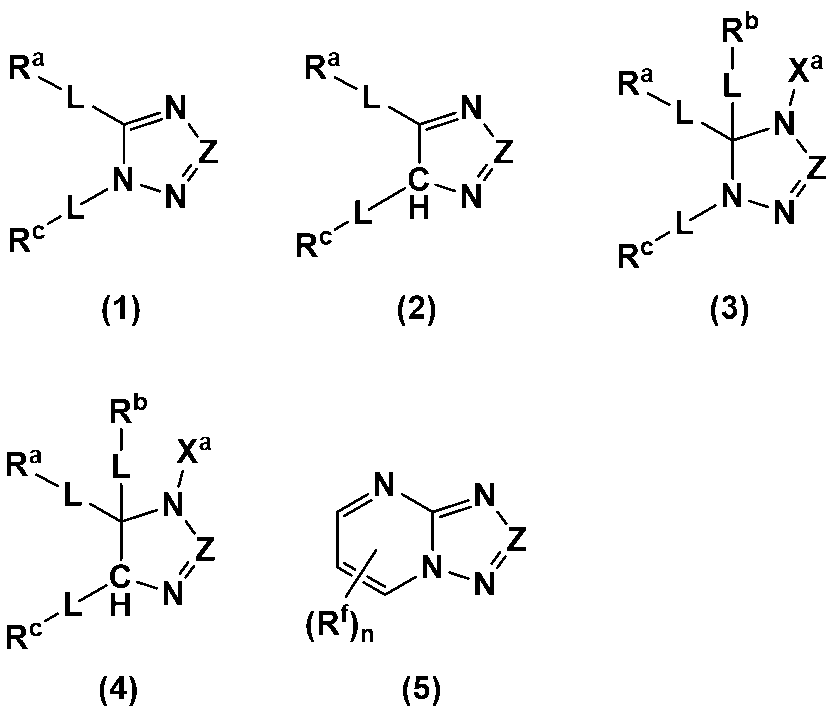
Ra~Rdは、それぞれ独立して、水素原子、ハロゲン原子、カルボキシ基、ヒドロキシ基、チオール基、アミノ基、置換基を有していてもよい炭素数1~6のアルキル基、置換基を有していてもよい炭素数2~6のアルケニル基、または置換基を有していてもよい炭素数6~12のアリール基であり、
RaおよびRcは、互いに結合して置換基を有していてもよい炭素数4~12の環を形成していてもよく、
Lは、それぞれ独立して、単結合、カルボニル基、エーテル結合、エステル結合またはアミド結合であり、
Xaは、それぞれ独立して、水素原子、リチウム原子、ナトリウム原子、置換基を有していてもよい炭素数1~6のアルキル基、置換基を有していてもよい炭素数6~12のアリール基または-CH2NRe 2であり、
Reは、炭素数1~10のアルキル基、炭素数1~10のアルカノール基、炭素数2~10のアルケニル基または炭素数6~12のアリール基であり、
Rfは、それぞれ独立して、ハロゲン原子、カルボキシ基、ヒドロキシ基、アルデヒド基、エステル基、ケトン基、アミノ基、フェニル基、アルコキシシリル基、エポキシ基、カルボン酸クロリド基、チオール基、炭素数1~6のアルキル基、炭素数2~6のアルケニル基、または炭素数6~12のアリール基であり、
nは、0~3の整数である。) An additive for an electrode-forming composition containing a positive electrode active material, a binder, and a solvent, the additive comprising a heterocycle-containing compound represented by any one of the following formulas (1) to (5):
R a to R d each independently represent a hydrogen atom, a halogen atom, a carboxy group, a hydroxy group, a thiol group, an amino group, an alkyl group having 1 to 6 carbon atoms which may have a substituent, an alkenyl group having 2 to 6 carbon atoms which may have a substituent, or an aryl group having 6 to 12 carbon atoms which may have a substituent;
R a and R c may be bonded to each other to form a ring having 4 to 12 carbon atoms which may have a substituent;
Each L is independently a single bond, a carbonyl group, an ether bond, an ester bond, or an amide bond;
X a each independently represents a hydrogen atom, a lithium atom, a sodium atom, an alkyl group having 1 to 6 carbon atoms which may have a substituent, an aryl group having 6 to 12 carbon atoms which may have a substituent, or —CH 2 NR e 2 ;
R e is an alkyl group having 1 to 10 carbon atoms, an alkanol group having 1 to 10 carbon atoms, an alkenyl group having 2 to 10 carbon atoms, or an aryl group having 6 to 12 carbon atoms;
Rf 's each independently represent a halogen atom, a carboxy group, a hydroxy group, an aldehyde group, an ester group, a ketone group, an amino group, a phenyl group, an alkoxysilyl group, an epoxy group, a carboxylic acid chloride group, a thiol group, an alkyl group having 1 to 6 carbon atoms, an alkenyl group having 2 to 6 carbon atoms, or an aryl group having 6 to 12 carbon atoms;
n is an integer from 0 to 3.
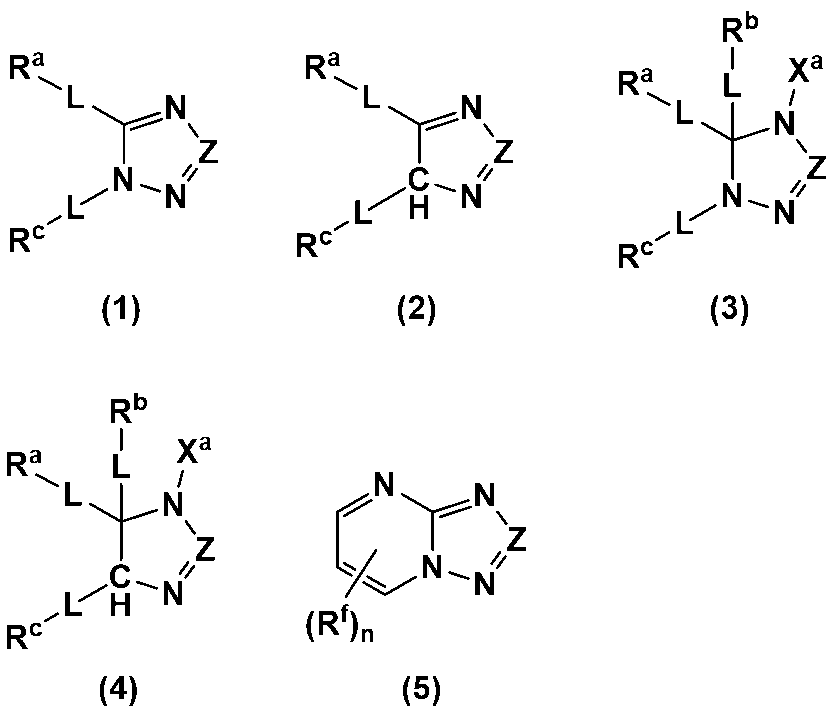
Ra~Rdは、それぞれ独立して、水素原子、ハロゲン原子、カルボキシ基、ヒドロキシ基、チオール基、アミノ基、置換基を有していてもよい炭素数1~6のアルキル基、置換基を有していてもよい炭素数2~6のアルケニル基、または置換基を有していてもよい炭素数6~12のアリール基であり、
RaおよびRcは、互いに結合して置換基を有していてもよい炭素数4~12の環を形成していてもよく、
Lは、それぞれ独立して、単結合、カルボニル基、エーテル結合、エステル結合またはアミド結合であり、
Xaは、それぞれ独立して、水素原子、リチウム原子、ナトリウム原子、置換基を有していてもよい炭素数1~6のアルキル基、置換基を有していてもよい炭素数6~12のアリール基または-CH2NRe 2であり、
Reは、炭素数1~10のアルキル基、炭素数1~10のアルカノール基、炭素数2~10のアルケニル基または炭素数6~12のアリール基であり、
Rfは、それぞれ独立して、ハロゲン原子、カルボキシ基、ヒドロキシ基、アルデヒド基、エステル基、ケトン基、アミノ基、フェニル基、アルコキシシリル基、エポキシ基、カルボン酸クロリド基、チオール基、炭素数1~6のアルキル基、炭素数2~6のアルケニル基、または炭素数6~12のアリール基であり、
nは、0~3の整数である。) An additive solution for an electrode-forming composition containing a positive electrode active material, a binder, and a solvent, the additive solution comprising an additive comprising a heterocycle-containing compound represented by any one of the following formulas (1) to (5) and a solvent.
R a to R d each independently represent a hydrogen atom, a halogen atom, a carboxy group, a hydroxy group, a thiol group, an amino group, an alkyl group having 1 to 6 carbon atoms which may have a substituent, an alkenyl group having 2 to 6 carbon atoms which may have a substituent, or an aryl group having 6 to 12 carbon atoms which may have a substituent;
R a and R c may be bonded to each other to form a ring having 4 to 12 carbon atoms which may have a substituent;
Each L is independently a single bond, a carbonyl group, an ether bond, an ester bond, or an amide bond;
X a each independently represents a hydrogen atom, a lithium atom, a sodium atom, an alkyl group having 1 to 6 carbon atoms which may have a substituent, an aryl group having 6 to 12 carbon atoms which may have a substituent, or —CH 2 NR e 2 ;
R e is an alkyl group having 1 to 10 carbon atoms, an alkanol group having 1 to 10 carbon atoms, an alkenyl group having 2 to 10 carbon atoms, or an aryl group having 6 to 12 carbon atoms;
Rf 's each independently represent a halogen atom, a carboxy group, a hydroxy group, an aldehyde group, an ester group, a ketone group, an amino group, a phenyl group, an alkoxysilyl group, an epoxy group, a carboxylic acid chloride group, a thiol group, an alkyl group having 1 to 6 carbon atoms, an alkenyl group having 2 to 6 carbon atoms, or an aryl group having 6 to 12 carbon atoms;
n is an integer from 0 to 3.
Priority Applications (4)
| Application Number | Priority Date | Filing Date | Title |
|---|---|---|---|
| JP2025519494A JP7736222B2 (en) | 2023-06-15 | 2024-06-10 | Electrode-forming composition and additives |
| CN202480039090.7A CN121311976A (en) | 2023-06-15 | 2024-06-10 | Electrode forming compositions and additives |
| EP24823337.1A EP4730439A1 (en) | 2023-06-15 | 2024-06-10 | Composition for electrode formation and additive |
| KR1020257042731A KR20260025792A (en) | 2023-06-15 | 2024-06-10 | Composition and additive for electrode formation |
Applications Claiming Priority (2)
| Application Number | Priority Date | Filing Date | Title |
|---|---|---|---|
| JP2023-098495 | 2023-06-15 | ||
| JP2023098495 | 2023-06-15 |
Publications (1)
| Publication Number | Publication Date |
|---|---|
| WO2024257721A1 true WO2024257721A1 (en) | 2024-12-19 |
Family
ID=93851983
Family Applications (1)
| Application Number | Title | Priority Date | Filing Date |
|---|---|---|---|
| PCT/JP2024/021021 Ceased WO2024257721A1 (en) | 2023-06-15 | 2024-06-10 | Composition for electrode formation and additive |
Country Status (5)
| Country | Link |
|---|---|
| EP (1) | EP4730439A1 (en) |
| JP (1) | JP7736222B2 (en) |
| KR (1) | KR20260025792A (en) |
| CN (1) | CN121311976A (en) |
| WO (1) | WO2024257721A1 (en) |
Citations (10)
| Publication number | Priority date | Publication date | Assignee | Title |
|---|---|---|---|---|
| JPH09306502A (en) | 1996-05-17 | 1997-11-28 | Kureha Chem Ind Co Ltd | Electrode mix for nonaqueous battery, and nonaqueous battery |
| JPH1079244A (en) | 1996-09-04 | 1998-03-24 | Toray Ind Inc | Electrode and non-aqueous electrolyte secondary battery using the same |
| JP2000090917A (en) | 1998-09-18 | 2000-03-31 | Shin Kobe Electric Mach Co Ltd | Method for producing positive electrode plate for lithium ion secondary battery |
| JP2006286240A (en) | 2005-03-31 | 2006-10-19 | Toyo Tanso Kk | Positive electrode active material and manufacturing method thereof |
| JP2012256505A (en) * | 2011-06-08 | 2012-12-27 | Sony Corp | Secondary battery, electronic device, electric power tool, electric vehicle, and power storage system |
| WO2017034001A1 (en) | 2015-08-27 | 2017-03-02 | 住友金属鉱山株式会社 | Positive electrode active material for nonaqueous electrolyte secondary cell, method for manufacturing same, and nonaqueous electrolyte secondary cell |
| JP2017152351A (en) * | 2016-02-26 | 2017-08-31 | 住友電気工業株式会社 | Sodium ion secondary battery |
| JP2019515481A (en) * | 2016-05-12 | 2019-06-06 | サムスン エスディアイ カンパニー, リミテッドSamsung Sdi Co., Ltd. | Protective negative electrode for lithium metal battery, and lithium metal battery containing the same |
| JP2019121471A (en) | 2017-12-28 | 2019-07-22 | 花王株式会社 | Positive electrode mixture paste for lithium ion battery, and manufacturing method thereof |
| JP2023509946A (en) * | 2020-01-10 | 2023-03-10 | ソルヴェイ(ソシエテ アノニム) | Electrochemical device with at least one gelled electrode |
-
2024
- 2024-06-10 KR KR1020257042731A patent/KR20260025792A/en active Pending
- 2024-06-10 JP JP2025519494A patent/JP7736222B2/en active Active
- 2024-06-10 EP EP24823337.1A patent/EP4730439A1/en active Pending
- 2024-06-10 WO PCT/JP2024/021021 patent/WO2024257721A1/en not_active Ceased
- 2024-06-10 CN CN202480039090.7A patent/CN121311976A/en active Pending
Patent Citations (10)
| Publication number | Priority date | Publication date | Assignee | Title |
|---|---|---|---|---|
| JPH09306502A (en) | 1996-05-17 | 1997-11-28 | Kureha Chem Ind Co Ltd | Electrode mix for nonaqueous battery, and nonaqueous battery |
| JPH1079244A (en) | 1996-09-04 | 1998-03-24 | Toray Ind Inc | Electrode and non-aqueous electrolyte secondary battery using the same |
| JP2000090917A (en) | 1998-09-18 | 2000-03-31 | Shin Kobe Electric Mach Co Ltd | Method for producing positive electrode plate for lithium ion secondary battery |
| JP2006286240A (en) | 2005-03-31 | 2006-10-19 | Toyo Tanso Kk | Positive electrode active material and manufacturing method thereof |
| JP2012256505A (en) * | 2011-06-08 | 2012-12-27 | Sony Corp | Secondary battery, electronic device, electric power tool, electric vehicle, and power storage system |
| WO2017034001A1 (en) | 2015-08-27 | 2017-03-02 | 住友金属鉱山株式会社 | Positive electrode active material for nonaqueous electrolyte secondary cell, method for manufacturing same, and nonaqueous electrolyte secondary cell |
| JP2017152351A (en) * | 2016-02-26 | 2017-08-31 | 住友電気工業株式会社 | Sodium ion secondary battery |
| JP2019515481A (en) * | 2016-05-12 | 2019-06-06 | サムスン エスディアイ カンパニー, リミテッドSamsung Sdi Co., Ltd. | Protective negative electrode for lithium metal battery, and lithium metal battery containing the same |
| JP2019121471A (en) | 2017-12-28 | 2019-07-22 | 花王株式会社 | Positive electrode mixture paste for lithium ion battery, and manufacturing method thereof |
| JP2023509946A (en) * | 2020-01-10 | 2023-03-10 | ソルヴェイ(ソシエテ アノニム) | Electrochemical device with at least one gelled electrode |
Also Published As
| Publication number | Publication date |
|---|---|
| EP4730439A1 (en) | 2026-04-22 |
| JP7736222B2 (en) | 2025-09-09 |
| CN121311976A (en) | 2026-01-09 |
| JPWO2024257721A1 (en) | 2024-12-19 |
| KR20260025792A (en) | 2026-02-24 |
Similar Documents
| Publication | Publication Date | Title |
|---|---|---|
| CN101379653B (en) | Lithium secondary battery using ionic liquid | |
| WO2015037367A1 (en) | Nonaqueous-electrolyte secondary battery | |
| KR20210127329A (en) | Electrolyte for lithium-sulfur battery and lithium-sulfur battery comprising the same | |
| WO2019065288A1 (en) | Nonaqueous electrolyte for lithium ion secondary batteries, and lithium ion secondary battery using same | |
| WO2023282246A1 (en) | Composition for forming electrode | |
| WO2024150446A1 (en) | Composition for electrode formation | |
| JP7736222B2 (en) | Electrode-forming composition and additives | |
| JP7694857B2 (en) | Electrode-forming composition and additives | |
| JP7736223B2 (en) | Electrode-forming composition and additives | |
| WO2013172222A1 (en) | Electricity storage device, positive electrode and porous sheet used in electricity storage device, and method for improving dope rate | |
| WO2023162942A1 (en) | Electrode forming composition | |
| WO2024262372A1 (en) | Composition for forming electrode and gelation inhibitor | |
| WO2024150813A1 (en) | Composition for electrode formation and additive | |
| JP7776046B2 (en) | Electrode-forming composition, additive, and gelation inhibitor | |
| JP7776045B2 (en) | Electrode-forming composition, additive, and gelation inhibitor | |
| JP7800783B2 (en) | Electrode-forming composition, additive, and gelation inhibitor | |
| WO2025263249A1 (en) | Composition for forming electrode, additive, and gelling inhibitor | |
| WO2026053578A1 (en) | Composition for electrode formation, additive, and gelation inhibitor | |
| WO2013172223A1 (en) | Dual-mode electricity storage device | |
| WO2023282248A1 (en) | Composition for electrode formation | |
| CN117480633A (en) | Composition for electrode formation | |
| CN120149554A (en) | Non-aqueous electrolyte, electrochemical device and electronic device | |
| WO2014065198A1 (en) | Cation movement-type electricity storage device, electrode and porous sheet used in same, and dope rate improvement method |
Legal Events
| Date | Code | Title | Description |
|---|---|---|---|
| 121 | Ep: the epo has been informed by wipo that ep was designated in this application |
Ref document number: 24823337 Country of ref document: EP Kind code of ref document: A1 |
|
| WWE | Wipo information: entry into national phase |
Ref document number: 2025519494 Country of ref document: JP |
|
| WWE | Wipo information: entry into national phase |
Ref document number: 2024823337 Country of ref document: EP |
|
| NENP | Non-entry into the national phase |
Ref country code: DE |
|
| ENP | Entry into the national phase |
Ref document number: 2024823337 Country of ref document: EP Effective date: 20260115 |
|
| ENP | Entry into the national phase |
Ref document number: 2024823337 Country of ref document: EP Effective date: 20260115 |
|
| ENP | Entry into the national phase |
Ref document number: 2024823337 Country of ref document: EP Effective date: 20260115 |
|
| ENP | Entry into the national phase |
Ref document number: 2024823337 Country of ref document: EP Effective date: 20260115 |
|
| WWP | Wipo information: published in national office |
Ref document number: 2024823337 Country of ref document: EP |