WO2024259211A2 - Compositions, systems and methods for recovering a metal from an aqueous solution - Google Patents
Compositions, systems and methods for recovering a metal from an aqueous solution Download PDFInfo
- Publication number
- WO2024259211A2 WO2024259211A2 PCT/US2024/033976 US2024033976W WO2024259211A2 WO 2024259211 A2 WO2024259211 A2 WO 2024259211A2 US 2024033976 W US2024033976 W US 2024033976W WO 2024259211 A2 WO2024259211 A2 WO 2024259211A2
- Authority
- WO
- WIPO (PCT)
- Prior art keywords
- adsorption
- solution
- eluate
- concentration
- ppmw
- Prior art date
- Legal status (The legal status is an assumption and is not a legal conclusion. Google has not performed a legal analysis and makes no representation as to the accuracy of the status listed.)
- Ceased
Links
Classifications
-
- C—CHEMISTRY; METALLURGY
- C22—METALLURGY; FERROUS OR NON-FERROUS ALLOYS; TREATMENT OF ALLOYS OR NON-FERROUS METALS
- C22B—PRODUCTION AND REFINING OF METALS; PRETREATMENT OF RAW MATERIALS
- C22B3/00—Extraction of metal compounds from ores or concentrates by wet processes
- C22B3/20—Treatment or purification of solutions, e.g. obtained by leaching
- C22B3/22—Treatment or purification of solutions, e.g. obtained by leaching by physical processes, e.g. by filtration, by magnetic means, or by thermal decomposition
- C22B3/24—Treatment or purification of solutions, e.g. obtained by leaching by physical processes, e.g. by filtration, by magnetic means, or by thermal decomposition by adsorption on solid substances, e.g. by extraction with solid resins
-
- C—CHEMISTRY; METALLURGY
- C22—METALLURGY; FERROUS OR NON-FERROUS ALLOYS; TREATMENT OF ALLOYS OR NON-FERROUS METALS
- C22B—PRODUCTION AND REFINING OF METALS; PRETREATMENT OF RAW MATERIALS
- C22B26/00—Obtaining alkali, alkaline earth metals or magnesium
- C22B26/10—Obtaining alkali metals
- C22B26/12—Obtaining lithium
-
- C—CHEMISTRY; METALLURGY
- C22—METALLURGY; FERROUS OR NON-FERROUS ALLOYS; TREATMENT OF ALLOYS OR NON-FERROUS METALS
- C22B—PRODUCTION AND REFINING OF METALS; PRETREATMENT OF RAW MATERIALS
- C22B3/00—Extraction of metal compounds from ores or concentrates by wet processes
- C22B3/20—Treatment or purification of solutions, e.g. obtained by leaching
- C22B3/26—Treatment or purification of solutions, e.g. obtained by leaching by liquid-liquid extraction using organic compounds
-
- C—CHEMISTRY; METALLURGY
- C22—METALLURGY; FERROUS OR NON-FERROUS ALLOYS; TREATMENT OF ALLOYS OR NON-FERROUS METALS
- C22B—PRODUCTION AND REFINING OF METALS; PRETREATMENT OF RAW MATERIALS
- C22B3/00—Extraction of metal compounds from ores or concentrates by wet processes
- C22B3/20—Treatment or purification of solutions, e.g. obtained by leaching
- C22B3/42—Treatment or purification of solutions, e.g. obtained by leaching by ion-exchange extraction
-
- C—CHEMISTRY; METALLURGY
- C22—METALLURGY; FERROUS OR NON-FERROUS ALLOYS; TREATMENT OF ALLOYS OR NON-FERROUS METALS
- C22B—PRODUCTION AND REFINING OF METALS; PRETREATMENT OF RAW MATERIALS
- C22B3/00—Extraction of metal compounds from ores or concentrates by wet processes
- C22B3/20—Treatment or purification of solutions, e.g. obtained by leaching
- C22B3/44—Treatment or purification of solutions, e.g. obtained by leaching by chemical processes
-
- Y—GENERAL TAGGING OF NEW TECHNOLOGICAL DEVELOPMENTS; GENERAL TAGGING OF CROSS-SECTIONAL TECHNOLOGIES SPANNING OVER SEVERAL SECTIONS OF THE IPC; TECHNICAL SUBJECTS COVERED BY FORMER USPC CROSS-REFERENCE ART COLLECTIONS [XRACs] AND DIGESTS
- Y02—TECHNOLOGIES OR APPLICATIONS FOR MITIGATION OR ADAPTATION AGAINST CLIMATE CHANGE
- Y02P—CLIMATE CHANGE MITIGATION TECHNOLOGIES IN THE PRODUCTION OR PROCESSING OF GOODS
- Y02P10/00—Technologies related to metal processing
- Y02P10/20—Recycling
Definitions
- the disclosure relates to generally to compositions, systems and methods for recovering a metal (e.g., Li) from an aqueous solution (e.g., a brine solution).
- a metal e.g., Li
- aqueous solution e.g., a brine solution
- FIG. 1 shows a schematic of a direct lithium extraction system including several unit operations in series.
- adsorption eluates suitable for use as a feed to a solvent extraction system.
- the adsorption eluates can include a solvent and one or more target metals dissolved in the solvent.
- the one or more target metals can include lithium.
- the one or more target metals is at a concentration suitable for recovery of the one or more target metals by solvent extraction.
- the adsorption eluate is at a pH suitable for recovery of the one or more target metals by solvent extraction.
- the adsorption eluate is at a temperature suitable for recovery of the one or more target metals by solvent extraction.
- the methods may include contacting the aqueous metal solution with an adsorption material, wherein the adsorption material binds to one or more metals to obtain a first processed metal solution; extracting the first processed metal solution with an organic solvent to obtain a purified metal solution, wherein the purified metal solution comprises a higher weight percentage of the one or more target metals than the aqueous metal solution, or a lower weight percentage of one or more impurities than the aqueous metal solution.
- the methods may include contacting the lithium containing solution with an adsorption material, wherein the adsorption material binds to the lithium to obtain a first processed solution; and extracting the first processed solution with an organic solvent to obtain a purified solution, wherein the purified solution comprises a higher weight percentage of the lithium than the lithium containing solution or a lower weight percentage of one or more impurities than the lithium containing solution.
- adsorption system comprising one or more adsorption materials
- solvent extraction system in fluid communication with the adsorption system, wherein the adsorption system comprises an inlet for receiving a fluid comprising one or more target metals and the solvent extraction system comprises an outlet for flowing the purified target metal solution.
- a depurator vessel includes a single depurator vessel as well as more than one depurator vessel.
- the term “about” in connection with a measured quantity refers to the normal variations in that measured quantity as expected by one of ordinary skill in the art in making the measurement and exercising a level of care commensurate with the objective of measurement and the precision of the measuring equipment.
- the term “about” includes the recited number ⁇ 10%, such that “about 10” would include from 9 to 11.
- the term “at least about” in connection with a measured quantity refers to the normal variations in the measured quantity, as expected by one of ordinary skill in the art in making the measurement and exercising a level of care commensurate with the objective of measurement and precisions of the measuring equipment and any quantities higher than that.
- the term “at least about” includes the recited number minus 10% and any quantity that is higher such that “at least about 10” would include 9 and anything greater than 9. This term can also be expressed as “about 10 or more.”
- the term “less than about” typically includes the recited number plus 10% and any quantity that is lower such that “less than about 10” would include 11 and anything less than 11. This term can also be expressed as “about 10 or less.”
- Weight percent if not otherwise indicated, is based on an entire composition free of any volatiles, that is, based on dry solids content.
- metal refers to the recited metal element and includes compounds (other than salts) containing the metal, salts containing the metal and/or combinations thereof.
- lithium refers to lithium compounds, lithium salts and/or lithium- containing molecules.
- one or more target metals which is sometimes used alone for brevity and readability, refers to one or more target metals, compounds thereof, salts thereof, or combinations thereof.
- lithium, lithium ions, lithium carbonate and/or mixtures of two or more of the foregoingReference throughout this specification to a chemical element or “metal” refers to compounds, salts and molecules containing the chemical element or metal.
- lithium refers to lithium compounds, lithium salts and lithium-containing molecules.
- trace or “trace amount” as used herein refers to the amount of a component in a solution being less than about 1 part per million by weight (ppmw).
- the first unit operation in a series of operations for removing one or more target metal ion from an aqueous solution including, but not limited to: 1) it cost effectively separates the one or more target metal ion from one or more other ions (e.g., cations) in solution; 2) it sends a solution to a second, downstream operation where the target metal is concentrated at a very high selectivity; and 3) the first process operation reuses, to some extent, a solution from the second operation after the second operation has processed the upstream solution.
- ions e.g., cations
- aqueous solution e.g., a brine solution
- processing operations can be combined to selectively isolate metal ions from the raw brine solution, then concentrate and optionally convert the metal ions into a more valuable product (e g., lithium hydroxide).
- the one or more target metals is lithium, calcium, magnesium, sulfur, boron, sodium and/or potassium.
- Embodiments described herein may include an adsorption system, for example, an ion adsorption (IX) system, and solvent extraction system (SX) to selectively isolate and concentrate metal ions, in the case of lithium, for example, as either lithium sulfate or lithium chloride. Further processing may be conducted to convert the metal chloride or sulfate salts to a hydroxide salt such as lithium hydroxide.
- IX ion adsorption
- SX solvent extraction system
- systems for recovering a target metal from an aqueous metal solution include an adsorption system and a solvent extraction system downstream from the adsorption system.
- Suitable adsorption systems include one or more adsorbent media (also referred to herein as an “adsorbent” or “adsorption material”) contained within a housing, pond, column(s), bed(s) and/or packed bed(s).
- Adsorption such as ion exchange, intercalation, and/or physical/chemical adsorption, is suitable to capture one or more target metals (e.g., lithium) from a solution.
- the aqueous feed solutions to adsorption operations according to embodiments herein may contain the one or more target metal (e.g., lithium) at a concentration of less than about 100 ppm, less than about 500 ppm, greater than about 2,000 ppm, about 100 ppm to about 5,000 ppm, or any individual value or subrange within these ranges.
- suitable concentrations of the one or more target metals are dependent on the concentration of the one or more target metals (e.g., lithium) in the brine as well as the concentration of potentially interfering species (e.g., impurity metals), such as magnesium (Mg), calcium (Ca), and boron (B).
- impurity metals such as magnesium (Mg), calcium (Ca), and boron (B).
- concentration of the one or more target metals is low (e.g., less than about 100 ppm) and the concentration of one or more impurity metals is substantially higher, the brine may require a pre-treatment step (e.g., adsorption or solvent extraction) to reduce the concentration of impurity metals in the feed solution.
- the adsorption operation employs an adsorbent material that selectively adsorbs the one or more target metals onto the material.
- the adsorption media is selective for one or more metals in an aqueous metal solution.
- the adsorption media may intercalate lithium compared to other ions at a ratio of 10: 1, that is, the adsorption media may comprise a resin that intercalates at least 10 lithium ions for every one non-lithium cation.
- the adsorption media may be in the form of sub-units, particles, granules, spheres, microspheres, extrudates, tablets, nanotubes, plates, resin or combinations of any two or more thereof.
- Suitable adsorption materials include, but are not limited to, aluminum trihydroxide, boron trihydroxide, chromium trihydroxide, molybdenum trihydroxide, lanthanum trihydroxide, rhodium trihydroxide, thulium trihydroxide, zeolite molecular sieve, date pits impregnated with cellulose nanocrystals and ionic liquid, functionalized titanate nanotubes, polymeric porous microspheres with crown ether, granulated chitosan-lithium manganese oxide, manganese-based spinel compounds, modified activated carbon with multiple MnCh nanocomposite ratios, natural and/or synthetic zeolites applying poly(acrylic acid), MnCh-O.dFhO ion sieve, 1 D LiM C nanorods, nano-lithium ion sieves, intercalated compositions thereof, or combinations of any two or more thereof.
- the adsorbent may be supported on a variety of substrates.
- Suitable substrates may be in the form of sub-units, particles, granules, spheres, microspheres, extrudates, tablets, nanotubes, plates, or any combination thereof.
- Suitable support materials include, but are not limited to, carbon, a polymeric material, silica, alumina, or combinations of any two or more thereof.
- Substrates such as polymer beads may withstand high temperature aqueous solutions (e.g., >32°C, >65°C) without becoming friable.
- the adsorbent is an intercalated aluminum tri-hydroxide.
- the adsorbent is chosen to have a high selectively for the one or more target metals (e.g., lithium).
- the selectivity for the one or more target metal (e.g., lithium) is suitably greater than about 5: 1 absolute relative to other ions, especially other cations, or any individual value or sub-range within this range.
- the adsorbent is supported on one or more substrates including, but not limited to, carbon particles, polymer beads, silica particles, alumina particles, or combinations of any two or more thereof.
- an adsorbent is employed that withstands temperatures from 65-100°C (e.g., a thermally stable intercalated aluminum tri-hydroxide).
- the thermally stable intercalated aluminum tri-hydroxide adsorbent is supported on polymer beads, which function in high temperature aqueous solutions without becoming friable.
- adsorbents for use in systems, apparatus and methods described herein may be contained in a fixed bed.
- An advantage of using a fixed bed process is the relatively inexpensive equipment and the simplicity of the process.
- a simulated moving bed (SMB) system may provide better performance than cycled fixed-bed systems.
- an eluant is passed through the material.
- Suitable eluants are aqueous solvents such as water-based solutions containing one or more metals such as lithium, calcium, magnesium, potassium, boron, sodium, etc.
- the one or more target metals (e.g., lithium) in the eluant may be at a high concentration (e.g., about 100 ppmw to about 1,000 ppmw) because when the concentration is too low, an adsorbent material such as aluminum tri-hydroxide may become less stable while the aluminum oxide lattices begins to degrade.
- the water extraction and purification equipment may be downsized, replaced, and/or eliminated together with recycling of the aqueous by combining the adsorption operation with one or more downstream solvent extraction operations. Since solvent extraction is typically a proton exchange, the combination with adsorption can reduce the overall acid/base consumption in the solvent extraction process.
- the eluant used for the adsorbent material is a raffinate stream from a solvent extraction system.
- the one or more solvent extraction operations in the systems according to embodiments herein are suitable to receive the eluate from the adsorption operation.
- each pass successively increases the concentration of one or more metals such as lithium (e.g., lithium salts) in the aqueous. This is beneficial not only to elution of the adsorbent, but also ultimately to increase the total recovery of one or more target metals.
- this elution loop which supplies the aqueous feed to the solvent extraction operation and receives the raffinate stream for elution, is carefully controlled to provide a target concentration (e g., about 100 ppmw to about 1,000 ppmw) of one or more metal (e.g., lithium) to the loaded adsorbent as eluant.
- a target concentration e.g., about 100 ppmw to about 1,000 ppmw
- metal e.g., lithium
- Suitable solvent extraction systems for combination with adsorption operations to selectively extract one or more target metals (e.g., lithium) from an aqueous solution, are dynamic systems of extraction, scrubbing, and stripping stages. Each of these stages receives an aqueous solution and contacts it with an organic solution containing an organic extractant (e.g., a metal ion extracting molecule). The extraction stages extract the one or more target metals from the feed solution. The scrubbing stages reduce transfer of aqueous entrainment and impurities in the organic solution. The stripping stages concentrate the one or more target metals (e.g., metal ions) with the desired counterion (e.g. LiCl or Li2SO4).
- the desired counterion e.g. LiCl or Li2SO4
- Equation 1 Depending on the pH of the aqueous solution and the pH at which the one or more target metals (e.g., metal ions, lithium, lithium ions, etc.) are extracted, and based on the pH isotherm of the individual extractant, the reaction will proceed according to Equation 1 (using lithium as an example).
- the one or more target metals e.g., metal ions, lithium, lithium ions, etc.
- the anion counterion to the lithium may be chloride or sulfate and is equivalent on the respective sides of the extraction and strip equations.
- the selectivity of solvent extraction for lithium over other cations is very high.
- the majority of the impurities in the eluant come from the residual interstitial feed solution in the resin. These impurities are removable in a second processing step.
- solvent extraction may be used to accomplish both.
- the eluate from the adsorption operation is the feed to the solvent extraction operation.
- Many solvent extraction reagents have a relatively poor separation of divalent cations from monovalent cations such as lithium.
- the divalent cations may be pre-removed very selectively from the eluate feed followed by an efficient separation of lithium from other monovalent cations. All of this may be accomplished using the same reagent at different pH.
- the solvent extraction operation may employ an organic solvent to contact the aqueous solution containing the one or more target metals.
- the organic solvent used in the solvent extraction process may further include an extractant.
- the extractant is a compound that binds to the one or more target metals, such as lithium.
- the extractant may then be treated with another compound, such as an acid, a base, or any other ion that causes the release of the target metal.
- the extractant may be used to help eliminate boron from the composition.
- the extractants used herein may be phosphorus-based extractants.
- an intermediate solution for example, between the adsorption system and the solvent extraction system
- one of the two processes will be less efficient and result in higher operating costs.
- the goal of the optimization is to reduce or minimize additional processing of a solution between operations.
- reduced additional processing may include treating a small bleed stream.
- the solution between two processes is recycled and a buildup of impurities can occur. Additional processing such as a bleed stream is one way to minimize additional processing to keep the intermediate solution within favorable specifications.
- reduced or minimized additional processing can include treating water (e.g., reverse osmosis, impurity rejection, etc.), or bleeding the solution and replacing it with water having fewer impurities.
- the disclosed embodiments are configured to generate optimized intermediate streams between unit operations (e.g., adsorption and solvent extraction) to ensure the highest performance and efficiency of each unit operation.
- An intermediate solution may be optimized to solve industry problems by analyzing the benefits and limitations of an upstream process and a downstream process.
- the optimal intermediate solution is generated by running two processes in such a way that the economic and environmental benefit of both processes is optimized to the fullest potential such that the processes work together in the most efficient manner.
- An upstream process can be any suitable processing step that yields an optimized solution for a downstream unit operation.
- processes include but are not limited to, adsorption, solvent extraction, membrane separation, electrodialysis, selective chemical precipitation, and so on. Each of these processes provides benefits for lithium extraction, nonetheless, each should be optimized for efficiency and performance.
- the first unit operation in a series of operations for removing one or more target metals ion from an aqueous solution including, but not limited to: 1) it cost effectively separates the one or more target metals ion from one or more other ions (e.g., cations) in solution; 2) it sends a solution to a second, downstream operation where the target metals is concentrated at a high selectivity; and 3) the upstream process operation reuses, to some extent, a solution from the downstream operation after the downstream operation has processed the upstream solution.
- solutions When solutions are returned from a second, downstream process to a first, upstream process they may be reused in the first process.
- the returned solution can be used as a process solution for the first process or it can be utilized somewhere else in the system, for example, as process water. This results in a significantly lower environmental impact than conventional processes that typically do not reuse or recycle solutions such as water.
- composition of an optimal intermediate solution for example, cation concentration (i.e., lithium, calcium, magnesium, potassium, boron, sodium, etc.), pH, and temperature.
- anion concentration e.g., halides, sulfates, and nitrates
- the entire composition of the solution(s) flowing through the system and unit operations can be taken into consideration as the solution(s) may be reprocessed multiple times and may be used by one or more unit operations. Individual parameters of the solution(s) also can be monitored and controlled to provide cost-effective operations for both processes.
- the pH of an optimized intermediate solution may remain substantially constant during processing.
- the pH may be dependent on an isotherm for a target metal.
- Receiving a solution at a pH that is higher than what is proscribed by the isotherm will result in an optimized extraction system.
- the pH of the received solution should not intersect the pH of the extraction of an undesired metal.
- Each target metal species forms a stable complex at different pH (thermodynamically) to form an isotherm curve of extraction for that target metal species.
- the pH of the received solution is at a value to achieve maximum complexation without complexing the species at a higher pH/isotherm.
- An optimal system may be one where, after a complete cycle of processing, the solution pH is largely unchanged so that after multiple cycles the need for pH adj ustment is minimized.
- An optimized intermediate solution may contain the one or more target metals in concentrated or dilute form, depending on the feed, but the concentration is still within an optimal range for downstream processing.
- the one or more target metals can be concentrated or diluted depending on the needs of the downstream processing step.
- the one or more target metals concentration remains largely unchanged.
- a solution containing potassium, boron and/or sodium may have an insignificant impact on a downstream process.
- the upstream process may leave these elements at unchanged concentrations or, if they negatively impact the downstream process, these elements can be removed, for example, by using a separate unit operation.
- the temperature of the optimized intermediate solution may not be dependent on the upstream process and when exiting the upstream process, the optimized intermedia solution may be in an optimal range for a downstream process.
- the downstream operation may be unable to operate efficiently if the temperature of the incoming solution is too high (e.g., >32°C).
- the temperature of the incoming solution is too high (e.g., >32°C).
- a lithium brine when recovered from a reservoir it may be at an elevated temperature from the natural environment (e.g., at a temperature of about 30°C to about 65°C, >32°C or >65°C, or any individual value or sub-range within these ranges).
- the first, upstream process should be configured to treat a high temperature solution, while generating a target metal solution at a reduced temperature for further processing in the second downstream operation that cannot process the solution at the original high temperature.
- This initial processing may be conducted in a manner such that the initial aqueous solution does not require cooling of the entire aqueous solution.
- an optimized intermediate solution is one where an adsorption system is used to create an optimal feed solution for a solvent extraction system.
- the adsorption system reduces the impurities that negatively impact the costs of solvent extraction.
- the solvent extraction system separates one or more target metal ions from the solution and sends the target metal depleted solution back to the adsorption operation for reuse. Any target metal that is not recovered by solvent extraction is then returned to the adsorption process where it does not leave the stream and can eventually be recovered by, for example, adsorption or solvent extraction in subsequent processing.
- an optimized intermediate solution is one where an adsorption, solvent extraction and electrodialysis system is used to create an optimal feed solution for an ion exchange system.
- the adsorption system can remove a majority of metal impurities from the initial aqueous metal solution that can negatively impact the ion exchange system downstream.
- a membrane system is used to create an optimized intermediate solution to be received by a solvent extraction system.
- the membrane system reduces the impurities that, if present, would increase the processing costs in the solvent extraction operation.
- the aqueous metal solution may be more cost effective to treat in the membrane operation than if the aqueous metal solution was sent directly to the solvent extraction process.
- the target metal depleted solution exiting the solvent extraction system may then be returned to the membrane operation for reuse.
- a first solvent extraction system may be used to create an optimized feed solution for a second solvent extraction system.
- the first solvent extraction system can remove impurities (e.g., magnesium and calcium) from the target metal (e.g., lithium) and then transfer the purified solution containing the target metal to a second solvent extraction system that selectively extracts the target metal from any remaining metals.
- the target metal depleted solution may be returned to the first solvent extraction process for reuse or returned to the aqueous metal solution reservoir.
- an optimized intermediate solution is one where a solvent extraction system is used to create an optimal feed solution for a membrane system.
- the solvent extraction system is used to remove or reduce metal impurities that negatively impact membrane processing.
- the solvent extraction system can be operated in such a way that the solution leaving the solvent extraction system can be sent through a membrane for cheaper production of the target metal.
- the depleted target metal solution can then be returned the to solvent extraction system for reuse.
- FIG. 1 shows an embodiment of a system 100 for recovering a target metal (e.g., lithium) from an aqueous metal solution (e.g., abrine) including several unit operations (e.g., direct lithium extraction operations) in series.
- the aqueous metal solution is a brine retrieved from a natural source or received from a recycle stream or industrial wastewater.
- systems as described herein can include two or more of the described unit operations.
- Exemplary system 100 includes an adsorption system 102, a solvent extraction system 104, a bipolar electrodialysis (BPD) system 106, and a crystallization system 108.
- BPD bipolar electrodialysis
- the solution 110 exiting the adsorption operation 102 may be considered an optimized intermediate solution and enters the solvent extraction operation 104.
- a target metal or impurity metal depleted solution 112 returns to the adsorption operation 102 for reuse.
- An organic metal solution 114 flows to the BPD system 106 for processing.
- the target metal depleted solution 116 returns to solvent extraction system 104 for reuse, and the target metal rich solution 118 flows to crystallization system 108.
- target metal rich product stream 124 exits crystallization system 108.
- Solutions 110, 112, 114, 116, 118, 120, 122 exiting and/or entering an operation 102, 104, 106, 108 may be optimized intermediate solutions such that they produce optimal performance in a subsequent operation 104, 106, 108. This allows the benefits of both operations, upstream and downstream, to be maximized. The outcome is more economical production of a target metal (e.g., lithium) with a lower environmental impact.
- Other embodiments of system 100 may include any two or more of the disclosed unit operations.
- systems for recovering a target metal from an aqueous metal solution include an adsorption system and a solvent extraction system downstream from the adsorption system.
- Suitable adsorption systems include one or more adsorbent media (also referred to herein as an “adsorbent” or “adsorption material”) contained within a housing, pond, column(s), bed(s) and/or packed bed(s).
- Adsorption may be used to prepare an eluant optimized for solvent extraction of a target metal.
- the selectivity of adsorption for a target metal over other ions (e.g., cations) can be very high. Selectivity can be determined through, for example, loading tests.
- the lithium is intercalated almost exclusively in the adsorbent.
- lithium may load onto an adsorbent in trace amounts to over 5 mg Li/g adsorbent.
- a majority of impurities in the eluant may be from a residual interstitial feed solution in the adsorption media.
- the adsorption media is selective for one or more metal in an aqueous metal solution.
- the adsorption media may be in the form of sub-units, particles, granules, spheres, microspheres, extrudates, tablets, nanotubes, plates, resin or combinations of any two or more thereof.
- Suitable adsorption materials includes, but are not limited to, aluminum trihydroxide, boron trihydroxide, chromium trihydroxide, molybdenum trihydroxide, lanthanum trihydroxide, rhodium trihydroxide, thulium trihydroxide, zeolite molecular sieve, date pits impregnated with cellulose nanocrystals and ionic liquid, functionalized titanate nanotubes, polymeric porous microspheres with crown ether, granulated chitosan-lithium manganese oxide, manganese-based spinel compounds, modified activated carbon with multiple Mn02 nanocomposite ratios, natural and/or synthetic zeolites applying poly(acrylic acid), MnO2-0.4H2O ion sieve, 1 D LiMn2O4 nanorods, nano-lithium ion sieves, intercalated compositions thereof, or combinations of any two or more thereof.
- the adsorbent can be supported on a variety of substrates.
- Suitable substrates can be in the form of sub-units, particles, granules, spheres, microspheres, extrudates, tablets, nanotubes, plates, or any combination thereof.
- Suitable support materials include, but are not limited to, carbon, a polymeric material, silica, alumina, or combinations of any two or more thereof.
- Substrates such as polymer beads can withstand high temperature aqueous solutions (e.g., >32°C, >65°C) without becoming friable.
- an aqueous metal solution (e.g., a lithium-containing brine) is retrieved from a natural reservoir and introduced into the adsorption system.
- the aqueous metal solution may be at a temperature of greater than 0°C to about 55°C, or any individual value or sub-range within this range.
- the adsorption system can include suitable adsorption media to treat high temperature geothermal brines without degradation.
- the adsorbent media can withstand temperatures of greater than 0°C to about 100°C, about 10°C to about 90°C, about 65 °C to about 75 °C, greater than 32°C, greater than 40°C, greater than 50°C, greater than 65°C, or any individual value or sub-range within these ranges.
- the incoming aqueous metal solution may have a metal (e.g., lithium) concentration of about 50 ppm to about 15,000 ppm (e.g., in brines from evaporation ponds), about 100 ppm to about 10,000 ppm, about 500 ppm to about 5,000 ppm, about 1,000 ppm to about 2,500 ppm, or any individual value or sub-range within these ranges.
- the adsorption media may be configured to selectively adsorb one or more target metal ions/compounds (e.g., Li) removing such metal ions/compounds from the aqueous metal solution.
- the adsorption media may subsequently be treated (e.g., washed) to produce a target metal (e.g., Li) rich solution, for example, that can be further processed to form lithium hydroxide.
- a target metal e.g., Li
- non-intercalated ions that are chromatographically attracted to the adsorption media, are removed, that is, they are flushed off of the adsorption media using a liquid.
- the eluate exiting the adsorption media may be at a temperature of about 20°C to about 60°C, or any individual value or sub-range within this range.
- the eluant exiting the adsorbent system has a target metal (e.g., Li) concentration in an amount of about 250 ppmw to about 1,000 ppmw, or any individual value or sub-range within this range.
- the eluant is an optimized intermediate solution supplied to a solvent extraction system.
- the target metal concentration in the eluant when the target metal concentration in the eluant is too low, the chemicals within the solvent extraction system may become less stable and degrade.
- the target metal concentration in the eluant may be measured and controlled to ensure optimal efficiency and stability of the chemicals within the solvent extraction system.
- Combining a selective adsorption process as described above with one or more solvent extraction systems to recover one or more target metals (e.g., lithium) can reduce water consumption as compared to conventional metal (e.g., Li) recovery processes.
- Solvent extraction relies on the mass transfer of metals across an organic/aqueous solvent interface. Increasing the interfacial surface area also increases the rate at which the metal is transferred. This is because the extractant and the metal being extracted come into contact at the interface. An increased surface area is produced by breaking the initial interface and then breaking up droplets produced by the mixer. The continuous shearing of droplets using an agitator (e.g., a mixer, impeller, pump, etc.), results in smaller droplets and a shift in the distribution of droplet size.
- an agitator e.g., a mixer, impeller, pump, etc.
- the continuous phase is often the phase with the greater volume in the mixer (e.g., if the aqueous volume is in excess, it is often the case that the aqueous will be the continuous phase and the organic will be mostly composed of organic droplets).
- Solvent extraction is useful to remove metals (e.g., ions, salts, compounds, etc.) from aqueous solutions (e.g., a brine, an adsorption eluate, etc.).
- aqueous solutions e.g., a brine, an adsorption eluate, etc.
- the organic solution contains one or more organic compounds that are selective for a target metal.
- Suitable organic solvents include, but are not limited to, a kerosene, aliphatic solvent, aromatic solvent, or combinations thereof.
- a kerosene is a light petroleum distillate containing a mixture of organic compounds including paraffins (e.g., CnH2n+2 wherein n is 1 to 100), napthenes (e.g., cyclopentane, cyclohexane, methylcyclopentane, methylcyclohexane, etc.) and aromatic hydrocarbons (e.g., alkylbenzenes, alkylnapthalenes, etc.). Weight ratios of the paraffins to the napthenes 1:5 to about 5: 1, or any individual value or sub-range within this range.
- paraffins e.g., CnH2n+2 wherein n is 1 to 100
- napthenes e.g., cyclopentane, cyclohexane, methylcyclopentane, methylcyclohexane, etc.
- aromatic hydrocarbons e.g., alkylbenzenes, alkylnapthalen
- Weight ratios of paraffins to aromatic hydrocarbons may be about 1 : 15 to about 15 : 1 , or any individual value or sub-range within this range.
- the paraffins may be present in an amount of about 25 wt% to about 75 wt%
- the napthenes may be present in an amount of about 20 wt% to about 65 wt%
- the aromatic hydrocarbons may be present in an amount of about 1 wt% to about 25 wt%, or any individual value or sub-range within these ranges.
- Suitable extractants include, but are not limited to, zwitterions, zwitterionic compounds, lithium solvent extraction reagents, or combinations thereof.
- solvent extraction can be used to accomplish both.
- the adsorption process eluant containing a relatively low concentration of metal e.g., metal cations
- a solvent extraction operation e.g., many solvent extraction reagents (also referred to herein as extractants) have a relatively poor separation of divalent cations and lithium.
- the divalent cations can be selectively removed from the eluant feed in a first solvent extraction operation followed by an efficient separation of lithium from other monovalent cations in a second solvent extraction operation. In some embodiments, this can be accomplished using the same extractant, but at one pH for a preconditioning process and at a different pH for a lithium extraction process.
- the content of other metals in the aqueous metal solution may have little or no impact on the efficiency of the solvent extraction process in extracting the one or more target metals.
- solvent extraction when the organic and aqueous solutions are contacted, an emulsion forms. This dramatic increase in surface area increases the transfer rate of metals (e.g., ions) from the aqueous solution to the extractant in the organic.
- the extraction can be completedin less than about 1 minute. The phases are then allowed to coalesce.
- the aqueous phase mostly depleted of the one or more target metals (e.g., lithium, calcium, magnesium, etc.) can be returned to the same or a different industrial process or can be discharged into the environment.
- the organic phase is typically transferred to a scrubbing process and a stripping process where the one or more target metals is removed from the organic solution.
- an extractant can be activated for extraction and deactivated for stripping by adjusting pH.
- an extractant can be stripped with water on an equilibrium basis. The stripped organic then be returned to the extraction stages to repeat the process.
- a suitable extractant for a solvent extraction process may have a molecular structure that can be synthesized to match the most preferred bonding for the one or more target metals.
- These extractants can be formulated in a solvent (e.g., an organic solvent), and different structures can be employed depending on the conditions of the aqueous metal solution. For example, if the aqueous metal solution has a high pH, it might require a specific extractant structure. In one or more embodiments, the efficiency of lithium recovery can be optimized by employing a suitable extractant.
- An advantage of solvent extraction is the ability to concentrate the target metal solutions in in a stripping stage. This is accomplished by recycling the strip solution and adding the appropriate acid to repeat the stripping process. As long as there is enough acid in the solution, the extractant will be stripped of the target metal producing a salt. Since the target metal solution is reused, the concentration of the target metal continues to increase. The concentrations can approach the solubility of the target metal salt; however, solutions that are too concentrated become viscous and are difficult to process. The concentrated solutions may then be further processed (before becoming too viscous), for example, by evaporation, crystallization, precipitation, or electrodialysis a battery grade material can be produced. In embodiments, the viscosity of the concentrated solutions should not exceed about 30 cP.
- the eluant from the adsorption system is preconditioned to remove impurities, such as calcium and magnesium ions/compounds prior to extraction of lithium compounds in a solvent extraction process.
- the preconditioning process may be a first solvent extraction process that employs an extractant that is highly selective for calcium and magnesium. Removing such compounds may improve the efficiency of the lithium extraction process because a highly selective lithium extractant may also be selective for divalent cations such as magnesium and calcium. Removing magnesium and calcium with a first extractant that is selective for these compounds, but not lithium, and then subsequently removing lithium from the Mg and Ca depleted aqueous stream can substantially increase lithium extraction.
- the magnesium and calcium are removed. This can be accomplished by two solvent extraction systems in series.
- the first solvent extraction system extracts only the magnesium and calcium.
- the raffinate of the first solvent extraction system becomes the pregnant leaching solution (or feed) to the second solvent extraction system, which is used to separate lithium from sodium and potassium.
- the preconditioned aqueous stream, depleted of calcium and magnesium, exiting the first solvent extraction system may be received by a second solvent extraction system.
- the second solvent extraction system may be configured to selectively extract lithium from the preconditioned aqueous stream to separate these compounds from monovalent cations, such as sodium and potassium, while rejecting boron.
- the lithium can be scrubbed, stripped and concentrated by deactivating the extractant with acid in a fixed volume of water (i.e., the wash/scrub stage within the solvent extraction process). This increases the concentration of lithium in the final product stream.
- a system for the selective isolation of a target metal such as lithium from an aqueous metal solution can be a dynamic system of solvent extraction, scrubbing, and stripping stages.
- the solvent extraction stage transfers one or more target metal ions from the aqueous feed solution (e.g., the adsorbent system eluate or the preconditioned solution exiting the first solvent extraction system) to the organic solution.
- the target metal rich organic solution then flows to a scrubbing stage to reduce aqueous entrainment and impurities and subsequently to a stripping stage to concentrate the target metal ions with the desired counterion (e.g., LiCl or LiSO4).
- the desired counterion e.g., LiCl or LiSO4
- Suitable solvent extraction reagents for extracting metals can have anionic functional groups, neutral functional groups, or combinations thereof.
- neutral reagents have a substantial dipole moment for their functional groups - the more negative the functional group, the more aggressive the attraction to cations.
- Charged extractants can be activated by removing a proton, which leads to a fixed negative charge.
- the pKa at which this occurs may be different for each extractant and is dependent on the acidity of the proton. This can be affected by the stability of the metal complex.
- the metal being extracted will affect how easily the proton is removed.
- the pH at which the extractant is activated for an ion may be dependent on the complex being formed.
- the extractant is a neutral reagent comprising functional groups having a dipole moment, for example, a dipole moment that is strong enough to create bonding with a lithium chloride or lithium sulfate salt.
- solvent extraction works most efficiently when certain metal concentration parameters are met. For example, if the concentrations of one or more metals within the aqueous metal solution is outside of these parameters, it is not possible to isolate a target metal (e.g., lithium) economically and/or produce a high enough purity of the target metal to send to the next unit operation (e.g., conversion). Specifications and limits have been discovered to optimize a system that includes adsorption, electrodialysis, and/or solvent extraction (e.g., preconditioning) prior to solvent extraction for concentrating a target metal (e.g., lithium).
- a target metal e.g., lithium
- solvent extraction e.g., preconditioning
- One consideration in optimizing target metal recovery is the transfer of impurities by entrainment. If an upstream process such as adsorption produces a solution that is too high in certain species, these species can be transferred to the downstream process creating a less pure solution necessitating additional processing, which is undesirable.
- Table 1 identifies target baseline concentrations of metal ions in the aqueous feed to a solvent extraction process.
- Table 2 lists the maximum concentrations of such ions that can be tolerated in, for example, a solvent extraction process for selectively removing lithium from an aqueous metal solution.
- the eluate from an adsorption process comprises about 250 ppmw to about 2,500 ppmw Li, about 250 ppmw to about 1,500 ppmw Li, about 500 ppmw to about 500 ppmw Li, or any individual value or sub-range within these ranges.
- the eluate from an adsorption process comprises about 250 ppmw to about 50,000 ppmw Na, about 1,000 ppmw to about 25,000 ppmw Na, about 5,000 ppmw to about 20,000 ppmw Na, or any individual value or sub-range within these ranges.
- the eluate from an adsorption process comprises about 250 ppmw to about 25,000 ppmw K, about 500 ppmw to about 20,000 ppmw K, about 5,000 ppmw to about 15,000 ppmw K, or any individual value or subrange within these ranges. In some embodiments, the eluate from an adsorption process comprises about 250 ppmw to about 8,000 ppmw Mg, about 500 ppmw to about 5,000 ppmw Mg, about 1,000 ppmw to about 2,000 ppmw Mg, or any individual value or sub-range within these ranges.
- the eluate from an adsorption process comprises about 250 ppmwto about 12,000 ppmw Ca, about 500 ppmw to about 8,000 ppmw Ca, about 2,000 ppmw to about 4,000 ppmw Ca, or any individual value or sub-range within these ranges. In some embodiments, the eluate from an adsorption process comprises about 250 ppmw to about 6,000 ppmw B, about 500 ppmw to about 4,000 ppmw B, about 1,000 ppmw to about 2,000 ppmw B, or any individual value or sub-range within these ranges.
- the eluate from an adsorption process comprises less than about 2,500 ppmw Li. In some embodiments, the eluate from an adsorption process (or the feed to a solvent extraction process) comprises less than about 50,000 ppmw Na. In some embodiments, the eluate from an adsorption process (or the feed to a solvent extraction process) comprises less than about 25,000 ppmw K. In some embodiments, the eluate from an adsorption process (or the feed to a solvent extraction process) comprises less than about 8,000 ppmw Mg.
- the eluate from an adsorption process comprises less than about 12,000 ppmw Ca. In some embodiments, the eluate from an adsorption process (or the feed to a solvent extraction process) comprises less than about 6,000 ppmw B.
- the eluate from an adsorption process comprises less than about 1 ppmw to about 50,000 ppmw, or about 2,000 ppmw to about 25,000 ppmw, or about 5,000 ppmw to about 10,000 ppmw Na and K combined, or any individual value or sub-range within these ranges.
- the eluate from an adsorption process comprises less than about 1 ppmw to about 18,000 ppmw, or about 1,000 ppmw to about 9,000 ppmw, or about 2,000 ppmw to about 5,000 ppmw Mg and Ca combined, or any individual value or sub-range within these ranges.
- magnesium and calcium are the most deleterious to the conversion operation (i.e., the third process - BPED in FIG. 1).
- the membranes in the BPED process are sensitive to the concentration of Mg and Ca and having as low of a concentration as possible can be critical.
- the pH of the aqueous metal solution as either eluate from the adsorption system and/or as a feed to a solvent extraction system is about 2 to about 11.5, about 2 to about 9, about 3 to about 8, or any individual value or sub-range within these ranges.
- the temperature of the eluate from the adsorption system and/or as a feed to a solvent extraction system may be about 5°C to about 130°C, about 10°C to about 120°C, about 20°C to about 85°C, or any individual value or sub-range within these ranges.
- While selectivity in a solvent extraction process can be important, it need not be perfect. In some embodiments, there is transfer of non-target cations through being loaded onto the extractant. For example, when using some extractants, sodium can be slightly extracted and, thus, keeping the Na concentration below about 25,000 ppmw is desirable although a sodium concentration of about 50,000 ppmw, although not ideal, may still be usable. Potassium often is not extracted during a direct extraction of Li, for example. In some embodiments, depending on the extractant, Mg and Ca can be extracted during a lithium extraction process, so maintaining these metals at low concentrations is desirable.
- an upstream process can suitably treat a received aqueous metal solution (e.g., a brine) to bring metal concentrations within a desirable range for an immediately subsequent process (e.g., Adsorption -> solvent extraction, preconditioning solvent extraction -> target metal extraction solvent extraction, electrodialysis recovery -> solvent extraction).
- a received aqueous metal solution e.g., a brine
- the recovery of a target metal (defined as the % of lithium extracted from the lithium containing aqueous solution) is inversely proportional to the selectivity of the target metal over other metals (e.g., cations). Therefore, the composition of the target metal containing aqueous solution fed to the solvent extraction process can influence the efficiency and performance of the solvent extraction process in extracting the target metal. In some embodiments, the fewer impurities in the aqueous target metal containing feed, the higher the target metal recovery.
- Suitable aqueous metal solutions include, but are not limited to, a brine, a geothermal brine, a seawater brine, a brine retrieved from a natural reservoir, a byproduct of an industrial process, a lithium battery recycle stream, an industrial wastewater stream, or combinations thereof.
- the metal solution contains at least about 1 ppm, at least about 10 ppm, at least about 100 ppm, at least about 1,000 ppm, about 1 ppm to about 1000 ppm, of one or more target metals, or any individual value or sub-range within these ranges.
- Suitable target metals include, but are not limited to, lithium, calcium, magnesium, sodium, boron, potassium, etc.
- the methods can include contacting the aqueous metal solution with an adsorption material (e.g., in an adsorption system).
- the adsorption material may be selective for one or more metal cation (e.g., Li, Ca, Mg, etc.).
- the one or more metal cation is a divalent cation.
- the adsorption material binds to one or more impurities to obtain a first processed metal solution. Suitable adsorption materials are described herein above with respect to the adsorption system.
- the adsorption material is selective for calcium and magnesium cations.
- the first processed metal solution may include a reduced concentration of one or more cations such as calcium ions, magnesium ions or both.
- the reduced concentration of one or more cations results in a reduction of the one or more cations of at least 10%, at least 15%, at least 25%, at least 50%, about 10% to about 99%, or any individual value or sub-range within these ranges.
- the first processed metal solution contains at least 10% less, at least 25% less, at least 50% less, or about 0% to about 50%, or any individual value or sub-range within these ranges, of one or more impurities.
- Embodiments of methods for removing one or more impurities from an aqueous metal solution can further include extracting the first processed metal solution with a solvent to obtain a purified metal solution (e.g., in a solvent extraction system).
- Suitable solvents are organic solvents containing one or more extractant (e.g., an organic extractant) as described hereinabove with respect to solvent extraction systems.
- the extractant is suitable to bind to the target metal.
- the extractant does not bind to one or more impurities (e.g., boron).
- the purified metal solution can have a higher weight percentage of the target metal than the metal solution, or a lower weight percentage of one or more impurities than the metal solution.
- a solvent extraction system was configured as a dynamic circuit with one (1) extract stage, one (1) wash stage, and one (1) strip stage.
- the organic solvent and extractant was circulated continuously through the three stages with a loaded organic surge.
- the pregnant leaching solution (PLS) containing lithium was an eluant from an adsorption system.
- the wash solution recirculated water and the strip stage contained 2 molar hydrochloric acid for stripping the lithium from the extractant.
- the strip solution was suitable for conversion by BPED. It was also amenable to conversion to lithium carbonate.
- the concentrations of various metals determined for each of the stages are shown in Table 3.
Landscapes
- Chemical & Material Sciences (AREA)
- Engineering & Computer Science (AREA)
- Materials Engineering (AREA)
- Environmental & Geological Engineering (AREA)
- Life Sciences & Earth Sciences (AREA)
- General Life Sciences & Earth Sciences (AREA)
- Geology (AREA)
- Manufacturing & Machinery (AREA)
- Mechanical Engineering (AREA)
- Metallurgy (AREA)
- Organic Chemistry (AREA)
- Geochemistry & Mineralogy (AREA)
- General Chemical & Material Sciences (AREA)
- Chemical Kinetics & Catalysis (AREA)
- Manufacture And Refinement Of Metals (AREA)
- Treatment Of Liquids With Adsorbents In General (AREA)
Abstract
Disclosed are compositions, systems and methods for recovering lithium ions from an aqueous solution containing one or more target metals (e.g., lithium). The methods can include removing impurities from the aqueous solution by contacting the solution with an adsorption material (e.g., in an adsorption system) to form a first processed metal solution. The composition may be an adsorption eluate suitable as a feed for a solvent extraction system to recover one or more target metals (e.g., lithium).
Description
COMPOSITIONS, SYSTEMS AND METHODS FOR RECOVERING A METAL FROM
AN AQUEOUS SOLUTION
FIELD
[0001] The disclosure relates to generally to compositions, systems and methods for recovering a metal (e.g., Li) from an aqueous solution (e.g., a brine solution).
BACKGROUND
[0002] Conventional metal (e.g., lithium) extraction processes are expensive, time-consuming, and non-sustainable. Such processes typically use evaporation ponds to selectively separate one or more target metals (e.g., lithium ions, lithium salts, lithium chloride, etc.) from other metals in aqueous brines. These processes are time-consuming and use significant amounts of water in arid regions where water is a precious commodity. Utilizing water for these processes causes environmental damage and governments have begun discouraging the practice.
[0003] Solutions to conventional metal extraction are taking time to develop and often have inherent flaws or significant cost hurdles to overcome. Developed and commercialized solutions remain expensive and utilize high quantities of reagents and/or water. There remains a need for improved systems, compositions and methods for recovering a metal such as lithium from an aqueous solution that minimize water consumption, reduce cost and increase efficiency.
BRIEF SUMMARY OF THE SEVERAL VIEWS OF DRAWINGS
[0004] The present disclosure is illustrated by way of example, and not by way of limitation, in the figures of the accompanying drawings in which like references indicate similar elements.
[0005] FIG. 1 shows a schematic of a direct lithium extraction system including several unit operations in series.
BRIEF SUMMARY
[0006] Disclosed herein according to one or more embodiments are adsorption eluates suitable for use as a feed to a solvent extraction system. The adsorption eluates can include a solvent and one or more target metals dissolved in the solvent. The one or more target metals can include lithium. In embodiments, the one or more target metals is at a concentration suitable for recovery of the one or more target metals by solvent extraction. In one or more embodiments, the adsorption eluate is at a pH suitable for recovery of the one or more target metals by solvent extraction. According to various embodiments, the adsorption eluate is at a temperature suitable for recovery of the one or more target metals by solvent extraction.
[0007] According to further embodiments disclosed is methods of recovering one or more metals from an aqueous metal solution. The methods may include contacting the aqueous metal solution with an adsorption material, wherein the adsorption material binds to one or more metals to obtain a first processed metal solution; extracting the first processed metal solution with an organic solvent to obtain a purified metal solution, wherein the purified metal solution comprises a higher weight percentage of the one or more target metals than the aqueous metal solution, or a lower weight percentage of one or more impurities than the aqueous metal solution.
[0008] In one or more embodiments disclosed are methods of recovering lithium from a lithium containing solution. The methods may include contacting the lithium containing solution with an adsorption material, wherein the adsorption material binds to the lithium to obtain a first processed solution; and extracting the first processed solution with an organic solvent to obtain a purified
solution, wherein the purified solution comprises a higher weight percentage of the lithium than the lithium containing solution or a lower weight percentage of one or more impurities than the lithium containing solution.
[0009] Further disclosed herein according to one or more embodiments are systems for the preparation of a purified target metal solution comprising an adsorption system comprising one or more adsorption materials; and a solvent extraction system in fluid communication with the adsorption system, wherein the adsorption system comprises an inlet for receiving a fluid comprising one or more target metals and the solvent extraction system comprises an outlet for flowing the purified target metal solution.
Definitions
[0010] Reference throughout this specification to, for example, “one embodiment,” “certain embodiments,” “one or more embodiments” or “an embodiment” means that a particular feature, structure, material, or characteristic described in connection with the embodiment is included in at least one embodiment of the invention. Thus, the appearances of the phrases such as “in one or more embodiments,” “in certain embodiments,” “in one embodiment” or “In one or more embodiments” in various places throughout this specification are not necessarily referring to the same embodiment of the invention. Furthermore, the particular features, structures, materials, or characteristics may be combined in any suitable manner in one or more embodiments.
[0011] As used herein, the singular forms “a,” “an,” and “the” include plural references unless the context clearly indicates otherwise. Thus, for example, reference to “a depurator vessel” includes a single depurator vessel as well as more than one depurator vessel.
[0012] As used herein, the term “about” in connection with a measured quantity, refers to the normal variations in that measured quantity as expected by one of ordinary skill in the art in making the
measurement and exercising a level of care commensurate with the objective of measurement and the precision of the measuring equipment. In certain embodiments, the term “about” includes the recited number ±10%, such that “about 10” would include from 9 to 11.
[0013] The term “at least about” in connection with a measured quantity refers to the normal variations in the measured quantity, as expected by one of ordinary skill in the art in making the measurement and exercising a level of care commensurate with the objective of measurement and precisions of the measuring equipment and any quantities higher than that. In certain embodiments, the term “at least about” includes the recited number minus 10% and any quantity that is higher such that “at least about 10” would include 9 and anything greater than 9. This term can also be expressed as “about 10 or more.” Similarly, the term “less than about” typically includes the recited number plus 10% and any quantity that is lower such that “less than about 10” would include 11 and anything less than 11. This term can also be expressed as “about 10 or less.”
[0014] Unless otherwise indicated, all parts and percentages are by weight. Weight percent (wt. %), if not otherwise indicated, is based on an entire composition free of any volatiles, that is, based on dry solids content.
[0015] The term “metal” or “metals” as used herein refers to the recited metal element and includes compounds (other than salts) containing the metal, salts containing the metal and/or combinations thereof. For example, “lithium” refers to lithium compounds, lithium salts and/or lithium- containing molecules. The term “one or more target metals,” which is sometimes used alone for brevity and readability, refers to one or more target metals, compounds thereof, salts thereof, or combinations thereof. For example, lithium, lithium ions, lithium carbonate and/or mixtures of two or more of the foregoingReference throughout this specification to a chemical element or “metal” refers to compounds, salts and molecules containing the chemical element or metal. For example, “lithium” refers to lithium compounds, lithium salts and lithium-containing molecules.
[0016] The term “trace” or “trace amount” as used herein refers to the amount of a component in a solution being less than about 1 part per million by weight (ppmw).
DETAILED DESCRIPTION OF THE EMBODIMENTS
[0017] Embodiments of the disclosure are described more fully hereinafter with reference to the accompanying drawings, which form a part hereof, and which show, by way of illustration, example features. The features can, however, be embodied in many different forms and should not be construed as limited to the combinations set forth herein; rather, these combinations are provided so that this disclosure will be thorough and complete and will fully convey the scope. The following detailed description is, therefore, not to be taken in a limiting sense.
[0018] As lithium has gained importance as an element for use in various applications, research has been conducted to develop simple and inexpensive methods for the recovery thereof. Increased demand of lithium for use in batteries also has driven improvements in the extraction of metals from brines. Two- and three-layer lithium aluminates have been developed for the recovery of lithium from brines. Conventional packed columns for the recovery of lithium have short lifetimes due to the slow deterioration and disintegration of the adsorbent particles.
[0019] According to embodiments, there are various considerations for the first unit operation in a series of operations for removing one or more target metal ion from an aqueous solution including, but not limited to: 1) it cost effectively separates the one or more target metal ion from one or more other ions (e.g., cations) in solution; 2) it sends a solution to a second, downstream operation where the target metal is concentrated at a very high selectivity; and 3) the first process operation reuses, to some extent, a solution from the second operation after the second operation has processed the upstream solution.
[0020] Disclosed are systems, compositions and methods for removing and/or recovering one or more target metals (e.g., ions, salts, compounds, etc.) from an aqueous solution (e.g., a brine solution). Processing operations can be combined to selectively isolate metal ions from the raw brine solution, then concentrate and optionally convert the metal ions into a more valuable product (e g., lithium hydroxide). In one or more embodiments, the one or more target metals is lithium, calcium, magnesium, sulfur, boron, sodium and/or potassium.
[0021] The described embodiments are cost effective and address various environmental concerns including water usage. Embodiments described herein may include an adsorption system, for example, an ion adsorption (IX) system, and solvent extraction system (SX) to selectively isolate and concentrate metal ions, in the case of lithium, for example, as either lithium sulfate or lithium chloride. Further processing may be conducted to convert the metal chloride or sulfate salts to a hydroxide salt such as lithium hydroxide.
[0022] In some embodiments, systems for recovering a target metal from an aqueous metal solution (e.g., a brine) include an adsorption system and a solvent extraction system downstream from the adsorption system. Suitable adsorption systems include one or more adsorbent media (also referred to herein as an “adsorbent” or “adsorption material”) contained within a housing, pond, column(s), bed(s) and/or packed bed(s).
[0023] Adsorption, such as ion exchange, intercalation, and/or physical/chemical adsorption, is suitable to capture one or more target metals (e.g., lithium) from a solution. The aqueous feed solutions to adsorption operations according to embodiments herein may contain the one or more target metal (e.g., lithium) at a concentration of less than about 100 ppm, less than about 500 ppm, greater than about 2,000 ppm, about 100 ppm to about 5,000 ppm, or any individual value or subrange within these ranges. In some embodiments, suitable concentrations of the one or more target metals are dependent on the concentration of the one or more target metals (e.g., lithium) in the
brine as well as the concentration of potentially interfering species (e.g., impurity metals), such as magnesium (Mg), calcium (Ca), and boron (B). If the concentration of the one or more target metals is low (e.g., less than about 100 ppm) and the concentration of one or more impurity metals is substantially higher, the brine may require a pre-treatment step (e.g., adsorption or solvent extraction) to reduce the concentration of impurity metals in the feed solution.
[0024] The adsorption operation employs an adsorbent material that selectively adsorbs the one or more target metals onto the material. In at least one embodiment, the adsorption media is selective for one or more metals in an aqueous metal solution. For example, the adsorption media may intercalate lithium compared to other ions at a ratio of 10: 1, that is, the adsorption media may comprise a resin that intercalates at least 10 lithium ions for every one non-lithium cation. The adsorption media may be in the form of sub-units, particles, granules, spheres, microspheres, extrudates, tablets, nanotubes, plates, resin or combinations of any two or more thereof. Suitable adsorption materials include, but are not limited to, aluminum trihydroxide, boron trihydroxide, chromium trihydroxide, molybdenum trihydroxide, lanthanum trihydroxide, rhodium trihydroxide, thulium trihydroxide, zeolite molecular sieve, date pits impregnated with cellulose nanocrystals and ionic liquid, functionalized titanate nanotubes, polymeric porous microspheres with crown ether, granulated chitosan-lithium manganese oxide, manganese-based spinel compounds, modified activated carbon with multiple MnCh nanocomposite ratios, natural and/or synthetic zeolites applying poly(acrylic acid), MnCh-O.dFhO ion sieve, 1 D LiM C nanorods, nano-lithium ion sieves, intercalated compositions thereof, or combinations of any two or more thereof.
[0025] The adsorbent may be supported on a variety of substrates. Suitable substrates may be in the form of sub-units, particles, granules, spheres, microspheres, extrudates, tablets, nanotubes, plates, or any combination thereof. Suitable support materials include, but are not limited to,
carbon, a polymeric material, silica, alumina, or combinations of any two or more thereof. Substrates such as polymer beads may withstand high temperature aqueous solutions (e.g., >32°C, >65°C) without becoming friable. In some embodiments, the adsorbent is an intercalated aluminum tri-hydroxide. The adsorbent is chosen to have a high selectively for the one or more target metals (e.g., lithium). The selectivity for the one or more target metal (e.g., lithium) is suitably greater than about 5: 1 absolute relative to other ions, especially other cations, or any individual value or sub-range within this range.
[0026] According to one or more embodiments, the adsorbent is supported on one or more substrates including, but not limited to, carbon particles, polymer beads, silica particles, alumina particles, or combinations of any two or more thereof. In some embodiments, when the target metal containing aqueous solution is a geothermal brine, an adsorbent is employed that withstands temperatures from 65-100°C (e.g., a thermally stable intercalated aluminum tri-hydroxide). In various embodiments, the thermally stable intercalated aluminum tri-hydroxide adsorbent is supported on polymer beads, which function in high temperature aqueous solutions without becoming friable.
[0027] In various embodiments, adsorbents for use in systems, apparatus and methods described herein, may be contained in a fixed bed. An advantage of using a fixed bed process is the relatively inexpensive equipment and the simplicity of the process. In processes involving large volumes of a dilute solution, a simulated moving bed (SMB) system may provide better performance than cycled fixed-bed systems.
[0028] To desorb the one or more target metals from the loaded adsorbent and regenerate the adsorbent material, an eluant is passed through the material. Suitable eluants are aqueous solvents such as water-based solutions containing one or more metals such as lithium, calcium, magnesium,
potassium, boron, sodium, etc. The one or more target metals (e.g., lithium) in the eluant may be at a high concentration (e.g., about 100 ppmw to about 1,000 ppmw) because when the concentration is too low, an adsorbent material such as aluminum tri-hydroxide may become less stable while the aluminum oxide lattices begins to degrade.
[0029] Conventional adsorption operations for isolating one or more target metals such as lithium utilize a large quantity of water for elution and concentration of the metal (e.g., lithium, lithium salts, etc.). Such operations are further complicated by the use of water extraction and purification systems to supply water for elution, which results in a complex process with numerous steps, a large loss of water, and high power consumption.
[0030] According to embodiments herein, the water extraction and purification equipment may be downsized, replaced, and/or eliminated together with recycling of the aqueous by combining the adsorption operation with one or more downstream solvent extraction operations. Since solvent extraction is typically a proton exchange, the combination with adsorption can reduce the overall acid/base consumption in the solvent extraction process.
[0031] In some embodiments, the eluant used for the adsorbent material is a raffinate stream from a solvent extraction system. The one or more solvent extraction operations in the systems according to embodiments herein are suitable to receive the eluate from the adsorption operation. As the delithiated aqueous solution is recirculated through the elution loop, each pass successively increases the concentration of one or more metals such as lithium (e.g., lithium salts) in the aqueous. This is beneficial not only to elution of the adsorbent, but also ultimately to increase the total recovery of one or more target metals.
[0032] In various embodiments, this elution loop, which supplies the aqueous feed to the solvent extraction operation and receives the raffinate stream for elution, is carefully controlled to provide
a target concentration (e g., about 100 ppmw to about 1,000 ppmw) of one or more metal (e.g., lithium) to the loaded adsorbent as eluant. Following desorption of the one or more target metals into the eluant, the resulting eluate containing the dissolved one or more target metals flows to the solvent extraction operation as the aqueous feed.
[0033] Suitable solvent extraction systems for combination with adsorption operations to selectively extract one or more target metals (e.g., lithium) from an aqueous solution, are dynamic systems of extraction, scrubbing, and stripping stages. Each of these stages receives an aqueous solution and contacts it with an organic solution containing an organic extractant (e.g., a metal ion extracting molecule). The extraction stages extract the one or more target metals from the feed solution. The scrubbing stages reduce transfer of aqueous entrainment and impurities in the organic solution. The stripping stages concentrate the one or more target metals (e.g., metal ions) with the desired counterion (e.g. LiCl or Li2SO4).
[0034] Depending on the pH of the aqueous solution and the pH at which the one or more target metals (e.g., metal ions, lithium, lithium ions, etc.) are extracted, and based on the pH isotherm of the individual extractant, the reaction will proceed according to Equation 1 (using lithium as an example).
Extraction: Ext-H(org) + Li+(aq)
 Ext-Li(org) + H+(aq) Eq. 1
[0035] If enough acid is produced to stop the extraction, additional base may be added to maintain the extraction reaction. Stripping follows Equation 2.
Stripping: Ext-Li(org) + H+(aq)
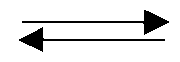 Ext-H(org) + Li+(aq) Eq. 2
[0036] Stripping is accomplished by using a large excess of acid, which pushes the equilibrium far to the right of Equation 2. In an exemplary embodiment, the anion counterion to the lithium
may be chloride or sulfate and is equivalent on the respective sides of the extraction and strip equations.
[0037] The selectivity of solvent extraction for lithium over other cations is very high. The majority of the impurities in the eluant come from the residual interstitial feed solution in the resin. These impurities are removable in a second processing step. Instead of using two operations, one for additional selective separation of lithium and then a water removal and recovery step, solvent extraction may be used to accomplish both. The eluate from the adsorption operation is the feed to the solvent extraction operation. Many solvent extraction reagents have a relatively poor separation of divalent cations from monovalent cations such as lithium. However, the divalent cations may be pre-removed very selectively from the eluate feed followed by an efficient separation of lithium from other monovalent cations. All of this may be accomplished using the same reagent at different pH.
[0038] In various embodiments, the solvent extraction operation may employ an organic solvent to contact the aqueous solution containing the one or more target metals. The organic solvent used in the solvent extraction process may further include an extractant. The extractant is a compound that binds to the one or more target metals, such as lithium. The extractant may then be treated with another compound, such as an acid, a base, or any other ion that causes the release of the target metal. In particular, the extractant may be used to help eliminate boron from the composition. In some embodiments, the extractants used herein may be phosphorus-based extractants.
[0039] In some embodiments, if an intermediate solution, for example, between the adsorption system and the solvent extraction system, is not optimized, one of the two processes will be less efficient and result in higher operating costs. When one processing step cannot adequately process a solution received from another processing step, then it will be costly to modify the solution for
processing. The goal of the optimization is to reduce or minimize additional processing of a solution between operations. In some embodiments, reduced additional processing may include treating a small bleed stream. In one or more embodiments, the solution between two processes is recycled and a buildup of impurities can occur. Additional processing such as a bleed stream is one way to minimize additional processing to keep the intermediate solution within favorable specifications. In some embodiments, reduced or minimized additional processing can include treating water (e.g., reverse osmosis, impurity rejection, etc.), or bleeding the solution and replacing it with water having fewer impurities. The disclosed embodiments are configured to generate optimized intermediate streams between unit operations (e.g., adsorption and solvent extraction) to ensure the highest performance and efficiency of each unit operation.
[0040] An intermediate solution may be optimized to solve industry problems by analyzing the benefits and limitations of an upstream process and a downstream process. In some embodiments, the optimal intermediate solution is generated by running two processes in such a way that the economic and environmental benefit of both processes is optimized to the fullest potential such that the processes work together in the most efficient manner. An upstream process can be any suitable processing step that yields an optimized solution for a downstream unit operation. There are many different processes that can be used for the initial treatment of an untreated aqueous solution (e.g., a brine). These processes include but are not limited to, adsorption, solvent extraction, membrane separation, electrodialysis, selective chemical precipitation, and so on. Each of these processes provides benefits for lithium extraction, nonetheless, each should be optimized for efficiency and performance. According to embodiments, there are various considerations for the first unit operation in a series of operations for removing one or more target metals ion from an aqueous solution including, but not limited to: 1) it cost effectively separates the one or more target metals ion from one or more other ions (e.g., cations) in solution; 2) it sends a solution to a second, downstream operation where the target metals is concentrated at a high selectivity; and 3) the upstream process operation reuses, to some
extent, a solution from the downstream operation after the downstream operation has processed the upstream solution.
[0041] When solutions are returned from a second, downstream process to a first, upstream process they may be reused in the first process. The returned solution can be used as a process solution for the first process or it can be utilized somewhere else in the system, for example, as process water. This results in a significantly lower environmental impact than conventional processes that typically do not reuse or recycle solutions such as water.
[0042] Multiple parameters may be considered in the composition of an optimal intermediate solution, for example, cation concentration (i.e., lithium, calcium, magnesium, potassium, boron, sodium, etc.), pH, and temperature. In some embodiments, anion concentration (e.g., halides, sulfates, and nitrates) may be considered. The entire composition of the solution(s) flowing through the system and unit operations can be taken into consideration as the solution(s) may be reprocessed multiple times and may be used by one or more unit operations. Individual parameters of the solution(s) also can be monitored and controlled to provide cost-effective operations for both processes.
[0043] In one or more embodiments, the pH of an optimized intermediate solution may remain substantially constant during processing. In the case of solvent extraction, the pH may be dependent on an isotherm for a target metal. Receiving a solution at a pH that is higher than what is proscribed by the isotherm will result in an optimized extraction system. The pH of the received solution should not intersect the pH of the extraction of an undesired metal. Each target metal species forms a stable complex at different pH (thermodynamically) to form an isotherm curve of extraction for that target metal species. In some embodiments, the pH of the received solution is at a value to achieve maximum complexation without complexing the species at a higher pH/isotherm. An optimal system may be one where, after a complete cycle of processing, the solution pH is largely unchanged so that after multiple cycles the need for pH adj ustment is minimized.
[0044] An optimized intermediate solution may contain the one or more target metals in concentrated or dilute form, depending on the feed, but the concentration is still within an optimal range for downstream processing. The one or more target metals can be concentrated or diluted depending on the needs of the downstream processing step. In some embodiments, the one or more target metals concentration remains largely unchanged. In one or more embodiments, a solution containing potassium, boron and/or sodium may have an insignificant impact on a downstream process. Depending on the downstream process, the upstream process may leave these elements at unchanged concentrations or, if they negatively impact the downstream process, these elements can be removed, for example, by using a separate unit operation.
[0045] In some embodiments, the temperature of the optimized intermediate solution may not be dependent on the upstream process and when exiting the upstream process, the optimized intermedia solution may be in an optimal range for a downstream process. In some embodiments, however, the downstream operation may be unable to operate efficiently if the temperature of the incoming solution is too high (e.g., >32°C). For example, when a lithium brine is recovered from a reservoir it may be at an elevated temperature from the natural environment (e.g., at a temperature of about 30°C to about 65°C, >32°C or >65°C, or any individual value or sub-range within these ranges). In these situations, the first, upstream process should be configured to treat a high temperature solution, while generating a target metal solution at a reduced temperature for further processing in the second downstream operation that cannot process the solution at the original high temperature. This initial processing may be conducted in a manner such that the initial aqueous solution does not require cooling of the entire aqueous solution.
[0046] Another example of an optimized intermediate solution is one where an adsorption system is used to create an optimal feed solution for a solvent extraction system. In this embodiment, the adsorption system reduces the impurities that negatively impact the costs of solvent extraction. The
solvent extraction system separates one or more target metal ions from the solution and sends the target metal depleted solution back to the adsorption operation for reuse. Any target metal that is not recovered by solvent extraction is then returned to the adsorption process where it does not leave the stream and can eventually be recovered by, for example, adsorption or solvent extraction in subsequent processing.
[0047] Another example of an optimized intermediate solution is one where an adsorption, solvent extraction and electrodialysis system is used to create an optimal feed solution for an ion exchange system. For example, the adsorption system can remove a majority of metal impurities from the initial aqueous metal solution that can negatively impact the ion exchange system downstream.
[0048] In one or more embodiments, a membrane system is used to create an optimized intermediate solution to be received by a solvent extraction system. In this example, the membrane system reduces the impurities that, if present, would increase the processing costs in the solvent extraction operation. The aqueous metal solution may be more cost effective to treat in the membrane operation than if the aqueous metal solution was sent directly to the solvent extraction process. The target metal depleted solution exiting the solvent extraction system may then be returned to the membrane operation for reuse.
[0049] In some embodiments, a first solvent extraction system may be used to create an optimized feed solution for a second solvent extraction system. In this embodiment, two different solvent extraction systems are used in series. The first solvent extraction system can remove impurities (e.g., magnesium and calcium) from the target metal (e.g., lithium) and then transfer the purified solution containing the target metal to a second solvent extraction system that selectively extracts the target metal from any remaining metals. The target metal depleted solution may be returned to the first solvent extraction process for reuse or returned to the aqueous metal solution reservoir.
[0050] In another embodiment, an optimized intermediate solution is one where a solvent extraction system is used to create an optimal feed solution for a membrane system. In this embodiment, the
solvent extraction system is used to remove or reduce metal impurities that negatively impact membrane processing. The solvent extraction system can be operated in such a way that the solution leaving the solvent extraction system can be sent through a membrane for cheaper production of the target metal. The depleted target metal solution can then be returned the to solvent extraction system for reuse.
[0051] FIG. 1 shows an embodiment of a system 100 for recovering a target metal (e.g., lithium) from an aqueous metal solution (e.g., abrine) including several unit operations (e.g., direct lithium extraction operations) in series. In embodiments, the aqueous metal solution is a brine retrieved from a natural source or received from a recycle stream or industrial wastewater. In one or more embodiments, systems as described herein can include two or more of the described unit operations. Exemplary system 100 includes an adsorption system 102, a solvent extraction system 104, a bipolar electrodialysis (BPD) system 106, and a crystallization system 108. The solution 110 exiting the adsorption operation 102 may be considered an optimized intermediate solution and enters the solvent extraction operation 104. Following solvent extraction 104, a target metal or impurity metal depleted solution 112 returns to the adsorption operation 102 for reuse. An organic metal solution 114 flows to the BPD system 106 for processing. The target metal depleted solution 116 returns to solvent extraction system 104 for reuse, and the target metal rich solution 118 flows to crystallization system 108. Following processing in the crystallization system 108, target metal rich product stream 124 exits crystallization system 108.
[0052] Solutions 110, 112, 114, 116, 118, 120, 122 exiting and/or entering an operation 102, 104, 106, 108 may be optimized intermediate solutions such that they produce optimal performance in a subsequent operation 104, 106, 108. This allows the benefits of both operations, upstream and downstream, to be maximized. The outcome is more economical production of a target metal (e.g., lithium) with a lower environmental impact. Other embodiments of system 100 may include any two or more of the disclosed unit operations.
[0053] In some embodiments, systems for recovering a target metal from an aqueous metal solution (e.g., a brine) include an adsorption system and a solvent extraction system downstream from the adsorption system. Suitable adsorption systems include one or more adsorbent media (also referred to herein as an “adsorbent” or “adsorption material”) contained within a housing, pond, column(s), bed(s) and/or packed bed(s). Adsorption may be used to prepare an eluant optimized for solvent extraction of a target metal. The selectivity of adsorption for a target metal over other ions (e.g., cations) can be very high. Selectivity can be determined through, for example, loading tests. In some embodiments, the lithium is intercalated almost exclusively in the adsorbent. In some embodiments, lithium may load onto an adsorbent in trace amounts to over 5 mg Li/g adsorbent. A majority of impurities in the eluant may be from a residual interstitial feed solution in the adsorption media.
[0054] In at least one embodiment, the adsorption media is selective for one or more metal in an aqueous metal solution. The adsorption media may be in the form of sub-units, particles, granules, spheres, microspheres, extrudates, tablets, nanotubes, plates, resin or combinations of any two or more thereof. Suitable adsorption materials includes, but are not limited to, aluminum trihydroxide, boron trihydroxide, chromium trihydroxide, molybdenum trihydroxide, lanthanum trihydroxide, rhodium trihydroxide, thulium trihydroxide, zeolite molecular sieve, date pits impregnated with cellulose nanocrystals and ionic liquid, functionalized titanate nanotubes, polymeric porous microspheres with crown ether, granulated chitosan-lithium manganese oxide, manganese-based spinel compounds, modified activated carbon with multiple Mn02 nanocomposite ratios, natural and/or synthetic zeolites applying poly(acrylic acid), MnO2-0.4H2O ion sieve, 1 D LiMn2O4 nanorods, nano-lithium ion sieves, intercalated compositions thereof, or combinations of any two or more thereof.
[0055] The adsorbent can be supported on a variety of substrates. Suitable substrates can be in the form of sub-units, particles, granules, spheres, microspheres, extrudates, tablets, nanotubes, plates, or any combination thereof. Suitable support materials include, but are not limited to, carbon, a polymeric material, silica, alumina, or combinations of any two or more thereof. Substrates such as polymer
beads can withstand high temperature aqueous solutions (e.g., >32°C, >65°C) without becoming friable.
[0056] In some embodiments, an aqueous metal solution (e.g., a lithium-containing brine) is retrieved from a natural reservoir and introduced into the adsorption system. The aqueous metal solution may be at a temperature of greater than 0°C to about 55°C, or any individual value or sub-range within this range. The adsorption system can include suitable adsorption media to treat high temperature geothermal brines without degradation. In some embodiments, the adsorbent media can withstand temperatures of greater than 0°C to about 100°C, about 10°C to about 90°C, about 65 °C to about 75 °C, greater than 32°C, greater than 40°C, greater than 50°C, greater than 65°C, or any individual value or sub-range within these ranges.
[0057] In one or more embodiments, the incoming aqueous metal solution may have a metal (e.g., lithium) concentration of about 50 ppm to about 15,000 ppm (e.g., in brines from evaporation ponds), about 100 ppm to about 10,000 ppm, about 500 ppm to about 5,000 ppm, about 1,000 ppm to about 2,500 ppm, or any individual value or sub-range within these ranges. The adsorption media may be configured to selectively adsorb one or more target metal ions/compounds (e.g., Li) removing such metal ions/compounds from the aqueous metal solution. The adsorption media may subsequently be treated (e.g., washed) to produce a target metal (e.g., Li) rich solution, for example, that can be further processed to form lithium hydroxide. In embodiments, during the treatment, non-intercalated ions, that are chromatographically attracted to the adsorption media, are removed, that is, they are flushed off of the adsorption media using a liquid. The eluate exiting the adsorption media may be at a temperature of about 20°C to about 60°C, or any individual value or sub-range within this range.
[0058] In one or more embodiments, the eluant exiting the adsorbent system has a target metal (e.g., Li) concentration in an amount of about 250 ppmw to about 1,000 ppmw, or any individual value or sub-range within this range. In one or more embodiments, the eluant is an optimized intermediate solution supplied to a solvent extraction system. In some embodiments, when the target metal
concentration in the eluant is too low, the chemicals within the solvent extraction system may become less stable and degrade. In one or more embodiments, the target metal concentration in the eluant may be measured and controlled to ensure optimal efficiency and stability of the chemicals within the solvent extraction system.
[0059] Combining a selective adsorption process as described above with one or more solvent extraction systems to recover one or more target metals (e.g., lithium) can reduce water consumption as compared to conventional metal (e.g., Li) recovery processes. Solvent extraction relies on the mass transfer of metals across an organic/aqueous solvent interface. Increasing the interfacial surface area also increases the rate at which the metal is transferred. This is because the extractant and the metal being extracted come into contact at the interface. An increased surface area is produced by breaking the initial interface and then breaking up droplets produced by the mixer. The continuous shearing of droplets using an agitator (e.g., a mixer, impeller, pump, etc.), results in smaller droplets and a shift in the distribution of droplet size. Increasing the speed of the agitator, and therefore shear, increases the surface area of the emulsion. In solvent extraction systems, there is a continuous phase where the solution is contiguous and a droplet phase. The continuous phase is often the phase with the greater volume in the mixer (e.g., if the aqueous volume is in excess, it is often the case that the aqueous will be the continuous phase and the organic will be mostly composed of organic droplets).
[0060] Solvent extraction is useful to remove metals (e.g., ions, salts, compounds, etc.) from aqueous solutions (e.g., a brine, an adsorption eluate, etc.). In one or more embodiments, the organic solution contains one or more organic compounds that are selective for a target metal. Suitable organic solvents include, but are not limited to, a kerosene, aliphatic solvent, aromatic solvent, or combinations thereof. A kerosene is a light petroleum distillate containing a mixture of organic compounds including paraffins (e.g., CnH2n+2 wherein n is 1 to 100), napthenes (e.g., cyclopentane, cyclohexane, methylcyclopentane, methylcyclohexane, etc.) and aromatic hydrocarbons (e.g., alkylbenzenes, alkylnapthalenes, etc.). Weight ratios of the paraffins to the napthenes 1:5 to about 5: 1, or any
individual value or sub-range within this range. Weight ratios of paraffins to aromatic hydrocarbons may be about 1 : 15 to about 15 : 1 , or any individual value or sub-range within this range. The paraffins may be present in an amount of about 25 wt% to about 75 wt%, the napthenes may be present in an amount of about 20 wt% to about 65 wt%, the aromatic hydrocarbons may be present in an amount of about 1 wt% to about 25 wt%, or any individual value or sub-range within these ranges. Suitable extractants include, but are not limited to, zwitterions, zwitterionic compounds, lithium solvent extraction reagents, or combinations thereof.
[0061] In some embodiments, instead of using two operations, one operation for additional selective separation of the target metal and then one operation for water removal and recovery, solvent extraction can be used to accomplish both. In embodiments, the adsorption process eluant containing a relatively low concentration of metal (e.g., metal cations) is fed to a solvent extraction operation. Many solvent extraction reagents (also referred to herein as extractants) have a relatively poor separation of divalent cations and lithium. In some embodiments, the divalent cations can be selectively removed from the eluant feed in a first solvent extraction operation followed by an efficient separation of lithium from other monovalent cations in a second solvent extraction operation. In some embodiments, this can be accomplished using the same extractant, but at one pH for a preconditioning process and at a different pH for a lithium extraction process.
[0062] So long as the extractant used is sufficiently selective for a target metal, the content of other metals in the aqueous metal solution may have little or no impact on the efficiency of the solvent extraction process in extracting the one or more target metals. During solvent extraction, when the organic and aqueous solutions are contacted, an emulsion forms. This dramatic increase in surface area increases the transfer rate of metals (e.g., ions) from the aqueous solution to the extractant in the organic. In some embodiments, the extraction can be completedin less than about 1 minute. The phases are then allowed to coalesce. The aqueous phase, mostly depleted of the one or more target metals (e.g., lithium, calcium, magnesium, etc.) can be returned to the same or a different industrial process
or can be discharged into the environment. The organic phase is typically transferred to a scrubbing process and a stripping process where the one or more target metals is removed from the organic solution. In some embodiments, during scrubbing, an extractant can be activated for extraction and deactivated for stripping by adjusting pH. In one or more embodiments, an extractant can be stripped with water on an equilibrium basis. The stripped organic then be returned to the extraction stages to repeat the process.
[0063] A suitable extractant for a solvent extraction process may have a molecular structure that can be synthesized to match the most preferred bonding for the one or more target metals. These extractants can be formulated in a solvent (e.g., an organic solvent), and different structures can be employed depending on the conditions of the aqueous metal solution. For example, if the aqueous metal solution has a high pH, it might require a specific extractant structure. In one or more embodiments, the efficiency of lithium recovery can be optimized by employing a suitable extractant. Higher recoveries may be possible using certain extractants if some impurities, such as divalent cations (e.g., Ca, Mg), are removed (e.g., in a preconditioning process) prior to solvent extraction of one or more target metals (e.g., Li).
[0064] An advantage of solvent extraction is the ability to concentrate the target metal solutions in in a stripping stage. This is accomplished by recycling the strip solution and adding the appropriate acid to repeat the stripping process. As long as there is enough acid in the solution, the extractant will be stripped of the target metal producing a salt. Since the target metal solution is reused, the concentration of the target metal continues to increase. The concentrations can approach the solubility of the target metal salt; however, solutions that are too concentrated become viscous and are difficult to process. The concentrated solutions may then be further processed (before becoming too viscous), for example, by evaporation, crystallization, precipitation, or electrodialysis a battery grade material can be produced. In embodiments, the viscosity of the concentrated solutions should not exceed about 30 cP.
[0065] In one or more embodiments, the eluant from the adsorption system is preconditioned to remove impurities, such as calcium and magnesium ions/compounds prior to extraction of lithium compounds in a solvent extraction process. The preconditioning process may be a first solvent extraction process that employs an extractant that is highly selective for calcium and magnesium. Removing such compounds may improve the efficiency of the lithium extraction process because a highly selective lithium extractant may also be selective for divalent cations such as magnesium and calcium. Removing magnesium and calcium with a first extractant that is selective for these compounds, but not lithium, and then subsequently removing lithium from the Mg and Ca depleted aqueous stream can substantially increase lithium extraction. Once the eluate is received from adsorption process, the magnesium and calcium are removed. This can be accomplished by two solvent extraction systems in series. The first solvent extraction system extracts only the magnesium and calcium. The raffinate of the first solvent extraction system becomes the pregnant leaching solution (or feed) to the second solvent extraction system, which is used to separate lithium from sodium and potassium.
[0066] The preconditioned aqueous stream, depleted of calcium and magnesium, exiting the first solvent extraction system may be received by a second solvent extraction system. The second solvent extraction system may be configured to selectively extract lithium from the preconditioned aqueous stream to separate these compounds from monovalent cations, such as sodium and potassium, while rejecting boron. Once extracted, the lithium can be scrubbed, stripped and concentrated by deactivating the extractant with acid in a fixed volume of water (i.e., the wash/scrub stage within the solvent extraction process). This increases the concentration of lithium in the final product stream.
[0067] A system for the selective isolation of a target metal such as lithium from an aqueous metal solution, can be a dynamic system of solvent extraction, scrubbing, and stripping stages. The solvent extraction stage transfers one or more target metal ions from the aqueous feed solution (e.g., the adsorbent system eluate or the preconditioned solution exiting the first solvent extraction system) to
the organic solution. The target metal rich organic solution then flows to a scrubbing stage to reduce aqueous entrainment and impurities and subsequently to a stripping stage to concentrate the target metal ions with the desired counterion (e.g., LiCl or LiSO4).
[0068] Suitable solvent extraction reagents for extracting metals (e.g., alkali metals, lithium, etc.) can have anionic functional groups, neutral functional groups, or combinations thereof. In some embodiments, neutral reagents have a substantial dipole moment for their functional groups - the more negative the functional group, the more aggressive the attraction to cations. Charged extractants can be activated by removing a proton, which leads to a fixed negative charge. The pKa at which this occurs may be different for each extractant and is dependent on the acidity of the proton. This can be affected by the stability of the metal complex. The metal being extracted will affect how easily the proton is removed. The pH at which the extractant is activated for an ion may be dependent on the complex being formed. In some embodiments, the extractant is a neutral reagent comprising functional groups having a dipole moment, for example, a dipole moment that is strong enough to create bonding with a lithium chloride or lithium sulfate salt.
[0069] In one or more embodiments, solvent extraction works most efficiently when certain metal concentration parameters are met. For example, if the concentrations of one or more metals within the aqueous metal solution is outside of these parameters, it is not possible to isolate a target metal (e.g., lithium) economically and/or produce a high enough purity of the target metal to send to the next unit operation (e.g., conversion). Specifications and limits have been discovered to optimize a system that includes adsorption, electrodialysis, and/or solvent extraction (e.g., preconditioning) prior to solvent extraction for concentrating a target metal (e.g., lithium).
[0070] One consideration in optimizing target metal recovery is the transfer of impurities by entrainment. If an upstream process such as adsorption produces a solution that is too high in certain species, these species can be transferred to the downstream process creating a less pure solution necessitating additional processing, which is undesirable. Table 1 identifies target baseline
concentrations of metal ions in the aqueous feed to a solvent extraction process. Table 2 lists the maximum concentrations of such ions that can be tolerated in, for example, a solvent extraction process for selectively removing lithium from an aqueous metal solution.
Table 1 - Baseline Concentrations of Metals in Adsorption Eluate and/or Aqueous Feed to a Solvent Extraction System for Extracting Lithium

Table 2 - Maximum Concentrations of Metals in Adsorption Eluate and/or Aqueous Feed to a Solvent Extraction System for Extracting Lithium

[0071] In some embodiments, the eluate from an adsorption process (or the feed to a solvent extraction process) comprises about 250 ppmw to about 2,500 ppmw Li, about 250 ppmw to about 1,500 ppmw Li, about 500 ppmw to about 500 ppmw Li, or any individual value or sub-range within these ranges.
In some embodiments, the eluate from an adsorption process comprises about 250 ppmw to about 50,000 ppmw Na, about 1,000 ppmw to about 25,000 ppmw Na, about 5,000 ppmw to about 20,000 ppmw Na, or any individual value or sub-range within these ranges. In some embodiments, the eluate from an adsorption process comprises about 250 ppmw to about 25,000 ppmw K, about 500 ppmw to about 20,000 ppmw K, about 5,000 ppmw to about 15,000 ppmw K, or any individual value or subrange within these ranges. In some embodiments, the eluate from an adsorption process comprises about 250 ppmw to about 8,000 ppmw Mg, about 500 ppmw to about 5,000 ppmw Mg, about 1,000 ppmw to about 2,000 ppmw Mg, or any individual value or sub-range within these ranges. In some embodiments, the eluate from an adsorption process comprises about 250 ppmwto about 12,000 ppmw Ca, about 500 ppmw to about 8,000 ppmw Ca, about 2,000 ppmw to about 4,000 ppmw Ca, or any individual value or sub-range within these ranges. In some embodiments, the eluate from an adsorption process comprises about 250 ppmw to about 6,000 ppmw B, about 500 ppmw to about 4,000 ppmw B, about 1,000 ppmw to about 2,000 ppmw B, or any individual value or sub-range within these ranges. [0072] In some embodiments, the eluate from an adsorption process (or the feed to a solvent extraction process) comprises less than about 2,500 ppmw Li. In some embodiments, the eluate from an adsorption process (or the feed to a solvent extraction process) comprises less than about 50,000 ppmw Na. In some embodiments, the eluate from an adsorption process (or the feed to a solvent extraction process) comprises less than about 25,000 ppmw K. In some embodiments, the eluate from an adsorption process (or the feed to a solvent extraction process) comprises less than about 8,000 ppmw Mg. In some embodiments, the eluate from an adsorption process (or the feed to a solvent extraction process) comprises less than about 12,000 ppmw Ca. In some embodiments, the eluate from an adsorption process (or the feed to a solvent extraction process) comprises less than about 6,000 ppmw B.
[0073] In some embodiments, the eluate from an adsorption process (or the feed to a solvent extraction process) comprises less than about 1 ppmw to about 50,000 ppmw, or about 2,000 ppmw to about
25,000 ppmw, or about 5,000 ppmw to about 10,000 ppmw Na and K combined, or any individual value or sub-range within these ranges. In some embodiments, the eluate from an adsorption process (or the feed to a solvent extraction process) comprises less than about 1 ppmw to about 18,000 ppmw, or about 1,000 ppmw to about 9,000 ppmw, or about 2,000 ppmw to about 5,000 ppmw Mg and Ca combined, or any individual value or sub-range within these ranges. In some embodiments, magnesium and calcium are the most deleterious to the conversion operation (i.e., the third process - BPED in FIG. 1). The membranes in the BPED process are sensitive to the concentration of Mg and Ca and having as low of a concentration as possible can be critical.
[0074] According to one or more embodiments, the pH of the aqueous metal solution as either eluate from the adsorption system and/or as a feed to a solvent extraction system is about 2 to about 11.5, about 2 to about 9, about 3 to about 8, or any individual value or sub-range within these ranges. The temperature of the eluate from the adsorption system and/or as a feed to a solvent extraction system may be about 5°C to about 130°C, about 10°C to about 120°C, about 20°C to about 85°C, or any individual value or sub-range within these ranges.
[0075] While selectivity in a solvent extraction process can be important, it need not be perfect. In some embodiments, there is transfer of non-target cations through being loaded onto the extractant. For example, when using some extractants, sodium can be slightly extracted and, thus, keeping the Na concentration below about 25,000 ppmw is desirable although a sodium concentration of about 50,000 ppmw, although not ideal, may still be usable. Potassium often is not extracted during a direct extraction of Li, for example. In some embodiments, depending on the extractant, Mg and Ca can be extracted during a lithium extraction process, so maintaining these metals at low concentrations is desirable. By keeping the metal concentrations within the above-described ranges (see, e g., Tables 1 and 2), it is possible to produce a rich electrolyte (i.e., the product of the solvent extraction stage) that can be treated in the conversion process (i.e., BPED, precipitation of Li2CO3, etc.). Notably, according to various embodiments, an upstream process can suitably treat a received aqueous metal solution (e.g.,
a brine) to bring metal concentrations within a desirable range for an immediately subsequent process (e.g., Adsorption -> solvent extraction, preconditioning solvent extraction -> target metal extraction solvent extraction, electrodialysis recovery -> solvent extraction).
[0076] In a solvent extraction process, the recovery of a target metal (defined as the % of lithium extracted from the lithium containing aqueous solution) is inversely proportional to the selectivity of the target metal over other metals (e.g., cations). Therefore, the composition of the target metal containing aqueous solution fed to the solvent extraction process can influence the efficiency and performance of the solvent extraction process in extracting the target metal. In some embodiments, the fewer impurities in the aqueous target metal containing feed, the higher the target metal recovery.
[0077] Further disclosed herein according to various embodiments are methods for removing one or more impurities from an aqueous metal solution. Suitable aqueous metal solutions include, but are not limited to, a brine, a geothermal brine, a seawater brine, a brine retrieved from a natural reservoir, a byproduct of an industrial process, a lithium battery recycle stream, an industrial wastewater stream, or combinations thereof. In at least one embodiment, the metal solution contains at least about 1 ppm, at least about 10 ppm, at least about 100 ppm, at least about 1,000 ppm, about 1 ppm to about 1000 ppm, of one or more target metals, or any individual value or sub-range within these ranges. Suitable target metals include, but are not limited to, lithium, calcium, magnesium, sodium, boron, potassium, etc.
[0078] The methods can include contacting the aqueous metal solution with an adsorption material (e.g., in an adsorption system). The adsorption material may be selective for one or more metal cation (e.g., Li, Ca, Mg, etc.). In at least one embodiment, the one or more metal cation is a divalent cation. In one or more embodiments, the adsorption material binds to one or more impurities to obtain a first processed metal solution. Suitable adsorption materials are described herein above with respect to the adsorption system. In at least one embodiment, the adsorption material is selective for calcium and magnesium cations. The first processed metal solution may include a reduced concentration of one or
more cations such as calcium ions, magnesium ions or both. In some embodiments the reduced concentration of one or more cations results in a reduction of the one or more cations of at least 10%, at least 15%, at least 25%, at least 50%, about 10% to about 99%, or any individual value or sub-range within these ranges. In one or more embodiments, the first processed metal solution contains at least 10% less, at least 25% less, at least 50% less, or about 0% to about 50%, or any individual value or sub-range within these ranges, of one or more impurities.
[0079] Embodiments of methods for removing one or more impurities from an aqueous metal solution can further include extracting the first processed metal solution with a solvent to obtain a purified metal solution (e.g., in a solvent extraction system). Suitable solvents are organic solvents containing one or more extractant (e.g., an organic extractant) as described hereinabove with respect to solvent extraction systems. The extractant is suitable to bind to the target metal. In one or more embodiments, the extractant does not bind to one or more impurities (e.g., boron). According to one or more embodiments, the purified metal solution can have a higher weight percentage of the target metal than the metal solution, or a lower weight percentage of one or more impurities than the metal solution.
EXAMPLES
Example 1
[0080] A solvent extraction system (SX) was configured as a dynamic circuit with one (1) extract stage, one (1) wash stage, and one (1) strip stage. The organic solvent and extractant was circulated continuously through the three stages with a loaded organic surge. The pregnant leaching solution (PLS) containing lithium was an eluant from an adsorption system. The wash solution recirculated water and the strip stage contained 2 molar hydrochloric acid for stripping the lithium from the extractant. After 99 full cycles of the organic through the system, the strip solution (RE) was suitable
for conversion by BPED. It was also amenable to conversion to lithium carbonate. The concentrations of various metals determined for each of the stages are shown in Table 3.
Table 3 - Metal Concentrations in Each Stage

Example 2
[0081] The same equipment and procedures described in Example 1, were used again, but with a different brine composition (PLS). After 54 cycles of the organic, the composition of the RE was favorable for BPED with only Ca being above 1000 ppm in solution, while the concentration of lithium in solution, as the chloride salt, is -25,000 ppm.
Table 4 - Metal Concentrations in Each Stage

Example 3
[0082] The same equipment and procedures described in Example 1, were used again, but with a different brine composition. Sodium typically increases in the raffinate due to the use of sodium hydroxide to neutralize the acid formed from the extraction of lithium. After 60 cycles, the concentration of impurities is low enough to provide an optimal solution for BPED.
Table 5 - Metal Concentrations in Each Stage

[0083] The foregoing description discloses example embodiments of the disclosure. Modifications of the above-disclosed assemblies, apparatus, and methods which fall within the scope of the disclosure will be readily apparent to those of ordinary skill in the art. Accordingly, while the present disclosure has been disclosed in connection with example embodiments, it should be understood that other embodiments may fall within the scope of the disclosure, as defined by the following claims.
[0084] Although the subject matter has been described in language specific to structural features and/or methodological acts, it is to be understood that the subject matter defined in the appended claims is not necessarily limited to the specific features or acts described above. Rather, the specific features and acts described above are disclosed as example forms of implementing the claims.
Claims
1. An adsorption eluate having a composition suitable for solvent extraction, the adsorption eluate comprising: a solvent; and one or more target metals comprising lithium dissolved in the solvent, wherein the one or more target metals is at an effective concentration for recovery by solvent extraction, wherein the adsorption eluate is at an effective pH for recovery of the one or more target metals by solvent extraction, and wherein the adsorption eluate is at an effective temperature for recovery of the one or more target metals by solvent extraction.
2. The adsorption eluate of claim 1, wherein the one or more target metals is at a concentration of about 250 ppmw to about 1,000 ppmw.
3. The adsorption eluate of claim 1 or 2, wherein the pH of the adsorption eluate is about 2 to about 11.5.
4. The adsorption eluate of any preceding claim, wherein the temperature of the adsorption eluate is about 5°C to about 65°C.
5. The adsorption eluate of any preceding claim, further comprising an extractant.
6. The adsorption eluate of claim 5, wherein the extractant is selective for trivalent cations, divalent cations, monovalent cations, or combinations thereof.
7. The adsorption eluate of claim 6, wherein i) the trivalent cations comprise boron, ii) the divalent cations comprise calcium, magnesium, or combinations thereof, and/or iii) the monovalent cations comprise lithium, sodium, potassium, or combinations thereof.
8. The adsorption eluate of any one of claims 5 to 7, wherein the extractant is present at a concentration of about 0.05 molar to the molarity of a neat solution based on the total volume of the adsorption eluate.
9. The adsorption eluate of any one of claims 5 to 8, wherein the extractant is capable of extracting an alkali metal.
10. The adsorption eluate of any one of claims 5 to 9, wherein the extractant is an organic compound comprising one or more anionic functional groups, one or more neutral functional groups, or combinations thereof.
11. The adsorption eluate of any one of claims 5 to 10, wherein the extractant is a neutral reagent comprising functional groups having a dipole moment.
12. The adsorption eluate of any one of claims 5 to 13, wherein the extractant is a negatively charged extractant that has been activated by removing a proton.
13. The adsorption eluate of any preceding claim, further comprising calcium, magnesium, sodium, potassium, boron, or combinations of any two or more thereof.
14. The adsorption eluate of any preceding claim, further comprising: i) sodium at a concentration of less than about 25,000 ppmw, ii) potassium at a concentration of less than 25,000 ppmw, iii) magnesium at a concentration of less than 5,000 ppmw, iv) calcium at a concentration of less than 4,000 ppmw, v) boron at a concentration of less than 2,000 ppmw, or a combination of any two or more of i)-v).
15. The adsorption eluate of any preceding claim, further comprising sodium and potassium at a combined concentration of less than about 25,000 ppmw.
16. The adsorption eluate of any preceding claim, further comprising magnesium and calcium at a combined concentration of less than about 9,000 ppmw.
17. The adsorption eluate of any preceding claim, further comprising: i) sodium at a maximum concentration of less than about 50,000 ppmw, ii) potassium at a maximum concentration of less than 25,000 ppmw, iii) magnesium at a maximum concentration of less than 8,000 ppmw, iv) calcium at a maximum concentration of less than 12,000 ppmw, v) boron at a maximum concentration of less than 6,000 ppmw, or a combination of any two or more of i)-v).
18. The adsorption eluate of any preceding claim, further comprising sodium and potassium at a combined maximum concentration of less than about 50,000 ppmw.
19. The adsorption eluate of any preceding claim, further comprising magnesium and calcium at a combined concentration of less than about 18,000 ppmw.
20. The adsorption eluate of any preceding claim, wherein the solvent comprises water, an acid, an organic solvent, or combinations thereof.
21. The adsorption eluate of any preceding claim, wherein the solvent comprises ethylene carbonate, propylene carbonate, dimethyl carbonate, diethyl carbonate, LiCICh, LiPFe, LiBFe, LiAsFe, or combinations thereof.
22. A method of recovering one or more metals from an aqueous metal solution, comprising:
(A) contacting the aqueous metal solution with an adsorption material to adsorb one or more metals and obtain a first processed metal solution;
(B) extracting the first processed metal solution using an organic solvent, an extractant, an extractant comprising a modifier, or a combination thereof, to obtain a purified metal solution, wherein the purified metal solution comprises:
(i) a higher weight percentage of the one or more target metals than the aqueous metal solution; or
(ii) a lower weight percentage of one or more impurities than the aqueous metal solution.
23. The method of claim 22, wherein the aqueous metal solution is a brine.
24. The method of claim 23, wherein the brine is a geothermal brine.
25. The method of claim 23, wherein the brine is seawater.
26. The method of claim 23, wherein the brine is a byproduct of an industrial process.
27. The method according to any one of claims 22 to 26, wherein the aqueous metal solution contains at least 1 ppm of the one or more target metals.
28. The method of claim 27, wherein the aqueous metal solution contains at least 10 ppm of the one or more target metals.
29. The method according to any one of claims 22 to 28, wherein the one or more target metals is lithium.
30. The method according to any one of claims 22 to 29, wherein the adsorption material is selective for one or more cations.
31. The method of claim 30, wherein the one or more cation is a divalent cation.
32. The method of either claim 30 or 31, wherein the one or more cation is a magnesium cation, a calcium cation or both.
33. The method according to any one of claims 30 to 32, wherein the adsorption material is selective for calcium and magnesium cations.
34. The method according to any one of claims 22 to 33, wherein the first processed metal solution comprises a reduced concentration of one or more cations.
35. The method of claim 34, wherein the reduced concentration of one or more cations is a reduced concentration of magnesium cations.
36. The method of claim 34, wherein the reduced concentration of one or more cations is a reduced concentration of calcium cations.
37. The method according to any one of claims 34 to 36, wherein the reduced concentration of one or more cations is a reduced concentration of calcium and magnesium cations.
38. The method according to any one of claims 34 to 37, wherein the reduced concentration of one or more cations results in a reduction of the one or more cations of at least 10%.
39. The method of claim 38, wherein the reduction of the one or more cations is at least 25%.
40. The method of either claim 38 or 39, wherein the reduction of the one or more cations is at least 50%.
41. The method according to any one of claims 22 to 40, wherein the method further comprises using an extractant.
42. The method of claim 41, wherein the extractant binds to the one or more target metals.
43. The method according to any one of claims 22 to 42, wherein the extractant is an organic molecule.
44. The method according to any one of claims 22 to 43, wherein the extractant does not binds to one or more impurities.
45. The method of claim 44, wherein the one or more impurities is boron.
46. The method according to any one of claims 22 to 45, wherein the first processed metal solution contains at least 10% less of one or more impurities.
47. The method of claim 46, wherein the first processed metal solution contains at least 25% less of one or more impurities.
48. The method of claim 46, wherein the first processed metal solution contains at least 50% less of one or more impurities.
49. The method according to any one of claims 22 to 48, wherein the adsorption material is present in a bed.
50. The method of claim 49, wherein the adsorption material is affixed to the bed.
51. The method of claim 49 or 50, wherein the bed has a mass transfer zone that is longer than the size of the bed.
52. The method according to any one of claims 22 to 51 wherein the adsorption material is an aluminum-based material.
53. The method of claim 52, wherein the aluminum-based material is aluminum trihydroxide.
54. The method according to any one of claims 22 to 53, wherein the adsorption material further comprises a polymer.
55. The method of claim 54, wherein the adsorption material is an aluminum-based material affixed to a polymer.
56. The method according to any one of claims 22 to 55, wherein the method results in a selectivity of the one or more target metals relative to boron of at least 6.
57. The method according to any one of claims 22 to 56, wherein the method results in a selectivity of the one or more target metals relative to calcium of at least 30.
58. The method according to any one of claims 22 to 57, wherein the method results in a selectivity of the one or more target metals relative to magnesium of at least 30.
59. The method according to any one of claims 22 to 58, wherein the adsorption material has a selectivity of the one or more target metals relative to other cations in solution of at least 5.
60. The method according to any one of claims 22 to 59, wherein the aqueous metal solution has a concentration of the one or more target metals of less than 2000 ppm.
61. The method of any one of claims 22 to 60, wherein the concentration of the one or more target metals is less than 500 ppm.
62. The method of any one of claims 22 to 61, wherein the concentration of the one or more target metals is less than 100 ppm.
63. The method according to any one of claims 22 to 62, wherein the method further comprises a concentrating step.
64. The method according to any one of claims 22 to 63, wherein the concentrating step comprises electrodialysis.
65. The method according to any one of claims 22 to 64, wherein the concentrating step comprises reverse osmosis.
66. The method according to any one of claims 22 to 65, wherein the concentrating step comprises a multistage flash.
67. The method according to any one of claims 22 to 66, wherein the method further comprises removing the one or more target metals out of the purified metal solution.
68. The method of claim 67, wherein the one or more target metals is removed by electrodialysis.
69. The method according to any one of claims 22 to 68, wherein the method further comprises using a membrane to produce a one or more target metals salt.
70. A method according to any one of claims 22 to 69, wherein the temperature of the feed solution is >65 °C, >90 °C or >100 °C.
71. A method of recovering lithium from a lithium containing solution comprising:
(A) contacting the lithium containing solution with an adsorption material to adsorb the lithium and obtaining a first processed solution; and
(B) extracting the first processed solution with an organic solvent to obtain a purified solution, wherein the purified solution comprises:
(i) a higher weight percentage of the lithium than the lithium containing solution; or
(ii) a lower weight percentage of one or more impurities than the lithium containing solution.
72. A system for recovering a one or more target metals from an aqueous solution, comprising:
(A) an adsorption system comprising one or more adsorption materials; and
(B) a solvent extraction system in fluid communication with the adsorption system; wherein the adsorption system comprises an inlet for receiving the aqueous solution and the solvent extraction system comprises an outlet for dispensing a purified target metal solution.
73. The system of claim 72, further comprising a flashing unit between the adsorption system and the solvent extraction system.
74. The system of claim 72 or 73, wherein the flashing unit comprises a system to transfer the heat energy to the adsorption chamber or the inlet portal to the adsorption chamber.
75. The system of any one of claims 72 to 74, wherein the apparatus further comprises a line between the extraction chamber and the adsorption chamber allowing the return of a solution depleted between the one or more target metals from the extraction chamber to the adsorption chamber.
76. The system of any one of claims 72 to 75, wherein the extraction chamber further comprises an inlet for introduction an acid or an acidic solution.
77. The system of any one of claims 72 to 76, wherein the adsorption chamber further comprises an apparatus to recycle water from the system.
Priority Applications (1)
| Application Number | Priority Date | Filing Date | Title |
|---|---|---|---|
| ARP240101547A AR133355A1 (en) | 2023-06-16 | 2024-06-14 | COMPOSITIONS, SYSTEMS AND METHODS FOR RECOVERING A METAL FROM AN AQUEOUS SOLUTION |
Applications Claiming Priority (2)
| Application Number | Priority Date | Filing Date | Title |
|---|---|---|---|
| US202363508767P | 2023-06-16 | 2023-06-16 | |
| US63/508,767 | 2023-06-16 |
Publications (2)
| Publication Number | Publication Date |
|---|---|
| WO2024259211A2 true WO2024259211A2 (en) | 2024-12-19 |
| WO2024259211A3 WO2024259211A3 (en) | 2025-05-08 |
Family
ID=93852738
Family Applications (2)
| Application Number | Title | Priority Date | Filing Date |
|---|---|---|---|
| PCT/US2024/033976 Ceased WO2024259211A2 (en) | 2023-06-16 | 2024-06-14 | Compositions, systems and methods for recovering a metal from an aqueous solution |
| PCT/US2024/033974 Ceased WO2024259209A2 (en) | 2023-06-16 | 2024-06-14 | Compositions, apparatus, systems and methods for extracting a metal from an aqueous solution |
Family Applications After (1)
| Application Number | Title | Priority Date | Filing Date |
|---|---|---|---|
| PCT/US2024/033974 Ceased WO2024259209A2 (en) | 2023-06-16 | 2024-06-14 | Compositions, apparatus, systems and methods for extracting a metal from an aqueous solution |
Country Status (3)
| Country | Link |
|---|---|
| EP (1) | EP4728107A2 (en) |
| AR (2) | AR133355A1 (en) |
| WO (2) | WO2024259211A2 (en) |
Family Cites Families (8)
| Publication number | Priority date | Publication date | Assignee | Title |
|---|---|---|---|---|
| US8753594B1 (en) * | 2009-11-13 | 2014-06-17 | Simbol, Inc. | Sorbent for lithium extraction |
| SE534505C2 (en) * | 2009-08-31 | 2011-09-13 | Easymining Sweden Ab | Recycling of aluminum from phosphorus-containing materials |
| PT3110988T (en) * | 2014-02-24 | 2019-09-10 | Nemaska Lithium Inc | Methods for treating lithium-containing materials |
| CN105152190B (en) * | 2015-09-18 | 2017-04-05 | 湘潭大学 | A kind of method that separating magnesium from low lithium salt and enriching lithium produce lithium carbonate |
| JP7031263B2 (en) * | 2017-12-04 | 2022-03-08 | 住友金属鉱山株式会社 | Lithium recovery method |
| EP3793945B1 (en) * | 2018-05-15 | 2024-11-27 | ILiAD IP Company, LLC | Process and system for selective adsorption and recovery of lithium from natural and synthetic brines |
| AR115297A1 (en) * | 2019-03-13 | 2020-12-23 | Veolia Water Solutions & Tech | METHOD FOR CONCENTRATION AND PURIFICATION OF BRINE ELUATE FOR THE PRODUCTION OF A PURIFIED LITHIUM COMPOUND |
| US12018347B2 (en) * | 2020-05-12 | 2024-06-25 | Energy Exploration Technologies, Inc. | Systems and methods for recovering lithium from brines |
-
2024
- 2024-06-14 EP EP24824209.1A patent/EP4728107A2/en active Pending
- 2024-06-14 WO PCT/US2024/033976 patent/WO2024259211A2/en not_active Ceased
- 2024-06-14 AR ARP240101547A patent/AR133355A1/en unknown
- 2024-06-14 AR ARP240101546A patent/AR133354A1/en unknown
- 2024-06-14 WO PCT/US2024/033974 patent/WO2024259209A2/en not_active Ceased
Also Published As
| Publication number | Publication date |
|---|---|
| AR133355A1 (en) | 2025-09-24 |
| EP4728107A2 (en) | 2026-04-22 |
| AR133354A1 (en) | 2025-09-24 |
| WO2024259211A3 (en) | 2025-05-08 |
| WO2024259209A3 (en) | 2025-04-17 |
| WO2024259209A2 (en) | 2024-12-19 |
Similar Documents
| Publication | Publication Date | Title |
|---|---|---|
| US20230019776A1 (en) | Ion exchange system and method for conversion of aqueous lithium solution | |
| JP7031263B2 (en) | Lithium recovery method | |
| CA3217467A1 (en) | Systems and methods for capturing carbon dioxide and regenerating a capture solution | |
| AU2018354320B2 (en) | Modular extraction apparatus | |
| CA3207938C (en) | Systems and methods for direct lithium hydroxide production | |
| CN112717468A (en) | Method for recovering lithium in lithium precipitation mother liquor | |
| JP7115123B2 (en) | Lithium purification method | |
| US20240391787A1 (en) | Process for obtaining high purity lithium from an aqueous lithium salt-containing solution | |
| EP3318552B1 (en) | Process of purifying methionine | |
| Esteves et al. | A study on lupin beans process wastewater nanofiltration treatment and lupanine recovery | |
| US12570537B2 (en) | Processes for recovering lithium values from lithium-containing brines | |
| JP2019044246A (en) | Lithium recovery method | |
| CN118354829A (en) | Process for producing lithium compounds using reverse osmosis | |
| CN116888079B (en) | Method for processing water-soluble mineral lithium-containing raw material | |
| JP2019125464A (en) | Lithium recovery method | |
| WO2021119208A1 (en) | Hybrid thermal - chromatographic system for simultaneous mineral purification and desalination of saline waters | |
| GB2627315A (en) | Process for selective purification of lithium from an aqueous lithium salt-containing solution | |
| US20230392233A1 (en) | Target ion recovery from earth material | |
| US10174404B2 (en) | Hydrometallurgical process using multi-stage nanofiltration | |
| JP2006315931A (en) | Method and apparatus for recovering phosphoric acid from metal ion-containing mixed acid aqueous solution containing at least one acid other than phosphoric acid and phosphoric acid | |
| Sheedy et al. | Acid separation for impurity control and acid recycle using short bed ion exchange | |
| CN107427740B (en) | Process for purifying organic acids comprising an electrodialysis treatment step | |
| WO2024259209A2 (en) | Compositions, apparatus, systems and methods for extracting a metal from an aqueous solution | |
| WO2025147659A1 (en) | Extraction of minerals from unconventional waste sources | |
| WO2014158558A1 (en) | L-glucose production from l-glucose/l-mannose mixtures using simulated moving bed separation |
Legal Events
| Date | Code | Title | Description |
|---|---|---|---|
| NENP | Non-entry into the national phase |
Ref country code: DE |
|
| 122 | Ep: pct application non-entry in european phase |
Ref document number: 24824211 Country of ref document: EP Kind code of ref document: A2 |