WO2025002978A1 - Neue anwendungen für kühlmittel - Google Patents
Neue anwendungen für kühlmittel Download PDFInfo
- Publication number
- WO2025002978A1 WO2025002978A1 PCT/EP2024/067257 EP2024067257W WO2025002978A1 WO 2025002978 A1 WO2025002978 A1 WO 2025002978A1 EP 2024067257 W EP2024067257 W EP 2024067257W WO 2025002978 A1 WO2025002978 A1 WO 2025002978A1
- Authority
- WO
- WIPO (PCT)
- Prior art keywords
- coolant
- acid
- silicates
- optionally
- dicarboxylic acid
- Prior art date
- Legal status (The legal status is an assumption and is not a legal conclusion. Google has not performed a legal analysis and makes no representation as to the accuracy of the status listed.)
- Ceased
Links
Classifications
-
- C—CHEMISTRY; METALLURGY
- C09—DYES; PAINTS; POLISHES; NATURAL RESINS; ADHESIVES; COMPOSITIONS NOT OTHERWISE PROVIDED FOR; APPLICATIONS OF MATERIALS NOT OTHERWISE PROVIDED FOR
- C09K—MATERIALS FOR MISCELLANEOUS APPLICATIONS, NOT PROVIDED FOR ELSEWHERE
- C09K5/00—Heat-transfer, heat-exchange or heat-storage materials, e.g. refrigerants; Materials for the production of heat or cold by chemical reactions other than by combustion
- C09K5/08—Materials not undergoing a change of physical state when used
- C09K5/10—Liquid materials
-
- C—CHEMISTRY; METALLURGY
- C23—COATING METALLIC MATERIAL; COATING MATERIAL WITH METALLIC MATERIAL; CHEMICAL SURFACE TREATMENT; DIFFUSION TREATMENT OF METALLIC MATERIAL; COATING BY VACUUM EVAPORATION, BY SPUTTERING, BY ION IMPLANTATION OR BY CHEMICAL VAPOUR DEPOSITION, IN GENERAL; INHIBITING CORROSION OF METALLIC MATERIAL OR INCRUSTATION IN GENERAL
- C23F—NON-MECHANICAL REMOVAL OF METALLIC MATERIAL FROM SURFACE; INHIBITING CORROSION OF METALLIC MATERIAL OR INCRUSTATION IN GENERAL; MULTI-STEP PROCESSES FOR SURFACE TREATMENT OF METALLIC MATERIAL INVOLVING AT LEAST ONE PROCESS PROVIDED FOR IN CLASS C23 AND AT LEAST ONE PROCESS COVERED BY SUBCLASS C21D OR C22F OR CLASS C25
- C23F11/00—Inhibiting corrosion of metallic material by applying inhibitors to the surface in danger of corrosion or adding them to the corrosive agent
- C23F11/08—Inhibiting corrosion of metallic material by applying inhibitors to the surface in danger of corrosion or adding them to the corrosive agent in other liquids
-
- C—CHEMISTRY; METALLURGY
- C23—COATING METALLIC MATERIAL; COATING MATERIAL WITH METALLIC MATERIAL; CHEMICAL SURFACE TREATMENT; DIFFUSION TREATMENT OF METALLIC MATERIAL; COATING BY VACUUM EVAPORATION, BY SPUTTERING, BY ION IMPLANTATION OR BY CHEMICAL VAPOUR DEPOSITION, IN GENERAL; INHIBITING CORROSION OF METALLIC MATERIAL OR INCRUSTATION IN GENERAL
- C23F—NON-MECHANICAL REMOVAL OF METALLIC MATERIAL FROM SURFACE; INHIBITING CORROSION OF METALLIC MATERIAL OR INCRUSTATION IN GENERAL; MULTI-STEP PROCESSES FOR SURFACE TREATMENT OF METALLIC MATERIAL INVOLVING AT LEAST ONE PROCESS PROVIDED FOR IN CLASS C23 AND AT LEAST ONE PROCESS COVERED BY SUBCLASS C21D OR C22F OR CLASS C25
- C23F11/00—Inhibiting corrosion of metallic material by applying inhibitors to the surface in danger of corrosion or adding them to the corrosive agent
- C23F11/08—Inhibiting corrosion of metallic material by applying inhibitors to the surface in danger of corrosion or adding them to the corrosive agent in other liquids
- C23F11/10—Inhibiting corrosion of metallic material by applying inhibitors to the surface in danger of corrosion or adding them to the corrosive agent in other liquids using organic inhibitors
- C23F11/12—Oxygen-containing compounds
- C23F11/124—Carboxylic acids
- C23F11/126—Aliphatic acids
-
- C—CHEMISTRY; METALLURGY
- C23—COATING METALLIC MATERIAL; COATING MATERIAL WITH METALLIC MATERIAL; CHEMICAL SURFACE TREATMENT; DIFFUSION TREATMENT OF METALLIC MATERIAL; COATING BY VACUUM EVAPORATION, BY SPUTTERING, BY ION IMPLANTATION OR BY CHEMICAL VAPOUR DEPOSITION, IN GENERAL; INHIBITING CORROSION OF METALLIC MATERIAL OR INCRUSTATION IN GENERAL
- C23F—NON-MECHANICAL REMOVAL OF METALLIC MATERIAL FROM SURFACE; INHIBITING CORROSION OF METALLIC MATERIAL OR INCRUSTATION IN GENERAL; MULTI-STEP PROCESSES FOR SURFACE TREATMENT OF METALLIC MATERIAL INVOLVING AT LEAST ONE PROCESS PROVIDED FOR IN CLASS C23 AND AT LEAST ONE PROCESS COVERED BY SUBCLASS C21D OR C22F OR CLASS C25
- C23F11/00—Inhibiting corrosion of metallic material by applying inhibitors to the surface in danger of corrosion or adding them to the corrosive agent
- C23F11/08—Inhibiting corrosion of metallic material by applying inhibitors to the surface in danger of corrosion or adding them to the corrosive agent in other liquids
- C23F11/10—Inhibiting corrosion of metallic material by applying inhibitors to the surface in danger of corrosion or adding them to the corrosive agent in other liquids using organic inhibitors
- C23F11/14—Nitrogen-containing compounds
- C23F11/149—Heterocyclic compounds containing nitrogen as hetero atom
-
- C—CHEMISTRY; METALLURGY
- C23—COATING METALLIC MATERIAL; COATING MATERIAL WITH METALLIC MATERIAL; CHEMICAL SURFACE TREATMENT; DIFFUSION TREATMENT OF METALLIC MATERIAL; COATING BY VACUUM EVAPORATION, BY SPUTTERING, BY ION IMPLANTATION OR BY CHEMICAL VAPOUR DEPOSITION, IN GENERAL; INHIBITING CORROSION OF METALLIC MATERIAL OR INCRUSTATION IN GENERAL
- C23F—NON-MECHANICAL REMOVAL OF METALLIC MATERIAL FROM SURFACE; INHIBITING CORROSION OF METALLIC MATERIAL OR INCRUSTATION IN GENERAL; MULTI-STEP PROCESSES FOR SURFACE TREATMENT OF METALLIC MATERIAL INVOLVING AT LEAST ONE PROCESS PROVIDED FOR IN CLASS C23 AND AT LEAST ONE PROCESS COVERED BY SUBCLASS C21D OR C22F OR CLASS C25
- C23F11/00—Inhibiting corrosion of metallic material by applying inhibitors to the surface in danger of corrosion or adding them to the corrosive agent
- C23F11/08—Inhibiting corrosion of metallic material by applying inhibitors to the surface in danger of corrosion or adding them to the corrosive agent in other liquids
- C23F11/18—Inhibiting corrosion of metallic material by applying inhibitors to the surface in danger of corrosion or adding them to the corrosive agent in other liquids using inorganic inhibitors
- C23F11/185—Refractory metal-containing compounds
-
- F—MECHANICAL ENGINEERING; LIGHTING; HEATING; WEAPONS; BLASTING
- F03—MACHINES OR ENGINES FOR LIQUIDS; WIND, SPRING, OR WEIGHT MOTORS; PRODUCING MECHANICAL POWER OR A REACTIVE PROPULSIVE THRUST, NOT OTHERWISE PROVIDED FOR
- F03D—WIND MOTORS
- F03D80/00—Details, components or accessories not provided for in groups F03D1/00 - F03D17/00
- F03D80/60—Cooling or heating of wind motors
- F03D80/602—Heat transfer circuits; Refrigeration circuits
-
- F—MECHANICAL ENGINEERING; LIGHTING; HEATING; WEAPONS; BLASTING
- F05—INDEXING SCHEMES RELATING TO ENGINES OR PUMPS IN VARIOUS SUBCLASSES OF CLASSES F01-F04
- F05B—INDEXING SCHEME RELATING TO WIND, SPRING, WEIGHT, INERTIA OR LIKE MOTORS, TO MACHINES OR ENGINES FOR LIQUIDS COVERED BY SUBCLASSES F03B, F03D AND F03G
- F05B2260/00—Function
- F05B2260/20—Heat transfer, e.g. cooling
- F05B2260/232—Heat transfer, e.g. cooling characterised by the cooling medium
-
- Y—GENERAL TAGGING OF NEW TECHNOLOGICAL DEVELOPMENTS; GENERAL TAGGING OF CROSS-SECTIONAL TECHNOLOGIES SPANNING OVER SEVERAL SECTIONS OF THE IPC; TECHNICAL SUBJECTS COVERED BY FORMER USPC CROSS-REFERENCE ART COLLECTIONS [XRACs] AND DIGESTS
- Y02—TECHNOLOGIES OR APPLICATIONS FOR MITIGATION OR ADAPTATION AGAINST CLIMATE CHANGE
- Y02E—REDUCTION OF GREENHOUSE GAS [GHG] EMISSIONS, RELATED TO ENERGY GENERATION, TRANSMISSION OR DISTRIBUTION
- Y02E10/00—Energy generation through renewable energy sources
- Y02E10/70—Wind energy
- Y02E10/72—Wind turbines with rotation axis in wind direction
Definitions
- the present invention relates to preferred coolants in cooling systems of wind turbines.
- Coolants for motor vehicles have been known for a long time and are used to dissipate heat, particularly from combustion engines. In wind turbines, heat is also released during operation and must be dissipated in order to protect mechanical or electrical systems such as generators, gearboxes, bearings, converters and control systems from overheating. Compared to motor vehicles, service and maintenance work on wind turbines is much more complicated and time-consuming, particularly for offshore wind turbines, so that an extension of the service intervals is particularly desirable. In addition, different requirements are placed on coolants in wind turbines than in motor vehicles, as different materials are used in their cooling systems and the operating conditions differ from those of a motor vehicle.
- coolants in motor vehicle combustion engines are exposed to higher wall temperatures and thus higher thermal stress, whereas in wind turbines, high corrosion inhibition of the materials used and maintenance intervals of at least 5 years are required. It is therefore not possible to simply transfer a coolant for motor vehicles to the requirements of a wind turbine.
- EP 3828411 A1 describes a wind turbine and a method for operating it.
- a coolant is also mentioned, which is said to be water, glycol or a mixture thereof.
- EP 3828411 A1 does not contain any statements on, for example, corrosion resistance, viscosity, stability, temperature resistance or electrical conductivity of the coolant.
- CN 109837071 B describes coolants for wind power generators made of ethylene glycol, aliphatic monocarboxylic acid, azole component, defoamer and water as well as a corrosion inhibitor mixture of alkoxylated acetylenic alcohol and imidazolines as corrosion inhibitor.
- the coolants thus described have an electrical conductivity below 200 piS/cm.
- alkylene glycol alkylene glycol monoalkyl ether or glycerin, preferably monoethylene glycol
- inorganic salt selected from the group consisting of molybdates, borates, phosphates, silicates, nitrites and nitrates,
- the corrosion inhibitor composition of CN 109837071 B consisting of alkoxylated acetylenic alcohol and imidazoline corrosion inhibitor is dispensed with, in particular propynol alkoxylate, butynediol alkoxylate and octynol alkoxylate as alkoxylated acetylenic alcohols and carboxyethylimidazoline, heptadecenylamine ethylimidazoline and heptadecenylamine ethylimidazoline quaternary ammonium salts.
- the presence a combination of alkoxylated acetylenic alcohol and corrosion inhibitors with imidazoline structure in the coolant according to the invention is excluded according to the present invention.
- a high level of corrosion inhibition of aluminum is particularly required, as aluminum is a material widely used in the cooling systems of wind turbines.
- This component causes the main freezing point depression in the coolants.
- These are monomeric to tetrameric 1,2-ethylene glycols, 1,2-propylene glycols or, more rarely, 1,3-propylene glycols, preferably monomeric to trimeric 1,2-ethylene glycols or 1,2-propylene glycols, particularly preferably monomeric or dimeric 1,2-ethylene glycols, very particularly preferably monomeric 1,2-ethylene glycol (monoethylene glycol), and mixtures thereof.
- the alkylene glycol monoalkyl ethers are the mono-Ci-C4-alkyl ethers of the above-mentioned alkylene glycols, preferably the mono methyl, ethyl or n-butyl ethers, particularly preferably the mono methyl or n-butyl ethers and very particularly preferably the mono methyl ethers.
- glycerol or glycerol oligomers are possible freezing point lowering components.
- Preferred alkylene glycol components or derivatives are in particular monoethylene glycol, diethylene glycol, triethylene glycol, tetraethylene glycol and mixtures thereof, but also monopropylene glycol, dipropylene glycol and mixtures thereof, polyglycols, glycol ethers, for example monoethylene glycol monomethyl ether, diethylene glycol monomethyl ether, triethylene glycol monomethyl ether, tetraethylene glycol monomethyl ether, monoethylene glycol mono- noethyl ether, diethylene glycol monoethyl ether, triethylene glycol monoethyl ether, tetraethylene glycol monoethyl ether, monoethylene glycol mono-n-butyl ether, diethylene glycol mono-n-butyl ether, triethylene glycol mono-n-butyl ether and tetraethylene glycol mono-n-butyl ether, or glycerin, each used alone or as mixtures thereof.
- glycol ethers for example monoethylene glyco
- monoethylene glycol alone or mixtures of monoethylene glycol are used as the main component, i.e. with a content in the mixture of more than 50% by weight, in particular more than 80% by weight, especially more than 95% by weight, with other alkylene glycols or derivatives of alkylene glycols.
- the freezing point-lowering component consists of monoethylene glycol, wherein the monoethylene glycol can contain up to 5% by weight of other of the above-mentioned alkylene glycol components, preferably up to 3 and particularly preferably up to 2% by weight, depending on the manufacturing process. Due to the manufacturing process, monoethylene glycol contains minor amounts of the higher homologues, particularly diethylene glycol, triethylene glycol and tetraethylene glycol. As a rule, their total content is up to 10% by weight, preferably up to 7.5% by weight and most preferably up to 5% by weight. The proportion generally decreases with increasing molecular weight of the homologues.
- monoethylene glycol is used in the coolants, which at least partially, preferably completely, comes from the processing of used aqueous coolants.
- aqueous coolants preferably from motor vehicles and/or stationary engines or generators, are collected decentrally, preferably by workshops and/or maintenance companies,
- aqueous glycol-containing coolants are collected, combined and transported to a central location and there these used, aqueous glycol-containing coolants are subjected to a purification process, preferably at least one distillation.
- the cleaning process described in the unpublished European patent application with the reference number 23214551.6 and the filing date 6 December 2023 is used, in which the used, aqueous glycol-containing coolants are subjected to a cleaning process comprising at least the steps
- the reprocessed monoethylene glycol is referred to as recycled monoethylene glycol in this document.
- the monoethylene glycol used in the coolant for use according to the invention contains at least 33% by weight of recycled monoethylene glycol, particularly preferably at least 50, very particularly preferably at least 66, in particular at least 75 and especially at least 90% by weight.
- the monoethylene glycol used is completely recycled monoethylene glycol.
- monoethylene glycol is used in the coolant, which is derived at least partially, preferably completely, from renewable raw materials.
- the monoethylene glycol obtained from renewable raw materials can be characterized by determining the 14 C/ 12 C isotope ratio, preferably according to ASTM D 6866 ("Determining the Biobased Content of Natural Range Materials Using Radiocarbon and Isotope Ratio Mass Spectrometry Analysis").
- the 14 C/ 12 C isotope ratio of a sample is measured and compared with the 14 C/ 12 C isotope ratio in a standardized 100% bio-based material. As a result, the content of bio-based fraction in the sample is obtained.
- ASTM-D6866 to derive "biobased content” is based on the same concepts as radiocarbon dating, but without using the age equations.
- the analysis is performed by determining a ratio of the amount of radiocarbon ( 14 C) in an unknown sample compared to that of a modern reference standard. This figure is expressed as a percentage with the unit "pMC" (percent modern carbon). If the material being analyzed is a mixture of present-day radiocarbon and fossil carbon (with very low radiocarbon content), the pMC value obtained directly correlates with the amount of biomass material present in the sample.
- the monoethylene glycol used in the coolants according to the invention preferably has a bio-based content, measured as 14 C: 12 C ratio ASTM-D6866 of more than 0%, preferably at least 1%, particularly preferably at least 5%, very particularly preferably at least 10%, in particular at least 20% and especially at least 25%.
- this bio-based proportion can be at least 30%, preferably at least 40, particularly preferably at least 50, very particularly preferably at least 66, in particular at least 75 and especially at least 85%.
- this bio-based monoethylene glycol or monoethylene glycol obtained from renewable raw materials can be obtained by a process as described in the unpublished European patent application with the file number 23185804.4 and the filing date of July 17, 2023. This application describes processes by which bio-based monoethylene glycol can be obtained from different sources.
- the emissions from the use of alkylene glycol-containing coolants for example nitrogen oxide and sulphur oxide emissions and in particular re of carbon dioxide emissions, preferably determined as carbon footprint, life cycle assessment or in accordance with DIN EN ISO 14021, DIN EN ISO 14067, especially edition 2019-02, DIN EN ISO 14044, especially edition 2006 +A1:2018 and/or DIN EN ISO 14040, especially edition 2009-11.
- the organic carboxylic acids are often used as corrosion inhibitors against the corrosion of ferrous materials.
- ferrous materials include steel, wrought iron or cast iron.
- the organic mono- and dicarboxylic acids can be aromatic or aliphatic carboxylic acids, preference being given to aromatic monocarboxylic acids and aliphatic mono- and dicarboxylic acids; particular preference being given to aliphatic mono- and dicarboxylic acids.
- benzoic acid is preferred, which can be used as a free acid or particularly preferably in the form of its alkali metal salt, most preferably as sodium benzoate.
- Preferred monocarboxylic acids are organic aliphatic alkane or alkenecarboxylic acids. Provided they are sufficiently water-soluble, these are often used in coolants as corrosion inhibitors against the corrosion of ferrous materials.
- Typical such monocarboxylic acids are pentanoic acid, 2,2-dimethylpropanoic acid, hexanoic acid, 2,2-dimethylbutanoic acid, octanoic acid, 2-ethylhexanoic acid, nonanoic acid, isononanoic acid, decanoic acid, undecanoic acid and dodecanoic acid, as well as their isomer mixtures, in particular 2-ethylhexanoic acid and isononanoic acid isomer mixtures.
- branched aliphatic monocarboxylic acids are 2-ethylhexanoic acid, 2,2-dimethylhexanoic acid (neooctanoic acid, Versatic Acid 8), 2,2-dimethylheptanoic acid (neononanoic acid, Versatic Acid 9), isononanoic acid, 2-propylheptanoic acid, 2,2-dimethyloctanoic acid (neodecanoic acid, Versatic Acid 10), neoundecanoic acid (Versatic Acid 11), neododecanoic acid, and neotridecanoic acid (Versatic Acid 13).
- 2-ethylhexanoic acid may be less preferred for health reasons.
- the content of 2-ethylhexanoic acid in the coolant is less than 3%, particularly preferably less than 0.3%, and most preferably the coolants do not contain any 2-ethylhexanoic acid.
- 2-ethylhexanoic acid in one embodiment this is completely or partially, preferably completely, replaced by at least one other of the above-mentioned aliphatic monocarboxylic acids which is not 2-ethylhexanoic acid, in particular by isononanoic acid.
- 2-ethylhexanoic acid can also be partially replaced by a combination of 2-ethylhexanoic acid with benzoic acid.
- 2-ethylhexanoic acid can also be completely or partially replaced by a combination of 2-ethylhexanoic acid with at least one of the above-mentioned aliphatic dicarboxylic acids, particularly preferably a combination of 2-ethylhexanoic acid with adipic acid or 2-ethylhexanoic acid with sebacic acid.
- Particularly preferred is a mixture of at least two aliphatic dicarboxylic acids without 2-ethylhexanoic acid, for example a mixture of adipic acid and sebacic acid.
- a preferred embodiment is to use at least one dicarboxylic acid, preferably at least one aliphatic dicarboxylic acid, in the coolant in the absence of aliphatic monocarboxylic acids. This is particularly preferred in the simultaneous absence of the at least one inorganic salt.
- At least one inorganic salt it is possible to use a combination of at least one dicarboxylic acid, preferably at least one aliphatic dicarboxylic acid, with at least one monocarboxylic acid, preferably at least one aliphatic monocarboxylic acid; particularly preferred here is the use of at least one dicarboxylic acid, preferably at least one aliphatic dicarboxylic acid, in the simultaneous absence of aliphatic monocarboxylic acids.
- Dicarboxylic acids especially aliphatic ones, have the advantage over aliphatic monocarboxylic acids that they can form chelate complexes with metal ions in corrosion tests of various materials such as iron, steel, copper, brass and aluminum, and thus can stabilize metal ions in solution so that they do not precipitate and form deposits that reduce heat transfer in the cooling system or clog the lines in the coolant circuit.
- the presence of two carboxylic acid groups enables the formation of stronger chelate complexes with metal ions than monocarboxylic acids.
- the chelate complexes formed in this way are also effective in inhibiting further corrosion by preventing the metal ions from reacting with the environment and forming corrosion products.
- dicarboxylic acids are less volatile than monocarboxylic acids, so that they remain in the coolant even at higher temperatures, for example under the conditions in the cooling circuit.
- aliphatic monocarboxylic acids with the carboxyl or carboxylate group have a hydrophilic end and the aliphatic alkyl radical a hydrophobic end, whereby the hydrophobic influence of long alkyl radicals can limit the solubility of the aliphatic monocarboxylic acids in the coolant.
- the ratio between hydrophilic carboxyl groups and hydrophobic connecting chain is such that the hydrophilic influence predominates. This is due on the one hand to the fact that the ratio of carbon atoms in the carboxyl groups to those in the aliphatic alkylene chain favors the hydrophilic properties and on the other hand to the fact that, unlike in aliphatic monocarboxylic acids, a hydrophilic and a hydrophobic end is formed, but the hydrophobic chain is framed at the ends by the hydrophilic carboxyl groups.
- a mixture of 2-ethylhexanoic acid with at least one inorganic salt selected from the group consisting of molybdates, borates, phosphates, silicates and nitrates very particularly preferred is a mixture of 2-ethylhexanoic acid with at least one inorganic salt selected from the group consisting of molybdates, phosphates and silicates.
- neoalkanecarboxylic acids containing 8 to 13 carbon atoms can be mixtures of isomers and not necessarily pure isomers.
- neodecanoic acid is a mixture of carboxylic acids (CAS 26896-20-8) containing 2, 2,3,5-tetramethylhexanoic acid, 2,4-dimethyl-2-isopropylpentanoic acid, 2,5-dimethyl-2-ethylhexanoic acid, 2,2-dimethyloctanoic acid and/or 2,2-diethylhexanoic acid.
- the aliphatic carboxylic acid is isononanoic acid.
- this refers to one or more branched aliphatic carboxylic acids having 9 carbon atoms.
- Embodiments of isononanoic acid can include 7-methyloctanoic acid (e.g. CAS No. 693-19-6 and 26896-18-4), 6,6-dimethylheptanoic acid (e.g. CAS No. 15898-92-7), 3,5,5-trimethylhexanoic acid (e.g. CAS No.
- isononanoic acid contains as main component more than 90% (in total) at least one carboxylic acid selected from the group consisting of 7-methyloctanoic acid, 6,6-dimethylheptanoic acid, 3,5,5-trimethylhexanoic acid, 3,4,5-trimethylhexanoic acid, 2,5,5-trimethylhexanoic acid and 2,2,4,4-tetramethylpentanoic acid.
- the 100% missing portion can comprise other carboxylic acids with 9 carbon atoms and a small portion of by-products.
- isononanoic acid contains as main component at least 90%, preferably at least 95%, 3,5,5-trimethylhexanoic acid.
- the organic dicarboxylic acids having 4 to 20 carbon atoms are linear or branched alkanedicarboxylic acids, preferably linear alkane or alkenedicarboxylic acids, particularly preferably alkanedicarboxylic acids, particularly preferably having 5 to 14 and very particularly preferably having 6 to 12 carbon atoms.
- the aliphatic dicarboxylic acids are selected from the group consisting of succinic acid, maleic acid, fumaric acid, glutaric acid, adipic acid, pimelic acid (heptanedioic acid), azelaic acid (nonanedioic acid), sebacic acid (decanedioic acid), undecanedioic acid, dodecanedioic acid, as well as alkyl and alkenyl succinic acids and glutaric acids such as 2-methylbutanedioic acid, 2-ethyl-3-methylbutanedioic acid, 2-ethylpentanedioic acid, 2-dodecylbutanedioic acid, 2-dodecenylbutanedioic acid, 2-phenylbutanedioic acid, 2-(p-methyl phenyl) butanedioic acid, 2,2- Dimethylbutanedioic acid
- dicarboxylic acids having 6 to 12 carbon atoms particularly preferred among these are the alkanedicarboxylic acids having 6 to 12 carbon atoms, very particularly preferred are the linear alkanedicarboxylic acids having 6 to 12 carbon atoms.
- Particularly preferred aliphatic dicarboxylic acids are adipic acid, sebacic acid, azelaic acid and dodecanedicarboxylic acid, especially adipic acid, sebacic acid and dodecanedioic acid, and most preferred are adipic acid and sebacic acid.
- the inorganic salts are often used as corrosion inhibitors against the corrosion of iron and/or aluminum-containing materials as well as solder.
- the at least one inorganic salt is selected from the group consisting of molybdates, borates, phosphates, silicates, nitrites and nitrates, preferably selected from the group consisting of borates, phosphates, silicates, nitrites and nitrates, particularly preferably selected from the group consisting of phosphates, silicates and nitrates.
- the inorganic inhibitors are phosphates, silicates, borates, nitrites, nitrates or molybdates, or mixtures thereof in the form of their free acids or their salts, especially their alkali metal salts, particularly preferably their sodium or potassium salts.
- the form in which they are present in the compositions, superconcentrates, concentrates or coolants (protonated or as a salt) depends on the respective pK s value of the compound and the composition as well as the pH of the respective environment, which is determined by the amount of base.
- the molybdates are used as free acid (H2MOO4), as hydrogen molybdate or preferably as molybdate, especially as alkali metal salts, particularly preferably as sodium or potassium salts and most preferably as sodium salts.
- the acidic protons in the molybdates can be partially or completely replaced by alkali metal salts.
- the use of sodium molybdate is preferred, usually in the form of the dihydrate.
- the borates are preferably used as sodium tetraborate (borax) or as potassium tetraborate, particularly preferably as sodium tetraborate.
- the phosphates are used as free acid (H3PO4), as hydrogen phosphate, dihydrogen phosphate or phosphate, especially as alkali metal salts, particularly preferably as sodium or potassium salts.
- H3PO4 free acid
- the acidic protons in the phosphates can be partially or completely replaced by alkali metal salts.
- H3PO4 free acid
- disodium hydrogen phosphate sodium bicarbonate
- trisodium phosphate sodium bicarbonate
- the inorganic silicates mainly act as inhibitors of the corrosion of aluminum and aluminum-containing materials as well as solder and are mostly used as alkali metal salts or, more rarely, as magnesium, calcium or aluminum salts, preferably as sodium or potassium salts.
- the silicates are preferably selected from the group consisting of orthosilicates (SIO4 4- ), metasilicates (SiOs 2- ), and pyrosilicates (Si20z 6- ), particularly preferably they are metasilicates (SiOs 2- ), very particularly preferably sodium metasilicate (Na2SIO3) or potassium metasilicate (K2SIO3), in particular sodium metasilicate (Na2SIO3).
- Nitrites are all inorganic salts of the nitrite anion (NO2) and nitric acid (HNO2). Nitrite is typically used in the form of sodium nitrite or potassium nitrite in coolants or is converted into these by inorganic bases, preferably sodium hydroxide or potassium hydroxide.
- the coolants do not contain nitrite for health reasons.
- the nitrates are used as alkali or alkaline earth metal nitrates, preferably as sodium nitrate, potassium nitrate or magnesium nitrate, preferably as sodium nitrate or potassium nitrate, particularly preferably as sodium nitrate.
- Preferred inorganic salts are selected from the group consisting of molybdates, borates, phosphates, silicates and nitrates, particularly preferably selected from the group consisting of molybdates, borates, phosphates and silicates, very particularly preferably selected from the group consisting of molybdates, phosphates and silicates.
- azole compounds act particularly as corrosion inhibitors against the corrosion of non-ferrous metals, such as brass or copper.
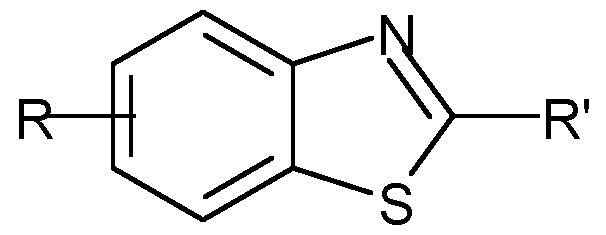
- azole compounds or azole derivatives are defined as five-membered heterocyclic compounds with 2 or 3 heteroatoms from the group nitrogen and sulfur, which contain no or a maximum of one sulfur atom incorporated into the ring and which can optionally carry an aromatic or saturated six-membered anellant.
- These five-membered heterocyclic compounds usually contain two N atoms and no S atom, three N atoms and no S atom, or one N atom and one S atom as heteroatoms.
- Preferred groups of the azole derivatives mentioned are fused imidazoles and fused 1,2,3-triazoles of the general formula or (IV) in which the variable
- R is hydrogen or a Ci- to Cw-alkyl radical, in particular methyl or ethyl, and the variable X is a nitrogen atom or the group C-H.
- variable R has the meaning given above and the variable R' denotes hydrogen, a C1- to C8-alkyl radical, in particular methyl or ethyl, or in particular a mercapto group (-SH).
- R' can also conceivably, although less preferably, be a carboxyalkyl radical of the formula -(C m H2 m )-COOR", where m is a number from 1 to 4 and R" is hydrogen or C1- to C8-alkyl, in particular methyl or ethyl, or C1- to C12-aryl.
- Examples of these are (2-benzothiazylthio)acetic acid, (2-benzothiazylthio)acetic acid ester, 3-(2-benzothiazylthio)propionic acid or 3-(2-benzothiazylthio)propionic acid ester.
- these compounds are used as acids, they are not among the carboxylic acids excluded according to the invention.
- a typical example of an azole derivative of the general formula (V) is 2-mercaptobenzothiazole.
- Benzimidazole, benzotriazole, tolutriazole, hydrogenated tolutriazole or mixtures thereof, in particular benzotriazole or tolutriazole, especially tolutriazole, are very particularly preferred as azole derivatives for the present invention.
- azole derivatives mentioned are commercially available or can be prepared using conventional methods.
- Hydrogenated benzotriazoles such as hydrogenated tolutriazole are also accessible according to DE-A 1 948 794 and are also commercially available.
- the azoles are selected from the group consisting of benzotriazole, tolutriazole, (2-benzothiazylthio)acetic acid, 3-(2-benzothiazylthio)propionic acid and 2-mercaptobenzothiazole.
- Water used in the present invention should be neutral with a pH value of around 7. It can be demineralized or distilled water, but this is not absolutely necessary.
- at least one hard water stabilizer can be added to the coolant composition.
- the water used can contain alkaline earth metal ions, for example magnesium, calcium, strontium or barium ions, the latter usually being present in trace amounts at most.
- alkaline earth metal ions for example magnesium, calcium, strontium or barium ions, the latter usually being present in trace amounts at most.
- magnesium and/or calcium ions are present as hardness-forming agents.
- the water used is preferably soft water with a water hardness of not more than 8.4 °dH, particularly preferably not more than 10 and most particularly preferably not more than 12 °dH.
- a hard water stabilizer is usually required.
- the water used in the coolant is, via the hardness formers, the usual source of any carbonate and/or sulfate that may be contained in the coolant.
- the coolants can also contain organic ortho-silicic acid esters of the general formula Si(OR)4, in which each R independently of the other is Ci-C4-alkyl, preferably methyl, ethyl or n-butyl, particularly preferably methyl or ethyl or mixtures of methyl and ethyl.
- the ortho-silicic acid esters mainly act as inhibitors of the corrosion of aluminum or aluminum-containing materials as well as solder.
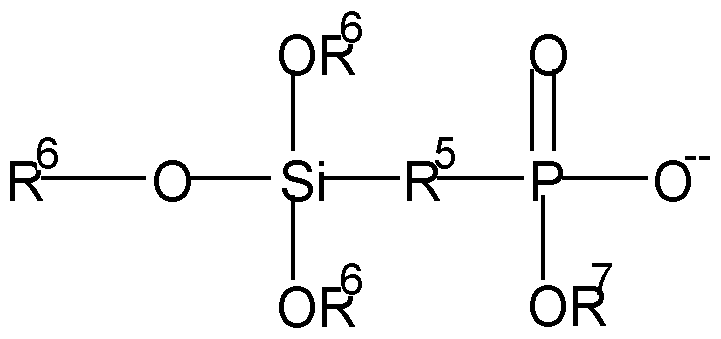
- composition contains at least one inorganic silicate, in a preferred embodiment at least one silicophosphonate is added in addition to the silicate, as described in European patent application EP 4015596.
- the silicophosphonate is a compound of the general formula wherein
- R 5 is a divalent organic radical, preferably a 1,oo-alkylene group having 1 to 6, preferably 1 to 4 carbon atoms, particularly preferably methylene, 1,2-ethylene, 1,2-propylene, 1,3-propylene or 1,4-butylene, very particularly preferably 1,2-ethylene or 1,3-propylene and in particular 1,2-ethylene,
- R 6 is independently hydrogen, Ci- to C alkyl or hydroxy-0 2 - to C alkyl, preferably hydrogen, methyl, ethyl, n-propyl, isopropyl, n-butyl, isobutyl, sec-butyl or tert-butyl, 2-hydroxyethyl or 2-hydroxypropyl, particularly preferably hydrogen, methyl, ethyl or propyl
- R 7 is Ci- to C alkyl, preferably methyl, ethyl, n-propyl or n-butyl, particularly preferably methyl, ethyl or n-butyl, very particularly preferably methyl or ethyl and in particular methyl.
- the silicophosphonates can be used as free acid or as alkali metal salt, preferably as sodium or potassium salt and particularly preferably as sodium salt.
- the coolants may optionally contain defoamers in small amounts (usually in amounts of 0.003 to 0.008% by weight in the diluted coolant) as well as bitter substances (e.g. of the denatonium benzoate type) and colorants for reasons of hygiene and safety in case of ingestion.
- defoamers in small amounts (usually in amounts of 0.003 to 0.008% by weight in the diluted coolant) as well as bitter substances (e.g. of the denatonium benzoate type) and colorants for reasons of hygiene and safety in case of ingestion.
- the composition can also contain one or more hard water stabilizers based on polyacrylic acid, polymaleic acid, acrylic acid-maleic acid copolymers, polyvinylpyrrolidone, polyvinylimidazole, vinylpyrrolidone-vinylimidazole copolymers and/or copolymers of unsaturated carboxylic acids and olefins.
- the proportion in the composition is chosen so that after appropriate dilution the amount in the finished diluted coolant is up to 1% by weight.
- it is a hard water stabilizer as described in WO 2022/200155.
- An advantage of using hard water stabilizers is that the use of demineralized or distilled water is not necessary to reduce or prevent the precipitation of alkaline earth metal compounds.
- the coolants ready for use in wind turbines are preferably produced by diluting concentrates (see below) with water and are composed, for example, as follows:
- alkylene glycol preferably 25 to 50, particularly preferably 25 to 45, very particularly preferably 30 to 50 and in particular at least 32.5 to 35% by weight,
- the coolant contains
- alkylene glycol alkylene glycol monoalkyl ether or glycerin, preferably monoethylene glycol
- inorganic salt selected from the group consisting of molybdates, borates, phosphates,
- the coolant contains
- alkylene glycol alkylene glycol monoalkyl ether or glycerin, preferably monoethylene glycol
- At least one organic mono- or dicarboxylic acid preferably aliphatic mono- or dicarboxylic acid, particularly preferably at least one aliphatic monocarboxylic acid and at least one aliphatic dicarboxylic acid or particularly preferably at least two aliphatic dicarboxylic acids, in particular at least two aliphatic dicarboxylic acids without 2-ethylhexanoic acid, and especially at least two aliphatic dicarboxylic acids without monocarboxylic acids,
- the coolant contains
- alkylene glycol alkylene glycol monoalkyl ether or glycerin, preferably monoethylene glycol
- At least one organic mono- or dicarboxylic acid preferably aliphatic mono- or dicarboxylic acid, particularly preferably at least one aliphatic monocarboxylic acid and at least one aliphatic dicarboxylic acid,
- inorganic salt selected from the group consisting of borates, phosphates, silicates, nitrites and nitrates,
- the coolant contains
- alkylene glycol alkylene glycol monoalkyl ether or glycerin, preferably monoethylene glycol
- At least one organic mono- or dicarboxylic acid preferably aliphatic mono- or dicarboxylic acid, particularly preferably at least one aliphatic monocarboxylic acid and at least one aliphatic dicarboxylic acid or particularly preferably at least two aliphatic dicarboxylic acids,
- inorganic salt selected from the group consisting of molybdates, borates, phosphates, silicates and nitrates, preferably selected from the group consisting of phosphates and silicates,
- the inorganic salt preferably comprises at least one silicate; more preferably, no other inorganic salts are present apart from silicate.
- the azole compounds are preferably benzotriazole or tolutriazole.
- the non-aliphatic organic monocarboxylic acids are preferably benzoic acid.
- the aliphatic monocarboxylic acids are preferably selected from the group consisting of 2-ethylhexanoic acid and isononanoic acid, particularly preferably isononanoic acid.
- the aliphatic dicarboxylic acids are preferably selected from the group consisting of adipic acid, sebacic acid and dodecanedioic acid.
- the inorganic salts are preferably selected from the group consisting of molybdates, borates, phosphates and silicates, particularly preferably selected from the group consisting of molybdates, phosphates and silicates, very particularly preferably selected from the group consisting of phosphates and silicates.
- the coolant should not exceed a kinematic viscosity according to ASTM D445 of 3 mm 2 /s at a temperature of 20 °C, preferably not more than 2.5, more preferably not more than 2 mm 2 /s, most preferably not more than 1.5 and in particular not more than 1 mm 2 /s.
- the coolant should not exceed a kinematic viscosity according to ASTM D445 of 7.5 mm 2 /s, preferably not more than 7, more preferably not more than 6 mm 2 /s, most preferably not more than 5.5 and in particular not more than 5 mm 2 /s.
- the coolant should not exceed a kinematic viscosity according to ASTM D445 of 1 mm 2 /s, preferably not more than 0.9, more preferably not more than 0.8 mm 2 /s, most preferably not more than 0.7 and in particular not more than 0.6 mm 2 /s.
- concentrates are usually sold in which the water content is omitted or greatly reduced.
- the coolants are then made from the concentrates by adding water before filling the wind turbine.
- These concentrates are usually diluted with water in a volume ratio of 1:1 to 1:3 (vol/vol), preferably 1:1 to 1:2, depending on the prevailing temperature on site and the requirements for antifreeze protection.
- the concentrates are composed like the coolants mentioned above, but with a reduced water content depending on the dilution ratio.
- the water content in the concentrate is not more than 15, preferably not more than 10 and particularly preferably not more than 5% by weight.
- the concentrates are composed as follows:
- alkylene glycol alkylene glycol monoalkyl ether and glycerin
- inorganic salt selected from the group consisting of molybdates, borates, phosphates, silicates, nitrites and nitrates,
- the pH value of the coolants at the end user is usually in the range of 4 to 11.5, preferably 5 to 10, especially 6 to 9.
- At least one inorganic base is added at any stage in the process for producing the coolant from a concentrated precursor.
- the at least one inorganic base can be contained in the coolant or in the concentrate or can be added during the production of the coolant from the concentrate by mixing it with water.
- Preferred inorganic bases are alkali metal hydroxides, particularly preferably solid lithium, sodium or potassium hydroxide, optionally also in the form of aqueous lithium, sodium hydroxide or potassium hydroxide solution.
- carbonates or hydrogen carbonates of lithium, sodium or potassium are less preferred.
- Preferred alkali metals are sodium and potassium.
- the electrical conductivity of the coolants plays a subordinate role according to the invention and can be up to 3000 piS/cm (measured according to ASTM D 1125 at 25 °C), preferably up to 2500, particularly preferably up to 2000, very particularly preferably up to 1500 and in particular up to 1000 piS/cm.
- stirrer by mixing using a stirrer or by pumping (natural circulation or forced circulation) or pumping with static mixing devices such as static mixers or nozzles in the pumping circuit, by static mixing devices such as static mixers, nozzles, orifices, Y or T pieces in the inlet of the preparation tank, or by dynamic mixing devices such as mixing pumps or stirred tanks.
- static mixing devices such as static mixers or nozzles in the pumping circuit
- static mixing devices such as static mixers, nozzles, orifices, Y or T pieces in the inlet of the preparation tank
- dynamic mixing devices such as mixing pumps or stirred tanks.
- the coolants are usually produced at a first location, e.g. at a formulator, by mixing the concentrates with water in the desired dilution ratio, the coolant diluted with water is then transported to the wind turbine at a second location, where the cooling system of the wind turbine is filled with the ready-mixed coolant.
- this second location is usually the assembly location for the nacelle.
- the second location is the site of the wind turbine, i.e. at sea for offshore turbines or on land for onshore turbines.
- a low viscosity is desirable, as this requires lower pump output and can lead to cavitation in high-speed pumps, for example. If the viscosity of the coolant is too high for pumping, it may be advisable to heat the coolant slightly to reduce the viscosity and then transport the heated coolant to the wind turbine in an insulated or thermostatted container. As a rule, a temperature of Coolant up to 25 °C above the ambient temperature is sufficient, preferably up to 20, particularly preferably up to 15 and most particularly preferably up to 10 °C.
- the coolant can be transported in a suitable container by crane or elevator to the level of the wind turbine's coolant tank and replaced there. This is particularly preferred if the coolant is too viscous to pump or if a suitable pump is not available.
- the used coolant is collected after replacement and can be disposed of or recovered via sewage treatment plants, for example.
- the components of wind turbines to be cooled usually include at least one selected from the group consisting of generator, gearbox, bearing, converter and control system.
- the low speed of the rotor is translated into a high speed for the generator, meaning that smaller generators can be used.
- the gearbox is not necessarily present in every wind turbine.
- the rotor With the mostly hydraulic control system, the rotor is usually automatically turned into the wind by the control system of the wind turbine to optimize power generation (wind tracking). This includes both the alignment of the hub to the wind direction and the angle of attack of the rotor blades in the wind. If the wind speed is too high, the rotor can also be turned out of the wind or the rotor blades can be turned into the so-called sail position to protect the system.
- a preferred embodiment is to cool the gearbox (if present) and/or the control system of the wind turbine and to dissipate the heat generated there via the coolant.
- the gearbox and control system are cooled in a common cooling circuit.
- the rotor is set in rotation by the kinetic energy of the wind and drives a generator inside the nacelle, which in turn converts the mechanical energy into electrical energy.
- the electricity generated by the generator can then be fed into the power grid.
- a converter ensures judges that the electricity fed in has the frequency required for the national or regional power grid, usually 50 to 60 hertz.
- a preferred embodiment is to cool the generator and/or converter of the wind turbine and to dissipate the heat generated there via the coolant.
- the generator and converter are cooled in a common cooling circuit.
- Another object of the present invention is a method for heat management of components of wind turbines, in which heat from at least one component of a wind turbine selected from the group consisting of
- the higher temperature is from 20 to 100 °C, preferably 25 to 80, particularly preferably 30 to 60 °C,
- the lower temperature is between minus 50 and 40 °C, preferably between minus 40 and 40, particularly preferably between minus 30 and 35 °C and
- the lower temperature is at least 5 °C, preferably at least 10, particularly preferably at least 15 and most preferably at least 20 °C lower than the higher temperature.
- the higher temperature is preferably the wall temperature of the respective component of the wind turbine during normal operation of the wind turbine.
- the lower temperature is preferably the ambient temperature with which the heated coolant is brought into contact in the second heat exchanger.
- the lower temperature is that of seawater at the location of the wind turbine.
- the lower temperature is 0 to 30 °C, preferably 1 to 25, more preferably 2 to 20 and most preferably 3 to 15 °C.
- coolants described in this document are that the wind turbines can generally be operated with these coolants for at least 5, preferably at least 7, particularly preferably at least 8 and most particularly preferably at least 10 years without the need to change the coolant. It is even conceivable that the coolant does not need to be replaced during the entire operating life of the wind turbine, i.e. up to 25, preferably up to 30 years.
- All heat exchangers can be components that are known per se and are familiar to the expert for these purposes.
- Viscosity data in this publication refer to ASTM D445 at 20 °C, unless otherwise stated.
- a coolant 1 according to the invention based on ethylene glycol with a mixture of adipic acid, sebacic acid and tolutriazole as inhibitor components as described in the examples of WO 02/90462 A1 was subjected to a corrosion test according to ASTM D 1384 (Glassware Corrosion Test, 336 hours at 88 °C, 33% solutions). Negative values mean an increase in the weight of the test specimen.
- a coolant 2 based on ethylene glycol with a mixture of molybdate, 2-ethylhexanoic acids and tolutriazole was subjected to a corrosion test according to ASTM D 1384.
- ASTM D 1384 a corrosion test according to ASTM D 1384.
- three metal plates of each sample were used in the test and the results of the weight loss were rounded to one significant figure without a decimal place.
- Coolant 3 is based on ethylene glycol with a mixture of sodium benzoate, nitrite, borate, silicate and benzotriazole and has been subjected to a corrosion test according to ASTM D 1384.
- Coolant 4 is based on ethylene glycol with a mixture of silicate, borate, organic acids (sebacic acid and 2-ethylhexanoic acid) and benzotriazole and was subjected to a corrosion test according to ASTM D 1384.
- Coolant 5 is based on ethylene glycol with a mixture of silicate, organic acids (sebacic acid, adipic acid and dodecanedioic acid) and tolutriazole and has been subjected to a corrosion test according to ASTM D 1384.
- coolants 3, 4 and 5 show better corrosion results than coolant 0, especially with regard to non-ferrous metal (copper and brass) but also aluminum corrosion and are therefore better suited for cooling systems with aluminum components. Furthermore, coolants 3, 4 and 5 show a clear advantage in non-ferrous metal corrosion compared to coolants 1 and 2. Since seals and fittings are often made of such non-ferrous metals, reduced corrosion results in increased safety against the occurrence of leaks in the cooling system.
Landscapes
- Chemical & Material Sciences (AREA)
- Engineering & Computer Science (AREA)
- Organic Chemistry (AREA)
- Materials Engineering (AREA)
- Mechanical Engineering (AREA)
- Metallurgy (AREA)
- Combustion & Propulsion (AREA)
- Physics & Mathematics (AREA)
- Thermal Sciences (AREA)
- Sustainable Energy (AREA)
- Sustainable Development (AREA)
- General Engineering & Computer Science (AREA)
- Inorganic Chemistry (AREA)
- Life Sciences & Earth Sciences (AREA)
- Chemical Kinetics & Catalysis (AREA)
- Preventing Corrosion Or Incrustation Of Metals (AREA)
- Engine Equipment That Uses Special Cycles (AREA)
- Turbine Rotor Nozzle Sealing (AREA)
Abstract
Description





Claims
Priority Applications (5)
| Application Number | Priority Date | Filing Date | Title |
|---|---|---|---|
| AU2024310129A AU2024310129A1 (en) | 2023-06-28 | 2024-06-20 | New uses for coolants |
| EP24735947.4A EP4735555A1 (de) | 2023-06-28 | 2024-06-20 | Neue anwendungen für kühlmittel |
| KR1020257042851A KR20260026498A (ko) | 2023-06-28 | 2024-06-20 | 냉각제의 신규한 용도 |
| CN202480043254.3A CN121399228A (zh) | 2023-06-28 | 2024-06-20 | 冷却剂的新应用 |
| MX2025015716A MX2025015716A (es) | 2023-06-28 | 2025-12-19 | Nuevos usos para refrigerantes |
Applications Claiming Priority (2)
| Application Number | Priority Date | Filing Date | Title |
|---|---|---|---|
| EP23181958.2 | 2023-06-28 | ||
| EP23181958.2A EP4484519A1 (de) | 2023-06-28 | 2023-06-28 | Neue anwendungen für kühlmittel |
Publications (1)
| Publication Number | Publication Date |
|---|---|
| WO2025002978A1 true WO2025002978A1 (de) | 2025-01-02 |
Family
ID=87036614
Family Applications (1)
| Application Number | Title | Priority Date | Filing Date |
|---|---|---|---|
| PCT/EP2024/067257 Ceased WO2025002978A1 (de) | 2023-06-28 | 2024-06-20 | Neue anwendungen für kühlmittel |
Country Status (6)
| Country | Link |
|---|---|
| EP (2) | EP4484519A1 (de) |
| KR (1) | KR20260026498A (de) |
| CN (1) | CN121399228A (de) |
| AU (1) | AU2024310129A1 (de) |
| MX (1) | MX2025015716A (de) |
| WO (1) | WO2025002978A1 (de) |
Citations (10)
| Publication number | Priority date | Publication date | Assignee | Title |
|---|---|---|---|---|
| DE1948794A1 (de) | 1969-09-26 | 1971-04-01 | Rhein Chemie Rheinau Gmbh | 4,5,6,7-Tetrahydrobenzotriazole,Verfahren zu ihrer Herstellung und ihre Verwendung als Korrosionsinhibitoren |
| WO2002090462A1 (de) | 2001-05-10 | 2002-11-14 | Basf Aktiengesellschaft | Gefrierschutzmittelkonzentrate enthaltend den farbstoff c.i. reactive violet 5 |
| CN107090276A (zh) * | 2017-04-26 | 2017-08-25 | 句容市江电电器机械有限公司 | 一种耐腐蚀防冻液 |
| CN109837071A (zh) | 2017-11-24 | 2019-06-04 | 北京蓝星清洗有限公司 | 一种用于风力发电机组的冷却液及其制备方法 |
| CN110699048A (zh) * | 2019-09-06 | 2020-01-17 | 华电电力科学研究院有限公司 | 一种风电机组变频器冷却液及其制备方法 |
| EP3828411A1 (de) | 2019-11-27 | 2021-06-02 | Siemens Gamesa Renewable Energy A/S | Windturbine und verfahren zum betrieb der windturbine |
| CN113969143A (zh) * | 2021-09-29 | 2022-01-25 | 华电电力科学研究院有限公司 | 一种具有螯合作用的风电机组冷却液及其制备方法 |
| EP4015596A1 (de) | 2020-12-15 | 2022-06-22 | Basf Se | Neuartige kühlmittel mit verbesserter lagerstabilität |
| CN114907821A (zh) * | 2022-05-30 | 2022-08-16 | 湖南车瑞科技股份有限公司 | 一种风电专用冷却液及其制备方法 |
| WO2022200155A1 (de) | 2021-03-23 | 2022-09-29 | Basf Se | Kühlmittel mit verbesserter temperaturstabilität |
-
2023
- 2023-06-28 EP EP23181958.2A patent/EP4484519A1/de not_active Withdrawn
-
2024
- 2024-06-20 WO PCT/EP2024/067257 patent/WO2025002978A1/de not_active Ceased
- 2024-06-20 CN CN202480043254.3A patent/CN121399228A/zh active Pending
- 2024-06-20 EP EP24735947.4A patent/EP4735555A1/de active Pending
- 2024-06-20 KR KR1020257042851A patent/KR20260026498A/ko active Pending
- 2024-06-20 AU AU2024310129A patent/AU2024310129A1/en active Pending
-
2025
- 2025-12-19 MX MX2025015716A patent/MX2025015716A/es unknown
Patent Citations (10)
| Publication number | Priority date | Publication date | Assignee | Title |
|---|---|---|---|---|
| DE1948794A1 (de) | 1969-09-26 | 1971-04-01 | Rhein Chemie Rheinau Gmbh | 4,5,6,7-Tetrahydrobenzotriazole,Verfahren zu ihrer Herstellung und ihre Verwendung als Korrosionsinhibitoren |
| WO2002090462A1 (de) | 2001-05-10 | 2002-11-14 | Basf Aktiengesellschaft | Gefrierschutzmittelkonzentrate enthaltend den farbstoff c.i. reactive violet 5 |
| CN107090276A (zh) * | 2017-04-26 | 2017-08-25 | 句容市江电电器机械有限公司 | 一种耐腐蚀防冻液 |
| CN109837071A (zh) | 2017-11-24 | 2019-06-04 | 北京蓝星清洗有限公司 | 一种用于风力发电机组的冷却液及其制备方法 |
| CN110699048A (zh) * | 2019-09-06 | 2020-01-17 | 华电电力科学研究院有限公司 | 一种风电机组变频器冷却液及其制备方法 |
| EP3828411A1 (de) | 2019-11-27 | 2021-06-02 | Siemens Gamesa Renewable Energy A/S | Windturbine und verfahren zum betrieb der windturbine |
| EP4015596A1 (de) | 2020-12-15 | 2022-06-22 | Basf Se | Neuartige kühlmittel mit verbesserter lagerstabilität |
| WO2022200155A1 (de) | 2021-03-23 | 2022-09-29 | Basf Se | Kühlmittel mit verbesserter temperaturstabilität |
| CN113969143A (zh) * | 2021-09-29 | 2022-01-25 | 华电电力科学研究院有限公司 | 一种具有螯合作用的风电机组冷却液及其制备方法 |
| CN114907821A (zh) * | 2022-05-30 | 2022-08-16 | 湖南车瑞科技股份有限公司 | 一种风电专用冷却液及其制备方法 |
Non-Patent Citations (1)
| Title |
|---|
| no. 15898-92-7 |
Also Published As
| Publication number | Publication date |
|---|---|
| KR20260026498A (ko) | 2026-02-26 |
| AU2024310129A1 (en) | 2025-12-18 |
| MX2025015716A (es) | 2026-02-03 |
| EP4735555A1 (de) | 2026-05-06 |
| EP4484519A1 (de) | 2025-01-01 |
| CN121399228A (zh) | 2026-01-23 |
Similar Documents
| Publication | Publication Date | Title |
|---|---|---|
| EP1230317B1 (de) | Gefrierschutzmittelkonzentrate auf basis von dicarbonsäuren, molybdat und triazolen und diese umfassende kühlmittelzusammensetzungen | |
| EP0880566B1 (de) | Verwendung von quaternierten imidazolen als buntmetall-korrosionsinhibitoren und diese enthaltende gefrierschutzmittelkonzentrate und kühlmittelzusammensetzungen | |
| EP3374463B1 (de) | Silikathaltiges kühlmittelkonzentrat | |
| WO2018095759A1 (de) | Kühlmittel für kühlsysteme in elektrofahrzeugen mit brennstoffzellen und/oder batterien enthaltend azolderivate und zusätzliche korrosionsschutzmittel | |
| DE10064737A1 (de) | Wäßrige Kühlmittel für die Motoreneinlaufphase enthaltend Dampfraumkorrosionsinhibitoren | |
| CN104845595B (zh) | 一种汽车发动机用无水冷却液组合物 | |
| CN104357202A (zh) | 一种微乳化铝镁合金切削液及其制备方法 | |
| WO2001002511A1 (de) | Silikat-, borat- und phosphatfreie kühlflüssigkeiten auf basisis von glykolen mit verbessertem korrosionsverhalten | |
| EP4117085A1 (de) | Neuartiges kühlmittel mit niedriger elektrischer leitfähigkeit | |
| WO2025002978A1 (de) | Neue anwendungen für kühlmittel | |
| EP0863960B1 (de) | Gefrierschutzmittel | |
| DE112017003138T5 (de) | Kühlmittelzusammensetzung für Automotoren; konzentrierte Kühlmittelzusammensetzung für Automotoren, und Verfahren zum Betreiben eines Verbrennungsmotors | |
| DE102004039149B4 (de) | Silikatfreie Kühlflüssigkeiten auf Basis organischer Säuren und Carbamaten mit verbesserten Korrosionseigenschaften | |
| EP1098949B1 (de) | Gefrierschutzmittelkonzentrate und diese enthaltende kühlmittelzusammensetzungen für kühlkreisläufe in verbrennungsmotoren | |
| WO2025016801A1 (en) | New coolant compositions | |
| EP2542641B1 (de) | Biologisch abbaubare, frostsichere wärmeträgerflüssigkeit, ihre verwendung in oberflächennahen, geothermischen anlagen, und ein konzentrat zu ihrer herstellung | |
| EP1129236B1 (de) | Motoreneinlaufmittel | |
| EP1025181A1 (de) | Kühlflüssigkeit zur verwendung in bauteilen aus magnesium | |
| HUE035797T2 (en) | Engine Coolant Additive | |
| JP7017612B1 (ja) | 冷却液組成物 | |
| DE3436821A1 (de) | Ethoxylierte aromatische nitrocarbonsaeuren, ihre herstellung und verwendung als korrosionsinhibitoren und diese enthaltende korrosionsschutzmittel | |
| DE19955704A1 (de) | Gefrierschutzmittelkonzentrate auf Basis von Dicarbonsäuren, Molybdat und Triazolen oder Thiazolen und diese umfassende Kühlmittelzusammensetzungen | |
| US20250388799A1 (en) | Coolant composition | |
| JP2011252183A (ja) | 腐食抑制剤、及び自動車用ブレーキ液 | |
| CN120624106A (zh) | 一种环保型的镁合金加工液及其制备方法 |
Legal Events
| Date | Code | Title | Description |
|---|---|---|---|
| 121 | Ep: the epo has been informed by wipo that ep was designated in this application |
Ref document number: 24735947 Country of ref document: EP Kind code of ref document: A1 |
|
| WWE | Wipo information: entry into national phase |
Ref document number: AU2024310129 Country of ref document: AU |
|
| ENP | Entry into the national phase |
Ref document number: 2024310129 Country of ref document: AU Date of ref document: 20240620 Kind code of ref document: A |
|
| WWE | Wipo information: entry into national phase |
Ref document number: MX/A/2025/015716 Country of ref document: MX |
|
| REG | Reference to national code |
Ref country code: BR Ref legal event code: B01A Ref document number: 112025028418 Country of ref document: BR |
|
| WWE | Wipo information: entry into national phase |
Ref document number: 202617005838 Country of ref document: IN |
|
| WWE | Wipo information: entry into national phase |
Ref document number: 2024735947 Country of ref document: EP |
|
| NENP | Non-entry into the national phase |
Ref country code: DE |
|
| ENP | Entry into the national phase |
Ref document number: 2024735947 Country of ref document: EP Effective date: 20260128 |
|
| WWP | Wipo information: published in national office |
Ref document number: MX/A/2025/015716 Country of ref document: MX |
|
| ENP | Entry into the national phase |
Ref document number: 2024735947 Country of ref document: EP Effective date: 20260128 |
|
| ENP | Entry into the national phase |
Ref document number: 112025028418 Country of ref document: BR Kind code of ref document: A2 Effective date: 20251218 |