WO2025004875A1 - Agent antistatique - Google Patents
Agent antistatique Download PDFInfo
- Publication number
- WO2025004875A1 WO2025004875A1 PCT/JP2024/021834 JP2024021834W WO2025004875A1 WO 2025004875 A1 WO2025004875 A1 WO 2025004875A1 JP 2024021834 W JP2024021834 W JP 2024021834W WO 2025004875 A1 WO2025004875 A1 WO 2025004875A1
- Authority
- WO
- WIPO (PCT)
- Prior art keywords
- compound
- antistatic agent
- substrate
- resin
- aromatic
- Prior art date
- Legal status (The legal status is an assumption and is not a legal conclusion. Google has not performed a legal analysis and makes no representation as to the accuracy of the status listed.)
- Ceased
Links
Images
Classifications
-
- C—CHEMISTRY; METALLURGY
- C08—ORGANIC MACROMOLECULAR COMPOUNDS; THEIR PREPARATION OR CHEMICAL WORKING-UP; COMPOSITIONS BASED THEREON
- C08H—DERIVATIVES OF NATURAL MACROMOLECULAR COMPOUNDS
- C08H6/00—Macromolecular compounds derived from lignin, e.g. tannins, humic acids
-
- C—CHEMISTRY; METALLURGY
- C08—ORGANIC MACROMOLECULAR COMPOUNDS; THEIR PREPARATION OR CHEMICAL WORKING-UP; COMPOSITIONS BASED THEREON
- C08L—COMPOSITIONS OF MACROMOLECULAR COMPOUNDS
- C08L97/00—Compositions of lignin-containing materials
-
- D—TEXTILES; PAPER
- D06—TREATMENT OF TEXTILES OR THE LIKE; LAUNDERING; FLEXIBLE MATERIALS NOT OTHERWISE PROVIDED FOR
- D06M—TREATMENT, NOT PROVIDED FOR ELSEWHERE IN CLASS D06, OF FIBRES, THREADS, YARNS, FABRICS, FEATHERS OR FIBROUS GOODS MADE FROM SUCH MATERIALS
- D06M15/00—Treating fibres, threads, yarns, fabrics, or fibrous goods made from such materials, with macromolecular compounds; Such treatment combined with mechanical treatment
- D06M15/01—Treating fibres, threads, yarns, fabrics, or fibrous goods made from such materials, with macromolecular compounds; Such treatment combined with mechanical treatment with natural macromolecular compounds or derivatives thereof
- D06M15/17—Natural resins, resinous alcohols, resinous acids, or derivatives thereof
-
- D—TEXTILES; PAPER
- D06—TREATMENT OF TEXTILES OR THE LIKE; LAUNDERING; FLEXIBLE MATERIALS NOT OTHERWISE PROVIDED FOR
- D06M—TREATMENT, NOT PROVIDED FOR ELSEWHERE IN CLASS D06, OF FIBRES, THREADS, YARNS, FABRICS, FEATHERS OR FIBROUS GOODS MADE FROM SUCH MATERIALS
- D06M15/00—Treating fibres, threads, yarns, fabrics, or fibrous goods made from such materials, with macromolecular compounds; Such treatment combined with mechanical treatment
- D06M15/19—Treating fibres, threads, yarns, fabrics, or fibrous goods made from such materials, with macromolecular compounds; Such treatment combined with mechanical treatment with synthetic macromolecular compounds
- D06M15/37—Macromolecular compounds obtained otherwise than by reactions only involving carbon-to-carbon unsaturated bonds
- D06M15/53—Polyethers
Definitions
- the present invention relates to an antistatic agent.
- Patent Document 1 describes that a combination of a synthetic layered silicate, an organic resin binder, a solvent mainly composed of water, and a compound containing an alkoxy group or a compound of a divalent or higher polyvalent metal selected from typical metals and transition metals can be used as a water-resistant antistatic agent.
- Patent Document 2 describes that an antistatic agent containing nano-sized tin oxide powder, a binder, and water can exhibit a uniform and excellent antistatic effect.
- Patent Document 3 describes that a polymer-type antistatic agent for thermoplastic resins that contains a polyurethane compound does not lose its antistatic ability even after washing with water.
- Patent Document 4 describes that a combination of a specific anionic surfactant and a nonionic surfactant shows excellent antistatic effects.
- JP 2020-122040 A International Publication No. 2020/202593 JP 2018-178042 A JP 2018-123306 A
- the object of the present invention is to provide an antistatic agent that can exhibit good antistatic effects and high stability regardless of the base material.
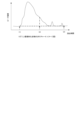
- Peak area ratio of high molecular weight components (area value of high molecular weight components in GPC chart (280 nm)) / (area value of all components in GPC chart (280 nm))
- a resin composition comprising the antistatic agent according to any one of [1] to [7] and a resin substrate.
- the resin composition according to [8] wherein the content of the antistatic agent relative to 100% by weight of the resin substrate is 1.5% by weight or more.
- the present invention provides the following [1-1] to [1-8].
- An antistatic agent comprising a lignin derivative compound containing the following structural units (I) and (II): (I): A structural unit derived from a lignin sulfonic acid compound. (II): A structural unit derived from an aromatic water-soluble compound containing at least an aromatic water-soluble compound having an alkylene oxide chain.
- the aromatic water-soluble compound having an alkylene oxide chain includes an aromatic water-soluble compound having an alkylene oxide chain with an average addition mole number of alkylene oxide of 25 or more.
- Peak area ratio of high molecular weight components (area value of high molecular weight components in GPC chart (280 nm)) / (area value of all components in GPC chart (280 nm)) [2-6]
- a method for treating a resin surface comprising kneading the antistatic agent according to [2-1] or [2-2] into a resin substrate.
- [2-7] A resin composition comprising the antistatic agent according to any one of [2-1] to [2-5] and a resin substrate.
- the resin composition according to [2-7] wherein the content of the antistatic agent relative to 100% by weight of the resin substrate is 1.5% by weight or more.
- Lignin sulfonic acid compounds usually have at least one functional group site that can react with the aromatic water-soluble compound that constitutes the structural unit (II).
- functional group site include carboxyl groups, hydroxyl groups (phenolic hydroxyl groups, alcoholic hydroxyl groups), thiol groups, sulfo groups, aromatic rings, ether bonds, and alkyl chains.
- the functional group site of the lignin sulfonic acid compound is bonded directly or via a condensing agent such as formaldehyde with the aromatic water-soluble compound to form a lignin derivative compound.
- the type of chemical reaction is not particularly limited, and examples thereof include radical reaction, ionic bond, coordinate bond, condensation reaction, reaction accompanied by hydrolysis, reaction accompanied by dehydration, reaction accompanied by oxidation, reaction accompanied by reduction, and reaction accompanied by neutralization.
- the aromatic water-soluble compound preferably has an alkylene oxide chain or a polar group. This can improve the reactivity when forming a bond between the structural units (I) and (II).
- the polar group may be an ionic functional group, such as a carboxyl group, a hydroxyl group, a sulfo group, a nitroxyl group, a carbonyl group, a phosphate group, an amino group, or an epoxy group.
- Anionic functional groups such as a hydroxyl group, a carboxyl group, a sulfo group, or a phosphate group are preferred, and a carboxyl group or a sulfo group is more preferred.
- the anionic functional groups in the lignin derivative compound can be quantitatively and qualitatively observed by instrumental analysis such as NMR or IR.
- aromatic water-soluble compounds include the following compounds:
- the number of carbon atoms of the alkylene oxide units constituting the alkylene oxide chain (group) is not particularly limited, and is usually 2 to 18, preferably 2 to 4, and more preferably 2 to 3.
- Examples of the alkylene oxide units include ethylene oxide units, propylene oxide units, and butylene oxide units, and ethylene oxide units or propylene oxide units are preferred.
- the average number of moles of the alkylene oxide units added is usually 20 or more or 25 or more, preferably 30 or more, and more preferably 35 or more. This can improve dispersibility.
- the upper limit is preferably 300 or less, more preferably 200 or less, and even more preferably 150 or less. This can suppress a decrease in dispersion retention.
- the polyalkylene oxide chain may be composed of one type or two or more types of alkylene oxide groups.
- the addition form of each alkylene oxide group in a polyalkylene oxide chain composed of two or more types of alkylene oxide groups may be random, block, or a mixture of these.
- the terminal unit of the polyalkylene oxide chain is usually a hydroxyl group, but is not limited to this, and may be an alkyl ether or a carboxylate ester as long as it does not interfere with bonding with the lignin sulfonic acid compound.
- aromatic water-soluble compounds having an alkylene oxide chain include oxyalkylene group adducts to aromatic compounds such as phenol, cresol, nonylphenol, naphthol, methylnaphthol, butylnaphthol, bisphenol A, and bisphenol S. More specifically, examples include polyalkylene oxide alkylphenyl ethers, polyalkylene oxide phenyl ethers, polyalkylene oxide alkylnaphthyl ethers, and polyalkylene oxide naphthyl ethers.
- benzene ring derivatives are preferred because they can have good co-condensation properties, and at least one of polyalkylene oxide alkylphenyl ethers and polyalkylene oxide phenyl ethers is more preferred, and polyalkylene oxide phenyl ethers (particularly oxyalkylene group adducts to phenol) (for example, poly(ethylene oxide) monophenyl ether, poly(propylene oxide) monophenyl ether, and the preferred range of the average added mole number of ethylene oxide units and propylene oxide units is as described above) are even more preferred.
- the aromatic water-soluble compound having an alkylene oxide chain may be one type or a combination of two or more types.
- aromatic water-soluble compounds having a carboxyl group examples include naphthalene ring or benzene ring derivatives having at least one carboxyl group. More specifically, examples include isophthalic acid, oxynaphthoic acid, benzoic acid, hydroxybenzoic acid, and isomers thereof. Because of their good reactivity, o-hydroxybenzoic acid, m-hydroxybenzoic acid, and p-hydroxybenzoic acid are preferred, and p-hydroxybenzoic acid is more preferred.
- the aromatic water-soluble compounds having a carboxyl group may be one type or a combination of two or more types.
- the neutralization treatment can be carried out using a neutralizing agent capable of neutralizing the reaction product and the catalyst.
- the neutralizing agent include basic compounds such as sodium hydroxide, calcium hydroxide, Ba(OH) 2 , and the like (including salts and hydroxides thereof).
- the precipitate can be separated and removed by subsequent filtration, and a salt-free polymer can be obtained.
- undesirable sodium sulfate may be separated and removed by dialysis or ultrafiltration.
- Antistatic agents can be used to prevent static electricity in resins.
- Examples of methods for obtaining an antistatic effect for resins include a method of treating the surface of a substrate (usually a solid) and a method of kneading an antistatic agent into a resin substrate containing a resin material.
- a method for treating the substrate surface with an antistatic agent for example, a method of forming a coating layer containing an antistatic agent, i.e., a layer containing the above-mentioned copolymer, on at least a part of the substrate surface.
- the coating layer containing an antistatic agent can function as an antistatic layer. Therefore, a laminate material containing a substrate and a coating layer can exhibit an antistatic effect due to the coating layer, and can suppress the generation of static electricity.
- Coating methods include, but are not limited to, bar coating, spin coating, brush coating, roll coating, spray coating, and screen printing. They can be selected appropriately depending on the substrate and solvent.
- the resin substrate may contain a cellulose-based material.
- a cellulose-based material By adding an antistatic agent to a resin material containing a cellulose-based material, it is possible to expect an antistatic effect as well as an improvement in cellulose dispersibility.
- the cellulose-based material include cellulose powder, cellulose fibers (cellulose nanofibers, cellulose microfibrils), pulp, and modified products thereof (e.g., modified products obtained by chemical modification such as oxidation, etherification, phosphate esterification, silane coupling, fluorination, and cationization).
- the average particle size is preferably 20 ⁇ m or more, more preferably 25 ⁇ m or more, and even more preferably 30 ⁇ m or more. This makes it possible to suppress scattering and improve mixability when the cellulose powder is added to the reaction system.
- the upper limit is preferably 100 ⁇ m or less, more preferably 80 ⁇ m or less, and even more preferably 60 ⁇ m or less. This makes it possible to maintain the kneadability during the formation of the ion complex and the smoothness of the resulting ion complex. Therefore, the average particle size of the cellulose powder is preferably 20 to 100 ⁇ m, more preferably 25 to 80 ⁇ m, and even more preferably 30 to 60 ⁇ m.
- the average particle size is the particle size when the volume accumulation distribution is 50%.
- the volume accumulation distribution can be obtained by a laser scattering method.
- the measuring device and measuring conditions are as follows. Measurement equipment: Laser diffraction particle size distribution measurement equipment (Mastersizer 3000, Spectris Co., Ltd., Malvern Panalytical Division) Measurement conditions: A sample is added to the measurement section in water stirred at 3500 rpm so that the scattering intensity is about 10%, and measurements can be performed under the following conditions. Analysis: General purpose Analysis sensitivity: Enhanced Light scattering model: Mie theory
- the apparent specific gravity of the cellulose powder is preferably 0.1 g/ml or more, and more preferably 0.15 g/ml or more. This can prevent the deterioration of workability due to scattering when the cellulose powder is added to the reaction system.
- the upper limit is preferably 0.6 g/ml or less, more preferably 0.45 g/ml or less, and even more preferably 0.4 g/ml or less. This can prevent the deterioration of dispersibility due to the occurrence of settling when the cellulose powder is added to the reaction system. Therefore, the range of 0.1 to 0.6 g/ml is preferable, the range of 0.1 to 0.45 g/ml is more preferable, and the range of 0.15 to 0.4 g/ml is even more preferable.
- the resin substrate may contain additive components other than the cellulose-based material.
- additive components include known resin additives such as antioxidants, preservatives, stabilizers, solvents, and inorganic fillers (e.g., carbon fiber, talc, mica, titanium oxide, and silica), and are not particularly limited.
- the amount of antistatic agent used in the case of kneading (the amount of copolymer relative to 100% by weight of the resin substrate (including additive components, the same applies below)) is usually 1.0% by weight or more, preferably 1.5% by weight or more or 2.0% by weight or more, more preferably 2.5% by weight or more.
- the upper limit is usually 80% by weight or less, preferably 75% by weight or less, more preferably 70% by weight or less. Therefore, it is usually 1.0 to 80% by weight, preferably 1.5 to 80% by weight or 2.0 to 75% by weight, more preferably 2.5 to 70% by weight.
- the method of kneading (blending) the antistatic agent into the resin substrate is not particularly limited, and any commonly used method can be used.
- a kneading machine may be used as necessary.
- the system may be heated, and the heating temperature is, for example, 100° C. or higher, preferably 150° C. or higher.
- the upper limit is usually 250° C. or lower, preferably 200° C. or lower.
- Production Example 3 (Production of Ligninsulfonate (a-3)) Wood derived from Radiata pine was subjected to sulfite treatment for 3 hours at 140°C and pH 2 using a magnesium sulfite solution with a SO2 concentration of 4 g/100 mL based on the sulfite cooking method, and a magnesium hydroxide solution was added to the resulting composition so that the solid content was 9 wt%, and the composition was held at 90°C for 4 hours to cause an alkaline reaction.
- Example 1 Into a 1L separable flask, 200g of water, 65g of lignin sulfonate (a-1) as compound (i), 35g of poly(ethylene oxide) monophenyl ether (average number of moles of ethylene oxide added: 100) as compound (ii), 10g of 37% aqueous formaldehyde solution, 40g of 72% sulfuric acid, and 0.05g of Pronal 753 (manufactured by Toho Chemical Industry Co., Ltd.) as a defoaming agent were added, and the mixture was stirred while being heated, and the reaction was completed by maintaining the mixture at 105°C for 10 hours.
- lignin sulfonate (a-1) as compound (i)
- 35g of poly(ethylene oxide) monophenyl ether average number of moles of ethylene oxide added: 100
- 10g of 37% aqueous formaldehyde solution 40g of 72% sulfuric acid
- Pronal 753 manufactured by Toh
- a lignin derivative compound (b-1) 80g of 250g/L aqueous calcium hydroxide solution and 20g of 31% aqueous sodium hydroxide solution were added, and the mixture was stirred for 1 hour, followed by filtration to remove the resulting gypsum, to obtain a lignin derivative compound (b-1).
- a lignin derivative compound (b-2) 80g of 250g/L aqueous calcium hydroxide solution and 20g of 31% aqueous sodium hydroxide solution were added, and the mixture was stirred for 1 hour, followed by filtration to remove the resulting gypsum, to obtain a lignin derivative compound (b-2).
- aqueous calcium hydroxide solution 80g was added to the resulting aqueous solution, 80g of 250g/L aqueous calcium hydroxide solution and 20g of 31% aqueous sodium hydroxide solution were added, and the mixture was stirred for 1 hour, followed by filtration to remove the resulting gypsum, to obtain a lignin derivative compound (b-3).
- aqueous calcium hydroxide solution 80g was added to the resulting aqueous solution, 80g of 250g/L aqueous calcium hydroxide solution and 20g of 31% aqueous sodium hydroxide solution were added, and the mixture was stirred for 1 hour, followed by filtration to remove the resulting gypsum, to obtain a lignin derivative compound (b-5).
- Example 7 Into a 1L separable flask, 200g of water, 30g of lignin sulfonate (a-1) as compound (i), 65g of poly(ethylene oxide) monophenyl ether (average mole number of ethylene oxide added: 25) as compound (ii), 5g of p-hydroxybenzoic acid, 10g of 37% aqueous formaldehyde solution, 40g of 72% sulfuric acid, and 0.05g of Pronal 753 (manufactured by Toho Chemical Industry Co., Ltd.) as a defoaming agent were added, and the mixture was stirred while being heated, and the reaction was completed by maintaining the mixture at 105°C for 10 hours.
- lignin sulfonate (a-1) as compound (i)
- 65g of poly(ethylene oxide) monophenyl ether average mole number of ethylene oxide added: 25
- 5g of p-hydroxybenzoic acid 10g of 37% aqueous formaldehy
- a lignin derivative compound (b-7) To the resulting aqueous solution, 80g of 250g/L aqueous calcium hydroxide solution, and 20g of 31% aqueous sodium hydroxide solution were added, and the mixture was stirred for 1 hour, followed by filtration to remove the resulting gypsum, to obtain a lignin derivative compound (b-7).
- Example 8 Into a 1L separable flask, 200g of water, 70g of lignin sulfonate (a-1) as compound (i), 25g of poly(ethylene oxide) monophenyl ether (average mole number of ethylene oxide added: 25) as compound (ii) and 5g of aniline sulfonate, 10g of 37% aqueous formaldehyde solution, 40g of 72% sulfuric acid, and 0.05g of Pronal 753 (manufactured by Toho Chemical Industry Co., Ltd.) as a defoaming agent were added, and the mixture was stirred while being heated, and the reaction was completed by maintaining the mixture at 105 ° C. for 10 hours.
- lignin sulfonate (a-1) as compound (i)
- 25g of poly(ethylene oxide) monophenyl ether average mole number of ethylene oxide added: 25
- aniline sulfonate 10g of 37% aqueous formaldehy
- Ph(EO25) Poly(ethylene oxide) monophenyl ether (average number of moles of ethylene oxide added: 25)
- Ph(EO50) Poly(ethylene oxide) monophenyl ether (average number of moles of ethylene oxide added: 50)
- Ph(EO100) Poly(ethylene oxide) monophenyl ether (average number of moles of ethylene oxide added: 100)
- Ph(PO100) Poly(propylene oxide) monophenyl ether (average number of moles of propylene oxide added: 100)
- PHB p-hydroxybenzoic acid
- ANS aniline sulfonic acid - Evaluation criteria for IPA solubility - ⁇ : In the above IPA dispersion preparation test, an IPA dispersion (solid content 10%) without precipitation of the lignin component was obtained.
- Comparative Example 1 lignosulfonic acid alone
- Comparative Example 3 a mixture of lignosulfonic acid and an aromatic water-soluble compound having an alkylene oxide chain
- Comparative Example 1 lignosulfonic acid alone
- Comparative Example 2 aromatic water-soluble compound having an alkylene oxide chain alone
- Comparative Example 3 a mixture of lignosulfonic acid and an aromatic water-soluble compound having an alkylene oxide chain
- any one of the following types was used. Sample solutions prepared in the examples and comparative examples Compatibilizer resin (UMEX 1010, manufactured by Sanyo Chemical Industries, Ltd.) - Antistatic resin (Pellestat 300, Sanyo Chemical Industries, Ltd.) When the additive contained moisture, it completely evaporated during kneading and was released outside the system.
- UAEX 1010 Compatibilizer resin
- Antistatic resin Pellestat 300, Sanyo Chemical Industries, Ltd.
- the evaluation criteria were as follows: "Good”: The number of unmixed cellulose fibers was 0 in a total of five observations. " ⁇ ”: In one to three observations, one to three unmixed cellulose fibers were observed. "X”: Three or more unmixed cellulose fibers were observed in one to three observations, or one or more unmixed cellulose fibers were observed in three or more observations.
- composition of the present invention can improve surface resistivity, and when the resin composition contains a cellulose component, it is expected to improve cellulose dispersibility, and therefore can be used in products for electronic components and environmentally friendly products.
Landscapes
- Chemical & Material Sciences (AREA)
- Engineering & Computer Science (AREA)
- Chemical Kinetics & Catalysis (AREA)
- Polymers & Plastics (AREA)
- Health & Medical Sciences (AREA)
- Medicinal Chemistry (AREA)
- Materials Engineering (AREA)
- Organic Chemistry (AREA)
- Textile Engineering (AREA)
- Life Sciences & Earth Sciences (AREA)
- Biochemistry (AREA)
- Compositions Of Macromolecular Compounds (AREA)
- Treatments For Attaching Organic Compounds To Fibrous Goods (AREA)
Abstract
Priority Applications (2)
| Application Number | Priority Date | Filing Date | Title |
|---|---|---|---|
| CN202480040555.0A CN121358820A (zh) | 2023-06-26 | 2024-06-17 | 抗静电剂 |
| EP24831738.0A EP4733369A1 (fr) | 2023-06-26 | 2024-06-17 | Agent antistatique |
Applications Claiming Priority (4)
| Application Number | Priority Date | Filing Date | Title |
|---|---|---|---|
| JP2023104416A JP2025004615A (ja) | 2023-06-26 | 2023-06-26 | 帯電防止剤 |
| JP2023104414A JP2025004613A (ja) | 2023-06-26 | 2023-06-26 | 帯電防止剤 |
| JP2023-104414 | 2023-06-26 | ||
| JP2023-104416 | 2023-06-26 |
Publications (1)
| Publication Number | Publication Date |
|---|---|
| WO2025004875A1 true WO2025004875A1 (fr) | 2025-01-02 |
Family
ID=93938954
Family Applications (1)
| Application Number | Title | Priority Date | Filing Date |
|---|---|---|---|
| PCT/JP2024/021834 Ceased WO2025004875A1 (fr) | 2023-06-26 | 2024-06-17 | Agent antistatique |
Country Status (4)
| Country | Link |
|---|---|
| EP (1) | EP4733369A1 (fr) |
| CN (1) | CN121358820A (fr) |
| TW (1) | TW202506954A (fr) |
| WO (1) | WO2025004875A1 (fr) |
Citations (9)
| Publication number | Priority date | Publication date | Assignee | Title |
|---|---|---|---|---|
| JP2011016741A (ja) * | 2009-07-07 | 2011-01-27 | Nissan Chem Ind Ltd | 保存安定性の改善される水性懸濁状農薬組成物 |
| CN106752105A (zh) * | 2016-12-16 | 2017-05-31 | 安徽北马科技有限公司 | 一种二氧化钛包覆的双马来聚酰亚胺改性的碳酸钙填料 |
| WO2018056124A1 (fr) | 2016-09-23 | 2018-03-29 | 日本製紙株式会社 | Additif pour composition de ciment et composition de ciment |
| JP2018123306A (ja) | 2017-01-30 | 2018-08-09 | 三洋化成工業株式会社 | 帯電防止剤 |
| JP2018178042A (ja) | 2017-04-20 | 2018-11-15 | 松本油脂製薬株式会社 | 熱可塑性樹脂用帯電防止剤及びその利用 |
| WO2019039609A1 (fr) * | 2017-08-24 | 2019-02-28 | 日本製紙株式会社 | Composé dérivé de lignine et son utilisation |
| JP2020122040A (ja) | 2019-01-29 | 2020-08-13 | 高松油脂株式会社 | 帯電防止剤組成物、帯電防止剤、及び表面処理方法 |
| WO2020202593A1 (fr) | 2019-04-03 | 2020-10-08 | 株式会社ワンアンドオンリー | Agent antistatique, procédé antistatique, film de revêtement antistatique, composition de résine pour former une couche antistatique et procédé antistatique |
| WO2021066166A1 (fr) * | 2019-10-03 | 2021-04-08 | 日本製紙株式会社 | Dérivé de lignine et son utilisation |
-
2024
- 2024-06-17 WO PCT/JP2024/021834 patent/WO2025004875A1/fr not_active Ceased
- 2024-06-17 EP EP24831738.0A patent/EP4733369A1/fr active Pending
- 2024-06-17 CN CN202480040555.0A patent/CN121358820A/zh active Pending
- 2024-06-24 TW TW113123325A patent/TW202506954A/zh unknown
Patent Citations (9)
| Publication number | Priority date | Publication date | Assignee | Title |
|---|---|---|---|---|
| JP2011016741A (ja) * | 2009-07-07 | 2011-01-27 | Nissan Chem Ind Ltd | 保存安定性の改善される水性懸濁状農薬組成物 |
| WO2018056124A1 (fr) | 2016-09-23 | 2018-03-29 | 日本製紙株式会社 | Additif pour composition de ciment et composition de ciment |
| CN106752105A (zh) * | 2016-12-16 | 2017-05-31 | 安徽北马科技有限公司 | 一种二氧化钛包覆的双马来聚酰亚胺改性的碳酸钙填料 |
| JP2018123306A (ja) | 2017-01-30 | 2018-08-09 | 三洋化成工業株式会社 | 帯電防止剤 |
| JP2018178042A (ja) | 2017-04-20 | 2018-11-15 | 松本油脂製薬株式会社 | 熱可塑性樹脂用帯電防止剤及びその利用 |
| WO2019039609A1 (fr) * | 2017-08-24 | 2019-02-28 | 日本製紙株式会社 | Composé dérivé de lignine et son utilisation |
| JP2020122040A (ja) | 2019-01-29 | 2020-08-13 | 高松油脂株式会社 | 帯電防止剤組成物、帯電防止剤、及び表面処理方法 |
| WO2020202593A1 (fr) | 2019-04-03 | 2020-10-08 | 株式会社ワンアンドオンリー | Agent antistatique, procédé antistatique, film de revêtement antistatique, composition de résine pour former une couche antistatique et procédé antistatique |
| WO2021066166A1 (fr) * | 2019-10-03 | 2021-04-08 | 日本製紙株式会社 | Dérivé de lignine et son utilisation |
Also Published As
| Publication number | Publication date |
|---|---|
| CN121358820A (zh) | 2026-01-16 |
| TW202506954A (zh) | 2025-02-16 |
| EP4733369A1 (fr) | 2026-04-29 |
Similar Documents
| Publication | Publication Date | Title |
|---|---|---|
| KR101650352B1 (ko) | 섬유 강화 수지 복합체, 및 섬유 강화 수지용의 강화 매트릭스 수지 | |
| CN105992688B (zh) | 三维造型用可溶性材料 | |
| Noorunnisa Khanam et al. | Tensile, flexural and chemical resistance properties of sisal fibre reinforced polymer composites: effect of fibre surface treatment | |
| JP5843463B2 (ja) | 繊維状物 | |
| KR20010021563A (ko) | 열경화성 수성 조성물 | |
| EP2014829A1 (fr) | Procédé pour recouvrir un produit de papier | |
| CN113563577A (zh) | 一种酚酞啉改性聚芳醚酮水性上浆剂及其制备方法和应用 | |
| CN114086421B (zh) | 一种无氟防水防油剂及其制备方法和应用 | |
| US4022942A (en) | Process of preparing fibrous sheet from high-ortho phenolic resole resin varnish | |
| US20160215143A1 (en) | Resin composition, molded body, and production method | |
| Bao et al. | Bamboo fibers@ poly (ethylene glycol)‐reinforced poly (butylene succinate) biocomposites | |
| US20180237545A1 (en) | Cellulose fiber and method for producing cellulose fiber | |
| US3940352A (en) | Process for preparation of lignin resin | |
| JP2025004613A (ja) | 帯電防止剤 | |
| JP2025004615A (ja) | 帯電防止剤 | |
| TW202506954A (zh) | 抗靜電劑 | |
| CN121450121A (zh) | 一种高疏水性竹粉、改性方法及复合材料 | |
| KR101577911B1 (ko) | 폴리아세트산비닐 필름의 불균일계 비누화에 의한 폴리비닐알코올 필름의 제조방법 | |
| CN113939560B (zh) | 含有纤维素纳米晶的树脂组合物 | |
| US20060258248A1 (en) | Fiberglass binder comprising epoxidized oil and multifunctional carboxylic acids or anhydrides | |
| JP4117745B2 (ja) | アルデヒド吸収フィルム | |
| CN117157351B (zh) | 含纤维素纳米纤维和木质素或它们的复合体的组合物、及源自木质纤维素的材料的制法 | |
| KR101965599B1 (ko) | 폴리아세트산비닐/폴리메틸메타크릴레이트 블렌드 필름의 불균일계 비누화에 의해 제조된 폴리비닐알코올/폴리메틸메타크릴레이트 블렌드 필름 및 그의 제조방법 | |
| US4495329A (en) | Phenolic resin compounds | |
| US2542484A (en) | Alkali resistant phenolic molding powders and laminate |
Legal Events
| Date | Code | Title | Description |
|---|---|---|---|
| 121 | Ep: the epo has been informed by wipo that ep was designated in this application |
Ref document number: 24831738 Country of ref document: EP Kind code of ref document: A1 |
|
| ENP | Entry into the national phase |
Ref document number: 2024831738 Country of ref document: EP Effective date: 20260126 |
|
| WWE | Wipo information: entry into national phase |
Ref document number: 2024831738 Country of ref document: EP |
|
| NENP | Non-entry into the national phase |
Ref country code: DE |
|
| ENP | Entry into the national phase |
Ref document number: 2024831738 Country of ref document: EP Effective date: 20260126 |
|
| ENP | Entry into the national phase |
Ref document number: 2024831738 Country of ref document: EP Effective date: 20260126 |
|
| WWP | Wipo information: published in national office |
Ref document number: 2024831738 Country of ref document: EP |