WO2025005176A1 - Agent d'induction de cal végétal, procédé d'induction de cal, procédé de production de cal et procédé de production de corps de plante - Google Patents
Agent d'induction de cal végétal, procédé d'induction de cal, procédé de production de cal et procédé de production de corps de plante Download PDFInfo
- Publication number
- WO2025005176A1 WO2025005176A1 PCT/JP2024/023315 JP2024023315W WO2025005176A1 WO 2025005176 A1 WO2025005176 A1 WO 2025005176A1 JP 2024023315 W JP2024023315 W JP 2024023315W WO 2025005176 A1 WO2025005176 A1 WO 2025005176A1
- Authority
- WO
- WIPO (PCT)
- Prior art keywords
- callus
- plant
- producing
- inducer
- inducing
- Prior art date
- Legal status (The legal status is an assumption and is not a legal conclusion. Google has not performed a legal analysis and makes no representation as to the accuracy of the status listed.)
- Ceased
Links
Images



Classifications
-
- A—HUMAN NECESSITIES
- A01—AGRICULTURE; FORESTRY; ANIMAL HUSBANDRY; HUNTING; TRAPPING; FISHING
- A01H—NEW PLANTS OR NON-TRANSGENIC PROCESSES FOR OBTAINING THEM; PLANT REPRODUCTION BY TISSUE CULTURE TECHNIQUES
- A01H3/00—Processes for modifying phenotypes, e.g. symbiosis with bacteria
- A01H3/04—Processes for modifying phenotypes, e.g. symbiosis with bacteria by treatment with chemicals
-
- A—HUMAN NECESSITIES
- A01—AGRICULTURE; FORESTRY; ANIMAL HUSBANDRY; HUNTING; TRAPPING; FISHING
- A01H—NEW PLANTS OR NON-TRANSGENIC PROCESSES FOR OBTAINING THEM; PLANT REPRODUCTION BY TISSUE CULTURE TECHNIQUES
- A01H4/00—Plant reproduction by tissue culture techniques ; Tissue culture techniques therefor
-
- A—HUMAN NECESSITIES
- A01—AGRICULTURE; FORESTRY; ANIMAL HUSBANDRY; HUNTING; TRAPPING; FISHING
- A01H—NEW PLANTS OR NON-TRANSGENIC PROCESSES FOR OBTAINING THEM; PLANT REPRODUCTION BY TISSUE CULTURE TECHNIQUES
- A01H6/00—Angiosperms, i.e. flowering plants, characterised by their botanic taxonomy
- A01H6/20—Brassicaceae, e.g. canola, broccoli or rucola
-
- A—HUMAN NECESSITIES
- A01—AGRICULTURE; FORESTRY; ANIMAL HUSBANDRY; HUNTING; TRAPPING; FISHING
- A01H—NEW PLANTS OR NON-TRANSGENIC PROCESSES FOR OBTAINING THEM; PLANT REPRODUCTION BY TISSUE CULTURE TECHNIQUES
- A01H6/00—Angiosperms, i.e. flowering plants, characterised by their botanic taxonomy
- A01H6/46—Gramineae or Poaceae, e.g. ryegrass, rice, wheat or maize
-
- A—HUMAN NECESSITIES
- A01—AGRICULTURE; FORESTRY; ANIMAL HUSBANDRY; HUNTING; TRAPPING; FISHING
- A01H—NEW PLANTS OR NON-TRANSGENIC PROCESSES FOR OBTAINING THEM; PLANT REPRODUCTION BY TISSUE CULTURE TECHNIQUES
- A01H6/00—Angiosperms, i.e. flowering plants, characterised by their botanic taxonomy
- A01H6/54—Leguminosae or Fabaceae, e.g. soybean, alfalfa or peanut
-
- A—HUMAN NECESSITIES
- A01—AGRICULTURE; FORESTRY; ANIMAL HUSBANDRY; HUNTING; TRAPPING; FISHING
- A01N—PRESERVATION OF BODIES OF HUMANS OR ANIMALS OR PLANTS OR PARTS THEREOF; BIOCIDES, e.g. AS DISINFECTANTS, AS PESTICIDES OR AS HERBICIDES; PEST REPELLANTS OR ATTRACTANTS; PLANT GROWTH REGULATORS
- A01N47/00—Biocides, pest repellants or attractants, or plant growth regulators containing organic compounds containing a carbon atom not being member of a ring and having no bond to a carbon or hydrogen atom, e.g. derivatives of carbonic acid
- A01N47/08—Biocides, pest repellants or attractants, or plant growth regulators containing organic compounds containing a carbon atom not being member of a ring and having no bond to a carbon or hydrogen atom, e.g. derivatives of carbonic acid the carbon atom having one or more single bonds to nitrogen atoms
- A01N47/28—Ureas or thioureas containing the groups >N—CO—N< or >N—CS—N<
- A01N47/34—Ureas or thioureas containing the groups >N—CO—N< or >N—CS—N< containing the groups, e.g. biuret; Thio analogues thereof; Urea-aldehyde condensation products
-
- A—HUMAN NECESSITIES
- A01—AGRICULTURE; FORESTRY; ANIMAL HUSBANDRY; HUNTING; TRAPPING; FISHING
- A01P—BIOCIDAL, PEST REPELLANT, PEST ATTRACTANT OR PLANT GROWTH REGULATORY ACTIVITY OF CHEMICAL COMPOUNDS OR PREPARATIONS
- A01P21/00—Plant growth regulators
Definitions
- the present invention relates to a callus inducer for plants, a method for inducing callus using the callus inducer, a method for producing callus, and a method for producing a plant body.
- plants can form a mass of dedifferentiated plant cells (callus) from differentiated plant tissues, and this is used in a wide range of fields, such as the production of useful substances and the creation of transformants.
- callus dedifferentiated plant cells
- auxins such as indole-3-acetic acid (hereinafter sometimes referred to as IAA) and 2,4-dichlorophenoxyacetic acid (hereinafter sometimes referred to as 2,4-D), which act on germination, flowering, phototropism, etc.
- cytokinins such as kinetin and zeatin, which act on lateral bud formation, aging, nutritional response, etc.
- the composition of these plant hormones for callus induction needs to be examined for each plant species.
- Patent Document 1 discloses a two-step culture method comprising a callus preparation step of preparing callus from a plant body and a plant organ formation step of forming plant organs from the callus, in which culture conditions such as light intensity and glucose concentration are controlled to efficiently produce a plant body.
- Patent Document 2 discloses a callus inducer containing a 1,4-disubstituted piperazine derivative or a 1-substituted piperazine derivative having a basic structure different from that of conventional callus inducers, specifically fipexide, as an active ingredient, and describes that the callus inducer is applicable to a wide range of plants.
- Patent Document 3 discloses a method for preparing differentiated embryogenic callus (DEC) tissue of sorghum using a callus induction medium supplemented with one or more auxins, one or more cytokinins, and one or more agents that reduce oxidative browning, such as lipoic acid.
- the present inventors attempted to search for a novel callus inducer that is applicable to a wide range of plants and is easier to use.
- Non-Patent Document 1 aryloxyacetylthiourea derivatives to develop agents to inhibit the root elongation of parasitic weeds. They discovered that compounds with specific structures among these derivatives have the activity of inducing callus in plants, which led to the completion of the present invention.
- a plant callus inducer comprising a compound represented by the formula: ⁇ 2>
- ⁇ 4> A method for inducing callus, comprising the step of contacting a plant body, a plant cell, a plant tissue fragment or a plant seed with the callus inducer described in ⁇ 1> to induce callus.
- ⁇ 5> The method for inducing callus according to ⁇ 4>, wherein the halogen atom of the compound represented by formula (I) or a salt thereof is chlorine or bromine.
- ⁇ 6> The method for inducing callus according to ⁇ 4> or ⁇ 5>, wherein the plant is any one of a Gramineae plant, a Brassicaceae plant, a Leguminosae plant, a Solanaceae plant, and a Phytolacca family plant.
- a method for producing callus comprising the step of contacting a plant body, a plant cell, a plant tissue fragment or a plant seed with the callus inducer described in ⁇ 1> to induce and proliferate callus.
- ⁇ 10> Use of a compound represented by formula (I) or a salt thereof for inducing callus in a plant.
- ⁇ 11> The use according to ⁇ 10>, wherein the halogen atom of the compound represented by formula (I) or a salt thereof is chlorine or bromine.
- ⁇ 12> The use according to ⁇ 10> or ⁇ 11>, wherein the plant is any one of a Gramineae plant, a Cruciferae plant, a Leguminosae plant, a Solanaceae plant, and a Phytolacca family plant.
- a method for producing a plant body comprising the steps of: contacting a plant body, a plant cell, a plant tissue fragment or a plant seed with the callus inducer described in ⁇ 1> to induce callus; and transplanting the callus obtained by callus induction in the above step into a shoot induction medium to induce shoots.
- ⁇ 15> The method for producing a plant according to ⁇ 13> or ⁇ 14>, wherein the plant is any one of a Gramineae plant, a Cruciferae plant, a Leguminosae plant, a Solanaceae plant, and a Phytolacca family plant.
- the callus inducer of the present invention can be applied to a wide range of plants, including plants for which callus induction was previously difficult. It is particularly significant that the agent can be applied to sorghum, which has high resistance to drought and soil toxicity.
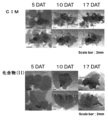
- Photographs showing the results of GUS staining of Arabidopsis thaliana callus induced in a medium containing compound (II) and CIM (Example 2).
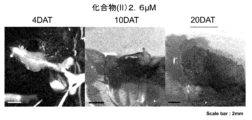
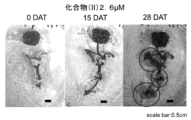
- 1 is a photograph of sorghum callus induced in a medium containing compound (II) (Example 3).
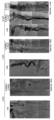
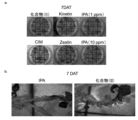
- a) Photograph of red clover seedlings grown in a medium containing compound (II), Kinetion, IPA, and Zeatin, and CIM (control) Example 4
- b) Partially enlarged photograph of IPA and compound (II) in a. 1 shows photographs of Arabidopsis thaliana callus induced on a medium containing compound (II) and a medium containing FPX (Example 5).
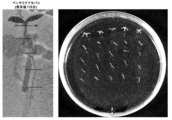
- FIG. 1 shows photographs of callus of Sorghum bicolor induced in a medium containing Compound (II) and a medium containing FPX (Example 6).
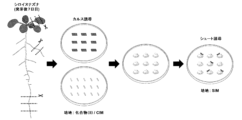
- FIG. 1 is a schematic diagram showing the steps of explant preparation, callus induction and shoot induction of tissue explants of Arabidopsis thaliana (Example 7).
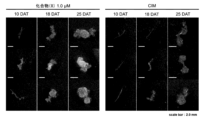
- 1 shows photographs of Arabidopsis root explants in which callus was induced on a medium containing Compound (II) and CIM (Example 7).
- 1 shows photographs of Arabidopsis root explants that were induced into shoots after callus induction on a medium containing Compound (II) and CIM (Example 7).
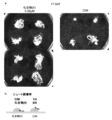
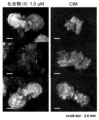
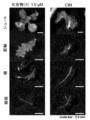
- 1 is a top view of a plate on which explants of Nicotiana benthamiana and its tissue fragments were prepared (Example 8). 1 shows photographs of shoot, hypocotyl, root and root tip explants of Nicotiana benthamiana for which callus was induced on a medium containing compound (II) and CIM (Example 8). 1 is a photograph of Phytolacca americana in which callus was induced in a medium containing compound (II) (Example 9).
- the callus inducer of the present invention is characterized by having callus induction activity in plants and containing as an active ingredient a compound represented by the following formula (I) or a salt thereof (hereinafter also referred to as compound (I) or a salt thereof).
- R represents a halogen atom.
- halogen atom in the compound represented by (I) examples include fluorine, chlorine, bromine and iodine. Among these, chlorine or bromine is preferred, and chlorine is even more preferred.
- the formula (II) shows the case where the halogen atom R is chlorine (Cl), and the formula (III) shows the case where the halogen atom R is bromine (Br).
- the compound represented by the formula (I) can be synthesized by the method described in Tetrahedron135(2023)133333'Synthesis of aryloxyacetylthiourea derivatives for the development of radicle elongation inhibitor of parasitic weeds' (Non-Patent Document 1) by the present inventors.
- the compound represented by the formula (II) (hereinafter also referred to as compound (II)) is 3-[2-(4-Chlorophenoxy)acetyl]-1-(3,4-dichlorophenyl)thiourea, which corresponds to compound "3ab" in the same document.
- the compound represented by the formula (III) is 3-[2-(4-Bromophenoxy)acetyl]-1-(3,4-dichlorophenyl)thiourea, which corresponds to compound "3ac" in the same document.
- the salt of the compound so long as it is a salt that has the callus-inducing activity of the present invention.
- the callus inducer of the present invention may contain compound (I) or a salt thereof as an active ingredient, and may contain other ingredients other than compound (I) or a salt thereof to the extent that the callus induction activity is not inhibited.
- other ingredients include known pharmaceutical additives such as excipients, emulsifiers, and wetting agents.
- the form of the callus inducer of the present invention is not particularly limited, and may be any form that allows callus induction, such as an emulsion, liquid, oil, aqueous solution, wettable powder, flowable, powder, microgranule, granule, aerosol, paste, or jelly.
- the plant to which the callus inducer of the present invention is applied is not particularly limited.
- it may be either angiosperms or gymnosperms, and in the case of angiosperms, it may be either monocotyledonous or dicotyledonous.
- gymnosperms include Cycadaceae (cycads, etc.), Ginkgoaceae (ginkgo, etc.), Pinaceae (pine, Japanese black pine, fir, spruce, etc.), Cupressaceae (cedar, etc.), and Taxaceae (yew, etc.), but are not limited to these.
- examples of monocotyledonous plants include, but are not limited to, Poaceae (rice, wheat, barley, oat, rye, millet, foxtail millet, barnyard millet, corn, finger millet, sorghum, bamboo, reed, Miscanthus, amaranth, miscanthus, switchgrass, sorghum, brachypodium, etc.), Araceae (taro, duckweed, etc.), Palmaceae (palm, date palm, etc.), Musaceae (banana, etc.).
- Poaceae rice, wheat, barley, oat, rye, millet, foxtail millet, barnyard millet, corn, finger millet, sorghum, bamboo, reed, Miscanthus, amaranth, miscanthus, switchgrass, sorghum, brachypodium, etc.
- Araceae taro, duckweed, etc.
- Palmaceae
- dicotyledonous plants include, but are not limited to, Brassicaceae (Arabidopsis thaliana, rapeseed, cabbage, broccoli, cauliflower, etc.), Solanaceae (eggplant, tomato, potato, tobacco, etc.), Pyretaceae (American pokeweed, etc.), Cucurbitaceae (melon, pumpkin, etc.), Fabaceae (soybean, red clover, etc.), Malvaceae (cotton, etc.), Asteraceae (chrysanthemum, carrot, etc.), Salicaceae (poplar, etc.), Vitaceae (grape, etc.), Rosaceae (rose, apple, etc.), Orchidaceae (orchid, etc.), Liliaceae (lily, tulip, onion, etc.), Salicaceae (poplar, etc.), Myrtaceae (eucalyptus, etc.), Euphorbiaceae (cassava, etc.), and Oro
- the "method for inducing callus” of the present invention refers to a method comprising the step of contacting a plant body, a plant cell, a plant tissue fragment, a plant seed, or the like with the callus inducer of the present invention to induce callus.
- the "method for producing callus” of the present invention refers to a method comprising the steps of contacting a plant body, a plant cell, a piece of plant tissue, or a plant seed with the callus inducer of the present invention to induce callus, and then further growing the induced callus. These methods may include a step of sterilizing the plant seed to be induced in advance, or a step of germinating the plant seed after sterilization.
- the "plant body, plant cell, plant tissue piece, or plant seed” used in the "callus induction method” or “callus production method” of the present invention may be any that is capable of callus induction. It may be the entire plant, and in the case of plant tissue, it may be, for example, the shoot tip, stem, leaf, shoot, embryo cell, root petal, fruit, epidermis, etc. It is preferable that these plant bodies are plants that have been grown by aseptic sowing, or plants that have been sterilized with 70% ethanol, sodium hypochlorite aqueous solution, etc., and made sterile.
- the callus induction medium is not particularly limited as long as it contains the compound represented by formula (I) or a salt thereof and is capable of inducing callus.
- the compound represented by formula (I) may be added to the callus induction medium in one type or in a combination of two or more types.
- the compound represented by formula (I) or its salt may be used in a medium at a concentration that allows the callus induction effect of the present invention to be exhibited depending on the target plant and treatment conditions.
- the concentration is not particularly limited, but may be added in the range of, for example, 0.01 to 100 ⁇ M.
- the concentration is preferably 0.1 to 10 ⁇ M, and more preferably 0.2 to 5 ⁇ M.
- the total amount of these compounds may be adjusted to be within the above concentration range.
- the callus induction medium may contain other components in addition to these compounds or their salts. Such components include sugars, gelling agents, inorganic salts, and other components commonly used in callus induction.
- auxin and cytokinin may also be used in combination with the callus inducer of the present invention, as long as they do not interfere with the action of the callus inducer.
- the compound represented by formula (I) or its salt can induce callus alone, without being used in combination with components that have been required for conventional callus induction, such as auxin, kinetin, and cytokinin.
- the culturing for inducing callus is preferably carried out under sterile conditions.
- the temperature during the culturing is preferably 20 to 25°C, and the light conditions are preferably between constant light irradiation and constant darkness.
- the culturing can be carried out until callus is induced, but callus induction is usually observed 2 to 4 weeks after the culturing.
- the subculture method includes a method of replacing the medium with a callus induction medium containing the callus inducer of the present invention every other month.
- the callus induced by the method of the present invention can be used for producing genetically modified crops, etc.
- a genetically modified plant can be produced by infecting the callus induced by the present invention with Agrobacterium having a plasmid containing a target gene, isolating the callus in which the plasmid has been inserted into the chromosome, and redifferentiating the callus.
- Test method Callus induction was carried out on Arabidopsis thaliana by the following steps, followed by shoot induction. (1) Germination Treatment Arabidopsis seeds were sterilized by treating with 70% ethanol for 2 minutes and then with 1% sodium hypochlorite for 10 minutes. The seeds were sown on 1/2 MS medium and grown at 25°C for 4 to 5 days under a 16-h light/8-h dark cycle.
- GUS staining solution (per 1 mL)> 0.2 M phosphate buffer (pH 7.0) 500 ⁇ L 20 ⁇ L 0.5M EDTA 0.05M Fe(II) 100 ⁇ L 0.05M Fe(III) 100 ⁇ L 1% Triton 100 ⁇ L 50 ⁇ g/ml X-gluc 20 ⁇ L DW 160 ⁇ L
- Example 3 Evaluation of callus inducing activity of the callus inducer of the present invention on Sorghum bicolor was carried out according to the following steps. 1. Germination treatment and callus induction Sorghum bicolor seeds were sterilized by treating with 70% ethanol for 2 minutes, and then with 1% sodium hypochlorite for 60 minutes. The seeds were sown in a medium containing compound (II) (1/2 MS medium, 1% sucrose, 2.6 ⁇ M compound (II)). For comparison, the seeds were also sown in CIM. After sowing, the seeds were cultured in the dark at 25° C. for 4 weeks to induce callus.
- II a medium containing compound
- Example 4 Evaluation of callus inducing activity of the callus inducer of the present invention on red clover (Trifolium pratense) was carried out by the following steps. 1. Callus induction Red clover seeds were sterilized by treating with 70% ethanol for 2 minutes, and then with 1% sodium hypochlorite for 60 minutes. The seeds were sown in a medium containing compound (II) (1/2 MS medium, 1% sucrose, 1 ppm (2.6 ⁇ M)-compound (II)).
- the seeds were also sown in a medium, CIM, containing 1 ppm kinetin, zeatin, 1 ppm or 10 ppm IPA instead of compound (II). After sowing, the seeds were cultured for 4 weeks to induce callus.
- Example 5 Comparison of callus induction activity in Arabidopsis thaliana between compound (II) and fipexide (1-[(p-chlorophenoxy)acetyl]-4-piperonylpiperazine, 1-(4-chlorophenoxyacetyl)-4-(1,3-benzodioxole-5-ylmethyl)piperazine, hereinafter referred to as FPX) Callus induction in Arabidopsis thaliana was carried out by the following steps. 1.
- Callus induction Arabidopsis seeds were sown in a medium containing compound (II) (1/2 MS medium, 1% sucrose, 0.1 or 1.0 ⁇ M compound (II)) or a medium containing FPX (1/2 MS medium, 1% sucrose, 1.0 ⁇ M FPX). These were cultured at 25° C. for 4 weeks under a 16-h light/8-h dark period to induce callus.
- a medium containing compound (II) 1/2 MS medium, 1% sucrose, 0.1 or 1.0 ⁇ M compound (II)
- a medium containing FPX 1/2 MS medium, 1% sucrose, 1.0 ⁇ M FPX
- Example 6 Comparison of callus induction activity of compound (II) and FPX in Sorghum bicolor
- Callus induction in Sorghum bicolor was carried out according to the following steps. 1.
- Callus induction Sorghum bicolor seeds were sterilized by treating with 70% ethanol for 2 minutes, and then with 1% sodium hypochlorite for 60 minutes. The seeds were sown in a medium containing compound (II) (1/2 MS medium, 1% sucrose, 3.0 ⁇ M compound (II)) or in a medium containing FPX (1/2 MS medium, 1% sucrose, 3.0 ⁇ M FPX). After sowing, the seeds were cultured in the dark at 25° C. for 4 weeks to induce callus.
- compound (II) 1/2 MS medium, 1% sucrose, 3.0 ⁇ M compound (II)
- a medium containing FPX 1/2 MS medium, 1% sucrose, 3.0 ⁇ M FPX
- Example 7 Evaluation of the callus induction activity of the callus inducer of the present invention on Arabidopsis thaliana root explants and its effect on shoot induction
- Callus induction was performed on Arabidopsis thaliana root explants and shoot induction was then performed according to the following steps.
- Test method (1) Germination treatment Arabidopsis seeds were sterilized by treating with 70% ethanol for 2 minutes and then with 1% sodium hypochlorite for 10 minutes. The seeds were sown on 1/2 MS medium and grown at 25°C for 7 days under a 16-h light/8-h dark cycle.
- the state of callus obtained by inducing callus from Arabidopsis roots and then inducing shoots is shown in Figure 11.
- the shoot induction rate of callus induced by CIM was 22% (4 out of 18).
- the shoot induction rate of callus induced by the medium containing compound (II) was 56% (14 out of 25). From this morphological observation result and the morphological observation result of Example 2, it was found that the callus inducer of the present invention increases the shoot induction rate of callus obtained by callus induction, compared with the conventional callus induction medium CIM. This indicates that plant bodies can be reconstructed with high frequency by using the callus inducer of the present invention.
- Example 8 Evaluation of callus inducing activity of the callus inducer of the present invention on Nicotiana benthamiana explants
- Test method (1) Germination treatment Nicotiana benthamiana seeds were sterilized by treating with 70% ethanol for 2 minutes and then with 1% sodium hypochlorite for 10 minutes. The seeds were sown on 1/2 MS medium and grown at 25°C for 7 days under a 16-h light/8-h dark period. (2) Preparation of explants and callus induction The N.
- benthamiana grown for 7 days was cut into tissue pieces of shoot, hypocotyl, root, and root tip, and then transplanted into a medium containing compound (II) (1/2 MS medium, 1% sucrose, 1.0 ⁇ M compound (II)) to prepare explants as shown in FIG. 12.
- a medium containing compound (II) 1/2 MS medium, 1% sucrose, 1.0 ⁇ M compound (II)
- explants transplanted into CIM were also prepared. These were cultured at 25° C. for 4 weeks under a 16-h light/8-h dark period to induce callus.
- Example 9 Evaluation of callus inducing activity of the callus inducer of the present invention on explants of Phytolacca americana
- Callus induction of explants of Phytolacca americana was carried out by the following steps. 1. Germination treatment and callus induction The seed coat of pokeweed seeds was removed, and the seeds were treated with 70% ethanol for 2 minutes, and then sterilized by treating with 1% sodium hypochlorite for 45 minutes. The seeds were sown on MS medium and grown for 30 days at 25°C under a 16-h light/8-h dark period. The pokeweed grown for 30 days was cut into leaves and stems of about 0.5 to 1.0 cm.
- the leaves and stems of about 0.5 to 1.0 cm were then transplanted into a medium containing compound (II) (MS medium, 3% sucrose, 2.6 ⁇ M compound (II)) to prepare explants.
- the explants were cultured in the light at 25°C for 4 weeks to induce callus.
- the callus inducer of the present invention can be applied to a wide range of plants, making it possible to induce callus in plants where it was previously impossible to induce callus. It is particularly significant that callus can be induced in sorghum, which has high resistance to drought and soil toxicity. Callus obtained using the callus inducer of the present invention can be used for a variety of purposes, including food, pharmaceuticals, cosmetics, lumber, construction materials, feed, ornamental purposes, biofuel, and testing and research.
Landscapes
- Life Sciences & Earth Sciences (AREA)
- Health & Medical Sciences (AREA)
- Environmental Sciences (AREA)
- Developmental Biology & Embryology (AREA)
- Botany (AREA)
- Engineering & Computer Science (AREA)
- Natural Medicines & Medicinal Plants (AREA)
- Physiology (AREA)
- Plant Pathology (AREA)
- Chemical & Material Sciences (AREA)
- General Chemical & Material Sciences (AREA)
- Zoology (AREA)
- Chemical Kinetics & Catalysis (AREA)
- Wood Science & Technology (AREA)
- Pest Control & Pesticides (AREA)
- Biotechnology (AREA)
- Dentistry (AREA)
- General Health & Medical Sciences (AREA)
- Agronomy & Crop Science (AREA)
- Cell Biology (AREA)
- Breeding Of Plants And Reproduction By Means Of Culturing (AREA)
- Micro-Organisms Or Cultivation Processes Thereof (AREA)
Abstract
Priority Applications (1)
| Application Number | Priority Date | Filing Date | Title |
|---|---|---|---|
| JP2025530191A JP7890788B2 (ja) | 2023-06-30 | 2024-06-27 | 植物のカルス誘導剤、カルスの誘導方法、カルスの製造方法及び植物体の製造方法 |
Applications Claiming Priority (2)
| Application Number | Priority Date | Filing Date | Title |
|---|---|---|---|
| JP2023-107884 | 2023-06-30 | ||
| JP2023107884 | 2023-06-30 |
Publications (1)
| Publication Number | Publication Date |
|---|---|
| WO2025005176A1 true WO2025005176A1 (fr) | 2025-01-02 |
Family
ID=93939180
Family Applications (1)
| Application Number | Title | Priority Date | Filing Date |
|---|---|---|---|
| PCT/JP2024/023315 Ceased WO2025005176A1 (fr) | 2023-06-30 | 2024-06-27 | Agent d'induction de cal végétal, procédé d'induction de cal, procédé de production de cal et procédé de production de corps de plante |
Country Status (2)
| Country | Link |
|---|---|
| JP (1) | JP7890788B2 (fr) |
| WO (1) | WO2025005176A1 (fr) |
Citations (3)
| Publication number | Priority date | Publication date | Assignee | Title |
|---|---|---|---|---|
| JPS5551057A (en) * | 1978-09-14 | 1980-04-14 | Gulf Oil Corp | Novel 11benzoyll33thiosemicarbazide compound as plant growth controlling agent and its manufacture |
| WO2015186591A1 (fr) * | 2014-06-06 | 2015-12-10 | 国立研究開発法人理化学研究所 | Agent d'induction de cal et procédé d'induction de cal |
| JP2019147749A (ja) * | 2018-02-26 | 2019-09-05 | 公立大学法人大阪府立大学 | 根寄生植物の防除剤及び防除方法 |
-
2024
- 2024-06-27 WO PCT/JP2024/023315 patent/WO2025005176A1/fr not_active Ceased
- 2024-06-27 JP JP2025530191A patent/JP7890788B2/ja active Active
Patent Citations (3)
| Publication number | Priority date | Publication date | Assignee | Title |
|---|---|---|---|---|
| JPS5551057A (en) * | 1978-09-14 | 1980-04-14 | Gulf Oil Corp | Novel 11benzoyll33thiosemicarbazide compound as plant growth controlling agent and its manufacture |
| WO2015186591A1 (fr) * | 2014-06-06 | 2015-12-10 | 国立研究開発法人理化学研究所 | Agent d'induction de cal et procédé d'induction de cal |
| JP2019147749A (ja) * | 2018-02-26 | 2019-09-05 | 公立大学法人大阪府立大学 | 根寄生植物の防除剤及び防除方法 |
Non-Patent Citations (2)
| Title |
|---|
| FUJINO, KOTARO ET AL.: "1A-P03 Callus-inducing activity of aromatic thioureas", THE JOINT MEETING OF THE CHUBU AND KANSAI BRANCHES OF THE SOCIETY FOR BIOSCIENCE, BIOTECHNOLOGY, AND AGRICULTURAL CHEMICAL RESEARCH OF JAPAN (SEPTEMBER 30, 2023 - OCTOBER 1, 2023), SOCIETY FOR BIOSCIENCE, BIOTECHNOLOGY, AND AGRICULTURAL CHEMICAL RESE, 30 September 2023 (2023-09-30) - 1 October 2023 (2023-10-01), JP, XP009560395 * |
| SONODA MOTOHIRO, MIMURA YUSUKE, NODA SHIZUKI, OKAZAWA ATSUSHI: "Synthesis of aryloxyacetylthiourea derivatives for the development of radicle elongation inhibitor of parasitic weeds", TETRAHEDRON, vol. 135, 1 April 2023 (2023-04-01), AMSTERDAM, NL , pages 1 - 9, XP093254348, ISSN: 0040-4020, DOI: 10.1016/j.tet.2023.133333 * |
Also Published As
| Publication number | Publication date |
|---|---|
| JPWO2025005176A1 (fr) | 2025-01-02 |
| JP7890788B2 (ja) | 2026-07-15 |
Similar Documents
| Publication | Publication Date | Title |
|---|---|---|
| Went et al. | Phytohormones | |
| Murthy et al. | Thidiazuron: a potent regulator of in vitro plant morphogenesis | |
| Dinani et al. | Thidiazuron: modulator of morphogenesis in vitro | |
| Husain et al. | In vitro propagation of a multipurpose leguminous tree (Pterocarpus marsupium Roxb.) using nodal explants | |
| Pai et al. | Effect of TDZ on various plant cultures | |
| Satish et al. | Influence of plant growth regulators and spermidine on somatic embryogenesis and plant regeneration in four Indian genotypes of finger millet (Eleusine coracana (L.) Gaertn) | |
| EP3153014B1 (fr) | Agent et méthode d'induction de cals végétaux | |
| Murkute et al. | In vitro regeneration in pomegranate cv. Ganesh from mature trees | |
| Salma et al. | Somatic embryogenesis-mediated plant regeneration of Eclipta alba (L.) Hassk. and its conservation through synthetic seed technology | |
| Cheruvathur et al. | Adventitious shoot induction from cultured internodal explants of Malaxis acuminata D. Don, a valuable terrestrial medicinal orchid | |
| Kaur et al. | Roles of polyamines in growth and development of the Solanaceous crops under normal and stressful conditions | |
| Akhtar et al. | Morphology and ontogeny of directly differentiating shoot buds and somatic embryos in Santalum album L. | |
| Shaafi et al. | The effects of nanosilver on bacterial contamination and increase durability cultivars of Rosa hybrida L. through of stenting method | |
| JPWO2001080638A1 (ja) | 細胞または器官の分化調節剤およびそれを用いる形態形成の調節法 | |
| Rajput et al. | Effective and large scale in vitro propagation of Dendrocalamus strictus (Roxb.) Nees using nodal segments as explants | |
| Thiruvengadam et al. | High-frequency shoot regeneration from leaf explants through organogenesis in bitter melon (Momordica charantia L.) | |
| Naz et al. | Assessment of the potentiality of TDZ on multiple shoot induction in Bauhinia tomentosa L., a woody legume | |
| Mishra et al. | In vitro study of role of ethylene during tillering in sugarcane | |
| Mahmoud et al. | Essential factors for in vitro regeneration of rose and a protocol for plant regeneration from leaves. | |
| Parmar et al. | Effect of thidiazuron (TDZ) on in vitro propagation of valuable medicinal plant: Uraria picta (Jacq.) Desv. ex DC. | |
| Sarropoulou et al. | Indole-3-butyric acid and myo-inositol impacts on in vitro rooting of the cherry rootstocks CAB-6P and Gisela 6 | |
| Rizvi et al. | In vitro propagation of an endangered medicinal herb Chlorophytum borivilianum Sant. et Fernand. through somatic embryogenesis | |
| Gopal et al. | Plant Tissue Culture basic Laboratory Techniques and Advances in Biotechnological Standards for GM Crops | |
| Ranade et al. | Examining synergistic effects of TDZ and TIBA on adventitious shoot induction in Dianthus caryophyllus L. leaf explants. | |
| CN112088880B (zh) | 芹菜素在制备促进植物生长、提高植物耐盐性的制剂中的应用 |
Legal Events
| Date | Code | Title | Description |
|---|---|---|---|
| 121 | Ep: the epo has been informed by wipo that ep was designated in this application |
Ref document number: 24832035 Country of ref document: EP Kind code of ref document: A1 |
|
| ENP | Entry into the national phase |
Ref document number: 2025530191 Country of ref document: JP Kind code of ref document: A |
|
| WWE | Wipo information: entry into national phase |
Ref document number: 2025530191 Country of ref document: JP |
|
| NENP | Non-entry into the national phase |
Ref country code: DE |
|
| 122 | Ep: pct application non-entry in european phase |
Ref document number: 24832035 Country of ref document: EP Kind code of ref document: A1 |