WO2025100480A1 - Composition, article alimentaire/boisson et procédé d'aide à l'examen et au diagnostic d'une maladie provoquée par une bactérie pathogène ou un champignon pathogène - Google Patents
Composition, article alimentaire/boisson et procédé d'aide à l'examen et au diagnostic d'une maladie provoquée par une bactérie pathogène ou un champignon pathogène Download PDFInfo
- Publication number
- WO2025100480A1 WO2025100480A1 PCT/JP2024/039600 JP2024039600W WO2025100480A1 WO 2025100480 A1 WO2025100480 A1 WO 2025100480A1 JP 2024039600 W JP2024039600 W JP 2024039600W WO 2025100480 A1 WO2025100480 A1 WO 2025100480A1
- Authority
- WO
- WIPO (PCT)
- Prior art keywords
- composition
- amino acid
- protein
- activity
- bacteria
- Prior art date
- Legal status (The legal status is an assumption and is not a legal conclusion. Google has not performed a legal analysis and makes no representation as to the accuracy of the status listed.)
- Pending
Links
Images










Classifications
-
- A—HUMAN NECESSITIES
- A23—FOODS OR FOODSTUFFS; TREATMENT THEREOF, NOT COVERED BY OTHER CLASSES
- A23L—FOODS, FOODSTUFFS OR NON-ALCOHOLIC BEVERAGES, NOT OTHERWISE PROVIDED FOR; PREPARATION OR TREATMENT THEREOF
- A23L33/00—Modifying nutritive qualities of foods; Dietetic products; Preparation or treatment thereof
- A23L33/10—Modifying nutritive qualities of foods; Dietetic products; Preparation or treatment thereof using additives
- A23L33/135—Bacteria or derivatives thereof, e.g. probiotics
-
- A—HUMAN NECESSITIES
- A61—MEDICAL OR VETERINARY SCIENCE; HYGIENE
- A61K—PREPARATIONS FOR MEDICAL, DENTAL OR TOILETRY PURPOSES
- A61K35/00—Medicinal preparations containing materials or reaction products thereof with undetermined constitution
- A61K35/66—Microorganisms or materials therefrom
- A61K35/74—Bacteria
-
- A—HUMAN NECESSITIES
- A61—MEDICAL OR VETERINARY SCIENCE; HYGIENE
- A61K—PREPARATIONS FOR MEDICAL, DENTAL OR TOILETRY PURPOSES
- A61K35/00—Medicinal preparations containing materials or reaction products thereof with undetermined constitution
- A61K35/66—Microorganisms or materials therefrom
- A61K35/74—Bacteria
- A61K35/741—Probiotics
-
- A—HUMAN NECESSITIES
- A61—MEDICAL OR VETERINARY SCIENCE; HYGIENE
- A61K—PREPARATIONS FOR MEDICAL, DENTAL OR TOILETRY PURPOSES
- A61K35/00—Medicinal preparations containing materials or reaction products thereof with undetermined constitution
- A61K35/66—Microorganisms or materials therefrom
- A61K35/74—Bacteria
- A61K35/741—Probiotics
- A61K35/742—Spore-forming bacteria, e.g. Bacillus coagulans, Bacillus subtilis, clostridium or Lactobacillus sporogenes
-
- A—HUMAN NECESSITIES
- A61—MEDICAL OR VETERINARY SCIENCE; HYGIENE
- A61K—PREPARATIONS FOR MEDICAL, DENTAL OR TOILETRY PURPOSES
- A61K35/00—Medicinal preparations containing materials or reaction products thereof with undetermined constitution
- A61K35/66—Microorganisms or materials therefrom
- A61K35/74—Bacteria
- A61K35/741—Probiotics
- A61K35/744—Lactic acid bacteria, e.g. enterococci, pediococci, lactococci, streptococci or leuconostocs
-
- A—HUMAN NECESSITIES
- A61—MEDICAL OR VETERINARY SCIENCE; HYGIENE
- A61K—PREPARATIONS FOR MEDICAL, DENTAL OR TOILETRY PURPOSES
- A61K35/00—Medicinal preparations containing materials or reaction products thereof with undetermined constitution
- A61K35/66—Microorganisms or materials therefrom
- A61K35/74—Bacteria
- A61K35/741—Probiotics
- A61K35/744—Lactic acid bacteria, e.g. enterococci, pediococci, lactococci, streptococci or leuconostocs
- A61K35/745—Bifidobacteria
-
- A—HUMAN NECESSITIES
- A61—MEDICAL OR VETERINARY SCIENCE; HYGIENE
- A61K—PREPARATIONS FOR MEDICAL, DENTAL OR TOILETRY PURPOSES
- A61K35/00—Medicinal preparations containing materials or reaction products thereof with undetermined constitution
- A61K35/66—Microorganisms or materials therefrom
- A61K35/74—Bacteria
- A61K35/741—Probiotics
- A61K35/744—Lactic acid bacteria, e.g. enterococci, pediococci, lactococci, streptococci or leuconostocs
- A61K35/747—Lactobacilli, e.g. L. acidophilus or L. brevis
-
- A—HUMAN NECESSITIES
- A61—MEDICAL OR VETERINARY SCIENCE; HYGIENE
- A61P—SPECIFIC THERAPEUTIC ACTIVITY OF CHEMICAL COMPOUNDS OR MEDICINAL PREPARATIONS
- A61P1/00—Drugs for disorders of the alimentary tract or the digestive system
-
- A—HUMAN NECESSITIES
- A61—MEDICAL OR VETERINARY SCIENCE; HYGIENE
- A61P—SPECIFIC THERAPEUTIC ACTIVITY OF CHEMICAL COMPOUNDS OR MEDICINAL PREPARATIONS
- A61P1/00—Drugs for disorders of the alimentary tract or the digestive system
- A61P1/02—Stomatological preparations, e.g. drugs for caries, aphtae, periodontitis
-
- A—HUMAN NECESSITIES
- A61—MEDICAL OR VETERINARY SCIENCE; HYGIENE
- A61P—SPECIFIC THERAPEUTIC ACTIVITY OF CHEMICAL COMPOUNDS OR MEDICINAL PREPARATIONS
- A61P11/00—Drugs for disorders of the respiratory system
-
- A—HUMAN NECESSITIES
- A61—MEDICAL OR VETERINARY SCIENCE; HYGIENE
- A61P—SPECIFIC THERAPEUTIC ACTIVITY OF CHEMICAL COMPOUNDS OR MEDICINAL PREPARATIONS
- A61P13/00—Drugs for disorders of the urinary system
- A61P13/02—Drugs for disorders of the urinary system of urine or of the urinary tract, e.g. urine acidifiers
-
- A—HUMAN NECESSITIES
- A61—MEDICAL OR VETERINARY SCIENCE; HYGIENE
- A61P—SPECIFIC THERAPEUTIC ACTIVITY OF CHEMICAL COMPOUNDS OR MEDICINAL PREPARATIONS
- A61P15/00—Drugs for genital or sexual disorders; Contraceptives
- A61P15/02—Drugs for genital or sexual disorders; Contraceptives for disorders of the vagina
-
- A—HUMAN NECESSITIES
- A61—MEDICAL OR VETERINARY SCIENCE; HYGIENE
- A61P—SPECIFIC THERAPEUTIC ACTIVITY OF CHEMICAL COMPOUNDS OR MEDICINAL PREPARATIONS
- A61P31/00—Antiinfectives, i.e. antibiotics, antiseptics, chemotherapeutics
- A61P31/04—Antibacterial agents
-
- A—HUMAN NECESSITIES
- A61—MEDICAL OR VETERINARY SCIENCE; HYGIENE
- A61P—SPECIFIC THERAPEUTIC ACTIVITY OF CHEMICAL COMPOUNDS OR MEDICINAL PREPARATIONS
- A61P31/00—Antiinfectives, i.e. antibiotics, antiseptics, chemotherapeutics
- A61P31/10—Antimycotics
-
- A—HUMAN NECESSITIES
- A61—MEDICAL OR VETERINARY SCIENCE; HYGIENE
- A61P—SPECIFIC THERAPEUTIC ACTIVITY OF CHEMICAL COMPOUNDS OR MEDICINAL PREPARATIONS
- A61P43/00—Drugs for specific purposes, not provided for in groups A61P1/00-A61P41/00
-
- A—HUMAN NECESSITIES
- A61—MEDICAL OR VETERINARY SCIENCE; HYGIENE
- A61P—SPECIFIC THERAPEUTIC ACTIVITY OF CHEMICAL COMPOUNDS OR MEDICINAL PREPARATIONS
- A61P7/00—Drugs for disorders of the blood or the extracellular fluid
-
- C—CHEMISTRY; METALLURGY
- C12—BIOCHEMISTRY; BEER; SPIRITS; WINE; VINEGAR; MICROBIOLOGY; ENZYMOLOGY; MUTATION OR GENETIC ENGINEERING
- C12N—MICROORGANISMS OR ENZYMES; COMPOSITIONS THEREOF; PROPAGATING, PRESERVING, OR MAINTAINING MICROORGANISMS; MUTATION OR GENETIC ENGINEERING; CULTURE MEDIA
- C12N1/00—Microorganisms; Compositions thereof; Processes of propagating, maintaining or preserving microorganisms or compositions thereof; Processes of preparing or isolating a composition containing a microorganism; Culture media therefor
- C12N1/20—Bacteria; Culture media therefor
-
- C—CHEMISTRY; METALLURGY
- C12—BIOCHEMISTRY; BEER; SPIRITS; WINE; VINEGAR; MICROBIOLOGY; ENZYMOLOGY; MUTATION OR GENETIC ENGINEERING
- C12N—MICROORGANISMS OR ENZYMES; COMPOSITIONS THEREOF; PROPAGATING, PRESERVING, OR MAINTAINING MICROORGANISMS; MUTATION OR GENETIC ENGINEERING; CULTURE MEDIA
- C12N9/00—Enzymes; Proenzymes; Compositions thereof; Processes for preparing, activating, inhibiting, separating or purifying enzymes
- C12N9/0004—Oxidoreductases (1.)
-
- C—CHEMISTRY; METALLURGY
- C12—BIOCHEMISTRY; BEER; SPIRITS; WINE; VINEGAR; MICROBIOLOGY; ENZYMOLOGY; MUTATION OR GENETIC ENGINEERING
- C12N—MICROORGANISMS OR ENZYMES; COMPOSITIONS THEREOF; PROPAGATING, PRESERVING, OR MAINTAINING MICROORGANISMS; MUTATION OR GENETIC ENGINEERING; CULTURE MEDIA
- C12N9/00—Enzymes; Proenzymes; Compositions thereof; Processes for preparing, activating, inhibiting, separating or purifying enzymes
- C12N9/88—Lyases (4.)
-
- C—CHEMISTRY; METALLURGY
- C12—BIOCHEMISTRY; BEER; SPIRITS; WINE; VINEGAR; MICROBIOLOGY; ENZYMOLOGY; MUTATION OR GENETIC ENGINEERING
- C12Q—MEASURING OR TESTING PROCESSES INVOLVING ENZYMES, NUCLEIC ACIDS OR MICROORGANISMS; COMPOSITIONS OR TEST PAPERS THEREFOR; PROCESSES OF PREPARING SUCH COMPOSITIONS; CONDITION-RESPONSIVE CONTROL IN MICROBIOLOGICAL OR ENZYMOLOGICAL PROCESSES
- C12Q1/00—Measuring or testing processes involving enzymes, nucleic acids or microorganisms; Compositions therefor; Processes of preparing such compositions
- C12Q1/68—Measuring or testing processes involving enzymes, nucleic acids or microorganisms; Compositions therefor; Processes of preparing such compositions involving nucleic acids
-
- G—PHYSICS
- G01—MEASURING; TESTING
- G01N—INVESTIGATING OR ANALYSING MATERIALS BY DETERMINING THEIR CHEMICAL OR PHYSICAL PROPERTIES
- G01N33/00—Investigating or analysing materials by specific methods not covered by groups G01N1/00 - G01N31/00
- G01N33/48—Biological material, e.g. blood, urine; Haemocytometers
- G01N33/50—Chemical analysis of biological material, e.g. blood, urine; Testing involving biospecific ligand binding methods; Immunological testing
Definitions
- the present invention relates to a composition, a food or drink, and a method for assisting in the testing and diagnosis of diseases caused by pathogenic bacteria or pathogenic fungi.
- This application claims priority based on Japanese Patent Application No. 2023-191108, filed on November 8, 2023, the contents of which are incorporated herein by reference.
- Fimbriae are multicomponent proteins produced by both Gram-negative and Gram-positive bacteria. They are proteinaceous polymers with long filament-like structures and are involved in a variety of phenotypes, including interactions and aggregation between multiple species of bacteria, biofilm formation, and colonization of host tissues (especially the intestinal tract). Bifidobacteria are one of the dominant bacterial species that colonize the human intestinal tract and are known to be beneficial to the health of the host (see, for example, Non-Patent Document 1, etc.).
- Bifidobacteria possess sortase-dependent fimbriae and type IV fimbriae (see, for example, Non-Patent Documents 2 and 3, etc.), and these pilus genes are conserved in the genomes of many Bifidobacteria (see, for example, Non-Patent Document 4, etc.). However, no fimbria structures have been confirmed in Bifidobacteria isolated from humans and cultured under general conditions.
- 3-phenylpropionic acid is known to be a metabolic product of phenylalanine produced by the enterobacterium Clostridium sporogenes (see, for example, Non-Patent Document 5).
- the present invention was made in consideration of the above circumstances, and provides a composition and food and drink that can promote the extension of enterobacterial pili, as well as a method for assisting in the testing and diagnosis of diseases caused by pathogenic bacteria or pathogenic fungi.
- PPA 3-phenylpropionic acid
- FldH phenyllactate dehydrogenase H
- FldB phenyllactate dehydrogenase B
- FldC phenyllactate dehydrogenase C
- AcdA acyl-CoA dehydrogenase
- PPA can also be biosynthesized from phenylalanine by a group of enzymes consisting of phenylalanine ammonia-lyase (PAL) and hydroxycinnamate reductase B (HcrB), that PPA upregulates the expression of sortase-dependent (SD) fimbria genes in Bifidobacterium, Blautia, Ruminococcus, and the like, and induces the elongation of these fimbriae, and that PPA not only promotes the colonization of symbiotic bacteria in the intestinal tract, but also exhibits a growth-inhibiting effect on gram-negative pathogenic bacteria by damaging the cell membrane, thereby completing the present invention.
- PAL phenylalanine ammonia-lyase
- HcrB hydroxycinnamate reductase B
- the composition comprises at least one bacterium,
- the at least one bacterium is A nucleotide sequence encoding a protein having the activity of phenylalanine ammonia lyase (PAL), and A nucleotide sequence encoding a protein having the activity of hydroxycinnamate reductase B (HcrB), having
- the protein having PAL activity has an amino acid sequence having 60% or more homology to the amino acid sequence set forth in SEQ ID NO:1,
- the composition according to (1), wherein the protein having HcrB activity has an amino acid sequence having 60% or more homology to the amino acid sequence set forth in SEQ ID NO:2.
- the at least one bacterium The composition according to (1) or (2), comprising a nucleotide sequence encoding an aromatic amino acid lyase domain or a domain having a function equivalent to the aromatic amino acid lyase domain.
- the at least one bacterium The composition according to any one of (1) to (3), comprising a nucleotide sequence encoding a flavin adenine dinucleotide-binding domain and a flavin mononucleotide-binding domain, or a domain having a function equivalent to the flavin adenine dinucleotide-binding domain and the flavin mononucleotide-binding domain.
- composition according to any one of (1) to (4), further comprising a nucleotide sequence encoding an NADPH-dependent flavin mononucleotide reductase domain or a domain having a function equivalent to the NADPH-dependent flavin mononucleotide reductase domain.
- the composition comprises a plurality of bacteria, The plurality of bacteria are classified into two groups, group A and group B;
- Group A is a group of bacteria having a nucleotide sequence encoding a protein having phenylalanine ammonia-lyase (PAL) activity
- Group B is a group of bacteria having a nucleotide sequence encoding a protein having hydroxycinnamate reductase B (HcrB) activity
- the protein having PAL activity has an amino acid sequence having 60% or more homology to the amino acid sequence set forth in SEQ ID NO:1
- the protein having the activity of HcrB has an amino acid sequence having 60% or more homology to the amino acid sequence set forth in SEQ ID NO: 2.
- the composition described in (1) is described in (1).
- group B also includes bacteria having a nucleotide sequence encoding a flavin adenine dinucleotide-binding domain and a flavin mononucleotide-binding domain, or a domain having a function equivalent to a flavin adenine dinucleotide-binding domain and a flavin mononucleotide-binding domain.
- a bacterium classified into group B which has a nucleotide sequence encoding the flavin adenine dinucleotide-binding domain and the flavin mononucleotide-binding domain, or a domain having a function equivalent to the flavin adenine dinucleotide-binding domain and the flavin mononucleotide-binding domain,
- the composition according to (8) further comprising a nucleotide sequence encoding an NADPH-dependent flavin mononucleotide reductase domain or a domain having a function equivalent to the NADPH-dependent flavin mononucleotide reductase domain.
- the bacteria classified into group A are The composition according to any one of (6) to (9), which is at least one selected from the group consisting of Bacteroides intestinalis, Bacteroides ovatus, Bacteroides thetaiotaomicron, Bacteroides uniformis, Bacteroides dorei, Blautia hansenii, and Bifidobacterium longum.
- the bacteria classified into group B are The composition according to any one of (6) to (10), which is at least one selected from the group consisting of Blautia producta, Lactobacillus crispatus, Lactobacillus gasseri, Lactobacillus johnsonii, and Lactiplantibacillus plantarum.
- composition A nucleotide sequence encoding a protein having the activity of acyl-CoA dehydrogenase (AcdA); A nucleotide sequence encoding a protein having the activity of phenyllactate dehydrogenase B (FldB), A nucleotide sequence encoding a protein having the activity of phenyllactate dehydrogenase C (FldC), and A nucleotide sequence encoding a protein having the activity of phenyllactate dehydrogenase H (FldH),
- the method further comprises the step of:
- the protein having the activity of AcdA has an amino acid sequence having 60% or more homology to the amino acid sequence set forth in SEQ ID NO:3
- the protein having the activity of FldB has an amino acid sequence having 60% or more homology to the amino acid sequence set forth in SEQ ID NO:4
- the protein having the activity of FldC has an amino acid sequence having 60% or more homology to the amino acid sequence
- composition according to (12), wherein the bacterium having a nucleotide sequence encoding a protein having an activity of AcdA, a nucleotide sequence encoding a protein having an activity of FldB, a nucleotide sequence encoding a protein having an activity of FldC, and a nucleotide sequence encoding a protein having an activity of FldH is a bacterium selected from the group consisting of Clostridium sporogenes, Clostridium cadaveris, and Peptostreptococcus anaerobius.
- composition according to (14), wherein the acid is at least one selected from the group consisting of short-chain fatty acids and inorganic acids.
- the acid is at least one selected from the group consisting of acetic acid, fumaric acid, butyric acid, propionic acid, lactic acid, and hydrochloric acid.
- the acid-producing bacterium At least one selected from the group consisting of bacteria of the genus Bifidobacterium, bacteria of the genus Lactobacillus, bacteria of the genus Lacticaseibacillus, bacteria of the genus Lactiplantibacillus, bacteria of the genus Bacteroides, bacteria of the genus Blautia, and bacteria of the genus Clostridium; The composition according to any one of (14) to (16). (18) The composition according to any one of (1) to (17), which is a pharmaceutical composition. (19) The composition according to (18), which has an effect of promoting the elongation of pili of enterobacteria.
- the enterobacteria The composition according to (19) or (20), which is at least one selected from the group consisting of Bifidobacterium longum, Bifidobacterium adolescentis, Bifidobacterium breve, Bifidobacterium infantis, Ruminococcus gnavus, Blautia hansenii, and Lactobacillus rhamnosus.
- composition according to (22), wherein the pathogenic bacterium is a bacterium belonging to the phylum Proteobacteria.
- the Proteobacteria bacterium which is at least one selected from the group consisting of Salmonella enterica subsp. enterica serovar typhimurium, Escherichia coli, Citrobacter redentium, Klebsiella pneumoniae, and Proteus mirabilis.
- the disease caused by the pathogenic bacterium is At least one selected from the group consisting of bacterial food poisoning, typhoid fever, gastroenteritis, respiratory infection, urinary tract infection, bacterial vaginosis, sepsis, and meningoencephalitis;
- the fungus of the genus Saccharomycetales The composition according to (27), which is at least one selected from the group consisting of Candida albicans, Candida auris, Candida famata, and Pichia fermentans.
- the disease caused by the pathogenic fungus is The composition according to any one of (26) to (29), which is at least one selected from the group consisting of inflammatory bowel disease, oral candidiasis, vaginal candidiasis, pneumonia, and meningitis.
- a method for assisting in the testing and diagnosis of a disease caused by a pathogenic bacterium or a pathogenic fungus comprising: Quantifying the amount of 3-phenylpropionic acid (PPA) or the amount of 3-(4-hydroxyphenyl)propionic acid (4OHPPA) in the subject's feces using 2-nitrophenylhydrazine; comparing the amount of PPA or the amount of 4OHPPA obtained by quantifying the amount of PPA or the amount of 4OHPPA with a reference value; indicating that the subject may be suffering from the disease when the value obtained by quantifying the amount of PPA or the amount of 4OHPPA is less than a reference value; A method comprising: (43) The method further comprises quantifying the amount of short chain fatty acids.
- a method for assisting in the testing and diagnosis of a disease caused by a pathogenic bacterium or a pathogenic fungus comprising: Quantifying the expression level of the phenylalanine ammonia-lyase (PAL) gene or the expression level of the hydroxycinnamate reductase B (HcrB) gene in the subject's feces; comparing the value obtained by quantifying the expression level of the PAL gene or the expression level of the HcrB gene with a reference value; indicating that the subject may be suffering from the disease when the value obtained by quantifying the expression level of the PAL gene or the expression level of the HcrB gene is less than a reference value;
- a method comprising: (45) The method according to (44), further comprising quantifying the expression level of at least one gene selected from the group consisting of an acyl-CoA dehydrogenase gene, a phenyllactate dehydrogenase B gene, a phenyllact
- a method for assisting in the testing and diagnosis of a disease caused by a pathogenic bacterium or a pathogenic fungus comprising: Quantifying the expression level of at least one gene selected from the group consisting of a gene comprising a nucleotide sequence encoding an aromatic amino acid lyase domain, a gene comprising a nucleotide sequence encoding a flavin adenine dinucleotide-binding domain, and a gene comprising a nucleotide sequence encoding a flavin mononucleotide-binding domain in the subject's feces; comparing the value obtained by quantifying the expression level of the gene with a reference value; indicating that the subject may be suffering from the disease when the value obtained by quantifying the expression level of the gene is less than a reference value;
- a method comprising:
- composition and food and drink of the above aspect can promote the extension of pili of enterobacteria.
- the method of the above aspect can evaluate the possibility of suffering from a disease caused by pathogenic bacteria or pathogenic fungi.
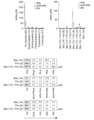
- FIG. 1 is a graph showing the average PPA (3-phenylpropionic acid) concentration (left), the average 4OHPPA (3-(4-hydroxyphenyl)propionic acid) concentration (center), and the average IPA (3-indolepropionic acid) concentration (right) in the feces of healthy subjects (KHC) and Crohn's disease patients (CD) in Experimental Example 1.
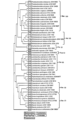
- FIG. 1 shows a phylogenetic diagram of 50 types of symbiotic bacteria in Experimental Example 1.
- 1 is a graph showing the contents of PPA and 4OHPPA in culture solutions of 50 types of symbiotic bacteria in Experimental Example 1.
- 1 is a graph showing the contents of PPA, 4OHPPA, and IPA in the culture medium of the screened bacteria in Experimental Example 1.
- FIG. 1 shows a graph showing the average PPA (3-phenylpropionic acid) concentration (left), the average 4OHPPA (3-(4-hydroxyphenyl)propionic acid) concentration (center), and the average IPA
- 1 shows a new metabolic pathway for synthesizing PPA or 4OHPPA from Phe or Tyr in Experimental Example 1 (top), and a figure showing the production amounts of PAA, 4OHPAA, and IAA (3-indoleacrylic acid) in Bacteroides thetaiotaomicron wt strain and pal gene-deficient ( ⁇ pal) strain, or PPA, 4OHPPA, and IPA in L. plantarum (bottom).
- This shows the protocol (top) of the in vivo test using germ-free (GF) mice in Experimental Example 1, and a graph showing the results (bottom).
- 1 is a graph showing the time course of the number of B. longum, B. thetaiotaomicron, or L.
- Example 1 is a graph showing the amount of B. longum colonized in the intestinal lumen or mucin layer of GF mice colonized with B. thetaiotaomicron wt strain and L. plantarum (BTwt+LP) or B. thetaiotaomicron ⁇ pal strain and L. plantarum (BTpal+LP) in Experimental Example 1.
- DAPI indicates the localization of nucleic acids
- WGA indicates the localization of cell membrane sugar chains.
- 1 is a graph showing the results of a colonization test of a mixture of B. longum wt strain (BL wt) and ⁇ lacY strain ( ⁇ lacY) in GF mice colonized with B. thetaiotaomicron wt strain and L.
- BTwt+LP B. thetaiotaomicron ⁇ pal strain and L. plantarum
- BTpal+LP B. thetaiotaomicron ⁇ pal strain and L. plantarum
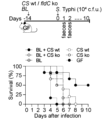
- 13 is an image showing the antibacterial effect of a culture medium in which C. sporogenes (CS) (wild type (CS wt) and fldC-deficient strain (CS fldC)) and B. longum (BL) were cultured alone or together against Salmonella enterica subsp. enterica serovar Typhimurium SL1344 (S. Typhimurium) in Experimental Example 2. This shows the protocol (top) for the in vivo test using GF mice in Experimental Example 2, and a graph showing the results (bottom).
- CS C. sporogenes
- CS wt wild type
- BL B. longum
- 1 is a graph showing the number of S. Typhimurium bacteria in the feces of GF mice colonized with C. sporogenes (CS) (wild type (CS wt) and fldC-deficient type (CS ko)) and B. longum (BL) alone or together in Experimental Example 2.
- CS C. sporogenes
- CS wt wild type
- CS ko fldC-deficient type
- BL B. longum
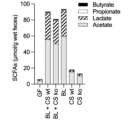
- FIG. 1 is a graph showing the concentration of short-chain fatty acids in the feces of GF mice colonized with C. sporogenes (CS) (wild type (CS wt) and fldC-deficient type (CS ko)) and B. longum (BL) alone or together in Experimental Example 2.
- CS C. sporogenes
- CS wt wild type
- CS ko fldC-deficient type
- BL B. longum
- 1 is a graph showing the cell count of S. Typhimurium in the presence or absence of different concentrations of PPA and acetic acid in Experimental Example 2.
- FIG. 3 is a graph showing MIC 90 (minimum inhibitory concentration that inhibited the growth of 90% of bacterial strains) of PPA against various pathogens in the presence or absence of acetic acid in Experimental Example 2.
- 1 shows a protocol (top) for an in vivo test using GF mice in Experimental Example 2, and a graph (bottom) showing the survival rate of GF mice colonized with B. thetaiotaomicron (wt (wild) strain or PAL ko (knockout) strain) and L. plantarum.
- 1 is a graph showing the number of S. Typhimurium bacteria in the feces of GF mice colonized with B. thetaiotaomicron (wt (wild) strain or PAL ko (knockout) strain) and L. plantarum in Experimental Example 2.
- 1 shows images of cell division of S.
- 1 is a graph showing the growth inhibition of S. Typhimurium by culture solutions of various bacteria that produce short chain fatty acids (SCFAs) and the addition of PPA in Experimental Example 2.
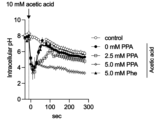
- 1 is a graph showing the change in cytoplasmic pH of S. Typhimurium over time in the presence of acetic acid and PPA or Phe in Experimental Example 2.
- 1 shows SEM (Scanning Electron Microscopy) images of S. Typhimurium in the presence of PPA or PPA and acetic acid in Experimental Example 2.
- 1 is a graph showing cell viability by MTT assay of human colon cancer-derived Caco2 cells after 24 hours of culture in the presence of various concentrations of PPA and acetic acid in Experimental Example 2.
- 1 is a graph showing the pH of the medium when various short-chain fatty acids were added to the LB medium at various concentrations in Experimental Example 2.
- 1 is a graph showing the growth inhibitory effect against S. Typhimurium by the addition of acetic acid, fumaric acid, or propionic acid alone, or the co-addition of acetic acid, fumaric acid, or propionic acid with PPA in Experimental Example 2.
- 1 is a graph showing the growth inhibitory effect against S.
- TEM Transmission Electron Microscope images of S. Typhimurium in Experimental Example 2, in which PPA or acetic acid was administered alone, PPA and acetic acid were administered together, or PPA and acetic acid were not administered.
- the composition of the present embodiment is a composition that produces 3-phenylpropionic acid (hereinafter, sometimes abbreviated as "PPA”) or 3-(4-hydroxyphenyl)propionic acid (hereinafter, sometimes abbreviated as "4OHPPA”).
- the composition of the present embodiment contains at least one bacterium, and the PPA or the 4OHPPA is produced by the at least one bacterium. That is, the composition of the present embodiment contains a bacterium that produces PPA or a bacterium that produces 4OHPPA.
- the bacterium that produces PPA promotes the extension of enterobacteria fimbria more than other bacteria, and therefore, it is preferable that the composition of the present embodiment contains a bacterium that produces PPA.
- the composition of the present embodiment contains the PPA-producing bacteria or the 4OHPPA-producing bacteria as an active ingredient.
- the bacteria contained in the composition of the present embodiment are preferably viable bacteria.
- PPA or 4OHPPA is biosynthesized from phenylalanine or tyrosine in Clostridium sporogenes by an enzyme group consisting of phenyllactate dehydrogenase H (FldH), phenyllactate dehydrogenase B (FldB), phenyllactate dehydrogenase C (FldC) and acyl-CoA dehydrogenase (AcdA).
- FldH phenyllactate dehydrogenase H
- FldB phenyllactate dehydrogenase B
- FldC phenyllactate dehydrogenase C
- AcdA acyl-CoA dehydrogenase
- PPA or 4OHPPA is biosynthesized from phenylalanine or tyrosine by an enzyme group consisting of phenylalanine ammonia-lyase (PAL) and hydroxycinnamate reductase (HcrB), as shown in the Examples below.
- PAL phenylalanine ammonia-lyase
- HcrB hydroxycinnamate reductase
- bacteria having the PAL gene and the HcrB gene may be used, or a combination of bacteria having the PAL gene and bacteria having the HcrB gene may be used.
- At least one bacterium contained in the composition of this embodiment has a nucleotide sequence encoding a protein having PAL activity and a nucleotide sequence encoding a protein having HcrB activity
- the protein having PAL activity has an amino acid sequence having 60% or more homology to the amino acid sequence set forth in SEQ ID NO:1
- the protein having the activity of HcrB has an amino acid sequence having 60% or more homology to the amino acid sequence set forth in SEQ ID NO: 2. It is preferred.
- the composition comprises a plurality of bacteria, the plurality of bacteria being classified into two groups, Group A and Group B; Group A is classified into bacteria having a nucleotide sequence encoding a protein having PAL activity, Group B is a group of bacteria having a nucleotide sequence encoding a protein having HcrB activity,
- the protein having PAL activity has an amino acid sequence having 60% or more homology to the amino acid sequence set forth in SEQ ID NO:1,
- the protein having the activity of HcrB has an amino acid sequence having 60% or more homology to the amino acid sequence set forth in SEQ ID NO: 2. It is preferred.
- the amino acid sequence described in SEQ ID NO:1 is the amino acid sequence of PAL of Bacteroides thetaiotaomicron VPI-5482 strain.
- the amino acid sequence described in SEQ ID NO:2 is the amino acid sequence of HcrB of Lactiplantibacillus plantarum (Lactobacillus plantarum) WCFS1 strain.
- the homology (synonymous with "sequence identity") between the amino acid sequence set forth in SEQ ID NO:1 and the protein having PAL activity is preferably 60% or more, more preferably 70% or more, even more preferably 80% or more, even more preferably 90% or more, even more preferably 95% or more, particularly preferably 99% or more, and most preferably 100%.
- the homology of an amino acid sequence is a value indicating the percentage of identity between a target amino acid sequence (target amino acid sequence) and a reference amino acid sequence (reference amino acid sequence).
- the homology of a target amino acid sequence to a reference amino acid sequence can be determined, for example, as follows. First, the reference amino acid sequence and the target amino acid sequence are aligned. Here, gaps may be included in each amino acid sequence to maximize homology. Next, the number of matching amino acids in the reference amino acid sequence and the target amino acid sequence is calculated, and the homology can be determined according to the following formula.
- Homology number of matching amino acids / number of amino acids in the aligned region of the target amino acid sequence x 100 (%)
- one to several amino acids may be deleted, inserted, substituted or added in the amino acid sequence set forth in SEQ ID NO:1.
- the number of amino acids that may be deleted, inserted, substituted or added is preferably 1 to 199, more preferably 1 to 149, even more preferably 1 to 99, even more preferably 1 to 49, particularly preferably 1 to 24, and most preferably 1 to 4.
- the homology of the amino acid sequence with the amino acid sequence set forth in SEQ ID NO:2 is preferably 60% or more, more preferably 70% or more, even more preferably 80% or more, even more preferably 90% or more, even more preferably 95% or more, particularly preferably 99% or more, and most preferably 100%.
- one to several amino acids may be deleted, inserted, substituted or added in the amino acid sequence set forth in SEQ ID NO:2.
- the number of amino acids that may be deleted, inserted, substituted or added is preferably 1 to 324, more preferably 1 to 243, even more preferably 1 to 162, even more preferably 1 to 81, particularly preferably 1 to 40, and most preferably 1 to 8.
- the bacterium contained in the composition of the present embodiment preferably has a nucleotide sequence encoding an aromatic amino acid lyase domain (Pfam ID: PF00221, InterPro entry: IPR001106) or a domain having a function equivalent thereto.
- PAL has a nucleotide sequence that encodes, as a functional domain, phenylalanine ammonia-lyase (InterPro entry: IPR005922) or a domain having a function equivalent thereto.
- HcrB has functional domains, a flavin adenine dinucleotide (FAD)-binding domain (Pfam ID: PF00890, InterPro entry: IPR003953) and a flavin mononucleotide (FMN)-binding domain (Pfam ID: PF04205, InterPro entry: IPR007329). Therefore, the bacterium contained in the composition of this embodiment preferably has a nucleotide sequence encoding a FAD-binding domain and an FMN-binding domain, or a domain having an equivalent function thereto.
- FAD flavin adenine dinucleotide
- FMN flavin mononucleotide
- HcrB further has an NADPH-dependent flavin mononucleotide reductase domain (Pfam ID: PF03358, InterPro entry: IPR005025) as a functional domain. Therefore, the bacterium contained in the composition of the present embodiment preferably further has a nucleotide sequence encoding an NADPH-dependent flavin mononucleotide reductase domain or a domain having an equivalent function thereto.
- the function equivalent to that of a specific domain is, for example, when the domain is an aromatic amino acid lyase domain, the function is to catalyze the reaction of releasing ammonia from aromatic amino acids (such as histidine and phenylalanine) and the reaction of transferring the amino group of aromatic amino acids (such as tyrosine and phenylalanine).
- aromatic amino acids such as histidine and phenylalanine
- the function is to catalyze the reaction of releasing ammonia from phenylalanine.
- the domain is a FAD-binding domain or an FMN-binding domain
- the function is to bind to FAD or FMN.
- the domain is an NADPH-dependent flavin mononucleotide reductase domain
- the function is to catalyze the following oxidation-reduction reaction.
- amino acid sequence of an enzyme having a domain with a function equivalent to a specific domain can be obtained by a homology search using the method shown below.
- PAL SEQ ID NO: 1 (bth:BT_2690; KEGG; Bacteroides thetaiotaomicron VPI-5482) HcrB: SEQ ID NO: 2 (CCC78762.1; NCBI; Lactiplantibacillus plantarum WCFS1) AcdA: SEQ ID NO: 3 (EDU39257.1; NCBI; Clostridium sporogenes ATCC 15579)
- FldB SEQ ID NO: 4 (EDU39255.1; NCBI; Clostridium sporogenes ATCC 15579)
- FldC SEQ ID NO:5 (EDU39256.1; NCBI; Clostridium sporogenes ATCC 15579)
- FldH SEQ ID NO: 6 (EDU39261.1; NCBI; Clostridium sporogenes ATCC 15579)
- an amino acid sequence has the following characteristics a) and b), the amino acid sequence is obtained as a "hit sequence.”
- a) The amino acid homology with the reference sequence is e-value 0.00001 (1 ⁇ 10 ⁇ 5 ) or less.
- the amino acid identity rate within the alignment region is 10% or more.
- the reference sequence coverage rate of the alignment region is 50% or more.
- Protein functional domain prediction is performed using the "Nano-Regulatory Framework for Protein Analysis” (Jul. 2011, doi: 10.1093/NAR/GKR367.).
- the functional domain of each sequence is detected by setting the threshold value at e-value 0.01 (1 ⁇ 10 ⁇ 2 ) or less. If an amino acid sequence has the same functional domain as a reference sequence, the amino acid sequence is obtained as a homologue sequence of each enzyme.
- Bacteria that have the PAL gene include bacteria of the genus Bacteroides, bacteria of the genus Blautia hansenii, and bacteria of the genus Bifidobacterium, and more specifically, Bacteroides intestinalis (NCBI; AB214328.1; 16S rDNA (partial sequence): SEQ ID NO: 7), Bacteroides ovatus (NCBI; L16484.1; 16S rDNA: SEQ ID NO: 8), Bacteroides thetaiotaomicron (NCBI; M58763.2; 16S rDNA (partial sequence ): SEQ ID NO: 9), Bacteroides uniformis (NCBI; L16486.1; 16S rDNA: SEQ ID NO: 10), Bacteroides dorei (NCBI; AB242142.1; 16S rDNA (partial sequence): SEQ ID NO: 11), Blautia hansenii (NCBI; M59114.2; 16S rDNA (partial sequence): SEQ
- bacteria having the HcrB gene examples include bacteria of the genus Blautia and bacteria of the genus Lactobacillus, and more specifically, bacteria of the genus Blautia (NCBI; AB600998.1; 16S rDNA (partial sequence): SEQ ID NO: 14), Lactobacillus crispatus (NCBI; AJ421225.1; 16S rDNA (partial sequence): SEQ ID NO: 15), and nce): SEQ ID NO: 15), Lactobacillus gasseri (NCBI; M58820.1; 16S rDNA: SEQ ID NO: 16), Lactobacillus johnsonii (NCBI; AJ002515.1; 16S rDNA: SEQ ID NO: 17), and Lactiplantibacillus plantarum (NCBI; X52653.1; 16S rDNA: SEQ ID NO: 18).
- the bacterium having the above-mentioned genes may be a transformed bacterium into which at least one gene selected from the group consisting of the PAL gene, the HcrB gene, and genes containing a nucleotide sequence encoding a domain having a function equivalent to the functional domain of these genes has been introduced.
- the transformed bacterium may be used alone or in combination of two or more types. Examples of bacteria that can serve as hosts include known enterobacteria that do not have the above-mentioned genes.
- the above-mentioned genes can be introduced into a host by known methods such as lipofection and electroporation.
- the above-mentioned genes may be introduced in the form of a vector containing the above-mentioned genes, or the above-mentioned genes may be incorporated into the genomic DNA of the host.
- the composition of this embodiment contains a novel bacterium that synthesizes PPA from phenylalanine using an enzyme group consisting of FldH, FldB, FldC, and AcdA.
- the composition comprises: A nucleotide sequence encoding a protein having the activity of acyl-CoA dehydrogenase (AcdA); a nucleotide sequence encoding a protein having the activity of phenyllactate dehydrogenase B (FldB); a nucleotide sequence encoding a protein having the activity of phenyllactate dehydrogenase C (FldC); a nucleotide sequence encoding a protein having the activity of phenyllactate dehydrogenase H (FldH);
- the method further comprises the step of:
- the protein having AcdA activity has an amino acid sequence having 60% or more homology to the amino acid sequence set forth in SEQ ID NO: 3
- the protein having the activity of FldB has an amino acid sequence having 60% or more homology to the amino acid sequence set forth in SEQ ID NO:4,
- the protein having the activity of FldC has an amino acid sequence having 60% or more homology to
- amino acid sequences set forth in SEQ ID NOs: 3 to 6 are the amino acid sequences of AcdA, FldB, FldC, and FldH of Clostridium sporogenes ATCC 15579 strain, respectively.
- the homology of the amino acid sequence of each protein to the amino acid sequence set forth in any one of SEQ ID NOs: 3 to 6 is preferably 60% or more, more preferably 70% or more, even more preferably 80% or more, even more preferably 90% or more, even more preferably 95% or more, particularly preferably 99% or more, and most preferably 100%.
- amino acids may be deleted, inserted, substituted or added in the amino acid sequence set forth in SEQ ID NO:3.
- the number of amino acids that may be deleted, inserted, substituted or added is preferably 1 to 150, more preferably 1 to 113, even more preferably 1 to 75, even more preferably 1 to 37, particularly preferably 1 to 18, and most preferably 1 to 3.
- one to several amino acids may be deleted, inserted, substituted or added in the amino acid sequence of SEQ ID NO: 4.
- the number of amino acids that may be deleted, inserted, substituted or added is preferably 1 to 167, more preferably 1 to 125, even more preferably 1 to 83, even more preferably 1 to 41, particularly preferably 1 to 20, and most preferably 1 to 4.
- one to several amino acids may be deleted, inserted, substituted or added in the amino acid sequence of SEQ ID NO:5.
- the number of amino acids that may be deleted, inserted, substituted or added is preferably 1 to 149, more preferably 1 to 112, even more preferably 1 to 74, even more preferably 1 to 37, particularly preferably 1 to 18, and most preferably 1 to 3.
- one to several amino acids may be deleted, inserted, substituted or added in the amino acid sequence of SEQ ID NO:6.
- the number of amino acids that may be deleted, inserted, substituted or added is preferably 1 to 132, more preferably 1 to 99, even more preferably 1 to 66, even more preferably 1 to 33, particularly preferably 1 to 16, and most preferably 1 to 3.
- the bacterium contained in the composition of this embodiment preferably has a gene containing a nucleotide sequence encoding the functional domains of AcdA, FldB, FldC and FldH or a domain having an equivalent function thereto.
- amino acid sequences of enzymes having domains with functions equivalent to those of AcdA, FldB, FldC, and FldH can be obtained using the methods described above for PAL and HcrB.
- bacteria having the AcdA gene, FldB gene, FldC gene, and FldH gene examples include Clostridium bacteria and Peptostreptococcus bacteria. More specifically, Clostridium sporogenes (NCBI; AJ579907.1; 16S rDNA (partial sequence): SEQ ID NO: 19), Clostridium cadaveris (NCBI; M59086.1; 16S rDNA: SEQ ID NO: 20), and Peptostreptococcus anaerobius (NCBI; NR_042847.1; 16S rDNA (partial sequence): SEQ ID NO: 21) are included.
- the bacterium having the above-mentioned genes may be a transformed bacterium into which at least one gene selected from the group consisting of the AcdA gene, the FldB gene, the FldC gene, the FldH gene, and genes containing a nucleotide sequence encoding a domain having a function equivalent to that of the functional domain of these genes has been introduced.
- the transformed bacterium may be used alone or in combination of two or more types. Examples of bacteria that can serve as hosts include known enterobacteria that do not have the above-mentioned genes.
- the above-mentioned genes can be introduced into the host by known methods such as lipofection and electroporation.
- the above-mentioned genes may be introduced in the form of a vector containing the above-mentioned genes, or the above-mentioned genes may be incorporated into the genomic DNA of the host.
- the content of the PPA-producing bacteria or the 4OHPPA-producing bacteria can be preferably 0.01% by mass or more, and more preferably 0.1% by mass or more, relative to the total mass of the composition.
- the upper limit of the content of the PPA-producing bacteria or the 4OHPPA-producing bacteria is not particularly limited, but may be, for example, 100% by mass, preferably 100% by mass or less, more preferably 99% by mass or less, and even more preferably 95% by mass or less, relative to the total mass of the composition.
- composition of the present embodiment preferably further contains an acid or a bacterium that produces the acid.
- the composition of this embodiment preferably contains an acid or an acid-producing bacterium in addition to containing bacteria that produce PPA, bacteria that produce 4OHPPA, or bacteria that produce PPA and 4OHPPA, or a mixture of both.
- the composition of this embodiment can damage the cell membrane of pathogenic bacteria or pathogenic fungi, and further inhibit the growth of pathogenic bacteria or pathogenic fungi.
- the acid may be an organic acid or an inorganic acid. Specific examples include, but are not limited to, acetic acid, fumaric acid, butyric acid, propionic acid, lactic acid, and hydrochloric acid. These acids may be used alone or in combination of two or more. Among these, the acid is preferably a short-chain fatty acid or an inorganic acid, more preferably the short-chain fatty acid acetic acid, fumaric acid, propionic acid, hydrochloric acid, or lactic acid, and even more preferably acetic acid or lactic acid.
- bacteria that produce the above-mentioned acids include bacteria of the genus Bifidobacterium, Lactobacillus, Lacticaseibacillus, Lactiplantibacillus, Bacteroides, Blautia, and Clostridium.
- Bifidobacterium longum (16S rDNA: SEQ ID NO: 13), Lactobacillus gasseri (16S rDNA: SEQ ID NO: 16), Lactobacillus johnsonii (16S rDNA: SEQ ID NO: 17), Lacticaseibacillus rhamnosus (16S rDNA (partial sequence): SEQ ID NO: 22), Lactiplantibacillus plantarum (16S rDNA (partial sequence): SEQ ID NO: 23),
- Examples of the 16S rDNA include, but are not limited to, Blautia hansenii (16S rDNA (partial sequence): SEQ ID NO: 12), Clostridium butyricum (16S rDNA (partial sequence): SEQ ID NO: 24), Bacteroides fragilis (16S rDNA: SEQ ID NO: 25), and Bacteroides thetaiotaomicron (16S rDNA: SEQ ID NO: 1).
- the content of the acid or acid-producing bacteria can be preferably 0.01% by mass or more, more preferably 0.1% by mass or more, relative to the total mass of the composition.
- the upper limit of the content of the acid or acid-producing bacteria is not particularly limited, but can be, for example, preferably 95% by mass or less, relative to the total mass of the composition.
- composition of the present embodiment is preferably used as a pharmaceutical product, that is, one embodiment of the composition of the present embodiment is a pharmaceutical composition.
- the pharmaceutical composition of this embodiment preferably has the effect of promoting the extension of enterobacterial pili.
- Enterobacteria possess sortase (SD)-dependent pili and type IV pili.
- enterobacteria possess sortase (SD)-dependent pili and type IV pili.
- enterobacteria possess sortase (SD)-dependent pili and type IV pili.
- enterobacteria having SD-dependent pili genes are preferred as targets for the pharmaceutical composition of this embodiment.
- the FimA protein is polymerized on the bacterial cell surface by the SD (SrtC or SrtA), and the FimB protein binds to the tip of the pilus to form a giant fiber.
- the expression of genes involved in pilus formation is enhanced, and pilus formation is induced.
- the expression of genes (FimA and FimB) containing nucleotide sequences encoding at least pilus structural proteins and a gene (SrtC) containing a nucleotide sequence encoding an enzyme that polymerizes the structural proteins is enhanced, and pilus formation is induced.
- Methods for confirming the formation of pili include observing the surface of the enterobacteria using a scanning electron microscope and confirming the formation of pili by well-known methods (e.g., Western blotting analysis) using an antibody that recognizes the protein that constitutes the pili (e.g., an anti-FimA antibody).
- Enterobacteria having SD-dependent pilus genes include, but are not limited to, Bifidobacterium longum, Bifidobacterium adolescentis, Bifidobacterium breve, Bifidobacterium infantis, Ruminococcus gnavus, Blautia hansenii, and Lactobacillus rhamnosus.
- Target pathogenic bacteria include bacteria of the phylum Proteobacteria, and more specifically, Salmonella typhimurium, Escherichia coli, Citrobacter redentium, Klebsiella pneumoniae, and Proteus mirabilis, but are not limited to these.
- Diseases caused by these pathogenic bacteria include, but are not limited to, bacterial food poisoning, typhoid fever, gastroenteritis, respiratory infections, urinary tract infections, bacterial vaginosis, sepsis, and meningoencephalitis.
- the pharmaceutical composition is preferably for treating or preventing a disease caused by a pathogenic fungus.
- Target pathogenic fungi include fungi of the genus Saccharomycetales and Trichosporonaceae.
- Fungi of the genus Saccharomycetales include, but are not limited to, Candida albicans, Candida auris, Candida famata, and Pichia fermentans.
- Trichosporonaceae examples include, but are not limited to, Cryptococcus humicola.
- Diseases caused by these pathogenic fungi include, but are not limited to, inflammatory bowel disease, oral candidiasis, vaginal candidiasis, pneumonia, and meningitis.
- the pharmaceutical composition of another embodiment can be used for treating or preventing diseases other than those mentioned above. Specifically, it can be used for treating or preventing inflammatory diseases such as ulcerative colitis, functional gastrointestinal disorders such as functional constipation and functional diarrhea, intestinal cancer, metabolic syndrome, and neurological diseases.
- inflammatory diseases such as ulcerative colitis, functional gastrointestinal disorders such as functional constipation and functional diarrhea, intestinal cancer, metabolic syndrome, and neurological diseases.
- Intestinal cancers include duodenal cancer, small intestinal cancer, and large intestinal cancer.
- Large intestinal cancers include cecum cancer, colon cancer, and rectal cancer.
- Metabolic syndrome includes obesity (especially visceral obesity), hypertension, dyslipidemia, and diabetes.
- Neurological disorders include anxiety disorders, autism, and depression.
- the subject to which the pharmaceutical composition of this embodiment is administered (ingested) is not particularly limited as long as it is an animal, but is preferably a mammal, and more preferably a human.
- the subject may be any of adults, children, infants, and newborns (including low birth weight infants), etc.
- the intake (administration) amount of the pharmaceutical composition of the present embodiment is appropriately selected depending on the age, sex, condition, and other conditions of the subject to be ingested (administered).
- the total intake amount of PPA and 4OHPPA produced by bacteria is preferably in the range of 100 mg/day to 1000 mg/day, more preferably 100 mg/day to 500 mg/day, and even more preferably 100 mg/day to 300 mg/day. Regardless of the dosage or period of administration, the pharmaceutical composition can be administered once or multiple times a day.
- the lower limit of the content of the bacteria producing PPA or bacteria producing 4OHPPA contained in the pharmaceutical composition of this embodiment is not particularly limited and may be selected as appropriate, but may be, for example, 10% by mass or more relative to the total mass of the pharmaceutical composition. It can be preferably 20% by mass or more, more preferably 30% by mass or more, even more preferably 40% by mass or more, particularly preferably 50% by mass or more, and most preferably 97% by mass or more.
- the upper limit of the content of the bacteria producing PPA or bacteria producing 4OHPPA contained in the pharmaceutical composition of this embodiment is not particularly limited, but may be, for example, 100% by mass, preferably 100% by mass or less, more preferably 99% by mass or less, and even more preferably 95% by mass or less relative to the total mass of the pharmaceutical composition.
- the pharmaceutical composition of the present embodiment may be administered orally or parenterally, preferably orally.
- Parenteral administration includes transdermal, intravenous, rectal, vaginal, nasal, and inhalation routes. It is desirable that after ingestion (administration) of the pharmaceutical composition of this embodiment, effective amounts or more of PPA and 4OHPPA are retained in the intestine.
- the timing of administration of the pharmaceutical composition of this embodiment is not particularly limited and may be any timing, such as before meals, after meals, between meals, or before going to bed.
- composition of the present embodiment When the composition of the present embodiment is used as a pharmaceutical composition, it may contain a pharma- ceutically acceptable carrier.
- the pharmaceutical composition of the present embodiment can be formulated into a desired dosage form according to the administration method.For example, in the case of oral administration, it can be formulated into solid preparations such as powders, granules, tablets, and capsules; liquid preparations such as solutions, syrups, suspensions, and emulsions.In addition, in the case of parenteral administration, it can be formulated into suppositories, ointments, injections, etc.
- ingredients such as excipients, pH adjusters, colorants, and flavorings that are usually used in formulations can be used. It is also possible to use other medicinal ingredients, ingredients that have a known effect of improving the intestinal flora, and ingredients that will be discovered in the future that have an effect of improving the intestinal flora.
- a known method can be used as appropriate depending on the desired dosage form, and the formulation may be formulated by adding a pharmaceutical carrier.
- Excipients include sugar derivatives such as lactose, sucrose, glucose, mannitol, and sorbitol; starch derivatives such as corn starch, potato starch, starch, and dextrin carboxymethyl starch; cellulose derivatives such as crystalline cellulose, hydroxypropyl cellulose, hydroxypropylmethyl cellulose, carboxymethyl cellulose, and carboxymethyl cellulose calcium; gum arabic; dextran; pullulan; silicate derivatives such as light anhydrous silicic acid, synthetic aluminum silicate, and magnesium aluminometasilicate; phosphate derivatives such as calcium phosphate; carbonate derivatives such as calcium carbonate; sulfate derivatives such as calcium sulfate.
- sugar derivatives such as lactose, sucrose, glucose, mannitol, and sorbitol
- starch derivatives such as corn starch, potato starch, starch, and dextrin carboxymethyl starch
- cellulose derivatives such as crystalline
- binders include gelatin, polyvinylpyrrolidone, macrogol, etc.
- disintegrants include chemically modified starch or cellulose derivatives such as croscarmellose sodium, sodium carboxymethyl starch, and cross-linked polyvinylpyrrolidone.
- Lubricants include talc; stearic acid; metal stearates such as calcium stearate and magnesium stearate; colloidal silica; waxes such as pea gum and geranium stearate; boric acid; glycol; carboxylic acids such as fumaric acid and adipic acid; sodium carboxylates such as sodium benzoate; sulfates such as sodium sulfate; leucine; lauryl sulfates such as sodium lauryl sulfate and magnesium lauryl sulfate; silicic acids such as silicic anhydride and silicic acid hydrate; starch derivatives, etc.
- Stabilizers include, for example, paraoxybenzoic acid esters such as methylparaben and propylparaben; alcohols such as chlorobutanol, benzyl alcohol, and phenylethyl alcohol; benzalkonium chloride; acetic anhydride; sorbic acid, etc.
- Flavors and flavorings include sweeteners, acidulants, and fragrances.
- the formulation carrier to be used includes solvents such as water.
- the composition of the present embodiment is preferably used as a food or drink.
- Examples of the food or drink include functional foods and foods for specified health uses.
- the food or beverage in another embodiment contains PPA or 4OHPPA.
- the food or beverage comprises: Contains a protein having phenylalanine ammonia-lyase (PAL) activity and a protein having hydroxycinnamate reductase B (HcrB) activity;
- PAL phenylalanine ammonia-lyase
- HcrB hydroxycinnamate reductase B
- the protein having PAL activity has an amino acid sequence having 60% or more homology to the amino acid sequence set forth in SEQ ID NO:1
- the protein having the activity of HcrB has an amino acid sequence having 60% or more homology to the amino acid sequence set forth in SEQ ID NO:2.
- the food or beverage comprises: A protein having an aromatic amino acid lyase domain (Pfam ID: PF00221, InterPro entry: IPR001106) or a phenylalanine ammonia-lyase domain (InterPro entry: IPR005922), or a domain having a function equivalent thereto, and
- the present invention relates to a protein having a flavin adenine dinucleotide (FAD)-binding domain (Pfam ID: PF00890, InterPro entry: IPR003953) and a flavin mononucleotide (FMN)-binding domain (Pfam ID: PF04205, InterPro entry: IPR007329), or a domain having a function equivalent thereto.
- FAD flavin adenine dinucleotide
- FMN flavin mononucleotide
- the food and drink of the above embodiment i.e., the food and drink containing the PAL protein and the HcrB protein, or the protein having the activity of these enzymes, A protein having acyl-CoA dehydrogenase (AcdA) activity; A protein having the activity of phenyllactate dehydrogenase B (FldB); A protein having the activity of phenyllactate dehydrogenase C (FldC); A protein having the activity of phenyllactate dehydrogenase H (FldH); may further comprise
- the protein having AcdA activity has an amino acid sequence having 60% or more homology to the amino acid sequence set forth in SEQ ID NO: 3
- the protein having the activity of FldB has an amino acid sequence having 60% or more homology to the amino acid sequence set forth in SEQ ID NO:4
- the protein having the activity of FldC has an amino acid sequence having 60% or more homology to the amino acid sequence set forth in SEQ ID NO:5, The protein having the
- the food or beverage product can be produced by a normal method using raw materials that are normally used in food or beverage products.
- the composition of this embodiment can contain an acceptable carrier.
- the food and drink may be in any form, such as liquid, paste, gel, solid, or powder.
- Specific examples of food and drink include tablet confectionery; liquid food (nutritional food for tube feeding); wheat flour products such as bread, macaroni, spaghetti, noodles, cake mix, fried chicken flour, and breadcrumbs; instant foods such as instant noodles, cup noodles, retort cooked foods, cooked canned foods, microwave foods, instant soups, stews, instant miso soup, instant clear soups, canned soups, freeze-dried foods, and other instant foods; canned agricultural products, canned fruit, jams and marmalades, pickles, Agricultural processed products such as boiled beans, dried agricultural goods, and cereals (grain processed products); marine processed products such as canned seafood, fish ham and sausage, seafood paste products, seafood delicacies, and tsukudani (fried fish paste); livestock processed products such as canned livestock and paste, livestock ham and sausage; milk and dairy products such as processed milk, milk drinks, yogurt, fermented milk, lactic acid bacteria drinks, cheese,
- complex seasonings and foods such as cooking mixes, curry bases, sauces, dressings, noodle soups, spices, and other complex seasonings
- frozen foods such as frozen ingredients, semi-prepared frozen foods, and cooked frozen foods
- sweets such as caramel, candy, chewing gum, chocolate, cookies, biscuits, cakes, pies, snacks, crackers, Japanese sweets, rice sweets, bean sweets, dessert sweets, jellies, and other sweets
- beverages such as carbonated drinks, natural fruit juice, fruit juice drinks, soft drinks with fruit juice, fruit drinks with fruit grains, vegetable drinks, soy milk, soy milk drinks, coffee drinks, tea drinks, powdered drinks, concentrated drinks, sports drinks, nutritional drinks, alcoholic drinks, and other beverages
- other commercially available foods such as baby food, sprinkles, and ochazuke nori; infant formula; and enteral nutrition.
- Food and drink can also be used as feed.
- feed examples include pet food, livestock feed, and fish feed.
- the form of the feed is not particularly limited, and may contain, in addition to the bacteria that produce PPA or the bacteria that produce 4OHPPA, for example, grains such as corn, wheat, barley, rye, and milo; vegetable oil cakes such as soybean oil cake, rapeseed oil cake, palm oil cake, and linseed oil cake; bran such as wheat bran, rice bran, and defatted rice bran; manufacturing residues such as corn gluten meal and corn jam meal; animal feeds such as fish meal, skim milk powder, whey, yellow grease, and tallow; yeasts such as torula yeast and brewer's yeast; mineral feeds such as calcium phosphate and calcium carbonate; oils and fats; simple amino acids; sugars, etc.
- the amount of PPA-producing bacteria or 4OHPPA-producing bacteria contained in the food or beverage of this embodiment is not particularly limited and may be selected as appropriate, but may be, for example, preferably 0.01% by mass or more, more preferably 0.1% by mass or more, relative to the total mass of the food or beverage.
- the upper limit of the content of PPA-producing bacteria or 4OHPPA-producing bacteria is not particularly limited, but may be, for example, preferably 70% by mass or less, more preferably 40% by mass or less, and even more preferably 5% by mass or less, relative to the total mass of the composition.
- the subjects, timing and amount of ingestion of the food and beverage of this embodiment are as exemplified for the pharmaceutical composition above.
- the method of the present embodiment is a method for assisting in the testing and diagnosis of a disease caused by a pathogenic bacterium or a pathogenic fungus, comprising: Quantifying the amount of PPA or the amount of 4OHPPA in the subject's feces using 2-nitrophenylhydrazine (2-NPH) (hereinafter, sometimes referred to as the "first quantification step”); comparing the value obtained by quantifying the amount of PPA or the amount of 4OHPPA with a reference value (hereinafter, sometimes referred to as a "first comparison step”); If the value obtained by quantifying the amount of PPA or the amount of 4OHPPA is less than the reference value, indicating the possibility that the subject is suffering from the disease.
- 2-NPH 2-nitrophenylhydrazine
- the concentration of PPA or 4OHPPA in the feces of patients with a disease caused by pathogenic bacteria or pathogenic fungi is significantly lower than the concentration of PPA or 4OHPPA in the feces of healthy individuals, and a clear correlation was observed between diseases caused by pathogenic bacteria or pathogenic fungi and the concentration of PPA or 4OHPPA in the feces. Therefore, the method of this embodiment can evaluate the possibility that a subject is suffering from a disease caused by pathogenic bacteria or pathogenic fungi.
- First quantification step In the first quantification step, the amount of PPA or the amount of 4OHPPA in the subject's stool is quantified using 2-NPH.
- HPLC analysis of non-derivatized PPA and non-derivatized 4OHPPA has low sensitivity, and the peaks of non-derivatized PPA and non-derivatized 4OHPPA are not well separated.
- 2-NPH reacts with the carboxyl group of PPA or 4OHPPA in the presence of a condensing agent (e.g., 1-ethyl-3-(3-dimethylaminopropyl)carbodiimide (EDC)) to become a 2-nitrophenylhydrazide derivative.
- a condensing agent e.g., 1-ethyl-3-(3-dimethylaminopropyl)carbodiimide (EDC)
- the first quantification step it is preferable to further quantitate the amount of short chain fatty acids.
- the combination of PPA or 4OHPPA and short-chain fatty acid damages the cell membrane of pathogenic bacteria or pathogenic fungi in the intestine, and significantly suppresses the proliferation of pathogenic bacteria or pathogenic fungi. Therefore, by quantifying the amount of short-chain fatty acid in addition to the amount of PPA or 4OHPPA in the subject's feces, the intestinal environment of the subject can be evaluated in more detail.
- Short-chain fatty acids can also be quantified using 2-NPH. Specifically, since short-chain fatty acids also have a carboxy group, they react with 2-NPH in the presence of a condensing agent and are converted to 2-nitrophenylhydrazide derivatives. By analyzing each compound using a known method such as HPLC, the 2-nitrophenylhydrazide derivatives derived from each compound can be detected. As a result, the amount of PPA or 4OHPPA, and the amount of short-chain fatty acids in the subject's feces can each be quantified.
- the amount of PPA or the amount of 4OHPPA may be quantified by setting a control sample in addition to the subject fecal sample to be quantified.
- the control sample include a negative control sample that does not contain PPA, 4OHPPA, and short-chain fatty acid, and a positive control sample that contains PPA, 4OHPPA, and short-chain fatty acid.
- the presence or absence of PPA or 4OHPPA (and the amount of short-chain fatty acid, if necessary) in the subject fecal sample can be determined by comparing the results obtained from the subject fecal sample with the results obtained from the negative control sample that does not contain PPA, 4OHPPA, and short-chain fatty acid, and the results obtained from the positive control sample that contains PPA, 4OHPPA, and short-chain fatty acid.
- the amount of PPA or the amount of 4OHPPA (and the amount of short-chain fatty acid, if necessary) in the subject fecal sample can be quantified based on the standard curve from the numerical value of the subject fecal sample.
- an internal standard reagent can be added to all of the samples (standards) for preparing the standard curve and the analytical samples, so that handling errors can be corrected when calculating the concentrations.
- the internal standard reagent is not particularly limited as long as it is a compound that is not synthesized in the body, and examples thereof include benzoic acid- ⁇ - 13 C.
- First comparison step the value obtained by quantifying the amount of PPA or the amount of 4OHPPA is compared with a reference value.
- the method of this embodiment indicates that the subject may be suffering from a disease caused by pathogenic bacteria or pathogenic fungi.
- the method of this embodiment indicates that the subject is unlikely or not likely to be suffering from a disease caused by pathogenic bacteria or pathogenic fungi.
- the reference value is a standard value for distinguishing between a group of subjects suffering from a disease caused by pathogenic bacteria or fungi and a group of subjects not suffering from the disease.
- the reference value is experimentally determined as a threshold value capable of distinguishing between a patient group suffering from a disease caused by pathogenic bacteria or pathogenic fungi and a patient group not suffering from the disease, for example, by quantifying the amount of PPA or 4OHPPA (and, if necessary, the amount of short-chain fatty acids) in the feces of the patient group.
- the method of determining the amount of PPA or 4OHPPA (and, if necessary, the amount of short-chain fatty acids) is not particularly limited, and may be, for example, a method using a general statistical method.
- the method of determining the reference value includes a method of quantifying the amount of PPA or 4OHPPA (and, if necessary, the amount of short-chain fatty acids) in feces collected before diagnosis (such as at the time of hospitalization) for patients who have been diagnosed with a disease caused by the target pathogenic bacteria or fungus by a method different from the method of this embodiment, such as a commonly performed clinical diagnosis based on symptoms and patient background, and a definitive diagnosis by either or both of a stool test and a blood test.
- the amount of PPA or 4OHPPA (and, if necessary, the amount of short-chain fatty acids) in the patient's feces can be calculated from the average or median, and the numerical range including the calculated value can be used as the reference value.
- the method of determining the reference value is to quantify the amount of PPA or 4OHPPA (and, if necessary, the amount of short-chain fatty acids) in feces collected before diagnosis (at the time of hospitalization, etc.) for patients suffering from a disease caused by multiple pathogenic bacteria or fungi and patients not suffering from the disease, and calculate the amount of PPA or 4OHPPA (and, if necessary, the amount of short-chain fatty acids) in feces of a group of patients suffering from the disease and a group of patients not suffering from the disease from the average value or median value, etc., and then determine a threshold value that distinguishes between the two values while taking into account the variance, and use the threshold value as the reference value.
- a method of another embodiment is a method for aiding in the testing and diagnosis of a disease caused by a pathogenic bacterium or a pathogenic fungus, comprising: Quantifying the expression level of the PAL gene or the expression level of the HcrB gene in the subject's feces (hereinafter, sometimes referred to as the "second quantification step”); comparing the value obtained by quantifying the expression level of the PAL gene or the expression level of the HcrB gene with a reference value (hereinafter, sometimes referred to as a "second comparison step”); indicating that the subject may be suffering from the disease when the value obtained by quantifying the expression level of the PAL gene or the expression level of the HcrB gene is less than a reference value; Includes.
- the expression level of the PAL gene or HcrB gene can be quantified using known quantitative methods such as real-time PCR and digital PCR. Primers for detecting the PAL gene or HcrB gene can be appropriately designed by a person skilled in the art from the base sequence of the gene using known methods.
- the second quantification step it is preferable to further quantify the expression level of at least one gene selected from the group consisting of the AcdA gene, the FldB gene, the FldC gene, and the FldH gene.
- the enzymes encoded by the AcdA gene, FldB gene, FldC gene, and FldH gene synthesize PPA or 4OHPPA from phenylalanine or tyrosine, respectively. Therefore, by quantifying the expression levels of these genes in addition to the PAL gene or HcrB gene, the possibility of suffering from a disease caused by pathogenic bacteria or fungi can be more accurately evaluated.
- the expression levels of the AcdA gene, FldB gene, FldC gene, and FldH gene can be quantified using the same method as the method for quantifying the expression levels of the PAL gene and HcrB gene.
- a control sample may be set and quantified.
- control samples include a negative control sample that does not contain the above-mentioned gene and a positive control sample that contains the above-mentioned gene.
- the presence or absence of expression of the above-mentioned gene in the subject fecal sample can be determined by comparing the results obtained from the subject fecal sample with the results obtained from the negative control sample that does not contain the above-mentioned gene and the results obtained from the positive control sample that contains the above-mentioned gene.
- ⁇ Second comparison step> the value obtained by quantifying the expression level of the PAL gene or the HcrB gene is compared with a standard value.
- the method of this embodiment indicates that the subject is unlikely or not likely to be suffering from a disease caused by pathogenic bacteria or fungi.
- the reference value is a standard value for distinguishing between a group of subjects suffering from a disease caused by pathogenic bacteria or fungi and a group of subjects not suffering from the disease.
- the reference value can be experimentally determined as a threshold value capable of distinguishing between a patient group suffering from a disease caused by pathogenic bacteria or pathogenic fungi and a patient group not suffering from the disease, for example, by measuring the expression levels of the above-mentioned genes in the feces of the two groups.
- the method of determining the amount of PPA or the amount of 4OHPPA (and further the amount of short chain fatty acids, if necessary) is not particularly limited, and may be, for example, a determination method using a general statistical method.
- Methods for determining the reference value include measuring the expression level of the above-mentioned genes in feces collected before diagnosis (such as at the time of hospitalization) for patients who have been diagnosed with a disease caused by the target pathogenic bacteria or fungus by a method other than the method of this embodiment, such as a commonly performed clinical diagnosis based on symptoms and patient background, and a definitive diagnosis by either or both of a stool test and a blood test.
- the expression level of the above-mentioned genes in the patient's feces can be calculated from the average or median, and a numerical value including the calculated value can be used as the reference value.
- Another method for determining the reference value is to measure the amount of the above-mentioned genes in feces collected before diagnosis (at the time of hospitalization, etc.) from patients suffering from a disease caused by multiple pathogenic bacteria or fungi and from patients not suffering from the disease. After calculating the expression levels and variance of the above-mentioned genes in the feces of a group of patients suffering from the disease and a group of patients not suffering from the disease from the average value or median value, a threshold value that distinguishes between the two values while taking the variance into account can be determined, and the threshold value can be used as the reference value.
- a method of another embodiment is a method for aiding in the testing and diagnosis of a disease caused by a pathogenic bacterium or a pathogenic fungus, comprising: Quantifying the expression level of at least one gene selected from the group consisting of a gene comprising a nucleotide sequence encoding an aromatic amino acid lyase domain, a gene comprising a nucleotide sequence encoding a flavin adenine dinucleotide-binding domain, and a gene comprising a nucleotide sequence encoding a flavin mononucleotide-binding domain in the subject's feces (hereinafter, sometimes referred to as a "third quantification step”); comparing the value obtained by quantifying the expression level of the gene with a reference value (hereinafter, sometimes referred to as a "third comparison step”); When the value obtained by quantifying the expression level of the gene is less than the reference value, the method of this embodiment indicates a possibility that the subject is
- the group of enzymes having an aromatic amino acid lyase domain, a flavin adenine dinucleotide-binding domain, and a flavin mononucleotide-binding domain synthesizes PPA or 4OHPPA from phenylalanine or tyrosine, and the PPA or 4OHPPA damages the cell membrane of pathogenic bacteria or fungi, significantly suppressing the growth of pathogenic bacteria or fungi. Therefore, by quantifying the expression level of genes containing nucleotide sequences encoding these domains, the possibility of suffering from a disease caused by pathogenic bacteria or fungi can be evaluated.
- ⁇ Third quantification step> the expression level of at least one gene selected from the group consisting of genes comprising a nucleotide sequence encoding an aromatic amino acid lyase domain, genes comprising a nucleotide sequence encoding a flavin adenine dinucleotide-binding domain, and genes comprising a nucleotide sequence encoding a flavin mononucleotide-binding domain is quantified in the subject's feces.
- the method for quantifying the expression level of a gene containing a nucleotide sequence encoding the domain can be the method described in the second quantification step.
- the third quantification step it is preferable to further quantify the expression level of a gene containing a nucleotide sequence encoding a functional domain of at least one enzyme selected from the group consisting of AcdA, FldB, FldC, and FldH.
- the group of enzymes consisting of AcdA, FldB, FldC, and FldH synthesizes PPA or 4OHPPA from phenylalanine or tyrosine, respectively. Therefore, by quantifying the expression levels of a gene containing a nucleotide sequence encoding an aromatic amino acid lyase domain, a gene containing a nucleotide sequence encoding a flavin adenine dinucleotide-binding domain, and a gene containing a nucleotide sequence encoding a flavin mononucleotide-binding domain, as well as a gene containing a nucleotide sequence encoding a functional domain of at least one enzyme selected from the group consisting of AcdA, FldB, FldC, and FldH, the possibility that a subject is suffering from a disease caused by pathogenic bacteria or pathogenic fungi can be more accurately evaluated.
- the method for quantifying a gene containing a nucleotide sequence encoding a functional domain of at least one enzyme selected from the group consisting of AcdA, FldB, FldC, and FldH can be the method described in the second quantification step above.
- ⁇ Third comparison step> the value obtained by quantifying the expression level of the gene is compared with a reference value.
- the method of this embodiment indicates the possibility that the subject is suffering from the disease.
- the method of this embodiment indicates that there is a low or no possibility of the subject suffering from a disease caused by pathogenic bacteria or fungi.
- the reference value is a reference value for distinguishing between a group of subjects suffering from a disease caused by pathogenic bacteria or pathogenic fungi and a group of subjects not suffering from the disease.
- the method for determining the reference value can be the same as the method for determining the reference value in the second comparison step described above.
- ⁇ Treatment or prevention method> When the results obtained by the above-mentioned method for assisting in the examination and diagnosis of diseases caused by pathogenic bacteria or pathogenic fungi indicate that a subject may be suffering from a disease caused by pathogenic bacteria or pathogenic fungi, a pharmaceutical composition containing an effective amount of bacteria producing PPA or bacteria producing 4-OHPPA can be administered to the subject, thereby enabling treatment or prevention of the disease caused by pathogenic bacteria or pathogenic fungi.
- the present invention provides a method for treating or preventing a disease caused by a pathogenic bacterium or a pathogenic fungus, comprising administering to a subject a pharmaceutical composition containing an effective amount of bacteria that produce PPA or bacteria that produce 4OHPPA, when the results obtained from the above-mentioned method for assisting in the testing and diagnosis of a disease caused by a pathogenic bacterium or a pathogenic fungus indicate that the subject may be suffering from a disease caused by a pathogenic bacterium or a pathogenic fungus.
- the present invention provides a method for treating or preventing a disease caused by a pathogenic bacterium or a pathogenic fungus, comprising administering to a subject a pharmaceutical composition containing an effective amount of a bacterium that produces PPA or a bacterium that produces 4OHPPA.
- diseases caused by pathogenic bacteria or pathogenic fungi include those exemplified in the "pharmaceutical composition" above.
- the pharmaceutical composition to be administered may further contain an acid or an acid-producing bacterium, as exemplified in the "Composition" above.
- the present invention provides the use of a PPA-producing bacterium or a 4OHPPA-producing bacterium to promote pilus elongation of enterobacteria.
- the present invention provides the use of PPA-producing bacteria or 4OHPPA-producing bacteria, and acid or acid-producing bacteria, to promote pilus elongation of enterobacteria.
- the present invention provides a method for promoting pilus elongation of enterobacteria, comprising administering to an animal a bacterium that produces PPA or a bacterium that produces 4OHPPA.
- the present invention provides a method for promoting pilus elongation of enterobacteria, comprising administering to an animal a PPA-producing bacterium or a 4OHPPA-producing bacterium, and an acid or an acid-producing bacterium.
- a bacterium that produces PPA or a bacterium that produces 4OHPPA in the manufacture of a composition for promoting pilus elongation of enterobacteria.
- the intestinal bacteria, the bacteria that produce PPA or the bacteria that produce 4OHPPA, and the acid or the bacteria that produce acid may be the same as those exemplified in the "Composition" above.
- the present invention provides the use of a PPA-producing bacterium or a 4OHPPA-producing bacterium in the manufacture of a pharmaceutical composition for treating or preventing a disease caused by a pathogenic bacterium or a pathogenic fungus.
- the present invention provides the use of a PPA-producing bacterium or a 4OHPPA-producing bacterium, and an acid or an acid-producing bacterium, in the manufacture of a pharmaceutical composition for the treatment or prevention of a disease caused by a pathogenic bacterium or a pathogenic fungus.
- diseases caused by pathogenic bacteria or pathogenic fungi include those exemplified in the "pharmaceutical composition" above.
- PPA a metabolite produced by bacteria, acts as a novel signal molecule to change the physiological state of other bacteria.
- Figure 2A 50 types of enterobacteria ( Figure 2A) were cultured in GAM (Gifu anaerobic medium) medium.
- Figures 2B and 2C show the production amounts of PPA, 4OHPPA, and IPA (3-indolepropionic acid) in 50 types of symbiotic bacteria.
- C. sporogenes, P. anaerobious, Clostridioides difficile, and Paeniclostridium sordellii which have FldB, FldC, and AcdA, produce PPA, 4OHPPA, and IPA.
- cinnamic acid Phenylacrylic acid; PAA
- 4-hydroxycinnamic acid 4OH-phenylacrylic acid
- PAL is an enzyme that converts Phe and Tyr to PAA and 4OHPAA, respectively.
- HcrB has been identified in Lactobacillus species as an enzyme that converts PAA and 4OHPAA to PPA and 4OHPPA, respectively.
- the inventors have produced recombinant enzymes His6-PAL derived from Bacteroides thetaiotaomicron K-22 strain and His6-HcrB derived from Lactiplantibacillus plantarum JCM1149T. Enzyme activity tests have confirmed that His6-PAL converts Phe and Tyr to PAA and 4OHPAA, respectively, and that His6-HcrB converts PAA and 4OHPAA to PPA and 4OHPPA, respectively.
- the inventors have produced recombinant enzymes His6-PAL derived from Bacteroides thetaiotaomicron K-22 strain and His6-HcrB derived from Lactococcus lactis IL 1403, respectively, and that His6-HcrB converts PAA and 4OHPAA to PPA and 4OHPPA, respectively. Enzyme activity tests confirmed that the Lactis IL 1403 pal/hcrB co-expressing strain also produced PPA and 4OHPPA.
- thetaiotaomicron ⁇ pal strain (pal gene deletion strain) was combined with L. plantarum ( Figure 2D). Therefore, it was confirmed that PAL-carrying bacteria and HcrB-carrying bacteria cooperate to contribute to the production reaction of PPA and 4OHPPA, resulting in the production of PPA and 4OHPPA in the intestinal tract.
- mice colonized GF (germ-free) mice with B. thetaiotaomicron (wt or ⁇ pal strain) and L. plantarum ( Figure 2E).
- PPA and 4OHPPA were detected at 65 nmol/g feces and 29 nmol/g feces, respectively, in the feces of mice colonized with B. thetaiotaomicron wt and L. plantarum (BTwt+LP).
- PPA and 4OHPPA were detected at 65 nmol/g feces and 29 nmol/g feces, respectively, in the feces of mice colonized with B.
- the colonization levels of B. longum were similar (Fig. 2F).
- the rumen of mice colonized with B. thetaiotaomicron ⁇ pal and L. plantarum (BTpal+LP) contained the same number of B. longum as mice colonized with B. thetaiotaomicron wt and L. plantarum (BTwt+LP) (Fig. 2G).
- the colonization level of B. longum in the mucin layer was significantly higher in mice colonized with B. thetaiotaomicron wt and L. plantarum (Fig. 2G). This was also confirmed by fluorescent in situ hybridization (Fig. 2H).
- C. sporogenes (CS) and B. longum (BL) were cultured alone or together in GAM medium, and the culture medium was added to Salmonella enterica subsp. enterica serovar Typhimurium SL1344 (hereinafter sometimes abbreviated as "S. Typhimurium”).
- S. Typhimurium Salmonella enterica subsp. enterica serovar Typhimurium SL1344
- inhibition zones were formed in the culture medium containing the C. sporogenes wild-type strain (CS wt), whereas no inhibition zone was formed in the culture medium containing the C. sporogenes ⁇ fldC strain (CS ⁇ fldC) ( Figure 3A).
- C. sporogenes and B. longum inhibited colonization of S. Typhimurium were administered C. sporogenes (C. sporogenes wt strain (CS wt) or C. sporogenes ⁇ fldC strain (CS ko)) and B. longum (5 ⁇ 10 7 cfu/mouse). Then, 14 days after administration, GF mice were administered S. Typhimurium (10 4 cfu/mouse). Then, the progress up to 10 days after administration of S. Typhimurium was evaluated (FIG. 3B). GF mice under control conditions that were not administered C. sporogenes and B. longum in advance did not inhibit colonization of S.
- S. Typhimurium was cultured in GAM medium or LB medium with different concentrations of PPA and 0 or 10 mM acetic acid added, and the growth of S. Typhimurium was monitored ( Figure 3F, left: 0 mM acetic acid added, right: 10 mM acetic acid added).
- PPA inhibited the growth of S. Typhimurium, while the MIC 90 was 10 mM.
- This concentration was higher than the PPA concentration (about 150 nmol/g feces) detected in the feces of mice colonized with C. sporogenes wt strain ( Figures 3D and 3F).
- B. thetaiotaomicron and L. plantarum were used instead of C. sporogenes and B. longum.
- GF mice were administered B. thetaiotaomicron (wt strain or PAL ko strain) and L. plantarum (10 7 -10 8 cfu/mouse).
- B. longum was administered (10 7 -10 8 cfu/mouse).
- S. Typhimurium (10 4 cfu/mouse).
- the inventors attempted to analyze the mechanism of action of the bacteriostatic effect of the combination of PPA and acetic acid against S. Typhimurium.
- S. Typhimurium When cell division of S. Typhimurium was monitored for 120 minutes under conditions in which 2.5 mM PPA, which is twice the MIC 90 , and 10 mM acetic acid were added to GAM medium ("PPA + acetic acid" in Fig. 3J), almost no cell division was observed, and the doubling time was six times longer than that under conditions in which PPA and acetic acid were not added ("broth" in Fig. 3J) (Fig. 3J).
- Table 1 shows the strains producing SCFAs and the SCFAs concentrations in the culture supernatant of each of the strains producing SCFAs.
- Figure 3K shows the OD 600 of the reaction solution under conditions in which PPA was added at a concentration of 2.5 mM ("PPA(+)" in Figure 3K) or under conditions in which PPA was not added ("PPA(-)" in Figure 3K). Note that PPA was added after mixing the culture supernatant of the strain producing SCFAs with the S. Typhimurium cultured cells, and before starting the anaerobic culture.
- LB medium was prepared by adding 0, 2.5, 5, 10, 20, or 30 mM of acetic acid, fumaric acid, propionic acid, lactic acid, or hydrochloric acid, respectively, and the pH of the medium was measured (FIG. 3O).
- S. Typhimurium was cultured for 25 hours using each of these media, and OD 600 was obtained every hour (FIG. 3P left and FIG. 3Q left).
- S. Typhimurium was cultured for 25 hours under the condition that 2.5 mM PPA was additionally added to the above medium, and OD 600 was obtained every hour (FIG. 3P right and FIG. 3Q right).
- the inventors observed changes in intracellular structures caused by co-administration of PPA and acetic acid. Specifically, the inventors used three representative strains of the Enterobacteriaceae family, S. Typhimurium, Escherichia coli ATCC BAA-2777 (trademark), and Klebsiella pneumoniae 2H7, and observed the intracellular structures using a transmission electron microscope (TEM).
- TEM transmission electron microscope
- LB medium was co-administered with 5 mM PPA and 10 mM acetic acid (5 mM PPA + 10 mM acetic acid in Figures 3R to 3T), LB medium was administered with 5 mM PPA alone (5 mM PPA in Figures 3R to 3T), LB medium was administered with 10 mM acetic acid alone (10 mM acetic acid in Figures 3R to 3T), and the control condition was not administered with PPA or acetic acid (Broth in Figures 3R to 3T). Each bacterium was cultured under each condition for 4 hours at 37°C with stirring.
- the microbial cells were gently washed and fixed with 2.5% glutaraldehyde in phosphate buffered saline (PBS). After fixation, the samples were treated with 2% osmium tetroxide aqueous solution. The samples were then embedded in 1.5% (wt/vol) agarose gel and dehydrated with ethanol. After dehydration, the samples were embedded in epoxy resin and sectioned to a thickness of 60 nm (Leica Ultracut UCT ultramicrotome). Sectioned samples were observed using a Hitachi H-7650 TEM (Hitachi, Ltd., Tokyo, Japan).
- composition and food and drink of this embodiment can promote the extension of pili of intestinal bacteria.
- the method of this embodiment can evaluate the possibility of contracting a disease caused by pathogenic bacteria or pathogenic fungi.
Landscapes
- Health & Medical Sciences (AREA)
- Life Sciences & Earth Sciences (AREA)
- Chemical & Material Sciences (AREA)
- Engineering & Computer Science (AREA)
- General Health & Medical Sciences (AREA)
- Medicinal Chemistry (AREA)
- Organic Chemistry (AREA)
- Microbiology (AREA)
- Pharmacology & Pharmacy (AREA)
- Animal Behavior & Ethology (AREA)
- Public Health (AREA)
- Veterinary Medicine (AREA)
- Bioinformatics & Cheminformatics (AREA)
- Mycology (AREA)
- Molecular Biology (AREA)
- Zoology (AREA)
- Nuclear Medicine, Radiotherapy & Molecular Imaging (AREA)
- General Chemical & Material Sciences (AREA)
- Chemical Kinetics & Catalysis (AREA)
- Wood Science & Technology (AREA)
- Genetics & Genomics (AREA)
- Biotechnology (AREA)
- Epidemiology (AREA)
- Biochemistry (AREA)
- Biomedical Technology (AREA)
- General Engineering & Computer Science (AREA)
- Immunology (AREA)
- Hematology (AREA)
- Urology & Nephrology (AREA)
- Food Science & Technology (AREA)
- Communicable Diseases (AREA)
- Analytical Chemistry (AREA)
- Physics & Mathematics (AREA)
- Proteomics, Peptides & Aminoacids (AREA)
- Oncology (AREA)
- Biophysics (AREA)
- Pulmonology (AREA)
- Cell Biology (AREA)
- Virology (AREA)
- Gynecology & Obstetrics (AREA)
Abstract
La présente invention concerne : une composition et un article alimentaire/boisson qui peut favoriser l'allongement de pili d'une bactérie intestinale et présente une activité antibactérienne ; et un procédé d'aide à l'examen et au diagnostic d'une maladie provoquée par une bactérie pathogène ou un champignon pathogène. La présente invention concerne une composition contenant une bactérie capable de produire de l'acide 3-phénylpropionique (PPA) ou de l'acide 3-(4-hydroxyphényl)propionique (4OHPPA). La présente invention concerne également un article alimentaire/boisson contenant du PPA ou du 4OHPPA. La présente invention concerne en outre un procédé d'aide à l'examen et au diagnostic d'une maladie provoquée par une bactérie pathogène ou un champignon pathogène. Le procédé comprend : la quantification de la quantité de PPA ou de la quantité de 4OHPPA dans les selles provenant d'un sujet à l'aide de la 2-nitrophénylhydrazine ; et la comparaison d'une valeur obtenue par la quantification de la quantité de PPA ou de la quantité de 4OHPPA avec une valeur de référence. Lorsque la valeur obtenue par la quantification de la quantité de PPA ou de la quantité de 4OHPPA est inférieure à la valeur de référence, il est déterminé que le sujet est éventuellement affecté par la maladie.
Applications Claiming Priority (2)
| Application Number | Priority Date | Filing Date | Title |
|---|---|---|---|
| JP2023-191108 | 2023-11-08 | ||
| JP2023191108 | 2023-11-08 |
Publications (1)
| Publication Number | Publication Date |
|---|---|
| WO2025100480A1 true WO2025100480A1 (fr) | 2025-05-15 |
Family
ID=95696177
Family Applications (1)
| Application Number | Title | Priority Date | Filing Date |
|---|---|---|---|
| PCT/JP2024/039600 Pending WO2025100480A1 (fr) | 2023-11-08 | 2024-11-07 | Composition, article alimentaire/boisson et procédé d'aide à l'examen et au diagnostic d'une maladie provoquée par une bactérie pathogène ou un champignon pathogène |
Country Status (1)
| Country | Link |
|---|---|
| WO (1) | WO2025100480A1 (fr) |
Citations (2)
| Publication number | Priority date | Publication date | Assignee | Title |
|---|---|---|---|---|
| JP2019511563A (ja) * | 2016-02-04 | 2019-04-25 | ユニベルシテイト ゲントUniversiteit Gent | ヒトおよび動物の健康ための微生物コミュニティーの使用 |
| WO2020175690A1 (fr) * | 2019-02-28 | 2020-09-03 | 森永乳業株式会社 | Composition pour induire la formation de pilus dans une bactérie du genre bifidobacterium |
-
2024
- 2024-11-07 WO PCT/JP2024/039600 patent/WO2025100480A1/fr active Pending
Patent Citations (2)
| Publication number | Priority date | Publication date | Assignee | Title |
|---|---|---|---|---|
| JP2019511563A (ja) * | 2016-02-04 | 2019-04-25 | ユニベルシテイト ゲントUniversiteit Gent | ヒトおよび動物の健康ための微生物コミュニティーの使用 |
| WO2020175690A1 (fr) * | 2019-02-28 | 2020-09-03 | 森永乳業株式会社 | Composition pour induire la formation de pilus dans une bactérie du genre bifidobacterium |
Non-Patent Citations (4)
| Title |
|---|
| EL HAGE RACHA, HERNANDEZ-SANABRIA EMMA, CALATAYUD ARROYO MARTA, PROPS RUBEN, VAN DE WIELE TOM: "Propionate-Producing Consortium Restores Antibiotic-Induced Dysbiosis in a Dynamic in vitro Model of the Human Intestinal Microbial Ecosystem", FRONTIERS IN MICROBIOLOGY, FRONTIERS MEDIA, LAUSANNE, vol. 10, Lausanne , XP093315054, ISSN: 1664-302X, DOI: 10.3389/fmicb.2019.01206 * |
| ELSDEN SIDNEY R., HILTON MARTIN G., WALLER JANET M.: "The end products of the metabolism of aromatic amino acids by clostridia", ARCHIV FÜR MIKROBIOLOGIE, HYBRID, BERLIN/HEIDELBERG, vol. 107, no. 3, 1 April 1976 (1976-04-01), Berlin/Heidelberg, pages 283 - 288, XP009563045, ISSN: 0302-8933, DOI: 10.1007/BF00425340 * |
| NISHIYAMA, KEITA: "Colonization strategies of gut bacteria, viewed from bacterial symbiosis", CHONAI SAIKINGAKU ZASSHI - JOURNAL OF INTESTINAL MICROBIOLOGY, NIHON BIFIZUSUKIN SENTA, TOKYO, JP, vol. 37, no. 2, 1 April 2023 (2023-04-01), JP, pages 84, XP009563592, ISSN: 1343-0882 * |
| NISHIYAMA, KENTA: "The bifidobacterial gut colonization strategies based on communication between complex symbiotic intestinal microbes", GRANTS-IN-AID FOR SCIENTIFIC RESEARCH, RESEARCH REPORTS, 30 January 2023 (2023-01-30), XP093315075, Retrieved from the Internet <URL:https://kaken.nii.ac.jp/file/KAKENHI-PROJECT-20K15438/20K15438seika.pdf> * |
Similar Documents
| Publication | Publication Date | Title |
|---|---|---|
| De Vries et al. | Lactobacillus plantarum—survival, functional and potential probiotic properties in the human intestinal tract | |
| JP4834798B2 (ja) | 新規ビフィズス菌、耐糖能改善剤、および抗肥満剤 | |
| CN107075455B (zh) | 具有抗炎症及代谢疾病改善功效的植物乳杆菌hac01菌株及其用途 | |
| KR102224072B1 (ko) | 면역 조절능력과 혈중콜레스테롤 감소 능력이 모두 뛰어난 비피도박테리엄 롱검 아종 균주 및 이의 용도 | |
| TWI844535B (zh) | 短雙歧桿菌mcc1274之用途、篩選具有抗肥胖作用之雙歧桿菌屬細菌之方法以及篩選對具有抗肥胖作用之雙歧桿菌屬細菌之應答者之方法 | |
| JPWO2019117212A1 (ja) | ビフィドバクテリウム属細菌を有効成分とする組成物 | |
| AU2017327485B2 (en) | Bacteria | |
| JP7111699B2 (ja) | 細菌 | |
| US20150284675A1 (en) | Streptococcus thermophilus strains for treating helicobacter pylori infection | |
| WO2020116511A1 (fr) | Composition servant à la suppression d'une infection au norovirus | |
| EP2742125B1 (fr) | Souche de lactobacillus bulgaricus qui empeche l'adhesion de helicobacter pylori aux cellules epitheliales | |
| JP7572789B2 (ja) | 腸内細菌叢改善用組成物 | |
| WO2025100480A1 (fr) | Composition, article alimentaire/boisson et procédé d'aide à l'examen et au diagnostic d'une maladie provoquée par une bactérie pathogène ou un champignon pathogène | |
| JP7266580B2 (ja) | 学童期以降の高血糖に起因する疾患の予防のための乳幼児用組成物 | |
| JP6847577B2 (ja) | ビフィドバクテリウム属細菌および/または乳酸菌の増殖促進および/または減少抑制剤 | |
| WO2020251044A1 (fr) | Composition ayant pour principe actif une bactérie bifidobacterium | |
| JP7008435B2 (ja) | 小腸の腸内環境改善剤 | |
| JP2022156305A (ja) | エリスロポエチン産生促進用組成物 | |
| WO2023054625A1 (fr) | Composition contenant de l'acide thréonique et procédé pour la produire | |
| JP2021121584A (ja) | 運動機能向上用組成物および活動促進用組成物 | |
| Class et al. | Patent application title: Strain of L. Bulgaricus Capable of Inhibiting the Adhesion of H. Pylori Strains to Epithelial Cells Inventors: Peggy Garault (Montlhery, FR) Peggy Garault (Montlhery, FR) Gaëlle Quere (Villebon Sur Yvette, FR) Raphaëlle Bourdet-Sicard (Palaiseau, FR) Raphaëlle Bourdet-Sicard (Palaiseau, FR) Raphaëlle Bourdet-Sicard (Palaiseau, FR) Francis Megraud (Bordeaux, FR) Assignees: COMPAGNIE GERVAIS DANONE | |
| JP2007091704A (ja) | IgE産生抑制剤、IgE産生抑制用飲食品、抗アレルギー剤および抗アレルギー用飲食品 |
Legal Events
| Date | Code | Title | Description |
|---|---|---|---|
| 121 | Ep: the epo has been informed by wipo that ep was designated in this application |
Ref document number: 24888773 Country of ref document: EP Kind code of ref document: A1 |