CN101472995B - Polycarbonate compositions and articles formed therefrom - Google Patents
Polycarbonate compositions and articles formed therefrom Download PDFInfo
- Publication number
- CN101472995B CN101472995B CN2007800234430A CN200780023443A CN101472995B CN 101472995 B CN101472995 B CN 101472995B CN 2007800234430 A CN2007800234430 A CN 2007800234430A CN 200780023443 A CN200780023443 A CN 200780023443A CN 101472995 B CN101472995 B CN 101472995B
- Authority
- CN
- China
- Prior art keywords
- composition
- polycarbonate
- weight
- bis
- formula
- Prior art date
- Legal status (The legal status is an assumption and is not a legal conclusion. Google has not performed a legal analysis and makes no representation as to the accuracy of the status listed.)
- Expired - Fee Related
Links
- UHOVQNZJYSORNB-UHFFFAOYSA-N c1ccccc1 Chemical compound c1ccccc1 UHOVQNZJYSORNB-UHFFFAOYSA-N 0.000 description 1
Classifications
-
- C—CHEMISTRY; METALLURGY
- C08—ORGANIC MACROMOLECULAR COMPOUNDS; THEIR PREPARATION OR CHEMICAL WORKING-UP; COMPOSITIONS BASED THEREON
- C08L—COMPOSITIONS OF MACROMOLECULAR COMPOUNDS
- C08L53/00—Compositions of block copolymers containing at least one sequence of a polymer obtained by reactions only involving carbon-to-carbon unsaturated bonds; Compositions of derivatives of such polymers
-
- C—CHEMISTRY; METALLURGY
- C08—ORGANIC MACROMOLECULAR COMPOUNDS; THEIR PREPARATION OR CHEMICAL WORKING-UP; COMPOSITIONS BASED THEREON
- C08K—Use of inorganic or non-macromolecular organic substances as compounding ingredients
- C08K5/00—Use of organic ingredients
-
- C—CHEMISTRY; METALLURGY
- C08—ORGANIC MACROMOLECULAR COMPOUNDS; THEIR PREPARATION OR CHEMICAL WORKING-UP; COMPOSITIONS BASED THEREON
- C08L—COMPOSITIONS OF MACROMOLECULAR COMPOUNDS
- C08L51/00—Compositions of graft polymers in which the grafted component is obtained by reactions only involving carbon-to-carbon unsaturated bonds; Compositions of derivatives of such polymers
- C08L51/04—Compositions of graft polymers in which the grafted component is obtained by reactions only involving carbon-to-carbon unsaturated bonds; Compositions of derivatives of such polymers grafted on to rubbers
-
- C—CHEMISTRY; METALLURGY
- C08—ORGANIC MACROMOLECULAR COMPOUNDS; THEIR PREPARATION OR CHEMICAL WORKING-UP; COMPOSITIONS BASED THEREON
- C08L—COMPOSITIONS OF MACROMOLECULAR COMPOUNDS
- C08L55/00—Compositions of homopolymers or copolymers, obtained by polymerisation reactions only involving carbon-to-carbon unsaturated bonds, not provided for in groups C08L23/00 - C08L53/00
- C08L55/02—ABS [Acrylonitrile-Butadiene-Styrene] polymers
-
- C—CHEMISTRY; METALLURGY
- C08—ORGANIC MACROMOLECULAR COMPOUNDS; THEIR PREPARATION OR CHEMICAL WORKING-UP; COMPOSITIONS BASED THEREON
- C08L—COMPOSITIONS OF MACROMOLECULAR COMPOUNDS
- C08L69/00—Compositions of polycarbonates; Compositions of derivatives of polycarbonates
-
- C—CHEMISTRY; METALLURGY
- C08—ORGANIC MACROMOLECULAR COMPOUNDS; THEIR PREPARATION OR CHEMICAL WORKING-UP; COMPOSITIONS BASED THEREON
- C08K—Use of inorganic or non-macromolecular organic substances as compounding ingredients
- C08K2201/00—Specific properties of additives
- C08K2201/014—Additives containing two or more different additives of the same subgroup in C08K
-
- C—CHEMISTRY; METALLURGY
- C08—ORGANIC MACROMOLECULAR COMPOUNDS; THEIR PREPARATION OR CHEMICAL WORKING-UP; COMPOSITIONS BASED THEREON
- C08K—Use of inorganic or non-macromolecular organic substances as compounding ingredients
- C08K5/00—Use of organic ingredients
- C08K5/36—Sulfur-, selenium-, or tellurium-containing compounds
- C08K5/41—Compounds containing sulfur bound to oxygen
- C08K5/42—Sulfonic acids; Derivatives thereof
-
- C—CHEMISTRY; METALLURGY
- C08—ORGANIC MACROMOLECULAR COMPOUNDS; THEIR PREPARATION OR CHEMICAL WORKING-UP; COMPOSITIONS BASED THEREON
- C08L—COMPOSITIONS OF MACROMOLECULAR COMPOUNDS
- C08L83/00—Compositions of macromolecular compounds obtained by reactions forming in the main chain of the macromolecule a linkage containing silicon with or without sulfur, nitrogen, oxygen or carbon only; Compositions of derivatives of such polymers
- C08L83/04—Polysiloxanes
-
- C—CHEMISTRY; METALLURGY
- C08—ORGANIC MACROMOLECULAR COMPOUNDS; THEIR PREPARATION OR CHEMICAL WORKING-UP; COMPOSITIONS BASED THEREON
- C08L—COMPOSITIONS OF MACROMOLECULAR COMPOUNDS
- C08L83/00—Compositions of macromolecular compounds obtained by reactions forming in the main chain of the macromolecule a linkage containing silicon with or without sulfur, nitrogen, oxygen or carbon only; Compositions of derivatives of such polymers
- C08L83/10—Block- or graft-copolymers containing polysiloxane sequences
Landscapes
- Chemical & Material Sciences (AREA)
- Health & Medical Sciences (AREA)
- Chemical Kinetics & Catalysis (AREA)
- Medicinal Chemistry (AREA)
- Polymers & Plastics (AREA)
- Organic Chemistry (AREA)
- Compositions Of Macromolecular Compounds (AREA)
Abstract
本发明公开了聚碳酸酯组合物,该聚碳酸酯组合物不含或含有最少限度量的卤素,同时还表现出改进的阻燃和/或防滴特性。该组合物包括有效量的聚碳酸酯、防滴剂、芳族砜磺酸盐、芳族磺酸盐,弹性体改性的接枝共聚物和聚硅氧烷-聚碳酸酯共聚物的协同组合,和任选的硅氧烷低聚物。所述聚碳酸酯组合物可用于电子和机械制品等的制造。This invention discloses a polycarbonate composition that is free of or contains minimal amounts of halogens, while exhibiting improved flame retardant and/or anti-drip properties. The composition comprises effective amounts of polycarbonate, an anti-drip agent, aromatic sulfonate, aromatic sulfonate, an elastomer-modified graft copolymer, and a synergistic combination of a polysiloxane-polycarbonate copolymer, and optionally a siloxane oligomer. The polycarbonate composition can be used in the manufacture of electronic and mechanical articles, etc.
Description
发明背景Background of the invention
在各种示例性实施方案中,本发明涉及聚碳酸酯组合物及由其形成的制品,以及它们的用途,该组合物具有极少的或无卤素含量,具有改进的阻燃和/或防滴特性。In various exemplary embodiments, the present invention relates to polycarbonate compositions having little or no halogen content, improved flame and/or flame retardancy, and uses thereof, and articles formed therefrom. drop characteristics.
聚碳酸酯(PC)树脂因其强度和透明性而具有很多种重要的商业应用。不幸的是,聚碳酸酯树脂固有地不是非常阻燃的,因此在燃烧时,会滴落热的熔融物质引起附近的物质也着火。因而,为了在多种商业应用中安全利用聚碳酸酯,必须包含进一步阻止材料的燃烧和/或减少滴落的添加剂。Polycarbonate (PC) resins have a variety of important commercial applications due to their strength and clarity. Unfortunately, polycarbonate resins are not inherently very flame retardant, so when burning, they drip hot molten material causing nearby materials to also catch fire. Thus, in order to safely utilize polycarbonate in a variety of commercial applications, additives must be included to further prevent burning of the material and/or reduce dripping.
已描述了多种不同的材料用于制备阻燃(FR)和/或防滴的聚碳酸酯。这些材料的实例包括美国专利3,971,756;4,028,297;4,110,299;4,130,530;4,303,575;4,335,038;4,552,911;4,916,194;5,218,027;及5,508,323中描述的那些材料。A number of different materials have been described for the preparation of flame-retardant (FR) and/or drip-resistant polycarbonates. Examples of such materials include those described in US Patent Nos. 3,971,756; 4,028,297; 4,110,299; 4,130,530;
现今使用的阻燃添加剂通常包括各种磺酸盐、亚磷酸酯、含溴和/或含氯的阻燃剂等。但是,以相对高的含量(即大于5%和大约10%,以产生类似UL94 V0的性能)使用的磷酸盐添加剂,将破环整个材料的机械性能。此外,各种非政府组织(NGO′s)和环境保护条例(如Blue Angel,TCO′99,DIN/VDE等)禁止含溴和含氯的添加剂,甚至某些含量的一些含氟添加剂。因此,目前磺酸盐非常广泛地用作阻燃添加剂。Flame retardant additives used today generally include various sulfonates, phosphites, bromine- and/or chlorine-containing flame retardants, and the like. However, phosphate additives used at relatively high levels (i.e. greater than 5% and around 10% to produce UL94 V0-like properties) will destroy the mechanical properties of the overall material. In addition, various non-governmental organizations (NGO's) and environmental protection regulations (such as Blue Angel, TCO'99, DIN/VDE, etc.) prohibit bromine- and chlorine-containing additives, and even some fluorine-containing additives at certain levels. Therefore, sulfonates are currently very widely used as flame retardant additives.
磺酸盐阻燃添加剂的实例包括全氟烷烃磺酸盐,如全氟丁烷磺酸钾(″KPFBS″,也称为″Rimar盐″)。另一种磺酸盐阻燃添加剂是,例如二苯基砜磺酸钾(″KSS″)。Examples of sulfonate flame retardant additives include perfluoroalkane sulfonates, such as potassium perfluorobutane sulfonate ("KPFBS", also known as "Rimar's salt"). Another sulfonate flame retardant additive is, for example, potassium diphenylsulfone sulfonate ("KSS").
在这点上,全氟烷烃磺酸盐在聚碳酸酯树脂中的用途描述于美国专利3,775,367中。另外,美国专利6,353,046公开了,通过将全氟丁烷磺酸钾和环状硅氧烷(诸如八苯基环四硅氧烷)混入聚碳酸酯可赋予聚碳酸酯树脂组合物改良的阻燃性。美国专利6,790,899说明了KPFBS与甲苯磺酸的钠盐(NaTS)之间对于阻燃聚碳酸酯组合物的协同效应的发现。而且,美国专利申请20050009968教导了在透明的阻燃碳酸酯组合物中KPFBS与大量无机钠盐之间的协同效应。但是,KPFBS包含氟,因此不符合Blue Angel。In this regard, the use of perfluoroalkane sulfonates in polycarbonate resins is described in US Patent No. 3,775,367. Additionally, U.S. Patent No. 6,353,046 discloses that polycarbonate resin compositions can be imparted with improved flame retardancy by incorporating potassium perfluorobutanesulfonate and a cyclic siloxane such as octaphenylcyclotetrasiloxane into polycarbonate. sex. US Patent 6,790,899 describes the discovery of a synergistic effect between KPFBS and the sodium salt of toluenesulfonic acid (NaTS) for flame retardant polycarbonate compositions. Furthermore, US Patent Application 20050009968 teaches the synergistic effect between KPFBS and large amounts of inorganic sodium salts in transparent flame retardant carbonate compositions. However, KPFBS contains fluorine and therefore does not comply with Blue Angel.
在期望更好的薄壁阻燃性能(thinner wall flame retardant performance)时,可以使用含氟阻滴添加剂。但是,为了满足Eco label的要求,仅仅可以使用有限含量的含氟阻滴添加剂。例如,DIN/VDE要求氟含量不大于0.1%。然而,此有限量的含氟防滴添加剂的防滴效果通常很差。例如,当在DIN/VDE所要求的载量下使用KSS/NaTS组合作为阻燃剂包和TSAN作为防滴添加剂时,不能获得在1.5mm具有UL94 V0等级的聚碳酸酯组合物。Fluorinated drip retardant additives can be used when better thinner wall flame retardant performance is desired. However, in order to meet the requirements of the Eco label, only a limited amount of fluorine-containing anti-dripping additives can be used. For example, DIN/VDE requires that the fluorine content is not more than 0.1%. However, the anti-drip effect of this limited amount of fluorine-containing anti-drip additives is generally poor. For example, when using KSS/NaTS combination as flame retardant package and TSAN as anti-drip additive at the loading required by DIN/VDE, a polycarbonate composition with UL94 V0 rating at 1.5 mm cannot be obtained.
另外,当单独使用KSS时只能获得有限的阻燃性能。用于提高阻燃性同时保持透明性的常规方法是通过使用可溶的有机卤素添加剂和KSS。例如,在某些聚碳酸酯树脂组合物中,使用0.3~0.5phr含量的KSS和含溴聚碳酸酯。如果没有溴的话,这些组合物在UL94 V0 3.0mm可燃性试验中具有不一致/不可靠的性能,该试验是这些组合物设计应满足的。In addition, only limited flame retardancy properties can be obtained when KSS is used alone. A conventional method for increasing flame retardancy while maintaining transparency is through the use of soluble organohalogen additives and KSS. For example, in some polycarbonate resin compositions, KSS and bromine-containing polycarbonate are used in a content of 0.3-0.5 phr. Without bromine, these compositions have inconsistent/unreliable performance in the UL94 V0 3.0mm flammability test, which these compositions are designed to meet.
因此,本领域仍存在对含有最少限度或不含卤素的聚碳酸酯组合物的需要,该组合物容易制备具有改进的阻燃和/或防滴特性等的制品。Accordingly, there remains a need in the art for polycarbonate compositions containing minimal or no halogens that readily produce articles having improved flame retardancy and/or anti-drip properties, among others.
发明概述Summary of the invention
本文公开了不含或含有最少限度量的卤素和具有改善的阻燃和/或防滴特性的组合物。该组合物包含有效量的聚碳酸酯、防滴剂、芳族砜磺酸盐、芳族磺酸盐、及弹性体改性接枝共聚物和聚硅氧烷-聚碳酸酯共聚物的协同组合,任选存在硅氧烷低聚物以获得所需的性质。优选地,该防滴剂含有极少的卤素或不含卤素。所述聚碳酸酯组合物可用于制品如模塑的或挤出的电子或机械部件等的制造。Disclosed herein are compositions containing no or minimally limited amounts of halogens and having improved flame retardant and/or anti-drip properties. The composition comprises an effective amount of polycarbonate, an anti-drip agent, an aromatic sulfone sulfonate, an aromatic sulfonate, and a synergistic combination of an elastomer-modified graft copolymer and a polysiloxane-polycarbonate copolymer. In combination, optionally a silicone oligomer is present to obtain the desired properties. Preferably, the anti-drip agent contains little or no halogen. The polycarbonate compositions are useful in the manufacture of articles such as molded or extruded electronic or mechanical components and the like.
在另一个方面,本发明公开一种阻燃组合物,包括有效量的聚碳酸酯、含有最小限度量的氟的防滴剂、芳族砜磺酸盐、芳族磺酸盐,弹性体改性的接枝共聚物和聚硅氧烷-聚碳酸酯共聚物的协同组合,任选存在硅氧烷低聚物,以制备在1.2mm或更厚显示UL 94可燃性等级为V0的制品。In another aspect, the present invention discloses a flame retardant composition comprising an effective amount of polycarbonate, an anti-drip agent containing a minimal amount of fluorine, an aromatic sulfone sulfonate, an aromatic sulfonate, an elastomer modified A synergistic combination of non-toxic graft copolymers and polysiloxane-polycarbonate copolymers, optionally in the presence of silicone oligomers, to produce articles exhibiting a UL 94 flammability rating of V0 at 1.2 mm or greater.
在另一方面,本发明提供组合物,如热塑性组合物,其不含或含有最少限度量的卤素,以及具有改进的阻燃和/或防滴特性。该组合物包括:(i)100重量份聚碳酸酯;(ii)约0至约0.26份防滴剂;(iii)约1×10-4至约0.1重量份芳族砜磺酸盐;(iv)约1×10-5至约0.1重量份芳族磺酸盐;(v)约0.1至约10重量份弹性体改性的接枝共聚物;(vi)约0.1至约12重量份聚硅氧烷-聚碳酸酯共聚物,和(vii)任选约0.1至约5重量份硅氧烷低聚物;其中组分(ii)防滴剂中的氟含量小于约0.1重量%,基于组合物的总重。In another aspect, the present invention provides compositions, such as thermoplastic compositions, which are free or contain minimal amounts of halogens, and which have improved flame retardant and/or anti-drip properties. The composition comprises: (i) 100 parts by weight polycarbonate; (ii) about 0 to about 0.26 parts of anti-dripping agent; (iii) about 1×10 −4 to about 0.1 parts by weight of aromatic sulfone sulfonate; ( iv) about 1×10 −5 to about 0.1 parts by weight aromatic sulfonate; (v) about 0.1 to about 10 parts by weight elastomer-modified graft copolymer; (vi) about 0.1 to about 12 parts by weight poly Silicone-polycarbonate copolymer, and (vii) optionally from about 0.1 to about 5 parts by weight silicone oligomer; wherein the fluorine content in component (ii) anti-drip agent is less than about 0.1% by weight, based on The total weight of the composition.
在另一方面,本发明公开由所述组合物制造的制品,如电子或机械部件。例如,可以利用该组合物制备模塑或挤出的阻燃制品,该制品在1.2mm厚度处具有UL 94可燃性等级为V0的阻燃性能。In another aspect, the invention discloses articles of manufacture, such as electronic or mechanical parts, made from the compositions. For example, the composition can be utilized to prepare molded or extruded flame retardant articles having a UL 94 flammability rating of V0 at a thickness of 1.2 mm.
通过下列详细的描述,更具体地举例说明本发明公开的实施方案的这些特性和其它非限制性特点和/或特性。These and other non-limiting features and/or characteristics of the disclosed embodiments of the present invention are more particularly exemplified by the following detailed description.
发明详述Detailed description of the invention
本文公开了不含或含有最少限度卤素量的聚碳酸酯组合物,该组合物包含防滴剂、芳族砜磺酸盐、芳族磺酸盐、及弹性体改性接枝共聚物和聚硅氧烷-聚碳酸酯共聚物的协同组合,任选存在硅氧烷低聚物。该聚碳酸酯组合物显示了特别期望的性质如改进的阻燃和/或防滴特性。Disclosed herein are polycarbonate compositions containing no or minimal amounts of halogens comprising anti-drip agents, aromatic sulfone sulfonates, aromatic sulfonates, and elastomer-modified graft copolymers and poly A synergistic combination of silicone-polycarbonate copolymers, optionally with silicone oligomers present. The polycarbonate compositions exhibit particularly desirable properties such as improved flame retardancy and/or anti-drip properties.
本文所用术语″聚碳酸酯″是指包含相同或相异的碳酸酯单元的聚合物,或者包含相同或相异的碳酸酯单元以及一种或多种不同于碳酸酯的单元的共聚物(即共聚碳酸酯);术语″脂肪族″是指包括线型或支化的非环状碳原子排列的化合价至少为1的烃基;″芳族″是指包括至少一个芳基的化合价至少为1的基团;″脂环族″是指包括非芳族的环状碳原子排列的化合价至少为1的基团;″烷基″是指直链或支化的一价烃基;″亚烷基(alkylene)″是指直链或支化的二价烃基;″烷叉(alkylidene)″是指直链或支化的二价烃基,其两个价键在单个共同的碳原子上;″链烯基″是指直链或支化的一价烃基,其至少两个碳原子通过碳碳双键连接;″环烷基″是指非芳族的环状一价烃基,其具有至少三个碳原子,具有至少一个不饱和度;″亚环烷基″是指非芳族的环状二价烃基,其具有至少三个碳原子,具有至少一个不饱和度;″芳基″是指一价芳族苯环基团,或者是指稠合到至少一个任选取代的苯环上的任选取代的苯环体系基团(radical system);″芳族基团″是指包含至少一个芳基且化合价至少为1的基团;芳族基团的实例包括苯基、吡啶基、呋喃基、噻吩基、萘基等;″亚芳基″是指苯环二价基团或稠合到至少一个任选取代的苯环的苯环体系二价基团;″酰基″是指与羰基碳原子结合的一价烃基,其中所述羰基碳还连接至相邻的基团;″烷芳基″是指取代到如上所定义的芳基上的如上所定义的烷基;″芳烷基″是指取代到如上所定义的烷基上的如上所定义的芳基;″烷氧基″是指通过氧基团与相邻的基团连接的如上所定义的烷基;″芳氧基″是指通过氧基团与相邻的基团连接的如上所定义的芳基;与数量相连使用的修饰语″约″包含所述数值,而且具有上下文中规定的含义(例如与具体数量的测量有关的误差程度);″任选的″或″任选地″是指,随后描述的事件或情形可发生或可不发生,该描述包括其中该事件发生的情形和其中不发生该事件的情形;以及″直接键″,当作为结构变量说明的一部分时,是指作为″直接键″的变量之前和之后的取代基直接连接。The term "polycarbonate" as used herein refers to a polymer comprising identical or different carbonate units, or a copolymer comprising identical or different carbonate units and one or more units other than carbonate (i.e. copolycarbonates); the term "aliphatic" means a hydrocarbon group having a valence of at least 1 comprising a linear or branched arrangement of acyclic carbon atoms; "aromatic" means a hydrocarbon group having a valence of at least 1 comprising at least one aryl group Group; "cycloaliphatic" refers to a group having a valence of at least 1 including a non-aromatic ring carbon atom arrangement; "alkyl" refers to a straight-chain or branched monovalent hydrocarbon group; "alkylene ( Alkylene)" refers to a straight-chain or branched divalent hydrocarbon group; "alkylidene" refers to a straight-chain or branched divalent hydrocarbon group, the two valences of which are bonded to a single common carbon atom; "alkene "A group" refers to a straight-chain or branched monovalent hydrocarbon group, at least two carbon atoms of which are connected by a carbon-carbon double bond; "cycloalkyl" refers to a non-aromatic cyclic monovalent hydrocarbon group, which has at least three carbon atom, having at least one degree of unsaturation; "cycloalkylene" refers to a non-aromatic, cyclic, divalent hydrocarbon radical having at least three carbon atoms, having at least one degree of unsaturation; "aryl" refers to a monovalent An aromatic benzene ring group, or means an optionally substituted benzene ring system radical (radical system) fused to at least one optionally substituted benzene ring; "aromatic group" means a group comprising at least one aryl and a group having a valence of at least 1; examples of aromatic groups include phenyl, pyridyl, furyl, thienyl, naphthyl, etc.; "arylene" refers to a divalent group of a benzene ring or fused to at least A divalent radical of the benzene ring system of an optionally substituted benzene ring; "acyl" means a monovalent hydrocarbon radical bonded to a carbonyl carbon atom, wherein the carbonyl carbon is also bonded to an adjacent radical; "alkaryl" means an alkyl group as defined above substituted to an aryl group as defined above; "aralkyl" means an aryl group as defined above substituted on an alkyl group as defined above; "alkoxy" means An alkyl group as defined above attached to an adjacent group through an oxy group; "aryloxy" means an aryl group as defined above attached to an adjacent group through an oxy group; used in conjunction with numbers The modifier "about" is inclusive of the stated value and has the meaning dictated by the context (eg, the degree of error associated with the measurement of a particular quantity); "optional" or "optionally" means that the subsequently described event or circumstance may or may not occur, the description includes the cases in which the event occurs and the cases in which the event does not occur; and "direct bond", when part of a structure variable specification, refers to the variable preceding and Subsequent substituents are directly attached.
在本文中,化合物采用标准命名法描述。不介于两个字母或符号之间的破折号(″-″)用于表示取代基的连接点。例如,-CHO是通过羰基(C=O)的碳连接的。单数形式″一个″、″一种″和″该″包括复数对象,除非上下文中明确地另外指明。提及相同特性或组分的所有范围的端点均可独立地组合并包括所提及的端点。所有参考文献都通过引用并入本文。本文中术语″第一″、″第二″等不代表任何顺序、数量或重要性,而是用于区别一种要素和另一种要素。Herein, compounds are described using standard nomenclature. A dash ("-") not between two letters or symbols is used to indicate a point of attachment for a substituent. For example, -CHO is attached through the carbon of the carbonyl (C=O). The singular forms "a", "an" and "the" include plural referents unless the context clearly dictates otherwise. The endpoints of all ranges reciting the same property or component are independently combinable and inclusive of the recited endpoints. All references are incorporated herein by reference. The terms "first", "second", etc. herein do not represent any order, quantity or importance, but are used to distinguish one element from another.
在充分低的卤素含量或不含卤素的情况下,组合物包含有效量的组分以产生增强的阻燃性和/或防滴性。在一实施方案中,本申请提供了阻燃(FR)组合物,如热塑性组合物,该组合物包含:In the case of sufficiently low or no halogen content, the composition comprises effective amounts of components to impart enhanced flame retardancy and/or drip resistance. In one embodiment, the present application provides flame retardant (FR) compositions, such as thermoplastic compositions, comprising:
(i)100重量份聚碳酸酯;(i) 100 parts by weight polycarbonate;
(ii)约0-约0.26份防滴剂;(ii) from about 0 to about 0.26 parts anti-drip agent;
(iii)约1×10⁻⁴至约0.1重量份芳族砜磺酸盐;(iii) from about 1×10 −4 to about 0.1 parts by weight of aromatic sulfone sulfonates;
(iv)约1×10⁻⁵至约0.1重量份芳族磺酸盐;(iv) about 1 x 10 -5 to about 0.1 parts by weight aromatic sulfonate;
(v)约0.1至约10重量份弹性体改性的接枝共聚物;(v) from about 0.1 to about 10 parts by weight of an elastomer-modified graft copolymer;
(vi)约0.1至约12重量份聚硅氧烷-聚碳酸酯共聚物;和(vi) about 0.1 to about 12 parts by weight polysiloxane-polycarbonate copolymer; and
(vii)任选约0.1至约5重量份硅氧烷低聚物;(vii) optionally from about 0.1 to about 5 parts by weight silicone oligomer;
其中防滴剂中的卤素含量小于约0.1重量%,基于组合物的总重。Wherein the halogen content of the anti-drip agent is less than about 0.1% by weight, based on the total weight of the composition.
在实施方案中,当使用含氟防滴剂时,可以增加聚碳酸酯的熔体强度,由此降低树脂在加热接近熔融时下滴的趋势。合适的含氟防滴剂的实例包括含氟聚合物类防滴剂。合适的含氟聚合物和制备该含氟聚合物的方法是已知的,例如参见美国专利3,671,487和3,723,373。合适的含氟聚合物包括含有衍生自一种或多种氟化α-烯烃单体的结构单元的均聚物和共聚物。术语“氟化α-烯烃单体”指包括至少一个氟原子取代基的α-烯烃单体。合适的氟化α-烯烃单体包括,例如,氟乙烯,如四氟乙烯、三氟乙烯、1,1-二氟乙烯、氟乙烯、1,1-二氟-2-氯乙烯、1,1-二氟-1,1-二氯乙烯、1,2-二氟-1,2-二氯乙烯、1-氟-2,2-二氯乙烯、1-氯-1-氟乙烯,和1,1,2-三氯-2-氟乙烯;以及氟丙烯,如六氟丙烯、1,1,1,3-四氟丙烯、1,1,1,3,3-五氟丙烯,和1,1,1,2-四氟丙烯。一种实施方案中,合适的氟化α-烯烃共聚物包括含有衍生自两种或更多种氟化α-烯烃共聚物的结构单元的共聚物,例如聚(四氟乙烯-六氟丙烯)和含有衍生自一种或多种氟化α-烯烃单体和一种或多种可与氟化单体共聚的非氟化单烯属不饱和单体的结构单元的共聚物,例如聚(四氟乙烯-乙烯-丙烯)共聚物。合适的非氟化α-单烯属不饱和单体包括,例如α-烯烃单体,如乙烯、丙烯、丁烯、丙烯酸酯单体(例如,甲基丙烯酸甲酯和丙烯酸丁酯)、乙烯基醚(例如,环己基乙烯基醚、乙基乙烯基醚、正丁基乙烯基醚)、乙烯基酯(例如乙酸乙烯酯和叔羧酸乙烯酯(vinyl versatate))。可以通过本领域任何已知的方法将含氟聚合物加入组合物中,例如2003年9月2日授权的美国专利6,613,824中描述的方法。In embodiments, when a fluorine-containing anti-drip agent is used, the melt strength of the polycarbonate can be increased, thereby reducing the tendency of the resin to drip when heated near melting. Examples of suitable fluorine-containing anti-drip agents include fluoropolymer-based anti-drip agents. Suitable fluoropolymers and methods of making such fluoropolymers are known, see for example US Patent Nos. 3,671,487 and 3,723,373. Suitable fluoropolymers include homopolymers and copolymers containing structural units derived from one or more fluorinated alpha-olefin monomers. The term "fluorinated alpha-olefin monomer" refers to an alpha-olefin monomer that includes at least one fluorine atom substituent. Suitable fluorinated alpha-olefin monomers include, for example, fluoroethylenes such as tetrafluoroethylene, trifluoroethylene, 1,1-difluoroethylene, fluoroethylene, 1,1-difluoro-2-chloroethylene, 1, 1-difluoro-1,1-dichloroethylene, 1,2-difluoro-1,2-dichloroethylene, 1-fluoro-2,2-dichloroethylene, 1-chloro-1-fluoroethylene, and 1,1,2-Trichloro-2-fluoroethylene; and fluoropropenes such as hexafluoropropene, 1,1,1,3-tetrafluoropropene, 1,1,1,3,3-pentafluoropropene, and 1,1,1,2-Tetrafluoropropene. In one embodiment, suitable fluorinated alpha-olefin copolymers include copolymers comprising structural units derived from two or more fluorinated alpha-olefin copolymers, such as poly(tetrafluoroethylene-hexafluoropropylene) and copolymers containing structural units derived from one or more fluorinated alpha-olefin monomers and one or more non-fluorinated monoethylenically unsaturated monomers copolymerizable with the fluorinated monomers, such as poly( Tetrafluoroethylene-ethylene-propylene) copolymer. Suitable non-fluorinated α-monoethylenically unsaturated monomers include, for example, α-olefin monomers such as ethylene, propylene, butene, acrylate monomers (e.g., methyl methacrylate and butyl acrylate), ethylene Base ethers (eg, cyclohexyl vinyl ether, ethyl vinyl ether, n-butyl vinyl ether), vinyl esters (eg, vinyl acetate and vinyl versatate). The fluoropolymer may be incorporated into the composition by any method known in the art, such as that described in US Patent 6,613,824, issued September 2,2003.
在另一实施方案中,以包封的含氟聚合物的形式使用最少限度量的含氟聚合物。具体的包封的含氟聚合物为苯乙烯-丙烯腈共聚物包封的聚四氟乙烯(PTFE),或TeflonTM接枝的苯乙烯-丙烯腈共聚物(TSAN)。TSAN可以在TeflonTM的水性分散体/乳液存在下通过共聚苯乙烯和丙烯腈来制备,从而制得部分SAN-包封的Teflon TM颗粒。TSAN可以包含例如大约50wt%PTFE和大约50wt%苯乙烯-丙烯腈共聚物,基于包封的含氟聚合物的总重量。苯乙烯-丙烯腈共聚物可以包含例如大约75wt%苯乙烯和大约25wt%丙烯腈,基于共聚物的总重量。与PTFE相比TSAN具有显著优势,即TSAN更容易分散在组合物中。TSAN颗粒通常的粒度为约35至约70微米,更具体地为约40至约65微米。In another embodiment, a minimal amount of fluoropolymer is used in the form of encapsulated fluoropolymer. A specific encapsulated fluoropolymer is styrene-acrylonitrile copolymer encapsulated polytetrafluoroethylene (PTFE), or Teflon ™ grafted styrene-acrylonitrile copolymer (TSAN). TSAN can be prepared by copolymerizing styrene and acrylonitrile in the presence of an aqueous dispersion/emulsion of Teflon ™ to make partially SAN-encapsulated Teflon ™ particles. The TSAN can comprise, for example, about 50 wt% PTFE and about 50 wt% styrene-acrylonitrile copolymer, based on the total weight of the encapsulated fluoropolymer. The styrene-acrylonitrile copolymer may comprise, for example, about 75 wt% styrene and about 25 wt% acrylonitrile, based on the total weight of the copolymer. TSAN has a significant advantage over PTFE in that TSAN is easier to disperse in the composition. TSAN particles typically have a particle size of about 35 to about 70 microns, more specifically about 40 to about 65 microns.
在另一实施方案中,卤素如氟(F)的含量控制为小于约0.1wt%,基于阻燃组合物的总重,以符合某些ECO规定,如DIN/VDE。In another embodiment, the content of halogen such as fluorine (F) is controlled to be less than about 0.1 wt%, based on the total weight of the flame retardant composition, to comply with certain ECO regulations, such as DIN/VDE.
尽管在本实施方案中,芳族砜磺酸盐的量通常为约1×10⁻⁴至约0.1重量份,但具体地可以为约5×10⁻⁴至约7×10⁻²重量份,且更具体地可以为约4×10⁻³至约3.5×10⁻²重量份。Although in the present embodiment, the amount of the aromatic sulfone sulfonate is generally about 1×10 -4 to about 0.1 parts by weight, it may be specifically about 5×10 -4 to about 7×10 -2 parts by weight, And more specifically, it may be about 4×10 -3 to about 3.5×10 -2 parts by weight.
在实施方案中,所述芳族砜磺酸盐包含式(K-1)的化合物:In an embodiment, the aromatic sulfone sulfonate comprises a compound of formula (K-1):

其中R1、R2和R3独立地选自C1-C6烷基,如甲基和乙基;M为金属,如钠或钾;n为整数且1≤n≤3;w为整数且0≤w≤5;p和q为整数,p≥0,q≥0,且p+q≤4。Wherein R 1 , R 2 and R 3 are independently selected from C 1 -C 6 alkyl groups, such as methyl and ethyl; M is a metal, such as sodium or potassium; n is an integer and 1≤n≤3; w is an integer And 0≤w≤5; p and q are integers, p≥0, q≥0, and p+q≤4.
例如,在式(K-1)中,M可以为钾;n=1,且w=p=q=0。因此热塑性组合物的组分(ii)为二苯基砜磺酸钾(KSS),例如式(K-2)的化合物:For example, in formula (K-1), M can be potassium; n=1, and w=p=q=0. Component (ii) of the thermoplastic composition is thus potassium diphenylsulfonesulfonate (KSS), for example a compound of formula (K-2):

尽管在本实施方案中,芳族磺酸盐的量通常为约1×10⁻⁵至约0.1重量份,但具体地可以为约5×10⁻⁵至约5×10⁻²重量份,且更具体地可以为约8×10⁻⁵至约2×10⁻³份,例如约1×10⁻⁴重量份。Although in the present embodiment, the amount of the aromatic sulfonate is generally about 1×10 -5 to about 0.1 parts by weight, it may be specifically about 5×10 -5 to about 5×10 -2 parts by weight, and More specifically, it may be about 8×10 -5 to about 2×10 -3 parts, for example about 1×10 -4 parts by weight.
在另一实施方案中,所述芳族磺酸盐包括式(N-1)的化合物:In another embodiment, the aromatic sulfonate comprises a compound of formula (N-1):

式中R4选自C1-C6烷基,如甲基和乙基;M为金属,如钠或钾;n为整数且1≤n≤3;y为整数且0≤y≤5。In the formula, R 4 is selected from C 1 -C 6 alkyl groups, such as methyl and ethyl; M is a metal, such as sodium or potassium; n is an integer and 1≤n≤3; y is an integer and 0≤y≤5.
例如,在式(N-1)中,R4可以为对甲基,M可以为钠,n=1,且y=1。因此热塑性组合物的组分(iii)可以为式(N-2)的化合物,或者甲苯磺酸的钠盐(NaTS):For example, in formula (N-1), R 4 may be p-methyl, M may be sodium, n=1, and y=1. Component (iii) of the thermoplastic composition may therefore be a compound of formula (N-2), or the sodium salt of toluenesulfonic acid (NaTS):

在具体实施方案中,将KSS和NaTS在合适的溶剂如水中预混,然后配制到本发明的组合物中。In a specific embodiment, KSS and NaTS are premixed in a suitable solvent, such as water, prior to formulation into the compositions of the invention.
尽管在本实施方案中,弹性体改性的接枝共聚物的量通常为约0.1至约10重量份,但具体地可以为约0.5至约5重量份,且更具体地可以为约1至约2.5份,例如1、1.5、2和2.5重量份。Although in this embodiment, the amount of the elastomer-modified graft copolymer is generally about 0.1 to about 10 parts by weight, it may be specifically about 0.5 to about 5 parts by weight, and more specifically about 1 to about 5 parts by weight. About 2.5 parts, eg 1, 1.5, 2 and 2.5 parts by weight.
弹性体改性的接枝共聚物可以包含(i)Tg小于10℃、更具体地小于-10℃、或更具体地-40℃至-85℃的弹性体(即橡胶状)聚合物基质,和(ii)接枝到该弹性体聚合物基质上的刚性聚合物基质。The elastomer-modified graft copolymer may comprise (i) an elastomeric (i.e. rubbery) polymer matrix with a Tg of less than 10°C, more specifically less than -10°C, or more specifically -40°C to -85°C, and (ii) a rigid polymer matrix grafted onto the elastomeric polymer matrix.
弹性体改性的接枝共聚物可以通过如下方法制备,首先提供弹性体聚合物,然后在该弹性体存在下聚合刚性相的组成单体,从而获得接枝共聚物。接枝可以作为接枝支链连接或作为壳附着于弹性体核上。所述壳可以仅仅是物理包封该核,或者所述壳可以部分地或基本上完全地接枝到核上。The elastomer-modified graft copolymer can be prepared by first providing an elastomer polymer and then polymerizing the constituent monomers of the rigid phase in the presence of the elastomer to obtain a graft copolymer. The grafts can be attached as graft branches or as shells attached to the elastomeric core. The shell may merely physically encapsulate the core, or the shell may be partially or substantially completely grafted onto the core.
适于用作弹性体相的材料包括例如共轭二烯橡胶;共轭二烯与少于约50%重量可共聚单体的共聚物;(甲基)丙烯酸C1-8烷基酯与共轭二烯的弹性体共聚物;烯烃橡胶如乙烯丙烯共聚物(EPR)或乙烯-丙烯-二烯单体橡胶(EPDM);乙烯-乙酸乙烯酯橡胶;硅橡胶;弹性(甲基)丙烯酸C1-8烷基酯;(甲基)丙烯酸C1-8烷基酯与丁二烯和/或苯乙烯的弹性体共聚物;或者包含至少一种前述弹性体的组合。Materials suitable for use as the elastomeric phase include, for example, conjugated diene rubbers; copolymers of conjugated dienes with less than about 50% by weight copolymerizable monomers; C 1-8 alkyl (meth)acrylates with conjugated Elastomeric copolymers of dienes; olefinic rubbers such as ethylene-propylene copolymers (EPR) or ethylene-propylene-diene monomer rubbers (EPDM); ethylene-vinyl acetate rubbers; silicone rubbers; elastic (meth)acrylic C 1 -8 alkyl esters; elastomeric copolymers of C 1-8 alkyl (meth)acrylates with butadiene and/or styrene; or a combination comprising at least one of the foregoing elastomers.
适合于制备所述弹性体相的共轭二烯单体具有式(E-1):Conjugated diene monomers suitable for preparing the elastomeric phase have the formula (E-1):

其中每一个R1独立地是氢、C1-C5烷基等。可用的共轭二烯单体的实例是丁二烯,异戊二烯,1,3-庚二烯,甲基-1,3-戊二烯,2,3-二甲基-1,3-丁二烯,2-乙基-1,3-戊二烯;1,3-和2,4-己二烯等,以及包含至少一种前述共轭二烯单体的混合物。具体的共轭二烯均聚物包括聚丁二烯和聚异戊二烯。wherein each R 1 is independently hydrogen, C 1 -C 5 alkyl and the like. Examples of useful conjugated diene monomers are butadiene, isoprene, 1,3-heptadiene, methyl-1,3-pentadiene, 2,3-dimethyl-1,3 - butadiene, 2-ethyl-1,3-pentadiene; 1,3- and 2,4-hexadiene, etc., and mixtures comprising at least one of the foregoing conjugated diene monomers. Specific conjugated diene homopolymers include polybutadiene and polyisoprene.
也可以使用共轭二烯橡胶的共聚物,例如通过共轭二烯和一种或多种可与其共聚的单体的含水自由基乳液聚合所制成的那些共聚物。乙烯基芳族化合物可与烯键式不饱和腈单体共聚以形成共聚物,其中乙烯基芳族化合物可包括式(E-2)的单体:Copolymers of conjugated diene rubbers, such as those prepared by aqueous free-radical emulsion polymerization of a conjugated diene and one or more monomers copolymerizable therewith, may also be used. Vinyl aromatic compounds can be copolymerized with ethylenically unsaturated nitrile monomers to form copolymers, wherein the vinyl aromatic compounds can include monomers of formula (E-2):

其中每一个R2独立地是氢、C1-C12烷基、C3-C12环烷基、C6-C12芳基、C7-C12芳烷基、C7-C12烷芳基、C1-C12烷氧基、C3-C12环烷氧基、C6-C12芳氧基、氯、溴或羟基,以及R3是氢、C1-C5烷基、溴或氯。可用的合适单乙烯基芳族单体的实例包括苯乙烯、3-甲基苯乙烯、3,5-二乙基苯乙烯、4-正丙基苯乙烯、α-甲基苯乙烯、α-甲基乙烯基甲苯、α-氯苯乙烯、α-溴苯乙烯、二氯苯乙烯、二溴苯乙烯、四氯苯乙烯等,以及包含至少一种前述化合物的组合。可以将苯乙烯和/或α-甲基苯乙烯用作与共轭二烯单体可共聚的单体。wherein each R 2 is independently hydrogen, C 1 -C 12 alkyl, C 3 -C 12 cycloalkyl, C 6 -C 12 aryl, C 7 -C 12 aralkyl, C 7 -C 12 alkane Aryl, C 1 -C 12 alkoxy, C 3 -C 12 cycloalkoxy, C 6 -C 12 aryloxy, chlorine, bromine or hydroxyl, and R 3 is hydrogen, C 1 -C 5 alkyl , bromine or chlorine. Examples of suitable monovinylaromatic monomers that may be used include styrene, 3-methylstyrene, 3,5-diethylstyrene, 4-n-propylstyrene, α-methylstyrene, α- Methylvinyltoluene, alpha-chlorostyrene, alpha-bromostyrene, dichlorostyrene, dibromostyrene, tetrachlorostyrene, and the like, and combinations comprising at least one of the foregoing compounds. Styrene and/or α-methylstyrene may be used as the monomer copolymerizable with the conjugated diene monomer.
可以与共轭二烯共聚的其它单体是单乙烯基单体如衣康酸、丙烯酰胺、N-取代的丙烯酰胺或甲基丙烯酰胺、马来酸酐、马来酰亚胺、N-烷基-、芳基-或卤代芳基-取代的马来酰亚胺、(甲基)丙烯酸缩水甘油酯、和通式(E-3)的单体:Other monomers that can be copolymerized with conjugated dienes are monovinyl monomers such as itaconic acid, acrylamide, N-substituted acrylamide or methacrylamide, maleic anhydride, maleimide, N-alkyl -, aryl- or haloaryl-substituted maleimides, glycidyl (meth)acrylate, and monomers of general formula (E-3):

其中,R4是氢、C1-C5烷基、溴或氯;X5是C1-C12烷氧羰基、C1-C12芳氧羰基、羟基羰基等。式(E-3)单体的实例包括丙烯酸、(甲基)丙烯酸甲酯、(甲基)丙烯酸乙酯、(甲基)丙烯酸正丁酯、(甲基)丙烯酸叔丁酯、(甲基)丙烯酸正丙酯、(甲基)丙烯酸异丙酯、(甲基)丙烯酸2-乙基己酯等,以及包含至少一种前述单体的组合。诸如丙烯酸正丁酯、丙烯酸乙酯和丙烯酸2-乙基己酯等的单体通常用作与所述共轭二烯单体可共聚的单体。还可以使用前述单乙烯基单体和单乙烯基芳族单体的混合物。Wherein, R 4 is hydrogen, C 1 -C 5 alkyl, bromine or chlorine; X 5 is C 1 -C 12 alkoxycarbonyl, C 1 -C 12 aryloxycarbonyl, hydroxycarbonyl and the like. Examples of monomers of formula (E-3) include acrylic acid, methyl (meth)acrylate, ethyl (meth)acrylate, n-butyl (meth)acrylate, t-butyl (meth)acrylate, (meth)acrylate ) n-propyl acrylate, isopropyl (meth)acrylate, 2-ethylhexyl (meth)acrylate, etc., and combinations comprising at least one of the foregoing monomers. Monomers such as n-butyl acrylate, ethyl acrylate, and 2-ethylhexyl acrylate are generally used as monomers copolymerizable with the conjugated diene monomer. Mixtures of the foregoing monovinyl monomers and monovinylaromatic monomers may also be used.
适合用作弹性体相的(甲基)丙烯酸酯单体可以是(甲基)丙烯酸C1-8烷基酯(特别是丙烯酸C4-6烷基酯,例如丙烯酸正丁酯、丙烯酸叔丁酯、丙烯酸正丙酯、丙烯酸异丙酯、丙烯酸2-乙基己酯等,以及包含至少一种前述单体的组合)的经交联的粒状乳液均聚物或共聚物。可以任选地使该(甲基)丙烯酸C1-8烷基酯单体与至多15%重量的式(E-1)、(E-2)或(E-3)的共聚单体混合而进行聚合。示例性的共聚单体包括但不限于丁二烯、异戊二烯、苯乙烯、甲基丙烯酸甲酯、甲基丙烯酸苯酯、甲基丙烯酸苯乙酯、N-环己基丙烯酰胺、甲基乙烯基醚以及包含至少一种前述共聚单体的混合物。任选地,可以存在多达5%重量的多官能交联共聚单体,例如二乙烯基苯、亚烷基二醇二(甲基)丙烯酸酯如乙二醇二丙烯酸酯、亚烷基三醇三(甲基)丙烯酸酯、聚酯二(甲基)丙烯酸酯、二丙烯酰胺、氰脲酸三烯丙基酯、异氰脲酸三烯丙基酯、(甲基)丙烯酸烯丙基酯、马来酸二烯丙基酯、富马酸二烯丙基酯、己二酸二烯丙基酯、柠檬酸三烯丙基酯、磷酸三烯丙基酯等,以及包含至少一种前述交联剂的组合。Suitable (meth)acrylate monomers for the elastomeric phase may be C 1-8 alkyl (meth)acrylates (especially C 4-6 alkyl acrylates such as n-butyl acrylate, tert-butyl acrylate ester, n-propyl acrylate, isopropyl acrylate, 2-ethylhexyl acrylate, etc., and combinations comprising at least one of the foregoing monomers) crosslinked particulate emulsion homopolymer or copolymer. The C 1-8 alkyl (meth)acrylate monomer may optionally be mixed with up to 15% by weight of a comonomer of formula (E-1), (E-2) or (E-3) to obtain to aggregate. Exemplary comonomers include, but are not limited to, butadiene, isoprene, styrene, methyl methacrylate, phenyl methacrylate, phenylethyl methacrylate, N-cyclohexylacrylamide, methyl Vinyl ethers and mixtures comprising at least one of the foregoing comonomers. Optionally, up to 5% by weight of polyfunctional crosslinking comonomers such as divinylbenzene, alkylene glycol di(meth)acrylates such as ethylene glycol diacrylate, alkylene triacrylates, Alcohol tri(meth)acrylate, polyester di(meth)acrylate, diacrylamide, triallyl cyanurate, triallyl isocyanurate, allyl (meth)acrylate ester, diallyl maleate, diallyl fumarate, diallyl adipate, triallyl citrate, triallyl phosphate, etc., and containing at least one Combinations of the foregoing crosslinking agents.
可以利用连续、半分批或分批工艺,由本体聚合、乳液聚合、悬浮聚合、溶液聚合或组合方法如本体-悬浮、乳液-本体、本体-溶液或其它技术聚合得到弹性体相。弹性体基质的粒度不是关键。例如,乳液聚合的橡胶基质的平均粒度可以是0.001~25微米、具体地0.01~15微米、或甚至更具体地0.1~8微米。本体聚合的橡胶基质的粒度可以是0.5~10微米,例如0.6~1.5微米。可以通过简单的光透射法或毛细管流体动力色谱法(CHDF)测定粒度。弹性体相可以是微粒的、中度交联的共轭丁二烯或丙烯酸C4-6烷基酯橡胶,以及优选具有大于70%重量的凝胶含量。丁二烯与苯乙烯和/或丙烯酸C4-6烷基酯橡胶的混合物也是合适的。The elastomeric phase can be obtained by polymerisation in bulk, emulsion, suspension, solution or combined processes such as bulk-suspension, emulsion-bulk, bulk-solution or other techniques using continuous, semi-batch or batch processes. The particle size of the elastomeric matrix is not critical. For example, the average particle size of the emulsion polymerized rubber matrix can be 0.001 to 25 microns, specifically 0.01 to 15 microns, or even more specifically 0.1 to 8 microns. The particle size of the bulk polymerized rubber matrix may be 0.5 to 10 microns, for example 0.6 to 1.5 microns. Particle size can be determined by simple light transmission methods or by capillary hydrodynamic chromatography (CHDF). The elastomeric phase may be a particulate, moderately cross-linked conjugated butadiene or C4-6 alkyl acrylate rubber, and preferably has a gel content greater than 70% by weight. Mixtures of butadiene with styrene and/or C4-6 alkyl acrylate rubbers are also suitable.
弹性体相可以占整个接枝共聚物的5~95%重量,更具体地20~90%重量、以及甚至更具体地40~85%重量的弹性体改性的接枝共聚物,余下的是刚性接枝相。The elastomeric phase may comprise 5 to 95% by weight of the entire graft copolymer, more specifically 20 to 90% by weight, and even more specifically 40 to 85% by weight of the elastomer-modified graft copolymer, with the remainder being Rigid graft phase.
弹性体改性的接枝共聚物的刚性相可以由包含(甲基)丙烯酸酯单体和任选的单乙烯基芳族单体的混合物在一种或多种弹性体聚合物基质存在下的接枝聚合形成。上述式(E-2)的单乙烯基芳族单体可以用于刚性接枝相中,包括苯乙烯、α-甲基苯乙烯、卤代苯乙烯如二溴苯乙烯、乙烯基甲苯、乙烯基二甲苯、丁基苯乙烯、对羟基苯乙烯、甲氧基苯乙烯等,或者包含至少一种前述单乙烯基芳族单体的组合。合适的共聚单体包括例如上述的单乙烯基单体和/或通式(E-3)的单体。在一种实施方案中,R4是氢或C1-C2烷基,X5是氰基或C1-C12烷氧羰基。适合用于刚性相中的共聚单体的具体实例包括(甲基)丙烯酸甲酯、(甲基)丙烯酸乙酯、(甲基)丙烯酸正丙酯、(甲基)丙烯酸异丙酯等,以及包含至少一种前述共聚单体的组合。The rigid phase of the elastomer-modified graft copolymer can be composed of a mixture comprising (meth)acrylate monomers and optionally monovinylaromatic monomers in the presence of one or more elastomeric polymer matrices graft polymerization. Monovinylaromatic monomers of formula (E-2) above can be used in the rigid graft phase, including styrene, α-methylstyrene, halogenated styrenes such as dibromostyrene, vinyltoluene, ethylene phenylxylene, butylstyrene, p-hydroxystyrene, methoxystyrene, etc., or a combination comprising at least one of the foregoing monovinylaromatic monomers. Suitable comonomers include, for example, the abovementioned monovinyl monomers and/or monomers of general formula (E-3). In one embodiment, R 4 is hydrogen or C 1 -C 2 alkyl and X 5 is cyano or C 1 -C 12 alkoxycarbonyl. Specific examples of comonomers suitable for use in the rigid phase include methyl (meth)acrylate, ethyl (meth)acrylate, n-propyl (meth)acrylate, isopropyl (meth)acrylate, and the like, and A combination comprising at least one of the foregoing comonomers.
根据存在的弹性体改性聚合物的量,未接枝的刚性聚合物或共聚物的单独的基体或连续相可以与弹性体改性的接枝共聚物一起同时获得。通常,此类抗冲改性剂基于抗冲改性剂的总重量包含40~95%重量的弹性体改性接枝共聚物和5~65%重量的接枝(共)聚合物。在另一实施方案中,此类抗冲改性剂基于抗冲改性剂的总重量包含50~85%重量、更具体地75~85%重量的橡胶改性的接枝共聚物和15~50%重量、更具体地15~25%重量的接枝(共)聚合物。Depending on the amount of elastomer-modified polymer present, a separate matrix or continuous phase of ungrafted rigid polymer or copolymer can be obtained simultaneously with the elastomer-modified grafted copolymer. Typically, such impact modifiers comprise 40 to 95% by weight of elastomer-modified graft copolymer and 5 to 65% by weight of graft (co)polymer, based on the total weight of the impact modifier. In another embodiment, such impact modifiers comprise 50 to 85% by weight, more specifically 75 to 85% by weight, of rubber-modified graft copolymers and 15 to 85% by weight, based on the total weight of the impact modifier. 50% by weight, more specifically 15-25% by weight of grafted (co)polymer.
另一类具体的弹性体改性的抗冲改性剂包含衍生自下述的结构单元:至少一种硅橡胶单体,具有式H2C=C(Rd)C(O)OCH2CH2Re的支化丙烯酸酯橡胶单体,其中Rd是氢或C1-C8直链或支链烷基和Re是支化C3-C16烷基;第一接枝连接单体;可聚合的含有链烯基的有机材料;和第二接枝连接单体。硅橡胶单体可以包括例如环状硅氧烷、四烷氧基硅烷、三烷氧基硅烷、(丙烯酰氧基)烷氧基硅烷,(巯基烷基)烷氧基硅烷、乙烯基烷氧基硅烷或烯丙基烷氧基硅烷,单独或组合的,例如十甲基环五硅氧烷、十二甲基环六硅氧烷、三甲基三苯基环三硅氧烷、四甲基四苯基环四硅氧烷、四甲基四乙烯基环四硅氧烷、八苯基环四硅氧烷、八甲基环四硅氧烷和/或四乙氧基硅烷。Another specific class of elastomer-modified impact modifiers comprises structural units derived from at least one silicone rubber monomer having the formula H 2 C=C(R d )C(O)OCH 2 CH 2 Branched acrylate rubber monomers of R e , wherein R d is hydrogen or C 1 -C 8 linear or branched chain alkyl and R e is branched C 3 -C 16 alkyl; the first graft linking unit body; polymerizable alkenyl-containing organic material; and a second graft linking monomer. Silicone rubber monomers may include, for example, cyclic siloxanes, tetraalkoxysilanes, trialkoxysilanes, (acryloxy)alkoxysilanes, (mercaptoalkyl)alkoxysilanes, vinylalkoxy ylsilane or allylalkoxysilane, alone or in combination, such as decamethylcyclopentasiloxane, dodecamethylcyclohexasiloxane, trimethyltriphenylcyclotrisiloxane, tetramethylcyclopentasiloxane tetraphenylcyclotetrasiloxane, tetramethyltetravinylcyclotetrasiloxane, octaphenylcyclotetrasiloxane, octamethylcyclotetrasiloxane and/or tetraethoxysilane.
示例性的支化丙烯酸酯橡胶单体包括单独或组合的丙烯酸异辛酯、丙烯酸6-甲基辛基酯、丙烯酸7-甲基辛基酯、丙烯酸6-甲基庚基酯等。可聚合的含有链烯基的有机材料可以是单独或组合的例如式(E-2)或(E-3)的单体,例如苯乙烯、α-甲基苯乙烯、或者未支化的(甲基)丙烯酸酯(如甲基丙烯酸甲酯、甲基丙烯酸2-乙基己酯、丙烯酸甲酯、丙烯酸乙酯、丙烯酸正丙酯等)。Exemplary branched acrylate rubber monomers include isooctyl acrylate, 6-methyloctyl acrylate, 7-methyloctyl acrylate, 6-methylheptyl acrylate, and the like, alone or in combination. The polymerizable alkenyl-containing organic material may be, alone or in combination, monomers such as formula (E-2) or (E-3), such as styrene, α-methylstyrene, or unbranched ( Meth)acrylates (such as methyl methacrylate, 2-ethylhexyl methacrylate, methyl acrylate, ethyl acrylate, n-propyl acrylate, etc.).
该至少一种第一接枝连接单体可以是单独或组合的(丙烯酰氧基)烷氧基硅烷、(巯基烷基)烷氧基硅烷、乙烯基烷氧基硅烷、或烯丙基烷氧基硅烷,例如(γ-甲基丙烯酰氧丙基)(二甲氧基)甲基硅烷和/或(3-巯基丙基)三甲氧基硅烷。至少一种第二接枝连接单体是具有至少一个烯丙基的多烯键式不饱和化合物,例如单独或组合的甲基丙烯酸烯丙基酯、氰脲酸三烯丙基酯或异氰脲酸三烯丙基酯。The at least one first graft linking monomer can be (acryloyloxy)alkoxysilane, (mercaptoalkyl)alkoxysilane, vinylalkoxysilane, or allylalkoxysilane, alone or in combination. Oxysilanes such as (γ-methacryloxypropyl)(dimethoxy)methylsilane and/or (3-mercaptopropyl)trimethoxysilane. At least one second graft-linking monomer is a polyethylenically unsaturated compound having at least one allyl group, such as allyl methacrylate, triallyl cyanurate, or isocyanurate, alone or in combination Triallyl Urate.
可以通过乳液聚合制备有机硅-丙烯酸酯抗冲改性剂组合物,其中例如在表面活性剂如十二烷基苯磺酸存在下,使至少一种硅橡胶单体与至少一种第一接枝连接单体在30℃~110℃时反应,从而形成硅橡胶胶乳。作为选择地,环状硅氧烷如环八甲基四硅氧烷和四乙氧基原硅酸酯可以与第一接枝连接单体如(γ-甲基丙烯酰氧丙基)甲基二甲氧基硅烷反应,从而提供平均粒度为100纳米~2微米的硅橡胶。然后,任选地在交联单体如甲基丙烯酸烯丙基酯存在下,和/或在自由基生成聚合催化剂如过氧化苯甲酰存在下,使至少一种支化丙烯酸酯橡胶单体与硅橡胶颗粒聚合。接着,使该胶乳与可聚合的含有链烯基的有机材料和第二接枝连接单体反应。该接枝有机硅-丙烯酸酯橡胶混合物的胶乳颗粒可以通过凝结(用凝结剂处理)从水相中分离,并干燥成细粉,从而制成有机硅-丙烯酸酯橡胶抗冲改性剂组合物。该方法可以通常用于生产粒度100纳米~2微米的有机硅-丙烯酸酯抗冲改性剂。Silicone-acrylate impact modifier compositions can be prepared by emulsion polymerization, wherein at least one silicone rubber monomer is combined with at least one first bonding agent, for example, in the presence of a surfactant such as dodecylbenzenesulfonic acid. Branch linking monomers react at 30°C to 110°C to form silicone rubber latex. Alternatively, cyclic siloxanes such as cyclooctamethyltetrasiloxane and tetraethoxyorthosilicate can be combined with a first graft-linked monomer such as (γ-methacryloxypropyl)methyl Dimethoxysilane is reacted to provide silicone rubber with an average particle size of 100 nanometers to 2 micrometers. Then, optionally in the presence of a crosslinking monomer such as allyl methacrylate, and/or in the presence of a free radical generating polymerization catalyst such as benzoyl peroxide, the at least one branched acrylate rubber monomer Polymerized with silicone rubber particles. Next, the latex is reacted with a polymerizable alkenyl-containing organic material and a second graft-linking monomer. The latex particles of the grafted silicone-acrylate rubber mixture can be separated from the aqueous phase by coagulation (treatment with a coagulant) and dried to a fine powder to make a silicone-acrylate rubber impact modifier composition . This method can generally be used to produce silicone-acrylate impact modifiers with particle sizes ranging from 100 nanometers to 2 micrometers.
已知用于前述弹性体改性的接枝共聚物形成的方法包括利用连续、半分批或分批工艺的本体聚合、乳液聚合、悬浮聚合和溶液聚合、或组合方法如本体-悬浮、乳液-本体、本体-溶液或其它技术。Methods known for the formation of the aforementioned elastomer-modified graft copolymers include bulk polymerization, emulsion polymerization, suspension polymerization and solution polymerization, or combined methods such as bulk-suspension, emulsion- Bulk, bulk-solution or other techniques.
通过没有碱性物质的乳液聚合方法来制备包括SAN共聚物的前述类型的抗冲改性剂,所述碱性物质诸如C6-30脂肪酸的碱金属盐如硬脂酸钠、硬脂酸锂、油酸钠、油酸钾等,碱金属碳酸盐,胺类如十二烷基二甲胺、十二烷胺等;以及胺的铵盐。此类材料通常用作乳液聚合中的表面活性剂,而且可以催化聚碳酸酯的酯交换和/或降解。作为替代,离子性硫酸盐、磺酸盐或磷酸盐表面活性剂可以用于制备抗冲改性剂,特别是抗冲改性剂的弹性体基质部分。合适的表面活性剂包括例如C1-22烷基或C7-25烷基芳基磺酸盐、C1-22烷基或C7-25烷基芳基硫酸盐、C1-22烷基或C7-25烷基芳基磷酸盐、取代的硅酸盐,及其混合物。具体的表面活性剂是C6-16、特别是C8-12烷基磺酸盐。实际上,可使用任意上述的抗冲改性剂,条件是它没有脂肪酸的碱金属盐、碱金属碳酸盐和其它碱性物质。Impact modifiers of the aforementioned type including SAN copolymers are prepared by an emulsion polymerization process without basic substances such as alkali metal salts of C6-30 fatty acids such as sodium stearate, lithium stearate , sodium oleate, potassium oleate, etc., alkali metal carbonates, amines such as dodecyldimethylamine, dodecylamine, etc.; and ammonium salts of amines. Such materials are commonly used as surfactants in emulsion polymerization and can catalyze the transesterification and/or degradation of polycarbonates. Alternatively, ionic sulfate, sulfonate, or phosphate surfactants may be used to prepare the impact modifier, especially the elastomeric matrix portion of the impact modifier. Suitable surfactants include, for example, C 1-22 alkyl or C 7-25 alkylaryl sulfonates, C 1-22 alkyl or C 7-25 alkylaryl sulfates, C 1-22 alkyl Or C 7-25 alkyl aryl phosphates, substituted silicates, and mixtures thereof. Particular surfactants are C 6-16 , especially C 8-12 alkyl sulfonates. In fact, any of the impact modifiers described above may be used provided that it is free of alkali metal salts of fatty acids, alkali metal carbonates, and other basic materials.
在实施方案中,弹性体改性的接枝共聚物是甲基丙烯酸甲酯-丁二烯-苯乙烯(MBS)抗冲改性剂。除MBS以外的弹性体改性接枝共聚物的其它实例包括但不限于丙烯腈-丁二烯-苯乙烯(ABS)、丙烯腈-苯乙烯-丙烯酸丁酯(ASA)、甲基丙烯酸甲酯-丙烯腈-丁二烯-苯乙烯(MABS)和丙烯腈-乙烯-丙烯-二烯-苯乙烯(AES)。In an embodiment, the elastomer-modified graft copolymer is a methyl methacrylate-butadiene-styrene (MBS) impact modifier. Other examples of elastomer-modified graft copolymers other than MBS include, but are not limited to, acrylonitrile-butadiene-styrene (ABS), acrylonitrile-styrene-butyl acrylate (ASA), methyl methacrylate - Acrylonitrile-butadiene-styrene (MABS) and acrylonitrile-ethylene-propylene-diene-styrene (AES).
在实施方案中,弹性体改性的接枝共聚物包括橡胶质聚合物基质和与橡胶质聚合物基质接枝的刚性聚合物。该橡胶质聚合物基质包含(甲基)丙烯酸C1-8烷基酯与共轭二烯的弹性体共聚物;以及该刚性聚合物包括单乙烯基芳族单体的聚合物。所述弹性体改性的接枝共聚物还可以商购获得。在实施方案中,MBS共聚物可以得自Rohm & Haas,商标名为ParaloidTMEXL2691A,其为具有中性pH的稳定化的MBS。In an embodiment, the elastomer-modified graft copolymer comprises a rubbery polymer matrix and a rigid polymer grafted to the rubbery polymer matrix. The rubbery polymer matrix comprises an elastomeric copolymer of C 1-8 alkyl (meth)acrylate and a conjugated diene; and the rigid polymer comprises a polymer of monovinyl aromatic monomer. The elastomer-modified graft copolymers are also commercially available. In an embodiment, the MBS copolymer is available from Rohm & Haas under the trade name Paraloid ™ EXL2691A, which is a stabilized MBS with a neutral pH.
尽管聚硅氧烷-聚碳酸酯共聚物的量通常为约0.1至约12重量份,但具体地可以为约0.5至约6重量份,更具体地,可以为约1至约3份,例如1、1.5、2和3重量份。此外,在整个聚碳酸酯组合物中硅氧烷的含量为约2wt%至约30wt%,包括约15wt%至约25wt%。Although the amount of polysiloxane-polycarbonate copolymer is generally about 0.1 to about 12 parts by weight, it can be specifically about 0.5 to about 6 parts by weight, more specifically about 1 to about 3 parts, for example 1, 1.5, 2 and 3 parts by weight. Additionally, the amount of siloxane present in the overall polycarbonate composition is from about 2 wt% to about 30 wt%, including from about 15 wt% to about 25 wt%.
聚碳酸酯组合物包括聚硅氧烷-聚碳酸酯或聚碳酸酯-聚硅氧烷(PC-Si)共聚物,也称为聚硅氧烷-聚碳酸酯。该共聚物的聚硅氧烷(本文中也称为″聚二有机基硅氧烷″)嵌段包含式(S-1)的硅氧烷重复单元(本文中也称为″二有机基硅氧烷单元″):Polycarbonate compositions include polysiloxane-polycarbonate or polycarbonate-polysiloxane (PC-Si) copolymers, also known as polysiloxane-polycarbonates. The polysiloxane (also referred to herein as "polydiorganosiloxane") blocks of the copolymer comprise repeating siloxane units of formula (S-1) (also referred to herein as "diorganosiloxane") oxane unit"):

其中R1每次出现时相同或相异,并且为C1-13一价有机基团。例如,R1可以独立地为C1-C13烷基,C1-C13烷氧基,C2-C13链烯基,C2-C13链烯氧基,C3-C6环烷基,C3-C6环烷氧基,C6-C14芳基,C6-C10芳氧基,C7-C13芳烷基,C7-C13芳烷氧基,C7-C13烷芳基,或者C7-C13烷芳氧基。前述基团可以全部或部分被氟、氯、溴、碘或其组合卤化。在同一共聚物中,可以使用前述R1基团的组合。Wherein R 1 is the same or different at each occurrence, and is a C 1-13 monovalent organic group. For example, R 1 can be independently C 1 -C 13 alkyl, C 1 -C 13 alkoxy, C 2 -C 13 alkenyl, C 2 -C 13 alkenyloxy, C 3 -C 6 ring Alkyl, C 3 -C 6 cycloalkoxy, C 6 -C 14 aryl, C 6 -C 10 aryloxy, C 7 -C 13 aralkyl, C 7 -C 13 aralkyloxy, C 7 -C 13 alkaryl, or C 7 -C 13 alkaryloxy. The foregoing groups may be fully or partially halogenated with fluorine, chlorine, bromine, iodine, or combinations thereof. In the same copolymer, combinations of the aforementioned R groups may be used.
式(S-1)中D的值可以广泛地变化,这取决于热塑性组合物中各组分的类型和相对量,所需要的组合物性质,及其它需要考虑的事项。一般地,D可具有2~1000,具体约2~500,更具体约5~100的平均值。在一种实施方案中,D具有10~75的平均值,在又一实施方案中,D具有40~60的平均值。当D的值较低例如小于40时,可能需要使用较大量的聚碳酸酯-聚硅氧烷共聚物。相反,如果D的值较高例如大于40,可能需要使用较小量的聚碳酸酯-聚硅氧烷共聚物。The value of D in formula (S-1) can vary widely, depending on the type and relative amounts of the components in the thermoplastic composition, the desired properties of the composition, and other considerations. Generally, D may have an average value of 2-1000, specifically about 2-500, more specifically about 5-100. In one embodiment, D has an average value of 10-75, and in yet another embodiment, D has an average value of 40-60. At lower values of D, such as less than 40, it may be desirable to use larger amounts of polycarbonate-polysiloxane copolymer. Conversely, if the value of D is higher, eg, greater than 40, it may be desirable to use a smaller amount of polycarbonate-polysiloxane copolymer.
可以使用第一和第二(或更多)聚碳酸酯-聚硅氧烷共聚物的组合,其中第一共聚物的D的平均值小于第二共聚物的D的平均值。Combinations of first and second (or more) polycarbonate-polysiloxane copolymers may be used, wherein the average value of D of the first copolymer is less than the average value of D of the second copolymer.
在一实施方案中,聚二有机基硅氧烷嵌段通过下面式(S-2)的重复结构单元提供:In one embodiment, the polydiorganosiloxane blocks are provided by repeating structural units of the following formula (S-2):

其中D定义如上;每个R1可以独立地相同或相异,并且定义如上;及每个Ar可以独立地相同或相异,并且为取代或未取代的C6-C30亚芳基,其中价键直接连接到芳族部分。式(S-2)中的适宜的Ar基团可来源于C6-C30二羟基亚芳基化合物,或两种或更多种二羟基亚芳基化合物的任意组合。适宜的二羟基亚芳基化合物的具体实例是1,1-二(4-羟基苯基)甲烷,1,1-二(4-羟基苯基)乙烷,2,2-二(4-羟基苯基)丙烷,2,2-二(4-羟基苯基)丁烷,2,2-二(4-羟基苯基)辛烷,1,1-二(4-羟基苯基)丙烷,1,1-二(4-羟基苯基)正丁烷,2.2-二(4-羟基-1-甲基苯基)丙烷,1,1-二(4-羟基苯基)环己烷,二(4-羟基苯基)硫醚,及1,1-二(4-羟基-叔丁基苯基)丙烷。也可以使用包含至少一种前述二羟基化合物的组合。wherein D is as defined above; each R 1 can be independently the same or different, and is as defined above; and each Ar can be independently the same or different, and is a substituted or unsubstituted C 6 -C 30 arylene group, wherein The valence bond is directly attached to the aromatic moiety. Suitable Ar groups in formula (S-2) may be derived from C 6 -C 30 dihydroxyarylene compounds, or any combination of two or more dihydroxyarylene compounds. Specific examples of suitable dihydroxyarylene compounds are 1,1-bis(4-hydroxyphenyl)methane, 1,1-bis(4-hydroxyphenyl)ethane, 2,2-bis(4-hydroxyphenyl) Phenyl)propane, 2,2-bis(4-hydroxyphenyl)butane, 2,2-bis(4-hydroxyphenyl)octane, 1,1-bis(4-hydroxyphenyl)propane, 1 , 1-bis(4-hydroxyphenyl) n-butane, 2.2-bis(4-hydroxy-1-methylphenyl)propane, 1,1-bis(4-hydroxyphenyl)cyclohexane, di( 4-hydroxyphenyl)sulfide, and 1,1-bis(4-hydroxy-tert-butylphenyl)propane. Combinations comprising at least one of the foregoing dihydroxy compounds may also be used.
式(S-2)的单元可来源于式(S-3)的相应的二羟基化合物:Units of formula (S-2) can be derived from the corresponding dihydroxy compounds of formula (S-3):

其中R1、Ar和D同上所述。式(S-3)的化合物可在相转移条件下通过二羟基亚芳基化合物与例如α,ω-二乙酰氧基聚二有机基硅氧烷反应得到。wherein R 1 , Ar and D are as described above. Compounds of formula (S-3) can be obtained by reacting dihydroxyarylene compounds with eg α,ω-diacetoxypolydiorganosiloxanes under phase transfer conditions.
在另一实施方案中,聚二有机基硅氧烷嵌段包括式(S-4)的单元:In another embodiment, the polydiorganosiloxane block comprises units of formula (S-4):
其中R1和D如上所述,R2每次出现独立地为二价的C1-C30亚烷基,且其中聚合的聚硅氧烷单元为其相应的二羟基化合物的反应残基。在具体的实施方案中,聚二有机基硅氧烷嵌段通过式(S-5)的重复结构单元提供:wherein R 1 and D are as described above, each occurrence of R 2 is independently a divalent C 1 -C 30 alkylene, and wherein the polymerized polysiloxane unit is the reactive residue of its corresponding dihydroxy compound. In specific embodiments, the polydiorganosiloxane blocks are provided by repeating structural units of formula (S-5):

其中R1和D定义如上。式(S-5)中的每个R3独立地为二价的C2-C8脂族基团。式(S-5)中的每个M可以相同或相异,并且可以为卤素,氰基,硝基,C1-C8烷硫基,C1-C8烷基,C1-C8烷氧基,C2-C8链烯基,C2-C8链烯氧基,C3-C8环烷基,C3-C8环烷氧基,C6-C10芳基,C6-C10芳氧基,C7-C12芳烷基,C7-C12芳烷氧基,C7-C12烷芳基,或者C7-C12烷芳氧基;其中每个n独立地为0,1,2,3,或者4。wherein R and D are as defined above. Each R 3 in formula (S-5) is independently a divalent C 2 -C 8 aliphatic group. Each M in formula (S-5) may be the same or different, and may be halogen, cyano, nitro, C 1 -C 8 alkylthio, C 1 -C 8 alkyl, C 1 -C 8 Alkoxy, C 2 -C 8 alkenyl, C 2 -C 8 alkenyloxy, C 3 -C 8 cycloalkyl, C 3 -C 8 cycloalkoxy, C 6 -C 10 aryl, C 6 -C 10 aryloxy, C 7 -C 12 aralkyl, C 7 -C 12 aralkoxy, C 7 -C 12 alkaryl, or C 7 -C 12 alkaryloxy; wherein each Each n is independently 0, 1, 2, 3, or 4.
在一实施方案中,M为溴或氯,烷基如甲基、乙基或丙基,烷氧基如甲氧基、乙氧基或丙氧基,或者芳基如苯基、氯苯基或甲苯基;R3为二亚甲基,三亚甲基或四亚甲基;以及R1为C1-8烷基,卤代烷基如三氟丙基、氰基烷基,或者芳基如苯基、氯苯基或甲苯基。在另一实施方案中,R1为甲基,或者甲基与三氟丙基的混合,或者甲基与苯基的混合。在又一实施方案中,M为甲氧基,n为1,R3为二价的C1-C3脂族基团,及R1为甲基。In one embodiment, M is bromine or chlorine, alkyl such as methyl, ethyl or propyl, alkoxy such as methoxy, ethoxy or propoxy, or aryl such as phenyl, chlorophenyl or tolyl; R 3 is dimethylene, trimethylene or tetramethylene; and R 1 is C 1-8 alkyl, haloalkyl such as trifluoropropyl, cyanoalkyl, or aryl such as benzene phenyl, chlorophenyl or tolyl. In another embodiment, R is methyl , or a mixture of methyl and trifluoropropyl, or a mixture of methyl and phenyl. In yet another embodiment, M is methoxy, n is 1, R 3 is a divalent C 1 -C 3 aliphatic group, and R 1 is methyl.
式(S-5)的单元可以来源于相应的二羟基聚二有机基硅氧烷(S-6):Units of formula (S-5) may be derived from the corresponding dihydroxypolydiorganosiloxane (S-6):

其中R、D、M、R3和n如上所述。这种二羟基聚硅氧烷可通过在式(S-7)的硅氧烷氢化物和脂族不饱和的一元酚之间实施铂催化的加成反应来制备:Wherein R, D, M, R 3 and n are as described above. Such dihydroxypolysiloxanes can be prepared by carrying out a platinum-catalyzed addition reaction between a siloxane hydride of formula (S-7) and an aliphatically unsaturated monohydric phenol:

其中R1和D如前面所定义的。适宜的脂族不饱和一元酚包括,例如,丁子香酚,2-烷基苯酚,4-烯丙基-2-甲基苯酚,4-烯丙基-2-苯基苯酚,4-烯丙基-2-溴苯酚,4-烯丙基-2-叔丁氧基苯酚,4-苯基-2-苯基苯酚,2-甲基-4-丙基苯酚,2-烯丙基-4,6-二甲基苯酚,2-烯丙基-4-溴-6-甲基苯酚,2-烯丙基-6-甲氧基-4-甲基苯酚,及2-烯丙基-4,6-二甲基苯酚。也可以使用包含至少一种前述酚类的混合物。wherein R and D are as previously defined. Suitable aliphatically unsaturated monohydric phenols include, for example, eugenol, 2-alkylphenol, 4-allyl-2-methylphenol, 4-allyl-2-phenylphenol, 4-allyl Alkyl-2-bromophenol, 4-allyl-2-tert-butoxyphenol, 4-phenyl-2-phenylphenol, 2-methyl-4-propylphenol, 2-allyl-4 , 6-dimethylphenol, 2-allyl-4-bromo-6-methylphenol, 2-allyl-6-methoxy-4-methylphenol, and 2-allyl-4 , 6-Dimethylphenol. It is also possible to use mixtures comprising at least one of the aforementioned phenols.
在另一实施方案中,聚硅氧烷-聚碳酸酯共聚物可包括约50~99%重量的碳酸酯单元和约1~约50%重量的硅氧烷单元。在此范围内,该聚硅氧烷-聚碳酸酯共聚物可包括约70~约98%重量,具体地约75~约97%重量的碳酸酯单元和约2~约30%重量,具体地约3~约25%重量的硅氧烷单元,例如约20%重量的硅氧烷单元。In another embodiment, the polysiloxane-polycarbonate copolymer may comprise from about 50 to 99 percent by weight carbonate units and from about 1 to about 50 percent by weight siloxane units. Within this range, the polysiloxane-polycarbonate copolymer may comprise from about 70 to about 98% by weight, specifically from about 75 to about 97% by weight of carbonate units and from about 2 to about 30% by weight, specifically about 3 to about 25% by weight siloxane units, eg about 20% by weight siloxane units.
在一具体实施方案中,聚硅氧烷-聚碳酸酯共聚物包含聚硅氧烷单元,和衍生自双酚A的碳酸酯单元。利用交联的苯乙烯-二乙烯基苯柱通过凝胶渗透色谱法,在1毫克/毫升的样品浓度,并用聚碳酸酯标样校准测得:聚硅氧烷-聚碳酸酯的重均分子量可以是2000~100000,具体地5000~50000。In a specific embodiment, the polysiloxane-polycarbonate copolymer comprises polysiloxane units, and carbonate units derived from bisphenol A. Measured by gel permeation chromatography using a cross-linked styrene-divinylbenzene column at a sample concentration of 1 mg/ml and calibrated with polycarbonate standards: Weight average molecular weight of polysiloxane-polycarbonate It can be 2000-100000, specifically 5000-50000.
在300℃和1.2kg载荷下测量,聚硅氧烷-聚碳酸酯共聚物可具有1~35立方厘米/10分钟(cc/10分钟),具体是2~30cc/10分钟的熔体体积流动速率。可以使用不同流动性的聚硅氧烷-聚碳酸酯共聚物的混合物,以实现总体上所需要的流动性。The polysiloxane-polycarbonate copolymer may have a melt volume flow of 1 to 35 cubic centimeters per 10 minutes (cc/10 minutes), specifically 2 to 30 cc/10 minutes, measured at 300°C and a load of 1.2 kg rate. Mixtures of polysiloxane-polycarbonate copolymers of different flow properties can be used to achieve the overall desired flow properties.
本发明可以利用的合适的聚硅氧烷-聚碳酸酯共聚物的实例包括美国专利6,657,018中描述的那些,该专利全部并入本文作为参考。还包括聚硅氧烷单元数目大于美国专利6,657,018中具体提到的那些共聚物的聚硅氧烷-聚碳酸酯共聚物。Examples of suitable polysiloxane-polycarbonate copolymers that may be utilized in the present invention include those described in US Patent 6,657,018, which is incorporated herein by reference in its entirety. Also included are polysiloxane-polycarbonate copolymers having a greater number of polysiloxane units than those copolymers specifically mentioned in US Patent No. 6,657,018.
在一种实施方案中,组合物包括聚硅氧烷-聚碳酸酯共聚物,如LEXAN


据信,特定比例的弹性体改性的接枝共聚物和聚硅氧烷-聚碳酸酯共聚物产生协同效应,获得具有显著改进的性质和特性的聚碳酸酯产品,如本发明实施方案所公开的。It is believed that specific ratios of elastomer-modified graft copolymers and polysiloxane-polycarbonate copolymers produce a synergistic effect resulting in polycarbonate products having significantly improved properties and characteristics, as demonstrated by embodiments of the present invention. public.
在实施方案中,MBS和PC-Si共聚物如不透明的LEXANEXL可以与聚碳酸酯预混,然后在常规聚碳酸酯加工条件下通过双螺杆挤出机将混合物挤出。In embodiments, MBS and PC-Si copolymers such as opaque LEXAN EXL can be pre-blended with polycarbonate and the mixture extruded through a twin-screw extruder under normal polycarbonate processing conditions.
尽管在本实施方案中任选的硅氧烷低聚物的量通常为约0.1至约5重量份,但具体地可以为约0.2至约3重量份,更具体地可以为约0.4至约1.6份,如0.8重量份。Although the amount of the optional silicone oligomer in this embodiment is generally about 0.1 to about 5 parts by weight, it can specifically be about 0.2 to about 3 parts by weight, more specifically about 0.4 to about 1.6 parts by weight. Parts, such as 0.8 parts by weight.
在实施方案中,用于阻燃组合物的硅氧烷低聚物包括式(P-1)的化合物:In an embodiment, the siloxane oligomer used in the flame retardant composition comprises a compound of formula (P-1):

其中R5、R6、R7、R8、R9、R10、Ra和Rb独立地选自C1-C8烷基,如甲基和乙基,或者芳烷基基团,如苯基甲基、苯基乙基和苯基丙基,或者芳基基团,如苯基;x为整数且1≤x≤10。wherein R 5 , R 6 , R 7 , R 8 , R 9 , R 10 , R a and R b are independently selected from C 1 -C 8 alkyl groups, such as methyl and ethyl, or aralkyl groups, Such as phenylmethyl, phenylethyl and phenylpropyl, or aryl groups such as phenyl; x is an integer and 1≤x≤10.
例如,在式(P-1)中,R5、R6、R7、R8、R9和R10可以都为甲基;Ra和Rb为苯基丙基;且3≤x≤4。因此热塑性阻燃组合物的组分(iv)可以为二(苯基丙基)二甲聚硅氧烷(BPD),如式(P-2)的化合物:For example, in formula (P-1), R 5 , R 6 , R 7 , R 8 , R 9 and R 10 may all be methyl; R a and R b are phenylpropyl; and 3≤x≤ 4. Therefore component (iv) of the thermoplastic flame retardant composition may be bis(phenylpropyl)dimethylpolysiloxane (BPD), such as a compound of formula (P-2):

在另一实施方案中,Mw=564~638的硅氧烷低聚物可得自GESilicones(General Electric Co.),商品名为SF1555。In another embodiment, a silicone oligomer having Mw = 564-638 is available from GE Silicones (General Electric Co.) under the tradename SF1555.
组合物的聚碳酸酯可包含式(1)的碳酸酯重复结构单元:The polycarbonate of the composition may comprise carbonate repeating structural units of formula (1):

式中R1基团可选自任意的芳族基团、脂环族基团、和脂族基团。在一实施方案中,至少60%的R1基团是芳族有机基团。In the formula, the R 1 group can be selected from any aromatic group, alicyclic group, and aliphatic group. In one embodiment, at least 60% of the R1 groups are aromatic organic groups.
在另外的实施方案中,R1为芳族有机基团,例如式(2)的基团:In other embodiments, R is an aromatic organic group, such as a group of formula (2):
-A1-Y1-A2- (2)-A 1 -Y 1 -A 2 - (2)
其中A1和A2各自为单环二价的芳基,Y1是具有一或两个分隔A1和A2的原子的桥接基团。在示例性的实施方案中,一个原子分隔A1和A2。该类型基团的说明性和非限制性实例是-O-,-S-,-S(O)-,-S(O)2-,-C(O)-,亚甲基,环己基亚甲基,2-[2.2.1]-二环庚叉,乙叉,异丙叉,新戊叉,环己叉,环十五烷叉,环十二烷叉,及金刚烷叉。桥接基团Y1可以为烃基或饱和烃基如亚甲基,环己叉,或异丙叉。where A1 and A2 are each a monocyclic divalent aryl group, and Y1 is a bridging group with one or two atoms separating A1 and A2 . In an exemplary embodiment, one atom separates A 1 and A 2 . Illustrative and non-limiting examples of groups of this type are -O-, -S-, -S(O)-, -S(O) 2 -, -C(O)-, methylene, cyclohexylidene Methyl, 2-[2.2.1]-bicycloheptylidene, ethylidene, isopropylidene, neopentylidene, cyclohexylidene, cyclopentadecanylidene, cyclododecylidene, and adamantylidene. The bridging group Y1 can be a hydrocarbon group or a saturated hydrocarbon group such as methylene, cyclohexylidene, or isopropylidene.
在另一实施方案中,聚碳酸酯可包含式(A-1)的碳酸酯重复结构单元:In another embodiment, polycarbonates may comprise carbonate repeating structural units of formula (A-1):

式中Y1、A1和A2同上所述。In the formula, Y 1 , A 1 and A 2 are the same as above.
在又一方案中,聚碳酸酯可通过式HO-R1-OH的二羟基化合物的界面反应制备,其包括式(3)的二羟基化合物:In yet another approach, polycarbonates can be prepared by the interfacial reaction of dihydroxy compounds of formula HO-R 1 -OH, which include dihydroxy compounds of formula (3):
HO-A1-Y1-A2-OH (3)HO-A 1 -Y 1 -A 2 -OH (3)
式中Y1、A1和A2同上所述。In the formula, Y 1 , A 1 and A 2 are the same as above.
在又一实施方案中,聚碳酸酯可通过通式(4)的二酚化合物的界面反应制备:In yet another embodiment, polycarbonates can be prepared by interfacial reactions of diphenolic compounds of general formula (4):

其中Ra和Rb各自代表卤原子或一价烃基,并且可以相同或相异;p和q各自独立地为0~4的整数;及Xa代表式(5)的基团之一:Wherein R a and R b each represent a halogen atom or a monovalent hydrocarbon group, and may be the same or different; p and q are each independently an integer of 0 to 4; and X a represents one of the groups of formula (5):

其中Rc和Rd各自独立地代表氢原子或一价直链或环状烃基,及Re为二价烃基。Wherein R c and R d each independently represent a hydrogen atom or a monovalent linear or cyclic hydrocarbon group, and R e is a divalent hydrocarbon group.
在又一方案中,聚碳酸酯可通过一种或多种通式(B-1)的二酚化合物的界面反应制备:In yet another approach, polycarbonates can be prepared by interfacial reactions of one or more diphenolic compounds of general formula (B-1):

式中G1每次出现各自独立地为C6-C20芳族基团;E每次出现独立地为键,C3-C20脂环族基团,C3-C20芳族基团,C1-C20脂族基团,含硫连接基(linkage),含硒连接基,含磷连接基,或者氧原子;″t″为大于或等于1的数;″s″或者为0或者为1;及″u″为包括0的整数。In the formula, each occurrence of G 1 is independently a C 6 -C 20 aromatic group; each occurrence of E is independently a bond, a C 3 -C 20 alicyclic group, a C 3 -C 20 aromatic group , C 1 -C 20 aliphatic group, sulfur-containing linkage (linkage), selenium-containing linkage, phosphorus-containing linkage, or oxygen atom; "t" is a number greater than or equal to 1; "s" is either 0 or 1; and "u" is an integer including zero.
适宜的二羟基化合物的某些说明性和非限制性实例包括下列:间苯二酚;C1-3烷基取代的间苯二酚;4-溴间苯二酚,对苯二酚,4,4′-二羟基联苯,1,6-二羟基萘,2,6-二羟基萘,1,1-二(4-羟基苯基)环戊烷;2,2-二(3-烯丙基-4-羟基苯基)丙烷;2,2-二(2-叔丁基-4-羟基-5-甲基苯基)丙烷;2,2-二(3-叔丁基-4-羟基-6-甲基苯基)丙烷;2,2-二(3-叔丁基-4-羟基-6-甲基苯基)丁烷;1,3-二[4-羟基苯基-1-(1-甲基次乙基)]苯;1,4-二[4-羟基苯基-1-(1-甲基次乙基)]苯;1,3-二[3-叔丁基-4-羟基-6-甲基苯基-1-(1-甲基乙叉)]苯;1,4-二[3-叔丁基-4-羟基-6-甲基苯基-1-(1-甲基次乙基)]苯;4,4′-双酚;2,2′,6,8-四甲基-3,3′,5,5′-四溴-4,4′-双酚;2,2′,6,6′-四甲基-3,3′,5-三溴-4,4′-双酚;1,1-二(4-羟基苯基)-2,2,2-三氯乙烷;1,1-二(4-羟基苯基)-1-氰基乙烷;1,1-二(4-羟基苯基)二氰基甲烷;1,1-二(4-羟基苯基)-1-氰基-1-苯基甲烷;2,2-二(3-甲基-4-羟基苯基)丙烷;1,1-二(4-羟基苯基)降莰烷;3,3-二(4-羟基苯基)苯酞;1,2-二(4-羟基苯基)乙烷;1,3-二(4-羟基苯基)丙烯酮;二(4-羟基苯基)硫醚;4,4′-氧联二酚;4,4-二(4-羟基苯基)戊酸;4,4-二(3,5-二甲基-4-羟基苯基)戊酸;2,2-二(4-羟基苯基)乙酸;2,4′-二羟基二苯基甲烷;2-二(2-羟基苯基)甲烷;二(4-羟基苯基)甲烷;二(4-羟基-5-硝基苯基)甲烷;二(4-羟基-2,6-二甲基-3-甲氧基苯基)甲烷;1,1-二(4-羟基苯基)乙烷;1,1-二(4-羟基-2-氯苯基)乙烷;2,2-二(4-羟基苯基)丙烷(双酚-A);1,1-二(4-羟基苯基)丙烷;2,2-二(3-氯-4-羟基苯基)丙烷;2,2-二(3-溴-4-羟基苯基)丙烷;2,2-二(4-羟基-3-甲基苯基)丙烷;2,2-二(4-羟基-3-异丙基苯基)丙烷;2,2-二(3-叔丁基-4-羟基苯基)丙烷;2,2-二(3-苯基-4-羟基苯基)丙烷;2,2-二(3,5-二氯-4-羟基苯基)丙烷;2,2-二(3,5-二溴-4-羟基苯基)丙烷;2,2-二(3,5-二甲基-4-羟基苯基)丙烷;2,2-二(3-氯-4-羟基-5-甲基苯基)丙烷;2,2-二(3-溴-4-羟基-5-甲基苯基)丙烷;2,2-二(3-氯-4-羟基-5-异丙基苯基)丙烷;2,2-二(3-溴-4-羟基-5-异丙基苯基)丙烷;2,2-二(3-叔丁基-5-氯-4-羟基苯基)丙烷;2,2-二(3-溴-5-叔丁基-4-羟基苯基)丙烷;2,2-二(3-氯-5-苯基-4-羟基苯基)丙烷;2,2-二(3-溴-5-苯基-4-羟基苯基)丙烷;2,2-二(3,5-二异丙基-4-羟基苯基)丙烷;2,2-二(3,5-二-叔丁基-4-羟基苯基)丙烷;2,2-二(3,5-二苯基-4-羟基苯基)丙烷;2,2-二(4-羟基-2,3,5,6-四氯苯基)丙烷;2,2-二(4-羟基-2,3,5,6-四溴苯基)丙烷;2,2-二(4-羟基-2,3,5,6-四甲基苯基)丙烷;2,2-二(2,6-二氯-3,5-二甲基-4-羟基苯基)丙烷;2,2-二(2,6-二溴-3,5-二甲基-4-羟基苯基)丙烷;2,2-二(4-羟基-3-乙基苯基)丙烷;2,2-二(4-羟基-3,5-二甲基苯基)丙烷;2,2-二(3,5,3′,5′-四氯-4,4′-二羟基苯基)丙烷;1,1-二(4-羟基苯基)环己基甲烷;2,2-二(4-羟基苯基)-1-苯基丙烷;1,1-二(4-羟基苯基)环己烷;1,1-二(3-氯-4-羟基苯基)环己烷;1,1-二(3-溴-4-羟基苯基)环己烷;1,1-二(4-羟基-3-甲基苯基)环己烷;1,1-二(4-羟基-3-异丙基苯基)环己烷;1,1-二(3-叔丁基-4-羟基苯基)环己烷;1,1-二(3-苯基-4-羟基苯基)环己烷;1,1-二(3,5-二氯-4-羟基苯基)环己烷;1,1-二(3,5-二溴-4-羟基苯基)环己烷;1,1-二(3,5-二甲基-4-羟基苯基)环己烷;4,4′-[1-甲基-4-(1-甲基-乙基)-1,3-环己烷二基]双酚(1,3 BHPM);4-[1-[3-(4-羟基苯基)-4-甲基环己基]-1-甲基-乙基]-苯酚(2,8BHPM);3,8-二羟基-5a,10b-二苯基香豆并-2′,3′,2,3-香豆满(DCBP);2-苯基-3,3-二(4-羟基苯基)苯并[c]吡咯酮;1,1-二(3-氯-4-羟基-5-甲基苯基)环己烷;1,1-二(3-溴-4-羟基-5-甲基苯基)环己烷;1,1-二(3-氯-4-羟基-5-异丙基苯基)环己烷;1,1-二(3-溴-4-羟基-5-异丙基苯基)环己烷;1,1-二(3-叔丁基-5-氯-4-羟基苯基)环己烷;1,1-二(3-溴-5-叔丁基-4-羟基苯基)环己烷;1,1-二(3-氯-5-苯基-4-羟基苯基)环己烷;1,1-二(3-溴-5-苯基-4-羟基苯基)环己烷;1,1-二(3,5-二异丙基-4-羟基苯基)环己烷;1,1-二(3,5-二-叔丁基-4-羟基苯基)环己烷;1,1-二(3,5-二苯基-4-羟基苯基)环己烷;1,1-二(4-羟基-2,3,5,6-四氯苯基)环己烷;1,1-二(4-羟基-2,3,5,6-四溴苯基)环己烷;1,1-二(4-羟基-2,3,5,6-四甲基苯基)环己烷;1,1-二(2,6-二氯-3,5-二甲基-4-羟基苯基)环己烷;1,1-二(2,6-二溴-3,5-二甲基-4-羟基苯基)环己烷;1,1-二(4-羟基苯基)-3,3,5-三甲基环己烷;1,1-二(3-氯-4-羟基苯基)-3,3,5-三甲基环己烷;1,1-二(3-溴-4-羟基苯基)-3,3,5-三甲基环己烷;1,1-二(4-羟基-3-甲基苯基)-3,3,5-三甲基环己烷;1,1-二(4-羟基-3-异丙基苯基)-3,3,5-三甲基环己烷;1,1-二(3-叔丁基-4-羟基苯基)-3,3,5-三甲基环己烷;1,1-二(3-苯基-4-羟基苯基)-3,3,5-三甲基环己烷;1,1-二(3,5-二氯-4-羟基苯基)-3,3,5-三甲基环己烷;1,1-二(3,5-二溴-4-羟基苯基)-3,3,5-三甲基环己烷;1,1-二(3,5-二甲基-4-羟基苯基)-3,3,5-三甲基环己烷;1,1-二(3-氯-4-羟基-5-甲基苯基)-3,3,5-三甲基环己烷;1,1-二(3-溴-4-羟基-5-甲基苯基)-3,3,5-三甲基环己烷;1,1-二(3-氯-4-羟基-5-异丙基苯基)-3,3,5-三甲基环己烷;1,1-二(3-溴-4-羟基-5-异丙基苯基)-3,3,5-三甲基环己烷;1,1-二(3-叔丁基-5-氯-4-羟基苯基)-3,3,5-三甲基环己烷;1,1-二(3-溴-5-叔丁基-4-羟基苯基)-3,3,5-三甲基环己烷;二(3-氯-5-苯基-4-羟基苯基)-3,3,5-三甲基环己烷;1,1-二(3-溴-5-苯基-4-羟基苯基)-3,3,5-三甲基环己烷;1,1-二(3,5-二异丙基-4-羟基苯基)-3,3,5-三甲基环己烷;1,1-二(3,5-二-叔丁基-4-羟基苯基)-3,3,5-三甲基环己烷;1,1-二(3,5-二苯基-4-羟基苯基)-3,3,5-三甲基环己烷;1,1-二(4-羟基-2,3,5,6-四氯苯基)-3,3,5-三甲基环己烷;1,1-二(4-羟基-2,3,5,6-四溴苯基)-3,3,5-三甲基环己烷;1,1-二(4-羟基-2,3,5,6-四甲基苯基)-3,3,5-三甲基环己烷;1,1-二(2,6-二氯-3,5-二甲基-4-羟基苯基)-3,3,5-三甲基环己烷;1,1-二(2,6-二溴-3,5-二甲基-4-羟基苯基)-3,3,5-三甲基环己烷;4,4-二(4-羟基苯基)庚烷;1,1-二(4-羟基苯基)癸烷;1,1-二(4-羟基苯基)环十二烷;1,1-二(3,5-二甲基-4-羟基苯基)环十二烷;4,4′二羟基-1,1-二苯基;4,4′-二羟基-3,3′-二甲基-1,1-二苯基;4,4′-二羟基-3,3′-二辛基-1,1-二苯基;4,4′-(3,3,5-三甲基环己叉)双酚;4,4′-二(3,5-二甲基)双酚;4,4′-二羟基二苯基醚;4,4′-二羟基二苯基硫醚;1,3-二(2-(4-羟基苯基)-2-丙基)苯;1,3-二(2-(4-羟基-3-甲基苯基)-2-丙基)苯;1,4-二(2-(4-羟基苯基)-2-丙基)苯;1,4-二(2-(4-羟基-3-甲基苯基)-2-丙基)苯;2,4′-二羟基苯基砜;4,4′-二羟基二苯基砜(BPS);二(4-羟基苯基)甲烷;2,6-二羟基萘;对苯二酚;3-(4-羟基苯基)-1,1,3-三甲基茚满-5-醇;1-(4-羟基苯基)-1,3,3-三甲基茚满-5-醇;4,4-二羟基二苯基醚;4,4-二羟基-3,3-二氯二苯基醚;4,4-二羟基-2,5-二羟基二苯基醚;4,4-硫二苯酚;2,2,2′,2′-四氢-3,3,3′,3′-四甲基-1,1′-螺二[1H-茚]-6,6′-二醇;二(4-羟基苯基)乙腈;二(4-羟基苯基)亚砜;二(4-羟基苯基)砜;9,9-二(4-羟基苯基)芴;2,7-二羟基芘;6,6′-二羟基-3,3,3′,3′-四甲基螺(双)茚满(″螺双茚满双酚″);3,3-二(4-羟基苯基)苯酞;2,6-二羟基二苯并-p-二噁英;2,6-二羟基噻蒽;2,7-二羟基酚噻噁(phenoxathin);2,7-二羟基-9,10-二甲基吩嗪;3,6-二羟基二苯并呋喃;3,6-二羟基二苯并噻吩;2,7-二羟基咔唑等,以及包含至少一种前述的二羟基化合物的组合。Some illustrative and non-limiting examples of suitable dihydroxy compounds include the following: resorcinol; C 1-3 alkyl substituted resorcinol; 4-bromoresorcinol, hydroquinone, 4 , 4'-dihydroxybiphenyl, 1,6-dihydroxynaphthalene, 2,6-dihydroxynaphthalene, 1,1-bis(4-hydroxyphenyl)cyclopentane; 2,2-bis(3-ene Propyl-4-hydroxyphenyl) propane; 2,2-bis(2-tert-butyl-4-hydroxy-5-methylphenyl)propane; 2,2-bis(3-tert-butyl-4- Hydroxy-6-methylphenyl)propane; 2,2-bis(3-tert-butyl-4-hydroxy-6-methylphenyl)butane; 1,3-bis[4-hydroxyphenyl-1 -(1-methylethylene)]benzene; 1,4-bis[4-hydroxyphenyl-1-(1-methylethyliden)]benzene; 1,3-bis[3-tert-butyl -4-Hydroxy-6-methylphenyl-1-(1-methylethylidene)]benzene; 1,4-bis[3-tert-butyl-4-hydroxy-6-methylphenyl-1- (1-Methylidene)]benzene; 4,4'-bisphenol;2,2',6,8-tetramethyl-3,3',5,5'-tetrabromo-4,4' - bisphenol; 2,2',6,6'-tetramethyl-3,3',5-tribromo-4,4'-bisphenol; 1,1-bis(4-hydroxyphenyl)-2 , 2,2-trichloroethane; 1,1-bis(4-hydroxyphenyl)-1-cyanoethane; 1,1-bis(4-hydroxyphenyl)dicyanomethane; 1,1 -bis(4-hydroxyphenyl)-1-cyano-1-phenylmethane; 2,2-bis(3-methyl-4-hydroxyphenyl)propane; 1,1-bis(4-hydroxybenzene base) norbornane; 3,3-bis(4-hydroxyphenyl)phthalide; 1,2-bis(4-hydroxyphenyl)ethane; 1,3-bis(4-hydroxyphenyl)propenone ; Bis(4-hydroxyphenyl)sulfide; 4,4'-oxydiphenol; 4,4-bis(4-hydroxyphenyl)pentanoic acid; 4,4-bis(3,5-dimethyl -4-hydroxyphenyl)pentanoic acid; 2,2-bis(4-hydroxyphenyl)acetic acid; 2,4'-dihydroxydiphenylmethane;2-bis(2-hydroxyphenyl)methane;4-hydroxyphenyl)methane;bis(4-hydroxy-5-nitrophenyl)methane;bis(4-hydroxy-2,6-dimethyl-3-methoxyphenyl)methane; 1,1 - Bis(4-hydroxyphenyl)ethane; 1,1-bis(4-hydroxy-2-chlorophenyl)ethane; 2,2-bis(4-hydroxyphenyl)propane (bisphenol-A) ; 1,1-bis(4-hydroxyphenyl)propane; 2,2-bis(3-chloro-4-hydroxyphenyl)propane; 2,2-bis(3-bromo-4-hydroxyphenyl)propane ; 2,2-bis(4-hydroxy-3-methylphenyl)propane; 2,2-bis(4-hydroxy-3-isopropylphenyl)propane; 2,2-bis(3-tert-butyl 2,2-bis(3-phenyl-4-hydroxyphenyl)propane; 2,2-bis(3,5-dichloro-4-hydroxyphenyl)propane; 2,2-bis(3,5-dibromo-4-hydroxyphenyl)propane; 2,2 -bis(3,5-dimethyl-4-hydroxyphenyl)propane; 2,2-bis(3-chloro-4-hydroxy-5-methylphenyl)propane; 2,2-bis(3- Bromo-4-hydroxy-5-methylphenyl)propane; 2,2-bis(3-chloro-4-hydroxy-5-isopropylphenyl)propane; 2,2-bis(3-bromo-4 -Hydroxy-5-isopropylphenyl)propane; 2,2-bis(3-tert-butyl-5-chloro-4-hydroxyphenyl)propane; 2,2-bis(3-bromo-5-tert Butyl-4-hydroxyphenyl)propane; 2,2-bis(3-chloro-5-phenyl-4-hydroxyphenyl)propane; 2,2-bis(3-bromo-5-phenyl-4 -Hydroxyphenyl) propane; 2,2-bis(3,5-diisopropyl-4-hydroxyphenyl)propane; 2,2-bis(3,5-di-tert-butyl-4-hydroxybenzene 2,2-bis(3,5-diphenyl-4-hydroxyphenyl)propane; 2,2-bis(4-hydroxy-2,3,5,6-tetrachlorophenyl)propane ; 2,2-bis(4-hydroxy-2,3,5,6-tetrabromophenyl)propane; 2,2-bis(4-hydroxy-2,3,5,6-tetramethylphenyl) Propane; 2,2-bis(2,6-dichloro-3,5-dimethyl-4-hydroxyphenyl)propane; 2,2-bis(2,6-dibromo-3,5-dimethyl 4-hydroxyphenyl)propane; 2,2-bis(4-hydroxy-3-ethylphenyl)propane; 2,2-bis(4-hydroxy-3,5-dimethylphenyl)propane ; 2,2-bis(3,5,3',5'-tetrachloro-4,4'-dihydroxyphenyl)propane;1,1-bis(4-hydroxyphenyl)cyclohexylmethane; 2, 2-bis(4-hydroxyphenyl)-1-phenylpropane; 1,1-bis(4-hydroxyphenyl)cyclohexane; 1,1-bis(3-chloro-4-hydroxyphenyl)cyclohexane Hexane; 1,1-bis(3-bromo-4-hydroxyphenyl)cyclohexane; 1,1-bis(4-hydroxy-3-methylphenyl)cyclohexane; 1,1-bis( 4-hydroxy-3-isopropylphenyl)cyclohexane; 1,1-bis(3-tert-butyl-4-hydroxyphenyl)cyclohexane; 1,1-bis(3-phenyl-4 -Hydroxyphenyl) cyclohexane; 1,1-bis(3,5-dichloro-4-hydroxyphenyl)cyclohexane; 1,1-bis(3,5-dibromo-4-hydroxyphenyl) ) cyclohexane; 1,1-bis(3,5-dimethyl-4-hydroxyphenyl)cyclohexane; 4,4'-[1-methyl-4-(1-methyl-ethyl )-1,3-cyclohexanediyl]bisphenol (1,3 BHPM); 4-[1-[3-(4-hydroxyphenyl)-4-methylcyclohexyl]-1-methyl- Ethyl]-phenol (2,8BHPM); 3,8-dihydroxy-5a,10b-diphenylcoumaro-2',3',2,3-coumarin (DCBP); 2-phenyl -3,3-bis(4-hydroxyphenyl)benzo[c]pyrrolone; 1,1-bis(3-chloro-4-hydroxy-5-methylphenyl)cyclohexane; 1,1- Bis(3-bromo-4-hydroxy-5-methylphenyl)cyclohexane; 1, 1-bis(3-chloro-4-hydroxy-5-isopropylphenyl)cyclohexane; 1,1-bis(3-bromo-4-hydroxy-5-isopropylphenyl)cyclohexane; 1,1-bis(3-tert-butyl-5-chloro-4-hydroxyphenyl)cyclohexane; 1,1-bis(3-bromo-5-tert-butyl-4-hydroxyphenyl)cyclohexane Alkane; 1,1-bis(3-chloro-5-phenyl-4-hydroxyphenyl)cyclohexane; 1,1-bis(3-bromo-5-phenyl-4-hydroxyphenyl)cyclohexane Alkane; 1,1-bis(3,5-diisopropyl-4-hydroxyphenyl)cyclohexane; 1,1-bis(3,5-di-tert-butyl-4-hydroxyphenyl)cyclohexane Hexane; 1,1-bis(3,5-diphenyl-4-hydroxyphenyl)cyclohexane; 1,1-bis(4-hydroxy-2,3,5,6-tetrachlorophenyl) Cyclohexane; 1,1-bis(4-hydroxy-2,3,5,6-tetrabromophenyl)cyclohexane; 1,1-bis(4-hydroxy-2,3,5,6-tetra Methylphenyl)cyclohexane; 1,1-bis(2,6-dichloro-3,5-dimethyl-4-hydroxyphenyl)cyclohexane; 1,1-bis(2,6- Dibromo-3,5-dimethyl-4-hydroxyphenyl)cyclohexane; 1,1-bis(4-hydroxyphenyl)-3,3,5-trimethylcyclohexane; 1,1 -bis(3-chloro-4-hydroxyphenyl)-3,3,5-trimethylcyclohexane; 1,1-bis(3-bromo-4-hydroxyphenyl)-3,3,5- Trimethylcyclohexane; 1,1-bis(4-hydroxy-3-methylphenyl)-3,3,5-trimethylcyclohexane; 1,1-bis(4-hydroxy-3- Isopropylphenyl)-3,3,5-trimethylcyclohexane; 1,1-bis(3-tert-butyl-4-hydroxyphenyl)-3,3,5-trimethylcyclohexane Alkane; 1,1-bis(3-phenyl-4-hydroxyphenyl)-3,3,5-trimethylcyclohexane; 1,1-bis(3,5-dichloro-4-hydroxybenzene Base)-3,3,5-trimethylcyclohexane; 1,1-bis(3,5-dibromo-4-hydroxyphenyl)-3,3,5-trimethylcyclohexane; 1 , 1-bis(3,5-dimethyl-4-hydroxyphenyl)-3,3,5-trimethylcyclohexane; 1,1-bis(3-chloro-4-hydroxyl-5-methyl phenyl)-3,3,5-trimethylcyclohexane; 1,1-bis(3-bromo-4-hydroxy-5-methylphenyl)-3,3,5-trimethylcyclohexane Hexane; 1,1-bis(3-chloro-4-hydroxy-5-isopropylphenyl)-3,3,5-trimethylcyclohexane; 1,1-bis(3-bromo-4 -Hydroxy-5-isopropylphenyl)-3,3,5-trimethylcyclohexane; 1,1-di(3-tert-butyl-5-chloro-4-hydroxyphenyl)-3, 3,5-trimethylcyclohexane; 1,1-bis(3-bromo-5-tert-butyl-4-hydroxyphenyl)-3,3,5-trimethylcyclohexane; two(3 -Chloro-5-phenyl-4-hydroxyphenyl)-3,3,5-trimethylcyclohexane; 1,1-bis(3-bromo-5-phenyl-4-hydroxyphenyl)- 3,3,5-trimethylcyclohexane; 1,1-bis (3,5-diisopropyl-4-hydroxyphenyl)-3,3,5-trimethylcyclohexane; 1,1-di(3,5-di-tert-butyl-4-hydroxybenzene Base)-3,3,5-trimethylcyclohexane; 1,1-bis(3,5-diphenyl-4-hydroxyphenyl)-3,3,5-trimethylcyclohexane; 1,1-bis(4-hydroxy-2,3,5,6-tetrachlorophenyl)-3,3,5-trimethylcyclohexane; 1,1-bis(4-hydroxy-2,3 , 5,6-tetrabromophenyl)-3,3,5-trimethylcyclohexane; 1,1-bis(4-hydroxy-2,3,5,6-tetramethylphenyl)-3 , 3,5-trimethylcyclohexane; 1,1-bis(2,6-dichloro-3,5-dimethyl-4-hydroxyphenyl)-3,3,5-trimethylcyclohexane Hexane; 1,1-bis(2,6-dibromo-3,5-dimethyl-4-hydroxyphenyl)-3,3,5-trimethylcyclohexane; 4,4-bis( 4-hydroxyphenyl)heptane; 1,1-bis(4-hydroxyphenyl)decane; 1,1-bis(4-hydroxyphenyl)cyclododecane; 1,1-bis(3,5 -Dimethyl-4-hydroxyphenyl)cyclododecane; 4,4'-dihydroxy-1,1-diphenyl;4,4'-dihydroxy-3,3'-dimethyl-1,1-diphenyl;4,4'-dihydroxy-3,3'-dioctyl-1,1-diphenyl;4,4'-(3,3,5-trimethylcyclohexylidene)Bisphenol;4,4'-bis(3,5-dimethyl)bisphenol;4,4'-dihydroxydiphenylether;4,4'-dihydroxydiphenylsulfide; 1,3- Bis(2-(4-hydroxyphenyl)-2-propyl)benzene; 1,3-bis(2-(4-hydroxy-3-methylphenyl)-2-propyl)benzene; 1,4 -bis(2-(4-hydroxyphenyl)-2-propyl)benzene; 1,4-bis(2-(4-hydroxy-3-methylphenyl)-2-propyl)benzene; 2, 4'-dihydroxyphenylsulfone;4,4'-dihydroxydiphenylsulfone(BPS);bis(4-hydroxyphenyl)methane;2,6-dihydroxynaphthalene;hydroquinone; 3-( 4-hydroxyphenyl)-1,1,3-trimethylindan-5-ol; 1-(4-hydroxyphenyl)-1,3,3-trimethylindan-5-ol; 4 , 4-dihydroxydiphenyl ether; 4,4-dihydroxy-3,3-dichlorodiphenyl ether; 4,4-dihydroxy-2,5-dihydroxydiphenyl ether; 4,4- Thiodiphenol; 2,2,2′,2′-tetrahydro-3,3,3′,3′-tetramethyl-1,1′-spirobis[1H-indene]-6,6′-bis Alcohol; Bis(4-hydroxyphenyl)acetonitrile; Bis(4-hydroxyphenyl)sulfoxide; Bis(4-hydroxyphenyl)sulfone; 9,9-bis(4-hydroxyphenyl)fluorene; 2,7 -dihydroxypyrene; 6,6'-dihydroxy-3,3,3',3'-tetramethylspiro(bis)indane ("spirobisindane bisphenol"); 3,3-bis(4 -hydroxyphenyl)phthalide; 2,6-dihydroxydibenzo-p-dioxin; 2,6-dihydroxythianthrene; 2,7-dihydroxyphenoxathioxine (phenoxathi n); 2,7-dihydroxy-9,10-dimethylphenazine; 3,6-dihydroxydibenzofuran; 3,6-dihydroxydibenzothiophene; 2,7-dihydroxycarbazole etc., and combinations comprising at least one of the foregoing dihydroxy compounds.
式(4)表示的二酚化合物的类型的具体实例包括:1,1-二(4-羟基苯基)甲烷,1,1-二(4-羟基苯基)乙烷,2,2-二(4-羟基苯基)丙烷(下文″双酚A″或″BPA″),2,2-二(4-羟基苯基)丁烷,2,2-二(4-羟基苯基)辛烷,1,1-二(4-羟基苯基)丙烷,1,1-二(4-羟基苯基)正丁烷,2,2-二(4-羟基-1-甲基苯基)丙烷,1,1-二(4-羟基-叔丁基苯基)丙烷,3,3-二(4-羟基苯基)苯并[C]吡咯酮,2-苯基-3,3-二(4-羟基苯基)苯并[C]吡咯酮,1,1-二(4-羟基苯基)-3,3,5-三甲基环己烷,及1,1-二(4-羟基-3-甲基苯基)环己烷。也可使用包含至少一种前述的二羟基化合物的组合。Specific examples of the type of diphenol compound represented by the formula (4) include: 1,1-bis(4-hydroxyphenyl)methane, 1,1-bis(4-hydroxyphenyl)ethane, 2,2-bis (4-hydroxyphenyl)propane (hereinafter "bisphenol A" or "BPA"), 2,2-bis(4-hydroxyphenyl)butane, 2,2-bis(4-hydroxyphenyl)octane , 1,1-bis(4-hydroxyphenyl)propane, 1,1-bis(4-hydroxyphenyl)n-butane, 2,2-bis(4-hydroxy-1-methylphenyl)propane, 1,1-bis(4-hydroxy-tert-butylphenyl)propane, 3,3-bis(4-hydroxyphenyl)benzo[C]pyrrolone, 2-phenyl-3,3-bis(4 -hydroxyphenyl)benzo[c]pyrrolone, 1,1-bis(4-hydroxyphenyl)-3,3,5-trimethylcyclohexane, and 1,1-bis(4-hydroxy- 3-methylphenyl)cyclohexane. Combinations comprising at least one of the foregoing dihydroxy compounds may also be used.
在一实施方案中,所述聚碳酸酯可包含式(A-2)的碳酸酯重复结构单元:In one embodiment, the polycarbonate may comprise carbonate repeating structural units of formula (A-2):

其中p、q、Ra、Rb和Xa同上所述。wherein p, q, R a , R b and X a are the same as above.
在另一实施方案中,所述聚碳酸酯可包含式(A-3)的碳酸酯重复结构单元,即BPA单元:In another embodiment, the polycarbonate may comprise carbonate repeating structural units of formula (A-3), ie BPA units:

也可以使用支链聚碳酸酯,以及线形聚碳酸酯和支链聚碳酸酯的共混物。支链聚碳酸酯可通过在聚合期间加入支化剂来制备。这些支化剂包括多官能的有机化合物,其包含至少三个选自下列的官能团:羟基,羧基,羧酸酐,卤代甲酰基,及前述官能团的组合。具体实例包括偏苯三酸,偏苯三酸酐,偏苯三酰氯,三对羟基苯基乙烷,靛红-二酚,三酚TC(1,3,5-三((对-羟基苯基)异丙基)苯),三酚PA(4(4(1,1-二(对-羟基苯基)-乙基)α,α-二甲基苄基)苯酚),4-氯甲酰基邻苯二酸酐,均苯三酸,及二苯甲酮四羧酸。支化剂可以聚碳酸酯的0.05~2.0%重量的量添加。所有类型的聚碳酸酯端基均可用于聚碳酸酯,只要这种端基不显著地影响聚碳酸酯产品的所需要的性质。Branched polycarbonates can also be used, as well as blends of linear and branched polycarbonates. Branched polycarbonates can be prepared by adding branching agents during polymerization. These branching agents include polyfunctional organic compounds comprising at least three functional groups selected from the group consisting of hydroxyl, carboxyl, carboxylic anhydride, haloformyl, and combinations of the foregoing functional groups. Specific examples include trimellitic acid, trimellitic anhydride, trimellitic acid chloride, tri-p-hydroxyphenylethane, isatin-diphenol, triphenol TC (1,3,5-tris((p-hydroxyphenyl)isopropyl base) benzene), trisphenol PA (4(4(1,1-bis(p-hydroxyphenyl)-ethyl)α,α-dimethylbenzyl)phenol), 4-chloroformylphthalene anhydrides, trimesic acid, and benzophenone tetracarboxylic acid. The branching agent can be added in an amount of 0.05 to 2.0% by weight of the polycarbonate. All types of polycarbonate end groups can be used in the polycarbonate as long as such end groups do not significantly affect the desired properties of the polycarbonate product.
利用交联的苯乙烯-二乙烯基苯柱通过凝胶渗透色谱法(GPC),在1毫克/毫升的样品浓度,并用聚碳酸酯标准物校准测得:该聚碳酸酯的重均分子量(Mw)可以为约20000~37000,更具体为约22000~30000,最具体为约22000~28000。Utilize cross-linked styrene-divinylbenzene column by gel permeation chromatography (GPC), at the sample concentration of 1 mg/ml, and measure with polycarbonate standard calibration: the weight average molecular weight of this polycarbonate ( Mw) may be about 20,000-37,000, more specifically about 22,000-30,000, most specifically about 22,000-28,000.
在另一实施方案中,阻燃组合物的组分(i)包含高流动性PC、普通流动性PC(100等级PC)、或其混合物。例如,高流动性PC可包括具有约21,600~22,200的分子量(分子量基于凝胶渗透色谱法测量利用聚碳酸酯标样)的双酚-A聚碳酸酯均聚物。例如,普通流动性PC可包括具有约29,500~30,300的分子量的双酚-A聚碳酸酯均聚物。In another embodiment, component (i) of the flame retardant composition comprises high flow PC, normal flow PC (100 grade PC), or mixtures thereof. For example, high flow PC may include a bisphenol-A polycarbonate homopolymer having a molecular weight of about 21,600-22,200 (molecular weight based on gel permeation chromatography measurement using polycarbonate standards). For example, general flow PC may include bisphenol-A polycarbonate homopolymer having a molecular weight of about 29,500-30,300.
在一实施方案中,使用高流动性PC和普通流动性PC的混合物作为组分(i)。高流动性PC与普通流动性PC的重量比可为约5∶95至约95∶5,具体地约10∶90至约90∶10,更具体地约20∶80至约80∶20。In one embodiment, a mixture of high flow PC and normal flow PC is used as component (i). The weight ratio of high flow PC to normal flow PC may be about 5:95 to about 95:5, specifically about 10:90 to about 90:10, more specifically about 20:80 to about 80:20.
在一实施方案中,聚碳酸酯具有适于制造薄制品的流动性。熔体体积流速(常简写为MVR)量度热塑性材料在规定的温度和载荷下经过喷嘴的挤出速度。根据ASTM D1238-04在300℃和1.2kg载荷下测量,适于形成薄制品的聚碳酸酯可具有0.5~80立方厘米/10分钟(cc/10分钟)的MVR。在具体的实施方案中,根据ASTM D1238-04在300℃和1.2kg载荷下测量,适宜的聚碳酸酯组合物可具有约0.5~50cc/10分钟,具体是1~25cc/10分钟,更具体是3~20cc/10分钟的MVR。可以使用不同流动性的聚碳酸酯的混合物,以实现总体上所需要的流动性。In one embodiment, the polycarbonate has a flowability suitable for making thin articles. Melt volume flow rate (often abbreviated as MVR) measures the extrusion speed of a thermoplastic material through a nozzle at a specified temperature and load. Polycarbonates suitable for forming thin articles may have an MVR of 0.5 to 80 cubic centimeters per 10 minutes (cc/10 minutes) measured according to ASTM D1238-04 at 300° C. and a load of 1.2 kg. In specific embodiments, a suitable polycarbonate composition may have a polycarbonate composition of about 0.5 to 50 cc/10 minutes, specifically 1 to 25 cc/10 minutes, more specifically It is MVR of 3 to 20cc/10 minutes. Mixtures of polycarbonates of different flows may be used to achieve the overall desired flow.
本文的聚碳酸酯可包括包含碳酸酯链单元和其它单元的共聚物。具体的适宜的共聚物有聚酯-聚碳酸酯,也称为共聚酯-聚碳酸酯和聚酯-碳酸酯。也可使用聚碳酸酯和聚酯-聚碳酸酯的组合。本文所用的″组合″包括所有混合物、共混物、合金、反应产物等。The polycarbonates herein may include copolymers comprising carbonate chain units and other units. Particularly suitable copolymers are polyester-polycarbonates, also known as copolyester-polycarbonates and polyester-carbonates. Combinations of polycarbonates and polyester-polycarbonates may also be used. As used herein, "combination" includes all mixtures, blends, alloys, reaction products, and the like.
但是,在组合物中聚酯-聚碳酸酯和/或聚酯的量应保持在低水平,以使其不产生对组合物的FR性质的副作用。例如,聚酯-聚碳酸酯和/或聚酯的量可以是痕量的,或可以低至0。However, the amount of polyester-polycarbonate and/or polyester in the composition should be kept low so that it does not adversely affect the FR properties of the composition. For example, the amount of polyester-polycarbonate and/or polyester can be trace amounts, or can be as low as zero.
适宜的聚碳酸酯可通过诸如界面聚合和熔体聚合等方法制备。尽管界面聚合的反应条件可以变化,但是示例性的方法通常包括溶解或分散二元酚反应物于苛性钠或苛性钾水溶液中,将所得混合物加到适宜的与水不混溶的溶剂介质中,及在受控pH(如约8~11)条件和适宜催化剂(如三乙胺)或相转移催化剂存在下使该反应物与碳酸酯前体接触。最常用的与水不混溶的溶剂包括二氯甲烷,1,2-二氯乙烷,氯苯,甲苯等。适宜的碳酸酯前体包括例如碳酰卤如碳酰溴或碳酰氯,或者卤代甲酸酯例如二元酚的二卤代甲酸酯(如双酚A、氢醌等的二氯甲酸酯)或者二醇的二卤代甲酸酯(如乙二醇、新戊二醇、聚乙二醇等的二卤代甲酸酯)。也可以使用包含至少一种前述类型的碳酸酯前体的组合。Suitable polycarbonates can be prepared by methods such as interfacial polymerization and melt polymerization. Although the reaction conditions for interfacial polymerization can vary, exemplary methods generally include dissolving or dispersing the dihydric phenol reactants in aqueous caustic soda or caustic potash, adding the resulting mixture to a suitable water-immiscible solvent medium, and contacting the reactants with a carbonate precursor under controlled pH (eg, about 8-11) conditions and in the presence of a suitable catalyst (eg, triethylamine) or a phase transfer catalyst. The most commonly used water-immiscible solvents include methylene chloride, 1,2-dichloroethane, chlorobenzene, toluene, etc. Suitable carbonate precursors include, for example, carbonyl halides such as carbonyl bromide or carbonyl chloride, or haloformates such as dihaloformates of dihydric phenols (dichloroformic acid such as bisphenol A, hydroquinone, etc. Esters) or dihaloformates of diols (such as dihaloformates of ethylene glycol, neopentyl glycol, polyethylene glycol, etc.). Combinations comprising at least one of the foregoing types of carbonate precursors may also be used.
聚合期间可以包括链终止剂(也称之为封端剂)。链终止剂限制分子量增长速度,因此控制聚碳酸酯的分子量。链终止剂可以是单酚化合物、单羧酸氯化物和/或单氯甲酸酯中的至少一种。Chain terminators (also known as capping agents) may be included during polymerization. Chain terminators limit the rate of molecular weight growth and thus control the molecular weight of the polycarbonate. The chain terminator may be at least one of monophenolic compounds, monocarboxylic chlorides and/or monochloroformates.
例如,适于作为链终止剂的单酚化合物包括单环酚如苯酚,C1-C22烷基取代的酚,对枯基-苯酚,对叔丁基苯酚,羟基联苯;以及二酚的单醚如对甲氧基苯酚。烷基取代的酚包括具有8~9个碳原子的支链烷基取代基的酚。单酚UV吸收剂可用作封端剂,这类化合物包括4-取代的-2-羟基二苯甲酮及其衍生物,水杨酸芳基酯,二酚的单酯如间苯二酚单苯甲酸酯,2-(2-羟基芳基)-苯并三唑及其衍生物,2-(2-羟基芳基)-1,3,5-三嗪及其衍生物等。具体地,单酚链终止剂包括苯酚,对枯基苯酚,和/或间苯二酚单苯甲酸酯。For example, monophenolic compounds suitable as chain terminators include monocyclic phenols such as phenol, C 1 -C 22 alkyl substituted phenols, p-cumyl-phenol, p-tert-butylphenol, hydroxybiphenyl; and diphenolic Monoethers such as p-methoxyphenol. Alkyl-substituted phenols include phenols having branched chain alkyl substituents of 8 to 9 carbon atoms. Monophenolic UV absorbers can be used as capping agents, such compounds include 4-substituted-2-hydroxybenzophenones and their derivatives, aryl salicylate, monoesters of diphenols such as resorcinol Monobenzoate, 2-(2-hydroxyaryl)-benzotriazole and its derivatives, 2-(2-hydroxyaryl)-1,3,5-triazine and its derivatives, etc. Specifically, monophenolic chain terminators include phenol, p-cumylphenol, and/or resorcinol monobenzoate.
单羧酸氯化物也可适于用作链终止剂。这包括单环的单羧酸氯化物如苯甲酰氯,C1-C22烷基取代的苯甲酰氯,甲苯甲酰氯,卤素取代的苯甲酰氯,溴苯甲酰氯,肉桂酰氯,4-桥亚甲基四氢化邻苯二甲酰胺苯甲酰氯,及其混合物;多环的单羧酸氯化物如偏苯三酸酐氯化物,及萘甲酰氯;以及单环和多环单羧酸氯化物的混合物。具有至多22个碳原子的脂族一元羧酸的氯化物是合适的。官能化的脂族单羧酸氯化物如丙烯酰氯和甲基丙烯酰氯也是合适的。还合适的有单氯甲酸酯,包括单环的单氯甲酸酯如氯甲酸苯酯,烷基取代的氯甲酸苯酯,氯甲酸对枯基苯酯,甲苯氯甲酸酯,及其混合物。Monocarboxylic acid chlorides may also be suitable as chain terminators. This includes monocyclic monocarboxylic acid chlorides such as benzoyl chloride, C 1 -C 22 alkyl substituted benzoyl chloride, toluoyl chloride, halogen substituted benzoyl chloride, bromobenzoyl chloride, cinnamoyl chloride, 4-bridged Methylene tetrahydrophthalamide benzoyl chloride, and mixtures thereof; polycyclic monocarboxylic acid chlorides such as trimellitic anhydride chloride, and naphthoyl chloride; and mixtures of monocyclic and polycyclic monocarboxylic acid chlorides. Chlorides of aliphatic monocarboxylic acids having up to 22 carbon atoms are suitable. Functionalized aliphatic monocarboxylic acid chlorides such as acryloyl chloride and methacryloyl chloride are also suitable. Also suitable are monochloroformates, including monocyclic monochloroformates such as phenyl chloroformate, alkyl-substituted phenyl chloroformate, p-cumylphenyl chloroformate, toluene chloroformate, and mixture.
在一实施方案中,聚酯-聚碳酸酯树脂可以通过界面聚合制备。不是采用二羧酸,可以且有时甚至是优选使用酸的反应性衍生物,如相应的酰卤,特别是酸的二氯化物和酸的二溴化物。这样,例如不是采用间苯二甲酸、对苯二甲酸或其混合物,而是可以采用间苯二酰氯、对苯二酰氯及其混合物。In one embodiment, polyester-polycarbonate resins can be prepared by interfacial polymerization. Instead of using dicarboxylic acids, it is possible and sometimes even preferred to use reactive derivatives of acids, such as the corresponding acid halides, especially acid dichlorides and acid dibromides. Thus, for example, instead of using isophthalic acid, terephthalic acid or mixtures thereof, it is possible to use isophthaloyl dichloride, terephthaloyl dichloride and mixtures thereof.
可用的相转移催化剂有式(R3)4Q+X的催化剂,其中每个R3为相同或相异,且为C1-10烷基;Q为氮或磷原子;X为卤素原子或C1-8烷氧基或C6-18芳氧基。适宜的相转移催化剂包括,例如,[CH3(CH2)3]4NX,[CH3(CH2)3]4PX,[CH3(CH2)5]4NX,[CH3(CH2)6]4NX,[CH3(CH2)4]4NX,CH3[CH3(CH2)3]3NX,及CH3[CH3(CH2)2]3NX,其中X为Cl-、Br-、C1-8烷氧基或C6-18芳氧基。在一实施方案中,相转移催化剂的有效量可以是0.1~10%重量,基于在光气化混合物中的双酚重量。在另一实施方案中,相转移催化剂的有效量可以是0.5~2%重量,基于在光气化混合物中的双酚重量。Available phase transfer catalysts are catalysts of formula (R 3 ) 4 Q + X, wherein each R 3 is the same or different, and is a C 1-10 alkyl group; Q is a nitrogen or phosphorus atom; X is a halogen atom or C 1-8 alkoxy or C 6-18 aryloxy. Suitable phase transfer catalysts include, for example, [CH 3 (CH 2 ) 3 ] 4 NX, [CH 3 (CH 2 ) 3 ] 4 PX, [ CH 3 (CH 2 ) 5 ] 4 NX, [CH 3 (CH 2 ) 6 ] 4 NX, [CH 3 (CH 2 ) 4 ] 4 NX, CH 3 [CH 3 (CH 2 ) 3 ] 3 NX, and CH 3 [CH 3 (CH 2 ) 2 ] 3 NX, where X is Cl - , Br - , C 1-8 alkoxy or C 6-18 aryloxy. In one embodiment, an effective amount of a phase transfer catalyst may be 0.1 to 10% by weight, based on the weight of bisphenol in the phosgenation mixture. In another embodiment, an effective amount of a phase transfer catalyst may be 0.5 to 2% by weight, based on the weight of bisphenol in the phosgenation mixture.
作为选择,可以使用熔体方法制备聚碳酸酯。通常,在熔体聚合法中,可以如下制备聚碳酸酯:在熔融状态和酯交换催化剂存在下,使二羟基反应物与二芳基碳酸酯如碳酸二苯酯在
在另一实施方案中,组合物包括:In another embodiment, the composition includes:
(i)100重量份聚碳酸酯;(i) 100 parts by weight polycarbonate;
(ii)约0至约0.26重量份含氟的防滴剂;(ii) from about 0 to about 0.26 parts by weight of a fluorine-containing anti-drip agent;
(iii)约1×10⁻⁴至约0.1重量份芳族砜磺酸盐;(iii) from about 1×10 −4 to about 0.1 parts by weight of aromatic sulfone sulfonates;
(iv)约1×10⁻⁵至约0.1重量份芳族磺酸盐;(iv) about 1 x 10 -5 to about 0.1 parts by weight aromatic sulfonate;
(v)约0.1至约10重量份弹性体改性的接枝共聚物;(v) from about 0.1 to about 10 parts by weight of an elastomer-modified graft copolymer;
(vi)约0.1至约12重量份聚硅氧烷-聚碳酸酯共聚物;(vi) about 0.1 to about 12 parts by weight polysiloxane-polycarbonate copolymer;
(vii)任选约0.1至约5重量份的硅氧烷低聚物;以及(vii) optionally from about 0.1 to about 5 parts by weight of a silicone oligomer; and
(viii)一种或多种任选的添加剂,所述添加剂选自:水解稳定剂、填料/增强剂、视觉效果增强剂、抗氧化剂、热稳定剂、光稳定剂、紫外光吸收剂、增塑剂、脱模剂、润滑剂、抗静电剂、颜料、染料、加工助剂、辐射稳定剂,及它们的组合;(viii) one or more optional additives selected from the group consisting of: hydrolysis stabilizers, fillers/enhancers, visual effect enhancers, antioxidants, heat stabilizers, light stabilizers, UV absorbers, enhancers Plasticizers, release agents, lubricants, antistatic agents, pigments, dyes, processing aids, radiation stabilizers, and combinations thereof;
其中组分(ii)防滴剂中的氟含量小于约0.1%重量,基于组合物的总重。Wherein component (ii) the anti-dripping agent has a fluorine content of less than about 0.1% by weight, based on the total weight of the composition.
在各种实施方案中,选择通常混入组合物的添加剂以使其不负面影响所需的组合物性质。可使用添加剂的混合物。在混合用于形成组合物的各组分过程中,可在合适的时机混入这些添加剂。In various embodiments, additives that are typically incorporated into the composition are selected so that they do not adversely affect the desired properties of the composition. Mixtures of additives may be used. These additives may be incorporated at appropriate times during mixing of the components used to form the composition.
本申请的组合物可包含一种或多种水解稳定剂以减少酯和/或碳酸酯基团的水解。常见的水解稳定剂可包括碳二亚胺类添加剂,如2和2′位取代的芳族和/或脂环族的单碳二亚胺,如2,2′,6,6′-四异丙基二苯基碳二亚胺。具有大于500克/摩尔的分子量的聚碳二亚胺也是适宜的。作为水解稳定剂的其它化合物包括:环氧改性的丙烯酸类低聚物或聚合物,以及基于脂环族环氧化物的低聚物。适宜的环氧功能化稳定剂的具体实例包括:脂环族环氧树脂ERL-4221,由Union Carbide Corporation(Dow Chemical的子公司),Danbury,CT提供;以及

组合物可包含着色剂如颜料和/或染料添加剂。适合的颜料包括例如无机颜料,如金属氧化物和混合的金属氧化物如氧化锌、二氧化钛、氧化铁等;硫化物,如硫化锌等;铝酸盐;钠硫代硅酸盐、硫酸盐、铬酸盐等;炭黑;铁酸锌;群青蓝;颜料棕24;颜料红101;颜料黄119;有机颜料,如偶氮、重氮、喹吖啶酮、苝、萘四羧酸、黄烷士酮、异吲哚啉酮、四氯异吲哚啉酮、蒽醌、蒽嵌蒽二醌、二噁嗪、酞菁、和偶氮色淀;颜料蓝60、颜料红122、颜料红149、颜料红177、颜料红179、颜料红202、颜料紫29、颜料蓝15、颜料绿7、颜料黄147和颜料黄150,或包含至少一种前述颜料的组合。存在时,颜料的用量可以是0.01~10%重量,基于热塑性组合物中所用的聚碳酸酯重量。The composition may contain colorants such as pigments and/or dye additives. Suitable pigments include, for example, inorganic pigments such as metal oxides and mixed metal oxides such as zinc oxide, titanium dioxide, iron oxide, etc.; sulfides, such as zinc sulfide, etc.; aluminates; sodium thiosilicates, sulfates, Chromate, etc.; carbon black; zinc ferrite; ultramarine blue; pigment brown 24; pigment red 101; pigment yellow 119; organic pigments, such as azo, diazo, quinacridone, perylene, naphthalene tetracarboxylic acid, yellow Alkanesinone, isoindolinone, tetrachloroisoindolinone, anthraquinone, anthradiquinone, dioxazine, phthalocyanine, and azo lake; pigment blue 60, pigment red 122, pigment red 149, Pigment Red 177, Pigment Red 179, Pigment Red 202, Pigment Violet 29, Pigment Blue 15, Pigment Green 7, Pigment Yellow 147, and Pigment Yellow 150, or a combination comprising at least one of the foregoing pigments. When present, pigments may be used in amounts of 0.01 to 10% by weight, based on the weight of polycarbonate used in the thermoplastic composition.
适合的染料可以是有机材料,以及包括例如香豆素染料如香豆素460(蓝)、香豆素6(绿),尼罗红等;镧系络合物;烃和取代的烃染料;多环芳烃染料;闪烁染料,如噁唑或噁二唑染料;芳基或杂芳基取代的聚(C2-8)烯烃染料;羰花青染料;阴丹酮染料;酞菁染料;噁嗪染料;喹诺酮(carbostyryl)染料;萘四羧酸染料;卟啉染料;二(苯乙烯基)联苯染料;吖啶染料;蒽醌染料;花青染料;甲川染料;芳基甲烷染料;偶氮染料;靛类染料、硫代靛类染料、重氮染料;硝基染料;醌亚胺染料;氨基酮染料;四唑染料;噻唑染料;苝染料;苝酮染料;二-苯并噁唑基噻吩(BBOT);三芳基甲烷染料;呫吨染料;噻吨染料;萘二甲酰亚胺染料;内酯染料;荧光团,如反斯托克斯频移染料,其吸收近红外波长并发射可见波长等;发光染料,如7-氨基-4-甲基香豆素;3-(2′-苯并噻唑基)-7-二乙基氨基香豆素;2-(4-联苯基)-5-(4-叔丁基苯基)-1,3,4-噁二唑;2,5-二-(4-联苯基)-噁唑;2,2′-二甲基-对-四联苯;2,2-二甲基-对-三联苯;3,5,3″″,5″″-四叔丁基-对-五联苯;2,5-二苯基呋喃;2,5-二苯基噁唑;4,4′-二苯基均二苯代乙烯;4-二氰基亚甲基-2-甲基-6-(对二甲基氨基苯乙烯基)-4H-吡喃;1,1′-二乙基-2,2′-羰花青碘化物;3,3′-二乙基-4,4′,5,5′-二苯并硫代三羰花青碘化物;7-二甲基氨基-1-甲基-4-甲氧基-8-氮杂喹诺酮-2;7-二甲基氨基-4-甲基喹诺酮-2;2-(4-(4-二甲氨基苯基)-1,3-丁二烯基)-3-乙基苯并噻唑鎓高氯酸盐;3-二乙氨基-7-二乙基亚氨基吩噁嗪鎓高氯酸盐;2-(1-萘基)-5-苯基噁唑;2,2′-对亚苯基-二(5-苯基噁唑);若丹明700;若丹明800;芘;1,2-苯并菲(chrysene);红荧烯;晕苯等,或者包含至少一种前述染料的组合。存在时,染料的用量可以是0.01~10%重量,基于用于热塑性组合物的聚碳酸酯的总重量。Suitable dyes may be organic materials and include, for example, coumarin dyes such as Coumarin 460 (blue), Coumarin 6 (green), Nile Red, etc.; lanthanide complexes; hydrocarbon and substituted hydrocarbon dyes; Polycyclic aromatic hydrocarbon dyes; scintillation dyes, such as oxazole or oxadiazole dyes; aryl- or heteroaryl-substituted poly( C2-8 ) olefin dyes; carbocyanine dyes; indanthrone dyes; phthalocyanine dyes; oxazine dyes; carbostyryl dyes; naphthalene tetracarboxylic acid dyes; porphyrin dyes; bis(styryl) biphenyl dyes; acridine dyes; anthraquinone dyes; cyanine dyes; Nitrogen dyes; indigo dyes, thioindigo dyes, diazo dyes; nitro dyes; quinoneimine dyes; aminoketone dyes; tetrazole dyes; thiazole dyes; perylene dyes; perylene dyes; bis-benzoxazole triarylmethane dyes; xanthene dyes; thioxanthene dyes; naphthalimide dyes; lactone dyes; fluorophores, such as anti-Stokes shift dyes, which absorb near-infrared wavelengths and Emit visible wavelengths, etc.; luminescent dyes, such as 7-amino-4-methylcoumarin; 3-(2'-benzothiazolyl)-7-diethylaminocoumarin; 2-(4-biphenyl Base)-5-(4-tert-butylphenyl)-1,3,4-oxadiazole; 2,5-bis-(4-biphenyl)-oxazole; 2,2′-dimethyl -p-quaterphenyl; 2,2-dimethyl-p-terphenyl; 3,5,3″″, 5″″-tetra-tert-butyl-p-pentaphenyl; 2,5-diphenyl Furan; 2,5-diphenyloxazole; 4,4'-diphenylstilbene; 4-dicyanomethylene-2-methyl-6-(p-dimethylaminostyrene base)-4H-pyran; 1,1'-diethyl-2,2'-carbocyanine iodide; 3,3'-diethyl-4,4',5,5'-dibenzo Thiotricarbocyanine iodide; 7-dimethylamino-1-methyl-4-methoxy-8-azaquinolone-2; 7-dimethylamino-4-methylquinolone-2; 2-(4-(4-Dimethylaminophenyl)-1,3-butadienyl)-3-ethylbenzothiazolium perchlorate; 3-diethylamino-7-diethylidene Aminophenoxazinium perchlorate; 2-(1-naphthyl)-5-phenyloxazole; 2,2′-p-phenylene-bis(5-phenyloxazole); rhodamine 700 ; rhodamine 800; pyrene; 1,2-triphenylene (chrysene); rubrene; coronene, etc., or a combination comprising at least one of the foregoing dyes. When present, dyes may be used in amounts of 0.01 to 10% by weight, based on the total weight of polycarbonate used in the thermoplastic composition.
热塑性组合物可包含填料或增强剂。如果使用的话,合适的填料或增强剂包括,例如,硅酸盐和硅石粉末如硅酸铝(莫来石)、合成的硅酸钙、硅酸锆、熔凝硅石、结晶二氧化硅石墨、天然硅砂等;硼粉如硼-氮化物粉末、硼-硅酸盐粉末等;氧化物如TiO2、氧化铝、氧化镁等;硫酸钙(作为其无水物,二水合物或三水合物);碳酸钙如白垩、石灰石、大理石、合成沉淀的碳酸钙等;滑石,包括纤维状的,模块的(modular),针形,层状滑石等;硅灰石;表面处理的硅灰石;玻璃球如中空和实心玻璃球、硅酸盐球、空心煤胞、铝硅酸盐(armospheres)等;高岭土,包括硬高岭土、软高岭土、煅烧高岭土、包含本领域中用于促进与聚合物基质树脂的相容性的各种涂层的高岭土等;单晶纤维或″晶须″如碳化硅、氧化铝、碳化硼、铁、镍、铜等;纤维(包括长纤维和短纤维)如石棉、碳纤维、玻璃纤维,如E、A、C、ECR、R、S、D、或NE玻璃等;硫化物如硫化钼,硫化锌等;钡化合物如钛酸钡、铁酸钡、硫酸钡、重晶石等;金属和金属氧化物如粒状或纤维状铝、青铜、锌、铜和镍等;薄片的填料如玻璃片、薄片的碳化硅、二硼化铝、铝片、钢片等;纤维填料,例如,短的无机纤维如由包含硅酸铝、氧化铝、氧化镁、和硫酸钙半水合物的至少一种的共混物获得的那些等;天然填料和增强材料,如通过粉碎木材获得的木屑,纤维状产品如纤维素、棉花、剑麻、黄麻、淀粉、软木粉、木质素、磨碎的稻谷壳、玉米、稻谷外壳等;有机填料如聚四氟乙烯;增强的有机纤维状填料,由能够形成纤维的有机聚合物形成,如聚(醚酮)、聚酰亚胺、聚苯并噁唑、聚(苯硫醚)、聚酯、聚乙烯、芳族聚酰胺、芳族聚酰亚胺、聚醚酰亚胺、聚四氟乙烯、丙烯酸类树脂、聚(乙烯醇)等;以及其它填料和增强剂如云母、粘土、长石、烟灰、惰性硅酸盐微球、石英、石英岩、珍珠岩、硅藻石、硅藻土、炭黑等,或者包含至少一种前述填料或增强剂的组合。The thermoplastic composition may contain fillers or reinforcing agents. Suitable fillers or reinforcing agents, if used, include, for example, silicates and silica powders such as aluminum silicate (mullite), synthetic calcium silicate, zirconium silicate, fused silica, crystalline silica graphite, Natural silica sand, etc.; boron powder such as boron-nitride powder, boron-silicate powder, etc.; oxides such as TiO 2 , alumina, magnesia, etc.; calcium sulfate (as its anhydrate, dihydrate or trihydrate ); calcium carbonate such as chalk, limestone, marble, synthetic precipitated calcium carbonate, etc.; talc, including fibrous, modular, acicular, layered talc, etc.; wollastonite; surface-treated wollastonite; Glass spheres such as hollow and solid glass spheres, silicate spheres, cenospheres, aluminosilicates (armospheres), etc.; kaolin, including hard kaolin, soft kaolin, calcined kaolin, containing Resin compatibility of various coatings such as kaolin; single crystal fibers or "whiskers" such as silicon carbide, alumina, boron carbide, iron, nickel, copper, etc.; fibers (both long and short) such as asbestos , carbon fiber, glass fiber, such as E, A, C, ECR, R, S, D, or NE glass, etc.; sulfides such as molybdenum sulfide, zinc sulfide, etc.; barium compounds such as barium titanate, barium ferrite, barium sulfate, Barite, etc.; metals and metal oxides such as granular or fibrous aluminum, bronze, zinc, copper, and nickel; fillers for thin sheets such as glass flakes, thin silicon carbide, aluminum diboride, aluminum flakes, steel flakes, etc.; Fibrous fillers, for example, short inorganic fibers such as those obtained from blends comprising at least one of aluminum silicate, aluminum oxide, magnesium oxide, and calcium sulfate hemihydrate; natural fillers and reinforcing materials, such as by comminution Sawdust obtained from wood, fibrous products such as cellulose, cotton, sisal, jute, starch, cork powder, lignin, ground rice hulls, corn, rice hulls, etc.; organic fillers such as polytetrafluoroethylene; enhanced organic Fibrous fillers, formed from organic polymers capable of forming fibers, such as poly(etherketone), polyimide, polybenzoxazole, poly(phenylene sulfide), polyester, polyethylene, aramid, Aromatic polyimide, polyetherimide, polytetrafluoroethylene, acrylic resin, poly(vinyl alcohol), etc.; and other fillers and reinforcing agents such as mica, clay, feldspar, soot, inert silicate micro ball, quartz, quartzite, perlite, diatomite, diatomaceous earth, carbon black, etc., or a combination comprising at least one of the foregoing fillers or reinforcing agents.
可用金属材料层涂布填料和增强剂,以促进导电,或者用硅烷表面处理,以改进粘合性和与聚合物基体树脂的分散。另外,该增强填料可以以单丝或复丝纤维形式来提供,且可以单独地或者与其它类型纤维通过以下例举的方法组合地使用:共编织或芯/皮、并列(side-by-side)、橙型或矩阵和原纤维结构,或纤维制造技术领域的技术人员已知的其它方法。合适的共编织结构包括例如玻璃纤维-碳纤维、碳纤维-芳族聚酰亚胺(芳族聚酰胺)纤维和芳族聚酰亚胺玻璃纤维或类似物。纤维状填料可以以下列形式来提供,例如,粗纱(rovings)、纺织的纤维状增强物,如0-90度织物等;无纺纤维增强材料,例如连续原丝片(continuous strand mat)、短切原丝片(choppedstrand mat)、绢纱(tissue)、纸和毡等;或者三维增强材料如编带(braids)。若存在填料,填料的用量可以为0~90%重量,基于热塑性组合物中所用的组分(i)聚碳酸酯的重量。Fillers and reinforcements can be coated with a layer of metallic material to promote electrical conductivity, or surface treated with silanes to improve adhesion and dispersion with the polymer matrix resin. Additionally, the reinforcing filler may be provided as monofilament or multifilament fibers and may be used alone or in combination with other types of fibers by methods such as: co-braiding or core/sheath, side-by-side ), orange or matrix and fibril structures, or other methods known to those skilled in the art of fiber manufacturing. Suitable co-woven structures include, for example, glass fiber-carbon fiber, carbon fiber-aramid (aramid) fiber, and aramid glass fiber or the like. Fibrous fillers can be provided in the form of, for example, rovings, woven fibrous reinforcements such as 0-90 degree fabrics, etc.; non-woven fibrous reinforcements such as continuous strand mats, short Chopped strand mat, tissue, paper and felt; or three-dimensional reinforcement materials such as braids. If present, fillers may be used in amounts of 0 to 90% by weight, based on the weight of component (i) polycarbonate used in the thermoplastic composition.
视觉效果增强剂,有时也称为视觉效果添加剂或者颜料,可以包胶形式、非包胶形式存在或者层压成包含聚合树脂的颗粒。视觉效果添加剂的一些非限定性实例为铝,金,银,铜,镍,钛,不锈钢,硫化镍,硫化钴,硫化锰,金属氧化物,白云母,黑云母,珍珠云母,合成云母,二氧化钛涂敷的云母,金属涂敷的玻璃片,以及着色剂,包括但不限于苝红(PeryleneRed)。视觉效果添加剂可具有高或低的纵横比,并且可以包含多于1个面(facet)。可以使用染料,如溶剂蓝35,溶剂蓝36,分散紫26,溶剂绿3,Anaplast橙LFP,苝红,及Morplas红36。也可以使用荧光染料,包括但不限于永固桃红R(Color Index Pigment Red 181,得自Clariant Corporation),透明塑料荧光红5B(Color Index#73300,CAS#522-75-8,得自ClariantCorporation),及透明塑料荧光黄10GN(Color Index Solvent Yellow 160:1,得自Bayer Corporation)。可以使用颜料,如二氧化钛,硫化锌,炭黑,铬酸钴,钛酸钴,硫化镉,氧化铁,硫硅酸铝钠,硫硅酸钠,铬锑钛金红石,镍锑钛金红石,及氧化锌。呈包胶形式的视觉效果添加剂通常包含聚合物包胶的视觉效果材料如高纵横比的材料,如铝薄片。包胶的视觉效果添加剂可为珠状。存在时,视觉效果增强剂的用量可以为0.01~10%重量,基于热塑性组合物中所用的组分(i)聚碳酸酯的重量。Visual effect enhancers, sometimes referred to as visual effect additives or pigments, can be present in encapsulated form, non-encapsulated form, or laminated into particles comprising a polymeric resin. Some non-limiting examples of visual effect additives are aluminum, gold, silver, copper, nickel, titanium, stainless steel, nickel sulfide, cobalt sulfide, manganese sulfide, metal oxides, muscovite, biotite, pearlite, synthetic mica, titanium dioxide Coated mica, metal coated glass flakes, and colorants including but not limited to Perylene Red. Visual effect additives can have high or low aspect ratios and can contain more than 1 facet. Dyes such as Solvent Blue 35, Solvent Blue 36, Disperse Violet 26, Solvent Green 3, Anaplast Orange LFP, Perylene Red, and Morplas Red 36 can be used. Fluorescent dyes can also be used, including but not limited to Permanent Pink R (Color Index Pigment Red 181 from Clariant Corporation), Clear Plastic Fluorescent Red 5B (Color Index #73300, CAS#522-75-8 from Clariant Corporation) , and transparent plastic fluorescent yellow 10GN (Color Index Solvent Yellow 160:1, obtained from Bayer Corporation). Pigments such as titanium dioxide, zinc sulfide, carbon black, cobalt chromate, cobalt titanate, cadmium sulfide, iron oxide, sodium aluminum sulfosilicate, sodium sulfosilicate, chromium antimony titanium rutile, nickel antimony titanium rutile, and oxide can be used zinc. Visual effect additives in encapsulated form typically comprise polymer encapsulated visual effect materials such as high aspect ratio materials such as aluminum flakes. Encapsulated visual effect additives may be in the form of beads. When present, visual effect enhancers can be used in amounts of 0.01 to 10% by weight, based on the weight of component (i) polycarbonate used in the thermoplastic composition.
合适的抗氧化剂添加剂包括例如,有机基亚磷酸酯,例如亚磷酸三(壬基苯酯)、亚磷酸三(2,4-双叔丁基苯酯)、双(2,4-二叔丁基苯基)季戊四醇二亚磷酸酯、二硬脂基季戊四醇二亚磷酸酯或类似物;烷化单酚或多酚;多酚与二烯的烷基化反应产物,例如四[亚甲基(3,5-二叔丁基-4-羟基氢化肉桂酸酯)]甲烷或类似物;对甲酚或二环戊二烯的丁基化反应产物;烷化氢醌;羟化硫代二苯基醚;烷叉-双酚;苄基化合物;β-(3,5-二叔丁基-4-羟苯基)丙酸与一元醇或多元醇的酯;β-(5-叔丁基-4-羟基-3-甲基苯基)丙酸与一元醇或多元醇的酯;硫代烷基或硫代芳基化合物的酯,例如二硬脂基硫代丙酸酯、二月桂基硫代丙酸酯、双十三烷基硫代二丙酸酯、十八烷基-3-(3,5-二叔丁基-4-羟苯基)丙酸酯、季戊四醇基-四[3-(3,5-二叔丁基-4-羟苯基)丙酸酯]或类似物;β-(3,5-二叔丁基-4-羟苯基)丙酸的酰胺或类似物,或者含至少一种前述抗氧化剂的组合。当存在时,抗氧化剂的用量可以为0.0001-1%重量,基于热塑性组合物中所用的组分(i)聚碳酸酯的重量。Suitable antioxidant additives include, for example, organophosphites such as tris(nonylphenyl)phosphite, tris(2,4-di-tert-butylphenyl)phosphite, bis(2,4-di-tert-butyl phenyl) pentaerythritol diphosphite, distearyl pentaerythritol diphosphite or similar; alkylated mono- or polyphenols; alkylation reaction products of polyphenols with dienes, such as tetrakis[methylene( 3,5-Di-tert-butyl-4-hydroxyhydrocinnamate)]methane or similar products; butylated reaction products of p-cresol or dicyclopentadiene; alkylated hydroquinones; hydroxylated thiodiphenyls base ethers; alkylidene-bisphenols; benzyl compounds; esters of β-(3,5-di-tert-butyl-4-hydroxyphenyl)propionic acid with monohydric or polyols; - Esters of 4-hydroxy-3-methylphenyl)propionic acid with monohydric or polyhydric alcohols; esters of thioalkyl or thioaryl compounds, such as distearylthiopropionate, dilauryl Thiopropionate, Ditridecylthiodipropionate, Octadecyl-3-(3,5-di-tert-butyl-4-hydroxyphenyl)propionate, Pentaerythritol-tetra[ 3-(3,5-Di-tert-butyl-4-hydroxyphenyl)propionate] or similar; amides of β-(3,5-di-tert-butyl-4-hydroxyphenyl)propionic acid or similar substances, or combinations containing at least one of the foregoing antioxidants. When present, antioxidants may be used in amounts of 0.0001 to 1% by weight, based on the weight of component (i) polycarbonate used in the thermoplastic composition.
在实施方案中,使用三(2,4-二叔丁基苯基)亚磷酸酯(IRGAPHOSTM168,Ciba-Geigy)作为抗氧化剂/稳定剂,其量为约0.03%至约0.05wt%,基于在热塑性组合物中使用的组分(i)聚碳酸酯的重量。In an embodiment, tris(2,4-di-tert-butylphenyl)phosphite (IRGAPHOS ™ 168, Ciba-Geigy) is used as antioxidant/stabilizer in an amount of about 0.03% to about 0.05% by weight, Based on the weight of component (i) polycarbonate used in the thermoplastic composition.
合适的热稳定添加剂包括例如有机亚磷酸酯,如亚磷酸三苯基酯、亚磷酸三(2,6-二甲基苯基)酯、亚磷酸三(混合的单-和二-壬基苯基)酯等;膦酸酯如苯基膦酸二甲酯等,磷酸酯如磷酸三甲基酯等,或者包含至少一种前述热稳定剂的组合。存在时,热稳定添加剂的用量为0.0001~1%重量,基于用于热塑性组合物中组分(i)聚碳酸酯的重量。Suitable heat stabilizing additives include, for example, organic phosphites such as triphenyl phosphite, tris(2,6-dimethylphenyl) phosphite, tris(mixed mono- and di-nonylphenyl) phosphite, base) esters, etc.; phosphonates such as dimethyl phenylphosphonate, etc., phosphates such as trimethyl phosphate, etc., or a combination comprising at least one of the foregoing thermal stabilizers. When present, heat stabilizing additives are used in amounts of 0.0001 to 1% by weight, based on the weight of component (i) polycarbonate used in the thermoplastic composition.
还可以使用光稳定剂和/或紫外光(UV)吸收添加剂。合适的光稳定添加剂包括例如苯并三唑如2-(2-羟基-5-甲基苯基)苯并三唑、2-(2-羟基-5-叔辛基苯基)苯并三唑和2-羟基-4-正辛氧基二苯甲酮等,或者包含至少一种前述光稳定剂的组合。存在时,光稳定剂的用量为0.0001~1%重量,基于用于热塑性组合物中组分(i)聚碳酸酯的重量。Light stabilizers and/or ultraviolet (UV) absorbing additives may also be used. Suitable photostabilizing additives include for example benzotriazoles such as 2-(2-hydroxy-5-methylphenyl)benzotriazole, 2-(2-hydroxy-5-tert-octylphenyl)benzotriazole and 2-hydroxy-4-n-octyloxybenzophenone, etc., or a combination comprising at least one of the foregoing light stabilizers. When present, light stabilizers are used in amounts of 0.0001 to 1% by weight, based on the weight of component (i) polycarbonate used in the thermoplastic composition.
合适的UV吸收添加剂包括例如羟基二苯甲酮;羟基苯并三唑;羟基苯并三嗪;氰基丙烯酸酯;N,N`-草酰二苯胺;苯并噁嗪酮;2-(2H-苯并三唑-2-基)-4-(1,1,3,3-四甲基丁基)苯酚(CYASORBTM 5411);2-羟基-4-正辛氧基二苯甲酮(CYASORBTM 531);2-[4,6-双(2,4-二甲基苯基)-1,3,5-三嗪-2-基]-5-(辛氧基)苯酚(CYASORBTM 1164);2,2`-(1,4-亚苯基)双(4H-3,1-苯并噁嗪-4-酮)(CYASORBTM UV-3638);1,3-双[(2-氰基-3,3-二苯基丙烯酰基)氧基]-2,2-双[[(2-氰基-3,3-二苯基丙烯酰基)氧基]甲基]丙烷(UVINULTM 3030);2,2`-(1,4-亚苯基)双(4H-3,1-苯并噁嗪-4-酮);1,3-双[(2-氰基-3,3-二苯基丙烯酰基)氧基]-2,2-双[[(2-氰基-3,3-二苯基丙烯酰基)氧基]甲基]丙烷;纳米尺寸的无机材料,例如氧化钛、氧化铈和氧化锌,所有这些的粒度小于100纳米;或类似物,或含有至少一种前述UV吸收剂的组合。存在时,UV吸收剂的用量可以为0.0001-1重量份,基于用于热塑性组合物中组分(i)聚碳酸酯的重量。Suitable UV absorbing additives include, for example, hydroxybenzophenones; hydroxybenzotriazoles; hydroxybenzotriazines; cyanoacrylates; N,N'-oxanilides;benzoxazinones; -Benzotriazol-2-yl)-4-(1,1,3,3-tetramethylbutyl)phenol (CYASORB TM 5411); 2-hydroxy-4-n-octyloxybenzophenone ( CYASORB ™ 531); 2-[4,6-bis(2,4-dimethylphenyl)-1,3,5-triazin-2-yl]-5-(octyloxy)phenol (CYASORB ™ 1164); 2,2`-(1,4-phenylene)bis(4H-3,1-benzoxazin-4-one) (CYASORB TM UV-3638); 1,3-bis[(2 -cyano-3,3-diphenylacryloyl)oxy]-2,2-bis[[(2-cyano-3,3-diphenylacryloyl)oxy]methyl]propane (UVINUL TM 3030); 2,2`-(1,4-phenylene)bis(4H-3,1-benzoxazin-4-one); 1,3-bis[(2-cyano-3, 3-diphenylacryloyl)oxy]-2,2-bis[[(2-cyano-3,3-diphenylacryloyl)oxy]methyl]propane; nano-sized inorganic materials such as Titanium oxide, cerium oxide, and zinc oxide, all of which have a particle size of less than 100 nanometers; or the like, or a combination containing at least one of the foregoing UV absorbers. When present, UV absorbers may be used in amounts of 0.0001 to 1 part by weight, based on the weight of component (i) polycarbonate used in the thermoplastic composition.
还可以使用增塑剂、润滑剂和/或脱模剂添加剂。这些类型的材料之间有相当大的重叠,这些材料包括例如邻苯二甲酸酯如二辛基-4,5-环氧基-六氢邻苯二甲酸酯;三-(辛氧基羰基乙基)异氰脲酸酯;三硬脂精;二-或多官能芳族磷酸酯如间苯二酚四苯基二磷酸酯(RDP),氢醌的双(二苯基)磷酸酯和双酚-A的双(二苯基)磷酸酯;聚α-烯烃;环氧化大豆油;硅树脂,包括硅油;酯,例如,脂肪酸酯如烷基硬脂基酯,例如硬脂酸甲酯;硬脂酸硬脂酯,季戊四醇四硬脂酸酯等;硬脂酸甲酯与亲水性和疏水性非离子表面活性剂(包括聚乙二醇聚合物,聚丙二醇聚合物,及其共聚物)的混合物,例如在适当溶剂中的硬脂酸甲酯和聚乙二醇-聚丙二醇共聚物;蜡,如蜂蜡,褐煤蜡,石蜡等。存在时,上述物质的用量为0.0001~1%重量,具体地0.01~0.75%重量,更具体地0.1~0.5%重量,基于用于热塑性组合物中组分(i)聚碳酸酯的重量。Plasticizer, lubricant and/or release agent additives may also be used. There is considerable overlap between these types of materials including, for example, phthalates such as dioctyl-4,5-epoxy-hexahydrophthalate; tris-(octyloxy Carbonyl ethyl) isocyanurate; tristearin; di- or polyfunctional aromatic phosphates such as resorcinol tetraphenyl diphosphate (RDP), bis(diphenyl)phosphate of hydroquinone Bis(diphenyl)phosphates with bisphenol-A; polyalphaolefins; epoxidized soybean oil; silicone resins, including silicone oils; esters, for example, fatty acid esters such as alkyl stearyl esters, e.g. Methyl stearate; stearyl stearate, pentaerythritol tetrastearate, etc.; methyl stearate and hydrophilic and hydrophobic nonionic surfactants (including polyethylene glycol polymers, polypropylene glycol polymers, and copolymers thereof), such as methyl stearate and polyethylene glycol-polypropylene glycol copolymers in a suitable solvent; waxes such as beeswax, montan wax, paraffin wax, etc. When present, the above materials are used in amounts of 0.0001 to 1% by weight, specifically 0.01 to 0.75% by weight, more specifically 0.1 to 0.5% by weight, based on the weight of component (i) polycarbonate used in the thermoplastic composition.
在实施方案中,使用十八烷基季戊四醇四硬脂酸酯(PETS)(称为Loxiol,得自Henkel)作为脱模剂/润滑剂,其含量为约0.28wt%,基于热塑性组合物中所用的组分(i)聚碳酸酯的重量。PETS可以通过喷嘴注入挤出机。In an embodiment, octadecylpentaerythritol tetrastearate (PETS) (known as Loxiol, available from Henkel) is used as a release agent/lubricant in an amount of about 0.28% by weight, based on the amount used in the thermoplastic composition. The weight of component (i) polycarbonate. PETS can be injected into the extruder through a nozzle.
在实施方案中,使用PETS作为脱模剂/润滑剂,其含量为约0.42wt%,基于热塑性组合物中所用的组分(i)聚碳酸酯的重量。In an embodiment, PETS is used as the release agent/lubricant in an amount of about 0.42 wt%, based on the weight of component (i) polycarbonate used in the thermoplastic composition.
术语″抗静电剂″是指可以处理到聚合物树脂中和/或喷在材料或制品上以提高传导性和整体物理性能的单体类材料、低聚类材料或聚合类材料。单体类抗静电剂的实例包括单硬脂酸甘油酯,二硬脂酸甘油酯,三硬脂酸甘油酯,乙氧基化的胺类,伯、仲和叔胺,乙氧基化的醇类,烷基硫酸酯,烷芳基硫酸酯,烷基磷酸酯,烷基胺硫酸酯,烷基磺酸盐如硬脂基磺酸钠、十二烷基苯磺酸钠等,季铵盐,季铵树脂,咪唑啉衍生物,山梨糖醇酐酯,乙醇酰胺,甜菜碱等,或者包含至少一种前述单体类抗静电剂的组合。The term "antistatic agent" refers to monomeric, oligomeric or polymeric materials that can be treated into polymeric resins and/or sprayed onto materials or articles to improve conductivity and overall physical properties. Examples of monomeric antistatic agents include glyceryl monostearate, glyceryl distearate, glyceryl tristearate, ethoxylated amines, primary, secondary and tertiary amines, ethoxylated Alcohols, alkyl sulfates, alkylaryl sulfates, alkyl phosphates, alkylamine sulfates, alkylsulfonates such as sodium stearylsulfonate, sodium dodecylbenzenesulfonate, etc., quaternary ammonium salt, quaternary ammonium resin, imidazoline derivative, sorbitan ester, ethanolamide, betaine, etc., or a combination comprising at least one of the aforementioned monomeric antistatic agents.
示例性的聚合类抗静电剂包括某些聚酰胺酯,聚醚-聚酰胺(聚醚酰胺)嵌段共聚物,聚醚酯酰胺嵌段共聚物,聚醚酯,或者聚氨酯,它们各自包含聚环氧烷烃单元,其可以为聚亚烷基二醇部分,例如,聚乙二醇,聚丙二醇,及聚四亚甲基二醇等。这种聚合类抗静电剂可从商业上得到,例如,PelestatTM 6321(Sanyo),或PebaxTM MH1657(Atofina),IrgastatTM P18和P22(Ciba-Geigy)。其它可以用作抗静电剂的聚合材料为固有导电的聚合物,如聚苯胺(商业上可以
也可存在辐射稳定剂,尤其是γ-辐射稳定剂。适宜的γ-辐射稳定剂包括:二醇,如乙二醇,丙二醇,1,3-丙二醇,1,2-丁二醇,1,4-丁二醇,内消旋2,3-丁二醇,1,2-戊二醇,2,3-戊二醇,1,4-戊二醇,1,4-己二醇等;脂环族醇,如1,2-环戊烷二醇,1,2-环己烷二醇等;支化的无环二醇,如2,3-二甲基-2,3-丁二醇(频哪醇)等,和多元醇,以及烷氧取代的环状或无环烷烃。具有不饱和位的烯醇也是可用的醇类,其实例包括4-甲基-4-戊烯-2-醇,3-甲基-戊烯-3-醇,2-甲基-4-戊烯-2-醇,2,4-二甲基-4-戊烯-2-醇,及9-癸烯-1-醇。另一类适宜的醇类是具有至少一个被羟基取代的叔碳的叔醇,其实例包括2-甲基-2,4-戊二醇(己撑二醇),2-苯基-2-丁醇,3-羟基-3-甲基-2-丁酮,2-苯基-2-丁醇等,以及脂环族叔碳诸如1-羟基-1-甲基-环己烷。另一类适宜的醇类是羟基甲基芳族,其在与芳环的不饱和碳相连的饱和碳上被羟基取代。羟基取代的饱和碳可以是甲基醇基(-CH2OH),或者可以是更复杂的烃基的成员如(-CR4HOH)或(-CR4 2OH)的情形,其中R4为复杂或简单烃。具体的羟基甲基芳族可以是二苯基甲醇,1,3-苯二甲醇,苯甲醇,4-苄氧基苄醇和苄基苄醇。具体的醇是2-甲基-2,4-戊二醇(也称为己撑二醇),聚乙二醇和聚丙二醇。存在时,辐射稳定剂的用量通常是0.001~1%重量,更具体是0.01~0.5%重量,基于热塑性组合物中所用的组分(i)聚碳酸酯的重量。Radiation stabilizers, especially gamma-radiation stabilizers, may also be present. Suitable gamma-radiation stabilizers include: diols such as ethylene glycol, propylene glycol, 1,3-propanediol, 1,2-butanediol, 1,4-butanediol, meso-2,3-butanediol Alcohols, 1,2-pentanediol, 2,3-pentanediol, 1,4-pentanediol, 1,4-hexanediol, etc.; alicyclic alcohols, such as 1,2-cyclopentanediol , 1,2-cyclohexanediol, etc.; branched acyclic diols, such as 2,3-dimethyl-2,3-butanediol (pinacol), etc., and polyols, and alkoxy Substituted cyclic or acyclic alkanes. Enols having a site of unsaturation are also usable alcohols, examples of which include 4-methyl-4-penten-2-ol, 3-methyl-penten-3-ol, 2-methyl-4-penten-2-ol, En-2-ol, 2,4-dimethyl-4-penten-2-ol, and 9-decen-1-ol. Another class of suitable alcohols are tertiary alcohols having at least one tertiary carbon substituted by a hydroxyl group, examples of which include 2-methyl-2,4-pentanediol (hexylene glycol), 2-phenyl-2- Butanol, 3-hydroxy-3-methyl-2-butanone, 2-phenyl-2-butanol, etc., and alicyclic tertiary carbons such as 1-hydroxy-1-methyl-cyclohexane. Another class of suitable alcohols are hydroxymethylaromatics, which are substituted with hydroxyl groups on a saturated carbon bonded to an unsaturated carbon of an aromatic ring. The hydroxy-substituted saturated carbon can be a methyl alcohol group (-CH 2 OH), or can be a member of a more complex hydrocarbon group as in the case of (-CR 4 HOH) or (-CR 4 2 OH), where R 4 is a complex or simple hydrocarbons. Specific hydroxymethylaromatics may be diphenylmethanol, 1,3-benzenedimethanol, benzyl alcohol, 4-benzyloxybenzyl alcohol and benzylbenzyl alcohol. Particular alcohols are 2-methyl-2,4-pentanediol (also known as hexylene glycol), polyethylene glycol and polypropylene glycol. When present, radiation stabilizers are generally used in amounts of 0.001 to 1% by weight, more specifically 0.01 to 0.5% by weight, based on the weight of component (i) polycarbonate used in the thermoplastic composition.
可用的加工助剂的非限制性实例包括

组合物可通过本领域中常用的方法制备。例如,在一种实施方案中,将粉化的聚碳酸酯和任何任选的添加剂首先混合于
在一具体的实施方案中,制备热塑性制品的方法包括熔体混合聚碳酸酯与任意的任选添加剂以形成热塑性组合物。熔体混合可通过挤出来完成。在一实施方案中,选择聚碳酸酯与任意的任选添加剂的比例以使热塑性组合物的光学性质最佳而机械性能在适宜的水平。In a specific embodiment, a method of making a thermoplastic article includes melt mixing polycarbonate and any optional additives to form a thermoplastic composition. Melt mixing can be accomplished by extrusion. In one embodiment, the ratio of polycarbonate to any optional additives is selected so that the optical properties of the thermoplastic composition are optimized while the mechanical properties are at a suitable level.
在一具体的实施方案中,挤出机为双螺杆挤出机。该挤出机通常工作在温度180~385℃,具体为200~330℃,更具体为220~300℃,其中模头温度可以不同。挤出的热塑性组合物于水中骤冷并造粒。In a specific embodiment, the extruder is a twin-screw extruder. The extruder usually operates at a temperature of 180-385°C, specifically 200-330°C, more specifically 220-300°C, wherein the temperature of the die head can be different. The extruded thermoplastic composition is quenched in water and pelletized.
还可提供包含所述组合物的成型、成形或模塑制品。通过各种方法如注塑、挤出、旋转模塑、吹塑和热成型可将组合物模塑成有用的成型制品。在具体的实施方案中,模塑通过注塑来完成。令人满意的,热塑性组合物具有优异的充模能力并可用于形成电子部件、机械部件和汽车部件。Shaped, shaped or molded articles comprising the composition may also be provided. The composition can be molded into useful shaped articles by various methods such as injection molding, extrusion, rotational molding, blow molding and thermoforming. In a specific embodiment, molding is accomplished by injection molding. Desirably, the thermoplastic composition has excellent mold filling capability and can be used to form electronic parts, mechanical parts and automotive parts.
除非另外说明,本文公开的组合物的阻燃性是通过UL 94可燃性测试标准来测定的。在这点上,常常通过Underwriters Laboratory(UL)对塑性材料进行两类预选测试程序以测量可燃特性。第一测试程序测定的是,一旦点燃样品该材料熄灭或传播火焰的倾向。该程序描述于UL 94中,用于设备和器具中的部件的塑性材料的可燃性标准,其目前已与IEC 60707,60695-11-10和60695-11-20以及ISO 9772和9773一致。Unless otherwise stated, the flame retardancy of the compositions disclosed herein is determined by the UL 94 Flammability Test Standard. In this regard, plastic materials are often subjected to two types of preselected test procedures by the Underwriters Laboratory (UL) to measure flammability characteristics. The first test procedure measures the propensity of the material to extinguish or spread a flame once the sample is ignited. This procedure is described in UL 94, Standard for the Flammability of Plastic Materials for Components in Equipment and Appliances, which is currently harmonized with IEC 60707, 60695-11-10 and 60695-11-20 and ISO 9772 and 9773.
第二测试程序测量的是,塑料对电点火源的抗点燃性。材料的抗点燃性和表面跟踪(tracking)特性描述于UL 746A中,其类似于IEC 60112、60695和60950中所描述的试验程序。The second test procedure measures the plastic's resistance to ignition by electrical ignition sources. The ignition resistance and surface tracking properties of materials are described in UL 746A, which is similar to the test procedures described in IEC 60112, 60695 and 60950.
关于UL 94,其存在12个火焰分级,这些火焰分级是基于小规模火焰试验的结果而指定于材料的。下面以降序的可燃性列出的这些分级,用于区别试样在受控的实验室条件下暴露于规定的试验火焰之后材料的燃烧特性。Regarding UL 94, there are 12 flame classifications that are assigned to materials based on the results of small scale flame tests. These classifications, listed below in descending order of flammability, are used to distinguish the burning characteristics of materials after exposure of specimens to a specified test flame under controlled laboratory conditions.
a.六个分级(5VA,5VB,V-0,V-1,V-2,HB)涉及常用于制造消费电子产品中的外壳、结构部件和绝缘体的材料。a. Six classifications (5VA, 5VB, V-0, V-1, V-2, HB) refer to materials commonly used in the manufacture of housings, structural components, and insulators in consumer electronics.
b.剩下六个分级中的三个(HF-1,HF-2,HBF)涉及低密度发泡材料,常用于制作扬声器栅格和隔音材料。b. Three of the remaining six classifications (HF-1, HF-2, HBF) involve low-density foam materials, commonly used to make speaker grilles and sound insulation.
c.最后三个分级(VTM-0,VTM-1,VTM-2)被指定于很薄的薄膜,其通常不能在水平位置中支撑其自身。这些常指定于柔性印刷电路板上的基材。c. The last three ratings (VTM-0, VTM-1, VTM-2) are assigned to very thin films, which generally cannot support themselves in a horizontal position. These are often specified for substrates on flexible printed circuit boards.
在测试中,由塑性材料模制成的样品根据相关试验方法的规范以水平位或竖直位来定向,并用规定的点火源处理规定的时段。在某些试验中,试验火焰只施加一次,如在水平燃烧(HB)试验的情形;然而在其它试验中,火焰施加两次或更多次。In the test, samples molded from plastics material are oriented in a horizontal or vertical position according to the specifications of the relevant test method and treated with a defined ignition source for a defined period of time. In some tests, the test flame was applied only once, as in the case of the horizontal burn (HB) test; however in other tests, the flame was applied two or more times.
HB火焰等级显示,在水平位测试该材料并发现其以小于规定的最大值的速度燃烧。三个垂直等级(V2、V1和V0)显示,在垂直位测试该材料并在移去点火源后其在规定的时间内自熄灭。垂直等级也指示试样是否滴落引燃位于样品下的棉花指示物的燃烧颗粒。UL 94在用于5VA或5VB分级的试验中对施加试验火焰至多5次的方法进行了描述。这些小规模试验测量一旦被点燃,材料熄灭或传播火焰的倾向。The HB flame rating shows that the material was tested at a horizontal level and found to burn at a rate less than the specified maximum. The three vertical ratings (V2, V1 and V0) show that the material was tested in the vertical position and self-extinguished within the specified time after the ignition source was removed. The vertical rating also indicates whether the sample dripped flaming particles that ignited the cotton indicator located under the sample. UL 94 describes the method of applying the test flame up to 5 times in the test for 5VA or 5VB classification. These small-scale tests measure the propensity of a material to extinguish or spread a flame once ignited.
对本文所采用UL 94 V0可燃等级的参数的更具体说明阐述如下。A more specific description of the parameters for the UL 94 V0 flammability rating used herein is set forth below.
通过下列非限制性实施例进一步说明了本发明申请。The present application is further illustrated by the following non-limiting examples.
实施例Example
将不同量的阻燃添加剂和聚碳酸酯添加到一起,并预混。在下列的实施例中,脱模剂为四硬脂酸季戊四醇酯,热稳定剂为IRGAPHOSTM 168(亚磷酸三(2,4-二-叔丁基苯基)酯)。在常规聚碳酸酯加工条件下进行挤出和模塑。利用统计″UL Tool″进行可燃性试验,其中规定厚度的5根试条采用UL94试验规程燃烧并计算总的烧尽时间(flame-out-time)。下表示出了在UL94标准下V0、V1和V2的标准。Various amounts of flame retardant additive and polycarbonate were added together and premixed. In the following examples, the release agent is pentaerythritol tetrastearate, and the heat stabilizer is IRGAPHOS ™ 168 (tris(2,4-di-tert-butylphenyl) phosphite). Extrusion and molding were carried out under normal polycarbonate processing conditions. The flammability test was carried out using the statistical "UL Tool", in which 5 test bars of specified thickness were burned using the UL94 test procedure and the total flame-out-time was calculated. The following table shows the standards of V0, V1 and V2 under the UL94 standard.
利用统计″UL Tool″进行可燃性试验,其中规定厚度的5根试条采用UL94试验规程燃烧并计算总的烧尽时间(flame-out-time)。下表示出了在UL94标准下V0、V1和V2的标准。The flammability test was carried out using the statistical "UL Tool", in which 5 test bars of specified thickness were burned using the UL94 test procedure and the total burn-out time (flame-out-time) was calculated. The following table shows the standards of V0, V1 and V2 under the UL94 standard.
使用聚碳酸酯和PC-Si共聚物和MBS的组合及不含卤素的阻燃剂包(二(苯基丙基)二甲聚硅氧烷(BPD),二苯基砜磺酸钾(KSS)和甲苯磺酸钠(NaTS))的不同配制物进行一组实验。由于NaTS盐的含量低,因此它溶于去离子水中,随后将水溶液分散在PC粉末中。Using a combination of polycarbonate and PC-Si copolymer and MBS and a halogen-free flame retardant package (bis(phenylpropyl)dimethylpolysiloxane (BPD), potassium diphenylsulfone sulfonate (KSS ) and sodium toluenesulfonate (NaTS)) in a set of experiments. Due to the low content of NaTS salt, it was dissolved in deionized water and the aqueous solution was subsequently dispersed in PC powder.
如下表1所示,这些组合物中既不含MBS也不含PC-Si共聚物(LEXAN

表1Table 1


在以最小限度的量结合一些含氟防滴添加剂如TSAN或PTFE之后,可以获得稳定的薄壁阻燃性能。此时,氟含量可以满足Eco label要求。非常有趣的是,如下表2所示,MBS和PC-Si共聚物的组合(LEXAN
表2Table 2

因此,发现了MBS和PC-Si共聚物(LEXAN

此外,聚有机基硅氧烷共聚物如不透明的PC-Si共聚物(LEXAN

参考示例性实施方案描述了本发明。显然,在阅读和理解前述详细的描述之后,其他人可以想到各种变化和替代。意指该示例性的实施方案包括所有这些变化和替代,只要它们落在所附权利要求或其等价物的范围内。The invention has been described with reference to the exemplary embodiments. Obviously, various changes and substitutions will occur to others upon reading and understanding the preceding detailed description. It is intended that the exemplary embodiment includes all such changes and substitutions as long as they come within the scope of the appended claims or their equivalents.
Claims (31)


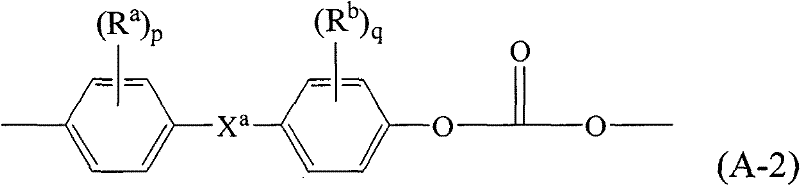


Applications Claiming Priority (3)
| Application Number | Priority Date | Filing Date | Title |
|---|---|---|---|
| US11/425,802 US7632881B2 (en) | 2006-06-22 | 2006-06-22 | Polycarbonate compositions and articles formed therefrom |
| US11/425,802 | 2006-06-22 | ||
| PCT/US2007/069227 WO2007149663A1 (en) | 2006-06-22 | 2007-05-18 | Polycarbonate compositions and articles formed therefrom |
Publications (2)
| Publication Number | Publication Date |
|---|---|
| CN101472995A CN101472995A (en) | 2009-07-01 |
| CN101472995B true CN101472995B (en) | 2011-12-28 |
Family
ID=38521667
Family Applications (1)
| Application Number | Title | Priority Date | Filing Date |
|---|---|---|---|
| CN2007800234430A Expired - Fee Related CN101472995B (en) | 2006-06-22 | 2007-05-18 | Polycarbonate compositions and articles formed therefrom |
Country Status (8)
| Country | Link |
|---|---|
| US (1) | US7632881B2 (en) |
| EP (1) | EP2029671B1 (en) |
| KR (1) | KR101297632B1 (en) |
| CN (1) | CN101472995B (en) |
| AT (1) | ATE446342T1 (en) |
| DE (1) | DE602007002908D1 (en) |
| TW (1) | TW200808900A (en) |
| WO (1) | WO2007149663A1 (en) |
Families Citing this family (27)
| Publication number | Priority date | Publication date | Assignee | Title |
|---|---|---|---|---|
| US7728059B2 (en) * | 2006-02-14 | 2010-06-01 | Sabic Innovative Plastics Ip B.V. | Polycarbonate compositions and articles formed therefrom |
| US20080242779A1 (en) * | 2007-04-02 | 2008-10-02 | Satish Kumar Gaggar | Resinous compositions and articles made therefrom |
| CN101362857B (en) * | 2008-09-24 | 2011-05-04 | 华南理工大学 | Non-halogen flame-retarding high performance polycarbonate engineering plastics and preparation method thereof |
| JP2010202746A (en) * | 2009-03-03 | 2010-09-16 | Sony Corp | Aromatic polycarbonate resin composition and molded product thereof |
| WO2011155490A1 (en) * | 2010-06-09 | 2011-12-15 | 出光興産株式会社 | Polycarbonate-based resin composition and molded article thereof |
| JP5706667B2 (en) * | 2010-11-08 | 2015-04-22 | 出光興産株式会社 | Polycarbonate resin composition, molded product, and structural member for photovoltaic power generation |
| WO2012065292A1 (en) * | 2010-11-15 | 2012-05-24 | Sabic Innovative Plastics Ip B.V. | Compositions and articles of manufacture containing siloxane |
| KR101447272B1 (en) * | 2010-12-31 | 2014-10-08 | 제일모직주식회사 | Polycarbonate resin composition and an article comprising the polycarbonate resin composition |
| CN102727123A (en) * | 2011-03-31 | 2012-10-17 | 陈立波 | Plastic and noctilucent paper-towel holder |
| CN102276970B (en) * | 2011-07-04 | 2013-04-10 | 四川中物材料有限责任公司 | Halogen-free antiflaming thin-film polycarbonate material and preparation method thereof |
| US20140234629A1 (en) * | 2011-11-08 | 2014-08-21 | Sabic Innovative Plastics Ip B.V. | High heat polycarbonate and siloxane copolycarbonate blends that provide ductile high heat options for flame retardant applications |
| KR101432613B1 (en) * | 2011-12-29 | 2014-08-22 | 주식회사 삼양사 | Flame-retardant thermoplastic resin composition and molded article thereof |
| JP5675919B2 (en) * | 2012-09-14 | 2015-02-25 | 三菱エンジニアリングプラスチックス株式会社 | Resin composition for laser direct structuring, resin molded product, and method for producing resin molded product with plating layer |
| JP5579909B2 (en) | 2012-09-14 | 2014-08-27 | 三菱エンジニアリングプラスチックス株式会社 | Resin composition for laser direct structuring, resin molded product, and method for producing resin molded product with plating layer |
| JP5957399B2 (en) * | 2013-03-06 | 2016-07-27 | 出光興産株式会社 | Polycarbonate resin composition and molded body |
| KR101926818B1 (en) | 2013-03-13 | 2018-12-07 | 사빅 글로벌 테크놀러지스 비.브이. | Reinforced polyestercarbonate, polycarbonate-polydiorganosiloxane, poly(butylene-terephthalate) blend, and article comprising same |
| CN105189651B (en) * | 2013-03-15 | 2017-09-01 | 沙特基础全球技术有限公司 | Blend containing photo sensitive additive |
| EP3068817A1 (en) * | 2013-11-15 | 2016-09-21 | SABIC Global Technologies B.V. | Methods for measuring properties in crosslinked polycarbonate |
| CN103724972B (en) * | 2013-12-31 | 2016-04-20 | 上海长伟锦磁工程塑料有限公司 | A kind of Low-temperature-resiflame-retardant flame-retardant photodiffusion polycarbonate composite material and preparation method thereof |
| JP6699860B2 (en) * | 2015-03-30 | 2020-05-27 | 出光興産株式会社 | Polycarbonate resin composition and molded article thereof |
| CN105199360A (en) * | 2015-10-29 | 2015-12-30 | 万春华 | PC plastic material and preparation method thereof |
| WO2017154903A1 (en) * | 2016-03-09 | 2017-09-14 | 出光興産株式会社 | Polycarbonate-based resin composition and molded product thereof |
| EP3685645A4 (en) | 2017-09-22 | 2021-08-25 | 3M Innovative Properties Company | COMPOSITE ARTICLE |
| CN110511550B (en) | 2018-05-21 | 2022-02-22 | 高新特殊工程塑料全球技术有限公司 | Polycarbonate composition, molded article comprising the same, and method for producing the article |
| KR102202757B1 (en) * | 2018-08-31 | 2021-01-13 | 롯데첨단소재(주) | Thermoplastic resin composition and article produced therefrom |
| CN109486158A (en) * | 2018-12-20 | 2019-03-19 | 深圳市富恒新材料股份有限公司 | A kind of superelevation heat-resistant halogen-free flame-retardant PC/ABS composite material and preparation method |
| CN115181407B (en) * | 2022-08-15 | 2023-12-19 | 万华化学(宁波)有限公司 | Halogen-free flame-retardant low-smoke-density polycarbonate material and preparation method and application thereof |
Citations (4)
| Publication number | Priority date | Publication date | Assignee | Title |
|---|---|---|---|---|
| KR20030046906A (en) * | 2001-12-07 | 2003-06-18 | 제일모직주식회사 | Flame retardant thermoplastic resin composition |
| CN1720288A (en) * | 2002-10-29 | 2006-01-11 | 通用电气公司 | Method for making fire-retarded polycarbonate and related compositions |
| CN1737058A (en) * | 2004-08-05 | 2006-02-22 | 通用电气公司 | Flame retardant thermoplastic polycarbonate compositions, use and method of manufacture thereof |
| CN1754912A (en) * | 2004-08-16 | 2006-04-05 | 通用电气公司 | Polycarbonate compositions, articles, and method of manufacture |
Family Cites Families (34)
| Publication number | Priority date | Publication date | Assignee | Title |
|---|---|---|---|---|
| AT297333B (en) | 1969-06-13 | 1972-03-27 | Bayer Ag | Process for the production of polycarbonates with reduced flammability |
| US3671487A (en) | 1971-05-05 | 1972-06-20 | Gen Electric | Glass reinforced polyester resins containing polytetrafluoroethylene and flame retardant additives |
| US3723373A (en) | 1971-10-04 | 1973-03-27 | American Cyanamid Co | 0.1% to about 2.0% by weight polytetrafluoroethylene emulsion modified polyethylene terephthalate with improved processing characteristics |
| US3971756A (en) | 1974-08-09 | 1976-07-27 | General Electric Company | Flame retardant polycarbonate composition |
| US4028297A (en) | 1975-07-18 | 1977-06-07 | General Electric Company | Novel flame retardant polycarbonate compositions |
| US4110299A (en) | 1976-10-15 | 1978-08-29 | General Electric Company | Flame-retardant polycarbonate composition |
| US4130530A (en) | 1977-04-08 | 1978-12-19 | General Electric Company | Cyclic siloxane plasticized polycarbonate composition |
| US4303575A (en) | 1980-02-07 | 1981-12-01 | Mobay Chemical Corporation | Flame retardant polycarbonate compositions |
| US4335038A (en) | 1980-09-26 | 1982-06-15 | The Dow Chemical Company | Polycarbonate containing a metal perfluoroborate and an organosilane as ignition depressants |
| DE3203905A1 (en) | 1982-02-05 | 1983-08-11 | Bayer Ag, 5090 Leverkusen | POLYCARBONATE MOLDS WITH IMPROVED FLAME RETENTION |
| GB8806497D0 (en) | 1988-03-18 | 1988-04-20 | Mortile Acoustic Ind Ltd | Non-toxic fire retardant thermoplastic material |
| US4916194A (en) | 1989-03-06 | 1990-04-10 | General Electric Company | Flame retardant aromatic polycarbonate blends |
| EP0522751B1 (en) | 1991-07-01 | 1998-04-01 | General Electric Company | Polycarbonate-polysiloxane block copolymers |
| US5508323A (en) | 1992-06-29 | 1996-04-16 | Dow Corning Corporation | Method for imparting fire retardancy to organic resins |
| NL9202090A (en) * | 1992-12-02 | 1994-07-01 | Gen Electric | Polymer blend with aromatic polycarbonate, styrene-containing copolymer and / or graft polymer and a silicone-polycarbonate block copolymer, articles formed therefrom. |
| EP0743343B9 (en) * | 1995-05-17 | 2007-05-23 | Mitsubishi Engineering-Plastics Corporation | Polycarbonate composition for profile extrusion |
| ATE250641T1 (en) * | 1995-06-06 | 2003-10-15 | Kanegafuchi Chemical Ind | DISORDERED SILOXANE COPOLYMERS, PROCESS FOR PRODUCTION AND COMPOSITION CONTAINING THIS COPOLYMER |
| US7169859B2 (en) * | 1999-05-18 | 2007-01-30 | General Electric Company | Weatherable, thermostable polymers having improved flow composition |
| US6353046B1 (en) | 2000-04-28 | 2002-03-05 | General Electric Company | Fire-retarded polycarbonate resin composition |
| US6727302B2 (en) * | 2001-04-03 | 2004-04-27 | General Electric Company | Transparent, fire-resistant polycarbonate |
| DE10132942A1 (en) * | 2001-07-06 | 2003-01-23 | Degussa | Siloxane oligomers, process for their preparation and their use |
| US6630525B2 (en) * | 2001-10-09 | 2003-10-07 | General Electric Company | Polycarbonate-siloxane copolymers |
| US6613824B2 (en) | 2001-11-12 | 2003-09-02 | General Electric Company | Flame retardant resinous compositions and method |
| US6921785B2 (en) * | 2002-08-16 | 2005-07-26 | General Electric Company | Flame retardant resinous compositions and method |
| US7147671B2 (en) * | 2003-06-02 | 2006-12-12 | General Electric Company | Silicone based flame retardant systems for textiles |
| US20050009968A1 (en) | 2003-06-28 | 2005-01-13 | General Electric Company | Transparent Flame Retardant Polycarbonate Compositions |
| US20050085580A1 (en) * | 2003-10-16 | 2005-04-21 | General Electric Company | Light-Colored Polycarbonate Compositions and Methods |
| US7279223B2 (en) * | 2003-12-16 | 2007-10-09 | General Electric Company | Underfill composition and packaged solid state device |
| US7223804B2 (en) * | 2003-12-30 | 2007-05-29 | General Electric Company | Polycarbonate composition |
| US7232854B2 (en) * | 2004-02-03 | 2007-06-19 | General Electric Company | Polycarbonate compositions with thin-wall flame retardance |
| US7365124B2 (en) * | 2004-03-31 | 2008-04-29 | General Electric Company | Flame retardant resin blends based on polymers derived from 2-hydrocarbyl-3,3-bis(4-hydroxyaryl)phthalimidine monomers |
| JP4548591B2 (en) * | 2004-12-24 | 2010-09-22 | 信越化学工業株式会社 | Flame retardant resin composition |
| US20070191519A1 (en) * | 2006-02-14 | 2007-08-16 | General Electric Company | Halogen-free polycarbonate compositions and articles formed therefrom |
| US7728059B2 (en) | 2006-02-14 | 2010-06-01 | Sabic Innovative Plastics Ip B.V. | Polycarbonate compositions and articles formed therefrom |
-
2006
- 2006-06-22 US US11/425,802 patent/US7632881B2/en not_active Expired - Fee Related
-
2007
- 2007-05-18 AT AT07797575T patent/ATE446342T1/en not_active IP Right Cessation
- 2007-05-18 EP EP07797575A patent/EP2029671B1/en not_active Not-in-force
- 2007-05-18 WO PCT/US2007/069227 patent/WO2007149663A1/en not_active Ceased
- 2007-05-18 CN CN2007800234430A patent/CN101472995B/en not_active Expired - Fee Related
- 2007-05-18 DE DE602007002908T patent/DE602007002908D1/en active Active
- 2007-05-18 KR KR1020087031049A patent/KR101297632B1/en active Active
- 2007-06-08 TW TW096120849A patent/TW200808900A/en unknown
Patent Citations (4)
| Publication number | Priority date | Publication date | Assignee | Title |
|---|---|---|---|---|
| KR20030046906A (en) * | 2001-12-07 | 2003-06-18 | 제일모직주식회사 | Flame retardant thermoplastic resin composition |
| CN1720288A (en) * | 2002-10-29 | 2006-01-11 | 通用电气公司 | Method for making fire-retarded polycarbonate and related compositions |
| CN1737058A (en) * | 2004-08-05 | 2006-02-22 | 通用电气公司 | Flame retardant thermoplastic polycarbonate compositions, use and method of manufacture thereof |
| CN1754912A (en) * | 2004-08-16 | 2006-04-05 | 通用电气公司 | Polycarbonate compositions, articles, and method of manufacture |
Also Published As
| Publication number | Publication date |
|---|---|
| CN101472995A (en) | 2009-07-01 |
| ATE446342T1 (en) | 2009-11-15 |
| US7632881B2 (en) | 2009-12-15 |
| KR101297632B1 (en) | 2013-08-20 |
| TW200808900A (en) | 2008-02-16 |
| DE602007002908D1 (en) | 2009-12-03 |
| EP2029671A1 (en) | 2009-03-04 |
| EP2029671B1 (en) | 2009-10-21 |
| KR20090019853A (en) | 2009-02-25 |
| WO2007149663A1 (en) | 2007-12-27 |
| US20070299174A1 (en) | 2007-12-27 |
Similar Documents
| Publication | Publication Date | Title |
|---|---|---|
| CN101400763B (en) | Halogen-free polycarbonate compositions and articles formed therefrom | |
| CN101384684B (en) | Polycarbonate compositions and articles formed therefrom | |
| KR101297632B1 (en) | Polycarbonate compositions and articles formed therefrom | |
| CN101874073B (en) | Polycarbonate composition having improved impact resistance, flame retardancy and surface appearance, method of making same, and articles made therefrom | |
| KR101396034B1 (en) | Flame Retardant and Chemical Resistant Thermoplastic Polycarbonate Compositions | |
| JP5008843B2 (en) | Polycarbonate composition, article and production method | |
| KR101511345B1 (en) | Polycarbonate compositions with improved molding capability | |
| KR101476453B1 (en) | Thermoplastic polycarbonate composition | |
| KR101417155B1 (en) | Flame Retardant and Scratch Resistant Thermoplastic Polycarbonate Compositions | |
| KR101417156B1 (en) | Flame Retardant and Scratch Resistant Thermoplastic Polycarbonate Compositions | |
| KR20090020648A (en) | Polycarbonate compositions and articles formed therefrom | |
| KR101406365B1 (en) | Fatigue-resistant thermoplastic composition, process for its preparation and product formed therefrom | |
| CN105802177A (en) | Flame-retardant reinforced polycarbonate compositions | |
| KR20090080057A (en) | Infrared Transparent Thermoplastic Composition | |
| JP2008544018A (en) | Thermoplastic polycarbonate composition having improved mechanical properties, articles made therefrom and manufacturing method | |
| CN103917598A (en) | High heat polycarbonate and silicone copolycarbonate blends offering ductile high heat options for flame retardant applications | |
| KR20090018827A (en) | Polycarbonate compositions and articles formed therefrom | |
| KR101051450B1 (en) | Polycarbonate compositions and articles formed therefrom, having a matte surface and high light transmission | |
| CN101379114A (en) | Thermally stable polycarbonates, thermoplastic compositions thereof, and articles made therefrom |
Legal Events
| Date | Code | Title | Description |
|---|---|---|---|
| C06 | Publication | ||
| PB01 | Publication | ||
| C10 | Entry into substantive examination | ||
| SE01 | Entry into force of request for substantive examination | ||
| C14 | Grant of patent or utility model | ||
| GR01 | Patent grant | ||
| C56 | Change in the name or address of the patentee | ||
| CP01 | Change in the name or title of a patent holder |
Address after: Bergen Op Zoom Holland Patentee after: SABIC INNOVATIVE PLASTICS IP B.V. Address before: Bergen Op Zoom Holland Patentee before: SABIC INNOVATIVE PLASTICS IP B.V. |
|
| TR01 | Transfer of patent right |
Effective date of registration: 20210310 Address after: Holland city Aupu zoom Bergen Patentee after: High tech special engineering plastics Global Technology Co.,Ltd. Address before: Bergen Op Zoom Holland Patentee before: SABIC INNOVATIVE PLASTICS IP B.V. |
|
| TR01 | Transfer of patent right | ||
| CF01 | Termination of patent right due to non-payment of annual fee |
Granted publication date: 20111228 |