CN108398492B - Quality detection method of dendrobium officinale - Google Patents
Quality detection method of dendrobium officinale Download PDFInfo
- Publication number
- CN108398492B CN108398492B CN201710064181.8A CN201710064181A CN108398492B CN 108398492 B CN108398492 B CN 108398492B CN 201710064181 A CN201710064181 A CN 201710064181A CN 108398492 B CN108398492 B CN 108398492B
- Authority
- CN
- China
- Prior art keywords
- fingerprint
- dendrobium officinale
- dendrobium
- components
- sample
- Prior art date
- Legal status (The legal status is an assumption and is not a legal conclusion. Google has not performed a legal analysis and makes no representation as to the accuracy of the status listed.)
- Active
Links
- 241001076416 Dendrobium tosaense Species 0.000 title claims abstract description 69
- 238000001514 detection method Methods 0.000 title claims abstract description 29
- 238000000034 method Methods 0.000 claims abstract description 46
- 241001523681 Dendrobium Species 0.000 claims abstract description 41
- 229940117954 naringenin Drugs 0.000 claims abstract description 29
- WGEYAGZBLYNDFV-UHFFFAOYSA-N naringenin Natural products C1(=O)C2=C(O)C=C(O)C=C2OC(C1)C1=CC=C(CC1)O WGEYAGZBLYNDFV-UHFFFAOYSA-N 0.000 claims abstract description 29
- 235000007625 naringenin Nutrition 0.000 claims abstract description 29
- NIABBGMPPWXWOJ-UHFFFAOYSA-N schaftoside Natural products OC1C(O)C(O)C(CO)OC1OC1=C(O)C(OC2C(C(O)C(O)CO2)O)=C(OC(=CC2=O)C=3C=CC(O)=CC=3)C2=C1O NIABBGMPPWXWOJ-UHFFFAOYSA-N 0.000 claims abstract description 27
- MMDUKUSNQNWVET-UHFFFAOYSA-N schaftozide Natural products OC1C(O)C(O)C(CO)OC1C1=C(O)C(C2C(C(O)C(O)CO2)O)=C(OC(=CC2=O)C=3C=CC(O)=CC=3)C2=C1O MMDUKUSNQNWVET-UHFFFAOYSA-N 0.000 claims abstract description 27
- FTVWIRXFELQLPI-ZDUSSCGKSA-N (S)-naringenin Chemical compound C1=CC(O)=CC=C1[C@H]1OC2=CC(O)=CC(O)=C2C(=O)C1 FTVWIRXFELQLPI-ZDUSSCGKSA-N 0.000 claims abstract description 26
- MMDUKUSNQNWVET-WMRYYKKOSA-N 5,7-dihydroxy-2-(4-hydroxyphenyl)-6-[(2r,3r,4r,5s,6r)-3,4,5-trihydroxy-6-(hydroxymethyl)oxan-2-yl]-8-[(2s,3r,4s,5s)-3,4,5-trihydroxyoxan-2-yl]chromen-4-one Chemical compound O[C@@H]1[C@@H](O)[C@H](O)[C@@H](CO)O[C@@H]1C1=C(O)C([C@H]2[C@@H]([C@@H](O)[C@@H](O)CO2)O)=C(OC(=CC2=O)C=3C=CC(O)=CC=3)C2=C1O MMDUKUSNQNWVET-WMRYYKKOSA-N 0.000 claims abstract description 25
- 239000000126 substance Substances 0.000 claims abstract description 23
- 238000012163 sequencing technique Methods 0.000 claims abstract description 20
- 230000004044 response Effects 0.000 claims abstract description 15
- 238000004458 analytical method Methods 0.000 claims abstract description 9
- 238000011208 chromatographic data Methods 0.000 claims abstract description 9
- 238000012216 screening Methods 0.000 claims abstract description 8
- 239000011159 matrix material Substances 0.000 claims description 10
- 238000012408 PCR amplification Methods 0.000 claims description 2
- 230000035939 shock Effects 0.000 claims 1
- 239000000463 material Substances 0.000 abstract description 19
- 238000001228 spectrum Methods 0.000 abstract description 11
- 239000000523 sample Substances 0.000 description 43
- OKKJLVBELUTLKV-UHFFFAOYSA-N Methanol Chemical compound OC OKKJLVBELUTLKV-UHFFFAOYSA-N 0.000 description 36
- 239000000843 powder Substances 0.000 description 14
- 239000000706 filtrate Substances 0.000 description 13
- 239000003814 drug Substances 0.000 description 12
- 238000001914 filtration Methods 0.000 description 11
- 238000005303 weighing Methods 0.000 description 11
- 230000000694 effects Effects 0.000 description 10
- 241000894007 species Species 0.000 description 10
- WEVYAHXRMPXWCK-UHFFFAOYSA-N Acetonitrile Chemical compound CC#N WEVYAHXRMPXWCK-UHFFFAOYSA-N 0.000 description 9
- QTBSBXVTEAMEQO-UHFFFAOYSA-N Acetic acid Chemical compound CC(O)=O QTBSBXVTEAMEQO-UHFFFAOYSA-N 0.000 description 6
- GBMDVOWEEQVZKZ-UHFFFAOYSA-N methanol;hydrate Chemical compound O.OC GBMDVOWEEQVZKZ-UHFFFAOYSA-N 0.000 description 6
- XLYOFNOQVPJJNP-UHFFFAOYSA-N water Substances O XLYOFNOQVPJJNP-UHFFFAOYSA-N 0.000 description 6
- 239000004480 active ingredient Substances 0.000 description 5
- 230000003321 amplification Effects 0.000 description 5
- 238000004587 chromatography analysis Methods 0.000 description 5
- 238000010828 elution Methods 0.000 description 5
- 238000003199 nucleic acid amplification method Methods 0.000 description 5
- 238000002390 rotary evaporation Methods 0.000 description 5
- -1 schaftoside small molecules Chemical class 0.000 description 5
- 150000003384 small molecules Chemical class 0.000 description 5
- 238000009210 therapy by ultrasound Methods 0.000 description 5
- 239000012528 membrane Substances 0.000 description 4
- 238000002360 preparation method Methods 0.000 description 4
- 239000013558 reference substance Substances 0.000 description 4
- 239000000243 solution Substances 0.000 description 4
- 239000011550 stock solution Substances 0.000 description 4
- 238000001816 cooling Methods 0.000 description 3
- 238000010790 dilution Methods 0.000 description 3
- 239000012895 dilution Substances 0.000 description 3
- 238000009826 distribution Methods 0.000 description 3
- 239000004615 ingredient Substances 0.000 description 3
- 230000008569 process Effects 0.000 description 3
- 239000000047 product Substances 0.000 description 3
- 238000013441 quality evaluation Methods 0.000 description 3
- 238000010187 selection method Methods 0.000 description 3
- 239000006228 supernatant Substances 0.000 description 3
- 238000012360 testing method Methods 0.000 description 3
- USFZMSVCRYTOJT-UHFFFAOYSA-N Ammonium acetate Chemical compound N.CC(O)=O USFZMSVCRYTOJT-UHFFFAOYSA-N 0.000 description 2
- 239000005695 Ammonium acetate Substances 0.000 description 2
- XEEYBQQBJWHFJM-UHFFFAOYSA-N Iron Chemical compound [Fe] XEEYBQQBJWHFJM-UHFFFAOYSA-N 0.000 description 2
- 229940043376 ammonium acetate Drugs 0.000 description 2
- 235000019257 ammonium acetate Nutrition 0.000 description 2
- 230000006835 compression Effects 0.000 description 2
- 238000007906 compression Methods 0.000 description 2
- 238000002790 cross-validation Methods 0.000 description 2
- 238000004925 denaturation Methods 0.000 description 2
- 230000036425 denaturation Effects 0.000 description 2
- 230000001419 dependent effect Effects 0.000 description 2
- 238000007865 diluting Methods 0.000 description 2
- 229940079593 drug Drugs 0.000 description 2
- 238000000605 extraction Methods 0.000 description 2
- 210000004209 hair Anatomy 0.000 description 2
- 238000012417 linear regression Methods 0.000 description 2
- 239000007788 liquid Substances 0.000 description 2
- 230000014759 maintenance of location Effects 0.000 description 2
- 238000004321 preservation Methods 0.000 description 2
- 230000009467 reduction Effects 0.000 description 2
- 238000011160 research Methods 0.000 description 2
- 239000011265 semifinished product Substances 0.000 description 2
- 238000007873 sieving Methods 0.000 description 2
- 239000002904 solvent Substances 0.000 description 2
- 230000002195 synergetic effect Effects 0.000 description 2
- 229940126680 traditional chinese medicines Drugs 0.000 description 2
- 241000859983 Dendrobium catenatum Species 0.000 description 1
- 244000085625 Equisetum Species 0.000 description 1
- 101001018064 Homo sapiens Lysosomal-trafficking regulator Proteins 0.000 description 1
- 206010020649 Hyperkeratosis Diseases 0.000 description 1
- 102100033472 Lysosomal-trafficking regulator Human genes 0.000 description 1
- 244000038561 Modiola caroliniana Species 0.000 description 1
- 235000010703 Modiola caroliniana Nutrition 0.000 description 1
- 206010028980 Neoplasm Diseases 0.000 description 1
- 241001495452 Podophyllum Species 0.000 description 1
- PQLVXDKIJBQVDF-UHFFFAOYSA-N acetic acid;hydrate Chemical compound O.CC(O)=O PQLVXDKIJBQVDF-UHFFFAOYSA-N 0.000 description 1
- 230000009471 action Effects 0.000 description 1
- 230000004071 biological effect Effects 0.000 description 1
- 239000008280 blood Substances 0.000 description 1
- 210000004369 blood Anatomy 0.000 description 1
- 210000001124 body fluid Anatomy 0.000 description 1
- 239000010839 body fluid Substances 0.000 description 1
- 230000008602 contraction Effects 0.000 description 1
- 238000013461 design Methods 0.000 description 1
- 201000010099 disease Diseases 0.000 description 1
- 208000037265 diseases, disorders, signs and symptoms Diseases 0.000 description 1
- 230000000857 drug effect Effects 0.000 description 1
- 238000005516 engineering process Methods 0.000 description 1
- 230000002708 enhancing effect Effects 0.000 description 1
- 238000011156 evaluation Methods 0.000 description 1
- 241000411851 herbal medicine Species 0.000 description 1
- 238000009396 hybridization Methods 0.000 description 1
- 230000036039 immunity Effects 0.000 description 1
- 239000005414 inactive ingredient Substances 0.000 description 1
- 230000002401 inhibitory effect Effects 0.000 description 1
- 229910052742 iron Inorganic materials 0.000 description 1
- 238000004519 manufacturing process Methods 0.000 description 1
- 235000013372 meat Nutrition 0.000 description 1
- 238000007481 next generation sequencing Methods 0.000 description 1
- 210000001672 ovary Anatomy 0.000 description 1
- 230000003647 oxidation Effects 0.000 description 1
- 238000007254 oxidation reaction Methods 0.000 description 1
- 230000003285 pharmacodynamic effect Effects 0.000 description 1
- 230000000144 pharmacologic effect Effects 0.000 description 1
- YJGVMLPVUAXIQN-XVVDYKMHSA-N podophyllotoxin Chemical compound COC1=C(OC)C(OC)=CC([C@@H]2C3=CC=4OCOC=4C=C3[C@H](O)[C@@H]3[C@@H]2C(OC3)=O)=C1 YJGVMLPVUAXIQN-XVVDYKMHSA-N 0.000 description 1
- 230000008092 positive effect Effects 0.000 description 1
- 238000012545 processing Methods 0.000 description 1
- 238000003908 quality control method Methods 0.000 description 1
- 238000005464 sample preparation method Methods 0.000 description 1
- 239000012488 sample solution Substances 0.000 description 1
- 210000002784 stomach Anatomy 0.000 description 1
- 238000006467 substitution reaction Methods 0.000 description 1
- SWGJCIMEBVHMTA-UHFFFAOYSA-K trisodium;6-oxido-4-sulfo-5-[(4-sulfonatonaphthalen-1-yl)diazenyl]naphthalene-2-sulfonate Chemical compound [Na+].[Na+].[Na+].C1=CC=C2C(N=NC3=C4C(=CC(=CC4=CC=C3O)S([O-])(=O)=O)S([O-])(=O)=O)=CC=C(S([O-])(=O)=O)C2=C1 SWGJCIMEBVHMTA-UHFFFAOYSA-K 0.000 description 1
- 210000003462 vein Anatomy 0.000 description 1
Images


Classifications
-
- G—PHYSICS
- G01—MEASURING; TESTING
- G01N—INVESTIGATING OR ANALYSING MATERIALS BY DETERMINING THEIR CHEMICAL OR PHYSICAL PROPERTIES
- G01N30/00—Investigating or analysing materials by separation into components using adsorption, absorption or similar phenomena or using ion-exchange, e.g. chromatography or field flow fractionation
- G01N30/02—Column chromatography
-
- C—CHEMISTRY; METALLURGY
- C12—BIOCHEMISTRY; BEER; SPIRITS; WINE; VINEGAR; MICROBIOLOGY; ENZYMOLOGY; MUTATION OR GENETIC ENGINEERING
- C12Q—MEASURING OR TESTING PROCESSES INVOLVING ENZYMES, NUCLEIC ACIDS OR MICROORGANISMS; COMPOSITIONS OR TEST PAPERS THEREFOR; PROCESSES OF PREPARING SUCH COMPOSITIONS; CONDITION-RESPONSIVE CONTROL IN MICROBIOLOGICAL OR ENZYMOLOGICAL PROCESSES
- C12Q1/00—Measuring or testing processes involving enzymes, nucleic acids or microorganisms; Compositions therefor; Processes of preparing such compositions
- C12Q1/68—Measuring or testing processes involving enzymes, nucleic acids or microorganisms; Compositions therefor; Processes of preparing such compositions involving nucleic acids
- C12Q1/6876—Nucleic acid products used in the analysis of nucleic acids, e.g. primers or probes
- C12Q1/6888—Nucleic acid products used in the analysis of nucleic acids, e.g. primers or probes for detection or identification of organisms
- C12Q1/6895—Nucleic acid products used in the analysis of nucleic acids, e.g. primers or probes for detection or identification of organisms for plants, fungi or algae
-
- G—PHYSICS
- G01—MEASURING; TESTING
- G01N—INVESTIGATING OR ANALYSING MATERIALS BY DETERMINING THEIR CHEMICAL OR PHYSICAL PROPERTIES
- G01N30/00—Investigating or analysing materials by separation into components using adsorption, absorption or similar phenomena or using ion-exchange, e.g. chromatography or field flow fractionation
- G01N30/02—Column chromatography
- G01N30/04—Preparation or injection of sample to be analysed
- G01N30/06—Preparation
Landscapes
- Chemical & Material Sciences (AREA)
- Life Sciences & Earth Sciences (AREA)
- Analytical Chemistry (AREA)
- Health & Medical Sciences (AREA)
- Physics & Mathematics (AREA)
- Proteomics, Peptides & Aminoacids (AREA)
- General Health & Medical Sciences (AREA)
- Immunology (AREA)
- Engineering & Computer Science (AREA)
- Biochemistry (AREA)
- Organic Chemistry (AREA)
- General Physics & Mathematics (AREA)
- Pathology (AREA)
- Zoology (AREA)
- Biotechnology (AREA)
- Wood Science & Technology (AREA)
- Microbiology (AREA)
- Molecular Biology (AREA)
- Bioinformatics & Cheminformatics (AREA)
- General Engineering & Computer Science (AREA)
- Biophysics (AREA)
- Genetics & Genomics (AREA)
- Mycology (AREA)
- Botany (AREA)
- Other Investigation Or Analysis Of Materials By Electrical Means (AREA)
Abstract
The invention discloses a quality detection method of dendrobium officinale, which comprises the following steps: 1) sequencing by taking ITS-26SE and ITS-17SE as primers to identify the variety of the dendrobium medicinal material to be detected; 2) performing chromatographic detection on a sample with the sample capacity of n to obtain detection data with chemical small molecular components of schaftoside and/or naringenin as reference components; 3) respectively carrying out fingerprint detection on the samples to obtain fingerprint peak area values of all chemical components of the dendrobium officinale; 4) the method comprises the steps of taking the content value of the schaftoside and/or naringenin component in chromatographic data as a response variable, taking the peak area value of other components in a fingerprint as an independent variable to establish an analysis model, and screening variables by a Lasso method to establish a fingerprint model of related characteristics of chemical micromolecule components. The quality of the dendrobium officinale medicinal material is accurately identified and controlled through first-generation sequencing and characteristic fingerprint spectrum.
Description
Technical Field
The invention belongs to the field of detection and analysis of traditional Chinese medicine components, and particularly relates to a quality detection method of dendrobium officinale.
Background
Dendrobium officinale (Dendrobium catenatum Lindley, Dendrobium officinale Kimura & Migo): also known as Equisetum nigrum. The stem is upright, less creeping or oblique, the meat is cylindrical, the length is 9 cm-35 cm, the diameter is 0.2 cm-0.4 cm, no branch exists, the stem has multiple sections, and the internode is 1.3 cm-1.7 cm long; the leaf base is downward extended to cover the stem, the edge and the middle rib are light purple, the leaf cover is usually purple spot, the upper edge is loose and opened with the stem when old, and an annular iron cyan gap is left between the leaf cover and the stem. The raceme usually comes out from the upper part of the old stem of the fallen leaves, and has 2-3 flowers; the inflorescence handle is 0.5 cm-1.0 cm long, and the base part is provided with 2-3 short sheaths; the inflorescence shaft is bent in a reverse-folded shape and is 2-4 cm long; the buds are dry and membranous, light white, oval, 0.5 cm-0.7 cm long, and the tips are blunt; the length of the flower stalk and the ovary is 2 cm-2.5 cm; the sepals and the petals are yellow green and similar, the long round shape is in the shape of a needle, the length is about 1.8cm, the width is 0.4 cm-0.5 cm, the tip is sharp, and 5 veins are formed; the lateral sepal base is wider and about 1cm wide; the sepal sac is conical, the length is about 0.5cm, and the tail end is round; the labial lobe is white, light green or light yellow green, the base part is provided with a green or yellow callus, the egg-shaped part is in a needle shape, is slightly shorter than the sepals, the middle part is reversely folded, the tip is sharp, the part is not cracked or is not cracked obviously 3, the two sides below the middle part are provided with mauve stripes, and the edge is wavy; the labial flaps are densely populated with papillary hairs and have 1 purple-red plaque, or 2 separate purple plaques, above the middle; the pistillate is yellowish green and about 0.3cm long, and both sides of the tip are respectively provided with 1 purple point; the podophyllum is yellowish green and has purplish red stripes, and hair is dredged; the medicinal cap is white, has a long oval triangle shape, is about 0.2-0.3 cm long, and has a sharp tip at the top end and 2 cracks. The stem of the Chinese medicinal herb is used as a medicine, and belongs to yin tonifying medicines in tonifying medicines: to nourish stomach, promote the production of body fluid, nourish yin and clear heat.
Dendrobe is always regarded as a precious Chinese herbal medicine and has very important nourishing efficacy. Clinically, dendrobium is used for treating various diseases and has the pharmacological effects of enhancing immunity, resisting oxidation, reducing blood sugar, inhibiting cancers and the like. Due to the fact that the dendrobium is mined artificially and unknowingly for a long time and is unreasonably utilized, wild resources of the dendrobium are gradually reduced, and phenomena of falseness and poor quality appear in the market. In addition, because the varieties of dendrobium are more, the characters of the related varieties are crossed due to the hybridization of the varieties of dendrobium, and the classification is difficult. Therefore, it is necessary to establish a characteristic fingerprint spectrum of dendrobium to evaluate the quality of dendrobium medicinal materials.
The chromatographic fingerprint is a comprehensive and quantifiable identification means, and is used as a panoramic mode of global analysis to reflect the overall condition of a sample. However, in the chromatographic fingerprint analysis process, many data are high-dimensional, that is, the data contain many attributes or features, for example, the chromatographic fingerprint of dendrobium officinale can be better described, but in practical application, direct operation on the high-dimensional data will face the problem of "dimension disaster", which will lead to exponential increase of the number of samples required in the modeling process as the dimension increases. In the face of high dimensional data, the conventional least squares method is no longer applicable and variable selection becomes important in order to improve model interpretability and prediction accuracy. How to efficiently screen out a plurality of variables which play an important role in dependent variables from a plurality of variables is a problem which needs to be solved urgently when fingerprint spectrum is analyzed.
The quality of the traditional Chinese medicine is evaluated by quantitatively measuring the content of a certain active ingredient or effective ingredient, namely a micromolecular ingredient in the traditional Chinese medicine in the current national pharmacopoeia. However, the research proves that the curative effect of the traditional Chinese medicine comes from the synergistic effect among various active ingredients, even the commonly recognized effective synergistic effect or the 'Shengke effect' between the active ingredients and the inactive ingredients can achieve the curative effect of the traditional Chinese medicine, but not the result of the single action of a certain active ingredient. In the traditional Chinese medicine guided by the theory of traditional Chinese medicine, any one active ingredient can not comprehensively reflect the overall curative effect of the traditional Chinese medicine.
Disclosure of Invention
The invention provides a quality detection method of dendrobium officinale, which identifies varieties of dendrobium officinale medicinal materials through first-generation sequencing, screens variables by a Lasso method to establish a related characteristic fingerprint model of chemical micromolecule components in the dendrobium officinale, and accurately evaluates the quality of the dendrobium officinale medicinal materials through the first-generation sequencing and the related characteristic fingerprint model.
The purpose of the invention is realized by the following technical scheme:
a quality detection method of Dendrobium officinale comprises:
1) with ITS-26 SE: 5 'GAATTCCCCGGTTCGCTCGCCGTTAC 3';
ITS-17 SE: 5 'ACGAATTCATGGTCCGGTGAAGTGTTCG 3' is used as a primer to carry out PCR amplification sequencing so as to identify the variety of the dendrobium to be detected as a dendrobium officinale sample;
2) performing chromatographic detection on the dendrobium officinale sample with the sample volume of n to obtain detection data with chemical small molecular components of schaftoside and/or naringenin as reference components;
3) respectively carrying out fingerprint detection on the samples to obtain fingerprint peak area values of all chemical components of the dendrobium officinale;
4) taking the content value of the schaftoside and/or naringenin in chromatographic data as a response variable, taking the peak area value of other components in a fingerprint as an independent variable to establish an analysis model, screening variables by a Lasso (the Least adsorbed library scattering and selecting operator) method to establish a fingerprint model of related characteristics of chemical small molecular components, wherein the basic model is as follows:
y=XTβ+ε
wherein y is a response variable, and y ═ y1,y2,...,yn)T(ii) a X is a matrix, X ═ X1,x2,...,xn)T;E(ε)=0;Var(ε)=σ2In(ii) a Epsilon is a random error term of the model; σ is the standard deviation of the random error term; n is the sample size; i isnIs an n × n unit array.
The random term is assumed to obey classical assumptions, namely:
(1) the random term has a zero mean, E (εi|xi)=0;
(2) The random terms have the same variance, Var (ε)i|xi)=σ2;
(3) Random term no sequence dependence, Cov (ε)i,εj)=0,i≠j;
(4) ε obeys a normal distributioni~N(0,σ2)。
The variance matrix of the random term is one diagonal of sigma2And 0 elsewhere, as follows:

wherein, InIs a unit array of n x n, n being the sample size of the data,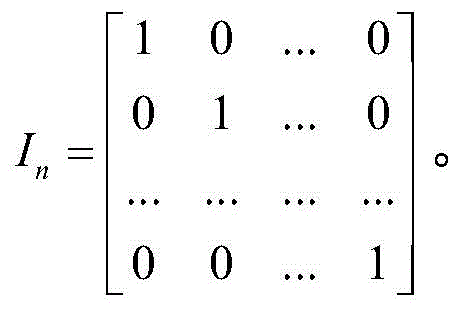
further, the Lasso method is implemented by calculating according to formula i:

in formula I, n is the sample size; p is a radical of*Is a variable number; p is the dimension of the sample; y ═ y1,y2,...,yn)T∈RnIs a response variable; x ═ x1,x2,...,xn)TA design matrix of n × p, containing all candidate independent variables having an influence on the response variable; lambda is an adjusting parameter; is a penalty function; beta is a0Is the intercept term of the formula, i.e., the value of the response variable y when all the independent variables x are 0; beta is ajIs the independent variable xjCoefficient of (2), i.e. argument xjThe degree of influence on the response variable y.
In the variable selection method, the balance between the model fitting goodness and the punishment degree for the number of the selected variables is embodied by different criteria, and is realized by directly selecting the adjusting parameters, and different values correspond to different punishment degrees. The larger the lambda is, the stronger the compression degree is, the fewer the non-zero parameters obtained by final estimation are, and the most common method for selecting the lambda is a K-fold cross-validation method:
K-fold CV:
in general, K can be 5 or 10.
The GCV criterion is an approximation of the timing in the CV criterion, defined as:

wherein, SSEkIs the sum of the residual squares of the CV submodels containing k variables, df is trace { P (λ) }; trace represents the trace of the matrix. In linear algebra, the sum of the elements on the main diagonal (diagonal from top left to bottom right) of an n × n matrix a is called the trace (or trace number) of the matrix a, and is generally denoted as tr (a). That is, df is equal to the sum of all elements on the main diagonal in the matrix.
Further, the analysis model is a sub-model with the minimum GCV value.
Further, when the chromatographic data shows the condition of ultrahigh dimension, firstly adopting the following SIS (sure indeendencescreening) method to reduce the dimension, and then screening variables;
SIS:Mγ={1≤i≤p:|ωiis the first | γ n | larger }
Wherein M is*={1≤i≤p:βiNot equal to 0 represents a subscript set of non-zero coefficients in the true model; s ═ M*L represents the number of nonzero coefficients; ω ═ ω (ω)1,ω2,...,ωp)T=XTy; for any given γ ∈ (0,1), the p elements of ω are arranged and defined from large to small in absolute value; at this time, if gamma n is less than n, M is selectedγThe independent variable corresponding to the middle subscript is reduced from the ultrahigh dimension to the dimension d (d is less than or equal to n); wherein d is n or d is [ n/logn ═ n]。
The invention also provides application of the method in quality control of the dendrobium officinale.
Compared with the prior art, the invention has at least the following advantages:
(a) according to the method, ITS-26SE and ITS-17SE are used as primers to determine the characteristic sequence of the dendrobium medicinal material so as to determine that the dendrobium medicinal material is a dendrobium officinale variety; then, taking chromatographic data of schaftoside and/or naringenin as independent variables, and taking chromatographic data of other components in the detection data as dependent variables to establish a linear regression model of micromolecule components and the fingerprint spectrum, so that the quality evaluation of the dendrobium medicinal material is more accurate;
(b) the method adopts the Lasso method to perform variable selection on the dendrobium officinale fingerprint, thereby effectively solving the problem of dimension disaster;
(c) the invention reduces the dimension of the original fingerprint, establishes the fingerprint of the related characteristics of the chemical micromolecule components of the dendrobium officinale, and has stronger pertinence and applicability to the content explanation of the single chemical micromolecule component;
(d) according to the invention, the relevance analysis of the chemical micromolecule component content is realized through the related characteristic fingerprint of the chemical micromolecule component of the dendrobium officinale, and the quality of the dendrobium officinale medicinal material can be effectively identified and controlled;
(e) when chromatographic data shows the condition of ultrahigh dimension, the SIS method is adopted to reduce the dimension, and then the Lasso method is used for processing.
Drawings
FIG. 1 is a fingerprint chromatogram of the whole components of Dendrobium officinale;
FIG. 2 is a chromatogram of a standard sample of schaftoside chemical small molecule substance;
FIG. 3 is a chromatogram of a standard sample of naringenin chemical small molecule substance;
FIG. 4 is a chromatogram of a chemical small molecule of schaftoside in Dendrobium officinale;
FIG. 5 is a chromatogram of naringenin chemical small molecules in Dendrobium officinale.
Note: 1 peak schaftoside; naringenin peak 2.
Detailed Description
The present invention will be further described with reference to the following drawings and examples, which are illustrative only and not intended to be limiting, and the scope of the present invention is not limited thereby.
Example 1 Primary sequencing of Dendrobium officinale
First generation sequencing primer sequence:
ITS-26SE:5’GAATTCCCCGGTTCGCTCGCCGTTAC 3’;
ITS-17SE:5’ACGAATTCATGGTCCGGTGAAGTGTTCG 3’。
the amplification sequencing parameters were: performing PCR circulation after denaturation at 98 ℃ for 2min, wherein the PCR circulation parameter is 98 ℃ for 20 s; 30s at 52 ℃; 1min at 68 ℃, 38 cycles, 7min at 68 ℃, setting the temperature preservation at 4 ℃ after the amplification is finished, and performing first-generation molecular sequencing.
Identifying the variety of the dendrobium to be detected as the dendrobium officinale by first-generation sequencing.
Example 2 extraction method of Dendrobium officinale
Taking a dendrobium officinale dry sample, crushing the dendrobium officinale dry sample by using a crusher, sieving the dendrobium officinale dry sample by using a pharmacopoeia sieve (the aperture is 0.335mm), precisely weighing 1.000g of dendrobium officinale powder (the weighing error cannot exceed 0.2%), placing the dendrobium officinale dry sample into a 100mL conical flask, respectively adding 50mL of 75% methanol (V water: V methanol: 25:75), performing ultrasonic treatment at room temperature for 30min, taking out the dendrobium officinale dry sample, filtering the dendrobium officinale dry sample, performing rotary evaporation and concentration on the filtrate until the dendrobium officinale dry sample is dry, dissolving the dendrobium officinale dry sample in a 75% methanol solvent (V water: V methanol: 25:75), finally transferring the dendrobium officinale dry sample into a 10mL volumetric flask to perform constant volume, shaking the dendrobium officinale sample uniformly, and filtering the.
Example 3 chromatography detection method of Dendrobium officinale extract
Preparation of control solution
Precisely weighing schaftoside 4.10mg and naringenin 4.08mg respectively, placing into 10ml volumetric flasks respectively, adding 75% (V/V) methanol to dissolve and dilute, and shaking up to obtain stock solutions. Refrigerating at 4 deg.C in refrigerator.
And precisely absorbing a certain amount of reference substance stock solutions respectively, diluting with 75% methanol, and accurately preparing a schaftoside and naringenin mixed reference substance solution. The ingredients were diluted to prepare 7 concentration points by different dilution ratios. Injecting into high performance liquid chromatograph.
② a sample extraction and treatment method for measuring the content of small molecular components of dendrobium officinale:
weighing 1.00g of the powder (sieved by a third sieve), precisely weighing, placing in a 100ml volumetric flask, precisely adding 50ml of methanol-water (75:25), carrying out ultrasonic treatment (power 250W and frequency 40kHz) for 30 minutes, cooling, filtering, carrying out rotary evaporation and concentration on the filtrate until the filtrate is dry, dissolving the filtrate with 5ml of methanol-water (75:25), filtering the supernatant with a 0.45 mu m microporous filter membrane, and taking the subsequent filtrate to obtain the product.
③ measuring the chromatographic conditions of the content of the small molecular components of the dendrobium officinale:
chromatographic conditions are as follows:
content determination chromatographic conditions: gracealitima C18 chromatography column (250mm x 4.6mm, 5 μm); the mobile phase adopts a binary gradient elution system, and the A phase: 0.2% acetic acid-water, phase B: acetonitrile; gradient elution procedure as in table 1; measuring naringenin at wavelength of 290nm, and measuring schaftoside at wavelength of 334 nm; the reference wavelength is 500nm, and the column temperature is 30 ℃; the flow rate was 1.0mL/min, and the amount of sample was 20. mu.L.
Fingerprint chromatogram conditions: a GraceAllitima C18 chromatography column, preferably a 250mm × 4.6mm, 5 μm format chromatography column; mobile phase: phase A: 0.4% acetic acid +20mmol/L ammonium acetate in water, phase B: acetonitrile; gradient elution: 0-12 min: 2% -15% of phase B, 12-35 min: 15% -24% of phase B, 35-45 min: 24% -36% of phase B, 45-60 min: 36-75% of phase B, 60-80 min: 75-95% of phase B; the flow rate is 1.0 mL/min; the column temperature is 30 ℃; the sample volume is 20 mu L; the detection wavelength is 280 nm.
TABLE 1 elution gradient for measuring content of small molecular components in Dendrobium officinale

FIG. 1 is a fingerprint chromatogram of the whole components of Dendrobium officinale Kimura et Migo, with a detection wavelength of 280 nm;
FIG. 2 is a chart of the detection map of a standard sample of schaftoside (peak 1);
FIG. 3 is a chart of a detection map of a naringenin (peak 2) standard sample;
FIG. 4 is a detection map of schaftoside (peak No. 1) in Dendrobium officinale Kimura et Migo;
FIG. 5 is a detection spectrum of naringenin (peak No. 2) in Dendrobium officinale.
Example 4 establishment of fingerprint of characteristic related to schaftoside in Dendrobium officinale Kimura et Migo
1. Preparation of dendrobe sample solution
Taking a dried dendrobium sample, crushing the dendrobium sample by using a crusher, sieving the dendrobium sample by using a pharmacopoeia sieve (the aperture is 0.335mm), precisely weighing 1.000g of dendrobium powder (the weighing error cannot exceed 0.2%), placing the dendrobium powder into a 100mL conical flask, respectively adding 50mL of 75% methanol (V water: V methanol: 25:75), performing ultrasonic treatment at room temperature for 30min, taking out the dendrobium powder, filtering, performing rotary evaporation and concentration on the filtrate until the dendrobium powder is dried, dissolving the dendrobium powder by using a 75% methanol solvent (V water: V methanol: 25:75), finally transferring the dendrobium powder into a 10mL volumetric flask to fix the volume, shaking the dendrobium powder uniformly, and filtering the dendrobium powder by using a 0.45 mu m microporous filter membrane to obtain the. Table 2 shows the linear relationship of the obtained control schaftoside.
TABLE 2 Linear relationship table of the reference schaftoside

2. Method for establishing fingerprint spectrum of related characteristics of dendrobium officinale schaftoside
The first step is as follows: calculating correlation coefficients of all covariates x and y;
the second step is that: arranging the absolute values of the correlation coefficients from large to small, and selecting the first 2 √ n covariates, which are marked as x _1, x _2, … and x _ p;
the third step: and performing linear regression on y and x _1, x _2, … and x _ p, and performing variable selection by adopting a Lasso method.
The first part of the Lasso (LeastAbsource Shringkge and Selection operator) function represents the goodness of model fitting, and the second part can be considered as penalty. The method compresses small coefficients toward 0, and once a certain coefficient is compressed to 0, the corresponding variable is deleted. It is just like filtering with a "sieve", and the variables that have little influence are sieved off at a time. The smaller the λ, the more variables in the model the larger the λ, the larger the contraction, and the fewer variables are selected. While the Lasso method is a continuous, ordered process with small variance. When the adjusting parameters are large enough, the punishment item has the effect of forcibly setting the estimated values of some coefficients to be 0, so that the Lasso method can perform variable selection and can obtain a sparse model.
When chromatographic data shows an ultrahigh-dimensional condition, reducing the ultrahigh dimension to d (d is less than or equal to n) dimension by adopting the following SIS (SureIndexendencescreening) method; wherein d is n or d is [ n/logn ]
SIS:Mγ={1≤i≤p:|ωiIs the first | γ n | larger }
Wherein M is*={1≤i≤p:βiNot equal to 0 represents a subscript set of non-zero coefficients in the true model; s ═ M*L represents the number of nonzero coefficients; ω ═ ω (ω)1,ω2,...,ωp)T=XTy; when p > n and logp ═ O (n) for xiξ) M and MγThe following relations exist between the following components: for any given
 P elements of ω are arranged and defined from large to small in absolute value; at the moment, the independent variable corresponding to the middle subscript is selected to achieve the purpose of reducing the dimension;
after the SIS method dimensionality reduction, the Lasso method was used to screen for variables.
The linear model screened by the Lasso method is:
wherein, yiIs the ith response variable, y ═ y1,y2,...,yn)';XiIs PnX1 order covariate, X ═ X1,x2,...,xn)';εiIs a mean of 0 and a variance of σ2I.d, E (E) ═ 0, and Var (E) ═ σ2In。
The random term is assumed to obey classical assumptions, namely:
(1) the random term has a zero mean, E (εi|xi)=0;
(2) The random terms have the same variance, Var (ε)i|xi)=σ2;
(3) Random term no sequence dependence, Cov (ε)i,εj)=0,i≠j;
(4) ε obeys a normal distributioni~N(0,σ2)。
The variance matrix of the random term is one diagonal of sigma2And 0 elsewhere, as follows:

wherein, InIs a unit array of n x n, n being the sample size of the data,
for simultaneous variable selection and parameter estimation, the Lasso method is implemented by penalizing the minimization of the least squares objective function formula i.

Wherein y ═ y1,y2,...,yn)T∈RnIs a response variable vector. Taking dendrobe data as an example, each dendrobe has two response variable sequences (schaftoside: (a)μ g/g), naringenin (μ g/g)). The response variable is affected by the independent variable, typically y is a continuous variable.
x=(x1,x2,...,xn)TA matrix is designed for n × p, containing all candidate independent variables that have an effect on the response variable.
p is the dimension of the sample and n is the sample volume. In the dendrobe data, the dimension p is far larger than the sample capacity n, so the least square estimation is not applicable any more, and a variable selection method is required to be adopted for model estimation.
β=(β1,β2,...,βp)TIs a p-dimensional parameter.

K-fold CV:
in general, K can be 5 or 10.
The GCV criterion is an approximation of the CV criterion when K is taken to be n, and is defined as:

wherein, SSEkIs the sum of the squared residuals of the CV submodel containing k variables, df is trace { P (λ) }. For the selection of the final optimal model, the sub-model with the minimum CV value or GCV value can be taken.
With the linear model, since the initial independent variable p is 552, the sample size n is 17, and p > n, the variable screening is an important task. After SIS dimensionality reduction, a Lasso method is adopted to screen variables.
The Lasso method resulted from 11 of the variables, with an R-square of 0.8435.
The variables from which the Lasso method screens and their corresponding coefficients are listed in table 3 below, where the first column is the number of the selected variable, the second column is the corresponding coefficient, the third column is the coefficient variance, and the fourth column is the test P value.
TABLE 3 Lasso method selected variables and their corresponding coefficients
| X _ model (selected argument X) | Beta (coefficient of independent variable X) | Varbeta (variance of beta) | P-value (P value) |
| Constant term | 11.95386 | 0.484051 | 1.2E-134 |
| 2 | -12.7304 | 0.964704 | 9.23E-40 |
| 514 | 1.49115 | 0.068612 | 1E-104 |
| 473 | 0.038569 | 0.003013 | 1.63E-37 |
| 442 | 1.425712 | 0.114519 | 1.41E-35 |
| 546 | 0.89434 | 0.054526 | 1.85E-60 |
| 550 | 13.62067 | 0.727426 | 3.13E-78 |
| 519 | -1.35122 | 0.095715 | 2.98E-45 |
| 361 | -1.76675 | 0.078086 | 2.4E-113 |
| 374 | -1.02613 | 0.046451 | 3.9E-108 |
| 368 | 0.772733 | 0.038588 | 3.32E-89 |
| 470 | 0.033884 | 0.003752 | 1.71E-19 |
The results in table 3 show the results of the screening with schaftoside as the response variable: column 1 is the variable selected by the Lasso method, that is, the variables 2, 514, 473, 442, 546, 550, 519, 361, 374, 368 and 470 are selected, and the corresponding p values (column 4) are all less than the significance level 0.05, and have significance difference. The meanings of the above independent variables: and aligning the fingerprint of n batches of samples (n is not less than 10) of the dendrobium officinale according to the peak area value of the fingerprint after retention time alignment.
Example 5 establishment of fingerprint spectrum of related characteristics of Dendrobium officinale Kimura et Migo naringenin
1. Preparation of control solutions
Precisely weighing naringenin 4.08mg, placing in a 10ml volumetric flask, adding 75% methanol for dissolving and diluting, shaking up to obtain stock solution. Refrigerating at 4 deg.C in refrigerator. Precisely sucking a certain amount of reference substance stock solution, adding 75% methanol for dilution, and accurately preparing naringenin reference substance solution. The components are diluted to prepare 7 concentration points through different dilution ratios, and the concentration points are injected into a high performance liquid chromatograph. Table 4 shows the linear relationship of naringenin, which is the control product obtained.
TABLE 4 reference naringenin linear relationship table

2. Establishment of naringenin related characteristic fingerprint spectrum
With the linear model, since the initial independent variable p is 552, the sample size n is 18, and p > n, the variable screening is an important task. The invention adopts a Lasso method to screen variables.
The Lasso method resulted from 5 of the variables, and the R-square was 0.9362.
The variables from which the Lasso method screens and their corresponding coefficients are listed in table 5 below, where the first column is the input selected variable number, the second column is the corresponding coefficient, the third column is the coefficient variance, and the fourth column is the test P value.
TABLE 5 Lasso method selected variables and their corresponding coefficients
| X _ model (selected argument X) | Beta (coefficient of independent variable X) | Varbeta (variance of beta) | P-value (P value) |
| Constant term | 30.2434 | 0.1304 | 0 |
| 679 | 0.0146 | 0.0006 | 5.4E-120 |
| 693 | 0.0254 | 0.0009 | 6.2E-167 |
| 625 | 0.0003 | 0.0000 | 2.36E-12 |
| 670 | -0.0001 | 0.0000 | 0.000265 |
| 637 | 0.0105 | 0.0011 | 7.61E-23 |
The results in table 5 show the results with naringenin as the independent variable: the variables selected by the Lasso method are shown in column 1, namely the variables 679, 693, 625, 670 and 637 are selected, and the p values (column 4) of the variables are all less than the significance level 0.05 and have significance differences. The meanings of the above independent variables: and (4) aligning the fingerprint of n batches of samples (n is not less than 10) of the dendrobium officinale according to the peak area value of the fingerprint after retention time alignment.
According to the result of the first generation molecular data, the technology can clearly distinguish the dendrobium officinale from other dendrobium, has the function of identifying the species, and can use a first generation sequencing molecular sequence as the identification index of the species. Meanwhile, the contents of two chemical micromolecules of the characteristic fingerprint of the dendrobium officinale are stable in each sample in the species, can be clearly distinguished from other dendrobium officinale, and can also be used as one of identification indexes of the species. Therefore, a generation of data and a fingerprint map can be used as indexes for identifying the species, and the generation of data and the fingerprint map have the following association relationship: (1) when the first generation data identification sample is dendrobium officinale, the fingerprint of the sample has specific characteristics, namely the species can be identified by the first generation data, and the fingerprint characteristics of the species can be known; (2) when the fingerprint identification sample is dendrobium officinale, the generation data can be deduced. Therefore, the two are sufficient requirements, and the fingerprint characteristics of the species are stable in each representative sample, so that the content of the drug effect components of the species can be determined. Therefore, the first generation sequencing data and the fingerprint spectrum can be used as the identification indexes of the species and can be used as the evaluation indexes of the medicinal materials. If first-generation sequencing and fingerprint spectrum are respectively adopted for determination in variety identification and quality evaluation, the identification results of the two methods can be combined together, so that the identification result of the dendrobium medicinal material is more accurate and reliable.
Example 7 first generation sequencing of Dendrobium officinale and application of fingerprint of related characteristics of small molecular components in quality evaluation of Dendrobium officinale
1. Determining the sequence of the dendrobium medicinal material to be detected by using the next generation sequencing primer sequence and the amplification sequencing parameter, and identifying the dendrobium medicinal material to be detected as the dendrobium officinale medicinal material.
First generation sequencing primer sequence:
ITS-26SE:5’GAATTCCCCGGTTCGCTCGCCGTTAC 3’;
ITS-17SE:5’ACGAATTCATGGTCCGGTGAAGTGTTCG 3’;
the amplification sequencing parameters were: performing PCR circulation after denaturation at 98 ℃ for 2min, wherein the PCR circulation parameter is 98 ℃ for 20 s; 30s at 52 ℃; 1min at 68 ℃, 38 cycles, 7min at 68 ℃, and setting the temperature preservation at 4 ℃ after the amplification is finished.
Through the sequencing, the medicinal material to be detected is determined to be the dendrobium officinale variety.
2. Preparation of test sample
Precisely weighing dendrobium officinale powder, placing the dendrobium officinale powder into a 100ml volumetric flask, precisely adding 50ml of methanol-water with the volume ratio of 75:25 into each 1g of sample, carrying out ultrasonic treatment for 30 minutes at the power of 250W and the frequency of 40kHz, cooling, filtering, carrying out rotary evaporation and concentration on the filtrate until the filtrate is dry, correspondingly dissolving each 1g of dendrobium officinale powder in 5ml of methanol-water with the volume ratio of 75:25, filtering the supernatant through a 0.45 mu m microporous filter membrane, and taking the subsequent filtrate to obtain the micromolecular component content determination sample of the dendrobium officinale.
3. Chromatographic detection
Chromatographic conditions are as follows:
a chromatographic column: GraceAllitima C18 chromatography column (250 mm. times.4.6 mm, 5 μm); mobile phase: phase A: 0.4% acetic acid +20mmol/L ammonium acetate in water, phase B: acetonitrile; gradient elution: 0-12 min, 2-15% of B, 12-35 min, 15-24% of B, 35-45 min and 24-36% of B; 45-60 min, 36-75% B; 60-80 min, 75-95% B, and the flow rate is 1.0 mL/min; the column temperature is 30 ℃; the sample volume is 20 mu L; the detection wavelength is 280 nm.
The sample preparation method comprises the following steps:
weighing 1.00g of the powder (sieved by a third sieve), precisely weighing, placing in a 100ml volumetric flask, precisely adding 50ml of methanol-water (75:25), carrying out ultrasonic treatment (power 250W and frequency 40kHz) for 30 minutes, cooling, filtering, carrying out rotary evaporation and concentration on the filtrate until the filtrate is dry, dissolving the filtrate with 5ml of methanol-water (75:25), filtering the supernatant with a 0.45 mu m microporous filter membrane, and taking the subsequent filtrate to obtain the product.
During detection, measuring a full-component fingerprint chromatogram with the wavelength of 280nm, and comparing the obtained full-component fingerprint chromatogram with the fingerprint chromatogram which is the comparison in figure 1 in a similarity manner; the similarity is more than 0.85, and the quality is qualified.
The traditional Chinese medicine fingerprint is characterized by associating pharmacodynamic activity control with various quantitative characteristics which are obtained by detection of an analytical instrument and reflect the distribution of complex chemical substance components contained in the traditional Chinese medicinal materials, semi-finished products and traditional Chinese medicines (or botanicals), integrally reflecting the types, the quantities and the content characteristics of the chemical substance components contained in the traditional Chinese medicinal materials, the semi-finished products and the traditional Chinese medicines (or botanicals) macroscopically, and energetically revealing the spectrum of potential complex biological activity information characteristics.
According to the method, firstly, the types of the dendrobium are determined through first-generation sequencing, then the relevance research is carried out by measuring the content data of the small molecular components of the dendrobium and the whole peak area of the fingerprint of the dendrobium, and the intrinsic relevance of the dendrobium is found out through relevant data modeling, so that the quality of the dendrobium can be comprehensively evaluated, the quality of the dendrobium officinale medicinal material can be effectively and accurately identified and controlled, the analysis result is more reliable, and the interference of other types of dendrobium medicinal materials is avoided.
The above description is only for the preferred embodiment of the present invention, but the scope of the present invention is not limited thereto, and any changes or substitutions that can be easily conceived by those skilled in the art within the technical scope of the present invention are also included in the scope of the present invention. Therefore, the protection scope of the present invention shall be subject to the protection scope of the claims.
Claims (1)
1. A quality detection method of dendrobium officinale is characterized by comprising the following steps:
1) with ITS-26 SE: 5 'GAATTCCCCGGTTCGCTCGCCGTTAC 3' and
ITS-17 SE: 5 'ACGAATTCATGGTCCGGTGAAGTGTTCG 3' is used as a primer to carry out PCR amplification sequencing so as to identify the variety of the dendrobium to be detected as dendrobium officinale;
2) performing chromatographic detection on a sample with the sample amount of n to obtain detection data with chemical small molecular components of schaftoside and/or naringenin as reference components;
3) respectively carrying out fingerprint detection on the samples to obtain fingerprint peak area values of all chemical components of the dendrobium officinale;
4) taking the content value of the schaftoside and/or naringenin in chromatographic data as a response variable, taking the peak area value of other components in a fingerprint as an independent variable to establish an analysis model, when the chromatographic data shows an ultrahigh-dimensional situation, firstly adopting an SIS (sure Independence screening) method to reduce the ultrahigh dimension to d dimension, wherein d is n or d is [ n/log n ], then screening variables by a Lasso (the Least Absolute shock and Selection operator) method to establish a fingerprint model of related characteristics of chemical small molecular components, wherein the basic model is as follows:
y=XTβ+ε
wherein y is a response variable, and y ═ y1,y2,...,yn)T(ii) a X is a matrix, X ═ X1,x2,...,xn)T;E(ε)=0;Var(ε)=σ2In(ii) a Epsilon is a random error term of the model; σ is the standard deviation of the random error term; n is the sample size; i isnIs an n × n unit array.
Priority Applications (1)
| Application Number | Priority Date | Filing Date | Title |
|---|---|---|---|
| CN201710064181.8A CN108398492B (en) | 2017-02-04 | 2017-02-04 | Quality detection method of dendrobium officinale |
Applications Claiming Priority (1)
| Application Number | Priority Date | Filing Date | Title |
|---|---|---|---|
| CN201710064181.8A CN108398492B (en) | 2017-02-04 | 2017-02-04 | Quality detection method of dendrobium officinale |
Publications (2)
| Publication Number | Publication Date |
|---|---|
| CN108398492A CN108398492A (en) | 2018-08-14 |
| CN108398492B true CN108398492B (en) | 2021-03-16 |
Family
ID=63093440
Family Applications (1)
| Application Number | Title | Priority Date | Filing Date |
|---|---|---|---|
| CN201710064181.8A Active CN108398492B (en) | 2017-02-04 | 2017-02-04 | Quality detection method of dendrobium officinale |
Country Status (1)
| Country | Link |
|---|---|
| CN (1) | CN108398492B (en) |
Families Citing this family (2)
| Publication number | Priority date | Publication date | Assignee | Title |
|---|---|---|---|---|
| CN108398515B (en) * | 2017-02-04 | 2020-09-29 | 蓝标一成(海南)生物科技有限公司 | Quality detection method of dendrobium chrysotoxum |
| CN108398516B (en) * | 2017-02-04 | 2020-12-15 | 北京蓝标一成科技有限公司 | A kind of quality detection method of tassel dendrobium |
Family Cites Families (8)
| Publication number | Priority date | Publication date | Assignee | Title |
|---|---|---|---|---|
| CN101020921B (en) * | 2006-12-22 | 2011-03-30 | 福建省农业科学院生物技术研究所 | Analytical method for differentiating fatty acid patterns of R. solanacearum subspecies |
| CN101726547B (en) * | 2008-10-15 | 2014-04-09 | 中山市中智药业集团有限公司 | Dendrobium chromatographic fingerprint determination method |
| CN101979052A (en) * | 2010-09-30 | 2011-02-23 | 广西壮族自治区农业科学院蔬菜研究所 | Method for establishing high-performance liquid chromatography (HPLC) fingerprint of Guangxi dendrobium candidum wall. ex lindl and standard fingerprint of Guangxi dendrobium candidum wall. ex lindl |
| CN102879486B (en) * | 2012-09-05 | 2014-08-13 | 山东大学 | Method for screening traditional Chinese medicine effect related ingredients and model building method |
| CN105138861B (en) * | 2015-05-31 | 2018-10-12 | 青岛市食品药品检验研究院 | A kind of construction method of the rhubarb medicinal material true and false and base source kind class prediction model |
| CN105477006B (en) * | 2015-10-14 | 2018-08-07 | 广州白云山和记黄埔中药有限公司 | The construction method of the clear active constituent cluster analysis of stomatitis and its fingerprint characteristic collection of illustrative plates |
| CN105424850B (en) * | 2015-11-05 | 2017-08-29 | 北京蓝标一成科技有限公司 | A kind of detection method of stem of noble dendrobium medicinal material |
| CN105758962A (en) * | 2016-03-03 | 2016-07-13 | 山东世博金都药业有限公司 | Quality control method of liuwei wuling tablets |
-
2017
- 2017-02-04 CN CN201710064181.8A patent/CN108398492B/en active Active
Also Published As
| Publication number | Publication date |
|---|---|
| CN108398492A (en) | 2018-08-14 |
Similar Documents
| Publication | Publication Date | Title |
|---|---|---|
| Putri et al. | Mass spectrometry-based metabolomics: a practical guide | |
| CN114113376A (en) | Bombyx Batryticatus characteristic polypeptide and identification method of Bombyx Batryticatus, Bombyx Batryticatus water extract product and other Bombyx Batryticatus products | |
| CN101861157A (en) | System and method for evaluating traditional medicine | |
| CN108398511B (en) | Quality detection method for dendrobium huoshanense | |
| Tabtabaei et al. | Geographical classification of Iranian and Italian saffron sources based on HPLC analysis and UV–Vis spectra of aqueous extracts | |
| CN112114073A (en) | Fructus aurantii quality marker, screening method and application thereof | |
| CN108398510B (en) | Quality detection method of dendrobium aphyllum | |
| CN108398491B (en) | A kind of quality detection method of Dendrobium | |
| CN108398512B (en) | A kind of quality detection method of Dendrobium | |
| CN108398513B (en) | A kind of quality detection method of Dendrobium | |
| CN108398490B (en) | A kind of quality detection method of Dendrobium golden hairpin | |
| CN104977379A (en) | Multicomponent simultaneous assay method and fingerprint spectrum construction method of callicarpa kwangtungensis and applications thereof | |
| Parasecolo et al. | Application of sandpaper spray ionization mass spectrometry to comprehensively examine maple leaves infected with distinct fungi | |
| CN108398516B (en) | A kind of quality detection method of tassel dendrobium | |
| CN108398515B (en) | Quality detection method of dendrobium chrysotoxum | |
| CN108205028B (en) | Method for establishing fingerprint spectrum of related characteristics of chemical micromolecule components of dendrobium nobile lindl | |
| CN108398492A (en) | A kind of quality determining method of dendrobium candidum | |
| CN112147265A (en) | Honeysuckle anti-inflammatory quality marker screening and quality identification method and application | |
| CN108205029B (en) | Method for establishing fingerprint spectrum of related characteristics of chemical small molecular components of dendrobium candidum | |
| CN108205037B (en) | Method for establishing fingerprint spectrum of related characteristics of chemical micromolecule components of dendrobium officinale | |
| CN113466471B (en) | Gastric mucosa injury related biomarker, screening method and application | |
| CN108205025B (en) | Method for establishing fingerprint spectrum of related characteristics of chemical micromolecule components of dendrobium devonianum | |
| CN108205039B (en) | Method for establishing fingerprint spectrum of related characteristics of chemical small molecular components of dendrobium aphyllum | |
| CN106018647B (en) | A kind of method for setting up sunflower disk HPLC standard finger-prints | |
| CN108205026B (en) | Method for establishing fingerprint spectrum of related characteristics of dendrobium huoshanense chemical small molecular components |
Legal Events
| Date | Code | Title | Description |
|---|---|---|---|
| PB01 | Publication | ||
| PB01 | Publication | ||
| SE01 | Entry into force of request for substantive examination | ||
| SE01 | Entry into force of request for substantive examination | ||
| GR01 | Patent grant | ||
| GR01 | Patent grant |